Skip to content
Caramelised clay-pot tofu and mushrooms
Featured recipe

Caramelised clay-pot tofu and mushrooms

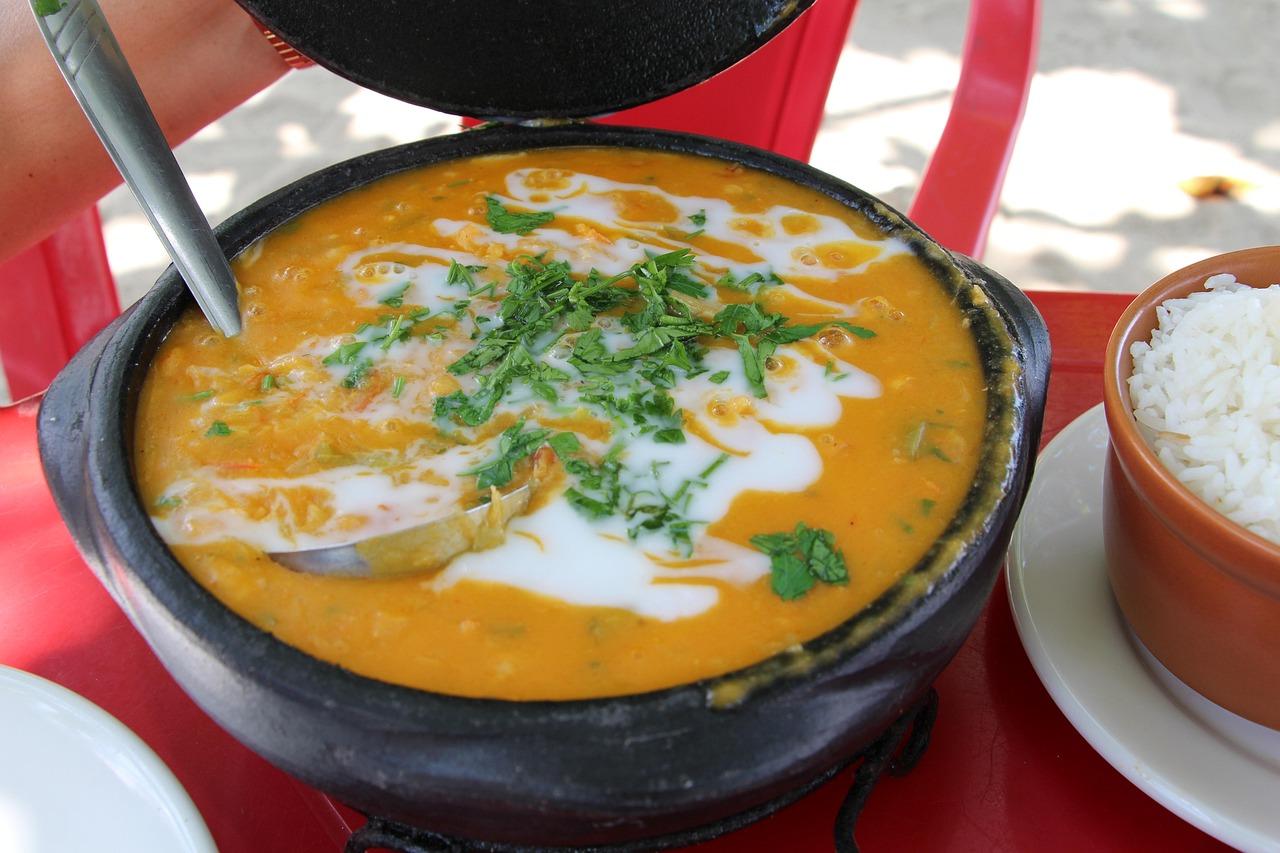
Kho is the slow braise of the Mekong Delta: food simmered in a little clay pot (nồi đất) with dark caramel and seasoning until the sauce is sticky and the flavours go deep. This vegetarian cousin of cá kho tộ (braised fish) uses golden tofu and meaty mushrooms in place of fish, cooked in coconut water, as cooks do in the south, and finished with plenty of black pepper. Serve it bubbling in its pot with steamed rice and a sour soup or plain boiled vegetables. Chef's tip: take the caramel (nước màu) to a deep mahogany, darker than you think, just before it smokes; pale caramel only tastes sweet, while dark caramel gives the bittersweet, smoky flavour of a real kho.

Read more 2 views
Can't decide?

What to eat today?

Spin the randomizer, search with what's already in your fridge, or browse recipes from our chefs.

Latest recipes

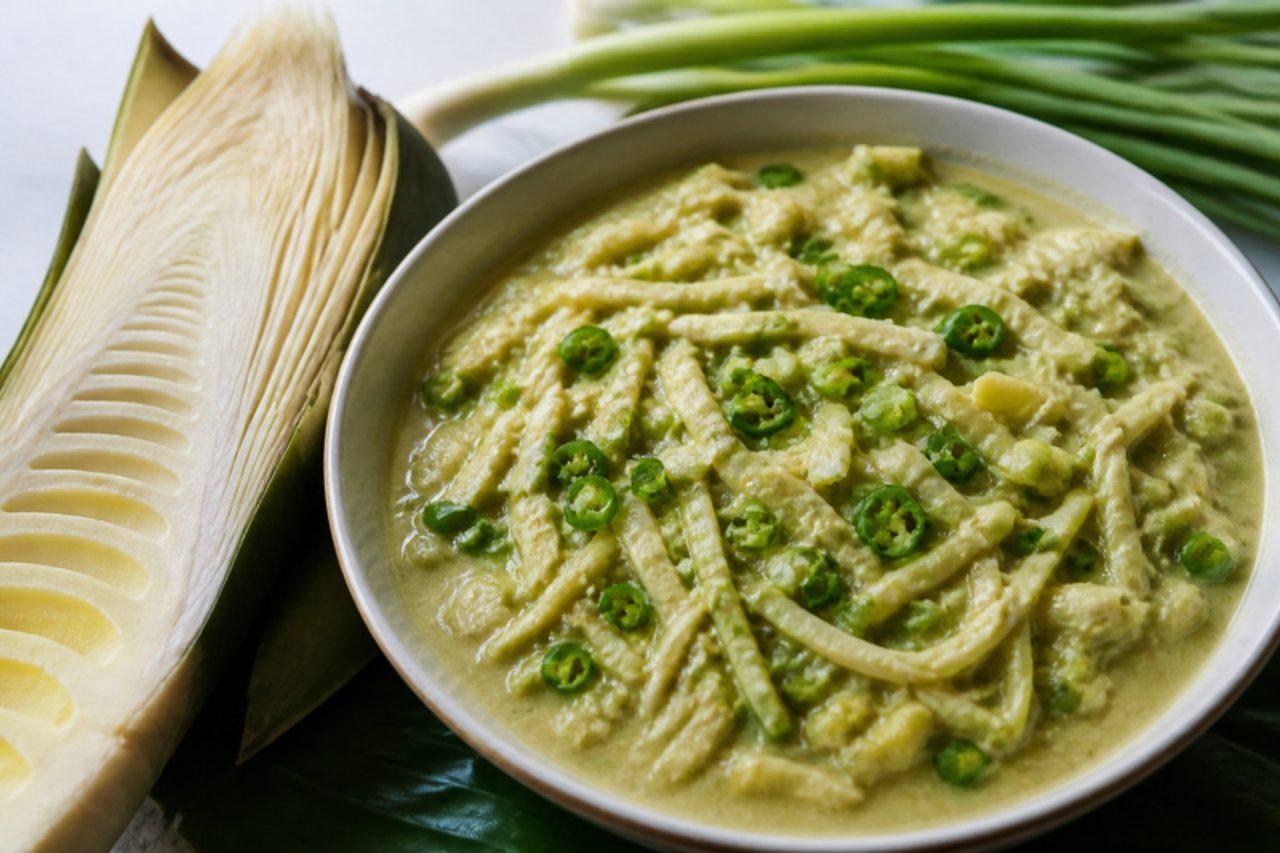
Muya awandru

Muya awandru is a classic of the Tripuri (Kokborok-speaking) kitchen around Agartala: tender bamboo shoot is cooked with green chilli and a rice-flour paste (awandru) until it thickens into a soft, savoury mass, a little like a porridge. Traditionally a piece of berma (fermented dried fish) goes in; this vegetarian version drops it and adds roasted garlic and a little fermented soybean for depth, as vegetarian Tripuri cooks do. It is eaten with rice, often at village feasts. Chef's tip: mix the rice flour with cold water before adding it, or it lumps.

by KrazyBadal 0 views

Erissery

Erissery is the golden, slightly sweet pumpkin dish of the Onam sadya in Kerala, and a favourite in homes all through the harvest season when the yellow mathanga pumpkins are piled up in the markets. Soft pumpkin and red cowpeas are bound with a coconut, cumin and green chilli paste, and the whole pot is crowned with grated coconut fried in coconut oil until it turns the colour of cinnamon. That crunchy, nutty topping is what makes it erissery. Serve with rice and parippu, or scoop it up with chapati. Chef's tip: keep the pumpkin pieces large so some stay whole while others melt into the sauce.

by KrazyBadal 0 views

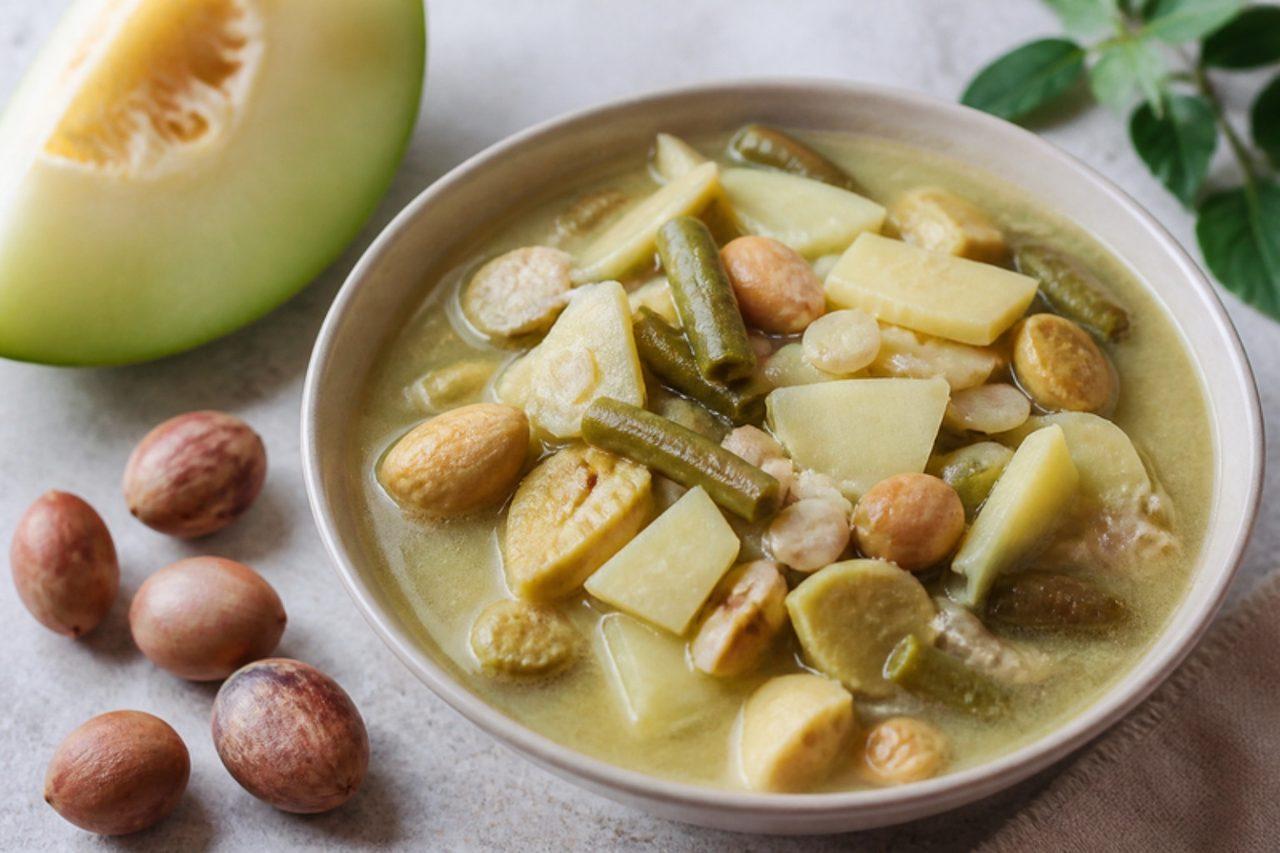
Chakhwi

Chakhwi is a Tripuri festive stew cooked at weddings and family feasts around Agartala, where the defining ingredient is 'khar' or soda, made by filtering water through banana-plant ash. It softens vegetables and gives a smooth, gently alkaline taste. Pork chakhwi is the best known; the vegetarian version is cooked with raw papaya, jackfruit seeds, bamboo shoot and long beans, with ginger and green chilli. It is soupier than Assamese khar and has no lentils. Chef's tip: use bicarbonate of soda if you have no ash water, but only a pinch; you should be able to taste it, not feel it.

by KrazyBadal 0 views

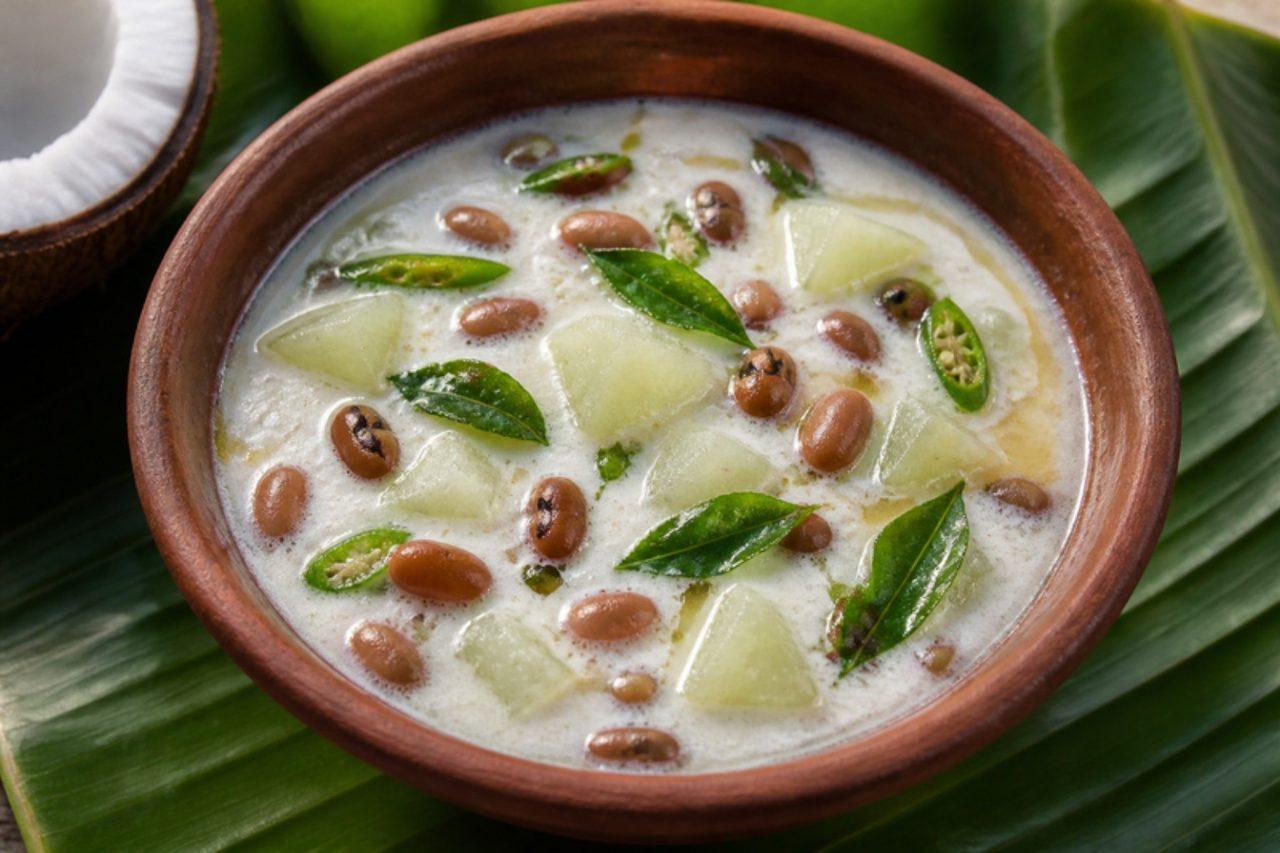
Olan

Olan is the quietest dish on a Travancore sadya leaf, the banana-leaf feast served in southern Kerala for Onam, weddings and temple festivals. Thin, glassy slices of ash gourd and soft red cowpeas sit in coconut milk with nothing louder than green chilli and curry leaves, and its job is to cool the palate between the tangy, fiery curries around it. The flavour comes from coconut milk added in two stages and a spoonful of raw coconut oil poured over at the end. Eat it with plain rice, or ladle it beside appam on an ordinary weekday. Chef's tip: slice the ash gourd as thin as a coin so it turns translucent in the time the coconut milk takes to thicken.

by KrazyBadal 0 views

Llajwa

No Bolivian table is set without llajwa, the fiery, bright salsa that goes on soups, potatoes, cheese empanadas and anything grilled. In La Paz and Cochabamba it's ground on a batán, a flat grinding stone with a rocking stone on top, which crushes tomatoes and locoto (a fleshy, very hot chilli) into a rough, juicy sauce. The signature herb is quirquiña, with a smell somewhere between coriander and rocket. Chef's tip: no stone? Pound in a mortar or pulse briefly; a blender whips in air and turns llajwa pink and foamy.

by KrazyBadal 0 views

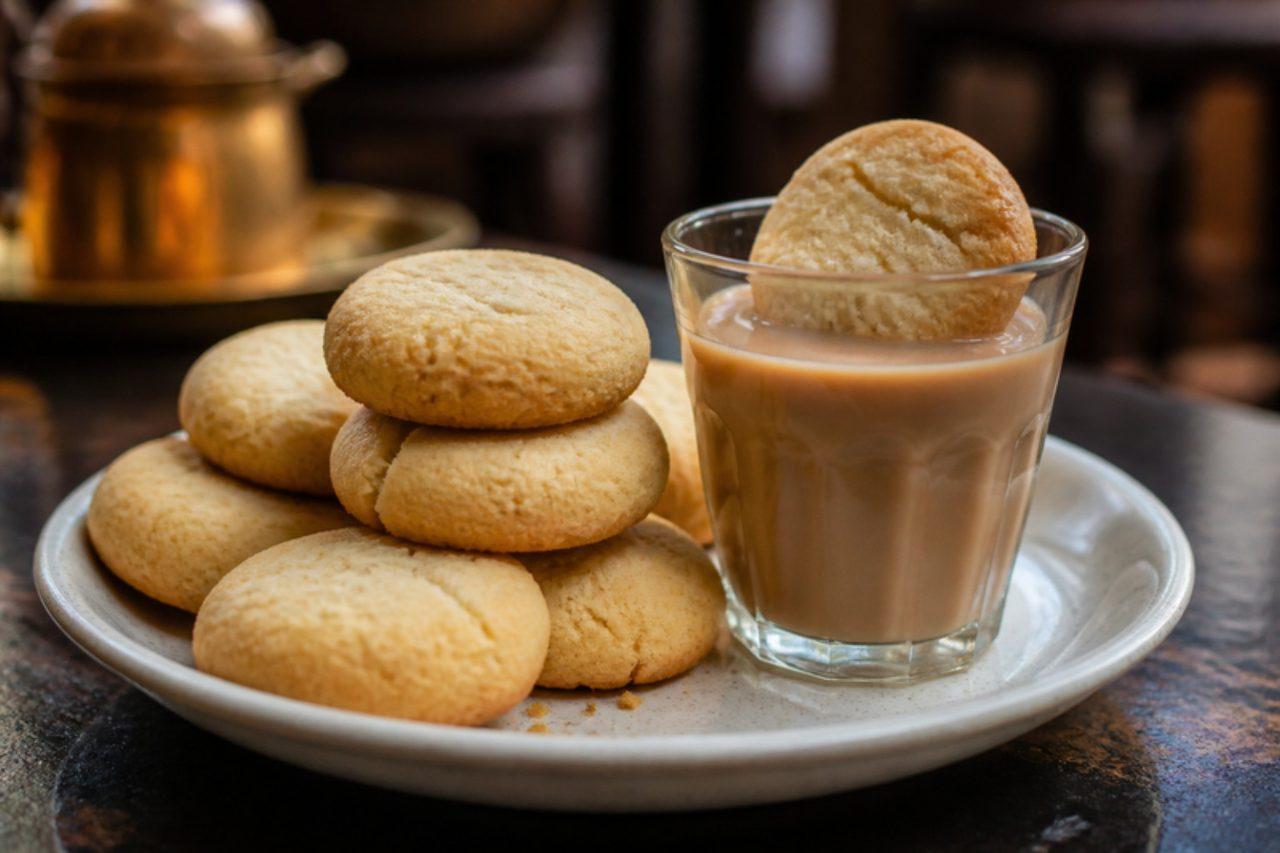
Osmania biscuits

Osmania biscuits are named after the last Nizam of Hyderabad, and they have been baked in the city's Irani bakeries for generations: round, crumbly, melt-in-the-mouth butter biscuits that are gently sweet with a distinct salty edge and a hint of cardamom. In old-city cafés, men linger over a plate of them and a cup of Irani chai in the early morning or after the evening prayers, dunking each one until it is just about to collapse. Chef's tip: chill the dough before cutting and baking; it keeps the biscuits round and thick instead of spreading thin.

by KrazyBadal 0 views

Api con pastel

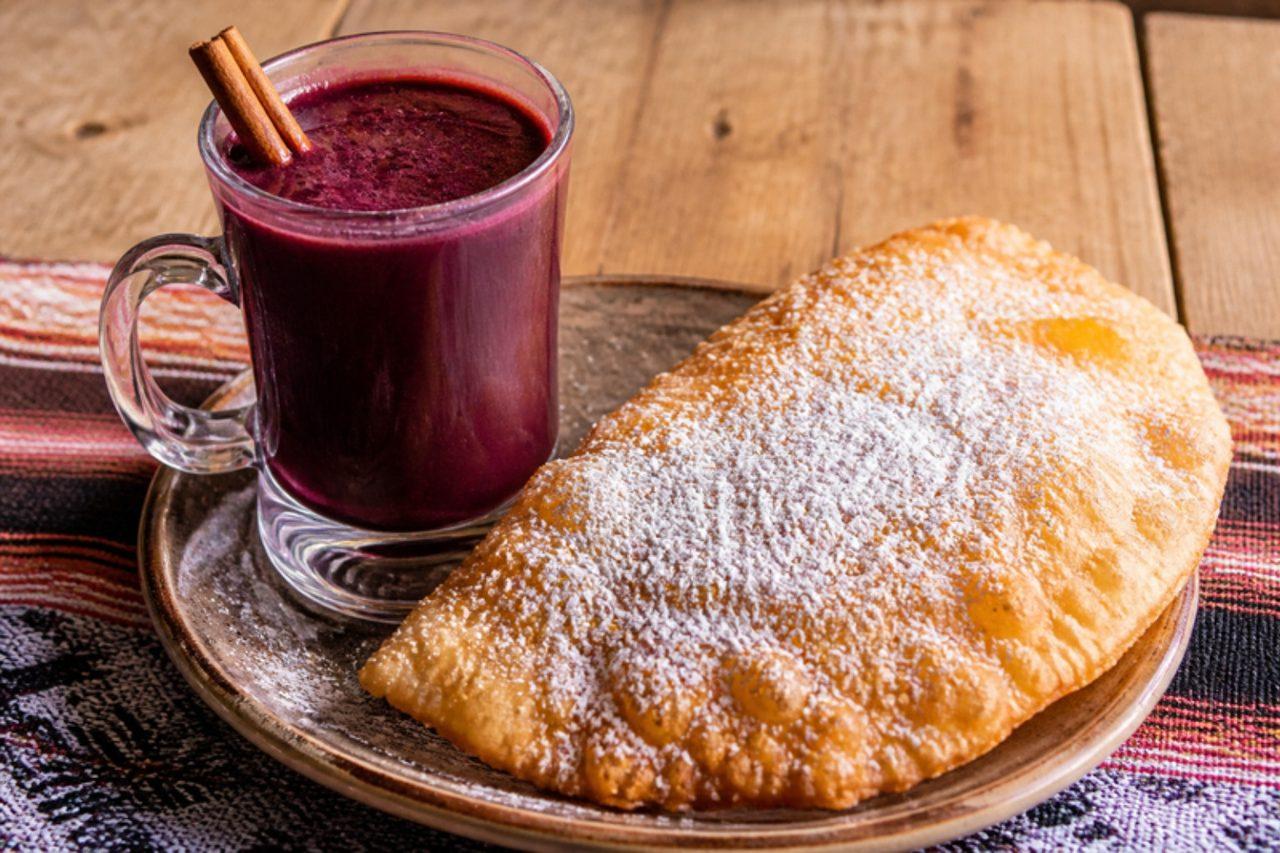
On cold mornings in La Paz, El Alto and Sucre, market stalls ladle out steaming api: a thick, spiced drink of purple corn flour with cinnamon, cloves and orange peel. It's served with a pastel, a big, thin fried empanada filled with fresh cheese and dusted with icing sugar, crackling and blistered outside. Some stalls swirl the purple api with white (corn and milk) api in the same glass. Chef's tip: whisk the corn flour into cold water before it meets anything hot, or it lumps immediately.

by KrazyBadal 0 views

Sata andagi

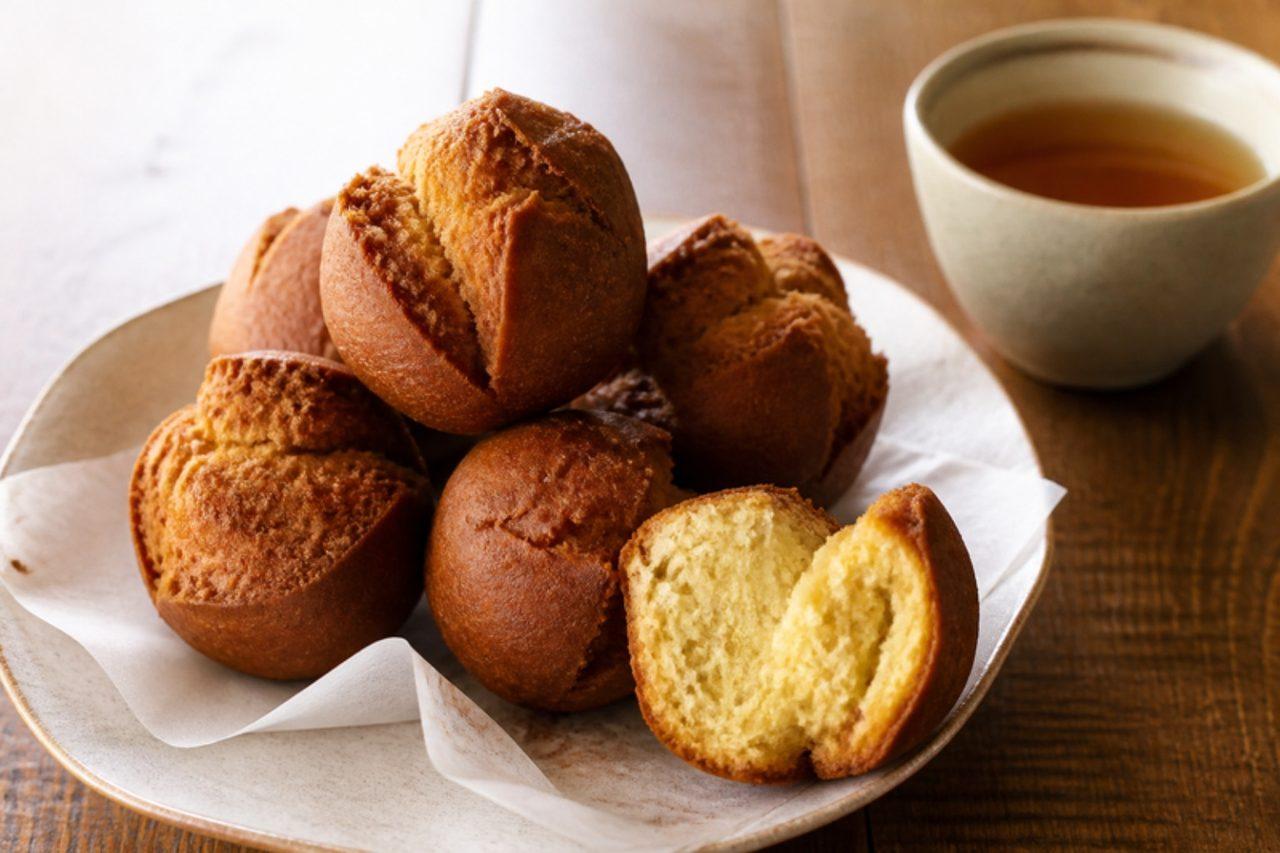
In the Okinawan language, sata andagi simply means 'sugar deep-fried'. These round doughnuts came from Chinese sweets brought to the old Ryukyu kingdom and have been a family treat on the islands for centuries, made for celebrations and sold warm in paper bags at Naha's Makishi market. They are dense and cakey inside with a thick, crunchy crust, and as they fry they split open into a shape Okinawans call a smile, a sign of good luck. Okinawa's dark kokuto sugar gives them a caramel flavour; brown sugar works too. Chef's tip: fry in oil that is only warm, about 150°C. Slow frying lets the balls cook through and crack open, while hot oil seals them shut and leaves the middle raw.

by KrazyBadal 0 views

Ga kho gung

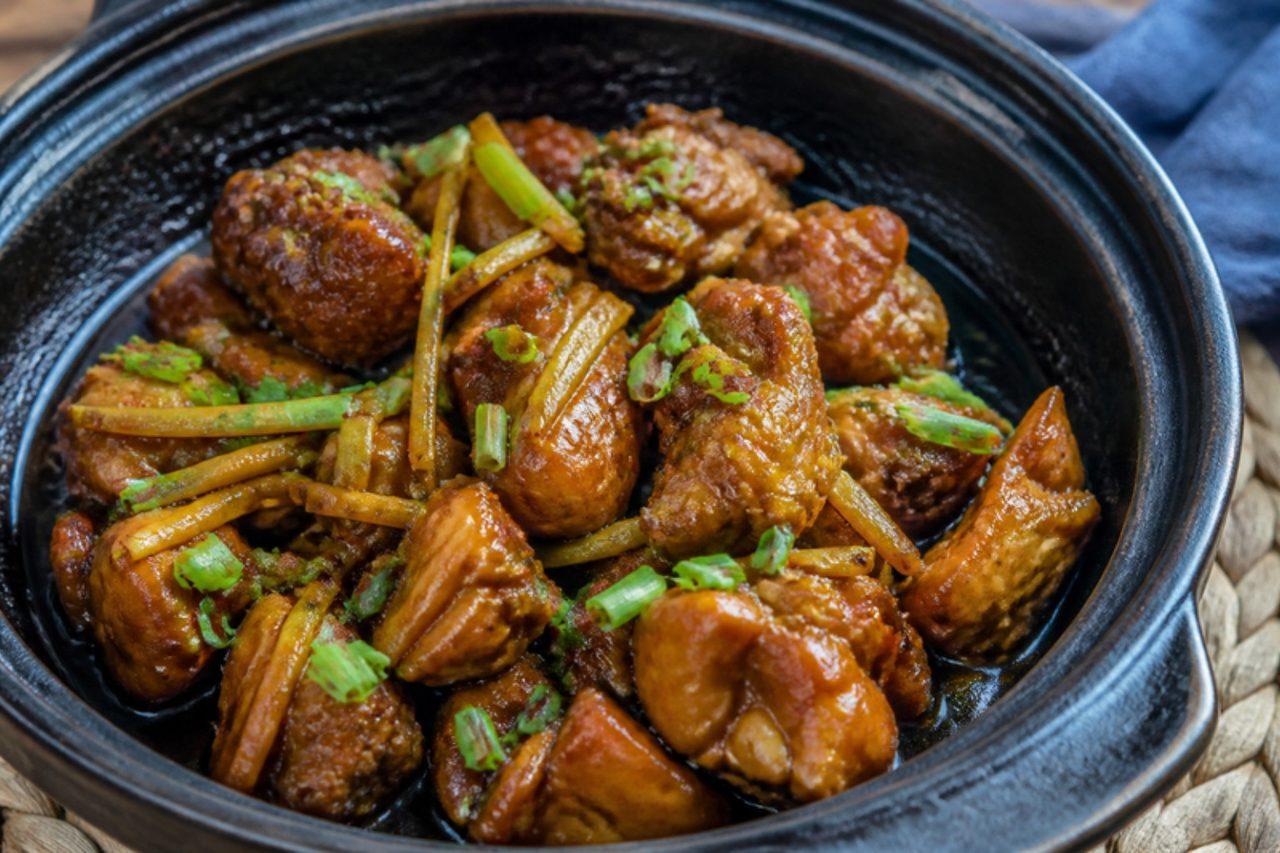
Across Vietnam, from Hanoi apartments to Mekong Delta farmhouses, a small pot of something braised in caramel and fish sauce sits on the family table at dinner with rice, a plate of boiled greens and a clear soup. This chicken version leans on ginger, cut into fine matchsticks so it turns soft and warming in the glossy, salty-sweet sauce. It's a favourite when the weather cools, traditionally cooked in a clay pot, though any heavy pan will do. It reheats well, so it's a good one for the next day's lunch. Chef's tip: take the caramel to the colour of strong tea, deep amber, before the chicken goes in; that slight bitterness is what keeps the dish from tasting sugary.

by KrazyBadal 0 views

Qubani ka meetha

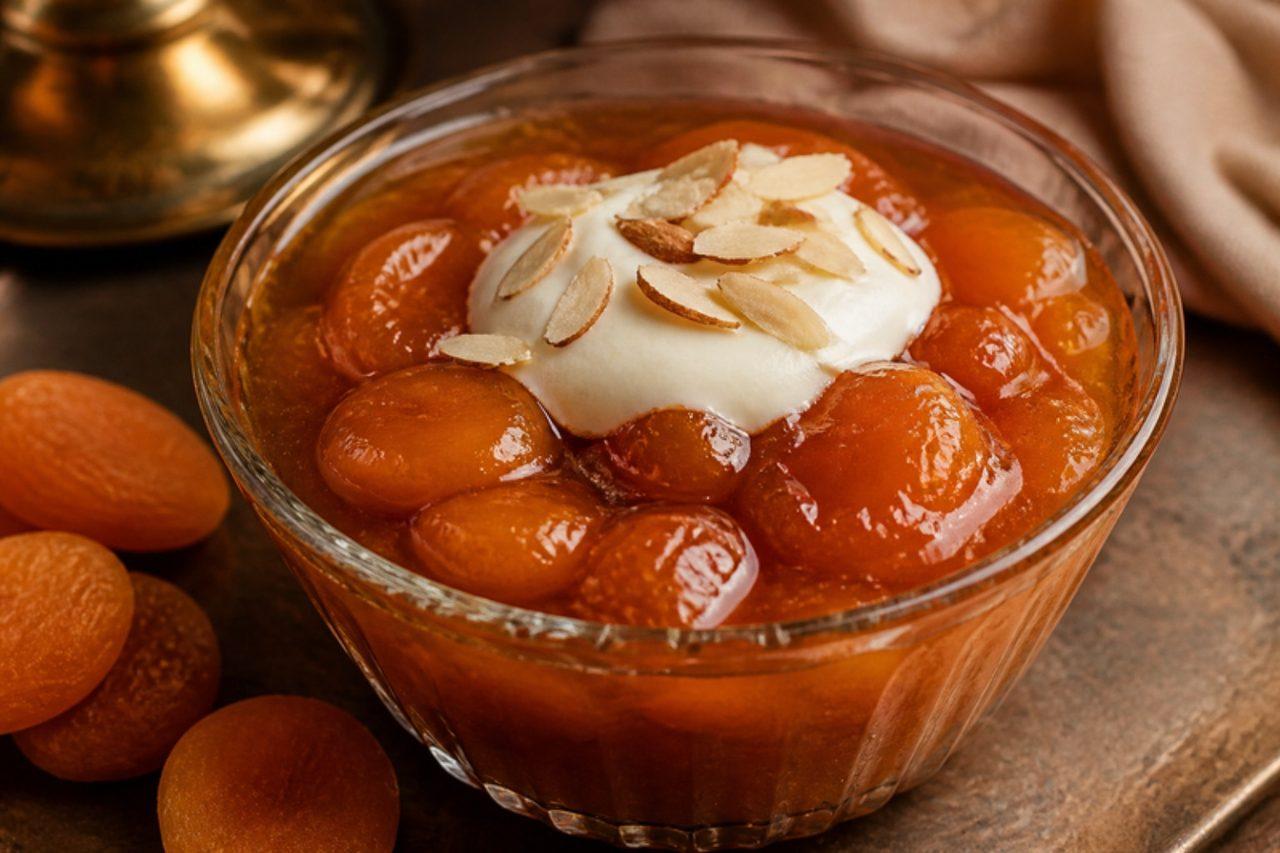
No Hyderabadi wedding feast, or dawat, ends without qubani ka meetha: dried Afghan apricots soaked overnight, then simmered slowly with sugar until they break down into a glossy, deep amber compote, served cold with thick cream or a scoop of vanilla ice cream. In Hyderabad the kernels from inside the apricot stones are scattered on top; at home, blanched almonds give the same look and taste, and are safer, as some apricot kernels are bitter and shouldn't be eaten in quantity. It is sweet, tart and jammy, and very easy to make for a crowd days ahead. Chef's tip: keep the soaking water and cook the apricots in it; it holds much of their flavour and natural sugar.

by KrazyBadal 0 views

Dharwad peda

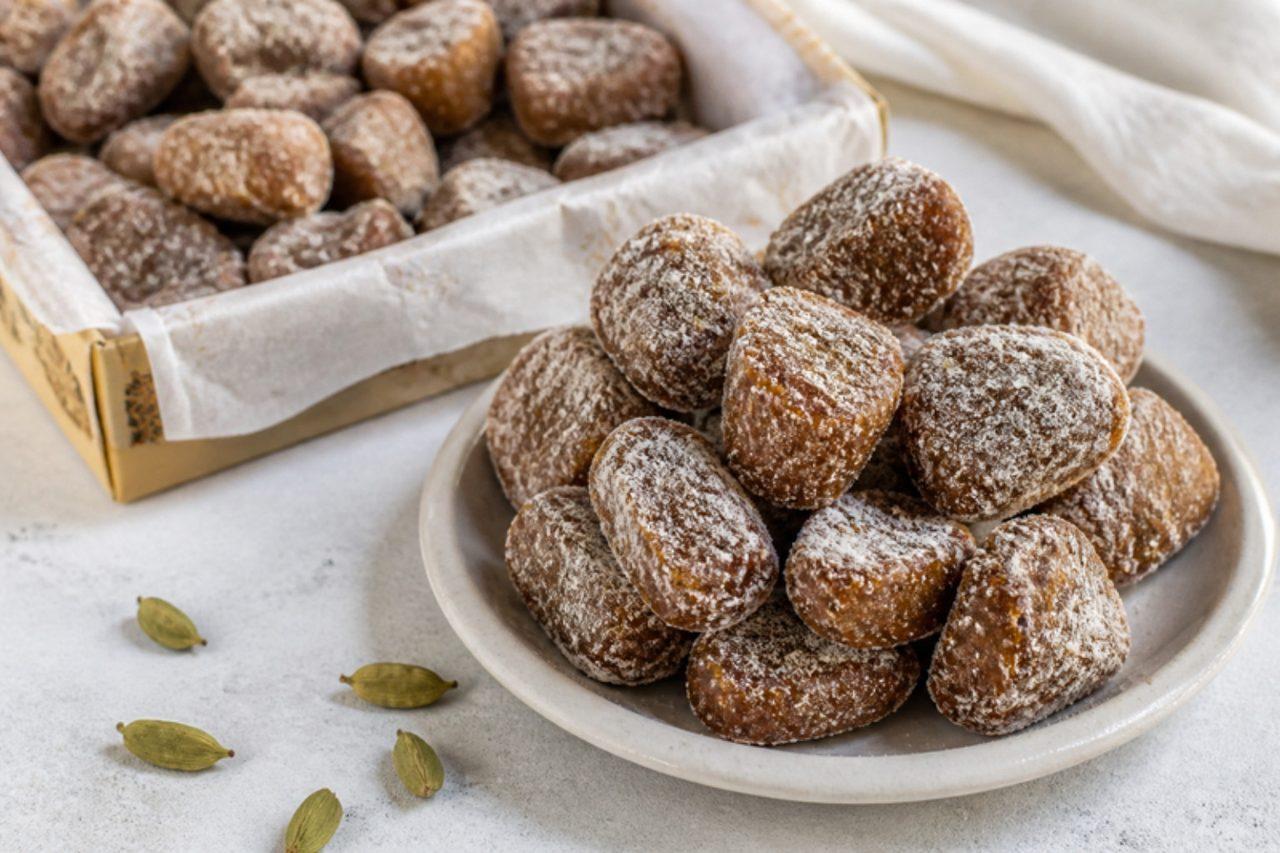
Dharwad peda has been made in this north Karnataka town for well over a century, first by families who came from Uttar Pradesh, and it now carries a geographical indication tag. Unlike pale, smooth pedas elsewhere, it is cooked slowly until the milk solids caramelise to a deep brown and a grainy, almost crumbly texture, then rolled in powdered sugar. Pilgrims and travellers carry boxes home from Dharwad and Hubballi, and families buy it for weddings and exam results. Chef's tip: let the cooked mixture cool for ten minutes before you add the sugar for rolling; added while too hot, the sugar melts and the pedas go sticky.

by KrazyBadal 0 views

Kosambari

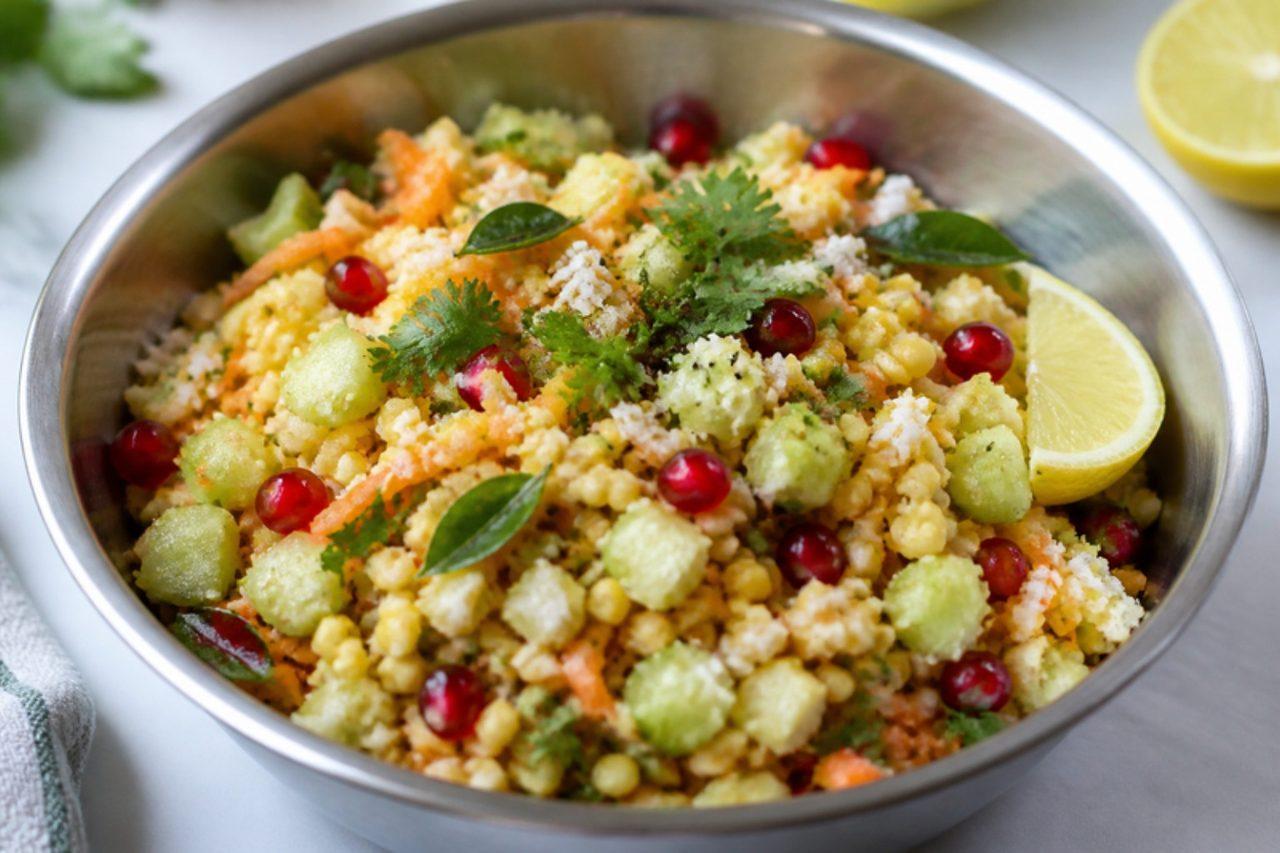
No Karnataka festival lunch on a banana leaf is complete without a spoonful of kosambari at the top left corner. This raw salad of soaked split moong dal, cucumber, carrot and fresh coconut, sharpened with lemon and finished with a mustard-seed tempering, is especially made for Ram Navami, when it is offered in temples with panaka (jaggery water), and for Ugadi and weddings. It is crunchy, cool and refreshing, and packed with protein. Chef's tip: add the salt and lemon only just before serving; salted cucumber weeps water and turns the salad soggy within half an hour.

by KrazyBadal 0 views

Vegetarian fanesca

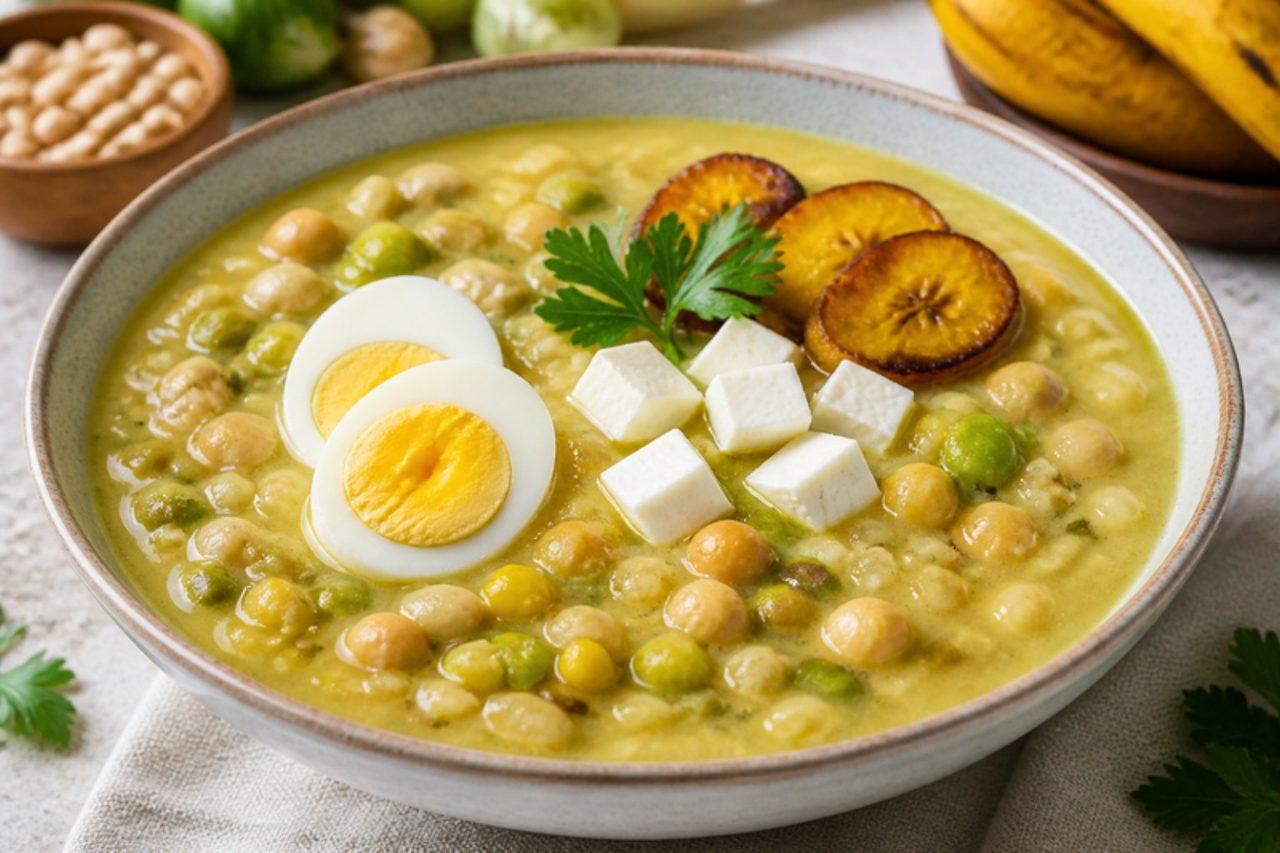
Fanesca is cooked in Ecuador only once a year, in the days before Easter, and families spend a whole day shelling, peeling and stirring. Traditionally it gathers twelve grains and legumes (said to stand for the apostles) in a thick soup of squash, milk and peanut, with salt cod in the pot. This version leaves the fish out and keeps the festival garnishes: hard-boiled egg, fried ripe plantain, fresh cheese and parsley. It's rich and very filling; small bowls are enough. Chef's tip: cook everything the day before and reheat; like many big feast soups, fanesca tastes better on day two.

130 minAndeanSoupsGluten free
by KrazyBadal 0 views

Eetch

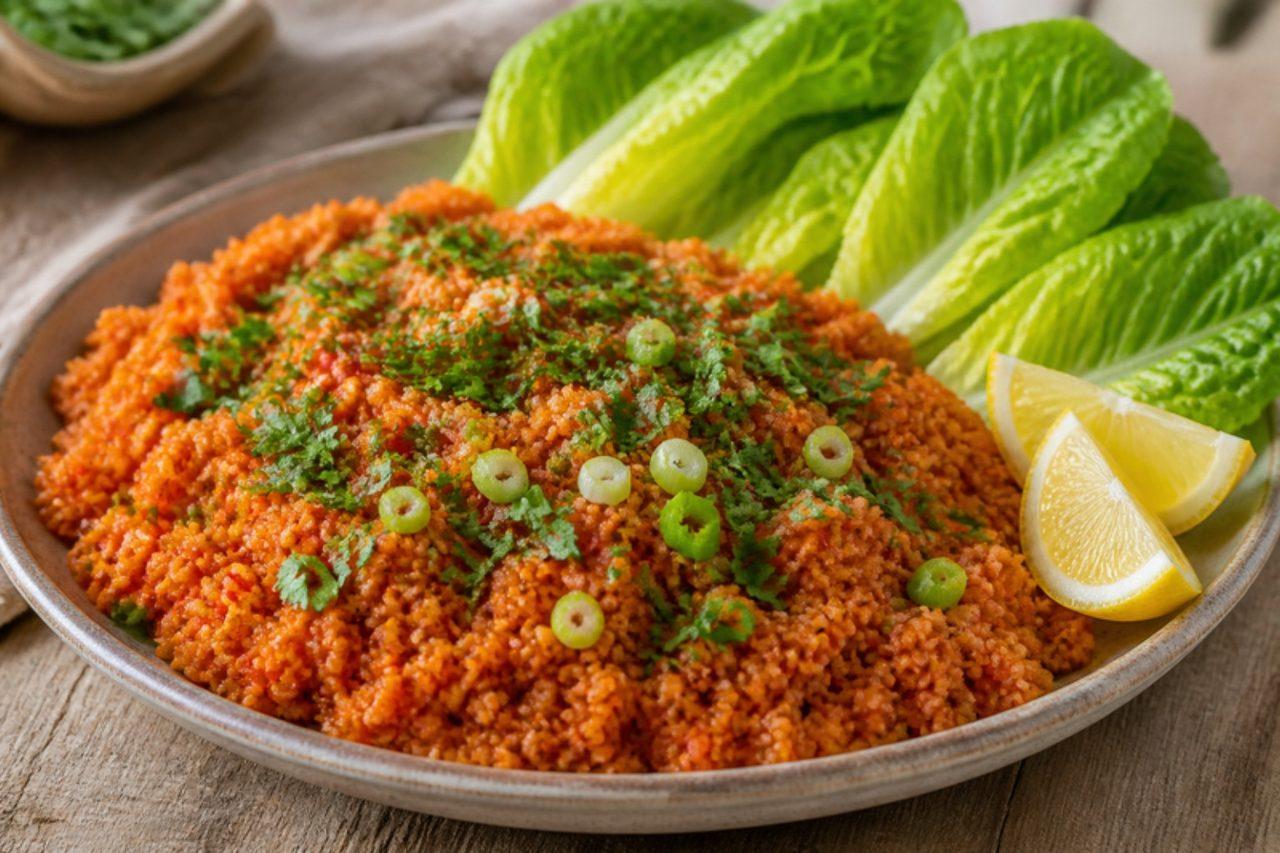
Eetch is a Western Armenian dish from the old Cilician towns, carried by families to Aleppo, Beirut and the Armenian quarters of American cities. Fine bulgur is stirred into a hot sauce of onion, red pepper, tomato and pepper paste and left to drink it up, then finished with lemon, parsley and spring onion and eaten at room temperature, often scooped up with lettuce leaves. Unlike a herb-heavy raw bulgur salad, eetch is cooked, so it is rich and tomatoey, and it is a fixture of Lenten tables, picnics and mezze spreads. It keeps for days, which makes it a favourite for lunchboxes. Chef's tip: take the pan off the heat before adding the bulgur and keep the lid on; the grains soften in the residual heat and stay separate instead of turning to porridge.

by KrazyBadal 0 views

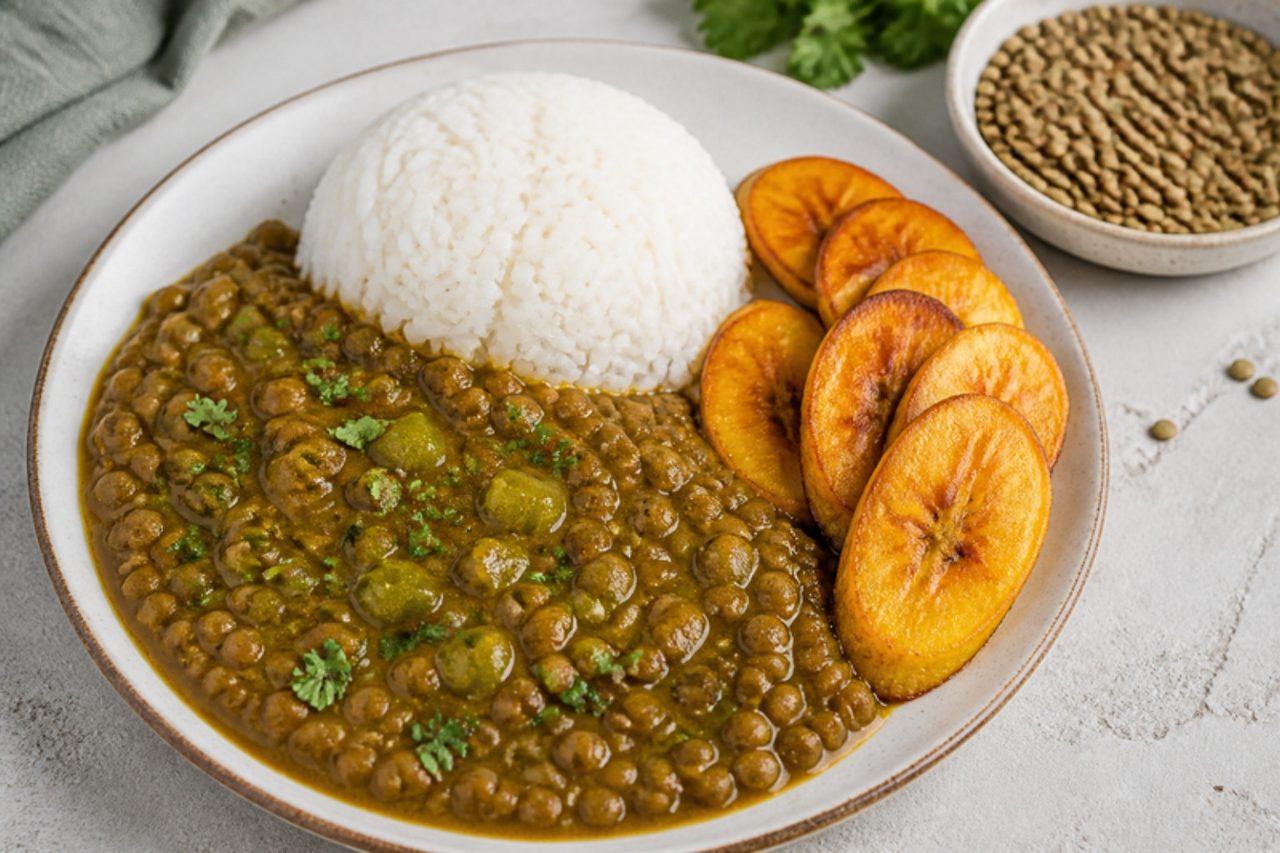
Menestra de lentejas

Menestra is the backbone of Ecuador's set lunches: in Guayaquil's almuerzo cafés, plates arrive with white rice, a ladle of thick menestra, fried plantain (patacones or maduros) and a little salad, usually beside grilled meat. On its own it makes a complete meatless meal. Lentils are cooked down with a refrito of onion, pepper, garlic, cumin and achiote until thick enough to hold a mound. Chef's tip: stir in a handful of chopped coriander right at the end; it's the fresh lift that makes menestra taste Ecuadorian.

by KrazyBadal 0 views

Pachi pulusu

Pachi pulusu, 'raw stew', is Telangana's summer cooler: a no-cook tamarind water stirred with jaggery, finely sliced raw onion and green chilli, finished with a hot mustard-seed tempering. In the heat of April and May in villages around Warangal and Karimnagar, families pour it over hot rice with a spoonful of dal or a spicy fry, and it wakes up appetites dulled by the sun. Some add a smoky roasted brinjal mashed in, which gives it body. Sweet, sour and sharp at once, it takes ten minutes. Chef's tip: rub the onion with salt and a little chilli powder in your fingers before adding the tamarind water, so it softens slightly and flavours the whole bowl.

by KrazyBadal 0 views

Hyderabadi khatti dal

Khatti dal, 'sour dal', is the everyday dal of Hyderabad's old city, cooked in Muslim and Telugu homes alike and ladled over plain rice with a fried papad and a dry vegetable on the side. Toor dal is cooked with tomato and green chilli, mashed smooth, soured with tamarind and finished with a sizzling bagaar of garlic, dried red chillies, cumin and curry leaves. It is thinner and sharper than a north Indian dal, and on Fridays it often sits next to a biryani as the comforting partner. Chef's tip: let the garlic in the bagaar turn properly golden before pouring it over; pale garlic tastes raw and harsh in a sour dal.

by KrazyBadal 0 views

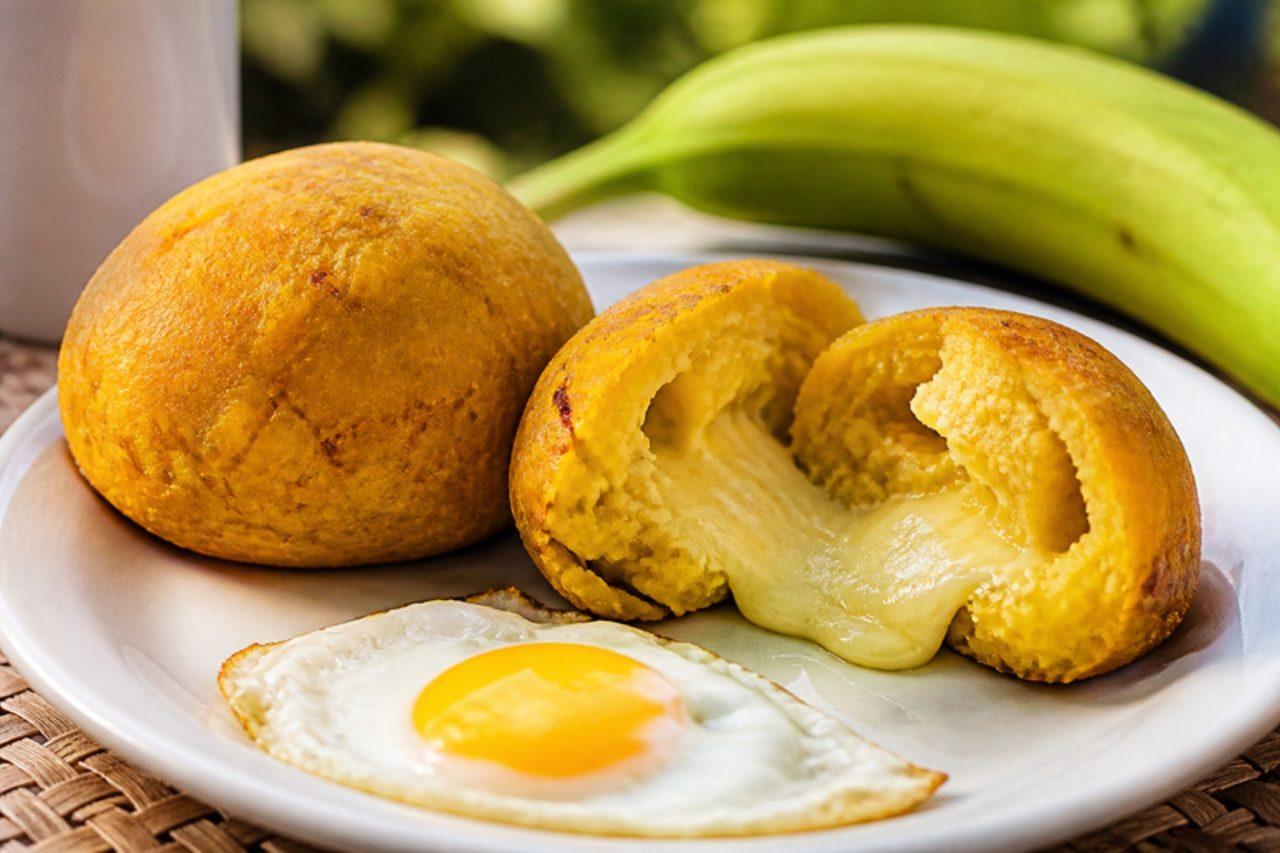
Bolón de verde con queso

On Ecuador's coast, in Guayaquil and Manabí, breakfast is often a bolón: green plantain fried, pounded while hot with butter and salty cheese, shaped into a fist-sized ball and fried again until crusty. It comes with a cup of strong black coffee and a fried egg, and a little ají on the side; the other classic version uses pork crackling, but cheese bolón is just as common. Chef's tip: shape them while the plantain is still hot; once cold the starch sets and won't stick together.

by KrazyBadal 0 views

Lentil and apricot soup

Red lentil soup with dried apricots is a Lenten favourite of Armenian kitchens, from Yerevan flats to diaspora homes in Beirut and Los Angeles, made in the weeks before Easter when meat and dairy are set aside. The apricots, Armenia's national fruit, melt into the lentils and give a soft sweet-sour note that sits behind cumin, thyme and a squeeze of lemon. It is thick but not stodgy, a bright orange bowl that is filling enough for supper with lavash and a plate of fresh herbs. Chef's tip: chop half the apricots fine and let them dissolve, and add the rest in strips near the end, so you get both background sweetness and juicy bites.

by KrazyBadal 0 views

Hu tieu

Hủ tiếu came to southern Vietnam with Teochew Chinese and Cambodian influences, and in Saigon it's as everyday as pho, sold from street carts at dawn and again late into the night. The broth is light and clear, sweet from pork bones, daikon and dried shrimp, and the bowl is loaded with sliced pork, minced pork, prawns and often quail eggs. Clear, chewy noodles and a spoon of crispy garlic oil set it apart. Many people order it khô, dry, with the noodles tossed in sauce and the soup on the side. Chef's tip: toast the dried squid over a flame before it goes in the pot; it gives the broth a sweet, savoury depth that's hard to place.

by KrazyBadal 0 views

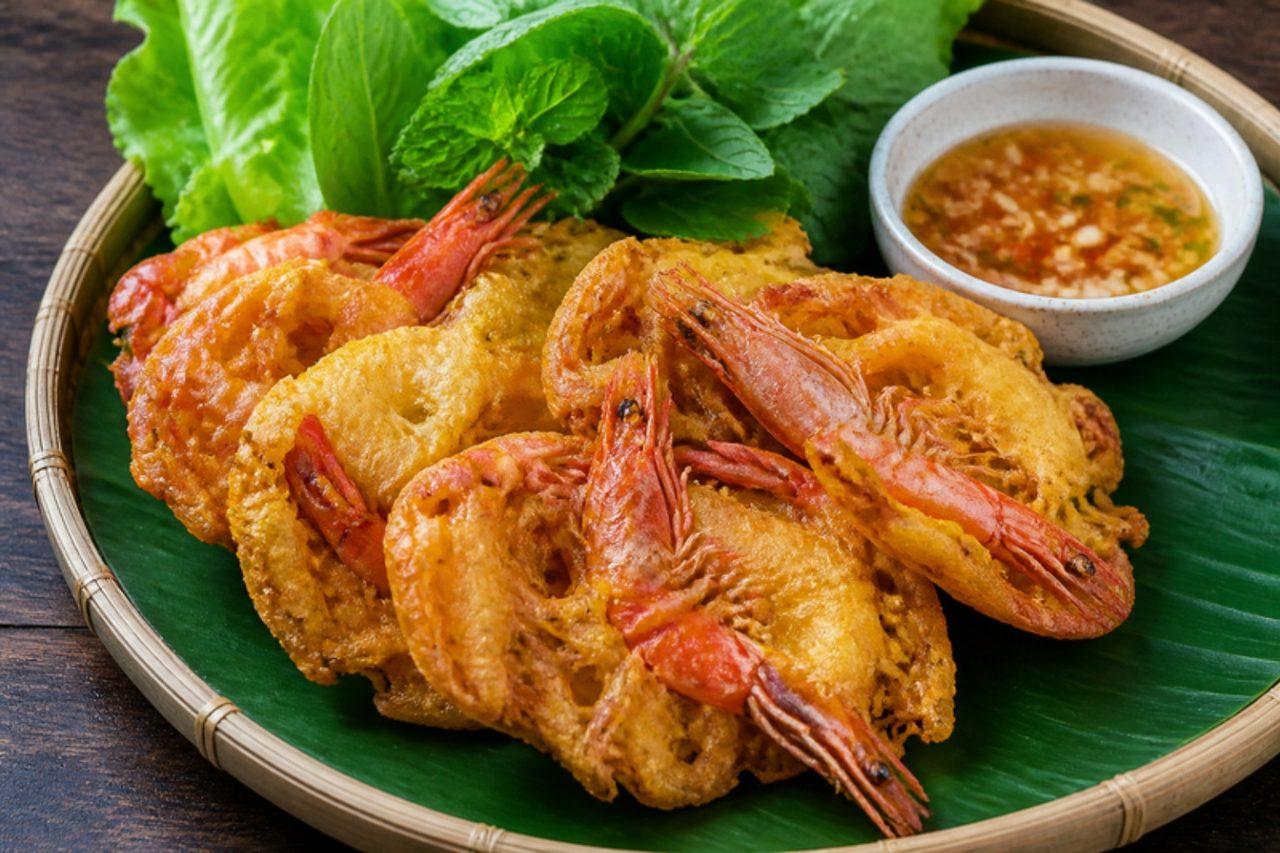
Banh tom Ho Tay

Lakeside cafés on the shore of West Lake (Hồ Tây) in Hanoi have sold these fritters for generations, and locals still ride out on cool autumn afternoons to eat them looking over the water. Each one is a nest of sweet-potato matchsticks held together by a thin, turmeric-tinted batter, with a whole small shrimp pressed on top so its shell fries crisp. They come piled on a plate with lettuce, herbs and a bowl of sweet-sour fish sauce dotted with slices of green papaya or kohlrabi. You wrap a piece of fritter in a lettuce leaf with a few herbs and dunk it. Chef's tip: soak the cut sweet potato in cold water for 10 minutes and then dry it really well; washing off the surface starch is what keeps the strands separate and crunchy.

by KrazyBadal 0 views

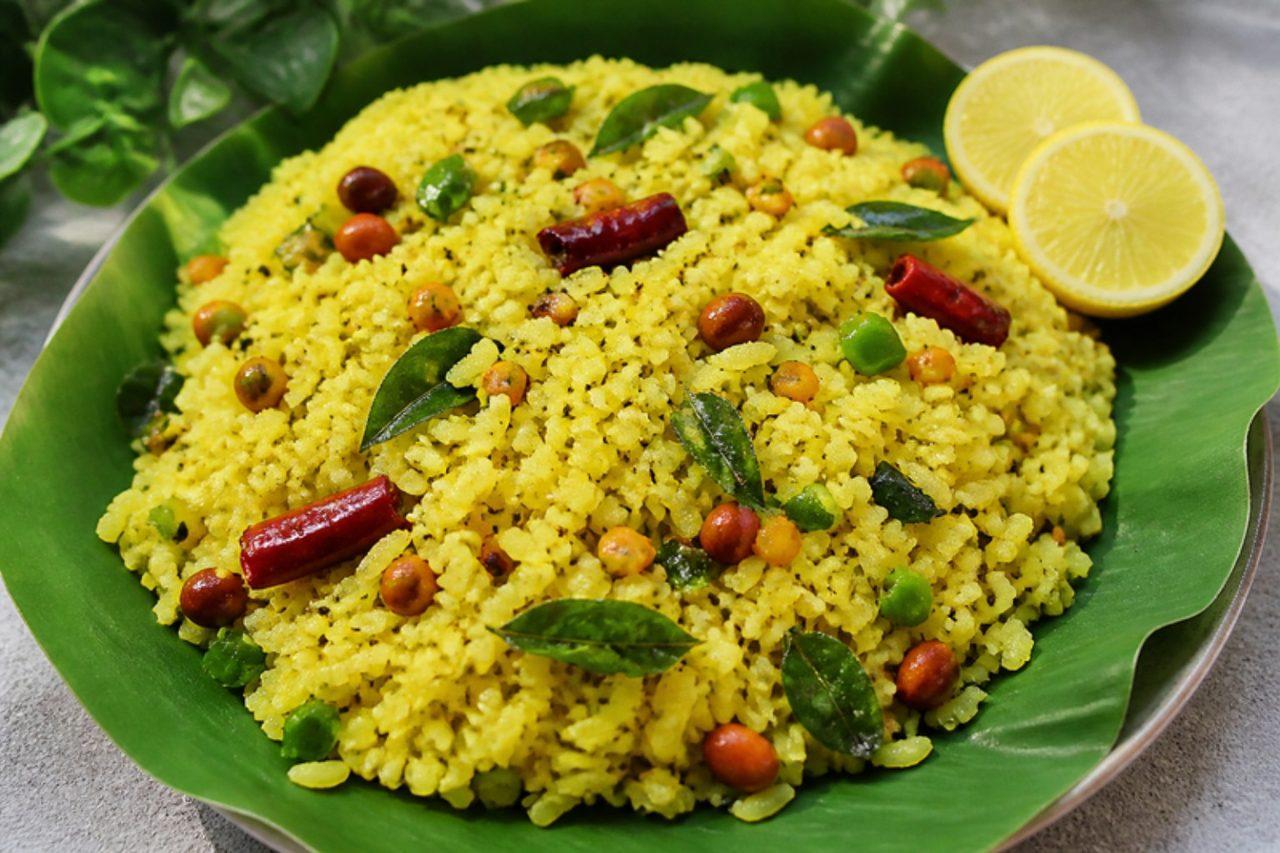
Chitranna

Chitranna, 'colourful rice', is the dish Karnataka mothers make when there is leftover rice and a school tiffin box to fill: cooked rice tossed in a yellow turmeric tempering with roasted peanuts, crunchy dals, green chilli, curry leaves and plenty of lemon. It appears at temple festivals as prasada, on train journeys wrapped in banana leaf, and on every Bengaluru darshini breakfast counter. It tastes even better an hour after it's made, when the lemon has soaked in. Tamil Nadu's elumichai sadam is a close cousin. Chef's tip: spread the rice out on a plate to cool before mixing; warm, steamy rice turns sticky and breaks when you toss it.

by KrazyBadal 0 views

Maddur vada

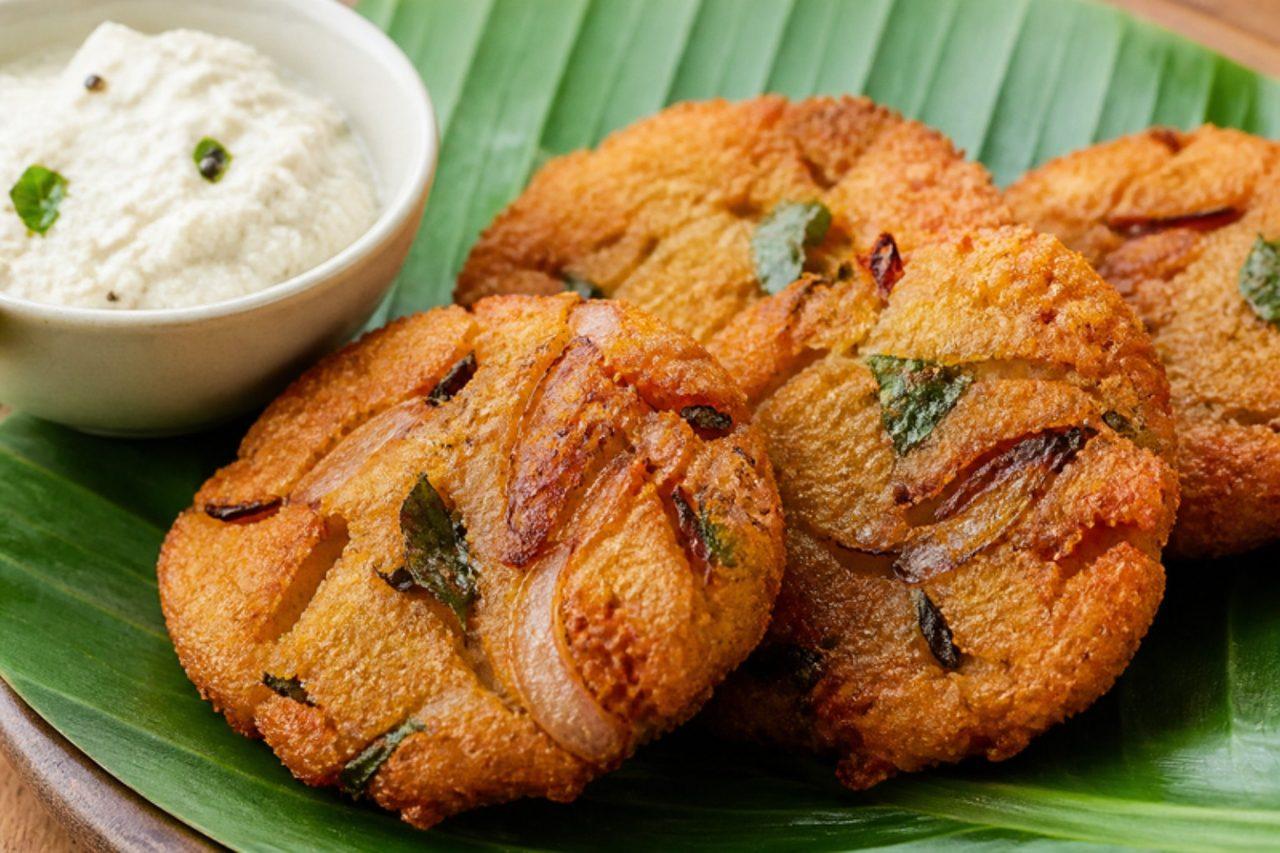
Maddur is a small town halfway between Bengaluru and Mysuru, and for nearly a century travellers on that road have stopped at its railway station and highway stalls for one snack: Maddur vada. Unlike soaked-lentil vadas, these are made from rice flour, semolina and plain flour rubbed with hot oil and loaded with sliced onion, curry leaves and green chilli, then patted flat and fried until crunchy and golden all the way through. They keep their crunch for hours, so they are packed for long journeys. Serve with coconut chutney and filter coffee. Chef's tip: add the onions first and let them sit with the salt for ten minutes; their juice moistens the flours, so you need very little water and the vada stays crisp.

by KrazyBadal 0 views

Goli baje

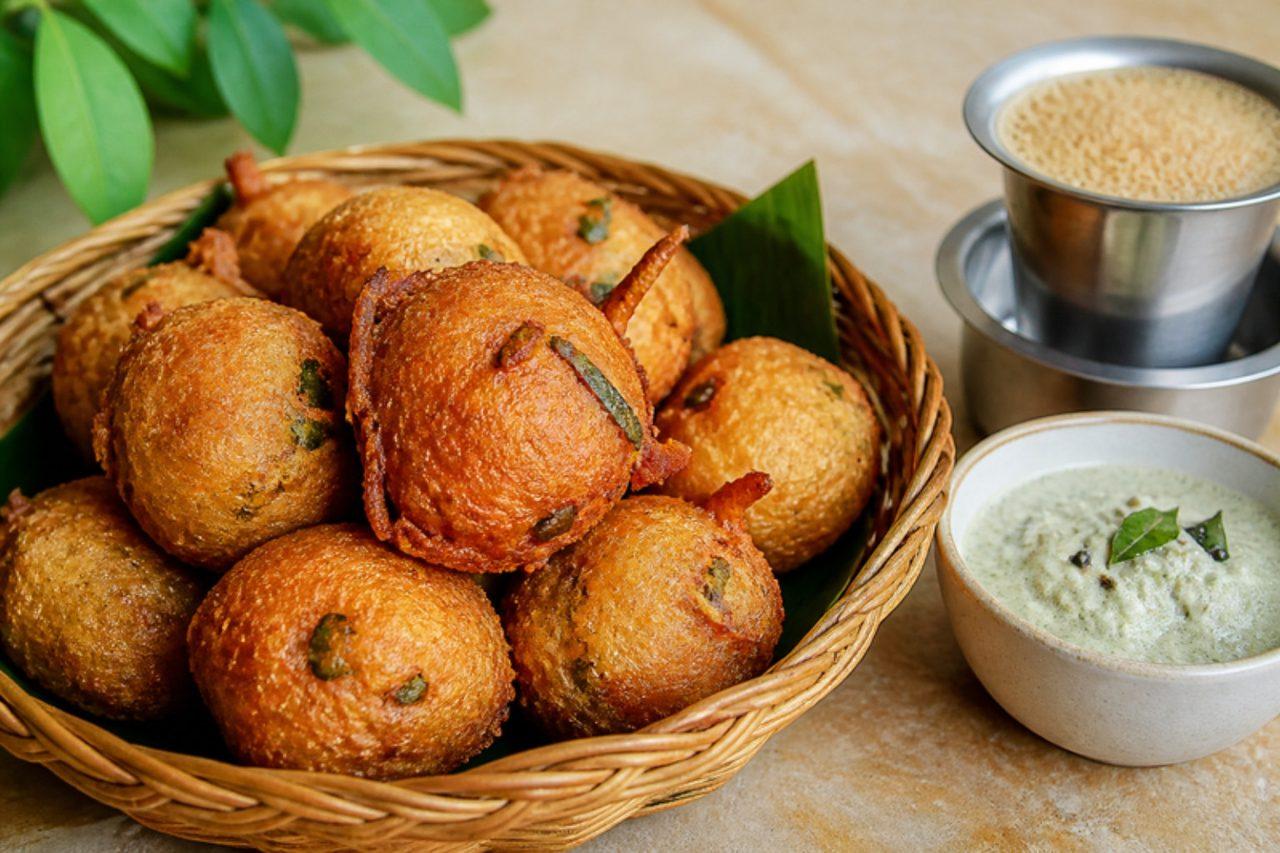
Goli baje is the tea-time snack of coastal Karnataka: round, golden fritters that are crisp outside and soft and spongy inside, sold by the plateful in Udupi hotels and Mangaluru tea shops around four in the afternoon. The batter is made from plain flour and sour yogurt, with green chilli, ginger, curry leaves and coconut bits, and left to rest so it turns slightly tangy and airy. Serve them piping hot with coconut chutney and a strong cup of coffee. Chef's tip: beat the batter hard for a few minutes before resting it; a well-beaten batter is stretchy, traps air, and gives fritters with an open, bread-like crumb.

by KrazyBadal 0 views

Llapingachos

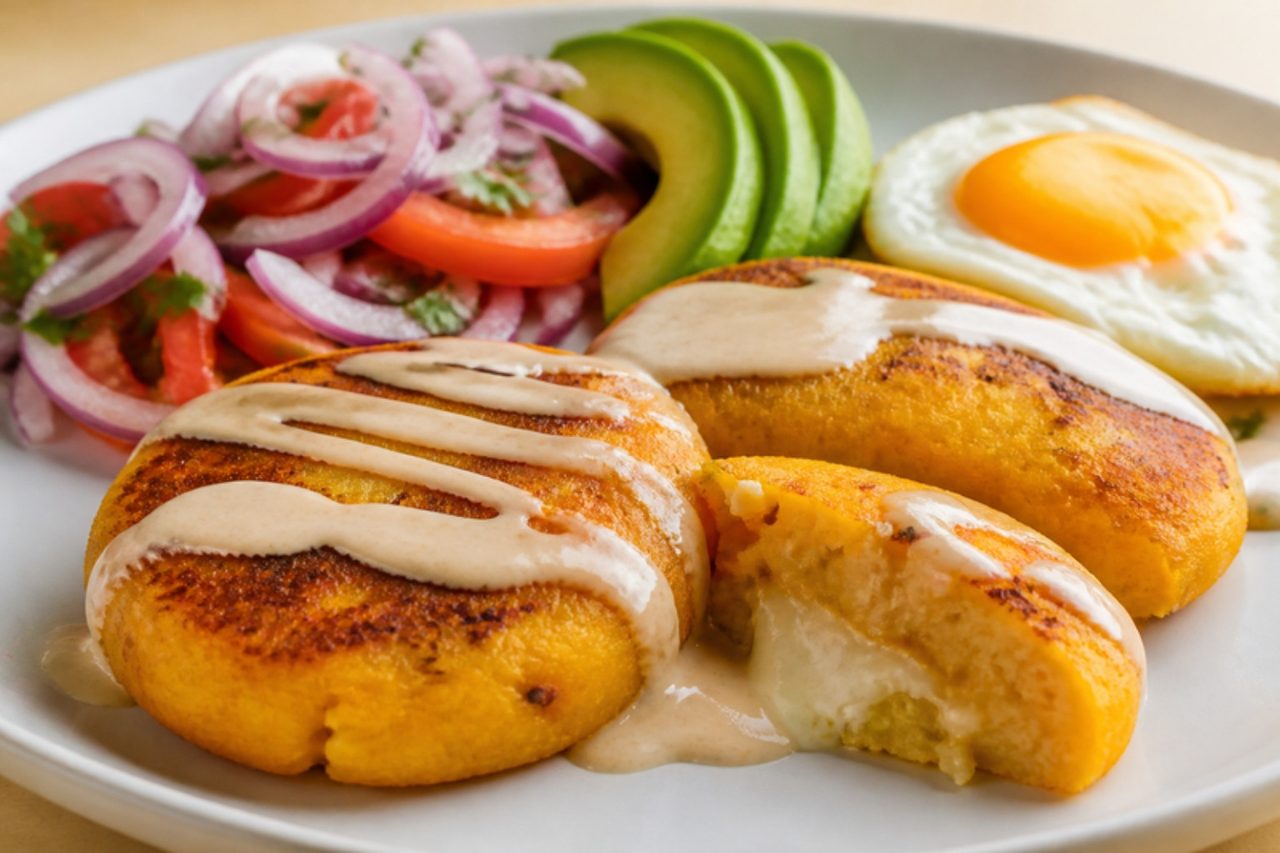
Llapingachos come from the central highlands of Ecuador, especially Ambato and the markets of Riobamba, where women fry them by the dozen on huge round griddles. The patties are mashed potato coloured with achiote, stuffed with cheese and spring onion, and browned until crisp. A full plate adds peanut sauce, a lime-dressed onion and tomato salad, avocado and a fried egg (the market version also includes chorizo, left out here). Chef's tip: chill the shaped patties for 30 minutes; cold patties hold their shape and get a better crust.

by KrazyBadal 0 views

Sundubu jjigae

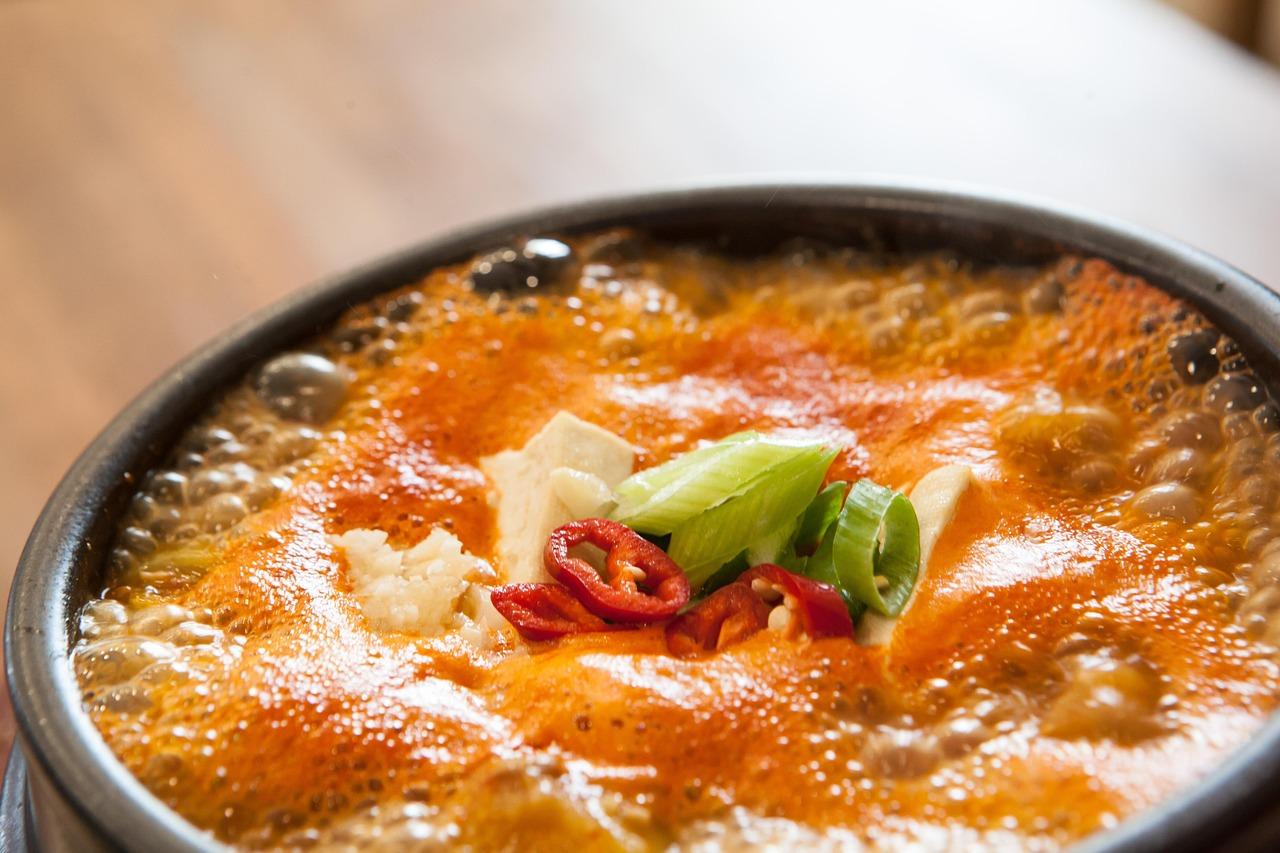
All over Korea, small lunch restaurants bring sundubu jjigae to the table still boiling in a black stone pot, with a raw egg on the side to crack in while it bubbles. The stew is built on very soft, unpressed tofu, which breaks into creamy curds in a red, chilli-oil broth. Seafood and pork go in together here, though you can use just one. Have it with a bowl of rice and some kimchi; it's especially welcome on a cold day. Chef's tip: fry the chilli flakes gently in oil with the pork and garlic before adding liquid; this red chilli oil gives the stew its colour and a deep, rounded heat.

by KrazyBadal 0 views

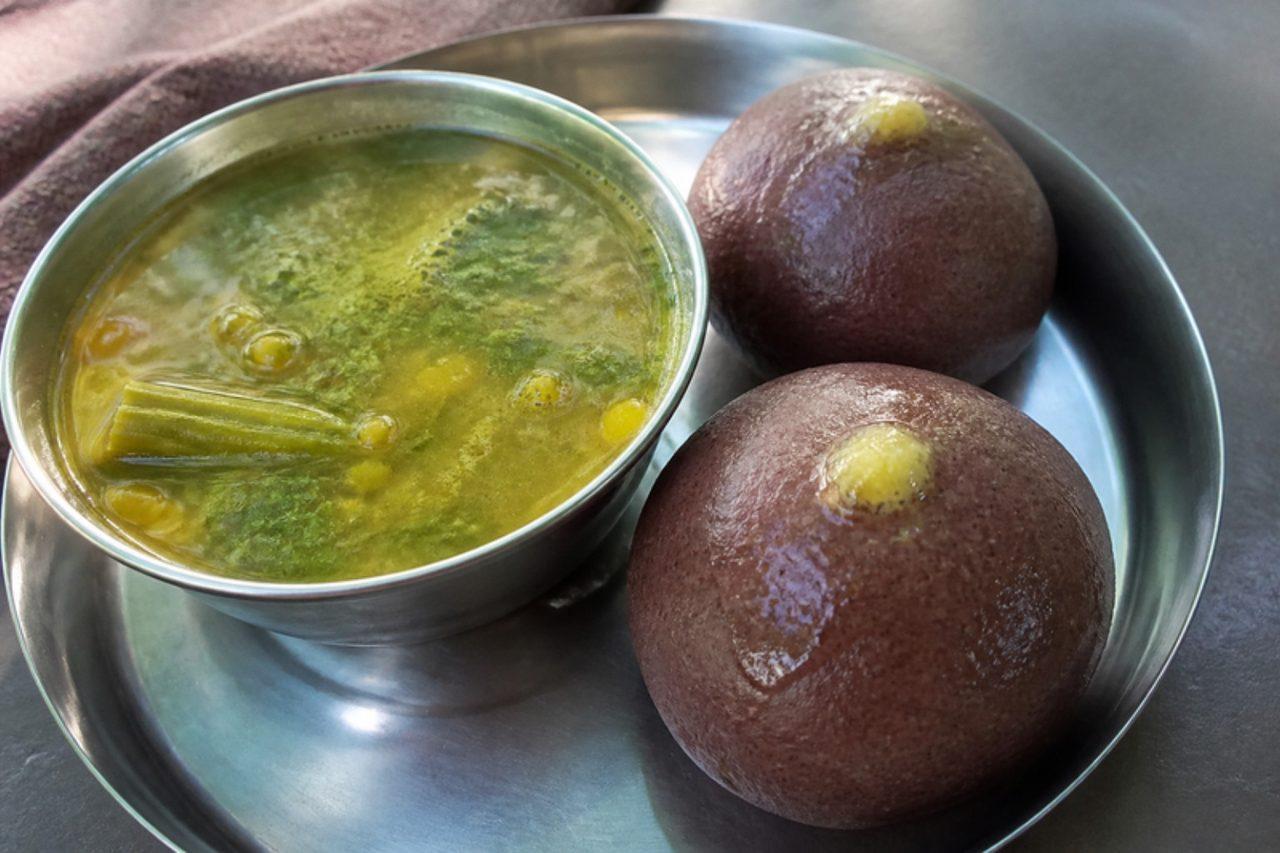
Ragi mudde with bassaru

In the villages around Mandya, Mysuru and Hassan, the farmers' lunch is ragi mudde: steaming balls of finger millet cooked into a firm, smooth dough, eaten with a thin, spicy bassaru. Bassaru literally means 'drained water': greens and dal are cooked together, the liquid is poured off and spiced into a peppery broth (the saaru), and the solids become a dry palya on the side. You pinch off a piece of mudde, roll it in the saaru and swallow it without chewing. It is filling, very nourishing and naturally gluten-free. Chef's tip: the wooden stick (mudde kolu) matters; stirring with the handle of a wooden spoon pushes the flour into the water and gets rid of lumps far better than a whisk.

by KrazyBadal 0 views

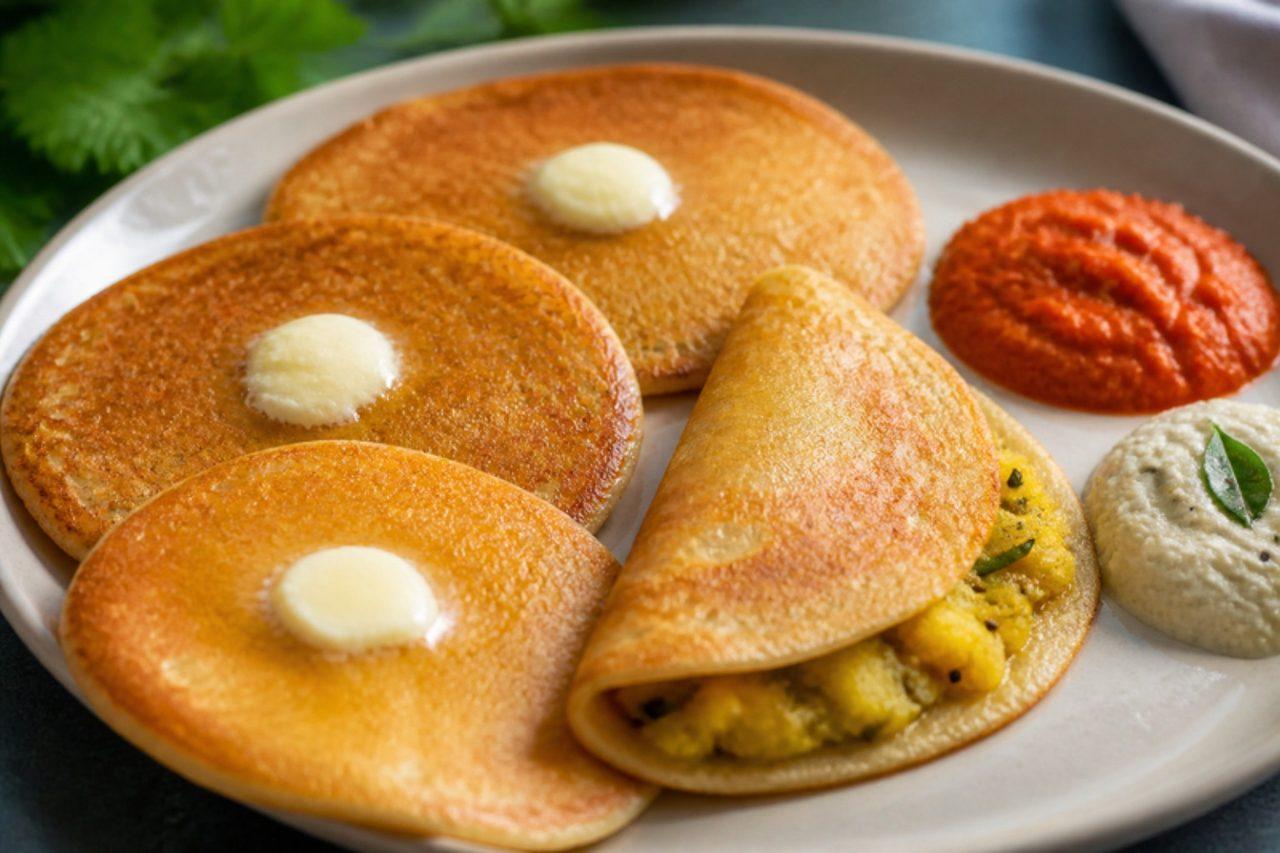
Davanagere benne dosa

Davanagere, a cotton-market town in central Karnataka, is famous for one thing above all: benne dosa, small, thick dosas cooked on a huge iron griddle with a generous lump of white butter melting over each one. The batter includes puffed rice (mandakki), which makes the inside soft and spongy while the base turns crisp and deep golden. In the town's busy dosa halls they arrive two at a time with a thin coconut chutney and a spoonful of potato palya tucked inside. It is breakfast, but many people eat it as an evening snack too. Chef's tip: use proper unsalted white butter if you can find it, and add it in two goes, half when the batter goes on and half just before folding, so the edges fry in butter rather than burn.

by KrazyBadal 0 views

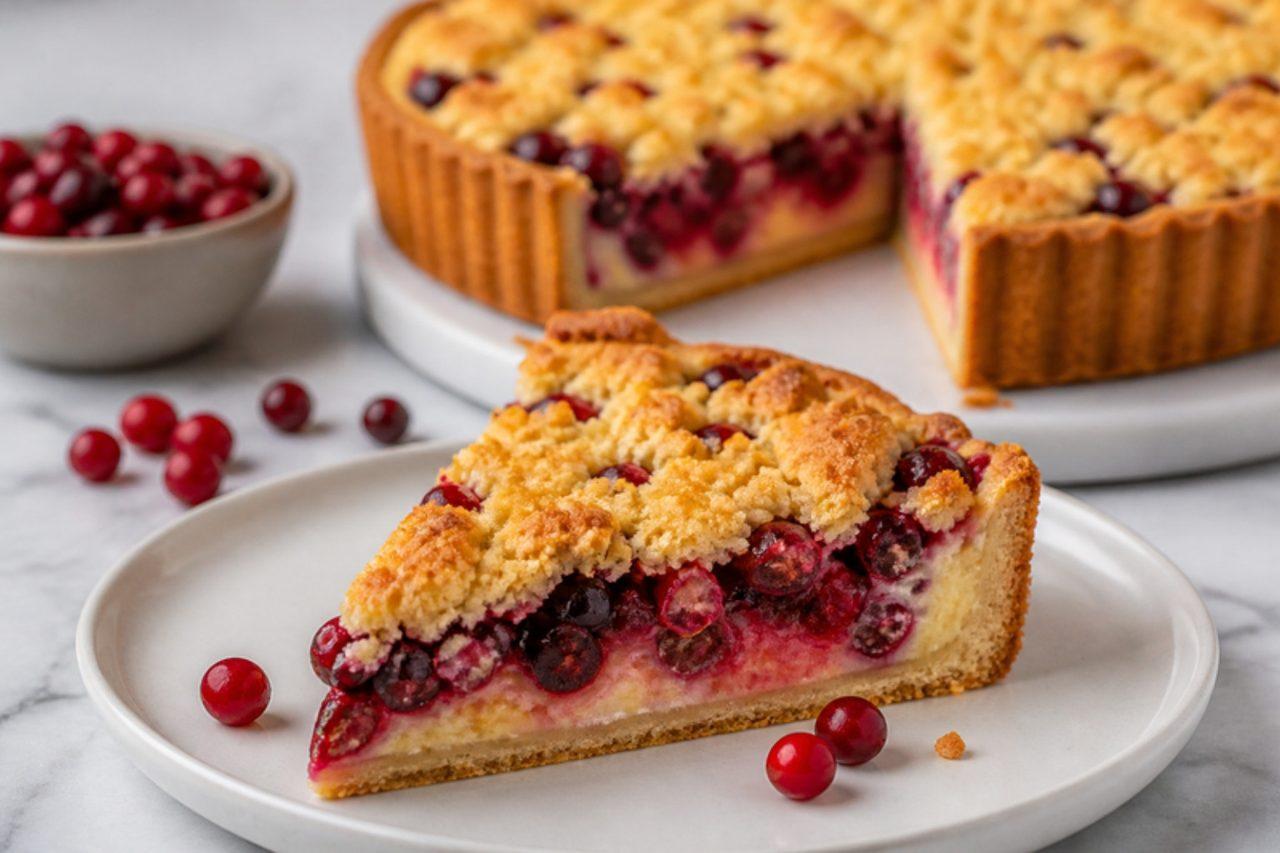
Kuchen de murta

Around Lake Llanquihue, in Frutillar and Puerto Varas, German settlers of the 1850s left Chile a love of kuchen, now served with coffee in every café of the south. The Chilean twist is the fruit: murta (Chilean guava), a small, red, perfumed berry that grows wild there in autumn. A buttery base holds the berries in a light custard under a crumble of butter and sugar. Outside Chile, cranberries with a few blueberries give a similar sharp-sweet balance. Chef's tip: blind-bake the base for 10 minutes first; a pre-set base stays crisp under the wet custard.

by KrazyBadal 0 views

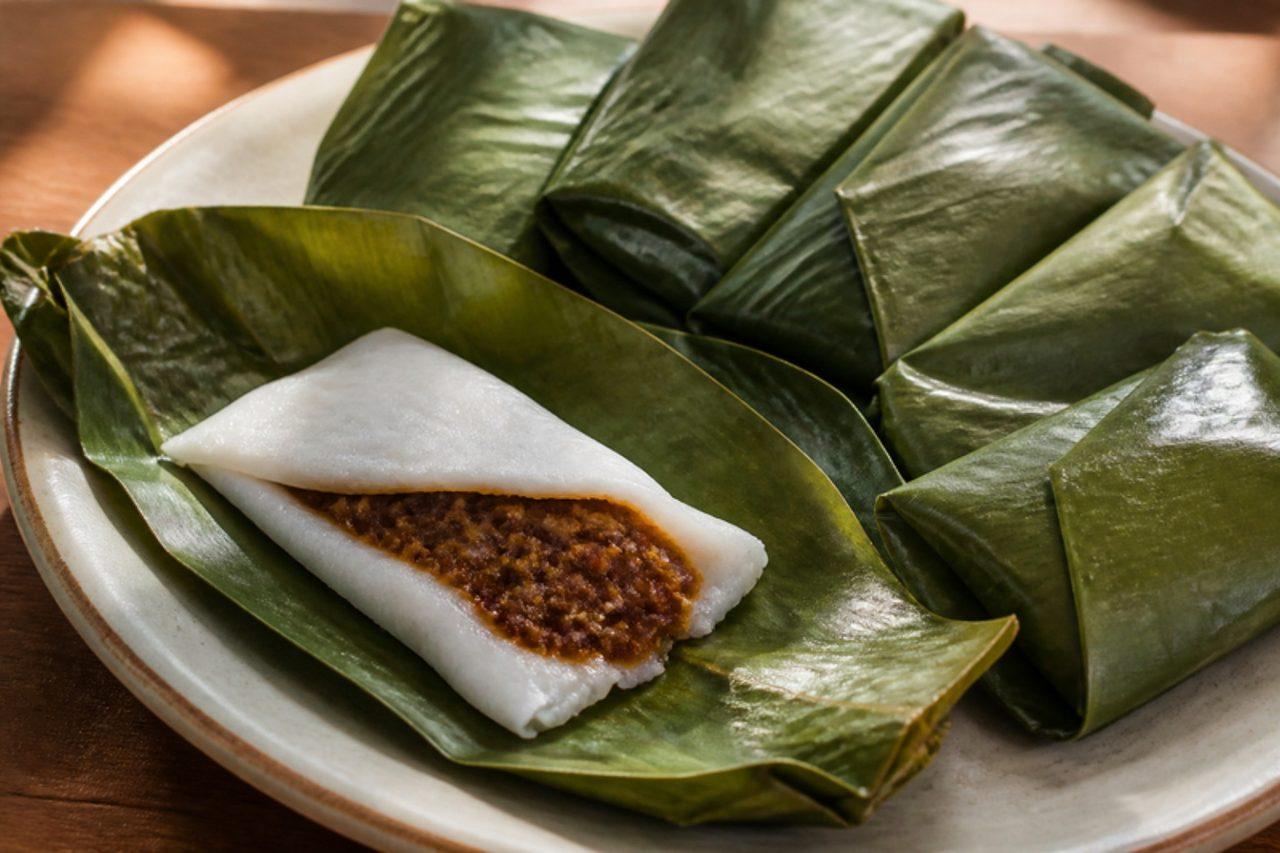
Patoleo

In August, when the monsoon makes turmeric leaves grow tall in Goan backyards, families make patoleo. Catholic households steam them for the Feast of the Assumption on 15 August, and Hindu families make the same sweet, called patoli, for Nag Panchami and Ganesh Chaturthi. A thin layer of rice paste is spread on a turmeric leaf, filled with fresh coconut and dark Goan jaggery, folded and steamed. The leaf leaves a sweet, gingery perfume on the rice that nothing else can copy, so look for fresh turmeric leaves in Indian grocers; banana leaves are a fair substitute. Chef's tip: spread the rice paste as thin as you can while still covering the leaf; thick patoleo are stodgy and the filling gets lost.

by KrazyBadal 0 views

Gyeongdan

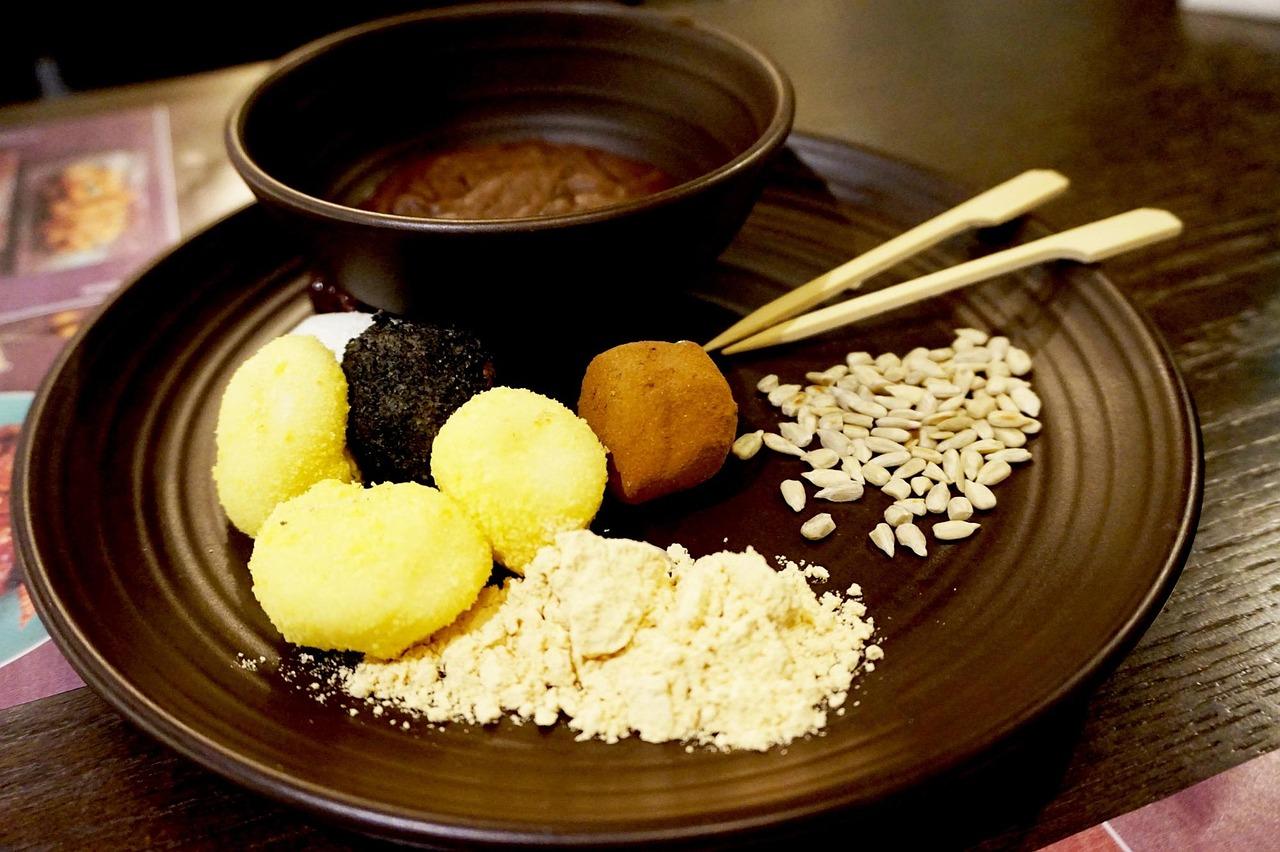
Gyeongdan (경단) are small balls of boiled glutinous rice dough, filled or plain, and rolled in coloured coatings: golden roasted soybean powder, black sesame, green or toasted coconut. In Seoul they are made for a baby's 100th day and first birthday, and sold in rice-cake shops all year in mixed boxes. They are only lightly sweet, soft and stretchy, best eaten the day they are made with a cup of barley tea. Children love rolling them. Chef's tip: mix the dough with very hot water a spoonful at a time; it should feel like soft play-dough, and if it cracks when you roll a ball it needs a little more.

by KrazyBadal 0 views

Gambas al ajillo

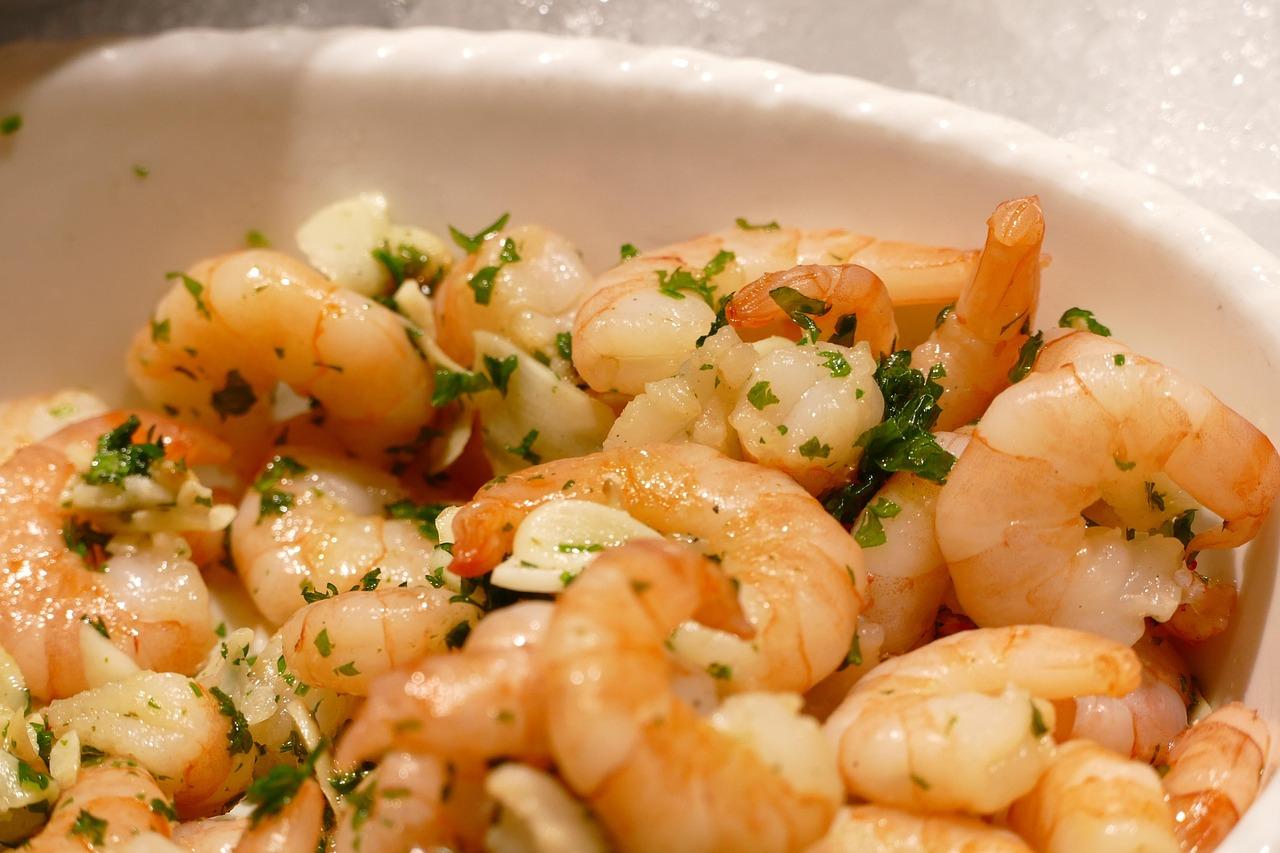
Walk into a bar near Madrid's Plaza Mayor or Puerta del Sol and you will hear gambas al ajillo before you see them: peeled prawns still spitting in a small terracotta cazuela of olive oil, sliced garlic and dried chilli. They arrive at the table bubbling, with a basket of bread for mopping up the golden oil, which many people think is the best part. At home it takes ten minutes and works as a tapa for four or a quick supper for two. Chef's tip: pat the prawns completely dry with kitchen paper before they go in, so they sizzle in the oil instead of stewing in their own water.

by KrazyBadal 0 views

Locro de papa

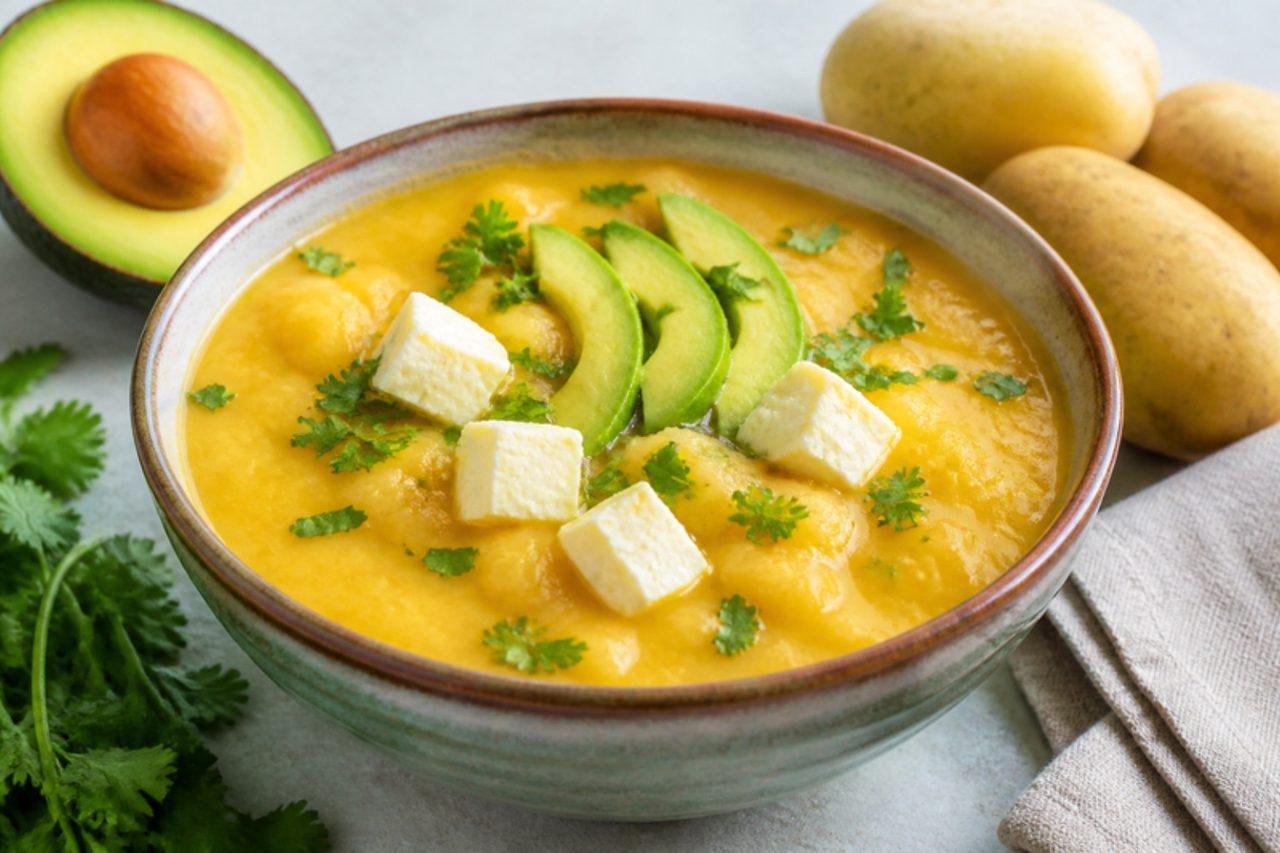
Locro de papa is Quito's comfort soup, eaten on cold afternoons in the Andean highlands where nights drop near freezing. Potatoes are cooked until half of them dissolve into a thick, achiote-tinted broth, then finished with milk and cubes of fresh cheese that soften into strings. Bowls are crowned with avocado slices and served with ají (chilli sauce) on the side. Ecuador uses two potatoes, a floury one to thicken and a waxy one to hold its shape. Chef's tip: add the cheese off the heat; it should soften and go stretchy, not melt into an oily layer.

by KrazyBadal 0 views

Jolada rotti with ennegai

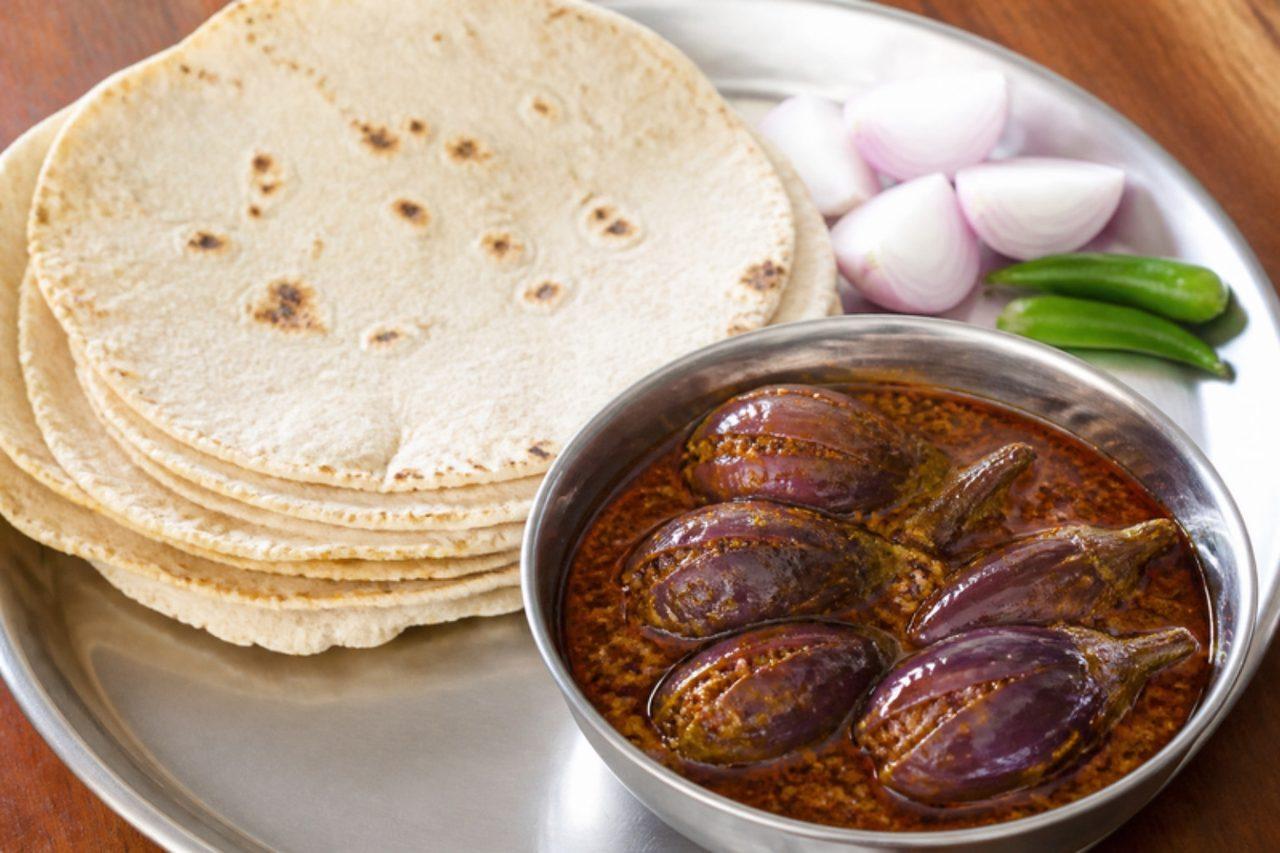
Across Hubballi, Dharwad, Vijayapura and the dry plains of north Karnataka, a meal means jolada rotti: thin, crisp sorghum flatbreads slapped out by hand, often by the hundred and stored in cloth to eat with everything. Their best-loved partner is ennegai, which means 'oil vegetable': small brinjals slit and stuffed with roasted peanuts, sesame, dry coconut and spices, then cooked slowly in plenty of oil until they collapse into a thick, nutty gravy. It is wedding food, field food and Sunday food, with raw onion, a wedge of lemon and spicy chutney powder on the side. Chef's tip: use boiling water for the jowar dough; it gelatinises the flour slightly, so the rotti holds together without any wheat.

by KrazyBadal 0 views

Sarva pindi

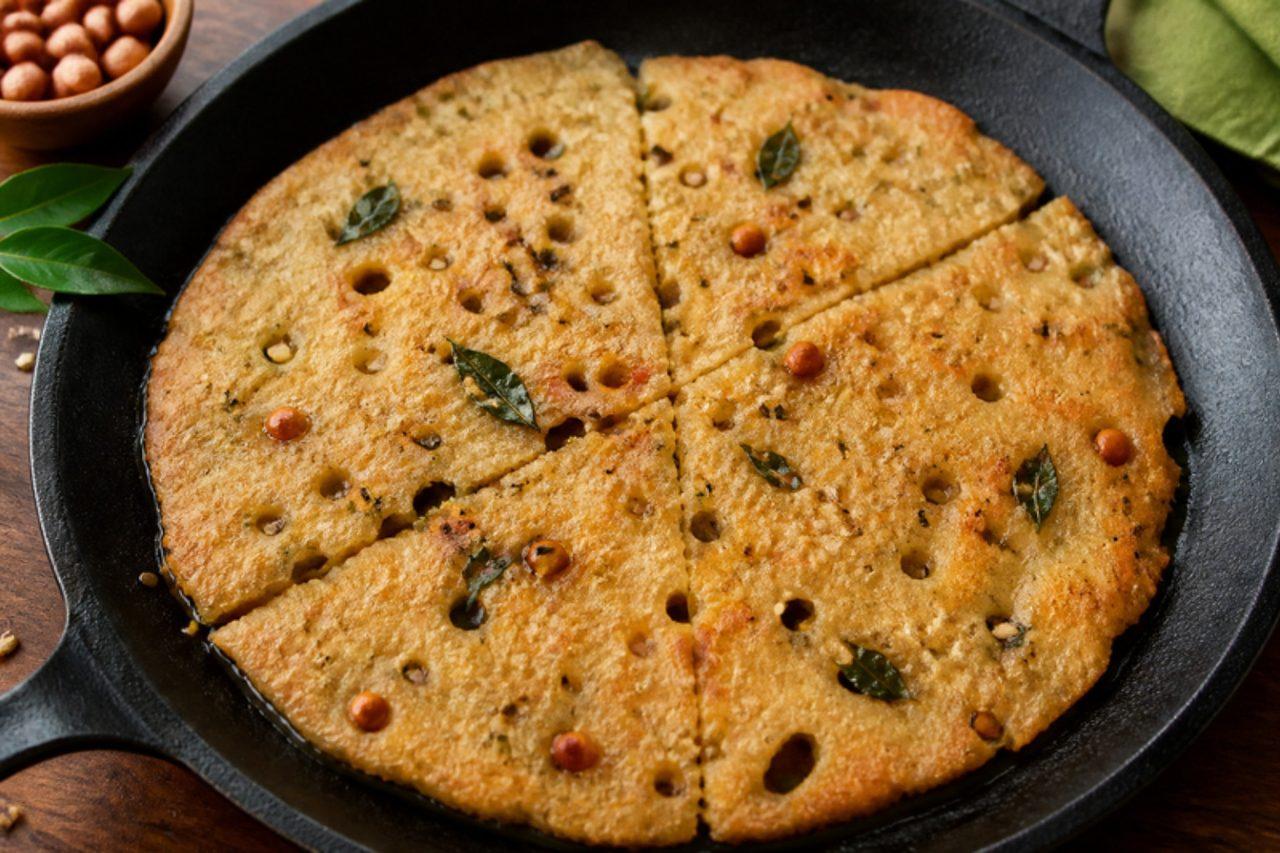
Sarva pindi, also called ginne appa or tapala chekka, is a thick, crisp rice-flour bread from rural Telangana, pressed by hand into a heavy pan, studded with holes and baked slowly in oil until the base is golden and crunchy. The dough is full of soaked chana dal, peanuts, sesame, green chilli, curry leaves and coriander, so every bite is savoury and nutty. It is the snack that waits on the stove when children come home from school, and a favourite for Sankranti and long train journeys because it keeps well. Chef's tip: press the dough into a cold pan, not a hot one; it spreads evenly and the holes stay open as it heats.

by KrazyBadal 0 views

Mote con huesillo

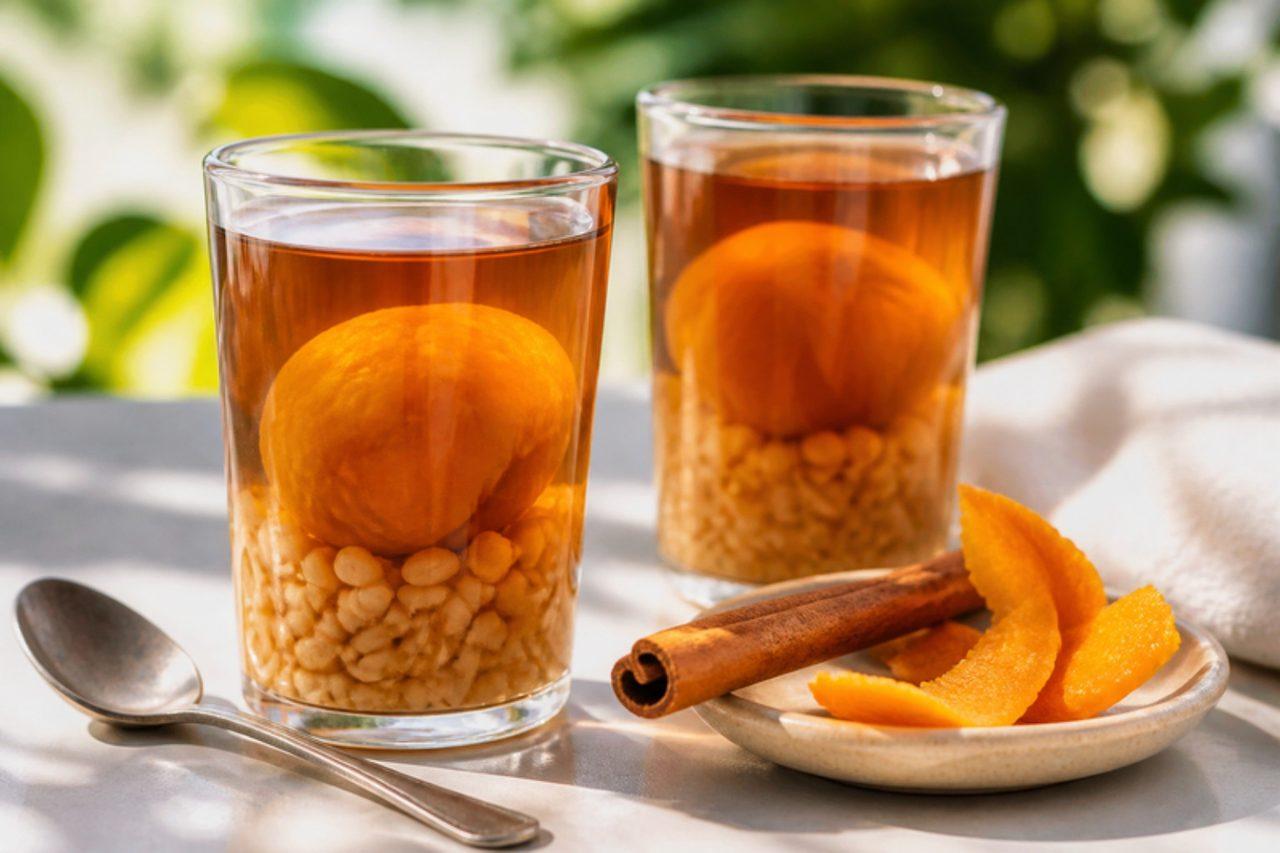
Mote con huesillo is Chile's summer refresher, sold in tall glasses from street carts on Santiago's Cerro San Cristóbal and at beaches up and down the coast. Huesillos are whole sun-dried peaches, soaked and simmered in a cinnamon caramel syrup; mote is husked wheat cooked until chewy. You drink the cold amber nectar and eat the wheat and peach with a long spoon. Chef's tip: soak the peaches overnight and cook them in their soaking water; that water carries much of the peach flavour.

by KrazyBadal 0 views

Spas

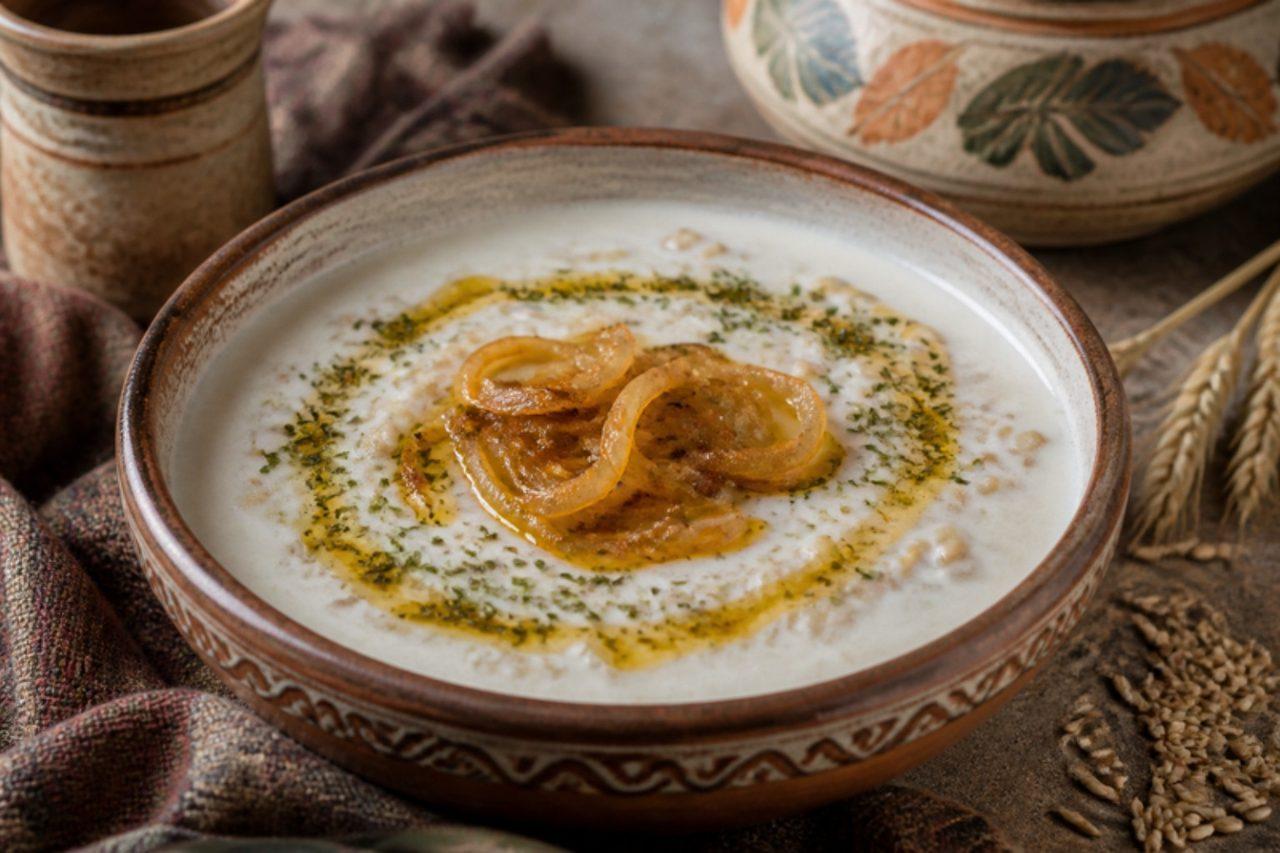
Spas is the yogurt soup of the Armenian highlands, eaten hot through the cold winters of Shirak and Gyumri and cold from the fridge in summer, when it tastes like a thick, savoury ayran. The base is tangy matsun (Armenian yogurt) thickened with egg and a little flour so it can boil without curdling, with plump grains of hulled wheat (dzavar) and a swirl of onions fried in butter with dried mint. Families make it for an ill relative, for a quick supper, and as a gentle start to a long feast. Serve with lavash and fresh herbs. Chef's tip: stir in one direction only, without stopping, until the soup comes to the boil; Armenian grandmothers swear by it, and steady stirring really is what keeps the yogurt smooth.

by KrazyBadal 0 views

Akki rotti

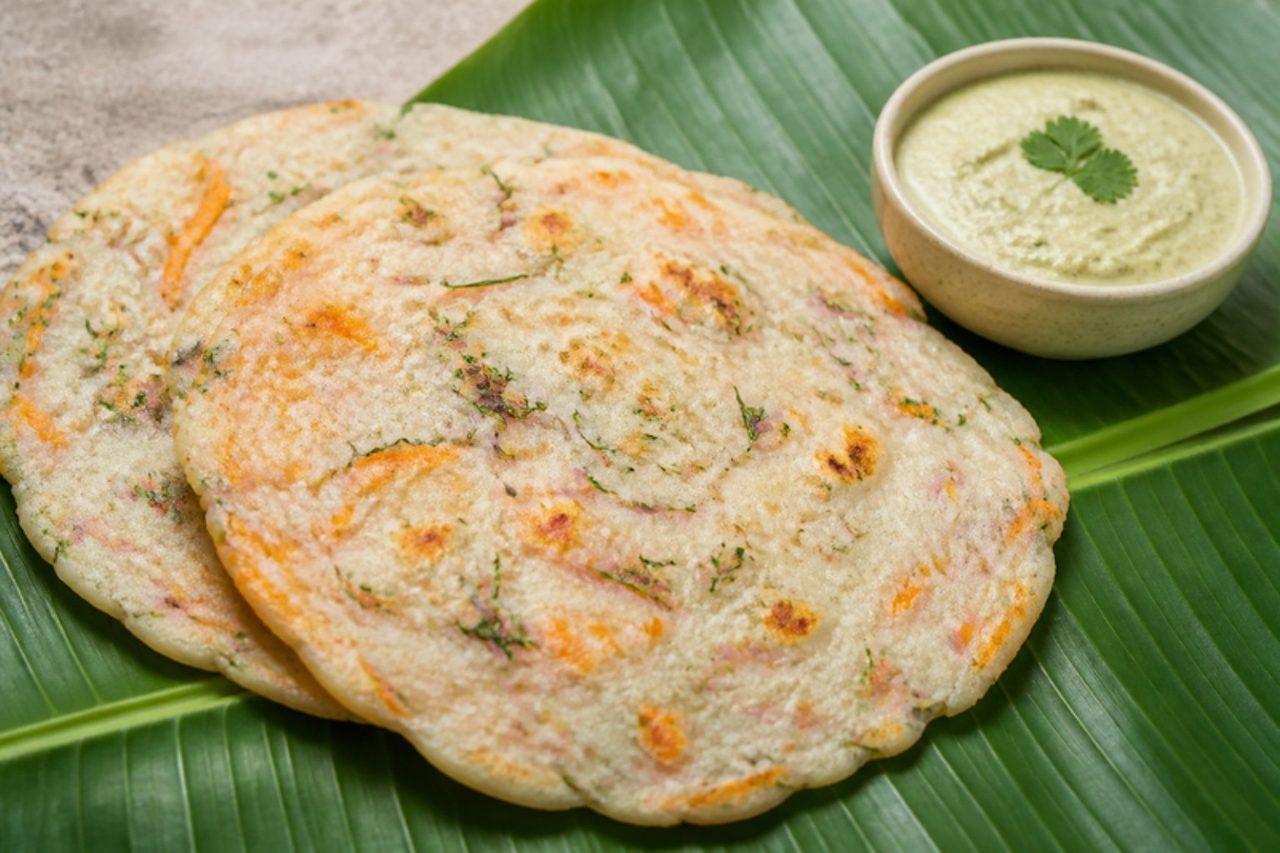
Akki rotti is the breakfast of Bengaluru and the old Mysore country: rice flour mixed with grated vegetables, dill, coconut and green chilli, patted out thin by hand straight onto a cold pan, then cooked until speckled and crisp at the edges. Every home has its own mix; dill (sabbasige soppu) is the classic flavour, but cucumber, carrot or fenugreek all turn up. It is eaten hot off the pan with coconut chutney or a dab of ghee and spicy chutney powder, and it is naturally gluten-free. Chef's tip: work with two pans in turn, patting the next rotti onto a cooled pan while the first one cooks; patting onto a hot pan burns your fingers and gives an uneven rotti.

by KrazyBadal 0 views

Neer dosa

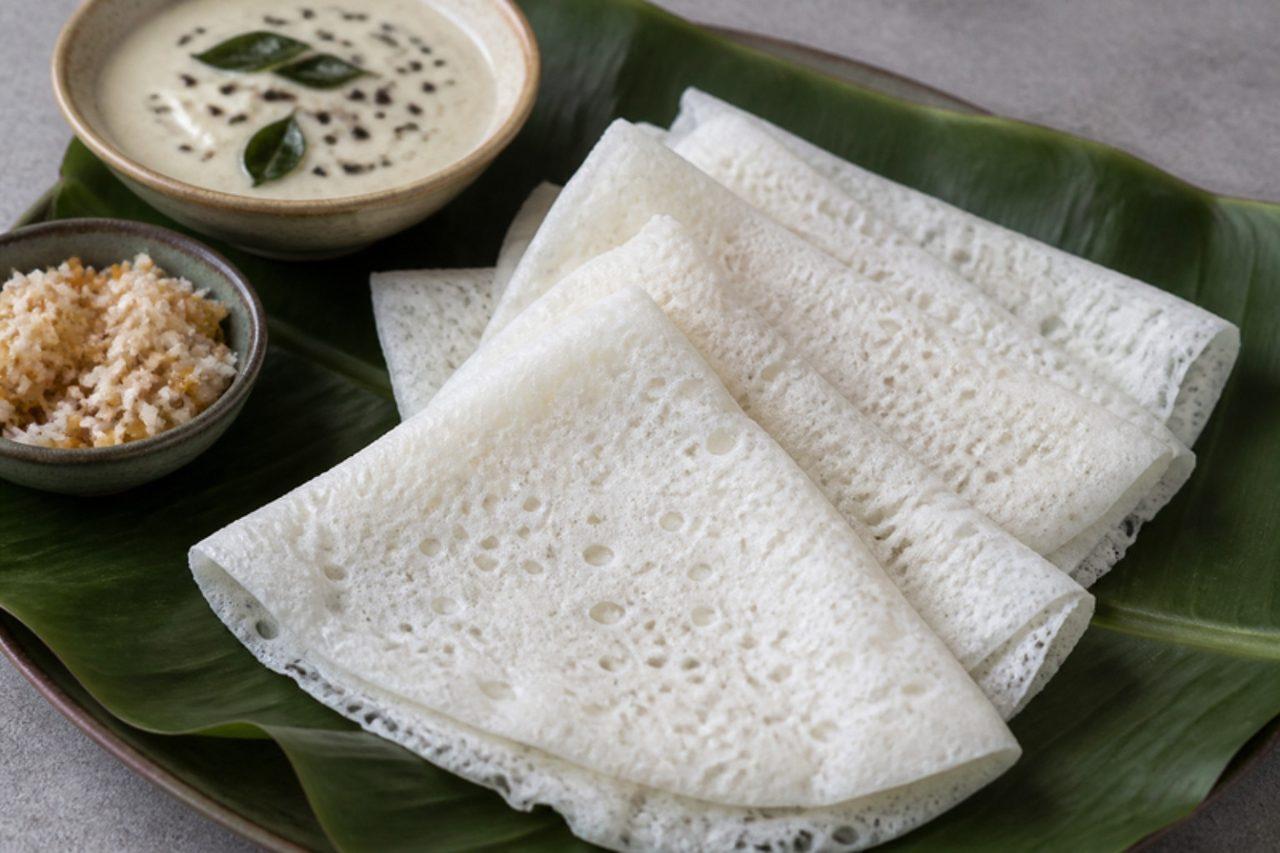
Neer means water in Tulu and Kannada, and that is the whole idea: a batter as thin as milk, poured onto a hot pan where it sets into a soft, lacy crêpe full of tiny holes. In Mangaluru and Udupi homes it is made fresh for breakfast or a Sunday lunch, folded into quarters and eaten warm with coconut chutney, a vegetable sagu, or simply with grated coconut and jaggery for children. Unlike most dosas, the batter is not fermented, so you can soak rice in the morning and eat by lunchtime. The crêpes are pale white, never browned, and should be tender enough to fold without cracking. Chef's tip: stir the batter from the bottom before every single dosa; the rice settles within a minute, and a batter poured from the top runs too thin and tears.

by KrazyBadal 0 views

Pebre

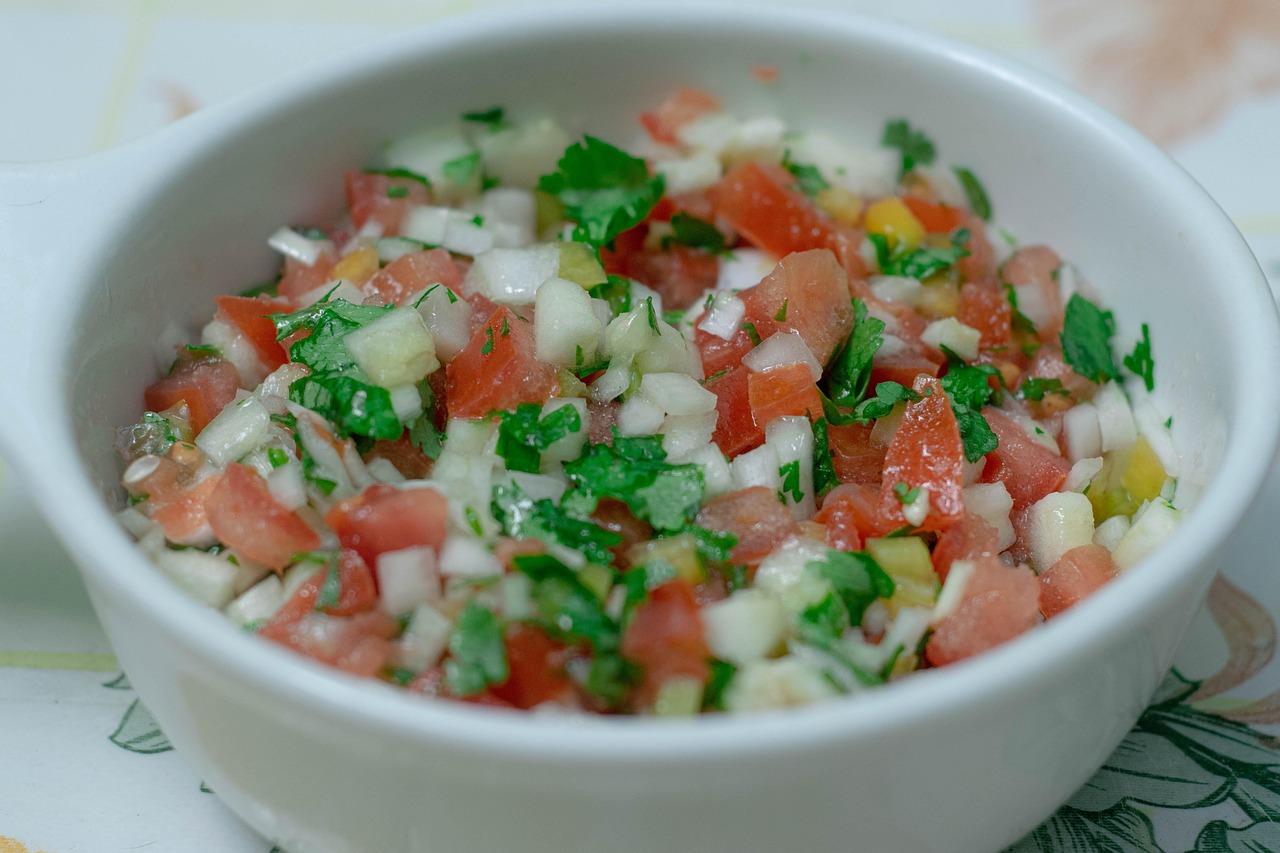
Every Chilean asado and every basket of warm bread in a picada (simple eatery) comes with pebre: a fresh relish of finely chopped coriander, onion, tomato and ají verde (green chilli) loosened with oil and a splash of vinegar. In Santiago it's spooned on marraqueta bread while waiting for the grill, and on sopaipillas in winter. It's more herb-heavy and oilier than Mexican pico de gallo. Chef's tip: rinse the chopped onion in cold water and drain it well; it takes away the harsh bite without losing crunch.

by KrazyBadal 0 views

Bebinca

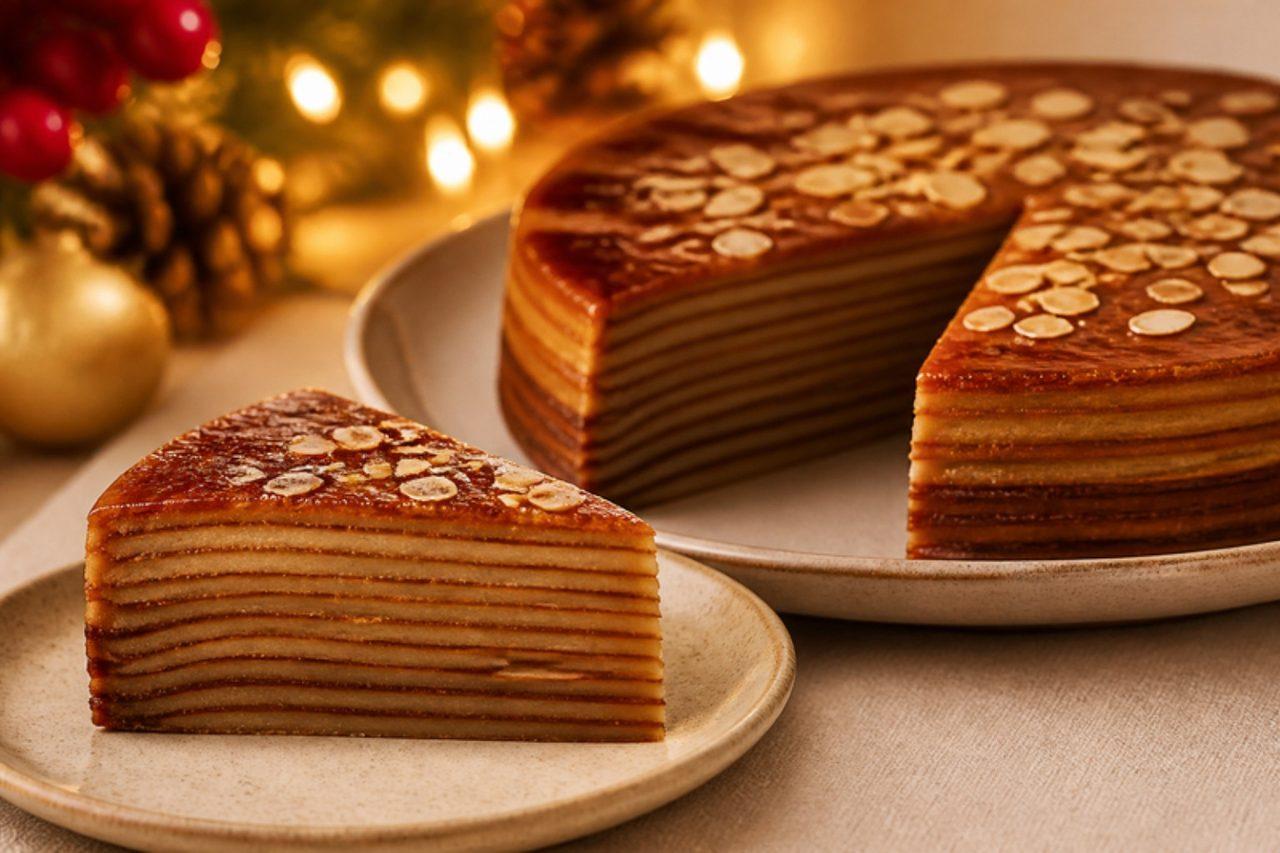
No Goan Catholic Christmas, wedding or feast is complete without bebinca, the 'queen of Goan desserts'. A rich batter of coconut milk, egg yolks, sugar and a little flour is cooked one thin layer at a time under the heat, each layer brushed with ghee before the next is poured on, so the finished cake shows dark-and-light stripes when sliced. Traditionally it was baked over coconut-husk fire with coals on the lid and had sixteen layers; a home grill makes eight to ten easily in an afternoon. It's rich, dense and fudgy, and keeps for a week. Serve thin slices at room temperature, or warm with vanilla ice cream. Chef's tip: make each layer the same thin pour; a thick layer stays raw in the middle while its top burns.

by KrazyBadal 0 views

Kanelbullar

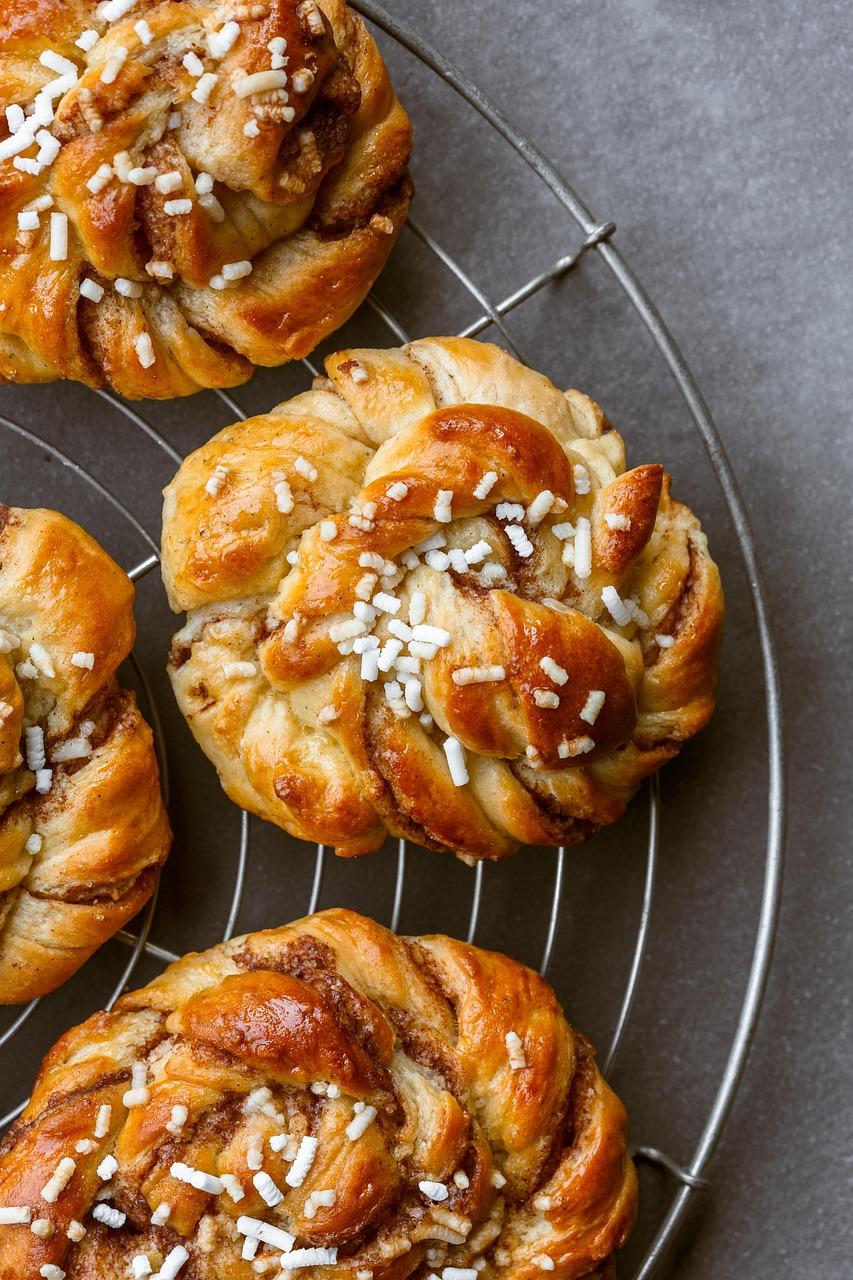
Every Swedish café from Malmö to Kiruna keeps a tray of kanelbullar by the till, and on 4 October, Kanelbullens dag, bakeries can barely keep up. They belong to fika, the mid-morning or afternoon pause for coffee and something sweet. Unlike the big, iced American roll, a Swedish bun is modest and buttery: the dough is perfumed with freshly crushed cardamom, the filling is a thin smear of cinnamon butter, and the top gets a scatter of crunchy pearl sugar instead of frosting. This version shapes them into knots, the way Stockholm bakers do, though plain spirals baked in paper cases are just as traditional at home. Chef's tip: crush the cardamom seeds yourself just before mixing; ready-ground cardamom loses most of its scent within weeks and the buns will taste only of cinnamon.

by KrazyBadal 0 views

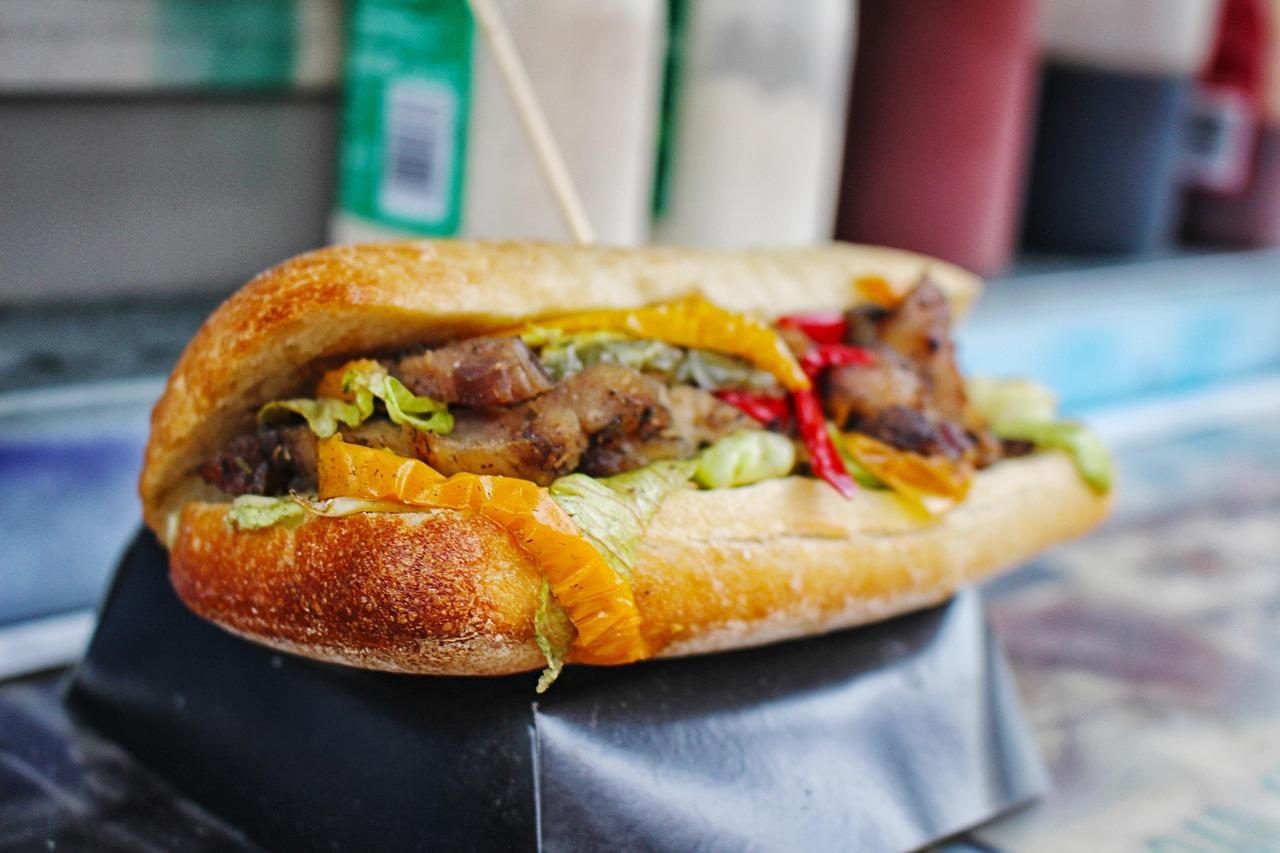
Banh mi

On Saigon pavements at breakfast time, bánh mì carts with glass cases are stacked with light, crackly rolls, tubs of pickles and trays of pâté and pork. The bread came with the French, but the filling is entirely Vietnamese: a smear of liver pâté and mayonnaise, cold cuts or lemongrass-grilled pork, sweet-sour carrot and daikon, cucumber, coriander and fresh chilli, with a splash of savoury seasoning sauce. It's eaten on the move, often on the back of a motorbike. This is the meat version; there is also a lemongrass tofu bánh mì on the site. Chef's tip: choose the lightest, airiest baguettes you can find, as a dense French loaf squeezes the filling out the sides.

by KrazyBadal 0 views

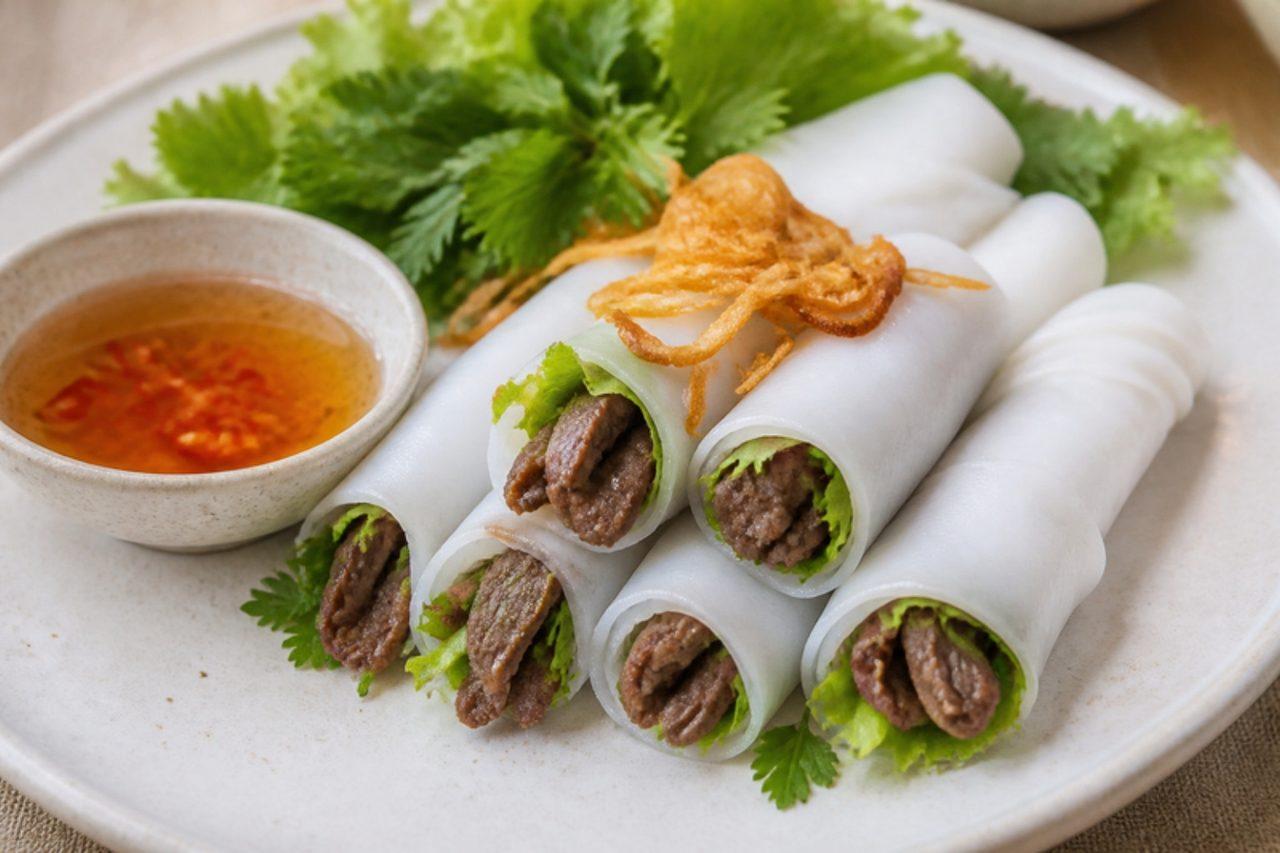
Pho cuon

On Ngũ Xã, a little island of streets between Trúc Bạch lake and West Lake in Hanoi, whole rows of restaurants sell nothing but pho in different shapes, and phở cuốn is the one people order by the plateful in the evening. Instead of cutting the fresh rice-noodle sheet into ribbons, the cooks leave it whole and roll it round seared beef, lettuce and herbs. The rolls are soft, cool and slightly chewy, and you dip them in a light, sweet fish sauce with pickled carrot. Look for fresh rice-noodle sheets in the chiller of an Asian supermarket, often sold for Chinese ho fun. Chef's tip: if the sheets are stiff from the fridge, steam or microwave them for 30 seconds under a damp cloth before separating, or they tear.

by KrazyBadal 0 views

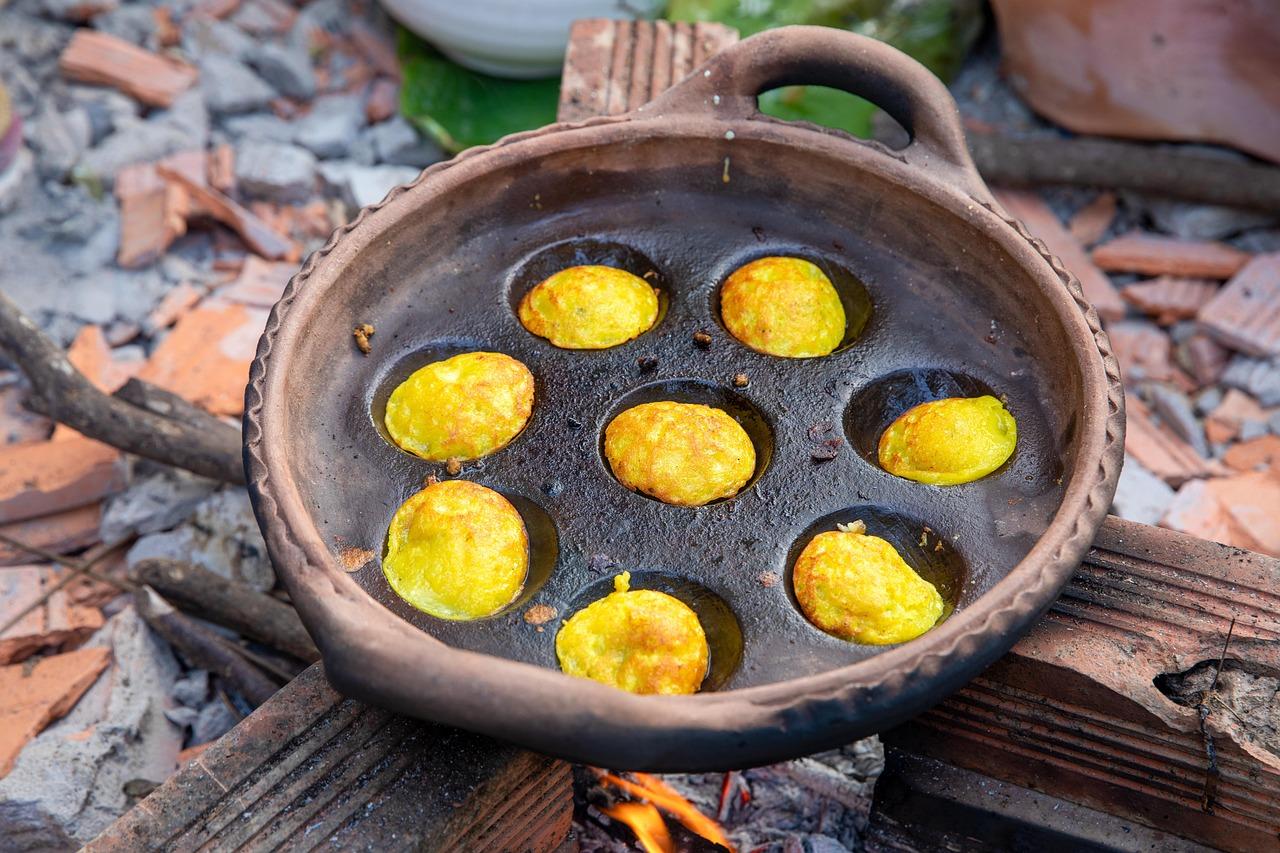
Banh khot

Weekend visitors from Saigon who drive down to the beach town of Vũng Tàu make a point of eating bánh khọt at open-air stalls, where cooks tend rows of dimpled clay or cast-iron pans over charcoal. The batter of rice flour, coconut milk and turmeric fries into bite-sized cups with a shatteringly crisp base and a soft, custardy top, each finished with a small shrimp and spring onion oil. You wrap them in mustard greens or lettuce with herbs and dip them in sweet-sour fish sauce. At home, an aebleskiver or takoyaki pan works well. Chef's tip: cover the pan for the first minute so steam sets the tops, then uncover so the bottoms crisp in the oil.

by KrazyBadal 0 views

Showing 45 of 4,484 recipes

Show more recipes

Page 232 of 499