



Skip to content
Fororo
Featured recipe

Fororo

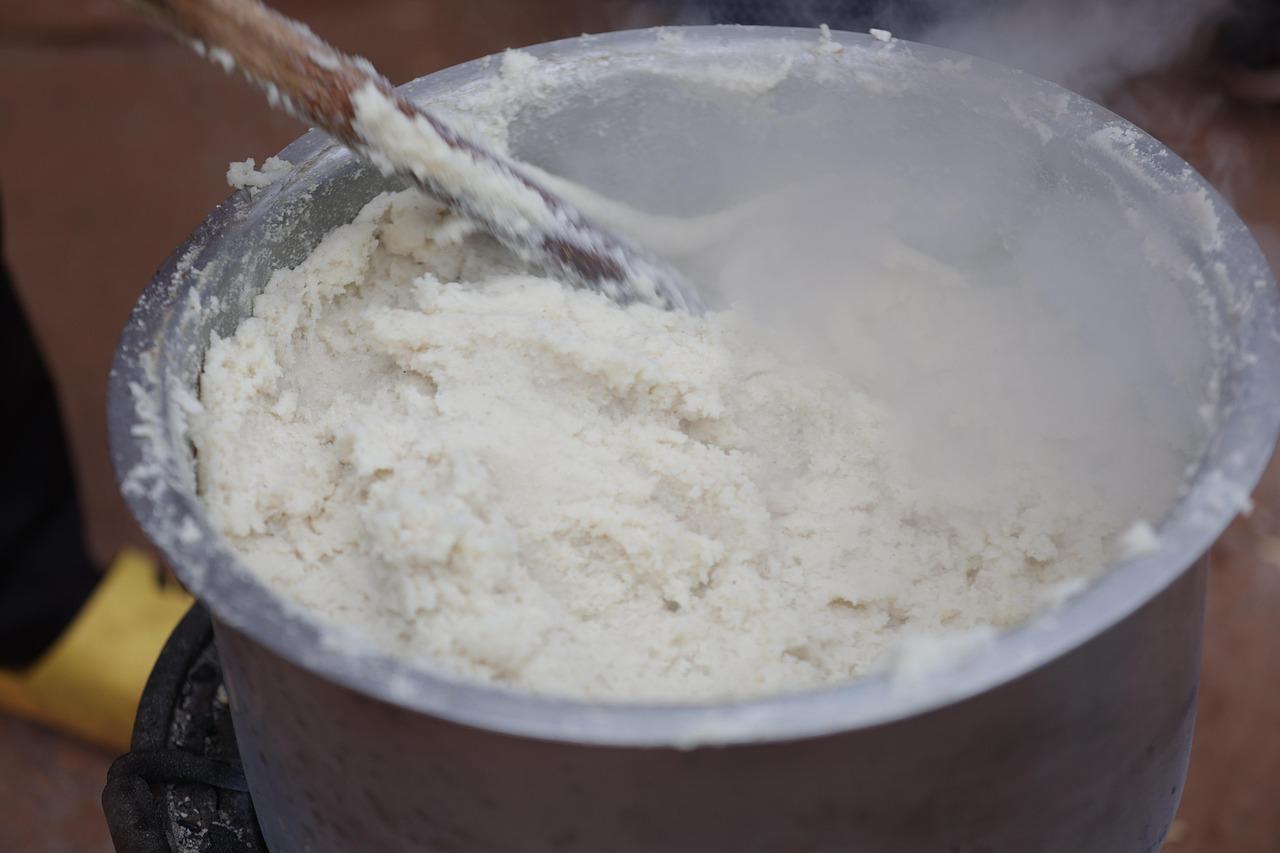
Toasted corn porridge

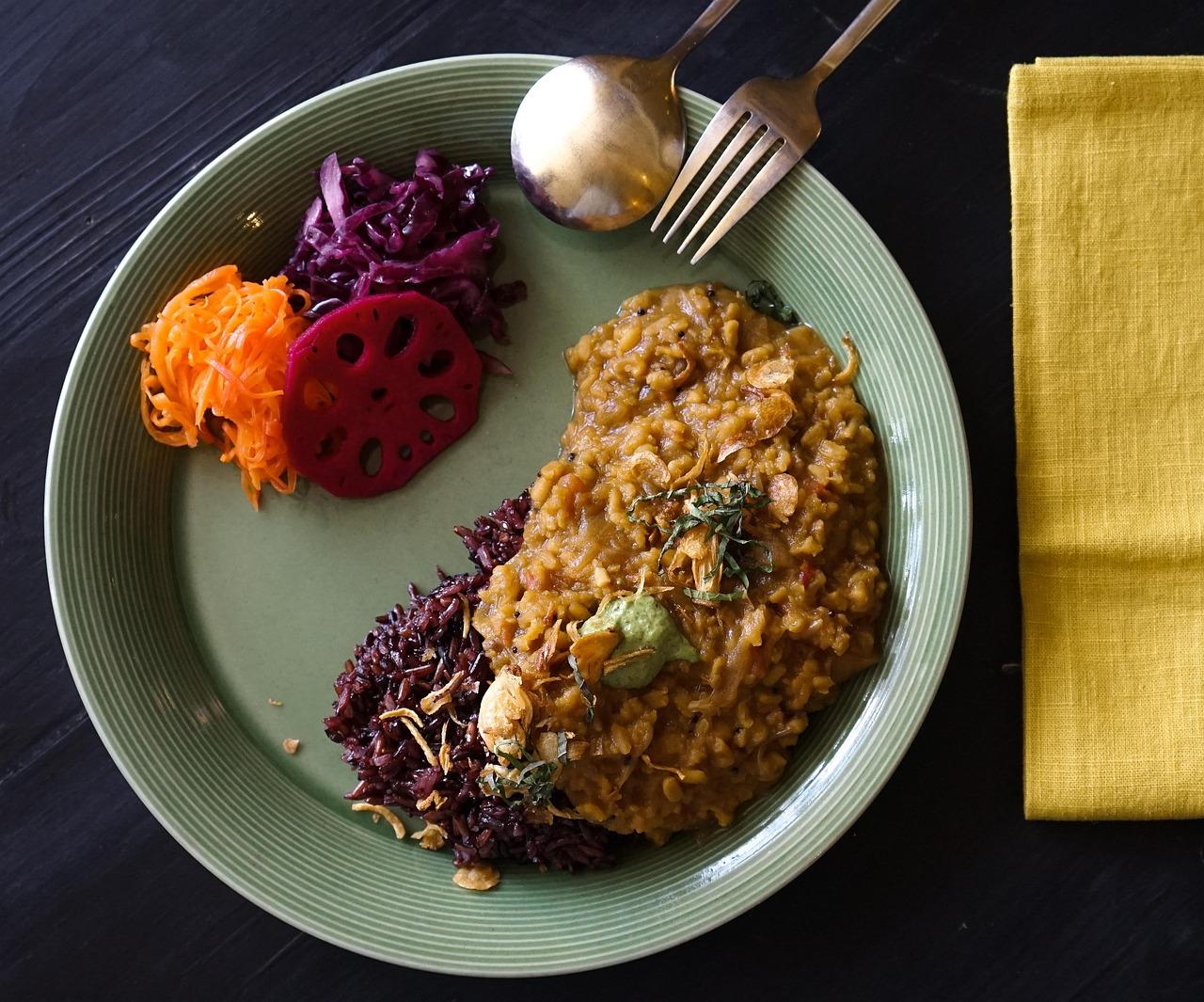
Fororo is the name for finely ground toasted corn, and for the smooth porridge made from it that grandmothers in Lara, Barinas and the rest of the Llanos give to children before school or to anyone feeling under the weather. It tastes gently nutty, like warm popcorn in a cup, sweetened with panela and scented with cinnamon. If you can't find fororo flour, toasting fine cornmeal in a dry pan gives the same result. The common mistake is tipping the flour straight into hot milk, which makes lumps. Chef's tip: whisk the flour into a little cold milk first, then pour it into the pot.

Read more 1 views

What to eat today?

Around the world

Today's trip: Persian

A new country every day, from every cuisine on the site.

Persian

Nazkhatoon

Smoky aubergine with pomegranate 40 minMore from Persian (131) →

This week's collection

Kid-friendly dinners
541 recipes · a new collection every Monday

Latest recipes

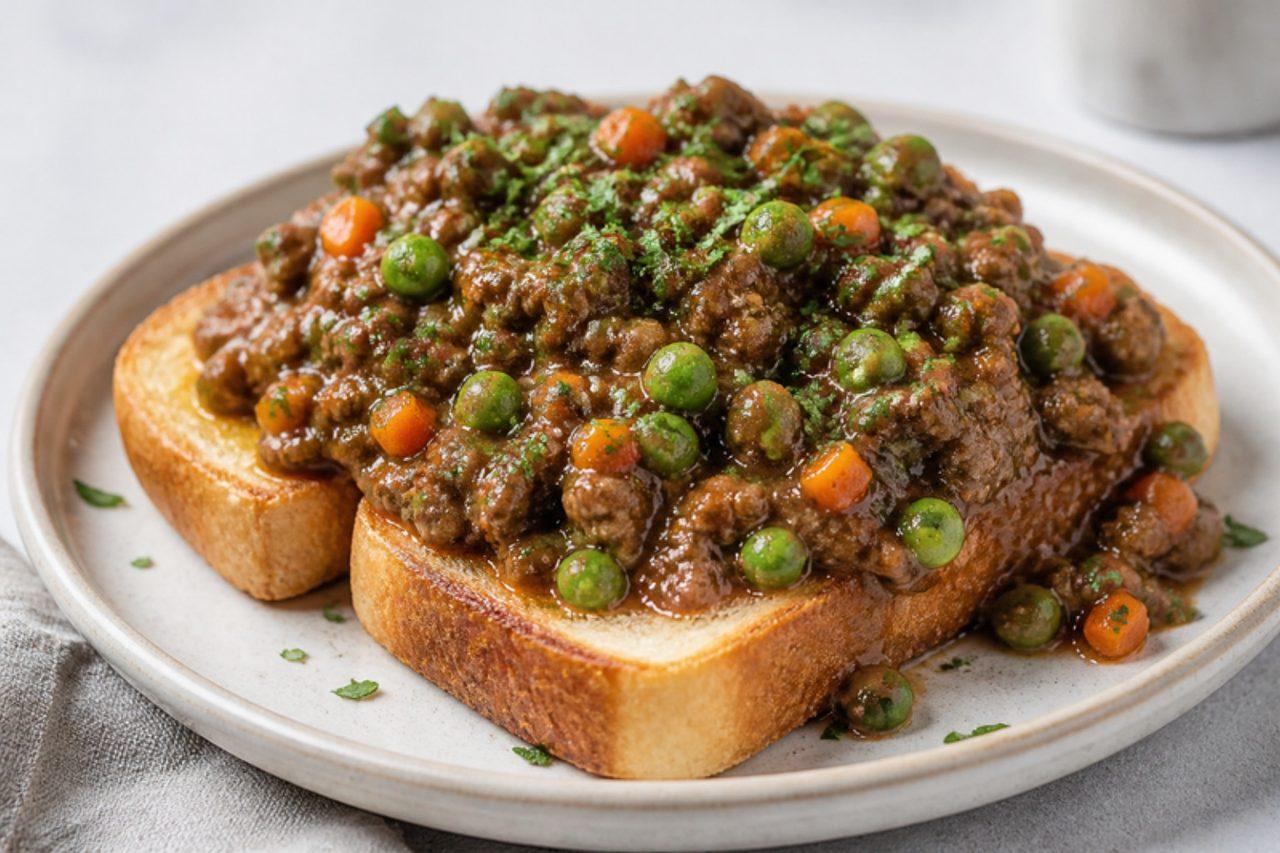
Mince on toast

Mince on toast is pure Kiwi comfort: a weeknight tea in homes from Invercargill to Auckland, and lately a proud fixture on café brunch menus, where it comes with a poached egg on top. Beef mince is browned hard, simmered with onion, grated carrot and a glug of Worcestershire sauce into a thick savoury gravy, then finished with peas and piled onto buttered toast. It's quick, cheap and kids love it. The usual mistake is stirring the mince constantly in a crowded pan, so it steams grey instead of browning; let it sit and catch colour. Chef's tip: grate the carrot instead of chopping it; it melts into the gravy and sweetens it without anyone noticing the vegetables.

by KrazyBadal 0 views

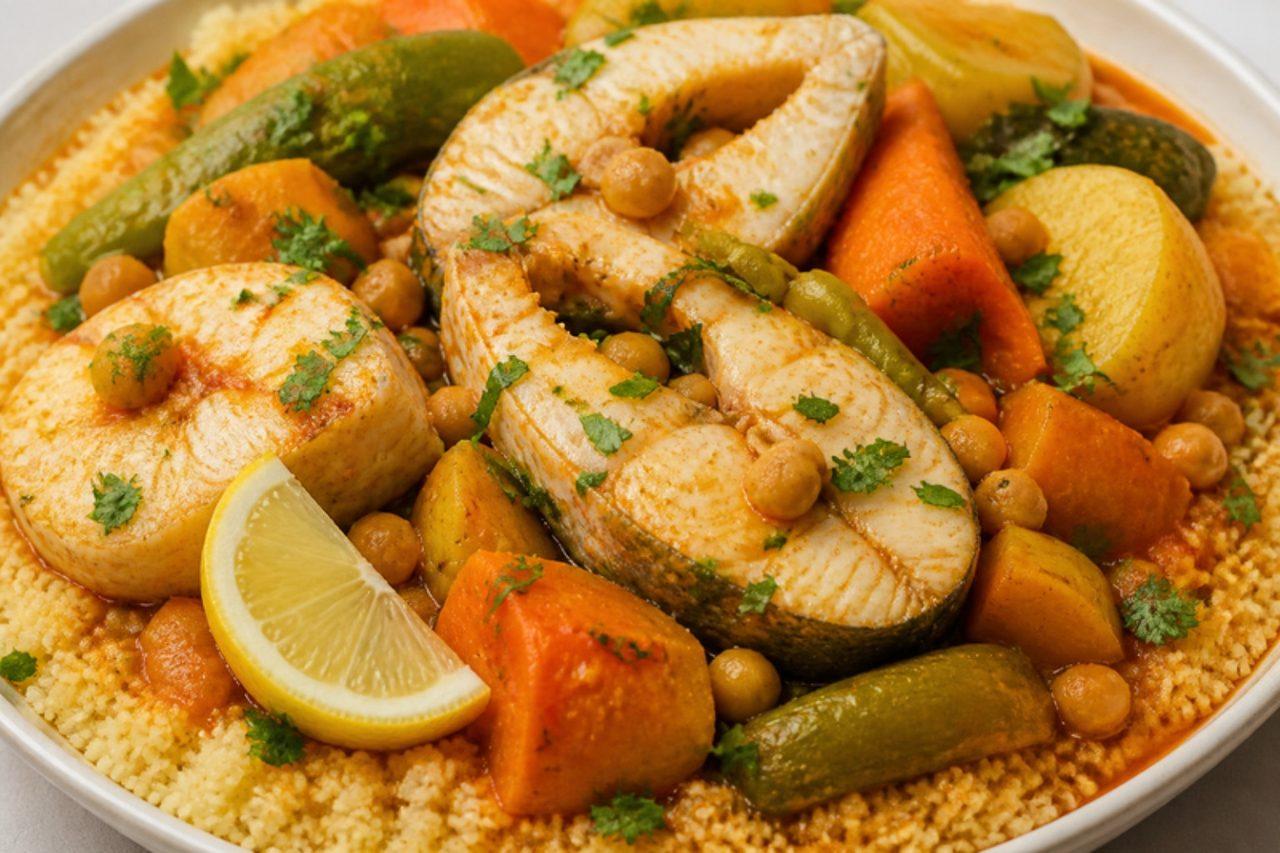
Tunisian fish couscous

On Tunisia's coast, especially in Sfax, Mahdia and the fishing towns of Cap Bon, couscous for Friday lunch is made with fish instead of meat: a red, peppery broth of tomato, harissa and caraway in which the vegetables cook first and the fish is poached at the end, while the couscous steams on top. The broth is ladled over the grains at the table until they glisten. The mistake is boiling the fish too long, so it breaks into the broth; poach it gently for the last 10 minutes only. Chef's tip: oil and rub the couscous between your palms before and after the first steaming so every grain stays separate.

105 minTunisianFishSpicy
by KrazyBadal 0 views

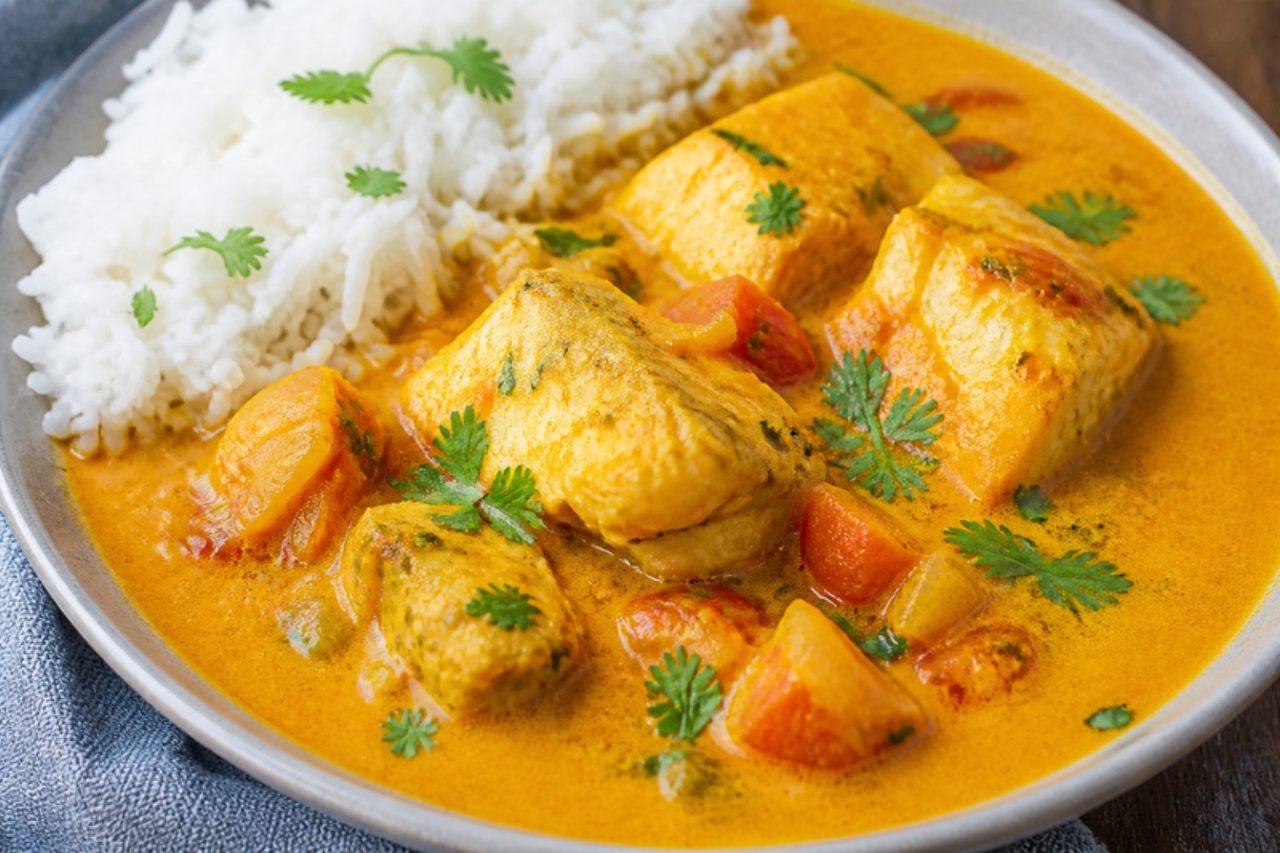
Zanzibar fish curry

Mchuzi wa samaki is cooked in homes all along the Swahili coast, from Mombasa and Lamu to Stone Town in Zanzibar, where the spice trade left cumin, cardamom and turmeric in every kitchen. Firm fish simmers briefly in a sauce of tomato, onion and coconut milk soured with tamarind, and it is eaten with plain rice or chapati. The mistake is stirring once the fish is in, which breaks it up; shake the pan gently instead. Chef's tip: rub the fish with turmeric, lime and salt for 15 minutes first, which firms it and seasons it all the way through.

by KrazyBadal 0 views

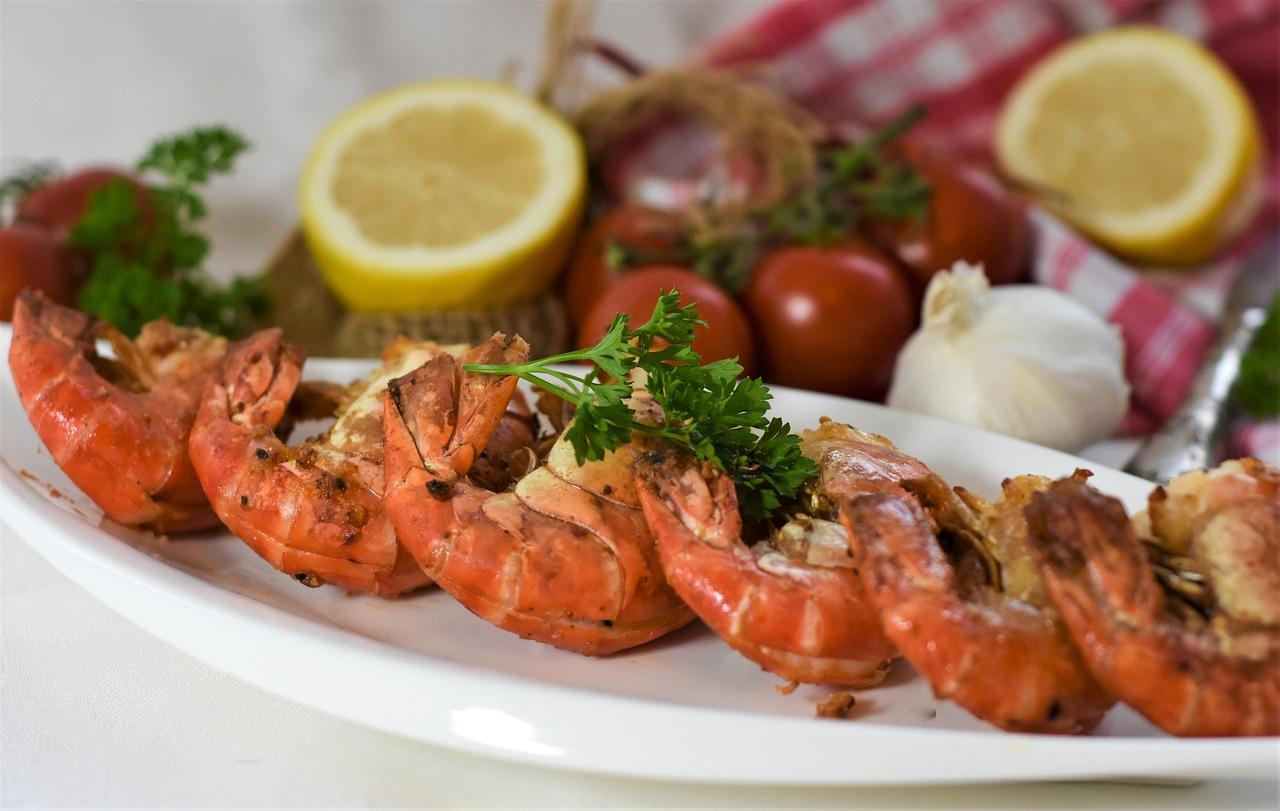
Mozambique peri-peri prawns

Maputo's waterfront restaurants and the beach shacks of Inhambane and Vilanculos are famous for their prawns: big shell-on prawns split down the back, painted with a sauce of piri-piri chilli, garlic, lime and butter and grilled over coals until the shells blister. You eat them with your fingers, sucking the sauce off the shells, with bread or chips. The mistake is overcooking, which turns them rubbery; they need only 2–3 minutes a side. Chef's tip: split the prawns through the shell and remove the dark vein, so the sauce gets right into the flesh.

by KrazyBadal 0 views

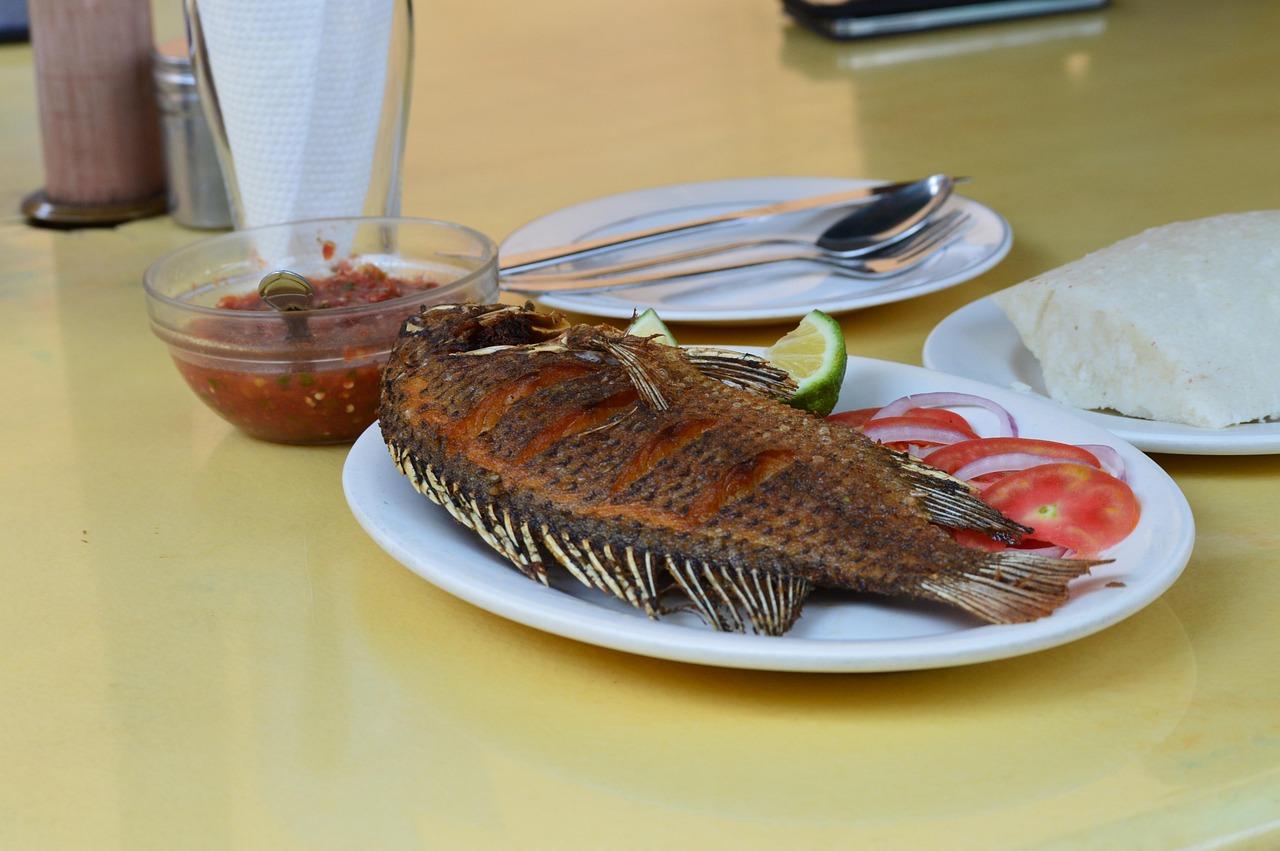
Kisumu fried tilapia

On the shores of Lake Victoria at Kisumu's Dunga beach and in the fish kiosks of Kampala and Mwanza, tilapia comes straight from the boats, is scored, rubbed with salt, garlic and lemon and deep-fried whole until the skin is crackling. It is served with a block of ugali, sukuma wiki (braised kale) and kachumbari, and eaten with your hands, pulling the sweet flesh off the bone. The mistake is frying a wet fish in oil that isn't hot enough, which makes it greasy and stick; dry it well and wait for 180 °C. Chef's tip: dust the fish lightly with cornflour just before frying for an extra-crisp skin.

by KrazyBadal 0 views

Mauritian fish curry

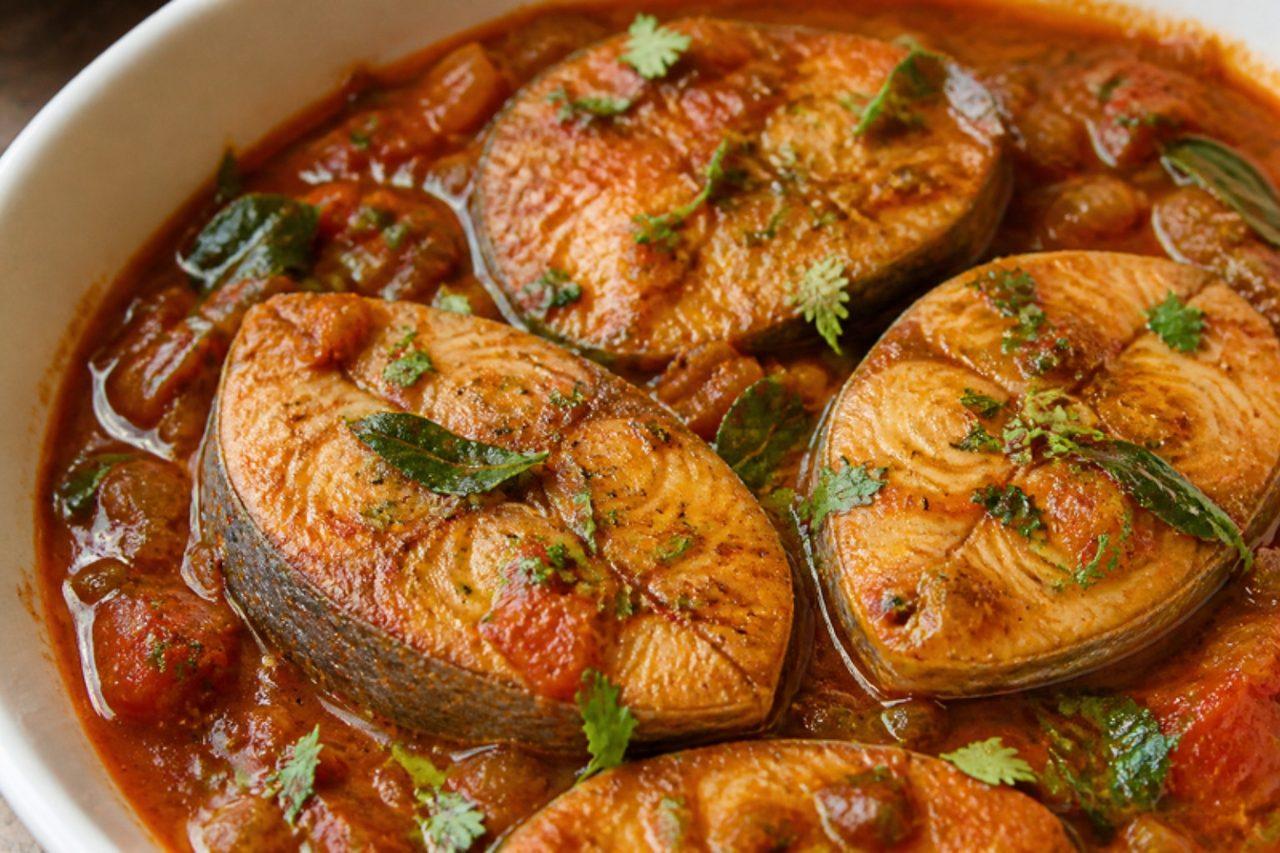
Cari poisson is cooked in Mauritian homes from Port Louis to the fishing villages of Mahébourg, a curry where Indian spice meets Creole herbs: pieces of firm fish are first fried, then simmered in a sauce of tomato, onion, curry powder, curry leaves and thyme. It is eaten with rice, lentils (dholl) and a spoon of chilli pickle. The mistake is putting raw fish into the sauce, which makes it fall apart; frying it first keeps it firm. Chef's tip: toast the curry powder in oil until it smells nutty before the tomatoes go in.

by KrazyBadal 0 views

Ecuadorian shrimp ceviche

Unlike Peru's raw-fish ceviche, the ceviche of Ecuador's coast, from Manta to Esmeraldas, is usually made with prawns that are briefly cooked first, then soaked in a juicy, soupy mix of lime, orange, tomato, red onion and coriander. It is served in a glass bowl with its juice, alongside popcorn, plantain chips and sometimes a dash of ketchup and mustard, as people do at Guayaquil's cevicherías. Because the prawns are cooked, it is a safer choice than raw-fish ceviche, but keep it cold and eat it the same day. The mistake is overcooking the prawns so they turn rubbery: one minute in the boiling water is enough. Chef's tip: save the prawn cooking water and add a few spoonfuls to the juice; it gives the ceviche its sweetness.

30 minAndeanFishGluten free
by KrazyBadal 0 views

Guyanese chicken curry

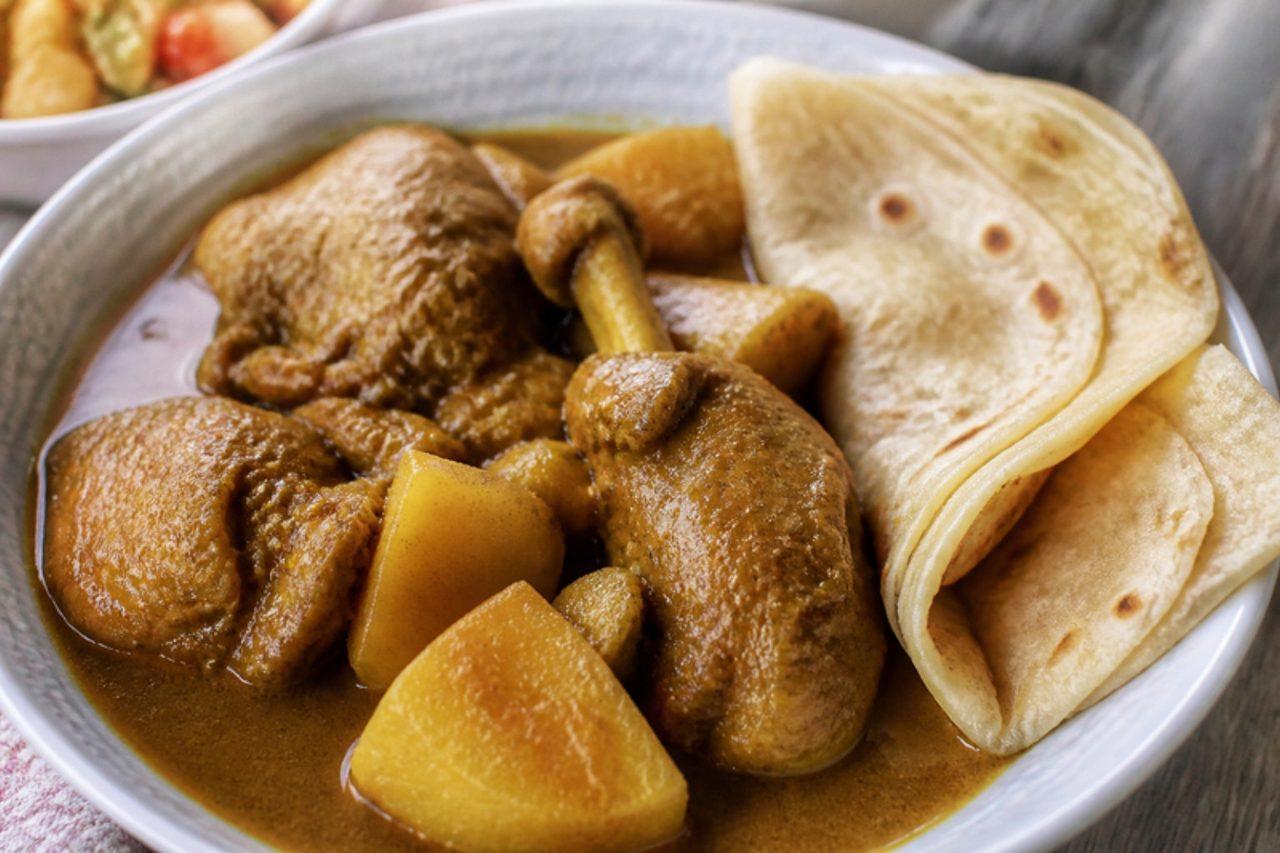
In Guyana, Sunday is curry day in Indo-Guyanese homes from Berbice to the East Coast Demerara, and chicken curry with roti or rice is the classic. Its flavour comes from a green seasoning of herbs, garlic and wiri wiri pepper, and from geera (roasted cumin), with the curry powder fried until almost dry before the chicken goes in. The mistake is adding the chicken before the curry paste is properly cooked ("bunjayed"), which leaves a raw, dusty taste. Chef's tip: finish with a sprinkle of toasted geera and let the curry rest for 10 minutes before serving.

by KrazyBadal 0 views

Loco moco

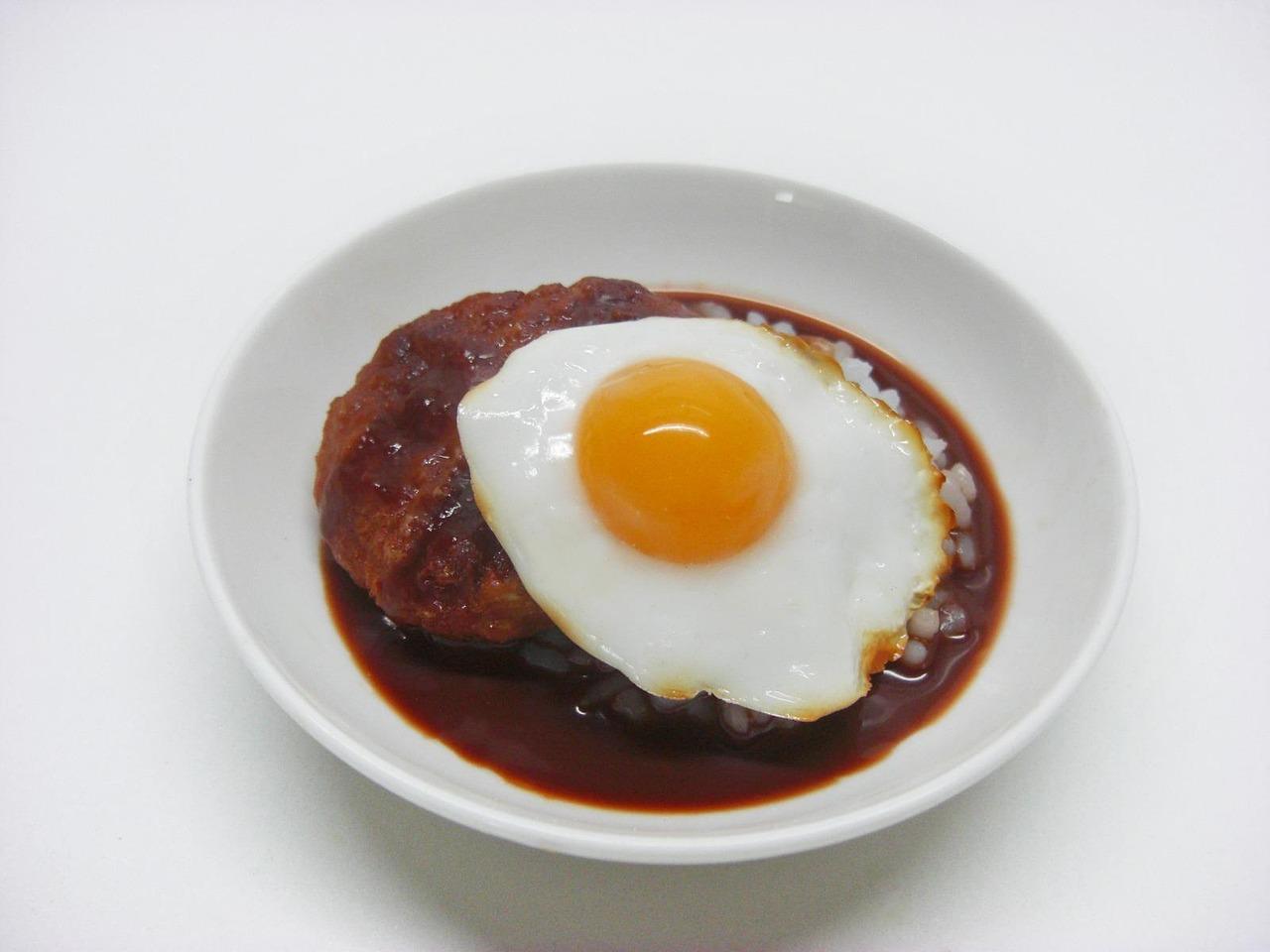
Loco moco was first served in 1949 at the Lincoln Grill in Hilo, on Hawai'i's Big Island, as a cheap, filling meal for teenagers, and it is still the plate-lunch classic across the islands: white rice topped with a beef burger patty, a fried egg and a generous ladle of brown gravy. People eat it for breakfast, lunch or late at night with a scoop of macaroni salad. The mistake is a thin, floury gravy; cook the flour in the beef fat until it browns before adding the stock. Chef's tip: press a dimple into the centre of each patty so it stays flat as it cooks.

by KrazyBadal 0 views

Kalua pork

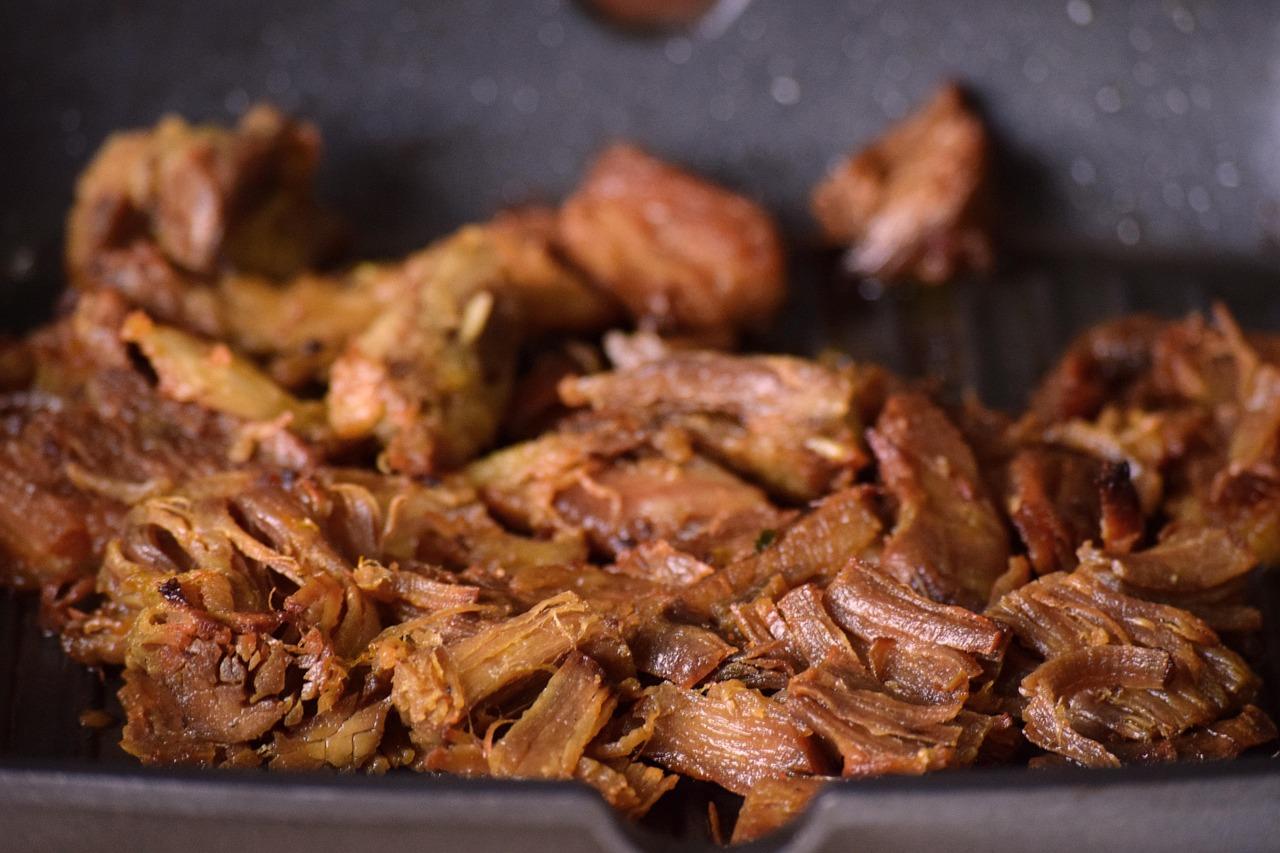
Kalua pig is the heart of a Hawaiian lū'au: a whole pig wrapped in ti and banana leaves and cooked all day in an imu, an underground oven, until it falls apart, smoky and salty. This dish contains pork. Families across O'ahu and the other islands make this simpler version at home with pork shoulder, coarse sea salt and a little liquid smoke, wrapped and slow-roasted. It is served with rice, poi or cabbage, or in sliders. The mistake is using fine table salt in the same amount; it makes the pork far too salty, so use coarse sea salt. Chef's tip: stir a little of the cooking juice back into the shredded pork so it stays moist.

by KrazyBadal 0 views

Maple-glazed salmon

On Canada's Pacific coast, from Vancouver to Haida Gwaii, wild salmon is the fish of summer and autumn, and a glaze of maple syrup from the east brings two Canadian staples together on one plate. The fillets are brushed with maple syrup, mustard, soy and garlic and roasted until just cooked, with a sticky, glossy top; serve them with rice, new potatoes or a green salad. Many British Columbians cook it on a soaked cedar plank on the barbecue for a smoky flavour. The mistake is overcooking salmon until it is dry and chalky; take it out when it just flakes. Chef's tip: line the tray with baking paper, as the maple glaze burns onto a bare tin.

by KrazyBadal 0 views

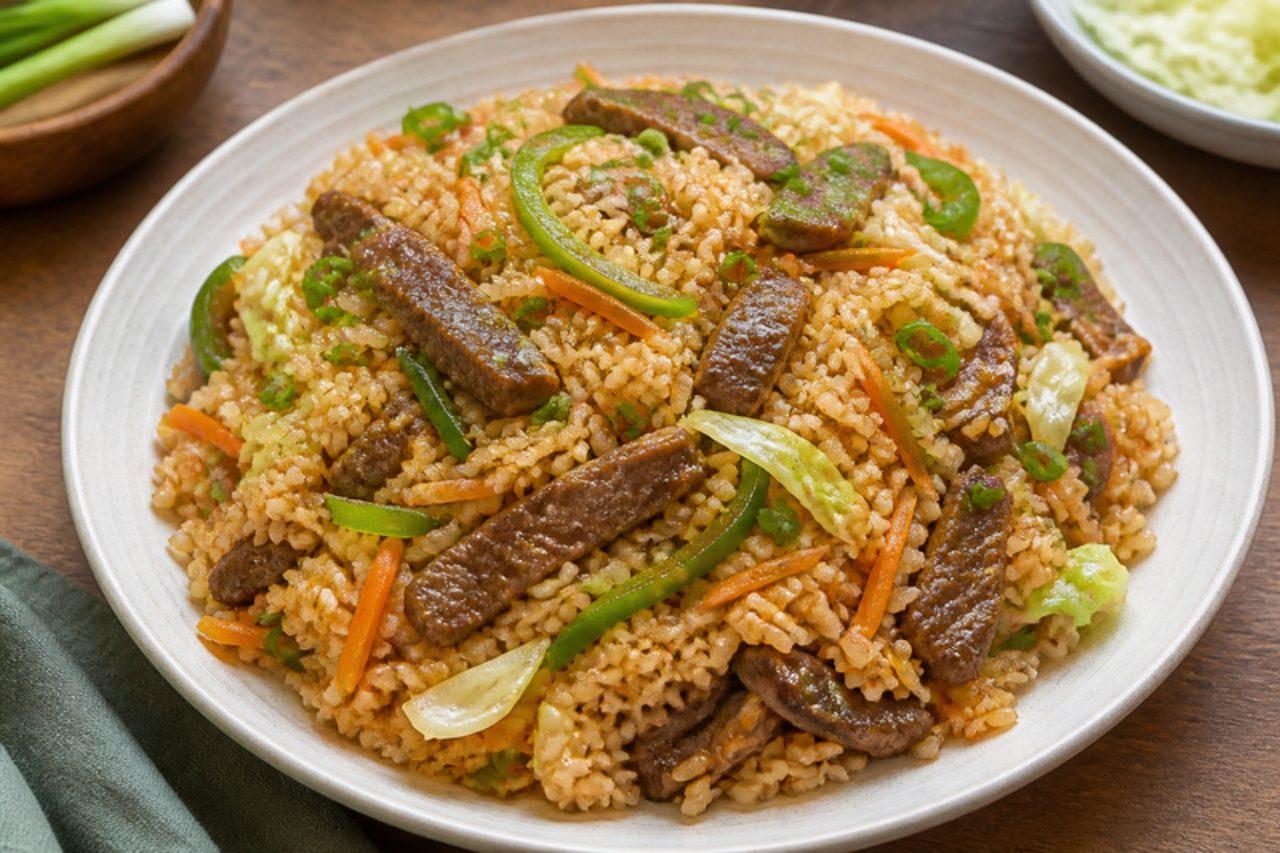
Budaatai khuurgaFried rice with beef

Budaatai khuurga is the fried rice of Ulaanbaatar's guanz, the small canteens where office workers and students eat lunch: day-old rice tossed in a hot pan with strips of beef or mutton, carrot, onion, peppers and a splash of soy. It is quick, filling and often served with a fried egg and pickled cabbage salad. The mistake is using freshly cooked warm rice, which clumps; cold, cooked rice fries into separate grains. Chef's tip: cook rice the day before and keep it covered in the fridge, which is also the safe way to store it.

by KrazyBadal 0 views

Pudding and souse

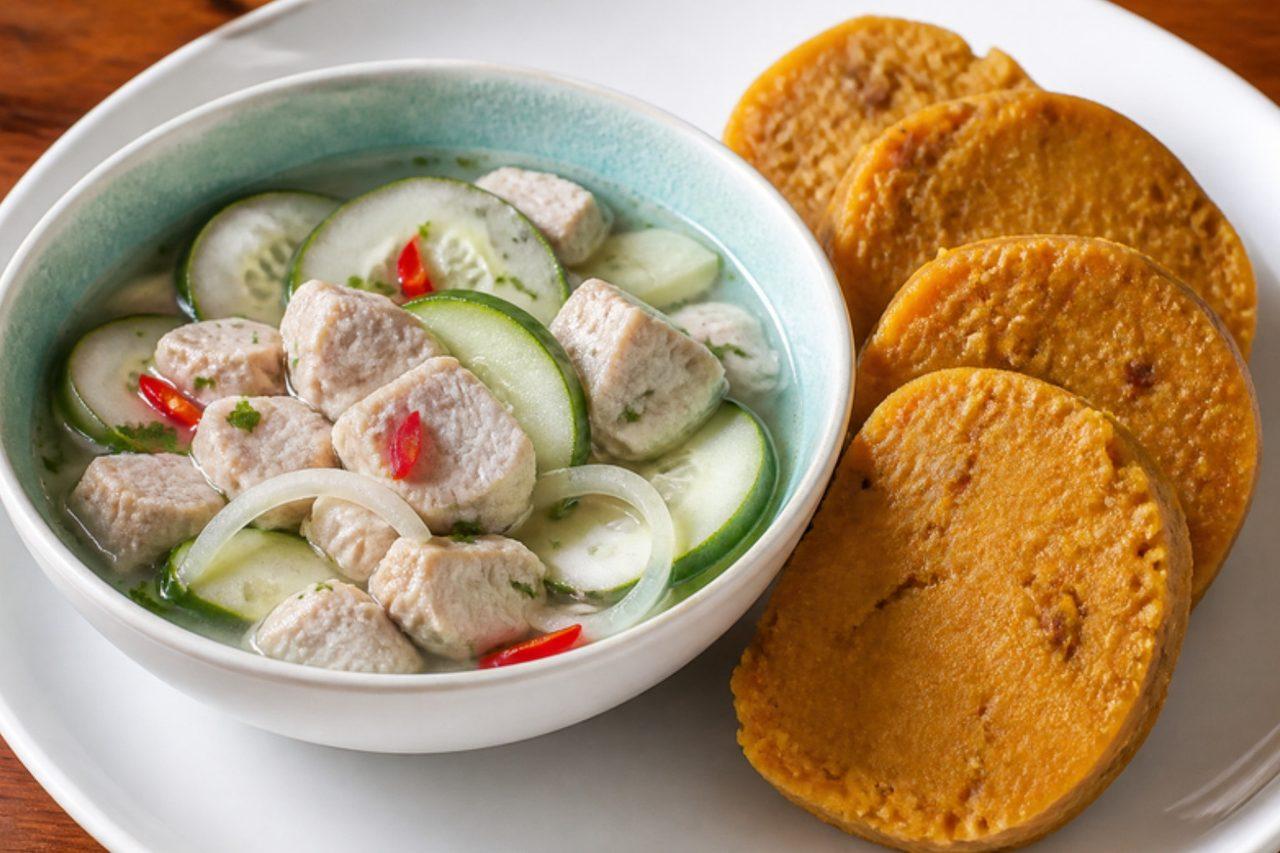
Saturday in Barbados means pudding and souse: rum shops and roadside cooks sell it from late morning, and families buy it by the container for lunch. Souse is boiled pork, traditionally from the head and trotters, served cold in a sharp, cucumber-studded pickle of lime, onion and hot pepper; the pudding is grated sweet potato seasoned with herbs and steamed. This is a pork dish. This home version uses trotters for the jelly-rich texture plus shoulder for meat, and steams the pudding in a basin instead of a casing; blood is left out (that darker version is black pudding). A common mistake is serving the souse as soon as it meets the pickle; it needs at least 2 hours in the fridge to turn sharp and cold. Chef's tip: grate the sweet potato on the fine side of the grater; coarse shreds make a crumbly pudding.

190 minBajanMeatGluten free
by KrazyBadal 1 views

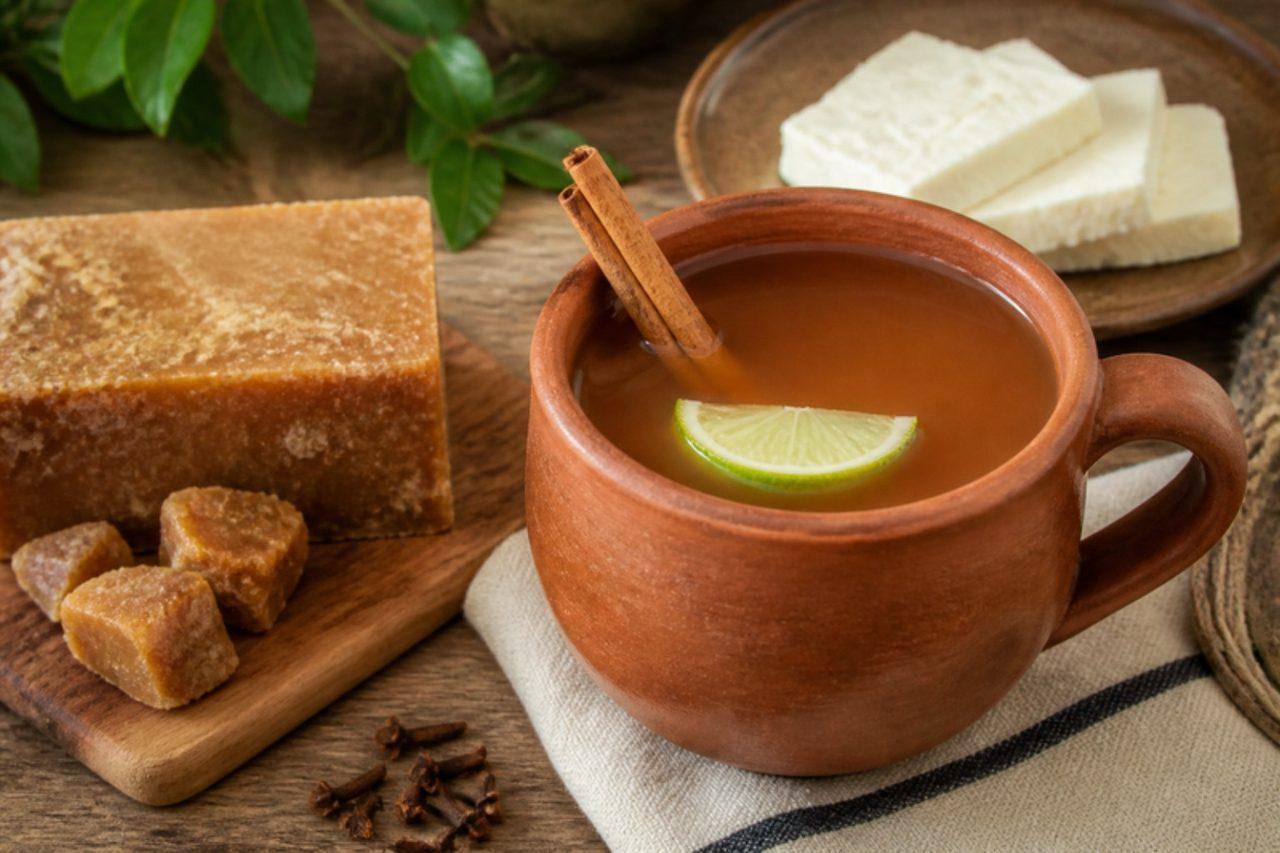
AguapanelaHot panela and lime drink

Aguapanela is simply panela (unrefined cane sugar) dissolved in water, yet it is one of Colombia's most loved drinks: drunk hot at breakfast in Bogotá and the Andes with a slice of fresh cheese dropped in to melt, given to children with a cold, and served iced with lime in the hot lowlands. This page is the hot version; the cold, lime-heavy cousin is Venezuela's papelón con limón. Chef's tip: simmer the panela gently until it dissolves completely and the drink smells of caramel; rushing it leaves sugary lumps at the bottom.

by KrazyBadal 0 views

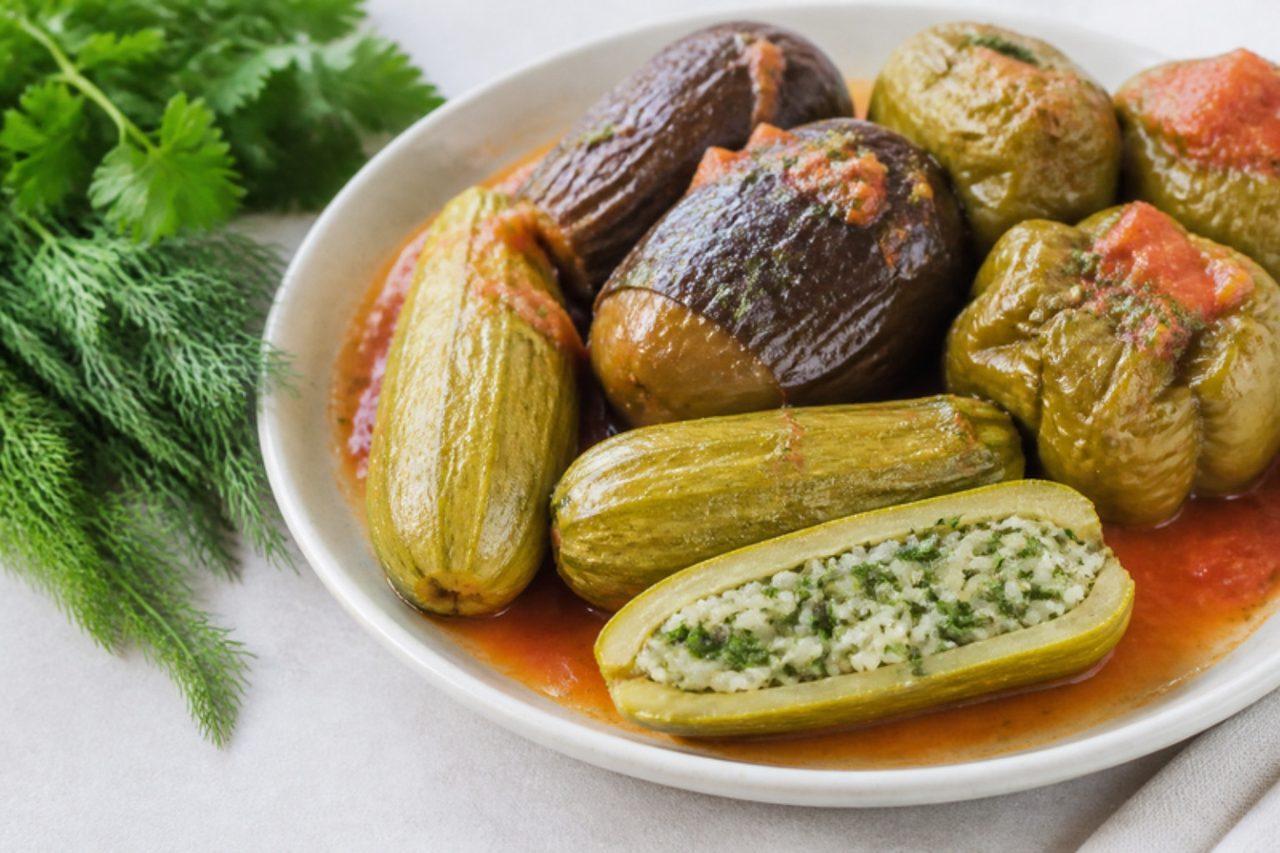
MahshiStuffed vegetables

Mahshi is the pride of the Egyptian home kitchen: a big pot of courgettes, small aubergines, peppers and tomatoes, hollowed out and stuffed with short-grain rice, tomato, onion and a fistful of dill, parsley and coriander, then packed tightly and simmered in tomato broth. It turns up for Friday family lunches and on feast days, and making it is often a shared afternoon job around the kitchen table. Some families add minced meat to the stuffing; this version is the everyday vegetable-and-rice one. Chef's tip: fill each vegetable only three-quarters full; the rice swells as it cooks, and overstuffed vegetables burst and leave hard, undercooked rice in the middle.

by KrazyBadal 0 views

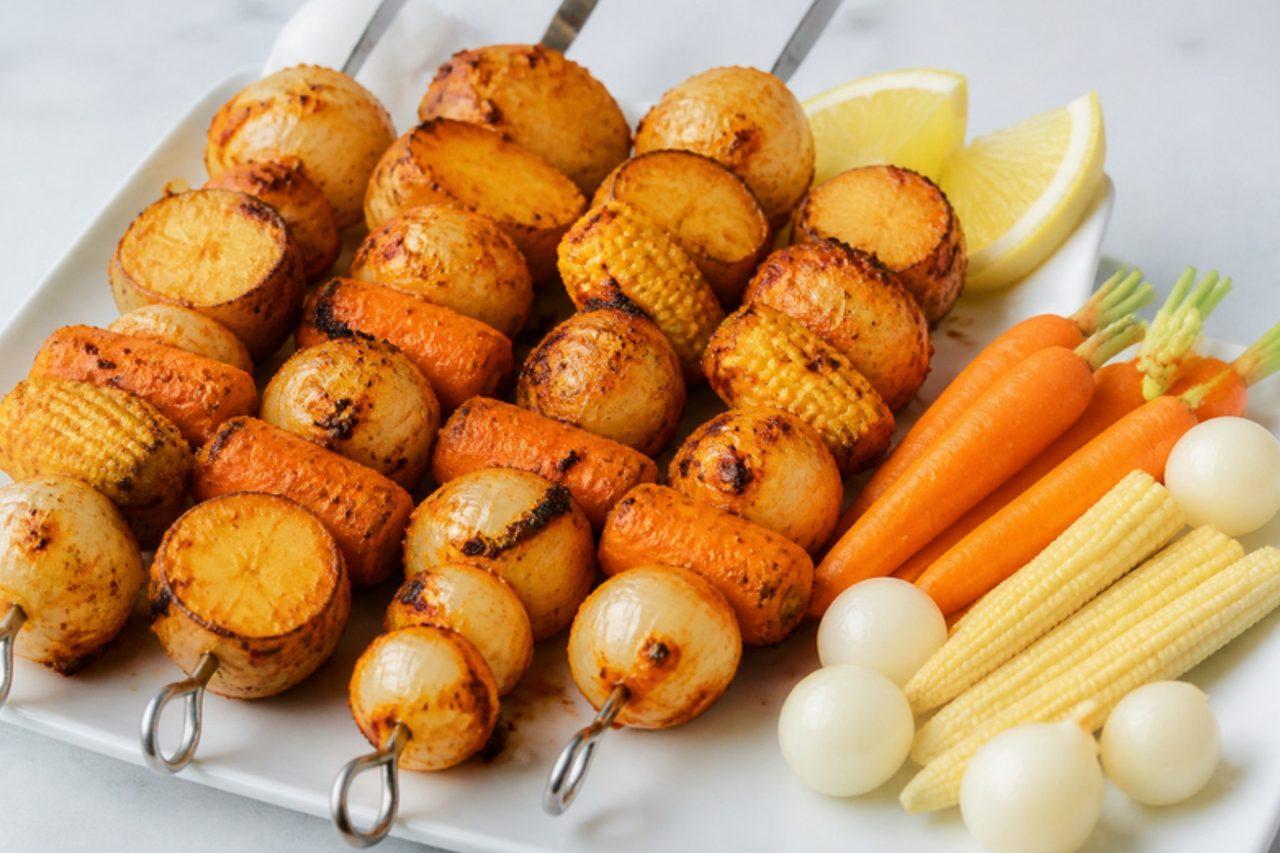
Tandoori tinniesTandoori baby vegetable skewers

Baby onions, carrots, potatoes and corn par-boiled, coated in a creamy, fiery marinade of red chilli, garlic, ginger, coriander-cumin and dried fenugreek, then grilled on skewers over charcoal until golden. They're small, colourful and bursting with flavour. Serve hot with lemon wedges.

by KrazyBadal 0 views

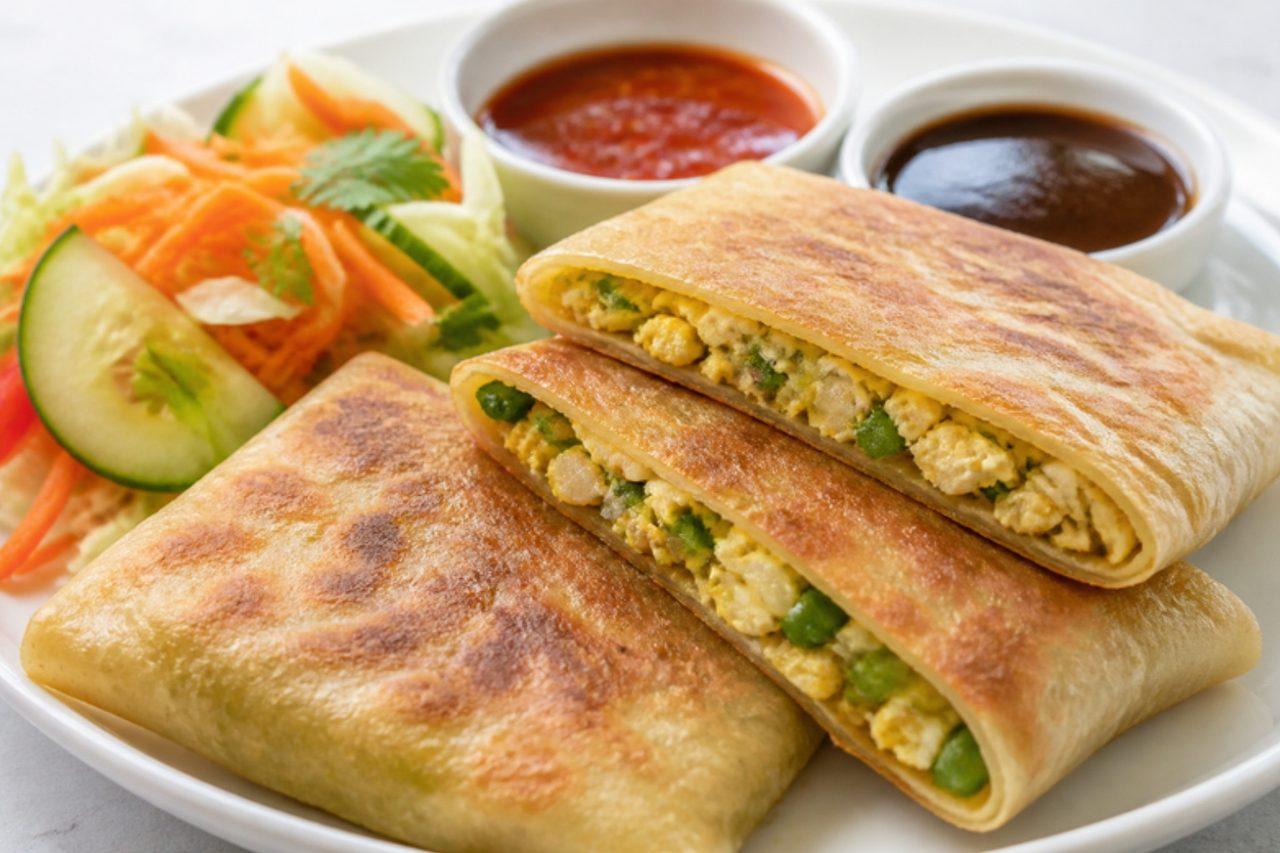
Coast egg chapatiEgg-filled chapati parcels

The famous coast street snack: paper-thin dough wrapped around a samosa chapati, spiced onion and capsicum filling and a beaten egg, folded into a square parcel and fried slowly until crisp and golden. Make them just before serving. Serve hot with a crunchy carrot, cabbage and cucumber salad and red chilli and tamarind chutneys. Contains egg.

by KrazyBadal 0 views

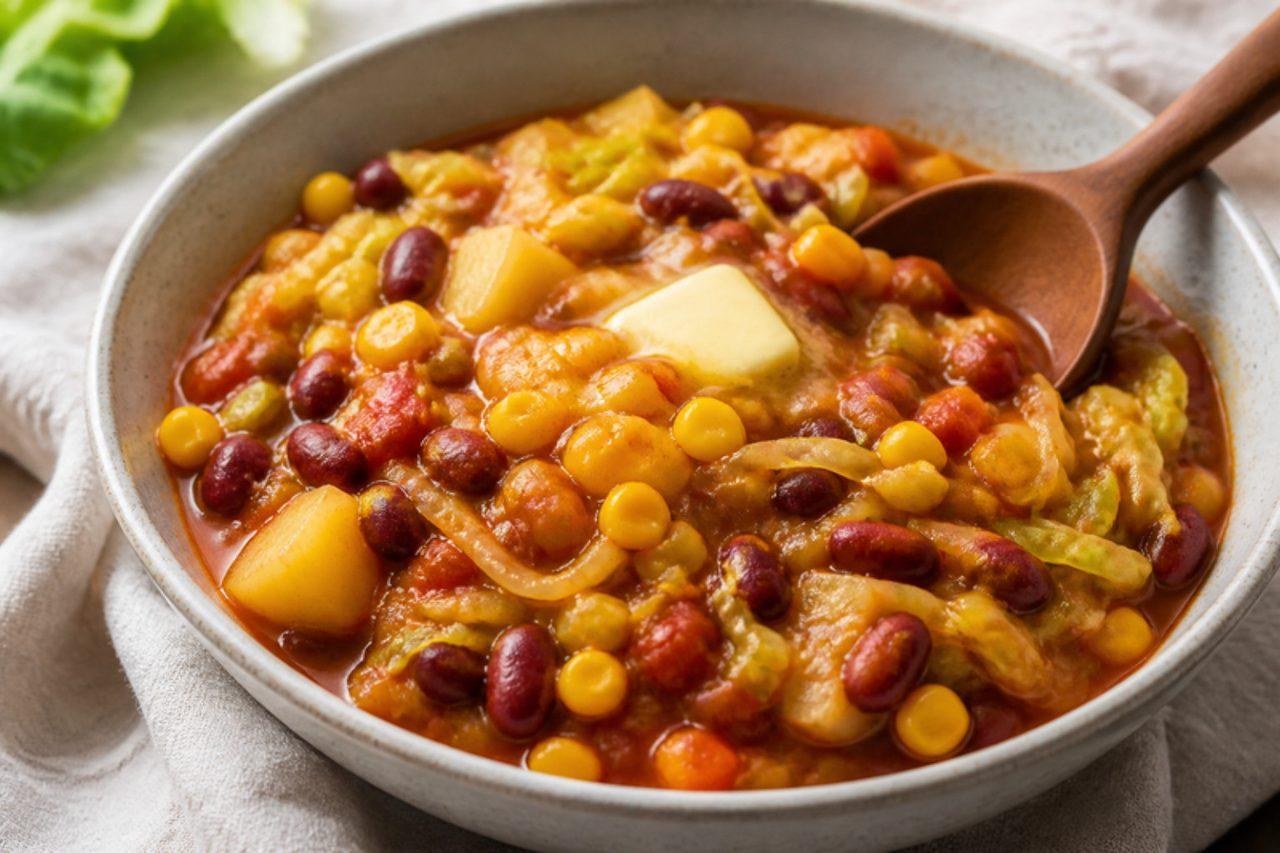
GitheriKidney bean and corn stew

Kenya's everyday one-pot meal of kidney beans and corn, cooked with browned onion, tomato paste, chilli, potatoes and cabbage and finished with a knob of butter. It's hearty, comforting and cheap to make. Serve hot with ugali and sukumawiki.

by KrazyBadal 0 views

Masala ugaliSpiced maize meal porridge

Ugali, East Africa's staple of maize meal cooked into a stiff porridge, given a lift with toasted cumin, butter, fresh coriander and green chilli. Stir it hard and keep it soft. Serve hot with sukumawiki or any stew.

by KrazyBadal 1 views

Mahua ladduMahua flower balls

Mahua trees flower across Jharkhand in March and April, and before dawn whole families gather the fallen, creamy, honey-scented flowers from the forest floor and dry them in the sun. In Santhal, Munda and Oraon homes, the dried flowers are roasted and pounded with sesame and peanuts into laddus that need almost no added sugar, a store-cupboard sweet for the lean months and for festivals like Sarhul. They taste of raisins, caramel and toasted nuts. Chef's tip: roast the flowers until they puff slightly and smell like caramel; underroasted mahua tastes raw and slightly bitter.

by KrazyBadal 0 views

Majjiga pulusuButtermilk curry with ash gourd

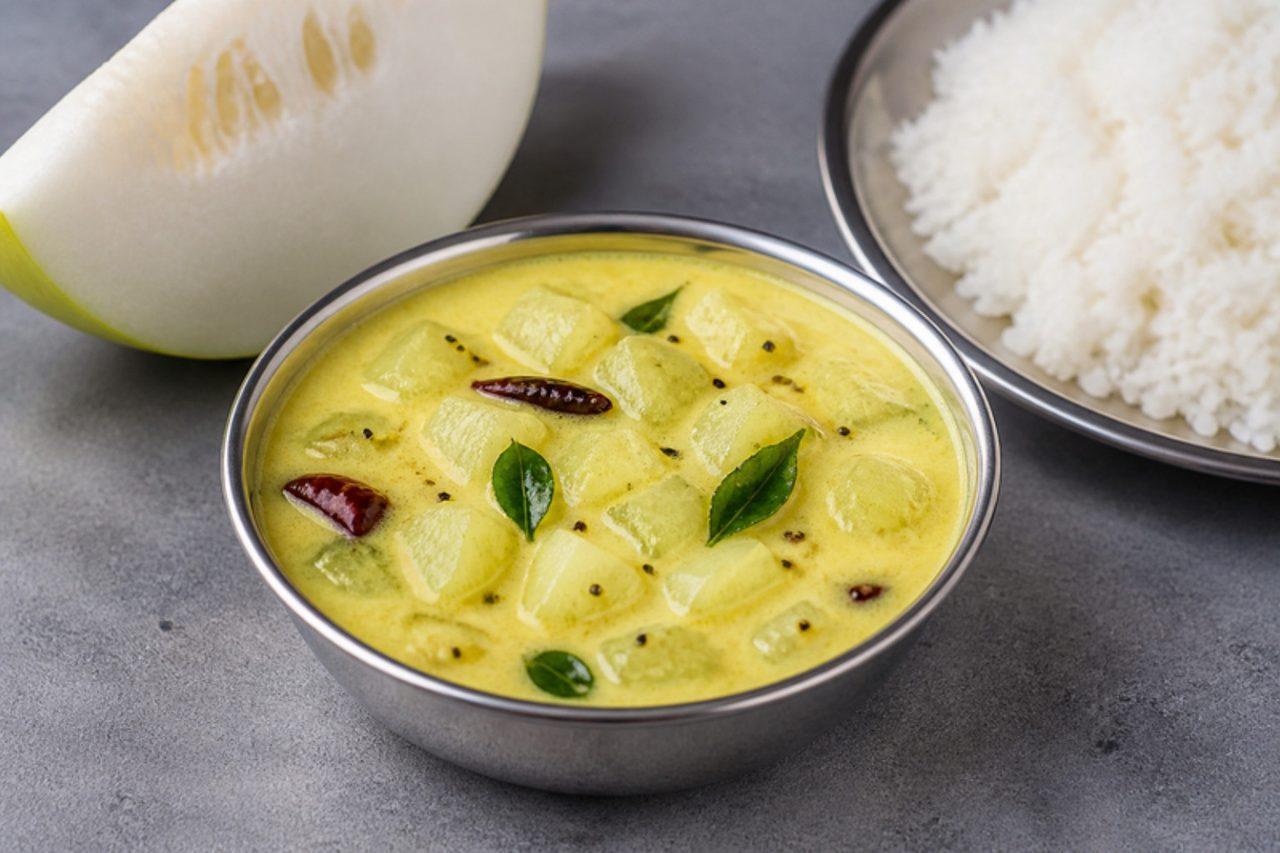
Majjiga pulusu is the cooling yogurt curry of Andhra Pradesh, cooked in summer when the buttermilk at home turns a little sour. Unlike Gujarati kadhi, it isn't thickened with gram flour: soaked chana dal is ground with coconut, ginger, green chillies and cumin, stirred into the curd, and simmered gently with soft pieces of ash gourd (or okra, or chayote). It's mild, tangy and creamy, and eaten mixed into rice with a fried vegetable or fritter on the side, especially at Telugu wedding meals. Chef's tip: whisk the yogurt until completely smooth before it goes near the heat; lumpy yogurt splits much more easily.

by KrazyBadal 0 views

Riz grasRice cooked in beef stew

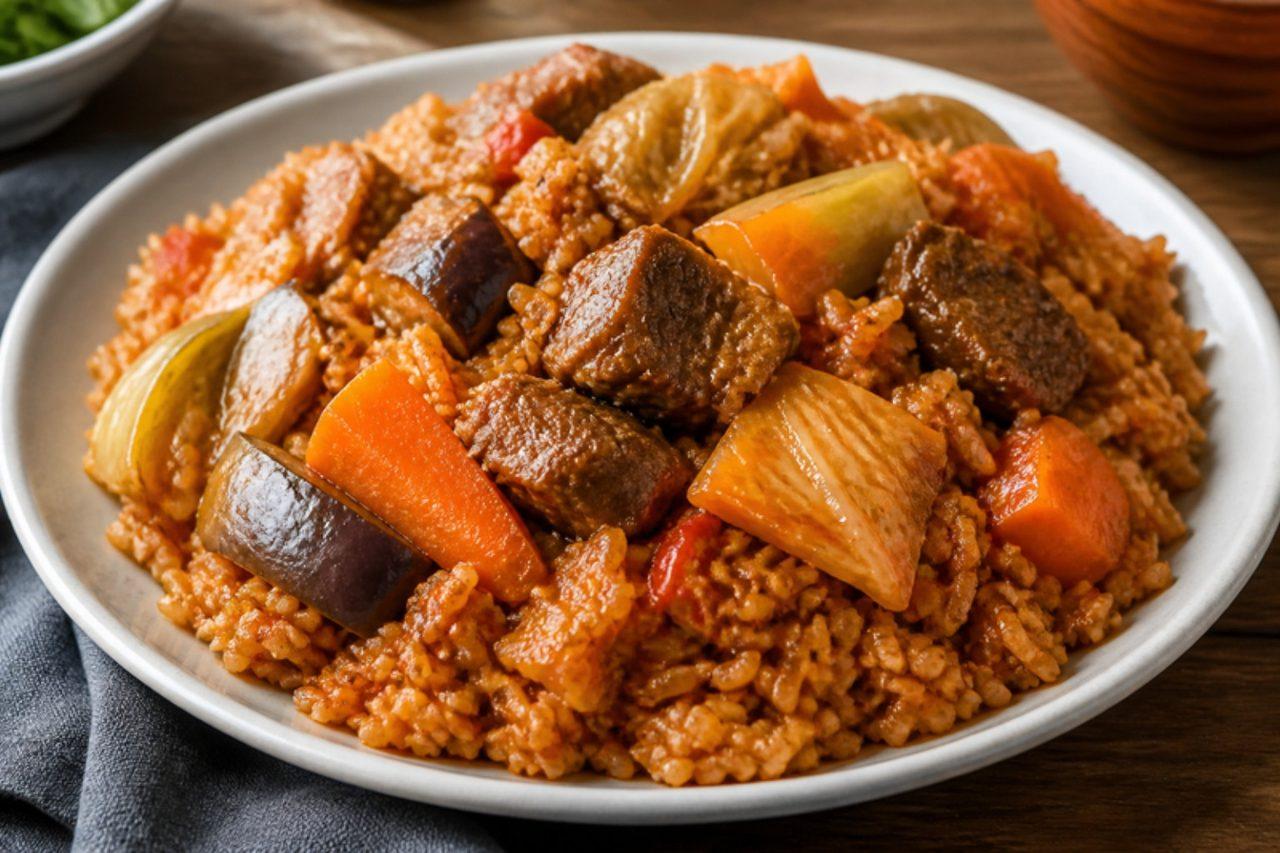
Riz gras is the celebration rice of Bamako and Ouagadougou, cooked in big pots for weddings, Tabaski and family Sundays. Beef is simmered with onion, tomato and garlic into a rich stew, and the rice is cooked in that broth until every grain is orange and glossy, with the meat and vegetables piled on top. The mistake is adding too much liquid, which turns the rice soggy; measure it. Chef's tip: fry the rice in the stew's oil for a minute before adding the broth, so the grains stay separate.

by KrazyBadal 0 views

Sweet potato salad (Nairobi style)Sweet potato fritter salad

Slices of sweet potato dipped in batter, coated in breadcrumbs and fried until crisp, arranged around lettuce, grated carrot, tomato and sliced hard-boiled egg. The book's Handy Hints say sweet potato is good for the eyes and lifts the mood. Serve with tomato sauce, chilli sauce and mayonnaise; leave out the eggs (and use egg-free mayonnaise) for an egg-free salad.

by KrazyBadal 0 views

Maize pie

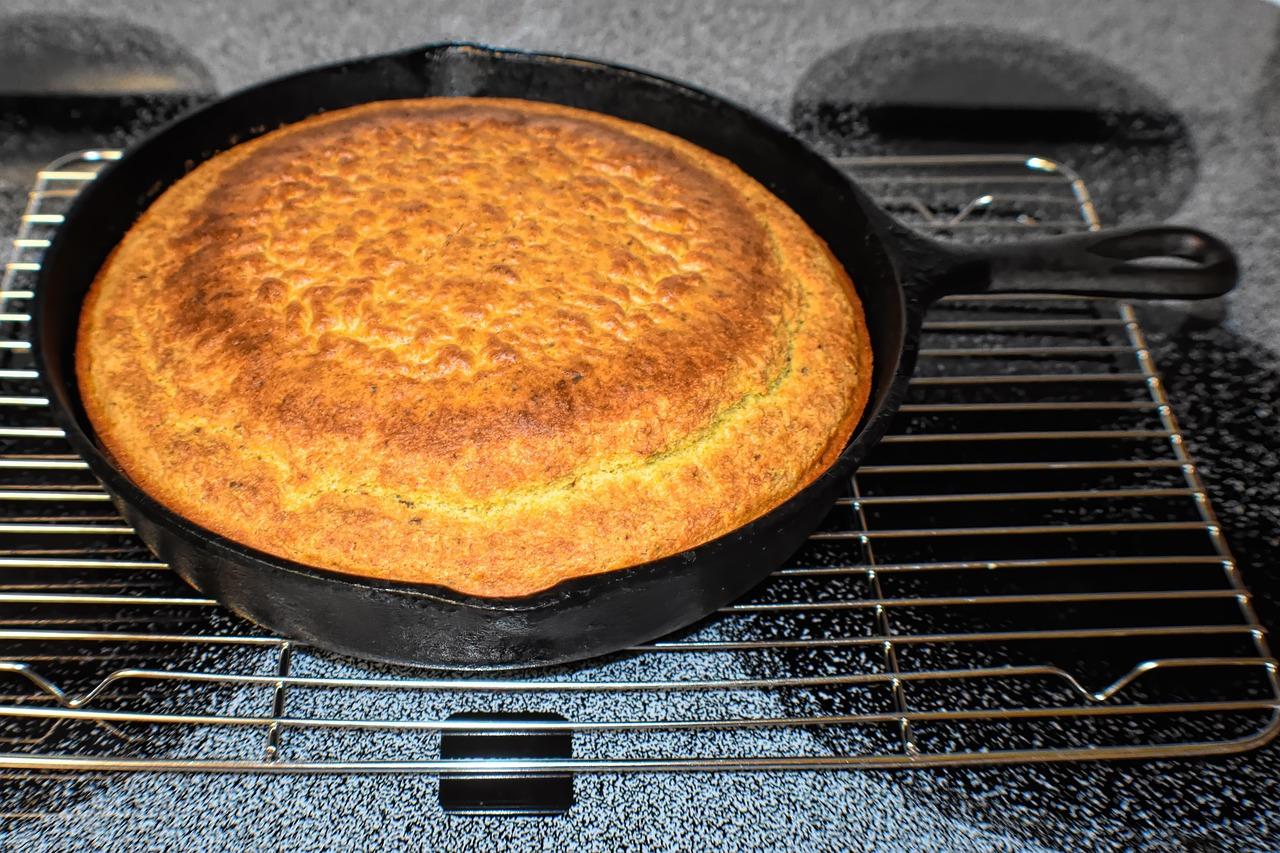
A soft, savoury pie of blended boiled maize folded into a peppery white sauce and baked until golden on top. It's mild and comforting, a little like a corn pudding, and children love it. The eggs are optional: they make it set firmer. Serve hot with a salad or tomato stew.

by KrazyBadal 0 views

Atter kikSplit chickpea sauce

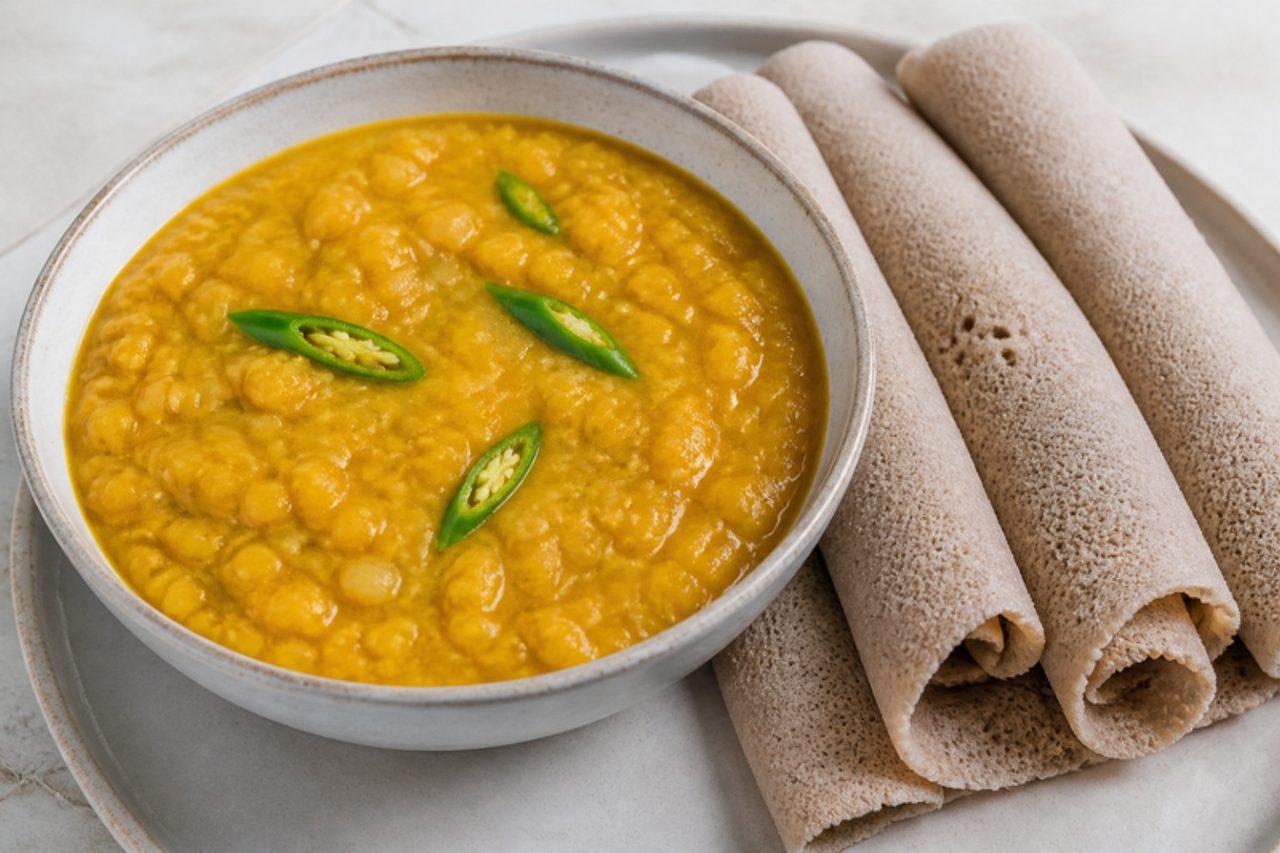
A mild, golden Ethiopian lentil sauce (kik alicha) of split bengal gram lentils simmered with onion, ginger, garlic, a pinch of turmeric and green chilli until thick and creamy. It's gentle and soothing next to the fiery missir wat. Serve hot with injera.

by KrazyBadal 0 views

Missir watRed lentil stew

A spicy Ethiopian stew of masoor lentils cooked down with browned onions, garlic, ginger, fresh tomato and tomato paste, and finished with red chilli and black pepper. It's thick, rich and hot. Serve with injera, alongside atter kik and azifa.

by KrazyBadal 0 views

Soup joumouPumpkin soup

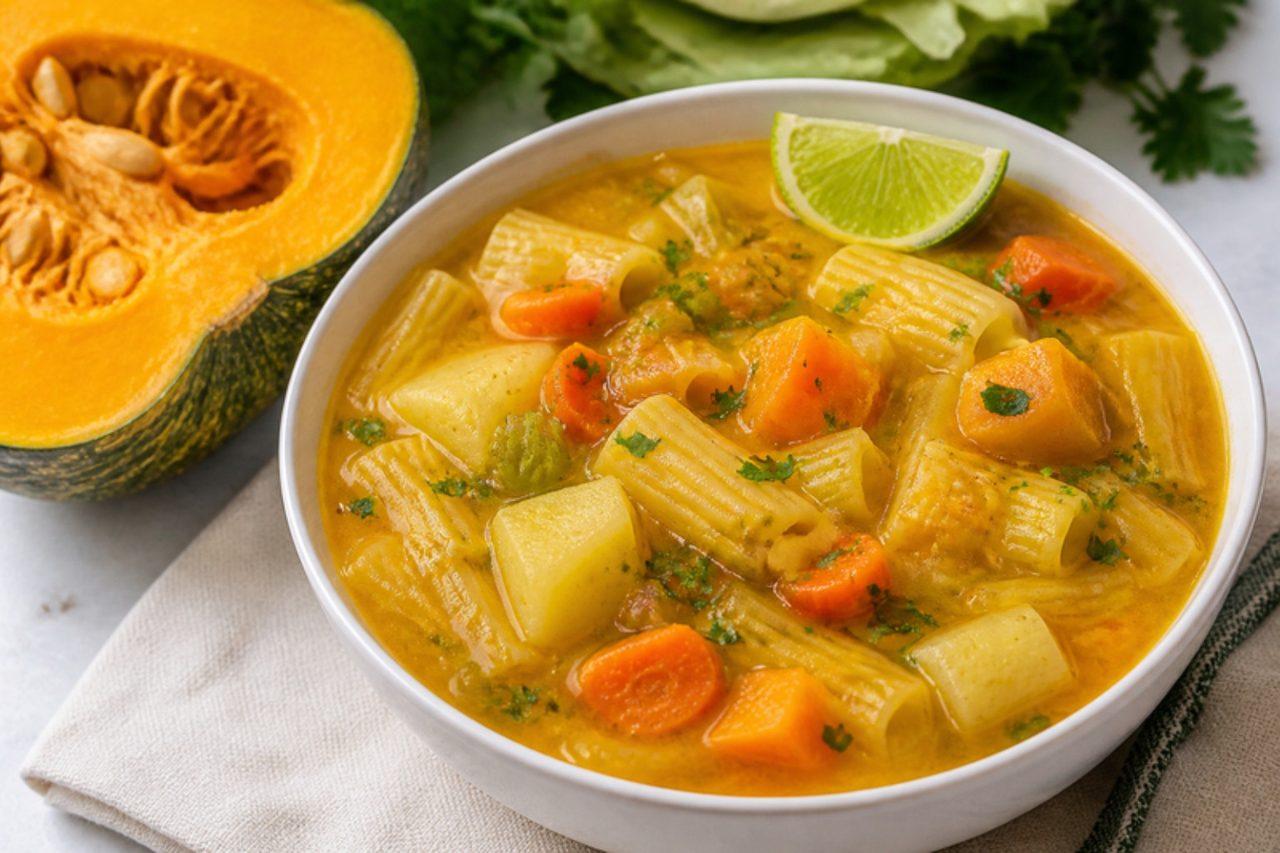
Every 1 January, Haitian families from Port-au-Prince to Brooklyn wake up to soup joumou. It marks independence from France on 1 January 1804: under French rule, enslaved Haitians cooked this pumpkin soup but were forbidden to eat it, so the free people of the new nation made it their own as a dish of freedom. In 2021 it was added to UNESCO's list of the intangible cultural heritage of humanity. The base is a velvety purée of joumou (Caribbean pumpkin) with epis, and in it simmer chunks of carrot, potato, cabbage, celery and turnip, with pasta and a squeeze of lime. It's usually made with beef; this vegetable version is full and golden, rich enough for the day. Chef's tip: roast half the pumpkin before puréeing it; the caramelised edges give the soup the depth that slow-cooked meat usually provides.

by KrazyBadal 1 views

BraaibroodjieGrilled cheese and tomato sandwiches

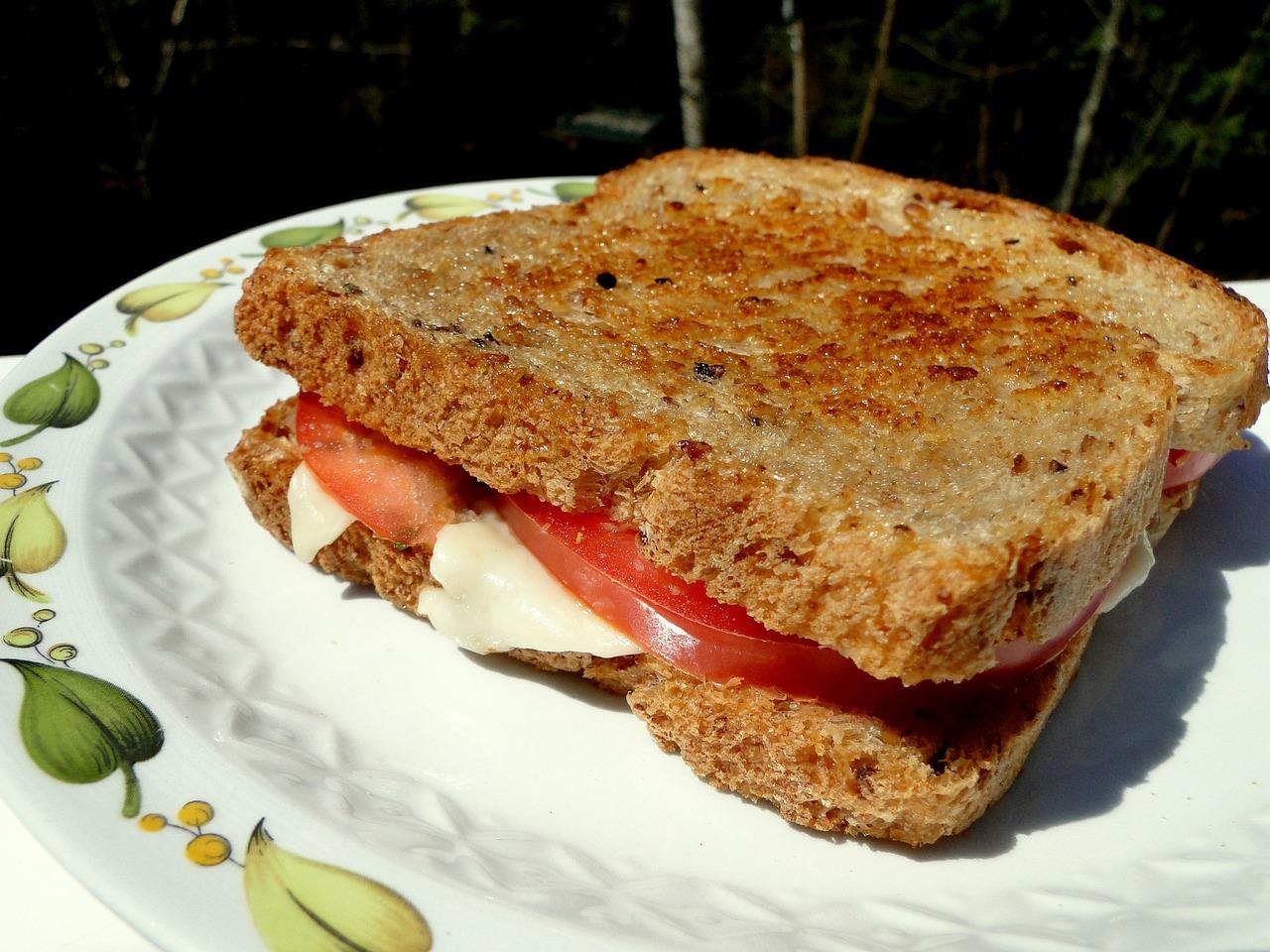
No South African braai is finished without braaibroodjies, the sandwiches that go onto the grid once the coals have died down, from Cape Town to the Highveld. White bread is buttered on the outside and filled with cheddar, tomato, onion and a thin smear of apricot jam, a sweet-and-savoury combination every South African swears by. They come off the fire smoky, crisp and oozing. A frying pan or griddle works when there's no braai. Chef's tip: toast them over gentle, ashen coals and turn often; fierce heat burns the bread before the cheese inside has melted.

by KrazyBadal 0 views

Ethiopian injeraFermented rice flour flatbread

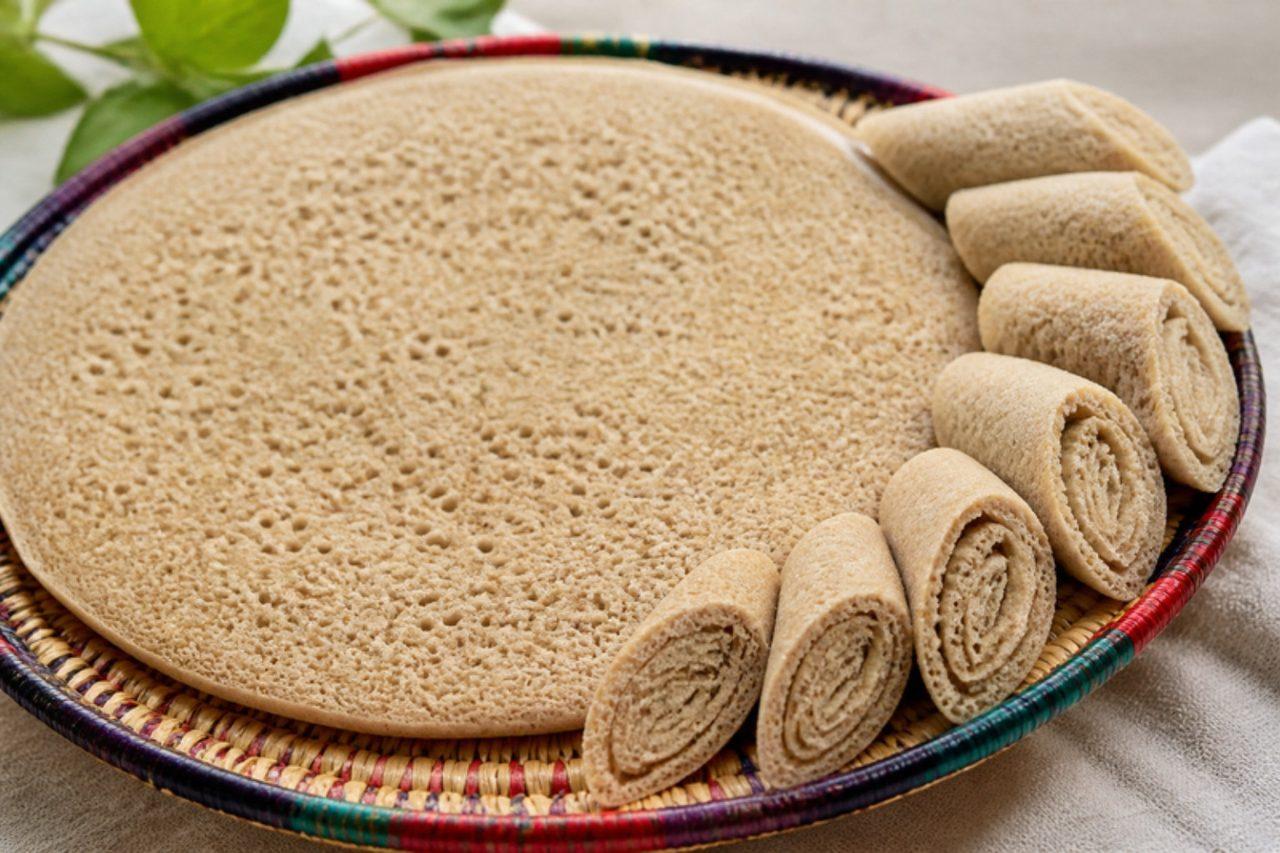
Injera is the soft, spongy, slightly sour flatbread eaten with Ethiopian stews: you tear it and scoop the food up with it. This home version uses rice and plain flour fermented with a home-made starter over a few days, then cooked on one side until covered in tiny holes. Serve rolled and sliced with missir wat, azifa and atter kik. Any fermented batter left over keeps in the fridge for the next batch.

by KrazyBadal 0 views

AzifaMasoor lentil salad

A thick, tangy Ethiopian sauce of soft masoor lentils blended with onion, garlic, green capsicum, chilli and mustard. It's eaten cool or warm as part of a spread of injera and stews. Serve hot azifa with injera.

by KrazyBadal 0 views

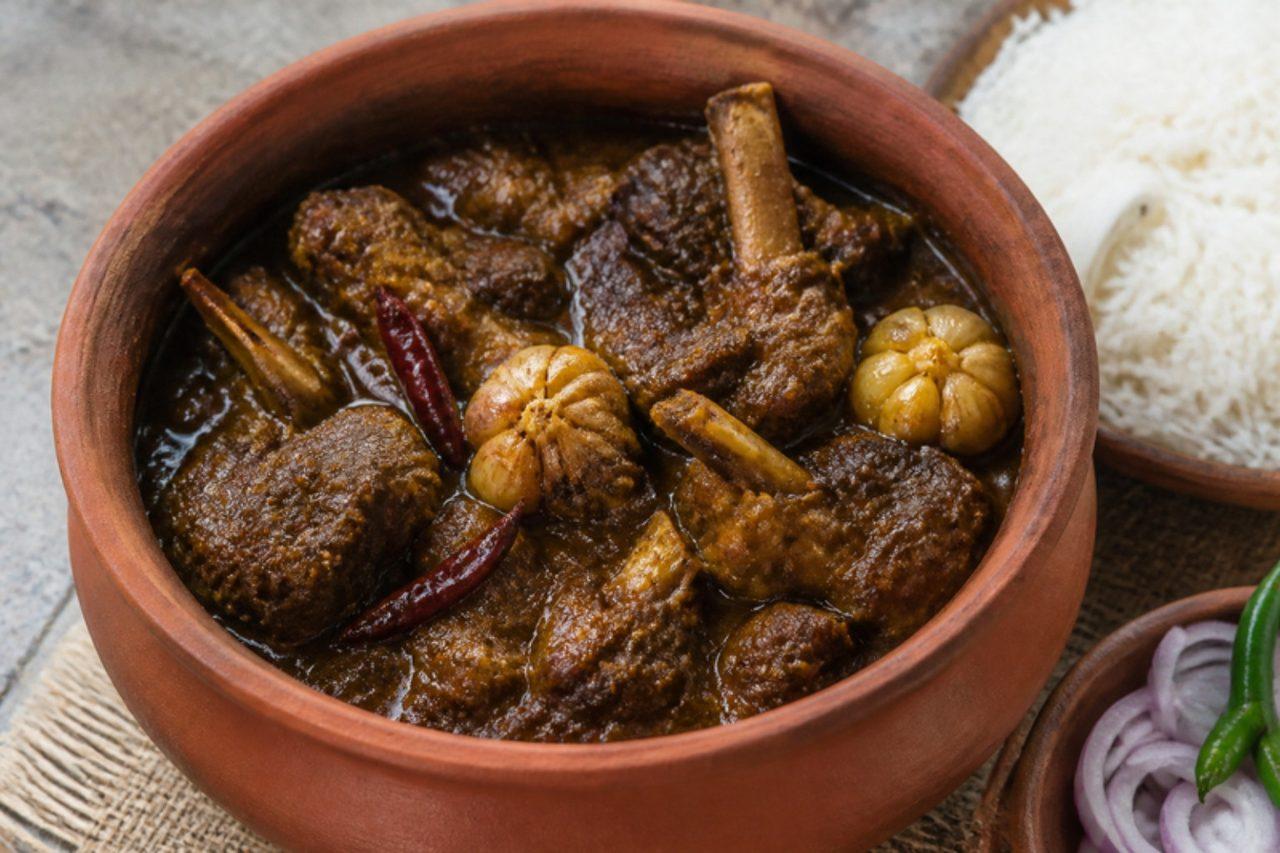
Champaran muttonSlow-cooked mutton curry

In the Champaran district of north-west Bihar, near the Nepal border, mutton is cooked in an ahuna or handi: a clay pot packed with raw meat, whole bulbs of garlic, onions, mustard oil and spices, sealed shut with dough and left for hours on a slow charcoal fire. Nobody adds water and nobody stirs; the meat cooks in its own juices and the garlic turns soft and sweet. Roadside dhabas on the highways out of Motihari made it famous, and it is now cooked at family picnics and parties right across Bihar, eaten with rice or rotis. This home version uses a heavy pot sealed with foil and a lid. Chef's tip: shake the pot instead of opening it; every time the lid comes off, steam escapes and the meat dries out.

135 minIndianMeatGluten freeSpicy
by KrazyBadal 0 views

ChampurradoThick masa hot chocolate

Champurrado is a chocolate atole, the thick, hot corn drink Mexicans have drunk since before the Spanish arrived. Masa harina is whisked into water and milk with Mexican chocolate (stone-ground with sugar and cinnamon) and piloncillo, a dark unrefined cane sugar, and cooked until velvety and spoon-coating. It is drunk on cold mornings with tamales or conchas, and above all during Día de Muertos and Christmas posadas. Chef's tip: always dissolve the masa harina in cold liquid before it meets the hot pot, and whisk constantly once it's in; dumped into hot milk it seizes into lumps.

by KrazyBadal 0 views

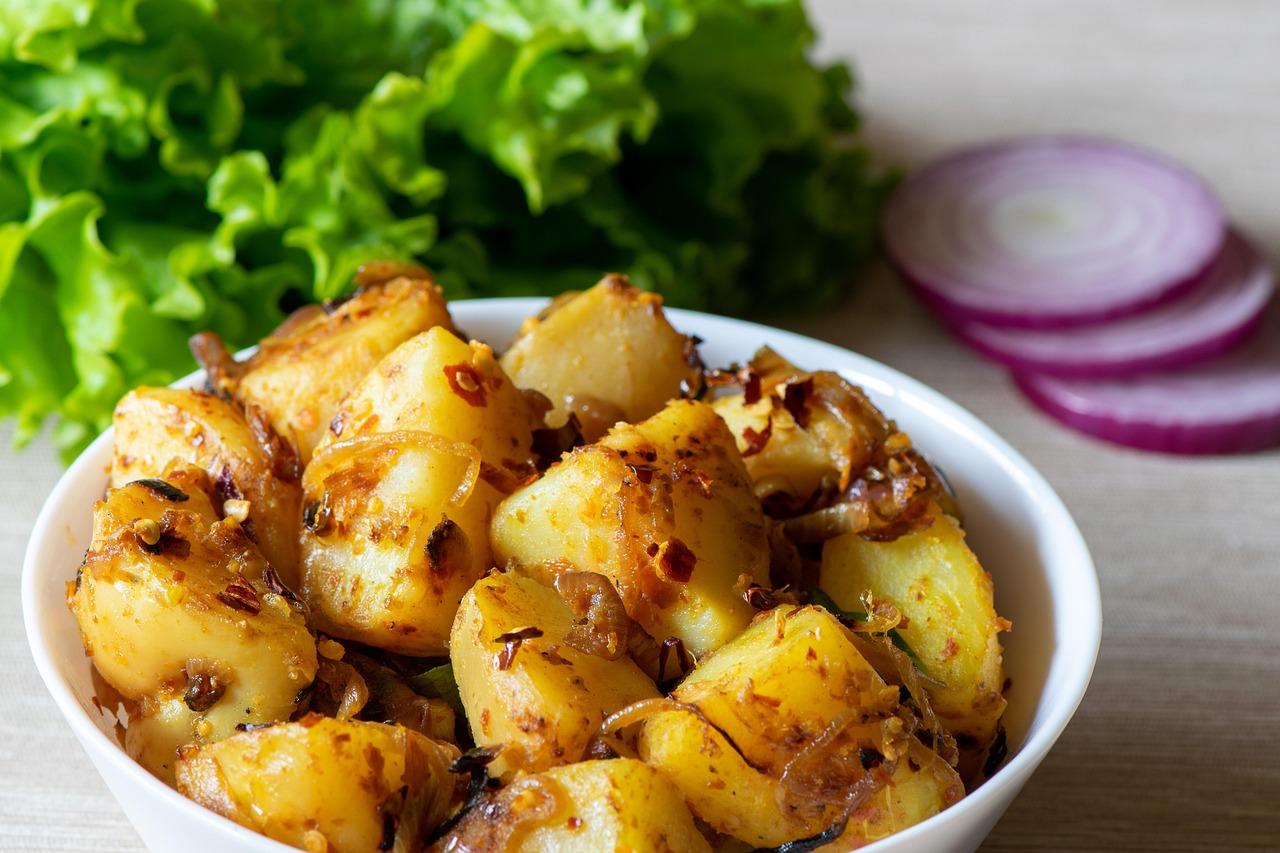
Mombasa kachri batetaPotatoes in garlic tomato sauce

A Mombasa street favourite: potatoes cooked in a thin, garlicky tomato and raw mango sauce, ladled into bowls and piled with crushed potato crisps, crunchy sev and a fresh coconut and mango chutney. Everyone builds their own bowl to taste. Serve straight away so the crisps stay crunchy.

by KrazyBadal 0 views

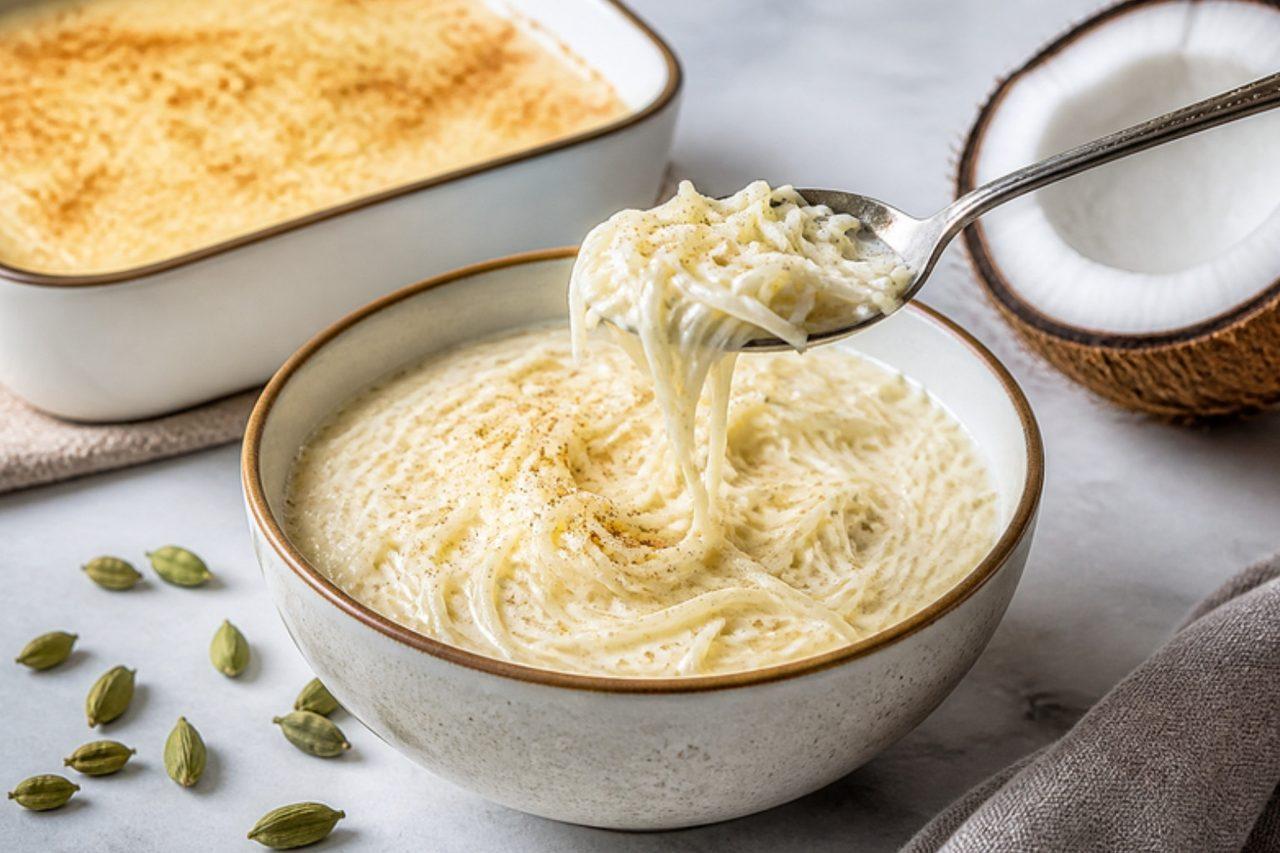
Vermicelli in coconut (tambi ya nazi)

Tambi ya nazi: soft vermicelli stirred into sweetened coconut milk with crushed cardamom, then baked briefly so it sets lightly. It's creamy, gently sweet and fragrant, and is often made for Eid. Serve hot, sprinkled with more cardamom.

by KrazyBadal 0 views

Coconut sweet (kashata ya nazi)

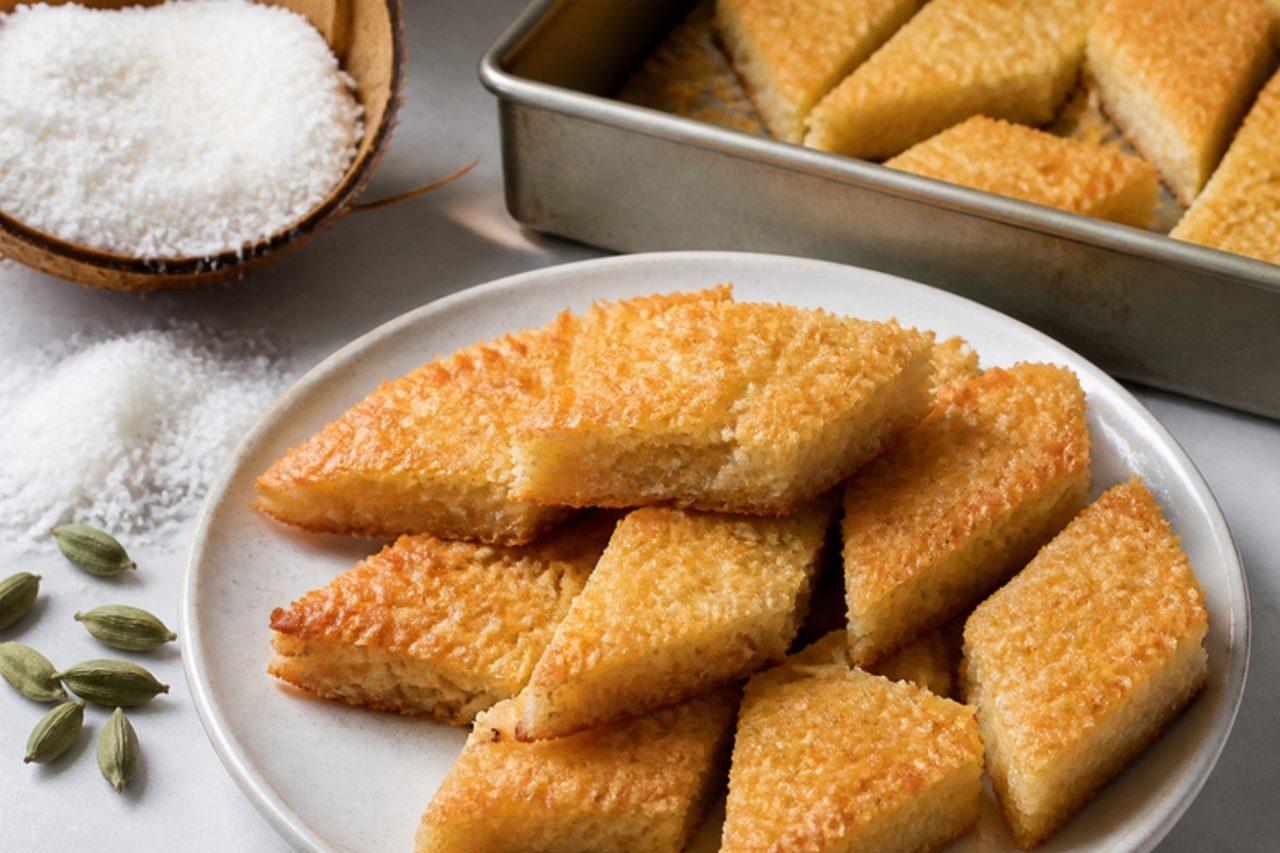
Kashata ya nazi is a simple Swahili sweet of desiccated coconut cooked with milk, sugar, evaporated milk and cardamom until thick, then pressed into a dish and cut into diamonds. It's chewy and sweet, and it keeps well. Store in an airtight container.

by KrazyBadal 0 views

Ginger drink (tangawizi)

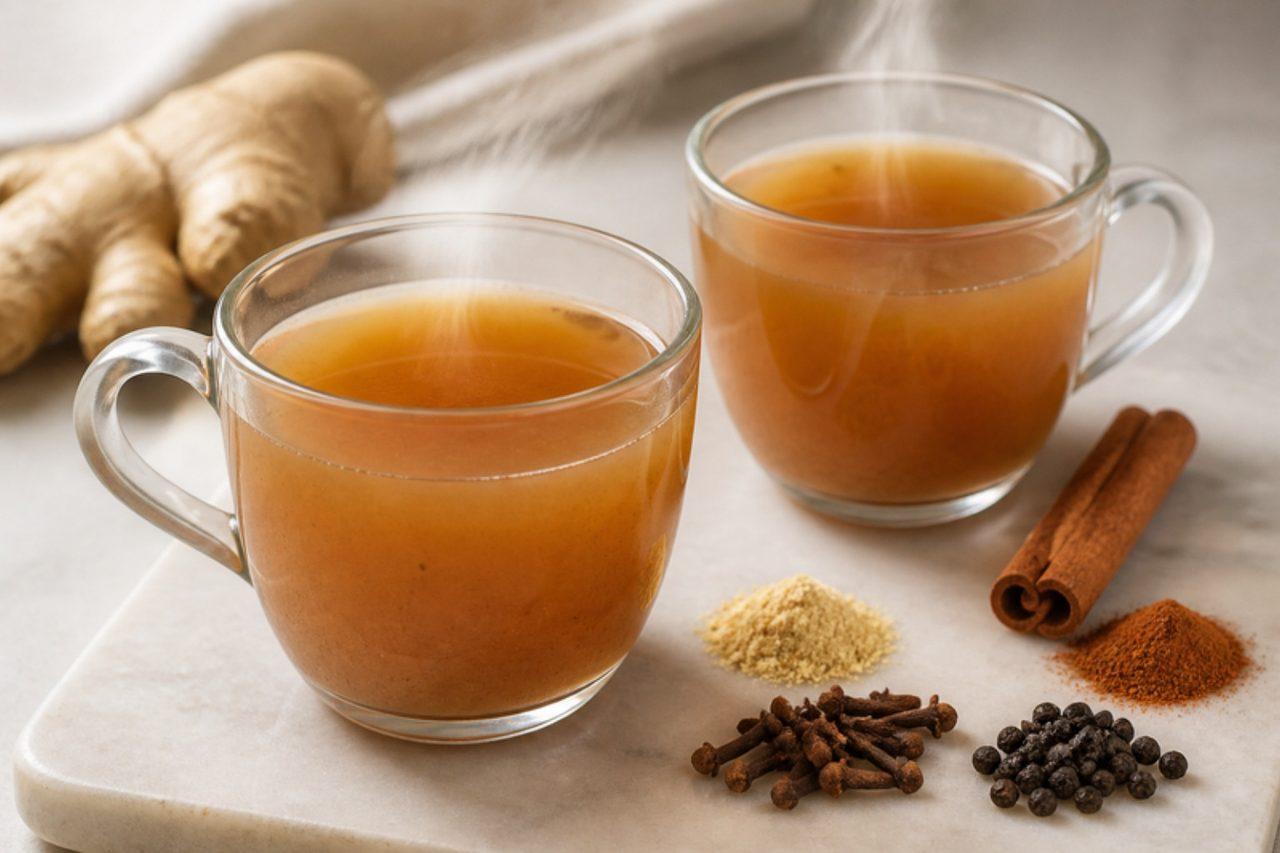
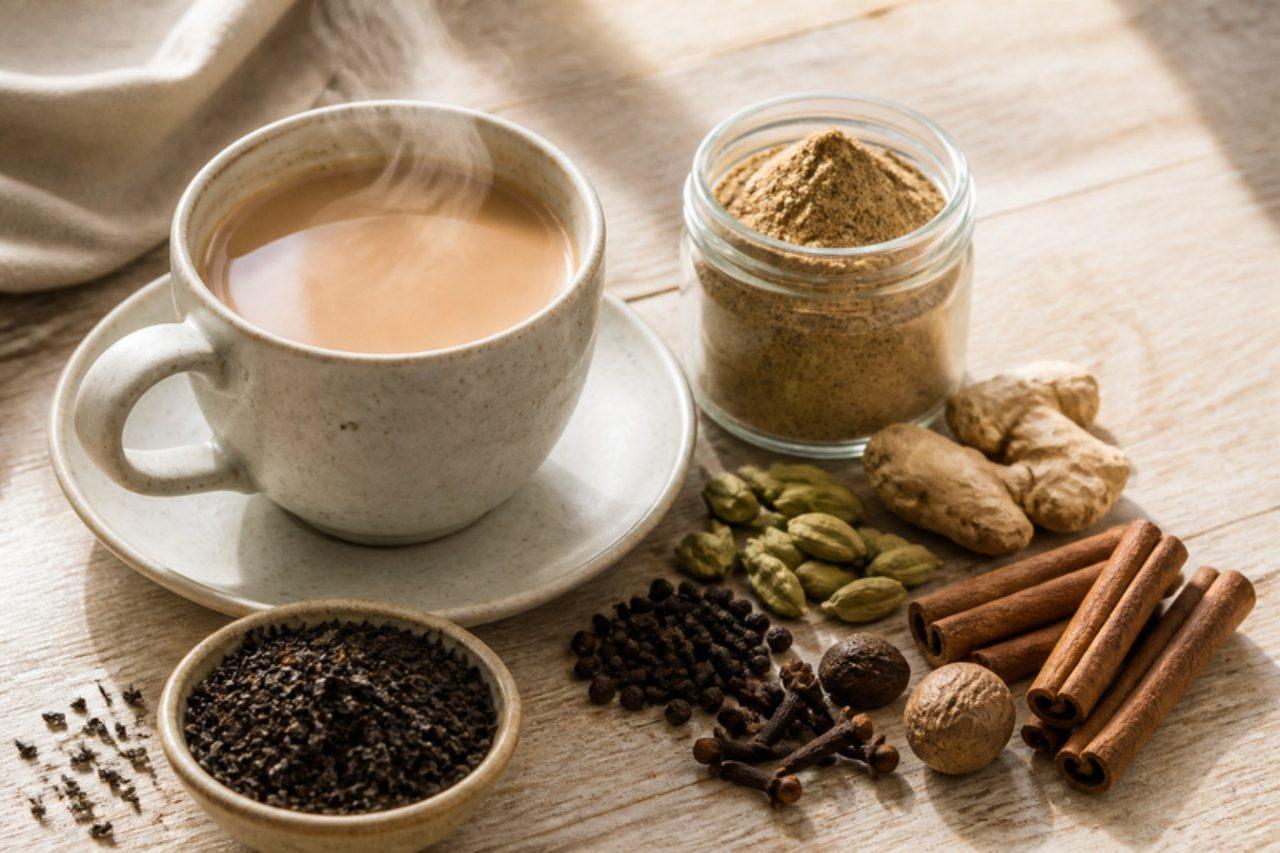
Tangawizi is a warming Swahili drink of ginger boiled with cinnamon, clove and black pepper and sweetened to taste. It's hot, peppery and soothing on a cool evening or when you have a cold. Serve hot in small kahawa cups.

by KrazyBadal 0 views

Baked bananas (ndizi ya kuoka)

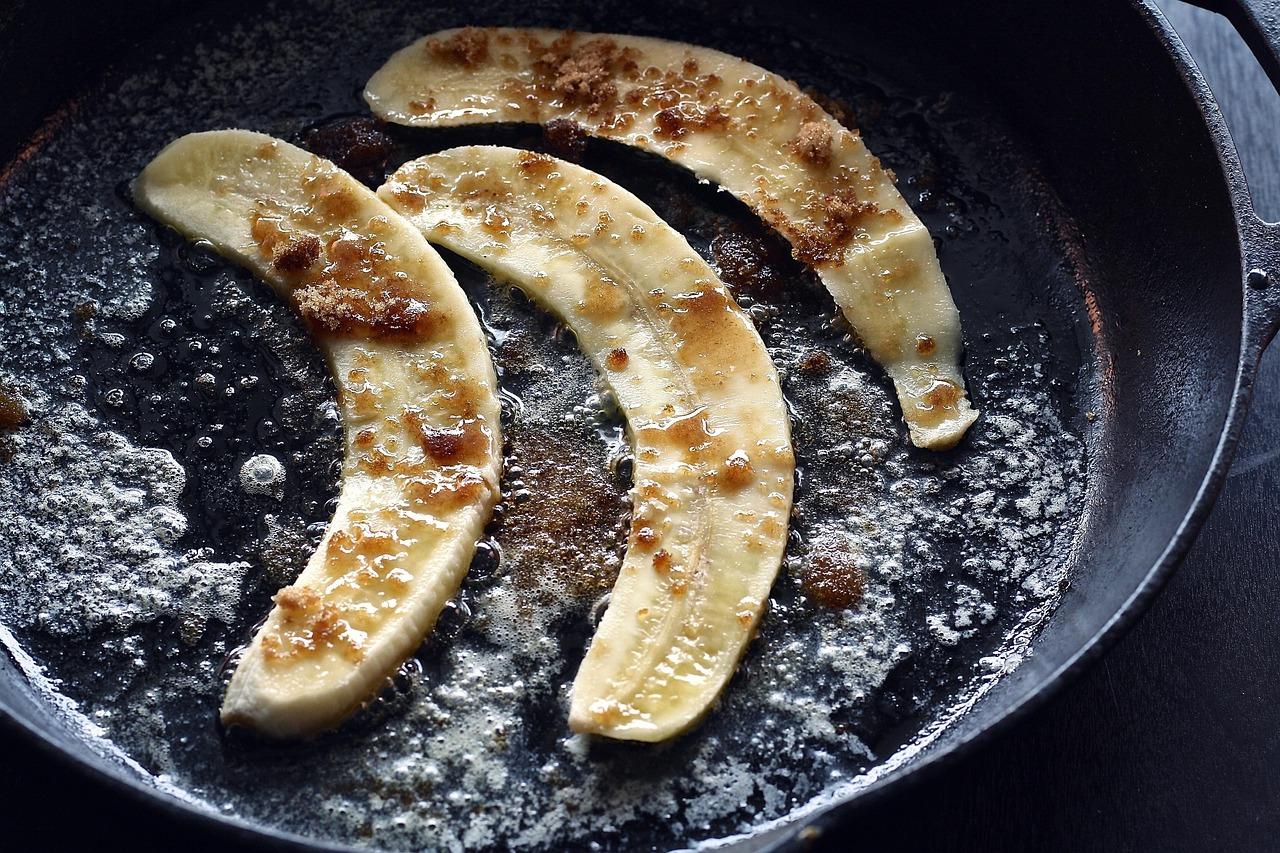
Ndizi ya kuoka: small bananas halved and baked with lemon juice, brown sugar and cinnamon until soft and syrupy, then served with lightly sweetened cream and a grating of nutmeg. It's a quick, warm pudding. The book's Handy Hints say bananas are good for the heart.

by KrazyBadal 0 views

Rice pancakes (mukari)

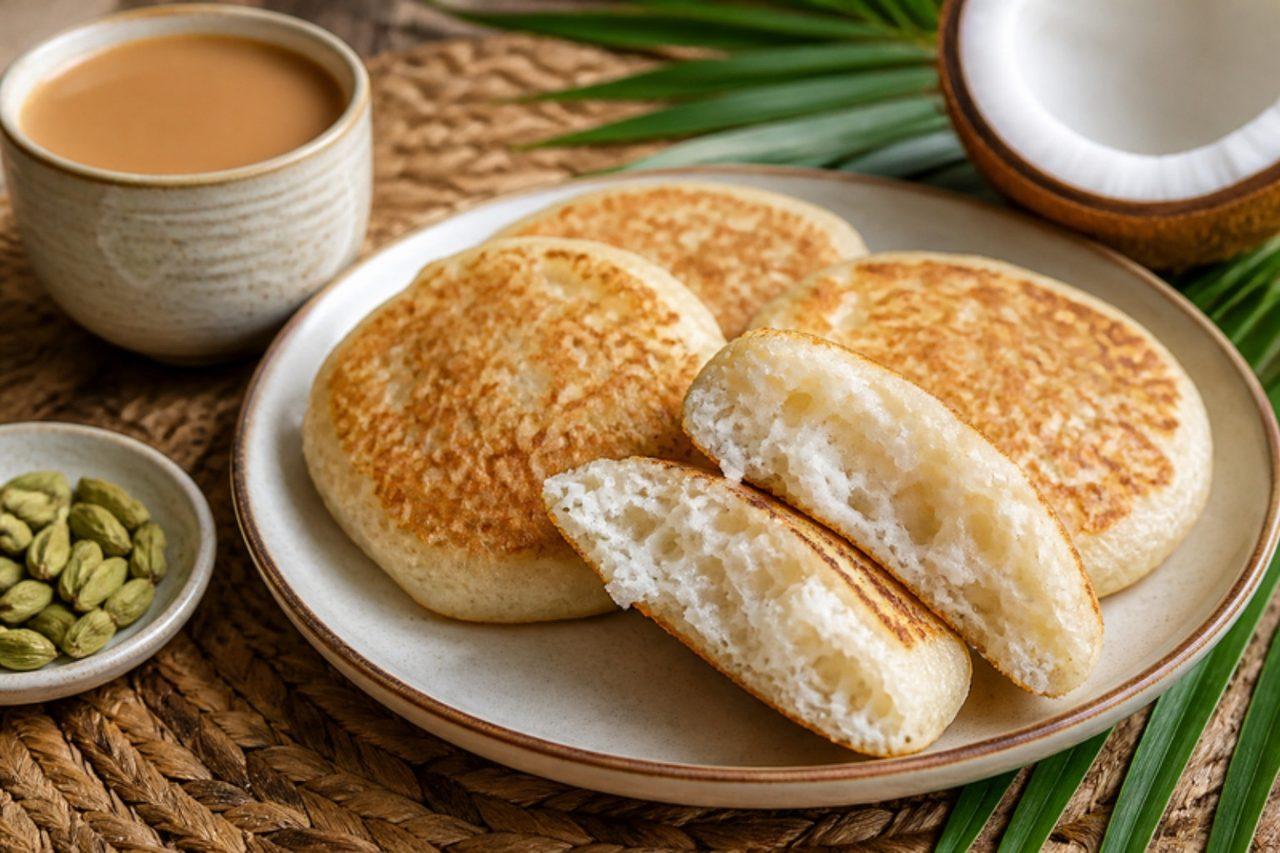
Mukari are soft, lightly sweet Zanzibari pancakes made from a yeasted rice flour and coconut milk batter scented with cardamom. They're cooked covered over a low heat so they puff up and stay spongy. Serve warm with tea.

by KrazyBadal 0 views

Zanzibar spiced tea (chai ya viungo)

Zanzibar is the spice island, and chai ya viungo is its everyday tea: black tea boiled with a home-roasted masala of cardamom, dry ginger, black pepper, cloves, cinnamon and nutmeg. The masala keeps for months in an airtight jar. Milk is optional; serve the tea hot.

by KrazyBadal 0 views

Momiji manjuMaple leaf sponge cakes

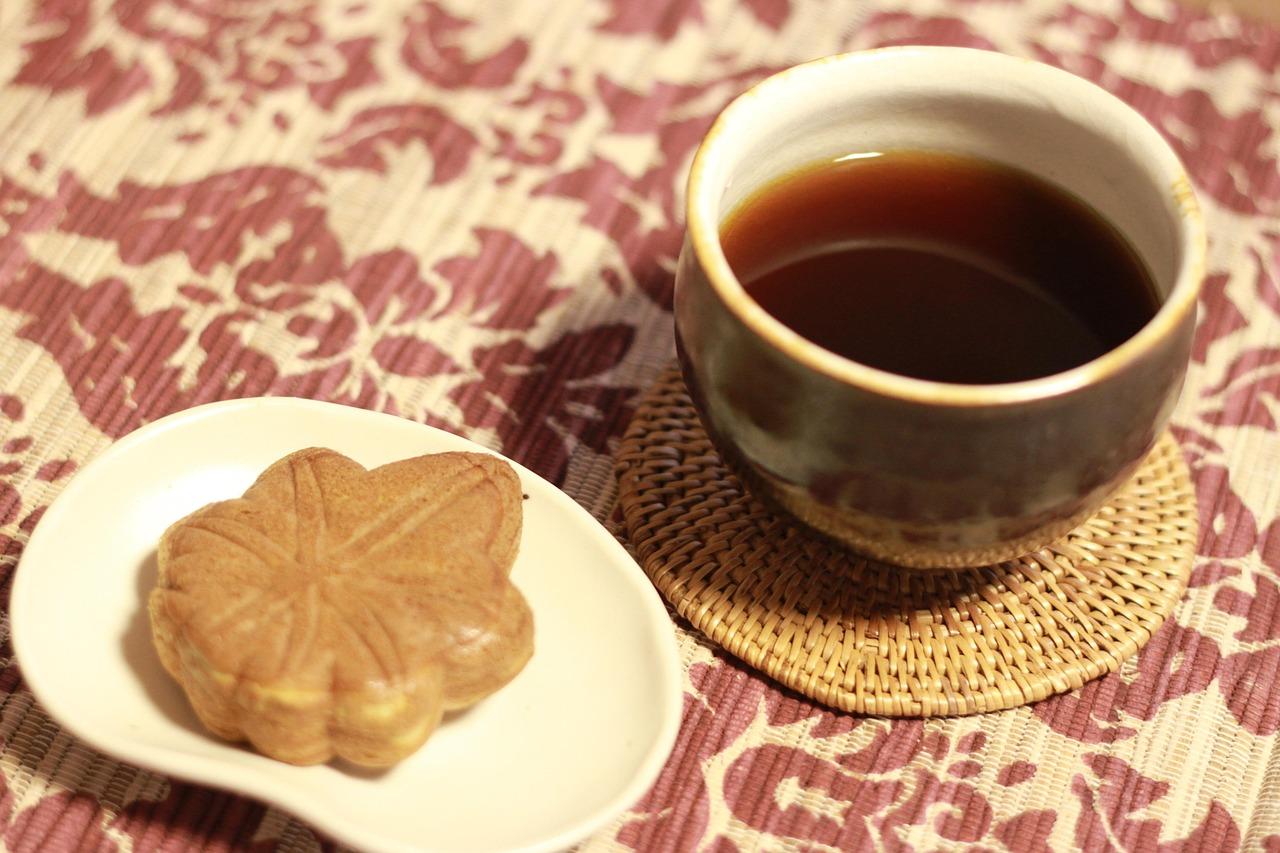
Momiji manju are the souvenir of Miyajima, the sacred island off Hiroshima famous for its floating red torii gate and its maple trees, which turn scarlet each November. A confectioner there first baked them around 1906, and today shops along the island's main street still turn them out of iron moulds while visitors watch. The cake is a soft, honey-scented sponge, the filling smooth red bean paste. Tokyo's Asakusa sells a near twin, ningyo-yaki, baked in the shapes of dolls and temple lanterns; this recipe makes both, depending on your mould. Serve with green tea. Chef's tip: rest the batter for 30 minutes before baking. The flour hydrates, the bubbles settle and the cakes come out smooth and evenly brown.

by KrazyBadal 0 views

Ojingeo sundaeRice-stuffed squid

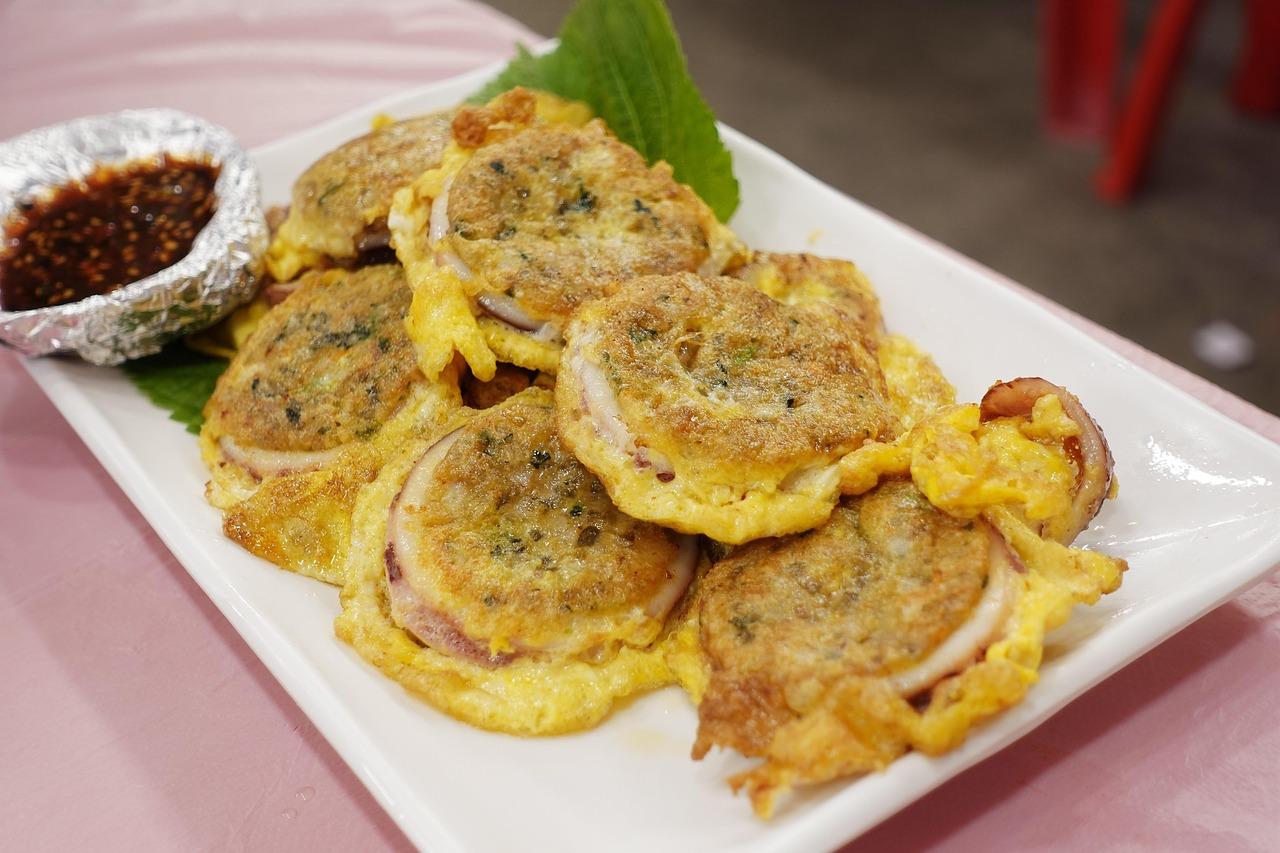
Abai Village in Sokcho, on Gangwon's east coast, was settled by people from Hamgyeong province in the north who could not go home after the Korean War. With squid plentiful in the East Sea, they stuffed it the way they had once stuffed pork casings for sundae, and the dish is now sold in the village's small restaurants and at Sokcho's Jungang market. The squid is filled with sticky rice, tofu and vegetables, steamed, cut into rounds and fried in beaten egg until golden. It makes a good sharing plate with a soy and vinegar dip. Chef's tip: mix a little glutinous rice into the filling; it binds the slices so they don't fall apart in the pan.

90 minKoreanFish
by KrazyBadal 0 views

MakguksuCold buckwheat noodles

Chuncheon, the lake city in Gangwon, is famous for two things: spicy grilled chicken and makguksu (막국수), coarse buckwheat noodles served icy cold. The name roughly means 'roughly made noodles', and the dish started as simple farm food in a region where buckwheat grew better than rice. In summer, makguksu houses serve it in a sweet, sour and spicy dressing with crunchy cucumber, sweet pear and sesame, often with a jug of chilled broth on the side to pour in halfway. This one is dressed with gochujang, vinegar and pear, and a cold kelp broth. Chef's tip: rinse the cooked noodles under cold running water and rub them between your hands until the water runs clear, then chill them in iced water; that washes off the starch and gives them their springy bite.

by KrazyBadal 0 views

Roasted bananas in chocolate

Whole bananas roasted on the barbecue until soft and sweet, cut into quarters, put on skewers, half-dipped in melted dark chocolate and rolled in chopped almonds, pistachios and cashews. It's a quick barbecue dessert that children love to help make. Serve them straight away while the chocolate is still soft.

20 minDessertsGluten free
by KrazyBadal 0 views

MolokhiaJute leaf soup

Molokhia is one of the oldest dishes on the Egyptian table, eaten across the country from Alexandria to Upper Egypt, usually at a family lunch with white rice and torn baladi bread. The finely minced leaves of the jute plant cook in stock in minutes into a bright green, gently slippery soup; at the end a ta'leya of garlic and ground coriander fried in oil is poured in with a loud hiss. Most families cook it with chicken or rabbit broth, but a well-flavoured vegetable stock makes a lovely, light vegan version. Frozen minced molokhia from Middle Eastern grocers is what most Cairo cooks use too. Chef's tip: some cooks take a sharp breath (the shahqa) as the ta'leya goes in; joke or not, the point is to pour it in while the garlic is still sizzling hot.

by KrazyBadal 0 views

MolletesOpen bean and cheese rolls

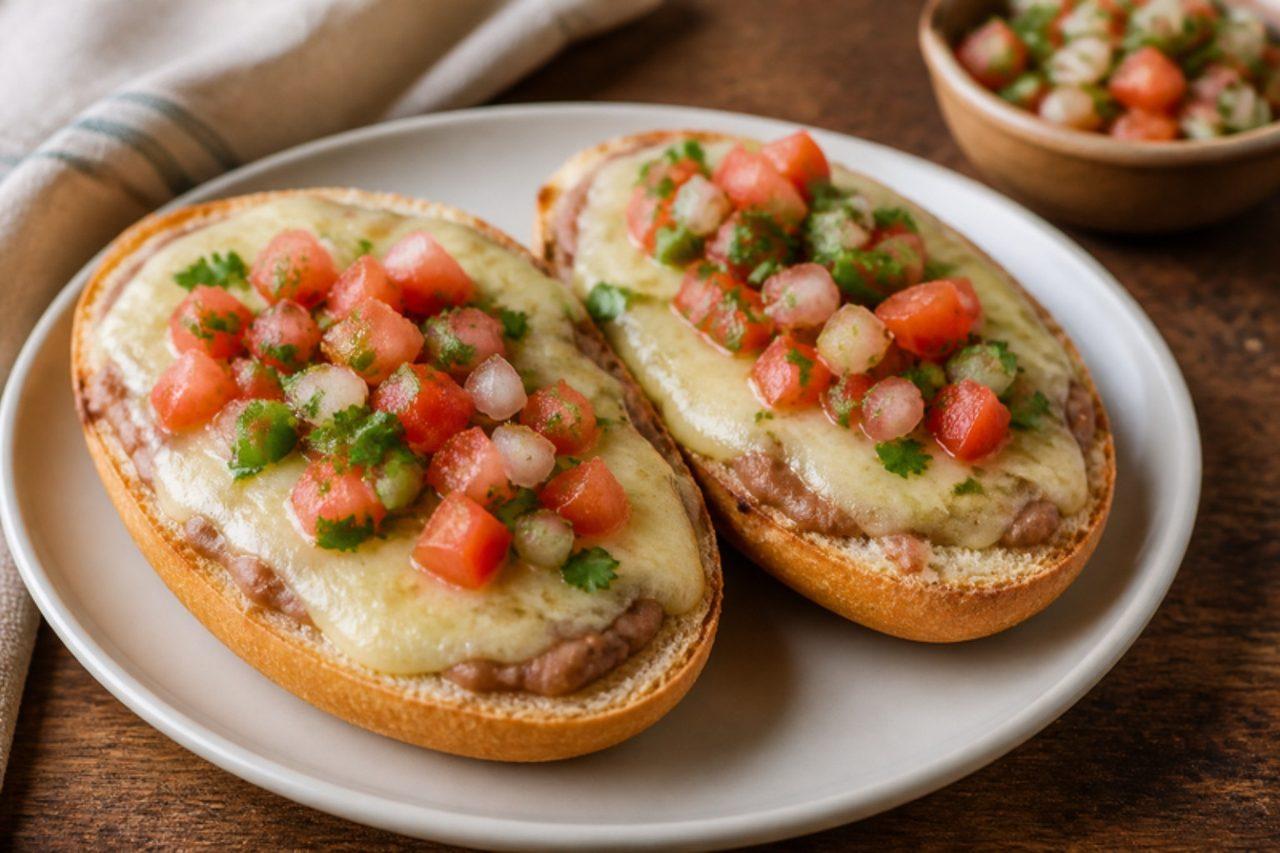
Molletes are a favourite cheap breakfast and after-school snack across Mexico, especially in Mexico City cafés: a bolillo (a crusty, oval white roll) split, buttered and toasted, spread with refried beans, covered with cheese and grilled until bubbling, then topped with fresh pico de gallo. They are crunchy, creamy and gooey, and children love them. Use crusty white rolls or short pieces of baguette if you can't get bolillos, and a mild melting cheese made with vegetarian rennet, such as mild cheddar, mozzarella or Oaxaca cheese. Chef's tip: toast the buttered rolls before adding the beans, so the bread stays crisp underneath instead of going soggy.

by KrazyBadal 0 views

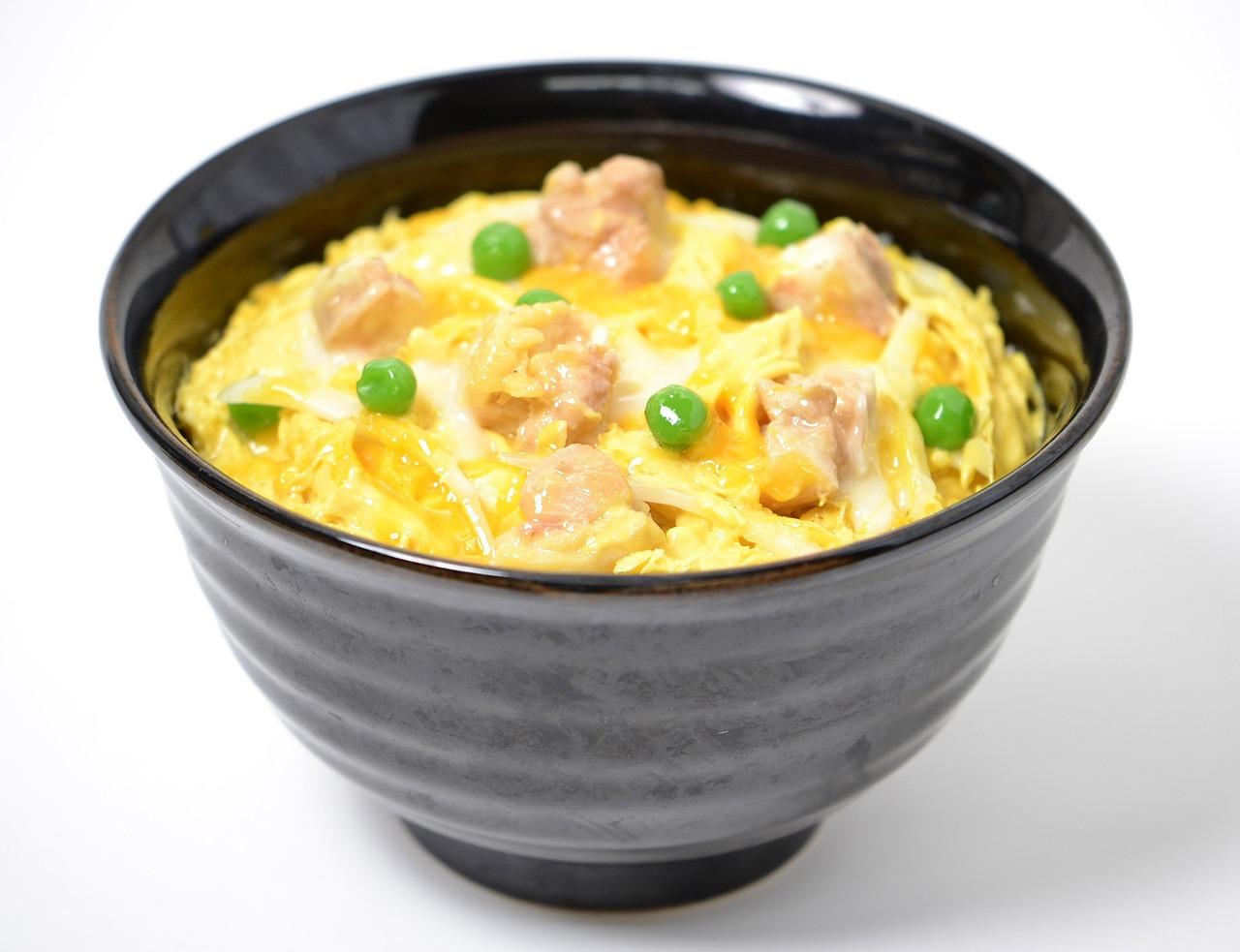
OyakodonChicken and egg rice bowl

The name means 'parent and child bowl', a gentle joke about cooking the chicken and the egg together. A Nihonbashi chicken restaurant in Tokyo says it first served the dish in the 1890s, and today it is a staple lunch in soba shops, office canteens and home kitchens all over the country. Thigh meat and sliced onion simmer briefly in sweet soy dashi, then beaten egg goes in and is taken off the heat while still soft and glossy. Everything slides onto a bowl of hot rice so the sauce seeps into the grains. Chef's tip: beat the eggs with just a few strokes of chopsticks, leaving streaks of white and yolk, as that marbled look and silky texture is what you're after.

by KrazyBadal 0 views

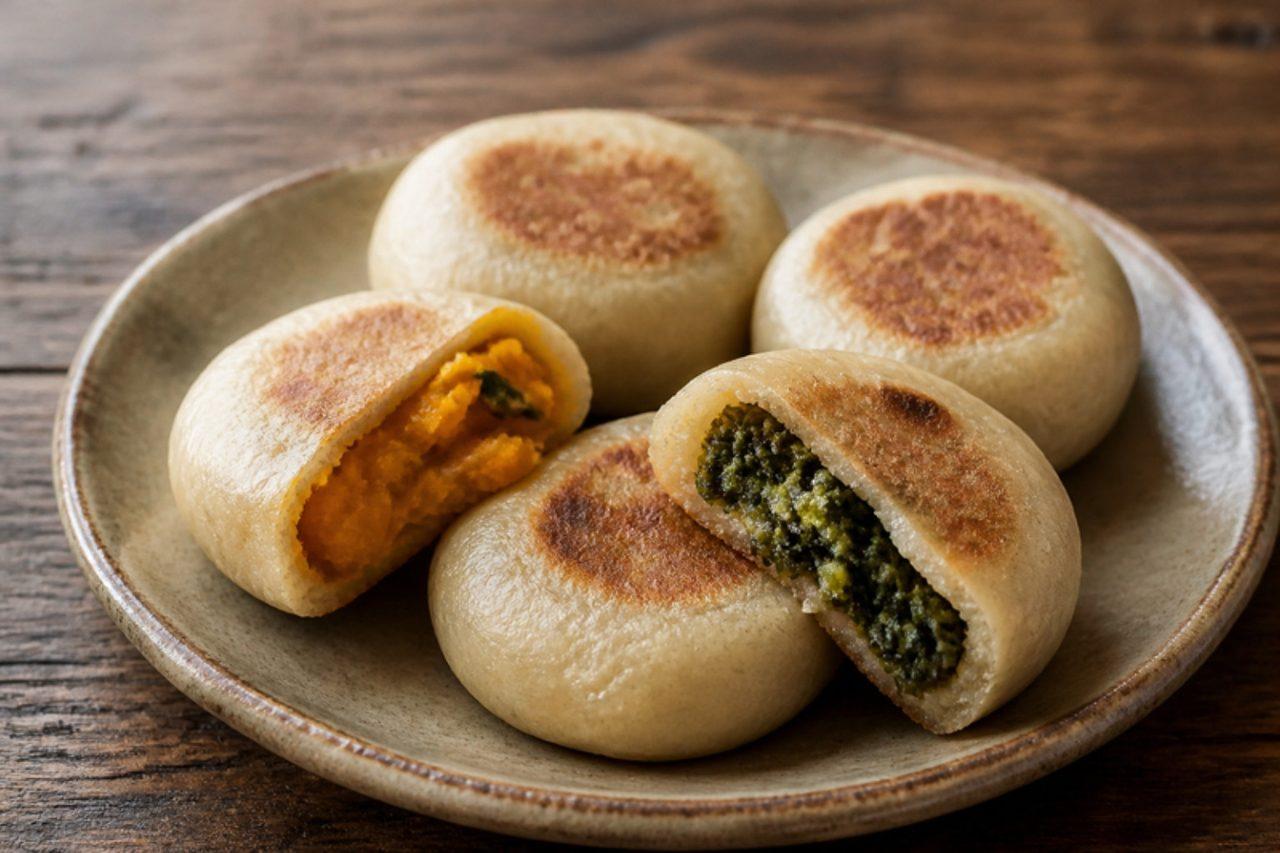
OyakiStuffed steamed dumplings

Oyaki are the everyday snack of Nagano's mountain villages, where rice was scarce and wheat and buckwheat grew better. The plump dumplings are filled with whatever the season gives: pickled nozawana greens in winter, aubergine and miso in summer, sweet squash in autumn. Old farmhouses baked them in the ashes of the irori hearth; today they are browned in a pan and steamed, so they come out crusty on both faces with a soft, chewy middle. They travel well, which made them the lunch of farmers and hikers on the trails around Zenkoji temple. Chef's tip: let the dough rest for at least 30 minutes. A relaxed dough stretches thin around the filling without tearing.

by KrazyBadal 0 views

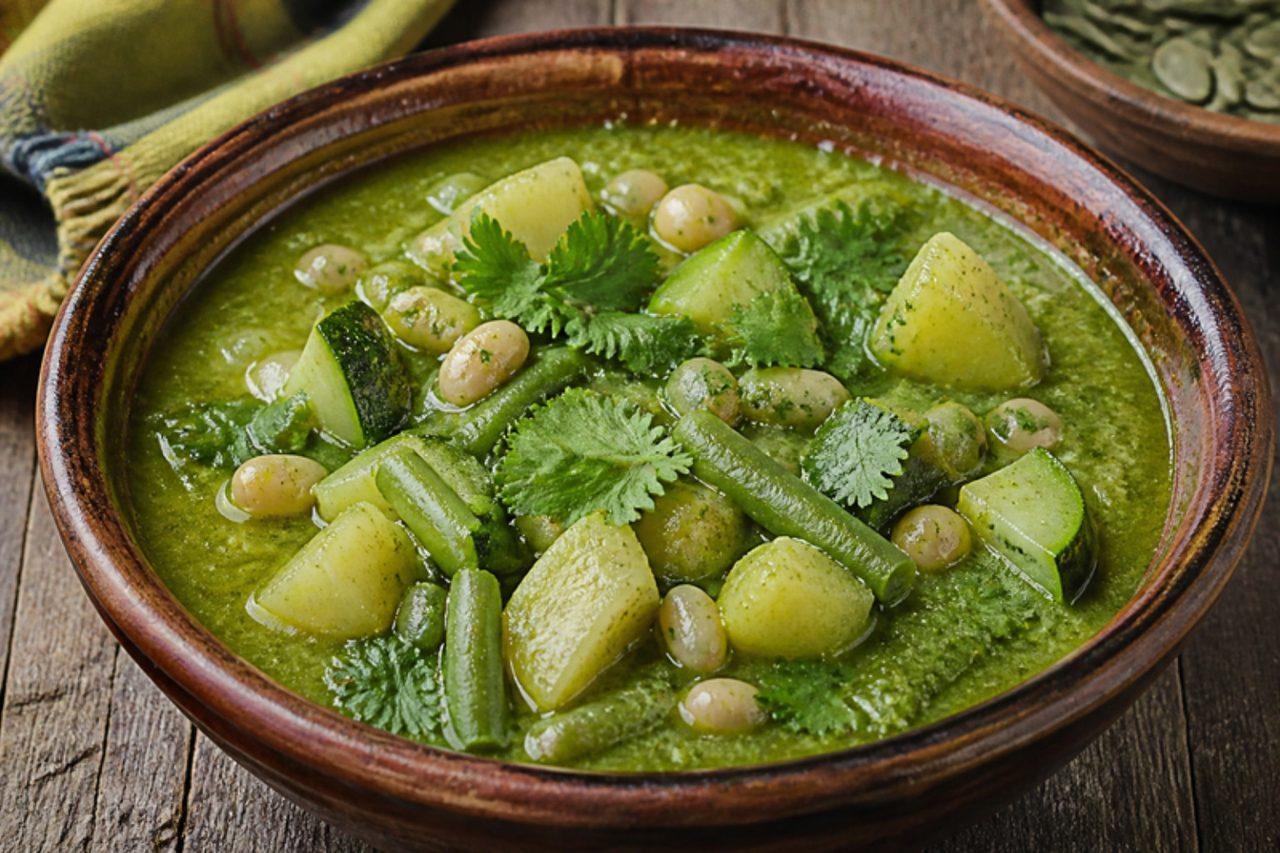
Mole verde with vegetablesGreen mole with vegetables

Mole verde is the brightest of Oaxaca's seven moles: instead of dried chillies and chocolate it is built from tomatillos, fresh green chillies and a fistful of herbs (hoja santa, epazote, parsley) and thickened with masa or pumpkin seeds. In Oaxaca it is often cooked with white beans and vegetables, which is how we make it here, with potatoes, courgette, green beans and chayote. The sauce is tangy, herbal and silky, and goes with white rice or warm corn tortillas. It is vegan as long as you use vegetable stock. Chef's tip: blend the raw herbs in at the very end, off the heat; cooked any longer they turn grey and lose their fresh perfume.

by KrazyBadal 0 views

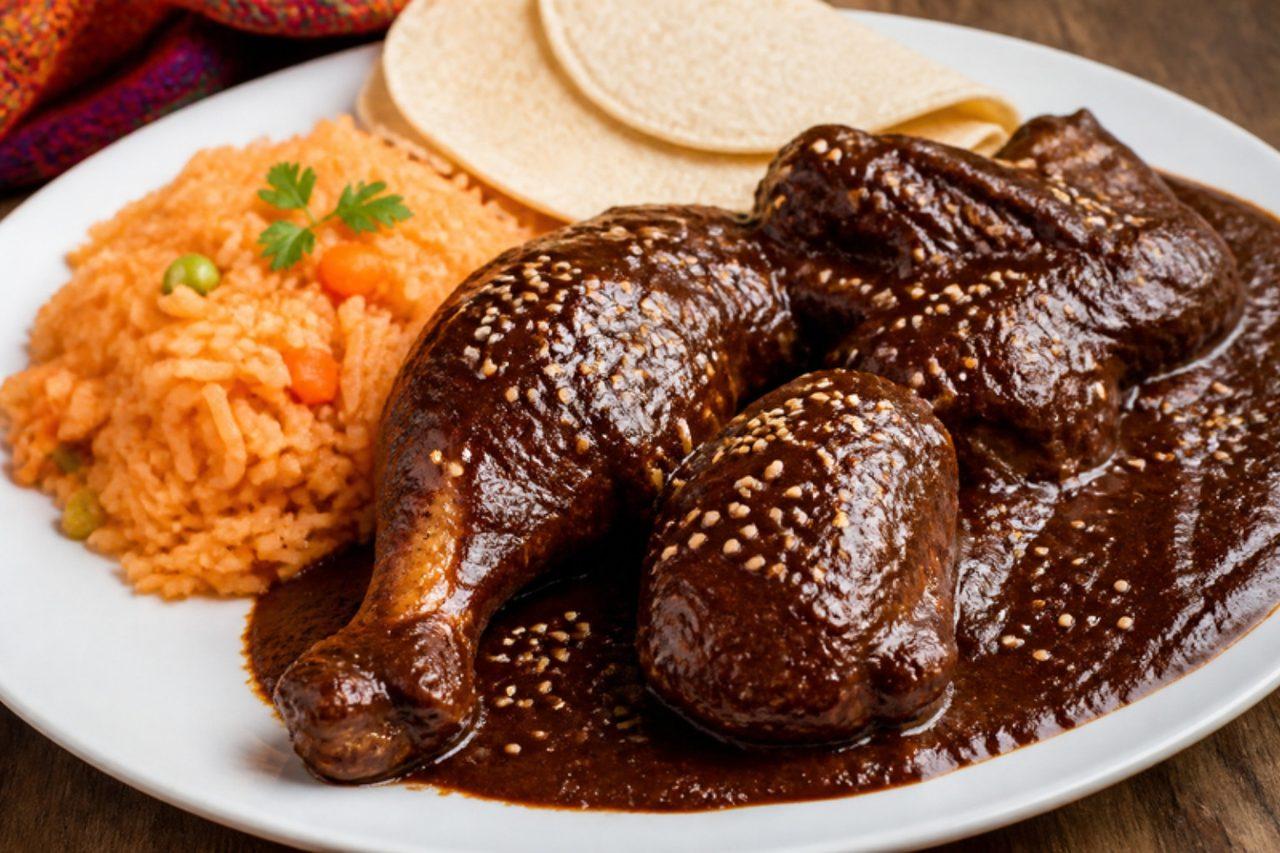
Mole poblano with chickenChicken in chocolate chilli sauce

In the city of Puebla, mole poblano is the dish for weddings, baptisms and saints' days, and families often make it together over a whole afternoon. Three dried chillies (mulato, ancho and pasilla) are fried and ground with almonds, peanuts, sesame, raisins, spices, toasted tortilla and a little chocolate into a sauce that is deep, glossy and only gently sweet. It is spooned over poached chicken and scattered with sesame, with Mexican rice and warm tortillas to mop it up. Making it a day ahead lets the flavours settle. Chef's tip: fry the blended sauce in hot fat before adding stock; that sizzling stage is what turns it from a purée into mole.

by KrazyBadal 0 views

Moksi alesiMixed rice with salted meat

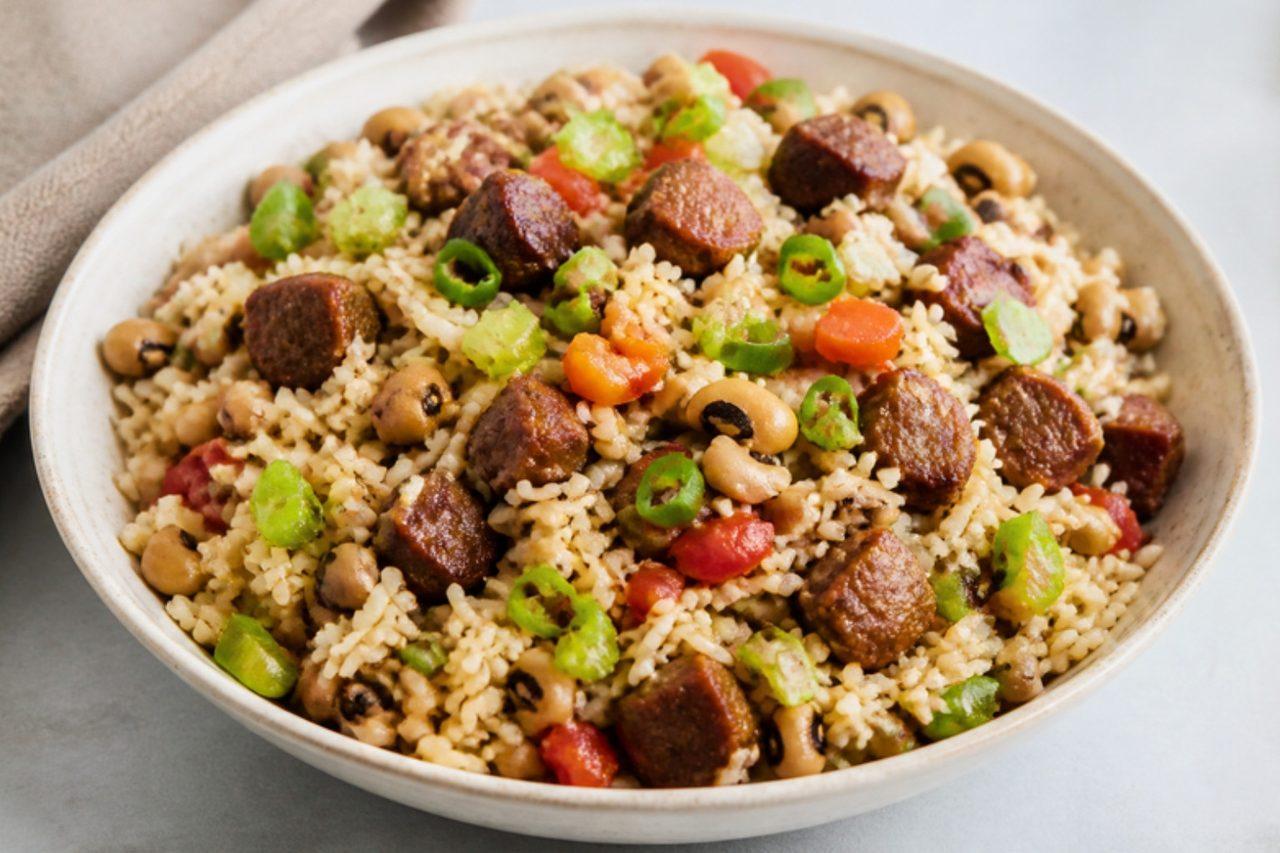
Moksi alesi, "mixed rice" in Sranan Tongo, is a weekday one-pot from Paramaribo's Creole kitchens: rice cooked with salted meat or salt fish, black-eyed beans, coconut milk, onion, celery and hot pepper, until the grains are soft and full of flavour. It is cooked when there's little time but a full pot is needed. This version uses salted pork; it contains pork. The mistake is not soaking the salted meat, which makes the rice far too salty; soak it, then boil it first. Chef's tip: smoked turkey or salt beef works in place of pork.

by KrazyBadal 0 views

Mok paHerb fish steamed in banana leaf

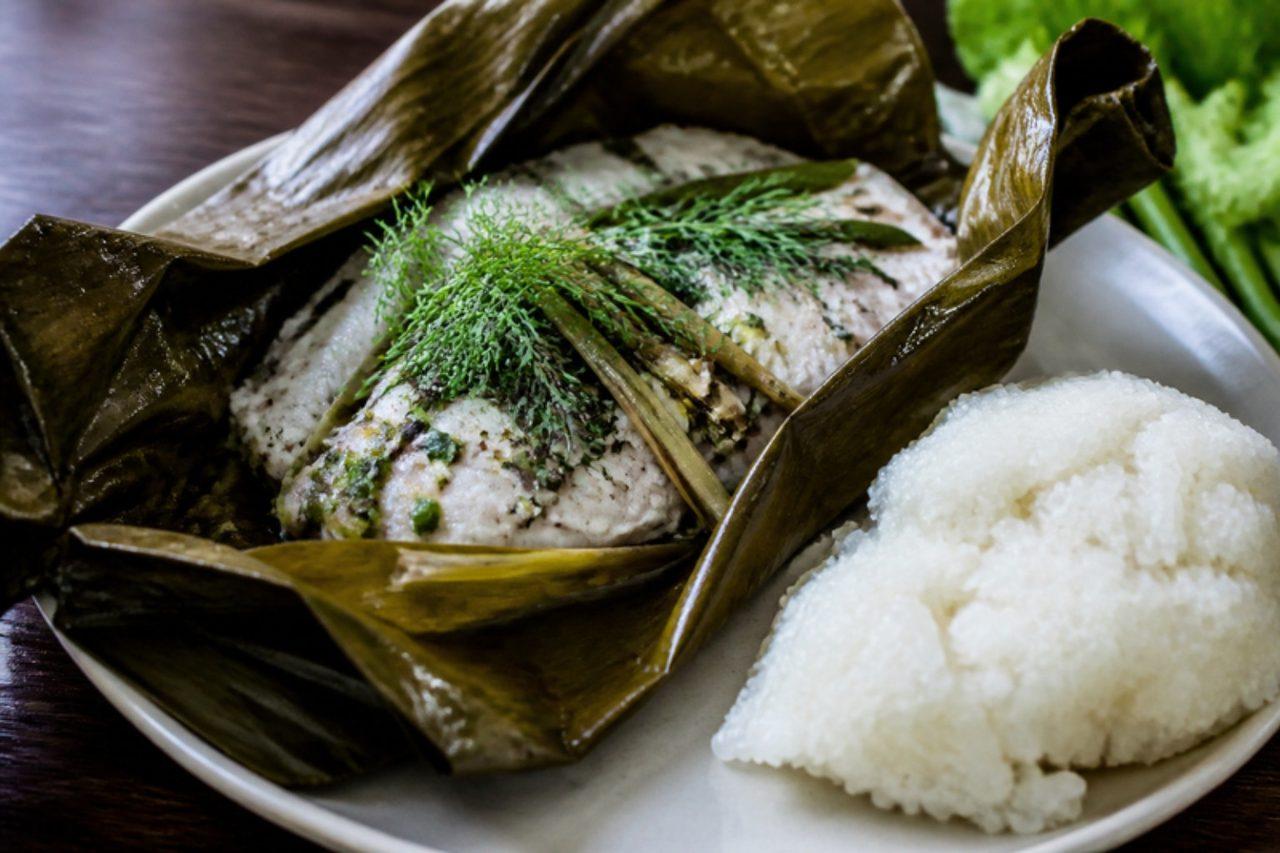
Mok pa is cooked all over Laos, from Vientiane's riverside markets to village kitchens near the Mekong, where freshwater fish is the everyday protein. Chunks of white fish are mixed with a paste of lemongrass, shallot, garlic and chilli, a handful of dill and lime leaves and a spoon of sticky rice flour, then wrapped in banana leaf parcels and steamed until set and fragrant. Eat it with sticky rice and raw vegetables. Chef's tip: soften the banana leaves by passing them briefly over a flame or into hot water; they fold without cracking.

55 minLaoFishGluten free
by KrazyBadal 0 views

Ovoshchnoe raguSummer vegetable stew

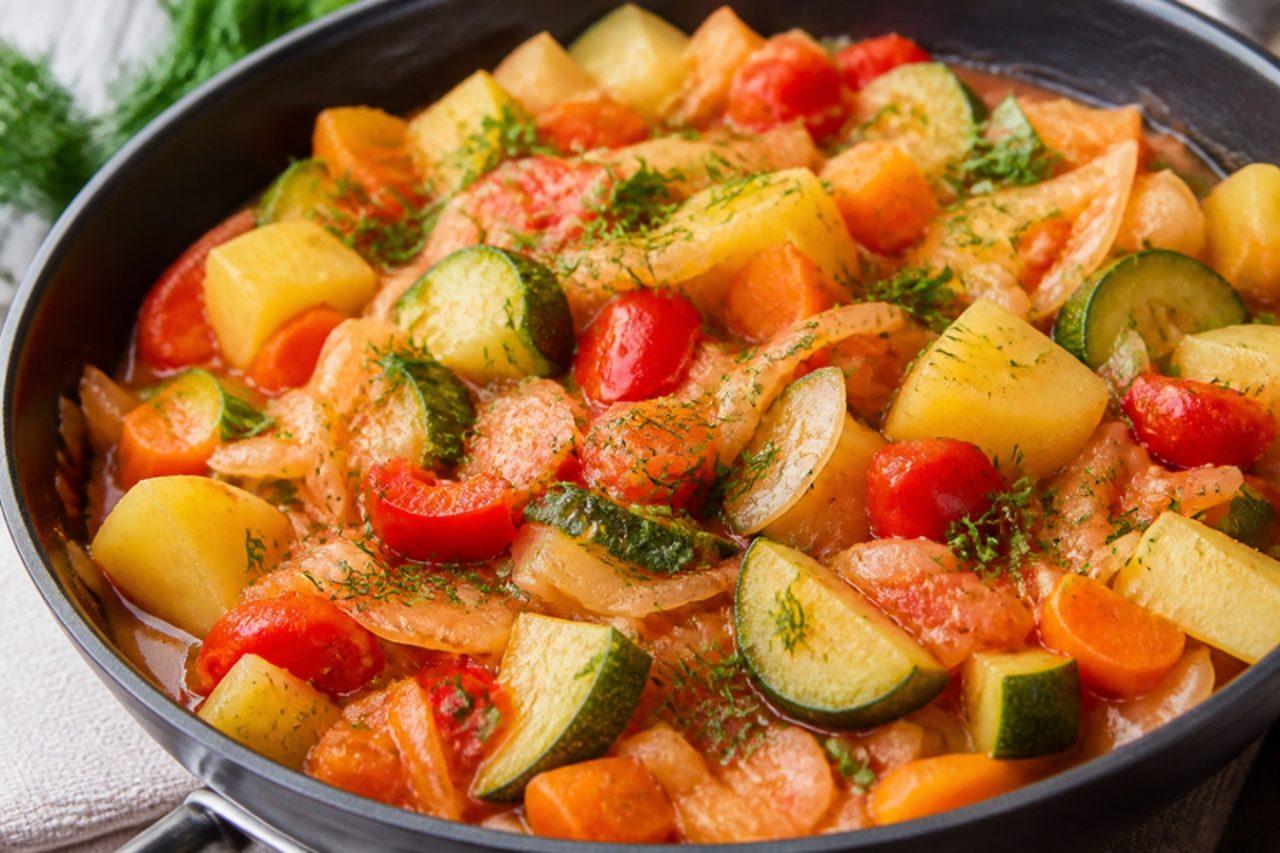
Ovoshchnoe ragu is what happens at a Russian dacha in August, when the garden outside Moscow or Nizhny Novgorod produces more courgettes, cabbage, peppers and new potatoes than anyone can eat. Everything is fried in turn, then stewed together in one heavy pot with tomato until soft and spoonable, and eaten hot with black bread, or cold the next day. It is homelier than French ratatouille or Greek briam: cabbage and potatoes give it body, and dill and garlic go in right at the end. Chef's tip: fry each vegetable separately before stewing; dumping everything in raw gives a watery, boiled taste.

by KrazyBadal 0 views

Mojo criolloSour orange and garlic sauce

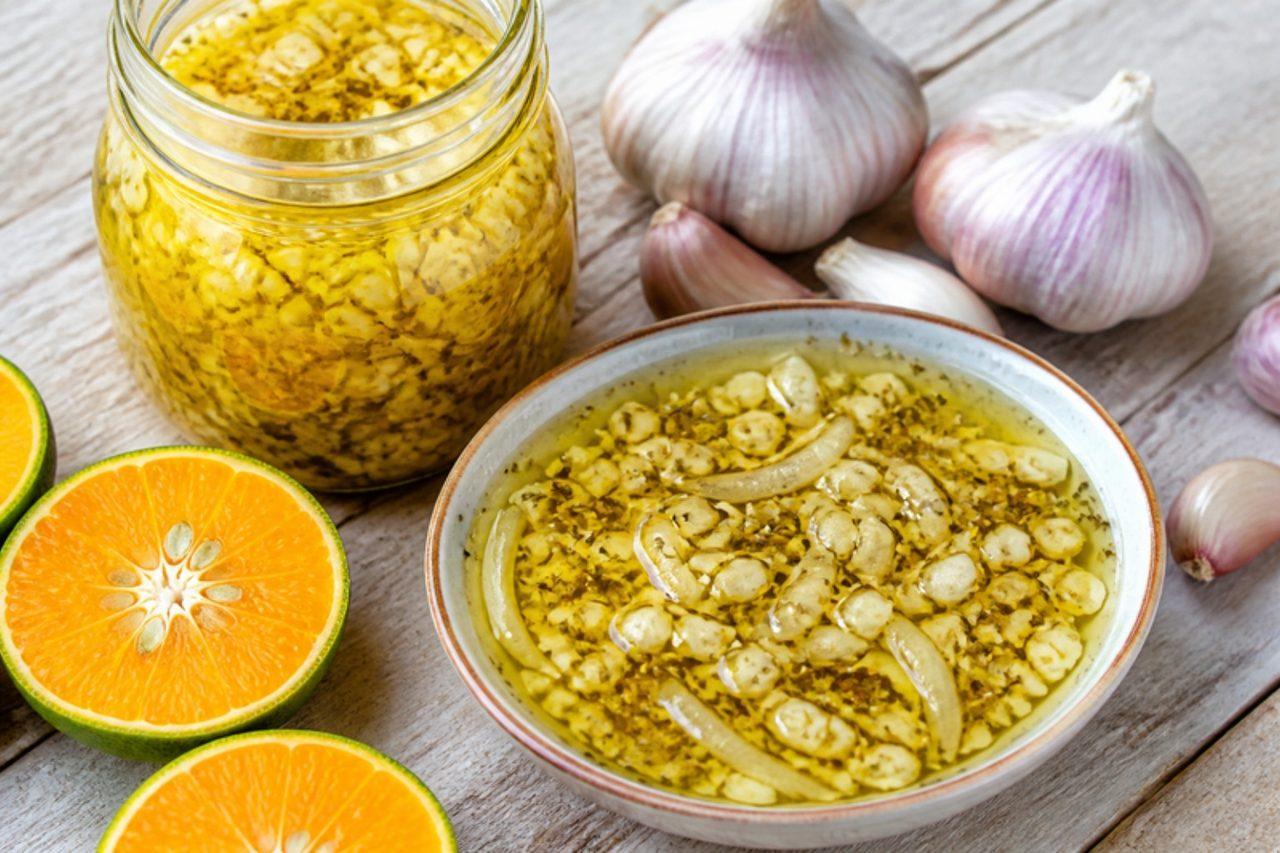
Mojo criollo is the raw sauce Cuban cooks keep in a jar by the stove: sour orange juice from the naranja agria tree, pounded garlic, cumin, oregano and olive oil. On the island it marinates whatever goes on the grill and is spooned over tostones, boiled malanga and roast vegetables; vegetarians use it to marinate tofu, mushrooms or thick slices of squash. It is sharp, garlicky and bright. Chef's tip: pound the garlic to a paste with the salt rather than chopping it; the salt helps it break down so the sauce tastes round, not harsh.

by KrazyBadal 0 views

Moi moiSteamed bean pudding

Moi moi (also written moin moin) is the soft, savoury bean pudding of Yorubaland that turns up at every Lagos party beside jollof, and in lunchboxes and on Sunday breakfast plates with ogi or custard. Peeled black-eyed beans are blended with red pepper, onion and oil, then steamed until set and sliceable, like a light, spicy terrine. Traditionally it is wrapped in broad uma (thaumatococcus) leaves; ramekins or foil cups work at home. Party versions often hide boiled egg or fish inside; this one is fully plant-based. Chef's tip: the batter should drop thickly from a spoon, like a cake batter; too runny and the moi moi never firms up.

by KrazyBadal 0 views

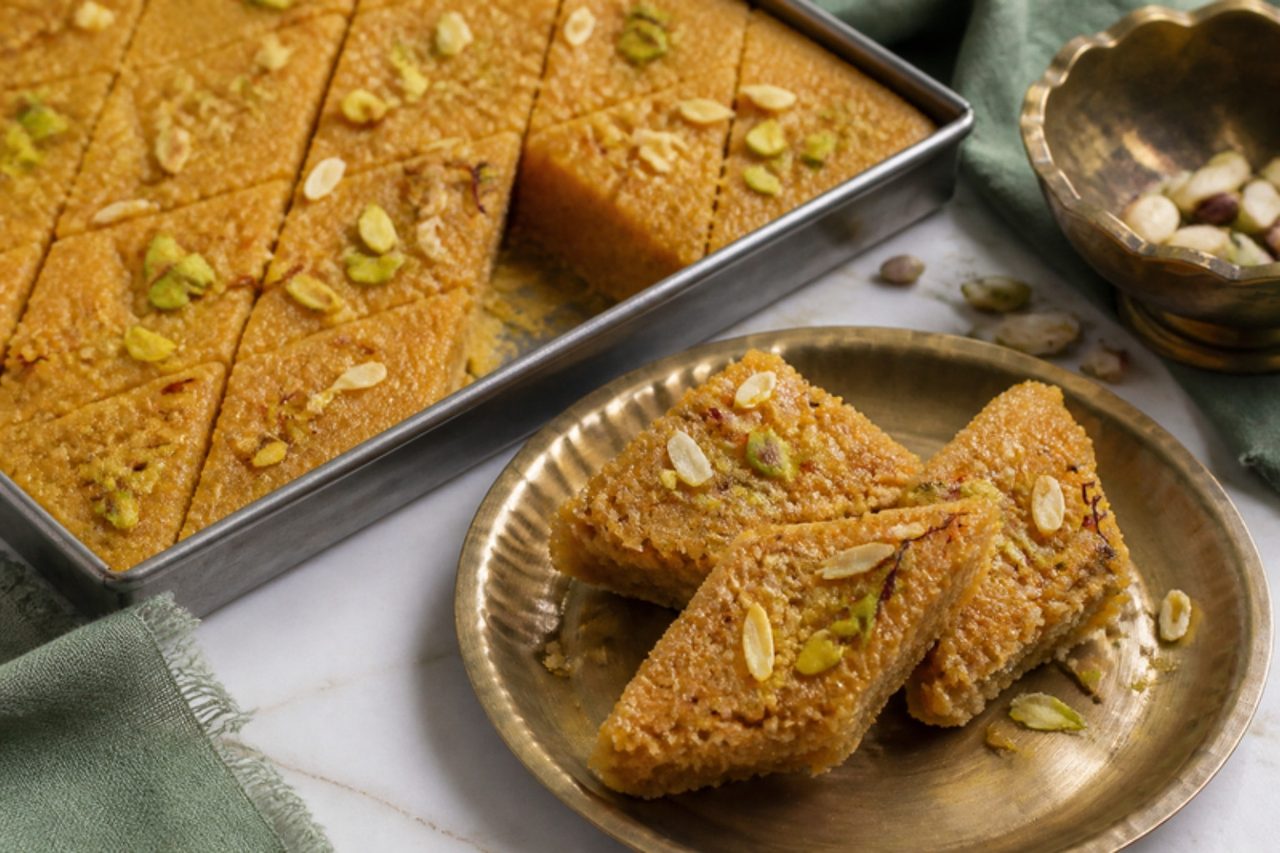
Mohan thaalGram flour fudge

Mohan thaal, named after Krishna, is offered at temples on Janmashtami and fills sweet boxes at Diwali in both Rajasthan and Gujarat. It is coarse gram flour roasted in ghee until it turns golden and smells like roasted nuts, then set with cardamom syrup into a grainy, fudge-like slab and cut into diamonds. The texture comes from a step called dhabo: rubbing ghee and milk into the flour, then sieving it into tiny granules before roasting. The mistake most cooks make is cooking the syrup too long; the fudge sets rock-hard and crumbles when cut. Chef's tip: take the syrup off the heat at a firm one-and-a-half string stage, and stop stirring when the mixture pulls away from the pan's sides in one mass.

by KrazyBadal 0 views

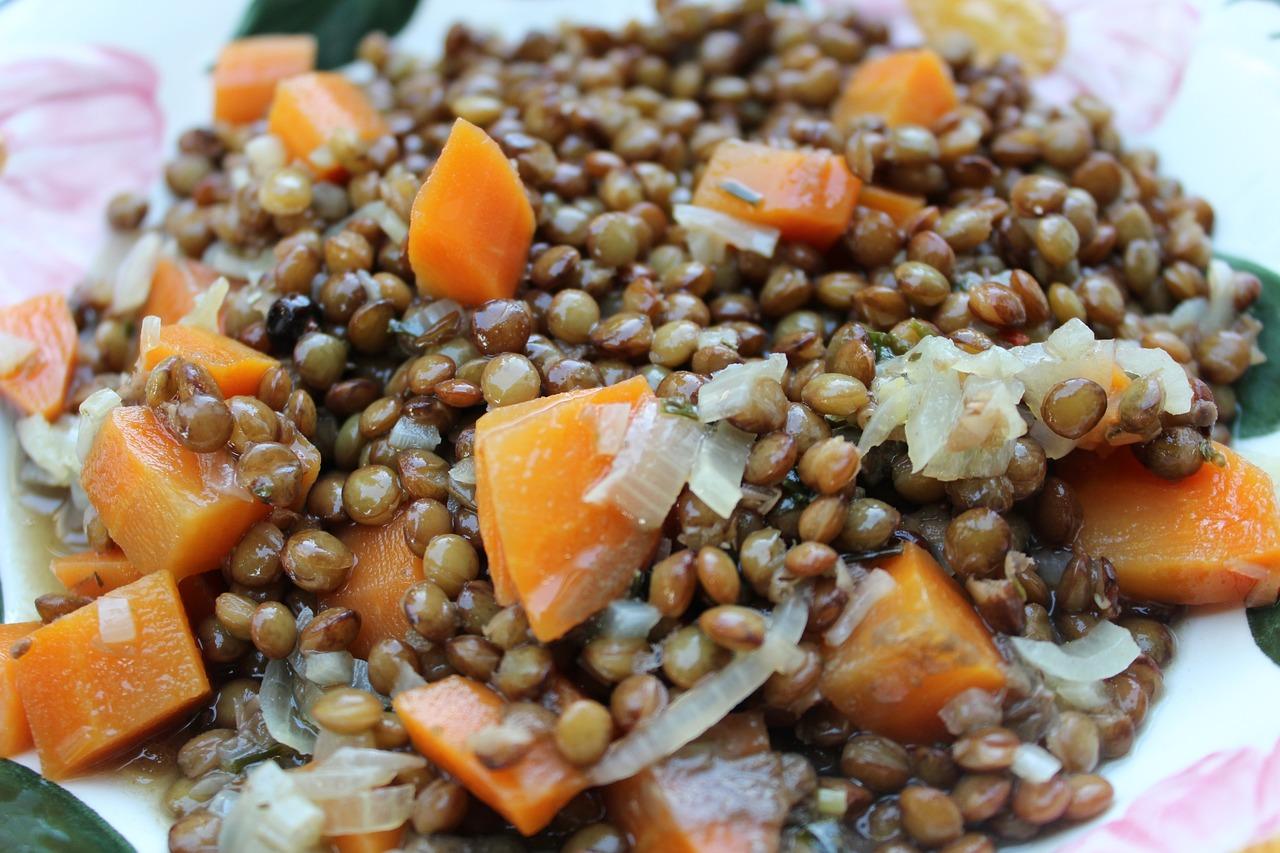
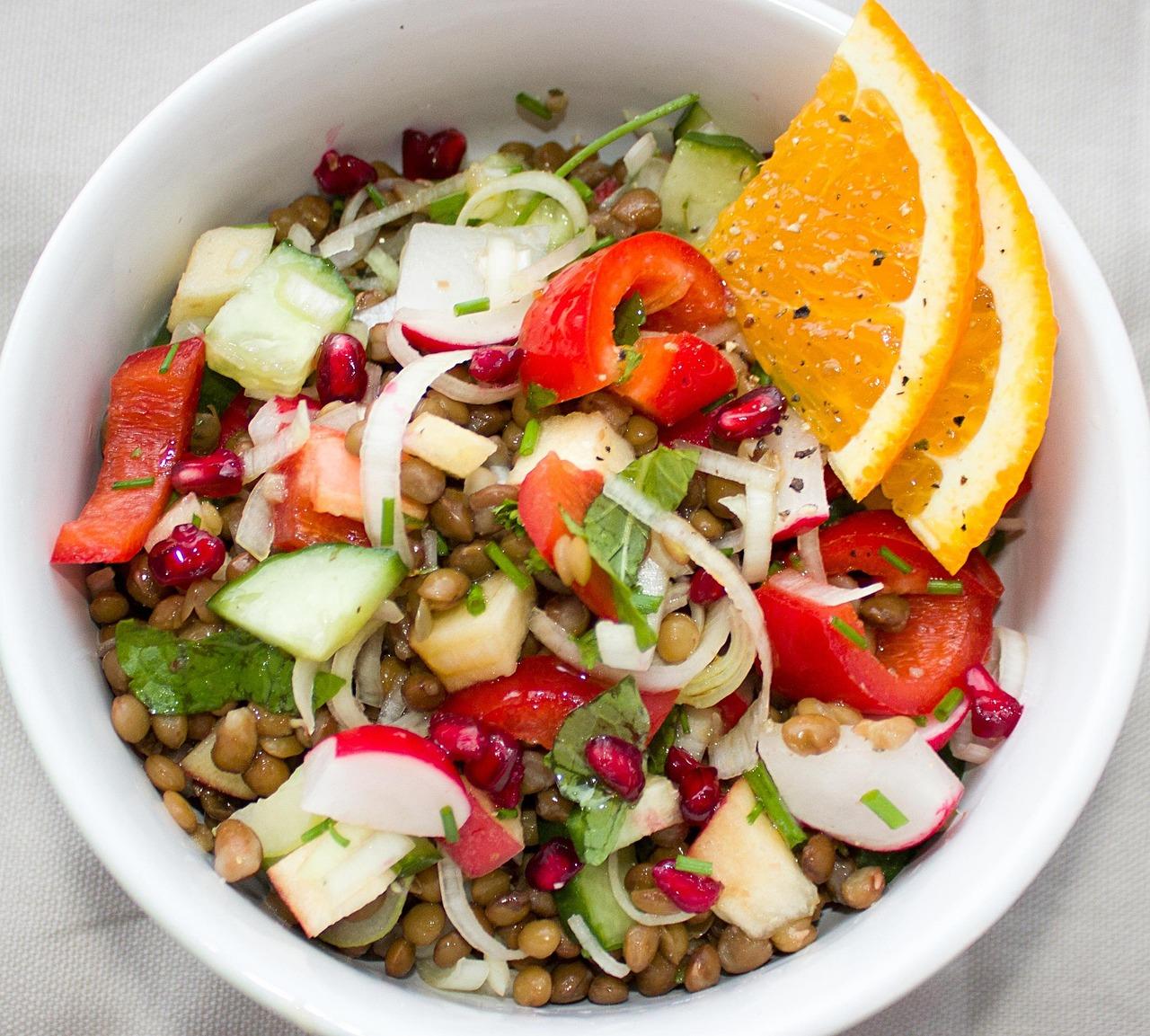
Lentilles du Puy saladGreen lentil salad

Le Puy-en-Velay, in the volcanic hills of the Auvergne, grows a small, slate-green lentil with its own protected name. Lentilles du Puy hold their shape when cooked and have a peppery, almost mineral taste, which makes them perfect for salad. In French homes and bistros this salad is dressed while warm with a sharp mustard vinaigrette, shallot, carrot and parsley, then eaten as a starter, a packed lunch or a side to a quiche. Chef's tip: dress the lentils while they're still warm so they absorb the vinaigrette; dressing them cold is the common mistake and the flavour just sits on the outside.

by KrazyBadal 0 views

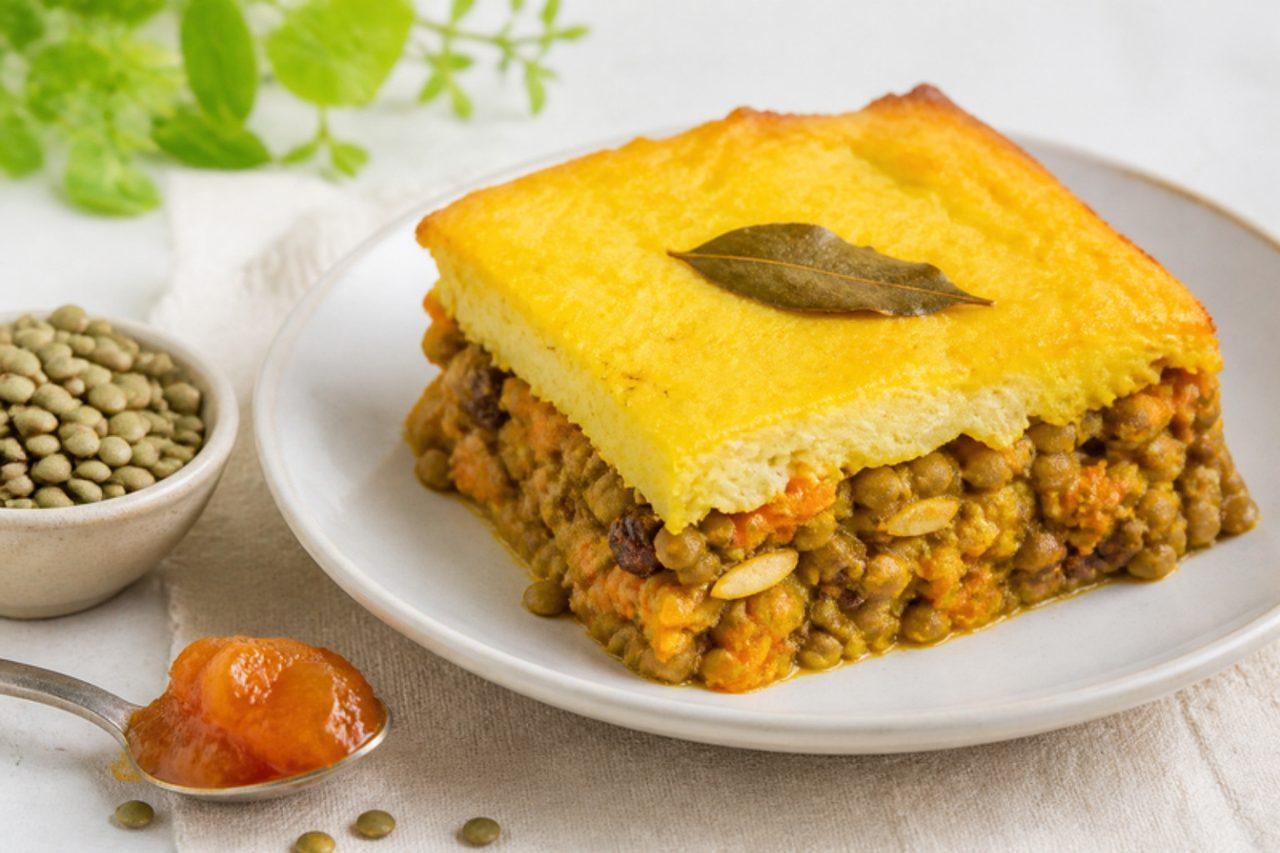
Lentil bobotieCurried lentil bake

Bobotie is the dish Cape Town is proudest of, brought to the Cape by Malay and Indonesian cooks centuries ago and still baked for Sunday lunch in the Bo-Kaap and across the Western Cape. Its flavour sits between sweet, sour and mildly hot: curry spices, apricot jam, fruit chutney and lemon, with a set egg-and-milk custard on top scented with bay leaves. The classic uses beef mince and milk-soaked bread; here brown lentils carry the spices so well that no bread is needed. Serve with yellow rice, chutney and a sliced banana and tomato sambal. Chef's tip: let the lentil filling cook down until thick and almost dry before baking, or the custard sinks into it instead of setting on top.

by KrazyBadal 0 views

MofongoMashed fried plantain

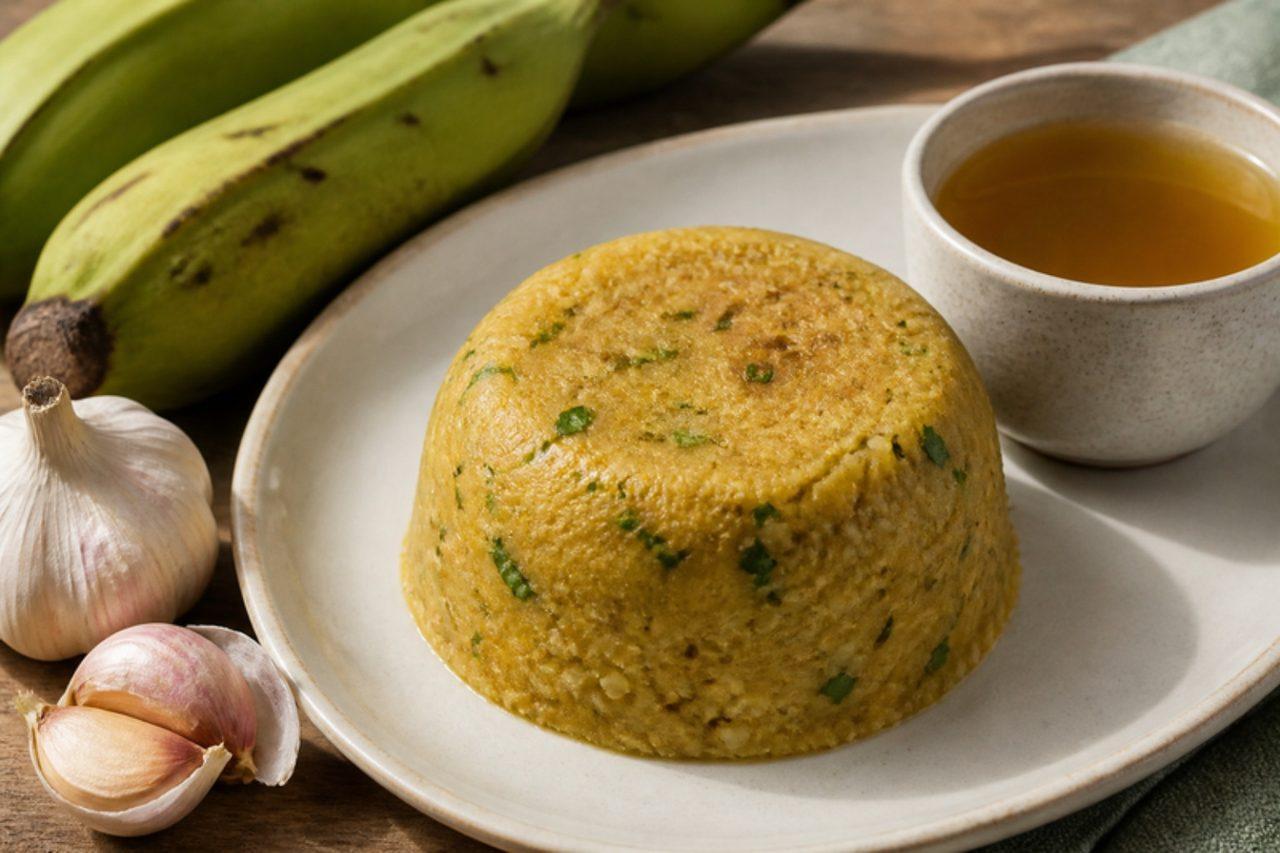
In Puerto Rico mofongo is the dish people drive out to the kioskos of Piñones and the roadside fondas of Arecibo for: green plantain fried in chunks, then pounded while hot in a wooden pilón with raw garlic and good olive oil until it holds together in a rough, crusty dome. The outside stays a little crisp, the inside is soft, starchy and fiercely garlicky. Most places pound in chicharrón (pork crackling); this garlic-oil version is the main one here, and the crackling is a note at the end for meat eaters. Serve it with a small bowl of hot caldo to spoon over, or with stewed beans or a tomato sofrito sauce. Chef's tip: warm the garlic in the olive oil only until it smells sweet, never until it browns, so the mofongo tastes of fresh garlic rather than bitter toast.

by KrazyBadal 0 views

MakowiecPoppy seed roll

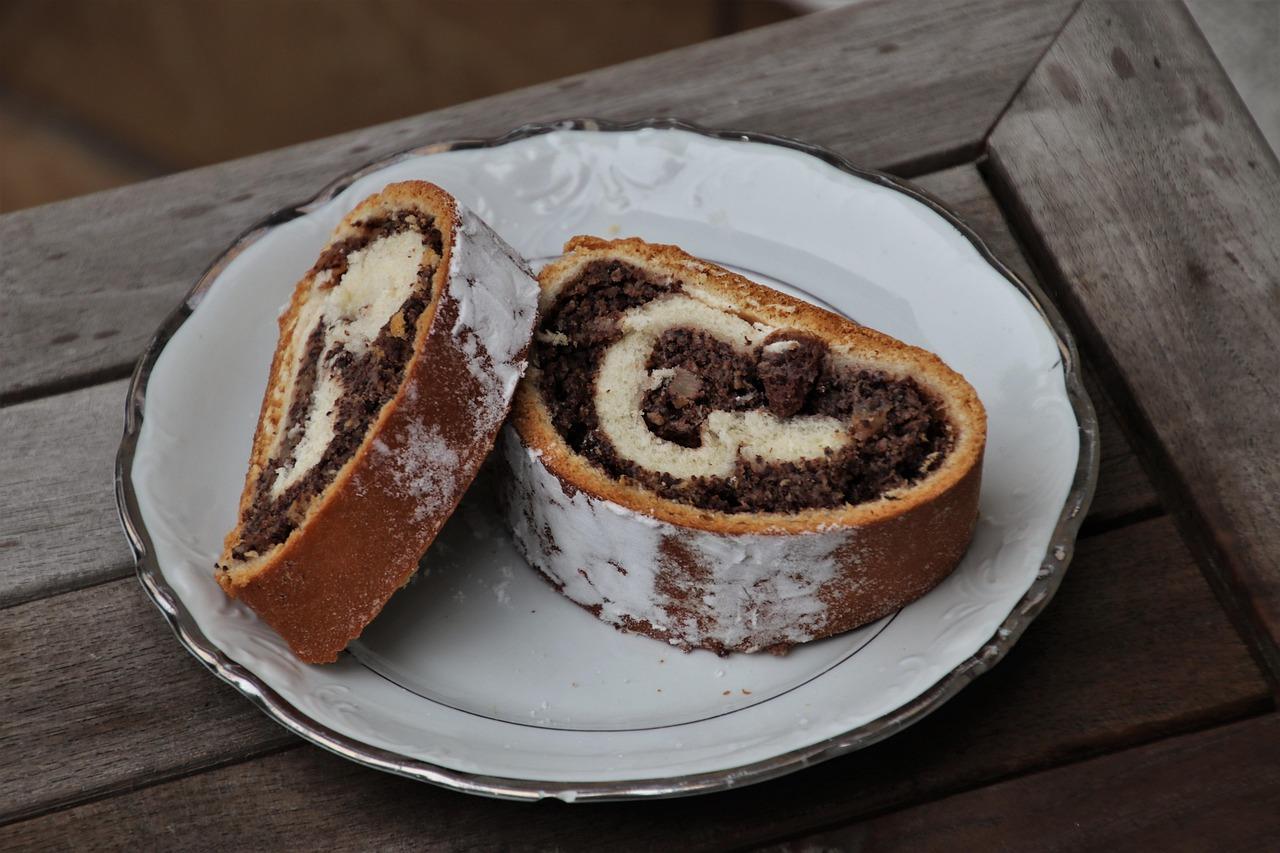
Makowiec is the poppy seed roll that sits on almost every Polish Christmas Eve and Easter table; in Silesia and Lesser Poland poppy seeds stand for plenty in the year ahead. A soft, buttery yeast dough is rolled around a thick, black, honey-sweet filling of ground poppy seeds with raisins, walnuts and candied orange peel, then baked and glazed so each slice shows a tight spiral. It takes time, but the process is calm and the roll keeps for days. Chef's tip: grind the soaked poppy seeds two or three times, until they look grey and pasty; whole or once-ground seeds give a gritty filling that falls out of the slices.

135 minPolishBaking
by KrazyBadal 0 views

MakroudhDate-filled semolina pastries

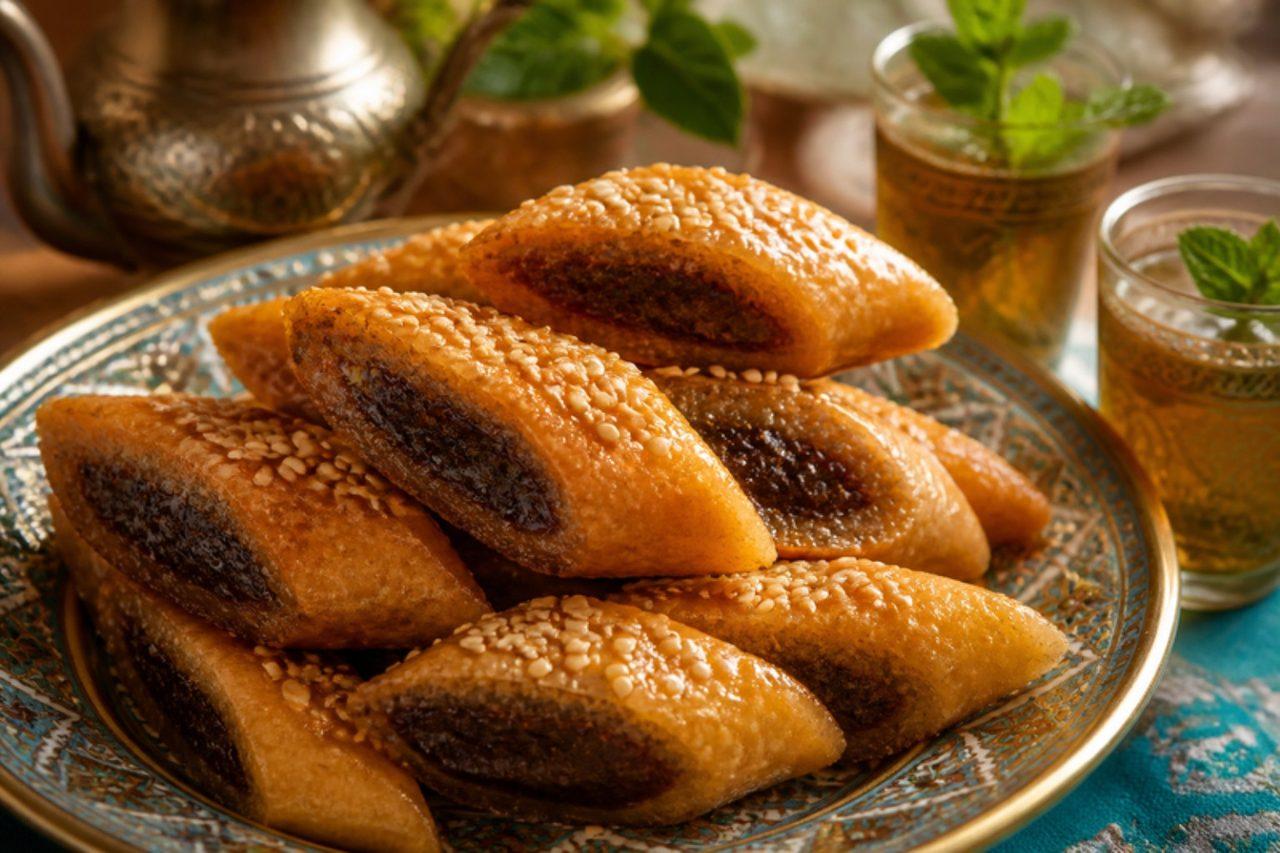
Makroudh is the sweet that Kairouan is famous for; the old holy city in central Tunisia sells it in boxes from shops around the medina, and it is made at home for Eid and weddings across the country. A soft dough of semolina and olive oil is wrapped around a roll of date paste scented with cinnamon and orange blossom, cut into diamonds, fried and dipped in syrup. Chef's tip: rest the semolina dough for an hour after mixing; the grains need time to drink the oil and water, or the makroudh cracks in the oil.

by KrazyBadal 0 views

Makrout el louzIced almond diamonds

Makrout el louz are the elegant almond sweets of Algiers and Constantine, piled on silver trays for weddings, Eid and engagement visits. Unlike fried, date-filled makroudh, they are baked: a paste of ground almonds, sugar, egg and lemon zest is cut into diamonds, baked pale, then dipped in a light syrup and rolled in icing sugar so they look frosted. Chef's tip: bake them only until firm and barely coloured underneath; brown edges harden and stop the syrup soaking in.

by KrazyBadal 0 views

Malabar parottaLayered flatbread

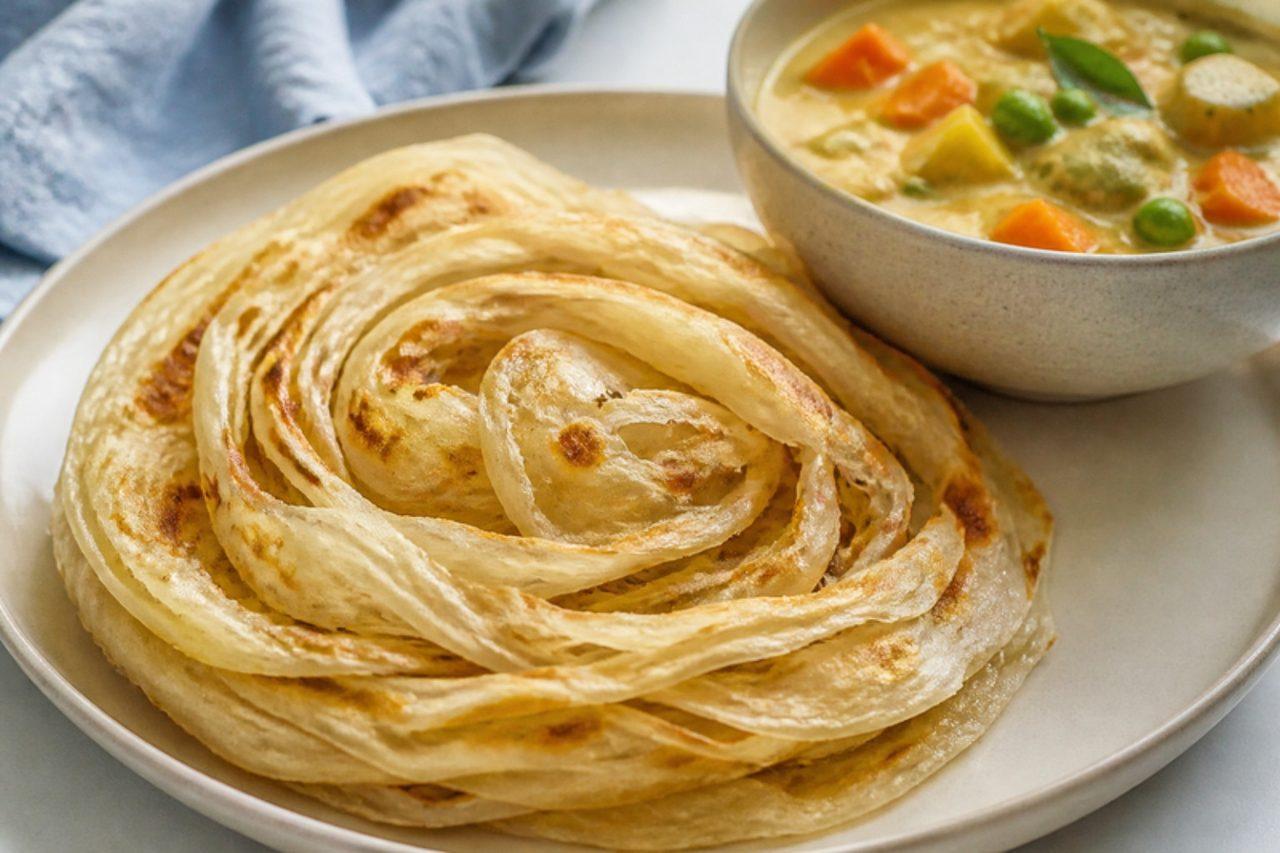
Malabar parotta came from the hotels and tea stalls of Malabar in north Kerala and is now made all over the state, where parotta men slap and stretch dough on oiled marble counters late into the night. The soft dough is stretched paper-thin, pleated, coiled like a snail and griddled, then clapped between the hands so the layers pull apart into flaky ribbons. Eat it torn into vegetable kurma or a spicy black chickpea curry. Chef's tip: give the dough its full rest; well-rested dough stretches thin without tearing, which makes the layers.

by KrazyBadal 0 views

Mochar ghontoBanana flower and potato curry

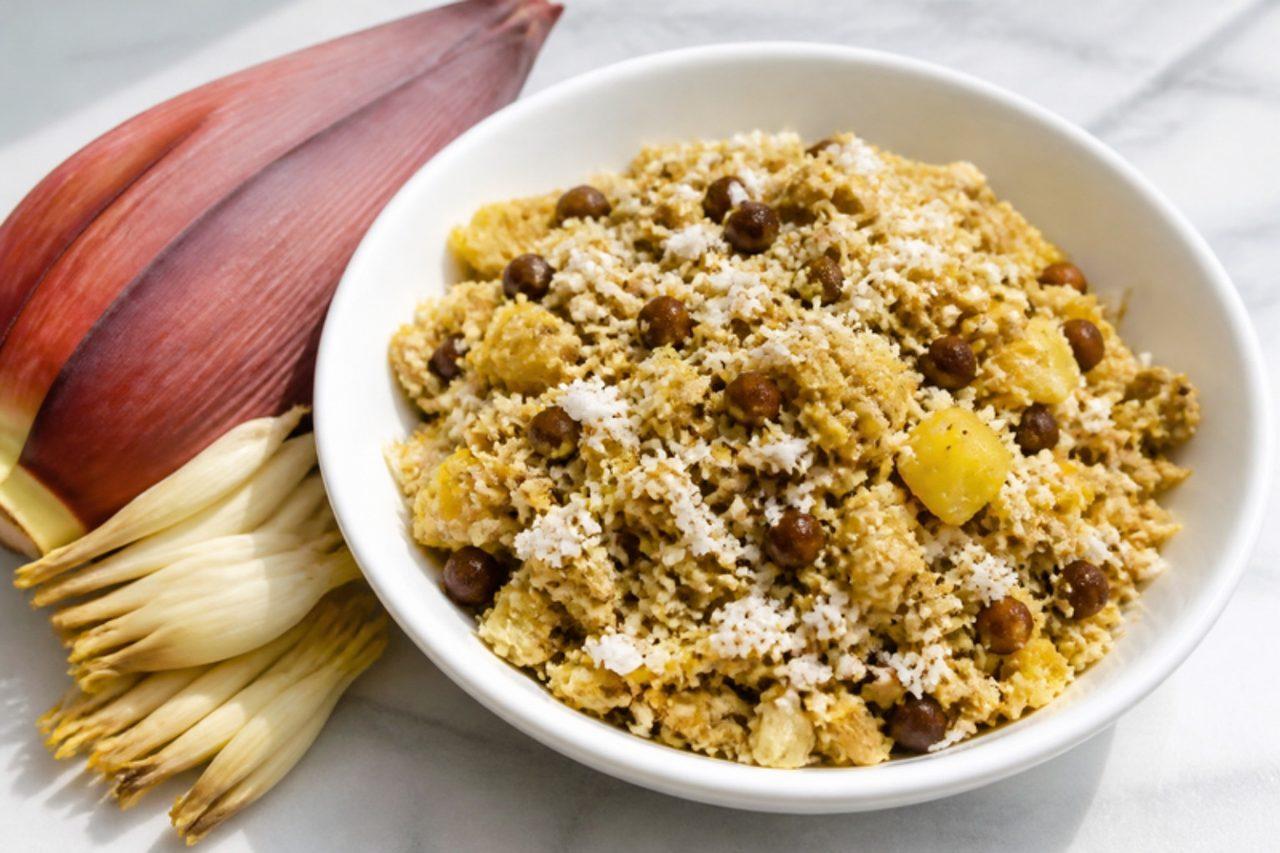
Mochar ghonto is a labour of love from Bengali home kitchens: the florets of a banana flower are cleaned one by one, boiled and then cooked down with potato, grated coconut, ginger and cumin into a soft, dry, faintly sweet ghonto. It is served at weekend lunches and to guests, with rice and a little dal, and grandmothers judge a cook by it. The flavour is earthy, a little like artichoke, lifted at the end with ghee and freshly ground garam masala. Chef's tip: oil your hands before cleaning the flower, or the sticky sap stains your fingers black.

by KrazyBadal 0 views

Ojja with merguezSpicy tomato sauce with sausage

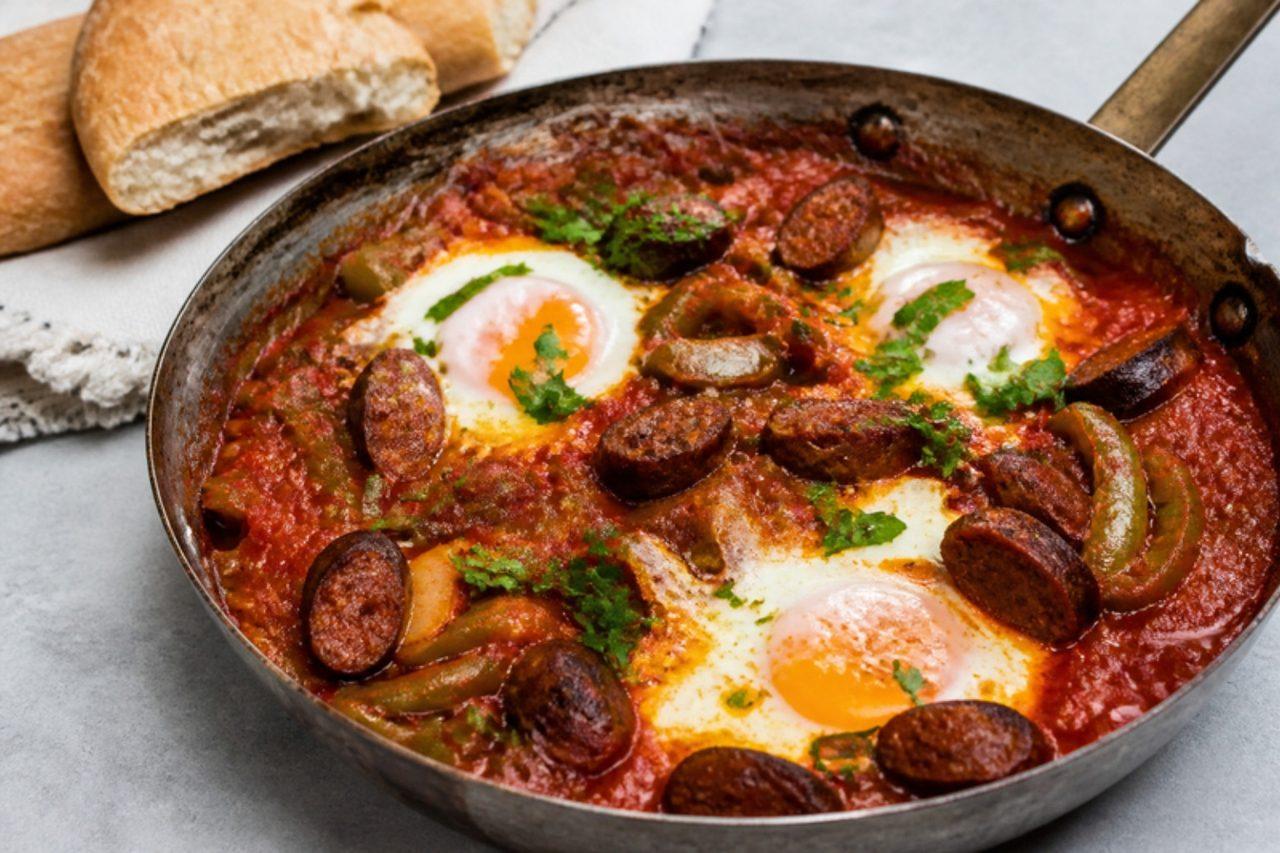
Ojja is the quick supper of Tunis cafés and home kitchens: a pan of tomato, peppers, garlic and harissa, cooked down until thick, with slices of spicy lamb merguez and eggs set softly on top. It is scooped up with crusty bread straight from the pan. The mistake is stirring the eggs in too early; they should go in once the sauce is thick and be left alone to just set. Chef's tip: brown the merguez first so its spiced fat flavours the sauce. If you can't get merguez, use any spicy lamb or beef sausage.

by KrazyBadal 0 views

Oka i'aRaw fish in coconut cream

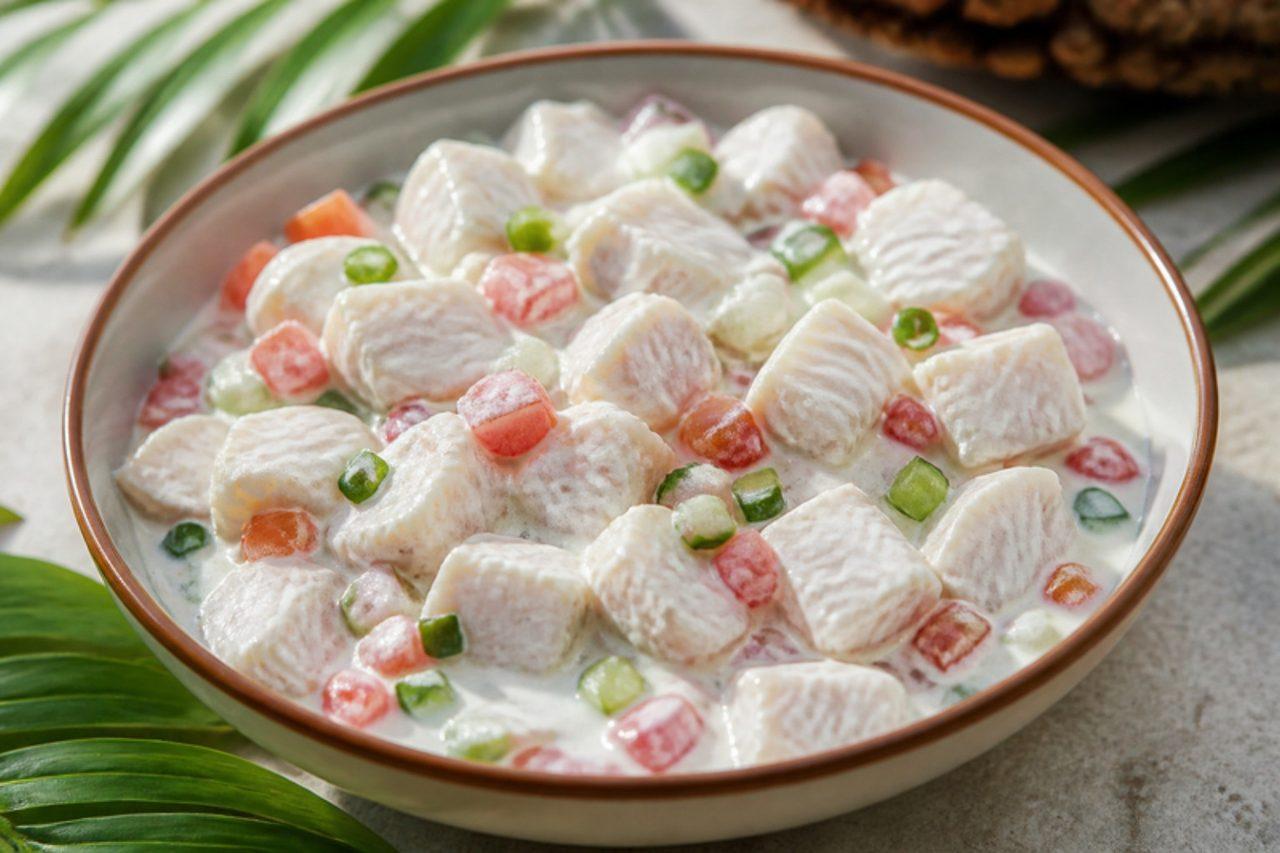
Oka i'a is the raw fish salad served at every Samoan to'ona'i, the big Sunday lunch after church in Apia and the villages of Upolu and Savai'i, and in Samoan homes in Auckland. It is close to Fiji's kokoda but usually uses tuna, a shorter citrus soak and more vegetables, with a finish of spring onion. As a raw fish dish it is written here as a safer version: buy very fresh, previously frozen sashimi-grade tuna, keep it cold and eat within 2 hours. Raw or citrus-cured fish is not for pregnant women, young children or anyone with a weakened immune system; for them, sear the tuna as described in the steps. The mistake is cutting the fish too small, so it goes mushy; keep the cubes about 1.5 cm. Chef's tip: chill the coconut cream and the bowl, so the salad is cold and refreshing.

by KrazyBadal 0 views

MalakoffCheese fritters

In the wine villages of La Côte above Lake Geneva, especially Vinzel, Bursins and Luins, a malakoff is a dome of Gruyère bound with egg and white wine, set on a round of bread and deep-fried until puffed and golden. The name is said to come from Swiss soldiers who fought at the siege of the Malakoff fort in the Crimean War and brought a taste for cheese fritters home. Locals eat them at village festivals and in pinte-style wine taverns with a glass of chilled Chasselas, cornichons and pickled onions. The crust shatters to a molten, gently stringy inside that tastes of wine and nutmeg. Use Gruyère made with vegetarian rennet. Chef's tip: press the cheese mixture firmly into a tall dome over the bread and chill it for 20 minutes before frying; it holds its shape in the hot oil instead of spreading.

by KrazyBadal 0 views

BaiVegetable and bamboo shoot stew

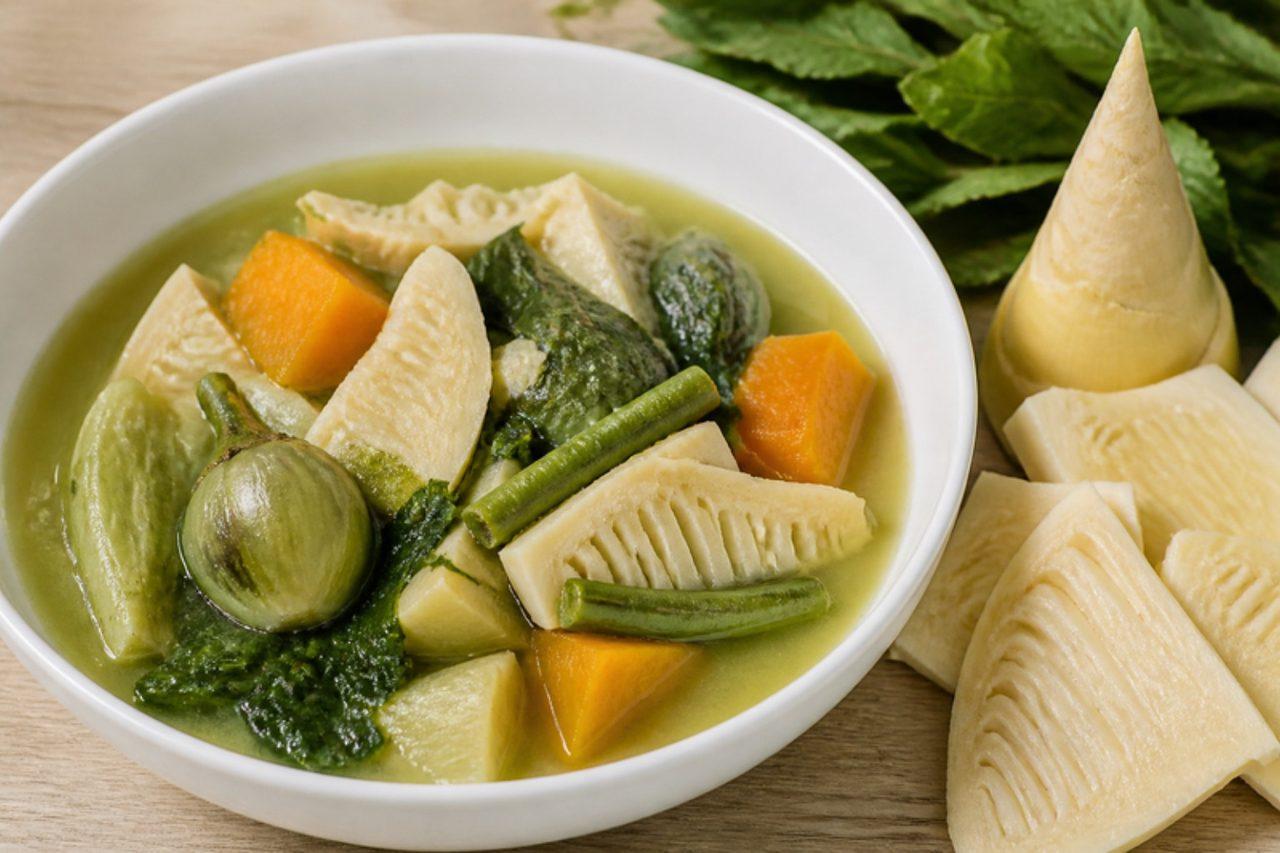
Bai is the everyday dish of Mizoram, cooked in Aizawl homes almost daily: a stew of greens such as mustard leaves or pumpkin leaves, bamboo shoot, pumpkin and beans, boiled in water with a pinch of soda (traditionally 'chingal', an ash-filtered alkali) that softens the greens. It has almost no oil and little spice, and often a spoonful of pork fat goes in; this vegetarian version leaves it out and adds a little more ginger. Bai is light, green and soothing, eaten with rice and a chilli dip. Chef's tip: add the soda with the greens, not before, and only a pinch; too much turns the stew slimy.

by KrazyBadal 0 views

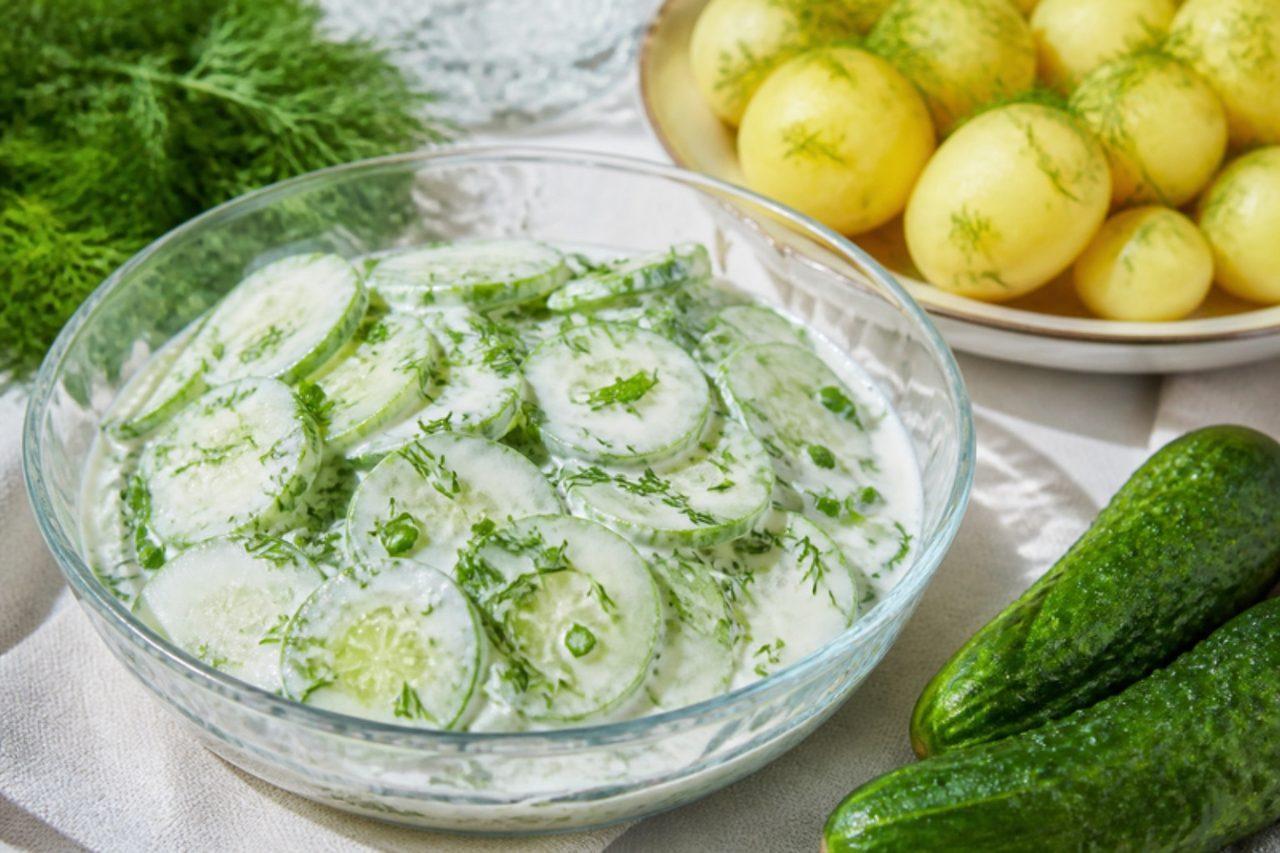
MizeriaCucumber salad with soured cream

Mizeria is the cool, creamy cucumber salad that sits beside Sunday dinner in Polish homes from May to September, especially next to young potatoes sprinkled with dill. Thin slices of cucumber are dressed in soured cream with dill, a pinch of sugar and a little lemon or vinegar, so it is fresh, tangy and slightly sweet. Legend links the name to Queen Bona Sforza longing for Italy, but in practice it is simply summer on a plate. Chef's tip: slice the cucumbers paper-thin on a mandoline or the slicing side of a box grater; thick slices never soak up the dressing.

by KrazyBadal 0 views

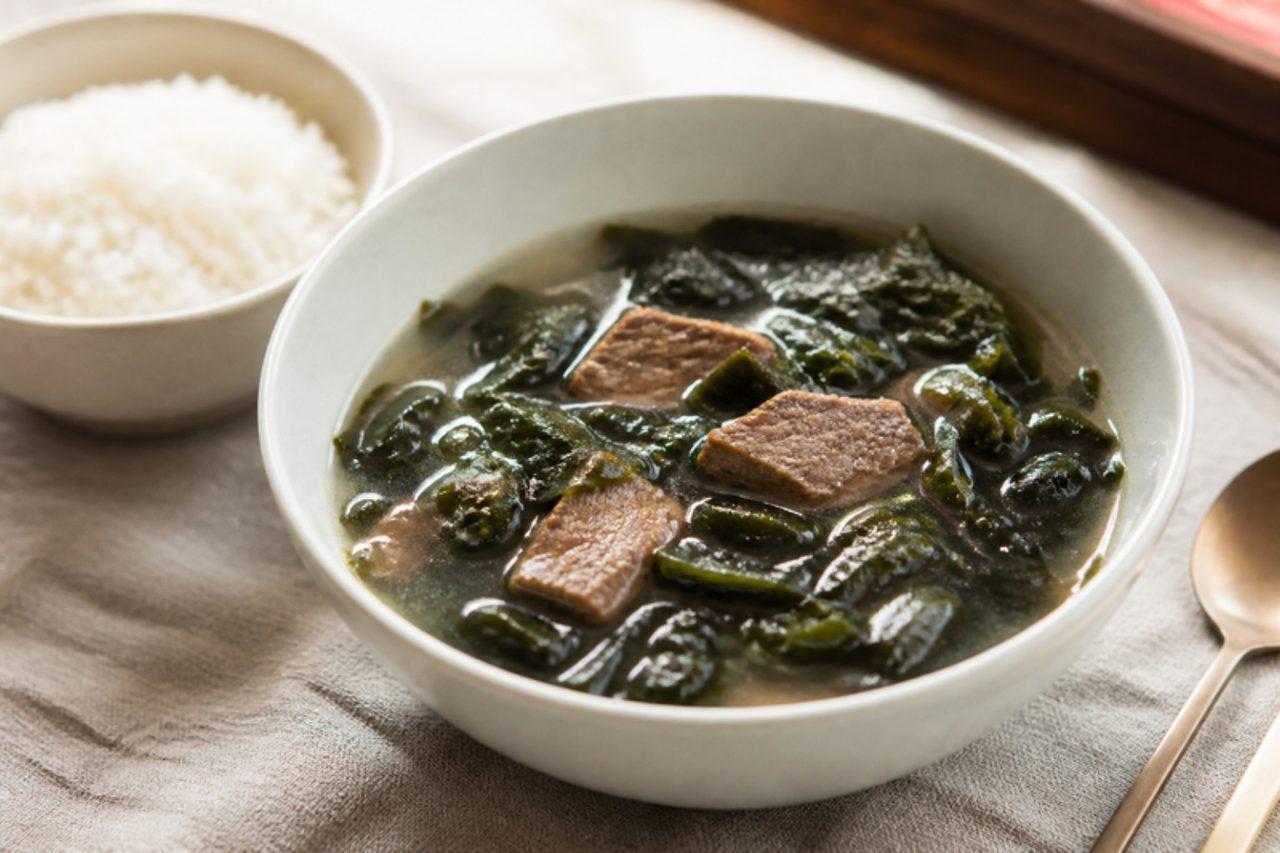
Miyeok guk with beefSeaweed soup with beef

Ask someone in Korea what they ate on their birthday morning and the answer is usually miyeok guk. The same soup is given to new mothers for weeks after a birth, as the seaweed is rich in iodine, calcium and iron. Some students avoid it on exam days, because slippery seaweed is said to make you 'slip' in the test. The broth is clear and mild, made with brisket fried in sesame oil and seasoned with soup soy sauce. Chef's tip: squeeze the soaked seaweed hard and fry it with the beef for a few minutes; it gives the broth a rounder, nutty taste.

by KrazyBadal 0 views

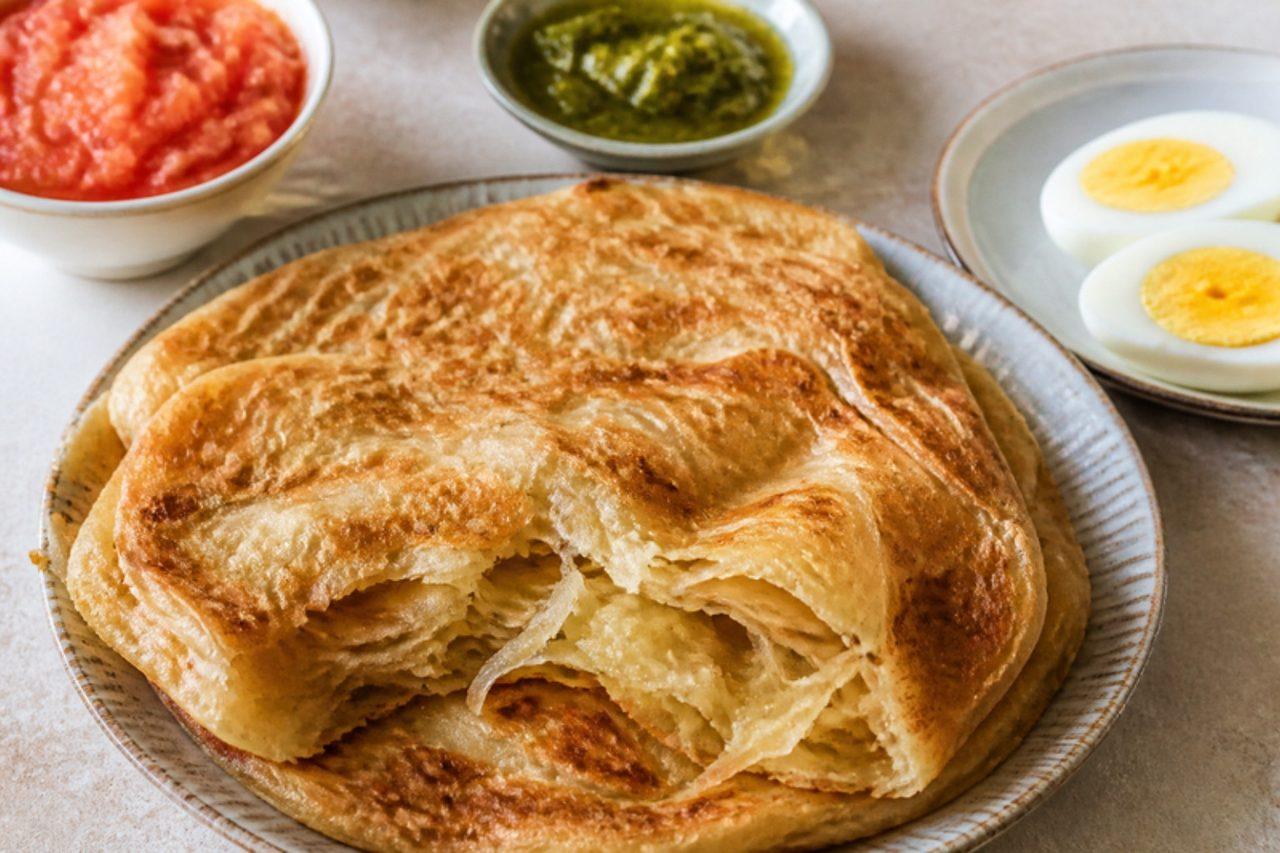
MalawachFlaky fried flatbread

Malawach is the Yemenite Jewish flatbread that turned into an Israeli freezer staple: round, buttery layers fried in a pan until they shatter, eaten for breakfast or a late supper with sweet-sour grated tomato, zhug and a hard-boiled egg. In Israel almost everyone buys the frozen rounds from the supermarket and fries them in minutes, the way this recipe does; the dough is the same rolled, butter-layered dough as jachnun, just fried instead of baked. Some families sprinkle sugar or drizzle honey for a sweet version. Chef's tip: fry the frozen rounds straight from the freezer; thawed ones turn sticky and lose their layers.

by KrazyBadal 0 views

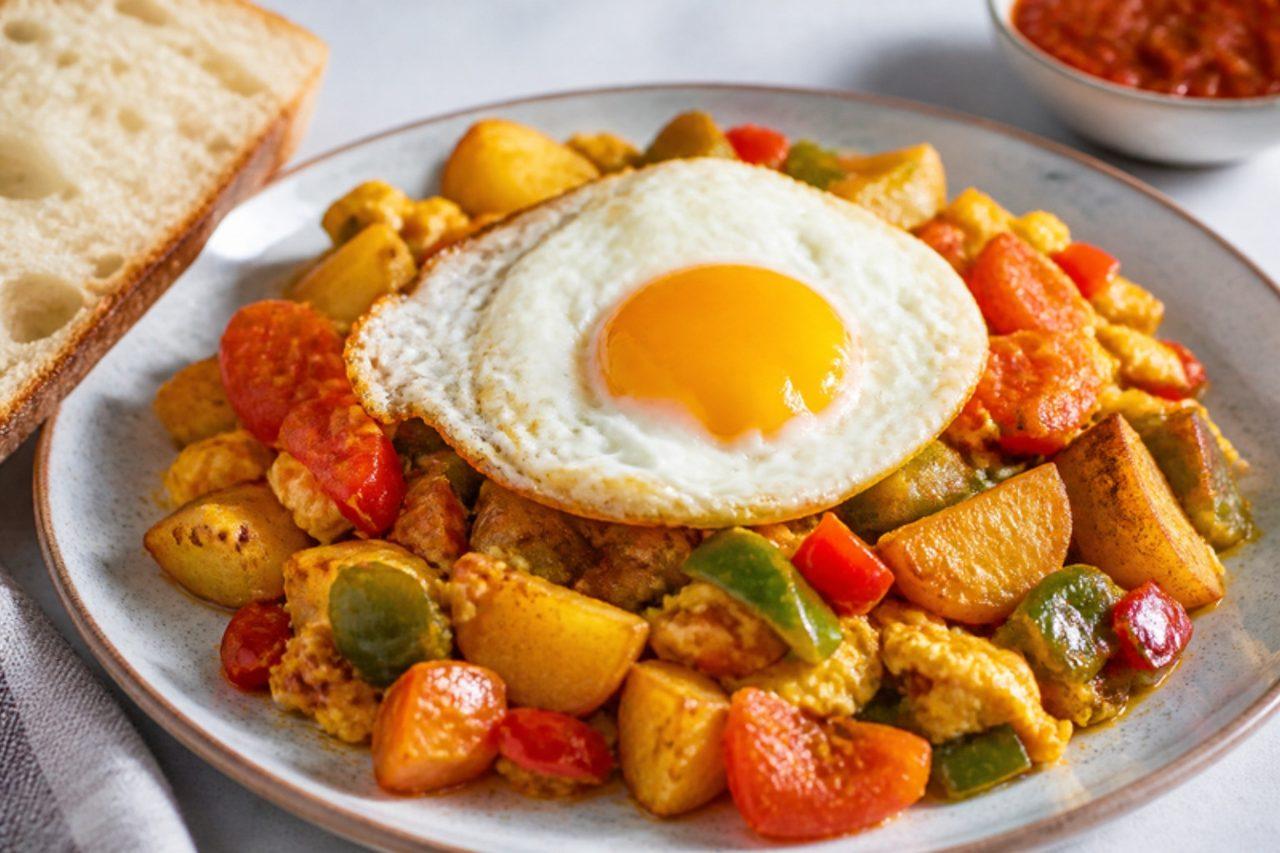
KaftejiFried vegetables with egg

Kafteji is a Tunis sandwich-shop classic: fried peppers, tomato, squash and potato chopped together on a board with a cleaver, mixed with harissa and fried eggs, and eaten from a plate or stuffed into a baguette at lunchtime. Stalls near Bab Souika and the central market make it to order, and the sound of the chopping is part of the show. Chef's tip: fry each vegetable separately; they cook at different speeds, and crowding them makes everything greasy and soft.

by KrazyBadal 0 views

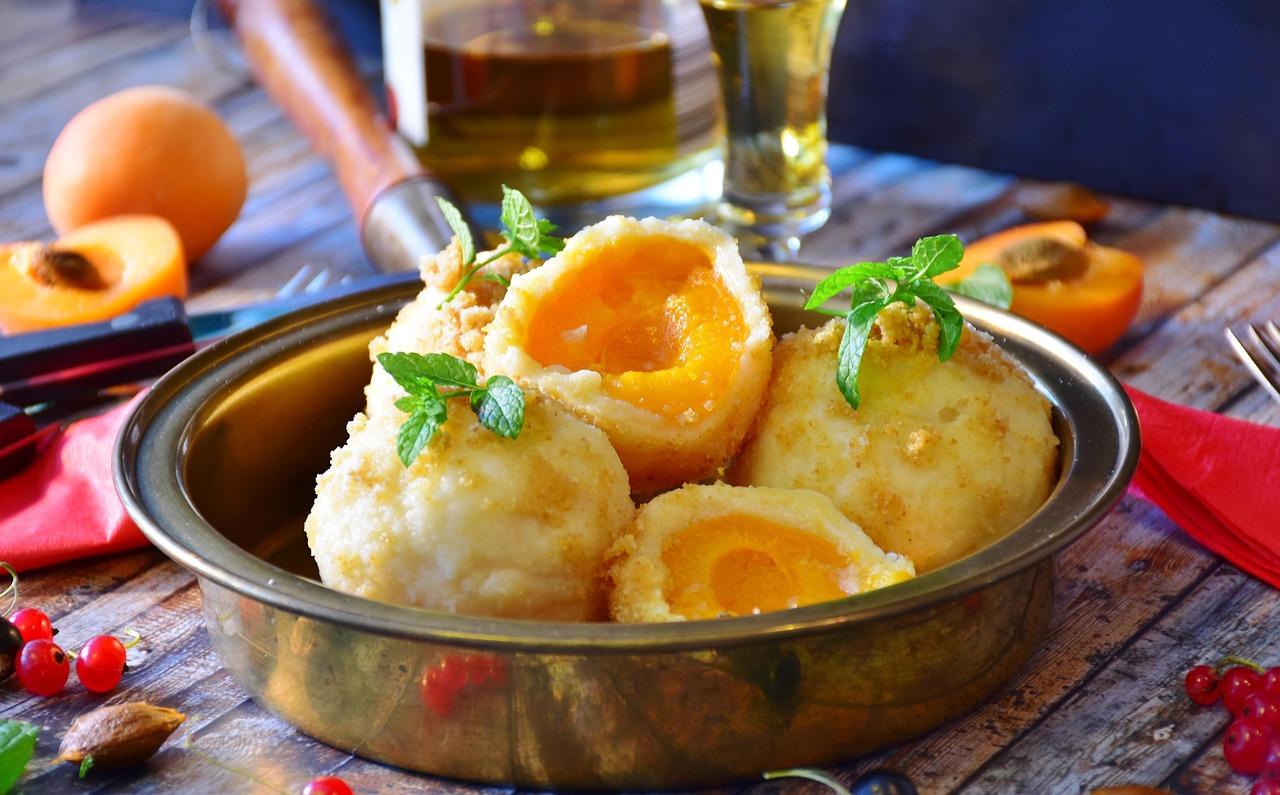
Ovocné knedlíkyFruit-filled dumplings

Ovocné knedlíky are the summer main course of Czech childhoods: in July with apricots from South Moravian orchards, in September with blue plums, eaten as lunch rather than pudding. Each soft quark dumpling hides a whole fruit that turns jammy as it simmers, and they are served the old way, rolled in melted butter and buried under grated tvaroh (quark) and icing sugar. Kids compete over who can eat the most. Chef's tip: pinch the dough completely closed with no thin patches; a single gap lets water in and the dumpling bursts in the pot.

by KrazyBadal 0 views

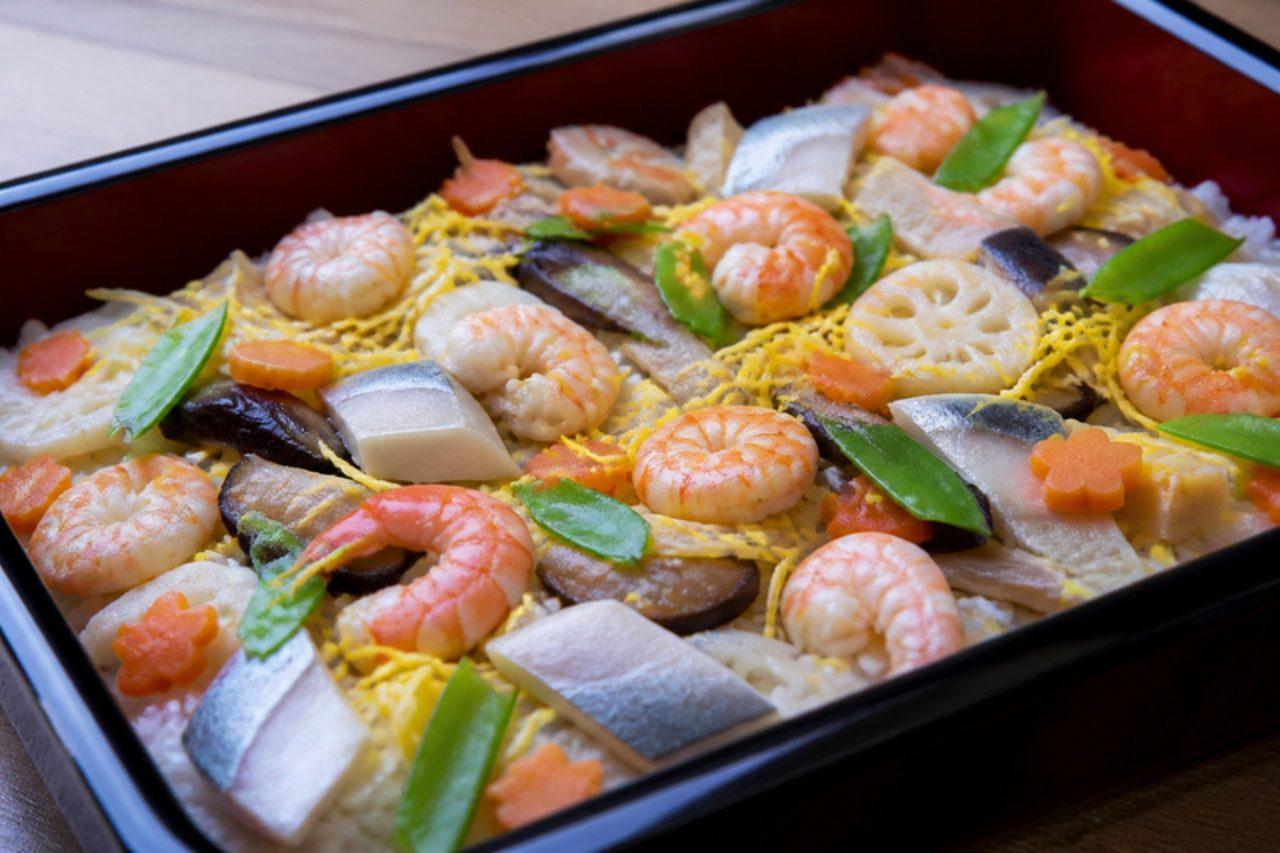
Okayama barazushiScattered sushi with vegetables

Okayama families make a big shallow platter of barazushi for the autumn shrine festivals, Girls' Day in March and other celebrations, and it is sold in station lunch boxes all year. A local story says it began when a lord ordered people to eat only one side dish, so cooks hid everything in the rice instead. The seasoned rice is mixed with simmered vegetables and topped with seafood from the Seto Inland Sea. This version uses cooked prawns, gently simmered squid and egg threads, plus ready-made vinegared mackerel, which is cured but not cooked. Use very fresh, sushi-grade fish from a trusted fishmonger; not for pregnant women, young children or anyone with a weakened immune system. Leave the mackerel out, or add extra prawns, to make it fully cooked. Chef's tip: fold the vinegar into the rice while it is hot and fan it as you go; the rice soaks up the seasoning and turns glossy instead of wet.

by KrazyBadal 0 views

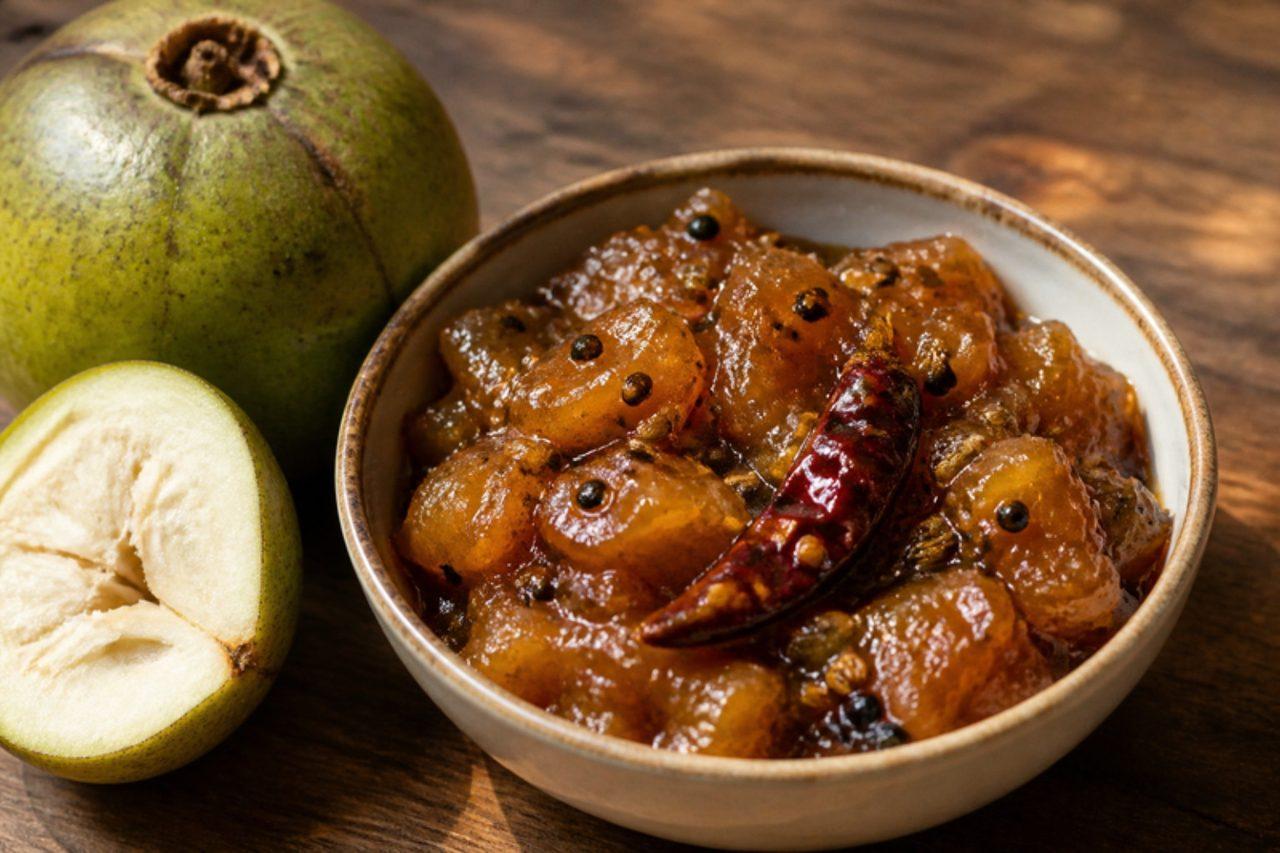
Ou khattaElephant apple chutney

Ou tenga, the elephant apple, is a hard, sour green fruit that grows across Assam and turns up in every winter market in Guwahati. Ou khatta is its sweet chutney: slices are boiled until tender, then simmered with jaggery and panch phoron until glossy, sticky and sharp-sweet. It is served in a little mound at the end of a festive Assamese lunch and at Bihu feasts, the way Bengalis end with tomato chutney. Chef's tip: outside the Northeast, use a mix of very sour green apple and a little tamarind; it gets surprisingly close.

by KrazyBadal 0 views

Miso nikomi udonUdon in miso broth

In Nagoya, udon is cooked in its broth rather than boiled separately, in a small clay pot called a donabe that comes to the table still bubbling. The broth is made with Aichi's famous dark soybean miso, hatcho miso, which is aged for years and tastes deep, slightly bitter and chocolatey. Nagoya's noodles are deliberately firm, almost chewy at the centre, and locals use the pot's lid as a plate to cool each mouthful. It is a cold-weather lunch, and the egg poached on top is part of the ritual. Our version uses kombu-shiitake dashi and fried tofu instead of chicken. Chef's tip: dissolve the miso in a ladle of broth before adding it. Hatcho miso is dense and stays in lumps if it goes straight in.

by KrazyBadal 1 views

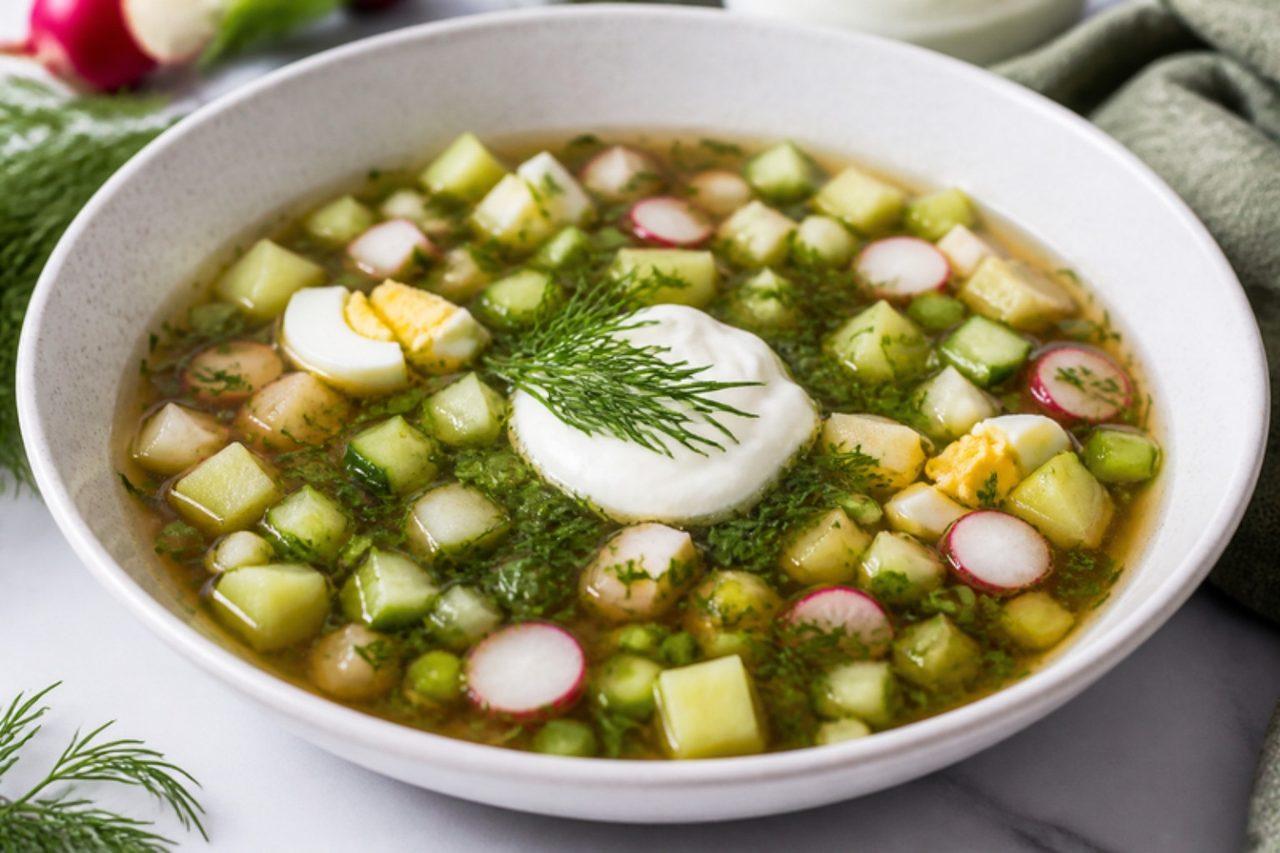
OkroshkaCold vegetable and kvass soup

When Moscow swelters in July, okroshka replaces every hot soup: a bowl of finely chopped radishes, cucumber, potato, egg and a forest of green onion and dill, with ice-cold kvass poured over at the table. It is the lunch of dacha weekends and of hot afternoons on the Volga, and families argue over whether kvass or kefir is the right base (kefir works well and is less sweet). The name comes from kroshit, to crumble, since everything is chopped small. Chef's tip: rub the spring onions and dill with salt first until they give off juice; it releases a green, pungent flavour that tastes of summer.

by KrazyBadal 0 views

Misir sambusaLentil-filled pastry triangles

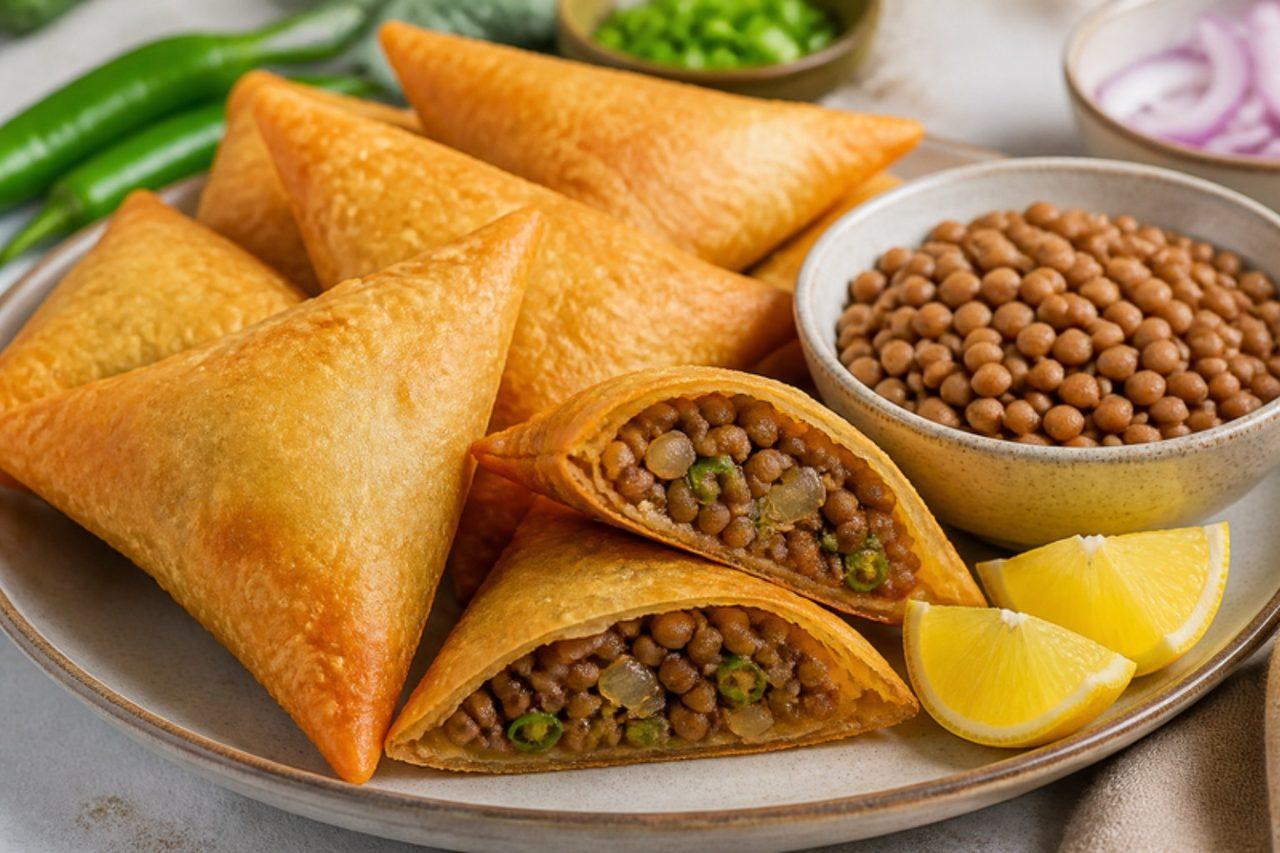
Sambusa are the crunchy triangles sold on the streets of Harar and Dire Dawa, and made at home across Ethiopia for Ramadan, Meskel and Timkat celebrations. The Ethiopian version is usually filled with brown lentils (misir), cooked dry with onion, green chilli and spices, then wrapped in thin pastry and fried until blistered and golden. Eat them hot, with a squeeze of lemon or a spicy dip. Chef's tip: cook the lentil filling until it is quite dry; a wet filling makes the pastry soggy and causes bursting in the hot oil.

by KrazyBadal 0 views

Mishti doiSweet set yogurt

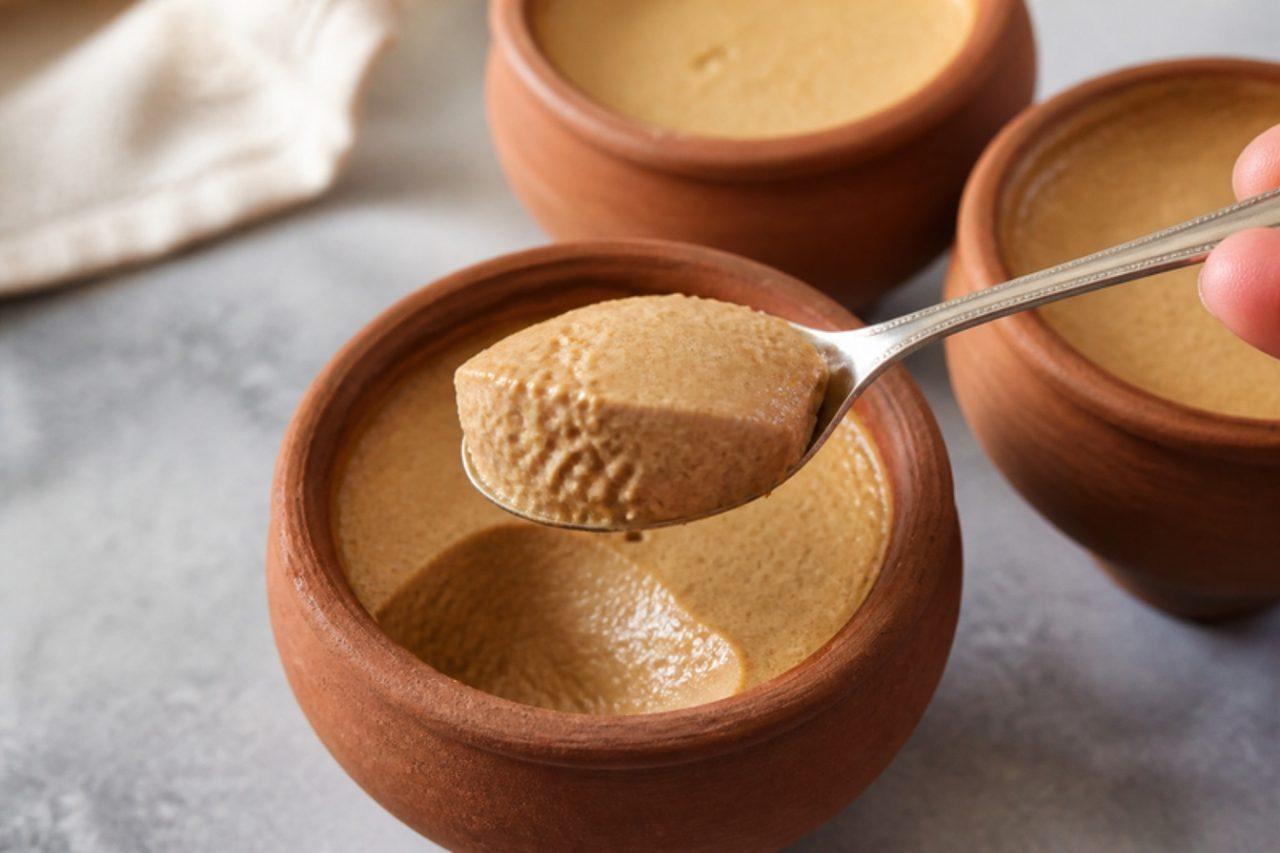
Mishti doi, 'sweet yogurt', is the classic end to a Bengali meal, sold in Kolkata sweet shops in unglazed clay pots. Milk is simmered until it thickens, sweetened with sugar cooked to a deep caramel, then set overnight with a little live yogurt. The result is thick, creamy and smooth, with a toffee-like sweetness and a gentle tang. Clay pots absorb excess whey, which makes it extra thick, but small glass or ceramic bowls work too. Chef's tip: cool the milk to just warm (about 40°C, comfortable on your little finger) before adding the starter; too hot kills the culture and too cool leaves it runny.

by KrazyBadal 0 views

OlanAsh gourd and cowpea stew

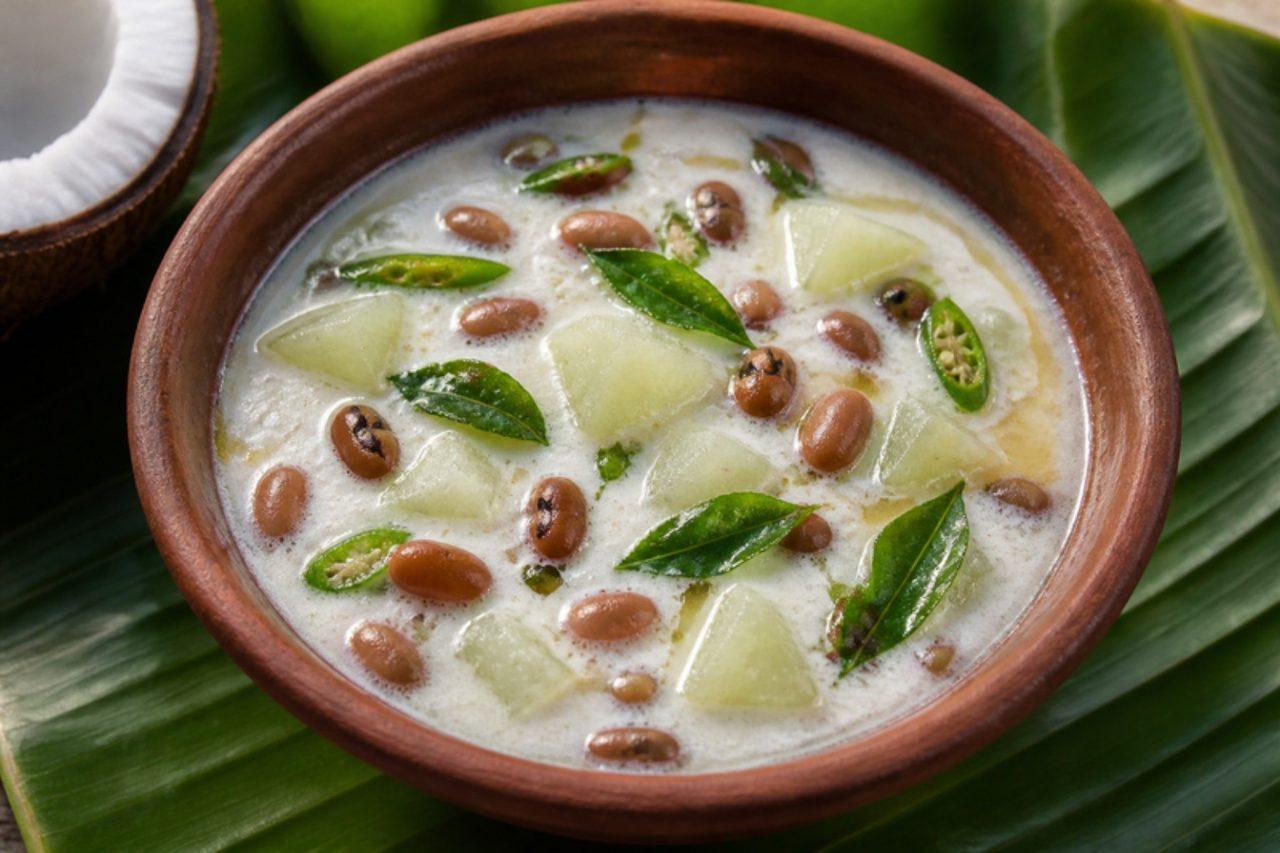
Olan is the quietest dish on a Travancore sadya leaf, the banana-leaf feast served in southern Kerala for Onam, weddings and temple festivals. Thin, glassy slices of ash gourd and soft red cowpeas sit in coconut milk with nothing louder than green chilli and curry leaves, and its job is to cool the palate between the tangy, fiery curries around it. The flavour comes from coconut milk added in two stages and a spoonful of raw coconut oil poured over at the end. Eat it with plain rice, or ladle it beside appam on an ordinary weekday. Chef's tip: slice the ash gourd as thin as a coin so it turns translucent in the time the coconut milk takes to thicken.

by KrazyBadal 0 views

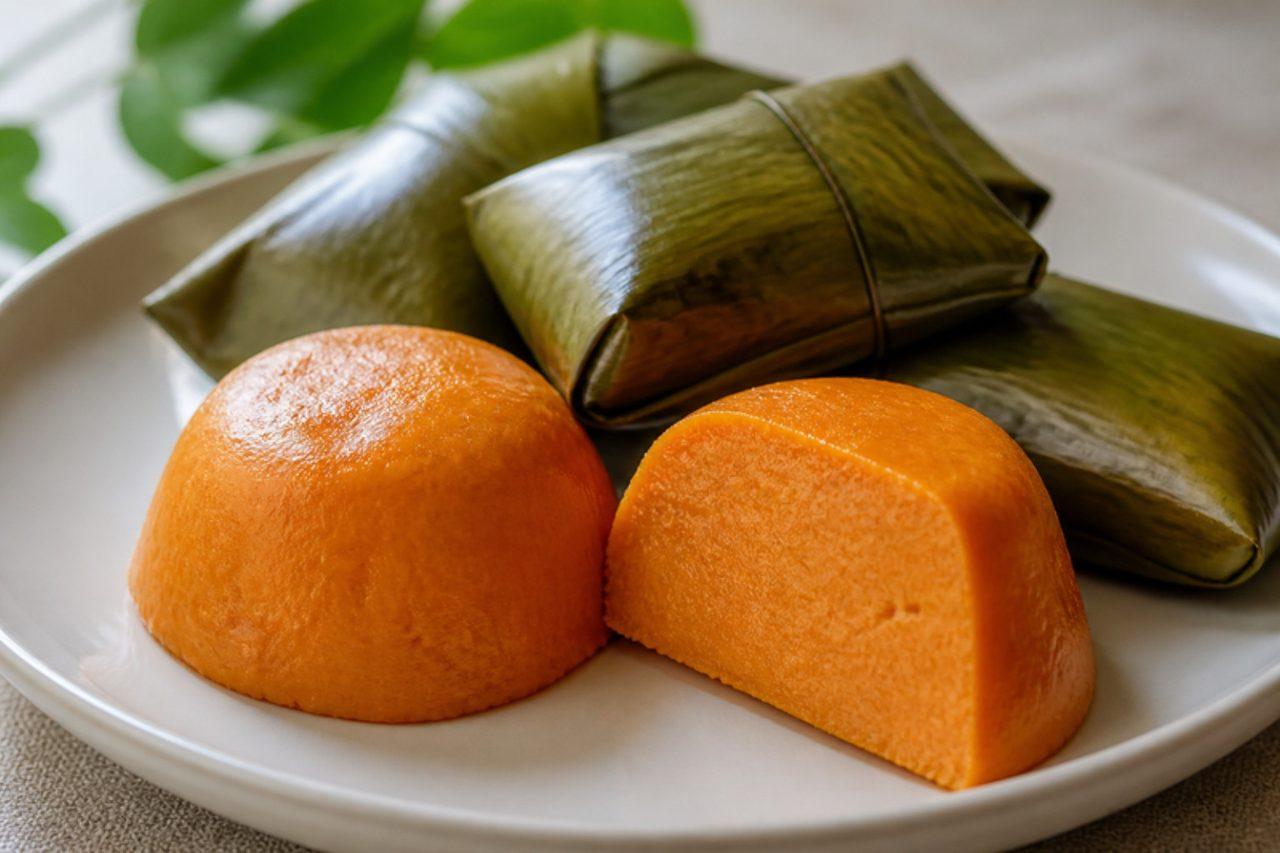
Otak-otakGrilled spiced fish mousse

Drive through Muar in Johor and you will see roadside grills stacked with slim green parcels, sold by the dozen in paper bags for the journey home. Inside each is a soft, bright-orange custard of pounded mackerel, coconut milk and egg, flavoured with a chilli-lemongrass rempah and kaffir lime leaf, which turns smoky and slightly charred at the edges from the grill. Melaka's Nyonya cooks make a fatter, steamed version, but this one is grilled in banana leaf. Eat it warm, peeled straight out of the leaf, with white bread, rice or nasi lemak. Chef's tip: chill the fish mixture for 15 minutes before wrapping; it firms up and is far easier to spoon onto the leaves.

by KrazyBadal 0 views

Mish-mashScrambled eggs with peppers and cheese

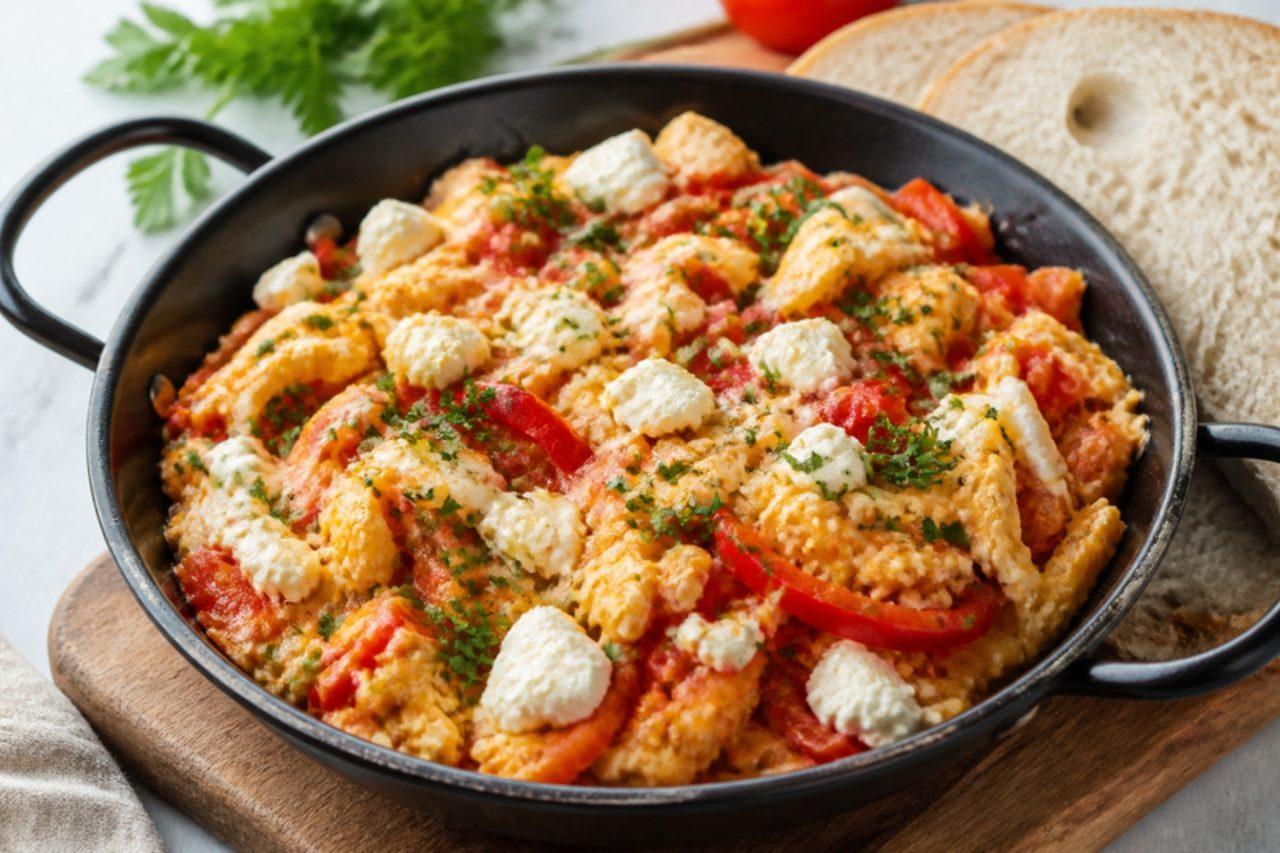
Mish-mash is the quick summer supper of Bulgaria, cooked in every home from Sofia flats to Black Sea holiday villas once the peppers and tomatoes are cheap and ripe. Roasted peppers, onion and tomato are fried down, then sirene and beaten eggs are stirred through until soft and creamy, finished with parsley. The crumbled white brined cheese melting into the eggs is what makes it Bulgarian rather than Turkish menemen. It is eaten straight from the pan with fresh bread, often with a glass of cold beer. Chef's tip: cook the eggs gently and take them off while still a little wet; overcooking is the common mistake, and they turn rubbery and weep water.

by KrazyBadal 0 views

Showing 81 of 7,888 recipes

Show more recipes

Page 613 of 877