Skip to content
Caramelised clay-pot tofu and mushrooms
Featured recipe

Caramelised clay-pot tofu and mushrooms

Braised tofu and mushrooms

Kho is the slow braise of the Mekong Delta: food simmered in a little clay pot (nồi đất) with dark caramel and seasoning until the sauce is sticky and the flavours go deep. This vegetarian cousin of cá kho tộ (braised fish) uses golden tofu and meaty mushrooms in place of fish, cooked in coconut water, as cooks do in the south, and finished with plenty of black pepper. Serve it bubbling in its pot with steamed rice and a sour soup or plain boiled vegetables. Chef's tip: take the caramel (nước màu) to a deep mahogany, darker than you think, just before it smokes; pale caramel only tastes sweet, while dark caramel gives the bittersweet, smoky flavour of a real kho.

Read more 2 views

What to eat today?

Around the world

Today's trip: Paraguayan

A new country every day, from every cuisine on the site.

Paraguayan

Buseca

Tripe and white bean stew 185 minMore from Paraguayan (27) →

This week's collection

Kid-friendly dinners
537 recipes · a new collection every Monday

Latest recipes

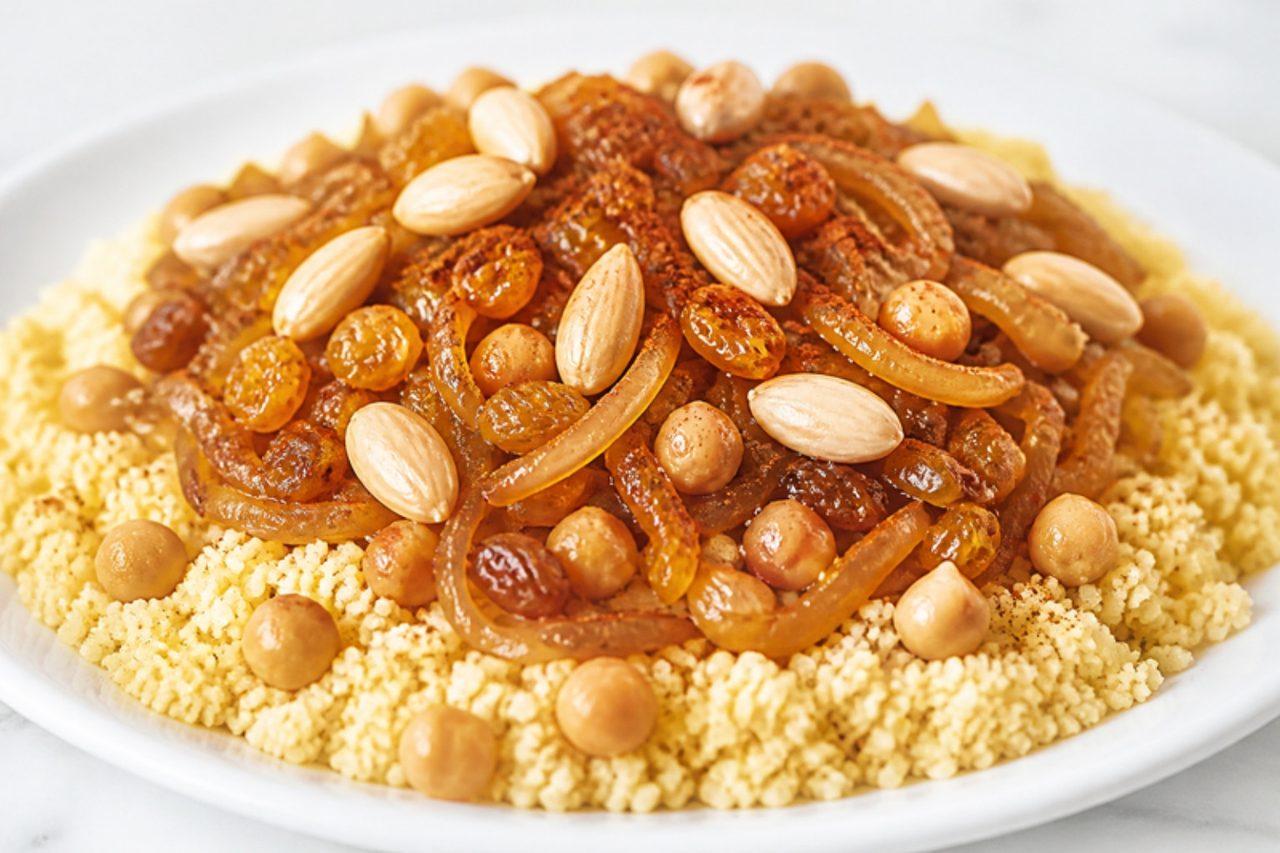
Couscous tfayaCouscous with caramelised onions

Tfaya is the sweet onion topping that turns a plain couscous into a celebration dish; in Fez and Rabat it is made for weddings, naming ceremonies and Eid, and families in Tétouan add it to Friday couscous too. Onions are cooked slowly with raisins, cinnamon, honey and a little saffron until they collapse into a sticky, mahogany jam, then piled over the couscous with chickpeas and fried almonds. Traditionally it crowns couscous with meat; here the chickpeas and almonds carry the dish, making it a sweet-savoury vegetarian main for a feast. Chef's tip: soak the raisins first, or they draw liquid from the onions and the tfaya catches before it caramelises.

by KrazyBadal 0 views

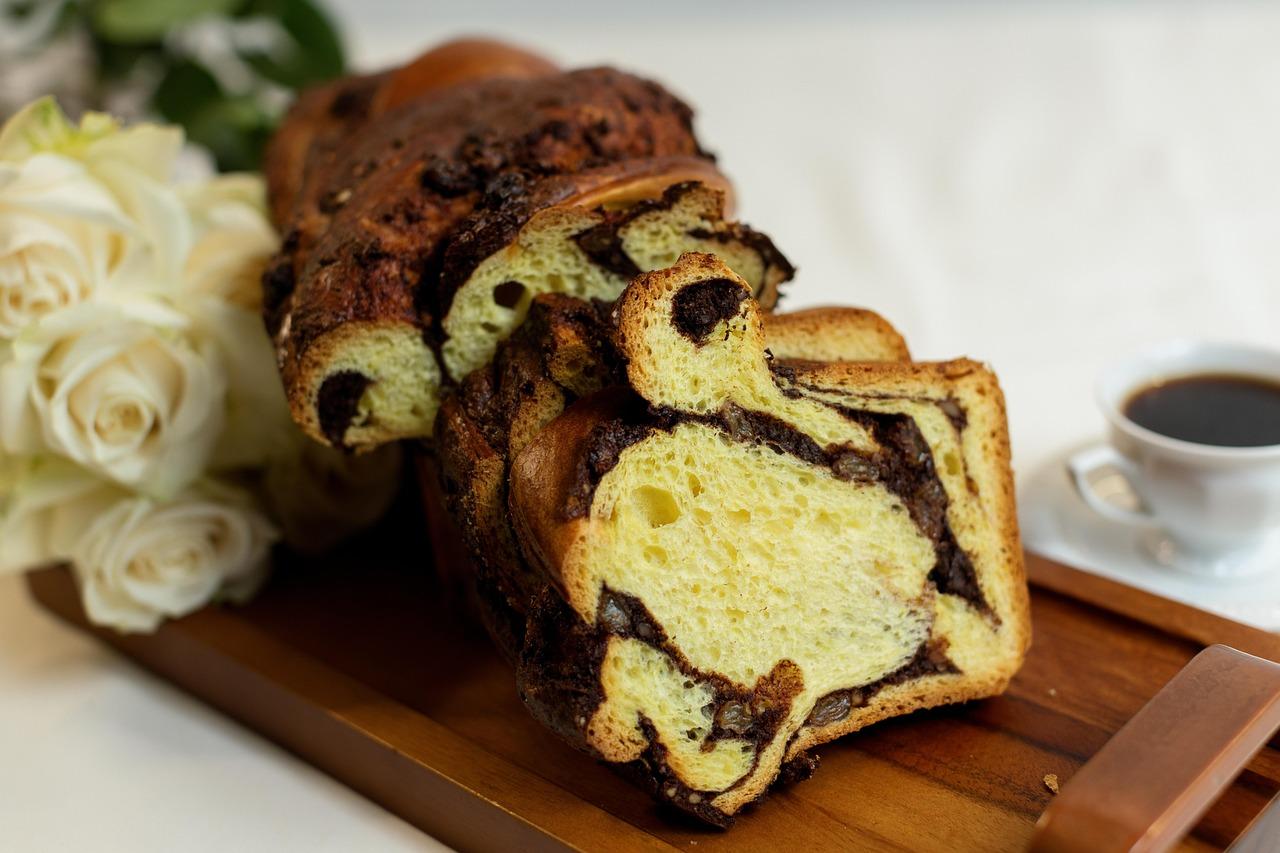
CozonacSweet braided bread

Cozonac is the festive loaf every Romanian family bakes for Easter and Christmas, filling kitchens from Craiova to Suceava with the smell of butter, rum, lemon and orange zest. The rich yeast dough is rolled around a walnut and cocoa filling studded with pieces of rahat (Turkish delight), then braided and baked in a tall loaf tin so each slice shows a dark swirl. Unlike Slovenian potica, which is rolled into a thin spiral ring, cozonac is a braided loaf. It is eaten in thick slices with coffee on the feast mornings. Chef's tip: knead until the dough is silky and comes away from the bowl, then be patient with the rises; under-proving is the classic mistake and gives a dense, heavy loaf.

by KrazyBadal 0 views

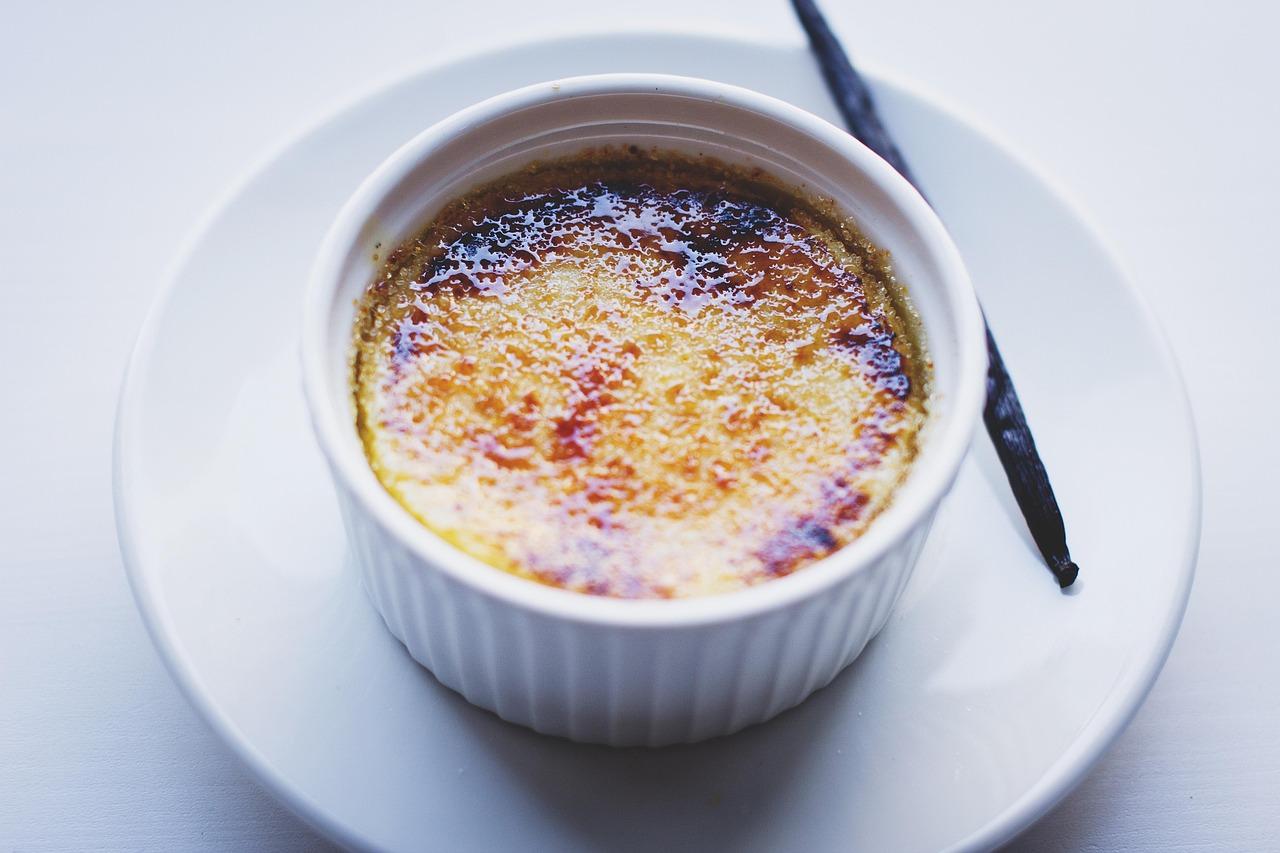
Crème brûléeBurnt cream custard

Crème brûlée, 'burnt cream', is the dessert on almost every Paris bistro menu: a shallow dish of rich vanilla custard, cold and silky, under a thin sheet of caramelised sugar you crack with the back of a spoon. Unlike the stovetop Spanish crema catalana, it's made with cream and baked gently in a water bath. The custards are made a day ahead, which makes it ideal for dinner parties; only the sugar is burnt at the last minute. Chef's tip: take them out of the oven while the middle still wobbles like jelly; overbaking is the common mistake and the custard turns grainy and splits.

by KrazyBadal 0 views

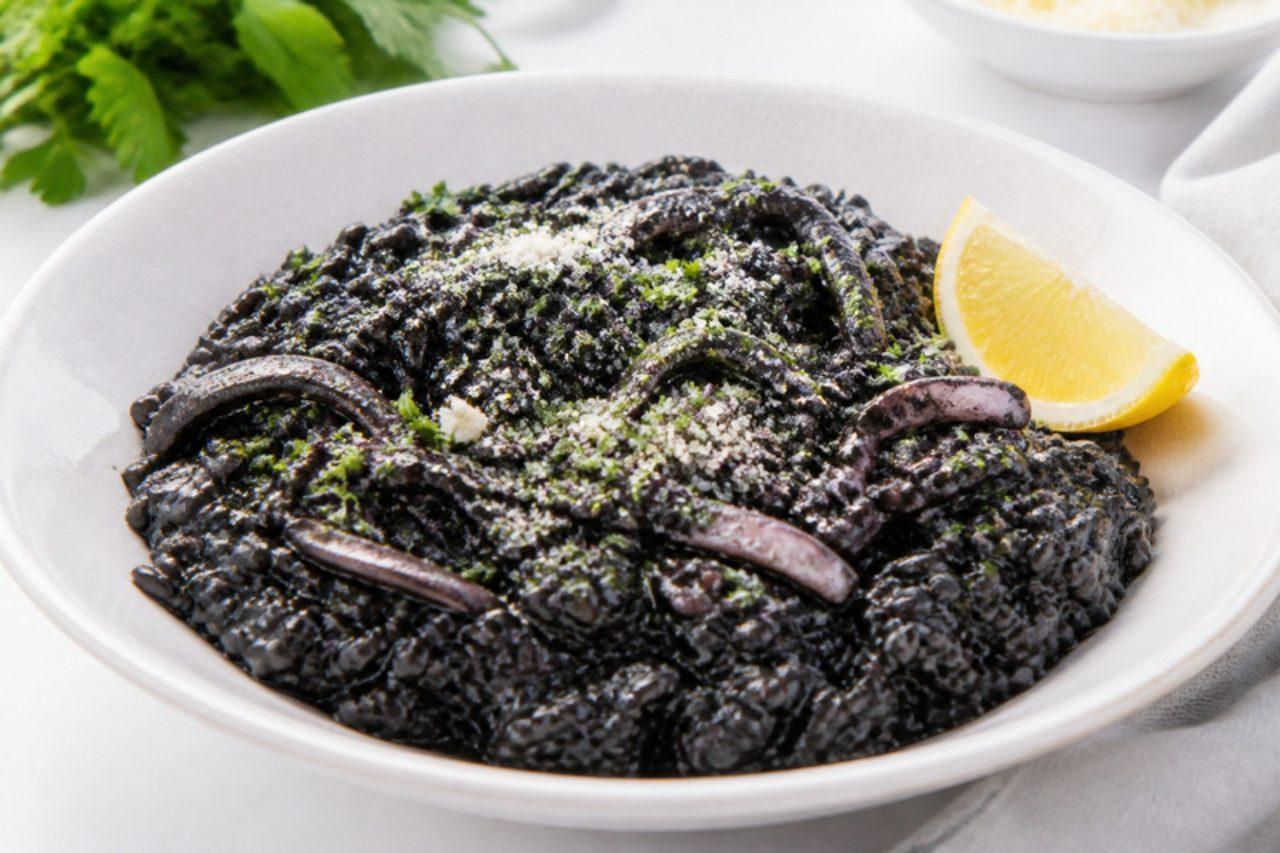
Crni rižotBlack cuttlefish risotto

Along the Dalmatian coast, from Korčula to Dubrovnik, konobas serve crni rižot as the first thing fishermen order when they come ashore, its jet-black colour startling against a white plate. Cuttlefish is cooked slowly with onion and garlic until tender, then rice goes in with fish stock and the ink sac, making a creamy, sea-sweet rice that tastes of the shore. It traditionally includes a splash of dry white wine; for an alcohol-free version, use more stock with a squeeze of lemon. The usual mistake is adding the cuttlefish late and cooking it fast, which leaves it rubbery; it needs to stew first. Chef's tip: serve with a drizzle of good olive oil and grated hard sheep's cheese if you like, and warn your guests about black teeth.

75 minBalkanFishGluten free
by KrazyBadal 0 views

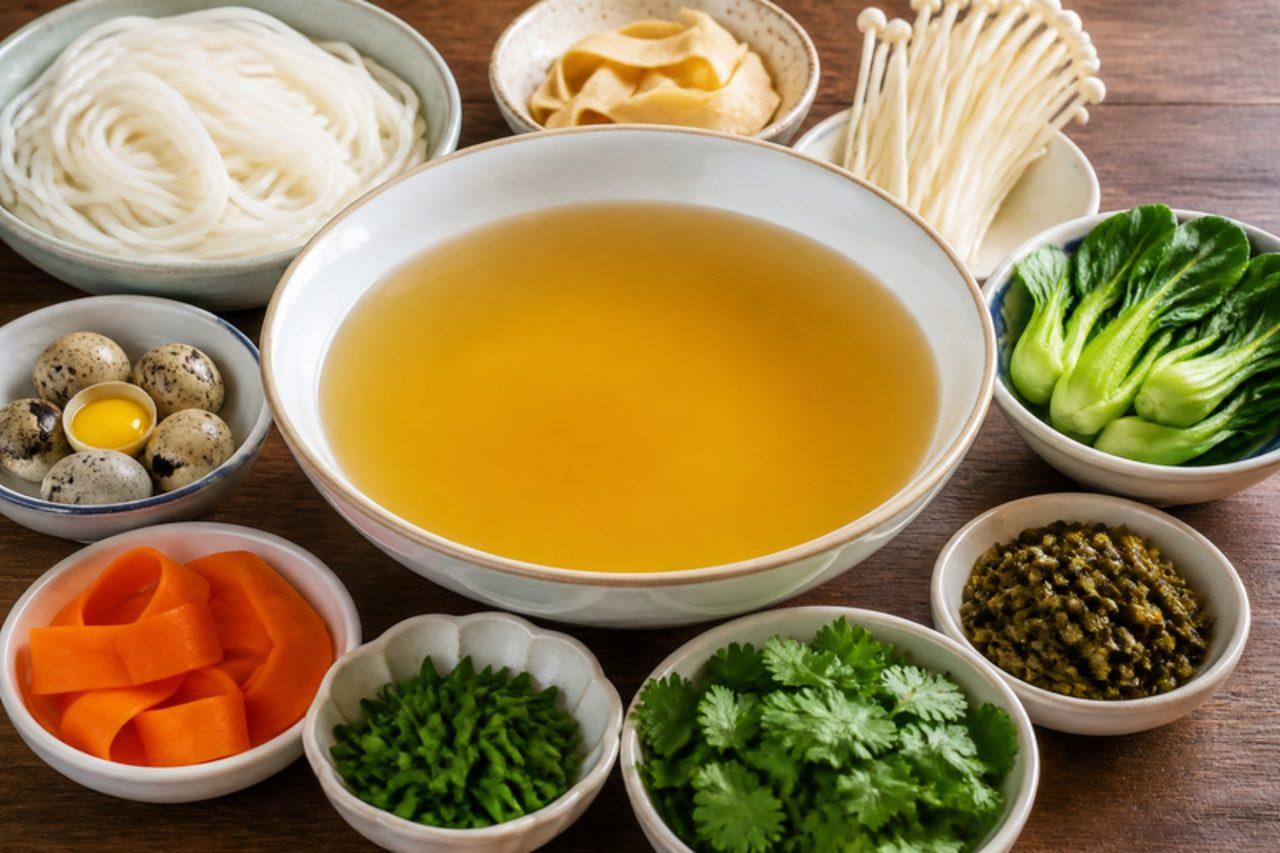
Crossing-the-bridge noodles with vegetable brothRice noodles in hot broth

Guo qiao mi xian comes from Mengzi in southern Yunnan. The story goes that a scholar's wife carried soup across a bridge to his island study each day, and found that a layer of oil kept it piping hot. Today in Kunming it arrives as a big bowl of scalding broth plus small plates of raw thinly sliced vegetables, tofu skin, herbs and rice noodles, which you slide in yourself so they cook at the table. This vegetarian broth is built on mushroom, corn and soybean sprouts. Chef's tip: the broth must be at a rolling boil when it goes into a warmed bowl; that heat is what cooks the toppings.

by KrazyBadal 0 views

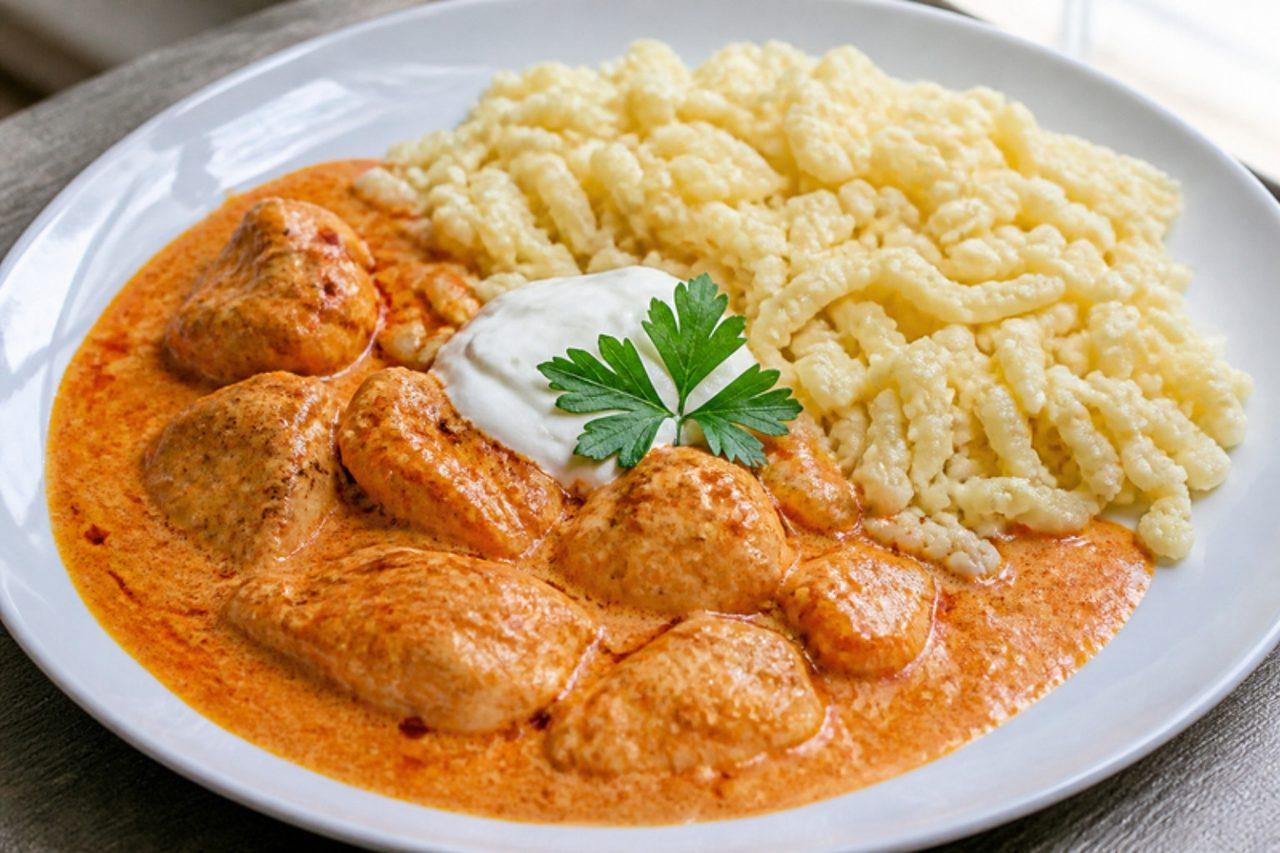
CsirkepaprikásPaprika chicken in sour cream sauce

Csirkepaprikás is the Sunday chicken of Hungarian homes, cooked by grandmothers in villages and in Budapest flats alike and always served with nokedli, the little egg dumplings. Chicken thighs braise gently with onion, plenty of sweet paprika, tomato and pepper, then soured cream is stirred in to make a velvety, brick-orange sauce. Chef's tip: mix the soured cream with a spoonful of flour and some hot sauce before adding it; this stops it from splitting.

by KrazyBadal 0 views

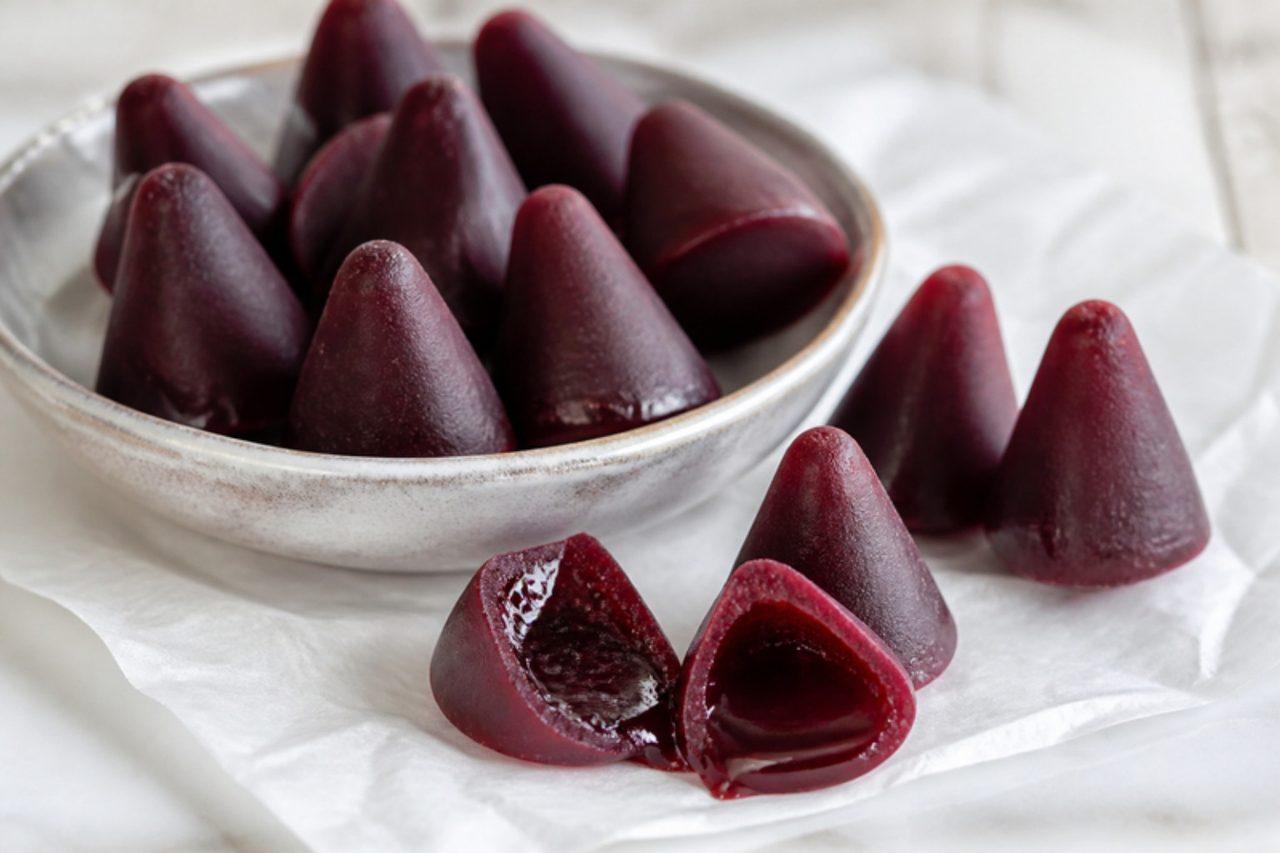
CuberdonsRaspberry cone candies

Cuberdons are the purple, cone-shaped sweets sold from handcarts on the Groentenmarkt in Ghent, where locals call them neuzekes, 'little noses'. A thin, firm sugar crust encloses a syrupy raspberry centre, and they only stay that way for about three weeks before the inside crystallises, which is why they have never become an export. They are made with gum arabic, not gelatine, so they suit vegetarians and vegans. Making them at home is a fun weekend project: the syrup is poured into cone-shaped hollows pressed into a tray of dry cornflour, which slowly draws moisture out and forms the crust. Chef's tip: use a sugar thermometer and be exact; just a few degrees too low and the cones never form a crust, a few too high and they set solid all the way through.

by KrazyBadal 0 views

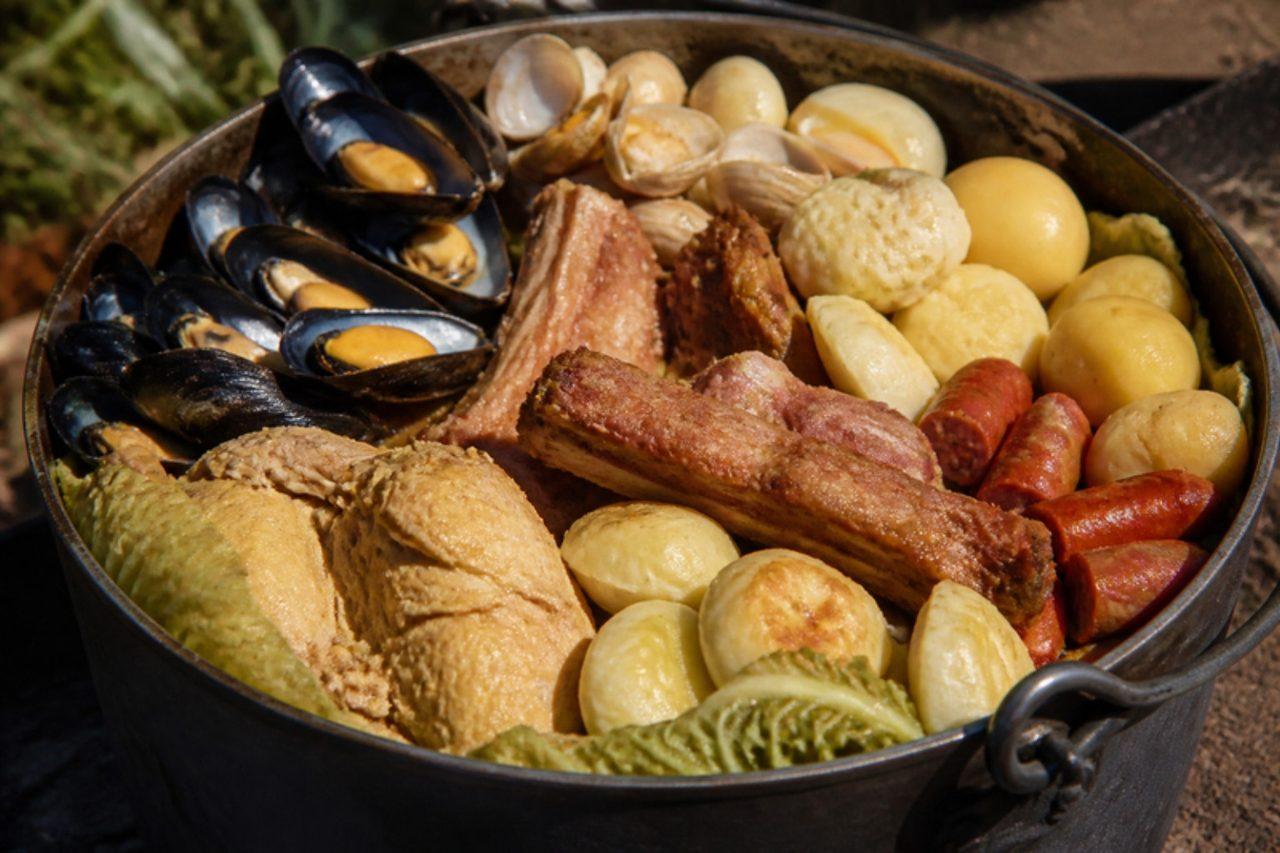
Curanto en ollaShellfish and meat pot

On the island of Chiloé in southern Chile, curanto is cooked in a pit lined with hot stones and covered with huge nalca leaves; in town kitchens and in Puerto Montt's market it is made in a big pot instead, curanto en olla. Mussels and clams, smoked pork, chicken and sausage steam together over potatoes and milcao (potato dumplings) until the juices make a rich broth, served in cups on the side. This dish contains pork and shellfish. Some cooks add white wine; this version uses water. The mistake is adding the shellfish too early; they go in at the end and must open, and any that stay closed are thrown away. Chef's tip: make the milcao a little ahead and keep it in the fridge so it holds its shape.

135 minChileanFish
by KrazyBadal 0 views

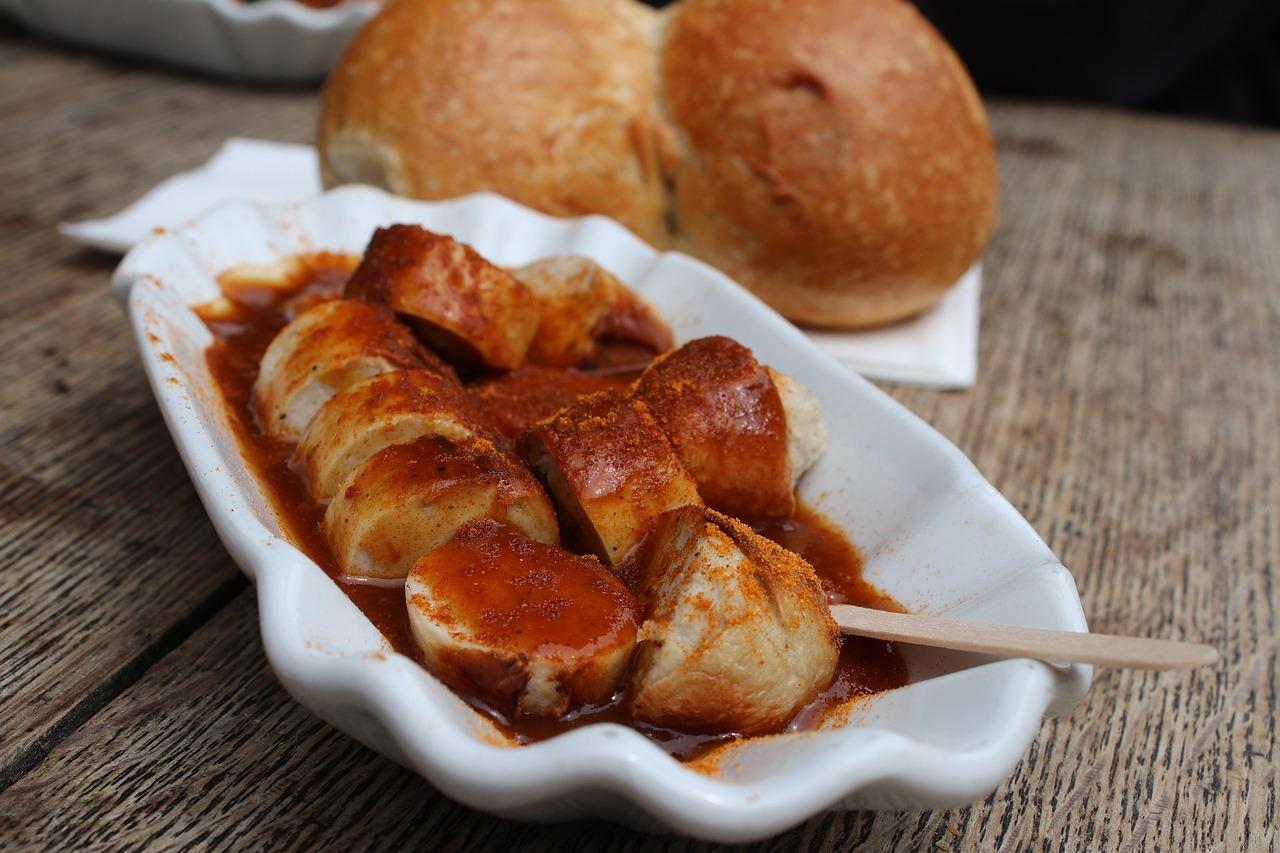
CurrywurstSausage with curry ketchup

This is a pork dish. Currywurst was born in post-war Berlin, and today kiosks across the city sell it all day and long into the night, on a little paper tray with a wooden fork. A fried pork sausage is cut into bite-size pieces and drowned in a warm, tangy tomato sauce spiced with curry powder, then dusted with more curry powder and served with chips or a bread roll. The sauce is homemade here, so it has no brand of ketchup in it. The usual mistake is cooking the sausages too hot, so they split and burn outside while staying raw inside. Chef's tip: let the sauce simmer a full 10 minutes; the curry powder needs that time to lose its raw, dusty taste.

by KrazyBadal 0 views

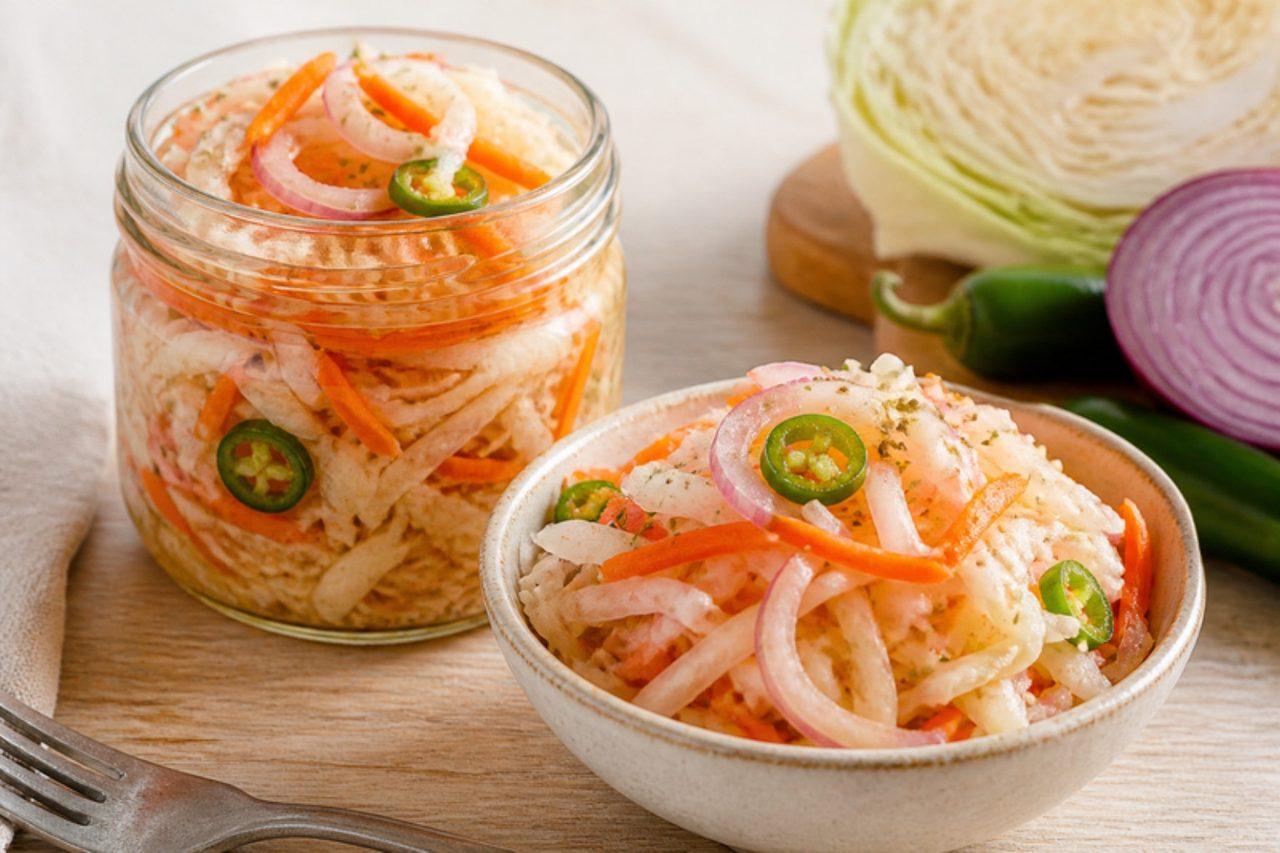
CurtidoPickled cabbage relish

No plate of pupusas in El Salvador arrives without a jar of curtido beside it: a tangy, crunchy slaw of cabbage, carrot and onion lightly pickled in vinegar with Mexican oregano. Pupuserías keep a big jar on every table, and the sharpness cuts through melted cheese and corn perfectly. It's also good with beans, tacos or a cheese sandwich. Chef's tip: make it a day ahead; it is crisp and raw on day one but turns mellow and properly pickled by day two.

by KrazyBadal 0 views

Cypriot sheftaliaPork and herb sausages

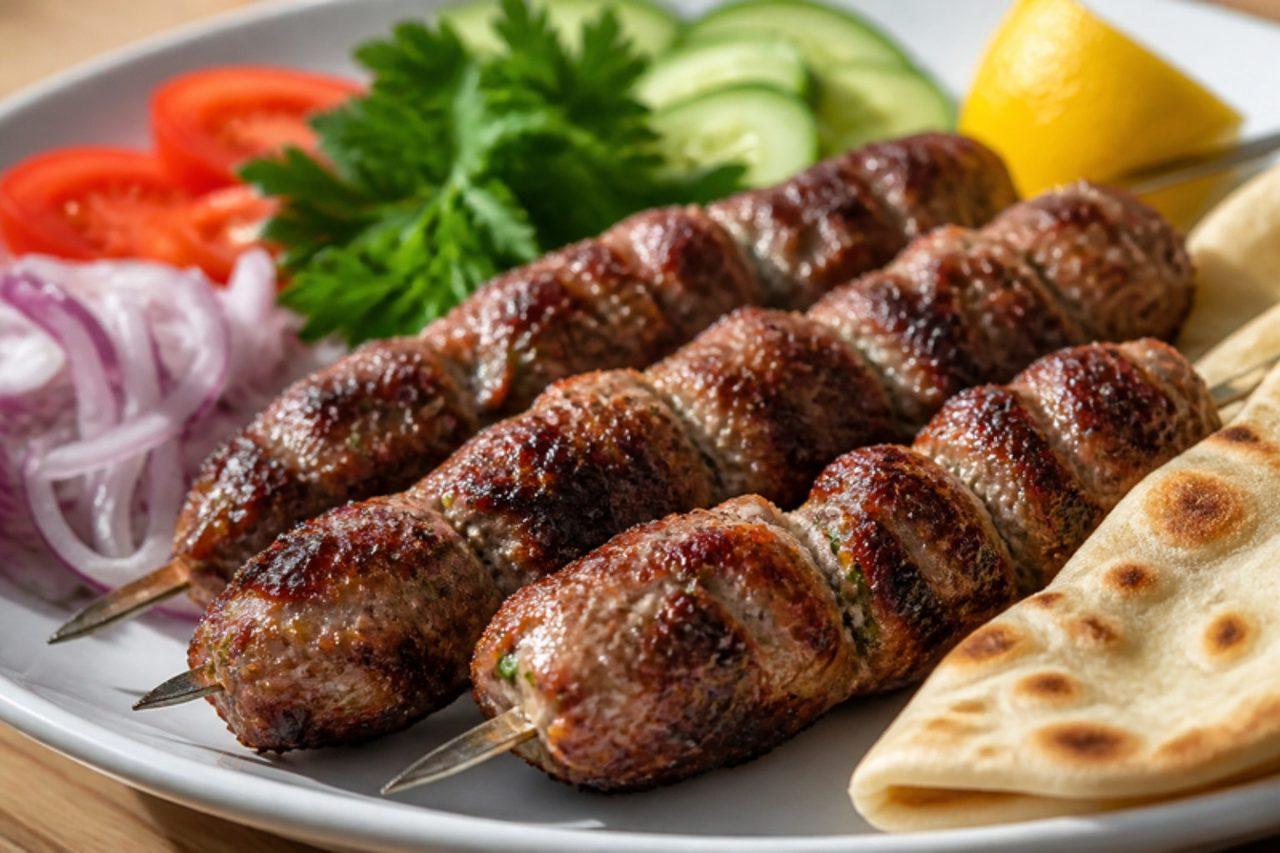
This is a pork recipe. Sheftalia are the little skinless sausages you find on every souvla barbecue in Cyprus, from Limassol beach grills to Sunday family gatherings in Nicosia gardens. Minced pork is mixed with onion, parsley and mint, wrapped in lacy caul fat and grilled slowly so the fat melts and bastes the meat. They come tucked into a large pitta with salad, lemon and tahini. Ask a butcher for caul fat (sometimes called lace fat); without it you can still shape the mix into thick sausages and grill them on an oiled rack. Chef's tip: soak the caul fat in warm, lightly vinegared water first; it becomes supple and stretches without tearing.

55 minGreekMeat
by KrazyBadal 0 views

Dabo koloCrunchy spiced dough bites

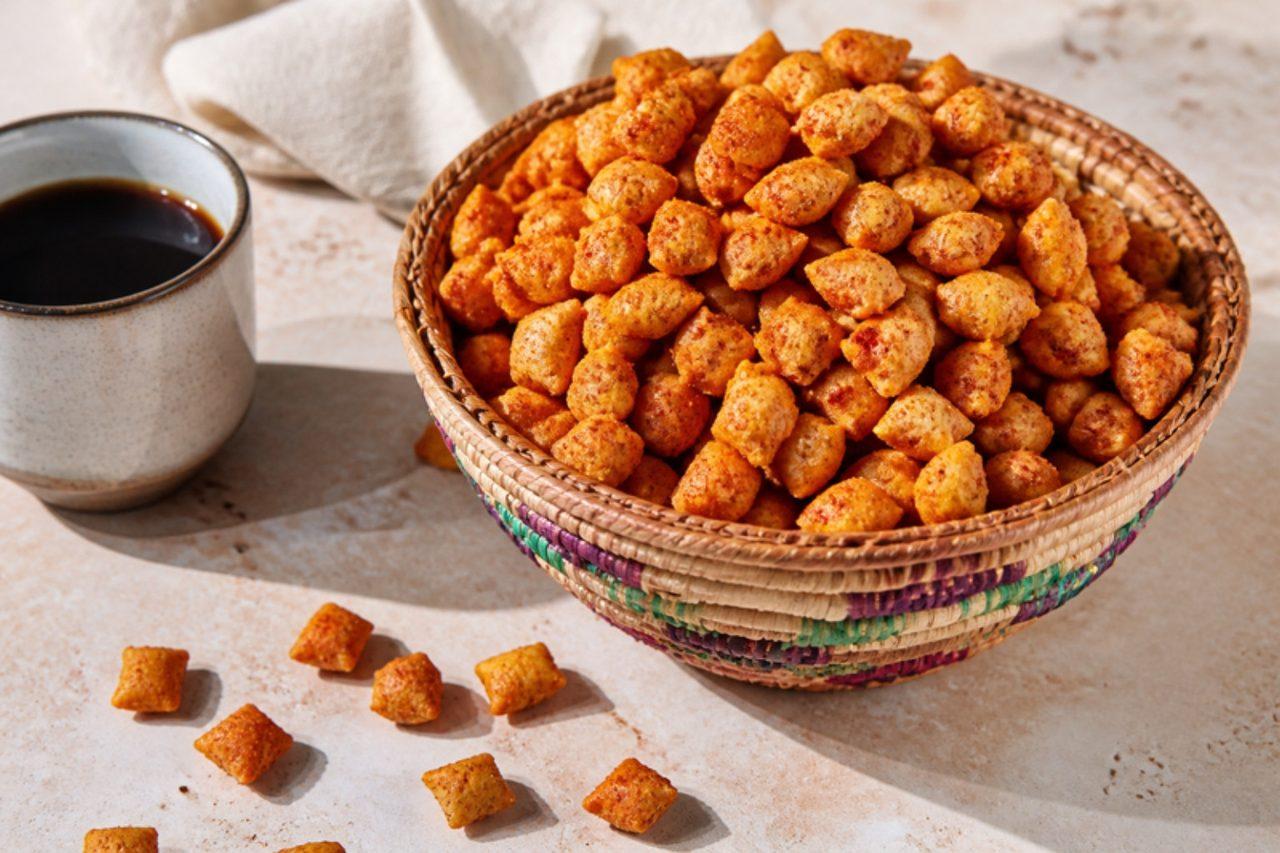
Dabo kolo are small crunchy nuggets of spiced dough, sold in paper cones in markets from Addis Ababa to Gondar and offered to guests with coffee. Families make big batches before holidays such as Enkutatash (Ethiopian New Year in September) and for long journeys, since they keep for weeks. The dough is seasoned with berbere and a little sugar, rolled into thin ropes, cut into tiny pieces and toasted until crisp. Children love them, and they can be made mild by reducing the berbere. Chef's tip: cut the pieces as small and even as you can, about the size of a chickpea, so they crunch all the way through.

by KrazyBadal 0 views

Dabu-dabuFresh tomato and chilli salsa

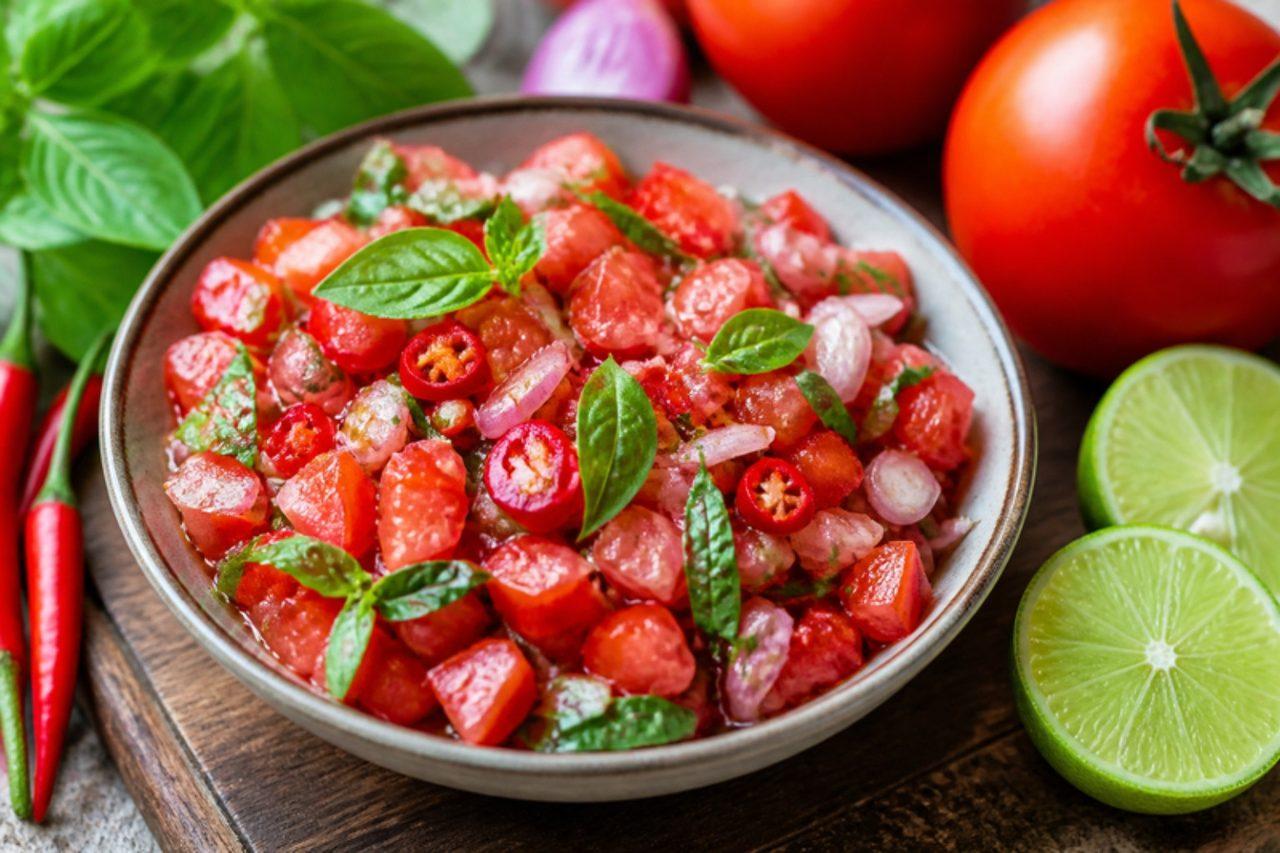
Every table in Manado, North Sulawesi, has a bowl of dabu-dabu: diced tomato, shallot and red chilli with calamansi juice and lemon basil, sometimes dressed with hot oil. It is spooned over grilled food, fried tofu and the pumpkin porridge tinutuan, and its cool juiciness makes very hot chilli easier to take. Unlike Bali's sambal matah, it is built on tomato and stays chunky and wet. Chef's tip: salt the tomatoes and leave them 5 minutes before mixing, so they release juice that becomes the dressing.

by KrazyBadal 0 views

Dahi baiganaFried aubergine in yogurt

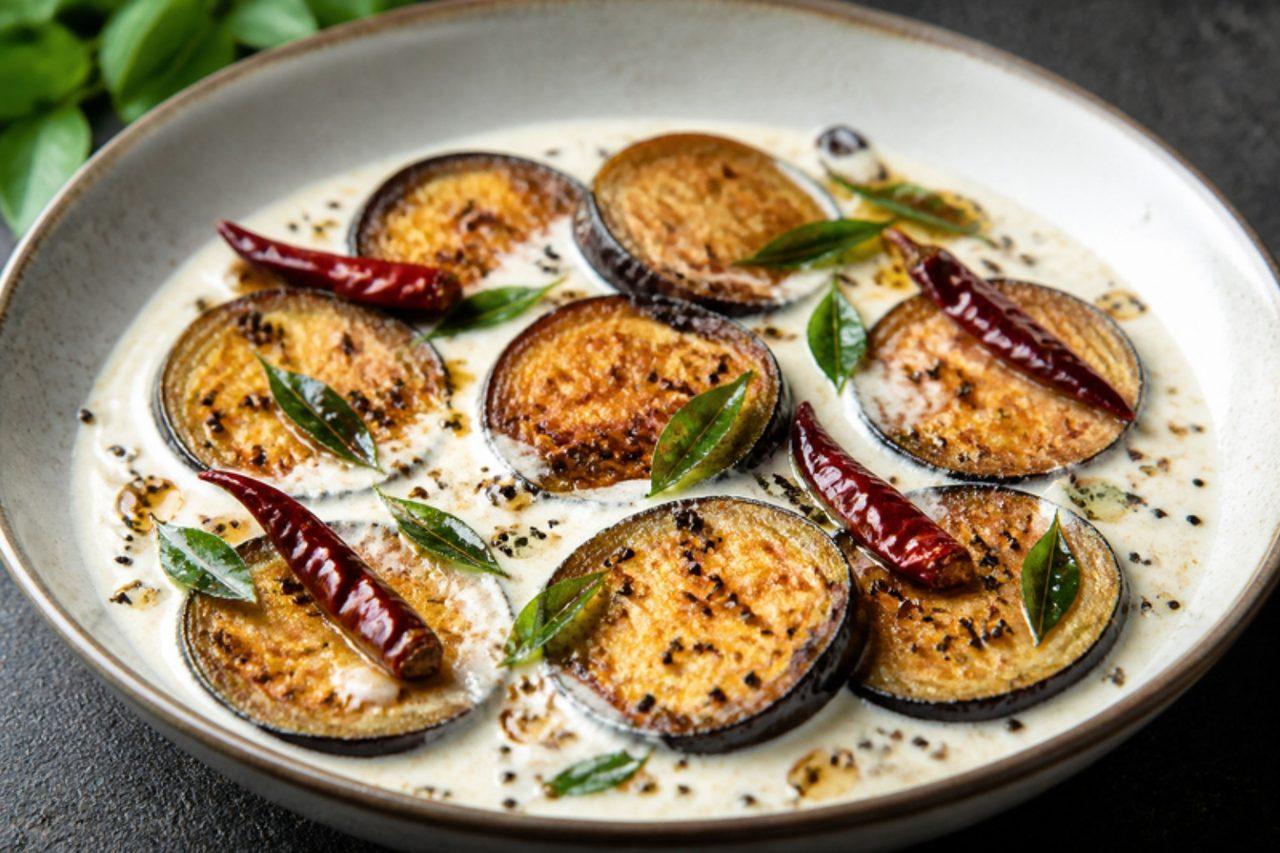
Dahi baigana is one of the easiest dishes of an Odia summer lunch, and it turns up at home thalis in Puri and Bhubaneswar beside dalma and rice. Thick rounds of aubergine are rubbed with turmeric and salt, fried until golden and creamy, then bathed in whisked yogurt that has been tempered with mustard seeds, cumin, curry leaves and dried chilli. It is served at room temperature: cool, tangy and smoky from the fried aubergine. Chef's tip: add the tempering to the yogurt, never the yogurt to the hot pan, so it doesn't split.

by KrazyBadal 0 views

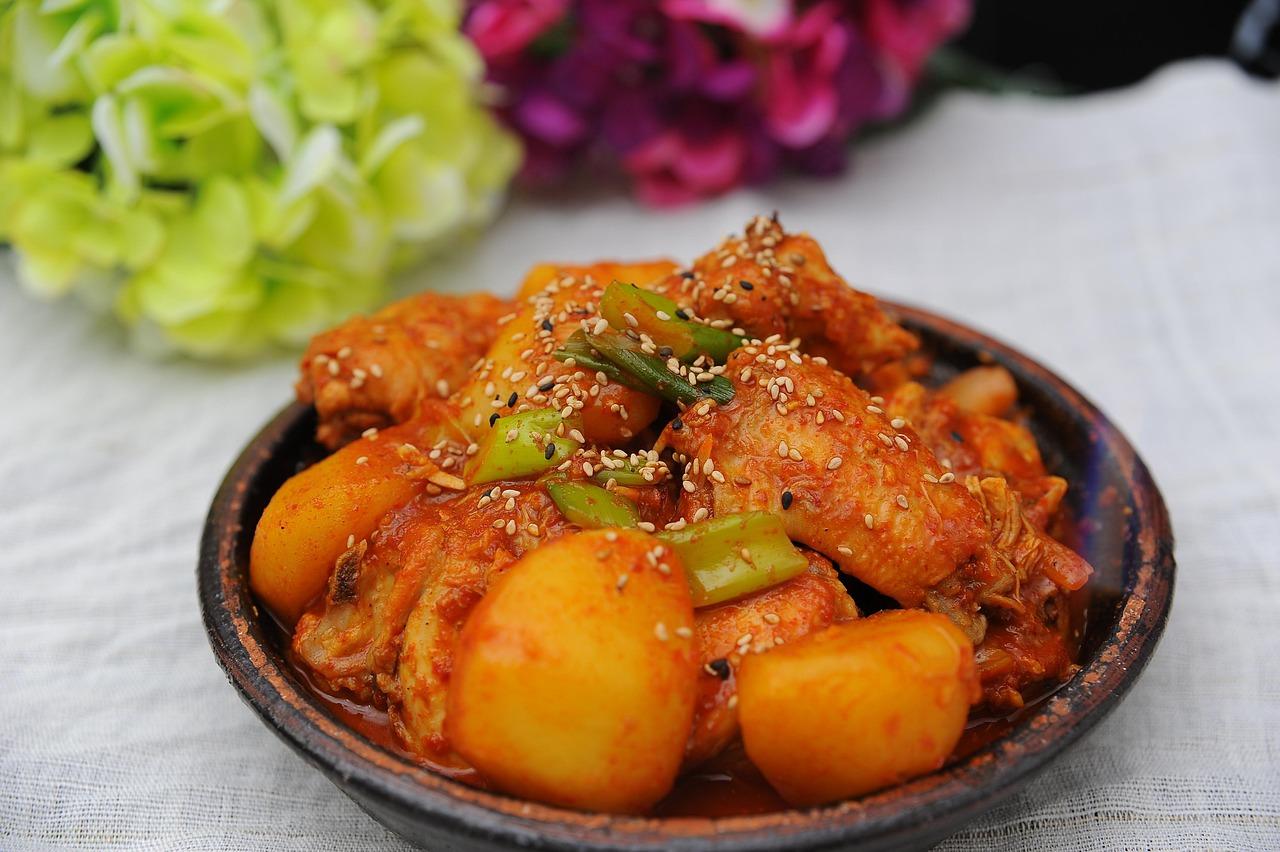
Dak bokkeumtangSpicy chicken and potato stew

Chicken on the bone braised with big chunks of potato in a thick red sauce is a weeknight staple in Daejeon, the central city where many Korean rail lines meet, and in homes right across the country. Some people still call it dakdoritang. Unlike Andong's soy-based jjimdak, it gets its colour and heat from chilli flakes and gochujang, and the potatoes slowly thicken the sauce as they soften. It's usually brought to the table in the pot and shared, with rice and kimchi, and the last of the sauce is spooned over rice. Chef's tip: blanch the chicken for 3 minutes and rinse it first; this takes away scum and excess fat, so the sauce stays bright and clean-tasting.

by KrazyBadal 0 views

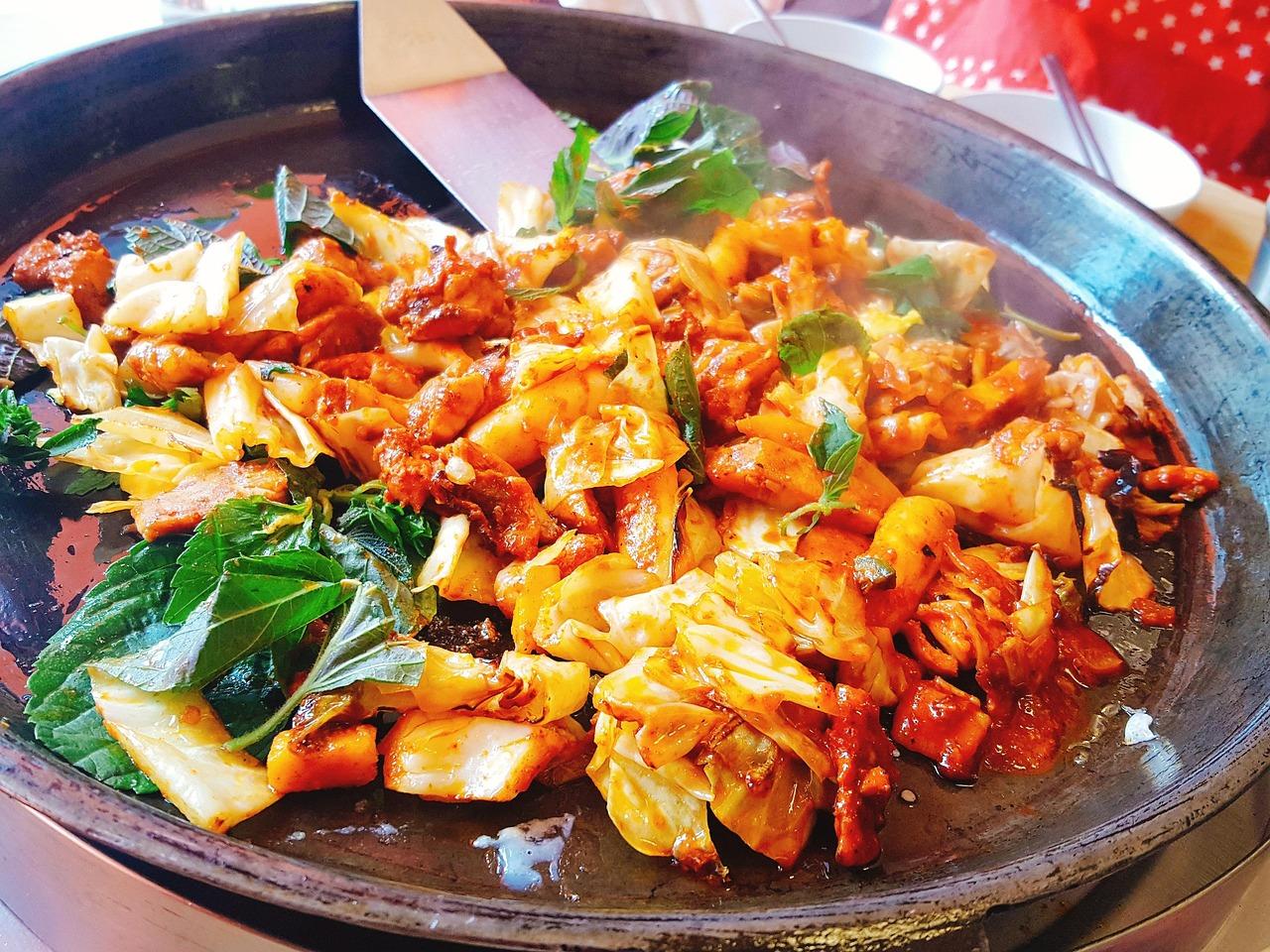
Dak galbiSpicy stir-fried chicken

Chuncheon, a lakeside city in Gangwon province, is so proud of dak galbi that it has a whole lane of restaurants and a yearly festival for it. There, a waiter stir-fries the marinated chicken, cabbage, sweet potato and rice cakes on a huge round iron pan in the middle of your table. When the pan is nearly empty, rice is fried in the leftover sauce to finish the meal. This version is made in a large frying pan or wok at home. Chef's tip: a teaspoon of curry powder in the marinade is a Chuncheon trick; you won't taste curry, but the sauce tastes deeper.

by KrazyBadal 0 views

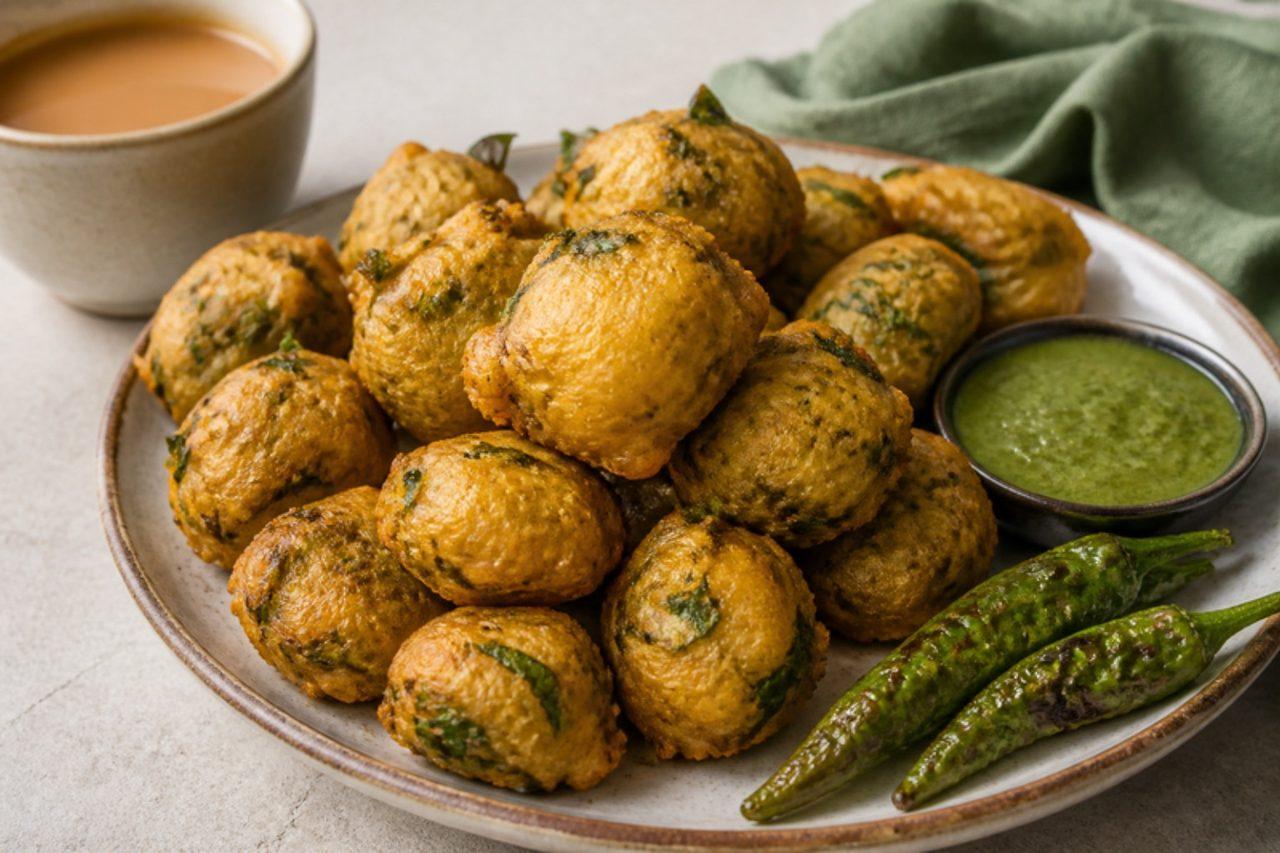
Dakor na gotaGram flour and fenugreek fritters

Pilgrims who come to the Ranchhodraiji temple at Dakor, in the Charotar belt of central Gujarat, rarely leave without a paper cone of gota from the shops around the temple square. These fritters are different from ordinary bhajia: the batter uses coarse gram flour, crushed black pepper and coriander seeds and plenty of fresh methi, and it is whipped light so the gota come out round, craggy and soft inside. Families buy the ready-mixed flour to take home and fry them on the first rainy evening of the monsoon. Serve them with green chutney, fried green chillies and a cup of masala chai. Chef's tip: beat the batter by hand in one direction for a full 3 minutes before frying; the air you whip in matters as much as the baking soda.

by KrazyBadal 0 views

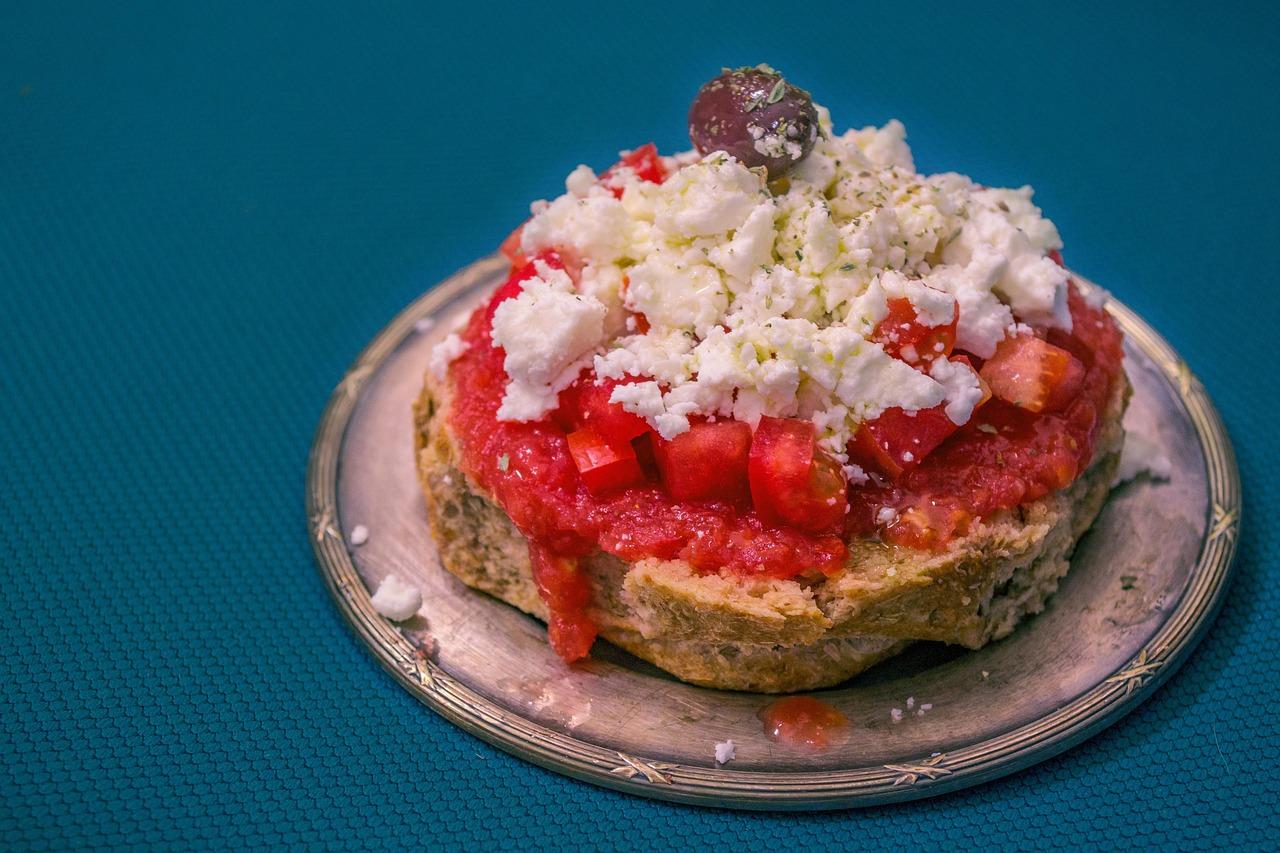
DakosBarley rusk with tomato and cheese

Dakos is Crete's favourite summer meze: a round, hard barley rusk softened with a sprinkle of water, piled with grated ripe tomato and crumbled cheese, then drenched in olive oil and dusted with oregano. On the island it's made with soft, tangy mizithra and eaten in the afternoon with a glass of raki, but feta works well. The rusk drinks up the tomato juice and oil while keeping a little crunch. Look for barley rusks (paximadia) in Greek or Middle Eastern shops. Chef's tip: wet the rusk lightly, just enough to take the edge off; soaking it is the common mistake and it falls apart before you can eat it.

by KrazyBadal 0 views

Dal baati churmaLentil dal with baked wheat balls

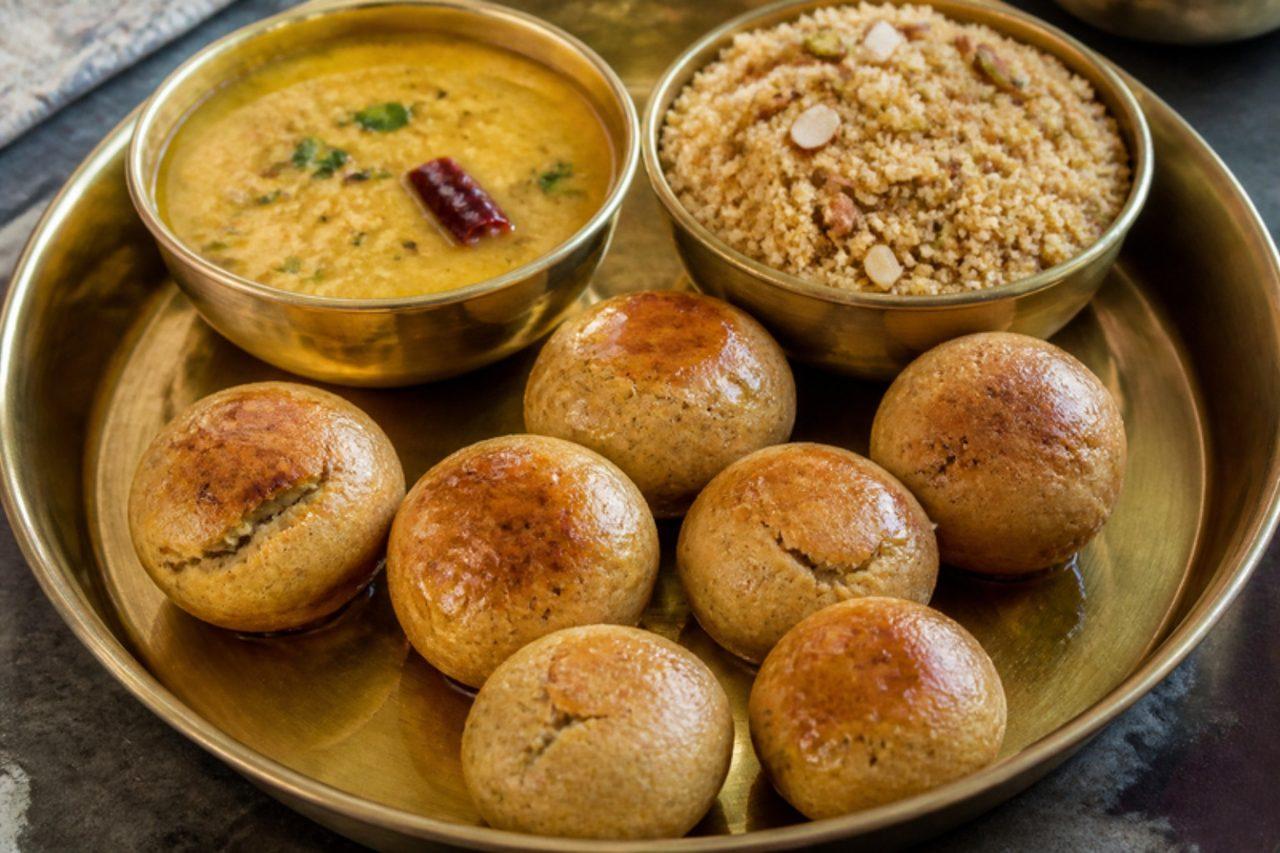
Dal baati churma is the dish every Rajasthani wedding and festival is built around. Baati are hard, round wheat breads, traditionally buried in desert embers, cracked open and drowned in ghee; they are eaten with panchmel dal made from five lentils and with churma, baati crumbs sweetened with sugar and cardamom. The joy is in the contrast: crunchy and soft, spicy and sweet, all rich with ghee. Serve with sliced onion, green chillies and lime. Chef's tip: rub the ghee into the baati flour until a handful holds its shape when squeezed; that shortening is what makes the baati crumbly inside instead of bready.

by KrazyBadal 0 views

Dal bhatLentils, rice and vegetables

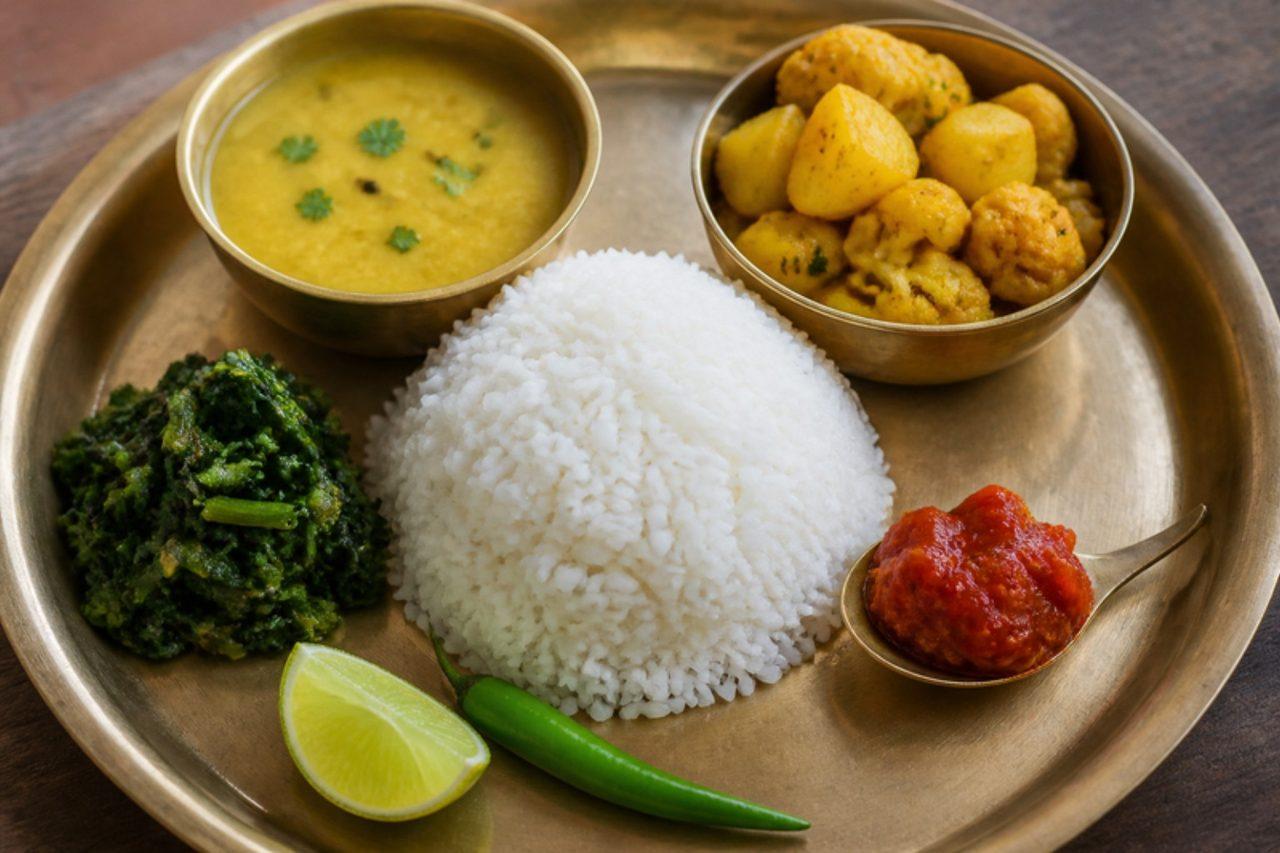
Across Nepal, from Terai farmhouses to trekking lodges below Everest, dal bhat is not a dish so much as the meal itself, eaten twice a day, late morning and early evening, often with the words "dal bhat power, 24 hour". The plate is always the same idea: a mound of plain rice (bhat), a thin, soupy lentil dal scented with jimbu (a dried Himalayan allium) fried in ghee, a dry vegetable tarkari, a little stir-fried greens when there are some, and a sharp spoonful of achar. You pour the dal over the rice and mix it by hand, a little at a time, with bites of curry and pickle. Most newcomers make the dal too thick; Nepali dal should run off the spoon like a light soup so it soaks the rice. Chef's tip: fry the jimbu in the hot ghee only until it darkens a shade and smells of garlicky onion, about 10 seconds, then pour it straight into the dal and cover the pan to trap the aroma.

by KrazyBadal 0 views

Dal pithaLentil-stuffed rice dumplings

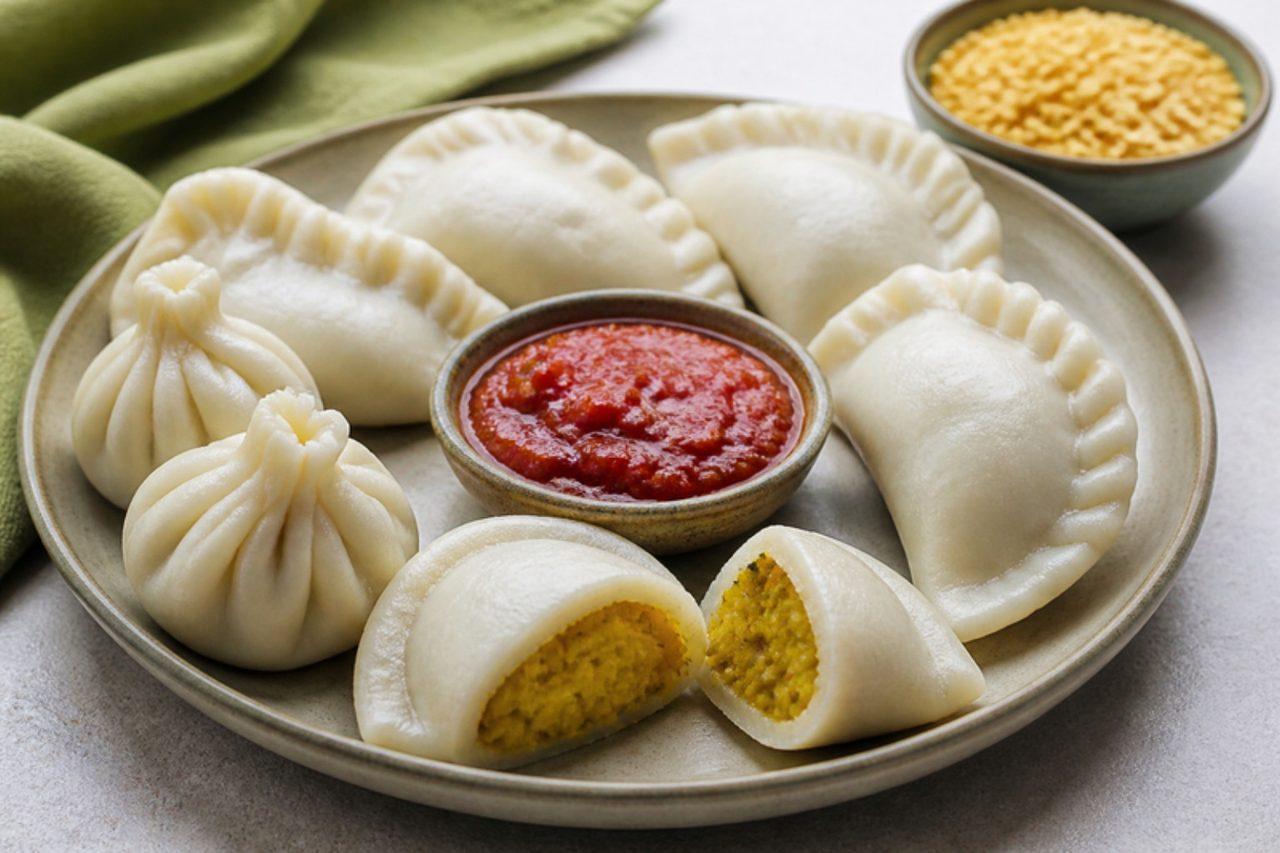
Dal pitha is the comfort food of Bihari winters, made on cold evenings and around Makar Sankranti: soft rice-flour dough wrapped around a coarse filling of chana dal, garlic, ginger and chilli, shaped into half-moons or little pouches and cooked in steam. People in Mithila call it a Bihari momo, and it is eaten hot with tomato chutney or a dribble of mustard oil. The dough tastes gently of rice, the filling is savoury and filling, and leftovers are excellent pan-fried the next day. Chef's tip: knead the rice dough while it is still hot; if it cools before shaping, the pitha crack and the filling leaks out.

by KrazyBadal 0 views

Dalle chutneyRound chilli and tomato chutney

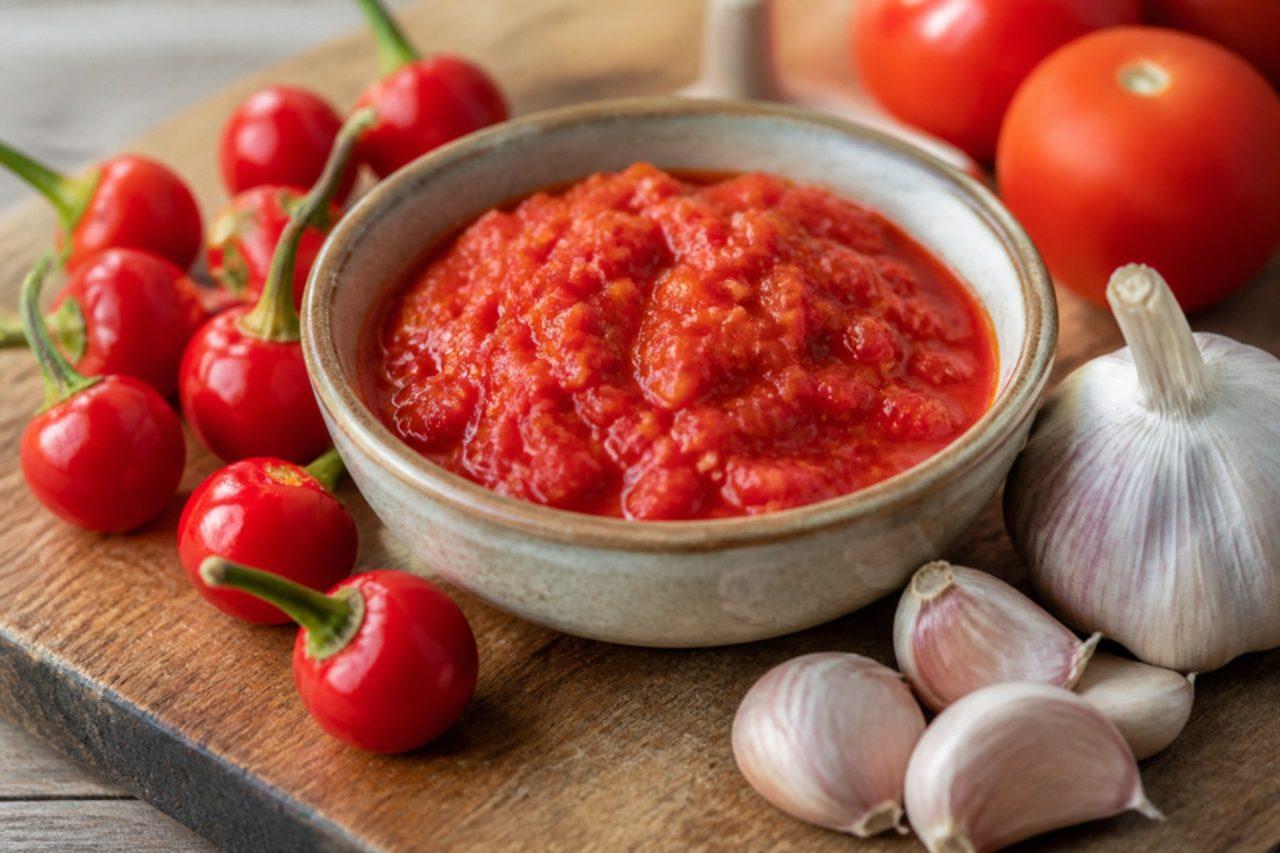
Dalle khursani is Sikkim's round, cherry-sized chilli, grown in every hill garden and among the hottest chillies in India. No meal in Gangtok goes without a little bowl of dalle achar beside the rice or momos. This fresh version pounds the chillies with blistered tomato, garlic, a pinch of timur (Sichuan-type pepper) and lemon into a coarse red chutney that is searingly hot, sharp and fruity. Eat it by the dot. Chef's tip: wear gloves when cutting dalle, and never touch your eyes; the heat stays on your hands for hours. Use a mix of habanero and bird's-eye chillies if you can't get dalle.

by KrazyBadal 0 views

DalmaPigeon pea and vegetable dal

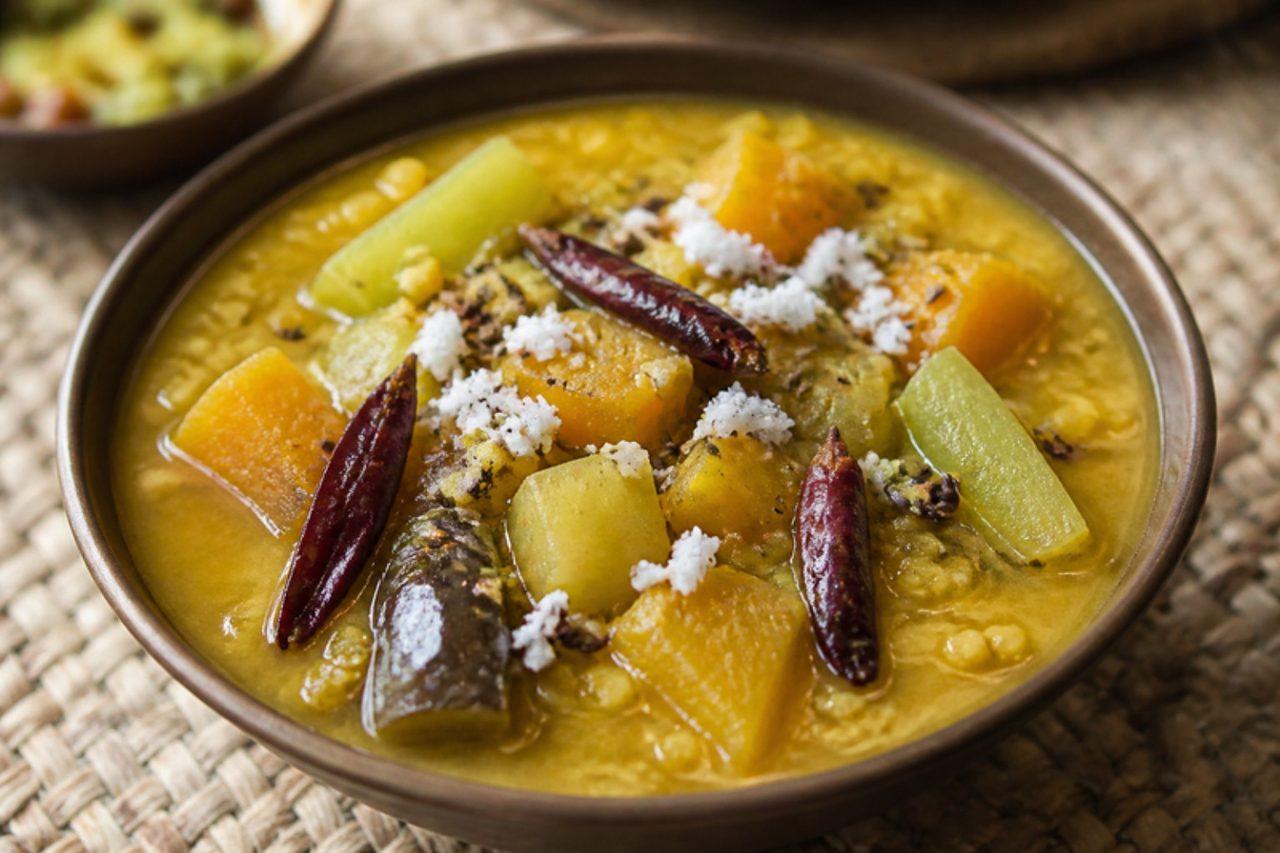
Dalma is the comfort food of Odisha and the dal offered at the Jagannath temple in Puri. Toor dal is cooked together with chunky vegetables, usually raw banana, pumpkin, aubergine and potato, so they soften into it and make it hearty enough to be a meal. A tempering of panch phoron and dried chilli and a sprinkle of roasted cumin-chilli powder give it its smoky warmth; a little grated coconut is often added on top. Odia homes finish it with a spoonful of ghee; this version uses oil so it stays vegan. Serve with plain rice. Chef's tip: add the vegetables halfway through cooking the dal, not at the start, so they keep their shape and the dal stays thick rather than watery.

by KrazyBadal 0 views

DamperSoda bread

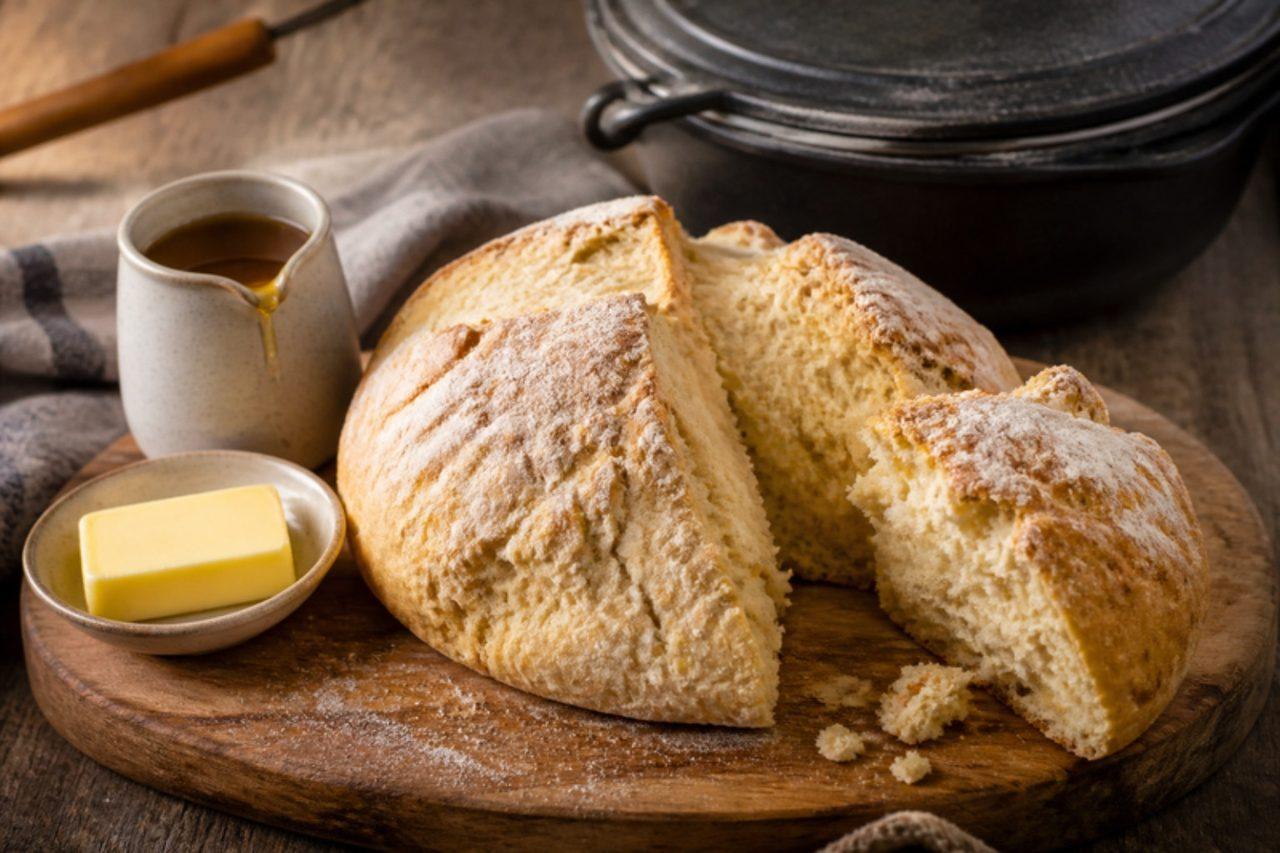
Damper is the bread of the Australian bush: drovers, stockmen and swagmen carried flour and salt across the Outback and baked loaves in the ashes of the campfire, and it's still made in cast-iron camp ovens on camping trips from the Flinders Ranges to the Kimberley. Long before that, Aboriginal peoples ground native seeds into flour and baked seed cakes in the coals. Modern damper uses self-raising flour, a little butter and milk, so it rises into a craggy, golden round with a crisp crust and a soft, scone-like crumb. Tear it while warm and eat it with butter and golden syrup, which bush cooks called cocky's joy, or with soup. Chef's tip: mix with a knife and work quickly; the less you handle the dough, the lighter the damper.

by KrazyBadal 0 views

Daulat ki chaatSaffron milk foam

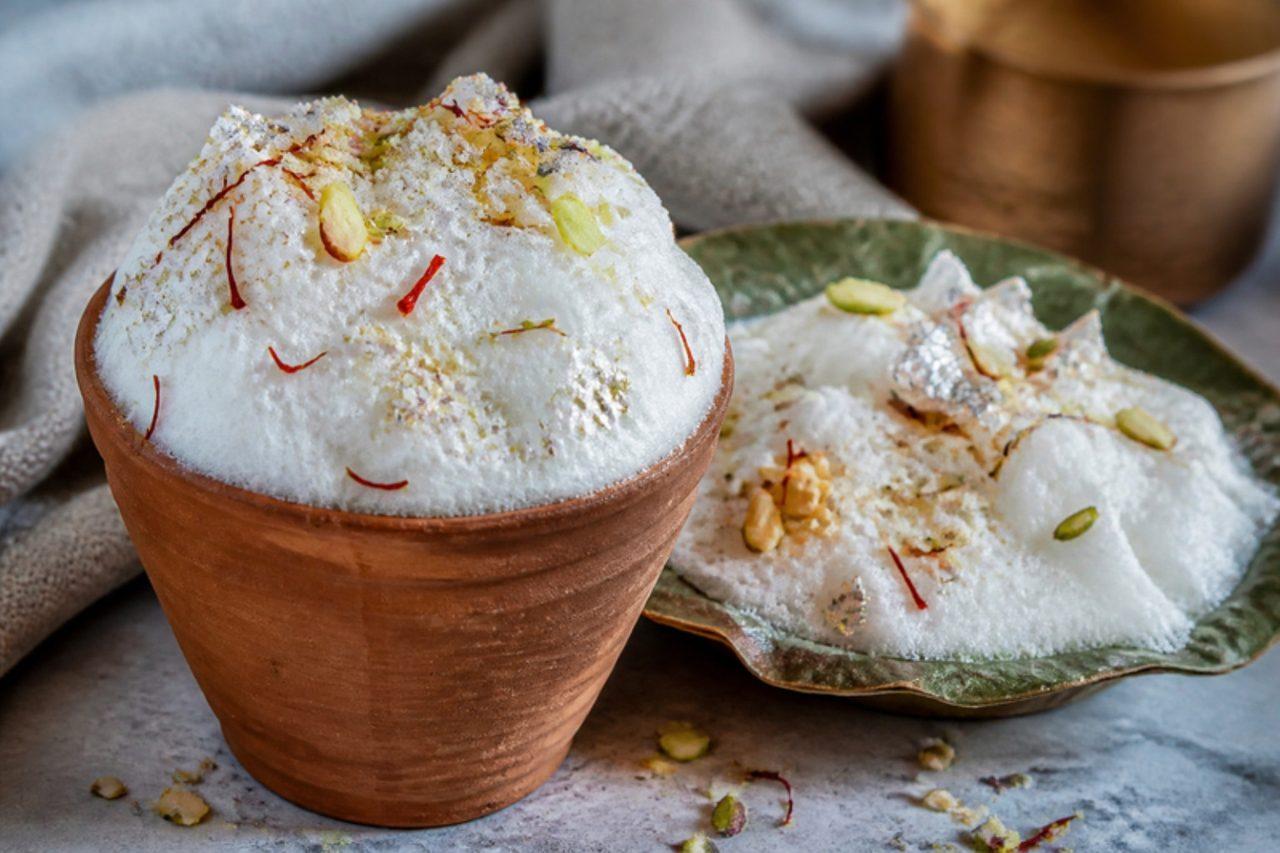
Daulat ki chaat appears in the lanes of Chandni Chowk only in the coldest months, from about November to February. Vendors whisk milk and cream through the night and leave it out under the winter dew, then skim off a foam so light it disappears on your tongue, topped with saffron, khoya, sugar and pistachios. It's sold before the sun gets high, because warmth destroys it. A home kitchen can't recreate a Delhi winter night, so this version uses very cold milk and cream whipped to a loose foam and layered with saffron. It comes close: airy, cool, faintly sweet. Chef's tip: chill everything, bowl and whisk included, for at least 4 hours; the colder the milk, the more stable the foam.

by KrazyBadal 0 views

Davanagere benne dosaButter dosa

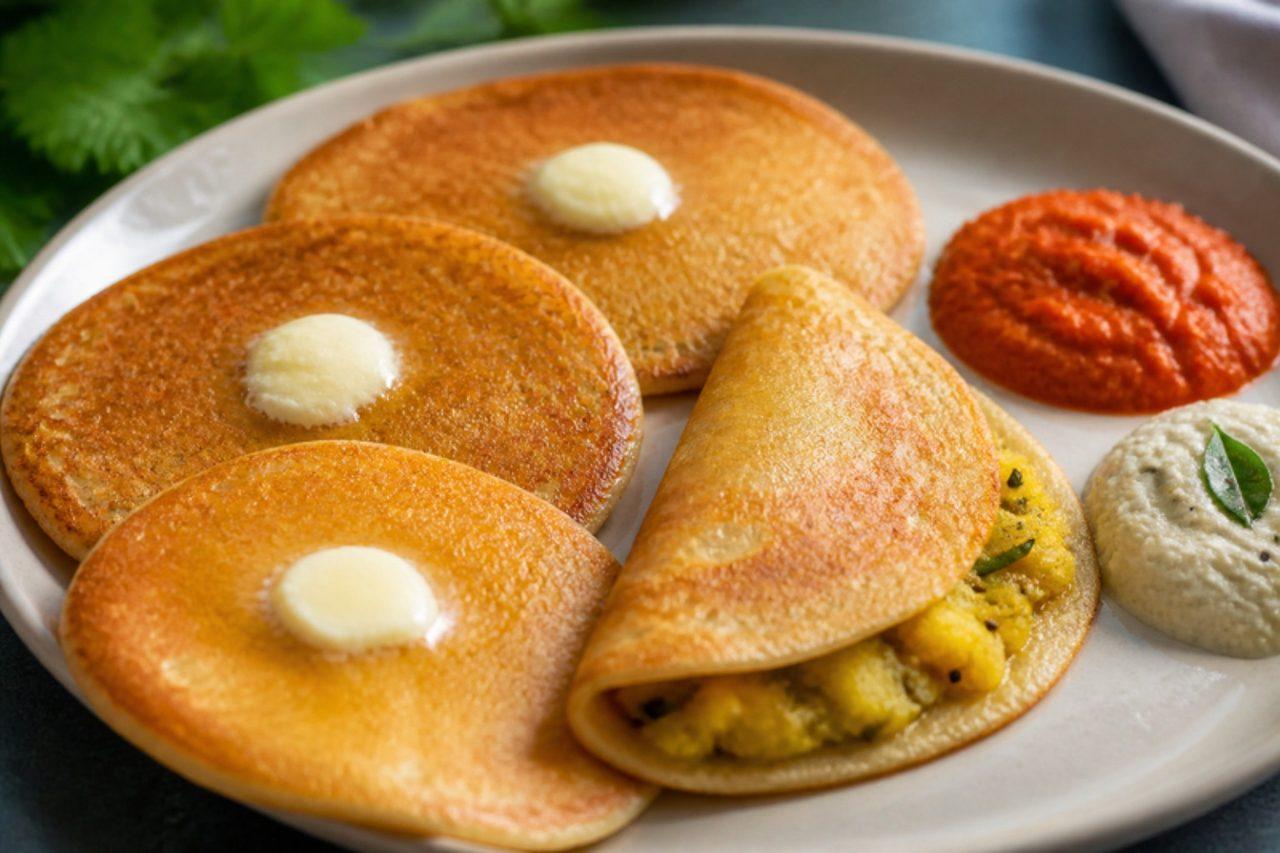
Davanagere, a cotton-market town in central Karnataka, is famous for one thing above all: benne dosa, small, thick dosas cooked on a huge iron griddle with a generous lump of white butter melting over each one. The batter includes puffed rice (mandakki), which makes the inside soft and spongy while the base turns crisp and deep golden. In the town's busy dosa halls they arrive two at a time with a thin coconut chutney and a spoonful of potato palya tucked inside. It is breakfast, but many people eat it as an evening snack too. Chef's tip: use proper unsalted white butter if you can find it, and add it in two goes, half when the batter goes on and half just before folding, so the edges fry in butter rather than burn.

by KrazyBadal 0 views

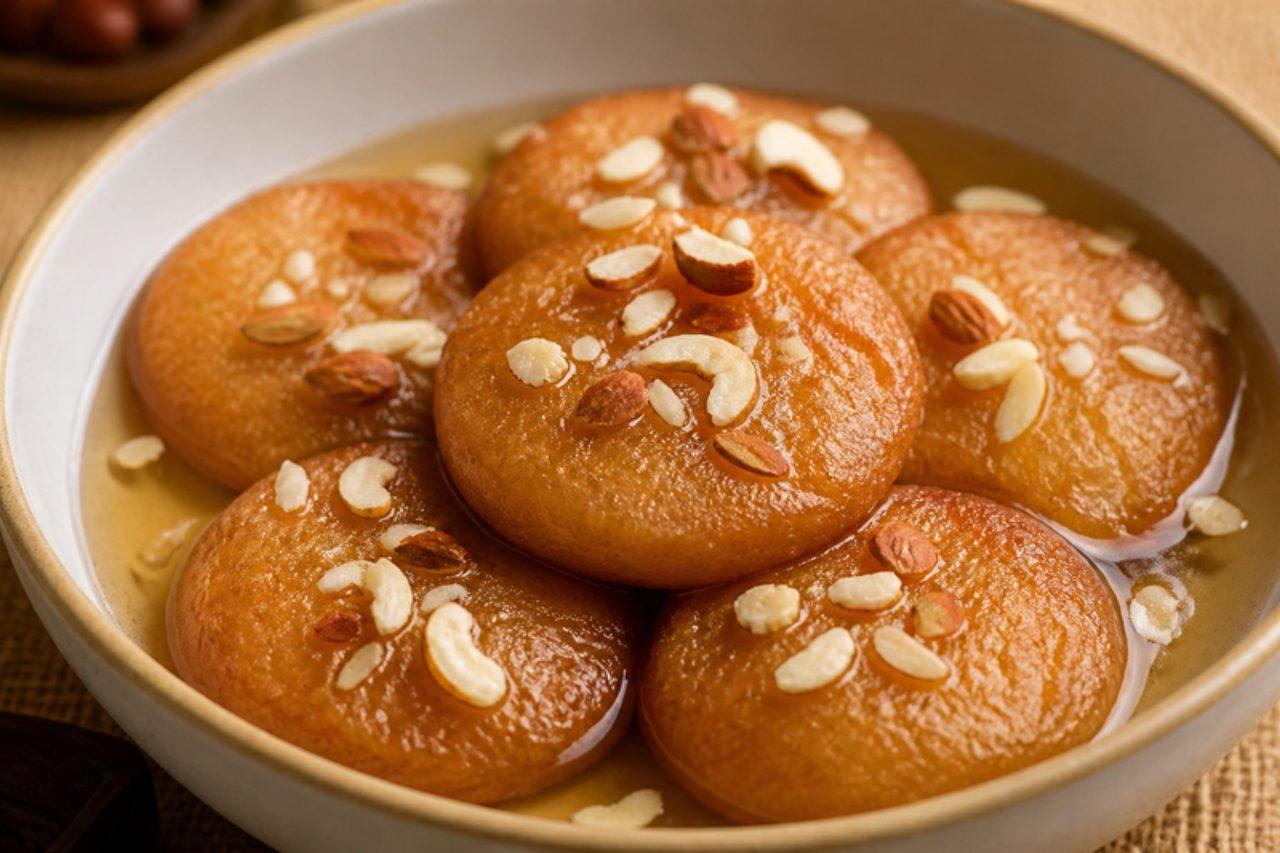
DehroriFried rice and curd dumplings

Dehrori is the sweet Chhattisgarhi families make for Diwali, Holi and weddings, and it tastes like no other syrup sweet: soaked rice is ground coarse, left to sour gently with curd, then fried in ghee and dropped into cardamom syrup. The fermentation gives it a faint tang and a light, spongy crumb under a crisp shell, a little like a rustic cousin of rasbhari or gulab jamun. Grandmothers judge the batch by how well the dumplings hold their shape in the syrup. Chef's tip: grind the rice to the texture of fine semolina, not a smooth paste; that grain is what keeps dehrori light.

by KrazyBadal 0 views

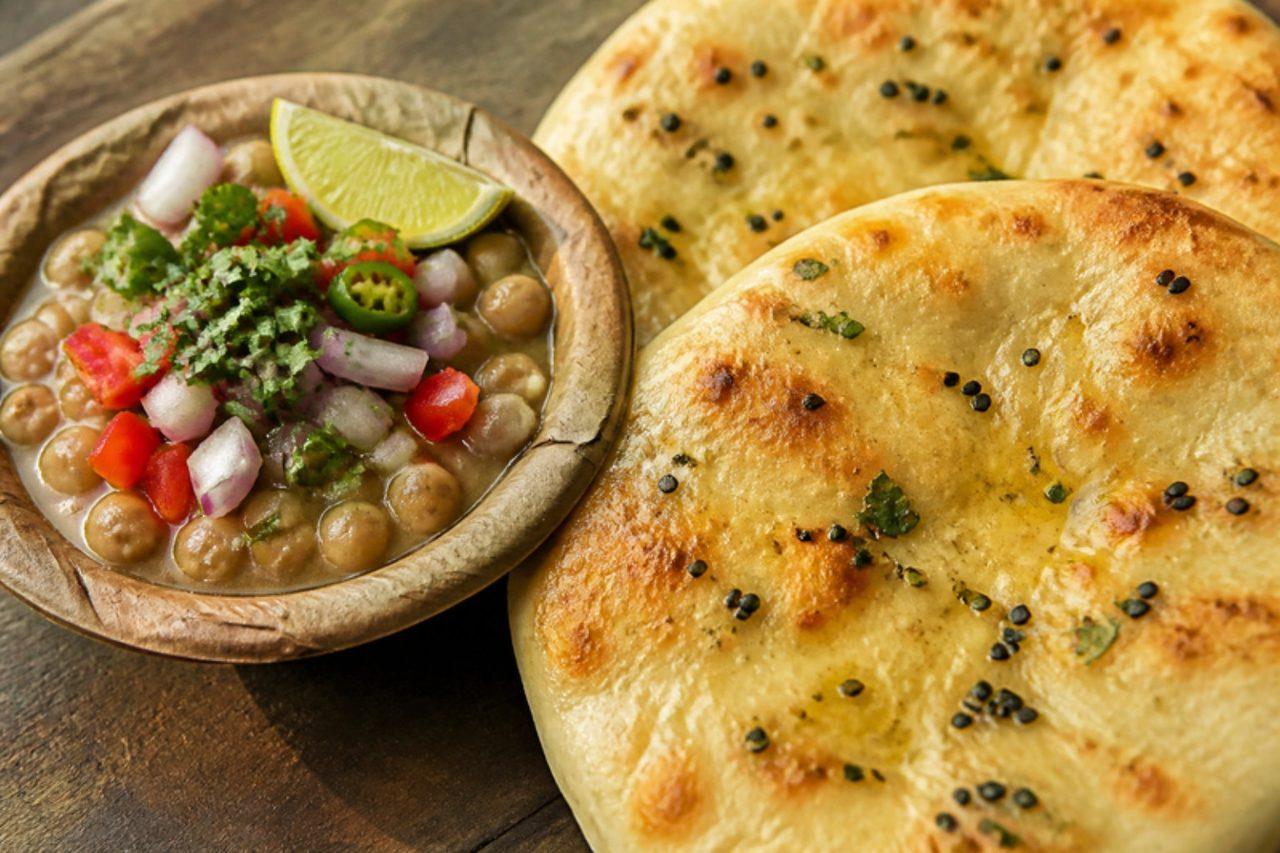
Delhi chole kulcheChickpeas with kulcha bread

Walk through any Delhi office district at lunchtime and you'll find a cart with a huge brass pot of pale white peas and a stack of soft kulchas warming on a tawa. Delhiites call it chole kulche even though it's made with dried white peas (safed matar) rather than chickpeas. The vendor scoops the peas onto a leaf plate, piles on raw onion, tomato, green chilli and ginger, squeezes lime over and dusts it with a sour, smoky masala. It's tangy, fresh and filling, and very different from the rich, stuffed Amritsari kulcha. Chef's tip: mash a ladleful of the cooked peas back into the pot; it thickens the liquid so the toppings and masala cling instead of sliding off.

by KrazyBadal 0 views

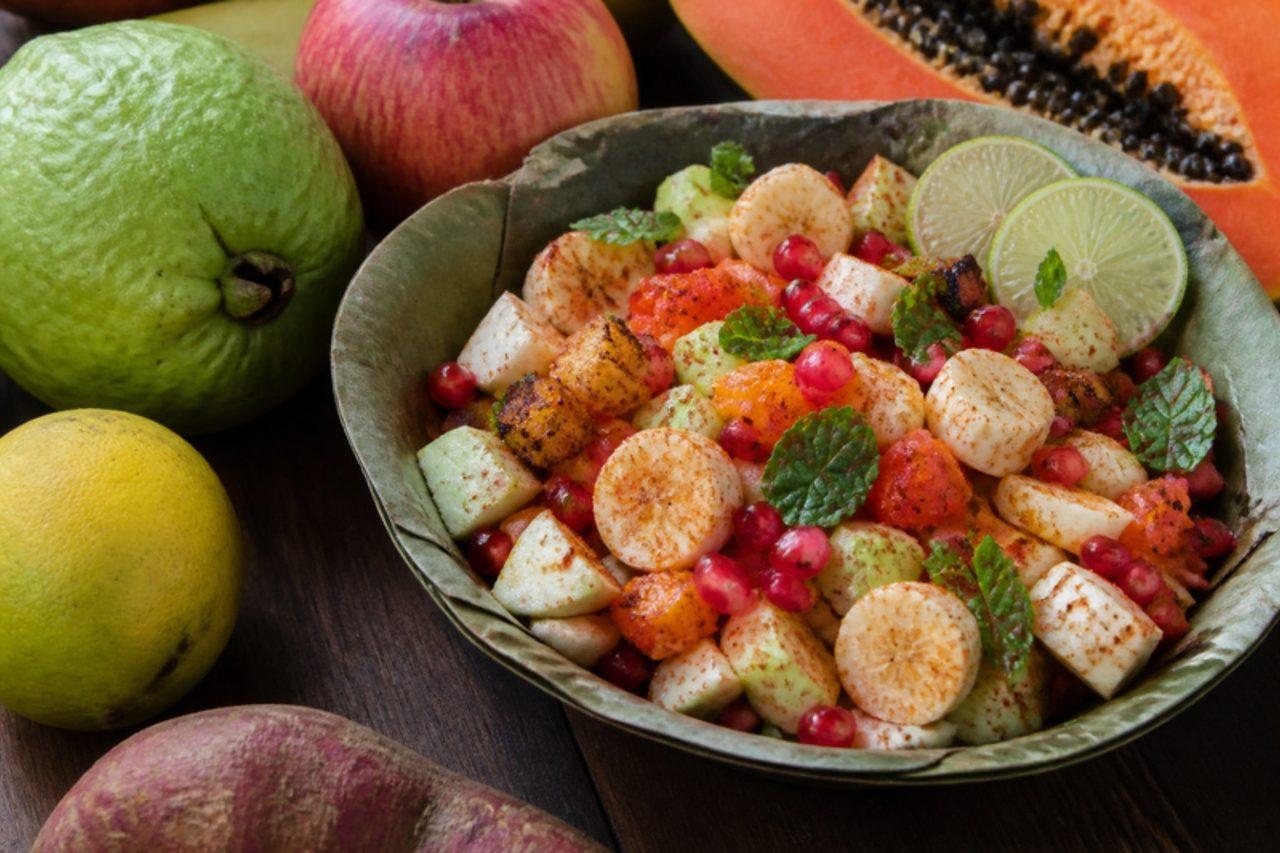
Delhi-style fruit chaatSpiced fruit chaat

Delhi's fruit chaat wallahs set up their carts in the afternoons with towers of guava, papaya, apples and bananas, plus roasted sweet potato, and chop whatever you point at into a leaf bowl. Then comes the part that makes it chaat rather than fruit salad: a big shake of tangy chaat masala, black salt and roasted cumin, a squeeze of lime, sometimes a pinch of chilli. It's a refreshing mid-afternoon snack in summer, and a regular sight on Ramzan iftar spreads too. The salt and spice make sweet fruit taste even sweeter. Chef's tip: season it just before eating; once the salt goes on, the fruit starts weeping juice and goes soft within 15 minutes.

by KrazyBadal 0 views

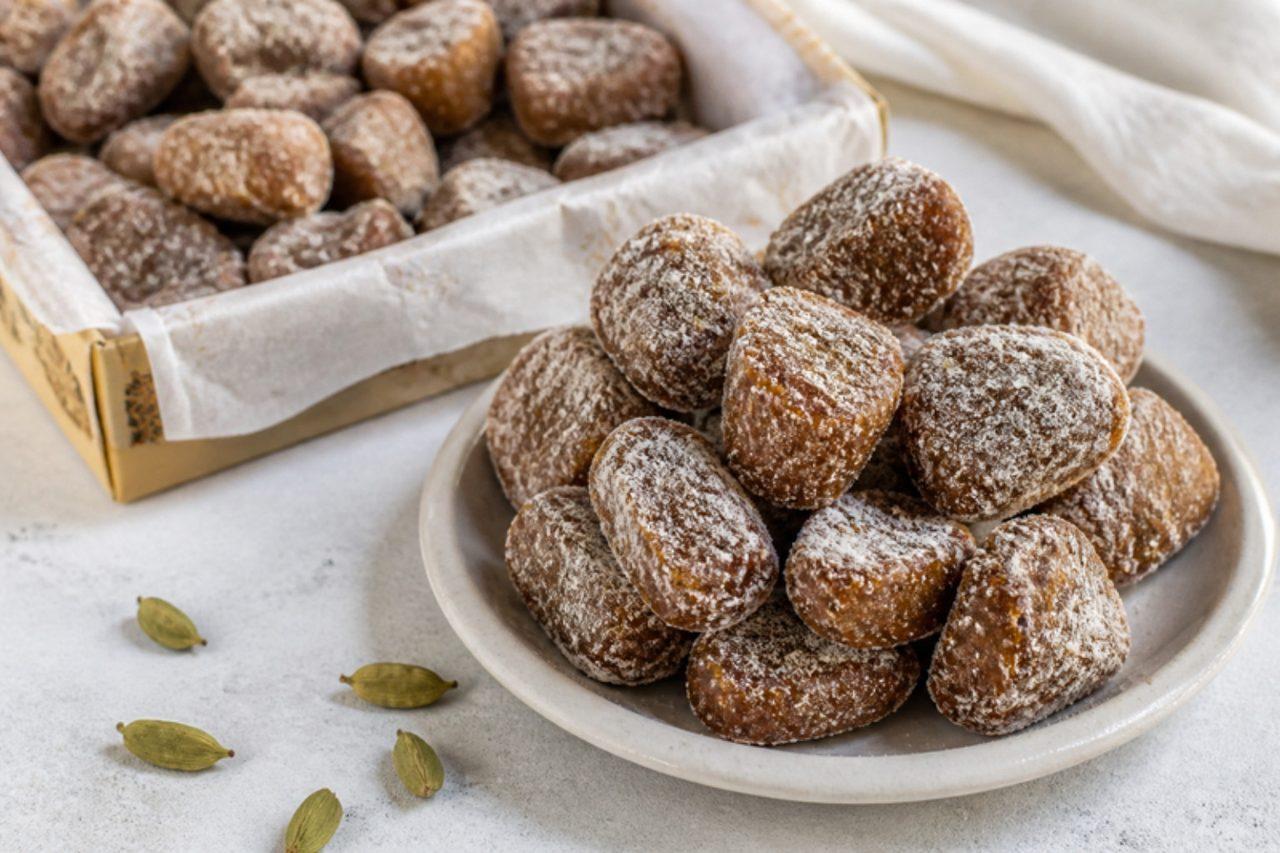
Dharwad pedaCaramelised milk sweets

Dharwad peda has been made in this north Karnataka town for well over a century, first by families who came from Uttar Pradesh, and it now carries a geographical indication tag. Unlike pale, smooth pedas elsewhere, it is cooked slowly until the milk solids caramelise to a deep brown and a grainy, almost crumbly texture, then rolled in powdered sugar. Pilgrims and travellers carry boxes home from Dharwad and Hubballi, and families buy it for weddings and exam results. Chef's tip: let the cooked mixture cool for ten minutes before you add the sugar for rolling; added while too hot, the sugar melts and the pedas go sticky.

by KrazyBadal 0 views

Dhokar dalnaLentil cakes in gravy

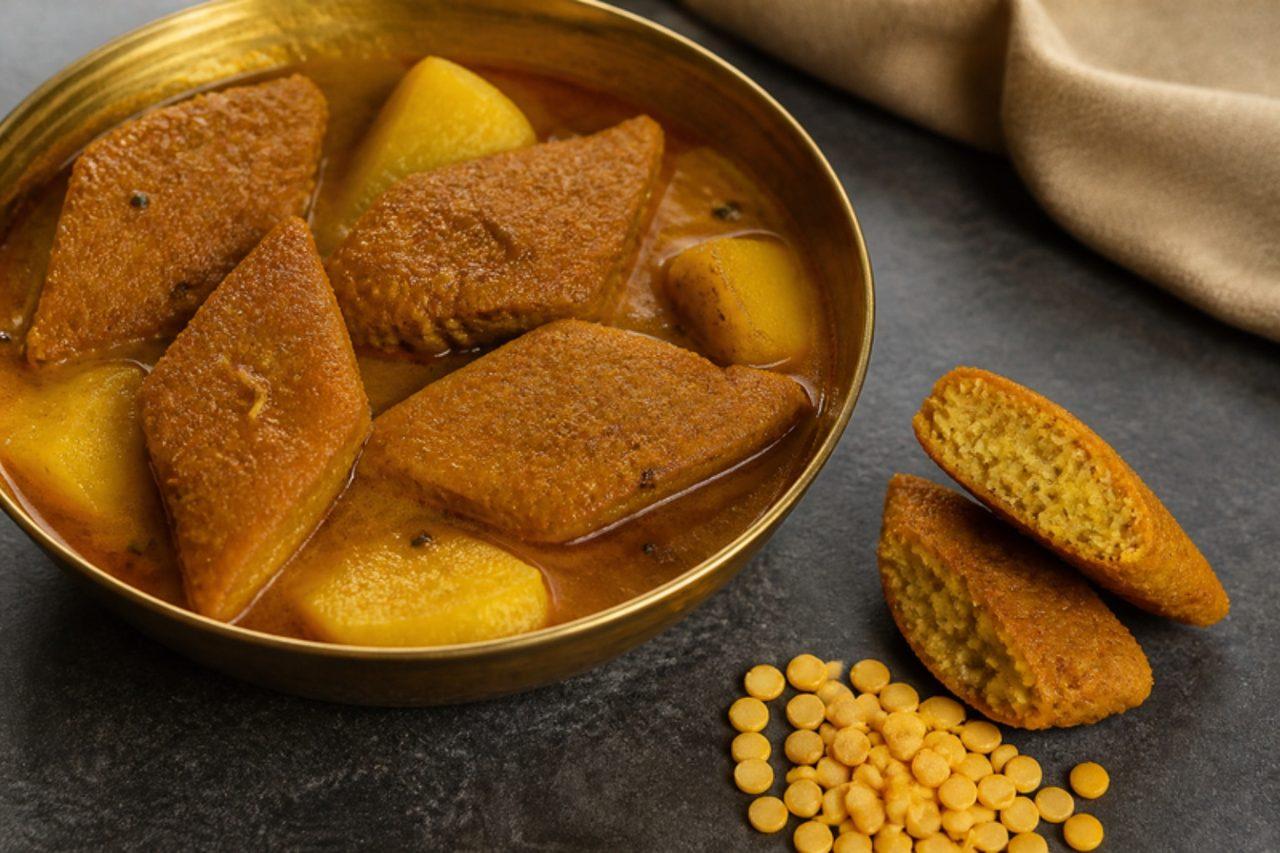
Dhokar dalna comes from the Bengali niramish (vegetarian) kitchen of widows and temple cooks, and it is still cooked in Kolkata homes for festive lunches and Saraswati Puja. Soaked chana dal is ground, cooked with ginger and asafoetida into a thick paste, set in a tray and cut into diamonds, which are fried and then dropped into a thin, fragrant gravy just before serving. The dhoka soak up the sauce like a sponge. Chef's tip: cook the dal paste until it leaves the sides of the pan in one mass; if it is too soft, the diamonds break in the gravy.

by KrazyBadal 0 views

DhuskaFried rice and dal bread

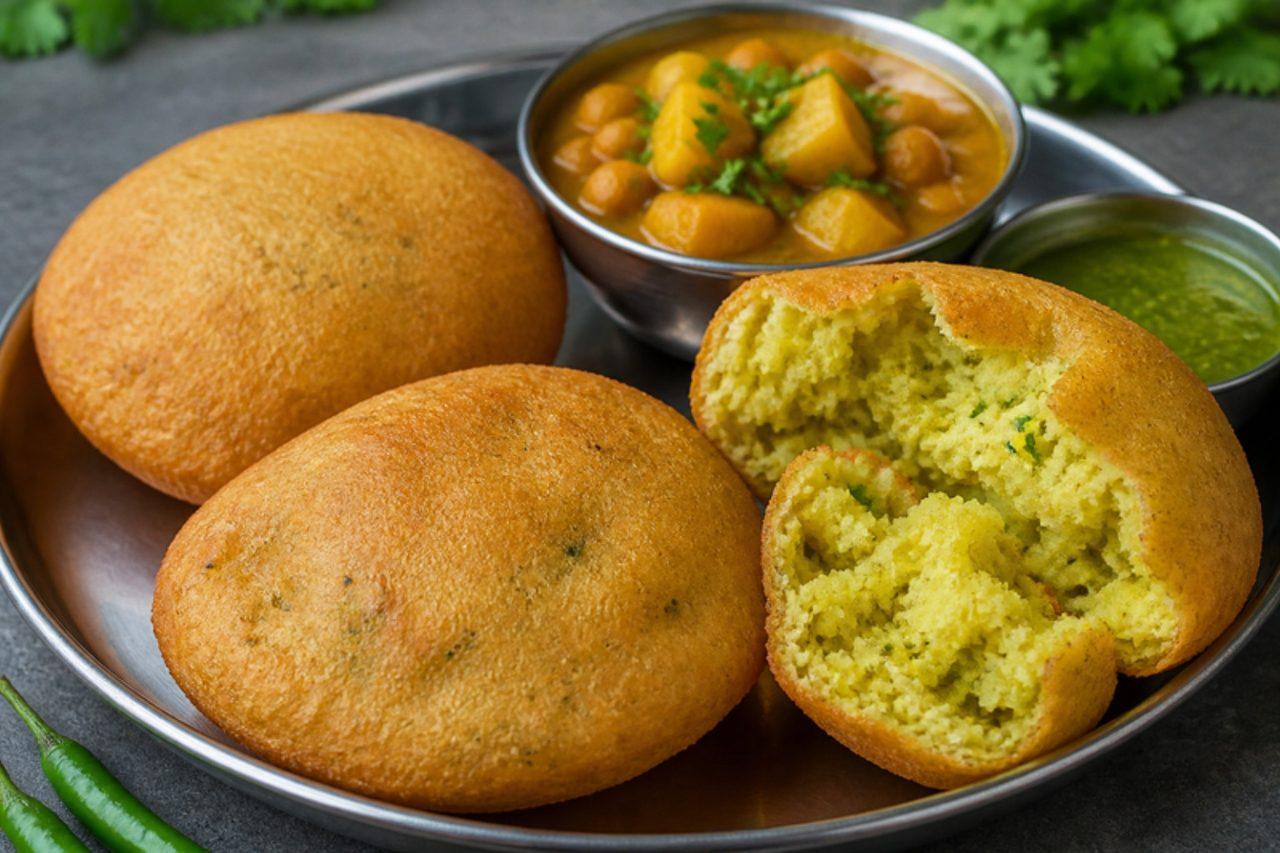
Dhuska is the breakfast of Ranchi and the whole of Jharkhand, fried fresh at roadside stalls from early morning. Rice and chana dal are soaked, ground to a thick, slightly coarse batter with green chilli and ginger, and ladled into hot oil, where each round puffs up crisp outside and soft and spongy inside. It is eaten with aloo-chana ghugni or a thin potato curry and a sharp coriander chutney, and it is a must at Jharkhandi weddings and Karma festival. Chef's tip: beat the batter hard for a couple of minutes before frying; the trapped air makes it puff without any soda.

by KrazyBadal 0 views

Di san xianPotato, aubergine and pepper stir-fry

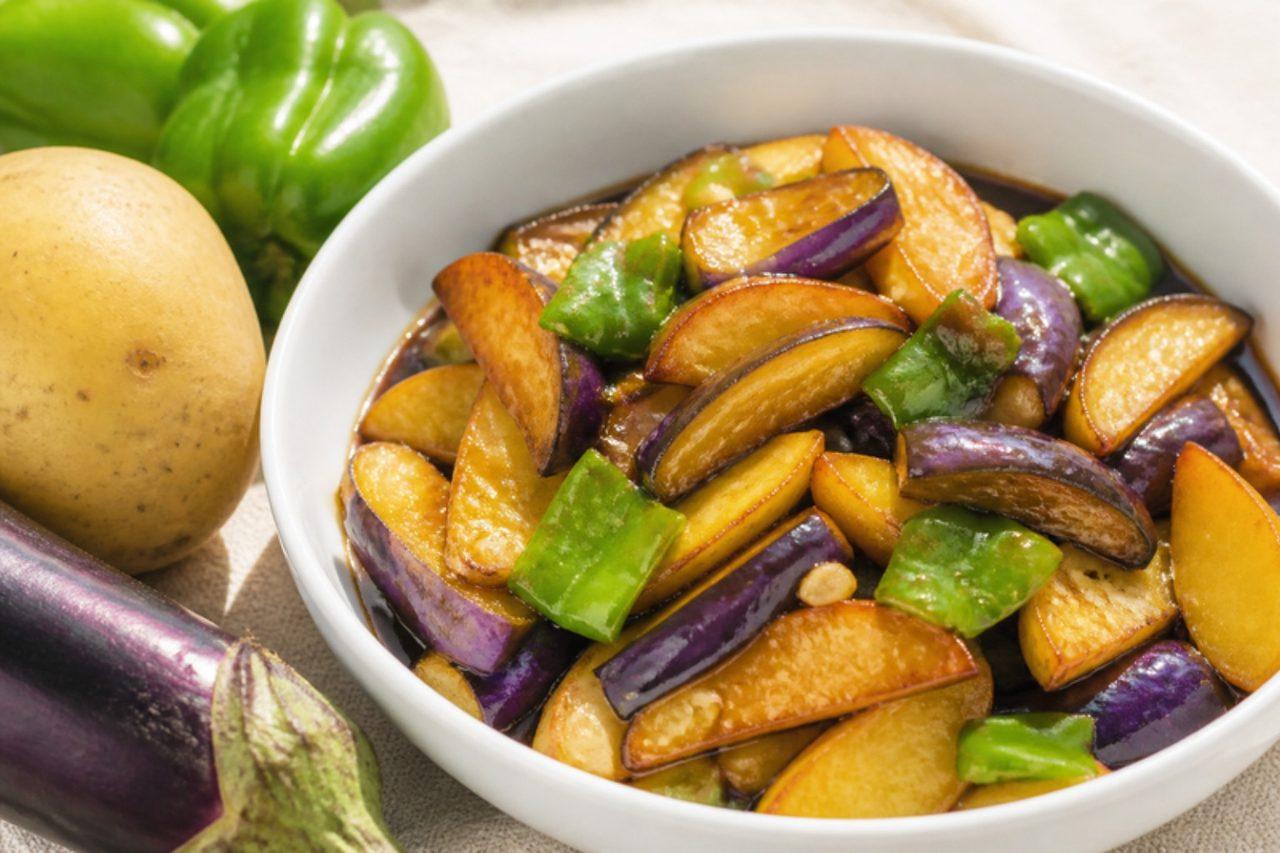
Di san xian means 'three fresh things from the earth', and it is the best-known home dish of Dongbei, China's cold north-east, where potatoes, aubergines and peppers are the summer harvest. Each vegetable is fried until golden, then tossed in a sticky, garlicky soy glaze. It's rich and filling, and goes with rice or steamed buns. Chef's tip: fry the potato first and longest; it needs to be golden and fully tender before it meets the sauce, because it won't soften further in the wok.

by KrazyBadal 0 views

DibiGrilled lamb with mustard onions

In Dakar a dibiterie is a smoky little shop where lamb is grilled over charcoal and sold by weight, wrapped in paper with raw onion, mustard and a pinch of spice salt; people eat it late in the evening, often after prayers or a football match. At home you get close with lamb chops or shoulder steaks, a quick marinade and a very hot grill. The mistake is moving the meat too much: leave it until it chars and releases on its own. Chef's tip: toss the sliced onions with salt and vinegar while the lamb marinates; they soften and lose their harsh bite in 20 minutes.

by KrazyBadal 0 views

DimlamaSteamed lamb and vegetables

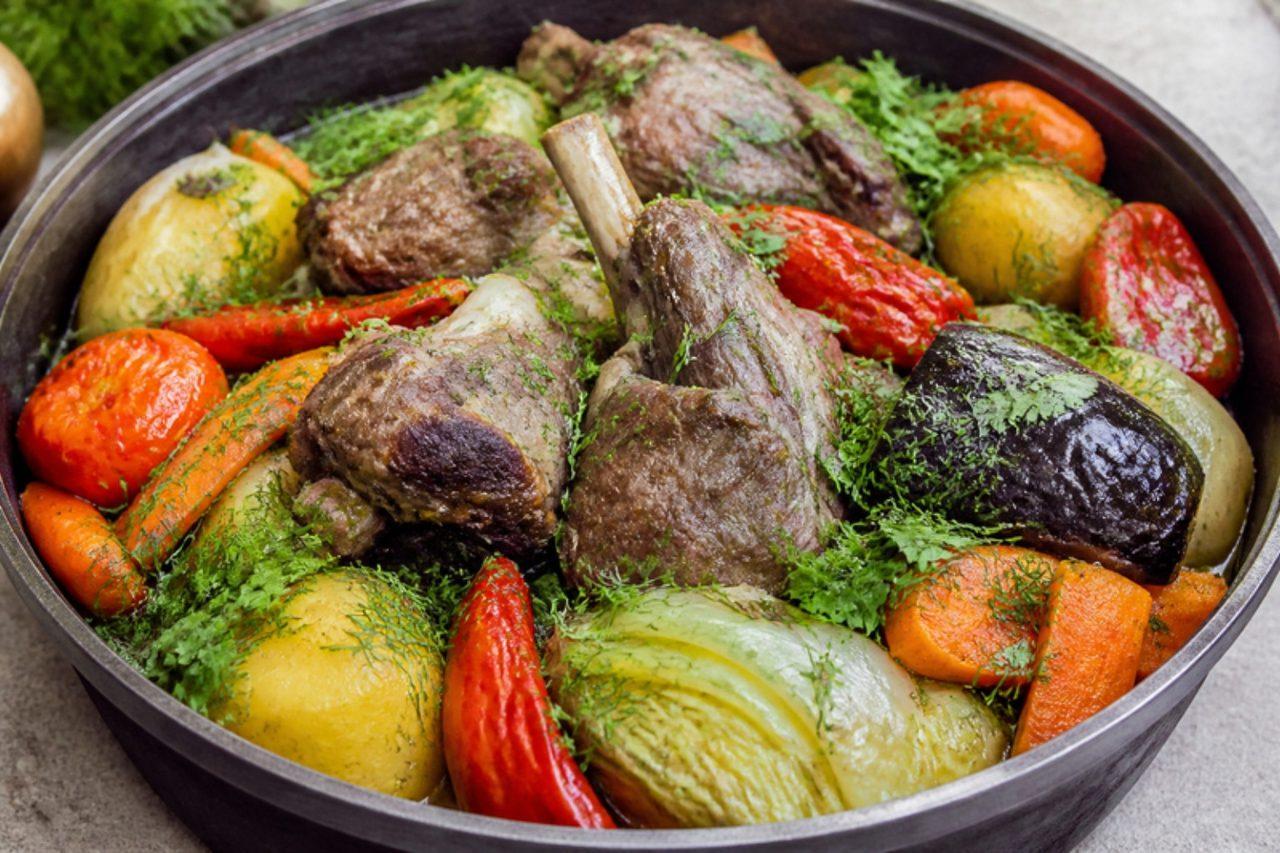
Dimlama is what Uzbek families cook at the end of summer, when the markets of the Fergana Valley are piled with cabbage, aubergine, peppers and tomatoes. Everything goes into one heavy pot in layers, lamb at the bottom, and the lid stays on for nearly two hours while the vegetables slowly give up their juice and become the sauce. There is no added water, so the flavour is deep and sweet. People eat it straight from shallow bowls with non bread. The biggest error is lifting the lid to check; the steam escapes, the vegetables stew dry and the bottom can catch. Chef's tip: seal the lid with a damp tea towel or a strip of foil so no steam gets out.

140 minUzbekMeatGluten free
by KrazyBadal 0 views

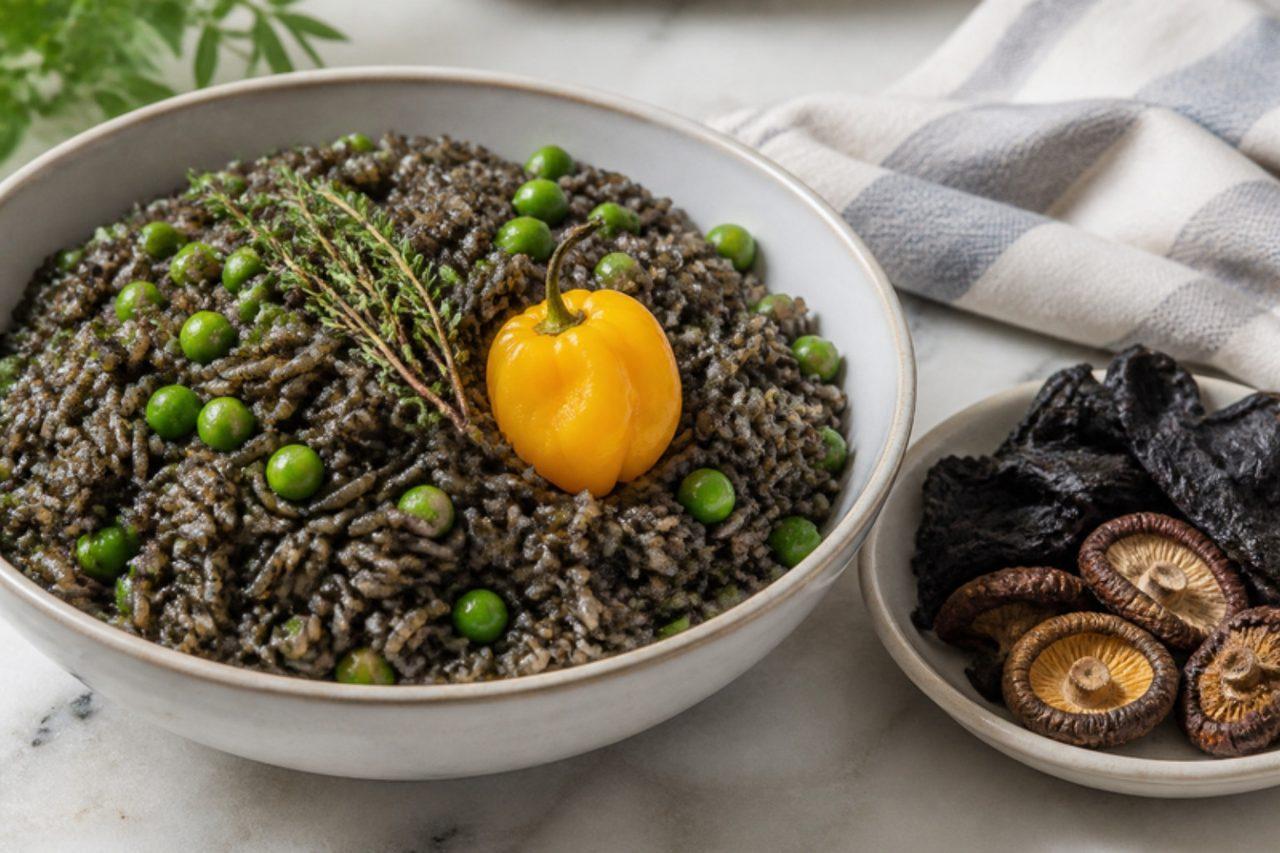
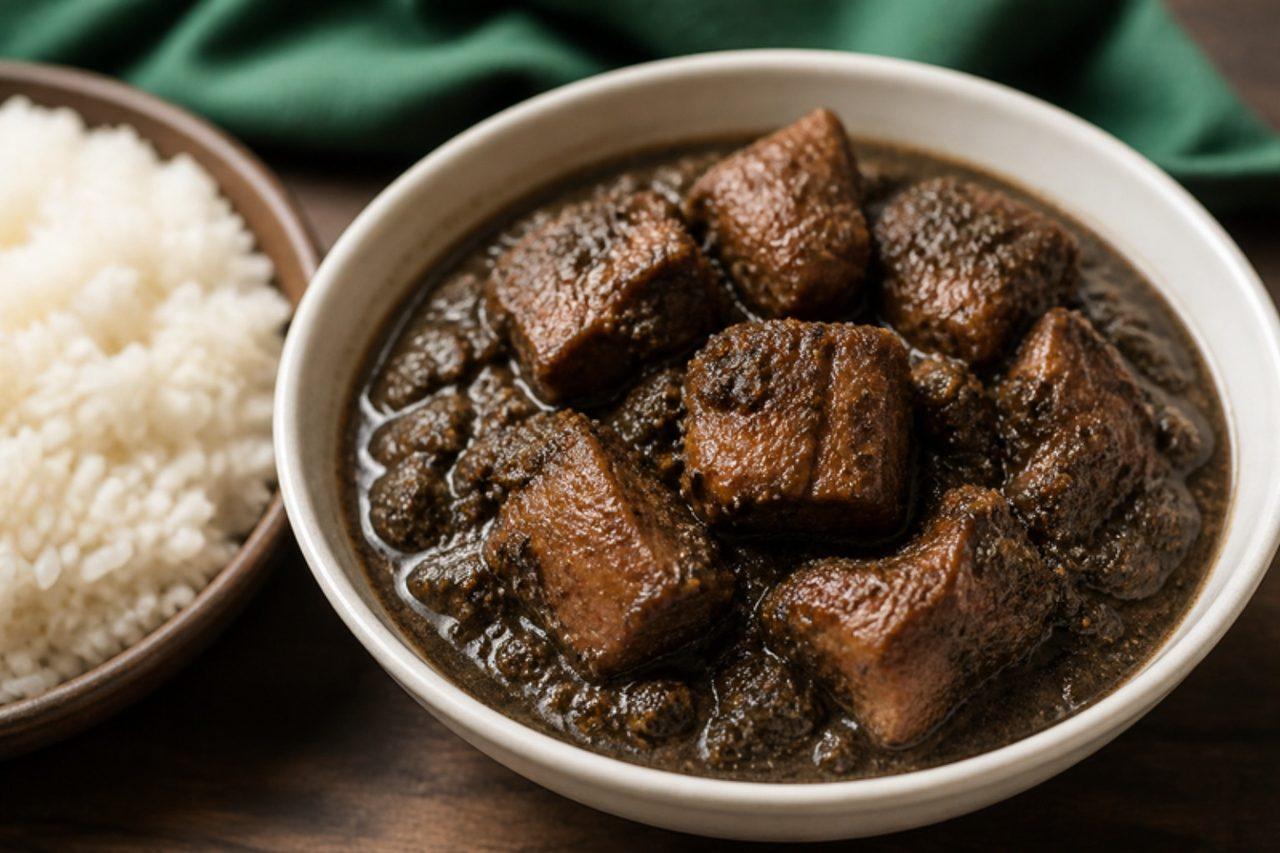
Diri djon djonBlack mushroom rice

Diri djon djon comes from northern Haiti, around Cap-Haïtien, where the tiny black djon djon mushrooms are gathered and dried. Soaked in hot water, they give an inky liquid that turns rice a striking grey-black and makes it taste deeply earthy and savoury. It's the rice for weddings, baptisms and big Sunday lunches, cooked with epis, cloves and green peas or butter beans, a whole scotch bonnet laid on top for perfume. Dried djon djon is sold in Haitian and Caribbean shops and online. Chef's tip: avoid djon djon stock cubes, which are often made with chicken fat and add little real flavour; use the dried mushrooms, and add a few dried shiitake for even more depth.

by KrazyBadal 0 views

Diri kole ak pwaRice and red beans

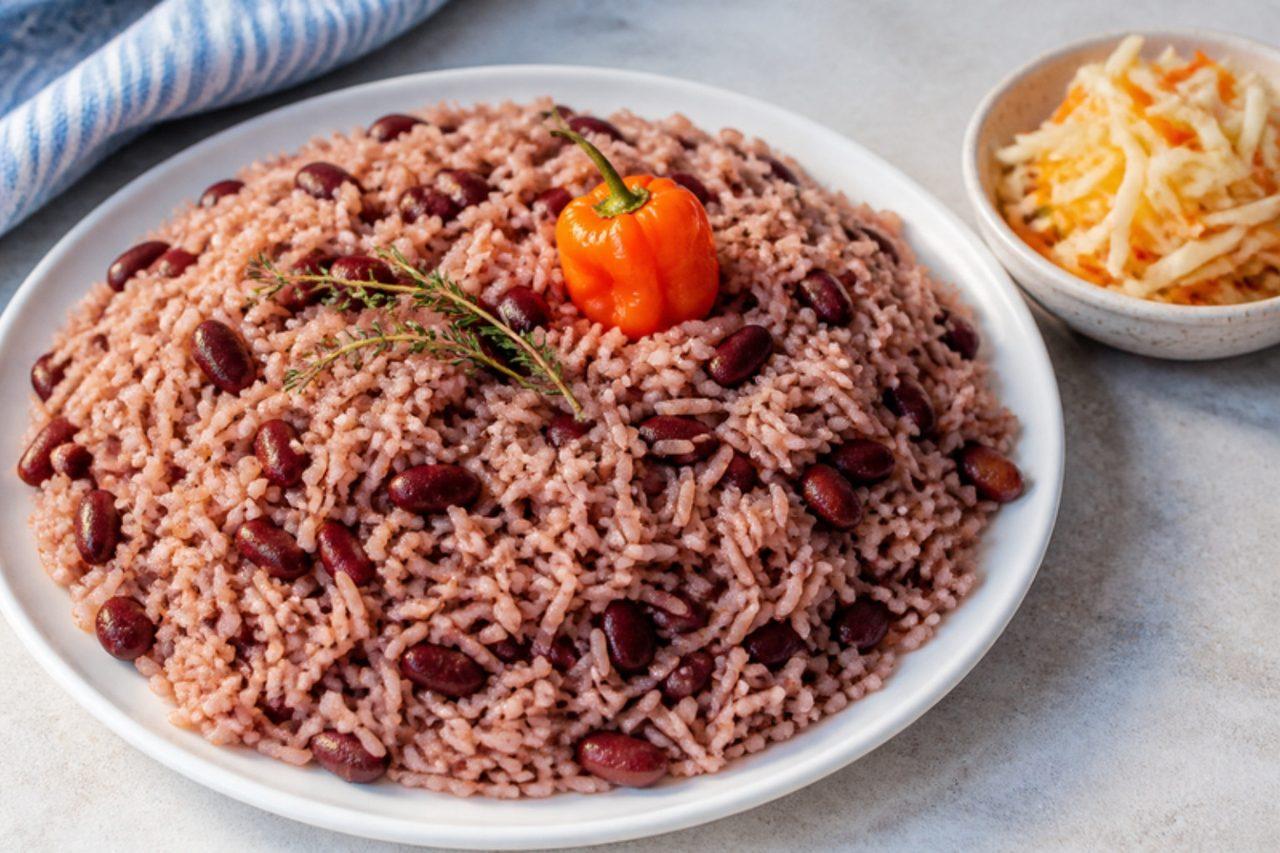
Diri kole ak pwa, rice 'stuck together' with beans, is the plate Haitians call their national dish, cooked in homes from Jacmel to Gonaïves and served most days of the week. Unlike rice and peas from elsewhere in the Caribbean, there's usually no coconut milk: red beans are simmered first, then their dark, savoury cooking liquid goes into the rice with fried epis, thyme and cloves, so the grains turn a rich reddish-brown and taste of beans all the way through. A whole scotch bonnet adds fruity heat without fire. Chef's tip: fry the drained beans in the epis until their skins blister and catch slightly; that browning gives the rice its deep, almost smoky taste.

by KrazyBadal 0 views

Dobos tortaLayered chocolate caramel cake

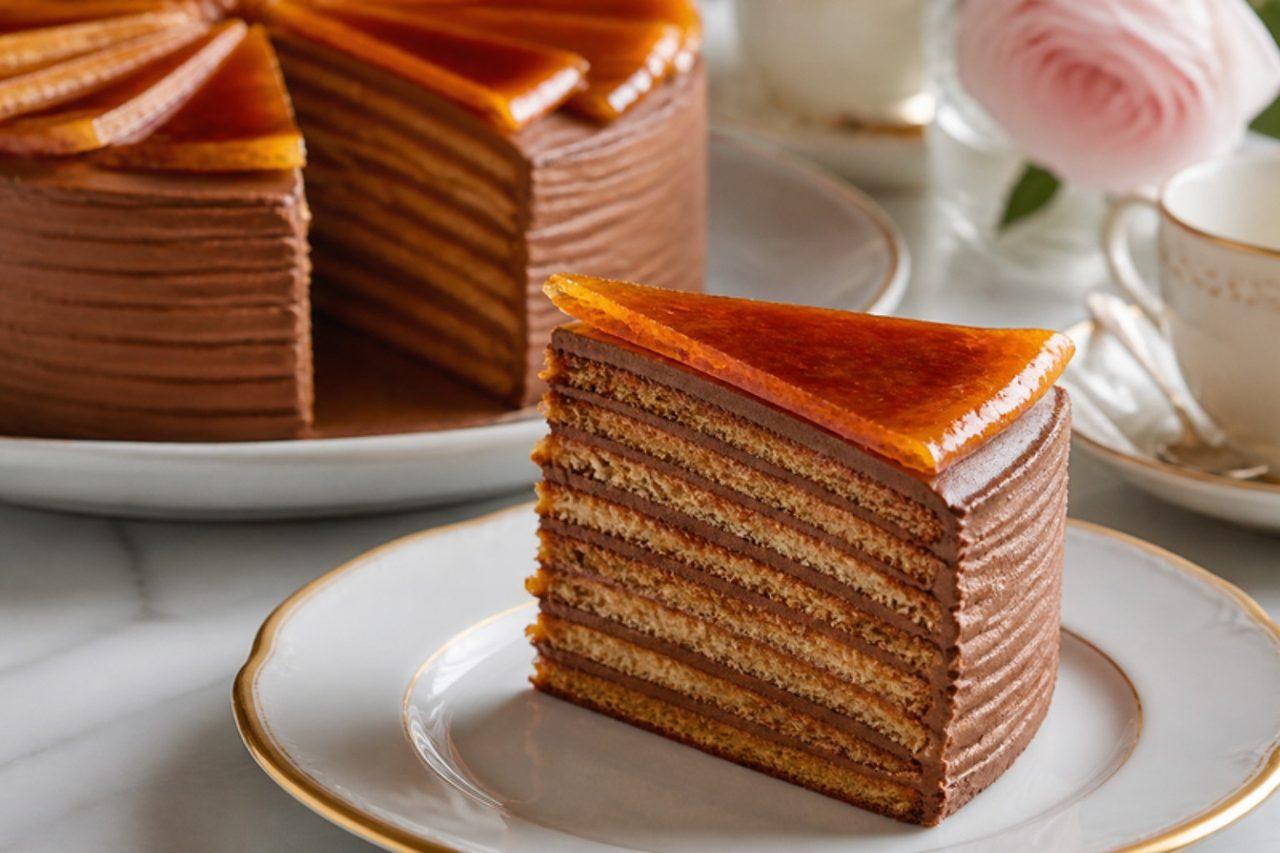
Dobos torta was created in Budapest in 1885 by the confectioner József C. Dobos, and it is still the cake Hungarians order in old coffee houses on Andrássy Avenue and bake for name days and big birthdays. Six thin sponge layers are stacked with a rich chocolate buttercream, and the top layer is glazed with hard amber caramel, cut into wedges and set at an angle like a fan. It is a project cake, but each stage is simple and the finished torte keeps for days. Chef's tip: mark the caramel into wedges with an oiled knife within the first minute; once it sets, it shatters instead of cutting.

by KrazyBadal 0 views

Doh khliehBoiled pork salad

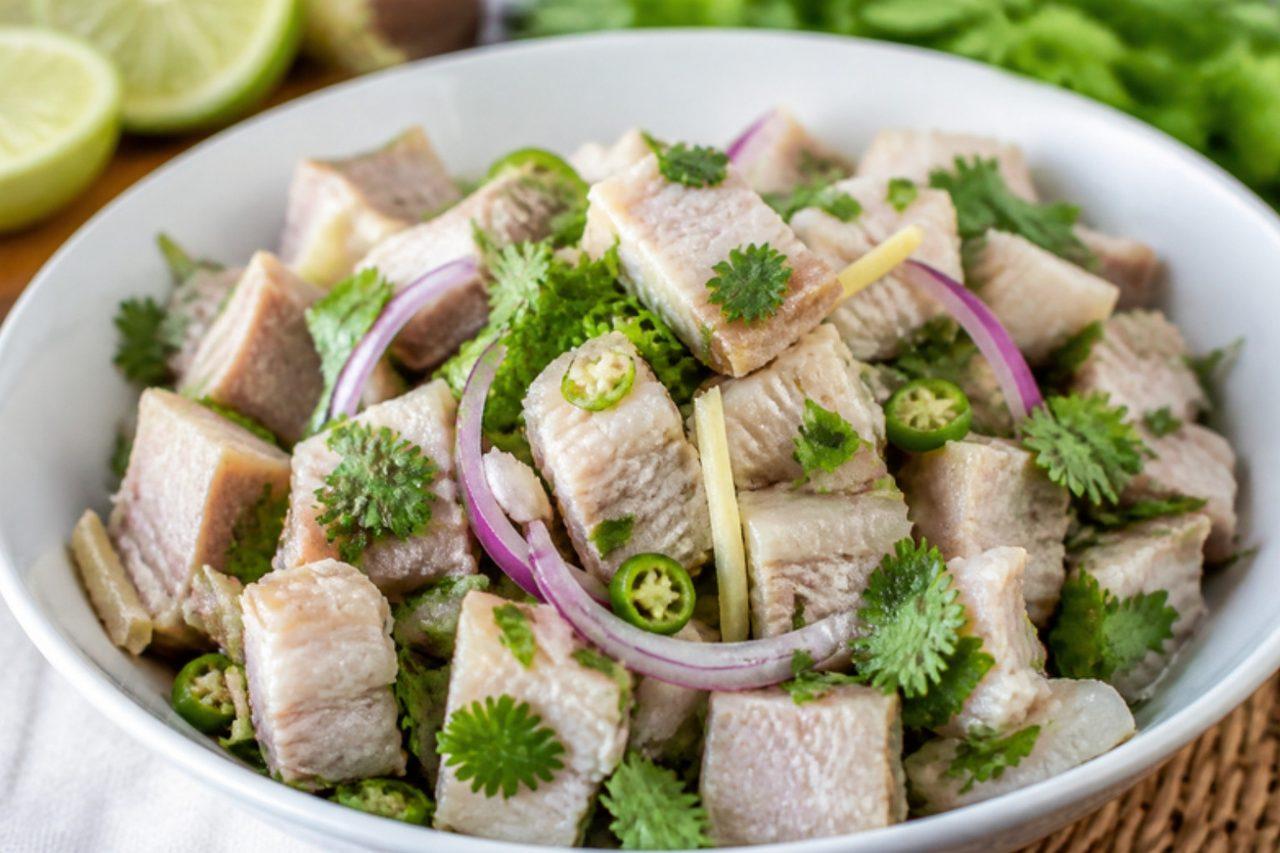
Doh khlieh is the cool, sharp side dish that sits next to jadoh on almost every Khasi table in Meghalaya. Tender boiled pork is chopped small and tossed with raw onion, ginger, green chilli and lime, so it is fresh and fiery rather than rich. In Shillong it is eaten at lunch and at gatherings, and some families add boiled pork brain, which this version leaves out. Chef's tip: chop the pork while it is still slightly warm; it takes up the lime and ginger much better.

by KrazyBadal 0 views

DohneiiongPork in black sesame gravy

The name says it plainly in Khasi: 'doh' is meat and 'neiiong' is black sesame. In the Khasi Hills around Shillong this near-black pork curry is cooked for family feasts and Sunday meals, and its roasted, nutty flavour is unlike any other curry in India. The sesame is toasted and ground into a paste that thickens the gravy and coats the pork. Serve with plain rice or jadoh. Chef's tip: pork belly gives the silkiest result; mix it half and half with shoulder if you prefer it less rich.

90 minIndianMeatGluten free
by KrazyBadal 0 views

Dolma batataStuffed potatoes in chickpea sauce

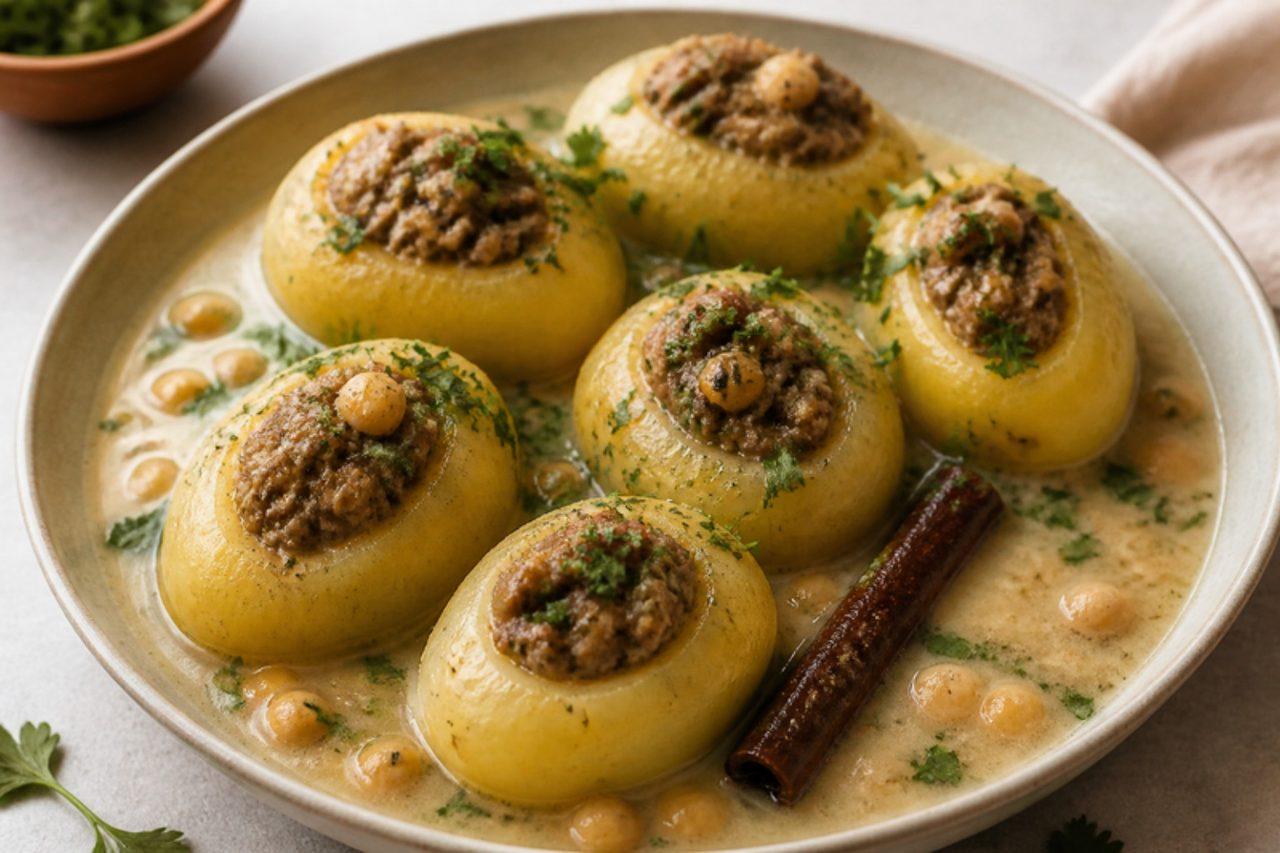
Dolma batata belongs to the Algiers home kitchen, where it is a Ramadan favourite and a Friday dish: hollowed potatoes filled with beef mince, onion, parsley and cinnamon, fried until golden, then simmered in a pale sauce (marqa beida) of onion, chickpeas, black pepper and cinnamon. The sauce stays white because no tomato goes in. The mistake is hollowing the potatoes too thinly, so they split in the pot; leave walls about 1 cm thick. Chef's tip: fry the scooped-out potato flesh and add it to the sauce to thicken it.

by KrazyBadal 0 views

Domatesli bulgur pilavıTomato bulgur pilaf

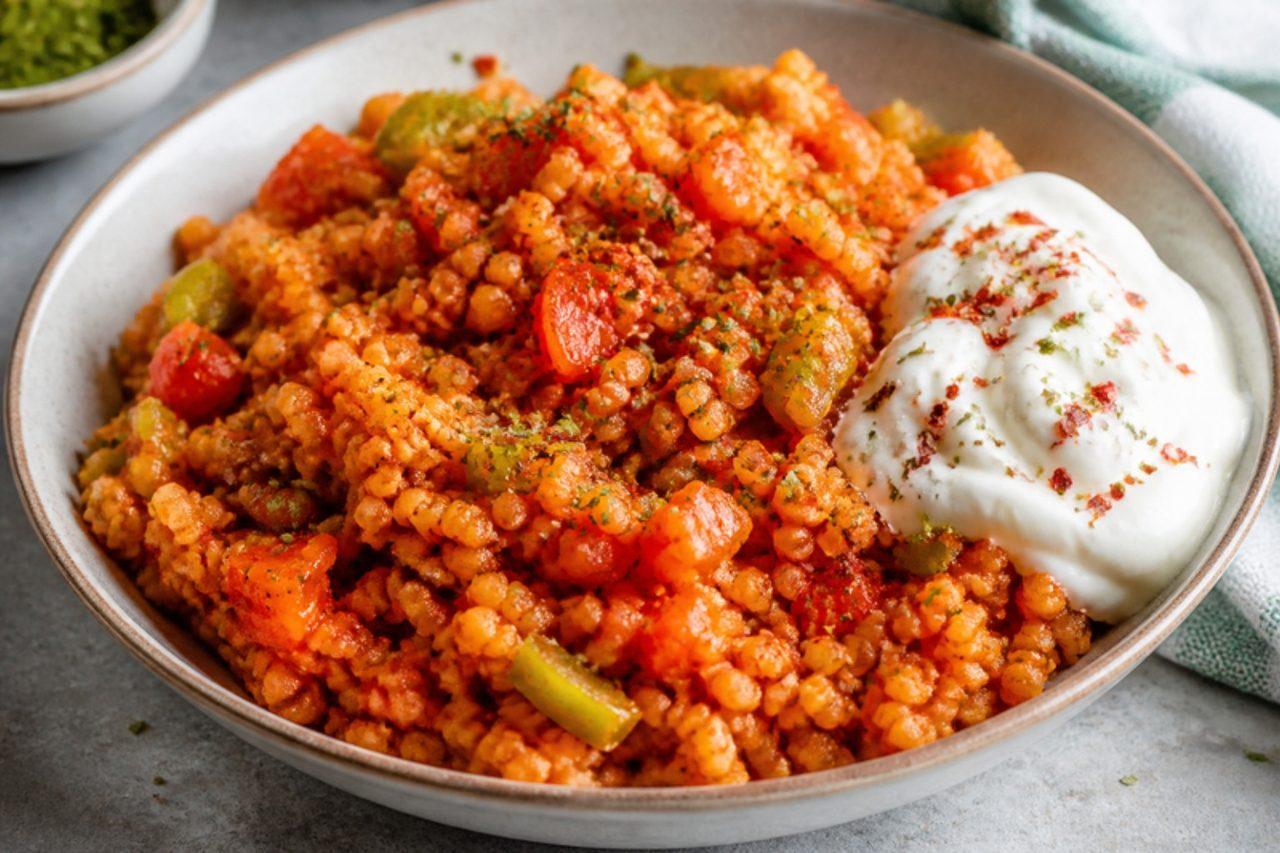
Across Turkey, from Anatolian village kitchens to Istanbul lunch counters (esnaf lokantası), a pot of bulgur pilaf sits beside beans, stuffed vegetables and yogurt as reliably as bread does. Coarse bulgur (pilavlık bulgur) is cooked with onion, sweet pepper paste, grated tomato and a green pepper until every grain is separate, tender and lightly reddish. It is nuttier and chewier than rice pilaf and ready in half an hour, which is why so many families make it on weeknights. Spoon it next to kuru fasulye, cacık or a simple salad, or eat a bowl on its own with a dollop of yogurt. Chef's tip: once the water is absorbed, lay a clean tea towel under the lid and let the pilaf rest off the heat for 10 minutes; the towel catches the steam so the grains turn fluffy instead of wet.

by KrazyBadal 0 views

DomodaBeef and peanut stew

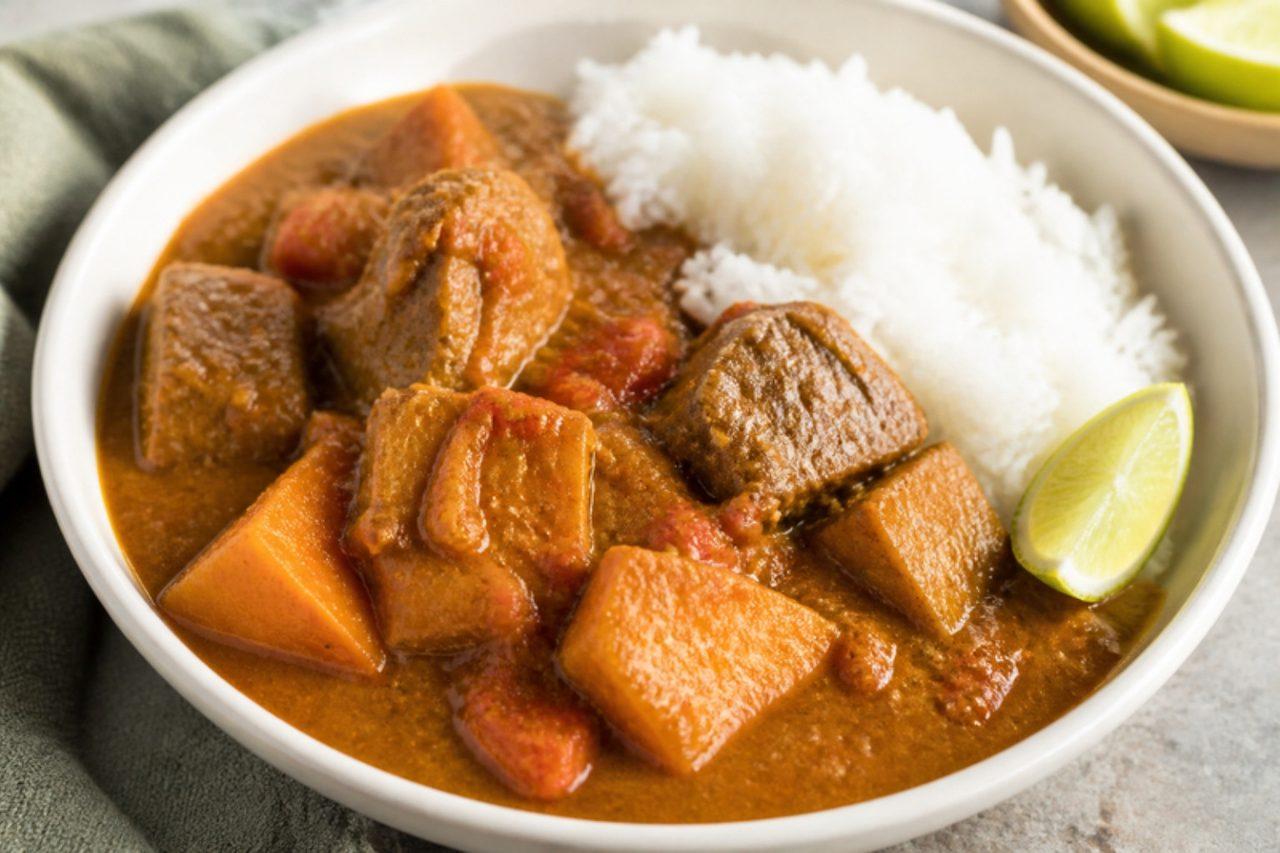
Domoda is the stew that most families in the Gambia, from Banjul to the riverside villages upcountry, cook several times a week. Beef is browned and simmered with tomato and onion, then smooth peanut butter is stirred in until the sauce turns thick, glossy and rich, with pumpkin and sweet potato melting into it. It is spooned over white rice with a squeeze of lime, and a scotch bonnet floats in the pot for whoever likes it hot. The mistake to avoid is adding the peanut butter too early and leaving it unstirred, as it catches and burns on the bottom; add it once the beef is nearly tender and stir often. Chef's tip: whisk the peanut butter with a ladle of hot broth before it goes in, so it melts smoothly instead of forming lumps.

by KrazyBadal 0 views

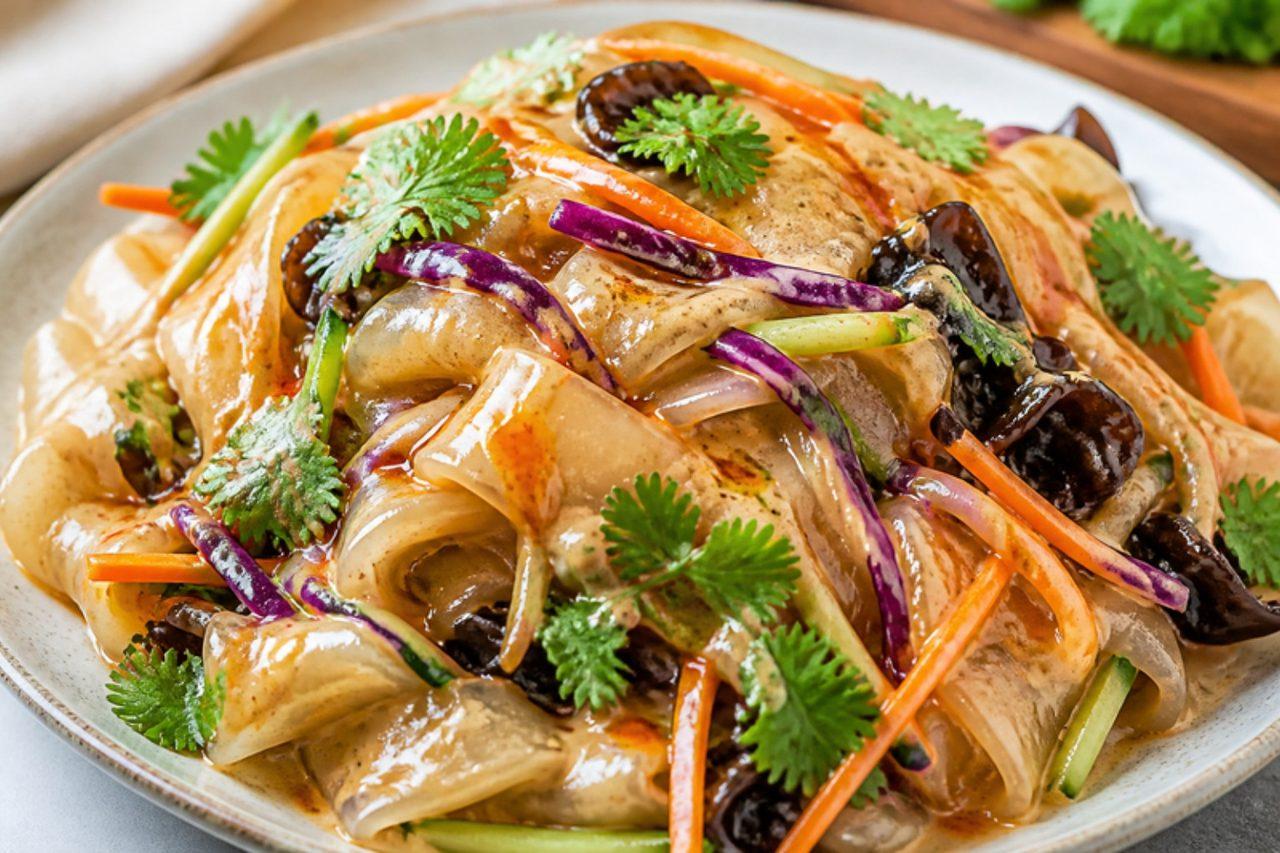
Dongbei da la piMung bean sheet salad

In north-east China, a big platter of this arrives at almost every family dinner and restaurant table, often next to the stews and dumplings. Wide, glassy sheets of mung-bean starch sit on a bed of shredded cucumber, carrot and cabbage, with a sesame, garlic and vinegar sauce and a dab of mustard poured over at the table. It's cool, slippery and crunchy. Look for dried la pi sheets or wide mung-bean noodles in Chinese supermarkets. Chef's tip: the sheet noodles must be fully cold before mixing, or they go soft and sticky.

by KrazyBadal 0 views

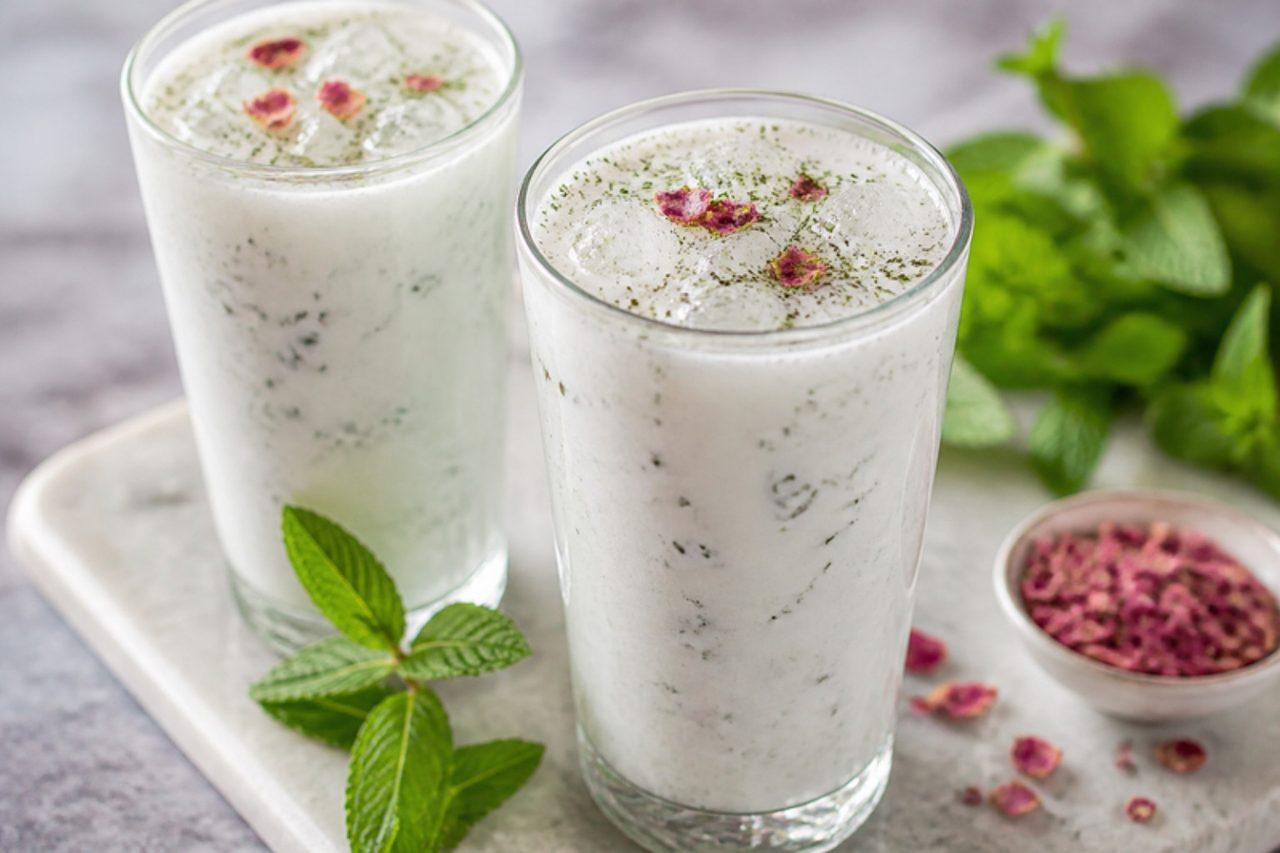
DooghSalted yogurt drink

Doogh is the salty, fizzy yogurt drink served in tall glasses with lunch across Iran, and above all with kebab and rice at the chelow-kababi restaurants of Tehran. Bottled sparkling doogh from the mineral springs of Abali, in the mountains east of the capital, is the famous one; at home it is mixed from yogurt, cold water and soda water with crumbled dried mint, and sometimes wild pennyroyal (kakuti) or rose petals. Its bubbles and mint set it apart from plainer, still yogurt drinks. It is cooling and good with rich, herby food. Chef's tip: add the sparkling water last and stir gently, or the fizz disappears before it reaches the glass.

by KrazyBadal 0 views

Showing 45 of 7,762 recipes

Show more recipes

Page 654 of 863