


Skip to content
Barbajuans
Featured recipe

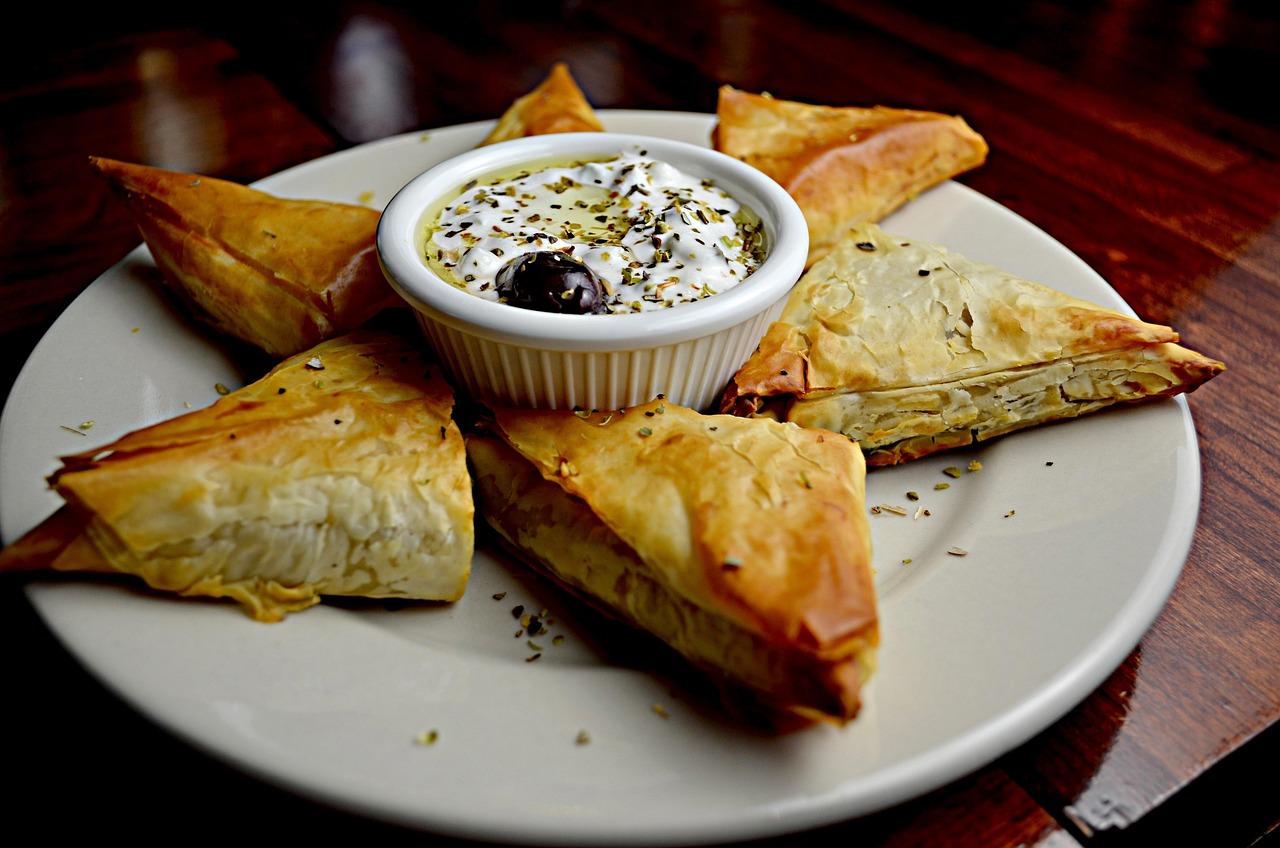
Barbajuans

Fried chard and ricotta pastries

Barbajuans are Monaco's national snack, little fried pastry pockets of chard, leek and ricotta that come out at every apéritif, and by the hundred on 19 November, the principality's National Day. The name is said to mean 'Uncle John' in the Monegasque dialect, after the cook who first made them. You will also find them in bakeries in Menton and along the Riviera towards Nice. Parmesan usually contains animal rennet; a vegetarian hard cheese works just as well. Chef's tip: roll the dough so thin you can almost see the worktop through it; thick pastry turns chewy instead of crisp.

Read more 0 views

What to eat today?

Around the world

Today's trip: Paraguayan

A new country every day, from every cuisine on the site.

Paraguayan

Chipa

Cheese bread rings 50 minMore from Paraguayan (27) →

This week's collection

Kid-friendly dinners
537 recipes · a new collection every Monday

Latest recipes

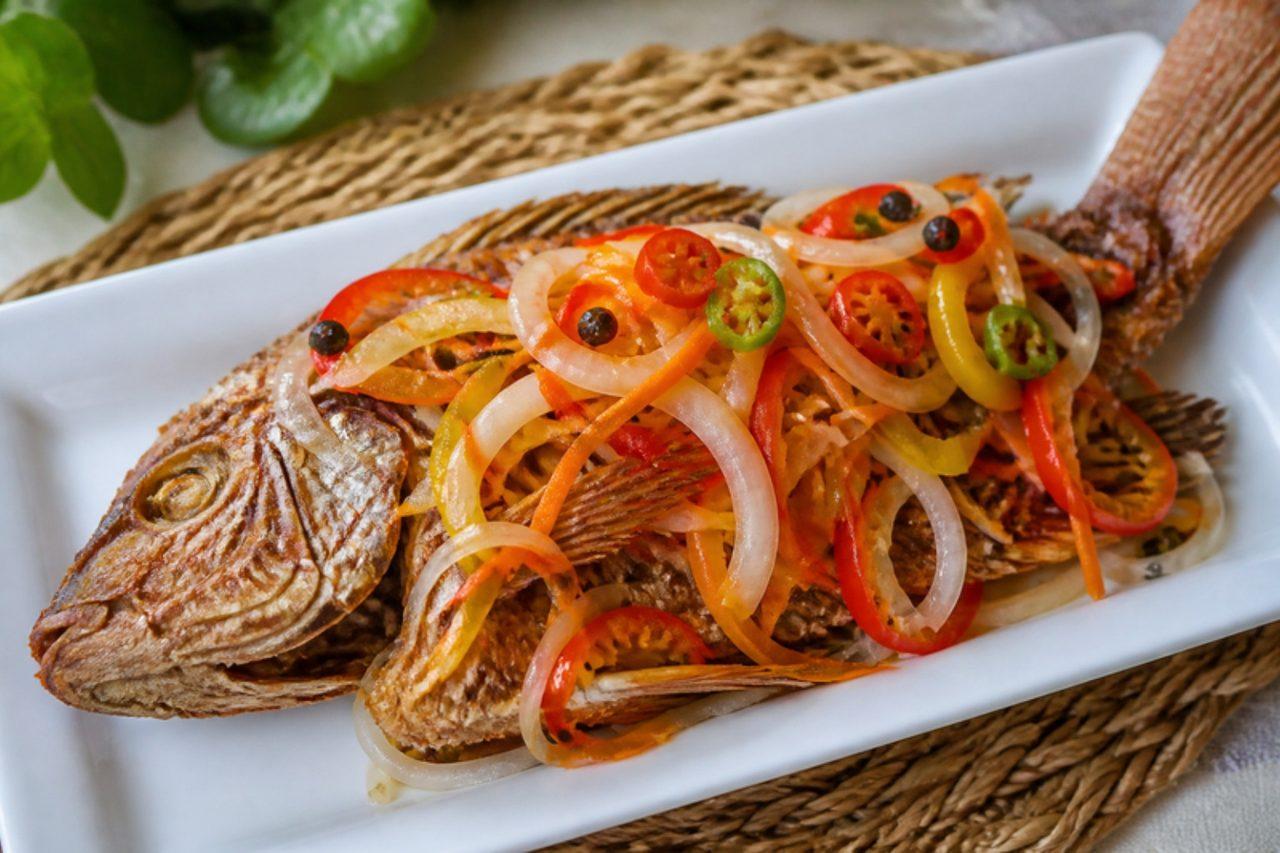
Escovitch fishFried fish with pickled vegetables

Good Friday in Jamaica means fish, and escovitch fish is the dish families line up for, though you'll also find it any day at the seaside stalls of Hellshire Beach and Port Royal. Whole red snapper (or thick fillets) are seasoned, fried until the skin shatters, then buried under onion, carrot, chocho and peppers that have been briefly warmed in vinegar with pimento and scotch bonnet. The fish soaks up the sharp, hot pickle as it sits, so it is as good at room temperature as it is fresh from the pan. Serve with bammy or festival. Chef's tip: make the pickle while the fish fries and pour it over hot fish; it sinks in better, and a few hours later the flavour is even deeper.

by KrazyBadal 0 views

So'o yosopyGround beef and rice soup

So'o yosopy, "pounded meat" in Guaraní, is a soup Paraguayans make for anyone who is tired or recovering, and on cold days in Asunción's winter: beef is ground very finely and stirred into cold water so it breaks into soft, delicate threads, then simmered with onion, tomato, pepper and a little rice and oregano. The texture is smooth and the broth light. The mistake is adding the beef to boiling water, which makes it clump into meatballs; mix it into cold water first and stir as it heats. Chef's tip: ask the butcher to mince lean beef twice, or pulse it very fine in a food processor.

by KrazyBadal 0 views

ErisseryPumpkin and cowpea curry

Erissery is the golden, slightly sweet pumpkin dish of the Onam sadya in Kerala, and a favourite in homes all through the harvest season when the yellow mathanga pumpkins are piled up in the markets. Soft pumpkin and red cowpeas are bound with a coconut, cumin and green chilli paste, and the whole pot is crowned with grated coconut fried in coconut oil until it turns the colour of cinnamon. That crunchy, nutty topping is what makes it erissery. Serve with rice and parippu, or scoop it up with chapati. Chef's tip: keep the pumpkin pieces large so some stay whole while others melt into the sauce.

by KrazyBadal 0 views

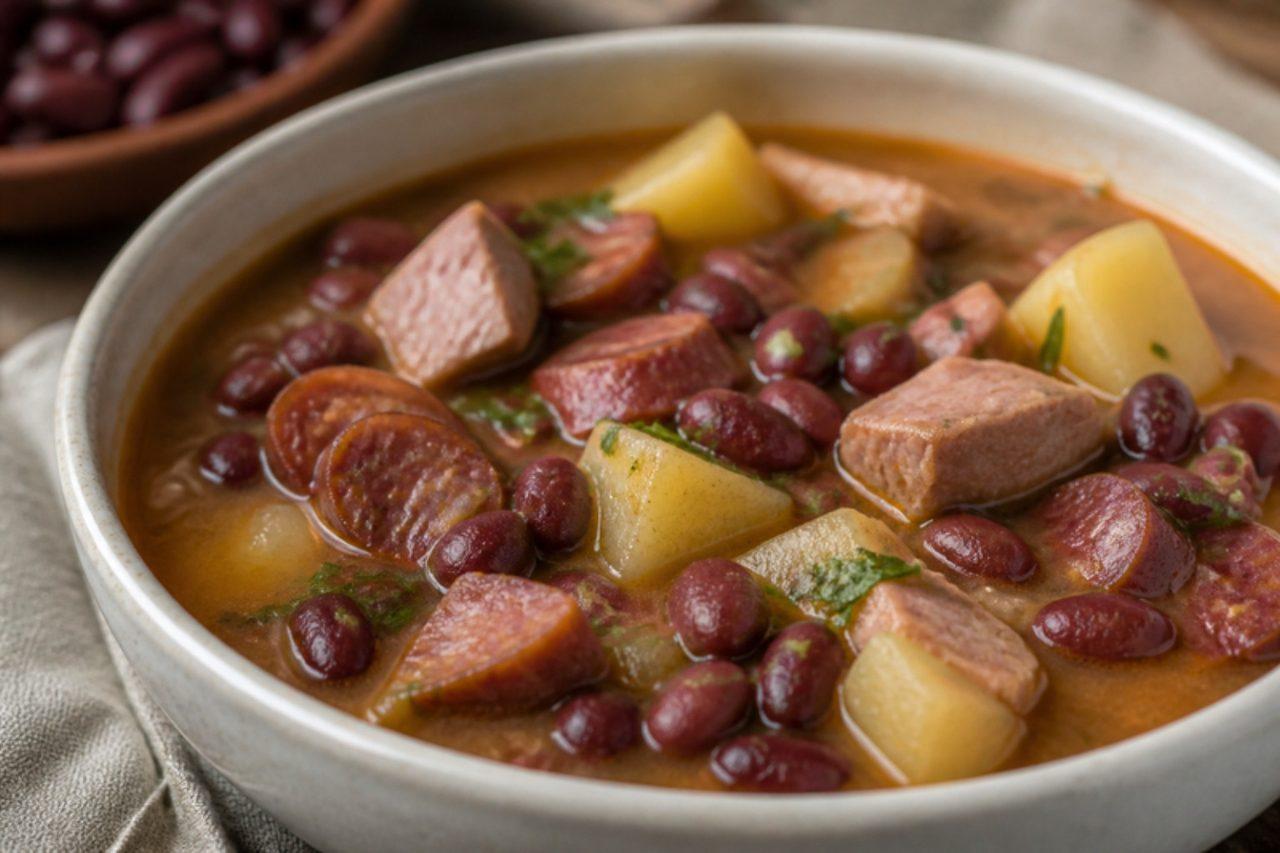
Sopa da pedraBean and pork soup

Almeirim, a market town in the Ribatejo, is the capital of this soup; its restaurants serve it every day, and each bowl arrives with a clean stone at the bottom, after the folk tale of a friar who 'made soup from a stone' by talking villagers into giving him everything else. This is a pork soup: red kidney beans simmer with chouriço, morcela blood sausage and a piece of pork belly, then potatoes, carrots and coriander finish it into a thick, hearty bowl. Chef's tip: cook the sausages whole and slice them at the end, so they stay juicy and don't turn the broth greasy.

by KrazyBadal 1 views

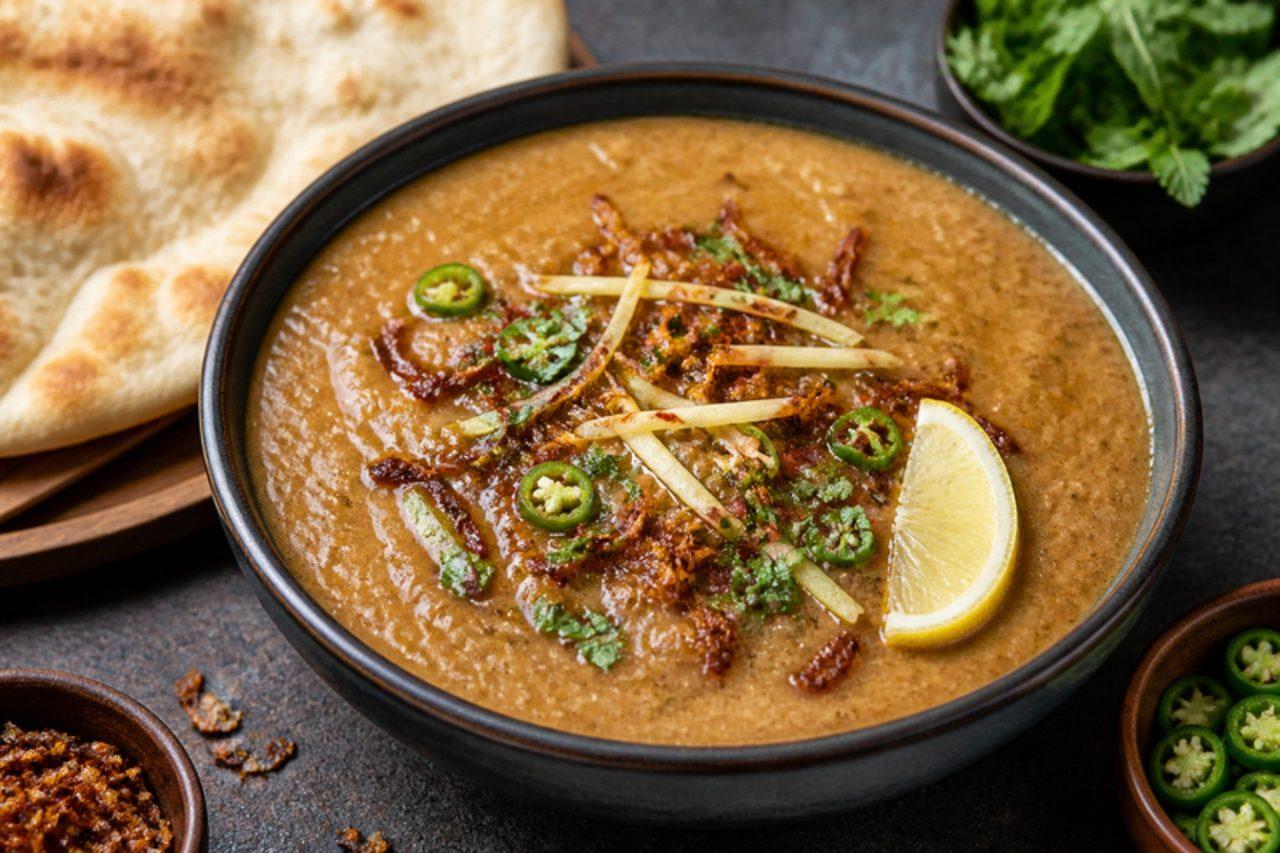
HaleemWheat, lentil and beef porridge

Haleem is cooked in vast pots across Pakistan in the month of Muharram and during Ramadan, when neighbours queue with bowls in Karachi, Lahore and Hyderabad. Cracked wheat, barley and several lentils cook for hours with beef until everything is beaten into one thick, stretchy, deeply savoury porridge. Each bowl is finished with crisp fried onions, ginger, green chilli, mint and lemon, so everyone builds their own. It takes time but freezes well, so make a big pot. Chef's tip: beat the haleem hard with a wooden spoon or a hand blender on short pulses; you want long meaty threads, not a smooth purée.

by KrazyBadal 0 views

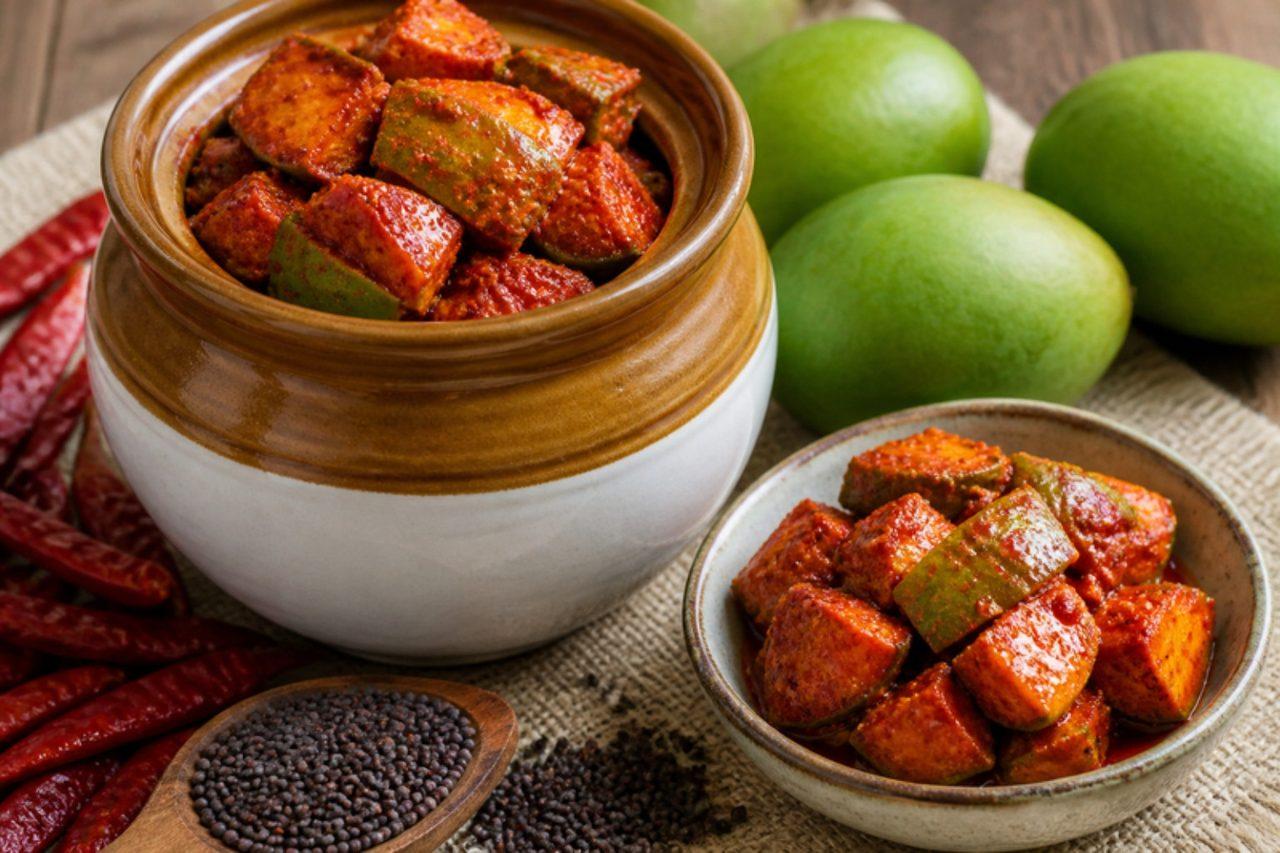
AvakayaRaw mango pickle

Every April and May, when the hard, sour green mangoes arrive, Andhra homes turn into pickle factories. The mangoes are cut, stone and all, with a heavy cleaver, then mixed with freshly ground mustard, fiery red chilli powder, salt and a flood of sesame oil, and packed into ceramic jars to mature. Avakaya is fierce, pungent, salty and sour, and a tiny piece mashed into hot rice with ghee and dal is many Telugu people's idea of perfect lunch. A jar lasts the whole year. Chef's tip: every piece of mango, every knife and the jar must be bone dry; a single drop of water can turn a whole batch mouldy.

by KrazyBadal 0 views

EpisGreen herb seasoning base

Epis is the jar that lives in every Haitian fridge, in Port-au-Prince flats and in Haitian kitchens in Miami, Montreal and Boston alike, and it's made fresh most weeks. Flat-leaf parsley, spring onion, garlic, sweet peppers and thyme are pounded or blended with a few cloves, a little scotch bonnet, oil and lime into a loose green paste. It is the first thing into the pot for rice and beans, legim and soup joumou, and it's rubbed over vegetables and tofu before they're fried. Raw it smells bright and herby; cooked it turns sweet, savoury and gently warm with clove. Chef's tip: use whole cloves and grind them yourself; just three or four give epis its signature warmth, but more turns it medicinal.

by KrazyBadal 0 views

Eomuk-tangFish cake soup

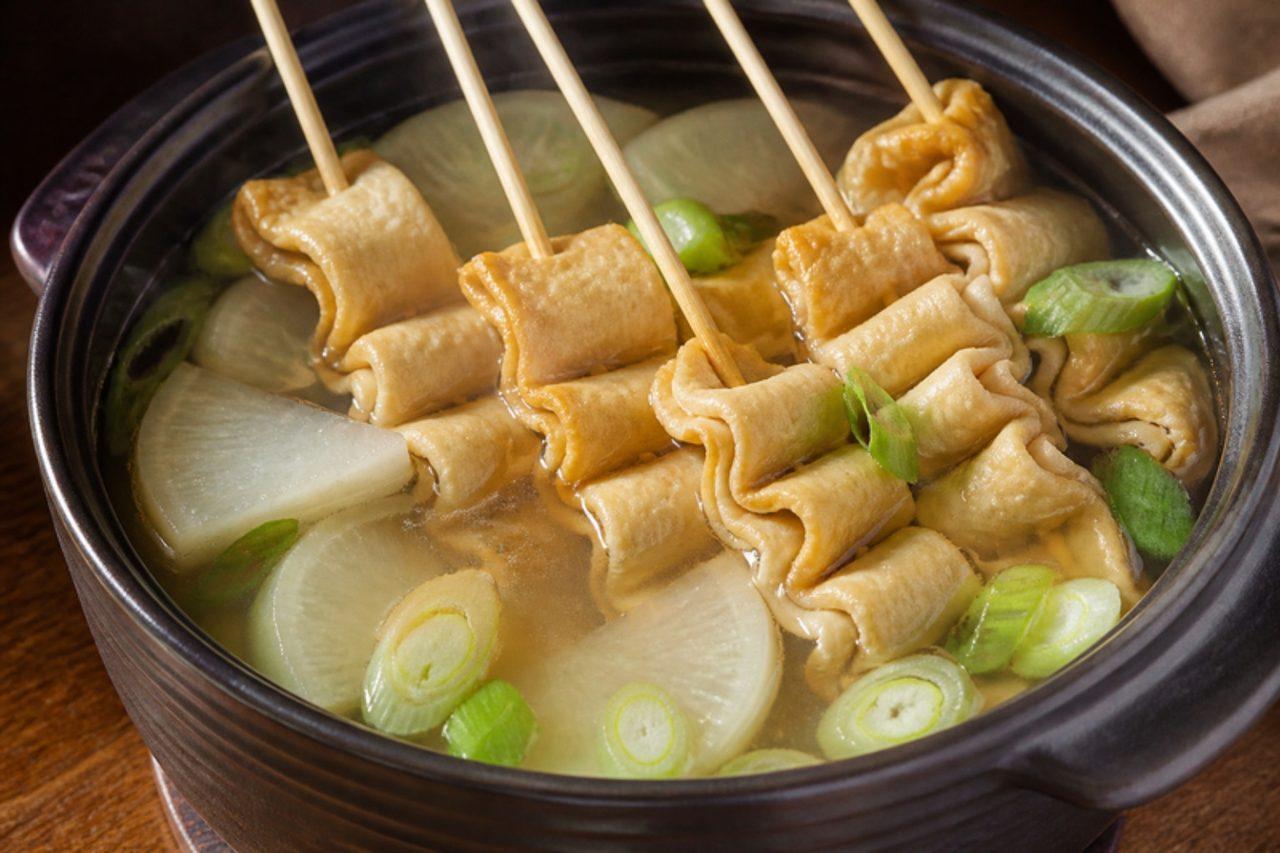
On cold evenings in Busan, the city that made Korean fish cake famous, steam rises from street stalls where folded fish-cake skewers bob in a long tray of broth. You help yourself to a skewer, dip it in soy sauce and sip a paper cup of the hot broth while you stand. Bupyeong market has rows of fish-cake shops, and many families buy a bag there to make this simple soup at home. Radish, dried anchovies and kelp give the broth its clean, sweet flavour. Chef's tip: pull the heads and black guts off the dried anchovies before using them, because the guts make the broth bitter.

by KrazyBadal 0 views

VetkoekFried bread puffs

Vetkoek ('fat cake' in Afrikaans) is fried at church fêtes, rugby matches and roadside stalls all over South Africa, and in townships it's known as amagwinya. The yeast dough fries into a crisp golden ball with a soft, steamy middle, split open while still warm. The best-known filling is curried mince, but just as many people eat them with grated cheese and apricot jam, golden syrup, or a spoon of chakalaka, as here. Chef's tip: keep the oil at a steady medium heat and turn the vetkoek often so they colour evenly and cook right through.

by KrazyBadal 0 views

Ensalada de aguacate y piñaAvocado and pineapple salad

Cuban home cooks dress avocado very simply, and in summer around Havana it often meets ripe pineapple and thin rings of red onion in a lime and olive oil dressing. The creamy avocado, juicy sweet-sour pineapple and sharp onion make it the cool, fresh plate beside rice and beans or yuca con mojo. It takes ten minutes. Chef's tip: soak the onion rings in cold water for 5 minutes first; they stay crisp but lose their harsh bite.

by KrazyBadal 0 views

Engadiner NusstorteWalnut caramel pie

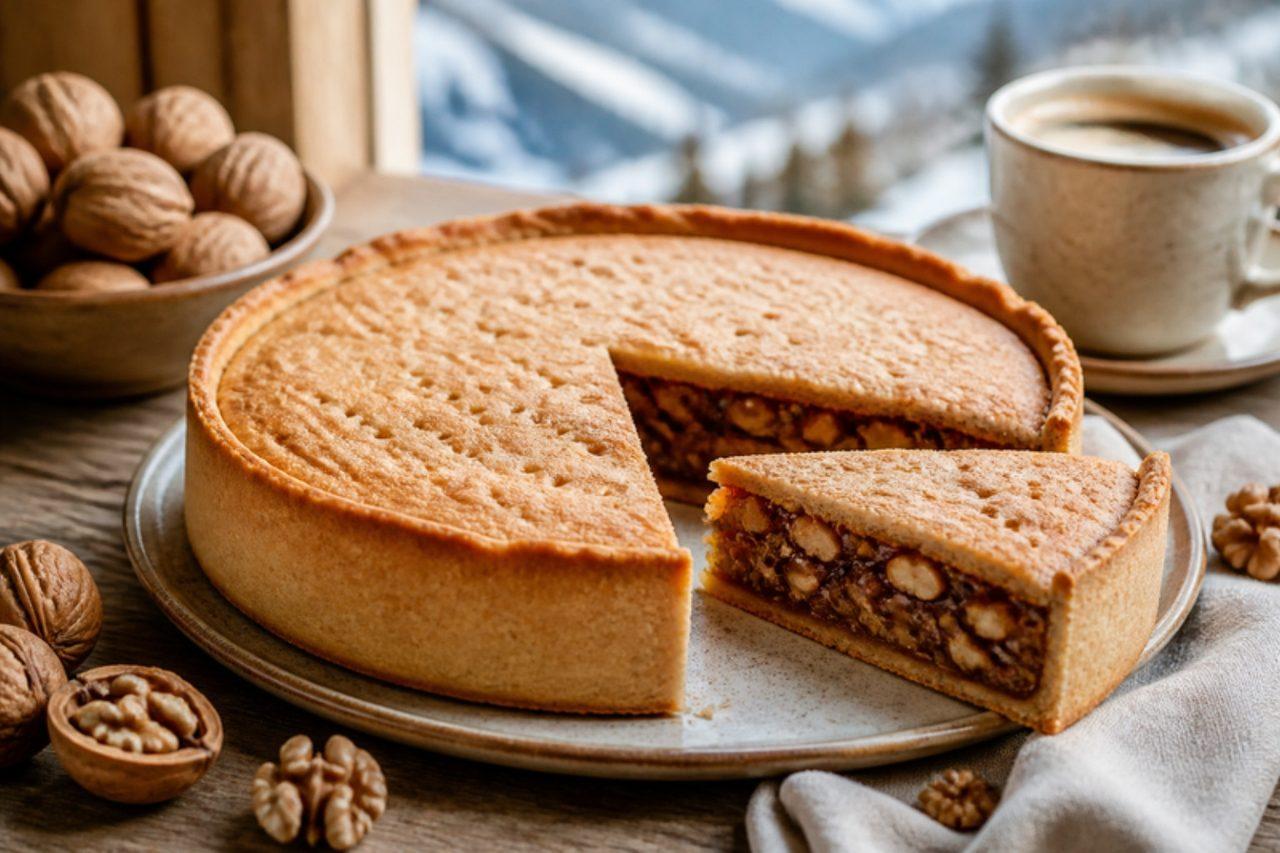
The Engadiner Nusstorte comes from the high Engadine valley in Graubünden, where pastry cooks who had emigrated to Italian and French cities brought home their skills in the 1800s, and walnuts arrived from Italy over the passes. It is a shallow, closed tart of rich butter pastry filled with chopped walnuts set in thick, golden cream caramel. Bakeries all over Switzerland sell it, and it keeps for weeks, so families give it as a gift and take it on hikes. Cut it into thin wedges: it is very rich, chewy, crunchy and buttery all at once. Chef's tip: let the caramel reach a deep amber before you pour in the cream; pale caramel tastes only of sugar, dark amber gives the toffee note the tart is known for.

by KrazyBadal 0 views

BebincaLayered coconut milk cake

No Goan Catholic Christmas, wedding or feast is complete without bebinca, the 'queen of Goan desserts'. A rich batter of coconut milk, egg yolks, sugar and a little flour is cooked one thin layer at a time under the heat, each layer brushed with ghee before the next is poured on, so the finished cake shows dark-and-light stripes when sliced. Traditionally it was baked over coconut-husk fire with coals on the lid and had sixteen layers; a home grill makes eight to ten easily in an afternoon. It's rich, dense and fudgy, and keeps for a week. Serve thin slices at room temperature, or warm with vanilla ice cream. Chef's tip: make each layer the same thin pour; a thick layer stays raw in the middle while its top burns.

by KrazyBadal 0 views

Bebek betutuSpiced slow-roasted duck

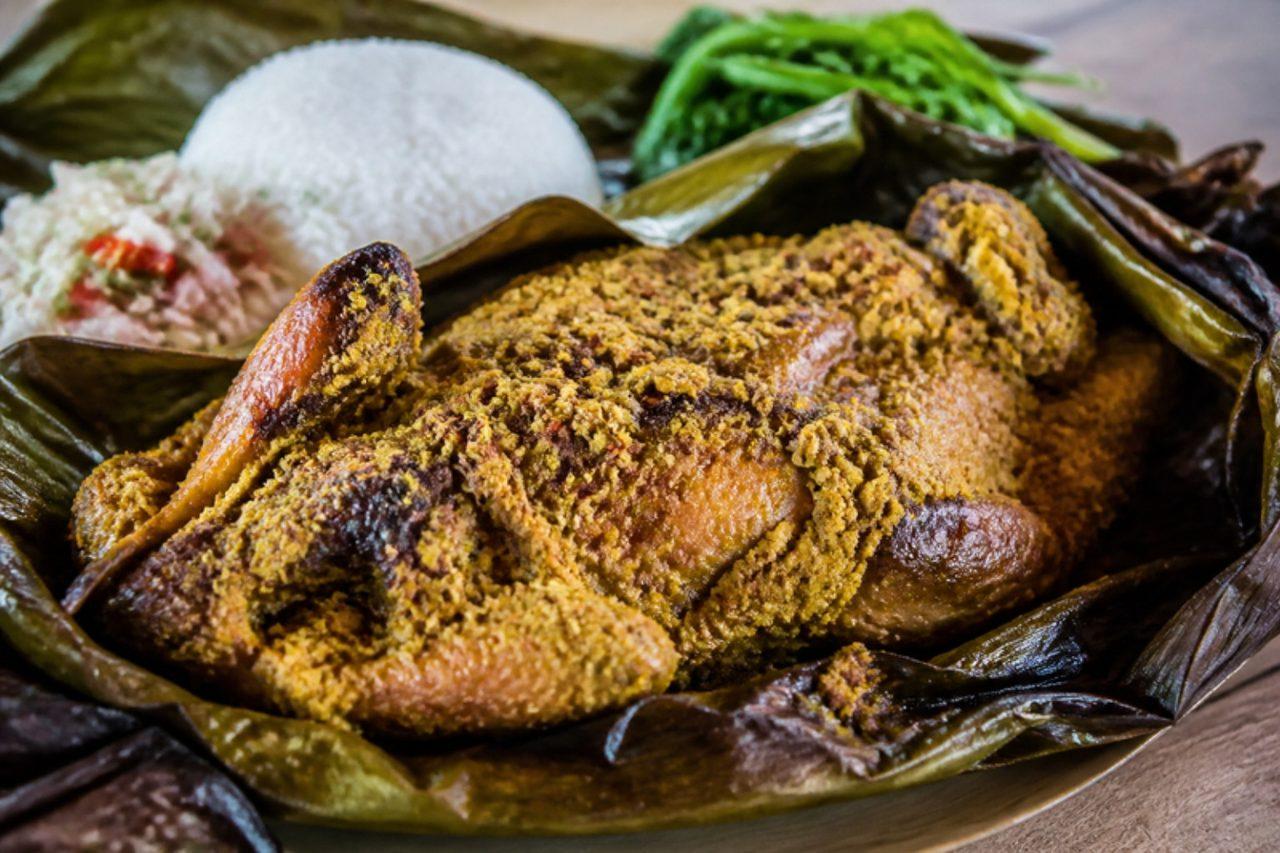
For ceremonies in the villages around Gianyar in central Bali, a whole duck is stuffed and smothered with base genep, wrapped in banana leaves and areca-palm sheath, and buried overnight in smouldering rice husks. By morning the meat has turned meltingly soft, the fat has rendered into the spices and the parcel smells of turmeric, smoke and lime leaf. This home version keeps the stuffing and the leaf parcel but uses a low oven for three hours, then opens the parcel for a short blast to colour the skin. Serve it in its juices with rice, a sharp sambal matah and long beans or water spinach. Chef's tip: marinate the duck overnight in the fridge if you can; the paste needs time to get past the fat and into the meat.

by KrazyBadal 0 views

Sopa de fideoToasted noodle soup

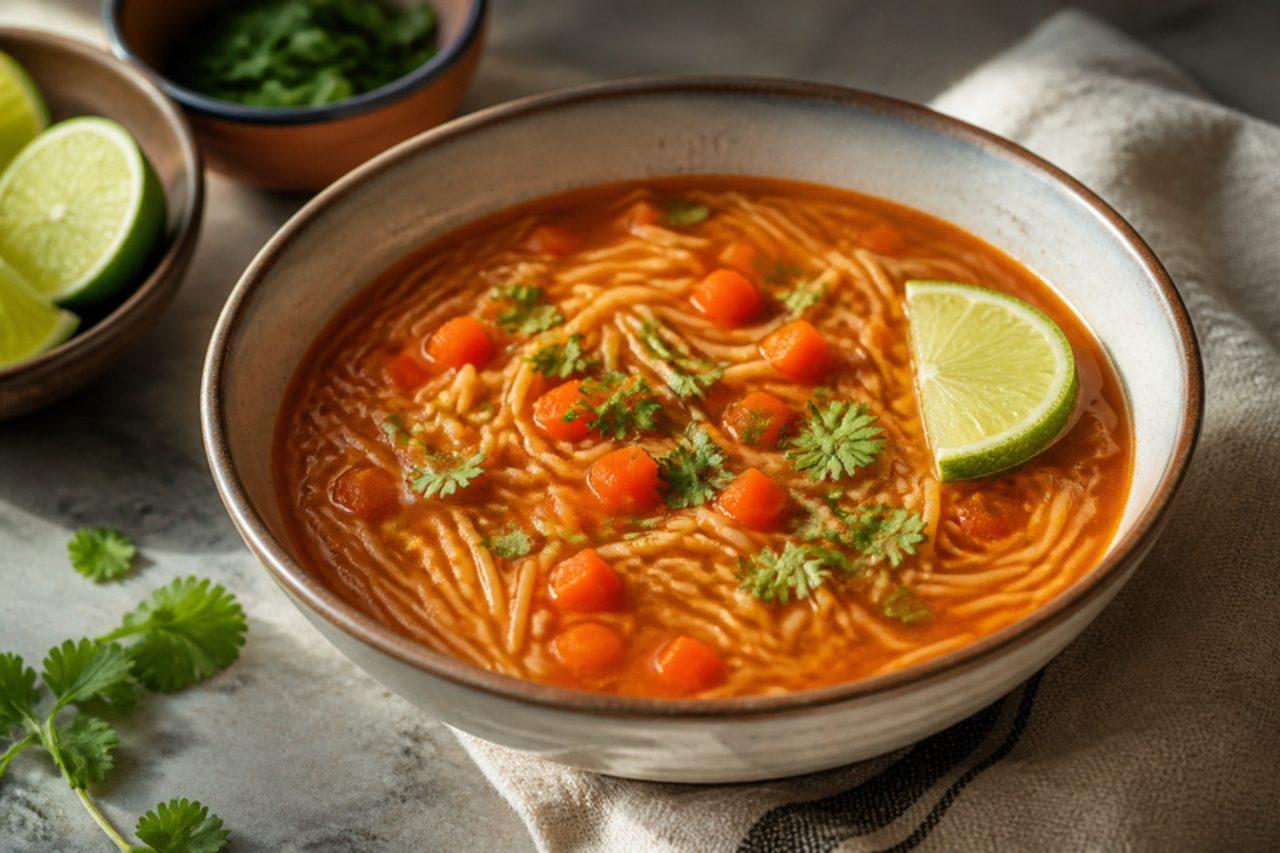
Sopa de fideo is the soup almost every Mexican grew up on, served at home from Monterrey to Mérida as the first course of the midday meal. Thin fideo noodles (short broken vermicelli) are fried in oil until golden before the tomato broth goes in, which gives them a toasty, nutty flavour and stops them turning to mush. This version uses a vegetable stock, so it is vegan and very kind to small children. Serve it with lime, a little dried chilli for the grown-ups and bread or tortillas. Chef's tip: fry the noodles over a medium heat and keep stirring; they go from pale to golden to burnt in seconds, and you want the colour of a digestive biscuit.

by KrazyBadal 0 views

Attiéké with tomato and onionCassava couscous with tomato salad

Attiéké is the light, slightly sour cassava 'couscous' of the Ébrié and Adjoukrou peoples around Abidjan's lagoons, and it is eaten across Côte d'Ivoire every day of the week. In maquis (open-air restaurants) it comes heaped beside grilled fish with a raw salad of tomato, onion and chilli; at home many people eat it simply with that salad, fried plantain and a fried egg, which is how it is served here. Buy it frozen or dried in African shops. Chef's tip: steam attiéké rather than boiling it; water turns it to paste, while steam keeps the grains fluffy and separate.

by KrazyBadal 0 views

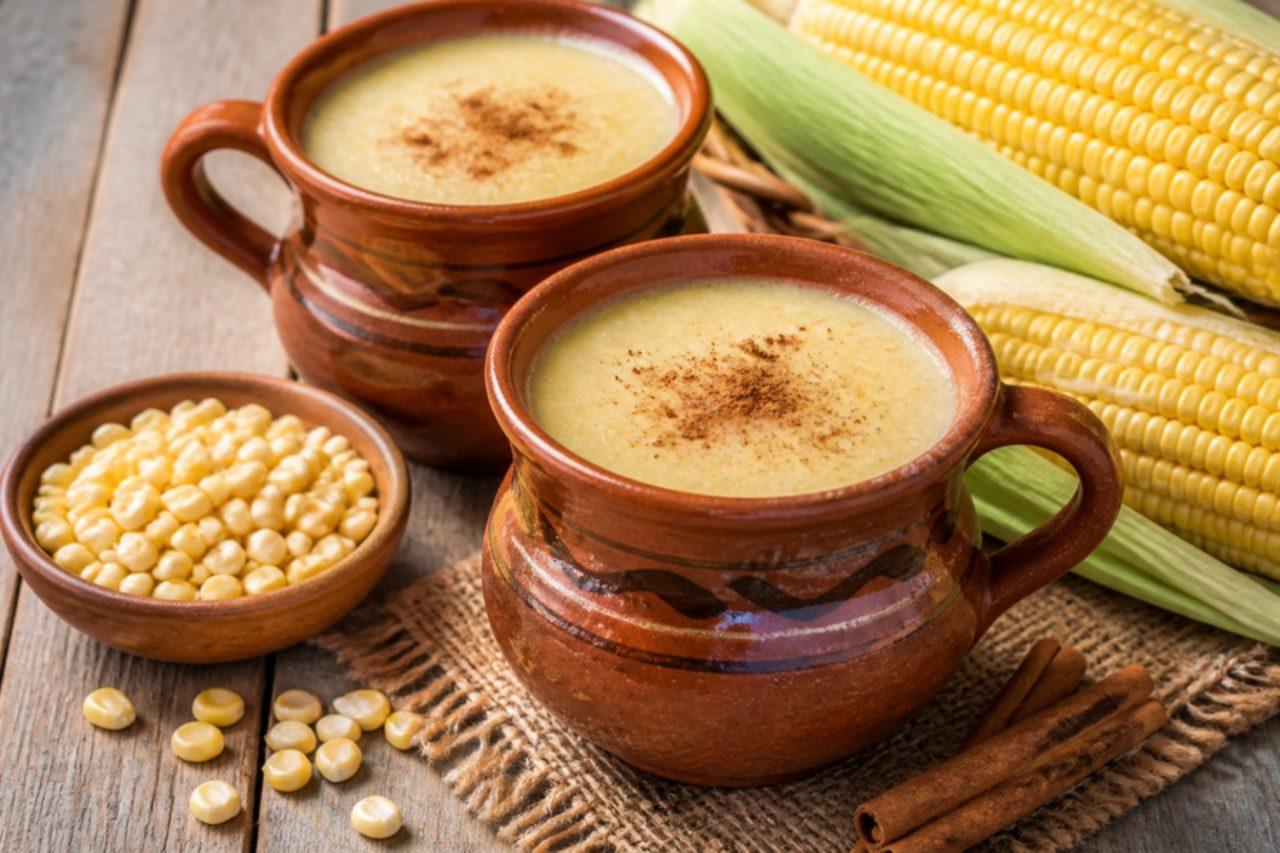
Atol de eloteWarm fresh corn drink

When the new maize comes in, Central Americans drink their corn: atol de elote is fresh sweetcorn blended, strained and cooked with milk and cinnamon into a thick, pale-yellow drink, sipped from a cup or a gourd. In El Salvador it's sold at roadside stands with tamales de elote; in Guatemala it warms chilly highland evenings. Taste is like sweet corn custard you can drink. Chef's tip: strain the blended corn through a fine sieve and press hard; the skins make the drink gritty.

by KrazyBadal 0 views

Sopa de maníPeanut soup

Sopa de maní is a pride of Cochabamba, Bolivia's food capital, where it starts the big midday meal in homes and market comedores. Raw peanuts are blended into a pale, creamy broth with vegetables and peas, and every bowl is topped with a tangle of thin, crisp fried potatoes and chopped parsley. It's usually made with beef broth; vegetable stock and a little more garlic keep it full-flavoured. Chef's tip: use raw (unroasted) peanuts and blend them very finely with water; that's what gives the soup its milky colour and silkiness.

by KrazyBadal 0 views

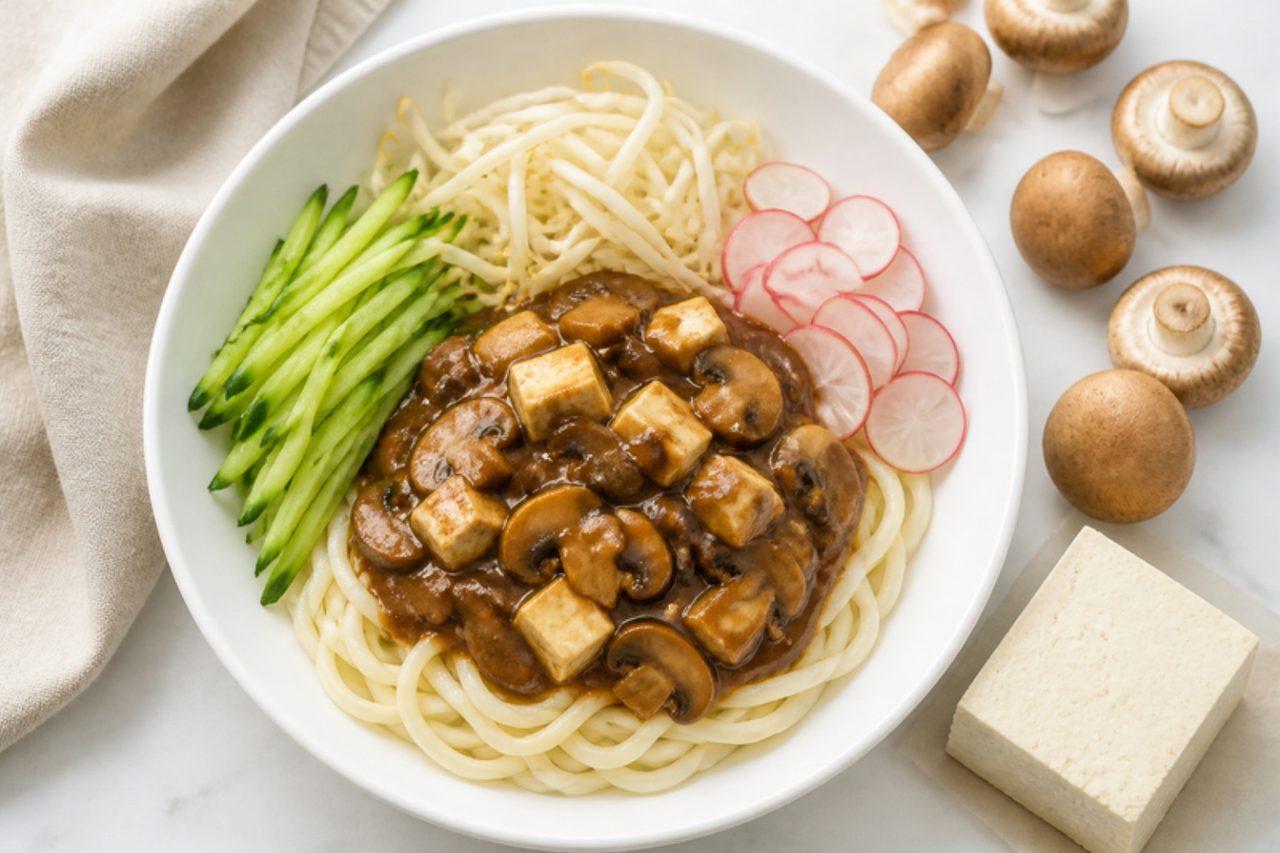
Zhajiangmian with mushroom and tofuNoodles in bean paste sauce

Zhajiangmian is old Beijing's comfort food, eaten in hutong noodle houses and at home on hot summer days. Thick wheat noodles are topped with a dark, salty-sweet sauce of fermented soybean paste fried slowly in oil, then piled with raw cucumber, radish and beansprouts that you mix in at the table. Pork is traditional; diced firm tofu and mushrooms give the sauce the same chunky body here. Chef's tip: fry the bean paste gently and patiently, on a low heat, until the oil separates out and it smells toasty; rushed, it tastes raw and harsh.

by KrazyBadal 0 views

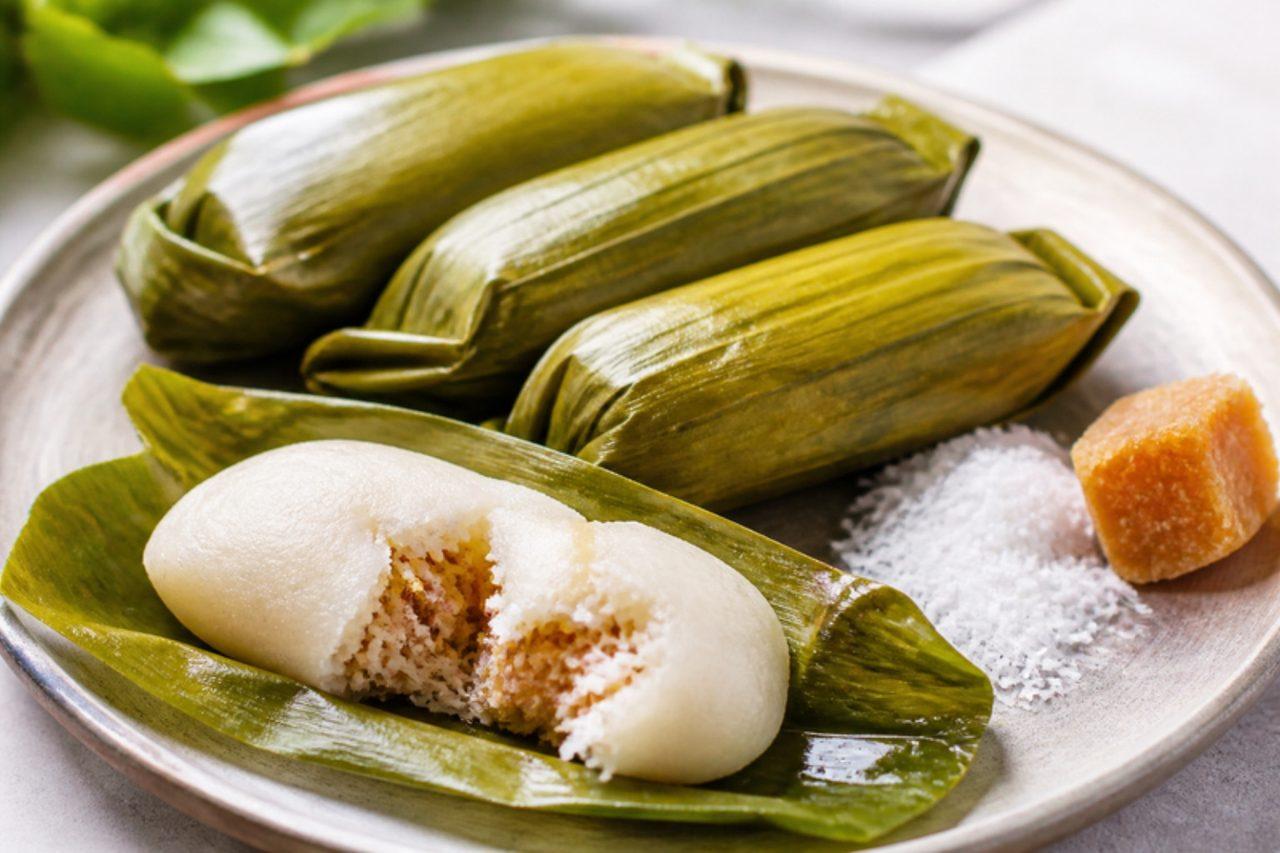
Enduri pithaSteamed rice cakes with coconut

Enduri (or haladi patra pitha) is the sweet of Prathamastami in Odisha, the November festival when Odia mothers pray for their eldest child, who gets the first pitha of the day. Fermented rice-and-urad batter is spread on fresh turmeric leaves, filled with coconut, jaggery, black pepper and cardamom, folded and steamed until the leaves give the cake a green, gingery perfume. The cake is soft and slightly springy. Chef's tip: if you can't find turmeric leaves, use banana leaf with a pinch of grated fresh turmeric in the batter; the flavour is close.

by KrazyBadal 0 views

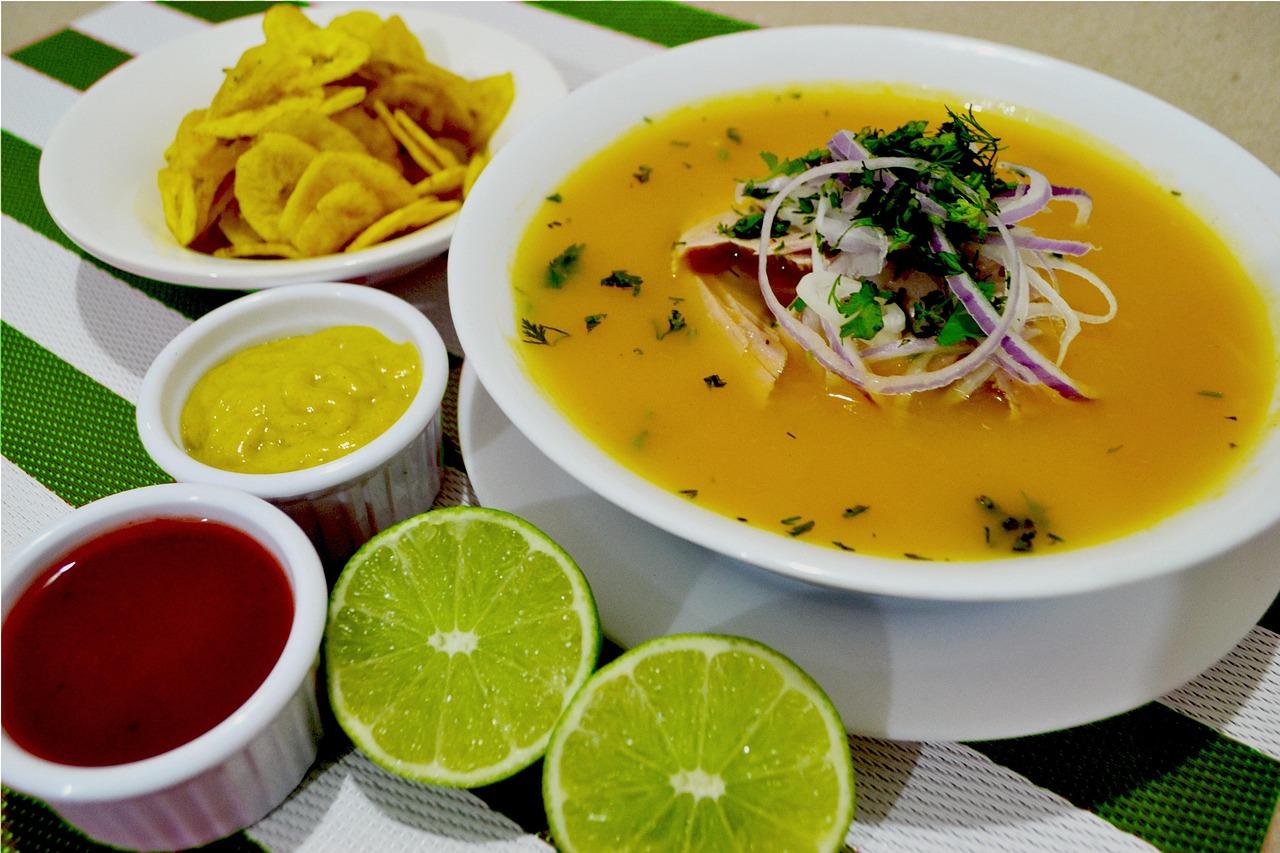
EncebolladoTuna and yuca soup

Encebollado is the morning soup of Guayaquil and the Ecuadorian coast, sold from street carts and small cevicherías from dawn and famous as a cure after a late night: tuna poached in a broth of tomato, cumin and chilli, with soft chunks of yuca, topped with a heap of lime-pickled red onion and coriander, and eaten with banana chips (chifles) and popcorn. The mistake is boiling the tuna until it goes dry; poach it gently and add it back at the end. Chef's tip: pickle the onion at least 20 minutes ahead so it turns pink and loses its sharpness.

by KrazyBadal 0 views

Sopa de quinuaQuinoa and vegetable soup

Sopa de quinua is everyday food in the Andes, from Puno on Lake Titicaca to Cusco and Huancayo, where quinoa has been grown for thousands of years. Quinoa, potato, carrot and corn simmer in a light broth seasoned with garlic, cumin, oregano and a little ají amarillo, and the potato breaks down slightly to give body. It is light yet filling, the soup families eat at midday to warm up in cold mountain air. In Peru it is finished with huacatay, the black mint of the Andes; a mix of mint and coriander stands in well. Chef's tip: rinse the quinoa in a sieve under running water, rubbing it, until the water stops foaming; the natural saponin coating tastes bitter and soapy.

by KrazyBadal 0 views

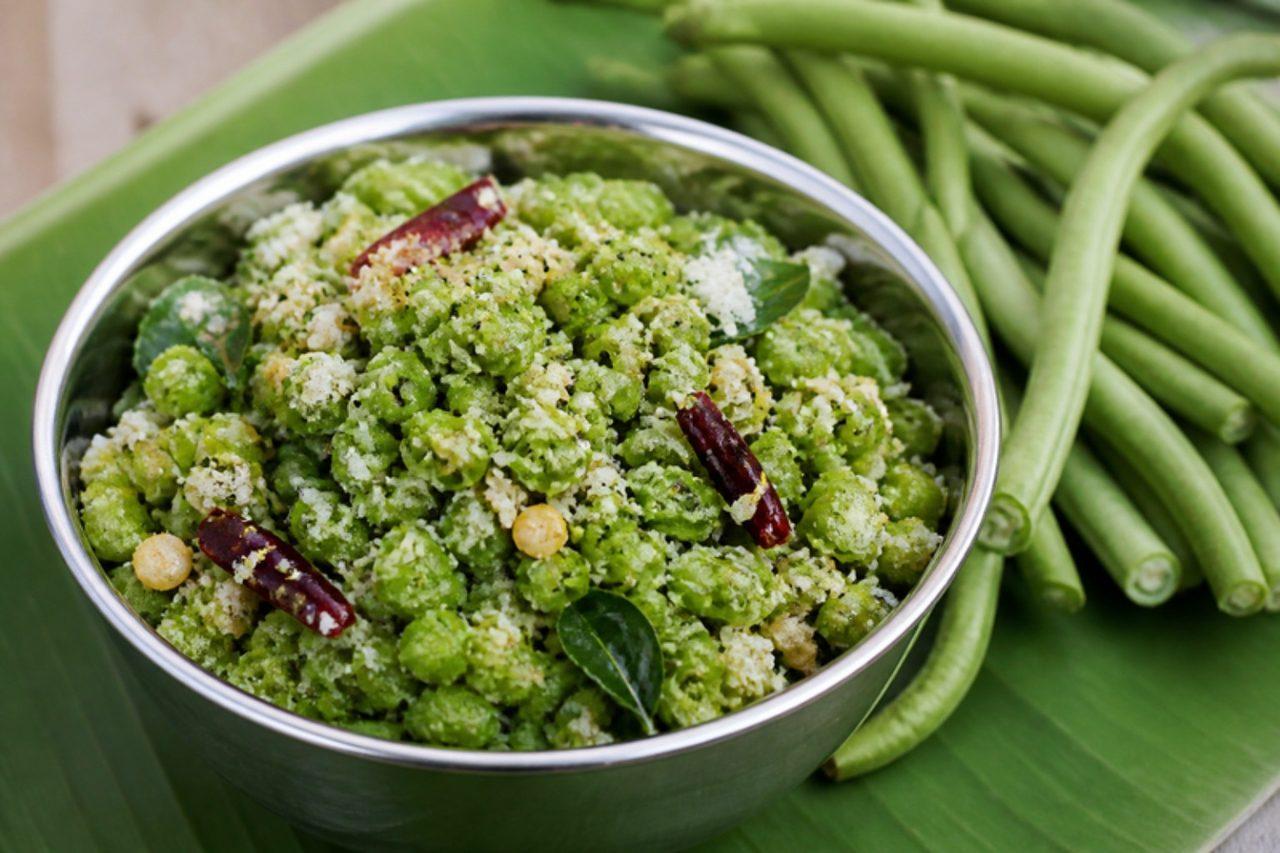
Beans poriyalGreen bean and coconut stir-fry

Poriyal is the everyday dry vegetable of Tamil Nadu, and beans poriyal is the one that appears on banana-leaf meals at weddings, temple annadhanam and Monday-to-Friday lunch boxes alike. The beans are chopped very small, steamed in their own moisture with a mustard and urad dal tempering, and finished with a shower of fresh coconut, so each spoonful is bright green, a little crunchy and nutty. It sits next to sambar or kuzhambu with rice, and it also makes a good filling rolled into a chapati. Chef's tip: chop the beans into tiny 5 mm pieces; they cook in minutes, stay green and soak up the tempering far better than long pieces.

by KrazyBadal 0 views

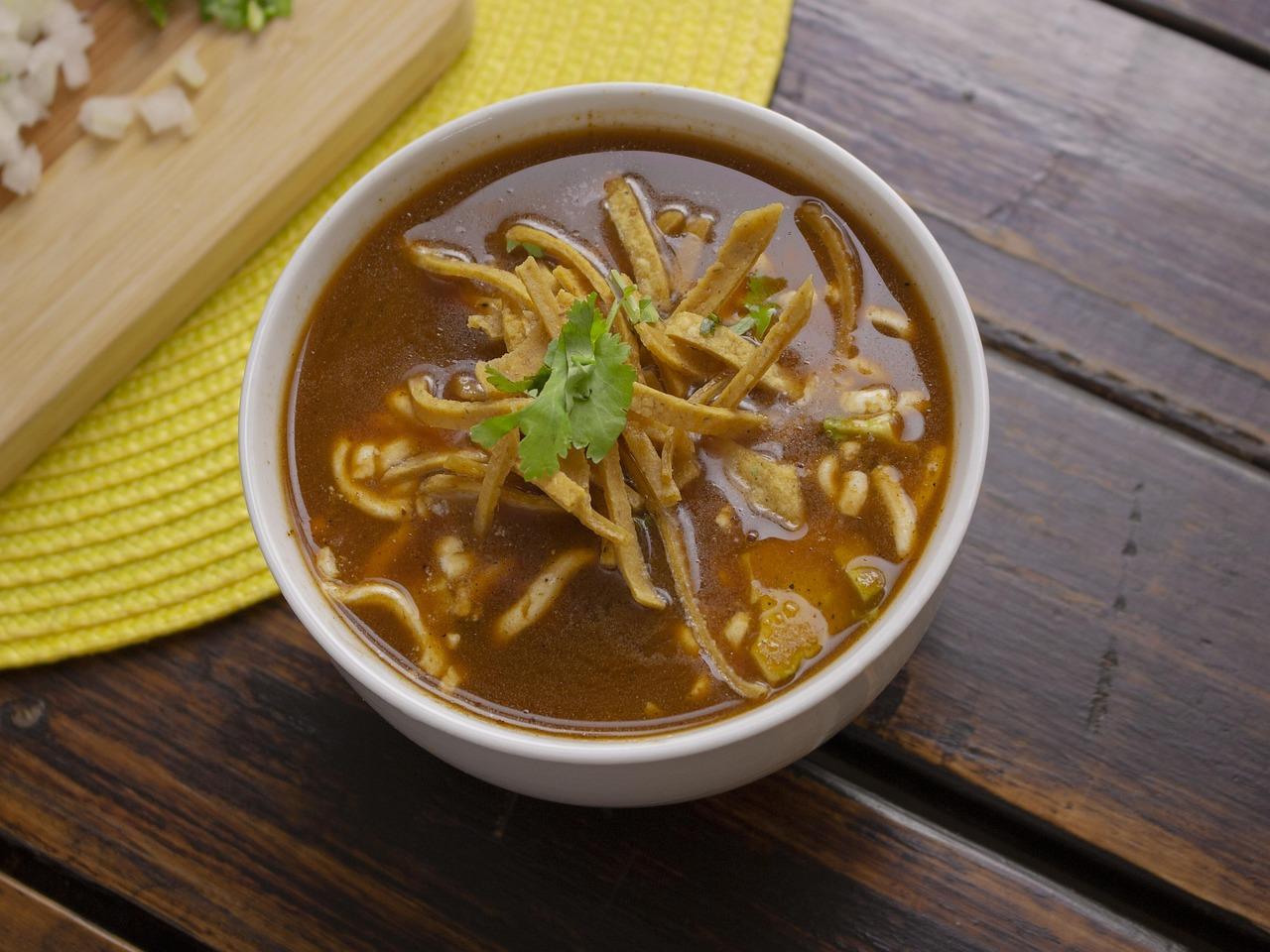
Sopa de tortillaTortilla soup

Sopa de tortilla, also called sopa azteca, is one of the best-loved soups of Mexico City's fondas: a brick-red broth of charred tomato, onion, garlic and dried pasilla chilli poured over crisp strips of fried corn tortilla. The strips soften at the edges and stay crunchy in the middle, and the toppings of avocado, fresh cheese, cream and fried chilli rings make each spoonful different. It is a starter in a comida corrida (set lunch) and a cure-all on a cold evening. We use a well-flavoured vegetable stock in place of chicken broth. Chef's tip: fry the blended tomato purée in hot oil until it darkens and smells sweet before adding the stock; this "seasoning" of the sauce is what makes Mexican soups taste deep rather than thin.

by KrazyBadal 0 views

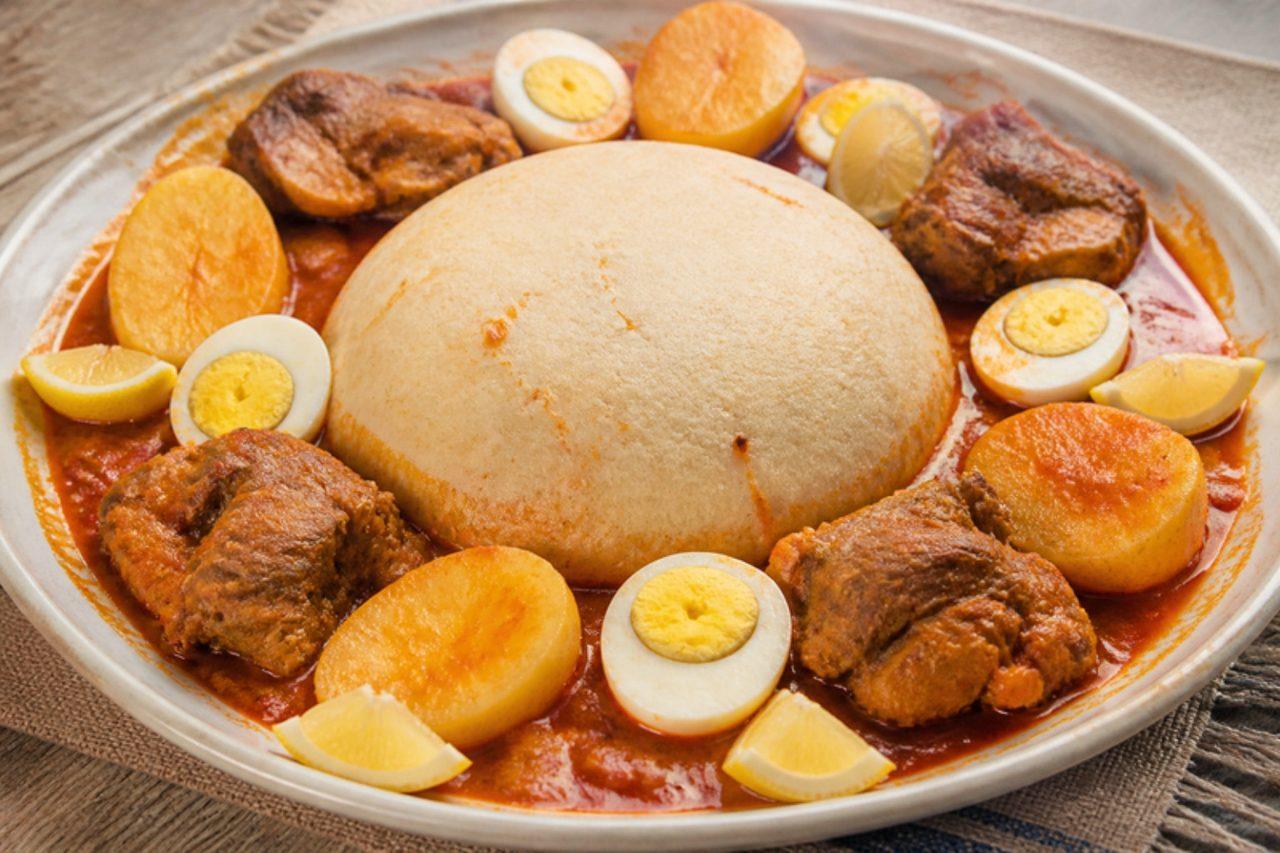
Bazin with lambBarley dough with lamb stew

Bazin is the traditional festive dish of Libya, especially in Tripoli and the western mountains: a smooth, firm dome of barley-flour dough set in the middle of a wide dish, surrounded by a spicy lamb stew of tomato, chilli and turmeric, with hard-boiled eggs and potatoes. Everyone eats from the same plate with the right hand, pinching off dough and dipping it in the sauce. The mistake is not beating the dough hard enough: it should be pounded until completely smooth, or it tastes floury. Chef's tip: beat the dough with a wooden spoon, adding cooking liquid a spoonful at a time, until it pulls cleanly away from the pot.

150 minAfricanMeatSpicy
by KrazyBadal 0 views

SopaipillasFried pumpkin flatbreads

When it rains in Santiago, Chileans make sopaipillas. These round, pricked discs of dough are made with mashed pumpkin, which gives them a soft orange crumb, and are fried until puffed. Street carts sell them with pebre, mustard or ketchup; at home on wet winter afternoons they're 'pasadas', simmered briefly in a spiced chancaca (raw cane sugar) syrup with orange peel and cinnamon. Chef's tip: prick each disc several times with a fork before frying, so they puff evenly and don't balloon into one big bubble.

by KrazyBadal 0 views

Empanadas venezolanasFried corn empanadas

Venezuelan empanadas are big, crisp half-moons made with white precooked corn flour, fried to order at beach kiosks on Margarita Island and at breakfast stands across Caracas. Compared with the small, potato-filled Colombian empanadas, they are larger, paler and often a little sweet in the dough, and the classic vegetarian fillings are simply grated white cheese or black beans with cheese (like an arepa dominó). Eat them hot with guasacaca or a squeeze of lime. Chef's tip: add a spoonful of sugar to the dough; it helps the crust turn golden and blistered in the oil.

by KrazyBadal 0 views

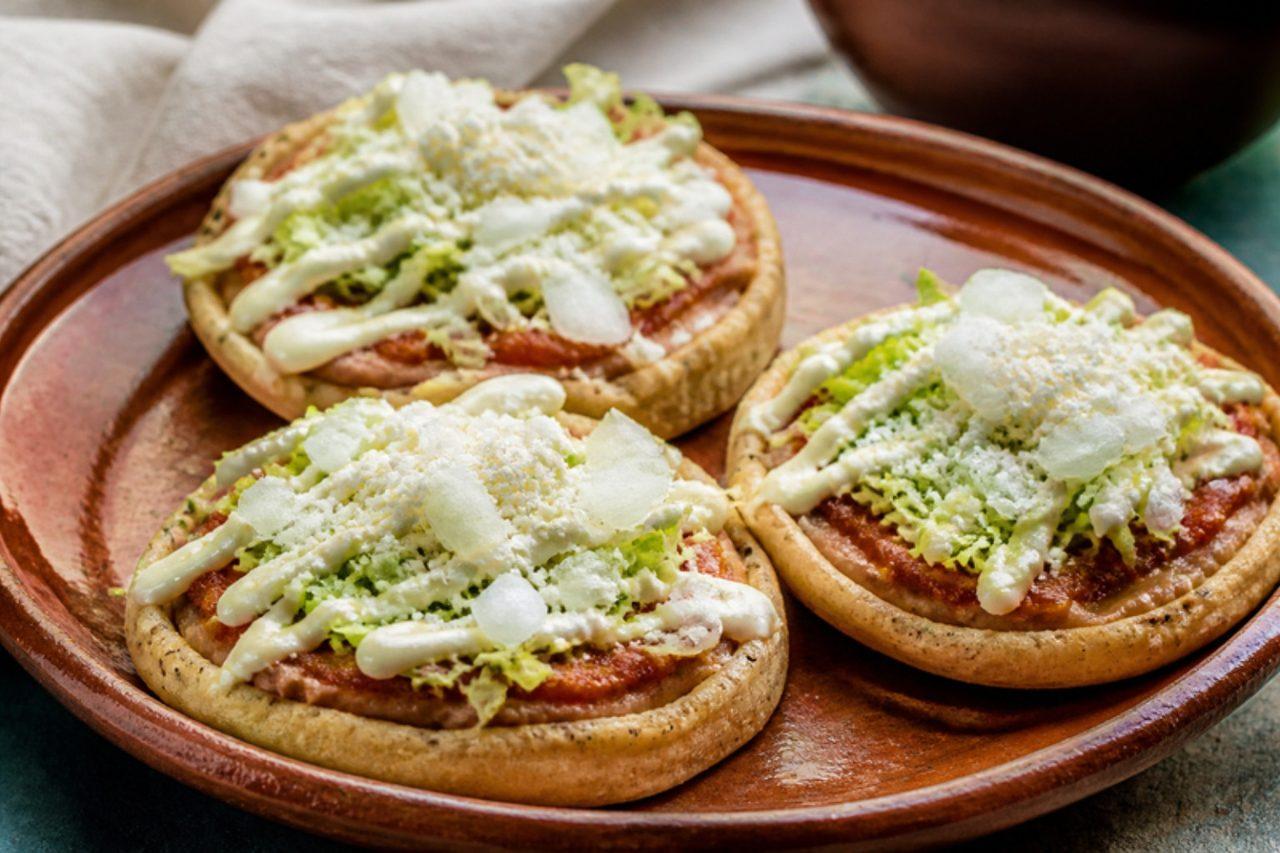
SopesThick masa cakes with toppings

Sopes are a classic antojito of central Mexico: small, thick discs of corn masa cooked on a comal, pinched up at the edge while hot to make a little rim, then crisped in a film of oil and piled with refried beans, salsa, lettuce, crema and crumbled cheese. The base is crisp underneath and soft and steamy inside, with the sweet, earthy taste of nixtamalised corn. Serve two or three per person as a starter or a light supper. Use masa harina for tortillas, made from nixtamalised corn; cornmeal or polenta will not hold together. Choose queso fresco made with vegetarian rennet, or use a mild feta. Chef's tip: pinch the rims as soon as the sopes come off the comal; once they cool the masa sets and cracks.

by KrazyBadal 0 views

Assida zgougouAleppo pine seed pudding

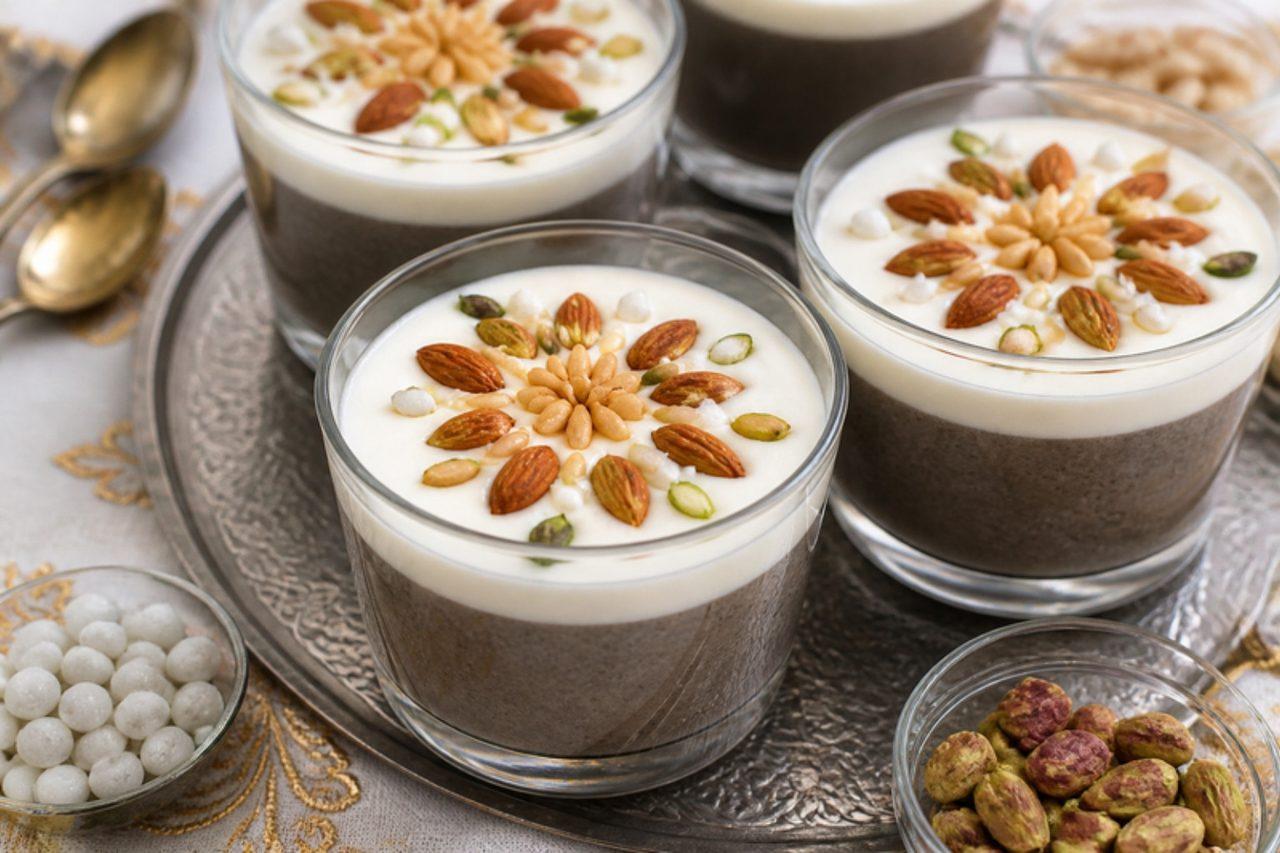
Assida zgougou is made in Tunisian homes once a year, for the Mouled (the Prophet's birthday): a dark, nutty pudding of Aleppo pine seeds (zgougou) cooked with flour and sugar, topped with a pale vanilla custard and decorated with almonds, pistachios, pine nuts and sugared almonds. Families make dozens of glasses to share with neighbours. Zgougou is sold in Tunisian and North African grocers; ground hazelnuts are a stand-in, though the taste is different. Chef's tip: strain the zgougou liquid through muslin twice; any grit ruins the smooth texture.

by KrazyBadal 0 views

Empanadas salteñasBaked beef empanadas

In Salta, in Argentina's far northwest, empanadas are small, sealed with a tight twisted edge (the repulgue) and so juicy that locals eat them leaning forward with their feet apart. The filling is hand-cut beef with potato, spring onion, cumin and paprika, plus chopped hard-boiled egg; they are eaten at Sunday gatherings, at peñas with folk music and on any public holiday. The mistake that ruins them is filling them while the beef is still warm: the fat melts the pastry. Chill the filling until it is firm. Chef's tip: add a few spoonfuls of the cooking juices to the cold filling; they set to a jelly in the fridge and melt in the oven, which is where the famous juiciness comes from.

by KrazyBadal 0 views

Empanadas colombianasPotato corn empanadas

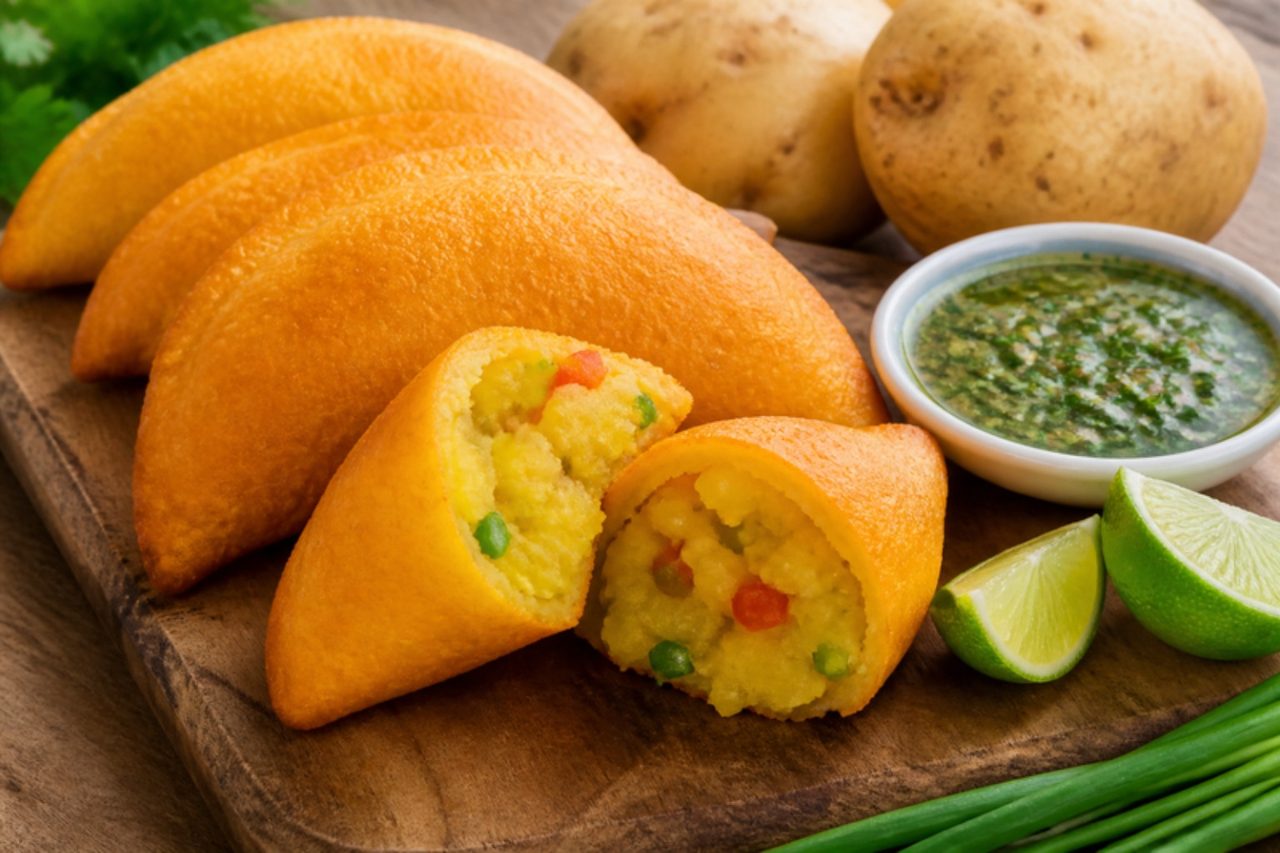
Colombian empanadas are small, crunchy half-moons made with yellow corn dough rather than wheat, sold hot from street stands across Bogotá, Medellín and Cali and eaten with a squeeze of lime and a spoonful of ají. The classic filling mixes potato with hogao and often meat; this version keeps the potato and hogao, seasoned with cumin and coriander, which many families make on its own anyway. They are crisp outside and soft and savoury inside. Chef's tip: roll the dough thin, about 3 mm; thick corn dough stays heavy and absorbs oil.

by KrazyBadal 0 views

EloteMexican street corn

Elote (corn on the cob) is sold all over Mexico from street carts in the evening: grilled or boiled cobs speared on a stick, slathered in mayonnaise and crema, rolled in crumbly cotija cheese and dusted with chilli powder, with a squeeze of lime. Charring the corn adds smokiness to the sweet kernels, and the creamy, salty, sour and hot toppings make it irresistible. Serve it at a barbecue or as a snack; kids can skip the chilli. Cotija is often made with animal rennet, so use a vegetarian-rennet feta or a vegetarian hard cheese if that matters to you. Chef's tip: let the cobs cool for a minute before spreading the mayonnaise, so it clings rather than sliding off.

by KrazyBadal 0 views

VinegretBeetroot and potato salad

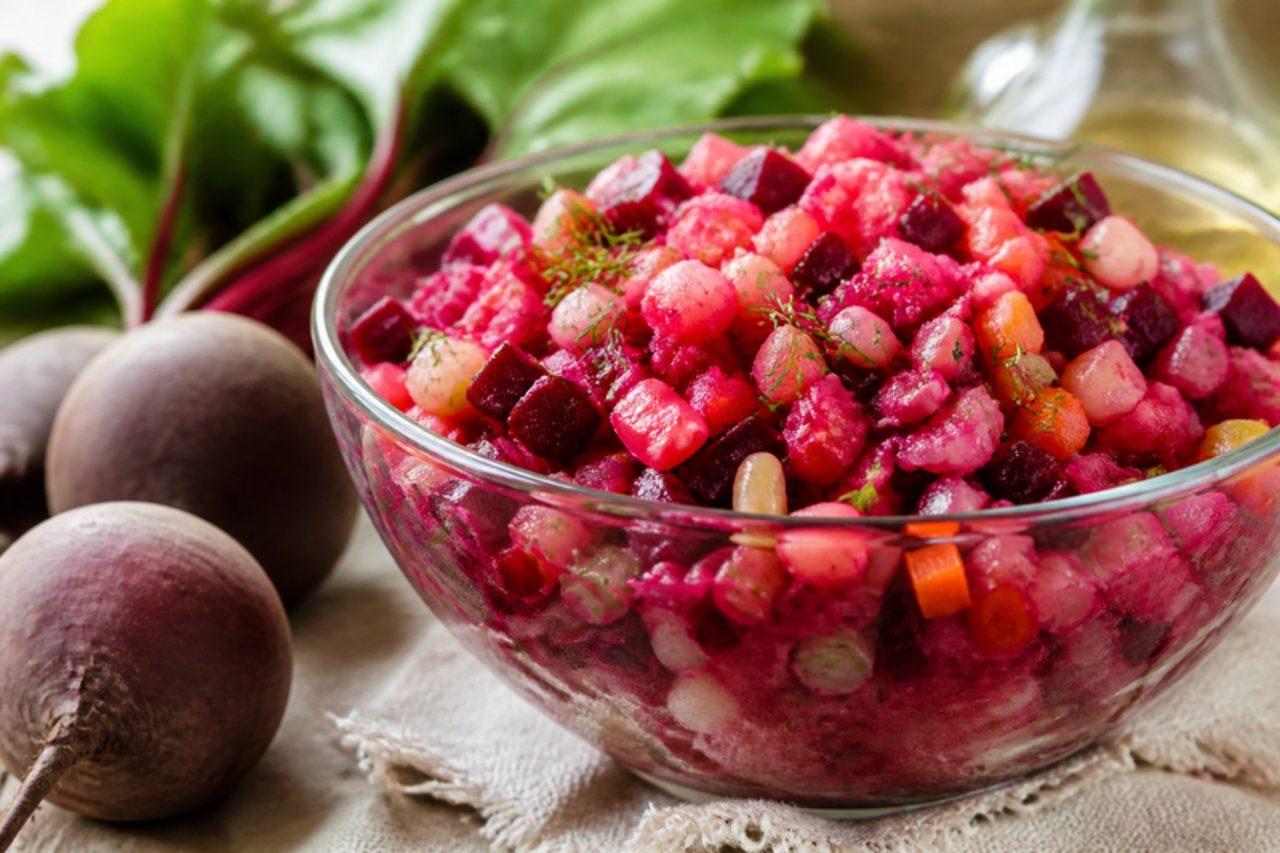
Vinegret is the ruby-coloured salad that sits on almost every Ukrainian New Year and Christmas table, alongside olivier, and fills lunch boxes through the winter. Cooked beetroot, potato and carrot are diced small and tossed with sauerkraut, pickled cucumbers and beans, then dressed with fragrant unrefined sunflower oil, the kind sold by the bottle at markets in Poltava and Kherson. Despite the name there is often no vinegar at all; the sourness comes from the pickles. It is vegan, cheap and keeps for days. Chef's tip: dress the diced beetroot with oil on its own first, then mix in everything else; the oil coats it so the potatoes stay pale and the salad looks like a mosaic rather than all pink.

by KrazyBadal 0 views

Asperges à la flamandeWhite asparagus with egg and butter

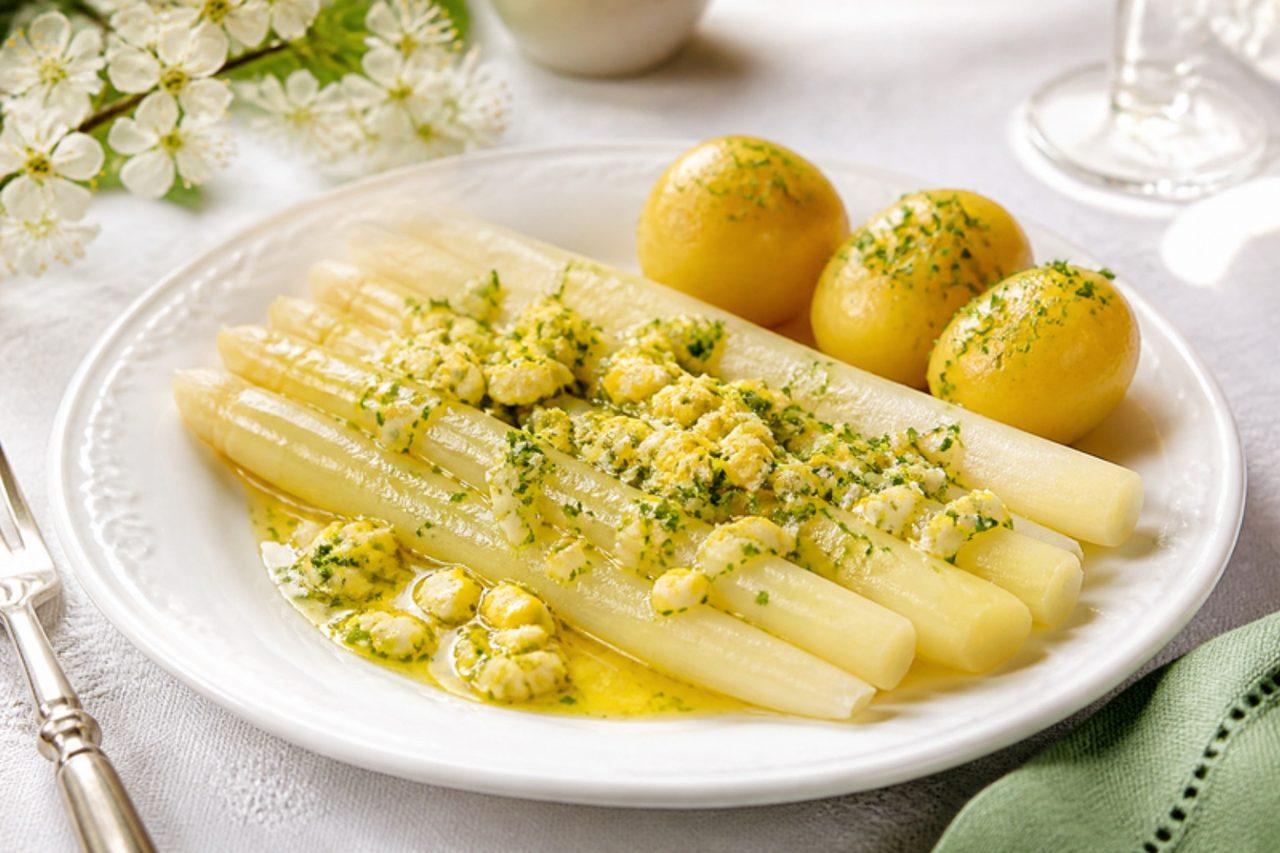
In May and June, white asparagus from Mechelen and the sandy fields around Limburg arrive in Belgian markets, and asperges à la flamande (asperges op Vlaamse wijze) is the way to eat them. The pale spears are peeled and cooked until tender, then covered with a warm sauce of melted butter, chopped hard-boiled egg, parsley and nutmeg that is half sauce and half garnish. It is served as a starter in Flemish restaurants all through the short asparagus season, sometimes with a slice of ham alongside; here it stays meat-free. Chef's tip: peel the spears from just below the tip all the way down with a swivel peeler; white asparagus has a thick, bitter skin, and missing even a strip leaves woody threads.

by KrazyBadal 0 views

Empanadas de humitaCreamy corn empanadas

Empanadas de humita are the vegetarian favourite at every Argentine empanada shop, from Tucumán, which claims the best empanadas in the country, to the delivery menus of Buenos Aires. The filling is sweetcorn and onion cooked with red pepper, nutmeg and a little white sauce until creamy, then folded into wheat pastry discs and closed with the twisted edge (repulgue) that tells you what's inside. Unlike the husk-wrapped humita en chala, these are baked and golden. Chef's tip: chill the filling until firm before filling; warm filling melts the pastry and the empanadas open in the oven.

by KrazyBadal 0 views

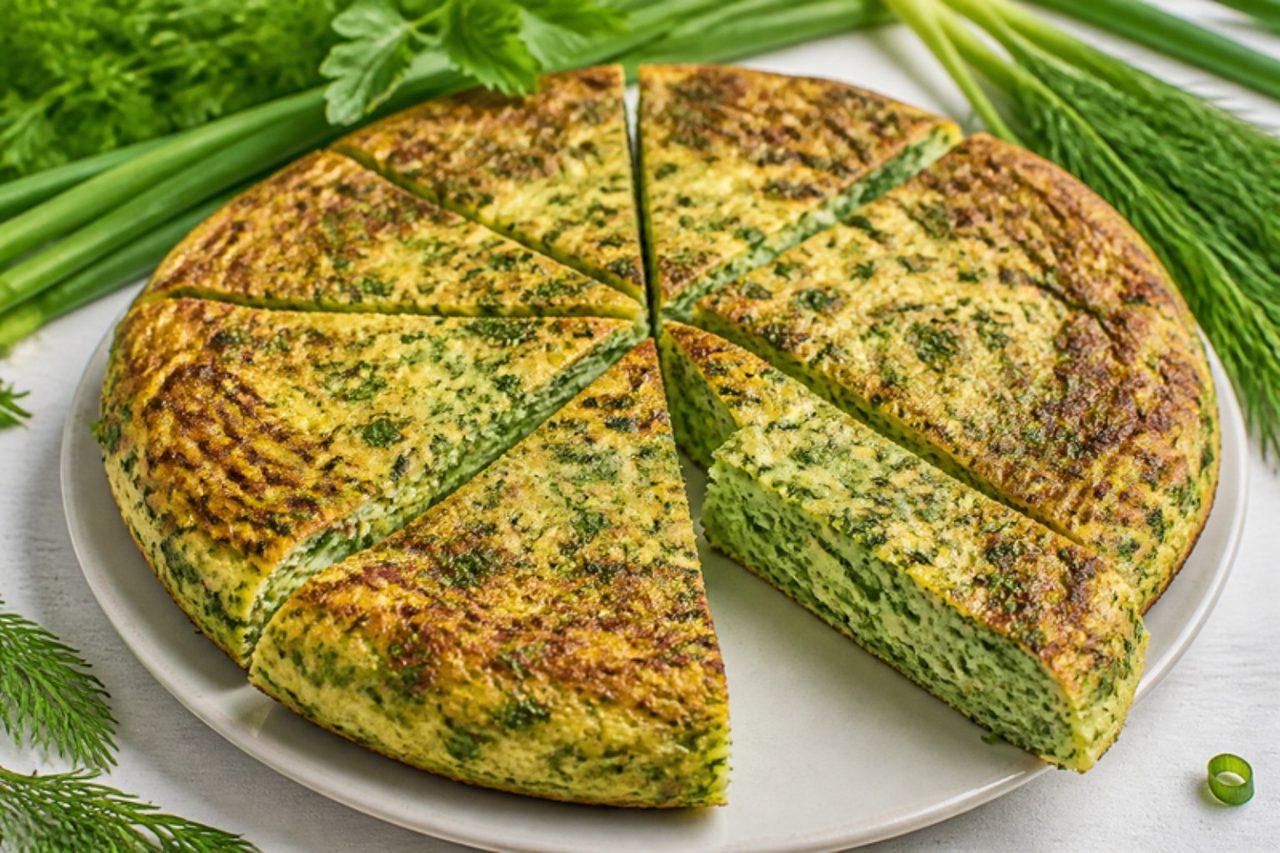
EggahHerb omelette

Eggah is the omelette Egyptian families make at home for breakfast or a light supper, often on a Friday morning alongside ful, falafel, cheese and baladi bread. It is thick and set rather than folded, packed with spring onion, parsley and dill and warmed with cumin, and it's cooked slowly so it puffs and browns on both sides. Slice it into wedges and eat it hot from the pan or cold in a sandwich. Chef's tip: grate the onion and squeeze it dry; wet onion makes the eggs weep and the eggah falls apart when you flip it.

by KrazyBadal 0 views

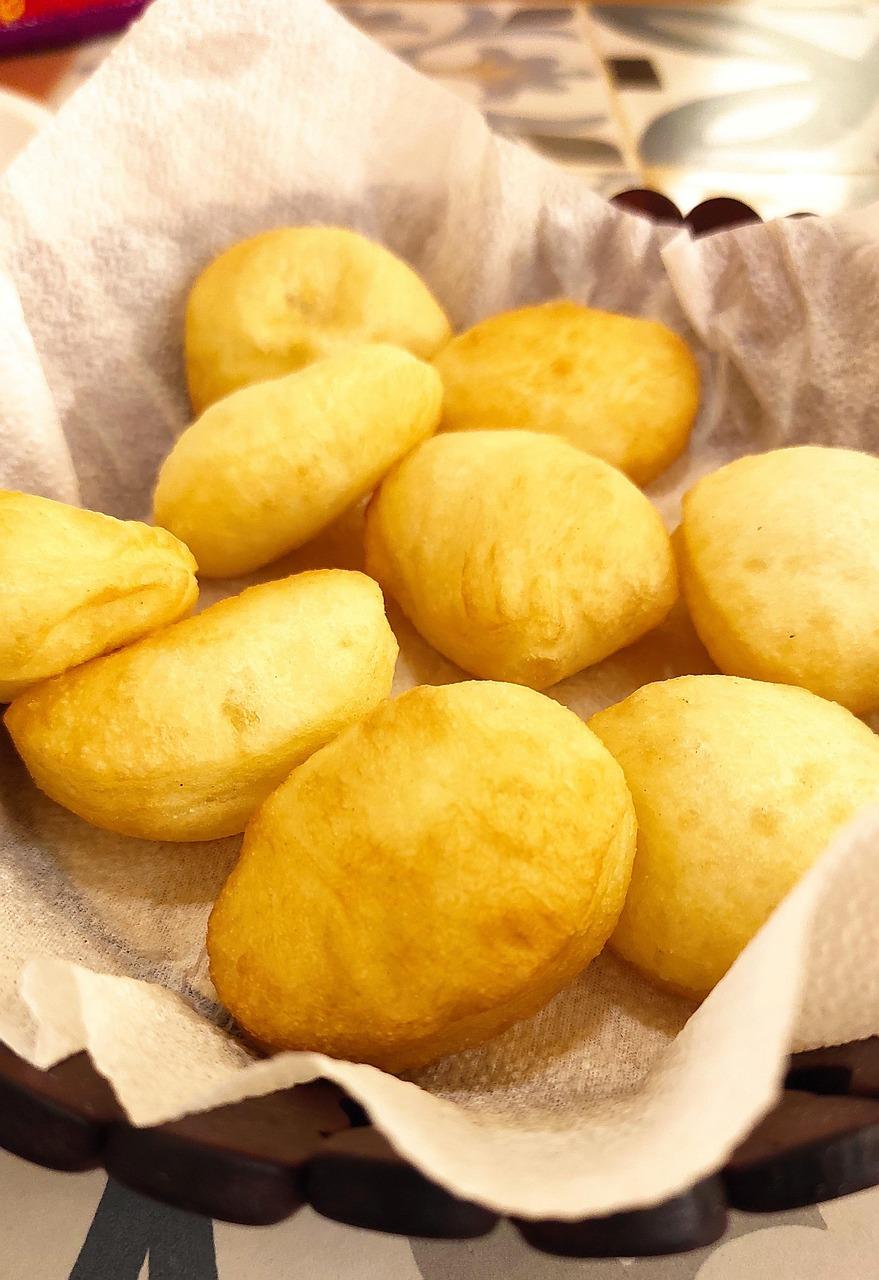
BaursakPuffed fried dough

No Kazakh dastarkhan, the cloth spread with food for guests, is complete without a heap of baursak: soft, hollow pillows of yeasted dough fried until they balloon. They are scattered over the table at weddings, at Nauryz in March and at funerals, where the smell of frying baursak is said to reach the departed. In Almaty families fry hundreds at a time and eat them through the evening with milk tea, butter, jam or honey. Kyrgyz and Turkmen households make almost identical versions. Chef's tip: roll the dough just 1 cm thick and keep the oil hot; thin dough in hot oil puffs into a hollow ball, thick dough stays bready.

by KrazyBadal 0 views

Soto ayamTurmeric chicken soup

From Lamongan to Semarang, Java's soto carts start ladling before the morning commute, and a bowl of soto ayam is how many people begin a working day. The broth is light but bright yellow with fresh turmeric, scented with lemongrass and lime leaf, and poured over slippery glass noodles, shredded chicken, crunchy bean sprouts and half a boiled egg. Squeeze in lime, stir in as much sambal as you dare and eat it with plain rice or rice cakes on the side. In East Java vendors finish it with koya, a sandy powder of prawn crackers and fried garlic that thickens the broth as you eat. Chef's tip: keep the pot at a lazy simmer the whole time; a hard boil turns the golden broth cloudy and greasy.

by KrazyBadal 0 views

Soto BanjarSpiced chicken soup

Along the rivers of Banjarmasin in South Kalimantan, breakfast often means soto Banjar eaten at a wooden riverside warung, sometimes after a dawn trip to the floating market. Unlike the turmeric sotos of Java, this broth is pale and clear, perfumed with the sweet spices that traders brought up the river centuries ago: cinnamon, cloves, star anise, cardamom and nutmeg. Shredded chicken, glass noodles, carrot and a boiled egg go into the bowl with rice cakes, and lime and a little chilli sharpen it at the table. Chef's tip: toast the whole spices in the pan for a minute before the paste goes in; it brings out their sweetness without the dusty edge of ground spice.

by KrazyBadal 1 views

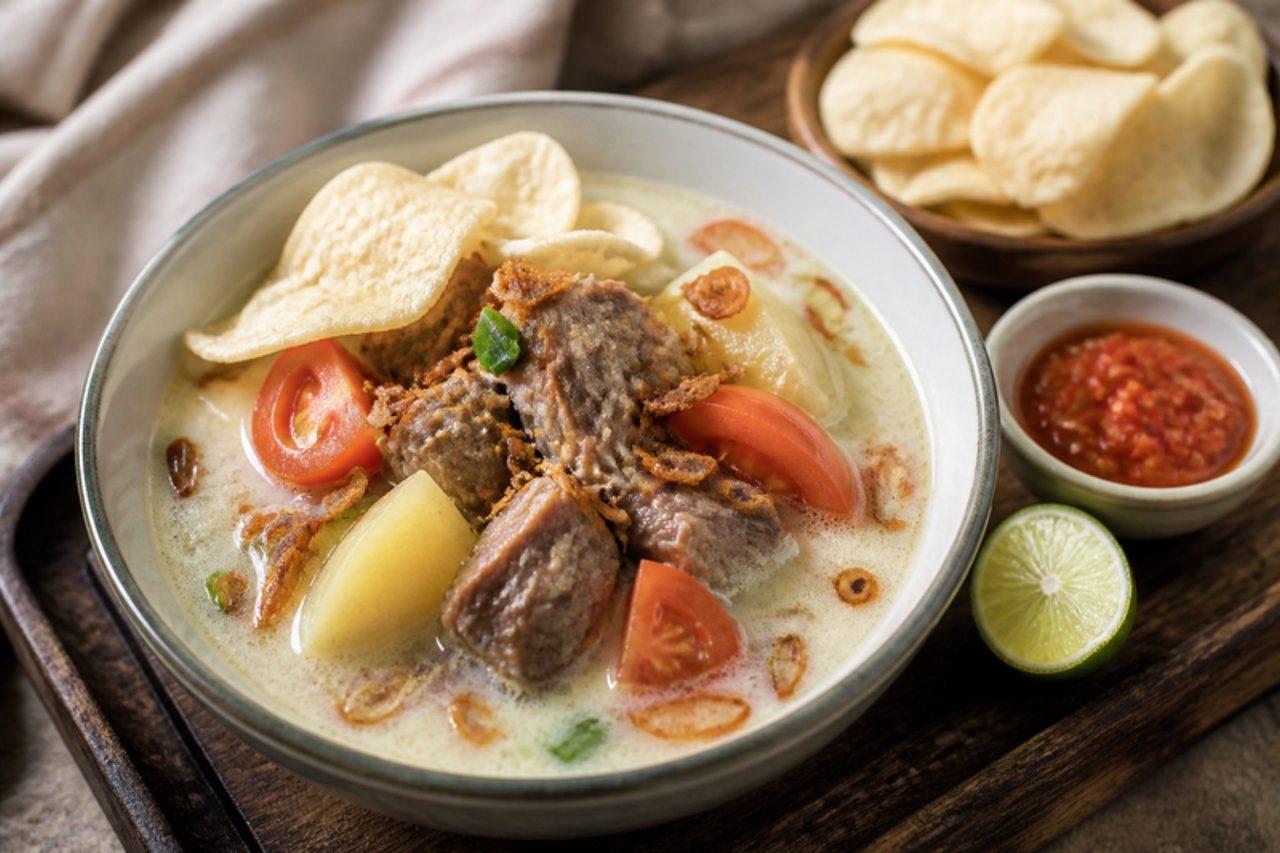
Soto BetawiBeef and coconut milk soup

Jakarta's original Betawi community gave the capital this rich, pale-gold soup, and on a Sunday the soto Betawi stalls along the city's side streets are packed with families. Beef brisket (and, for many, tripe) simmers until tender, then goes into a gently spiced broth made creamy with coconut milk and a splash of fresh milk, scented with lemongrass, cinnamon and cloves. Each bowl is loaded with fried potato, raw tomato and spring onion and comes with rice, lime, sambal and bitter-crisp emping crackers. It's comforting and mellow rather than fiery. Chef's tip: for a dairy-free bowl, swap the milk for more coconut milk; the soup will be a little heavier but just as good.

by KrazyBadal 0 views

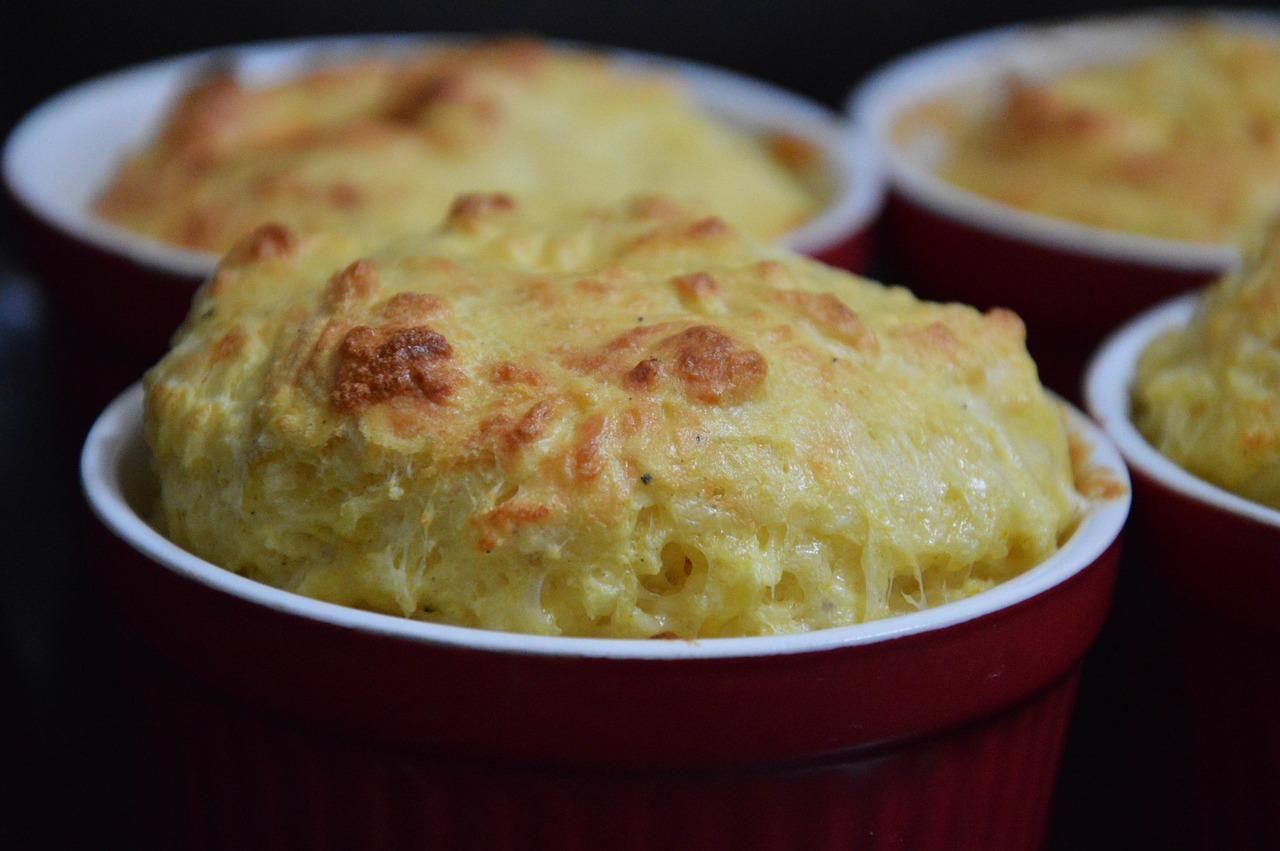
Soufflé au fromageCheese soufflé

The cheese soufflé is a French bistro classic and a favourite family starter or light supper all over France, often served with a green salad and a glass of white wine. A thick cheese sauce is lightened with whisked egg whites and baked until it rises tall above the dish, golden and crusty outside and soft, almost creamy in the middle. It sounds hard but it's mostly about timing. We thicken the sauce with cornflour so it's gluten free (classic recipes use plain flour). Comté and Gruyère are made with animal rennet, so use a vegetarian alternative. Chef's tip: fold the whites in gently with a big spoon, in three goes; stirring hard is the common mistake that knocks out the air so it never rises.

by KrazyBadal 0 views

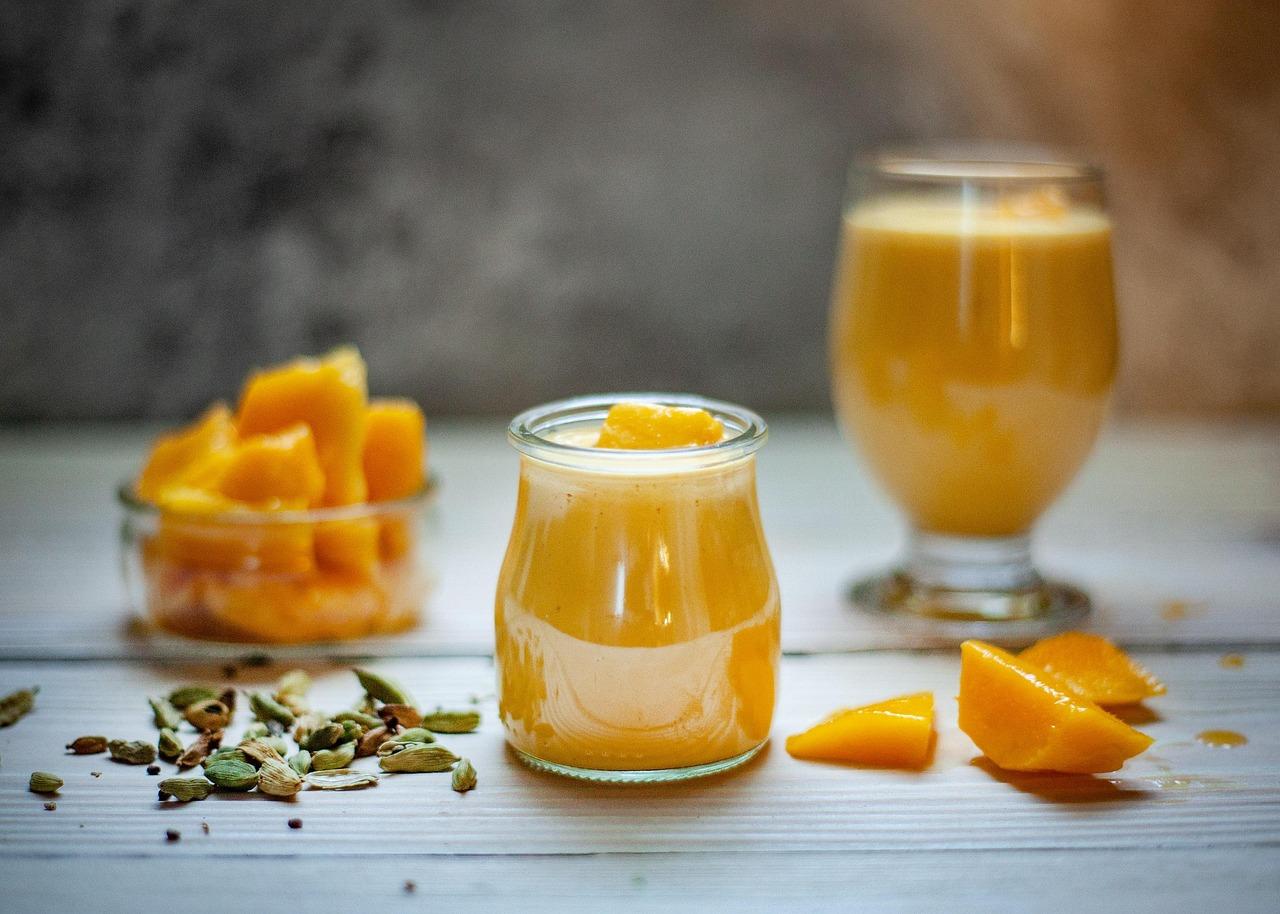
Batido de mangoMango milkshake

Batidos are the thick fruit milkshakes blended to order at Cuban cafeterías and roadside stands in summer, made with whatever tropical fruit is ripe: mamey, papaya, guanábana and, most of all, mango. Unlike a lassi there is no yogurt, just ripe mango, cold milk, a little sugar and plenty of ice, whizzed until frothy. Kids love it as an afternoon treat. Chef's tip: freeze the mango chunks first and you will need less ice, so the batido tastes of fruit rather than water.

by KrazyBadal 0 views

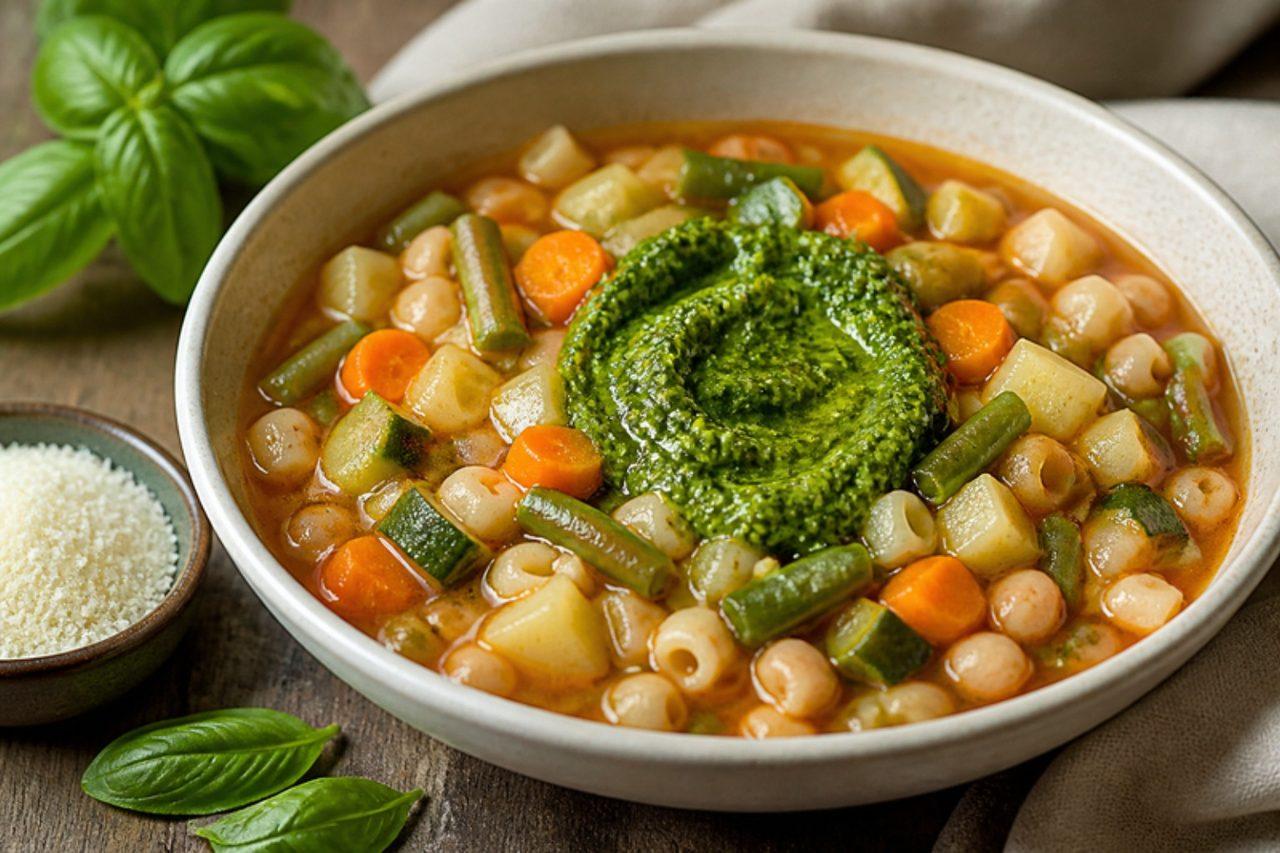
Soupe au pistouBean and vegetable soup with basil

Soupe au pistou is Provence's summer minestrone, eaten from July to September when basil grows thick in the gardens around Marseille and Avignon. Beans, courgettes, green beans, carrots, potato and small pasta simmer in a light broth, then each bowl gets a spoonful of pistou, a pounded paste of basil, garlic, olive oil and hard cheese with no pine nuts. Stirred in at the table, it turns the broth fragrant and green. It is a whole meal with bread. The traditional cheese is Parmesan or aged Gouda, so use a vegetarian hard cheese. Chef's tip: never boil the pistou; adding it to the pot is the common mistake that turns the basil dark and kills its smell.

by KrazyBadal 0 views

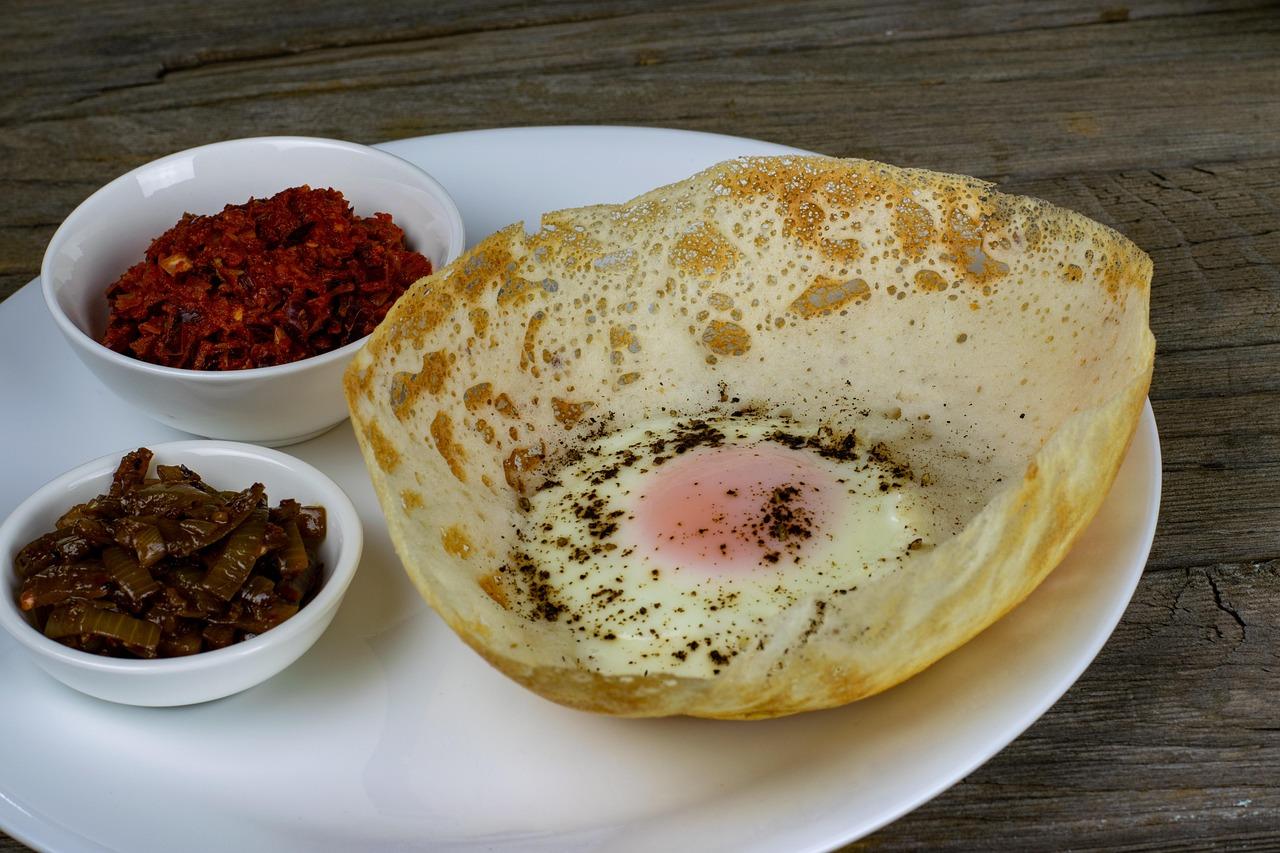
Egg hoppersBowl-shaped rice pancakes with egg

Hoppers (appa) are the crisp-edged, bowl-shaped pancakes that street cooks in Colombo, Kandy and Jaffna make in rows of small round pans every evening; an egg hopper has an egg cracked into the soft centre so it steams to a runny yolk. The batter of rice flour, coconut milk and yeast (traditionally toddy) is left to ferment until it's light and slightly sour, which gives the lacy, golden rim and the spongy middle. They're eaten hot with pol sambol and lunu miris, and plain hoppers come with sweet jaggery for dessert. Kerala's appam is a cousin, but Sri Lankan hoppers are thinner and crisper and the egg version is their own. The common mistake is a batter that's too thick, which gives heavy, pale hoppers; it should flow like single cream. Chef's tip: swirl the pan in one quick full turn the moment the batter goes in, then cover at once.

by KrazyBadal 0 views

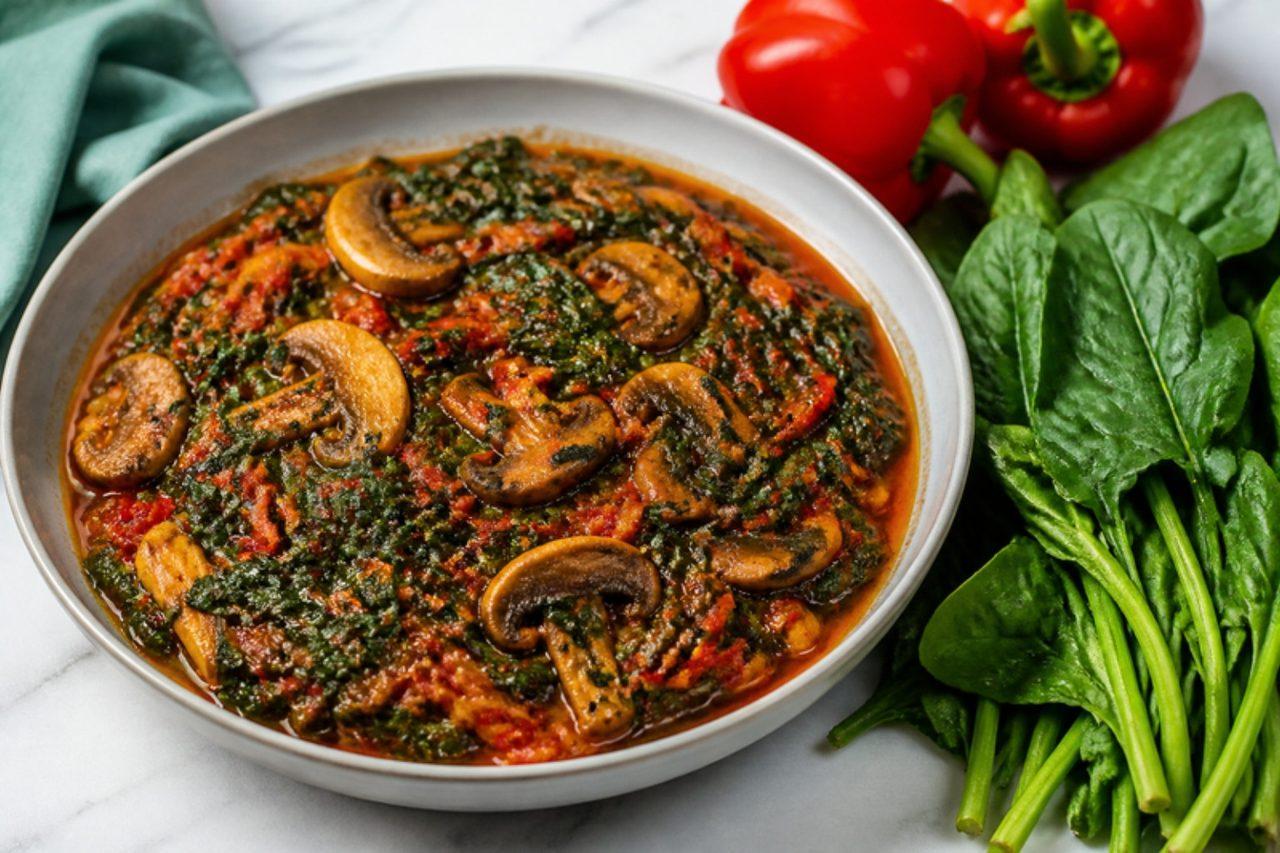
Efo riroSpinach stew

Efo riro, literally 'stirred greens', is the Yoruba vegetable stew cooked in homes from Ibadan to Lagos on any ordinary weekday, and eaten with pounded yam, eba or plain rice. Leafy greens are wilted into a rich base of blended peppers fried in palm oil with iru, the pungent fermented locust beans that give the dish its savoury backbone. Most families add assorted meats, stockfish and crayfish; some keep a little smoked fish on the side for those who want it. This version leans on mushrooms, iru and a touch of smoked paprika instead. Chef's tip: squeeze the blanched greens really dry before they go into the sauce; wet spinach thins the stew and washes out the flavour.

by KrazyBadal 0 views

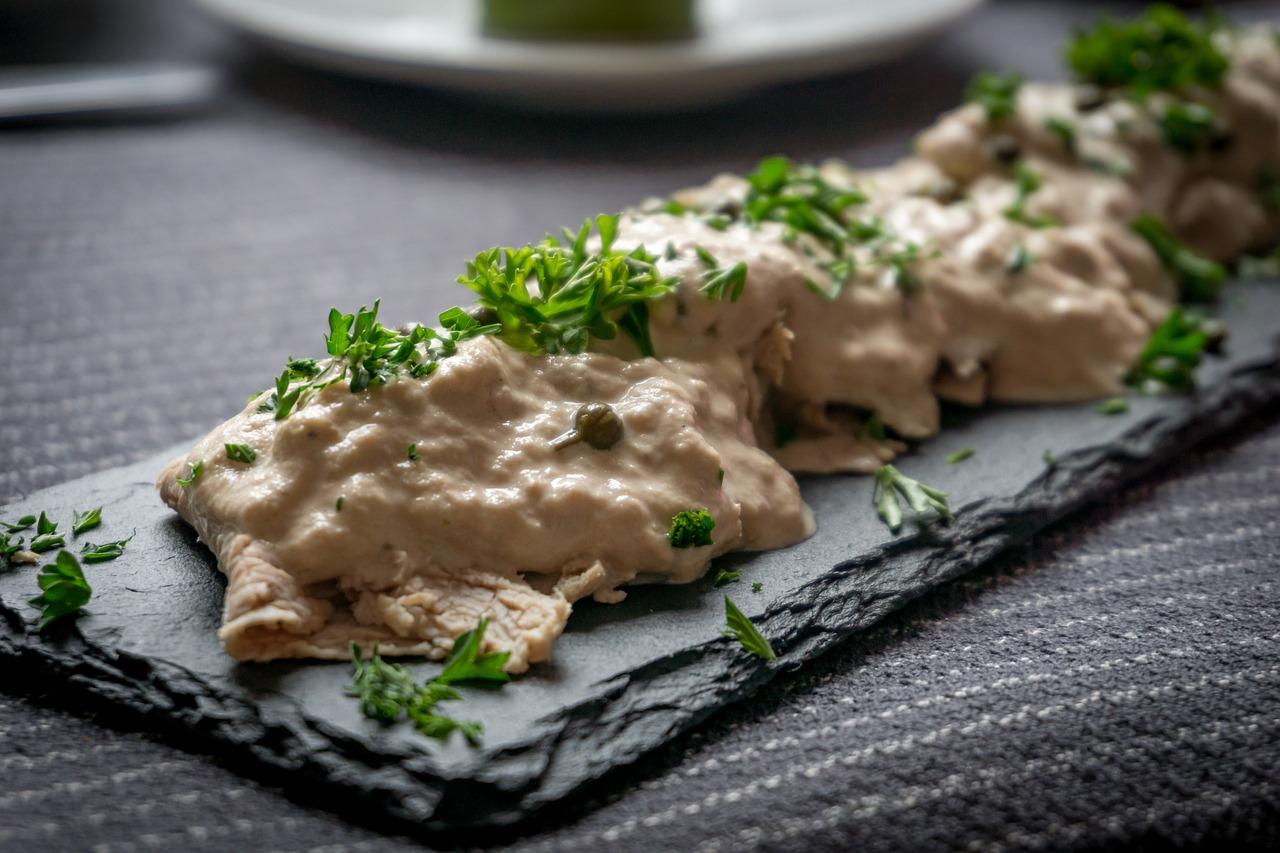
Vitello tonnatoVeal with tuna sauce

On the hottest days of a Piedmontese summer, and above all for the Ferragosto holiday in mid-August, families set out a platter of cold, thinly sliced veal hidden under a pale, velvety sauce of tuna, anchovy and capers. The combination sounds odd and tastes wonderful: tender, mild meat and a savoury, lemony sauce that is rich without being heavy. This version follows the older Piedmontese style, thickening the sauce with hard-boiled egg yolks and the veal's own poaching broth instead of raw-egg mayonnaise; if you prefer a mayonnaise base, use one made with pasteurised eggs. Serve it as a starter or a summer main with a green salad and bread. A common mistake is slicing the meat while warm; it frays and tears, so chill it first and cut it as thin as you can. Chef's tip: assemble it the evening before; overnight in the fridge, the sauce seeps into the meat and the flavours settle together.

120 minItalianMeatGluten free
by KrazyBadal 0 views

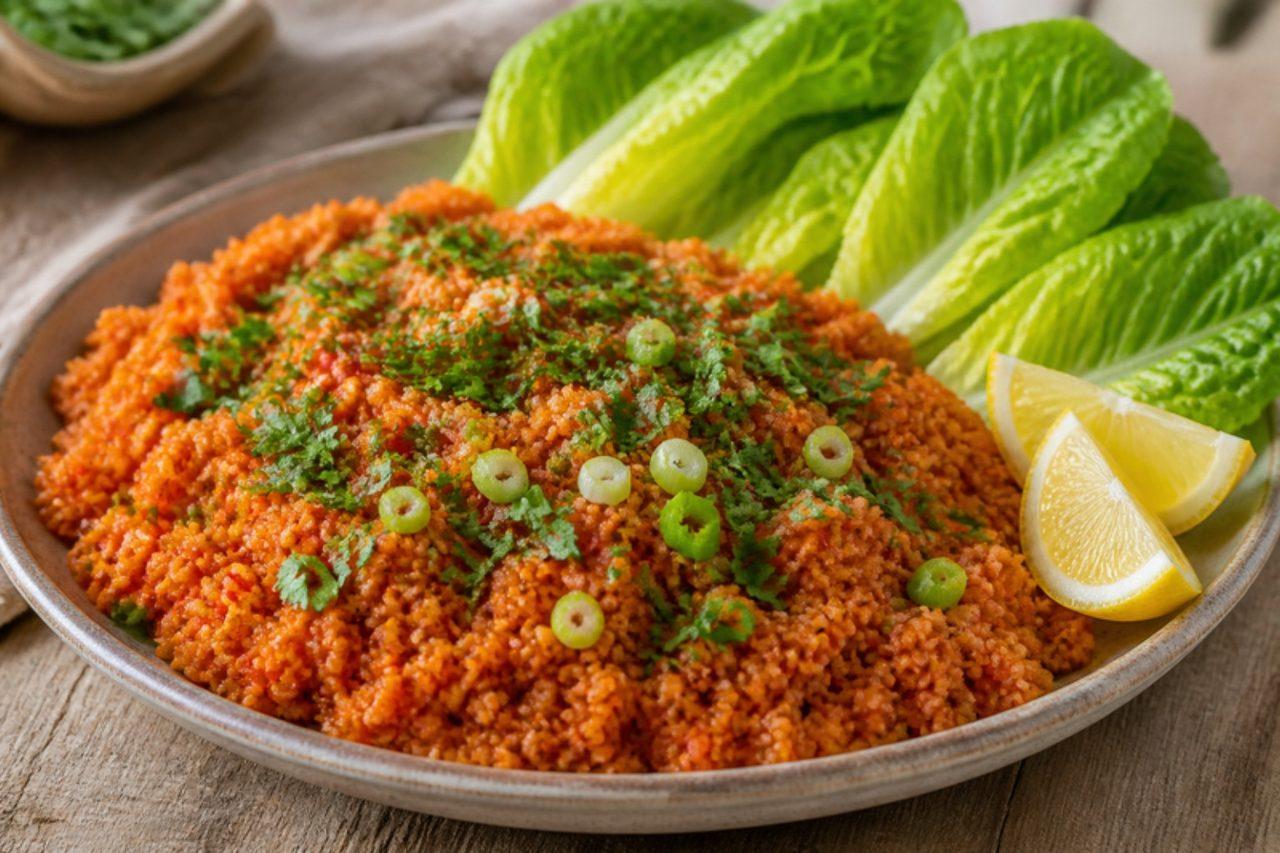
EetchBulgur in tomato and pepper

Eetch is a Western Armenian dish from the old Cilician towns, carried by families to Aleppo, Beirut and the Armenian quarters of American cities. Fine bulgur is stirred into a hot sauce of onion, red pepper, tomato and pepper paste and left to drink it up, then finished with lemon, parsley and spring onion and eaten at room temperature, often scooped up with lettuce leaves. Unlike a herb-heavy raw bulgur salad, eetch is cooked, so it is rich and tomatoey, and it is a fixture of Lenten tables, picnics and mezze spreads. It keeps for days, which makes it a favourite for lunchboxes. Chef's tip: take the pan off the heat before adding the bulgur and keep the lid on; the grains soften in the residual heat and stay separate instead of turning to porridge.

by KrazyBadal 0 views

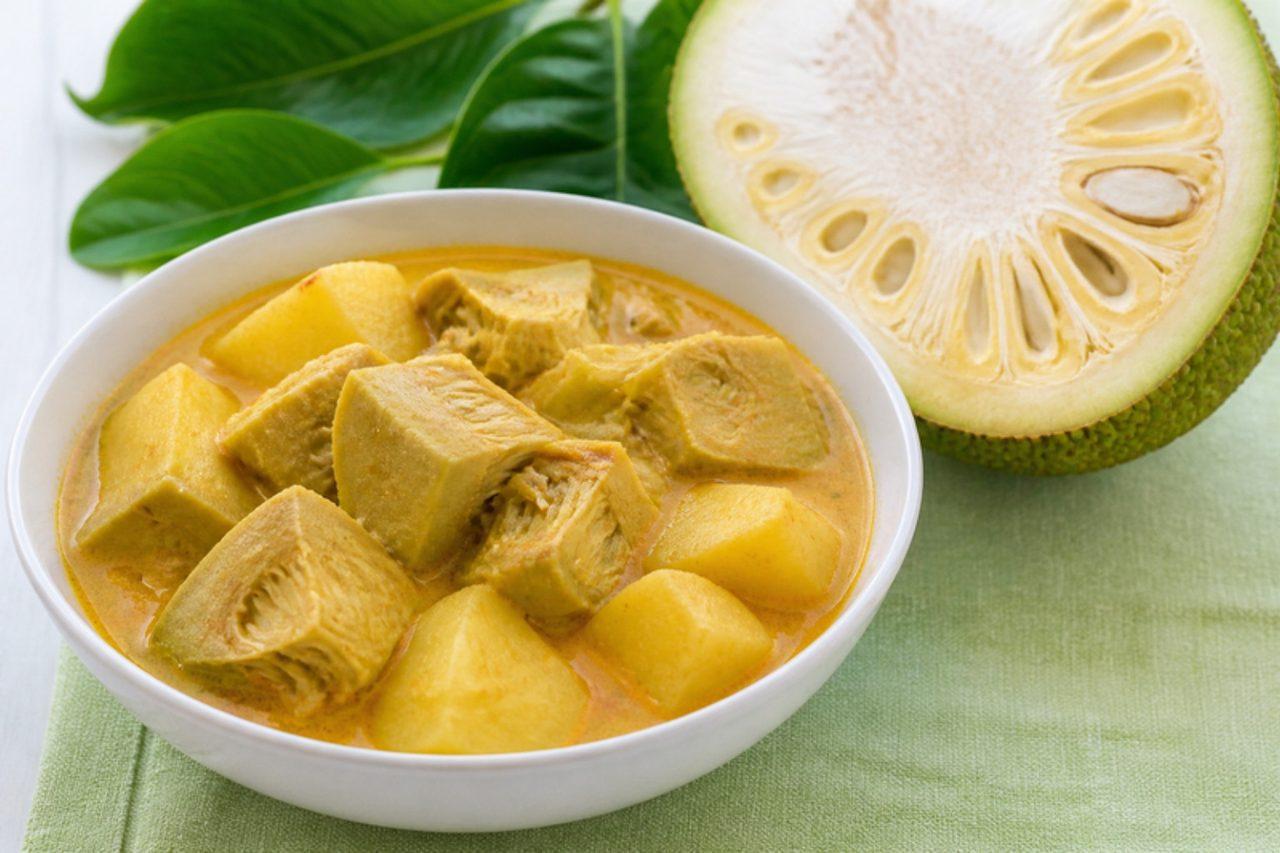
Echorer dalnaYoung jackfruit curry

In early summer, Kolkata's bazaars sell baby green jackfruit (echor), and Bengali households cook it into a dalna rich enough to be called gachh-patha, 'mutton from the tree'. The jackfruit is boiled, fried with potato and simmered in a ginger, cumin and tomato gravy, finished with ghee and garam masala. Its chewy, meaty texture soaks up the spice. It is a Sunday lunch dish, eaten with rice or luchi. Chef's tip: buy jackfruit no longer than your forearm, with pale seeds; older fruit is fibrous and the seeds are hard.

by KrazyBadal 0 views

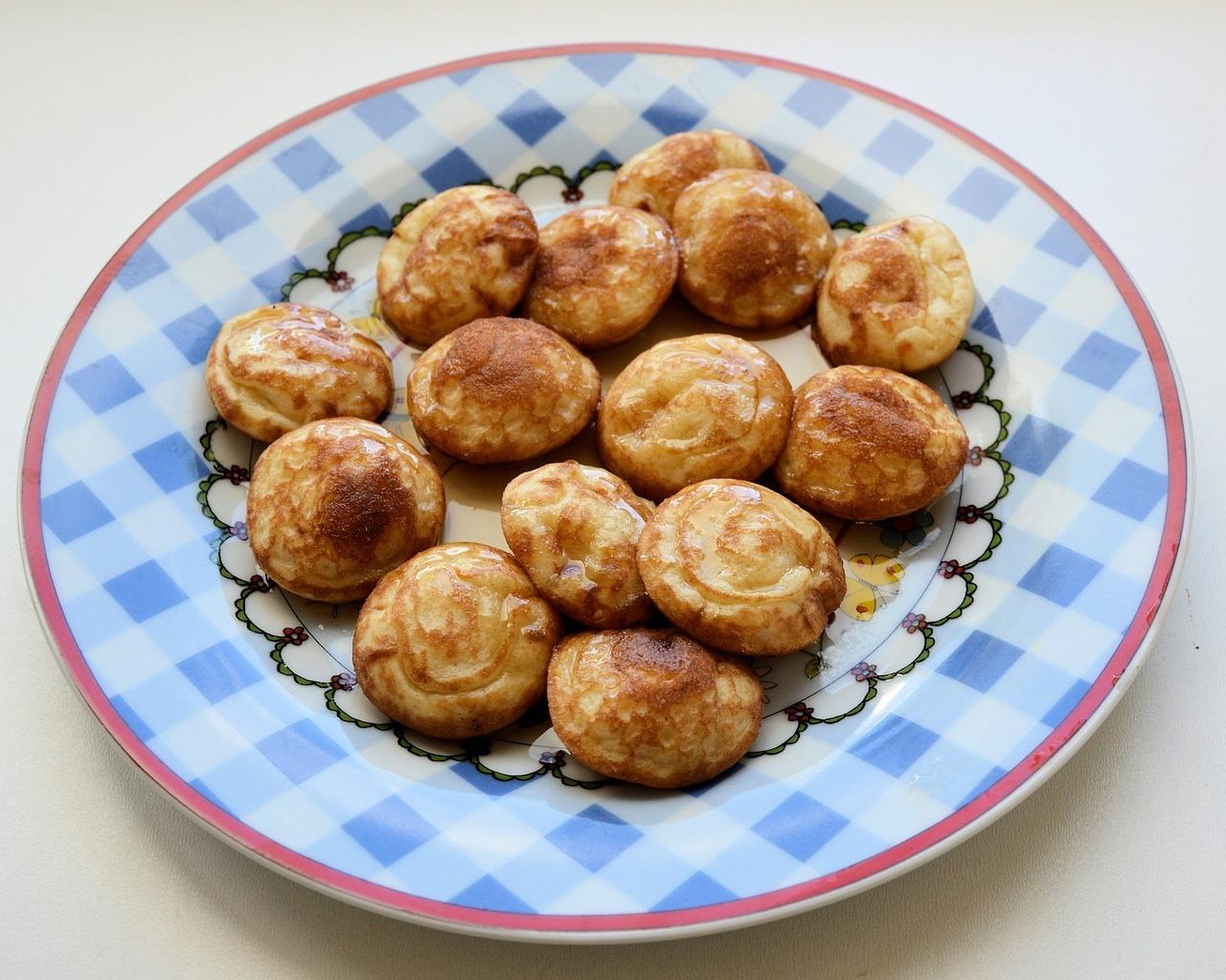
VitumbuaCoconut cardamom rice pancakes

Small, round Swahili rice pancakes made from a yeasted batter of rice flour, coconut milk, grated coconut, sugar and cardamom. They're crisp and golden outside, soft and spongy inside. Serve hot with tea.

by KrazyBadal 0 views

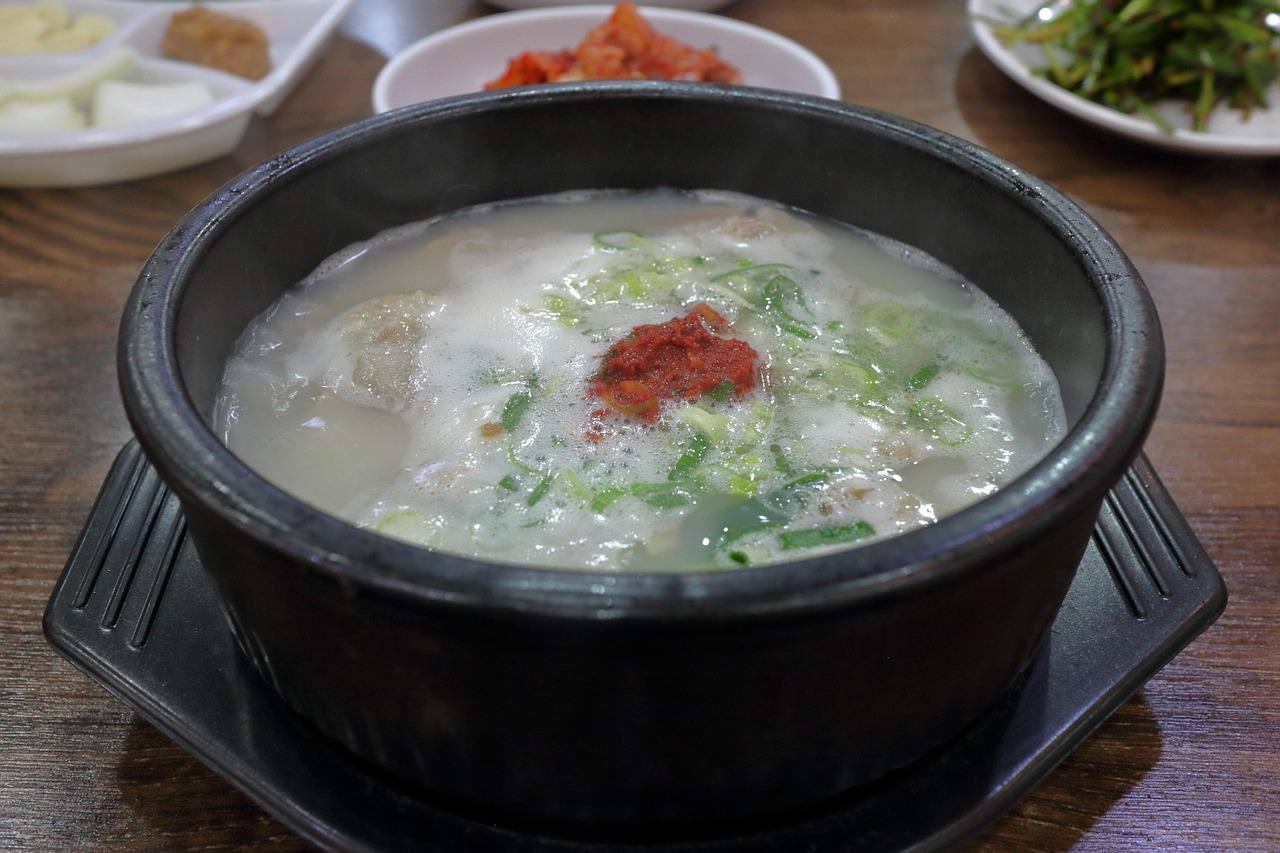
Dwaeji gukbapPork and rice soup

Ask anyone in Busan for a bowl of something filling at any hour and they will probably send you for dwaeji gukbap. Seomyeon has a whole alley of gukbap restaurants, open from early morning to late at night, serving the soup to market workers, students and people heading home after a night out. Pork bones are boiled hard for hours until the broth turns cloudy and white, then poured over sliced pork and rice. Each diner seasons their own bowl at the table with salted shrimp, chilli paste and a pile of garlic chives, with raw onion, green chilli and kimchi on the side. Chef's tip: season the soup in the bowl, not the pot; a little saeujeot at a time gives a clean, savoury depth that salt alone doesn't.

180 minKoreanSoups
by KrazyBadal 0 views

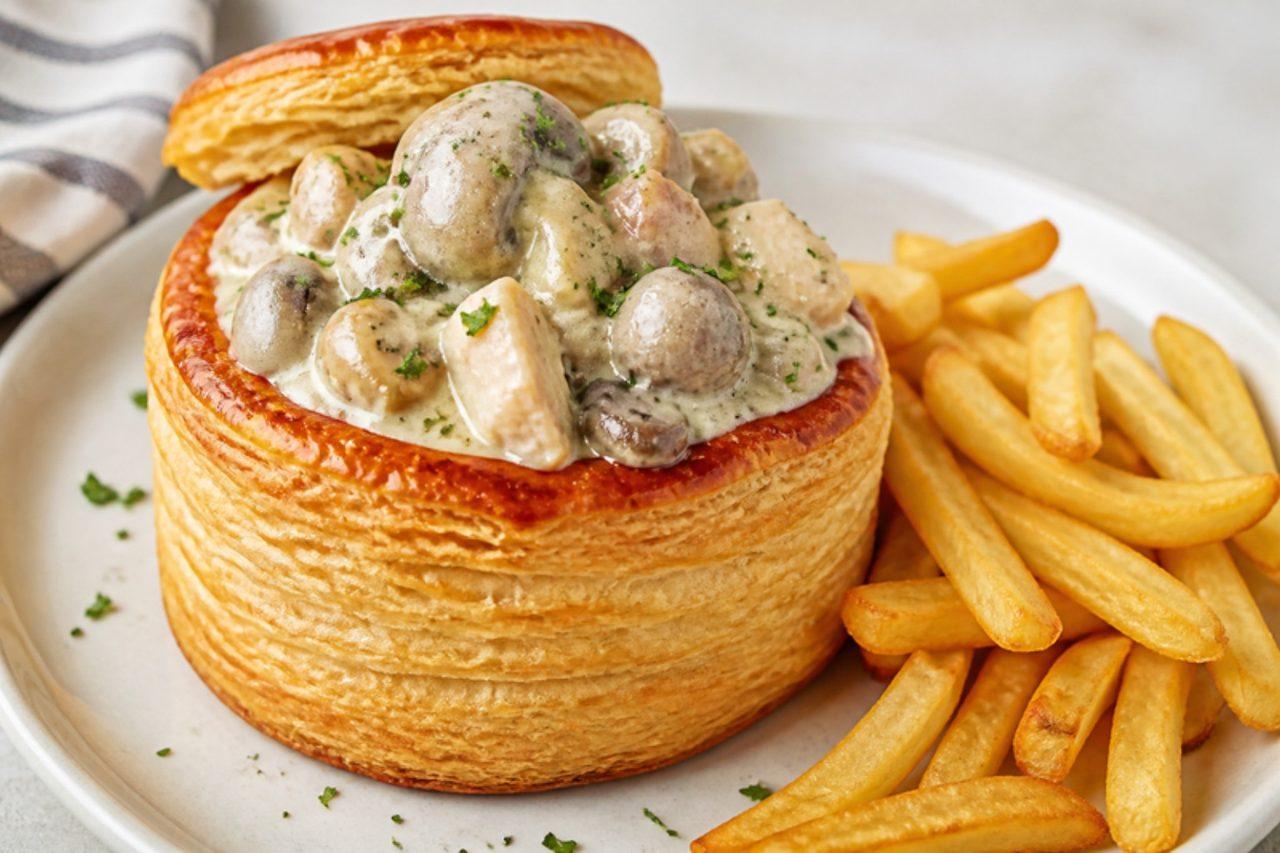
Vol-au-ventChicken and mushroom pastry cases

In Belgium a vol-au-vent is not a party nibble but a full plate: a big puff-pastry case filled with creamy chicken ragout, button mushrooms and tiny meatballs, served with chips in Brussels brasseries and for family celebrations and Sunday lunches all over the country. The little meatballs are made with pork mince, so this dish contains pork. The sauce is built on the poaching stock from the chicken, which gives it far more flavour than milk. A mistake many cooks make is filling the pastry too early, so the base turns soggy; fill the cases just before they go to the table. Chef's tip: poach the meatballs in the same stock as the chicken; they take just 5 minutes and season the broth further.

by KrazyBadal 0 views

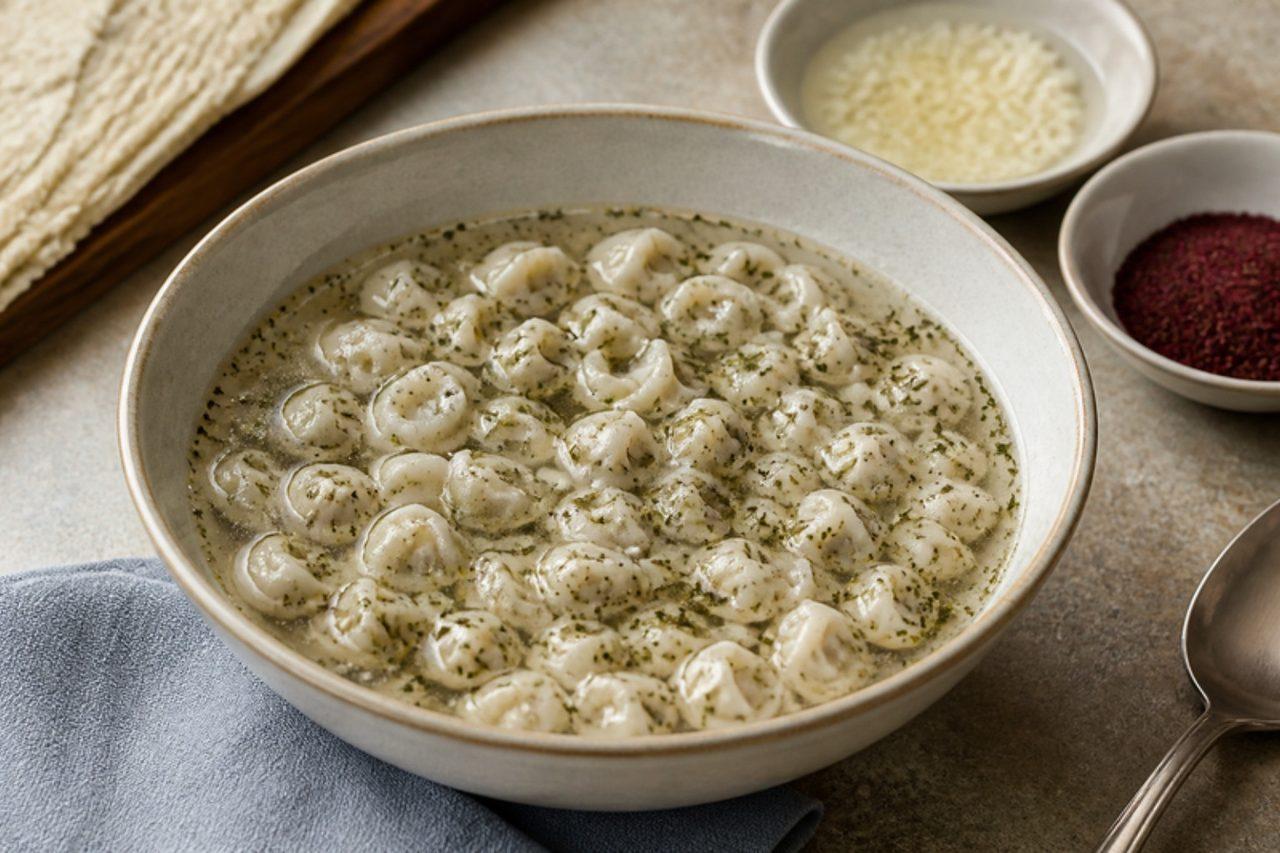
DushbaraTiny lamb dumplings in broth

Dushbara is the test of a patient cook in Azerbaijan: dumplings so small that a dozen fit on a spoon, filled with lamb and onion and served in clear bone broth. Families in Baku and the Absheron towns make them for New Year and Novruz, everyone sitting around the table folding together. At the table each bowl gets dried mint, a little crushed garlic in vinegar, and sumac. Over-filling is the usual problem; too much meat and the edges won't seal, so the dumplings open in the pot. Chef's tip: make the broth from lamb bones the day before and chill it, so you can lift off the fat and the soup stays crystal clear.

by KrazyBadal 0 views

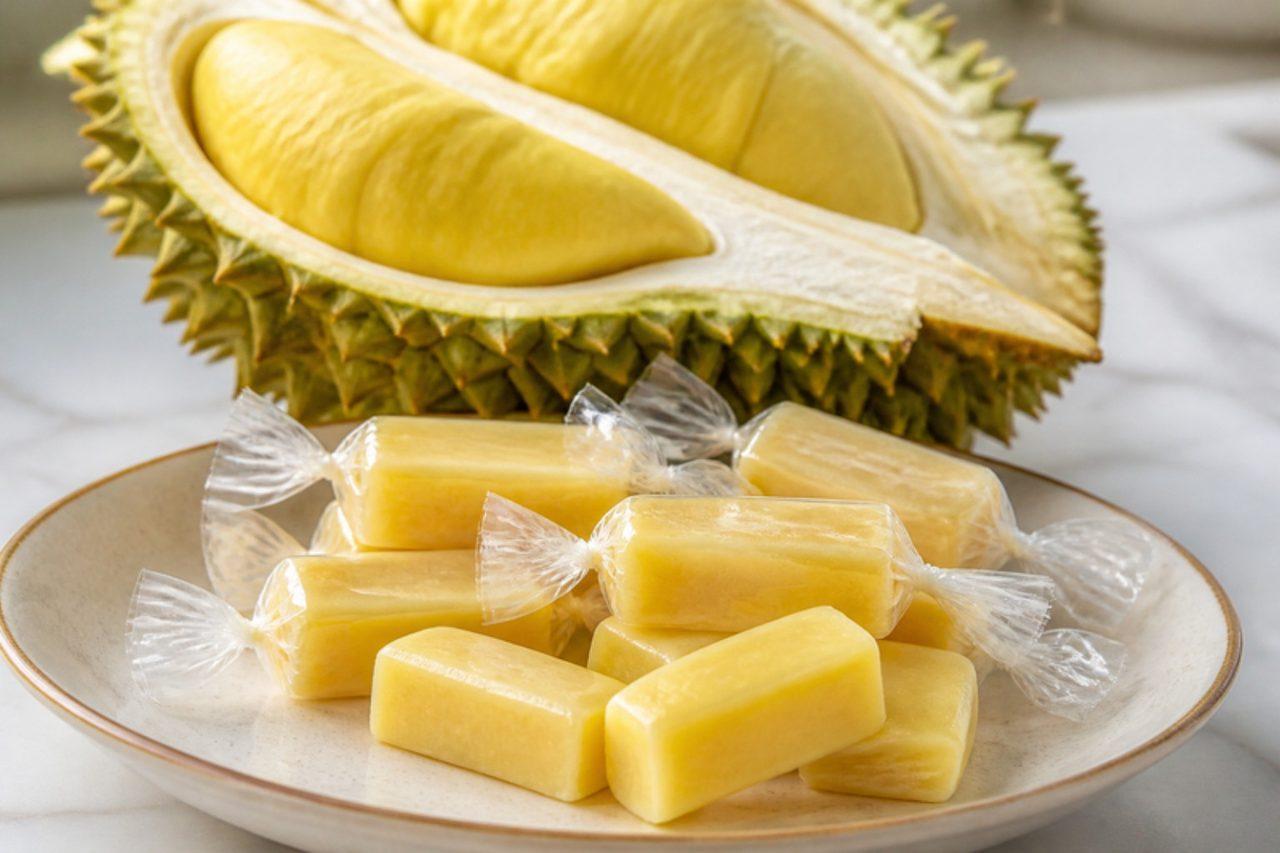
Durian candyDurian milk fudge

Davao City on Mindanao is the Philippines' durian capital, and its roadside stalls sell the fruit by the kilo next to boxes of durian candy for travellers who can't carry a whole one home. Ripe durian pulp is cooked slowly with condensed milk, sugar and butter until it becomes a dense, chewy fudge that tastes of caramel, custard and that famously strong fruit. Chef's tip: frozen durian pulp works perfectly; thaw it fully and pick out any seeds and fibrous bits before you start.

by KrazyBadal 0 views

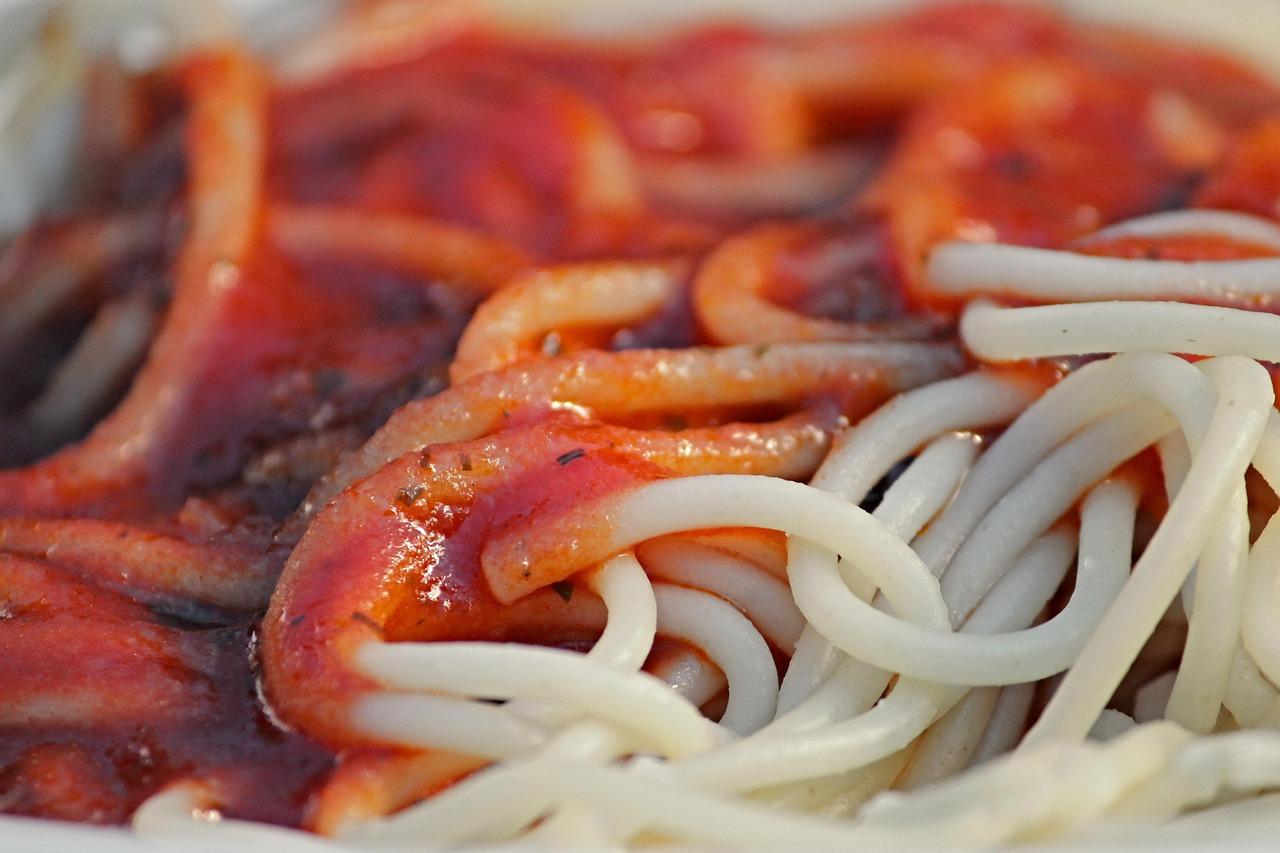
Asmara pasta al sugoSpaghetti in berbere tomato sauce

Pasta is part of everyday life in Asmara, a legacy of the Italian years, and in Eritrean homes and cafés 'pasta al sugo' means spaghetti in a slow tomato sauce warmed with berbere, garlic and plenty of onion. It is eaten on weekdays and after church on Sundays, often with a banana or a green chilli on the side. The usual sauce has minced beef; this one uses finely chopped mushrooms and carrot for the same body. Chef's tip: cook the onions and berbere slowly before the tomato goes in; raw berbere tastes dusty.

by KrazyBadal 0 views

Vegetarian vori voriCornmeal dumpling and vegetable soup

Vori vori is the soup Paraguayan grandmothers make on cold June and July evenings: a golden broth full of bori, small balls of cornmeal and cheese that swell soft as they simmer. The name is a Guaraní take on the Spanish 'bolita' (little ball). It's usually made with hen; this version gets its colour and body from pumpkin, carrot and a sofrito with saffron or turmeric. Chef's tip: shape the balls no bigger than a hazelnut; they double in size and larger ones stay raw inside.

by KrazyBadal 0 views

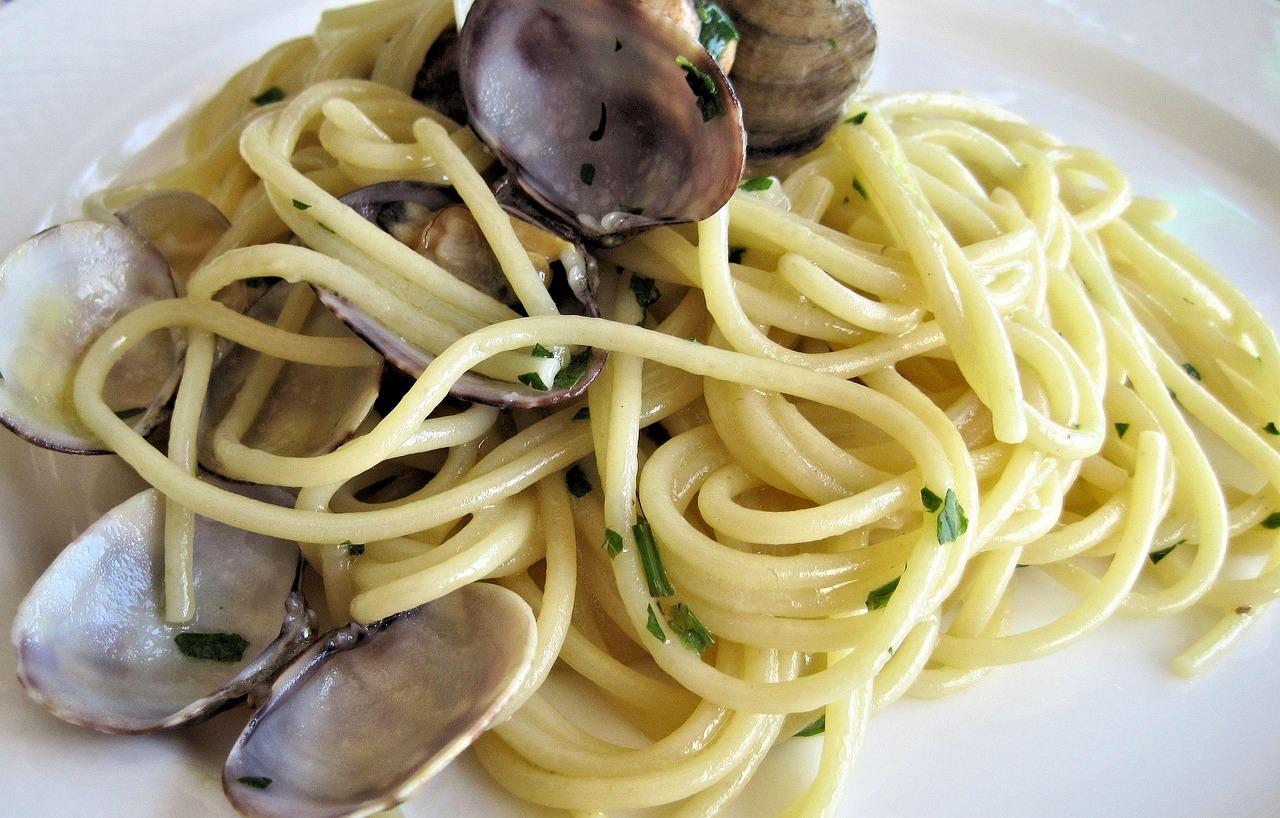
Spaghetti alle vongoleSpaghetti with clams

Naples cooks this on Christmas Eve, when the feast is meatless, and all summer long in seaside trattorie along the bay. The clams open in a hot pan of garlicky oil and white wine and release their sea-salty juice, which the half-cooked spaghetti then drinks up as it finishes cooking, so every strand tastes of the shore. Neapolitans keep it in bianco, without tomato, with just a little chilli warmth and a heap of parsley. Most clams in shops are sold already purged of sand; if yours are not, soak them in cold salted water in the fridge for 30 minutes first. Serve with a glass of something cold and bread for the juices. Chef's tip: drain the spaghetti 2 minutes early and finish it in the clam liquor, tossing hard with a little extra oil, so the juices turn into a light, clinging sauce rather than a puddle in the bowl.

by KrazyBadal 0 views

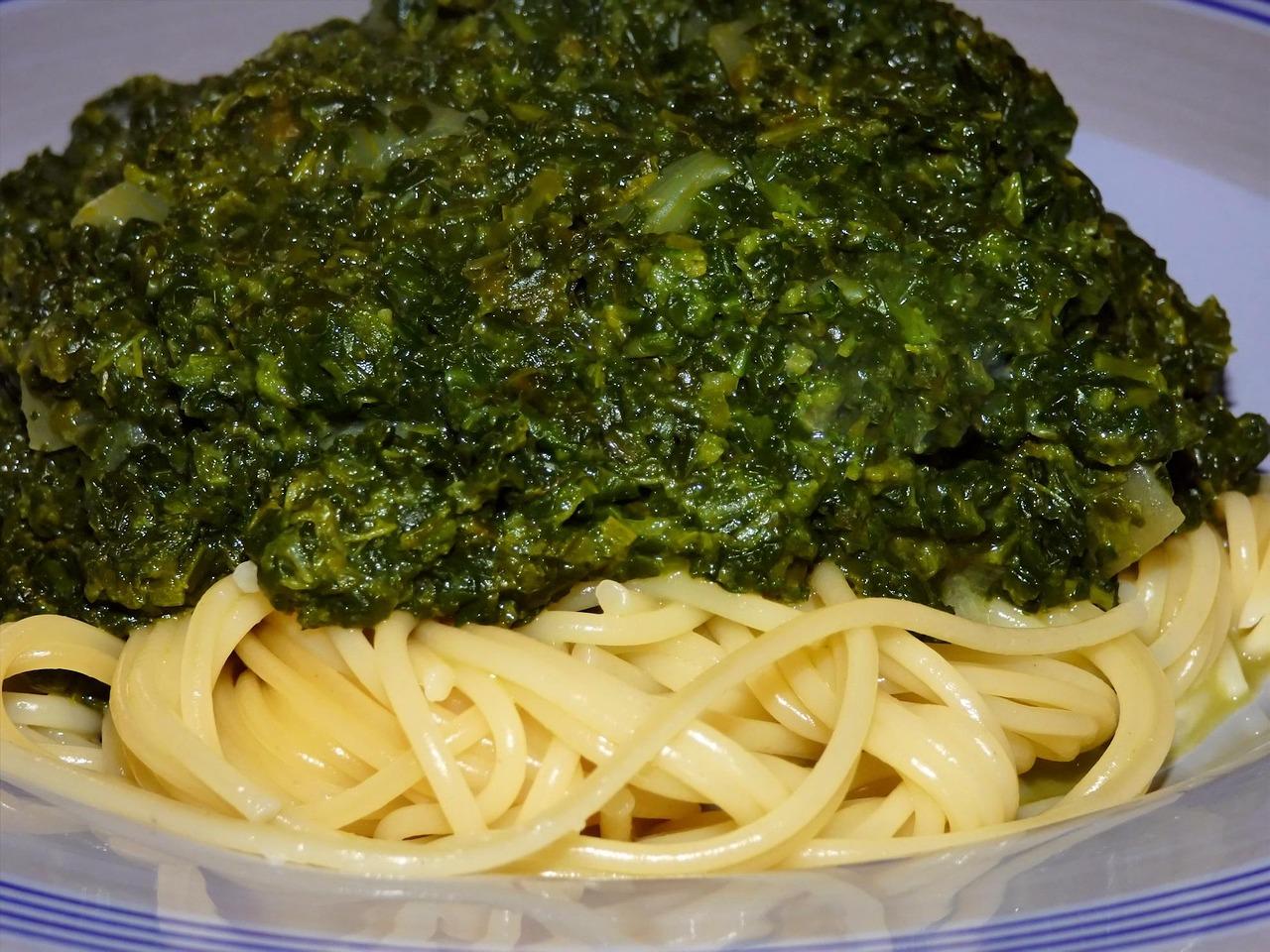
Spaghetti with sukumawikiSpaghetti with collard greens

A Kenyan twist on pasta: spaghetti tossed with sukumawiki (collard greens) cooked down with onions, garlic, fresh tomato, tomato paste, green chillies and lots of coriander. It's quick, green and full of flavour. Serve hot with garlic bread.

by KrazyBadal 0 views

SpanakopitaSpinach and feta pie

Spanakopita turns up everywhere in Greece: cut into squares at bakeries for a mid-morning snack, carried to the beach wrapped in paper, and set out on Easter and name-day tables beside the salads. A tray of it is a mass of soft, herby spinach and salty feta under layers of fillo that shatter as you cut. Spring onions and plenty of dill keep it fresh rather than heavy. Serve it warm or at room temperature with a tomato salad and olives; it tastes even better a few hours after baking. Feta is often made with animal rennet, so choose one labelled vegetarian. If you want to make your own pastry, our home-made fillo recipe works here. Chef's tip: squeeze the wilted spinach in a clean tea towel until it stops dripping; leaving the water in is the classic mistake that gives a soggy bottom.

by KrazyBadal 0 views

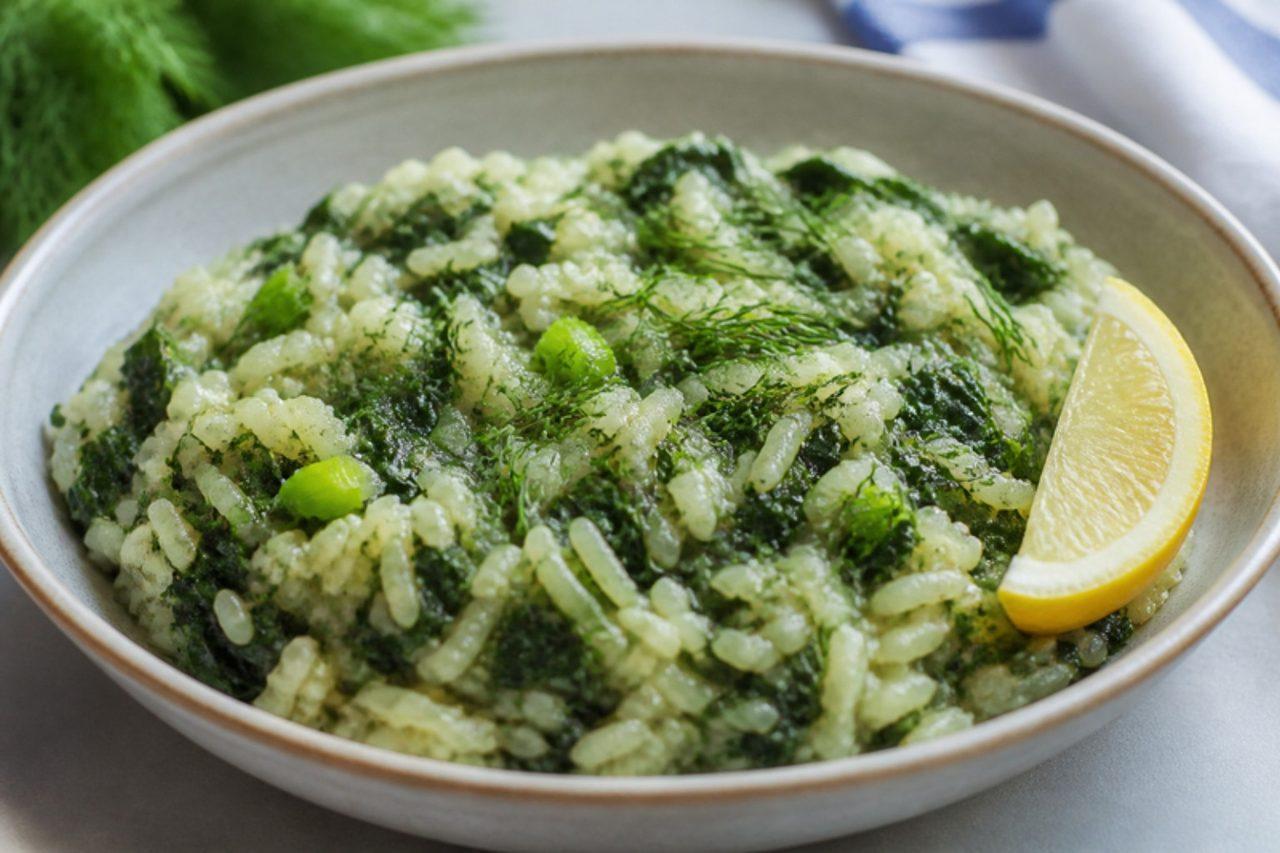
SpanakorizoSpinach and rice

Spanakorizo is a spring dish from Greek home kitchens, made when the markets fill with spinach and fresh dill. Rice is cooked right in the pot with wilted spinach, spring onions and olive oil until it is soft and a little loose, then squeezed with lemon. It isn't meant to be fluffy like a pilaf: Greek cooks like it moist, almost creamy. It is a full meal with a slab of feta and bread, or a side to fried eggs for those who eat them. Chef's tip: take it off the heat while it still looks a bit wet and let it rest covered for 5 minutes; cooking it until dry is the usual mistake and the rice turns stodgy as it cools.

by KrazyBadal 0 views

Dulce de lecheMilk caramel

Dulce de leche is Argentina's national sweet, spread on toast at breakfast, sandwiched in alfajores, rolled into panqueques and spooned onto flan. Argentine families traditionally make it by slowly cooking milk and sugar with a vanilla pod and a pinch of bicarbonate of soda, which helps it turn deep brown, until it becomes a thick, glossy caramel cream. It takes about three hours of gentle cooking and regular stirring. Chef's tip: use a wide, heavy pan and keep the heat low; the wider the surface, the faster the milk reduces, and the less it catches on the bottom.

by KrazyBadal 0 views

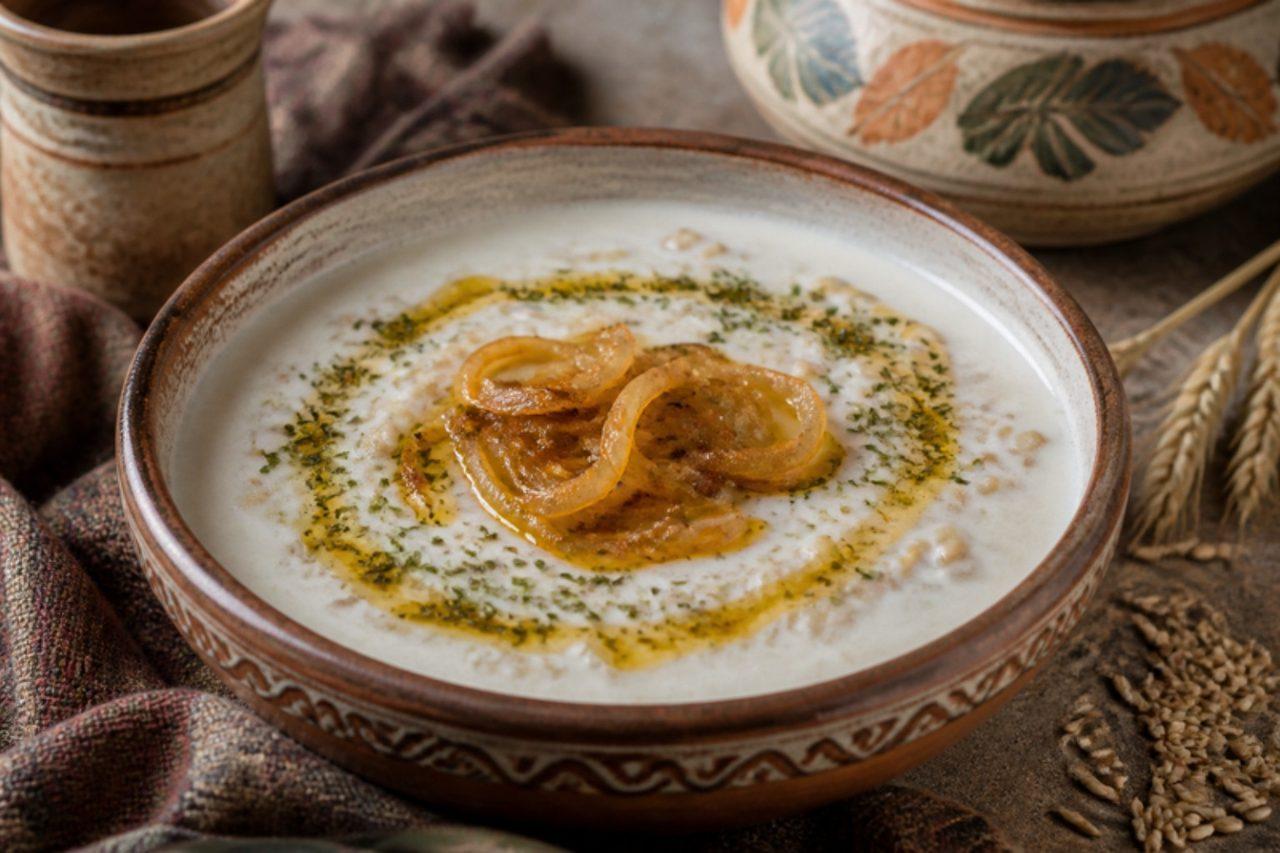
SpasYogurt and wheat soup

Spas is the yogurt soup of the Armenian highlands, eaten hot through the cold winters of Shirak and Gyumri and cold from the fridge in summer, when it tastes like a thick, savoury ayran. The base is tangy matsun (Armenian yogurt) thickened with egg and a little flour so it can boil without curdling, with plump grains of hulled wheat (dzavar) and a swirl of onions fried in butter with dried mint. Families make it for an ill relative, for a quick supper, and as a gentle start to a long feast. Serve with lavash and fresh herbs. Chef's tip: stir in one direction only, without stopping, until the soup comes to the boil; Armenian grandmothers swear by it, and steady stirring really is what keeps the yogurt smooth.

by KrazyBadal 0 views

SpeculaasSpiced biscuits

In the weeks before 5 December, Sinterklaas evening (pakjesavond), Dutch kitchens and bakeries fill with the smell of speculaas: thin, crisp, dark-brown biscuits heavy with cinnamon, clove, nutmeg, ginger, cardamom and a little white pepper. Traditionally they are pressed into carved wooden moulds shaped like windmills or Saint Nicholas himself; at home most people roll and cut them, scatter almonds on top and bake them crisp. Make your own spice mix (speculaaskruiden) once and you'll never buy it again. Chef's tip: let the dough rest overnight in the fridge; the spices bloom into the butter and the flavour is twice as deep the next day.

by KrazyBadal 0 views

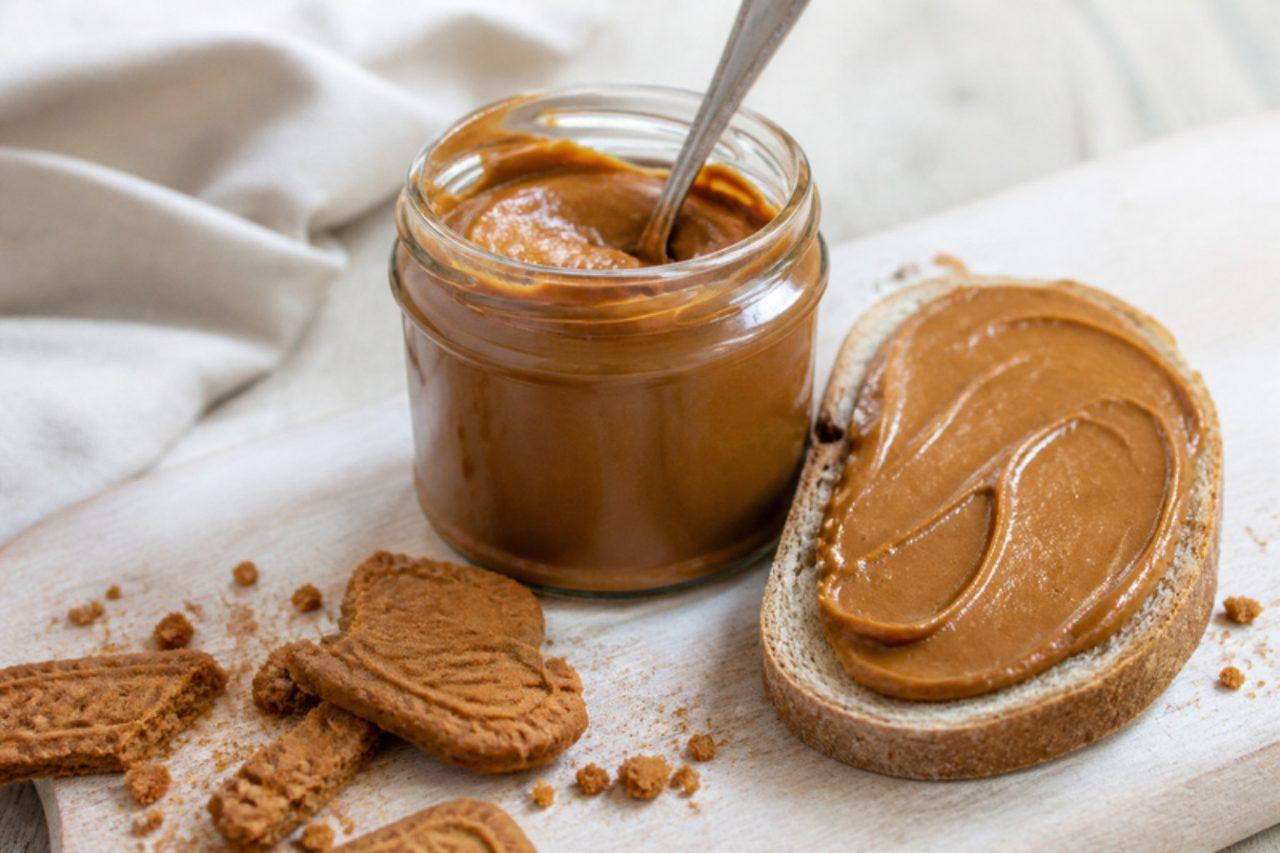
Speculoos spreadSpiced biscuit spread

Speculoospasta, a sweet spread made from crushed spiced caramel biscuits, is a Flemish invention of the 2000s: a home cook took the idea to a Belgian TV contest for inventors, and within a few years it sat next to chocolate spread on breakfast tables across Belgium and the Netherlands. Belgians spread it thickly on bread or toast, stir it into yoghurt, or warm it to pour over ice cream. Homemade, it tastes more of cinnamon and caramel and less of sugar than shop jars. Chef's tip: blitz the biscuits to a powder as fine as flour before adding liquid; any grit left now stays gritty in the jar.

by KrazyBadal 0 views

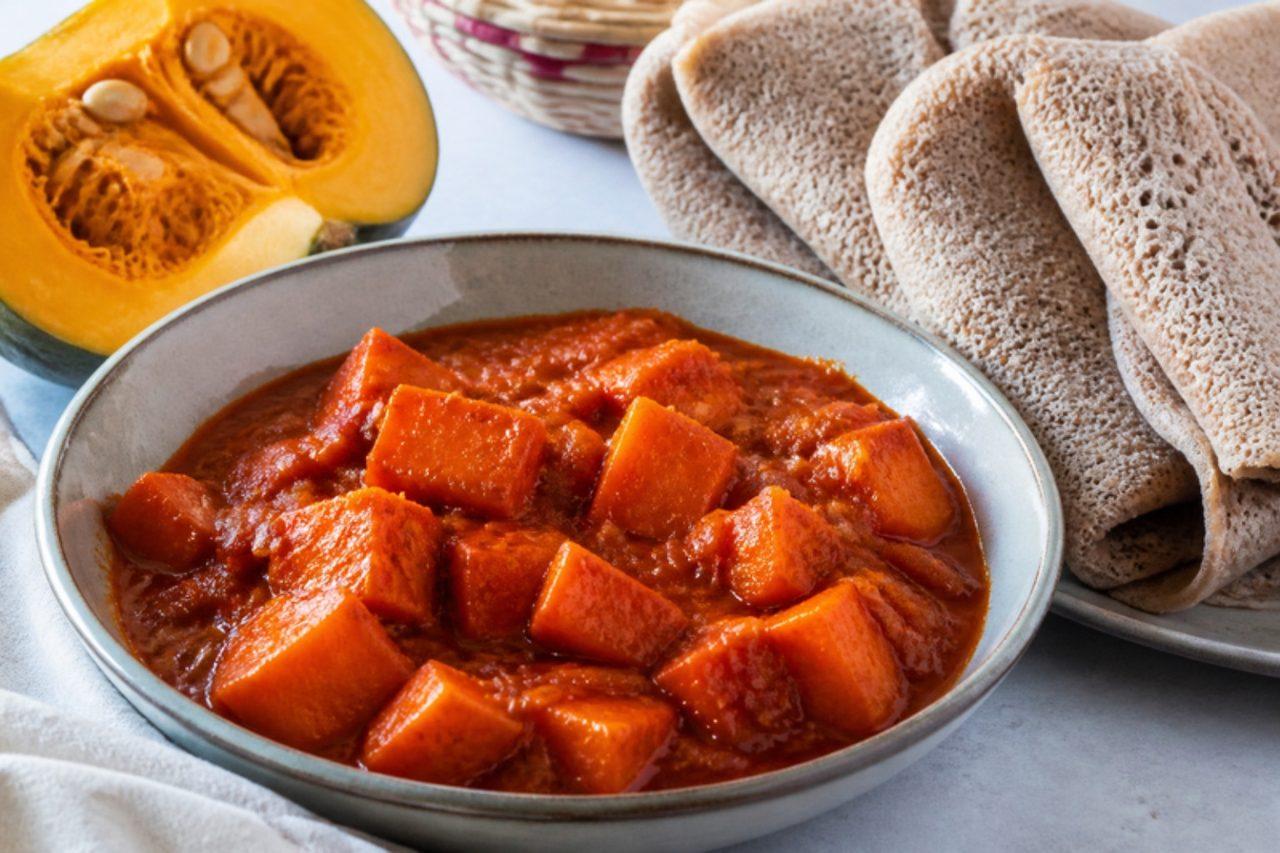
Duba watSpicy pumpkin stew

Duba wat is a fasting-season stew from the Ethiopian highlands, made when pumpkins are plentiful after the rains around Meskel in late September. Chunks of pumpkin are cooked in a classic red wat base of slow-cooked onion, garlic and berbere, so the sweetness of the squash plays against the heat of the spices. It is softer and sweeter than most wats and goes well with gomen and injera. Chef's tip: add the pumpkin only once the onion and berbere base is fully cooked and glossy; raw-tasting berbere spoils the dish.

by KrazyBadal 0 views

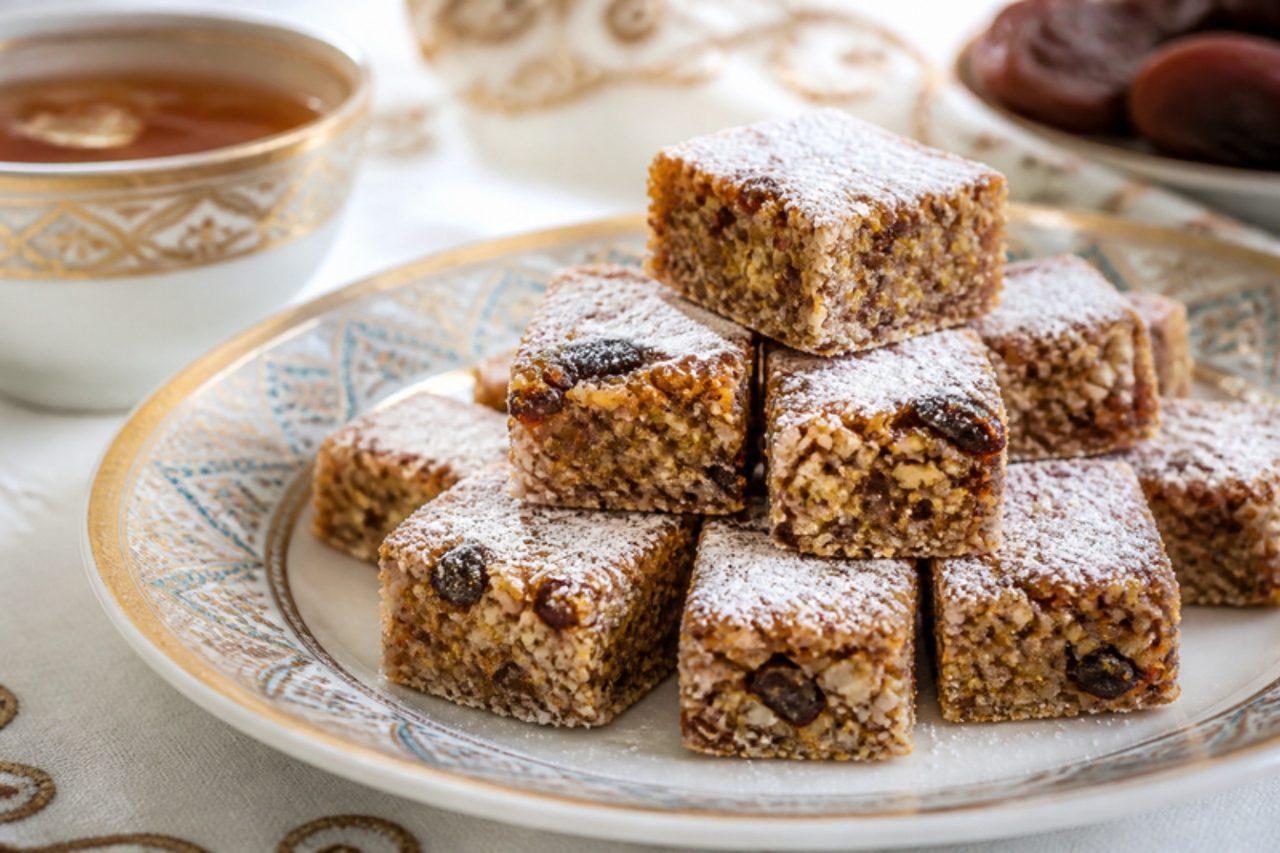
ZhentToasted millet and honey sweet

Zhent is one of the oldest Kazakh sweets: toasted millet (tary) pounded with dried kurt, dates or raisins, and bound with butter and honey into a crumbly, rich square. Herders made it to carry on long rides, and today it appears on the dastarkhan at Nauryz and weddings in southern Kazakhstan, beside baursak and dried fruit. It tastes nutty, salty-sour from the kurt and sweet, a bit like shortbread with a sharp edge. Chef's tip: toast the millet in a dry pan until it pops and smells like popcorn; under-toasted millet tastes raw and grassy.

by KrazyBadal 0 views

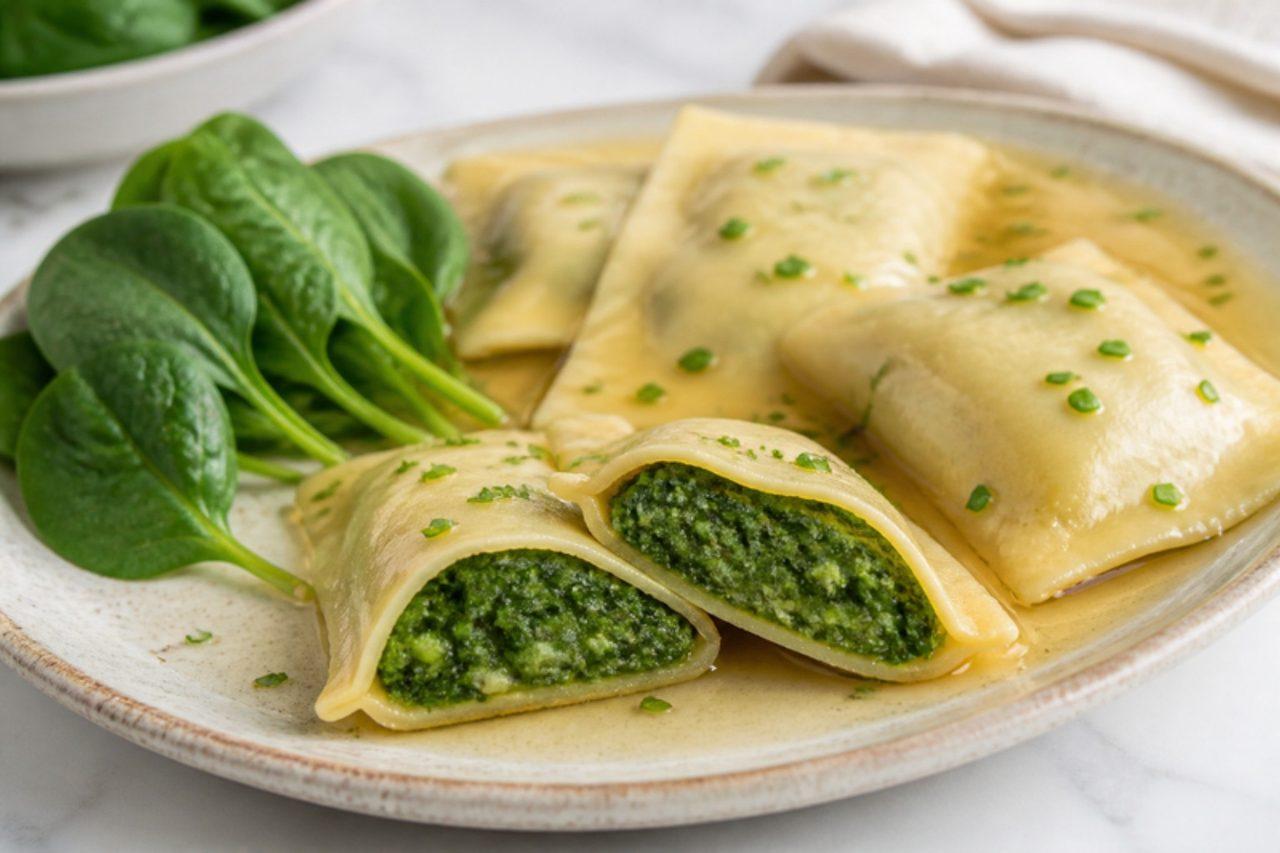
Spinach MaultaschenSpinach pasta pockets

Maultaschen are the big square pasta parcels of Swabia, around Stuttgart and Tübingen, and a dish with its own legend: Swabians jokingly call them 'little God-cheaters', because the dough was said to hide meat from God's eyes during Lent. Meat-free spinach Maultaschen are a long-standing Lenten and Good Friday dish there, filled with spinach, soaked bread, onion, parsley and a little cheese. Eat them in clear vegetable broth, or the next day sliced and fried in butter with onions and egg ('geröstet'). Chef's tip: press every pocket of air out as you seal the dough; trapped air expands in the hot water and splits the parcels open.

by KrazyBadal 0 views

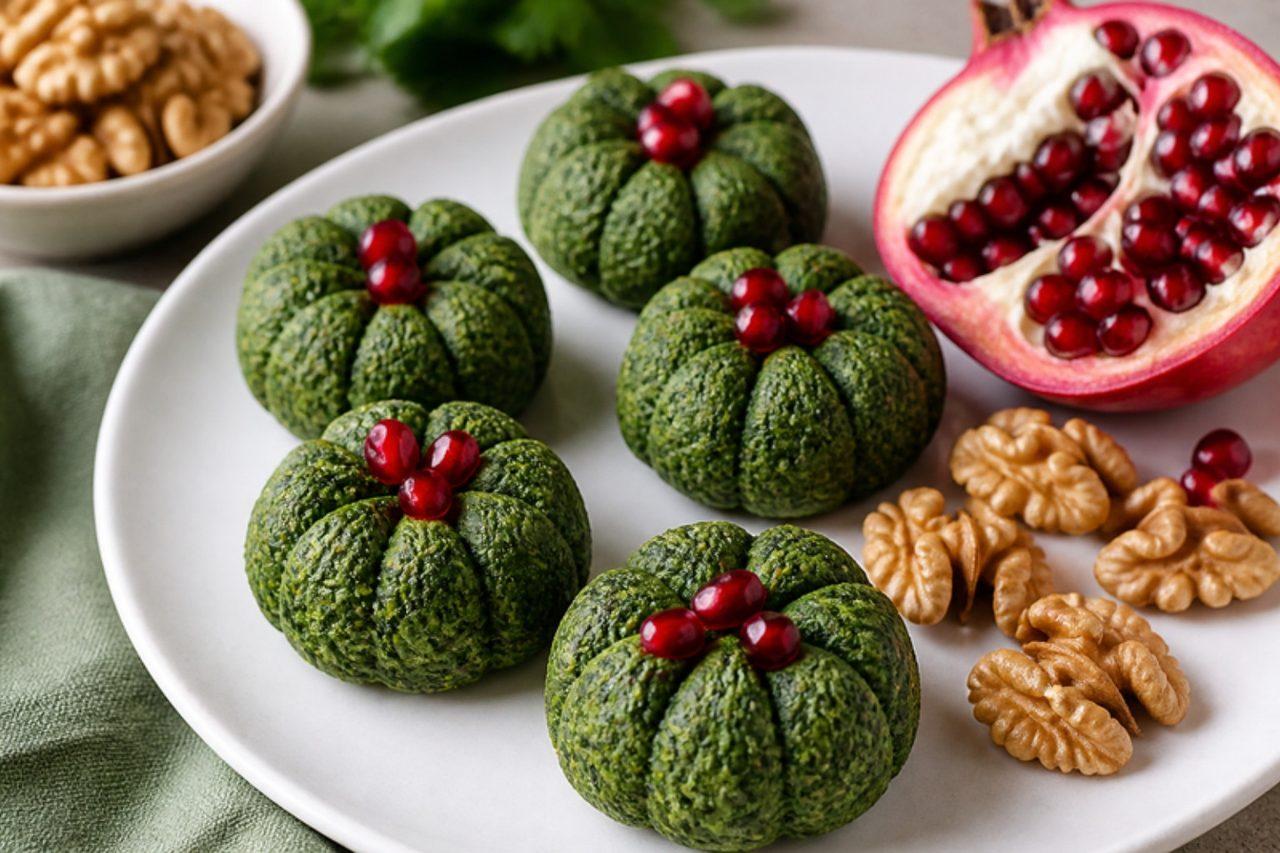
PkhaliSpinach and walnut balls

Pkhali are the walnut-bound vegetable pâtés that open almost every Georgian feast, the supra, from Tbilisi to the villages of Kakheti. Spinach is the best known, though beetroot, beans, leeks and nettles are made the same way, and in Lent they become the heart of the meal. The cooked greens are chopped fine with walnuts, garlic, coriander, vinegar and spices, shaped into small balls and pressed with a criss-cross, then dotted with pomegranate seeds. Eat them cold with mchadi or bread. The common mistake is not squeezing the spinach hard enough, which makes the pkhali loose and watery. Chef's tip: they taste much better the next day, once the garlic and vinegar have soaked into the walnuts, so make them a day ahead.

by KrazyBadal 0 views

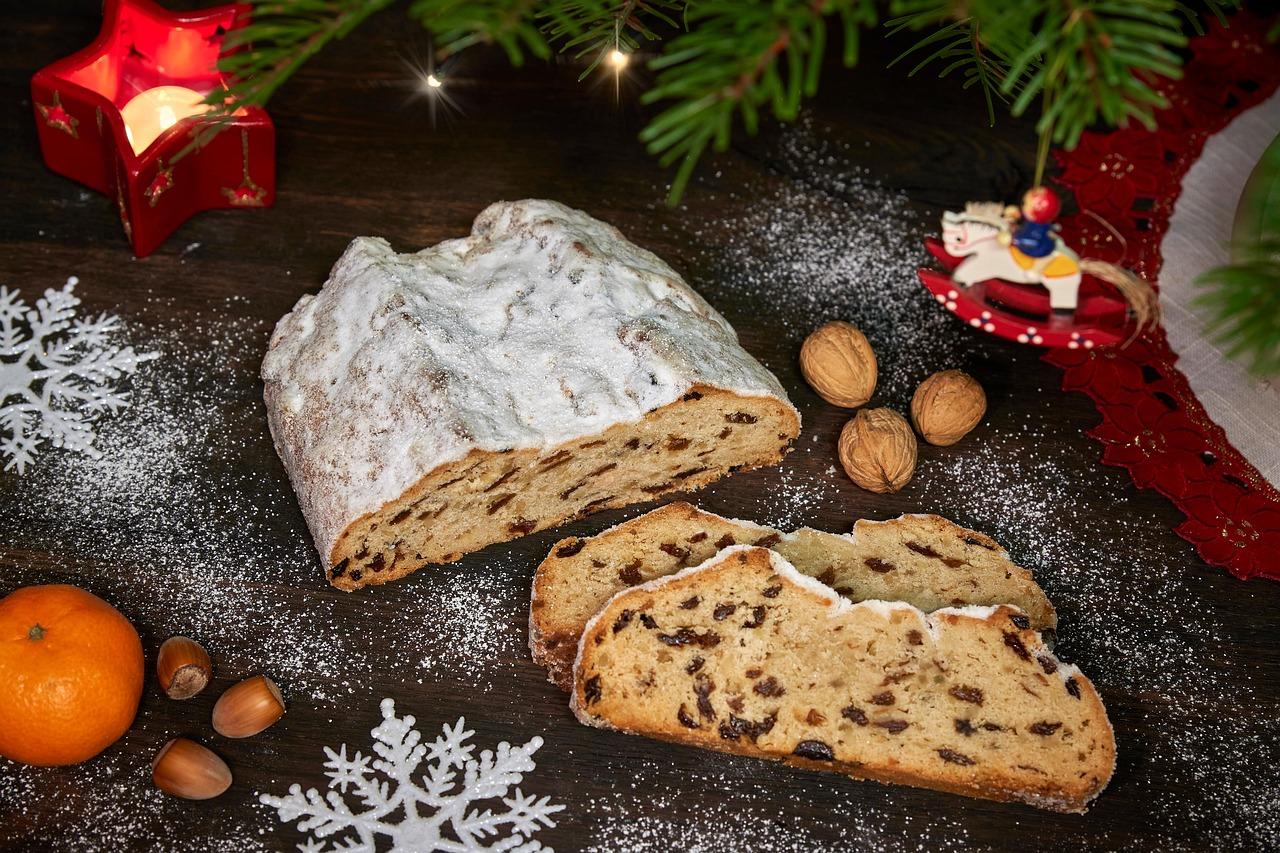
StollenFruit Christmas bread

Dresden has baked Christstollen for more than 500 years, and every December the city holds a Stollen festival with a giant loaf paraded through the old town to the Striezelmarkt. The loaf's shape, folded over and dusted white, is said to show the Christ child wrapped in swaddling cloth. It's a rich, dense yeast bread, heavy with butter, raisins, candied peel and almonds, brushed with melted butter straight from the oven and buried in sugar. It's baked weeks before Christmas and sliced thinly through Advent. Chef's tip: wrap it tightly and let it rest for at least a week before cutting; the flavours ripen and the crumb turns moist.

120 minGermanBaking
by KrazyBadal 0 views

Zhong dumplingsPork dumplings in chilli oil

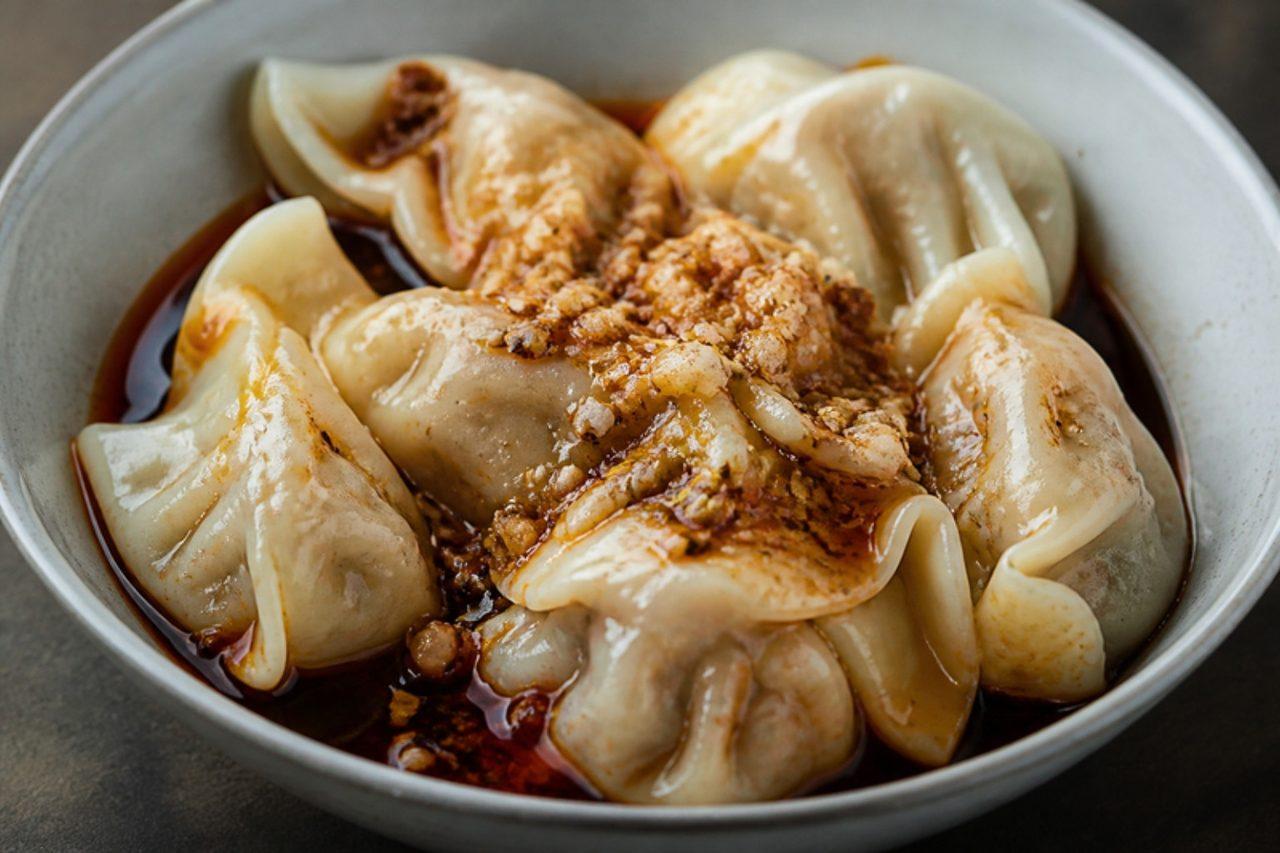
A snack shop opened by a Mr Zhong in Chengdu in the 1890s still serves these little half-moon dumplings, and every teahouse snack menu in the city has a version. Unlike northern dumplings, they hold only pork, no cabbage or chives, so the filling is soft, juicy and gingery. The magic is the sauce: a spiced, syrupy soy sauce simmered with brown sugar, star anise and cinnamon, spooned over with fiery chilli oil and a punch of raw garlic, so each bite is sweet, salty, hot and pungent at once. Eat them as an afternoon snack or a starter before noodles. Chef's tip: make the sweet soy sauce first; it keeps in the fridge for a month and is just as good on noodles or a plate of greens.

by KrazyBadal 0 views

WaakyeRice and black-eyed beans

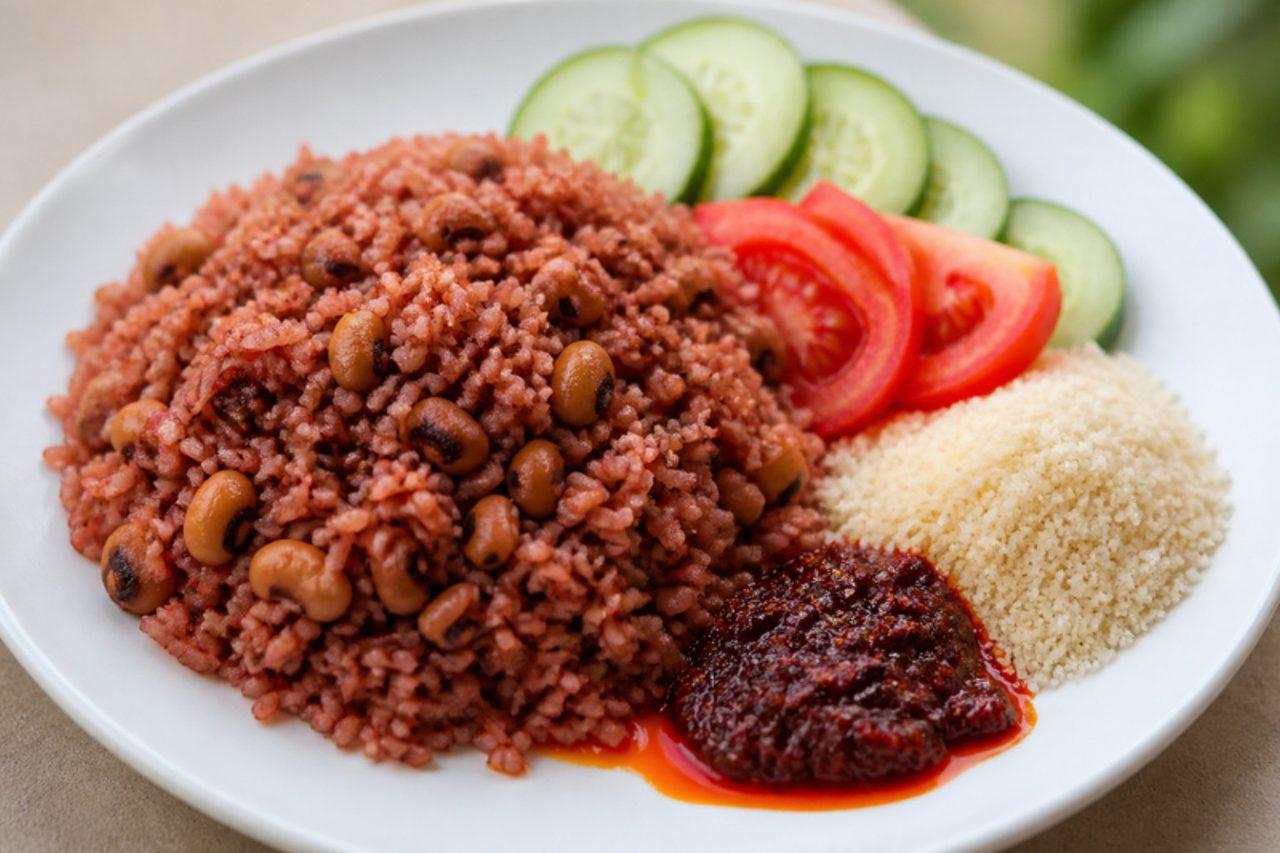
Waakye (say 'waa-chay') came south from the Hausa communities of northern Ghana and is now Accra's favourite breakfast and lunch, sold from big pots wrapped in leaves at roadside stalls before most offices open. Rice and black-eyed beans are cooked together with dried sorghum leaf stalks (waakye leaves), which dye the pot a deep reddish brown and add a faint earthy note. A full plate comes loaded with shito, gari, spaghetti (talia), salad and fried plantain. Chef's tip: cook the beans almost soft before the rice goes in; beans and rice finishing together is the whole trick.

by KrazyBadal 0 views

DovgaHerb and yogurt soup

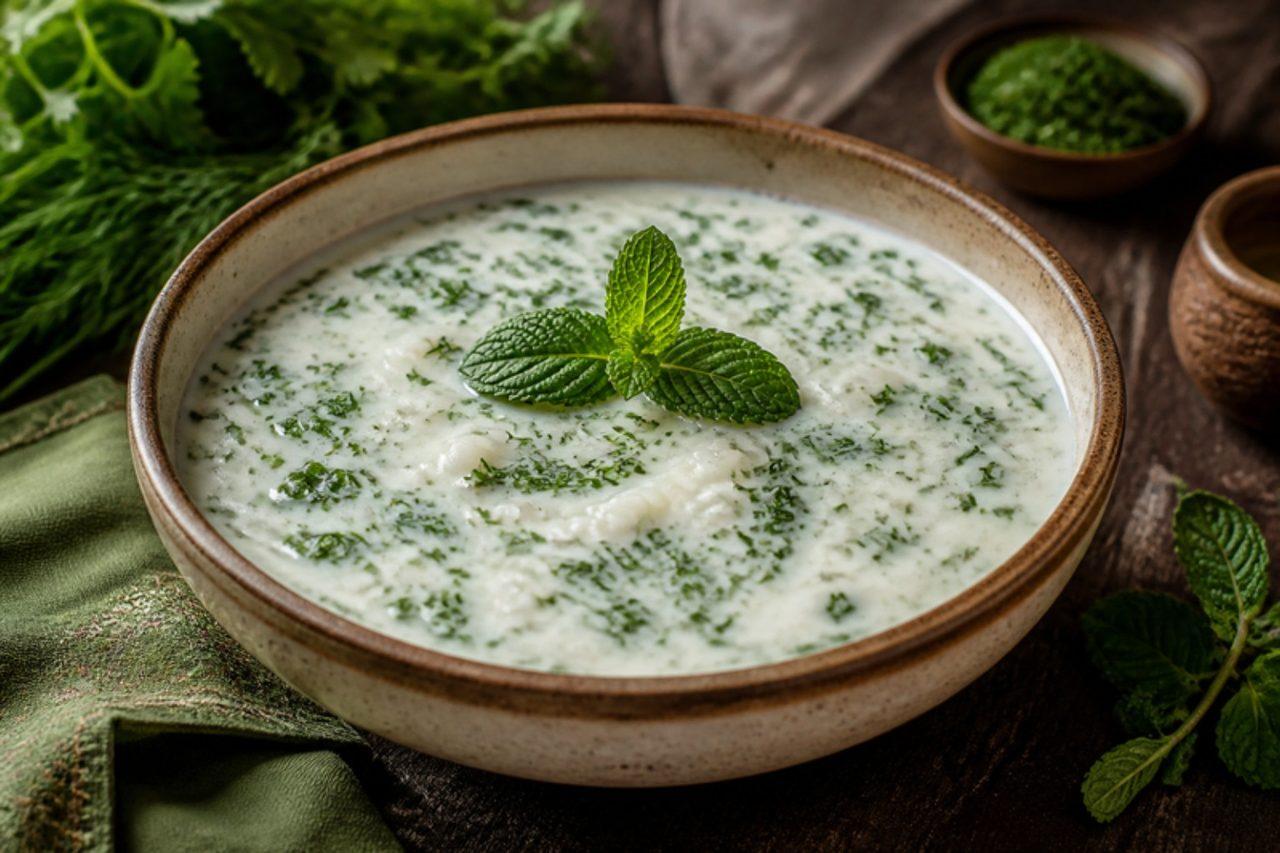
Dovğa is green, tangy and cooling, the soup Azerbaijanis drink cold from glasses on hot Baku afternoons and eat hot in bowls when the Absheron wind turns chilly. Yogurt is thinned, thickened with rice and egg, then packed with chopped spinach, dill, coriander, mint and sorrel, until the soup is more herbs than dairy. It is served at weddings and at Novruz to settle the stomach after rich food, and many cooks add chickpeas. Unlike Armenian spas, there is no fried onion or wheat; the flavour is all fresh herbs and sour yogurt. Chef's tip: add the herbs only once the yogurt is boiling steadily and stable; they wilt in seconds, and the colour stays bright green.

by KrazyBadal 0 views

Batata harraSpicy garlic potatoes

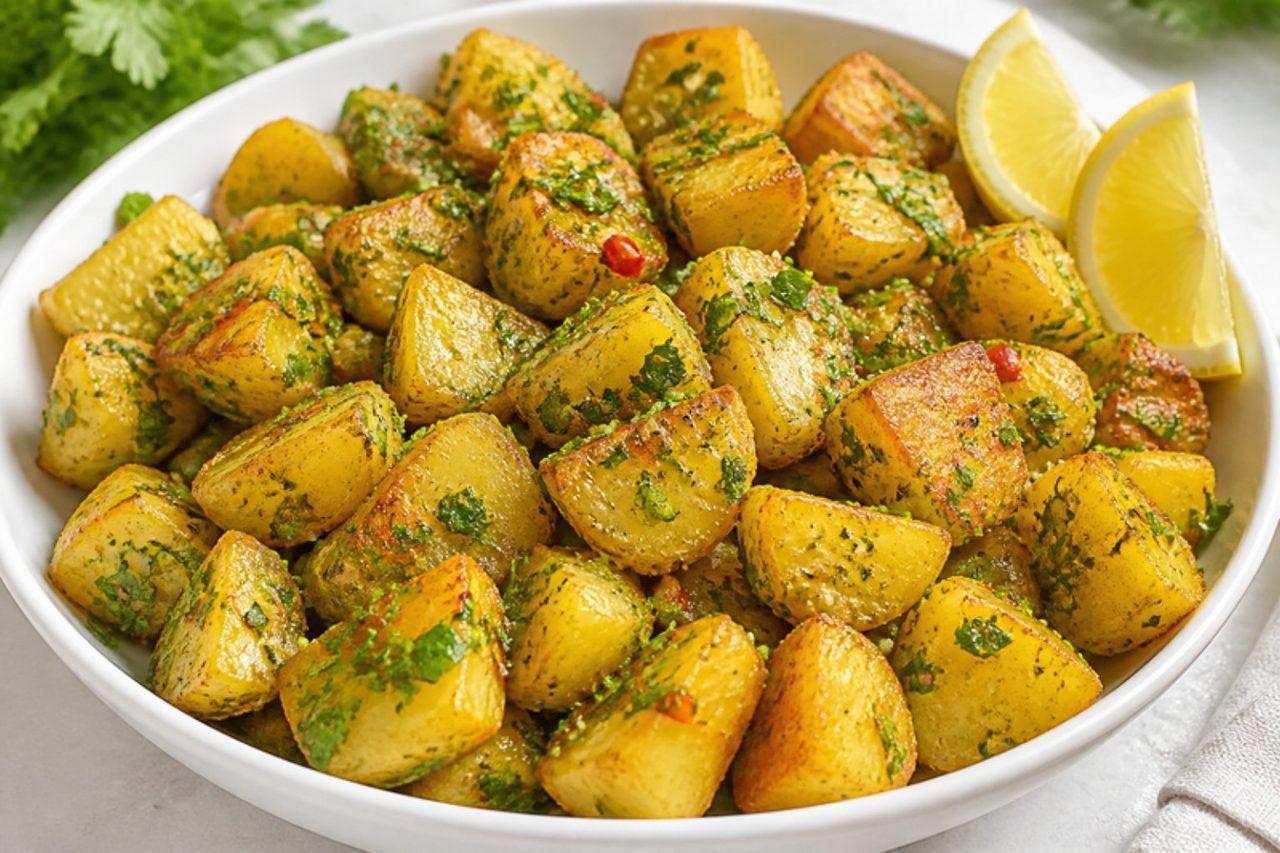
Batata harra, meaning hot potatoes, is a staple of the hot mezze in Beirut restaurants and at home: crisp cubes of potato tossed while still sizzling in garlic, chilli and a heap of fresh coriander, then squeezed with lemon. Expect it next to falafel and hummus at a Sunday spread or as a side for grilled vegetables on a summer evening. This home version roasts the potatoes instead of deep-frying them, which gives the same golden crunch with much less oil. People often add the garlic and coriander too early, so the garlic burns and turns bitter; they go in only for the last minute in the pan. Chef's tip: parboil the cubes and shake them in the colander until their edges look fluffy, because those rough edges are what turn crisp in the oven.

by KrazyBadal 0 views

ParippuRed lentil curry

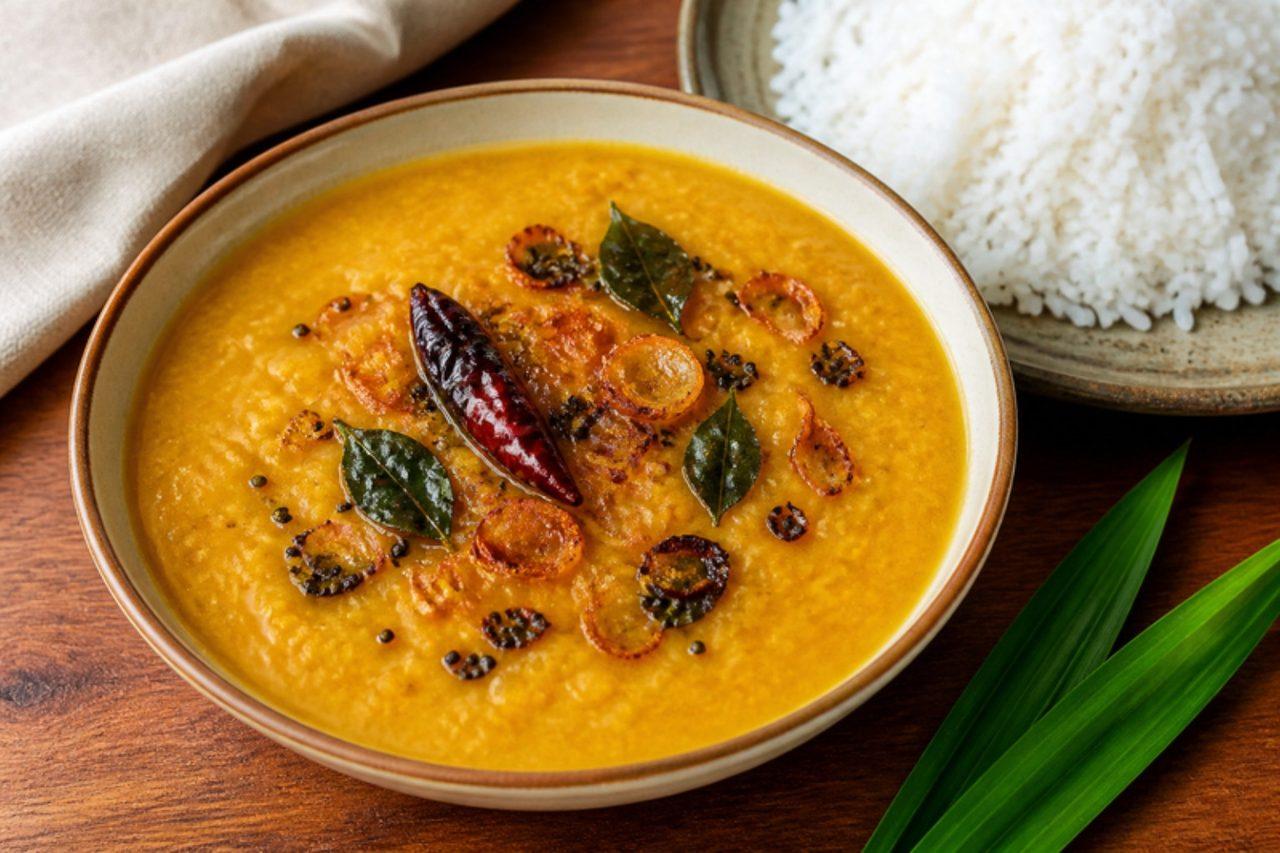
No Sri Lankan rice-and-curry plate is complete without a bowl of parippu, from a Colombo office canteen to a farmhouse kitchen in the dry zone; many families also mop it up with bread or pol roti for breakfast. Unlike a North Indian dal, the red lentils are cooked with turmeric, green chilli and a strip of rampe (pandan leaf), then softened with thin coconut milk and finished with a sizzling tempering of mustard seeds, shallots, dried chilli and curry leaves, so it tastes mellow, fragrant and only gently spicy. Keep it pourable: it thickens a lot as it stands. The usual mistake is adding the coconut milk too early and boiling it hard, which makes it split and grainy. Chef's tip: stir the thick coconut milk in off the heat at the very end; it gives a silky, almost creamy finish without curdling.

by KrazyBadal 0 views

Doro watSpicy chicken and egg stew

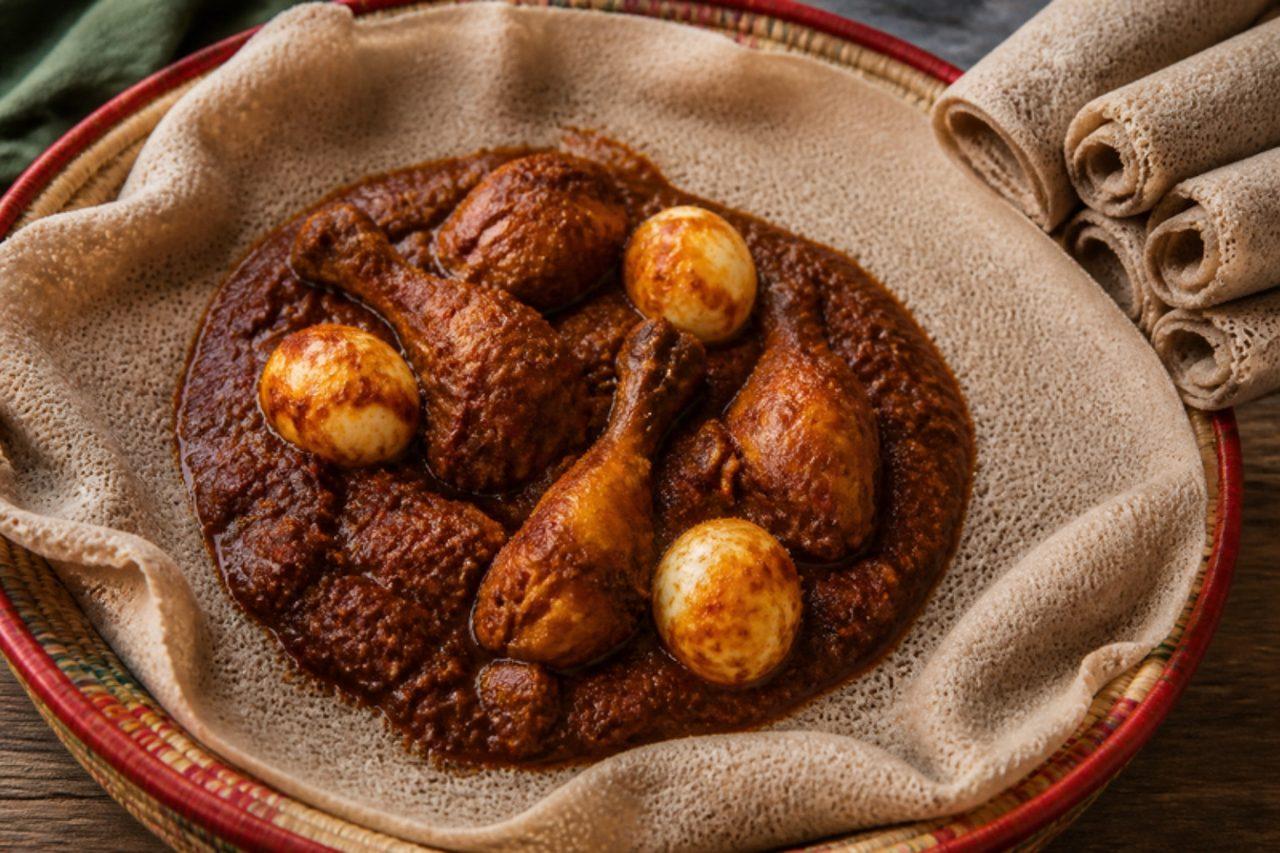
Ethiopian families make doro wat for the biggest days of the year, especially Genna (Christmas) and Fasika (Easter), when it breaks weeks of meatless fasting. Its secret is patience: a mountain of red onions is cooked down slowly with no fat at all until jammy and dark, then enriched with spiced butter and fiery berbere. Chicken pieces and whole hard-boiled eggs simmer in the sauce until it is thick, glossy and brick red, with a deep, smoky heat. Ladle it onto injera, with ayib (fresh cheese) alongside to cool things down. Chef's tip: score the boiled eggs lightly all over before adding them, so the sauce seeps right into the whites.

by KrazyBadal 0 views

Alicha wat (chicken)Mild turmeric chicken stew

Not every Ethiopian stew is fiery: alicha wat is the gentle, golden one, coloured with turmeric instead of berbere and seasoned with ginger, garlic and a few green chillies. Families across the country cook doro alicha when someone wants something soothing, when children are at the table, or as the mild partner to a spicy wat on a festive spread. The chicken simmers in a soft onion and spiced-butter sauce until tender, with a fragrant, buttery and slightly peppery flavour. Serve with injera or rice and a fresh tomato salad. Chef's tip: add the green chillies whole and fish them out before serving if you want flavour without heat.

by KrazyBadal 0 views

Wahan mosdengGrilled pork salad

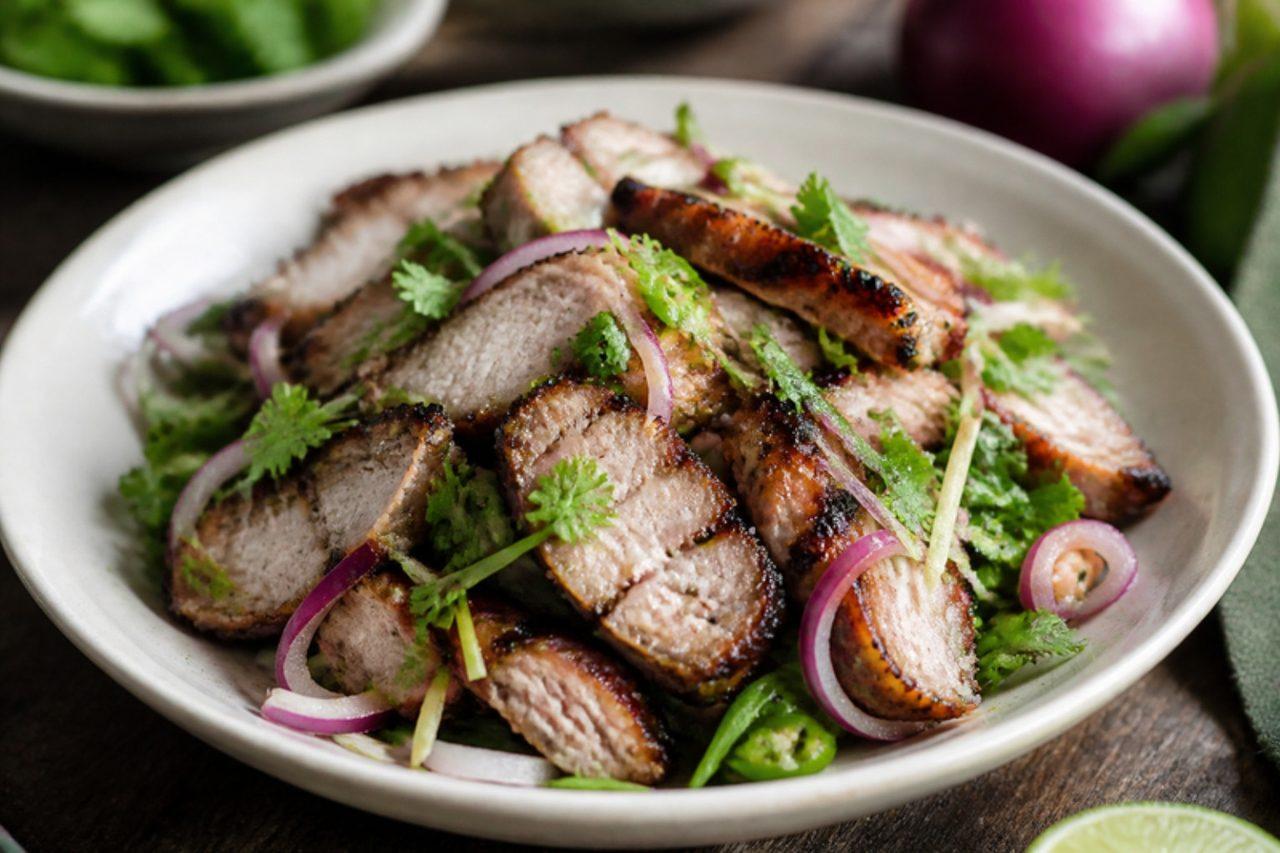
Wahan means pork and mosdeng a fiery mashed relish in Kokborok, the language of the Tripuri people of Tripura. Pork is boiled until tender, grilled over charcoal for a smoky crust, then tossed with raw onion, green chilli, ginger and coriander. In Agartala and the villages it is party and festival food, eaten during Garia Puja in April with rice beer or rice. Chef's tip: grill the boiled pork really hot and fast; you want charred edges without drying the meat.

by KrazyBadal 0 views

DooghSalted yogurt drink

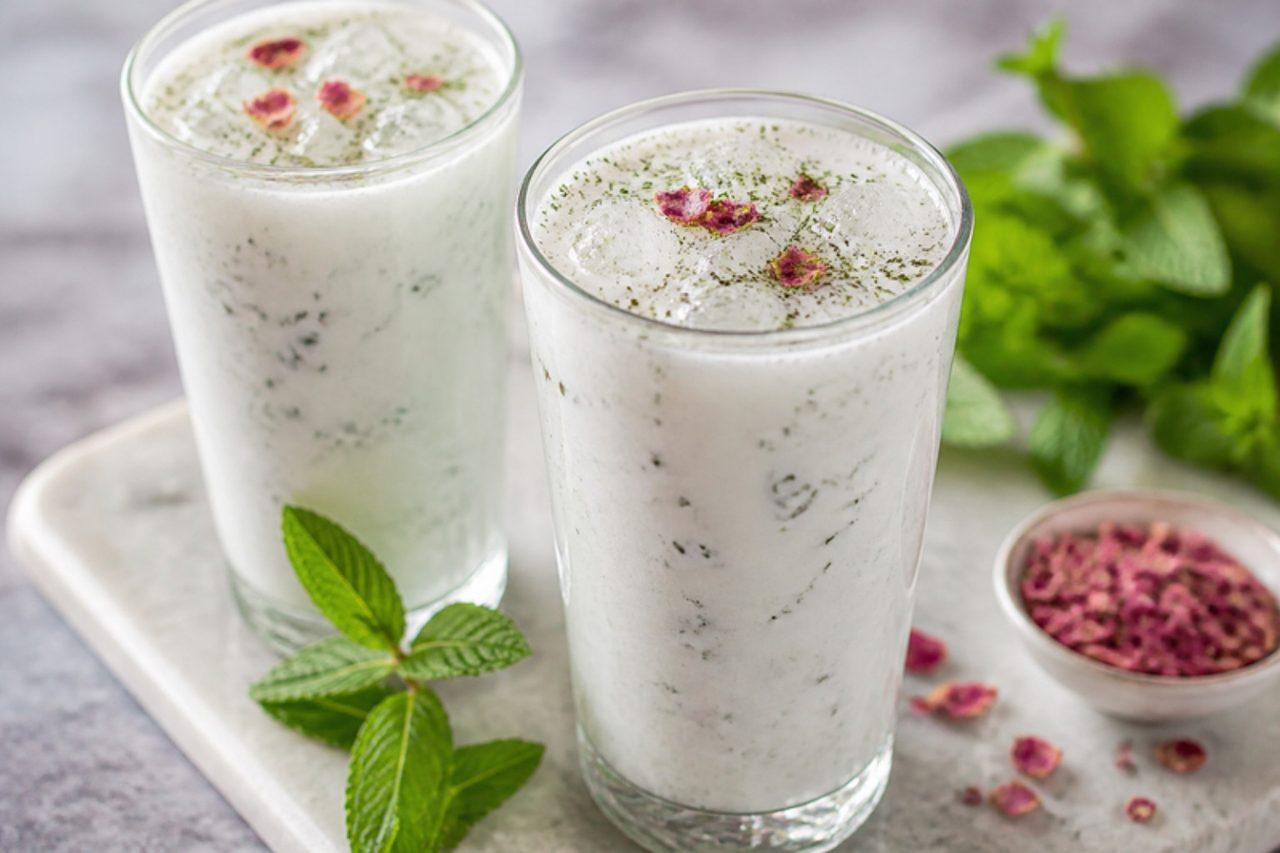
Doogh is the salty, fizzy yogurt drink served in tall glasses with lunch across Iran, and above all with kebab and rice at the chelow-kababi restaurants of Tehran. Bottled sparkling doogh from the mineral springs of Abali, in the mountains east of the capital, is the famous one; at home it is mixed from yogurt, cold water and soda water with crumbled dried mint, and sometimes wild pennyroyal (kakuti) or rose petals. Its bubbles and mint set it apart from plainer, still yogurt drinks. It is cooling and good with rich, herby food. Chef's tip: add the sparkling water last and stir gently, or the fizz disappears before it reaches the glass.

by KrazyBadal 0 views

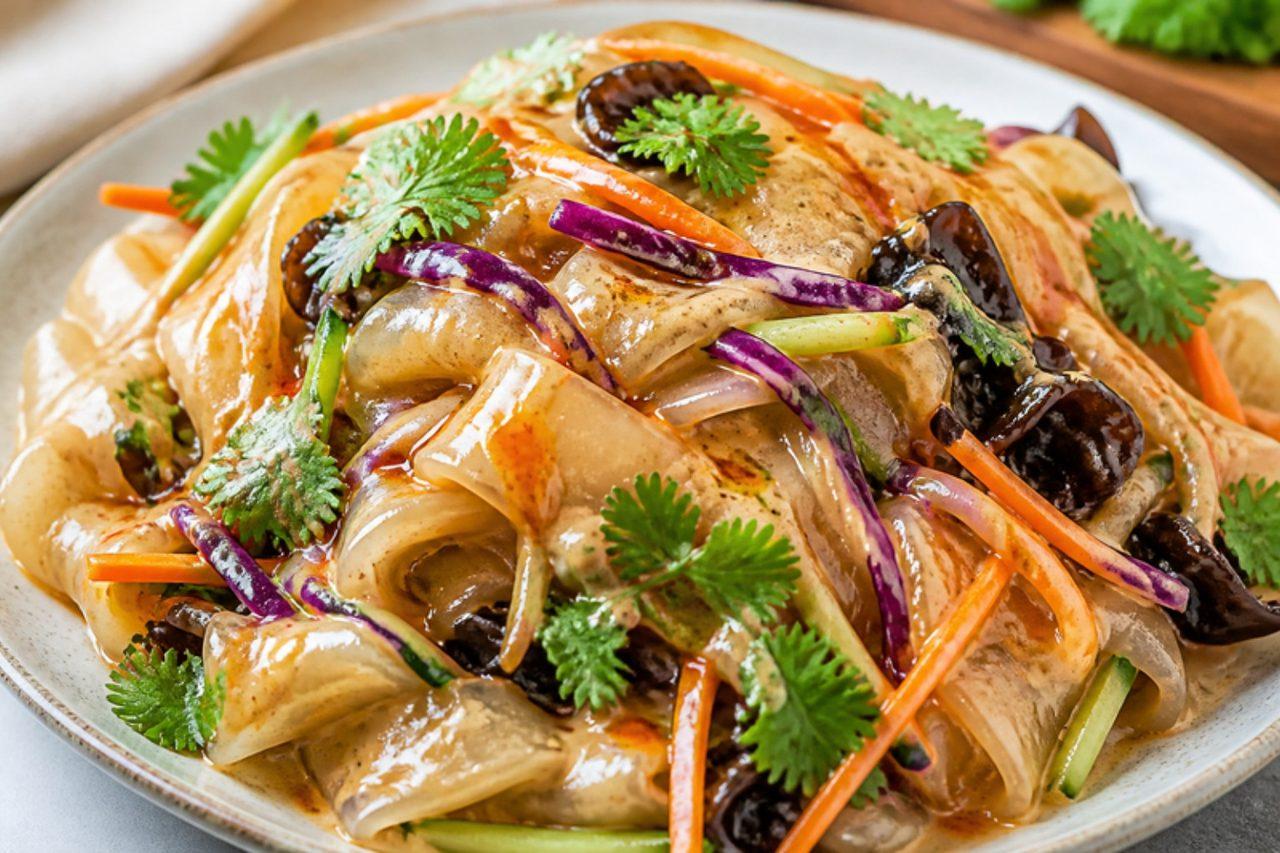
Dongbei da la piMung bean sheet salad

In north-east China, a big platter of this arrives at almost every family dinner and restaurant table, often next to the stews and dumplings. Wide, glassy sheets of mung-bean starch sit on a bed of shredded cucumber, carrot and cabbage, with a sesame, garlic and vinegar sauce and a dab of mustard poured over at the table. It's cool, slippery and crunchy. Look for dried la pi sheets or wide mung-bean noodles in Chinese supermarkets. Chef's tip: the sheet noodles must be fully cold before mixing, or they go soft and sticky.

by KrazyBadal 0 views

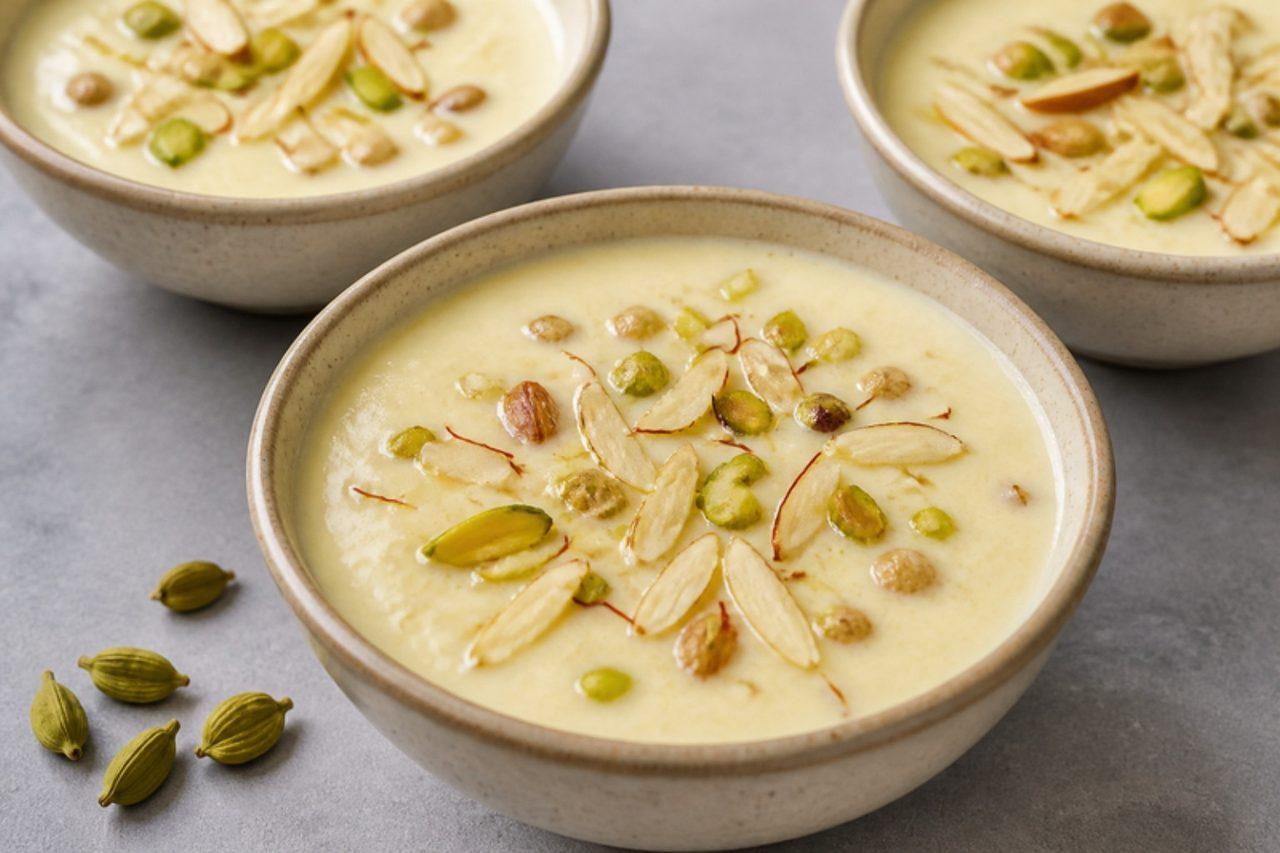
BasundiThickened sweet milk

Basundi is the reduced-milk dessert of Maharashtra and Gujarat: whole milk simmered patiently in a wide pan, with the skin that forms on top scraped back in, until it is thick, cream-coloured and a little grainy, then sweetened and scented with cardamom and saffron. In Maharashtra it's served with hot puris for Gudi Padwa and Bhau Beej; in Gujarat it turns up at weddings and on Sharad Purnima, and it's also the base of the famous custard-apple (sitafal) basundi. Make it a day ahead; it thickens and tastes richer after a night in the fridge. Chef's tip: use a wide, heavy pan rather than a deep one; more surface means faster evaporation and less time standing at the stove.

by KrazyBadal 0 views

Bastar aamatMixed vegetable curry

Aamat comes from the forested Bastar region of southern Chhattisgarh, where Gond and Halba families cook whatever the garden and forest give: pumpkin, brinjal, beans, drumsticks and, in the monsoon, sour fermented bamboo shoot. There is almost no oil and no heavy masala. Instead a paste of soaked rice turns the broth silky, and garlic, ginger and green chilli carry the flavour. It is served in bowls with plain rice, especially at village feasts and the Bastar Dussehra gatherings. Tinned bamboo shoot works well; leave it out and add lime at the end if you cannot find it. Chef's tip: keep stirring as you pour in the rice paste, because it sinks and sets into lumps on the bottom of the pot if left alone.

by KrazyBadal 0 views

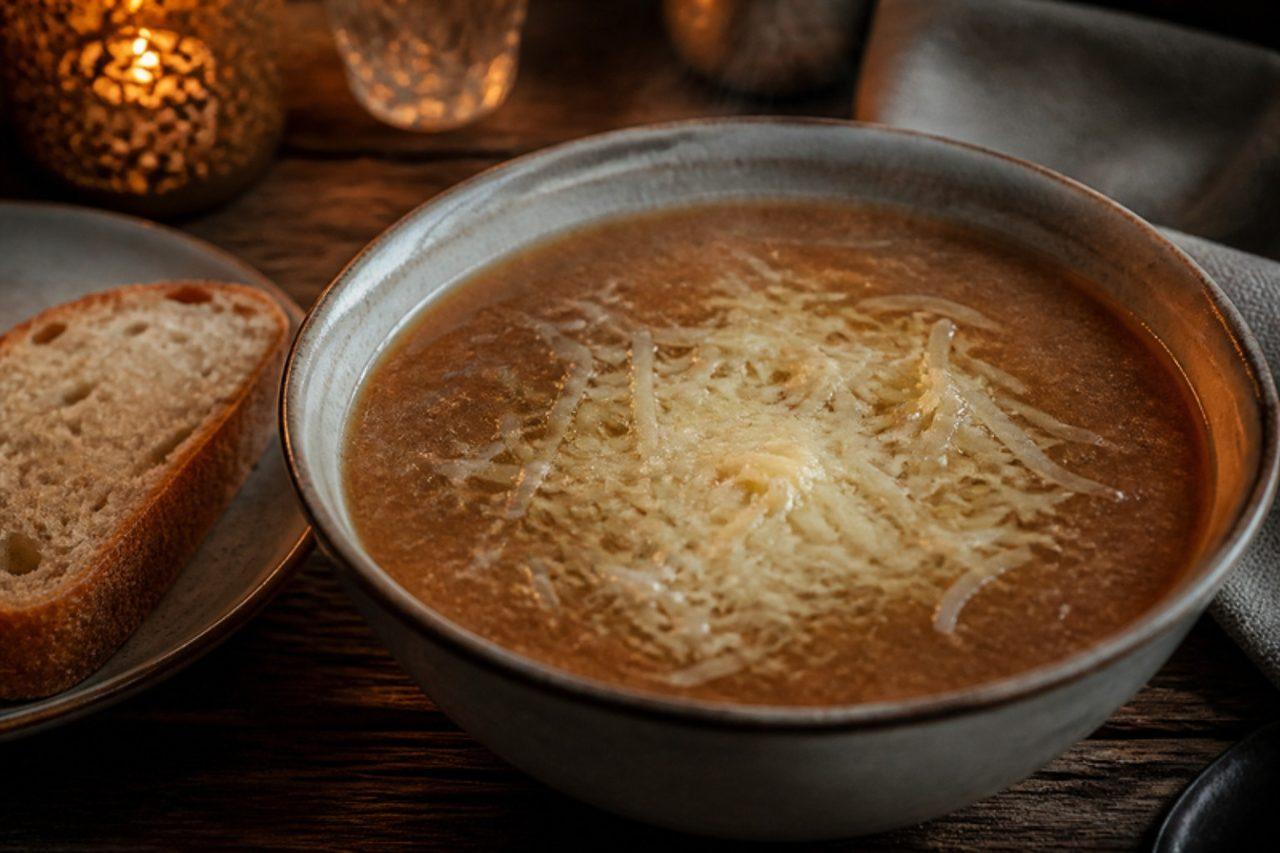
Basler MehlsuppeBrowned flour soup

Basel's Fasnacht starts at 4 a.m. on the Monday after Ash Wednesday with Morgestraich, when the city's lights go out and the cliques march with lanterns, piccolos and drums. Afterwards everyone crowds into the old-town restaurants for a bowl of Mehlsuppe: flour toasted in butter until it is the colour of hazelnuts, simmered into a smooth, savoury, deep-brown soup and finished with grated cheese. It warms you on a freezing February morning and is usually eaten with Zwiebelwähe (onion tart). The traditional soup is made with beef stock; this vegetarian version uses a strong vegetable stock with a little red wine and onion to give the same depth. Chef's tip: toast the flour slowly and stir all the time; the colour should be even chestnut brown, and the smell like toasted nuts.

60 minSwissSoups
by KrazyBadal 0 views

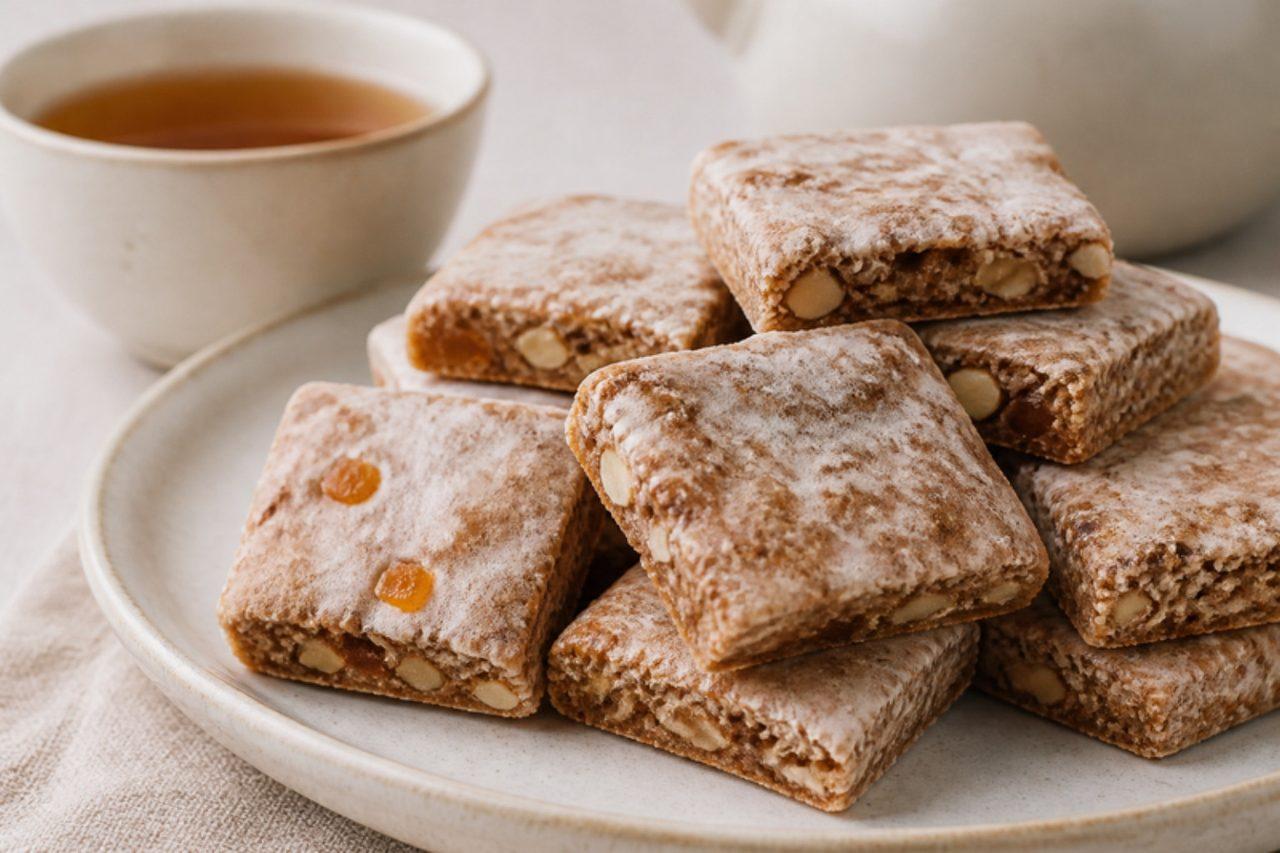
Basler LäckerliHoney and almond biscuits

Läckerli have been Basel's own biscuit for more than 600 years, once baked by the city's spice merchants and gifted at Christmas and New Year; Basel shops still pack them in tins all year round. They are small, chewy rectangles of honey, almonds, candied orange and lemon peel and warm spices, with a thin, crackly sugar glaze. Unlike soft German gingerbread they are firm and dense when they are fresh and soften with time in a tin. Eat them with coffee or tea, or keep a box for visitors. Chef's tip: cut the slab into rectangles while it is still hot and glaze it at once; once cool it sets too hard to cut cleanly.

by KrazyBadal 0 views

Showing 81 of 7,762 recipes

Show more recipes

Page 731 of 863