


Skip to content
Tagella (Tuareg sand-baked bread)
Featured recipe

Tagella (Tuareg sand-baked bread)

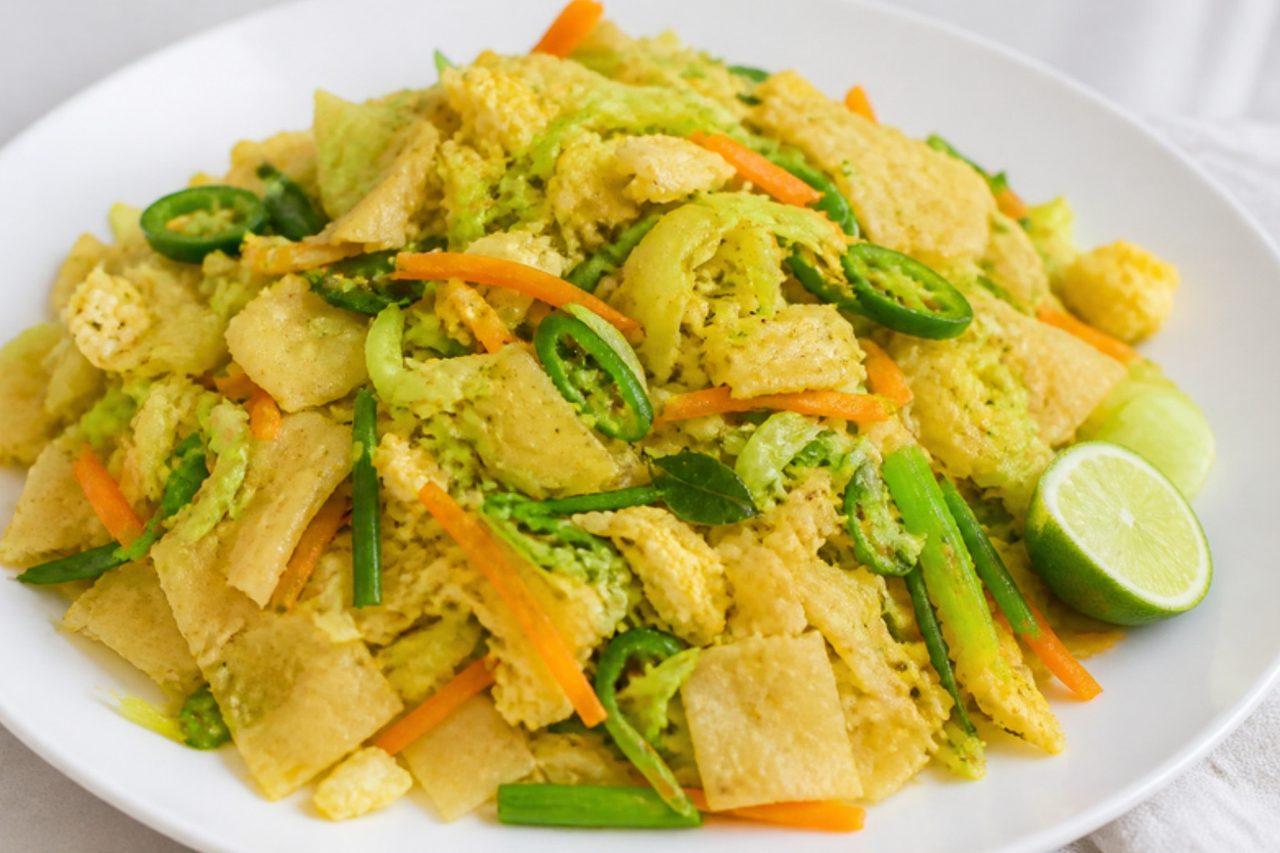
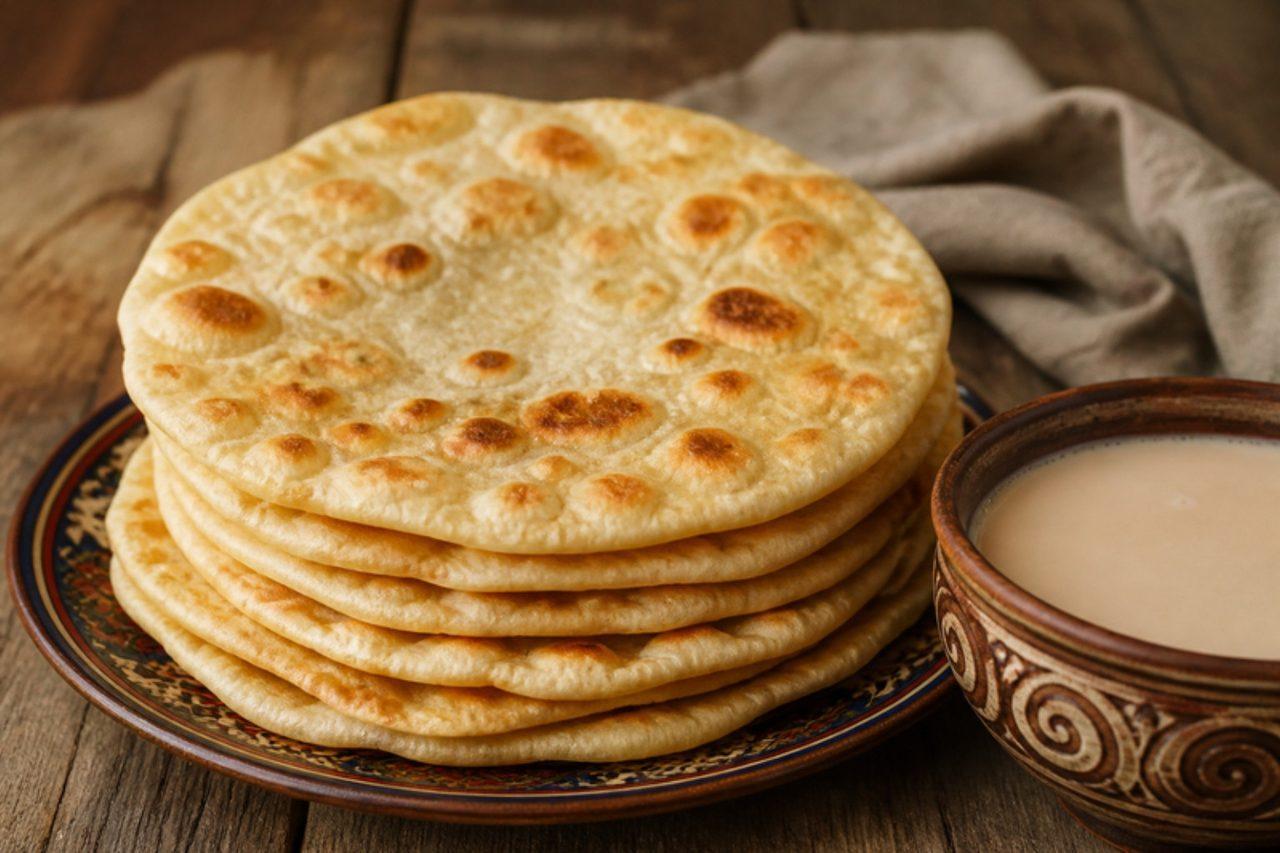
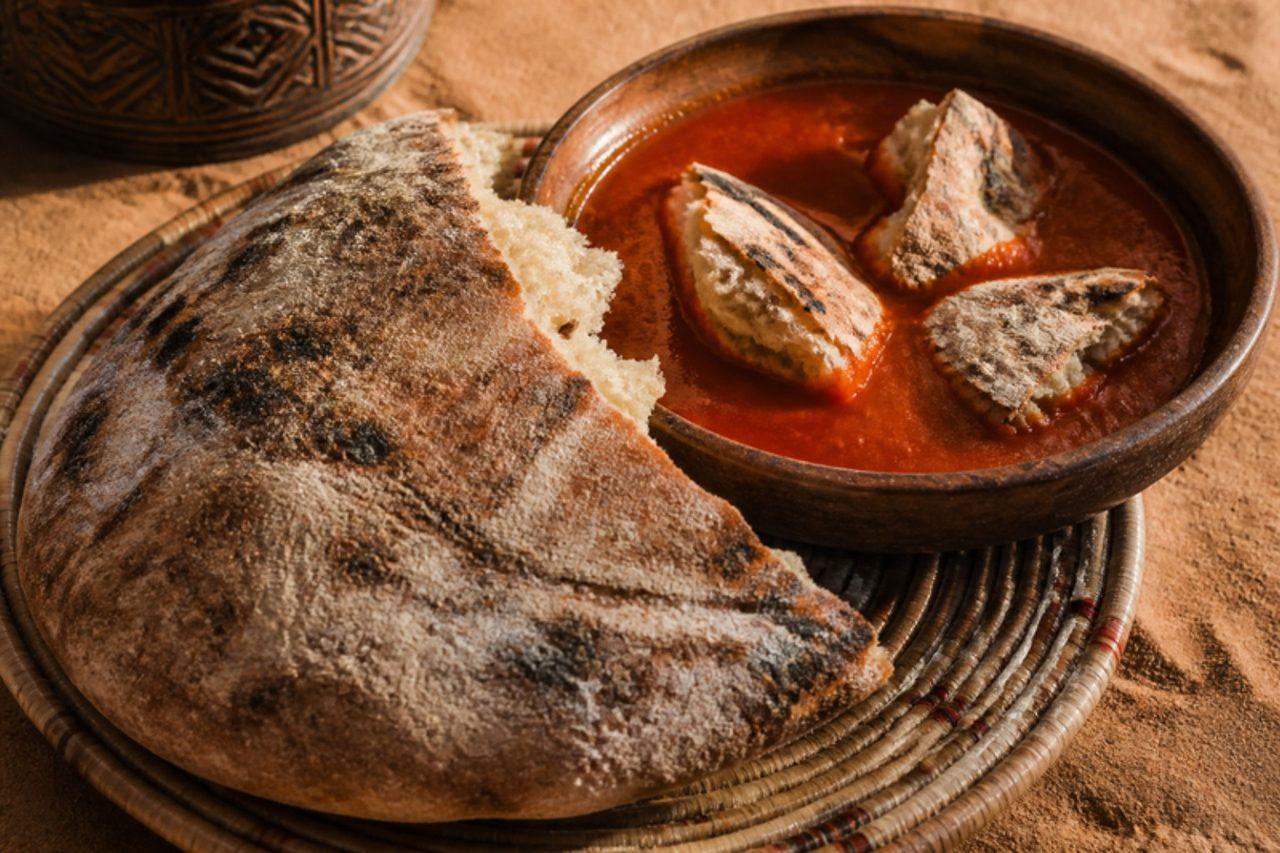
Out in the Hoggar mountains around Tamanrasset, Tuareg cooks bury a thick disc of dough in sand heated by a wood fire, cover it with embers and dig it up half an hour later with a dense, chewy crumb and a thick crust that is beaten clean of sand. The bread is then broken into pieces and soaked in a spicy tomato and onion sauce, a hearty meal for a camp or a desert evening; meat goes in when there is some, and this is the plain version cooked on ordinary days. At home, a very hot oven with a cast-iron pan gives a similar crust. Expect a filling, rustic dish with a smoky, peppery sauce. A frequent slip is making the dough too dry; it should be soft, or the thick round cracks and stays raw in the middle. Chef's tip: bake the bread until it sounds hollow when knocked, because an underbaked, doughy centre turns to paste in the sauce.

Read more 0 views

What to eat today?

Around the world

Today's trip: Persian

A new country every day, from every cuisine on the site.

Persian

Dizi

Lamb and chickpea stew 245 minMore from Persian (131) →

This week's collection

Kid-friendly dinners
537 recipes · a new collection every Monday

Latest recipes

ParippuRed lentil curry

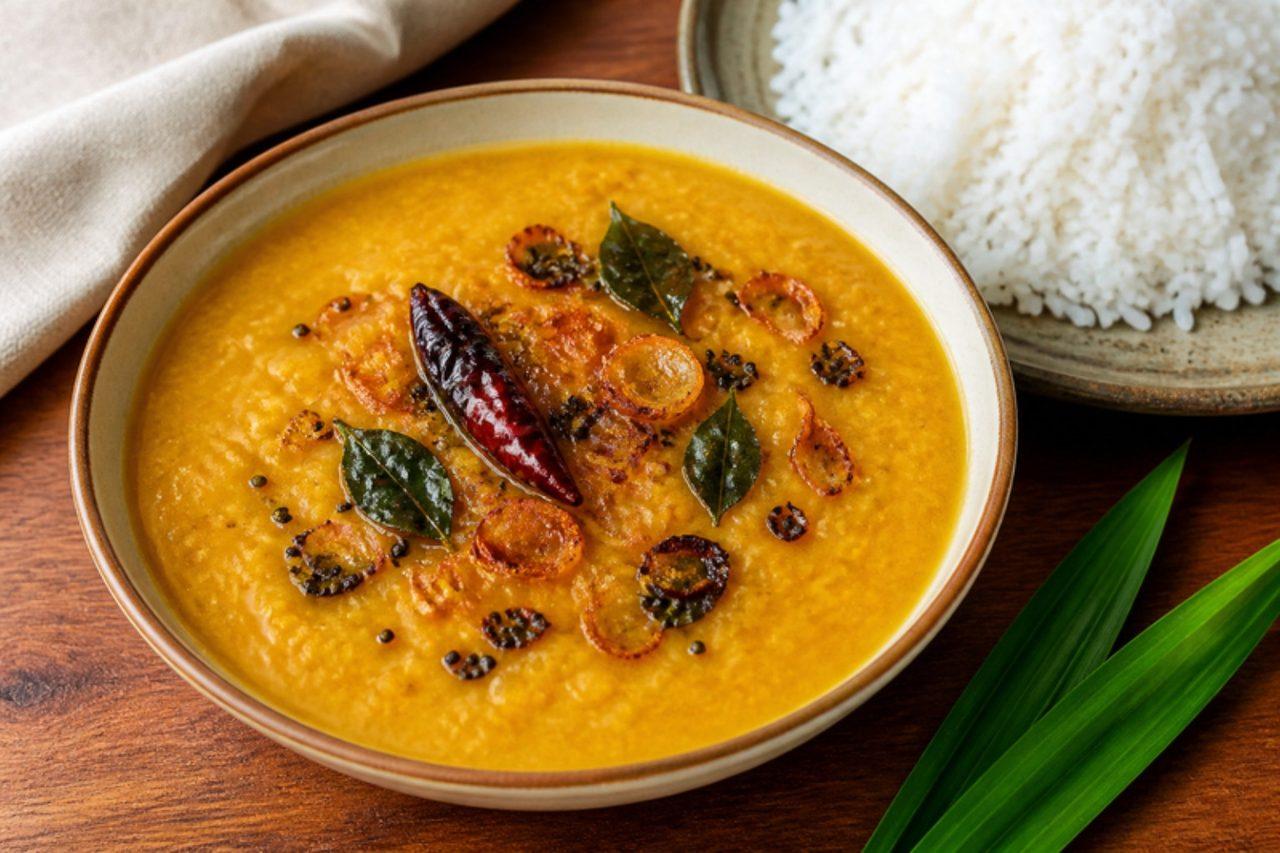
No Sri Lankan rice-and-curry plate is complete without a bowl of parippu, from a Colombo office canteen to a farmhouse kitchen in the dry zone; many families also mop it up with bread or pol roti for breakfast. Unlike a North Indian dal, the red lentils are cooked with turmeric, green chilli and a strip of rampe (pandan leaf), then softened with thin coconut milk and finished with a sizzling tempering of mustard seeds, shallots, dried chilli and curry leaves, so it tastes mellow, fragrant and only gently spicy. Keep it pourable: it thickens a lot as it stands. The usual mistake is adding the coconut milk too early and boiling it hard, which makes it split and grainy. Chef's tip: stir the thick coconut milk in off the heat at the very end; it gives a silky, almost creamy finish without curdling.

by KrazyBadal 0 views

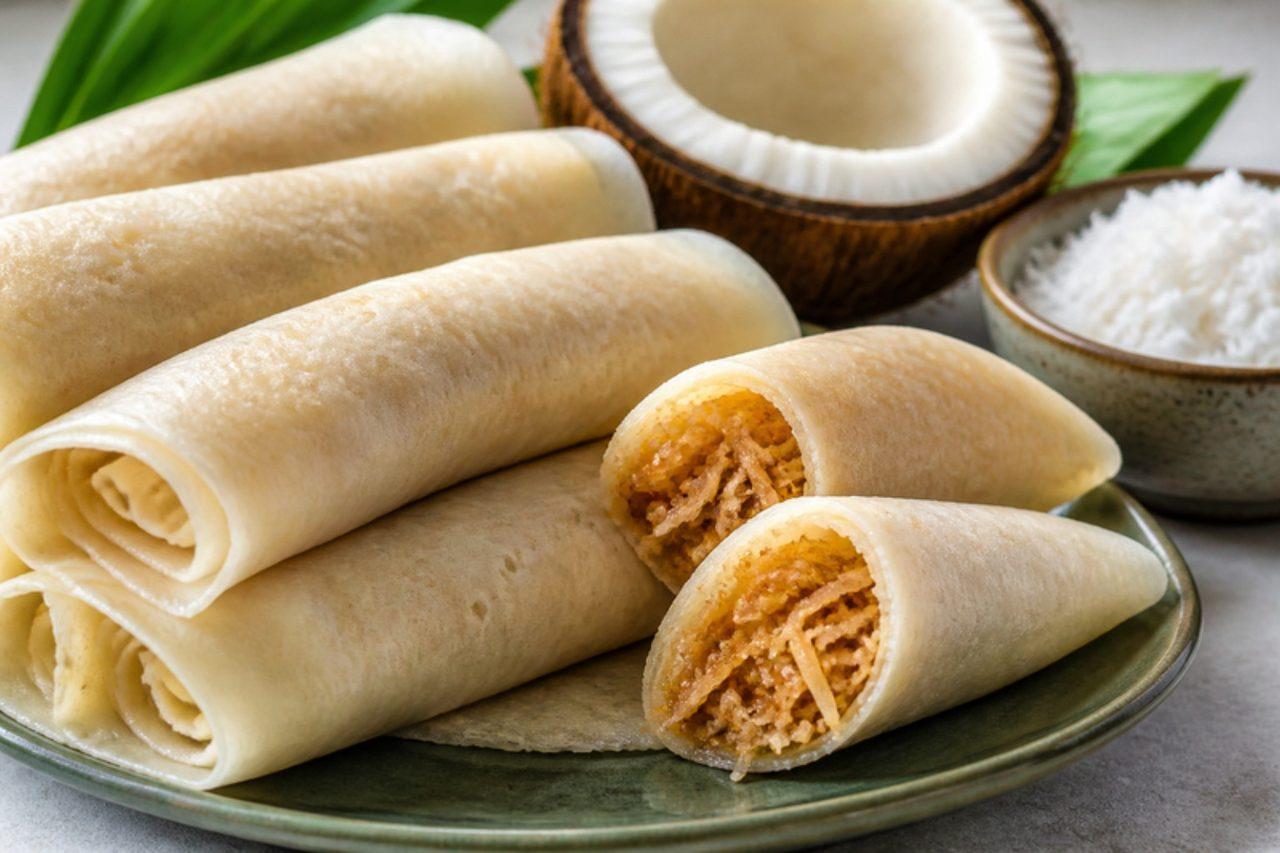
PatishaptaCoconut-filled rice crepes

Patishapta is the star of Poush Sankranti in mid-January, when Bengali homes make pithe-puli, sweets of new rice, coconut and the season's nolen gur (date-palm jaggery). A loose batter of rice flour, semolina, plain flour and milk is swirled thin on a hot pan and rolled round a sticky filling of coconut cooked with jaggery and cardamom. The crêpe should be soft and pale, never crisp. Chef's tip: keep the heat low and grease the pan only lightly with a cut potato dipped in ghee, which spreads a film rather than a pool.

by KrazyBadal 0 views

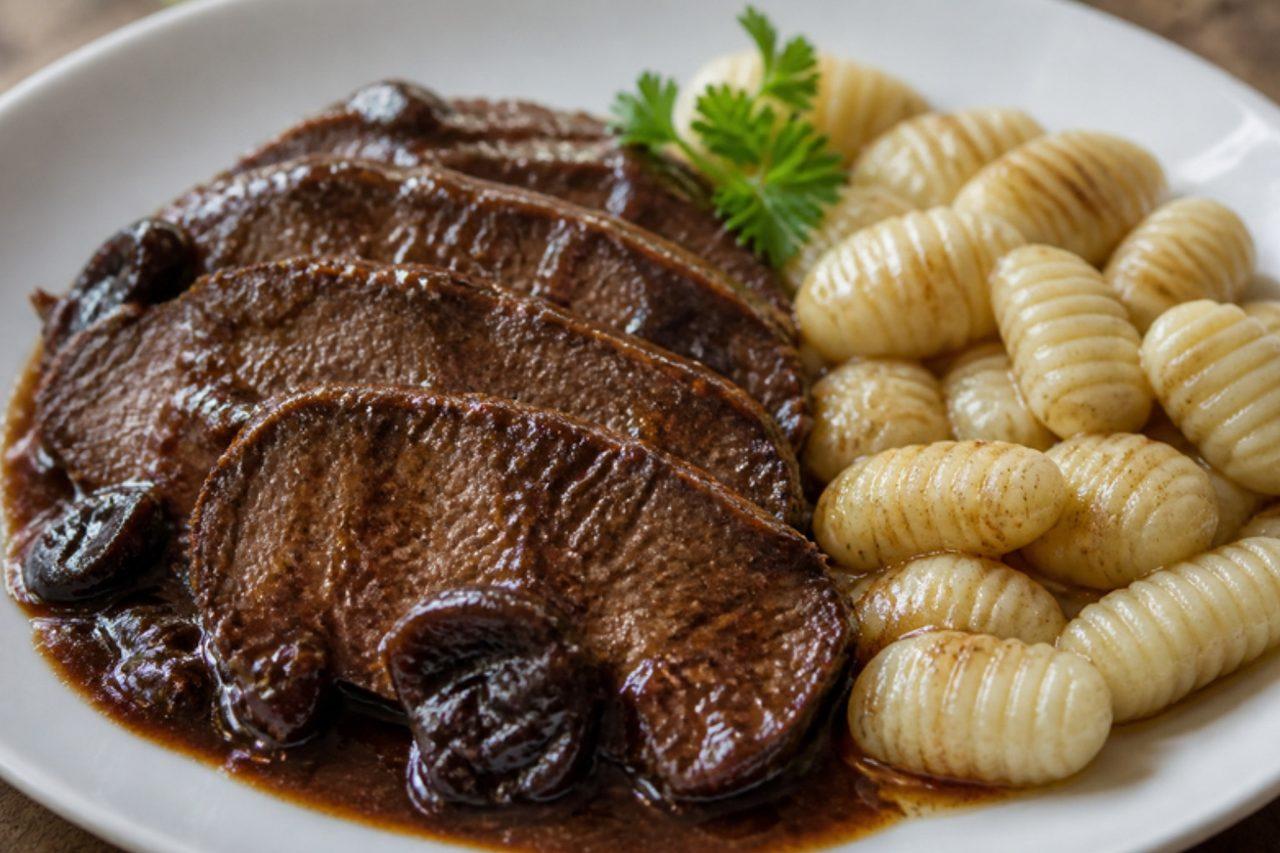
PašticadaWine and prune braised beef

Split and the Dalmatian coast reserve pašticada for weddings, christenings and Christmas, and the preparations start days ahead. A piece of beef is studded with garlic and cured ham (so this recipe contains pork), marinated overnight in wine vinegar, then braised for hours with onions, dried prunes, tomato and a little sweet Prošek or red wine until the sauce turns dark, glossy and sweet-sour. In Split it is always served with homemade gnocchi; pasta works too. This recipe uses red wine and dried figs or prunes; for an alcohol-free version use grape juice with a spoon of red wine vinegar. The common mistake is rushing the braise: it needs a low, steady heat for at least three hours. Chef's tip: blend the cooked onions and prunes back into the sauce for that velvet texture.

280 minBalkanMeat
by KrazyBadal 0 views

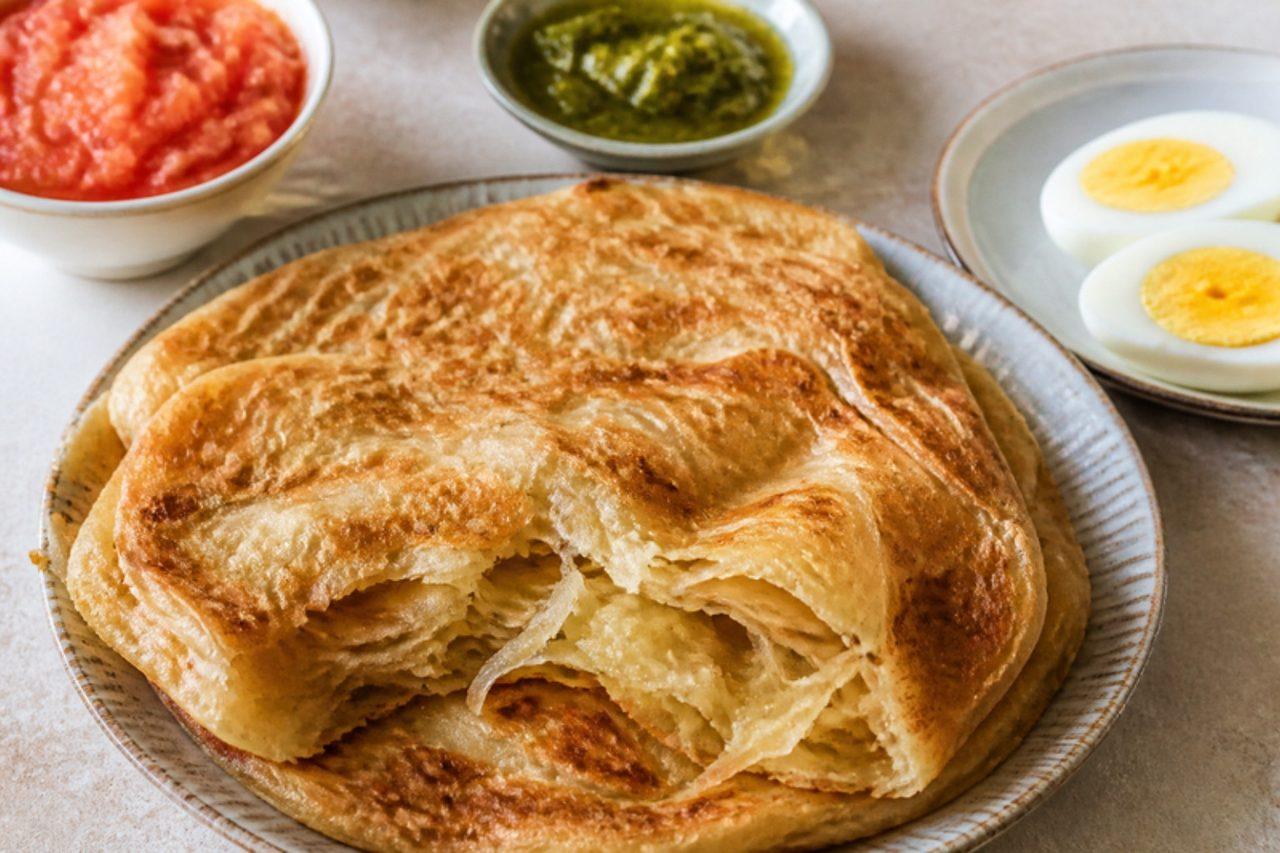
MalawachFlaky fried flatbread

Malawach is the Yemenite Jewish flatbread that turned into an Israeli freezer staple: round, buttery layers fried in a pan until they shatter, eaten for breakfast or a late supper with sweet-sour grated tomato, zhug and a hard-boiled egg. In Israel almost everyone buys the frozen rounds from the supermarket and fries them in minutes, the way this recipe does; the dough is the same rolled, butter-layered dough as jachnun, just fried instead of baked. Some families sprinkle sugar or drizzle honey for a sweet version. Chef's tip: fry the frozen rounds straight from the freezer; thawed ones turn sticky and lose their layers.

by KrazyBadal 0 views

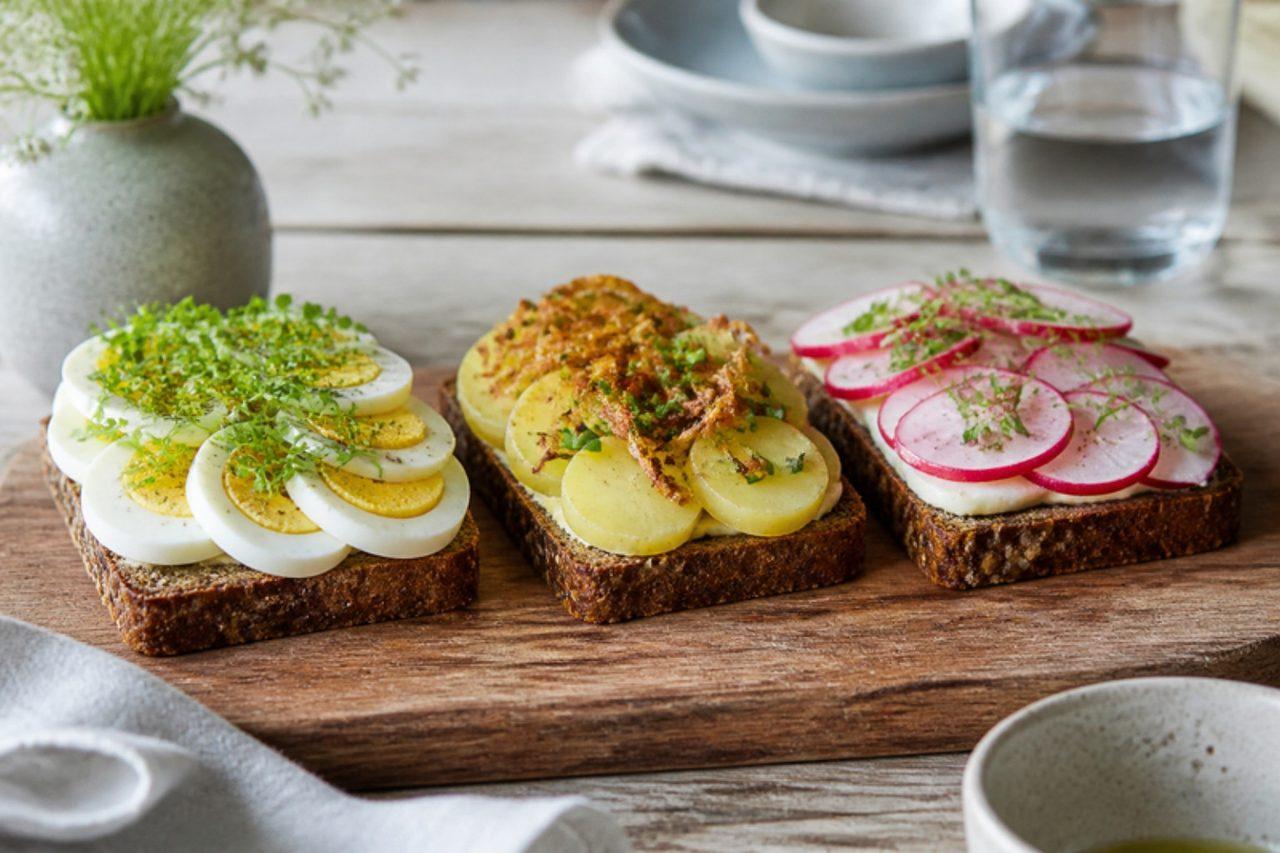
Vegetarian smørrebrødOpen sandwiches

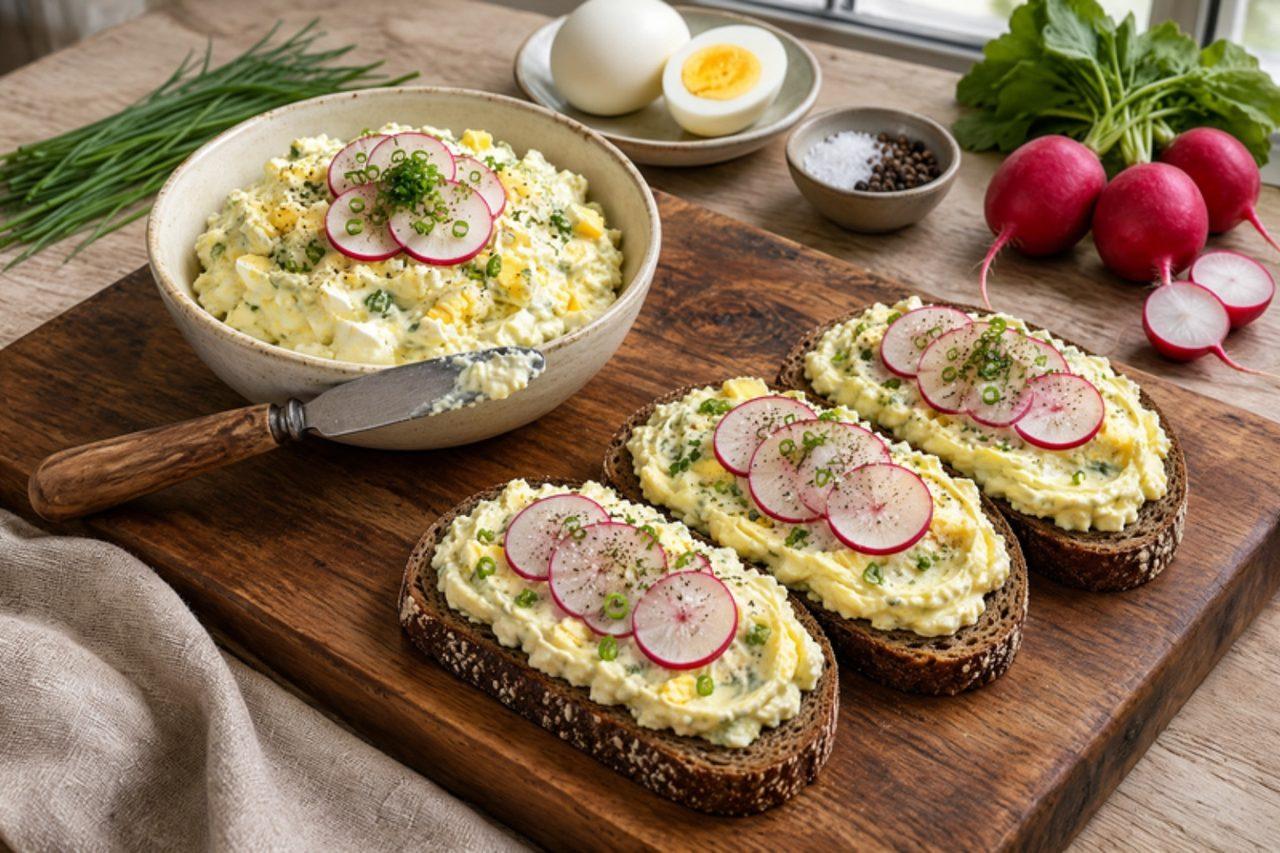
Smørrebrød, 'buttered bread', is Denmark's lunch: a single slice of dense rye bread, buttered right to the edges and piled with toppings so carefully arranged they are eaten with a knife and fork. Copenhagen lunch restaurants such as the old cellar places around Nyhavn serve them in a set order, and at home they make up a Sunday or Christmas lunch table (det kolde bord). Many classics use fish or meat, but three of the best-loved toppings are vegetarian: sliced egg with tomato and cress, waxy new potatoes with crisp onion and chives (kartoffelmad), and peppery radishes on salted butter. Chef's tip: butter the bread thickly and all the way to the crust; in Denmark the butter is the glue that holds the toppings and keeps the rye from going soggy.

by KrazyBadal 0 views

SilpanchoBreaded steak over rice and potatoes

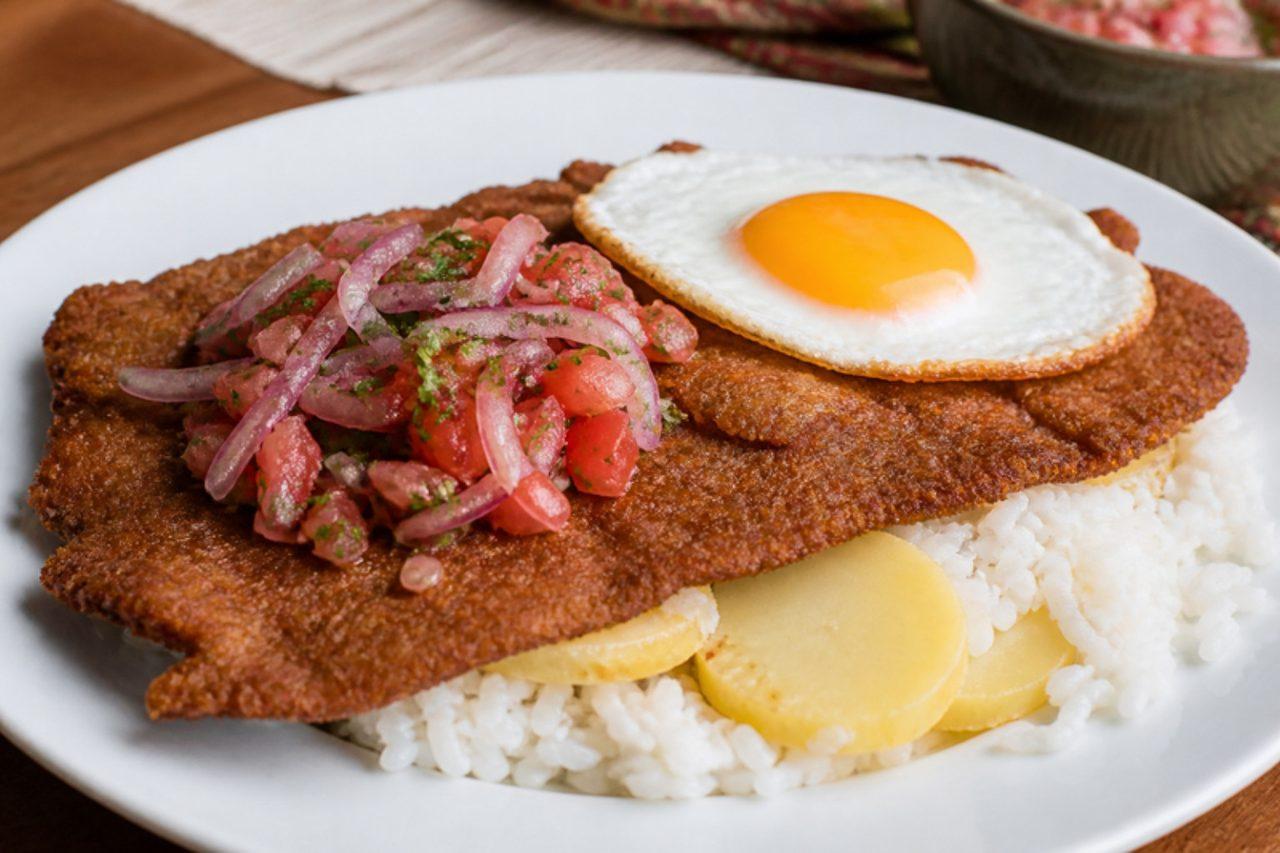
Silpancho is the pride of Cochabamba in Bolivia and is sold in huge portions at the city's lunchtime silpancherías: a layer of rice, then sliced fried potatoes, then a beef steak pounded so thin it covers the plate, breaded and fried, topped with a fried egg and a fresh salsa of tomato, onion and locoto chilli. The mistake is not pounding the meat thin enough; it should be about 3 mm, so it fries in a minute and stays tender. Chef's tip: press the breadcrumbs into the meat with the palm of your hand, then pound lightly once more so they stick.

70 minAndeanMeat
by KrazyBadal 0 views

Porotos granadosFresh bean, pumpkin and corn stew

Porotos granados is what central Chile cooks when the fresh beans arrive in late summer: tender cranberry beans shelled at the kitchen table, simmered with pumpkin until it collapses into a thick orange sauce, then finished with grated corn and basil. Families in the Valle Central eat it on hot days, often with pebre and a tomato salad; when the corn is blended in larger amounts it's called 'con mazamorra'. It's hearty but fresh-tasting, and fully plant-based. Chef's tip: add the corn only in the last 10 minutes; it's there to thicken and sweeten, and overcooked it turns floury.

by KrazyBadal 0 views

SimitSesame bread rings

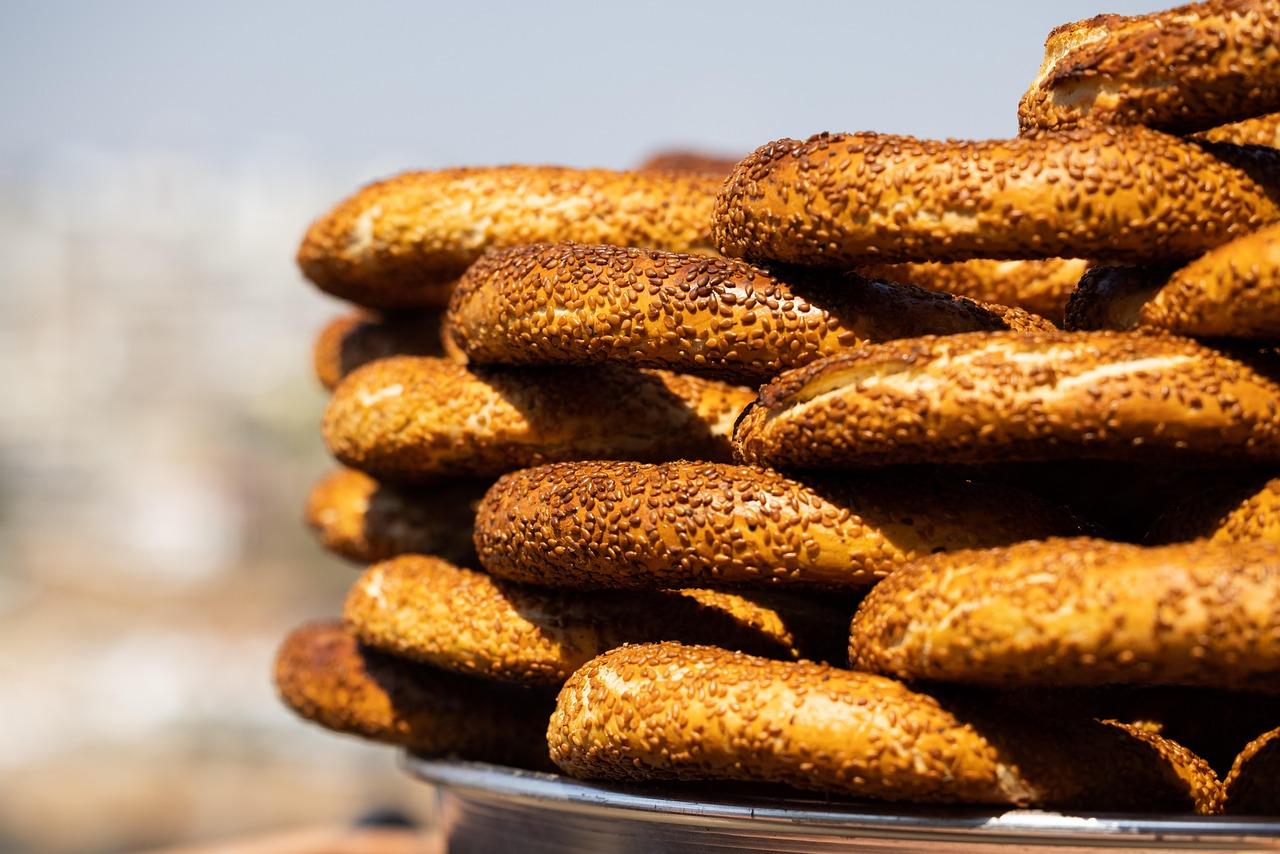
Stacked high on wooden trays and pushed through Istanbul on red carts, simit is the city's breakfast on the move: commuters tear one apart on the ferry across the Bosphorus, throwing the odd piece to the gulls. The ring is twisted, dipped in diluted grape molasses (pekmez) and pressed into sesame, so it bakes up with a crackly, nutty, deep brown crust and a chewy, close crumb. Unlike a bagel it is never boiled. At home, serve warm with tea, white cheese, olives and tomatoes. Chef's tip: toast the sesame seeds in a dry pan before coating; raw seeds stay pale and taste of very little.

by KrazyBadal 0 views

Singapore carrot cake (chai tow kway)Fried radish cake with egg

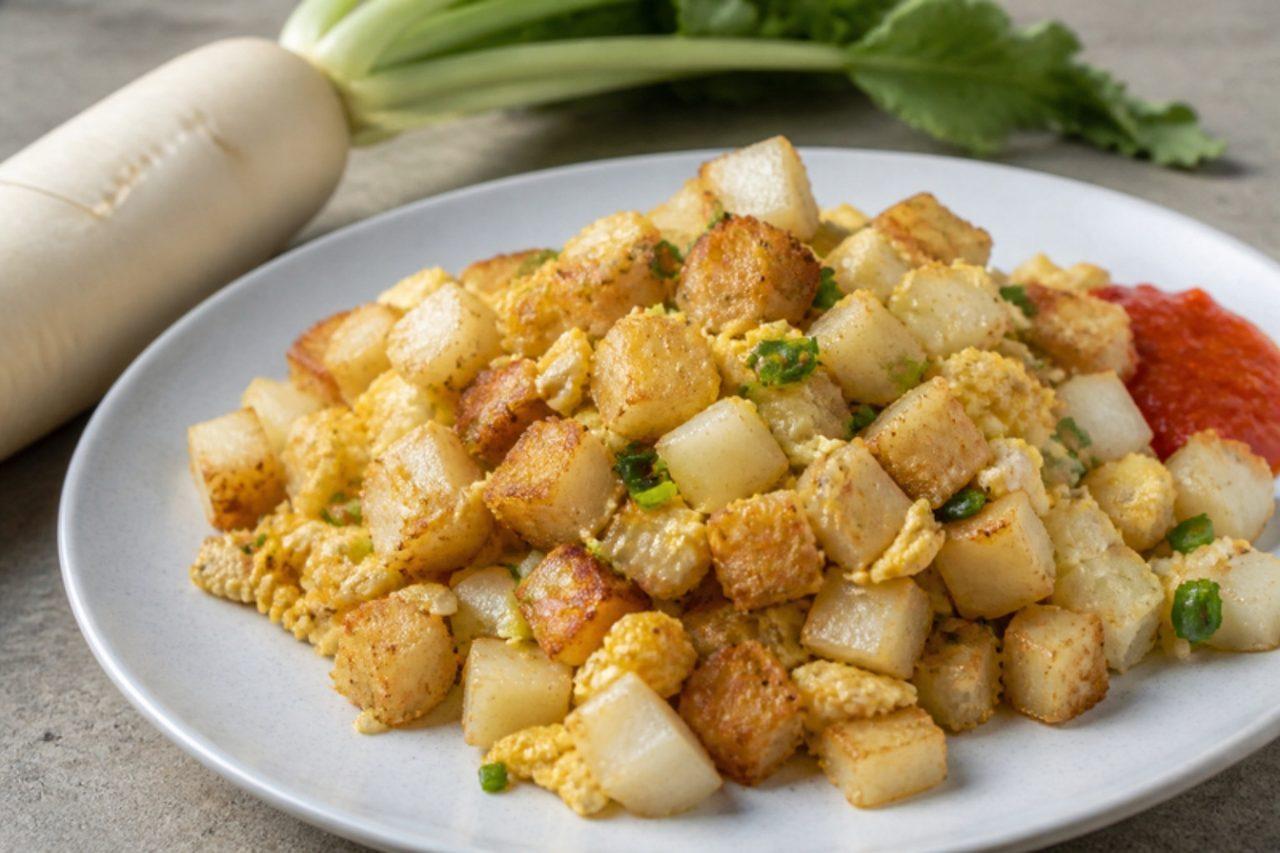
Singapore's carrot cake has no carrot in it: "carrot" is the local word for white radish (daikon). A steamed cake of rice flour and grated radish is cut into cubes and fried with egg and garlic until crisp and golden, either "white" (plain and eggy) or "black" (with sweet dark soy). It's a breakfast and supper favourite at hawker centres like Chinatown Complex. Most stalls add chai poh (preserved radish); this version leaves it out because many brands are made with fish sauce, and spring onions bring the savoury lift instead. Chef's tip: steam the cake a day ahead and chill it overnight; cold, firm cake cuts cleanly and crisps instead of falling apart.

by KrazyBadal 0 views

Pork tocinoSweet cured pork

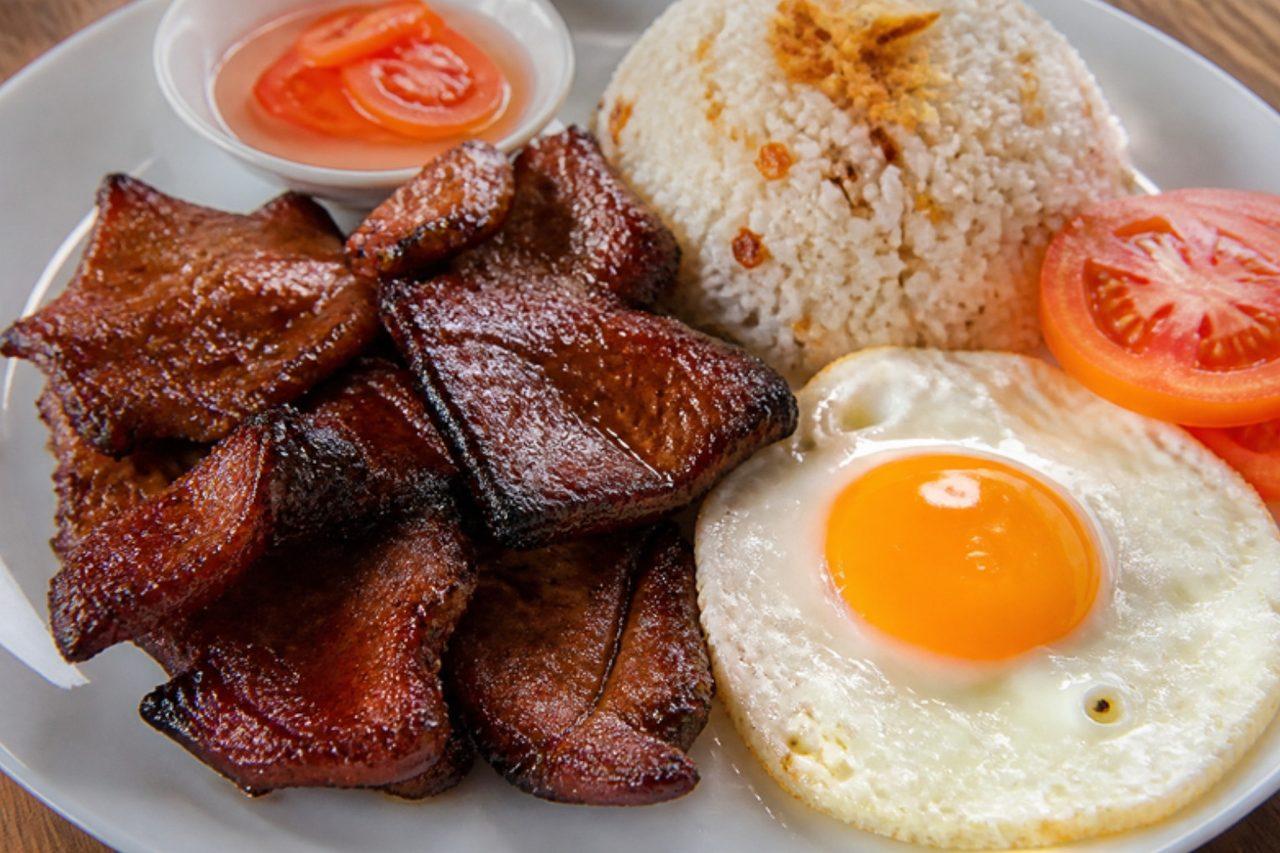
In Pampanga, tocino is breakfast: thin slices of pork shoulder in a sweet, garlicky marinade, fried until the sugar caramelises at the edges, then served with garlic fried rice and a fried egg as 'tosilog'. Shop tocino is often bright pink from curing salts; this home version leaves those out, so it is a sweet marinated pork rather than a true cure, gets its warm red colour from annatto and paprika, and must be kept in the fridge and cooked within 3 days (or frozen). Look for pork with a little fat running through it so it stays juicy. Chef's tip: start it in a splash of water; the pork simmers through first, then the sugar glazes once the water is gone, so it doesn't burn before it's cooked.

by KrazyBadal 0 views

Pork sisigSizzling chopped pork

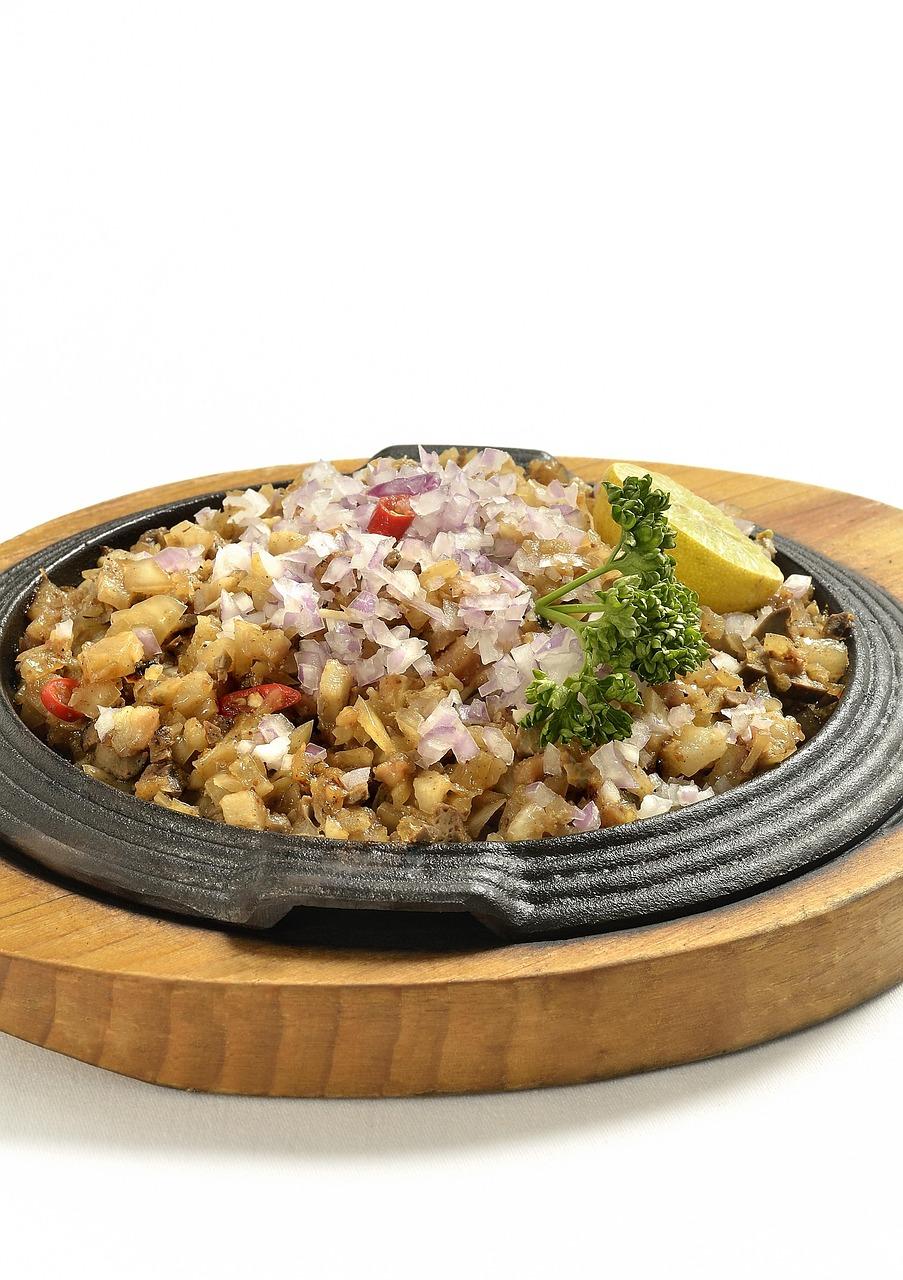
Sisig comes from Angeles City in Pampanga, where cooks turned pig's head and ears into a sizzling, sour, peppery bar snack that is now on almost every Filipino menu. This home version is pork, using pork belly (and pig's ears if your butcher has them) that is boiled, grilled until charred, then chopped finely and fried with onion, chilli and calamansi juice. It arrives at the table crackling on a hot cast-iron plate, often with a raw egg stirred in. Eat it with rice, or as pulutan with drinks; a cold calamansi juice works as well. Chef's tip: chop the pork small but not to mince; you want little crisp edges and chewy bits in every spoonful.

110 minFilipinoMeatSpicy
by KrazyBadal 0 views

SingjuCabbage and lotus stem salad

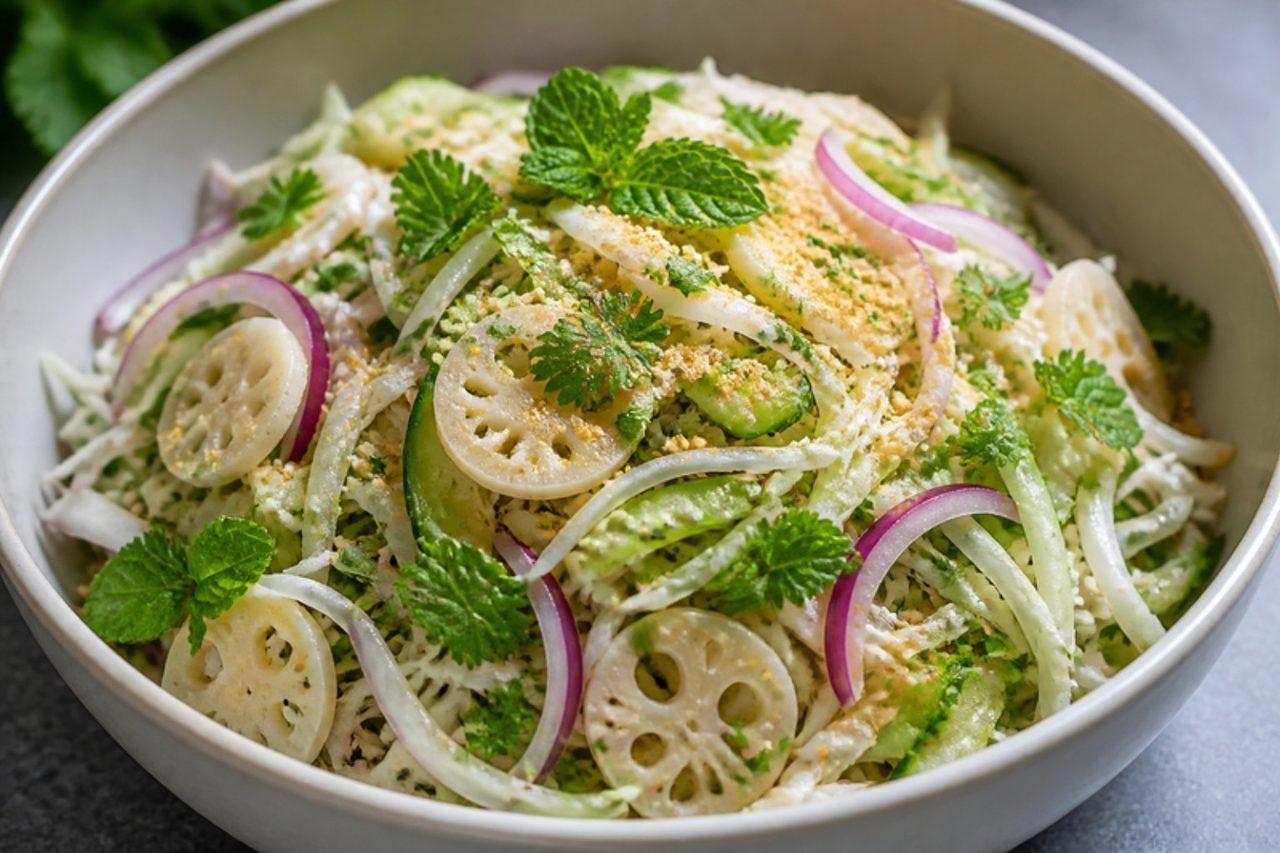
Singju is Imphal's favourite evening snack, sold from stalls at Khwairamband market and Thangal Bazar: a pile of finely shredded cabbage, lotus stem, banana flower, onion and fresh herbs, tossed with roasted chilli and toasted gram flour. Most stalls add a little ngari (fermented fish); vegetarian Meitei homes skip it and use extra roasted perilla or sesame and toasted gram flour, which give a nutty, savoury depth. It is crunchy, hot and herby. Chef's tip: shred everything as thinly as you can, almost like hair; the dressing clings better.

by KrazyBadal 0 views

SingodiCoconut milk fudge in leaf cones

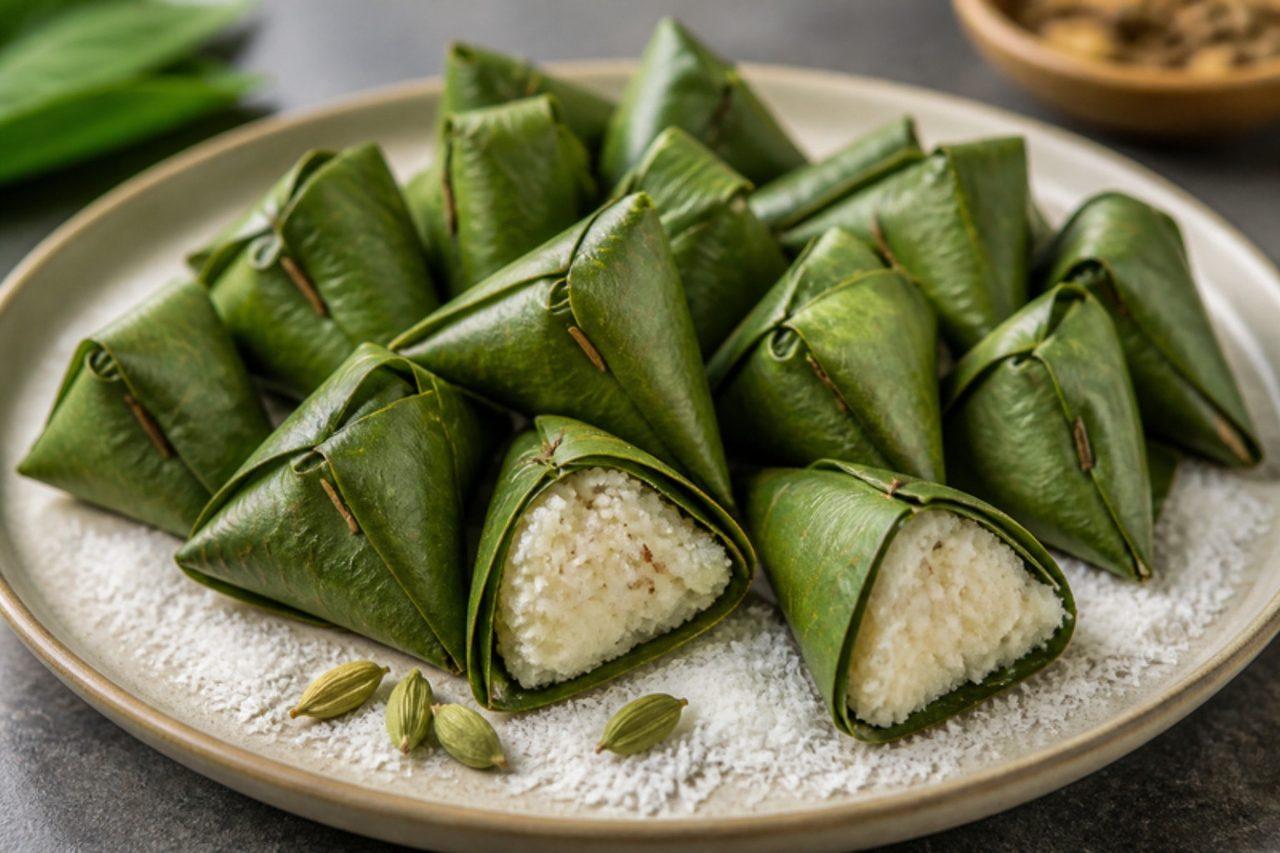
Singodi is Almora's other famous sweet, sold in the same shops as bal mithai but looking nothing like it: a soft, pale mix of khoya and coconut packed into a cone of maalu leaf and pinned shut with a twig. The leaf leaves a faint green, woody scent in the sweet, which is the whole point, and people in Kumaon unwrap them at weddings and on trips home. Maalu leaves are almost impossible to buy elsewhere, so this version uses banana leaf or fresh betel (paan) leaves; both give a gentle leafy aroma. Chef's tip: wrap the singodi while the filling is still warm and leave them in the fridge overnight, so the scent of the leaf soaks in.

by KrazyBadal 0 views

Polos curryYoung green jackfruit curry

Polos is the tiny unripe jackfruit picked in the Western and Sabaragamuwa provinces long before it sweetens, and cooked low and slow it becomes one of the island's most loved festival curries, especially at Sinhala and Tamil New Year in April and at wedding lunches. The firm, pale flesh soaks up a very dark roasted curry powder, garlic, ginger, goraka (a smoky souring fruit) and coconut milk until it turns almost black-brown and tastes rich, sour and meaty. Fresh polos is hard to find abroad; tinned young green jackfruit in brine works well. A frequent mistake is not cooking it long enough, which leaves it squeaky; the pieces must be soft enough to break with a spoon. Chef's tip: oil your hands and knife before cutting fresh jackfruit; the sticky white sap washes off oiled skin but not dry skin.

by KrazyBadal 2 views

SeffaSweet steamed vermicelli

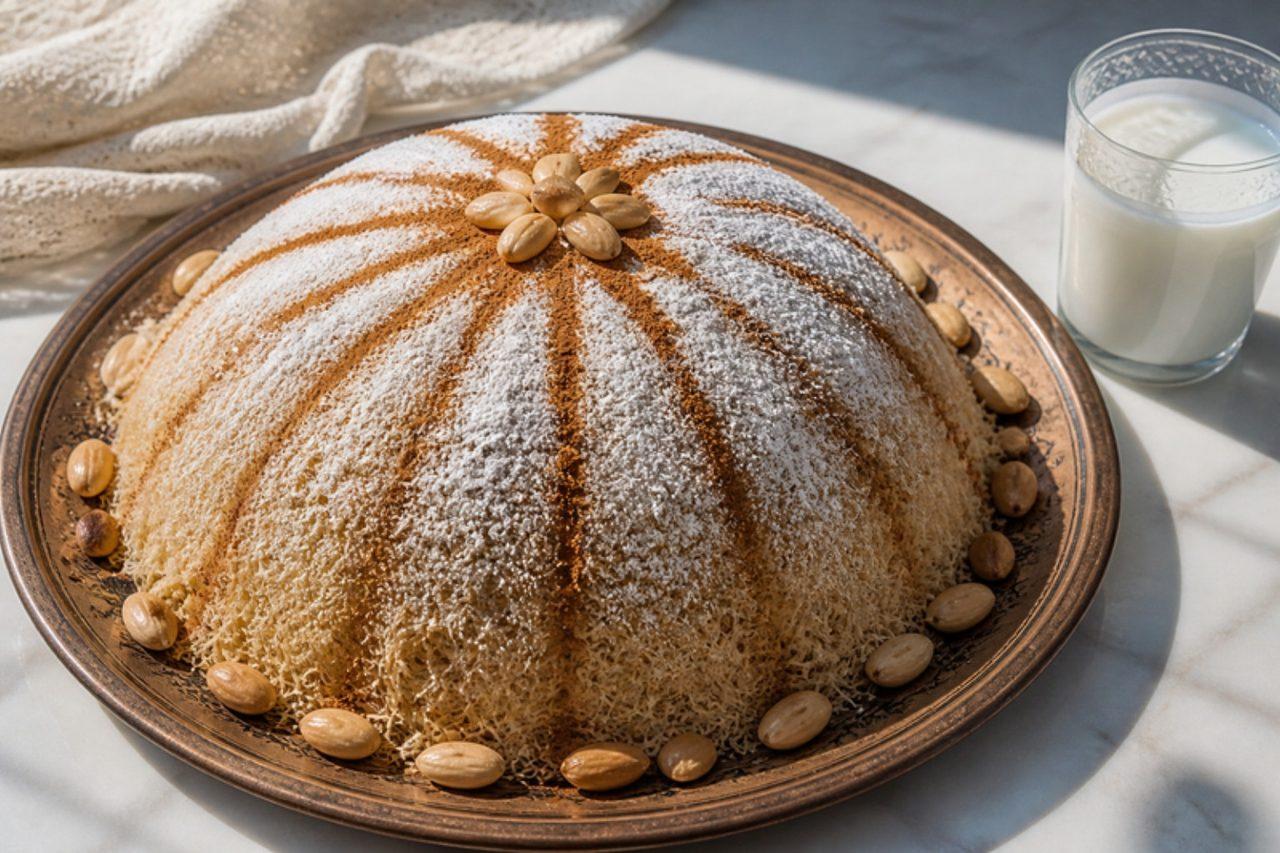
Seffa comes from the old medina of Fez, where it is carried out at the end of wedding feasts and served for breakfast after a baby's naming day: a mountain of fine steamed vermicelli tossed with butter, then decorated with lines of cinnamon, icing sugar and crushed almonds. The noodles are steamed rather than boiled, so they stay soft and separate rather than sticky. Each person eats from their side of the cone, often with a glass of cold milk. Chef's tip: steam the vermicelli in short bursts and fork it apart between each one; a single long steaming leaves it clumped.

by KrazyBadal 0 views

Vegetable kottu rotiChopped roti stir-fried with vegetables

After dark in Colombo you hear kottu before you see it: the rhythmic clang of two steel blades chopping roti on a hot flat-top at every street stall from Pettah to Wellawatte. Shredded godamba roti is stir-fried with leeks, carrot, cabbage, onion, chilli and egg, then moistened with a spoonful of spicy curry gravy so it's soft, smoky and messy in the best way. Stalls usually ladle on chicken curry gravy; we make a quick vegetable curry sauce instead, and the egg keeps it vegetarian rather than vegan. Leftover parathas or frozen flaky flatbreads stand in well for godamba roti. The common mistake is overcrowding a small pan, which steams everything; cook in two batches if your pan is under 30 cm. Chef's tip: chop the roti into strips while it is still slightly warm, then let it dry for 10 minutes so it fries rather than turns mushy.

by KrazyBadal 0 views

Sopa paraguayaCheesy cornbread

Paraguayans love telling visitors that their national 'soup' is eaten with a fork: sopa paraguaya is a dense, moist cornbread baked with sweated onions, fresh cheese, eggs and milk. It's on every table at asados, weddings and the Christmas meal, and sold in squares at bus stations from Asunción to Encarnación. The crust is golden and the inside soft and cheesy, more like a savoury pudding than bread. Chef's tip: soak the cornmeal in the milk for 15 minutes before mixing; hydrated cornmeal bakes up tender instead of gritty.

by KrazyBadal 0 views

QuesitosCream cheese pastry rolls

Every panadería in Puerto Rico has a tray of quesitos by the till, and a warm one with a café con leche is a standard island breakfast, from Old San Juan to small-town bakeries in the mountains. Puff pastry is rolled around a log of sweet vanilla cream cheese and baked until it shatters, then brushed with sugar syrup so the top turns glossy and sticky. The filling stays soft and slightly tangy inside the crisp layers. Chef's tip: chill the filling before you roll, so it holds its shape and doesn't squeeze out of the ends in the oven.

by KrazyBadal 0 views

SekuwaSpiced grilled meat skewers

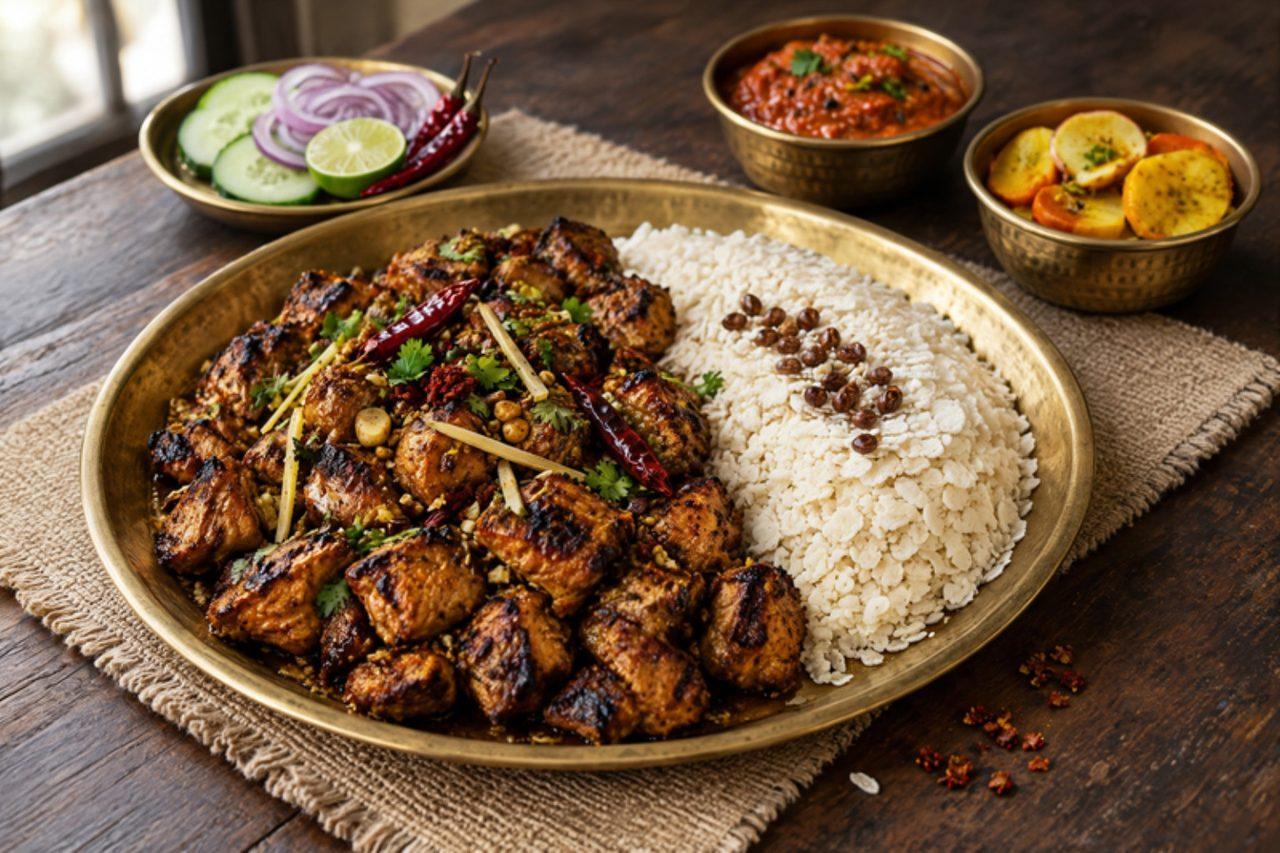
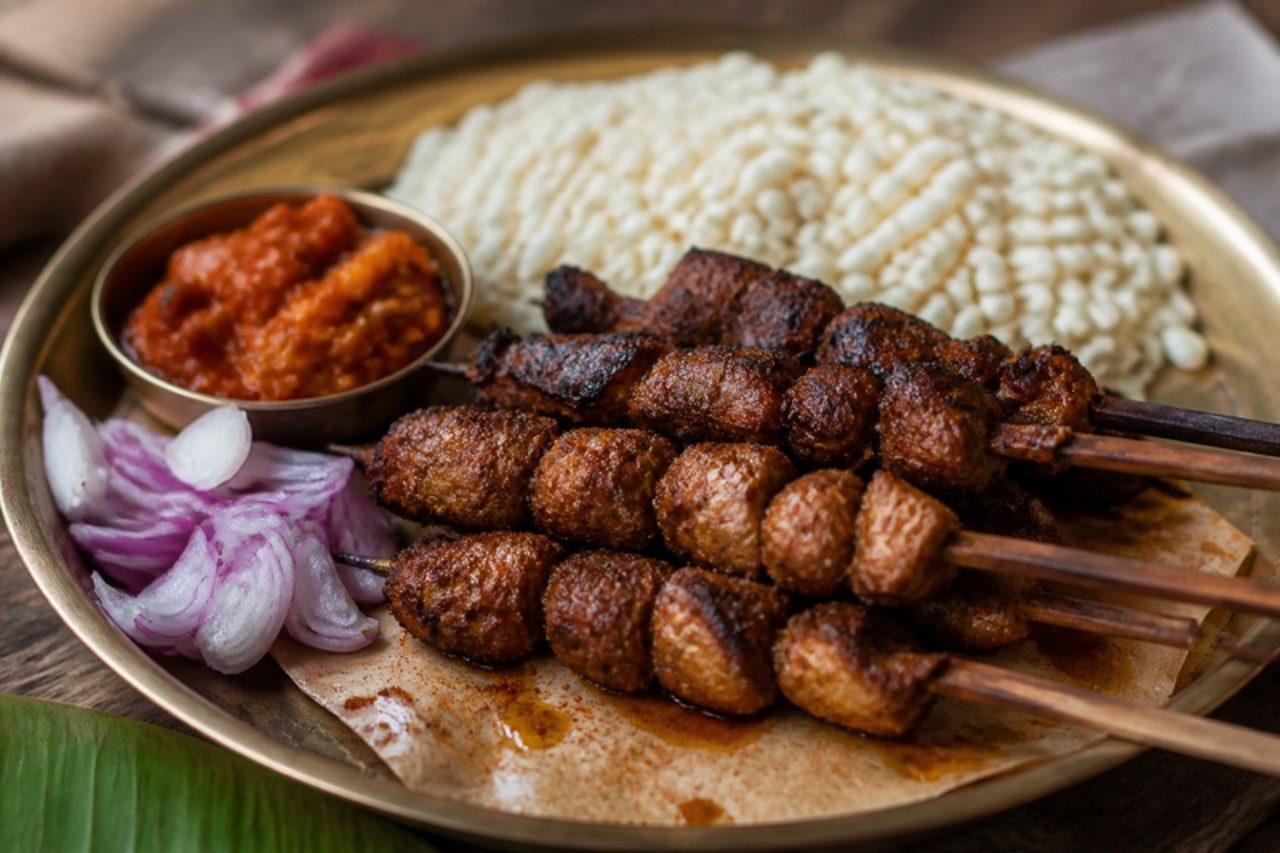
Dharan, in Nepal's eastern hills, is famous for its 'sekuwa corner', a lane of smoky grills where families and friends gather in the evening for spiced goat, chicken and pork skewers fresh off the fire. The meat is marinated in a dry-ish paste of garlic, ginger, cumin, chilli and timur (Nepali Sichuan pepper), with a little mustard oil, then grilled until charred at the edges. It is the classic picnic and party food, eaten with puffed rice, a tomato-sesame achar and sliced onion. This recipe uses lamb or mutton shoulder in place of goat. Chef's tip: soak wooden skewers for 30 minutes and leave a little space between the pieces so the heat reaches all sides.

40 minNepaliMeatGluten freeSpicy
by KrazyBadal 0 views

Sel rotiSweet rice flour rings

When Tihar, the five-day festival of lights, arrives in late autumn, kitchens all over Nepal fill with the smell of sel roti: big, thin rings of sweetened rice batter fried in hot oil until crisp and russet outside and soft and slightly chewy inside. They are stacked high to offer to the gods, to sisters during Bhai Tika and to every guest, and they are also made at Dashain and for weddings, travelling well and keeping for days. Rice is soaked overnight and ground with sugar into a thick, pourable batter, then poured by hand in one confident circle into the oil. Many families add ghee to the batter, which makes the rings richer but means they are vegetarian rather than vegan; this version uses oil. The common mistake is oil that is not hot enough, so the batter drinks fat and turns greasy. Chef's tip: let the batter rest for an hour after grinding; it thickens and ferments slightly, and the rings puff and hold their shape better.

by KrazyBadal 0 views

Quesadillas de flor de calabazaCourgette flower quesadillas

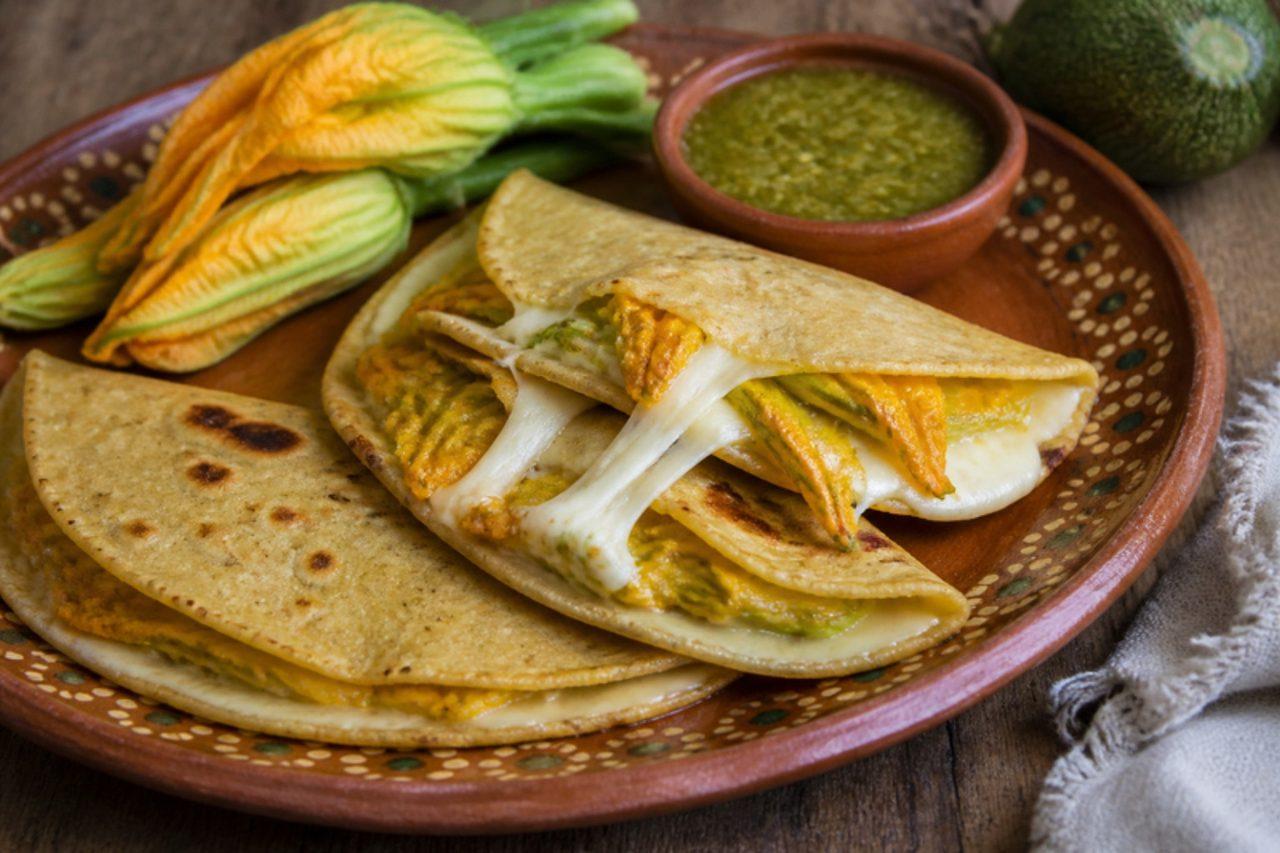
In Mexico City markets, squash blossoms (flor de calabaza) are sold by the armful in the rainy season and end up in quesadillas: soft corn tortillas folded around the flowers cooked with onion, green chilli and epazote, with stringy Oaxaca cheese. A famous Chilango joke is that a quesadilla there does not automatically come with cheese, so ask for it! The blossoms taste delicately of young courgette and wilt into a silky filling against the toasty corn. Serve them straight off the pan with salsa verde. Choose a cheese made with vegetarian rennet; if you can't find Oaxaca cheese, low-moisture mozzarella melts the same way. Chef's tip: cook the blossoms only until they collapse; any longer and they turn to mush and lose their colour.

by KrazyBadal 0 views

SellouToasted flour and almond sweet

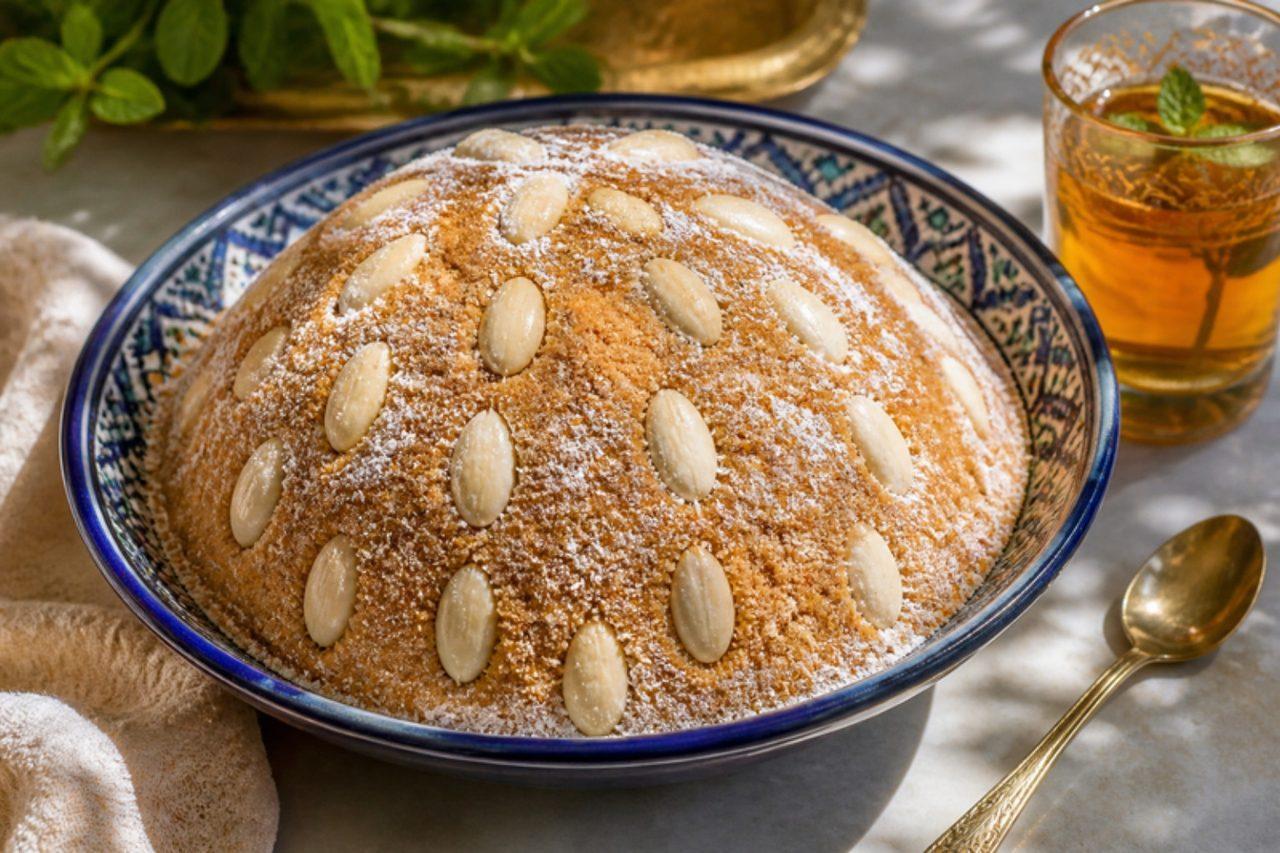
Sellou (also called sfouf or zmita) is made in big batches across Morocco for Ramadan, for new mothers and for Eid, and is served in a mound beside mint tea. Flour is toasted slowly in a dry pan until it turns the colour of sand and smells like biscuits, then mixed with ground toasted almonds and sesame, anise, cinnamon, butter and honey. The result is a crumbly, nutty, not-too-sweet sweet that you eat by the spoonful, or press into balls. It keeps for weeks. Chef's tip: toast the flour patiently over a low heat and keep it moving; scorched flour tastes bitter and the whole batch is lost.

by KrazyBadal 0 views

Qubani ka meethaStewed apricots with cream

No Hyderabadi wedding feast, or dawat, ends without qubani ka meetha: dried Afghan apricots soaked overnight, then simmered slowly with sugar until they break down into a glossy, deep amber compote, served cold with thick cream or a scoop of vanilla ice cream. In Hyderabad the kernels from inside the apricot stones are scattered on top; at home, blanched almonds give the same look and taste, and are safer, as some apricot kernels are bitter and shouldn't be eaten in quantity. It is sweet, tart and jammy, and very easy to make for a crowd days ahead. Chef's tip: keep the soaking water and cook the apricots in it; it holds much of their flavour and natural sugar.

by KrazyBadal 0 views

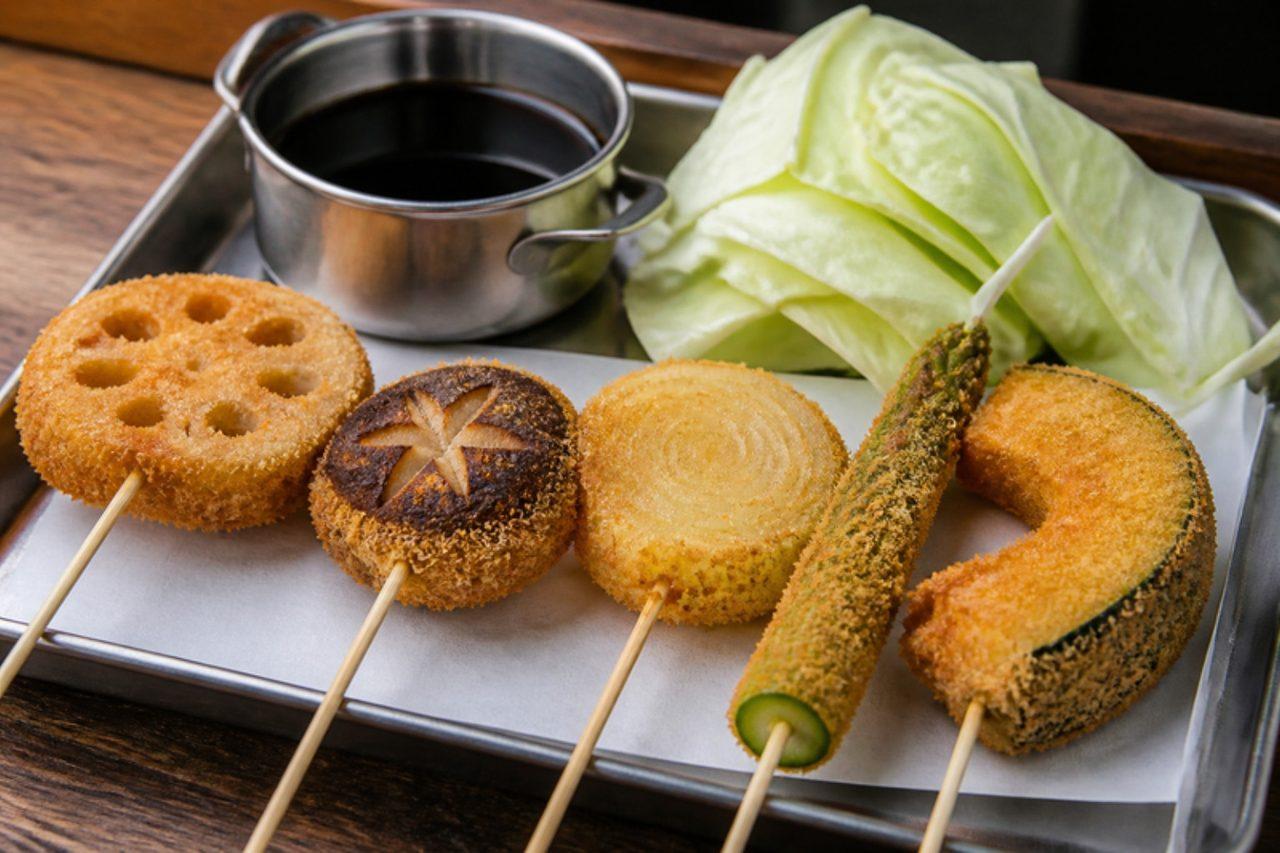
Vegetable kushikatsuBreaded vegetable skewers

Kushikatsu belongs to Shinsekai, the neon-lit old entertainment district at the foot of Osaka's Tsutenkaku tower. Since the 1920s, labourers have stood at its counters eating skewers fried to order, dunked in a shared steel pot of thin, fruity sauce. The famous house rule, 'no double dipping', is printed on signs everywhere. Vegetables are as popular as meat there: lotus root, shiitake, onion, asparagus and, a local favourite, chewy mochi and cheese. Have a plate of raw cabbage leaves on the side; they're free at every shop and used to scoop extra sauce. Chef's tip: use fine panko, or blitz ordinary panko briefly. Fine crumbs give the thin, crunchy jacket that Osaka shops are known for.

by KrazyBadal 0 views

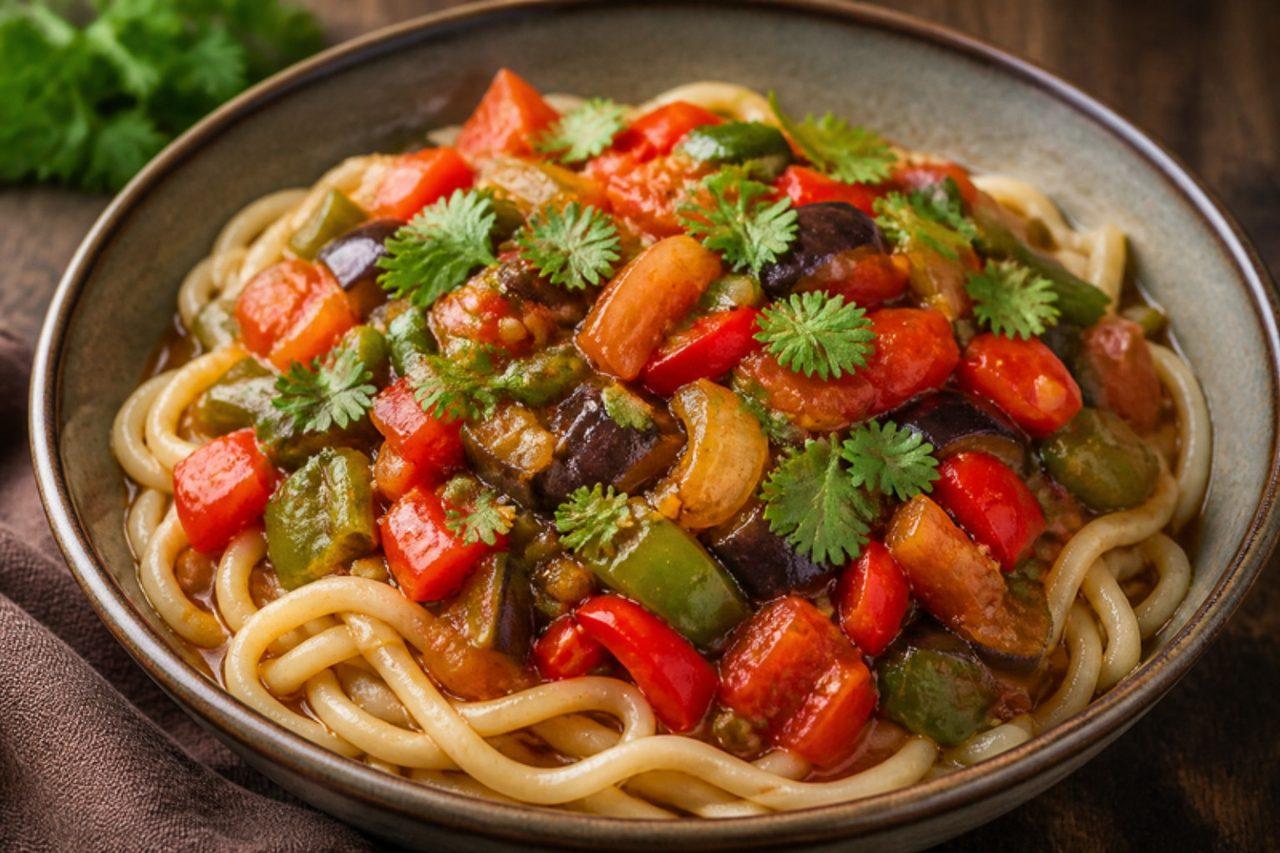
Vegetable lagmanHand-pulled noodles with vegetables

Lagman came to the Ferghana Valley with Uyghur and Dungan cooks, and in Andijan and Namangan it is still made the old way: a soft dough oiled, rested and pulled by hand into long, springy noodles, then topped with a stew of peppers, radish, green beans and tomato called vadja. Ferghana lagman is usually 'dry' (quwurma), the sauce thick enough to cling, rather than a soup. Locals eat it at lunchtime from noodle houses near the bazaar, with a dash of vinegar and chilli oil at the table. This version uses only vegetables. Chef's tip: oil the dough ropes generously and let them rest a full 30 minutes; well-rested dough stretches to arm's length without snapping.

by KrazyBadal 0 views

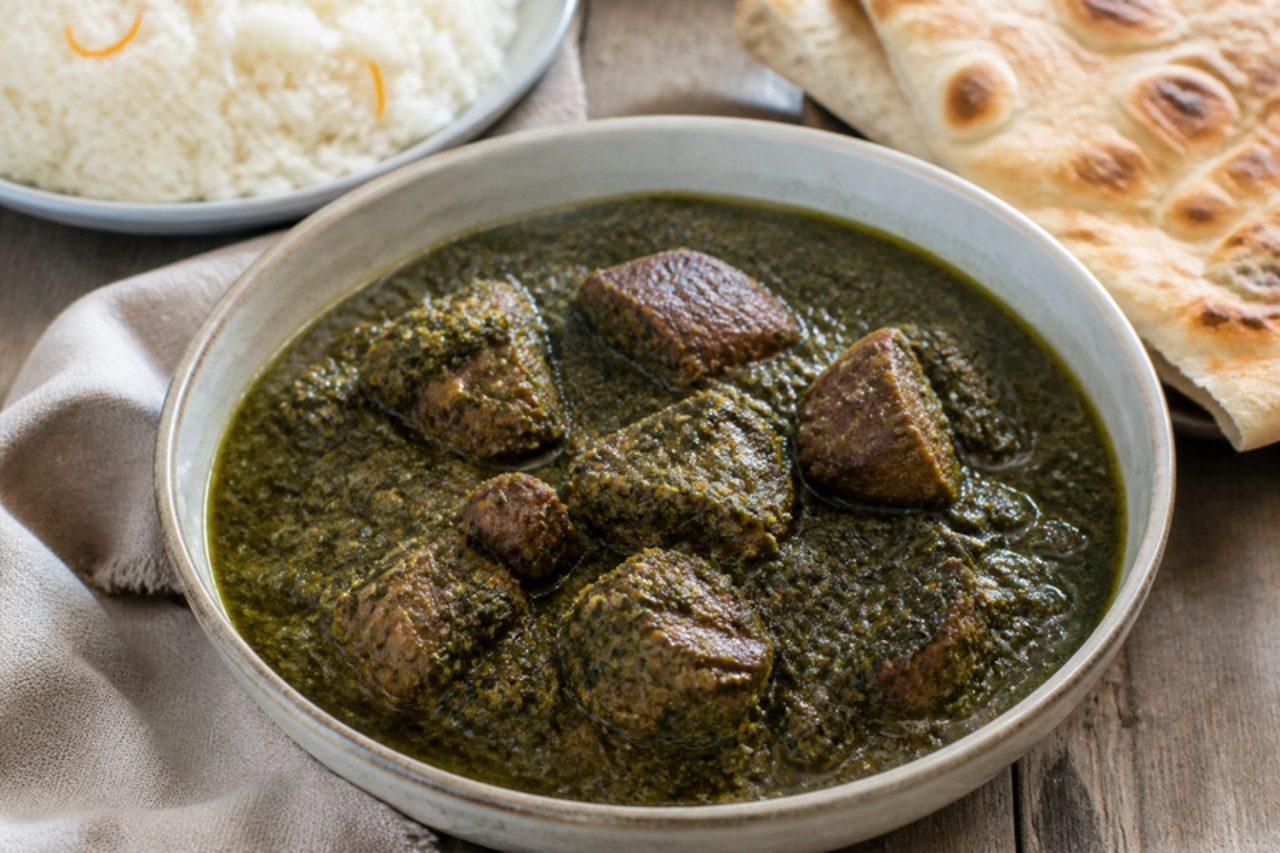
Qorma-e sabziLamb with spinach and herbs

Qorma-e sabzi is the green qorma of Kabul: lamb slowly braised with a large amount of spinach, dill, coriander and spring onion until the greens collapse into a dark, silky sauce. Afghan cooks fry the onions slowly until deep brown first, so the stew tastes sweet and savoury against the slightly bitter greens, and a spoon of dried fenugreek leaves adds the typical bitter-sweet scent. It is served on Fridays and for guests with chalaw, plain white rice, or with naan. The common mistake is adding the greens raw and wet in one go, which stews them grey and watery; wilt and squeeze them first. Chef's tip: let the stew simmer uncovered for the last 15 minutes until the oil rises to the top; that is the sign of a well-cooked qorma.

by KrazyBadal 0 views

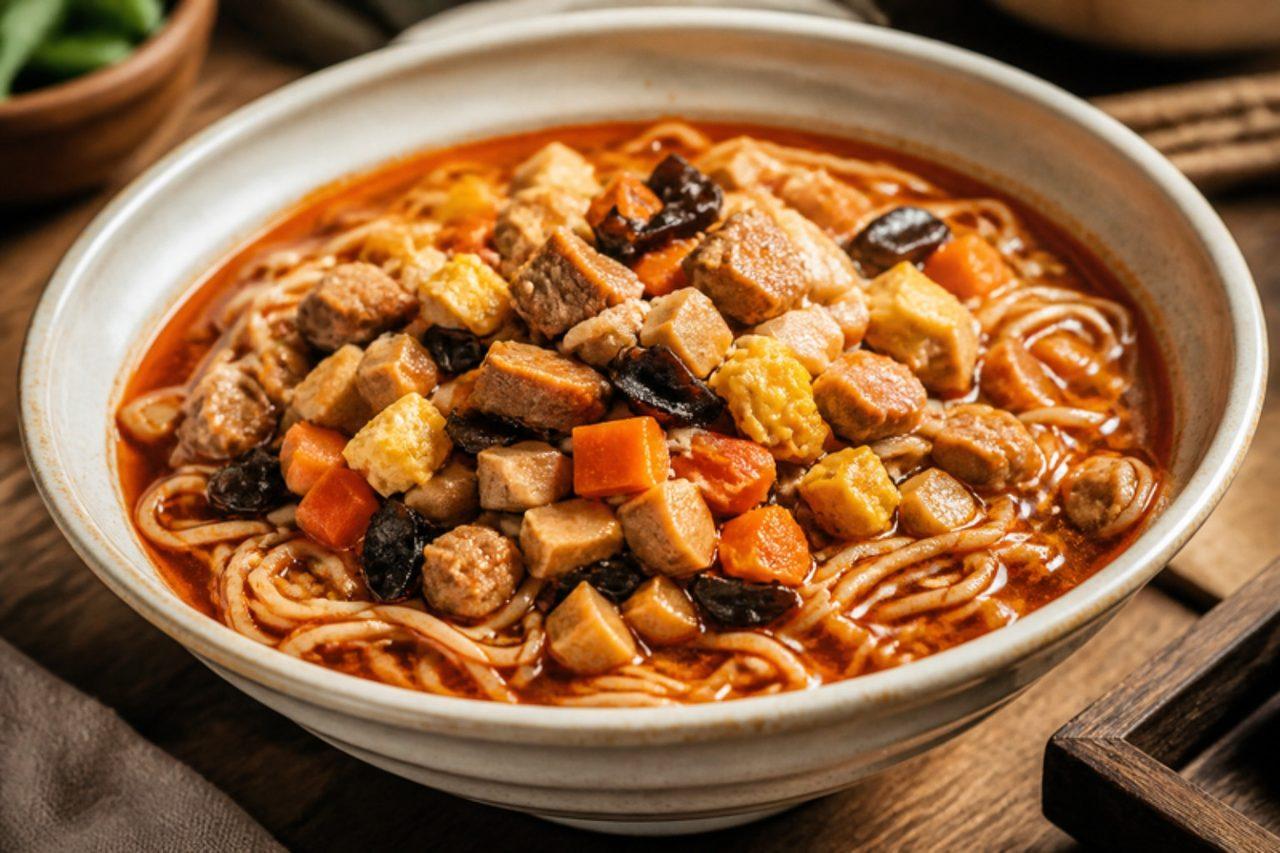
Qishan saozi mianSour-hot noodles with pork

Weddings, birthdays and harvest feasts in Qishan county, west of Xi'an, all call for these little bowls of noodles, and guests may eat ten or twenty small portions in a row. The key is the saozi, diced pork slowly cooked in aged vinegar and chilli until it turns red, tangy and fragrant; the broth is sour, spicy and bright with diced tofu, carrot, wood ear, egg and garlic shoots. The noodles are thin and springy and the bowls deliberately small. Serve it to a crowd as a lively lunch, with a plate of pickled vegetables. Chef's tip: make the saozi a day ahead; it keeps for a week in the fridge and tastes better after a rest.

by KrazyBadal 0 views

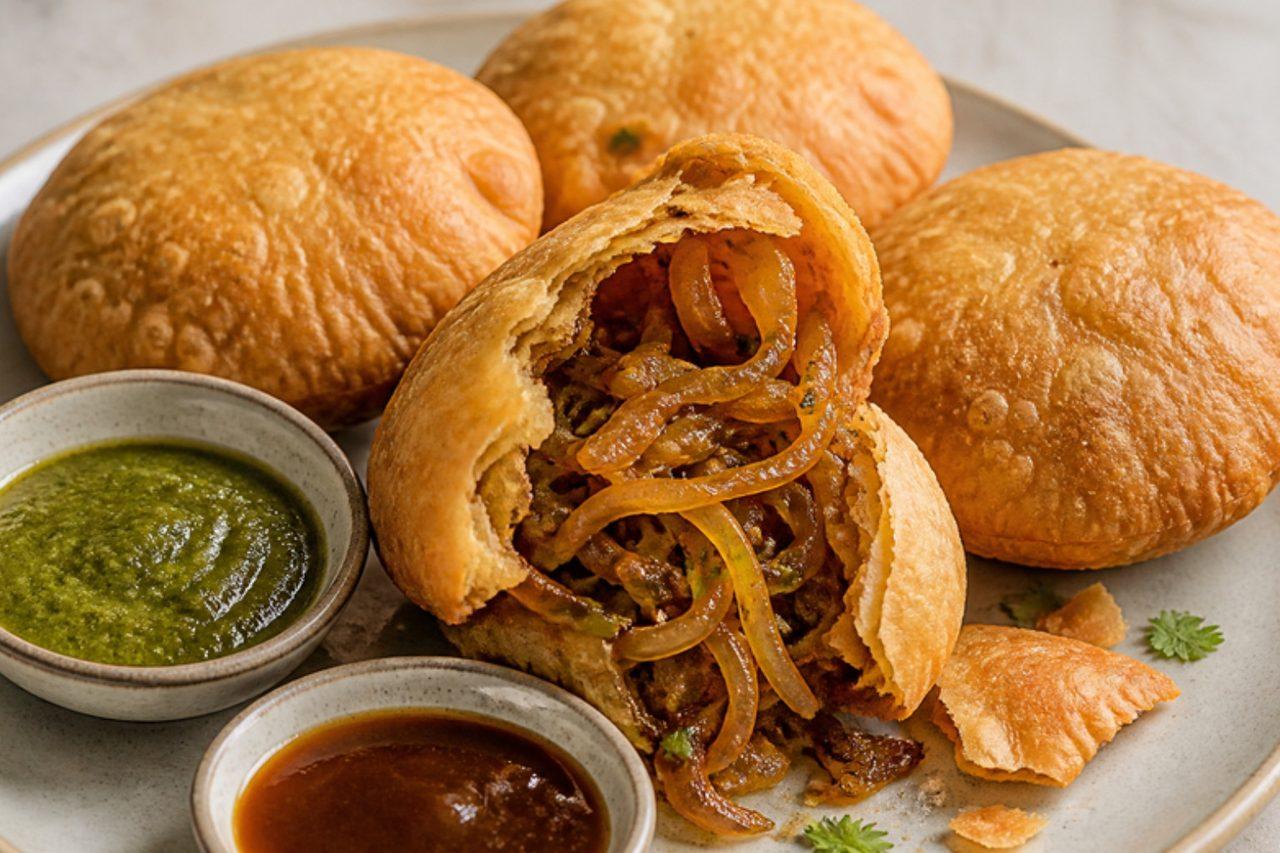
Pyaaz kachoriOnion-filled fried pastries

Pyaaz kachori is the pride of Jodhpur in Rajasthan, where sweet shops fry them from early morning and sell them by the hundred with tamarind chutney. The crust is khasta: short, layered and crackly, made by rubbing plenty of oil into the flour and frying slowly. Inside is a soft, jammy filling of onions cooked with fennel, coriander seed and nigella, bound with a little gram flour and potato and lifted with dried mango powder. Eat them warm for breakfast or with afternoon chai. Chef's tip: fry them in oil that is only just warm and let them take their time; the slow fry is what puffs the crust into crisp, hollow layers instead of a hard, oily shell.

by KrazyBadal 0 views

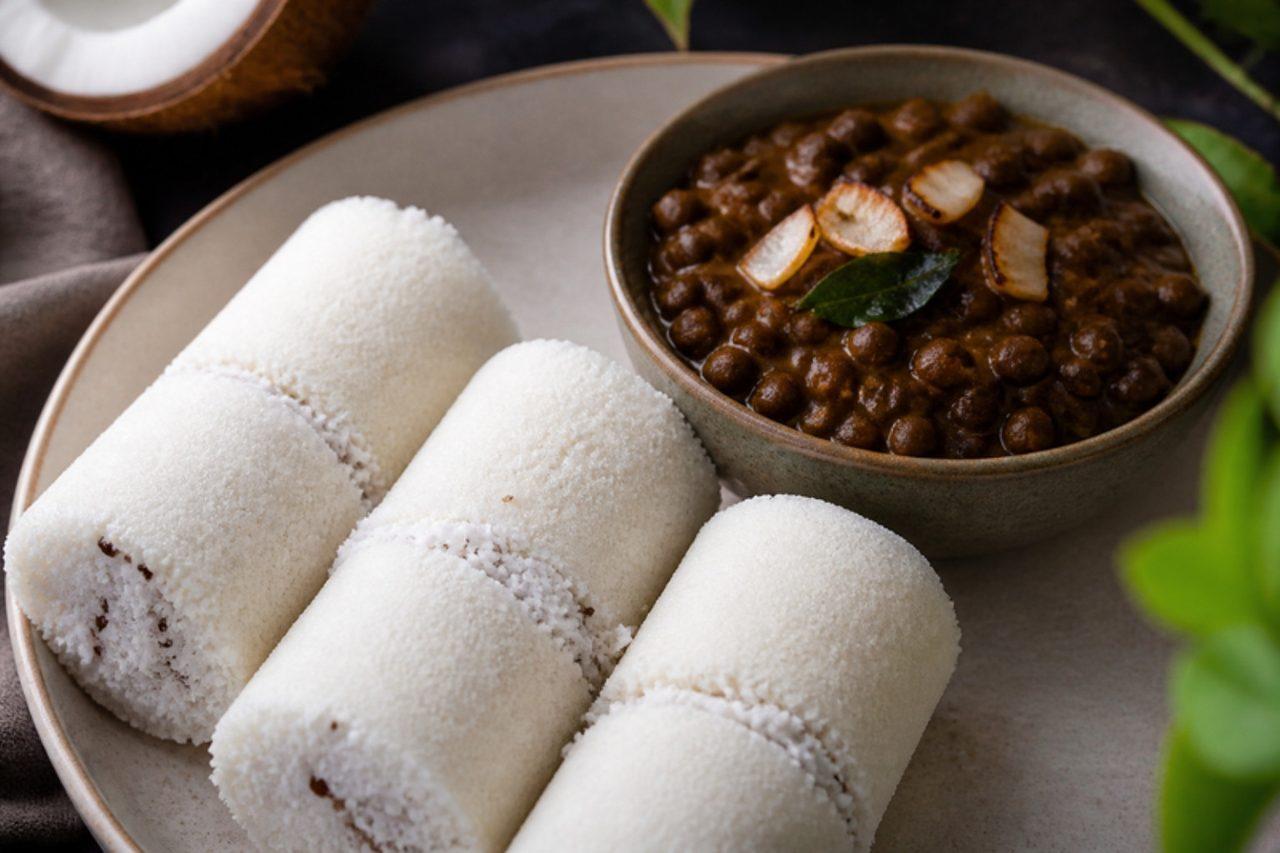
Puttu and kadala currySteamed rice cylinders with chickpea curry

Puttu and kadala is Kerala's most loved breakfast: tall cylinders of steamed rice flour layered with fresh coconut, served with a dark, earthy curry of black chickpeas (kadala) cooked in a masala of coconut roasted until deep brown. Puttu itself is plain and crumbly, so you break it up with your fingers and mash it into the curry, often with a ripe banana and pappadam on the side. The chickpeas make it filling and protein-rich. Chef's tip: the puttu flour should feel like damp sand that holds when squeezed and crumbles when poked; too wet and the puttu turns dense and gluey.

by KrazyBadal 0 views

PutoSteamed rice cakes

Puto are small steamed rice cakes found at every Filipino party and merienda table, with countless town styles from Biñan's flat rounds to Calasiao's tiny bites in Pangasinan. Traditionally the batter is fermented ground rice; this home version uses rice flour and baking powder for a quick, reliable rise and a fine, cottony crumb. A strip of cheese on top melts into the cake as it steams. They go with dinuguan in Luzon, but a cup of coffee or hot chocolate is just as good. Chef's tip: wrap the steamer lid in a tea towel so condensation doesn't drip onto the cakes and leave pockmarks.

by KrazyBadal 0 views

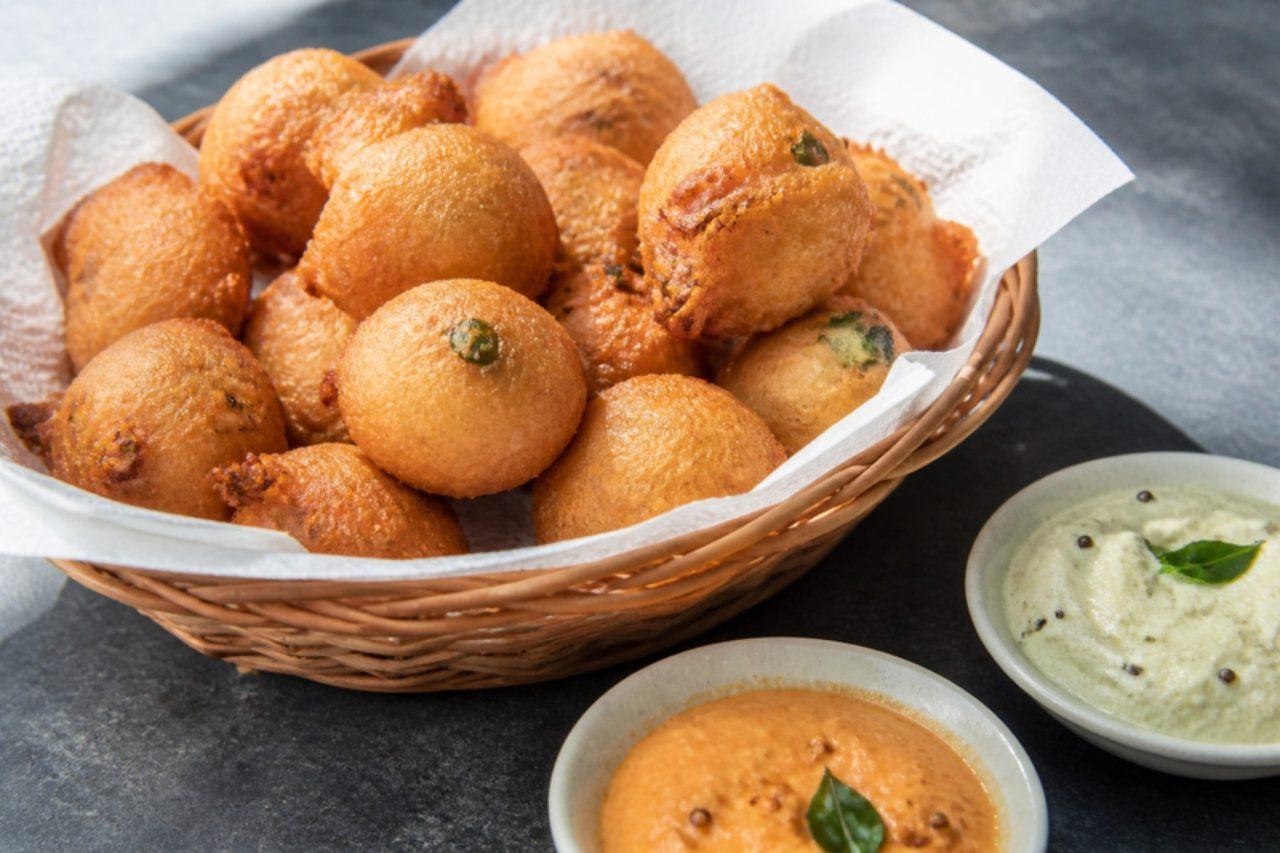
PunuguluDosa batter fritters

Punugulu are the bite-sized, golden fritters sold by the paper-cone along the streets of Vijayawada and Guntur on wet evenings, and made at home whenever the idli or dosa batter has gone a little too sour. A spoonful of thick batter with onion, green chilli and cumin is dropped into hot oil, where it puffs into a round ball with a crackly shell and a soft, spongy middle. Serve them hot with peanut chutney, ginger chutney or plain ketchup and a cup of chai. Chef's tip: add a spoonful of rice flour to the batter; it gives punugulu their crunch and stops them soaking up oil.

by KrazyBadal 0 views

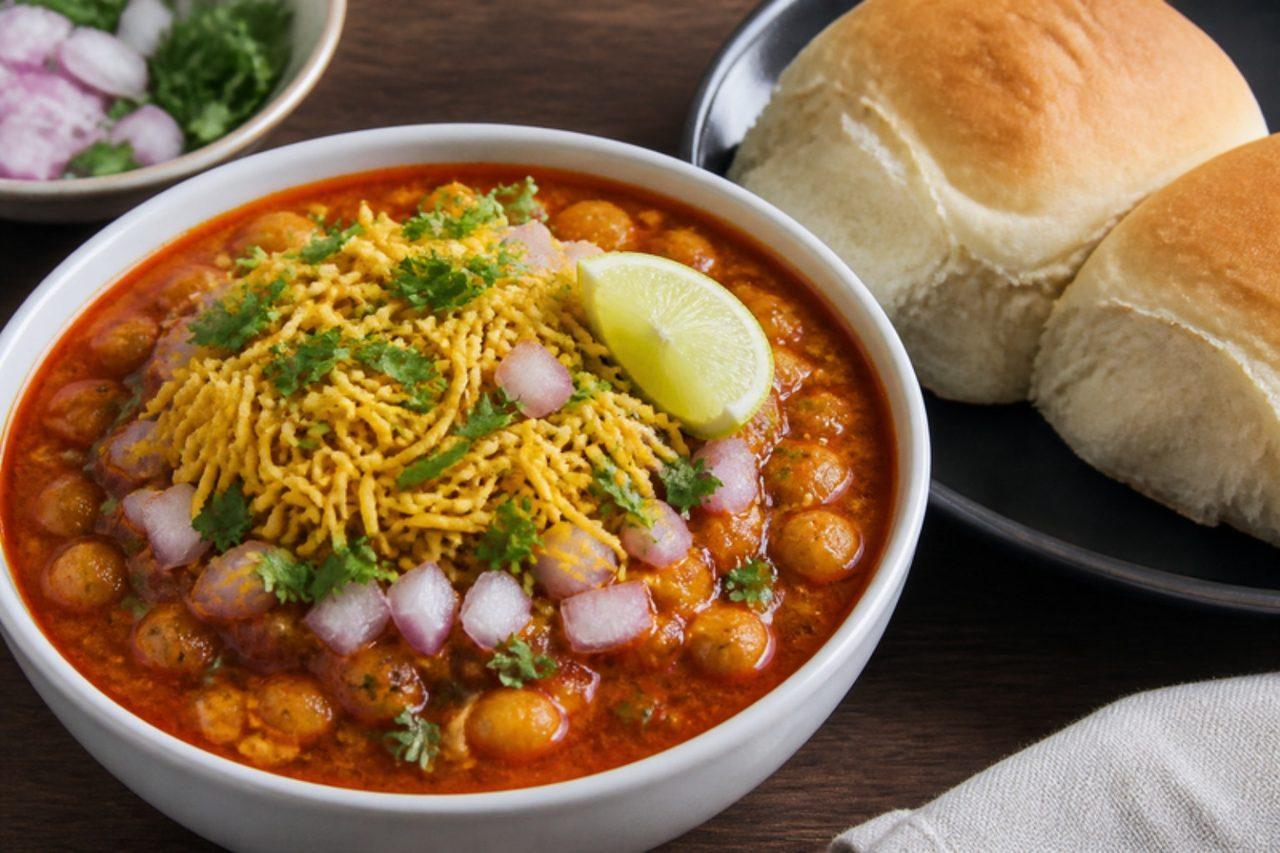
Sev usalWhite pea curry with sev

Ask anyone from Vadodara where to eat sev usal and you'll get a strong opinion and a street-corner name. Early in the morning the handcarts near Mandvi and Raopura have a huge pot of dried white peas simmering in a thin, fiery gravy, with a separate tin of brick-red chilli oil (the tari) on the side. A ladle of usal goes into a steel plate, a spoonful of tari is poured over, and then it disappears under fine sev, raw onion and coriander, with lemon and soft pav to mop it up. The gravy should be loose and soupy, not thick like a curry, so the sev stays crisp for the first few bites and then soaks in. Chef's tip: cook the tari separately and let each person add their own; the usal alone is only medium-hot, and the tari is where the fire comes from.

by KrazyBadal 0 views

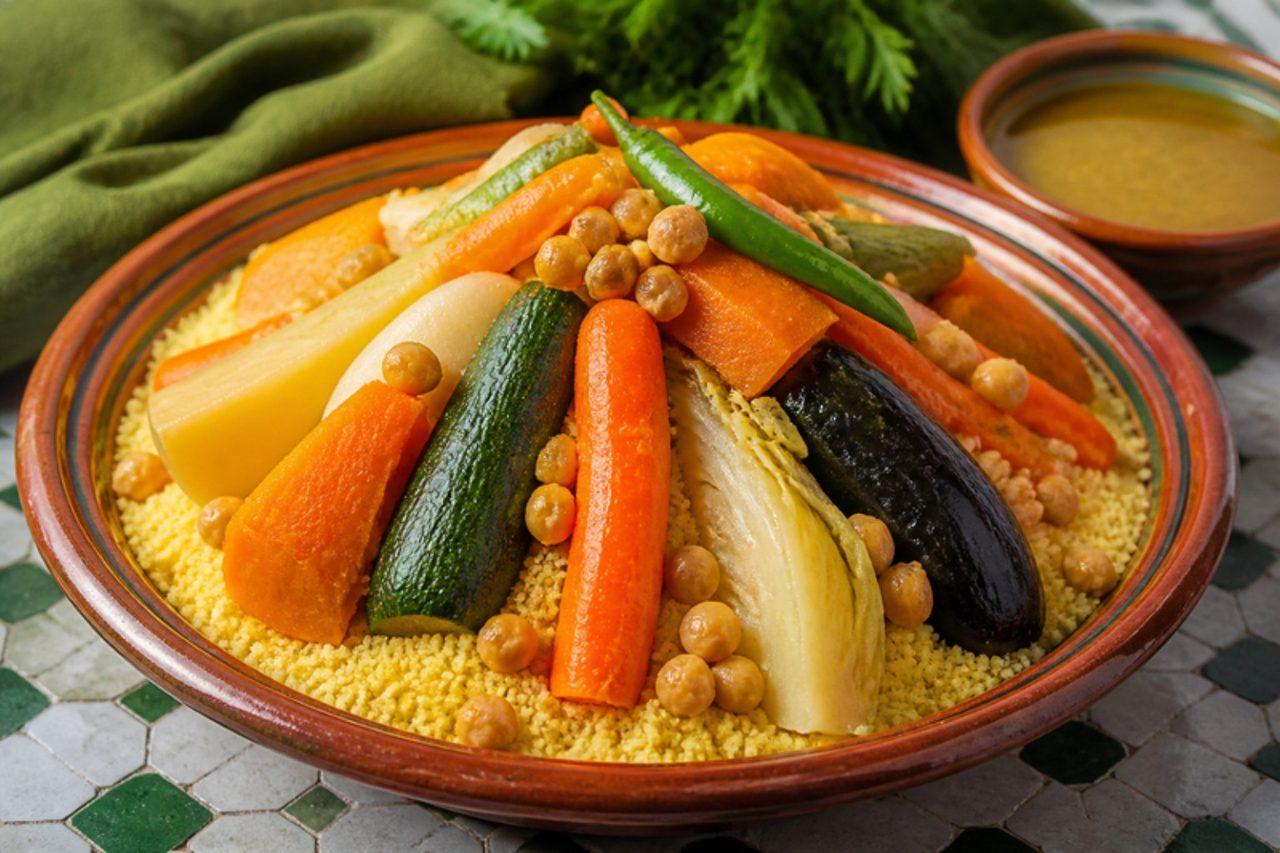
Seven-vegetable couscous (bidaoui)Couscous with seven vegetables

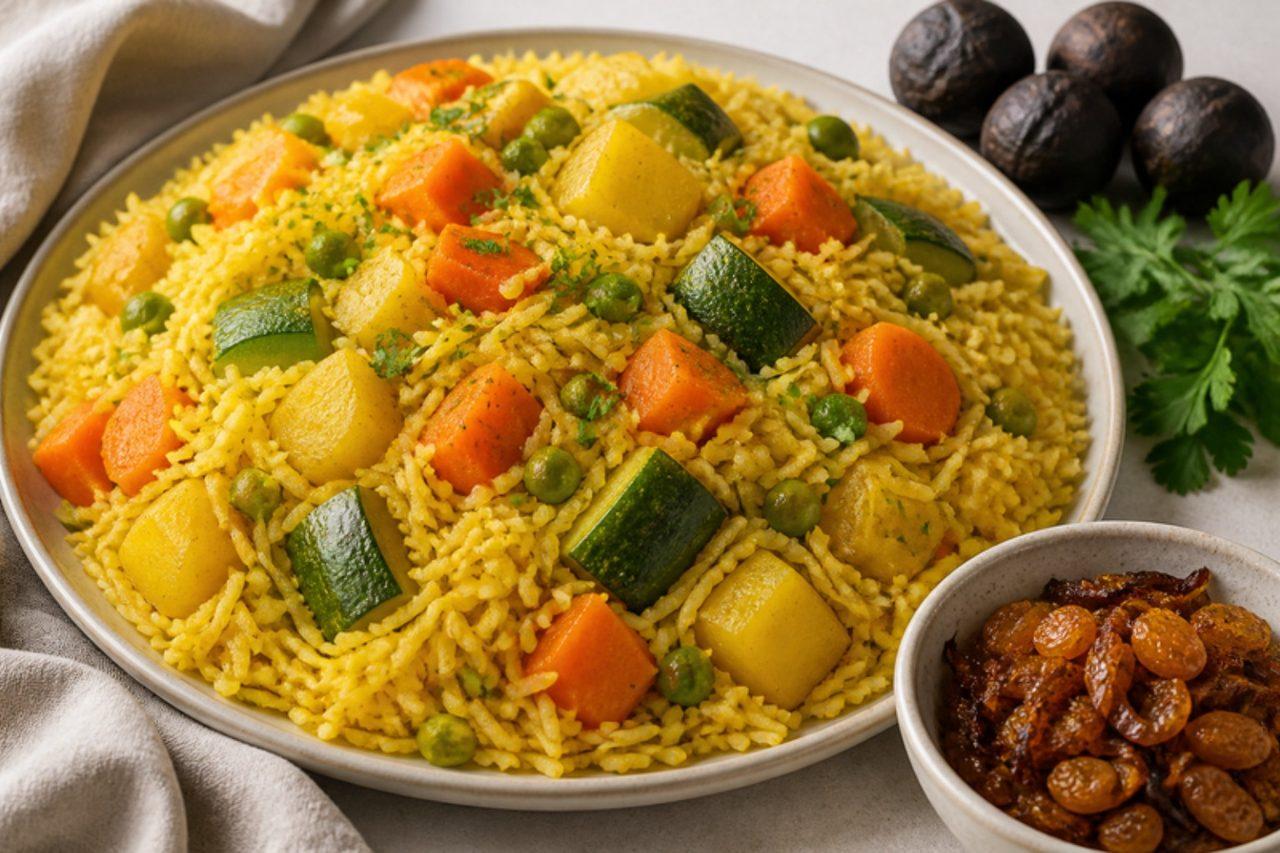
In Casablanca, Friday lunch after midday prayers means couscous bidaoui, the city's own version piled with seven vegetables, from pumpkin and turnip to cabbage and carrot. Families eat it from one great dish, each person working on their own corner of the mound, with extra broth ladled on as they go. The grains are steamed twice over the simmering broth so they swell into separate, fluffy beads that soak up the flavour without turning soggy. This vegetarian version builds the broth from onion, tomato, saffron and chickpeas, so it is rich enough without meat. Chef's tip: rub the couscous between your palms after each steaming to break up every clump; that is what makes it light.

by KrazyBadal 0 views

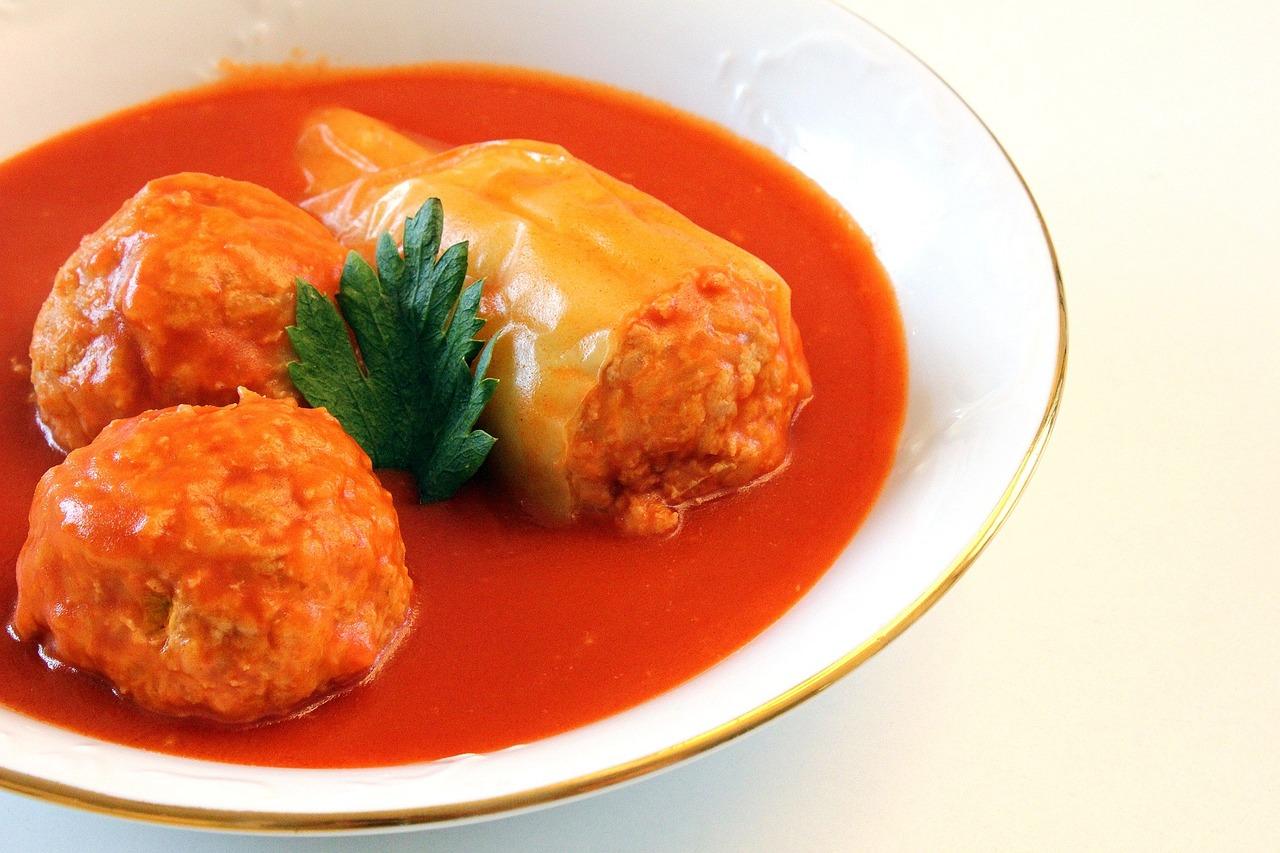
Punjene paprikeStuffed peppers

When late-summer markets in Novi Sad and Belgrade fill up with pale yellow and light green peppers, Serbian kitchens make big pots of punjene paprike to eat for several days. The peppers are packed with seasoned beef and pork mince and rice, stood upright and simmered slowly in a light tomato sauce until meltingly soft. They are served with a dollop of sour cream and bread to mop up the sauce. This recipe contains pork. The easy mistake is stuffing the peppers too tightly: the rice swells and splits them, so leave the top 2 cm empty. Chef's tip: plug each pepper with a slice of potato or tomato before simmering, so the filling stays inside.

105 minBalkanMeatGluten free
by KrazyBadal 0 views

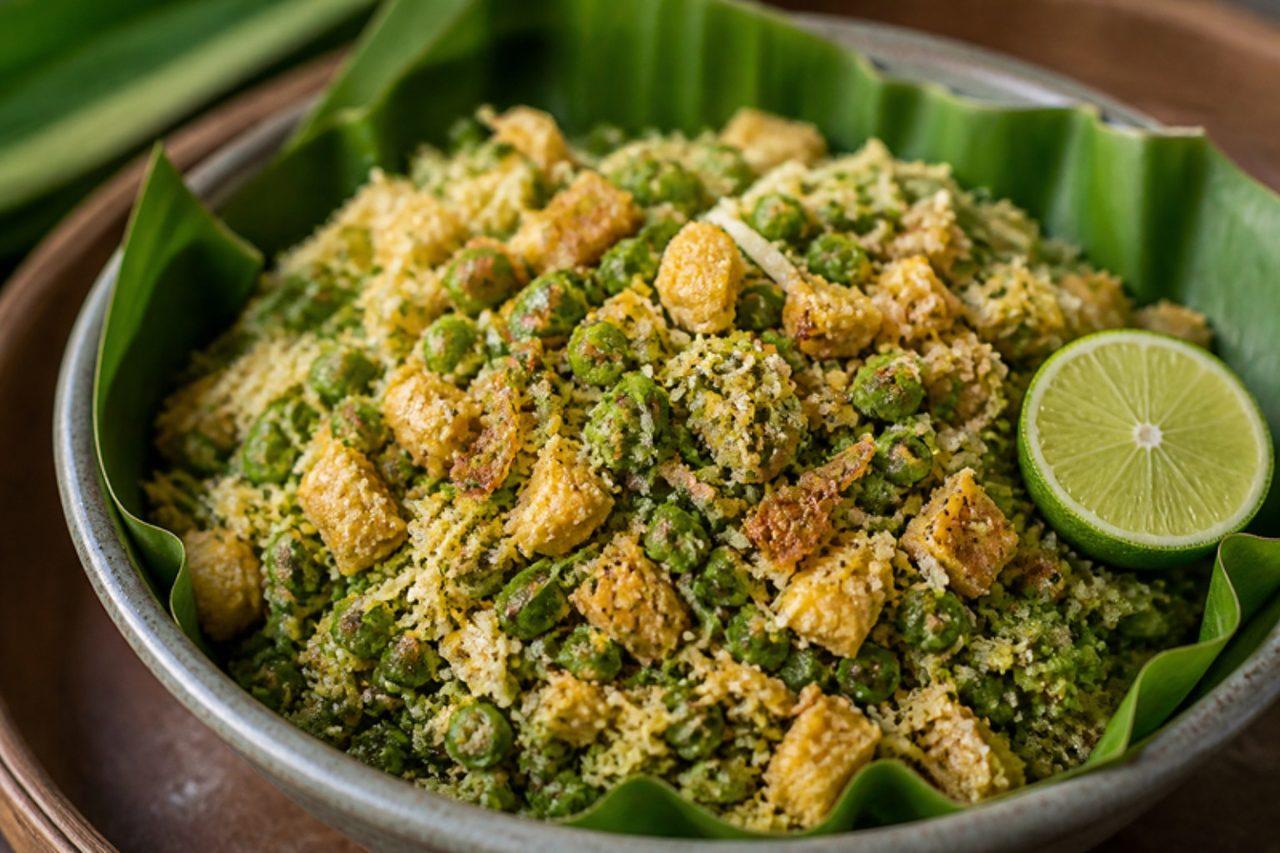
Vegetable lawarBean and toasted coconut salad

Lawar is the dish of Balinese ceremonies: before a temple festival or a family rite, the men of the banjar gather at dawn to chop and mix it by hand in huge quantities. Many versions include meat, but lawar kacang, made with long beans, is common at home and at Balinese warungs, and it shows off base genep, the island's master spice paste of shallot, garlic, galangal, kencur, turmeric and chilli. Mixed with toasted grated coconut, it's crunchy, fragrant, sour and hot, and is eaten with rice the day it's made. Chef's tip: mix the lawar just before serving and with your hands, squeezing gently, so the spice paste works into the beans; made too early, it goes watery and dull.

by KrazyBadal 0 views

SfeehaSmall open lamb pies

Sfeeha are the little open meat pies of Baalbek in Lebanon's Bekaa Valley, where bakers pinch them into neat squares and bake them by the hundred for weddings, Eid and Sunday mornings. The lamb filling is chopped with tomato and onion and sharpened with pomegranate molasses and a spoon of yogurt, so it stays juicy as it bakes on thin, crisp dough. Eat them warm with a bowl of yogurt or labneh and some cucumber. Chef's tip: pinch the four corners really firmly; the square shape is what traps the juices so the base stays crisp.

by KrazyBadal 0 views

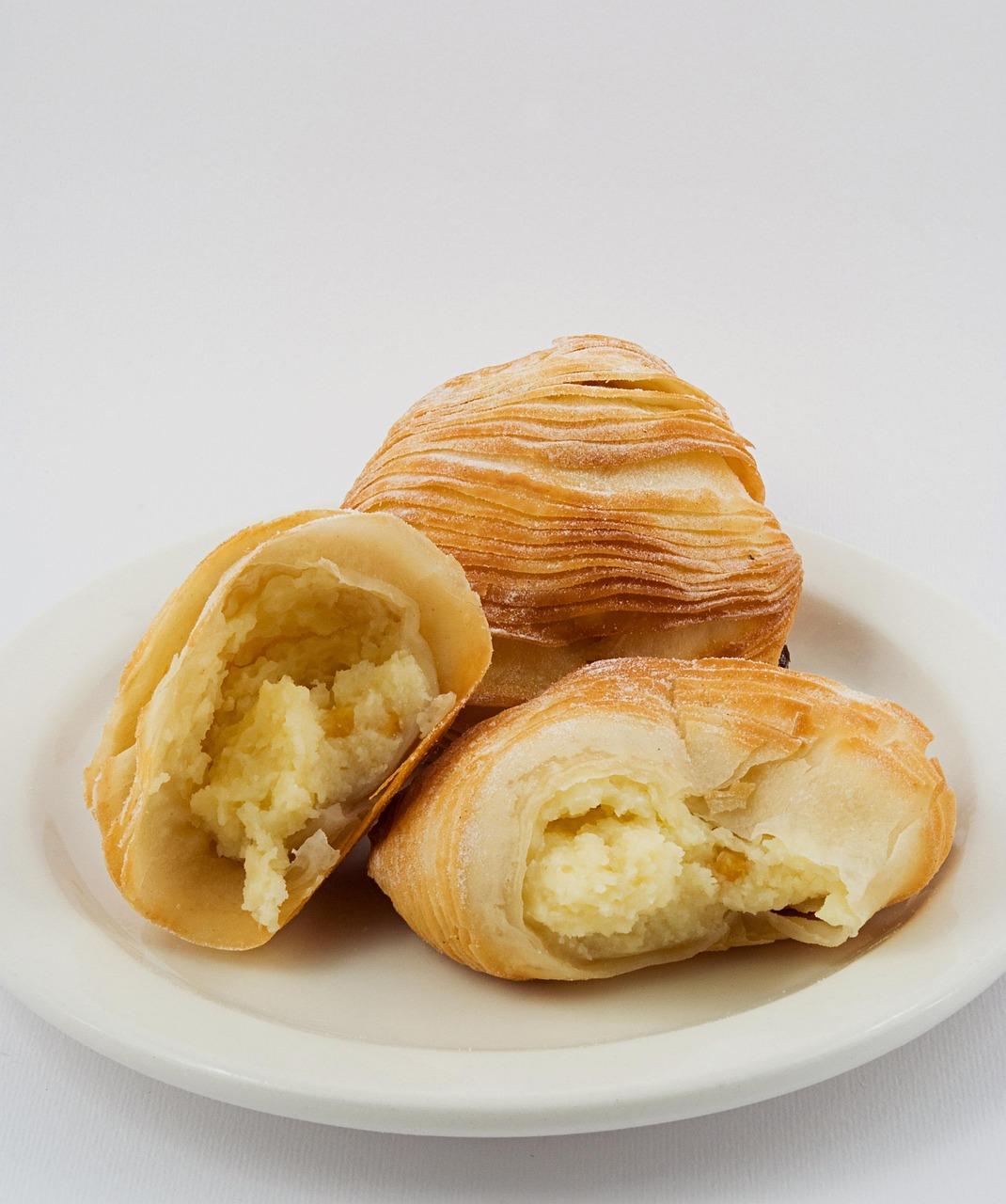
SfogliatelleFlaky shell-shaped pastries

Sfogliatella riccia is the most famous pastry of Naples, sold warm from bakeries on Via Toledo and eaten for breakfast with an espresso: dozens of paper-thin layers fanned into a shell that shatters when you bite, around a filling of semolina, ricotta, candied orange and cinnamon. It is a project for a weekend, as the dough needs to be rolled very thin, wound into a tight log and chilled overnight. Neapolitan bakers use lard; this version uses a mix of butter and vegetable shortening. Chef's tip: a pasta machine is your best friend; roll the dough to the thinnest or second-thinnest setting so the layers separate into crisp leaves.

by KrazyBadal 0 views

SfoufTurmeric semolina cake

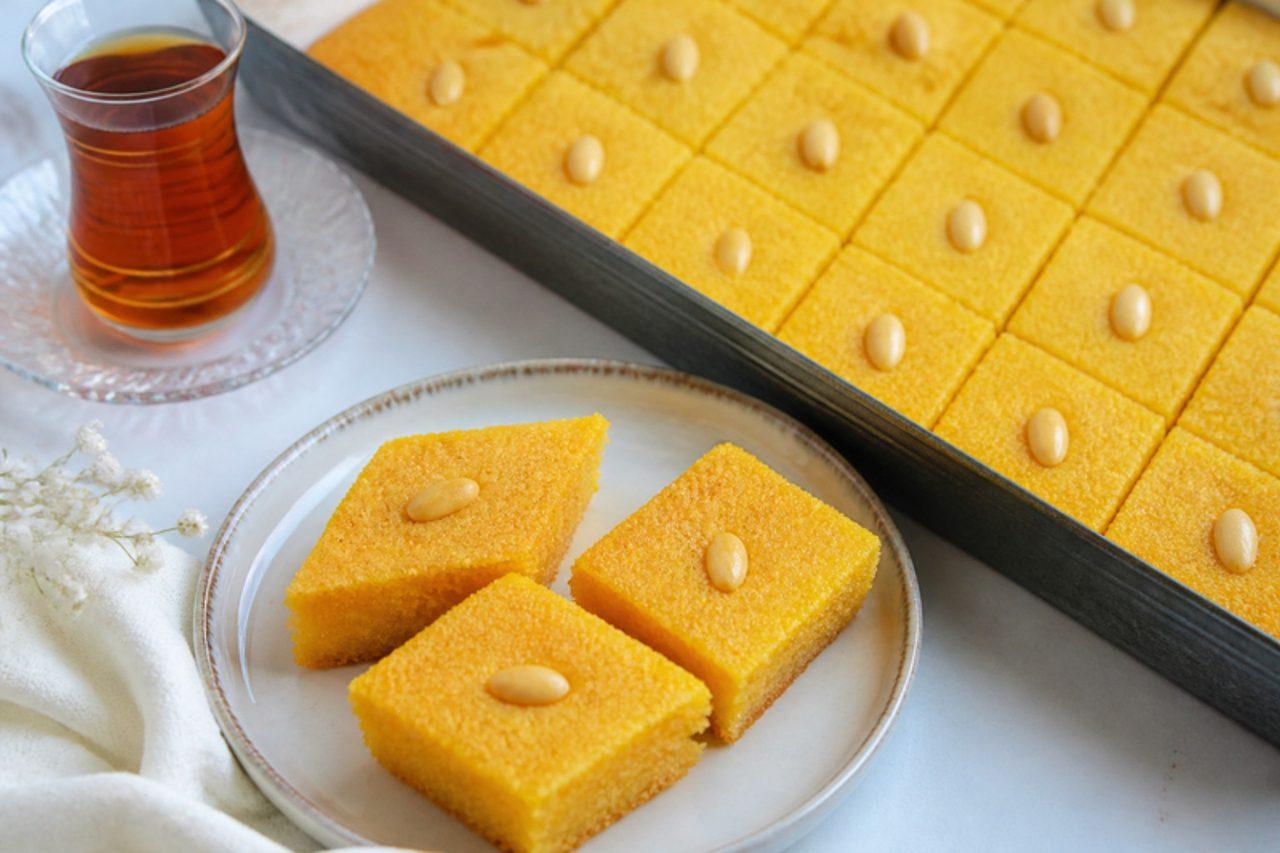
Sfouf is the bright yellow cake you find in every Lebanese bakery window and in plastic tubs at village coffee mornings, cut into diamonds and eaten with tea or a small cup of coffee. Turmeric gives the colour, aniseed and a little mahlab the perfume, and semolina a soft, slightly sandy crumb. Many families make it without eggs or dairy for Lent, and this version is fully plant-based, so it is not the site's eggless coconut-yogurt semolina cake. The tin is greased with tahini, a Beirut habit that gives the base a nutty crust. Chef's tip: use only the turmeric listed; more turns the cake bitter and slightly medicinal.

by KrazyBadal 0 views

Vegetable machboosSpiced rice with vegetables

In Bahrain and Kuwait machboos is the rice dish of the home kitchen: deeper yellow than Saudi kabsa, with more turmeric, more dried lime and a last splash of rose water that perfumes the whole pot. Families cook it for the big midday meal, especially on Fridays and through Ramadan, and pile it high on a round metal tray. Here potatoes, cauliflower and peppers take the place of chicken, and the rice is crowned with hashu, soft caramelised onions with raisins and a pinch of black lime powder. Chef's tip: brown the potatoes and cauliflower before the rice goes in; their golden edges give the meaty depth the chicken usually brings.

by KrazyBadal 0 views

Sha phaley with cabbage and cheeseFried cabbage and cheese pockets

Sha phaley comes from Sikkim's Bhutia and Tibetan communities: rounds of dough are filled, sealed into half-moons and fried until golden and blistered, like a fat, crisp pie. In Gangtok's MG Marg cafés and home kitchens the classic filling is minced meat, but a vegetarian version with cabbage, spring onion, ginger and cheese (paneer or soft churpi) is common and very good. Eat them hot with dalle chutney and a bowl of thukpa or tea. Chef's tip: squeeze the salted cabbage hard before filling; any loose water steams inside and makes the dough soggy.

by KrazyBadal 0 views

Vegetable mandu-gukVegetable dumpling soup

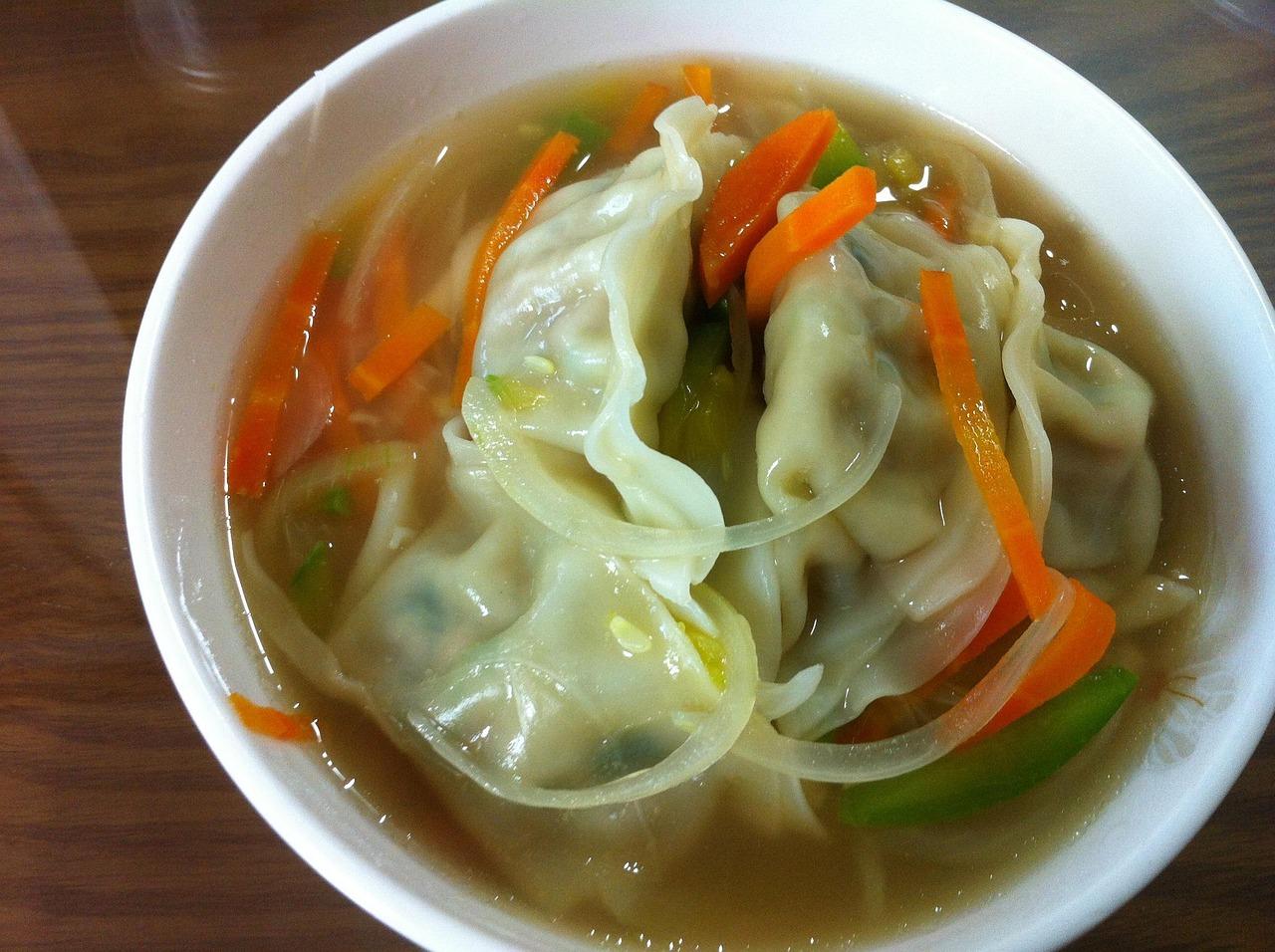
In Seoul and the surrounding Gyeonggi province, the first meal of Seollal (Lunar New Year) is often mandu-guk (만두국): plump dumplings and coin-shaped rice cakes floating in clear broth, finished with ribbons of yellow and white egg and strips of toasted laver. The northern half of the peninsula has always favoured dumplings over rice cake soup, and Seoul families tend to combine the two. These mandu are filled with tofu, glass noodles, cabbage, mushrooms and chives, and the broth is a kelp and shiitake stock instead of beef. Fold the dumplings a day ahead and the soup comes together in 15 minutes. Chef's tip: squeeze the tofu and cabbage hard in a cloth; a wet filling turns the wrappers soggy and the dumplings split in the pot.

by KrazyBadal 0 views

Punjabi lassiSweet yogurt drink with cream

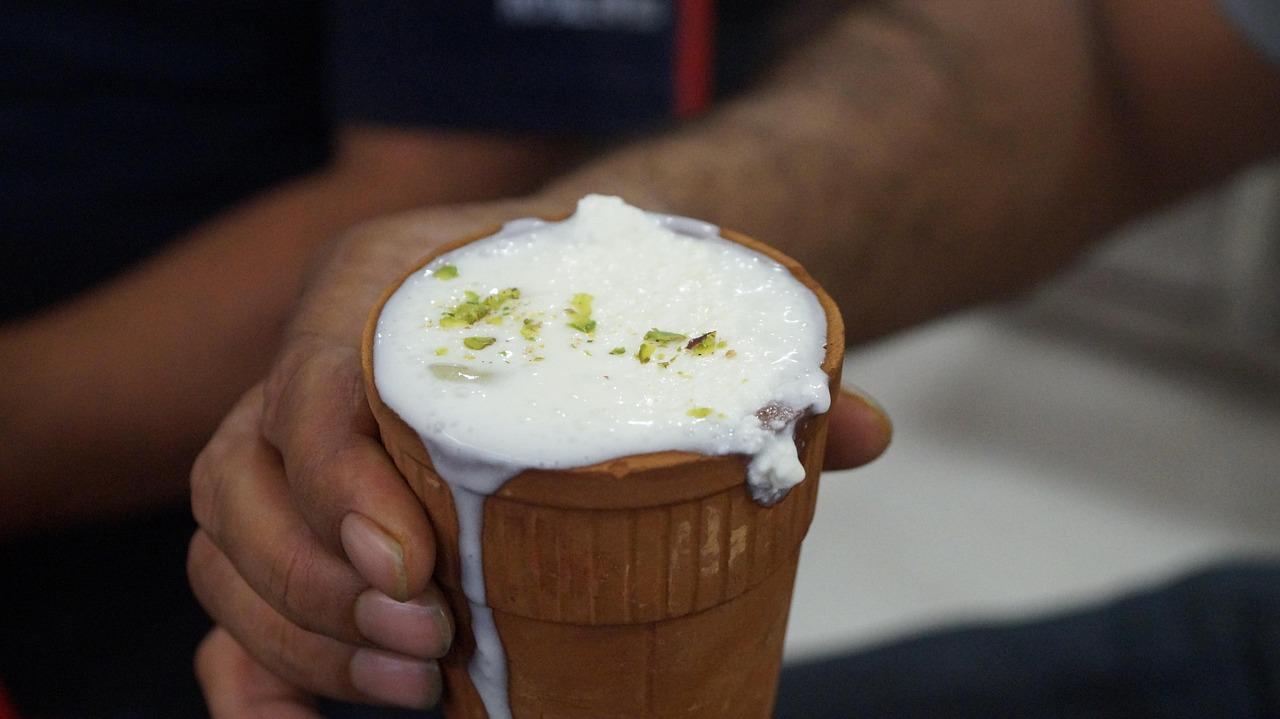
In Amritsar and on the highways across Punjab, lassi comes in a tall steel or brass glass, churned so thick a spoon nearly stands up in it, with a raft of malai (clotted cream) floating on top. It is a summer drink, but Punjabis drink it all year with a stuffed paratha breakfast or after a heavy lunch. This is the plain sweet kind, with no fruit, so the tang of good full-fat yogurt is the whole point. Chef's tip: chill the yogurt, milk and glasses beforehand; cold lassi stays thicker.

by KrazyBadal 0 views

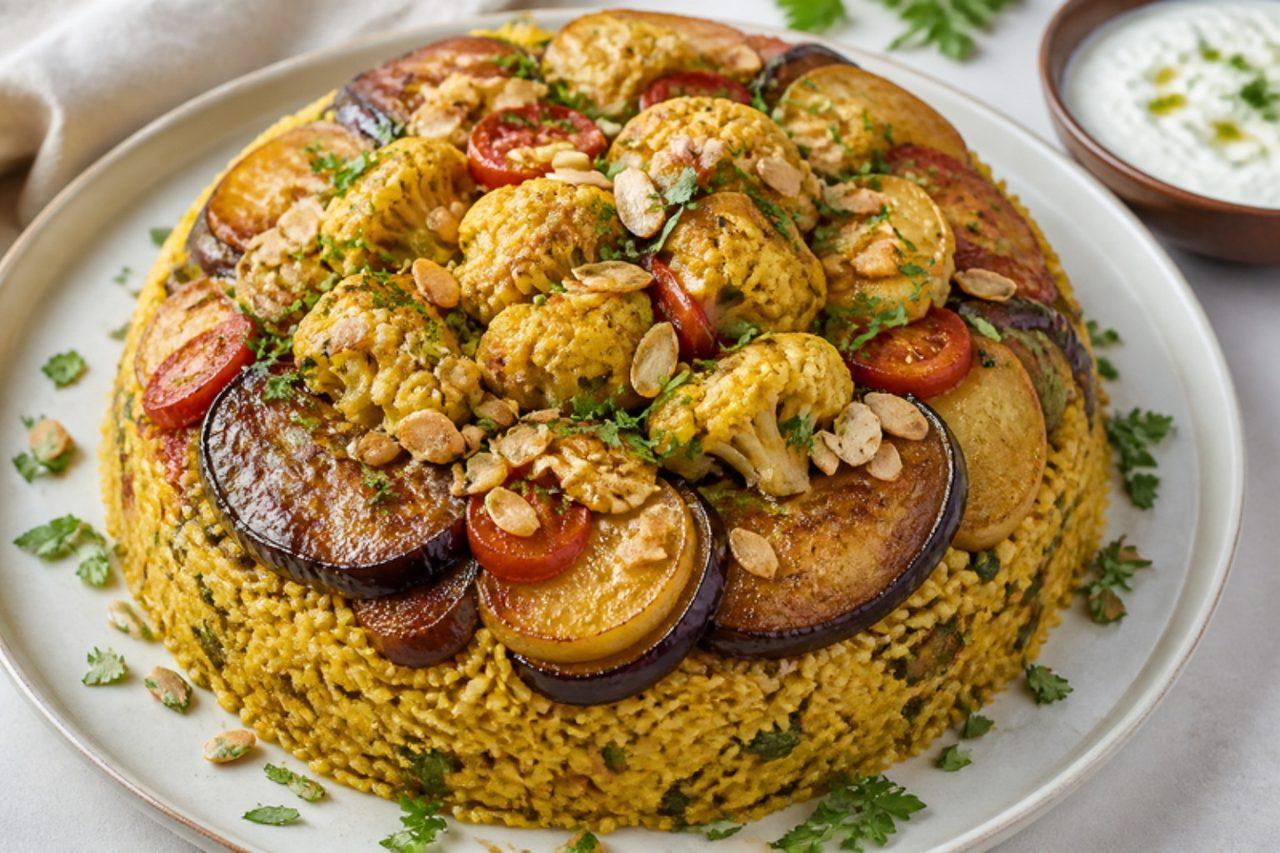
Vegetable maqlubaUpside-down rice and vegetables

Maqluba means 'upside down', and in Palestinian homes from Jerusalem to Nablus the moment the big pot is flipped onto a tray at a Friday family lunch is greeted with clapping. Under the pot comes a golden cake of fried aubergine, cauliflower and potato with spiced rice packed between them. It is also cooked across Lebanon, Jordan and Syria. This meat-free version uses vegetable stock and is served with a cucumber and tomato salad or a bowl of yogurt for those who eat dairy. Chef's tip: once the pot is turned over, wait five minutes before lifting it so the layers settle and the tower holds.

by KrazyBadal 0 views

Punjabi chole samosa chaatSamosas with chickpea curry and yogurt

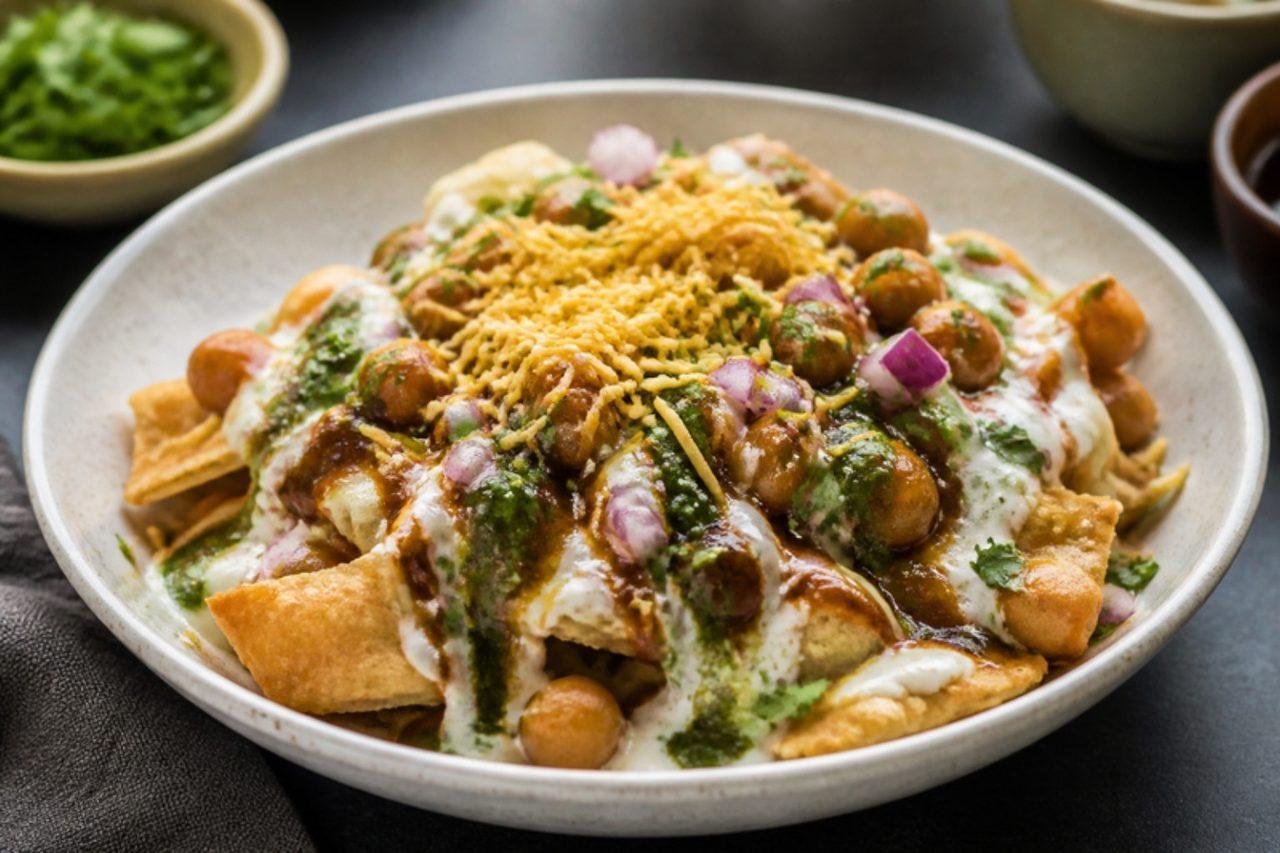
Samosa chaat is how the street stalls of Punjab and Delhi turn yesterday's samosas into the best snack of the day. Samosas are broken open on a plate, covered with a ladle of hot, tangy chole, then cooled down with sweet whisked yogurt, green and tamarind chutneys, raw onion, crunchy sev and a dusting of chaat masala. Every spoonful is hot and cold, crisp and soft, sweet, sour and spicy at once. Use bought samosas or the site's own samosa recipe. Chef's tip: warm the samosas in the oven until crisp before you crush them; a soggy samosa makes a heavy chaat, a crisp one soaks up the chole and still crunches.

by KrazyBadal 1 views

Shan tofuChickpea flour tofu

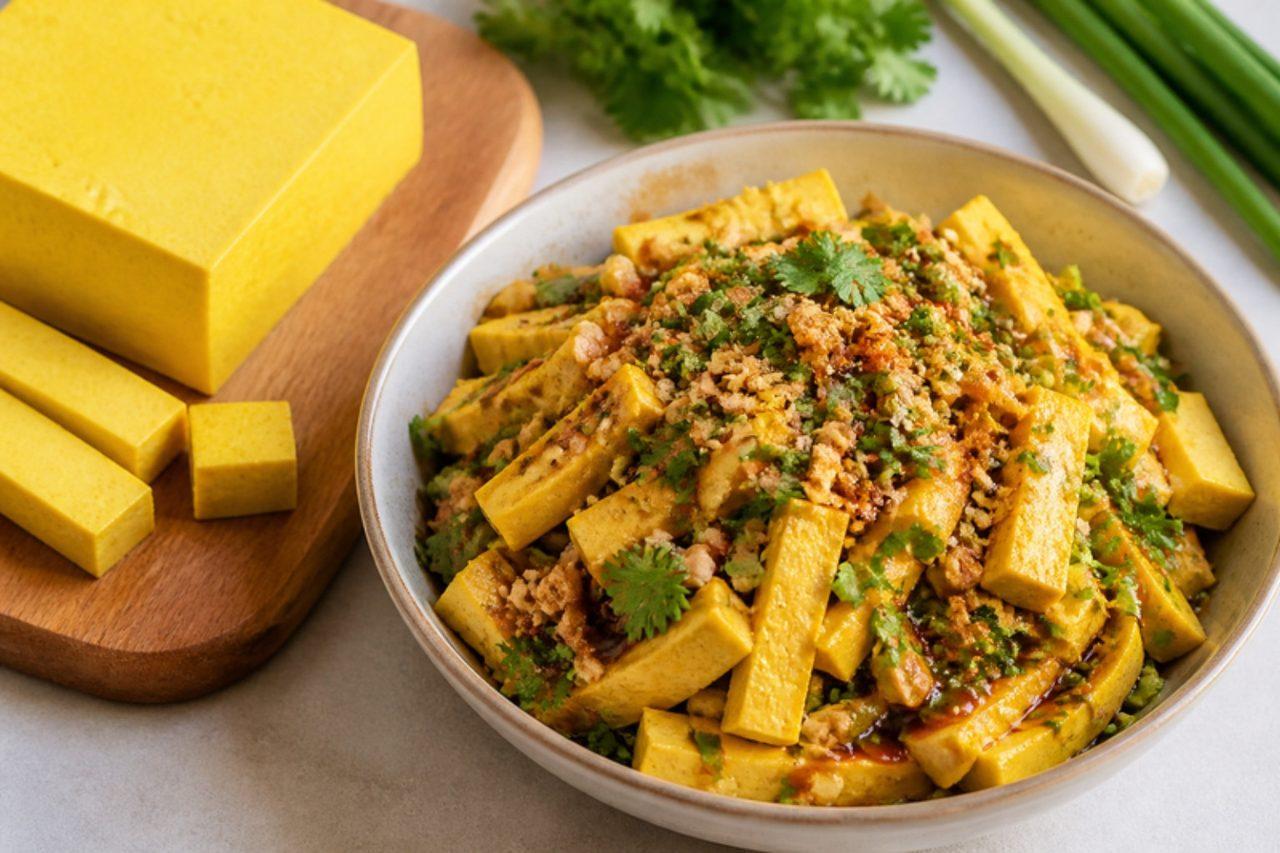
Shan tofu (to hpu) contains no soy at all: it is a smooth, wobbly block of chickpea flour cooked with water and turmeric, then left to set. Shan women sell it in golden slabs at the five-day markets around Inle Lake and Taunggyi, cut into cubes and dressed as a salad with chilli oil, garlic, vinegar and peanuts, or sliced and fried into crisp fritters. Warm and unset, it's eaten as a porridge (to hpu nway). Chef's tip: whisk constantly as it thickens and keep cooking for a full 8 minutes after it turns thick; undercooked Shan tofu tastes raw and never sets firmly.

by KrazyBadal 0 views

Shanghai ci fan tuanSticky rice rolls with fried dough

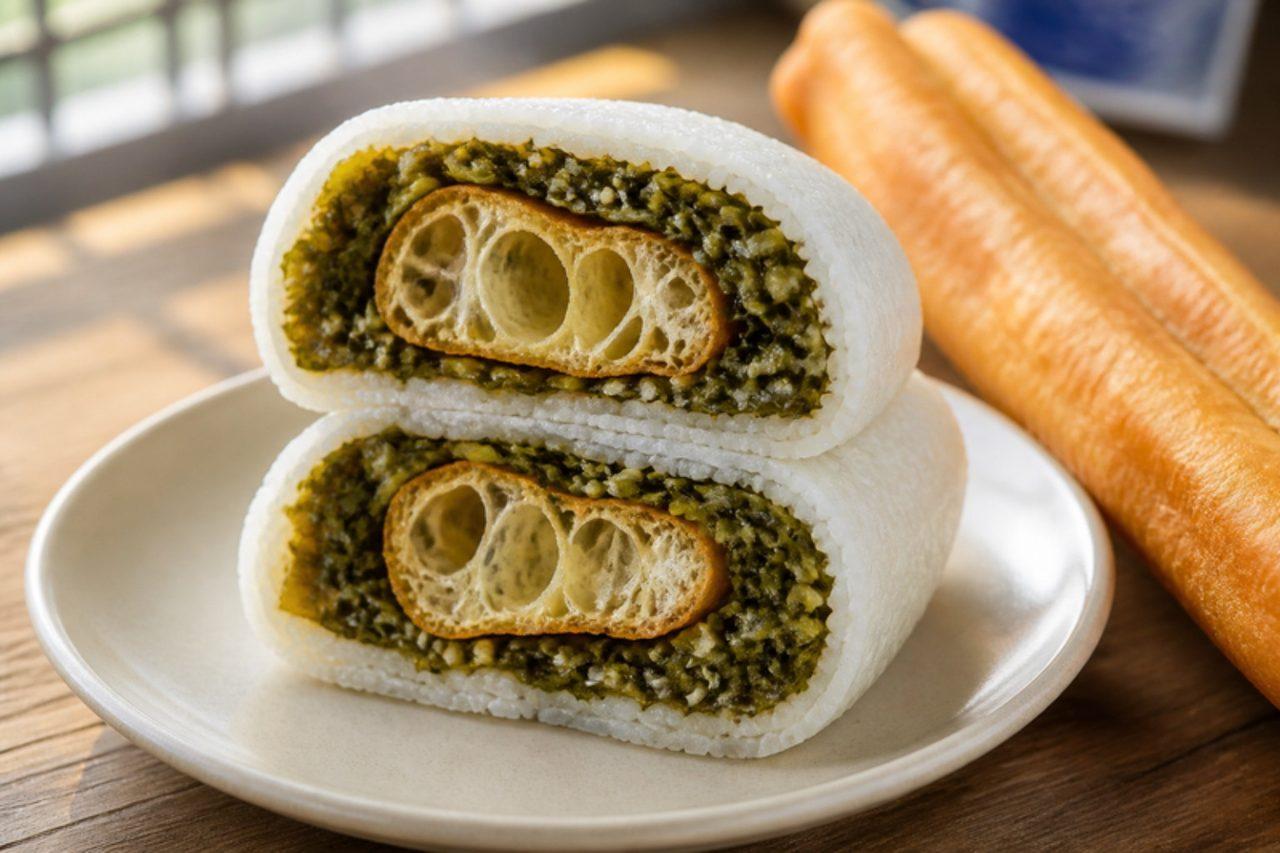
Ci fan tuan is one of the 'four heavenly kings' of Shanghai breakfast, along with fried dough sticks, soy milk and sesame flatbread. Vendors spread warm sticky rice on a cloth, lay a crisp youtiao and pickles in the middle and squeeze it into a fat roll to eat on the way to work. The savoury version often adds pork floss; this one uses pickled mustard and sesame, and there's a sweet sugar version too. Soak the rice overnight. Chef's tip: wrap the rice tightly in cling film and a tea towel, so the roll holds without being squashed flat.

by KrazyBadal 0 views

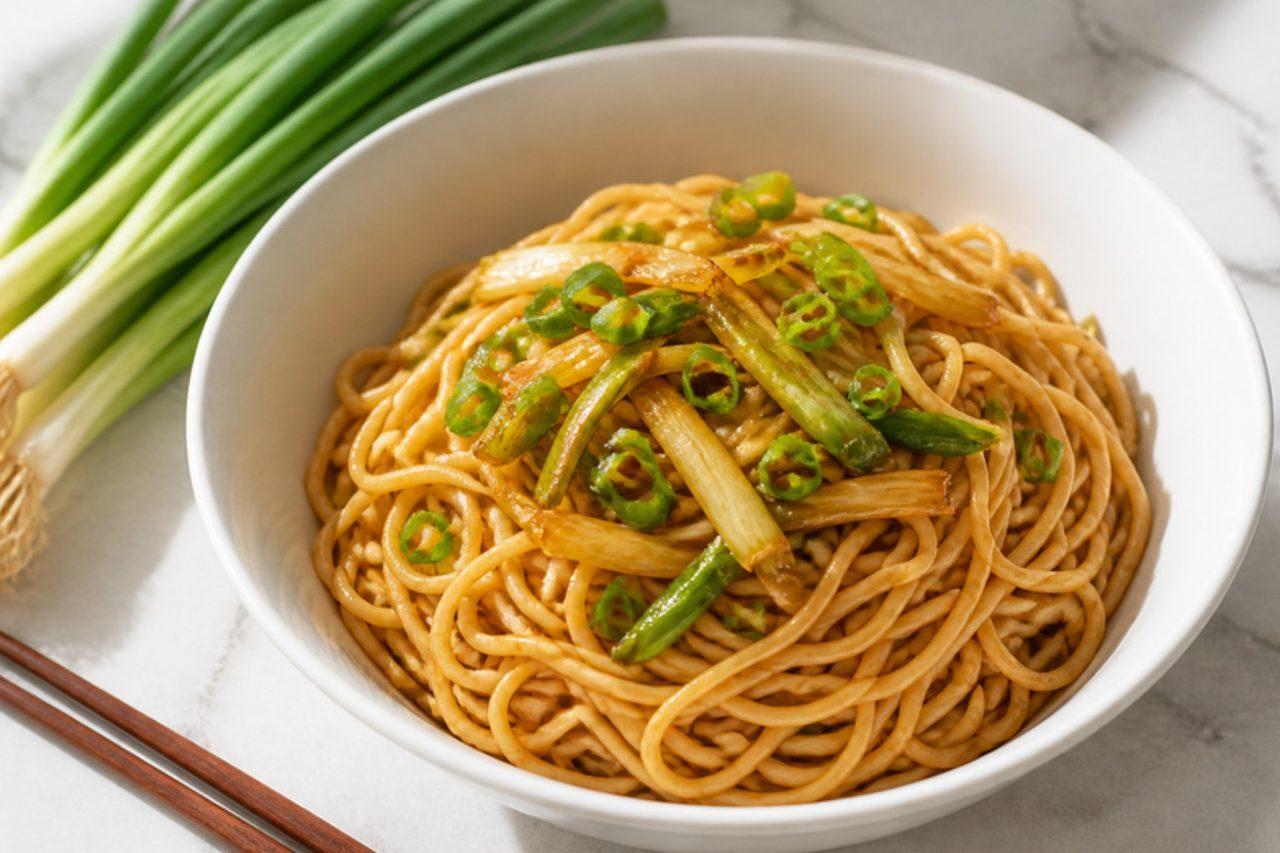
Shanghai scallion oil noodlesNoodles with spring onion oil

Cong you ban mian is a Shanghai breakfast and late-night favourite: thin wheat noodles tossed in oil that has been slowly infused with spring onions until they turn dark and crisp, plus a sweet soy sauce. It's almost nothing, and yet the caramelised onion flavour is addictive. Locals have it with a bowl of soup or a fried egg. Chef's tip: fry the spring onions over a medium-low heat for the full 12 minutes, until deep brown but not black; pale onions give oil with no character.

by KrazyBadal 0 views

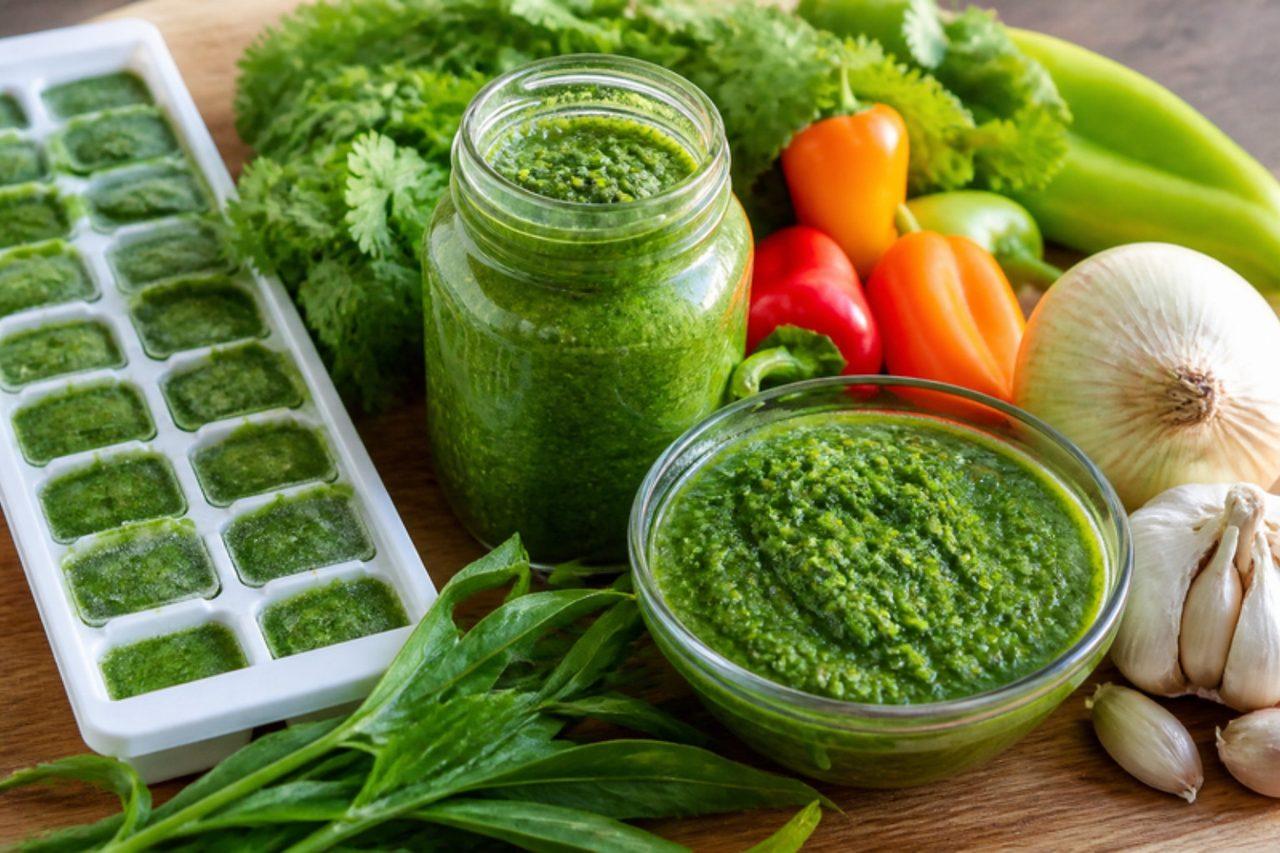
Puerto Rican sofritoHerb and pepper cooking base

Open a freezer anywhere in Puerto Rico, or in the Puerto Rican neighbourhoods of New York and Orlando, and you'll find a tub or ice-cube tray of green sofrito. It is the start of almost everything savoury on the island: beans, rice, stews, soups and sauces. Unlike the slow-cooked Spanish sofrito, this one is raw, blended from culantro (recao), cilantro, little sweet ajíes dulces, cubanelle peppers, onion and lots of garlic. It smells grassy and sharp in the jar and turns mellow and savoury as soon as it hits hot oil. Chef's tip: if you can't find ajíes dulces, use extra red pepper and a tiny piece of seeded scotch bonnet; you want their fruity perfume, not heat.

by KrazyBadal 0 views

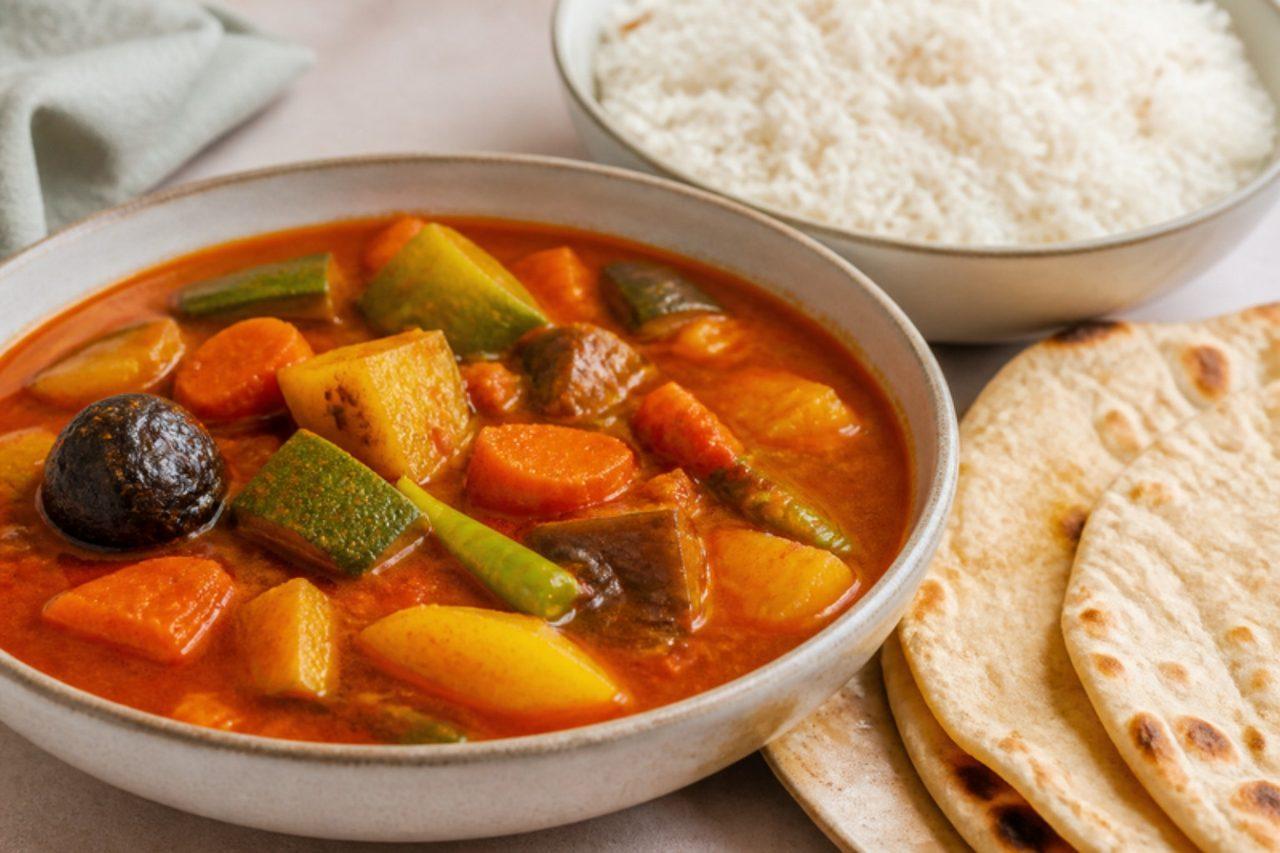
Vegetable saloonaVegetable and tomato stew

Saloona is the stew Emirati families make on an ordinary weekday, ladled over white rice for lunch in Abu Dhabi, Al Ain and every town between. Each household has its own mix, but the base is always the same: tomatoes, onions and the local bezar spice blend, sharpened with dried lime and simmered with whatever vegetables are in the fridge. This meat-free pot uses potato, courgette, aubergine, carrot and okra with chickpeas for body, and it tastes even better the next day. Chef's tip: add the okra in the last 10 minutes and leave it whole; cut okra goes slimy in a long simmer.

by KrazyBadal 0 views

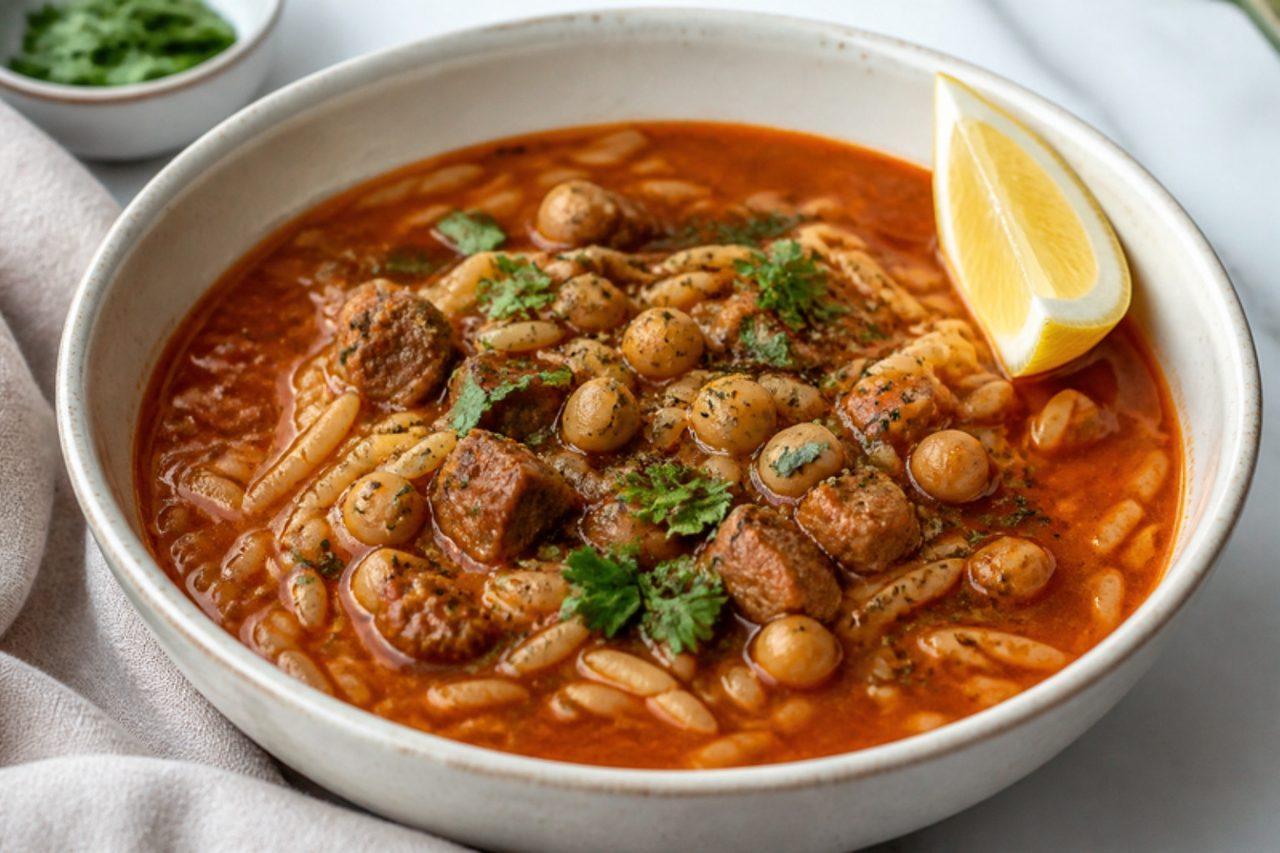
Sharba libiyaLamb and orzo soup

Sharba libiya is the soup that opens the iftar table in almost every Libyan home during Ramadan, from Benghazi to Misrata: small pieces of lamb, tomato, chickpeas and tiny pasta (lisan asfour, orzo) in a red broth spiced with turmeric and chilli and finished with dried mint and lemon. It is light enough after a day of fasting but filling. The mistake is adding the pasta too early, which makes it swell and turn the soup to porridge; it needs only the last 12 minutes. Chef's tip: rub the dried mint between your palms over the pot at the end so it releases its oils.

by KrazyBadal 0 views

Vegetable saltadoWok-fried vegetables

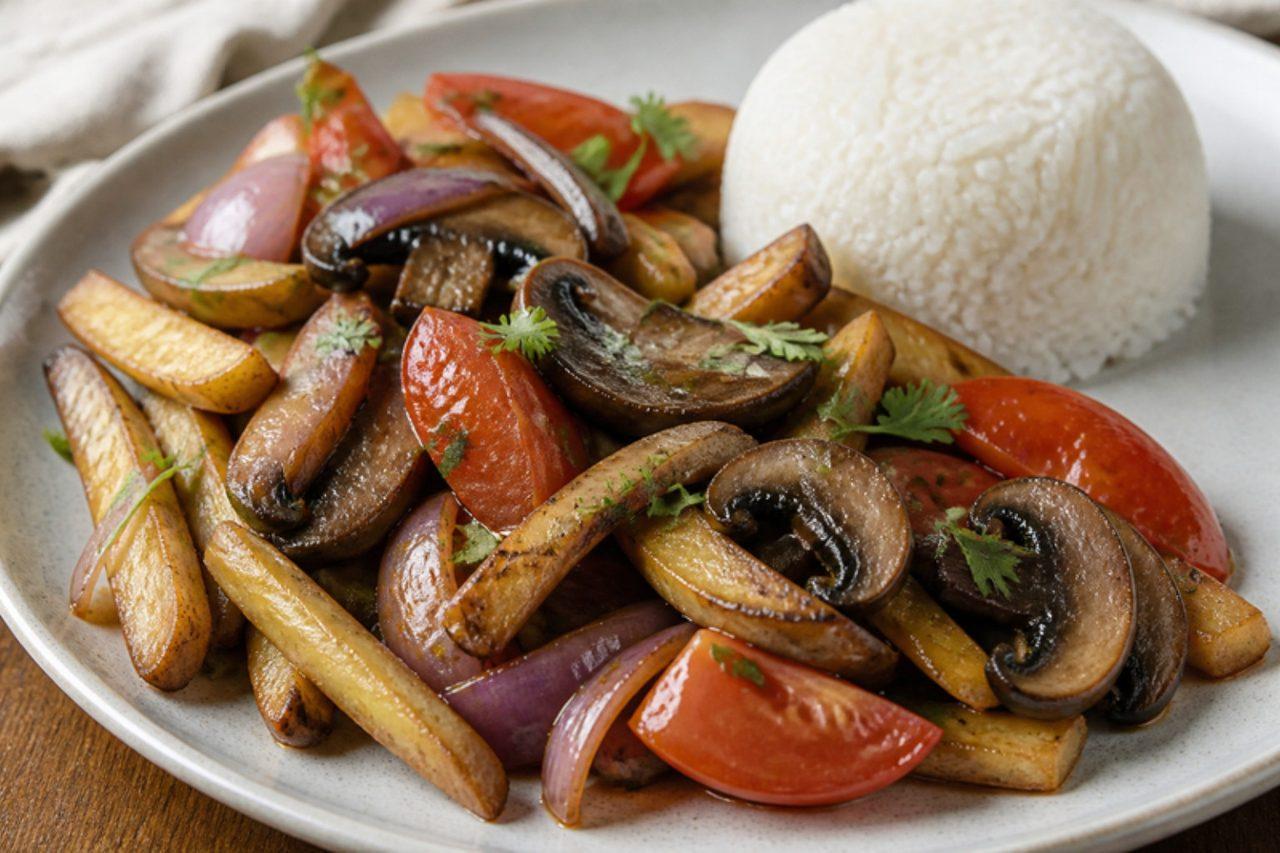
Saltado comes from Lima's chifa tradition, the cooking of Chinese-Peruvian families who brought the wok to Peru in the nineteenth century. The famous version is lomo saltado with beef; this saltado de verduras uses meaty mushrooms in its place. Thick wedges of red onion and tomato are tossed over a fierce flame with garlic, ají amarillo, soy sauce and a splash of vinegar until just wilted, so the vegetables keep their shape and the pan juices turn smoky and savoury. It is always served with both chips and white rice, which soak up those juices. Chef's tip: cook in two batches if your pan is small; a crowded wok steams the vegetables instead of searing them, and the tomatoes collapse into soup.

by KrazyBadal 0 views

Vegetable Shan noodlesRice noodles with tomato sauce

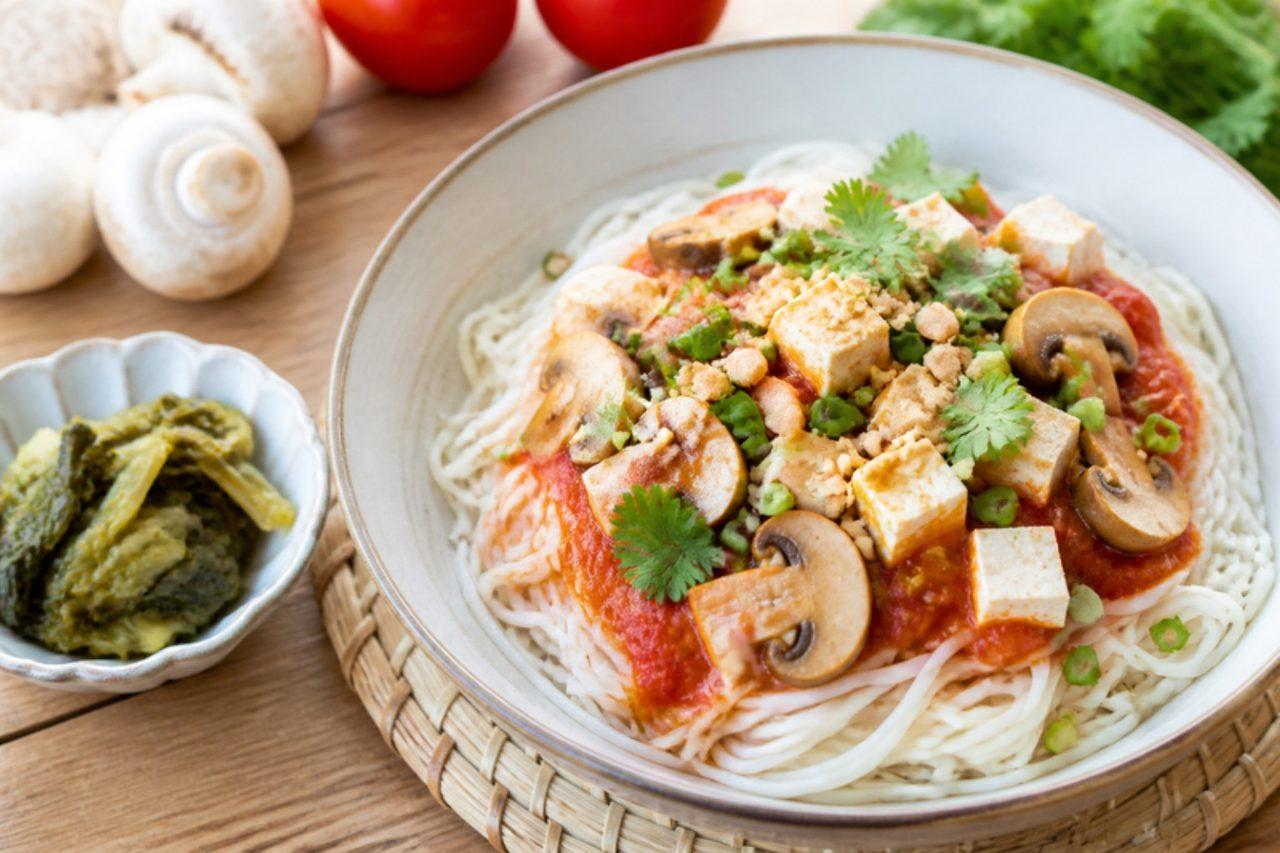
Shan khao swe comes from the hills of Shan State in eastern Myanmar, where it's eaten for breakfast at markets around Inle Lake and Taunggyi before the day's work begins. Sticky rice noodles are tossed with a garlicky tomato sauce, sesame oil and crushed peanuts, then served with pickled mustard greens and a small bowl of clear broth on the side. Markets usually make the sauce with chicken or pork; here mushrooms and tofu give it the same savoury depth. Chef's tip: cook the tomatoes down until the oil separates and the sauce turns jammy; a watery sauce slides off the noodles and tastes flat.

by KrazyBadal 0 views

Vegetable Sindhi biryaniLayered vegetable biryani

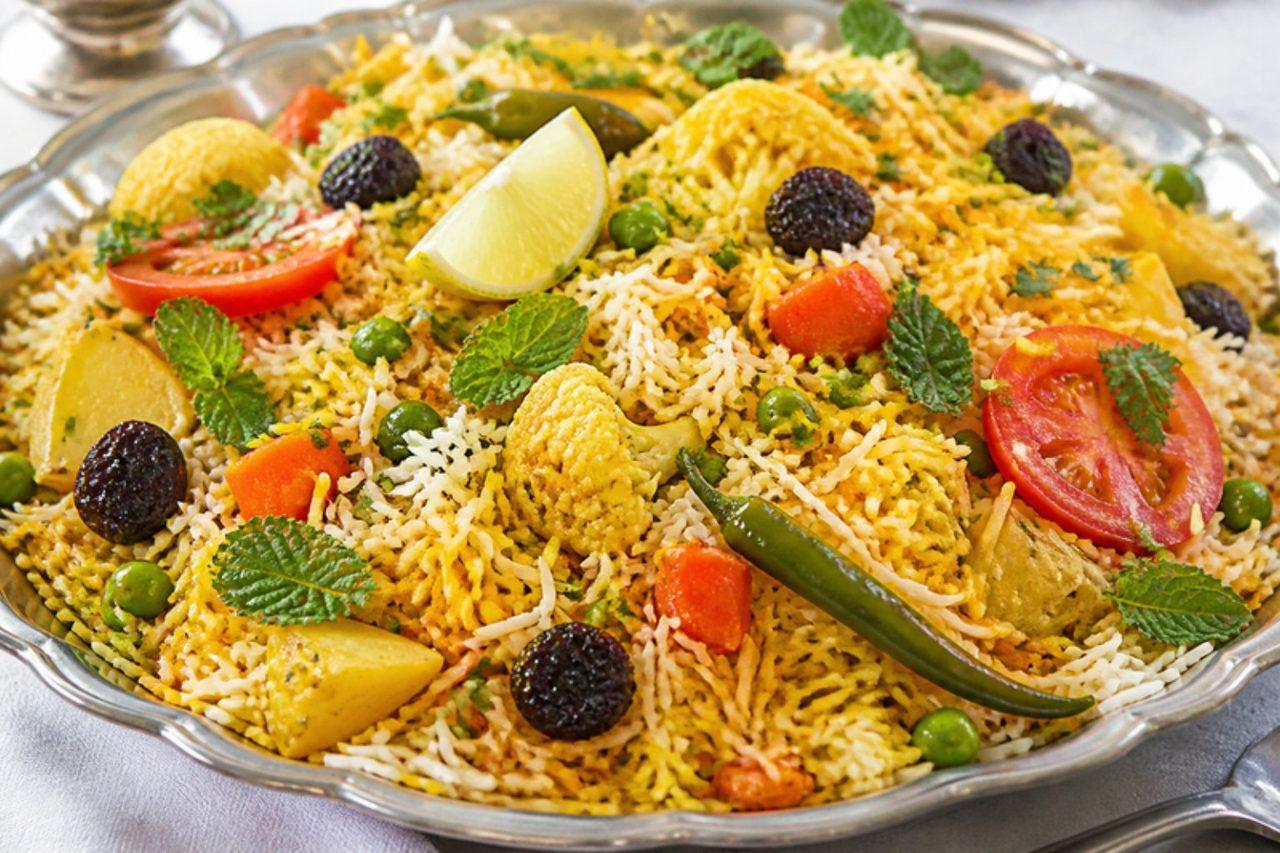
Sindhi biryani is the biryani of Karachi, Hyderabad and the rest of Sindh, and it is the one people order by the deg (a huge pot) for weddings, Eid lunches and every big family gathering. What makes it Sindhi is the tang and the heat: plenty of tomatoes, yogurt, whole green chillies and sour dried plums (aloo bukhara) in the masala, with chunks of potato that soak up all of it. This vegetable version keeps all of that and swaps the meat for potato, carrot, cauliflower and peas, layered with half-cooked basmati, fried onions, mint and saffron milk, then steamed shut. A common mistake is boiling the rice until soft before layering; take it out when a grain still has a firm white core, because it finishes in the steam. Chef's tip: fry the onions until deep brown but not black, and keep the oil they fried in; it carries their flavour into every layer.

by KrazyBadal 0 views

Sheer yakhRose and cardamom ice cream

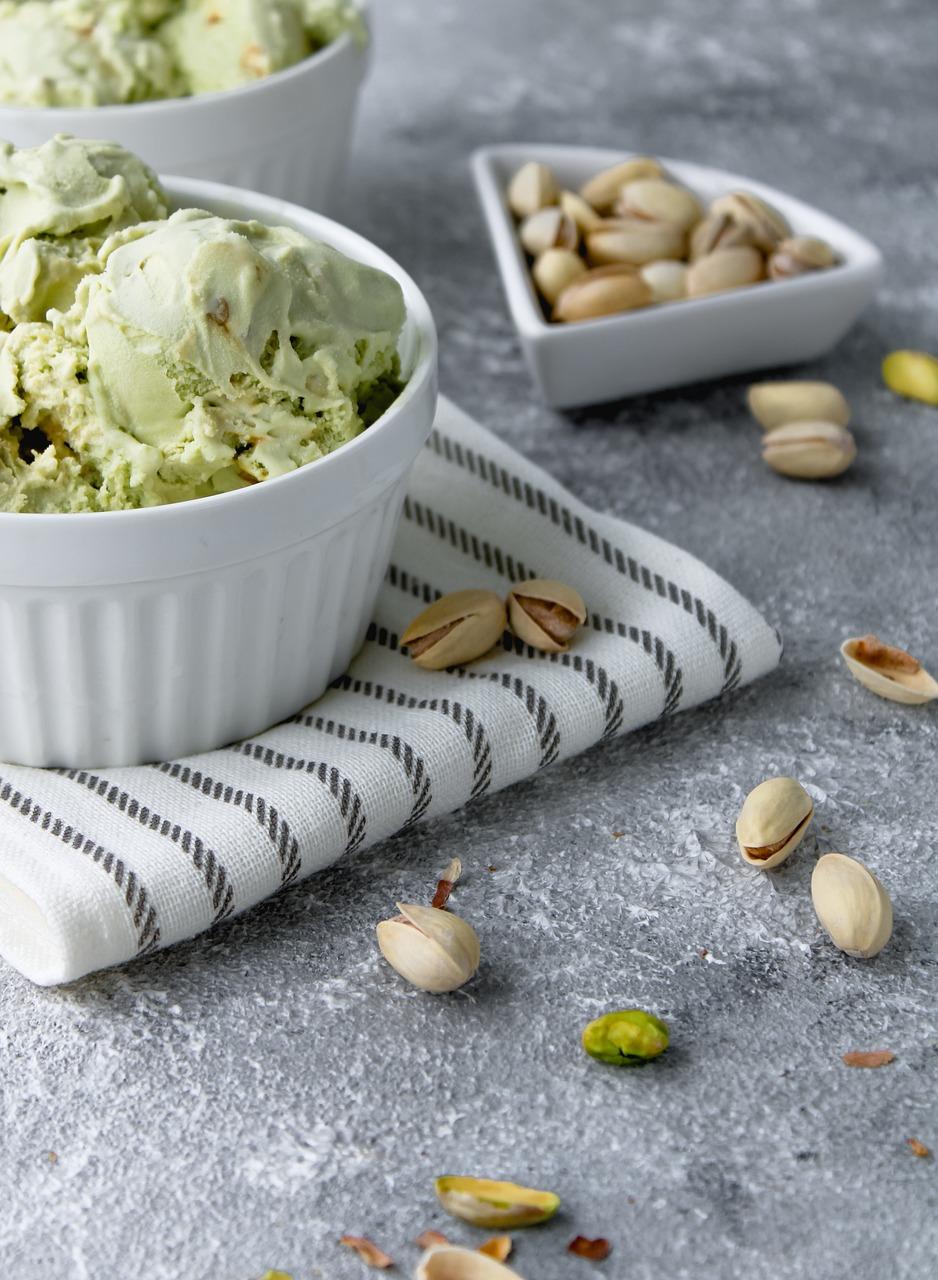
Sheer yakh, literally milk-ice, is the ice cream Kabul's street vendors once churned by hand in metal drums set in buckets of salted ice, and it's still the treat of choice on hot summer evenings and at Eid gatherings. It's dense and slightly stretchy, flavoured with cardamom and rose water and packed with chopped pistachios. Traditional sheer yakh is thickened with salep (orchid root); cornflour gives a similar body at home. Chef's tip: cook the custard until it thickly coats a spoon, then chill it overnight before freezing; a cold, aged base churns denser and smoother.

by KrazyBadal 0 views

ShekerburaNut-filled half-moon pastries

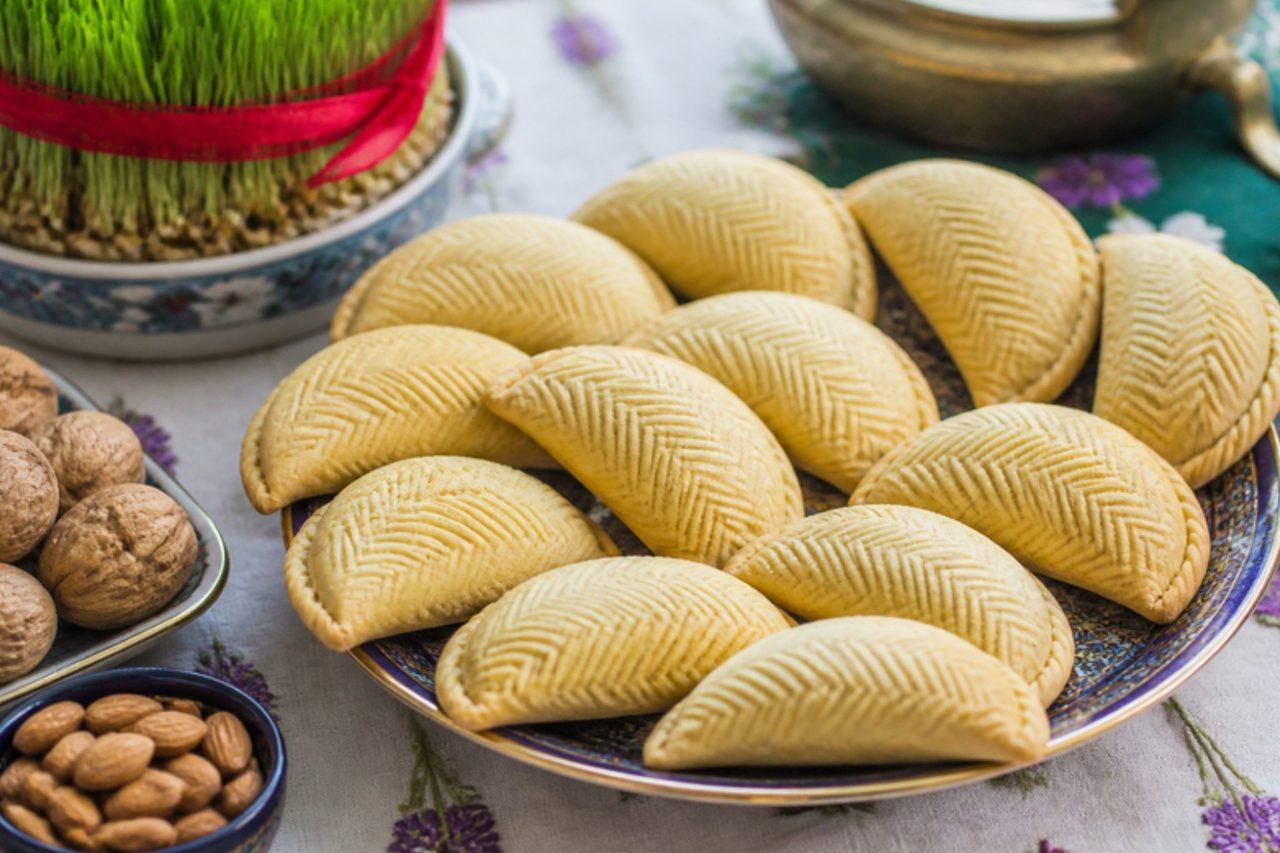
Şəkərbura is one of the three sweets that must be on the khoncha tray at Novruz, the spring new year celebrated on 20–21 March, alongside pakhlava and gogal. The half-moon shape is said to stand for the moon, and the fine herringbone pattern on top is pinched by hand with small brass tweezers called maggash, a skill passed down at family baking sessions in the days before the holiday. Inside is a sweet, fragrant mix of ground almonds or walnuts with sugar and cardamom. Shaki is famous for its shekerbura, though every family has its own pattern. Serve with black tea. Chef's tip: bake them pale; shekerbura should stay creamy-white with only the edges just turning blond, never brown.

by KrazyBadal 0 views

ShekerchoreyiCrackle-top shortbread

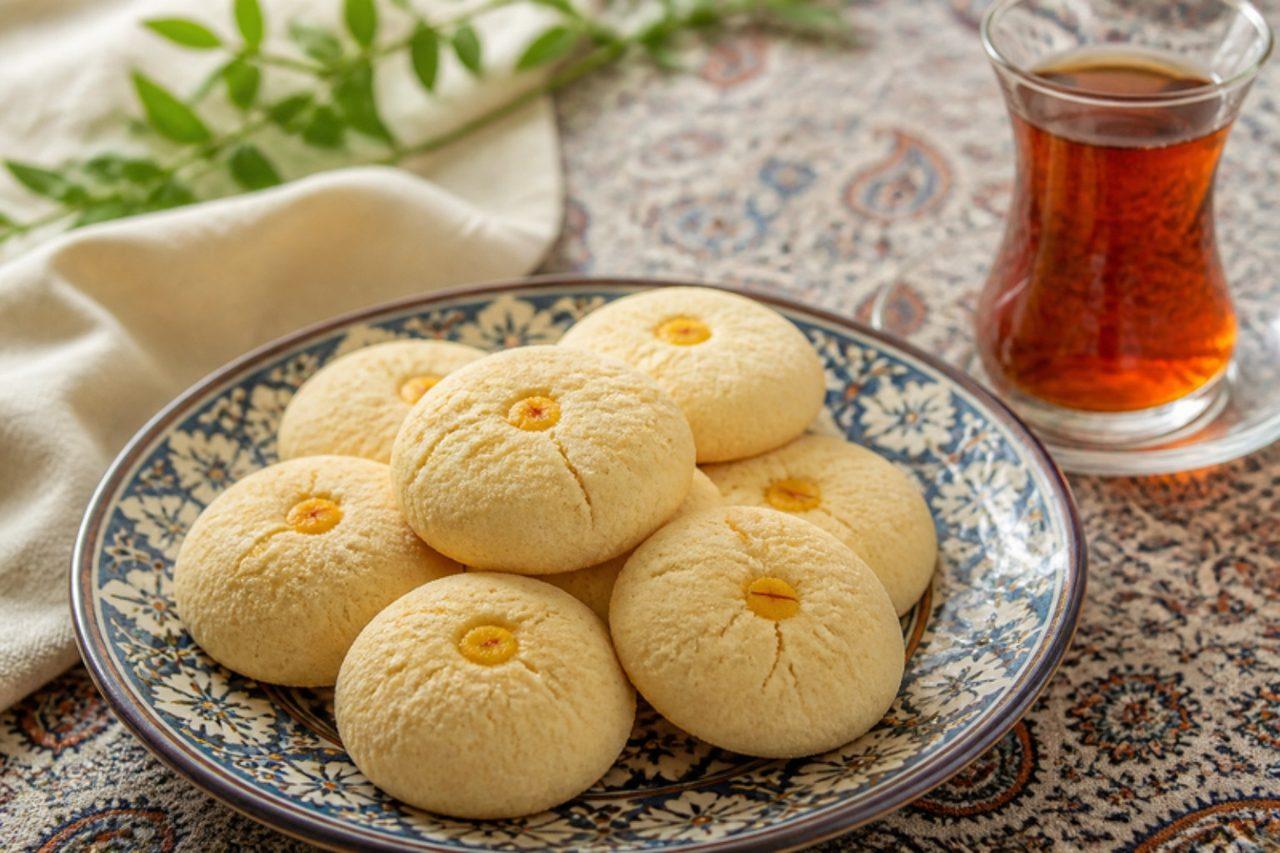
Şəkərçörəyi, "sugar bread", is the simplest of the Novruz sweets: small domed shortbreads made from melted butter, icing sugar and flour, whose tops crack in fine lines like dry earth as they bake. They melt in the mouth and leave a powdery sweetness, and families in Ganja and Baku bake big batches in the week before the spring festival to fill trays for visiting neighbours. Some cooks press a hazelnut or a pinch of poppy seeds into the centre. Serve with tea, ideally with a spoonful of quince jam. Chef's tip: let the melted butter cool and turn pale and creamy before mixing; hot butter makes the biscuits spread flat and greasy.

by KrazyBadal 0 views

ShelpekThin fried flatbreads

Shelpek are paper-thin flatbreads fried in a shallow pan, and in Kazakh homes they carry meaning: on Thursday evenings and Fridays women fry seven shelpek 'for the smell', a prayer for the ancestors, and they're handed out at funerals and memorial meals. In everyday life they are eaten warm with tea, butter and jam, all over Kazakhstan and in the Kyrgyz villages across the Tian Shan. The dough is soft and rich with milk and butter, and takes minutes to fry. Chef's tip: roll them almost transparent; thin shelpek blister and stay soft, thick ones go stiff like crackers.

by KrazyBadal 0 views

Shengjian baoPan-fried pork buns

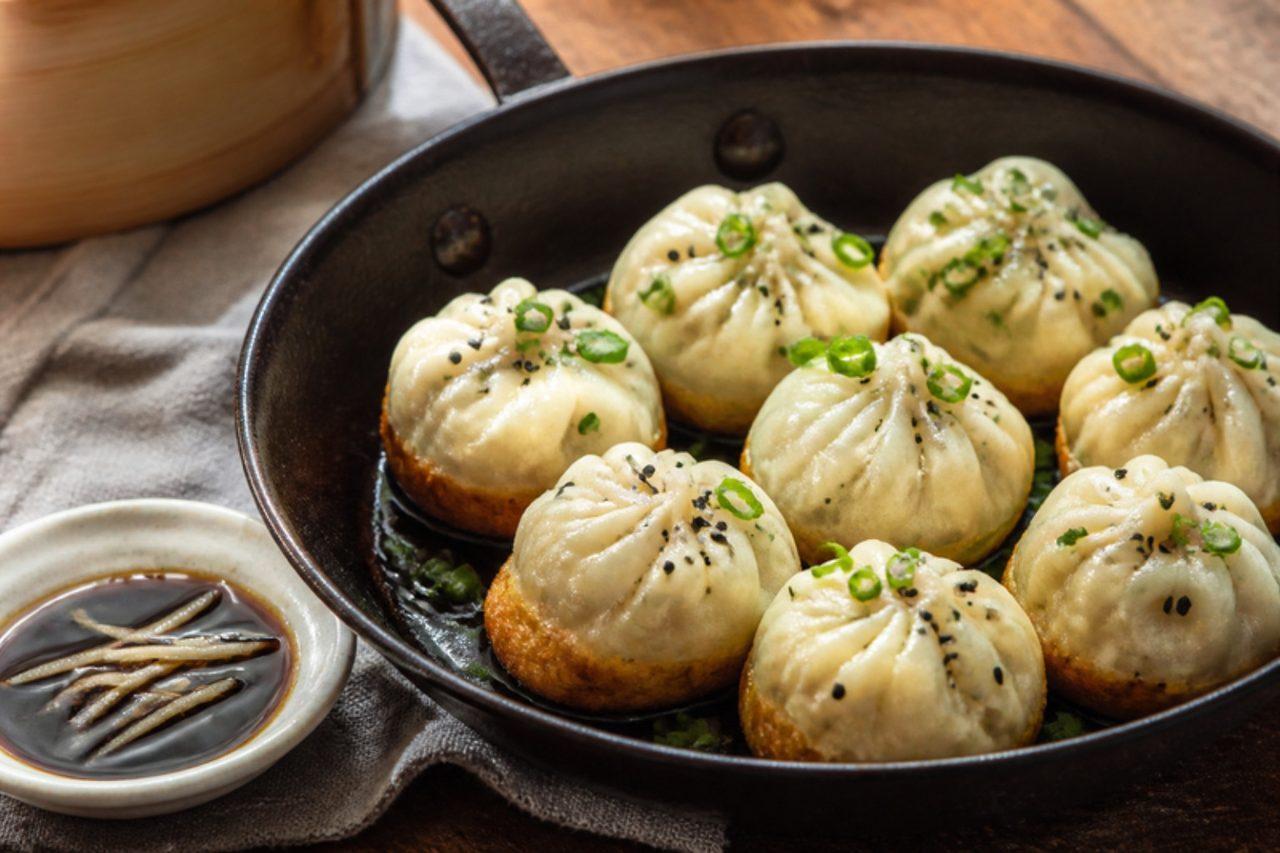
Shanghai wakes up to the sound of shengjian bao sizzling in huge flat pans, the cooks spinning the pans over the flame and splashing in water so the buns fry and steam at the same time. What you get is a soft, slightly fluffy top scattered with sesame and spring onion, a crackling brown base and a juicy pork filling that squirts if you bite too fast. They are breakfast food, bought by the four and eaten from paper trays with black vinegar. A heavy non-stick or cast-iron frying pan with a tight lid works perfectly at home. Chef's tip: let the shaped buns rise for 15 minutes before frying, no longer; over-risen dough flattens and loses its neat shape in the pan.

by KrazyBadal 0 views

Ptitim with vegetablesToasted pearl couscous with vegetables

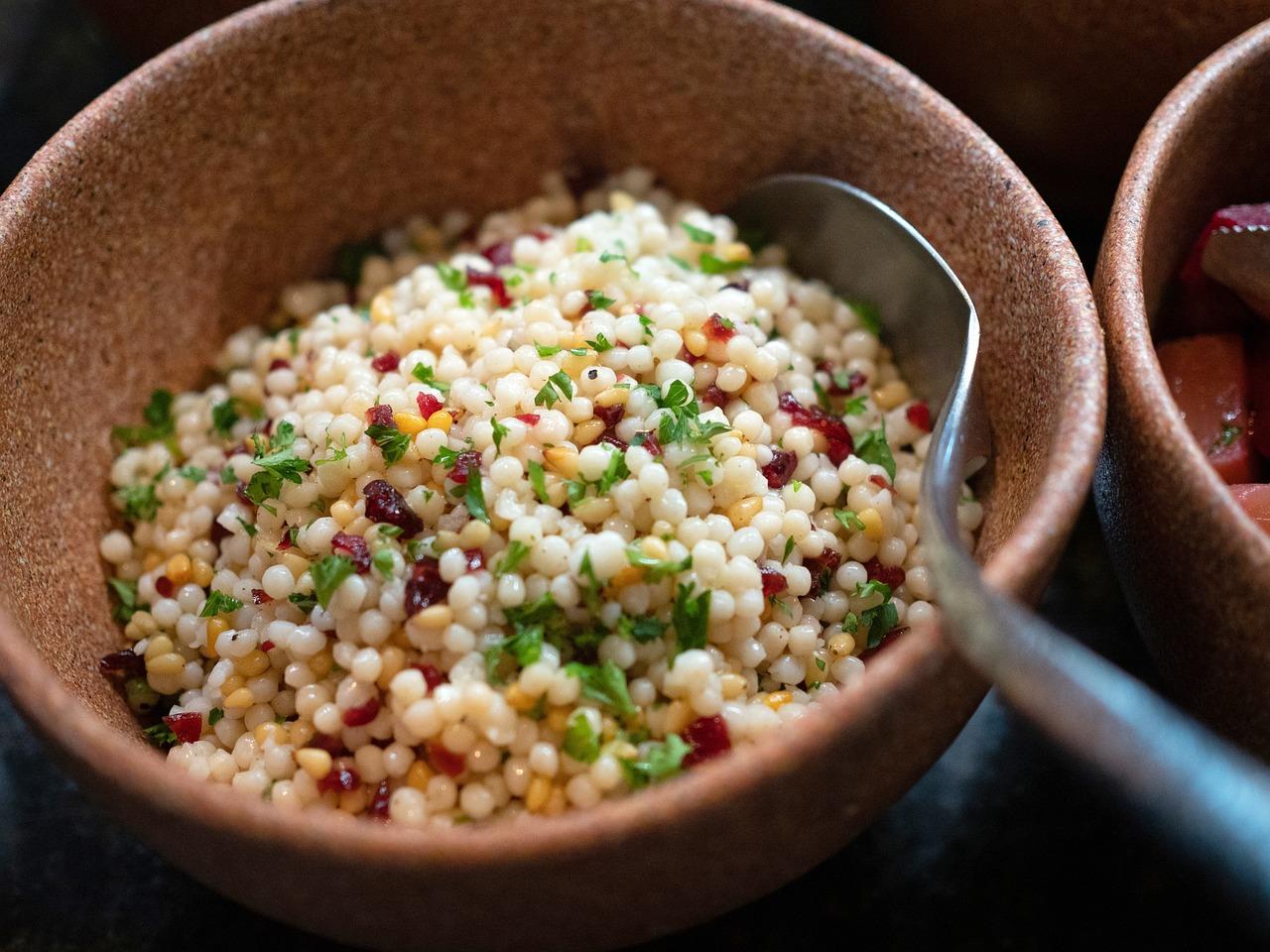
Ptitim was invented in Israel in the 1950s, when rice was scarce and the Osem factory was asked to make a wheat substitute; the little toasted pasta pearls soon became the dish every Israeli child grew up on. In homes from Haifa to Be'er Sheva it is cooked like a pilaf, first toasted in oil until nutty, then simmered in stock until plump and chewy. This version folds in courgette, red pepper and peas for a quick weeknight dinner or lunchbox side. Chef's tip: toast the dry ptitim until it smells like popcorn and turns light gold; it gives a much nuttier flavour than boiling it like pasta.

by KrazyBadal 0 views

Ptichye molokoSoufflé cake with chocolate glaze

Ptichye moloko, 'bird's milk', is named for the impossible treat in old fairy tales, and in 1978 Moscow's Praga restaurant turned it into a cake: a cloud of vanilla soufflé on a thin sponge, glazed with dark chocolate. Soviet shoppers queued for hours for the boxed version, and it is still the cake for birthdays and 8 March. The soufflé has always been set with agar, a seaweed jelly, which makes it naturally free of gelatine and gives a clean, springy bite. Chef's tip: boil the agar syrup to exactly 110°C (a thread forms between two fingers); undercooked syrup leaves the soufflé weepy and soft.

by KrazyBadal 0 views

PrinsesstårtaMarzipan-covered layer cake

This domed green cake sits in every Swedish konditori window and is the cake for name days, birthdays and the last week of September, which Swedes call Prinsesstårtans vecka. It was first written down in the 1930s by Jenny Åkerström, cookery teacher to three young Swedish princesses, and they adored it. Under the smooth marzipan lie airy sponge layers, raspberry jam, thick vanilla custard and a tall mound of whipped cream. Shop versions often set the cream with gelatine; here the custard is firmed with cornflour and the cream with a little mascarpone, so it is fully vegetarian and still slices cleanly. Chef's tip: assemble the cake the day before you need the custard and sponge, but cover it with marzipan only a few hours before serving; marzipan sweats in the fridge overnight.

by KrazyBadal 0 views

Shirin poloSweet saffron rice

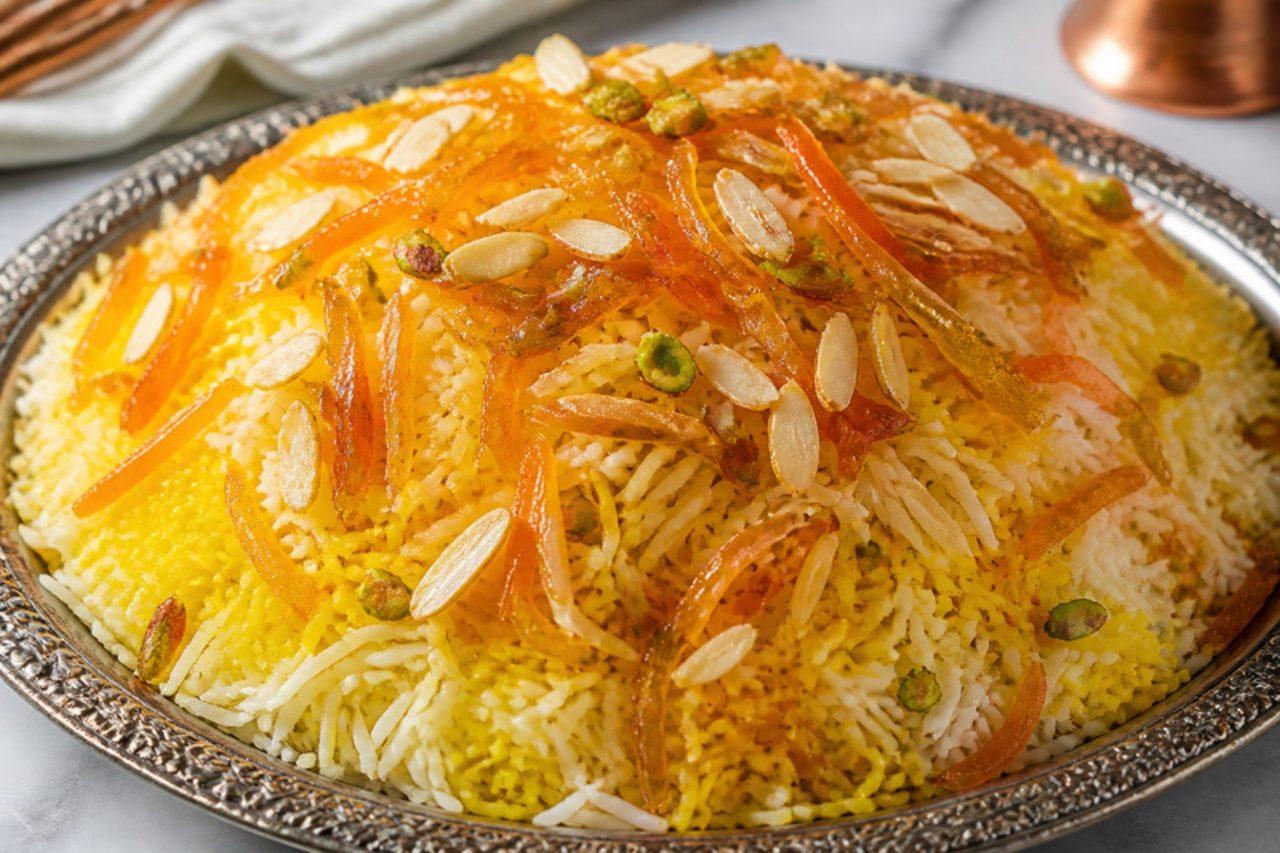
Shirin polo ('sweet rice') is the wedding rice of Iran, especially among Azerbaijani families in Tabriz, where a gleaming platter of it is carried out at the celebration feast to wish the couple a sweet life. Long grains of saffron rice are layered with candied orange peel, fine strips of carrot, slivered almonds and pistachios, all perfumed with cardamom and rosewater. It is fragrant and only gently sweet, with a citrus bitterness that keeps it from being cloying. Serve it as the centrepiece of a party with yogurt and a herb stew. Chef's tip: blanch the orange peel three times in fresh water; skip this and the whole platter tastes bitter.

by KrazyBadal 0 views

Vegetable sinigangSour tamarind vegetable soup

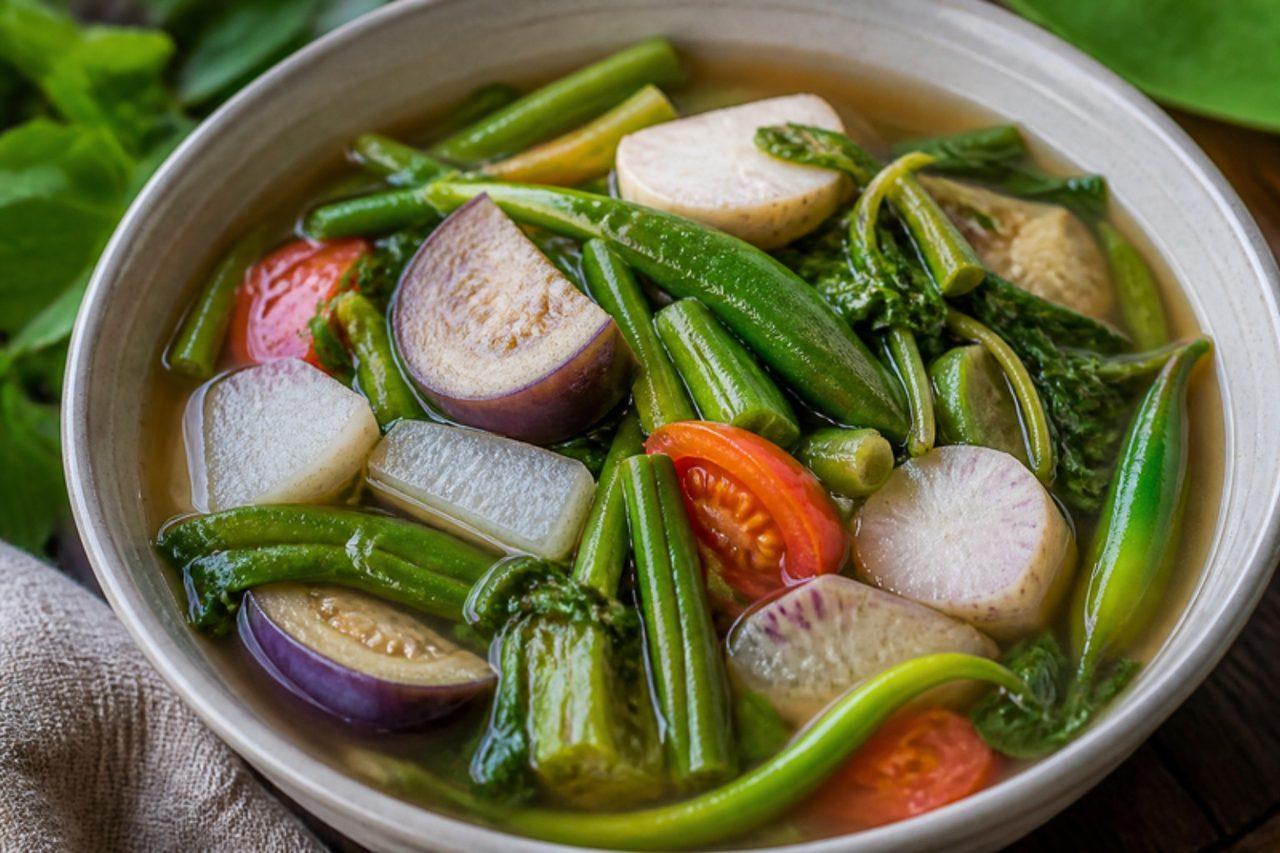
Sinigang is the sour soup that Tagalog families crave when the monsoon arrives between June and October, when rain hammers the tin roofs and a steaming bowl next to rice feels like the only sensible lunch. The sourness traditionally comes from young tamarind (sampalok) boiled and mashed into the broth, and the vegetables are whatever the market has: white radish, taro to thicken the soup slightly, okra, yard-long beans, aubergine and a final handful of water spinach. This vegetarian sinigang na gulay skips the pork or fish and relies on the tamarind, tomato and onion for flavour. The broth should make you pucker a little on the first sip. Chef's tip: add the tamarind in stages and taste between each, since blocks of tamarind vary a lot in sourness.

by KrazyBadal 0 views

Showing 63 of 7,762 recipes

Show more recipes

Page 687 of 863