Skip to content
WhatToEat.Today

Vegetarian Japanese recipes

Noodles, rice bowls, tofu and vegetable dishes without meat or fish. (210 recipes)

Tataki goboSesame burdock salad

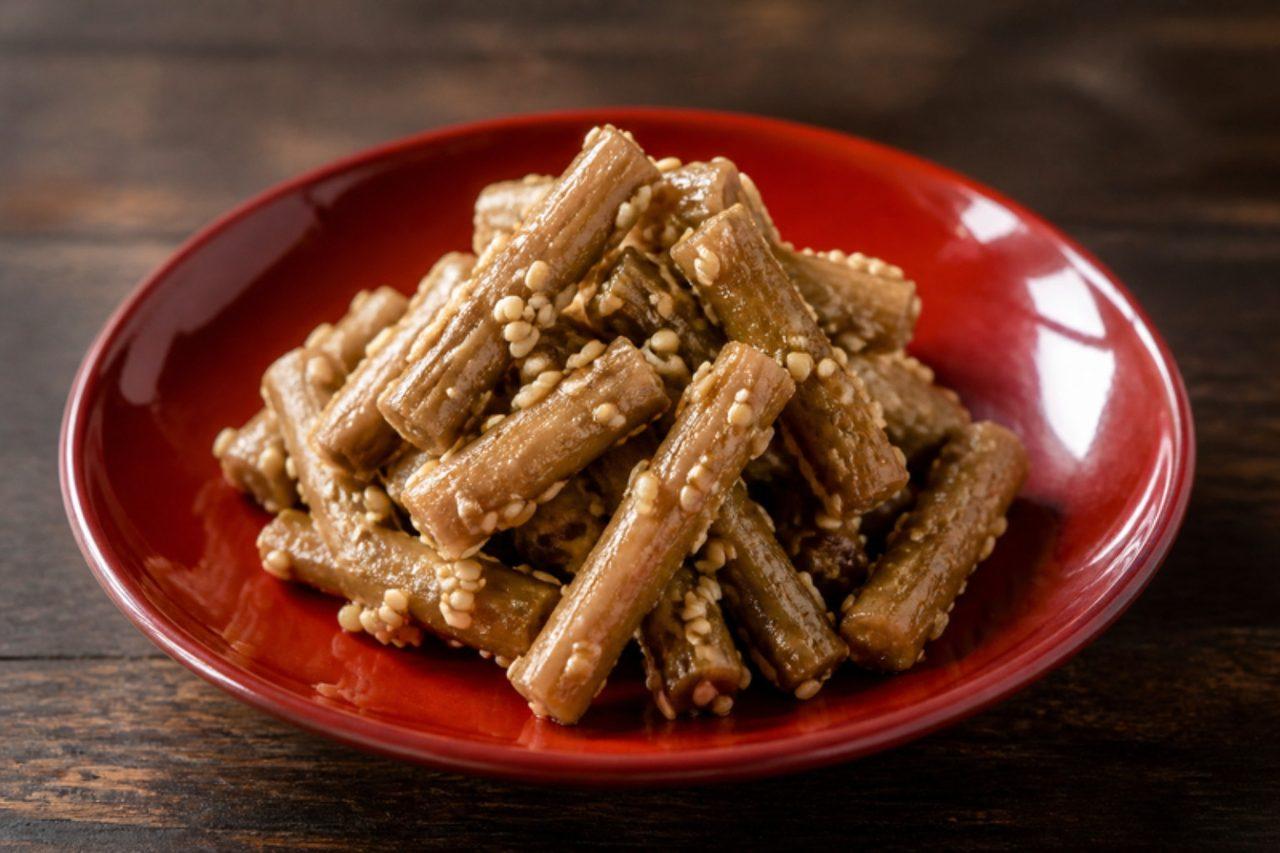
In Kansai homes around Osaka and Kyoto, osechi always includes tataki gobo: burdock root boiled, then beaten with a rolling pin so it splits open, and dressed in a thick ground-sesame vinegar. The long, deep-rooted burdock stands for a family that is settled and lasting. The pounding gives rough, fibrous edges that soak up the nutty, tangy dressing, so each bite is earthy, sweet and sharp. The common mistake is overcooking the burdock until soft; it should still be pleasantly firm before you pound it. Chef's tip: dress the burdock while it is still warm, when the fibres open up and drink in the sesame vinegar.

by KrazyBadal 0 views
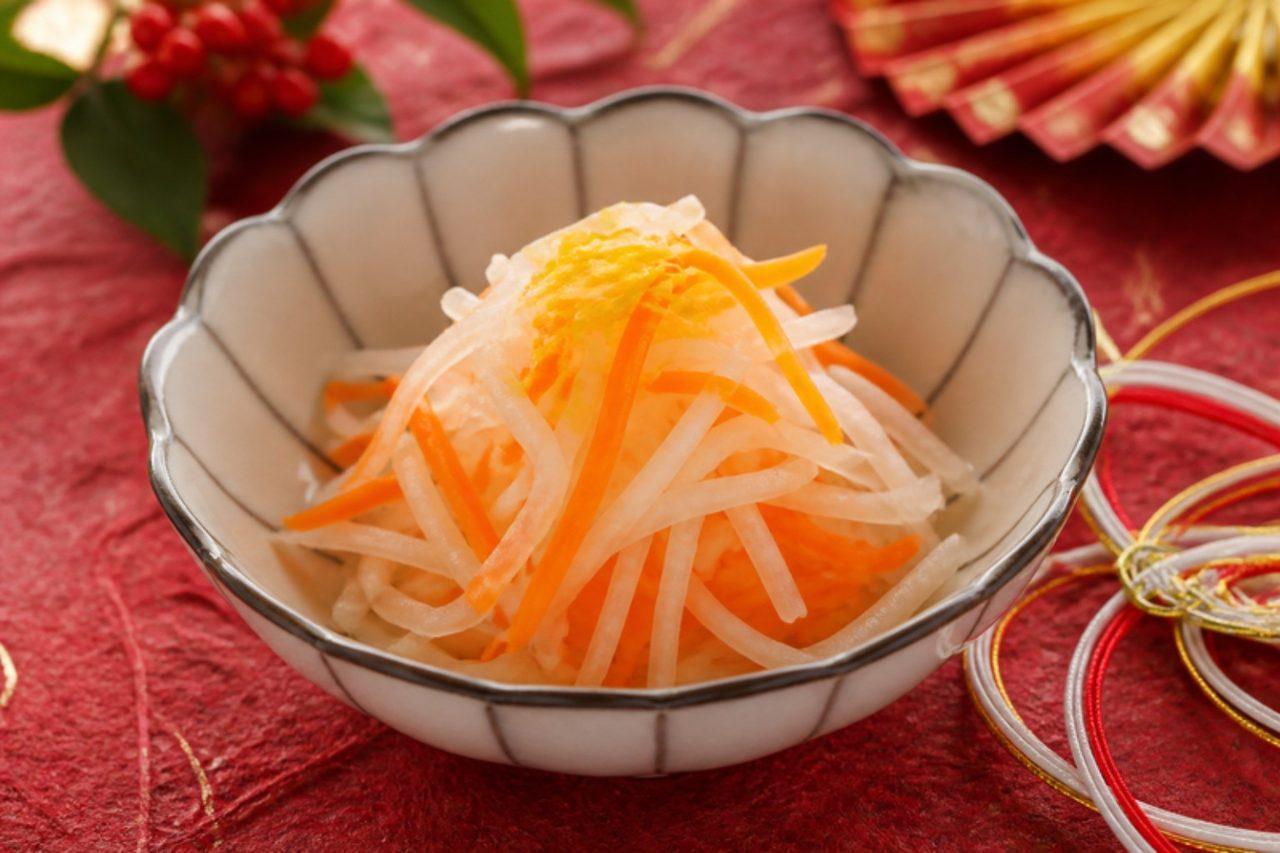
Kohaku namasuPickled daikon and carrot salad

Red and white are Japan's colours of celebration, and this crisp, sweet-sour salad of fine daikon and carrot shreds is the cleanser of the New Year osechi box, eaten between richer dishes from 1 to 3 January. Salting the vegetables first softens them into pliable threads that still crunch, before they soak in rice vinegar, sugar and a little yuzu. The common mistake is skipping the squeeze after salting, which leaves the salad watery and bland. Chef's tip: cut the daikon along the length of the root, not across it, so the shreds stay crisp instead of going limp.

by KrazyBadal 0 views
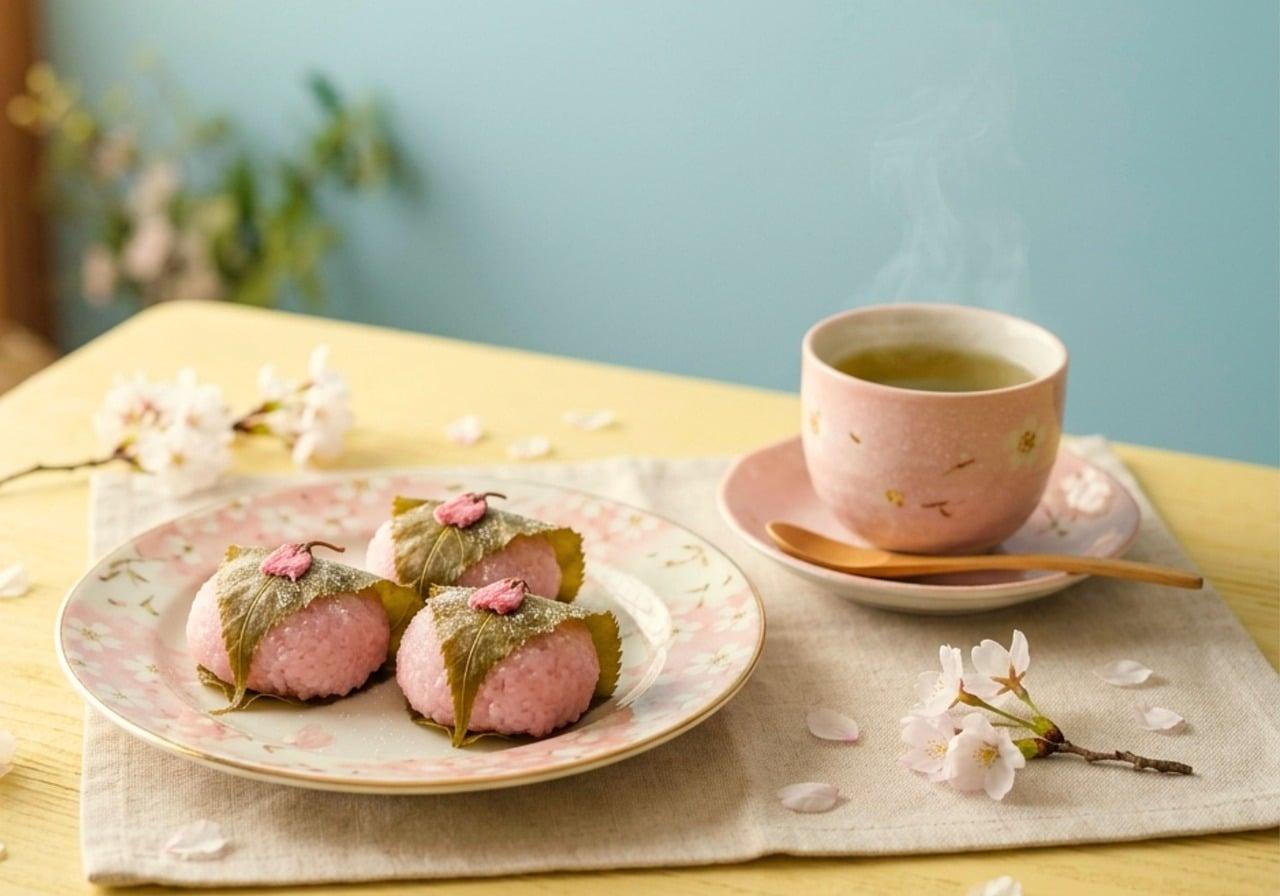
Sakura mochiCherry leaf rice cakes

When the cherry trees bloom in late March, every wagashi shop in Japan fills its window with sakura mochi. In the Kansai region around Osaka and Kyoto they are made from coarse dōmyōji-ko, steamed and crushed glutinous rice, tinted soft pink and wrapped around bean paste, then tucked into a salted cherry leaf that perfumes it with an almond-like, floral scent; Tokyo's version is a thin pink crêpe instead. Mochi is very sticky: cut it into small pieces for young children and older people, and make sure they chew well and eat sitting down. The common mistake is not soaking the salted leaves, so the mochi tastes too salty; rinse and soak them for 15 minutes. Chef's tip: the leaf is edible, and eating it with the mochi gives the sweet-salty balance the dish is famous for.

by KrazyBadal 0 views
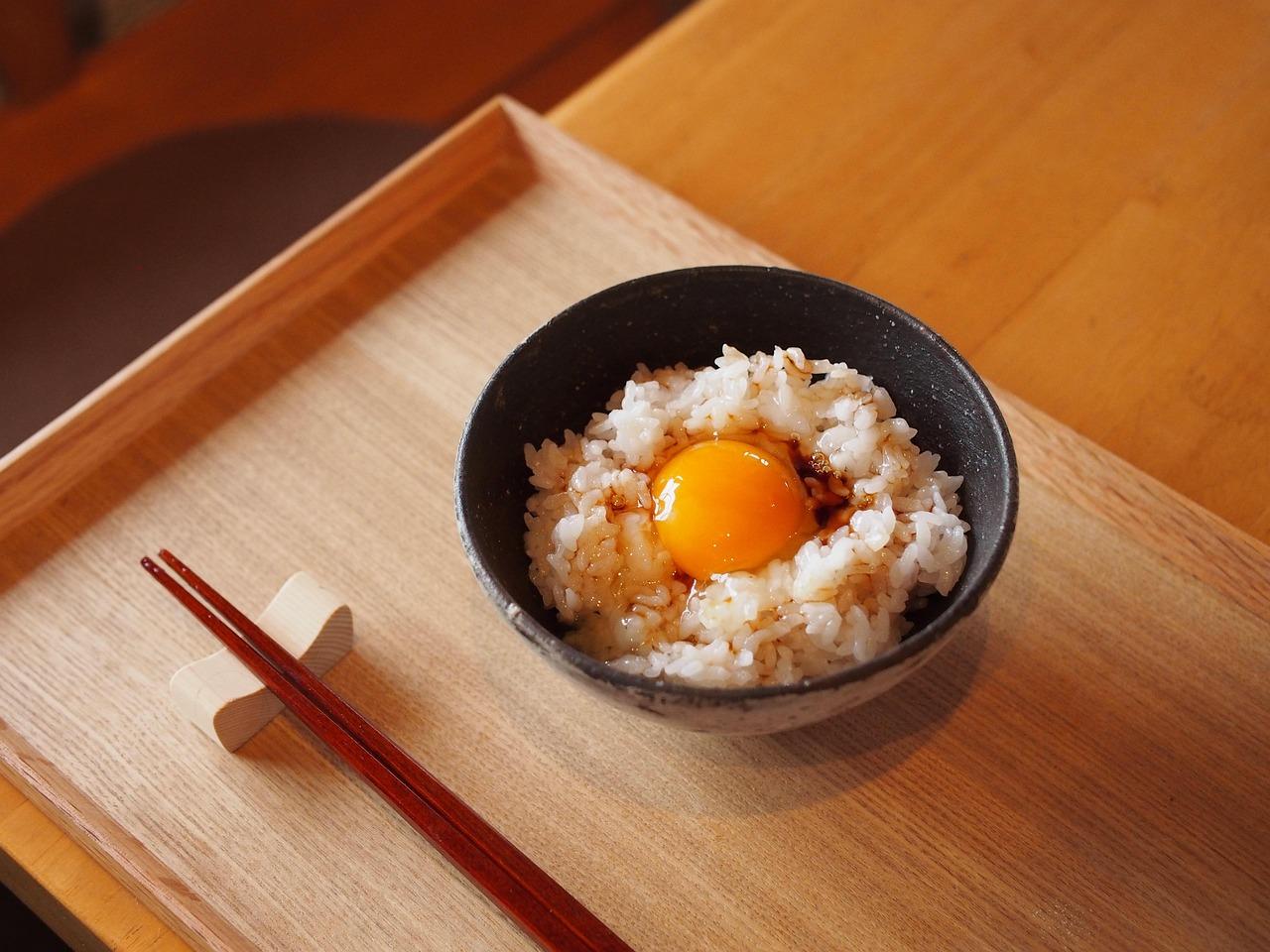
Tamago kake gohan (raw egg on rice)

Students, salarymen and farmers across Japan eat tamago kake gohan, TKG for short, as a two-minute breakfast, and the egg-farm towns of Okayama and Shimane even hold festivals for it. A raw egg is beaten into piping-hot rice with soy sauce until it turns glossy and almost custardy, like a soft risotto. In Japan eggs are graded for eating raw; elsewhere, use only pasteurised eggs or eggs with a recognised safety stamp, very fresh and kept cold. This dish is not for pregnant women, young children or anyone with a weakened immune system. The common mistake is using lukewarm rice, which leaves the egg slippery and raw-tasting; the rice must be steaming hot. Chef's tip: mix the white into the rice first until fluffy, then drop the yolk on top and break it at the table.

by KrazyBadal 0 views
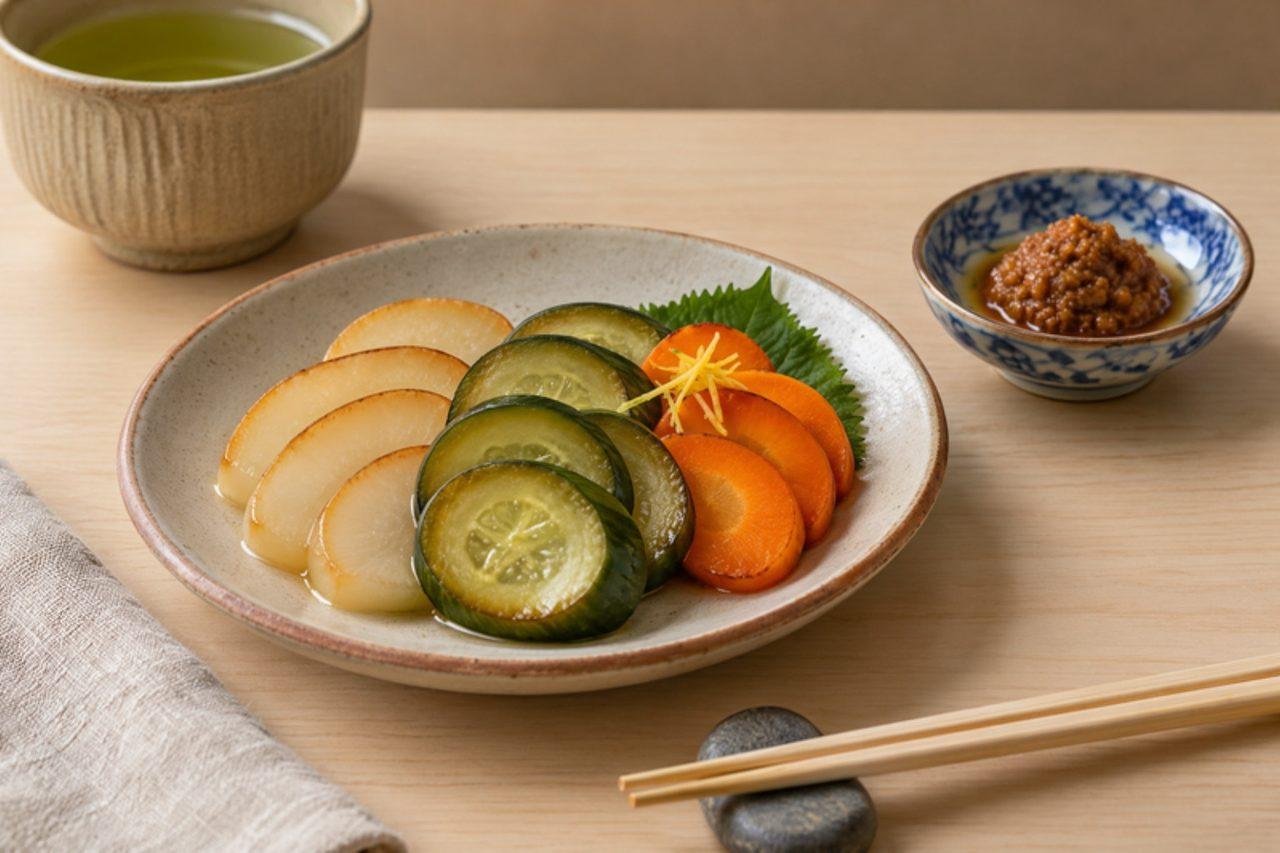
Yasai no misozukeMiso-pickled vegetables

Misozuke is the pickle a Japanese home cook makes without thinking: a tub of miso loosened with mirin and a little sugar sits in the fridge, and whatever vegetables are around get buried in it overnight. It is made all year, but especially in early summer when cucumbers are crisp, and in winter for carrots and daikon; slices go beside breakfast rice, into bento boxes and next to a bowl of ochazuke at the end of a meal. The vegetables come out firmer and faintly translucent, salty-sweet with the deep fermented flavour of miso but still fresh inside. The common mistake is burying wet vegetables: the water dilutes the bed, which turns runny and spoils faster. Salt them lightly, pat them completely dry and the bed can be reused two or three times. Timing is the readiness cue: cucumber and celery are ready in about a day, carrot and daikon in two to three, and anything longer than a week gets too salty. Choose a rice miso labelled gluten free if that matters to you; barley miso contains gluten. Chef's tip: wrap each vegetable in a sheet of muslin before burying it, so it comes out clean and the bed stays tidy.

by KrazyBadal 0 views
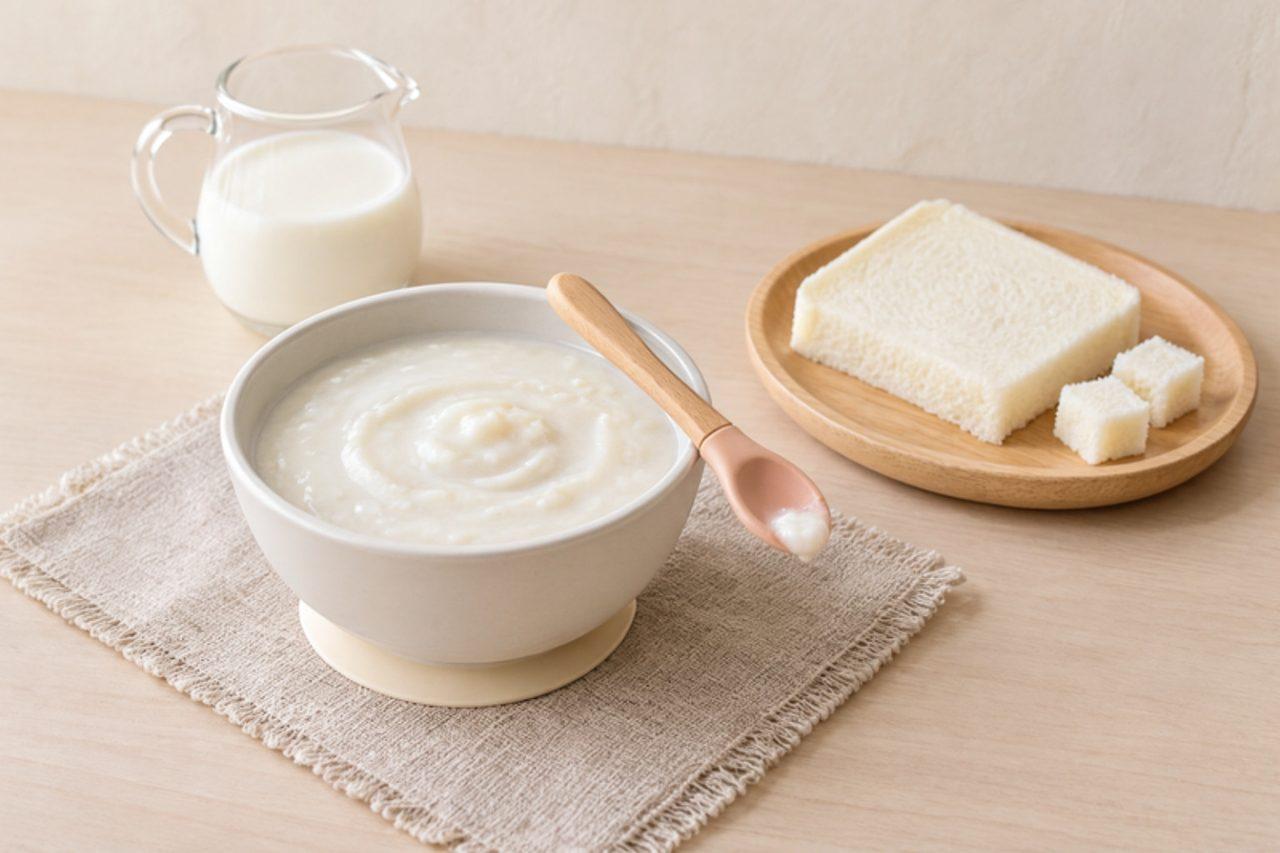
Pan-gayu (bread porridge)

Pan-gayu is a staple of the early rinyushoku (weaning) stage in Japan, the second grain after rice porridge, and it fills the 'first foods' pages of every baby magazine sold in Tokyo convenience stores. Crustless white bread is torn into a pan of water, breast milk or formula and simmered until it collapses, then mashed smooth for a soft, milky, faintly sweet porridge. Bread already contains a little salt, so this is an occasional porridge rather than an everyday one, and no extra salt, sugar or honey goes in. It contains wheat (gluten) and milk if made with milk. Chef's tip: choose the softest, plainest white sandwich loaf with the lowest salt on the label, and cut away every bit of crust.

by KrazyBadal 0 views
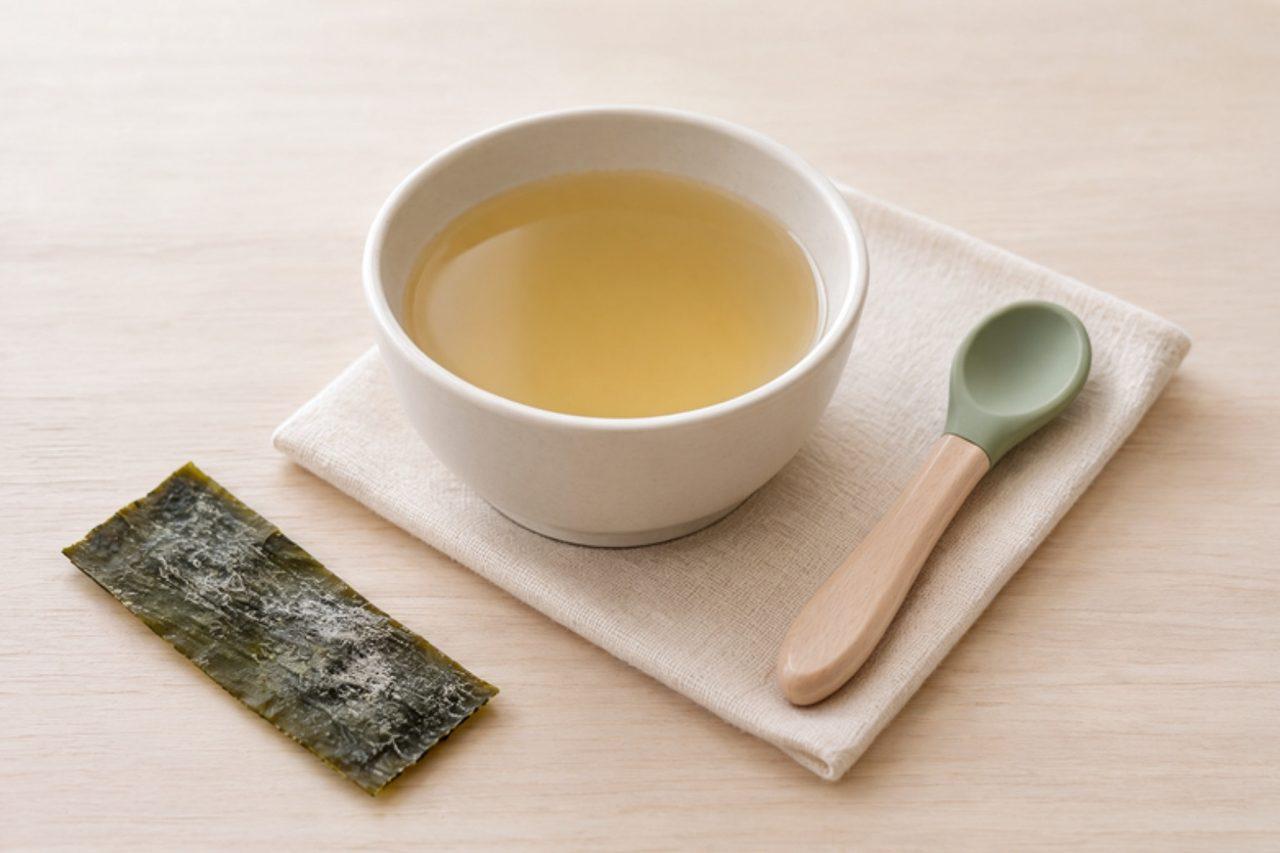
Kombu dashi for babiesKelp broth for babies

Kombu dashi is where Japanese weaning starts: the gentle, savoury water that thins jūbai-gayu (rice porridge) and vegetable purées, so babies learn umami instead of salt. Japanese parents make a jug every few days, and baby-food counters in Osaka department stores sell frozen cubes of it. Kombu is very high in iodine, so this broth is used a spoonful or two at a time to flavour a meal, a few times a week, never as a drink. Nothing else goes in: no salt, soy sauce, bonito or stock powder. It is free of the major allergens. Chef's tip: lift the kombu out just before the water simmers; boiled kombu turns slimy and gives a bitter, sea-weedy taste.

by KrazyBadal 0 views
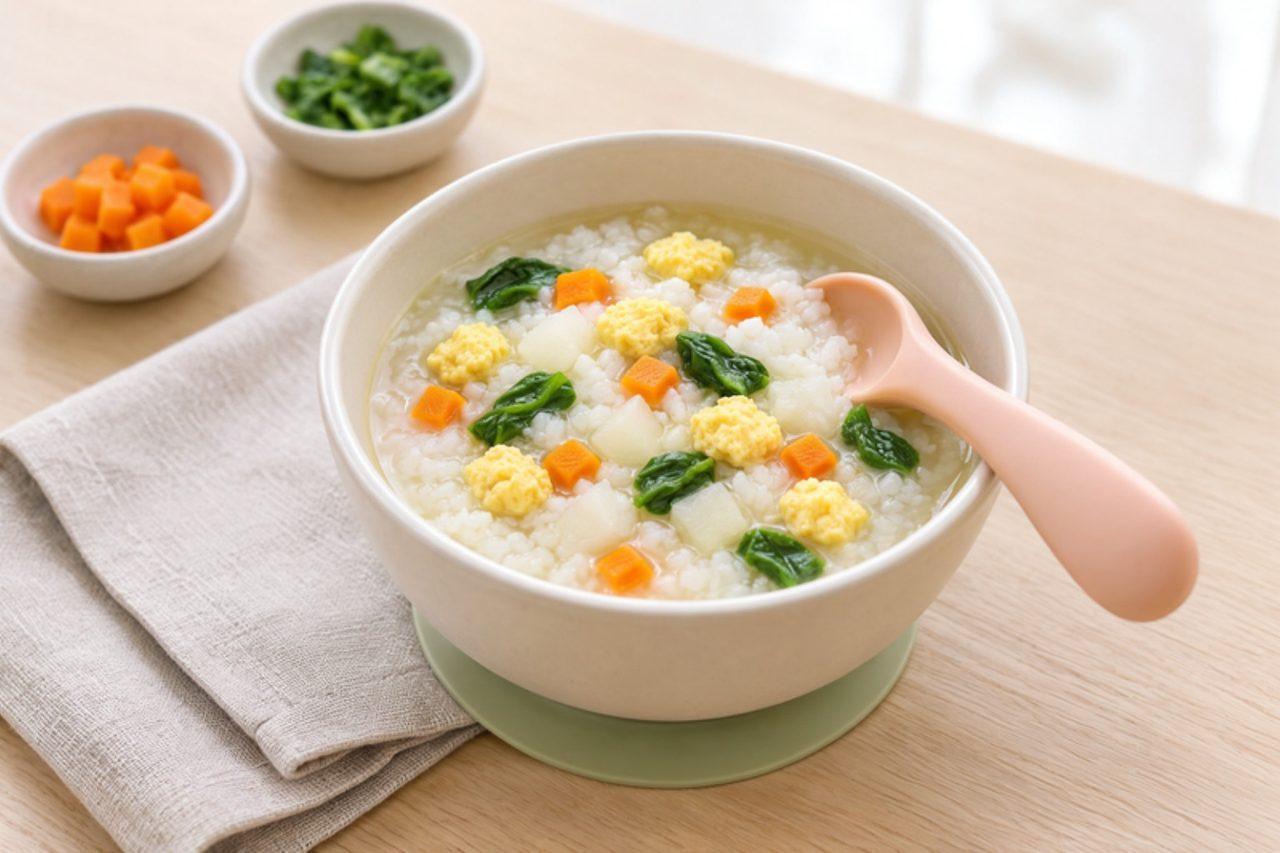
Ojiya for babiesRice and vegetable porridge for babies

Ojiya, cooked rice simmered into a soft porridge with broth and vegetables, is what Japanese families eat on chilly evenings or after a cold, and it is a staple of the kamikami-ki, the stage around nine months when babies start mashing soft lumps with their gums. Instead of soy sauce or salted dashi, it is made with plain home-made kombu stock, so the flavour comes from the sweetness of the carrot and daikon. For babies, the beaten egg is cooked until completely set. It contains egg and is free of milk, gluten, nuts, soya, sesame and fish. Chef's tip: chop the vegetables to the size of a grain of rice; that is just right for the kamikami stage.

by KrazyBadal 0 views
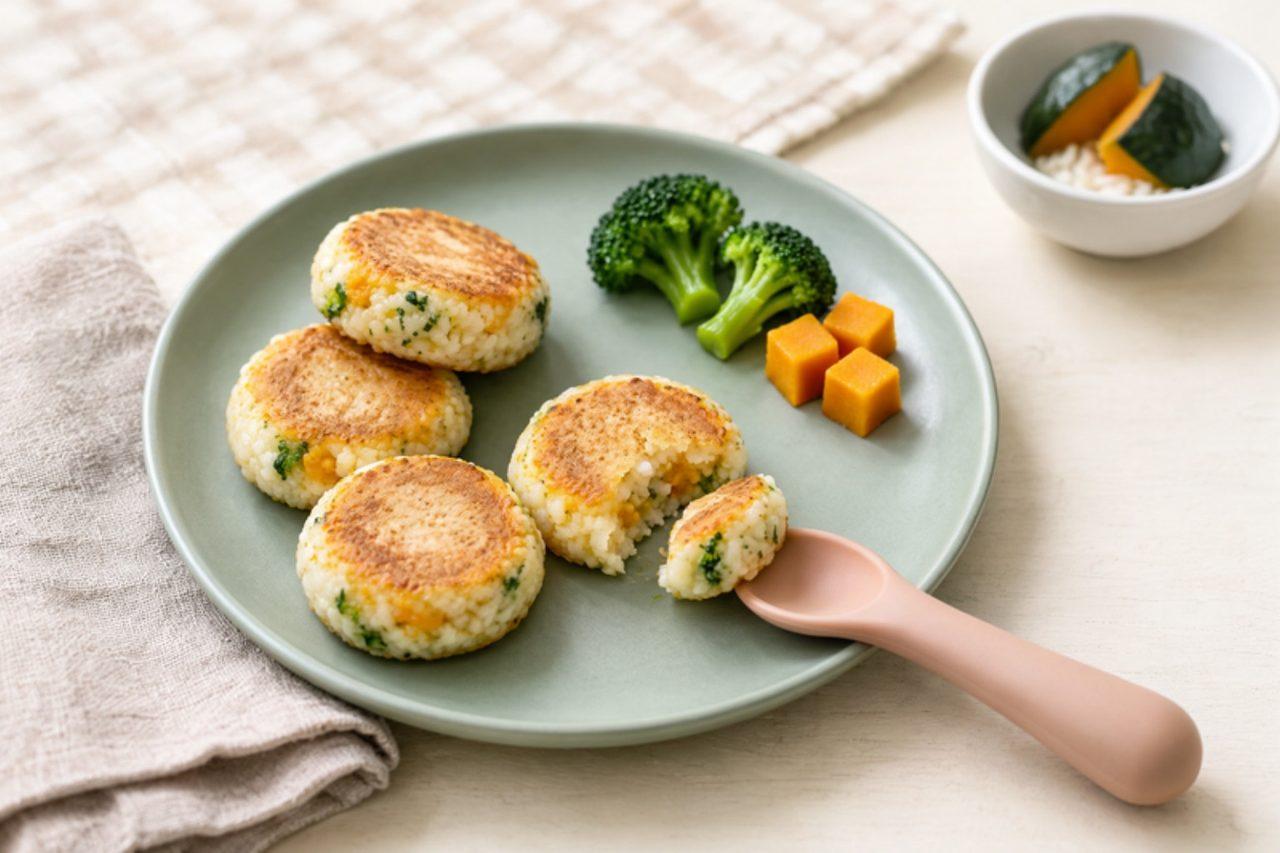
Gohan oyaki (rice finger patties)

Oyaki means a little pan-cooked cake, and Japanese parents make gohan oyaki from leftover rice when babies around nine months start wanting to feed themselves. Mashed rice is mixed with steamed kabocha squash (or grated carrot) and a spoon of potato starch, shaped into finger-sized patties and cooked gently until lightly golden. They are soft and sweet inside, hold together in a small fist and squash easily against the gums. They are free of the major allergens: no milk, egg, gluten, nuts, soya, sesame or fish. Chef's tip: mash the rice while it is warm; cold rice will not stick together and the patties crumble.

by KrazyBadal 0 views
Ogura toastToast with sweet red bean

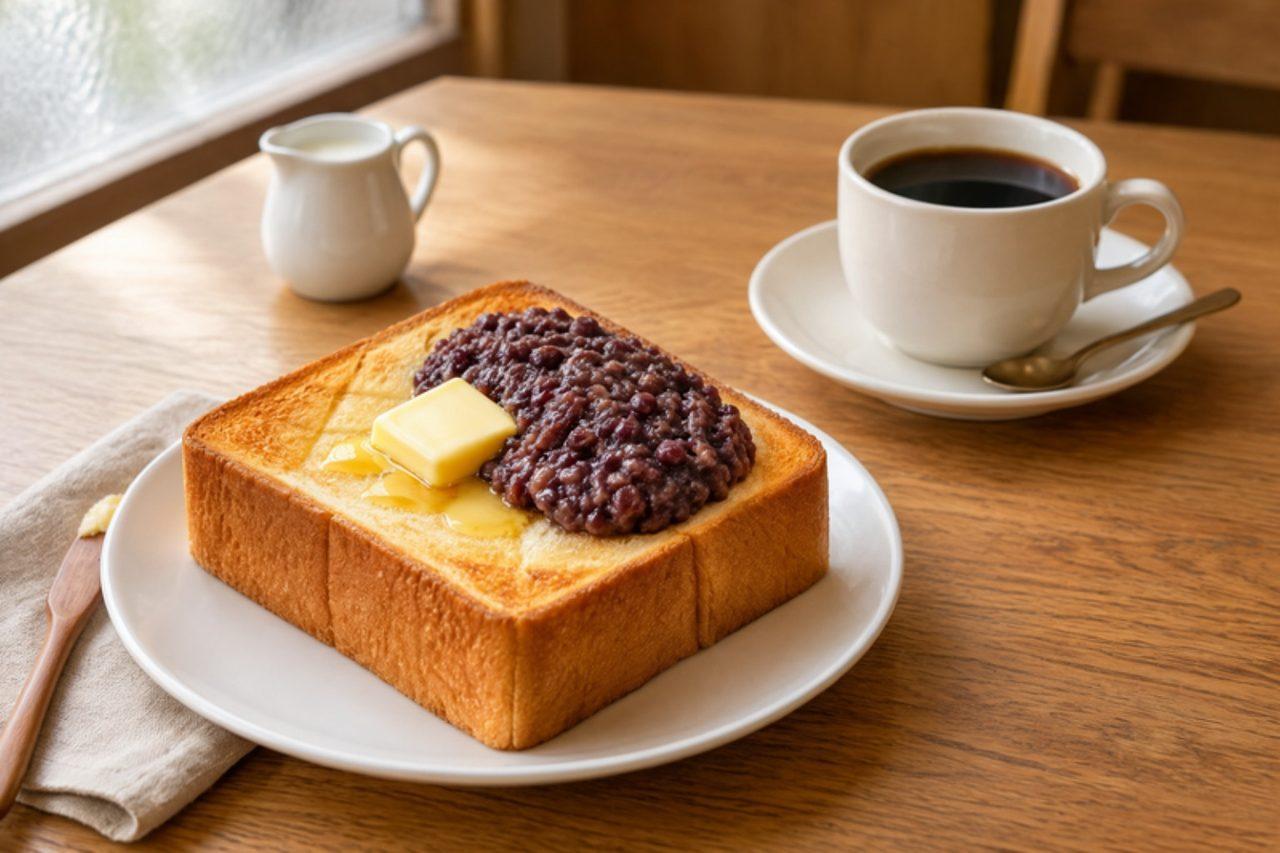
Walk into a kissaten coffee shop in Nagoya before 11 am, order a coffee, and the "morning service" brings a thick slab of toast spread with butter and a mound of ogura-an, coarse sweet azuki bean paste. The hot, salty butter melting into the cool, grainy beans is the whole point. The common mistake is thin sandwich bread: it goes limp under the paste, so use a 3–4 cm slice of shokupan or soft white bloomer. Chef's tip: butter the toast the second it comes out, then spread the bean paste only on half of each slice so every bite gets a different balance of salt and sweet.

by KrazyBadal 0 views
Onsen tamagoHot spring eggs

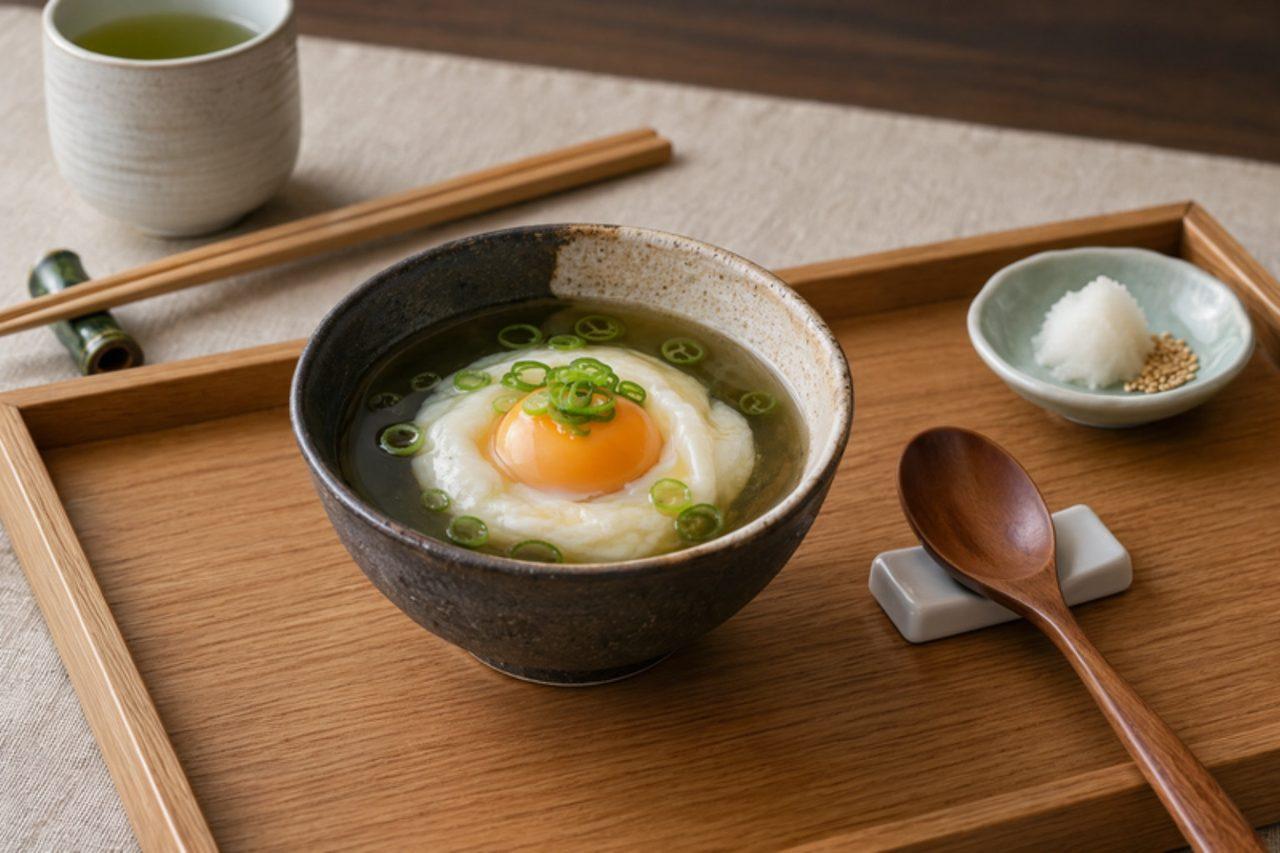
In hot-spring towns like Beppu and Kusatsu, ryokan guests find a little bowl beside their breakfast rice: an egg cooked slowly in the spring water, its white barely holding together and its yolk thick like custard, sitting in a splash of seasoned dashi. At home you copy the hot spring with a pan of water held well below the boil. The mistake almost everyone makes is using water that is too hot, which gives an ordinary soft-boiled egg with a set white; keep it at about 70 °C. This version uses a kombu and shiitake dashi, so it stays vegetarian. Because the eggs are only partly set, cook eggs fully for anyone pregnant, young children, older people or anyone with a weakened immune system. Chef's tip: take the eggs out of the fridge 30 minutes early, because a cold egg drops the water temperature and the yolk stays raw.

by KrazyBadal 0 views

Harusame saladGlass noodle salad

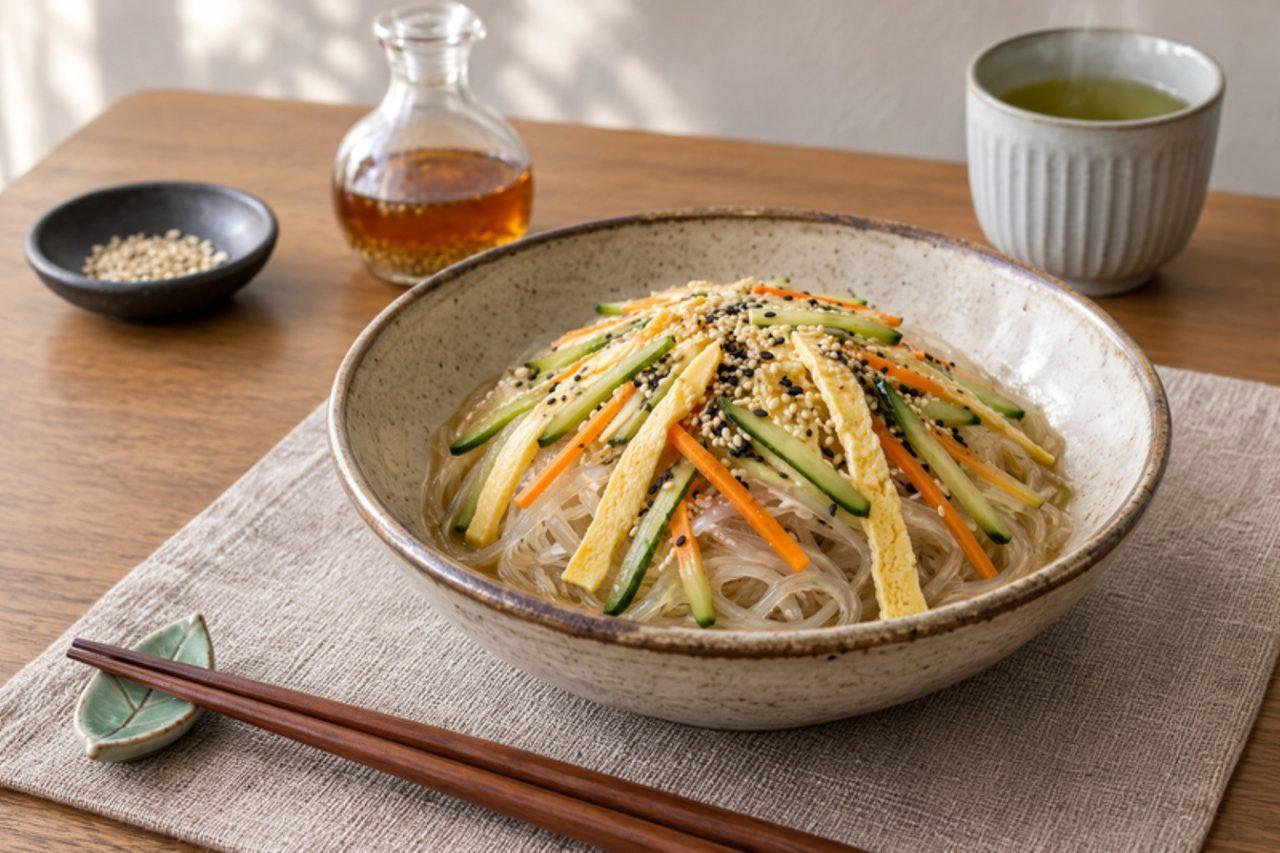
Harusame, "spring rain" noodles, are fine glass noodles made from mung bean or potato starch, and this tangy salad of them with cucumber, carrot and ribbons of thin omelette is a supermarket deli favourite and a regular bento side across Japan. Ham is usually added; this version keeps it vegetarian. The common mistake is leaving the noodles long, which makes the salad impossible to eat from a bento with chopsticks; cut them with scissors after cooking. Chef's tip: dress the noodles while they are still slightly warm, because they drink up the dressing then and stay flavourful cold.

by KrazyBadal 0 views
Kombu tsukudaniSoy-simmered kelp

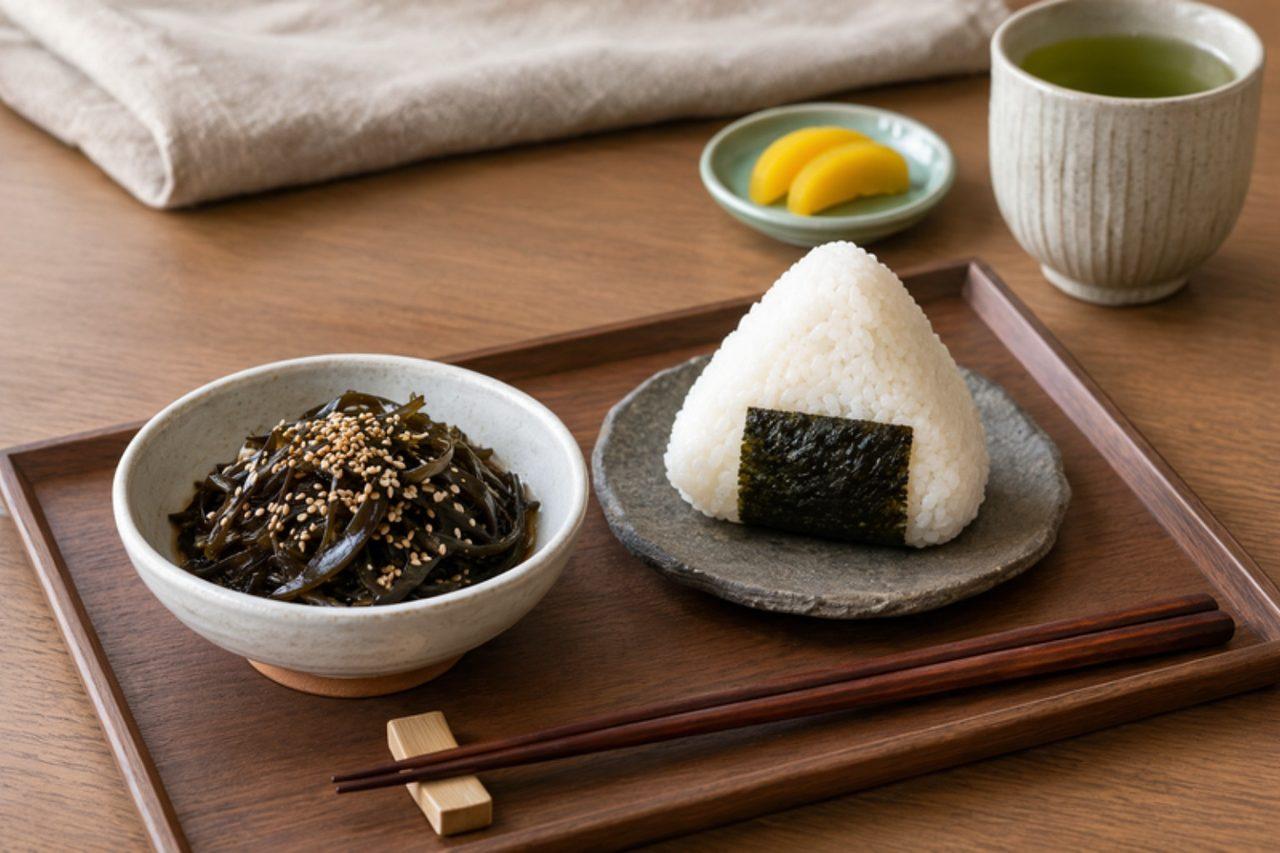
Japanese home cooks hate waste, so the softened kelp left over from making dashi is saved in the freezer until there is enough to simmer down into tsukudani, a dark, chewy relish named after Tokyo's Tsukudajima island, where fishermen first preserved their catch in soy. A teaspoon goes into the middle of an onigiri or on top of the rice in a weekday bento, and it lasts a week in the fridge. The common mistake is boiling it hard from the start: the kelp turns slimy and the sauce scorches before the strips are tender. A splash of vinegar early on softens the kelp so it cooks evenly. Chef's tip: stop when only a spoonful of glaze clings to the pan, because the relish thickens a lot more as it cools.

by KrazyBadal 0 views

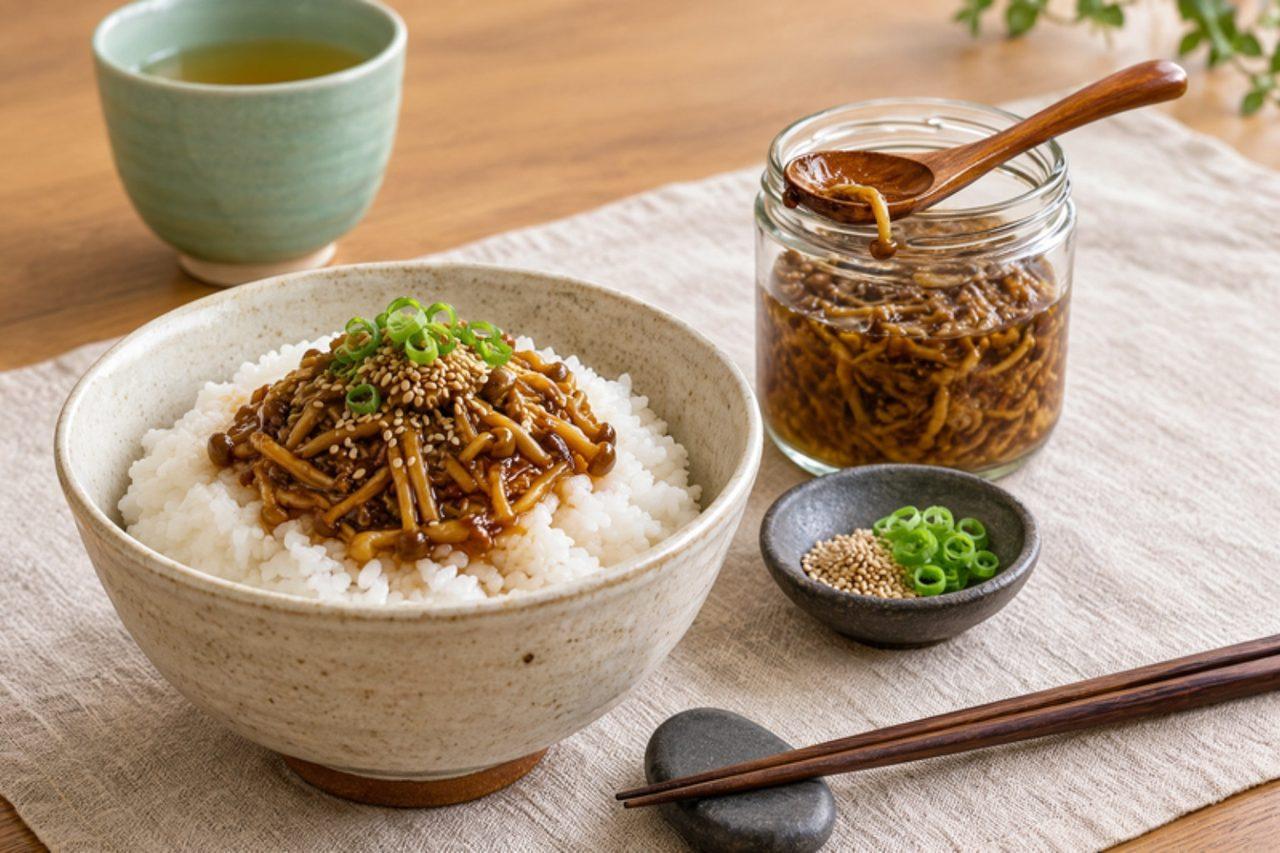
NametakeSoy-simmered enoki mushrooms

Jars of nametake sit in almost every Japanese fridge: enoki mushrooms cooked down in sweet soy until they turn silky and slightly slippery, ready to spoon on plain rice, tofu or a bento's onigiri for a quick hit of savoury flavour. Homemade takes ten minutes and costs a fraction of the shop jars. The common mistake is chopping the enoki too short, which turns the relish to mush; 3 cm lengths keep a little bite. Chef's tip: add the vinegar at the very end, off the heat, for a brighter taste and a longer life in the fridge.

by KrazyBadal 0 views
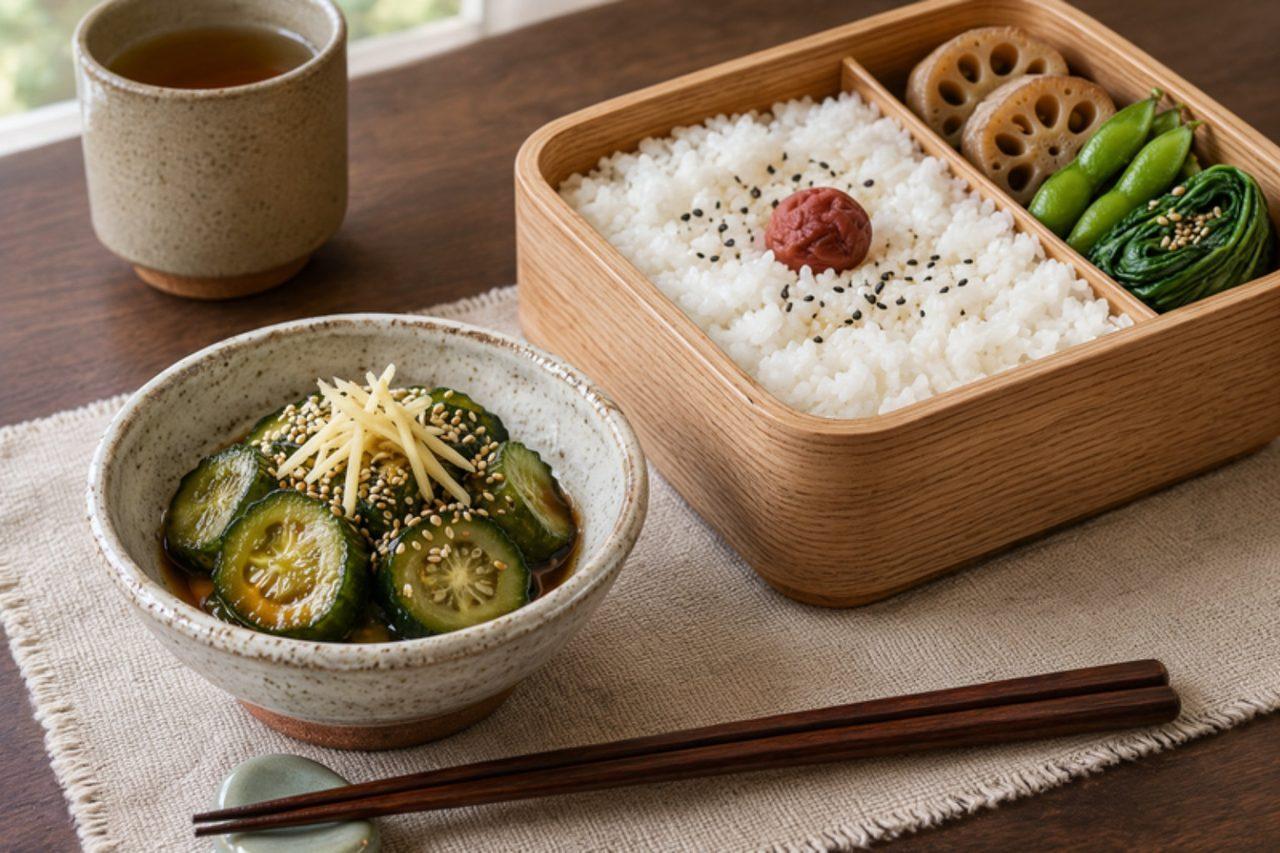
Kyuchan cucumber pickle

Kyuchan is the sweet-salty soy pickle that Japanese mothers tuck into the corner of a bento: thin coins of cucumber that stay crunchy for days thanks to an old trick of pouring hot pickling liquid over them several times. It brightens plain rice and cuts the richness of fried karaage-style dishes. The common mistake is simmering the cucumbers in the sauce, which makes them soft and grey; they should only ever sit in hot liquid off the heat. Chef's tip: squeeze the salted cucumbers really hard in a cloth, because every drop of water you remove is crunch you keep.

by KrazyBadal 0 views
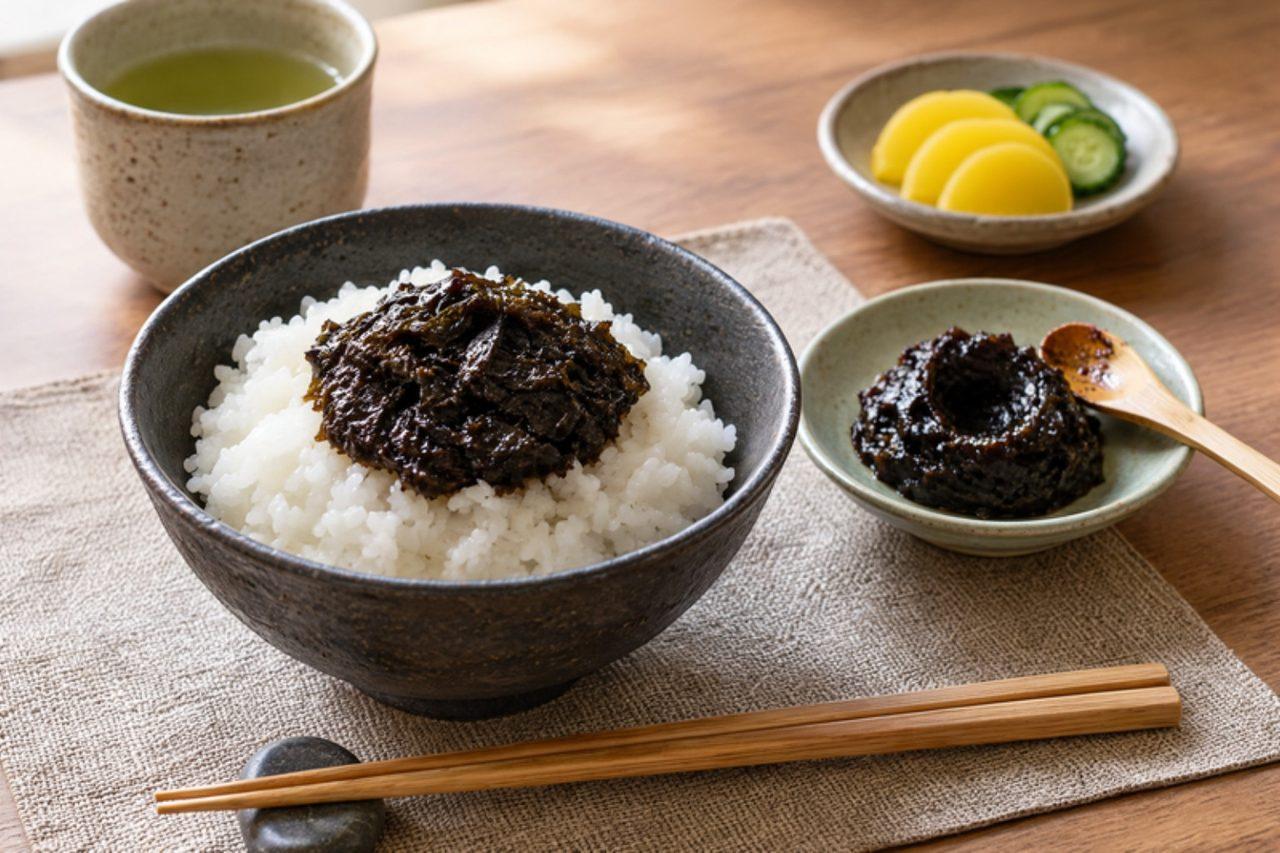
Nori tsukudaniSoy-simmered nori

When a pack of nori loses its crispness, Japanese cooks turn it into nori tsukudani, the jet-black, jammy seaweed paste sold in jars as "gohan desu yo" and spread over the rice in bento boxes up and down the country. It tastes of the sea, soy and a gentle sweetness. The common mistake is walking away: once the water has gone the paste catches on the bottom within a minute. Chef's tip: soak the torn nori before you heat it, so it melts into a smooth paste instead of leaving chewy shreds.

by KrazyBadal 0 views
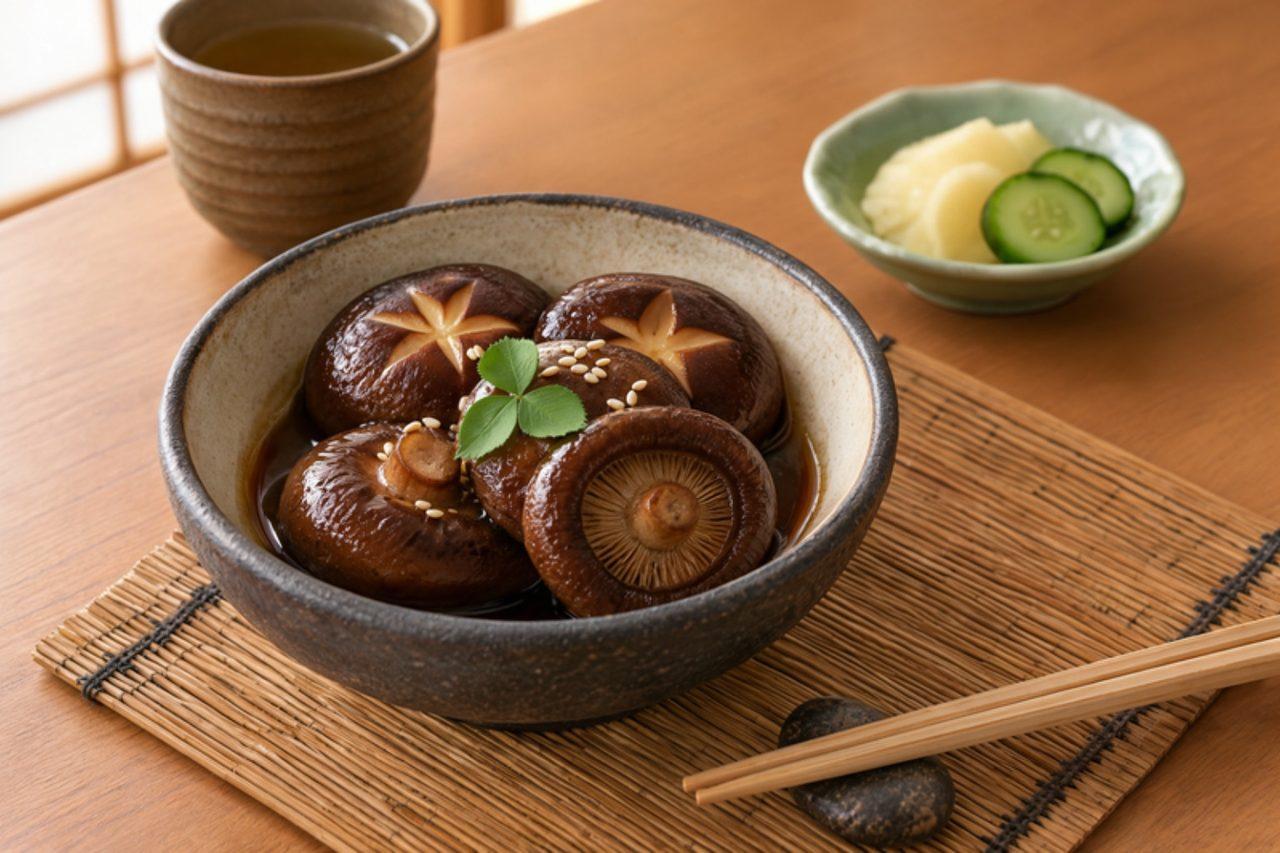
Shiitake no umaniSimmered shiitake mushrooms

These sweet-savoury simmered mushrooms are a fixture of Japanese bento and of osechi New Year boxes, and they are sliced into chirashi sushi and inari as well. The caps are rehydrated, then cooked in their own deep-flavoured soaking water with soy and sugar until the liquid becomes a sticky glaze. The common mistake is throwing away the soaking water, which holds most of the flavour. Chef's tip: soak the mushrooms in the fridge overnight if you can; a slow, cold soak gives a far meatier texture than a quick hot one.

by KrazyBadal 0 views
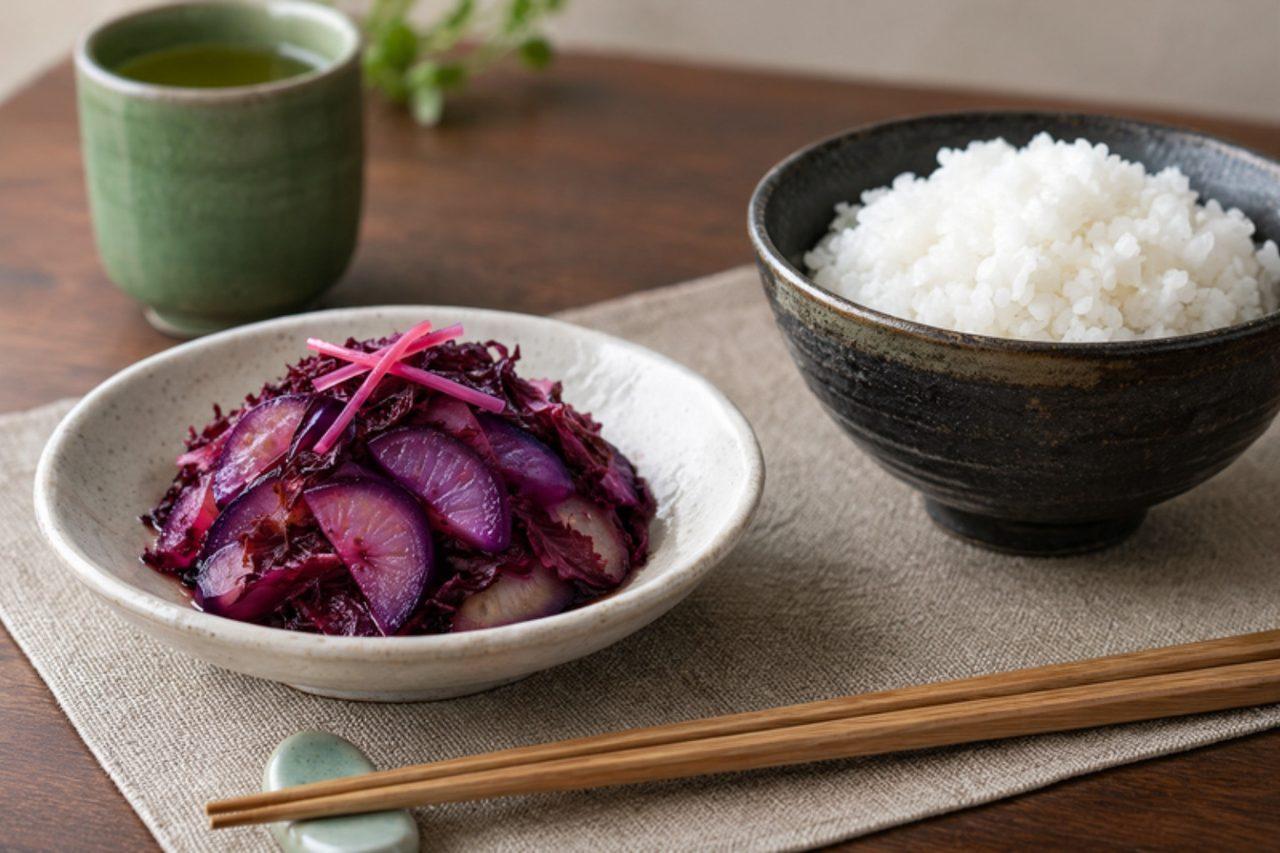
ShibazukeRed shiso aubergine pickle

Shibazuke comes from Ohara, in the hills north of Kyoto, where summer aubergines, cucumbers and myoga ginger are pressed with salt and red shiso leaves until everything turns a vivid purple and pleasantly sour. A few slivers sit beside the rice in Kyoto bento boxes. This home version is lightly fermented for a day under a weight. The common mistake is too little weight: the vegetables must sit under their own brine or they spoil instead of souring. Chef's tip: rub the shiso with salt and squeeze out its first dark, bitter juice before it ever touches the vegetables.

by KrazyBadal 0 views
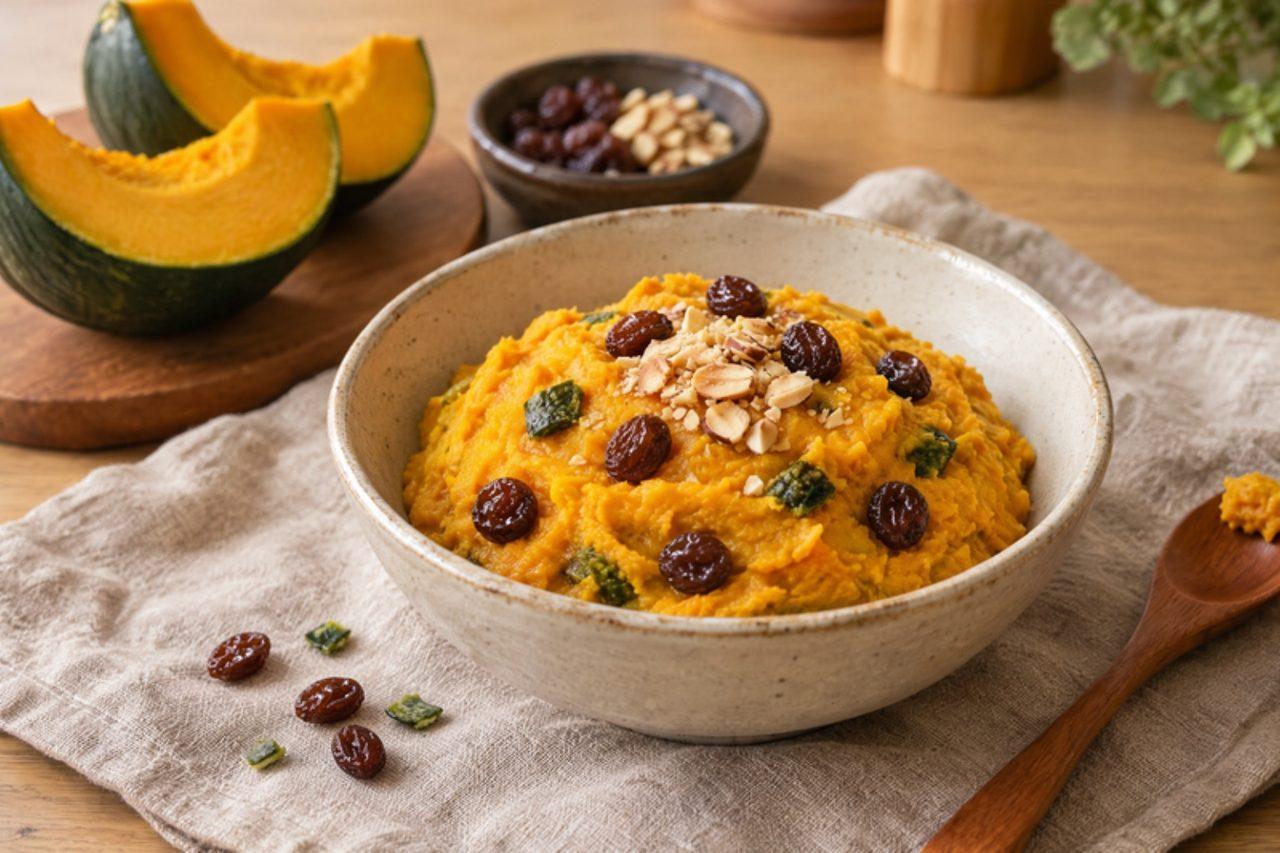
Kabocha saladPumpkin salad

Children across Japan know this golden, chunky salad from their bento boxes and school lunches: steamed kabocha squash crushed with mayonnaise, a few plump raisins and a touch of pepper, sweet enough to pass for dessert. It holds its shape cold, so it fills a bento cup neatly. The common mistake is mashing the squash while it is wet, which gives a watery salad; dry it off in the pan first. Leave some skin on for colour. The mayonnaise contains egg. Chef's tip: dress the squash while it is still warm with the salt and pepper, but add the mayonnaise only once it has cooled, so it stays creamy instead of turning oily.

by KrazyBadal 0 views
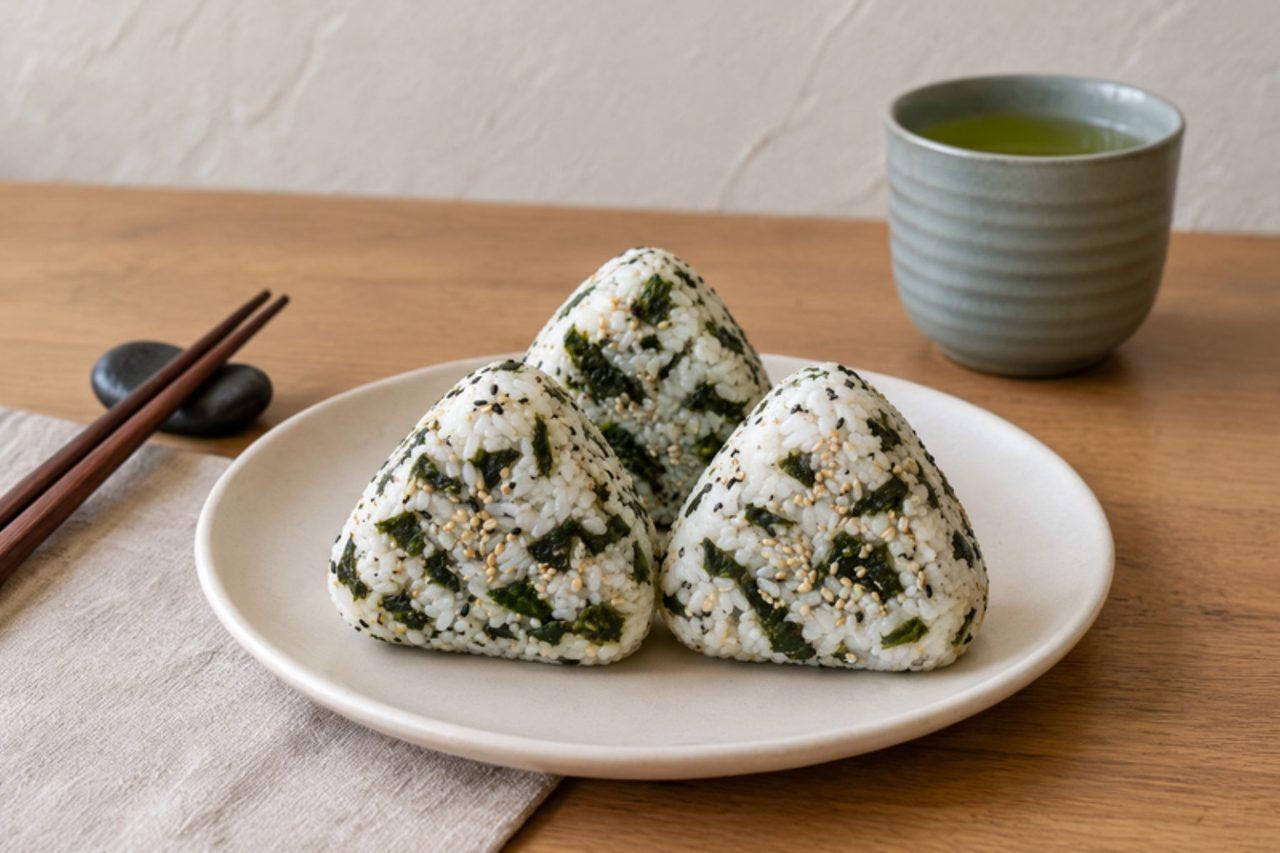
Wakame gohanWakame rice

Wakame gohan is the green-flecked rice that turns up in Japanese school lunches and convenience-store onigiri: plain rice mixed with salted, toasted wakame flakes and sesame. At home you make your own seasoning in five minutes from a pack of dried cut wakame. The common mistake is soaking the wakame first, which gives slimy rice; it should go in dry and crisp so it softens only with the rice's steam. Chef's tip: shape onigiri with wet, salted hands while the rice is hot, then cool them fast on a plate before wrapping for the lunchbox.

by KrazyBadal 0 views
Satsumaimo gohanSweet potato rice

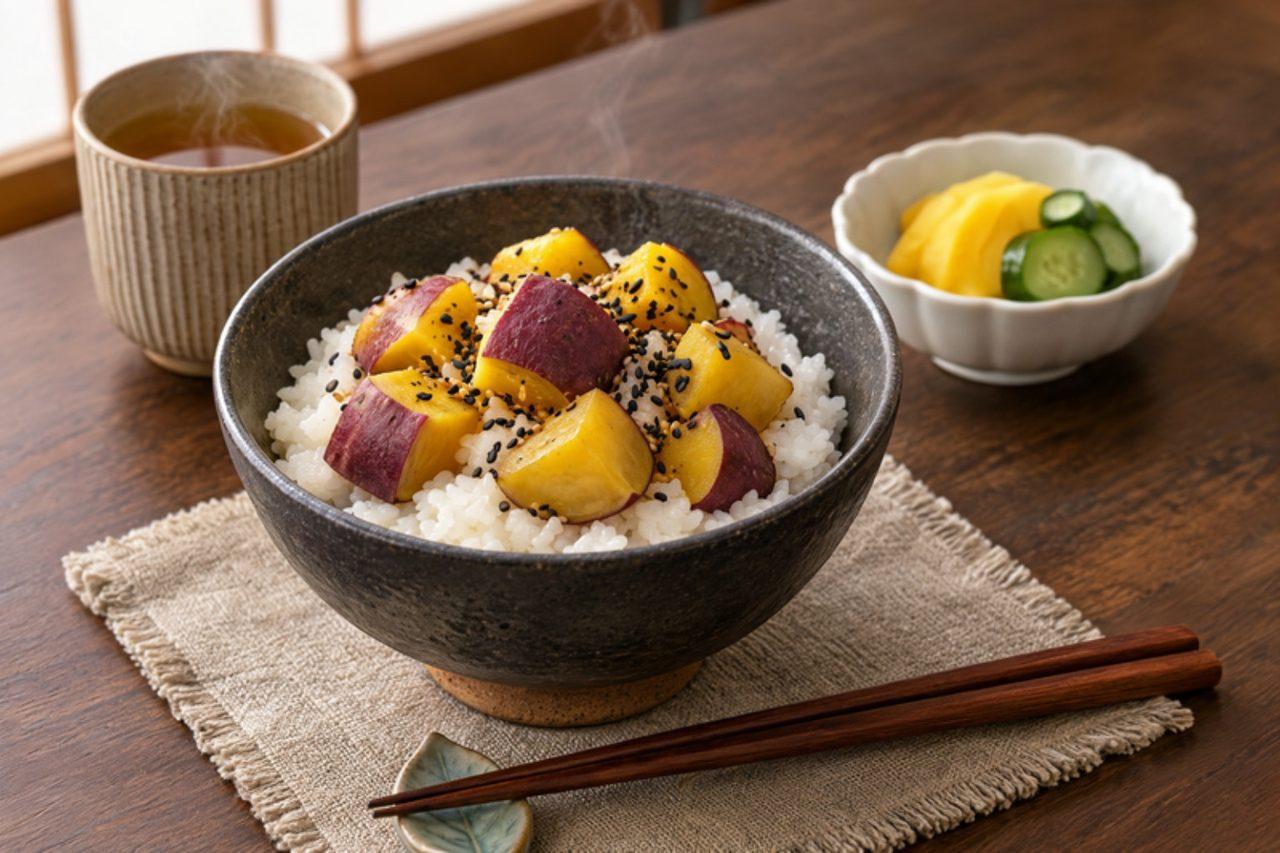
When the first purple-skinned satsumaimo arrive in Japanese shops in October, families cook them right into the rice pot: the cubes turn soft and honeyed, and a sprinkle of black sesame and salt makes it taste like autumn. It is a favourite in children's bento boxes and needs nothing but a pickle on the side. The common mistake is skipping the soak for the sweet potato, so it bleeds starch and turns the rice grey and gummy. Chef's tip: leave the skin on; it holds each cube together and gives the rice its purple-and-gold look.

by KrazyBadal 0 views
Yukari shiso saltRed shiso rice seasoning

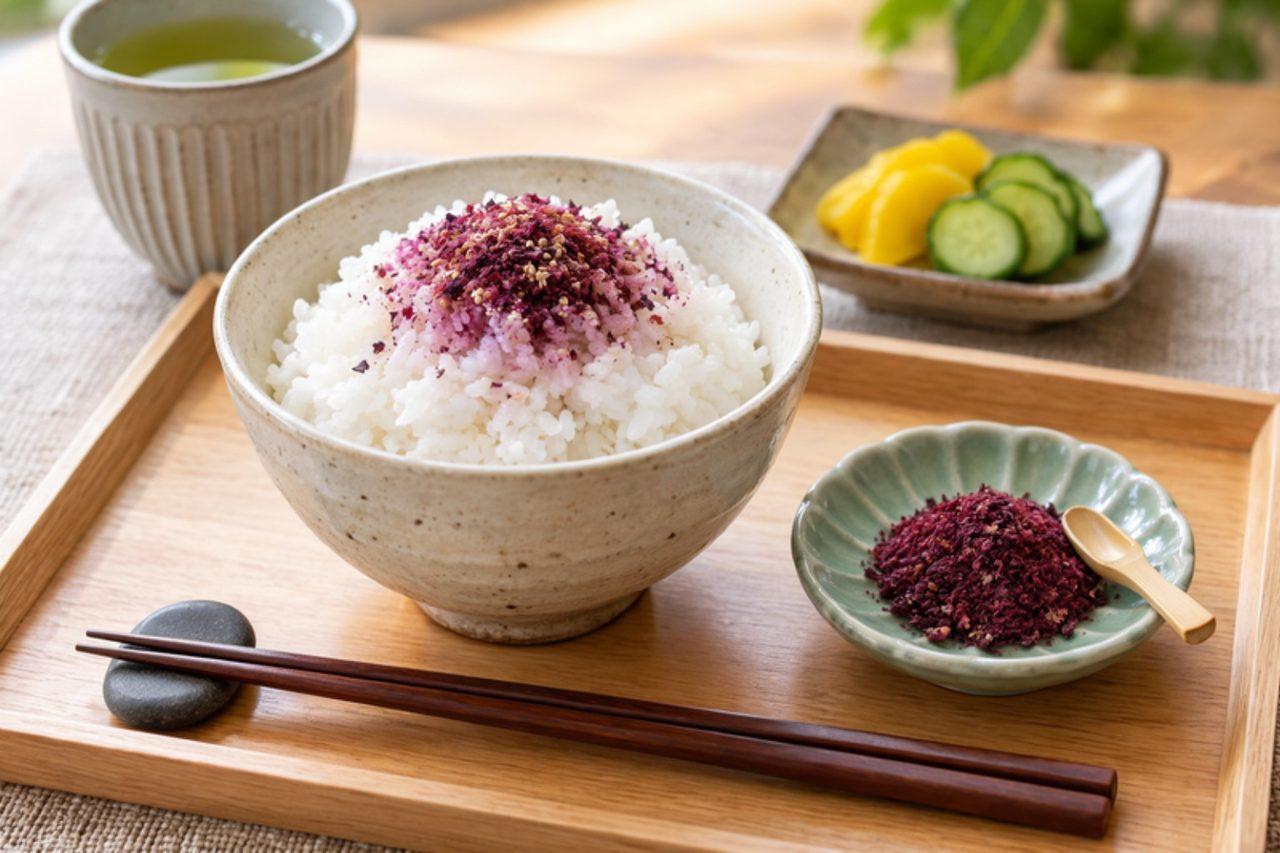
Yukari is the bright purple, salty-sour shaker that Japanese parents sprinkle over plain rice so that a bento looks cheerful and tastes of something even when it has gone cold. Traditionally it is made from the red shiso leaves left after pickling umeboshi plums; this home version gets the same flavour by salting and souring fresh red shiso in early summer. The common mistake is drying the leaves too hot, which turns them brown and bitter. Chef's tip: keep the oven no hotter than 80 °C and leave the door ajar, and the colour stays a jewel-like magenta.

by KrazyBadal 0 views
Sansai okowaSticky rice with mountain vegetables
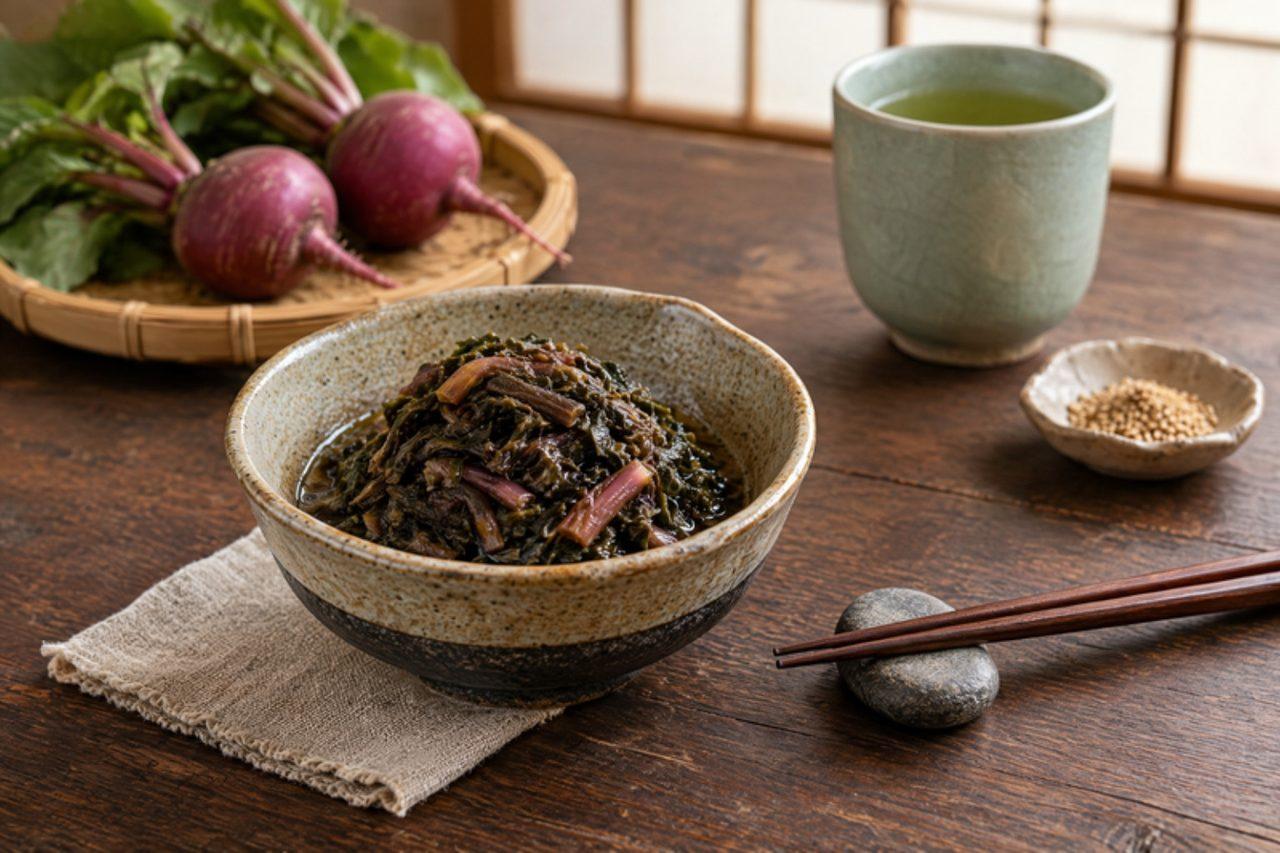
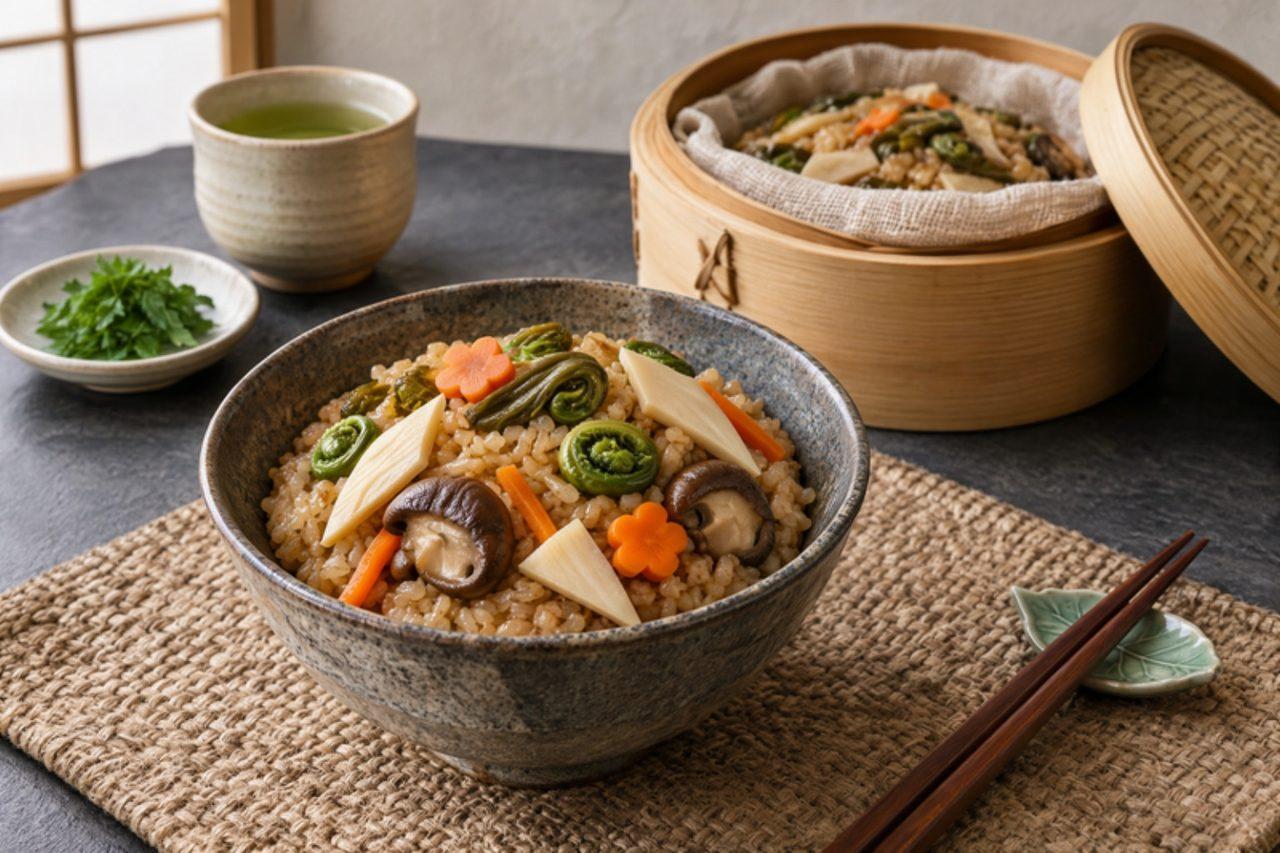
In the snowy valleys of Yamagata, Niigata and Nagano, sansai okowa is what families cook in late spring when bracken, royal fern and bamboo shoots come down from the hills, and it turns up again in autumn rice-ball lunchboxes and at temple festivals. Soaked glutinous rice soaks up a soy and shiitake broth and cooks to a chewy, glossy, gently savoury pile studded with crunchy, slightly bitter greens. Eat it warm or at room temperature with miso soup and pickles, or shape it into onigiri. The usual mistake is giving sticky rice as much water as ordinary rice: it turns into paste, so use much less and let the soaking do the work. Chef's tip: buy the boiled, vacuum-packed mixed sansai sold in Japanese shops, and rinse it well, as it is often stored in brine.

by KrazyBadal 0 views
Daikon to aburaage no nimonoSimmered daikon and fried tofu

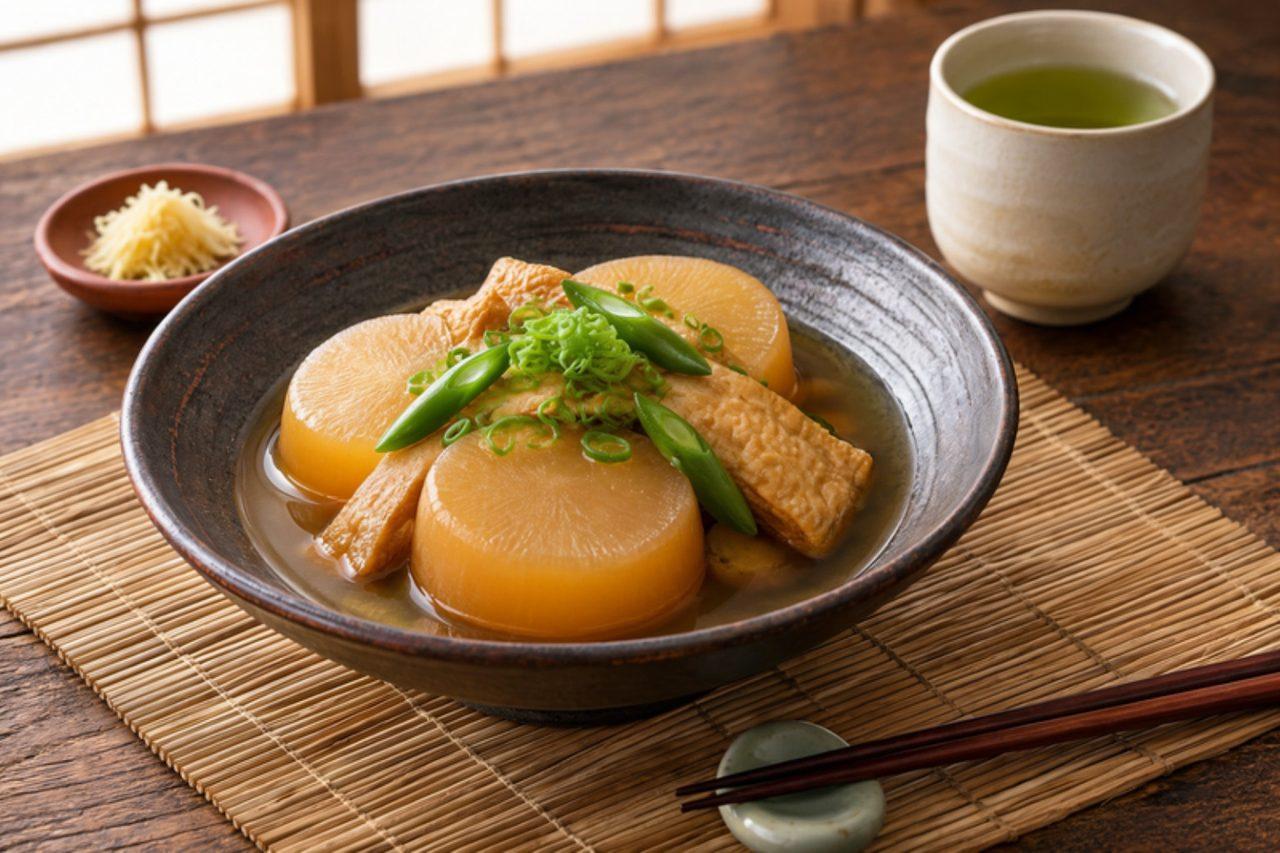
When winter daikon is fat, sweet and cheap in every Japanese market, home cooks from Hokkaido to Kyushu simmer it with strips of aburaage, the thin fried tofu pouches, as an everyday side for rice and grilled food. The radish turns soft and see-through and drinks up a light soy broth, while the tofu soaks up the rest like a sponge. This version uses a kelp and shiitake dashi instead of bonito, so the whole pot is vegan, and it tastes even better reheated the next day. The usual mistake is boiling it hard: the daikon edges crumble and the broth goes cloudy, so keep it at a lazy simmer under a drop lid. Chef's tip: pour boiling water over the aburaage before cutting it, which rinses off the stale frying oil and lets the broth soak in.

by KrazyBadal 0 views
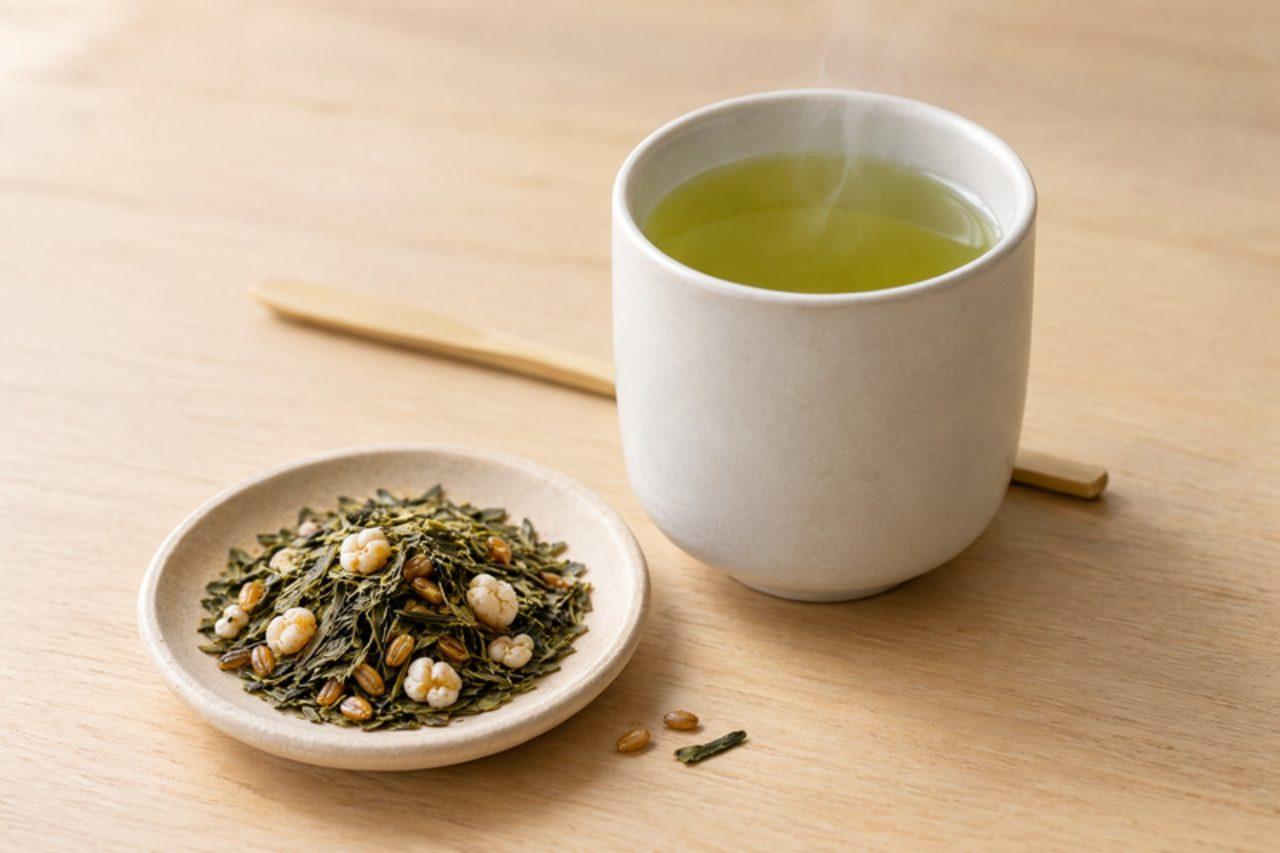
GenmaichaGreen tea with toasted rice

Genmaicha started as a thrifty Japanese blend: toasted rice stretched expensive tea leaves and made the pot go further. It is now loved for itself and turns up everywhere, from office kettles in Tokyo to the free tea at sushi counters and ramen shops, poured all through the meal because its gentle, roasted flavour does not fight with soy or fish. The rice gives a nutty, savoury, almost buttery taste; the green tea adds a light grassy edge. It has about half the caffeine of plain sencha, so many people drink it in the afternoon. The usual mistake is pouring boiling water straight onto it: the green leaves scald and the cup turns bitter while the rice flavour gets lost. Let the kettle sit for a minute or two so the water is around 80–85 °C, and steep for no more than a minute. It is ready when the liquor is pale yellow-green and clear, and the steam smells of popcorn and cut grass. Chef's tip: matcha-iri genmaicha, with powdered matcha dusted over the blend, gives a greener, fuller cup; use it the same way but stir the pot once before pouring.

by KrazyBadal 0 views
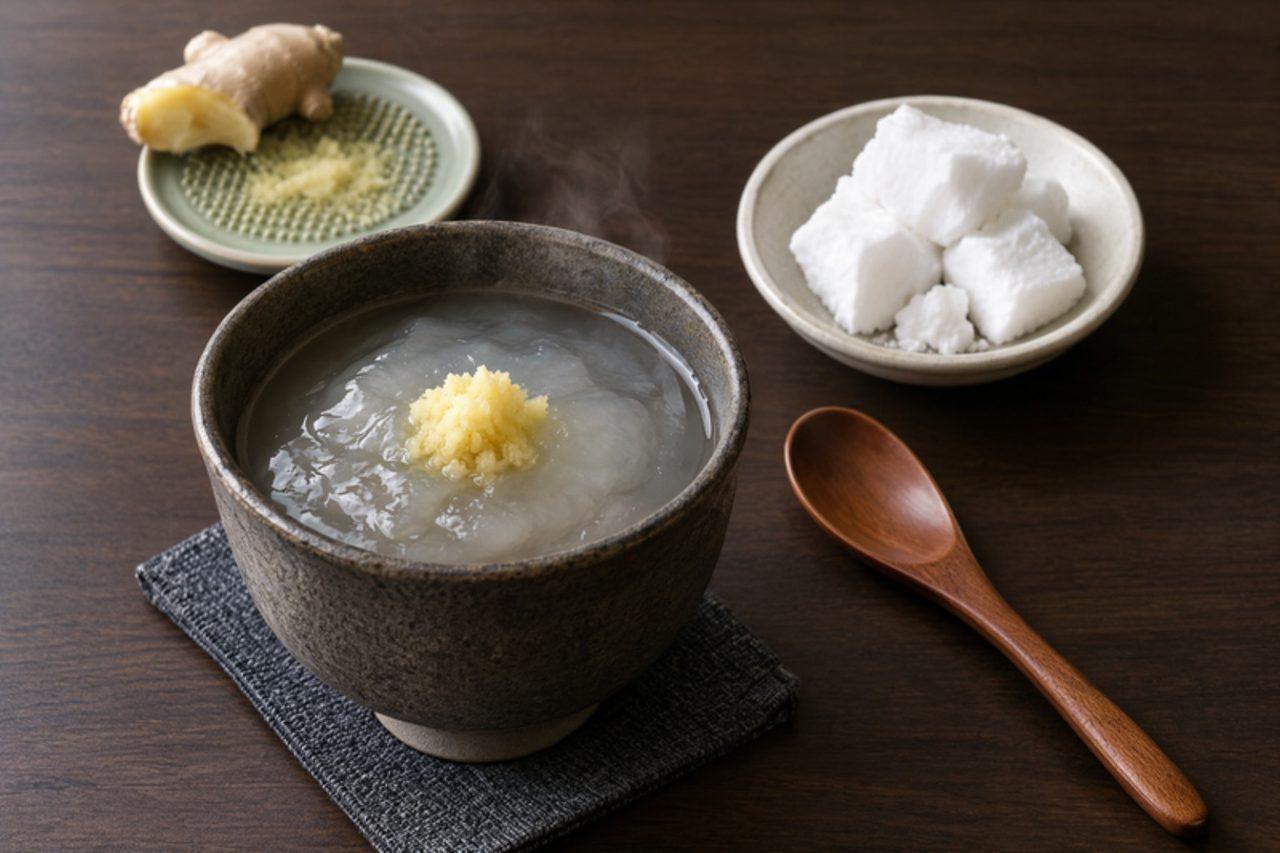
Kuzuyu (hot kudzu drink)

Kuzuyu is what Japanese mothers make when someone has a chill or an upset stomach, and what many people sip on a frosty winter evening, especially in Nara, whose Yoshino mountains have produced the finest hon-kuzu starch for centuries. Kudzu root starch is stirred into water with a little sugar and cooked until the milky liquid suddenly turns clear, glossy and gently thick, somewhere between a hot drink and a soft pudding you drink from the cup. Grated ginger warms it; some families add a spoon of matcha or a squeeze of yuzu. It tastes clean, mildly sweet and comforting, and it is traditionally given to people recovering from colds. The mistake almost everyone makes once is sprinkling kudzu into hot water, where it forms rubbery lumps at once. Always crush it and dissolve it completely in cold water first, then heat it while stirring without stopping. It is ready when there are no white streaks left, the drink is translucent and it coats the back of a spoon. Chef's tip: real hon-kuzu comes in chalky lumps; crush them with the back of a spoon in the cold water and they dissolve in seconds.

by KrazyBadal 0 views
Mugicha (roasted barley tea)

From the rainy season in June until the cicadas fall quiet in September, almost every Japanese household keeps a tall jug of mugicha in the fridge. It is poured for children coming in from summer club practice, for grandparents after an afternoon nap, and alongside cold sōmen at lunch, because it carries no caffeine and can be drunk all day. Whole barley grains roasted until deep brown give a cup that tastes of toast, a little of coffee and a little of popcorn, with a clean, dry finish and no sweetness at all. Supermarkets sell it in tea bags, but loose roasted grains simmered in a pan make a rounder, darker brew. The usual mistake is leaving the grains in the jug or letting the hot tea sit out on the counter for hours: it turns bitter and, being a grain infusion, it sours quickly in summer heat. Strain it, cool it fast in a sink of cold water, and drink it within two days. It is ready when the liquid is a clear amber-brown and smells like freshly toasted bread. Chef's tip: dry-toast the grains for two minutes before brewing to wake up a bag that has been open a while.

by KrazyBadal 0 views
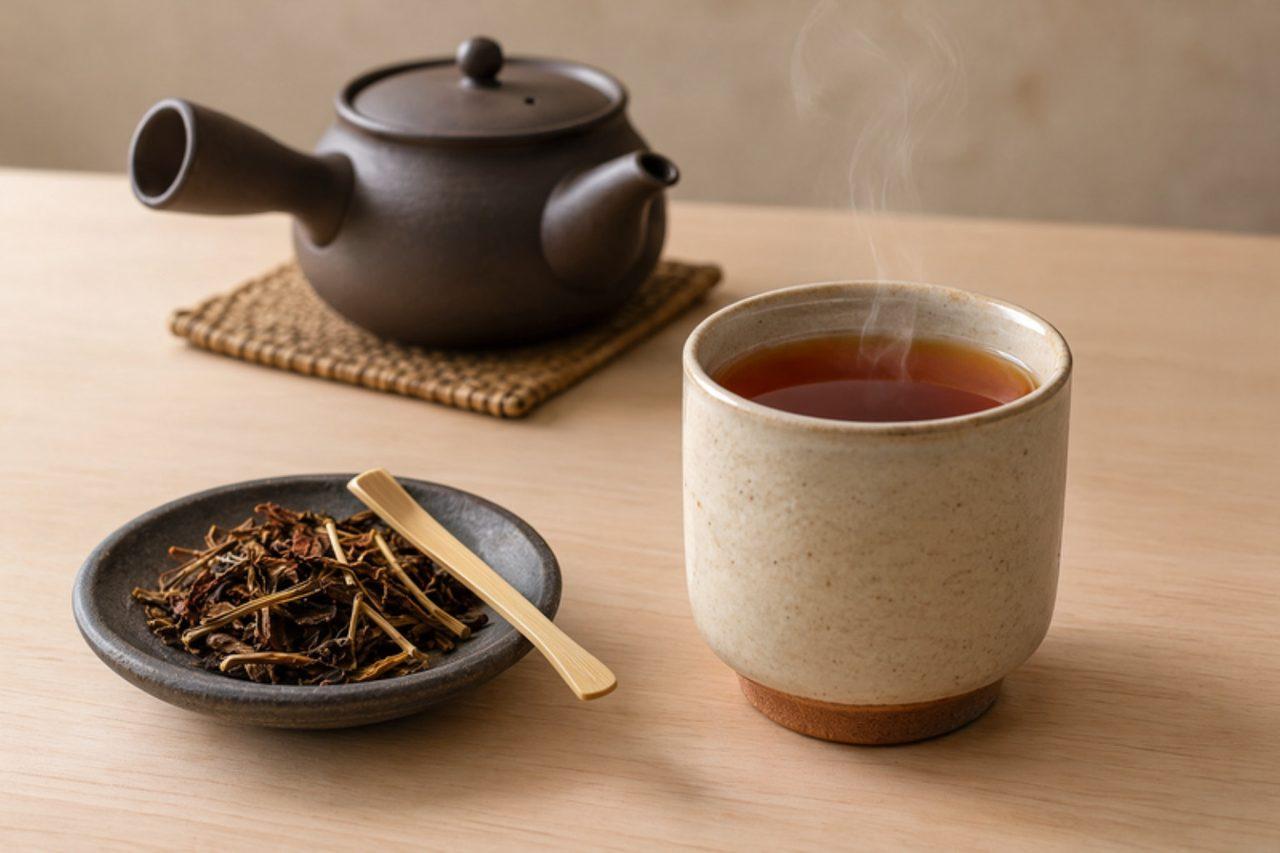
HojichaRoasted green tea

Hojicha was born in Kyoto in the 1920s, when tea merchants started roasting the coarse late-season bancha leaves and stems over charcoal to sell what would not keep. Today the smell of tea roasting in a shop doorway is part of walking down Teramachi or past the Nishiki market. Roasting drives off much of the caffeine and all the grassy bitterness, so hojicha is the pot that comes out after an evening meal, with rice crackers, or for children and older relatives who avoid stronger tea. The cup is reddish brown, smells of caramel and roasted nuts, and tastes soft and slightly sweet with almost no astringency. Unlike sencha, it likes really hot water and a very short steep. The common mistake is treating it like black tea and leaving the leaves in for several minutes, which makes it flat and woody; 30 seconds is enough for the first pour, and the leaves give a good second pot. It is ready when the liquor is clear russet and the steam smells of toasted sugar. Chef's tip: if your packet has lost its perfume, warm the leaves in a dry pan for 30 seconds until they smoke very faintly before brewing.

by KrazyBadal 0 views
Akajiso juice (red shiso cordial)

Bunches of red shiso fill Japanese greengrocers for a few weeks in June and July, mostly bought to colour umeboshi. Gardeners from Kyoto's Ohara valley to Kantō boil the surplus into this cordial and keep it in the fridge for hot afternoons. Simmering pulls a murky purple-brown liquid from the leaves; the magic is the moment the vinegar goes in and the whole pan flushes a brilliant clear magenta. Diluted with ice water or soda water it tastes sweet-sour and herbal, like a cross between blackcurrant, mint and cinnamon. The most common mistake is simmering the leaves too long or with the stems: it turns grassy and bitter. Strip the leaves, boil them for five minutes only, until they have turned green and limp, then lift them out. The cordial is ready when it is jewel-bright and clear. Bottle it in a clean, sterilised bottle and keep it in the fridge for up to three weeks; discard if it fizzes, clouds or grows mould. No fresh red shiso nearby? Japanese and Korean shops sometimes sell it in summer, and it grows easily from seed. Chef's tip: freeze some as ice cubes to drop into sparkling water.

by KrazyBadal 0 views
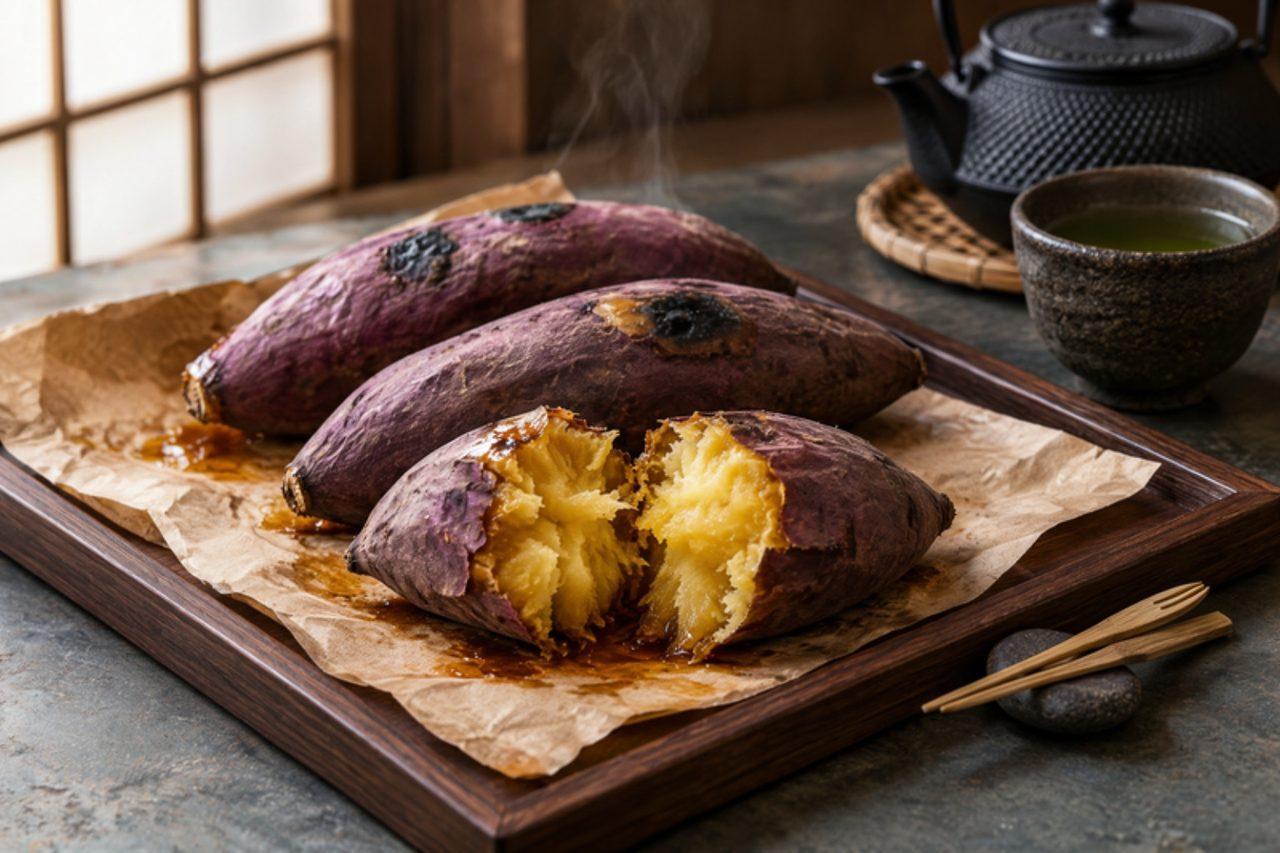
Yaki imoRoasted sweet potato

Yaki imo is the winter street snack of Japan: from November the yaki-imo trucks crawl through Tokyo and Osaka neighbourhoods singing 'ishi-yaki imo' through a loudspeaker, selling Japanese sweet potatoes roasted slowly on hot stones. At home the oven does the job. Long, low heat turns the starch into natural sugars, so the flesh becomes golden, fudgy and almost syrupy, and nothing at all needs adding: no butter, no sugar, no salt. About 0.1 g salt per portion, all of it naturally in the potato. Eat them hot from paper as an afternoon snack or alongside miso soup. The usual mistake is roasting too hot and fast, which cooks the potato but never sweetens it. Chef's tip: the potato is ready when sticky syrup bubbles out of the skin and the whole thing slumps when squeezed with an oven glove.

by KrazyBadal 0 views
Hiyashi tomatoChilled tomato

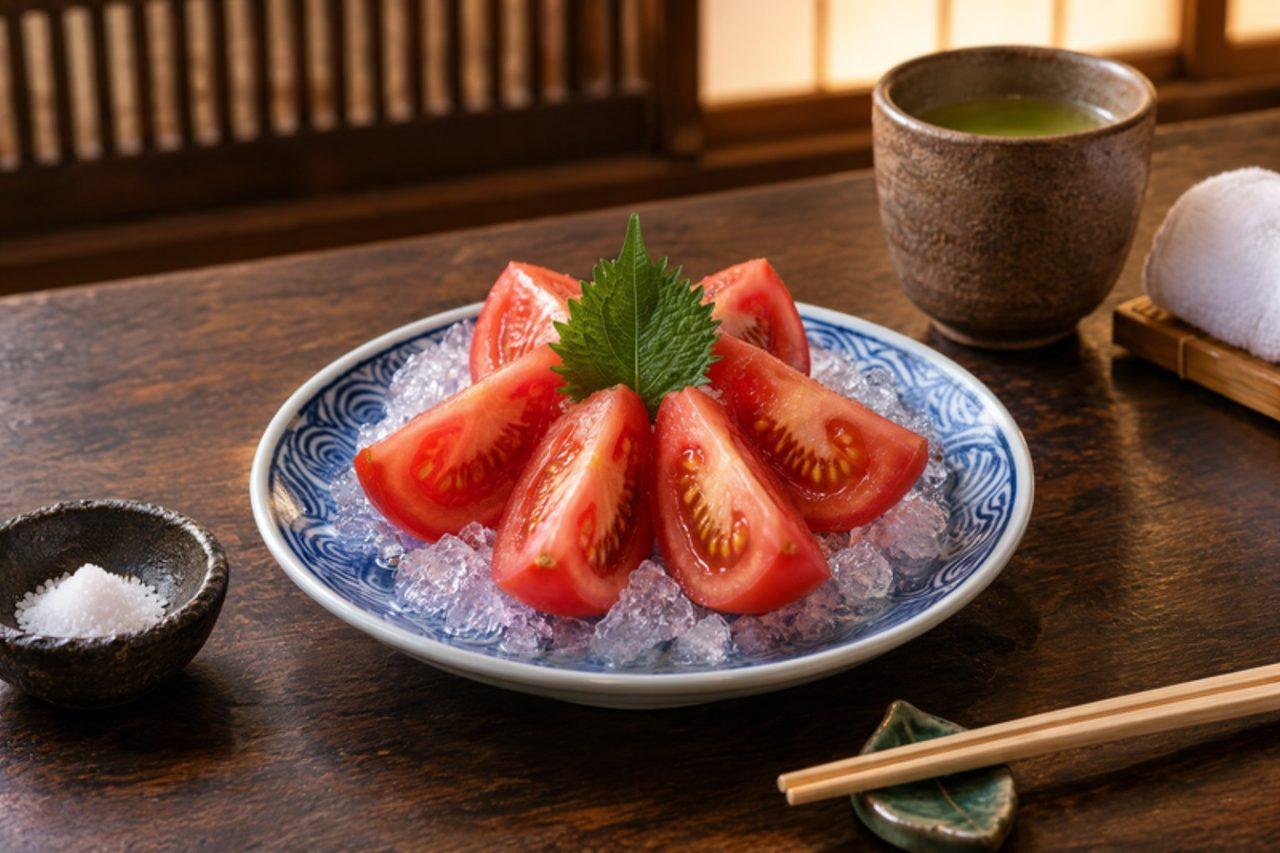
Hiyashi tomato is the simplest thing on any Japanese izakaya menu in July and August: ripe tomatoes, chilled until icy, cut into wedges and served on a small plate, sometimes on crushed ice, to cool down a hot evening in Tokyo or Osaka. Many bars sprinkle salt; this home version leaves it out and offers a few drops of rice vinegar and toasted sesame oil instead, so the tomato's own sweetness and acidity do the work. About 0.0 g added salt; roughly 0.03 g per portion occurs naturally in the tomato. The usual mistake is using hard, pale supermarket tomatoes: this dish is only as good as the fruit, so buy deep red ones that smell of tomato at the stalk. Chef's tip: chill the plate as well as the tomatoes, so the wedges stay cold to the last bite.

by KrazyBadal 0 views
SobachaRoasted buckwheat tea

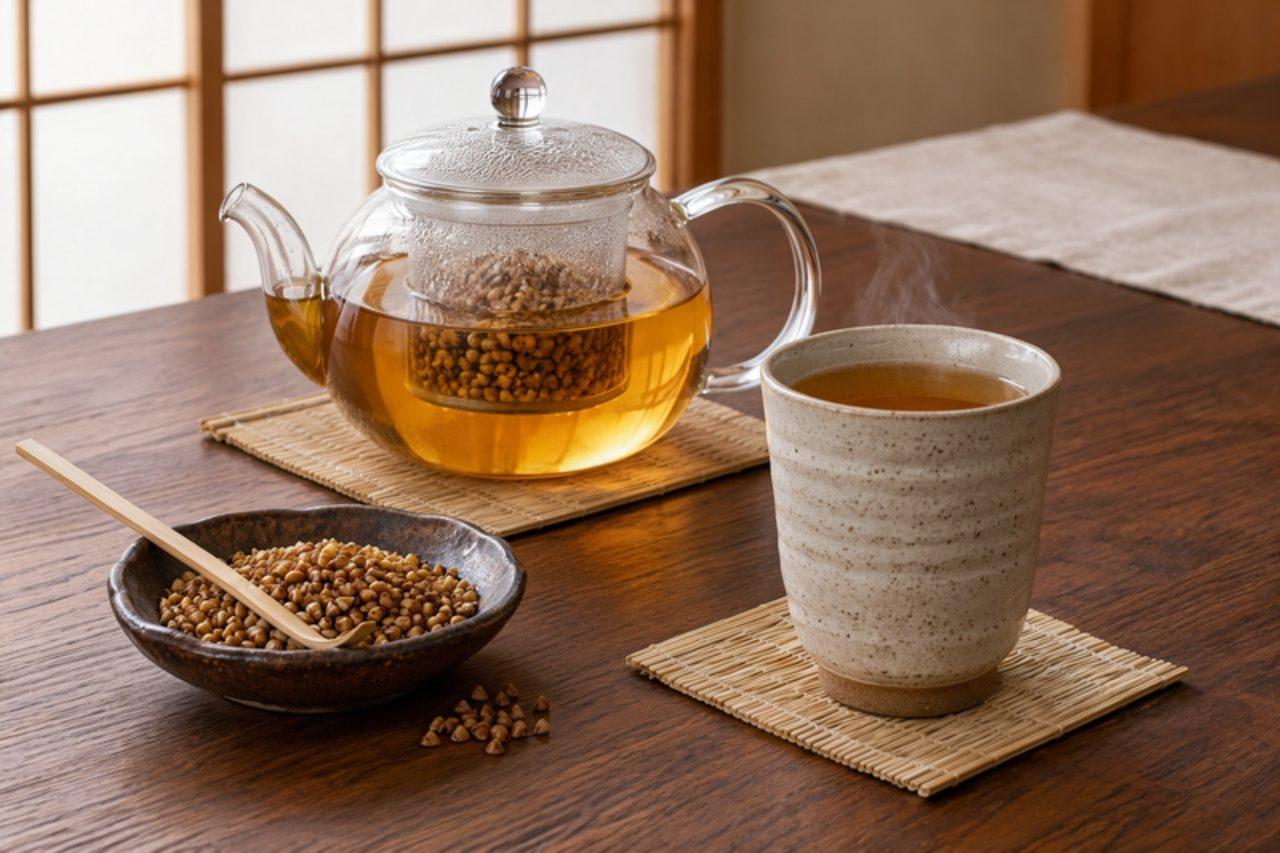
Sobacha is roasted buckwheat tea, drunk all over Japan and especially in the soba country of Nagano and Hokkaido, where it is poured free in noodle shops and kept in jugs in the fridge through summer. Toasted buckwheat groats are steeped in hot water to make a golden, caffeine-free tea with a nutty, almost popcorn aroma, and the softened groats can be eaten too, stirred into rice or salads. Nothing is added: no salt, no sugar, so about 0.0 g salt per cup. The usual mistake is burning the groats when roasting your own; keep the heat at medium and keep the pan moving. Use Tartary buckwheat (dattan soba) for a deeper yellow tea. Anyone with a buckwheat allergy should avoid it, as reactions can be serious. Chef's tip: steep a second time with slightly hotter water; the second cup is often the sweetest.

by KrazyBadal 0 views
SenmaizukePickled sliced turnip

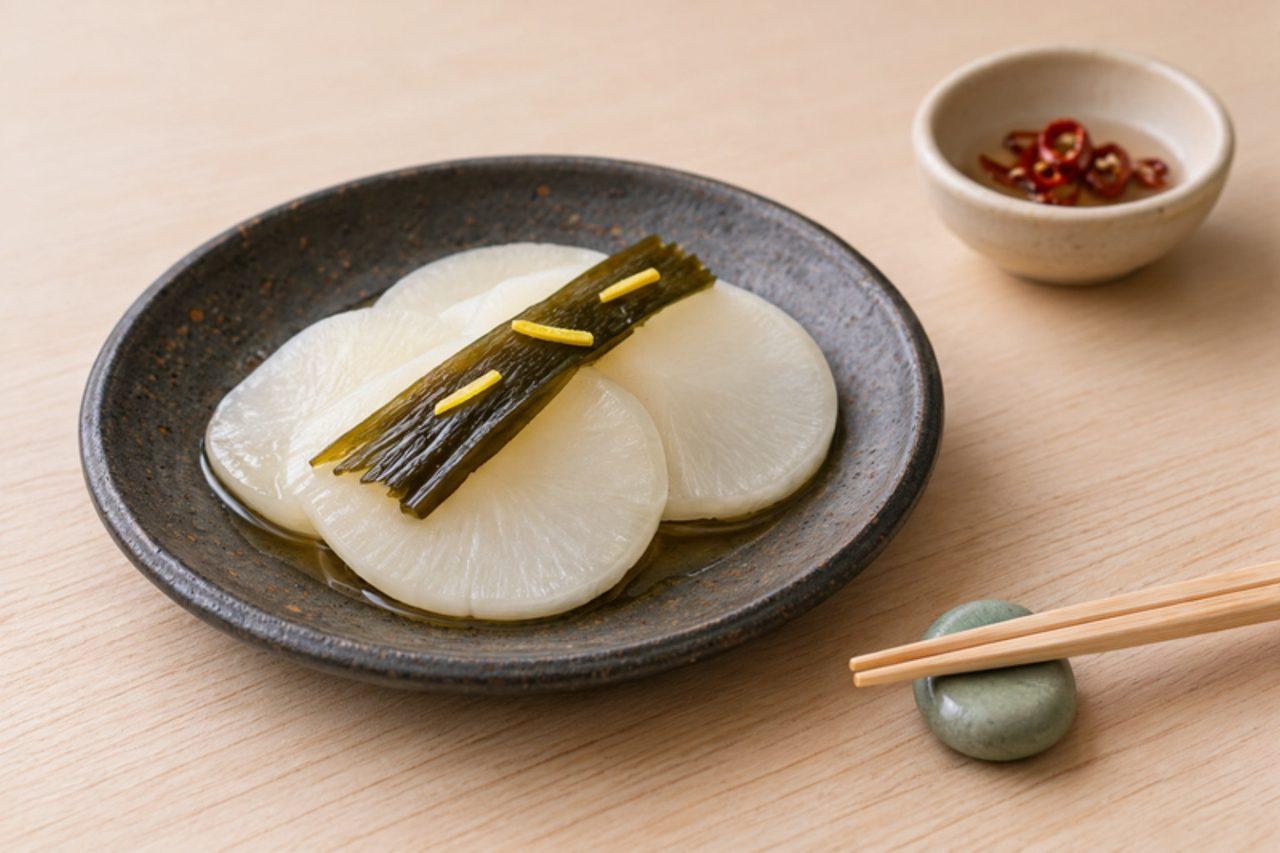
Senmaizuke is the pickle Kyoto sends home with winter visitors: great white Shogoin turnips, sliced so thin you can read through them, layered in fan shapes with kombu and a mild sweet vinegar. Pickle shops along Nishiki Market start making it in November, when the turnips swell and sweeten in the cold, and it stays on New Year tables and beside winter rice through February. It tastes gently sweet and sour with a deep savoury note from the kombu, which turns slightly sticky and coats each slice; the turnip stays crisp at the edge and silky in the middle. Outside Japan use large, firm white turnips (or a young daikon); avoid woody, spongy ones. The common mistake is skipping the first salting: unsalted slices weep water into the vinegar, dilute it and go limp. Salt them, press for an hour and squeeze gently first. It is ready when the slices are translucent, bend without breaking and the kombu feels slick. It is a fridge pickle, not a shelf one. Chef's tip: slice on a mandoline at 2 mm and keep the slices in order, so you can stack them back into a 'turnip' shape for a pretty presentation.

by KrazyBadal 0 views
SugukiFermented turnip pickle

Suguki comes from the farms around Kamigamo Shrine in north Kyoto, where an heirloom turnip with a pointed root has been grown for centuries. In late autumn the farmers peel the roots, salt them with their leaves, and press them under long wooden beams weighted with stones, then move the barrels into a heated room so lactic bacteria turn the pickle properly sour. It reaches the shops in December and is sliced thin through the New Year, eaten with plain rice, in ochazuke or beside a simmering pot of tofu. Expect a bright, yoghurt-like sourness, a little salt and a turnip that is firm but yielding. At home a 30–35 °C spot (an oven with only the light on, or a proving setting) stands in for the warm room; use small turnips with leaves attached. The common mistake is fermenting with too little weight: the brine must rise above the vegetables within a day, or the top dries out and moulds. Normal signs are fine bubbles, cloudy brine and a clean sour smell; a thin white film (kahm yeast) can be skimmed. Chef's tip: slice it thin, add a few drops of soy sauce and a pinch of shichimi, and serve it cold.

by KrazyBadal 0 views
Beni shogaRed pickled ginger

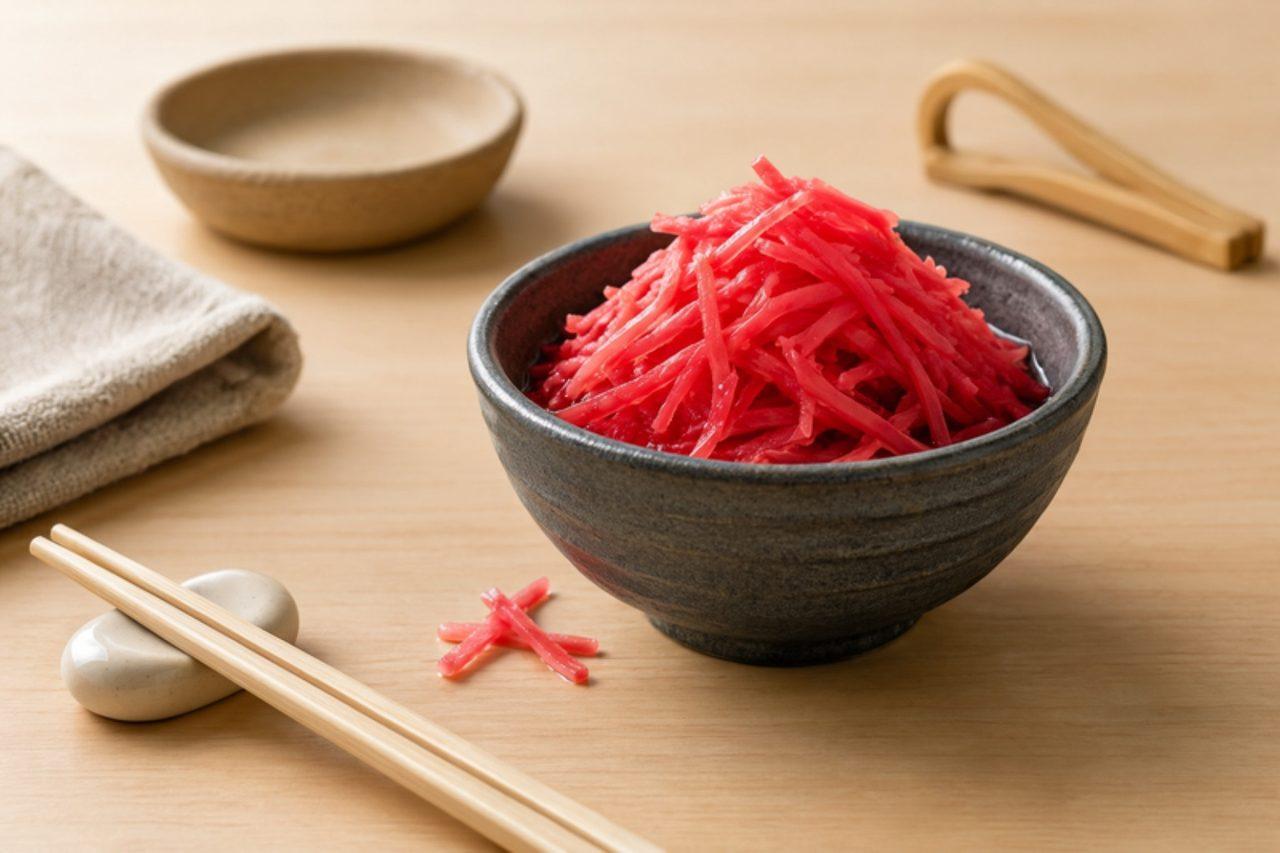
Beni shoga is the bright pink tangle you see on Osaka street food: piled beside yakisoba, scattered on okonomiyaki, folded into takoyaki batter and heaped on a bowl of gyudon at lunchtime. Kansai cooks make it in early summer, when umeboshi plums finish salting and leave behind red umezu, the salty, sour, shiso-coloured plum vinegar that both cures and dyes the ginger. The result is crunchy, sharp and salty, with a clean ginger heat and none of the sweetness of sushi gari. Young summer ginger gives the most tender threads; mature ginger works but is hotter and more fibrous, so cut it thinner. If you cannot find red umezu, use rice vinegar with salt and a slice of raw beetroot for colour (see the note). The common mistake is skipping the salting and drying: wet ginger dilutes the umezu and turns soft and dull. Squeeze it and let it dry so it drinks up the vinegar. It is ready when the threads are evenly rosy right through and taste salty-sour rather than raw. Chef's tip: save the pink vinegar left in the jar; a spoonful in potato salad or rice for onigiri is excellent.

by KrazyBadal 0 views
HakusaizukeSalted napa cabbage pickle

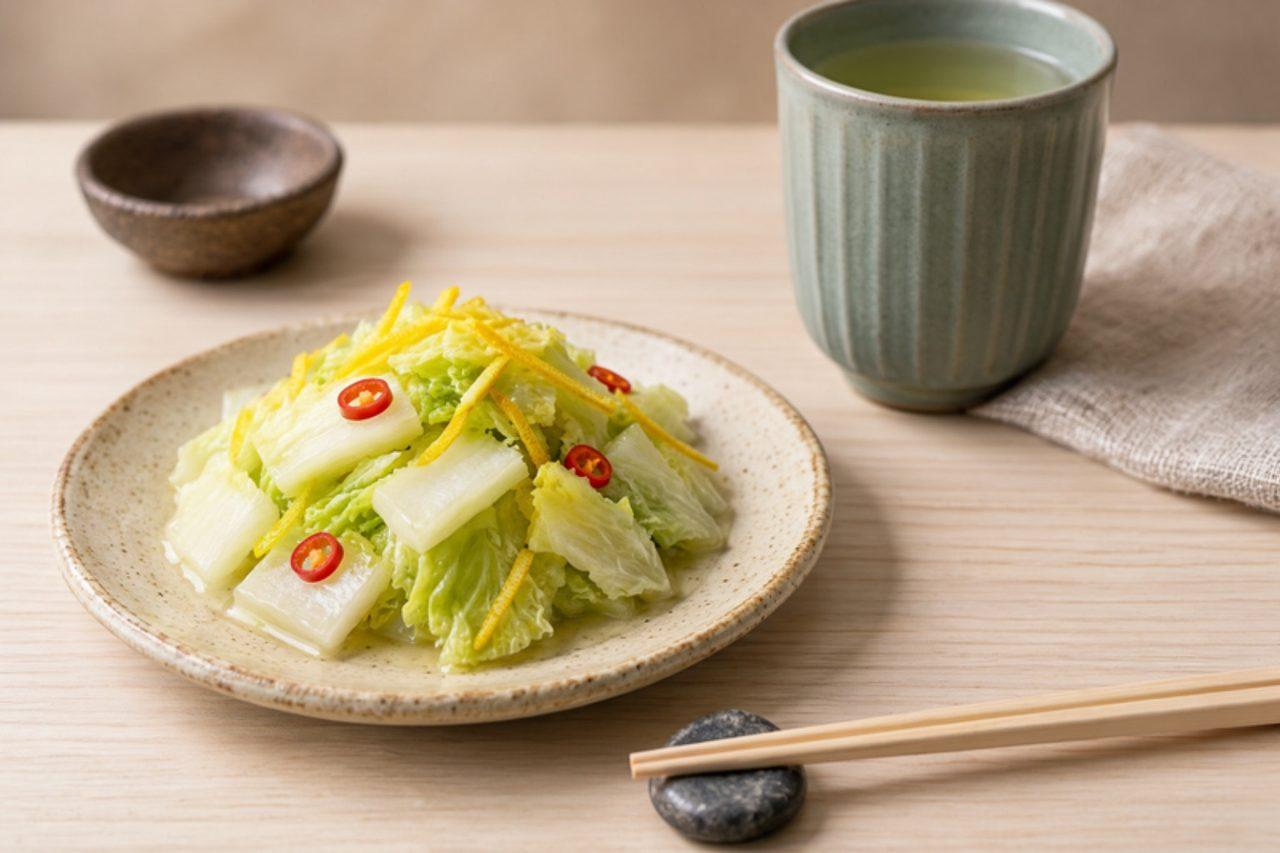
In Japanese homes from Hokkaido to Kyushu, hakusaizuke appears when napa cabbage is cheap and sweet, from November through February. Big heads are quartered, dried for half a day on a sunny veranda, then salted in a wooden tub with kombu, dried chilli and slivers of yuzu peel, and pressed under a stone. A few days later the leaves are crisp, juicy, lightly salty and fragrant with citrus, and after a week they turn pleasantly sour. It is the everyday pickle beside breakfast rice and miso soup, or chopped into a hot-pot. Use about 3% salt by weight; less and it can spoil, more and it is too salty to enjoy. The common mistake is too light a weight at the start: the brine must rise over the cabbage within a day, so begin with twice the cabbage's weight and halve it once the liquid appears. It is ready when the white ribs are translucent and bend, the brine is clear to faintly cloudy, and it smells fresh and briny. If you cannot get yuzu, use strips of lemon peel with a little orange peel. Chef's tip: squeeze a slice firmly before serving and add a few drops of tamari and some toasted sesame seeds.

by KrazyBadal 0 views
BettarazukeSweet koji-cured daikon

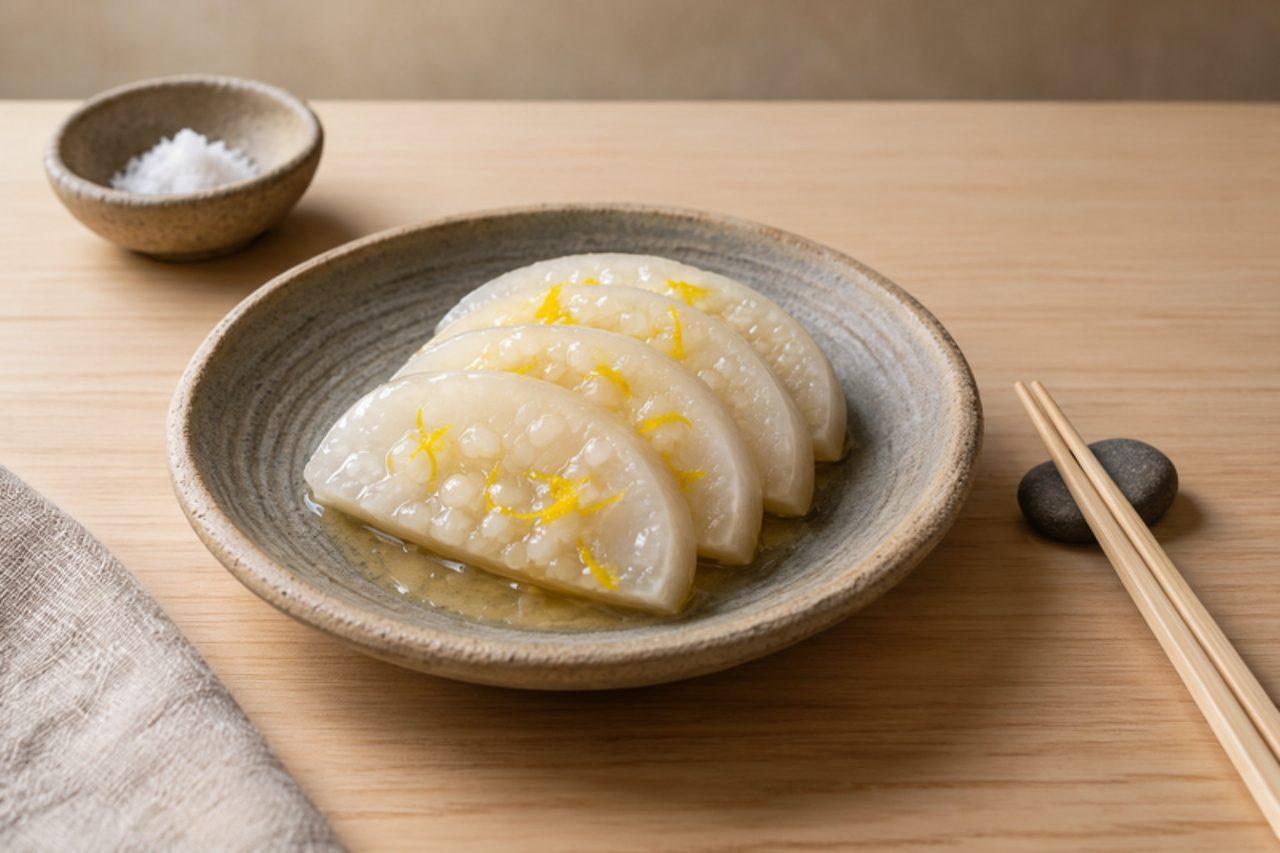
Every 19 and 20 October, the lanes around Takarada Ebisu Shrine in Nihonbashi fill with stalls for the Bettara-ichi, Tokyo's old pickle fair, where vendors hold up whole daikon dripping with rice koji and passers-by try not to get 'bettari', sticky. The pickle has been an Edo favourite since the 1700s: daikon salted, then buried in amazake, the sweet porridge that koji makes from rice. It tastes mild, sweet and fresh, with a clean crunch and a faint fermented, sake-lees perfume, which makes it a favourite with children and a pause between salty dishes. Bettarazuke is low in salt and acid, so it lives in the fridge from start to finish. The common mistake is adding the daikon while the amazake is still warm: it cooks the surface and softens the crunch, so cool it fully. It is ready when the daikon is translucent at the edges, juicy, and the koji coating tastes sweet with a light tang. Chef's tip: make the amazake in a rice cooker on keep-warm with the lid ajar and a cloth over it, so it holds about 60 °C; a thermometer helps the first time.

by KrazyBadal 0 views
NozawanazukePickled turnip greens

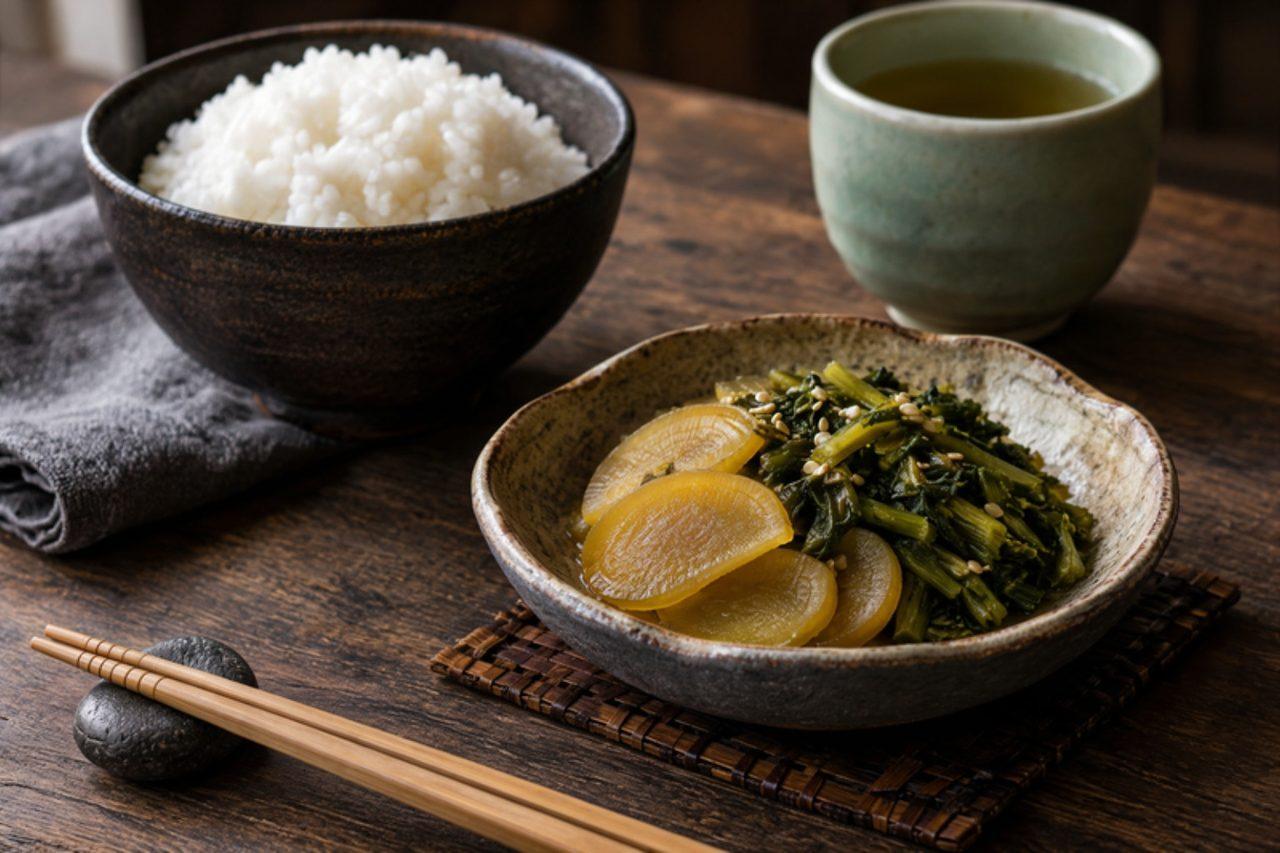
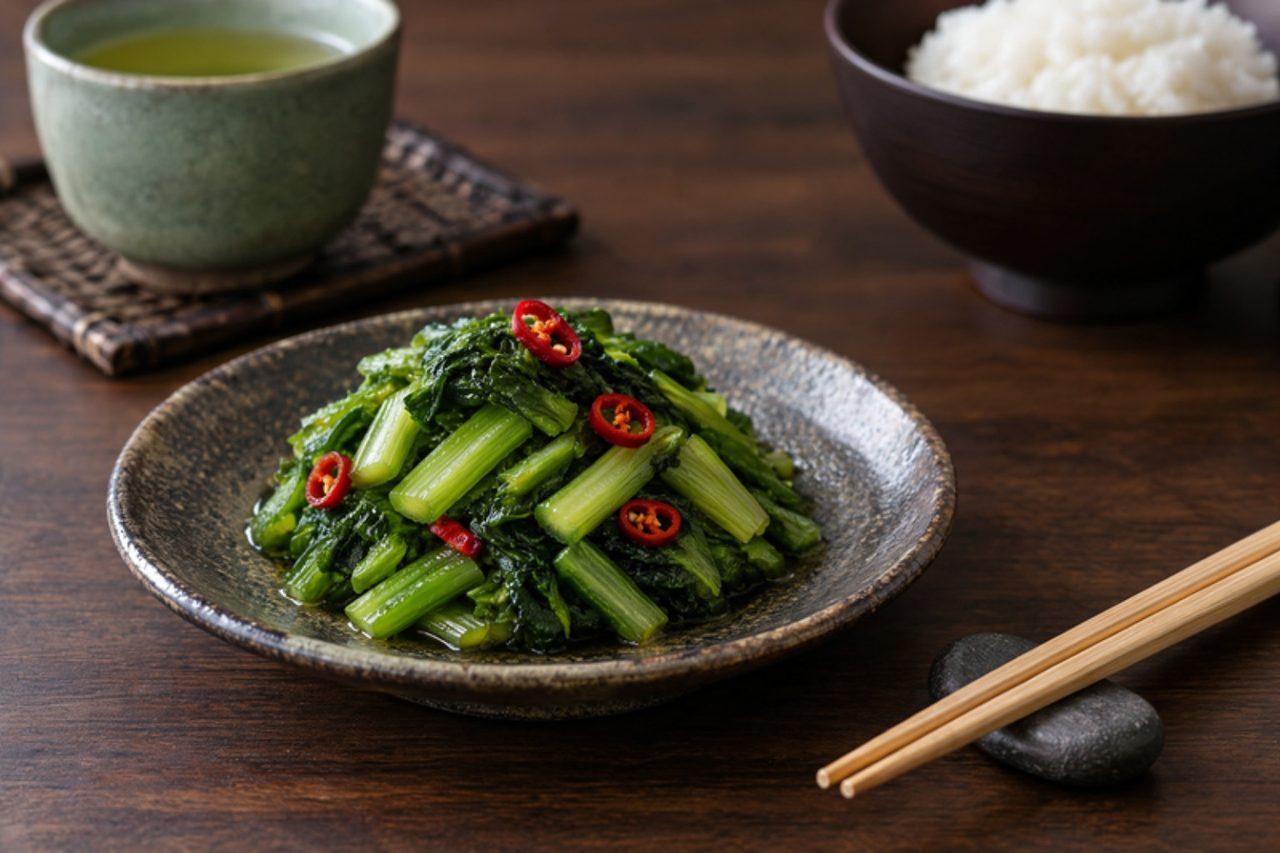
In the snowy hot-spring village of Nozawa Onsen in northern Nagano, early November is 'onsen washing' time: families carry armfuls of nozawana, a turnip relative with stalks taller than a child, to the steaming public spring to wash them, then salt them in big barrels for winter. The pickle is the region's tea-time snack, set out with green tea for neighbours, and the side for every winter meal. In the first weeks it is bright green, crisp and lightly salty (aozuke); by late winter it ferments to a golden-brown, sour 'ame-iro' stage, which locals chop and fry with sesame oil. Outside Japan use turnip greens, young mustard greens or the stems of komatsuna or choy sum. The common mistake is salting straight from cold water: rinsing in hand-hot water (around 40 °C) for a minute softens the stalks so the salt penetrates evenly. It is ready when the stalks are flexible, a vivid deep green and taste salty, juicy and fresh. Chef's tip: cut it into 3 cm lengths right before serving and toss with a drop of sesame oil and toasted sesame seeds.

by KrazyBadal 0 views

SunkiFermented turnip greens

Sunki belongs to the high Kiso valley in Nagano, where salt was once too precious to spend on pickles. After the first frosts in November, villagers blanch the leaves and stalks of the red Otaki turnip, layer them in a wooden tub with a handful of last year's dried or frozen sunki as starter, and keep the tub wrapped and warm overnight so lactic bacteria take over. The result is completely unsalted, fiercely sour and earthy, with soft leaves in a rosy brine; it goes on hot soba as sunki soba, into miso soup and over rice. Because there is no salt to protect it, sourness is the only safety: it must become clearly sour within 2 days, and it must stay cold after that. If you have no sunki starter, use 100 ml brine from a live, unpasteurised sauerkraut (a little salt, but a reliable start). The common mistake is blanching with boiling water, which kills everything; the water should be about 70 °C. Normal signs are a pink brine, fine bubbles and a clean sour, yoghurt-like smell; bad signs are fuzzy mould, slime or a putrid smell, which mean discard. Chef's tip: freeze the finished sunki in small portions; it keeps its sourness and you keep a starter for next year.

by KrazyBadal 0 views

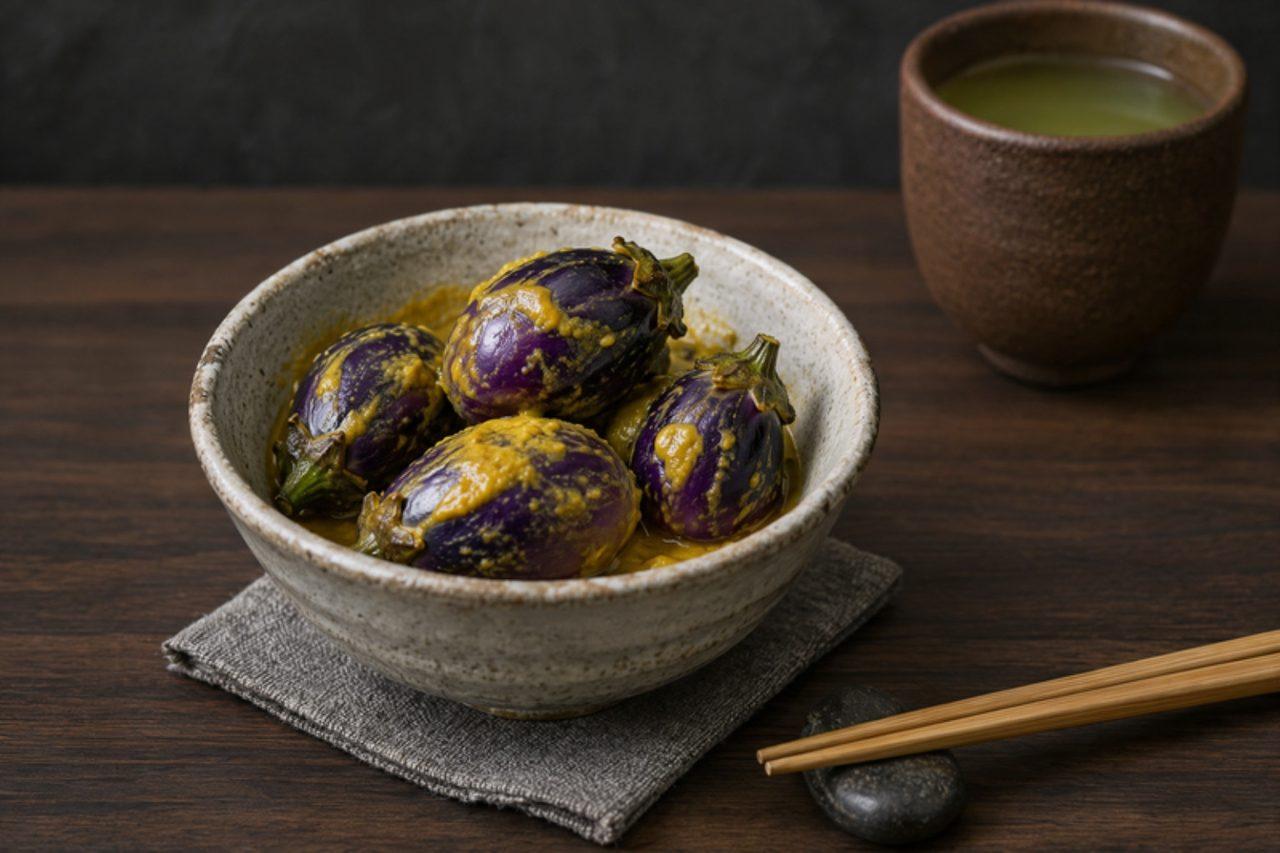
Karashi nasuMustard aubergine pickle

Every late August, Yamagata kitchens fill with the sharp smell of hot mustard as families pickle the tiny round eggplants that grow there, minden-nasu, no bigger than a walnut. Salted, pressed and then coated in a paste of Japanese mustard, sugar and soy sauce, they are eaten whole as a snack with tea, packed into bento boxes and served beside rice through autumn. The first bite is sweet and salty, then the mustard rushes up the nose, and the skins stay a glossy dark purple around a tender, juicy middle. Use the smallest eggplants you can find: Japanese or Thai baby eggplants or small Indian aubergines, around 30–40 g each. The common mistake is mixing mustard powder with hot liquid, which kills its heat; always mix it with cold water and let it rest. It is ready when the eggplants feel soft right through when squeezed, look glossy, and taste hot and sweet rather than raw. Chef's tip: a teaspoon of salt rubbed firmly over the skins before pressing keeps the colour deep purple without the alum that some traditional cooks add.

by KrazyBadal 0 views

Myoga no amazuzukeSweet pickled myoga ginger

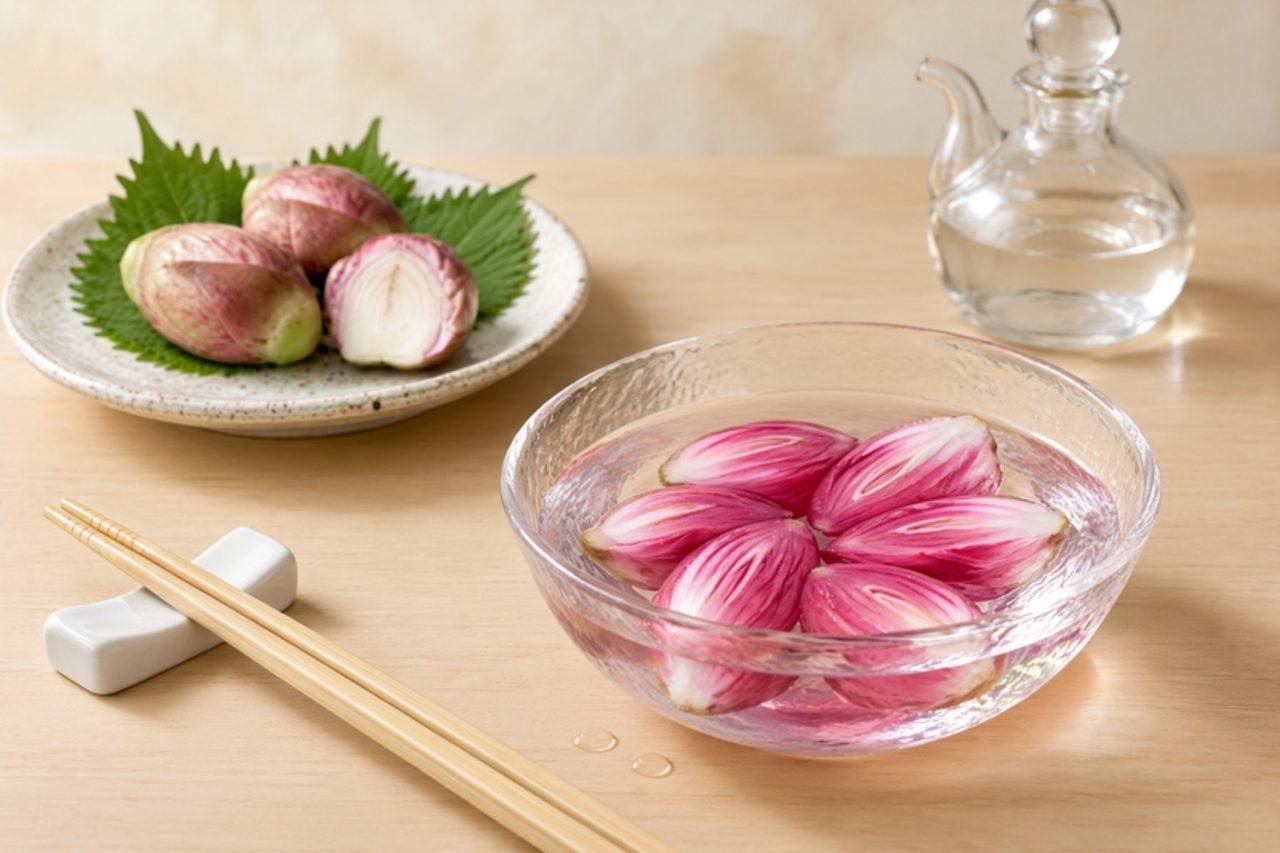
Myoga is the flower bud of a Japanese ginger plant, harvested from the shady corners of gardens across Japan from July to September, and its pickled form is one of summer's small pleasures. Halved buds are blanched and dropped into warm sweet vinegar, and within half an hour the pale purple-white layers blush a vivid pink. They taste crisp and fresh, gently sweet-sour, with the floral, slightly resinous bite that makes myoga unlike ordinary ginger. Serve them beside grilled fish, with cold somen noodles on a hot evening, or tucked into a bento. Look for myoga in Japanese grocers, often frozen; there is no real substitute, but young ginger or small shallots pickled the same way make a pleasing alternative. The common mistake is over-blanching: past 30 seconds the layers turn soft and floppy and lose their crunch. Pour the vinegar over while the buds are still hot, which sets the colour. They are ready when they are evenly pink and taste sour-sweet right through. Chef's tip: slice a few pickled buds into thin strips and fold them into sushi rice for a quick summer chirashi.

by KrazyBadal 0 views

Kyuri no shoyuzukeSoy-pickled cucumber

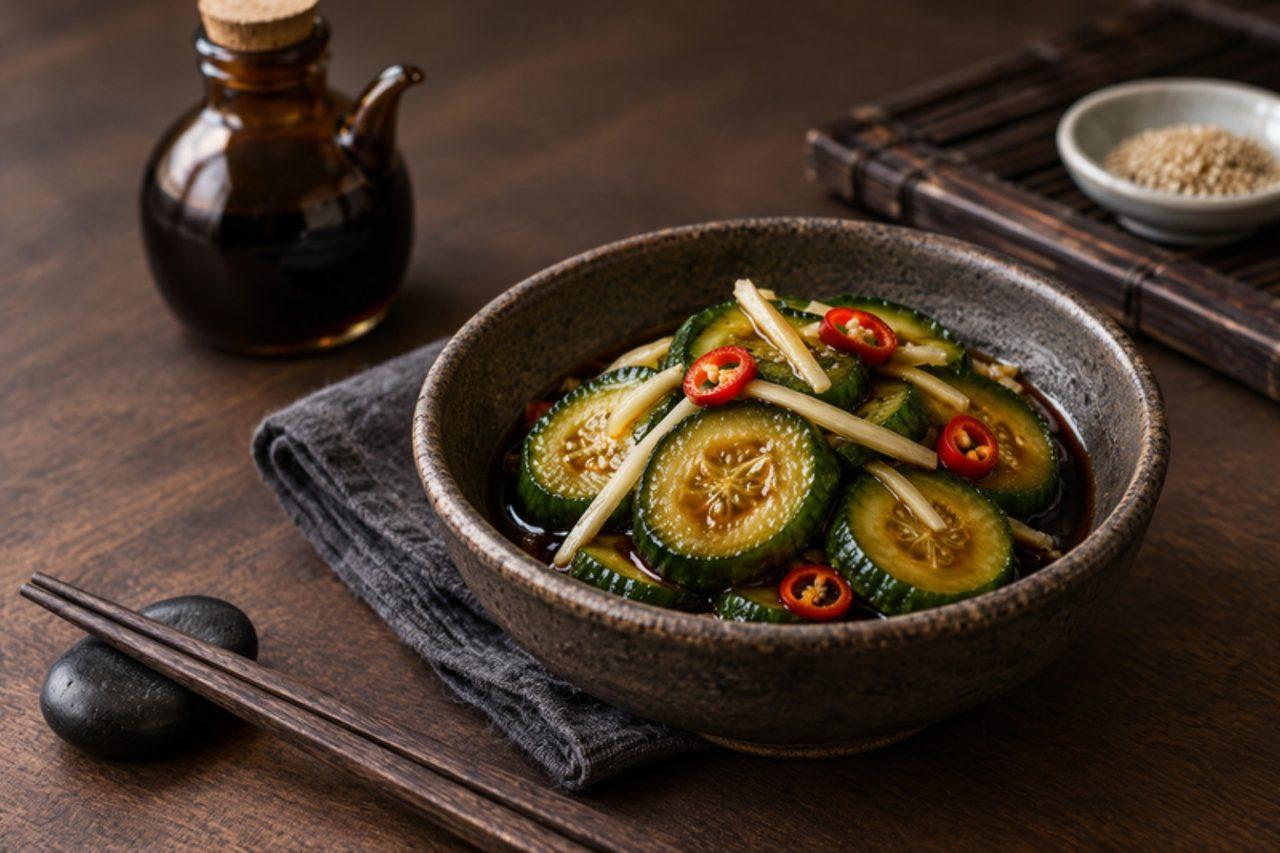
When summer gardens across Japan produce more cucumbers than anyone can eat, grandmothers make this: thick cucumber rounds scalded in a pot of soy sauce, vinegar, sugar, ginger and chilli, then left to soak. It appears in July and August beside white rice and miso soup, rolled into onigiri, and on the table at rural inns as the small dish everyone reaches for. It is deeply savoury, a little sweet, with a ginger and chilli warmth and a surprising snap, because the cucumbers are drained and scalded again instead of simmered. The common mistake is boiling the cucumbers in the liquid: they go soft and olive-coloured. Instead, pour the boiling liquid over, drain it off, reheat it, and pour it back, twice; each round draws out water and keeps the crunch. They are ready when the rounds are glossy dark brown, slightly wrinkled at the edges and crunchy right through. Use firm, small-seeded cucumbers such as Japanese or Lebanese; large salad cucumbers with big seeds go soggy. Chef's tip: add a strip of kombu in the last round and a handful of toasted sesame seeds when you serve, for deeper flavour.

by KrazyBadal 0 views

HariharizukeDried daikon pickle

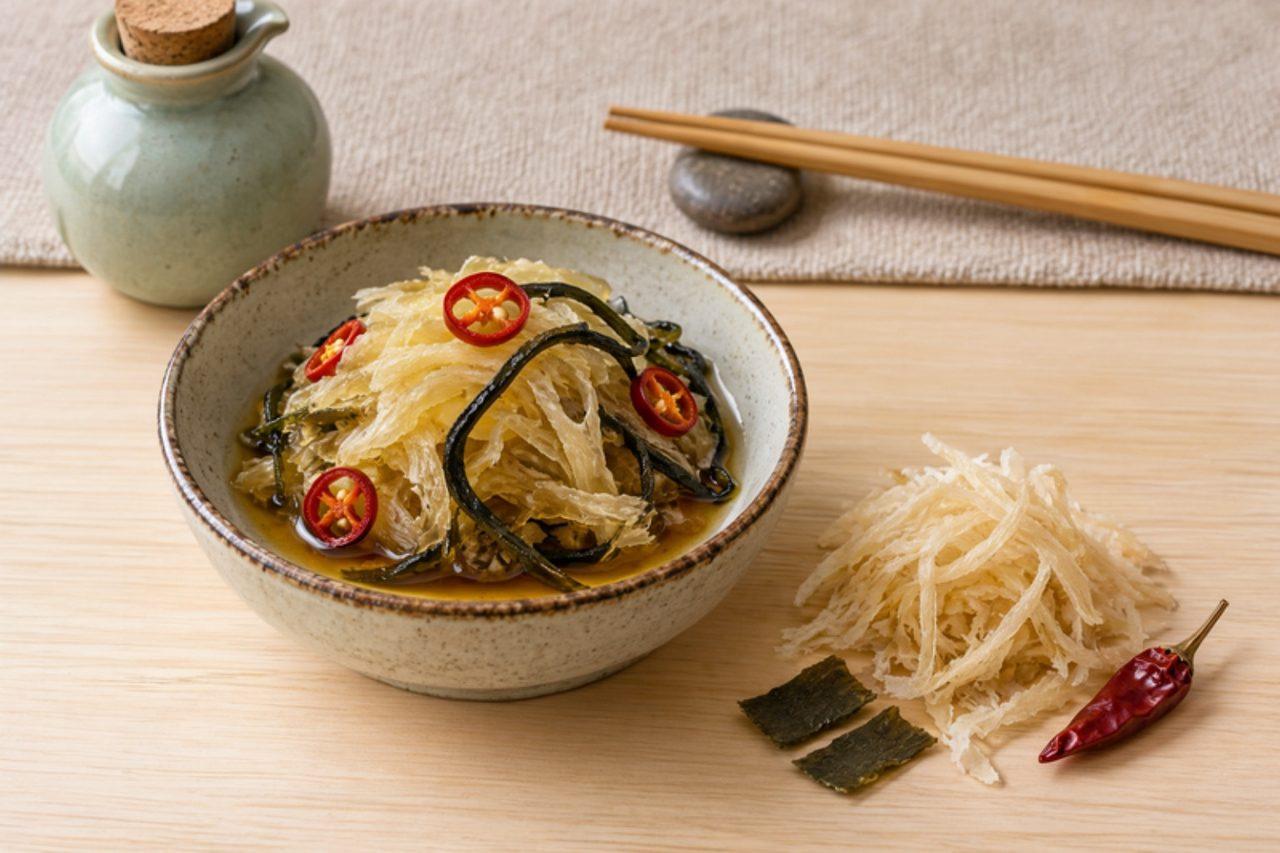
Hariharizuke takes its name from the sound it makes, 'hari-hari', as you chew. It starts with kiriboshi daikon, the radish strips dried in the cold winter sun across Miyazaki and much of rural Japan, which are rehydrated and steeped in a sharp, slightly sweet soy-vinegar with ribbons of kombu and a little chilli. It is a year-round side dish, but home cooks lean on it in late winter and early spring when fresh vegetables are fewer, packing it into bento boxes or setting it beside grilled fish and rice. The taste is sweet-sour and savoury, with a concentrated, almost caramel daikon flavour, and the texture is springy and crunchy. The common mistake is soaking the dried daikon too long: after 10–15 minutes it is pliable, and beyond that it turns soft and loses its crunch. It is ready when the strips are glossy, tan and taste seasoned right through, about an hour after mixing, and even better the next day. Look for dried daikon in Japanese or Korean shops (Korean mumallaengi is the same thing). Chef's tip: add the carrot in very fine matchsticks and a few drops of sesame oil just before serving for colour and aroma.

by KrazyBadal 0 views

Yuzu koshoYuzu and chilli paste

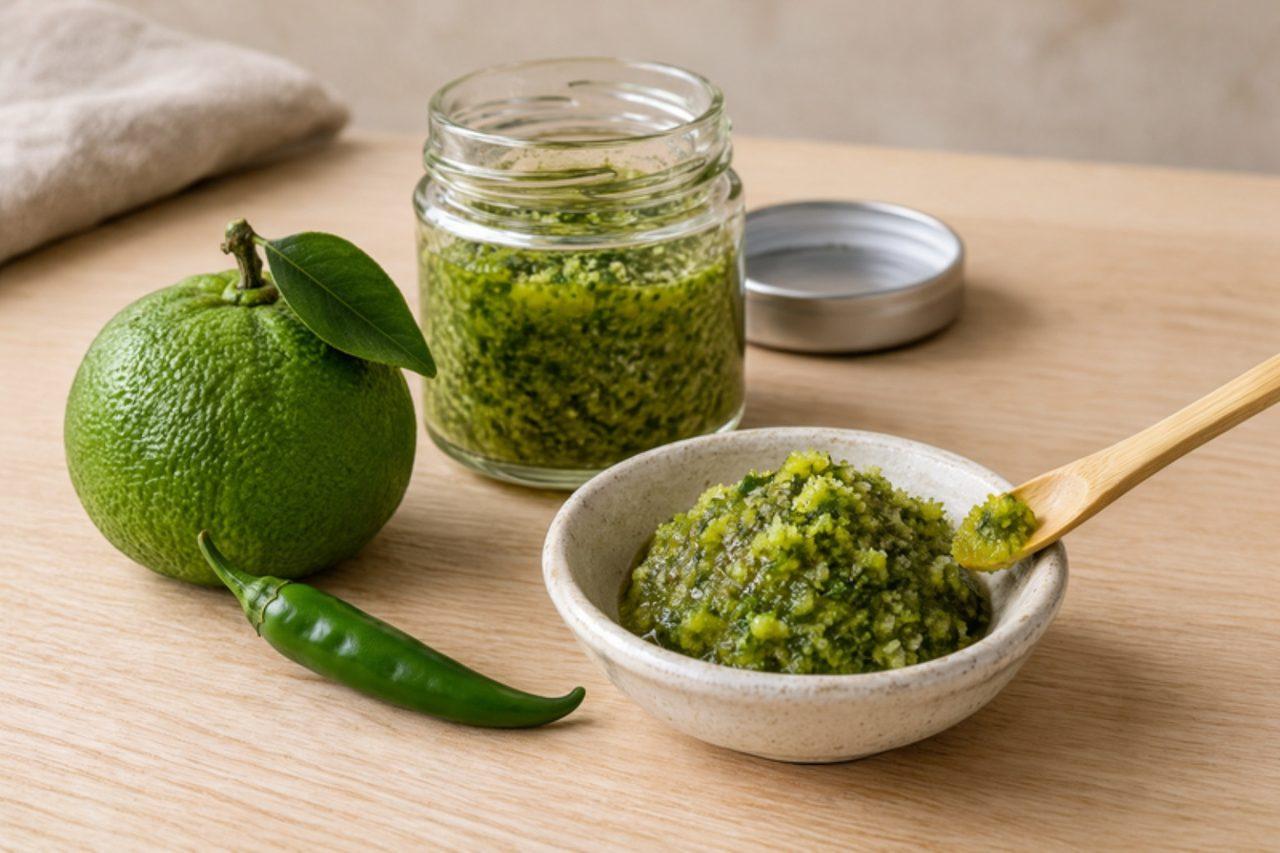
In the mountain villages of Kyushu, especially Oita and Fukuoka, families make yuzu kosho in late summer, when yuzu are still green and the chillies are at their hottest (in Kyushu dialect 'kosho' means chilli, not pepper). Zest and chillies are ground with salt in a suribachi until they turn into a bright, coarse paste, then left to mature for a week or more. A tiny dab lifts hot-pot, grilled chicken or fish, sashimi, miso soup and even a bowl of udon; it is intensely citrusy, salty and hot all at once. It is a fresh chilli paste, so it lives in the fridge or the freezer, never on the shelf, and the salt (about 15% of the paste) is what keeps it. The common mistake is grating into the white pith, which makes it bitter; take only the thin green layer. It is ready when the paste is fine, moist and evenly coloured and the raw chilli edge has softened into a rounded heat, after about a week. No yuzu? Use the zest of green limes with a little lemon, or sudachi or kabosu. Wear gloves when you handle the chillies. Chef's tip: ripe yellow yuzu with red chillies makes the orange version for winter; same method.

by KrazyBadal 0 views

Shio kojiSalted rice koji

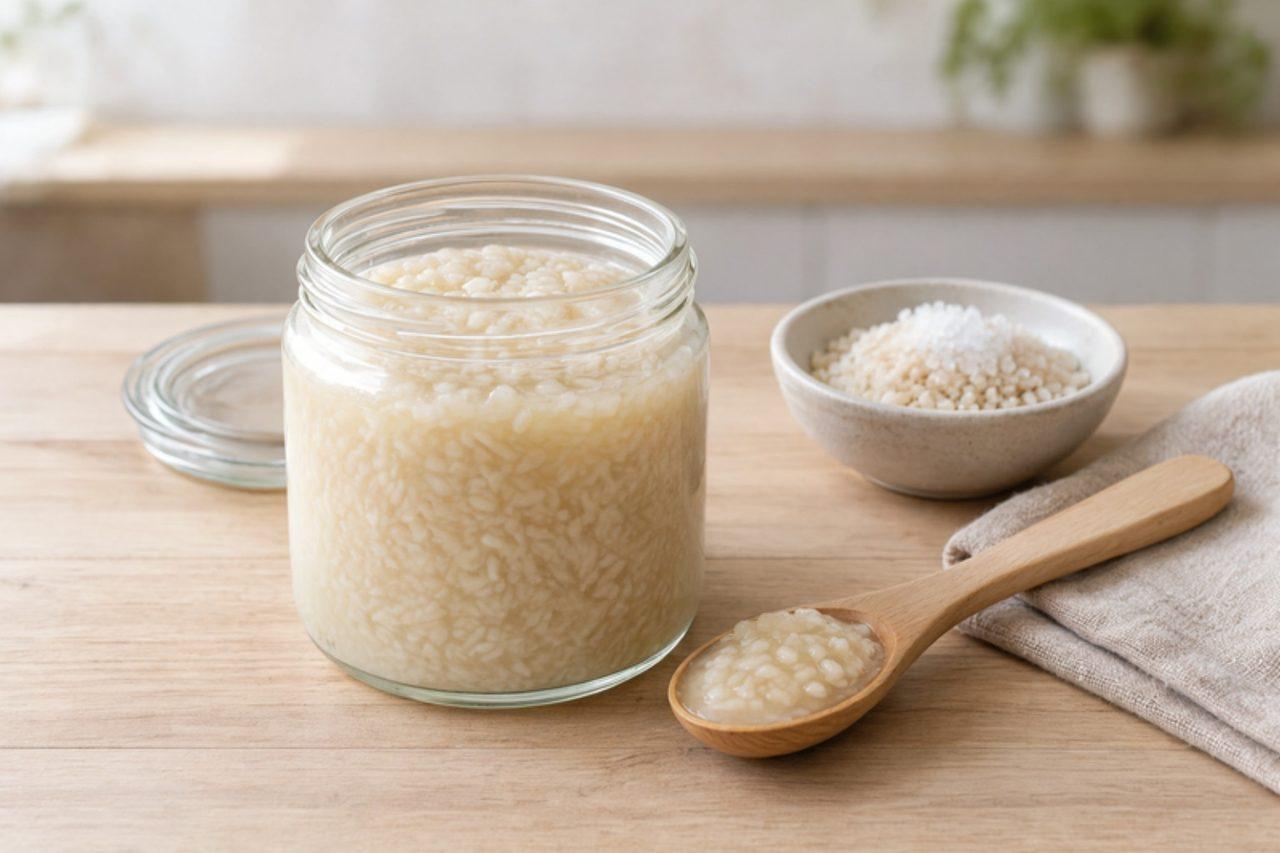
Shio koji is an old Tohoku pickling medium that swept Japanese home kitchens in the 2010s and never left. Rice koji, the grains cultured with the mould that also makes miso and sake, is rubbed with salt, covered with water and left on the counter for a week. Its enzymes break down starch and protein, so the result is a pale, porridge-like seasoning that tastes salty, mildly sweet and deeply savoury, with a fruity, sake-like scent. Use it all year in place of salt: rub it over chicken, pork or fish (about 10% of the weight) the night before grilling, toss it with vegetables for a quick overnight pickle, or stir it into dressings and soups. The common mistake is too little water: the grains must stay just covered, or the top dries and can grow mould. Stir once a day with a clean spoon and top up with a little water if needed. It is ready when the grains crush easily between your fingers, the mixture is thick and creamy, and it smells sweet rather than raw. A faint alcohol smell is normal. Chef's tip: blend the finished shio koji smooth with a stick blender; it spreads more evenly on meat and won't burn in spots.

by KrazyBadal 0 views

Temae misoHomemade miso

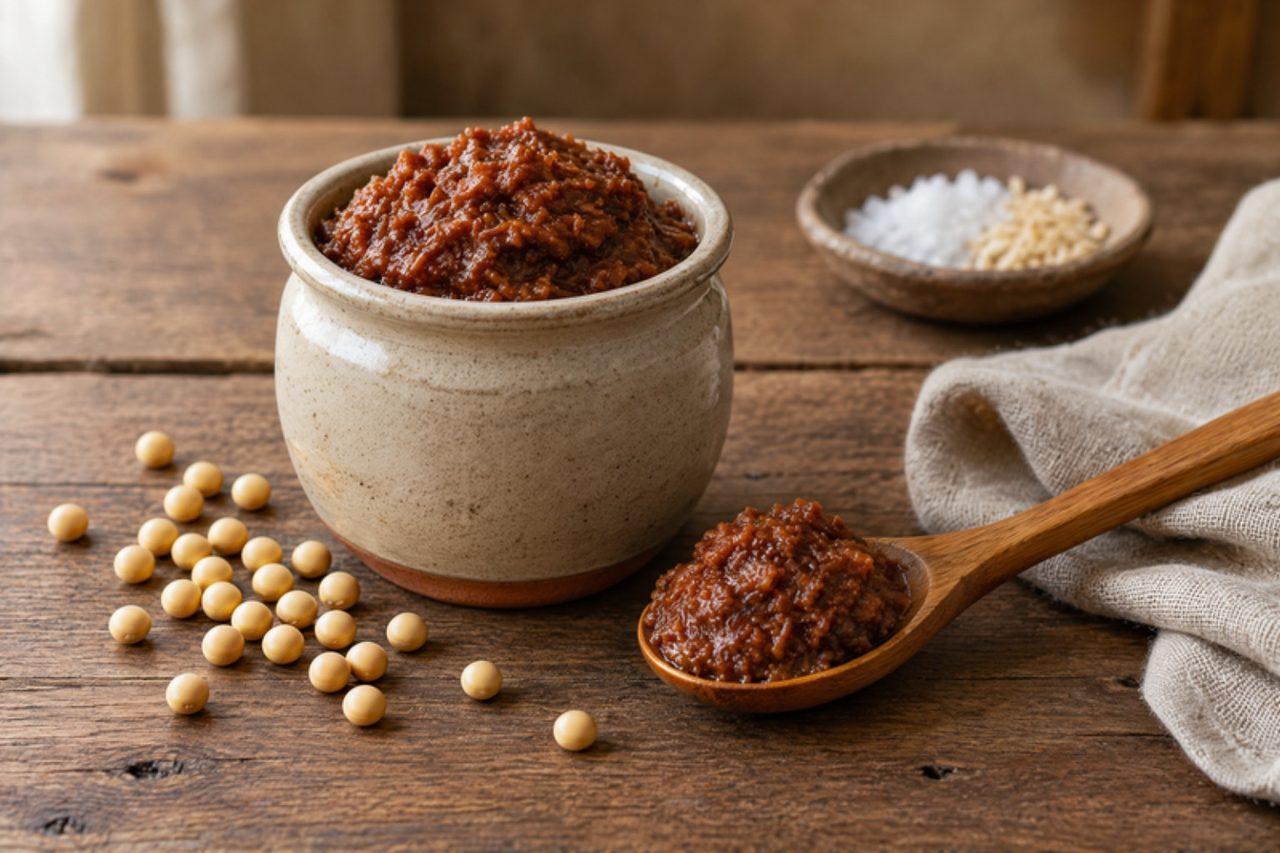
Temae miso means 'my own miso', and the phrase also means bragging about your own work, because every family thinks theirs is the best. Across rural Japan the cold months of January and February are miso-making season: the low temperatures let the mash settle in slowly before summer's warmth speeds up the fermentation. Dried soybeans are soaked, simmered until soft, mashed, mixed with rice koji and salt, then packed tightly into a crock under a salt cap and a weight. By autumn it has turned from pale beige to reddish brown, sweet-salty and rich, with a rounder, fruitier flavour than shop miso. The salt, about 12% of the finished weight, is what keeps it safe, so measure it rather than guessing. The common mistake is leaving air pockets when packing, which is where mould grows; throw the mash into the container in balls and press each one down hard. It is ready when it smells sweet and savoury like soy sauce, tastes well-balanced rather than raw and floury, and dark liquid (tamari) has pooled on top. Chef's tip: make it with friends; a kilo of beans is a lot of mashing, and the batch tastes better for the company.

by KrazyBadal 0 views

Kinzanji misoChunky barley miso

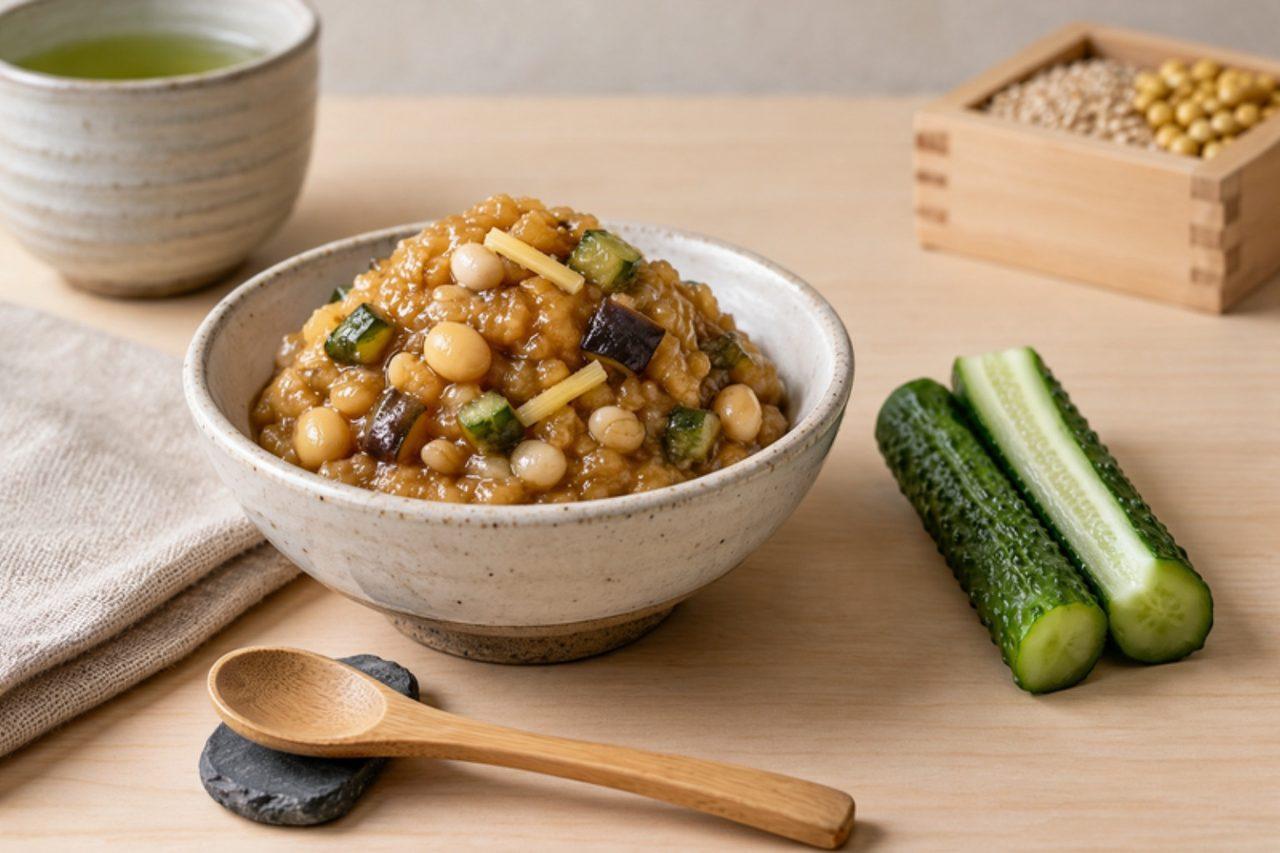
Kinzanji miso is not for soup. It is a chunky, sweet-savoury 'name-miso', a miso you eat straight, spooned onto hot rice, tucked into a cucumber stick or set beside rice porridge at breakfast. Legend says a monk brought the method from Jingshan Temple in China to Yuasa in Wakayama, where the run-off liquid became Japan's first soy sauce. Traditionally it is made in summer, when aubergines and uri melons are plentiful, and eaten through autumn and winter. You can see every ingredient: soft barley grains, nutty roasted soybean pieces, little cubes of aubergine and cucumber, threads of ginger, all bound in a glossy brown paste. This home version uses ready-made barley koji. The common mistake is adding the vegetables wet; salt them, then squeeze hard, or the extra water thins the salt and invites spoilage. It is ready when the barley grains are soft, the mix smells sweet and soy-like, and it tastes rich and rounded, after about four weeks; then it is sweetened and kept cold. Japanese melon (shirouri) is traditional; firm cucumber is the usual substitute. Chef's tip: a spoonful on a cold block of tofu with a little chopped spring onion is the best snack you can make in 30 seconds.

by KrazyBadal 0 views

Izumo warigo sobaBuckwheat noodles in stacked bowls

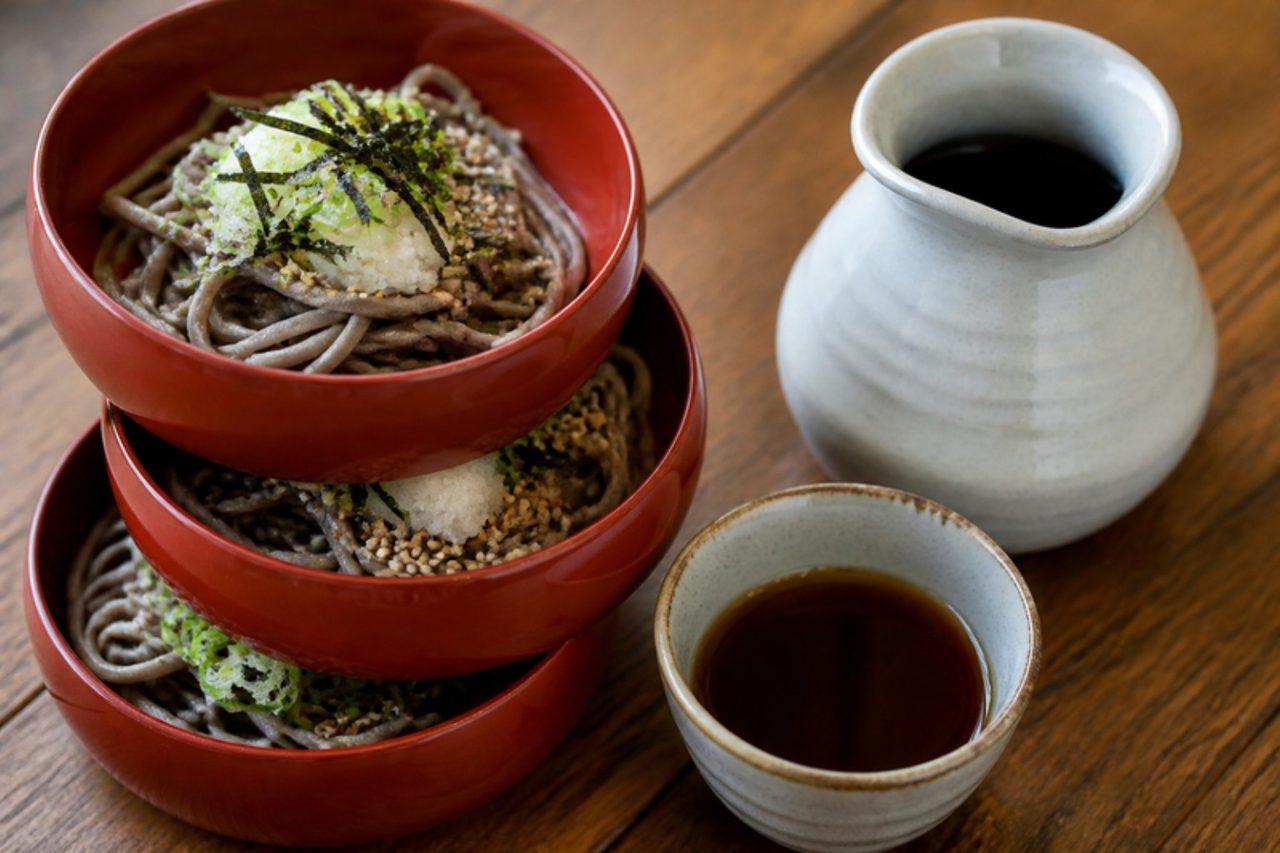
Izumo, in Shimane, is home to one of Japan's oldest shrines, and its soba is among the country's three most famous. The buckwheat is ground whole, husk and all, so the noodles are grey-brown, rough and strongly nutty. They come in a stack of three shallow round lacquer boxes called warigo, a custom from the picnic boxes Izumo townspeople carried to view flowers in the Edo period. You don't dip the noodles: you pour sauce and toppings straight onto the top bowl, eat it, then tip what's left onto the next. Classic toppings are grated daikon, spring onion and nori; ours leave out the usual bonito flakes. Chef's tip: look for 'inaka' (country-style) or 100% buckwheat soba. Paler noodles taste too mild for this dish.

by KrazyBadal 0 views

Umibudo saladSea grapes salad

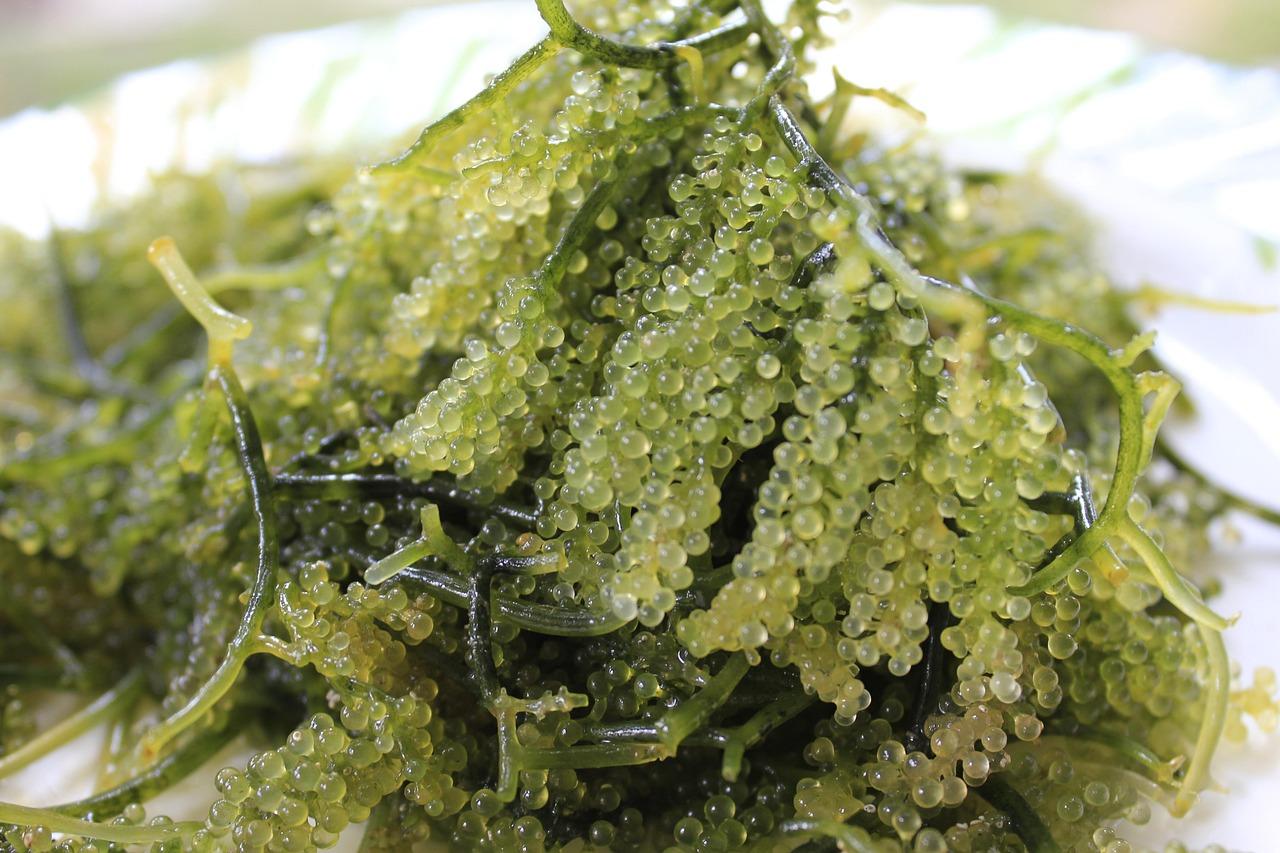
Umibudo, 'sea grapes', is a seaweed farmed in the warm, clear waters around Okinawa and Miyako island. Its tiny green beads burst in the mouth with a salty, oceanic pop, which is why Okinawans also call it green caviar. It's served as a starter in island izakaya, often next to a cold Orion beer, either plain with a dish of citrus soy or piled on a simple salad. Look for it vacuum-packed in salt at Japanese grocers; it keeps for weeks unopened. Chef's tip: dress the salad, not the sea grapes. Pour the dressing on the greens and dip the sea grapes as you eat, because vinegar and soy make the beads shrivel within minutes.

by KrazyBadal 0 views

Fu champuruWheat gluten and cabbage stir-fry

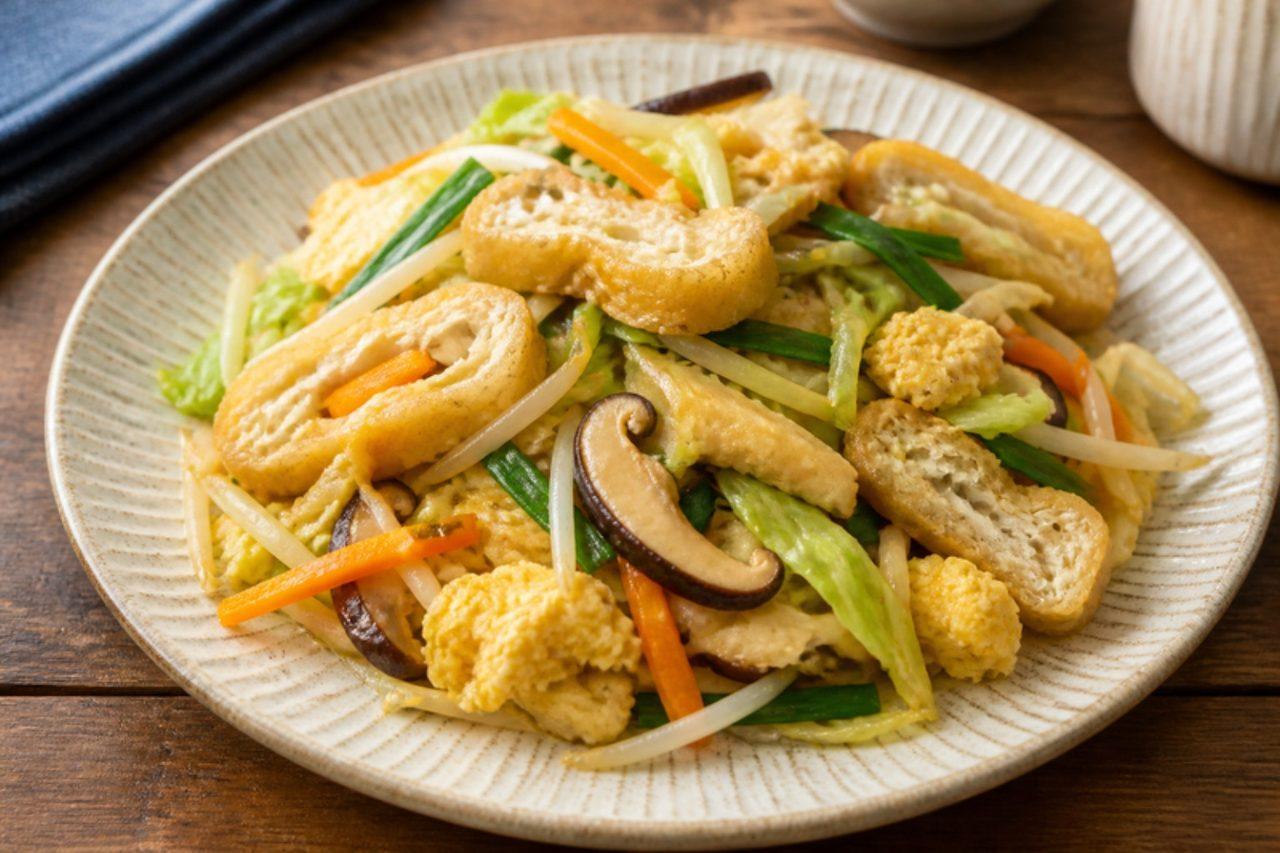
Champuru means 'mixed up' in Okinawan and is the islands' everyday stir-fry. Goya champuru with bitter melon is the famous one; fu champuru, made with chewy wheat gluten, is the gentle, child-friendly version many Okinawan families cook several times a week. The fu, large dried rings called kurumabu, is soaked, squeezed and dipped in beaten egg, so as it fries it turns soft, fluffy and golden, a little like French toast. Home cooks often add luncheon meat; ours is vegetarian, with shiitake for savouriness. Serve with rice and miso soup. Chef's tip: squeeze the soaked fu hard before adding the egg. Dry fu drinks up all the egg; wet fu turns soggy.

by KrazyBadal 0 views

Sata andagiOkinawan doughnuts

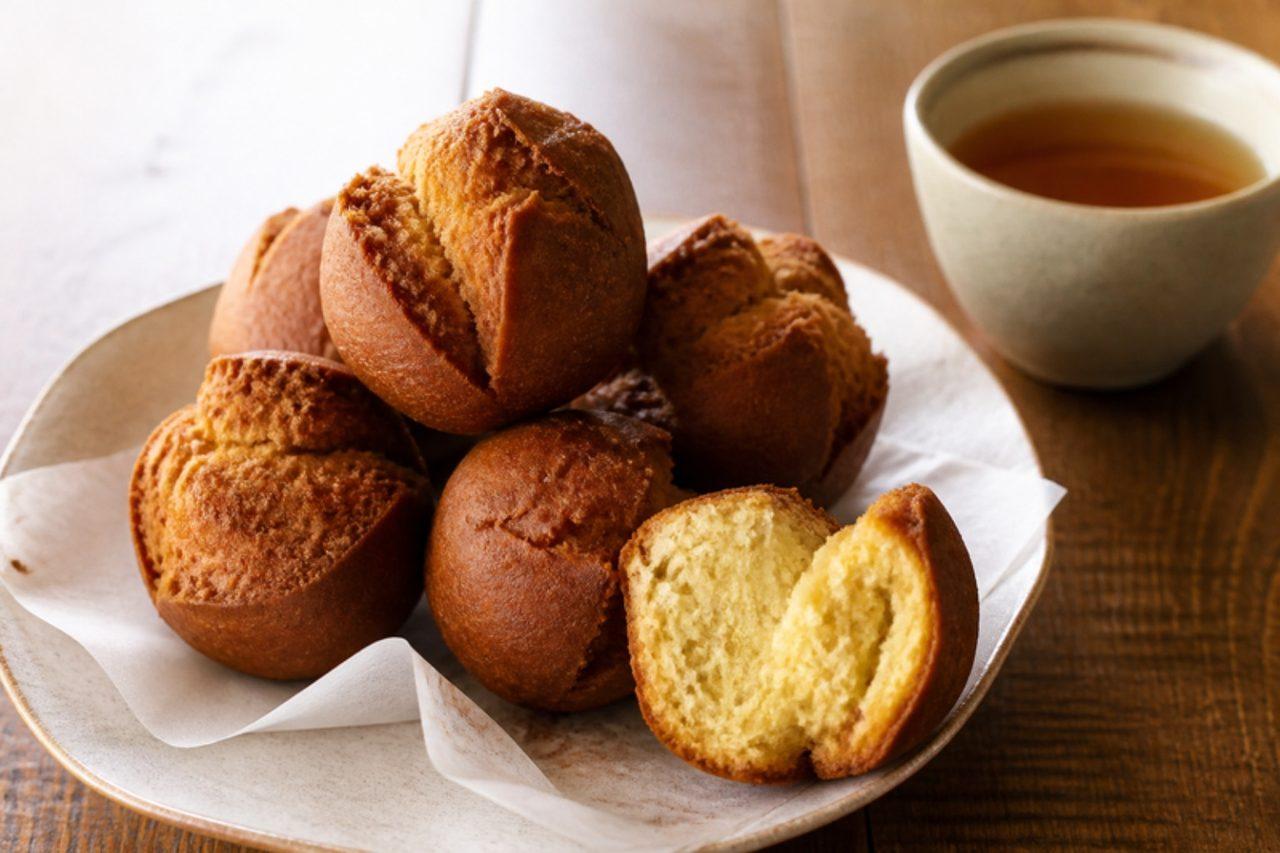
In the Okinawan language, sata andagi simply means 'sugar deep-fried'. These round doughnuts came from Chinese sweets brought to the old Ryukyu kingdom and have been a family treat on the islands for centuries, made for celebrations and sold warm in paper bags at Naha's Makishi market. They are dense and cakey inside with a thick, crunchy crust, and as they fry they split open into a shape Okinawans call a smile, a sign of good luck. Okinawa's dark kokuto sugar gives them a caramel flavour; brown sugar works too. Chef's tip: fry in oil that is only warm, about 150°C. Slow frying lets the balls cook through and crack open, while hot oil seals them shut and leaves the middle raw.

by KrazyBadal 0 views

Okinawan taco rice (vegetarian)

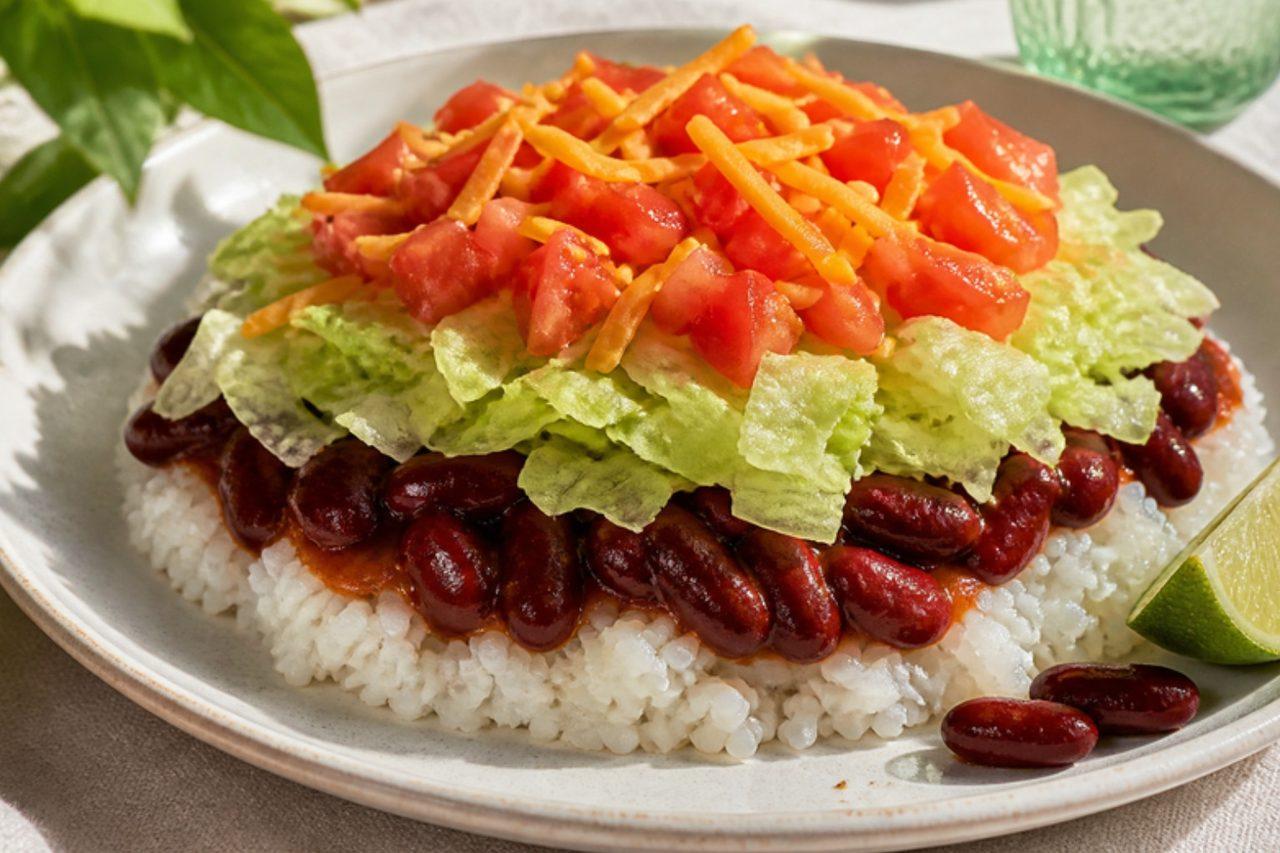
Taco rice was invented in 1984 in the town of Kin, Okinawa, next to a large US Marine base, by a café owner who put taco fillings on rice to make a cheap, filling plate for young soldiers. It became one of Okinawa's best-loved comfort foods and now turns up in school lunches, convenience stores and beach cafés across the islands. The usual filling is spiced minced beef; Okinawan cafés also offer bean versions, and ours uses kidney beans and walnuts for the same crumbly bite. Serve it with hot sauce and eat it from one bowl, mixing as you go. Chef's tip: cook the filling until it's almost dry. A juicy filling soaks the rice and the cheese won't melt into it properly.

by KrazyBadal 0 views

Imo kenpiCandied sweet potato sticks

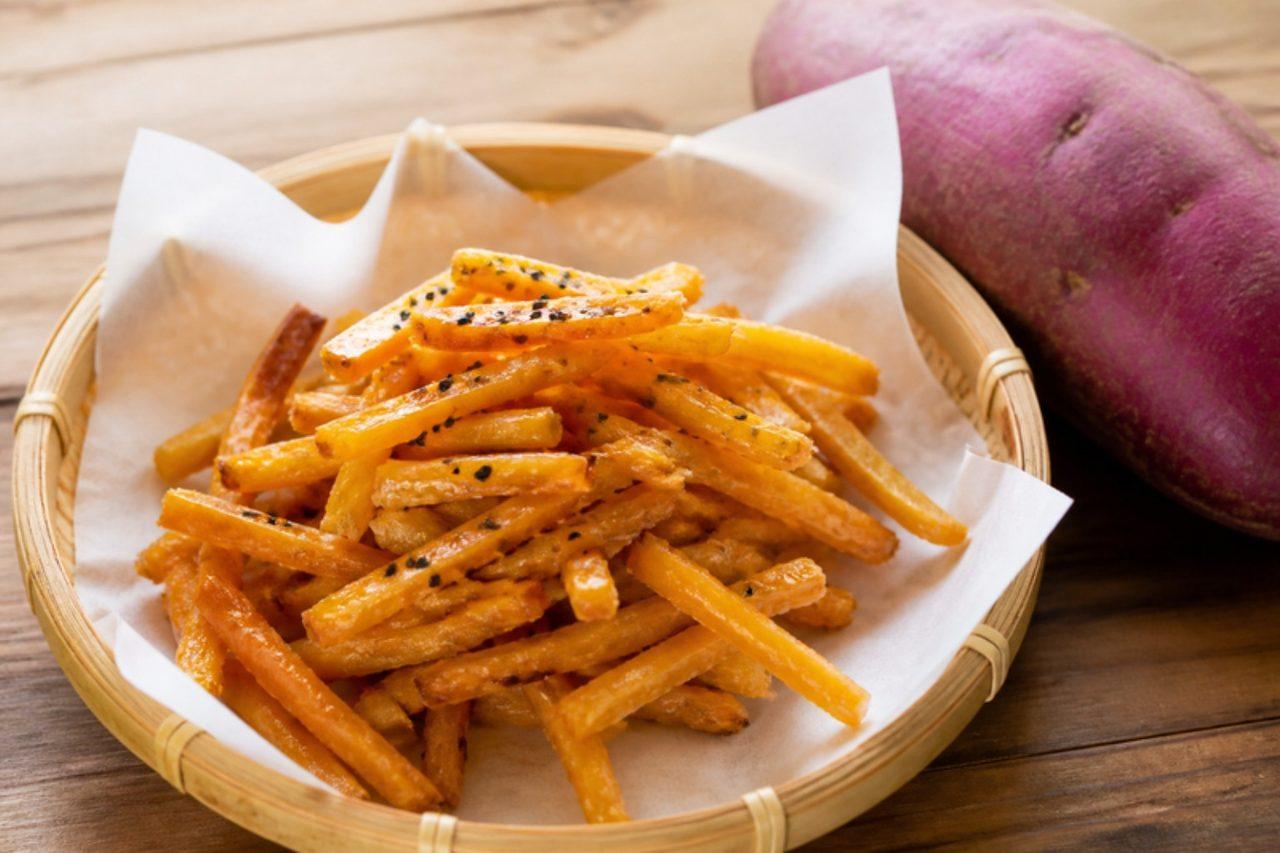
Kagoshima, at Kyushu's southern tip, is Japan's sweet potato heartland. The crop is so closely tied to the region that the Japanese word for sweet potato, satsuma-imo, means 'Satsuma potato', after the old name of Kagoshima. Imo kenpi are its simplest snack: thin batons of sweet potato fried until crisp, then tossed in a syrup that sets into a glassy shell. Kids grab them from bags at the corner shop, and grandparents make them at home with the autumn harvest. They are crunchy, sweet and a little salty. Chef's tip: fry the potato twice, slowly first, then hot. That drives out the water and gives a snap that lasts for days.

by KrazyBadal 0 views

Nagasaki castellaHoney sponge cake

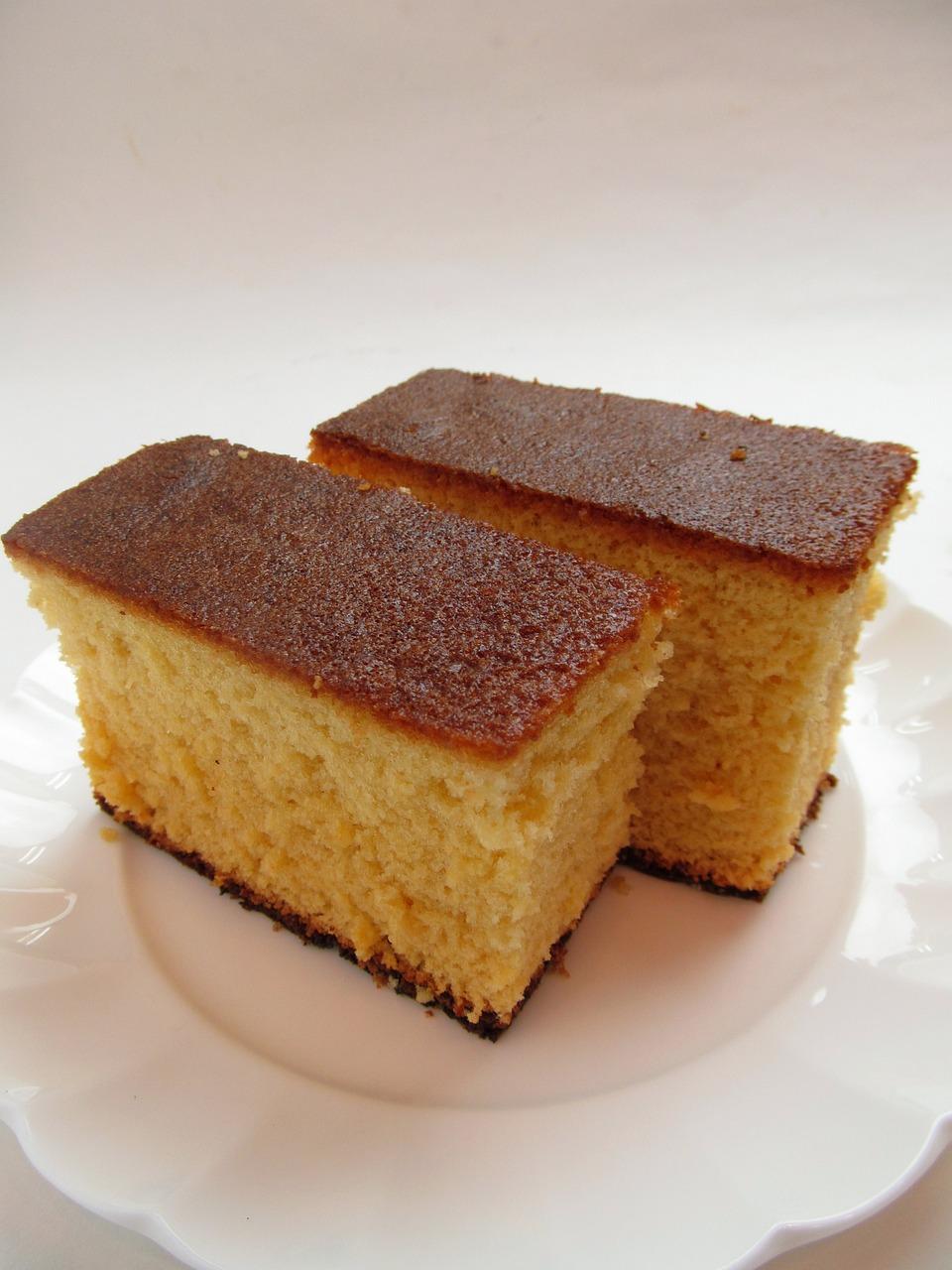
Castella arrived in Nagasaki with Portuguese traders in the 16th century, when the port was Japan's only window to Europe, and the name probably comes from 'pão de Castela', bread from Castile. Over 400 years Nagasaki's bakers turned it into something their own: a tall, fine-crumbed sponge made only of eggs, sugar, flour and honey, with a dark, sticky top and a layer of crunchy zarame sugar crystals at the bottom. It's still sold in long wooden boxes at old shops near the harbour and given as a formal gift. Cut it into neat slices and serve with green tea. Chef's tip: wrap the cake in cling film while still warm and rest it overnight. Its moist, springy texture develops as it rests.

by KrazyBadal 0 views

Ehime mikan jellyMandarin jelly

Ehime, on the sunny north coast of Shikoku, is Japan's mandarin country. Terraced orchards climb its hillsides above the Seto Inland Sea, and the local mikan is so central to life there that some towns joke their taps run with juice. Mikan jelly is the prefecture's everyday treat, sold in cups at service stations and made at home when the fruit glut comes in winter. Ours is set with kanten (agar) instead of gelatine, which also means it holds firm at room temperature and doesn't melt on a hot day. Serve chilled after dinner. Chef's tip: boil the agar properly for 2 minutes. Agar only sets once fully dissolved, and undercooked agar leaves a grainy, weak jelly.

by KrazyBadal 0 views

Homemade fresh yubaFresh tofu skin

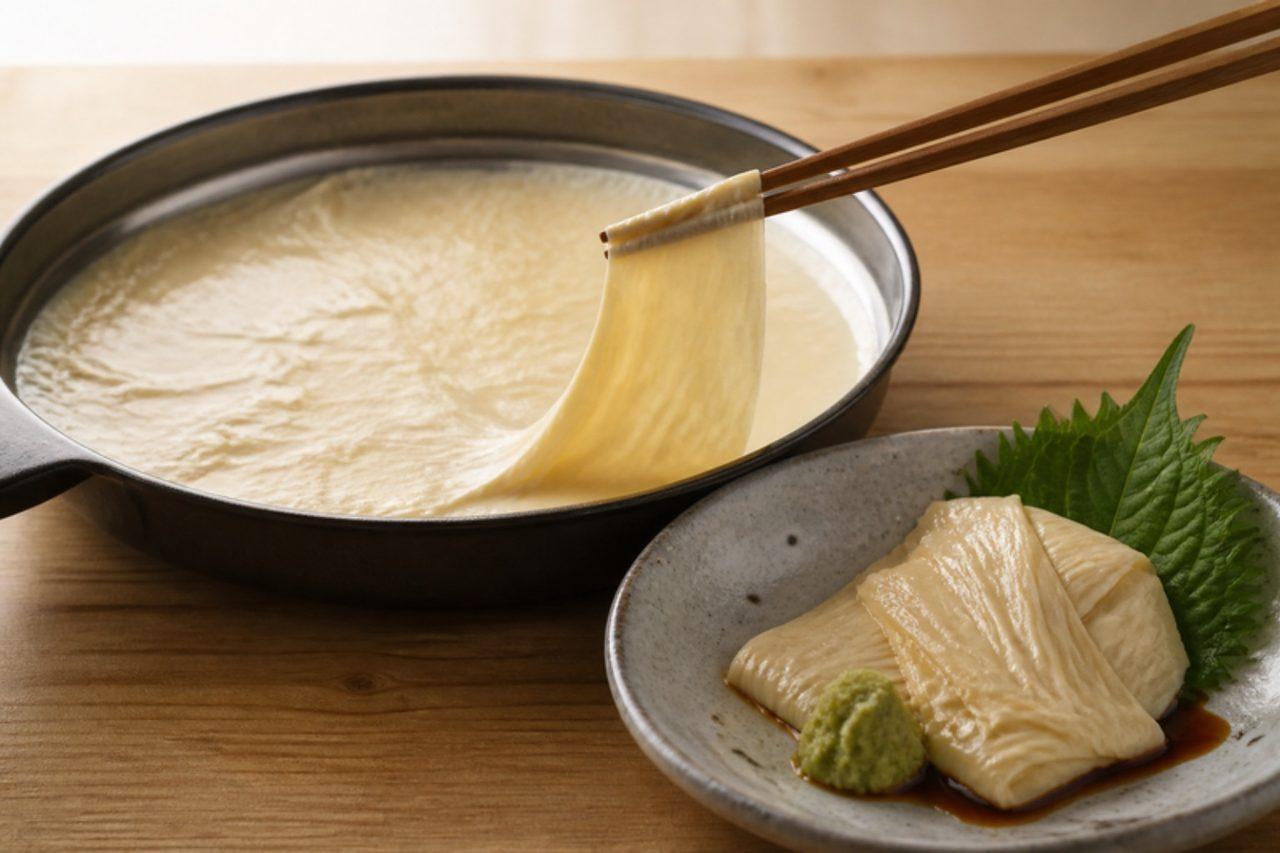
Yuba is the thin skin that forms on soy milk as it heats, and in Kyoto and the temple town of Nikko it is a delicacy in its own right. Workshops in Kyoto's old streets have made it for centuries for monks' shojin ryori, the Buddhist vegetarian cuisine that relied on it for protein. Fresh yuba is soft, creamy and faintly sweet, and the first sheets of the day, eaten warm with a drop of soy, are prized above all. It needs patience rather than skill: just a wide pan, gentle heat and good soy milk. Serve as a starter with wasabi soy, or roll the sheets and slice them. Chef's tip: use unsweetened soy milk with at least 7% protein (check the label). Thin supermarket drinks won't form a skin.

by KrazyBadal 0 views

Kamatama udonUdon with raw egg

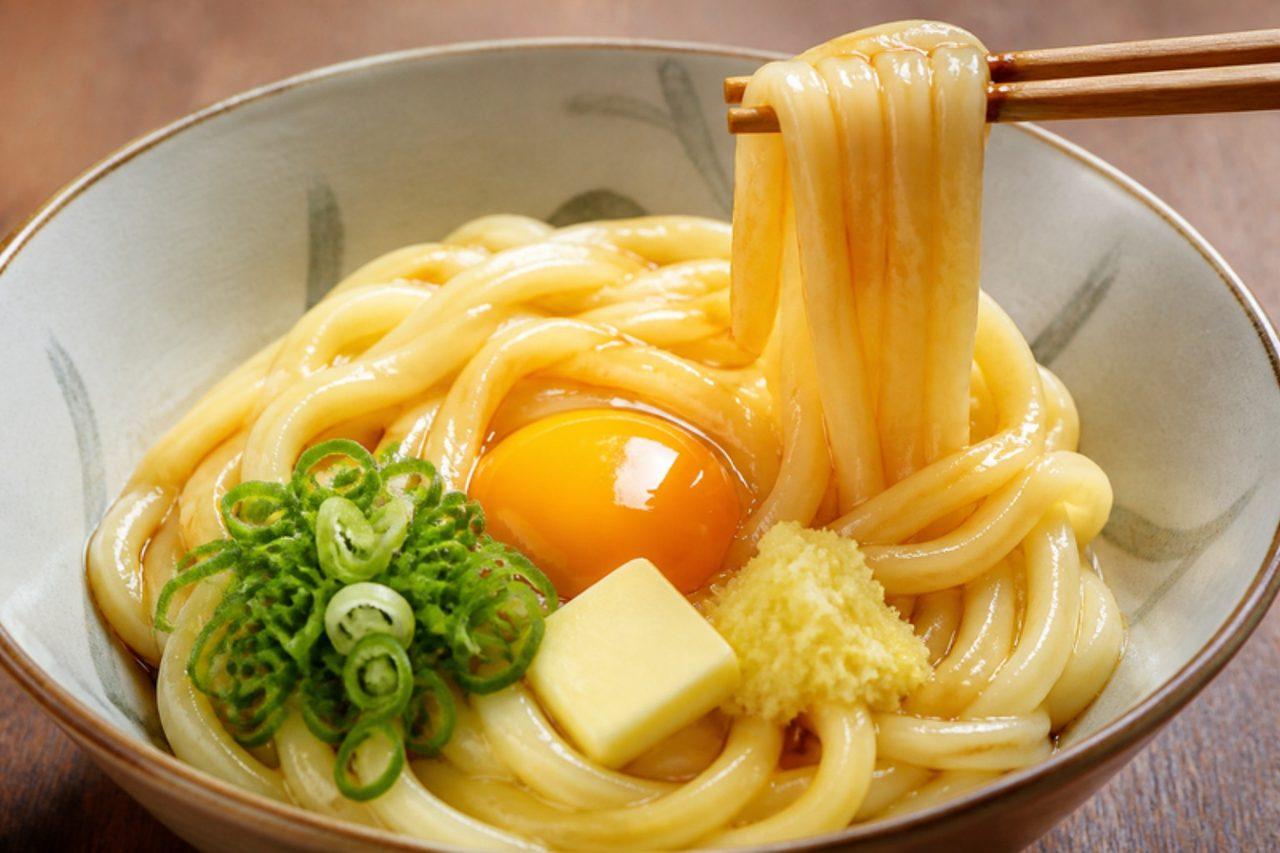
Kagawa, the smallest prefecture in Japan, eats more udon than anywhere else, and its Sanuki udon is known for a firm, springy bite. Locals queue at self-service udon shops at breakfast, and one of the most popular orders is kamatama: noodles lifted straight from the boiling pot, dropped onto a raw egg and tossed until the heat turns the egg into a glossy coating, a little like carbonara. A splash of soy sauce and some spring onion are all it needs. Use frozen Sanuki-style udon, which is closest to fresh. Chef's tip: warm the bowls and crack the egg in first. The noodles must go in seconds after leaving the water, or the egg won't cook into a sauce.

by KrazyBadal 0 views

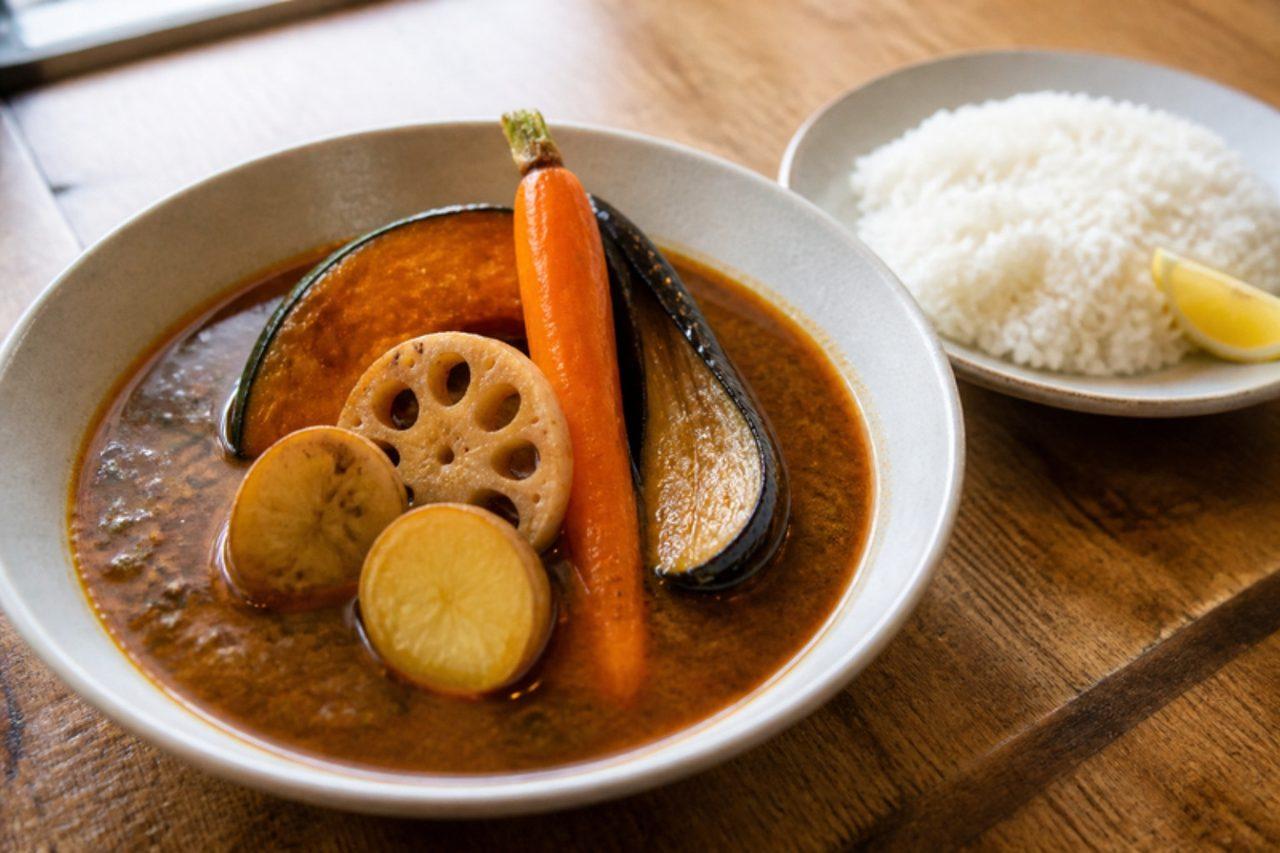
Sapporo soup curry

Sapporo's soup curry was born in the city's cafés in the 1970s and became a craze in the 2000s, when hundreds of small shops opened across Hokkaido's capital, each letting you pick a heat level from 1 to 30. It is nothing like the thick roux curry most of Japan knows: the broth is as thin as soup, aromatic with cumin, cardamom and garlic, and the vegetables arrive large and separately roasted, so each keeps its own colour and bite. Locals eat it in the long Hokkaido winter with a plate of rice on the side, taking a spoonful of rice and dunking it into the broth. Chef's tip: roast or fry the vegetables apart from the broth and only meet them in the bowl. The contrast of crisp-edged vegetables and hot, loose broth is the whole point.

by KrazyBadal 0 views

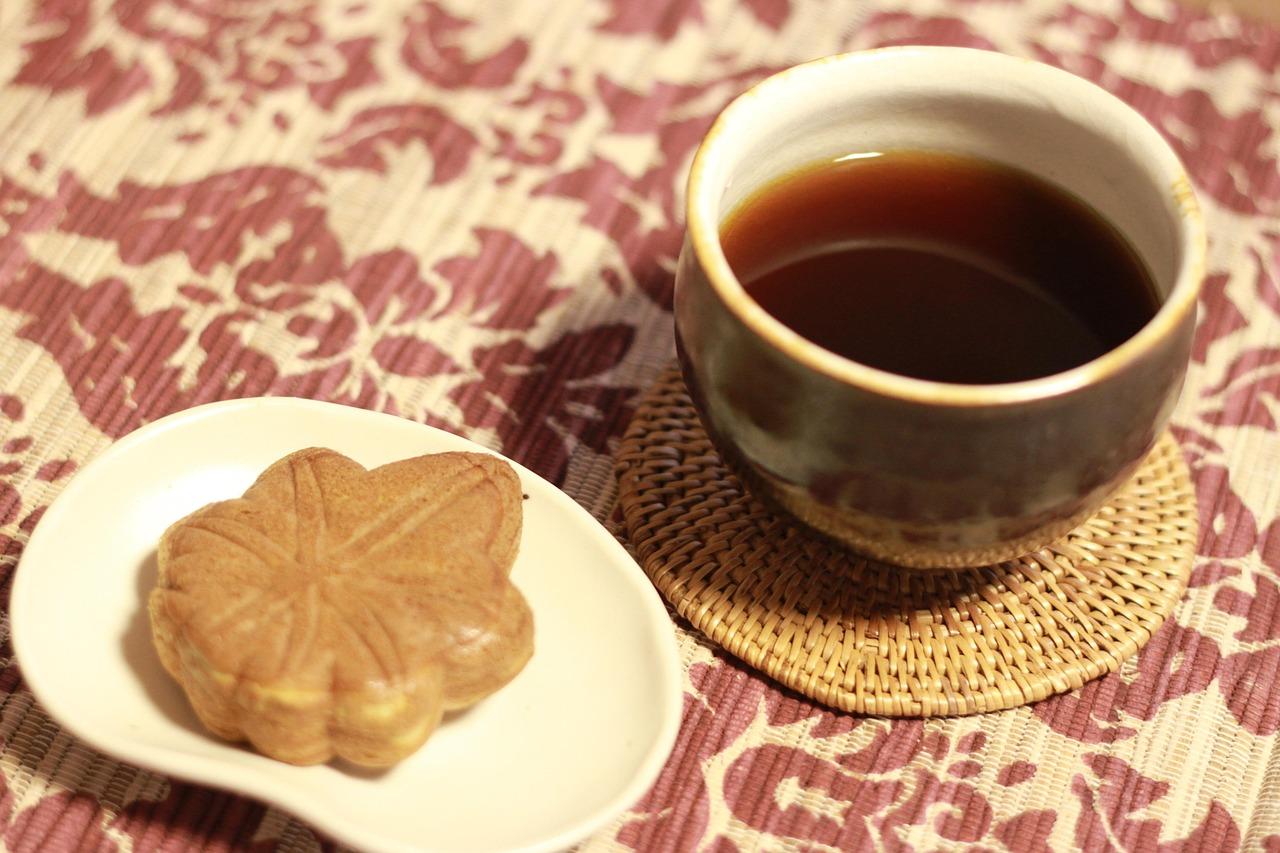
Momiji manjuMaple leaf sponge cakes

Momiji manju are the souvenir of Miyajima, the sacred island off Hiroshima famous for its floating red torii gate and its maple trees, which turn scarlet each November. A confectioner there first baked them around 1906, and today shops along the island's main street still turn them out of iron moulds while visitors watch. The cake is a soft, honey-scented sponge, the filling smooth red bean paste. Tokyo's Asakusa sells a near twin, ningyo-yaki, baked in the shapes of dolls and temple lanterns; this recipe makes both, depending on your mould. Serve with green tea. Chef's tip: rest the batter for 30 minutes before baking. The flour hydrates, the bubbles settle and the cakes come out smooth and evenly brown.

by KrazyBadal 0 views

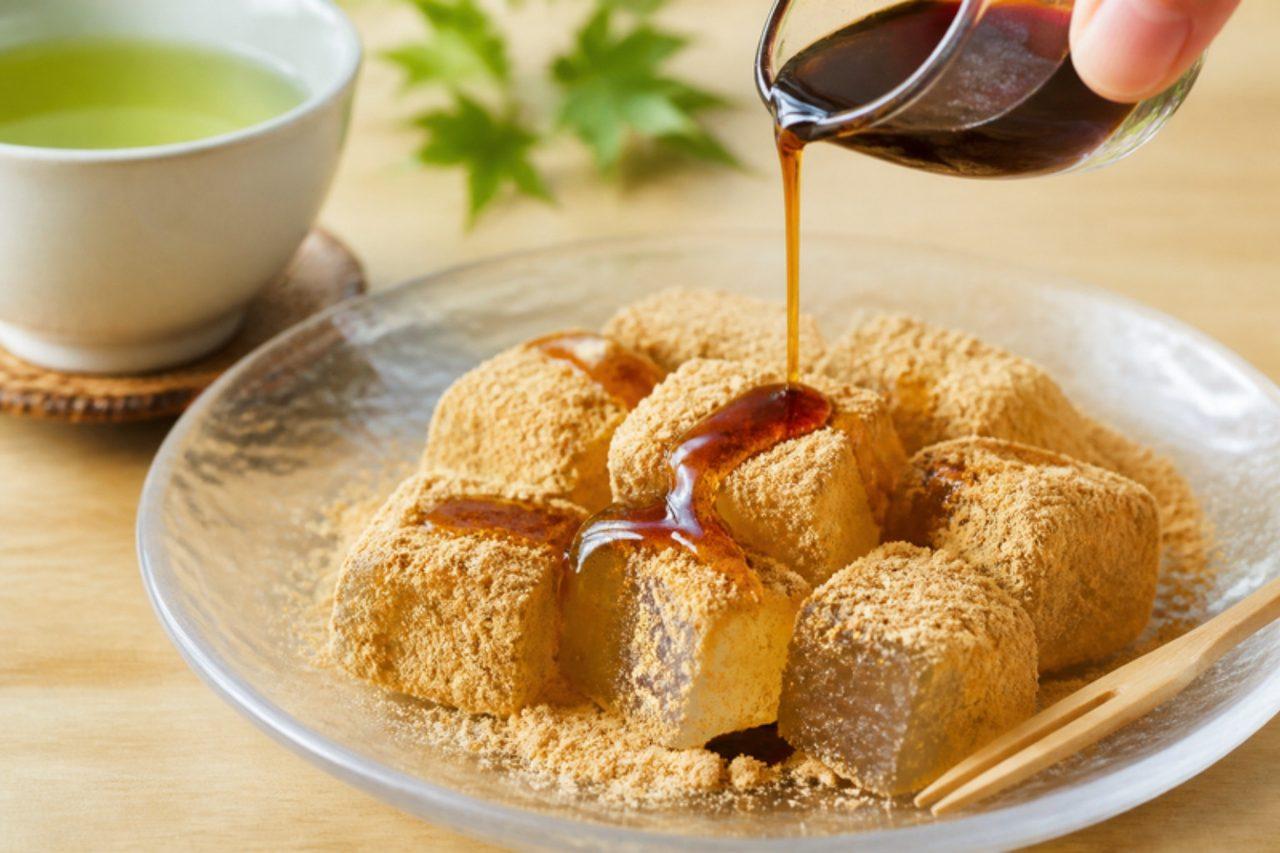
WarabimochiBracken starch jelly with soybean flour

Warabimochi is Kyoto's summer sweet. Made from the starch of bracken fern roots, it is not really mochi at all but a clear, wobbly jelly that melts on the tongue, and on hot afternoons teahouses around Gion and Arashiyama serve it chilled on ice. It is dusted with kinako, a nutty roasted soybean flour, and finished with kuromitsu, a dark syrup of Okinawan brown sugar. Real warabi starch is costly and greyish-brown, so most home cooks buy warabimochi-ko, a blend with sweet potato or tapioca starch, which gives a clearer jelly. Chef's tip: keep stirring hard once it turns clear. Two more minutes of beating over the heat is what makes it springy rather than gluey.

by KrazyBadal 0 views

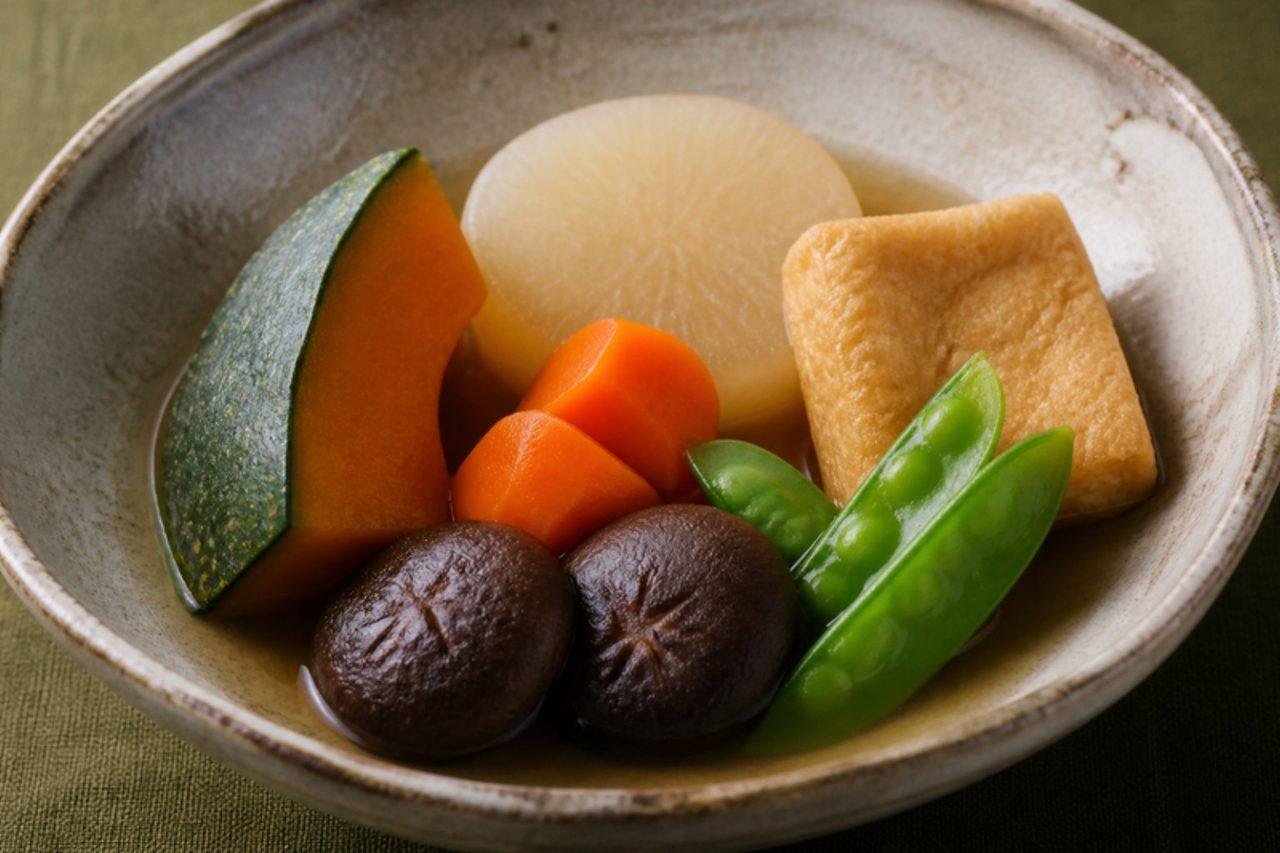
Kyoto takiawaseSimmered vegetables

Obanzai is what Kyoto calls its everyday home cooking: thrifty, seasonal side dishes that families keep in the fridge and that small restaurants line up in bowls along the counter. Takiawase, 'simmered together', is one of its finest. Each vegetable is cooked separately in a pale, delicate broth, so the kabocha stays orange, the daikon turns translucent and the carrot keeps its colour, then they are arranged side by side in one dish. Kyoto cooks season with light-coloured usukuchi soy, which is saltier than regular soy but doesn't darken the food. Serve it warm or at room temperature with rice and miso soup. Chef's tip: let everything cool in its broth. The vegetables soak up most of their flavour as they cool, not while they boil.

by KrazyBadal 0 views

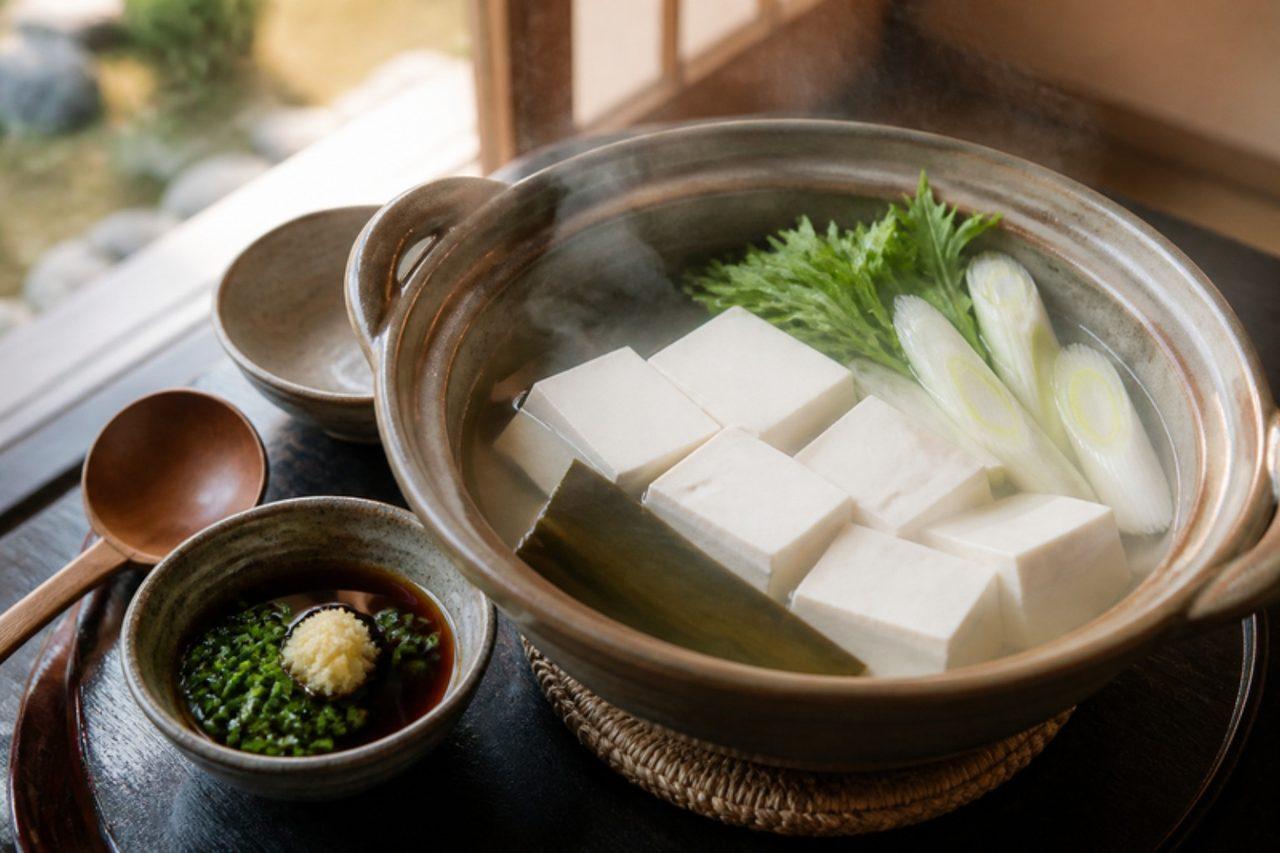
YudofuSimmered tofu hot pot

Yudofu is the simplest dish in Kyoto and one of the most loved. The city's soft water makes fine tofu, and the restaurants around Nanzen-ji temple in the Higashiyama hills have served it to pilgrims for centuries as part of Buddhist vegetarian cooking. A block of tofu is warmed in an earthenware pot over a sheet of kombu and lifted out with a little slotted ladle, then dipped in citrusy soy with spring onion and ginger. It's a winter dish, best eaten slowly at the table on a cold evening. Chef's tip: never let the water boil. The tofu is ready when it trembles and starts to rise; boiling makes it spongy and full of holes.

by KrazyBadal 0 views

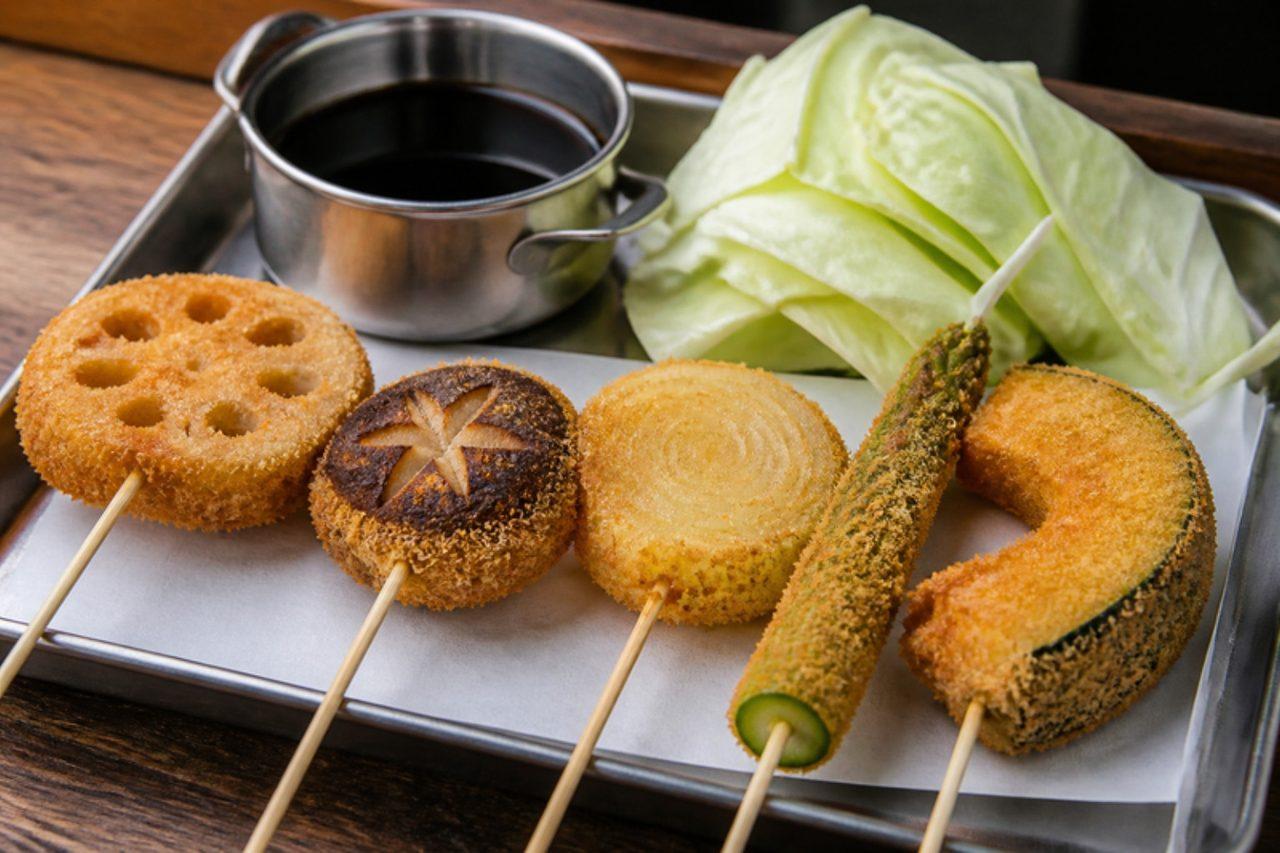
Vegetable kushikatsuBreaded vegetable skewers

Kushikatsu belongs to Shinsekai, the neon-lit old entertainment district at the foot of Osaka's Tsutenkaku tower. Since the 1920s, labourers have stood at its counters eating skewers fried to order, dunked in a shared steel pot of thin, fruity sauce. The famous house rule, 'no double dipping', is printed on signs everywhere. Vegetables are as popular as meat there: lotus root, shiitake, onion, asparagus and, a local favourite, chewy mochi and cheese. Have a plate of raw cabbage leaves on the side; they're free at every shop and used to scoop extra sauce. Chef's tip: use fine panko, or blitz ordinary panko briefly. Fine crumbs give the thin, crunchy jacket that Osaka shops are known for.

by KrazyBadal 0 views

OyakiStuffed steamed dumplings

Oyaki are the everyday snack of Nagano's mountain villages, where rice was scarce and wheat and buckwheat grew better. The plump dumplings are filled with whatever the season gives: pickled nozawana greens in winter, aubergine and miso in summer, sweet squash in autumn. Old farmhouses baked them in the ashes of the irori hearth; today they are browned in a pan and steamed, so they come out crusty on both faces with a soft, chewy middle. They travel well, which made them the lunch of farmers and hikers on the trails around Zenkoji temple. Chef's tip: let the dough rest for at least 30 minutes. A relaxed dough stretches thin around the filling without tearing.

by KrazyBadal 0 views

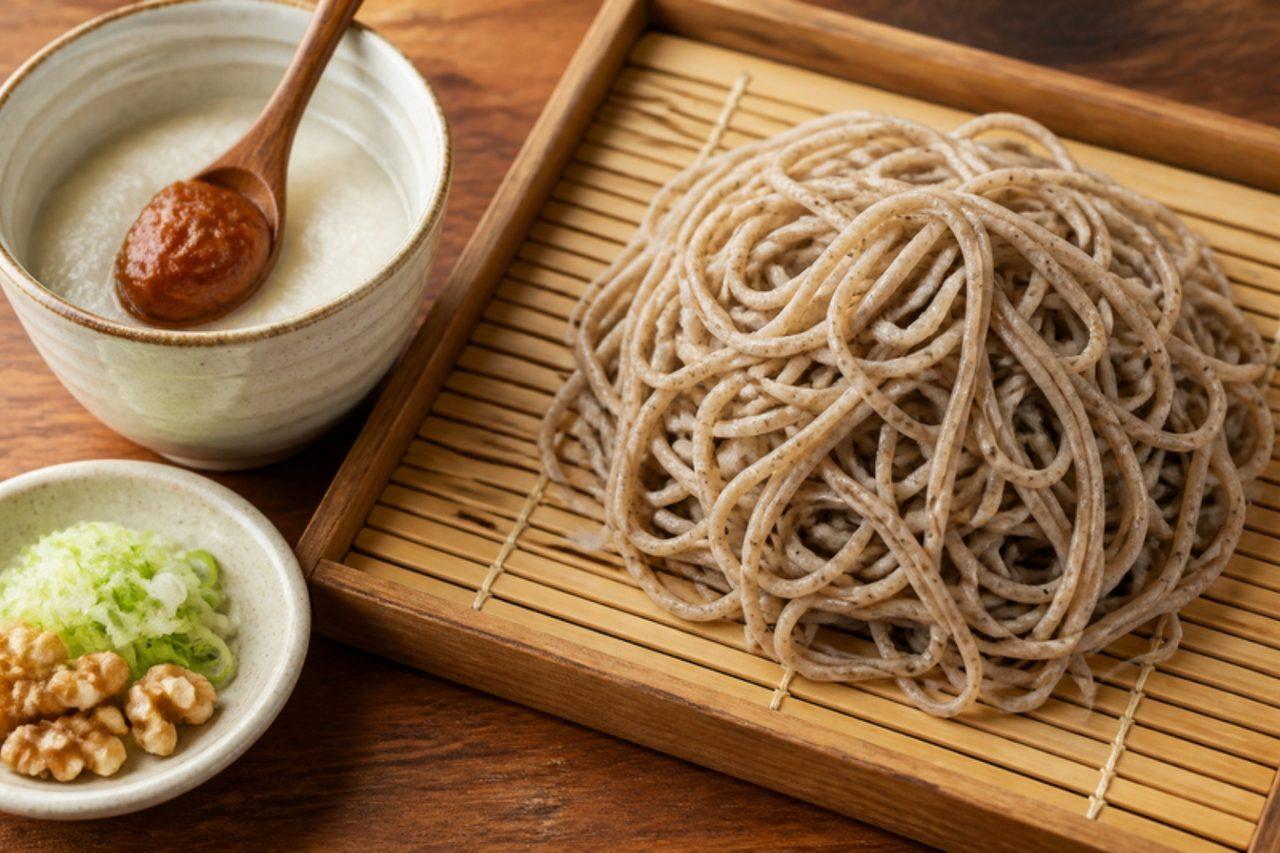
Shinshu soba with spicy daikon dip

Nagano, the old province of Shinshu, grows buckwheat on cool mountain plateaux, and its soba is famous across Japan. In the castle town of Takato, and in the Aizu villages that took the custom with them, the noodles are not dipped in sweet soy sauce at all. Instead each diner gets a cup of juice squeezed from grated, eye-wateringly hot daikon, stirred with toasted miso. The result is sharp, clean and peppery, and it wakes up the earthy buckwheat. It's a summer lunch, eaten cold with a sprinkle of spring onion. Chef's tip: grate the daikon only just before serving. Its heat fades within 20 minutes, and the dish depends on that fresh bite.

by KrazyBadal 0 views

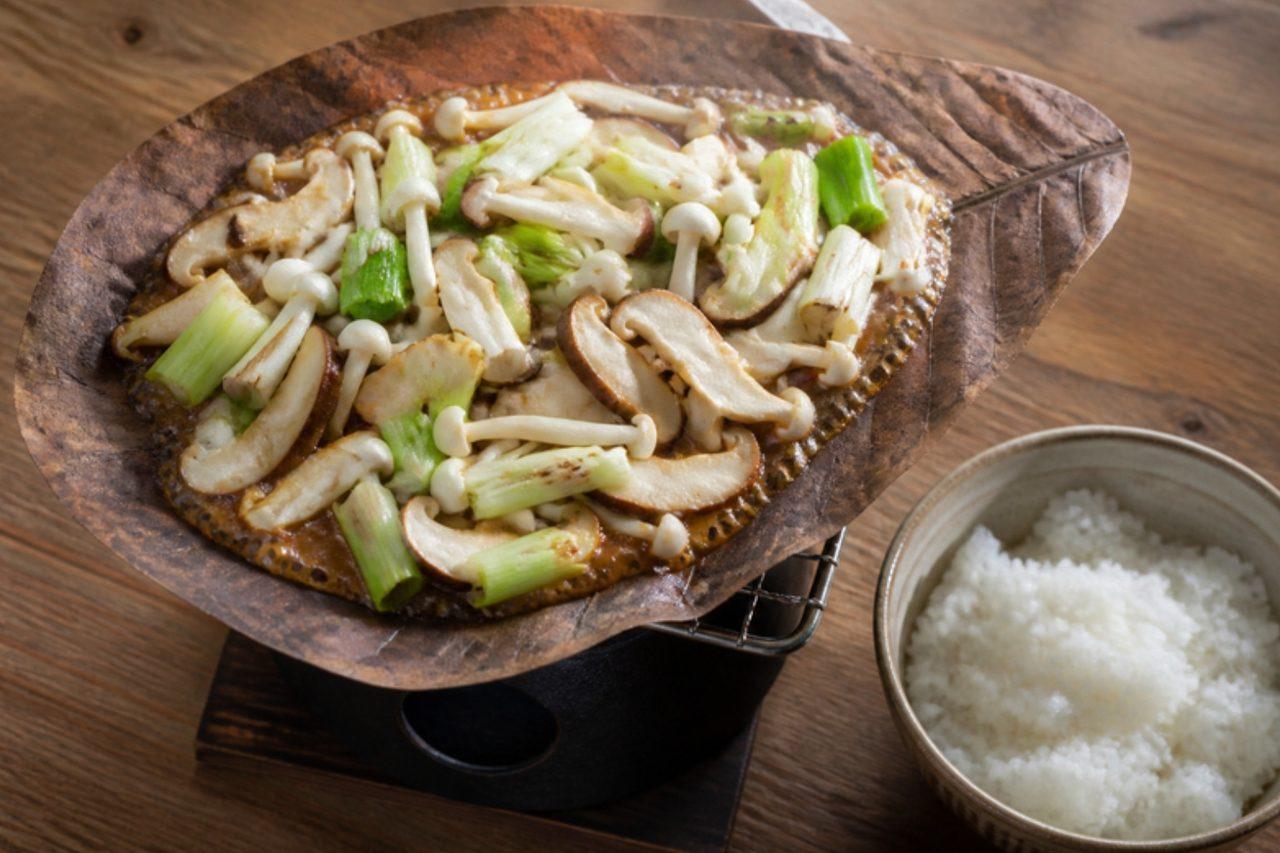
Hoba misoMiso grilled on magnolia leaf

In the old mountain town of Takayama, in Gifu's Hida region, inns serve breakfast with a small charcoal brazier on the table and a dried magnolia leaf, hoba, resting on its grill. On it sits a mound of miso mixed with leek and mushrooms. As the leaf warms, the miso bubbles and gives off a smoky, woodsy smell, and you scoop it up with rice. It started as farmhouse winter food, when people toasted frozen pickles on leaves to thaw them. Dried hoba leaves are sold in Japanese shops and online; a sheet of baking paper works too, without the scent. Chef's tip: soak the leaf in water first. A damp leaf scorches slowly and perfumes the miso instead of catching fire.

by KrazyBadal 0 views

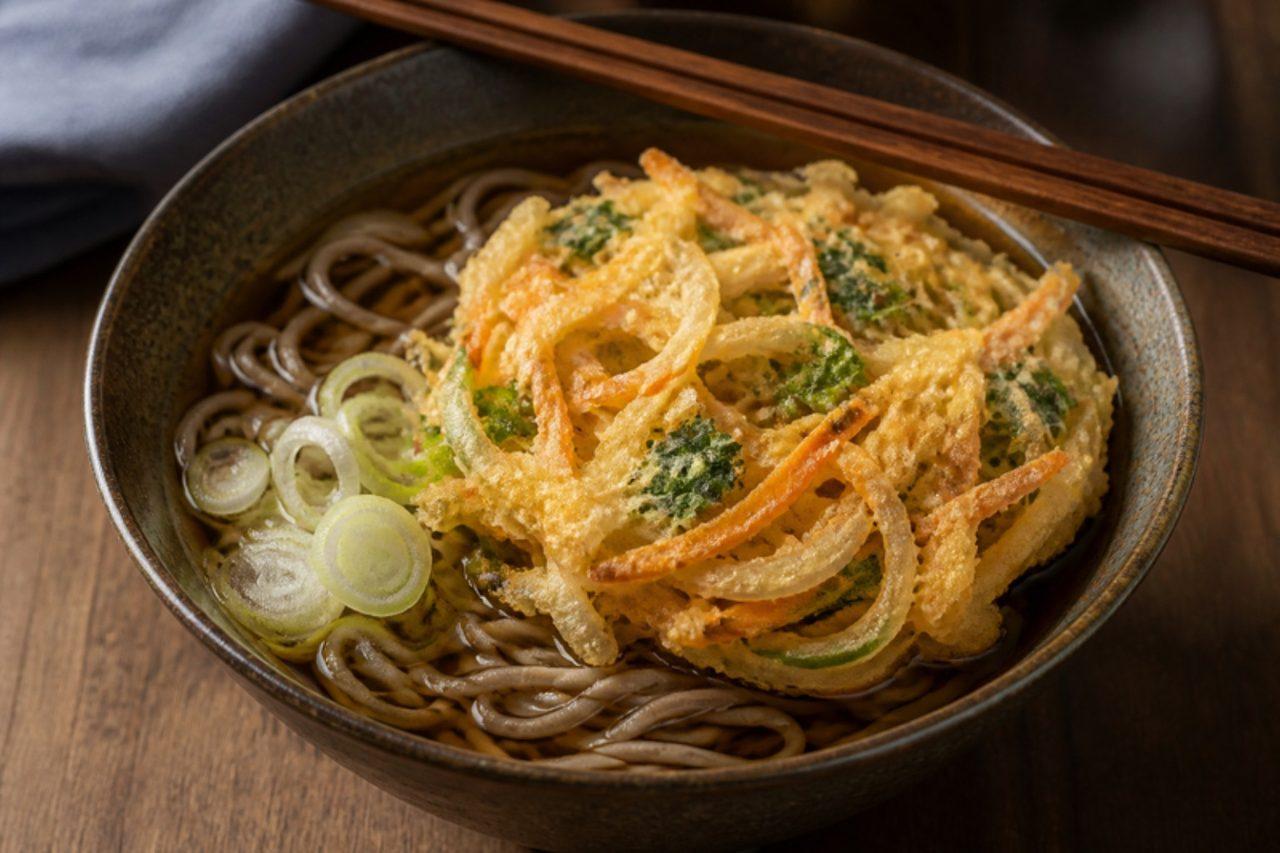
Kakiage sobaBuckwheat noodles with vegetable tempura

In Tokyo, hot soba with a fritter on top is the city's fast food. Standing soba counters near train stations, called tachigui soba, have served it to commuters since the Edo period, when soba and tempura stalls stood side by side. The fritter here is kakiage: a loose nest of onion, carrot and greens held together with just enough batter to fry into a lacy disc. It softens a little in the broth and flavours it with toasty oil, which is why many Tokyoites eat half of it crisp and let the rest soak. Our broth uses kombu and shiitake instead of bonito. Chef's tip: slide the kakiage into the oil off a flat spatula or ladle, and don't touch it for the first minute. It needs that time to set, or it falls apart.

by KrazyBadal 0 views

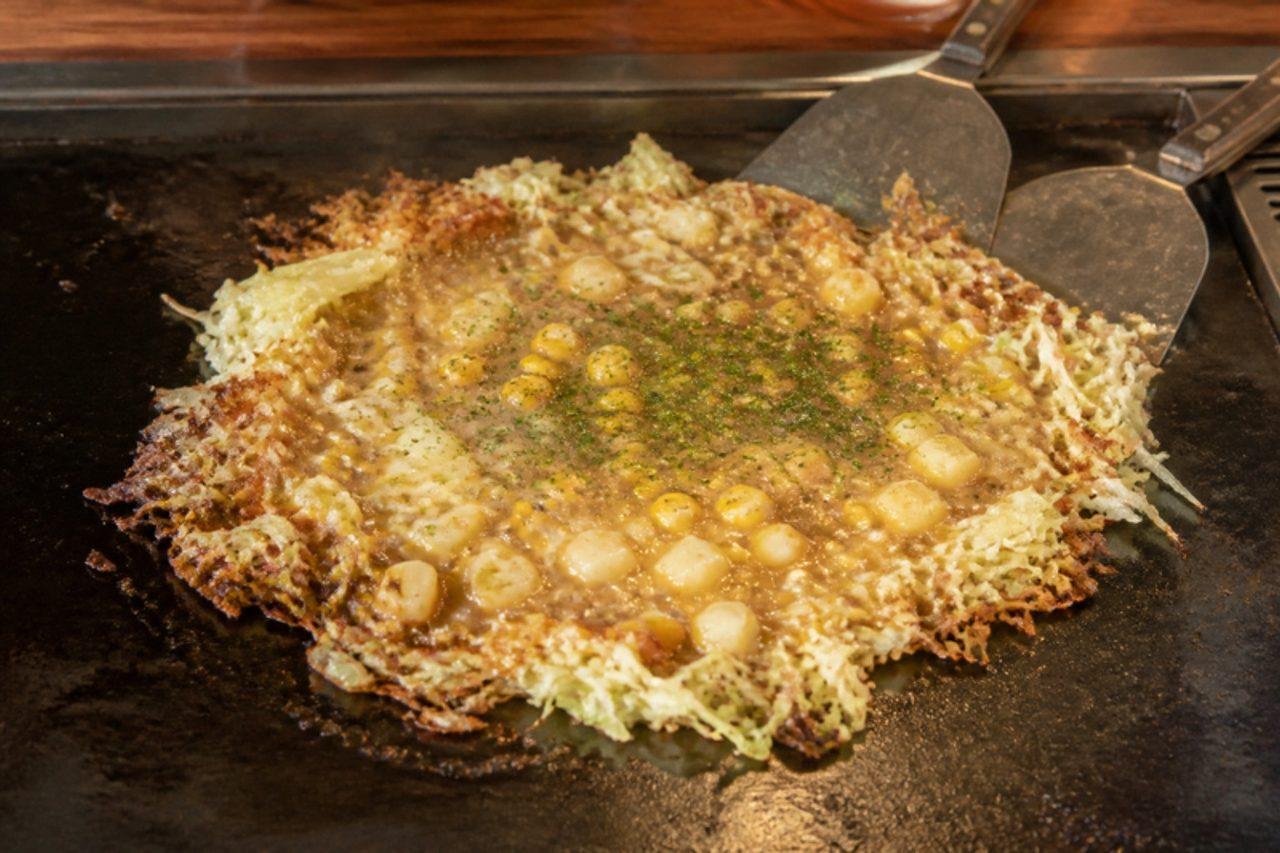
MonjayakiGriddled cabbage and batter

Monjayaki comes from Tsukishima, a small island district in Tokyo Bay, where one street holds more than seventy monja restaurants. It began as a cheap after-school snack at sweet shops, with children writing letters in thin batter on a griddle. Today friends gather round a teppan table, build a ring of chopped cabbage, pour the runny batter into the middle and eat it with tiny spatulas while it is still molten. It never sets into a pancake like okonomiyaki: the texture is gooey, with crisp, toasty bits where it sticks to the plate. Our version leaves out the usual dried shrimp and uses mochi and cheese, a favourite Tsukishima combination. Chef's tip: press a little monja against the hot griddle with your spatula and wait until it crackles. That crisp layer, called the okoge, is the best bite.

by KrazyBadal 0 views

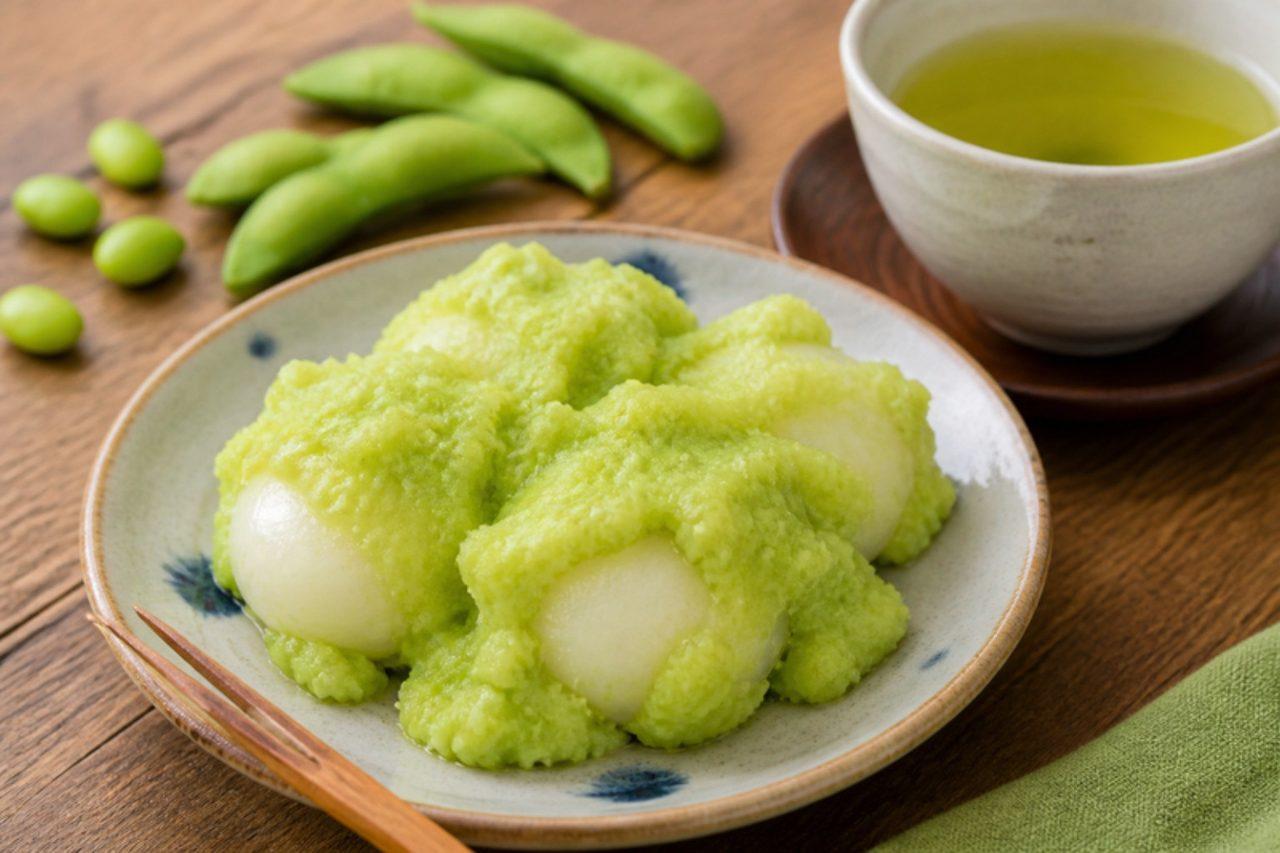
Zunda mochiRice dumplings with edamame paste

Zunda is Sendai's signature sweet: young green soybeans mashed with sugar into a coarse, pale-green paste. Farmers in Miyagi made it at the end of summer, when edamame were at their best, and it is still sold everywhere from Sendai station's souvenir halls to small tea shops, now also as zunda shakes and rolls. The flavour is gentle, beany and fresh, closer to sweet peas than to red bean paste. Spoon it over warm, chewy rice dumplings and serve with green tea. Chef's tip: rub the skins off the cooked beans. It takes ten minutes but turns the paste from dull khaki to a vivid jade colour.

by KrazyBadal 0 views

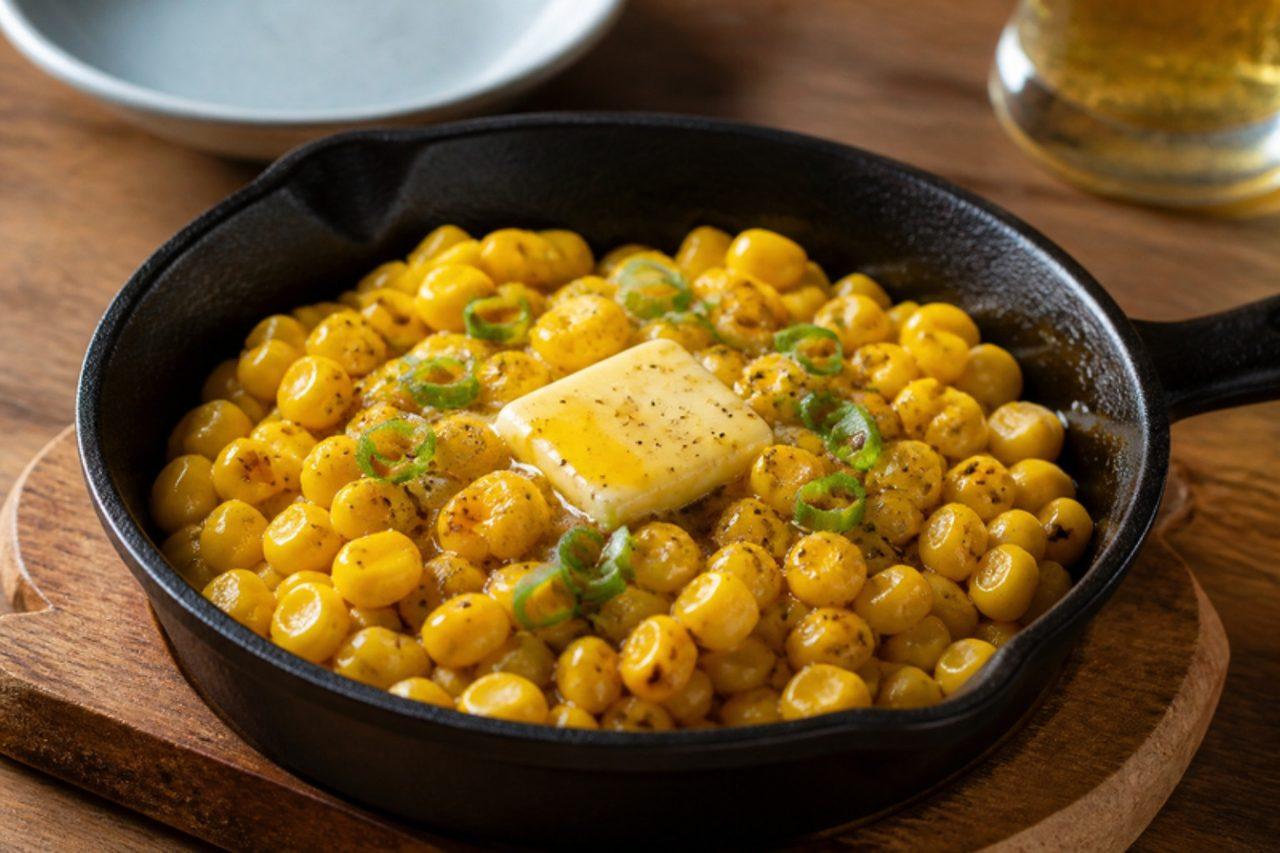
Hokkaido butter cornButtered sweetcorn

Hokkaido grows most of Japan's sweetcorn, and in late summer roadside stands around Sapporo and Furano sell cobs so sweet people eat them raw. Butter corn is how the island turns that harvest into a side dish: kernels hissing in a hot pan with Hokkaido's other pride, butter, and finished with soy sauce until the edges catch. You'll find it as a ramen topping, a beer snack in izakaya and a bento filler. Serve it hot beside grilled vegetables or rice. Chef's tip: let the kernels sit in the pan without stirring for a minute at a time. A few browned, almost toasted kernels give the dish its nutty, popcorn-like smell.

by KrazyBadal 0 views

Matcha latte

Matcha (抹茶) is finely ground green tea from Uji, near Kyoto, the heart of Japanese tea-growing for centuries. A matcha latte (抹茶ラテ) is the café version: the powder is whisked to a smooth, frothy shot, then topped up with steamed milk and lightly sweetened. It tastes grassy, creamy and gently bitter. Use any milk you like; oat milk froths especially well. Chef's tip: keep the water at about 80°C. Boiling water scorches matcha and makes it bitter; let the kettle stand for 2–3 minutes after boiling before you pour.

by KrazyBadal 0 views

OmuriceOmelette-wrapped fried rice

Omurice (オムライス) is a yōshoku dish, Western-style Japanese food, said to have been invented at a Tokyo restaurant around 1900. Tangy ketchup fried rice is wrapped in a thin, soft omelette and topped with more ketchup. Chicken is usual inside; this vegetarian version uses mushrooms, sweetcorn, peas and onion. A favourite with children, and on the table in half an hour. Chef's tip: pull the pan off the heat while the top of the omelette is still a little runny; it finishes cooking from the heat of the rice, and stays soft and silky as in a Tokyo yōshoku diner.

by KrazyBadal 0 views

Takikomi gohanRice cooked with mushrooms and carrot

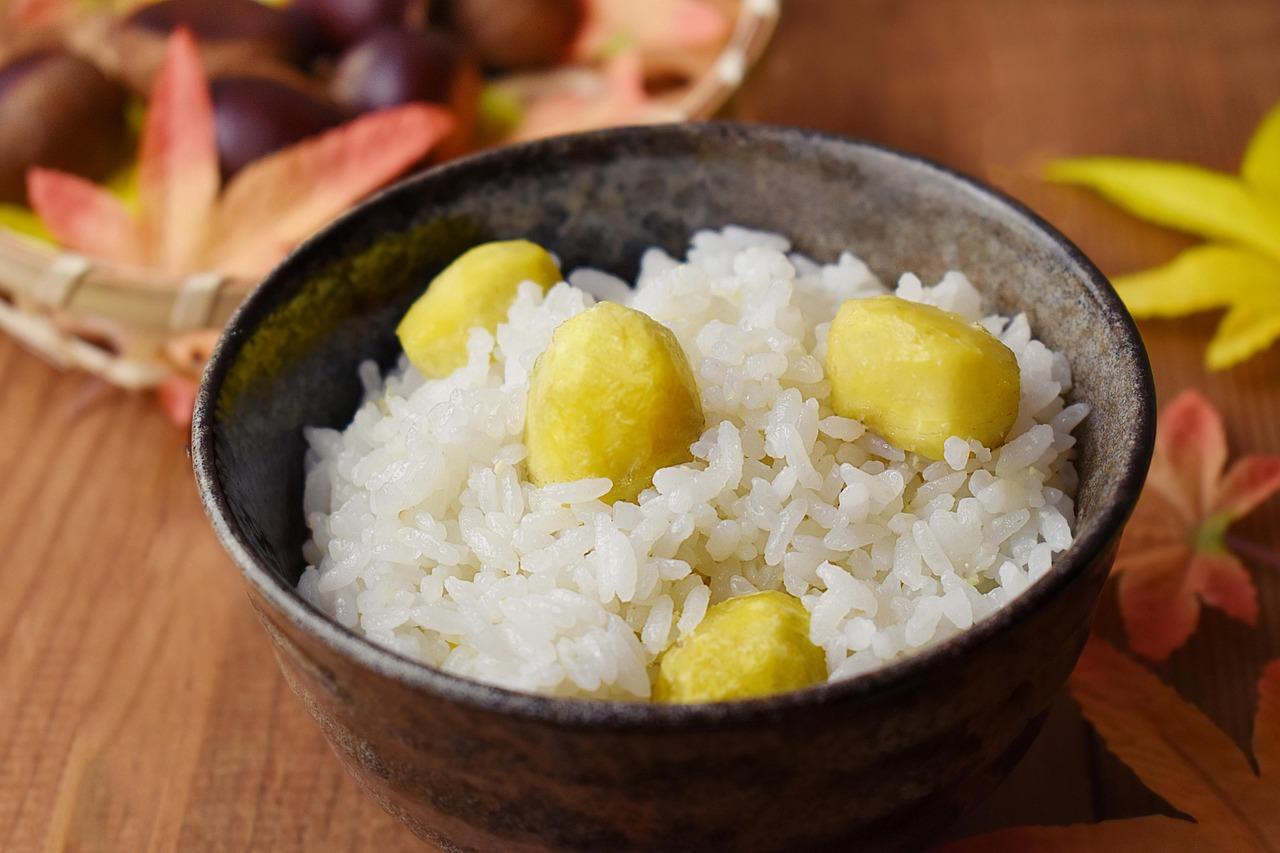
Takikomi gohan (炊き込みご飯) is mixed rice cooked in one pot with seasonal vegetables and a savoury broth, made in homes across Japan, especially in autumn when mushrooms and chestnuts are in season. Every grain soaks up the soy, mirin and mushroom flavour, and the bottom forms a prized toasty crust (okoge). This vegetarian version uses a kombu and shiitake dashi. Serve it with miso soup and pickles, or pack it into onigiri the next day. Chef's tip: never stir once the vegetables are on top, and don't lift the lid while it cooks. The heavy vegetables would sink and the rice cook unevenly; leaving it alone also gives you the toasty okoge crust at the bottom.

by KrazyBadal 0 views

Vegetable onigiriRice balls with vegetables

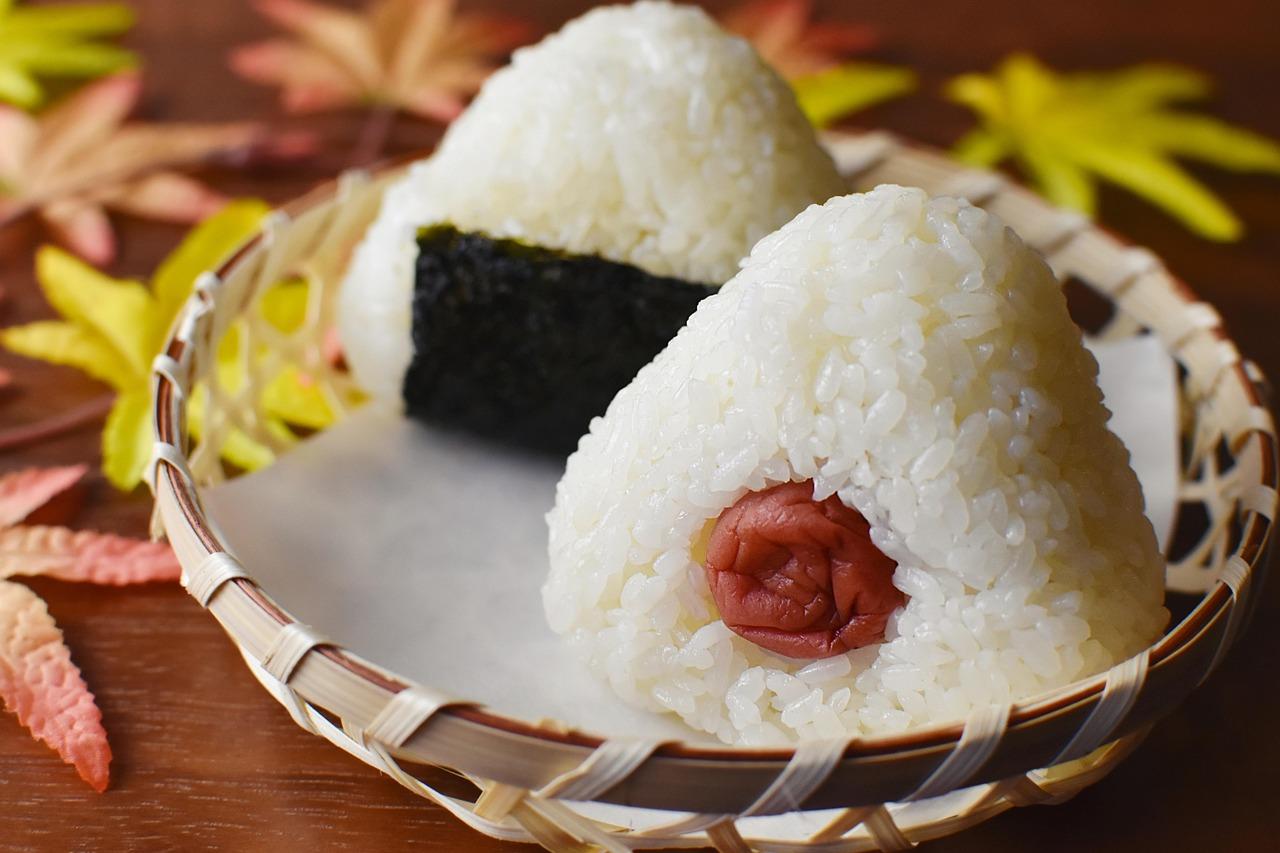
Onigiri (おにぎり) are Japan's everyday lunchbox and picnic food, sold in every convenience store from Tokyo to Kyushu. Warm rice is pressed around a salty or savoury filling and wrapped in a strip of crisp nori. This recipe gives three vegetarian fillings: sour umeboshi (pickled plum), sweet-salty simmered kombu, and a soy-glazed mushroom and carrot mix. Children love helping to shape them, and they keep well for a packed lunch. Chef's tip: use freshly cooked, still-warm rice and salt your hands, not the rice. The grains stick together only while warm, and the salt on the outside seasons every bite the way a Japanese mother would.

by KrazyBadal 0 views

Tofu katsu curry

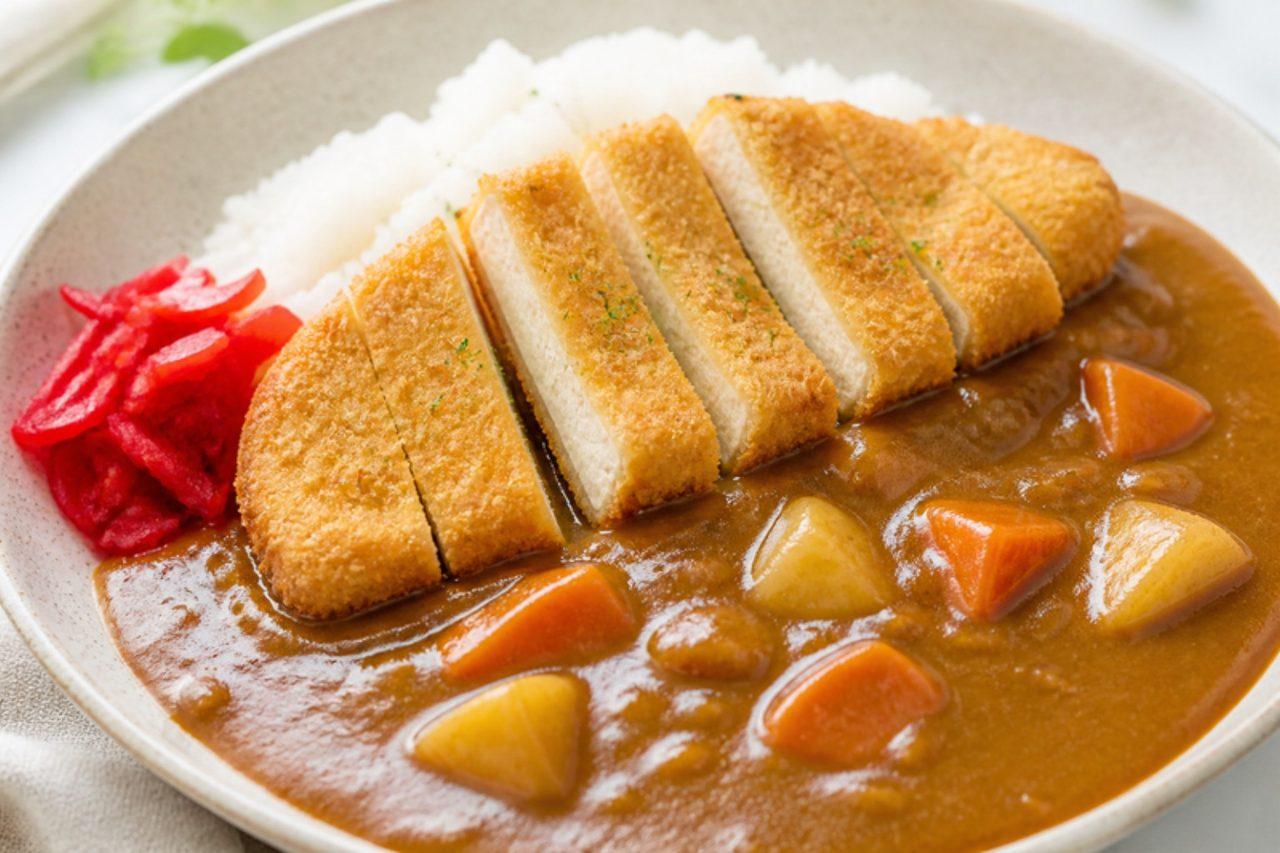
Katsu curry (カツカレー) is a favourite in canteens and curry houses across Japan, first served in Tokyo's Ginza in the 1940s. A crunchy breaded cutlet is sliced and laid over rice, then half of it is smothered in thick, mild curry sauce, so you get crisp and saucy bites. Here firm tofu replaces the pork. It is a little more work than plain curry rice, but children love it. Chef's tip: fry the katsu at the last minute and pour the curry over only half of it, so you always keep some crunch; Japanese curry houses serve it exactly this way.

by KrazyBadal 0 views

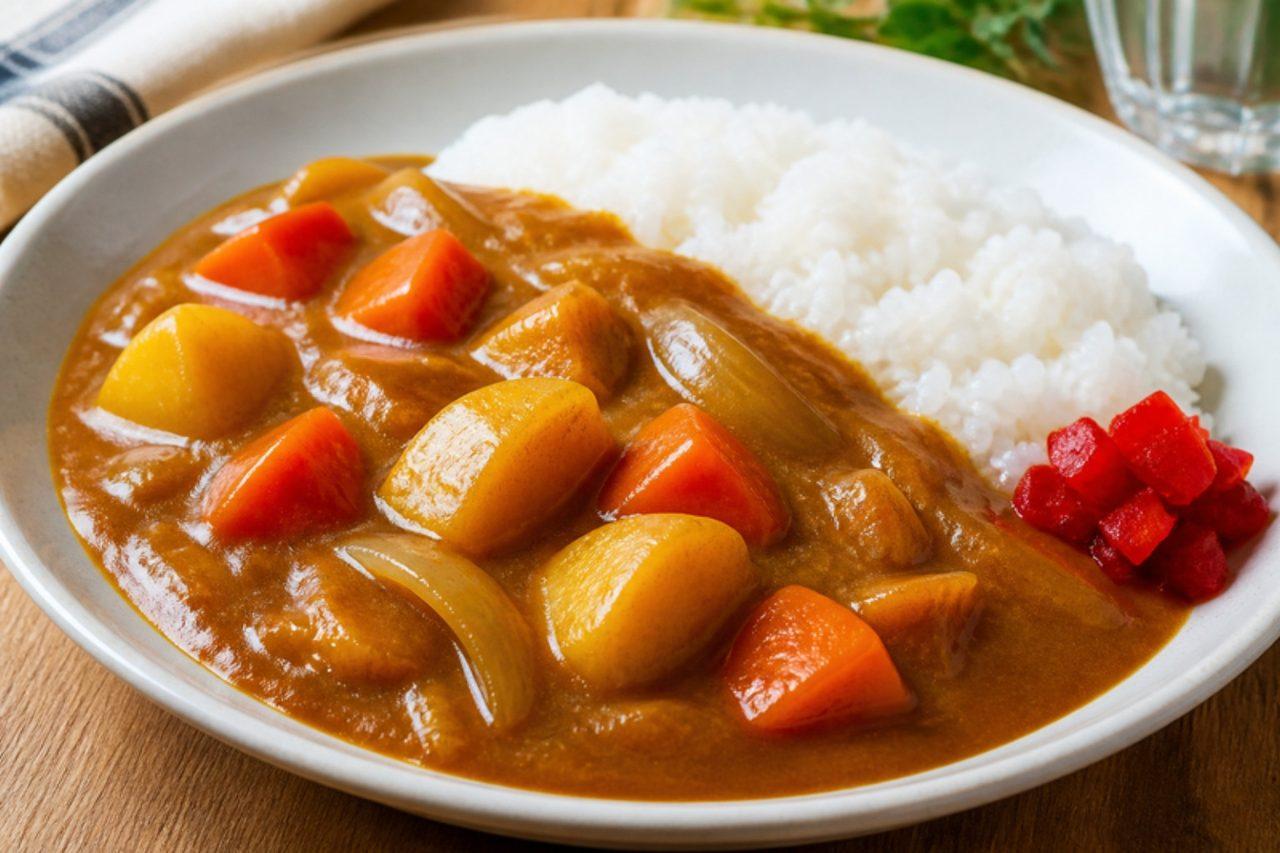
Japanese curry rice

Japanese curry rice (カレーライス) arrived in Japan from Britain via the navy in the late 1800s and is now a national comfort food, cooked in homes from Hokkaido to Okinawa. It is nothing like an Indian curry: the sauce is thick, glossy and mild, made with a roux of butter, flour and curry powder, and sweetened with grated apple. This vegetarian version is packed with potato, carrot, onion and mushrooms. It tastes even better the next day, and children love it. Chef's tip: take the onions all the way to a deep golden brown before anything else goes in. Japanese home cooks swear by this step, as the caramelised onion gives the curry its rounded sweetness.

by KrazyBadal 0 views

Yaki udonStir-fried udon noodles

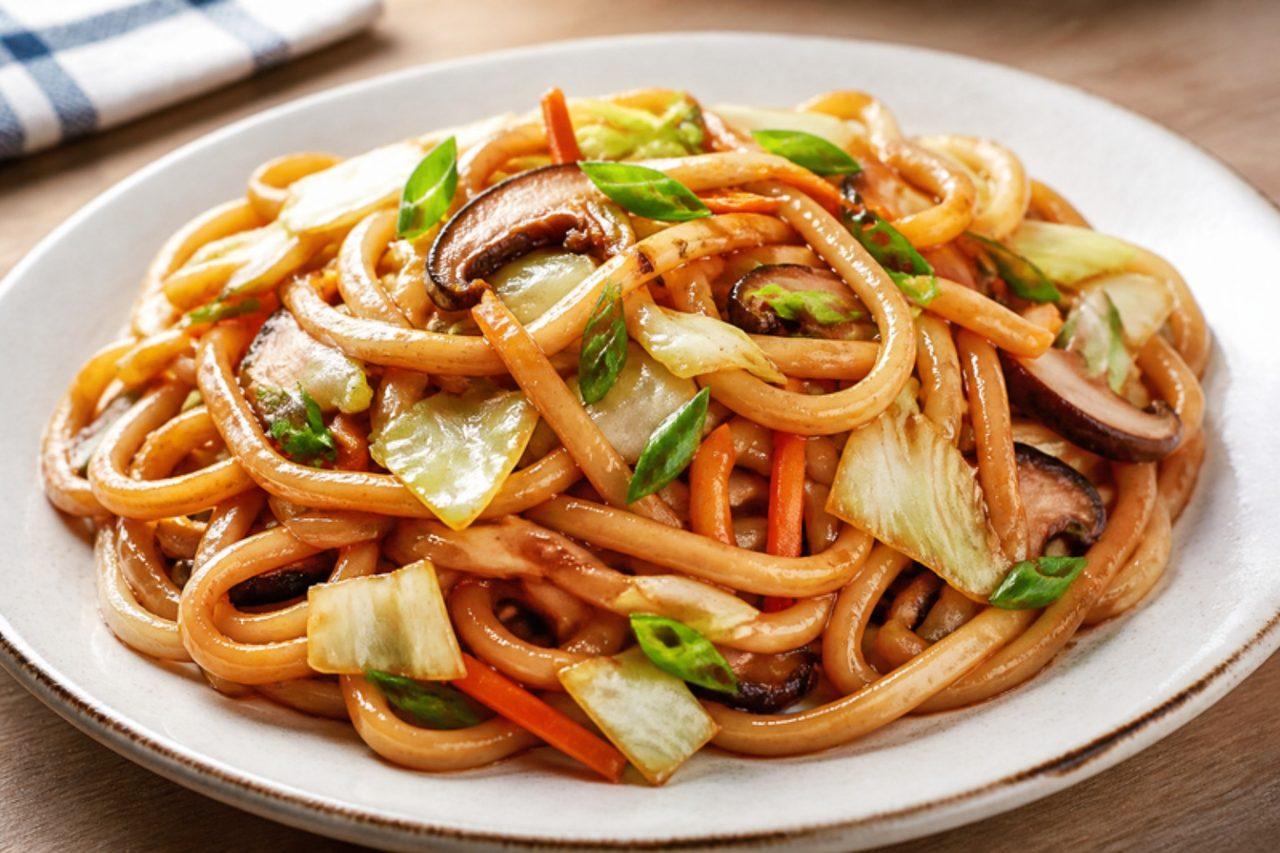
Yaki udon (焼うどん) was first made in Kitakyushu, in northern Kyushu, just after the war, when a café owner ran out of soba for yakisoba and fried udon instead. The thick, chewy noodles are tossed in a hot pan with cabbage, onion, mushrooms and carrot, then glazed with soy, mirin and a little vegetarian Worcestershire-style sauce. Meat is usual in Japan; this vegetarian version gets its richness from shiitake and a fried egg on top. A fast, filling weeknight supper. Chef's tip: get the pan really hot and leave the noodles alone for 30 seconds at a time, so they pick up slightly charred edges; that smoky 'koge' is what makes yaki udon taste like the street-stall version.

by KrazyBadal 0 views

Kitsune udonUdon with fried tofu

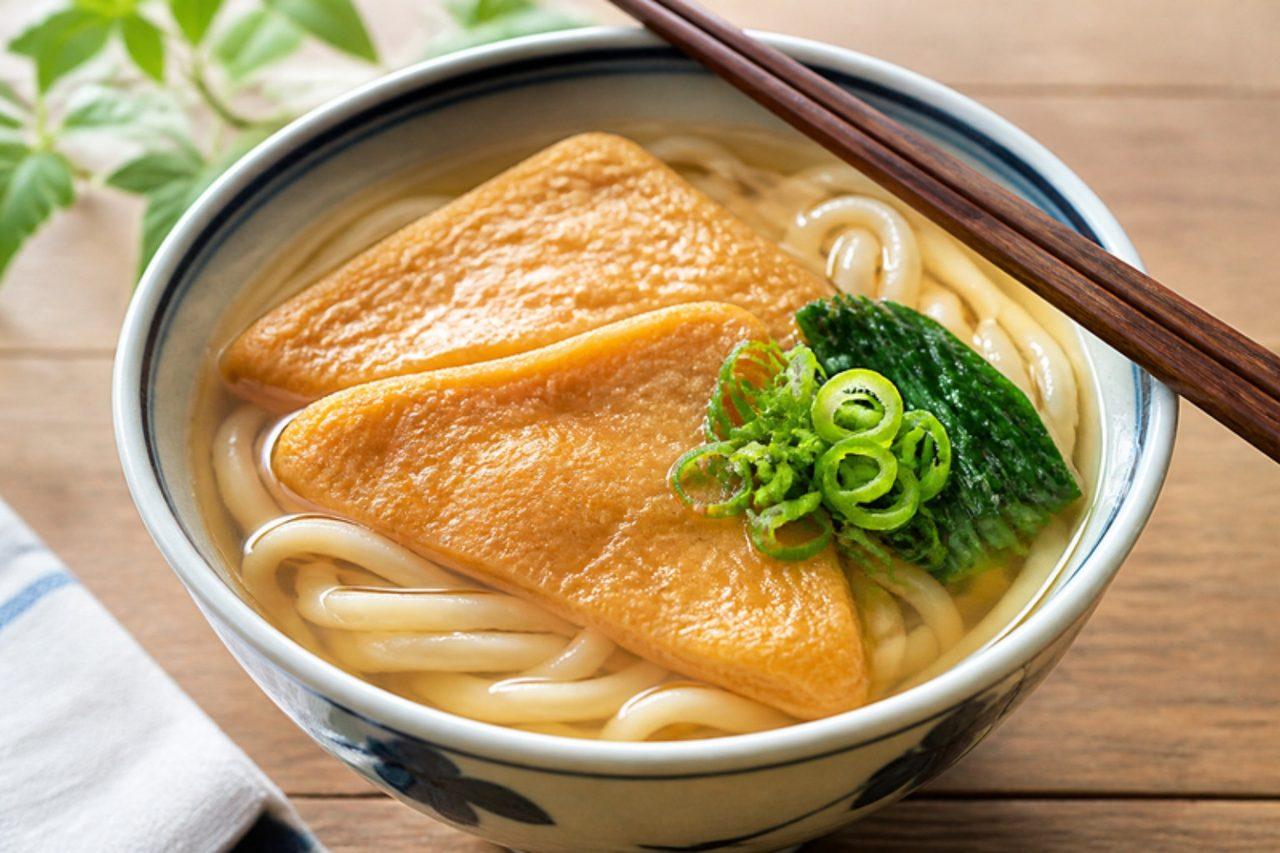
Kitsune udon (きつねうどん, 'fox udon') comes from Osaka, where a noodle shop first floated a sheet of sweet simmered fried tofu on a bowl of udon in the 1890s. The name comes from the folk tale that foxes love fried tofu. Soft, chewy noodles sit in a pale, gently sweet broth, and the tofu soaks up the soup like a sponge. This version uses a kombu and shiitake dashi instead of bonito, so it is fully vegetarian. Chef's tip: let the sweet tofu cool in its simmering liquid if you have time; as it cools it drinks up the sauce, so every bite bursts with sweet soy juice in the hot broth.

by KrazyBadal 0 views

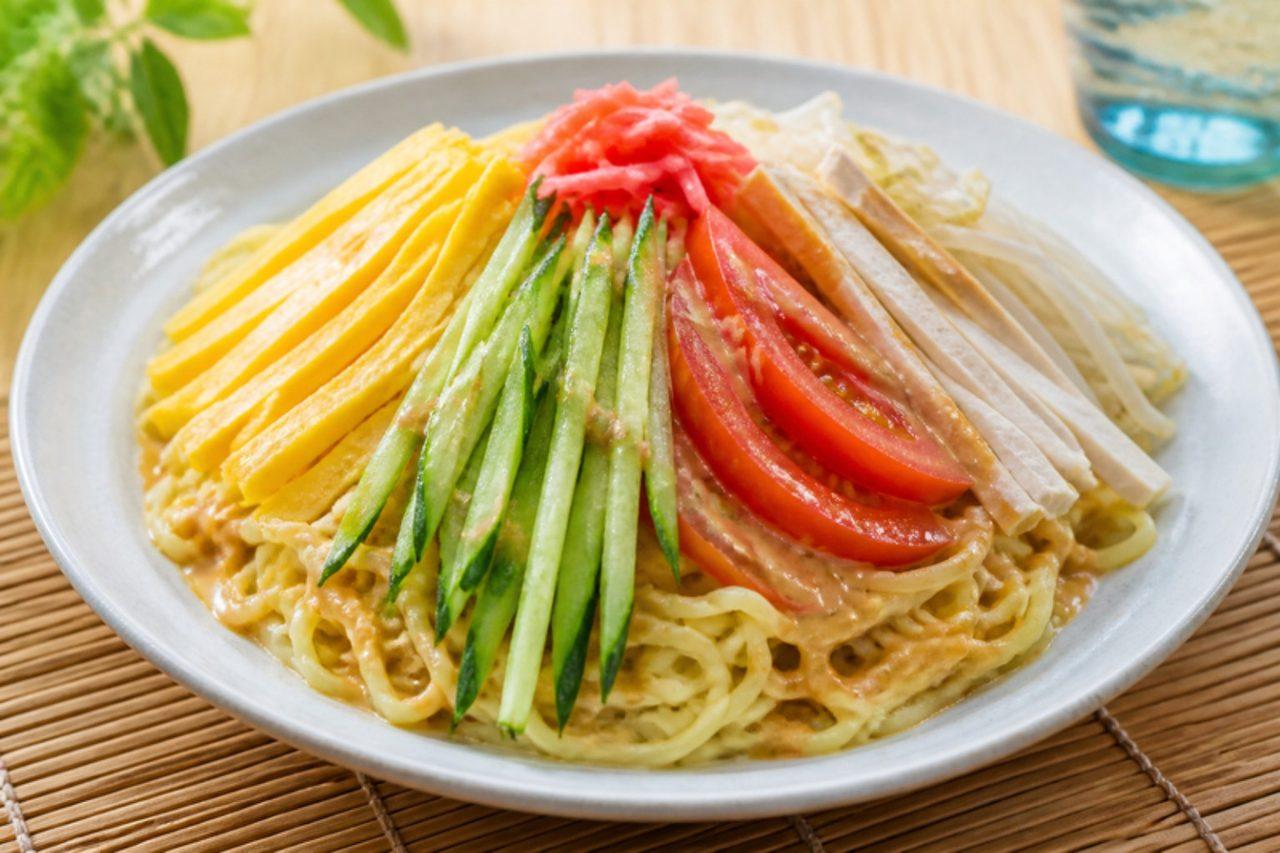
Hiyashi chukaChilled ramen noodles with toppings

Hiyashi chuka (冷やし中華) is Japan's summer noodle dish: shops all over the country hang up a 'hiyashi chuka hajimemashita' (we've started serving it) sign when the hot weather arrives. Cold, springy ramen noodles are topped with neat strips of thin omelette, cucumber, tomato and other vegetables, then dressed with a tangy soy, vinegar and sesame sauce. This vegetarian version uses sweetcorn and seasoned tofu in place of the usual ham. Fresh, light and ready in under half an hour. Chef's tip: rinse the noodles until they squeak and are truly cold, then shake them dry; any warmth or water left on them makes the dressing taste flat.

by KrazyBadal 0 views

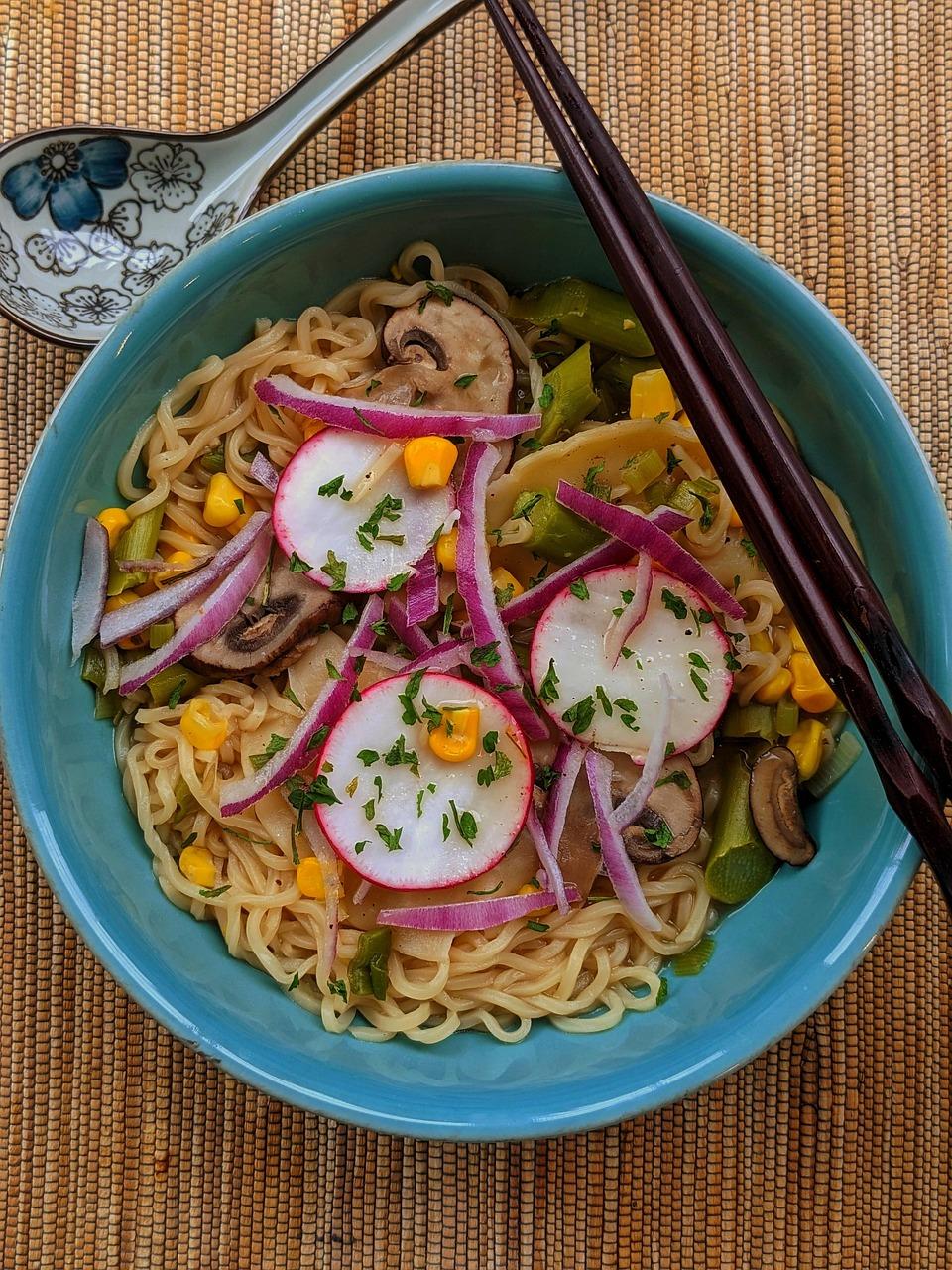
Vegetable miso ramen

Miso ramen was born in Sapporo, Hokkaido, and is now eaten all over Japan. This vegetarian version builds a deep broth from kombu and dried shiitake instead of pork bones, then thickens it with miso and toasted sesame paste. A pile of quickly stir-fried cabbage, bean sprouts, carrot and sweetcorn goes on top with a soft-boiled egg. Slurp it while it's piping hot on a cold day. Chef's tip: fry the miso paste for a minute in the hot wok with the garlic and ginger before it meets the broth, as Sapporo shops do; the toasted miso gives the soup its deep, roasted flavour.

by KrazyBadal 0 views

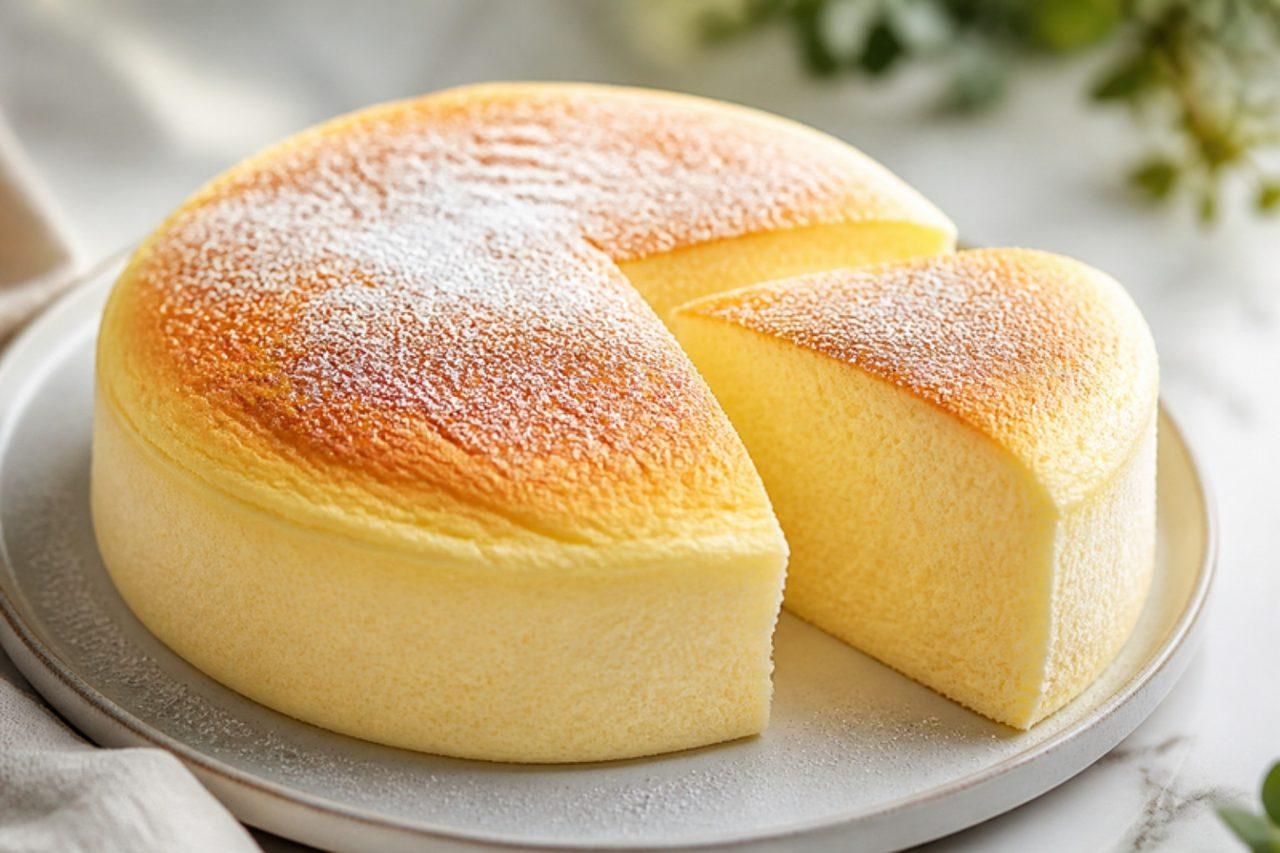
Japanese cheesecake

Japanese soufflé cheesecake (スフレチーズケーキ) is soft, airy and barely sweet, somewhere between a cheesecake and a chiffon sponge, and it wobbles when it comes out of the oven. It became popular in Japanese bakeries in the 1960s and later spread from Osaka and Fukuoka shops around the world. Cream cheese is folded with stiffly whipped meringue and baked slowly in a water bath so it rises without cracking. It takes patience, but the result melts in the mouth. Chef's tip: whip the meringue only to soft-to-medium peaks and bake low and slow in the water bath. Over-whipped egg whites and a hot oven are the two reasons this cake cracks and then collapses.

by KrazyBadal 0 views

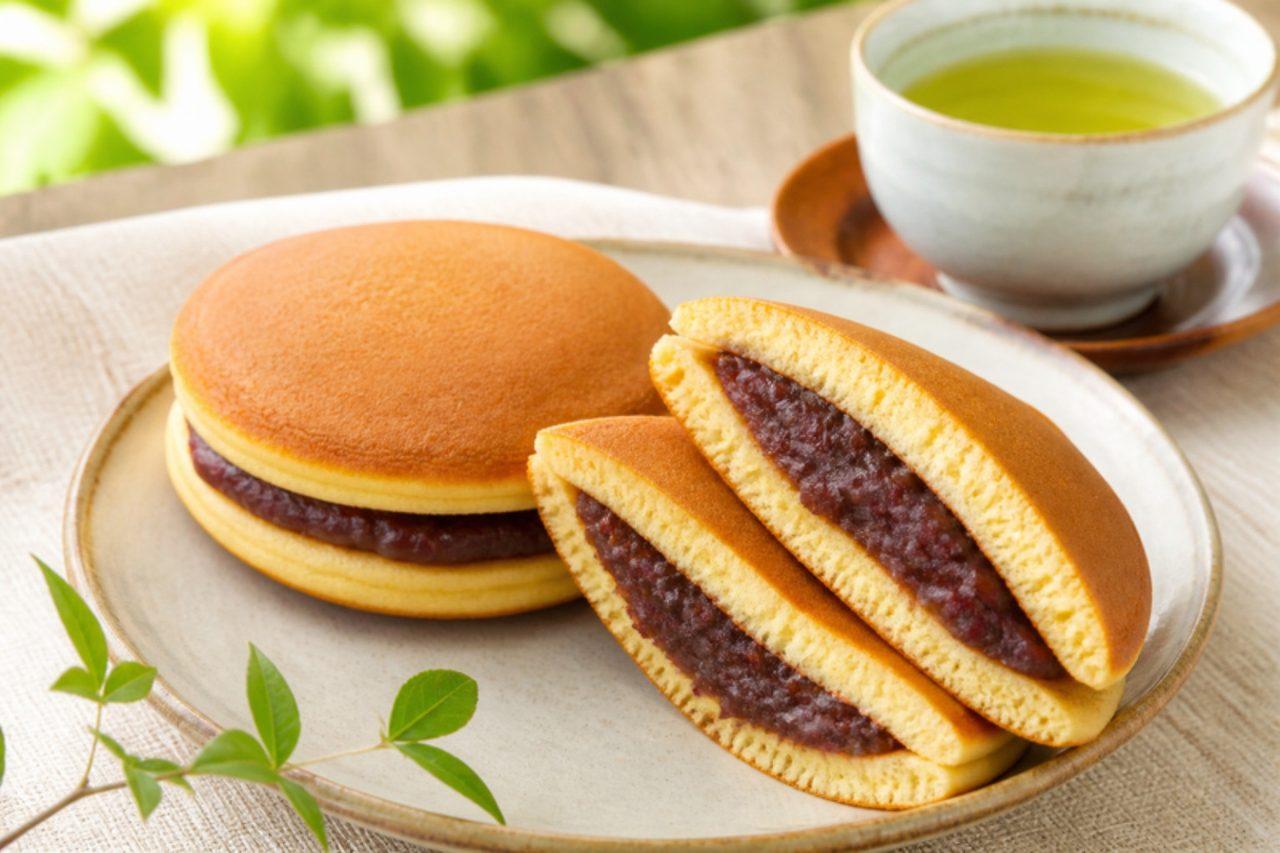
DorayakiHoney pancakes with sweet bean filling

Dorayaki (どら焼き) are two small, golden honey pancakes pressed around a thick layer of sweet red bean paste (anko). They were first sold in their modern form by a Tokyo sweet shop in the early 1900s, and are now in every Japanese bakery and convenience store. The pancakes are soft, moist and slightly springy, with a deep brown, even surface. A good afternoon treat with green tea, and children love them. Chef's tip: wipe the pan almost dry of oil and keep the heat low. That's how Japanese sweet shops get the smooth, evenly brown 'gong' surface (dora means gong); too much oil gives a blotchy, spotted pancake.

by KrazyBadal 0 views

Edamame with sea salt

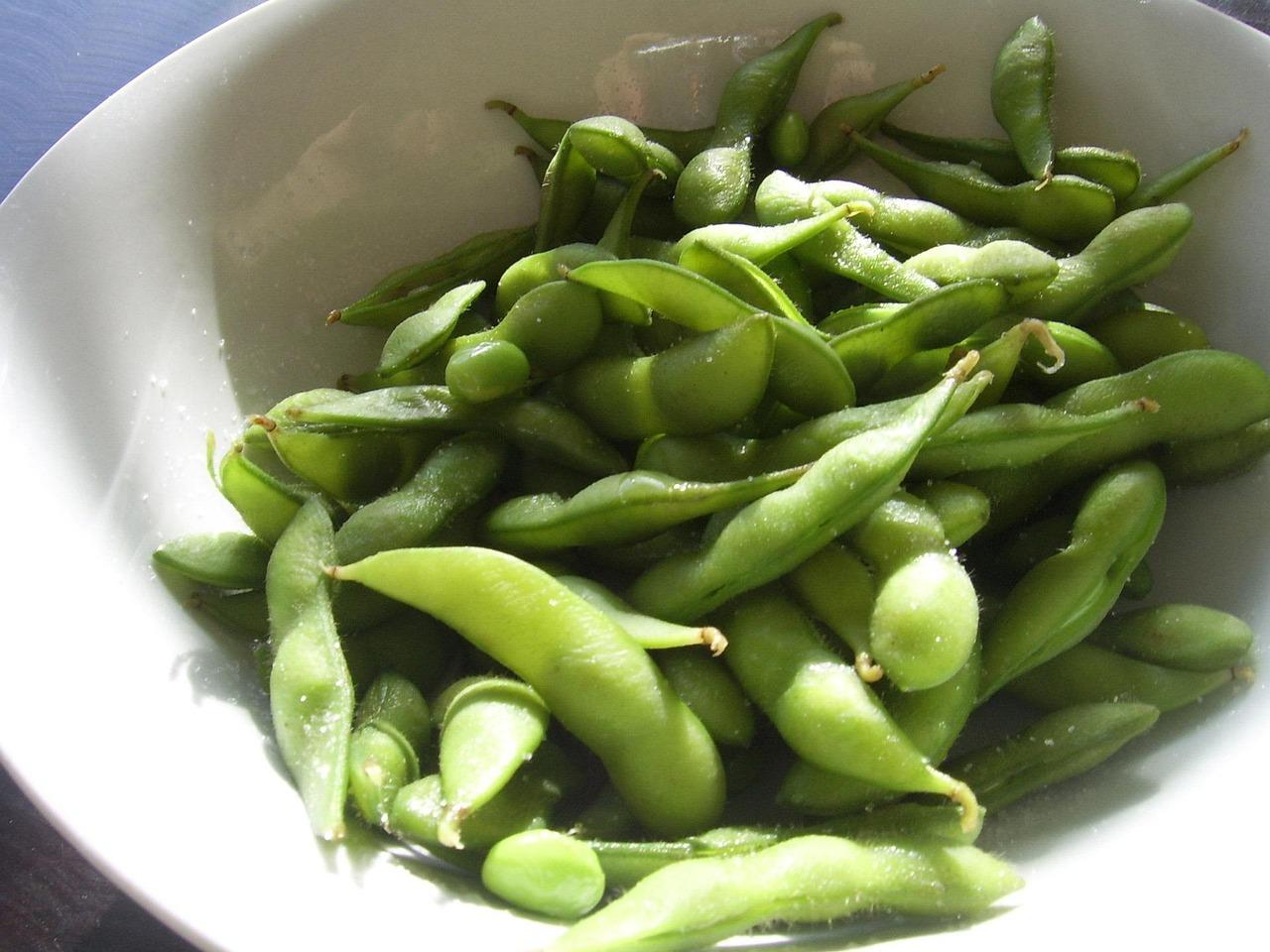
Edamame (枝豆) are young green soybeans cooked in their pods, the classic snack with a cold drink in izakaya and beer gardens all over Japan, especially in summer. You squeeze the beans straight from the salty pod into your mouth. Rubbing the pods with salt before boiling seasons them through and keeps them bright green. They're a good source of plant protein too. Chef's tip: rub the pods with salt before boiling, as izakaya cooks do. It scrubs off the fuzz, keeps the pods bright green and seasons the beans inside.

by KrazyBadal 0 views

Horenso goma-aeSpinach with sesame dressing

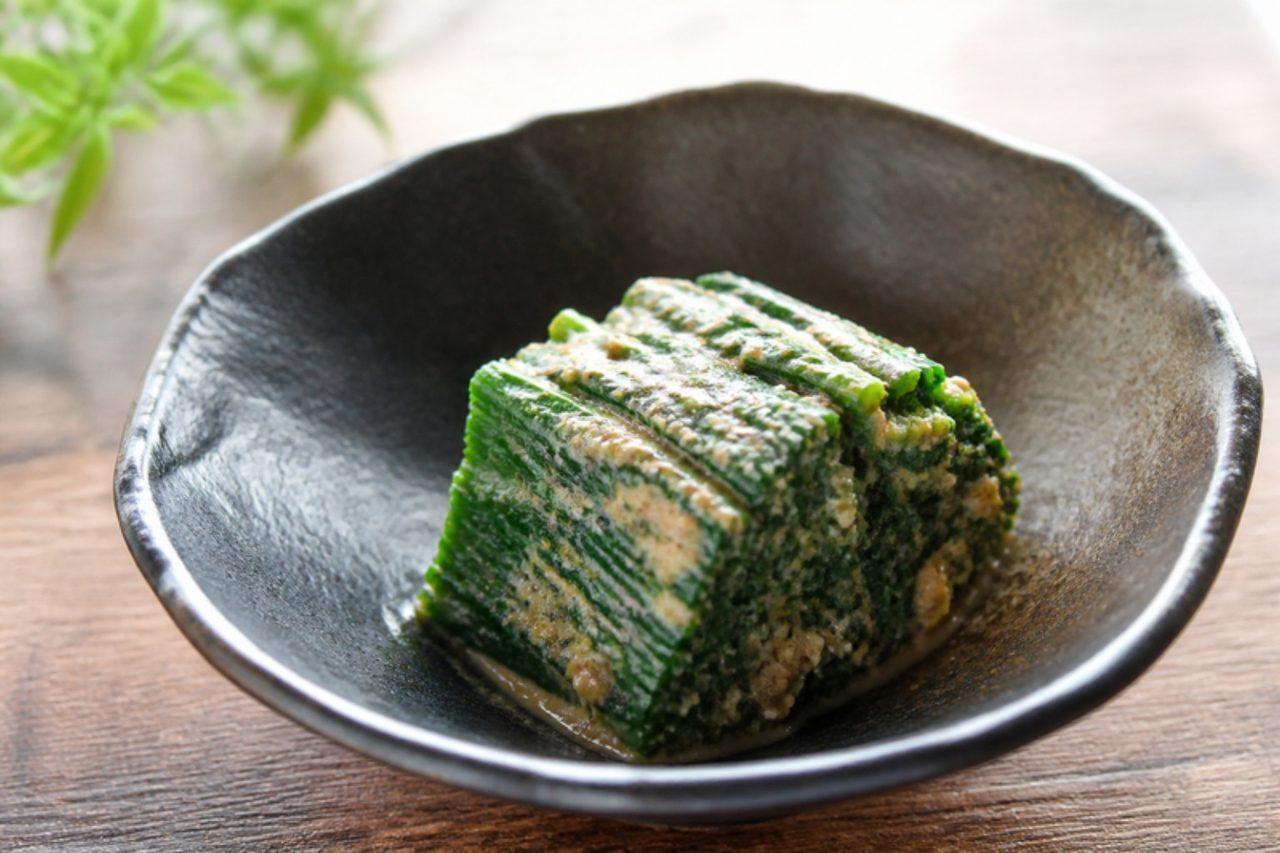
Horenso no goma-ae (ほうれん草の胡麻和え) is one of the most common side dishes in Japanese home cooking and bento boxes. Spinach is blanched for a few seconds, squeezed dry and tossed in a nutty dressing of freshly toasted, crushed sesame seeds with soy and a little sugar. Toasting and grinding the seeds yourself makes all the difference. Serve as one of several small dishes with rice and miso soup. Chef's tip: toast and grind the sesame yourself just before mixing. Ready-ground sesame tastes flat; freshly ground seeds smell like roasted nuts and give the dish its rich flavour.

by KrazyBadal 0 views

SunomonoCucumber and wakame salad

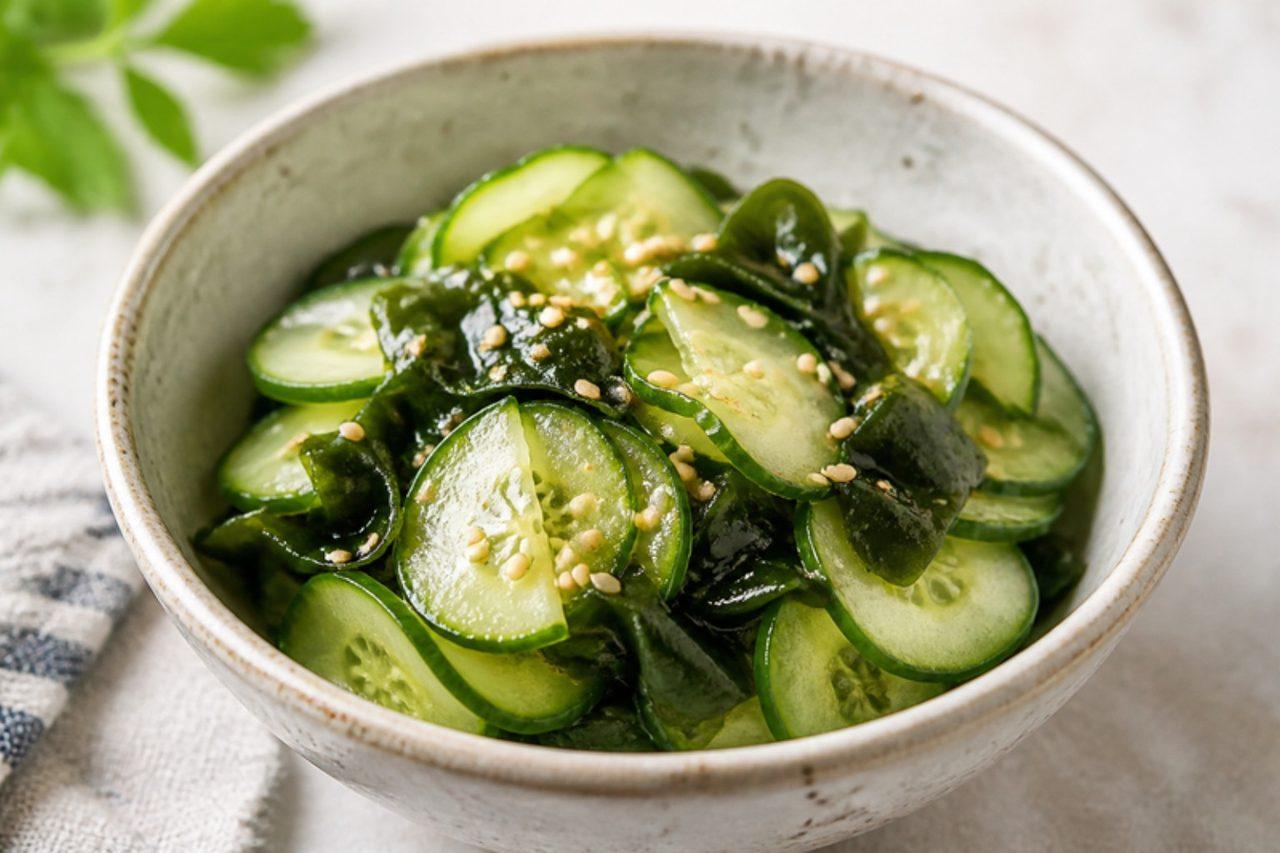
Sunomono (酢の物, 'vinegared things') are small, refreshing dishes served alongside rice and richer food in homes all over Japan. This one, kyūri to wakame no sunomono, is the most common: paper-thin salted cucumber and wakame seaweed in a sweet, gentle rice-vinegar dressing. It cuts through fried food like tempura or gyoza. Ready in ten minutes, and best eaten chilled. Chef's tip: salt the cucumber and squeeze it hard. It draws out the water so the slices turn pleasantly crunchy and drink up the dressing instead of diluting it.

by KrazyBadal 0 views

Goya champuruBitter melon stir-fry

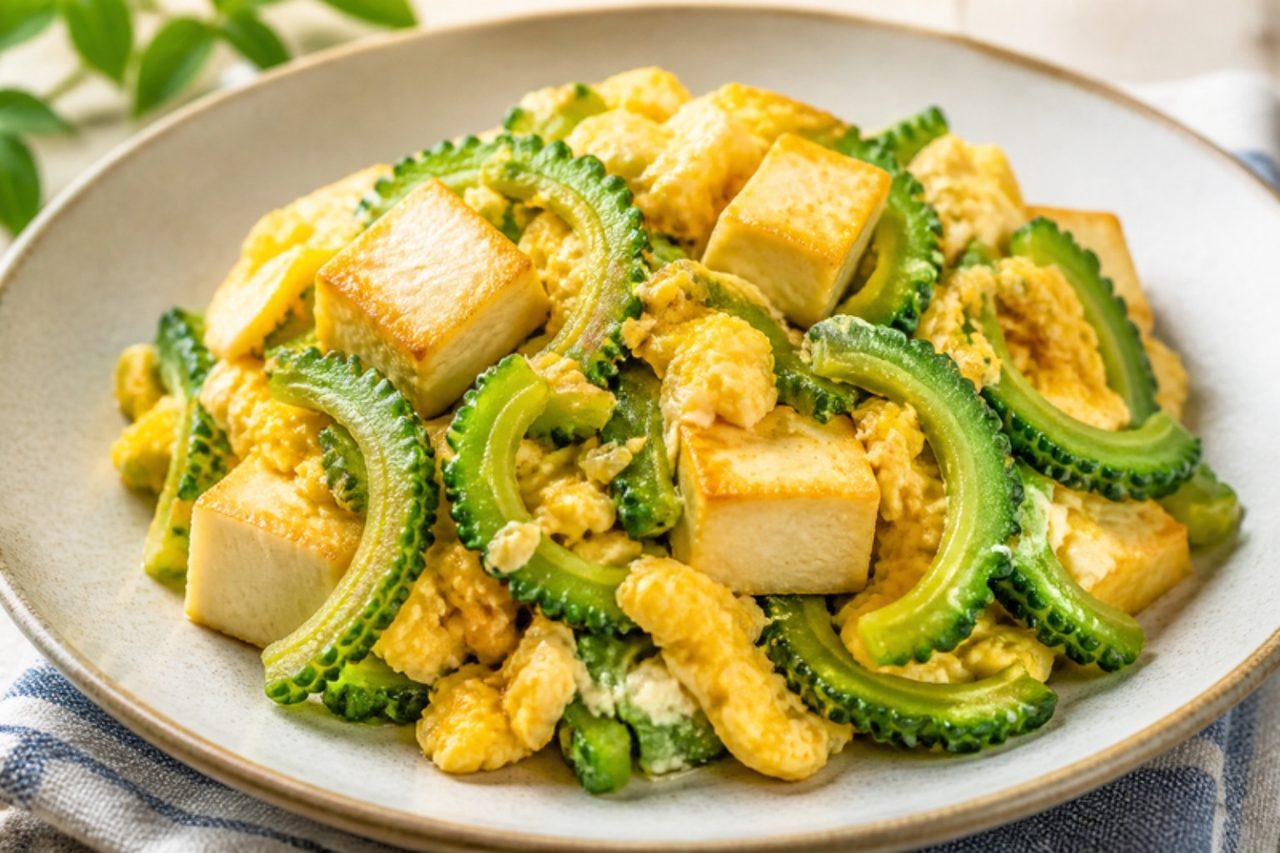
Goya champuru (ゴーヤーチャンプルー) is the best-known dish of Okinawa, Japan's southern islands, where bitter melon (goya) grows on vines in summer. Champuru means 'mixed up' in the Okinawan language: slices of goya are stir-fried with firm tofu and egg, and the bitterness is balanced by soy and the richness of the egg. Pork or Spam is usual; this vegetarian version relies on well-browned tofu. Serve with rice. Chef's tip: scrape out every bit of the white pith from inside the goya. That's where most of the harsh bitterness lives, so a clean scrape gives you the pleasant, refreshing bitterness Okinawans love.

by KrazyBadal 0 views

TamagoyakiRolled omelette

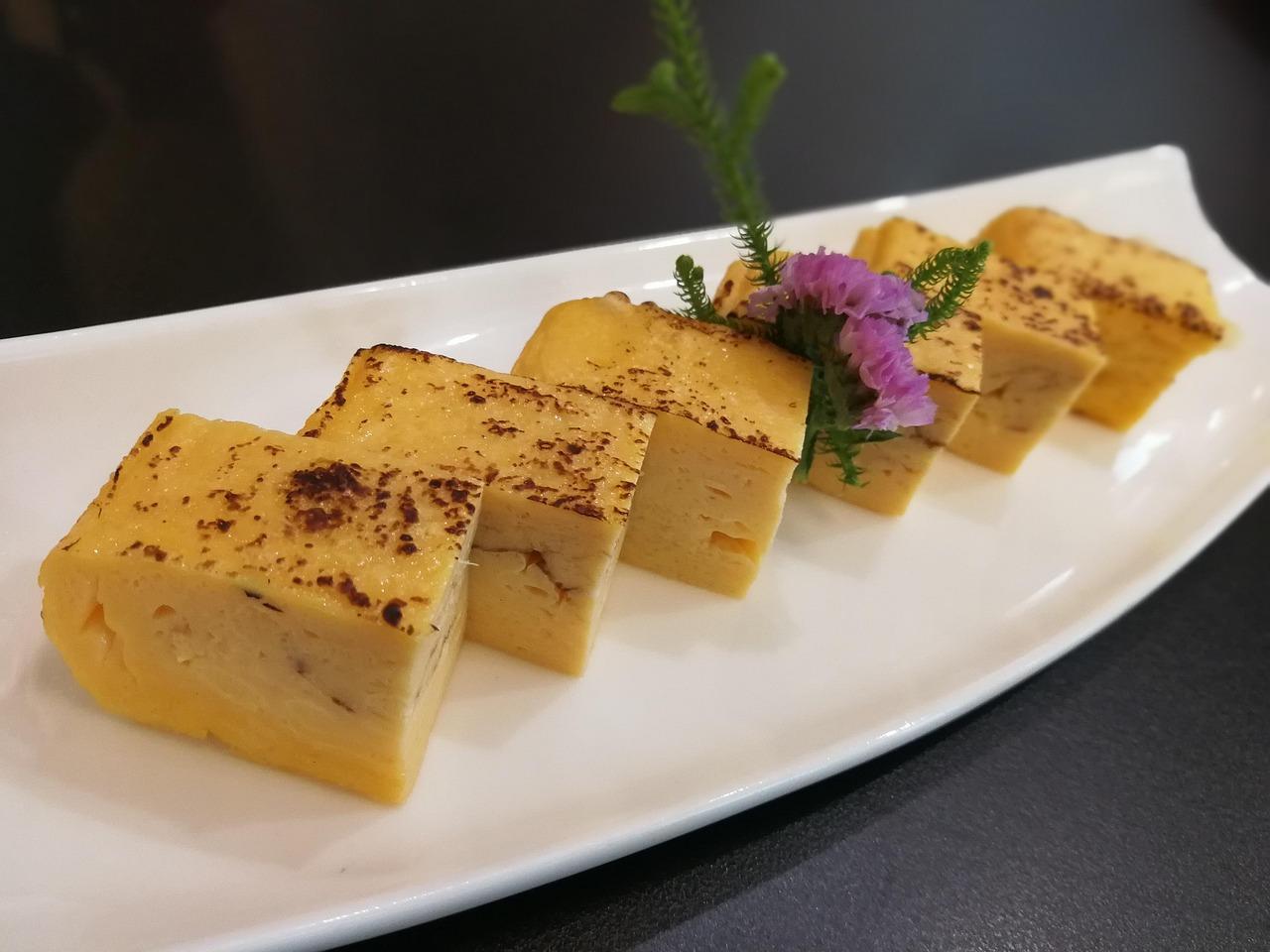
Tamagoyaki (卵焼き) is a rolled omelette made in layers, found in breakfast trays and bento boxes all over Japan. Thin sheets of seasoned egg are cooked one at a time and rolled up around each other, giving soft, springy slices with pretty spiral lines. This is the gently sweet home style; a little soy keeps it savoury. A square tamagoyaki pan helps, but a small round frying pan works too. Chef's tip: keep the heat moderate and the pan well oiled between layers. If the egg browns, the heat is too high; a good tamagoyaki is evenly yellow with just a few golden patches.

by KrazyBadal 0 views

Vegetable tempura

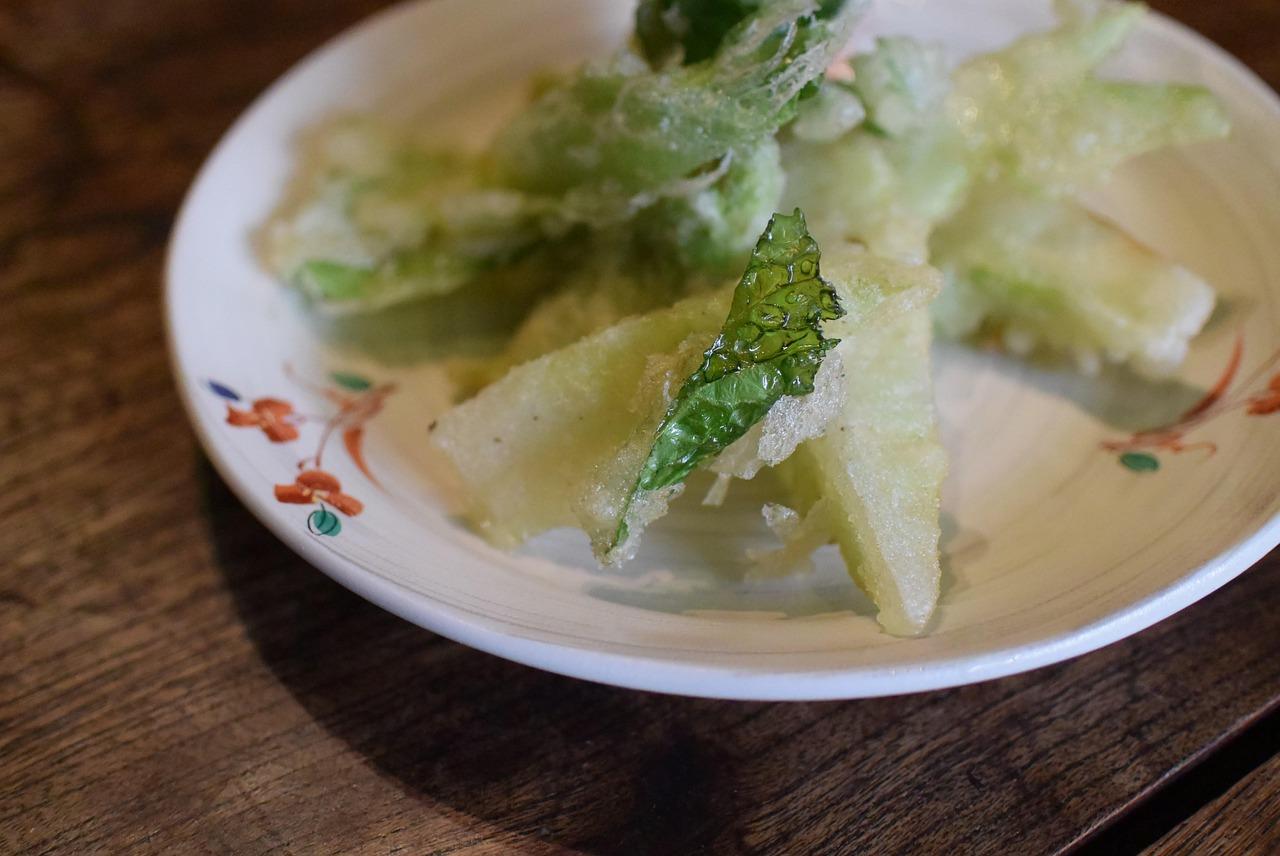
Tempura (天ぷら) became a Tokyo street food in the Edo period, when stalls fried it to order by the city's riverbanks. The secret to the thin, lacy coating is an ice-cold, lumpy batter mixed at the last second and vegetables fried in small batches. Sweet potato, aubergine, pepper, shiitake and green beans all work well. Serve straight from the pan with a light dipping sauce and grated daikon. Chef's tip: keep everything cold. Use ice-cold water, mix the batter only seconds before frying, leave it lumpy, and stand the bowl in a larger bowl of ice. Cold batter hitting hot oil is what makes the lacy, crackly shell that Tokyo tempura masters prize.

by KrazyBadal 0 views

Vegetable gyoza

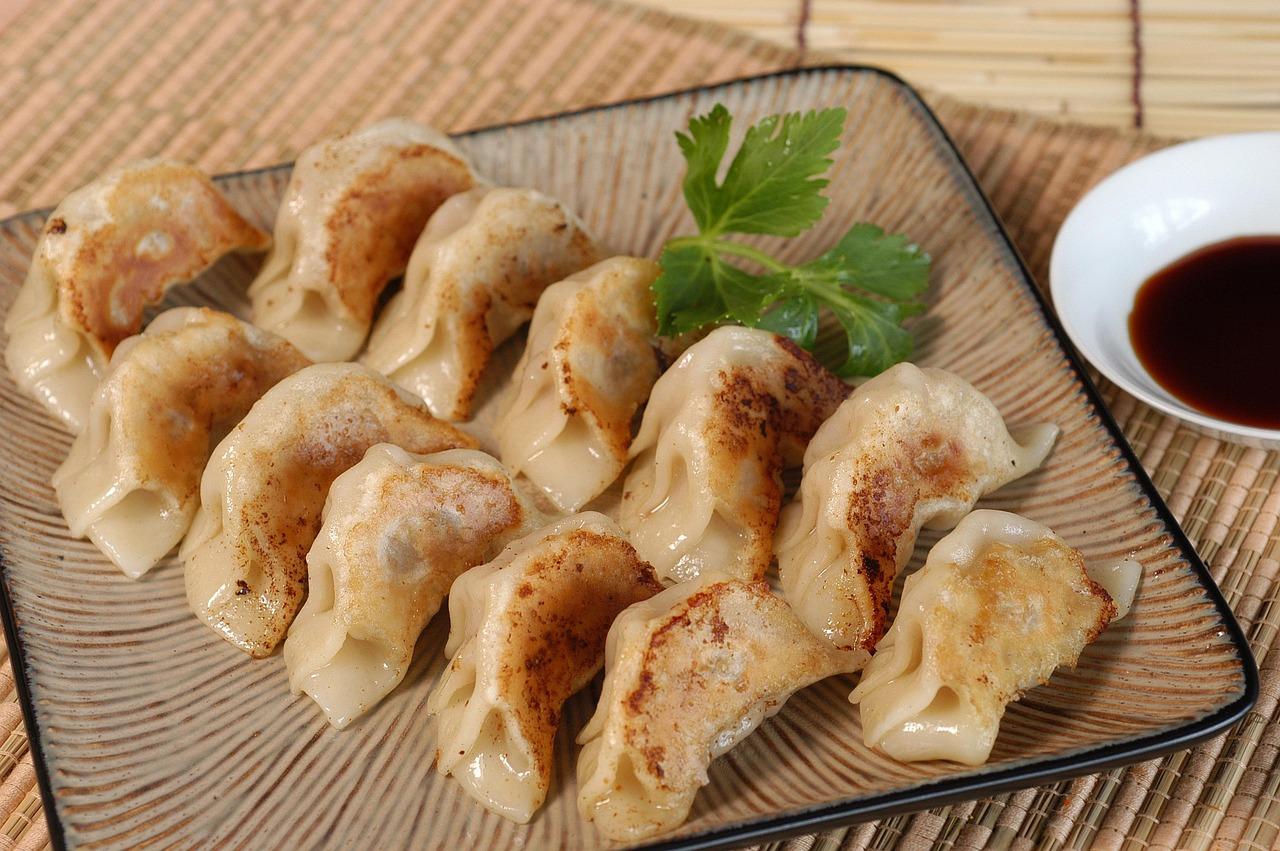
Gyoza (餃子) came to Japan from China and became a passion in Utsunomiya, a city north of Tokyo that calls itself the gyoza capital, with a gyoza statue outside the station. These vegetarian dumplings are filled with salted cabbage, shiitake, tofu and garlic chives. They're pan-fried and then steamed, so the bottoms turn crisp and golden while the tops stay soft. Shape a big batch and freeze some for later. Chef's tip: squeeze the salted cabbage really hard. Watery filling makes soggy, torn gyoza; a dry filling keeps the wrappers sealed and the bottoms crisp.

by KrazyBadal 0 views

Hiroshima okonomiyakiLayered cabbage and noodle pancake

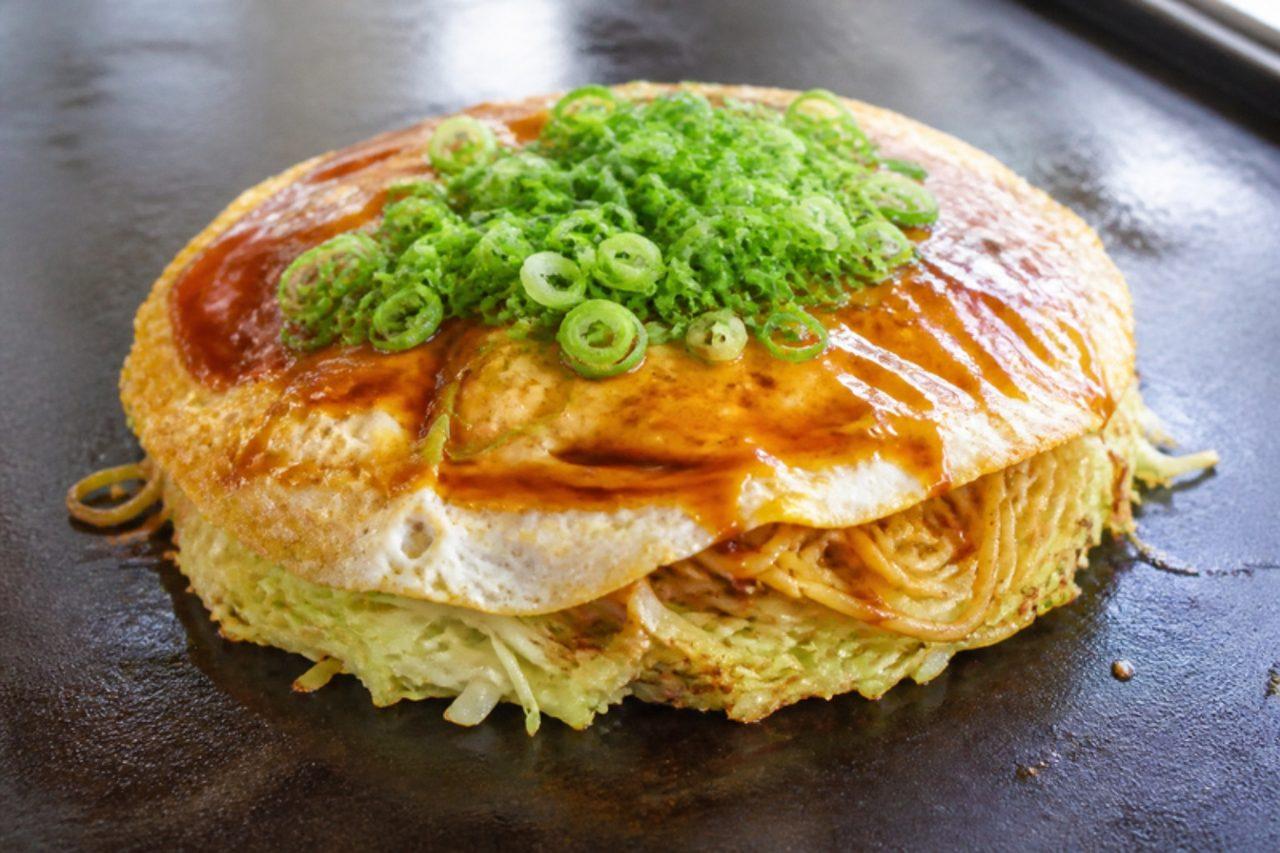
Hiroshima okonomiyaki (広島風お好み焼き) is built in layers rather than mixed: a thin crêpe, a tall heap of cabbage and bean sprouts, a layer of fried noodles and a fried egg, all pressed together on the griddle. It's the city's signature dish, and Hiroshima has hundreds of small okonomiyaki counters. Pork belly is the usual layer; this vegetarian version leaves it out and adds mushrooms. Take your time with the layering; it's worth it. Chef's tip: shred the cabbage as finely as you can and pile it high; it looks far too much, but it steams down by half under the crêpe, and that sweet, soft cabbage is the heart of the Hiroshima style.

by KrazyBadal 0 views

Showing 90 of 210 recipes

Page 9 of 9

More collections