Skip to content
Mămăligă
Featured recipe

Mămăligă

Cornmeal mush

Mămăligă is the golden cornmeal staple of the Romanian countryside, from the hill villages of Oltenia to the farms of Maramureș, where it was once eaten more often than bread. It is cooked in water until thick enough to hold a spoon upright, turned out onto a wooden board and cut with a thread, then eaten hot with crumbled salty brânză and a cold spoon of smântână (soured cream). Unlike Ukrainian banosh, which is cooked in sour cream, mămăligă is plain cornmeal and water; the richness goes on top. It sits beside stews such as tocăniță or under a fried egg for supper. Chef's tip: rain the cornmeal in through your fingers while whisking, and keep stirring from the bottom; dumping it in at once is the classic mistake that leaves raw, gritty lumps.

Read more 0 views

What to eat today?

Around the world

Today's trip: Peruvian

A new country every day, from every cuisine on the site.

Peruvian

Tacacho

Mashed roasted green plantain balls 35 minMore from Peruvian (111) →

This week's collection

Kid-friendly dinners
772 recipes · a new collection every Monday

Coming up

All occasions →

Latest recipes

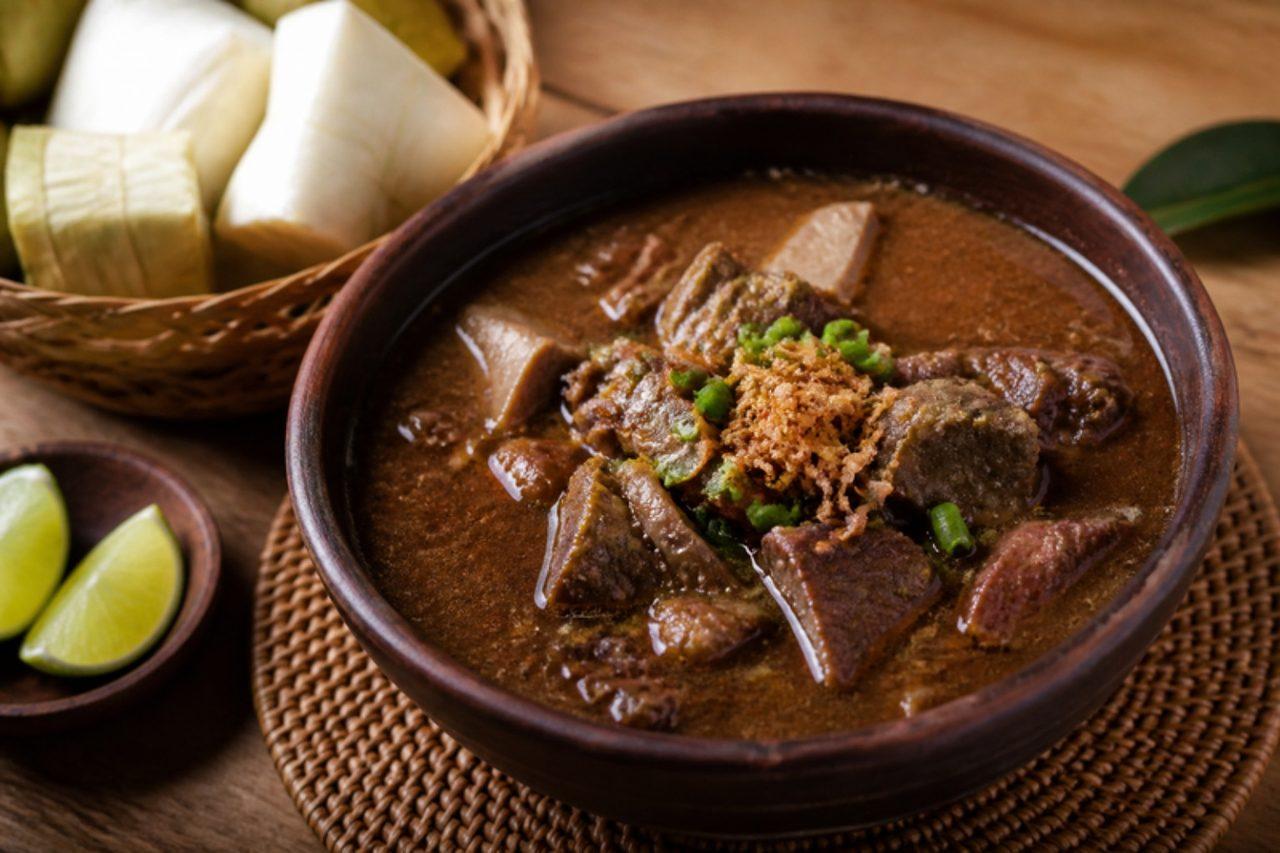
Coto MakassarBeef and peanut soup

Before the sun is fully up over Makassar's harbour, coto warungs are already serving dockers and office workers alike from huge clay-coloured pots. This South Sulawesi soup is thick, brown and opaque, its body coming from roasted peanuts ground almost to flour and simmered into a broth made with the cloudy water from rinsing rice. Diced beef (and traditionally offal) sits in a nutty, cumin-and-pepper broth that's eaten with diamond-shaped ketupat rice cakes broken into the bowl, plus lime and a spoon of chilli. Chef's tip: grind the cooled peanuts in short bursts and stop while they're still sandy; a few seconds too long and you get peanut butter that turns the soup claggy.

by KrazyBadal 0 views

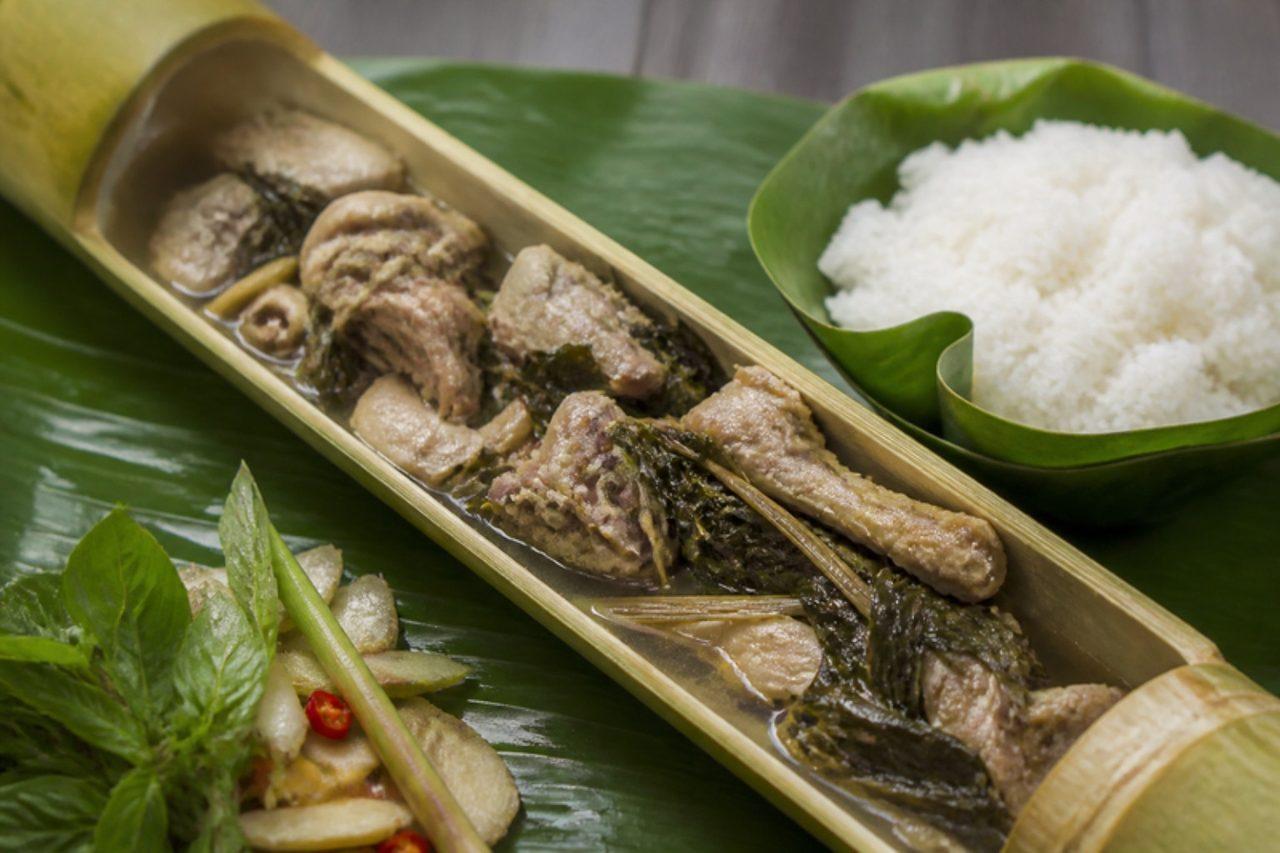
Manok pansohBamboo-cooked chicken

Iban longhouses in Sarawak cook manok pansoh for Gawai, the harvest festival at the start of June: chicken pieces packed into lengths of fresh bamboo with lemongrass, ginger, shallots and tapioca leaves, plugged with leaves and leaned over an open fire. No stock or water goes in; the chicken steams in its own juices, which turn into a clear, herby broth that tastes faintly of green bamboo. At home a lidded casserole wrapped in banana leaf gets you very close. Serve it with plain rice, and with the broth spooned over. Chef's tip: bruise the lemongrass and ginger hard with a pestle before packing; with no added liquid, crushed aromatics are what flavour the juices.

by KrazyBadal 0 views

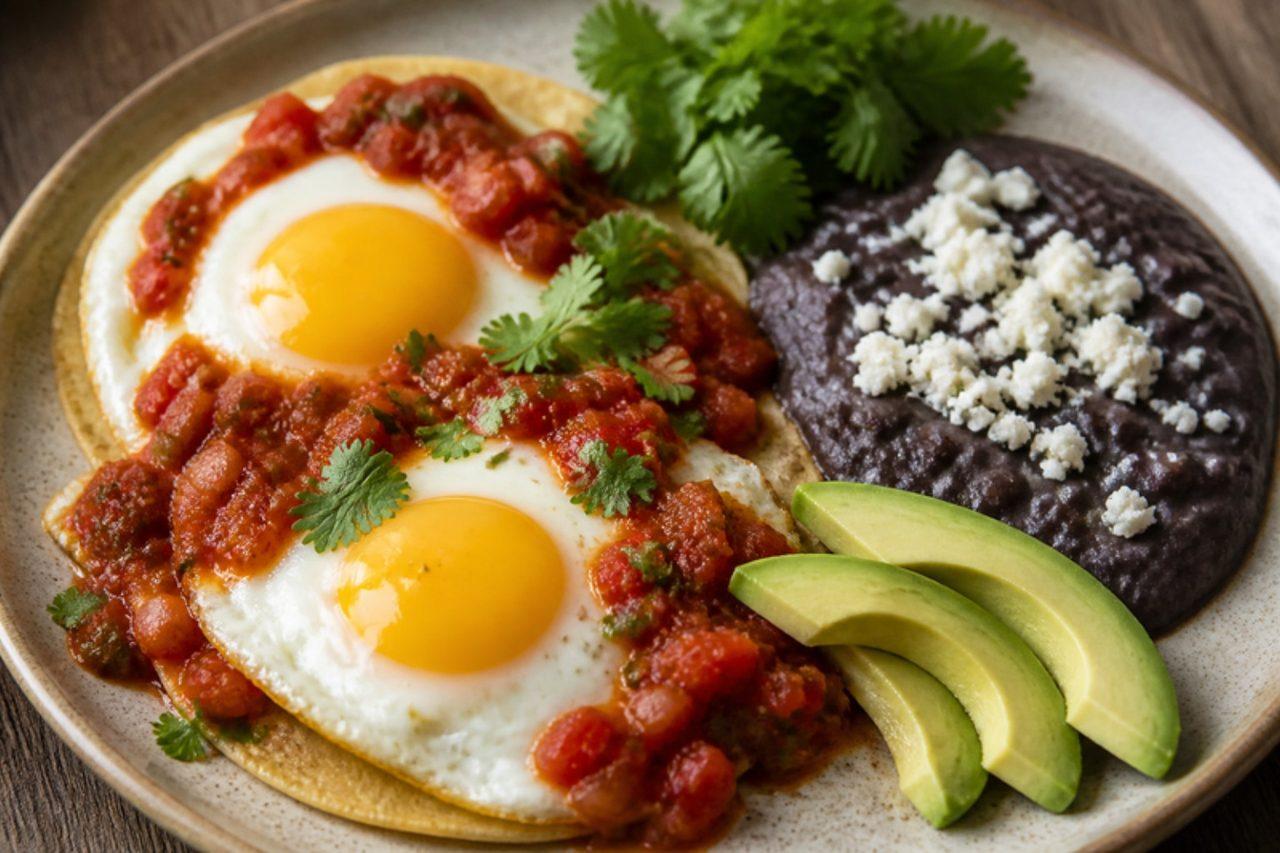
Huevos rancherosFried eggs on tortillas

Huevos rancheros, 'ranch-style eggs', is the big country breakfast eaten all over Mexico: corn tortillas briefly fried in oil, topped with fried eggs and drowned in salsa ranchera, a warm, chunky sauce of charred tomatoes and serrano chillies, with refried beans on the side. The runny yolks mix with the spicy tomato sauce and the soft tortilla soaks it all up. Serve with avocado and coffee. Choose queso fresco made with vegetarian rennet. Chef's tip: fry the tortillas only for a few seconds a side; you want them pliable with crisp edges, not hard like tostadas, so you can cut them with a fork.

by KrazyBadal 0 views

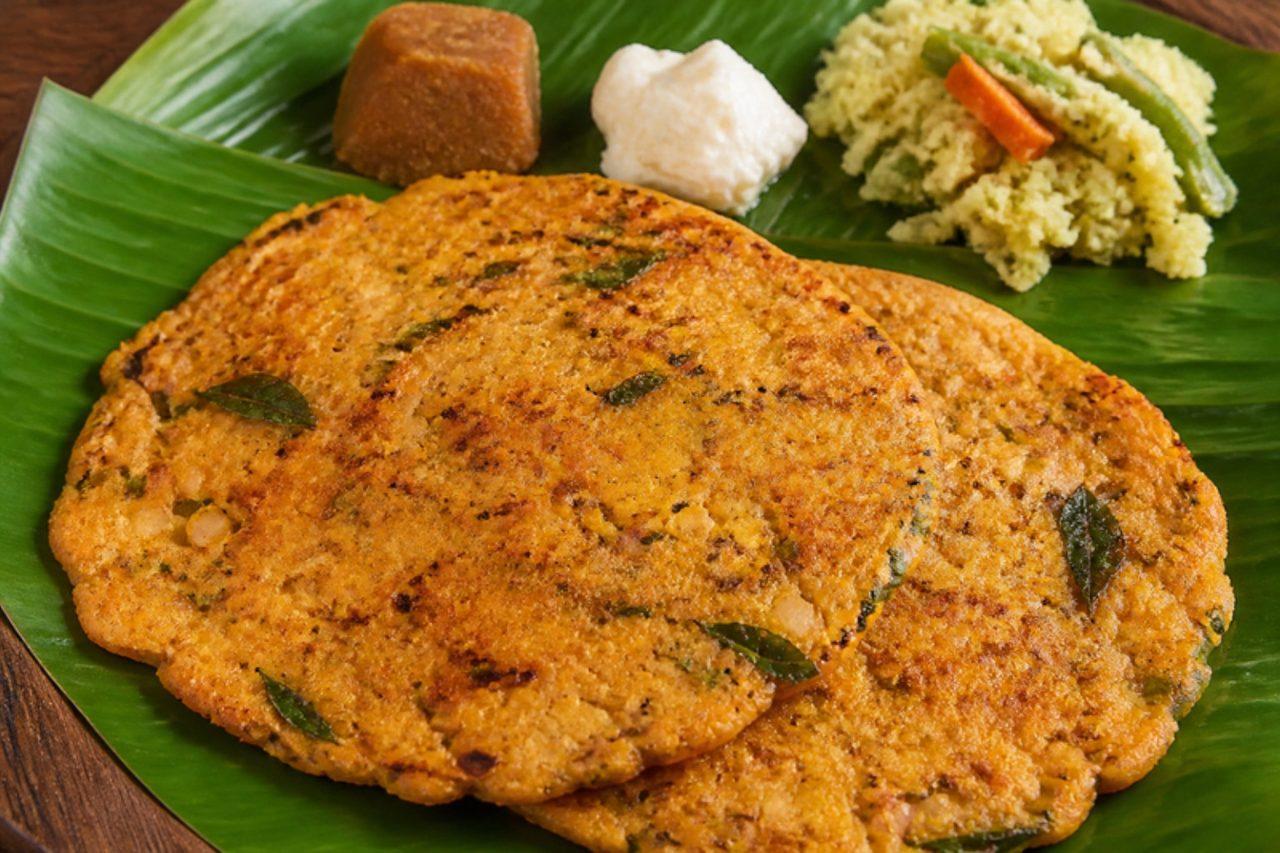
AdaiRice and lentil pancakes

Adai is the hearty cousin of the dosa, made in Tamil homes for a weekend breakfast or an early dinner, and in Tamil Brahmin families traditionally served with avial and a lump of jaggery and white butter. Rice and a mix of toor, chana, urad and moong dal are soaked and ground coarsely with red chillies, ginger and hing, so the batter needs no fermenting at all. The pancakes are thicker than dosa, crunchy at the edges and soft and gritty in the middle, with a deep, spicy, lentil flavour and plenty of protein. Chef's tip: grind the batter like coarse semolina, not silky; that texture is what gives adai its crisp, lacy rim.

by KrazyBadal 1 views

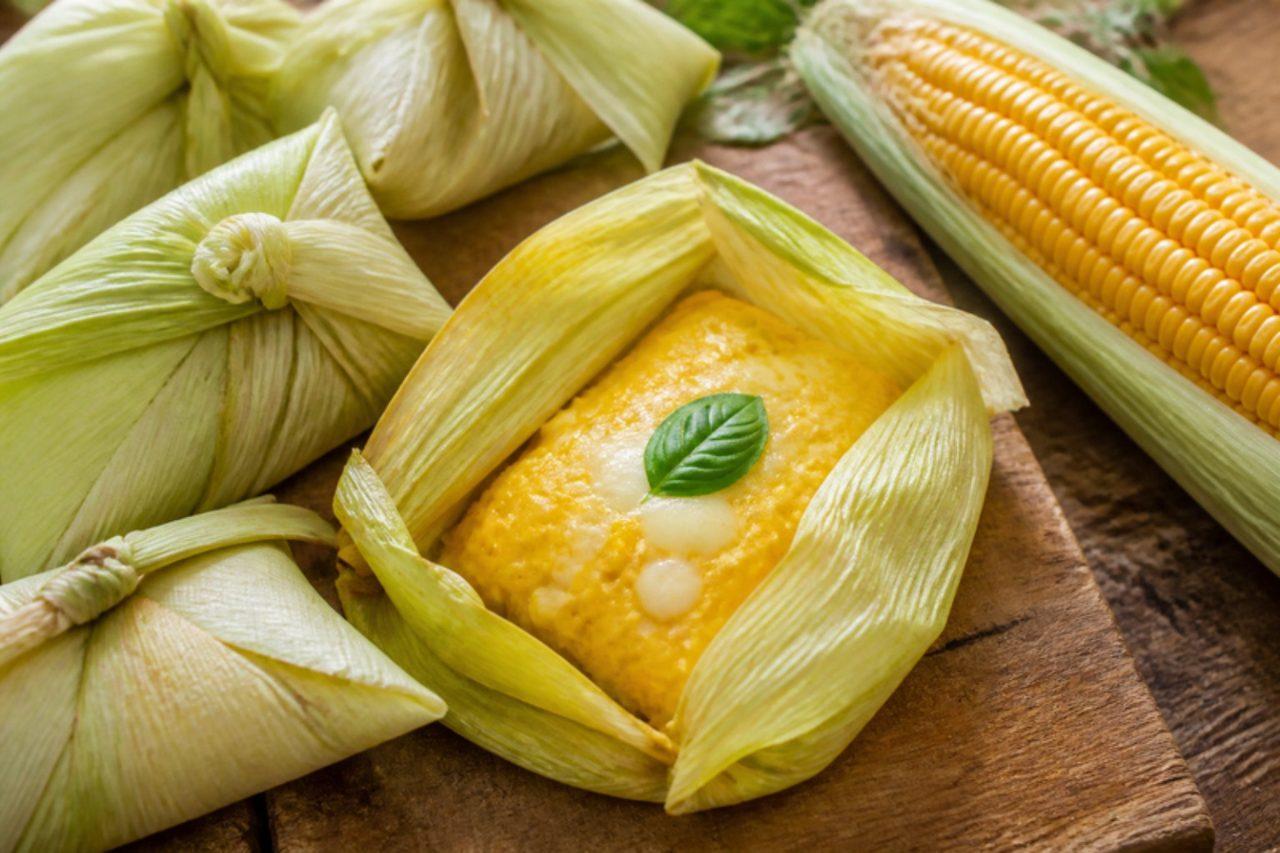
Humita en chalaSteamed corn and squash parcels

In Salta, Jujuy and Tucumán in Argentina's Andean northwest, humitas are made in late summer when the corn is young and milky. Fresh kernels are grated off the cob and cooked with onion, red pepper, squash and a little sweet paprika, then bound with cheese, wrapped in the fresh green husks (chala), tied with strips of husk and simmered. They come out soft, sweet and savoury, like a delicate corn pudding. Chef's tip: grate the corn on a box grater; it releases the milky juice that sets the humita, which cut kernels never will.

by KrazyBadal 0 views

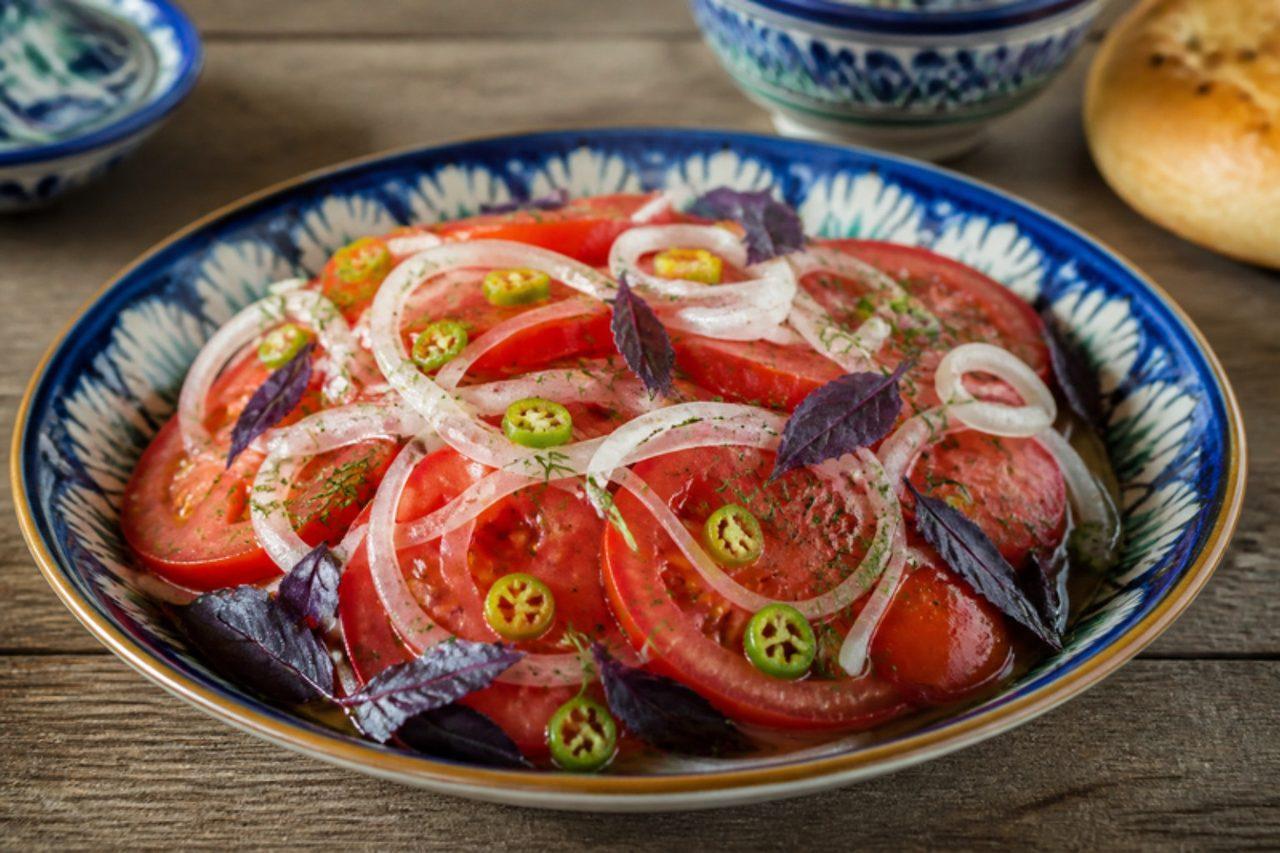
AchichukTomato and onion salad

Achichuk, which means 'sharp' in Uzbek, is the thin-sliced tomato and onion salad that sits beside every platter of plov from Bukhara to the Ferghana Valley. In summer Tashkent markets overflow with heavy, sweet tomatoes and this salad is little more than those tomatoes, rings of mild onion, a hot green chilli, salt and black pepper, with a fistful of basil (reyhan) or dill. Some families call it shakarob. It is meant to cut through the richness of rice cooked in oil, so it has no dressing beyond the juice the tomatoes give. Chef's tip: soak the onion in salted iced water for 10 minutes; it loses its harsh bite but stays crunchy, which is how Uzbek cooks get the onion so gentle.

by KrazyBadal 0 views

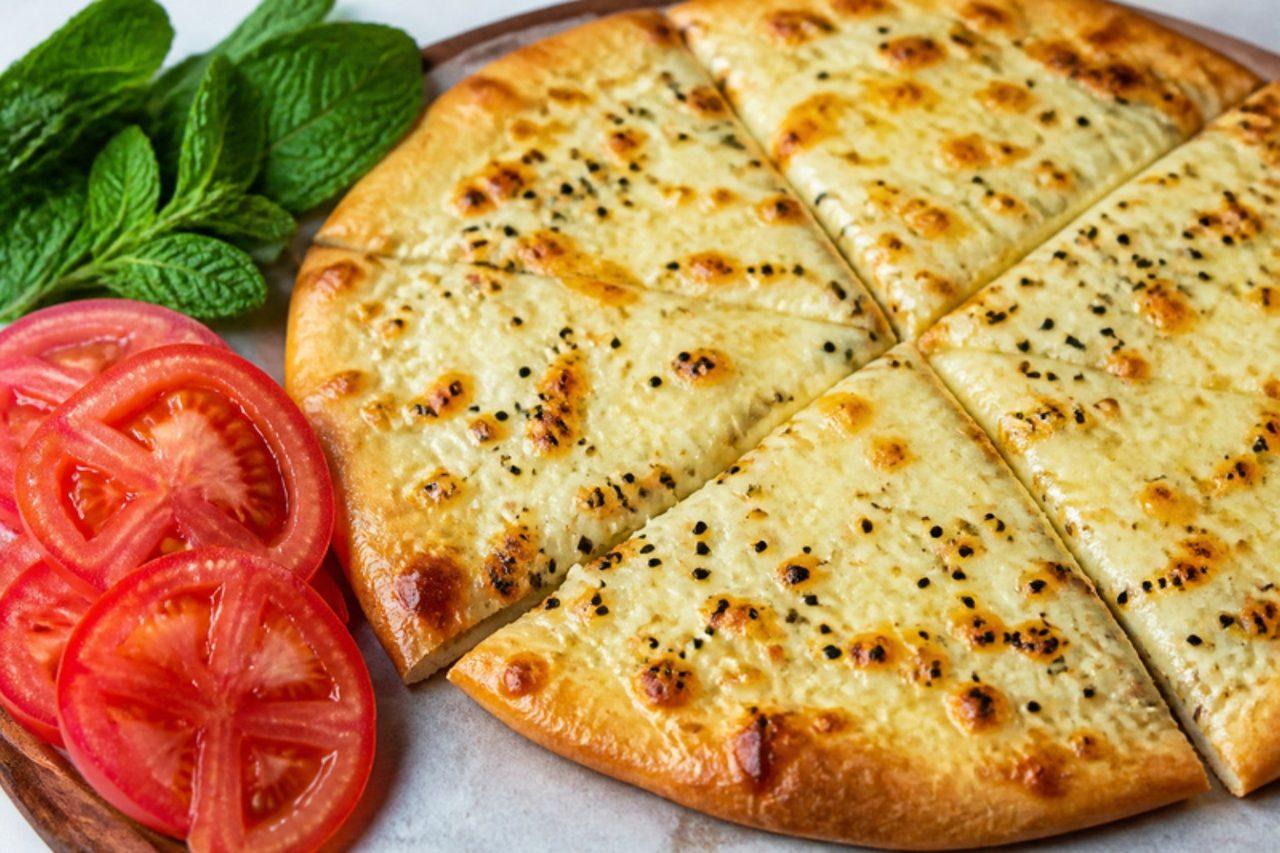
Man'oushe jibnehCheese flatbread

On the street corners of Beirut and Tripoli the cheese man'oushe, bi jibneh, is the one children queue for: the same soft bakery dough as the za'atar kind but covered with salty white akkawi cheese mixed with stretchy mozzarella and a scatter of nigella seeds, baked until the cheese bubbles and freckles brown. It is a weekend breakfast and an after-school snack, eaten folded with a few slices of tomato and a sprig of mint. Akkawi is very salty, and the usual mistake is to use it straight from the packet, which makes the bread almost inedible; soak it first. Check the label for a vegetarian (microbial) rennet; many supermarket mozzarellas and some halloumis use it, and halloumi works if you can't find akkawi. Chef's tip: grate the cheese coarsely and keep a 1 cm bare rim, so the edge puffs up into a crisp border that holds the melted cheese in.

by KrazyBadal 0 views

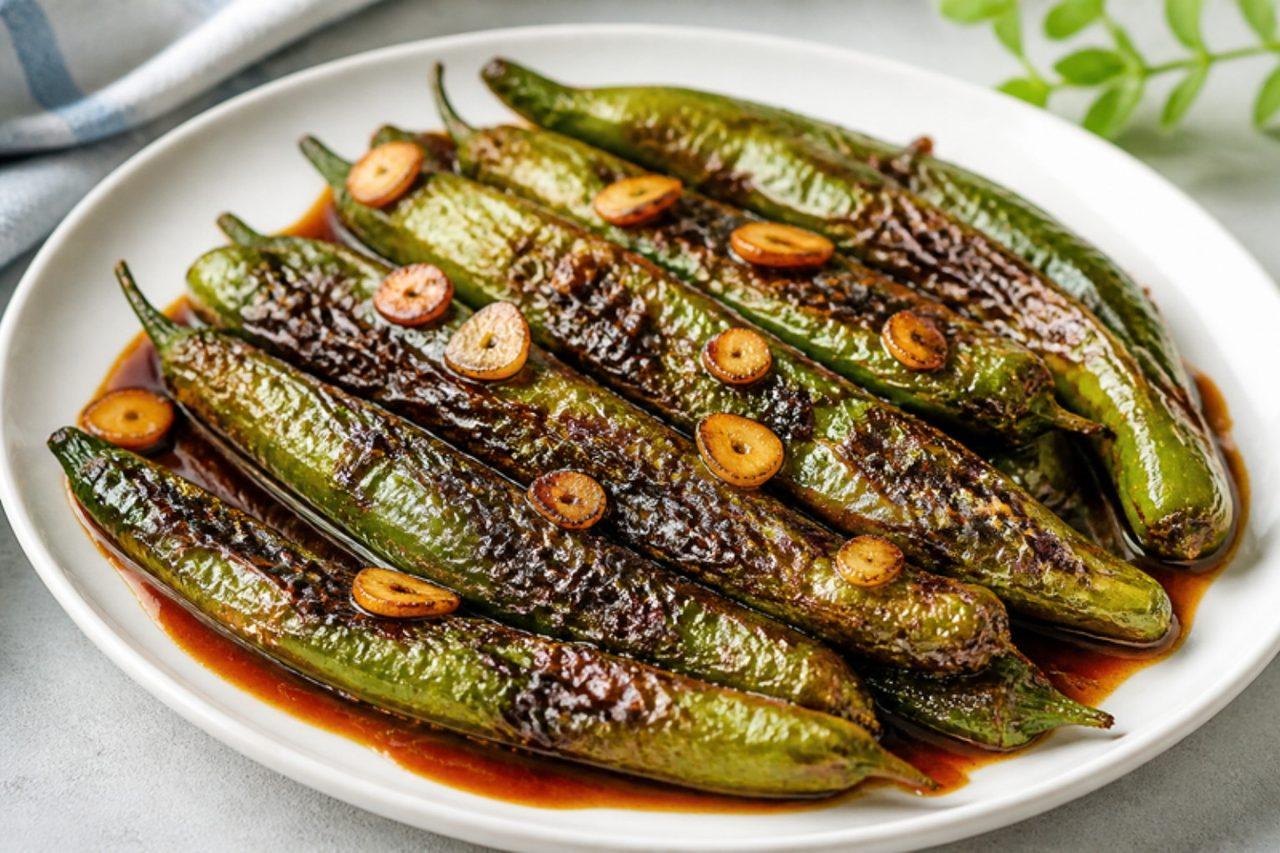
Hunan tiger-skin peppersBlistered green chillies in sweet-sour glaze

Hu pi jian jiao, 'tiger-skin peppers', is everyday home cooking in Hunan, the province famous for loving chilli even more than Sichuan does. Long green peppers are pressed into a hot, dry wok until their skins blacken in stripes like a tiger's coat, then glazed with soy, black vinegar and a touch of sugar. In Changsha it's eaten with plenty of rice, which tames the heat. Chef's tip: press the peppers flat with a spatula as they cook so the whole skin touches the iron and blisters evenly.

by KrazyBadal 0 views

Hünkar beğendiLamb on smoked aubergine purée

Hünkar beğendi is a dish from the Ottoman palace kitchens of Istanbul; its name means 'the sultan was pleased', and a well-known story links it to a royal banquet of the 1860s. Today it is a special Sunday or guest dish in Istanbul homes and old-style lokanta restaurants. Tender chunks of lamb are braised slowly with tomato and peppers, then spooned over beğendi, a silky purée of fire-charred aubergine whisked into a light cheese sauce. The smoky, creamy base against the rich stew is the whole point. Chef's tip: char the aubergines directly over a gas flame until the skins are black and collapsing; the oven alone won't give that smoky flavour.

150 minTurkishMeat
by KrazyBadal 0 views

Man'oushe za'atarZa'atar flatbread

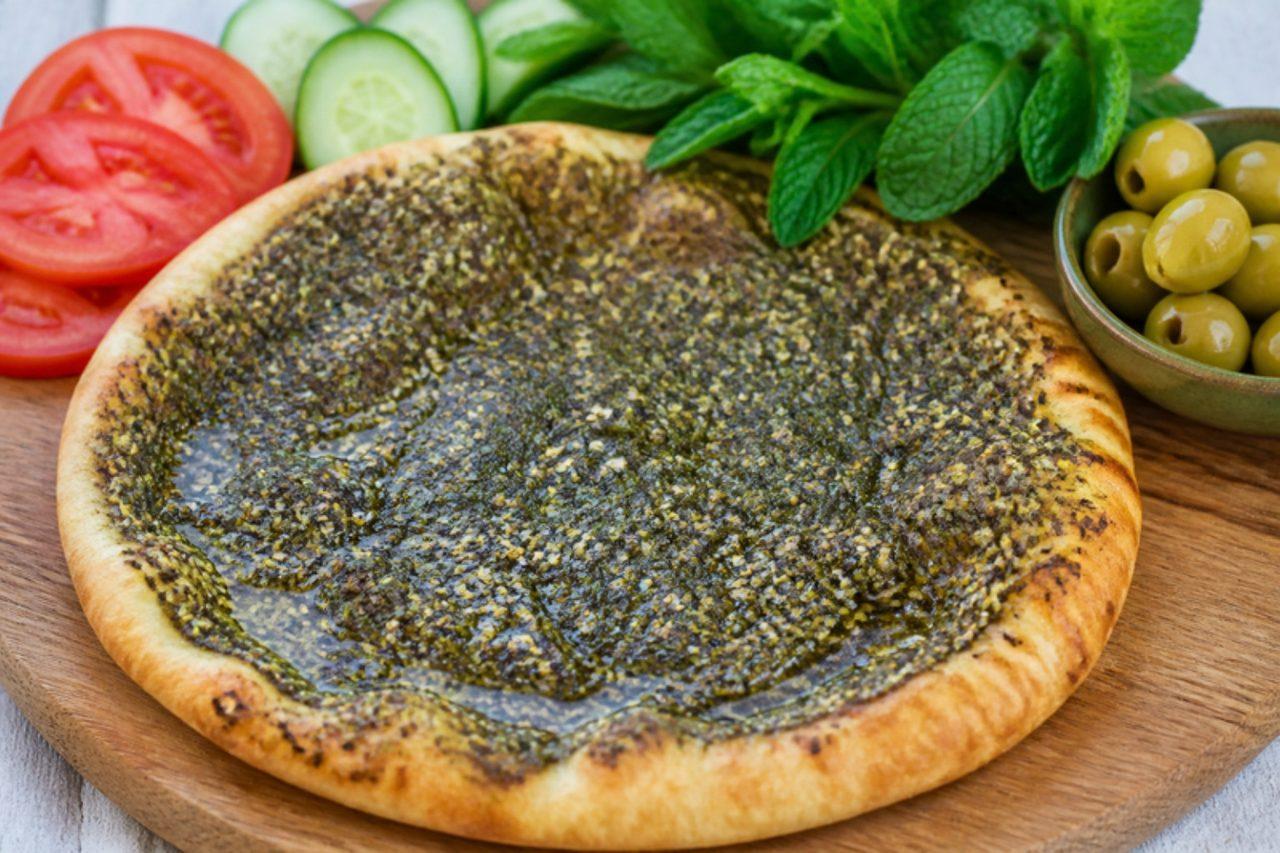
Ask anyone from Beirut what breakfast is and the answer is often man'oushe bi za'atar: a round of soft dough pressed with fingertips, spread with a paste of za'atar and olive oil and baked in the corner bakery's hot oven, then folded in paper and eaten on the way to school or work. At home it is rolled around sliced tomato, cucumber, olives and fresh mint. The most common mistake is too little oil in the topping, which leaves the za'atar dry and dusty, or baking it too long so the herbs scorch and turn bitter; the paste should be loose and spreadable and the bread pulled out once the rim is just golden. Chef's tip: get the oven and tray properly hot, at its highest setting for 20 minutes, so the dough puffs and blisters before the topping has time to burn.

by KrazyBadal 0 views

Momiji manjuMaple leaf sponge cakes

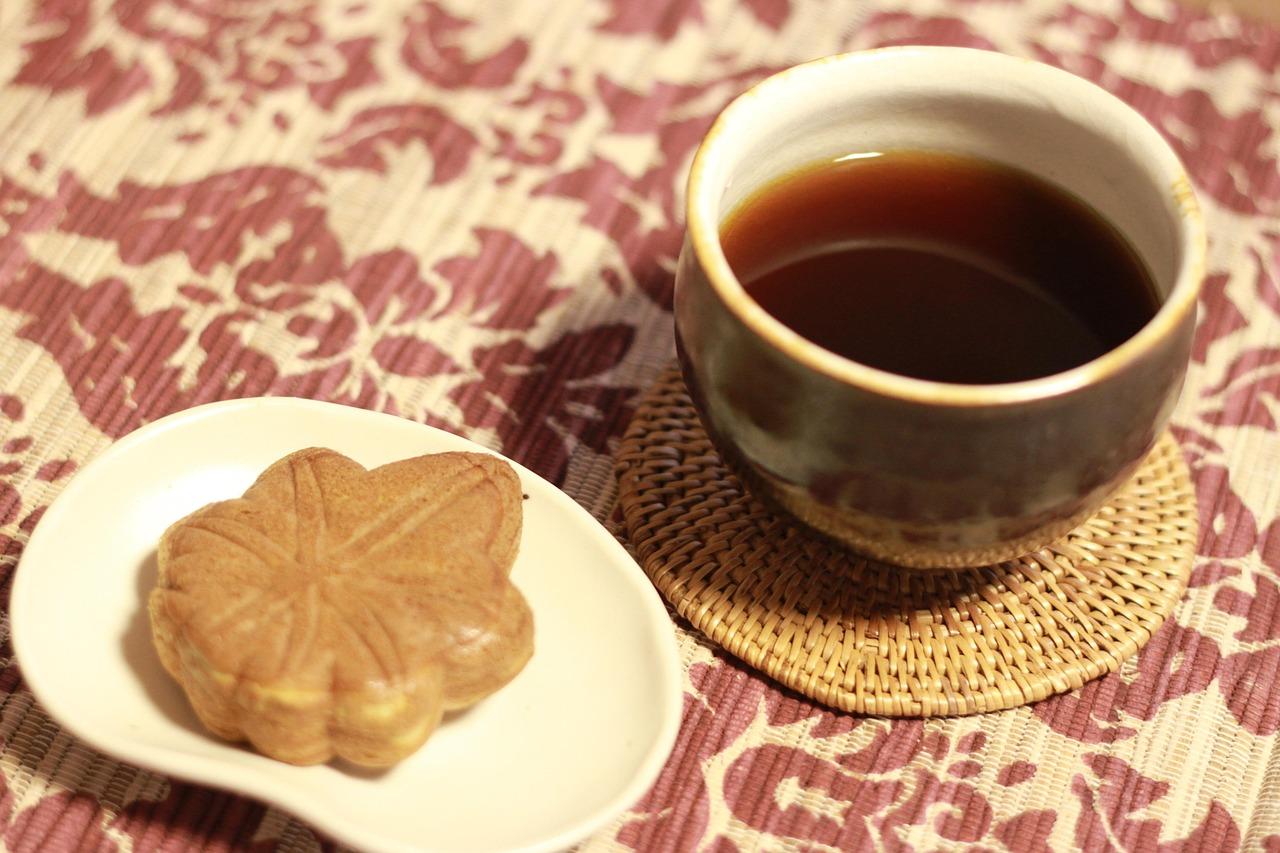
Momiji manju are the souvenir of Miyajima, the sacred island off Hiroshima famous for its floating red torii gate and its maple trees, which turn scarlet each November. A confectioner there first baked them around 1906, and today shops along the island's main street still turn them out of iron moulds while visitors watch. The cake is a soft, honey-scented sponge, the filling smooth red bean paste. Tokyo's Asakusa sells a near twin, ningyo-yaki, baked in the shapes of dolls and temple lanterns; this recipe makes both, depending on your mould. Serve with green tea. Chef's tip: rest the batter for 30 minutes before baking. The flour hydrates, the bubbles settle and the cakes come out smooth and evenly brown.

by KrazyBadal 0 views

Akoho sy voanioChicken in coconut milk

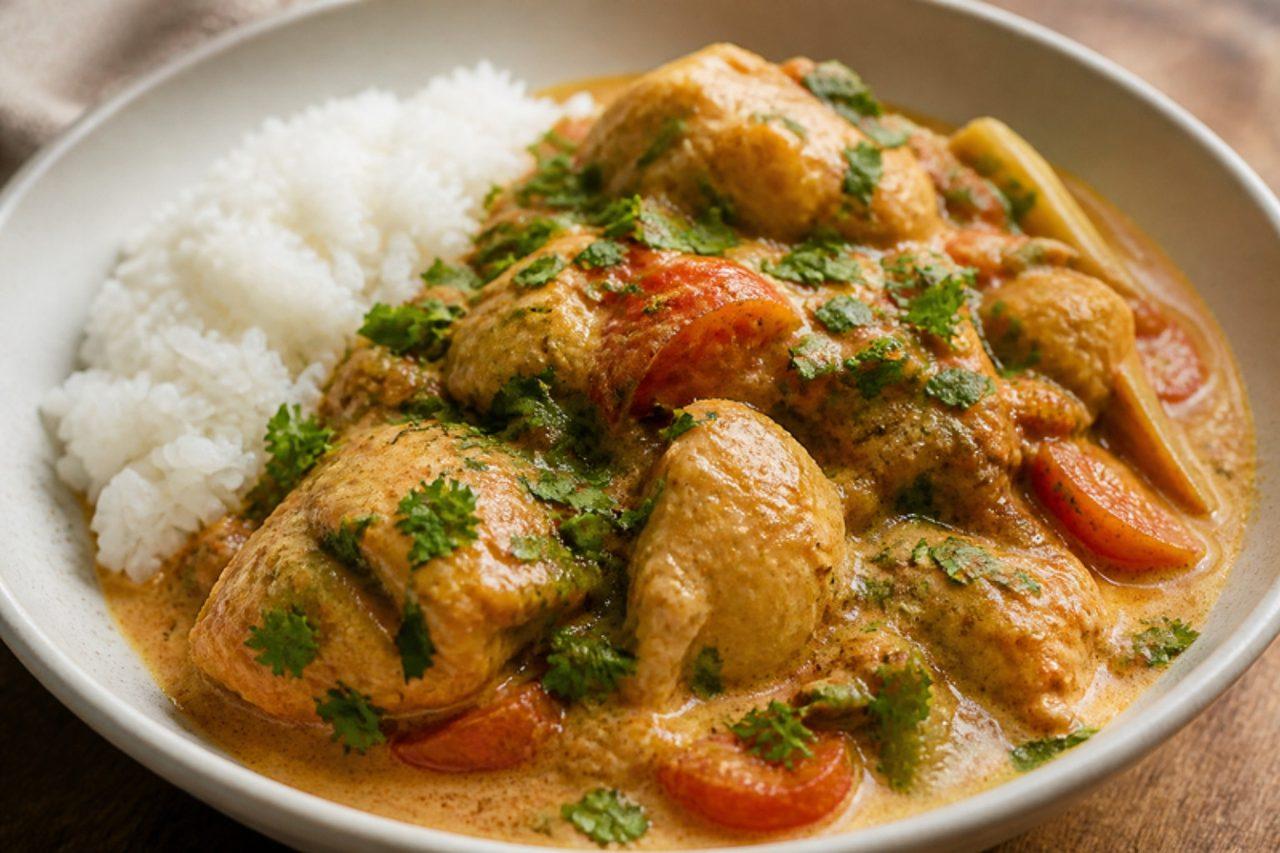
Akoho sy voanio, chicken with coconut, is a dish of Madagascar's east coast around Toamasina, where coconuts are everywhere, and it has become a favourite all over the island. Chicken is browned with onion, garlic, ginger and tomato, then simmered gently in coconut milk with a pinch of curry until the sauce is creamy and mild. It is eaten with plenty of white rice and a little achard (vegetable pickle). The mistake is boiling the coconut milk hard so it splits; keep it at a gentle bubble. Chef's tip: brown the chicken well first; the coconut sauce needs that savoury depth.

by KrazyBadal 0 views

HutspotCarrot, onion and potato mash

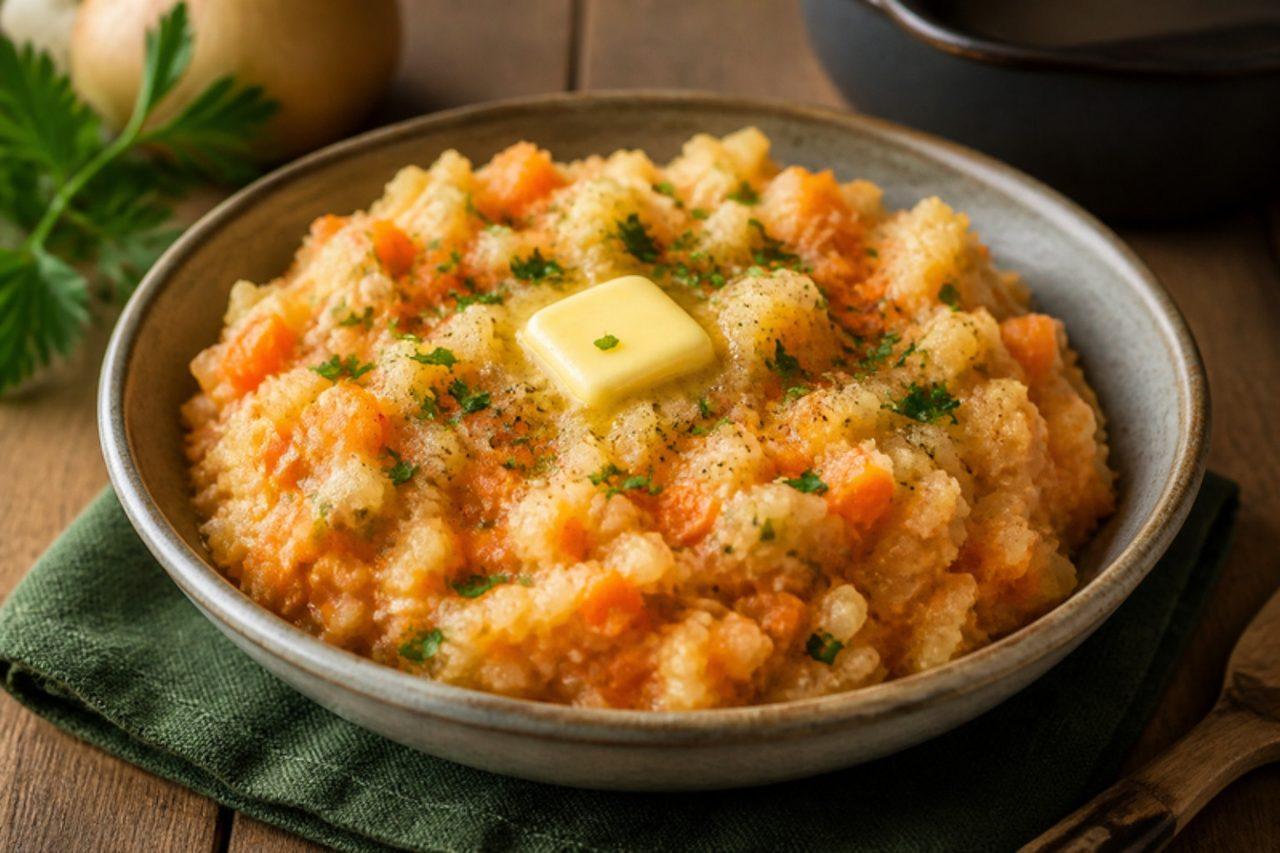
Every year on 3 October the city of Leiden celebrates Leidens Ontzet, the end of the Spanish siege of 1574, and the whole town eats hutspot. The story goes that a hungry boy found a pot of stewed root vegetables left behind in the abandoned Spanish camp. Today it is a rough, orange mash of winter carrots, onions and potatoes boiled together in one pot, then stamped coarsely with butter. In the rest of the Netherlands it turns up all autumn and winter as a weekday supper. It is traditionally served with slow-braised beef (klapstuk); here it goes with a fried egg or a spoon of piccalilli, which suits it just as well. Chef's tip: layer the vegetables with the potatoes on top and the carrots at the bottom, in just enough water to reach the potatoes; the potatoes steam, the carrots soak up the flavour of the onions, and nothing turns watery.

by KrazyBadal 0 views

Hyderabadi Irani chaiCreamy milk tea

Irani chai came to Hyderabad with Persian migrants who opened cafés across the old city, and it is now the city's signature drink, poured at all hours in places around the Charminar, often with Osmania biscuits or a bun maska. Unlike masala chai, it has no spices: strong tea is brewed slowly in a sealed pot (dum), while full-fat milk is simmered separately with a little khoa until thick and creamy. The two are mixed only in the cup, giving a rich, mellow, slightly sweet tea. Chef's tip: seal the tea pot lid with a little dough or foil, as the cafés do, so the brew steeps without losing steam or strength.

by KrazyBadal 0 views

Amritsari kulchaStuffed flatbreads

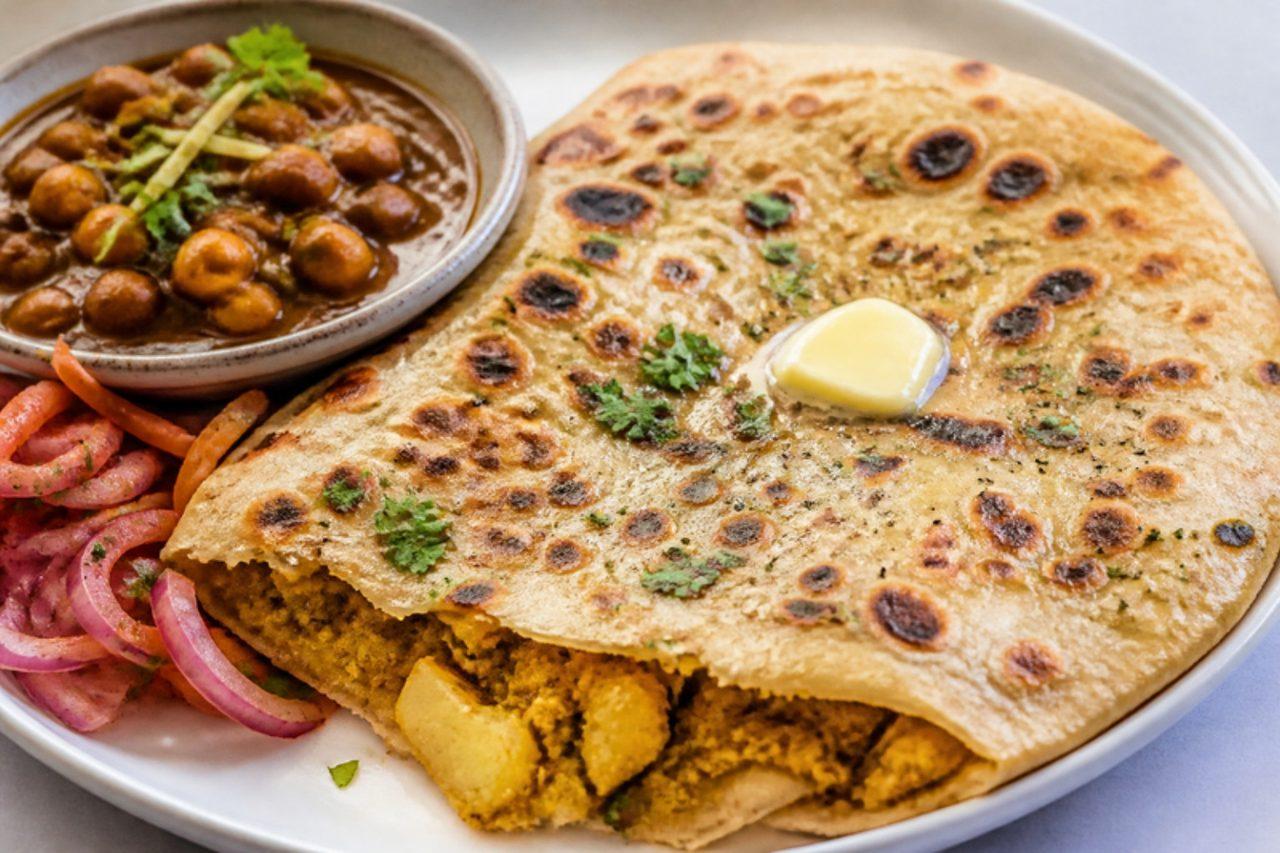
Amritsari kulcha is the pride of Amritsar's dhabas in Punjab: a layered, leavened flatbread stuffed with potato, onion and sour pomegranate seed, slapped onto the wall of a tandoor and smothered in butter the moment it comes out. The outside shatters into crisp, flaky layers while the inside stays soft and steamy. In Amritsar it comes with a bowl of chole, a tangy onion-tamarind chutney and a glass of lassi. At home a very hot oven and a heavy tray stand in for the tandoor. Chef's tip: keep the filling dry and cool, with the onion squeezed of its juice, or the kulcha will tear and steam instead of turning crisp.

by KrazyBadal 0 views

Hyderabadi khatti dalTangy tamarind dal

Khatti dal, 'sour dal', is the everyday dal of Hyderabad's old city, cooked in Muslim and Telugu homes alike and ladled over plain rice with a fried papad and a dry vegetable on the side. Toor dal is cooked with tomato and green chilli, mashed smooth, soured with tamarind and finished with a sizzling bagaar of garlic, dried red chillies, cumin and curry leaves. It is thinner and sharper than a north Indian dal, and on Fridays it often sits next to a biryani as the comforting partner. Chef's tip: let the garlic in the bagaar turn properly golden before pouring it over; pale garlic tastes raw and harsh in a sour dal.

by KrazyBadal 0 views

Hyderabadi lukhmiSpiced filled pastries

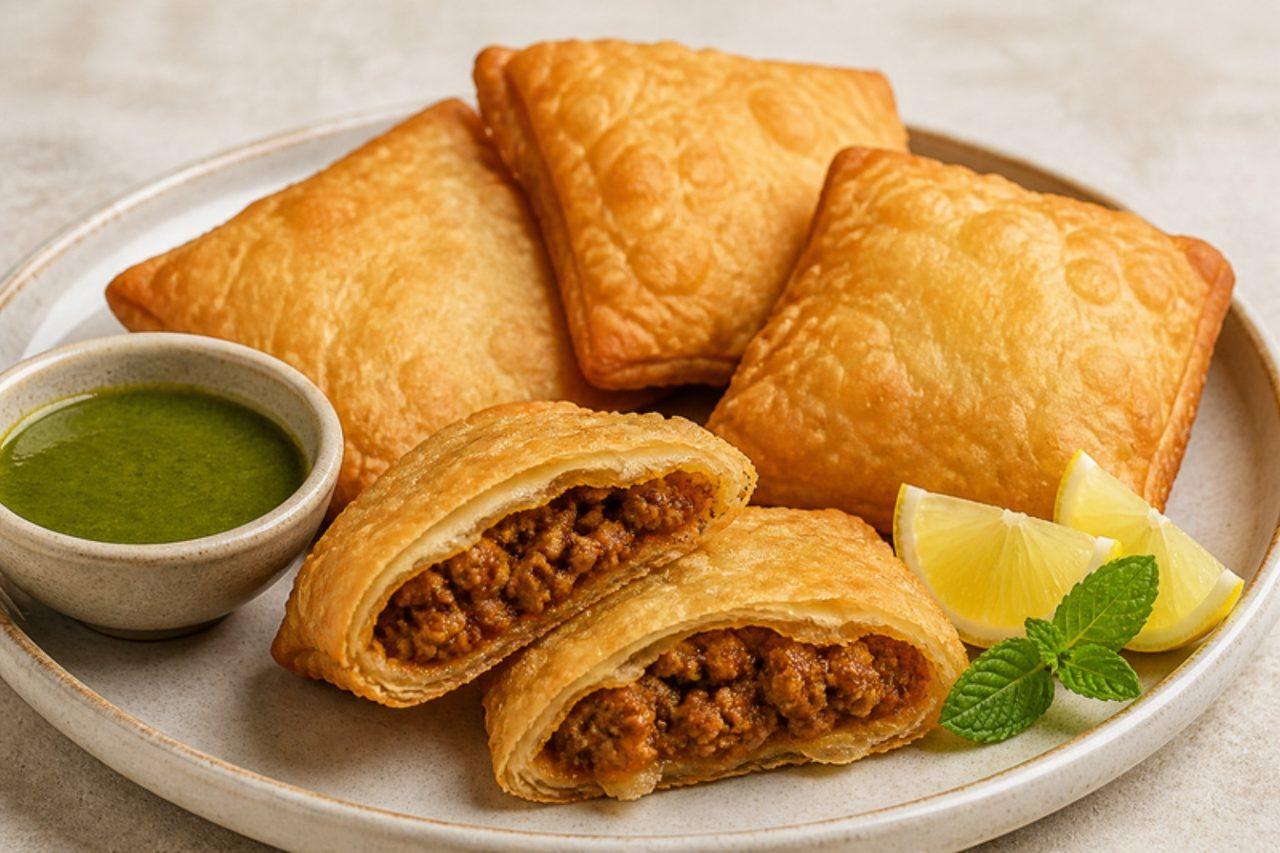
Lukhmi are Hyderabad's answer to the samosa: flat, square, crisp little pastries with a filling of spiced mutton keema, fork-crimped at the edges. In the Deccani homes of the old city they are a fixture of wedding dinners and the evening iftar table in Ramadan, and a plate of them often arrives with Irani chai at the city's old cafés. They can be shaped a day ahead and fried just before guests come. Chef's tip: cook the keema until completely dry and let it cool fully; a damp or warm filling makes the pastry burst in the oil.

by KrazyBadal 0 views

CornulețeJam-filled crescent cookies

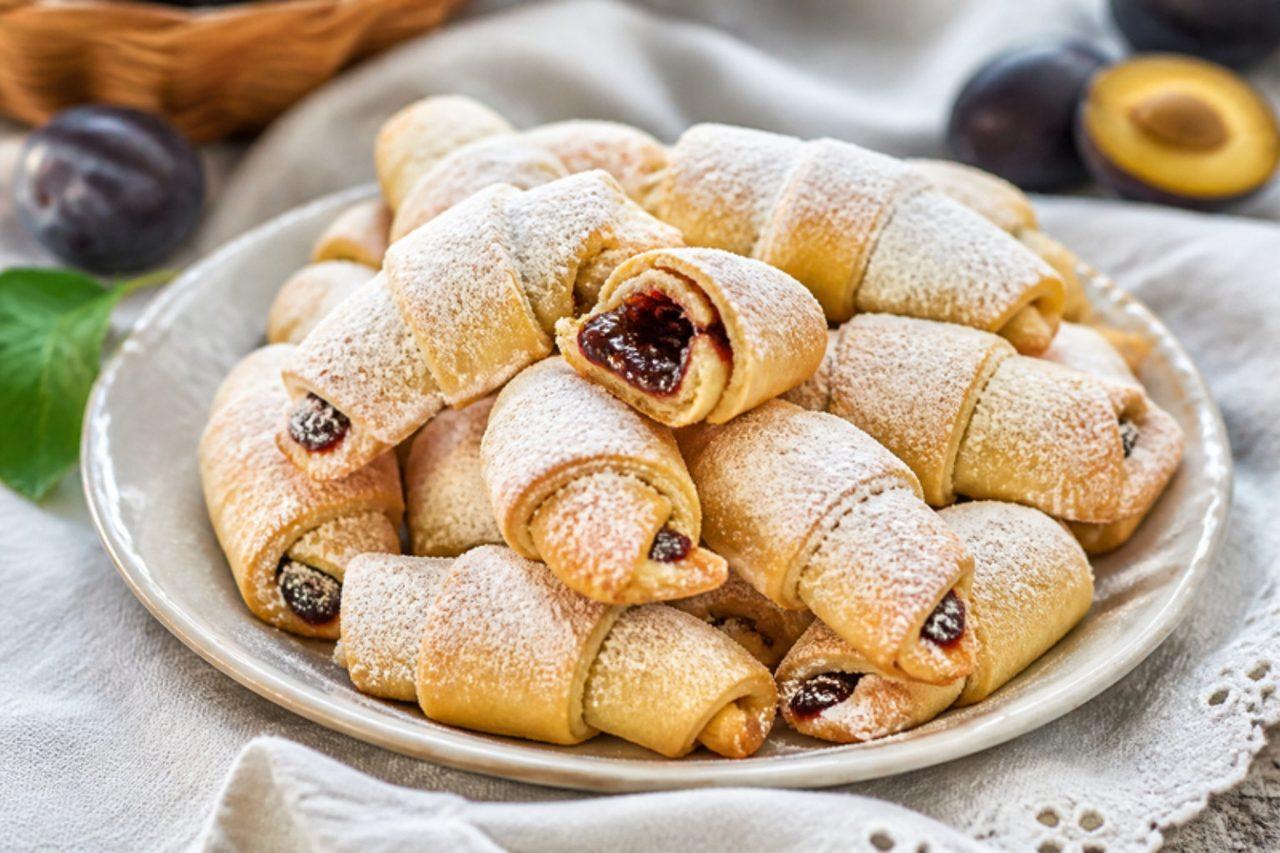
Cornulețe are the little crescent cookies that fill tins in Romanian kitchens before Christmas and New Year, and that grandmothers in Sibiu and Timișoara bake by the hundred for weddings and name days. This version uses a tender yeasted dough made with butter and yogurt, wrapped around a spoonful of thick plum jam (magiun) or rose rahat and rolled into horns. They bake pale and soft, not flaky, and are rolled in vanilla sugar while warm (the recipe makes 32, two per serving), which sets them apart from the cream-cheese rugelach of Jewish baking. Chef's tip: use thick jam and pinch the ends shut; runny jam is the usual mistake and bubbles out and burns on the tray.

by KrazyBadal 0 views

Amritsari fishCrisp fried fish

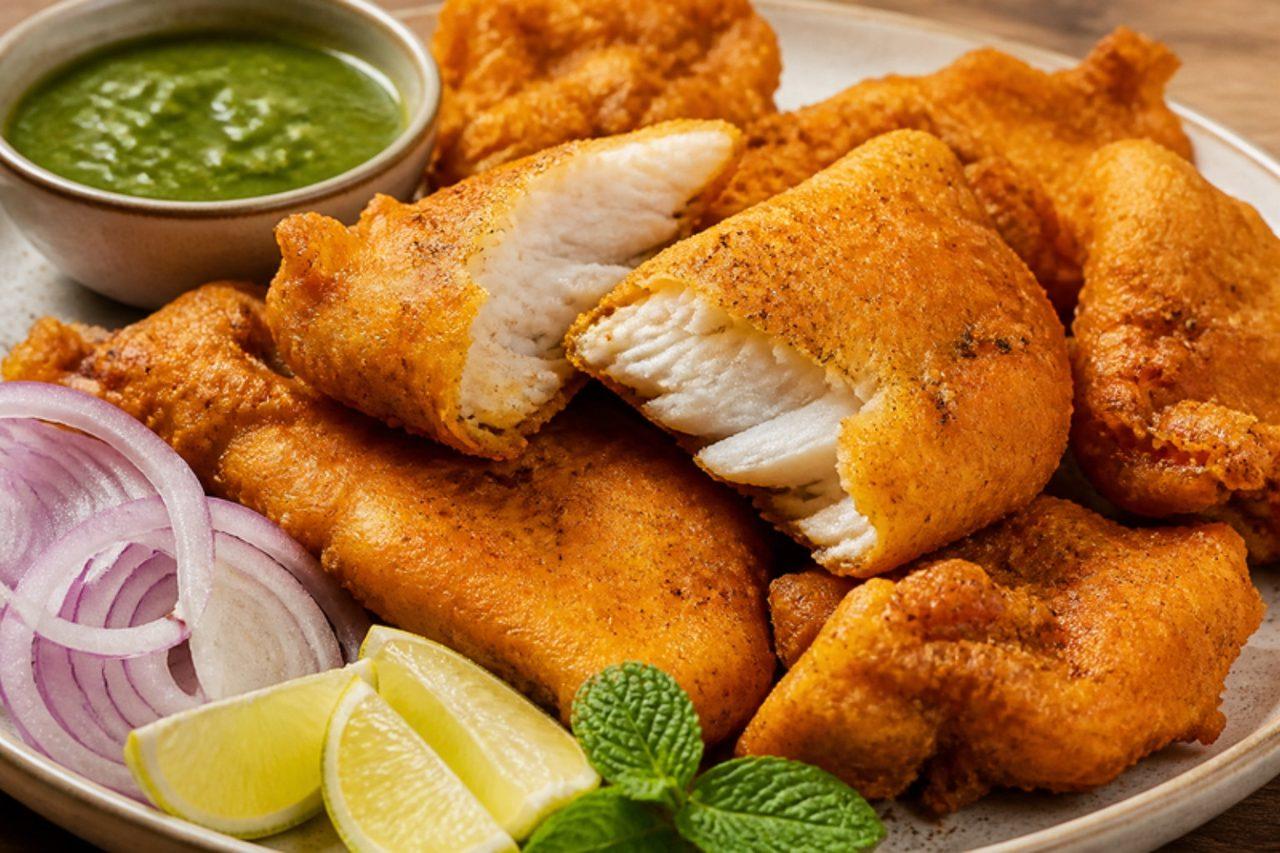
On winter evenings in Amritsar, roadside stalls near the old city fry river fish in huge karahis and sell it by weight, hot and crisp, sprinkled with chaat masala and lemon. The batter is made from gram flour rather than wheat and is fragrant with ajwain (carom seeds), which Punjabis say makes fried food easier to digest. It is a snack or starter, eaten with mint chutney and sliced onions; at home it is the treat that comes out when guests arrive. Use any firm white fish: singhara is traditional, but cod, haddock, basa or tilapia all work. Chef's tip: a little rice flour in the batter is what keeps it crisp for longer after frying.

45 minIndianFishGluten freeSpicy
by KrazyBadal 0 views

Gado-gadoVegetable salad with peanut sauce

In Jakarta, gado-gado is lunch from a pushcart: the Betawi seller grinds the peanut sauce to order on a stone ulekan, then tips blanched greens, potato, tofu, tempeh and egg into it and mixes everything by hand. The name roughly means "mix-mix", and that is how it's eaten, with every vegetable coated in a sauce that's nutty, sweet from palm sugar, sour from tamarind and as hot as you ask for. It's a full meal on its own, crunchy with emping or rice crackers on top. Chef's tip: loosen the peanut sauce with warm water only at the end and stop when it coats a spoon like custard; too thin and it slides off the vegetables and pools on the plate.

by KrazyBadal 0 views

JadohTurmeric rice with pork

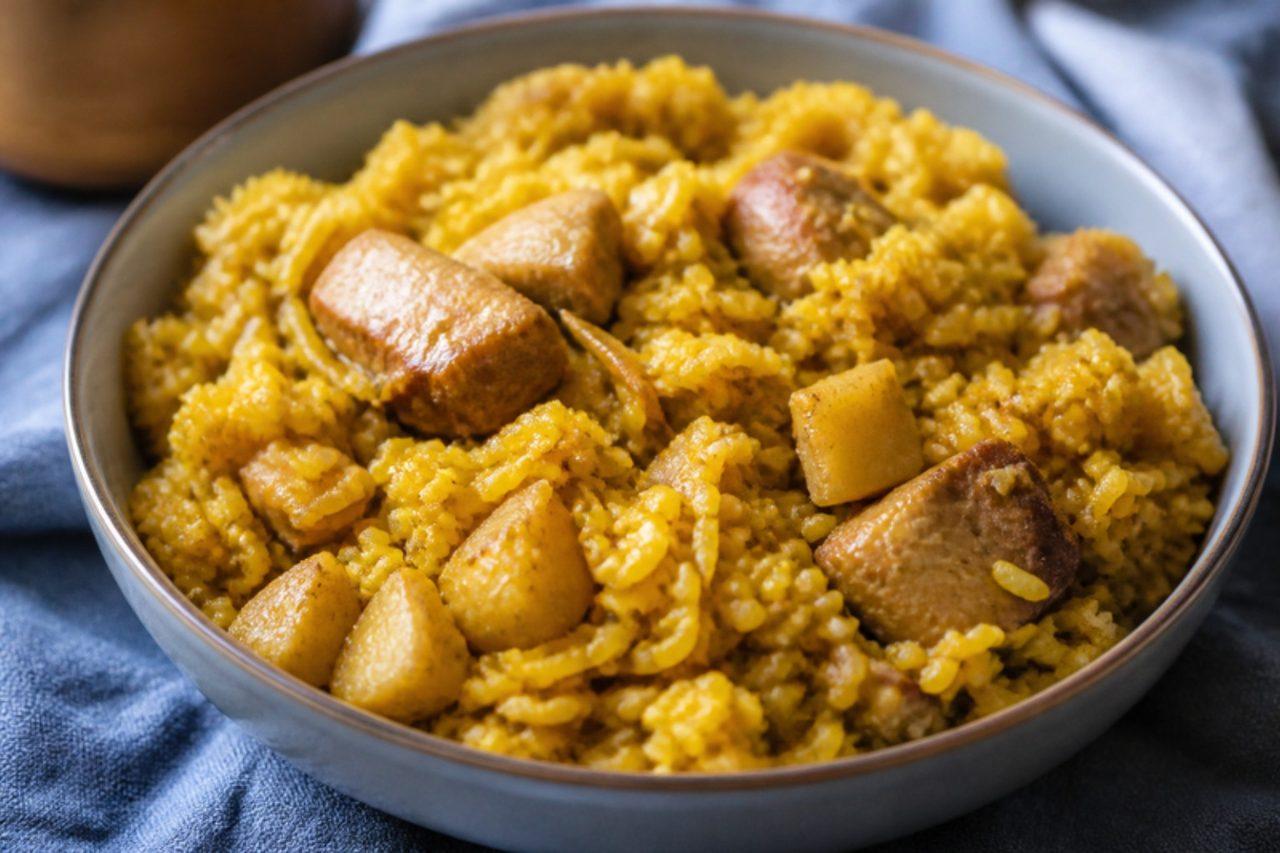
Walk through Police Bazaar in Shillong in the morning and you will find small jadoh stalls serving bright yellow rice cooked with pork, ginger and plenty of local Lakadong turmeric. For Khasi families it is breakfast, lunch and festival food all at once, usually eaten with a pork side such as doh khlieh and a sharp chutney. Village versions add pork blood or offal; this home version keeps to pork shoulder. Chef's tip: let the rice rest, covered, for ten minutes after cooking; the grains firm up and stop being sticky.

by KrazyBadal 0 views

Maraq digaagChicken and vegetable stew

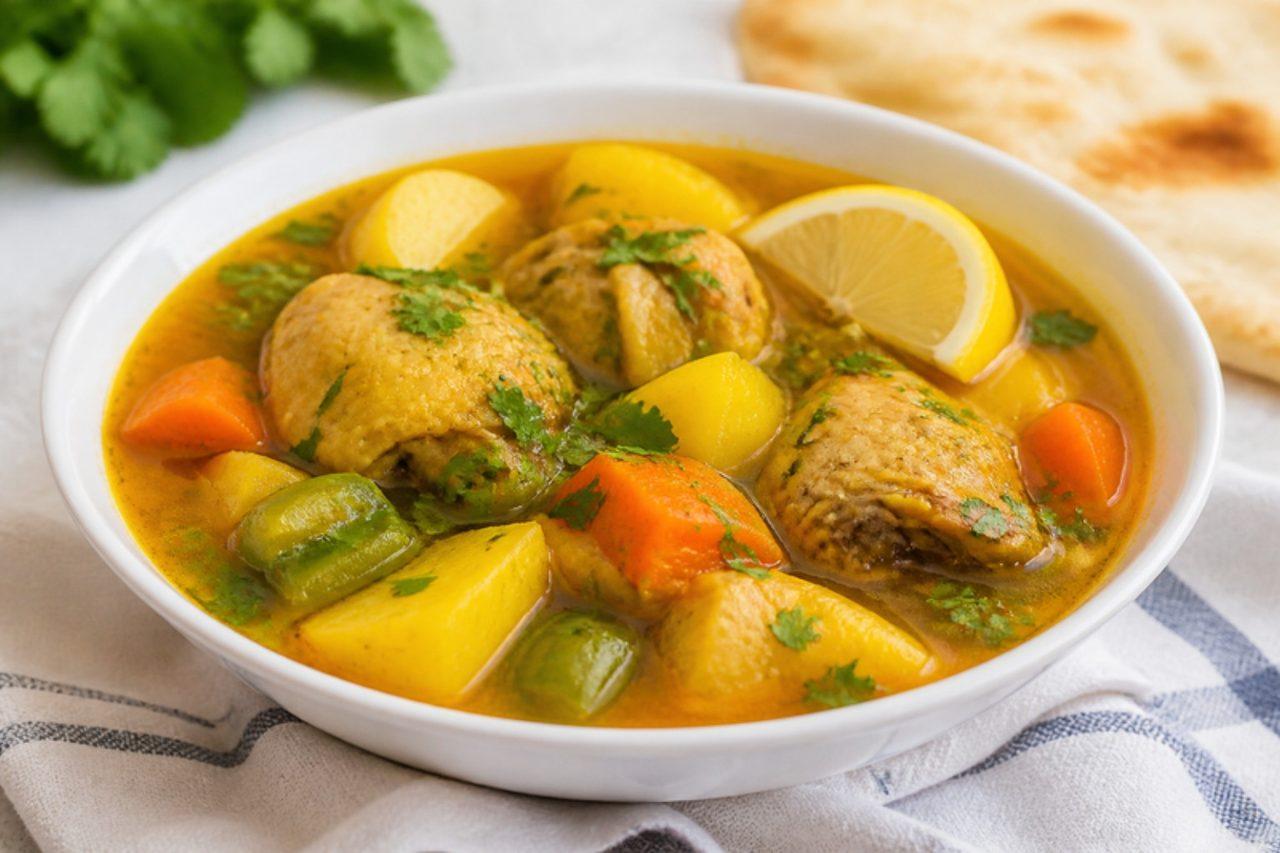
Maraq digaag is the gentle chicken stew Somali mothers make on ordinary weekdays, and the one people ask for when they are unwell: chicken simmered with potato, carrot, tomato and green pepper in a light broth fragrant with xawaash and garlic. It is served with rice, canjeero or bread for dipping. The mistake is boiling it hard, which makes the chicken stringy; keep it at a lazy simmer. Chef's tip: stir in chopped coriander and a little lemon at the end to lift the broth.

by KrazyBadal 0 views

Gaeng hang layPork belly curry

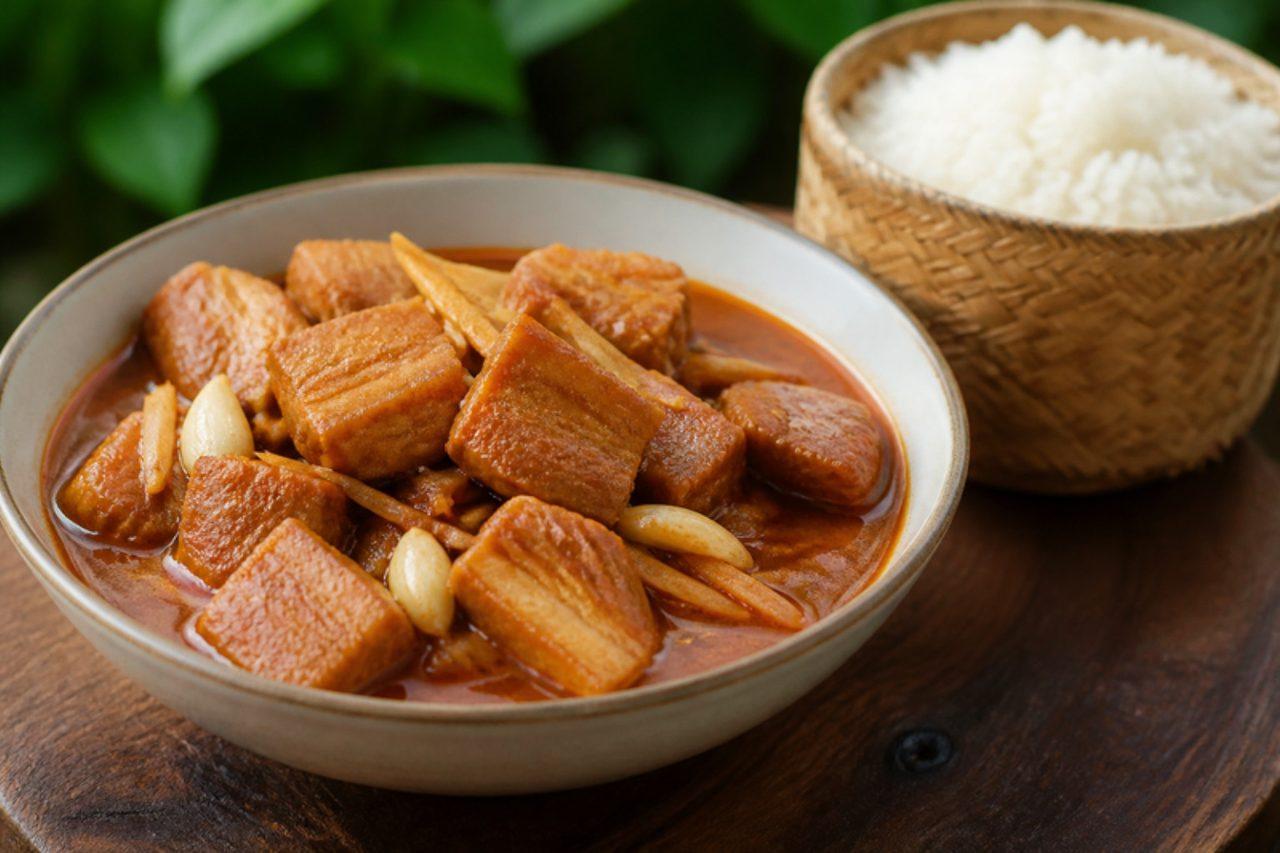
Brought to Lampang and Chiang Mai by Burmese teak traders in the 1800s, this coconut-free curry is now the dish Northern families cook for temple fairs, weddings and Songkran, often a day ahead in a big pot. Chunks of pork belly and shoulder braise slowly until they almost fall apart in a dark, glossy sauce that tastes of ginger, garlic and warm spices, sharpened with tamarind and rounded with palm sugar. It should be thick enough to cling to the meat rather than soupy. Serve it with steamed jasmine or sticky rice and a crisp cucumber salad. Chef's tip: make it the day before; overnight in the fridge the flavours settle and the fat sets on top so you can lift some off before reheating.

120 minThaiCurriesGluten free
by KrazyBadal 0 views

IkameshiRice-stuffed squid

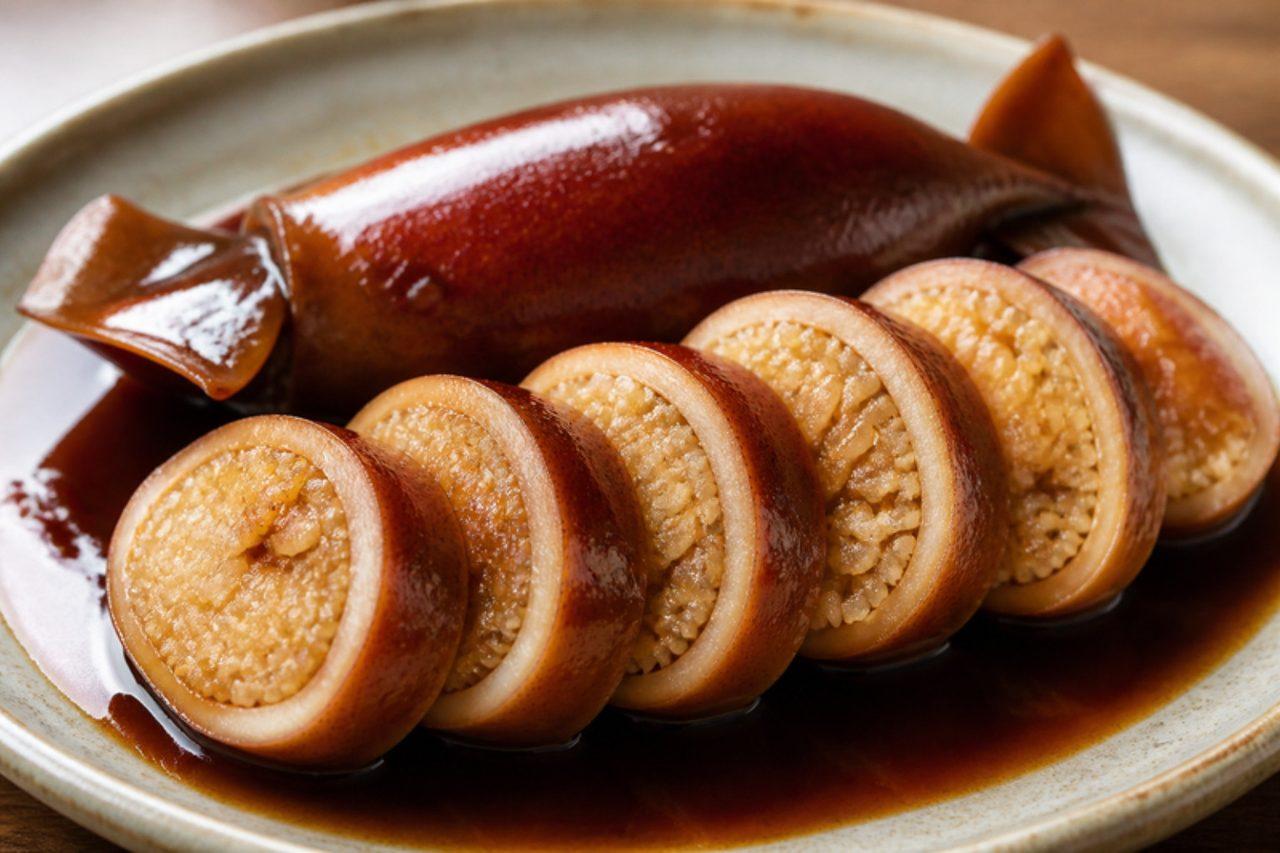
At Mori, a small fishing town on the railway north of Hakodate, ikameshi has been sold as a station lunchbox since the war years, when rice was scarce and squid was plentiful. It is still one of Japan's best-known station bentos and a star of the regional food fairs that department stores hold all over the country. Small squid are stuffed with soaked glutinous rice, pinned shut and simmered in a sweet soy sauce until the rice swells into a sticky, savoury filling. Slice them into rounds to serve warm or at room temperature. Chef's tip: use small squid with bodies about 15 cm long, as larger ones need longer cooking and turn rubbery before they soften again.

by KrazyBadal 0 views

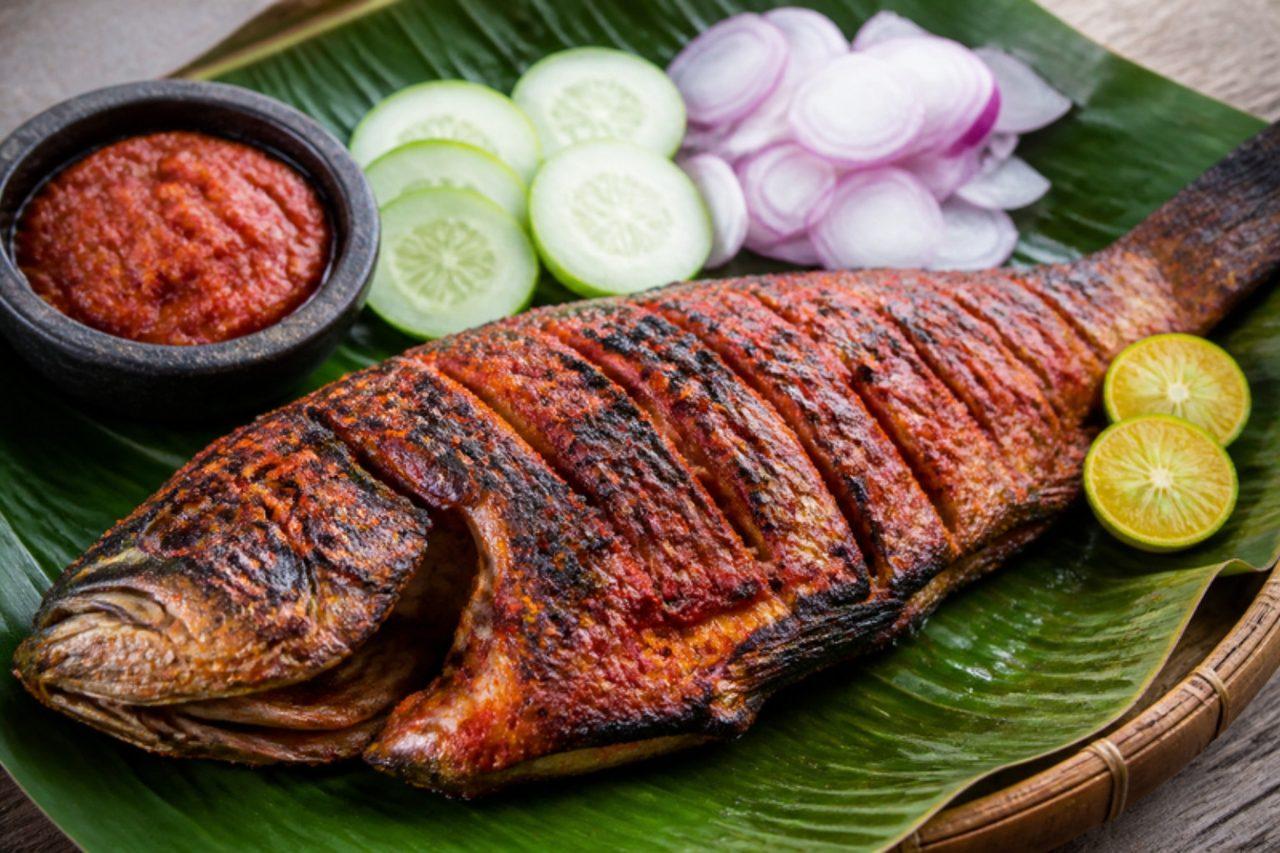
Ikan bakarGrilled fish with sambal

Night markets and seaside stalls from Port Dickson to Kuantan announce ikan bakar by smell long before you see the charcoal: whole fish or stingray wings smeared with red sambal, laid on banana leaf and grilled until the leaf blackens and the paste caramelises onto the flesh. The leaf keeps the fish moist and lends a faint tea-like smokiness, while the sambal brings shrimp-paste depth, tamarind sourness and steady heat. It is eaten with the fingers, with plain rice, cucumber and a sharp dip called air asam made from tamarind, chillies and shallots. Chef's tip: score the fish right down to the bone so the sambal seeps into the cuts and the thickest part cooks at the same pace as the tail.

by KrazyBadal 0 views

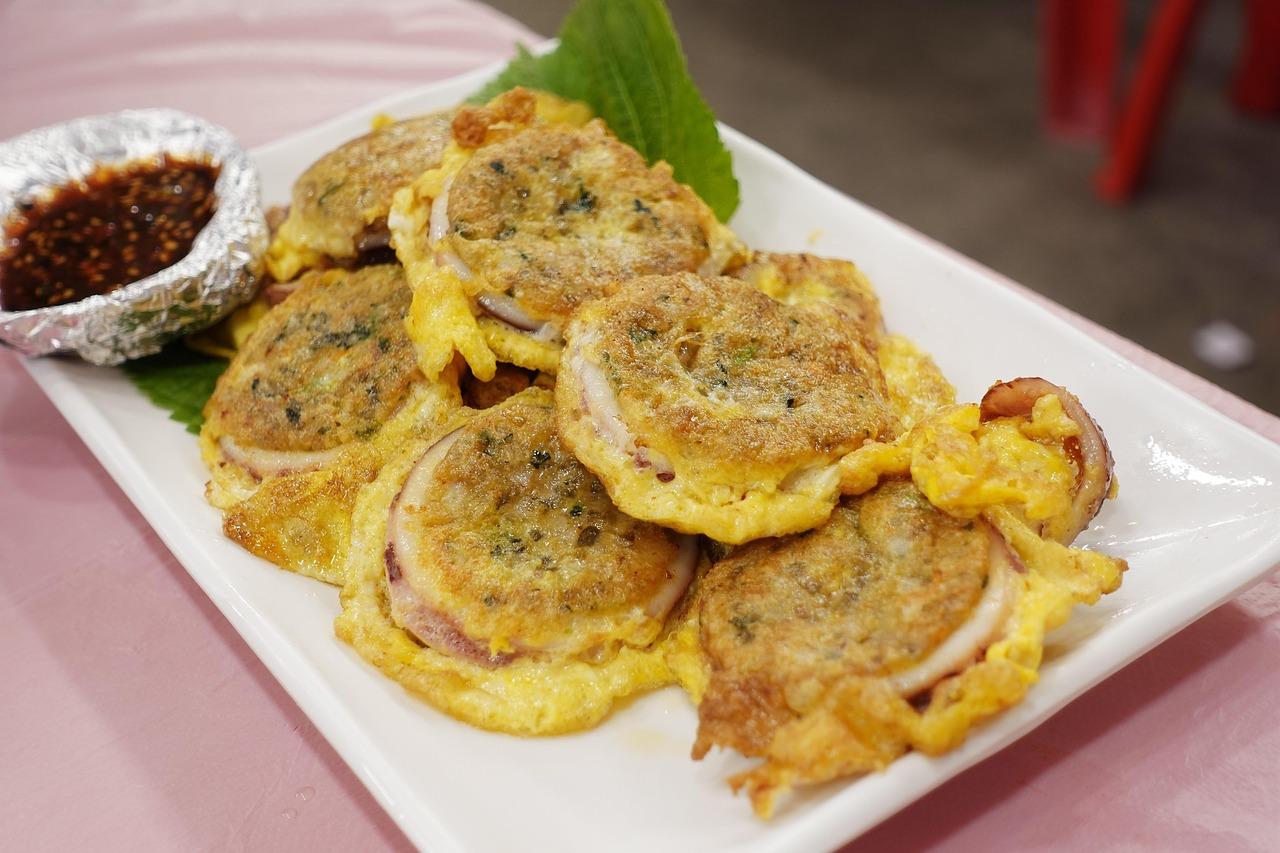
Ojingeo sundaeRice-stuffed squid

Abai Village in Sokcho, on Gangwon's east coast, was settled by people from Hamgyeong province in the north who could not go home after the Korean War. With squid plentiful in the East Sea, they stuffed it the way they had once stuffed pork casings for sundae, and the dish is now sold in the village's small restaurants and at Sokcho's Jungang market. The squid is filled with sticky rice, tofu and vegetables, steamed, cut into rounds and fried in beaten egg until golden. It makes a good sharing plate with a soy and vinegar dip. Chef's tip: mix a little glutinous rice into the filling; it binds the slices so they don't fall apart in the pan.

90 minKoreanFish
by KrazyBadal 0 views

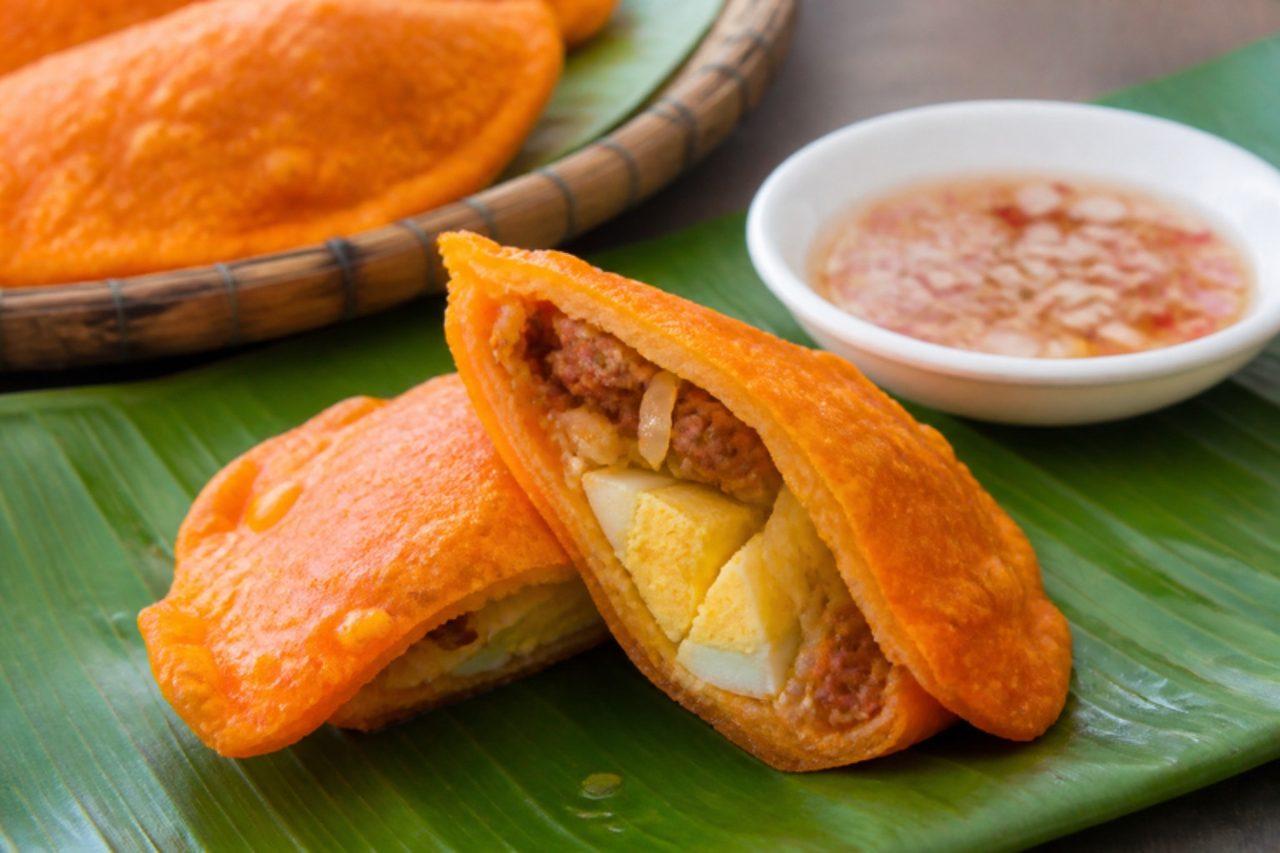
Ilocos empanadaCrisp rice-flour turnovers

In Batac and Vigan, in the Ilocos region, empanada is not a baked pastry but a big, crunchy, bright-orange turnover fried to order at night markets and by the plaza. The thin rice-flour crust gets its colour from annatto, and inside goes shredded green papaya, mung bean sprouts, crumbled Vigan longganisa (a garlicky pork sausage) and a whole egg. Vendors fold it in seconds and slide it into hot oil, then hand it over with a little bowl of spiced sugarcane vinegar to pour in with every bite. It is a pork snack for evenings out. Chef's tip: roll the dough very thin on a banana leaf or baking paper; the leaf lets you flip the dough over the filling without tearing it.

by KrazyBadal 0 views

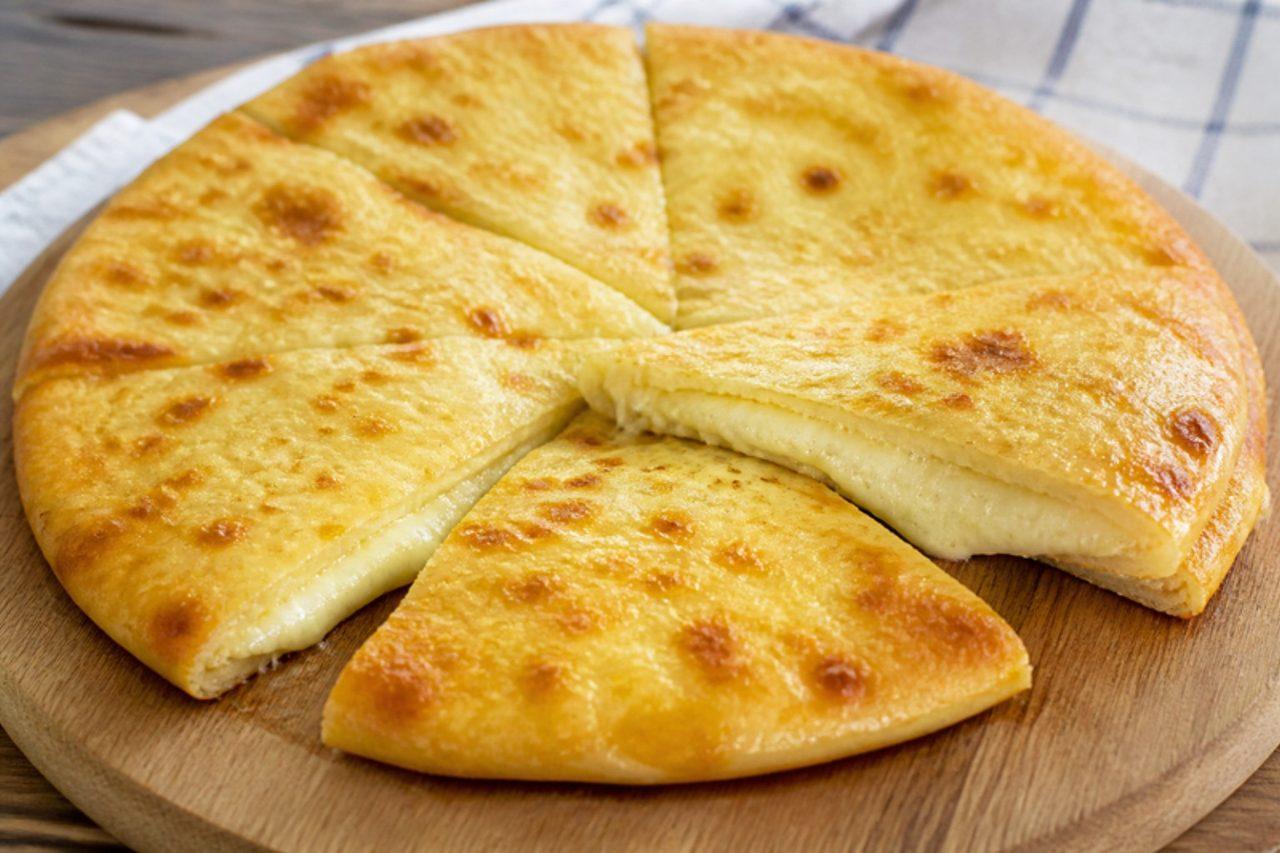
Imeruli khachapuriRound cheese-filled bread

In Imereti, the region around Kutaisi in western Georgia, this flat round cheese bread is everyday food, and it is the one most families make at home: a tender, quick dough leavened with matsoni (Georgian yogurt) and soda, wrapped around a cheese ball and cooked in a dry frying pan. It is cut into wedges like a pizza and set on the table for breakfast, for a feast, or packed for a long car journey. Georgian imeruli and sulguni cheeses are hard to find outside Georgia, so this uses mozzarella with feta for the salty tang. Choose cheeses labelled vegetarian (microbial rennet). Children love it plain, still warm. A common mistake is rolling it out with heavy pressure, which tears the thin dough so the cheese leaks and burns in the pan. Chef's tip: press it out gently with your fingertips from the centre outwards, and if a small hole appears, pinch a scrap of dough over it before it reaches the pan.

by KrazyBadal 0 views

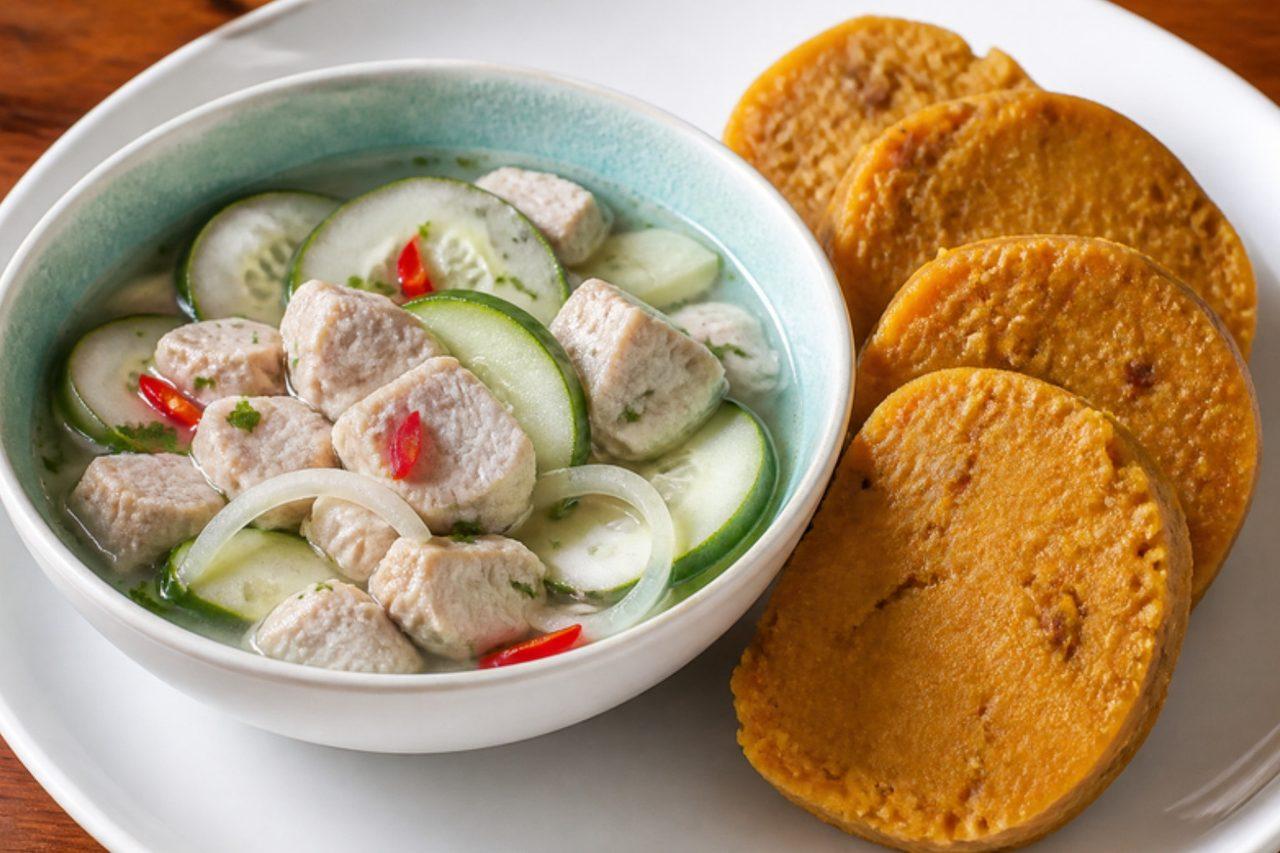
Pudding and souse

Saturday in Barbados means pudding and souse: rum shops and roadside cooks sell it from late morning, and families buy it by the container for lunch. Souse is boiled pork, traditionally from the head and trotters, served cold in a sharp, cucumber-studded pickle of lime, onion and hot pepper; the pudding is grated sweet potato seasoned with herbs and steamed. This is a pork dish. This home version uses trotters for the jelly-rich texture plus shoulder for meat, and steams the pudding in a basin instead of a casing; blood is left out (that darker version is black pudding). A common mistake is serving the souse as soon as it meets the pickle; it needs at least 2 hours in the fridge to turn sharp and cold. Chef's tip: grate the sweet potato on the fine side of the grater; coarse shreds make a crumbly pudding.

190 minBajanMeatGluten free
by KrazyBadal 1 views

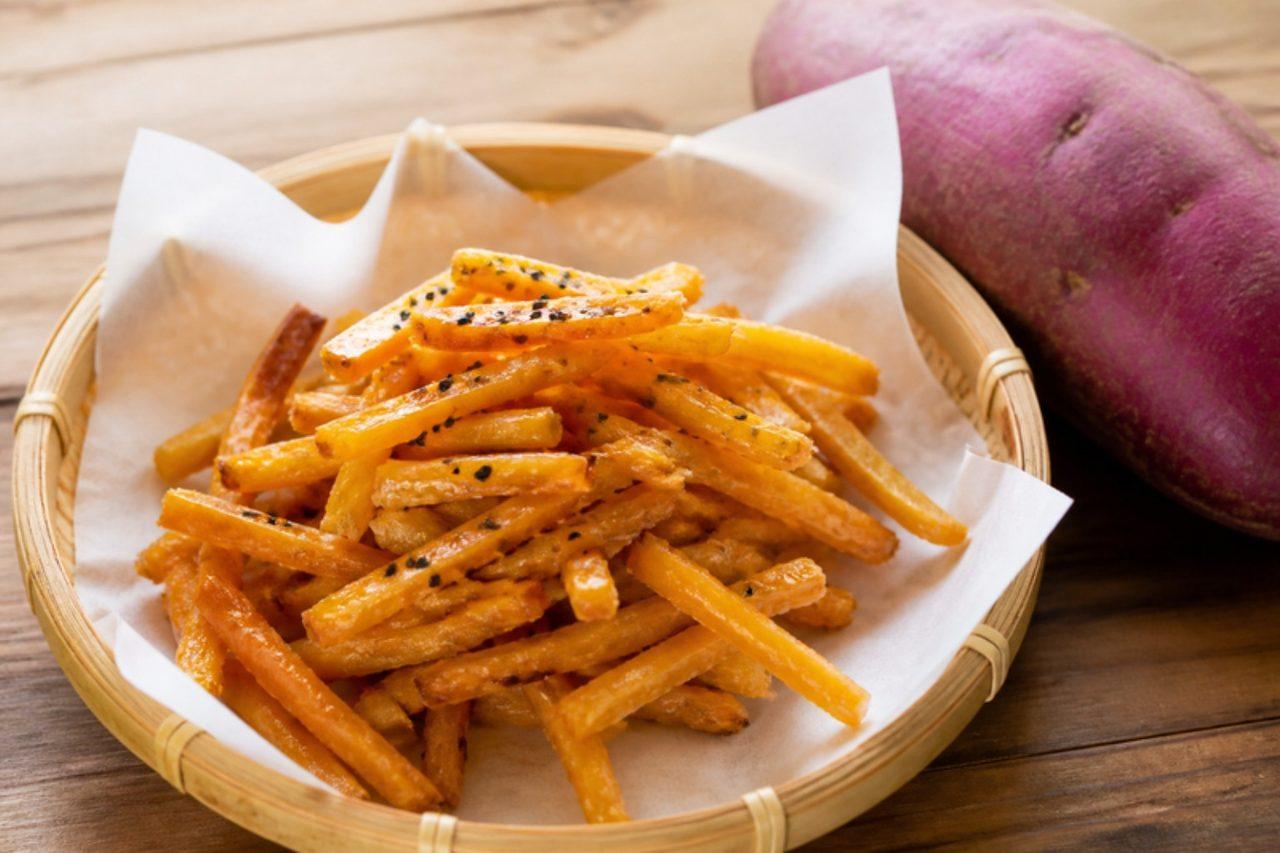
Imo kenpiCandied sweet potato sticks

Kagoshima, at Kyushu's southern tip, is Japan's sweet potato heartland. The crop is so closely tied to the region that the Japanese word for sweet potato, satsuma-imo, means 'Satsuma potato', after the old name of Kagoshima. Imo kenpi are its simplest snack: thin batons of sweet potato fried until crisp, then tossed in a syrup that sets into a glassy shell. Kids grab them from bags at the corner shop, and grandparents make them at home with the autumn harvest. They are crunchy, sweet and a little salty. Chef's tip: fry the potato twice, slowly first, then hot. That drives out the water and gives a snap that lasts for days.

by KrazyBadal 0 views

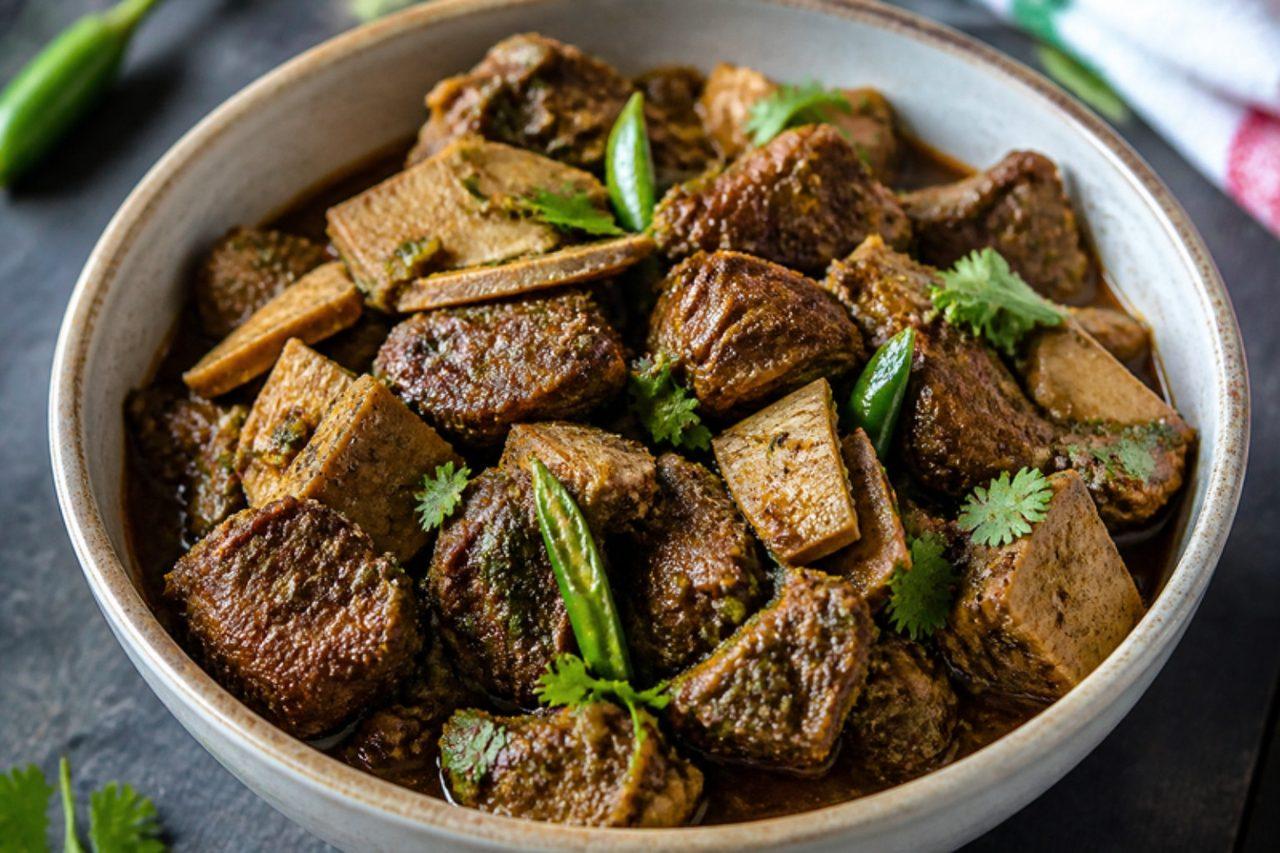
Gahori aru bahgajPork curry

Across upper Assam, among the Tai Ahom, Mising and many tea-garden families, pork with fermented bamboo shoot is the dish that turns any gathering into a feast. The bamboo shoot gives a sour, almost cheesy tang that cuts through the rich pork, and a little bhut jolokia (ghost pepper) brings slow heat. It is cooked with very little oil because the pork fat does the work, and is served with rice and a leafy side. Chef's tip: choose shoulder or belly with some fat on; lean loin turns dry and stringy here.

90 minIndianMeatGluten freeSpicy
by KrazyBadal 0 views

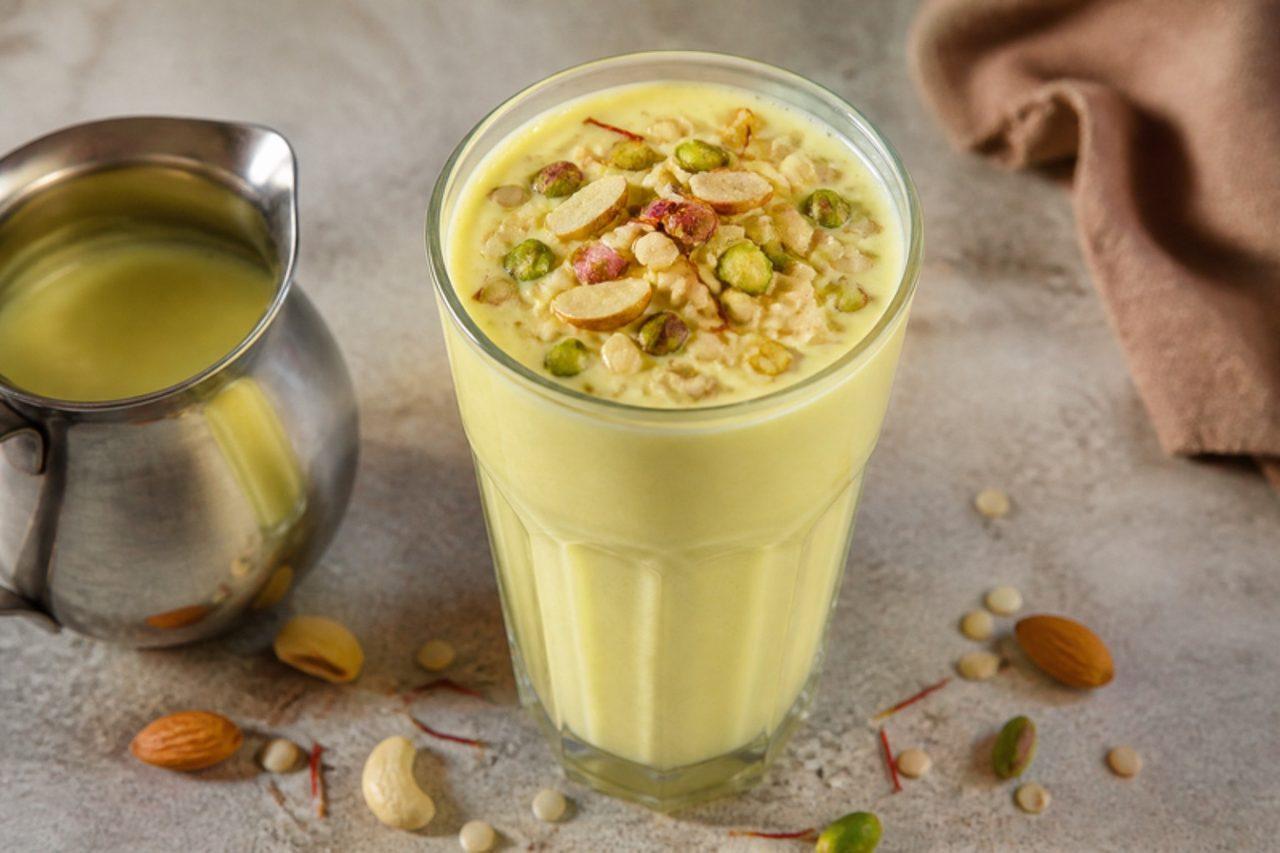
Indori shikanjiThick chilled milk drink

Anyone who orders shikanji in Indore expecting lemonade gets a surprise: here it is a spoonably thick drink of slow-reduced milk, saffron and cardamom, with a gentle tang from thick yogurt and plenty of chopped dry fruit. It is a late-night treat at Sarafa and Chhappan Dukan, poured from steel jugs into glasses after a round of savoury snacks. Think of it as somewhere between a lassi and a cold rabri. Chef's tip: the milk must be completely cold before the yogurt goes in, or the drink splits into grainy curds.

by KrazyBadal 0 views

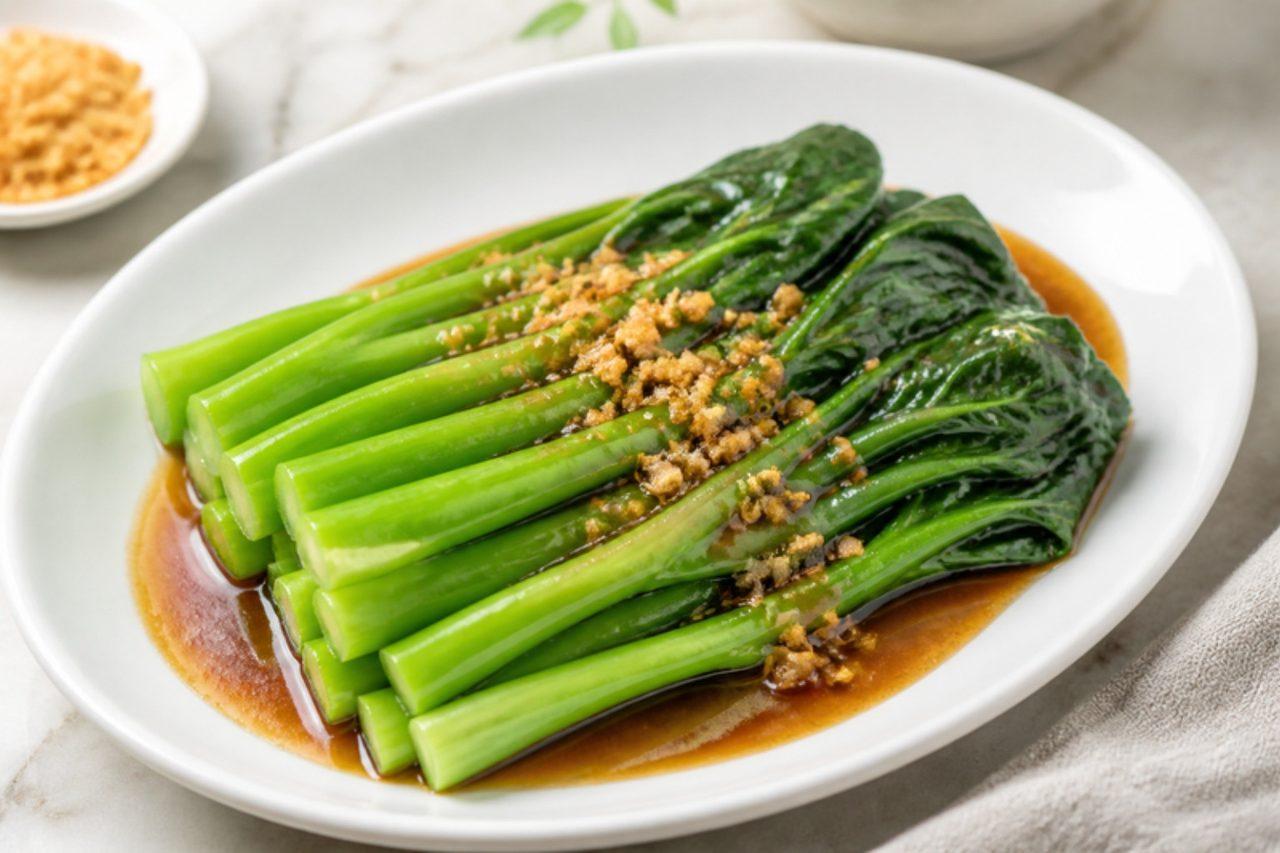
Gai lan with vegetarian oyster sauceChinese broccoli with mushroom sauce

Every Cantonese table needs a plate of greens, and gai lan (Chinese broccoli) is the favourite in Guangdong homes and Hong Kong cha chaan teng. The stems are thick, sweet and slightly bitter, the leaves soft. Restaurants blanch it and pour oyster sauce on top; here a mushroom-based vegetarian oyster sauce gives the same dark gloss and savouriness. Chef's tip: add a spoon of oil and a pinch of sugar to the blanching water; the oil keeps the greens bright and shiny, and the sugar softens the bitterness.

by KrazyBadal 0 views

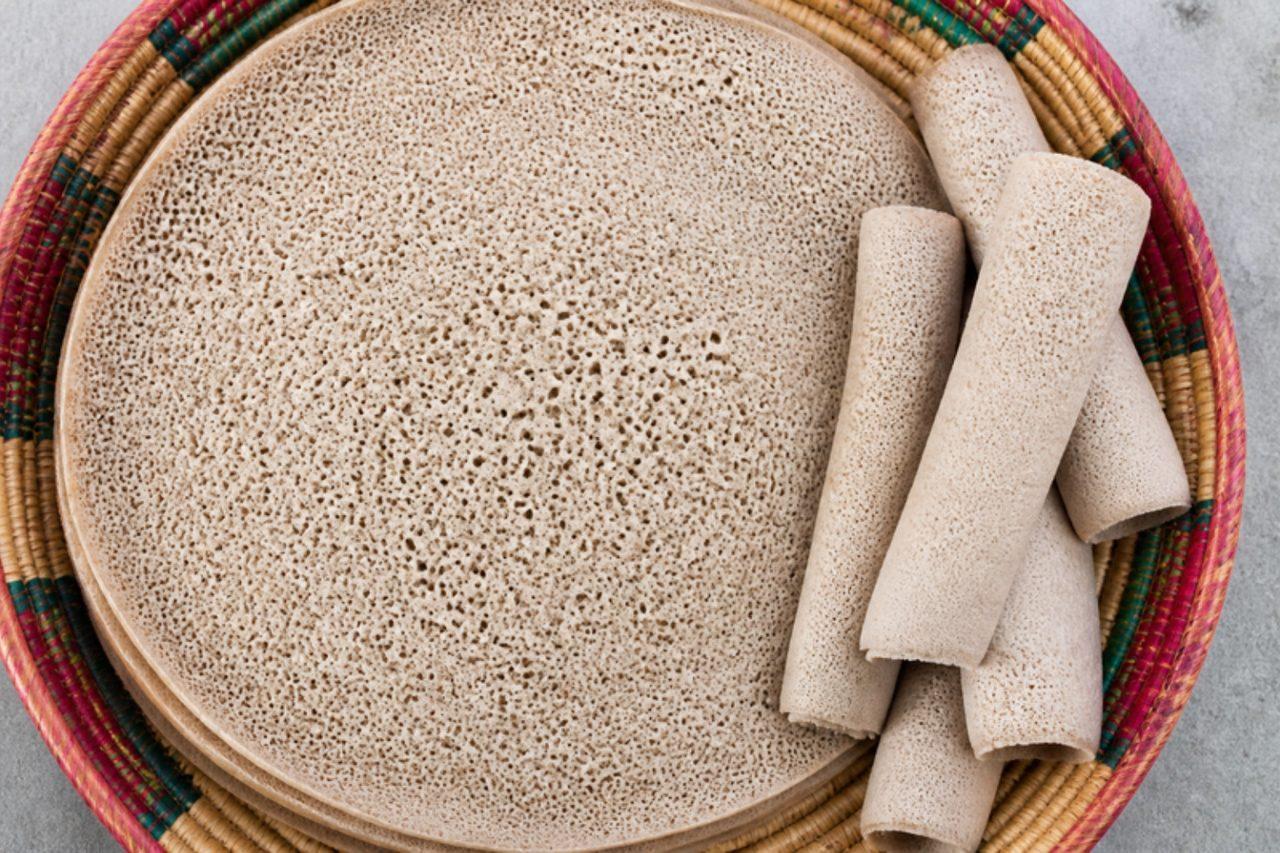
InjeraTeff flatbread

Injera is the bread, plate and spoon of the Ethiopian and Eritrean highlands: a wide, pale, sour flatbread made from teff, a tiny grain grown on the plateaus around Gondar, Gojjam and Shewa. A simple batter of teff and water is left to ferment for two or three days until it bubbles and smells pleasantly sour, then poured onto a hot griddle and steamed under a lid until its top is covered in little 'eyes'. It is eaten at every meal, with stews spooned on top and torn pieces used to pick them up. This home version uses 100% teff, so it is naturally gluten free. Chef's tip: keep the starter somewhere warm (around 24°C); in a cold kitchen it barely sours and the injera turns out flat and bland.

by KrazyBadal 0 views

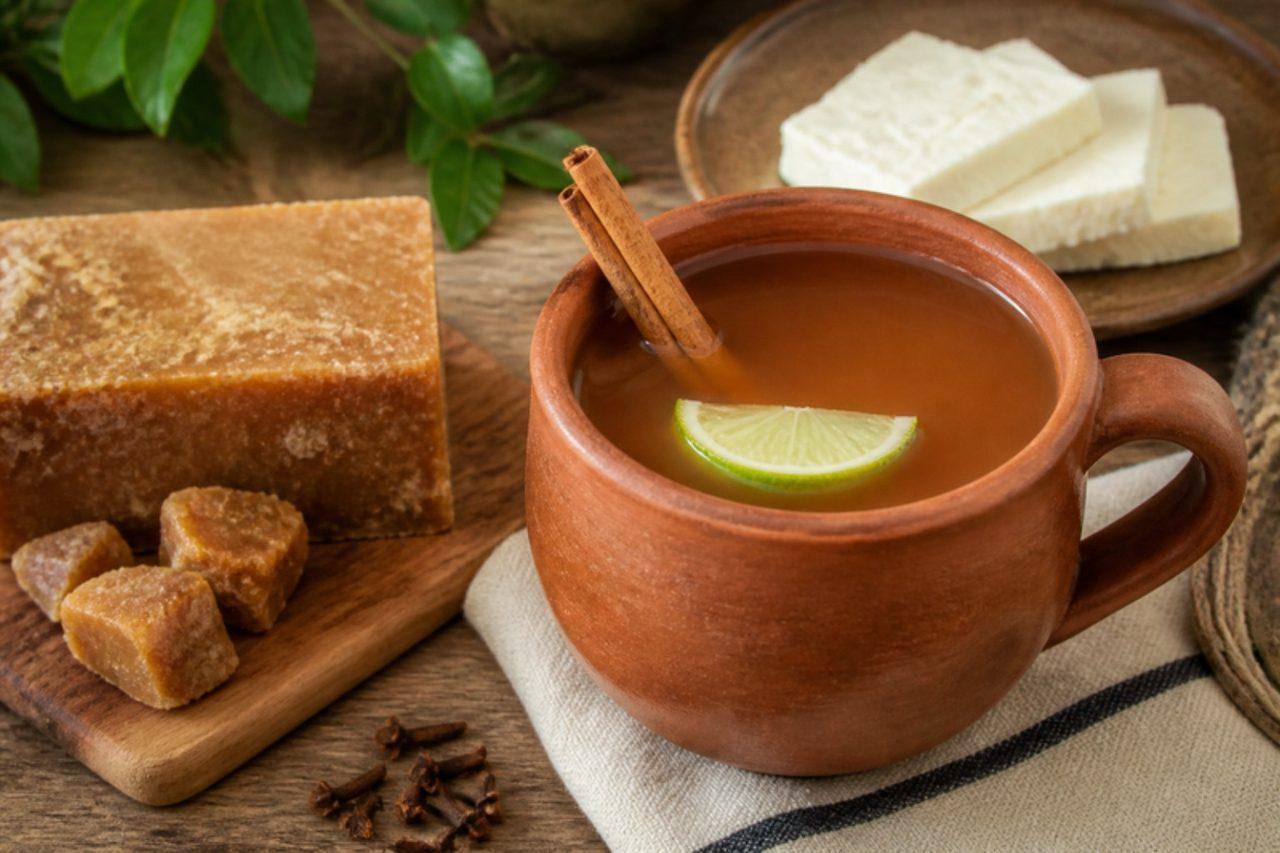
AguapanelaHot panela and lime drink

Aguapanela is simply panela (unrefined cane sugar) dissolved in water, yet it is one of Colombia's most loved drinks: drunk hot at breakfast in Bogotá and the Andes with a slice of fresh cheese dropped in to melt, given to children with a cold, and served iced with lime in the hot lowlands. This page is the hot version; the cold, lime-heavy cousin is Venezuela's papelón con limón. Chef's tip: simmer the panela gently until it dissolves completely and the drink smells of caramel; rushing it leaves sugary lumps at the bottom.

by KrazyBadal 0 views

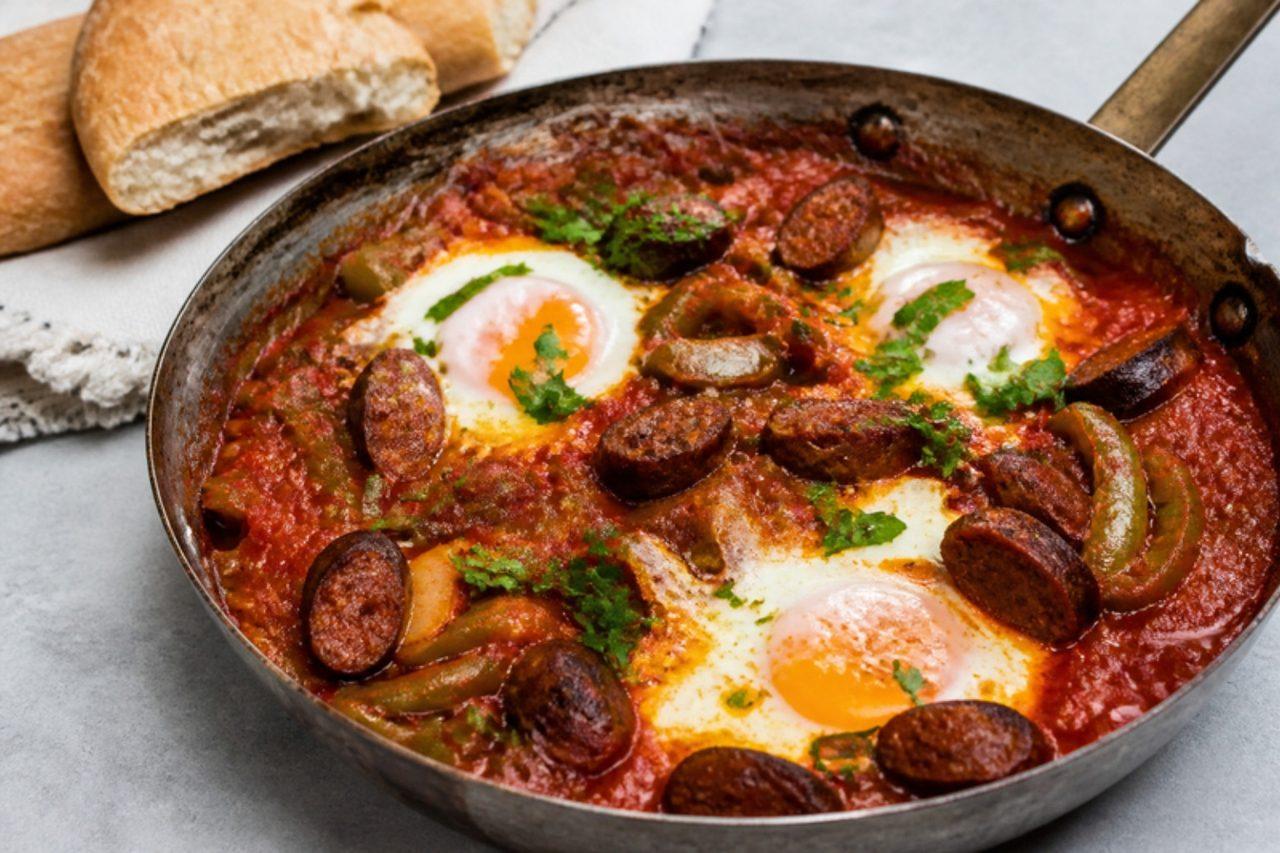
Ojja with merguezSpicy tomato sauce with sausage

Ojja is the quick supper of Tunis cafés and home kitchens: a pan of tomato, peppers, garlic and harissa, cooked down until thick, with slices of spicy lamb merguez and eggs set softly on top. It is scooped up with crusty bread straight from the pan. The mistake is stirring the eggs in too early; they should go in once the sauce is thick and be left alone to just set. Chef's tip: brown the merguez first so its spiced fat flavours the sauce. If you can't get merguez, use any spicy lamb or beef sausage.

by KrazyBadal 0 views

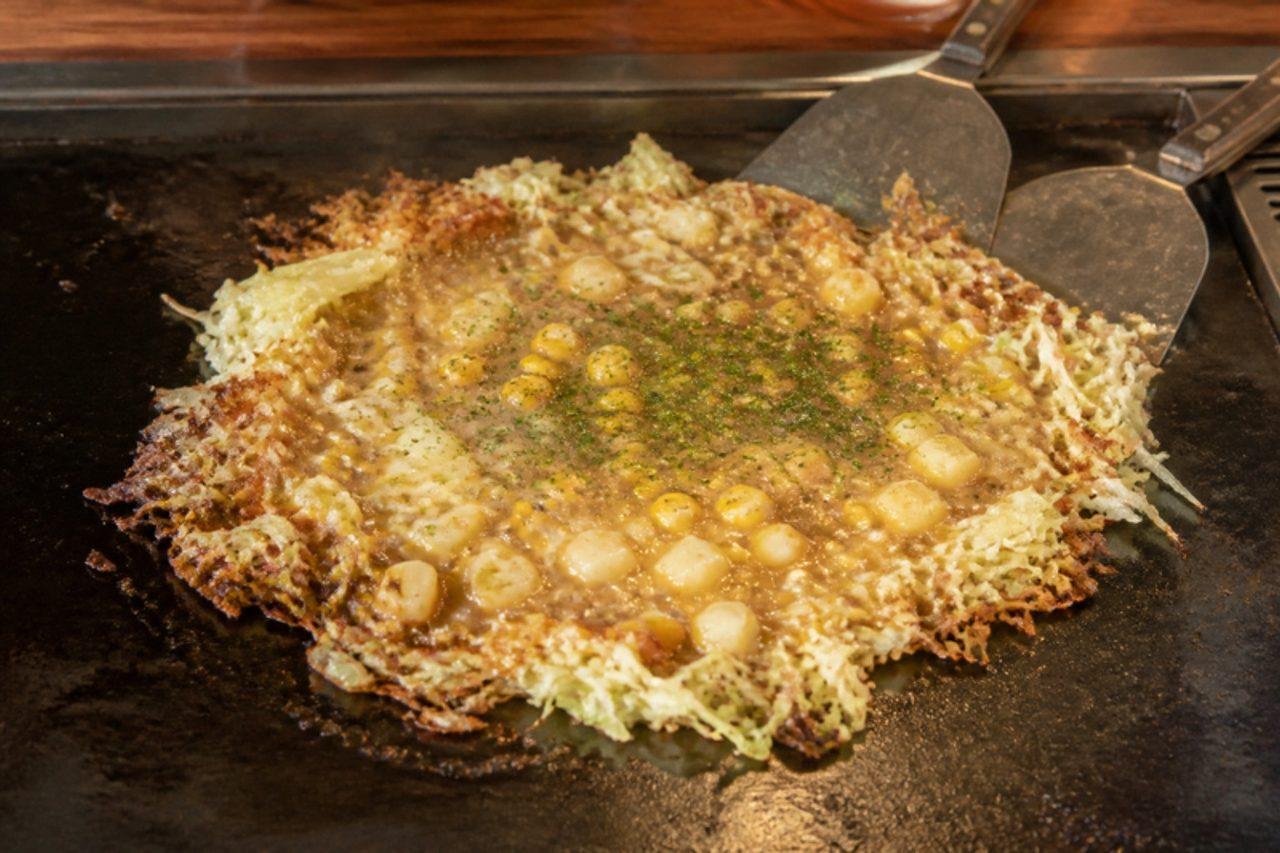
MonjayakiGriddled cabbage and batter

Monjayaki comes from Tsukishima, a small island district in Tokyo Bay, where one street holds more than seventy monja restaurants. It began as a cheap after-school snack at sweet shops, with children writing letters in thin batter on a griddle. Today friends gather round a teppan table, build a ring of chopped cabbage, pour the runny batter into the middle and eat it with tiny spatulas while it is still molten. It never sets into a pancake like okonomiyaki: the texture is gooey, with crisp, toasty bits where it sticks to the plate. Our version leaves out the usual dried shrimp and uses mochi and cheese, a favourite Tsukishima combination. Chef's tip: press a little monja against the hot griddle with your spatula and wait until it crackles. That crisp layer, called the okoge, is the best bite.

by KrazyBadal 0 views

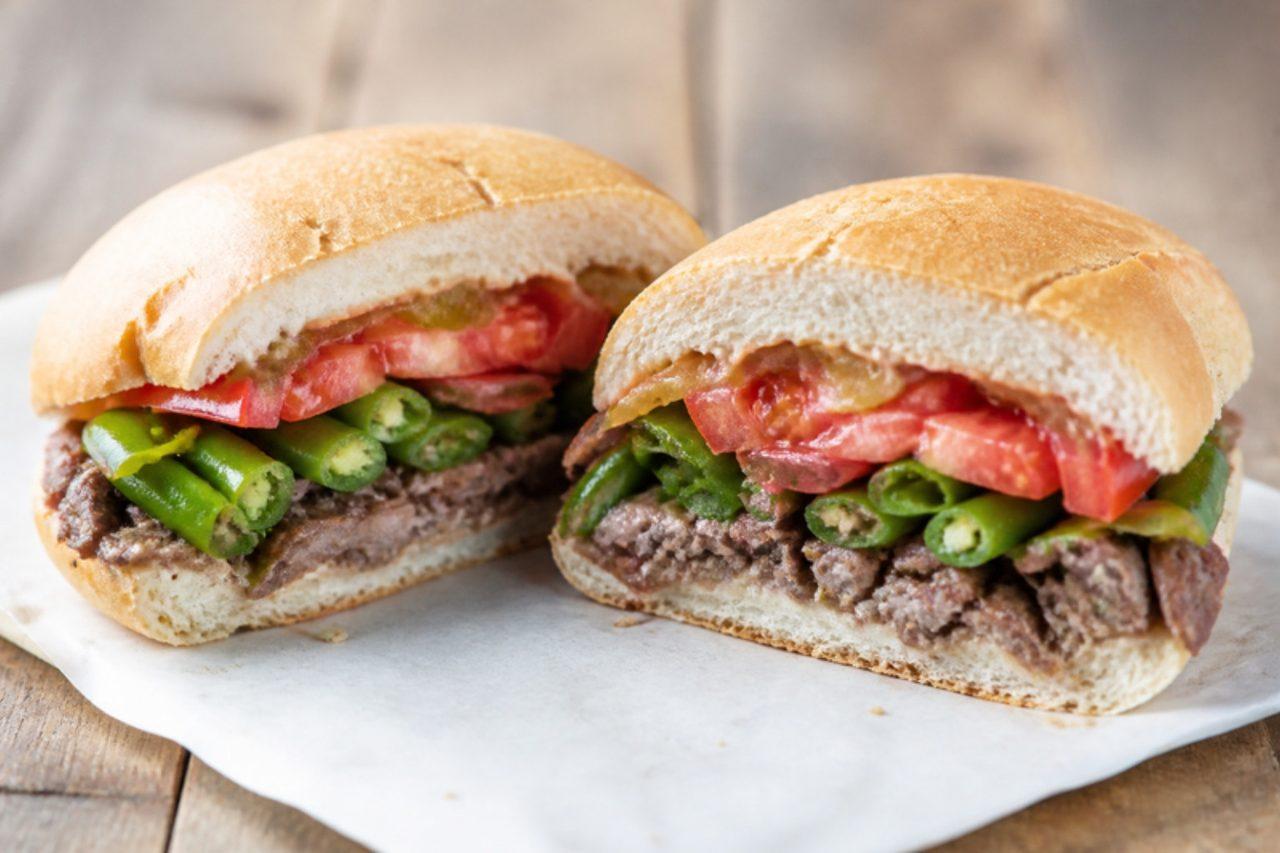
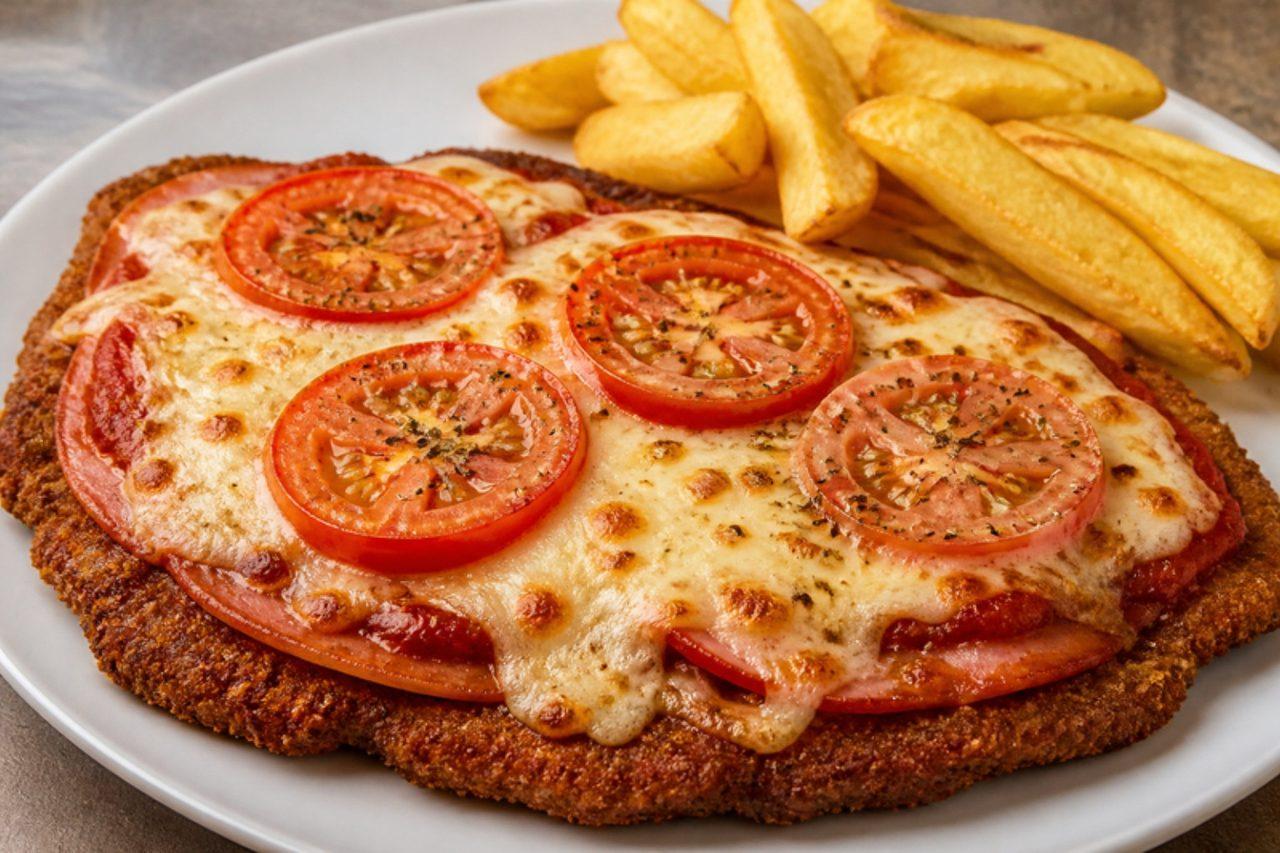
Milanesa a la napolitanaBreaded beef with ham and cheese

Despite the name, this has nothing to do with Naples: it was invented in Buenos Aires in the 1940s at a restaurant called Nápoli, near the Luna Park stadium. A crisp milanesa is topped with tomato sauce, a slice of ham and plenty of mozzarella, then grilled until the cheese bubbles. It is a pork-and-beef dish, because of the ham. Porteños order it at the corner bodegón with a mountain of chips, one plate often shared by two. The common mistake is spooning on too much sauce, which turns the crumb soggy; a thin layer is enough. Chef's tip: fry the milanesas a minute less than usual, since they finish cooking under the grill, and keep the sauce thick.

by KrazyBadal 0 views

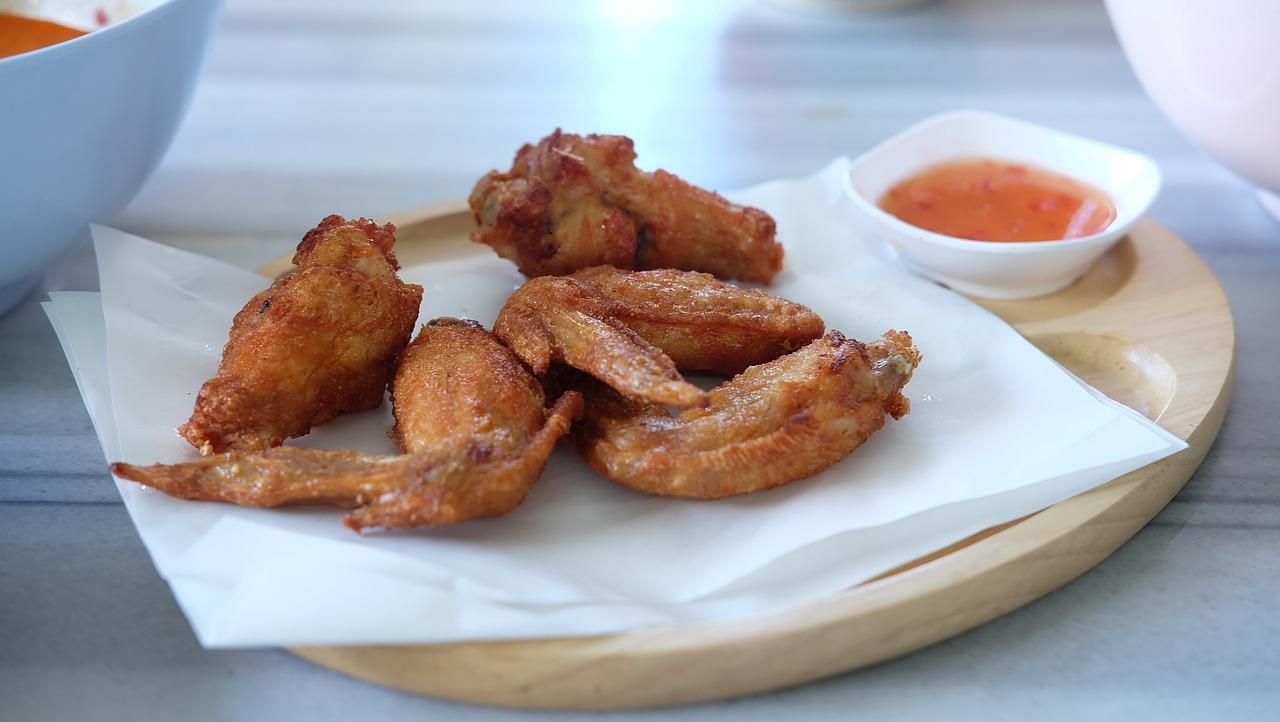
Gai tod Hat YaiSouthern fried chicken

Hat Yai, the busy trading city in Songkhla province near the Malaysian border, gave its name to Thailand's best-loved fried chicken: pieces marinated with coriander root, garlic and white pepper, fried in a thin rice-flour coat until deep bronze, then buried under a drift of crisp fried shallots. Stalls there sell it from early morning with sticky rice and sweet chilli sauce, and Bangkok vendors copy it on every soi. The skin is light and crackly rather than bready, the meat aromatic and well seasoned, and the shallots add sweetness and crunch. Children love it with the sauce on the side. Chef's tip: marinate overnight in the fridge so the coriander root and pepper reach right to the bone.

by KrazyBadal 0 views

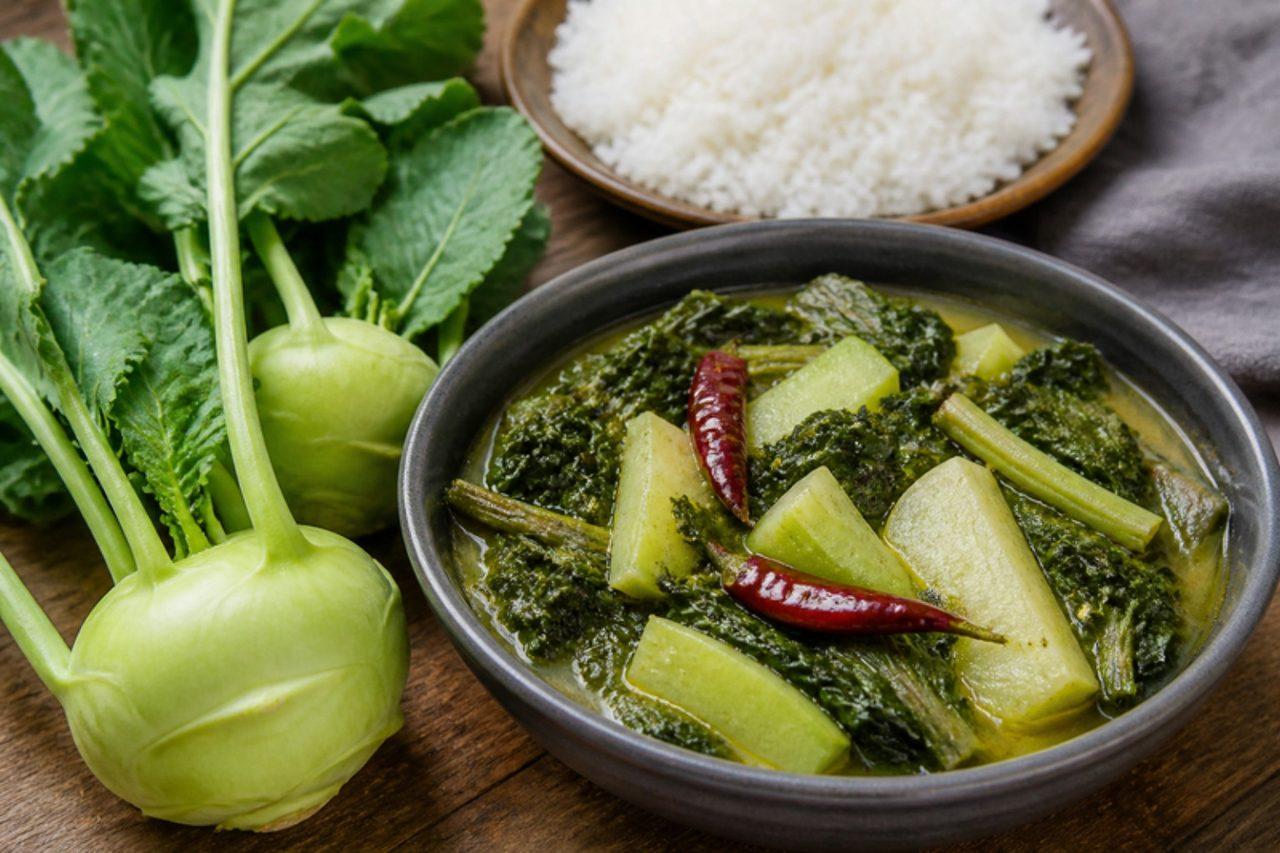
Monji haakKohlrabi and greens in mustard oil

Kohlrabi, monji in Kashmiri, grows in almost every kitchen garden in the Kashmir Valley, and families cook the round bulb and its leaves together in one pot. Like its cousin haak, it is a dish of very few ingredients: mustard oil, dried chilli, a pinch of asafoetida and salt, simmered with a splash of water until the bulb turns sweet and tender. It is eaten through the cold months with plain rice and a bowl of yogurt, and Kashmiris will tell you it tastes best in autumn when the bulbs are young. Chef's tip: buy kohlrabi with fresh, perky leaves attached; if the leaves are tired, add a handful of spinach instead.

by KrazyBadal 0 views

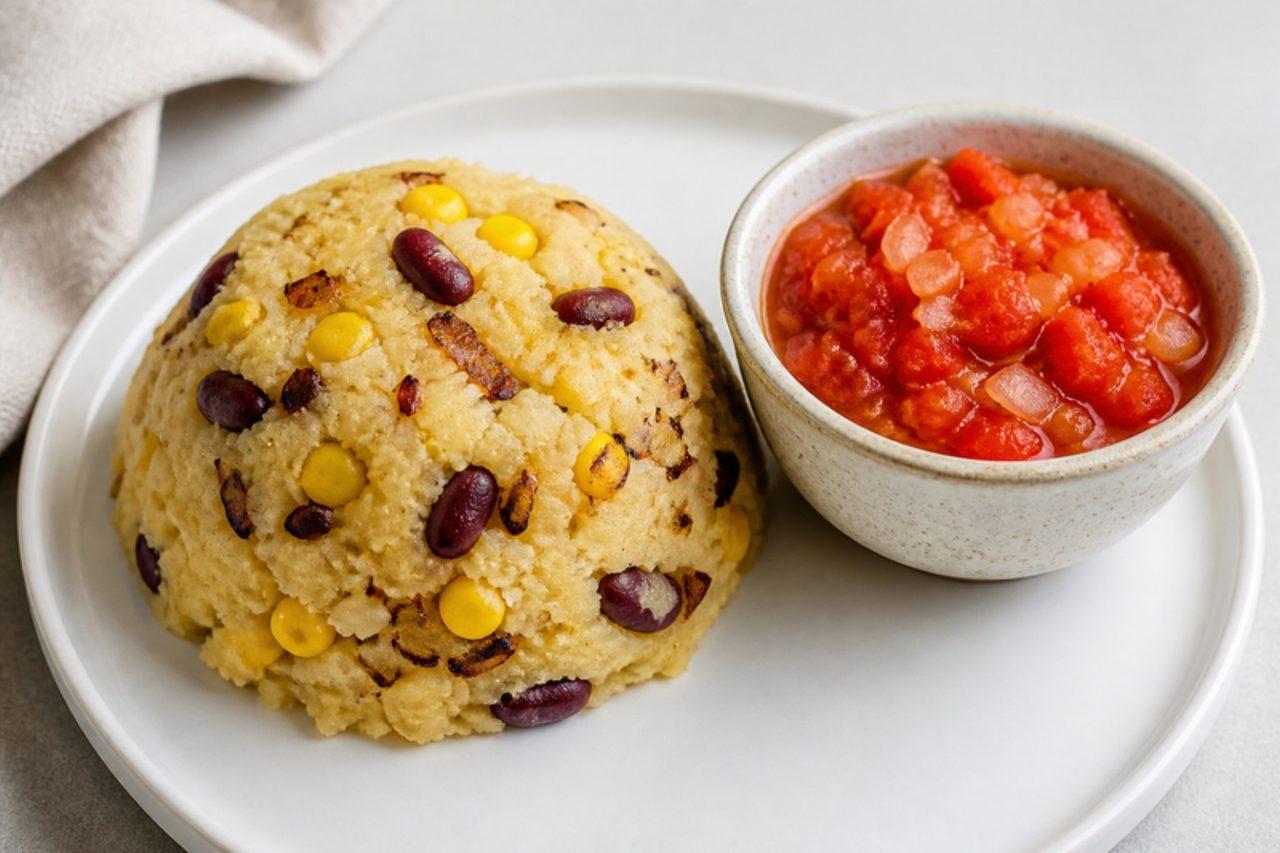
IrioMashed potato, corn and beans

Irio is a Kenyan mash of potatoes with whole corn and kidney beans, fried onion, chilli and butter. It's hearty and comforting. Serve it with a simple tomato stew, as here, or tomato sauce.

by KrazyBadal 0 views

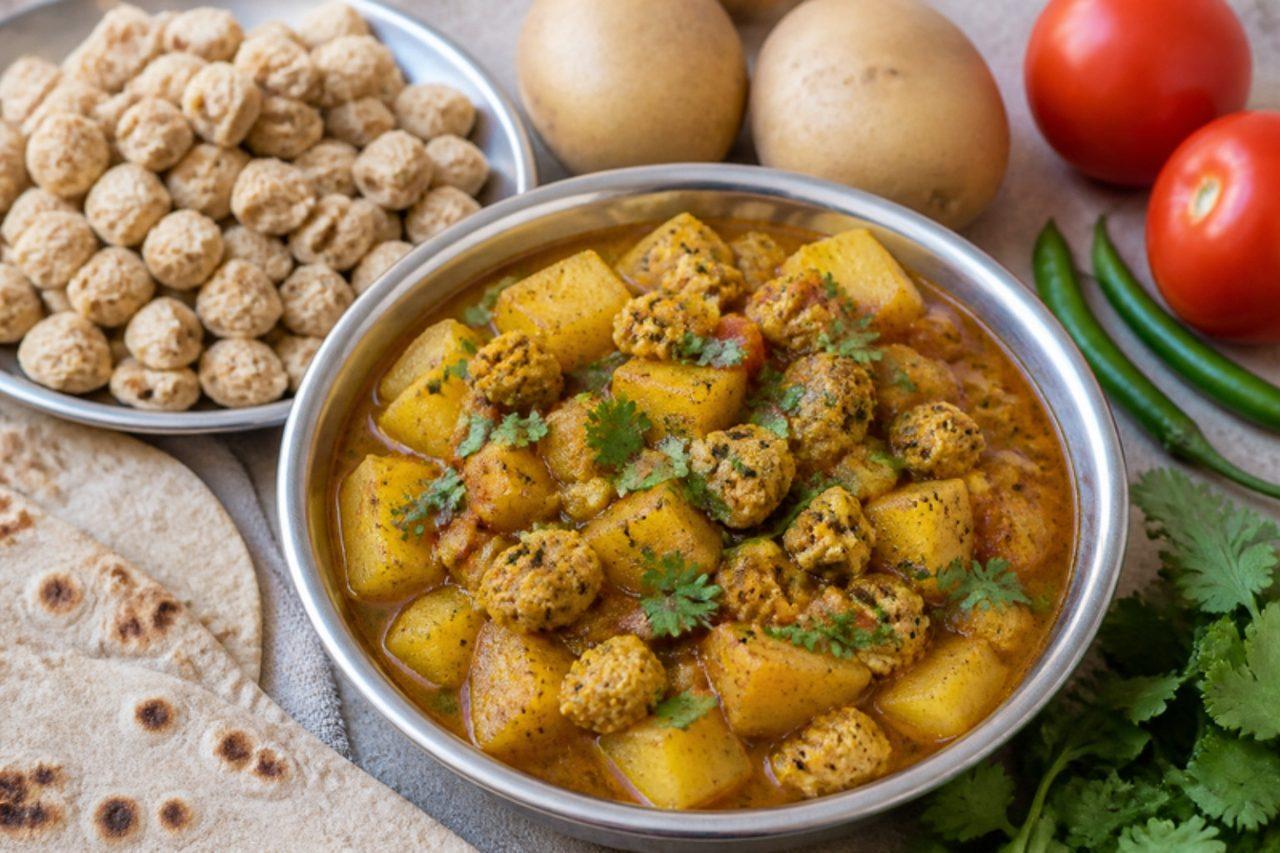
Amritsari aloo wadiyanPotato and lentil dumpling curry

Every winter, rooftops in Amritsar's old city are covered with trays of wadiyan: little cones of spiced urad-dal paste studded with black pepper and dried in the sun until rock hard. Punjabi homes break them into chunks, fry them until they smell nutty, and simmer them with potatoes in a mustard-oil gravy. The wadiyan soften into chewy, spicy, almost meaty pieces, and the potatoes soak up their pepper. It is everyday comfort food, eaten with hot phulkas or rice and a raw onion on the side. Chef's tip: wadiyan are already salted and spiced, so add salt only at the end, after tasting.

by KrazyBadal 0 views

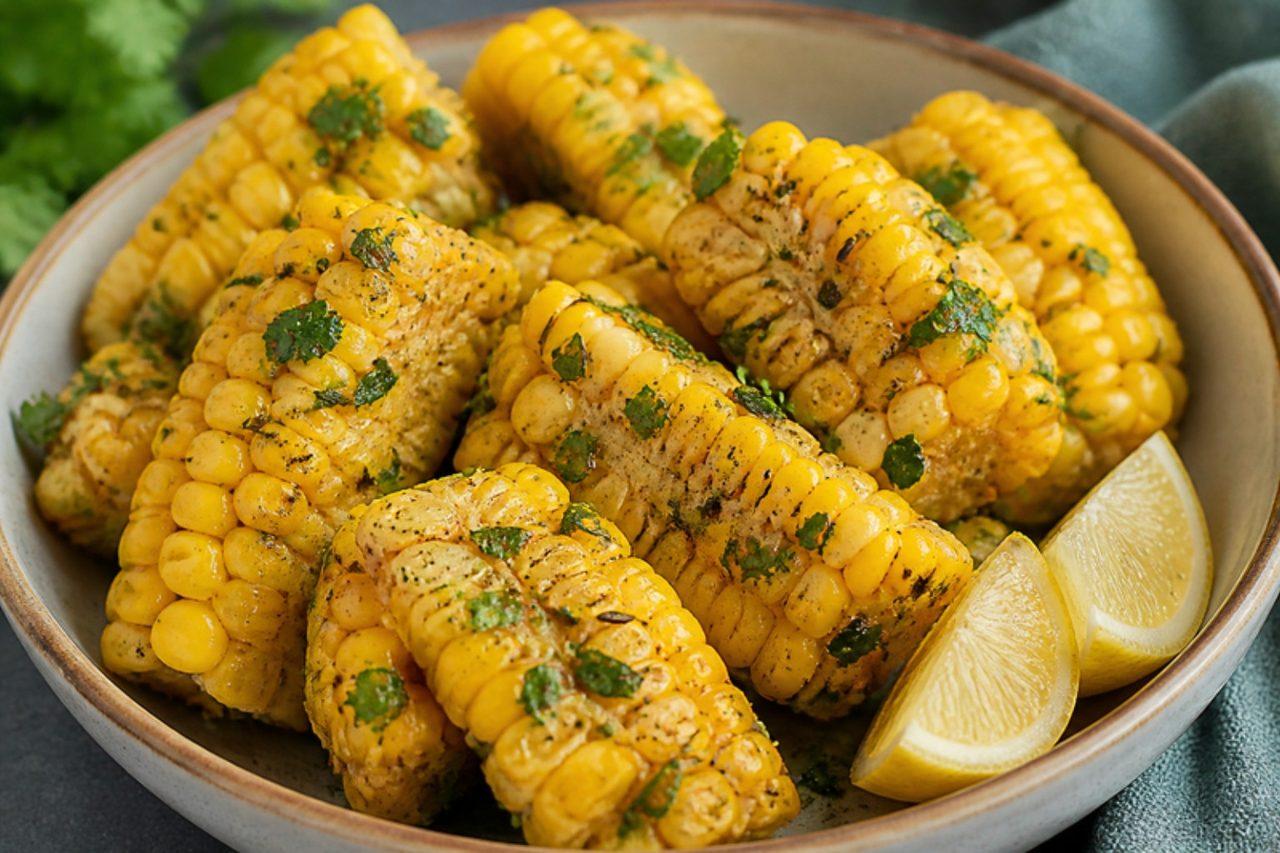
Corn bombSpiced corn on the cob chunks

Chunks of tender corn on the cob tossed in hot oil with cumin, green chillies, fresh coriander, turmeric, black pepper and lemon until every kernel is coated. It's hot, tangy and messy to eat with your fingers. Serve hot from the barbecue.

by KrazyBadal 0 views

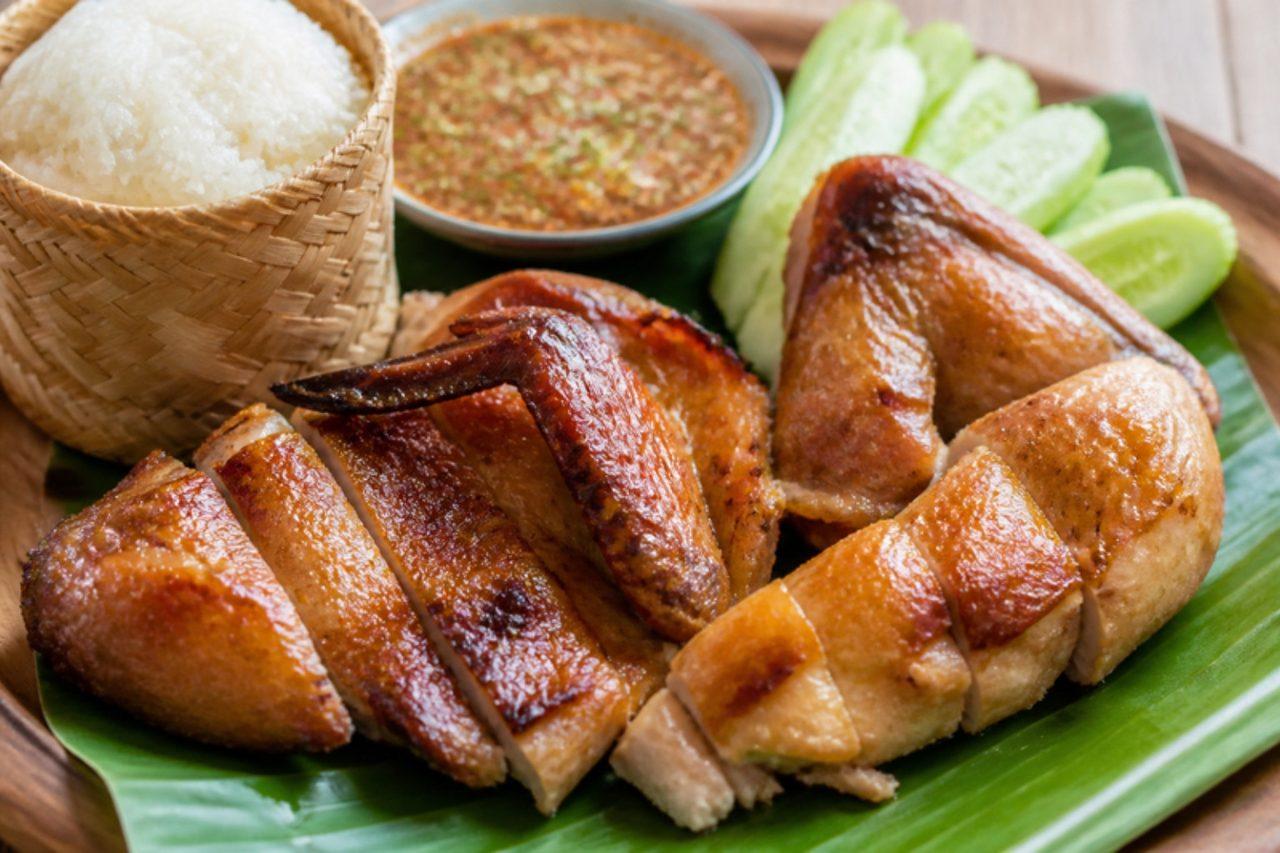
Gai yangGrilled lemongrass chicken

Bus stations and football matches across Isan have the same soundtrack: the crackle of chicken pieces clamped in split bamboo over glowing coals, and the thump of a pestle making som tam beside them. Gai yang is marinated in garlic, coriander root, white pepper and lemongrass, then grilled slowly so the skin turns lacquered and smoky while the meat stays juicy. Tear it apart with your hands and eat it with sticky rice, green papaya salad and a sour-hot jaew dipping sauce. Chef's tip: leave it in the marinade overnight in the fridge; the lemongrass and garlic need hours to get past the skin.

by KrazyBadal 0 views

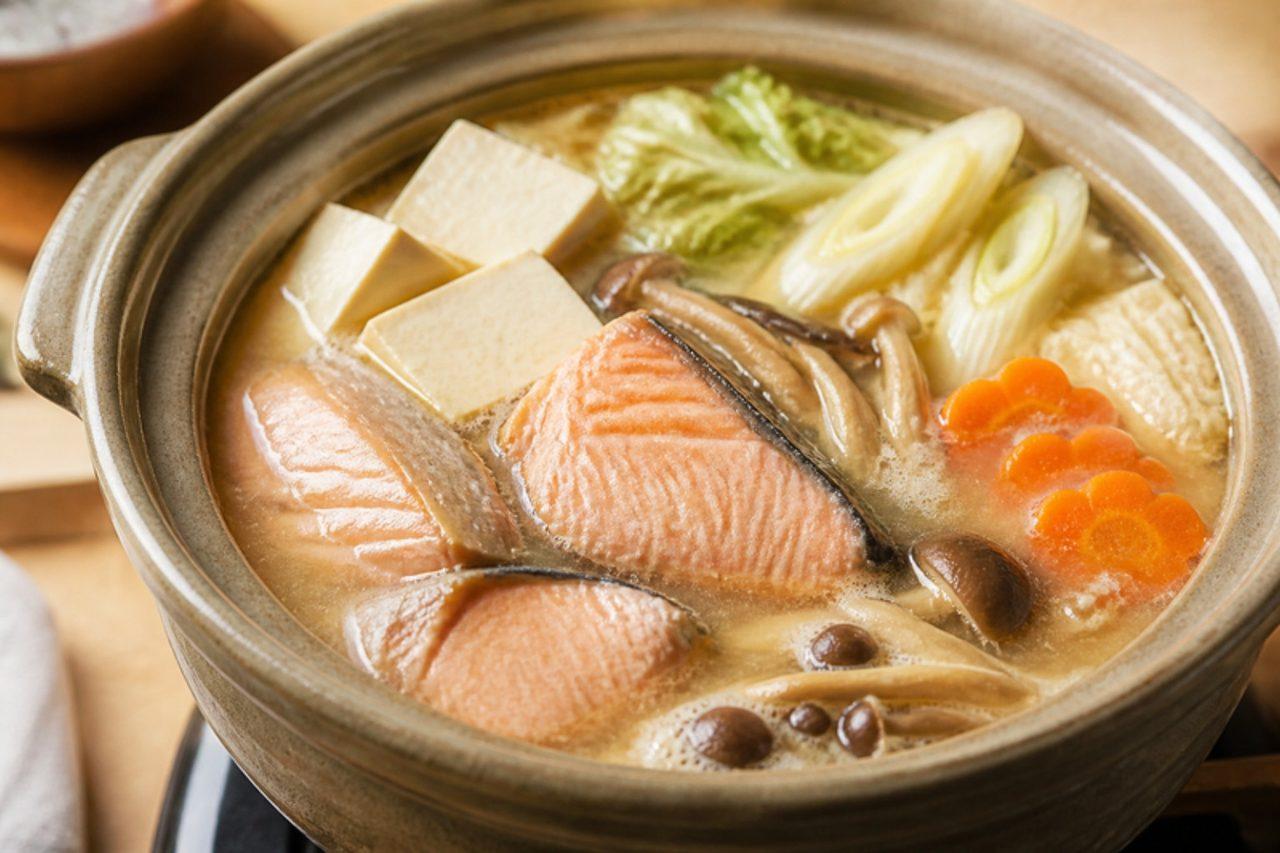
Ishikari nabeSalmon miso hot pot

Autumn salmon swimming up the Ishikari River, near Sapporo, gave the fishing families at its mouth a glut of fish, and this miso hot pot is how they cooked it. Today Hokkaido families bring a clay pot of it to the table on cold nights from October onwards, and everyone helps themselves as it bubbles on a portable burner. Chunks of salmon, potato, cabbage, tofu and mushrooms simmer in kombu broth thickened with miso. A pinch of sansho pepper at the end lifts the richness, and some cooks melt a knob of butter on top. Chef's tip: salt the salmon for 10 minutes and pour boiling water over it before it goes in the pot, as this firms the flesh and washes away any fishy smell.

by KrazyBadal 0 views

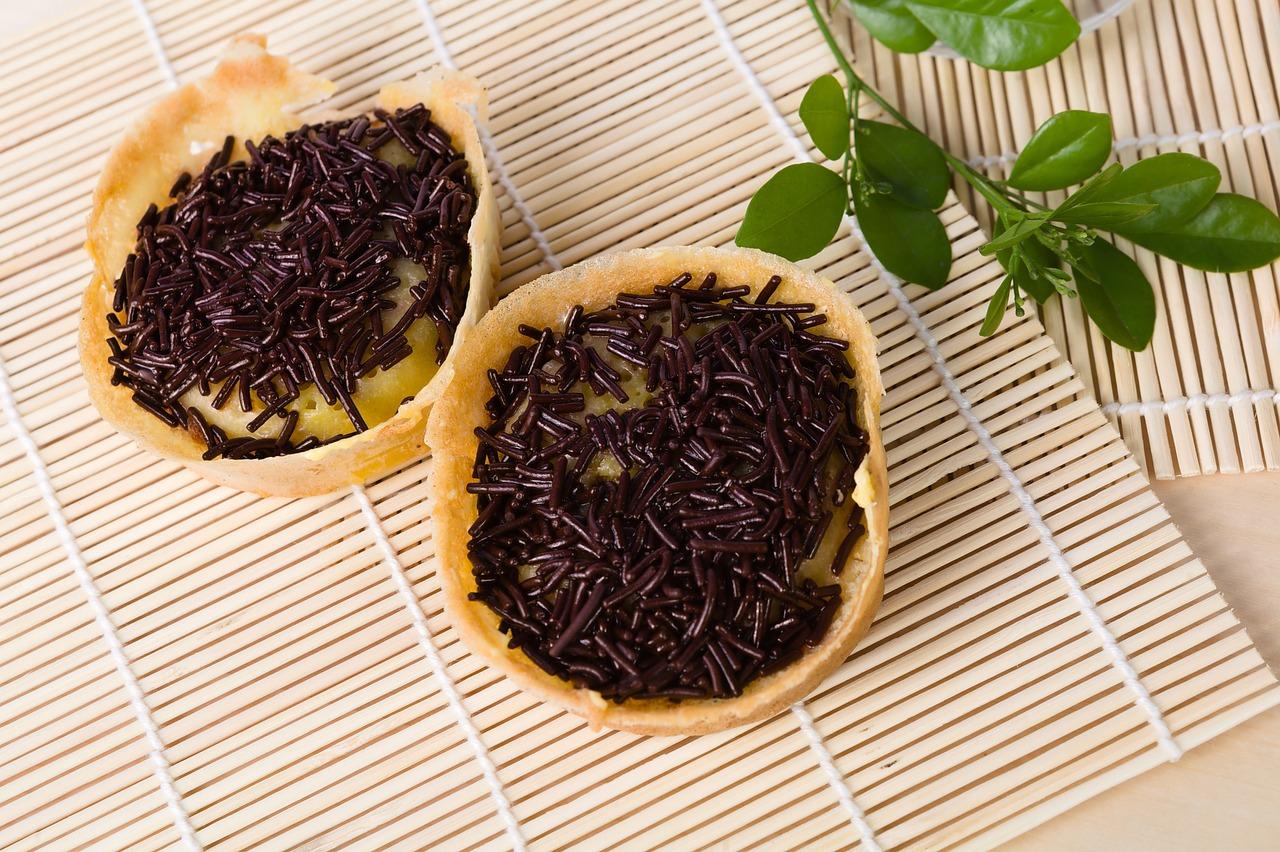
Martabak manisThick sweet pancake

After dark, martabak manis stalls all over Indonesia fire up their heavy iron pans, and a queue forms for one thick, spongy pancake cooked until its top is pocked with holes, then slathered with butter and folded over chocolate sprinkles, crushed peanuts, sugar and condensed milk. It's often called terang bulan, "bright moon", and is said to have come from Bangka island before spreading through Java. It's sold by the box to share with family. Chef's tip: let the bubbles form and stay open before you add the sugar and cover the pan — that open honeycomb is what soaks up the butter.

by KrazyBadal 0 views

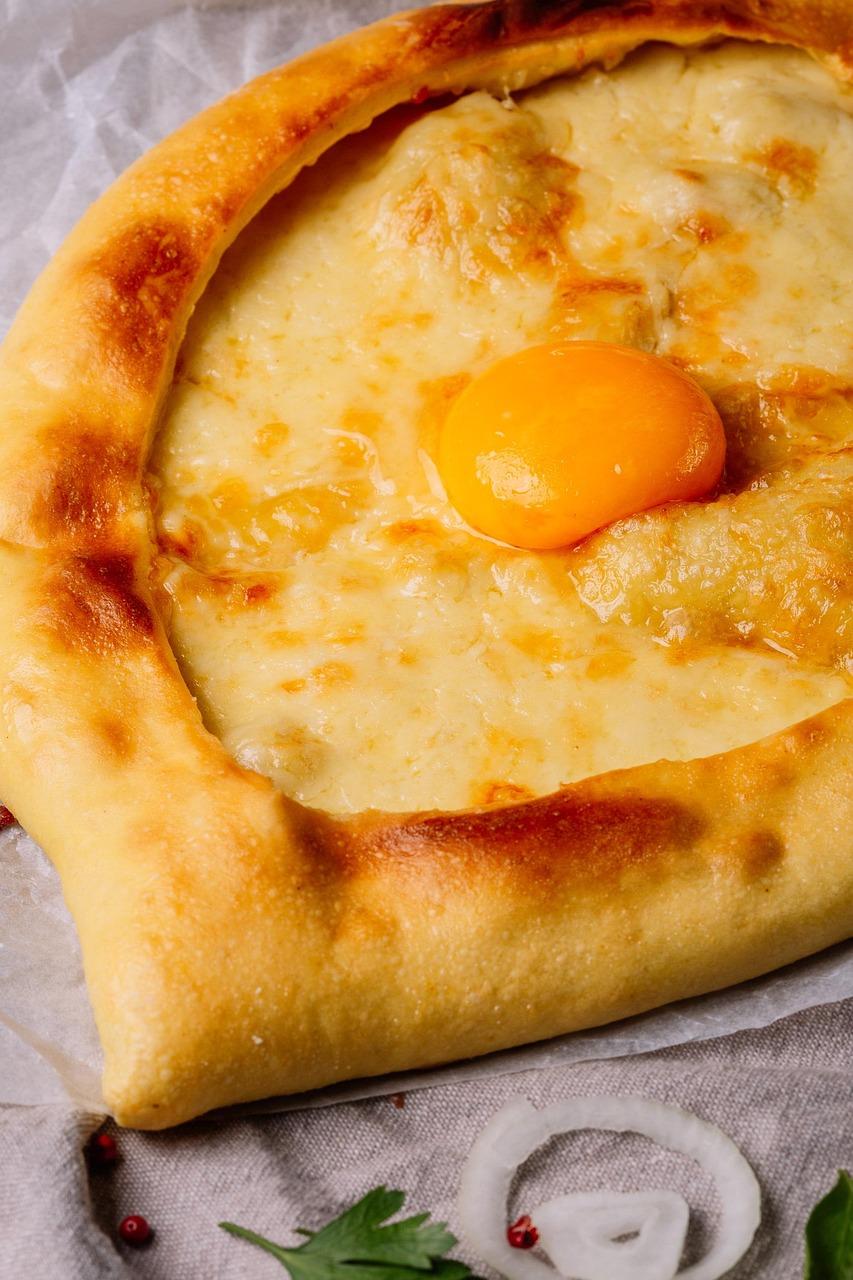
Adjaruli khachapuriCheese bread boat with egg

On the Black Sea promenade in Batumi, the capital of Adjara, this is the bread people queue for after a swim: a boat of soft yeasted dough, the middle filled with molten cheese, and an egg yolk and a slab of butter dropped in at the very end. You stir the yolk and butter through the cheese with a fork at the table, then tear off the crisp ends and dip them in. Locals say the shape is a boat and the yolk the sun over the sea. Georgian imeruli and sulguni cheeses are hard to find outside Georgia, so this uses mozzarella with feta for the salty tang. Choose cheeses labelled vegetarian (microbial rennet). The usual home mistake is putting the egg in too early, which sets it hard; the yolk should go in only for the last 2 minutes so it stays runny. Chef's tip: roll the long edges inwards tightly and pinch the tips hard, or they will unroll in the oven and the cheese will flood the tray.

by KrazyBadal 0 views

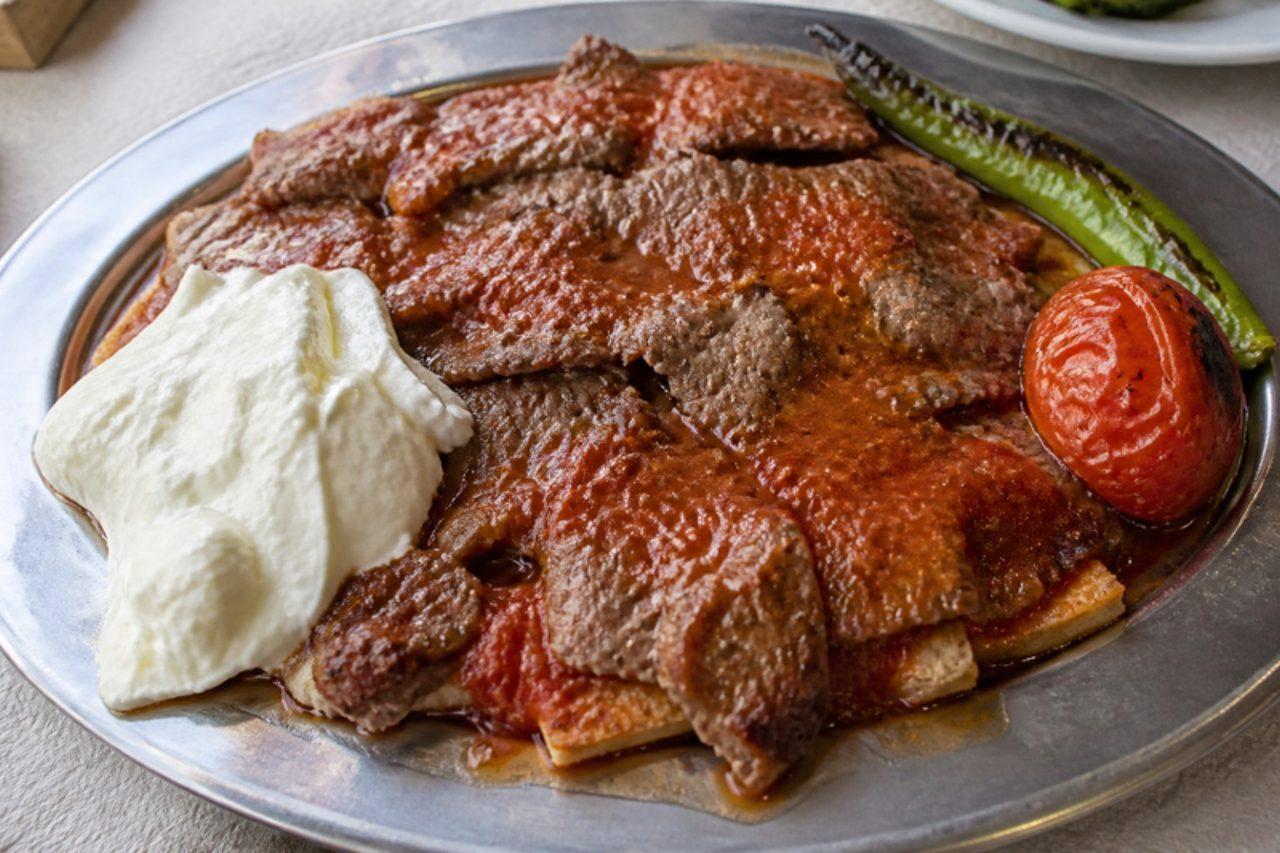
İskender kebabLamb over pide with tomato sauce

İskender comes from Bursa, the old Ottoman capital below Mount Uludağ, where restaurants have served it since the late 1800s and families still queue for it at weekend lunch. Shavings of grilled meat are laid over cubes of soft pide, soaked in a buttery tomato sauce and finished at the table with a pour of foaming brown butter beside a mound of thick yogurt. Without a vertical döner grill at home, very thin slices of marinated lamb leg seared fast in a hot pan get you close: crisp at the edges, juicy in the middle. Serve it with roasted green peppers and a glass of ayran. Chef's tip: partly freeze the meat for 30–40 minutes before slicing; it firms up and you can cut it almost as thin as döner shavings.

by KrazyBadal 0 views

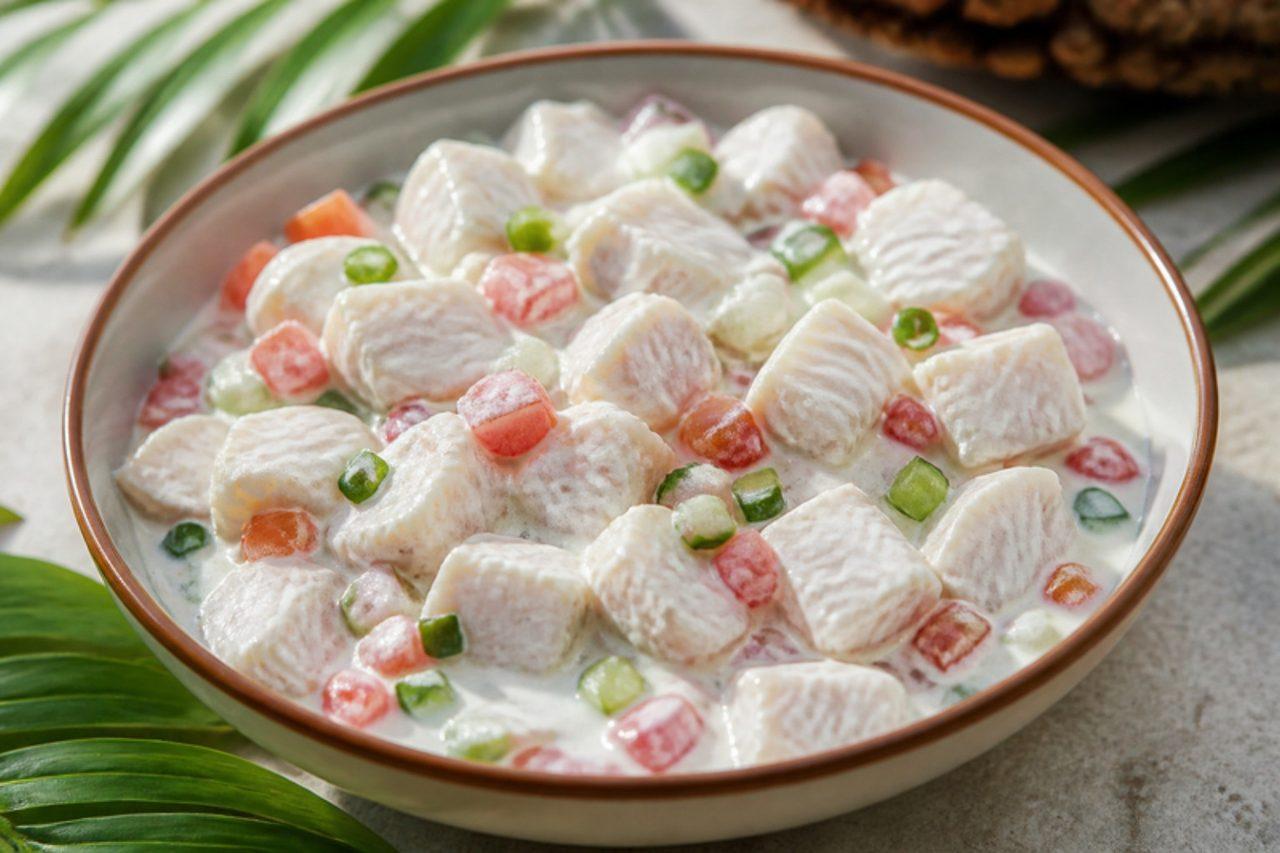
Oka i'aRaw fish in coconut cream

Oka i'a is the raw fish salad served at every Samoan to'ona'i, the big Sunday lunch after church in Apia and the villages of Upolu and Savai'i, and in Samoan homes in Auckland. It is close to Fiji's kokoda but usually uses tuna, a shorter citrus soak and more vegetables, with a finish of spring onion. As a raw fish dish it is written here as a safer version: buy very fresh, previously frozen sashimi-grade tuna, keep it cold and eat within 2 hours. Raw or citrus-cured fish is not for pregnant women, young children or anyone with a weakened immune system; for them, sear the tuna as described in the steps. The mistake is cutting the fish too small, so it goes mushy; keep the cubes about 1.5 cm. Chef's tip: chill the coconut cream and the bowl, so the salad is cold and refreshing.

by KrazyBadal 0 views

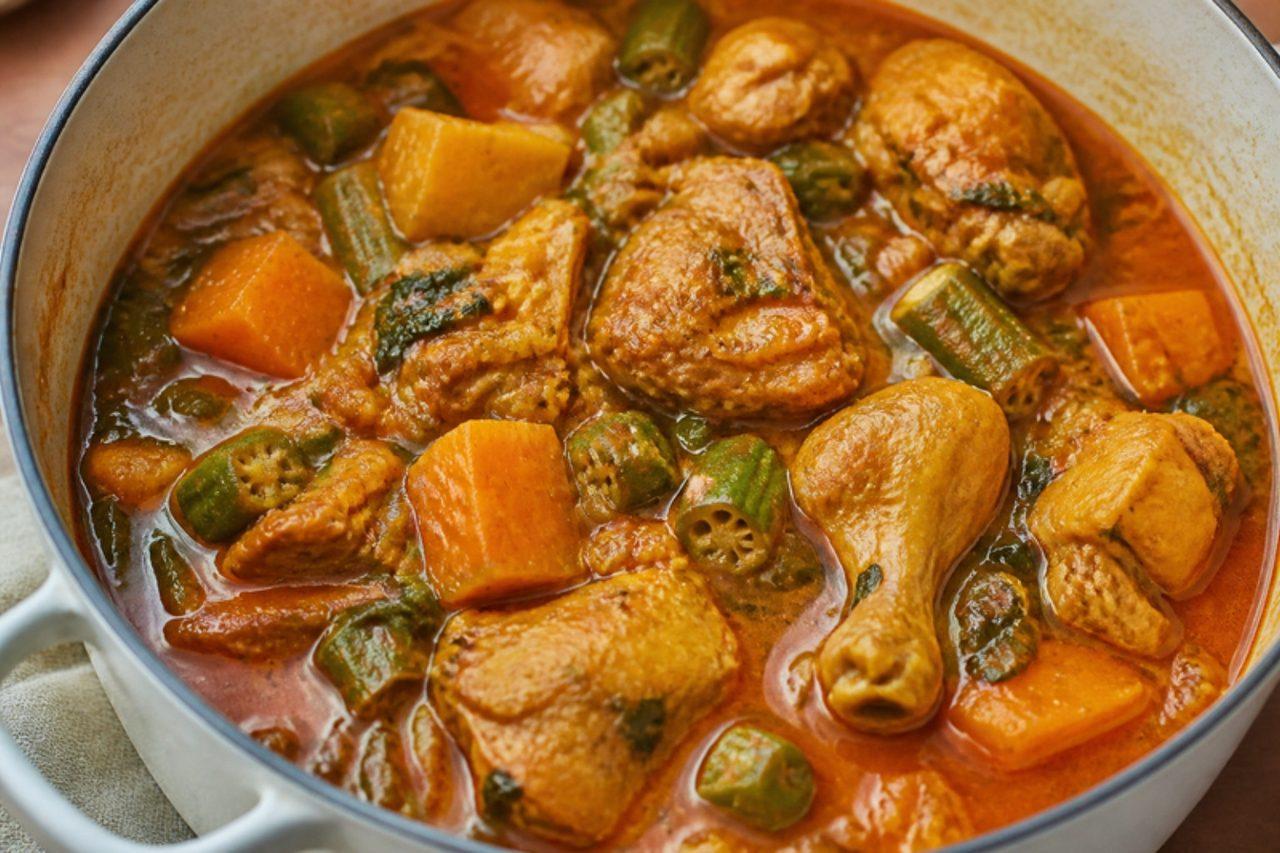
Moamba de galinhaChicken stew in palm oil sauce

Moamba de galinha is the national dish of Angola, cooked in Luanda for Sunday lunch and family celebrations: chicken simmered in a deep orange sauce of palm oil (or palm-nut cream), tomato, garlic and chilli, with okra and butternut squash. It is served with funge, a smooth cassava porridge, which is dipped into the sauce. The mistake is frying red palm oil over high heat, which makes it bitter; heat it gently. Chef's tip: marinate the chicken in lemon and garlic first; the sourness balances the rich sauce.

by KrazyBadal 0 views

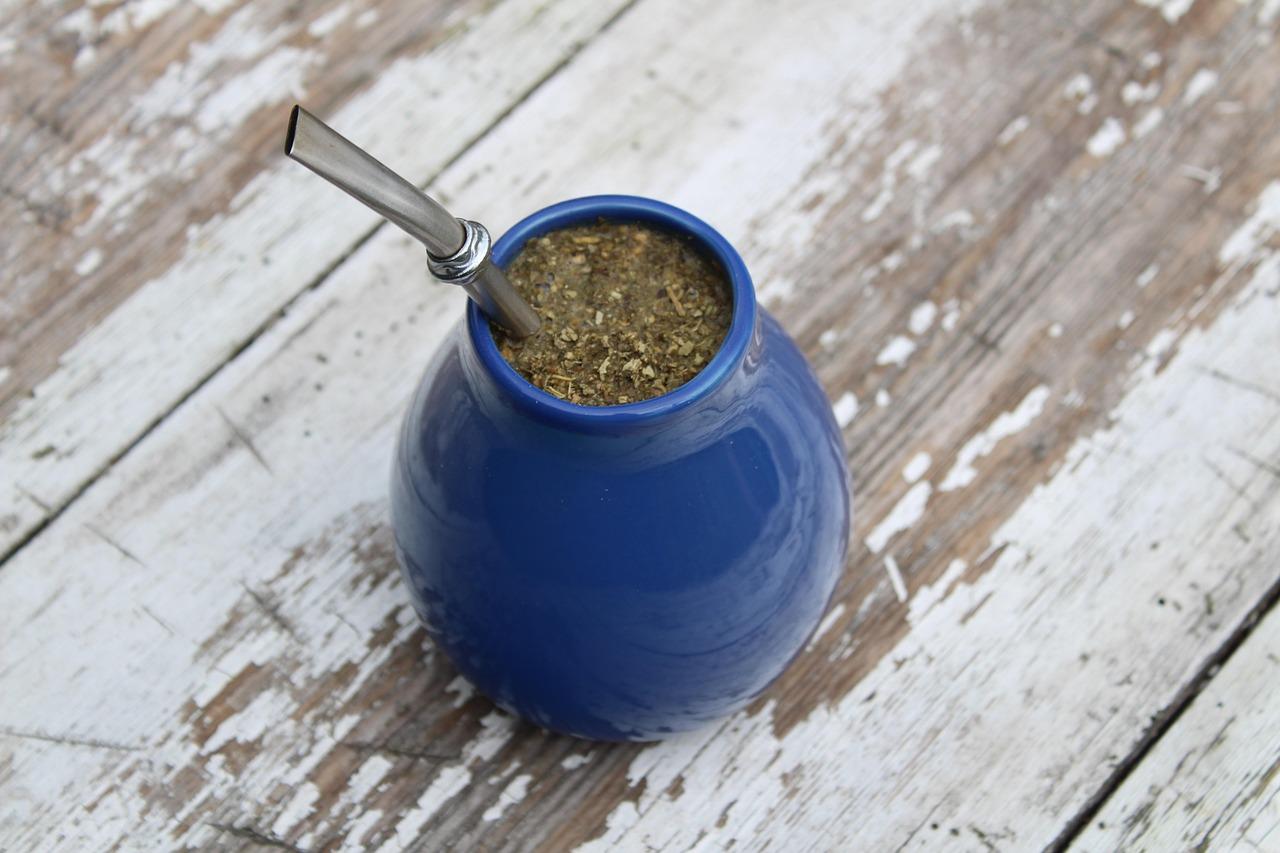
MateYerba mate tea

Mate is less a drink than a ritual in Argentina, Uruguay and Paraguay: a gourd (also called a mate) packed with yerba mate leaves, a metal straw called a bombilla, and a thermos of hot water passed around friends, family and coworkers, from the parks of Buenos Aires to long bus rides across Patagonia. One person, the cebador, pours and drinks first, then refills and passes it on. It's grassy, bitter and gently stimulating; sweet versions add sugar. Chef's tip: never use boiling water; at about 75–80 °C the yerba stays fresh for many rounds instead of 'burning' and turning bitter.

by KrazyBadal 0 views

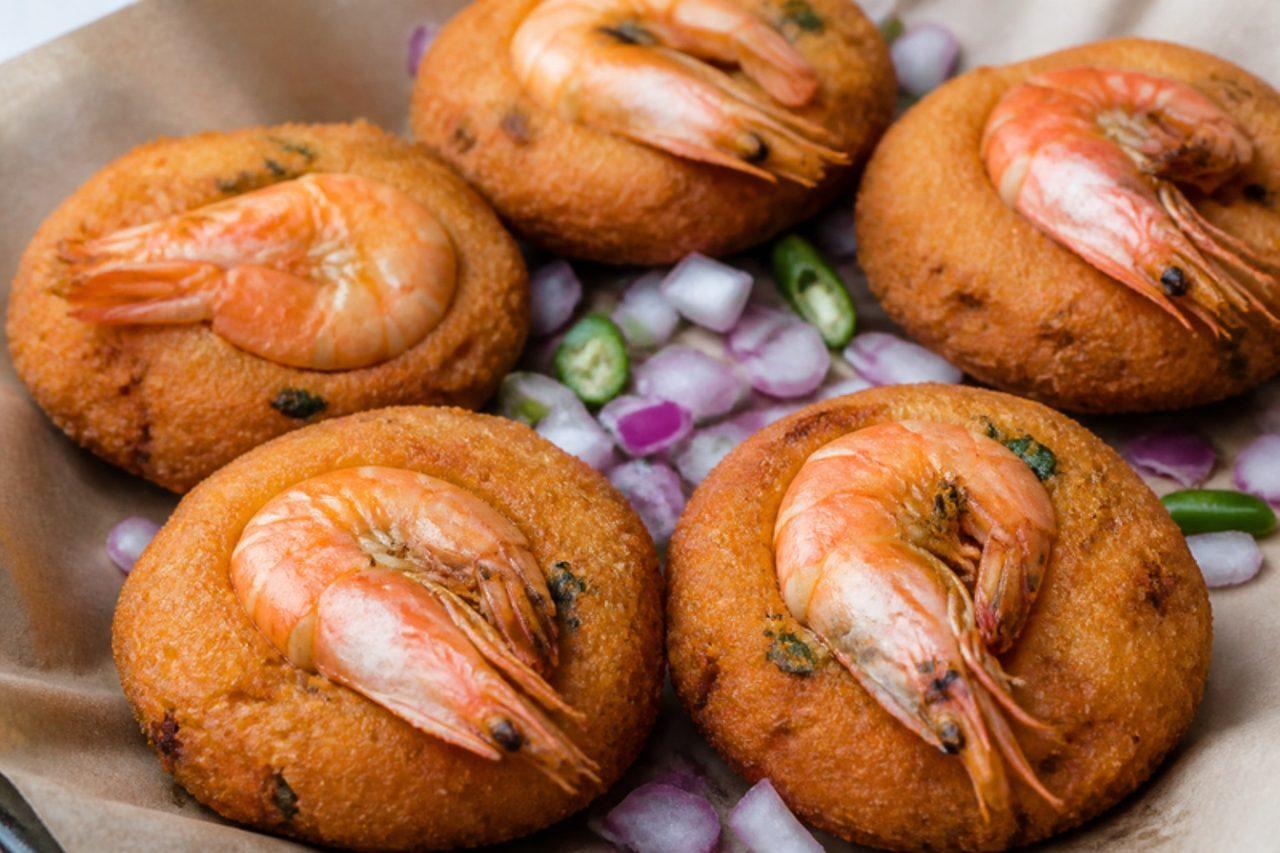
Isso vadaiPrawn and lentil fritters

As the sun goes down on Galle Face Green in Colombo, carts line the seafront selling isso vadai: crunchy lentil fritters with a whole prawn pressed into the top of each one. Families buy them in paper bags with sliced onion and a squeeze of lime while the kids fly kites. At home they make a great teatime snack or a starter for guests, and they're best eaten within minutes of frying. Chef's tip: soak the split peas but don't grind them too smoothly; a coarse, slightly grainy batter is what gives the fritters their crunch.

by KrazyBadal 0 views

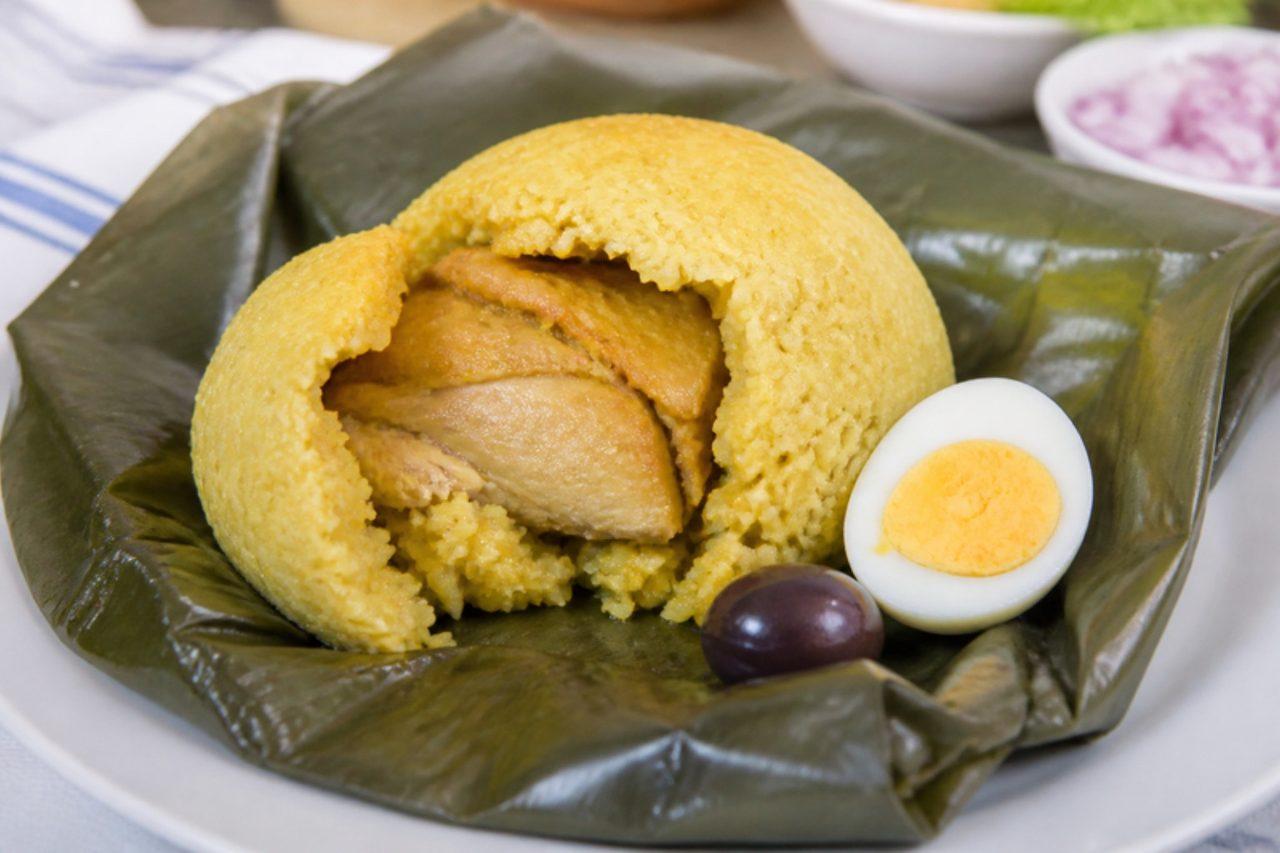
Juane de gallinaChicken and rice parcels

In Iquitos, Tarapoto and the river towns of Peru's Amazon, juanes are steamed by the hundred for the feast of San Juan on 24 June, when families picnic by the rivers to mark the start of the dry season. Each parcel hides a piece of chicken, half a boiled egg and a black olive inside rice seasoned with turmeric, cumin and the herb sacha culantro, all wrapped in broad bijao leaves that perfume the rice. Banana leaves are the easiest swap outside the jungle. Chef's tip: let the rice cool before you wrap it; warm rice is too soft to shape and the parcels lose their round shape.

by KrazyBadal 0 views

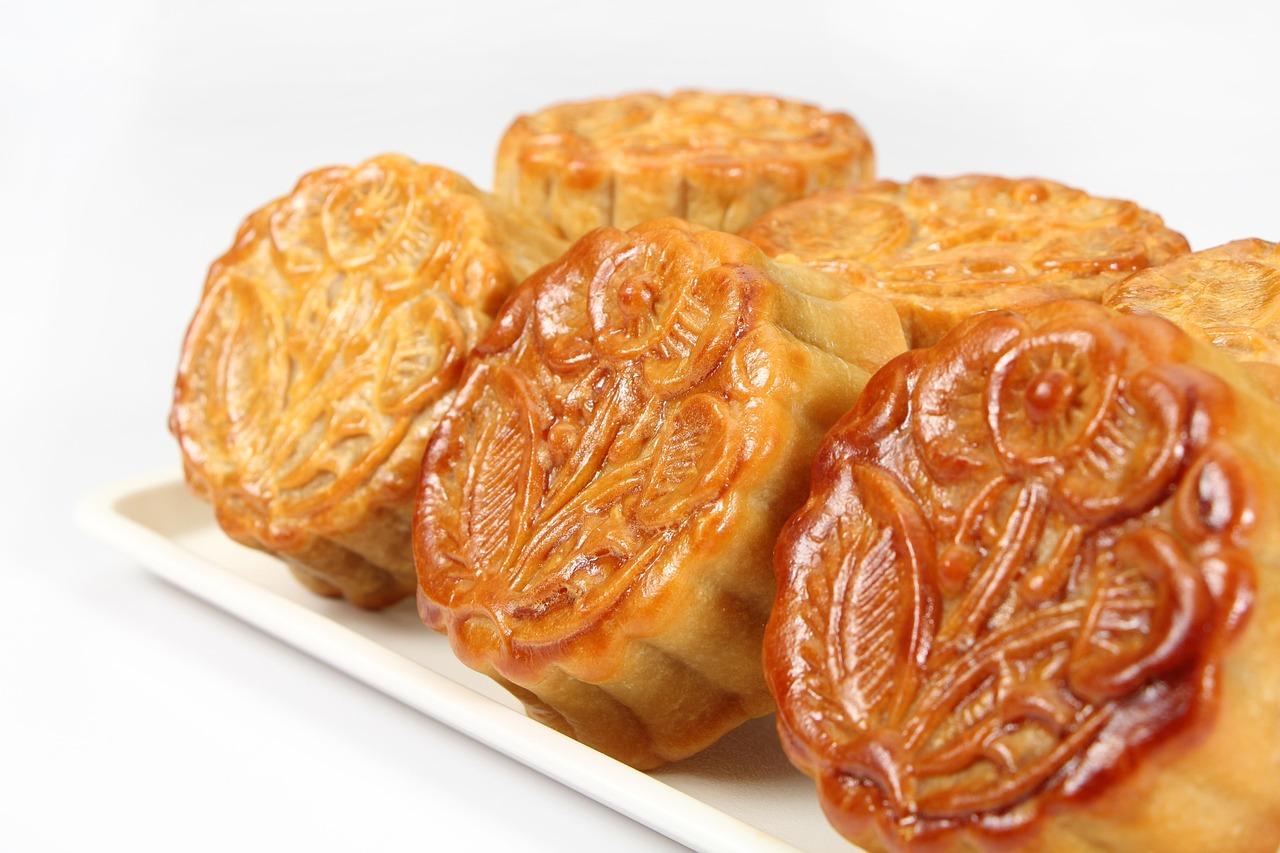
Cantonese mooncakes with lotus or red bean pasteFilled pastry mooncakes

Mooncakes are exchanged and eaten all over China at the Mid-Autumn Festival, when families gather under the full moon with tea and fruit. The Cantonese style, from Guangdong and Hong Kong, has a thin, shiny brown crust around a dense, sweet filling of lotus seed paste or red bean paste; this vegetarian version leaves out the salted duck egg yolks. You need a mooncake press (50–75 g size). Chef's tip: rest the baked mooncakes in an airtight tin for 2 days; the crust softens and turns glossy, a change bakers call 'returning oil'.

by KrazyBadal 0 views

Showing 54 of 10,569 recipes

Show more recipes

Page 1,057 of 1,175