No onion, no garlic recipes (Swaminarayan and sattvic)
3,481
3481 vegetarian recipes cooked without onion or garlic, as in Swaminarayan and sattvic kitchens, with no meat, fish, eggs or alcohol. Each has photos, step-by-step instructions and cook times. The quickest, Apfelschorle, takes 2 minutes. Most take around 45 minutes.
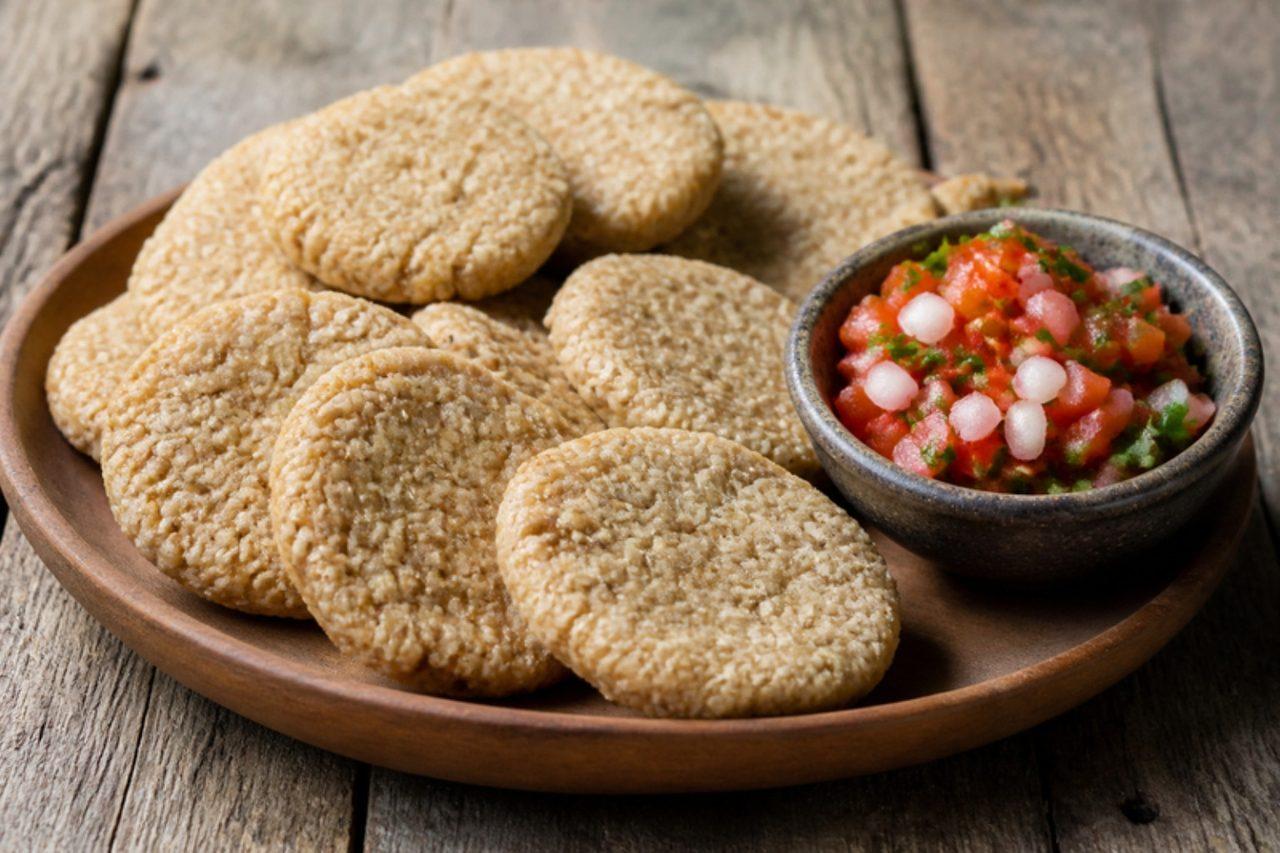
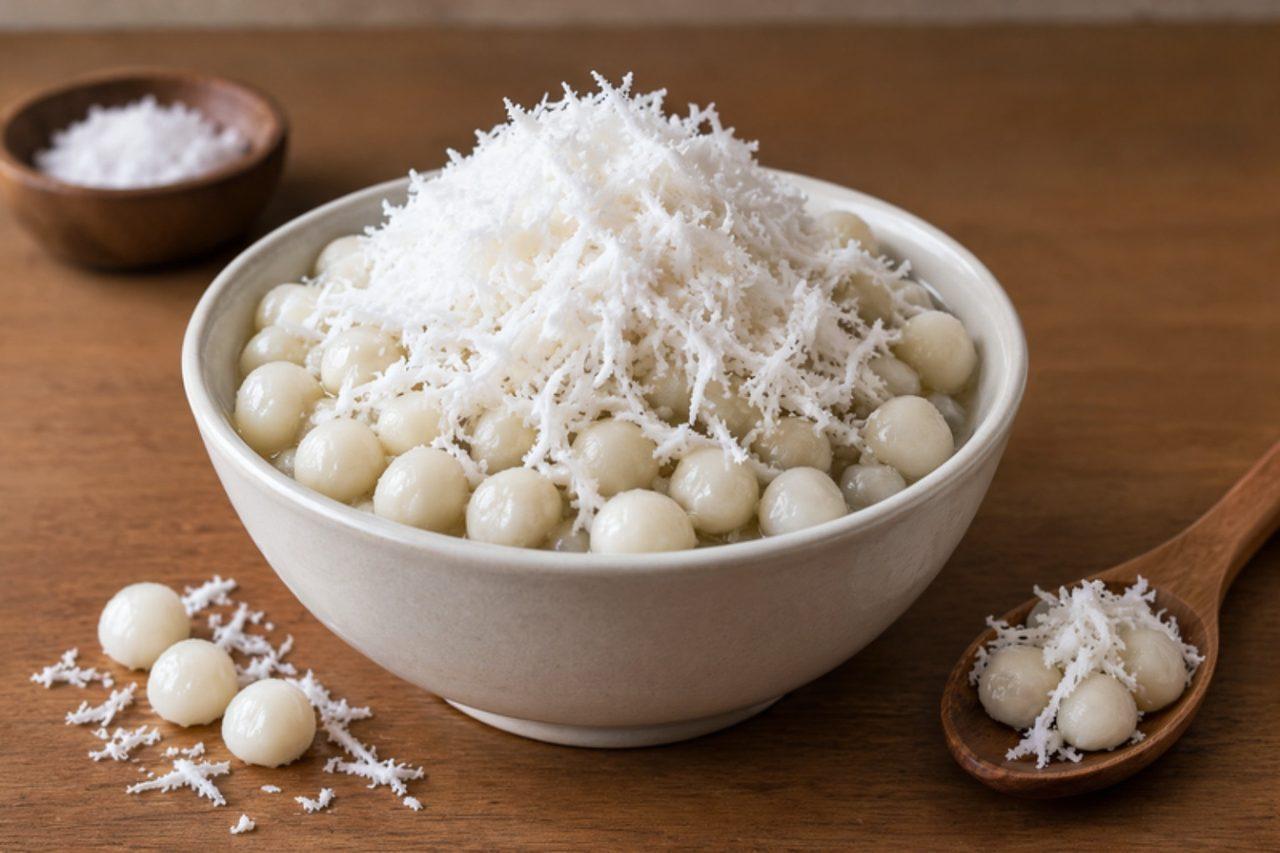
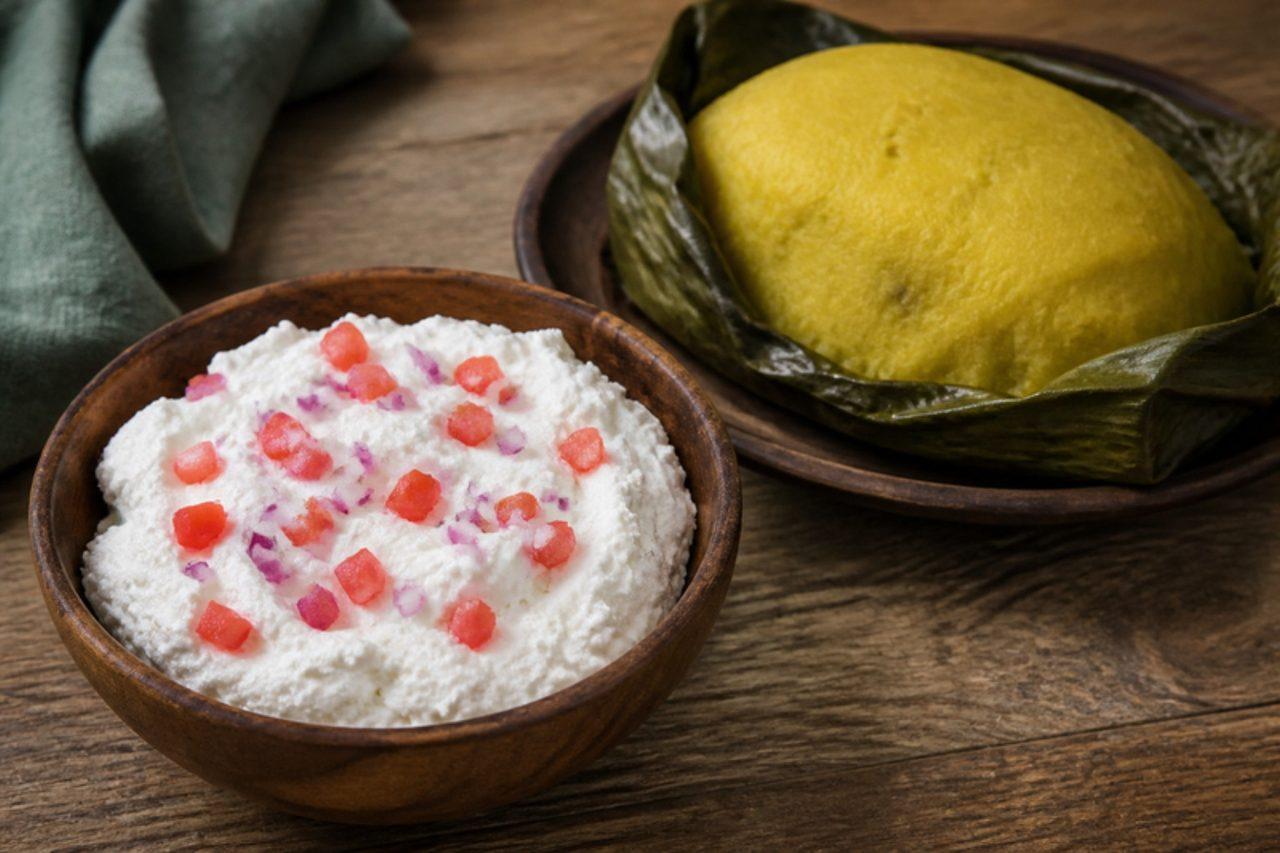
Chhangban are soft, chewy cakes that Mizo families make from steamed sticky rice pounded in a wooden mortar, traditionally for Christmas, Chapchar Kut and visits from relatives. They are eaten warm, dipped in sugar, or toasted the next day with a mug of black tea. The mistake people make is pounding cold rice: it will not come together, so work while it is steaming hot. Chef's tip: wet the pestle or your hands with salted water so the rice does not stick.
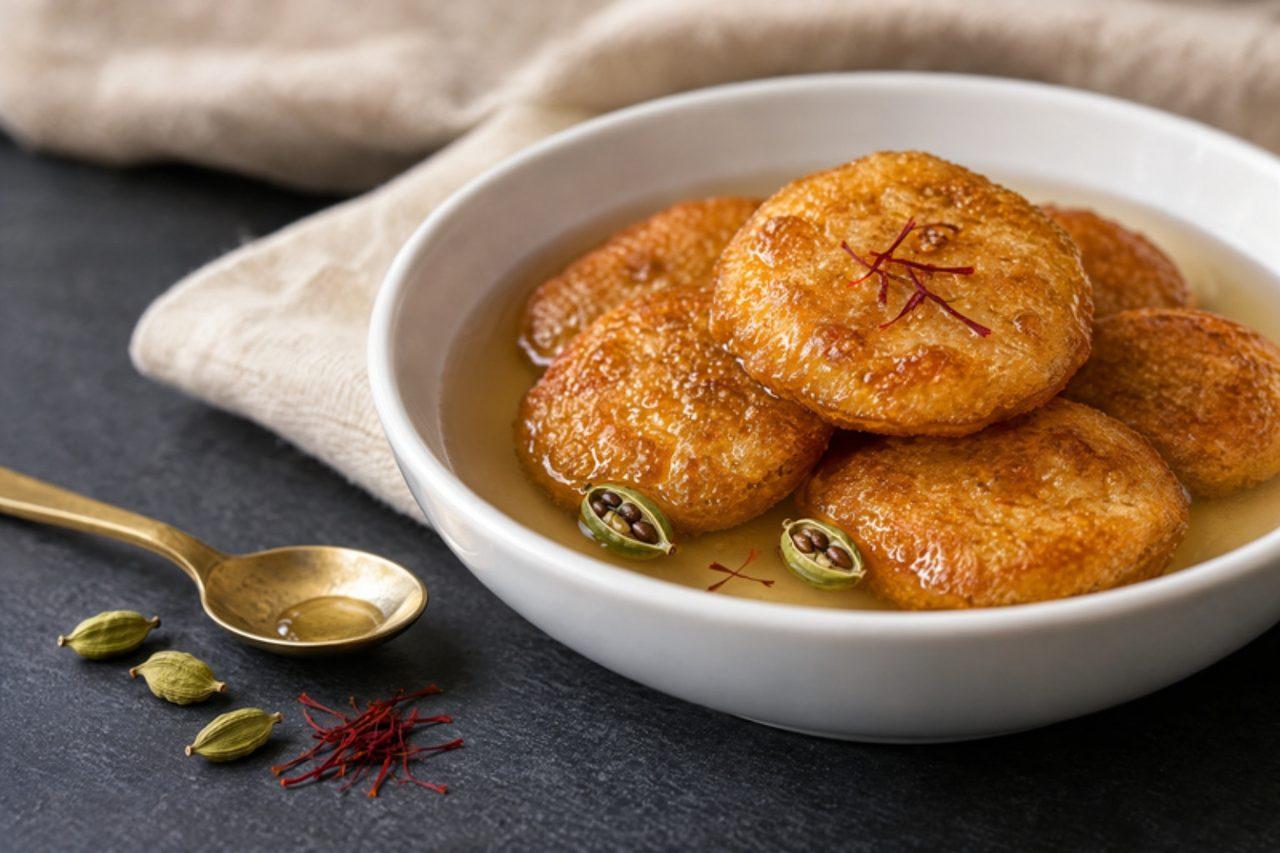
Chhena jhili comes from Nimapara near Puri in Odisha, where sweet shops fry these flat, oval chhena patties all day for pilgrims heading to and from the Jagannath temple. They are soft and spongy, golden-brown outside and creamy within, soaked in a thin syrup scented with cardamom, and are eaten at Rath Yatra, weddings and any good-news visit. The common mistake is using dry, crumbly chhena; it should be moist enough to press into a smooth patty without cracks, so hang it for no more than 30 minutes. Chef's tip: fry in ghee rather than oil for the true Odia flavour, keeping the heat gentle so the outside stays golden, not dark.
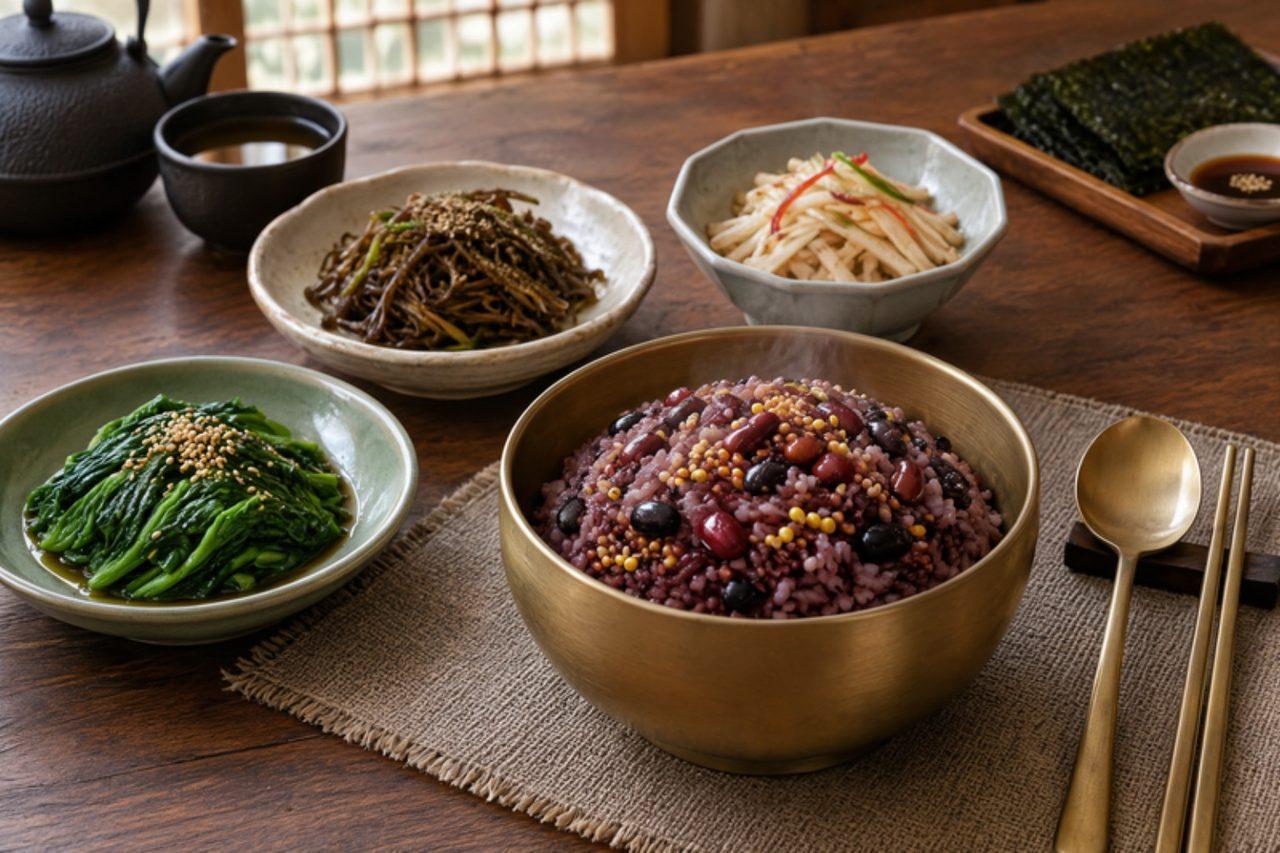
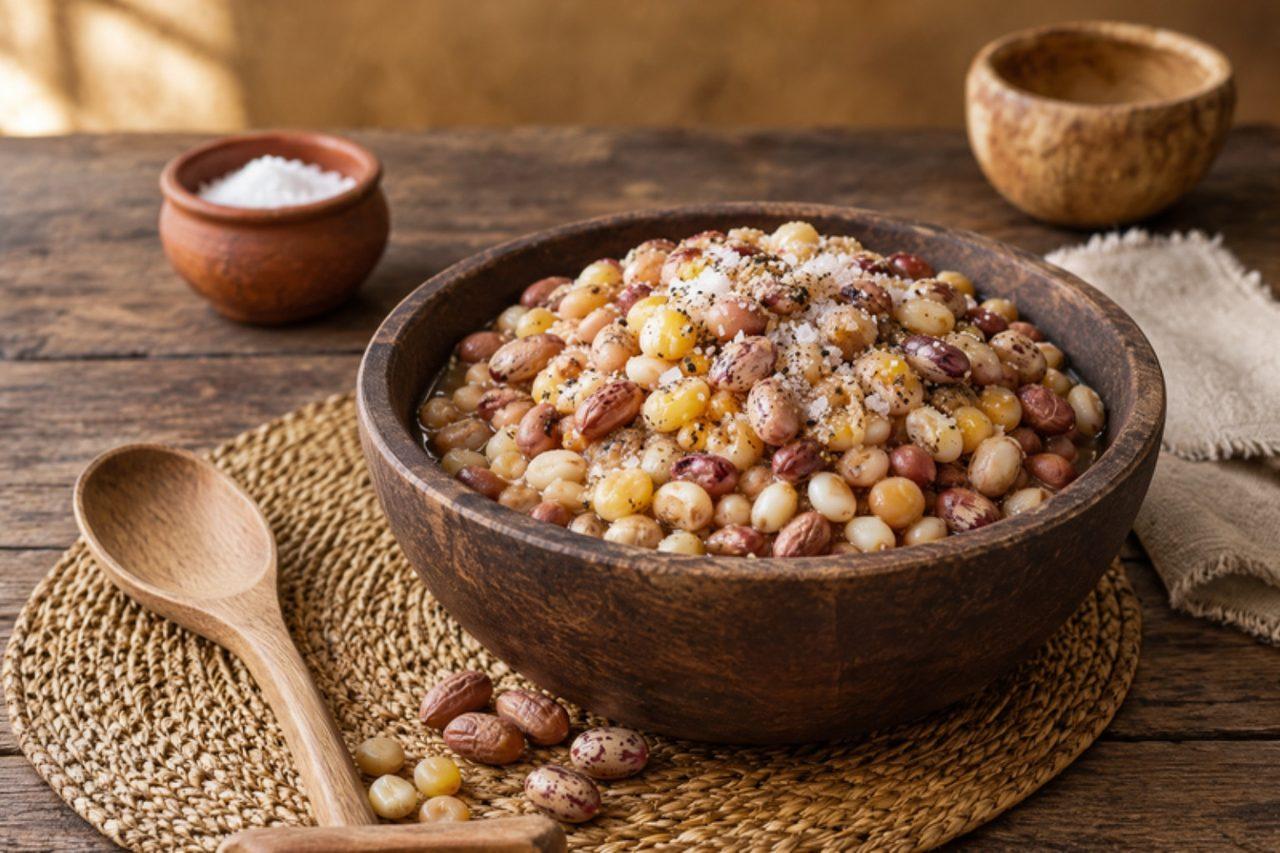
Ogokbap is cooked across Korea for Jeongwol Daeboreum, the first full moon of the lunar year, when families share five-grain rice with nine kinds of dried namul and crack nuts to wish for good health. Sticky rice, millet, sorghum, black soybeans and adzuki beans cook together into a chewy, purple-tinged rice with a nutty, gently sweet flavour. It is good any time of year beside soup and banchan. The usual mistake is putting the adzuki beans in raw with the rice: they stay hard while the rice turns soft, so parboil them first. Chef's tip: keep a little of the adzuki cooking water for the rice, as it gives ogokbap its lovely rosy colour.
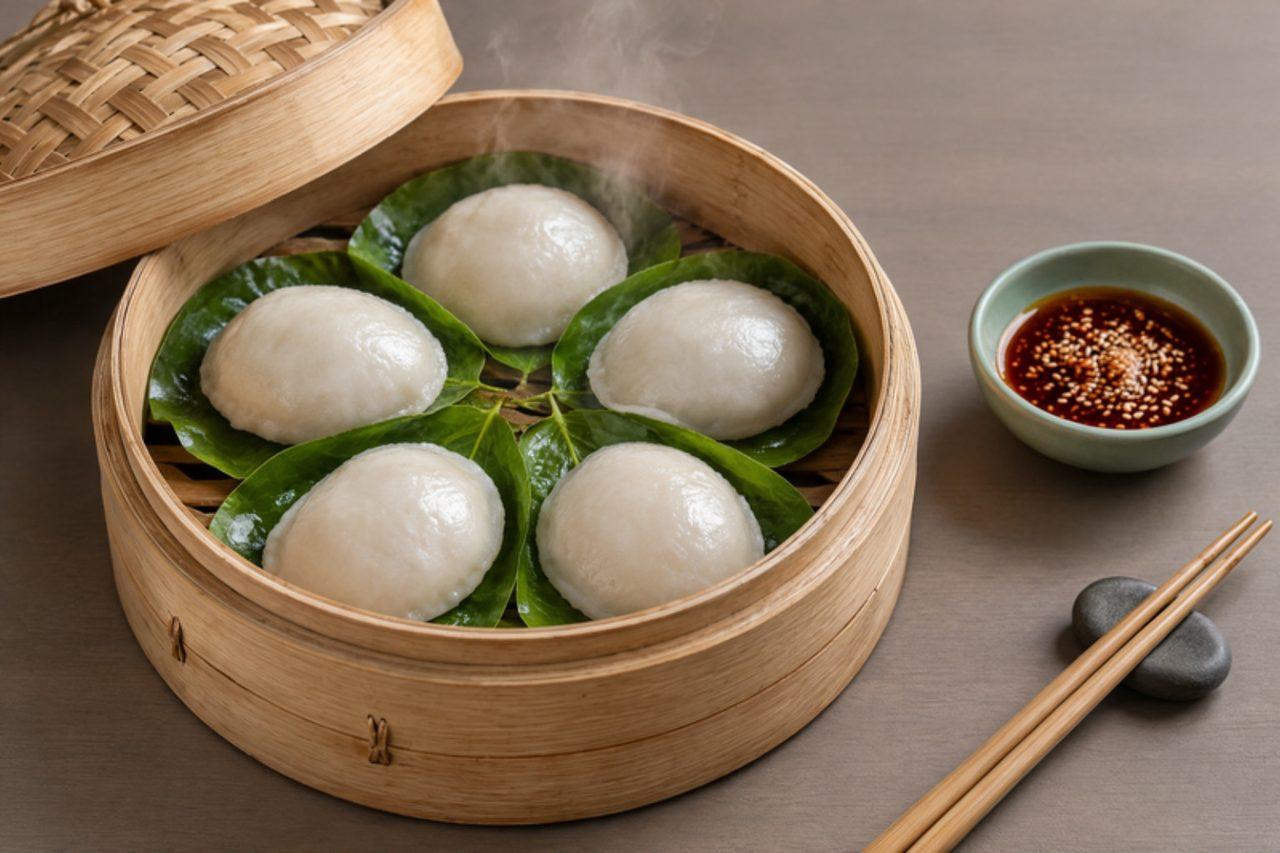
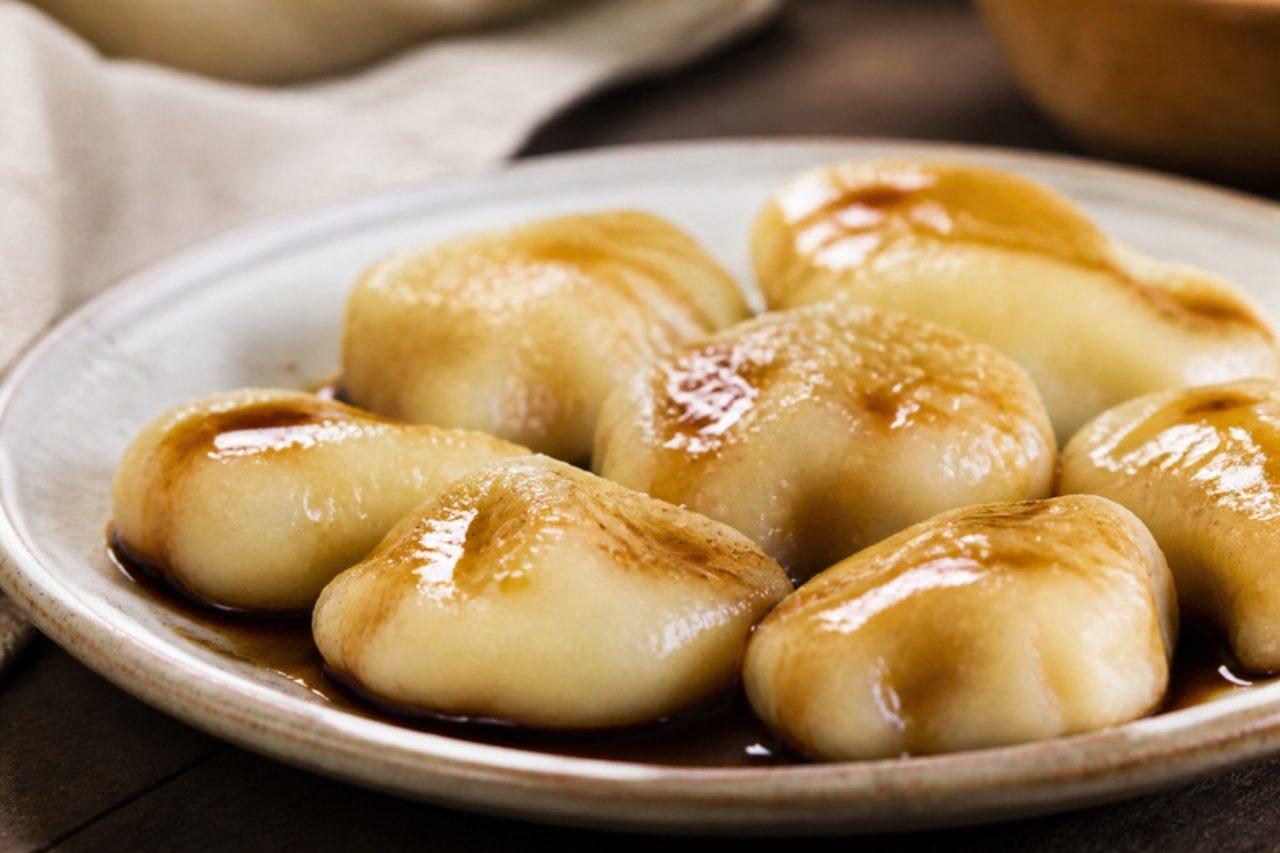
Ye er ba, "leaf cakes", come from Xinjin on Chengdu's southern edge and are sold all over the city in snack restaurants and teahouses, including the busy tea gardens of People's Park, at breakfast and through the afternoon. Each dumpling is wrapped in a leaf, which keeps it moist and adds a faint green fragrance as it steams; the skin is soft and stretchy, the filling a sweet, nutty black sesame paste. Traditional fillings use lard; this version uses coconut oil and is vegan. It contains sesame. Chef's tip: keep the dough as soft as an earlobe; dry dough cracks and the filling leaks out.
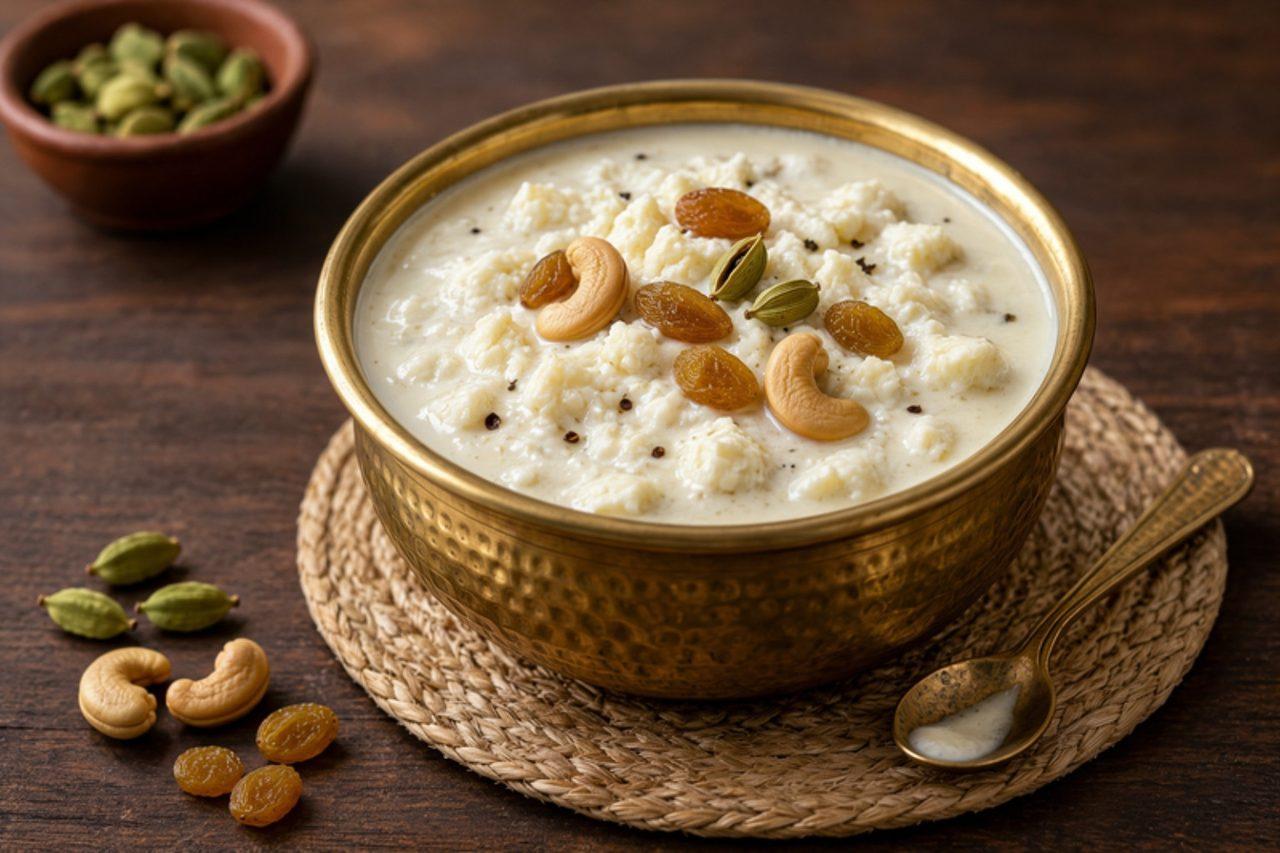
Chhena kheeri is one of the dishes of the Jagannath temple's chhappan bhog in Puri, and Odia households make it for festivals, birthdays and the evening Rath Yatra meal. Soft, freshly made chhena is crumbled into milk that has been simmered down until creamy and sweet, then scented with cardamom and a little camphor in temple style, or simply nutmeg at home. The common mistake is adding the chhena too early and boiling it hard, which makes it rubbery; it should go in at the end and simmer only briefly. Chef's tip: crumble the chhena by hand into pieces the size of rice grains, so every spoonful has some.
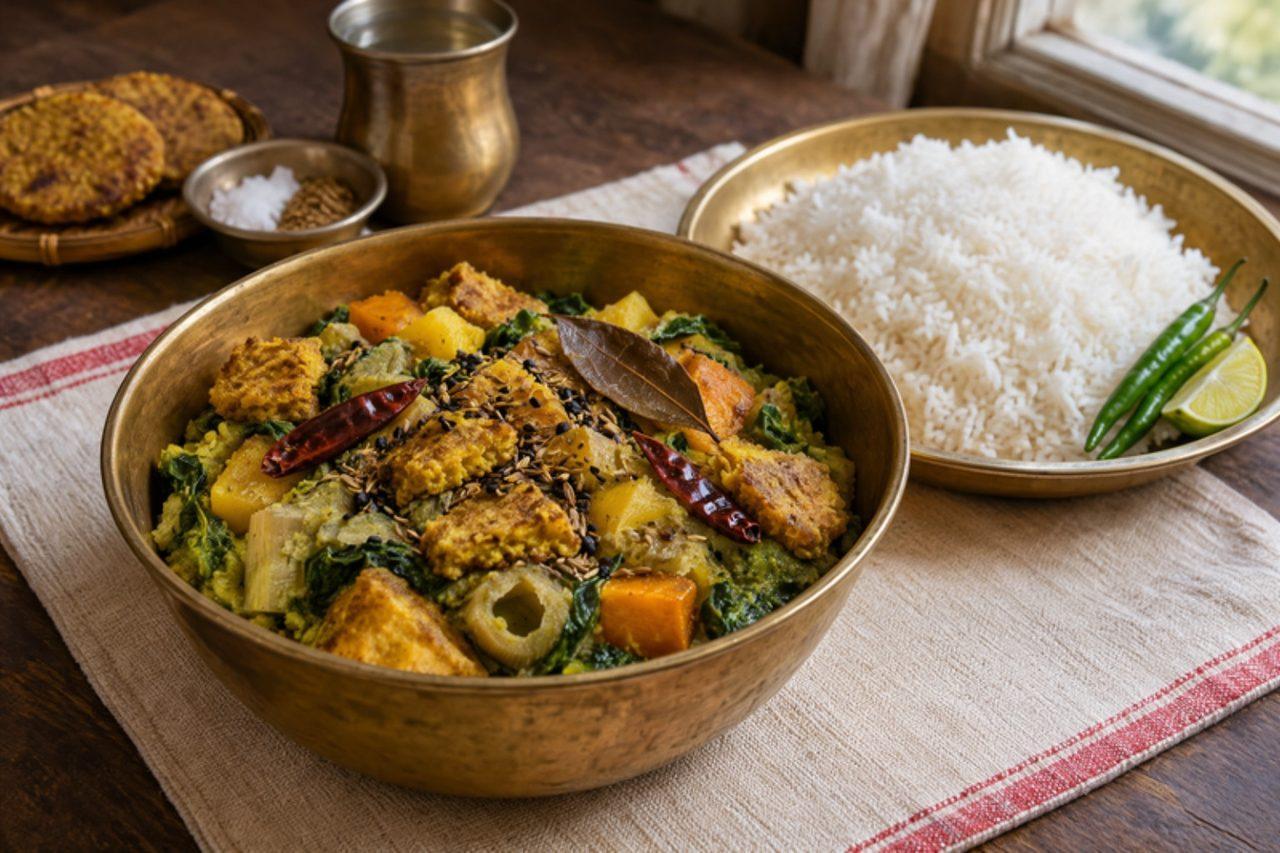
In West Bengal, chapor ghonto is the thrifty, comforting dish that turns up at weekday lunch and on the vegetarian days of the Durga Puja season. Soaked yellow peas are ground and fried into small savoury cakes (chapor), then broken into a slow-cooked mix of potato, pumpkin and banana stem tempered with panch phoron, ginger and a little sugar, until everything turns soft, jammy and lightly sweet. Eat it with plain rice and a squeeze of lime. The usual mistake is stirring the chapor in too early, so they dissolve into mush; add them in the last ten minutes. Chef's tip: soak the banana stem in water with a pinch of turmeric as you slice it and pull away the fibres that wind round your finger, or it stays stringy.
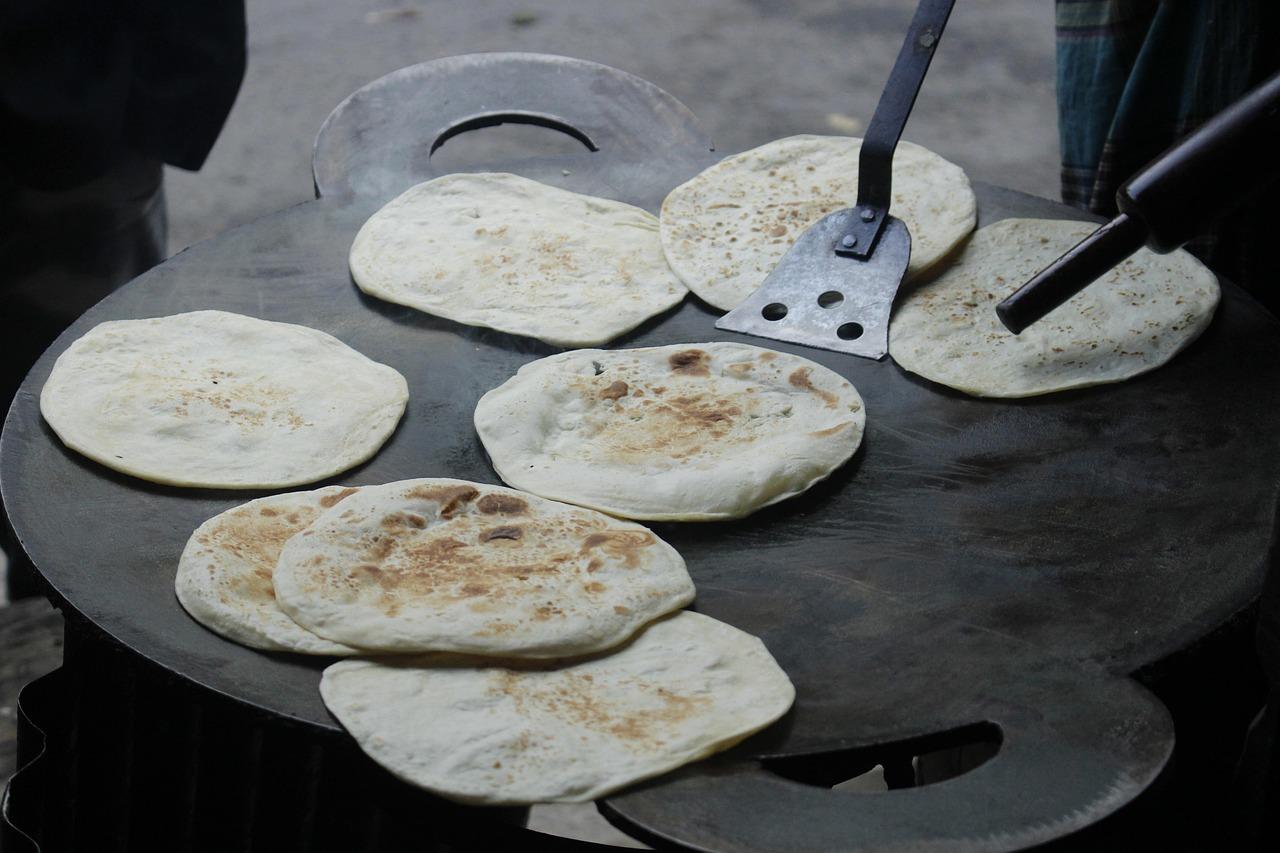
Titiyas are the soft, slightly sweet flatbreads of Guam and the Marianas, cooked on a griddle and eaten warm at breakfast, with fiesta food or rolled round a piece of grilled meat. Flour titiyas are made with coconut milk, which keeps them tender and gives a faint coconut taste; there is also a corn version (titiyas mai'es). A common mistake is rolling them too thick; 5 mm cooks through without burning. Chef's tip: cook on a dry, medium-hot pan and wrap each one in a towel as it comes off so they stay soft.
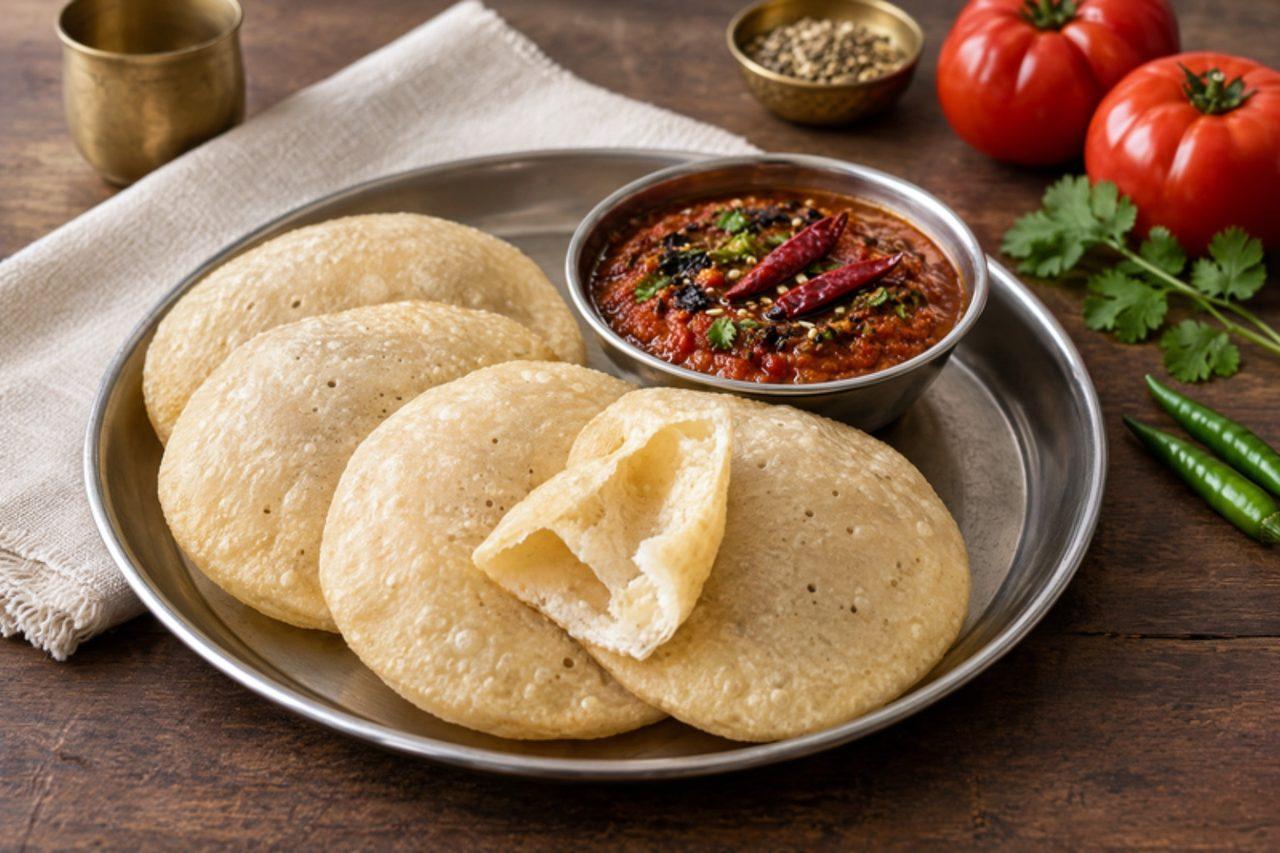
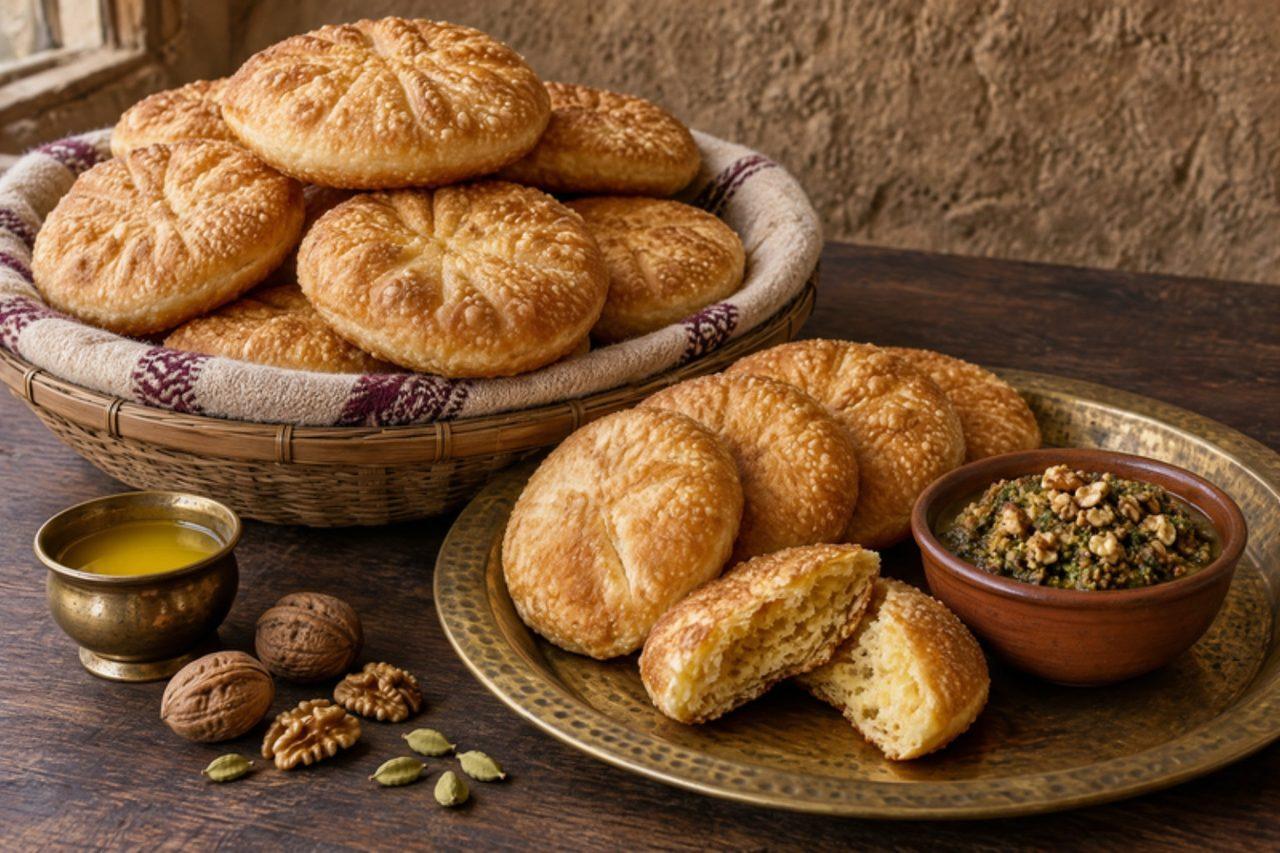
Chausela is the puri of the Chhattisgarh plains, where rice rather than wheat fills the granary, and it turns up at Hareli, Pola and any Sunday breakfast with a sharp tomato chutney or a potato curry. The dough is scalded with boiling water so the rice flour holds together, and the puris fry up pale, soft and lightly crisp at the edges. The usual mistake is mixing the flour with cold water; it cracks as you roll and the puris split in the oil. Chef's tip: knead the dough while it is still warm, using the heel of an oiled palm, and keep it under a damp cloth so the rounds stay supple.
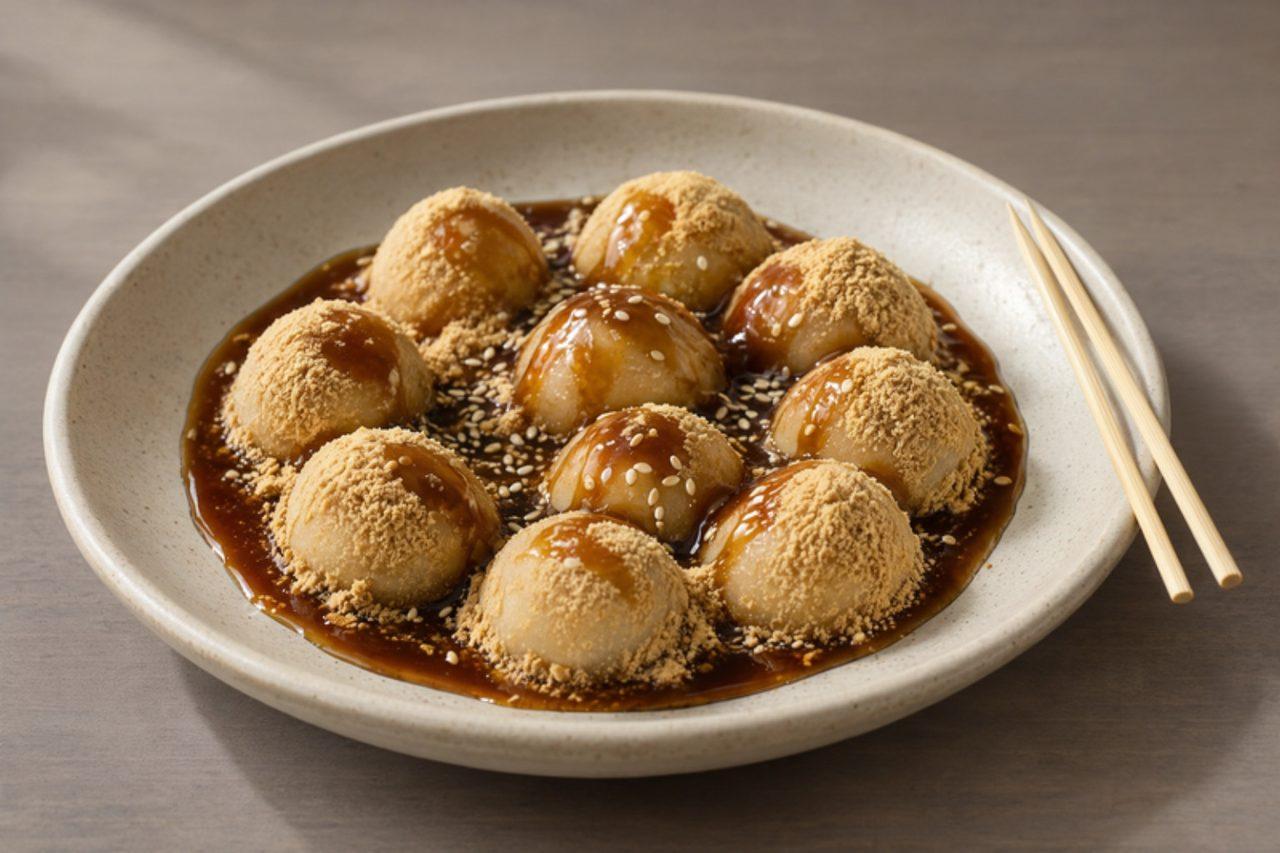
On Jinli Ancient Street and in the Kuanzhai Xiangzi alleys, san da pao vendors draw a crowd by hurling balls of hot glutinous rice dough at a wooden board hung with brass plates: bang, bang, bang, the "three cannons" of the name, before the balls drop into a tray of roasted soybean flour. Served with dark brown sugar syrup and sesame, they are a soft, chewy, nutty afternoon snack. They contain soya and sesame. Glutinous rice is very sticky, so cut the balls small for children. Chef's tip: work the steamed dough while it is still hot; once it cools it stiffens and will not stretch.
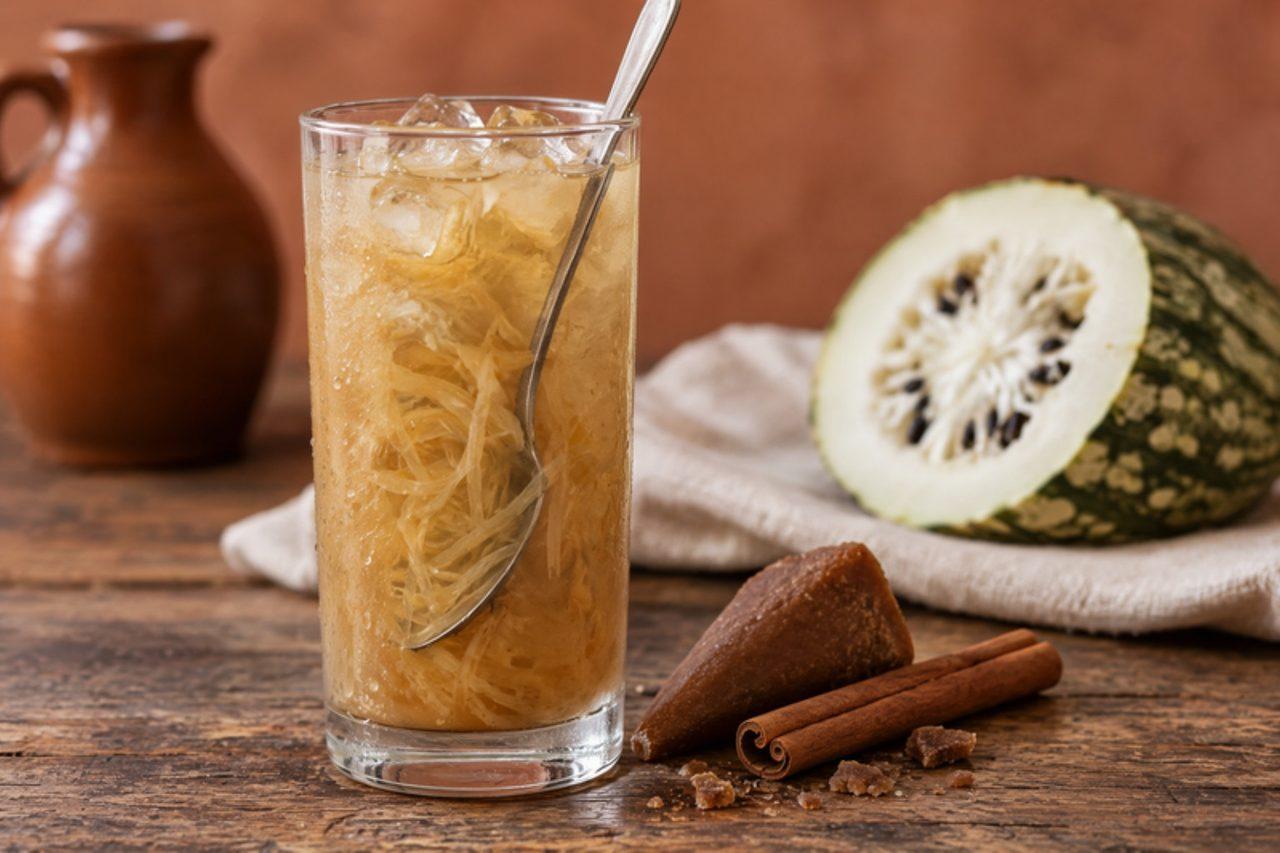
Chicheme comes from La Chorrera, just west of Panama City, where it is sold by the glass at the town's fairs alongside bollos and chorizo, and it is now drunk all over the country on hot afternoons. Cracked white corn is cooked until soft and swollen, then mixed with sweetened milk, cinnamon and vanilla and served very cold, so every sip has chewy grains in it. Undercooked corn is the classic mistake; the kernels must be soft right through or the drink feels gritty. Chef's tip: soak the corn overnight, and it cooks in under an hour instead of two.
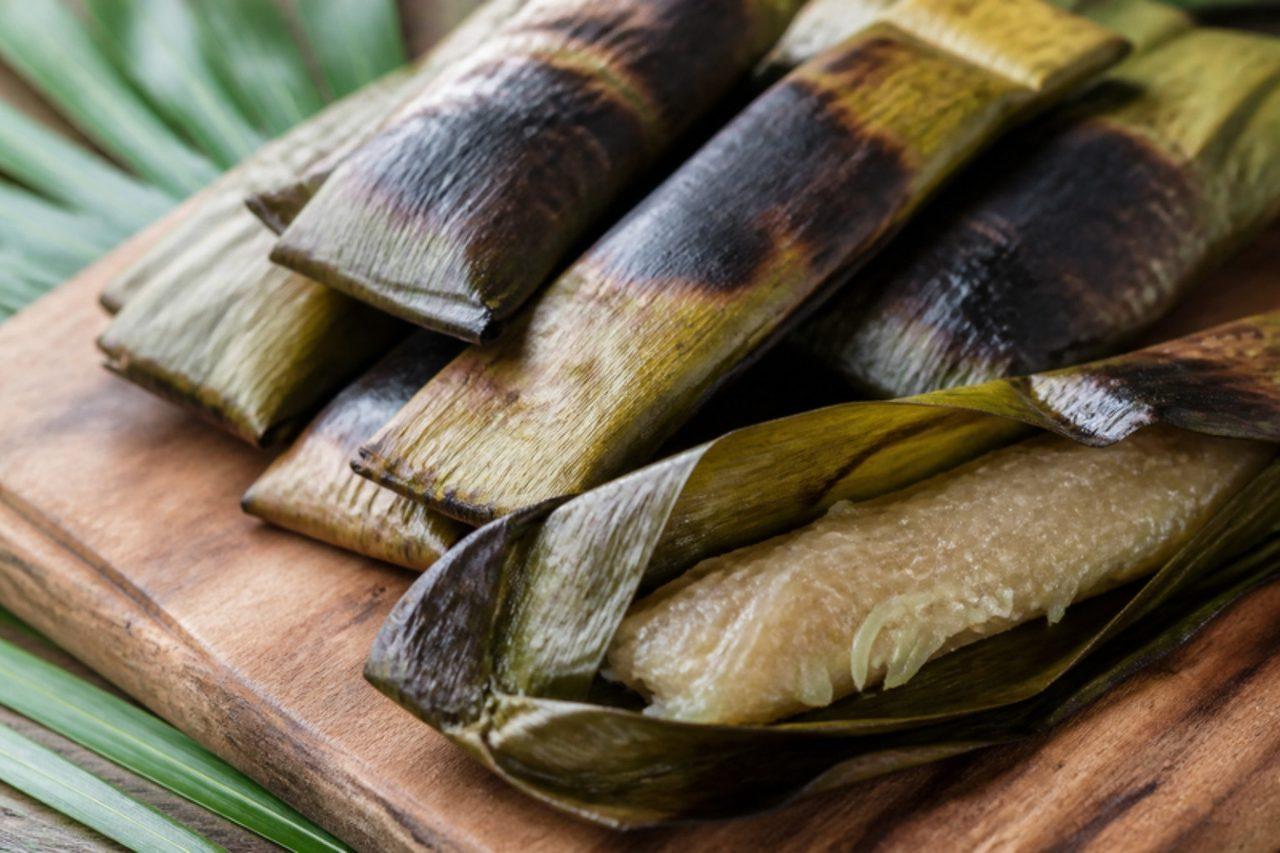
Apigigi are an old Chamorro sweet from Guam and Saipan, made for fiestas and family gatherings: soft young coconut is grated and mixed with tapioca starch and sugar, wrapped in banana leaves and grilled over coals until chewy and lightly charred. They are sticky, mildly sweet and smoky. Grated frozen young coconut and tapioca starch from Asian shops make them easy at home. A common mistake is grilling over a fierce flame; the leaves burn before the centre sets. Chef's tip: steam them first for 15 minutes, then finish on the grill for flavour.
Bunelos aga are the banana fritters of Guam, sold at fiesta food tables and church fundraisers in Hagåtña and made at home whenever the bananas over-ripen. Mashed sweet bananas are mixed into a soft batter, fried in spoonfuls and rolled in sugar, so they're crisp outside and custardy within. A common mistake is frying at too low a temperature, which makes them greasy. Chef's tip: use the small, sweet local bananas or the ripest regular ones you can find.
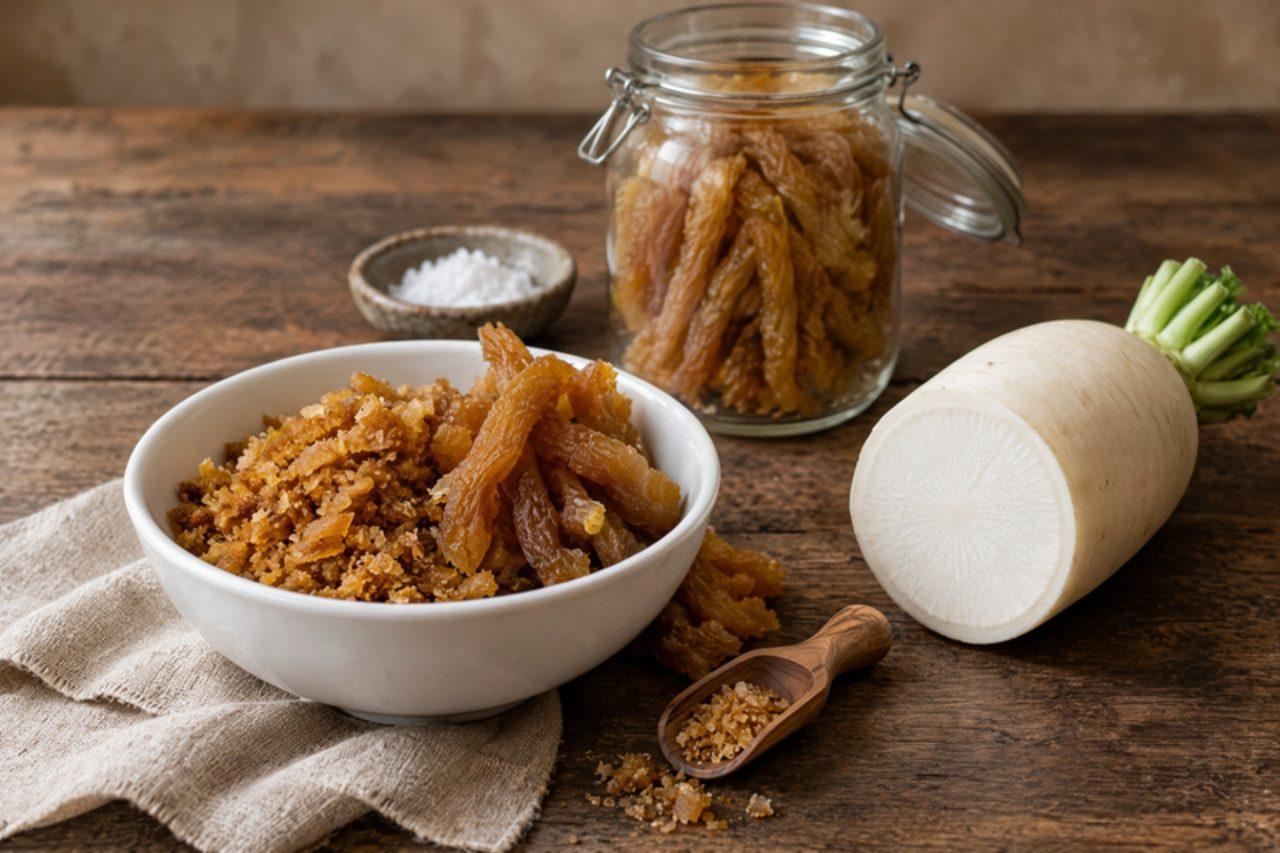
Chaozhou and Shantou on the Guangdong coast dry chai poh in the clear, breezy weeks after the winter radish harvest, laying white strips across bamboo mats on every flat roof. Repeated rounds of salting and drying turn juicy daikon into golden, chewy strips that are salty, sweet and faintly funky, and the Teochew diaspora carried it to Singapore, Malaysia and Thailand. Diced and fried until crisp, it goes into chai poh neng (preserved radish omelette), chwee kueh topping, congee and stir-fried kway teow. This home version uses a little sugar for the sweet style. Common mistake: drying the strips too fast in a hot oven; the outside hardens while the inside stays wet and spoils. Low and slow keeps the texture chewy-supple. It is ready when the strips are amber, flexible and leathery, have lost about 80% of their weight and feel dry, not tacky. Store in a clean airtight jar in the fridge for up to 6 months; discard if mould, slime or a sour, rotten smell appears. Chef's tip: soak the chopped radish for 5 minutes and squeeze before frying, then fry with a pinch of sugar until it smells toasty.
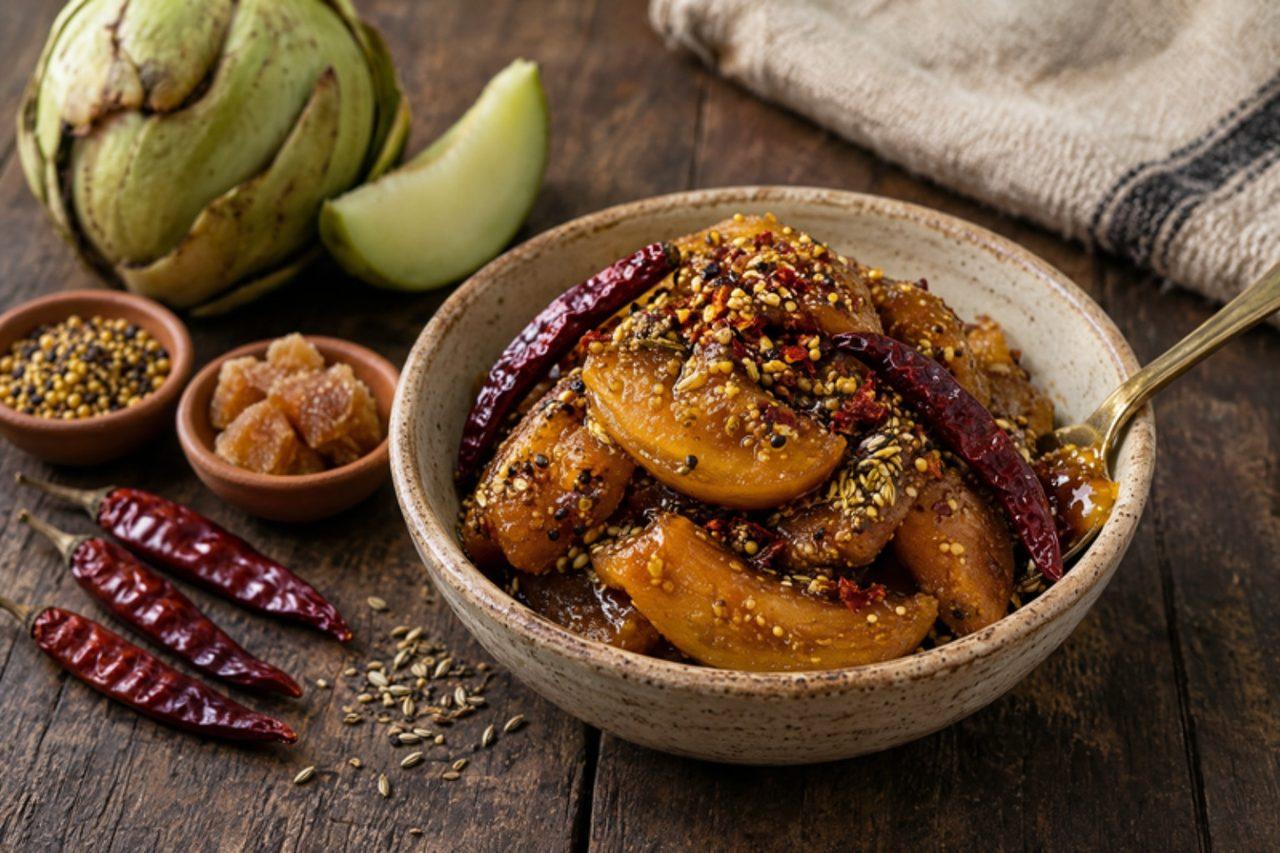
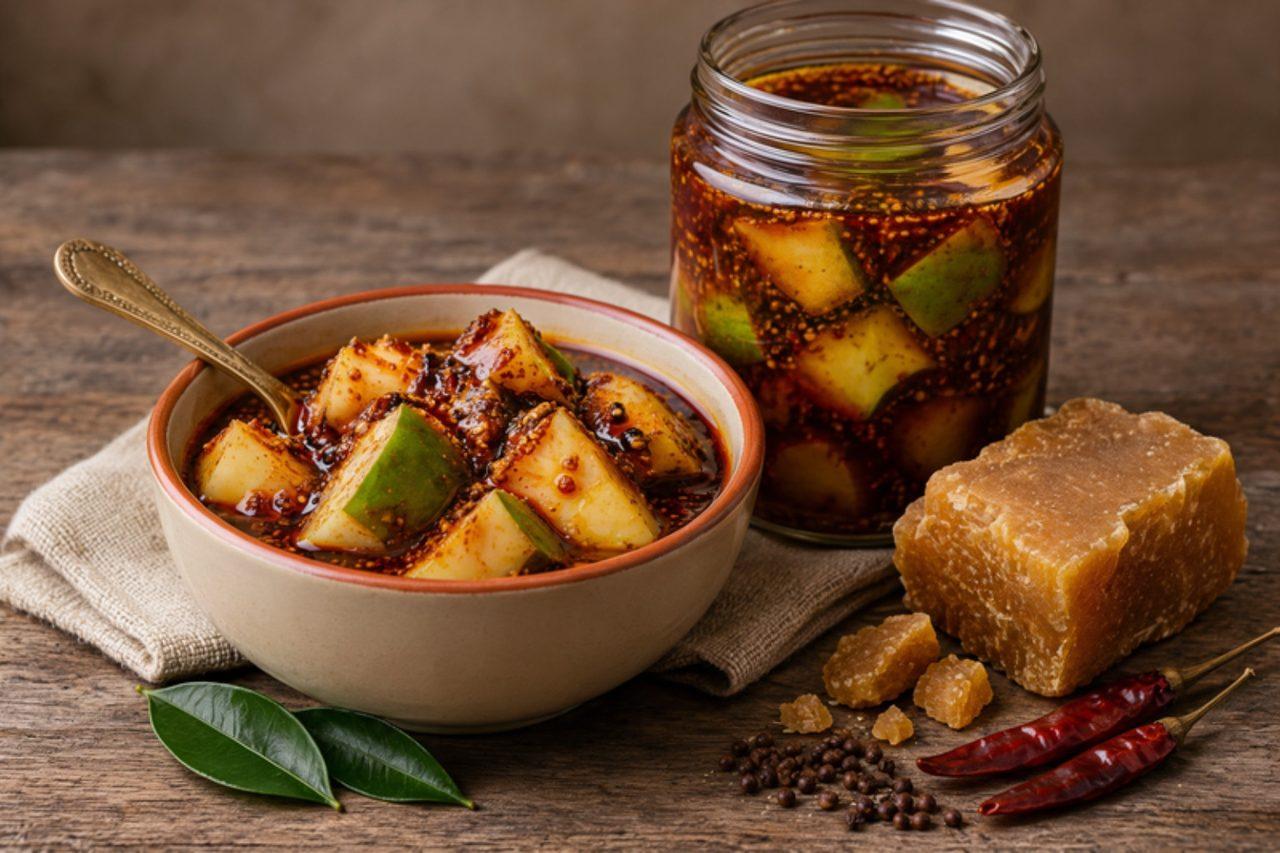
Chalta, the elephant apple, is a big green fruit of tightly wrapped, fleshy petals, and in Bengal it arrives in the markets in autumn, around Durga Puja, staying through early winter. Raw it is so sour and fibrous that it is almost impossible to eat, but cooked with jaggery and mustard it becomes one of the best-loved sweet-sour pickles of the region. The petals soften into chewy, slightly crunchy pieces in a thick, amber syrup, sour and sweet with a sharp kick of ground mustard and chilli. Serve it with dal and rice at the end of a meal, or with khichuri on a rainy day. The common mistake is skipping the pounding: after boiling, the pieces need a few firm knocks with a pestle to break the fibres, or they stay tough and never absorb the syrup. It is ready when the syrup coats a spoon and the chalta pieces look glossy and translucent. Keep it in a clean jar in the fridge for up to a month. Outside India, frozen chalta is sold in Bangladeshi grocers; hard, sour cooking apples with a squeeze of lime are a passable stand-in. Chef's tip: a pinch of ground mustard added at the very end gives the classic nose-tingling bite.
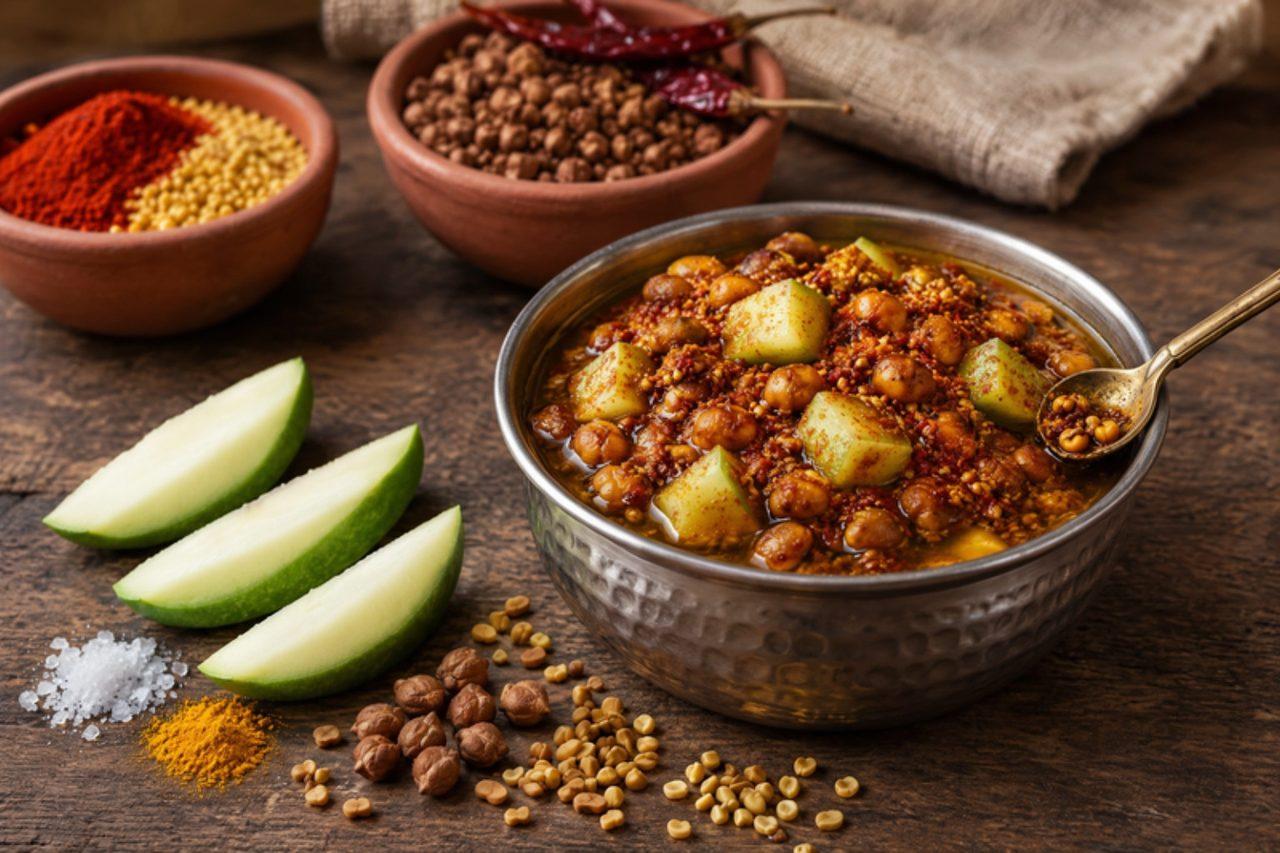
This is the thrifty, protein-rich pickle of Kathiawad and the Gujarati countryside, made in the May pickle season alongside methia keri. Brown chickpeas and fenugreek seeds are soaked until plump, then mixed with salted raw mango, split mustard, chilli and hing and sealed under oil. Over a few days the chana and methi drink up the sour mango juice and soften to a pleasant bite; the methi seeds lose most of their bitterness and turn nutty. The pickle is sour, hot and pungent, with plenty of crunch. A spoonful brightens khichdi-kadhi, bajra rotla or a plain dal-bhaat-shaak lunch. The common mistake is mixing in chickpeas that are still wet after soaking: dry them on a cloth for a few hours or the pickle will turn mouldy. It is ready in 4–5 days, when the chickpeas can be bitten through easily and taste sour all the way in. Because soaked pulses are low in acid, keep this one in the fridge once it is mixed, where it lasts up to 3 months, with the oil always covering the top. Chef's tip: use kala chana (small brown chickpeas); they stay firmer than large white ones.
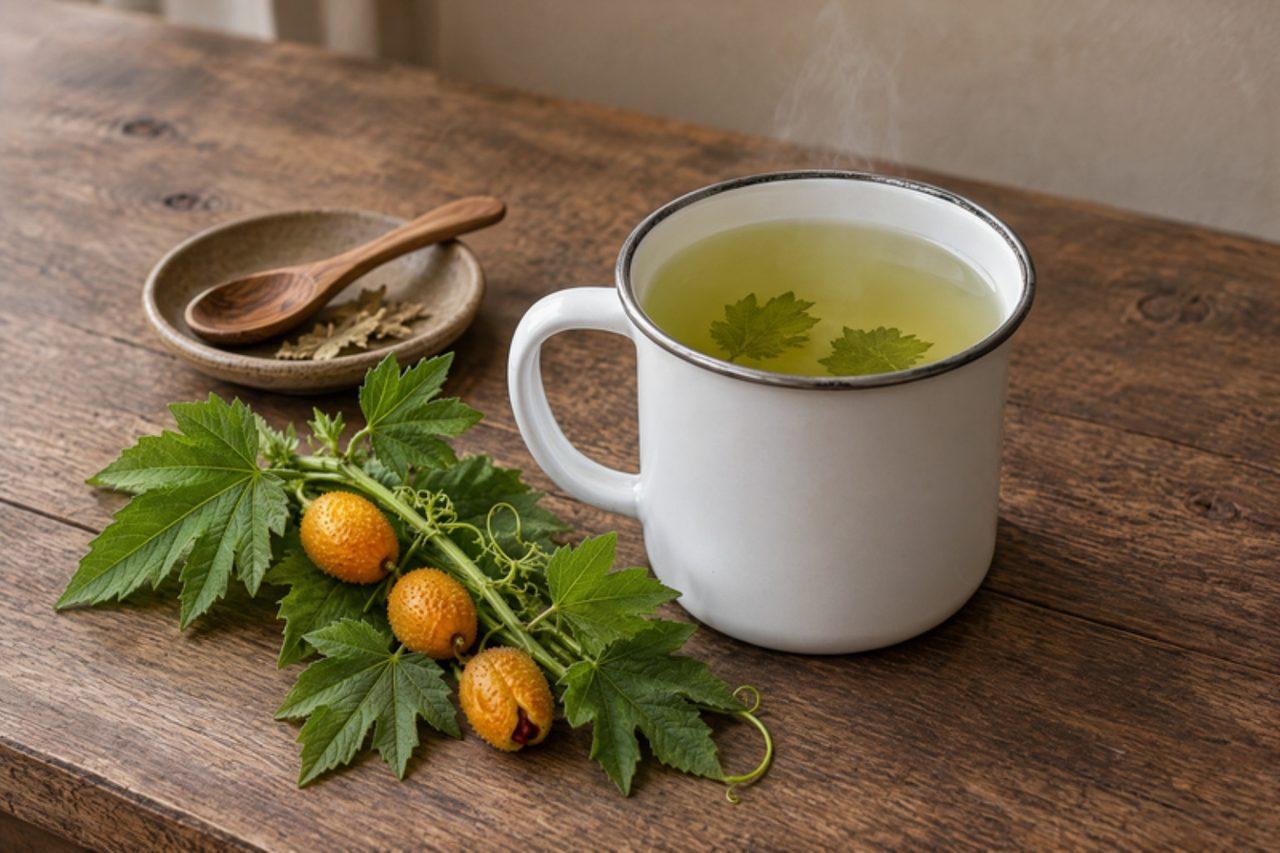
Cerasee grows wild on fences and roadsides all over Jamaica, a thin vine with lacy leaves, yellow flowers and small warty orange fruit. It is the best known of the island's bush teas: generations of Jamaican children were given a cup at the end of the summer holidays, before going back to school, as a wash-out, and adults still drink it now and then as a cleansing and cooling tonic, or for the skin. The tea is pale green-gold and seriously bitter, with a grassy, slightly vegetal taste; some add sugar or lime. The common mistake is boiling the vine hard for a long time, which makes the tea far harsher than it needs to be. Pour boiling water over it and let it steep instead, and leave out any ripe fruit and seeds. It is ready when the water is light green-gold and smells green and herbal. Do not drink it if you are pregnant, breastfeeding or trying to conceive, do not give it to young children, and check with a doctor if you have diabetes or take medication, as it may lower blood sugar. Chef's tip: dried cerasee from Caribbean shops works well; use a little less.
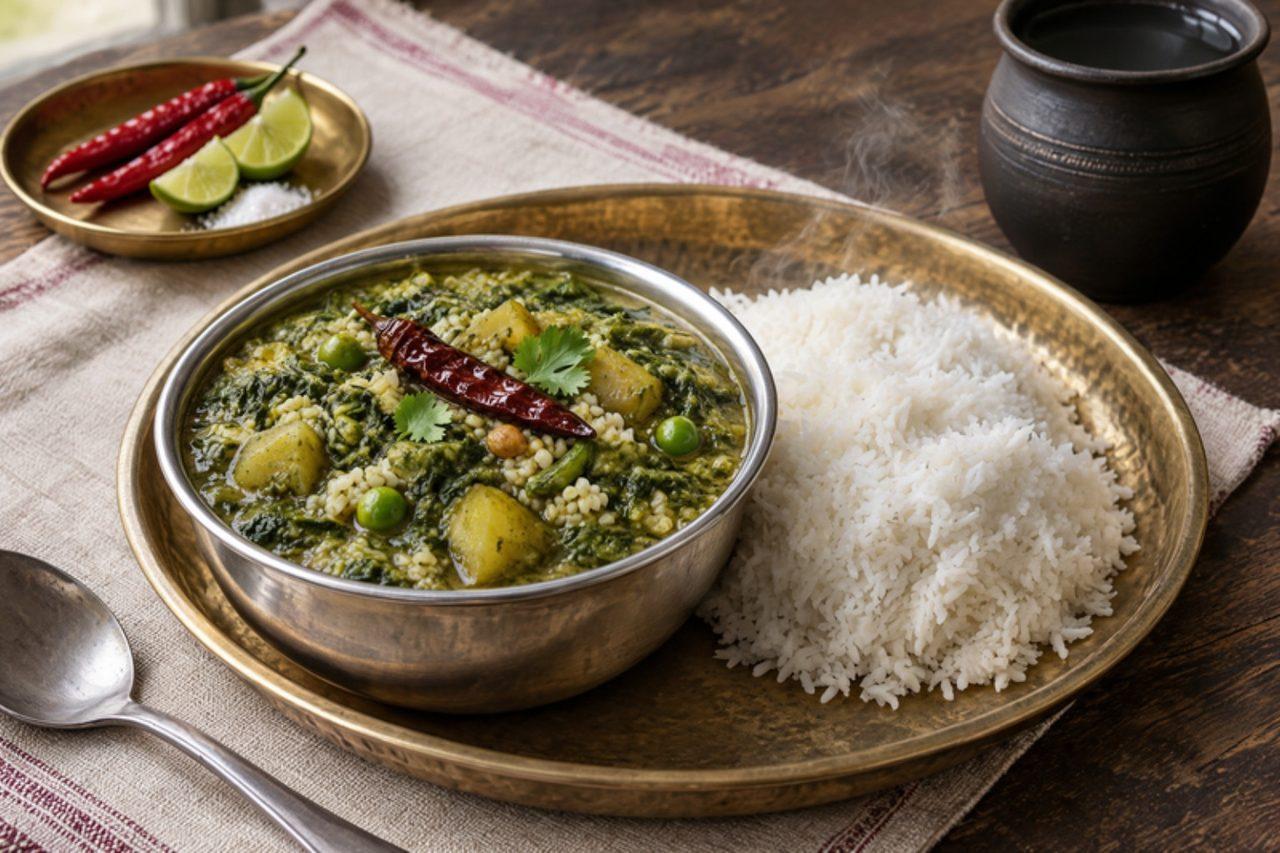
Chagem pomba is a thick Meitei stew of mustard leaves and seasonal vegetables, bound with rice flour and flavoured with hawaijar, Manipur's sticky fermented soybean; it is cooked especially for Ningol Chakouba and family gatherings, and eaten with rice. To make hawaijar, keep boiled, drained soybeans wrapped in leaves at 30–40 °C for 3 days until stringy and pungent; discard if black, green or pink mould appears or it smells rotten. The mistake is adding dry rice flour straight to the pot, which forms lumps: whisk it into water first. Chef's tip: bought natto or kinema replaces hawaijar well.
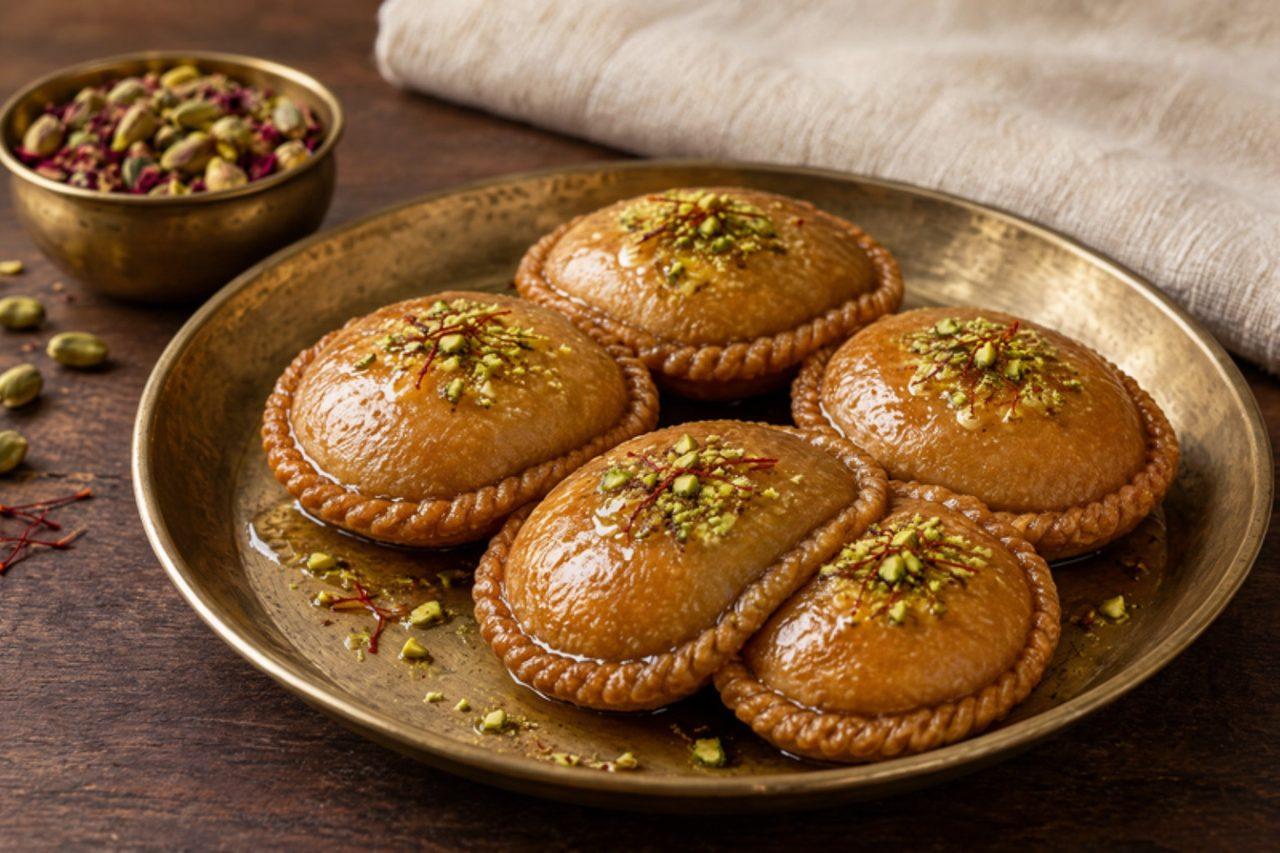
Chandrakala is the round, moon-shaped sweet of Bihar and eastern Uttar Pradesh, made for Holi, Diwali and Chhath and sold by sweet shops in Patna and Varanasi. Two circles of flaky pastry enclose a filling of mawa, nuts and cardamom; the edge is pleated into a rope, then the pastry is fried slowly and dipped in sugar syrup. Its sister suryakala is the same sweet shaped like a sun. The common mistake is syrup that is too thin, which makes the crust soggy within hours; it should reach one-string consistency. Chef's tip: pleat the edge firmly with damp fingertips, because a loose seal is where the filling leaks out in the hot ghee.
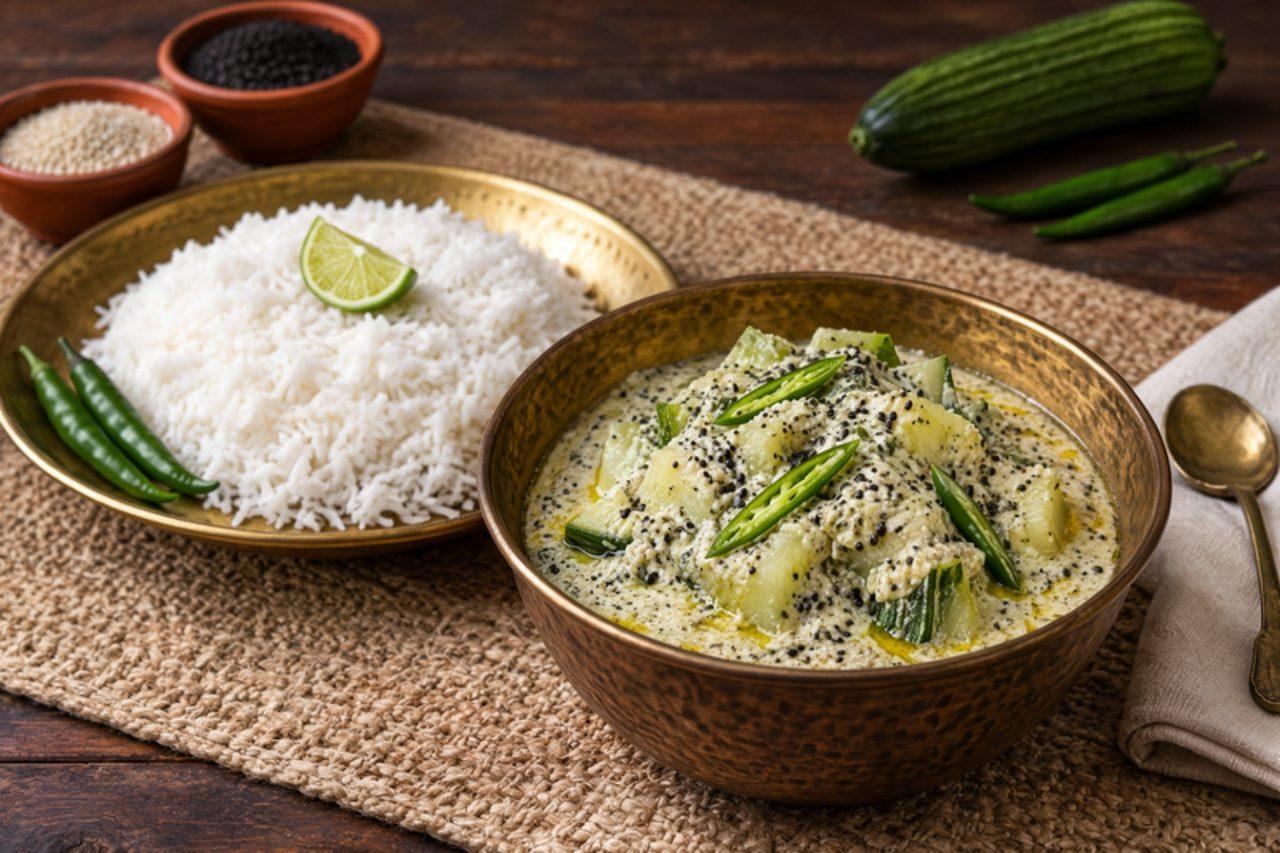
Jhinge posto is a summer staple of West Bengal and especially the Bankura and Birbhum districts, where poppy seed (posto) goes into almost every everyday lunch. Ridge gourd is cooked in its own juices with nigella seeds and green chilli, then coated in a creamy paste of ground white poppy seeds, giving a mild, nutty, slightly sweet dish. Serve it with rice and dal, or with a millet roti for a lower-GI plate. It is suitable as part of a balanced diet. About 150 kcal and 9 g carbohydrate per portion. The usual mistake is adding water: the gourd releases plenty, and extra water makes the posto runny. Chef's tip: soak the poppy seeds in hot water for 20 minutes before grinding so the paste is smooth, not gritty.
In the Mapuche communities of Araucanía, around Temuco, mültrün (catuto in Spanish) is made by cooking whole wheat grains until soft, then pounding them on a grinding stone into a sticky dough that is shaped into little logs. They are eaten as they come, toasted on the hearth, or dipped in honey or pebre, and they are sold in Temuco's market alongside merkén and piñones. A food processor does the job of the stone. The usual mistake is undercooking the wheat: the paste won't hold together. Chef's tip: shape with wet hands, and flatten the logs slightly before toasting so they crisp on two sides.
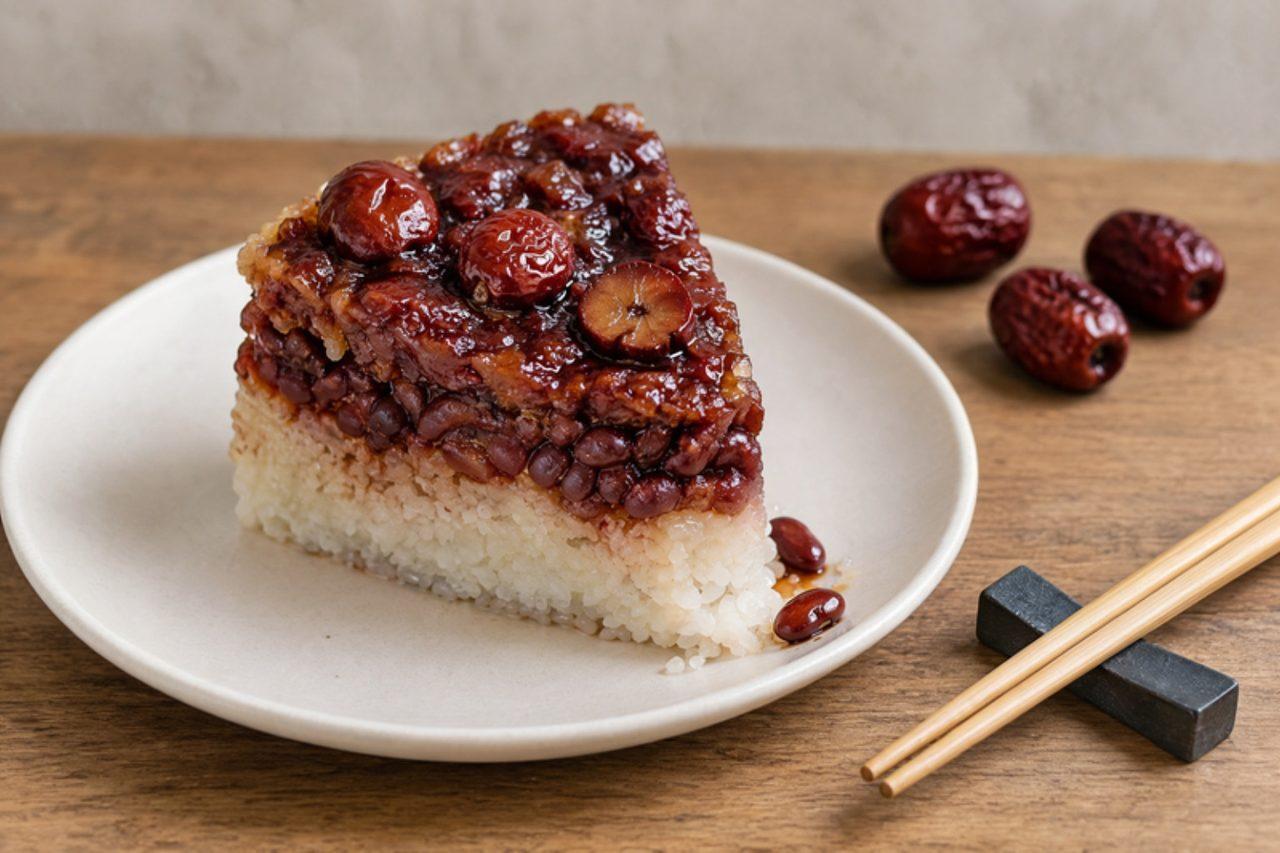
Before the shops of Xi'an's Muslim Quarter open, vendors on Beiyuanmen and Sajinqiao lift the lids of huge iron zeng pots and carve out jing gao, a dense breakfast of glutinous rice, red dates and kidney beans steamed so long that the dates melt into a jammy layer. It is scooped onto paper plates with a flat spade and eaten hot, often with a sprinkle of sugar, by workers on their way in. The home version steams in a heatproof bowl and needs time rather than skill. The rice turns glossy and chewy, the dates taste of toffee and the beans give a soft, earthy bite. Chef's tip: lay the dates as the bottom and top layers, because their sugar is what colours and flavours the rice as it steams.
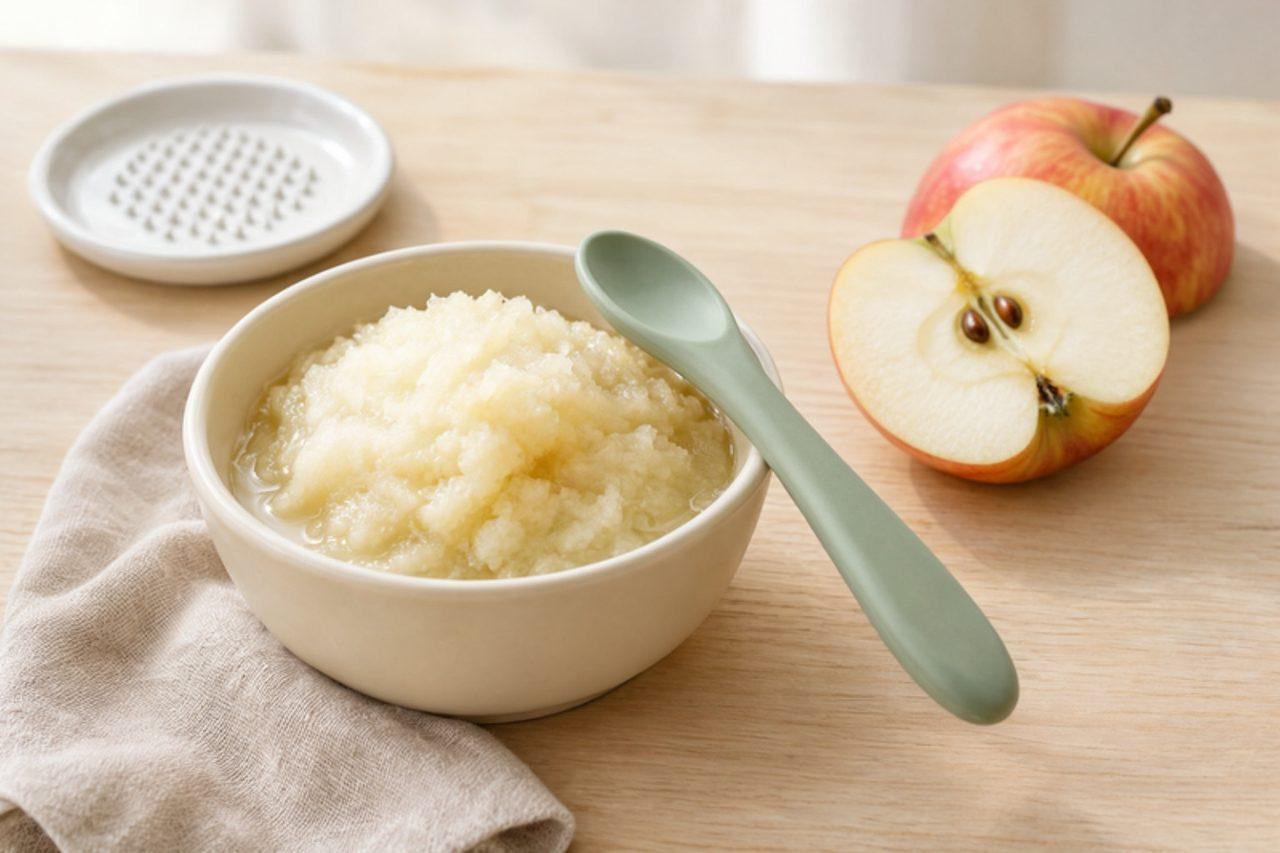
Ask any Italian nonna what a baby has for merenda, the mid-afternoon snack, and she will mime grating an apple: in homes from Turin to Bari, a sweet apple is grated very finely on the small holes of a grater and spooned up at once, before it turns brown. Paediatricians in Italy suggest it from six months, and for the first few times many parents steam the apple briefly so it is softer still. It tastes fresh and naturally sweet; the old habit of crumbling in a biscuit or a spoon of sugar is not for babies under one, and honey never. It is free of the major allergens. Chef's tip: a squeeze of lemon is often added to stop browning, but for babies simply grate it right before serving.
Chapalele is milcao's softer island cousin: mashed potato kneaded with wheat flour, shaped into flat discs and boiled, so the outside is smooth and slightly chewy and the inside soft. On Chiloé they come out of the curanto, sit next to a stew, or are eaten warm as a pudding with sugar syrup. The classic mistake is adding too much flour to a sticky dough, which makes them heavy and stodgy; dust your hands instead. Chef's tip: use dry, floury potatoes and mash them while hot, and the dough needs far less flour. For a sweet afternoon plate, drizzle them with dark cane-sugar syrup (chancaca) or honey if you eat it.
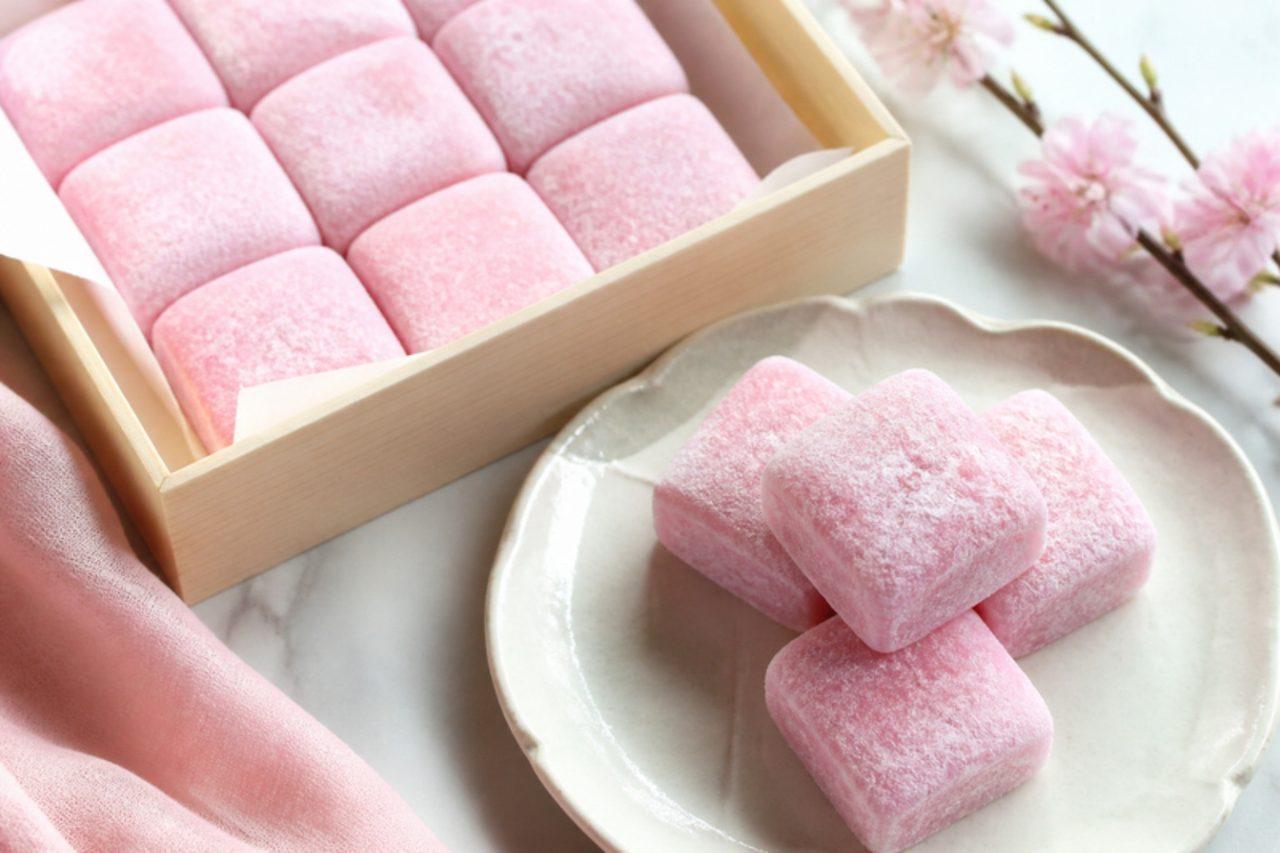
Chichi dango are the soft, pastel-pink mochi squares made for Girls' Day, birthdays and graduations in Hawaii's Japanese-American families, and sold in little boxes at manapua shops and crack seed stores in Honolulu. Mochiko (sweet rice flour) is mixed with coconut milk and sugar, baked until set, then cut and dusted with potato starch. They are chewy, milky and lightly sweet. A common mistake is cutting them warm with a dry knife, which tears them; cool fully and use a plastic knife dusted with starch. Chef's tip: wrap the tin tightly in foil while baking so the top stays soft and smooth.
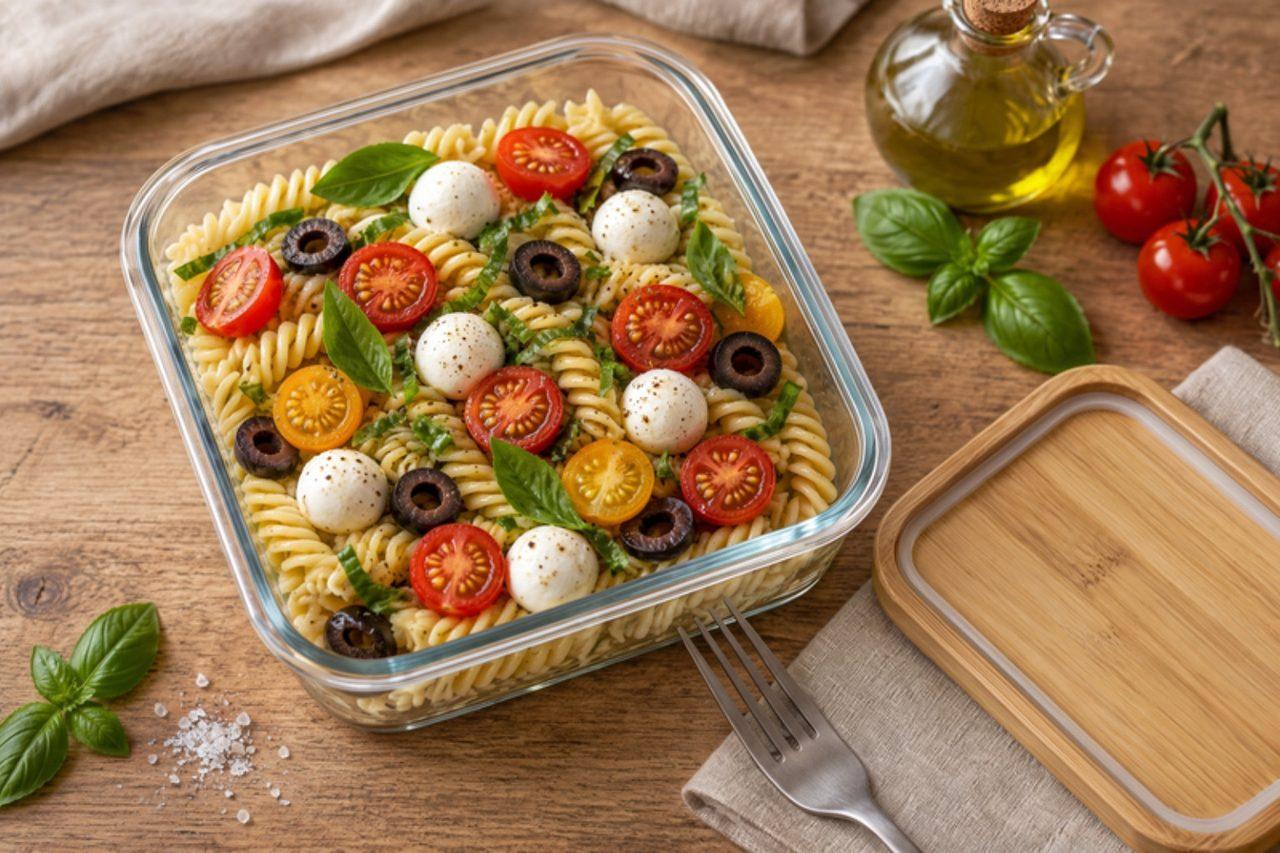
When Milan's offices empty onto park benches in July, the schiscetta (the Milanese word for a packed lunch tin) usually holds pasta fredda: short pasta dressed with olive oil, sweet cherry tomatoes, little mozzarella balls, black olives and torn basil. It is made the night before and tastes best at cool room temperature, never fridge-cold. The common mistake is rinsing the cooked pasta under the tap until it is icy and then dressing it: the starch closes up, the oil slides off and the salad tastes flat. Many mozzarellas are made with animal rennet, so look for one labelled vegetarian, or use cubes of a vegetarian cheese. Pack it with an ice pack and take it out of the bag 20 minutes before eating. Chef's tip: toss the drained, still-warm pasta with half the oil and the salted tomatoes straight away so it drinks up their juice.
All over China, from Beijing breakfast stalls to Shanghai school bags, dousha bao are the sweet buns people grab in the morning and tuck into a lunch box for later: fluffy white yeasted dough wrapped around smooth red bean paste and steamed until springy. They freeze beautifully, so families make a big batch on Sunday. The mistake is opening the steamer lid as soon as the timer goes; the sudden cold makes the buns wrinkle and collapse. Turn off the heat and wait five minutes before lifting the lid. Chef's tip: chill the bean paste and roll it into balls before wrapping; a firm filling is much easier to seal neatly.
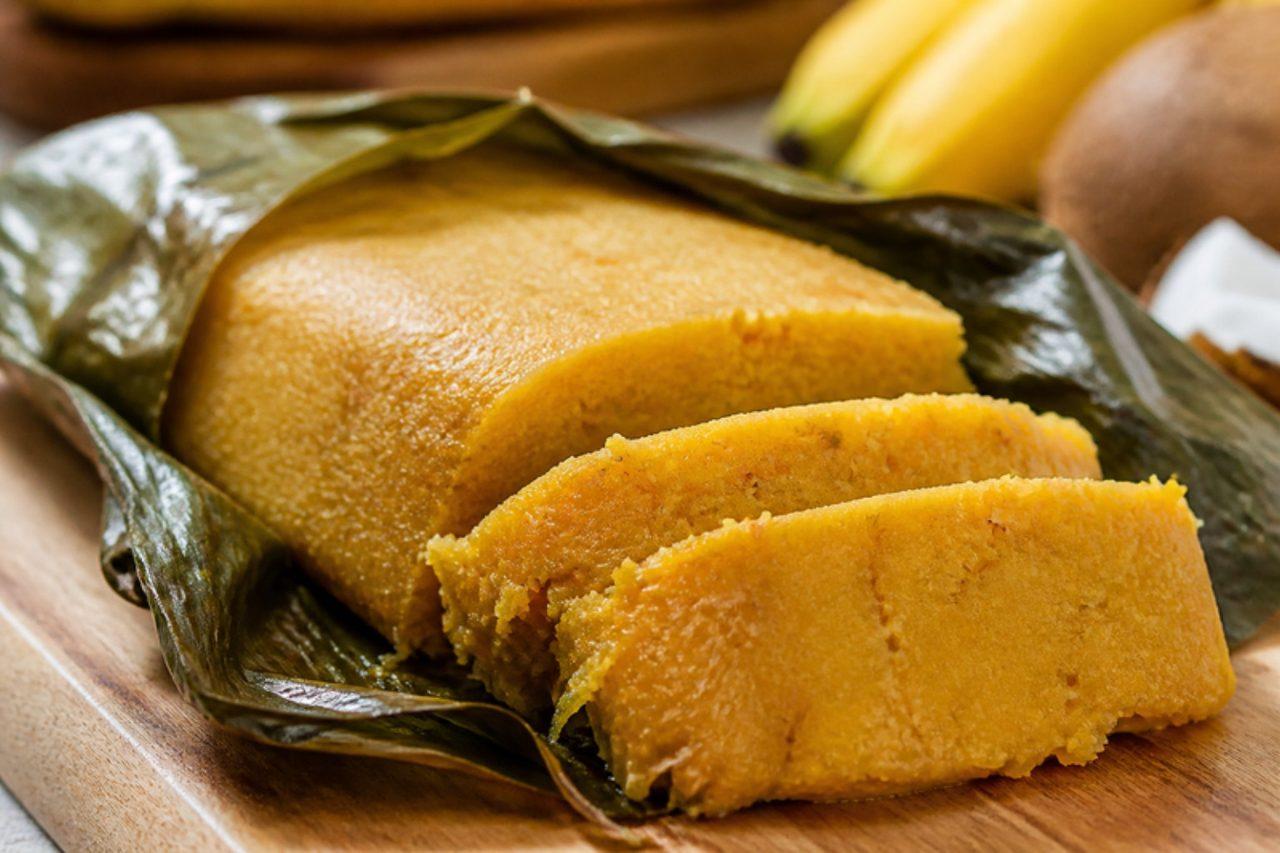
Cafunga belongs to Venezuela's eastern coast, in Sucre and the Afro-Venezuelan villages of Barlovento, where ripe bananas, coconut and panela are wrapped in banana leaves and baked until fragrant. It comes out dense and moist, somewhere between a pudding and a cake, and is sold in its leaf at fiestas and village markets. The common mistake is not softening the leaves first, so they crack and leak. Chef's tip: pass each leaf over a gas flame or dip it in boiling water until it turns glossy and pliable.
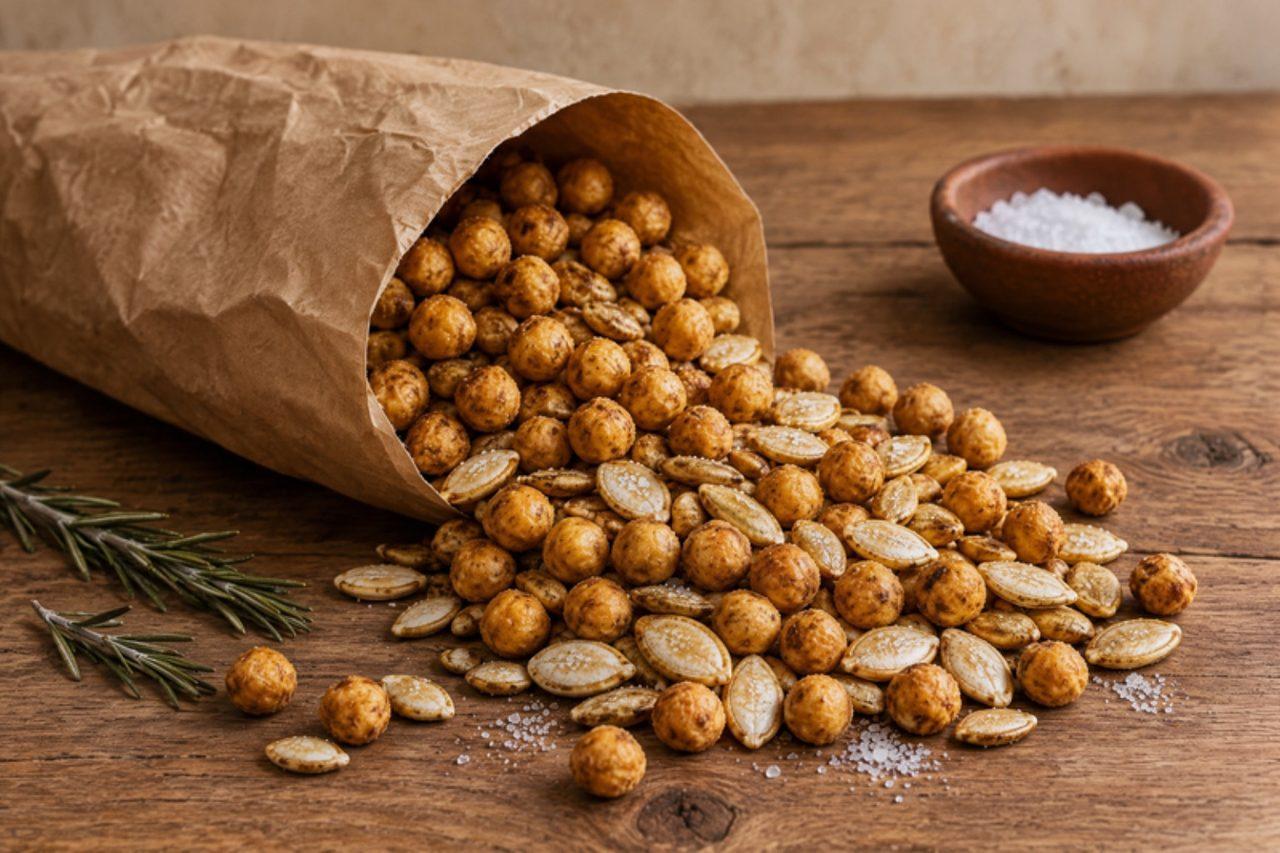
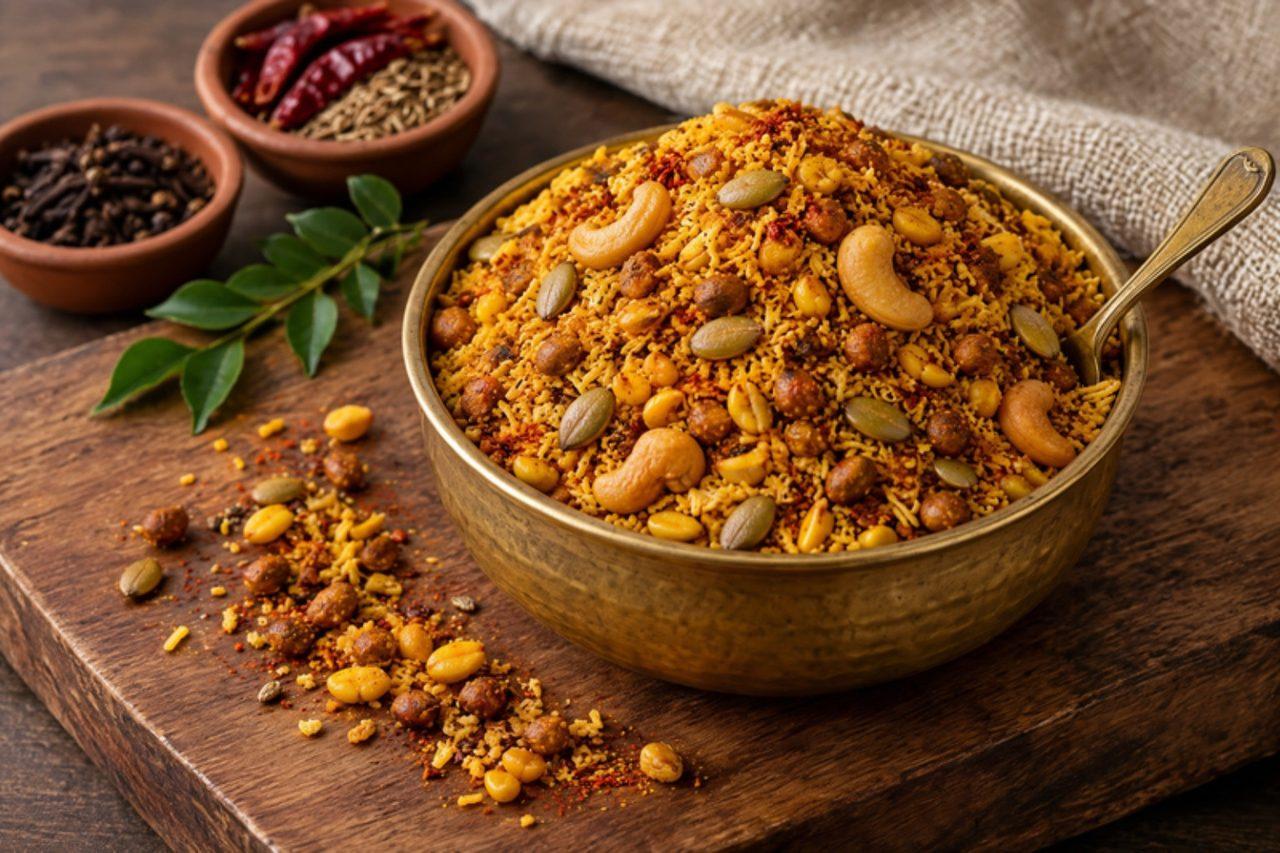
Calia (toasted chickpeas) and simenza (salted pumpkin seeds) are sold together in twisted paper bags by the old caliari of Palermo, at the Festino of Santa Rosalia in July, along the Foro Italico seafront and outside the Teatro Massimo after a show. You crack the seeds with your teeth and chase them with the crunchy, nutty chickpeas, a habit that can last a whole evening. This home version roasts soaked dried chickpeas and salted seeds in the oven. Chef's tip: dry the soaked chickpeas really well; any surface water steams them instead of making them crunchy.
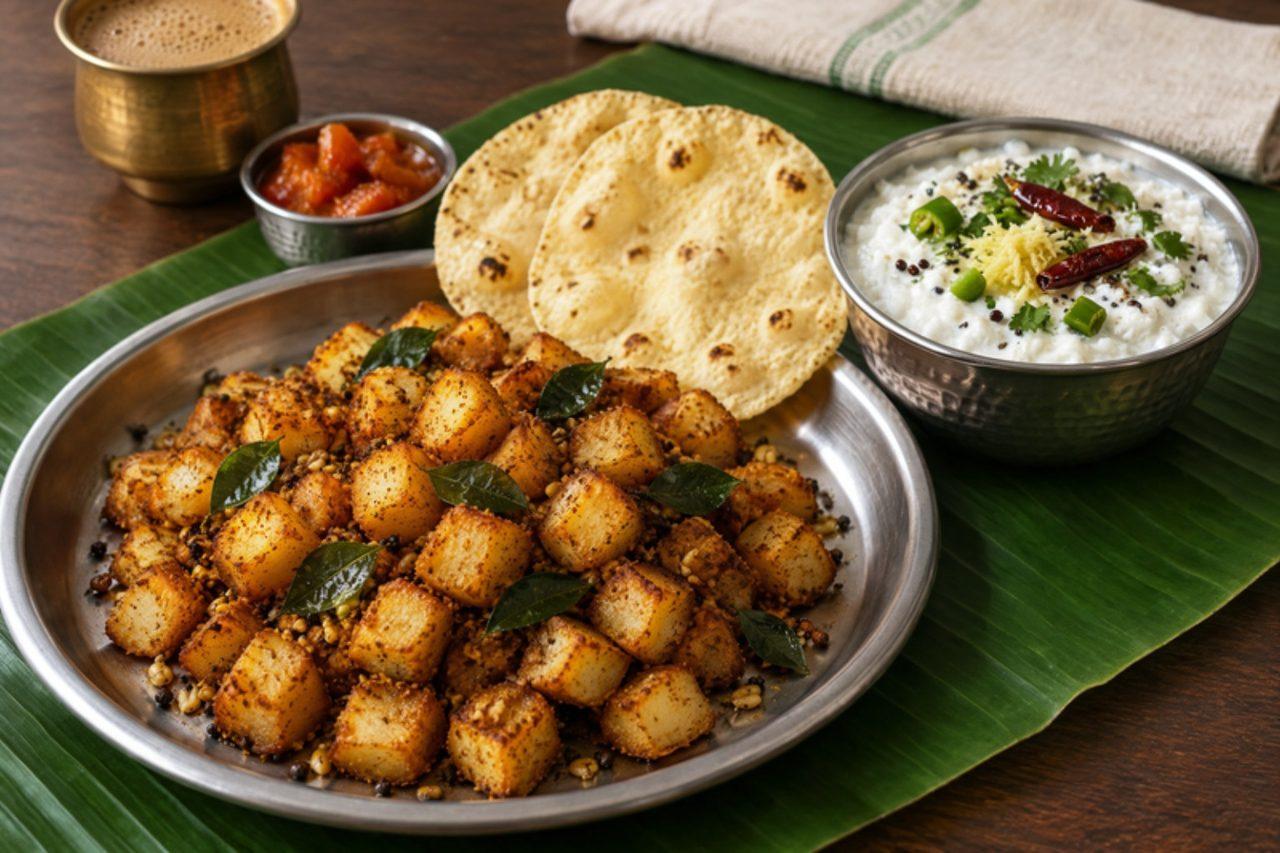
In Tamil lunch boxes, curd rice almost always comes with this: small cubes of boiled potato roasted slowly in a cast-iron pan with sambar powder, chilli and curry leaves until they are dark, crusty and chewy at the edges. It is a dry side, so it does not leak into the rice, and it tastes as good cold as hot. The mistake is stirring all the time; the potatoes need to sit undisturbed against the hot pan for a few minutes at a time to build the crust. Chef's tip: a teaspoon of rice flour scattered over in the last few minutes makes the coating even crisper.
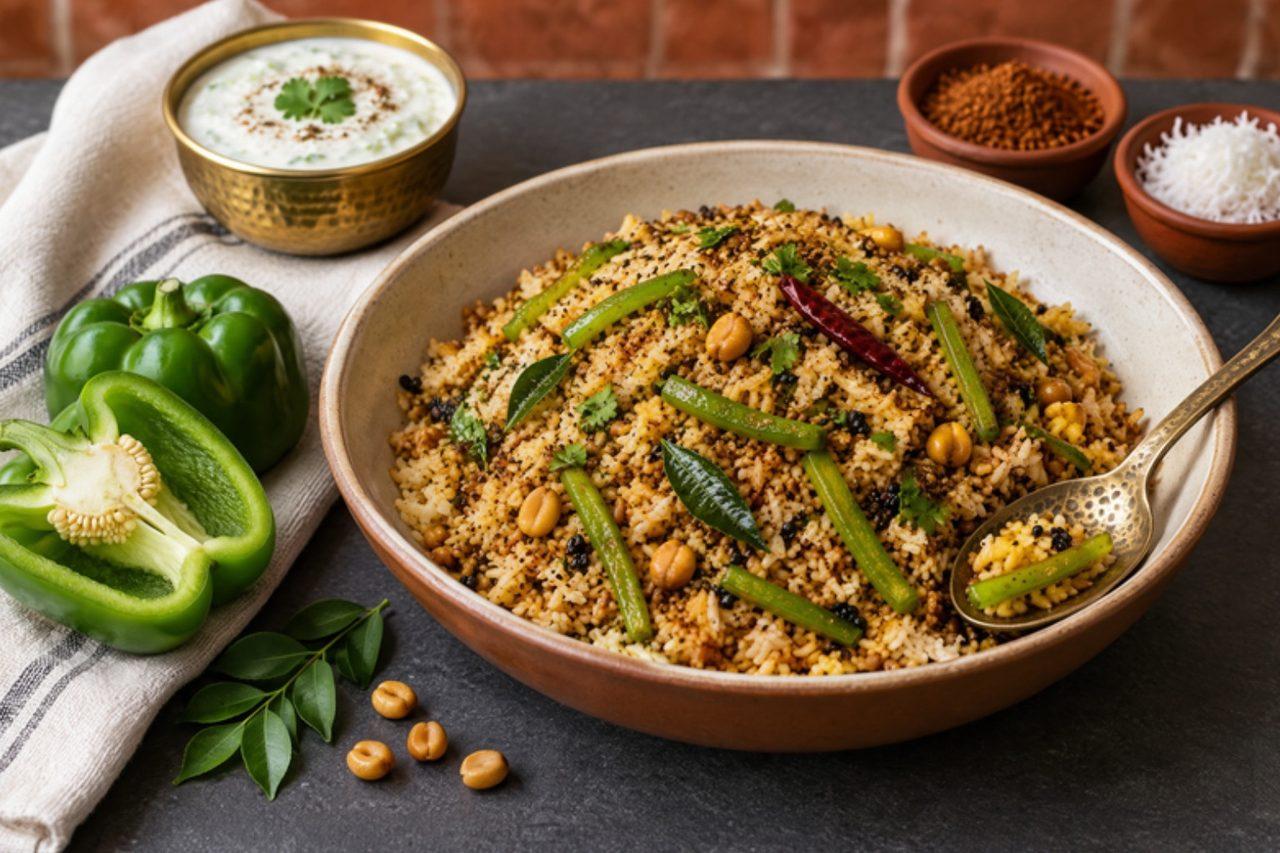
Every Bengaluru darshini has its own capsicum bath, and at home it is a favourite for office lunch boxes because the peppers stay crunchy until noon. Green peppers are sautéed just until glossy, then tossed with rice and a freshly roasted powder of coriander seeds, chana dal, dry coconut and red chillies. The mistake is cooking the peppers until soft; they release water and the rice turns soggy, so keep them bright and crisp. Chef's tip: add the powder to the hot oil off the heat for a few seconds before the rice goes in; it blooms the spices without burning the coconut.
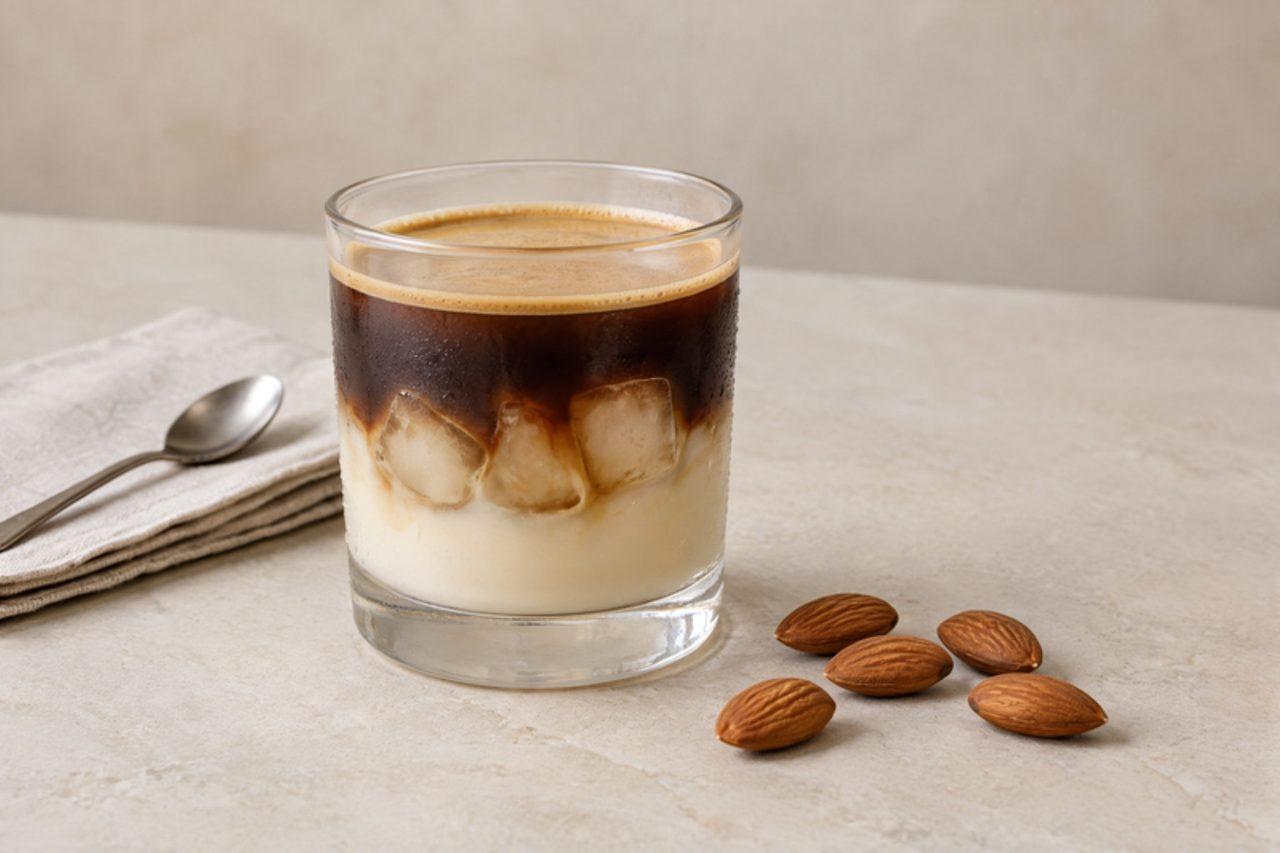
In Lecce and the towns of Salento, summer mornings start at the bar with a caffè in ghiaccio, and the local version, a fairly recent invention now poured everywhere from Otranto to Gallipoli, adds a pour of latte di mandorla: the sweet almond-milk syrup Puglian bakers have made for generations from local almonds. A short glass is filled with ice, the almond syrup goes in, and a hot espresso is poured straight over so it cracks the ice and blends into a pale, cold, nutty coffee. It is sweet without being sticky, with a marzipan aroma and a clean bitter finish. The common mistake is letting the espresso cool before pouring: it no longer melts and mixes with the dense syrup, which then sits at the bottom. Pull the shot and pour it at once, then stir. It is ready when the drink is evenly caramel-coloured and the glass feels icy. Lecce bars serve it from about May to late September, often with a pasticciotto. Espresso means a fair hit of caffeine. Chef's tip: if you can only find unsweetened almond drink, stir 1 tsp of sugar into it first, but real Puglian almond syrup gives the true taste.
Peanut rice is the filling variety rice that Tamil and Kannada parents send when the school day ends with games: roasted peanuts, dry coconut, sesame and red chillies are ground into a coarse powder and tossed through rice in a curry leaf tempering. It tastes a little like a savoury peanut brittle, and it stays good at room temperature for hours. The mistake is grinding the peanuts too long; they turn into peanut butter and the rice clumps. Pulse in short bursts and stop while it is still sandy. Chef's tip: keep a few whole roasted peanuts aside and add them at the end for crunch.
When July heat settles over Italian piazzas, bar regulars from Rome to Bologna switch their morning or after-lunch espresso for a shakerato. The barista pulls a fresh shot, tips it into a cocktail shaker with ice and sugar, shakes hard for fifteen seconds and strains it into a chilled martini or wine glass, where it settles into a dark body under a thick, beige, mousse-like crema. It tastes intense and bittersweet, colder and smoother than iced coffee, with a texture almost like a light cream. The common mistake is using too little ice or shaking half-heartedly: the coffee stays warm and the foam collapses within seconds. Fill the shaker at least half full with ice and shake until the metal is too cold to hold comfortably. It is ready when you hear the ice rattle softly and the shaker frosts over, and the pour has a thick foam on top. One shaker holds one double espresso, so it is fairly strong in caffeine. Chef's tip: dissolve the sugar in the hot espresso before adding ice; granulated sugar barely melts once the coffee is cold.
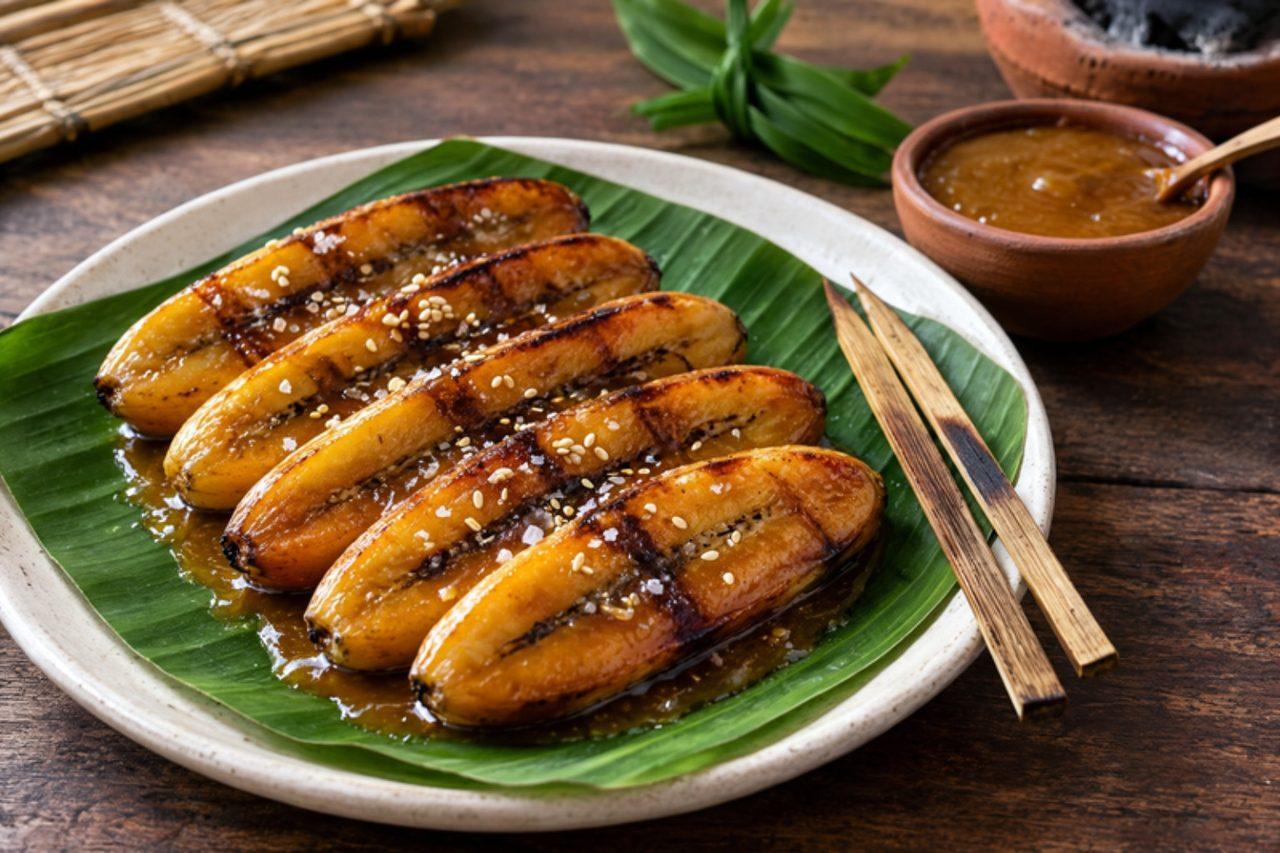
Camote cue is the three-o'clock merienda of Manila, fried in big woks by vendors on the corners of Quiapo, outside university gates on España Boulevard and along every jeepney route, alongside banana cue. Chunks of sweet potato are fried until tender, then brown sugar is scattered into the hot oil, where it melts and wraps each piece in a glassy, crackly caramel coat. They are threaded onto bamboo sticks and eaten warm, with a soft, sweet, chestnut-like centre. Chef's tip: let the oil cool slightly before adding the sugar; sugar dropped into very hot oil burns and turns bitter in seconds.
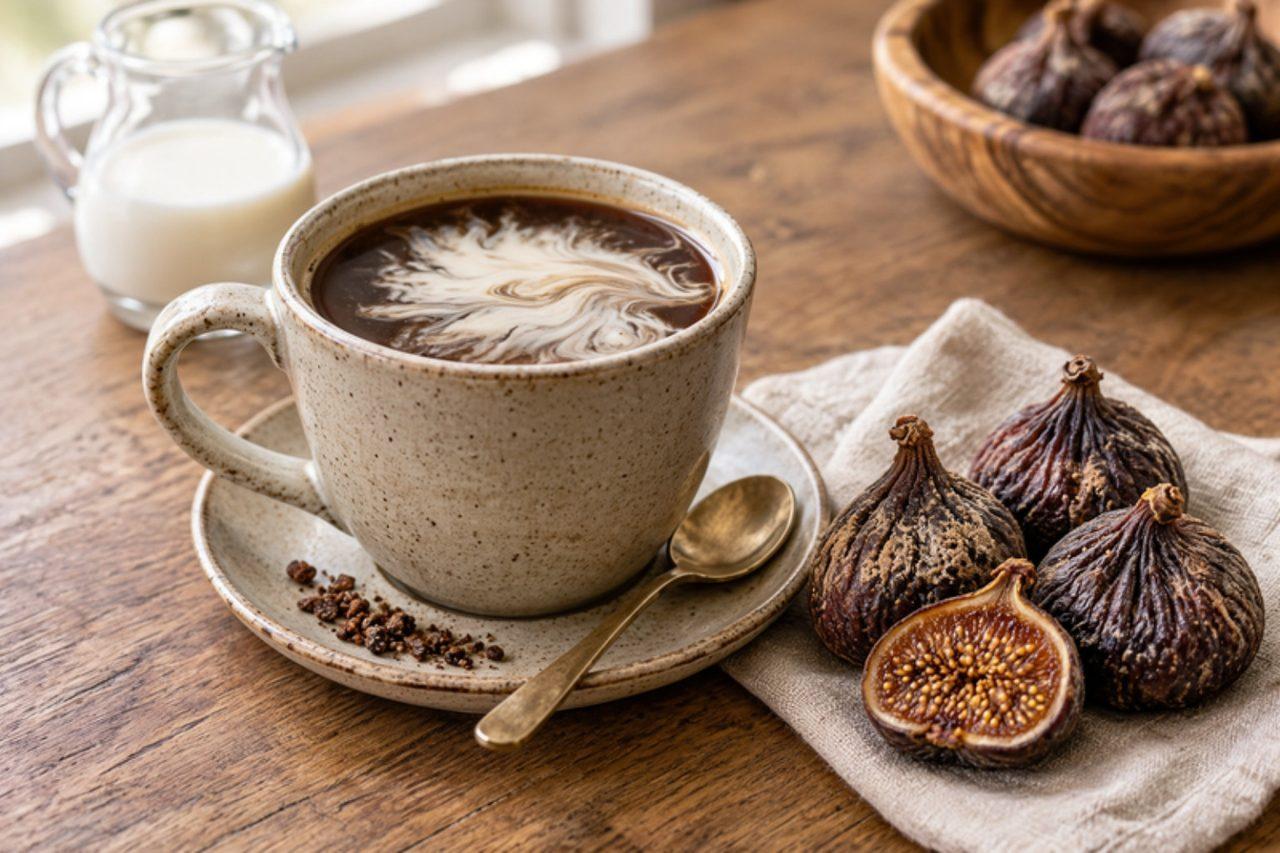
In the farmhouses of central Chile, in the Maule and O'Higgins valleys, people have long drunk café de higo: a dark, caffeine-free "coffee" made from dried figs roasted with grains such as barley and wheat, then ground. It's mellow, fruity and slightly caramel-like, and many Chileans still prefer it with milk at breakfast. The fig granules are sold in Chilean and Latin grocers. The common mistake is brewing it like instant coffee, with a quick stir; it's a ground blend, so simmer it briefly and strain. It contains grains, so it is not gluten free. Chef's tip: a strip of orange peel in the pan brings out the fig flavour.
Every morning from Havana to Miami's Little Havana, breakfast is a big cup of café con leche with a length of buttered, pressed Cuban bread (tostada) to dunk in it. A moka pot of dark espresso-style coffee is whipped with sugar into a pale foam, the espumita, and poured into a mug of hot, lightly salted milk. The usual mistake is boiling the milk, which gives it a skin and a cooked taste; heat it only until it steams. Coffee contains caffeine, so this is a grown-up drink; children traditionally get a cup that is mostly milk. Chef's tip: whisk the first few drops of coffee hard with the sugar to a thick paste before adding the rest; that is what makes the creamy espumita on top.
In the coffee villages of the Venezuelan Andes, in Trujillo, Mérida and Táchira, the day starts in the dark with a pot of guayoyo, and it never really stops: a cup at breakfast with arepas, one mid-morning, one after lunch, one at the bodega counter in the afternoon. Guayoyo is the opposite of a short, dark negrito: plenty of water through a modest amount of coffee, poured through a colador de tela, a cotton cloth sock on a wire ring. It is light-bodied, mild and clean, closer to tea in strength, with gentle chocolate notes and almost no bitterness, so it is easy to drink cup after cup. It still has caffeine, so count the cups. The common mistake is pouring boiling water onto the grounds, which pulls out bitter flavours; let the kettle rest off the boil for a minute first. Never wash the cloth with soap either, or every cup tastes soapy. The coffee is ready when it runs through amber-brown, clear enough to see the bottom of a white cup. Sweeten with papelón (raw cane sugar) if you like. Chef's tip: keep the rinsed cloth in a jar of water in the fridge between uses so it never smells stale.
Every Costa Rican grandmother has a chorreador: a small wooden stand holding a cloth bag, the bolsita, over a cup or jug. Hot water is poured through the grounds by hand, a little at a time, and the result is the coffee drunk at breakfast with gallo pinto and again at the afternoon cafecito around three, with a tamal, a slice of pan casero or a rosquilla. The cloth catches the oils and fine grounds, so the cup is clean, bright and smooth, with the soft acidity and caramel sweetness of Tarrazú and Central Valley beans. In the countryside the water is sometimes sweetened with tapa de dulce before it goes through. It is strong coffee, so mind the caffeine late in the day. The common mistake is pouring all the water in at once, which floods the bag and leaves weak, uneven coffee; pour in slow circles, in four or five goes. It is ready when the drips slow to a trickle and the coffee is dark reddish-brown and smells of toasted caramel. Never wash the bag with soap; rinse it in hot water and hang it to dry. Chef's tip: boil a new bag once with a spoonful of coffee before using it, to season the cloth.
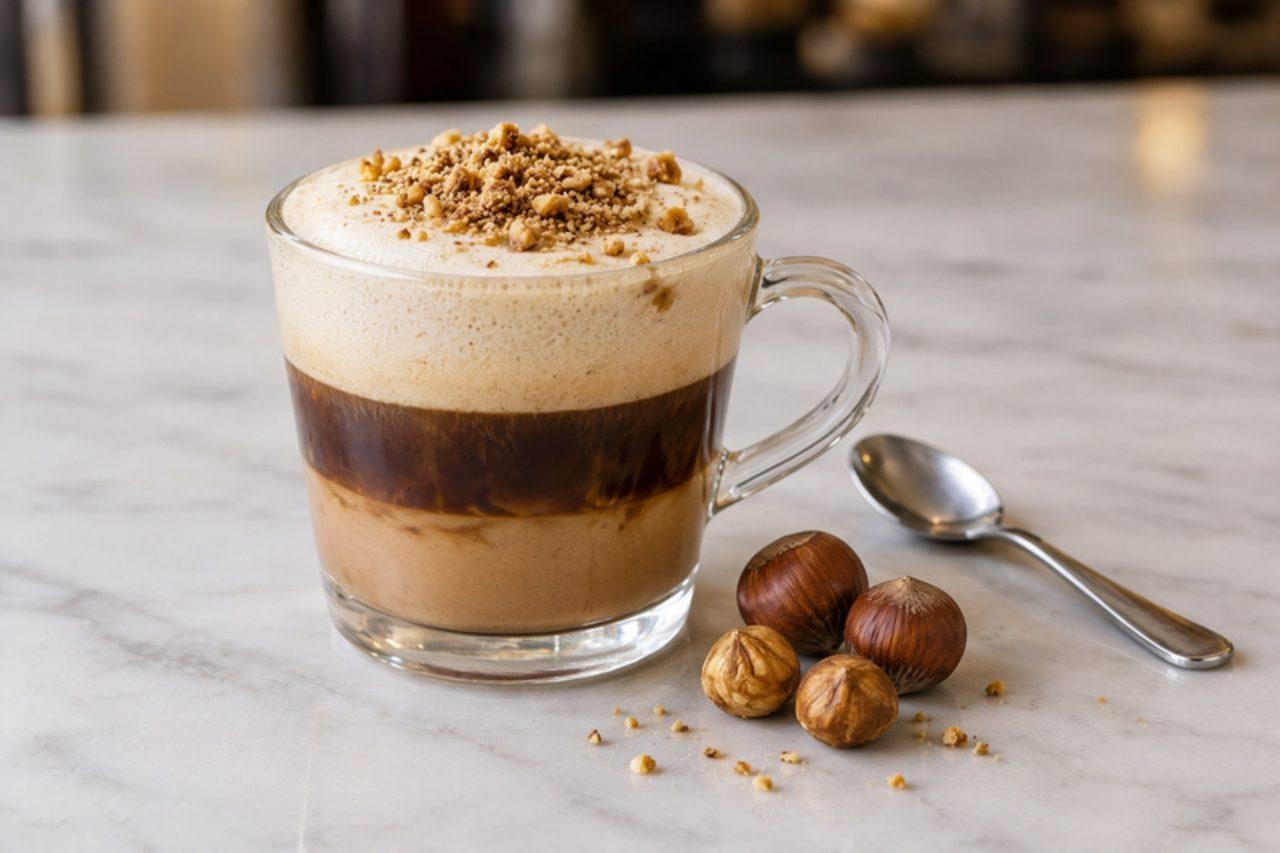
Naples takes its espresso seriously, and its bars along Via Toledo and the Lungomare also serve this richer cousin: a small glass cup smeared with hazelnut cream, a hot ristretto poured in, and a cap of cremina, the pale foam Neapolitans make by beating the first drops of coffee with sugar. It is drunk standing at the counter at mid-morning or after lunch as a little treat, and in summer the same flavours come as a cold crema al caffè. It tastes of roasted hazelnut and dark coffee, sweet and nutty, with a soft, airy foam that melts into the cup. The common mistake is whisking the cremina with too much coffee: it stays liquid and never turns pale. Use just a teaspoon of the first, thick drops and beat hard. It is ready when the foam is light beige, thick and falls from the spoon in ribbons. Espresso means a fair amount of caffeine, so keep this one for grown-ups. Chef's tip: warm the glass under hot water first and swirl the hazelnut cream up the sides; the hot coffee melts it into stripes as it goes in.
In the colonial town of Trinidad, in Sancti Spíritus province, the canchánchara is served in little clay cups to the sound of a son band in the late afternoon. Its roots are in the independence wars of the 1860s and 70s, when the mambí fighters drank cane aguardiente mixed with honey, lime and water, warm or at camp temperature. Today it comes with crushed ice, but it is still a drink for adults only, rustic and honest: floral honey, sharp lime and the raw, sugary heat of young cane spirit, cold and only slightly diluted. The classic mistake is pouring honey straight onto the ice, where it sets into a hard lump at the bottom and the drink tastes of nothing but sour spirit. Stir the honey into the lime and water first until no streaks remain, then add the ice and spirit. It is ready when the honey has disappeared into a cloudy, even mixture and the outside of the cup sweats with cold. Drink it slowly and responsibly. Outside Cuba, use unaged white rum or cachaça for the aguardiente; a short tumbler is fine if you have no clay cup. Chef's tip: soak the clay cup in cold water for ten minutes first; it keeps the drink cold for much longer.
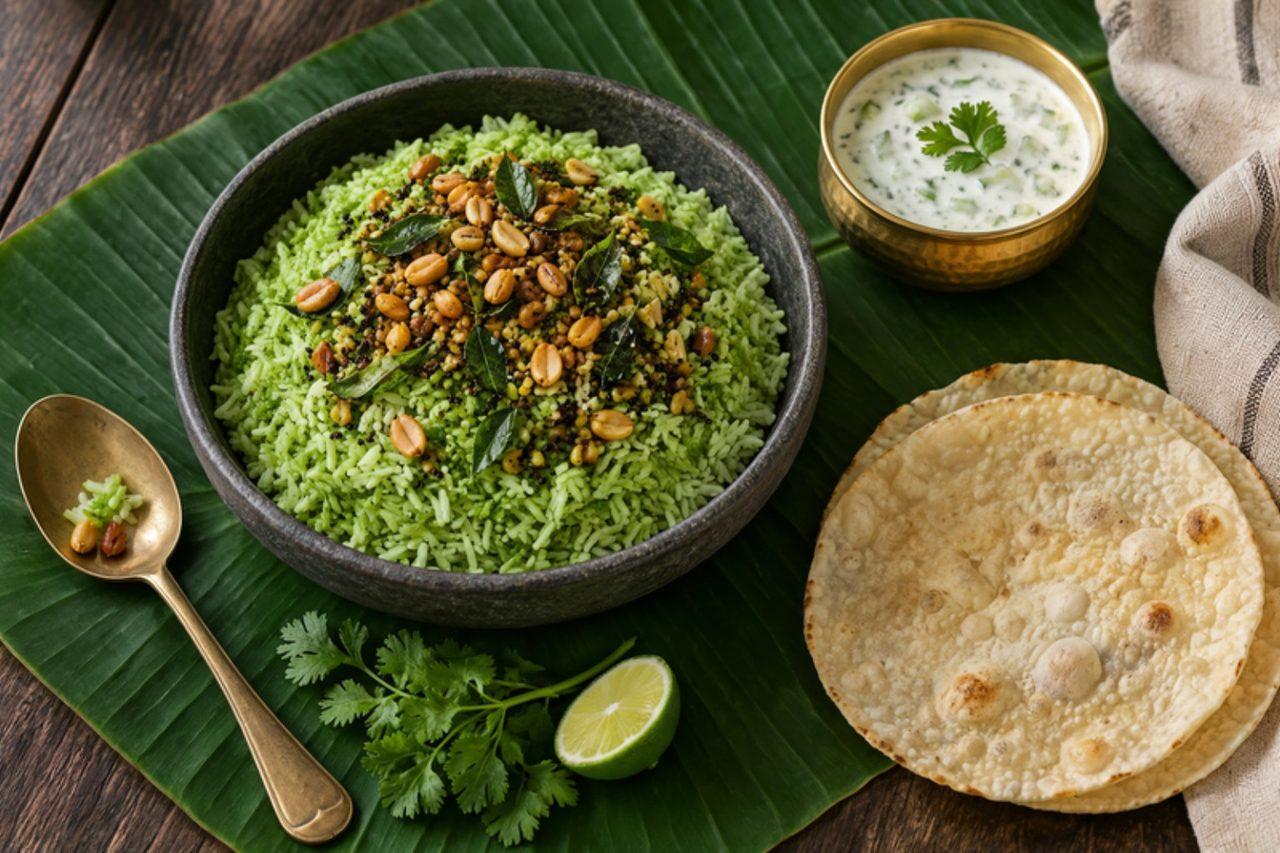
Chennai mothers turn a big bunch of coriander into this bright green rice when they want a lunch box that looks fresh and smells of the market. The leaves and stems are ground with green chilli, coconut, ginger and a little tamarind, then fried in oil until the raw grassy smell goes and the paste turns a deeper green. The mistake is adding the paste and the rice together: the paste stays raw and the rice goes dull and sour. Cook the paste first until it leaves the sides of the pan. Chef's tip: keep the coriander stems; they carry more flavour than the leaves and grind into a smoother paste.
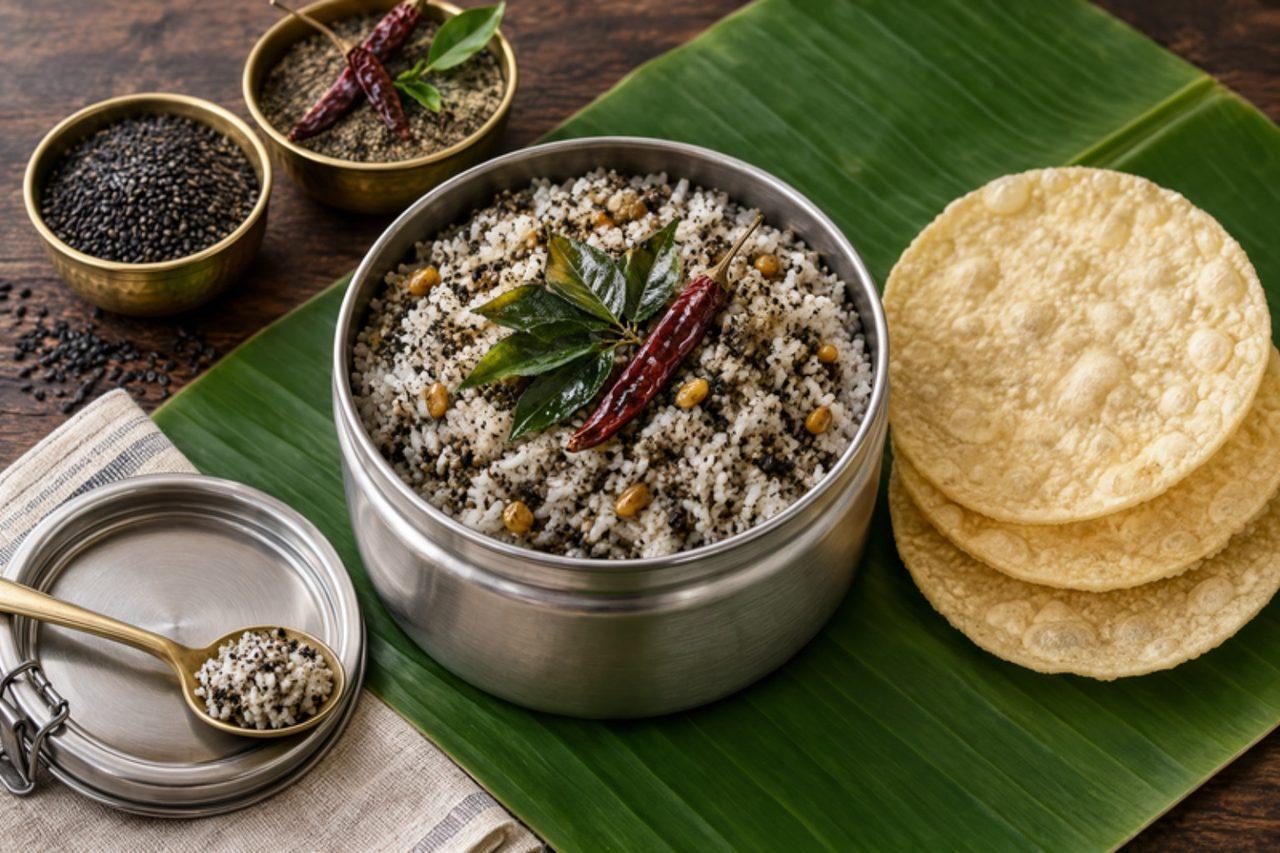
In Tamil homes ellu sadam is cooked on Saturdays and temple days, and it is one of the variety rices that keeps best in a school lunch box, because the dry sesame powder soaks up the oil and does not spoil the way coconut rice can. The powder is roasted from black sesame, urad dal and dried red chillies, ground coarse and tossed through plain rice with a nutty gingelly oil tempering. The usual mistake is roasting the sesame too hard: it turns bitter within seconds, so take it off as soon as it starts to pop and smell toasty. Chef's tip: pound the powder rather than blitzing it to dust, so you keep a little crunch from the dal.
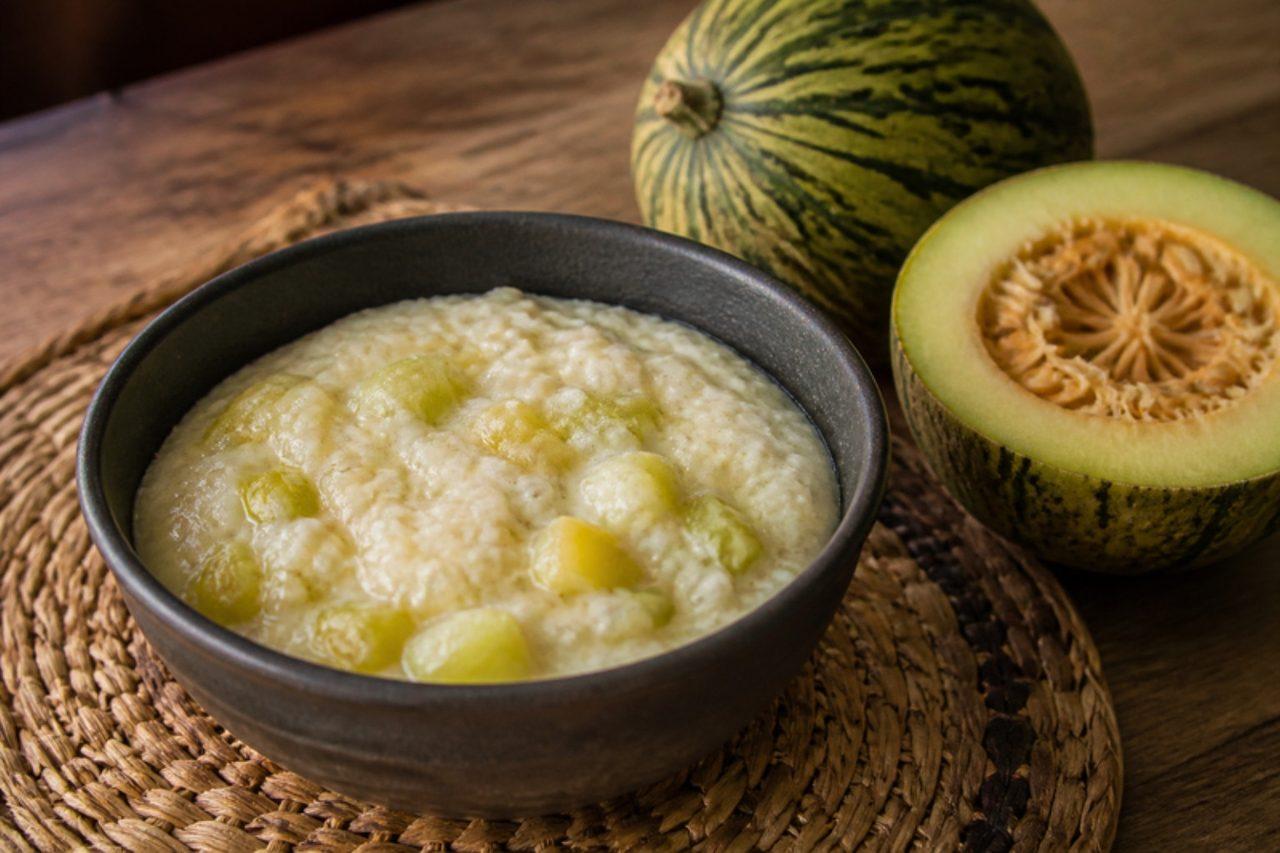
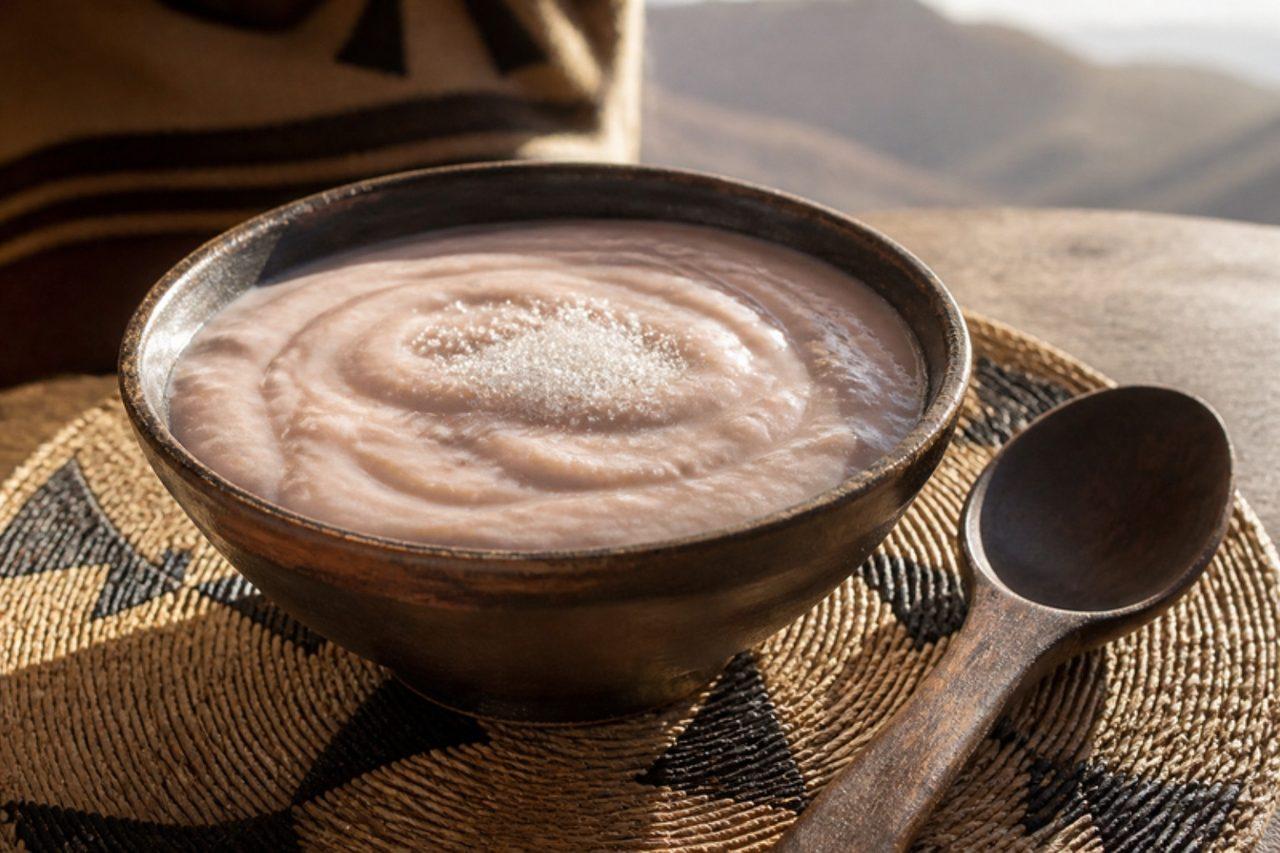
When the lerotse melons ripen on the lands around Serowe and Mahalapye after the summer rains, households stir their pale flesh into the evening pot of sorghum, and the porridge turns soft, smooth and quietly sweet. Lerotse is a hard-skinned field melon, closer to a mild marrow than a dessert melon, so it melts into the bogobe and gives it a light, fresh taste against the sour, nutty grain. It is eaten as a side with seswaa, beans or morogo, or on its own for supper with a sprinkle of sugar. Outside Botswana, look for lerotse at African grocers; otherwise a firm cooking melon or a winter melon gives a very close result. Chef's tip: the mistake people make is dumping the sorghum in at once, which gives lumps; rain it in slowly while you whisk.
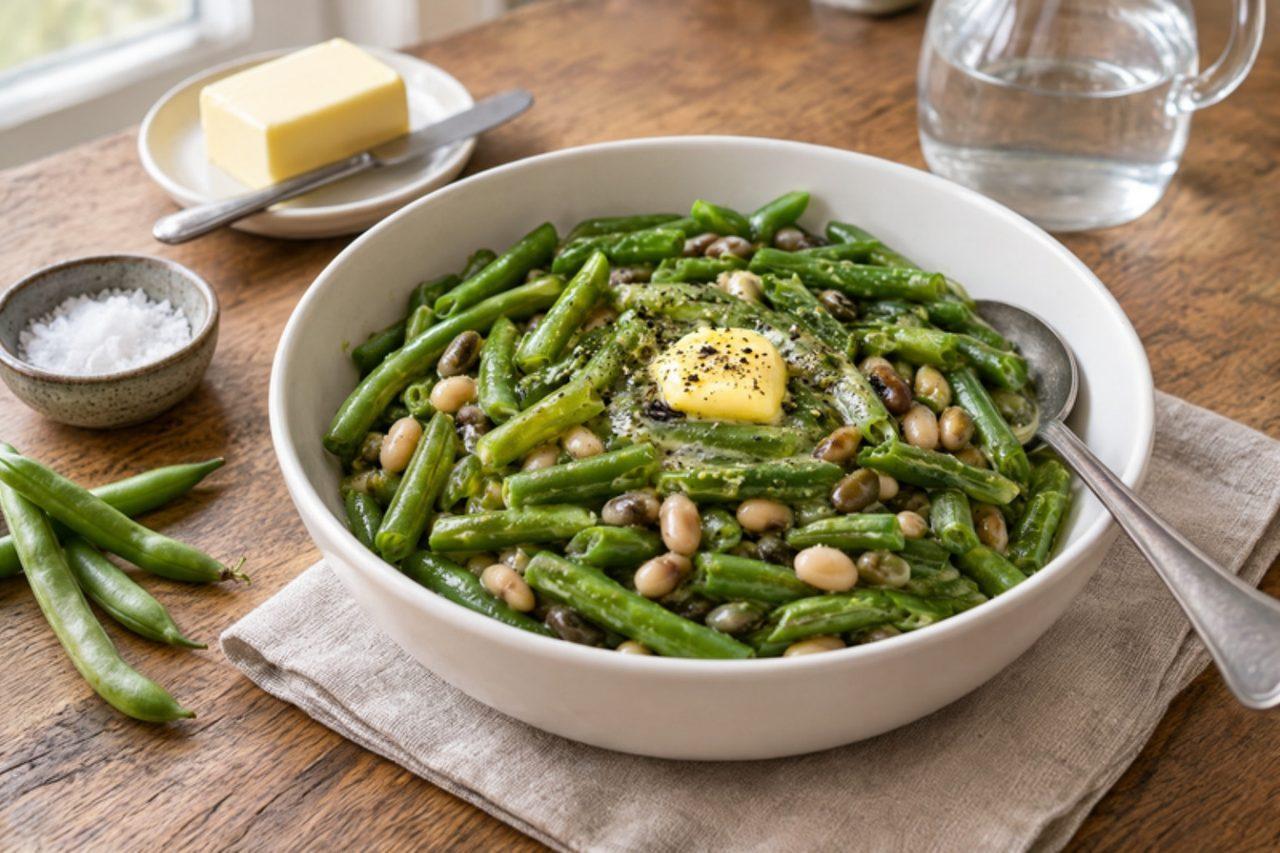
Dutch grandmothers named this dish 'bare bottoms in the grass' for the pale white beans peeping out between the green ones, and it is a summer weekday supper all over the Netherlands, when runner and French beans are cheap. Green beans and cooked white beans are simmered together, then stirred with butter, a little stock and plenty of pepper, often with boiled potatoes on the side. Many families add bacon or a smoked sausage; this version keeps it vegetarian, so serve it with a fried egg or a vegetarian sausage if you want more. The usual mistake is boiling the green beans until grey: they should stay bright with a slight bite. Chef's tip: a splash of the bean-cooking liquid stirred in with the butter makes a glossy little sauce that clings to everything.
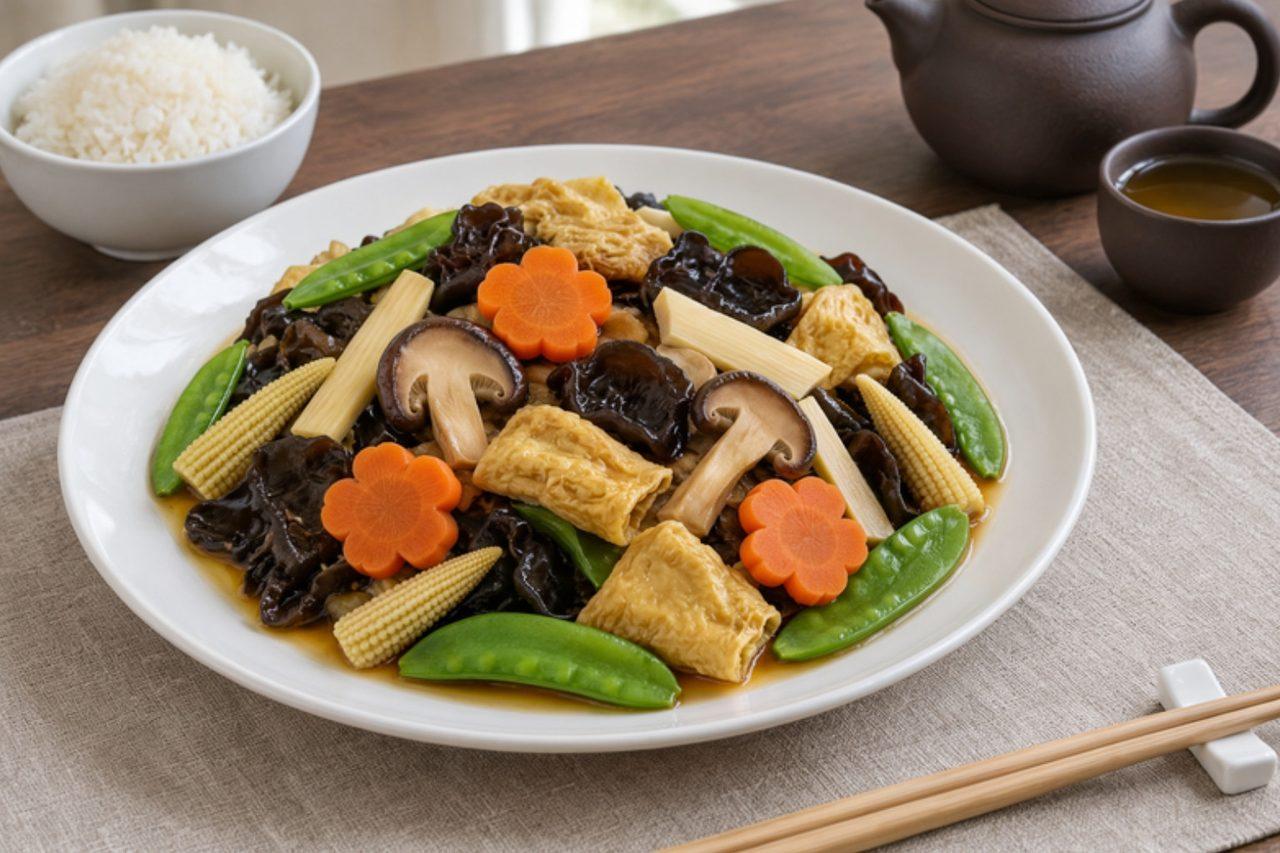
Su shi jin means "vegetarian assortment", and it comes from the Buddhist kitchens of eastern China; today it is a staple of office lunchbox shops in Shanghai and Hangzhou. Crunchy wood ear mushrooms, strips of tofu skin, chewy wheat gluten (kao fu or mian jin), carrot, snow peas and bamboo shoot are stir-fried quickly and glossed with a light soy and ginger sauce. The mistake is adding everything at once, so the firm vegetables are raw and the snow peas overcooked; cook in order of hardness. Chef's tip: soak dried wood ear in cold water rather than hot; it plumps up crunchier.
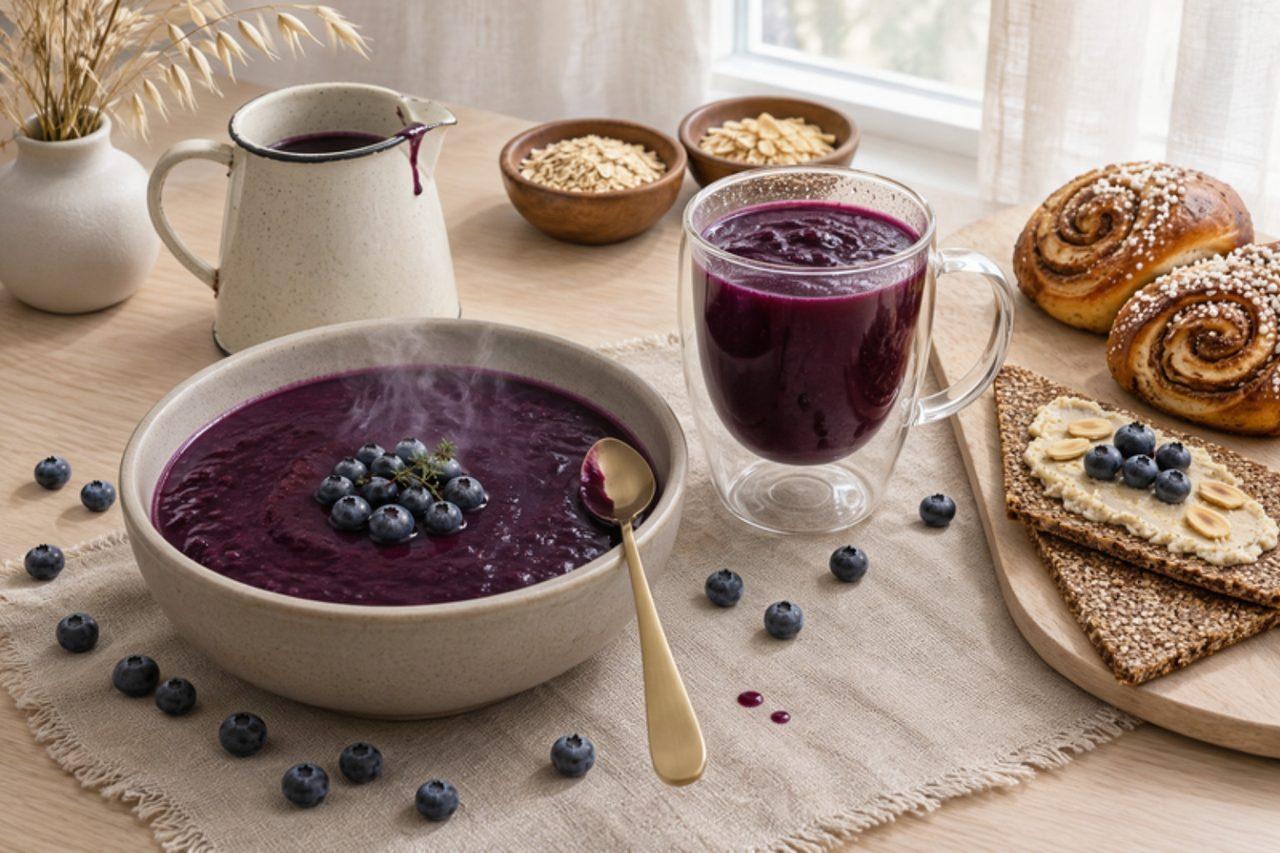
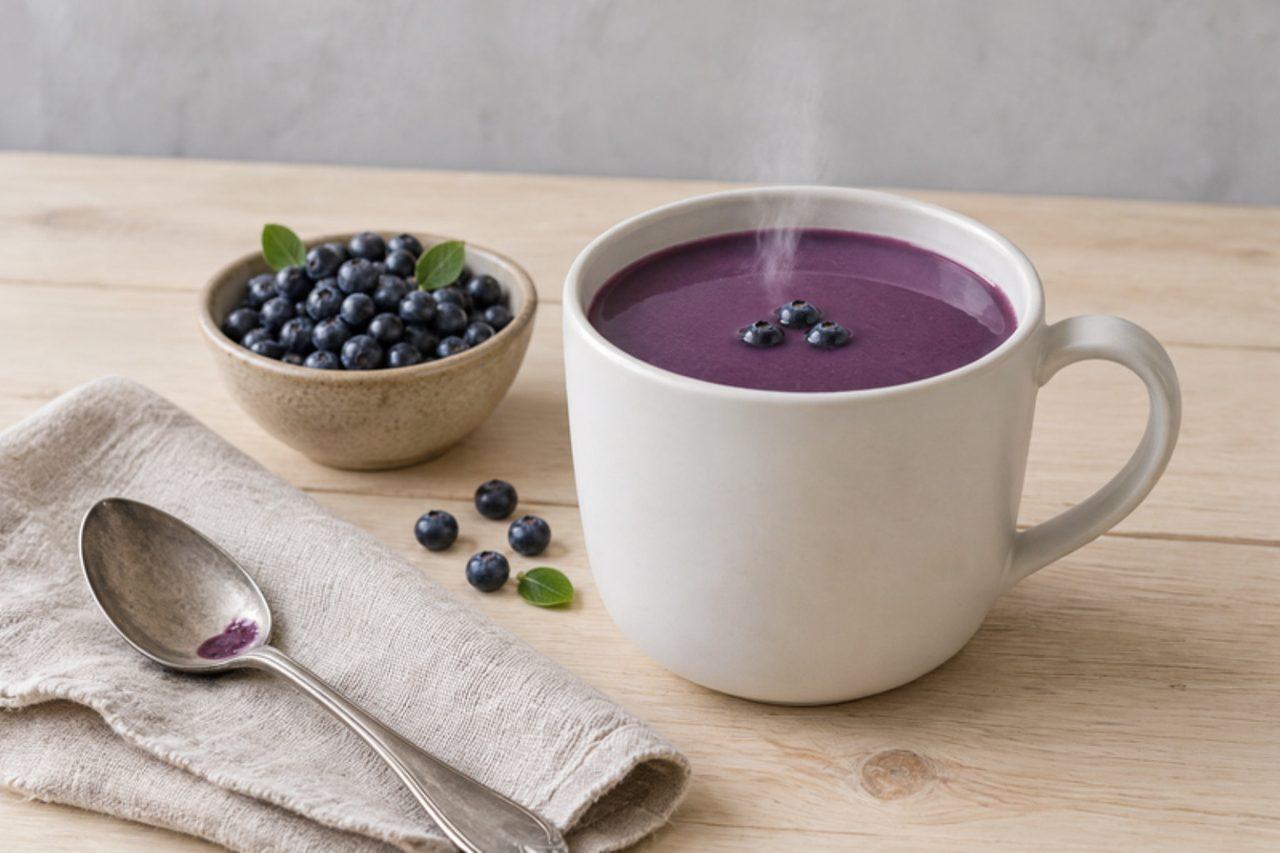
Swedes have drunk blåbärssoppa for generations, warm on a winter morning and cold from a cup after the Vasaloppet ski race, where skiers are handed it at every station. It is a thin, deep purple soup of bilberries or blueberries, sweetened and thickened just enough with potato starch to coat the tongue. The common mistake is boiling the soup after adding the starch: it turns stringy and then thins out again, so take it off the heat as soon as it thickens. Chef's tip: wild bilberries give a far deeper colour and flavour than cultivated blueberries, and frozen ones work perfectly.
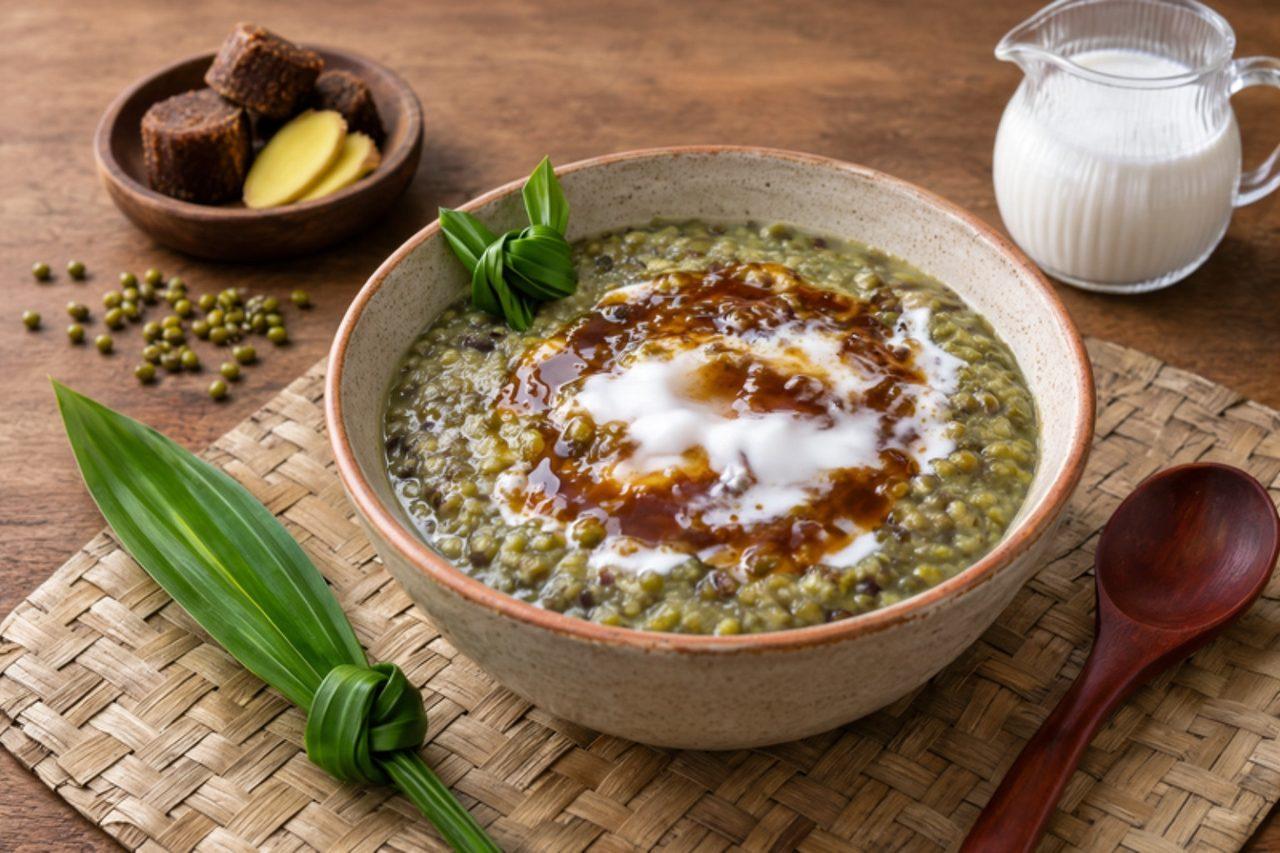
In Java, the bubur kacang ijo seller pushes a cart through the neighbourhood from early morning, ladling warm mung bean porridge sweetened with palm sugar and topped with thick coconut milk. Many people eat it with a slice of white bread dunked in, and late-night stalls in Jakarta sell it alongside instant noodles. The common mistake is adding the sugar too early, which keeps the beans firm; cook them soft first. Chef's tip: cook the coconut milk separately with a pinch of salt and a pandan leaf and pour it on top, so the bowl has a sweet layer and a slightly salty, creamy one.
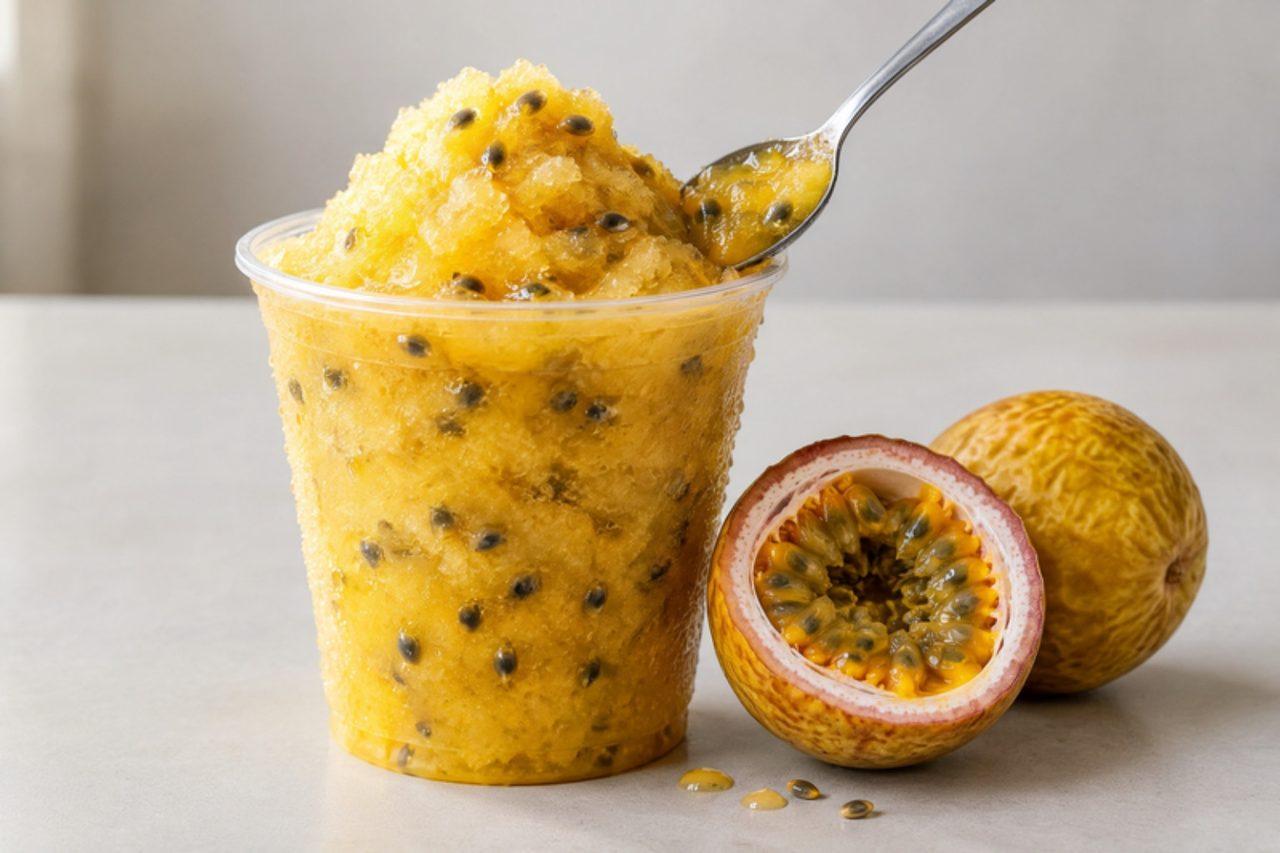
From January to March, when Lima's coast swelters, queues form at the cremolada counters of Barranco and along the Jirón de la Unión downtown for cups of this thick fruit ice. It sits between a granita and a sorbet: frozen fruit pulp scraped again and again until it is slushy and spoonable, with real bits of fruit through it. Passion fruit (maracuyá) gives a sharp, bright flavour; creamy lúcuma, with its maple and sweet potato taste, is the other favourite. Chef's tip: use a shallow metal tray; it freezes faster and evenly, so you get fine crystals rather than chunks.
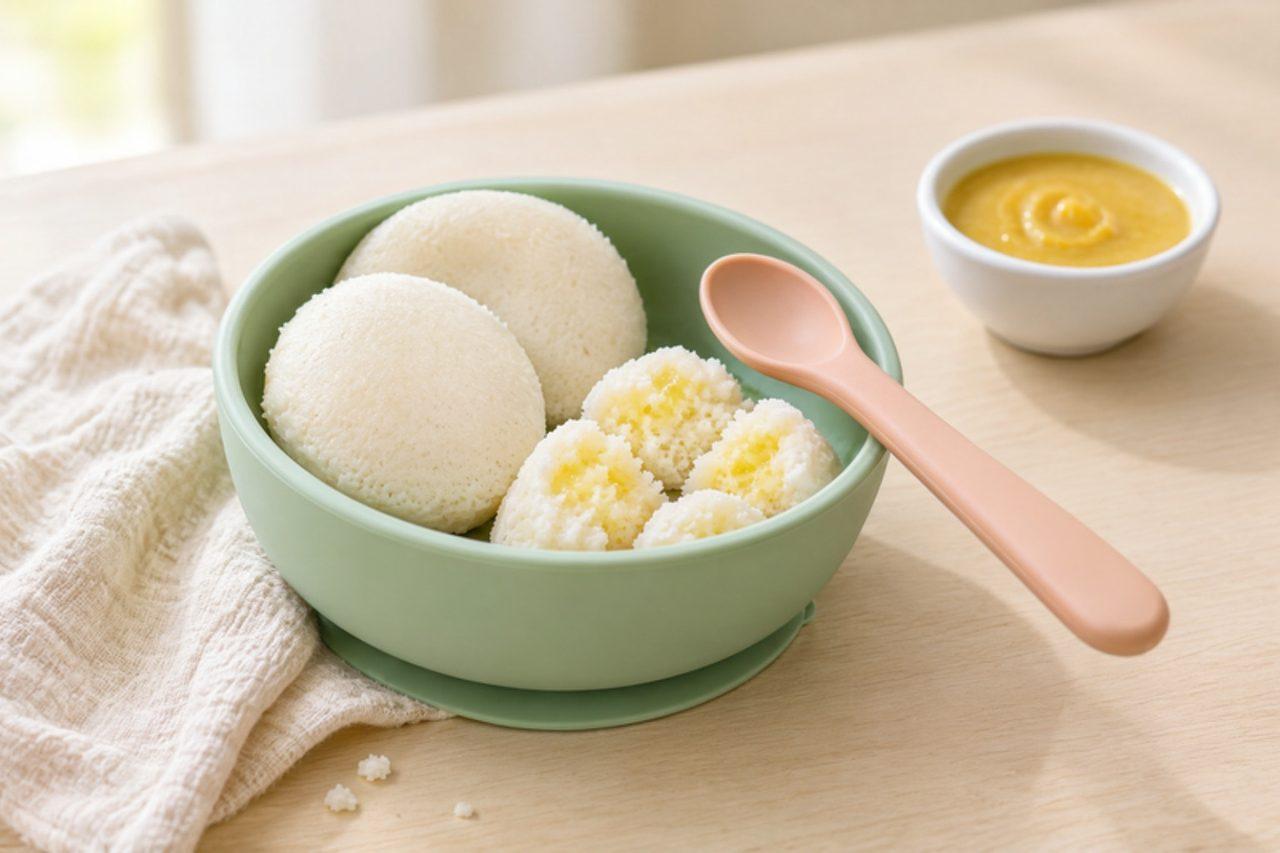
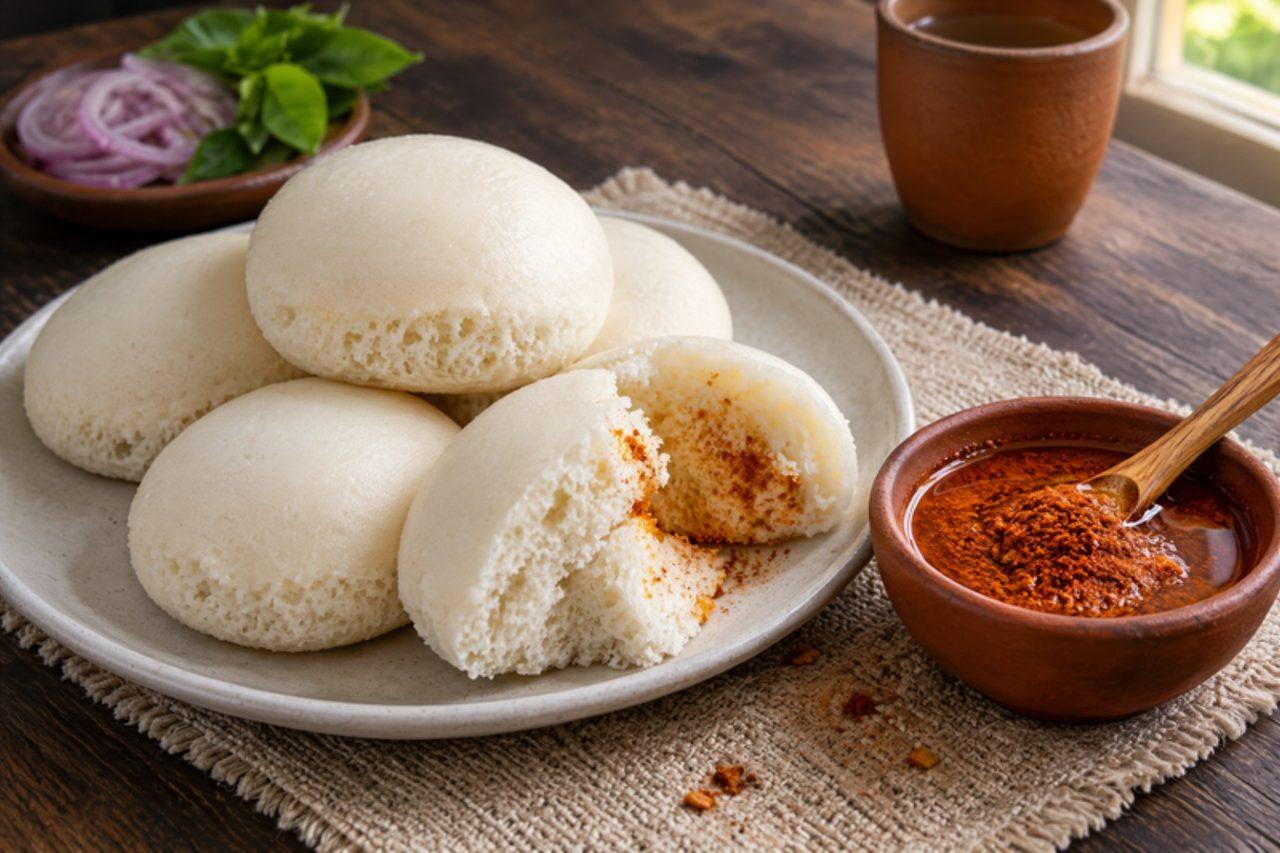
Idli is breakfast across Tamil Nadu, from Chennai's Mylapore tiffin rooms to village kitchens, and a fluffy, plain idli is one of the first finger foods many South Indian babies hold. Since family batter is salted, parents make a separate salt-free batch for babies under one, or steam a few from it before the salt goes in. The cakes are pillowy, faintly sour and melt under the gums, torn into pieces or mashed with ghee or thin dal. They contain no gluten, egg, nuts, soya or sesame; they contain milk only if served with ghee. Chef's tip: grind the urad dal with ice-cold water until it is light and foamy; air in the batter, not salt, is what makes idli soft.
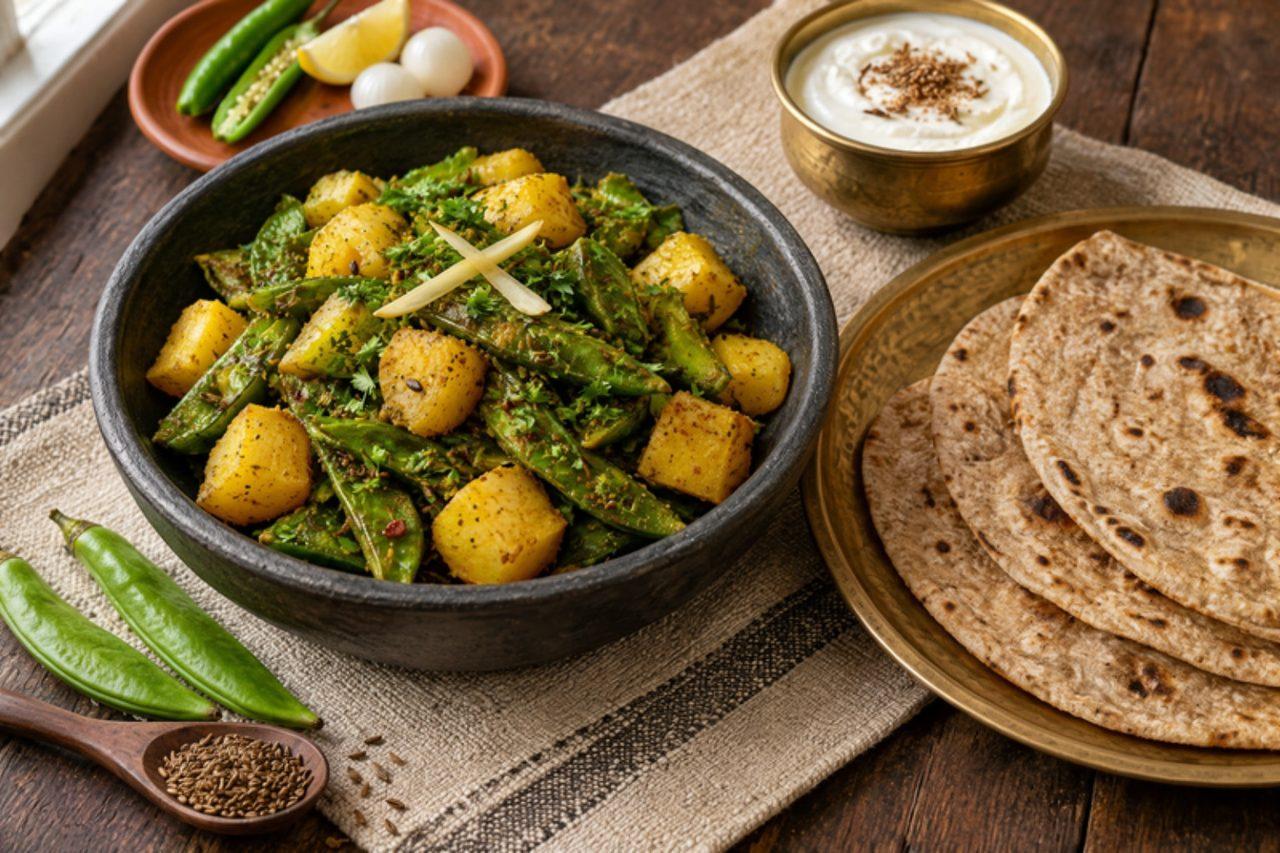
When flat green sem pods fill the sabzi carts in Lucknow and Jaipur in winter, they go into this dry stir-fry with potato and a crackle of ajwain, the classic partner for paratha in an office dabba. The beans stay a little firm and sweet, the potato soaks up the spices, and nothing drips into the roti. The mistake is leaving the stringy edges on the pods; they never soften. Snap the tip and pull the string down each side before chopping. Chef's tip: cook covered for the first half to steam the beans tender, then uncover and turn up the heat so the potatoes catch and brown.
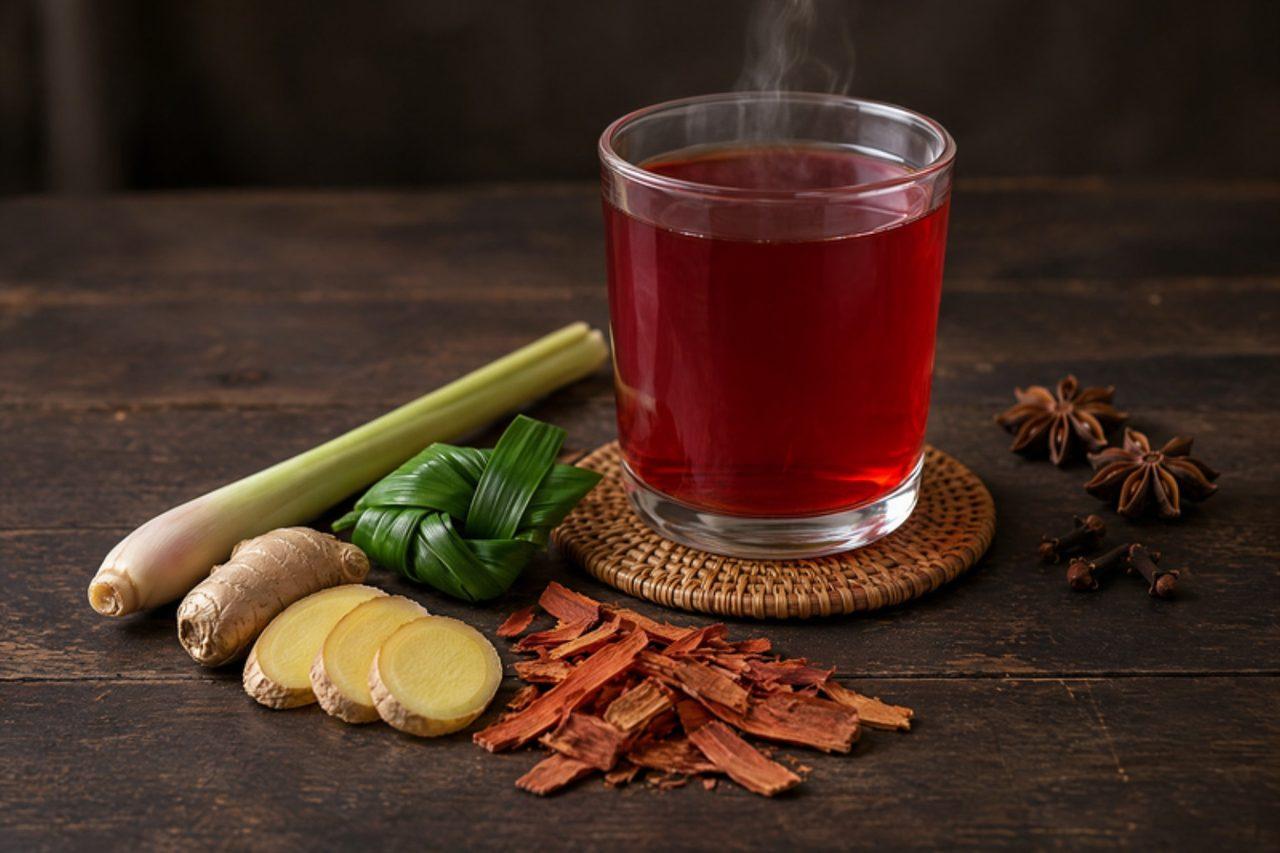
Bir pletok was the Betawi answer, in old Batavia, to the beer and wine drunk by the Dutch: a red, warming spice drink with no alcohol at all, served at weddings, at Lebaran open houses and in the evenings at Jakarta's Setu Babakan cultural village. 'Pletok' is said to be the popping sound it made when shaken in a bamboo tube to raise a foam. Ginger, lemongrass, pandan, cloves, cinnamon and cardamom are simmered with chips of secang (sappanwood), which turns the liquid deep ruby. It tastes hot and peppery from the ginger, perfumed from the pandan, sweet and lightly woody, and is drunk warm or with ice. The common mistake is skimping on ginger or slicing it thin and boiling briefly; you need plenty, bruised, and a slow simmer to draw out the heat. It is ready when the liquid is a clear ruby red and the ginger burn catches at the back of your throat. Secang chips are in Indonesian shops; dried hibiscus flowers give a similar red, slightly sourer. Keeps 5 days in the fridge. Chef's tip: shake each serving hard in a closed jar before pouring to get the foamy head.
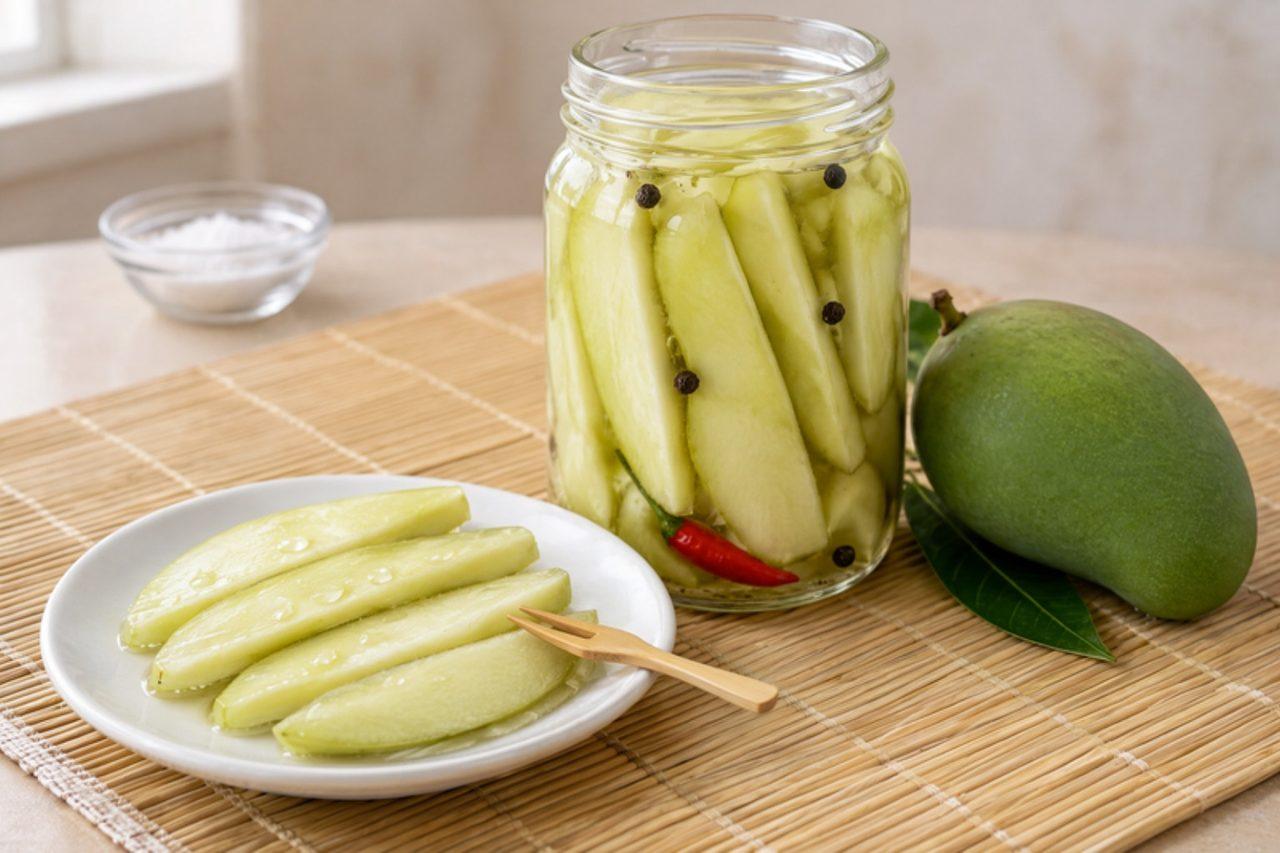
From Pampanga to Pangasinan, the hot months of March to May bring piles of hard green carabao mangoes to every palengke, and many households slice them into a jar of burong mangga. A week in a sweet salt brine turns the mango from mouth-puckering to bright and juicy: still crunchy, sour at the core, salty-sweet on the outside. It is eaten on the side of inihaw na isda and pritong tilapia, with rice and fried pork at lunch, or as an afternoon merienda straight from the jar, and the brine is sometimes sipped too. Common mistake: using mangoes that have started to ripen; a yellow blush makes the slices go soft and slimy, so choose rock-hard, deep-green fruit. Because the brine has no vinegar it keeps only in the fridge. It is ready when the slices have turned from opaque white to a translucent yellow-green and taste evenly seasoned right through. Chef's tip: let the boiled brine cool completely before pouring, and add a few slices of fresh chilli if you like heat. Outside Asia, use firm green Thai or Indian mangoes from an Asian grocer.
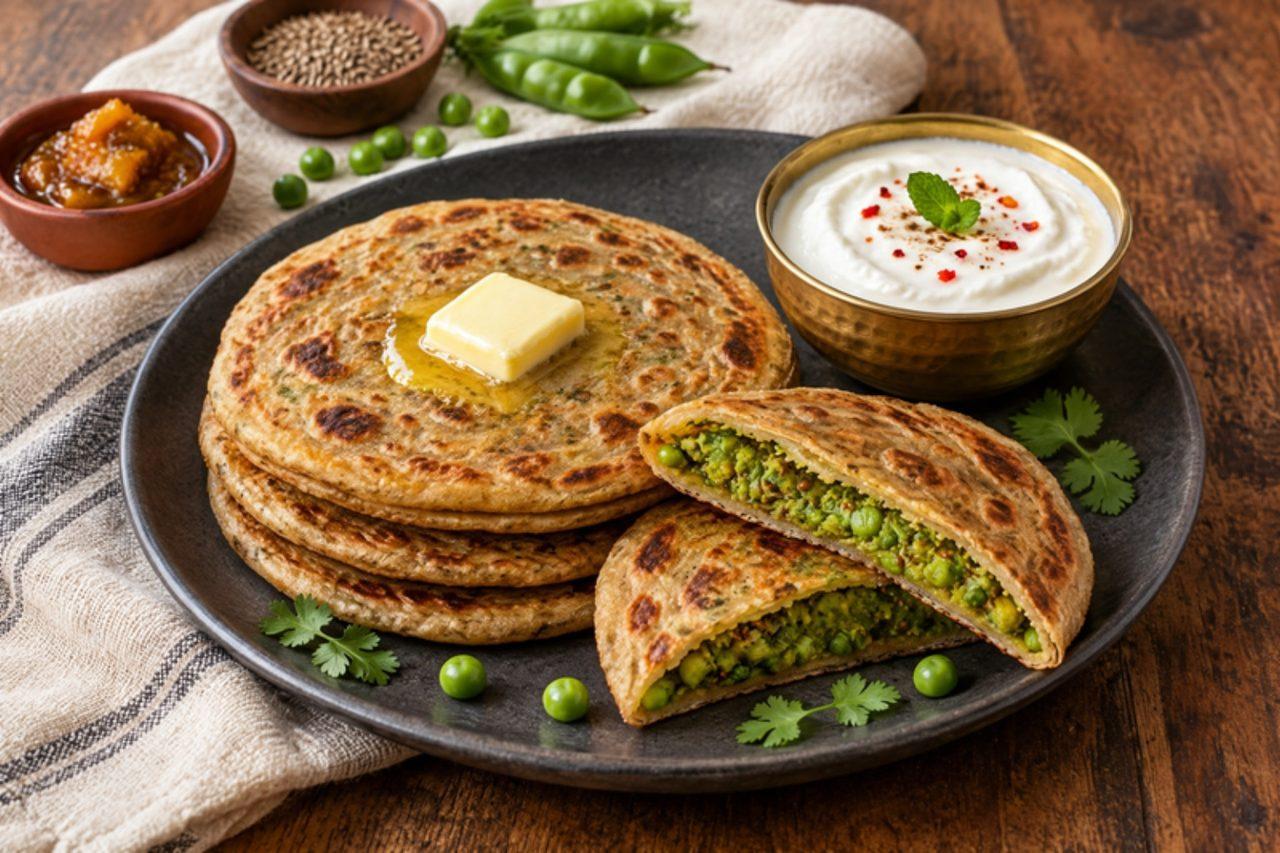
In Delhi and Punjab, matar paratha is the winter tiffin made when the first sweet peas arrive: the peas are boiled, mashed coarse and spiced with ginger, green chilli, cumin and amchur, then sealed inside wholewheat dough and roasted on the tawa with a little ghee. Rolled up in foil with a spoon of pickle, they are still soft at lunch. The mistake is a wet filling, which bursts through the dough; cook the mashed peas in a pan until dry and cool them before stuffing. Chef's tip: make the filling slightly saltier than tastes right, because the dough around it is unsalted and mutes it.
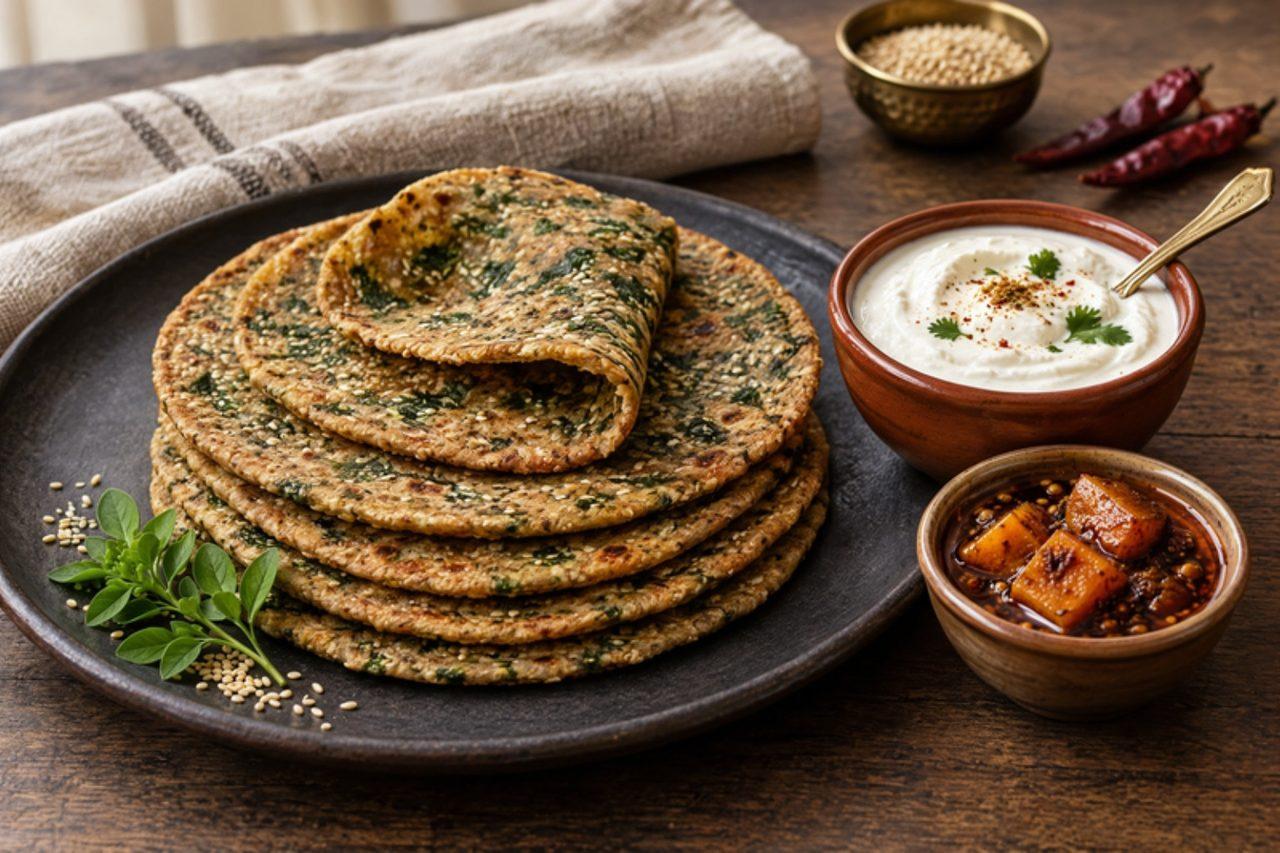
Gujarati families pack a stack of dhebra for every train journey, picnic and tiffin box, because the yogurt and oil in the dough keep these spicy millet and fenugreek flatbreads soft for two or three days. They are thicker than a thepla and earthy from the bajra, and they are eaten with pickle, chhundo or a cup of tea. The common mistake is adding too much water at once: the yogurt and fenugreek release moisture as you knead, and a slack dough sticks and tears. Chef's tip: pat them out on a damp cloth or between two sheets of plastic rather than rolling, the way Gujarati kitchens do, so the delicate millet dough does not crack.
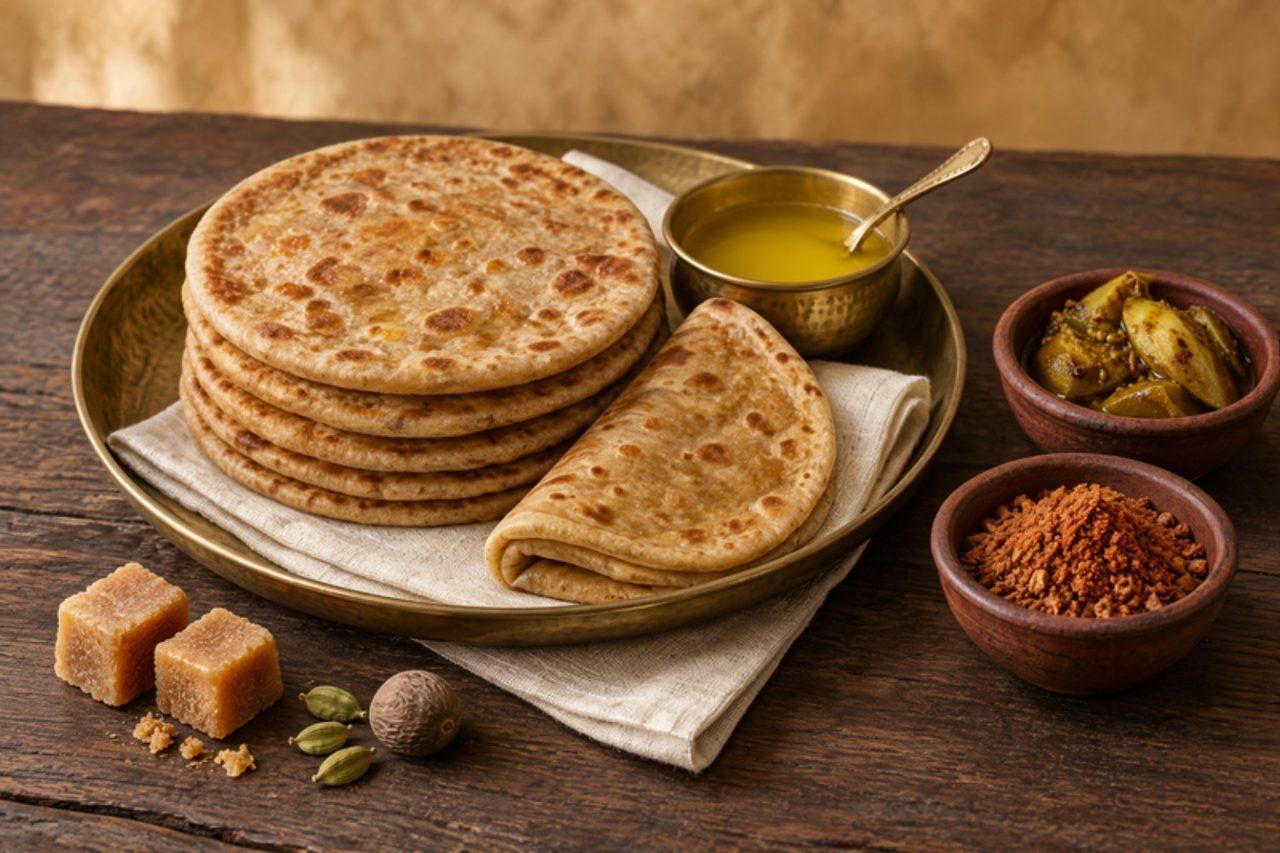
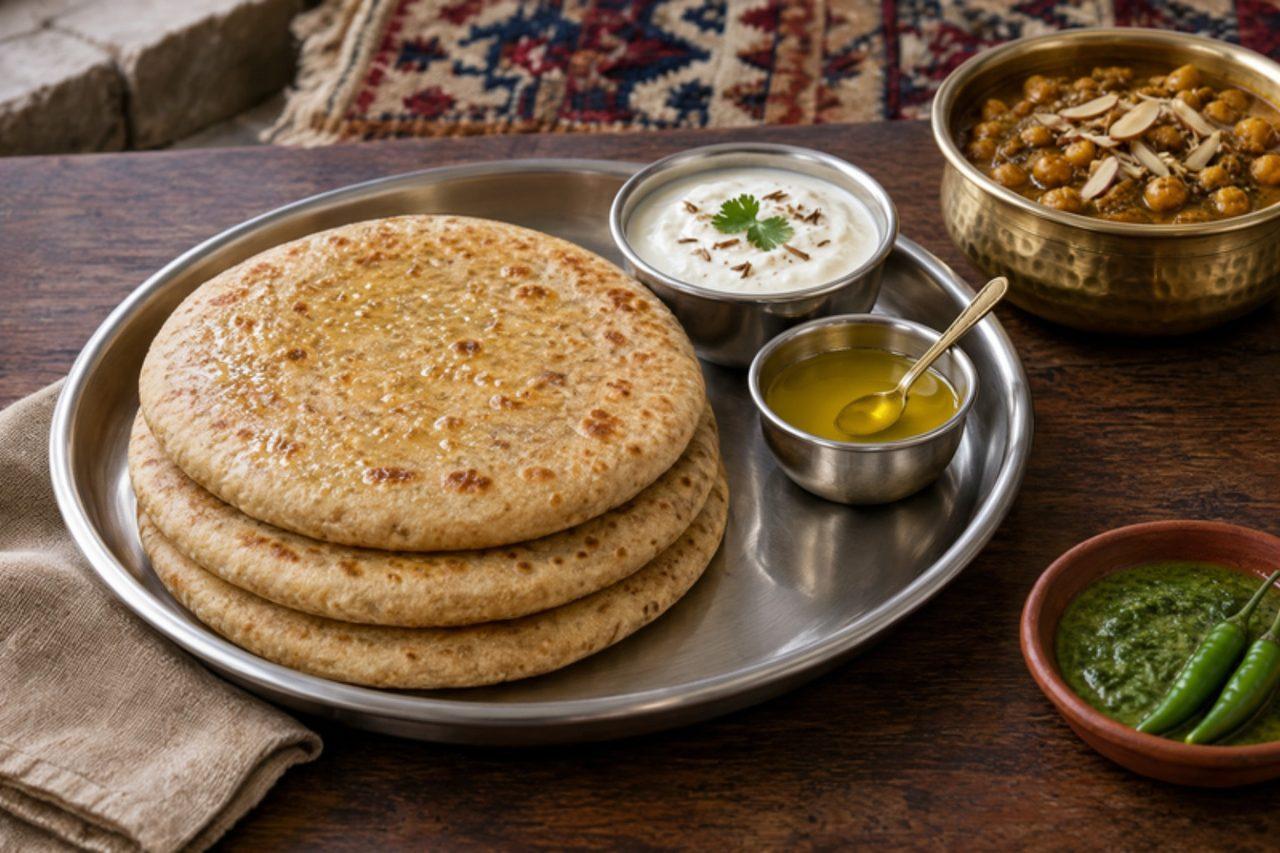
Dashmi is the bread Maharashtrian mothers make for pilgrimages, school trips and the first days of a long journey: wholewheat dough kneaded with warm milk instead of water and sweetened with jaggery, cooked on a tawa until soft and spotted. Milk and ghee keep it tender for two or three days without a fridge in cool weather, and children eat it plain or with pickle. The common mistake is rolling it too thin and cooking it on a fierce tawa, which makes it crisp like a khakhra; it should stay soft and pliable. Chef's tip: stack the dashmis in a cloth as they come off the tawa, so the trapped steam softens them further.
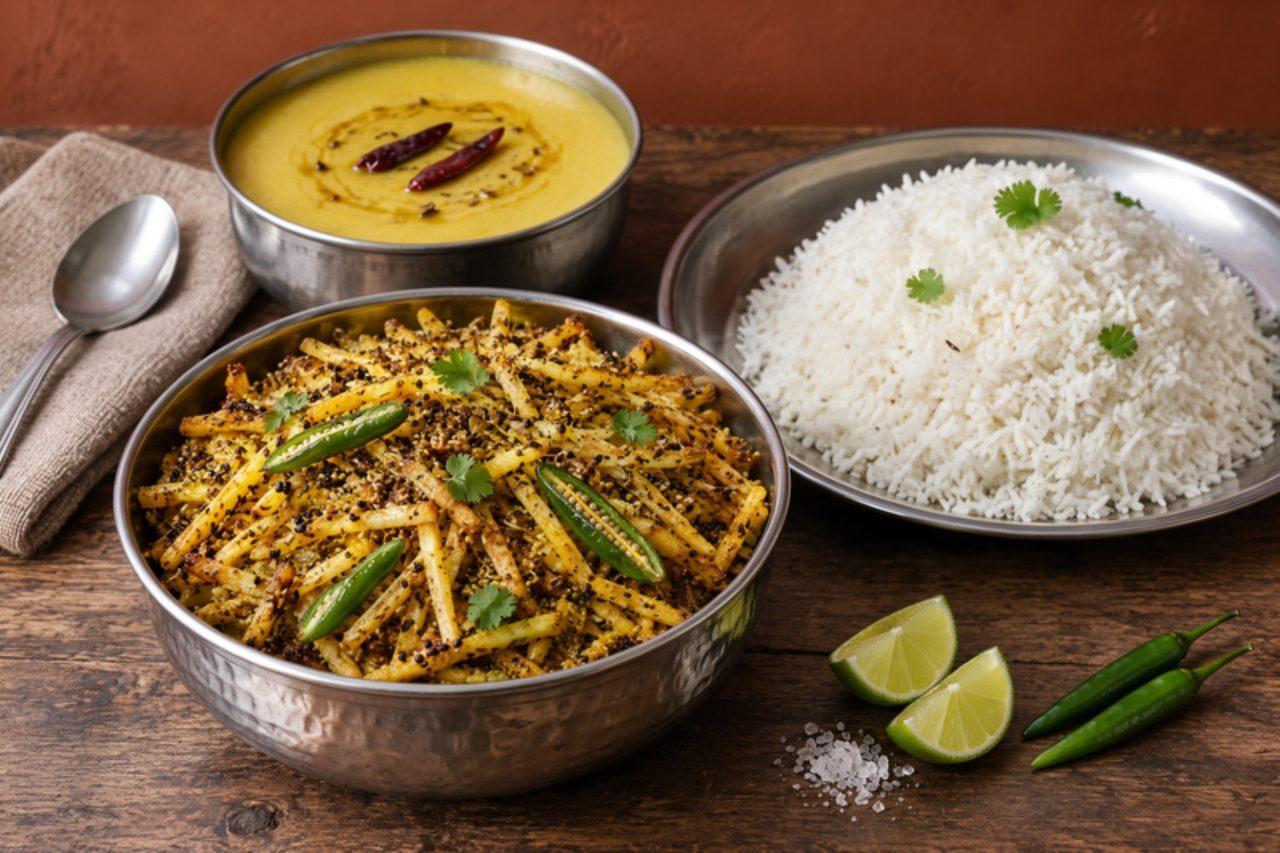
In Bihar, aloo bhujia is not the packaged snack but the everyday matchstick-potato fry that sits beside dal, bhaat and chokha on the lunch plate, cooked in mustard oil with panch phoron and a slit green chilli. Patna households make it most days of the week because it takes twenty minutes and pleases everyone. The common slip is crowding the pan and stirring too much, which turns the sticks to mash; give them room and toss gently. Chef's tip: soak the cut potatoes in cold water for 10 minutes and dry them well; washing off surface starch keeps the sticks separate and lightly crisp.
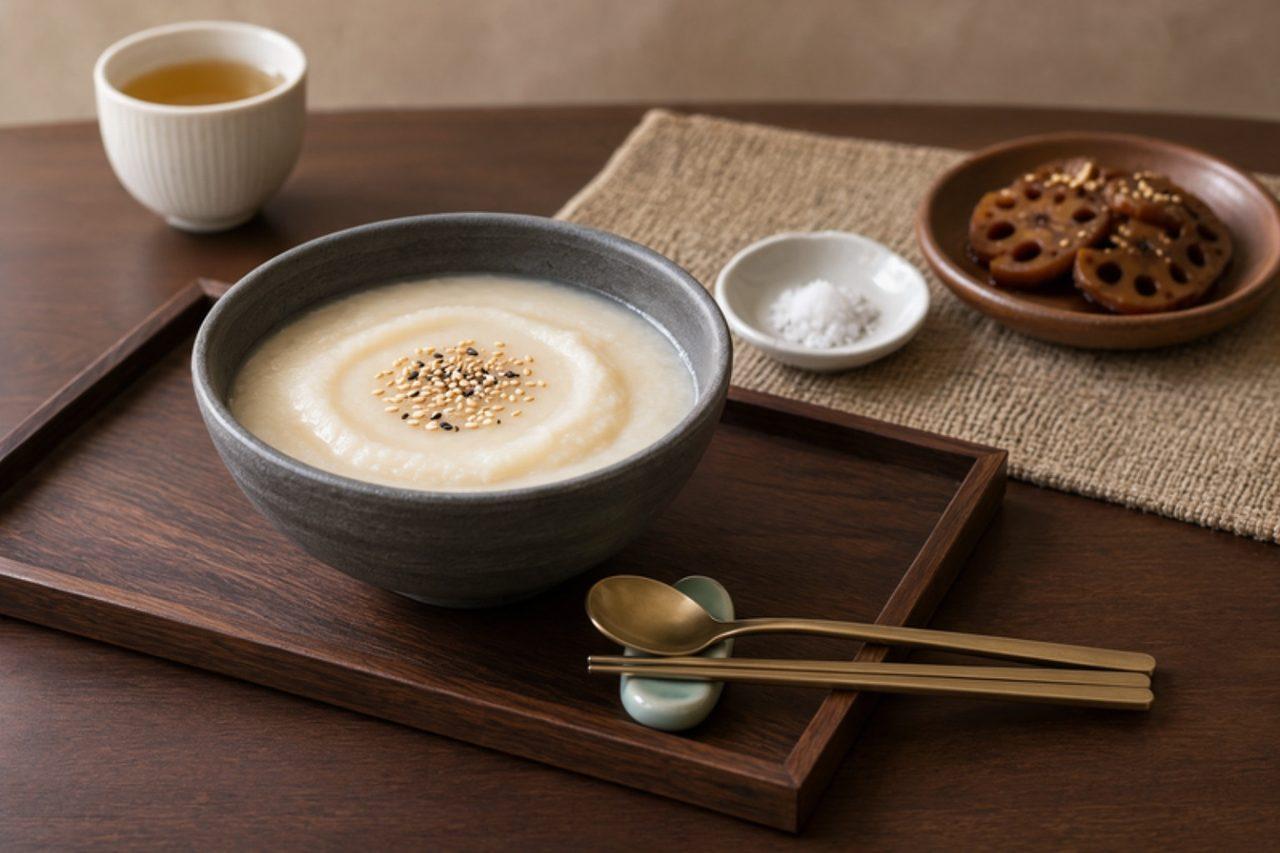
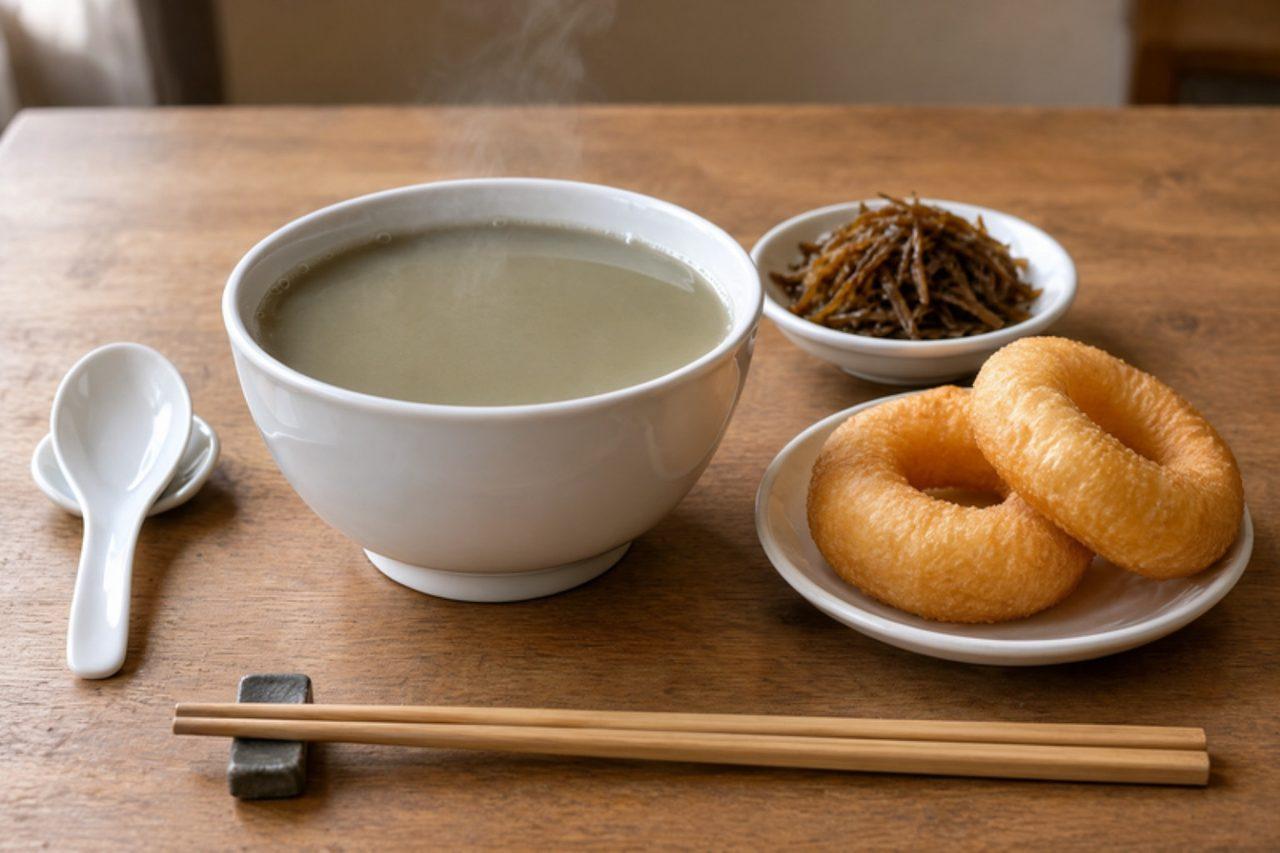
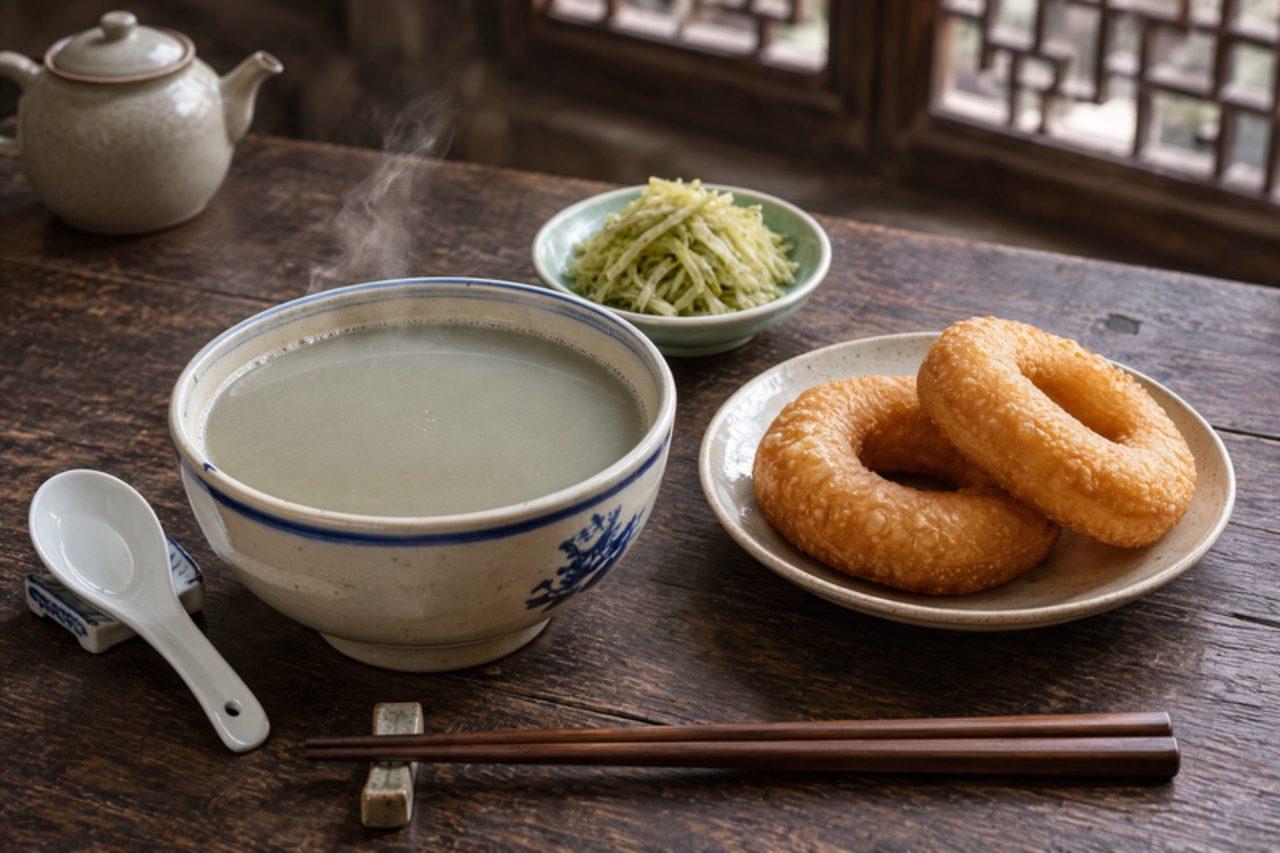
Kongjuk is the porridge Korean families make when they want something filling but plain: soaked soybeans ground into a milk with rice and cooked until it is thick, pale and creamy. It is a breakfast and a summer staple in the countryside, eaten with a little salt and some kimchi or radish on the side. The mistake to avoid is under-blending the beans: gritty bean skins make the porridge grainy, so blend long and fine, or sieve it. Stir often too, because soy milk catches on the bottom quickly. Chef's tip: skim off the loose skins after soaking by rubbing the beans between your palms under water; the porridge comes out silkier and whiter.
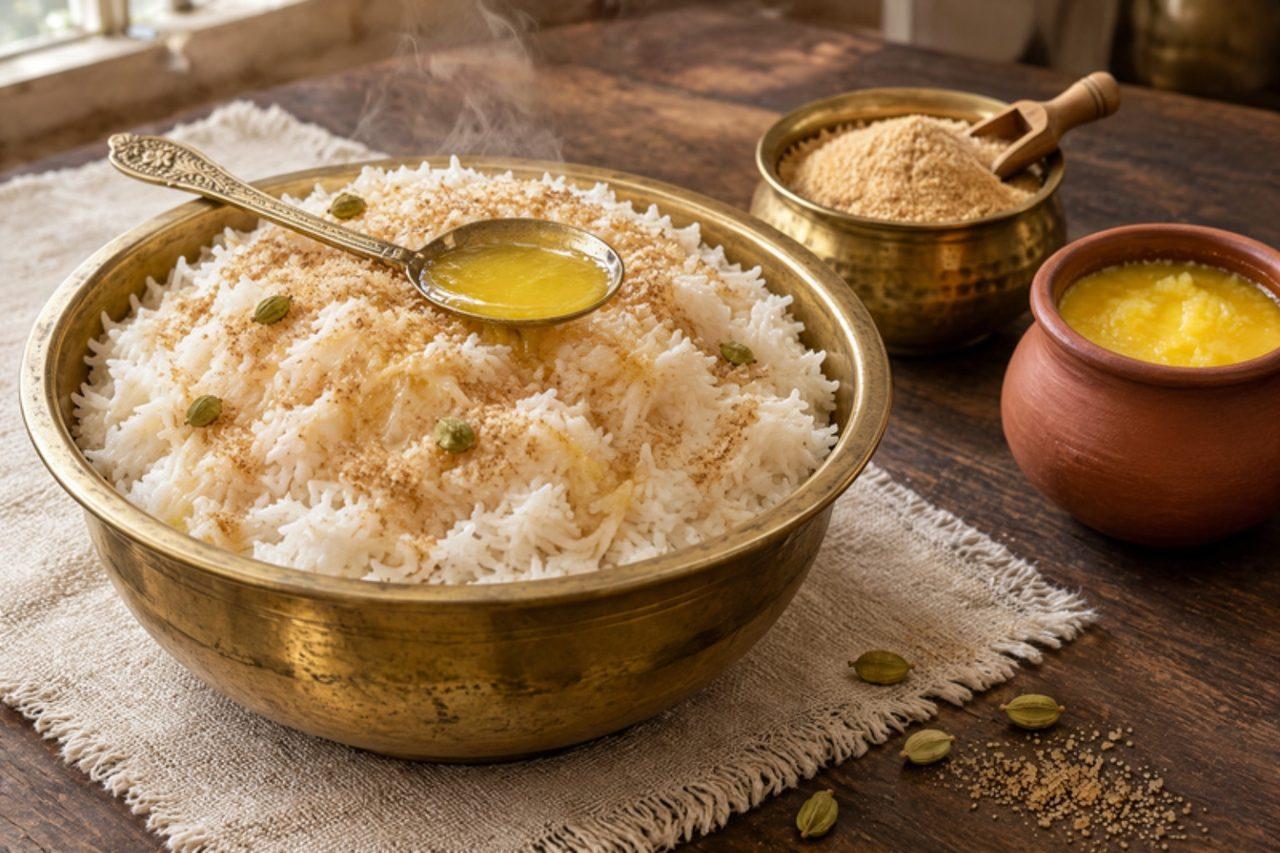
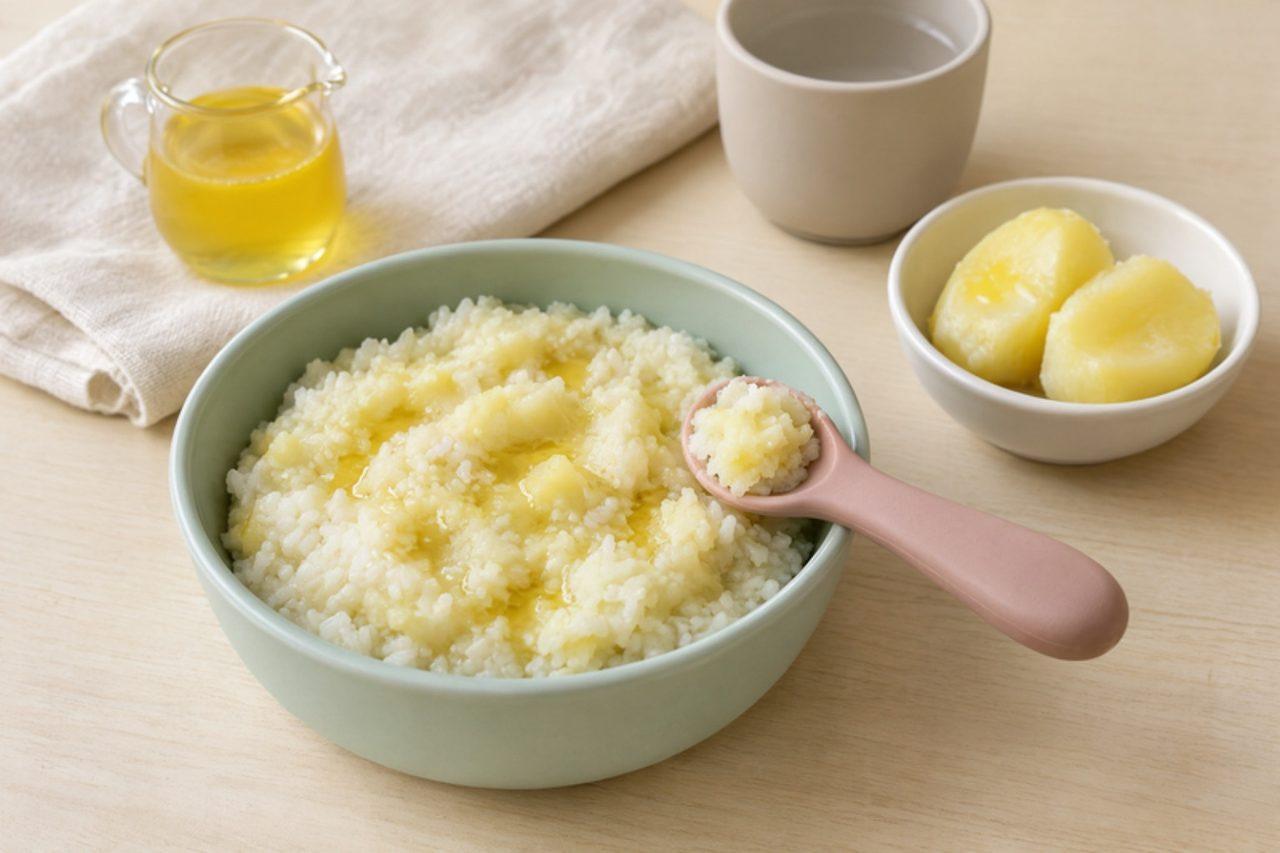
Bhure chawal is about as simple as Haryanvi village cooking gets: steaming rice tossed with plenty of desi ghee and bura, the fine, fluffy sugar sold in Haryana, and sometimes a few chopped nuts. It is the treat grandmothers make after the evening milking, at a new daughter-in-law's first meal, or on cold nights when something sweet is needed fast. Use fragrant, well-cooked rice and good ghee, as there is nothing to hide behind. The common mistake is adding the sugar to lukewarm rice, so it stays gritty instead of melting into the ghee. Chef's tip: no bura? Blitz ordinary sugar to a powder and add a pinch of cardamom.
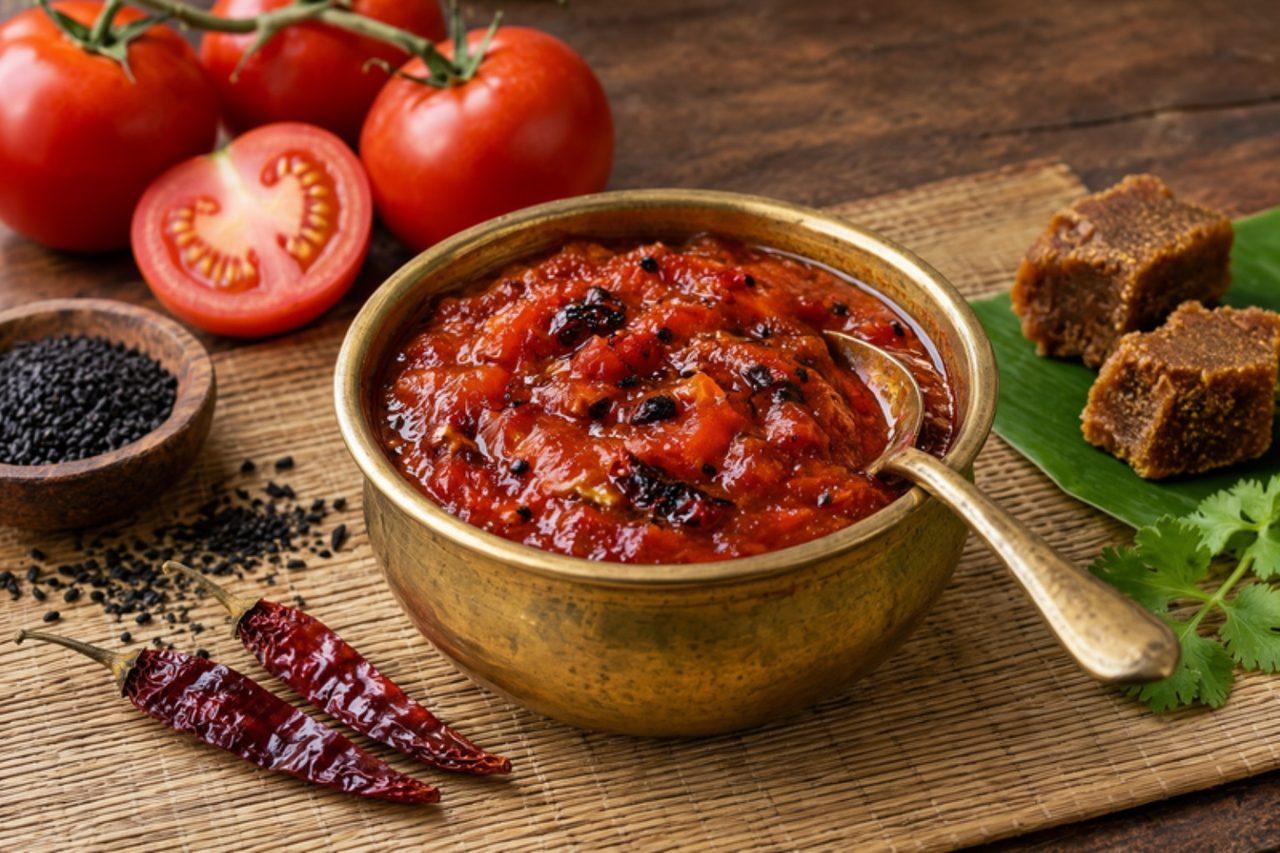
Bilahi is the Assamese word for tomato, and this glossy red chutney, sweet with jaggery and warmed with nigella and dried chilli, closes a festive Assamese meal, especially at weddings and on Bihu, as the sweet-sour last course before curd and sweets. Everyday cooks in Jorhat and Guwahati make a quick batch in winter when tomatoes are cheap. The mistake to avoid is adding the jaggery too early, which scorches before the tomatoes have broken down. Chef's tip: a few dates or raisins added with the jaggery give the chutney a deeper, jammy sweetness.
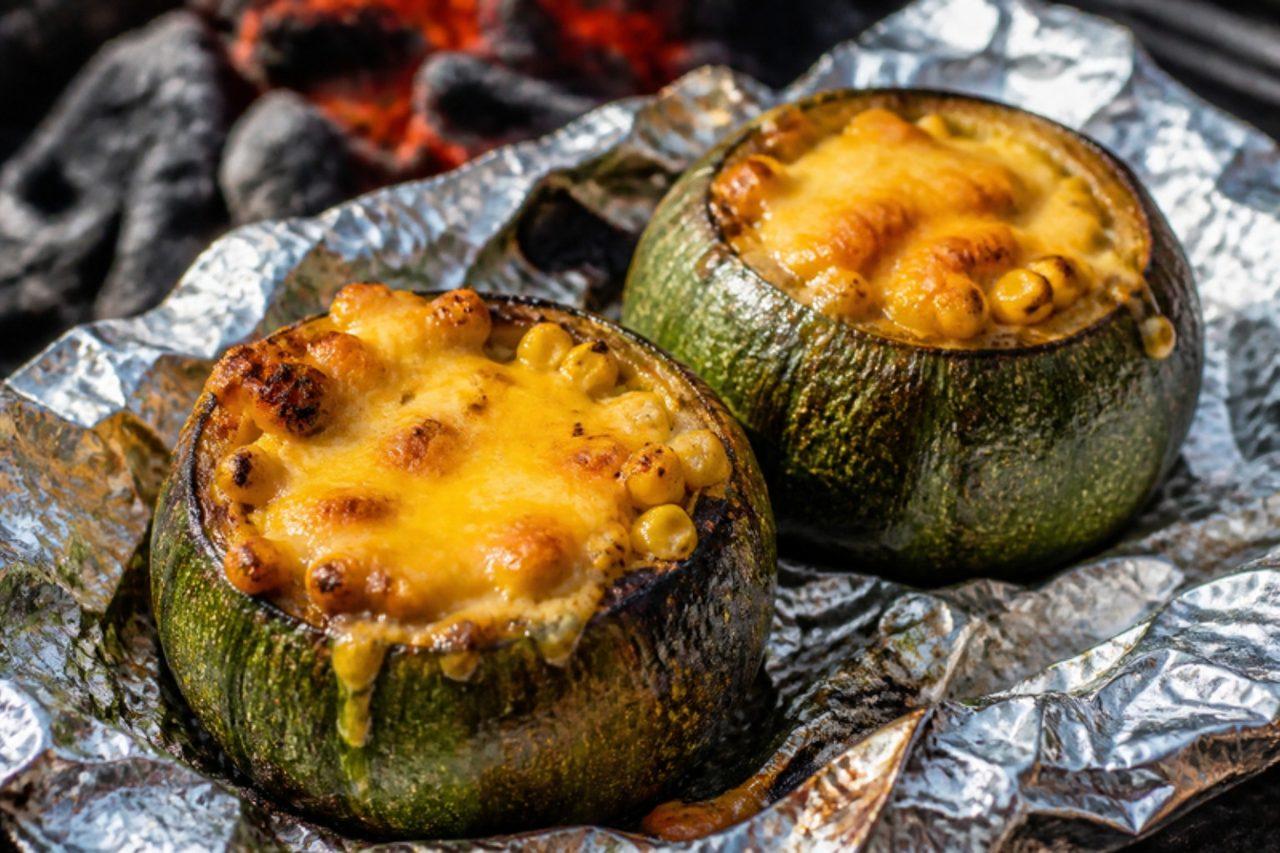
Small, round and dark green, gem squash is the vegetable South African children grow up scooping from the shell with a teaspoon, and at a weekend braai it goes into the coals wrapped in foil alongside the potatoes. The halves steam in their own juice until the orange flesh is tender and sweet, with a pool of melted butter, golden corn and cheese in the hollow. Serve them as a side for anything from the grid, or make a plate of them with pap tert and a tomato salad for a meat-free braai. Indoors, an oven gives the same result. Putting them straight onto flaming wood is the mistake: they char outside and stay hard inside, so wait for grey, glowing coals. Choose a vegetarian cheddar, since many are made with animal rennet. Chef's tip: trim a thin slice off the round base of each half so it sits flat and holds its filling.
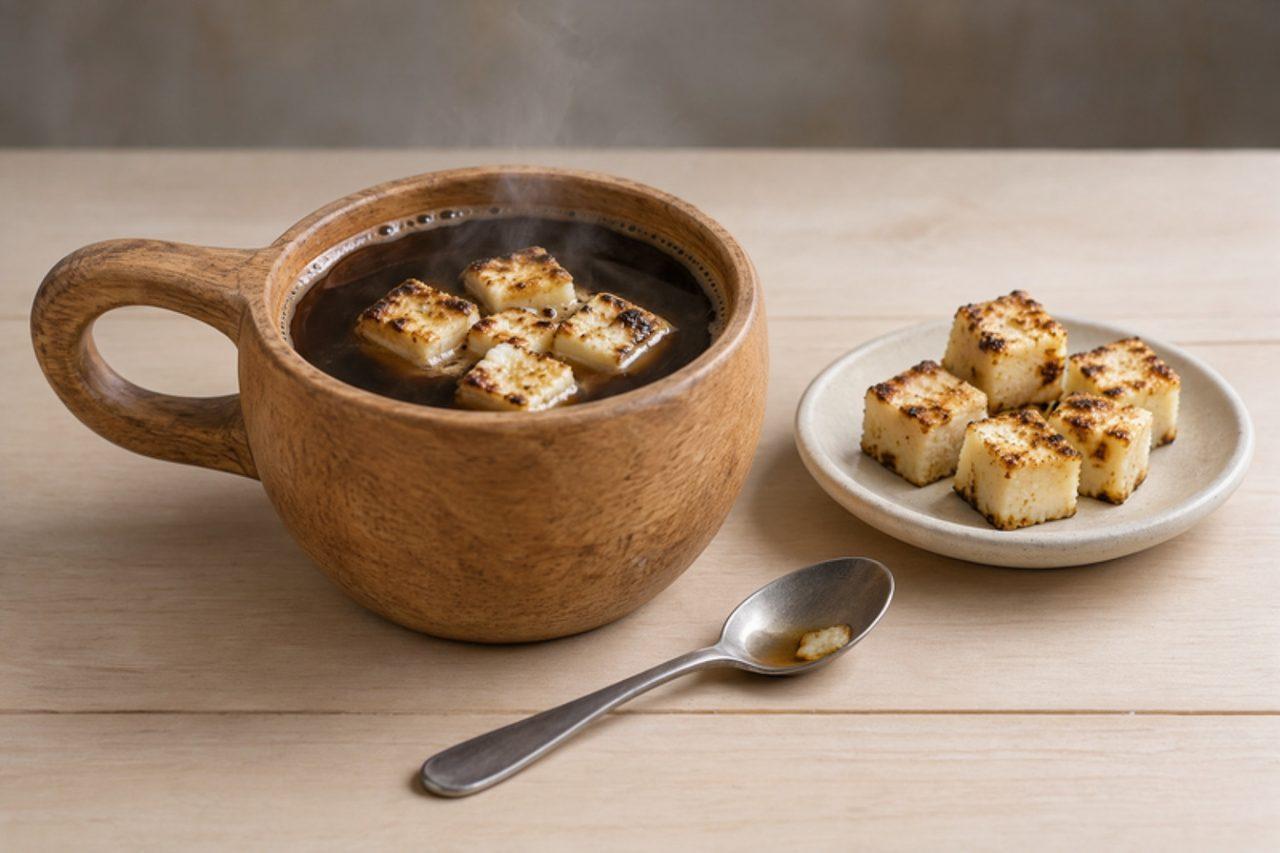
In the far north, across Swedish Norrbotten and Finnish Lapland, coffee comes with cheese in the cup. Leipäjuusto, a mild, squeaky cheese baked or grilled until spotted brown (called kaffeost or 'bread cheese'), is cut into cubes and put in a cup, often a carved wooden kuksa, then hot black coffee is poured over. Sámi reindeer herders and Tornedalen farmers have made it this way for generations; it is a fireside or mid-morning drink on a cold day, and in some families a little sugar or a slice of dried reindeer meat goes in as well. The cheese warms through, softens slightly and soaks up the coffee, so you drink the coffee and then spoon out the warm, chewy, milky cubes. The common mistake is using a soft or melting cheese: it collapses into strings. Use proper leipäjuusto or halloumi, which keep their shape. It is ready when the cubes are hot to the centre, about 2 minutes, and slightly puffed. Strong coffee means real caffeine here, so it is an adult drink. Leipäjuusto is sold in Nordic shops; halloumi is the nearest substitute. Chef's tip: warm the cheese on a dry pan first for extra browned flavour.
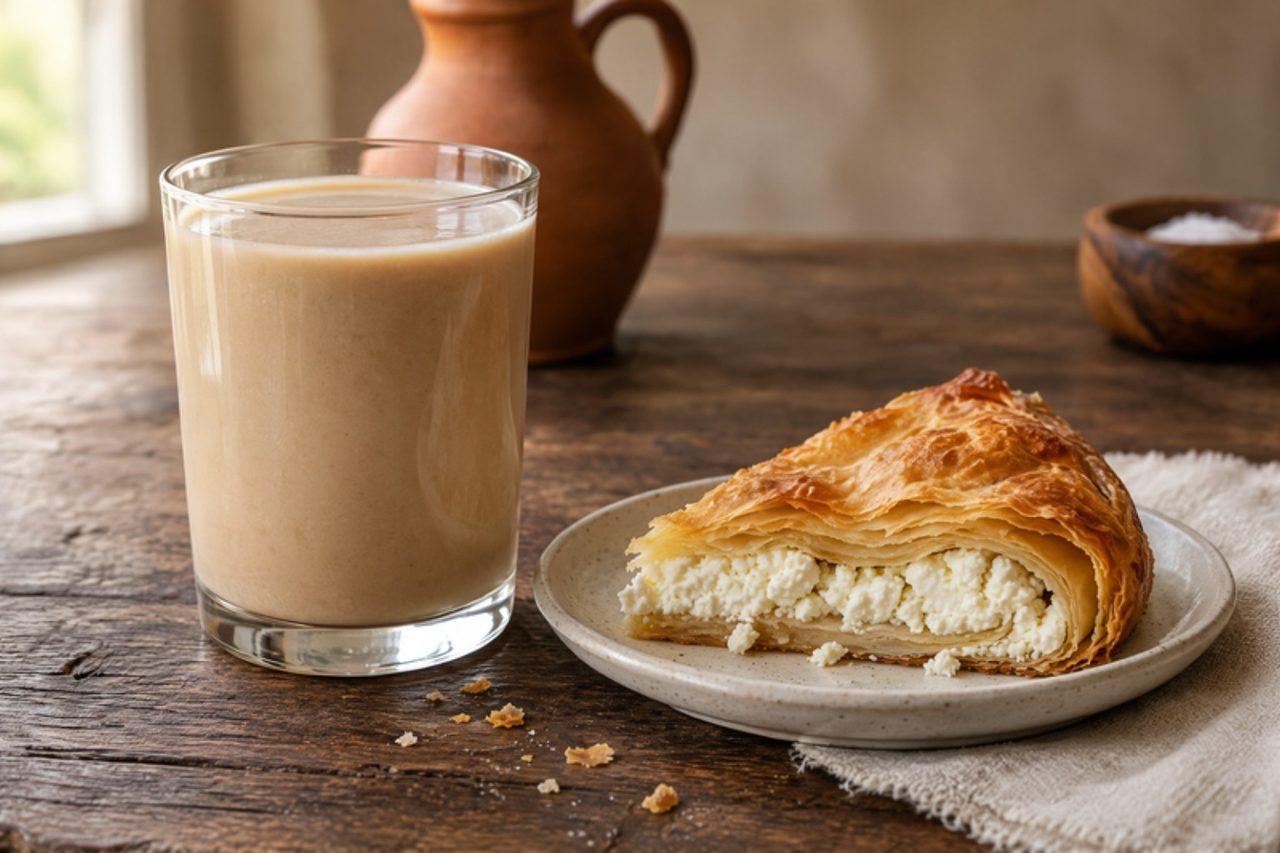
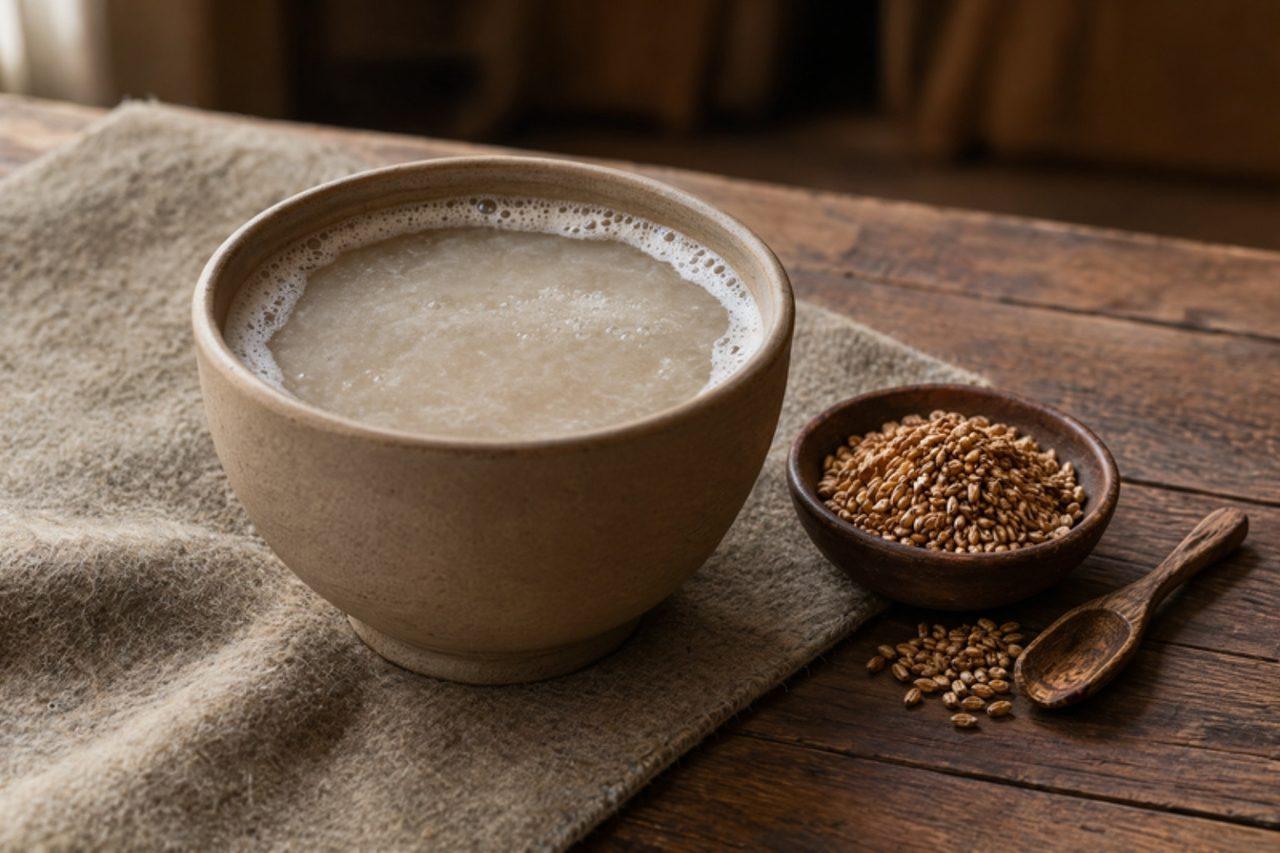
In Bulgaria boza is a breakfast habit: a plastic bottle of it from the corner pastry shop and a slice of hot, flaky banitsa, bought on the way to work or school, especially from autumn through to spring. Towns such as Radomir, Plovdiv and Sofia argue over whose is best. It is the colour of milky coffee, thick enough to coat the glass, sweet up front with a sour, bready finish and a faint prickle. Like every fermented grain drink it makes a trace of alcohol, well under 1% when drunk young. The base is millet flour, toasted for flavour, cooked into a thin porridge, then fermented for about a day before being strained and sweetened. The common mistake is adding the yeast while the porridge is still hot, which kills it and leaves you with sweet gruel; wait until it feels only just warm on your wrist. It is ready when the surface is covered in small bubbles, it smells like fresh bread with a sour edge and tastes pleasantly tangy. Chef's tip: keep back a glass of each batch in the fridge and use it instead of yeast next time; boza made from an old starter is rounder and more sour.
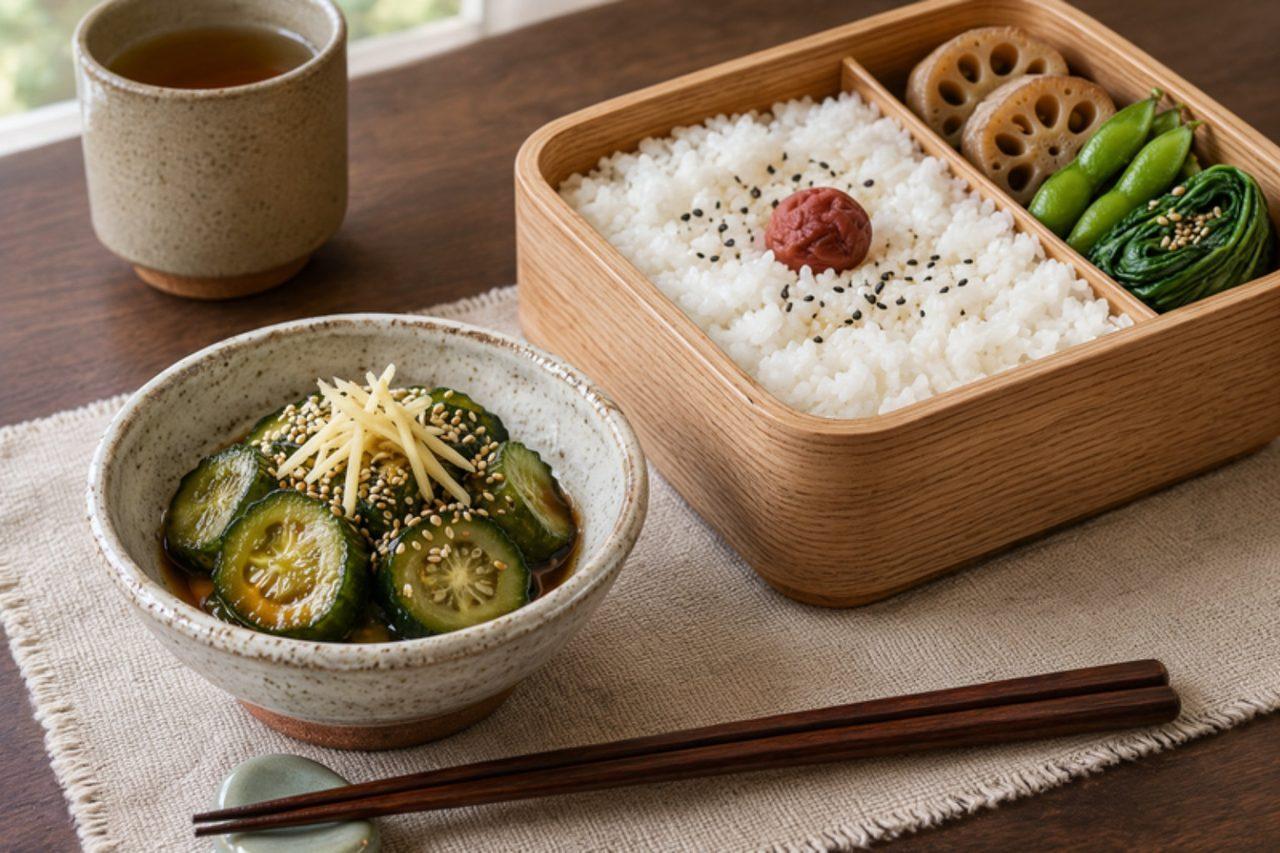
Kyuchan is the sweet-salty soy pickle that Japanese mothers tuck into the corner of a bento: thin coins of cucumber that stay crunchy for days thanks to an old trick of pouring hot pickling liquid over them several times. It brightens plain rice and cuts the richness of fried karaage-style dishes. The common mistake is simmering the cucumbers in the sauce, which makes them soft and grey; they should only ever sit in hot liquid off the heat. Chef's tip: squeeze the salted cucumbers really hard in a cloth, because every drop of water you remove is crunch you keep.
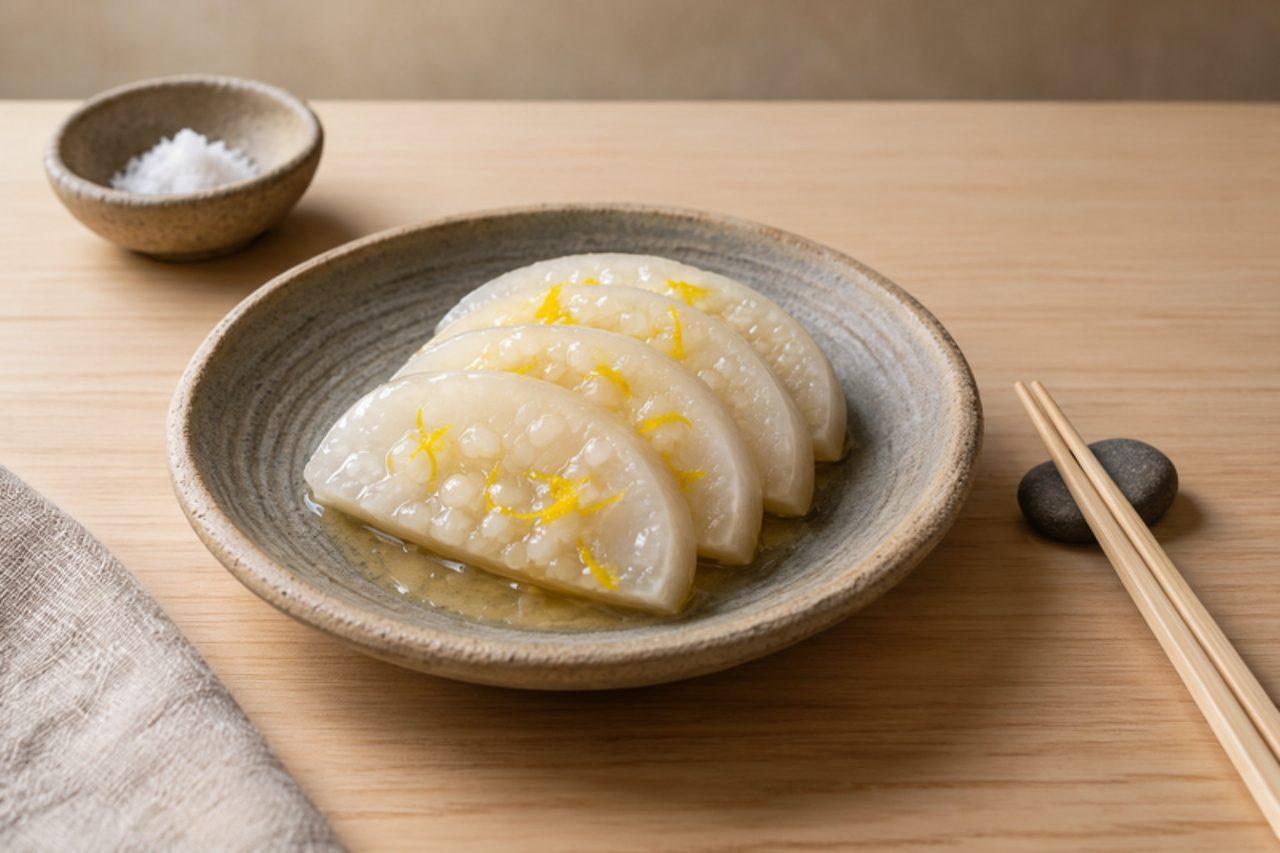
Every 19 and 20 October, the lanes around Takarada Ebisu Shrine in Nihonbashi fill with stalls for the Bettara-ichi, Tokyo's old pickle fair, where vendors hold up whole daikon dripping with rice koji and passers-by try not to get 'bettari', sticky. The pickle has been an Edo favourite since the 1700s: daikon salted, then buried in amazake, the sweet porridge that koji makes from rice. It tastes mild, sweet and fresh, with a clean crunch and a faint fermented, sake-lees perfume, which makes it a favourite with children and a pause between salty dishes. Bettarazuke is low in salt and acid, so it lives in the fridge from start to finish. The common mistake is adding the daikon while the amazake is still warm: it cooks the surface and softens the crunch, so cool it fully. It is ready when the daikon is translucent at the edges, juicy, and the koji coating tastes sweet with a light tang. Chef's tip: make the amazake in a rice cooker on keep-warm with the lid ajar and a cloth over it, so it holds about 60 °C; a thermometer helps the first time.
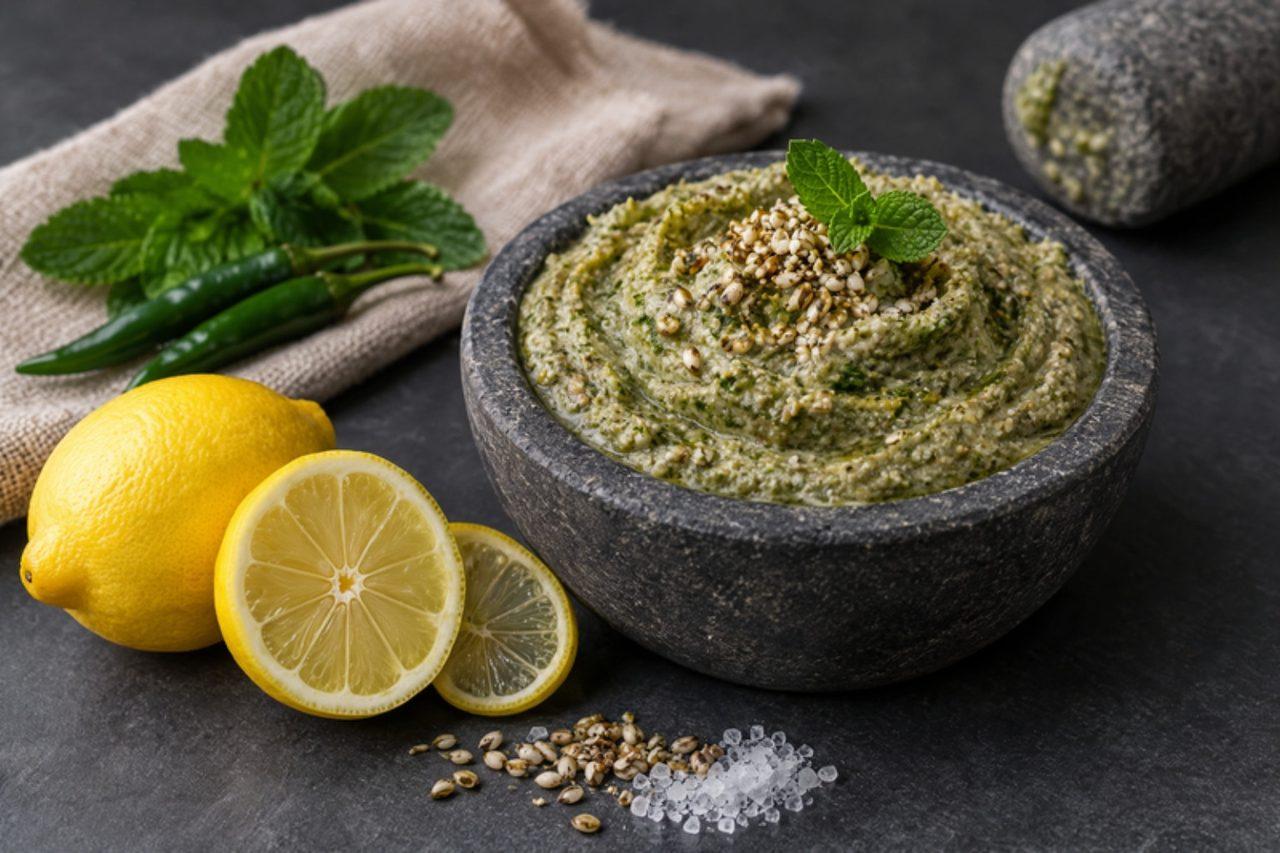
In Kumaon every kitchen keeps a jar of hemp seeds, and this tangy chutney is ground fresh to go with rotis, aloo ke gutke and festive pakodas all through the year. It uses hulled, food-grade hemp seeds sold for cooking, which are not psychoactive at all; they simply taste like a cross between sesame and toasted pine nuts. The seeds are dry-roasted, ground with mint, chilli and the juice of the big hill lemon, and loosened with a little water. The usual mistake is roasting the seeds too dark, which turns the chutney bitter and grey. Chef's tip: grind in a mortar or with short pulses and stop while it still has some texture; a perfectly smooth paste loses the pleasant crunch.
Out on the hot plains of the Llanos, a jug of carato is kept cold for the afternoon: white corn cooked until soft, blended with its water, strained and sweetened with panela, cinnamon and clove. It is thick, creamy and filling enough to be a snack in a glass. Keep it in the fridge, because left out it starts to ferment. The common mistake is skipping the straining, which leaves it gritty. Chef's tip: strain through a fine sieve and then once more through a clean cloth for the silkiest drink.
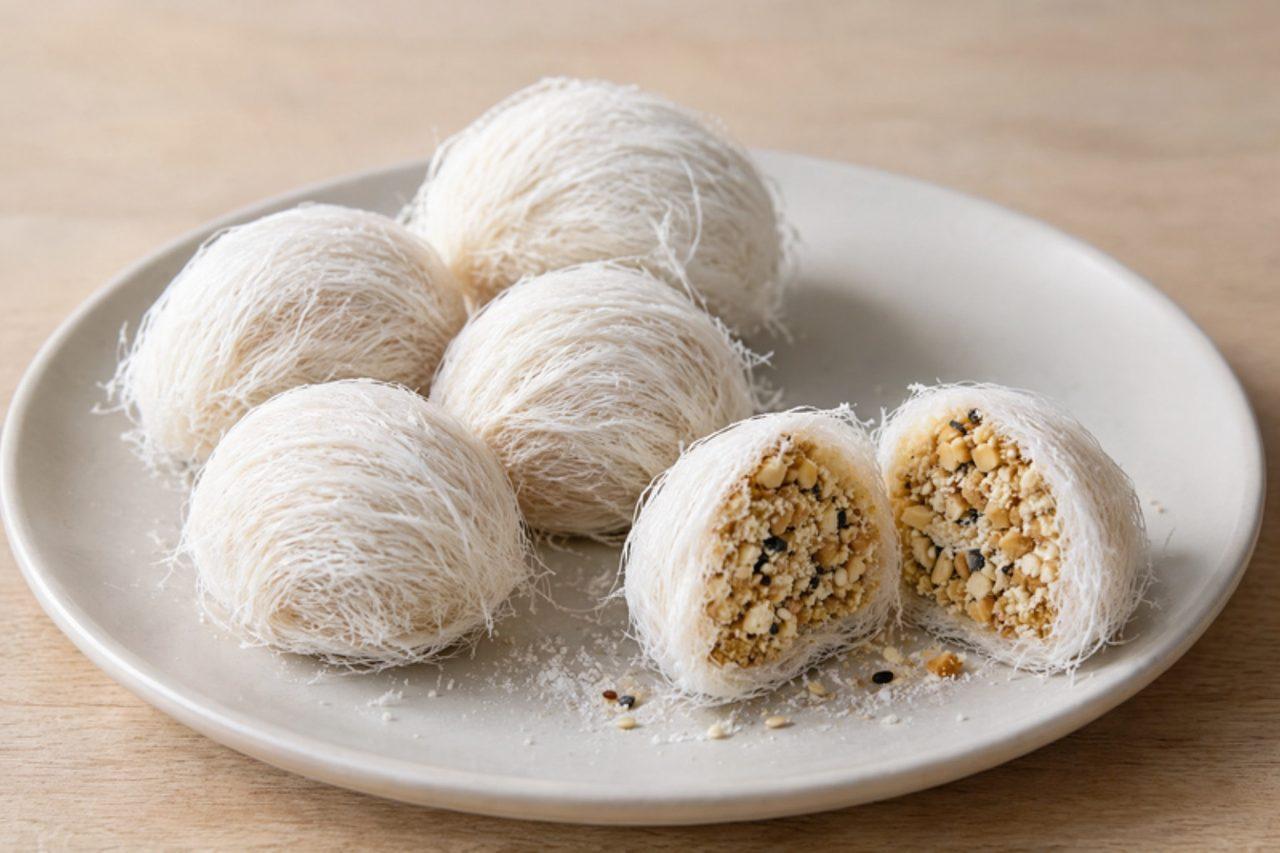
Dragon's beard candy is one of the old street crafts of Hong Kong, still demonstrated by a few hawkers in Tsim Sha Tsui and at Kowloon City snack shops, where children watch a hard disc of sugar stretched and folded in starch until it becomes a skein of hair-fine threads. Each cocoon is wrapped around a crunchy filling of peanuts, sesame and coconut and must be eaten within minutes, before it melts in the humidity. It takes practice; your first batch may be thicker threads, and that is fine. Contains peanuts and sesame; not for children under five, who can choke on the filling. Chef's tip: toast the cornflour first, as raw starch tastes chalky and is not safe to eat uncooked.
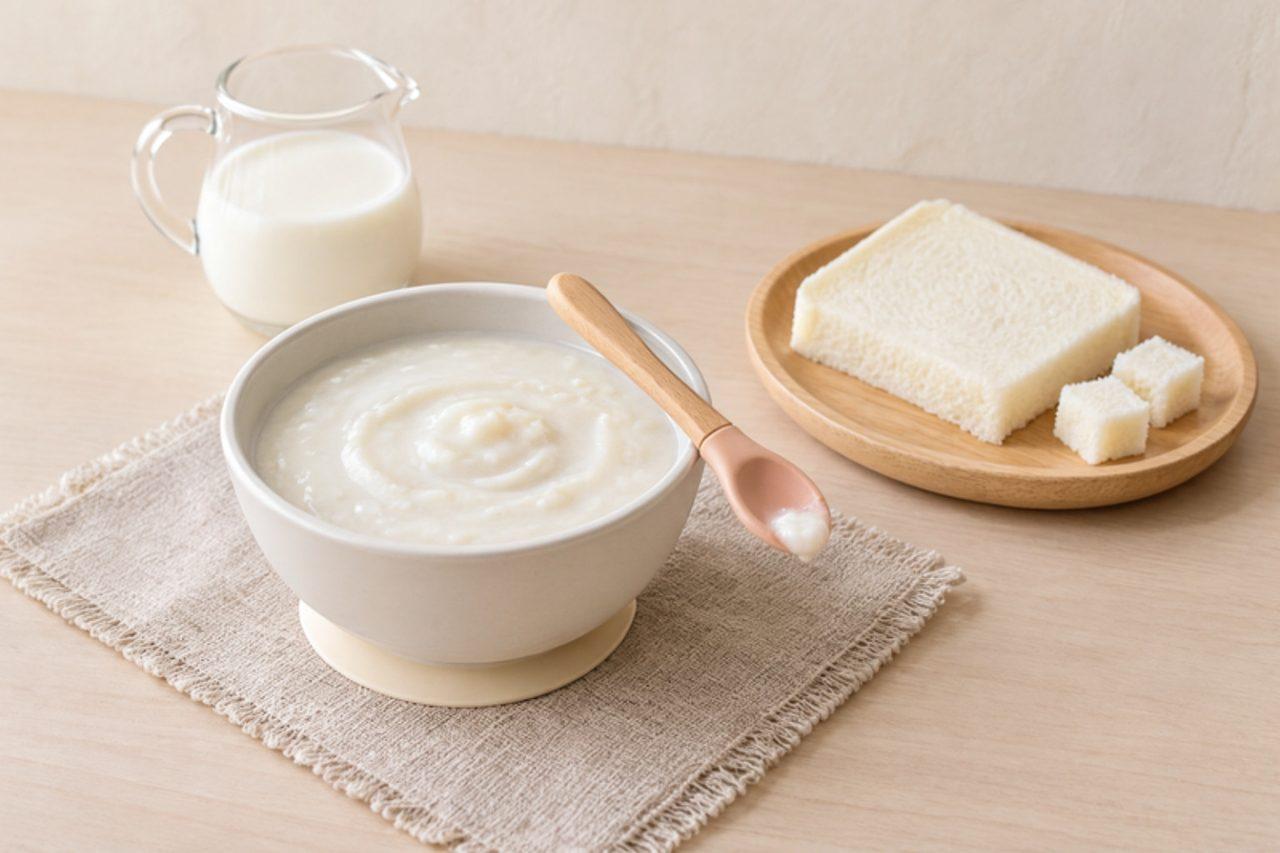
Pan-gayu is a staple of the early rinyushoku (weaning) stage in Japan, the second grain after rice porridge, and it fills the 'first foods' pages of every baby magazine sold in Tokyo convenience stores. Crustless white bread is torn into a pan of water, breast milk or formula and simmered until it collapses, then mashed smooth for a soft, milky, faintly sweet porridge. Bread already contains a little salt, so this is an occasional porridge rather than an everyday one, and no extra salt, sugar or honey goes in. It contains wheat (gluten) and milk if made with milk. Chef's tip: choose the softest, plainest white sandwich loaf with the lowest salt on the label, and cut away every bit of crust.
Bhaturu is the breakfast bread of the Kangra and Kullu valleys, made from wheat dough left to ferment overnight with a little old starter or curd until it is light and sour, then rolled out, sometimes stuffed with a spiced lentil filling, and baked on the griddle. It is eaten hot with ghee, a tangy chutney or the madra left from the night before, and is a fixture at village fairs. Ferment it somewhere warm (25–30 °C) for 8–10 hours; it should smell pleasantly sour and be bubbly. Discard the dough if it smells of nail varnish, turns pink, grey or fuzzy, or has a slimy feel. The common mistake is rolling it thin like a chapati, which loses the soft crumb; keep it as thick as your little finger. Chef's tip: cook it on a medium, not fierce, tawa so the centre bakes through before the outside burns.
Binatog is an afternoon snack sold from bicycle carts that ring their way through the side streets of Manila, especially around Tondo and Sampaloc, the vendor scooping steaming white corn from a big tin can into small cups. The kernels are plump, chewy and nutty, piled with snowy grated coconut and finished with salt or sugar to taste, so everyone gets it the way they like. It is simple, filling and naturally vegan. Dried white hominy (pozole corn) has already been treated with lime, which gives the chewy, popped kernels; if you can only find canned hominy, rinse it and warm it for 10 minutes instead. Chef's tip: keep the kernels at a gentle simmer; a hard boil splits them before they become tender.
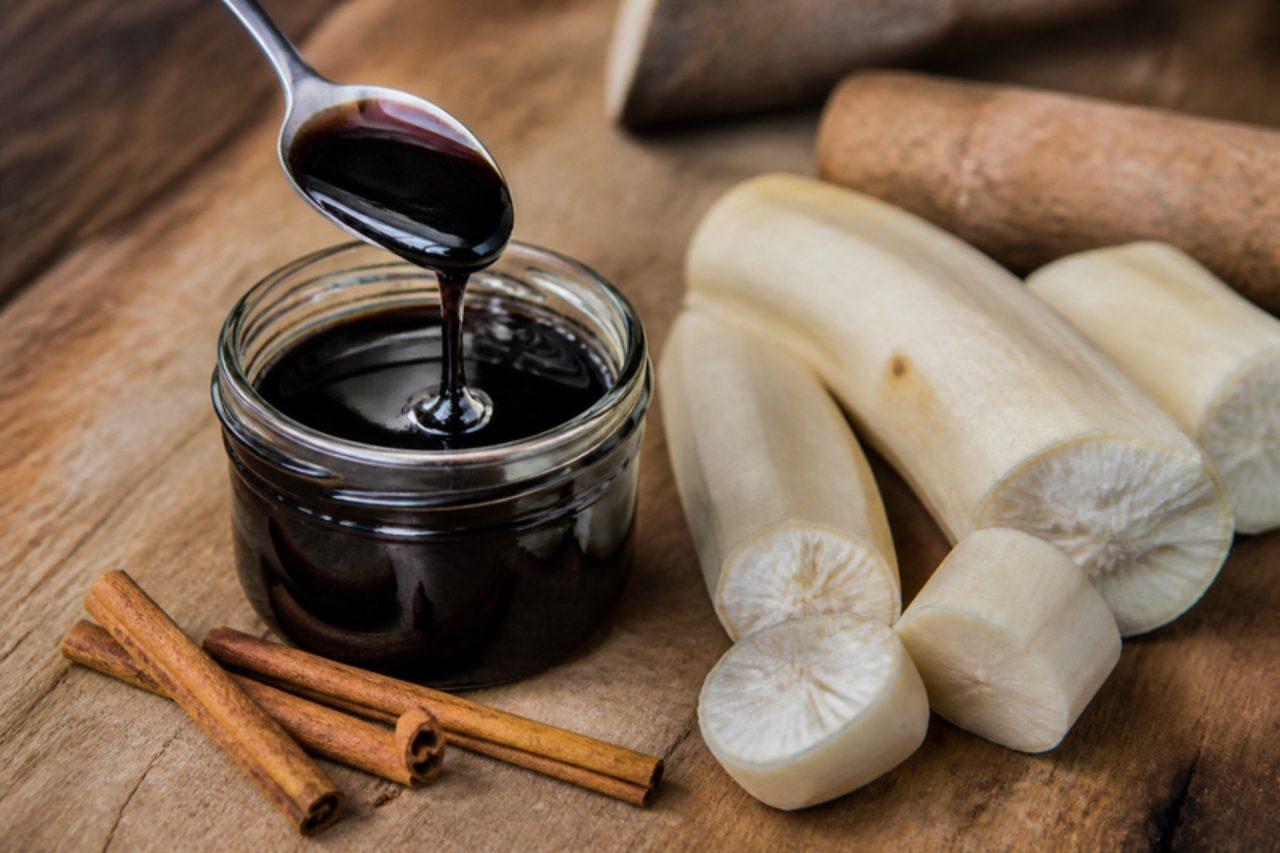
Cassareep is what makes Guyana's Christmas pepperpot dark, sweet-savoury and long-keeping, and in Amerindian villages of the Rupununi and along the rivers it is still boiled down from the juice of grated cassava. Traditional cassareep uses bitter cassava, whose raw juice is poisonous until it has been boiled for hours; this home version uses only sweet cassava (the kind sold in shops as yuca), and still boils the juice for a long time, because even sweet cassava must never be eaten raw. A little dark sugar helps it reach the deep colour that slow reduction gives in the villages. The usual mistake is stopping too soon, when it is brown and thin; it should be black and syrupy, like molasses. Chef's tip: take the pan off the heat when it coats a spoon thickly, as it thickens much more as it cools.
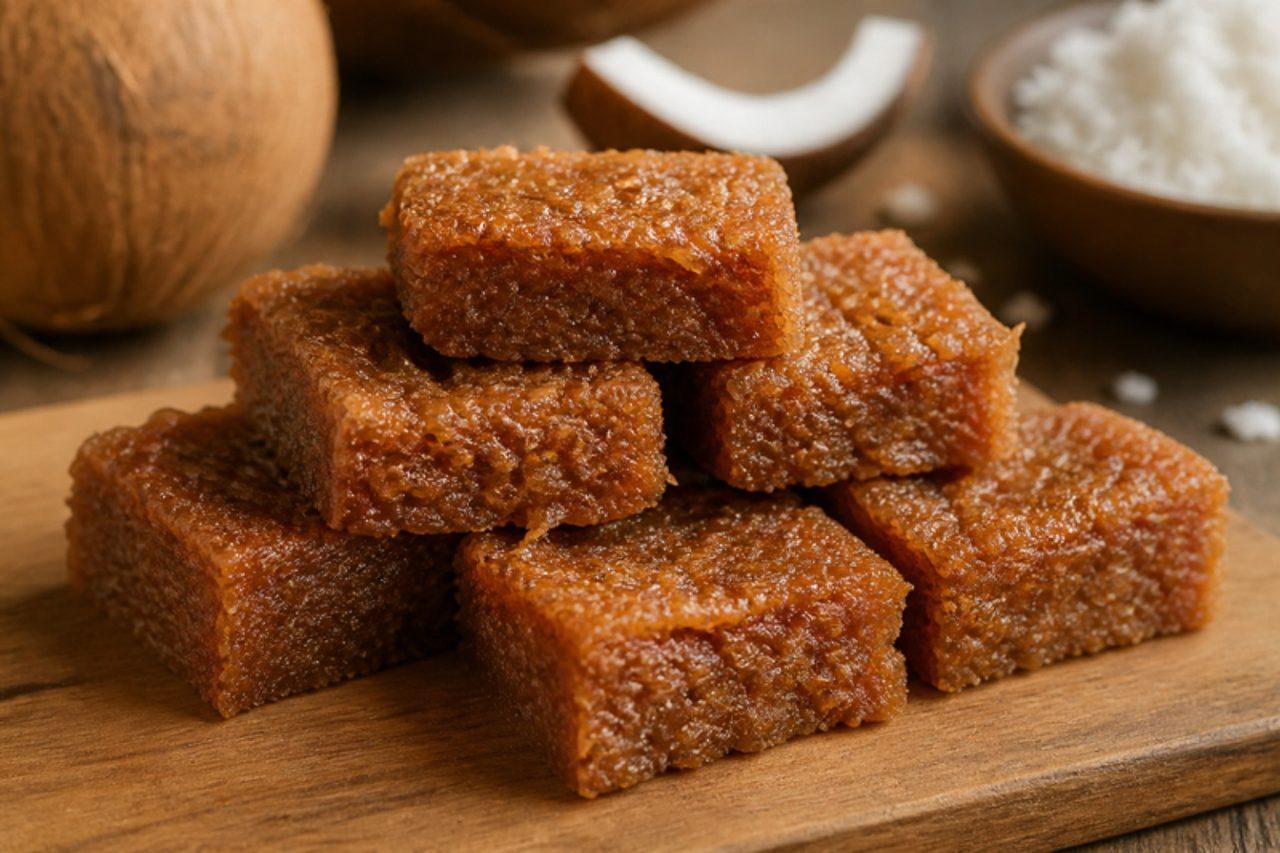
Along the roads of Zulia and down the Caribbean coast, sellers wrap conservas de coco in squares of paper: dense, chewy bars of grated coconut cooked in dark panela syrup with cinnamon and clove. Children buy them with their change after school. The mistake most people make is taking the pan off too early; the mixture never sets and stays sticky. Chef's tip: keep stirring until the mass pulls away in one lump and a spoon dragged across the base leaves a clean line.
North Indian mothers turn half a cabbage into a stack of parathas for the morning tiffin: the cabbage is grated, salted and squeezed, then seasoned with ginger, chilli and dry spices and rolled inside wholewheat dough. Warm with butter it is a breakfast; rolled and wrapped in foil it travels to school with curd or pickle. The common mistake is skipping the squeeze, so the cabbage weeps through the dough and the parathas tear. Chef's tip: mix the spices into the cabbage only just before stuffing, because the salt keeps drawing out water the longer it sits.
Before electric rice cookers, every Korean pot of rice left a golden crust, nurungji, stuck to the bottom. Rather than waste it, cooks poured in water and simmered it while the family ate, and the warm, cloudy sungnyung was drunk at the end of the meal in place of tea. Older Koreans still describe it as the taste of home, and many Seoul restaurants that cook rice in stone pots finish by pouring water over the crust at the table. It tastes of toasted grain and has a faint natural sweetness, with soft pieces of crust to spoon up at the bottom. Without a stone pot you can make the crust from leftover rice in a frying pan. The common mistake is rushing the crust over high heat: it blackens on the outside and turns the drink bitter while the middle stays soft. Keep the heat low and patient, and aim for even golden-brown. The crust is ready when it lifts away from the pan in one sheet and smells like popcorn; the sungnyung is ready when the water is milky and pale gold. Chef's tip: make extra crust, dry it completely and keep it in a jar, so you can make sungnyung in ten minutes any evening.
Havana cafeterías and Miami ventanitas blend this for breakfast on the run: puffed wheat, cold milk, sugar and ice whizzed into a thick, frothy shake that tastes like a malted milk with toasted cereal. It is one of the most loved Cuban batidos, and quick to make at home. The common mistake is using sweetened, honey-coated cereal, which makes it cloying; plain puffed wheat lets the toasty grain flavour come through. Chef's tip: blend the puffed wheat with half the milk first until completely smooth, then add the ice, so you don't get soggy flecks of cereal.
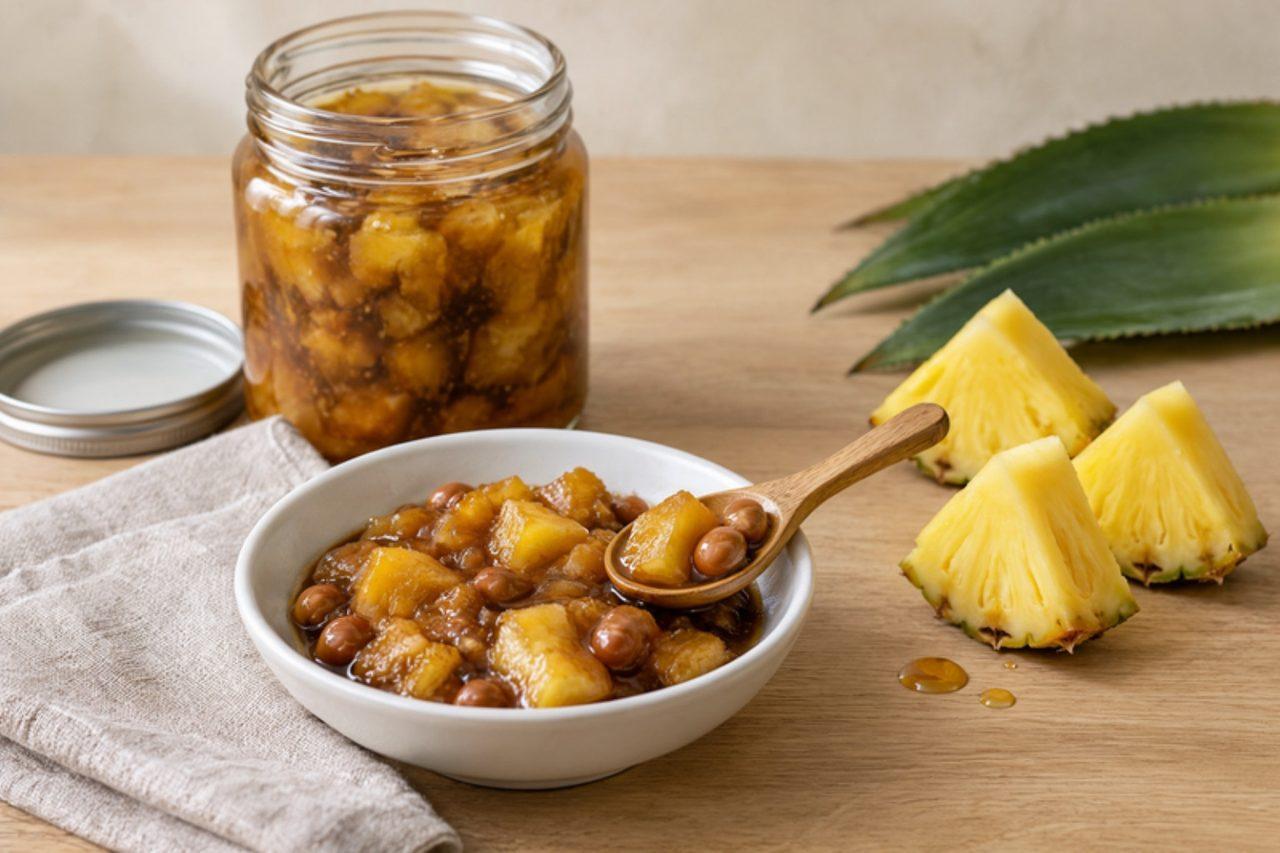
Hakka households in Miaoli, Hsinchu and Pingtung are frugal and patient, and pineapple soybean paste (ong lai dau jiong) shows both. In early summer, when Taiwan's pineapples are plentiful, the fruit is cut into wedges and layered in jars with salted soybean koji and sugar, then left in a cool corner for months. The pineapple softens and goes golden-brown, the beans melt into a thick sauce, and the whole jar turns sweet, salty and tangy with a soft funk like miso. Spooned over steamed fish with ginger and scallion, stirred into braised bitter melon or tossed through stir-fried greens and wood ear, it is a back-pocket seasoning for everyday Hakka meals and bento. Common mistake: using very ripe, juicy pineapple; the fruit breaks into mush and the extra water dilutes the salt. Choose firm, just-ripe fruit and dry it after cutting. It is ready when the pineapple has turned amber and translucent and the beans are soft, after 1–3 months. Chef's tip: read the koji label — many brands are dusted with wheat flour, so it is not reliably gluten free.
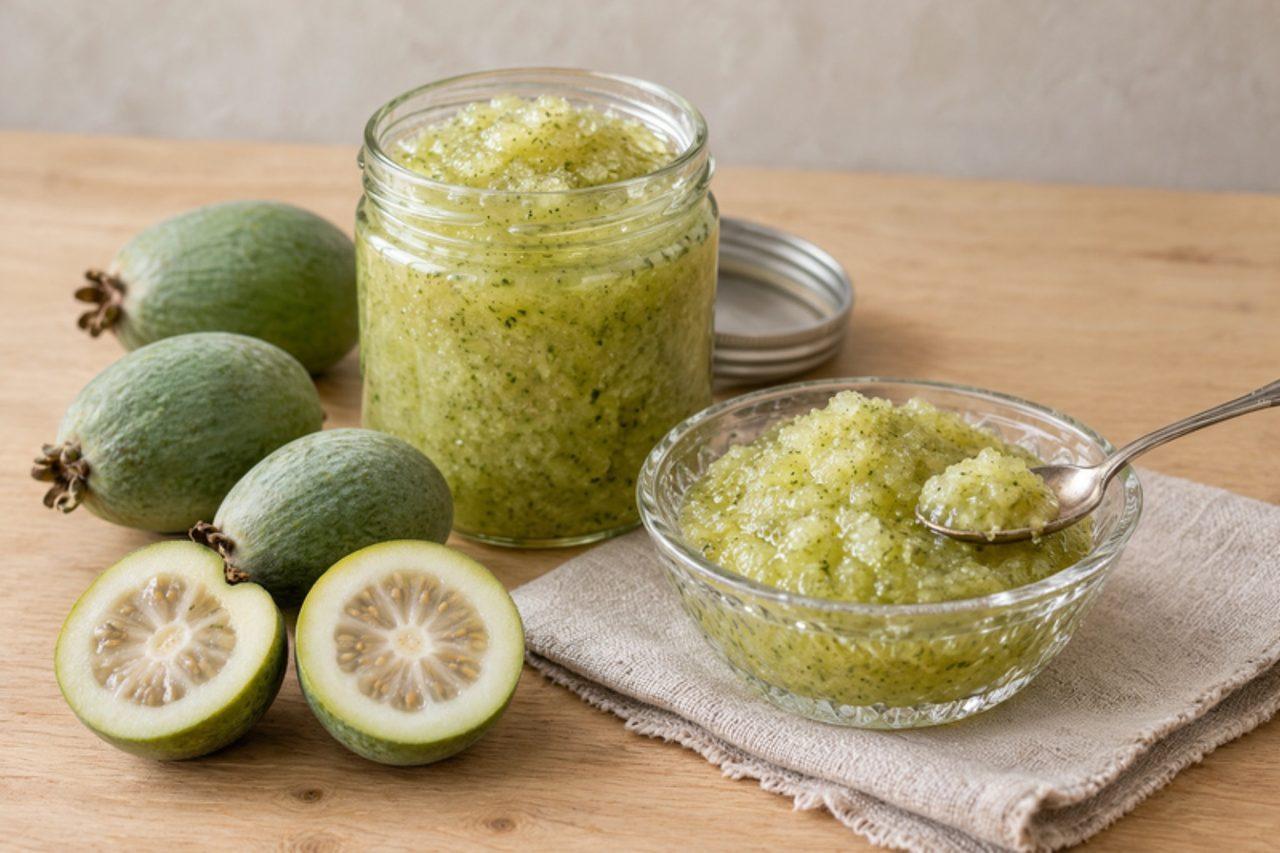
Feijoa bushes grow in almost every garden along Georgia's Black Sea coast, in Batumi, Kobuleti and the hills of Guria, and in late October and November the egg-shaped green fruit drop faster than anyone can eat them. The local answer is a raw jam: the whole fruit, skin and all, minced with sugar and kept cold, so it keeps the fresh, heady taste of pineapple, guava and mint. It is spooned into small glass dishes beside a cup of black tea, spread on bread for breakfast, stirred into yoghurt and eaten by the teaspoon through the winter cold season. The texture is a loose, pale-green pulp with a little grit from the seeds and skin; the flavour is sweet, tart and very aromatic. Common mistake: leaving the cut fruit to stand before mixing with sugar; it browns within minutes, so mince straight into the sugar and stir. The jam is ready when the sugar has fully dissolved and the colour is an even jade green. Because it is never cooked it must live in the fridge or freezer. Chef's tip: use fruit that gives slightly when pressed and smells strongly; hard feijoas taste of skin, overripe ones have brown jelly inside and turn the jam muddy.
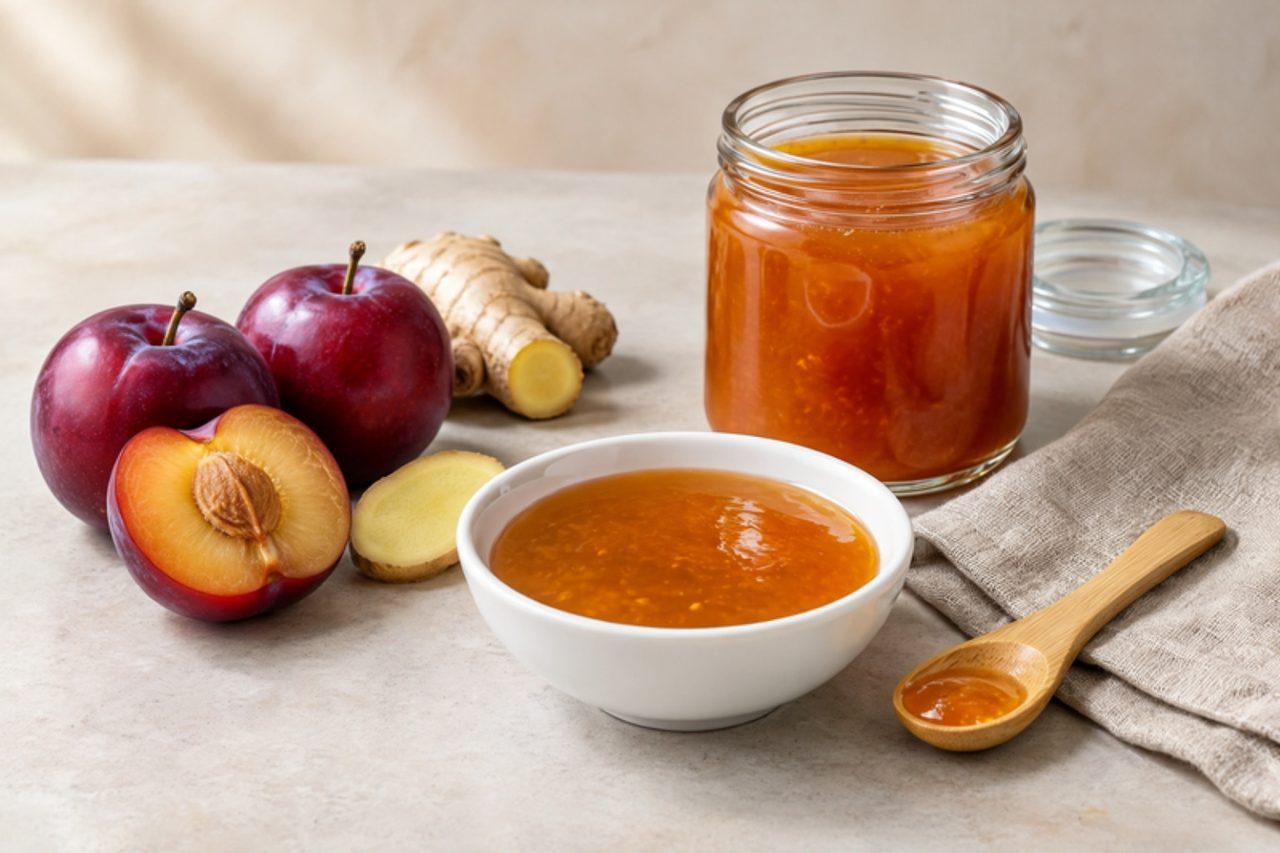
In Hong Kong and Guangzhou roast-meat shops, a small saucer of plum sauce comes with crisp roast goose and siu mei, and at home it is the dip for spring rolls at New Year and the glaze for vegetarian fried tofu or cha siu-style mushrooms. Cantonese suan mei jiang is fruitier and more sour than the gloopy bottled kind: ripe plums are simmered with sugar, rice vinegar, ginger and a little chilli until thick and glossy. Make it in late summer when dark plums are cheap. Common mistake: boiling it too thick; it sets further as it cools, so stop when it coats the back of a spoon and a drip on a cold plate wrinkles only slightly. Readiness cues: the plum skins have melted into the sauce, the colour is deep ruby and the taste balances sweet and sharp. This is a high-acid preserve: in the fridge it keeps 2 months, or water-bath process sealed jars for 20 minutes to keep them in a cupboard for a year (refrigerate once opened). Discard if you see mould, it fizzes, the lid bulges or leaks, or it smells fermented. Chef's tip: add 2 Chinese salted preserved plums, mashed, for the authentic salty-sour depth.
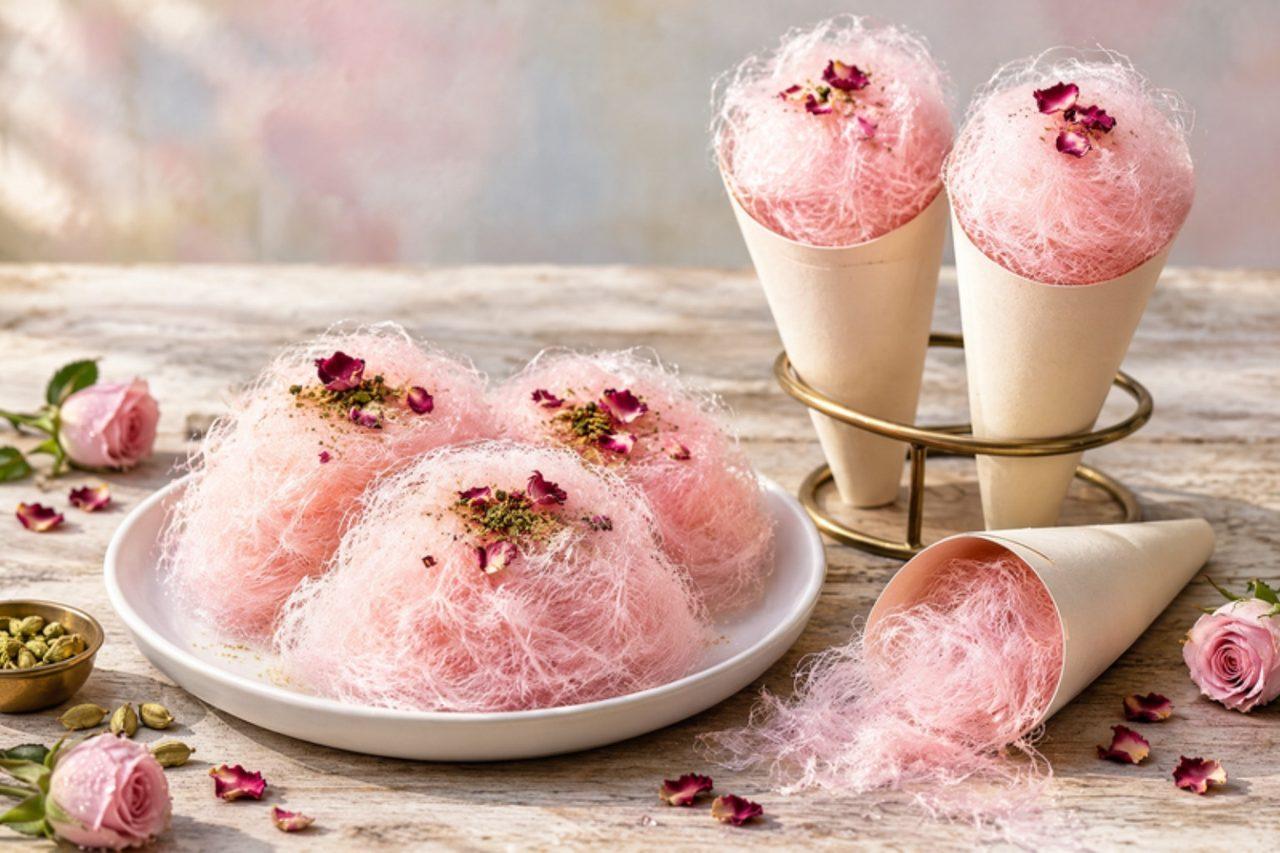
On Galle Face Green at sunset, and at every Vesak fair, the bombai motai seller walks with a glass box of pink candyfloss and a little bell, handing it out in small cones. You can spin a home version without a machine: sugar boiled to the hard-crack stage, then flicked from a fork in thin threads over two spoon handles. Children love to watch, but they must stay well back while the sugar is hot. Contains no major allergens. Chef's tip: make it on a dry day; humidity melts the threads back into sticky sugar.
Bunches of red shiso fill Japanese greengrocers for a few weeks in June and July, mostly bought to colour umeboshi. Gardeners from Kyoto's Ohara valley to Kantō boil the surplus into this cordial and keep it in the fridge for hot afternoons. Simmering pulls a murky purple-brown liquid from the leaves; the magic is the moment the vinegar goes in and the whole pan flushes a brilliant clear magenta. Diluted with ice water or soda water it tastes sweet-sour and herbal, like a cross between blackcurrant, mint and cinnamon. The most common mistake is simmering the leaves too long or with the stems: it turns grassy and bitter. Strip the leaves, boil them for five minutes only, until they have turned green and limp, then lift them out. The cordial is ready when it is jewel-bright and clear. Bottle it in a clean, sterilised bottle and keep it in the fridge for up to three weeks; discard if it fizzes, clouds or grows mould. No fresh red shiso nearby? Japanese and Korean shops sometimes sell it in summer, and it grows easily from seed. Chef's tip: freeze some as ice cubes to drop into sparkling water.
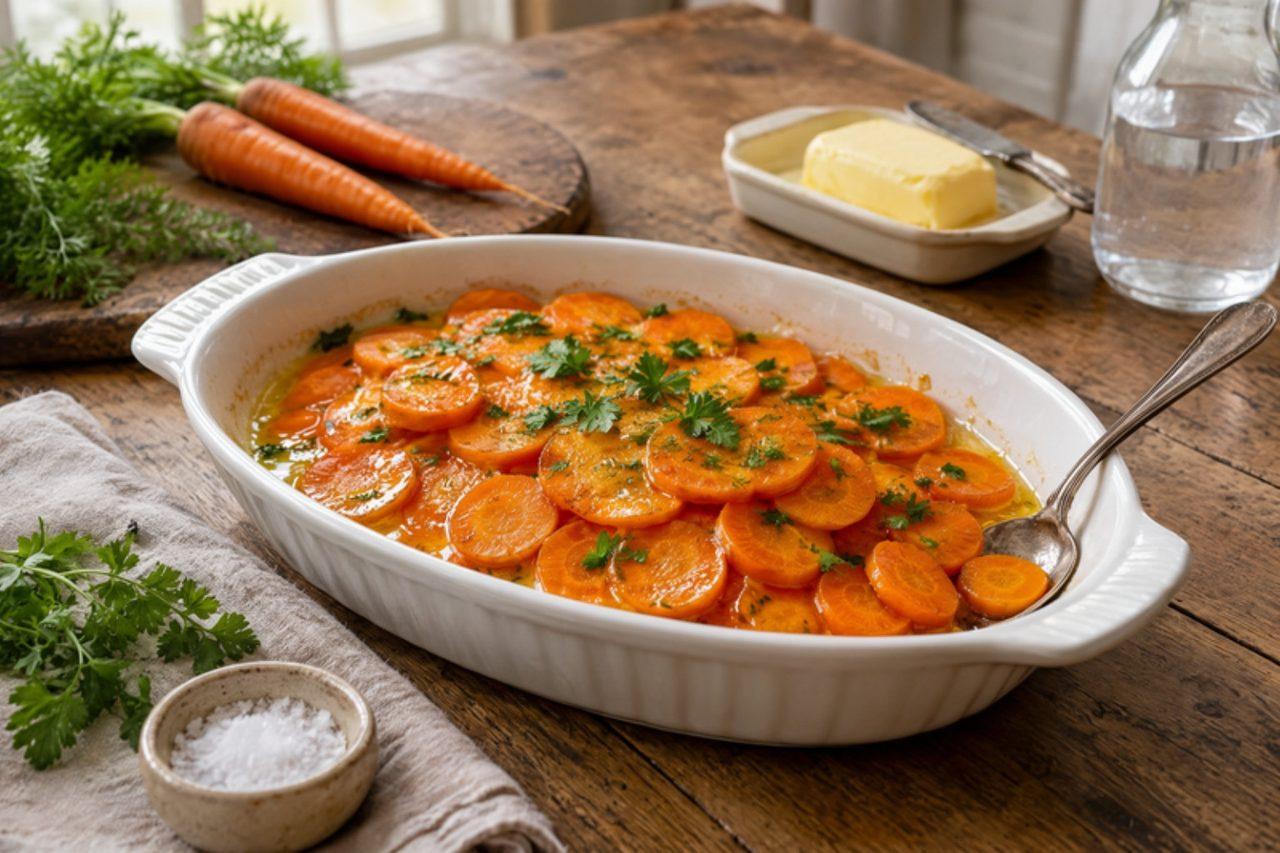
Carottes Vichy come from the spa town of Vichy in the Auvergne, where they were cooked in the local mineral water; today they are the classic French bistro and Sunday-lunch side, loved by children. Thin rounds of carrot simmer with butter, a little sugar and salt in just enough water, so that when the carrots are tender the water has boiled down to a shiny glaze. Serve with roast chicken, an omelette or lentils. The usual mistake is using too much water, so you must drain away the flavour; it should just cover the carrots. Chef's tip: a pinch of bicarbonate of soda in the water copies Vichy's alkaline water and helps the carrots turn sweet and bright.
During Ramadan, as the afternoon wears on, vendors in Algiers' Bab El Oued, in Blida and Boufarik and in the old streets of Constantine fill plastic bags and jugs with ice-cold charbat for families to carry home before the call to iftar. It is lemonade made with lemon zest rubbed into sugar, a good splash of orange blossom water and a little milk, which turns it pale, opaque and silky and takes the sharp edge off the lemon. Served with zlabia, qalb el louz or straight after the dates and chorba, it tastes like lemon sherbet with a floral finish. The common mistake is adding the milk to strong, undiluted lemon juice, which curdles it into flecks; dilute the lemon fully, chill it, and only then pour in cold milk slowly while stirring. It is ready when it looks like pale lemon cream, smells of orange blossom and tastes sweet first, then tart. Lemon-and-milk drinks do not keep well, so make it the afternoon you serve it. Chef's tip: let the zest sit in the sugar for a good 10 minutes before adding water; the oils give charbat its perfume, far more than the juice alone.
Two bars in 1950s San Juan claim to have created the piña colada, and Puerto Rico made it the island's official drink in 1978. It is the drink of hot afternoons on the beaches of Condado and Isla Verde, of hotel pools and of family parties where the blender runs all day. The rum version is for adults only, and because it tastes like a dessert it is easy to drink too fast, so keep to one or two and drink responsibly. A good piña colada is thick, frosty and smooth, coconut-sweet but kept fresh by the sharp acidity of pineapple, with the rum warming the finish. The common mistake is using coconut milk or unsweetened coconut cream instead of cream of coconut, the thick sweetened coconut syrup sold in tins and squeeze bottles: the drink comes out bland and splits into icy water and fat. If you only have coconut cream, blend in 2 tbsp sugar. It is ready when the drink is thick enough to hold a straw upright for a moment, has no crunchy ice and has turned a pale, creamy yellow. Chef's tip: freeze half of the pineapple juice into ice cubes the day before; you will need less ice and the colada stays thick to the last sip.
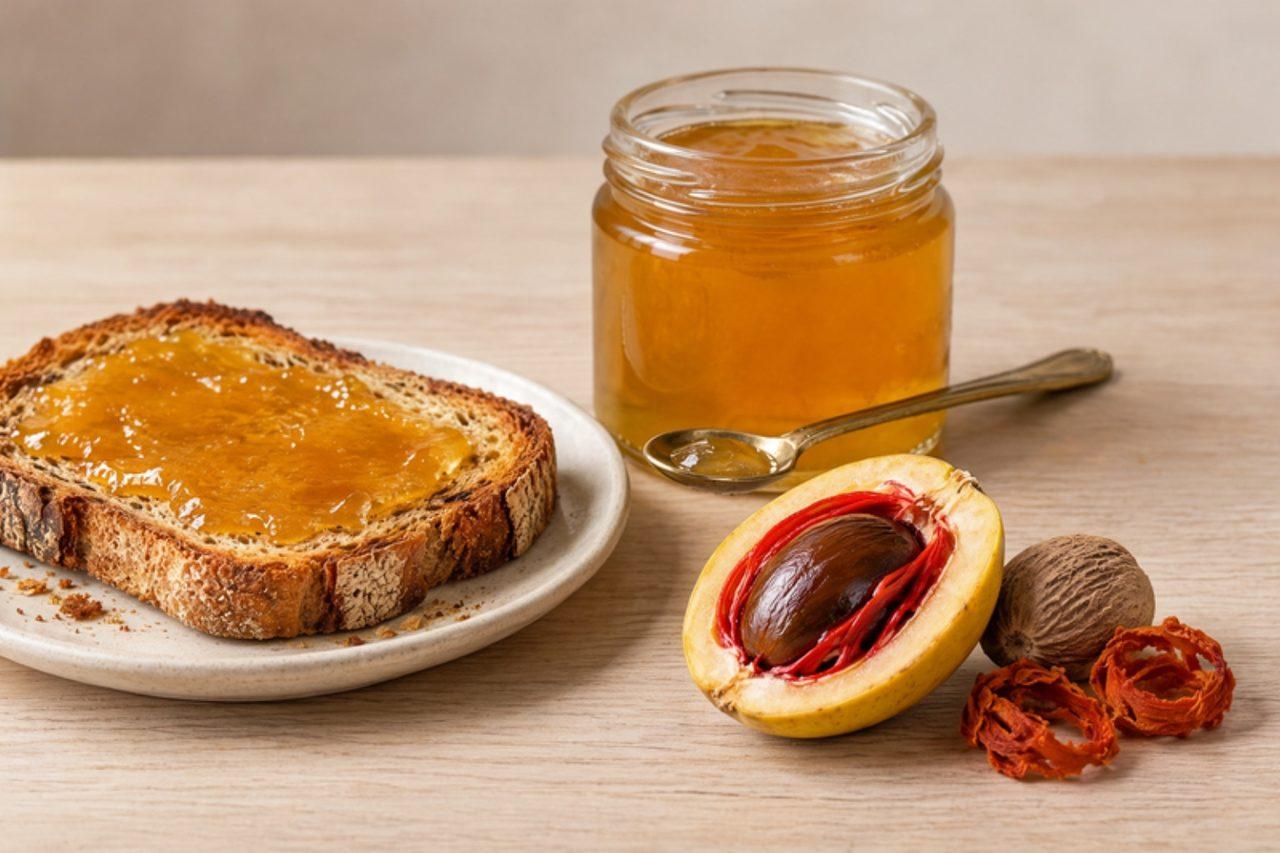
Grenada, the Spice Isle, grows nutmeg all over the green hills of St Andrew and St John, and the pale yellow, apricot-sized fruit that wraps the seed and its red lace of mace was long thrown away at the processing stations. Grenadian cooks turned that tart, slightly astringent flesh into nutmeg jelly, a clear amber spread that is eaten on hops bread or coconut bake at breakfast, sold in small jars in the St George's market and carried home by visitors at Christmas. The fruit is loaded with pectin, so it sets easily, and it tastes sweet-sharp and fragrant, faintly of apple, with a soft warm hint of the spice itself. Outside the Caribbean the fresh fruit is hard to get; tart cooking apples or quinces with a little freshly grated nutmeg make a close copy (see the notes). The common slip is boiling on long after the set point, which turns the jelly dark, gummy and dull, so start testing early. It is ready when a drop wrinkles on a cold saucer or the thermometer reads 104–105 °C. Chef's tip: drop a strand of the red mace into each jar for colour and a little extra perfume.
When the canals of Friesland freeze hard and the whole of the Netherlands goes out on skates, koek-en-zopie stalls appear on the ice selling erwtensoep, warm sausage and steaming cups of anijsmelk. At home it is a winter bedtime drink for children and grandparents alike, made either by crushing aniseed into simmering milk or, as many Dutch families do, by stirring in anijsblokjes, sugar cubes flavoured with aniseed. It tastes softly sweet and liquorice-like without being sharp, and it is smooth and warming, with a faint warmth on the tongue. The common mistake is boiling the milk: it rises over the pan, scorches on the base and forms a thick skin. Heat it slowly and stop when tiny bubbles appear around the edge. It is ready when the milk smells clearly of anise after steeping and has turned faintly ivory. Anise seeds are sold in spice shops; in a pinch use one star anise, though it tastes stronger and less sweet. There is no caffeine, which is why Dutch parents serve it at bedtime. Chef's tip: crush the seeds just before using, the oils fade quickly once ground.
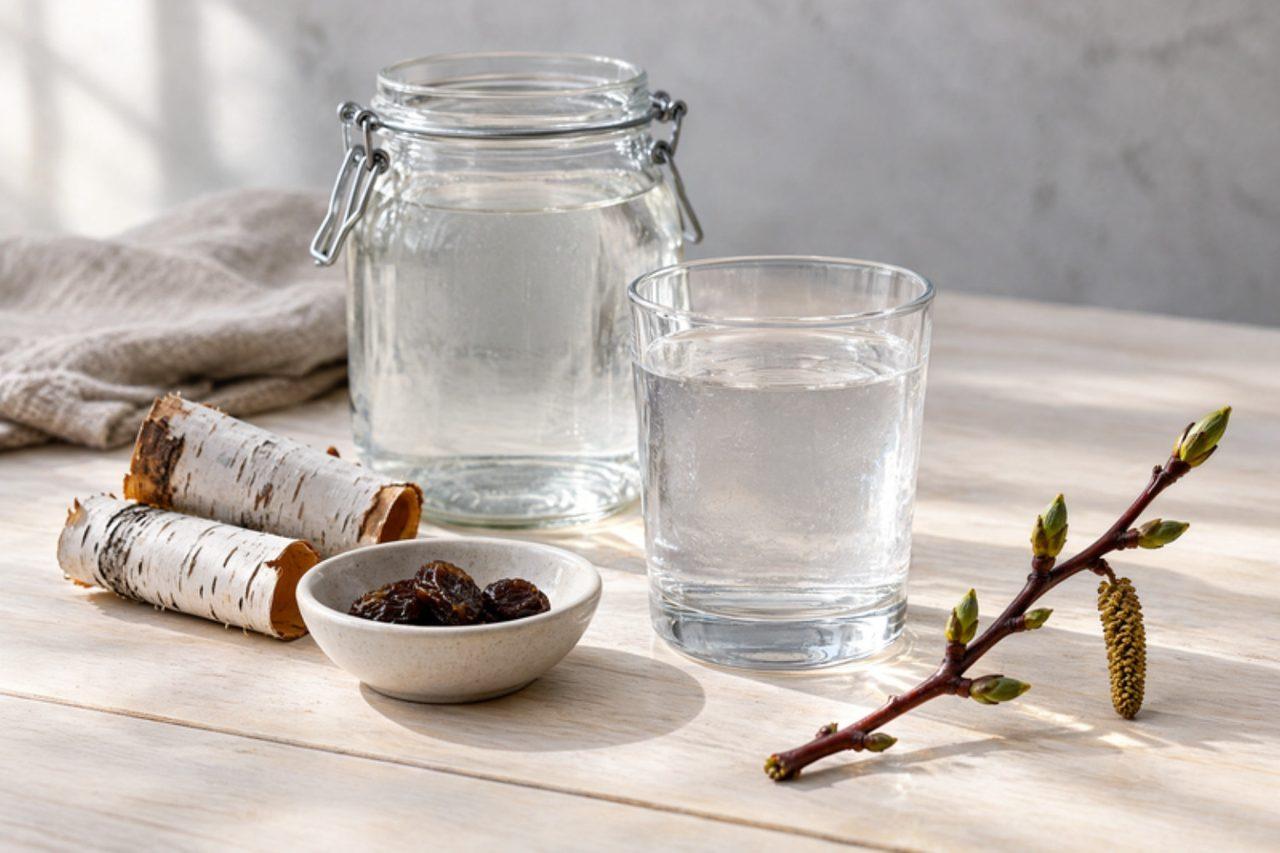
In late May and early June, when elder bushes bloom white along every Romanian village lane and riverbank, grandmothers fill big glass jars with water, sugar, lemon slices and elderflower heads and set them on a sunny windowsill or balcony. Three or four days later the jar is fizzing gently and socată, the most beloved summer drink of rural Romania, is bottled and chilled for haymaking days, family lunches and long evenings in the courtyard. It is sweet and floral, like honeyed lemonade with the scent of muscat grapes, with a light natural sparkle. Like all young ferments it makes a trace of alcohol, well under 1% if drunk within a week. The common mistake is washing the flowers or picking them after rain: the pollen and wild yeast that start the fermentation are rinsed away and nothing happens. Pick dry, fully open heads on a sunny morning and just shake off insects. It is ready to strain when fine bubbles rise steadily and it smells floral and slightly tangy. Use only the flowers: elder stems, leaves and unripe berries are toxic. Chef's tip: a few raisins in the jar give the yeast a boost if your flowers are slow.
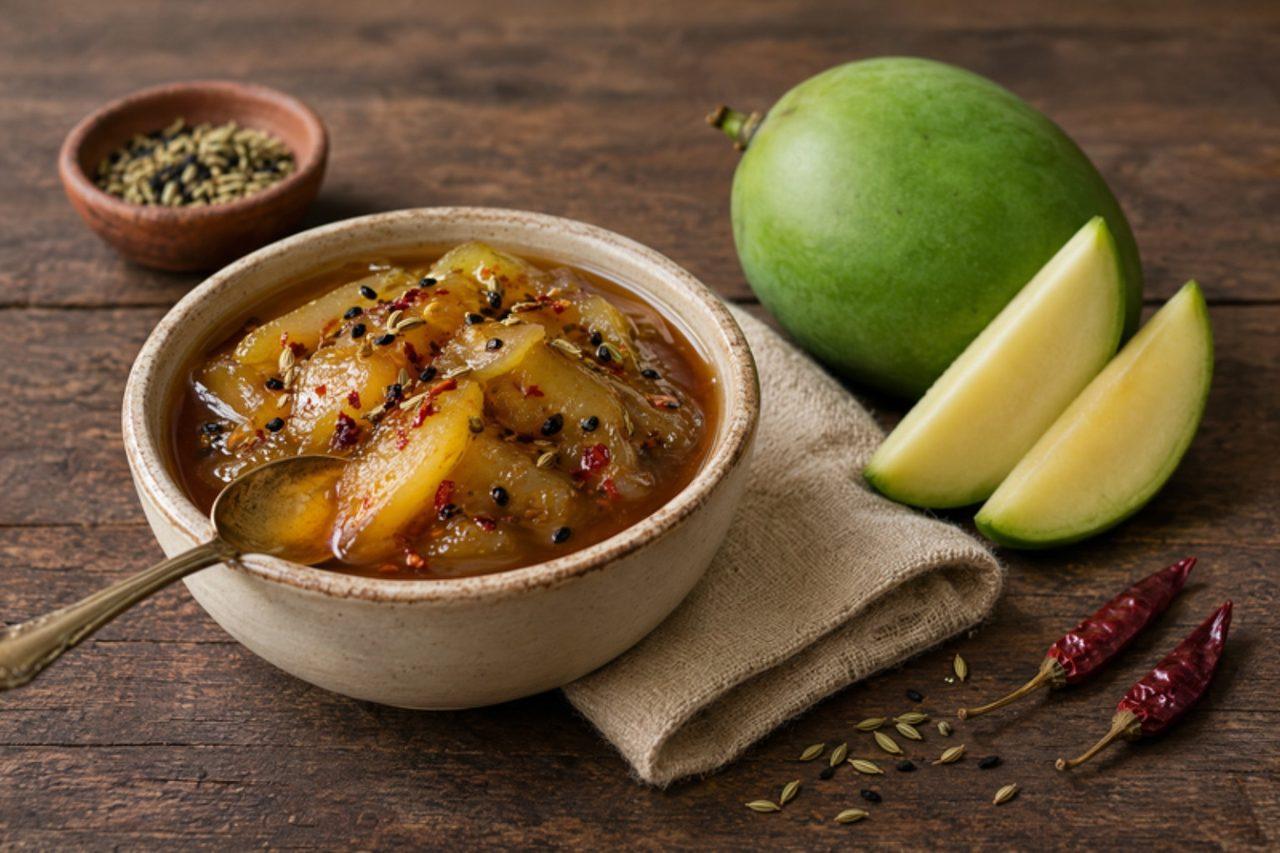
In Rajasthan and across the Hindi belt, launji is the quick mango relish made the day the first raw mangoes come home in April, and it keeps appearing on the thali all through the scorching summer. Unlike the long-cured achaars, it is cooked in 20 minutes: mango pieces in mustard oil with saunf, kalonji, methi and cumin, then simmered with jaggery until glossy. The pieces stay soft but hold their shape in a thick, amber syrup that is sweet first, then sour, with a warm hum of chilli and a liquorice note from the fennel. Eat it with dal-baati, puri, paratha or plain khichdi; in the heat it is believed to cool the body. The common mistake is adding the jaggery too early, so it caramelises and turns bitter before the mango is tender; cook the mango first, then the jaggery. It is ready when the syrup coats the back of a spoon and the mango looks translucent at the edges. It thickens as it cools. Store in a clean jar in the fridge and eat within a week to 10 days. Chef's tip: leave a little peel on some pieces; it gives a pleasant chew and stops the mango from turning to mush.
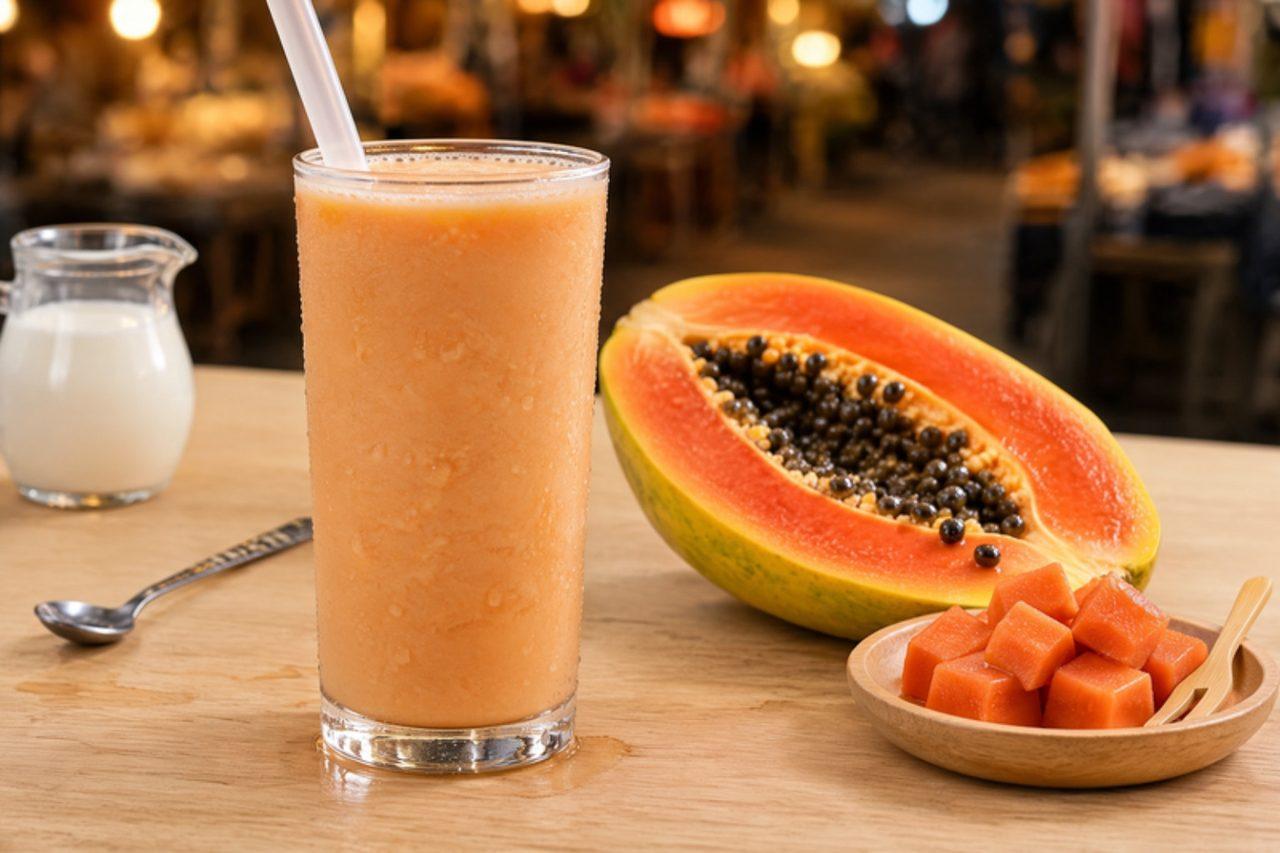
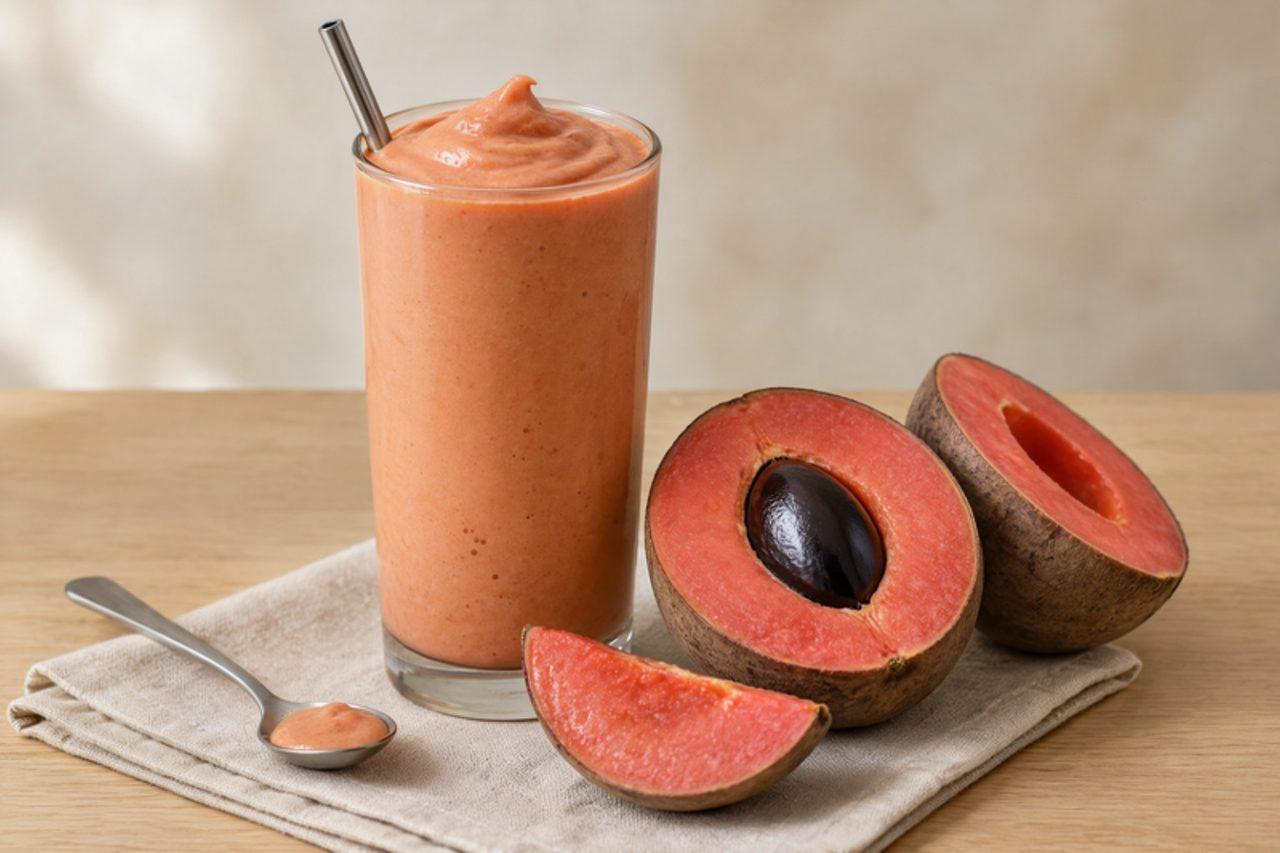
Kaohsiung claims papaya milk as its own: the southern port city's fruit stalls, and the famous old shop on Liuhe night market's doorstep, have been blending it since the 1960s, when sweet red-fleshed papayas from Pingtung became cheap and plentiful. It is now sold all over Taiwan, a thick orange-pink shake in a tall cup, drunk on sticky evenings while walking between food stalls or in the morning with a scallion pancake. It tastes of ripe papaya and cold milk, sweet and mellow, with a smooth, slightly airy body. The classic mistake is making it in advance: papaya contains the enzyme papain, which starts working on milk proteins within about 20 minutes and leaves the drink bitter and curdled-looking. Blend it just before drinking. Your papaya is ripe when the skin is mostly yellow-orange and gives slightly to a thumb, and it smells sweet at the stalk end; it is ready to serve when it is fully smooth, foamy on top and evenly coloured. Children love it, and with little added sugar it is a fine after-school snack. Chef's tip: chill the papaya well beforehand so you need less ice and the shake stays thick.
On summer days in Bishkek and Osh, blue and yellow street barrels sell maksym by the glass, next to chalap and kymyz. It is a sour grain drink of Kyrgyz herders: barley (or millet or corn) is toasted, ground and cooked with fried wheat flour into a thin gruel, then left overnight with a little of yesterday's batch until it turns pleasantly sour and slightly sparkling. It is drunk cold with plov, samsa or simply to cool down in July heat. It tastes nutty, like toast and rye bread, with a yogurt-like tang and a gentle salty edge; the texture is thicker than kvass, about like thin buttermilk. Like all ferments it develops a trace of alcohol, well under 1% when drunk young. The classic mistake is adding the starter while the gruel is still hot, which kills it; wait until it feels just warm, about 30 °C. It is ready when small bubbles rise, it smells pleasantly sour and a foamy cap forms. Keep it in the fridge in a loosely capped jug for 3–4 days; it gets sourer and more alcoholic as it sits. Discard if you see coloured mould, slime or smell anything rotten. Contains gluten. Chef's tip: toast the barley until it smells like coffee for the deepest flavour.
Goheung, on the southern coast of South Jeolla, is Korea's yuja country: in November the groves turn gold and families slice the knobbly citrons for yuja-cheong, the honeyed preserve that becomes tea all winter. From December to March a spoonful in hot water is offered to guests, to students cramming late and to anyone with a scratchy throat, as it is traditionally drunk for colds. The tea is sweet, floral and sharp, with soft, chewy strands of peel that you eat at the end with a spoon. The common mistake is leaving the fruit damp or the pith too thick: wet fruit lets mould in, and thick white pith makes the preserve bitter. Scrub, dry completely and pare away any pith thicker than a few millimetres. The cheong is ready after a day or two, when the sugar has dissolved into a clear, glossy syrup around the peel. Keep it in the fridge for up to three months, always with a dry spoon; throw it away if you see fuzzy mould, smell alcohol or it bubbles. No yuja? Japanese yuzu is the same fruit; otherwise use 2 lemons and 2 mandarins. Chef's tip: soak the seeds in a little of the honey and add that liquid back for a silkier syrup.
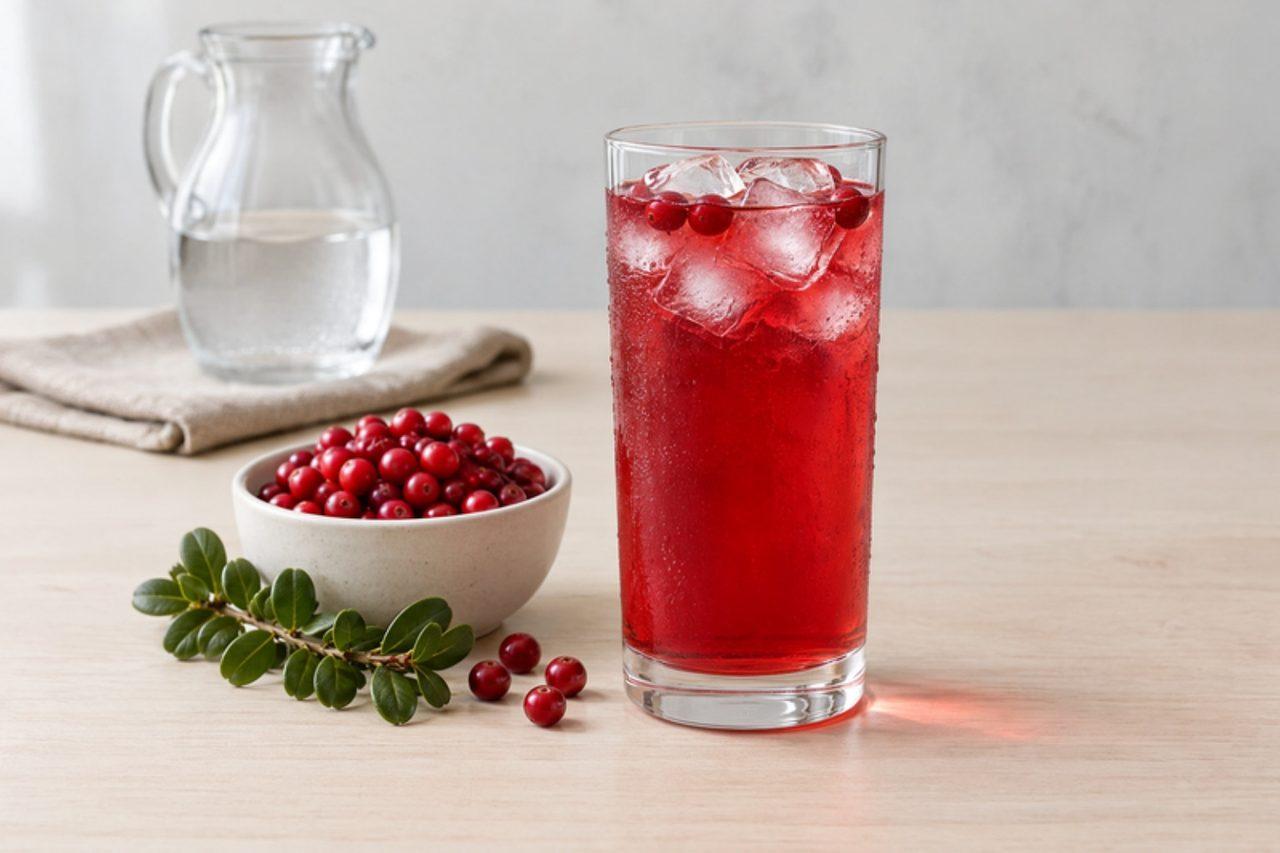
In Sweden the jug of red lingondricka sits on the table at weekday dinners, in school canteens and at the julbord, poured beside meatballs, pyttipanna or a Saturday pea soup. Lingonberries grow wild in the forests of Norrland and Dalarna, and in late August families pick them by the bucket with a wooden berry rake. Cooked with sugar and strained, they become a cordial that is both sweet and sharp, with a slight bitter-almond edge from the skins, bright enough to cut through rich, creamy food. The common mistake is boiling the berries hard for a long time: the cordial turns jammy and brownish, and the pectin can make it set in the bottle. Bring it just to the boil, crush, then simmer only briefly. The syrup is ready when it is clear ruby, flows like a thin syrup and tastes tart then sweet. Lingonberries are sold frozen in Nordic and Eastern European shops; cranberries work as a substitute, with a little more sugar. Bottled hot into sterilised bottles it keeps 2 months in the fridge, or 6 months frozen. Throw it out if you see mould or it fizzes. Chef's tip: mix one part cordial to five of chilled sparkling water for a party version.
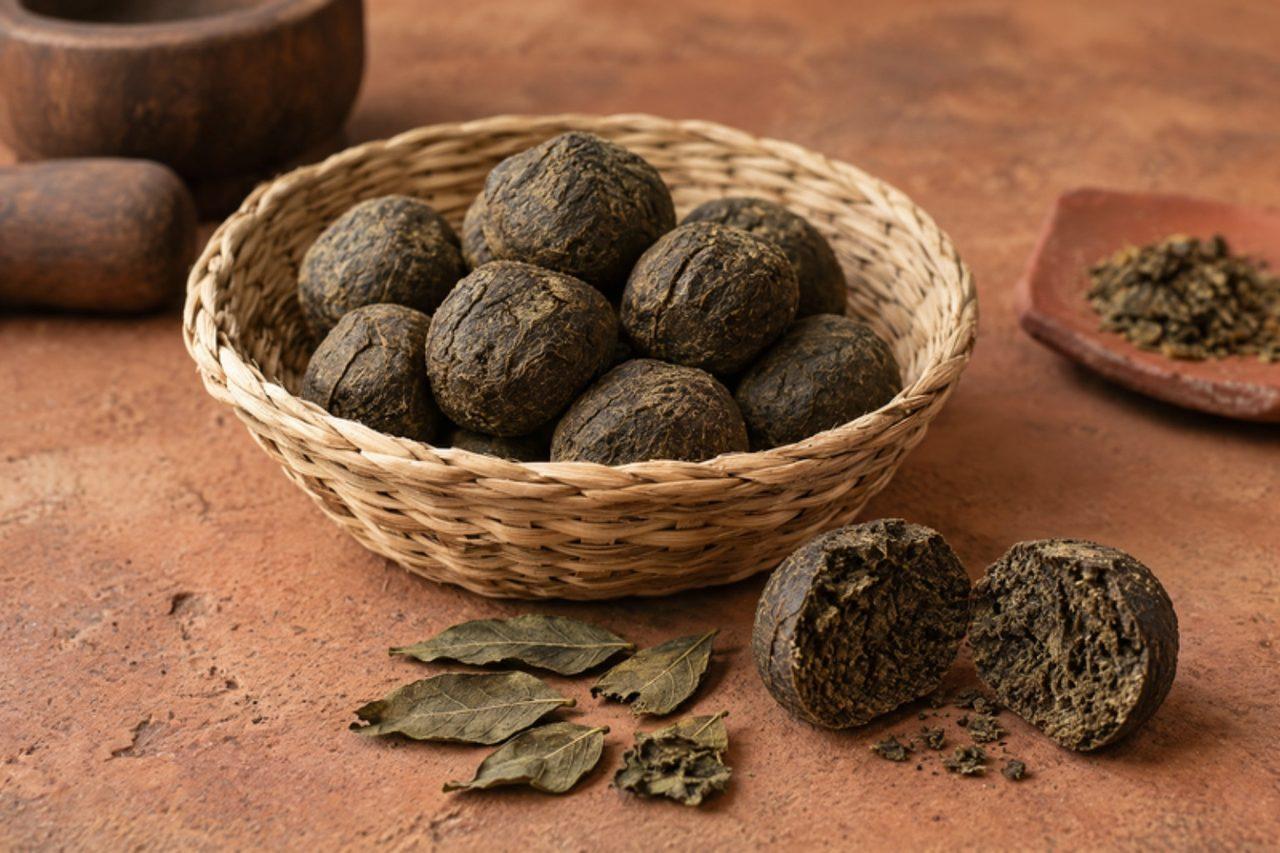
Kawal is one of the most distinctive pantry foods of western Sudan, made in Darfur and Kordofan at the height of the rains in August and September, when wild senna (Senna obtusifolia, called kawal or fedo) springs up thickly around villages. Women strip the young leaves, pound them to a dark green pulp and pack it into a clay pot sealed with sorghum leaves, then leave it in a cool, shaded spot for about two weeks, remixing it every few days. The fermented paste is rolled into small balls and dried in the sun, and these keep through the dry months. Crumbled into mullah stews with okra, onions and dried meat and eaten with kisra or aseeda, kawal gives a deep, meaty, pungent savour much like West African dawadawa; the smell straight from the pot is strong and ammonia-like but mellows completely in cooking. The usual mistake is leaving the pot somewhere warm and forgetting to remix it, so the paste rots instead of fermenting. It is ready when the paste is dark, sticky and strongly savoury but not putrid. Chef's tip: if you cannot be certain of the plant, buy dried kawal from a Sudanese grocer.
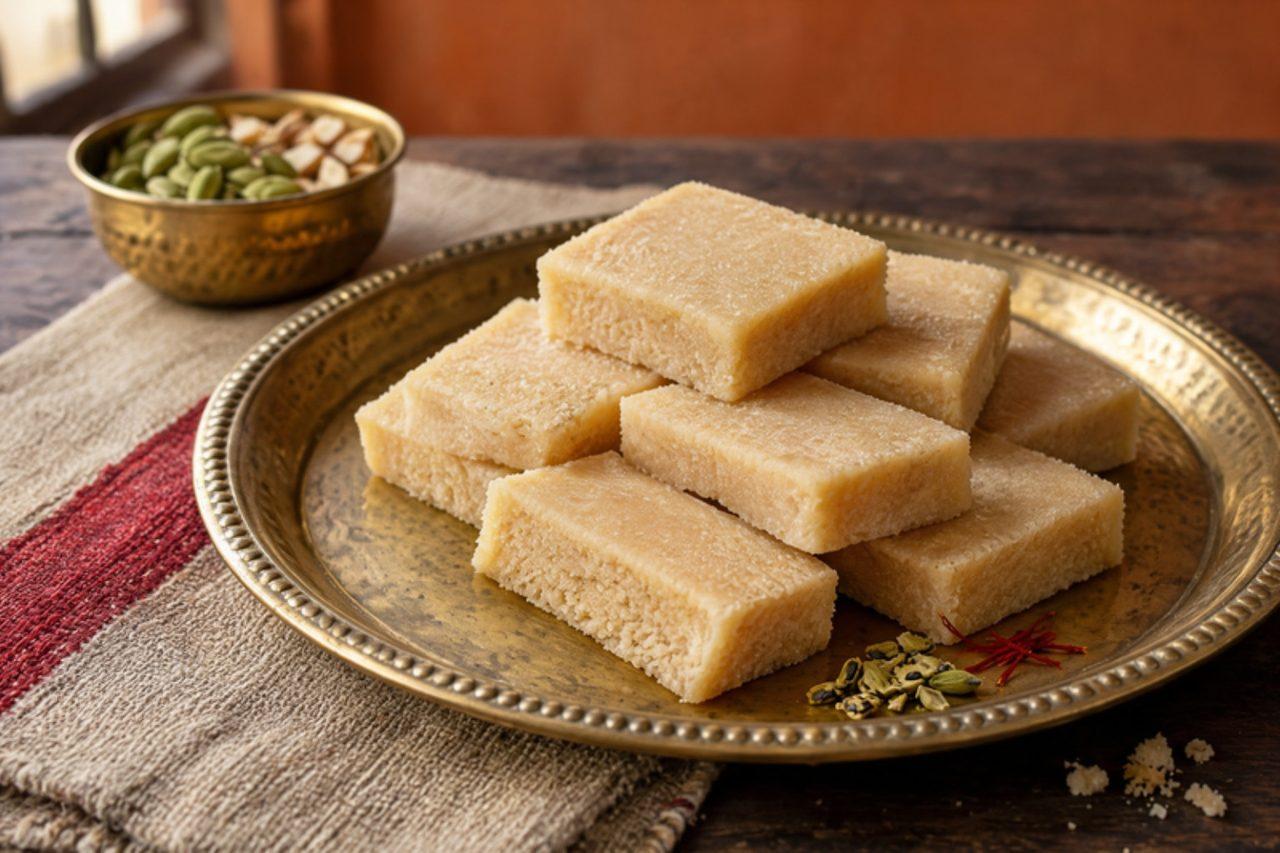
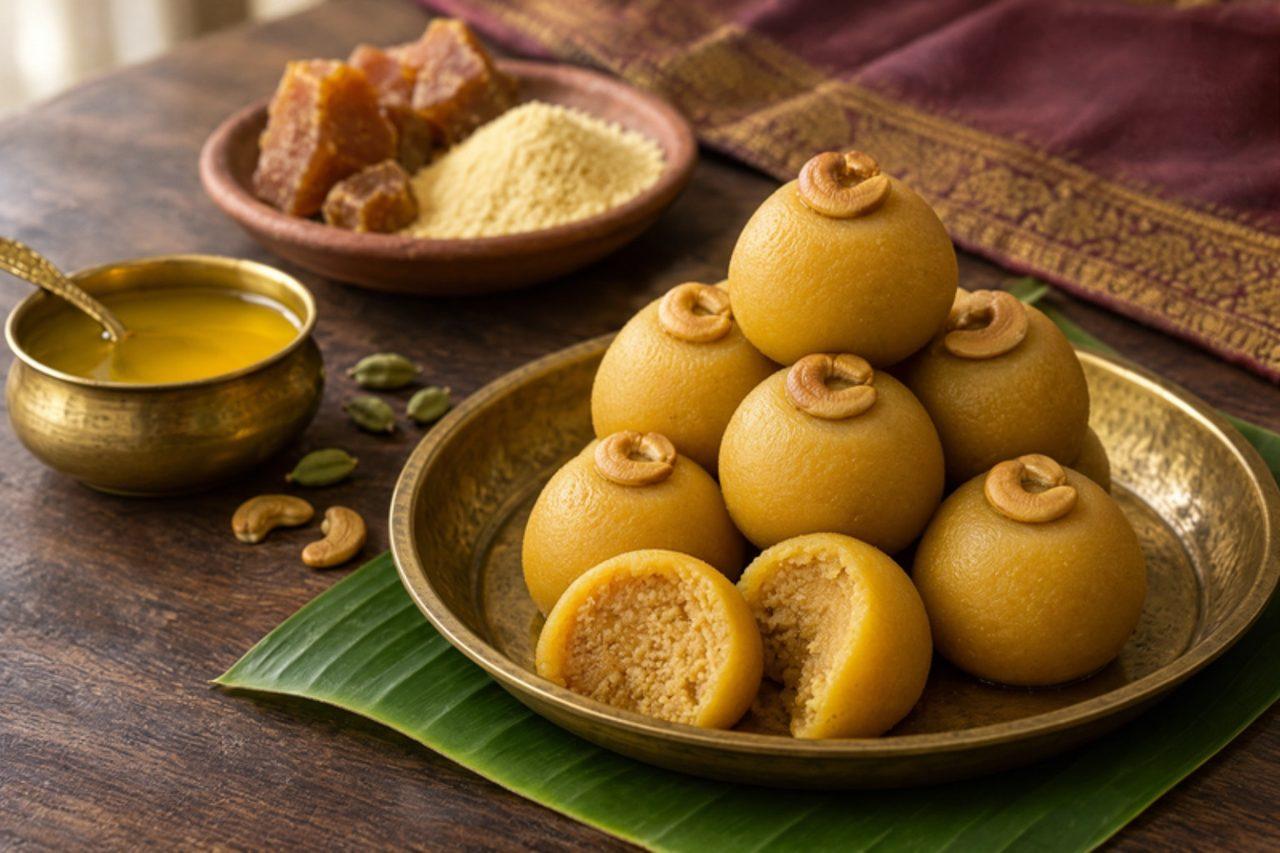
Belgrami belongs to Udwantnagar in Bihar's Bhojpur district, where sweet makers have cooked it for generations and travellers buy boxes on the way through. Fresh chhena is cooked down with sugar until it firms into a dense, slightly chewy, pale cream block with a gentle caramel note, then cut into pieces. It keeps for days, which makes it a favourite gift at weddings and Chhath. The common mistake is stopping too early: it must cook until the mass pulls into one lump and no longer sticks to the pan, or the pieces stay soft and weep. Chef's tip: use chhena from full-fat cow's milk and hang it for an hour, so it is dry enough to cook down quickly.
Sea buckthorn grows wild along the rivers of Altai and the Baikal shore, and by October its thorny branches are crowded with tiny orange berries. Siberians freeze them by the bucketful, and all winter a glass teapot of oblepikha tea glows on café tables from Irkutsk to Moscow, ordered after skiing or against the dark afternoons. The taste is sharp and tropical, somewhere between passion fruit, pineapple and lemon, with a faint oily richness from the berries, softened by honey and warmed by ginger. The common mistake is pouring boiling water straight onto the honey and berries: it dulls the fruit, makes the honey taste flat and can turn the tea bitter. Let the kettle settle for a couple of minutes first. It is ready when the tea is a cloudy sunset orange, smells of citrus and ginger and the berries have released their juice. Outside Russia, look for frozen sea buckthorn in Eastern European or Nordic shops, or use unsweetened sea buckthorn purée. Chef's tip: crush a big batch of berries with honey, keep it in a jar in the fridge for a week, and spoon it into mugs whenever you want a cup.
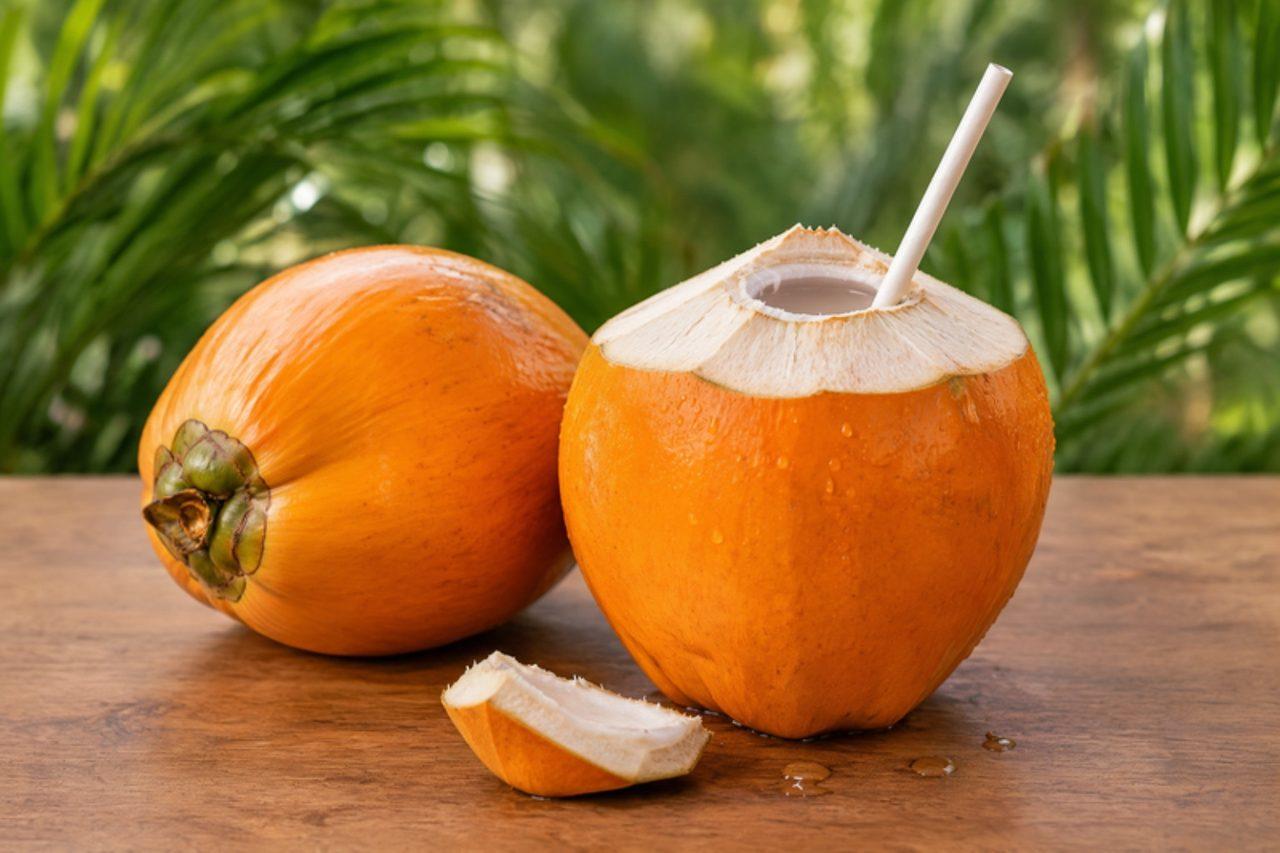
In the oases of the Tunisian south, in Gabès, Tozeur, Nefta, Kebili and on Djerba, palm climbers cut a small wound at the crown of an ageing date palm and hang a clay pot under it overnight. By sunrise it holds lagmi: cloudy, ivory-white sap, cool and sweet, with notes of coconut water and fresh dates. It is sold in recycled bottles at the roadside and drunk the same morning, because the wild yeasts in it begin to ferment almost at once. By afternoon it is fizzy and sour, and by the next day it has become an alcoholic palm wine, also called lagmi, which is a different drink altogether. The common mistake is buying more than you can drink by lunchtime or leaving it in the sun: keep it on ice from the moment you get it. Fresh lagmi is ready to drink when it is sweet, smells clean and milky, and only a few tiny bubbles rise; once it tastes sour or prickles on the tongue, it has started to turn. It is raw and unpasteurised, so pregnant people, babies, older people and anyone unwell should skip it. Outside the oases, fresh coconut water is the closest stand-in. Chef's tip: chill the glasses too; lagmi is at its best ice-cold.
In Mauritius the kettle goes on for dité at breakfast and again at four, when the heat of the day breaks and someone brings out gato piment, a packet of biscuits or a slice of gato patate. The tea is grown on the island's central plateau, around Curepipe and the Bois Chéri hills, and the local favourite is black tea perfumed with vanilla, the same vanilla that grows on the neighbouring islands. It is drunk strong, very sweet and milky, often with evaporated or condensed milk: a round, creamy cup with a soft caramel-vanilla scent and no bitterness. The common mistake is boiling the tea leaves with the milk until they stew; brew the tea in water first, then add hot milk. It is ready when the tea is the colour of milky caramel and the kitchen smells of vanilla. A cup has about as much caffeine as ordinary black tea. If you cannot find vanilla-scented Mauritian tea, a strong black tea and a split vanilla pod do the job well. Chef's tip: dry the used vanilla pod and bury it in your sugar jar; next time the sugar alone will scent the tea.
Brazil's national drink lives on every boteco counter in São Paulo, but it tastes best on a hot Saturday beside a pot of feijoada, or handed over from a beach vendor's cart. It is a short, rough-cut drink for adults only: a whole lime chopped into wedges, crushed with sugar right in the glass, packed with crushed ice and drowned in cachaça, the sugarcane spirit with a grassy, faintly funky edge that rum does not have. Each sip moves from sharp lime oil to cold sweetness to a warm cane finish, with a little crunchy sugar at the bottom to stir back up. The usual mistake is pounding the lime to a pulp: the white pith and the core turn bitter within minutes. Cut out the central white strip, press each wedge only until the juice runs and the skin smells of lime oil, then stop. It is ready when the sugar has mostly melted into a cloudy syrup and the glass frosts on the outside. Cachaça is strong, so sip slowly and drink responsibly. Chef's tip: roll the lime hard on the board before cutting and choose thin-skinned, heavy limes; a thick-skinned lime makes a bitter caipirinha however gently you muddle.
Long before Chinese tea reached ordinary villages, peasants around Koporye near St Petersburg, and on through Karelia and the Arkhangelsk forests, were rolling and fermenting the leaves of fireweed, the tall pink-flowered plant that floods clearings every July. Ivan-chai is having a revival now, sold in paper bags at markets and drunk at the dacha in the evening from the samovar, because it has no caffeine and will not keep anyone awake. It brews to a clear amber with a soft, slightly fruity, honey-and-dried-apple taste and almost no bitterness. Granular kinds taste deeper, leaf kinds more floral. The common mistake is brewing it for two or three minutes like black tea; it needs a full 10 minutes in a warmed pot to open up, and it never turns bitter if you leave it longer. It is ready when the liquid is a deep golden-amber and smells of honey and dried fruit. It is traditionally drunk as a calming evening tea; if you are pregnant or on regular medication, check with a doctor before drinking it daily. Chef's tip: the same leaves give a second, lighter pot; just top up with fresh hot water and wait another 10 minutes.
Helba is the other hot drink chalked on the board of every Egyptian coffee house, ordered in winter by students and old men playing dominoes alike. At home it is brewed when someone has a cold, after childbirth, or simply on chilly nights in the Delta, and is traditionally drunk to soothe the chest and the stomach. Fenugreek seeds are boiled until the water turns amber-yellow; the cup tastes nutty and toasty, like maple and celery, with a pleasant bitterness that sugar softens. Some people add a splash of milk at the end. Fenugreek is not advised during pregnancy, can lower blood sugar and may interact with blood thinners, so check with your doctor if you take medication; it can also make your sweat smell faintly of maple, which is harmless. The common mistake is boiling unrinsed seeds hard for a long time, which gives a slimy, very bitter tea. Rinse them, toast them briefly and boil only 8–10 minutes. It is ready when the liquid is clear golden-amber and smells of warm maple. Chef's tip: soak the seeds overnight first for a milder, rounder brew, and eat the softened seeds with a spoon as Egyptians do.
On the Altiplano around Lake Titicaca, in June and July when the nights drop to -10 °C and the days are bright and dry, Aymara and Quechua families spread small, bitter potatoes on the grass to make chuño, a technique far older than the Inca. The potatoes freeze at night and thaw in the sun for several days, then are trodden barefoot to squeeze out the water and rub off the skins, and dried for a couple of weeks more. The result is light, wrinkled, grey-black chuño negro that keeps for years; soaked in running stream water instead, the same potatoes become white tunta. Rehydrated and boiled, chuño is firm, slightly chewy and spongy, with an earthy, faintly mineral, almost fermented taste; it goes into chairo soup, into chuño phuti, or beside grilled meat with spicy llajwa. Skipping the long soak is the big mistake: it stays bitter and gritty, so soak it for at least 12 hours, changing the water. Dried chuño is ready when it is rock hard, very light and rattles in a bag. Chef's tip: without Andean frosts, a freezer and a low oven make a fair version; the method is below.
Across southern China, from Fujian to Guangdong, a pot of red dates and dried longan is what mothers and grandmothers put on the stove when the weather turns cold, and it is the classic drink brought to new mothers during zuo yuezi, the month of rest after childbirth. It is also sipped through the winter in the afternoon, or offered to visitors at Lunar New Year because the red dates promise sweetness ahead. The tea is amber-brown, naturally sweet and fruity, with a caramel, smoky depth from the longan and a gentle warmth if you add ginger. The common mistake is simmering whole dates: their skins stay tight and the tea tastes thin. Slit or tear each date so the flesh can give up its sweetness, then simmer slowly. It is ready when the dates are puffed and soft, the longan has swollen and the liquid is the colour of weak tea and tastes of toffee. It is traditionally drunk for comfort and warmth, not as a medicine; it is high in natural sugar, so go easy if you watch your blood sugar, and goji can interact with blood-thinning medicines, so check with a doctor if you take them. Chef's tip: eat the softened fruit from the bottom of the cup with a spoon; nothing is wasted.
In Bogura, the town famous for its sweet doi, and in the lanes of Old Dhaka around Nazira Bazar, tea stalls keep a wide karai of milk barely simmering all evening. Layers of skin build up on top; the tea-maker lifts them off as malai and lays a thick spoonful on every cup of strong, sweet milk tea, poured into small unglazed clay bhar that give the tea a faint earthy smell. People stand around after maghrib prayers or late at night, sipping through the cream and finally eating it with a finger. The tea is malty and syrupy-sweet; the malai is soft, rich and slightly caramelised. The usual mistake is boiling the milk hard: a rolling boil breaks the skin into flakes and you never get a thick sheet. Keep it at a lazy shiver and lift the skin every 5 minutes. The tea is ready when it is the colour of milky caramel and coats the back of a spoon; the malai is ready when it lifts off as a wrinkled, leathery sheet. Strong CTC tea makes this fairly caffeinated. Chef's tip: soak clay cups in water for ten minutes first, so they don't drink up the tea or smell dusty.
Across Delhi, Punjab and Uttar Pradesh, arbi is the vegetable that goes into a dabba with ajwain rotis or plain phulkas: the small colocasia roots are boiled, flattened slightly and pan-fried with carom seeds, red chilli and dried mango powder until crisp outside and creamy inside. Ajwain is there for its flavour and because it is said to help digest the starchy root. The mistake is boiling the arbi too long: it turns slimy and falls apart in the pan. Cook it until just tender, then cool fully before peeling. Chef's tip: press each piece gently with your palm to crack it before frying; the cracks catch the spices and crisp up.
For two or three weeks at the end of March and into April, while there is still snow under the trees and before the buds open, the birches around Moscow, Tver, Vologda and across the north start to run. Families tap a few trees at the dacha and drink the sap straight from the jar: clear, cold, very faintly sweet, tasting of rainwater and fresh wood. Because it spoils within two or three days, villagers bottled the rest with sugar, raisins and lemon zest, letting it ferment slightly into a sparkling drink that kept into early summer; like any ferment it makes a trace of alcohol, well under 1% if drunk young. Only tap with the owner's permission, choose trees thicker than 20 cm, drill one small hole and plug it with a wooden peg afterwards so the tree heals. The common mistake is sealing the bottles tight at warm room temperature, which can make them burst; keep them cool and open the caps daily. The bottled sap is ready when the raisins float, a ring of fine bubbles forms on top and it tastes gently sparkling. Chef's tip: drink the first glass straight from the tree; it is never quite as good again.
All over Taiwan, from Tainan's old markets to Taipei's night-market stalls, winter melon tea is sold in plastic cups packed with ice through the steaming summer. Despite the name there is no tea in it: chunks of winter melon are cooked down for hours with brown and white sugar until the melon disappears into a thick, dark, toffee-scented paste, which is set into blocks and later dissolved in hot water and chilled. The drink tastes of caramel and light molasses with a gentle, grassy melon note, and it is often mixed half and half with lemon juice or fresh milk. The common mistake is stopping too early, when the mixture is still runny: it will not set and it tastes boiled rather than caramelised. Keep stirring until a drop on a cold plate sets firm and the paste pulls away from the pan. Ready blocks keep 2 months in the fridge, or 6 months frozen; make the drink whenever you want it. If you cannot find winter melon (ash gourd, available frozen in Asian shops), there is no good substitute. Chef's tip: a final 10 minutes on low heat with constant stirring gives the deep, smoky colour that market versions have.
Highland mornings in Lesotho can be bitterly cold, and a mug or bowl of warm motoho, thin enough to sip and pleasantly tangy, is how many Basotho families in Maseru and the mountain villages start the day. Sorghum meal is mixed with warm water and a spoonful of starter from the last batch, left overnight by the stove to sour, then cooked into a smooth, pourable porridge with a yoghurt-like tang and a nutty, toasty flavour. Some sweeten it with sugar; others drink it plain with bread. If you have no starter, make one two days ahead with sorghum and water, as below. Chef's tip: keep the ferment warm but not hot; a pot left right on the stove gets too sour and too thin, so a spot nearby is perfect.
Yangon runs on lahpet yay. From before dawn, crowded teashops set out tiny plastic stools on the pavement, and the tea comes with mohinga, palata or a plate of samusa; people linger again at four in the afternoon to talk. The tea is a dark, very strong brew of cheap black leaf that has been boiled and kept hot in a kettle, mixed in the cup with condensed milk and evaporated milk. Regulars order in code: cho seint is sweet and creamy, kya seint is strong and less sweet, pawsein is the standard. It should be thick, silky, sweet, faintly smoky and bitter underneath. The common mistake is brewing it like ordinary tea: it ends up thin and the condensed milk just tastes of sugar. Boil the leaves hard and then let them stand so the liquor is almost black; the bitterness is needed to stand up to the milk. It is ready when the tea poured from height into the cup has a light froth and the colour of milk chocolate. It is strongly caffeinated, so not one for children or late evenings. Chef's tip: pour the finished tea between two jugs a few times to cool it slightly and give it the teashop froth.
Kashan and the villages of Qamsar and Niasar are famous for distilling flowers in spring: rose water in May, and before that araq-e bidmeshk, the distillate of the fuzzy catkins of the musk willow. In summer, when the desert heat settles over the old houses, the same bottles go into sharbat-e bidmeshk, a pale syrup diluted with icy water and served to guests in tall glasses, sometimes with swollen basil seeds. It is traditionally drunk to calm the nerves and cool the body. The taste is delicate, sweet and haunting, somewhere between honeysuckle, musk and fresh hay. The common mistake is adding the distillate to hot syrup; the heat drives the scent away within minutes, so cool the syrup completely first. The syrup is ready when it is clear and pours like thin honey, and the finished sherbet should smell floral the moment you lift the glass. Look for the distillate in Iranian shops; there is no true substitute, though rose water with a few drops of orange-blossom water makes a pleasant but different drink. Chef's tip: a squeeze of lemon in the syrup stops it crystallising in the fridge, where it keeps for a month.
Afternoon merienda across the Philippines means something cold from a plastic cooler at the school gate, a jeepney stop or a carinderia: sago't gulaman, buko juice or this melon drink, with ribbons of orange cantaloupe suspended in sweet water. Vendors scrape the melon with a special spiral shredder, a kayod ng melon, so you get thin strands to chew through a fat straw. It tastes fresh, sweet and gently musky, more refreshing than a smoothie because the water stays clear and light; some stalls add evaporated milk, but the plain version is the classic. The common mistake is using a melon that is not fully ripe, which gives pale, crunchy strands and a flat drink; choose one that smells sweet at the stem end and gives slightly when pressed there. Shred straight into the jug so the juice from the melon is not lost. It is ready when the strands are soft and floating, the water has turned faintly orange and it tastes of melon rather than plain syrup. Chef's tip: a box grater's coarse side or a fork scraped along the flesh both work if you don't own a melon shredder.
Big steel urns of golden saffron sherbet are poured for guests at Iranian weddings and engagement parties, and the same drink is handed out on the street as nazri during Muharram and at memorial gatherings, when families offer something sweet and cool in the name of the departed. Saffron from Khorasan is ground with a sugar cube, bloomed in a little water and stirred into syrup with rose water and lemon. The result is honey-sweet and floral, with saffron's faint bitterness and hay-like perfume at the end, and a colour that should be a clear, sunny orange-gold. The usual mistake is dropping whole threads straight into cold water, which gives a pale, patchy drink and wastes expensive saffron; grind it first and let it bloom for at least 10 minutes. You know the bloom is ready when the water is a deep red-orange and smells strongly of saffron. Taste before serving: it should be sweet but finish clean, with the lemon just noticeable. Chef's tip: an ice cube placed on the ground saffron and left to melt slowly gives the deepest colour of all, an old Iranian trick.
All along Sri Lanka's roads, from Galle Road in Colombo to the highways into Kandy and the beaches of the south coast, vendors stack bright orange king coconuts in pyramids under umbrellas. The thambili is a variety grown on the island for drinking: smaller than a green coconut and sweeter, with a faint saltiness that makes it more refreshing than any bottled drink. It is drunk any time of day in the heat, after a long bus ride, after a cricket match, and given to people recovering from a fever because it is gentle on the stomach. The water is clear, lightly sweet and nutty, and the soft jelly inside is eaten with a spoon made from a slice of the husk. The common mistake is hacking at the side of the nut; the blade glances off and the water spills. Trim the pointed top with downward strokes until a pale circle shows, then pierce it. It is ready to drink when a small hole opens straight into the water without husk fibres. Outside Sri Lanka, young green or Thai coconuts are the nearest substitute. Chef's tip: chill the coconuts for a few hours before opening; the water tastes sweeter cold, and use a heavy knife and a towel, keeping fingers well clear.
Late summer is tuna season across the central highlands, from Hidalgo and the Estado de México down to Puebla's Teotihuacán valley, and that is when the big vitroleros in markets and taquerías turn shocking pink. Agua de tuna is just the cactus fruit blended with water, lime and a little sugar, strained, and poured over ice with lunch. Red tunas give a vivid colour and a taste between watermelon and pear; green ones make a paler, more herbal drink. It should be light and thirst-quenching, never syrupy. The commonest mistake is blending too long: the hard seeds crack and the agua turns gritty and slightly bitter. Pulse briefly, just enough to free the pulp, then strain well. It is ready when the liquid runs smooth through the sieve and tastes clearly of fruit with only a lift of lime. Handle unpeeled tunas with tongs or gloves: even 'cleaned' ones keep tiny glochids. Chef's tip: chill the peeled fruit before blending; cold pulp keeps its colour bright and needs less ice to dilute it.
Tsagaa is a sweet, buttery rice dish served during Tsagaan Sar, the Mongolian Lunar New Year, when white foods (tsagaan idee) stand for purity and a good year ahead. Rice is cooked soft, then mixed with butter, sugar, raisins and crumbled aaruul or fresh curd, and served in small bowls to guests during the round of family visits. A common mistake is using long-grain rice, which won't turn creamy; use short-grain. Chef's tip: soak the raisins in hot water first so they're plump and juicy.
For a few weeks in spring, after Nowruz, sellers come down from the Alborz foothills, the mountains of Khorasan and Kurdistan with bundles of rivas, the thick-stalked wild rhubarb. People peel and eat the stalks raw with salt, cook them into khoresh, and boil the rest into syrup to keep the taste of the season into summer. Sharbat-e rivas is pink, sharp and refreshing, like sour cherry and green apple together, softened by sugar and lifted by mint. The common mistake is boiling the rhubarb hard and pressing it through the sieve, which makes the syrup cloudy, brownish and stringy; simmer gently and let it drip on its own. Use only the stalks, never the leaves, which are poisonous. The syrup is ready when it is clear, rose-coloured and coats a spoon in a thin film; it keeps for two weeks in a clean bottle in the fridge, and should be thrown away if it fizzes, smells of alcohol or grows mould. Garden rhubarb is a good substitute for rivas; the reddest stalks give the prettiest colour. Chef's tip: a strip of lemon peel in the pot brightens the colour and stops the syrup tasting flat.
Douzhi is the breakfast that divides Beijing. It is the sour liquid left over when mung beans are ground and their starch settles out to make noodles and jelly; left to ferment for a day or two, the grey-green whey turns tangy, a little cheesy and sulphurous. Old Beijingers drink it piping hot at dawn in hutong shops around Qianmen and Huguosi, with a dish of finely shredded salty pickle dressed in chilli oil and crisp fried dough rings (jiaoquan) from the bakery. First-timers often say it smells like stale socks; regulars say it tastes like home. The texture is thin and slightly creamy, the flavour sour, a little bitter and savoury. The common mistake is boiling the soured starch hard: it separates into grey water and sludge. Bring it up slowly, stirring, and take it off as soon as it froths. The ferment makes only a trace of alcohol, well under 1%. Ferment at 20–25 °C; normal signs are fine bubbles, a sour, yogurt-like smell and a grey colour. Discard it if you see fuzzy mould, pink or black patches, a slimy texture or a putrid smell. Chef's tip: save 100 ml of a good batch to start the next one, as Beijing workshops do.
Longan orchards cover the valleys of Chiang Mai and Lamphun, and every August the harvest is smoked and dried in big brick ovens so the fruit lasts all year. That dried lamyai is the base of nam lamyai, sold in plastic bags with a straw at Warorot Market, at roadside stalls on the way to Doi Suthep and in school canteens across the north, especially in the hot season from March to May. It tastes like toffee and smoked honey with a light floral note, and each glass comes with a few plump, chewy longans at the bottom to fish out. The common mistake is boiling the fruit too long with all the sugar at the start: the drink turns syrupy and the longans go mushy. Simmer the fruit first, sweeten at the end and taste before adding everything. It is ready when the liquid is clear amber-brown, the longans have swollen back to roughly their fresh size and the kitchen smells of caramel. It keeps 4 days in a closed jug in the fridge. Chef's tip: a tiny pinch of salt is the street-vendor trick that makes the sweetness taste rounder and brings out the smoky edge.
Sit down at any mamak stall in Kuala Lumpur, Penang or Johor Bahru, from breakfast roti canai to the after-football supper at 1 a.m., and someone at the table will order teh halia. It is teh tarik's spicier cousin: dust-fine black tea is boiled with plenty of crushed ginger, mixed with condensed and evaporated milk, then 'pulled' between two mugs from arm's length until a thick froth forms. The result is sweet, creamy and malty, with a ginger heat that catches your throat, most loved on wet monsoon evenings. The common mistake is adding ginger to tea at the end; it then tastes raw and thin. Boil the ginger in the water first for several minutes so the heat goes into the liquid. It is ready when the tea is the colour of milky caramel and a dense froth a few centimetres high sits on top. This contains caffeine, so it is not for children. Chef's tip: practise pulling with water over the sink first, then start low and raise the mug slowly as you pour.
Every Tamil town once had a soda shop with crates of Codd-neck bottles sealed by a glass marble, and the pop of the marble being pushed down was the sound of a hot afternoon. Paneer here means rose water, not cheese, and paneer soda is rose syrup topped with that sharp local fizz, sold in Madurai, Tiruchi and Coimbatore by the bus stand and at temple festival stalls in Chithirai and Vaikasi, the hottest months. It is sweet and floral at first, then the bubbles and a touch of lime cut through and leave the mouth clean. The mistake most people make is boiling the rose water with the sugar: the scent cooks away and you are left with plain syrup. Make the syrup first, let it cool, and only then stir in the rose water. The syrup is ready when it is clear and slightly thickened, like thin honey, and the finished drink should be rosy pink and still foaming as you hand it over. Chef's tip: chill the syrup, the soda and the glasses well; warm soda loses its fizz the moment it meets the syrup.
The small white hangbaiju flowers grown around Tongxiang, near Hangzhou, are picked in November, steamed and dried, and they end up in teapots all over China. Families brew them after a rich dinner, through the dry autumn, and iced in summer; dim sum houses in the south offer them as a caffeine-free choice, often mixed with pu-erh. The tea is pale gold, lightly floral with a faint bitterness like chamomile, softened by a little rock sugar and a few goji berries that turn plump and red in the pot. The common mistake is pouring boiling water straight onto the flowers and leaving them for twenty minutes; the tea turns brownish and bitter. Water just off the boil, around 90 °C, and a short steep keep it clear and sweet. It is ready when the flowers have opened like little daisies, the colour is light amber and the smell is honey-like. You can top up the pot two or three times. If you are allergic to ragweed, daisies or marigolds, try a small cup first or skip it, as chrysanthemum belongs to the same family. Chef's tip: for iced juhua cha, brew it double strength and pour it straight over a glass full of ice so it does not taste watery.
Misutgaru began as travellers' food, a powder of roasted grains that kept for weeks and could be stirred into water on the road. Today it is the drink of Korean summer: mothers shake it with cold milk for breakfast before school, office workers buy it as misutgaru latte from cafés, and farmers drink it at midday in the fields of July. The powder is a mix of roasted barley, glutinous and brown rice, black and yellow soybeans, and sesame, and it tastes of toasted cereal and peanut, lightly sweet, with a thick, creamy body that fills you up like a light meal. The common mistake is tipping the powder into a full glass of milk and stirring: it floats, clumps into dry balls and never fully mixes. Shake it in a jar with a little liquid first, or blend it, then add the rest. It is ready when the drink is smooth, beige and frothy with no dry flecks, and slightly thickened after a minute's rest. Use water or soy milk for a dairy-free version, and note that the barley means it is not gluten free. Chef's tip: a pinch of salt makes the grain flavour taste rounder and less flat.
Kola trees came to Jamaica with enslaved West Africans, and the nut, called bissy on the island, has stayed in country medicine ever since. Older people in St Mary, St Elizabeth and the hills of Clarendon still keep a dried bissy in the kitchen and grate some into boiling water when the stomach is upset or after eating something that disagreed with them,. Parched in a dry pan first, the grated nut gives a reddish-brown tea that smells faintly of cocoa and tastes bitter and astringent, softened by plenty of sugar. The common mistake is boiling raw, ungrated nut and expecting much flavour: whole pieces give little. Grate it finely, parch it until it darkens and smells like toasted cocoa, then boil. It is ready when the tea is a deep reddish-brown and coats the tongue with bitterness. Kola nut is very high in caffeine, as strong as a big mug of coffee or more, so drink one cup, not late in the day, and keep it away from children, pregnant people and anyone sensitive to caffeine or with heart trouble. Chef's tip: strain it through a fine cloth; the grated nut leaves a gritty sediment that a sieve lets through.
When Hanoi's tamarind-like sấu trees drop their small green fruit in May and June, street vendors start selling glasses of nước sấu: a few candied fruits, a ladle of ginger syrup, cold water and crushed ice. Families make big jars to last until the season ends in August. It is sipped with a spoon so you can bite into the crunchy-soft fruit at the bottom. It tastes sour and sweet at once, with a clean ginger warmth and a flavour a little like green mango and plum. Traditional cooks soak the peeled fruit in limewater to keep it crisp; a salt soak works well at home. The common mistake is skipping the blanch and slow syrup: raw fruit stays acrid and the syrup clouds. Blanch the fruit briefly, then cook it gently in sugar until it turns translucent yellow-green and the syrup is clear and glossy. Store it in a sterilised jar in the fridge for up to 2 months with a clean spoon; discard if it fizzes, smells fermented or shows mould. Fresh sấu is rare abroad; look for frozen sấu in Vietnamese shops, or use firm green ambarella. Chef's tip: slash each fruit a few times so the syrup soaks all the way in.
Every June and July, before sunrise, boats slip between the pink lotus on Hanoi's West Lake to gather flowers for trà sen. The finest lotus tea is made by stripping the tiny white rice-like anthers from hundreds of blooms and layering them with green tea, a labour that makes it one of Vietnam's most expensive gifts, kept for Tết. Families do a simpler version at home: a spoon of Thái Nguyên green tea is tucked into the heart of a fresh flower in the evening, the petals closed and tied, and by morning the leaves have taken on a sweet, creamy, slightly vanilla-like perfume. It is brewed in a small clay pot and drunk in tiny cups in the early morning. The common mistake is brewing with boiling water, which flattens the lotus scent and makes the green tea bitter. Rinse the leaves quickly and brew at 80–85 °C. It is ready when the cup is pale gold and the steam smells of flowers before tea. No fresh lotus? Buy ready-made lotus-scented tea from Vietnamese shops and start at the brewing step. Chef's tip: pick a bud that is just about to open; a fully open bloom has already lost its scent.
Carpentras, at the foot of Mont Ventoux, has been France's linden capital for over a century. In late June the flowering lime trees are harvested by hand, the blossoms and their pale papery bracts dried in the shade, and in July the town's linden market sells them by the sack. In French homes a tisane de tilleul is what you drink after dinner, at the end of a long day or before bed, often with a slice of lemon or a little honey; Proust's famous madeleine was dipped in one. It tastes softly floral and sweet, a little like honey and fresh hay, with a smooth, almost silky feel. The common mistake is using fully boiling water and steeping for fifteen minutes: the tea turns dull brown and slightly astringent. Let the kettle settle to about 90 °C and steep for 5–7 minutes, covered. It is ready when the infusion is pale gold and smells of a summer garden. It is traditionally drunk to unwind; if you take regular medication, have a heart condition, or want to give it to young children, check with a doctor first. Chef's tip: keep the pot covered while it steeps so the scented oils stay in the tea instead of the kitchen.
Every Cairo ahwa has yansoon on its menu, chalked up next to tea and helba, and in Egyptian homes it is the drink of evenings, colds and upset stomachs. It is made with green aniseed, often from Upper Egypt, simmered briefly and sweetened. People reach for it after a feast at Eid, during winter coughs, or simply at night because it is caffeine-free and traditionally drunk to calm and help sleep. It is pale gold and sweet, with a soft liquorice scent and a slightly peppery warmth at the end. Many Egyptian mothers give a weak version to infants, but herbal teas are not suitable for babies under six months; ask your doctor first. The common mistake is boiling the seeds for too long, which makes the tea cloudy and bitter: crush them lightly, boil for only a few minutes, then let them steep off the heat. Also do not swap in star anise, a different plant with a harsher taste. It is ready when the liquid is light golden and smells strongly of anise when you lift the lid. Chef's tip: a thin slice of lemon or a few drops of lemon juice brightens the cup without hiding the anise.
Old Beijing sold suanmeitang from brass bowls at street corners in summer, chilled with blocks of river ice, and the Qing court drank a version as a cooler. Today it comes in big jugs at copper-pot hotpot restaurants, where its sourness cuts through mutton and sesame sauce; families brew a pot every few days all summer. Smoked wumei plums give a deep, almost bacon-like smokiness, hawthorn adds fruity acid, licorice softens the edges and rock sugar rounds everything off, with dried osmanthus on top for a honeyed scent. It should be dark ruby, clear and refreshing, tart first and sweet after. The common mistake is boiling it hard for hours: the plum stones and hawthorn seeds release bitterness and the brew turns muddy. Simmer gently, strain early and chill fast. It is ready when the plums have collapsed and the liquid tastes clearly sour-sweet with a smoky finish. Licorice root is traditionally used in small amounts; people with high blood pressure, heart or kidney problems, or who are pregnant should keep the licorice out or check with a doctor. Chef's tip: add the osmanthus only after the heat is off, or its perfume vanishes.
In Havana and all over the island, the cafeteria counter has a blender that never stops, turning out batidos of mango, guanábana, papaya and the favourite of all, mamey. The fruit has a rough brown skin and a soft, salmon-red flesh that tastes like sweet potato, pumpkin pie, almond and apricot at once, and blended with cold milk it makes a shake so thick it is almost a dessert. It is drunk mid-afternoon on hot days, at breakfast with toast, or at a kid's birthday party; Miami's Cuban cafés keep the tradition alive with frozen pulp. The common mistake is using a hard mamey, which tastes starchy and slightly bitter; the fruit must give like a ripe avocado when pressed and show deep red flesh when you scratch the skin with a fingernail. The batido is ready when it is smooth, pumpkin-orange and pours slowly in a thick ribbon. Frozen mamey pulp from Latin American shops is a good substitute; reduce the ice because the pulp is already cold. Chef's tip: a pinch of salt and a drop of vanilla bring out mamey's almond notes.
In the Godavari districts of coastal Andhra, the same May afternoon that produces a jar of fiery avakaya usually produces a second jar of bellam avakaya for the children and anyone who likes it sweet. The mangoes are hacked into chunks with their skin and the hard shell of the stone still attached, then tossed with chilli, mustard powder, salt and plenty of grated jaggery. Over three or four days the jaggery melts into a dark, glossy syrup that clings to every piece. It tastes sweet first, then the mustard catches the nose and the chilli warms the back of the throat; the mango stays firm and sour. Eat it with pesarattu, dosa, chapati or curd rice. The salt is about 8% of the mango weight and the fruit is acidic, so it keeps all year under oil in a dry jar. Common mistake: cutting the mangoes wet or leaving sap and water on them; any moisture invites mould, so dry each piece with a cloth. It is ready when no jaggery grains remain and a film of oil rises to the top. Chef's tip: wipe off the milky sap at the stalk end before cutting; it stings the skin and tastes bitter.
Order 'limau ais asam boi' at a kopitiam in Penang or a hawker centre in Kuala Lumpur at the hottest part of the afternoon and it arrives in a tall, sweating glass: freshly squeezed calamansi or small green limes, a little syrup, ice and one wrinkled, salted dried plum. The plum slowly leaches salt and fruity sourness into the drink, so every sip changes, starting bright and sweet and ending salty and tangy; you squash the plum with your straw halfway through for a stronger hit. It goes with char kway teow, nasi lemak or anything fried. The usual mistake is using bottled lime juice, which tastes flat and bitter against the plum. Squeeze fresh limes, and add the syrup gradually because asam boi is already salty-sweet. It is ready when the glass is frosted and the plum has started to plump up. Asam boi is sold in jars in Chinese and Southeast Asian groceries; Japanese umeboshi is saltier but works if you halve the amount. Chef's tip: make the lime-syrup base ahead and keep it cold, then pour over fresh ice only when you serve.
From April to June, when Chennai and Madurai bake at forty degrees, temples, shops and political parties set up 'thaneer pandhal' sheds by the roadside, offering free neer mor to every passer-by from great clay pots. At home it comes after a rice meal of sambar and rasam, or in the middle of the afternoon. The curd is churned and thinned with water until barely white, then seasoned with green chilli, ginger, curry leaves, coriander and a pinch of asafoetida, sometimes finished with a tempering of mustard seeds. It should be very thin, salty, tangy and herby, with a little chilli heat and a lingering savoury scent. The common mistake is using too little water: it then drinks like a heavy lassi rather than a thirst-quencher. Aim for about one part curd to four parts water. It is ready when the buttermilk is smooth, cold and pale green-flecked, and smells of curry leaf. It keeps a day in the fridge. Chef's tip: crush the ginger, chilli and curry leaves rather than chopping them; bruising releases far more flavour into the thin liquid.
On May afternoons in Ahmedabad and Surat, when the loo wind blows and nobody wants a hot drink, Gujarati homes keep a bottle of variyali sharbat concentrate in the fridge. Fennel seeds are soaked, ground with rock sugar, strained and mixed with lemon and a little black pepper, then diluted with iced water for guests, after lunch, or to break a fast, since nothing in it is off-limits on upvas days if you use rock salt. It is pale green and cloudy, with a sweet aniseed taste, a sharp lemon finish and a faint peppery tingle. The common mistake is grinding dry fennel straight away: it stays gritty and the flavour is harsh. Soak the seeds for at least two hours so they swell and grind into a smooth paste. It is ready when the strained concentrate is silky, smells clearly of fennel and tastes very sweet, as it will be diluted three or four times. The concentrate keeps 5 days in the fridge in a clean bottle. Chef's tip: add a few mint leaves or a pinch of cardamom when grinding for a more rounded cooler.
Ipoh's old town kopitiams, with their marble tables and morning crowds queueing for kai si hor fun and egg tarts, gave Malaysia its 'white coffee'. The name comes not from milk but from the roast: beans are roasted with palm-oil margarine, lighter than the dark, sugar-roasted kopi of the rest of the country, then brewed and served with condensed milk. It is smoother and less bitter than ordinary kopi, nutty and buttery, pale caramel in the cup, drunk hot at breakfast or iced in the afternoon heat. At home, buy ground Ipoh-style white coffee from an Asian grocer; you cannot easily reproduce the margarine roast in a kitchen. The common mistake is brewing it like espresso: forced extraction makes it bitter and kills the soft, toasty flavour. Steep it in a cloth sock or a coffee filter with water just off the boil. It is ready when the brew is reddish-brown and clear, not inky. This is a strong coffee with real caffeine, not for children. Chef's tip: warm the cups with hot water first; white coffee cools fast and loses its aroma.
Agretti, also called barba di frate or 'monk's beard', appear in Roman and Tuscan markets for a short season in March and April, tied in bunches that look like thick chives. Blanched for a minute and dressed all'agro, with lemon and good olive oil, they are a juicy, slightly salty spring side for an egg dish, grilled fish or beans. Suitable as part of a balanced diet, they are almost free of starch: about 80 kcal and 3 g carbohydrate per portion. The usual mistake is overcooking them into limp threads; they should keep a crisp, spinach-like snap. Chef's tip: agretti are naturally salty, so taste before adding any salt at all.
Kefir is the sour, lightly fizzy fermented milk that families across Russia, Georgia and the North Caucasus drink plain from a glass at breakfast, as an evening snack or alongside a meal, and also use in pancakes and cold soups. It is made by leaving milk with kefir grains, a living culture of yeasts and bacteria, at room temperature for a day until it thickens. Nothing is added: no salt and no sugar. About 0.25 g salt per 250 ml glass, all from the milk itself. Always use pasteurised milk. The usual mistake is leaving it too long, until it separates into curds and whey; check after 18 hours and stop when it is just thick and pourable. Chef's tip: a second ferment of 6 hours in the fridge in a closed bottle makes it smoother and a little fizzier.
Nicaraguan grandmothers set a pot of ayote en miel on the stove on Holy Wednesday, so there is something sweet to share with neighbours right through Easter week, often alongside sweet green mango and coconut. Chunks of squash simmer in dark panela syrup with cinnamon, cloves and allspice until they are glossy and tender and the syrup tastes of caramel and spice. Stirring is the common mistake: a spoon breaks the soft squash into mush, so shake the pot instead. Chef's tip: leave the skin on the squash; it holds each piece together and turns soft enough to eat.
Late August in Danish allotments means the asie, a fat yellow-green cucumber left on the vine until its skin turns thick and its seeds big, and the smell of hot vinegar in every kitchen. The cucumbers are peeled, seeded and salted overnight, then sealed in jars with a sweet vinegar lage, dill crowns and mustard seeds. Asier are a fixture of the Danish table all winter: beside frikadeller, flæskesteg and roast duck at Christmas, sliced onto smørrebrød with liver pâté, and with boiled potatoes and brown gravy on any Tuesday. The pickle is crisp yet tender, sweet first and then sharply sour, with dill and mustard on the finish. Common mistake: skipping the overnight salting, which leaves watery, flabby asier that dilute the vinegar. The salt draws the water out so the cucumber stays firm. They are ready after two weeks, when the flesh has turned translucent and sweet-sour right through. Chef's tip: no asier? Use large, overgrown ridge or field cucumbers; ordinary salad cucumbers are too watery.
In San Salvador's Plaza Libertad and outside churches on cool mornings, atol shuco is ladled from steaming clay pots into gourd bowls. Shuco means 'dirty', for its dusky purple-grey colour: it is made from fermented black corn, so it tastes slightly sour and earthy, topped with ground toasted pumpkin seeds, a few whole black beans and a pinch of chilli salt. It is savoury and filling rather than sweet. The usual mistake is leaving the masa to ferment too long in a hot kitchen; check it after a day and use it as soon as it smells pleasantly tangy. Throw it away if you see mould or it smells unpleasant. Chef's tip: if you can't wait for fermentation, a squeeze of lime at the end gives a similar tang.
On Friday mornings in Tehran and Isfahan, families queue at the bakery for hot barbari or sangak, then come home to a treat: thick clotted cream, called khameh or sarshir, drizzled with honey and scooped up with the warm bread, alongside glasses of black tea. The mistake is serving it with cold bread; the warmth is what softens the cream into the honey. Honey is not suitable for babies under one. Chef's tip: let the cream sit out for 10 minutes and spread it first, then drizzle the honey in a thin stream so you get sweet ribbons rather than a puddle.
Finger buns are the classic Australian school canteen and tuckshop bun, sold in every suburban bakery and supermarket from Perth to Brisbane: soft, slightly sweet long rolls, sometimes with sultanas, topped with bright pink icing and a scatter of desiccated coconut. Kids eat them split and buttered. A common mistake is icing them warm, which makes it run off; let them cool completely. Chef's tip: brush them with a sugar glaze straight from the oven for a soft, shiny crust under the icing.
Urts, the wild thyme that carpets the summer meadows around Aragats and Lake Sevan, is picked in June and July when it flowers purple, then tied in bunches and hung to dry. Every Armenian market sells it, and it is the tea served in village homes after a heavy khorovats lunch, in the evening before bed, or with a plate of dried fruit and gata on a winter visit. It brews to a pale gold, smells of summer hillsides and tastes softly peppery and herbal, a little like oregano and lemon. The common mistake is boiling the herb: it turns harsh and medicinal and loses its sweet, floral notes. Pour on water just off the boil and cover the pot so the aromatic oils stay in the tea. It is ready after 5–7 minutes, when the colour is light gold and it smells of thyme the moment you lift the lid. Outside Armenia, use dried wild thyme or a mild garden thyme with flowers, about two-thirds the amount. It is traditionally drunk for a tired stomach or a cough; drink it in normal amounts and check with a doctor if you are pregnant or on medication. Chef's tip: add a few dried mint leaves or a sprig of dried rose petals for a village blend.
From the rainy season in June until the cicadas fall quiet in September, almost every Japanese household keeps a tall jug of mugicha in the fridge. It is poured for children coming in from summer club practice, for grandparents after an afternoon nap, and alongside cold sōmen at lunch, because it carries no caffeine and can be drunk all day. Whole barley grains roasted until deep brown give a cup that tastes of toast, a little of coffee and a little of popcorn, with a clean, dry finish and no sweetness at all. Supermarkets sell it in tea bags, but loose roasted grains simmered in a pan make a rounder, darker brew. The usual mistake is leaving the grains in the jug or letting the hot tea sit out on the counter for hours: it turns bitter and, being a grain infusion, it sours quickly in summer heat. Strain it, cool it fast in a sink of cold water, and drink it within two days. It is ready when the liquid is a clear amber-brown and smells like freshly toasted bread. Chef's tip: dry-toast the grains for two minutes before brewing to wake up a bag that has been open a while.
Merkén comes from the Mapuche kitchens of Araucanía: cacho de cabra chillies are dried, smoked over a wood fire, then ground with toasted coriander seed and salt into a brick-red powder that is smoky, warm and lightly hot. In Temuco and across the south it is shaken over potatoes, eggs, sopaipillas, grilled fish and soups. Outside Chile, use dried smoked red chillies, or plain dried red chillies plus smoked paprika. The mistake to avoid is scorching the chillies in the pan: if they blacken, the whole jar is bitter. Chef's tip: grind it a little coarse, as it is sold in Temuco's market, so the coriander seeds stay noticeable.
In the oases of the Atacama, from San Pedro to Toconao, the small brown fruit of the chañar tree is gathered in late summer, dried in the sun and boiled for hours into arrope, a molasses-like syrup with notes of dates and caramel. Grandmothers keep a bottle for winter coughs, but most of it ends up on toast, stirred into hot water or over mote (cooked wheat) and fresh cheese. Dried chañar is sold in northern markets and online; it needs no sugar at all. The classic mistake is walking away at the end, when the syrup thickens fast and scorches, turning bitter. Chef's tip: stop reducing when the syrup coats a spoon thinly; it sets much thicker as it cools.
In Tamil homes from Madurai to Chennai, aval (flattened rice, the same poha sold in every kirana shop) is one of the first grains a grandmother reaches for when a baby turns six months. The flakes are dry-roasted until they smell like puffed rice, ground to a fine powder and simmered with water into a thin, pale porridge with a gentle toasted flavour, usually given as a mid-morning feed. For babies it is made with no salt, sugar, jaggery or honey. It is free of the major allergens: no milk, egg, gluten, nuts, soya, sesame or fish. Chef's tip: roast a whole cup of aval at once, grind it and keep the powder in a dry jar for up to two weeks, so each feed takes five minutes.
In Jaipur, badam ka halwa came out of the royal kitchens and now appears at winter weddings and on cold nights when someone wants a real treat. Soaked, peeled almonds are ground to a coarse paste and cooked slowly in ghee with milk, sugar and saffron until the halwa turns golden, glossy and leaves the sides of the pan. It is very rich, so a small bowl is enough. The common mistake is grinding the almonds too fine, which gives a pasty halwa instead of a soft, grainy one. Chef's tip: stop grinding when the almonds look like wet semolina and add the milk only during grinding, never water.
An appelflap is the snack Amsterdammers pick up at the bakery counter or the Albert Cuyp market on a grey afternoon: a triangle of flaky puff pastry, packed with soft cinnamon apple and plump raisins, its top crackling with sugar. You eat it from a paper bag on a bench by the canal, or with a coffee at about four o'clock, and the filling is always hotter than you expect. Chef's tip: cook the apple filling first and let it cool completely; warm filling melts the butter in the pastry and you lose the layers.
Gujarati families make anjeer pak for Diwali boxes and for fast days, when it gives quick energy without any grain or refined sugar. Soaked dried figs are cooked down in ghee into a thick jammy paste, mixed with toasted almonds, cashews and pistachios, and rolled into logs that slice into pretty pink-and-green rounds. It keeps for two weeks in the fridge. The common mistake is under-cooking the fig paste, which leaves the logs soft and sticky so they never slice cleanly. Chef's tip: keep stirring until the paste rolls into a ball that no longer sticks to the pan or your greased palm.
Cattle-keeping families of Ankole in western Uganda serve this pale, fluffy sauce at weddings and introduction ceremonies, where making it well is a point of pride. Soft ghee is beaten by hand while cool salted water is added a spoonful at a time, until it turns from yellow to snowy white and as light as whipped cream, with a rich, buttery, salty taste. It goes over hot matoke, steamed sweet potatoes, katogo or kalo millet bread, and melts into them on the plate. It is vegetarian but not vegan, as it is made from cow's ghee. Chef's tip: everything must stay cool; if the ghee is warm or the water tepid it will never turn white, so chill the bowl and use water straight from the fridge.
In Dutch and Belgian Limburg, appelstroop is spread on brown bread at breakfast, often under a slice of Gouda, and it goes into the Limburg sour stew zoervleis. It is nothing but apples (with a few pears) cooked to a pulp, pressed and boiled down for hours into a glossy, almost black syrup that tastes sweet, sharp and faintly of caramel. The common mistake is stopping too early: until it coats a cold plate and holds a line, it is apple juice, not stroop. Chef's tip: in the last half hour stir constantly and lower the heat, because the thick syrup catches and burns in seconds.
In Guatemalan markets, steaming pots of atol are sold from early morning: thick, sweet, drinkable porridges made from corn, rice, oats or, in this case, very ripe plantain blended with milk and cinnamon. Atol de plátano is creamy and fruity, a filling breakfast in a mug. The common mistake is boiling it hard after the milk goes in, which catches and burns on the bottom; keep it at a gentle bubble and stir. Chef's tip: simmer the plantain with the cinnamon in water first, then blend; this cooks the starch fully and gives a silky drink without any raw-banana taste.
Each October, Armenian families walk the hillsides around Dilijan, Tavush and Syunik picking the bright red hips of wild dog roses, then string or spread them to dry on balconies. Through the long winter they go into masuri tey, often made in a big pot in the evening and kept warm in a thermos for the next day, and it is the drink grandmothers press on anyone with a cold, alongside a spoon of homemade jam. It is fruity and tart, like hibiscus crossed with apple, with a gentle tea-like body, and a spoon of honey rounds it out. The common mistake is not straining it well enough: crushed rosehips are lined with tiny irritating hairs that scratch the throat. Strain through a fine sieve lined with a cloth or coffee filter. It is ready when the tea is deep orange-red and clearly sour, and the hips have swollen and softened. Simmer gently rather than boiling hard for long. Honey keeps this out of the vegan list; use sugar if you prefer. Not suitable as a sweetened drink for babies under one year because of the honey. Chef's tip: steep it overnight in a thermos after simmering; the flavour doubles.
In homes from Punjab to Kerala, a mother or grandmother hands round haldi doodh on cold winter nights, after a fall in the playground or whenever someone starts sniffling; it is drunk at bedtime, steaming, in a steel tumbler. Milk is simmered with turmeric, a few grinds of black pepper and sometimes ginger or cinnamon, then sweetened with jaggery. It is golden, warming and gently earthy, with a soft peppery heat and a slightly grainy feel if the turmeric is fresh-ground. It is traditionally drunk for colds and aches, as a comfort rather than a cure. The common mistake is adding raw turmeric powder to hot milk at the end: it tastes chalky and bitter. Simmer it in the milk for a few minutes so the raw edge cooks out. It is ready when the milk turns an even deep yellow, smells mellow and has a thin skin forming on top. Add jaggery off the heat, as it can curdle boiling milk. Turmeric stains, so use a steel pan. Chef's tip: a teaspoon of ghee stirred in at the end makes it rounder and is how many families make it.
In Lara and the Andean states of Trujillo and Mérida, breakfast often comes with a basket of arepitas dulces: small, puffy fried arepas made with corn and wheat flour, sweetened with papelón (unrefined cane sugar) and scented with anise seed. They are crisp outside, soft and cakey inside, and are split and filled with salty white cheese or eaten with coffee. The common mistake is frying them in oil that is too hot, so they brown before the middle cooks; keep the oil at about 170 °C. If you fill them with cheese, note that some white cheese is made with animal rennet, so choose a vegetarian one. Chef's tip: dissolve the papelón in the warm water first, so the sugar is spread evenly and doesn't form dark burnt spots in the oil.
In the villages of Haryana and the Rajasthan border, raabdi is drunk at midday in May and June to keep cool in the fields. Pearl-millet flour is stirred into buttermilk and left to ferment for a few hours, then cooked slowly until thick, cooled in a clay pot and thinned with more buttermilk and salt. It tastes tangy and earthy, a little like a savoury porridge you can drink. Ferment at warm room temperature (25–32 °C) for 4–6 hours: it should smell pleasantly sour with a few bubbles. Throw it away if you see pink, black or furry mould or it smells rotten or of nail varnish. The common mistake is cooking on high heat, which scorches the millet and leaves raw lumps. Chef's tip: keep the cooked raabdi in the fridge and drink it within 2 days, thinning each glass to taste.
Across Guangdong and Hong Kong, the leung cha shop with its gleaming brass urns is a neighbourhood fixture. People drop in after a run of fried food, late nights or the heavy, humid weather of early summer, when Cantonese tradition says the body has too much 'heat', and down a bowl standing at the counter, then chase it with a dried plum. Brews range from the gentle 'five-flower tea' to fiercely bitter 24-herb mixes. This home version uses dried mesona (sin cho), prunella spike (ha fu cho), chrysanthemum and honeysuckle: dark brown, earthy and grassy, clearly bitter but rounded by the flowers and a little rock sugar. The common mistake is boiling everything together for an hour; the flowers turn harsh and muddy. Simmer the woody herbs first, add the flowers only for the last 10 minutes. It is ready when the liquor is the colour of strong tea and has reduced by about a third. It is traditionally drunk for comfort, not as medicine: skip it in pregnancy and check with a doctor if you take regular medication. Chef's tip: buy herbs pre-weighed as a packet from a Chinese herbalist, who will rinse-check them for grit and freshness.
Ask a Hong Kong family what they drink at the first hint of a sore throat in autumn, or when the city's spring humidity sets in, and many will say jook je mao gun soi. Lengths of thin green bamboo sugarcane, split open, are simmered with dried cogon grass root and carrots, sometimes with water chestnuts and a few dried corn silks, into a pale amber broth that tastes of sugarcane, sweet carrot and a faint grassiness. It is drunk warm after dinner or chilled from the fridge during the day, and herbal tea shops sell it by the bottle for children who refuse the bitter stuff. The common mistake is skipping the splitting of the cane: whole sticks barely release any sweetness, and you end up adding sugar. Bash each piece with the back of a cleaver until it cracks lengthwise. The drink is ready when the carrots are soft, the liquid is clear and light amber, and it tastes naturally sweet. Bamboo cane and cogon root are sold as soup packs in Chinese grocers; ordinary purple or green sugarcane works too. It is traditionally drunk to 'clear heat', but it is a refreshment, not a cure. Chef's tip: add a few peeled water chestnuts for extra crunch-sweetness.
Kuzuyu is what Japanese mothers make when someone has a chill or an upset stomach, and what many people sip on a frosty winter evening, especially in Nara, whose Yoshino mountains have produced the finest hon-kuzu starch for centuries. Kudzu root starch is stirred into water with a little sugar and cooked until the milky liquid suddenly turns clear, glossy and gently thick, somewhere between a hot drink and a soft pudding you drink from the cup. Grated ginger warms it; some families add a spoon of matcha or a squeeze of yuzu. It tastes clean, mildly sweet and comforting, and it is traditionally given to people recovering from colds. The mistake almost everyone makes once is sprinkling kudzu into hot water, where it forms rubbery lumps at once. Always crush it and dissolve it completely in cold water first, then heat it while stirring without stopping. It is ready when there are no white streaks left, the drink is translucent and it coats the back of a spoon. Chef's tip: real hon-kuzu comes in chalky lumps; crush them with the back of a spoon in the cold water and they dissolve in seconds.
Ambal belongs to the Dogra dham of Jammu, the feast cooked by the hereditary siyan cooks for weddings and festivals and served on leaf plates in a fixed order. Yellow pumpkin is softened with fenugreek seeds and fennel, then simmered in a dark tamarind and jaggery sauce until it is sticky, sour and sweet at once, which is what the name, from 'amla' for sour, promises. It is eaten with rice alongside the dham's dals and madra. The common mistake is stirring hard once the pumpkin is soft, which turns it to mush; shake the pan instead. Chef's tip: let it rest an hour before serving, as the tamarind settles and the flavour deepens.
Bandar laddu is named after Bandar, the old name of Machilipatnam on the Andhra coast, and it is the sweet families carry home after a trip there, offer at Sankranti and give at weddings. Gram-flour pearls are fried, then pounded with jaggery syrup and ghee until the mixture turns dense, smooth and fudgy, unlike the grainy besan laddu of the north. The common mistake is not cooking the jaggery syrup far enough: it needs to reach the soft-ball stage, or the laddus slump and turn sticky. Chef's tip: pound the mix while it is still warm, in batches, in a heavy mortar or food processor, until it clumps when pressed.
Open almost any Norwegian matpakke (the packed lunch wrapped in paper) and you will find slices of kneippbrød, a soft, lightly sweet loaf of sammalt hvete (wholemeal wheat) baked in a tin. Its fine crumb slices thin without crumbling, perfect for brown cheese, jam or cucumber at the school desk. The common mistake is adding too much flour while kneading because wholemeal dough feels sticky; the loaf then bakes dense and dry. Chef's tip: let the dough rest for 20 minutes after mixing, before kneading, so the bran softens and the dough turns smooth on its own.
In the high Lahaul valley, marchu are fried by the basketful before the winter festivals of Halda and Losar, when families visit each other and every house must have a pile ready for guests. They are thick, soft rounds of wheat dough, sometimes lightly sweetened, fried in oil until puffed and golden, and they keep for days in the cold. They are eaten with butter tea or a spicy potato dish. The common mistake is frying in oil that is too hot, which browns the outside before the inside cooks; keep the heat medium. Chef's tip: prick each round twice with a fork so it puffs evenly rather than ballooning on one side.
Akibiye is Sumi Naga comfort food from Nagaland: colocasia boiled until it melts into a thick, creamy stew, flavoured with chilli and axone, the fermented soybean that gives Naga cooking its deep savour. It is eaten with rice, especially in winter. For homemade axone, keep boiled soybeans wrapped in leaves at 30–40 °C for 3–5 days until sticky and pungent, then dry or use fresh; discard if black, green or pink mould appears or it smells rotten. The mistake is handling raw taro with bare hands, which itches; wear gloves or oil your hands. Chef's tip: bought axone, kinema or natto work well.
In Shanghai and Jiangsu, shepherd's purse (jicai) is picked from field edges in early spring, and this gentle, lightly thickened soup is one of the first dishes of the season at home and in Shanghainese restaurants. Finely chopped greens and small cubes of soft tofu are simmered in vegetable stock with a few shiitake, then thickened just enough to coat a spoon, giving a soothing, savoury soup with a fresh, grassy taste. Serve it as a starter or with a small bowl of rice. It is suitable as part of a balanced diet. About 110 kcal and 7 g carbohydrate per portion. The usual mistake is adding too much starch, which makes it gluey; it should flow off the spoon. Spinach works if you can't find jicai. Chef's tip: blanch and squeeze the greens before chopping, which keeps the soup bright green instead of murky.
In the Kashmir valley, gogji razma is a winter comfort dish, made in heavy pots when turnips are sweet after the first snow and dried beans from Bhaderwah fill the store. Red kidney beans and turnip chunks simmer in a thin, red gravy flavoured with mustard oil, ground fennel, dried ginger and Kashmiri chilli, without any onion or tomato. Serve with a modest bowl of rice or a millet roti and a green salad. It is suitable as part of a balanced diet. About 300 kcal and 38 g carbohydrate per portion. The usual mistake is slow-cooking dried kidney beans without boiling them hard first; raw kidney beans are unsafe, so soak them overnight and boil hard for 10 minutes before simmering. Chef's tip: add the turnips only when the beans are almost soft, so they keep their shape and sweetness.
Mutakura is old Zimbabwean country food, cooked in rural Mashonaland after harvest from the store of dried beans, cowpeas, groundnuts and maize kernels, and eaten as a filling lunch or snack, often at gatherings and ceremonies. Everything is soaked, boiled for hours until tender, then simply seasoned with salt, so the beans are creamy, the maize chewy and the groundnuts soft and rich. Suitable as part of a balanced diet. About 340 kcal and 45 g carbohydrate per portion. The usual mistake is cooking everything together from the start: the maize needs a long head start, and the dried red beans must be boiled hard for 10 minutes to be safe. A pressure cooker cuts the maize time to about 40 minutes. Chef's tip: soak everything overnight in separate bowls; the maize and groundnuts need it most.
In Lima's markets ají amarillo is sold fresh all year, and most Peruvian cooks keep a tub of this paste in the fridge the way others keep tomato purée: it is the golden base of causa limeña, ají de gallina, papa a la huancaína, chupe and the sauce for tiraditos. The chillies are seeded, de-veined and blanched in three changes of water, which tames the heat and the raw grassiness, then peeled and blended with oil into a thick, silky, saffron-orange paste. It tastes fruity and sunny, almost like apricot and passion fruit, with a rounded, medium heat. Abroad, buy whole frozen ají amarillo from Latin grocers; dried ají mirasol, soaked, gives a darker, earthier paste. Common mistake: skipping the peeling; the thin skins leave papery flecks and a bitter edge. It is ready when it is completely smooth and holds a soft peak like thick hummus. This is a low-acid paste: keep it in the fridge for a week or freeze it, never on the shelf. Chef's tip: freeze it in an ice-cube tray; one cube is about a tablespoon, just right for a pot of ají de gallina.
In Kano, Katsina and Sokoto, alkubus is a breakfast bread you steam rather than bake: a soft yeasted wheat dough set in small cups or tins over boiling water until it puffs into fluffy, slightly sticky domes. It is eaten warm, pulled apart and dipped into groundnut oil with yaji, the peanut and chilli spice mix, or with a bowl of miyan taushe or other soup. The common mistake is lifting the lid during steaming; the rush of cold air makes the breads sink and turn dense. Yaji contains peanuts. Chef's tip: wrap the pot lid in a tea towel so condensation can't drip back and leave wet craters on the tops.
On the sand at Porto da Barra in Salvador, and in the crowds of the Festa de Iemanjá in Rio Vermelho every February, vendors walk with buckets of ice and bundles of skewers threaded with pale sugarcane discs. You chew each piece to squeeze out the cold, grassy-sweet juice, then spit out the fibre. It is the simplest snack there is and very refreshing in the heat. Not for small children, as the fibres are a choking risk. Chef's tip: cut between the knobbly joints, not through them; the nodes are hard as wood.
In early June the hillsides of Gwangyang are picked clean of hard green maesil, and Korean kitchens across the country fill with jars of plums buried in sugar. Over about a hundred days the sugar draws out the fruit's juice and becomes maesil-cheong, a golden syrup that is both a cooking ingredient and a drink. Iced, it is the summer cooler; hot, it is traditionally drunk after a heavy meal for digestion. It tastes bright and tart, like green apple and apricot, rounded by the sugar. The common mistake is putting damp plums or plums with stalks into the jar: water and stalk ends invite mould and unwanted fermentation. Pick out each stalk with a toothpick and dry the fruit completely. The syrup is ready when the plums have shrivelled and float in clear amber liquid. A little foaming early on is normal, but if it smells strongly of alcohol, grows fuzzy mould or turns slimy, discard it. Remove the plums at 100 days, because their stones contain natural compounds best kept out of a long-stored syrup. Chef's tip: use half white and half light brown sugar for a rounder, toffee-edged syrup.
Agra is famous for two sweets and one namkeen, and dalmoth is the namkeen: soaked masoor and chana dal fried until crunchy and tossed with chilli, black salt, dry mango and a little sugar, sold in big tins near the Taj and packed for every train journey. It is eaten with tea in the afternoon and handed round to guests at Diwali. The dal is fried dry, without any batter coating. The common mistake is frying the dal straight from soaking water; any moisture makes the oil spit dangerously and the dal chewy, so dry it on a cloth for at least an hour. Chef's tip: fry the masoor and chana separately, as they need different times to turn crisp.
Around Madurai and Tiruchirappalli this dark, peppery rice comes out when there is a big handful of curry leaves and very little else in the kitchen, and it keeps so well that it goes into lunch boxes and onto long bus journeys. The leaves are roasted until crisp with chana and urad dal, black pepper, cumin and red chilli, then ground into a fragrant podi. The common mistake is roasting wet leaves: they steam instead of crisp, and the powder clumps. Dry them well on a towel first. Chef's tip: grind a double batch of the podi and store it airtight; it keeps for two weeks and makes lunch in five minutes.
When the big, mottled chilacayote squashes ripen at the end of the rains, cooks in Oaxaca's valleys and the Mixteca of Puebla turn them into a drink you eat with a spoon. The flesh is cooked with dark piloncillo and cinnamon until it falls into translucent threads, then cooled and loosened with water; in Oaxaca it is ladled out of clay jars at fairs, weddings and the Day of the Dead, often with a little pineapple. It tastes like cinnamon-scented panela, with soft, slightly crunchy strands that slide up the straw. The usual mistake is boiling it to mush; overcooked flesh goes cloudy and the strands disappear. Simmer gently and stop when the threads separate easily with a fork but still have a little bite. It is ready when the syrup is amber and the strands look glassy. Chilacayote is hard to find outside Mexico; spaghetti squash is the best substitute and gives the same threads. Keeps 3 days in the fridge. Chef's tip: grate a little orange zest into the pot in the last minute to brighten the piloncillo.
In Kolkata homes, from north Kolkata's old paras to the flats of Salt Lake, aloo seddho bhaat is what you cook when someone is tired, ill or very small: a potato boiled right in the rice pot, mashed with hot rice. Grown-ups add raw mustard oil, green chilli and onion; for toddlers from 12 months it is mashed instead with a spoon of ghee, so it's soft, buttery and mild. Gobindobhog rice gives it a lovely fragrance. It contains milk (ghee); there is no gluten, egg, nuts or soya. Chef's tip: mash the potato and rice with a fork or your fingers, never a blender, or it turns gluey.
Bánh da lợn is piled up in glistening slabs at the dessert stalls of Bến Thành Market and on the trays of Saigon's afternoon sweet sellers. Thin layers of tapioca and coconut batter are steamed one at a time, alternating fragrant pandan green with nutty mung bean yellow, so every slice shows neat stripes and has a soft, bouncy, slightly springy bite. People peel the layers off one by one, especially children. Chef's tip: let each layer set until it turns translucent before pouring the next, or the colours run into each other.
Bellam paramannam is the naivedyam of Telangana and Andhra homes, cooked for Sankranti, Ugadi, Varalakshmi Vratam and almost any puja, a soft rice-and-moong pudding sweetened with jaggery and glossed with ghee. Its colour is a warm caramel and its taste deeper than a sugar kheer. The classic mistake is adding jaggery to milk that is still on a high boil, which can split it; take the pot off the heat, let it stop bubbling, then stir the jaggery in. Chef's tip: roast the moong dal in a spoon of ghee until it smells toasty before cooking; it gives the paramannam its homely flavour.
Rajkot's sweet shops are famous across Gujarat for thabdi, a crumbly, toffee-brown penda that starts as plain milk and sugar and ends, two hours later, as something close to caramel fudge. The milk is boiled down in a wide iron kadai, a spoon of curd splits it slightly to give the trademark grainy texture, and the sugar browns slowly with it until the whole mass is the colour of milky tea. The usual mistake is rushing on high heat: the milk catches and tastes burnt rather than caramelised. Chef's tip: use a wide, heavy pan and a flat wooden spatula, and keep scraping the bottom and sides every minute once the milk is half reduced.
Every morning in Port Louis, Mahébourg and Rose-Hill, the boulangerie or a man on a bicycle delivers bags of pain maison: small, round white rolls with a thin, crackly crust and soft middle, split and filled with butter and cheese, with chilli-spiked gâteaux piments, or with leftover curry. They're a simple lean dough baked very hot. The common mistake is under-baking because they look golden early; give them the full time so the crust stays crisp after cooling. Chef's tip: spray the oven walls with water as the rolls go in; the burst of steam makes the shiny, cracked crust.
Ssanghwa-cha is the strongest thing on the menu of an old Korean dabang. From the 1960s these smoky tea rooms served it in thick ceramic cups, dark as coffee, with pine nuts, slivered jujube and walnut floating on top; in winter some still slide a raw egg yolk in, which this recipe leaves out. The brew comes from Korean herbal tradition, where ssanghwa-tang is drunk to warm up and recover from tiredness after hard work or a cold. It tastes earthy and bitter at first, then sweet from licorice and jujube, with warmth from cinnamon and ginger and a celery-like perfume from angelica. Herbal shops sell the roots in pre-measured packs. The common mistake is boiling it hard: the liquid reduces too fast and turns harsh. Keep a gentle simmer with the lid ajar for two hours. It is ready when it is very dark brown, reduced to about a third and smells of cinnamon and roots. Because it contains licorice and angelica, skip it if you are pregnant or breastfeeding, have high blood pressure, or take blood thinners or other medicines unless your doctor agrees. Chef's tip: a second, lighter brew from the same roots is good with honey.
In Guatemalan homes, mosh is what a mother hands a child on a chilly highland morning in Quetzaltenango or Huehuetenango: rolled oats cooked long and thin with water, milk, cinnamon and sugar, so it's drunk from a mug rather than eaten with a spoon. The common mistake is making it too thick like porridge; it should pour easily, so keep adding hot milk or water as the oats swell. Chef's tip: whisk it hard for a minute at the end; it breaks up the oats and makes the drink smooth and frothy.
In the heat of an Australian December, many families swap the steamed pudding for a frozen one, ice cream packed with fruit, nuts and chocolate and set in a pudding basin so it still looks the part on the Christmas table in Brisbane or Perth. It is made days ahead and turned out just before serving. A common mistake is letting the ice cream melt too much while mixing, which makes it icy when refrozen; soften it only until stirrable. Chef's tip: soak the fruit in orange juice the night before so it stays soft when frozen.
Douzhi is the most famous acquired taste in Beijing: a hot, grey-green, sour drink made from the liquid left when mung beans are ground for starch, then fermented. Old Beijingers sip it at breakfast with crisp jiaoquan rings and shredded salted mustard pickles, and visitors either love it or never try it twice. At home you make a small batch by blending mung beans, settling out the starch and fermenting the cloudy water for a day. The mistake is letting it boil hard: it separates into watery and thick layers, so keep it at a gentle bubble. It must smell cleanly sour like yogurt; throw it away if it smells rotten, has mould, or turns pink or slimy. Chef's tip: stir it continuously as it heats and add a splash of the thinner liquid at the end, which keeps the classic smooth, slightly thick texture.
Golden syrup dumplings are a winter pudding from Australian country kitchens, made during the Depression and still cooked by grandmothers in the Riverina and the Victorian high country when the nights turn cold. Soft scone-dough balls simmer in a sauce of golden syrup, butter and brown sugar until they swell and turn sticky. Serve with vanilla ice cream or custard. A common mistake is a pan that's too small; the dumplings double in size and need space. Chef's tip: keep the lid on and resist peeking, so the tops steam light and fluffy.
In Odia homes, from Cuttack to Puri, chhena tarkari is the special curry for a Sunday lunch, a guest or a festival day when the household eats no onion or garlic. Fresh chhena, the soft cheese Odisha also turns into rasagola, is pressed, cut into cubes and fried golden, then simmered with potato in a thin gravy of tomato, ginger and roasted cumin. The cubes stay soft and soak up the sauce, and the dish is eaten with rice, puri or paratha. Chhena is made by curdling milk with lemon juice, so it contains no rennet. The usual mistake is boiling the gravy hard after the chhena goes in, which breaks the cubes into crumbs. Chef's tip: fry the chhena cubes until golden on two sides only, then rest them in warm water for five minutes; they swell and turn spongy, just like an Odia grandmother's.
Boeun county in North Chungcheong is famous for its large, sweet jujubes, harvested each October and sold at a lively autumn festival. Once dried, they become daechu-cha, the deep amber tea Korean traditional teahouses in Insadong and Jeonju serve from late autumn to early spring, topped with pine nuts. Long, slow simmering with ginger and a stick of cinnamon draws out a flavour like dates, caramel and baked apple; pressing the softened flesh through a sieve gives the tea its velvety, almost soup-thick body. It is traditionally drunk to warm up on cold nights. The common mistake is simply boiling whole jujubes and straining: the skins stay sealed, the tea comes out thin and pale, and most of the sweetness is thrown away. Slit each jujube, simmer until the flesh slides off the stone, then mash the pulp through the sieve. It is ready when the liquid has reduced by about half, is dark amber and lightly coats a spoon. Keep it covered in the fridge for up to 5 days and reheat gently. Chef's tip: a few slices of fresh ginger added in the last 20 minutes give a brighter heat than ginger boiled for the whole time.
Ka'i ladrillo — 'monkey brick' in Guaraní — is the sweet sold by vendors on Asunción buses and at country fiestas: roasted peanuts bound in boiled cane molasses and set in brick-shaped blocks, crunchy and dark with a slightly smoky toffee taste. It contains peanuts, so keep it away from anyone with a peanut allergy. The common mistake is taking the syrup off too soon, so the bricks stay sticky and never set. Chef's tip: test the syrup by dropping a little into cold water; it is ready when it sets into a brittle thread that snaps.
Awan bangwi belongs to the Kokborok-speaking communities of Tripura, who make it for weddings, Garia Puja and New Year gatherings. Soaked sticky rice is mixed with ginger, cashews, raisins and a little ghee, folded into cones of leaf and steamed until glossy and chewy. The mistake to avoid is packing the cones too tightly: the rice swells and the leaves split. Banana leaf or turmeric leaf replaces the local leaf well. Chef's tip: soak the rice overnight; under-soaked grains stay chalky however long you steam them.
Hanoi takes its coffee seriously, and in the last fifteen years coconut coffee has become one of the city's signatures, sold from Old Quarter cafés, lakeside balconies around Hoàn Kiếm and tiny stools on the pavement. It is a hot-weather drink, at its best on a sticky afternoon between May and September, eaten half with a spoon. Strong Vietnamese robusta drips slowly through an aluminium phin, then is poured over a pale slush of thick coconut cream, sweetened condensed milk and crushed ice, so you get bitter, dark coffee against something rich and cold that tastes like coconut ice cream. The common mistake is blending the slush too long or with too much ice, which leaves it thin and watery, and pouring the coffee in boiling hot so the slush collapses. Blend just until it looks like soft snow, and let the coffee cool for a minute or two. It is ready when the slush holds a spoon upright and the coffee sits in a dark layer on top. Robusta is high in caffeine and this is a strong drink, so it is not for children and one glass is plenty. Chef's tip: chill the coconut cream overnight; cold, thick cream gives a fluffier slush.
In Bengal the summer of kal-baishakhi storms is also the season of aam tel, mango oil. Slices of hard green mango are salted and sun-dried until leathery, then sunk in mustard oil with roasted panch phoron and chilli and left to steep for a couple of weeks. The mango turns chewy, salty and sour; the oil turns golden, sharp and fruity, and that oil is the real treasure. A spoonful goes into jhalmuri (spiced puffed rice) on every Kolkata street corner, over plain rice with a fried egg or mashed potato, or into a bowl of panta bhat in the heat. The common mistake is not drying the mango enough: if it still feels wet when pressed, it will grow mould under the oil. Dry it until the slices are shrunken, leathery and bend without releasing juice. The pickle is ready when the oil has turned golden and smells strongly of mango and spice. Because the mango is salt-cured and acidic and stays fully under the oil in a dry jar, with no garlic, it keeps up to a year in a cool cupboard; in hot, humid weather keep it in the fridge. Chef's tip: no strong sun? Dry the salted slices in the oven at 60–70 °C with the door propped open, for 5–6 hours.
Kluay ping carts work the pavements of Silom and the lanes off Sukhumvit from mid-morning, when office workers want something sweet with their iced coffee. The vendor grills small, starchy nam wa bananas slowly over embers, presses each one flat with a wooden board and then brushes it with coconut cream cooked down with palm sugar and a pinch of salt. The outside turns sticky and smoky; the inside stays soft and fudgy. Ladyfinger bananas or firm, just-ripe small bananas work at home. Chef's tip: choose bananas that are yellow with no brown spots; overripe fruit turns to mush on the grill.
Every first Sunday of March, the 90-kilometre Vasaloppet ski race from Sälen to Mora is fuelled by blåbärssoppa: volunteers at the feeding stations hand thousands of skiers paper cups of the warm purple drink, and Swedes drink it from thermoses on winter hikes, after skating and on the ski slopes. It is made from wild bilberries, the small dark forest berries with purple flesh, cooked with sugar and thickened with potato starch so it is just thick enough to coat the cup. It is sweet, softly tart and tastes intensely of berries, with a silky, almost glossy body. The common mistake is stirring the starch straight into the hot pot: it forms jelly lumps at once. Always mix potato starch with cold water first, take the pot off the boil, then stir it in and bring back just to a bubble; long boiling thins it again. It is ready when it turns glossy and coats a spoon in a thin film. Bilberries are sold frozen in Nordic shops; cultivated blueberries work too, with a squeeze of lemon for sharpness. Chef's tip: it is just as good cold the next day, or served as a soup with whipped cream and almond biscuits.
Podimas comes from Tamil Brahmin kitchens in Thanjavur and Chennai, where green plantain is boiled whole, grated into soft crumbs and tossed with a tempering of mustard, dal, ginger, green chilli and coconut, then sharpened with lemon. It is light and fluffy, and it sits happily next to sambar rice or rasam rice in a tiffin. The mistake is overboiling the plantain: it turns sticky and will not grate into crumbs. Pull it out as soon as a knife slides in with a little resistance. Chef's tip: grate it on the large holes of a box grater while still warm, then let it cool before tossing, so the shreds stay separate.
Jiaoquan are the thin, shatteringly crisp fried rings that old Beijingers dunk into a bowl of sour douzhi, or tuck inside a sesame shaobing for breakfast. Street cooks use alum to make them puff; this home version uses baking powder and soda, with a long rest so the dough becomes stretchy. The mistake is cutting the rest short: tight dough will not stretch thin and the rings come out chewy. The dough needs about 3 hours in total, most of it hands-off. Chef's tip: keep the oil steady at about 170 °C and turn the rings constantly with chopsticks; they should stay pale gold, not brown, and sound hollow when tapped.

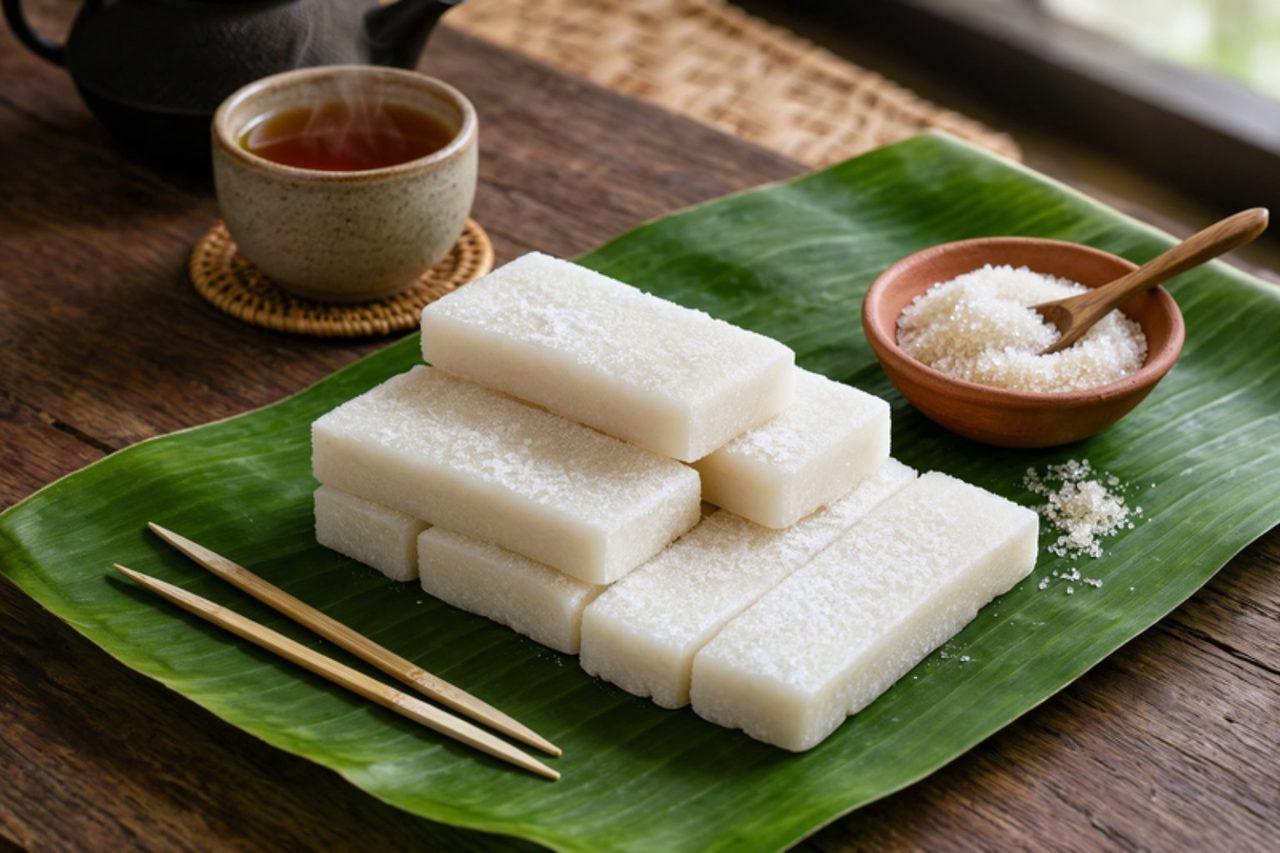
 Indian · Desserts