Skip to content
WhatToEat.Today

Jain recipes: no onion, garlic or root vegetables

2,799

2799 Jain recipes with no onion, garlic, potato, carrot, fresh ginger or other root vegetables, and no mushrooms, eggs or honey. Hing, dry ginger and turmeric powder are fine. Each has photos, step-by-step instructions and cook times. The quickest, Apfelschorle, takes 2 minutes. Most take around 40 minutes.

Filter these by time, diet or cuisine · Make Jain your diet to see only these recipes everywhere on the site.

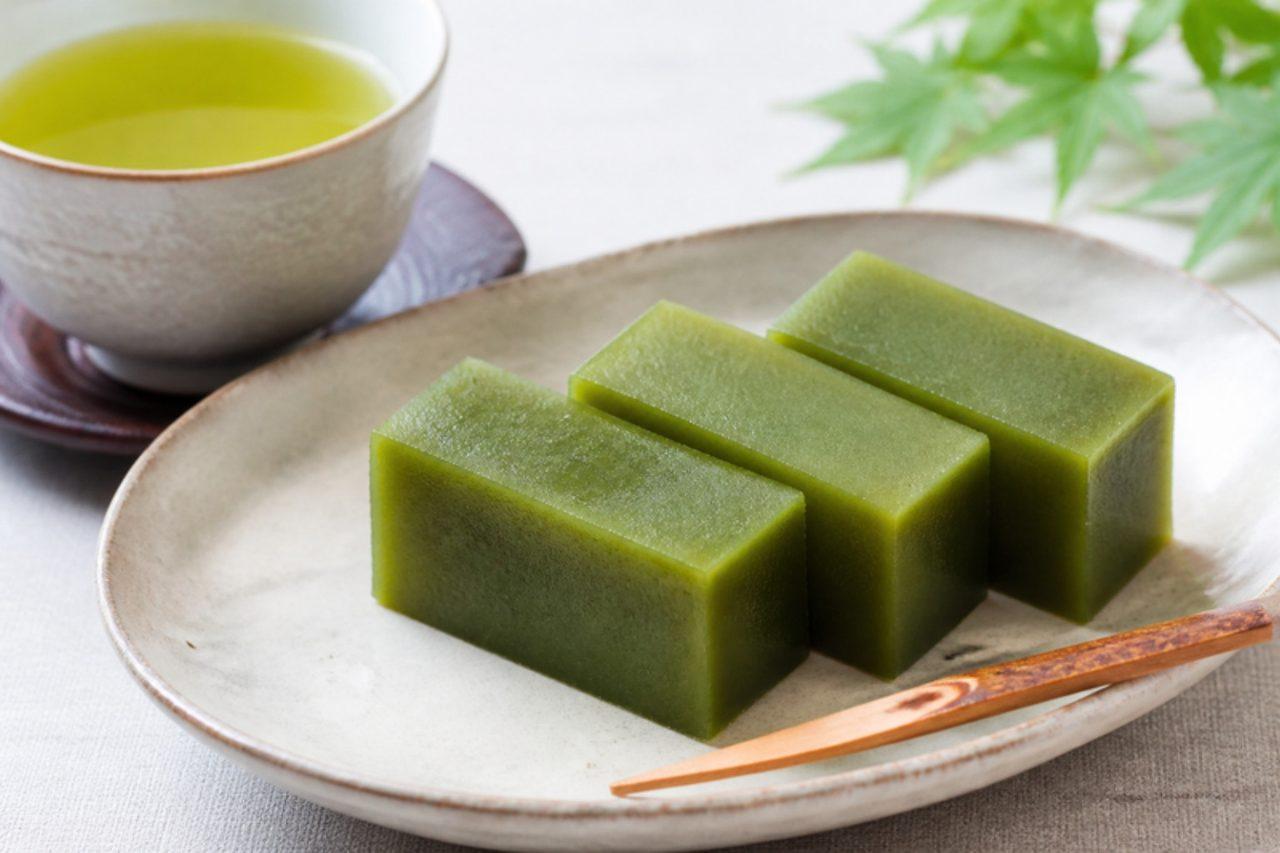
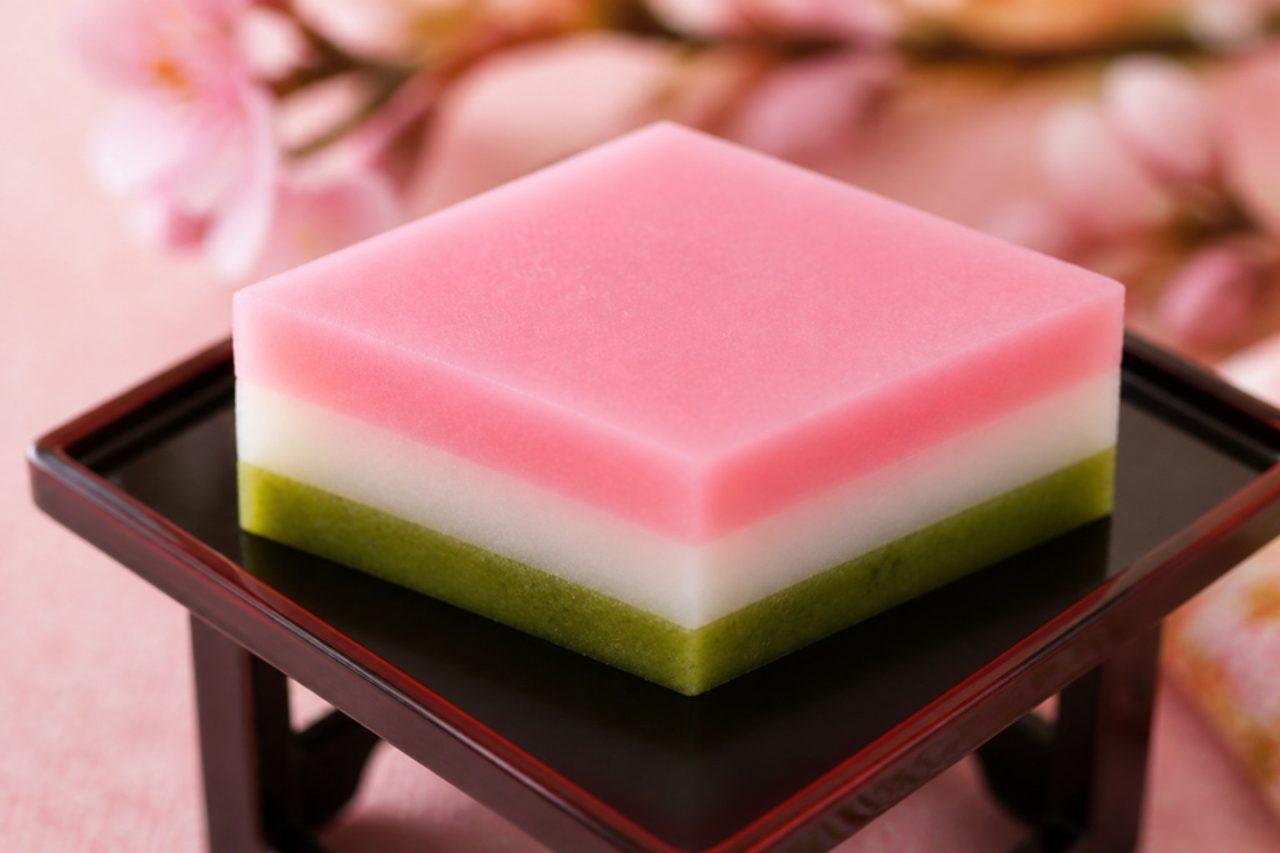
Hishi mochi (diamond rice cakes)

Hishi mochi sit on the tiered doll display for Hinamatsuri, Girls' Day on 3 March, and their colours are a little poem about early spring: green for new grass pushing through, white for the last snow, pink for peach blossom (some families also read them as health, purity and protection from evil). The diamond shape is said to echo the water chestnut and a wish for growth and many children. This home version is made from glutinous rice flour set in a square tin, so the cake is soft, bouncy and only gently sweet, with a grassy hint from matcha. Serve small pieces with green tea, or beside chirashizushi and clam soup at the festival table. Mochi is very sticky: cut it small for young children and older people, and see that they chew well and eat sitting down. Chef's tip: press each layer on while the one below is still warm and tacky, so the three bond into one cake.

by KrazyBadal 0 views

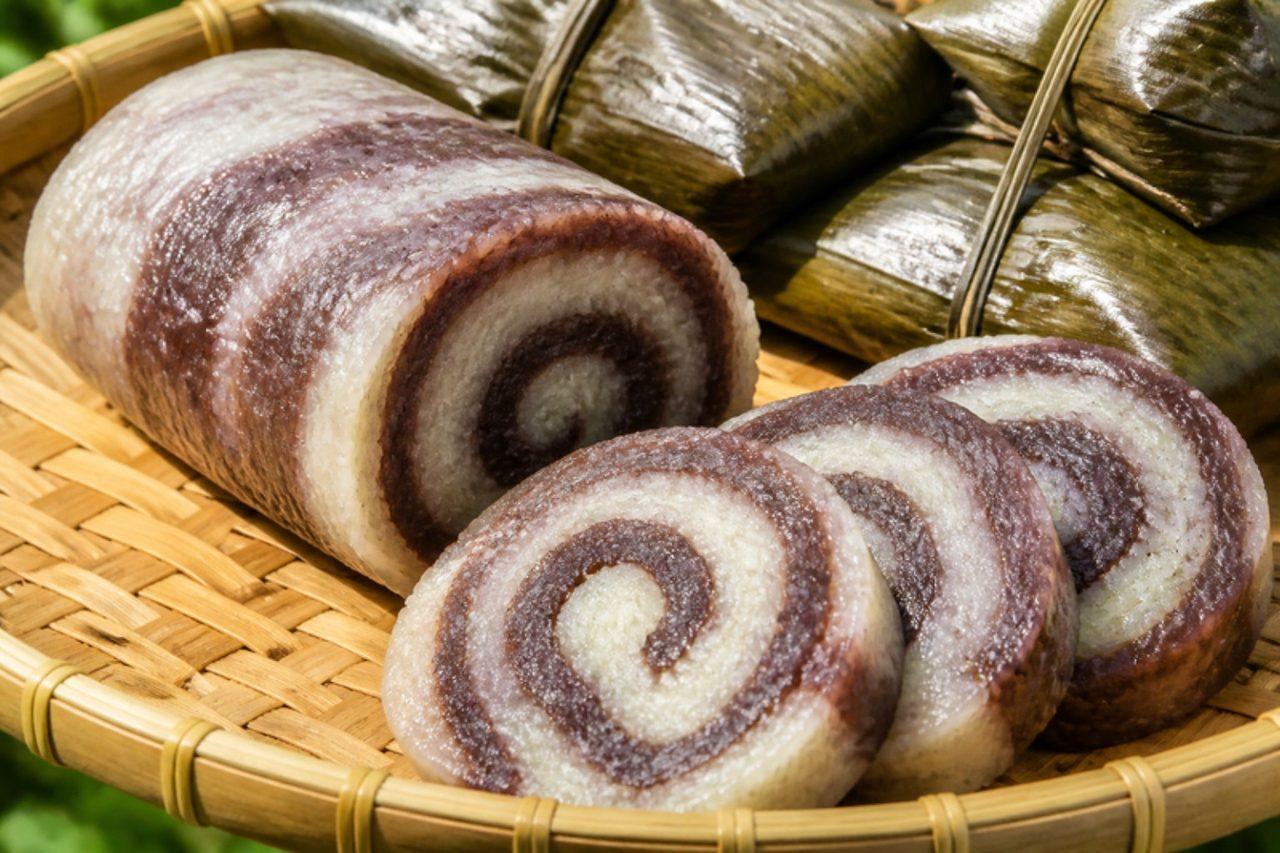
Tupig (grilled sticky rice rolls)

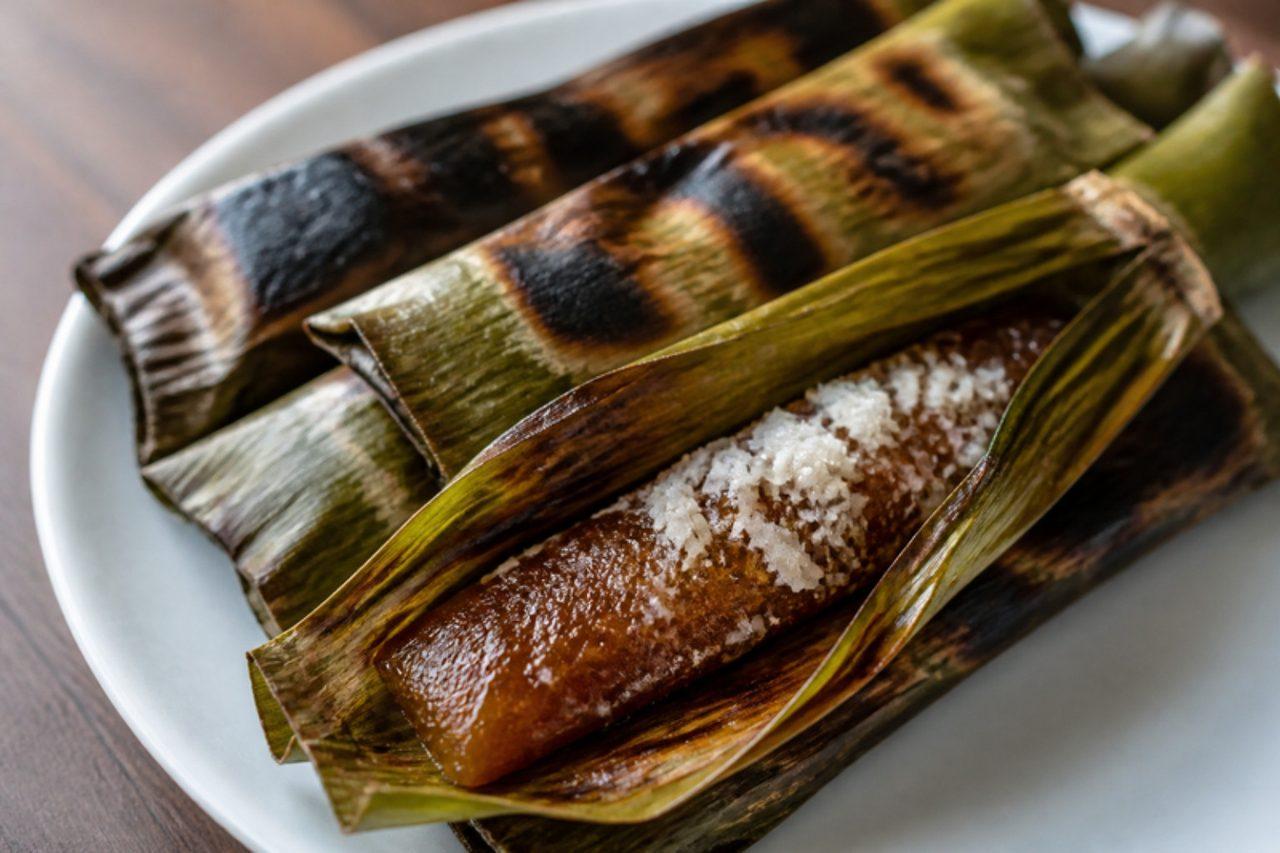
In Pangasinan and the Ilocos provinces, smoky tupig is the snack of Undas, the first days of November when families clean and decorate graves, keep vigil through the night and share food in the cemetery to remember their dead. Sticky rice, coconut milk, shreds of young coconut and dark brown sugar are rolled in banana leaf and grilled until the leaf blackens and the inside turns chewy, caramel-dark and fragrant with smoke. They travel well in a basket, so they are handed round to relatives and visitors, still warm, with coffee or hot ginger tea. Chef's tip: no charcoal? A heavy griddle pan over a medium heat gives a good char on the leaves; just turn the rolls more often.

by KrazyBadal 0 views

Omani halwa (saffron and rose water halwa)

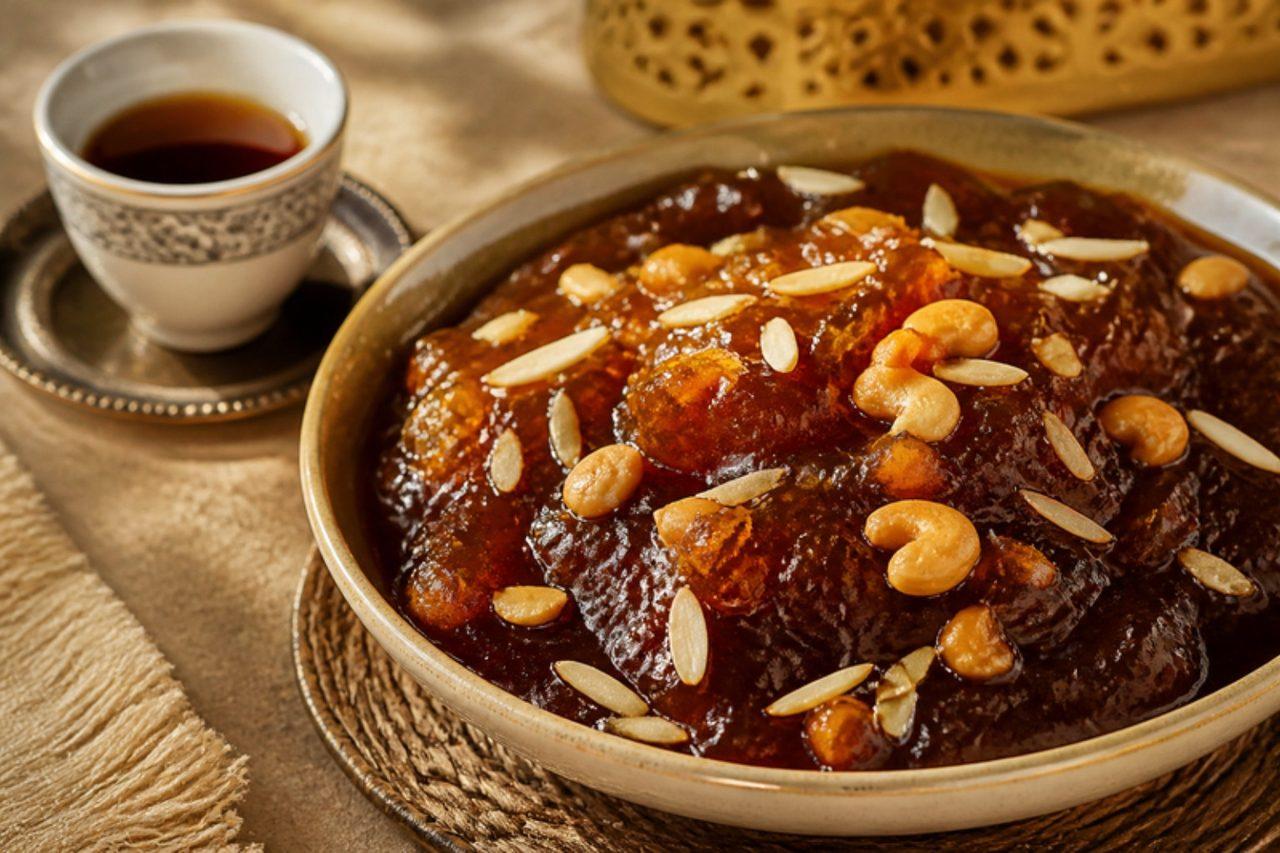
No Omani welcome is complete without a dish of halwa and a cup of cardamom coffee, and in Muscat and Nizwa it is stirred for hours in huge copper pots for Eid, weddings and every family gathering. Sugar is caramelised, then cooked with a cornflour slurry and ghee until it turns dark, glossy and set. It is wobbly and sticky like a very soft fruit jelly, rich with ghee, and fragrant with saffron, cardamom and rose water, with toasted nuts through it. Serve small spoonfuls in little bowls with qahwa, the lightly roasted cardamom coffee. It is naturally egg-free: the starch, cooked slowly with the sugar until it turns clear and thick, does all the setting. Chef's tip: keep stirring and add the ghee a little at a time. The common mistake is stopping, even for a minute, so the halwa catches and burns on the base.

by KrazyBadal 0 views

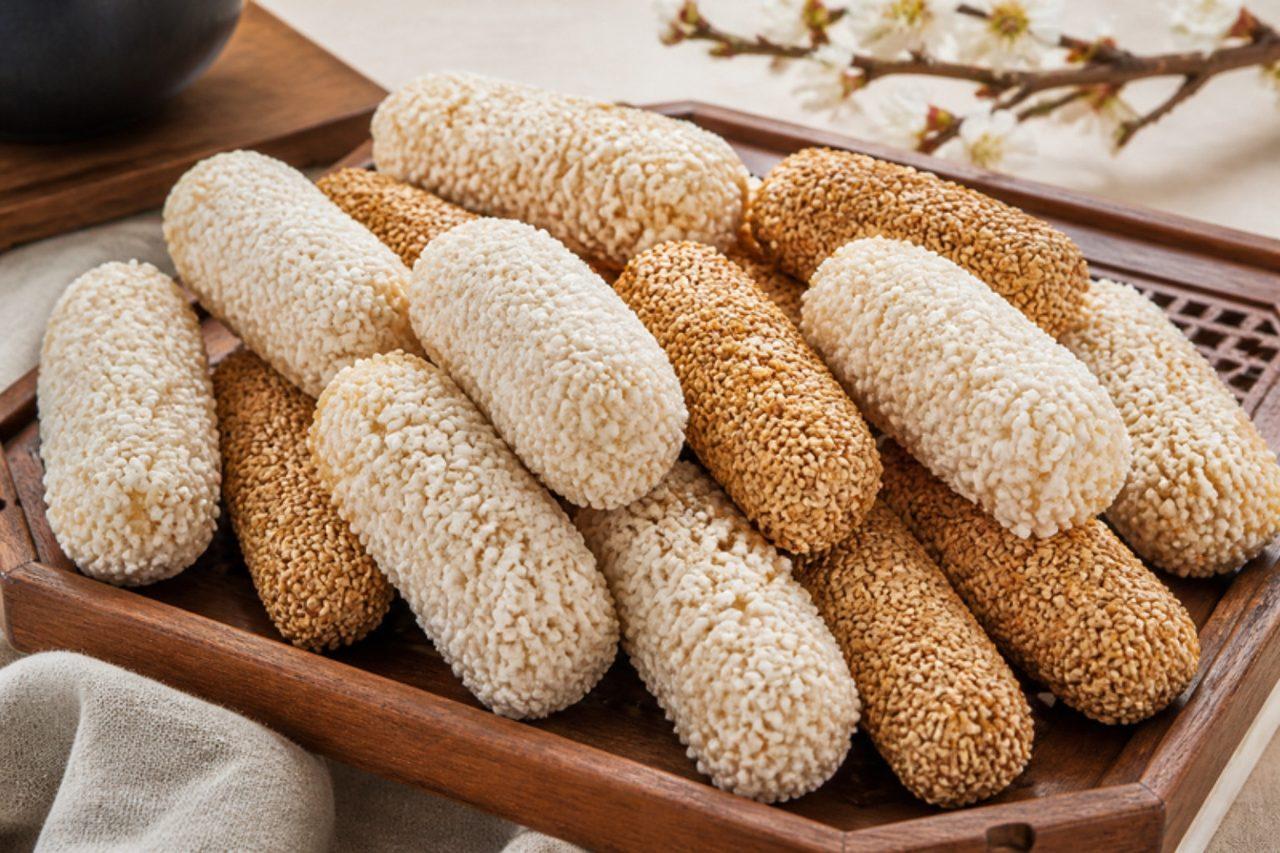
Ma lao (puffed rice sticks)

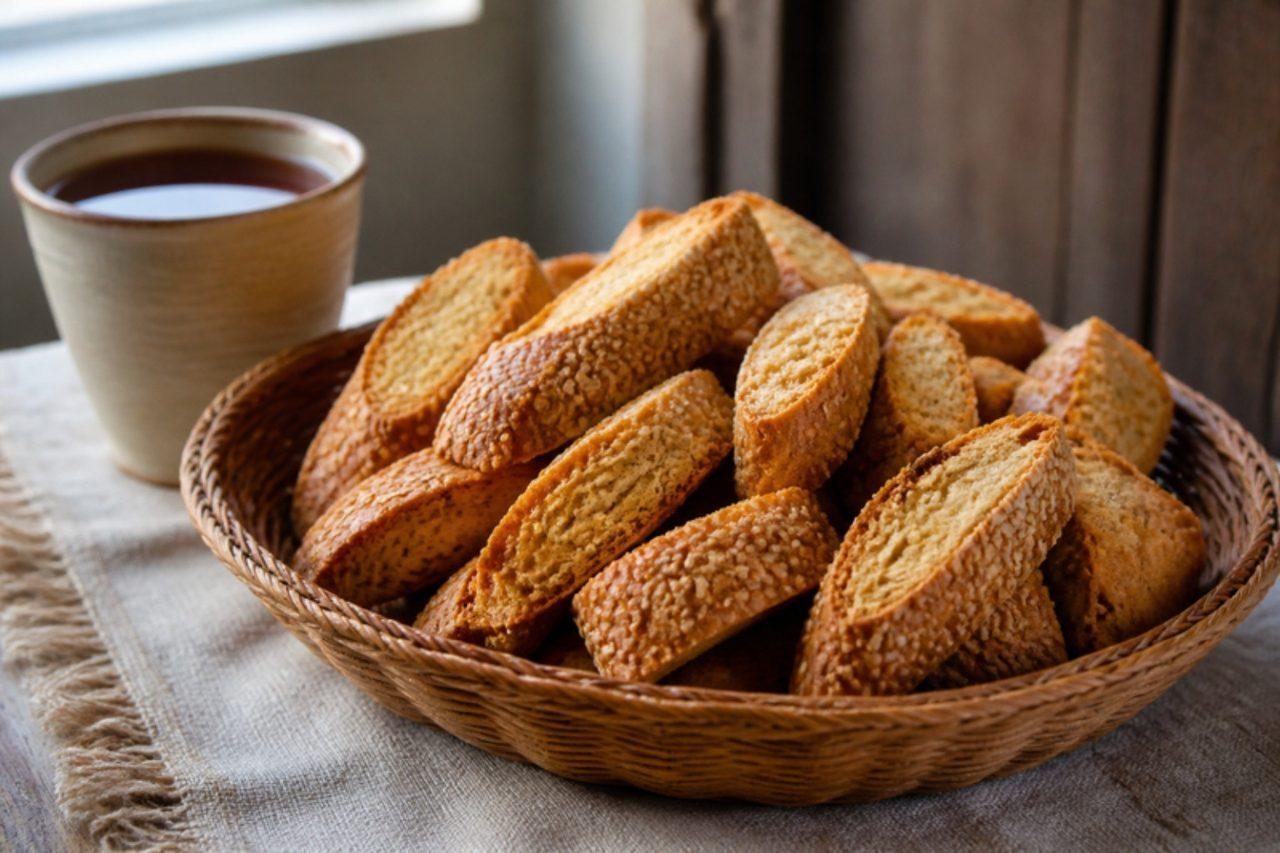
Ma lao are a Lunar New Year sweet from Yilan on Taiwan's northeast coast, stacked on family altars as offerings and handed to guests through the holiday. The sticks swell to many times their size in the oil, a picture of a family and fortune growing bigger in the new year, and their sticky coating stands for staying close together. They are light and crunchy, almost hollow, with a sweet malt glaze and a nutty crust of toasted sesame or crisp puffed rice. Serve on the New Year candy tray with tea. Chef's tip: start frying in barely warm oil and raise the heat slowly; that gentle start is what makes the sticks puff.

by KrazyBadal 0 views

Szaloncukor (Hungarian Christmas tree candy)

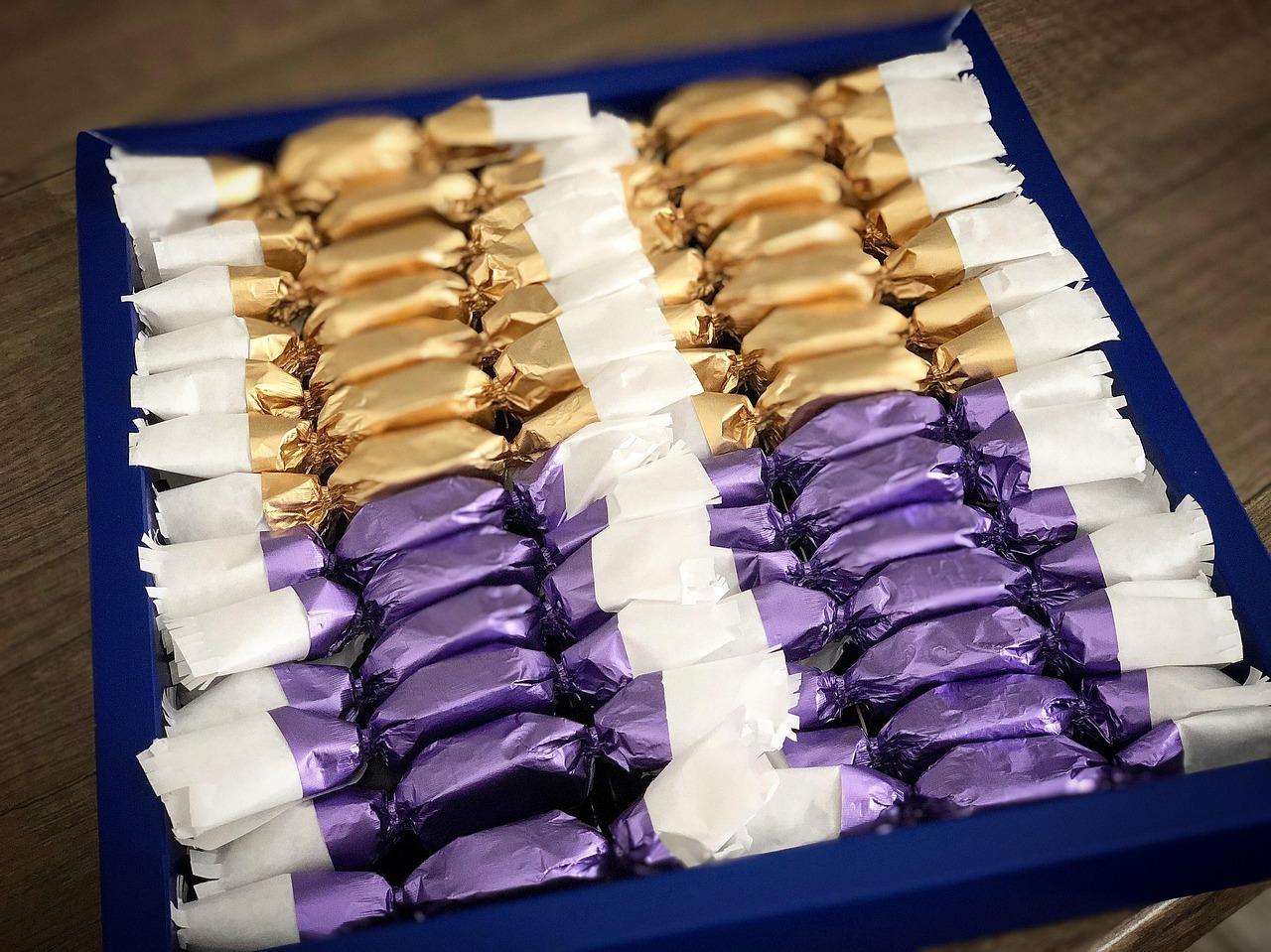
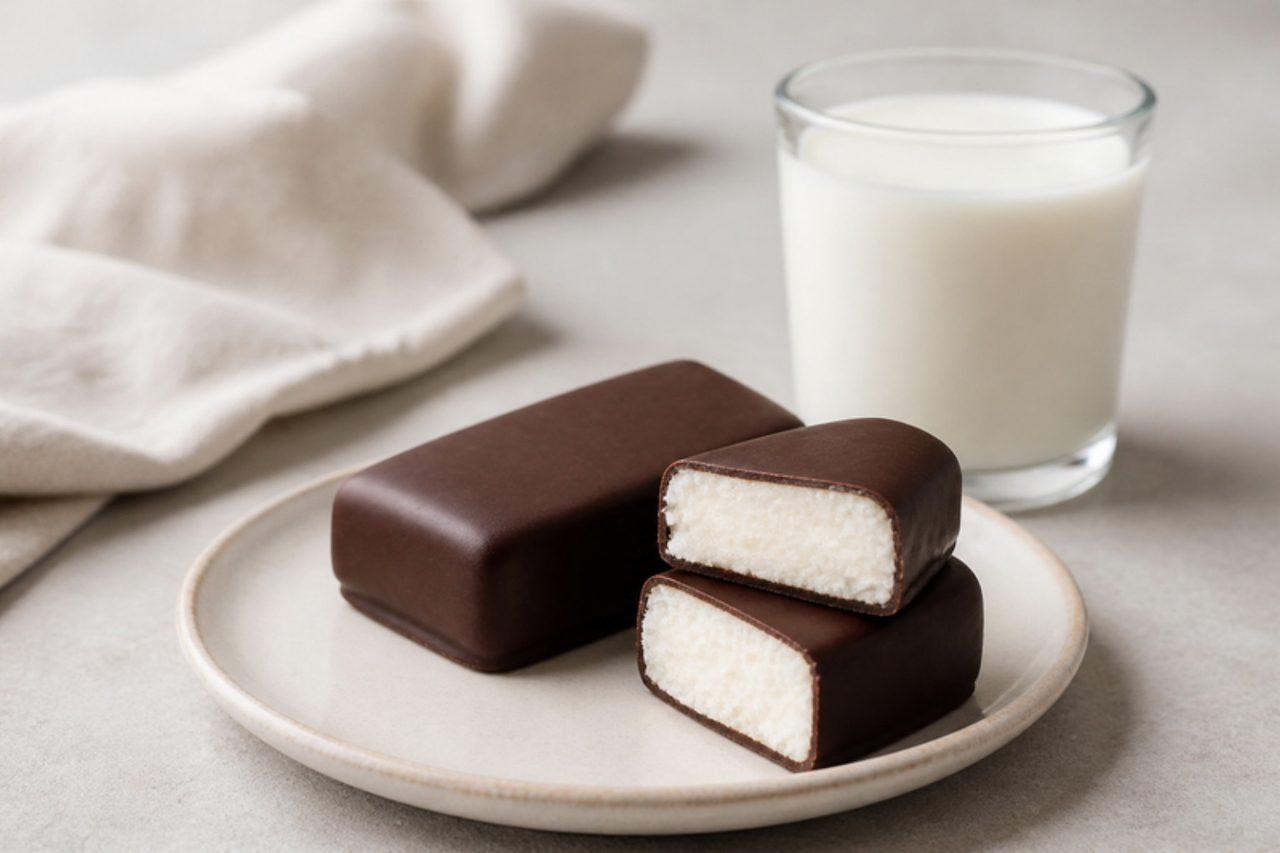
Every Hungarian Christmas tree carries szaloncukor: sweets wrapped in shiny foil and fringed paper, hung from the branches in December and quietly eaten, one by one, by everyone in the house until Epiphany. The classic is soft white fondant, but the centres vary: tart fruit jelly, coconut, marzipan or nut. Here there are two fillings, raspberry jelly and coconut fondant, both coated in dark chocolate, so each bite gives a snap of chocolate and then a tender, melting middle. They are lovely with coffee or as a small gift. These are egg-free with no animal setting agent: the fondant is just sugar syrup cooked to the soft-ball stage and worked until it crystallises into a smooth, white paste, so no egg white is needed, and the jelly is set with agar-agar, which gives clean cubes that hold their shape at room temperature. Chef's tip: let the syrup cool to about 45°C before working it; the common mistake is starting while it is still hot, which grows coarse crystals and a gritty fondant.

by KrazyBadal 0 views

Malban (Egyptian rose and nut jelly sweets)

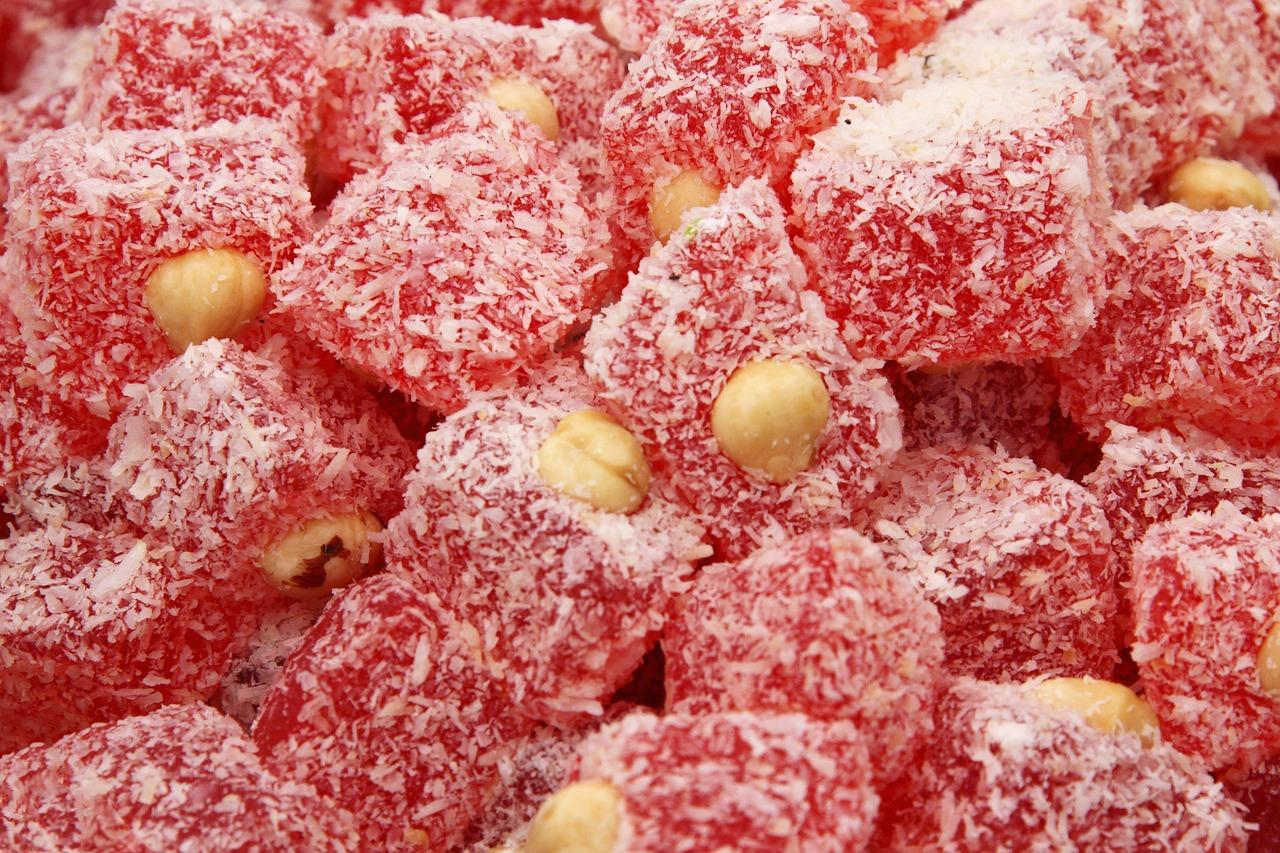
Malban is the Egyptian cousin of Turkish delight, sold by weight in Cairo sweet shops all year but piled highest for Ramadan nights and the Mawlid sweets of the Prophet's birthday. A syrup of sugar and lemon is cooked with cornflour for the best part of an hour into a thick, clear jelly, scented with rose water and a little mastic and studded with pistachios or hazelnuts. Cut into cubes and rolled in icing sugar, it is soft, springy and chewy, sweet and floral. Serve it with mint tea or Turkish-style coffee. It is naturally egg-free: cornflour, cooked slowly in the syrup, sets it into a firm jelly, with no other setting agent. Chef's tip: whisk the cornflour mixture into the syrup in a thin stream and keep stirring. The common mistake is stopping too early, which gives a soft jelly that weeps and won't hold a cube.

by KrazyBadal 0 views

Panutsa (Batangas peanut and cane-sugar candy)

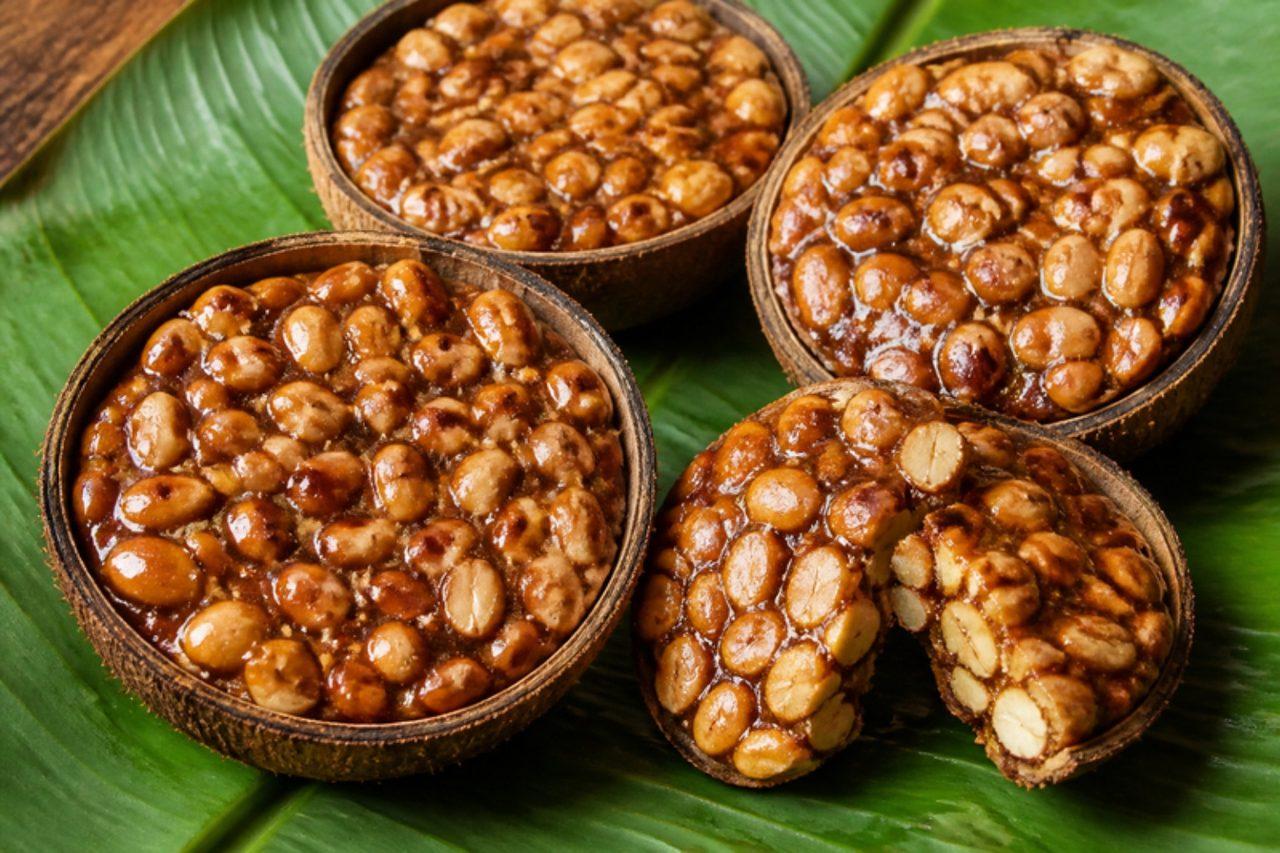
In Batangas and Laguna, south of Manila, panutsa is the rustic peanut candy made from roasted peanuts and dark, unrefined cane sugar, traditionally poured into halved coconut shells to set into domes. It is sold at roadside stalls and town markets and eaten as a snack with the strong local barako coffee, often in the morning or mid-afternoon. It is hard and crunchy, with a deep molasses flavour and lots of nuts. Break it into pieces to serve, or grate it over rice cakes as a sweetener. Panutsa is naturally egg-free: the cane sugar, boiled to the soft-crack stage, sets hard as it cools and holds the peanuts in place. Chef's tip: have the moulds oiled and ready before the syrup goes on. The common mistake is pulling the syrup too early, which gives a sticky, bendy candy that never sets properly.

by KrazyBadal 0 views

Isobeyaki (grilled mochi with soy and nori)

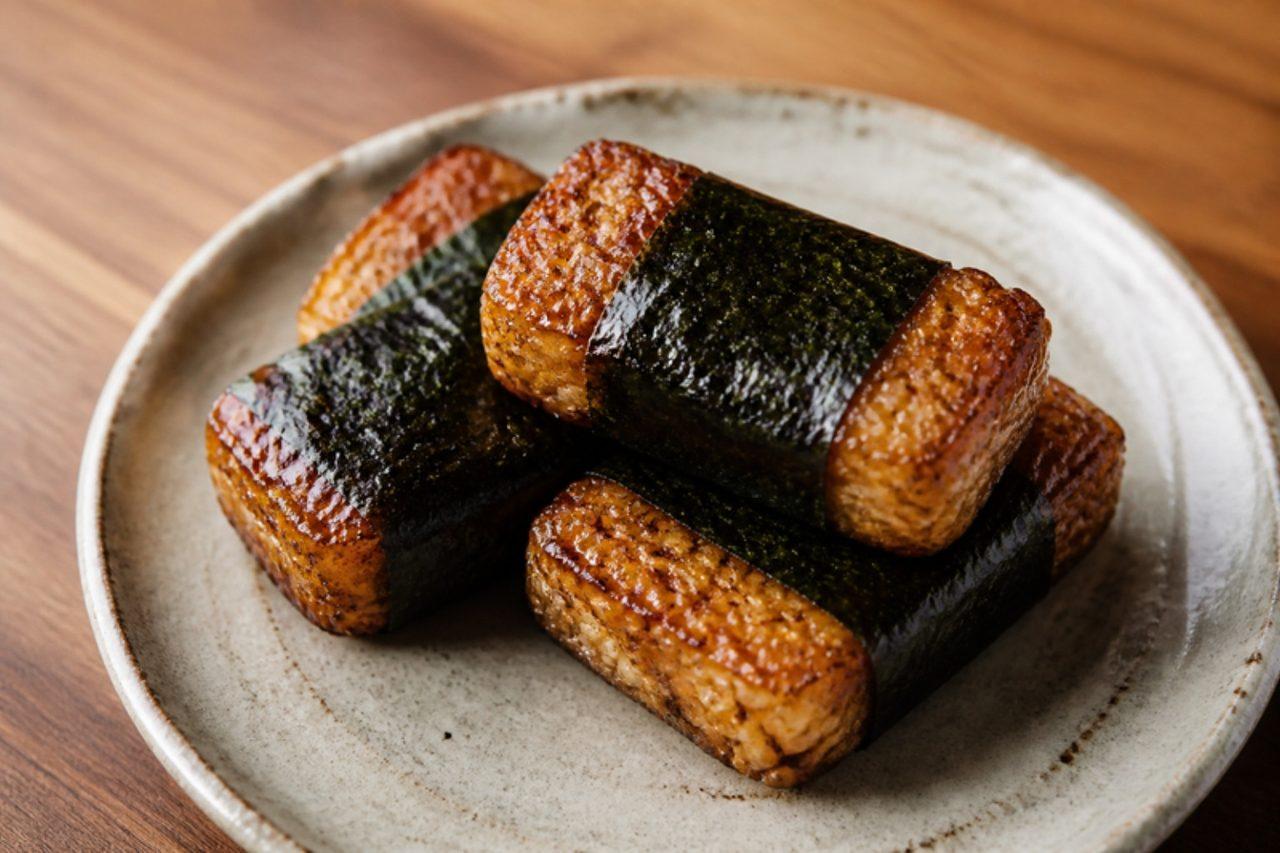
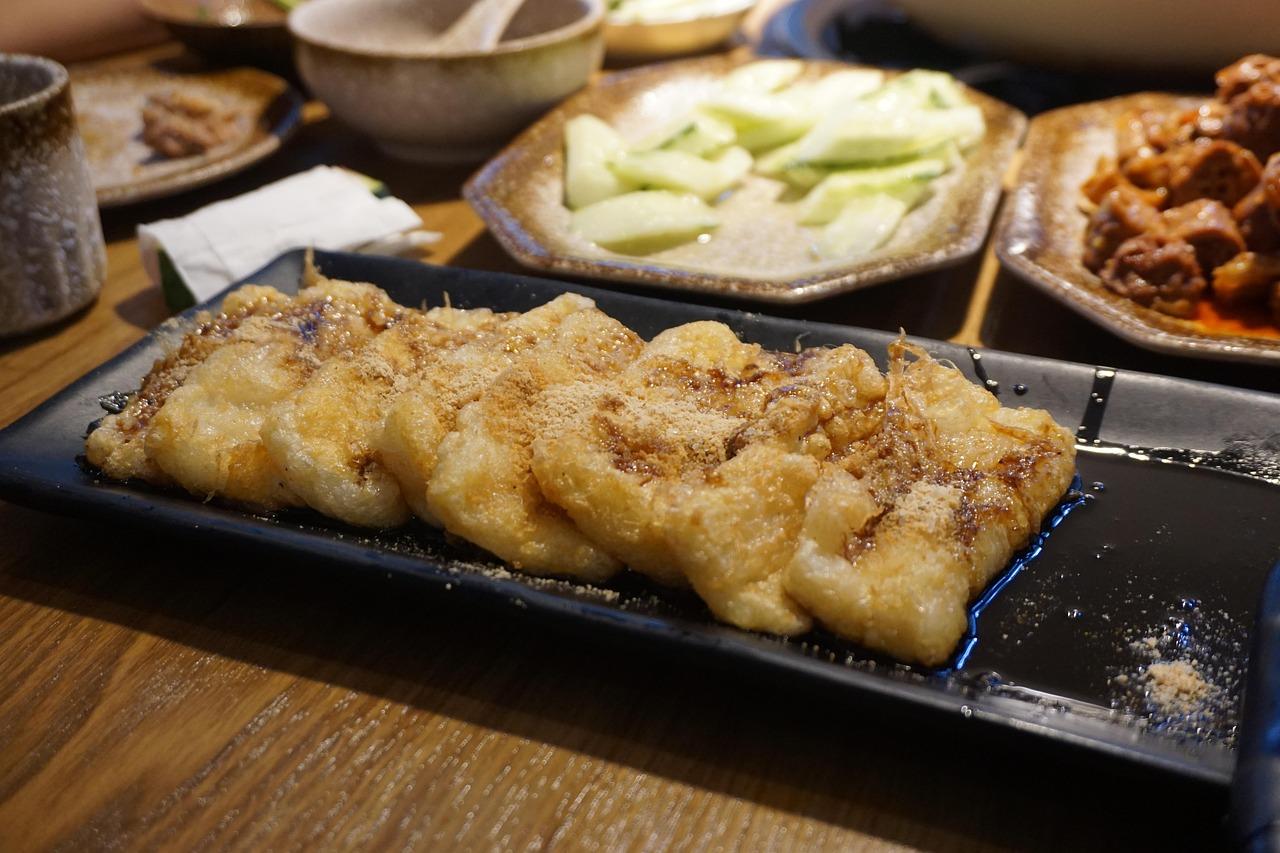
In the first days of the year, Japanese kitchens are full of mochi, the rice cakes pounded or bought for Shōgatsu, and isobeyaki is the easiest, most loved way to eat them. The name means 'grilled on the rocky shore', after the sea flavour of nori, and mochi itself stands for strength and long life because it stretches without breaking. Each cake puffs and blisters in the pan, then gets a lacquer of sweet soy and a crisp sheet of seaweed; the outside crackles while the inside turns stretchy and molten. Serve as a snack with green tea, or alongside a bowl of miso soup. Chef's tip: brush the soy on only once the mochi has puffed, or it will burn before the middle is soft.

by KrazyBadal 0 views

Sanzi (fried dough threads)

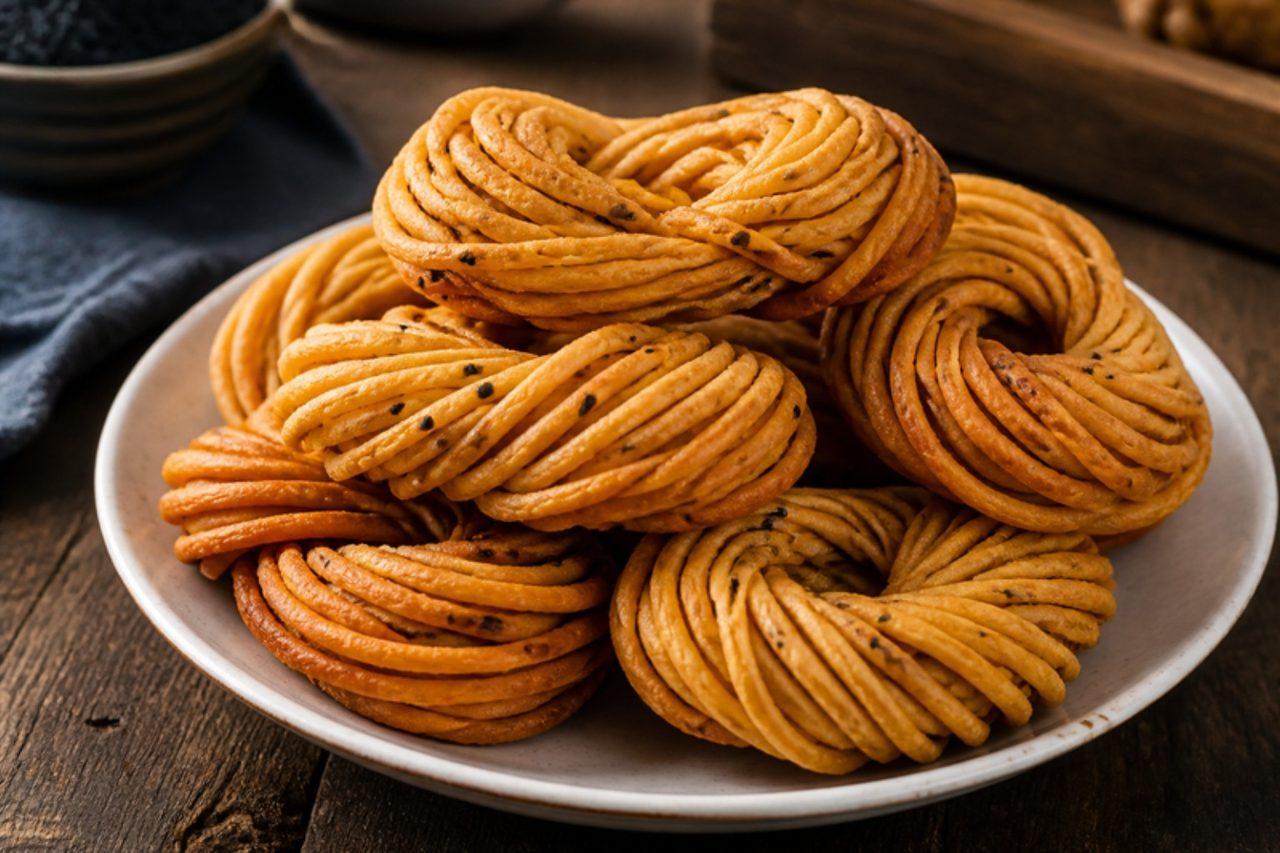
Sanzi are lacy coils of fried dough threads, made across Jiangsu and Shandong and by Hui and Uyghur cooks in Xinjiang. They belong to Hanshi, Cold Food Day, just before Qingming, when old custom forbade lighting the stove, so families fried them in advance to eat cold; the shatteringly crisp coils keep well for days and stand for the care taken to prepare for the remembrance. The dough is lightly salted and the strands snap like thin crackers, with a nutty note from sesame. Break them over congee or soy milk, or eat them on their own with tea. Chef's tip: rest the oiled ropes properly; relaxed dough stretches to thread-thin without snapping.

by KrazyBadal 0 views

Abekawa mochi (kinako mochi)Mochi with roasted soybean flour

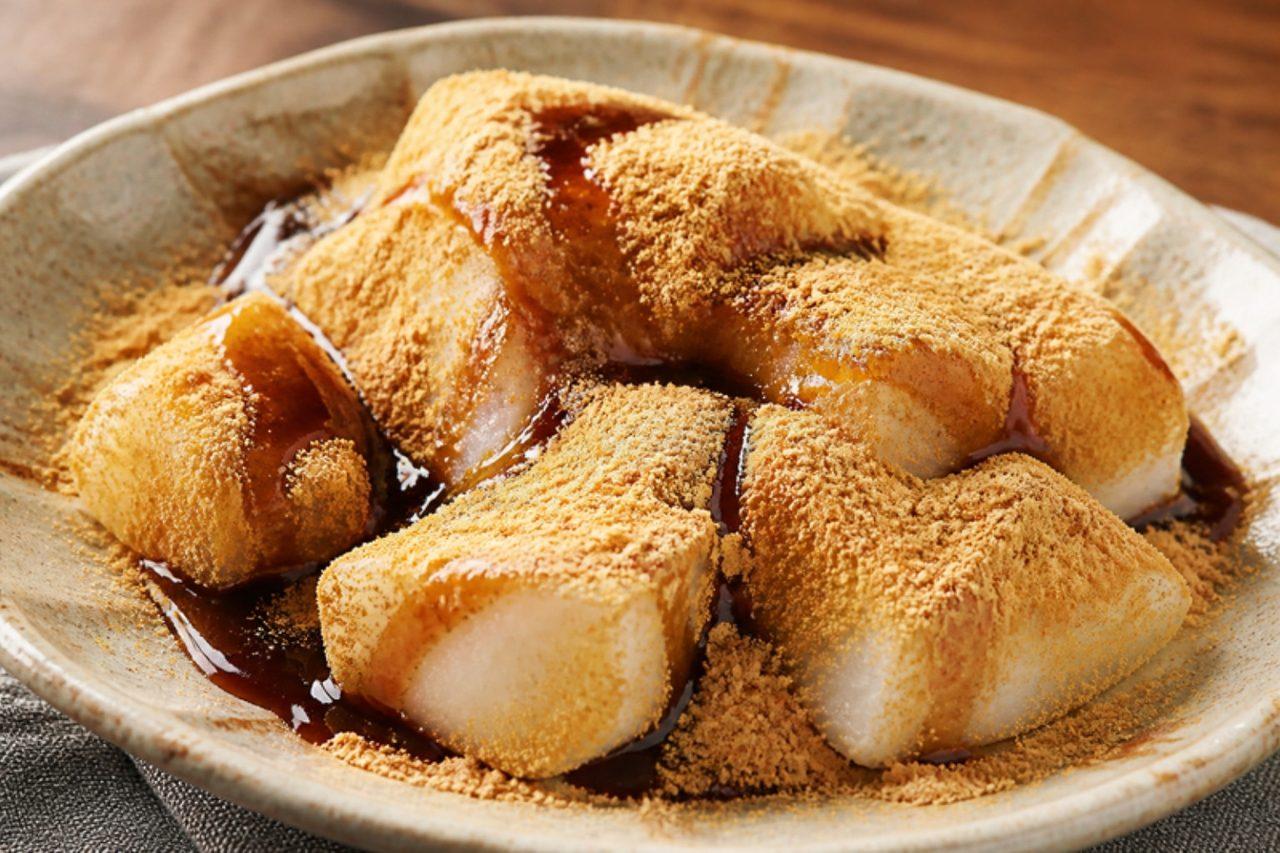
Abekawa mochi comes from the banks of the Abe River in Shizuoka, where teahouses served it to travellers on the old Tōkaidō road, and today families all over Japan make it with leftover New Year mochi and at kagami-biraki on 11 January, when the offering cakes are broken open and shared for good health. Kinako, roasted soybean flour, gives a nutty, toasty sweetness, and its golden colour is said to look like gold dust, a wish for wealth in the year ahead. The mochi underneath is pillowy and stretchy. Serve with hot green tea, with a little black sugar syrup (kuromitsu) poured over if you like. Chef's tip: dunk the cooked mochi in hot water just before rolling, so the kinako sticks in an even, velvety coat.

by KrazyBadal 0 views

Num plae ai (Khmer palm sugar rice balls)

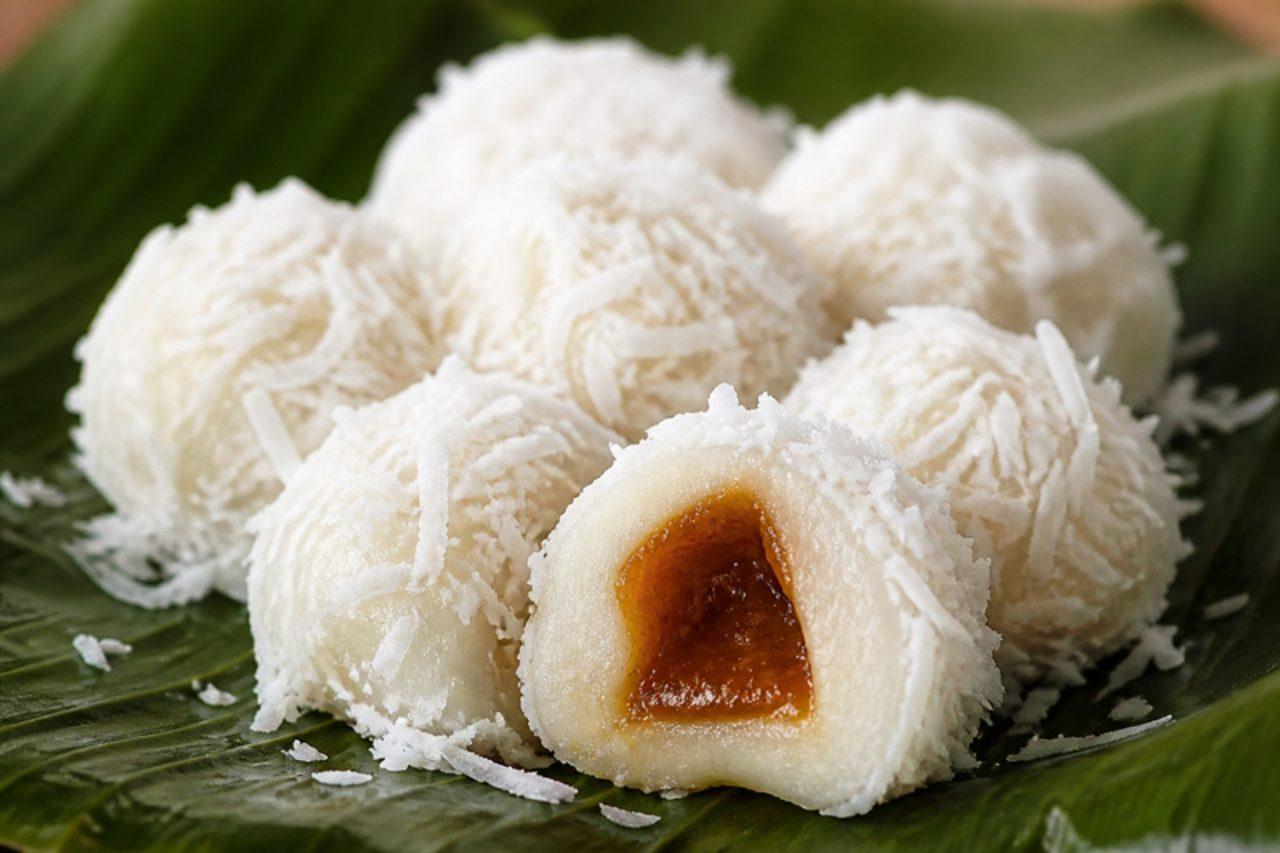
Num plae ai are a favourite Cambodian sweet for Khmer New Year in April, made to share with visiting family and offered at the pagoda, the hidden palm sugar inside standing for a sweet surprise in the year ahead. Small balls of glutinous rice dough are wrapped around a cube of palm sugar, boiled until they float and then rolled in fresh coconut with a pinch of salt. Bite in and the warm sugar bursts out like syrup against the soft, chewy dough. They are best eaten warm, within a few hours of making. Cut the balls in half for young children, as sticky rice dough can be hard to chew. Chef's tip: seal each ball carefully and roll it smooth between your palms, or the sugar leaks out into the water.

by KrazyBadal 0 views

Pruneaux d'Agen fourrés (stuffed Agen prunes)

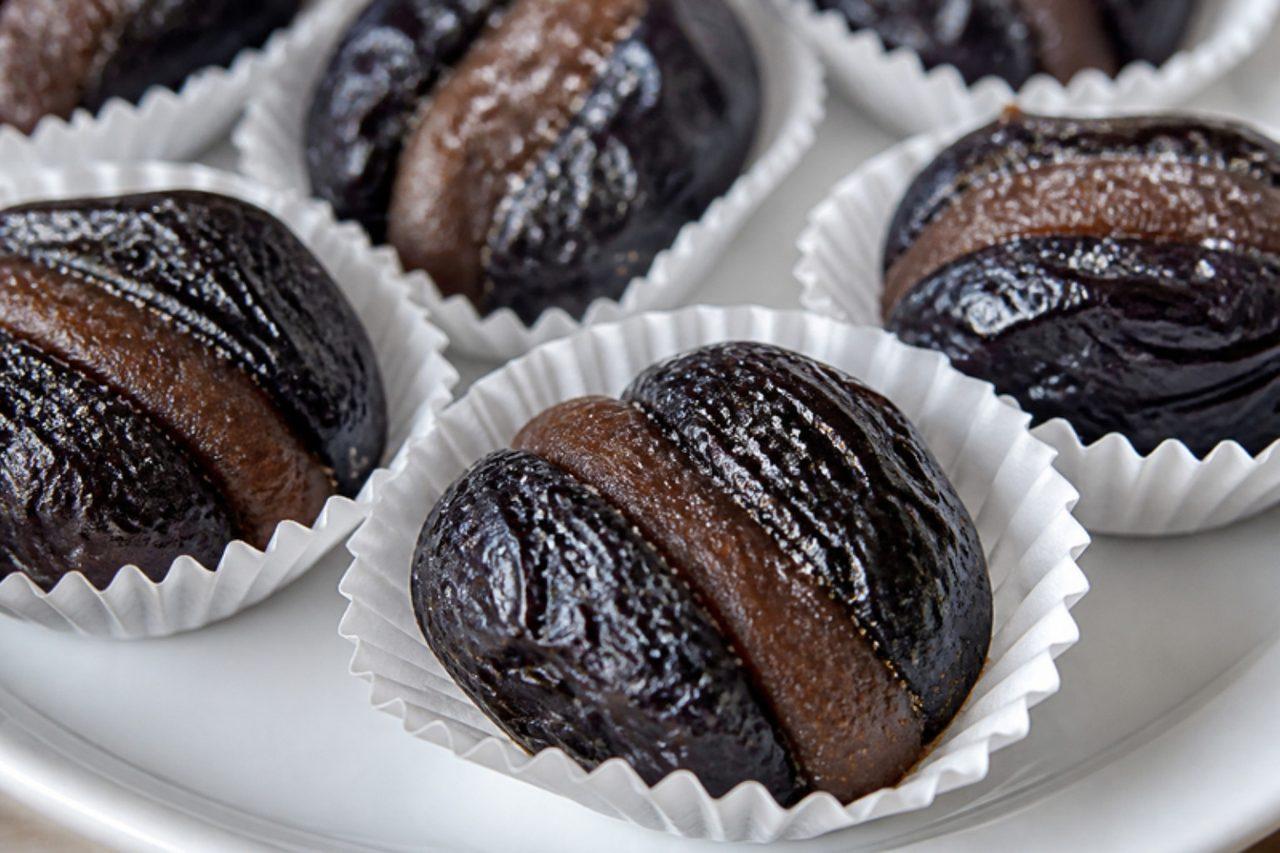
Agen, on the Garonne in south-west France, has dried its plums into prunes for centuries, and its confectioners stuff the best ones with a paste of more prunes and almonds. Boxes of pruneaux fourrés are a Christmas present across the south-west and a speciality of the town's prune festival at the end of August. Each one is glossy and plump, with a soft, sticky skin and a dense, mellow filling that tastes of fruit, almond and a little orange. Serve them with coffee or tea, or as part of a cheese plate. The filling is a kind of almond paste, held together by the sticky prune purée and sugar, so it is egg-free like the rest of the sweet; some versions add a little brandy, and orange juice takes its place here. Chef's tip: if the prunes are dry, steam them for 5 minutes first; the common mistake is forcing filling into stiff prunes, which split.

by KrazyBadal 0 views

Poolaki (Isfahan saffron sugar discs)Saffron caramel discs

Poolaki are the glassy, coin-thin sugar discs of Isfahan, sold in tins in the bazaar near Naqsh-e Jahan square and served with tea in Iranian homes, especially at Nowruz and when guests drop by. Instead of stirring sugar into the glass, you hold a disc on your tongue and sip strong black tea through it. They snap cleanly, then melt into a light caramel scented with saffron, sometimes with cardamom or a scatter of pistachio. They are naturally egg-free: sugar syrup cooked to the hard-crack stage sets as clear as glass the moment it is spread thin, and a little vinegar stops it from turning grainy. Chef's tip: do not stir once the syrup boils; swirl the pan instead and wash down the sides with a wet pastry brush. The common mistake is stirring, which makes the syrup crystallise and turn cloudy.

by KrazyBadal 0 views

Qiaoguo (Qixi fried pastries)Sesame sugar fried dough knots

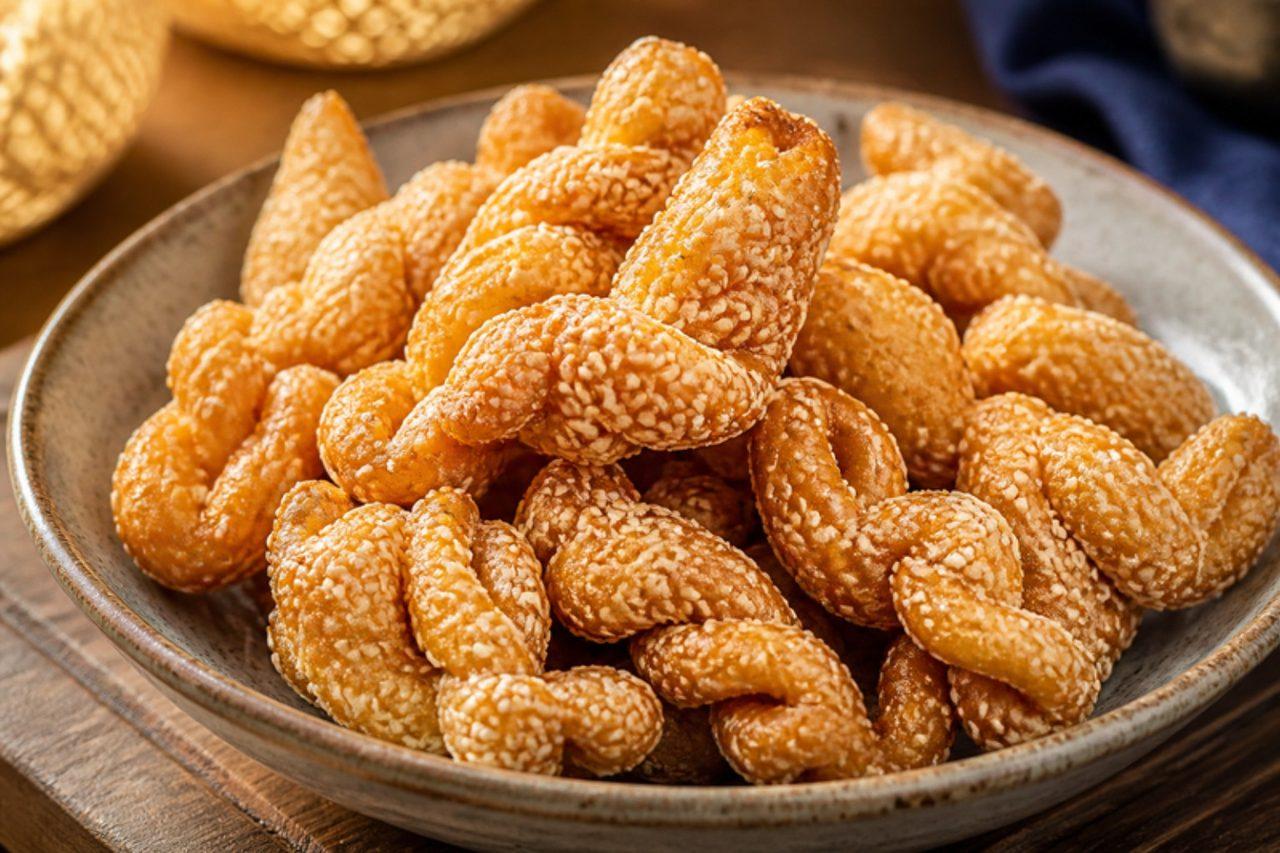
Qiaoguo, 'skill fruits', are fried for Qixi on the seventh night of the seventh lunar month in Zhejiang and Jiangsu. The festival celebrates the Weaver Girl and the Cowherd, the star-crossed lovers who meet once a year, and girls once set out these pastries and asked the Weaver Girl to make them clever with their hands; the neat twists and cut-out shapes show off that skill. They are crunchy, lightly sweet and toasty with sesame, like a delicate biscuit. Serve a plate under the evening sky with tea, melon and fruit. Chef's tip: roll the dough thin, about 2 mm; thicker pieces stay hard in the middle instead of crisp.

by KrazyBadal 0 views

Tang gua (malt sugar candy)

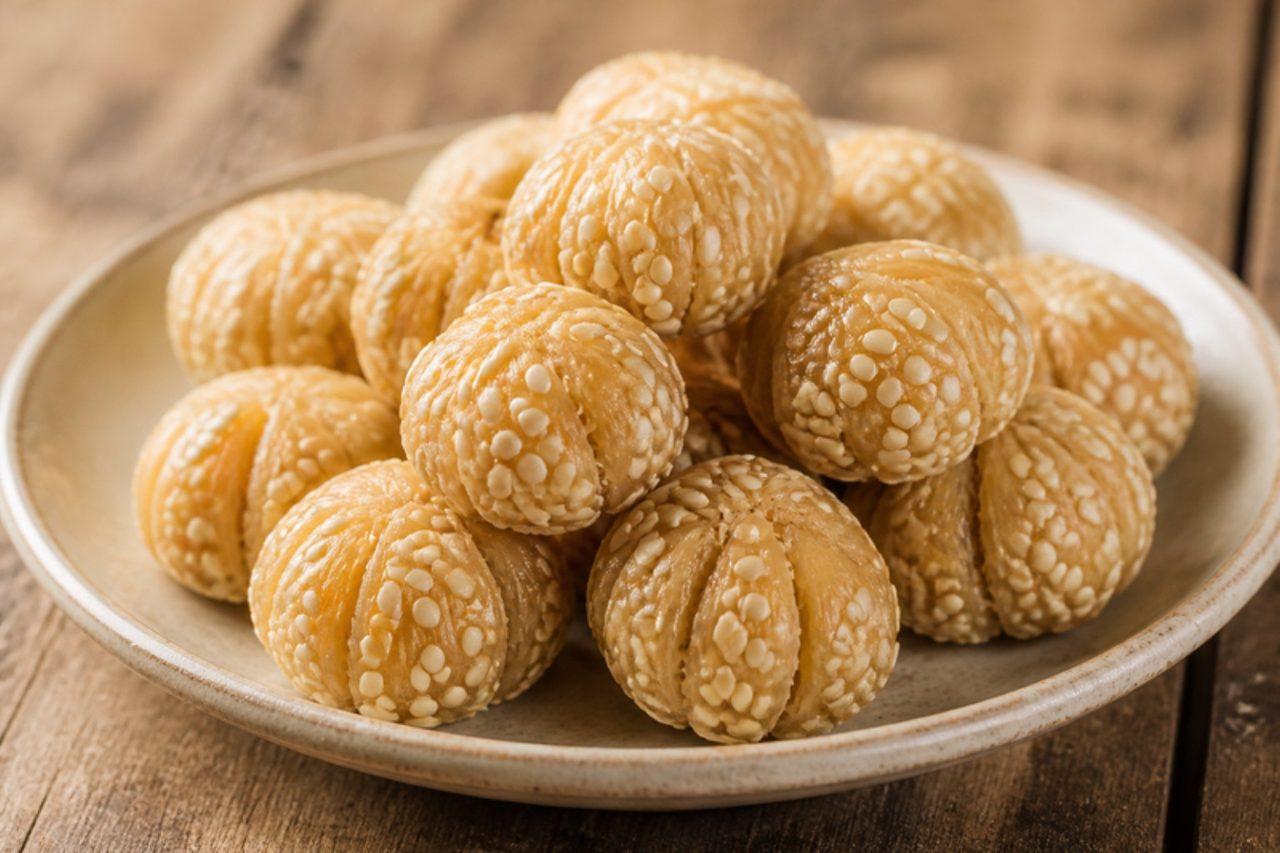
On Xiaonian, the 'little New Year' a week before the Spring Festival, families across northern China offer tang gua to the Kitchen God before he flies up to report on the household: the sticky sweets are meant to glue his mouth shut, or at least sweeten his words. The name means 'sugar melons', after their round, ribbed shape. Pulling the hot maltose over and over turns it from amber glass to a pale, airy candy that shatters and then turns chewy, with a toasty malt flavour and plenty of sesame. Serve them with tea on Xiaonian and keep the rest in a tin for New Year guests. Chef's tip: wear clean rubber or silicone gloves and work on an oiled tray; hot sugar sticks to skin and burns.

by KrazyBadal 0 views

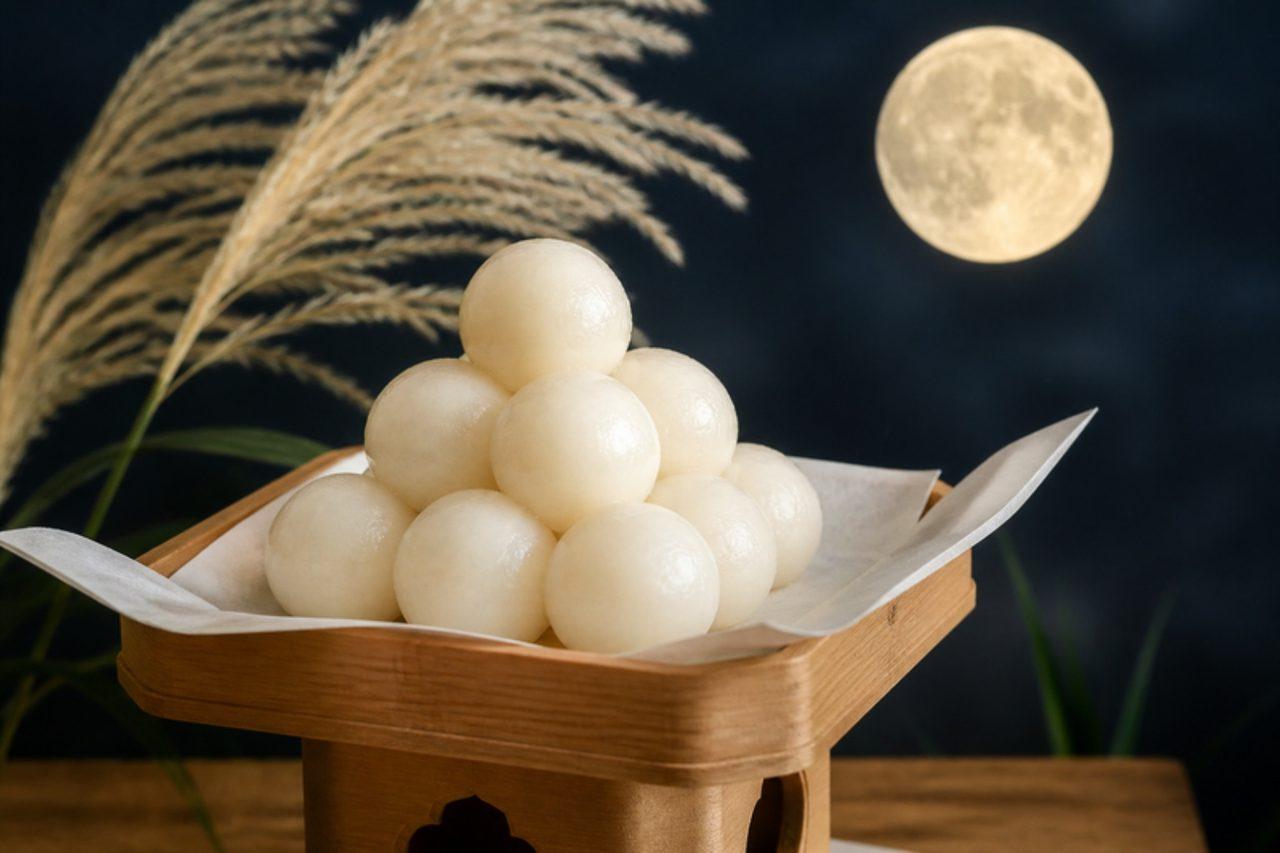
Tsukimi dango (moon-viewing dumplings)

On the night of the harvest moon in September or early October, families across Japan set a tray of plain white dumplings by the window with a vase of pampas grass, as thanks for the harvest and an offering to the full moon. The round white dango stand for the moon itself, and the traditional count is fifteen, for the fifteenth night of the eighth lunar month, stacked nine, four and two. This Kanto-style dough is steamed and then kneaded, which gives a smoother, firmer bite than boiled dango, with a clean rice flavour that loves a dusting of kinako or a spoonful of sweet red bean paste once the moon-viewing is over. Mochi is very sticky: cut the dumplings small for young children and older people, and see that they chew well and eat sitting down. Chef's tip: knead the steamed dough while it is still hot, wrapped in a damp cloth, until it turns satiny.

by KrazyBadal 0 views

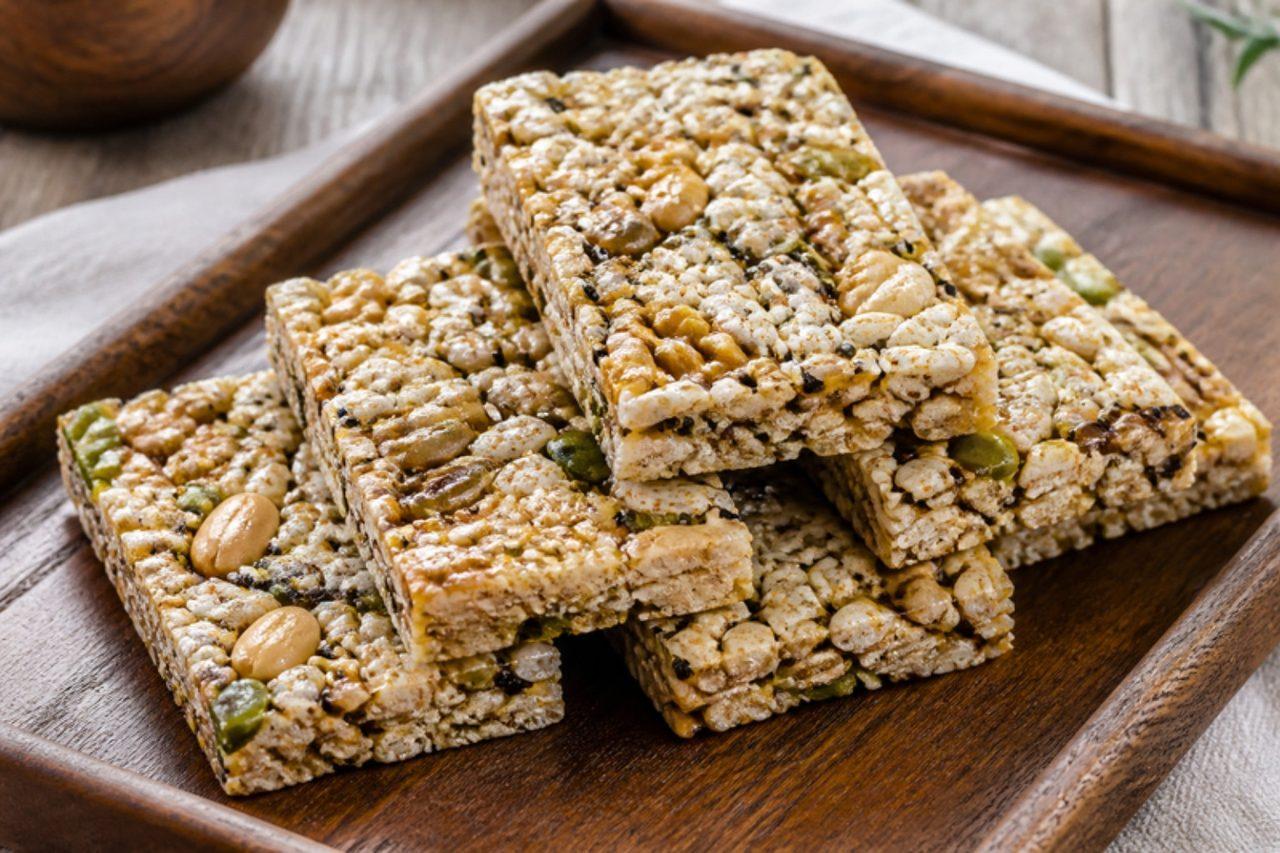
Yeot-gangjeong (nut and sesame bars in rice syrup)

Yeot-gangjeong is a traditional Korean hangwa made all over the country, especially in the weeks before Seollal and Chuseok, when trays of these bars are given as gifts and set out for visitors. Toasted nuts, sesame seeds and puffed rice are folded into hot rice syrup, pressed flat and cut into bars that are crunchy, nutty and only gently sweet, with a faint malty flavour from the syrup. Serve them with green tea or sikhye, the sweet rice drink, or pack them for a lunchbox. They are naturally egg-free: rice syrup, heated until it bubbles, acts as the glue and sets firm as it cools. Chef's tip: cut the slab while it is still warm. The common mistake is waiting until it is cold, when the bars shatter instead of slicing cleanly.

by KrazyBadal 0 views

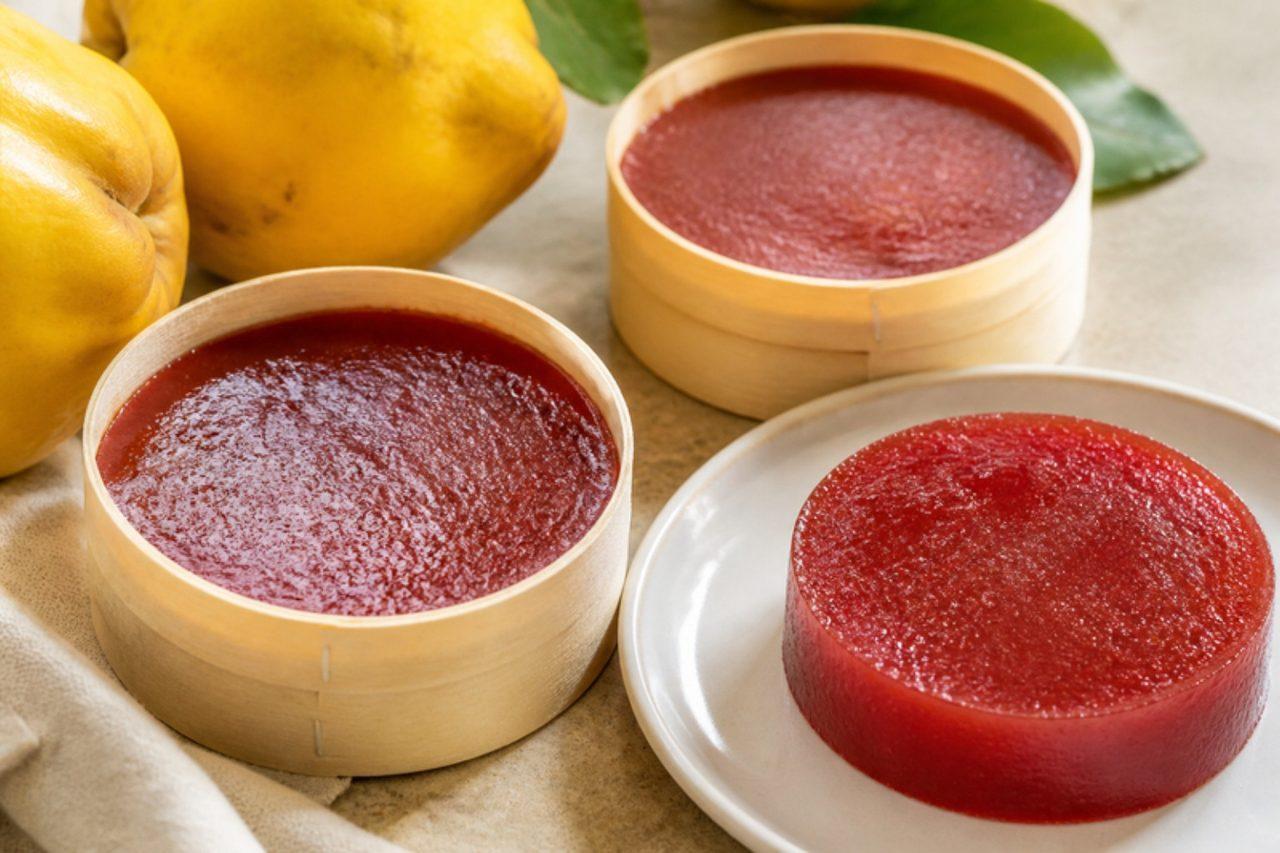
Cotignac d'Orléans (clear quince jelly)

Orléans has made cotignac since the Middle Ages and offered it to visiting kings, and the town still sells it in small round wooden boxes, to be eaten by scraping the jelly out with the edge of the lid. It is a winter sweet, made when the autumn quinces come in and given at Christmas and New Year. The jelly is clear and ruby-red, firm enough to cut but tender on the tongue, with a scented, slightly tart quince flavour. Serve it after dinner with coffee, or with a mild cheese. Nothing but fruit and sugar sets it, so it is naturally egg-free: quinces are among the richest fruits in pectin, and boiling their juice with sugar to the setting point is all it takes. Small ramekins or silicone moulds lined with baking paper stand in for the wooden boxes. Chef's tip: let the cooked quince drip through the cloth without pressing; the common mistake is squeezing it, which clouds the jelly.

by KrazyBadal 0 views

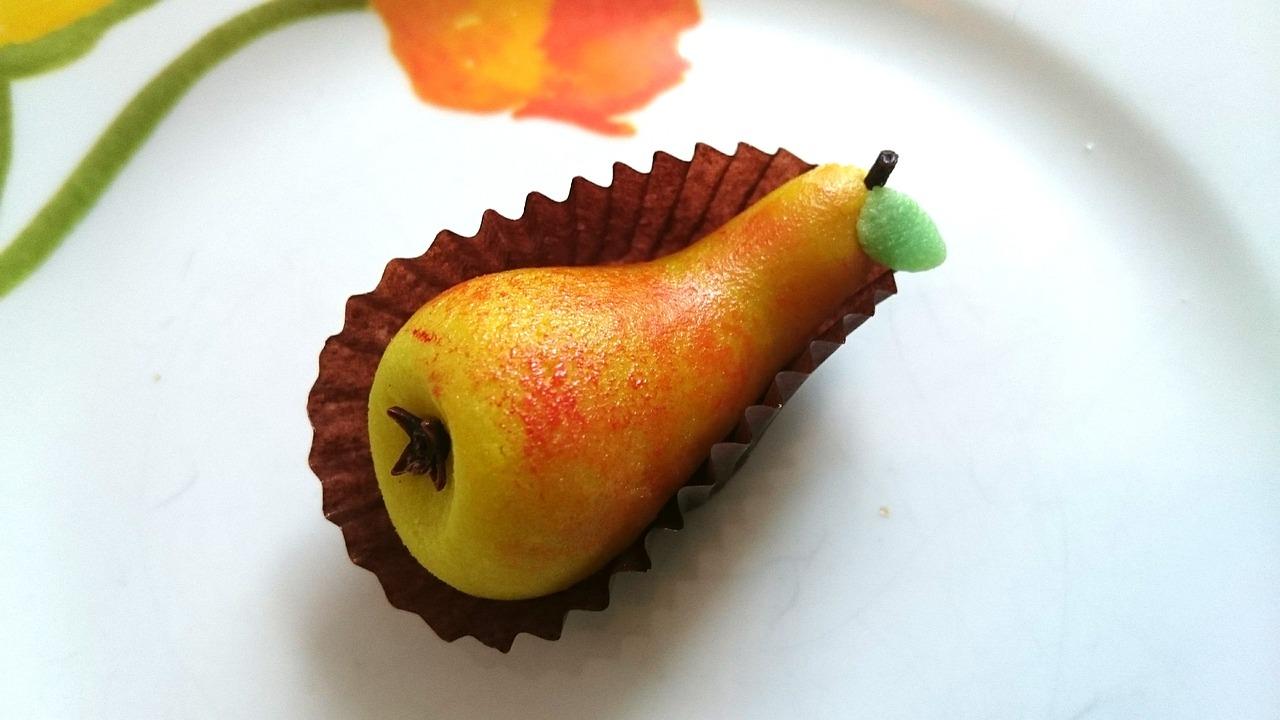
Frutta martorana (Sicilian painted almond-paste fruit)

Palermo's pastry shops fill their windows with frutta martorana in late October, ready for All Souls' Day on 2 November, when Sicilian children wake to find sweets and toys said to be left by the family's dead. The name comes from the nuns of the Martorana convent, who were said to have decorated their bare orchard with almond-paste fruit. Each little fig, prickly pear or orange is so perfectly painted it looks real, and the paste inside is smooth, dense and very sweet, with a pure almond flavour. Serve a few with coffee or a glass of cold almond milk. The paste is egg-free almond paste, made the Sicilian way: ground almonds are stirred into sugar syrup boiled to the soft-ball stage, and the syrup binds them as it cools, unlike some shop marzipan, which is not always egg-free. Chef's tip: let the shapes dry before painting; the common mistake is painting damp paste, so the colours bleed.

by KrazyBadal 0 views

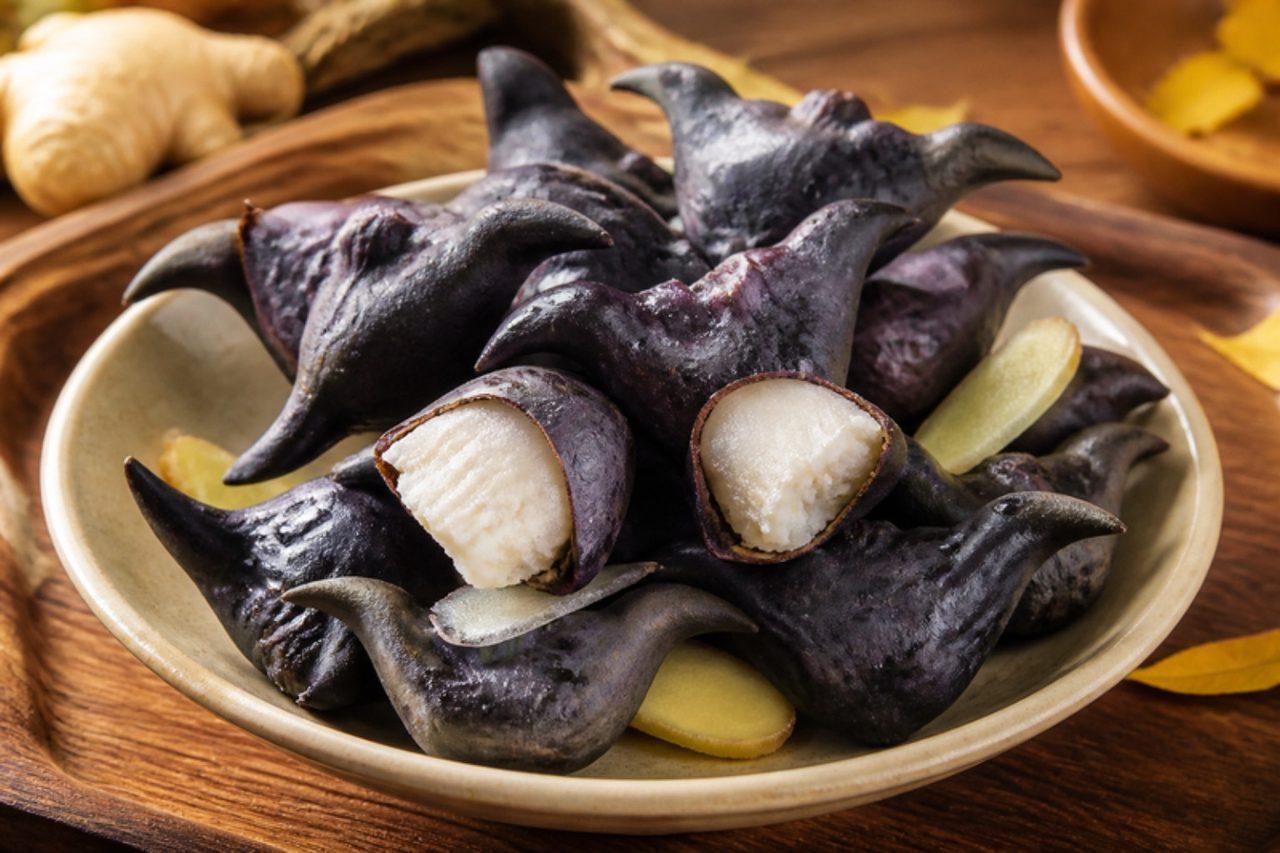
Boiled water caltrops (zhu lingjiao)Boiled water chestnuts in shell

Boiled water caltrops are a Mid-Autumn snack in Jiangnan and Guangdong, piled on the table beside mooncakes and pomelo while the family waits for the moon. The dark, two-horned nuts are harvested in autumn, and their name, ling, sounds like the word for clever, so children are told to eat them to grow bright; some families also say the shape looks like a bat, a symbol of good fortune. Inside the shell the white flesh is floury and sweet, much like a chestnut. Serve them warm in a big bowl with tea and the rest of the moon-watching snacks. Chef's tip: buy them fresh in autumn from Chinese grocers and always cook them through; never eat water caltrops raw, as they grow in ponds and can carry parasites.

by KrazyBadal 0 views

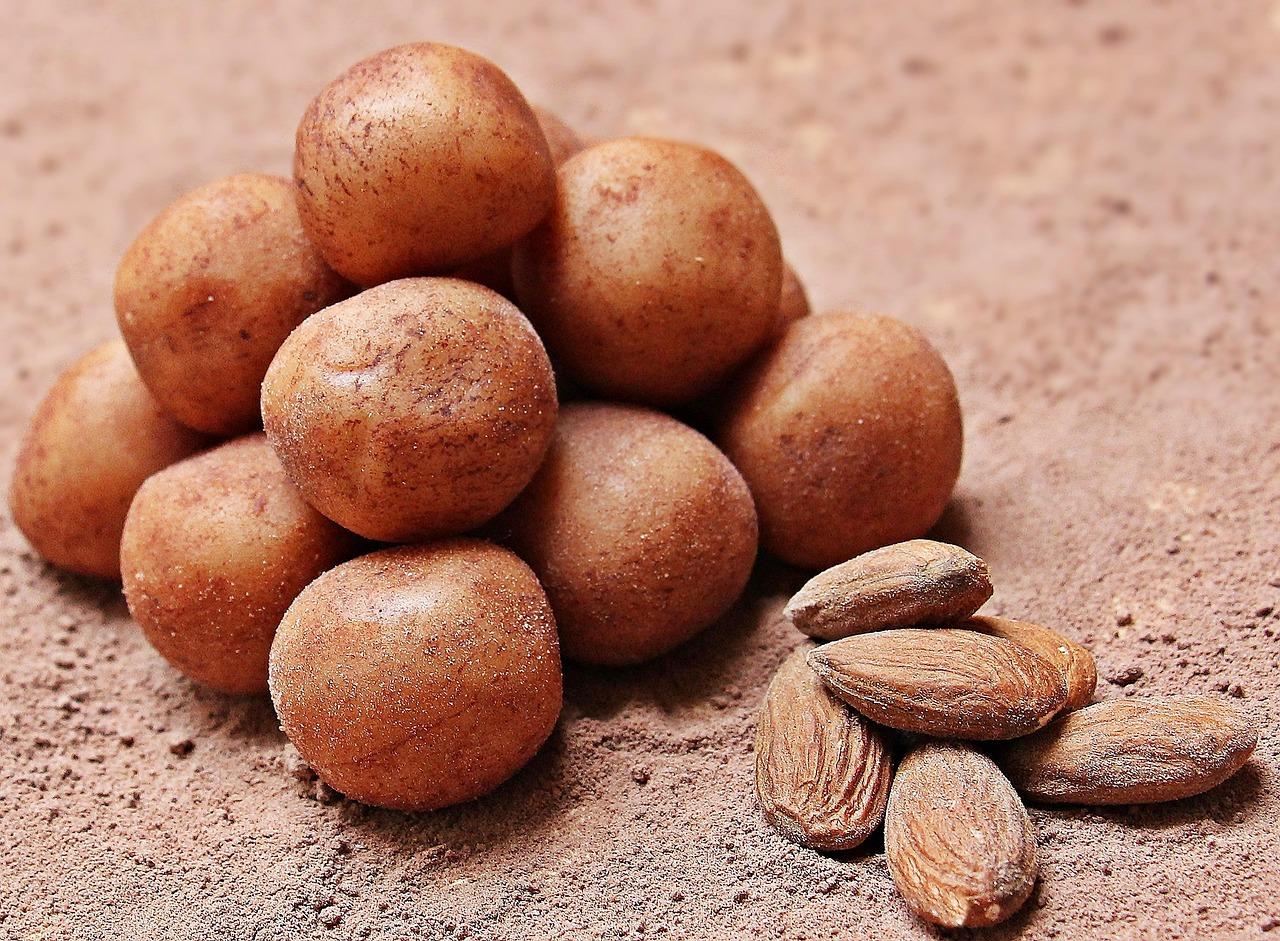
Marzipankartoffeln (German marzipan potatoes)

In Germany the run-up to Christmas is when these appear, piled in paper bags at the markets and in bowls on the Advent table; Lübeck, the city most famous for marzipan, makes them by the tonne. They are simply small balls of marzipan dusted in cocoa until they look like freshly dug new potatoes, sometimes with a few pricked 'eyes'. The inside is soft, sweet and fragrant with almond and a hint of rosewater; the cocoa coat is bitter and dry, which keeps the sweetness in check. Serve them with coffee, tuck them into a cookie tin or wrap them as small gifts. Shop marzipan sometimes contains egg white, so this one is made from scratch: a sugar syrup cooked to the soft-ball stage binds the ground almonds into a smooth, pliable paste, doing the job egg white does in some commercial pastes, and the result is naturally egg-free. Chef's tip: the common mistake is kneading the warm paste too long, which squeezes oil out of the almonds and makes it greasy; knead only until it comes together, then let it cool.

by KrazyBadal 0 views

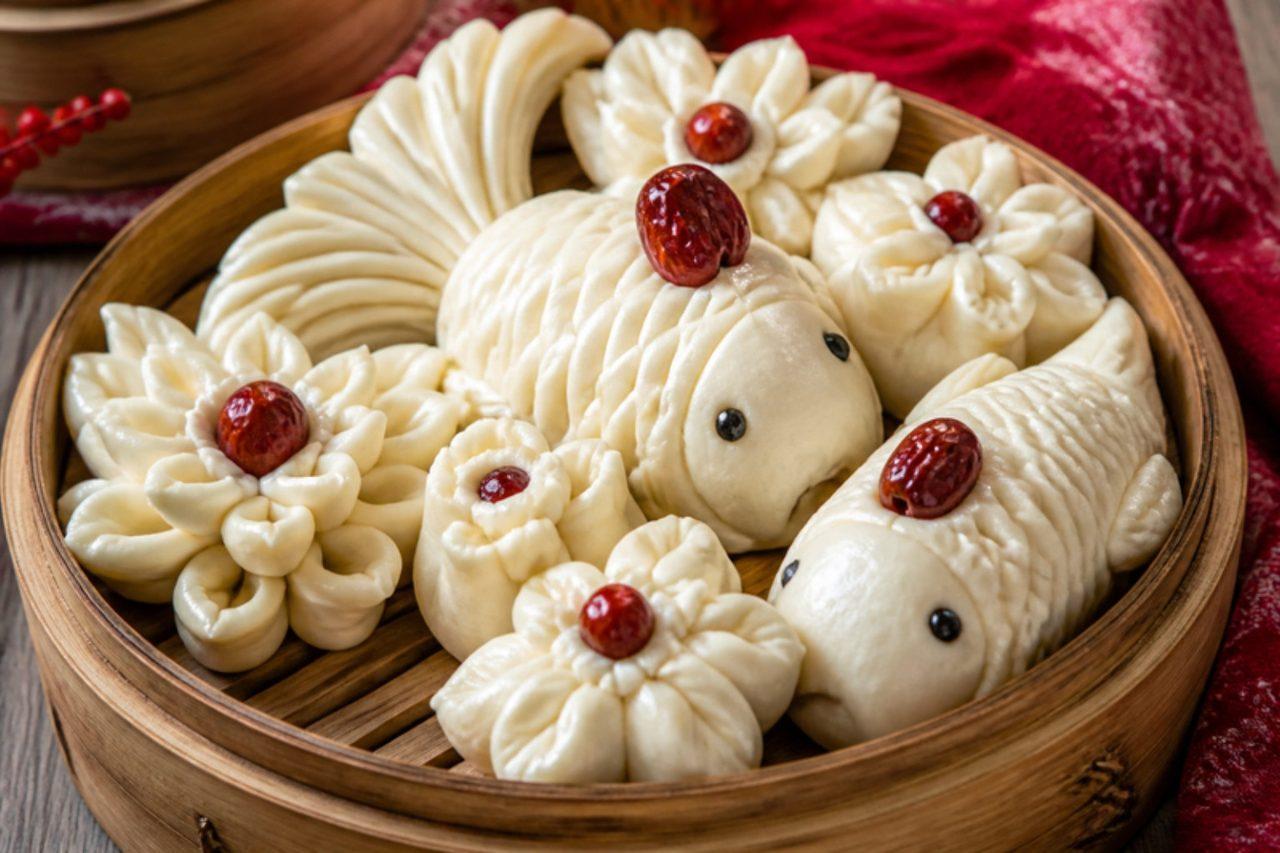
Jiaodong hua bobo (festive flower buns)

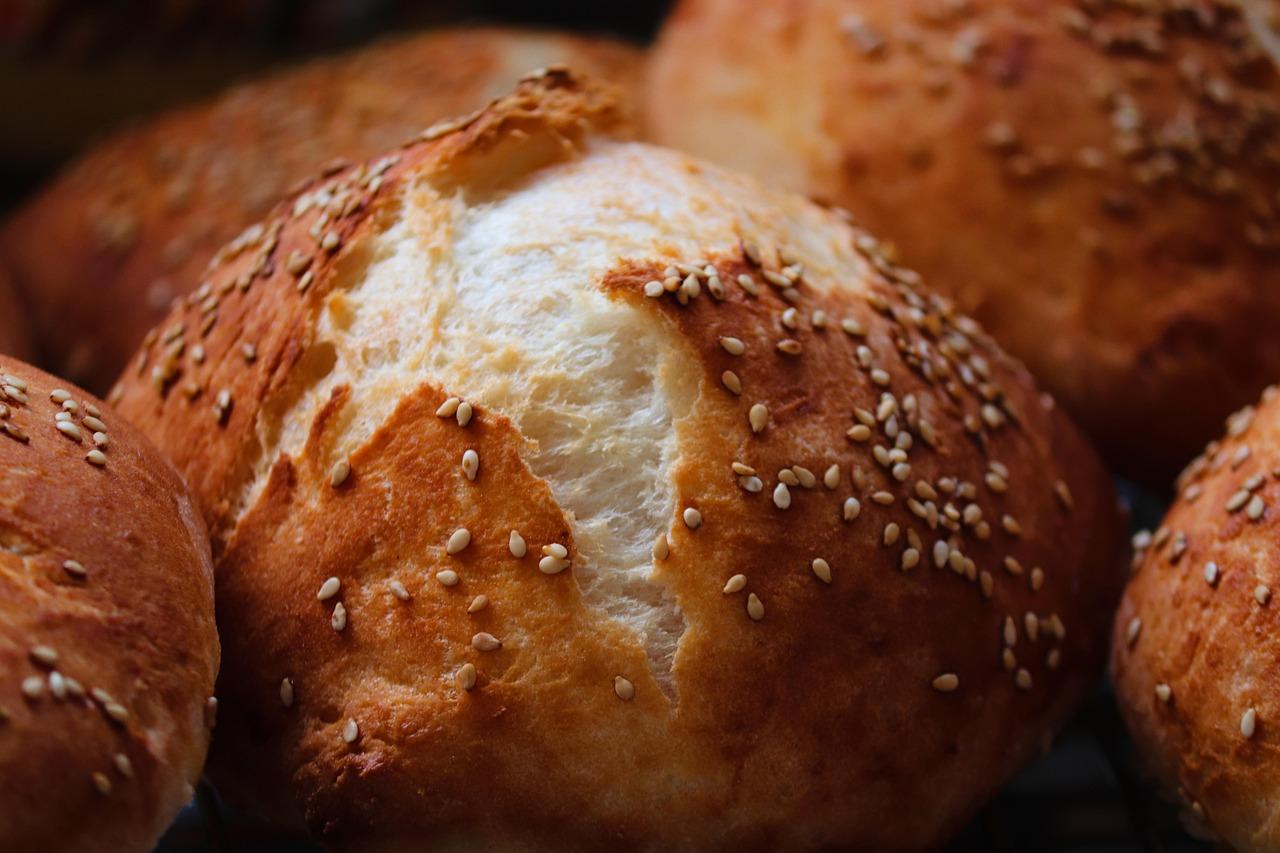
On the Jiaodong peninsula in Shandong, the days before the Spring Festival are spent shaping hua bobo: large steamed wheat buns twisted into fish, flowers and lucky knots and dotted with red jujubes. A fish bun stands for surplus in the year ahead, the dates for sweetness and a prosperous red, and a tall bun stacked high for a family that keeps rising. The crumb is dense, springy and faintly sweet, a world away from fluffy bao, because the dough is worked stiff and kneaded long. Set them on the reunion table, give them to neighbours, then slice and re-steam the rest with soups and braises through the holiday. Chef's tip: keep the dough firm, more like modelling clay than bread dough, or the shapes slump in the steamer.

by KrazyBadal 0 views

Alfeñique (Toluca Day of the Dead sugar-paste figures)

Each October the arcades of Toluca, in the State of Mexico, fill with the Feria del Alfeñique: stalls of little skulls, lambs, coffins, baskets and fruit, all modelled from sugar paste and painted bright colours for the Day of the Dead altars of 1 and 2 November. Children buy a skull with their own name on it; families place them on the ofrenda beside marigolds, candles and pan de muerto. The paste is snow-white, smooth and brittle once dry, with a clean sugar and lime taste. The old Toluca paste is egg-free, kneaded with chautle, a gum from an orchid bulb; here gum tragacanth plays that part, making the paste stretchy enough to model and helping it dry hard. The decorating icing is egg-free too, made from icing sugar, lime juice and a pinch of the same gum. Chef's tip: work the syrup while it is warm and keep the paste wrapped; the common mistake is letting it sit uncovered, so it dries out and cracks as you shape it.

by KrazyBadal 0 views

Orangettes (candied orange peel in dark chocolate)

All over France, from Paris chocolatiers to village pâtisseries, orangettes arrive in the shop windows as the days shorten and are a fixture of the Christmas and New Year sweet table. Long strips of orange peel are candied until tender and translucent, then dipped in dark chocolate: chewy and bittersweet inside, with a clean snap of chocolate and a long citrus finish. Serve them with an espresso after dinner, tie them up in a box as a gift, or offer them with a cheese course. They are naturally egg-free: the sugar syrup preserves the peel and stops it going tough, and the tempered chocolate sets into a firm, glossy shell with no other help. For a vegan batch, use a dark chocolate made without milk. Chef's tip: dry the candied peel well before dipping; the common mistake is dipping wet peel, which makes the chocolate seize and turn dull.

by KrazyBadal 0 views

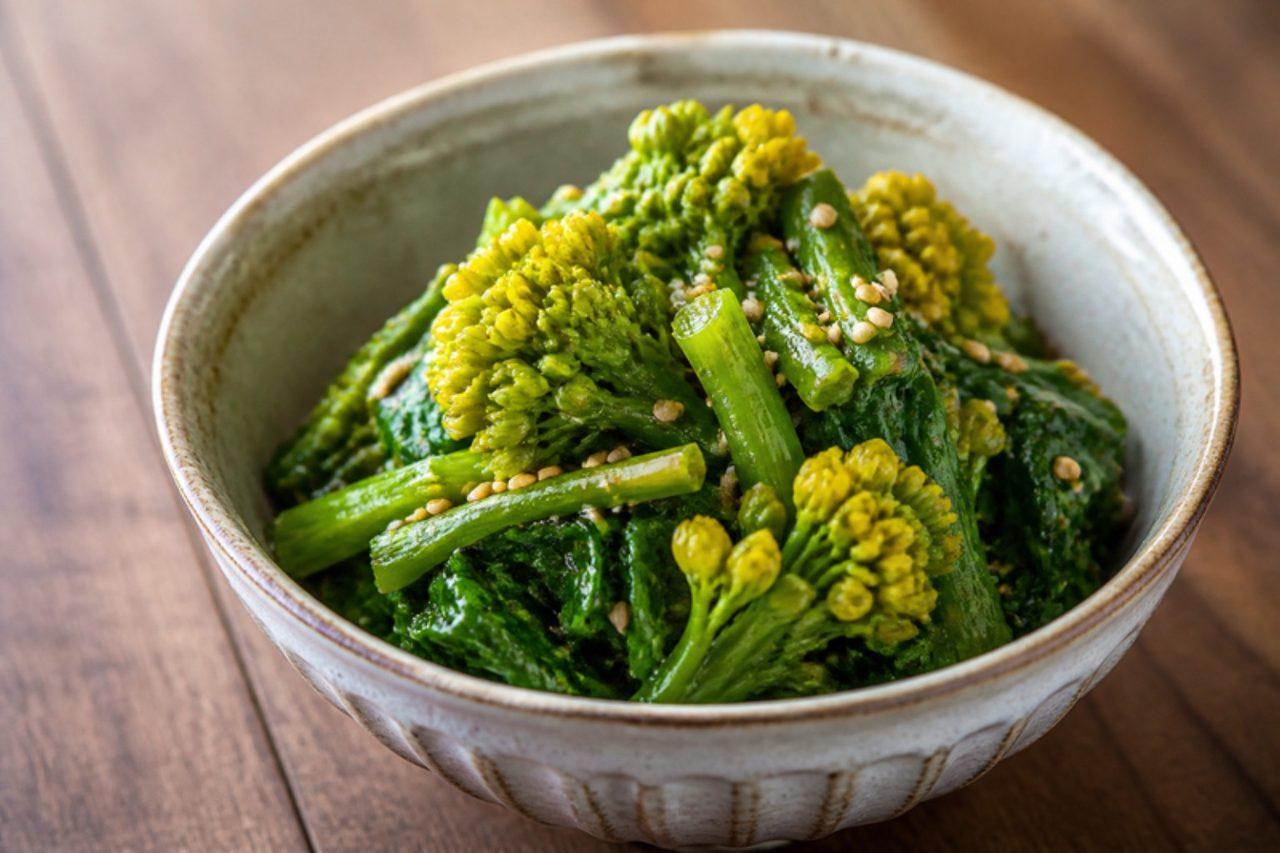
Nanohana karashi-ae (rapeseed blossoms with mustard)

Nanohana, the budding shoots of the rapeseed plant, arrive in Japanese shops at the end of winter, and their little yellow-green flower heads are a sign that spring has come. That makes them a natural side dish for Hinamatsuri on 3 March, next to chirashizushi and clam soup. The greens are blanched just until tender, then dressed with Japanese karashi mustard loosened with soy sauce and kombu dashi: pleasantly bitter, nose-tinglingly hot and very fresh. Outside Japan, tenderstem broccoli or cime di rapa works almost as well. Chef's tip: dress the greens at the last minute, because the soy starts to dull the green colour within half an hour.

by KrazyBadal 0 views

Kẹo dừa (Bến Tre coconut candy)

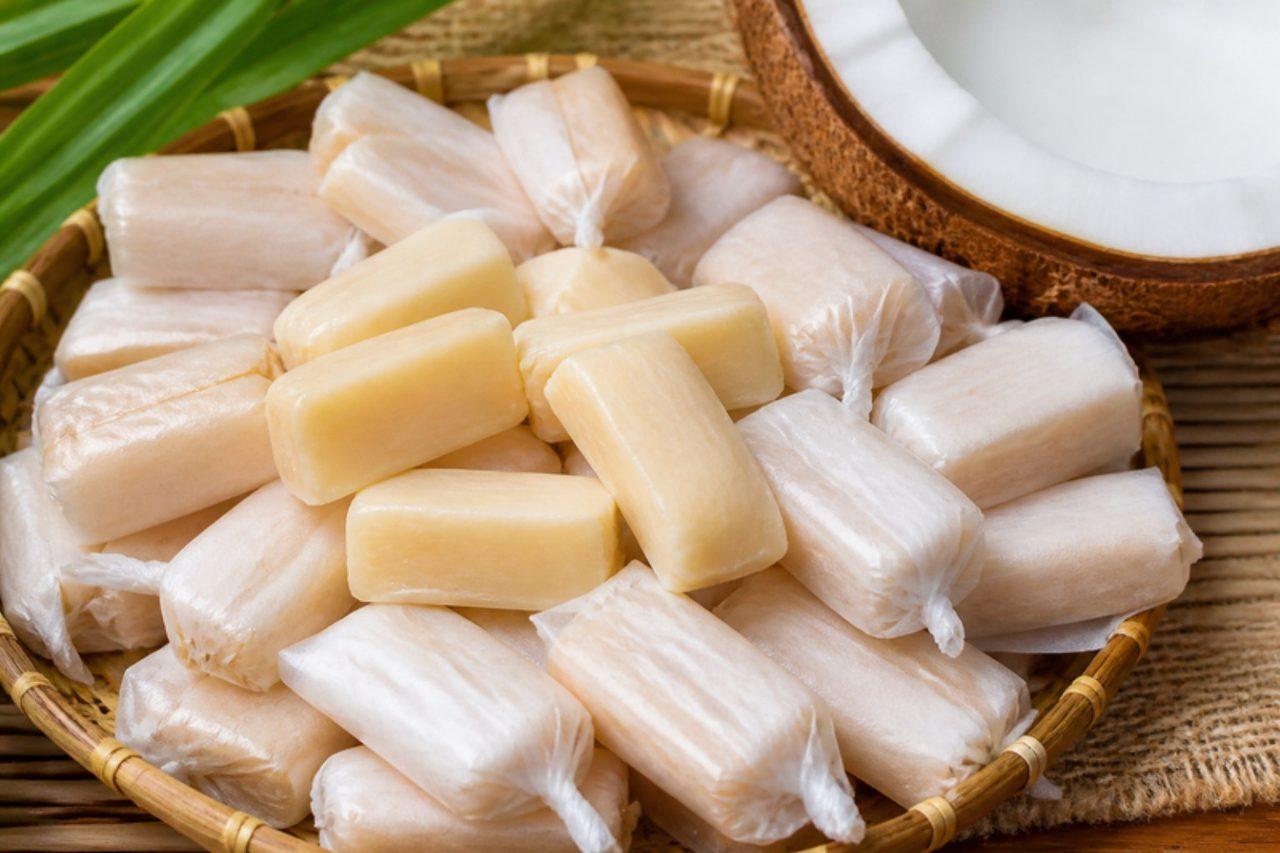
Bến Tre, in the Mekong Delta, is coconut country, and its workshops turn out mountains of kẹo dừa, the chewy coconut candy that Vietnamese families put on the Tết tray and bring home as a souvenir from the south. Thick coconut milk is boiled with sugar and rice malt syrup until it becomes a soft, pale caramel that tastes of toasted coconut and a little salt. Each piece is cut into a small bar and wrapped in a sheet of paper-thin edible rice paper, which melts on the tongue. Offer them with green tea, or at the end of a family meal. The candy is naturally egg-free: the long boil reduces the coconut milk until its own fat and solids, with the malt syrup, set it to a chew. Chef's tip: use a wide heavy pan and stir right across the base without stopping; the common mistake is walking away, which scorches the coconut solids and leaves brown specks and a bitter edge.

by KrazyBadal 0 views

Halawa tahiniya (Egyptian tahini halva)

In Egypt halawa tahiniya is a breakfast and suhoor food more than a dessert: it is eaten in Ramadan before dawn, on Coptic fasting days when animal foods are avoided, and spread in warm aish baladi bread at any time of year. Tahini is mixed with sugar syrup at the firm-ball stage, and the syrup crystallises through the sesame paste to give the halva its fibrous, crumbly strands. It tastes nutty, sweet and toasty, and pairs well with sweet tea. Factory halva often uses soapwort root, whose foam whips the syrup and gives longer strands; this home version offers it as an option, and never uses egg white. It is naturally egg-free: the hot syrup, crystallising as it is folded into the tahini, is what sets it. Chef's tip: stir only until the mixture turns matte and starts to look stringy. The common mistake is over-mixing, which makes the oil separate and the halva greasy.

by KrazyBadal 0 views

Polkagris (Gränna peppermint candy sticks)

Gränna, a small town on the shore of Lake Vättern, has been pulling polkagris since the 1850s, and visitors still stand at shop windows watching the sugar being stretched and twisted on marble tables. The sticks are sold all year but are a favourite in summer, when the town fills with tourists, and again at Christmas. Pulled properly, the white part turns satiny and slightly airy, so the candy is crisp on the outside and almost chalky-soft as it melts, with a clean, cooling peppermint flavour and a thin red spiral. Eat them as they are, crush them over ice cream or hang them on the tree. Polkagris is naturally egg-free: nothing but sugar boiled to the hard-crack stage holds it together, and the pulling, not any added protein, gives the pale, opaque texture. Chef's tip: work in a dry kitchen with oiled gloves and have every tool ready before the sugar reaches temperature; the common mistake is letting the mass cool too far before pulling, at which point it cracks instead of stretching.

by KrazyBadal 0 views

Podsolnechnaya khalva (sunflower seed halva)

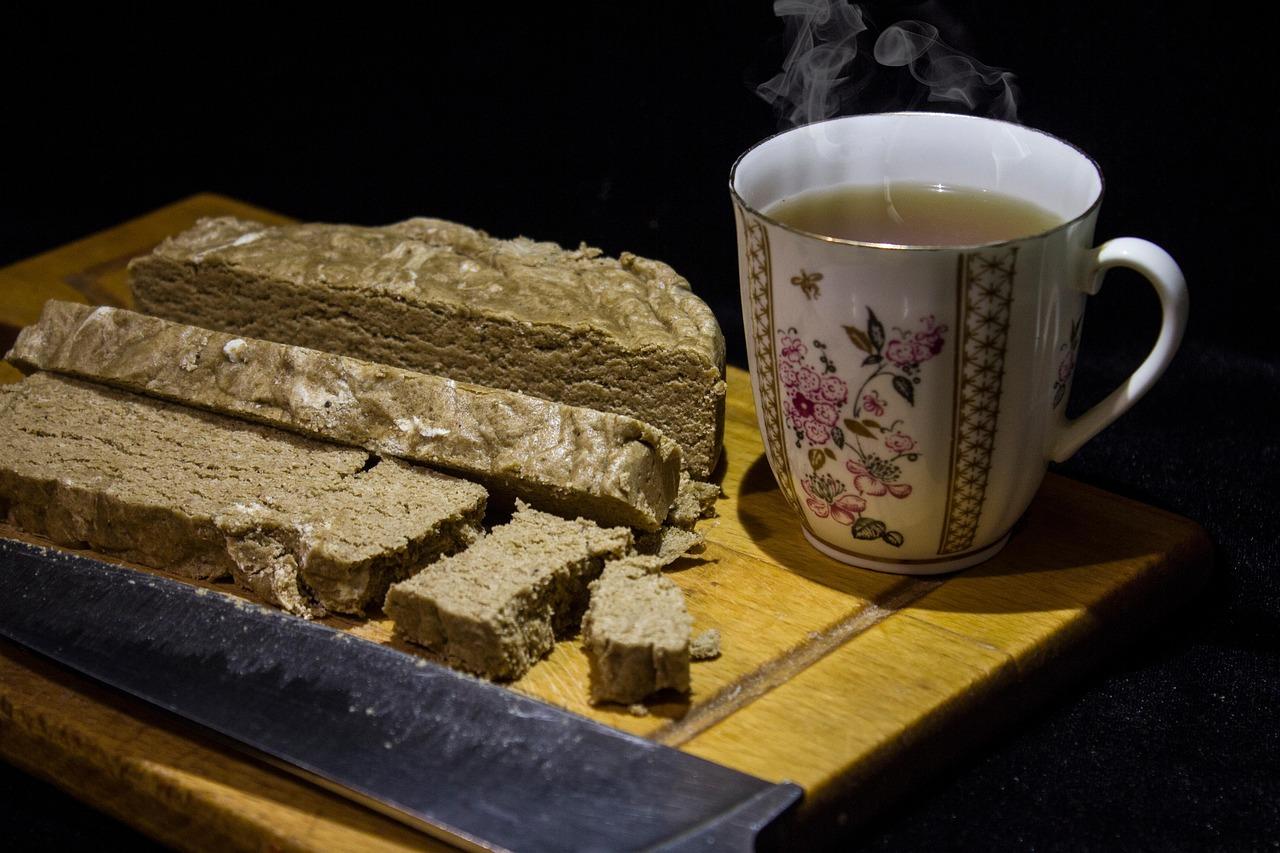
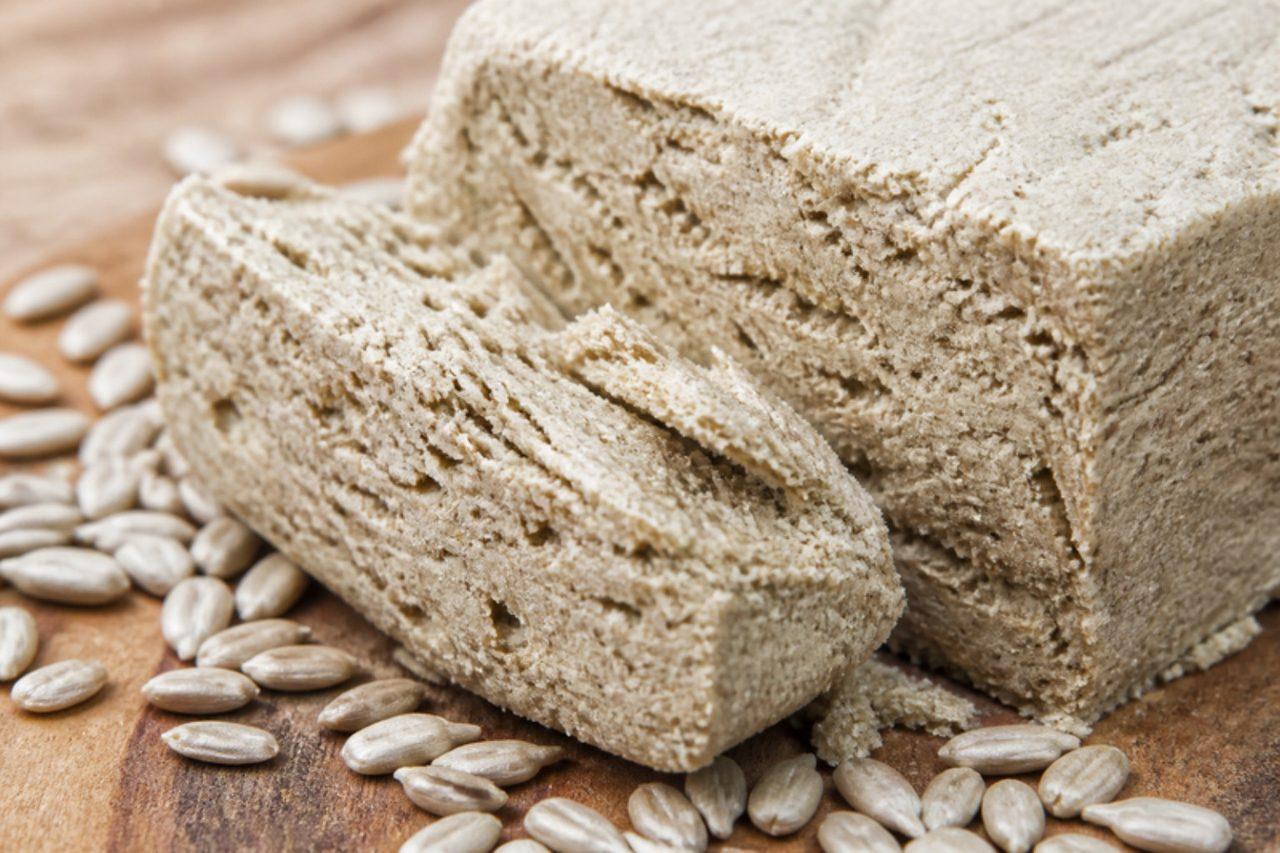
In Russia and Ukraine, where sunflowers cover the southern steppe, halva means sunflower halva rather than the sesame kind: grey-brown, crumbly slabs sold by weight at markets and eaten with tea at any time of day, especially through the long winter. It tastes deeply of toasted seeds, with a sandy, flaky texture that breaks into strands and melts on the tongue. Serve it in small pieces with black tea, crumble it over porridge, or eat it with fresh apple slices. Factory halva is lightened with a foam of soapwort root, and some old recipes use whipped egg white; this home version needs neither. Sugar syrup cooked to the firm-ball stage is beaten straight into warm, finely ground seeds, and as the syrup cools it crystallises and binds the oily seed paste into a sliceable block, naturally egg-free. Chef's tip: grind the seeds until they just start to clump and look oily, not into smooth butter; the common mistake is over-grinding, which gives a dense, fudgy slab instead of crumbly halva.

by KrazyBadal 0 views

Hong tang ciba (brown sugar glutinous rice cakes)

Pounded glutinous rice cakes are a Spring Festival essential in Sichuan and Chongqing, where 'ci' sounds like a wish for the family to stay close, as stuck together as the rice itself. Fried and drowned in brown sugar syrup, they turn into hong tang ciba, a dessert that closes many reunion dinners and hotpot nights. Outside they are puffed and crackly, inside soft and stretchy, and the dark syrup and nutty soybean flour make every bite taste like toffee. This home version steams a glutinous rice flour dough instead of pounding whole grains, which gives the same chew in far less time. Serve straight from the pan while still crisp. Chef's tip: let the steamed slab cool and firm up completely before cutting; warm dough smears and bursts in the oil.

by KrazyBadal 0 views

Arrowhead chips (nga gu chips)

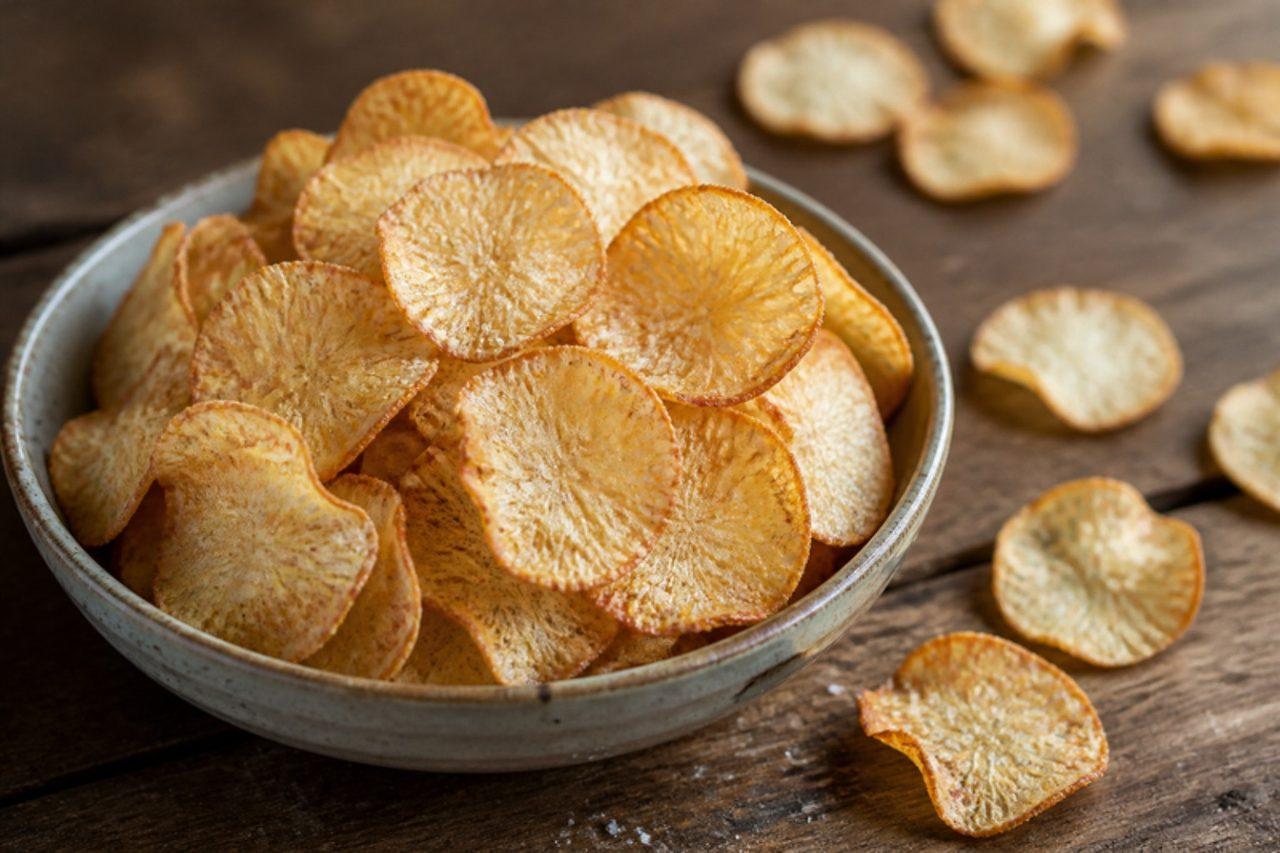
Arrowhead (nga gu, or ngaku) is a small aquatic tuber that only shows up in Malaysian markets in the weeks before Chinese New Year, and frying it into chips is a family job. Its curved sprout looks like a shoot rising from the root, so it stands for growth and many descendants in the year ahead. Sliced thin and fried, the chips are crisp and nutty like potato crisps, with a gentle bitterness that keeps you reaching for more. Put them out in jars with peanuts and love letters for visitors. Chef's tip: soak the slices and dry them very well; wet slices make the oil spit and fry up chewy instead of crisp.

by KrazyBadal 0 views

Croccante (southern Italian almond brittle)

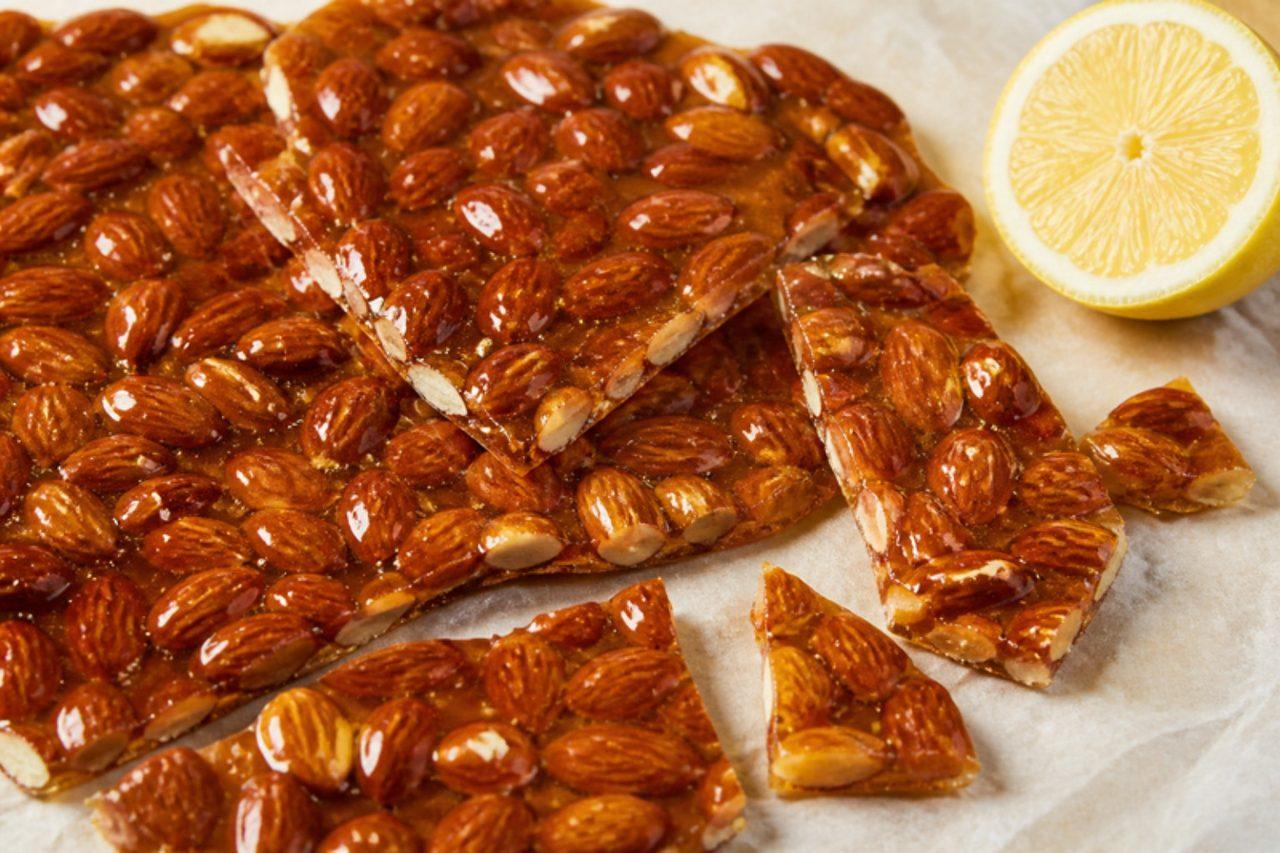
Croccante is the sweet of southern Italian feast days: from Naples to Calabria and Apulia it is sold from stalls at the patron saint's festa, set out at Christmas and at Carnival, and in some towns shaped into little baskets for weddings. Whole almonds are toasted and folded into caramel, then pressed thin on marble with the cut side of a lemon, which stops it sticking and leaves a faint citrus scent. It is crisp and glassy with a deep, nutty, slightly bitter caramel. Break it into shards to eat with coffee, or crush it over ice cream. It is naturally egg-free: only caramelised sugar holds the almonds, setting hard as glass as it cools. Chef's tip: keep the almonds warm when they go in; the common mistake is adding cold nuts, which makes the caramel seize into lumps.

by KrazyBadal 0 views

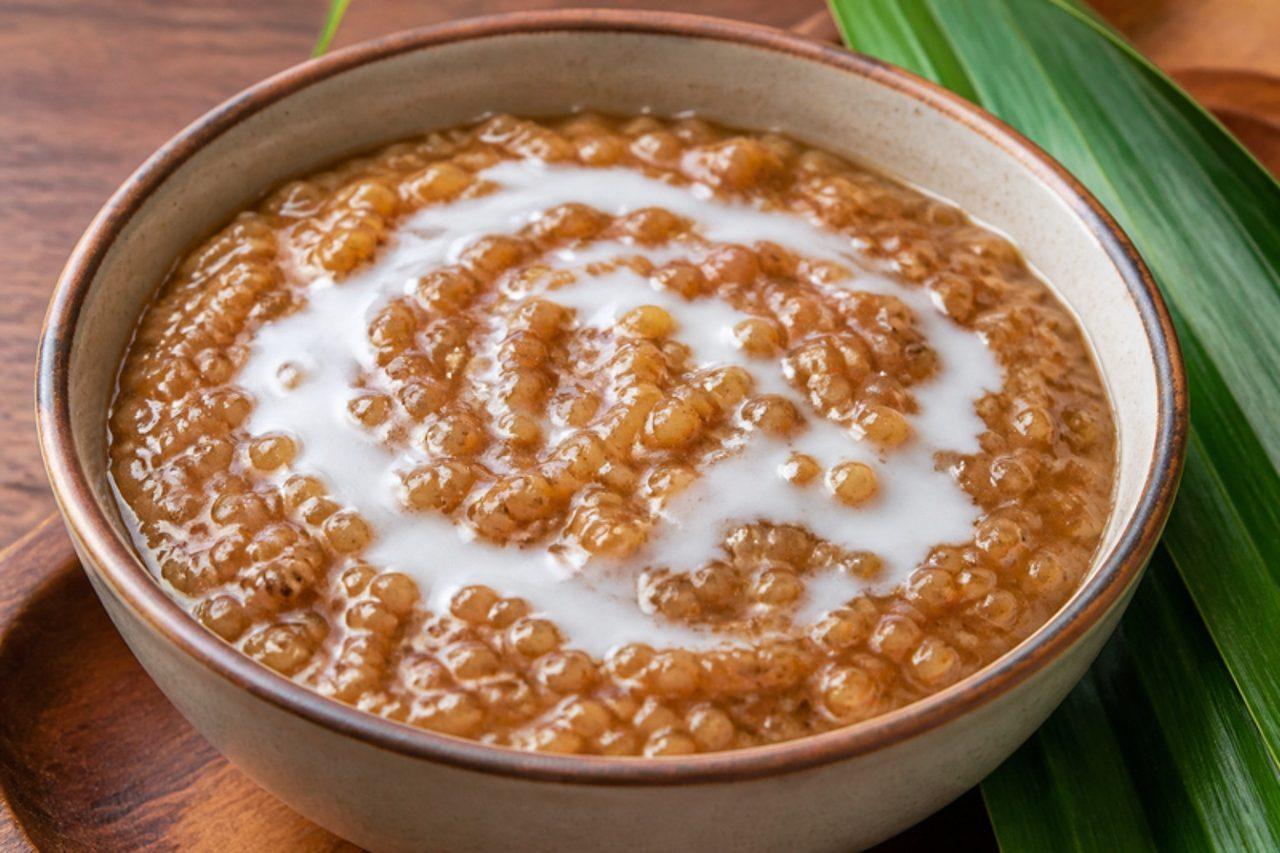
Mont let saung (Burmese sago in coconut milk and jaggery)

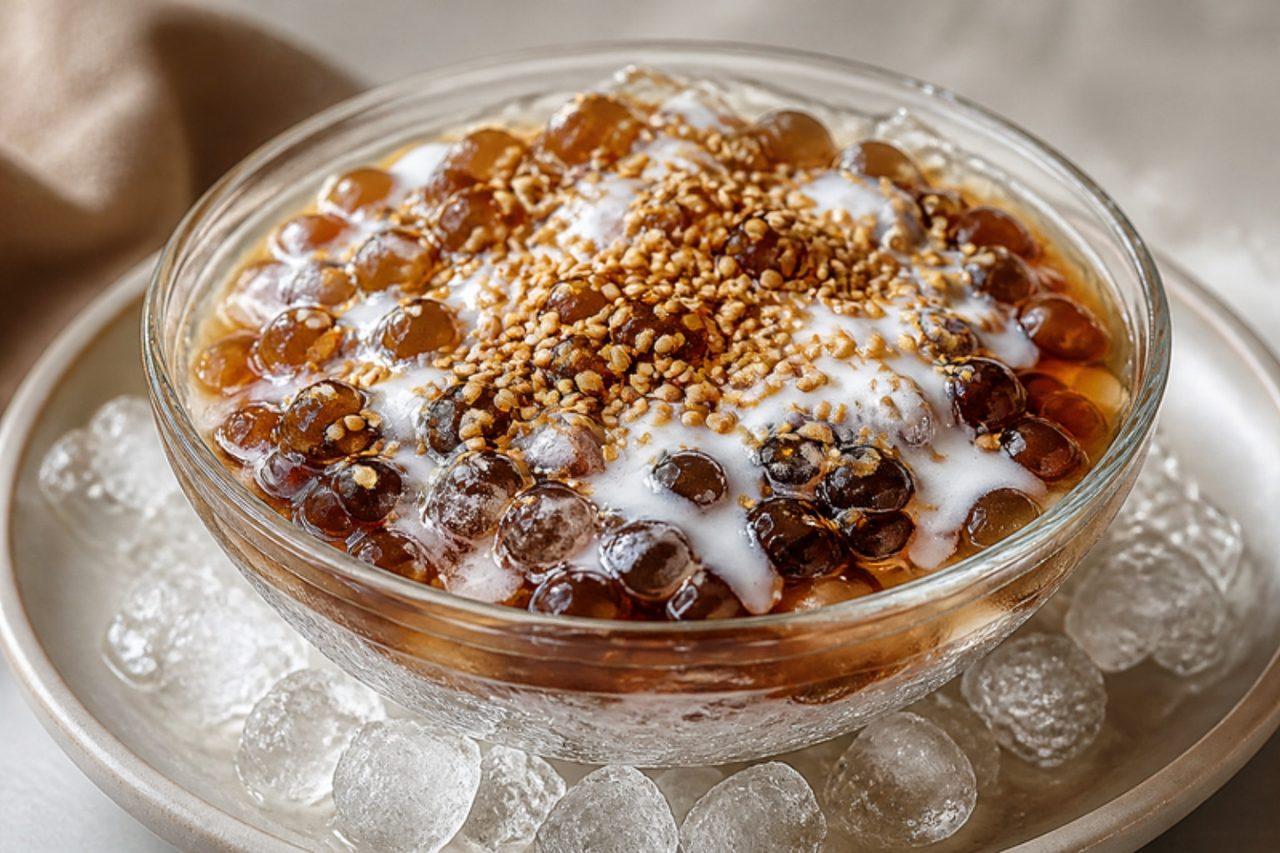
During Thingyan, the Burmese water festival that ends the old year in mid-April, stalls across Myanmar hand out free food and cold drinks as a way of making merit, and mont let saung is one of the best loved. Chewy, glassy sago pearls (or short white rice-flour threads in some towns) sit on crushed ice, soaked in dark jaggery syrup and lightly salted coconut milk, with toasted sesame on top. It is cool, sweet and gently smoky from the jaggery, exactly what you want after a day of being splashed with water. Serve it in glasses or bowls as soon as it is assembled. Chef's tip: a pinch of salt in the coconut milk is what makes the jaggery taste rounder, so don't skip it.

by KrazyBadal 0 views

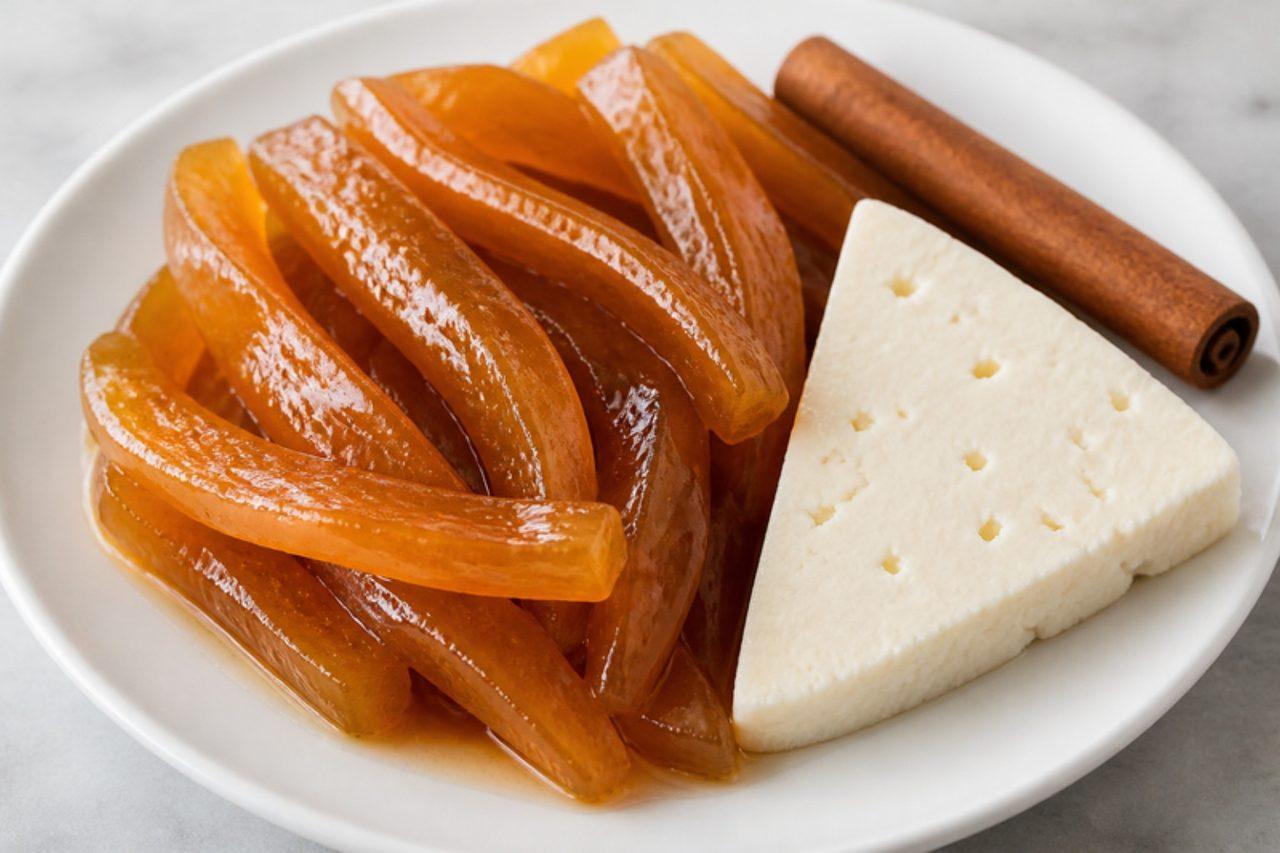
Quinotos en almíbar (Argentine kumquats in syrup)

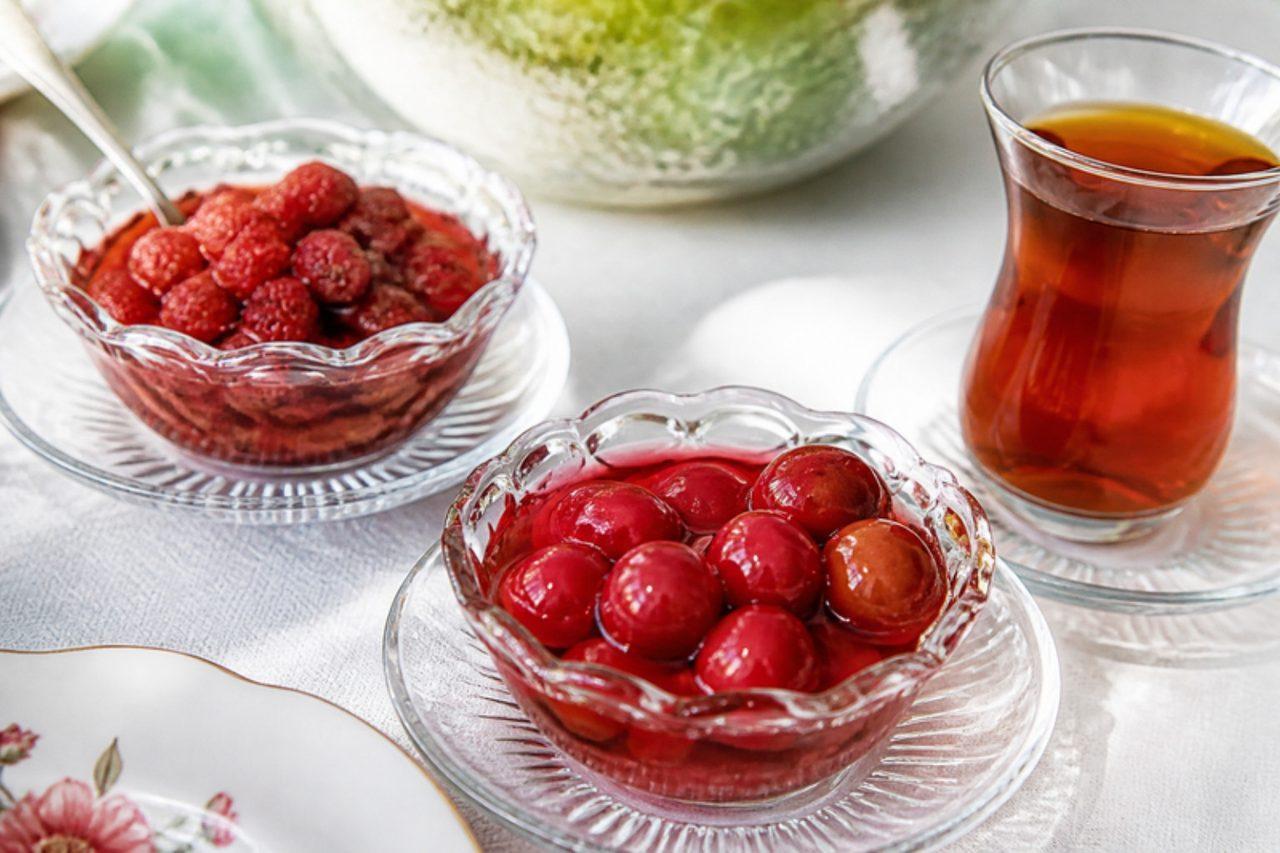
In Buenos Aires and the river provinces of the Litoral, kumquat trees ripen in the middle of winter, between June and August, and the fruit goes straight into jars of syrup. Grandmothers' pantries held quinotos for the whole year, brought out for birthdays and long Sunday lunches. Each little fruit turns glossy orange and translucent, with a soft, bittersweet skin and a sharp, juicy centre. Spoon them over vanilla ice cream, serve them with a slice of fresh cheese in the style of postre vigilante, or eat them straight from the jar. Many bar menus offer them steeped in spirits; this version keeps only the syrup. Naturally egg-free, the quinotos rely on sugar syrup to preserve them, while pectin from the peel gives the syrup a light, jammy body. Chef's tip: blanch the fruit three times from cold water; the common mistake is skipping this, which leaves the skins tough and bitter.

by KrazyBadal 0 views

Peppermint crisp tert (South African mint-chocolate fridge tart)

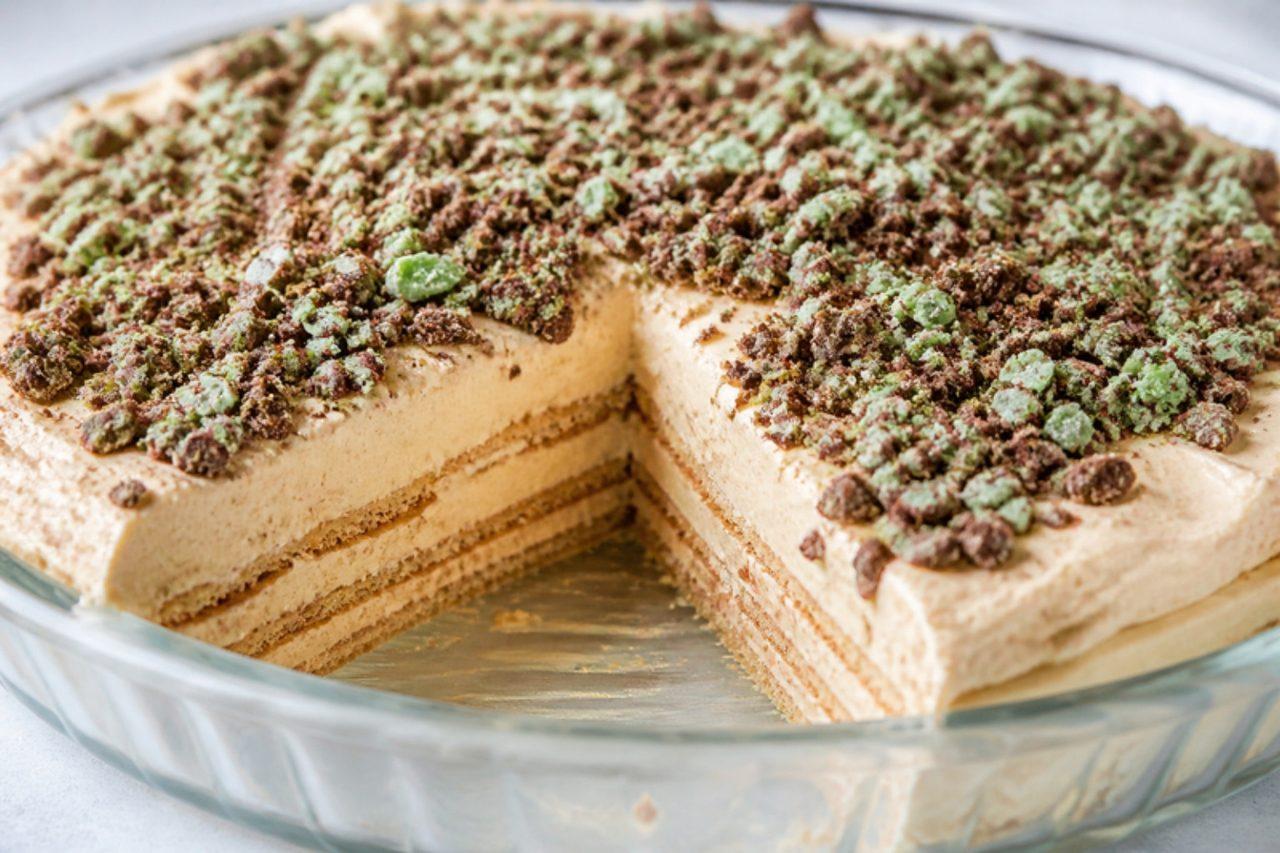
Few desserts say South African Sunday lunch, braai afternoon or church bring-and-share quite like this fridge tart, found on tables from Cape Town to Limpopo and at nearly every Christmas spread. Plain tea biscuits are layered with a thick caramel whipped into cream, then buried under grated mint chocolate with a crunchy centre. Overnight the biscuits soften into something close to sponge, the caramel cream turns silky and the mint gives a cool, crackly finish. Serve it cold, in squares, with strong coffee or rooibos. The tart is egg-free by nature: condensed milk, cooked down into caramel, gives body and binds the cream so it holds its shape when sliced, and chilling does the setting. Many shop biscuits are egg-free, but check the packet and buy eggless tea biscuits. Chef's tip: let the caramel cool until barely warm before it meets the cream; folding in hot caramel is the common mistake that melts the cream into a runny puddle.

by KrazyBadal 0 views

Asham (Jamaican parched-corn sweet)

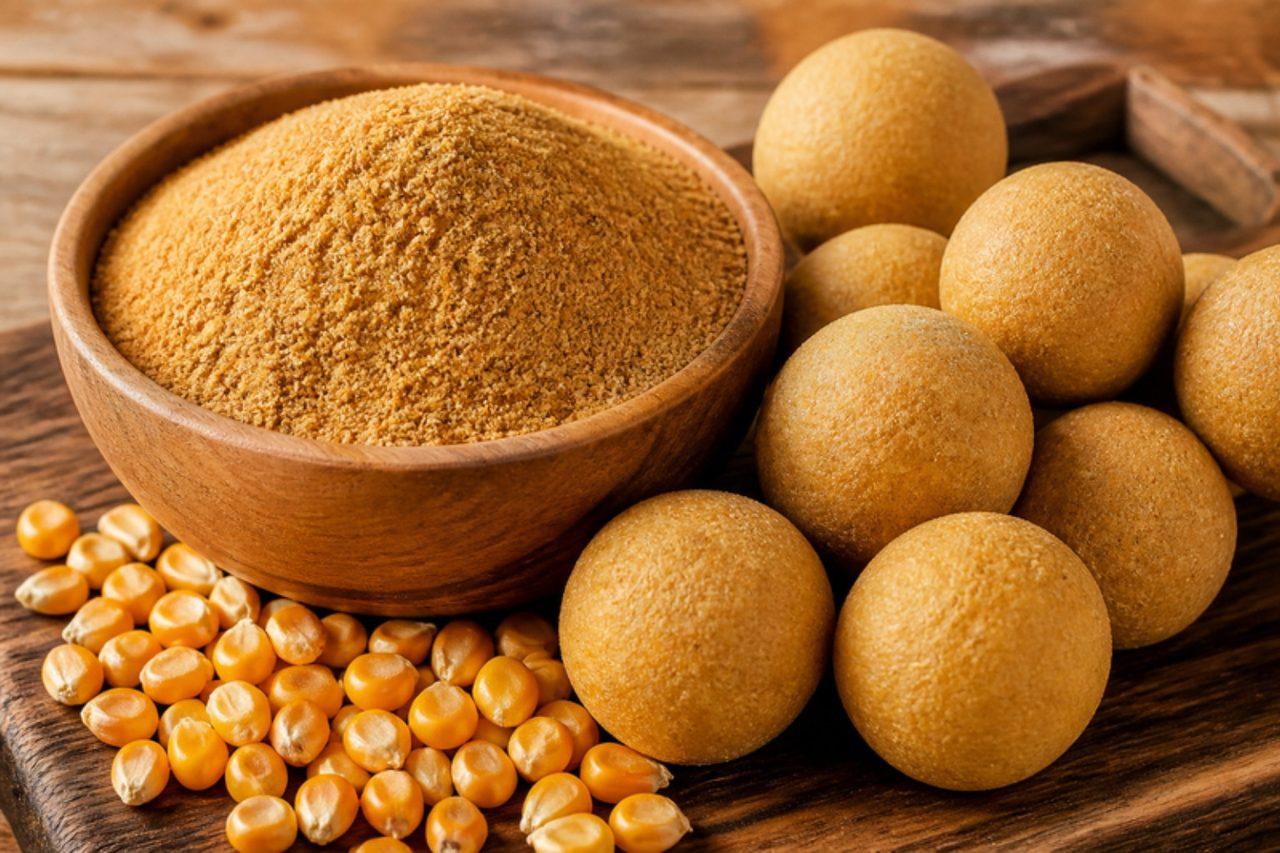
Asham is one of rural Jamaica's oldest treats, a sweet carried over from West African parched-grain foods and still made in country districts of St Elizabeth, Clarendon and St Ann. Children ate it after school from a twist of paper, and it reappears at heritage fairs around Emancipation Day and Independence in early August. Dried corn is parched until toasty and golden, ground to a fine, sandy powder and mixed with dark sugar: nutty, faintly smoky and melting slowly on the tongue. Eat it by the pinch, press it into little balls, or stir a spoonful into warm milk or water as a drink. It is naturally egg-free; the powder needs no binder at all, and for balls a sprinkle of water and the sticky brown sugar hold it together. Chef's tip: eat the loose powder in small pinches and don't breathe in as you eat it; it is famous for making people cough. In the pot, keep the corn moving, as scorching is the common mistake and turns it bitter.

by KrazyBadal 0 views

Pustakari (Newari khuwa and jaggery toffee)

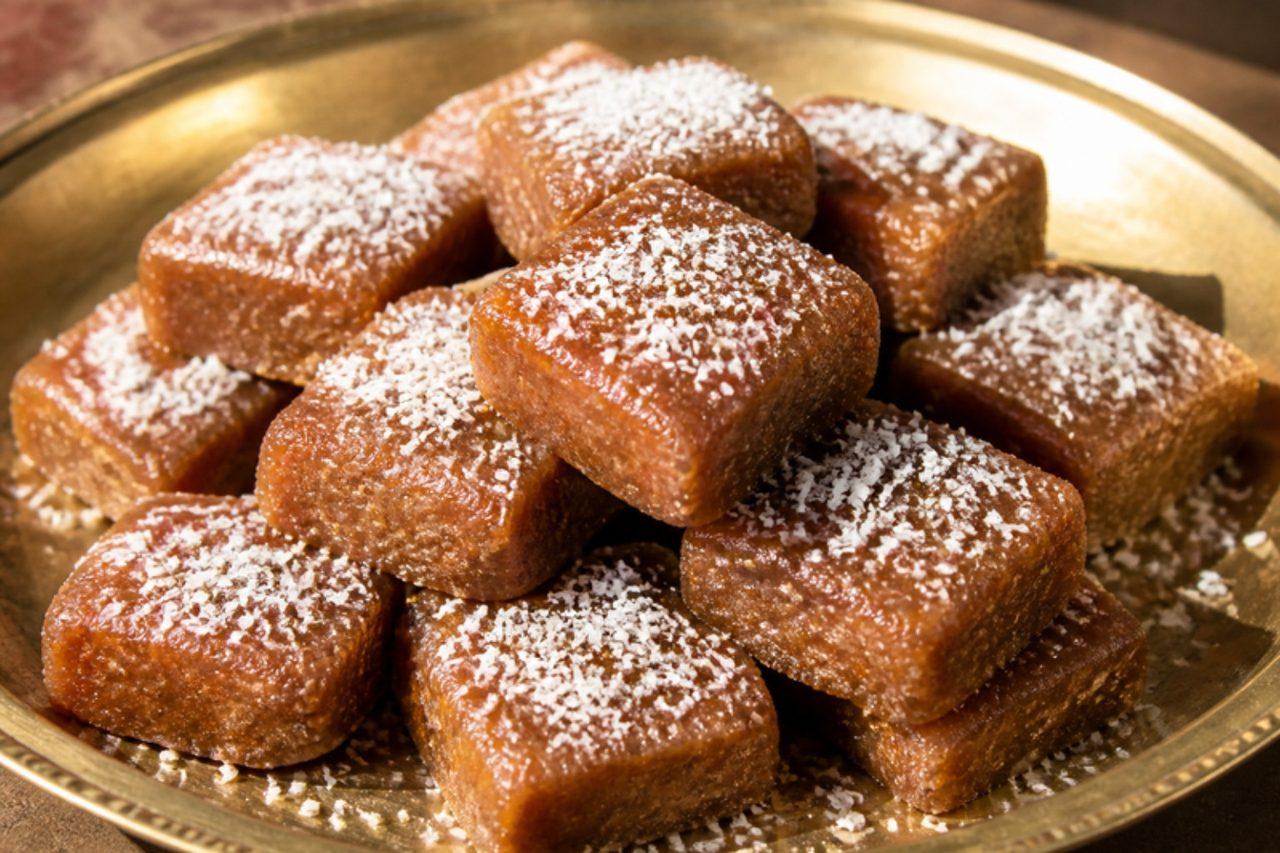
Pustakari is the toffee of the Newar community in the Kathmandu Valley, sold in small squares in the old bazaars of Asan and Bhaktapur and made at home for festivals such as Tihar and Yomari Punhi, and on winter afternoons. Jaggery is cooked to a syrup, then khuwa and ghee are stirred in and cooked until the mixture turns into a thick, glossy, deep brown mass that sets into a chewy toffee. It tastes of caramel and milk, a little like fudge but with more chew. Serve a few pieces with tea or as a small sweet after a meal. It is naturally egg-free: the jaggery syrup, cooked to the firm-ball stage, sets the khuwa, so no other binder is needed. Chef's tip: watch the temperature of the syrup; cooking it past 125°C is the common mistake that makes the toffee hard enough to hurt your teeth.

by KrazyBadal 0 views

Konpeito (Japanese sugar stars)

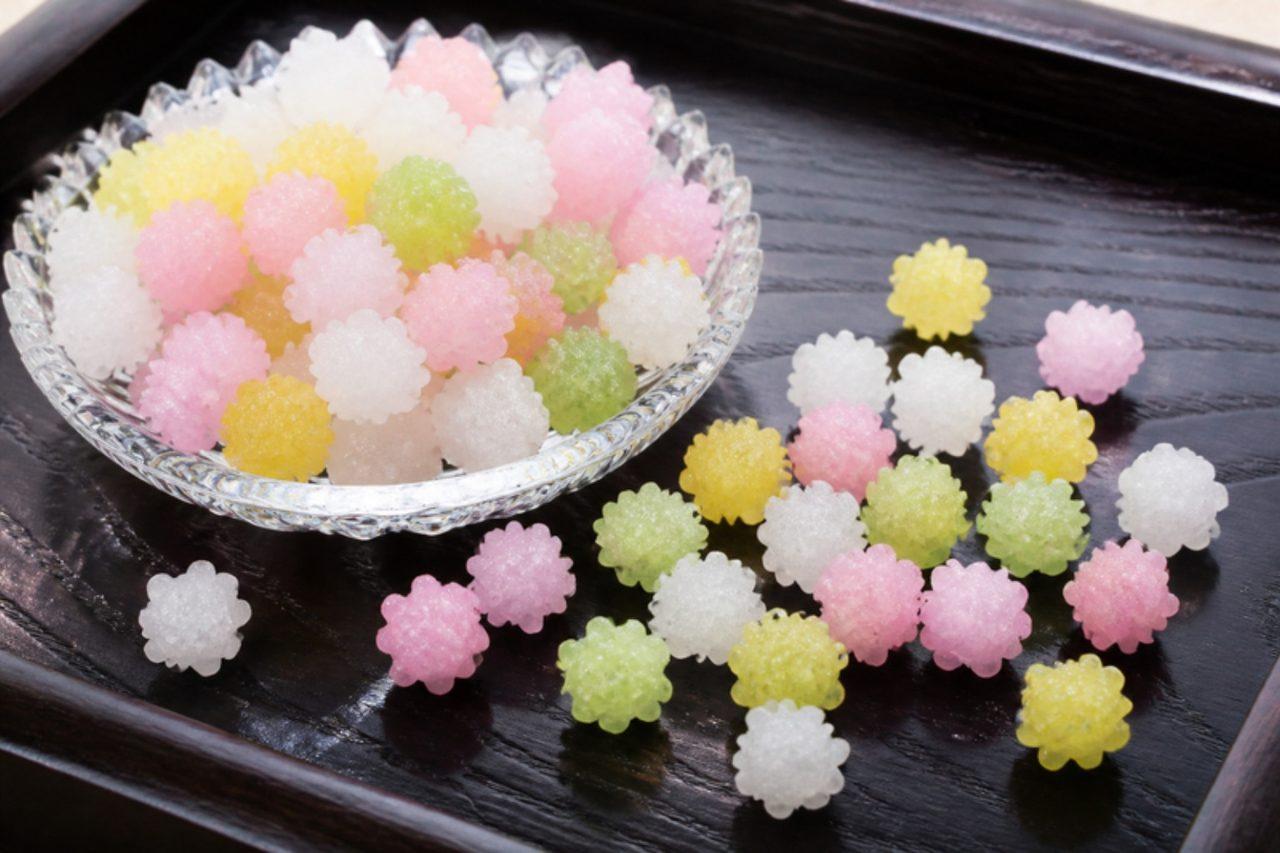
Konpeito came to Japan with Portuguese traders in the sixteenth century and became a treasured gift; Kyoto confectioners still make them the old way, rolling them in a tilted, heated pan for two weeks or more. Today the tiny pastel stars are given as wedding and birth favours, slipped into tins of emergency hardtack biscuits, and nibbled with green tea. They crunch like a sugar cube and taste purely of sugar, sometimes with a hint of fruit. This home version uses a wok over the lowest heat and a few patient hours, which gives smaller, knobbly stars rather than the perfect shop ones. They are naturally egg-free: they are made of nothing but sugar, and the setting comes from thin layers of syrup crystallising one after another. Chef's tip: add the syrup a teaspoon at a time and keep the crystals rolling until dry. The common mistake is pouring in too much, which glues everything into one clump.

by KrazyBadal 0 views

Bananada (Brazilian banana paste bars)

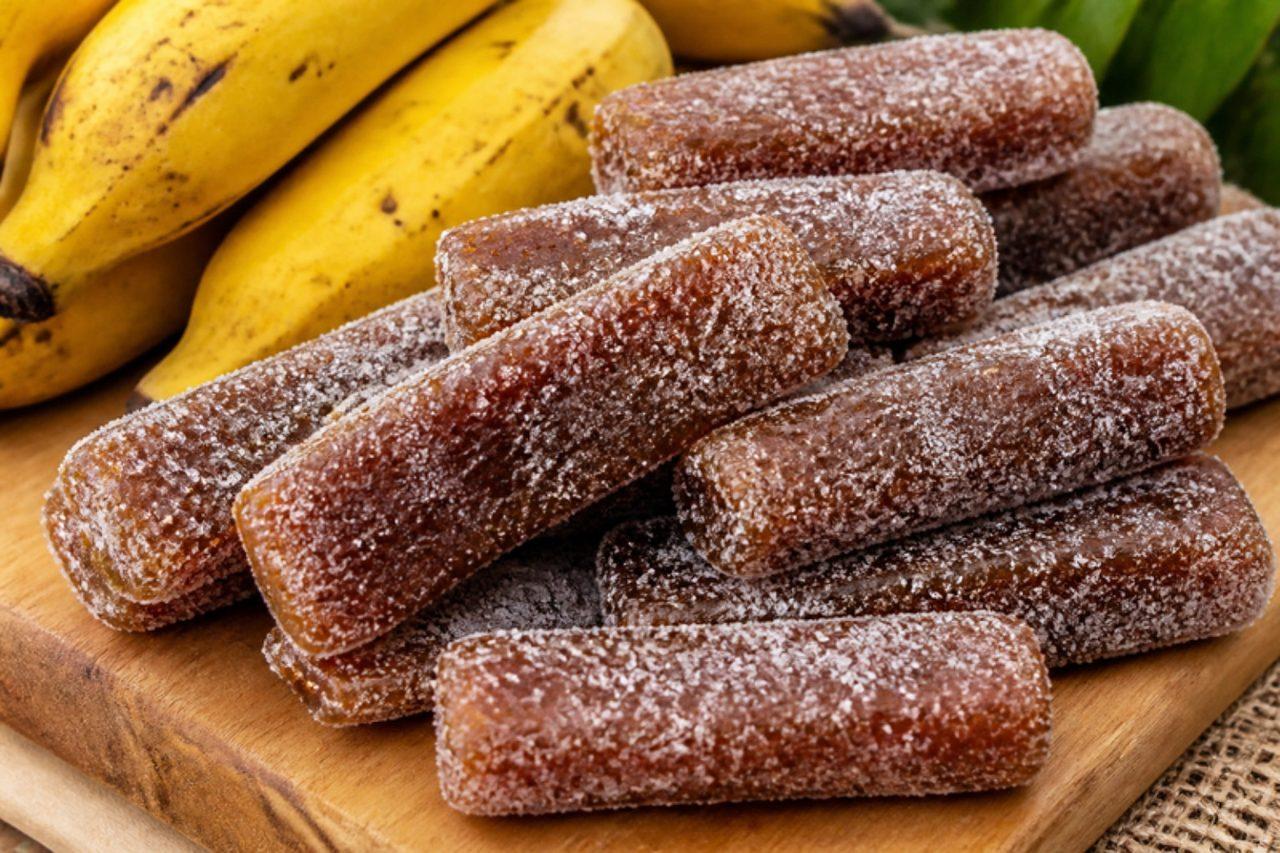
Bananada comes from the banana country of Minas Gerais and the Vale do Ribeira in São Paulo state, where roadside stalls stack it in wrapped bars beside rapadura and goiabada. Children find it in lunchboxes and it turns up on the sweet tables of the June festivals. Cooked slowly, ripe bananas and sugar darken to a reddish brown and set into a dense, chewy paste with a caramel and baked-banana flavour, finished with a sugary crust. Serve the bars with coffee or a piece of fresh cheese. It is naturally egg-free: the starch and pectin in the bananas, concentrated with sugar over a long, slow cook, set the paste firm enough to slice. Very ripe bananas give the sweetest, darkest result. Chef's tip: keep going until you can see the base of the pan for a second when you drag the spoon through; the common mistake is stopping early, which gives a soft jam that won't cut.

by KrazyBadal 0 views

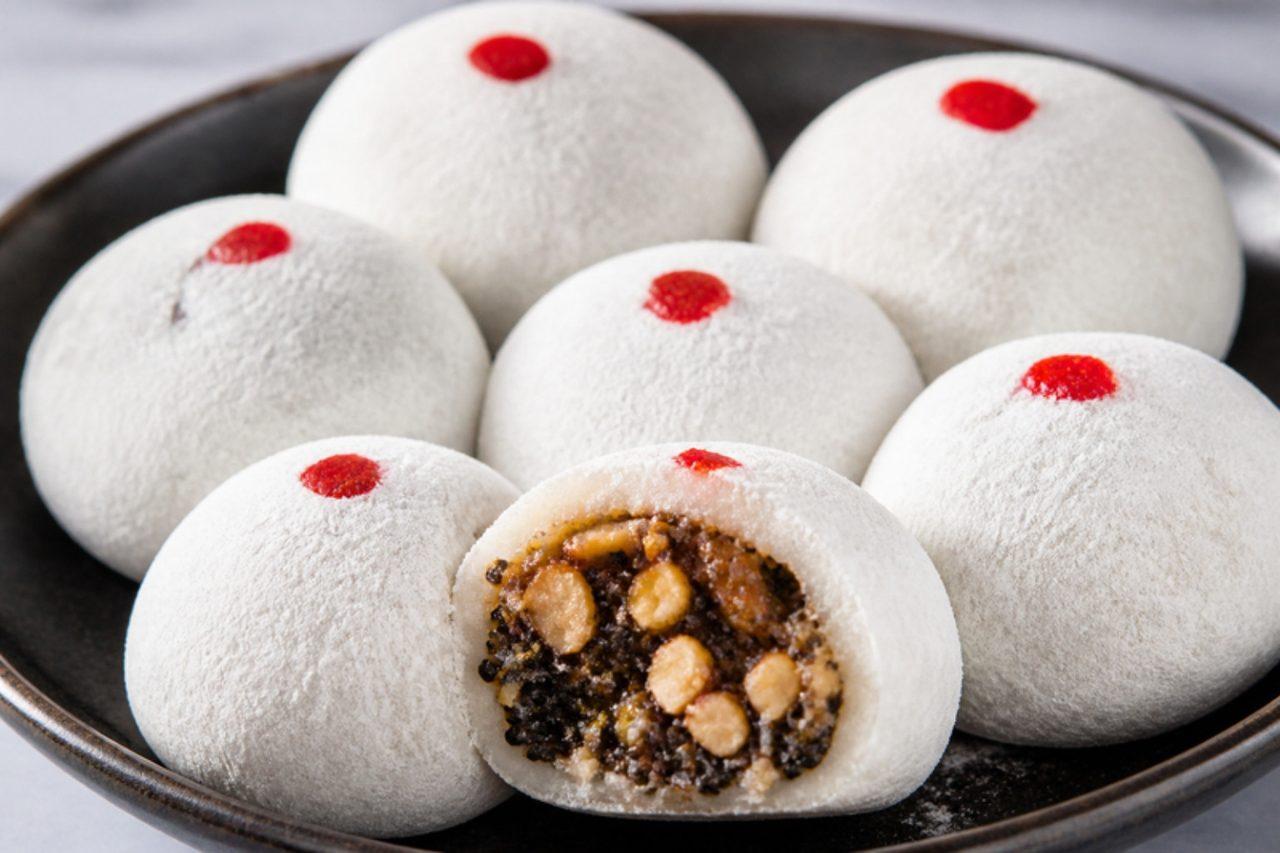
Nian dou bao (sticky bean buns)

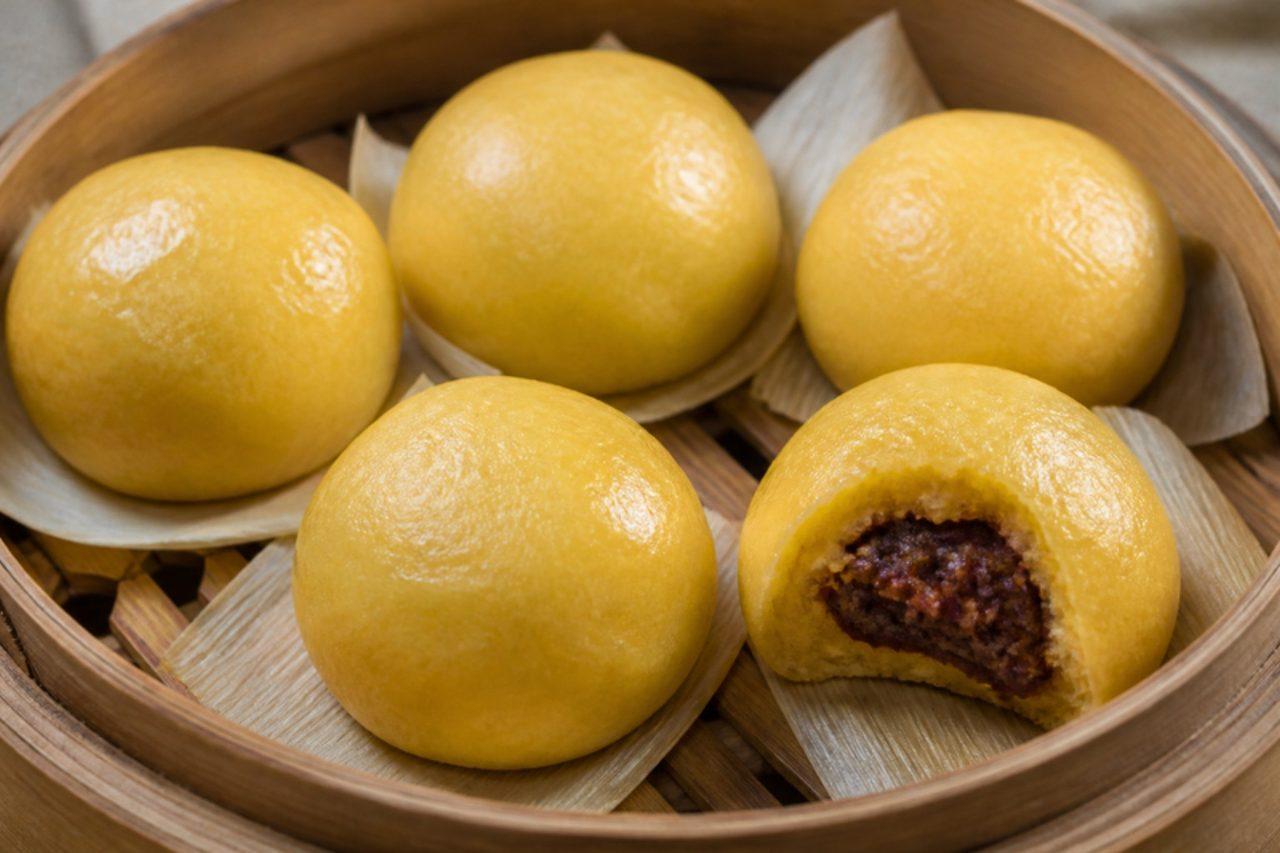
Before the Spring Festival, families in Dongbei make nian dou bao by the hundred, steam them and freeze them outside in the snow so there is a stack ready for every visit of the holiday. The name contains 'nian', sticky, which sounds like the word for year, so they are eaten for a year that holds together and rises higher. The dough, traditionally from glutinous millet that has been lightly fermented, is soft, chewy and gently tangy, wrapped round a smooth sweet red bean filling. This version uses glutinous rice flour and fine cornmeal for the golden colour, with a little yeast for that faint sourness. Serve them warm with tea or plain congee. Chef's tip: wet your hands before shaping; the dough clings to dry hands but behaves perfectly once they are damp.

by KrazyBadal 0 views

Rakugan (pressed dry sweets for tea)

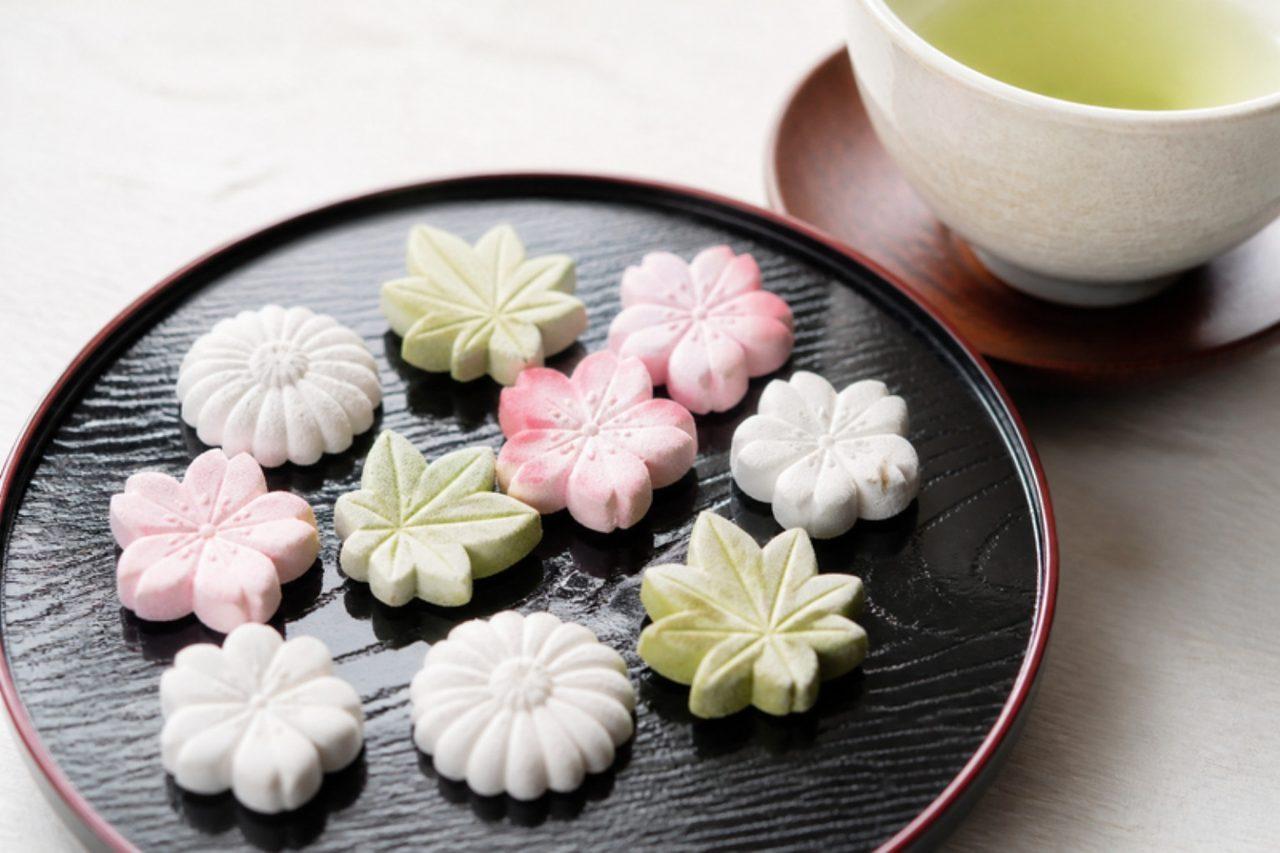
Rakugan are higashi, the dry sweets served before thin matcha at a tea ceremony, and the castle towns of Kanazawa and Matsue, both with a long tea tradition, are famous for them. Fine sugar and roasted rice flour are pressed into carved wooden moulds to make cherry blossoms in spring, maple leaves in autumn and plum flowers in winter; they also appear on Obon altars as offerings. They feel firm in the hand but dissolve on the tongue into a delicate, clean sweetness, which balances the bitterness of the tea. Serve two or three per person with matcha or sencha. They are naturally egg-free: a few drops of water make the fine sugar just damp enough to stick, the roasted rice flour holds the shape, and drying sets it hard. Chef's tip: add water a few drops at a time and stop when the sugar feels like damp sand; the common mistake is too much water, which glues the mixture into the mould.

by KrazyBadal 0 views

Gotgam-ssam (walnut-stuffed dried persimmon rounds)

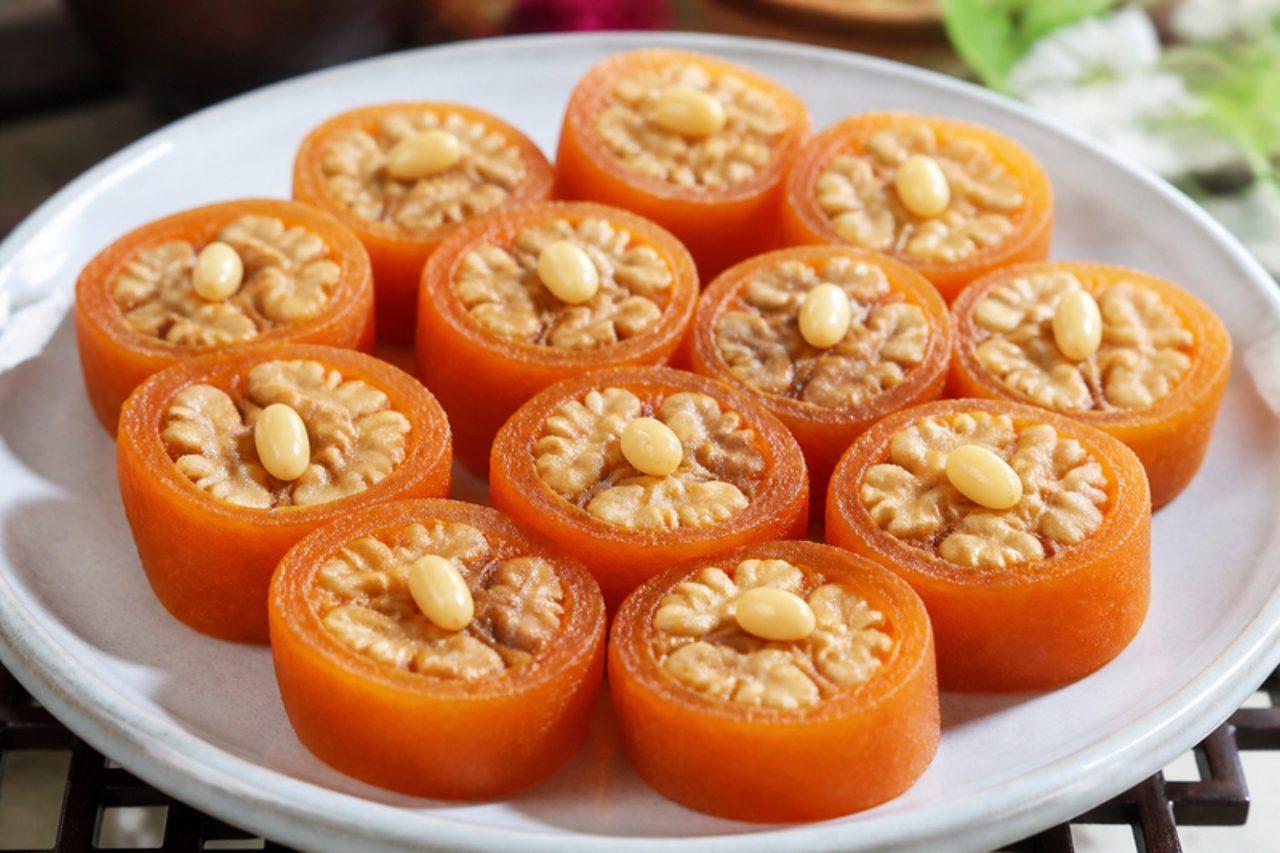
Sangju in North Gyeongsang is Korea's dried-persimmon capital, and in Andong and across the region gotgam-ssam is a sweet for Seollal and Chuseok tables and for welcoming guests in winter. Soft dried persimmons are opened out flat, rolled tightly around a row of walnut halves and sliced, so each round shows a pattern like a flower. They are chewy and honeyed from the fruit, with crunchy, slightly bitter walnuts in the middle. Serve them with sujeonggwa, the cinnamon-ginger punch, or with a cup of roasted barley tea. It is naturally egg-free: the sticky dried fruit is its own glue, and a short chill firms the roll so it slices neatly. Chef's tip: wrap the roll tightly in cling film and chill it before slicing; the common mistake is slicing it straight away, which squashes the rounds and lets the walnuts fall out.

by KrazyBadal 0 views

Pâte de fruits (Auvergne apricot fruit jellies)

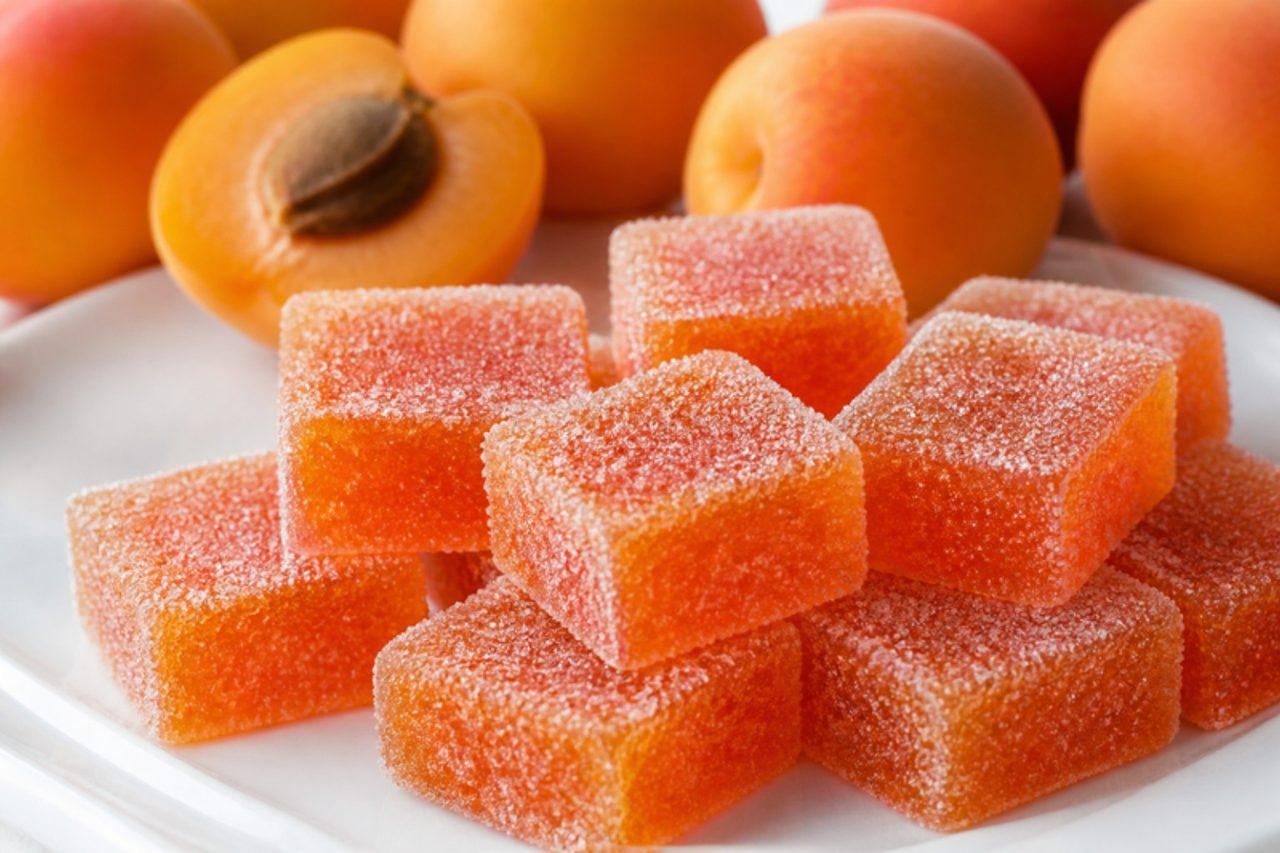
Clermont-Ferrand, the capital of the Auvergne, built a name for pâtes de fruits in the nineteenth century using apricots from the Limagne plain, and the jewel-bright squares remain a favourite in Christmas boxes and with coffee at the end of a meal. Good pâte de fruits tastes more of fruit than of sugar: dense, tender and clean-cutting, with a sparkle of sugar crust and a sharp edge of acid. Serve them on a plate of petits fours, or pack them as a gift. They are naturally egg-free: pectin, the fruit's own setting agent, does all the work once the purée is boiled with sugar to 106°C and the acid is added. Use yellow pectin for pâte de fruits if you can find it; it sets slowly enough to pour. Chef's tip: stir in the citric acid only off the heat, right before pouring; the common mistake is adding it early, so the jelly sets in the pan.

by KrazyBadal 0 views

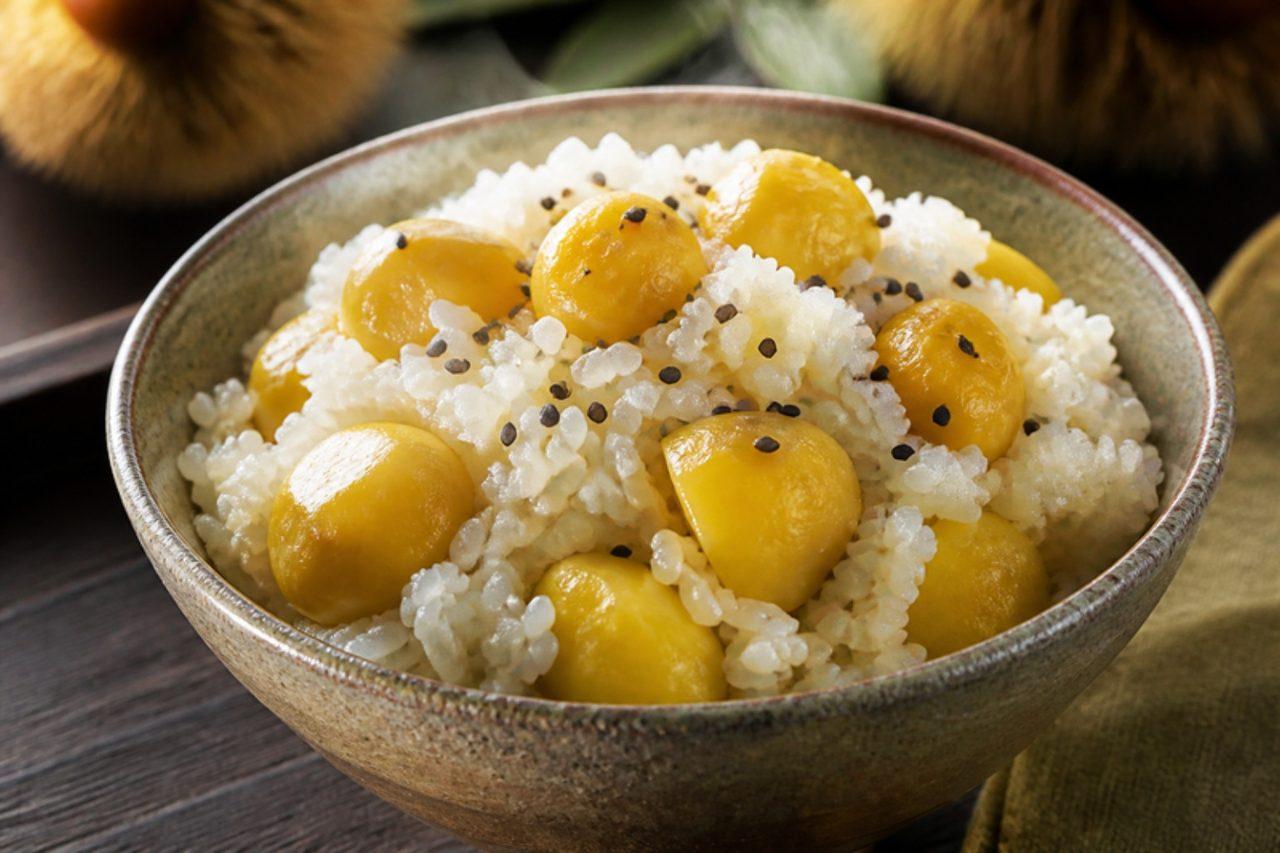
Kuri gohan (chestnut rice)

Kuri gohan is one of the great dishes of the Japanese autumn, made all over the country when fresh chestnuts arrive in September, and it is often eaten around the harvest moon, when chestnuts are offered beside dumplings and taro (the later moon-viewing in October is even nicknamed the "chestnut moon"). Sweet, fluffy chunks of chestnut sit in salty, slightly sticky rice scented with kombu, and the dish is all about the season's bounty. It traditionally uses a spoonful of sake; this is optional, and plain water works perfectly well for an alcohol-free version. Serve with miso soup, pickles and grilled fish, sprinkled with black sesame salt. Chef's tip: soak the chestnuts in hot water for 30 minutes before peeling; the shells soften and the furry inner skin lifts away far more easily.

by KrazyBadal 0 views

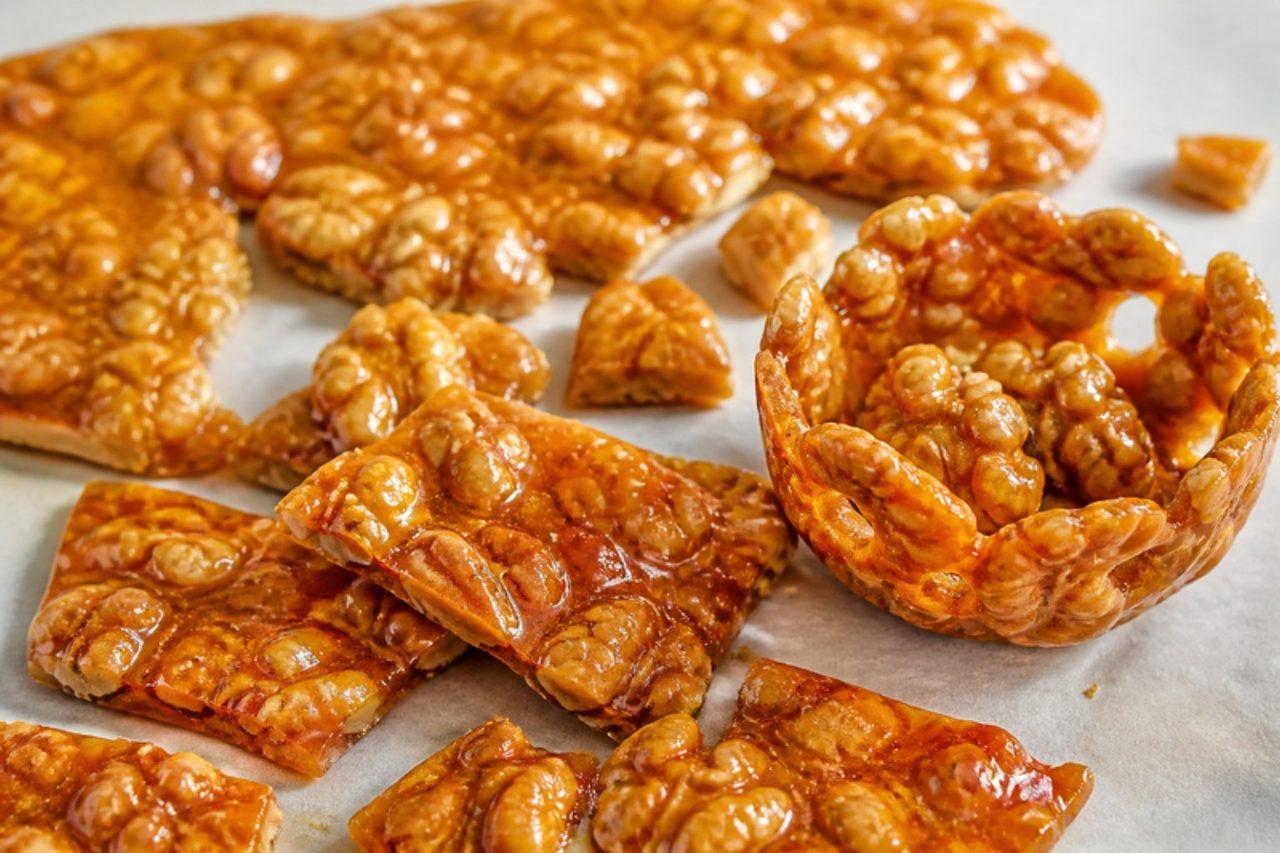
Grillázs (Hungarian walnut brittle)

Grillázs belongs to Hungarian celebrations: it is sold at Christmas fairs and on saints' day markets, and at village weddings a towering grillázs castle or basket is often the centrepiece, broken up and shared at the end of the night. Walnuts are traditional, almonds are the fancier choice. The caramel is cooked to a deep amber, so it tastes rich and slightly bitter-sweet and shatters cleanly, with the toasted nuts giving a softer crunch. Serve shards with coffee, crumble it over ice cream, or press warm sheets over an oiled bowl to make a basket for fruit or sweets. It is naturally egg-free: melted, caramelised sugar sets glass-hard as it cools and holds the nuts together, with a few drops of lemon juice to keep it smooth. Chef's tip: warm the walnuts in the oven before they go in; the common mistake is adding cold nuts, which chill the caramel so it seizes and turns grainy before you can spread it.

by KrazyBadal 0 views

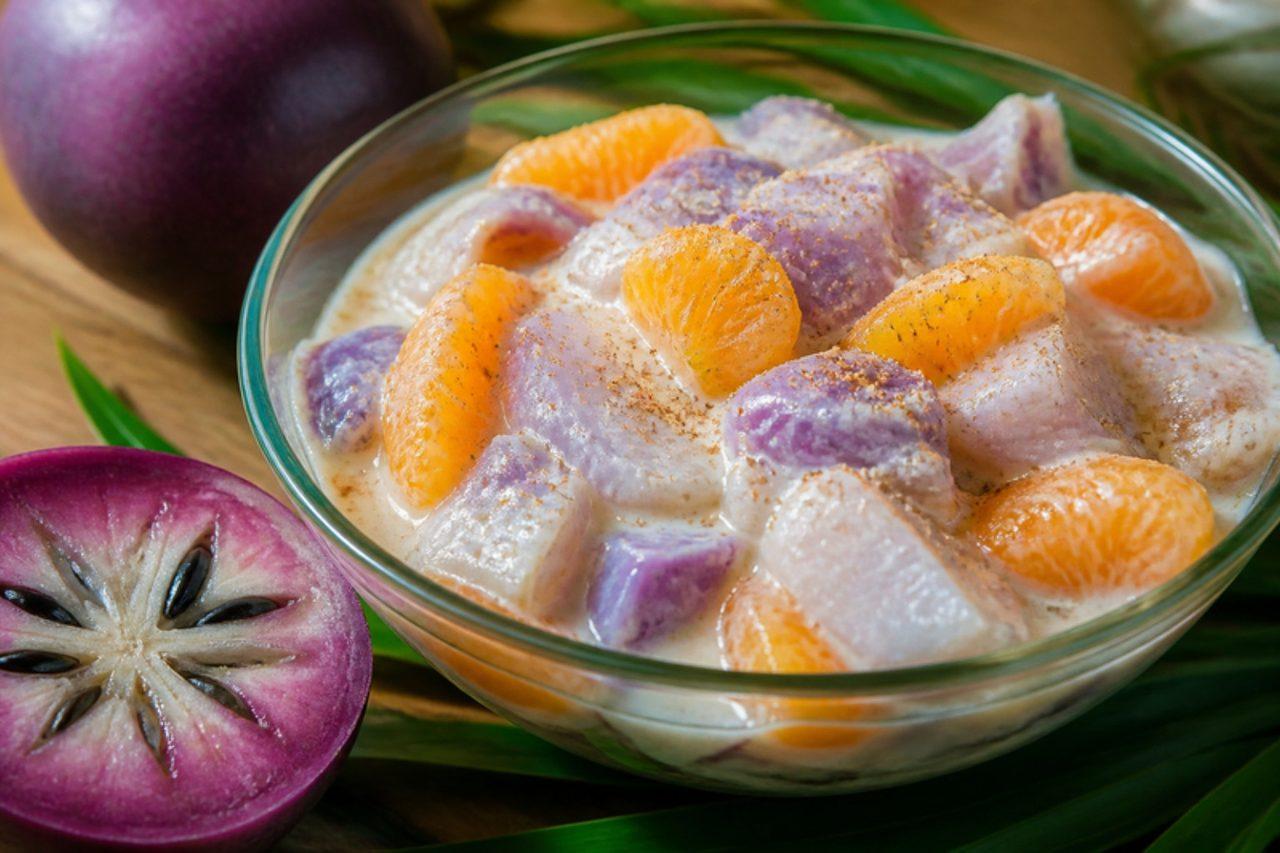
Matrimony (Jamaican star apple and orange with condensed milk)Star apple and orange dessert

Jamaica's star apples ripen in winter, so matrimony, the 'marriage' of star apple and orange, is a Christmas dessert, eaten cold after the big meal on Christmas Day. The purple star apples are scooped from their skins, their sweet, milky, jelly-like pulp mixed with juicy orange segments and dressed with condensed milk and freshly grated nutmeg. It is cool, sweet and fragrant, soft and a little jelly-like from the fruit. Serve it straight from the bowl or in glasses, as the last sweet thing of the Christmas meal. It is naturally egg-free and uncooked: condensed milk gives it body and binds the fruit into a creamy dessert, and nothing needs setting. Chef's tip: scrape the pulp only, never the skin; the common mistake is digging too close to the purple rind, whose sticky latex is bitter and gums up the spoon.

by KrazyBadal 0 views

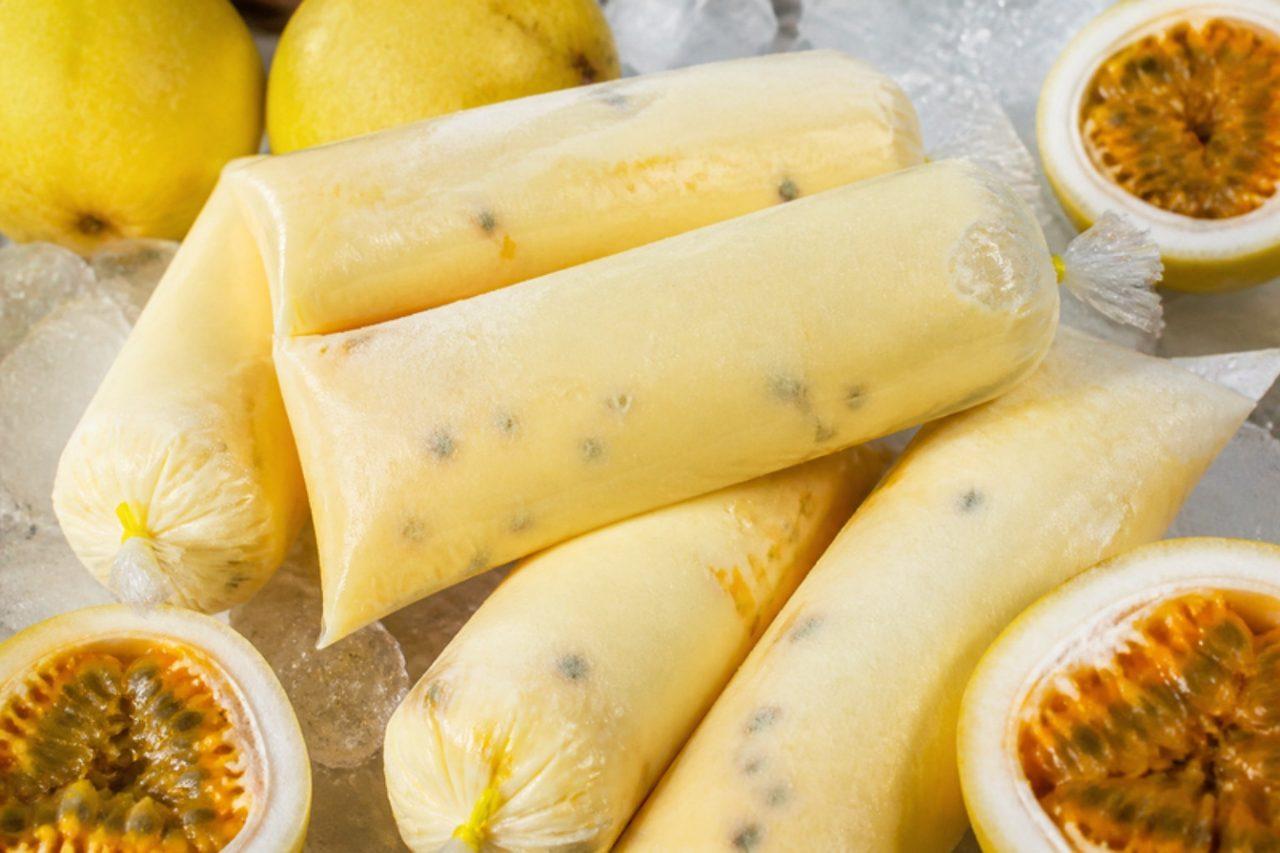
Sacolé de maracujá (Brazilian passion fruit ice pops)

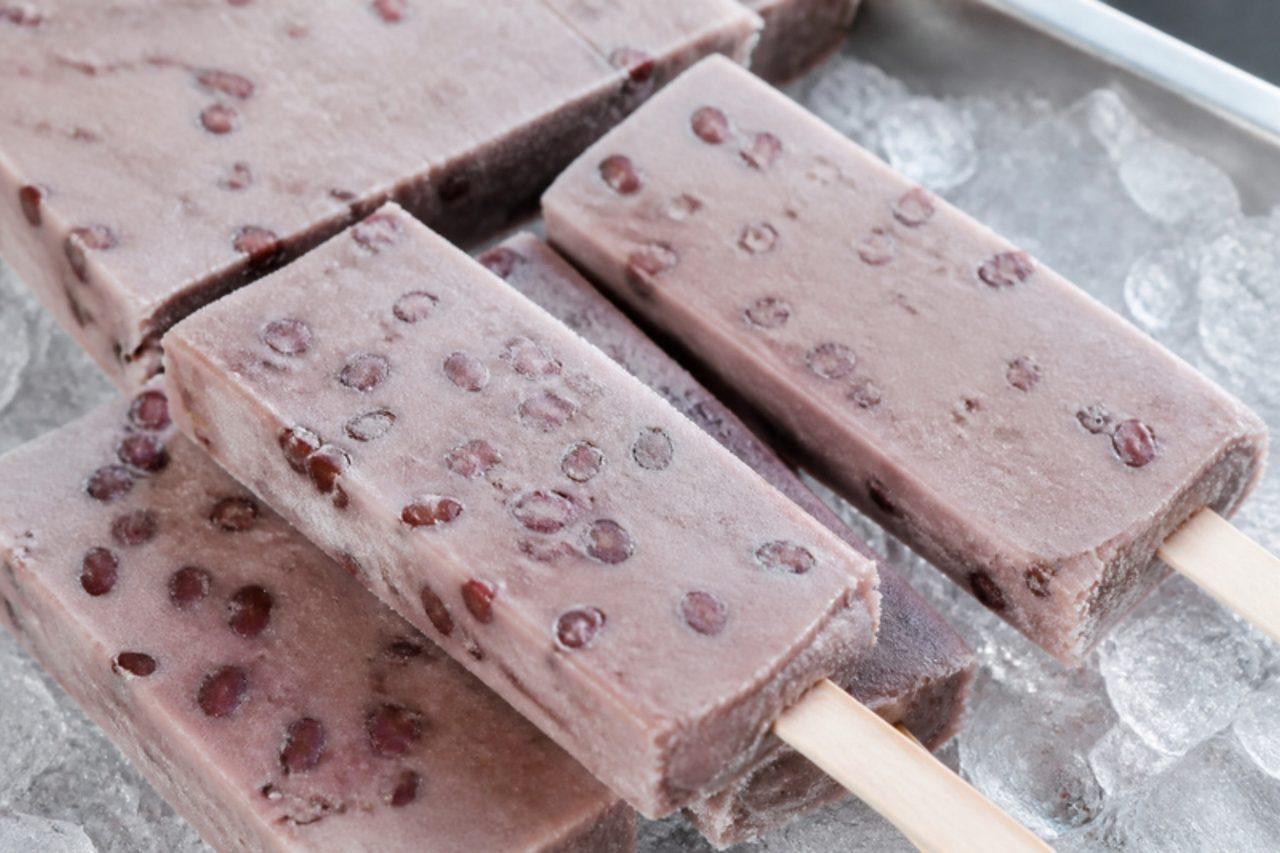
Sacolé, called geladinho or chup-chup in other states, is the homemade ice pop of Brazil: a creamy or fruity mixture tied into slim plastic bags and frozen, sold for a few coins from home freezers in Rio's neighbourhoods and all over the country, especially in summer and during school holidays. You bite off a corner and push the frozen pop up as you eat. This creamy passion fruit version is tangy and smooth. There are no eggs: milk thickened with a little cornflour and sweetened condensed milk make the base, the cooked starch and the condensed milk's sugar keeping the crystals small so the pop is soft enough to bite rather than icy. Coconut, corn and chocolate are other favourites. Chef's tip: stir in the passion fruit only once the base is cold; the common mistake is adding the acid pulp to hot milk, which makes it curdle.

by KrazyBadal 0 views

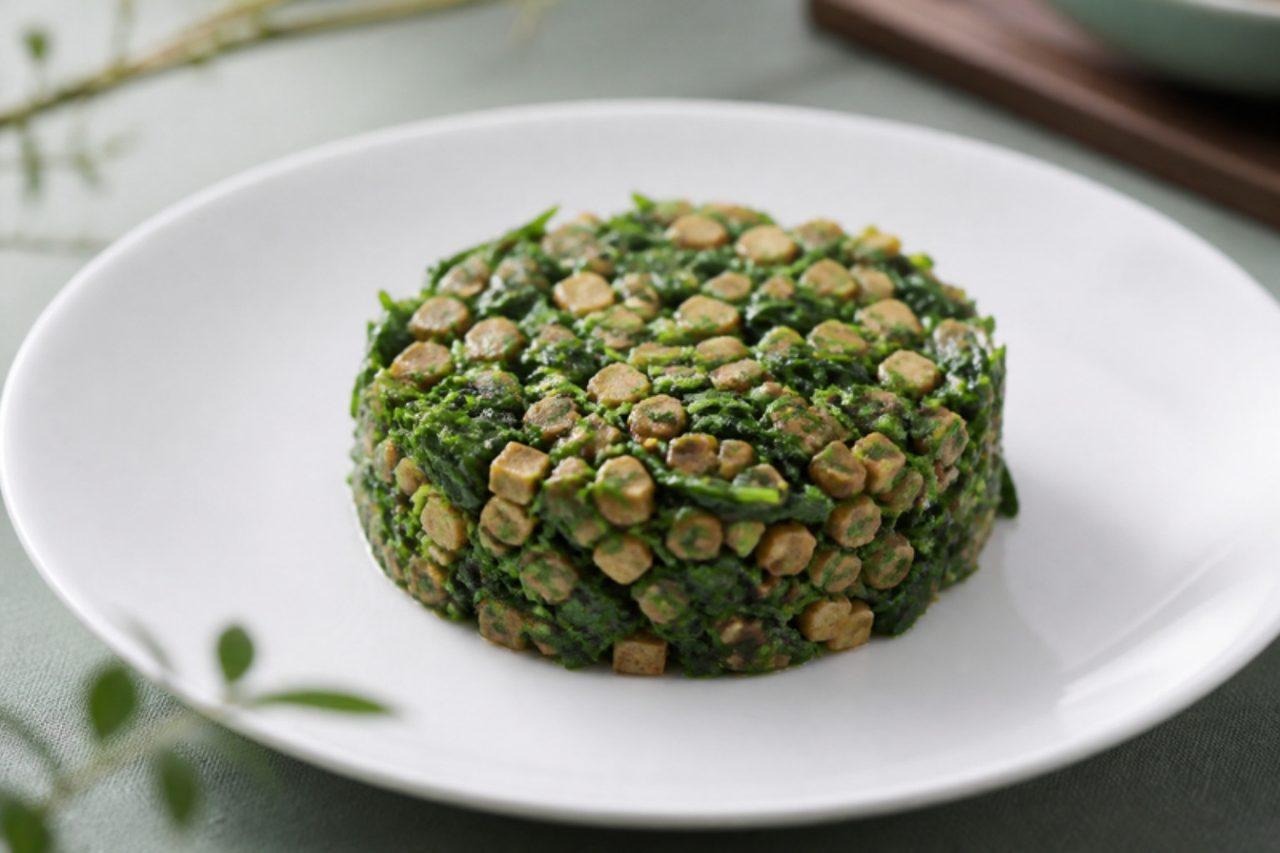
Malan tou with pressed tofuAster greens and pressed tofu salad

When the first malan tou shoots appear in Shanghai, Suzhou and Hangzhou markets in early spring, families make this little cold dish to start a meal: the tender aster leaves are blanched, chopped very fine and mixed with diced smoked pressed tofu, salt, a pinch of sugar and sesame oil. It tastes grassy, nutty and clean. Malan tou can be hard to find outside China; young spinach or shepherd's purse works well. As a side dish for four, each portion has about 120 kcal and roughly 9 g of protein, from the pressed tofu, so it is light rather than high in protein. The common mistake is leaving the greens wet, which dilutes the dressing; squeeze them hard. Chef's tip: press the mixture into a small bowl and turn it out onto the plate for the traditional neat mound.

by KrazyBadal 0 views

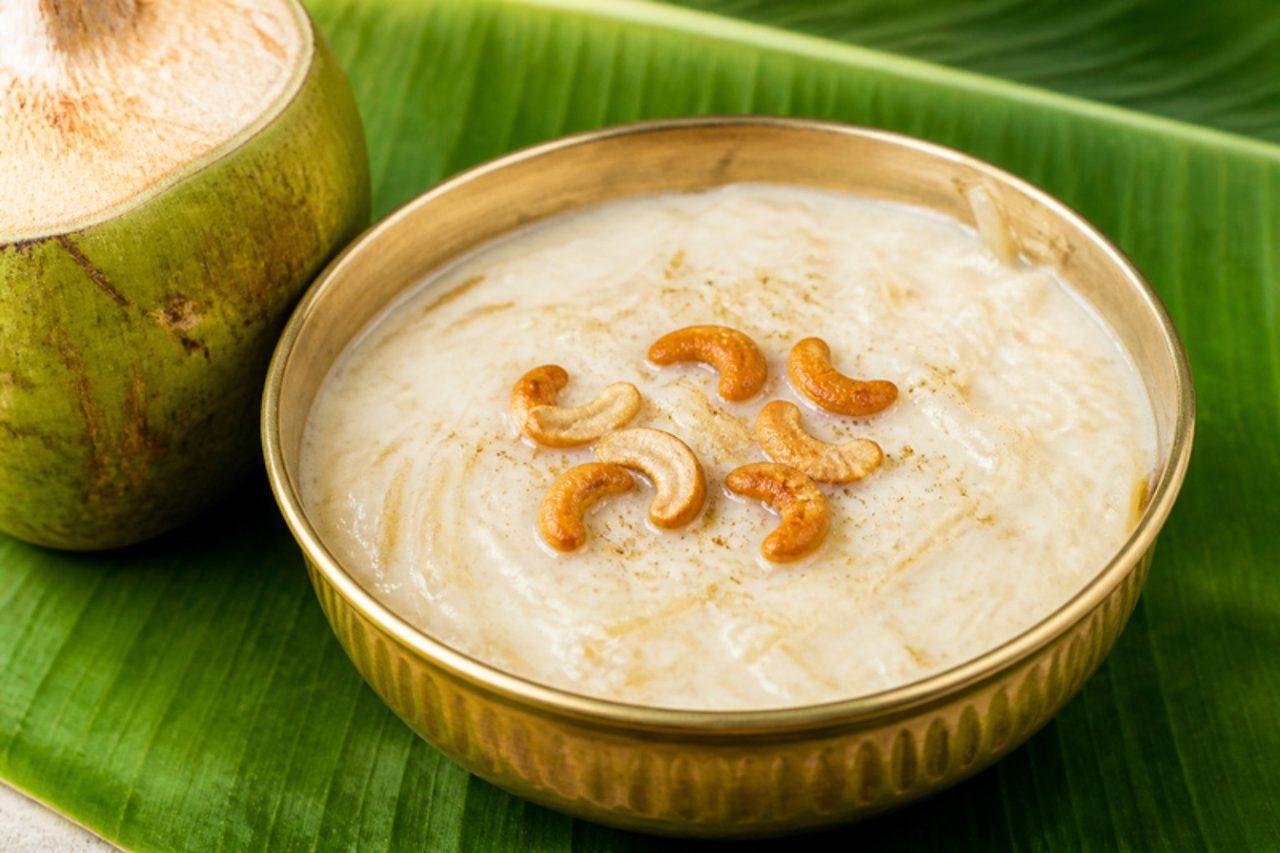
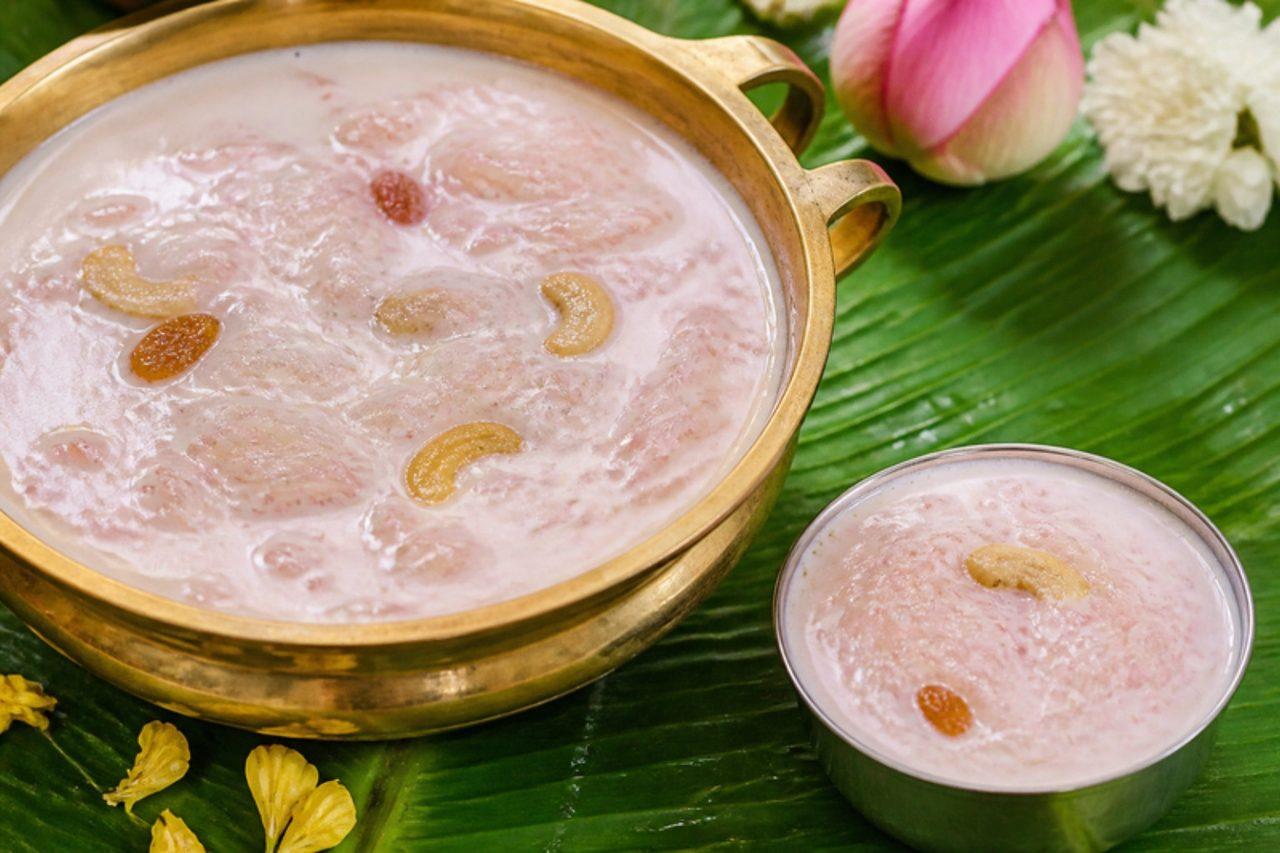
Elaneer payasam (Kerala tender-coconut milk pudding)

In Kerala, where green coconuts are sold by the roadside all summer, elaneer payasam is the cool, delicate cousin of the hot temple payasams. It turns up at Vishu lunches and summer weddings, and on any hot afternoon when someone has opened a few tender coconuts. Milk is boiled down until creamy and faintly caramel, sweetened, chilled, and only then mixed with slippery spoonfuls of young coconut flesh and a little of its water, so the coconut stays fresh and floral rather than cooked. The pudding is pourable, silky and cold, with soft white strands of coconut through it; serve it in small glasses after a meal or alongside banana chips. It is naturally egg-free: the long reduction of the milk, helped by a little condensed milk, gives the body that a custard would get from yolks. Chef's tip: the common mistake is stirring the coconut water into hot milk, which can make it split and taste sour; let the milk cool completely first.

by KrazyBadal 0 views

Helado de dulce de leche (Buenos Aires dulce de leche ice cream)

Dulce de leche is the flavour Buenos Aires heladerías are judged by, and on a summer night the queues at neighbourhood ice-cream shops stretch out onto the pavement well after dinner. Locals order it plain, with a ripple of extra dulce de leche (dulce de leche granizado adds chocolate flakes), often by the kilo to take home. It is dense, chewy and deeply caramel. This home version is egg-free with no custard: a little cornflour cooked into the milk thickens it the way yolks would, and the dulce de leche itself is milk and sugar cooked down, its sugar and milk solids keeping crystals tiny so it stays smooth and scoopable. Churn it, or still-freeze and stir it every 45 minutes. Chef's tip: chill the extra dulce de leche before rippling it in; the common mistake is folding in a warm one, which melts into the ice cream instead of leaving ribbons.

by KrazyBadal 0 views

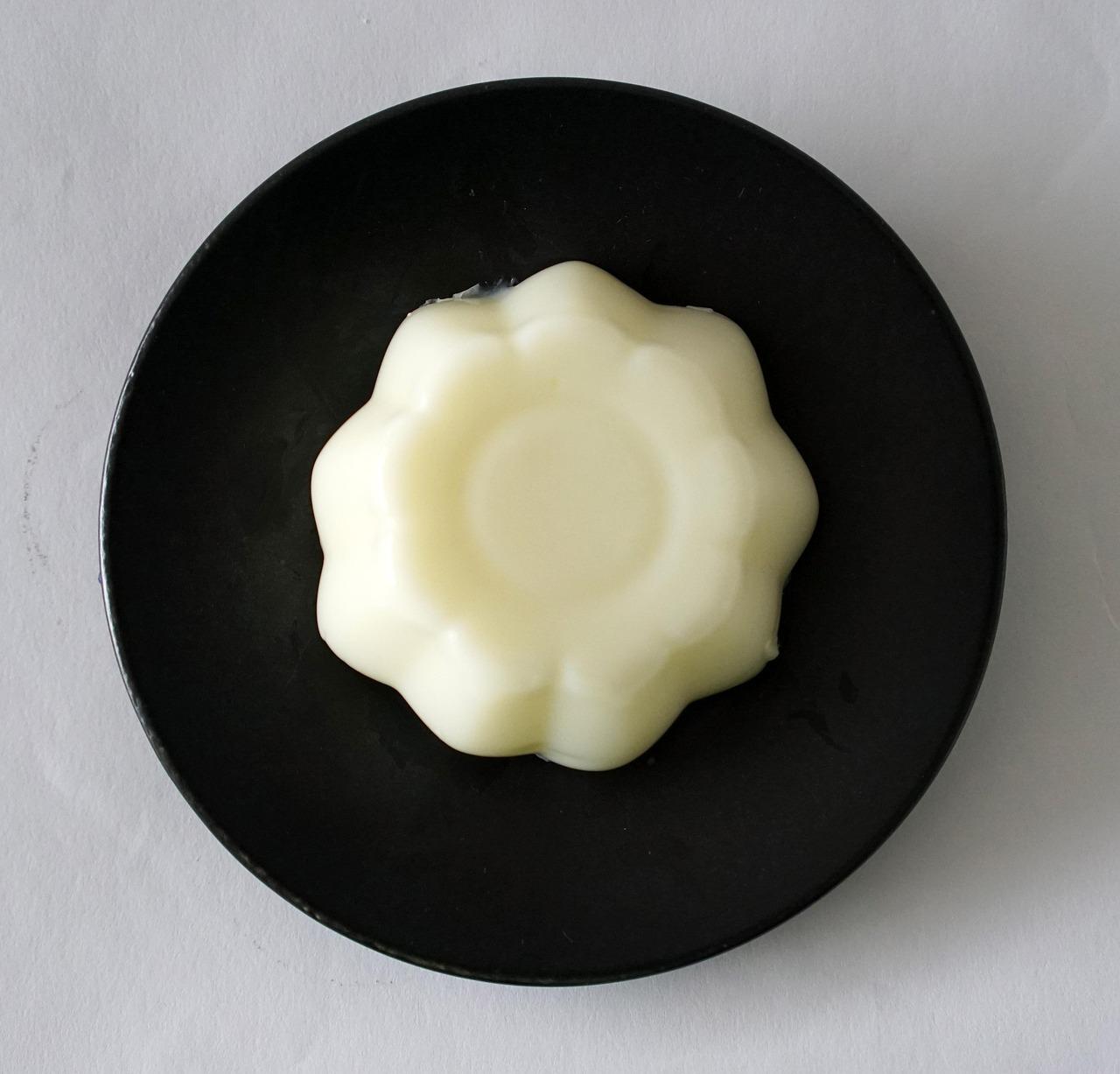
Biancomangiare (Sicilian almond-milk pudding)

In Sicily, and above all around Modica and Avola where the almonds grow, biancomangiare is the cool, white pudding of high summer, turned out of fluted moulds after Sunday lunch or eaten at the bar from a little glass. The old Sicilian kind is made with almond milk rather than cow's milk and thickened with starch, which makes it dairy-free and vegan. It is smooth and soft, faintly marzipan-scented, brightened with a strip of lemon peel and warmed with cinnamon. Serve it cold, topped with chopped pistachios, a dusting of cinnamon or a few jasmine flowers, as they do in Palermo. No egg has ever belonged in it, and nothing else is needed to set it: cornflour boiled in the almond milk sets it as it cools, the same way it sets a custard without yolks. Chef's tip: once it thickens, keep it bubbling for 2 more minutes; the common mistake is pulling it off too soon, which leaves a raw starch taste and a pudding that won't turn out cleanly.

by KrazyBadal 0 views

Raspados (Mexican shaved ice with fruit syrups)

In Guadalajara and the towns of Sinaloa, raspados are sold from carts and little shops from noon until late on hot days: a paper cup of finely shaved ice soaked in bright homemade syrups like tamarind, mango, strawberry and deep-red hibiscus, sometimes with fresh fruit and a squeeze of lime. They are the cheapest way to cool down, and children and adults line up alike. They are naturally egg-free and plant-based: there is nothing to set or bind, just fruit and sugar cooked into syrups thick enough to cling to the ice. The hibiscus is tart and floral, the mango sweet and thick, and the two side by side make a striking cup. Make the syrups and cool them quickly over iced water. Chef's tip: shave the ice as fine as you can and pour the syrup slowly; the common mistake is using coarse crushed ice, which lets the syrup run straight to the bottom.

by KrazyBadal 0 views

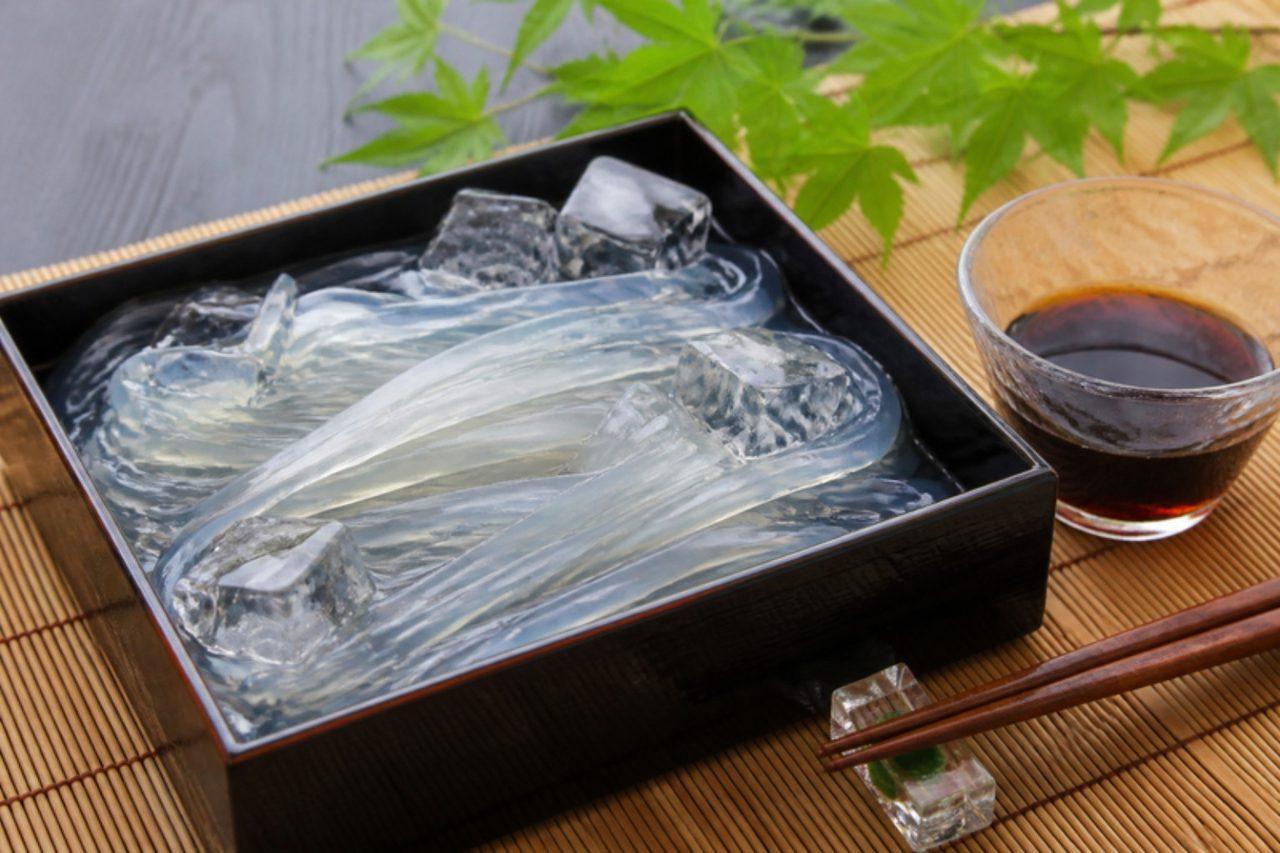
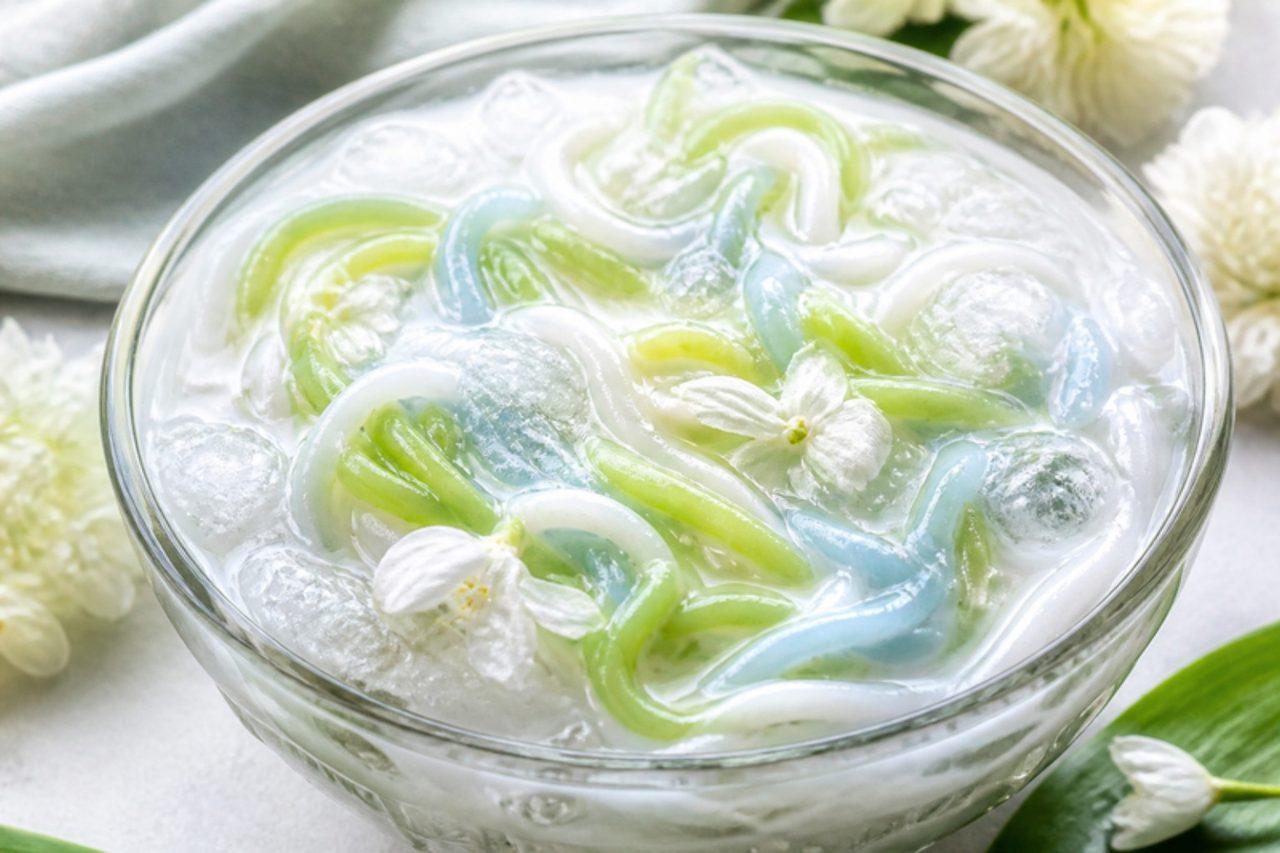
葛切り (Kuzukiri, Kyoto kudzu noodles)

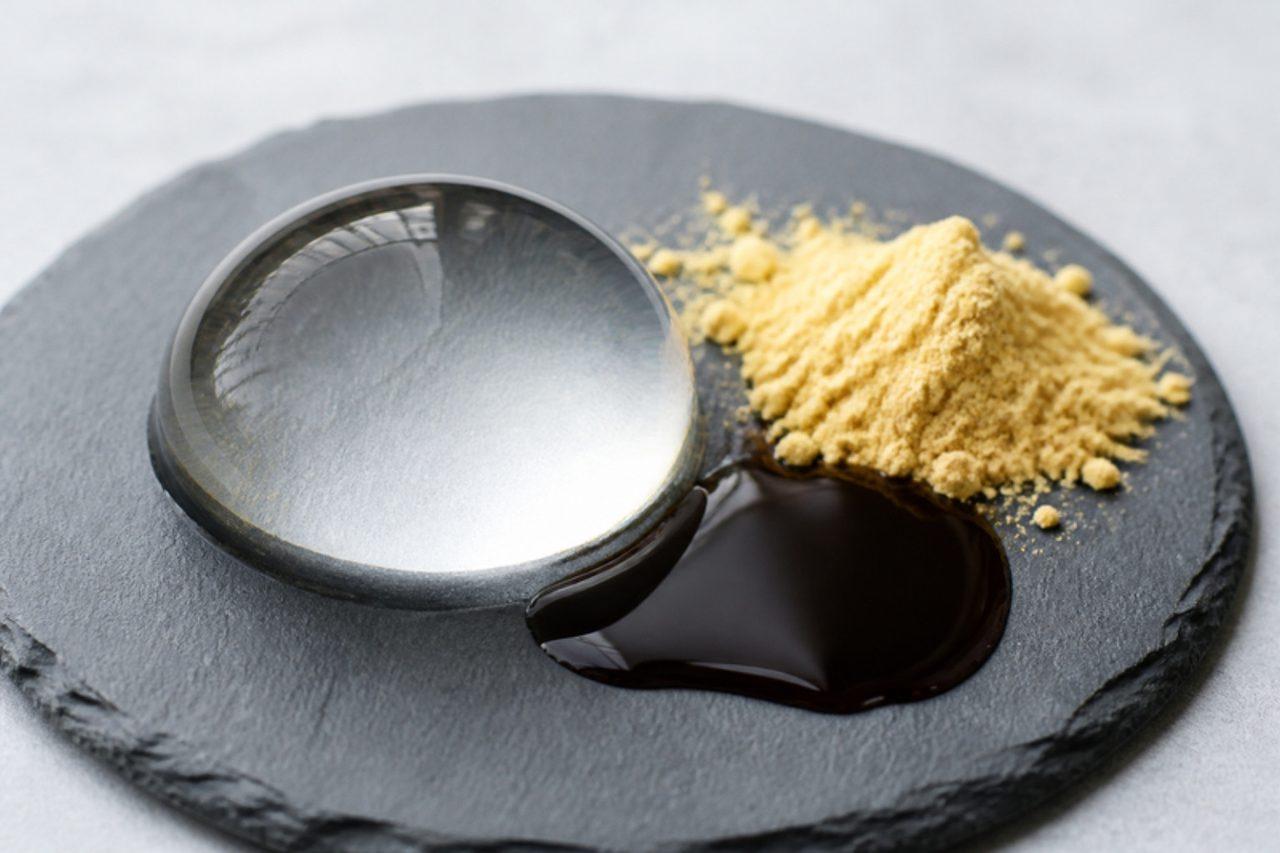
Kuzukiri is a summer sweet of Kyoto, served most famously in the old tea houses of Gion: a lacquered box of clear, flat noodles floating in iced water, with a cup of dark kuromitsu black-sugar syrup to dip them in. It is eaten in the hottest months as a refreshing afternoon dessert with green tea. The noodles are cool, springy and smooth, with a clean, faintly sweet taste, and the syrup is deep, smoky and molasses-rich. It is naturally egg-free and plant-based: pure kudzu starch mixed with water sets into a firm, glass-clear sheet when it is cooked in a thin layer over boiling water, the starch alone doing the binding. Serve it within half an hour of making it. Chef's tip: buy pure kudzu starch rather than a blend; the common mistake is making kuzukiri ahead, because within an hour or two it turns cloudy and stiff.

by KrazyBadal 0 views

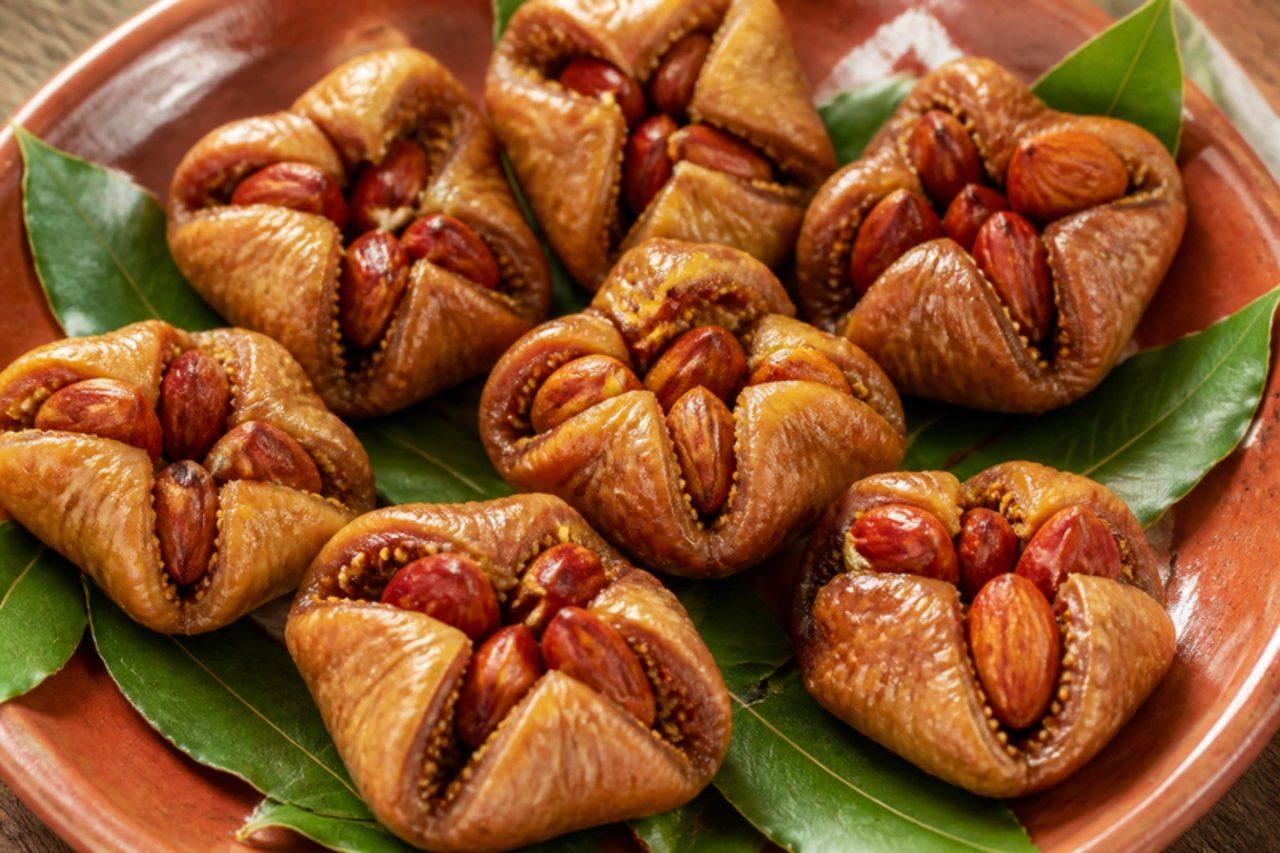
Crocette di fichi (Calabrian baked fig crosses)Almond-stuffed fig crosses

Around Cosenza in northern Calabria the late-summer fig crop is dried in the sun, and the best figs are kept for crocette: two figs split open, laid across each other, filled with a toasted almond and a few fennel seeds, then baked until they darken and caramelise. They come out at Christmas, often stored in tins between bay leaves, and are eaten after dinner with nuts and mandarins. Expect a soft, jammy, chewy bite with crunch from the almond and the bright, slightly liquorice note of fennel. They go well with a cup of strong coffee or a little hard cheese. There is no egg and nothing added to bind them: in the oven the figs' own sugars soften and turn sticky, and as they cool they glue the cross together. Chef's tip: pull them out when they look shiny and just a shade darker; the common mistake is baking too long, which makes the figs hard and bitter.

by KrazyBadal 0 views

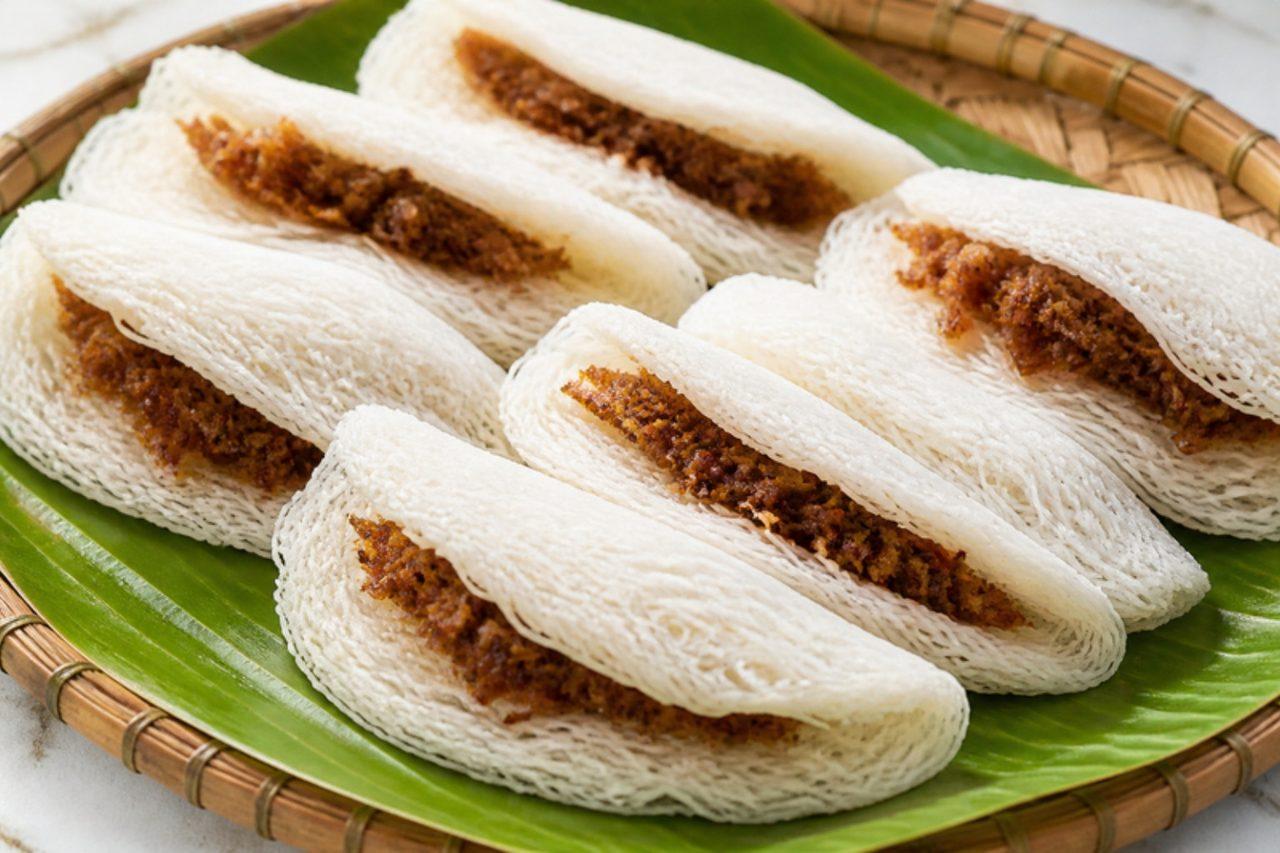
Lavariya (ලැවරියා, string-hopper parcels with coconut treacle filling)

Lavariya turns up on the Sinhala and Tamil New Year table in mid-April, when households across Sri Lanka lay out a spread of sweets after the auspicious hour. It starts as string-hopper dough: roasted rice flour scalded with boiling water and pressed through a mould into fine noodles. Here the noodles are piped in a coil, filled with pani pol, grated coconut cooked down in kithul treacle with cardamom, then folded into a half-moon and steamed. The result is soft, lacy and springy outside, with a sticky, smoky-sweet centre. Serve warm with plain tea or as part of an Avurudu platter with kokis and kavum. It is naturally egg-free: the boiling water cooks and swells the rice starch so the dough holds its shape, and the thick treacle binds the coconut. Chef's tip: the common mistake is using warm rather than boiling water; the dough then crumbles in the press, so pour it straight off the boil and mix with a spoon until cool enough to knead.

by KrazyBadal 0 views

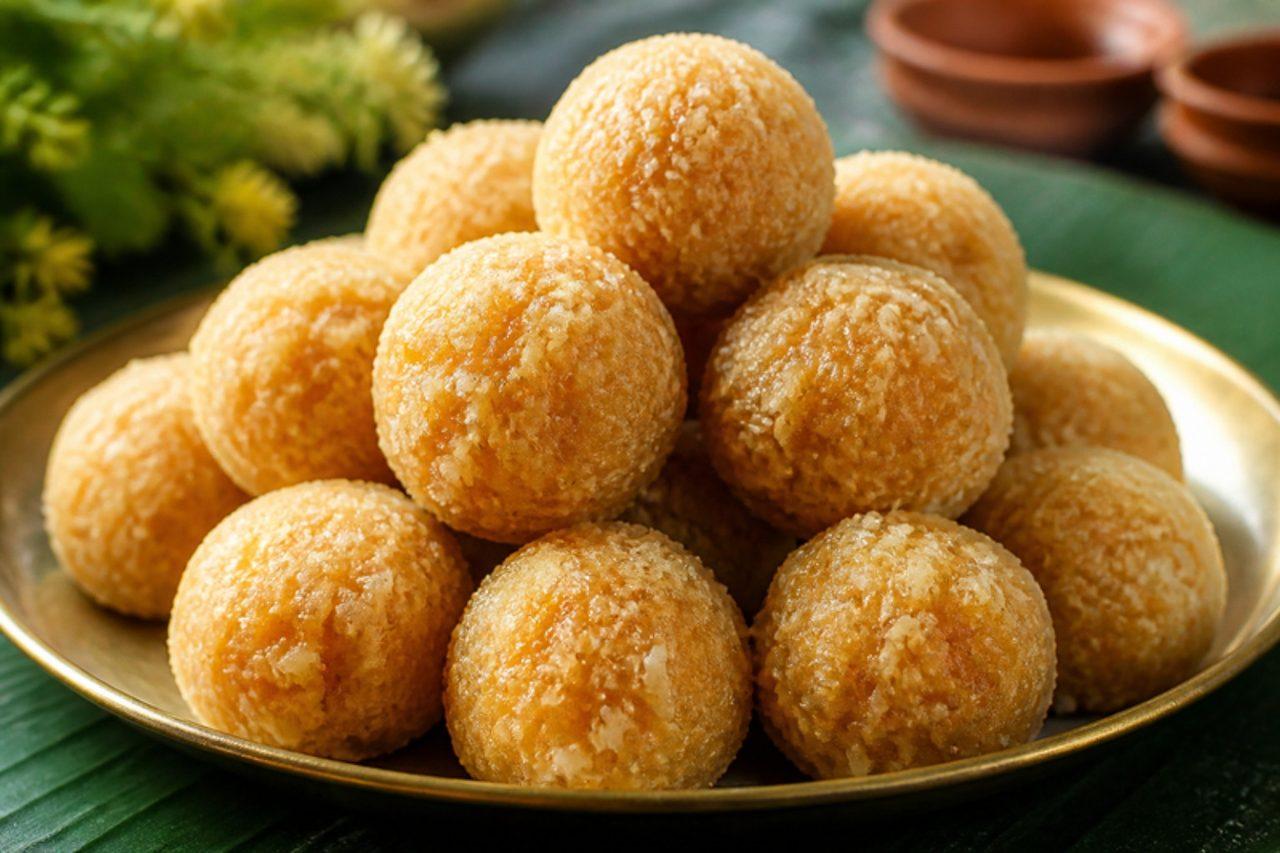
Narkel naru (Bengali coconut balls)

Narkel naru are made by the plateful in Bengali homes for Lakshmi Puja and on Bijoya Dashami, when they're offered to every visitor who comes to exchange greetings after Durga Puja. Freshly grated coconut is cooked slowly with jaggery, ideally the winter date-palm jaggery called nolen gur, until the mixture turns sticky and caramel-brown, then rolled into small balls while still warm. They're chewy and moist, intensely coconutty, with a deep molasses sweetness. Serve them at room temperature with tea or as part of a festival plate. They're naturally egg-free and vegan: the jaggery, cooked down to a sticky syrup, binds the coconut, with no flour or milk needed. Use sugar for a white naru if you prefer. Chef's tip: roll them while the mixture is still warm; waiting until it's cold is the common mistake, because it then crumbles and won't hold a ball shape.

by KrazyBadal 0 views

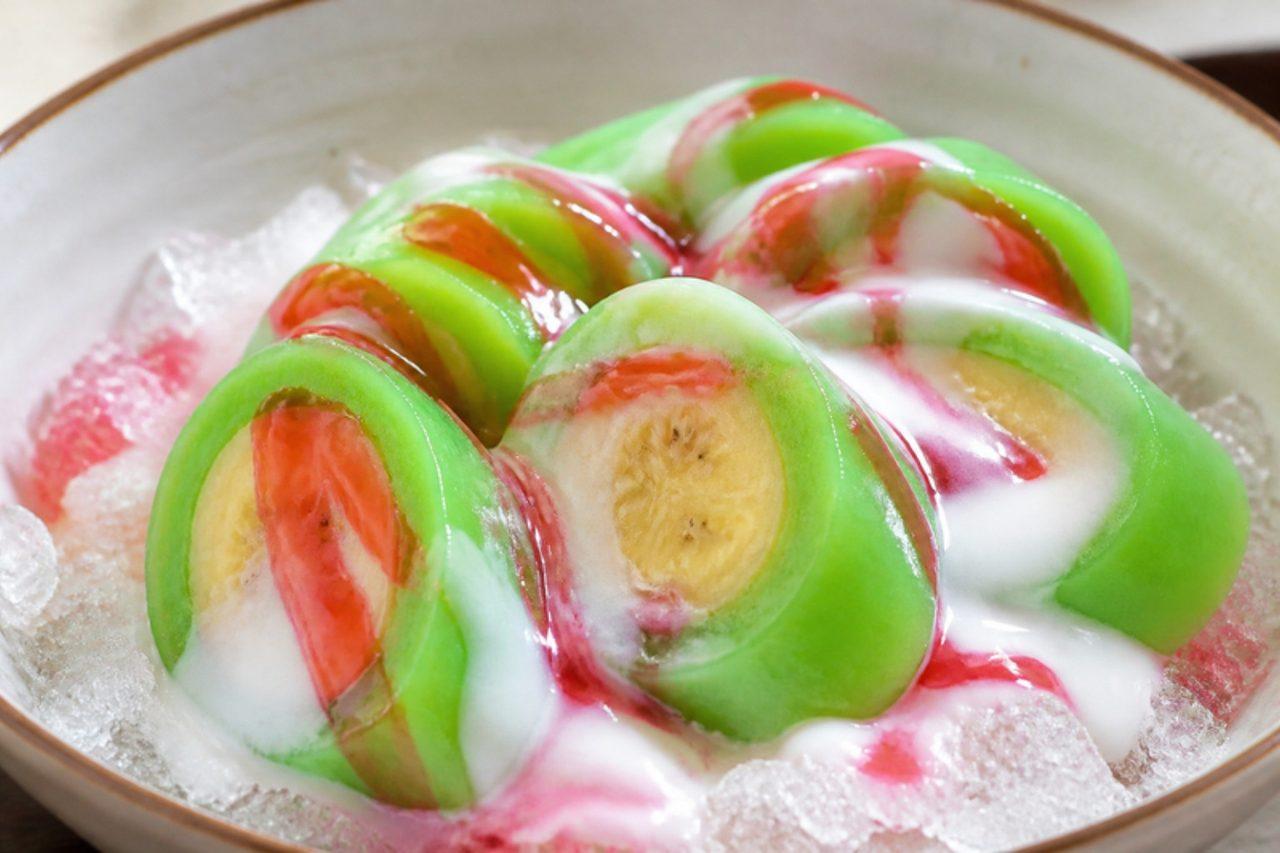
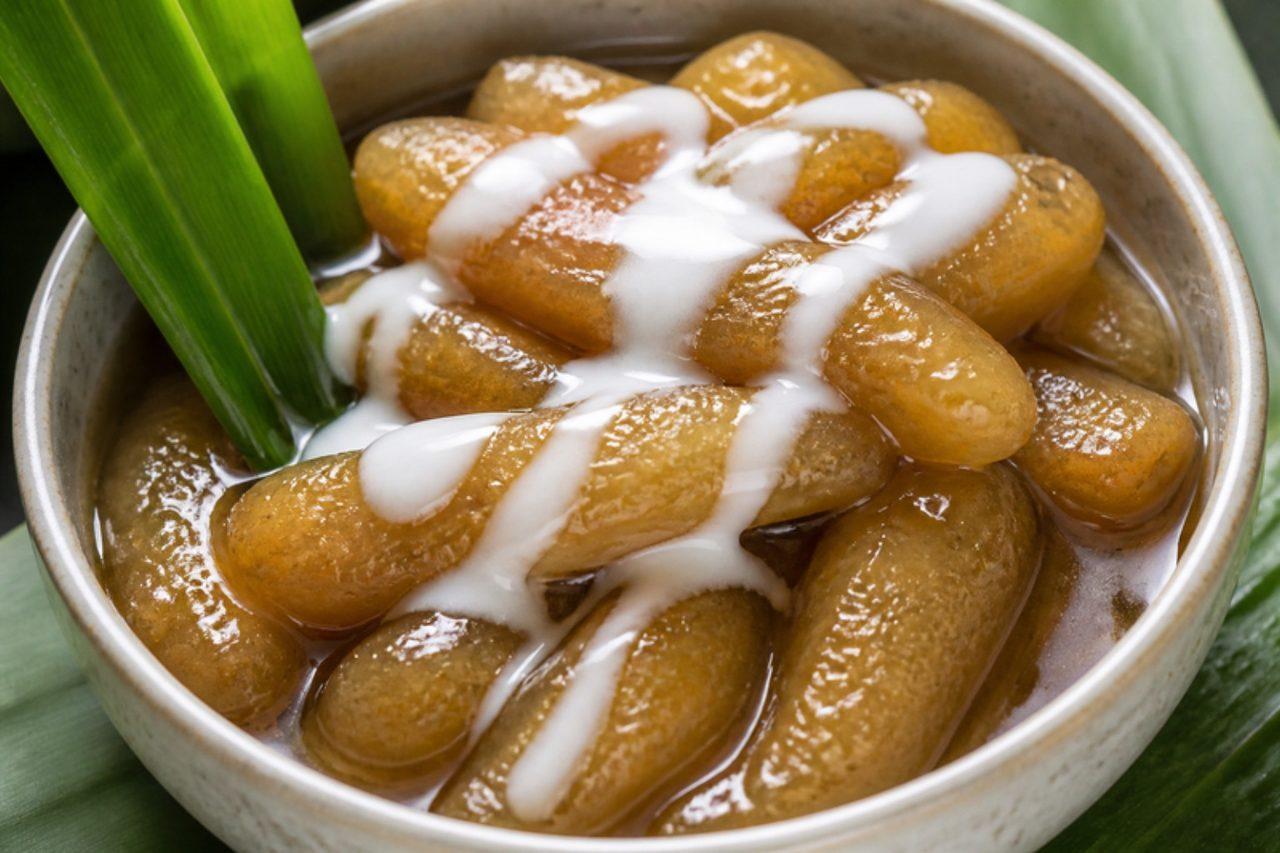
Es pisang ijo (Makassar green banana dessert)

Es pisang ijo, green banana ice, is the pride of Makassar in South Sulawesi. It is everywhere during Ramadan as the sweet that breaks the fast at sunset, and sold year-round from stalls by the Losari waterfront. A whole steamed banana is wrapped in a thin, soft jacket of pandan-green rice-flour dough, sliced, laid on a pool of warm salty coconut porridge sauce, then buried under shaved ice and a sharp pink syrup. Cold, warm, salty, sweet and fragrant, all in one bowl. It is naturally egg-free: rice flour cooked with coconut milk and pandan juice makes a smooth, pliable dough that binds without any egg, and a little more rice flour thickens the sauce. Chef's tip: use firm but ripe bananas with a few freckles; the common mistake is very soft ones, which turn to mush inside the dough while steaming.

by KrazyBadal 0 views

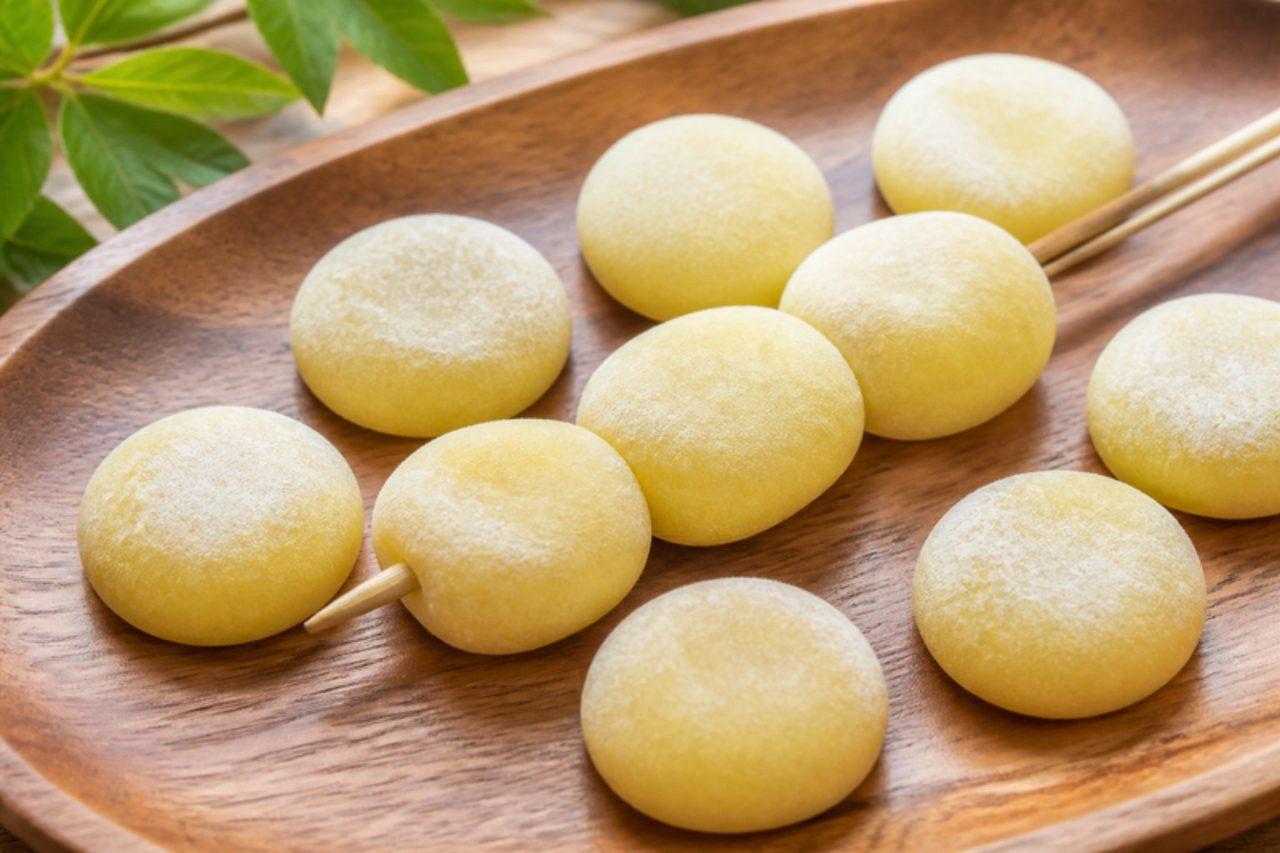
Kibi dango (吉備団子, Okayama soft millet rice cakes)

Kibi dango is Okayama's souvenir sweet, sold in boxes at the station and tied to the folk tale of Momotarō, the peach boy, who shared them with a dog, a monkey and a pheasant on his way to fight the ogres. It is a year-round snack with green tea. Today's version is a gyuhi, a soft, cooked dough of glutinous rice flour, sugar and starch syrup, with a little millet flour for a pale-gold colour and a gentle, grainy sweetness. The small flat rounds are pillowy, smooth and stretchy, dusted with potato starch. The cakes are naturally egg-free: cooking the glutinous rice flour with sugar and syrup turns it into an elastic dough that binds itself, and the sugar keeps it soft for days. Chef's tip: add the sugar in three goes and stir until each lot is absorbed; the common mistake is tipping it in at once, which makes the dough seize and go lumpy. Cut them small for children and supervise, as with any mochi.

by KrazyBadal 0 views

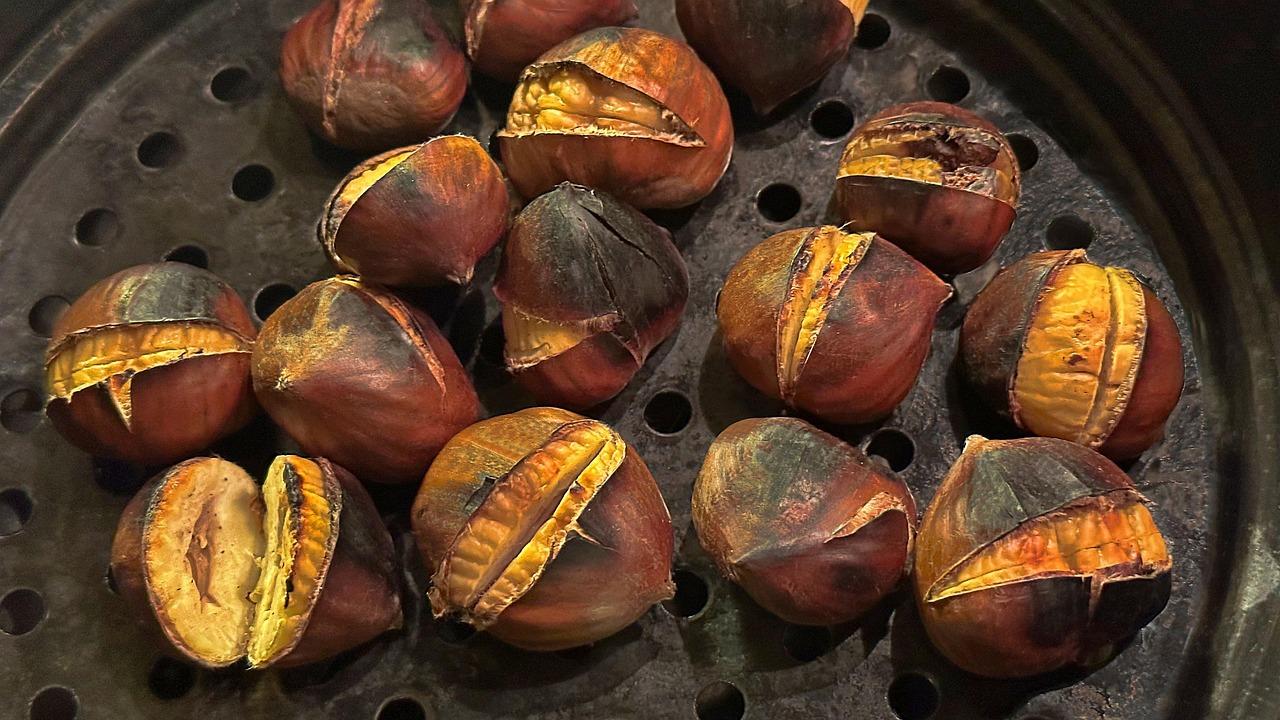
Sült gesztenye (Hungarian roasted chestnuts)

From November until the end of winter, the smell of roasting chestnuts drifts along Budapest's boulevards and around Christmas markets in every Hungarian town, where sellers shake them over charcoal and pour them hot into paper cones. Roasting turns the nuts sweet and soft, mealy like a baked potato but with a gentle nutty sweetness and a hint of smoke where the shell has charred. Eat them straight away, peeled with your fingers while they are hot, with a cup of hot tea, hot spiced apple juice or a bag of roasted pumpkin from the next stall. They are naturally egg-free, a single ingredient with nothing to bind: heat turns the chestnut's starch to sugar and softens it. A short soak in water before roasting adds steam inside the shell, so the nuts cook evenly and peel more easily. Chef's tip: cut a deep cross through the shell on the rounded side of every chestnut; the common mistake is skipping or under-cutting it, and then the steam bursts the chestnuts open in the oven.

by KrazyBadal 0 views

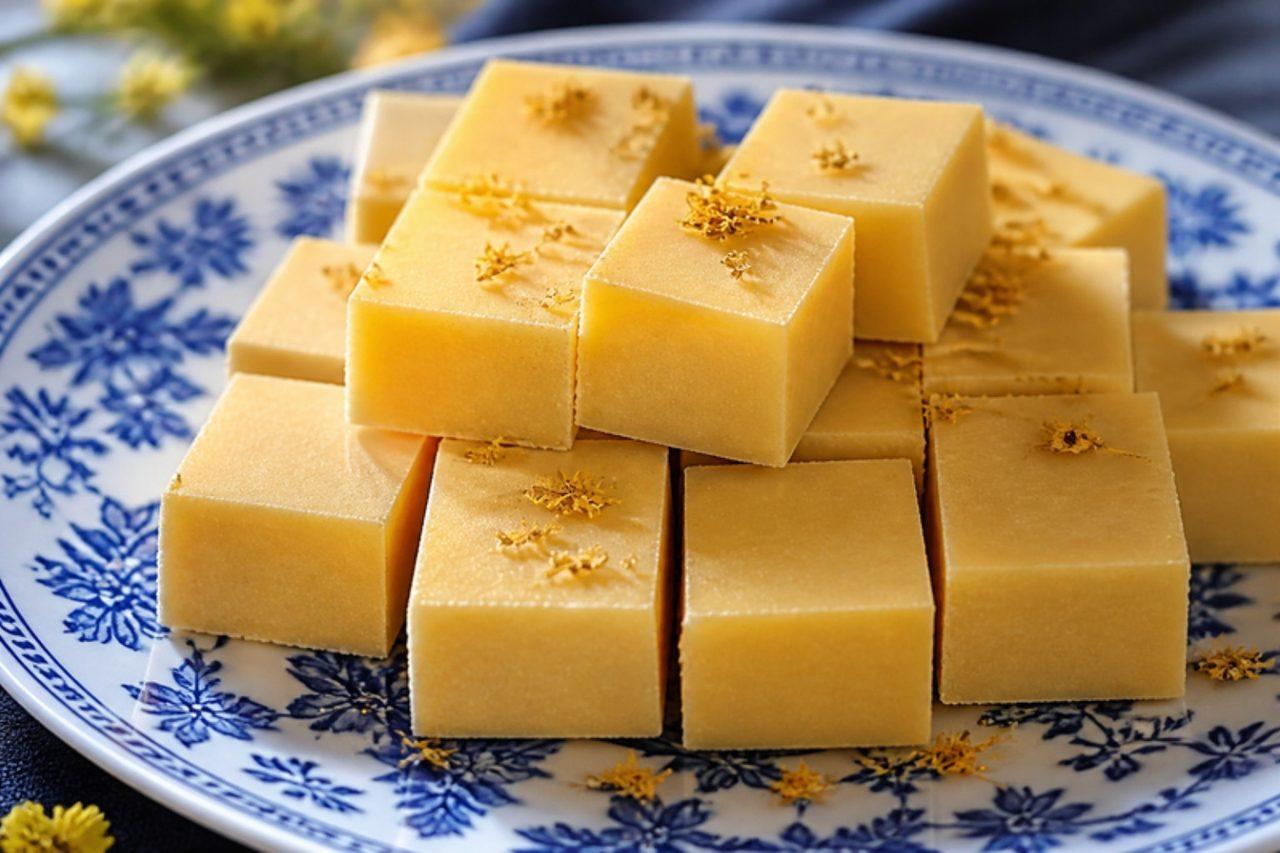
Wandouhuang (豌豆黄, Beijing chilled yellow pea cake)

Wandouhuang is a Beijing spring and early-summer sweet, sold from carts around the Qingming festival and once polished into an imperial version for the Qing court that is still served in Beihai Park's old-style restaurants. Yellow split peas are boiled to a mush, pressed through a sieve and cooked down with sugar until thick, then left to set in a tray and cut into neat pale-gold blocks. Chilled, it is cool and smooth with a fine, melting texture and the gentle, nutty taste of peas. Serve on small plates with jasmine tea, or after a rich meal. It is naturally egg-free and needs no setting agent at all: the starch in the peas firms the paste as it cools, like a polenta. Chef's tip: the common mistake is not cooking the paste down far enough; keep stirring until a line drawn through it with a spatula stays open for a few seconds, or it will not slice.

by KrazyBadal 0 views

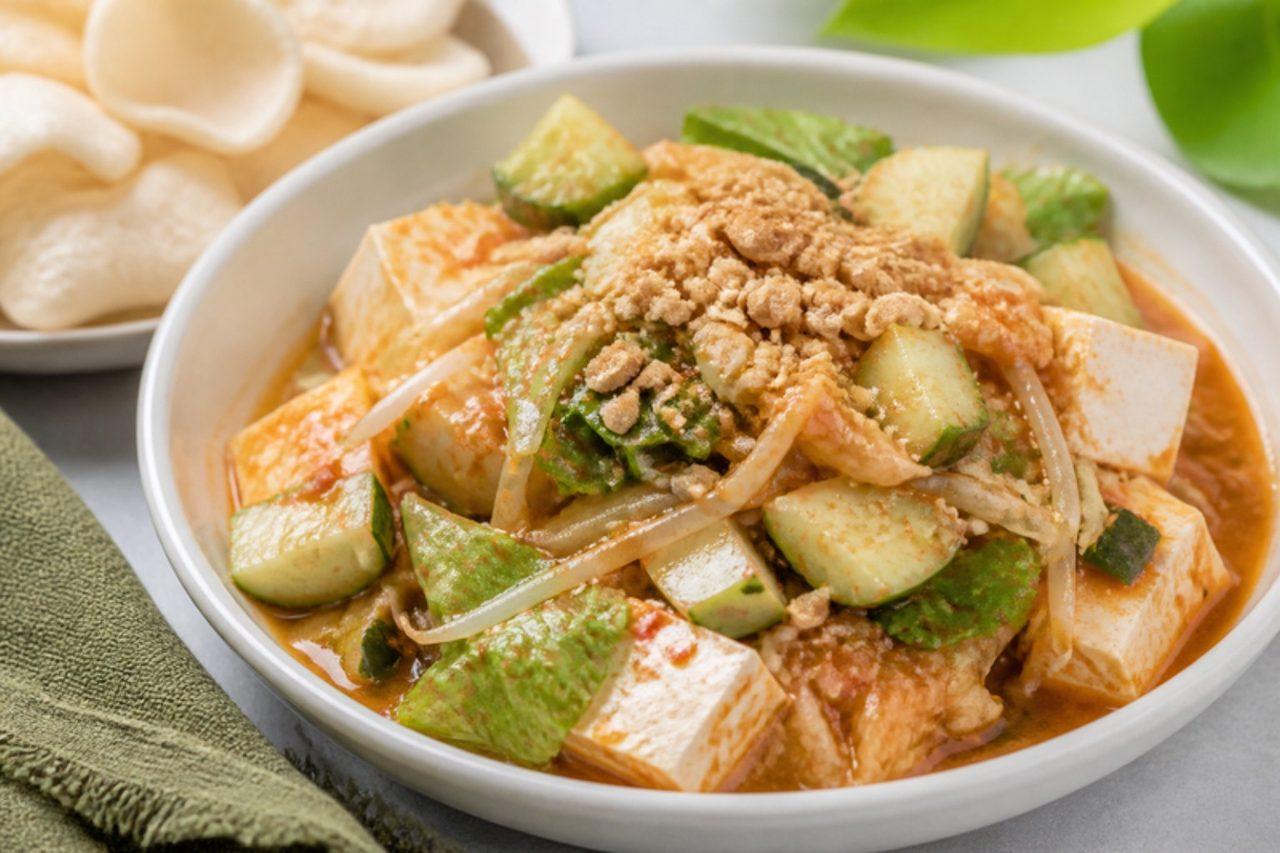
Asinan BetawiPickled vegetable and tofu salad

Asinan Betawi is the cooling salad of old Jakarta, sold from glass-sided carts and eaten mid-afternoon in the heat or brought out at family gatherings in big tubs. Quick-pickled cabbage, cucumber and bean sprouts are piled with cubes of tofu, then soaked in a thin, tangy sauce of chilli, vinegar, palm sugar and ground peanuts. It is crunchy, sour, sweet and spicy all at once. A portion has about 300 kcal and roughly 17 g of protein, from the tofu and peanuts, so it is a light meal rather than a high-protein one. The common mistake is dressing it too early; the vegetables go limp within an hour. Street versions often scatter shrimp crackers on top, so use plain rice or cassava crackers to keep it vegetarian. Chef's tip: chill the sauce well before serving; asinan should be served cold enough to fog the bowl.

by KrazyBadal 0 views

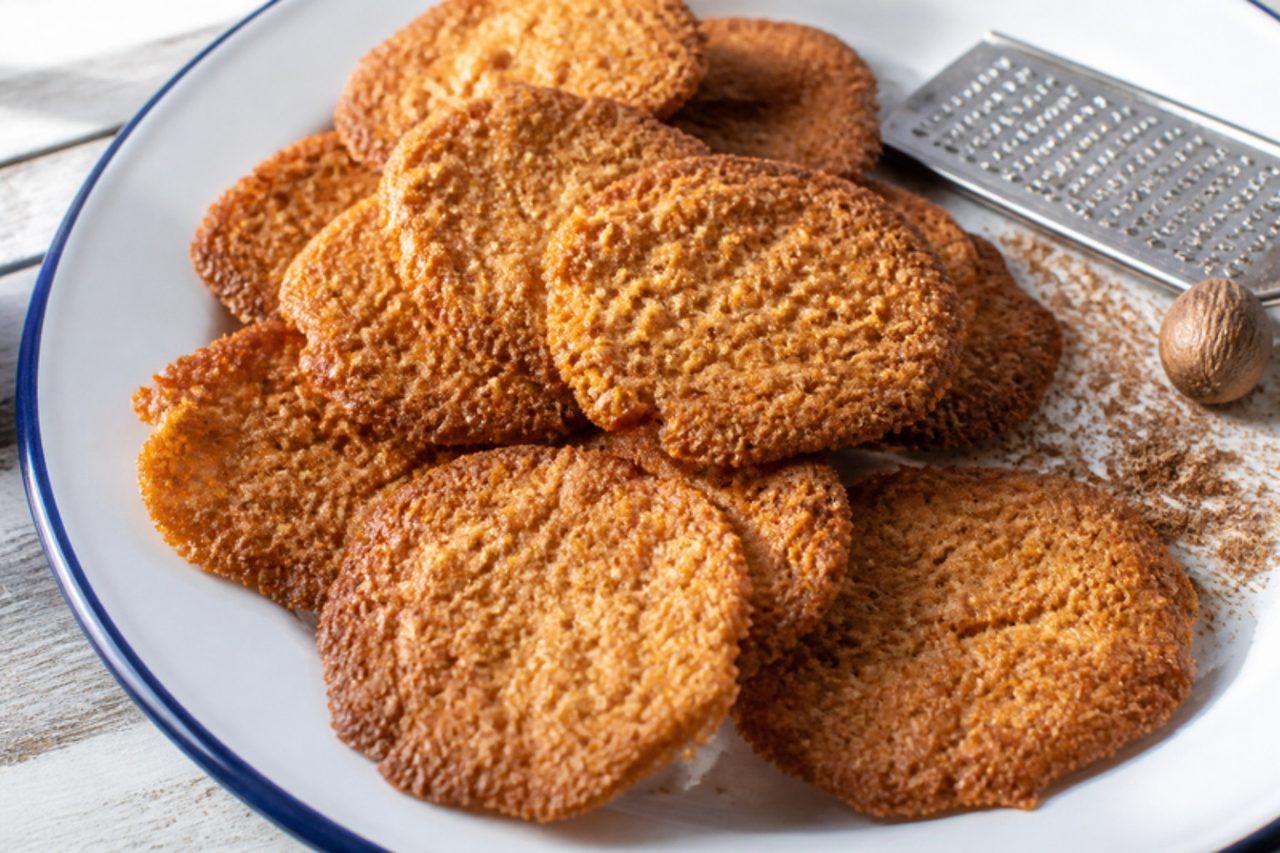
Jackass corn (Jamaican hard coconut biscuits)

Jackass corn is one of the hard little biscuits of old Jamaica, sold in paper bags at roadside stalls and corner shops and packed for long journeys because it keeps for weeks. The name is usually explained as a joke about how much chewing it takes. It is made from plenty of grated coconut, brown sugar, flour and a good grating of nutmeg, rolled out very thin and baked until crisp right through, so every bite cracks and then turns sweet and nutty with toasted coconut. Have it with hot cocoa tea, mint tea or a glass of cold sorrel juice, or break it over ice cream. There has never been egg in it: coconut oil and water hold the dough together, and the coconut's own fat and the melted sugar set it hard as it bakes and cools. Chef's tip: roll it as thin as you dare, about 3 mm; the common mistake is leaving it thick, which gives a biscuit that is soft in the middle and goes stale instead of staying crunchy.

by KrazyBadal 0 views

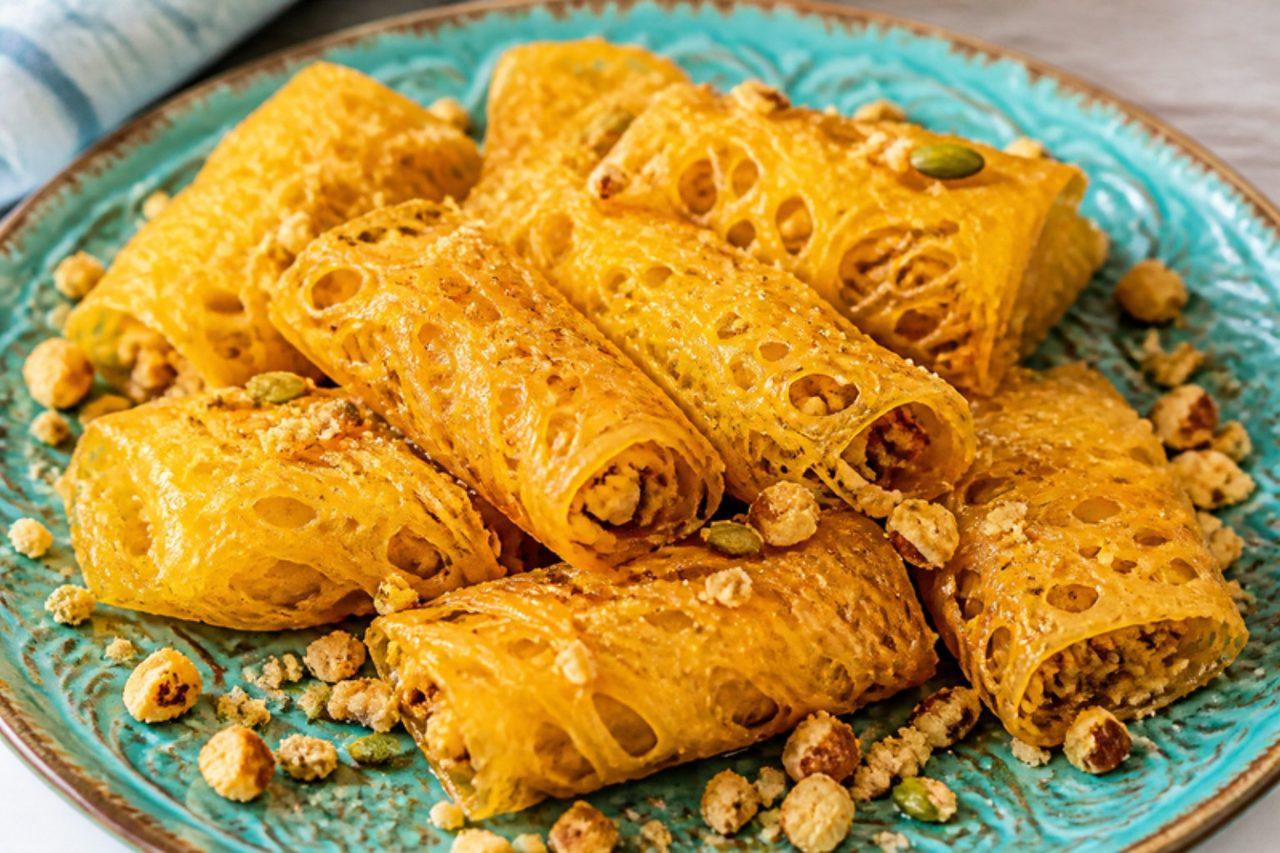
Reshteh khoshkar (Gilani rice-flour walnut rolls in syrup)

Reshteh khoshkar is the pastry of Gilan on Iran's Caspian coast, made in Rasht and Lahijan homes and bakeries for Ramadan, when a plate of it with tea breaks the fast at iftar. A thin rice-flour batter is drizzled in a lacy criss-cross over a hot griddle to make a fine net, which is filled with walnuts, sugar, cardamom and cinnamon, folded into a neat roll, fried until crisp and soaked in rose-scented syrup. It is crunchy, then soft and sticky, with a fragrant, nutty filling. Serve it at room temperature with strong black tea. The dish has always been egg-free: the rice-flour batter sets on the hot griddle into a net by itself, and the sugar in the filling and syrup glues the rolls together, so there is no need for any other binder, and nothing in it contains gluten. Chef's tip: test the griddle with a few drops of batter first; the common mistake is a griddle that is not hot enough, which lets the batter spread into a pancake instead of setting into a lacy net.

by KrazyBadal 0 views

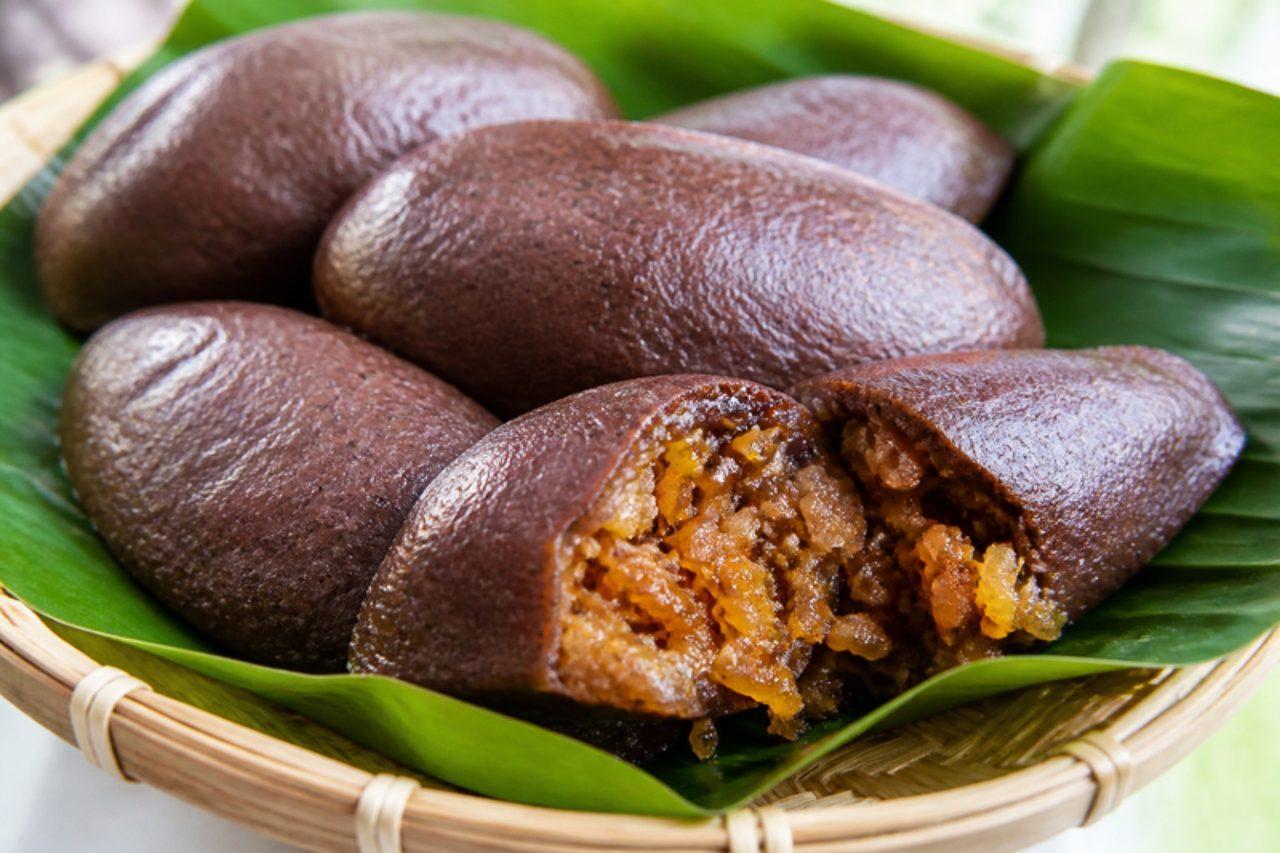
Halape (හලපේ, finger-millet and jaggery parcels steamed in leaves)Finger millet and jaggery leaf parcels

In village homes in the south and the hill country, halape is an afternoon snack and a temple-day treat, steamed in the large, heart-shaped leaves of the kenda tree, which leave a faint grassy perfume. The dough is kurakkan, finger-millet flour, which is brick-brown, slightly bitter and very filling; it wraps a sweet layer of grated coconut and dark kithul jaggery. Once steamed, the parcels are dense, moist and fudgy, a little like a rustic steamed pudding, and they are best warm with a cup of plain tea. Nothing here was ever made with egg: steaming sets the millet starch and the jaggery melts into the coconut and holds it together. Banana leaves work well if you cannot find kenda. Chef's tip: the common mistake is spreading the dough too thick; keep it about 5 mm so the middle steams through before the outside turns hard.

by KrazyBadal 0 views

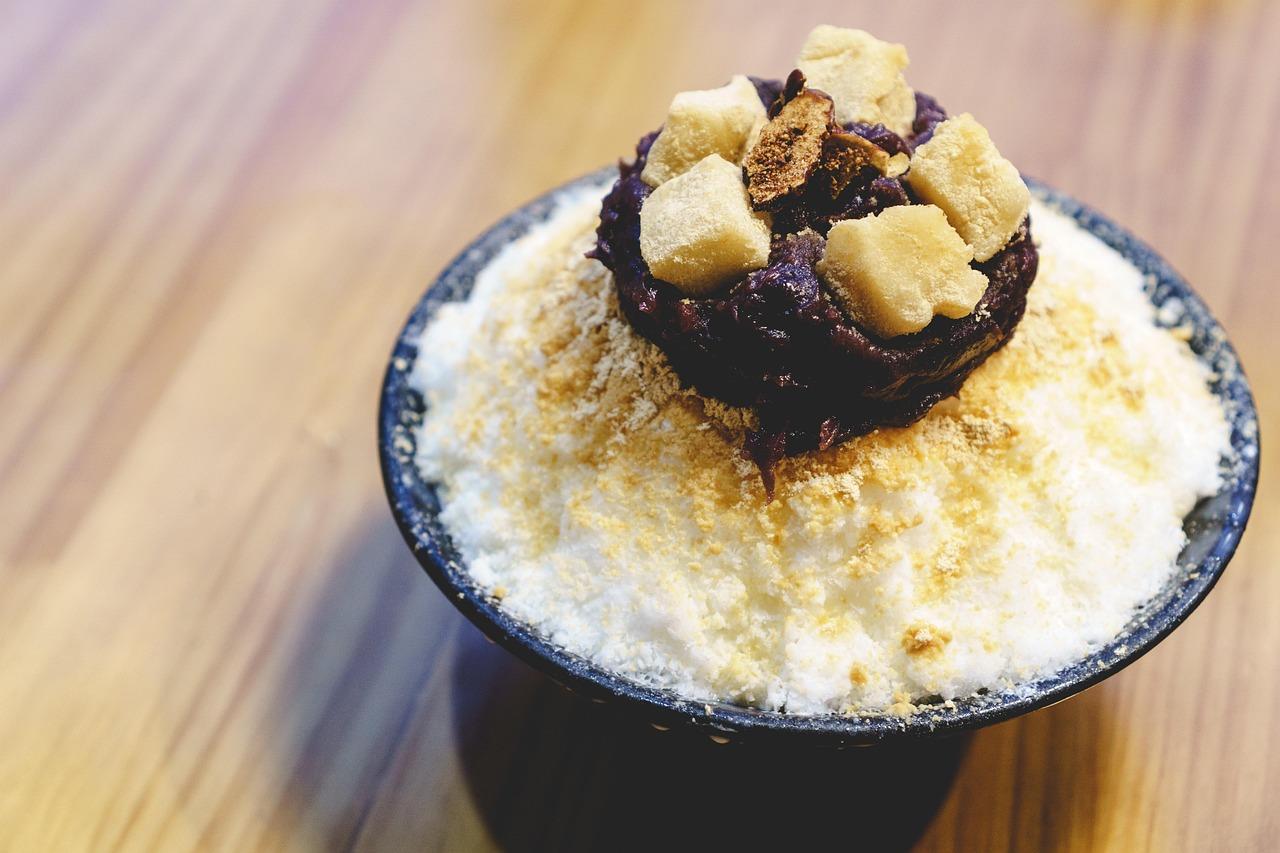
팥빙수 (Patbingsu, Korean red bean shaved ice)

Patbingsu is the great Korean summer dessert, eaten nationwide from the start of the rainy season until autumn, usually shared from one big bowl in a café after lunch or on a hot evening. Under the mound of milk ice sits the heart of it: sweet, soft red beans cooked until they almost melt, with chewy little rice cakes dusted in roasted soybean powder and a thread of condensed milk. Fluffy, creamy and earthy-sweet. There are no eggs anywhere: the ice is milk and condensed milk frozen in a thin layer, and the condensed milk's sugar keeps the crystals fine so the shavings are soft and snowy rather than crunchy, while the beans thicken with their own starch. Make the beans and the ice a day ahead. Chef's tip: freeze the milk thin in a flat tray and scrape it with a fork; the common mistake is freezing it in a deep tub, which sets too hard to shave.

by KrazyBadal 0 views

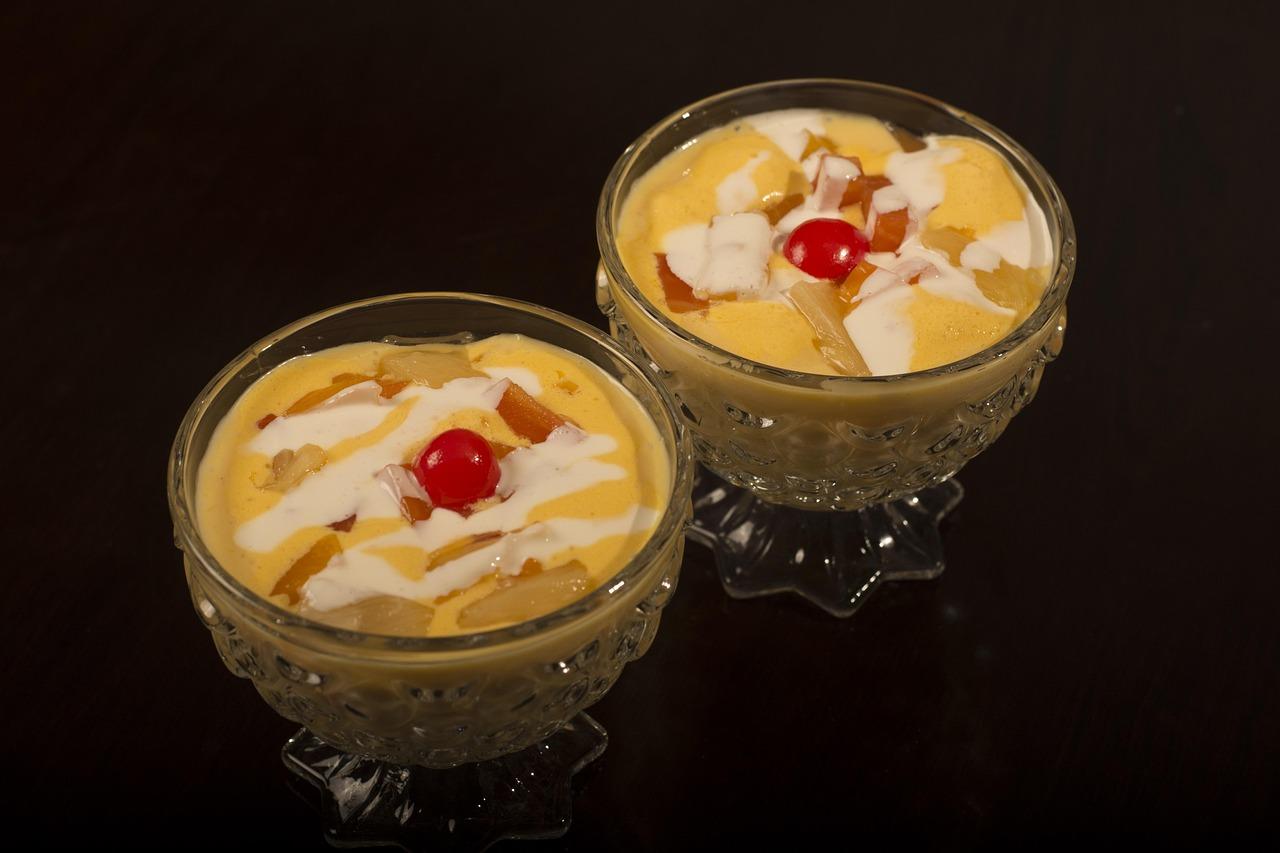
Fruit custard (Indian chilled vanilla custard with fruit)

All over India, fruit custard is the dessert that turns up at birthday parties, Sunday lunches and wedding buffets, and in summer it is made by the bowlful to sit in the fridge. It is a pale yellow, spoonably thick vanilla custard, chilled until cold and then loaded with chopped banana, apple, grapes, pomegranate and mango or chikoo when they are in season. Serve it on its own in glasses, or next to warm gulab jamun at a party. This version uses eggless custard powder, which is simply cornflour with vanilla flavouring and a yellow colour: the cornflour thickens the hot milk and sets it softly as it cools, doing the work that yolks do in a French crème anglaise, so the custard is naturally egg-free. Check the label says egg-free; the usual powders are just starch, flavour and colour. Chef's tip: add the fruit only when the custard is fully cold and just before serving; stirring banana and apple into warm custard is the common mistake that turns it watery and brown.

by KrazyBadal 0 views

Yugwa (Korean puffed glutinous-rice crackers)

Yugwa are the light, airy crackers piled on trays at Seollal, the Lunar New Year, and given in gift boxes for Chuseok and weddings across Korea. A dough of glutinous rice is steamed and pounded until stretchy, rolled thin, cut and dried until hard, then fried slowly so each piece swells to several times its size into a crisp, hollow puff. A brush of rice syrup and a coating of puffed rice or sesame finish them. They melt on the tongue, crunchy but almost weightless, gently sweet and toasty. Serve with green tea or barley tea. Yugwa never used egg: the sticky starch of glutinous rice, steamed and pounded, traps air and binds the dough, and the rice syrup glues on the coating. Some cooks add rice wine to the dough; this version uses plain water and needs no alcohol. Chef's tip: dry the cut pieces until they snap like a cracker before frying; the common mistake is frying them half-dried, and then they stay flat and chewy instead of puffing.

by KrazyBadal 0 views

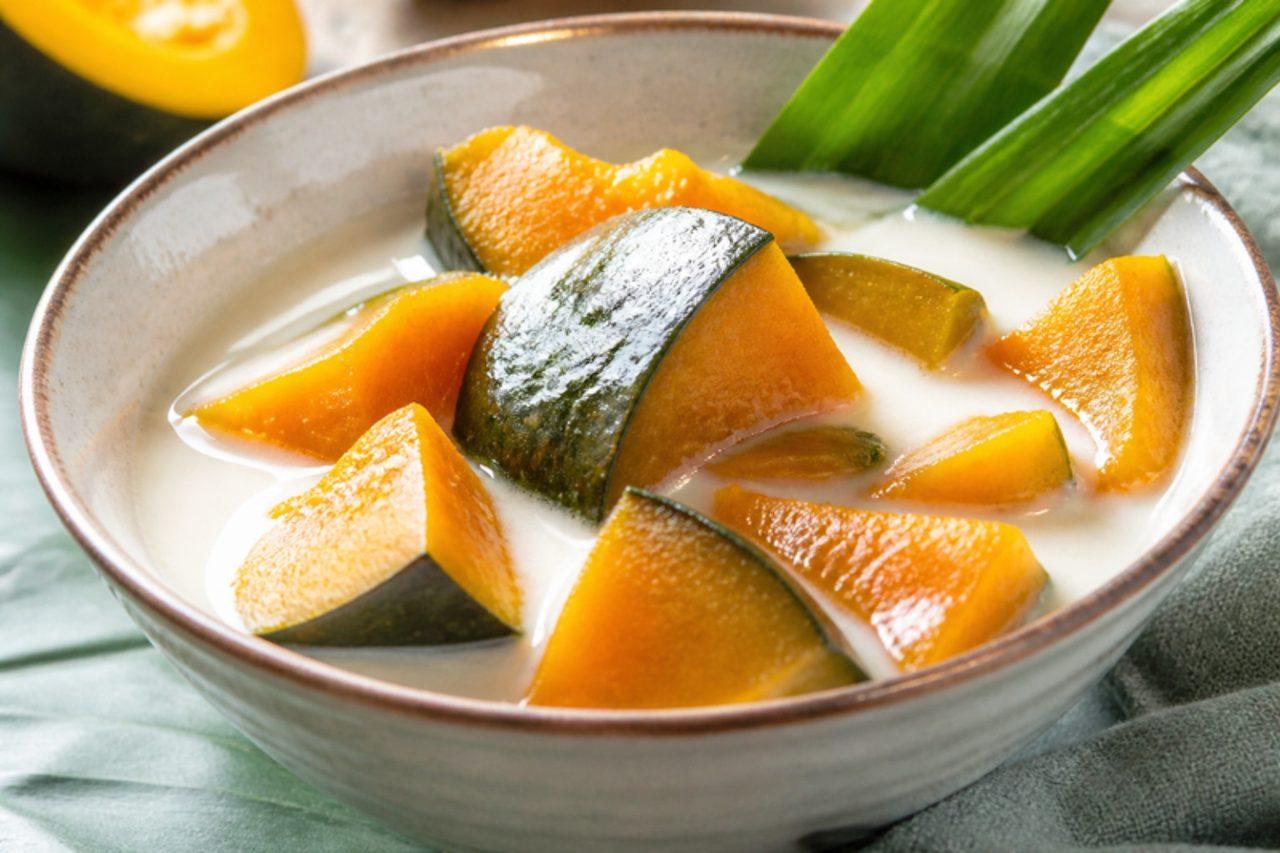
Fak thong kaeng buat (Thai pumpkin in coconut milk)

When the rains end and pumpkins pile up in the markets of central Thailand, kaeng buat is what cooks make with them: chunks of dense kabocha simmered in coconut milk sweetened with palm sugar and sharpened with a pinch of salt. It is a homely, everyday dessert, sold warm from big pots at markets in the afternoon and also cooked at Ok Phansa, the end of Buddhist Lent. The pumpkin turns velvety but keeps its shape, and the thin, creamy, caramel-scented broth is meant to be drunk from the spoon. Eat it warm or at room temperature, in small bowls. There is no egg in it and never was: nothing needs setting or binding, as the pumpkin's own starch gives the coconut milk a light body as it cooks. Chef's tip: pick a dry, orange-fleshed kabocha and keep the coconut milk at a bare simmer; letting it boil hard is the common mistake that splits the milk and breaks the pumpkin into mush.

by KrazyBadal 0 views

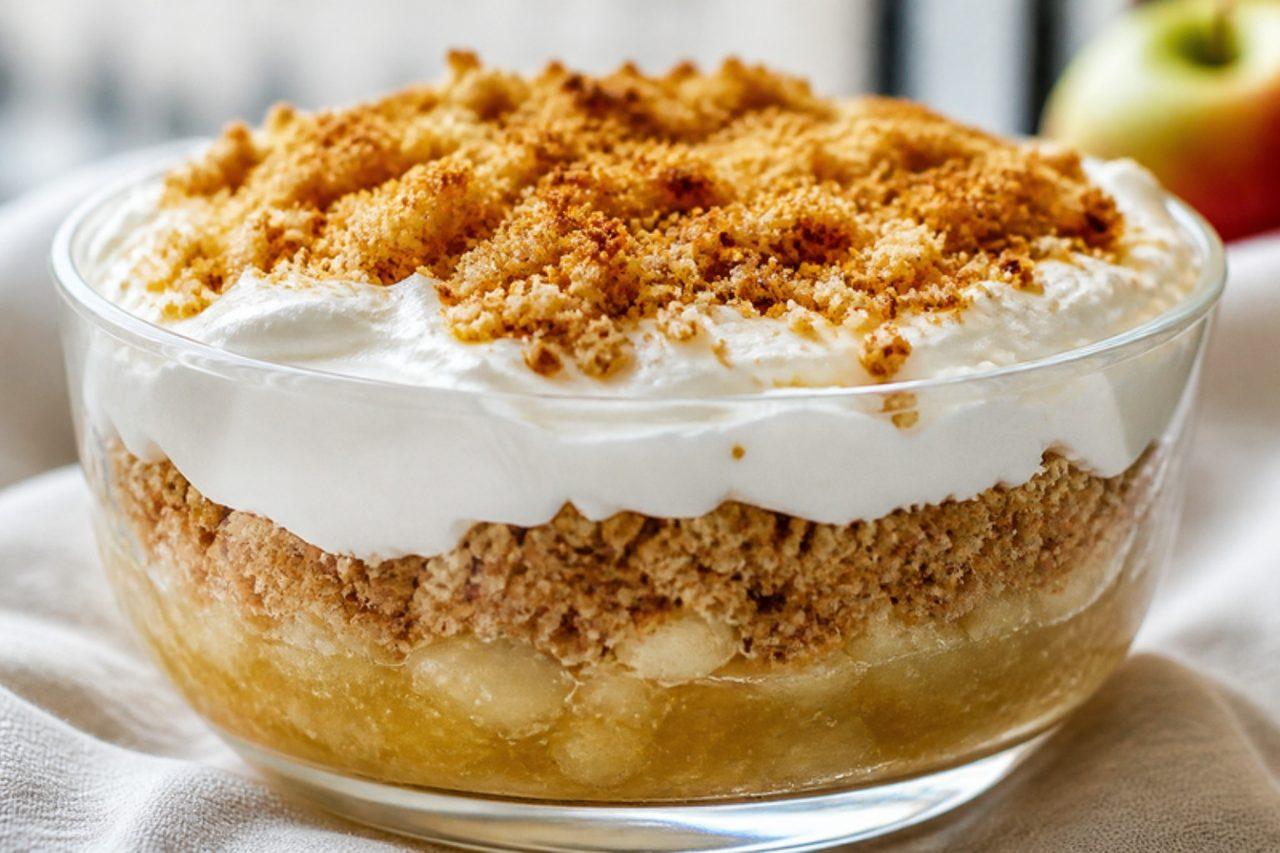
Tilslørte bondepiker (Norwegian veiled farm girls)

Norwegians make tilslørte bondepiker in autumn, when the apple trees in the fjord orchards of Hardanger and Telemark are heavy, and it stays a Sunday-dinner favourite through winter. The 'farm girls' are the layers of tart apple compote, the 'veil' is the whipped cream on top, and between them are crisp breadcrumbs toasted in butter with sugar and cinnamon. It is spooned from a glass bowl: soft fruit, crunchy caramel crumbs and cold cream in each mouthful. Serve it soon after layering, while the crumbs still crunch. No egg is involved anywhere, since the apples cook down into a thick purée on their own, so there is nothing to bind or set; just make the crumbs from an eggless white loaf or plain rusks. Chef's tip: toast the crumbs slowly over a medium-low heat and keep stirring; the common mistake is rushing them over a high heat, so the sugar burns before the crumbs are crisp.

by KrazyBadal 0 views

Aiwowo (艾窝窝, Beijing stuffed sticky rice balls)

Aiwowo began as a Hui Muslim snack in Beijing and is now a fixture of old Beijing snack shops from Lunar New Year until summer, eaten cool as a mid-afternoon treat. Steamed glutinous rice is pounded until sticky, wrapped around a crunchy filling of toasted sesame, walnuts, sugar and sugared osmanthus, then rolled in cooked rice flour so the balls look like little snowballs. They are soft and chewy outside, crunchy and fragrant inside, and only lightly sweet. Serve them with jasmine or chrysanthemum tea. Aiwowo is naturally egg-free: pounding the steamed rice releases its sticky starch, which binds the dough and seals in the filling. Chef's tip: the common mistake is dusting with raw flour; steam the flour first, or the coating tastes chalky.

by KrazyBadal 0 views

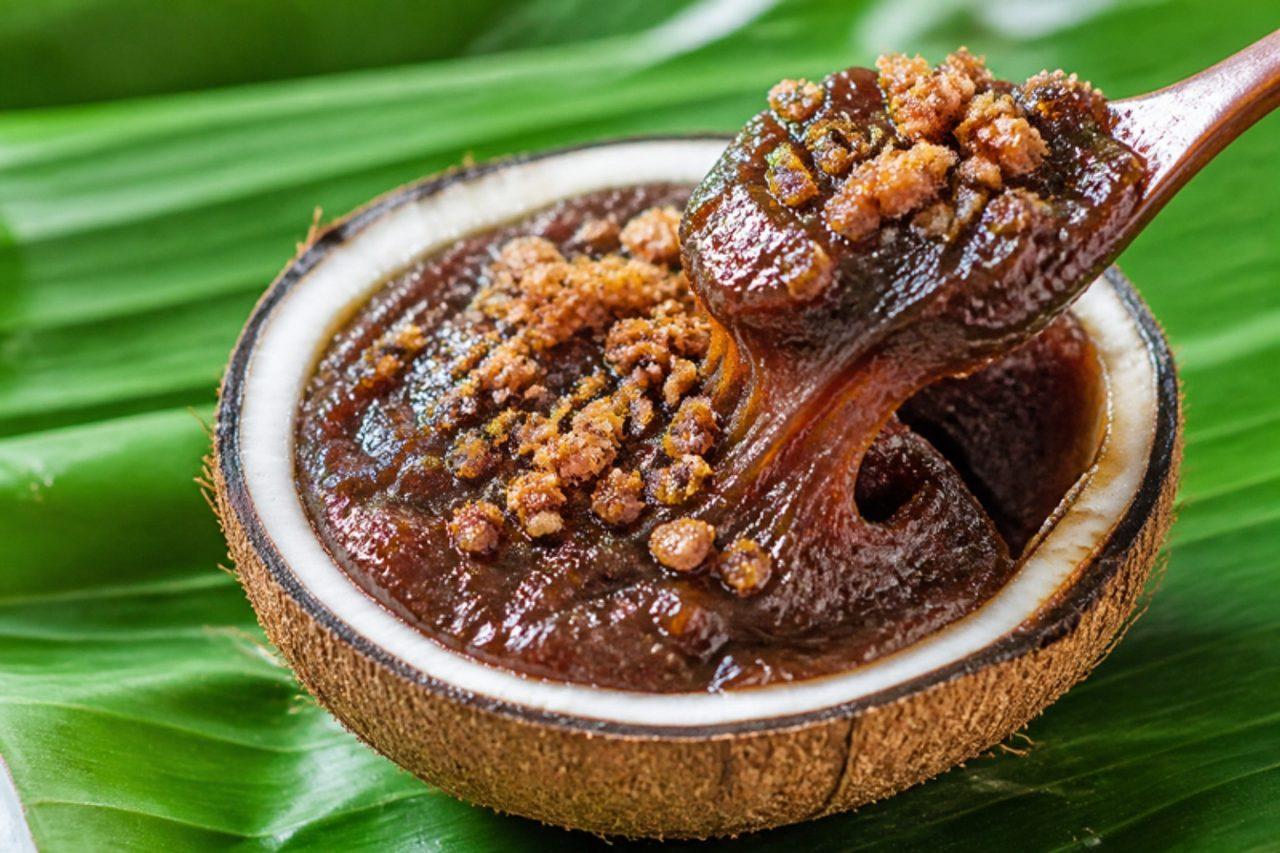
Kalamay (Bohol sticky rice and coconut sweet)

Kalamay is the sweet Boholanos bring home for pasalubong, packed into halved coconut shells and sealed with bright red paper. It is made for fiestas and Christmas, and a pot of it is stirred for an hour by whoever has the strongest arms. Glutinous rice flour, coconut milk and dark muscovado sugar cook down slowly until the mixture is nearly black-brown, very thick and elastic. It tastes of toffee and toasted coconut, and the texture is sticky, chewy and smooth. Spread it on pan de sal, eat it with a spoon, or pair it with hot tsokolate. Kalamay is naturally egg-free: the glutinous rice starch swells in the coconut milk and binds everything into one dense, glossy mass, while the sugar keeps it soft. Chef's tip: the common mistake is turning the heat up to save time; it scorches on the bottom and tastes bitter, so keep it low and scrape the base each time you stir.

by KrazyBadal 0 views

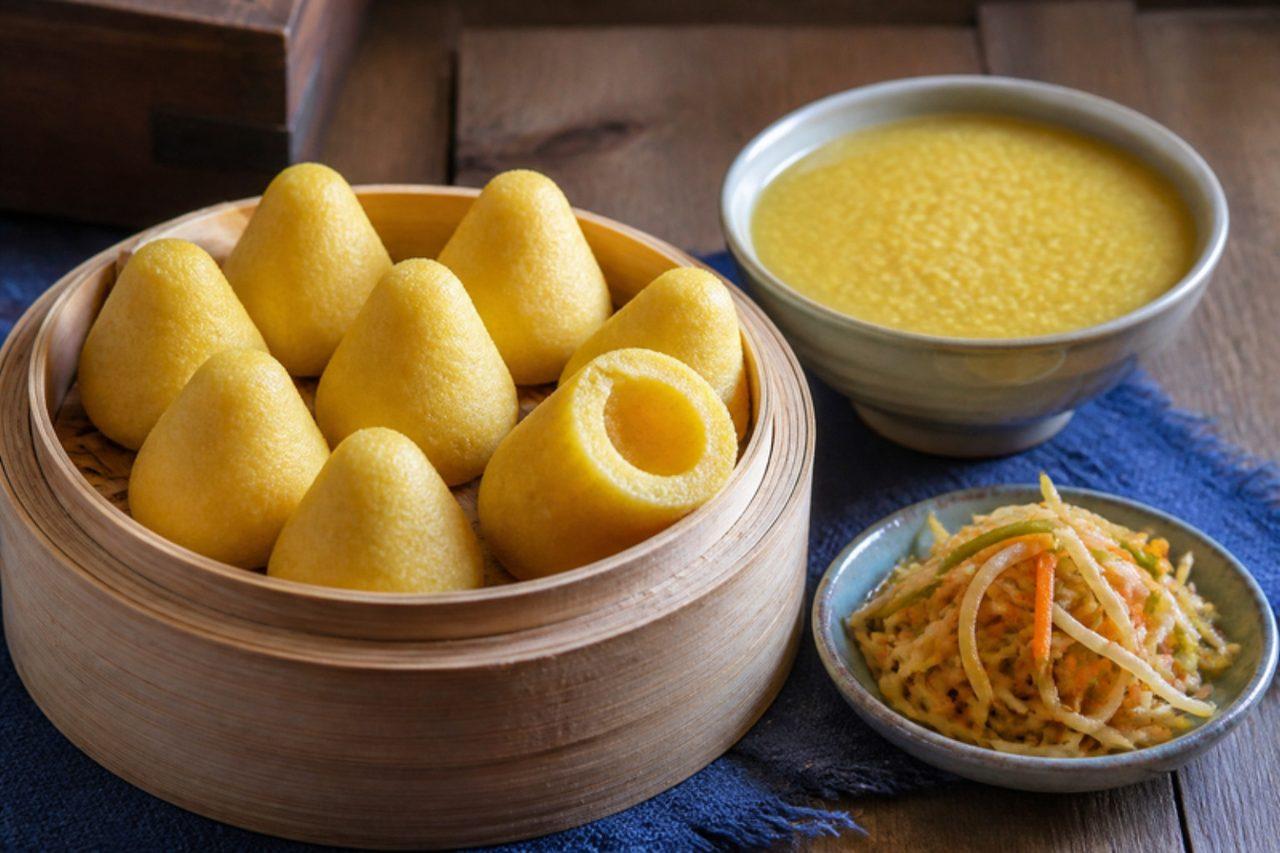
WowotouSteamed cornmeal cone buns

Wowotou are the little golden cones that fed northern China through hard decades, and Beijing restaurants now serve them, made small and slightly sweet, as nostalgic winter food alongside stews and pickles. A hollow is pressed into the base of each with a thumb so they cook through evenly. Soybean flour gives them a nutty taste and about 10 g of protein for three buns, from the soy and corn, so they are not high-protein on their own. They are gluten free if your cornmeal and soy flour are milled where wheat isn't; check the packet. The usual mistake is mixing with cold water: the dough stays crumbly and the cones crack, so scald it with near-boiling water. Chef's tip: wet your hands before shaping each cone; the dough won't stick and the surface steams smooth and shiny.

by KrazyBadal 0 views

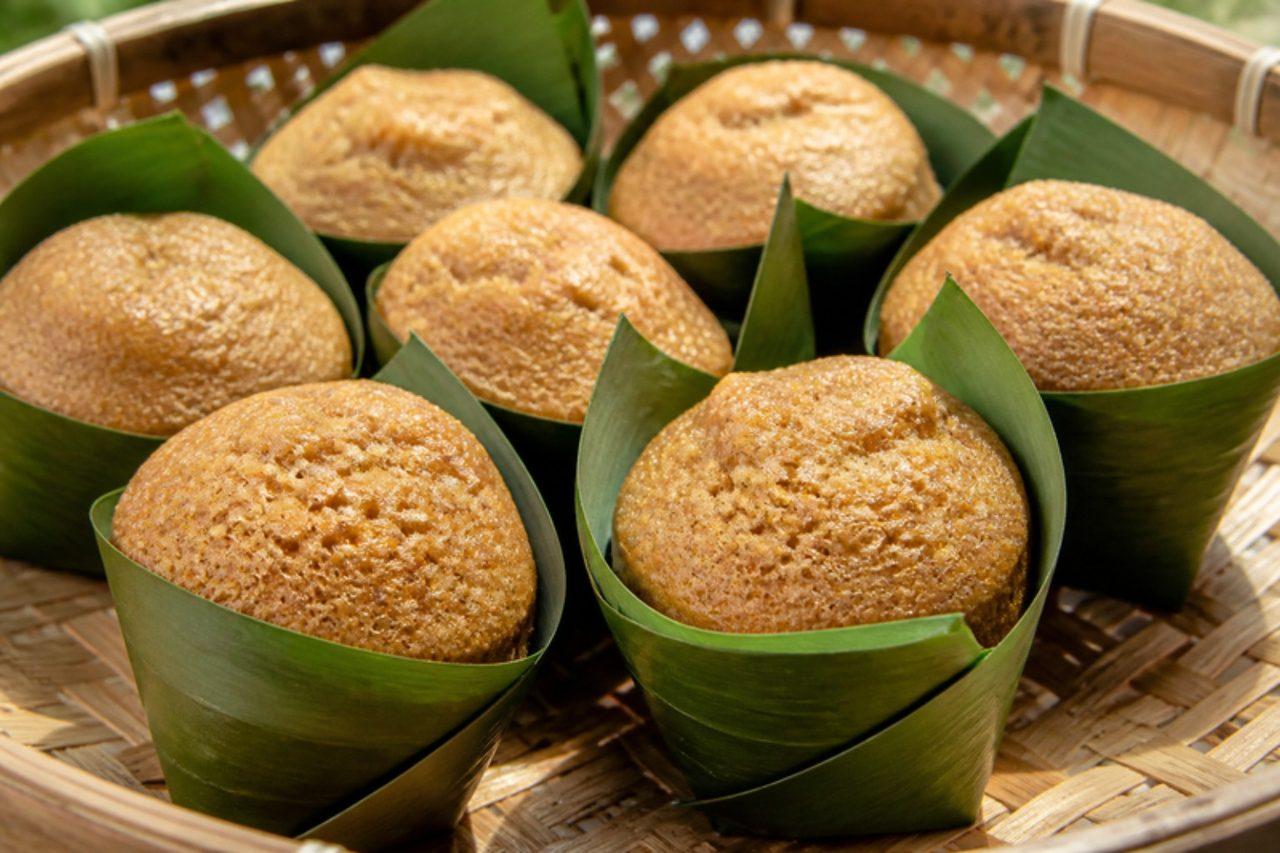
Wandu appa (වංඩු ආප්ප, fermented rice cakes steamed in leaf cones)Steamed rice treacle cakes

Wandu appa are sold in morning markets and at roadside kades all over the island, and they are one of the sweets that appear on the table for Avurudu. A batter of rice flour, coconut milk and kithul treacle is left to ferment for a few hours, then poured into small cones of kenda or jak leaf and steamed. They puff into tender, spongy domes with a gentle sourness, a caramel note from the treacle and the leafy aroma of their wrappers. Eat them warm for breakfast or with afternoon tea. They are naturally egg-free: yeast does the lifting that whisked eggs would do in a sponge, and the rice starch sets the bubbles in place as it steams. Banana-leaf cones or small paper-lined cups work too. Chef's tip: the common mistake is filling the cones to the brim; fill them two-thirds full so they rise into a dome instead of spilling over.

by KrazyBadal 0 views

OhrapuuroBarley porridge

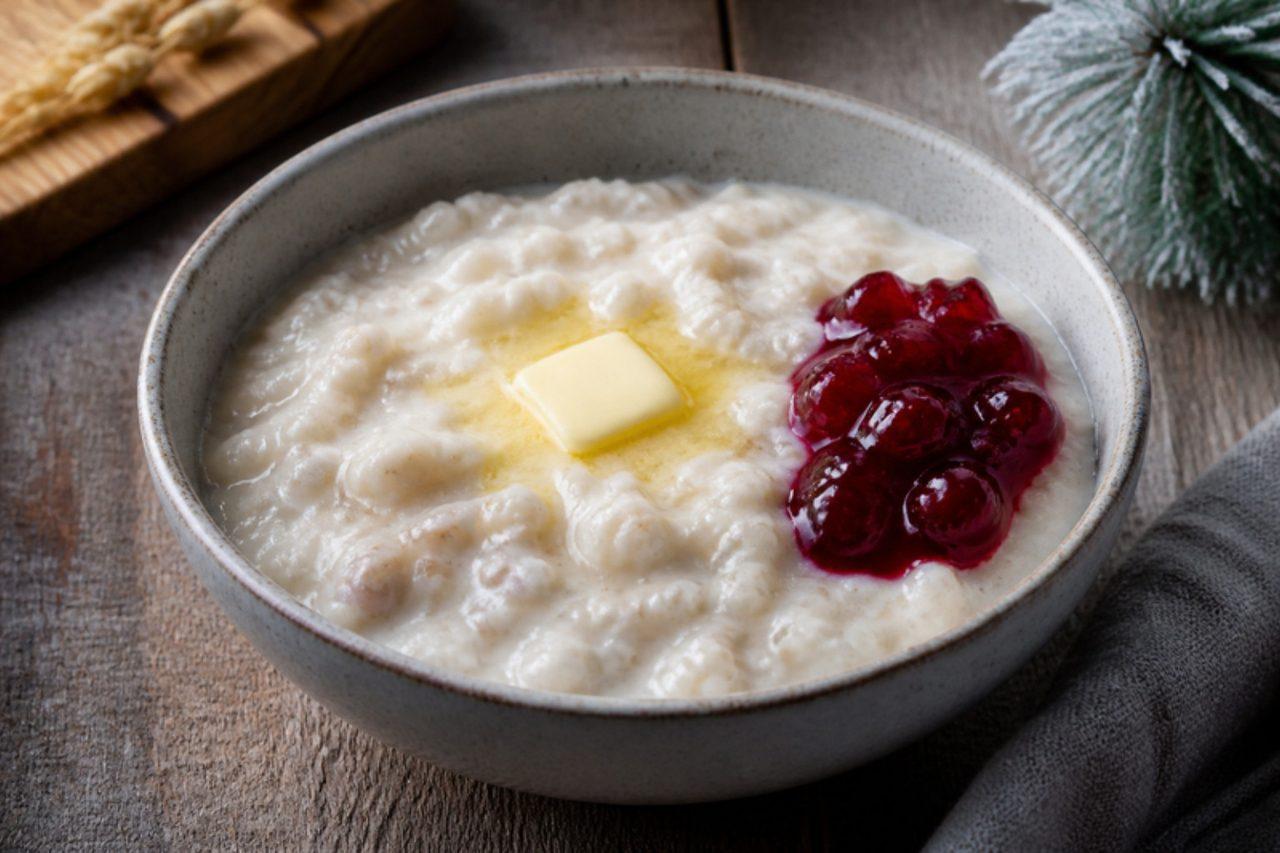
Ohrapuuro is the comfort food of Finnish farmhouses: pearl barley cooked slowly in plenty of milk until it turns creamy, pale and faintly sweet, then served with a knob of butter melting in the middle and a spoon of lingonberry or berry kissel. It is a breakfast for winter mornings and a supper for Christmas Eve in many families, and the oven version used to cook overnight in the cooling bread oven. A bowl gives about 14 g of protein from the milk and barley, so it is filling, but not a high-protein dish. The common mistake is cooking it too fast on a high heat; the milk catches and burns on the bottom, so keep it at a bare simmer and stir often. Chef's tip: soak the barley in water overnight if you can; it cuts the cooking time to about an hour and the grains cook more evenly.

by KrazyBadal 0 views

Bánh cốm (Hanoi green rice-flake cake with mung bean filling)

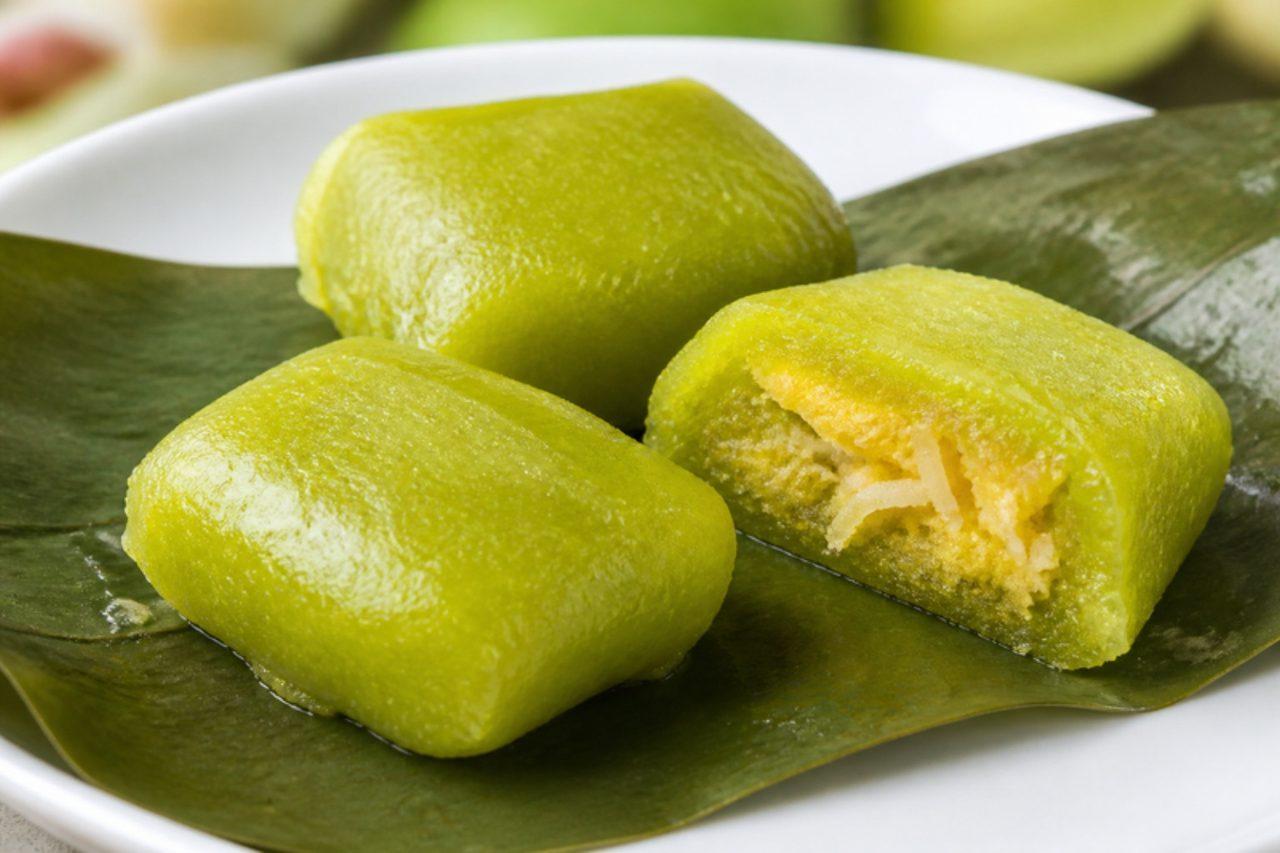
When the new crop of young glutinous rice comes in, in early autumn, Hanoi smells of cốm: green, flattened rice flakes from the village of Vòng. The shops on Hàng Than street press them into bánh cốm, square cakes that are still carried as betrothal gifts in their paper wrappers. The outside is soft, chewy and jade green, tasting faintly of grass and pandan; the inside is a mellow paste of mung bean and coconut. Serve them at room temperature with green or lotus tea. Bánh cốm is naturally egg-free: a hot sugar syrup and a spoonful of tapioca starch turn the rice flakes into a sticky mass that binds itself, and the mung bean paste is bound by its own starch. Use frozen or dried cốm from an Asian grocer; soak dried flakes briefly first. Chef's tip: the common mistake is cooking the cốm too hard; stop as soon as it pulls together into a sticky ball, or the cakes go rubbery when cool.

by KrazyBadal 0 views

Shemai (Bangladeshi Eid vermicelli in milk)

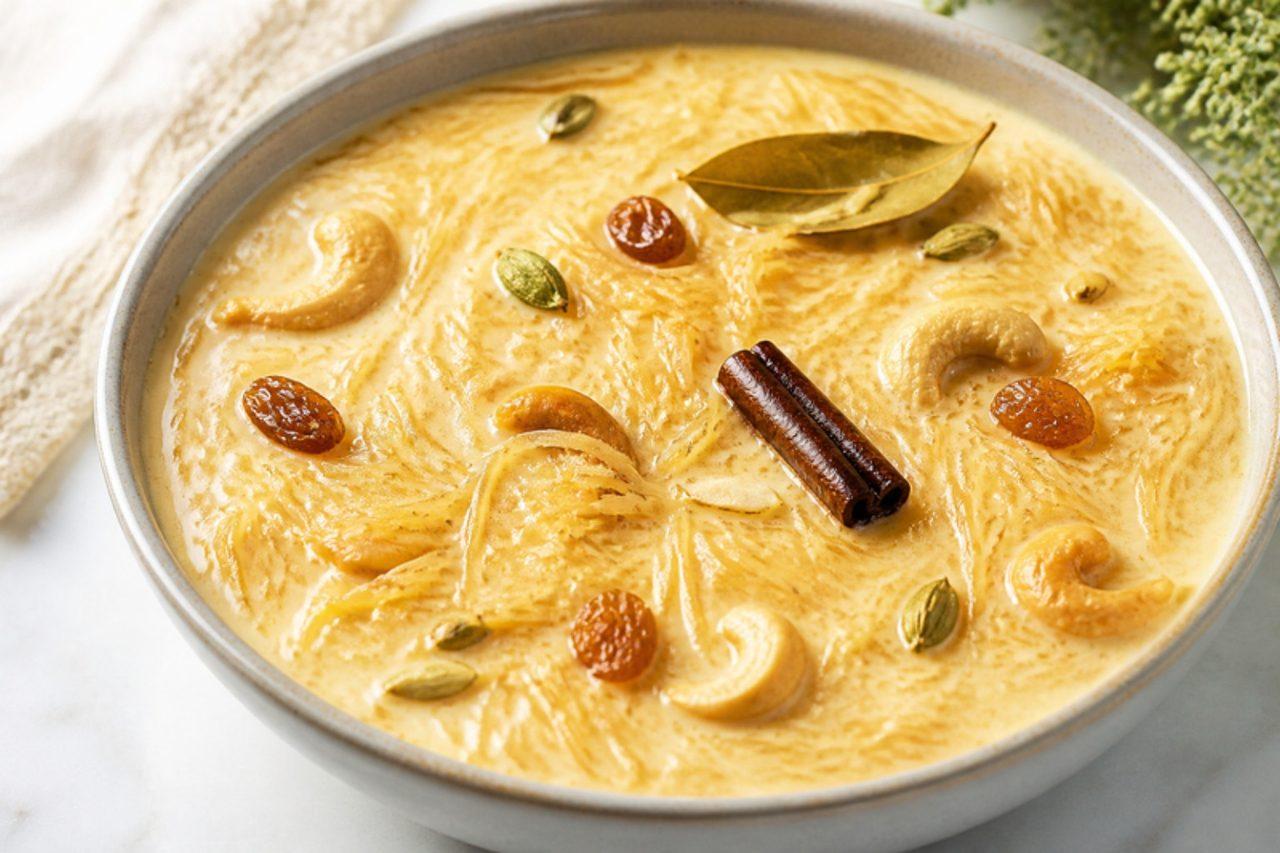
On Eid morning in Dhaka, Chattogram and villages across Bangladesh, a pot of shemai is usually on the stove before anyone leaves for prayers, and it's the first sweet offered to every visitor that day. Fine wheat vermicelli is toasted in ghee until golden, then simmered in milk with sugar, cardamom, cinnamon and the bay leaf that gives Bengali sweets their gentle, warm scent, and finished with raisins and nuts. It's creamy and soft but still loose, and it thickens as it cools. Serve it warm, or chilled the day after. It is naturally egg-free: the starch from the toasted vermicelli thickens the reduced milk, so it needs nothing to bind it. Chef's tip: take it off the heat while it still looks a little thin; cooking it until thick in the pan is the common mistake, because it sets into a stiff paste once it cools.

by KrazyBadal 0 views

Gudpak (Nepali khuwa, gum and jaggery fudge)

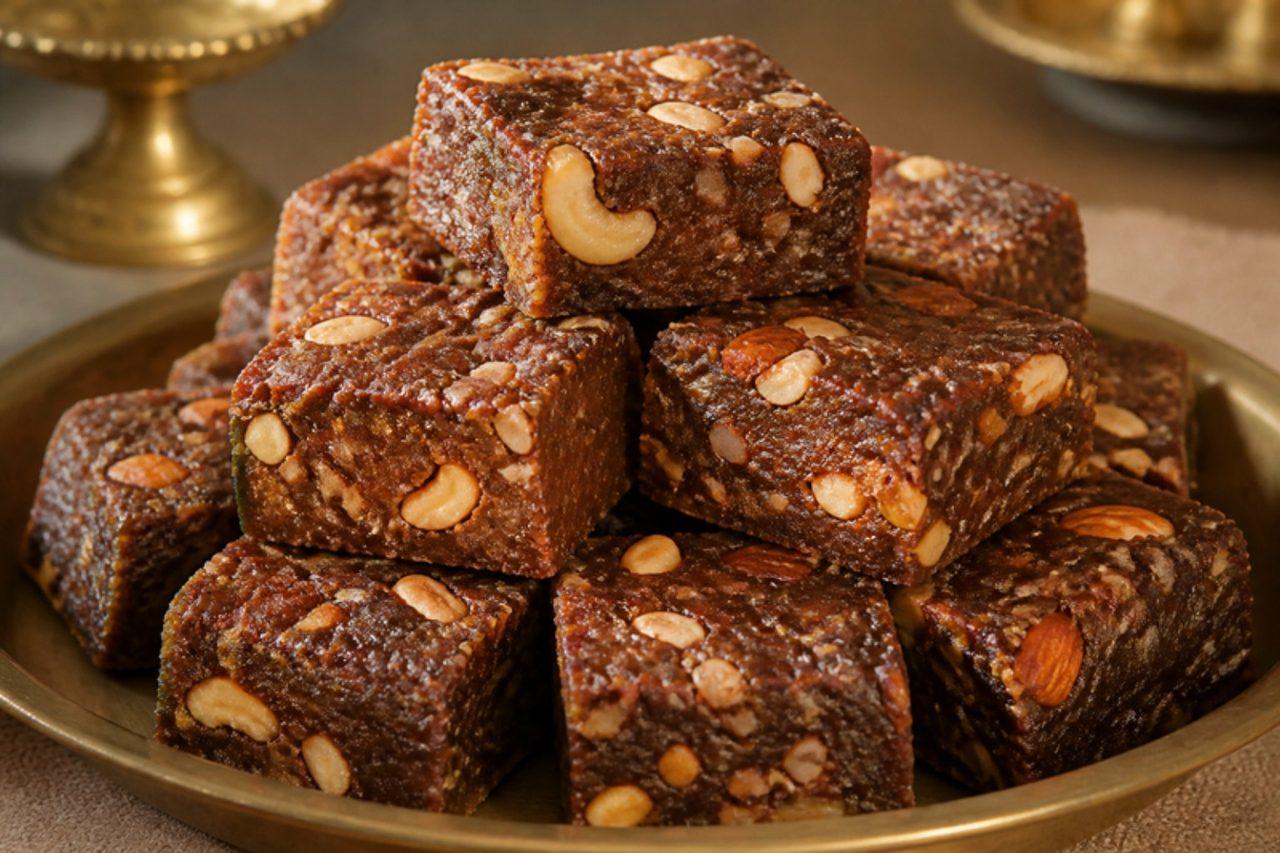
In the Kathmandu Valley, gudpak is the sweet of cold mornings, eaten in the depths of winter and around Maghe Sankranti, and given to new mothers to restore their strength after childbirth. Khuwa (milk solids) is roasted in ghee, sweetened with jaggery, and mixed with crunchy fried edible gum, nuts and coconut before being pressed into a tray and cut into squares. It's dense, rich and slightly chewy, with a warm caramel flavour and pops of crunch from the puffed gum. Eat a square with milky tea or as a small sweet after dinner. It is naturally egg-free: the khuwa and jaggery cooked together into a thick mass bind the fudge, and the edible gum (gond) gives it body. Chef's tip: fry the gum in small amounts over a low heat until it puffs up white; frying it too fast is the common mistake, which leaves it hard, glassy and unpleasant to chew.

by KrazyBadal 0 views

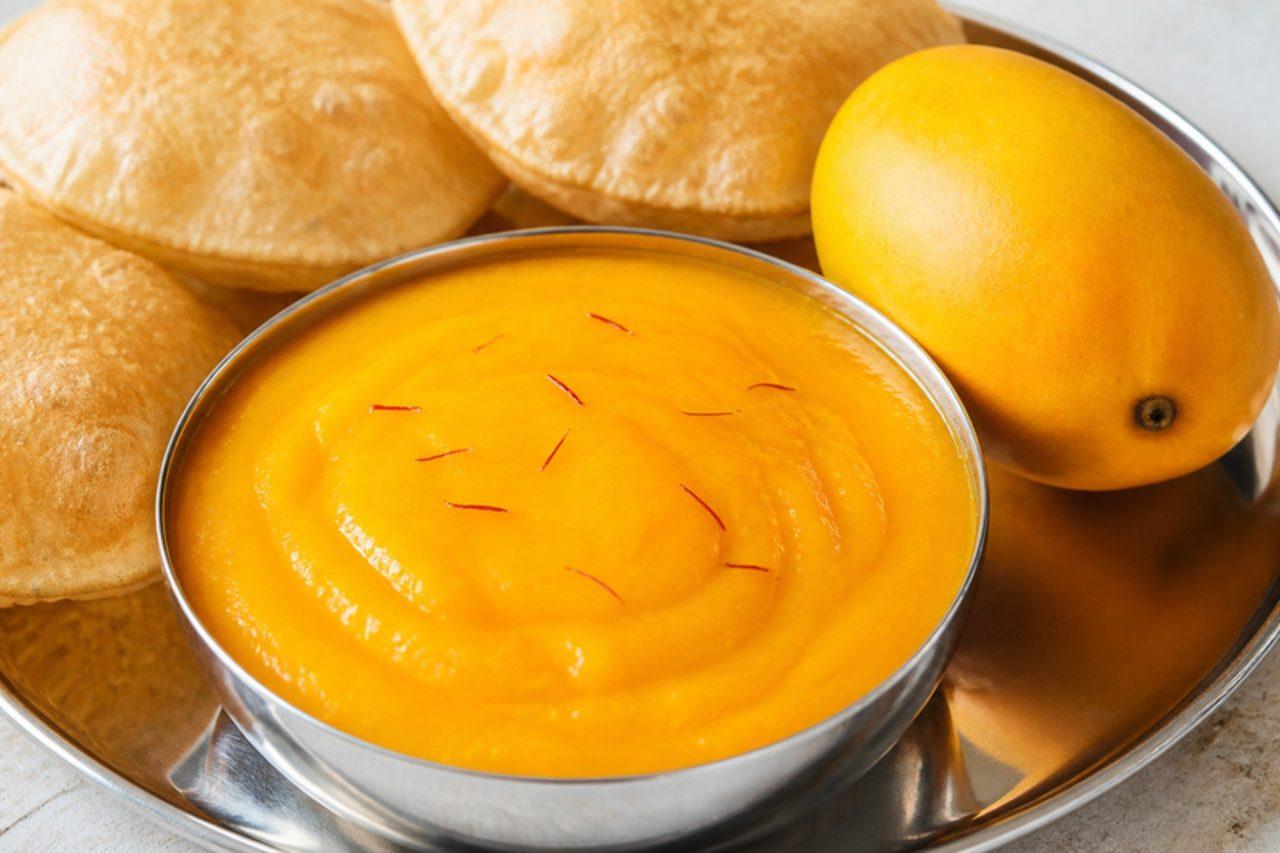
Aamras (spiced mango pulp)

When Kesar mangoes reach Ahmedabad and Alphonsos reach Pune in April and May, aamras appears at almost every summer lunch in Gujarat and Maharashtra. It's simply ripe mango pulp, thick and silky, with a pinch of dry ginger to help digestion, a little cardamom and sometimes a spoon of sugar if the fruit isn't sweet enough. It's eaten as part of the meal rather than after it, scooped up with hot puris, alongside a potato sabzi and dal; in Maharashtra it's also served at Akshaya Tritiya and Gudi Padwa. Spoon it out chilled in bowls, or offer it to children by itself. It is naturally egg-free and vegan: the mango's own thick pulp gives all the body, so nothing needs to bind or set it. Chef's tip: use only soft, fragrant, fully ripe mangoes and press the pulp through a sieve if they are fibrous; under-ripe fruit is the common mistake that makes aamras sour and thin.

by KrazyBadal 0 views

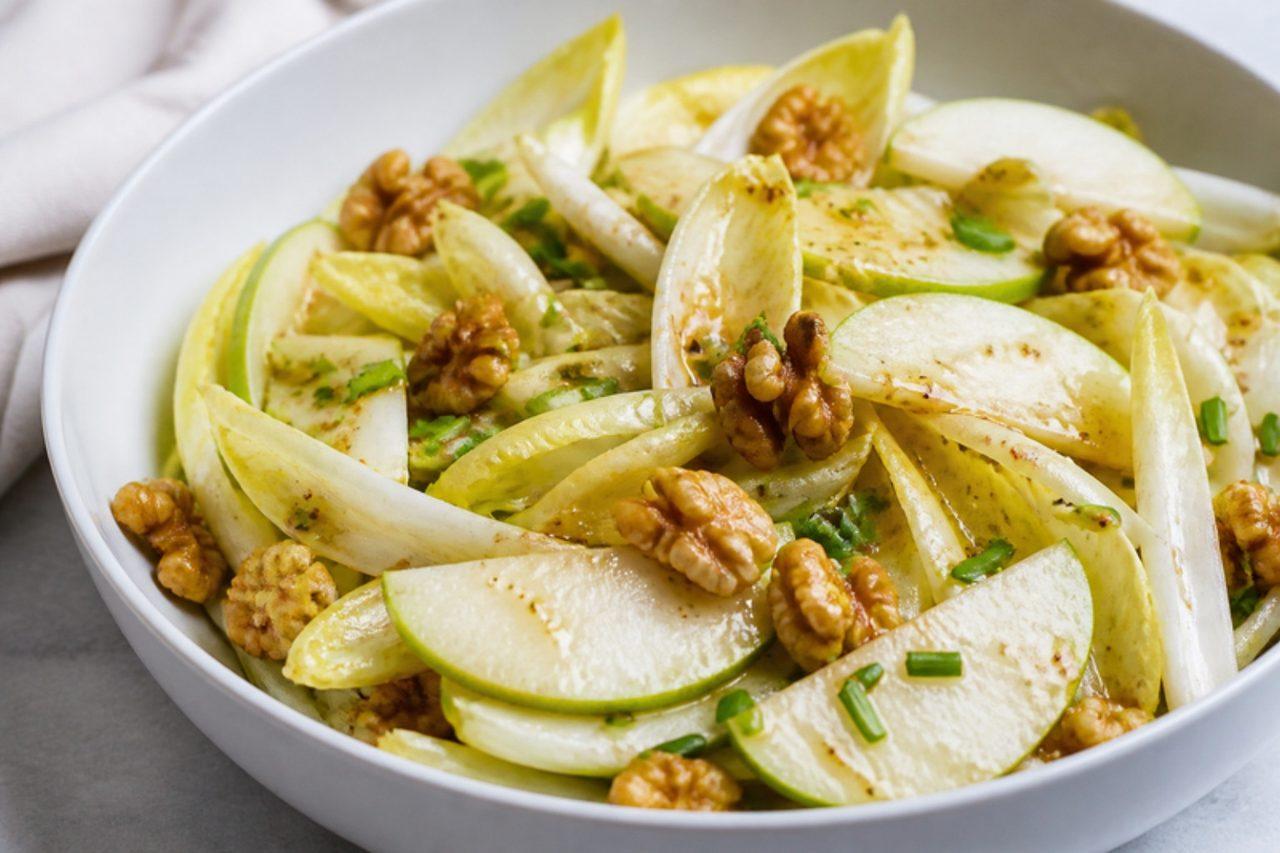
Salade d'endives aux noixChicory, walnut and apple salad

Across Picardy and the Nord, and over the border in Belgium, Belgian endive (chicory) is the winter salad, and this one appears after the main course at Sunday lunch or as a light supper from November to March. The pale, crisp leaves are cut into rings and tossed with sweet apple, toasted walnuts and a sharp mustard vinaigrette, so you get bitter, sweet and nutty in every mouthful. Many bistros add Roquefort; this version is vegan, and if you add cheese, note that Roquefort is made with animal rennet. A portion gives about 4 g of protein from the walnuts, so it is a side or starter. The most common mistake is slicing the endive too early: it browns at the cut edges, so dress it within 10 minutes of cutting. Chef's tip: cut out the small cone of core at the base of each endive; it holds most of the bitterness.

by KrazyBadal 0 views

Moron (Leyte chocolate and coconut sticky rice twists)Chocolate sticky rice rolls

Moron is the pride of Leyte and Samar, made for town fiestas and sold all year in Tacloban markets as a merienda. Two doughs of glutinous rice cooked in coconut milk and sugar, one plain and one darkened with tablea, the pure roasted cacao of the Visayas, are rolled into ropes, twisted together and steamed in banana leaves. Each log is chewy and dense, with ribbons of bittersweet chocolate through creamy coconut rice. Unwrap and eat warm or cool, ideally with a mug of thick hot chocolate. Moron is naturally egg-free: the glutinous rice flour is half-cooked in coconut milk first, which swells the starch so it binds into a soft, rollable dough, and steaming sets it. Chef's tip: the common mistake is wrapping the logs loosely; roll the leaf tightly and twist the ends like a sweet wrapper, or water gets in and the logs turn soggy.

by KrazyBadal 0 views

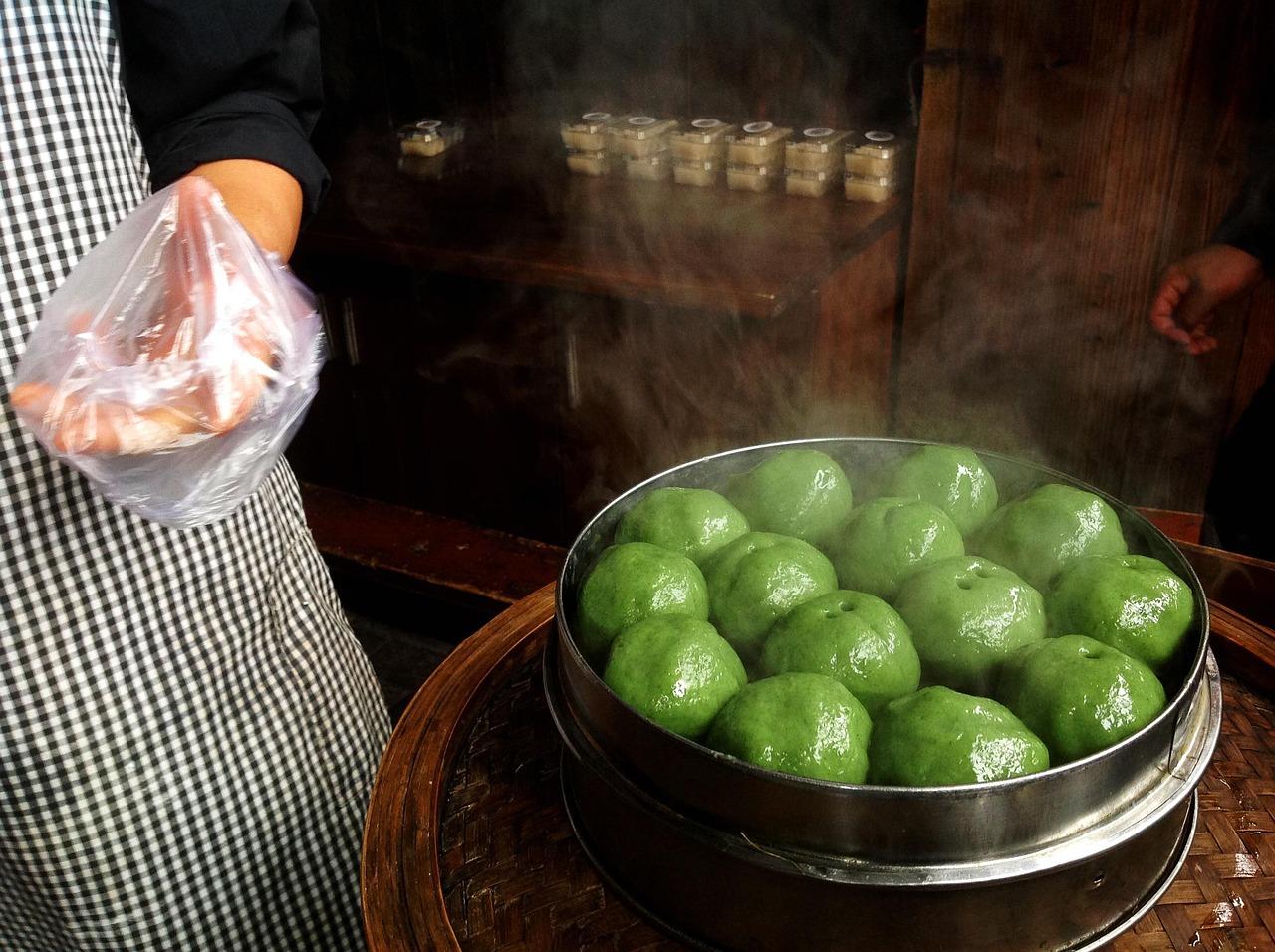
Qingtuan (青团, mugwort rice balls with red bean)

Qingtuan are the taste of spring across Jiangnan: in Shanghai, Hangzhou and the water towns like Wuzhen, steamers of them appear in March and April, and families take them on Qingming tomb-sweeping visits. The dough gets its deep green colour and grassy, slightly bitter scent from young mugwort leaves blanched and blended into glutinous rice flour. Steamed and brushed with oil, the balls are glossy, soft and stretchy, with a smooth sweet red bean centre. Eat them warm or at room temperature with green tea. Qingtuan is naturally egg-free: glutinous rice flour mixed with hot water and mugwort purée forms a pliable dough that steams firm, so no binder is needed. Buy lard-free red bean paste or make your own. Chef's tip: a pinch of soda in the blanching water keeps the mugwort bright green; the common mistake is leaving it out, which gives an olive-grey dough.

by KrazyBadal 0 views

Sült tök (Hungarian roasted sweet pumpkin)

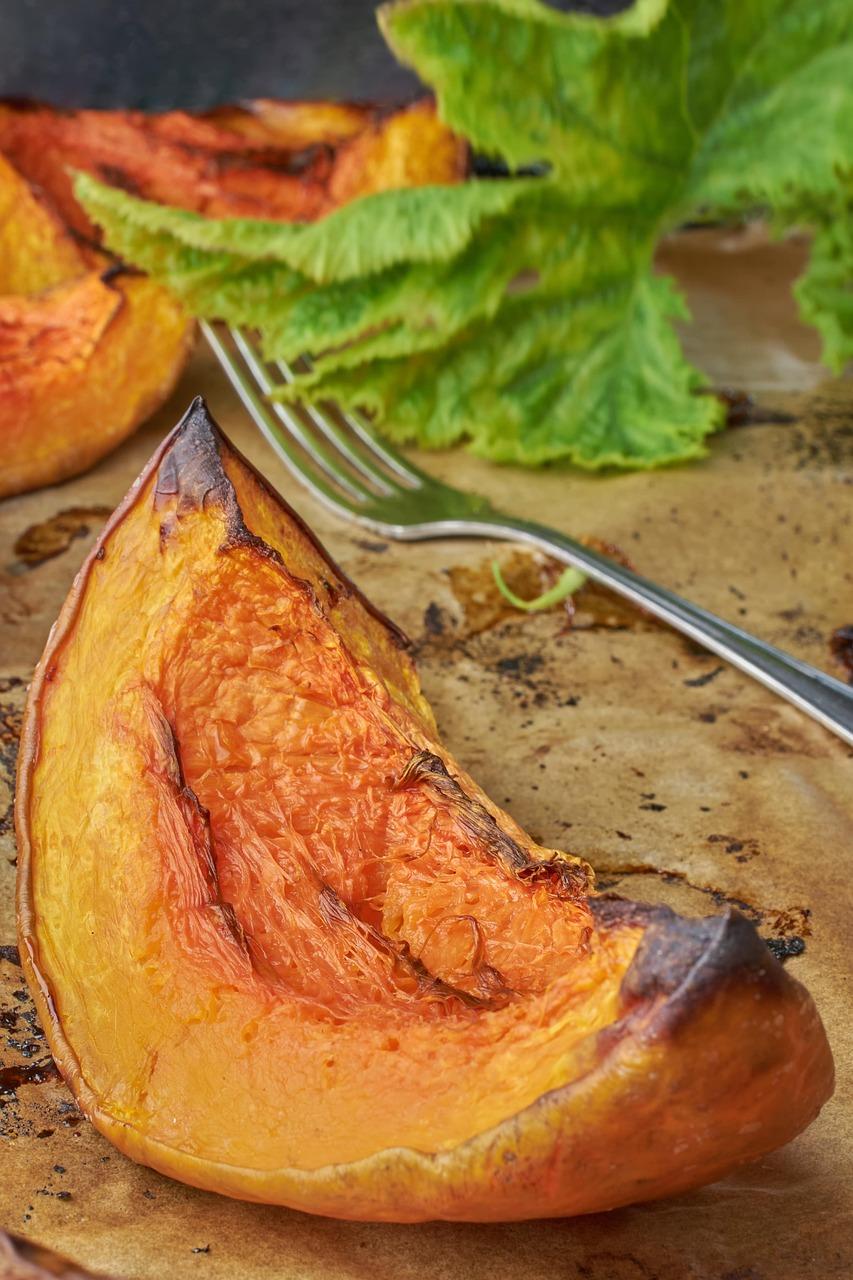
When the first cold sets in, Hungarian street vendors and market stalls set up their ovens and sell sült tök: thick wedges of sweet pumpkin roasted until the flesh is soft as jam and the edges are caramelised and almost sticky. It is bought hot and eaten on the spot through autumn and winter, often from the same stands that sell roasted chestnuts, and at home it is a simple afternoon treat for children. The flavour is deep and honeyed with a slightly smoky edge from the browned skin; a dusting of cinnamon sugar is optional. Eat it with a spoon straight from the skin, alongside a cup of hot tea or warm apple juice. It is naturally egg-free and needs no binding at all: the pumpkin's own sugars concentrate and caramelise in the oven's dry heat. Chef's tip: pick a dense, dry, deep-orange pumpkin such as a Hungarian sweet pumpkin, kabocha or butternut; the common mistake is using a watery carving pumpkin, which steams instead of caramelising.

by KrazyBadal 0 views

Kharvas (steamed milk-and-curd pudding, home method)

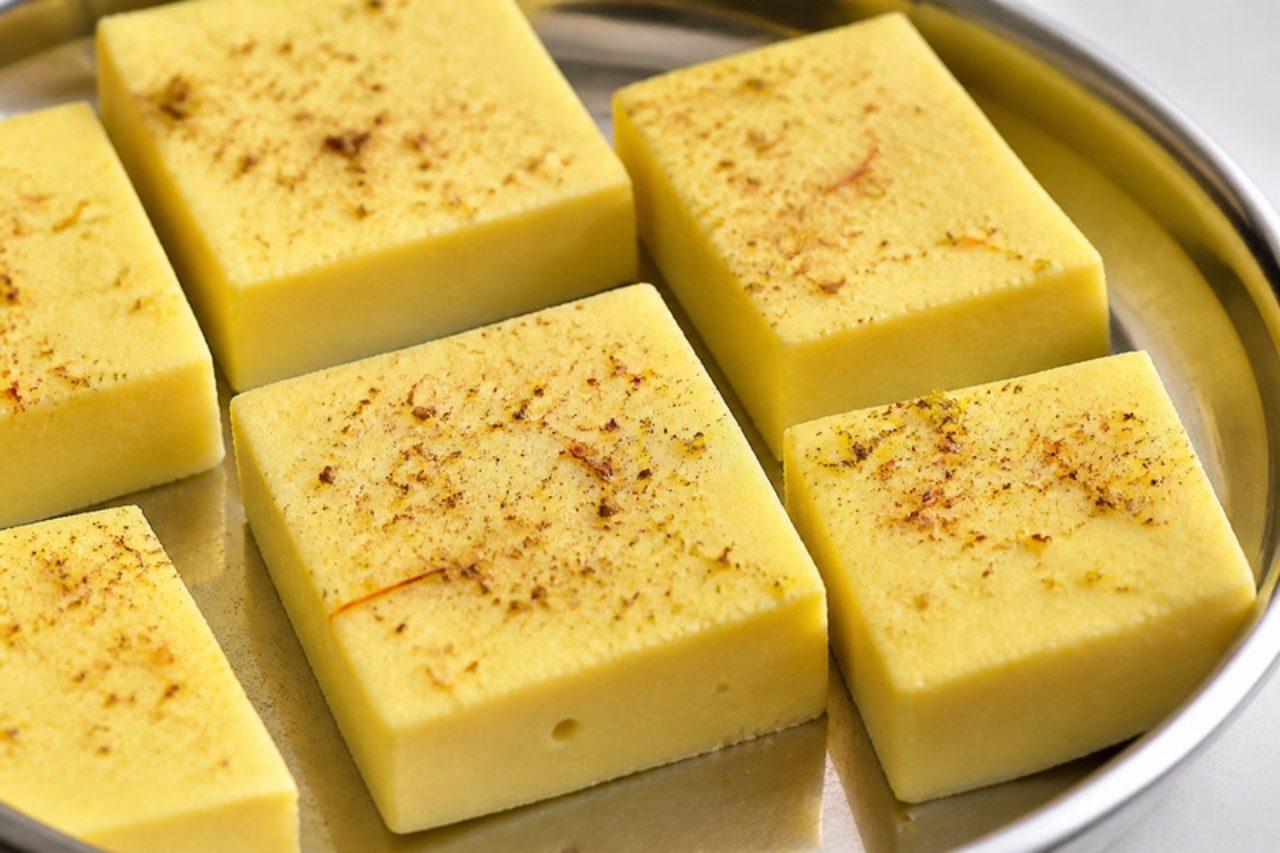
Kharvas is a festive treat in Maharashtra and Gujarat, traditionally made from the first milk a cow gives after calving, which sets into a wobbly pudding when steamed. That milk is hard to find in cities, so home cooks in Pune and Mumbai make a version with ordinary milk, curd and condensed milk, and that is the method here. It is steamed until it sets into a soft, sliceable square with a slightly springy texture, coloured with saffron and lightly sweetened with jaggery, with a hint of nutmeg. Families serve it at room temperature or cold as a teatime sweet, especially in the monsoon and around Ganesh Chaturthi. There is no egg: the curd and condensed milk proteins set on steaming the way colostrum does, and the condensed milk gives body and binds it. Chef's tip: whisk the mixture until completely smooth and strain it, because lumps of curd are the common mistake that leaves holes and a grainy set.

by KrazyBadal 0 views

Mame gohanRice with green peas

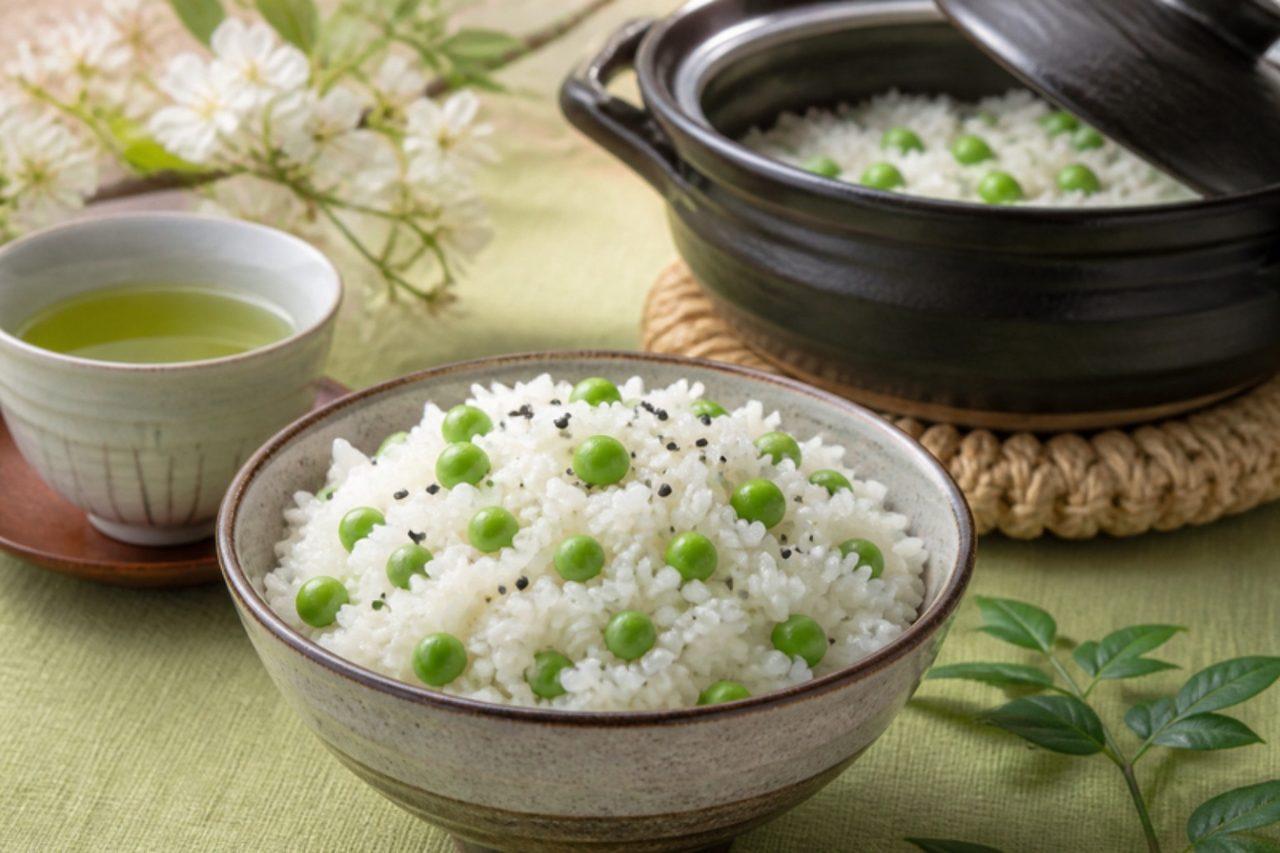
When the first pea pods arrive in Japanese greengrocers in April and May, home cooks from Kyoto to Tokyo make mame gohan: short-grain rice steamed with a strip of kombu and lightly salted, then folded through with sweet, bright green peas. It is eaten warm with miso soup and pickles, or pressed into onigiri for a spring picnic. A bowl gives about 9 g of protein, from the rice and peas, so serve it with tofu or an egg dish if you want a fuller meal; it is not a high-protein dish on its own. Many recipes add a splash of sake; this version leaves it out, so it is alcohol-free. The common mistake is cooking the peas with the rice from the start: they turn khaki and wrinkled. Here they are boiled separately and added at the end. Chef's tip: let the peas cool in their salted cooking water rather than draining them hot; they stay plump instead of puckering.

by KrazyBadal 0 views

Necci (Tuscan chestnut-flour pancakes with ricotta)

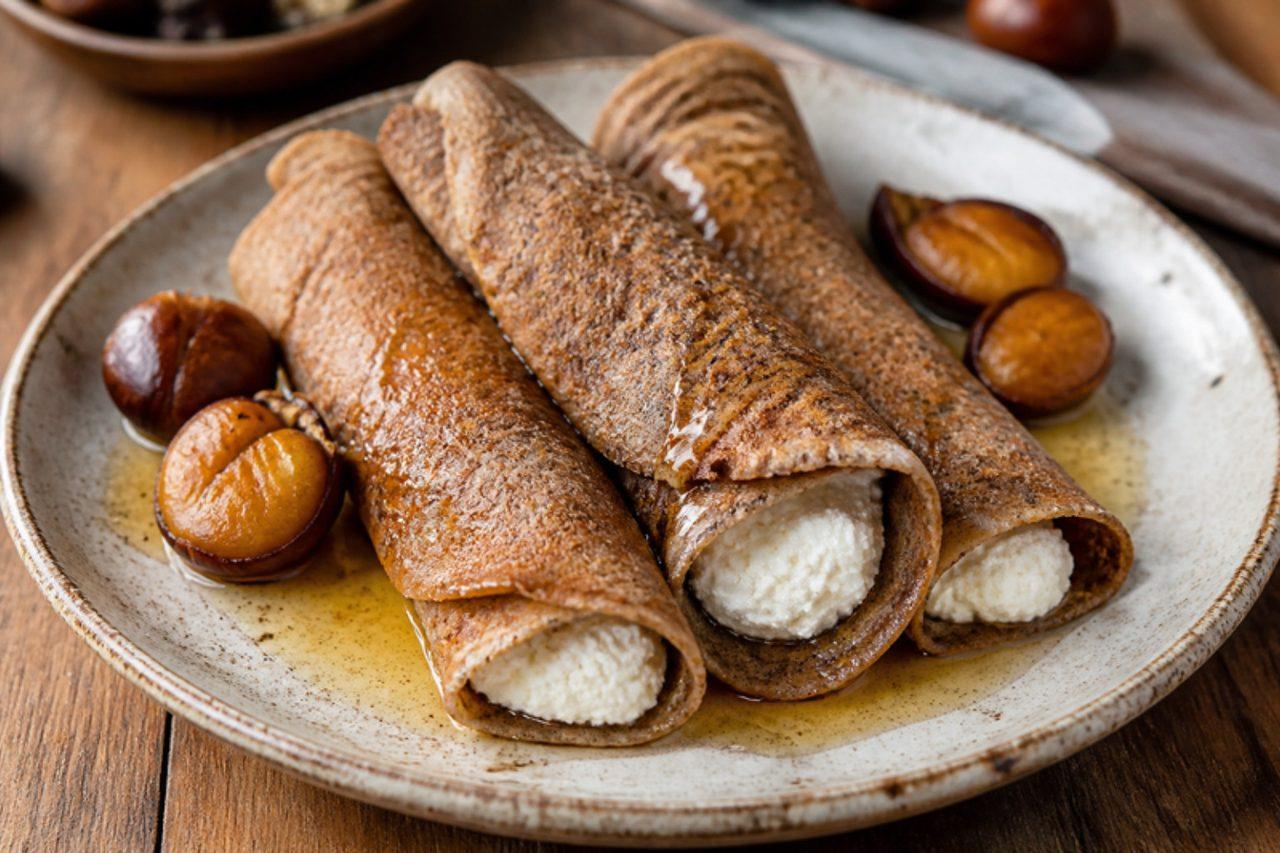
In the chestnut woods of the Garfagnana above Lucca and the hills around Pistoia, necci arrive with the new season's chestnut flour in late autumn and stay through winter, cooked at village fairs and at home as a sweet snack or a light supper. The batter is nothing but sweet chestnut flour, water and a pinch of salt; traditionally it was poured between pairs of hot iron or stone discs lined with chestnut leaves, but a non-stick crêpe pan does the job. The pancakes are soft, faintly smoky and naturally sweet, with an earthy taste, and are rolled around cold fresh ricotta. Serve two or three each, with a drizzle of honey or a cup of coffee alongside. They are naturally egg-free: the fine starch and sugar in chestnut flour set the batter on the heat by themselves, so it holds together without eggs. Chef's tip: sieve the flour and whisk the batter until it is as smooth and thin as single cream; the common mistake is a thick batter, which gives heavy, gummy necci that crack when rolled.

by KrazyBadal 0 views

Malai chop (chhana dumplings filled with sweet malai)

Malai chop is a sweet-shop showpiece in Dhaka and Kolkata, bought by the box for weddings, Eid visits, Durga Puja and the arrival of guests. Soft chhana (fresh milk curd) is kneaded, shaped into ovals and boiled in sugar syrup until spongy, then each one is split and filled with thick, sweet reduced-milk malai and topped with pistachios. They're juicy, light and creamy, best served cold, two to a plate. It's naturally egg-free: well-kneaded chhana holds itself together, a little cornflour helps it bind, and the long-reduced milk thickens the filling without any custard. Chef's tip: squeeze the chhana until it's moist but not wet and knead it until your palm feels greasy; chhana that's too wet is the common mistake that makes the dumplings fall apart in the syrup.

by KrazyBadal 0 views

Gil-e-firdaus (Hyderabadi bottle gourd and rice pudding)

The name means 'clay of paradise', and gil-e-firdaus belongs to the grand dessert tables of Hyderabad, served at weddings, at Eid and during Ramadan iftars alongside double ka meetha. Grated bottle gourd (lauki) is softened in ghee, then cooked in milk with coarsely ground rice and crumbled khoya until thick, pale green and fragrant with cardamom and rose water. It's thicker than a kheer, creamy and gently grainy, with soft strands of gourd and plenty of almonds and pistachios. Serve it warm in winter or chilled in summer, in small bowls. It is naturally egg-free: the ground rice and khoya do the thickening, giving it the richness a custard would. Chef's tip: squeeze the grated gourd well and add the sugar only once the rice is cooked; sugar added too early is the common mistake that stops the rice softening and leaves the pudding runny.

by KrazyBadal 0 views

Boeber (Cape Malay vermicelli and sago milk pudding)

In Cape Town's Cape Malay homes, the fifteenth night of Ramadan is Boeber night, when big pots of this warm, sweet milk are cooked and shared with neighbours and the mosque after the fast is broken. It also turns up on cold winter evenings. Boeber is halfway between a drink and a pudding: toasted vermicelli and pearls of sago swim in milk spiced with cardamom and cinnamon, scented with rose water and finished with almonds and sultanas. It is creamy, fragrant and thick enough to need a spoon. Serve it hot in mugs or bowls. Boeber has never needed egg; the sago pearls release their starch as they cook and thicken the milk, while a little butter gives it a rich finish. Chef's tip: toast the vermicelli in the butter until golden before any milk goes in, for a nutty flavour; the common mistake is to stop stirring once the sago goes in, and it sinks and sticks to the base of the pot.

by KrazyBadal 0 views

Plecing kangkungWater spinach with tomato sambal

Plecing kangkung is Lombok's signature vegetable dish, eaten in Mataram and around the island at lunch with rice and grilled food, and sold in Bali night markets too. Bright water spinach is blanched just until tender, then piled with bean sprouts and a raw sambal of tomato, chilli, lime and salt, and finished with crunchy fried peanuts. On Lombok the sambal usually contains terasi (shrimp paste); this vegetarian version leaves it out and uses a squeeze of lime leaf and a pinch more salt. A portion gives about 6 g of protein from the peanuts and sprouts, so it is a fresh side rather than a main. The most common mistake is overcooking the kangkung: it should stay vivid green with crunchy stems, so blanch for under a minute. Chef's tip: shock the greens in iced water straight after blanching, then squeeze lightly; the sambal clings better to dry leaves.

by KrazyBadal 0 views

Bhapa doi (Bengali steamed sweet yogurt)

Bhapa doi means steamed yogurt, and it's the dessert Kolkata households make when there's no time to visit the sweet shop for mishti doi. It's especially popular on Jamai Shashthi and at Poila Baisakh, the Bengali New Year, but it appears at Sunday lunches all year. Thick hung yogurt is mixed with condensed milk and a little milk, scented with cardamom, then gently steamed until it sets like a soft cheesecake without a crust. Chilled, it's dense, smooth and tangy-sweet. Serve it plain in small bowls, topped with pistachios, or with ripe mango in summer. There is no egg here: the milk proteins in the yogurt and condensed milk set with gentle heat, just as eggs would set a baked custard, and the condensed milk adds body and sweetness. Chef's tip: steam it on a low, gentle simmer; the common mistake is a fierce boil, which makes the yogurt weep whey and turn grainy.

by KrazyBadal 0 views

Paal kozhukattai (rice dumplings in sweet coconut milk)

Paal kozhukattai is made in Tamil Nadu homes for Vinayaka Chaturthi and on rainy evenings when something warm and sweet is wanted. Tiny pearls of rice-flour dough are cooked in thin coconut milk until they float and turn glossy, then the pot is sweetened with jaggery and finished with thick coconut milk and cardamom. The dumplings are soft and chewy, the liquid creamy and caramel-coloured, and the whole thing is served warm in small bowls, or at room temperature as part of a festival offering. It is naturally egg-free and vegan: the rice flour, scalded with boiling water, holds the dumplings together, and its starch thickens the coconut milk as they cook. Chef's tip: once the thick coconut milk goes in, keep it below a boil; boiling it hard is the common mistake that splits the coconut milk and makes it oily.

by KrazyBadal 0 views

ไอติมกะทิ (Itim kathi, Thai coconut ice cream)
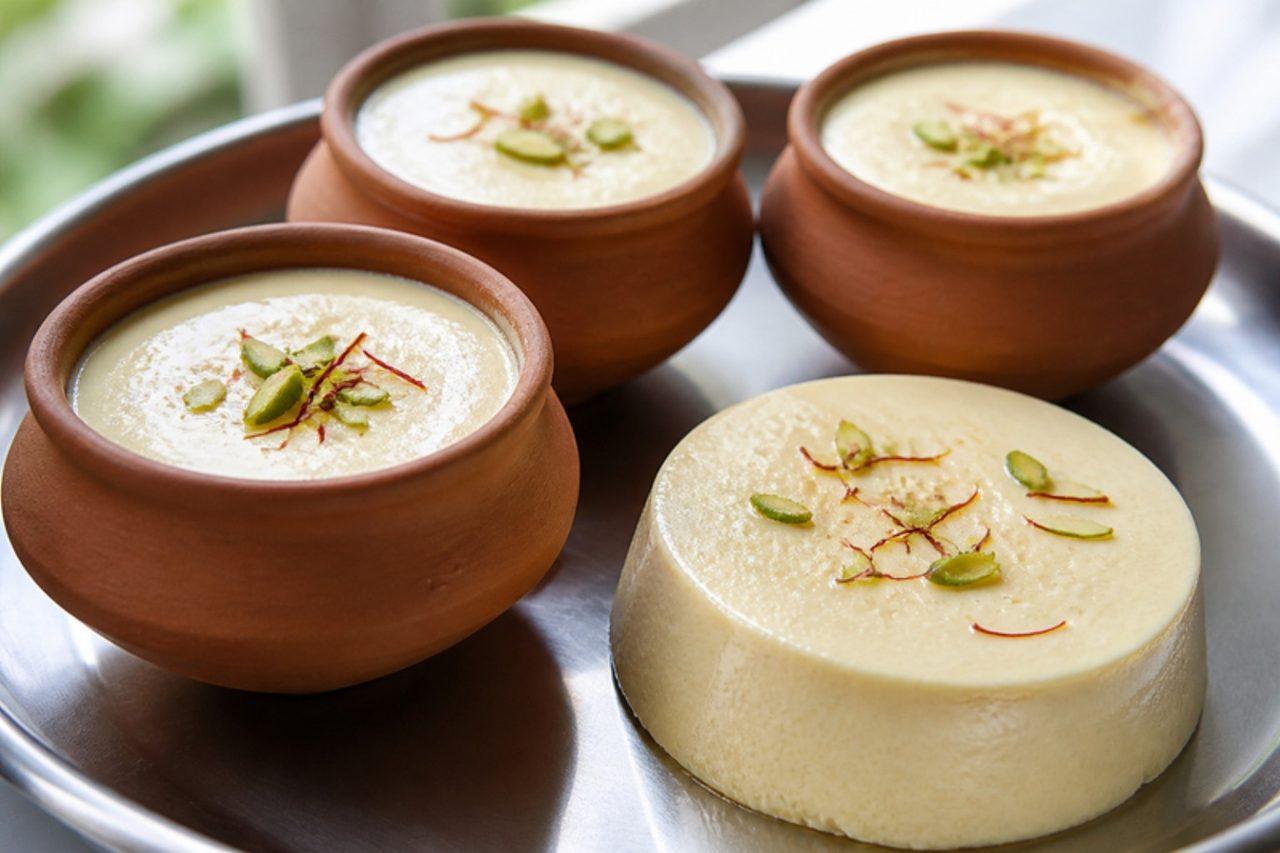
Itim kathi is the ice cream of Bangkok's pushcarts: a vendor lifts the lid of an insulated drum, scrapes up a scoop of snow-white coconut ice cream and piles it into a small cup over sticky rice, then adds whatever the customer points at, from roasted peanuts and sweet corn to chewy palm seeds. It is sold all afternoon in the hot months, outside schools and temples and in markets. Some vendors tuck the scoop into a soft bread roll; serve it in cups as here and it stays gluten free. It is naturally egg-free and dairy-free. Coconut milk carries the fat that makes it creamy, and a little cornflour cooked into it binds the water so crystals stay fine and the texture stays smooth without any custard, while a pinch of salt sharpens the coconut. Chef's tip: use full-fat coconut milk with no added water; the common mistake is using a light one, which freezes hard and icy.

300 minThaiDessertsVeganGluten free
by KrazyBadal 0 views

Duraznos en almíbar (Mexican peaches in piloncillo syrup)

Across Mexico, from the orchards of Zacatecas and Puebla to every abuela's pantry, duraznos en almíbar are how the summer peach crop is kept, and a bowl of them chilled from the fridge is a classic Sunday dessert. Peeled peach halves are poached in a syrup of piloncillo, the cone-shaped raw cane sugar, with cinnamon and cloves, so they turn tender and glossy and soak up a warm, molasses-like sweetness. Serve them cold in their syrup, on their own, or with a spoon of crema or thick yoghurt. Nothing needs setting and no egg is involved: the fruit simply poaches in the sugar syrup, which thickens lightly as it cools. Chef's tip: choose ripe but firm peaches and poach them gently; the common mistake is boiling the syrup hard, which turns the halves ragged and stringy.

by KrazyBadal 0 views

Kluay chuam (Thai bananas in palm-sugar syrup)

Kluay chuam is a market dessert of central Thailand, cooked in big brass pans and sold by the bag year round, and it is a common sweet to offer monks at merit-making. Small, starchy nam wa bananas are simmered slowly in palm-sugar syrup until they turn translucent and amber, soft and chewy rather than mushy, then served with thick, salty coconut cream poured over. The flavour is deep caramel and banana, cut by the salt. Serve at room temperature in small bowls. Being egg-free by nature, it relies on the long simmer in syrup firms the bananas and a little rice flour thickens the coconut topping. Chef's tip: keep the syrup at the gentlest simmer and don't stir; the common mistake is a fast boil and a spoon, which break the bananas before they have time to turn glassy.

by KrazyBadal 0 views

Dulce de fruta bomba (Cuban green papaya in syrup)

In Cuba, papaya is called fruta bomba, and its green, unripe fruit is cooked into this old-fashioned dulce, a fixture of home cooking all over the island and often made in big batches to keep. Strips of firm green papaya are simmered slowly in a cinnamon and lime-peel syrup until they turn translucent and chewy, with a candied, honeyed flavour. The Cuban way to eat it is with a slice of salty, crumbly white cheese, which balances the sweetness; a cup of strong coffee goes alongside. The dulce is egg-free by tradition, with nothing to bind: the papaya candies in the sugar syrup, and a short soak in water with a little bicarbonate of soda helps the strips stay firm. Chef's tip: rinse the strips well after the soak and simmer them gently; the common mistake is boiling the syrup fast, which hardens the outside of the papaya before the syrup can soak in.

by KrazyBadal 0 views

Tvorozhnaya massa s izyumom (sweet tvorog cream with raisins)

All over Russia, tvorozhnaya massa is the smooth, sweet curd cheese of childhood breakfasts and afternoon teas, and at Easter it is the base of paskha. Fresh tvorog is pressed through a sieve and beaten with soft butter, sugar and vanilla until it is pale and fluffy, then raisins are stirred in. It is creamy and tangy, sweet but light, and high in protein. Spread it on bread, spread it on rye toast or eat it from a bowl with tea and berries. Nothing is cooked and no egg goes in: beating the butter into the sieved curd gives it a mousse-like body, and it firms up nicely in the fridge, so nothing is needed to bind or set it. Chef's tip: soften the butter fully and sieve the tvorog first; the common mistake is beating cold butter into grainy curd, which leaves hard flecks and a lumpy, heavy cream.

by KrazyBadal 0 views

ซาหริ่ม (Sarim, mung bean noodles in coconut syrup)

Sarim is an old dessert of central Thailand, served at temple fairs and in market dessert shops on sweltering afternoons: thin, slippery strands in pastel green, blue and white, floating in a pale coconut syrup over a mound of crushed ice. The strands are almost flavourless and very soft, so the syrup does the work; in Thailand it is scented with jasmine flowers or the smoke of a scented candle, and here with pandan and optional fresh jasmine. It is naturally egg-free: the strands are pure mung bean starch cooked with water into a clear, thick paste, which sets into a soft gel the moment it hits ice water. Pandan juice and butterfly pea flowers give the colours, so there is no need for dyes. Serve it straight away, as a light end to a spicy meal. Chef's tip: cook the paste until it turns fully glossy and see-through; the common mistake is stopping while it is still milky, which gives strands that break and taste floury.

by KrazyBadal 0 views

Aachener Printen (Aachen spiced gingerbread slabs)

The bakeries of Aachen have made Printen for centuries, and from late autumn through Christmas the city's shop windows fill with these narrow brown slabs. Unlike soft German Lebkuchen they are firm and snappy, sweetened with dark sugar-beet syrup and studded with little crunchy bits of rock sugar, and they carry a big blend of spices: cinnamon, aniseed, coriander, cloves, cardamom and allspice. The dough rests overnight to develop flavour, then is raised with potash, which gives the dense, crisp texture. Dunk them in coffee or tea, or serve with baked apples. Printen never contained egg: the thick beet syrup is both sweetener and binder, gluing the flour into a stiff dough that sets hard in the oven. Chef's tip: let the syrup cool to lukewarm before mixing in the flour; the common mistake is adding it hot, which starts cooking the flour and gives a tough, rubbery dough.

1465 minGermanBakingVegan
by KrazyBadal 0 views

Taler bora (Bengali palm-fruit fritters)

When the ripe palmyra palm fruits (tal) fall in the late monsoon, Bengal's kitchens fill with their heavy, almost fermented-fruit scent, and taler bora are made, above all for Janmashtami in August and September. The dark orange pulp is scraped from the fibrous seeds, mixed with rice flour, a little wheat flour, grated coconut and sugar, and dropped by the spoonful into hot oil. They puff into soft, spongy balls with a dark brown crust and a sweet, fruity, slightly smoky taste. Eat them warm or at room temperature with tea, or as part of a Janmashtami offering. They are naturally egg-free and vegan: the thick, fibrous palm pulp and the rice flour bind the batter, and a pinch of bicarbonate lightens it. Use fresh pulp when you find the fruit, or frozen palmyra pulp from a South Asian grocer. Chef's tip: fry at about 165°C; the sugar in the palm pulp burns easily, so oil that's too hot is the common mistake that blackens the outside while the centre stays raw.

by KrazyBadal 0 views

Bánh tro (bánh gio, amber glutinous rice cakes in leaves)Lye water glutinous rice cakes

On Tết Đoan Ngọ, the fifth day of the fifth lunar month, families in northern and central Vietnam eat bánh tro first thing in the morning, believing it cools the body as summer heat arrives. Glutinous rice is soaked in alkaline water, which was once made by steeping plant ash, then wrapped in leaves and boiled for hours. It turns amber, translucent and jelly-soft with a clean, faintly mineral flavour, and is eaten cold, dipped in sugarcane molasses or palm-sugar syrup. Bánh tro is naturally egg-free: the alkali softens the rice grains so their own starch melts together into a firm, sliceable cake. We use food-grade lye water (an alkaline solution of potassium carbonate and sodium bicarbonate sold in Asian shops for noodles and mooncakes). Handle it with care: wear gloves, keep it away from children, never use drain cleaner or caustic soda, and always dilute it as written. Chef's tip: the common mistake is skipping the rinse; wash the soaked rice twice so the cakes taste clean, not soapy.

by KrazyBadal 0 views

Bratapfel (German baked apples with almond paste)

Across Germany, Bratäpfel are the smell of Advent: on cold December afternoons and evenings tart apples go into the oven filled with marzipan, raisins and nuts, and come out puffed, split and bubbling. The skin wrinkles, the flesh turns to a soft, sweet-sour purée and the almond filling melts into the juices. Serve them hot in their dish with the pan juices spooned over, and a plant-based vanilla sauce or a spoon of cold cream if you are not keeping them vegan. Shop marzipan sometimes contains egg white, so here you make a quick egg-free almond paste from ground almonds, icing sugar and a few drops of water, which holds the filling together just as well. The raisins are soaked in apple juice instead of rum. Chef's tip: choose a firm, sharp baking apple and score a ring around its middle; the common mistake is using a sweet eating apple without scoring, which bursts and collapses before the core is tender.

by KrazyBadal 0 views

Aiskrim potong (Malaysian red bean ice-cream bars)

Aiskrim potong, literally cut ice cream, comes from the days when Malaysian factories froze long blocks of dense ice cream that vendors sliced into bars to order. It is still sold nationwide from motorbike freezers and kampung shops, especially in the afternoon heat after school, in flavours like coconut, sweet corn, yam and durian, with red bean as the classic. It is firmer and denser than scooped ice cream and melts slowly in the hand. There is no egg: the base is cornflour cooked into coconut milk and milk, with a little condensed milk. The cooked starch gives the bars their chewy, close bite and keeps them smooth because it ties up the water before it can form big crystals. Chef's tip: stir the half-frozen block once so the beans don't all sink; the common mistake is pouring and leaving it, which gives a bean-heavy bottom and a plain top.

by KrazyBadal 0 views

冰粉 (Bingfen, Sichuan ice jelly)Ice jelly with brown sugar syrup

Bingfen is what Chengdu reaches for after a numbing hotpot or on a sticky summer night: a bowl of wobbly, glass-clear jelly, cold from the fridge, splashed with dark brown-sugar syrup and scattered with hawthorn flakes, raisins, peanuts and sesame. It is sold at night markets and hotpot restaurants all over Sichuan and Chongqing, and the jelly itself tastes of almost nothing, just cool and soothing, so the syrup and toppings bring the flavour. It is naturally egg-free and plant-based. The jelly traditionally comes from shoo-fly plant seeds rubbed in water; here it is made with ice-jelly powder, a plant-based setting powder sold in Chinese grocers, which sets clear as it cools. Chef's tip: let the jelly set undisturbed; the common mistake is stirring or moving it while it is half-set, which leaves it cloudy and weeping.

by KrazyBadal 0 views

Mizu shingen mochi (Yamanashi raindrop cake)

Mizu shingen mochi comes from Hokuto in Yamanashi, at the foot of the Southern Alps, where a sweet shop first set the local spring water into a trembling, glass-clear dome. It is a summer sweet, eaten in the heat of July and August, and it has to be eaten within half an hour of being made, before it starts to weep. There is almost no flavour of its own: the point is the cool, melting texture, with nutty kinako and dark kuromitsu syrup poured over at the table. Despite the name it is not a rice mochi at all, and it is naturally egg-free. Agar, a seaweed setting agent, holds the water in shape; using just enough to set it makes it melt on the tongue. Serve with green tea. Chef's tip: boil the agar hard for a full 2 minutes; just warming it is the common mistake, and the domes stay liquid in the mould.

by KrazyBadal 0 views

Fontainebleau (fromage blanc and whipped cream mousse)

Fontainebleau takes its name from the town south of Paris, whose cheese shops sold it in little muslin-wrapped pots for the weekend. It is a fresh-cheese dessert for late spring and summer, best when the first strawberries and raspberries arrive. Fromage blanc and whipped cream are folded together and left to drain in muslin, so the mousse firms up into a light, cloud-soft mound that tastes of fresh milk with a gentle tang. Serve it chilled with berries or a spoonful of red-fruit coulis, and a little extra sugar on the side. Some recipes fold in whisked whites; this one leaves them out entirely, because firmly whipped cream alone holds the air, and draining away the whey gives the mousse its shape. Chef's tip: drain the fromage blanc before you start; the common mistake is folding in a wet, runny cheese, which collapses the cream and leaves a puddle in the dish.

by KrazyBadal 0 views

Mustazzoli (Salento almond, cocoa and spice biscuits)Spiced almond biscuits

In Lecce and the towns of the Salento, mustazzoli are baked for Christmas and for the summer saints' feasts, when stalls at the fairs stack them in glossy dark piles. They are diamond-shaped biscuits of toasted almonds, flour, sugar and cocoa, spiced with cinnamon and cloves and brightened with orange zest, then coated in dark chocolate. Inside they are firm and dense, a bit like a soft gingerbread, with a crisp chocolate shell. Eat them with an espresso after lunch or pack them as a gift; they keep for weeks. The dough was always egg-free: water and the sugar bind it, the ground almonds give fat and body, and a little baking powder keeps them from being leaden. Use a dark chocolate with no milk solids and the whole batch is vegan. Chef's tip: let the biscuits cool completely before glazing; the common mistake is dipping them warm, which melts the chocolate into a thin streaky coat that never sets glossy.

by KrazyBadal 0 views

Hutzelbrot (Swabian dried-pear Christmas loaf)

In Swabia and Franconia, Hutzelbrot is baked in early December and sliced through Advent and Christmas, traditionally on St Thomas's Day, 21 December. Hutzeln are dried pears, and they are the heart of the loaf: soaked overnight and simmered, then mixed with figs, prunes, raisins, hazelnuts, walnuts and candied peel, bound with only enough spiced yeast dough to hold everything together. The result is dark, moist and dense, closer to fruit than to bread, fragrant with cinnamon, aniseed and cloves. Slice it thin and eat it plain, spread with butter or a nut butter, with coffee or a hot fruit tea. The loaf is naturally egg-free: the yeast dough, made with the sweet pear soaking water, is the glue, and the sticky fruit holds it moist for weeks. Chef's tip: wrap the cooled loaves tightly and leave them for 3–4 days before slicing; the common mistake is cutting it on day one, when it crumbles and the flavours have not settled.

900 minGermanBakingVegan
by KrazyBadal 0 views

Subak hwachae (Korean watermelon punch)

Subak hwachae is the cooling bowl Koreans set out on the hottest days of summer, especially around Boknal, the dog days of July and August, when families gather and eat from a hollowed-out watermelon shell. Balls of watermelon and other fruit float in chilled watermelon juice lightly sweetened and sharpened with lemon, with sparkling water for fizz and plenty of ice. It is refreshing, juicy and only gently sweet. Serve it straight away in small bowls with a spoon, after a barbecue or a spicy meal. This version is egg-free and dairy-free, and nothing needs binding or setting, as it is simply fruit in its own juice. Some modern versions add milk or a fizzy lemon soda; this one keeps it light with sugar syrup and sparkling water. Chef's tip: chill the fruit and juice for at least an hour before adding the fizz; the common mistake is relying on ice alone, which melts and waters the punch down.

by KrazyBadal 0 views

Xin tai ruan (心太软, jujubes stuffed with sticky rice in osmanthus syrup)Sticky rice-stuffed red dates

Xin tai ruan, 'the heart is too soft', is a small sweet plate found in restaurants all over Jiangsu and Zhejiang, often served as a starter or between courses at banquets, and it is especially popular in the cold months when jujubes are said to warm the body. Dried red dates are pitted, stuffed with a little glutinous rice dough, steamed and then glossed with syrup scented with sugared osmanthus flowers. Each bite is chewy, then soft, with the deep caramel taste of the dates and a floral finish. Serve warm or at room temperature with tea. It is naturally egg-free: glutinous rice flour and water make a dough that turns sticky and elastic when steamed, filling the dates and holding them closed. Chef's tip: the common mistake is cutting through the whole date when pitting; slit only one side so it stays in one piece and wraps the dough.

by KrazyBadal 0 views

Monaka (最中, rice wafers with azuki bean paste)Rice wafers with sweet bean paste

Monaka is sold in wagashi shops all over Japan, from Tokyo's old districts to temple towns, often pressed into the shape of a flower, a fish or a local landmark. It is a year-round tea sweet and a favourite souvenir. Two crisp, paper-light wafers made of glutinous rice flour and water are filled with tsubuan, a chunky azuki paste cooked with sugar. The wafer is dry and toasty, the filling dense, sweet and earthy, and the pleasure is in eating it before the shell softens. Serve with matcha or sencha. Making the shells needs a special iron mould, so we use bought monaka shells; they are normally just rice flour and water, but check the pack to be sure they are eggless. The bean paste is naturally egg-free, set by the azuki's own starch and the sugar. Chef's tip: the common mistake is filling them in advance; sandwich them just before serving, or the wafers go limp.

by KrazyBadal 0 views

پشاوری آئس کریم (Peshawari ice cream)Cardamom pistachio ice cream

In the Qissa Khwani bazaar of Peshawar, ice-cream sellers spin a tall metal drum inside a tub of crushed ice and salt, scraping the freezing milk off the walls with a long paddle until it turns thick, stretchy and pale. It is a summer evening treat, eaten from small bowls after dinner or late at night when the streets cool down, and often topped with a spoonful of falooda vermicelli or more chopped pistachio. The flavour is simple: slowly reduced milk, green cardamom and a little rose. This version has no eggs and no custard: a cornflour slurry cooked into the milk thickens it the way yolks would, and the starch holds on to water so ice crystals stay small and the texture stays smooth, while milk powder adds body without extra fat. You can churn it in a machine or still-freeze it in a tray and stir it every 45 minutes. Chef's tip: the common mistake is churning a warm base; chill it until it is fridge-cold right through, or it will turn icy instead of silky.

by KrazyBadal 0 views

Bób z koperkiemBroad beans with butter and dill

All over Poland, from Kraków's market stalls to allotments outside Warsaw, the short broad bean season in June and July means bowls of bób z koperkiem: young beans boiled in their pale skins, tossed with melted butter, dill and salt, and eaten with your fingers on summer evenings. You squeeze each bean out of its skin with your teeth, or eat the skin too if the beans are very young. A generous bowl of 300 g beans gives about 22 g of protein, all from the broad beans. The most common mistake is overcooking: the skins burst and the beans turn grey and floury. Chef's tip: add a pinch of sugar to the cooking water along with the salt, as Polish cooks do; it keeps the beans sweet and bright.

by KrazyBadal 0 views

Ba bao zhouEight-treasure porridge

Across China, the eighth day of the twelfth lunar month is Laba, and households and Buddhist temples simmer a big pot of eight-treasure porridge to share: glutinous and black rice cooked slowly with red beans, mung beans, peanuts, lotus seeds, red dates and longan until thick and gently sweet. Beijing families still give bowls to neighbours, and it is a warming winter breakfast all season. A bowl gives about 9 g of protein from the beans, peanuts and lotus seeds, so it is a filling porridge rather than a high-protein one. Soak the beans, peanuts and lotus seeds for at least 4 hours or overnight. The common mistake is putting everything in at once: the rice goes to glue before the beans soften, so the beans get a head start. Chef's tip: add the rock sugar only in the last 10 minutes; sugar added early toughens the bean skins.

by KrazyBadal 0 views

Bubur gandum (wheat pudding with coconut milk and palm sugar)

In Malaysia bubur gandum belongs to Ramadan: it is ladled out at the bazaars that open before sunset and cooked in giant pots at mosques for breaking the fast, and it appears again at Hari Raya open houses. Pearled wheat is simmered until the grains burst and turn chewy, then cooked with gula Melaka, pandan and coconut milk into a thick, toffee-brown porridge. The texture is somewhere between rice pudding and soft barley, with a sweet, smoky, coconut flavour. Serve it warm, or at room temperature on a hot evening. The pudding has always been egg-free, because the starch released by the wheat thickens the coconut milk as it simmers, so nothing else is needed to bind it. Chef's tip: cook the wheat in water until fully soft before adding the sugar and coconut milk; the common mistake is adding them too early, which keeps the grains hard however long you cook them.

by KrazyBadal 0 views

Pheni (layered fried vermicelli nests in sweet milk)

In Lahore and Karachi during Ramadan, sweet shops stack golden nests of pheni in towers, and families buy them to eat at sehri, the meal before dawn. The fine, brittle strands are crumbled into a bowl and drenched with hot sweetened milk, which softens them in a minute into something like a silky vermicelli pudding; it keeps you full through the fasting day. Shop pheni is pulled into hair-thin threads by skilled hands, so at home this recipe uses the layered method: thin sheets of dough are brushed with a ghee and rice-flour paste, rolled and sliced, and the paste makes the layers fan out into fine flaky rings when fried. They are crisp, buttery and delicate. It is naturally egg-free: the dough is just flour, ghee and water, and the rice-flour paste keeps the layers separate. Chef's tip: fry the nests in oil that is only moderately hot, about 160°C; oil that is too hot is the common mistake that browns the outside while the inner layers stay soft and doughy.

by KrazyBadal 0 views

Palada payasam (Kerala rice-flake milk pudding)

No Onam sadya in Kerala feels finished without palada, ladled onto the banana leaf near the end of the feast, often after a darker jaggery payasam. Thin flakes of rice (ada) are cooked for a long time in milk and sugar, and as the milk reduces the sugar caramelises very slightly, turning the whole pot a soft blush pink. The result is creamy and gently chewy, with a taste like warm toffee milk. It is served warm or at room temperature, sometimes mopped up with a crisp pappadam crushed into it, the way Keralites eat it at weddings. It is naturally egg-free: the starch from the rice flakes and the slow reduction of the milk thicken it, with no custard at all. Use ready-made rice ada from an Indian shop. Chef's tip: the pink colour only comes with patience; keep the heat low and steady and keep stirring, because rushing it on a high flame scorches the milk and turns it brown and bitter.

by KrazyBadal 0 views

Uiro (ういろう, steamed rice-flour cake)

Uiro is the classic sweet of Nagoya, sold in long blocks at the station as a souvenir, and Yamaguchi has its own lighter version made with bracken starch. It is eaten through the year with tea, and in June a triangular version topped with azuki, minazuki, is eaten in Kyoto to mark the halfway point of the year. A simple batter of non-glutinous rice flour, sugar and water is steamed into a firm, smooth, slightly springy cake with a gentle sweetness. This one is flavoured with matcha; stir in a little sweet bean paste or sakura instead for variety. Uiro is naturally egg-free: steaming cooks the rice starch, which sets the cake into a dense, clean-cutting slab with no binder needed. Chef's tip: the common mistake is cutting it hot; let it cool completely, then slice with a wet knife or a piece of cling film, or it smears.

by KrazyBadal 0 views

Bubur sumsum (Javanese rice-flour pudding with palm-sugar syrup)

Bubur sumsum, named after bone marrow for its colour and softness, is one of Java's best-loved jajan pasar, sold from carts in the morning and in the late afternoon as a sweet bite. In Javanese custom it is also cooked after a wedding or a big celebration to thank those who helped, as a gentle food for tired bodies. The pudding is pure white, silky and barely salty, and it comes drenched in kinca, a warm syrup of palm sugar and pandan. Serve it warm or at room temperature in small bowls, on a banana leaf if you have one. It is naturally egg-free: rice flour cooked in coconut milk swells and sets it to a soft, spoonable pudding, the way cornflour sets a blancmange. Chef's tip: whisk the rice flour into cold coconut milk before it goes on the heat; adding it to hot liquid is the common mistake that leaves lumps you can't whisk out.

by KrazyBadal 0 views

Ciambelline al mosto (alcohol-free ring biscuits)Grape juice ring biscuits

All over Lazio, from the Castelli Romani to the countryside around Rome, these sugar-crusted ring biscuits are put out at the end of a meal and at the autumn grape harvest, when they are dunked into a glass to soften. The classic dough is made with equal measures of liquid, olive oil and sugar; here the liquid is red grape juice, which is close to the fresh mosto of harvest time and gives the same pinkish crumb and fruity edge with no alcohol at all. The rings are crunchy and light, a little crumbly, with a crackly sugar coat and a hint of aniseed. Serve them with grape juice, coffee or a pot of tea for dunking. They are naturally egg-free: the olive oil and juice bind the flour into a smooth dough, and baking powder does the lifting that eggs might do elsewhere. Chef's tip: roll the ropes no thicker than a pencil and a half, about 1 cm; the common mistake is chunky ropes, which brown outside before the middle dries and leave the biscuits hard instead of crisp.

by KrazyBadal 0 views

Kem chuối (Vietnamese frozen coconut banana)

Kem chuối is the frozen treat of Saigon's alleys and the Mekong towns, sold from home freezers and school gates through the long hot season. Small, very ripe bananas are pressed flat, coated in thick sweet coconut cream, rolled in roasted peanuts and frozen on a stick; you can also wrap them and slice them into coins. The banana freezes dense and chewy rather than icy, and the coconut coating stays soft and rich. It is naturally egg-free and dairy-free: the coconut cream is cooked with a spoonful of tapioca starch, which thickens it so it clings and holds a thin layer around the fruit, and the banana's own sugar keeps the middle from freezing rock-hard. Kids love making these. Chef's tip: use bananas with plenty of brown freckles; the common mistake is using firm yellow ones, which freeze bland and starchy.

by KrazyBadal 0 views

Hoa quả dầm (Hanoi fruit cup with yoghurt and condensed milk)

On sticky summer afternoons, Hanoi's young people pack the little stools along streets near Hoàn Kiếm Lake for hoa quả dầm, a cup of diced fruit buried in crushed ice, plain yoghurt and condensed milk. The fruit follows the season, usually mango, papaya, jackfruit, dragon fruit and avocado, and the whole thing is stirred together before eating, so it turns cold, creamy, tangy and sweet at once. Serve it immediately, with a long spoon and toasted coconut on top if you like. No cooking and no egg here: condensed milk and yoghurt dress and bind the fruit, and the crushed ice chills it, so there is nothing to set. Chef's tip: dice everything to the same small size, about 1.5 cm, so each spoonful gets a mix; the common mistake is adding the ice too early, which melts and floods the cup before it reaches the table.

by KrazyBadal 0 views

Bánh phu thê (Đình Bảng 'husband and wife' cakes)Mung bean tapioca cakes

Bánh phu thê, also called bánh xu xê, comes from Đình Bảng in Bắc Ninh, and it is still part of the gifts a groom's family brings to a Vietnamese wedding, with its paired leaf boxes standing for husband and wife. The dough is tapioca starch cooked with sugar and fresh coconut shreds and tinted golden with gardenia seeds; it steams clear and chewy, almost like amber jelly, around a soft ball of mung bean paste, and the top is scattered with toasted sesame. Eat them the day they are made, with green tea. The cake is naturally egg-free: tapioca starch thickens and turns elastic when heated, so it wraps and holds the filling on its own. Small ramekins lined with banana leaf can stand in for folded leaf boxes. Chef's tip: the common mistake is not part-cooking the dough; stir it on the hob until half of it turns clear, or it runs out of the boxes in the steamer.

by KrazyBadal 0 views

Kem xôi (Hanoi coconut ice cream on sticky rice)

In the Old Quarter of Hanoi, kem xôi shops on Hàng Bài and around Hoàn Kiếm lake serve it from late morning to late at night through the hot season: a bed of warm, salty sticky rice, a scoop of coconut ice cream melting into it, then crisp toasted coconut and crushed peanuts. The contrast of warm and cold, chewy and creamy, is the whole point. This is a no-churn ice cream with no eggs and no custard. Sweetened condensed milk is the base: its sugar and milk solids lower the freezing point and keep crystals tiny, while whipped cream folded through traps air so it freezes soft without stirring, and coconut milk gives the flavour. Make the ice cream the day before and steam the rice just before serving. Chef's tip: whip the cream only to soft peaks; the common mistake is overwhipping it until stiff, which turns grainy and buttery once it freezes.

by KrazyBadal 0 views

Cuccìa (Palermo wheat berries with sweet ricotta)

On 13 December, the feast of Santa Lucia, Palermo stops eating bread and pasta for a day. The story goes that during a famine a ship of grain arrived on her feast day and people were too hungry to mill it, so they boiled the wheat whole; cuccìa remembers that. The berries are boiled until plump and chewy, then folded into sweetened sheep's ricotta with candied orange, chocolate and cinnamon, so it eats like a cannolo filling with a pleasant bite. Serve it chilled in bowls or glasses, on the day itself or any winter afternoon. Like most Sicilian ricotta sweets it is egg-free by nature: the thick, drained ricotta binds the wheat into a creamy pudding, with nothing to set. Some families make a savoury version with chickpeas and oil, too. Chef's tip: cool the wheat completely before it meets the ricotta; the common mistake is folding in warm grains, which melts the cheese into a runny, grainy mess.

by KrazyBadal 0 views

Arepa de chocloSweet corn griddle cakes with cheese

Along the mountain roads of Antioquia and Boyacá, roadside stalls cook arepas de choclo on wide griddles all day: thick, sweet cakes of blended fresh corn, golden outside and soft inside, folded or topped with a slab of fresh white cheese and a smear of butter. Colombians eat them for breakfast, as a mid-afternoon snack with hot chocolate, or as a quick supper. The usual mistake is a batter that is too wet, so the cakes tear when flipped; it should hold its shape on a spoon, and a little precooked cornmeal fixes a runny batch. Queso campesino and mozzarella are often made with animal rennet, so look for a vegetarian cheese if needed; check the cornmeal pack is gluten free if that matters. Chef's tip: cook them over a medium-low heat; the sugar in the corn burns before the middle sets if the pan is too hot.

by KrazyBadal 0 views

Khubz ragagPaper-thin batter flatbread

Khubz ragag is the tissue-thin bread of the UAE, traditionally spread by hand over a hot domed iron griddle by Emirati women at morning markets and cooked in seconds until crisp. At home it is breakfast drizzled with date syrup, or with eggs and cheese cooked on top, and in Ramadan it is torn into thareed stew. This plain version is egg-free and dairy-free, cooked in a non-stick frying pan. The common mistake is a dough that is too stiff: it should be loose and sticky so it can be smeared paper-thin. Toppings like egg or cheese can be added at the end if you are not keeping it vegan. Chef's tip: wipe the pan with a damp, folded cloth between breads to cool the surface slightly, so the next one spreads without tearing.

by KrazyBadal 0 views

MantecaditosAlmond shortbread with guava

During the long Puerto Rican Christmas season, which runs from Thanksgiving to the fiestas de la calle San Sebastián in mid-January, trays of mantecaditos appear at every parranda and family visit. They are small, eggless shortbread balls scented with almond extract, pressed with a thumb and filled with a cube of sticky, ruby guava paste. They crumble in one bite, rich with butter, and the tart guava cuts the sweetness. Serve them with a cafecito, or a glass of milk for the children. Warm dough is what makes them spread into flat puddles, so chill the shaped balls before they go in. Chef's tip: cut the guava paste with a knife dipped in hot water, and press it into the hollow only after chilling so it stays neatly in place.

by KrazyBadal 0 views

OkayuPlain rice porridge with pickled plum

Okayu is the porridge Japanese mothers make when someone is ill, tired or simply needs something gentle, and it is also eaten on 7 January as part of the new year with seven spring herbs. This weeknight version starts from cooked rice, simmered in water with a little salt until soft, white and spoonable, then served with a sour-salty umeboshi plum to stir in. The mistake is stirring it constantly, which breaks the grains and turns it gluey; stir only now and then. Chef's tip: for the full, silkier version, start with 100 g raw rice and 1 litre of water and simmer, lid ajar, for 40 minutes.

by KrazyBadal 0 views

Stuvade makaronerCreamy macaroni

Stuvade makaroner is a Swedish childhood classic, cooked on weekday evenings all over the country: small macaroni simmered in milk with butter and a grating of nutmeg until thick and creamy, served beside meatballs, sausages or, for a vegetarian plate, fried halloumi or eggs and a spoonful of lingonberries. It is mild, comforting and made in one pan. The most common mistake is cooking on too high a heat, so the milk catches and burns on the bottom; keep it at a gentle simmer and stir often. Chef's tip: boil the macaroni in water for 3 minutes first, then finish in the milk, so it cooks evenly without the sauce turning gluey.

by KrazyBadal 0 views

Mákos tészta (Hungarian poppy seed pasta)

Mákos tészta surprises people who meet it outside Hungary: hot wide noodles tossed in butter and finely ground poppy seeds with sugar, eaten as a main course, often on a Friday after a bowl of soup. Children across Hungary grow up on it, and grown-ups still order it in school-canteen-style restaurants in Budapest. The trick is grinding the seeds; whole poppy seeds just roll off the pasta, and the most common mistake is using them unground, which gives a gritty dish with little flavour. Chef's tip: a spice or coffee grinder turns poppy seeds into a fragrant, slightly oily powder in 20 seconds; grind them just before cooking.

by KrazyBadal 0 views

Mauritian cassava biscuits

In Mahébourg, on the south-east coast of Mauritius, a family biscuit works has made thin cassava biscuits on hot iron plates for more than a century, and biscuit manioc has become the island's signature tea biscuit. They are pale, square and so crisp they snap cleanly, with a gentle sweetness and flavours such as plain, coconut, vanilla or cinnamon. Mauritians eat them with a cup of vanilla tea, spread them with butter, or crumble them over a bowl of fruit. Made with cassava flour, they are naturally gluten free. Chef's tip: mix the dough with very hot water, which partly cooks the starch and makes the dough pliable; cold water is the common mistake, and the dough cracks and crumbles as you roll it.

by KrazyBadal 0 views

Fideos con mantecaButtered noodles with cheese

Ask anyone from Buenos Aires to Córdoba what they ate when they came home late or felt poorly as a child, and the answer is often fideos con manteca: short pasta tossed with butter and a snowfall of grated queso rallado. It is the plainest dish in the Argentine home kitchen and the one people cook for themselves on a tired weeknight. The mistake that ruins it is draining the pasta bone-dry and adding cold cheese to a hot empty pan, which leaves greasy strands and clumps; a splash of cooking water makes a light, creamy coating instead. Argentine reggianito and Parmesan are made with animal rennet, so use a vegetarian hard cheese if needed. Chef's tip: grate the cheese very finely, like dust, so it melts on contact.

by KrazyBadal 0 views

Currants rollSpiced currant pastry roll

In Trinidad and Tobago, currants roll is the thing in the bakery case next to the coconut drops and salara: flaky shortcrust rolled tightly around a dark, sticky mixture of currants, brown sugar, cinnamon and nutmeg, baked whole and cut into thick spiral slices. Schoolchildren buy a piece on the way home and it is a favourite at Christmas when the house is full of visitors. The pastry is crisp and short, the filling jammy and warmly spiced. Spooning the filling on hot and syrupy makes the roll leak and go soggy, so cool it until thick. Chef's tip: roll the pastry on baking paper and use the paper to lift and roll the log, keeping it tight and even.

by KrazyBadal 0 views

CampechanasFlaky sweet pastries with sugar top

Campechanas take their name from the port of Campeche, but now they shatter all over the coffee tables of Mexico City and Veracruz: oval, paper-thin layers of dough with a glossy, caramelised sugar crust that cracks as you bite. Mexicans buy them in the evening from the panadería, along with conchas, to dunk in café de olla or hot chocolate. They are traditionally made with lard; this version uses vegetable shortening, which gives the same light flakiness and keeps them vegan. Butter also works but browns faster. The trap is a timid oven: below full heat the sugar stays grainy and white instead of turning to glass. Chef's tip: press the sugar firmly into the top before baking so it melts into an even shiny layer.

by KrazyBadal 0 views

Tindora nu shaakIvy gourd stir-fry

Tindora (ivy gourd) nu shaak is a lunch-box and dinner standby in Gujarat and Mumbai's Gujarati homes: thin rounds of the little gourd stir-fried with mustard seeds and turmeric until they are tender inside and lightly crisp at the edges. It is a dry shaak, eaten with dal-bhaat or rolled into a rotli, and children often like it best. The common mistake is slicing the tindora too thick, which means it either stays raw in the middle or needs water that makes it soggy; cut every round about 3 mm thick. Chef's tip: avoid tindora that is red or soft inside, which means it is overripe and will taste sour. Most hing contains wheat, so buy a gluten-free one if needed.

by KrazyBadal 0 views

Boondi raitaYogurt with gram flour pearls

Across North India, from Delhi dhabas to Rajasthani wedding buffets, boondi raita is the cooling bowl that turns a plain weeknight dal and rice or a spicy pulao into a proper meal. Tiny fried gram-flour pearls (boondi) are softened briefly and folded into whisked yogurt seasoned with roasted cumin, black salt and red chilli, so each spoonful is creamy with soft little pops. Ready-made salted boondi is sold in Indian shops; check the packet says it is made only with gram flour if you need it gluten free. The common mistake is leaving the boondi to soak too long, which turns it to mush. Chef's tip: soak the boondi in warm water for just 2 minutes and squeeze it gently; this rinses off excess oil and salt and keeps the raita light.

by KrazyBadal 0 views

Tvorog so smetanoy (farmer's cheese with sour cream)

Across Russia, a bowl of soft tvorog with a spoon of smetana and a little sugar or jam is the breakfast grandmothers swear by and the supper students live on. The fresh, slightly sour curd and the cool cream make something like a rustic cheesecake you eat with a spoon, high in protein and ready in five minutes; add berries in summer. Tvorog, like quark and cottage cheese, is set with culture rather than rennet, so it suits vegetarians. The mistake is buying the driest block and serving it as it is, which feels chalky; break it up and loosen it with the smetana first. Chef's tip: mash the tvorog with the sugar and let it stand two minutes so the sugar dissolves before you add the cream.

by KrazyBadal 0 views

Dar ni poriSweet lentil pie with nuts

Parsi families in Mumbai and the small towns of south Gujarat order dar ni pori for Navroz, birthdays and the first day of a new job, when a sweet that keeps well is needed for visitors. A thin, flaky shortcrust holds a fudgy filling of toor dal cooked down with sugar and ghee, scented with cardamom, nutmeg and rose water and studded with almonds and pistachios. It tastes a little like a nutty halwa wrapped in pastry and is cut into small wedges, usually with a cup of milky tea. The usual mistake is stopping the filling too early: if it is still soft and wet it soaks the pastry and leaks through the seams. Chef's tip: the dal is ready when it pulls away from the pan as one mass and a spoonful holds a clean shape on a plate.

150 minIndianBaking
by KrazyBadal 0 views

Jeera riceCumin rice

Jeera rice is the plain-but-not-plain rice of North Indian restaurants and homes, cooked on weeknights from Delhi to Lucknow to go with dal makhani, rajma, chole or any gravy curry. Cumin seeds are fried in ghee with a bay leaf, cardamom and cloves until they crackle, then rinsed basmati is cooked in the same pot, so every long grain is scented and separate. The usual mistake is stirring the rice while it cooks, which breaks the grains and makes it sticky. Chef's tip: if you have 20 minutes to spare, soak the rinsed rice first; the grains cook up longer and even fluffier (that pushes it past 30 minutes).

by KrazyBadal 0 views

Bizcochos de CayambeTwice-baked butter biscuits

Drive north from Quito towards the snow-capped Cayambe volcano and the roadside is lined with bakeries selling paper bags of bizcochos, small finger-shaped biscuits baked twice until they shatter. Families stop there on weekend trips and order them with a slab of soft, salty queso de hoja, a cup of hot chocolate and a spoonful of dulce de leche (manjar) for spreading. The dough is a lightly yeasted butter dough, rolled into thin sticks, baked once until pale gold and then dried slowly until crisp right through, with a flaky, crumbly bite. A sealed jar keeps them for weeks. Chef's tip: the second bake is about drying, not browning, so keep the oven low; a hot second bake is the usual mistake and leaves them dark outside and chewy inside.

130 minAndeanBaking
by KrazyBadal 0 views

Hopia mungoMung bean pastries

Binondo, Manila's old Chinatown, is where Filipinos queue for hopia, flat little pastries with a paper-thin, flaky skin and a dense, sweet filling. Brought over by Hokkien bakers, they are now sold everywhere from provincial bus stations to convenience stores, and a box is a standard pasalubong (gift) after a trip. The classic is hopia mungo, filled with yellow mung bean paste; purple ube is the other favourite, and you can swap 300 g of sweetened ube halaya for the mung beans. Hopia pastry is traditionally made with lard; this version uses vegetable oil and shortening, so it is vegan. Chef's tip: dry the mung bean paste in the pan until a spoonful holds its shape when rolled; a soft paste is the commonest mistake, and it squeezes out of the seams as you flatten the pastries.

by KrazyBadal 0 views

Tarte à la ferloucheMolasses and raisin pie

Ferlouche is an old Quebec farmhouse pie, the kind served at the Christmas réveillon, at sugar-shack lunches in spring and at church suppers in the Beauce. Molasses, brown sugar and water are cooked into a dark, glossy custard thickened with cornstarch and full of raisins, then poured into a crisp crust. It needs no eggs at all, and tastes of caramel, toffee and a little spice. The crust is traditionally made with lard, but this version uses butter and vegetable shortening, so it is vegetarian. Stopping the cooking as soon as the filling thickens is a frequent mistake: the cornstarch needs a proper boil or the pie never sets and tastes floury. Chef's tip: let the cooked filling boil for a full 2 minutes, stirring, until it turns from cloudy to translucent.

by KrazyBadal 0 views

HojarascasCinnamon sugar crumble cookies

At weddings, quinceañeras and Christmas gatherings in Nuevo León and Coahuila, someone always brings a platter of hojarascas, the name meaning 'fallen leaves' because they crumble as lightly as dry leaves underfoot. The cookies are short and sandy, spiced with cinnamon, and rolled while warm in more cinnamon sugar so they look frosted. Monterrey families serve them with café de olla or hot champurrado. They are traditionally made with lard; this version uses vegetable shortening, which gives the same tender crumb and makes them vegan, or you can use butter for a richer taste. Overworking the dough once the flour is in is the classic mistake, because it develops gluten and makes them tough. Chef's tip: steep a cinnamon stick in the water first and use that tea to bind the dough, which doubles the spice flavour without bitterness.

by KrazyBadal 0 views

Egyptian fayeshSweet sesame rusks

Fayesh belongs to the Sa'id, Upper Egypt, where village women bake it in big batches in mud-brick ovens so the family has something crunchy for breakfast tea for weeks, and travellers from Luxor and Aswan carry bags of it north as a gift. A lightly sweet, aniseed-scented bread is baked, sliced, then dried slowly into hard, golden rusks crusted with sesame. They are dunked in black tea with plenty of sugar or in hot milk, and they never go stale. The common error is drying them too fast at a high heat: the outside browns while the middle stays soft, and that softness turns mouldy in the tin. Chef's tip: slice the loaves the next morning, not while warm; a rested loaf cuts into clean, even slices that dry at the same rate.

by KrazyBadal 0 views

Bumbleberry pie

There is no such thing as a bumbleberry: the name is a joke from the diners and farm stands of the Maritimes and Ontario, where a pie is baked from whatever berries are in season plus a little apple and rhubarb. The result is a tall, jammy, double-crust pie that is sweet and sharp at the same time, with a flaky golden lid. Canadians eat it in summer cottage season and at Thanksgiving with vanilla ice cream or a slice of aged cheddar. Cutting it while warm is the classic error, because the juices run all over the plate. Chef's tip: bake until the juice bubbles thickly through the vents, not just at the edges; that is the sign the cornstarch has cooked and the filling will set.

by KrazyBadal 0 views

Khanom kleeb lamduanFlower shortbread cookies

Named after the lamduan, a fragrant cream-coloured flower with three curled petals, these tiny Thai shortbreads are a classic of the royal-style Thai sweets once made in palace kitchens and now sold in Bangkok's old dessert shops and given at weddings and merit-making. Each flower is three teardrop petals around a ball, pale and fragile, and they melt like sandy fudge. Their perfume comes from tian op, a special scented dessert candle: it is lit, blown out, and left to smoke inside a closed container with the cookies. If you cannot find one, a little jasmine water in the dough gives a different but lovely scent. The mistake is baking them hot or long; they should stay ivory, never golden. Chef's tip: candle smoke is real fire and smoke, so do it in a metal or ceramic pot, well away from curtains and children, with the flame blown out before the lid goes on.
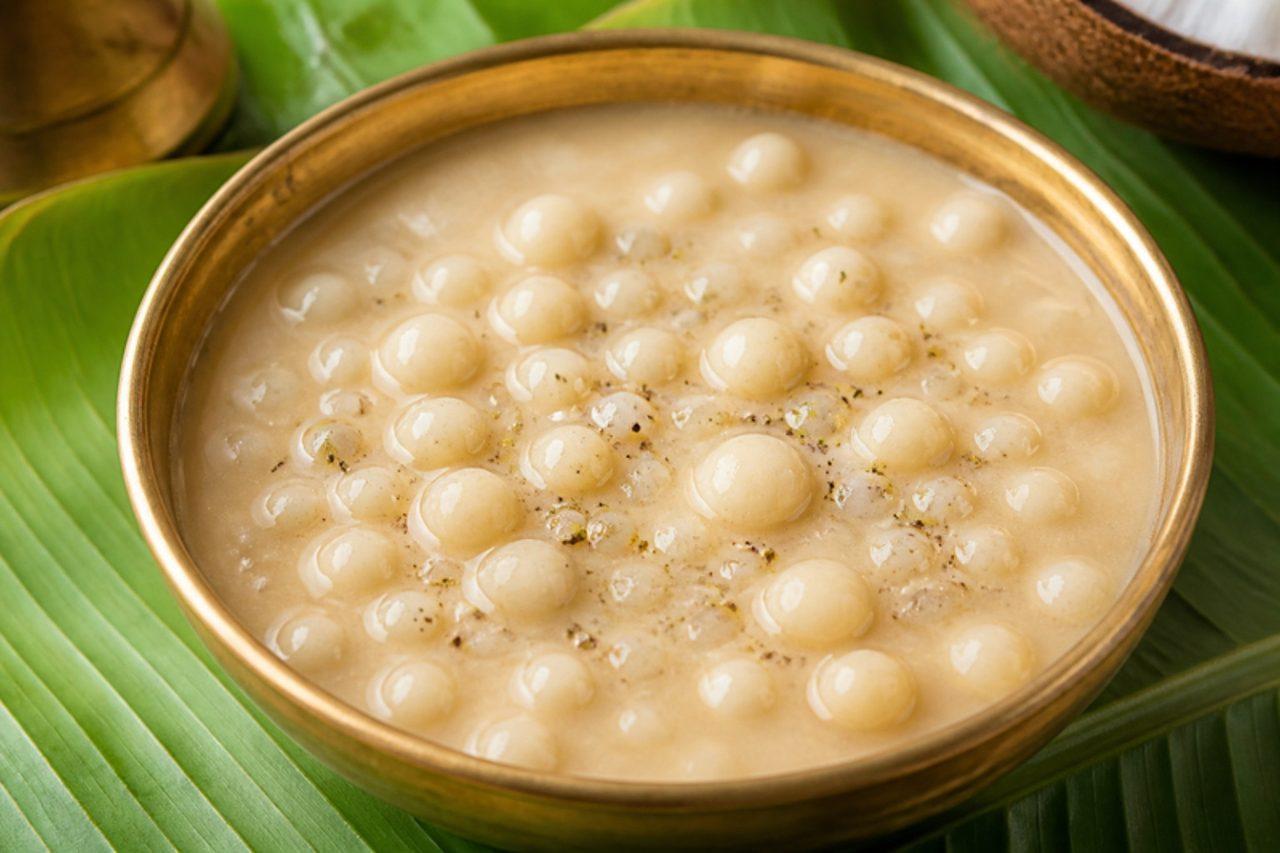
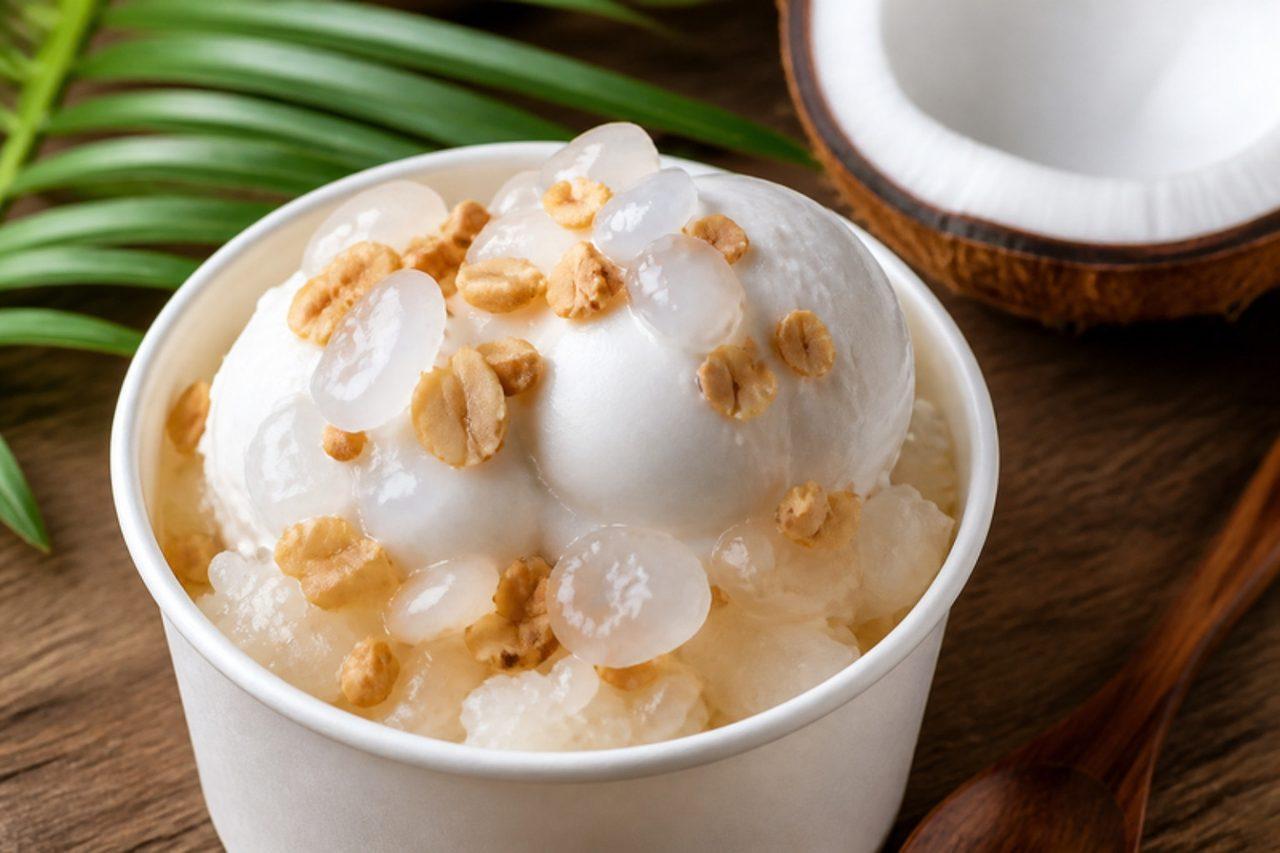
78 minThaiBakingVegan
by KrazyBadal 0 views

HeidesandBrown butter slice-and-bake cookies

The name means 'heath sand', after the pale sandy soil of the Lüneburg Heath in Lower Saxony, and the texture lives up to it: these little rounds crumble the moment you bite. Browning the butter first gives them a nutty, toffee-ish flavour that plain shortbread lacks. German families bake them in Advent alongside Vanillekipferl and cinnamon stars, but they are just as good with afternoon coffee in any season. There is no egg in the dough, only butter, sugar, flour and a splash of milk, and the log is rolled in coarse sugar so every slice has a glittering edge. Chef's tip: let the browned butter set back to a soft, spreadable paste before you cream it; if you beat in butter that is still liquid, the dough turns greasy and the cookies flatten in the oven.

by KrazyBadal 0 views

Kak-e KermanshahiThin buttered sugar sheets

Kermanshah, in Iran's Kurdish west, is famous for its ghee, and kak is the sweet that shows it off: dough rolled so thin you can read through it, baked crisp in seconds, then brushed with melted ghee and showered with sugar before the sheets are folded and stacked. Shops in the city's bazaar sell them in tall boxes, and families bring them out for guests and at Nowruz with glasses of black tea. They are traditionally made with Kermanshahi ghee, a nutty sheep's-milk ghee; ordinary ghee or clarified butter works well. The classic mistake is rolling too thickly: anything over a millimetre bakes up like a cracker, not a crisp, glassy sheet. Chef's tip: roll on a lightly oiled counter rather than flour, and stretch the last bit over the backs of your hands, as the Kermanshah bakers do; excess flour scorches on the hot tray.

by KrazyBadal 0 views

South African crunchiesOat and coconut tray-bake squares

Crunchies are the tray-bake South African home bakers turn to when the biscuit tin is empty: oats, coconut, flour and sugar stirred into butter melted with golden syrup, pressed into a tin and cut into squares while still warm. Unlike Australian Anzac biscuits, which are rolled into individual rounds, crunchies are baked in one slab, then sliced into chewy-centred, crisp-edged bars. They sell at school tuck shops and church bake sales, go into lunch boxes, and are a natural partner for a mug of rooibos. There is no egg in them, and they keep for a week. Chef's tip: score the squares as soon as the tin comes out of the oven and leave them to cool before lifting; waiting until the slab is cold to cut is the common mistake, and it shatters instead of slicing cleanly.

by KrazyBadal 0 views

Vaghareli rotliStir-fried leftover flatbread

In Gujarati homes the last night's rotlis never go to waste: torn into pieces and tossed in a mustard-seed tempering with tangy yogurt, a little jaggery and green chilli, they become vaghareli rotli, a sweet-sour-hot breakfast or light supper on the table in fifteen minutes. The pieces soak up the seasoning and turn soft in the middle with a few crisp edges. Serve it with a cup of masala chai. The usual mistake is adding too much yogurt water, which turns the rotli into paste. Chef's tip: use rotlis that are a day old and slightly dry; fresh ones go gluey.

by KrazyBadal 0 views

Khari biscuitsSalted puff pastry sticks

Chai in Mumbai's Irani cafés and Ahmedabad's corner bakeries comes with a glass jar of khari: long, shattering sticks of puff pastry, salty rather than sweet, that flake all over your lap. People dip them in sweet masala chai, which soaks into the layers in seconds, so the trick is a quick dunk. Bakeries usually laminate with margarine or vanaspati; butter gives a richer, cleaner taste, and this eggless home version uses a block of cold butter folded into a plain dough, with a scatter of cumin or crushed kasuri methi on some. The biggest mistake is letting the butter go soft between folds: it smears into the dough and the sticks bake up hard and bready instead of rising into dozens of leaves. Chef's tip: once the sticks have puffed and coloured, lower the oven and leave them in until the centres are dry; under-dried khari go soft in the jar within a day.

185 minIndianBaking
by KrazyBadal 0 views

Hyderabadi fruit biscuitsTutti-frutti butter biscuits

Boxes of these pink-and-green flecked biscuits leave Hyderabad in every suitcase: visitors queue at the old bakeries near Charminar and the airport shops stock tins of them. Each one is short and crumbly, buttery, with a faint pineapple scent and chewy bits of candied papaya (tutti-frutti) scattered through. They are eggless, rich with butter and a little custard powder, and go with a cup of Irani chai or a glass of cold milk. The usual slip is mixing the tutti-frutti in wet or sticky, so it bleeds colour and clumps; toss it in a spoon of flour first. Chef's tip: shape the dough into a square log and chill it until firm, then slice; a firm log gives neat, sharp-edged biscuits like the bakery ones.

by KrazyBadal 0 views

Kulche birinjiRice flour cardamom cookies

On the morning of Eid, or when Nowruz comes round in March, Afghan households set out a dish of kulche birinji next to the sugared almonds and dried fruit for every visitor. These small, snow-white rounds are made from rice flour, powdered sugar and ghee, scented with cardamom and sometimes rose water, and they dissolve on the tongue almost as soon as you bite. A pinch of ground pistachio pressed into the centre of each gives colour. Serve them with green tea, the way they are offered in Kabul. They are naturally gluten free and eggless. Browning is the common mistake: they should come out as pale as they went in, just firm on the base. Chef's tip: let the dough rest for 20 minutes after mixing so the rice flour drinks up the ghee; it becomes far easier to roll smooth, crack-free balls.

by KrazyBadal 0 views

Ikan goreng kunyit (turmeric fried fish)

Ikan goreng kunyit is cooked in Malay kampung kitchens and city flats alike for a simple lunch or dinner with rice, sambal and vegetables: small whole fish or thick steaks rubbed with turmeric, salt and a little chilli, then fried until golden and crisp at the edges. The mistake is moving the fish too soon; leave it until it releases from the pan on its own, or the crust tears and sticks. Chef's tip: score the fish to the bone so the turmeric seasons the flesh and it cooks evenly.

by KrazyBadal 0 views

Surti jeera butter biscuitsCumin butter tea biscuits

Surat's old bakeries, some of them run by Parsi and Bohra families for a century, sell 'butter' by the kilo: round, crisp, flaky biscuits that crack into layers, and the jeera version is salted and freckled with cumin. Gujaratis eat them with morning tea, crushed into a saucer of chai or spread with a little butter. Unlike khari they start with a lightly yeasted dough that is spread with a ghee-and-flour paste and folded, then baked once until risen and again, low, until bone dry, which gives a crunch rather than a shatter. The mistake most people make is pulling them out after the first bake because they look done; they need the long, slow second bake or they turn chewy. Chef's tip: toast the cumin in a dry pan for a minute and crush half of it before it goes into the dough, so the flavour runs through every layer.

180 minIndianBaking
by KrazyBadal 0 views

Pasta al limoneLemon butter pasta

On the Amalfi Coast, where knobbly lemons hang over every terrace, pasta al limone is a summer supper made in the time it takes to boil water. Lemon zest, juice, butter and grated cheese melt into the starchy cooking water to make a light, creamy sauce with no cream at all, fragrant and sharp. Parmesan is traditionally made with animal rennet, so use a vegetarian hard cheese if you need the dish to be fully vegetarian. The usual mistake is adding the cheese over high heat, which makes it clump into strings; take the pan off the flame first. Chef's tip: zest the lemons before you juice them, and only the yellow part, as the white pith is bitter.

by KrazyBadal 0 views

Ooty varkeyFlaky spiral tea biscuits

Up in the cool tea country of the Nilgiris, around Ooty and Coonoor, small bakeries turn out trays of varkey every morning, and tourists carry home bags of them alongside the estate tea. They are flat, golden and lightly sweet, with tight spiral layers that crunch and then melt, a texture the bakers get by rolling a sugared dough up around a fat paste and slicing it like a Swiss roll. Eat them with strong milky Nilgiri tea; locals also crumble them over hot milk. Bakeries traditionally use vanaspati for the paste; butter mixed with a little ghee gives a cleaner taste in this eggless home version. Watch the spiral: if you press the slices too hard when flattening, the layers fuse and the biscuit bakes dense. Chef's tip: chill the rolled log until it is firm enough to slice cleanly; a soft log squashes under the knife and you lose the swirl.

165 minIndianBaking
by KrazyBadal 0 views

BakpiaMung bean pastries

Nobody leaves Yogyakarta without a cardboard box of bakpia; the Pathuk neighbourhood, a short walk from Malioboro, is lined with family bakeries turning them out for visitors as oleh-oleh, the snacks Indonesians bring home from a trip. These are small, round and slightly puffed, with a thin, flaky skin that goes golden in spots and a smooth, lightly salted sweet mung bean centre. They came to Java with Chinese bakers (the name comes from Hokkien bak pia) and are eaten with sweet hot tea or a glass of kopi. Using too much filling is the usual problem; the skin should wrap it with no stretching. Chef's tip: cook the mung beans with a knotted pandan leaf for the classic fragrance, and keep the pastry balls under a damp cloth so the skins stay supple while you work.

by KrazyBadal 0 views

Kashmiri bakery kulchaPoppy seed or sesame tea biscuits

Before dawn the kandurwaan, Srinagar's neighbourhood baker, lights his clay oven, and by breakfast his shelf holds stacks of kulcha: small, thick, very crumbly rounds, some salted and crusted with poppy seeds, some sweet and dotted with sesame. They are nothing like the soft Punjabi bread of the same name. Kashmiris eat them with noon chai, the pink salted tea, breaking a kulcha into the cup or alternating bites and sips; they are also handed out at weddings and taken as gifts when visiting. This eggless home version makes both kinds from one ghee-rich dough. Do not overwork it: kneading develops gluten and you lose the sandy crumble that makes kulcha special. Chef's tip: bake them pale and low; a real Kashmiri kulcha is barely golden on top and crisp only on the base, so take them out while they still look a little underdone.

by KrazyBadal 0 views

Pasta con la ricotta

Sicilian mothers make pasta con la ricotta on busy evenings and for children home from school: fresh sheep's or cow's milk ricotta is loosened with hot pasta water into a soft, milky sauce, then seasoned with black pepper and a little grated cheese. It is mild, creamy and ready in a quarter of an hour. Ricotta is made without rennet, but parmesan or pecorino usually contain animal rennet, so use a vegetarian hard cheese if needed. The common mistake is spooning cold ricotta straight onto the pasta, where it stays in lumps; whisk it with hot water first. Chef's tip: a little lemon zest or a few mint leaves lifts the sauce without hiding the ricotta.

by KrazyBadal 0 views

Idiyappam with coconut milk

Idiyappam, lacy nests of rice noodles pressed and steamed, is a breakfast across Kerala and Tamil Nadu, and soaked in fresh coconut milk it is one of the first 'proper' foods many South Indian babies eat, from about nine months. The strands are soft, a little springy and taste of sweet coconut. Grown-ups add salt to the dough and children over one often have a little jaggery stirred into the coconut milk; for babies both are left out. It has none of the common allergens (milk, egg, gluten, peanut, tree nuts, soya, sesame, fish), though coconut can rarely cause a reaction. Chef's tip: the water must be at a rolling boil when it hits the flour, or the dough is crumbly and won't press.

by KrazyBadal 0 views

Champorado (Filipino chocolate rice porridge)

Champorado is the Filipino comfort bowl for rainy-season mornings and afternoon merienda, when children come home soaked from school in the monsoon. Glutinous rice is simmered with tablea, the pure roasted cacao tablets from Batangas and Cebu, into a thick, glossy, chocolatey porridge, then swirled with milk at the table. It is sweet, so this version uses less sugar than most and leans on the dark chocolate. It contains milk (and may contain soya in the chocolate). Chef's tip: keep stirring once the rice thickens; glutinous rice catches on the bottom of the pan very quickly.

by KrazyBadal 0 views

Glazirovanny syrok (chocolate-glazed curd bars)

Glazirovanny syrok, the chocolate-coated curd cheese bar, has been sold in Russian dairy aisles since Soviet times and is still what children across Russia, Ukraine and the Baltics grab after school. Made at home, it is a firm, creamy, gently sweet vanilla tvorog filling under a thin snap of dark chocolate, like a tiny cheesecake bar. This version uses less sugar than shop bars. It contains milk (and may contain soya in the chocolate). Chef's tip: press the tvorog through a sieve first; it is the only way to get the smooth, dense texture of a real syrok.

by KrazyBadal 0 views

Mabele porridge for babies

Mabele, sorghum meal, has fed families across South Africa, Botswana and Lesotho for centuries, and a smooth, soft version is a traditional first porridge for babies, especially in Sotho and Tswana homes where the grown-ups eat it for breakfast. It is a warm pinkish-brown, with a faintly nutty, slightly sour taste. For under-ones it is cooked plain, without the sugar older children like. Sorghum is naturally gluten free, and the porridge contains none of the common allergens (milk, egg, gluten, peanut, tree nuts, soya, sesame, fish). Chef's tip: mix the meal into cold water first; poured straight into boiling water, it forms lumps that never cook through.

by KrazyBadal 0 views

Krentenbollen (Dutch currant buns)

In the Netherlands a krentenbol, buttered and sometimes topped with a slice of Gouda, is packed in schoolbags for the morning break and eaten with milk after school. The buns are soft, slightly sweet and so full of currants and raisins that there is barely room for the bread. This version adds little sugar, letting the dried fruit sweeten it. It contains gluten and milk. Chef's tip: soak the dried fruit in hot water before kneading it in; dry fruit pulls moisture from the dough and burns on the surface.

by KrazyBadal 0 views

Ten-fold rice porridge (jūbai-gayu)

Across Japan, a baby's first solid food at about five or six months is jūbai-gayu: rice cooked gently in ten times its volume of water until it collapses into a soft, pale porridge, then pressed or blended smooth. It tastes mild and slightly sweet, and parents start with a single spoonful a day before adding mashed vegetables such as pumpkin or carrot. None of the common allergens (milk, egg, gluten, peanut, tree nuts, soya, sesame, fish) are in it, so it is an easy base to build on. Chef's tip: make a full pot and freeze it in ice-cube trays, so one cube can be warmed for each meal.

by KrazyBadal 0 views

Moong dal water for babies

In North Indian homes, moong dal ka pani is often the first thing other than milk a baby tastes, spooned from a steel katori at lunchtime while the family eats dal-chawal. Split yellow moong is cooked until it falls apart with a pinch of turmeric, then the thin top liquid is strained off; over the following weeks more of the soft dal is mashed in. It tastes mild and slightly sweet. It is free of the common allergens (milk, egg, gluten, peanut, tree nuts, soya, sesame, fish). Chef's tip: a drop of ghee can be added once your baby is used to dairy, but keep it plain at first.

by KrazyBadal 0 views

Nendran banana powder kurukku (ethakka podi kurukku)

In Kerala, families dry slices of raw nendran banana in the sun, grind them to a cream-coloured flour and cook it into kurukku, a smooth, thick porridge that has been a baby's first food in the state for generations. It is usually given mid-morning, and grandmothers often keep a jar of home-made ethakka podi for each new grandchild. It tastes gently sweet and slightly earthy. It contains none of the common allergens (milk, egg, gluten, peanut, tree nuts, soya, sesame, fish). Chef's tip: to make the powder at home, peel raw nendran bananas, slice them thinly, dry them in a low oven or the sun until brittle, then grind and sieve.

by KrazyBadal 0 views

Fruit sando

Japanese fruit sandwiches started in the fruit parlours of Tokyo and are now sold in every convenience store, but they are just as much a home treat for a sunny weekend or a special after-school snack. Pillowy crustless bread holds a thick layer of barely sweetened whipped cream and whole pieces of fruit arranged so that each cut reveals a neat pattern. It contains gluten and milk (and often egg, in milk bread). Chef's tip: plan the cut before you arrange the fruit, laying the strawberries along the diagonal line you will slice through.

by KrazyBadal 0 views

Buko saladYoung coconut fruit salad

Buko salad is the dessert Filipino families bring to every birthday, christening and Christmas Noche Buena: strips of soft young coconut, mixed fruit, chewy nata de coco and sweet cream, chilled until icy cold. Children fish out the cherries first. It is quick to make the day before and is gluten free; it contains milk. Grapes in tinned fruit are already halved, but quarter any whole grapes lengthwise for younger children. Chef's tip: drain the fruit and nata de coco really well in a sieve for 15 minutes, or the salad turns watery overnight.

by KrazyBadal 0 views

Mini podi idli

In Tamil Nadu and Karnataka, podi idli is the tiffin parents pack because it stays soft until lunch and needs no chutney: steamed mini idlis are tossed in hot sesame oil with mustard seeds, curry leaves and spicy-nutty idli podi, so every one is coated. Train travellers carry them for the same reason. It is vegan and contains sesame; check that your podi's asafoetida is gluten free if that matters. Chef's tip: let the idlis rest for 5 minutes after steaming so they firm up and don't break when you toss them.

by KrazyBadal 0 views

Pumpkin congee for babies (cháo bí đỏ)

Vietnamese grandmothers often make a baby's early bowls of cháo with bí đỏ, the dense orange pumpkin sold in every market from Hà Nội to Cần Thơ. The rice is lightly toasted before simmering, a Vietnamese habit that gives the congee a faint nutty smell, and the pumpkin melts into it, turning it bright gold and naturally sweet. It is a weekday lunch for babies from six months, made without the fish sauce the rest of the family would add. No common allergens are in it (milk, egg, gluten, peanut, tree nuts, soya, sesame, fish). Chef's tip: choose a dry, dense pumpkin such as kabocha; watery squash makes a thin, bland congee.

by KrazyBadal 0 views

Issho mochi (first-birthday rice cake)

In homes all over Japan, a child's first birthday is marked with issho mochi: a single large, round rice cake made from about 1.8 kg of glutinous rice, wrapped in a cloth and strapped to the baby's back. Whether the toddler stands, crawls or plops down laughing, the family cheers, and the mochi is then cut up, grilled and shared by the adults and older children as a wish for a lifetime of plenty. This home version uses glutinous rice flour, so no pounding is needed, and it is free of milk, egg, gluten, nuts and soya. Sticky mochi is a choking risk: the baby only carries it, adults and older children eat it, and small children should only have tiny, soft pieces while an adult watches. Chef's tip: write the child's name on the cloth bundle, not on the cake, so the mochi stays plain and everyone can eat it.

by KrazyBadal 0 views

Matpakke (Norwegian packed lunch)

Nearly every Norwegian child carries a matpakke to school: slices of wholemeal bread, each with one simple topping, stacked with sheets of sandwich paper in between and wrapped in a neat parcel. Yellow cheese, sweet caramel-like brown cheese (brunost) and jam are the classics, with cucumber or pepper sticks on the side; liver paste is the meaty favourite. It is plain, filling and built to survive a school bag. It contains gluten (wheat) and milk. Chef's tip: keep wet toppings like tomato out of the stack; they make the bread soggy by lunchtime.

by KrazyBadal 0 views

Grechka s molokom (buckwheat with milk)

Grechka s molokom, buckwheat groats cooked soft and served in a bowl of warm milk with a little butter, is the breakfast or light supper that generations of Russian children have eaten at home and in nursery school. The groats are earthy and nutty and the milk makes them gentle and sweet-tasting, without any sugar. Buckwheat is naturally gluten free (despite its name); the dish contains milk and has no egg, nuts, soya, sesame or fish. Chef's tip: use toasted buckwheat (the brown kind sold for kasha), which has the rounder, nuttier flavour.

by KrazyBadal 0 views

Fereni for babies (Persian rice-milk porridge)

Fereni is one of the oldest Persian sweets, and in Iranian homes it is also a baby's first spoon food: rice flour cooked slowly in milk until it is soft, pale and silky. Mothers often make it for breakfast or for a winter afternoon. For babies under one it is served plain; older children get the rosewater, a little sugar and a dusting of cinnamon that the family enjoys. It contains milk; there is no egg, gluten, nuts, soya, sesame or fish. Chef's tip: stir with a whisk for the first few minutes, then switch to a spatula so you can scrape the bottom of the pan.

by KrazyBadal 0 views

Bouillie (French baby cereal porridge)

In France, la bouillie is the warm cereal porridge that joins a baby's morning or evening milk at around six months. It is simply the baby's usual milk, breast milk or formula, thickened with plain infant cereal or fine oat or rice flour, and given from a spoon, or thinner from a bottle as many French families do at bedtime. It is creamy and mild. It contains milk from the formula, and gluten if you use oat or wheat cereal; there is no egg, nuts, soya, sesame or fish. Chef's tip: choose a cereal with no added sugar or flavourings; you can add a spoon of fruit purée for sweetness later.

by KrazyBadal 0 views

Välling (Swedish oat and milk drink)

Välling, a thin gruel of cereal and milk, has been the Swedish child's bedtime drink for generations, and many families still make their own for toddlers once they move on to cow's milk at around a year old. It is smooth, warm and lightly oaty, with no added sugar or honey. It contains milk and gluten (oats are often processed with wheat; use certified gluten-free oats if needed); there is no egg, nuts, soya, sesame or fish. Chef's tip: blend the oats to a fine flour first, so the drink is silky and flows easily from a beaker.

by KrazyBadal 0 views

Bubur merah putih (red and white porridge)

In Java, bubur merah putih is cooked for a baby's naming day, a child's birthday or a new house: a red-brown porridge sweetened with palm sugar and a white one rich with coconut milk, spooned side by side into one bowl. The red is said to stand for courage and the white for purity, and the bowls are shared with neighbours as thanks. The family and older children eat the sweetened red half; it is not for babies under one because of the sugar. Free of milk, egg, gluten, nuts and soya. Chef's tip: tie a pandan leaf in a knot and simmer it in both pots for a gentle vanilla-like scent.

by KrazyBadal 0 views

Kisiel (Polish fruit jelly drink)

Kisiel is a Polish childhood staple served in school canteens and at home after school, warm in winter and chilled in summer, somewhere between a thick drink and a soft jelly. Home-made versions use fruit or juice thickened with potato starch, without the bright colours of packet mixes. This one uses mixed berries and only a little sugar. None of the common allergens are in it. Chef's tip: always mix the starch with cold water first and pour it into the boiling fruit while stirring; added dry, it forms lumps that never dissolve.

by KrazyBadal 0 views

Indian bakery cream roll

Cream rolls are a sweet memory for children across India, from the Irani cafés of Mumbai to Kerala's small-town bakeries: spirals of flaky puff pastry baked around a cone, glazed with sugar and piped with soft vanilla cream. They turn up on birthday party plates and in after-school bakery treats. This version uses whipped cream rather than the shortening icing of many shops. It contains gluten and milk. Chef's tip: fill them only an hour or two before serving so the pastry stays crisp.

by KrazyBadal 0 views

Ssal mieum (Korean first rice gruel)

In Korean homes the weaning journey, called iyusik, begins with ssal mieum, a gruel so thin it is almost a drink. The rice is soaked, blended raw with water and then stirred over a low flame, which gives a finer, silkier result than boiling whole grains. Families offer it at around six months, a spoonful in the morning, before moving on to thicker juk with vegetables a few weeks later. It contains none of the common allergens: no milk, egg, gluten, peanut, tree nuts, soya, sesame or fish. Chef's tip: grind the soaked rice with only part of the water first; a thick slurry blends smoother than a watery one.

by KrazyBadal 0 views

Sữa chua (Vietnamese set yogurt)

In Vietnamese homes, sữa chua is made in a row of small jars and kept in the fridge or freezer, and children in Hanoi and Saigon eat it after school straight from the cup, sometimes frozen hard like ice cream. The condensed milk gives it a mild caramel sweetness and a smooth, firm set that is less sharp than plain yogurt. It is sweetened, so this version uses less condensed milk than the street-stall kind. It contains milk. Chef's tip: keep the milk at blood heat, about 43 °C; hotter kills the yogurt culture and cooler sets slowly and sour.

by KrazyBadal 0 views

Mashed nam wa banana (kluay nam wa bod)

Ask a Thai grandmother about first foods and she will talk about kluay nam wa, the short, plump banana that grows in nearly every garden in Thailand. Ripe ones are steamed, which softens the slightly astringent edge, then scraped and mashed for a baby's first taste, often in the afternoon. It is sweet, creamy and needs nothing added. There are no common allergens (milk, egg, gluten, peanut, tree nuts, soya, sesame, fish). If you can't find nam wa, use a small, very ripe ordinary banana. Chef's tip: steam the banana in its skin; it keeps the flesh moist and stops it browning.
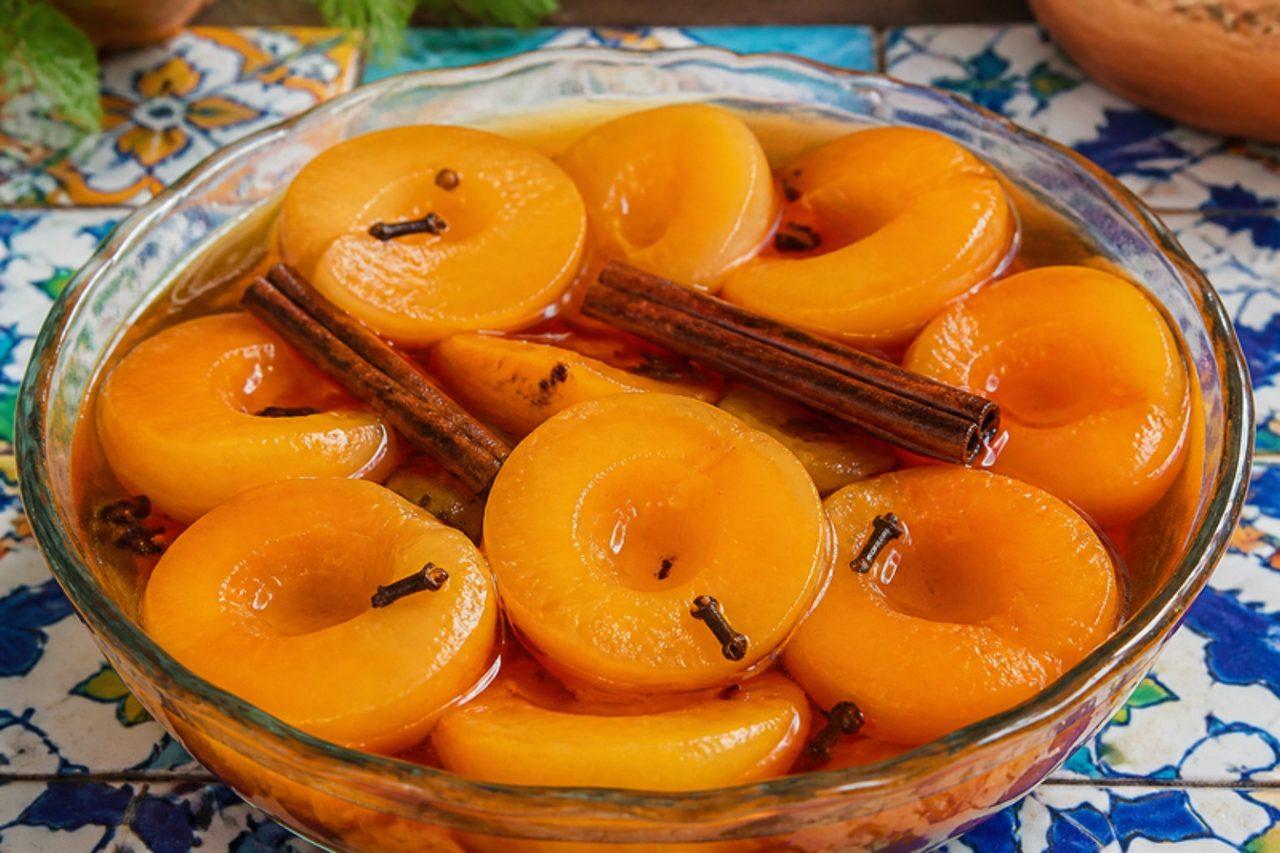
by KrazyBadal 0 views

Mingau de maisena (cornflour milk porridge)

In homes across Brazil, a little bowl of mingau de maisena is the classic supper before bed: milk stirred with cornflour over a low heat until it turns smooth and spoonable, like a thin custard. Grandmothers usually add sugar and cinnamon, but for babies from nine months the sweetness comes from mashed ripe banana instead. It contains milk (cow's milk is fine cooked into food from this age); it has no gluten, egg, nuts, soya, sesame or fish. Chef's tip: mix the cornflour into cold milk before heating, never into hot milk, or it forms lumps at once.

by KrazyBadal 0 views

Polenta e lattePolenta in milk

In farmhouses across Lombardy and the Veneto, the polenta left over from lunch was cut into pieces at night and dropped into bowls of warm milk for the children, and polenta e latte is still remembered fondly as a cosy winter supper. Freshly made polenta works just as well: soft, golden and comforting, with the milk soaking into it. It contains milk; it has no gluten, egg, nuts, soya, sesame or fish. Chef's tip: whisk the polenta into the water in a thin stream, like rain, to keep it smooth.

by KrazyBadal 0 views

Rice atole for babies (atole de arroz)

Atole is the warm, thick drink Mexicans have sipped since before the conquest, and in many homes the first version a baby tastes is atole de arroz, ground rice cooked with a stick of true cinnamon. For grown-ups it is sweetened with piloncillo and drunk at breakfast or on cold evenings around Día de Muertos; for babies the sugar stays out and it is thickened enough to eat from a spoon. It contains milk; there is no egg, gluten, nuts, soya, sesame or fish. Chef's tip: grind the rice yourself in a spice grinder; shop-bought rice flour works, but freshly ground rice tastes sweeter.

by KrazyBadal 0 views

Fruit and cereal mash (Obst-Getreide-Brei)

German weaning follows a well-known plan: a vegetable lunch first, then a milk and cereal evening meal, and finally an afternoon Obst-Getreide-Brei, a dairy-free mash of cooked cereal flakes and fruit, usually from around seven months. Fine oat or millet flakes are simmered in water, then stirred into stewed apple or pear with a spoon of rapeseed oil, which German paediatric advice recommends for healthy fats. It is fruity, smooth and naturally sweet. It contains gluten if made with oats (use millet flakes for gluten free); there is no milk, egg, nuts, soya, sesame or fish. Chef's tip: stew the fruit in a little water rather than using juice, which adds sugar.

by KrazyBadal 0 views

Roti bakar (Indonesian toasted bread)

Roti bakar stalls light up street corners all over Indonesia from late afternoon, and children from Jakarta to Surabaya beg for the classic filling of chocolate sprinkles with grated cheese, an unlikely pairing that works. Thick slices of soft bread are spread with butter, toasted on a hot plate until crisp and golden, filled and cut into fingers. Traditional versions add a lot of condensed milk; here it is an optional drizzle. It contains gluten and milk (and may contain soya in the chocolate). Chef's tip: press the bread flat with a spatula as it toasts so the filling melts into it.

by KrazyBadal 0 views

Mango floatMango icebox cake

Mango float is the no-bake party cake of the Philippines, made in a big dish for birthdays, graduations and fiestas when Philippine mangoes are at their sweetest. Layers of crackers soften overnight in sweet cream until they slice like cake, with ripe mango in every forkful. Older children can assemble it themselves. It contains milk and gluten. Chef's tip: use mangoes that are fully ripe and fragrant but still firm enough to slice neatly; stringy, sour mangoes spoil it.

by KrazyBadal 0 views

Shio pan

Shio pan (塩パン) began in 2003 at a small bakery in Yawatahama, a port town on the Ehime coast of Shikoku, and spread so fast that most Japanese bakeries now sell their own, as do the 'sogeum-ppang' shops of Seoul. Each roll is wound around a stick of cold butter; in the oven the butter melts out and fries the base, leaving a crisp, salty, golden bottom, a hollow, buttery tunnel inside and soft, chewy bread on top, finished with flaky salt. Eat them warm for breakfast with coffee, or split them for an egg or cucumber sandwich. Proving them somewhere too warm is the classic misstep: above about 28°C the butter leaks out before baking and the rolls lose their crunch. Chef's tip: leave the rolls on the tray for a couple of minutes after baking so they soak the melted butter back up into their bases.

by KrazyBadal 0 views

Pain de campagneCountry sourdough loaf

Picture a round, flour-dusted boule on the counter of a village bakery in Burgundy or the Auvergne: that is pain de campagne, the 'country loaf' French families once baked weekly in a shared oven and kept in a cloth for days. A little wholemeal rye in the dough gives a greyish crumb, an earthy, gently sour flavour and a thick, crackling crust that stays good for four or five days. Slice it for tartines with butter and honey, toast it for soup, or serve it with a cheese board, onion soup or a slow vegetable stew. This version builds a fresh leaven in the morning and rests the shaped loaf in the fridge overnight, so you bake first thing the next day. Many home loaves come out pale and soft because they are pulled too early; French bakers call the dark finish 'bien cuit', and that colour is where the flavour lives. Chef's tip: bake straight from the fridge into a screaming-hot lidded casserole; the cold, firm dough is easier to score and springs up higher.

by KrazyBadal 0 views

Baguette

Four ingredients and nothing else: since a 1993 decree, a loaf sold in France as a baguette de tradition may contain only flour, water, salt and leavening. Parisians buy one or two a day, warm from the boulangerie, and the end of the loaf rarely makes it home uneaten. A good one has a thin, shattering, deep golden crust, an open, creamy crumb and a faint nutty sweetness from a long, slow rise. Tear it for butter and jam at breakfast, split it for a jambon-beurre or a cheese sandwich, or put it on the table with soup, salad and a cheese board. Shaping is where most home bakers go wrong: pressing all the air out while rolling the dough long gives a tight, cottony crumb, so handle it lightly and let the bench rest do the work. Chef's tip: cut the slashes almost lengthways, at a shallow angle with the blade nearly flat, and overlap each one by a third; straight-down, crosswise cuts just open into flat scars instead of the raised 'ears' you want.

by KrazyBadal 0 views

RohlíkSalt and caraway breakfast roll

Ask a Czech or Slovak what they ate for breakfast as a child and the answer is usually a rohlík: a long, slim roll rolled up from a triangle of dough, sold for a few crowns at every bakery and supermarket from Prague to Bratislava. It has a thin, crisp golden crust scattered with coarse salt and caraway, and a soft, tight spiral inside. People eat it with butter and jam, with a spread such as egg or bean pomazánka, with a cup of white coffee, or simply dunked in a mug of cocoa. This version uses sunflower oil, so it is vegan. Rolling the triangles loosely is the usual mistake; the spiral opens in the oven and the roll splits. Chef's tip: stretch each triangle gently by its point as you roll it up, which keeps the coil tight and gives the long, even shape.

by KrazyBadal 0 views

PalianytsiaRound hearth loaf

Its name is famously hard to pronounce for anyone who did not grow up speaking Ukrainian, and the loaf itself is just as recognisable: a tall, round wheat hearth bread with one deep cut along its side, which opens in the oven into a raised, crunchy crest. Ukrainian families have long baked palianytsia for everyday meals and for welcoming guests. The crust is thick and well browned, the crumb white, open and slightly chewy. It belongs next to a bowl of borscht with garlic, or sliced with sunflower oil, salt and spring onions. A slow rise gives it flavour, so it uses little yeast. A shallow, timid cut is the commonest mistake: the side bursts in a random place instead of lifting into the crest. Chef's tip: cut at a low angle, about 2 cm deep, a third of the way up the side, and cool the loaf fully before slicing.

by KrazyBadal 0 views

Borodinsky breadDark sourdough rye with coriander

Moscow's darkest everyday loaf is said to be named after the 1812 Battle of Borodino, though the recipe bakers follow today was fixed by the city's bread trust in 1933. Borodinsky (Бородинский хлеб) is a dense, moist sourdough rye, sweet-sour from molasses and red fermented rye malt, with whole coriander seeds crackling on the crust. Russians slice it thin for breakfast with butter and salted cucumbers, alongside borscht or herring for meat-eaters, or under a slice of cheese with strong tea. The method looks long, but most of it is the starter and the scald quietly working on their own. The usual mistake is cutting it on baking day: rye crumb needs a full day wrapped in a cloth to set, and a warm loaf is gummy right through. Chef's tip: red fermented rye malt gives the colour and the deep flavour; plain diastatic malt will not do the same job, so look for the reddish-brown 'fermented' kind in Eastern European shops.

by KrazyBadal 0 views

TelerasSoft two-groove sandwich rolls

Without teleras there would be no torta, Mexico City's great lunchtime sandwich. These wide, flattish oval rolls, marked with two long grooves, have a thin, tender crust and a soft, close crumb that holds refried beans, avocado, queso and pickled jalapeños without falling apart. Every neighbourhood panadería piles them on metal trays next to the crustier bolillos, and street stalls toast them on a griddle before filling. Some bakers add a spoonful of lard to the dough; vegetable shortening gives the same softness and keeps these vegan. Pressing the grooves too gently is the usual mistake, because they puff closed in the oven and you lose the three-part shape. Chef's tip: for a proper torta, split the roll, pull out a little of the crumb and toast the cut sides on a hot comal with a smear of oil or butter.

by KrazyBadal 0 views

ChaplasHollow puffed Andean bread

Walk through Ayacucho's central market at seven in the morning and you will see women selling stacks of chaplas from cloth-lined baskets, still warm from the wood-fired ovens of the Andes. These round wheat breads puff up like pita in the fierce heat, leaving a hollow pocket inside a thin, soft, lightly floury crust. In Ayacucho and Huancavelica they are eaten with sweet coffee or hot emoliente for breakfast, or split and filled with queso fresco, avocado or a spoonful of rocoto sauce. Highland bakers traditionally work in a little lard; vegetable shortening gives the same tenderness and keeps the bread vegan. A cool baking tray is the reason chaplas stay flat, so preheat it thoroughly. Chef's tip: let the rolled rounds rest before baking and flip them upside down onto the tray, so the smooth, dry side meets the heat first and the pocket opens evenly.

by KrazyBadal 0 views

Hops breadCrusty breakfast rolls

Saturday breakfast in Trinidad and Tobago often means a paper bag of hops bread from the corner bakery, bought hot and split right away. The rolls are small and round with a crisp, crackly shell that gives way to a soft, airy, almost cotton-like inside. Trinis fill them with cheese and pepper sauce, buljol of saltfish, fried aloo or a smear of butter and guava jelly, and they turn up at lunch with stewed chickpeas too. A little vegetable shortening keeps the crumb tender; there is no milk or butter in the dough, so they are vegan. Underproving is the common mistake: tight, heavy rolls that split along the side. Wait until a fingertip dent fills back slowly. Chef's tip: brush the rolls with water just before and halfway through baking; the moisture is what gives hops their thin, shattering crust.

by KrazyBadal 0 views

Tabouna breadSemolina clay-oven flatbread

Named after the clay oven it is baked in, tabouna bread is slapped by Tunisian village women against the oven's hot inner wall, where it puffs and blisters in minutes. It is a round semolina bread, golden and slightly gritty outside, tender and yellowish within, with the sweet, nutty taste of durum wheat and a hint of olive oil. Roadside stalls from Kairouan to the Cap Bon sell it warm to wrap around harissa, olive oil and mechouia, the smoky grilled-pepper salad, or to tear into a bowl of lablabi, the garlicky chickpea soup. A hot baking tray does the oven's job at home. Semolina drinks water slowly, and adding extra flour because the dough feels wet at first is the mistake that makes a dry, heavy bread. Chef's tip: shape the rounds with wet hands rather than floury ones; it keeps the dough soft and gives the crust its blistered finish.

by KrazyBadal 0 views

SomunDimpled flatbread

During Ramadan in Sarajevo, queues form outside the Baščaršija bakeries in the last hour before iftar, everyone waiting for somun still warm from the oven. It is a round, pale flatbread about three fingers thick, with a crust so thin it barely crackles and a soft, airy middle, and a criss-cross grid pressed into the top. All year it is split and stuffed with ćevapi and onions at the grill houses; for a meat-free plate, fill it with kajmak, roasted peppers and ajvar or grilled vegetables. Somun should stay pale: leave it in the oven until it is brown and the crust turns hard, which is the commonest mistake. Chef's tip: wrap the loaves in a clean tea towel the moment they come out; the trapped steam softens the crust to that typical pillowy finish.

by KrazyBadal 0 views

Aish merahrahCorn and fenugreek flatbread

Village women in Sohag, Qena and the countryside around Luxor still bake aish merahrah in mud-brick ovens, a whole week's supply at a time. Made mostly from maize flour with ground fenugreek seeds, it is thin, rough-textured and crisp at the edges, with a gently bitter, maple-like fenugreek aroma and a faint sourness from fermentation. Fresh, it is folded around ful medames, salty mish cheese or a dab of molokhia; dried, it keeps for weeks and is crumbled into soups and stews. A little wholemeal wheat flour holds the dough together, so it is not gluten free. Maize has almost no stretch, and trying to roll it like wheat dough is the classic mistake: it cracks and tears, so pat it out with wet hands instead. Chef's tip: toast the fenugreek seeds in a dry pan for a minute before grinding; it softens their bitterness and deepens the nutty flavour.

by KrazyBadal 0 views

BaijimoGriddle-baked flatbread

Xi'an street cooks describe a good baijimo with a three-part saying: an iron ring, a tiger's back and a chrysanthemum heart. That means a pale, firm rim, a top mottled golden like tiger stripes, and a spiral pattern in the middle. Inside it is fluffy and layered, outside thin and crisp, and it is split from the side while hot to make roujiamo, the famous Shaanxi sandwich of chopped braised pork. For a meat-free filling, use braised shiitake and tofu with chilli oil, or spicy shredded potato. The dough is only half-risen on purpose; letting it fully prove is the mistake that gives you a soft, bun-like bread with no crunch. Chef's tip: twist the coil as you stand it on end and press it flat, which is what draws the spiral into the chrysanthemum heart.

by KrazyBadal 0 views

Khoba rotiThick pinched wholewheat flatbread

Pinched by hand into rows of tiny craters, khoba roti is the festive everyday bread of Rajasthan's Marwar and Mewar homes, made when guests come or for a Sunday thali. It is thick, almost a centimetre, with a crisp, toasty crust and a soft, chewy middle, and every hollow on top becomes a little cup for melted ghee. Serve it with panchmel dal, ker sangri, gatte ki sabzi or a fiery garlic chutney. The commonest mistake is a hot tawa: the outside chars while the thick centre stays doughy, so keep the flame low and be patient. Chef's tip: dip your thumb and finger in water between pinches; damp fingertips lift the dough into crisp ridges without tearing it.

by KrazyBadal 0 views

Brun pavHard-crusted bakery bun

Order brun maska at one of Mumbai's old Irani cafés, under the bentwood chairs and slow ceiling fans, and a waiter brings a hard, round bun split and spread thickly with butter, next to a cup of sweet Irani chai. Brun is the opposite of soft ladi pav: its floury top crackles, the crust is thick enough to knock on, and the inside is dense and chewy, made to be dunked until it softens. The bread itself is just flour, water, yeast and salt, so it is vegan; add the butter (or a vegan spread) only when serving. A long, fairly slow bake gives the crust; pulling it out when it is merely golden is the mistake that leaves you with an ordinary roll. Chef's tip: a day-old brun is even better for dunking, so bake a batch ahead and split and toast them lightly before buttering.

by KrazyBadal 0 views

GijdaThick milk and butter bread

Small, thick and glossy, gijda is the richer cousin of the big Uzbek non, sold in stacks at the bazaars of Tashkent and Samarkand and carried to weddings, family visits and long afternoons of green tea. Milk and butter in the dough make it fine-crumbed and tender, a little sweet, with a deep-golden domed rim and a flat, pricked centre that stays crisp. It is eaten with green tea and honey, torn beside plov, or with a bowl of shurpa. Bakers stamp the middle with a chekich, a wooden tool full of nails; a fork does the same job at home. If the centre is not pressed down hard enough it puffs up in the oven and you lose the classic shape, which is the most common mistake. Chef's tip: press the centre flat with the base of a glass first, then prick it all over, so the rim stays high and the middle stays thin.

by KrazyBadal 0 views

Graham balls

Graham balls are often the first sweet a Filipino child makes, usually for a class party or a cousin's birthday: crushed graham crackers kneaded with condensed milk into a dough, wrapped round a mini marshmallow and rolled in more crumbs, then set in paper cases in the fridge. They need no oven, just clean hands. They contain gluten and milk, and marshmallows usually contain gelatine, so they are not vegetarian unless you use gelatine-free marshmallows or a vegetarian gelling agent version. Graham crackers can be swapped for digestive biscuits. Chef's tip: chill the mixture for 20 minutes before rolling and it stops sticking to your palms.

by KrazyBadal 0 views

TsochvoruSesame bread rings

Long before office hours, Srinagar's kandur bakers pull trays of tsochvoru from their clay ovens, and by seven a paper bag of them is on most breakfast cloths in the Valley. They are small, bagel-like rings, a little crisp outside and close-textured inside, covered in toasted sesame and faintly rich from milk and ghee. Kashmiris break them into pink, salty noon chai, or eat them with butter alongside kahwa in the afternoon. Unlike bagels they are not boiled, so they stay lighter and crunchier. Sesame sliding off in the oven is the usual disappointment; the dough must be brushed with milk and pressed into the seeds, not just sprinkled. Chef's tip: press each ring top-down into a plate of sesame, then poke the hole a second time just before baking, because it shrinks as the dough proves.

by KrazyBadal 0 views

Octopus sausages (tako-san wiener)

Open a Japanese child's bento almost anywhere in the country and there is a good chance of finding tako-san wiener: small frankfurters with the bottom half cut into legs, which curl out like an octopus when they hit a hot pan. They go in on school-trip days and sports days, often with a tiny sesame-seed face. They contain whatever your sausages contain; check the label for wheat, milk and soya. For children under 5, cut the finished sausages in half lengthwise to avoid a choking risk. Chef's tip: cut the legs only halfway up the sausage, or the head splits off.

by KrazyBadal 0 views

LimpaSweet orange and fennel rye loaf

Sweet, fragrant and a little dark, limpa is the soft rye loaf that Swedes slice thinly for breakfast and stack high on the Christmas julbord. Dark syrup gives it a gentle sweetness and a deep brown crumb, while orange zest, fennel and anise make the whole kitchen smell festive. The Christmas version, vörtlimpa, is made with wort or dark beer; this everyday loaf uses milk instead, so there is no alcohol. Eat it with butter and a sharp aged cheese, with marmalade, or with pickled beetroot and egg on the smörgåsbord. Rye dough is sticky by nature, and working in extra flour until it feels like wheat dough is the classic mistake that bakes a heavy brick; oil your hands instead. Chef's tip: brush the loaves with syrup and water the moment they come out of the oven, which gives them their soft, glossy, slightly sticky crust.

by KrazyBadal 0 views

Casadinho (black and white brigadeiro)

No Brazilian children's birthday is complete without a table of docinhos in little paper cases, and casadinho, the 'little married couple', is the one with two halves: dark chocolate brigadeiro and creamy white beijinho-style fudge rolled together into one ball. Children help roll them the day before the party. It contains milk and is gluten free; check the sprinkles are gluten free if that matters to you. Chef's tip: the fudge is cooked when you can drag a spatula across the pan and see the bottom for two seconds before it closes.

by KrazyBadal 0 views

Beschuit met muisjesRusks with aniseed sprinkles

When a baby is born in the Netherlands, visitors are greeted with beschuit met muisjes: round, crisp rusks spread with butter and covered in sugared aniseed sprinkles, pink for a girl, blue for a boy, or the older white-and-pink or white-and-blue mix. Brothers, sisters and school friends love handing them round, and the sprinkles are also a favourite on bread at breakfast. Aniseed was once thought to help new mothers. It contains gluten and milk. Chef's tip: butter the rusks generously right to the edge, or the sprinkles roll off; that is why the Dutch say to 'press, not scatter'.
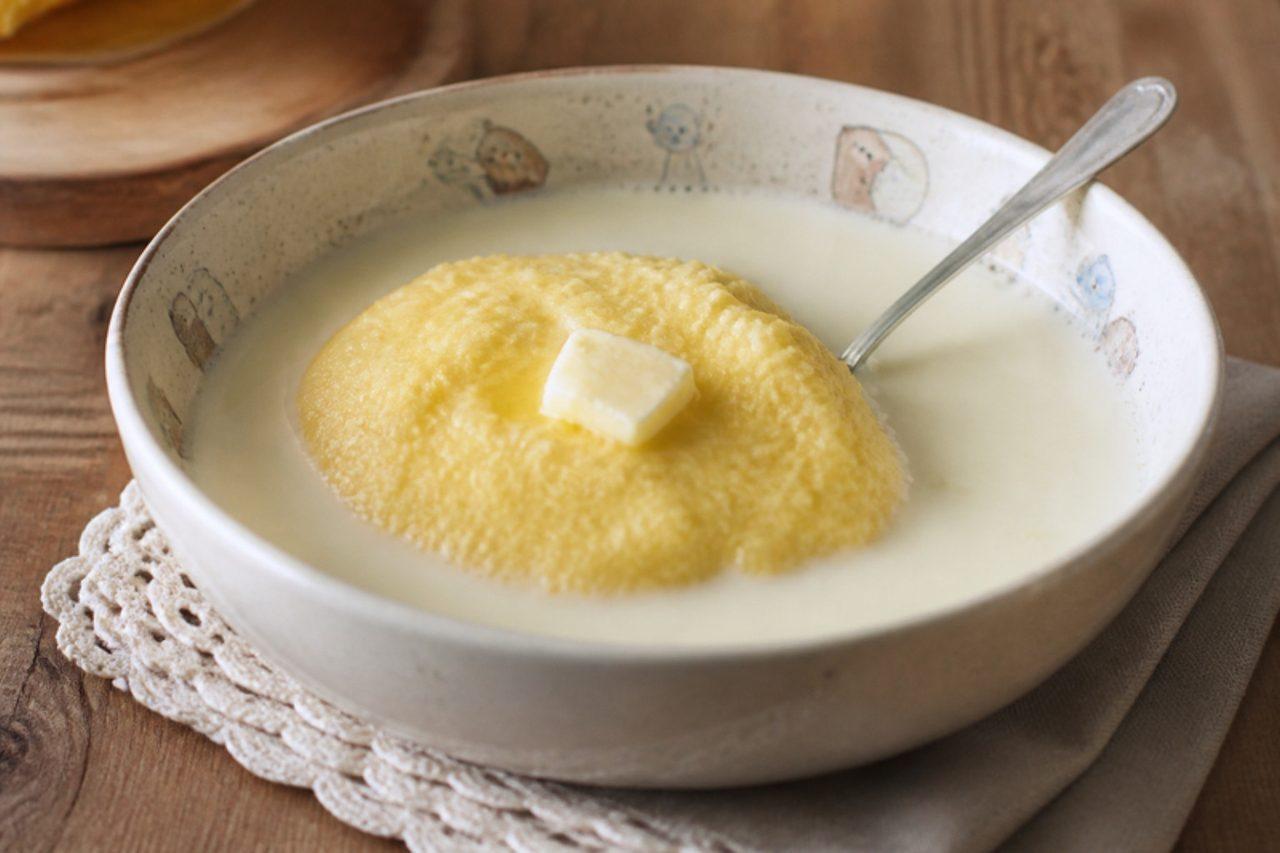
by KrazyBadal 0 views

Ragi laddooFinger millet jaggery balls

In Karnataka, ragi (finger millet) is everyday food, and mothers roll ragi laddoos to keep in a tin for after-school snacks and school sports days, because they are filling and keep well. The flour is roasted in ghee until it smells like toasted biscuits, then bound with melted jaggery and sesame into dark, fudgy balls. Jaggery is still sugar, so these are a treat, kept small. They contain milk (ghee) and sesame. Chef's tip: roast the flour slowly until it darkens a shade and smells nutty; under-roasted ragi tastes raw and floury.

by KrazyBadal 0 views

Sev mamraPuffed rice snack mix

In Gujarati homes from Ahmedabad to Surat, a big steel tin of sev mamra is always ready for children coming home from school, unexpected guests and train journeys. Puffed rice is tossed in a little hot oil with turmeric, curry leaves and peanuts until crisp, then mixed with fine gram-flour sev for a savoury, mildly tangy crunch. A pinch of sugar is traditional; it is optional here. It contains peanuts. Whole peanuts are a choking risk for under-5s, so leave them out or crush them for little ones. Chef's tip: warm the puffed rice in the pan for a few minutes first; even slightly stale mamra turns crisp again.

by KrazyBadal 0 views

Masala corn cup

In Mumbai and other Indian cities, cups of hot masala corn are sold at beaches, cinema halls and outside tuition classes, and children grab them after school as an easy, savoury snack. Steamed sweetcorn kernels are tossed with butter, a squeeze of lemon and tangy chaat masala, with a little chilli for older children. It is quick and naturally sweet. It contains milk (butter). Chef's tip: add the lemon only at the very end, off the heat, so it stays bright and doesn't make the butter split.

by KrazyBadal 0 views

Bánh bò hấp (steamed honeycomb rice cake)

Bánh bò hấp are the soft, puffed rice cakes sold from glass-fronted carts in southern Vietnam, and children in the Mekong Delta pick them up in white, pink or pandan green on the way home from school. The yeasted rice-flour batter is steamed in small cups, so each cake splits open on top like a flower and is chewy and bouncy inside, with a gentle coconut flavour. The sugar here is a little lower than in market versions. None of the common allergens are in it. Chef's tip: steam over fierce, rolling boiling water; a gentle simmer gives flat, dense cakes that don't open.

by KrazyBadal 0 views

Roasted makhana (crunchy fox nuts)

Across North India, a jar of roasted makhana sits on the kitchen shelf for after-school munching, Navratri fasting days and evening cricket on television. The puffed lotus seeds turn from soft to crisp and light in a few minutes of slow roasting in ghee, like a nutty, savoury popcorn. Rock salt and pepper keep it suitable for fasting; turmeric or chaat masala are everyday variations. It contains milk (ghee). Whole makhana are a choking risk for under-5s, so crush them for little ones. Chef's tip: test one before you season: it should snap with a clean crunch, not bend.

by KrazyBadal 0 views

Nkatie cake (Ghanaian peanut brittle)

Nkatie cake, from nkatie, the Twi word for groundnut, is the crunchy peanut brittle sold in small squares wrapped in paper by hawkers at school gates and lorry stations all over Ghana, from Accra to Kumasi. Roasted peanuts are stirred into caramelised sugar, spread thin and cut while warm. It is a sweet treat, so cut the pieces small. It contains peanuts. Whole peanuts and hard brittle are a choking risk for under-5s, so it is not for young children. Chef's tip: have everything ready before the sugar melts; once the caramel is amber you have seconds, not minutes.

by KrazyBadal 0 views

Vitamina de banana (Brazilian banana smoothie)

In Brazil a smoothie is a vitamina, and vitamina de banana is what parents from São Paulo to Recife whizz up for breakfast or when children get home from school hungry. Ripe banana, cold milk and a spoonful of oats make a thick, naturally sweet drink that fills a gap until dinner, so no sugar is needed. It contains milk and gluten (oats, unless labelled gluten free). Chef's tip: use bananas with brown freckles on the skin; they are sweeter and blend creamier than green-tipped ones.

by KrazyBadal 0 views

DilkhushCoconut and candied fruit stuffed bread

Teatime at an Iyengar bakery in Bengaluru or Mangaluru means dilkhush ("happy heart") stacked in wedges beside the khara buns: a soft, sweet bread round with a thick layer of grated coconut, sugar, tutti-frutti and cashews baked inside it. The dough in these bakeries is usually eggless, so the crumb is light and milky rather than rich, and the filling stays moist and chewy. Eat a wedge with a small glass of filter coffee or masala chai, or pack it for a school snack. The usual mistake is to pile the filling to the very edge; leave a clear 2 cm rim or the seal splits and the coconut toasts black on the tray. Chef's tip: squeeze a little milk into dry desiccated coconut before mixing the filling, so it tastes closer to fresh coconut and does not steal moisture from the bread.

by KrazyBadal 0 views

Chocolate slices on rye (pålægschokolade)

Pålægschokolade, wafer-thin slices of chocolate made for laying on bread, is a Danish lunchbox treat, usually saved for Fridays or birthdays: buttered dark rye, a slab of chocolate on top, then cut into fingers. The sour, dense rye and the sweet chocolate are a famous match. Shop slices are thin squares; here you make your own from a bar, which lets you pick dark chocolate with less sugar. It contains gluten (rye and wheat), milk and soya (lecithin in most chocolate). Chef's tip: spread the chocolate as thin as a coin; thick pieces crack and fall off.

by KrazyBadal 0 views

Ghee-shakkar roti roll

Ask anyone who grew up in north India about school tiffin and the ghee-shakkar roti comes up: a soft, warm chapati brushed with ghee, sprinkled with a little sugar or jaggery powder and rolled like a cigar, made by a parent in the rush before the school bus. It is sweet, buttery and wheaty, and still tastes good cold at the morning break. It contains milk (ghee) and gluten (wheat). Chef's tip: use jaggery powder and a light hand; a teaspoon per roti is plenty, and the ghee carries the flavour.

by KrazyBadal 0 views

Mkate wa siniaCoconut and rice tray cake

Ramadan evenings in Stone Town and Mombasa bring out trays of mkate wa sinia, cut into wedges and set out for iftar beside spiced chai and dates. Soaked rice is blended with coconut milk, sugar, cardamom and yeast into a pourable batter (hence its other name, mkate wa kumimina, 'poured bread'), left to bubble, then baked in a round metal tray called a sinia. Inside it is spongy and full of holes like a crumpet; the top and base turn golden and slightly chewy. It contains no egg, dairy or wheat. Under-blending is what ruins it: a gritty batter bakes into a sandy cake, so blend until a drop rubbed between your fingers feels completely smooth. Chef's tip: add a couple of spoonfuls of cooked rice to the blender, the way coastal cooks do; it makes the crumb softer and more springy.

by KrazyBadal 0 views

Ciabatta

Surprisingly young for an Italian classic, ciabatta was created in 1982 by a baker near Adria, in the Veneto, as Italy's answer to the French baguettes that were filling sandwich shops. Its name means 'slipper', after its flat, floury, oblong shape. The dough is so wet it is barely shaped at all, which gives a thin, crisp crust and a chewy, glossy crumb full of irregular holes, with a wheaty, slightly tangy flavour from an overnight biga. Split it for panini with grilled vegetables and mozzarella, dip it in good olive oil, or serve it with soup and antipasti. The commonest error is panicking at the sticky dough and working in extra flour; that closes up the crumb, so use wet hands and a scraper instead. Chef's tip: once the dough has risen, don't shape it, just cut it into strips with a floured scraper and flip each one over onto its cloth, so the bubbled underside becomes the top.

by KrazyBadal 0 views

Butterflap breadFolded buttered rolls

Soft, squishy and folded like a little book, butterflap is a Trinidad and Tobago bakery classic, sold by the bag from Port of Spain to San Fernando. Each roll is an oval of milky dough spread with butter and folded over, so it bakes into a tender roll that peels open along a buttery seam. People eat them warm for breakfast with cheese or a hot cup of cocoa tea, split them for a sandwich at lunch, or tear them up beside a pot of stew. Many bakeries use margarine; butter tastes better. Spreading the butter too thick, right to the edges, is where it goes wrong: it leaks out and fries the base, so keep a clean border. Chef's tip: pack the folded rolls snugly in the tin so they rise up rather than out and stay soft at the sides.

by KrazyBadal 0 views

Pane di AltamuraDurum wheat sourdough loaf

Locals in Altamura like to quote Horace, who praised the bread of this corner of Apulia two thousand years ago; in 2003 it became the first bread in Europe to receive DOP protection. Pane di Altamura is made only from twice-milled durum semolina grown on the Murgia plateau, sourdough, salt and water, and it is famous for keeping fresh for a week. The crust is thick and crunchy, the crumb is sunflower-yellow, springy and faintly sweet. Its classic shapes are the folded 'accavallato' and the tall 'cappello da prete', or priest's hat, made by folding the loaf over itself before baking. Eat it with olive oil and tomatoes, with burrata and grilled vegetables, or in thick slices beside a bean soup. Plain durum flour or coarse pasta semolina are the wrong substitutes: you need the fine, flour-like semola rimacinata, or the dough stays gritty and won't rise. Chef's tip: durum dough is extensible rather than springy, so knead it well and give it a stiff hydration; a wet durum dough spreads flat instead of standing tall.

by KrazyBadal 0 views

Coppia ferrareseTwisted olive oil bread

Four crunchy horns joined at a soft central knot make the coppia ferrarese the most recognisable bread in Emilia-Romagna; Ferrara's bakers have shaped it since at least the Renaissance, and it has had IGP status since 2001. The dough is stiff and very smooth, rolled thin and twisted into spirals, so the ends bake shatteringly crisp while the 'belly' in the middle stays tender. Ferrarese eat it with salumi for meat-eaters, with cheese, grilled vegetables or a bowl of pumpkin cappellacci. It is traditionally made with lard; this version uses olive oil instead, which keeps it vegan and still gives the light, crumbly crunch. Rolling the strips too thick is the usual slip, because thick horns stay bready instead of crisp. Chef's tip: a pasta machine makes the dough as smooth and thin as a Ferrara baker's rollers, and the barley malt gives the horns their honey-brown colour.

by KrazyBadal 0 views

Jaffles (Australian toasted sandwiches)

Jaffles are Australian childhood in a sandwich: thick bread sealed around a hot filling in a cast-iron jaffle iron over the campfire, or in an electric sandwich press after school and on rainy weekend lunchtimes. Cheese and baked beans, or cheese and tomato, are the classics, and the sealed edges keep everything molten inside. They contain gluten and milk. Chef's tip: butter the outsides, not the insides, so the bread turns crisp and golden against the iron.

by KrazyBadal 0 views

Rice cereal paste (mǐ hú)

Long before boxed cereals, Chinese mothers made mǐ hú, rice paste, by dry-toasting rice in a wok, grinding it fine and cooking it with water. It is still a favourite first food all over China, often served as the baby's breakfast while the family eats congee. Toasting gives it a gentle, biscuity flavour and makes it cook in minutes. There is no salt or sugar, and none of the common allergens (milk, egg, gluten, peanut, tree nuts, soya, sesame, fish). Chef's tip: toast and grind a larger batch, sieve it, and keep the powder in a clean, dry jar for up to two weeks.

by KrazyBadal 0 views

Dal paratha

In north Indian kitchens, last night's thick dal rarely goes to waste: the next morning it is kneaded into wholewheat flour with ajwain and coriander and rolled into soft, savoury parathas for breakfast and the school tiffin. They are golden-flecked, faintly spiced and filling, and taste good cold with yoghurt or pickle. They contain gluten (wheat) and milk (ghee); use oil to make them dairy free. Chef's tip: add the dal before any water; it is often all the liquid the dough needs.

by KrazyBadal 0 views

Pain de mieSoft square sandwich loaf

Ask a Paris café what goes into a croque-monsieur and the answer is pain de mie, the 'crumb bread' baked in a lidded tin so it comes out as a neat square block. Shut away from the oven's heat, the dough rises against the lid into a fine, soft, close crumb with a thin, pale golden crust that barely needs trimming. French children take it to school as tartines with butter and chocolate spread, it makes the best croques, French toast and canapés, and it is the loaf to choose for neat cucumber sandwiches. Milk and butter keep it tender for several days. The tricky moment is the final rise: if the dough reaches the rim before the lid goes on, it squeezes out of the seams and bakes with a dense band; too little rise and the corners come out rounded. Chef's tip: put the lid on when the dough is about 1 cm below the rim, and grease the underside of the lid as well as the tin so the block turns out cleanly.

by KrazyBadal 0 views

OntbijtkoekSpiced rye breakfast cake

Ontbijtkoek means 'breakfast cake', and in Friesland and Groningen, where the best-loved versions come from, a thick slice spread with butter is still a normal start to the day or a mid-morning snack with coffee. The loaf is dark, sticky and springy, made with rye flour and syrup and scented with the Dutch spice mix koekkruiden: cinnamon, cloves, ginger, nutmeg and cardamom. It contains no egg and no butter in the batter, and it gets better after a day or two wrapped up. Baking it too hot is the usual mistake; the outside goes bitter before the middle sets, so bake it low and slow. Chef's tip: wrap the loaf in cling film while it is still slightly warm and leave it overnight; it softens into the classic tacky, chewy crust.
by KrazyBadal 0 views

Semolina in broth (semolino in brodo)

Semolino in brodo is the dish Italian nonne cook for anyone who needs something gentle: babies at the start of weaning and older children with a cold. Fine durum-wheat semolina is rained into hot vegetable broth and stirred into a soft, silky porridge, usually served at supper. For babies the broth is home-made without salt, and the grated parmesan that adults add stays out or is kept to the tiniest pinch, because it is salty. It contains gluten (wheat), and milk if you add parmesan; there is no egg, nuts, soya, sesame or fish. Chef's tip: rain the semolina in from a height while whisking, and you will never get lumps.

by KrazyBadal 0 views

Am (Filipino rice-water first porridge)

Filipino lolas remember giving babies am, the thick, cloudy liquid that rises to the top as rice boils, ladled off and cooled before the rest of the pot is cooked for the family's lunch. Today it is offered as a thin, smooth first porridge, a few spoonfuls alongside other first foods such as mashed squash or banana, rather than on its own. It tastes mild and slightly sweet. It contains none of the common allergens (milk, egg, gluten, peanut, tree nuts, soya, sesame, fish). Chef's tip: use more water than usual and keep the lid off, so the liquid thickens into a creamy am instead of evaporating away.

by KrazyBadal 0 views

KongguksuCold soybean noodle soup

When the monsoon heat settles over Seoul in July, queues form outside old noodle houses near City Hall for kongguksu: thin wheat noodles in an ice-cold, thick, nutty broth of soybeans boiled and blended with their skins, topped with cucumber and sesame. It is plain, rich and very cooling, and people season it at the table with salt (in Seoul) or sugar (in Jeolla). A bowl is about 520 kcal, a full meal with plenty of protein. Soak the soybeans overnight first, not counted in the times. The most common mistake is overboiling the soybeans, which gives a fermented, "meju" smell; boil them for exactly 10–12 minutes and taste one: it should be cooked but not soft. Chef's tip: blend a handful of pine nuts or toasted sesame with the beans; it makes the broth even creamier.

by KrazyBadal 0 views

Zupa owocowaFruit soup with pasta

On a hot July afternoon in a Mazurian village or a Warsaw allotment, a pot of zupa owocowa sits cooling on the windowsill: sour cherries or strawberries simmered with sugar, lightly thickened, and served cold over little pasta shells or bow ties. Polish children often get it as the first course of a summer lunch, and it tastes like a drinkable fruit compote. A common mistake is thickening it too much, so it sets into jelly in the fridge; it should stay pourable. Chef's tip: stir a spoon of soured cream into each bowl, not the pot, so the colour stays bright.

by KrazyBadal 0 views

ParadiesäpfelCandy apples

Paradiesäpfel shine from the sugar stalls at German fairs and Christmas markets, from the Cannstatter Wasen to the Hamburg Dom: small tart apples on wooden sticks, dipped in a glassy red sugar glaze that cracks when you bite it. Children often get them on the way home from the rides in autumn. The glaze is just sugar, water and a drop of vinegar boiled to the hard-crack stage, so a sugar thermometer helps. The most common mistake is using wet or waxed apples, which makes the glaze slide off. Chef's tip: scrub the apples in hot water and dry them completely first, then dip quickly and twist so the excess drips back into the pan.

by KrazyBadal 0 views

VarenyeFruit preserve in syrup

Varenye is not quite jam: whole berries or fruit are steeped and cooked in short bursts so they stay intact in a clear, glossy syrup. All summer at dachas around Moscow and Vladimir, copper basins of strawberry, cherry or gooseberry varenye bubble outside, and in winter it is spooned into tiny glass rosettes and eaten with tea, sometimes straight from the spoon between sips. The common mistake is boiling it in one long go, which turns the fruit to mush. Chef's tip: cook it in three short boils with long rests between; the fruit soaks up syrup slowly and stays whole.

by KrazyBadal 0 views

Pane ticinesePull-apart white loaf

Pane ticinese comes from Switzerland's Italian-speaking south and is now sold in bakeries across the country: a long, flat loaf made of linked rolls, each section easy to break off, with a soft, slightly chewy crumb thanks to a little olive oil in the dough. In Lugano and Bellinzona it goes on the table at lunch with salami and formaggini, or is torn into hunks for minestrone; this version is vegan. Chef's tip: when shaping, press each fold right down with the side of your hand; the deep creases are what let the loaf snap into neat pieces after baking.

by KrazyBadal 0 views

RundstykkerBreakfast rolls

Weekend mornings in Denmark and Norway start with a bag of warm rundstykker from the bakery, or a tray baked at home. They are crusty white rolls topped with poppy or sesame seeds, split and eaten with cheese, jam or a slice of brunost alongside coffee. This version is vegan and uses an overnight rise in the fridge, so the rolls go straight into the oven in the morning. A common mistake is adding too much flour, which makes them dense. Chef's tip: put a tray of boiling water in the bottom of the oven for the first 10 minutes so the crust turns thin and crackly.

by KrazyBadal 0 views

Showing 240 of 2,799 recipes

Page 24 of 117

More Jain ideas

Other diets