No onion, no garlic recipes (Swaminarayan and sattvic)
3,481
3481 vegetarian recipes cooked without onion or garlic, as in Swaminarayan and sattvic kitchens, with no meat, fish, eggs or alcohol. Each has photos, step-by-step instructions and cook times. The quickest, Apfelschorle, takes 2 minutes. Most take around 45 minutes.
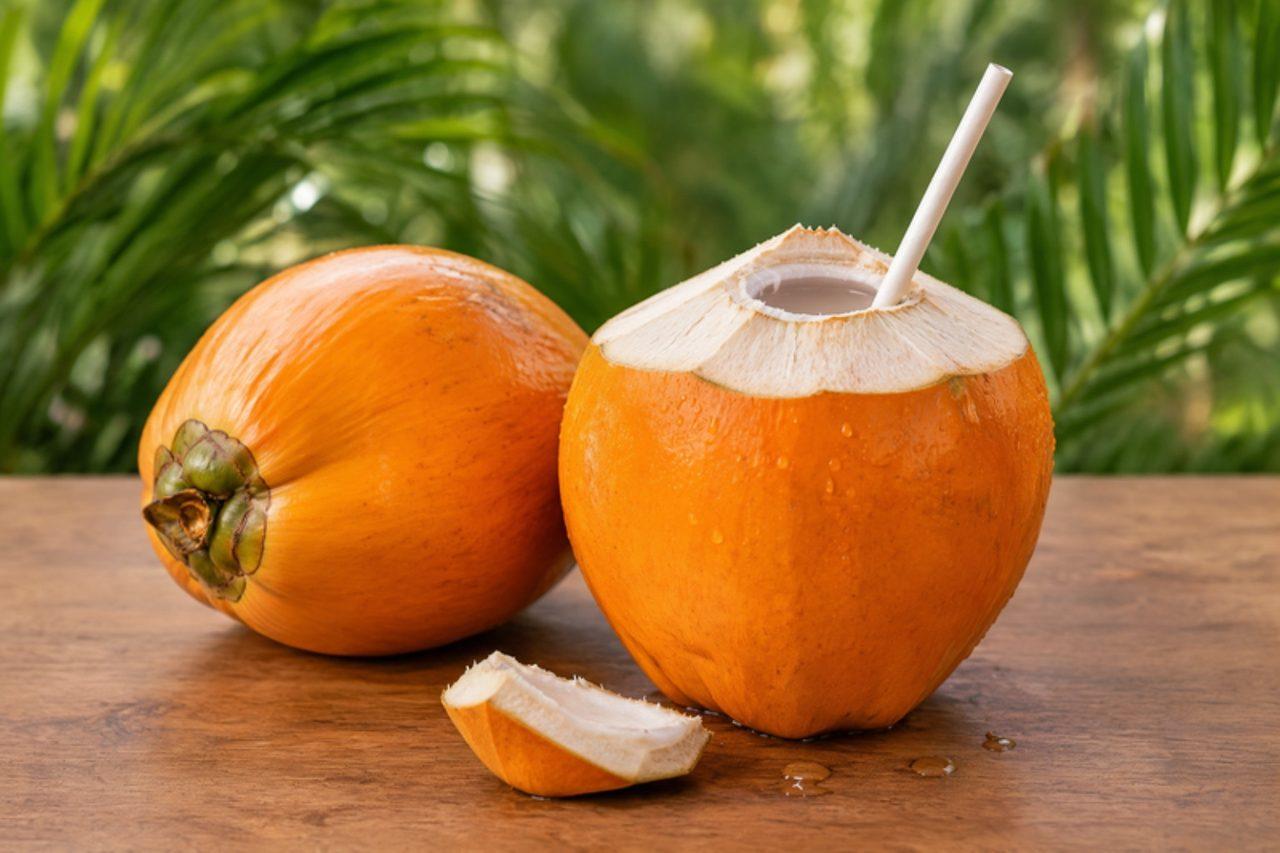
Lolo buns are the Sunday treat of Fijian kitchens, made for church lunches and family get-togethers in Lautoka and Suva: soft yeast buns packed into a tin and baked in a bath of sweetened coconut cream (lolo), which soaks into the bottoms and bakes into a sticky, caramel-edged sauce. Everyone pulls one out warm from the tin. A common mistake is pouring the coconut cream on too early; add it just before baking so the buns have risen fully. Chef's tip: use thick, full-fat coconut cream for a rich glaze.
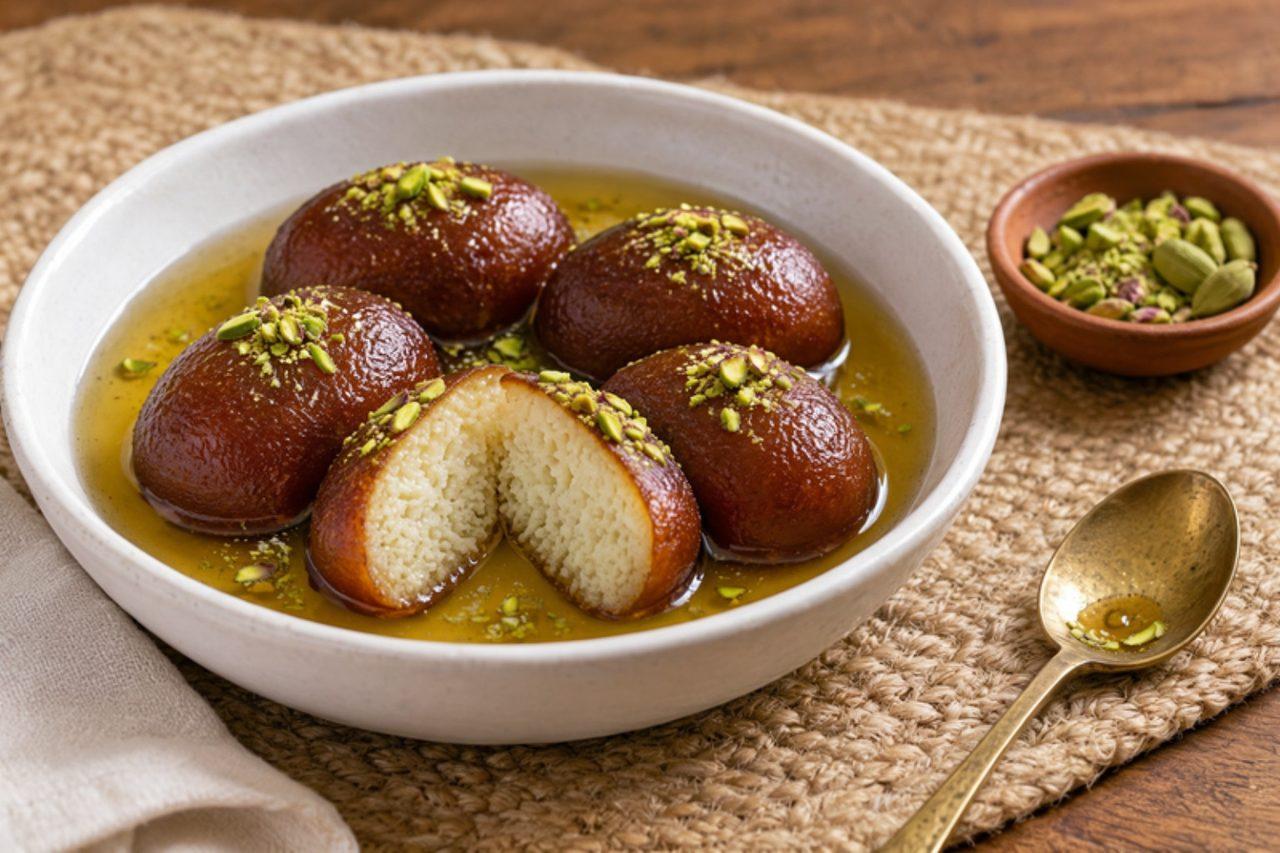
Travellers on the road from Kolkata to Bardhaman stop at Shaktigarh for one reason: lyangcha, cylindrical sweets of chhena and khoya fried almost black and soaked in light syrup, sold hot from roadside shops and carried home in clay pots. The outside is caramelised and slightly chewy, the inside soft, juicy and milky. They are a winter and wedding favourite across Bengal. The common mistake is frying on high heat to get the dark colour quickly; the outside burns while the centre stays raw and the sweet splits in the syrup. Low, patient heat gives an even mahogany shell. Chef's tip: a teaspoon of sugar kneaded into the dough helps it darken evenly.
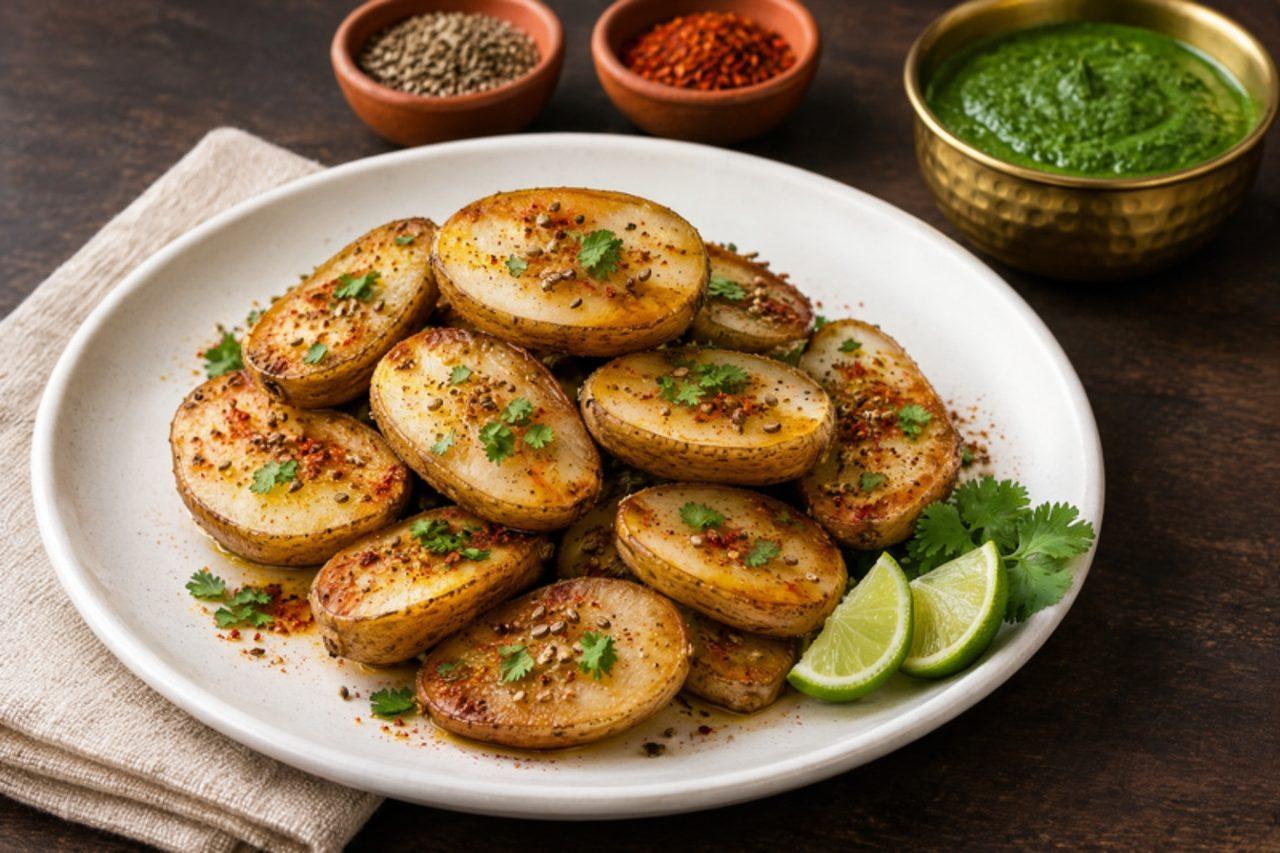
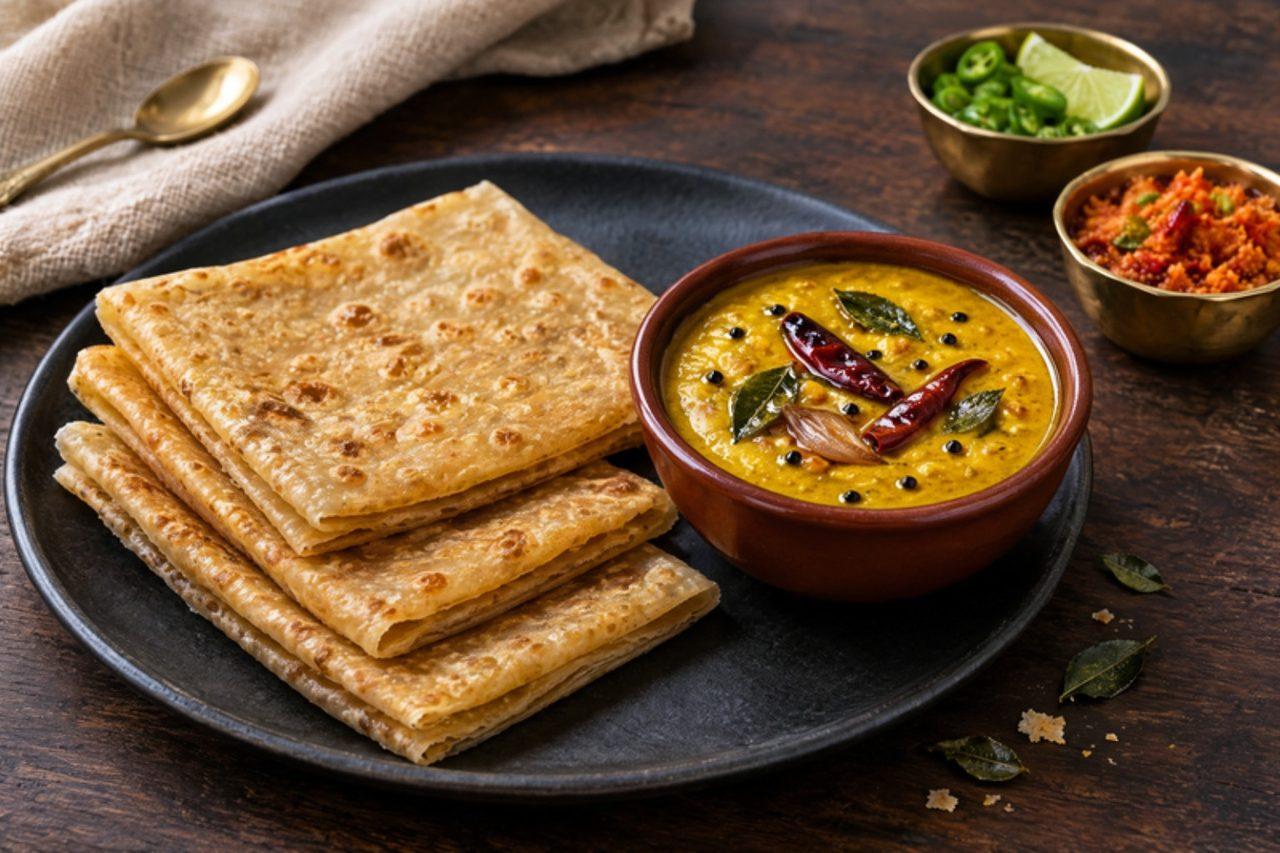
Across Delhi, Punjab and Uttar Pradesh, arbi is the vegetable that goes into a dabba with ajwain rotis or plain phulkas: the small colocasia roots are boiled, flattened slightly and pan-fried with carom seeds, red chilli and dried mango powder until crisp outside and creamy inside. Ajwain is there for its flavour and because it is said to help digest the starchy root. The mistake is boiling the arbi too long: it turns slimy and falls apart in the pan. Cook it until just tender, then cool fully before peeling. Chef's tip: press each piece gently with your palm to crack it before frying; the cracks catch the spices and crisp up.
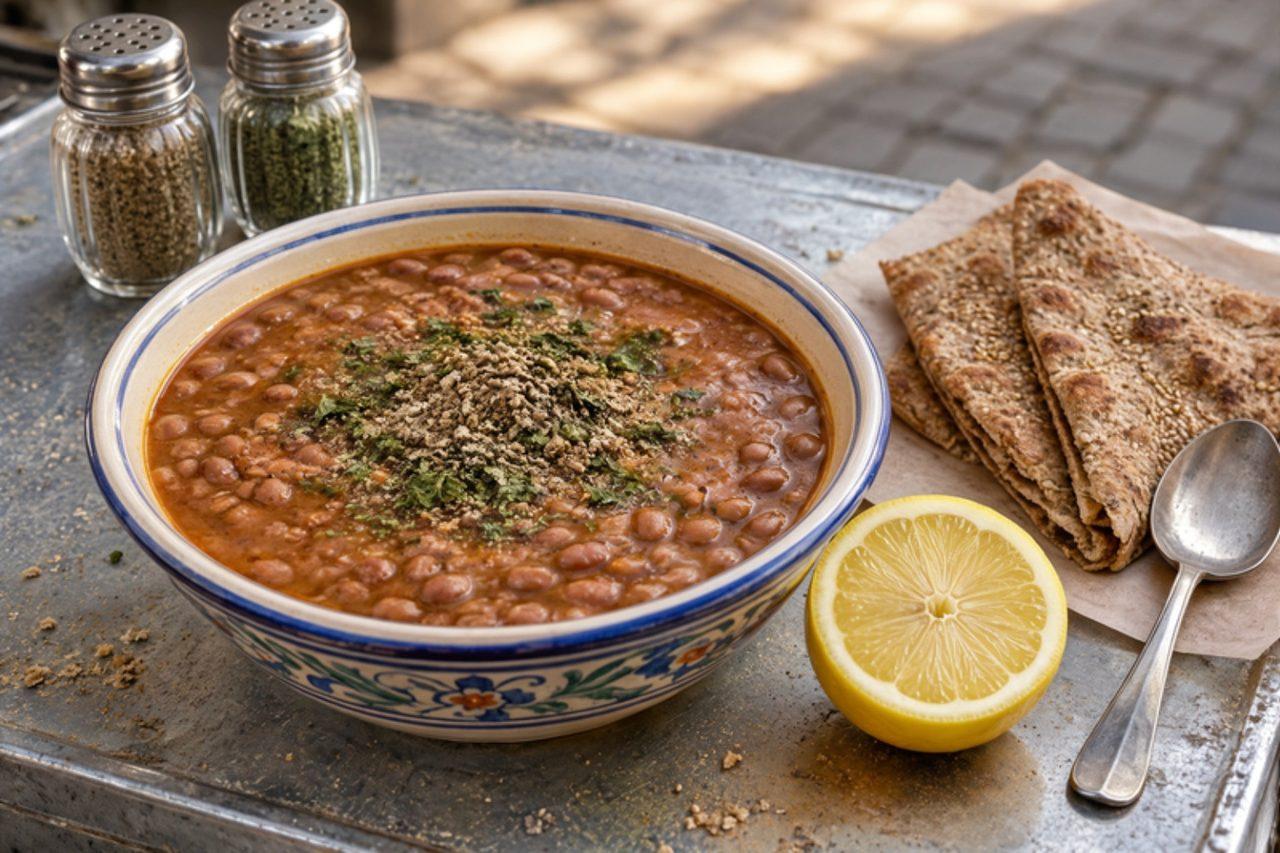
On cold winter mornings in Tehran, steam rises from street carts selling lubia pokhte: pinto beans simmered with a pinch of salt until soft as butter, ladled into a cup with some of their cooking liquid and sprinkled with golpar, the citrusy ground seed of Persian hogweed, plus a squeeze of lemon. It is cheap, warming and filling. The mistake is salting the water at the start; add salt once the beans are tender or the skins stay tough. Chef's tip: skim the foam in the first 10 minutes and keep the beans at a lazy simmer, never a rolling boil, so they stay whole but creamy inside.
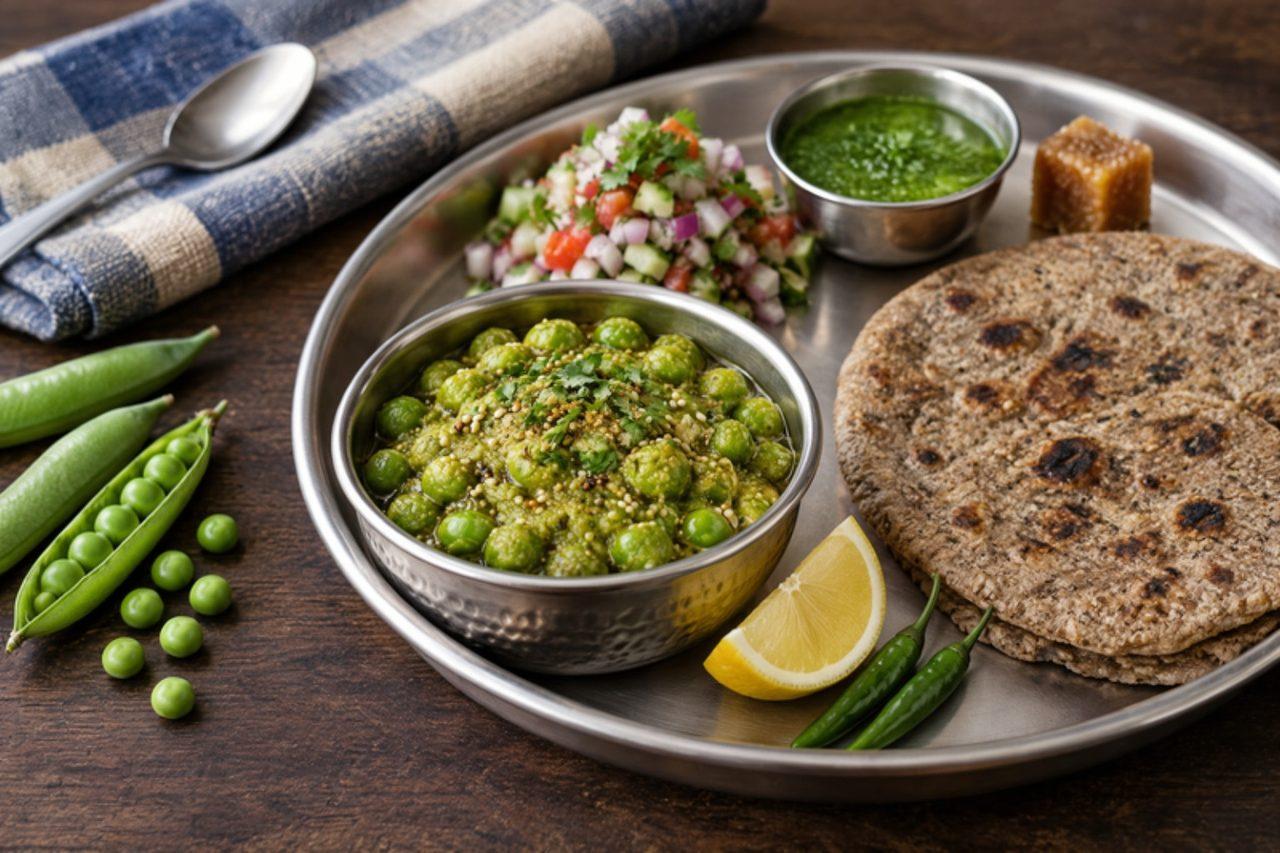
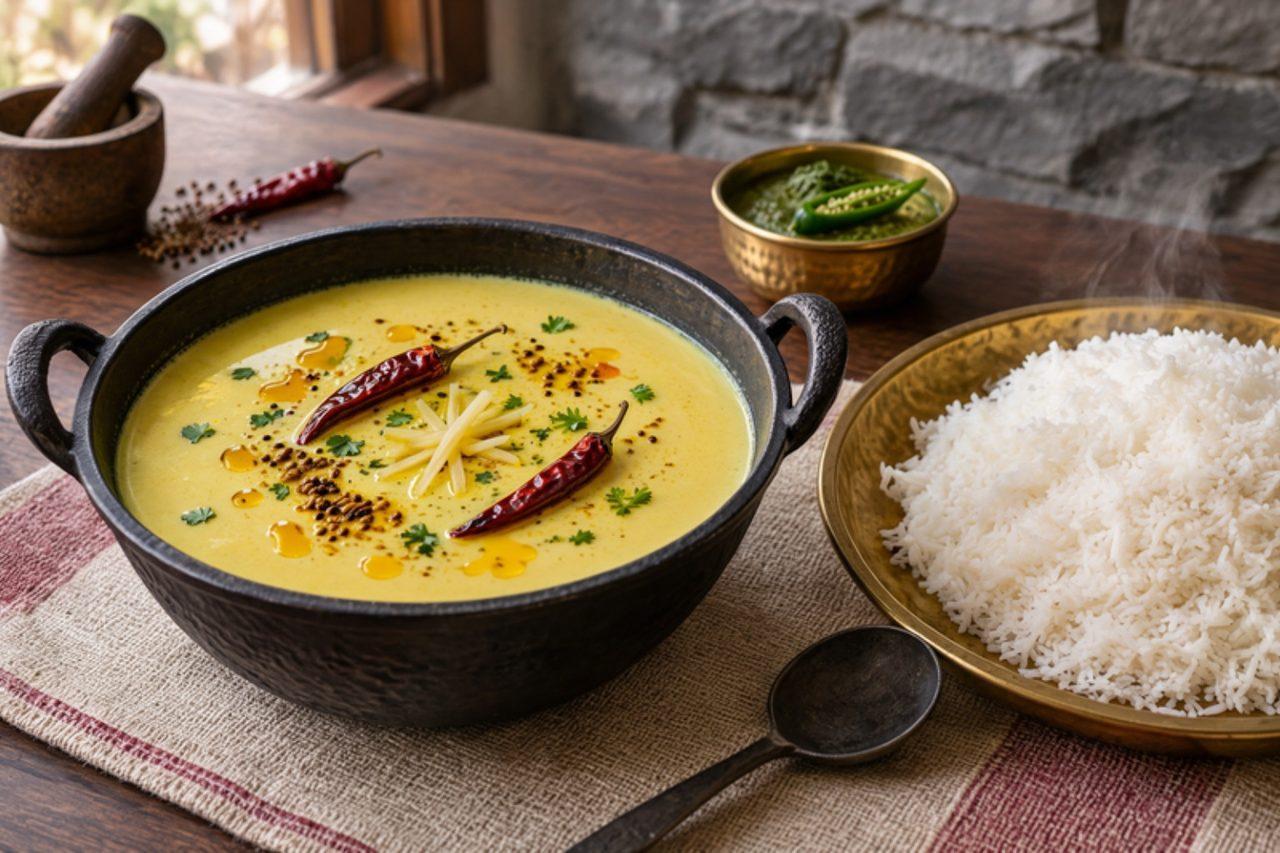
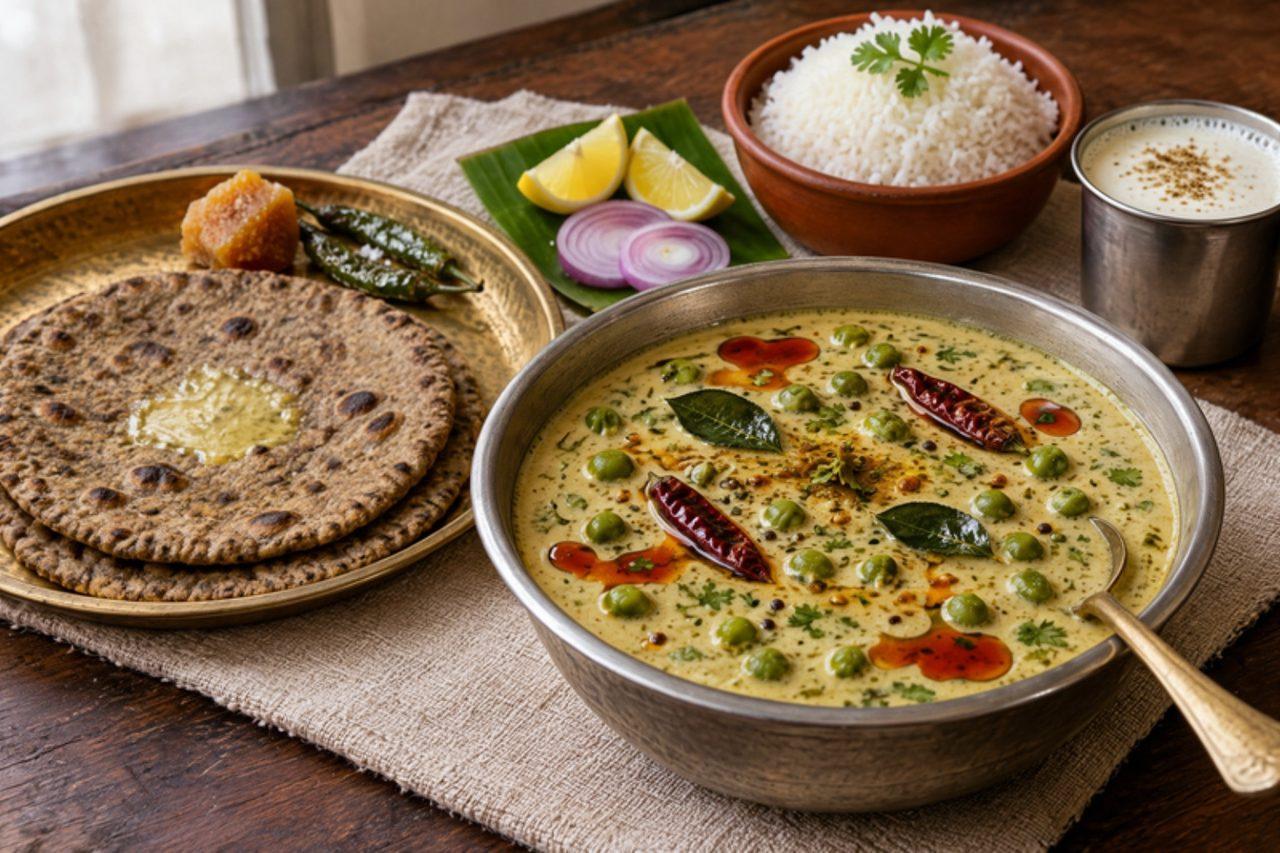
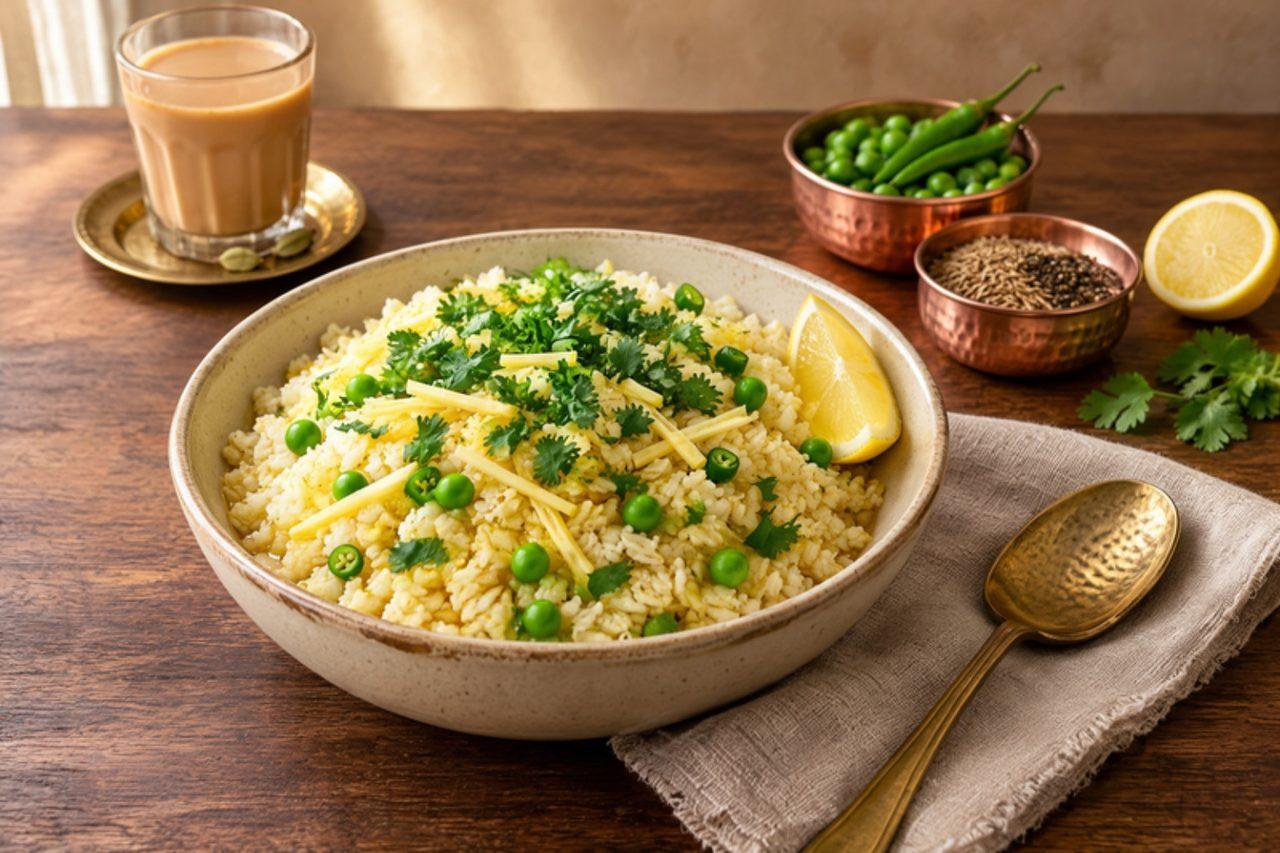
From December to February, Gujarati markets fill with fresh tuvar pods, and families in Surat, Vadodara and Ahmedabad spend evenings shelling them for lilva dishes. This simple shaak cooks the sweet, nutty green pigeon peas with ginger, green chilli, ajwain and a fistful of coriander, with a squeeze of lemon and a pinch of sugar for the classic Gujarati balance. Eat it with bajra rotla, rotli or khichdi. The usual mistake is cooking the peas too long, which turns them grey and floury; they should stay green and tender. Chef's tip: frozen lilva from Indian grocers work well outside the season; add them straight from frozen and shorten the cooking time.
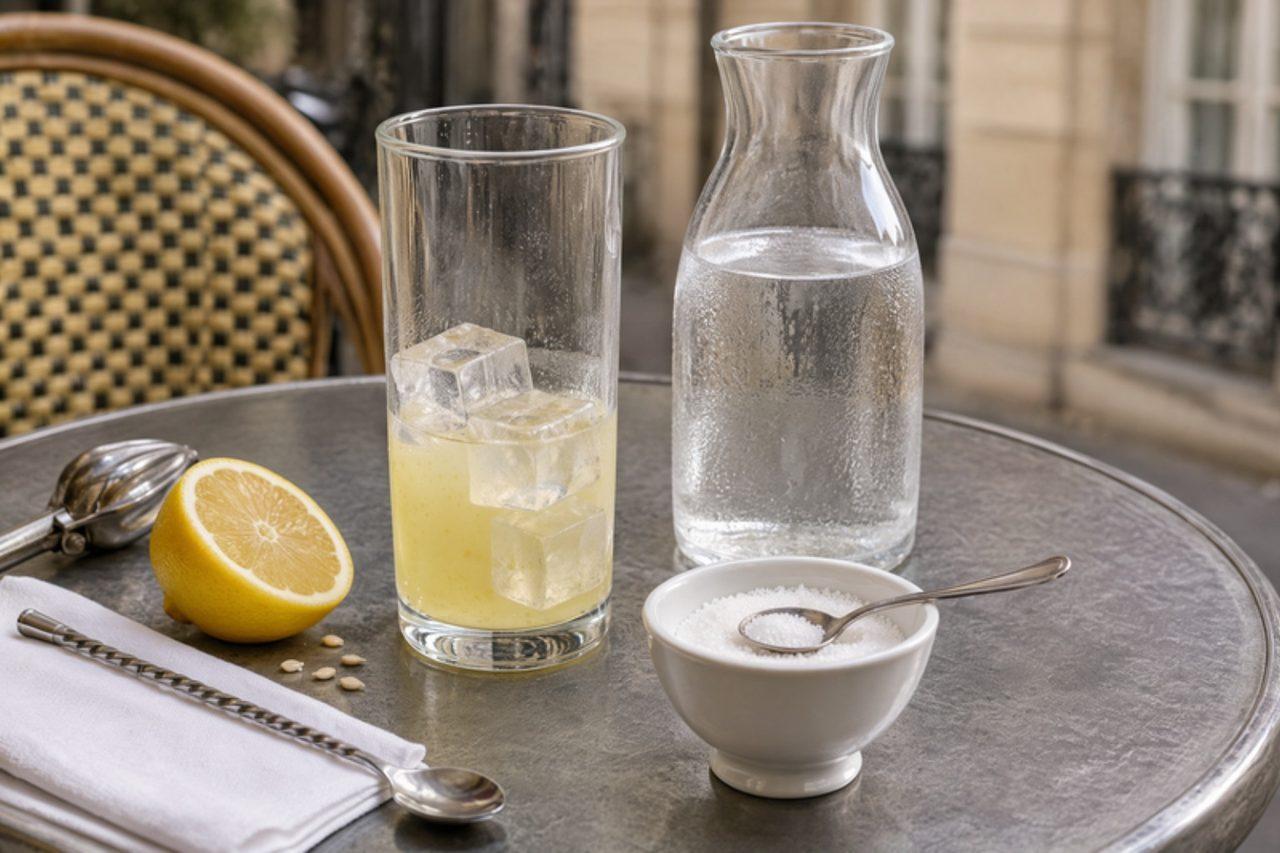
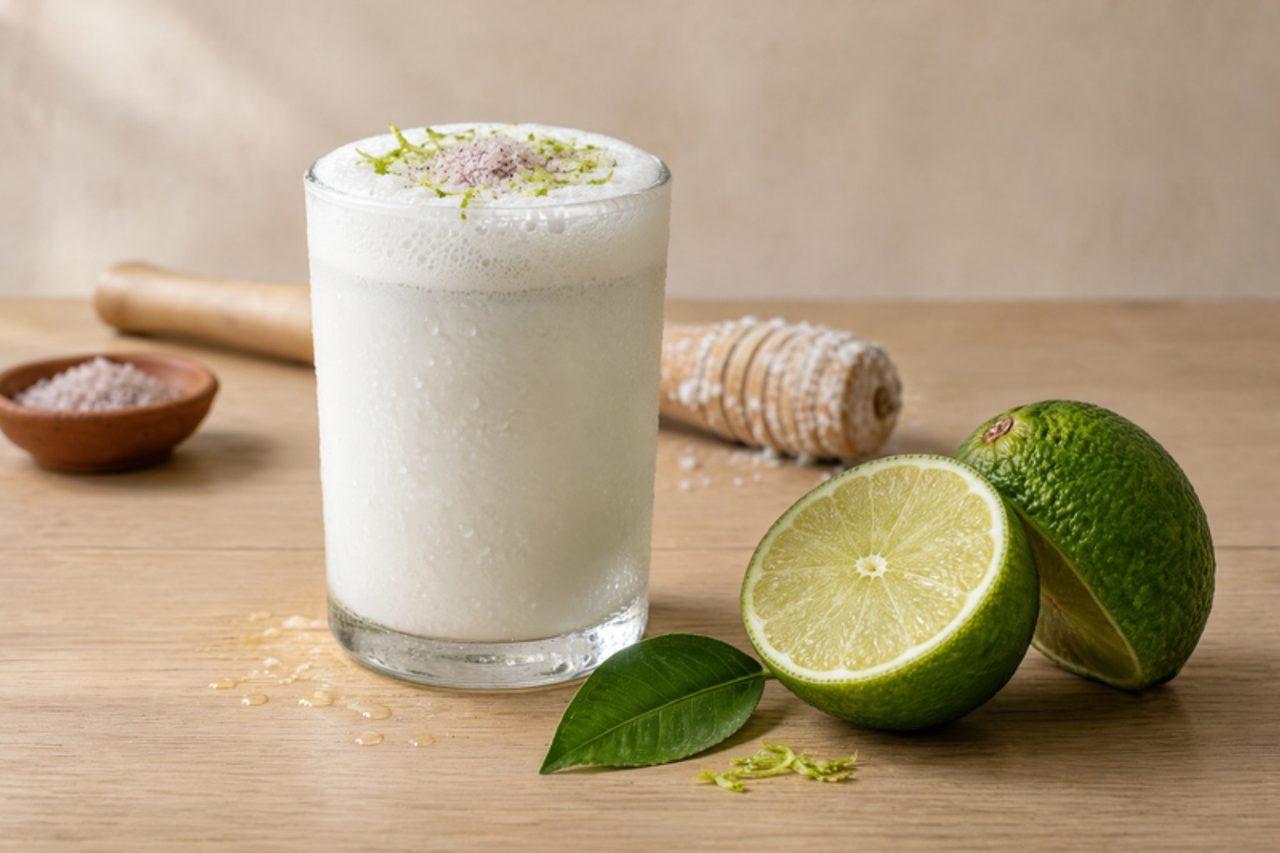
On hot afternoons along the Lungomare and in Piazza Sannazaro, the old acquafrescai kiosks squeeze half a lemon into a glass of sparkling water, then add a pinch of bicarbonate of soda. The drink foams up and over the rim, so you have to lean forward with your legs apart to drink it without soaking your shoes, which is where the cheeky name comes from. It tastes sharp, salty-fresh and very fizzy, and Neapolitans swear by it after a heavy lunch. Chef's tip: have the glass at your lips before you stir in the bicarbonate; the foam rises in seconds.
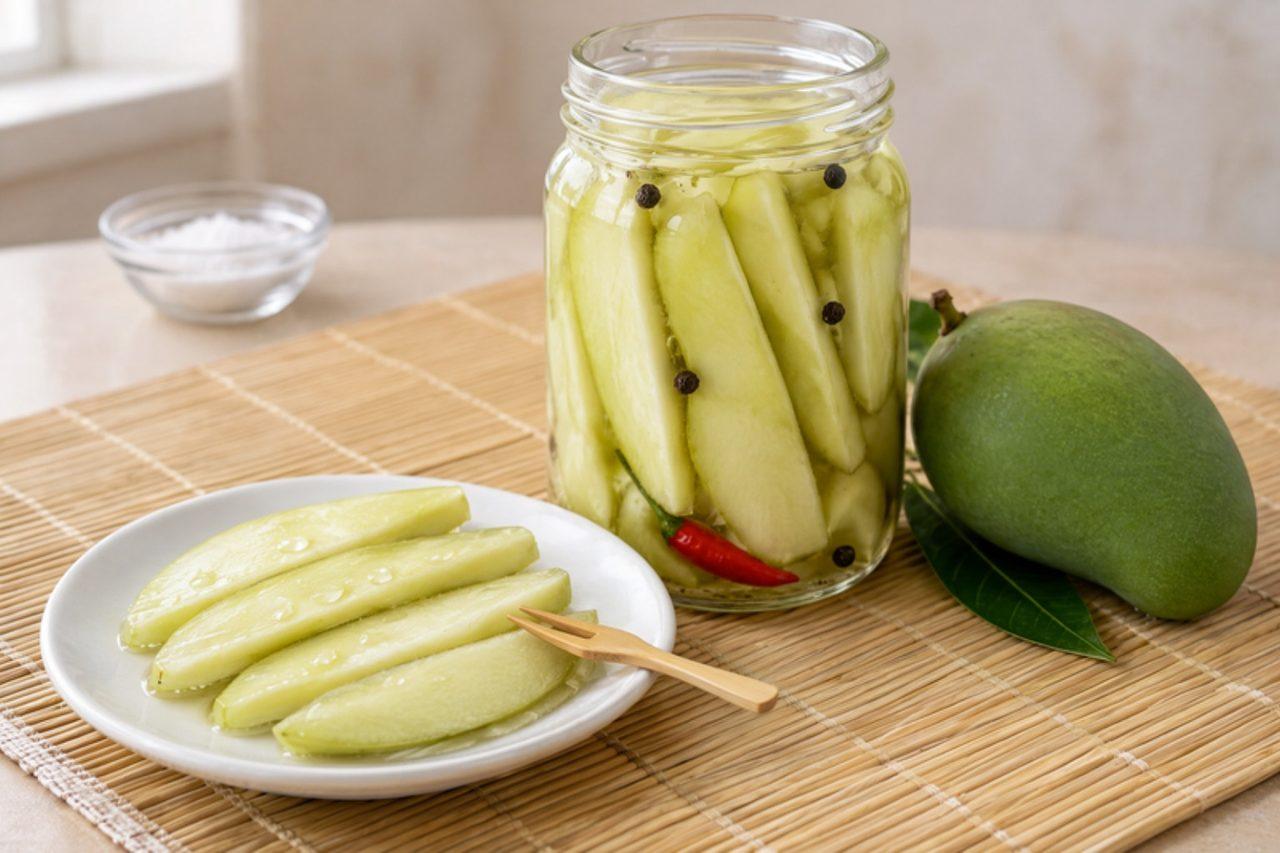
From Pampanga to Pangasinan, the hot months of March to May bring piles of hard green carabao mangoes to every palengke, and many households slice them into a jar of burong mangga. A week in a sweet salt brine turns the mango from mouth-puckering to bright and juicy: still crunchy, sour at the core, salty-sweet on the outside. It is eaten on the side of inihaw na isda and pritong tilapia, with rice and fried pork at lunch, or as an afternoon merienda straight from the jar, and the brine is sometimes sipped too. Common mistake: using mangoes that have started to ripen; a yellow blush makes the slices go soft and slimy, so choose rock-hard, deep-green fruit. Because the brine has no vinegar it keeps only in the fridge. It is ready when the slices have turned from opaque white to a translucent yellow-green and taste evenly seasoned right through. Chef's tip: let the boiled brine cool completely before pouring, and add a few slices of fresh chilli if you like heat. Outside Asia, use firm green Thai or Indian mangoes from an Asian grocer.
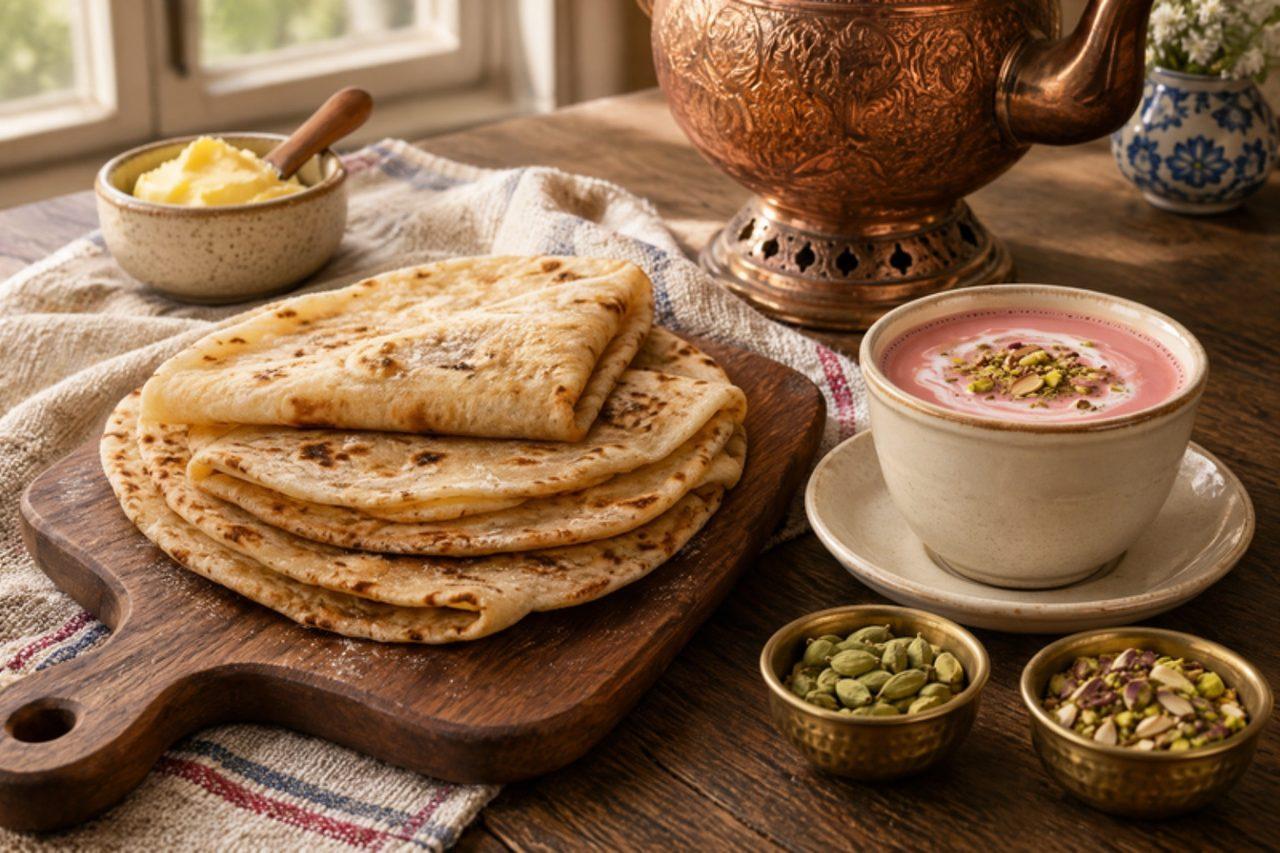
Every Kashmiri neighbourhood has its kandur, the baker who slaps breads onto the walls of a clay tandoor before dawn, and lavasa is the thin, soft, bubbly sheet bought for the afternoon or for wrapping hot seekh kebabs at weddings. It is lightly leavened, a little chewy and faintly smoky, and is eaten with noon chai or with harissa in winter. At home a very hot heavy pan or a pizza stone does a fine job. The common mistake is rolling it too thick; lavasa should be thin enough to see light through at the edges. Chef's tip: stack the breads under a clean cloth as they come off the heat, so the steam keeps them soft and foldable.
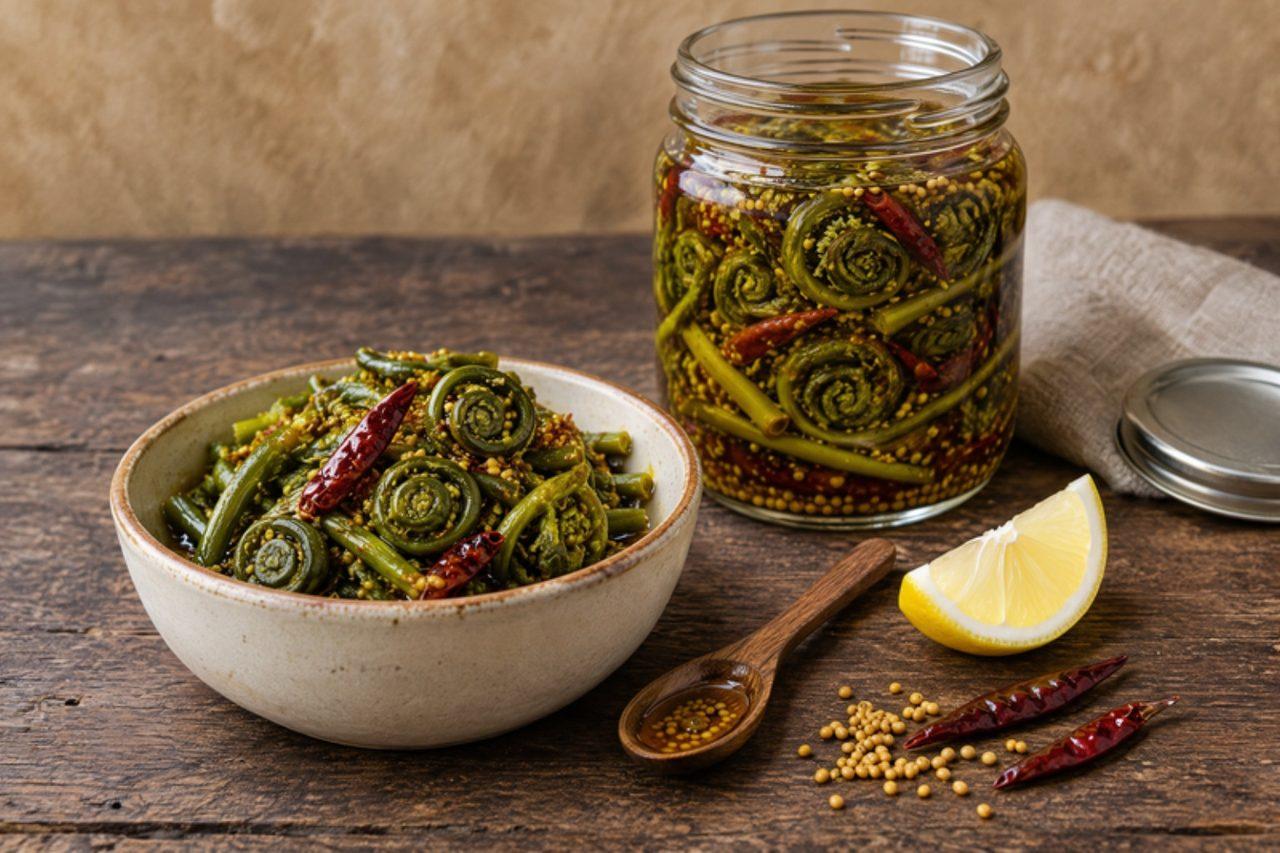
In Kullu, Mandi and Kangra, the monsoon brings lingad, the curled young shoots of the vegetable fern that grows along streams and terrace edges. Villagers pick them in the morning and sell them by the bundle; what is not stir-fried with potato goes into a small jar of pickle to stretch the short season. The shoots are blanched, dressed with mustard oil, crushed mustard seed, red chilli and lemon, and the result is green, crisp and faintly like asparagus with a nutty mustard heat. It is eaten with siddu, rice and madra, or simply with a hot roti. Outside the Himalaya, use ostrich fern fiddleheads, which appear in spring in North America and Europe. Fern shoots must always be cooked; raw or undercooked fiddleheads can upset the stomach badly. Common mistake: only flash-blanching them; boil for the full time. It is ready after a night in the fridge, when the coils have dulled to olive and taste tangy. Keep it in the fridge for up to 10 days; discard if you see mould, slime or smell anything off. Chef's tip: rub off the brown papery scales between your palms under running water before you weigh them.
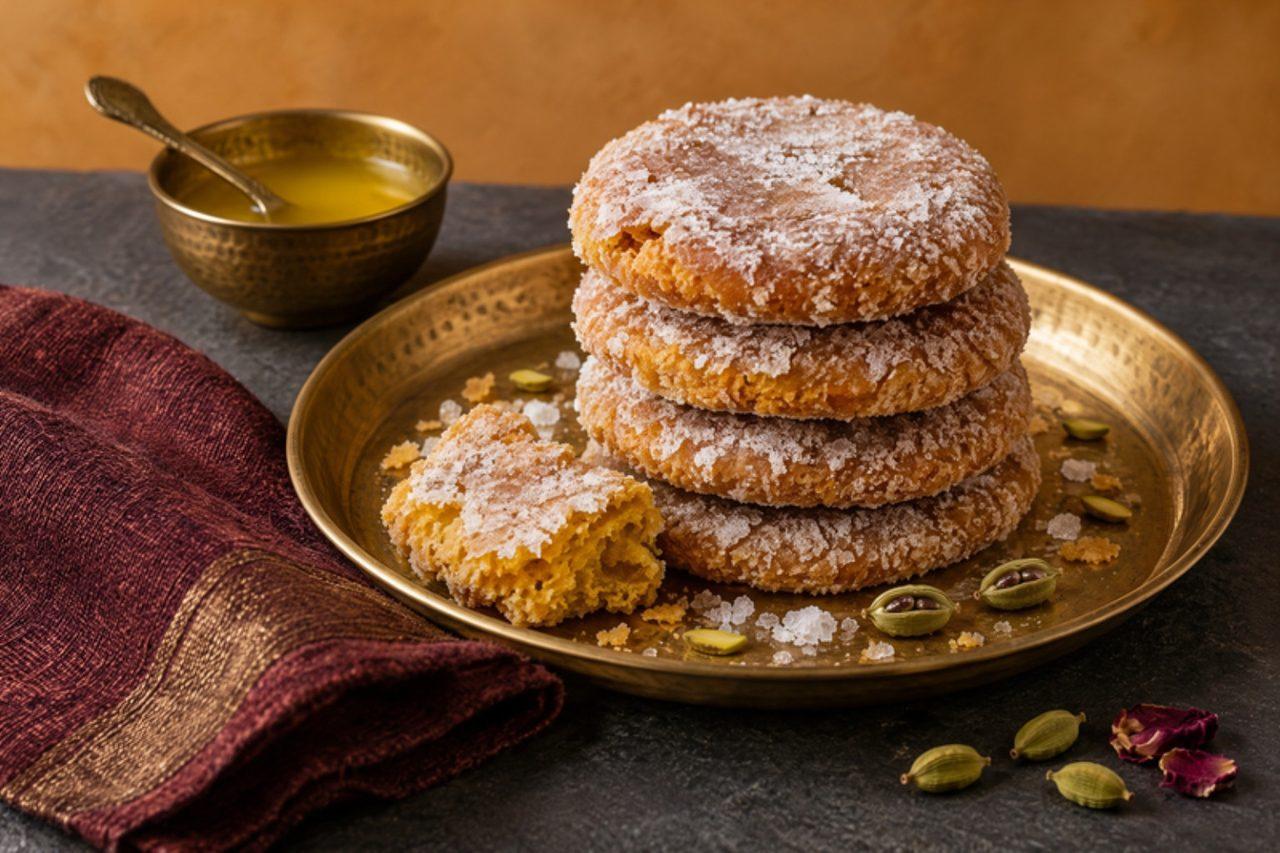
At the Shrinathji temple in Nathdwara, near Udaipur, thor is one of the dry prasads that pilgrims carry home in paper parcels, because it keeps for weeks. A very short dough of flour, semolina and plenty of ghee is shaped into thick discs, fried slowly in ghee until cooked right through, then coated in sugar syrup that dries to a crisp white glaze. It crumbles like shortbread. The common mistake is frying in hot fat; the outside browns while the thick centre stays raw. Chef's tip: the ghee should be only warm when the discs go in, rising slowly to medium, so they take a full 15 minutes.
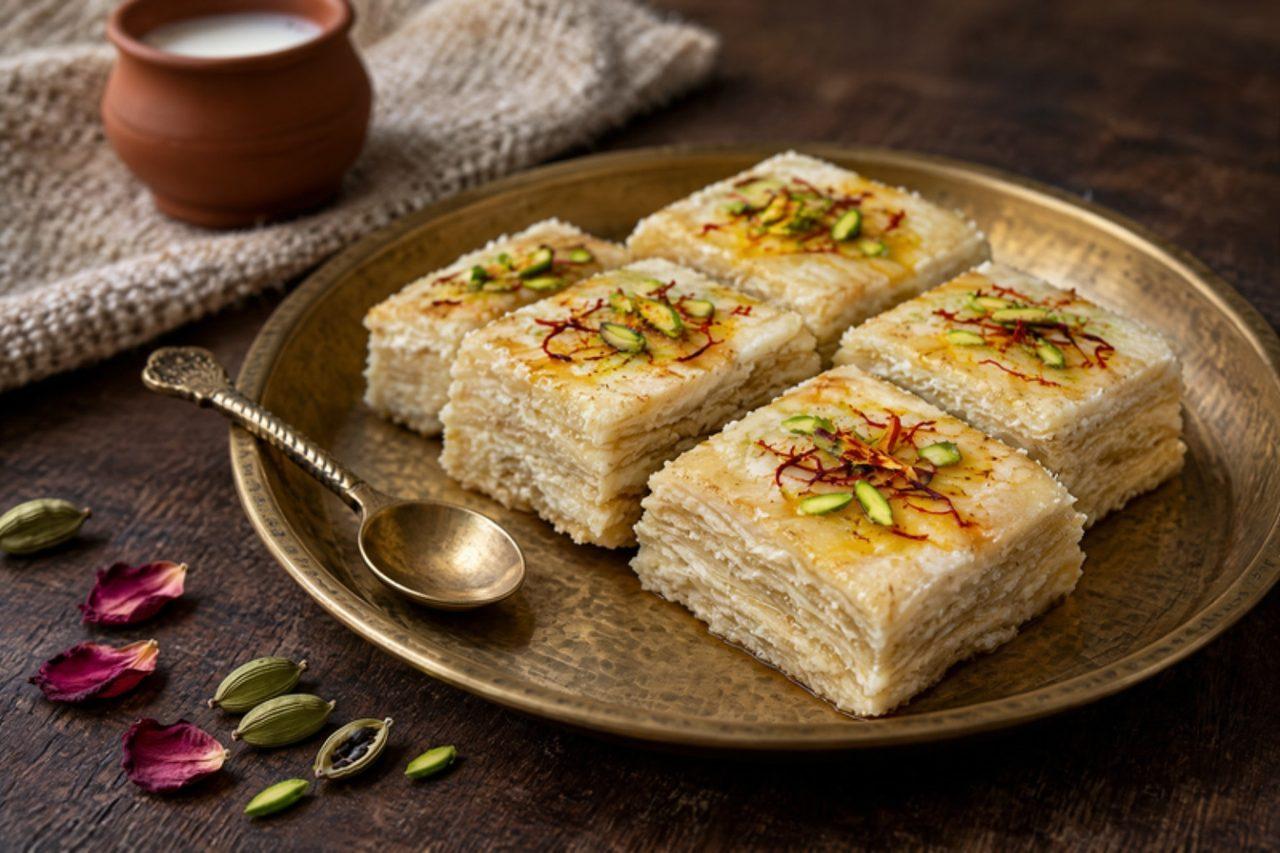
Malai gilori is one of Lucknow's most delicate sweets, sold by the old sweet shops of the Chowk, where it is made from thick sheets of malai lifted from huge pans of slowly heated, cooled milk. Each square is folded into a triangle like a gilori of paan around a filling of khoya, sugar, cardamom and chopped nuts, sometimes finished with silver leaf. It melts in the mouth and is eaten at weddings, at Eid and on winter evenings. The home method needs a wide pan and a night in the fridge. If you use silver leaf, buy one certified vegetarian. Contains milk and tree nuts. Chef's tip: once the milk has simmered, do not stir or even move the pan; the cream sheet needs to form undisturbed.
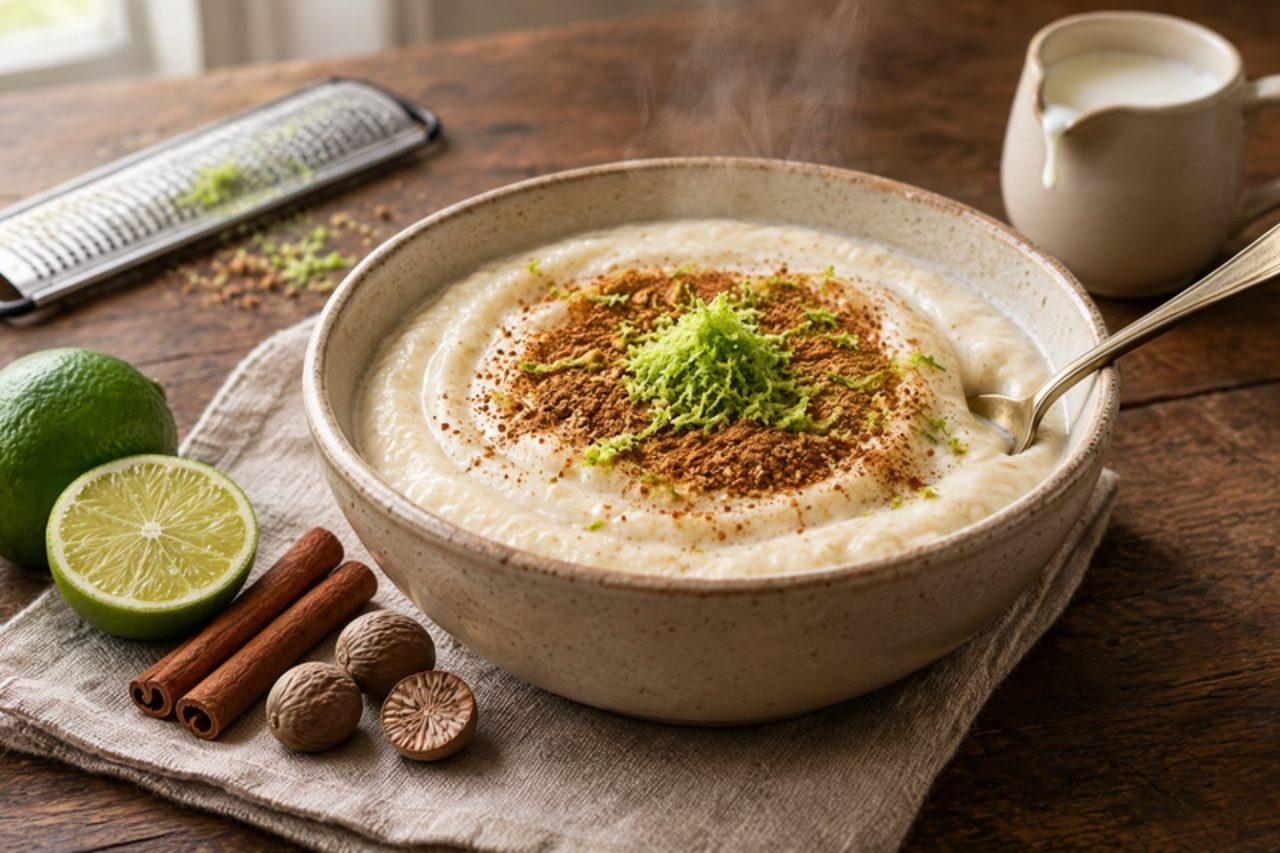
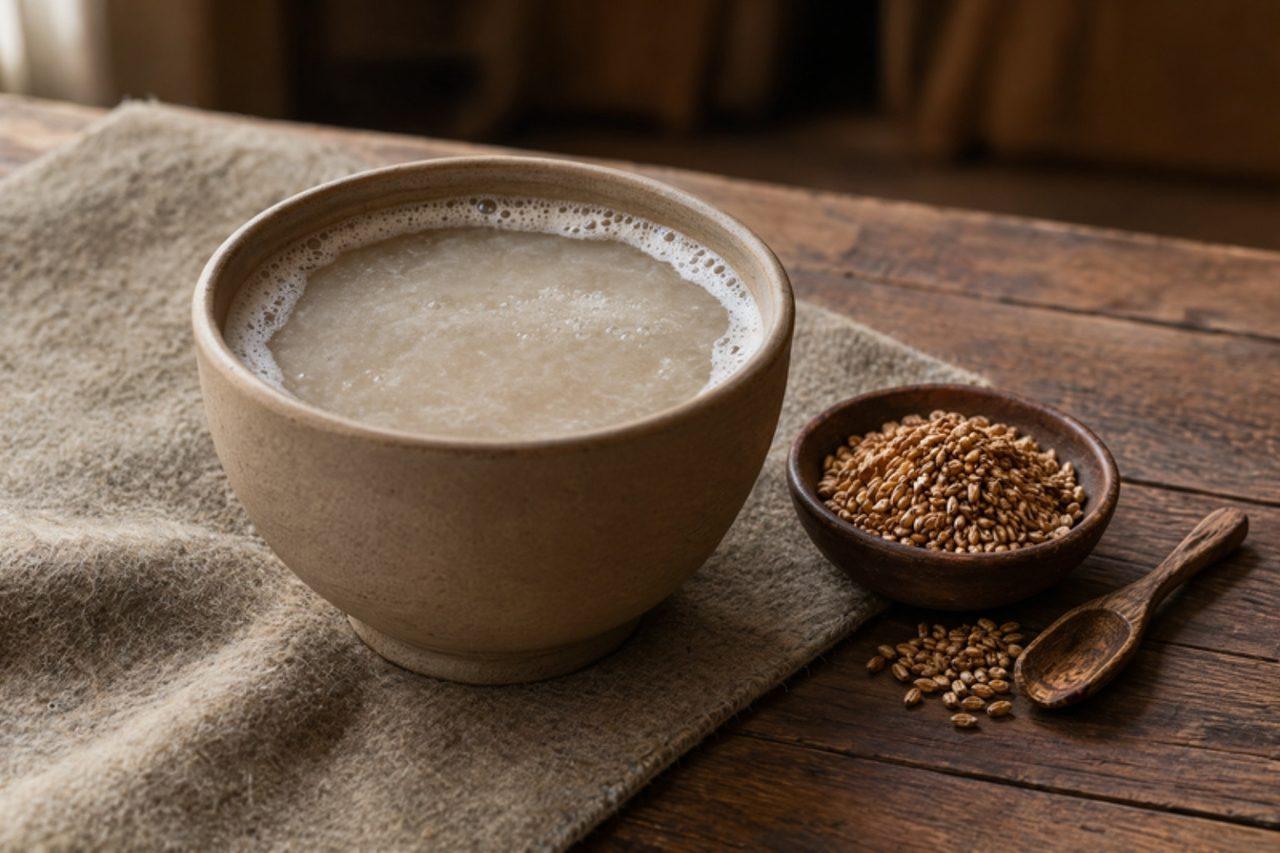
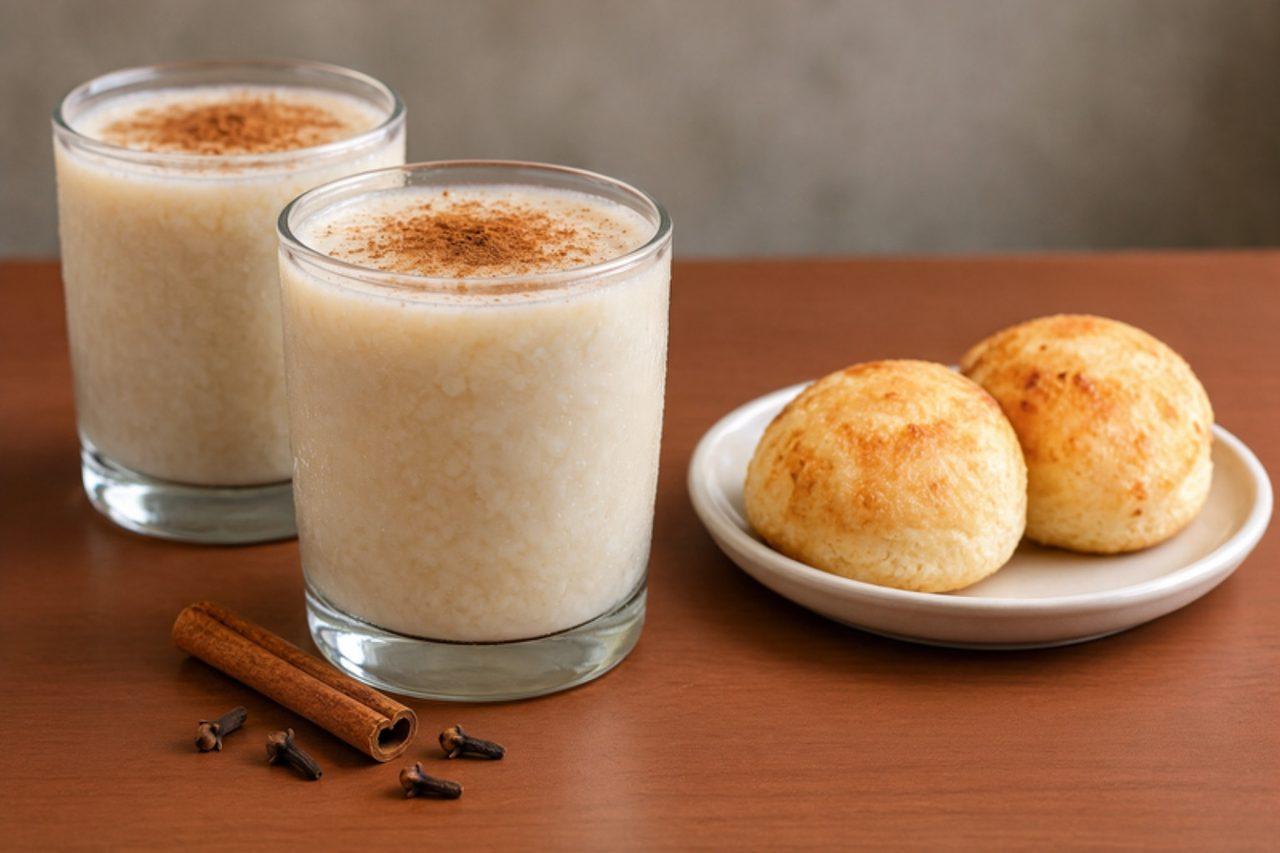
In Port-au-Prince and in towns across Haiti, a pot of labouyi farin is a cheap, filling breakfast that children grow up on: wheat flour simmered smooth with evaporated milk, cinnamon, nutmeg, star anise and a little lime zest, then sweetened and finished with vanilla. It should be pourable and silky, somewhere between custard and porridge. The common mistake is adding the flour straight to hot liquid, which makes lumps that never cook out; mix it into cold water first. Chef's tip: let it bubble gently for a full 10 minutes after it thickens, stirring, or it keeps a raw floury taste.
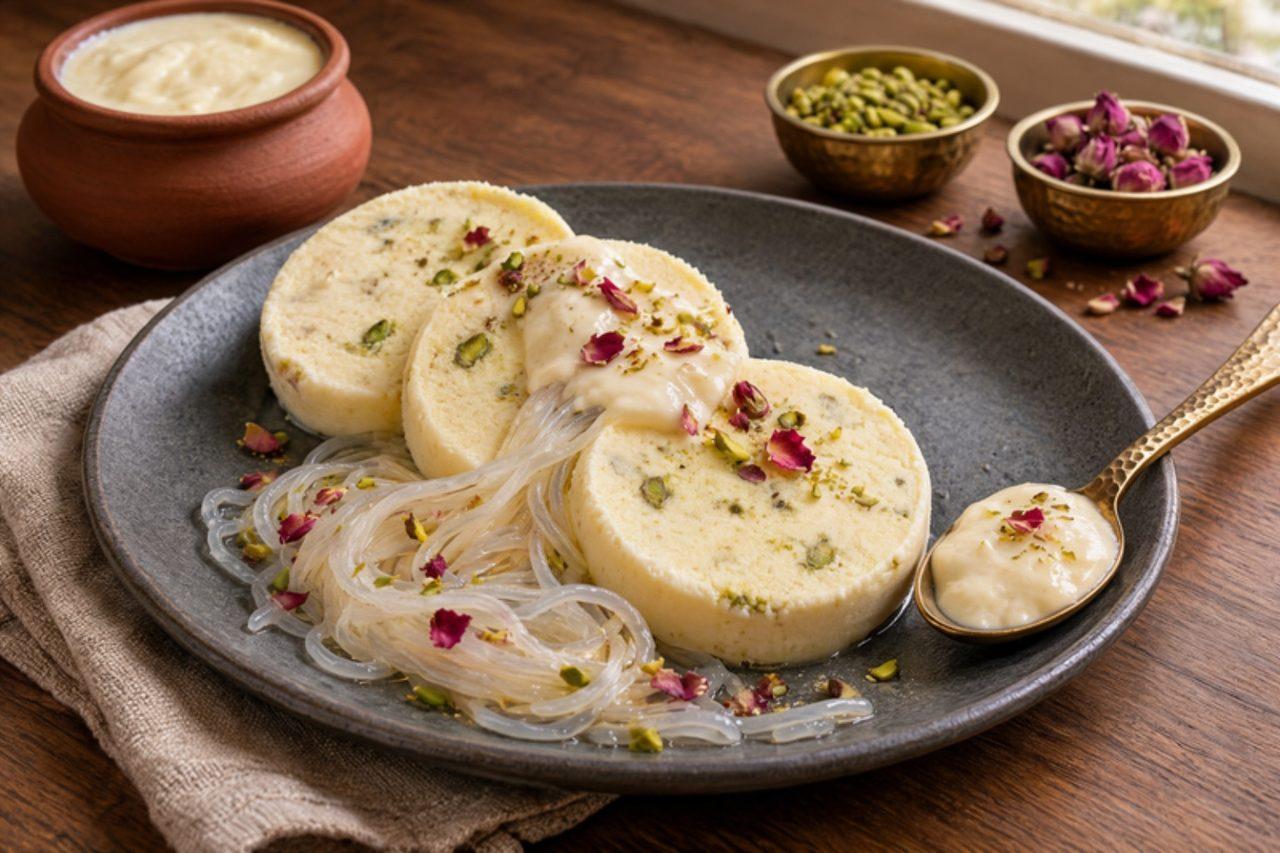
On hot Lahore nights, families stroll to Gawalmandi food street and the old shops near Anarkali for kulfa: a whole cone of dense, cardamom-scented kulfi is sliced into fat discs, laid over soft falooda noodles and spooned over with rabri, the thick sweetened milk. It is cold, chewy and creamy in every mouthful. Contains milk and tree nuts (pistachio and almond); the falooda noodles may contain wheat. Chef's tip: scrape the bottom and sides of the pan constantly as the milk reduces; one scorched patch flavours the whole batch.
Kusli are the crimped half-moon pastries that fill tins in Chhattisgarhi homes before Diwali and Chhath, close cousins of the gujiya and karanji but filled with semolina roasted in ghee, dry coconut and sugar rather than mawa. They keep for a fortnight and are handed to visitors with thethri and khurmi. The common mistake is frying them in very hot oil; they blister and brown outside while the pastry stays raw within. Chef's tip: seal the edges with a dab of milk and a firm pinch-and-fold twist so not a crumb of filling leaks into the oil.
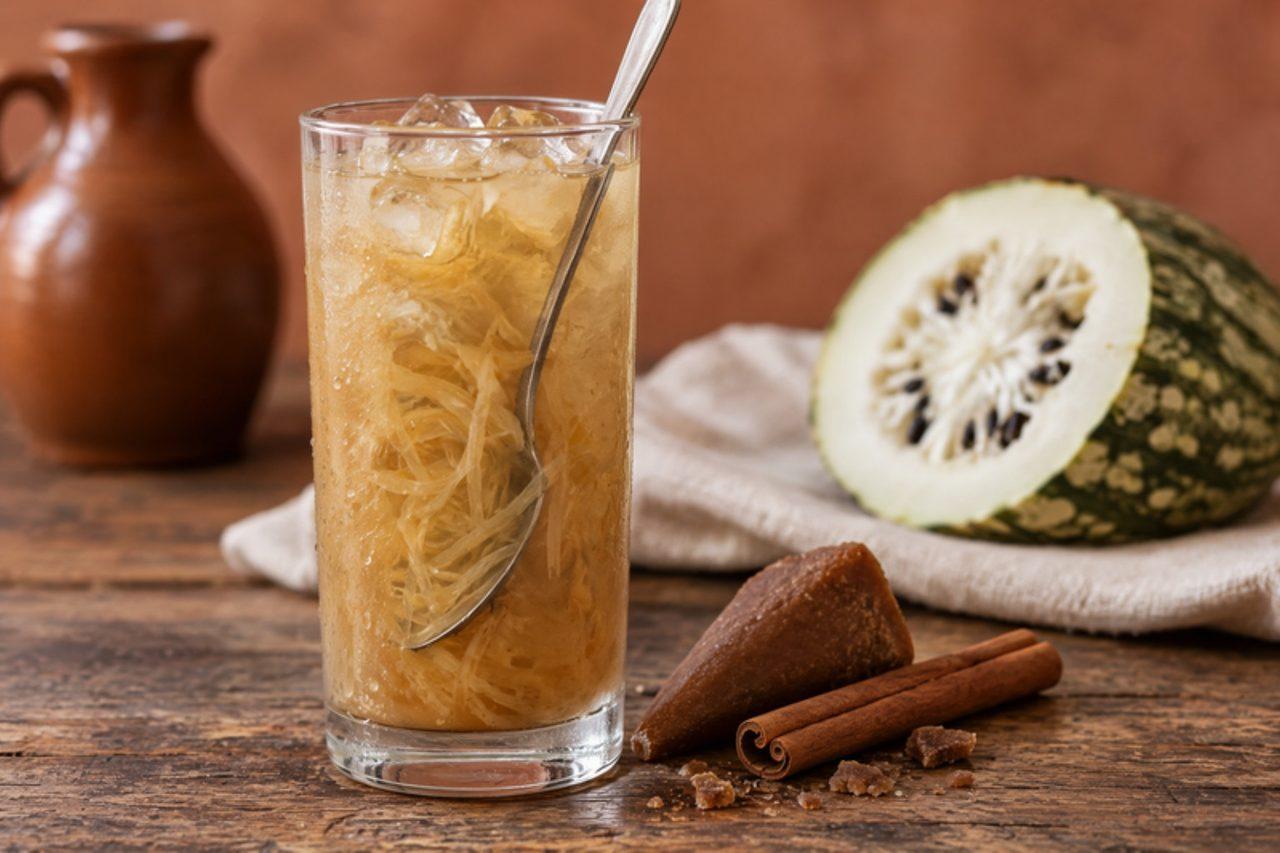
When the big, mottled chilacayote squashes ripen at the end of the rains, cooks in Oaxaca's valleys and the Mixteca of Puebla turn them into a drink you eat with a spoon. The flesh is cooked with dark piloncillo and cinnamon until it falls into translucent threads, then cooled and loosened with water; in Oaxaca it is ladled out of clay jars at fairs, weddings and the Day of the Dead, often with a little pineapple. It tastes like cinnamon-scented panela, with soft, slightly crunchy strands that slide up the straw. The usual mistake is boiling it to mush; overcooked flesh goes cloudy and the strands disappear. Simmer gently and stop when the threads separate easily with a fork but still have a little bite. It is ready when the syrup is amber and the strands look glassy. Chilacayote is hard to find outside Mexico; spaghetti squash is the best substitute and gives the same threads. Keeps 3 days in the fridge. Chef's tip: grate a little orange zest into the pot in the last minute to brighten the piloncillo.
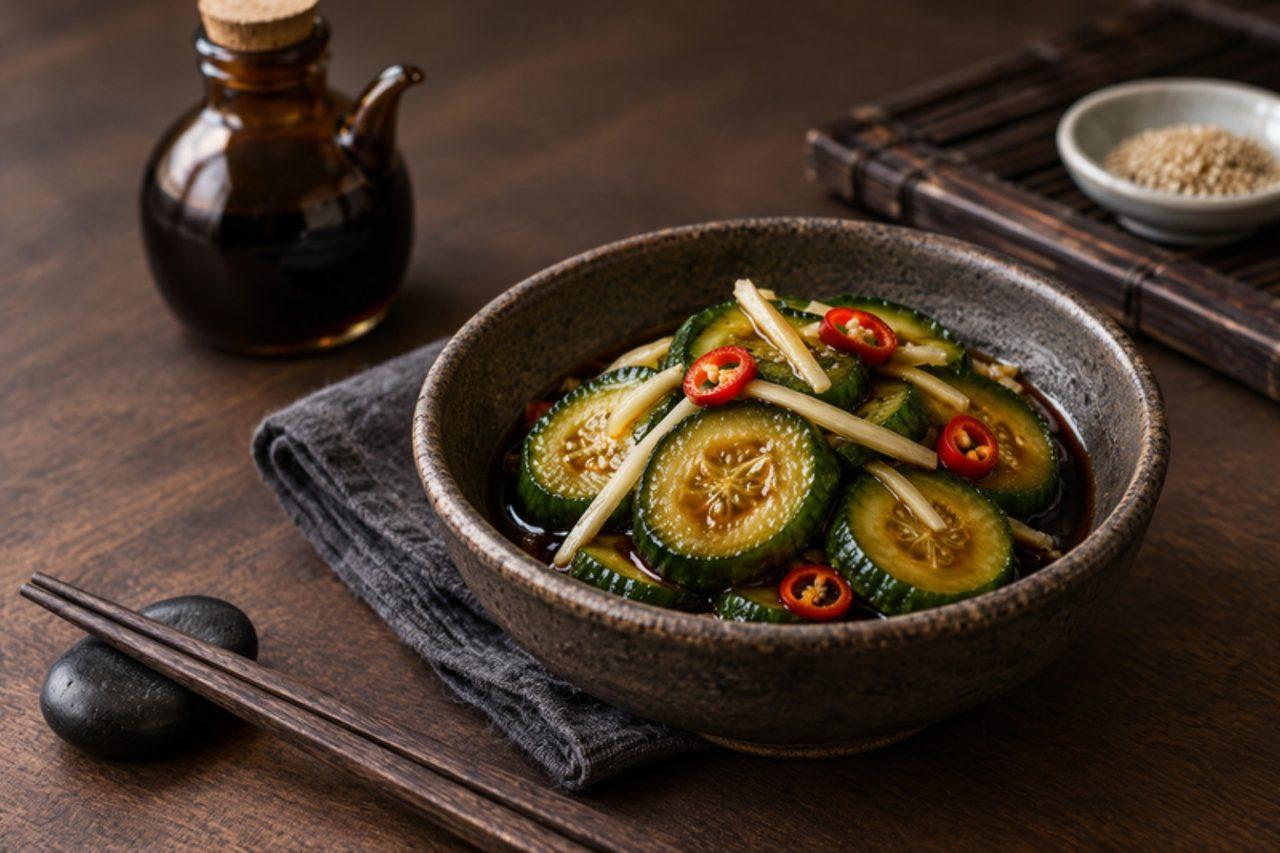
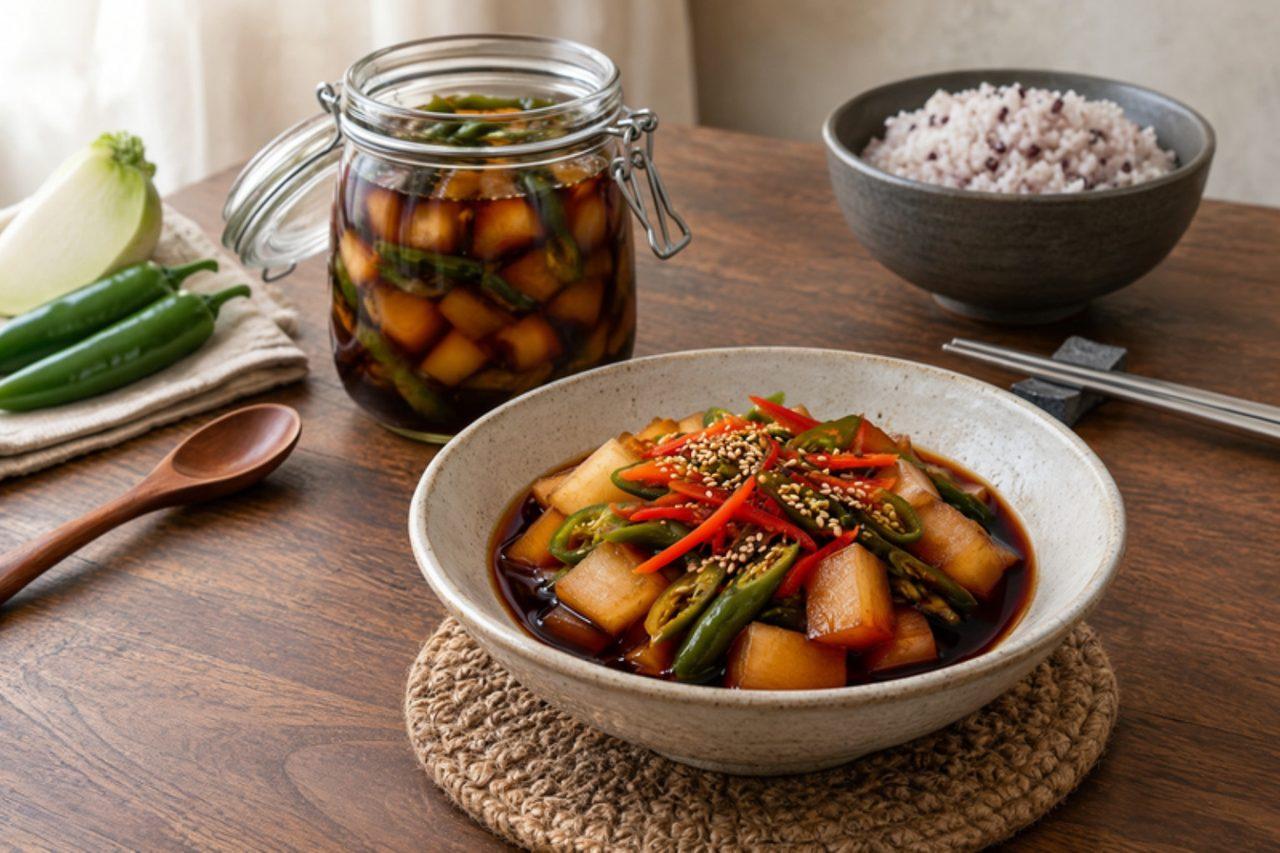
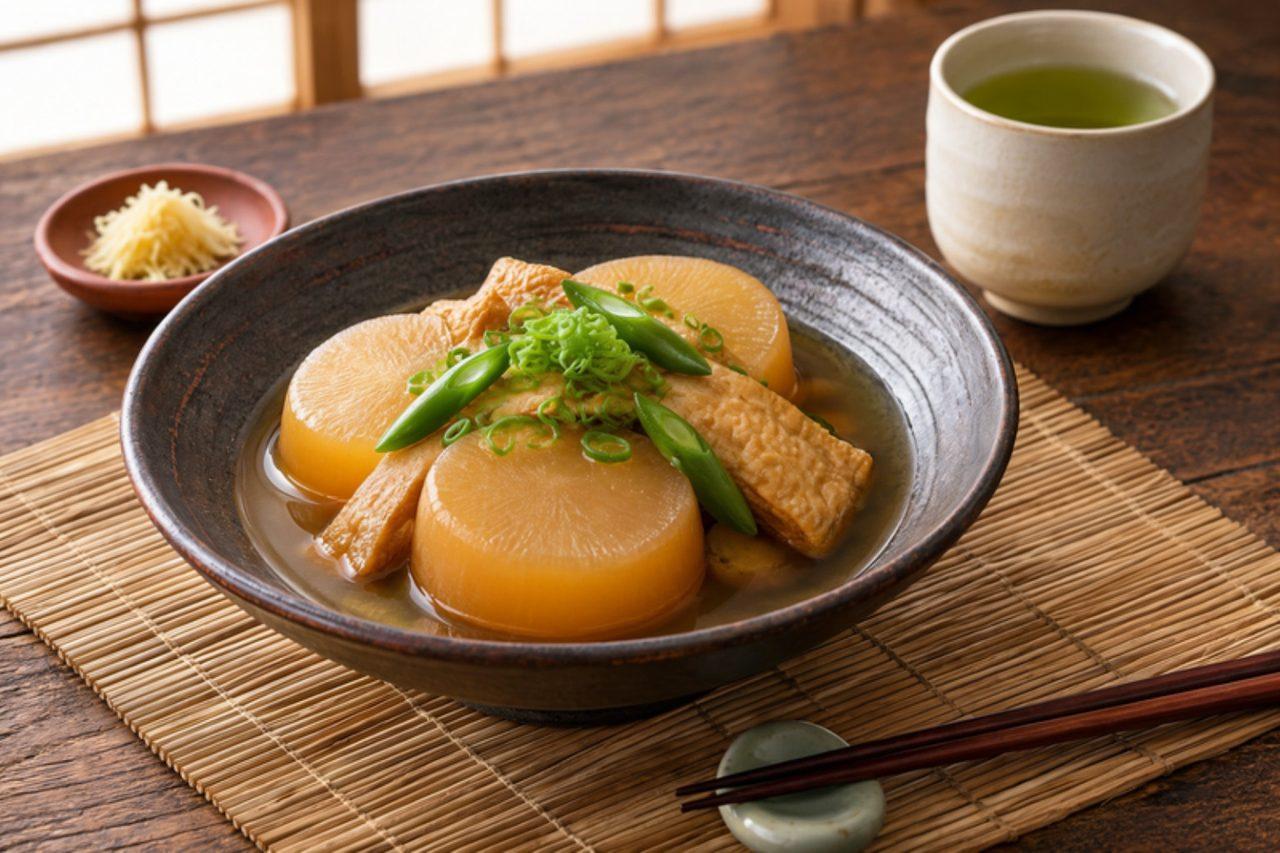
When summer gardens across Japan produce more cucumbers than anyone can eat, grandmothers make this: thick cucumber rounds scalded in a pot of soy sauce, vinegar, sugar, ginger and chilli, then left to soak. It appears in July and August beside white rice and miso soup, rolled into onigiri, and on the table at rural inns as the small dish everyone reaches for. It is deeply savoury, a little sweet, with a ginger and chilli warmth and a surprising snap, because the cucumbers are drained and scalded again instead of simmered. The common mistake is boiling the cucumbers in the liquid: they go soft and olive-coloured. Instead, pour the boiling liquid over, drain it off, reheat it, and pour it back, twice; each round draws out water and keeps the crunch. They are ready when the rounds are glossy dark brown, slightly wrinkled at the edges and crunchy right through. Use firm, small-seeded cucumbers such as Japanese or Lebanese; large salad cucumbers with big seeds go soggy. Chef's tip: add a strip of kombu in the last round and a handful of toasted sesame seeds when you serve, for deeper flavour.
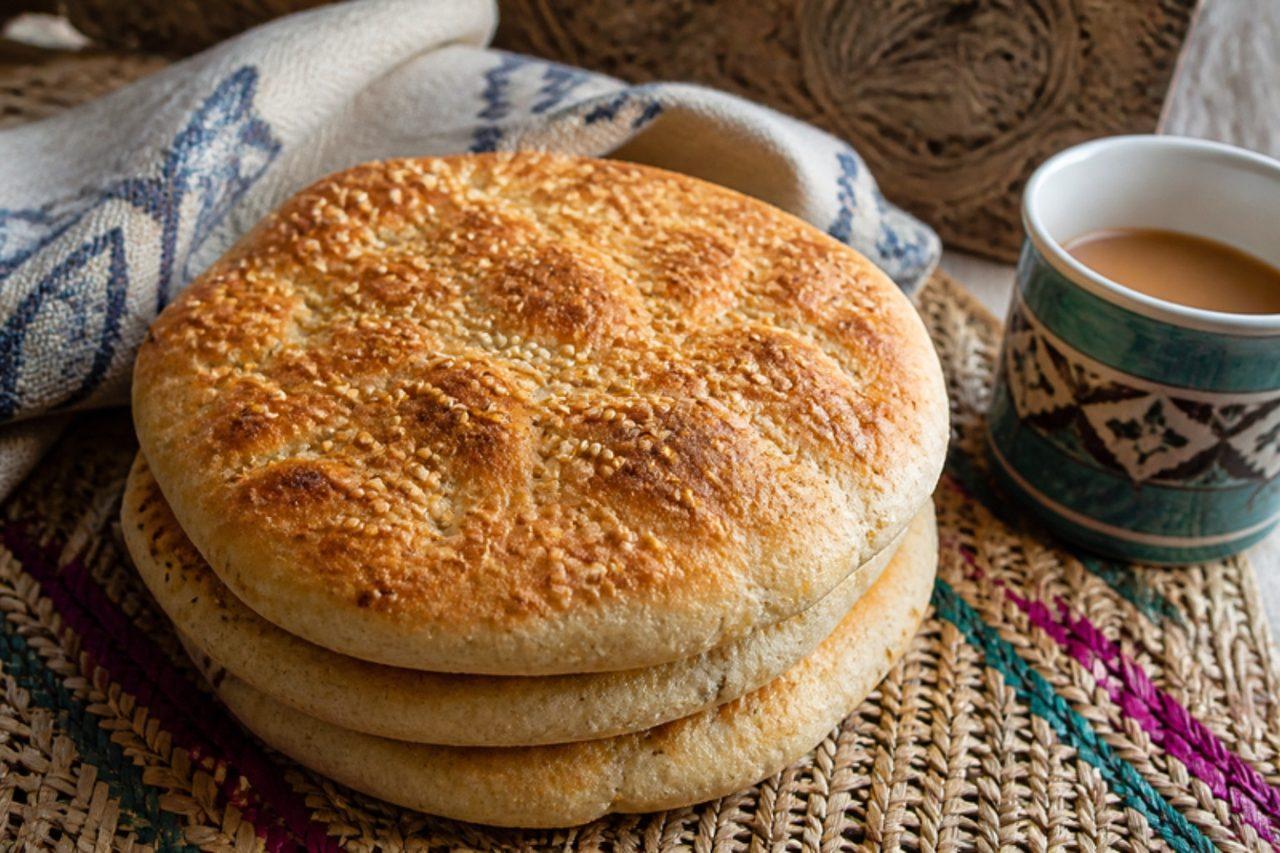
Before dawn in Lamu's narrow lanes, bakers slap rounds of mofa dough onto the hot walls of a clay oven, and by breakfast the breads are stacked in baskets beside glasses of spiced tea. The dough mixes millet and wheat flour with coconut milk, a little sugar and cardamom, then ferments overnight, so each bread comes out soft and slightly chewy with a tangy, nutty taste and a blistered top. Islanders eat them with tea, with fried fish, or split and dipped in a bean or coconut sauce. Without a clay oven, a heavy pan on the hob plus a hot grill gives the same blistering; just don't roll the dough thin like chapati, a common slip, because mofa should be about 1 cm thick and pressed out by hand. Chef's tip: wet your palms before shaping, as islanders do; the dough is soft and the water stops it sticking.
Order an ensalada at a pupusería in El Salvador and a tall glass arrives: apple juice crowded with tiny cubes of apple, mango and marañón (cashew fruit), drunk through a straw and finished with a spoon. It is the country's favourite cooler for hot afternoons and Sunday lunches. Outside Central America cashew fruit is rare, so pineapple stands in well. Cutting the fruit too big is the mistake people make; pieces should be small enough to come up a wide straw. Chef's tip: chop the apple last and drop it straight into the juice so it stays white.
Jholi is the thin, everyday kadhi of Kumaon, cooked when there is curd in the house and no time for pakoras, and spooned over rice for a quick lunch. It is tempered with jakhya, a tiny crunchy hill seed with a mustardy bite, and coloured gold with turmeric. Because there are no fritters, it is lighter and tangier than a Punjabi kadhi. The common mistake is letting it boil before the gram flour has cooked in, which splits the curd into grains. Chef's tip: keep stirring in one direction until the first bubble; after that the jholi is stable and can simmer on its own.
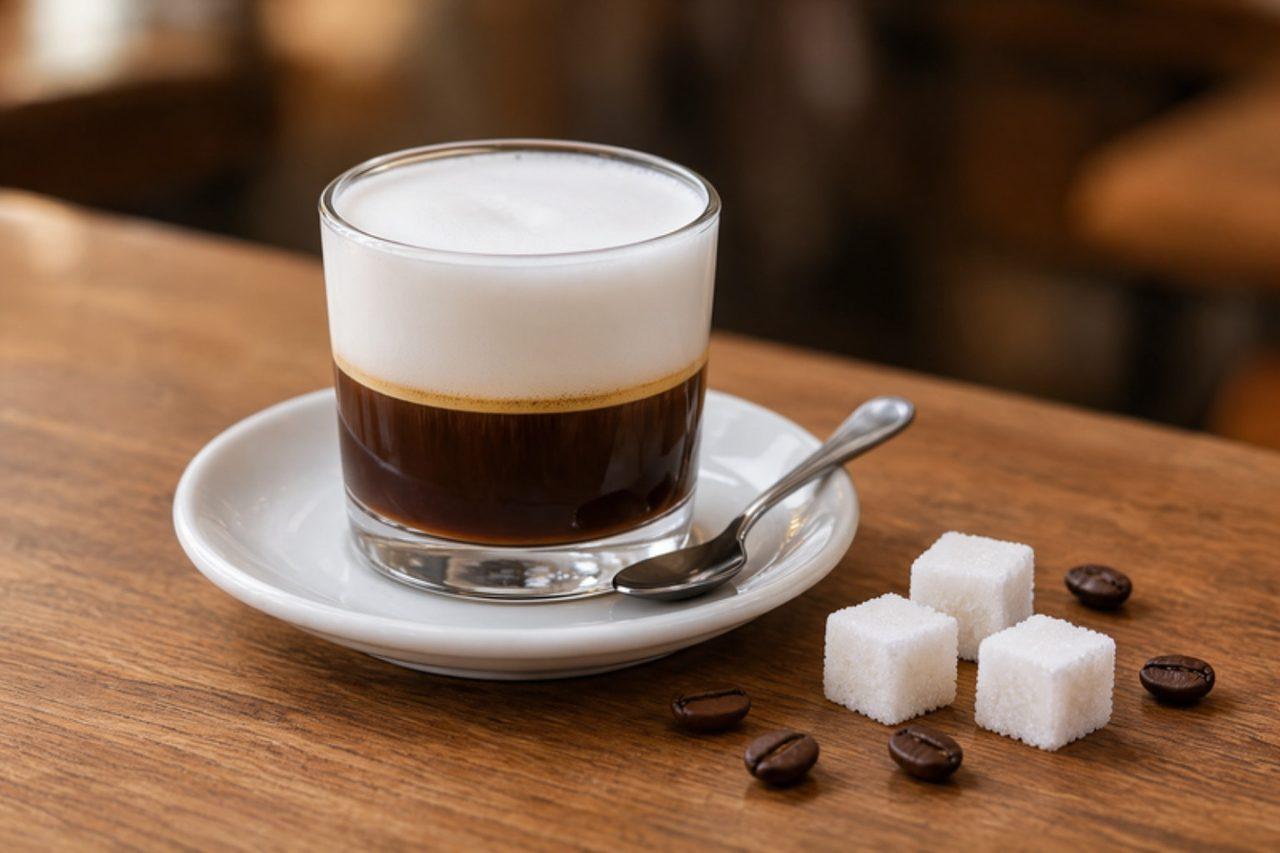
The Einspänner is named after the one-horse carriages of old Vienna: coachmen waiting outside in winter supposedly liked their coffee under a lid of cream that kept it hot and stopped it slopping. Today it is served in a handled glass at classic coffee houses, a strong black mocha (a double espresso or Großer Brauner without milk) topped with a thick layer of cold, lightly sweetened whipped cream and a pinch of icing sugar. You do not stir it: you sip the hot, bitter coffee through the cold, sweet cream, so each mouthful is two temperatures and two textures. It is an afternoon or late-morning coffee, often with a slice of Sachertorte. The common mistake is runny cream that sinks and turns the drink into a milky latte; whip it until it just holds a peak and spoon it on gently so it floats. It is ready when the cream stands at least 2 cm above the coffee and slowly sinks at the edges. It is strong: a double shot of caffeine in one glass. Chef's tip: pour the coffee in first and wait ten seconds before adding the cream, so the crema settles and helps support the cap.
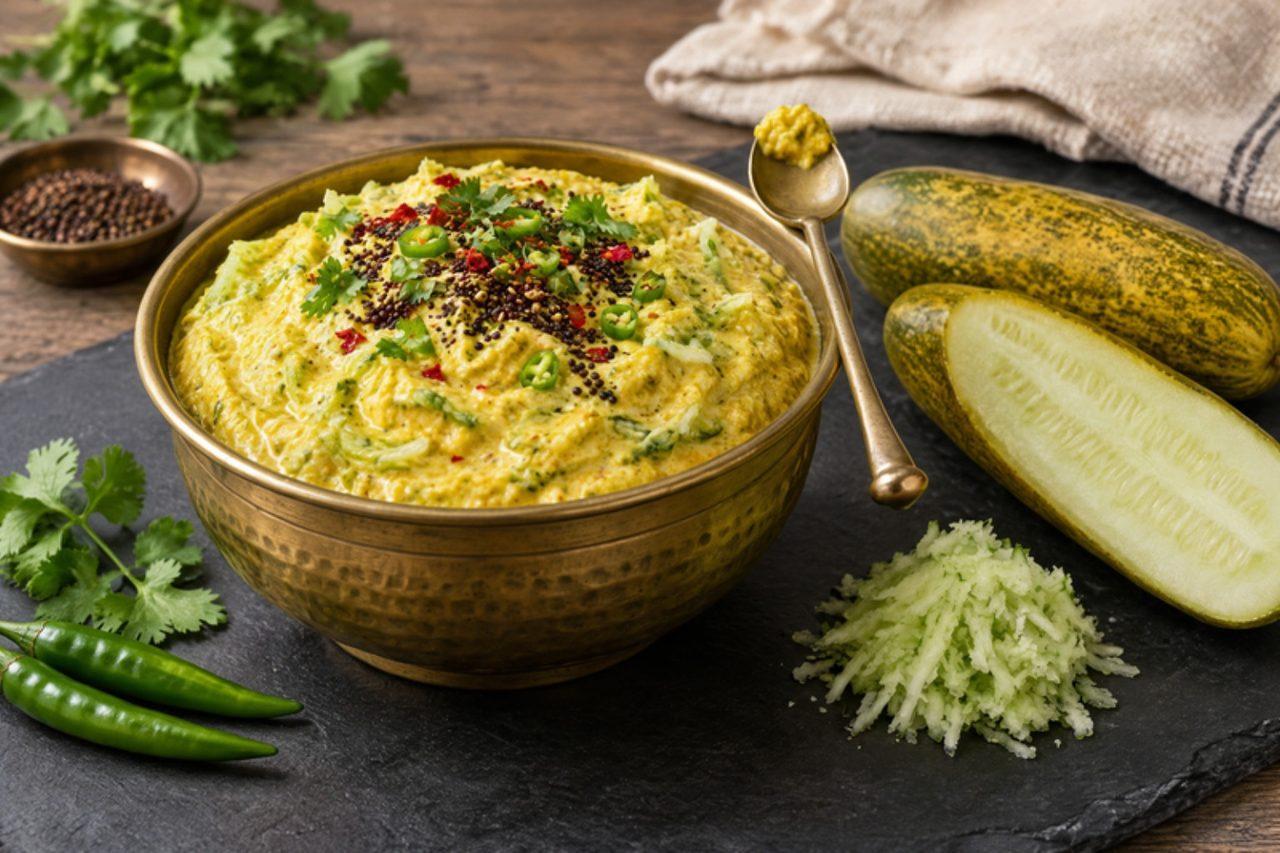
This yellow raita is the famous one of Kumaon, made from the fat, pale hill cucumbers of late summer and served at every wedding and Holi gathering. It gets its nose-tingling kick from freshly ground raw mustard seed, which is left to mellow in the curd for an hour, and its sunny colour from turmeric. It is eaten with rice, puris and pakodas. The common mistake is not squeezing the grated cucumber, which floods the raita and dulls the mustard. Chef's tip: make it at least an hour ahead and chill it; the mustard grows sharper and rounder as it rests.
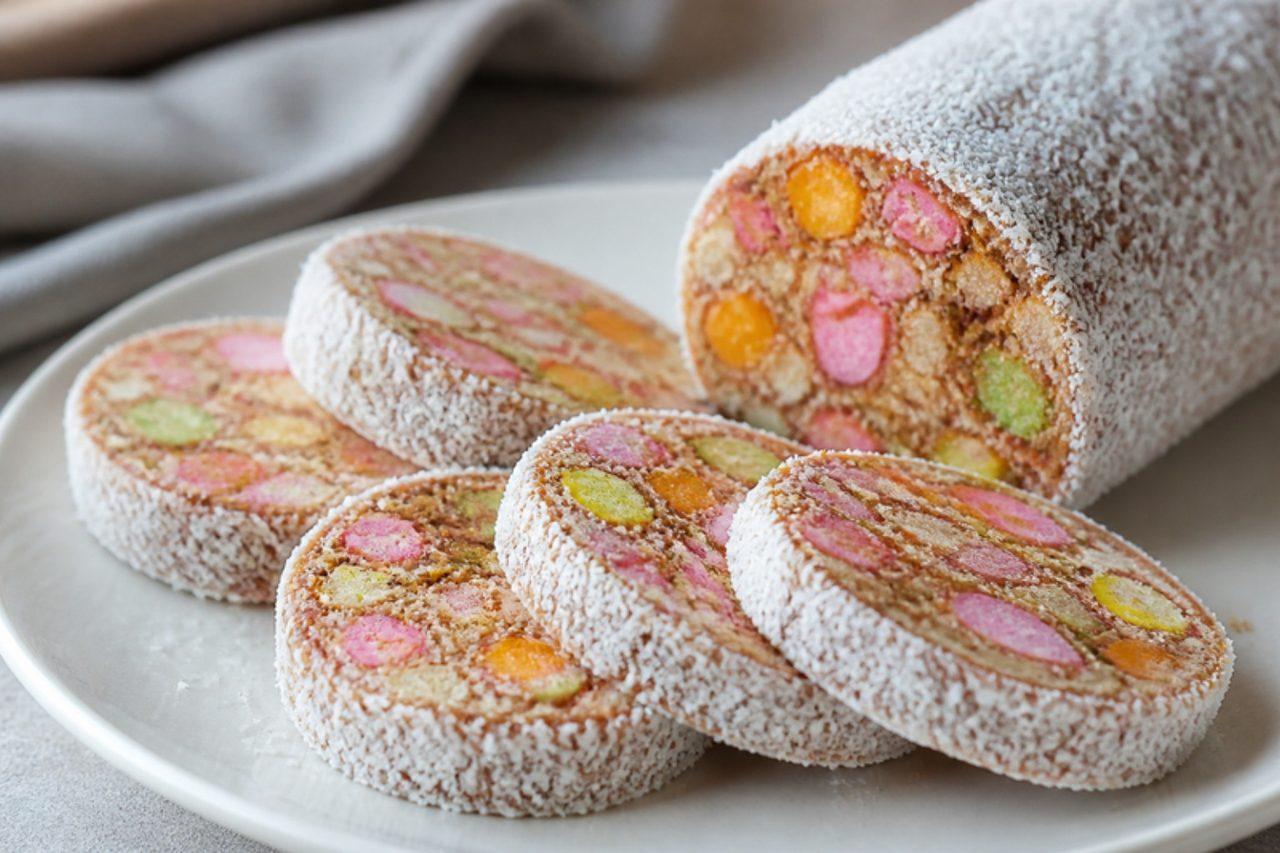
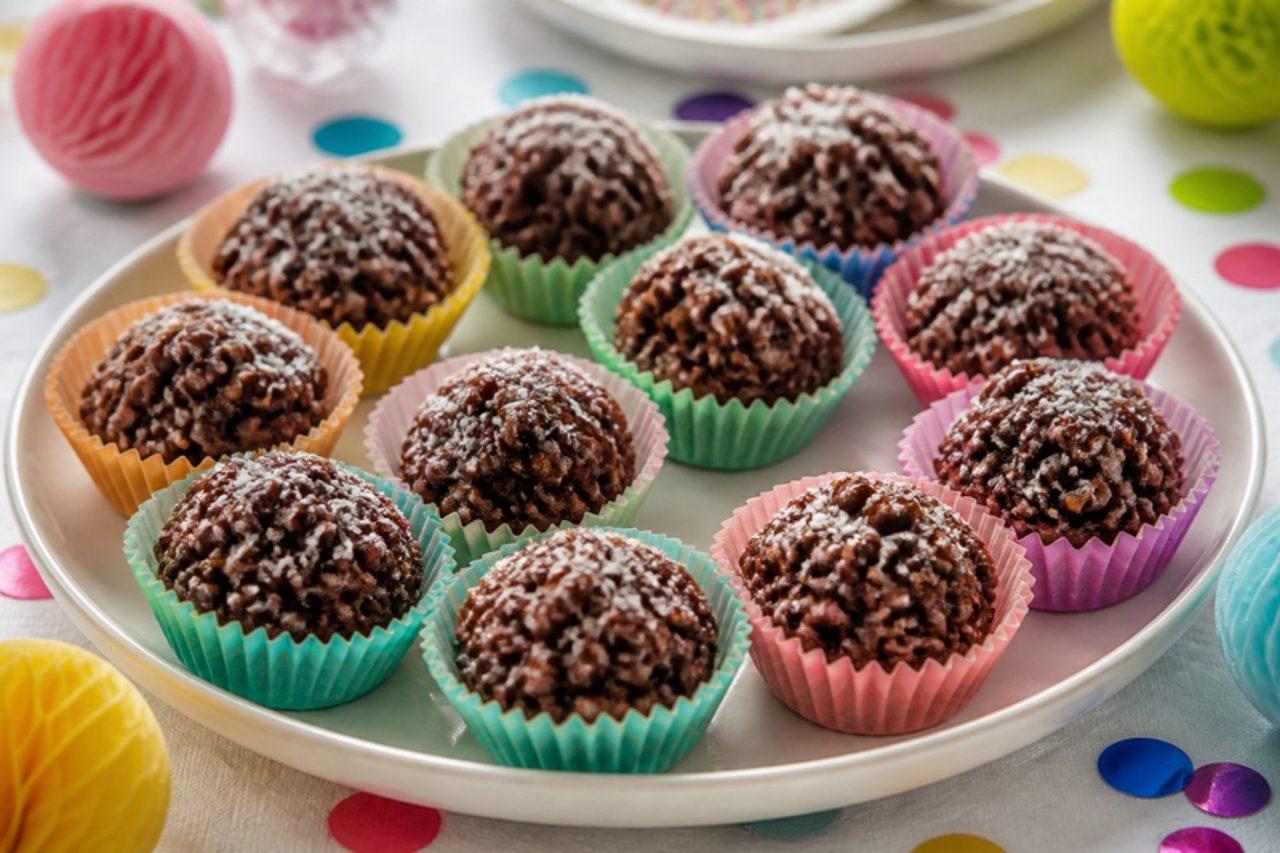
Lolly cake is the no-bake treat every New Zealand child helps make for birthday parties and bake sales, a log of crushed malt biscuits bound with butter and condensed milk, studded with chewy, brightly coloured fruit lollies (fruit puffs) and rolled in coconut. Sliced into rounds, it shows off the colours. A common mistake is crushing the biscuits to dust; leave some small chunks for texture. Many fruit lollies contain gelatine, so choose gelatine-free ones to keep it vegetarian. Chef's tip: wrap the log tightly in cling film and twist the ends so it chills into a neat cylinder.
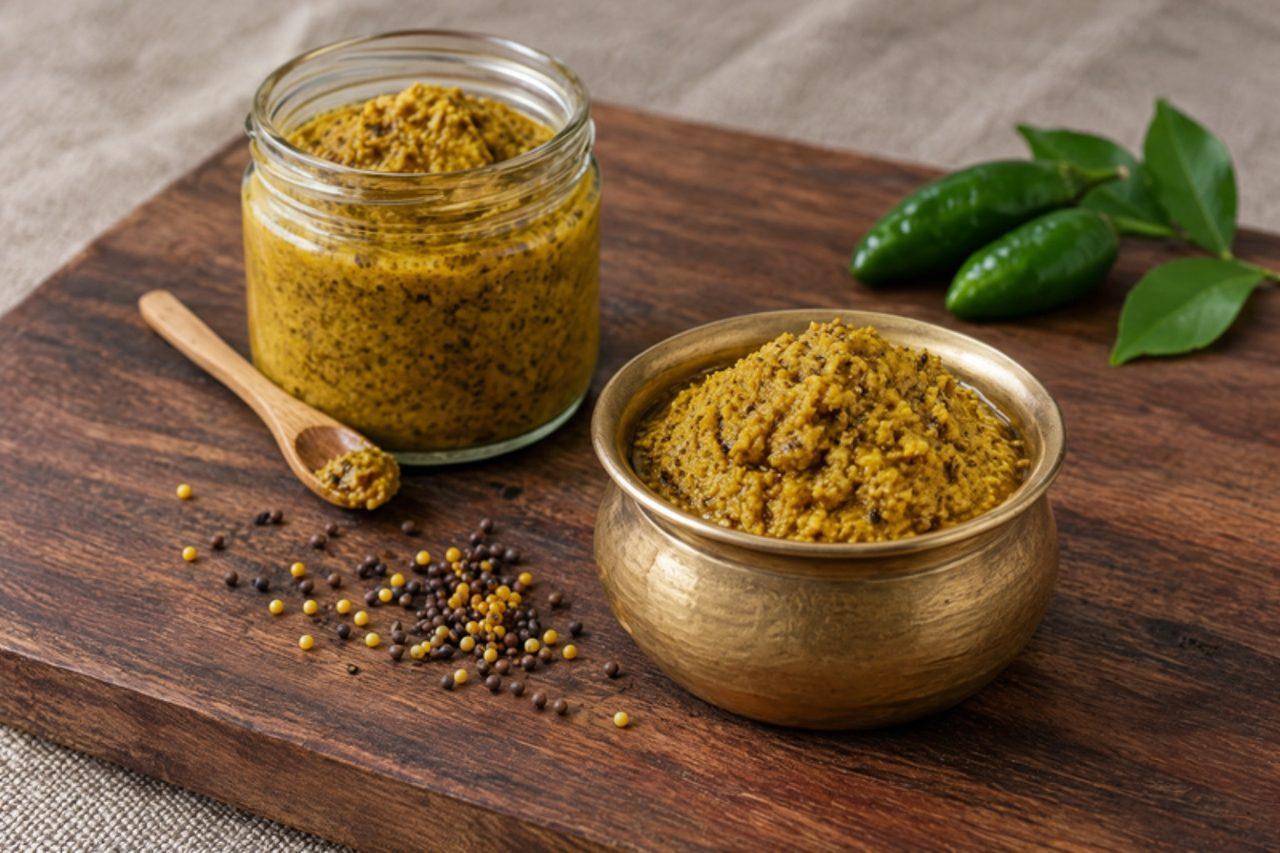
In Lima's markets ají amarillo is sold fresh all year, and most Peruvian cooks keep a tub of this paste in the fridge the way others keep tomato purée: it is the golden base of causa limeña, ají de gallina, papa a la huancaína, chupe and the sauce for tiraditos. The chillies are seeded, de-veined and blanched in three changes of water, which tames the heat and the raw grassiness, then peeled and blended with oil into a thick, silky, saffron-orange paste. It tastes fruity and sunny, almost like apricot and passion fruit, with a rounded, medium heat. Abroad, buy whole frozen ají amarillo from Latin grocers; dried ají mirasol, soaked, gives a darker, earthier paste. Common mistake: skipping the peeling; the thin skins leave papery flecks and a bitter edge. It is ready when it is completely smooth and holds a soft peak like thick hummus. This is a low-acid paste: keep it in the fridge for a week or freeze it, never on the shelf. Chef's tip: freeze it in an ice-cube tray; one cube is about a tablespoon, just right for a pot of ají de gallina.
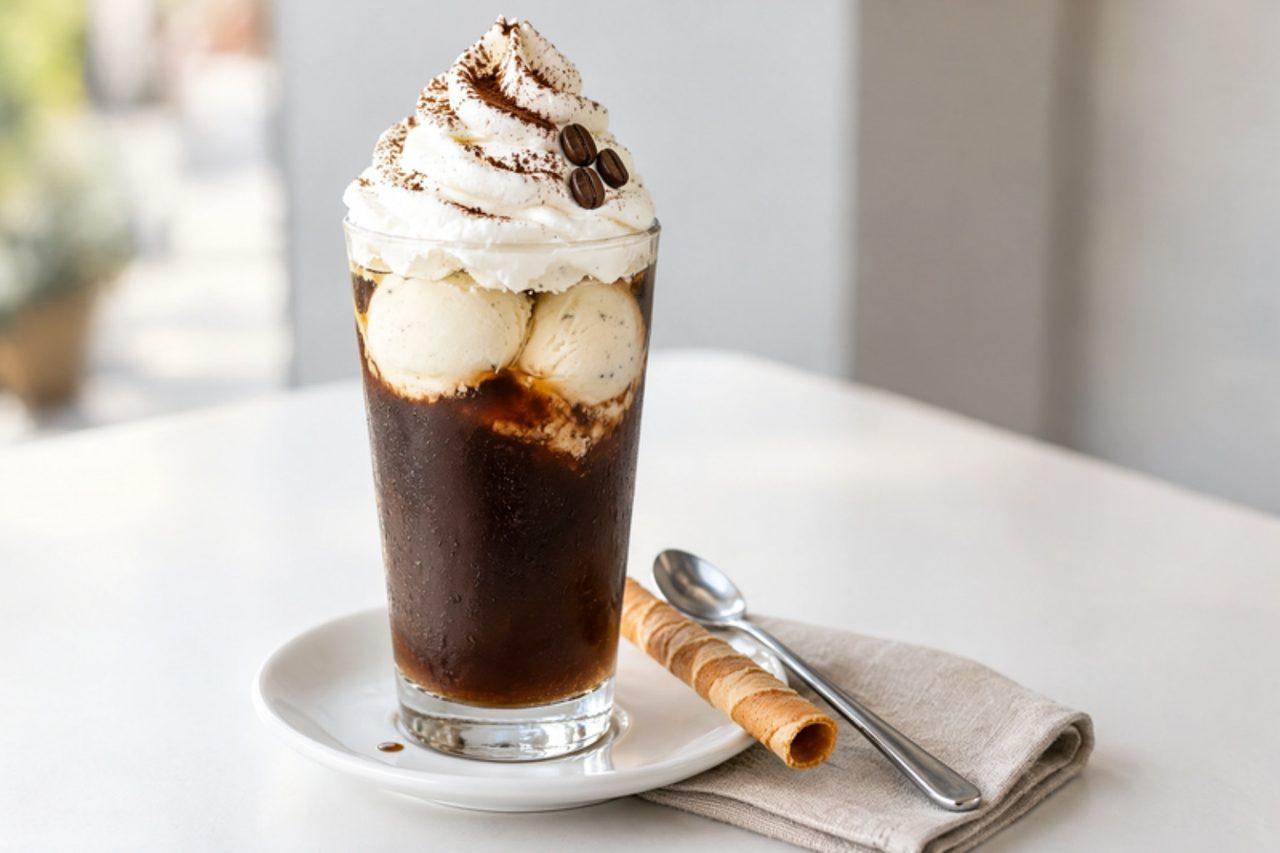
On a hot July afternoon in any German or Austrian Eiscafé, from a Hamburg promenade to a Viennese Gastgarten, the tall glass with the long spoon is Eiskaffee. It is not iced coffee in the American sense: strong coffee, chilled, is poured over two scoops of vanilla ice cream and crowned with sweetened whipped cream, sometimes a wafer and a dusting of cocoa or grated chocolate. You drink the cold coffee through a straw while the ice cream slowly melts into it, then spoon up the creamy, half-frozen rest, so it is part drink, part dessert, eaten at the café in the afternoon rather than with a meal. The usual mistake is pouring hot or even warm coffee straight onto the ice cream: it melts at once into a thin, lukewarm, milky soup. Brew it earlier and chill it properly. It is ready when the coffee is fridge-cold, the scoops sit just proud of the surface and the cream holds soft peaks on top. It is moderately caffeinated, so keep it for adults and older teens. Chef's tip: freeze leftover coffee in ice-cube trays and add a couple to the glass so nothing gets diluted with water.
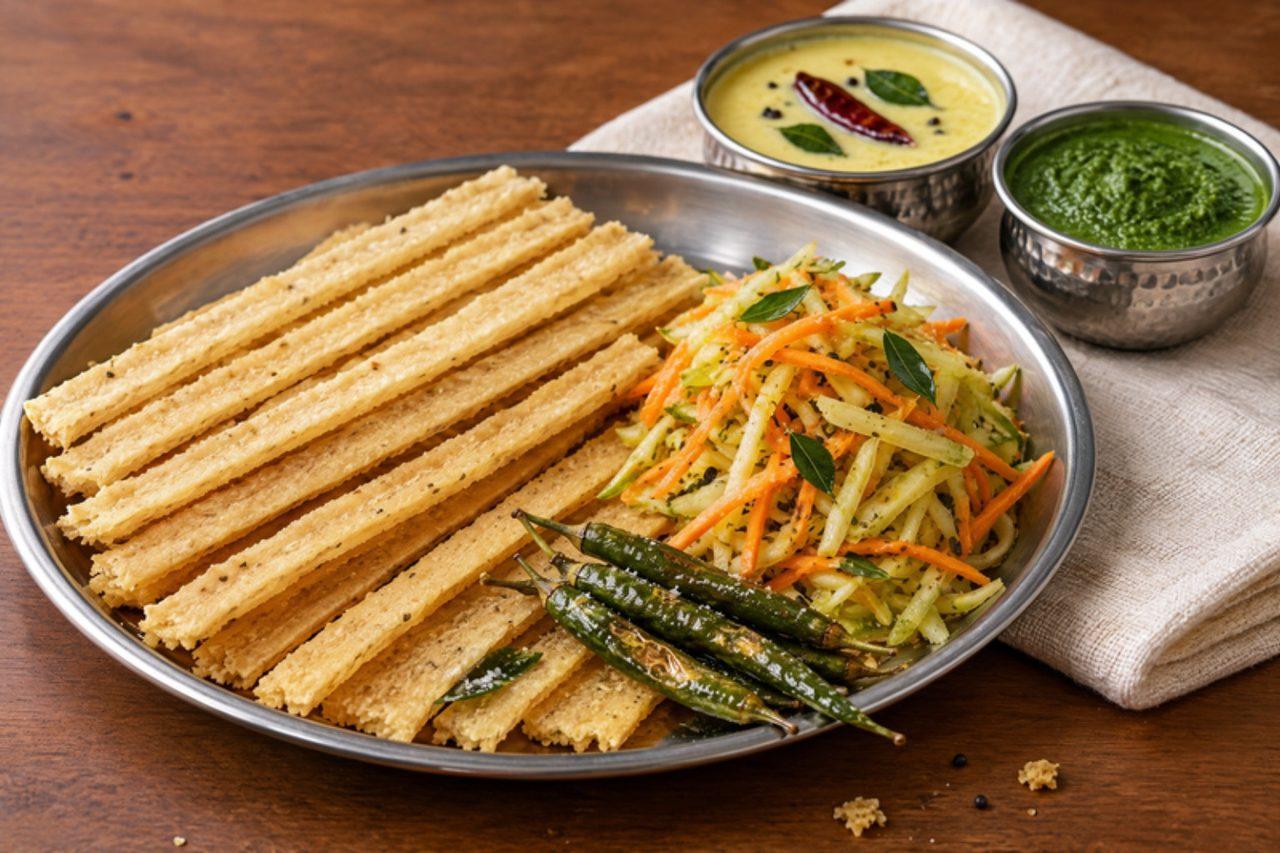
On Sunday mornings, and above all on Dussehra, Ahmedabad queues outside its farsan shops for paper parcels of fafda: long, pale-gold strips of gram flour dough, crisp and gently salty with carom, eaten beside hot jalebi, a sour-sweet raw papaya relish called sambharo and whole fried chillies. The real craft is the shaping, done by pushing a little log of dough along a wooden board with the heel of the hand until it stretches into a thin ribbon. Chef's tip: knead the dough with your knuckles for a full 5 minutes until it turns smooth and slightly shiny, or the strips tear as you push them.
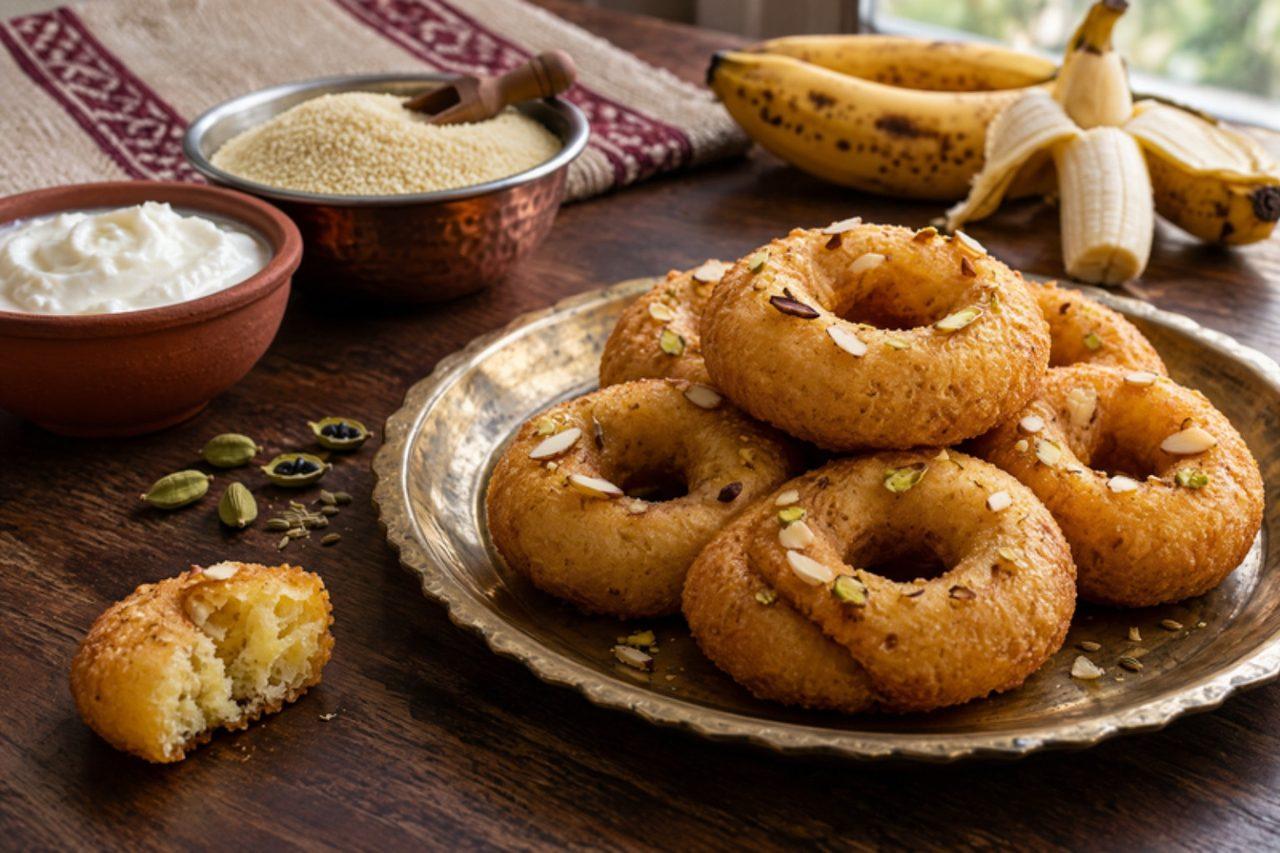
Singal (also called singhal) are sweet, spongy spirals from Kumaon, fried for Diwali, weddings and the Harela festival and offered at the temple before the family eats them. A thick batter of semolina, ripe banana, curd and sugar rests until the semolina swells, then it is piped or poured in a spiral into hot ghee or oil. The outside turns crisp and the inside stays soft like a doughnut. The common mistake is frying straight away; unrested batter spreads into flat, greasy shapes. Chef's tip: the batter is right when it falls from a spoon in a thick ribbon that holds its shape for a second.
Burmese teashops, from the busy corners of Yangon to small-town Shan State, run on laphet yay: very strong black tea poured over condensed and evaporated milk, and customers order it by sweetness, from "pan pyar" (less sweet) to "cho seint" (extra sweet and creamy). It comes with samusa, palata or a bowl of mohinga. The mistake is weak tea: it must be brewed long and dark so it stands up to all that milk. Chef's tip: pour the finished tea from one jug to another from a height a few times; it cools slightly and gets the frothy top teashops are proud of.
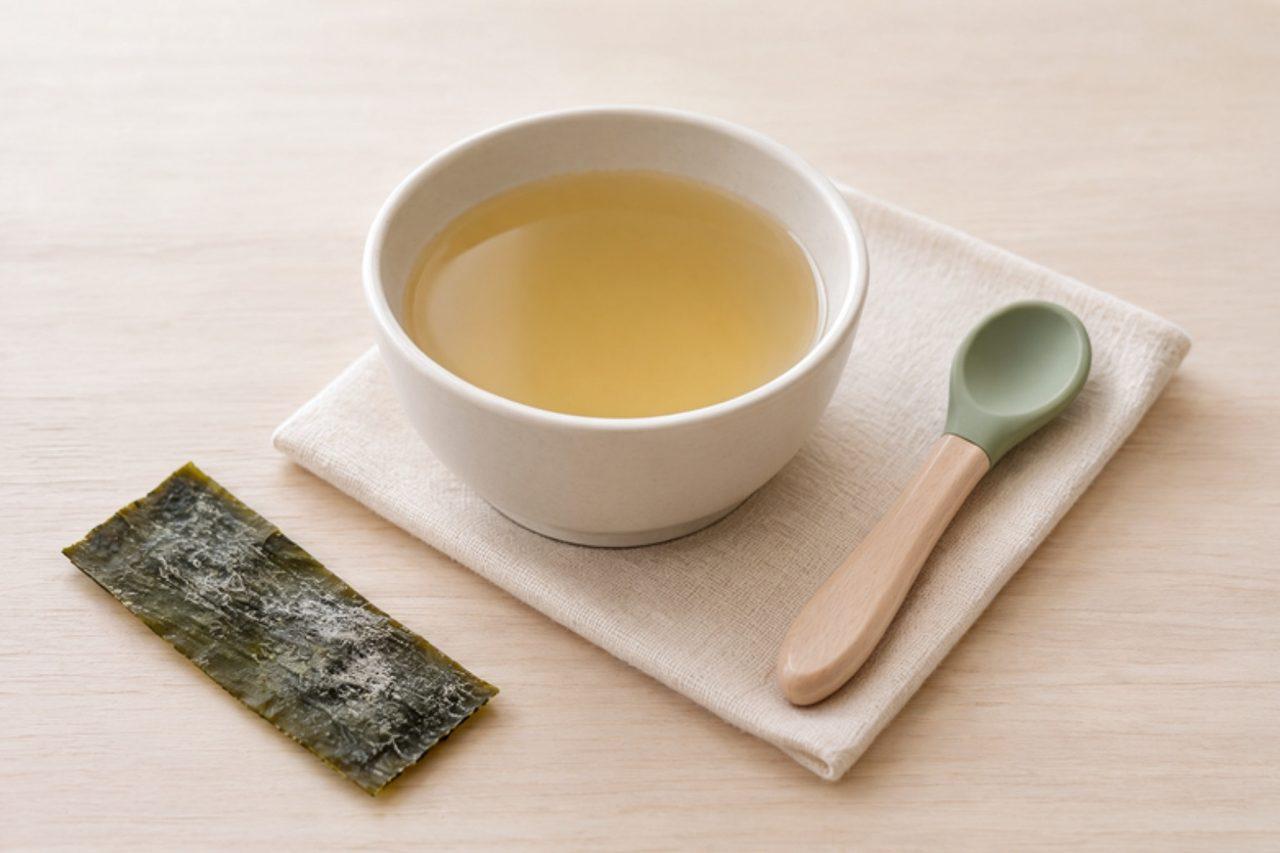
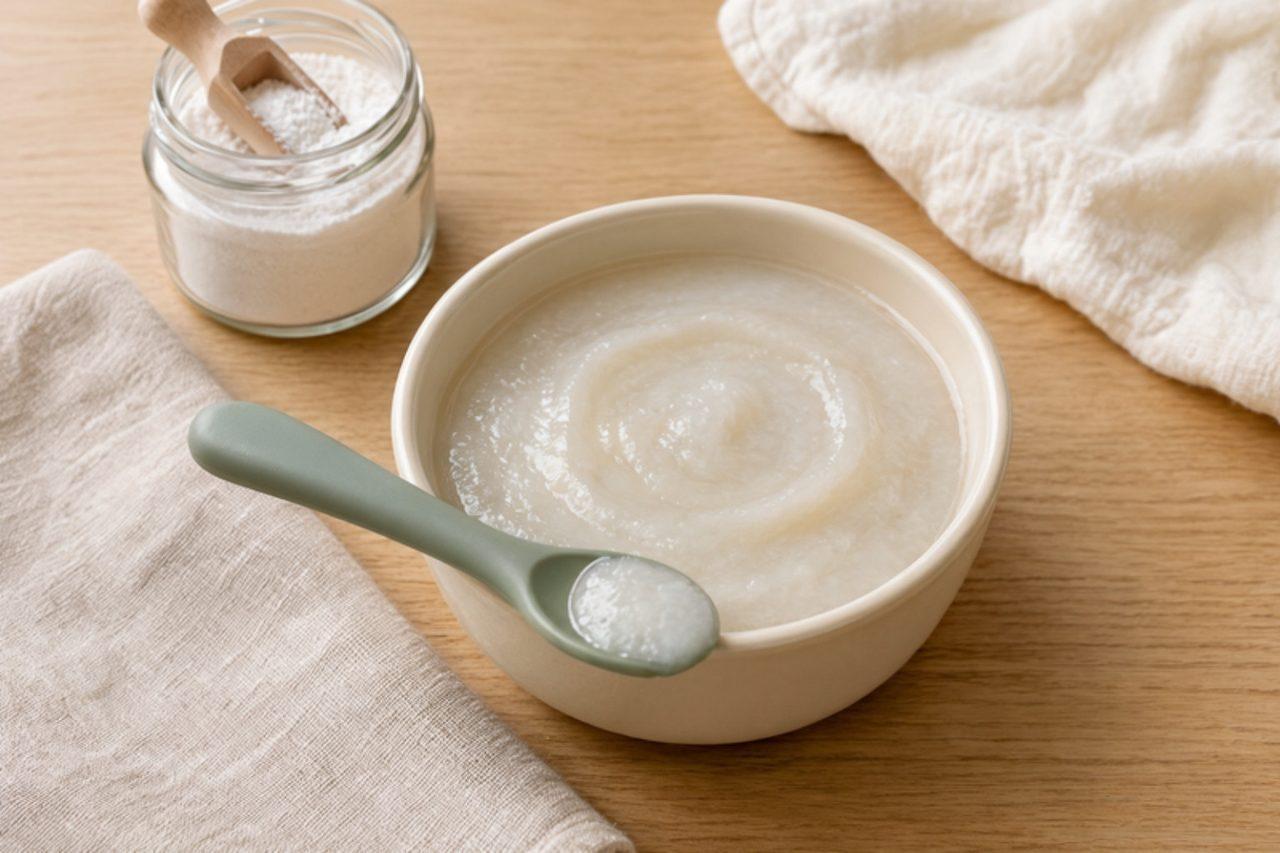
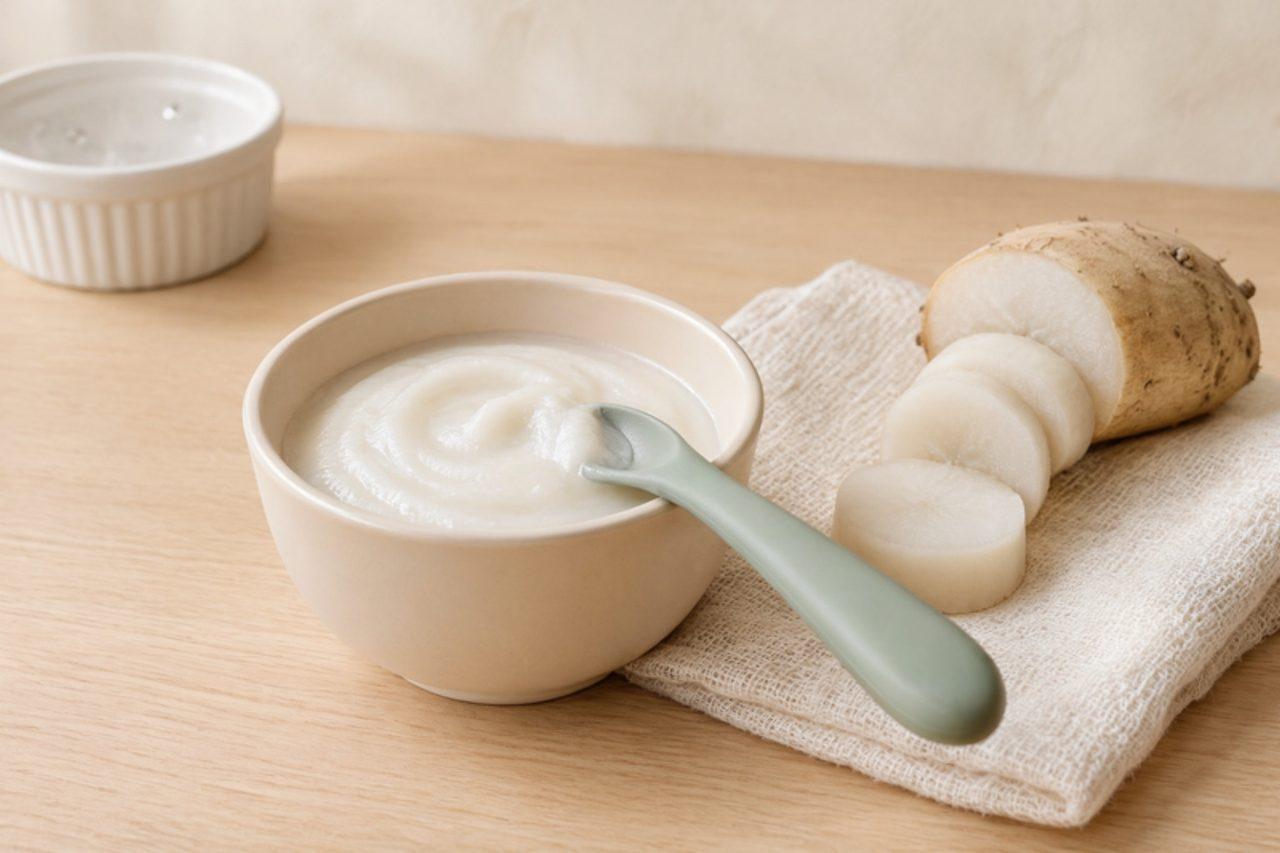
Kombu dashi is where Japanese weaning starts: the gentle, savoury water that thins jūbai-gayu (rice porridge) and vegetable purées, so babies learn umami instead of salt. Japanese parents make a jug every few days, and baby-food counters in Osaka department stores sell frozen cubes of it. Kombu is very high in iodine, so this broth is used a spoonful or two at a time to flavour a meal, a few times a week, never as a drink. Nothing else goes in: no salt, soy sauce, bonito or stock powder. It is free of the major allergens. Chef's tip: lift the kombu out just before the water simmers; boiled kombu turns slimy and gives a bitter, sea-weedy taste.
From the warung kopi of Yogyakarta and Solo to the night-shift stalls of Surabaya, kopi tubruk is the everyday coffee of Java: powder-fine robusta and sugar spooned into a glass, hit with boiling water, stirred once and left alone while the grounds sink. It comes out black, thick and strong, with a toasty, slightly chocolatey bitterness and often plenty of sugar, drunk early with fried snacks and again late at night over long talk. The grounds sit as a muddy layer at the bottom and stay there. The common mistake is drinking or stirring too soon: the cup is gritty and harsh. Wait four or five minutes, until the crust on top sinks and the surface turns clear and dark, then sip gently and stop before the sludge. It is ready when the foam has collapsed and a thin oily sheen shows on top. This is a strong, high-caffeine coffee; one glass is plenty, and it is not for children. Some sellers add a slice of ginger or a pinch of cardamom. Chef's tip: grind the beans as fine as for espresso or finer; coarse grounds float and never settle.
Kosereva is a Paraguayan home preserve from the days when nothing was wasted: thick strips of bitter-orange peel soaked and boiled to soften their bite, then cooked slowly in dark cane molasses until glossy and nearly black. In the countryside it is eaten after lunch with a slice of fresh cheese or simply on its own. Bitter oranges (Seville oranges) are in season in winter. The most common mistake is not changing the boiling water enough, which leaves the peel unpleasantly bitter. Chef's tip: taste a sliver of peel after the third boil; it should be gently bitter like marmalade, not harsh.
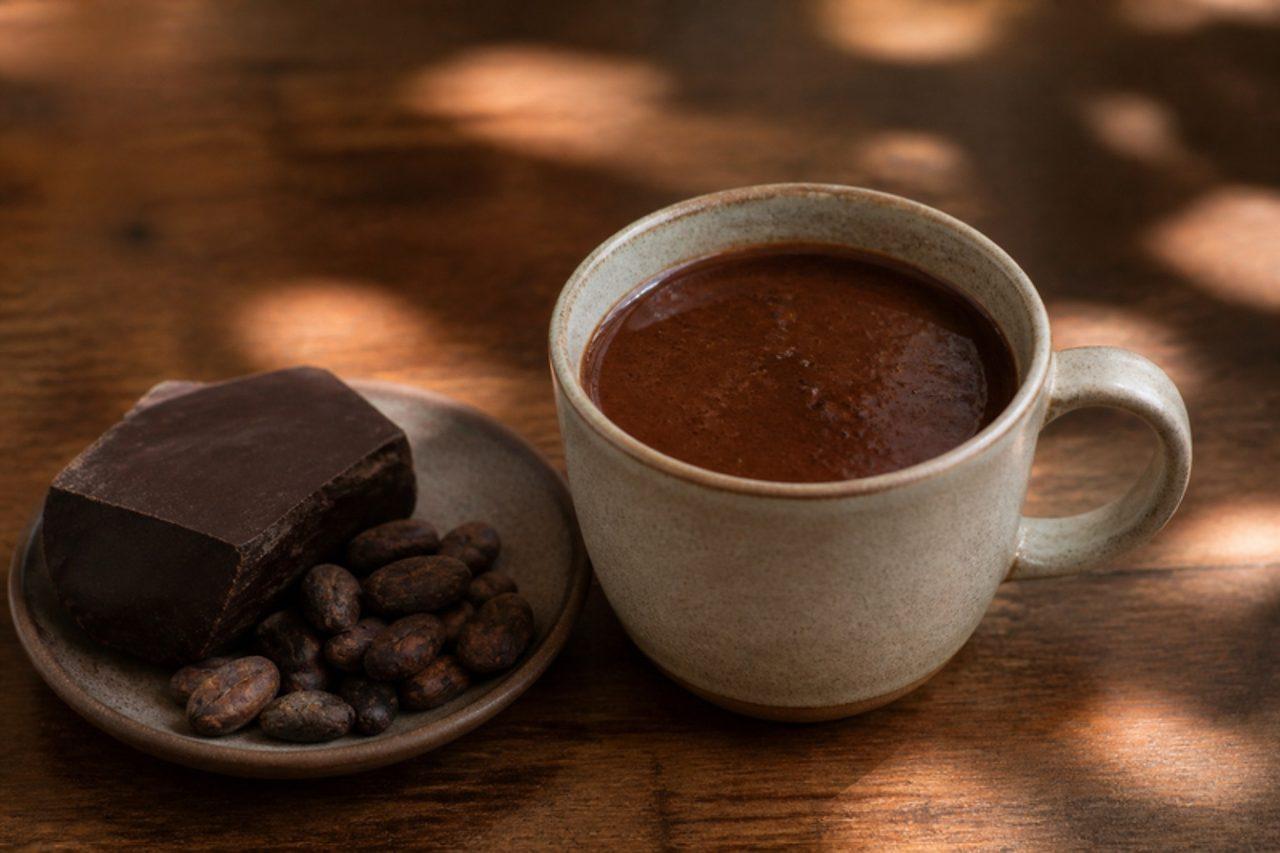
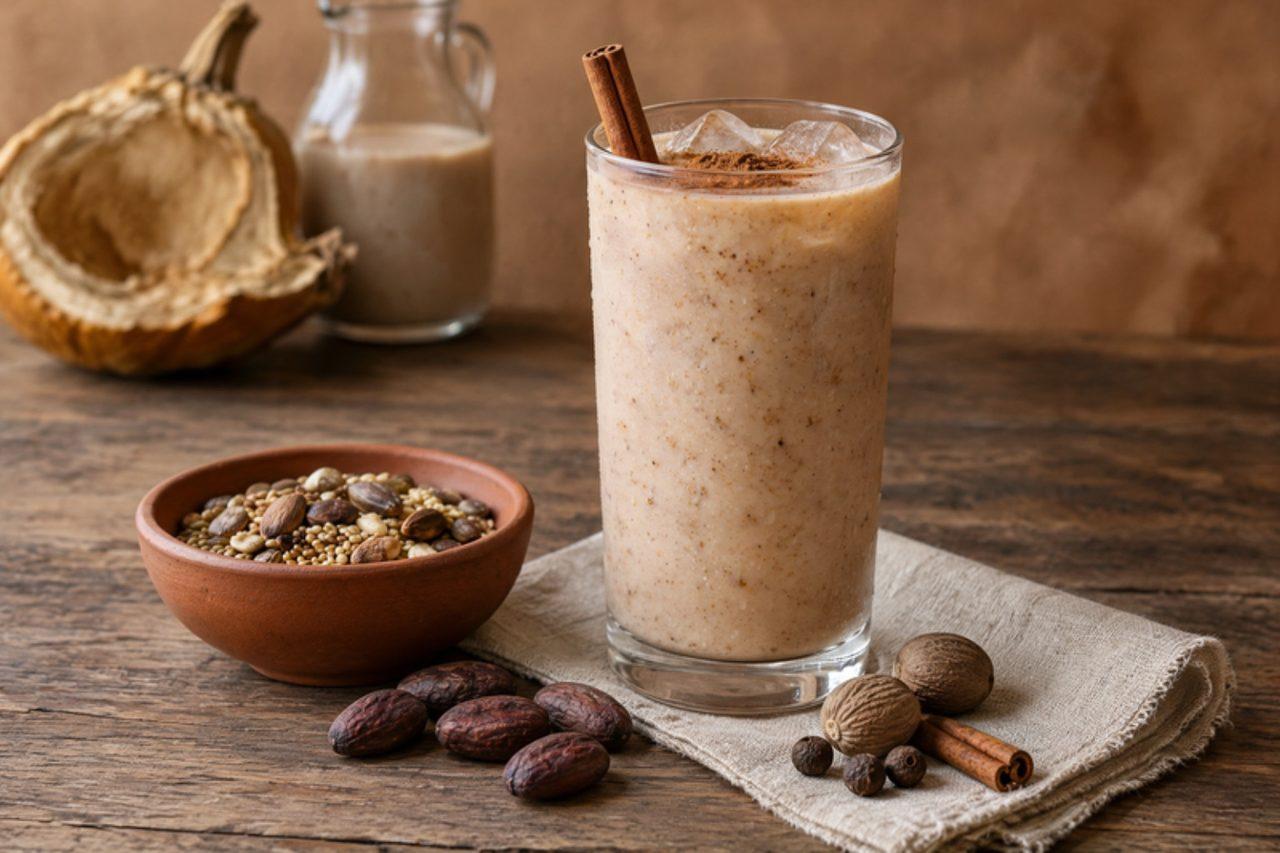
Koko Samoa is the morning drink of Samoa, made from the island's own cocoa beans, roasted over a fire, pounded into a dark paste and dried into blocks sold at Apia's Fugalei market. Dissolved in hot water and sweetened, it is earthy, slightly bitter and rich, with a little oil floating on top, and is drunk with panikeke or buttered bread. If you can't find koko Samoa, use 100% cocoa chocolate. A common mistake is expecting it to be like milky hot chocolate; it is darker and thinner. Chef's tip: simmer it for a few minutes rather than just stirring it in, which brings out the roasted flavour.
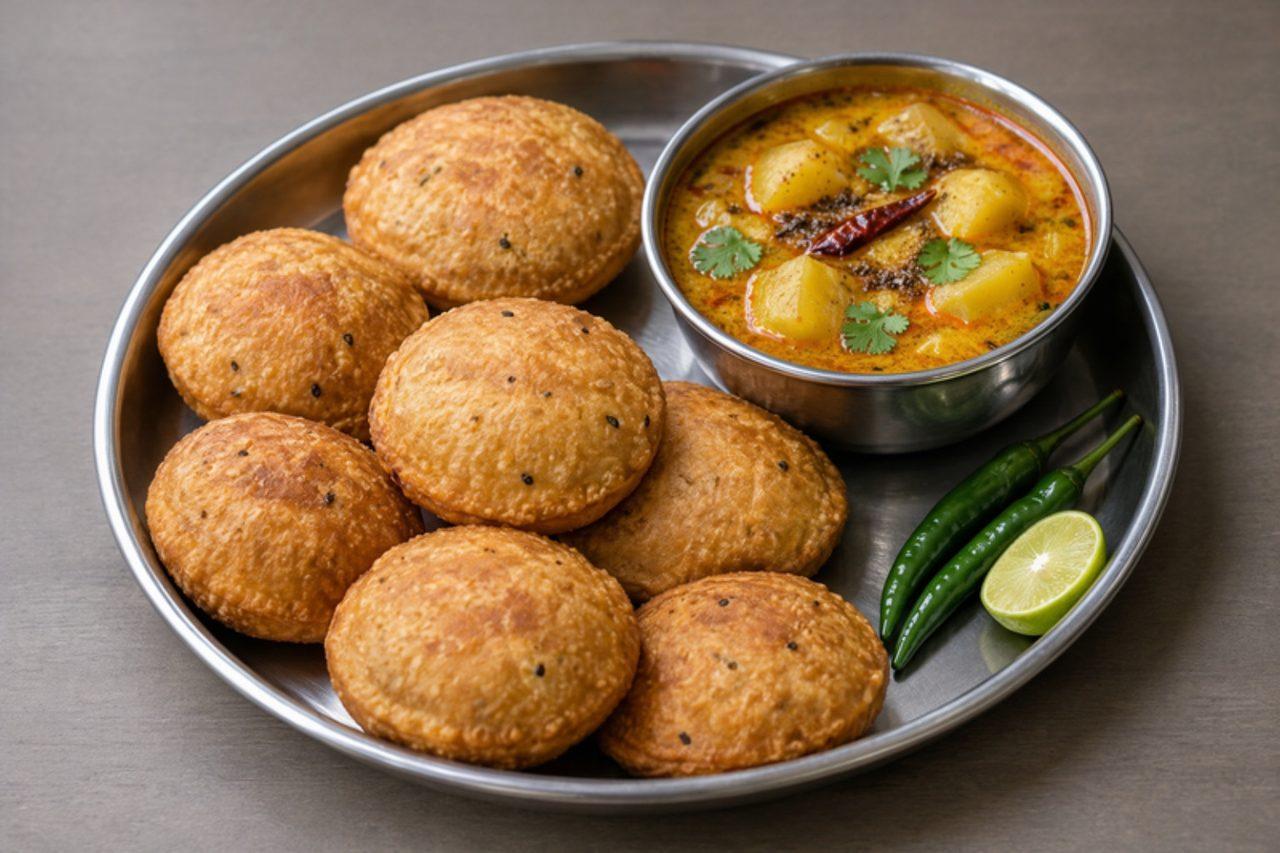
In the narrow lanes of Burrabazar and Bowbazar, sweet shops start frying club kachori before eight in the morning for traders and office-goers, who eat four or five standing up with a ladle of thin, gingery potato curry poured into a sal-leaf bowl. The kachoris are small and puffed like balloons, with a thin layer of peppery ground urad dal inside the crust. Chef's tip: soak the dal ahead (from the night before is easiest) and grind it with almost no water, so the paste is thick enough to roll without breaking through.
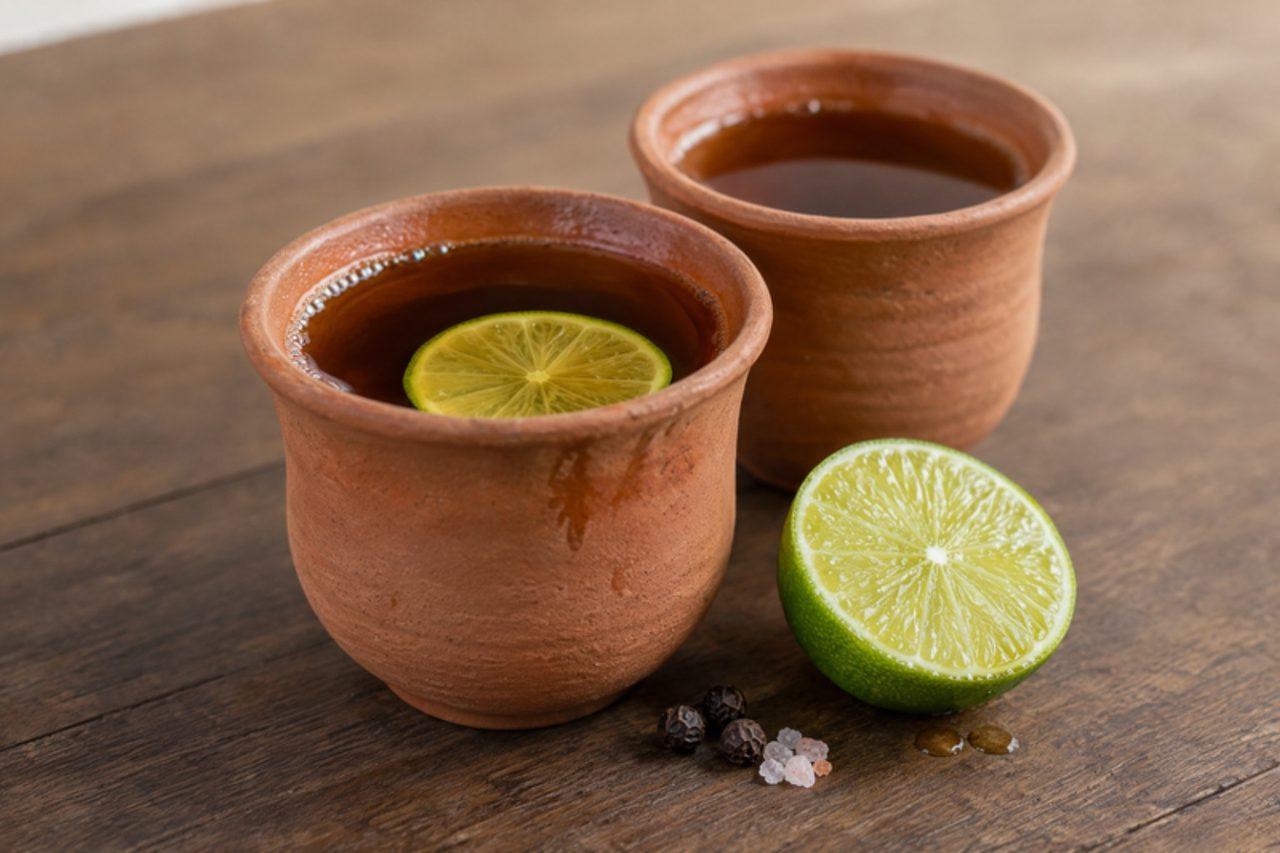
Along College Street and around Esplanade, the tea sellers who pour lebu cha into little unglazed clay cups (bhaar) are the fuel of Kolkata's famous evening adda, the long arguments over books and football. It is weak black tea, sweetened, sharpened with fresh lime and finished with a pinch of sulphurous black salt and roasted cumin, so it tastes sweet, sour and faintly savoury. It is drunk hot in every season and the cup is thrown away. Chef's tip: steep the tea briefly; long-brewed tea plus lime turns harsh and astringent.
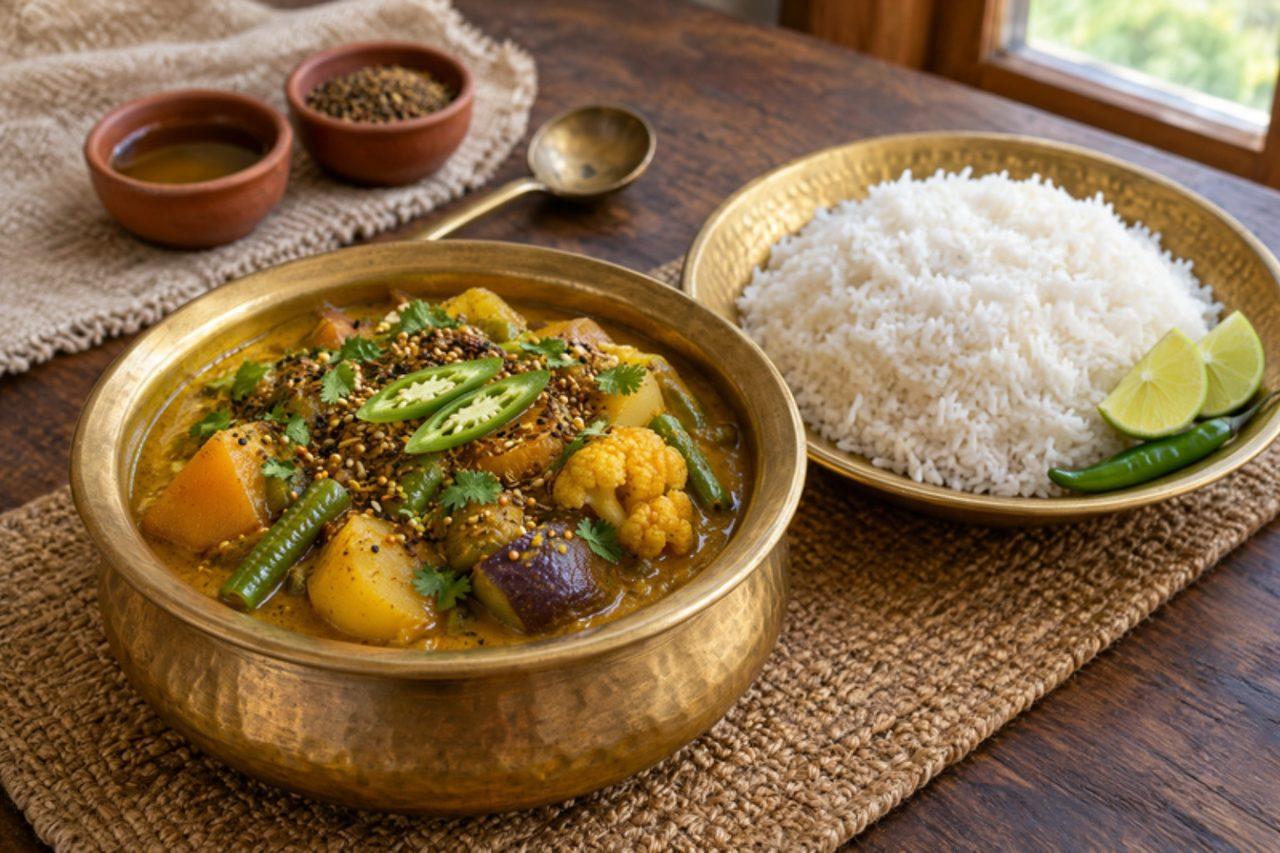
Panch mishali means 'five mixed', and in Bangladeshi homes from Sylhet to Khulna it is the weekday tarkari made from the odds and ends of the vegetable basket, eaten with rice and a thin dal. Potato, pumpkin, aubergine, green beans and green papaya or bottle gourd are cooked down with panch phoron, turmeric and green chilli until soft and gently sweet. The usual mistake is adding water at the start: the vegetables steam beautifully in their own juice and a splash later is all they need. Chef's tip: finish with a teaspoon of raw mustard oil drizzled on top; its sharp aroma is the Bengali signature.
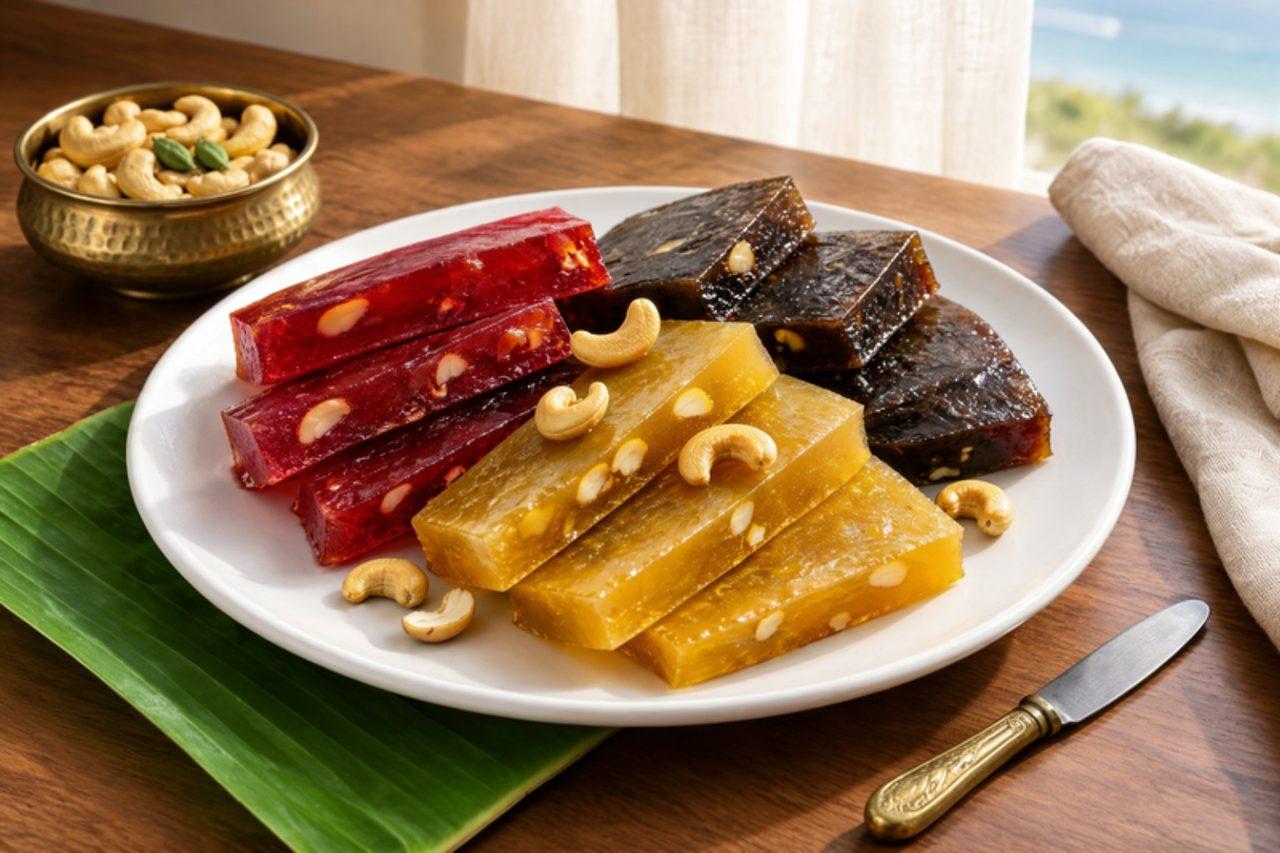
Walk down SM Street, 'Mittai Theruvu', in Kozhikode and you pass shop after shop stacked with jewel-coloured slabs of halwa, which Malabar families have bought for Eid, weddings and visits since the Arab trading days. The classic is made from wheat-flour milk (or plain flour) cooked for a long time with sugar and coconut oil or ghee until glossy, chewy and translucent, studded with cashews. The common mistake is rushing the cooking: the halwa must be stirred until it stops sticking, turns transparent and the fat seeps out at the edges, or it sets soft and cloudy. Chef's tip: add the oil a spoonful at a time only after the mixture thickens, so it is absorbed rather than floating.
In Polish homes a bottle of sok malinowy, the raspberry syrup made each July from garden or forest raspberries, waits in the pantry for winter. When someone comes in from the frost, or lies in bed with a cold, it goes into a glass of hot black tea, sometimes with a slice of lemon; grandmothers insist it makes you sweat the chill out, and the drink is traditionally given at the first sign of a sniffle. It also appears simply after a winter walk or with a slice of cake. The tea turns ruby, tastes of summer berries with a light tannic edge, and is sweet enough without sugar. The usual mistake is pouring syrup into boiling tea straight from the kettle: the fresh raspberry aroma cooks off and only sweetness is left. Let the tea cool for a minute or two first. It is ready when the tea is deep amber, the syrup has fully swirled through and it smells clearly of raspberries. No homemade syrup? Use a good shop-bought raspberry syrup, or make the quick one in the optional steps. Chef's tip: brew the tea weaker than usual, about two minutes, so the fruit stays in front.
Order a koffie verkeerd in any Dutch café or bruin café and you get a tall glass that is mostly steamed milk with a strong shot of coffee poured in, the 'wrong' way round compared with a normal black coffee. It is the Dutch morning cup at home and at work, usually with a speculaas biscuit on the saucer. The common mistake is boiling the milk, which makes it taste cooked and kills the foam; heat it only until it steams and small bubbles form at the edge, about 65 °C. Chef's tip: froth the milk by shaking it in a jar with the lid on before warming it in the microwave, and you get café-style foam without a machine.
Every Costa Rican grandmother has a chorreador: a small wooden stand holding a cloth bag, the bolsita, over a cup or jug. Hot water is poured through the grounds by hand, a little at a time, and the result is the coffee drunk at breakfast with gallo pinto and again at the afternoon cafecito around three, with a tamal, a slice of pan casero or a rosquilla. The cloth catches the oils and fine grounds, so the cup is clean, bright and smooth, with the soft acidity and caramel sweetness of Tarrazú and Central Valley beans. In the countryside the water is sometimes sweetened with tapa de dulce before it goes through. It is strong coffee, so mind the caffeine late in the day. The common mistake is pouring all the water in at once, which floods the bag and leaves weak, uneven coffee; pour in slow circles, in four or five goes. It is ready when the drips slow to a trickle and the coffee is dark reddish-brown and smells of toasted caramel. Never wash the bag with soap; rinse it in hot water and hang it to dry. Chef's tip: boil a new bag once with a spoonful of coffee before using it, to season the cloth.
Merkén comes from the Mapuche kitchens of Araucanía: cacho de cabra chillies are dried, smoked over a wood fire, then ground with toasted coriander seed and salt into a brick-red powder that is smoky, warm and lightly hot. In Temuco and across the south it is shaken over potatoes, eggs, sopaipillas, grilled fish and soups. Outside Chile, use dried smoked red chillies, or plain dried red chillies plus smoked paprika. The mistake to avoid is scorching the chillies in the pan: if they blacken, the whole jar is bitter. Chef's tip: grind it a little coarse, as it is sold in Temuco's market, so the coriander seeds stay noticeable.
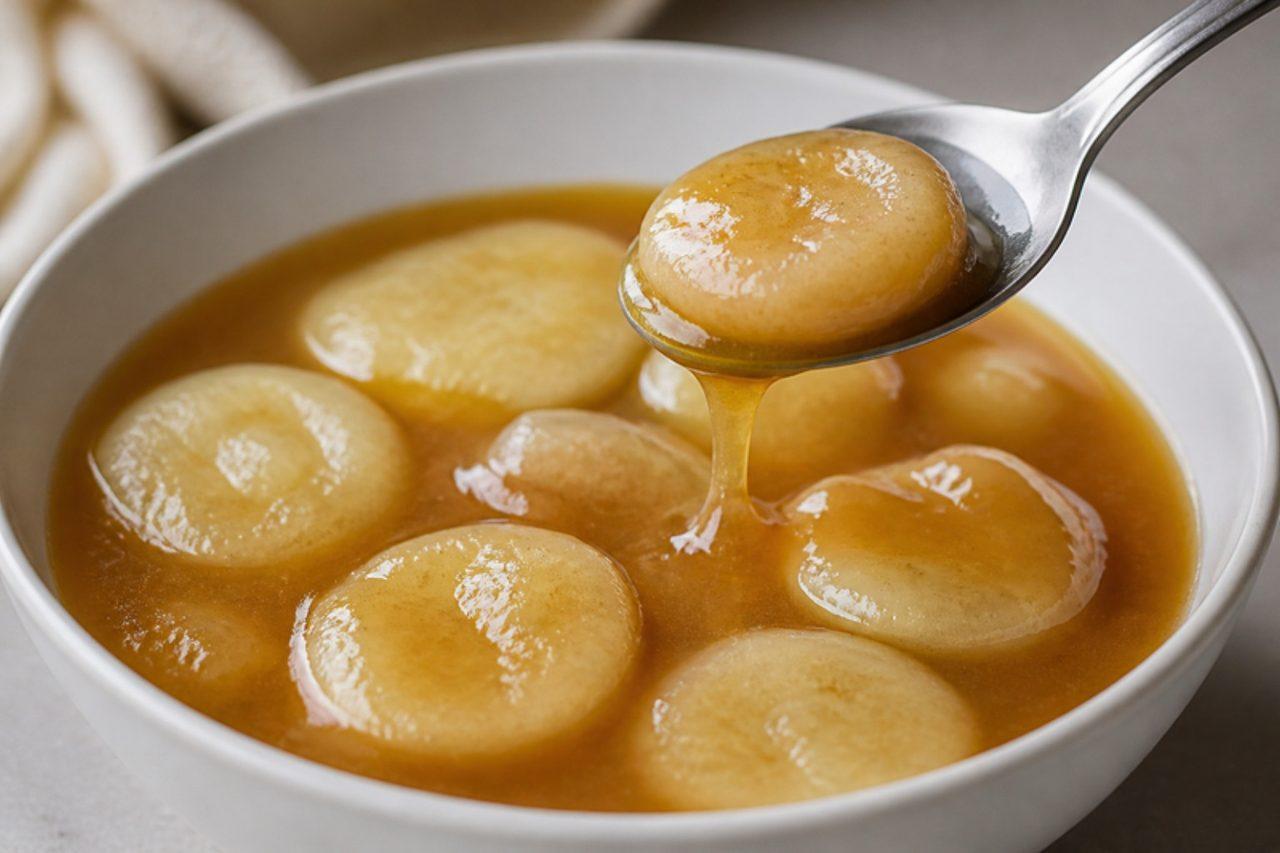
Faikakai topai is a much-loved Tongan pudding, served at Sunday feasts and family celebrations in Nuku'alofa and in Tongan communities from Auckland to Utah. Simple flour dumplings are boiled, then smothered in a thick, toffee-like syrup of caramelised sugar and coconut cream called lolo. It is very sweet and best eaten warm. A common mistake is pulling the caramel off the heat too pale; let it turn a deep amber before adding the coconut cream. Chef's tip: roll the dumplings thin and flat so they cook quickly and soak up more syrup.
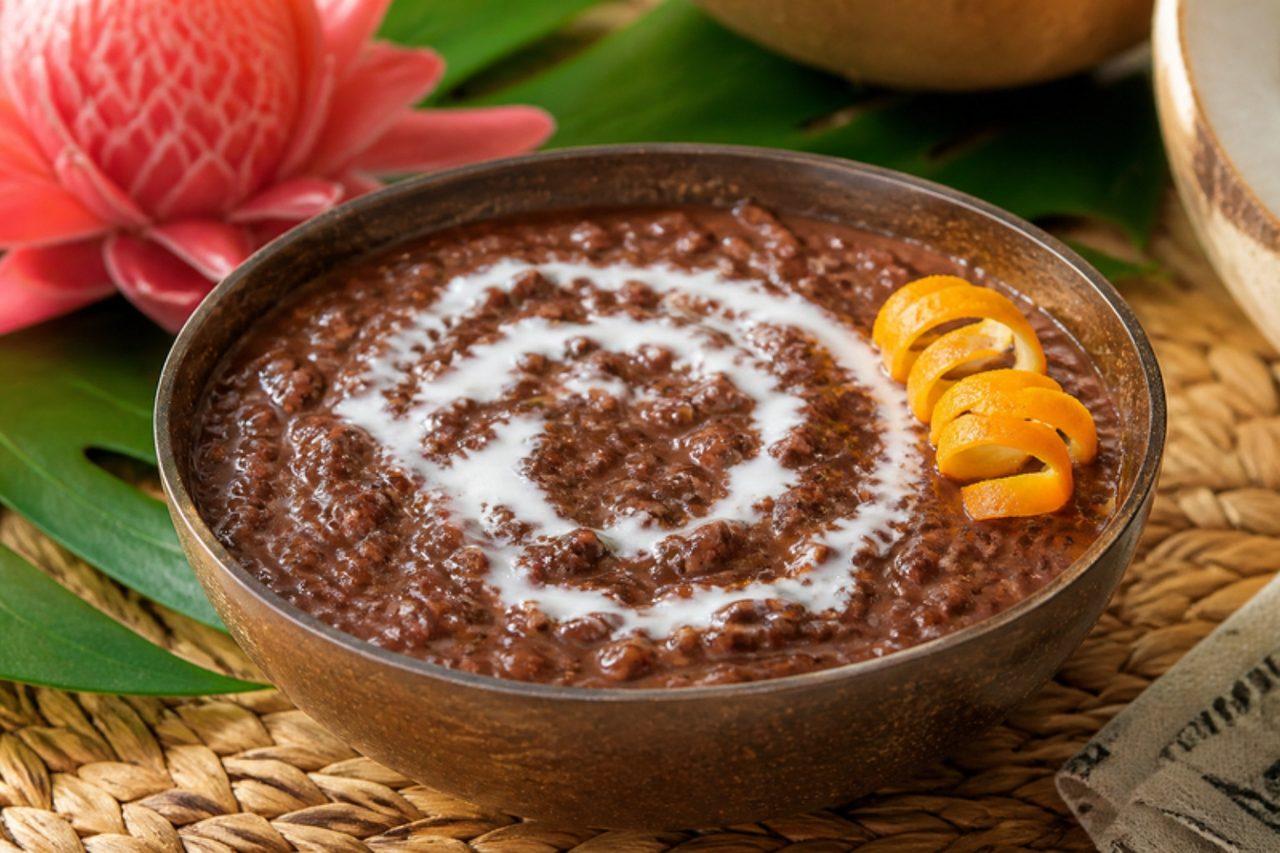
Koko alaisa is a Samoan breakfast and Sunday to'ona'i (after-church lunch) favourite, rice simmered in koko Samoa, the island's own roasted cocoa paste, with coconut cream, sugar and sometimes orange leaves for perfume. It is rich, chocolatey and comforting, like a warm chocolate rice pudding, and is often eaten alongside savoury food. If you can't find koko Samoa in a Pacific shop, use unsweetened 100% cocoa chocolate. A common mistake is letting it catch on the bottom; stir often in the last 15 minutes. Chef's tip: a strip of orange peel simmered with the rice gives the true island aroma.
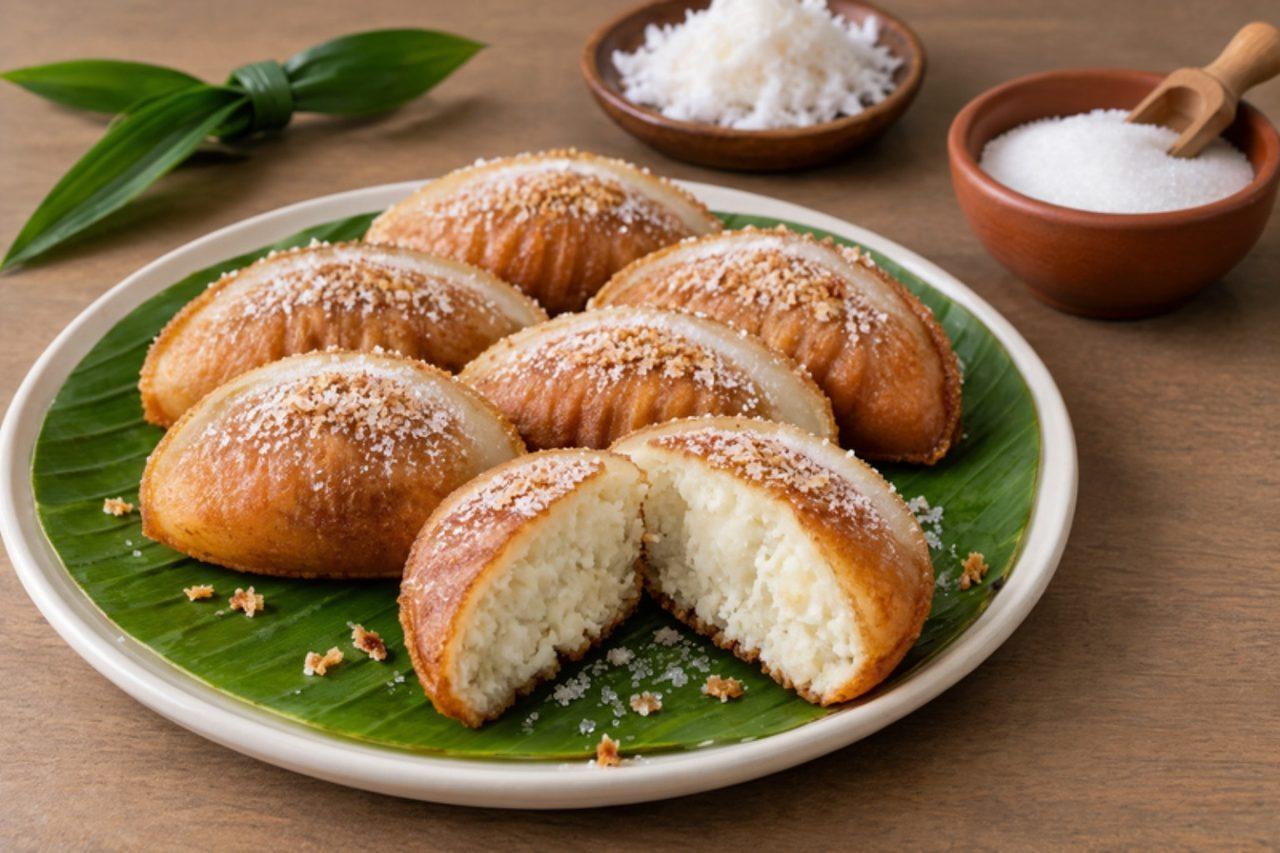
Kue pancong is a Betawi breakfast cake you smell before you see: vendors on Jalan Sabang and around Pasar Senen pour a coconut and rice-flour batter into blackened half-moon moulds over charcoal from first light, and office workers buy them by the paper bag with their morning coffee. The edges turn crisp and toasty, the middle stays almost molten and tastes of fresh coconut, and a scatter of sugar goes on just before they are handed over. At home, a takoyaki pan, an aebleskiver pan or a cast-iron kue cubit mould does the job. Chef's tip: grated fresh or frozen coconut gives the chewy, fibrous bite that defines pancong; desiccated coconut alone makes them dry.
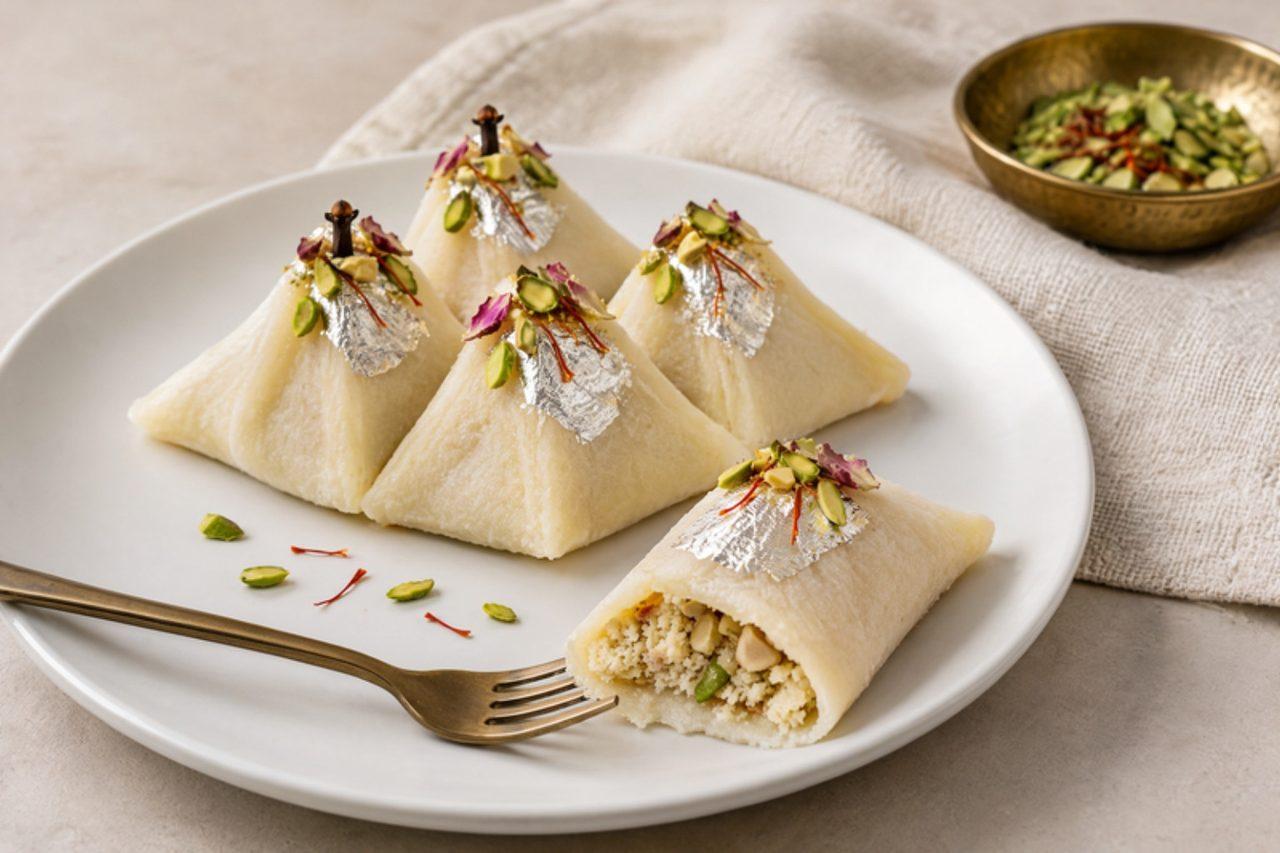
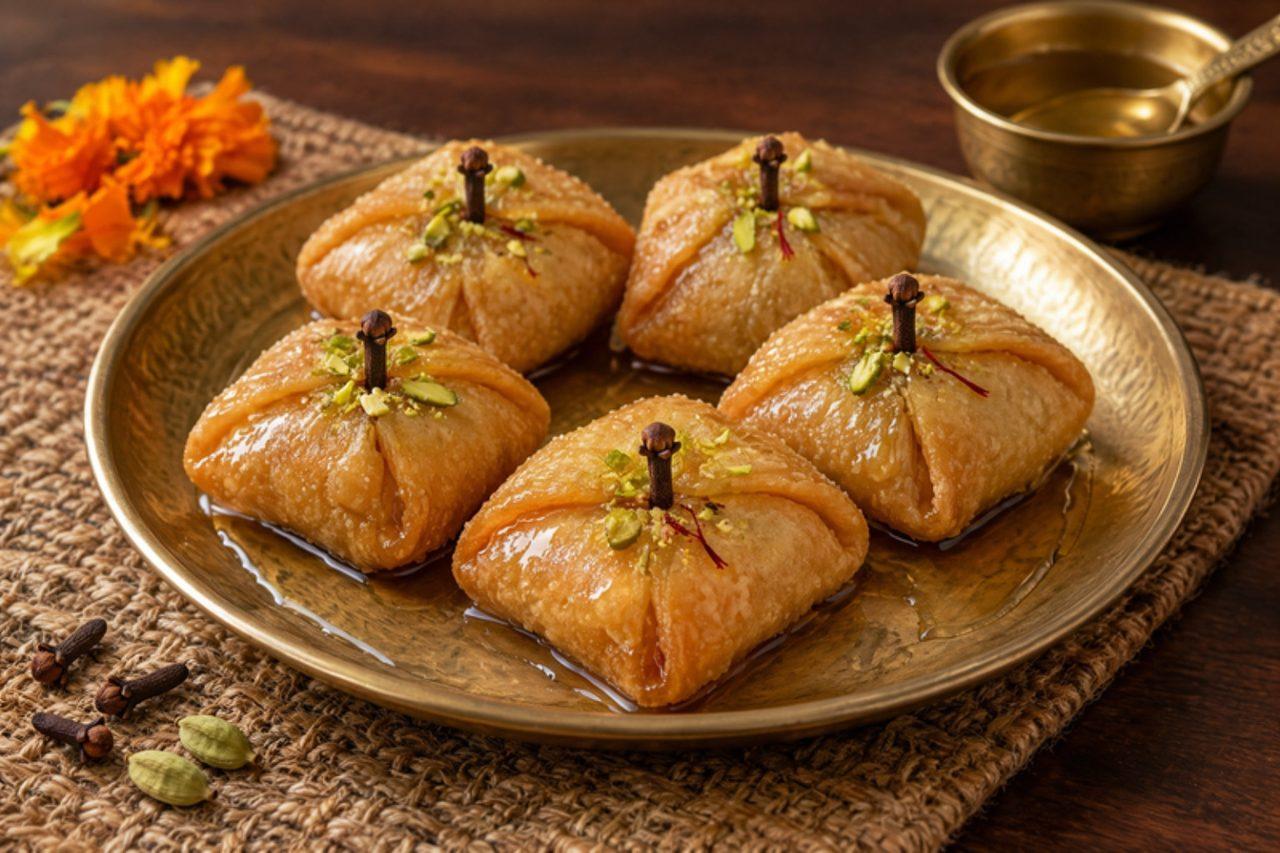
Lavang latika is a festive sweet of Bengal and Bihar, shaped like a tiny sealed envelope with a single clove pinned through the flap; it fills sweet-shop trays at Bijoya Dashami, Diwali and Bhai Phonta. Inside is mawa with coconut, nuts and cardamom, and after slow frying the parcels are soaked in syrup, so the outside is crisp and sweet and the clove gives a warm, peppery bite. The common mistake is folding the pastry loosely; the flaps must overlap well and be pressed shut before the clove goes in, or the parcels unfold in the ghee. Remove the clove before eating if you prefer. Chef's tip: soak the cloves in hot water for 5 minutes so they push through the pastry without cracking it.
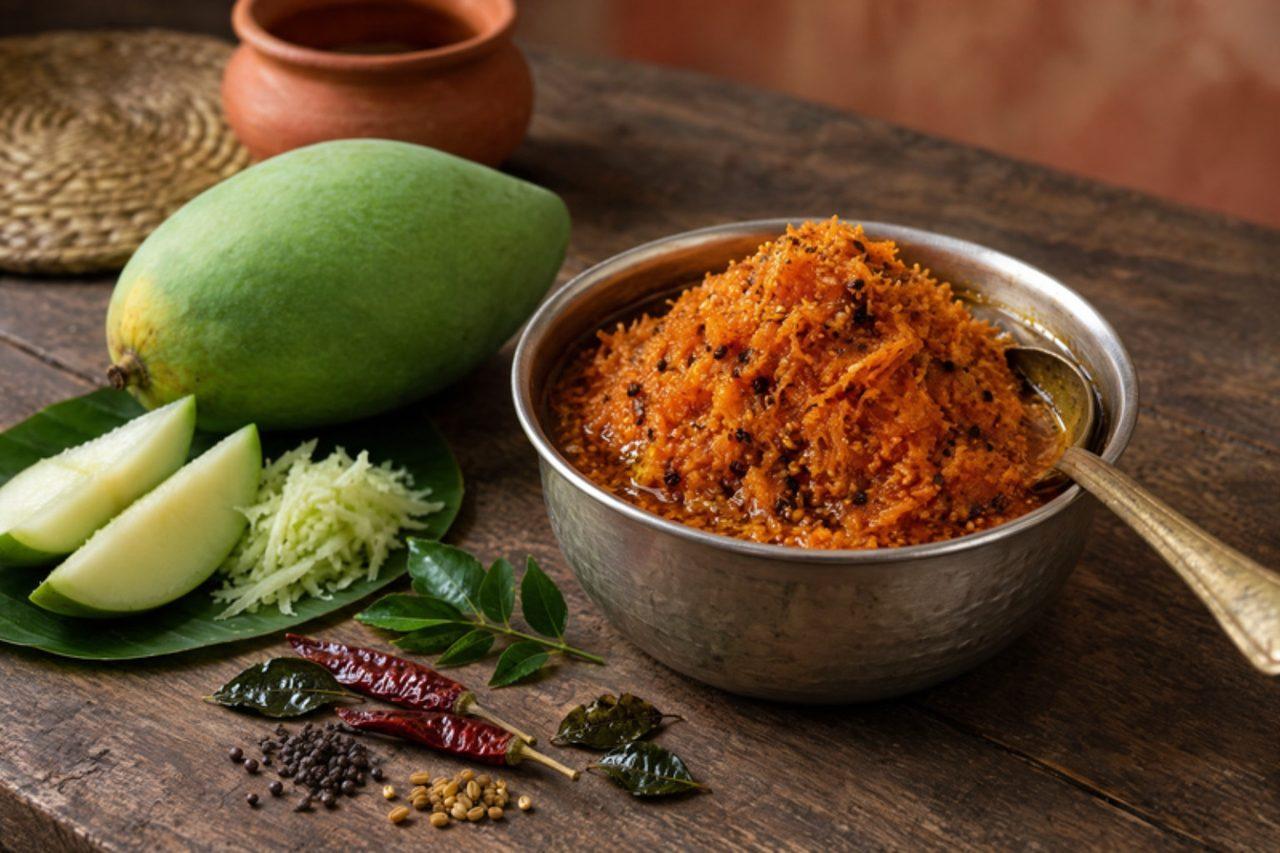
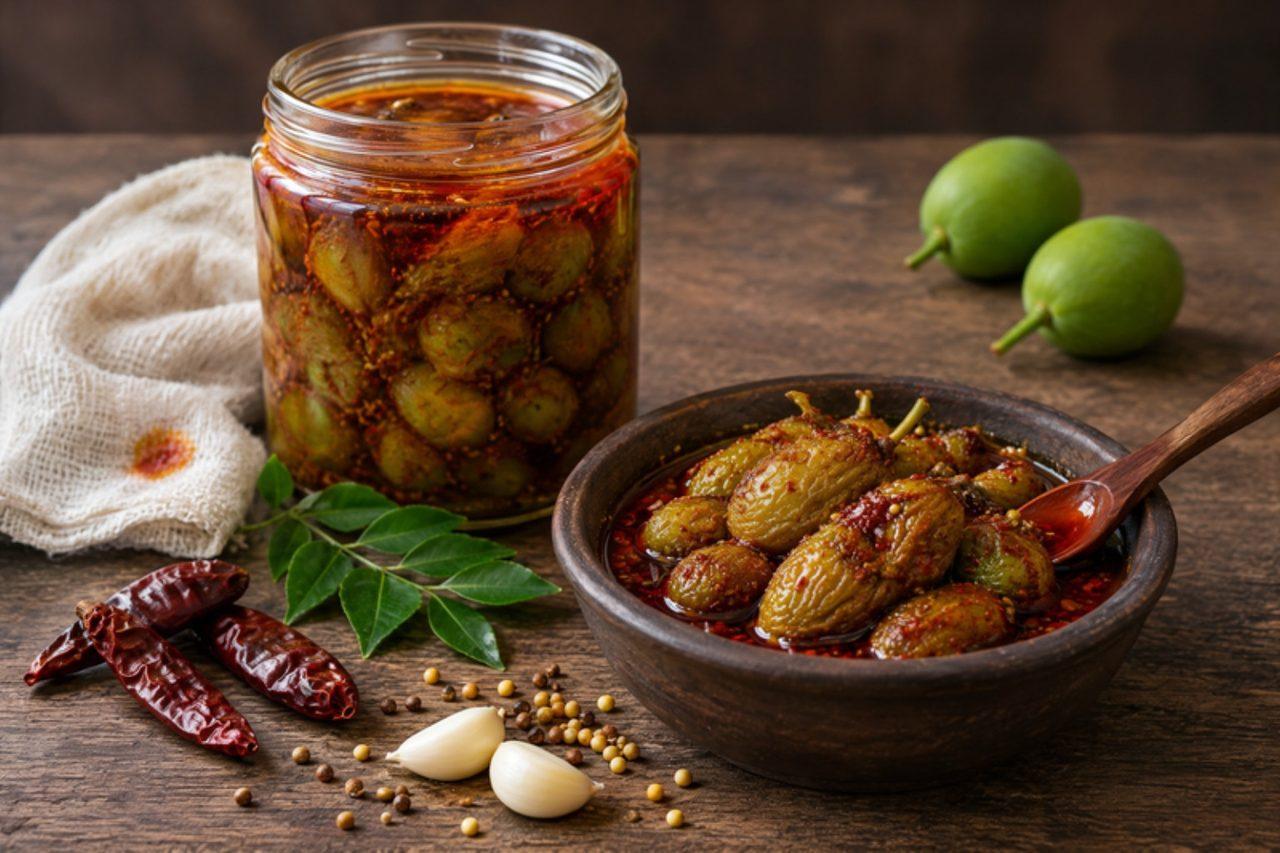
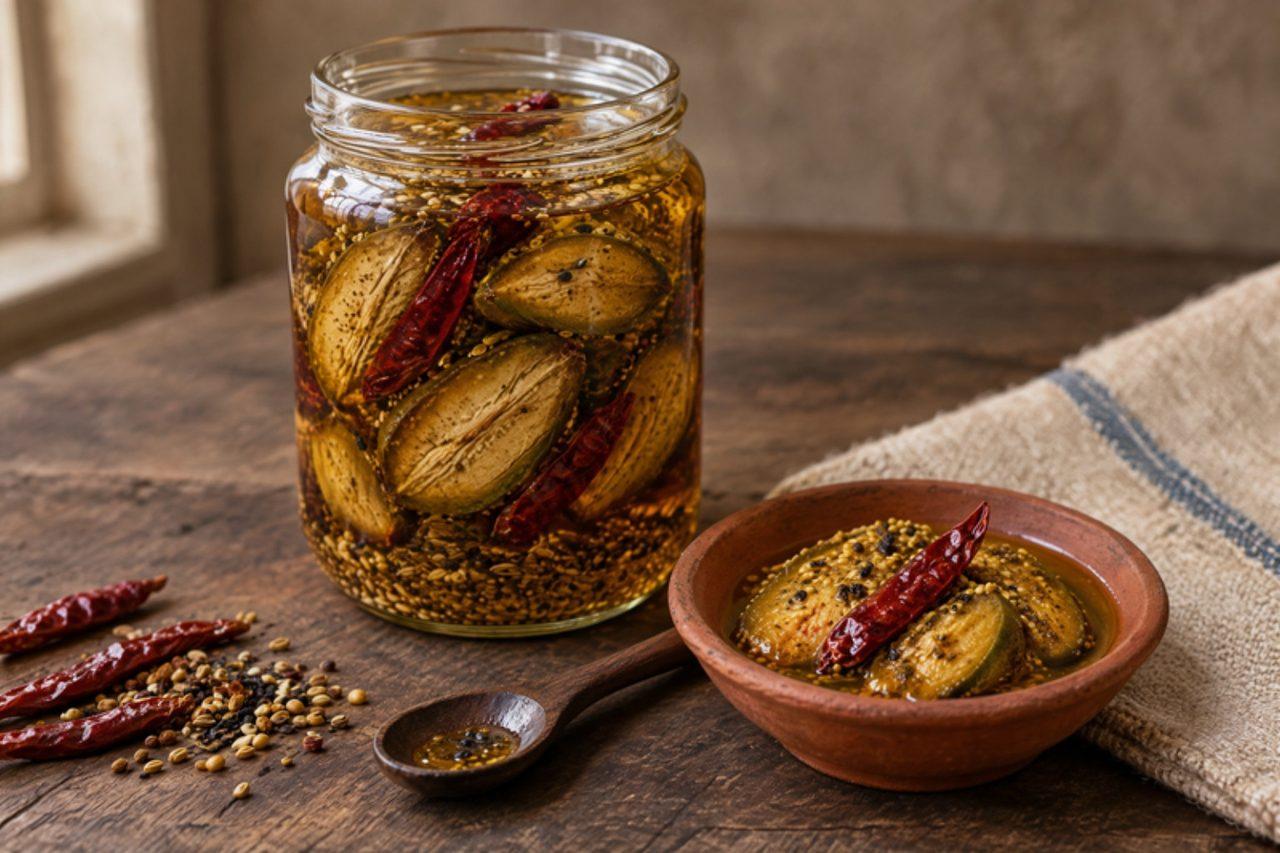
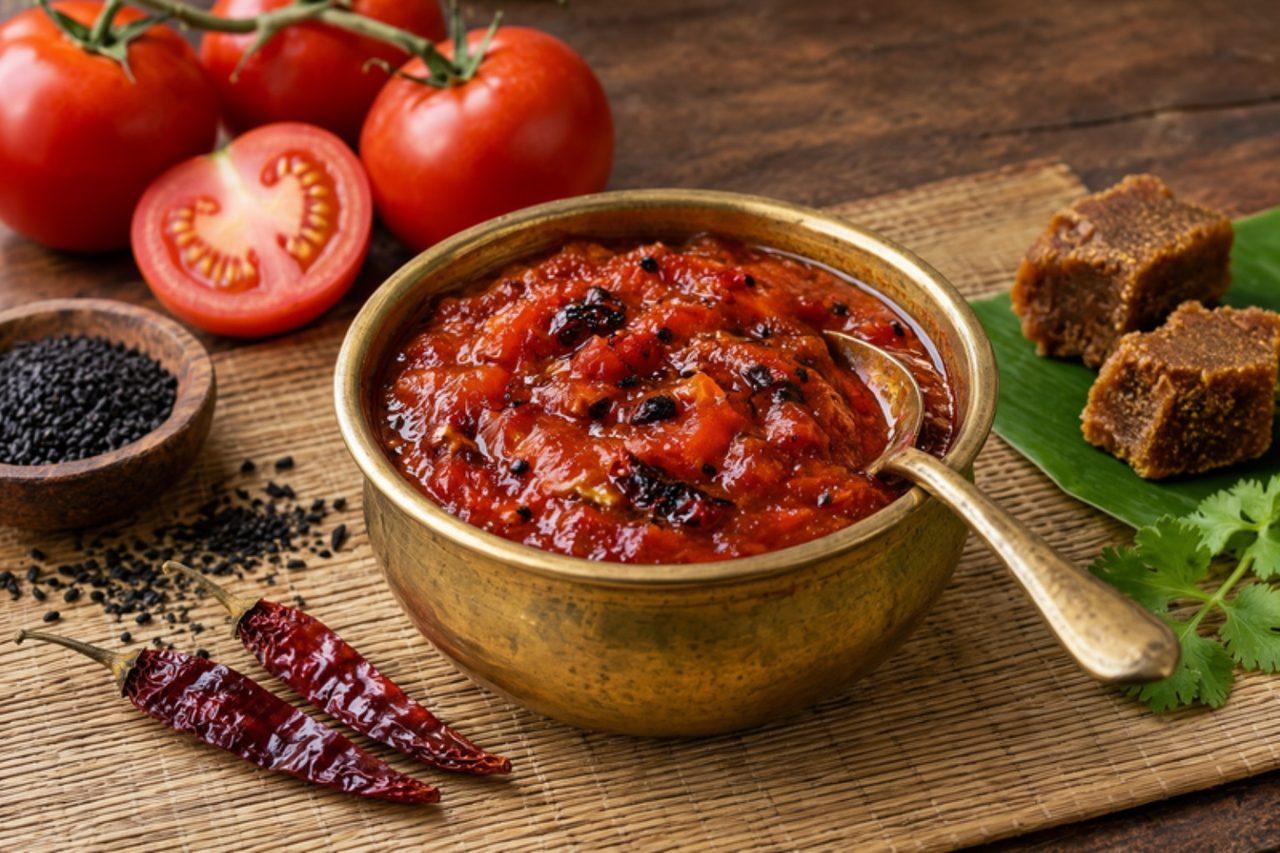
Thokku is the Tamil word for a pickle cooked down to a thick, spoonable mass, and maangai thokku is the one every Tamil Nadu home makes in April and May when the hard, sour Kili mooku (parrot-beak) mangoes are cheap. Grated mango is simmered in nallennai (gingelly oil) with chilli powder, salt and hing until it turns dark, glossy and jam-like, then finished with roasted fenugreek powder. It is sour first, then hot, with a nutty sesame taste and a little bitterness at the end. It is a classic partner for curd rice, a spoonful inside a dosa, or a travel companion with idli and lemon rice for train journeys. The usual mistake is grating the mango too fine or stirring it too little: a fine pulp sticks and burns. Use the large holes of the grater and keep stirring once it thickens. It is done when the mango has darkened, comes away from the pan in one mass and the oil oozes out around the edge. Kept in a dry jar under a film of oil it lasts about 2 weeks in a cool cupboard and 2 months in the fridge. Chef's tip: a teaspoon of jaggery at the end rounds off very sour mangoes without making the thokku sweet.
Ask for dessert in a Montevideo bodegón or a country parador and you may be offered a Martín Fierro: a thick slice of fresh, mild cheese laid with an equal slice of dense quince or sweet-potato paste, named after the gaucho of the epic poem. It's salty against sweet, soft against firm, and takes two minutes to assemble. Uruguayan fresh cheese is usually made with animal rennet, so choose one with vegetarian rennet if that matters to you. The mistake is serving it fridge-cold, which dulls both flavours. Chef's tip: cut the cheese and paste to exactly the same thickness, about 1 cm, so every bite has both.
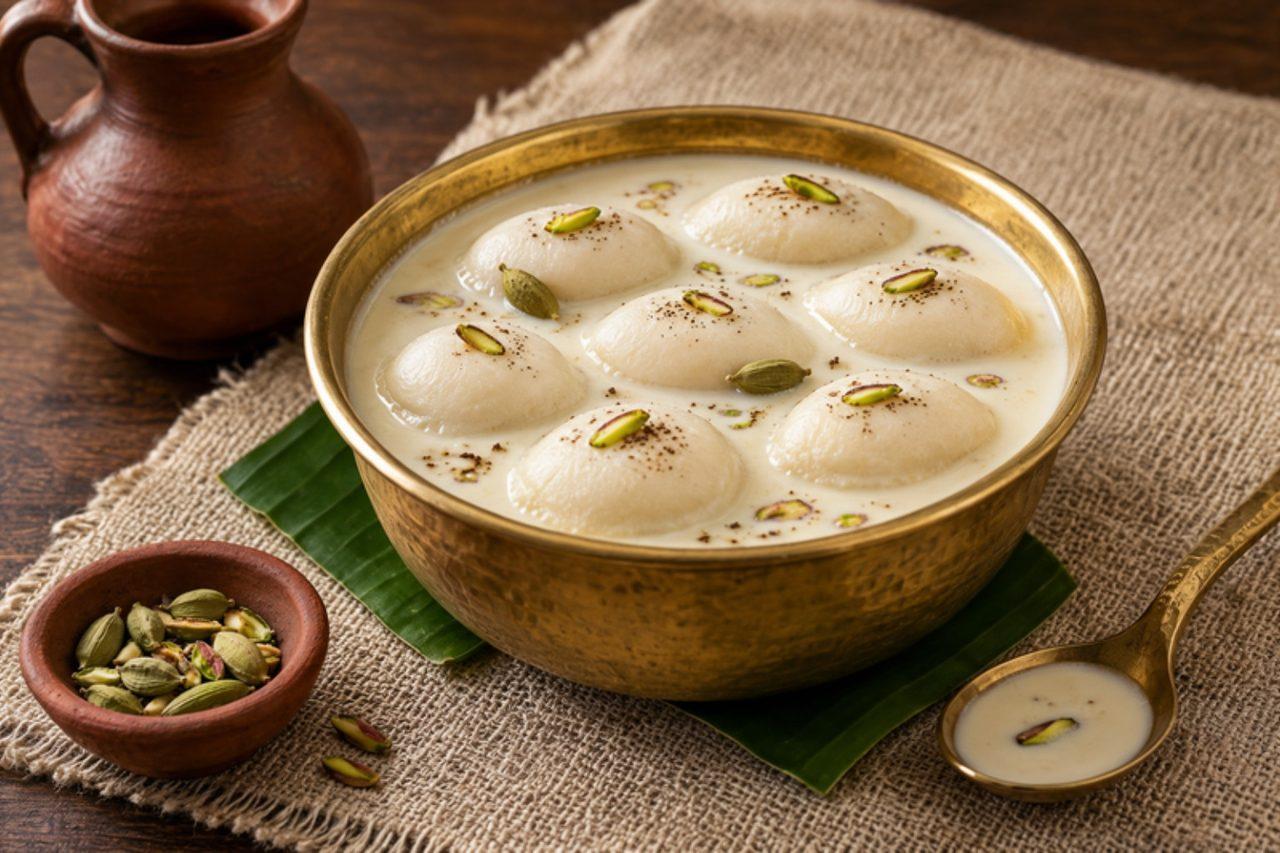
Dudh pitha is made in Jharkhand and Bihar for Makar Sankranti, Sohrai and winter evenings, when the new rice is milled: small rice-flour dumplings are stuffed with coconut and jaggery (some families use spiced chana dal instead) and simmered in milk until it thickens around them. It is eaten warm from a bowl with a spoon. The common mistake is adding jaggery straight to boiling milk, which can curdle it; sweeten the milk with sugar and keep the jaggery inside the dumplings. Chef's tip: shape the dumplings while the dough is warm and keep your palms greased, so the edges seal without cracking.
Kharoli is an old Assamese relish from the villages of upper Assam: ground mustard seed is mixed with khar, the alkaline water filtered from burnt banana peel, packed into a jar and left to ferment until sharp and funky. A small spoon with mustard oil and green chilli is eaten with the first balls of rice, and families make it in the cooler months. The common mistake is using a damp jar or spoon, which lets mould in. Ferment at 20–28 °C for 4–6 days; it is ready when it smells sharply pungent and tangy. Throw it away if you see fuzzy mould, pink or black spots, or it smells rotten or putrid rather than sour. Chef's tip: if you have no banana-ash khar, a quarter teaspoon of bicarbonate of soda in the water gives a similar alkaline bite.
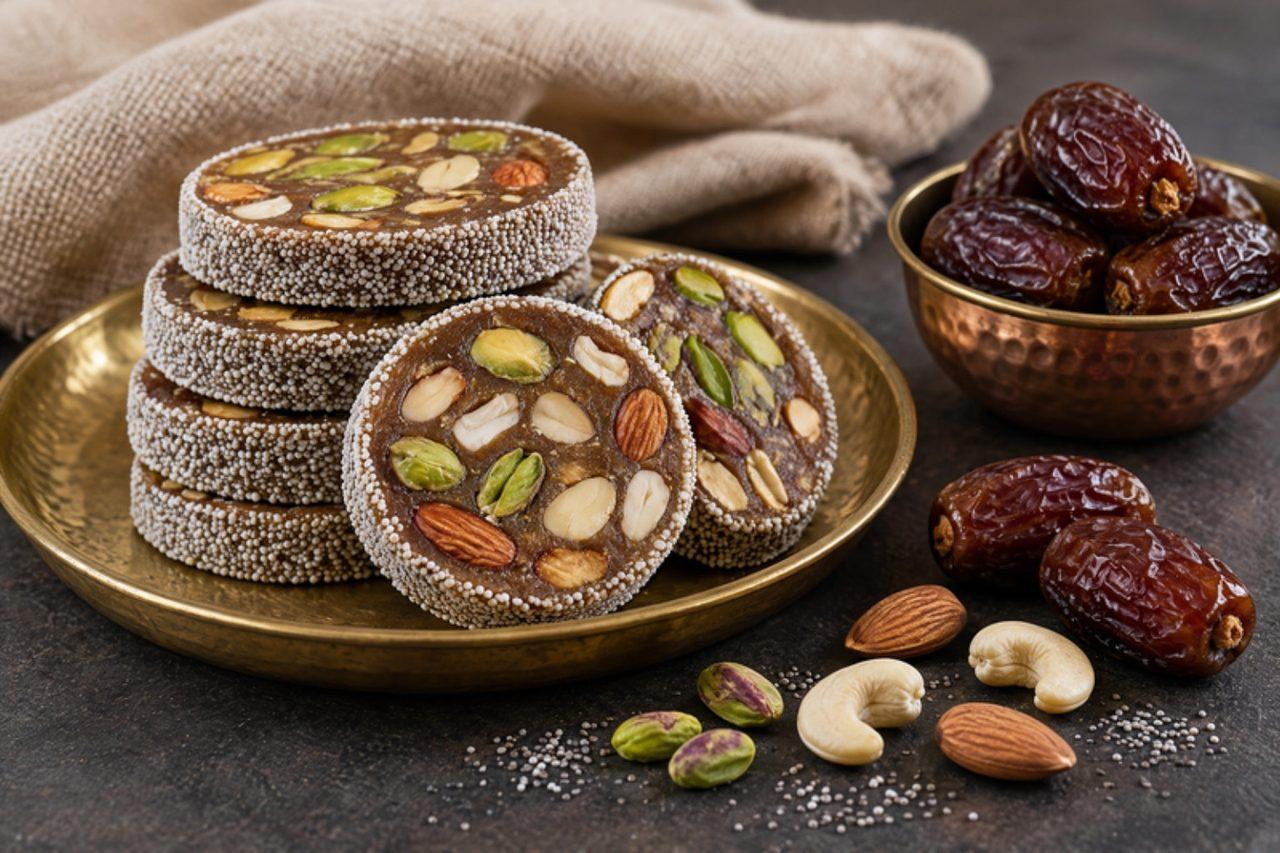
Kutch grows some of India's best dates, and in Bhuj and Anjar homes khajur pak is the sweet made for Diwali boxes and for Ekadashi and other fast days, since it needs nothing but dates, ghee, nuts and coconut. The dates melt in warm ghee into a sticky paste, the nuts give crunch, and the log is rolled in poppy seeds and sliced into neat coins. The common mistake is cooking the dates too long, which dries them out so the log cracks when you slice it. Chef's tip: for a harder winter version, swap a third of the soft dates for chopped kharek (dry dates) soaked overnight in a little milk.
Khatta mag is weekday comfort across Gujarat, from Ahmedabad flats to Saurashtra farmhouses: whole green moong cooked soft and simmered in a tangy, kadhi-like gravy of yoghurt and gram flour with ginger, green chilli and a clove-and-cinnamon tempering. It is ladled over rice or eaten with bajra rotla, and many families cook it on Wednesdays, the day for moong. A little jaggery is optional. The usual mistake is pouring cold yoghurt into the hot pot without whisking it with gram flour first, which makes it split into curds. Slow-cooker: cook the soaked moong with 600 ml water on low for 5 hours, then stir in the yoghurt mix and cook on high for 30 minutes. Chef's tip: slightly sour, day-old yoghurt gives the best khatta flavour.
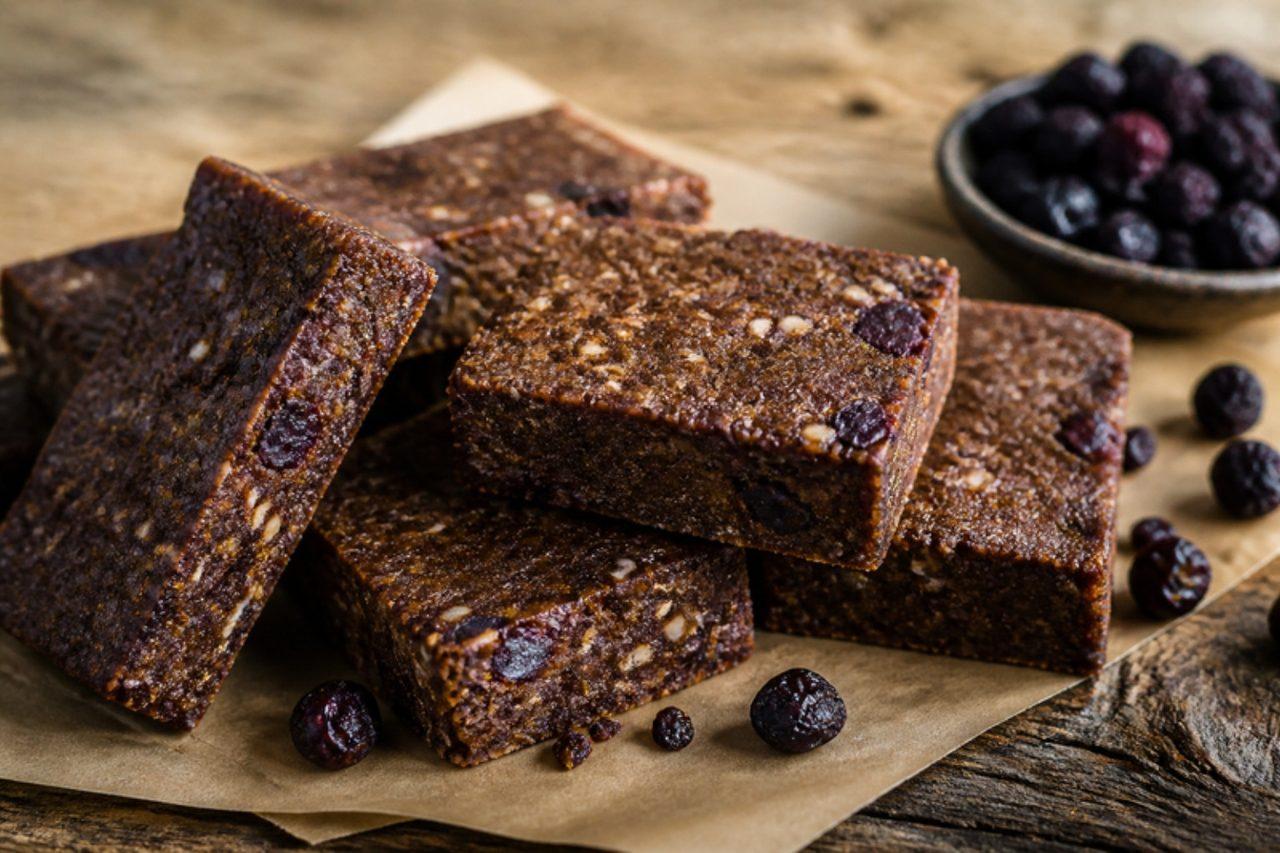
Pemmican was the essential food of the Cree, Métis and other Plains and northern peoples, and later of the fur trade: dried, pounded bison meat mixed with rendered fat and sometimes saskatoon berries, packed into hide bags and kept for months. This home version uses lean beef, heated to a safe temperature before drying in a low oven, then ground and bound with beef tallow and dried berries into dense bars. It is very rich and very filling, eaten in small pieces on hikes and camping trips. A common mistake is leaving fat on the meat before drying; fat goes rancid, so trim it all off. Chef's tip: dry the meat until it snaps, not bends; any moisture shortens its keeping time.
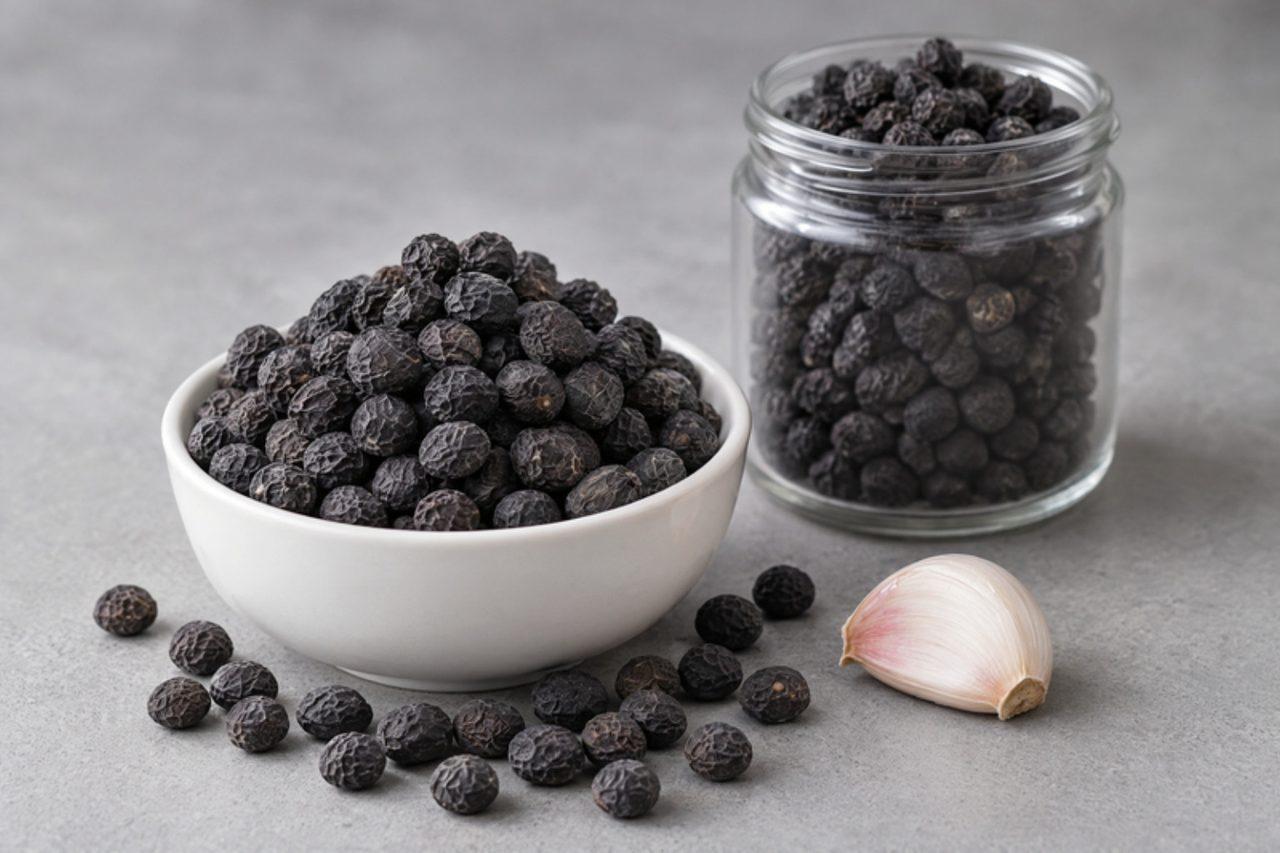
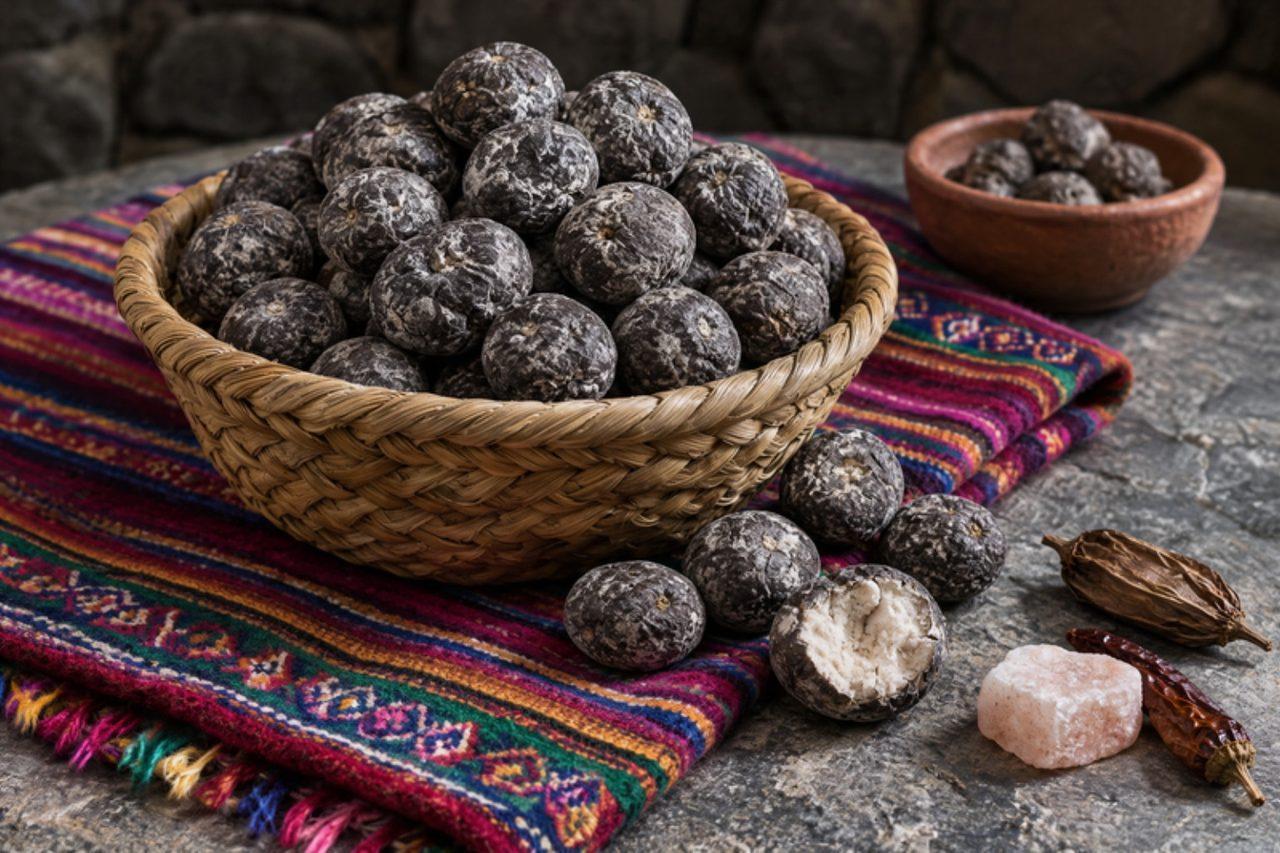
Yangjiang in western Guangdong and Liuyang in Hunan are the two great douchi towns, and both traditionally make their fermented black beans in the dry season, when beans can be moulded indoors and dried in the sun without spoiling. Cooked black soybeans are covered until a yellow-green koji mould grows over them, then washed, salted, packed and fermented for weeks before drying. The result is wrinkled, soft-chewy beans with an intense salty, savoury, almost chocolate-dark flavour. A spoonful steamed with spare ribs or a whole fish, stir-fried with bitter melon or pounded into Hunan's chilli dishes seasons the whole plate. At home, buying koji spores (Aspergillus oryzae) is far more reliable than waiting for wild moulds. Common mistake: letting the beans sit wet or warm in a sealed container during the moulding stage; they must breathe at 28–32 °C. Good koji smells sweet and chestnut-like; discard any batch with black, pink or bright coloured mould, slime or a rotten smell. Keep the salt as given. It is ready when the beans are dark, wrinkled and dry outside but supple within. Store dried douchi in the fridge for 1 year. Chef's tip: rinse and lightly crush the beans before cooking.
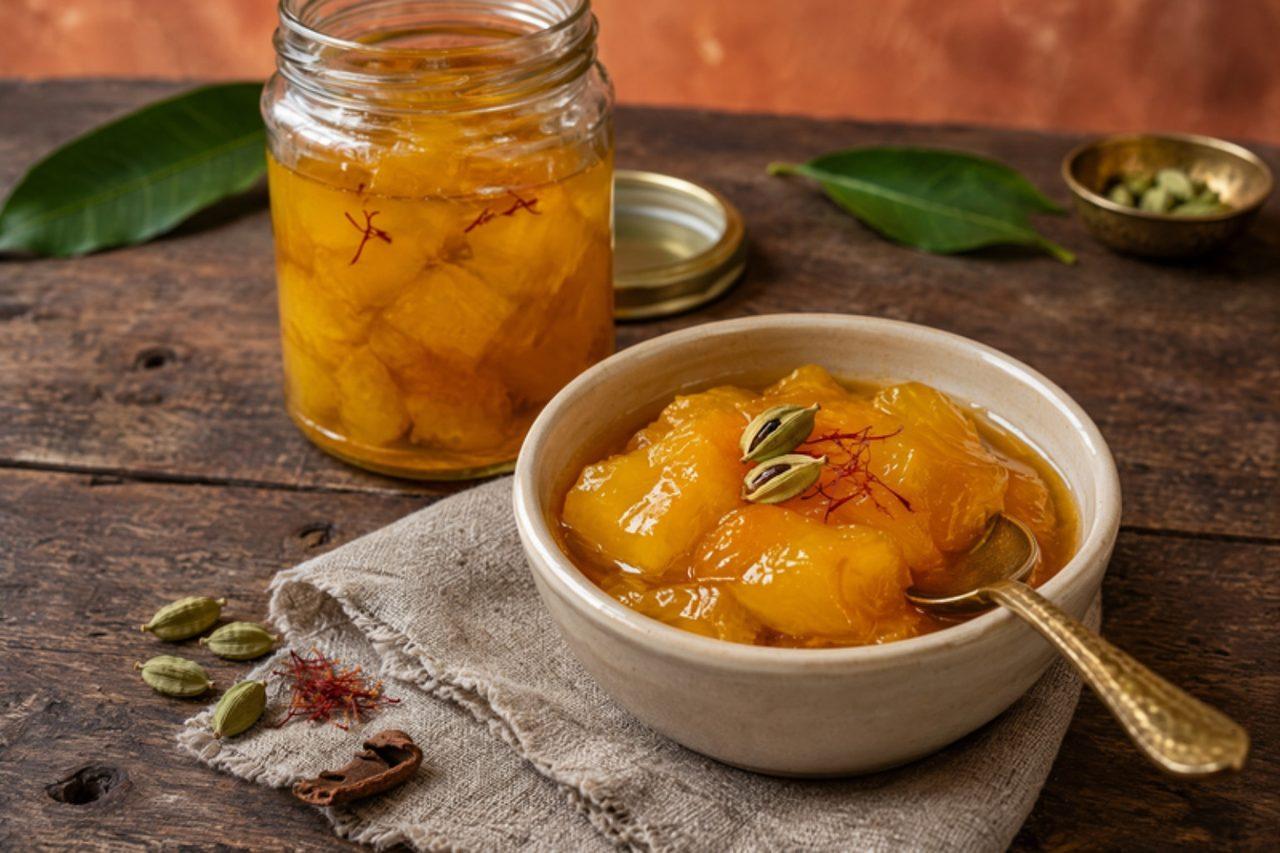
In Gujarat, when the summer stock of pickles goes up in May, murabbo is the gentle, sweet one that children are allowed to dip into freely. Pieces of firm raw mango (rajapuri or totapuri) are cooked slowly in sugar syrup until they turn translucent and glossy, then scented with saffron and cardamom. Unlike chhundo, which is grated and spiked with chilli, murabbo keeps the mango in distinct, tender-firm pieces in a clear, golden syrup; it tastes like candied fruit with a sour edge. Spread it on a warm thepla or rotli, serve it with khakhra at breakfast, or spoon a little beside a Gujarati thali. The common mistake is boiling the mango hard in the syrup, which breaks the pieces and clouds it; keep it at a gentle simmer. It is ready when the pieces look see-through at the edges and the syrup reaches one-string consistency (a cooled drop stretches into a single thread between finger and thumb). With this much sugar it keeps 6 months in a cool cupboard in a sterilised, dry jar, or longer in the fridge. Chef's tip: soak the cut mango in lightly salted water for 10 minutes first; it firms the pieces and stops browning.
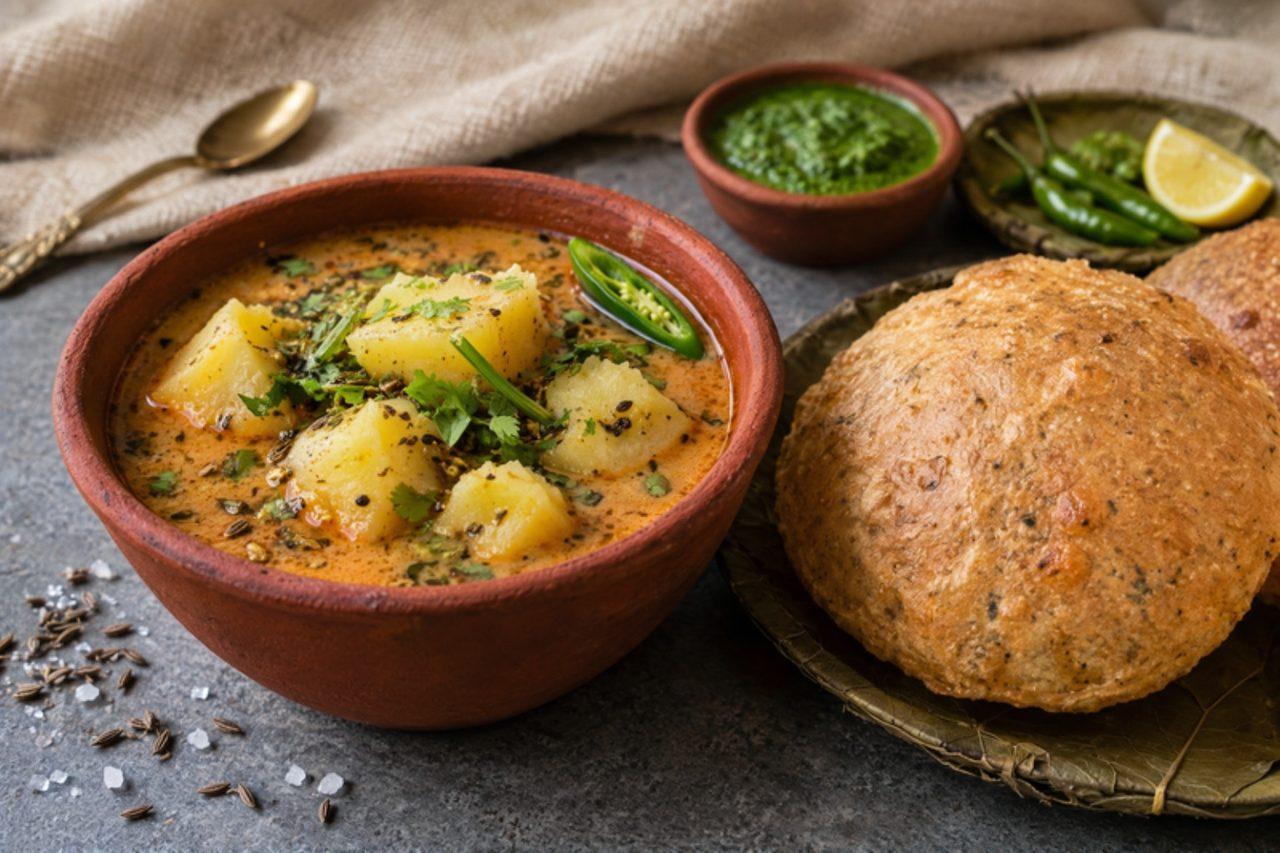
In the lanes of Mathura and Agra, breakfast is bedai or kachori with dubki wale aloo, a thin, peppery potato curry with so much gravy the puri can take a dip, or dubki. Its flavour comes from hing, crushed coriander seed and fennel rather than onion or garlic, which suits the Vaishnav kitchens of Braj and Holi mornings. The common mistake is making the gravy thick; it should run, so add enough water and mash only a few potatoes to give it body. Chef's tip: crush the boiled potatoes by hand into rough pieces rather than cubing them; the jagged edges soak up the spice.
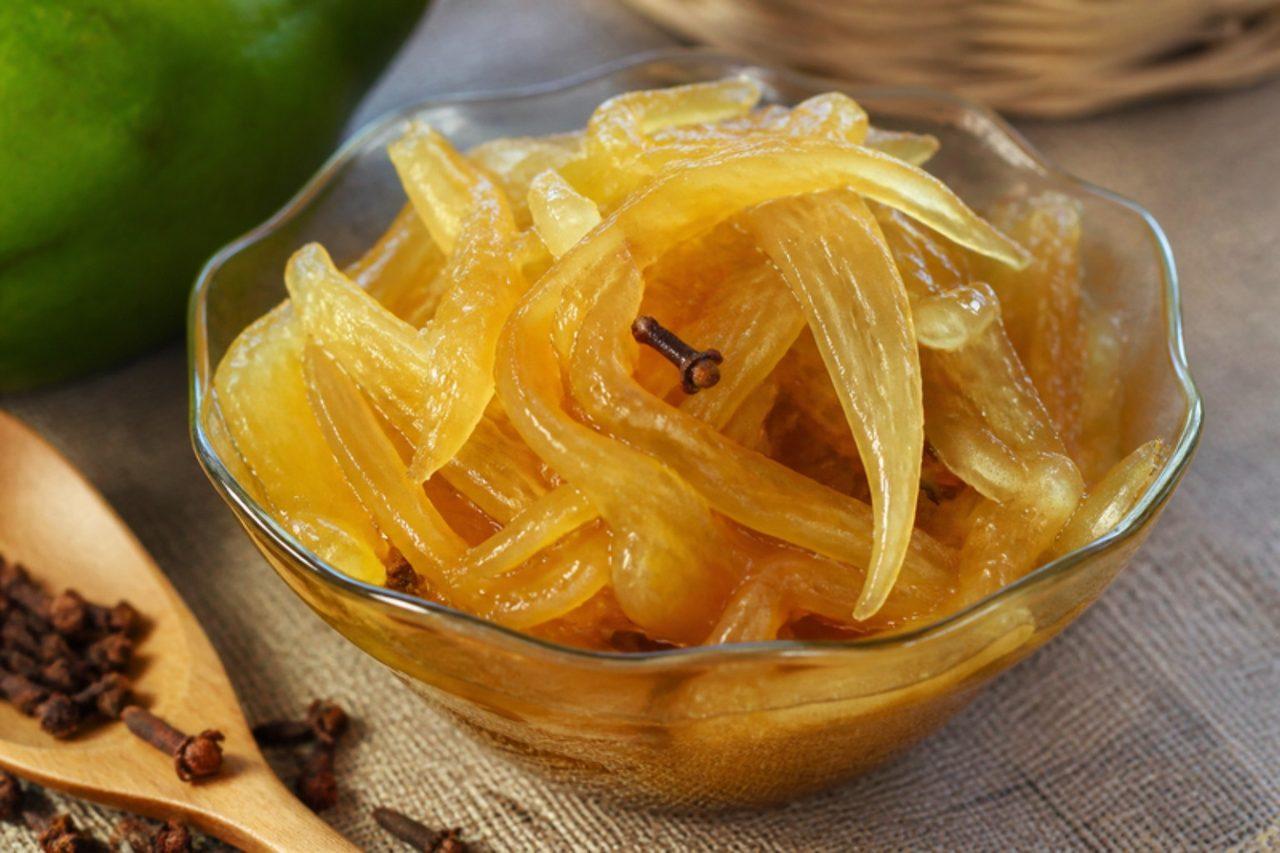
No Venezuelan Christmas plate is complete without a spoonful of dulce de lechosa beside the hallaca, pan de jamón and ensalada de gallina: strips of green papaya simmered in a dark panela syrup with cinnamon and cloves until translucent, sweet and gently chewy. Families make big jars in mid-December to share. The common mistake is cutting the strips too thin, so they fall apart in the syrup. Chef's tip: soak the strips in water with bicarbonate for 30 minutes first; it firms them so they keep their shape.
In Ahmedabad, any good news, from exam results to a new home or a newborn, means a box of kesar penda passed around the office and the street. These are soft, creamy pendas of fresh mawa cooked briefly with sugar and plenty of saffron, so they stay pale gold and fudgy, quite unlike the browned pedas of Mathura or Dharwad. The common mistake is overcooking the mawa once the sugar goes in, which turns the pendas dry and cracked at the edges. Chef's tip: stop cooking as soon as a small piece rolls into a smooth ball between your palms; they firm up as they cool.
Khurchan means 'scrapings', and in Mathura and the sweet lanes of Old Delhi it is made by simmering milk in a wide iron kadhai and lifting off the skin that forms, layer after layer, then stacking the sheets with a sprinkle of sugar and cardamom. It is a winter sweet, sold in small squares, and offered at Janmashtami in Krishna's town. It takes patience, not skill. The common mistake is letting the milk boil, which breaks the skin; keep it just steaming, never bubbling. Chef's tip: fan the surface of the milk gently with a paper plate between layers; the cooler air makes the skin form faster and thicker.
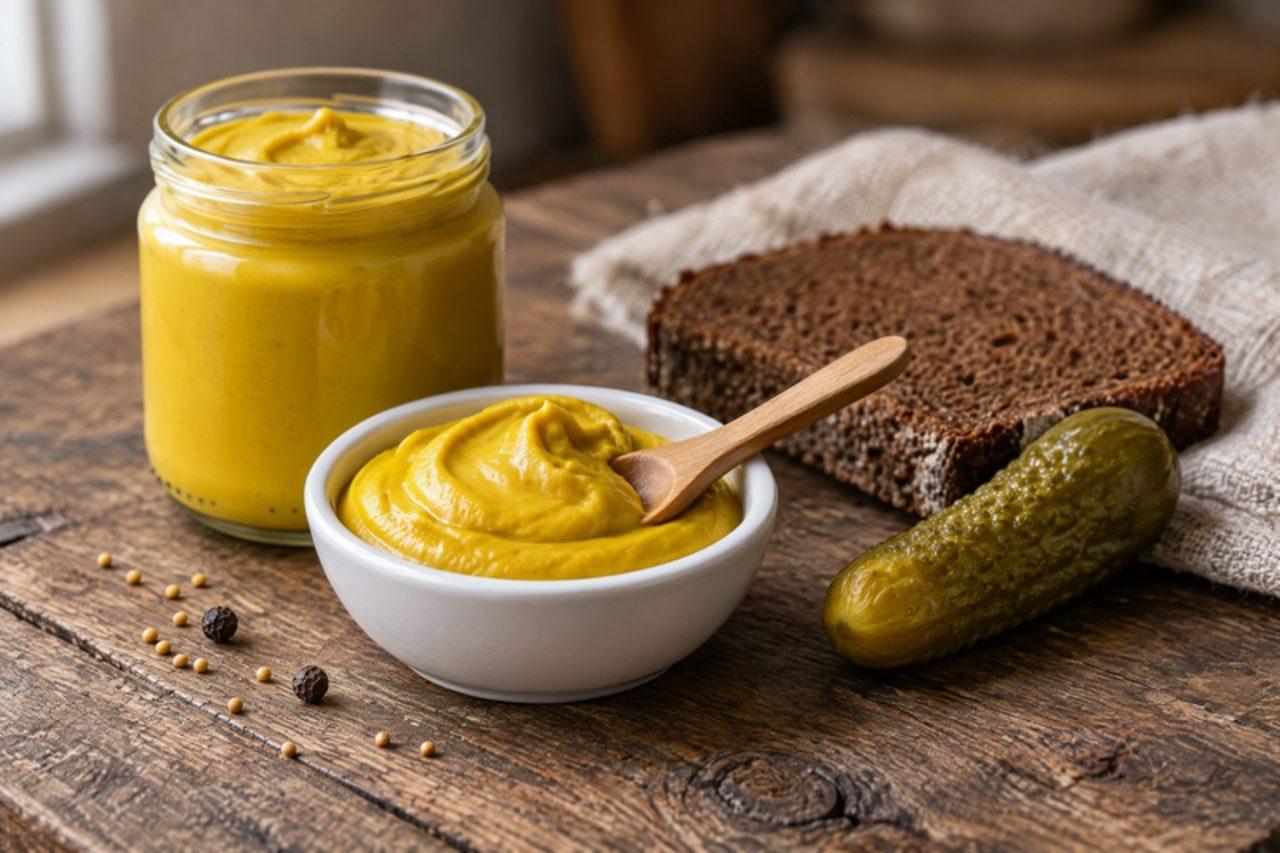
Ask a Ukrainian grandmother from Poltava or Kharkiv what to do with the brine left in the jar once the winter cucumbers are gone, and she will make hirchytsia. Dry mustard powder is mixed with that salty, garlicky, dill-scented brine, a little sugar, oil and vinegar, and after a night's rest it is fierce enough to make your eyes water. It is non-negotiable beside kholodets (meat jelly) at New Year, with salo and rye bread, with boiled sausages and with varenyky, and it is spread thin on bread for a quick snack. The texture is smooth and creamy, the flavour hot, salty and slightly sweet with a whiff of dill and garlic from the brine. Common mistake: using boiling brine; heat kills the enzyme that makes mustard hot, so the brine must be lukewarm or cool. It needs at least 12 hours in the jar for the bitterness to fade. It is ready when the colour has deepened to warm yellow and the first taste makes your nose tingle. Chef's tip: use brine from naturally fermented or vinegar cucumbers; if you have none, mix 150 ml water with 1 tsp salt and 1 tbsp vinegar.
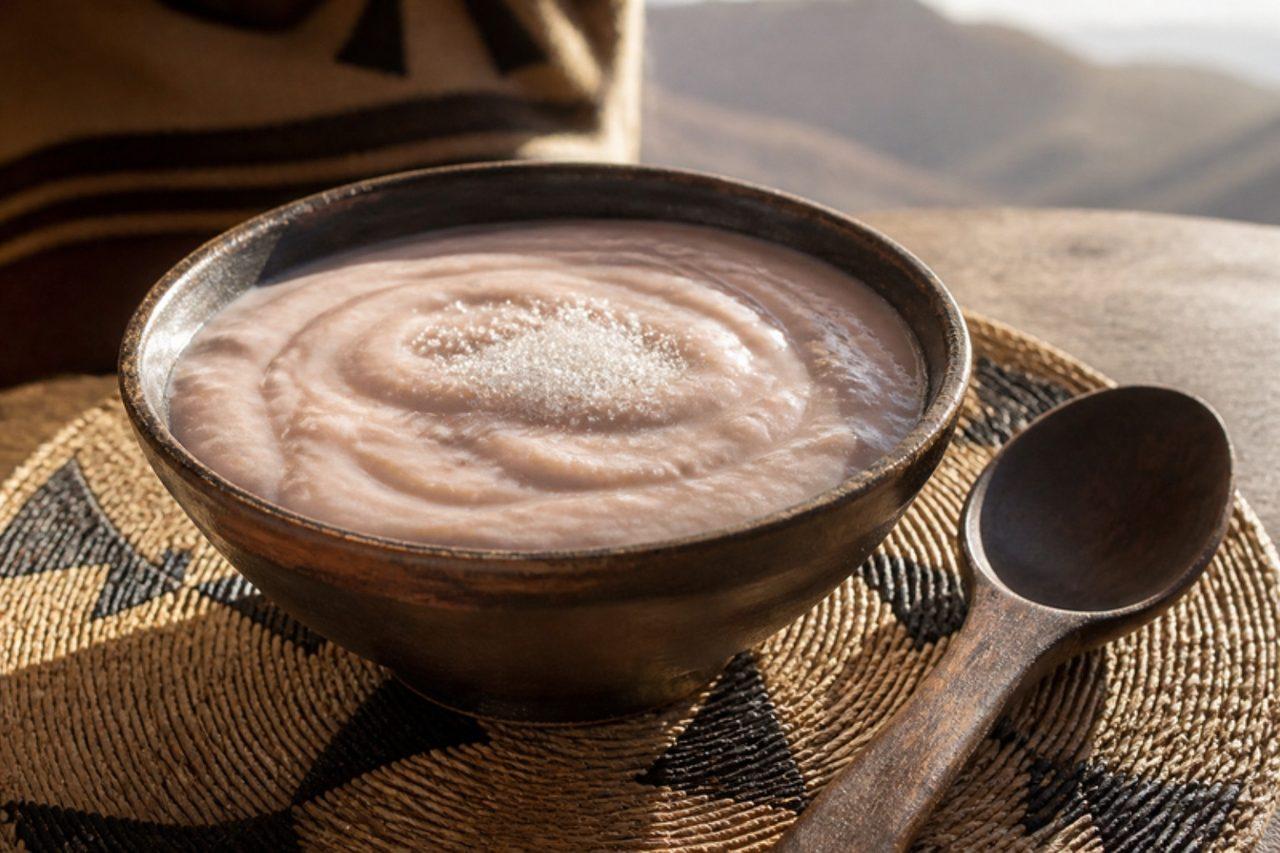
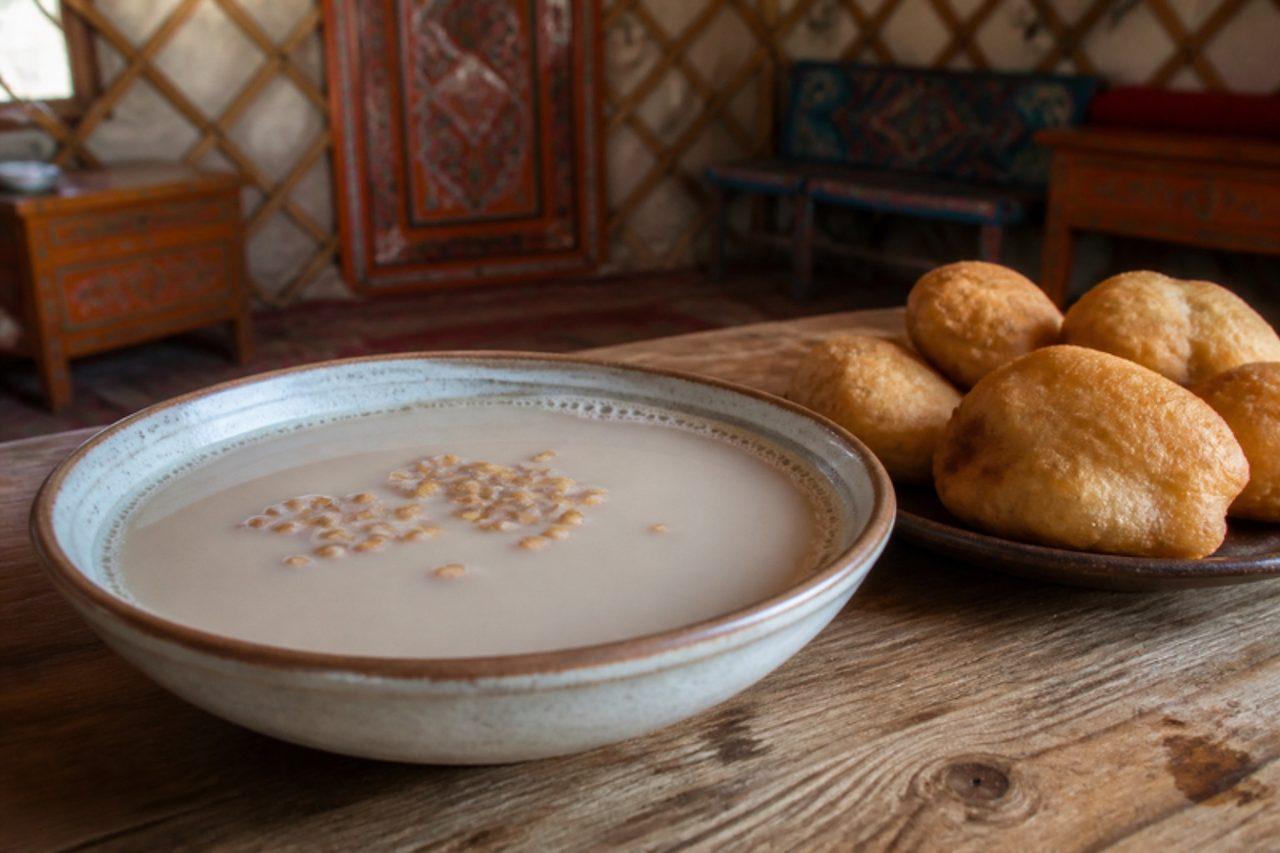
Highland mornings in Lesotho can be bitterly cold, and a mug or bowl of warm motoho, thin enough to sip and pleasantly tangy, is how many Basotho families in Maseru and the mountain villages start the day. Sorghum meal is mixed with warm water and a spoonful of starter from the last batch, left overnight by the stove to sour, then cooked into a smooth, pourable porridge with a yoghurt-like tang and a nutty, toasty flavour. Some sweeten it with sugar; others drink it plain with bread. If you have no starter, make one two days ahead with sorghum and water, as below. Chef's tip: keep the ferment warm but not hot; a pot left right on the stove gets too sour and too thin, so a spot nearby is perfect.
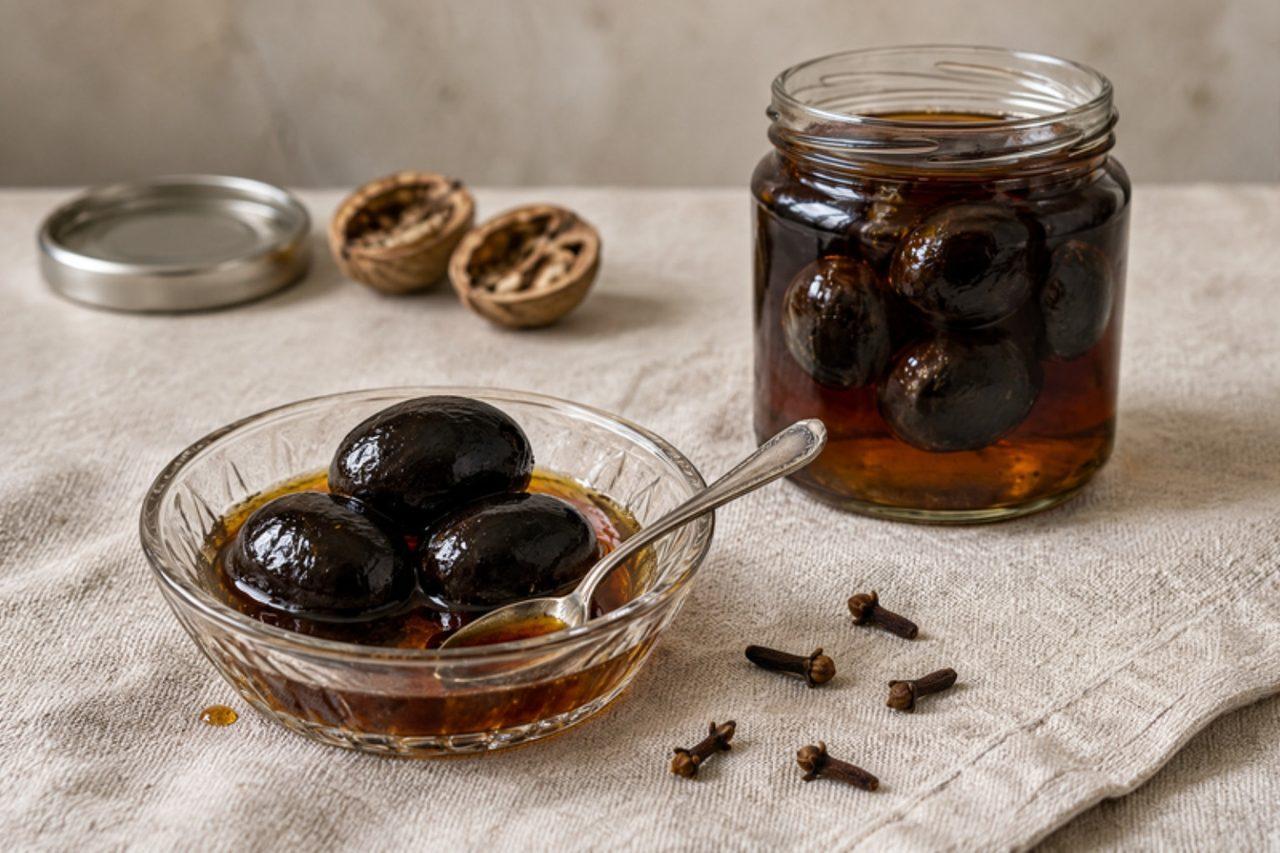
Around Sânziene in late June, families in Moldavia and Transylvania climb the walnut trees to gather nuts that are still green and soft, before the shell has begun to form. A week of patient work follows: peeling, pricking and soaking in water changed morning and evening until the harsh bitterness leaches out, then slow simmering in a syrup scented with cloves and lemon until the nuts turn glossy black. The finished dulceață is offered the old way, one walnut on a small glass saucer with a teaspoon and a glass of cold water for a visitor, or with coffee on a winter afternoon. Each nut is tender all the way through with a faint crunch at the heart, tasting of caramel, cloves and something resinous and bittersweet. The decisive mistake is picking too late: if a darning needle no longer slides easily through the centre, the shell is hardening and the nuts will stay woody whatever you do. The syrup is done when a drop holds its shape on a cold plate. Chef's tip: wear gloves for every stage, as green walnut juice stains skin brown-black for days.
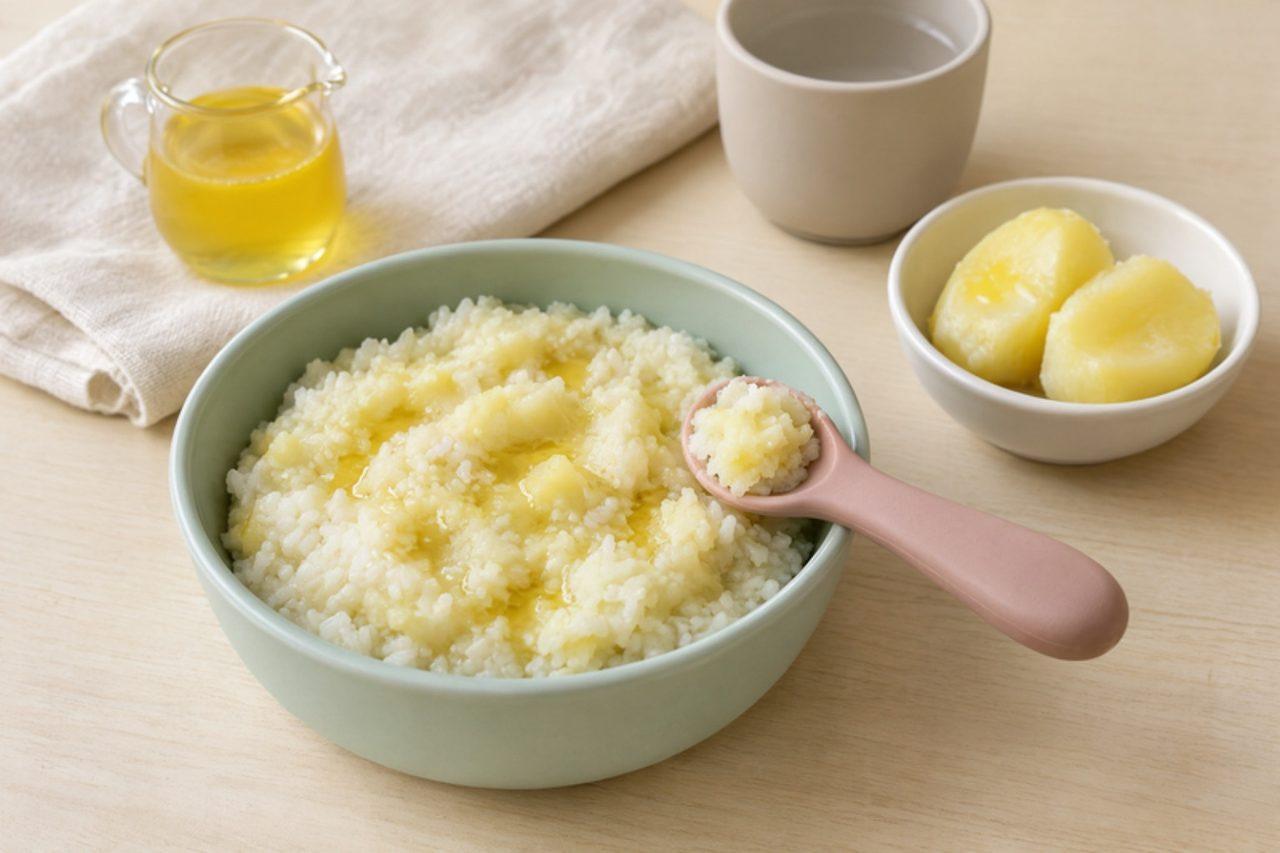
In Kolkata homes, from north Kolkata's old paras to the flats of Salt Lake, aloo seddho bhaat is what you cook when someone is tired, ill or very small: a potato boiled right in the rice pot, mashed with hot rice. Grown-ups add raw mustard oil, green chilli and onion; for toddlers from 12 months it is mashed instead with a spoon of ghee, so it's soft, buttery and mild. Gobindobhog rice gives it a lovely fragrance. It contains milk (ghee); there is no gluten, egg, nuts or soya. Chef's tip: mash the potato and rice with a fork or your fingers, never a blender, or it turns gluey.
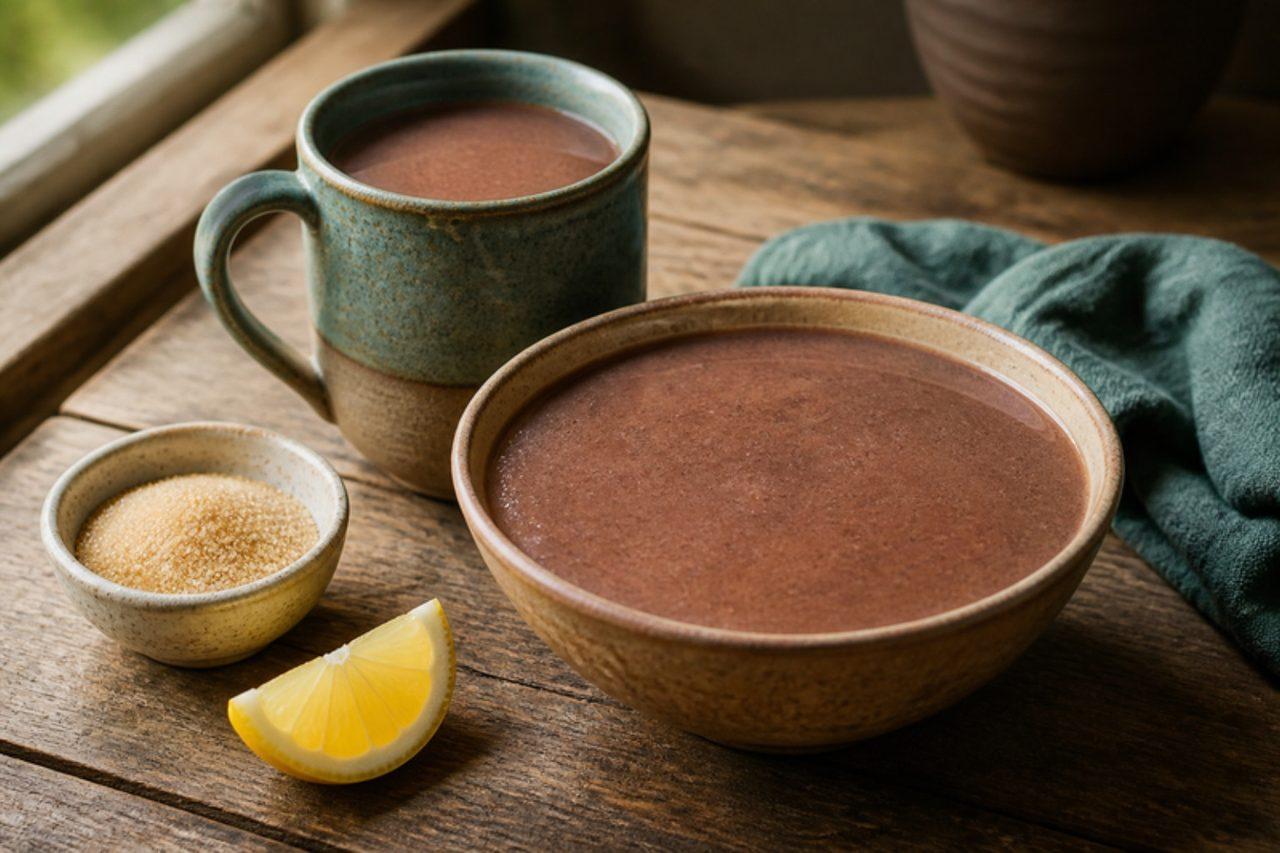
Mugs of brown uji are handed out at breakfast in Kenyan homes and schools, sold from steaming flasks at bus stages, and given to children and nursing mothers for strength. Finger millet flour (wimbi) makes a thin, drinkable porridge with a malty, slightly chocolatey taste; it is sweetened with sugar and soured with lemon, or left overnight to ferment for a deeper tang. Look for finger millet flour at African grocers or as ragi flour in Indian shops, and never tip it straight into boiling water, the mistake that gives lumps every time; always make a cold slurry first. Drink it hot in a mug, with mandazi or roasted groundnuts on the side. Chef's tip: for fermented uji, mix the slurry the night before and leave it covered on the counter; by morning it smells gently sour and needs only half the lemon.
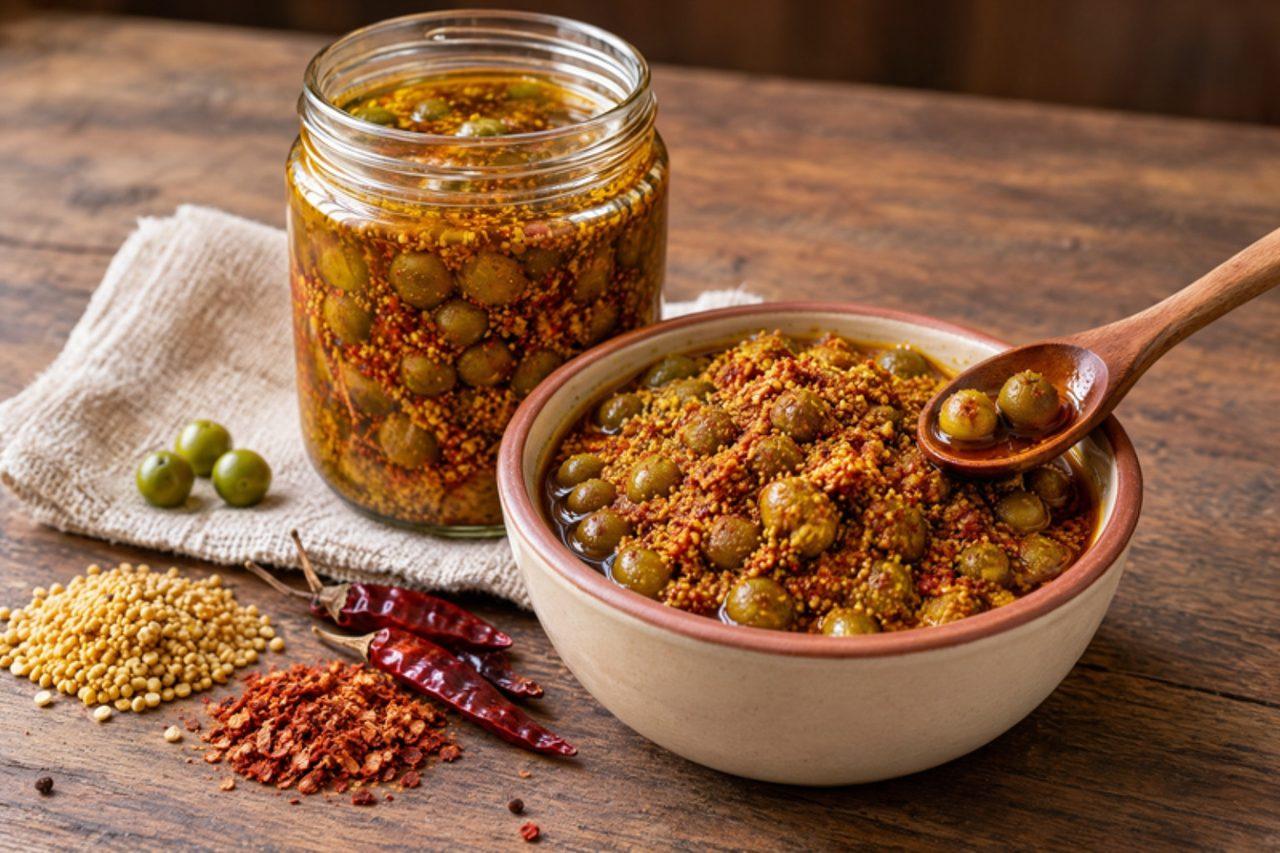
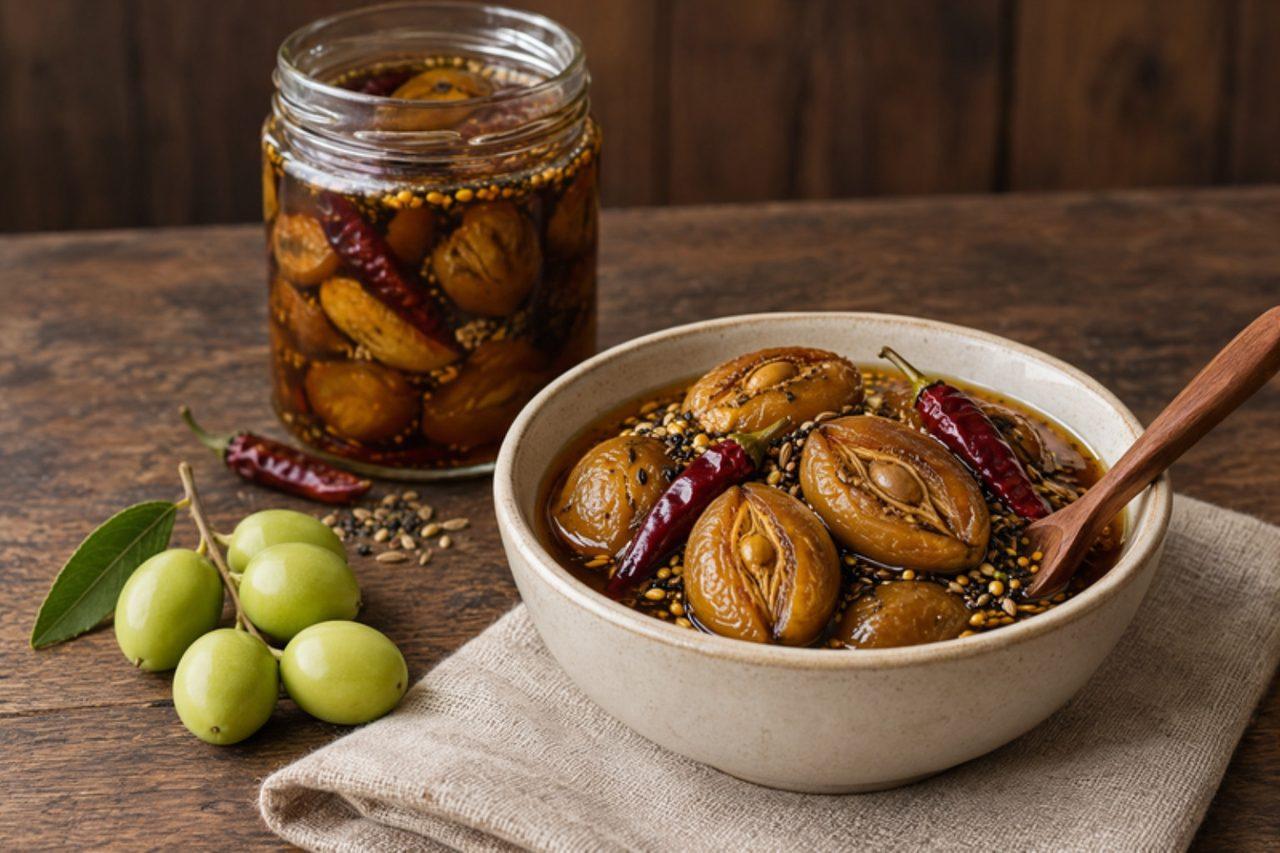
Ker is a leafless desert shrub that grows wild across Kutch and the Thar, and in April and May, before the monsoon, it is covered in small green berries that families pick by hand. Fresh ker are fiercely bitter, so they are soaked and boiled until the bitterness fades, then pickled with split mustard, split fenugreek, chilli and lemon juice and covered in oil. The berries are firm, pea-sized and slightly chewy, with a sour, earthy, caper-like flavour under the mustard heat. In Kutch the pickle goes with bajra rotlo and buttermilk, or is mixed into khichdi; across Rajasthan the same berries go into ker sangri. The common mistake is rushing the soaking: if the water is not changed several times the pickle stays harsh. Taste a berry: it should be pleasantly sour-bitter, like an olive, not acrid. It is ready to eat after 3–4 days, once the berries have absorbed the lemon. Boiled ker are low in acid, so the lemon matters and the pickle lives in the fridge, where it keeps up to 2 months. Abroad, use dried ker from Indian grocers (they swell back well), or, at a pinch, capers soaked to remove the salt. Chef's tip: add a few cubes of raw mango in season for extra sourness.
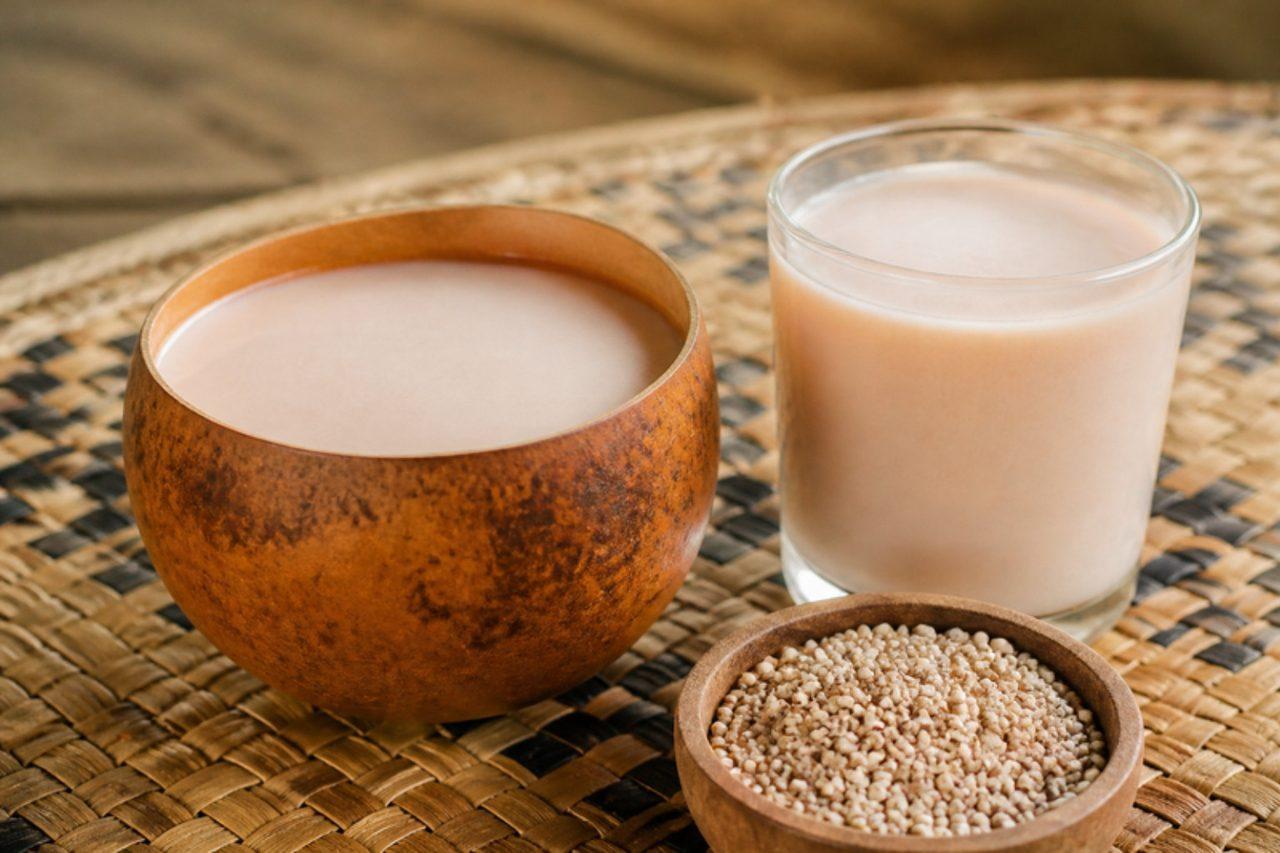
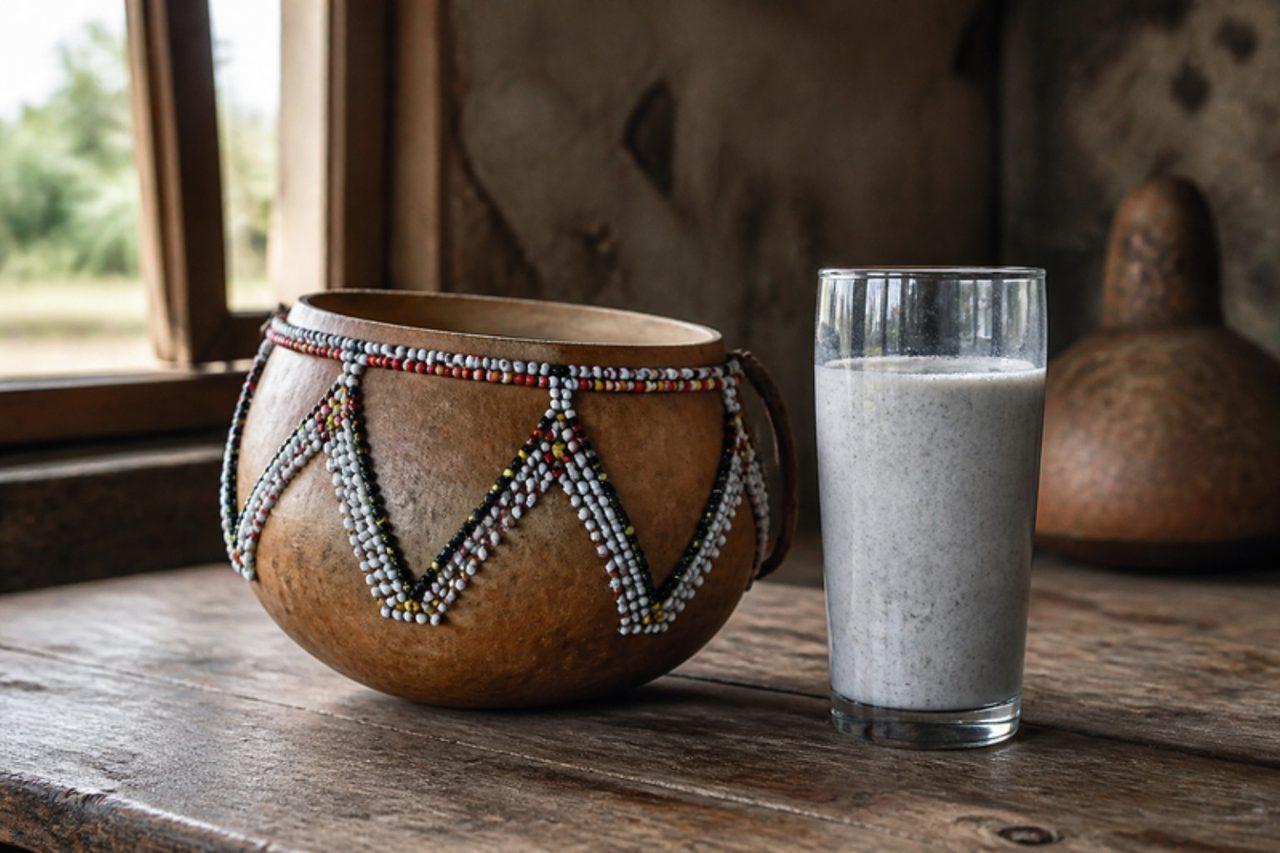
In the hills of Kigezi around Kabale, a calabash of obushera is offered to visitors and carried to the fields in the afternoon; the same drink, left for days, becomes beer, but the everyday family version is drunk young and contains no meaningful alcohol. Sorghum flour is cooked into a thin porridge, cooled, then left overnight with a spoonful of sprouted sorghum flour to sour gently, so it tastes tangy, malty and refreshing, a little like a drinking yoghurt made from grain. Drink it chilled on its own or with roasted groundnuts. The mistake people make is leaving it out too long: after a day it starts to fizz and turn alcoholic, so taste it, then chill it. Chef's tip: sweeten only just before serving, as sugar added early speeds up the ferment.
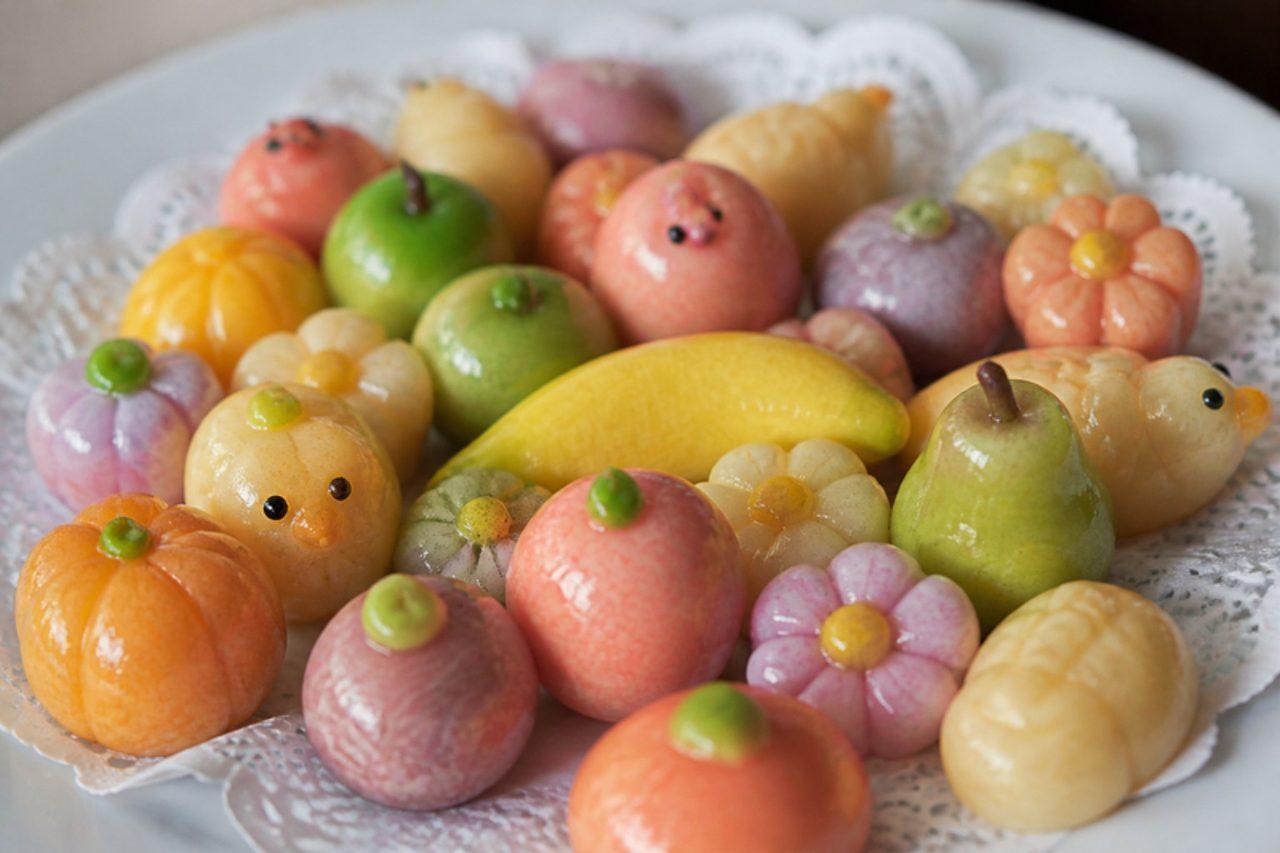
Walk through the old centre of Mérida and you'll pass windows full of tiny shiny sweets shaped like fruit, flowers and animals: dulces abrillantados, made from milk and sugar cooked down to a fudge, hand-moulded and dipped in syrup that dries to a glassy crust. Families buy boxes to take home from the Andes. They need patience: the shaping is fun, but the milk must be cooked until it truly pulls away from the pan. The common mistake is stopping too early, so the figures flatten. Chef's tip: dust your hands with icing sugar while shaping, and dry the figures overnight before glazing.
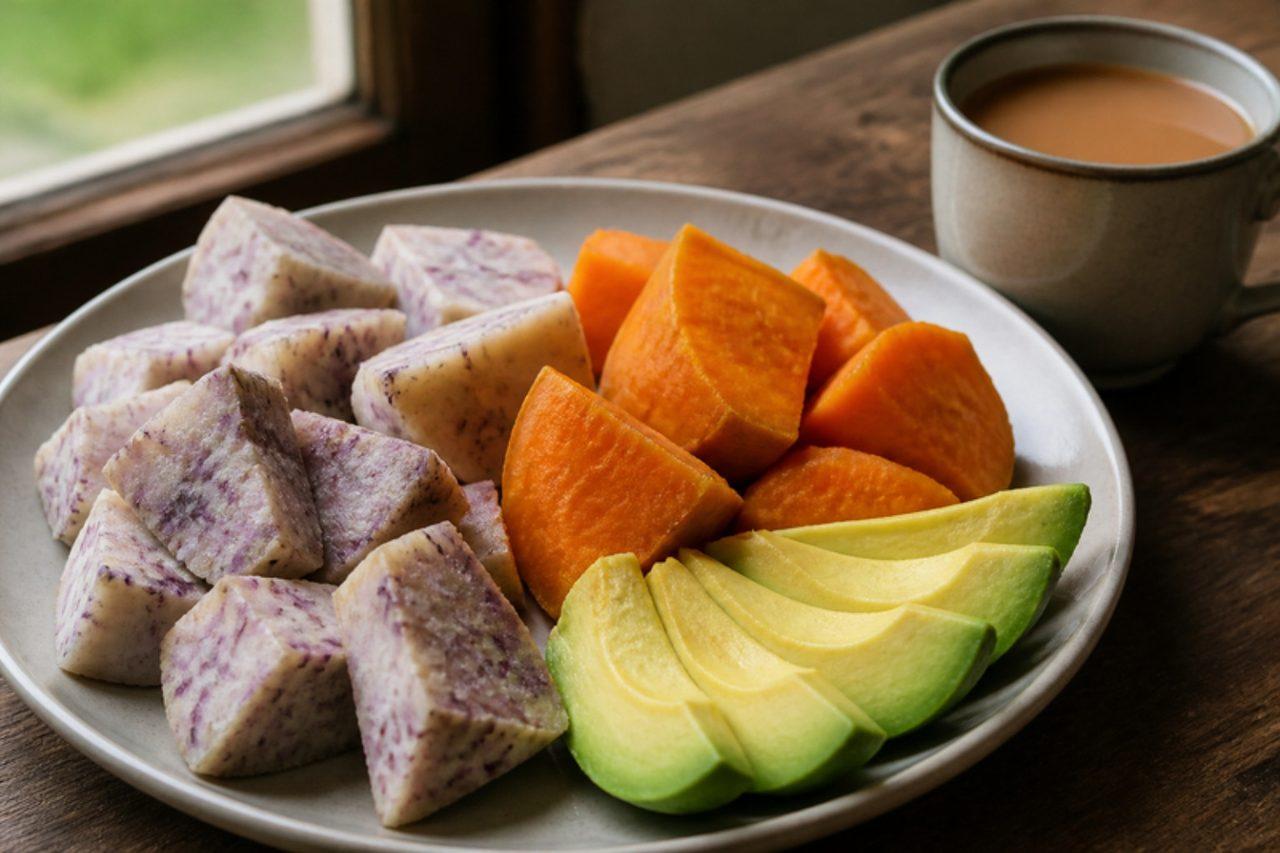
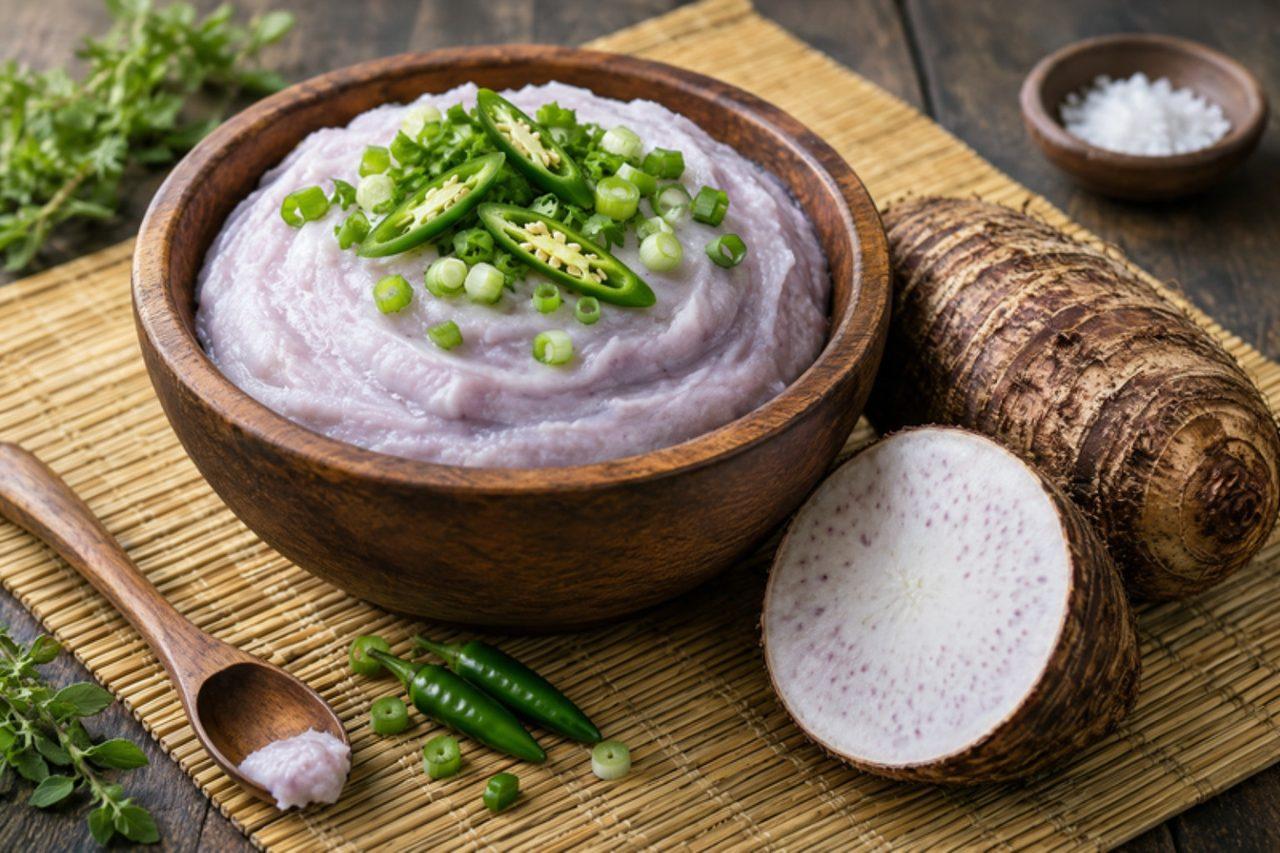
A plate of nduma and sweet potatoes with a mug of hot milky chai is the classic weekend breakfast in Kiambu and Murang'a homes, and farmers eat the same before a long day in the shamba. What Kenyans call arrowroot is taro, a starchy corm with a dense, nutty flesh that turns faintly purple and almost creamy when boiled; the sweet potatoes beside it are soft and honeyed, lovely with sliced avocado. Find taro (also called eddoes or dasheen) at African, Caribbean and Asian grocers. Raw taro irritates skin and mouth, so wear gloves to peel it and make sure it is boiled right through: undercooking is the one real mistake here and leaves an itchy, scratchy feeling in the throat. Chef's tip: cut taro and sweet potato into similar-sized pieces but add the sweet potato 10 minutes later, so both are done at once.
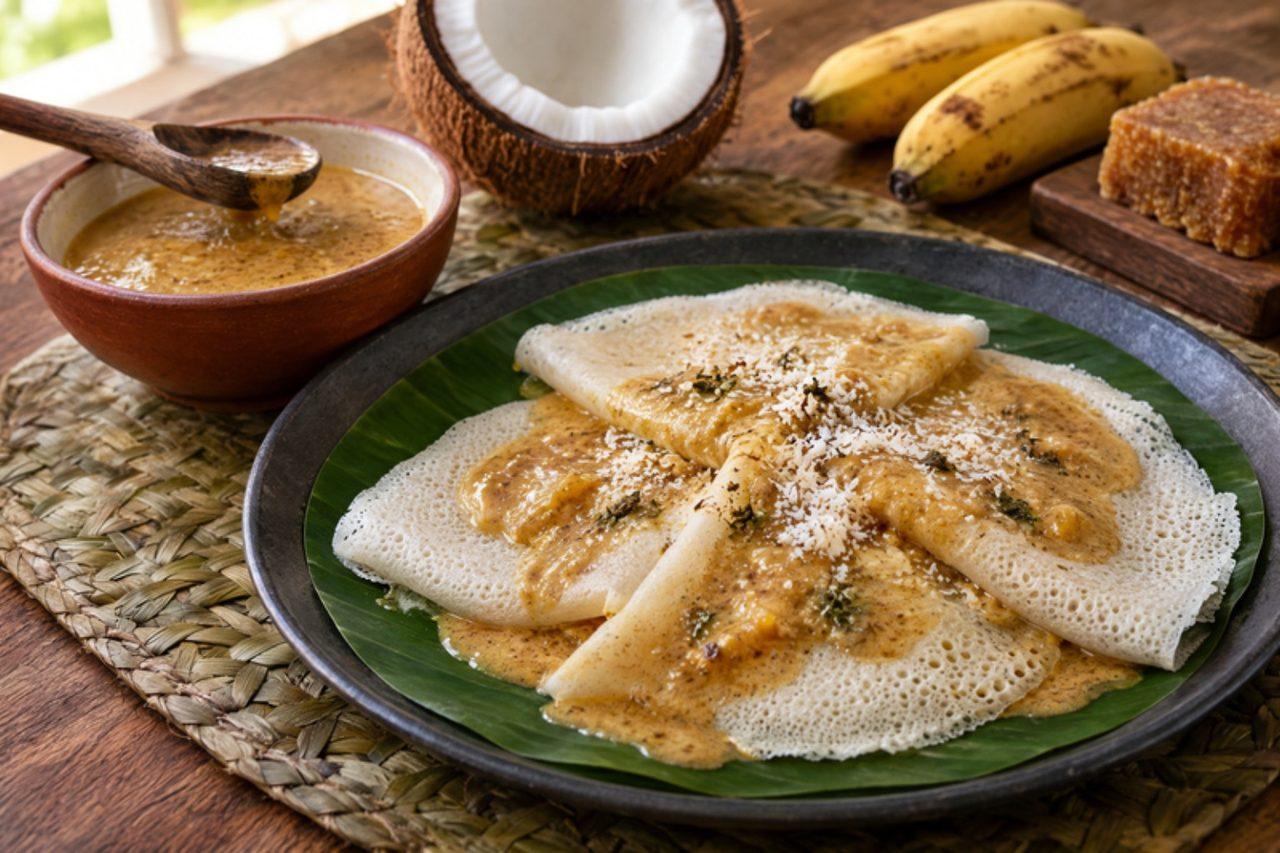
On the coral islands of Lakshadweep, kilanji is the treat for weddings, Eid mornings and a welcome guest. Thin, soft crepes of soaked rice and egg, or rice alone as here, are folded and drenched in a warm sauce of coconut milk sweetened with coconut jaggery and full of mashed ripe banana and cardamom. The islanders often add egg to the batter; this version keeps it vegan with a touch of cooked rice for softness. The common mistake is a gritty batter: the rice needs a full four hours' soak and a long, fine grind, or the crepes tear. Chef's tip: keep the sauce barely warm, never boiling, so the coconut milk stays silky.
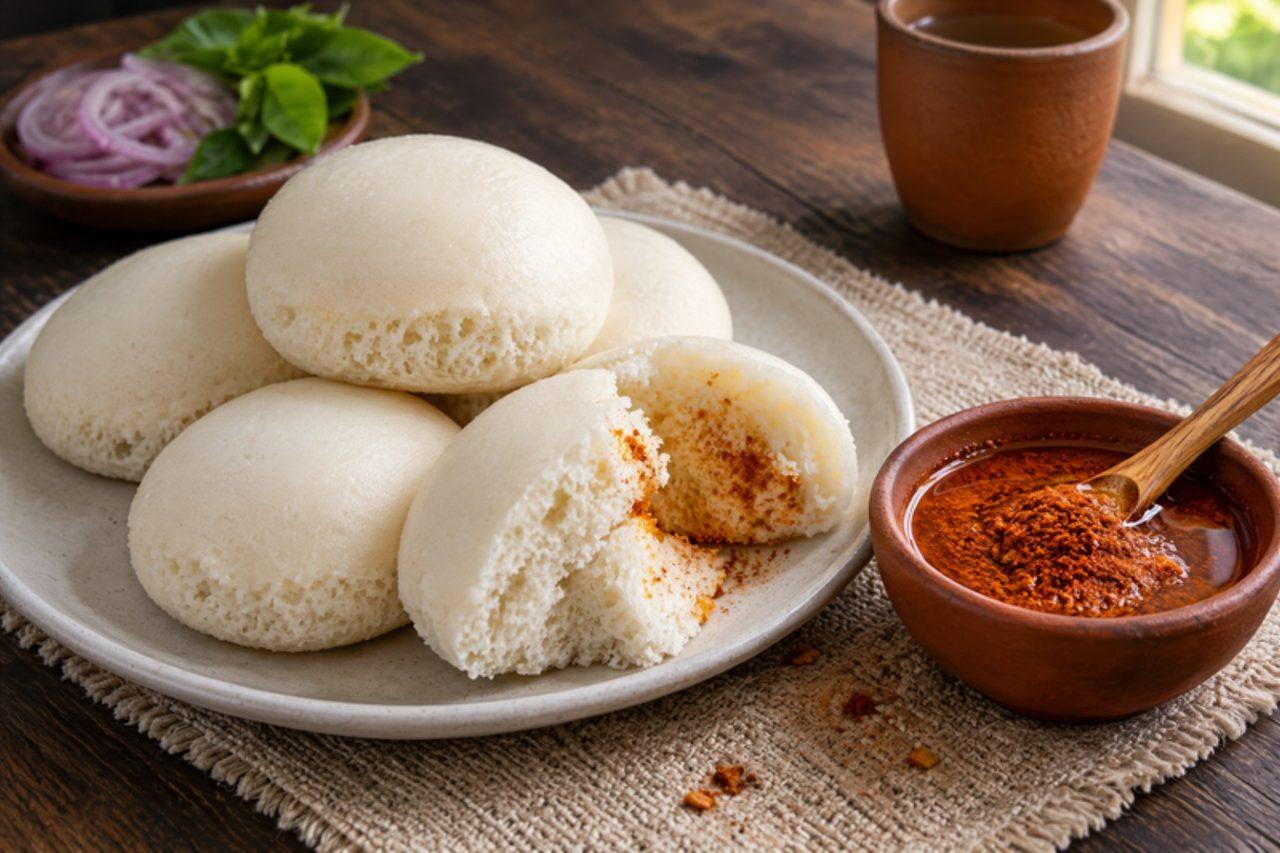
In Kano, Katsina and Sokoto, alkubus is a breakfast bread you steam rather than bake: a soft yeasted wheat dough set in small cups or tins over boiling water until it puffs into fluffy, slightly sticky domes. It is eaten warm, pulled apart and dipped into groundnut oil with yaji, the peanut and chilli spice mix, or with a bowl of miyan taushe or other soup. The common mistake is lifting the lid during steaming; the rush of cold air makes the breads sink and turn dense. Yaji contains peanuts. Chef's tip: wrap the pot lid in a tea towel so condensation can't drip back and leave wet craters on the tops.
In Gaborone and villages across Botswana, diphaphata (sometimes called flat cakes or Botswana muffins) are a weekend breakfast: little rounds of soft yeast dough cooked on a dry, heavy pan until they puff and brown on both sides, then split while hot and spread with butter, jam or syrup. They look like English muffins but are softer and slightly sweet. The common mistake is a pan that is too hot: the outsides scorch while the centres stay doughy, so cook them slowly over a medium-low heat. Chef's tip: dust them with flour rather than oiling the pan; a dry pan gives the matt, freckled crust they are known for.
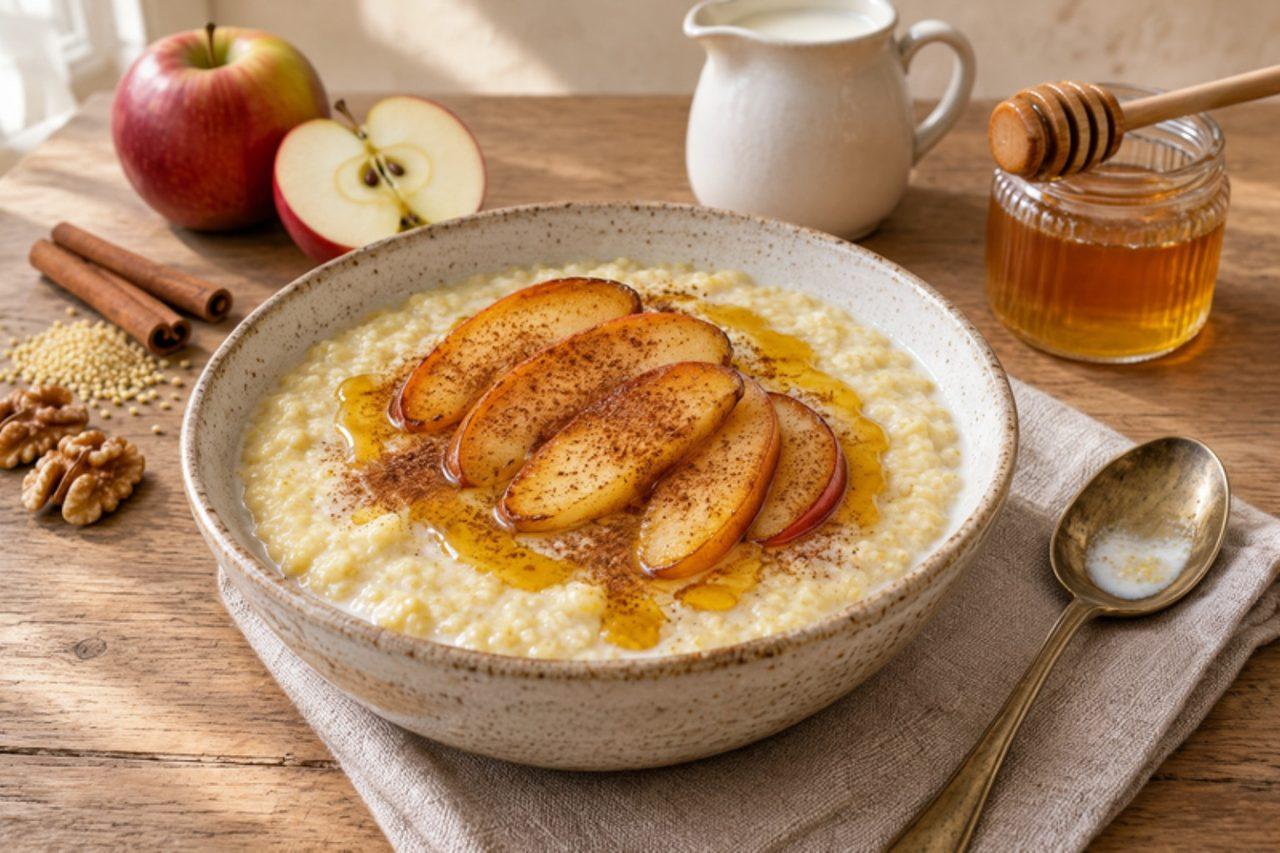
Millet, jagły, has been eaten in Poland for centuries, and kasza jaglana na mleku is the warming winter breakfast many Polish children grew up on, now back in fashion as a gentle, gluten-free porridge. The grains are cooked in water first, then simmered in milk until soft and creamy, and topped with sautéed apple, cinnamon and a little honey. The mistake that puts people off millet is skipping the rinse: the grains carry a bitter coating that has to be washed off and scalded away with boiling water. Chef's tip: toast the rinsed millet in the dry pan for 2 minutes before adding water, and the porridge tastes nutty instead of grassy.
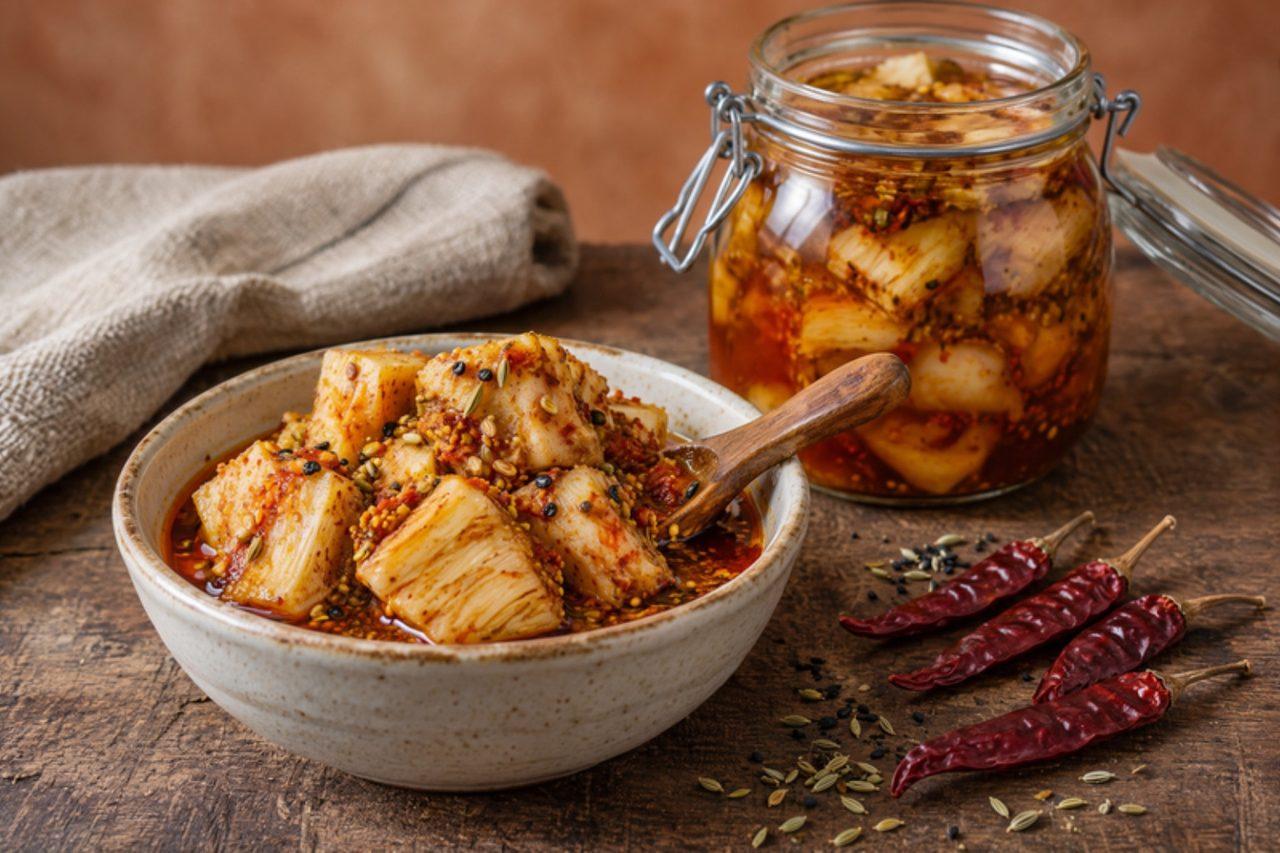
In Lucknow, Kanpur and across Punjab, the hard green jackfruit that arrives in spring and early summer is cooked like meat in kathal ki sabzi, and the rest goes into a jar of kathal ka achar. The chunks are boiled until just tender, dried, then coated in a fierce mix of mustard oil, fennel, nigella, fenugreek and red chilli, sharpened with vinegar and dry mango powder. The texture is the surprise: firm, fibrous and almost meaty, soaking up spice like a sponge. It goes with puri-aloo at a Sunday breakfast or alongside rajma-chawal. Boiled jackfruit is a low-acid vegetable, so this version is deliberately acidified and lives in the fridge. Common mistake: boiling the jackfruit soft; it then breaks into mush in the jar. Stop when a knife meets slight resistance at the core. It is ready after 3 days, when the chunks have turned tawny all the way through and taste sour, not bland. Keep in the fridge for up to 1 month, under oil, with a dry spoon; discard if mould, fizzing, sliminess or a sour-rotten smell appear. Chef's tip: rub your knife and hands with oil before cutting raw jackfruit, or the sticky sap glues everything.
In the coffee villages of the Venezuelan Andes, in Trujillo, Mérida and Táchira, the day starts in the dark with a pot of guayoyo, and it never really stops: a cup at breakfast with arepas, one mid-morning, one after lunch, one at the bodega counter in the afternoon. Guayoyo is the opposite of a short, dark negrito: plenty of water through a modest amount of coffee, poured through a colador de tela, a cotton cloth sock on a wire ring. It is light-bodied, mild and clean, closer to tea in strength, with gentle chocolate notes and almost no bitterness, so it is easy to drink cup after cup. It still has caffeine, so count the cups. The common mistake is pouring boiling water onto the grounds, which pulls out bitter flavours; let the kettle rest off the boil for a minute first. Never wash the cloth with soap either, or every cup tastes soapy. The coffee is ready when it runs through amber-brown, clear enough to see the bottom of a white cup. Sweeten with papelón (raw cane sugar) if you like. Chef's tip: keep the rinsed cloth in a jar of water in the fridge between uses so it never smells stale.
Ask anyone who grew up in France about diabolo menthe and they will remember sitting on a café terrace after school, or on holiday in Brittany or the Vendée, with a tall glass of startling green fizz and a straw. It is simply sirop de menthe, the sweet mint syrup sold in every French supermarket, topped up with limonade, which in France means a clear, lightly sweet, lemony fizzy drink. Grenadine makes a diabolo grenadine, lemon syrup a diabolo citron. It tastes cool, minty and sweet, like a liquid mint sweet, with a sharp sparkle. The common mistake is pouring the syrup on top of the lemonade: it sinks in a dense layer and you drink plain fizz followed by pure syrup. Put the syrup in the glass first and pour the lemonade down the side so it mixes as it rises. It is ready when the glass is an even mint-green from bottom to top and still fizzing hard. Café ratio is about one part syrup to seven parts lemonade. Chef's tip: for a homemade syrup, steep a big handful of fresh mint in hot sugar syrup for 30 minutes and strain; it will be pale gold-green rather than emerald, and tastes fresher.
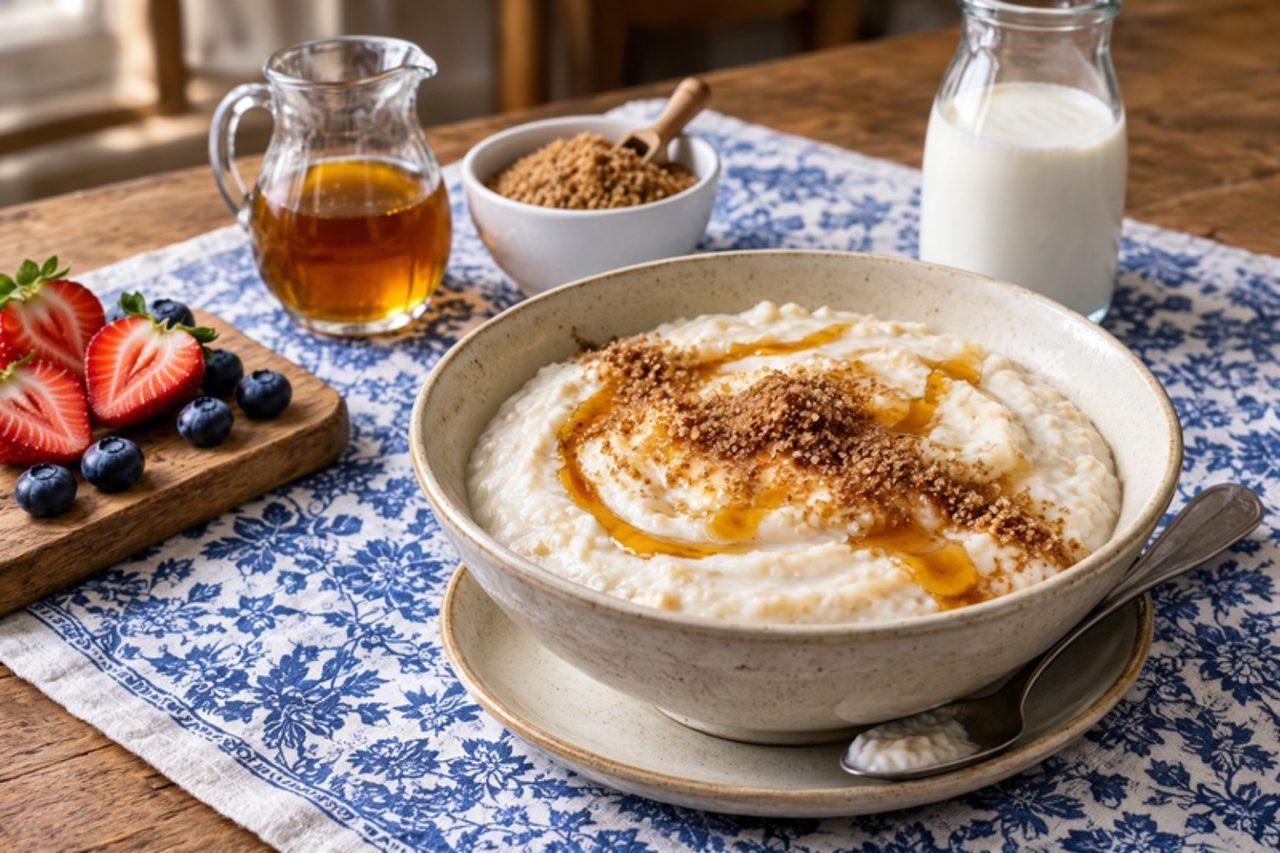
Karnemelkse pap, made with the buttermilk left over from Dutch farm churning, was breakfast and supper in the Netherlands for centuries, and many older Dutch people still remember it on cold winter mornings. Buttermilk is thickened with flour into a smooth, tangy porridge and eaten hot with stroop (syrup) or brown sugar. The common mistake is pouring cold buttermilk on flour and boiling hard, which splits the porridge into grainy lumps; mix a smooth paste first and keep the heat gentle. Chef's tip: stir constantly with a whisk, especially at the bottom of the pan, until it bubbles once, and it stays silky.
Open almost any Norwegian matpakke (the packed lunch wrapped in paper) and you will find slices of kneippbrød, a soft, lightly sweet loaf of sammalt hvete (wholemeal wheat) baked in a tin. Its fine crumb slices thin without crumbling, perfect for brown cheese, jam or cucumber at the school desk. The common mistake is adding too much flour while kneading because wholemeal dough feels sticky; the loaf then bakes dense and dry. Chef's tip: let the dough rest for 20 minutes after mixing, before kneading, so the bran softens and the dough turns smooth on its own.
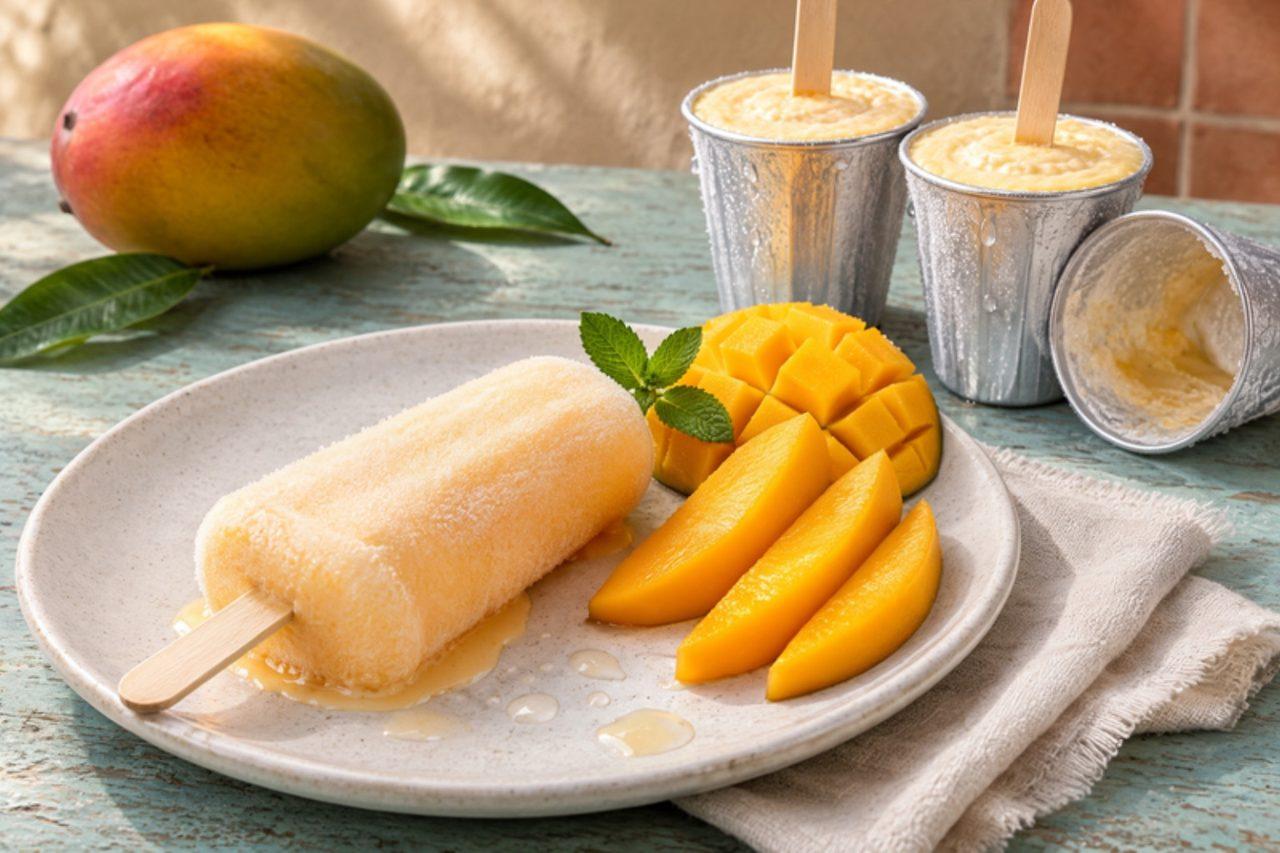
In the hot streets of Centro Habana, durofríos are sold straight from the front windows of family homes: a few pesos buys a frozen cup of fruit juice or fruit and milk, popped out and eaten on a stick or straight from its paper cup. Children queue for them after school in the long summer afternoons, when the sea breeze has dropped. This version blends ripe mango with milk and lime into a creamy, fruity ice that is firm, as the name says ("hard-cold"), rather than soft like ice cream. Swap the milk for water or guava juice for a dairy-free fruit ice. It contains milk. Chef's tip: make the mix taste a little too sweet before freezing; cold dulls sweetness.
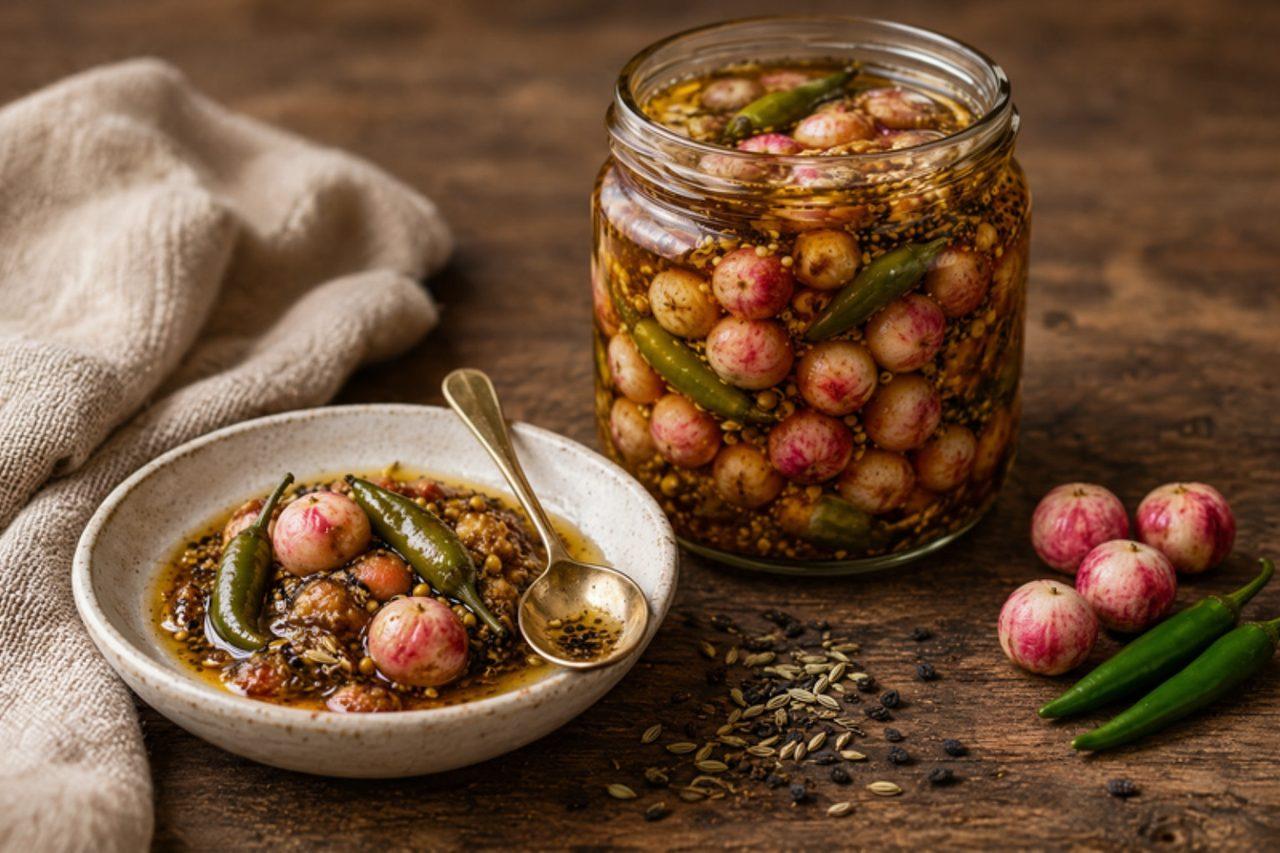
When the thorny karonda bushes along Punjab and Rajasthan field edges fruit in July and August, the small green berries with rosy cheeks end up in jars of karonde ka achar. The fruit is very sour and slightly bitter-milky when raw, so it suits a bold mustard-oil pickle: halved berries and slit green chillies are salted, dried for a day, then tossed with crushed fennel, nigella, fenugreek and mustard. After a week the berries turn soft and sour-tangy, the chillies mellow, and the oil smells of saunf. Eat it with paratha, moong dal khichdi or a plain bowl of curd rice. Karonda is hard to find abroad; firm fresh cranberries are the closest substitute in sourness and size. Common mistake: skipping the drying day; wet fruit thins the oil and invites mould. It is ready when the berries yield to the teeth and the spice coat has darkened. Because it holds fresh green chillies under oil, keep this jar in the fridge for up to 2 months, berries always under oil, dry spoon every time; discard if you see mould, fizzing or an off smell. Chef's tip: wear gloves when halving karonda, the white latex is sticky and stains fingers.
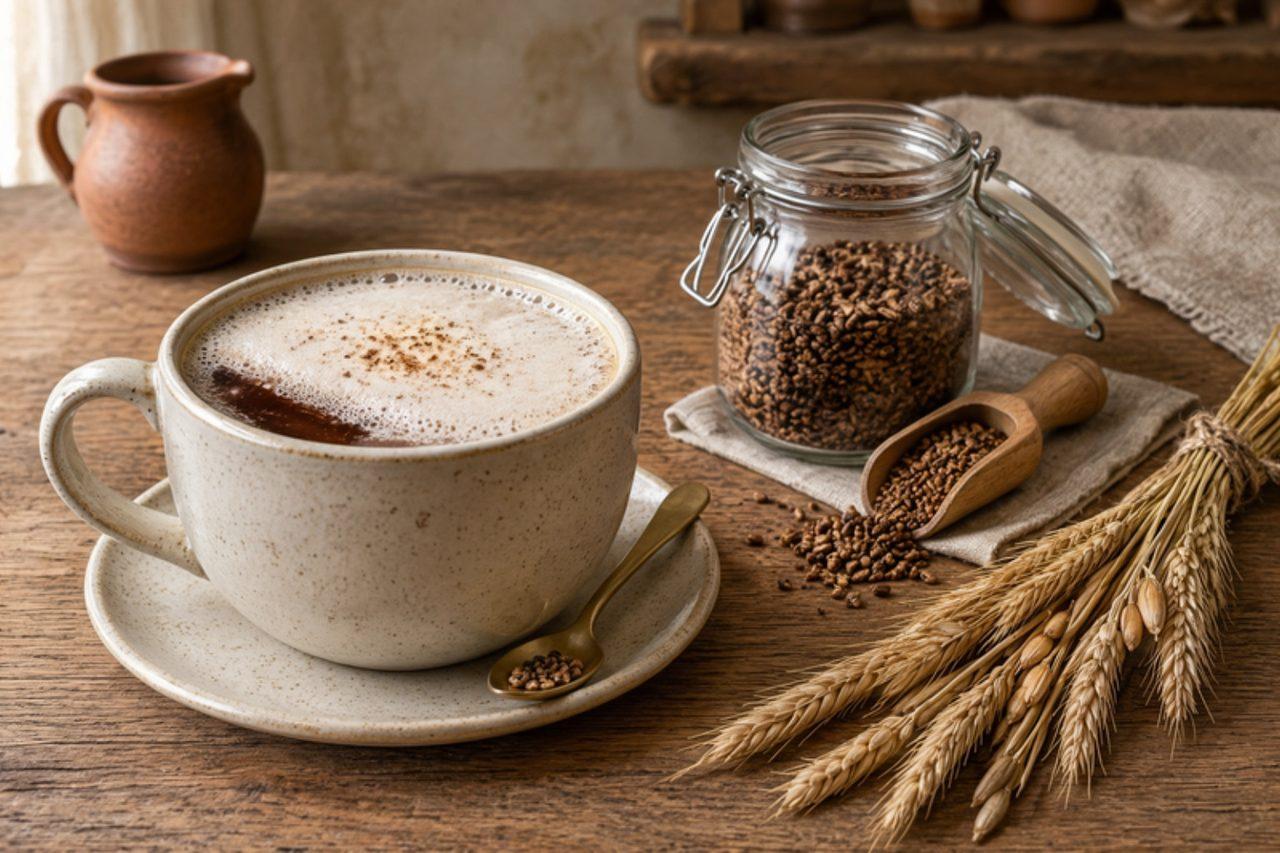
In Polish kindergartens, school canteens and grandmothers' kitchens, kawa zbożowa is the breakfast "coffee" everyone can drink: a blend of roasted rye, barley, chicory and sometimes sugar beet that tastes toasty and malty with no caffeine at all. It is usually drunk milky and a little sweet alongside bread and butter. The common mistake is brewing ground grain coffee like espresso: it needs a few minutes of simmering to give up its flavour, or it tastes like weak tea. Chef's tip: let the pot stand off the heat for 2 minutes after simmering so the grounds sink, then pour gently and you won't need a filter at all.
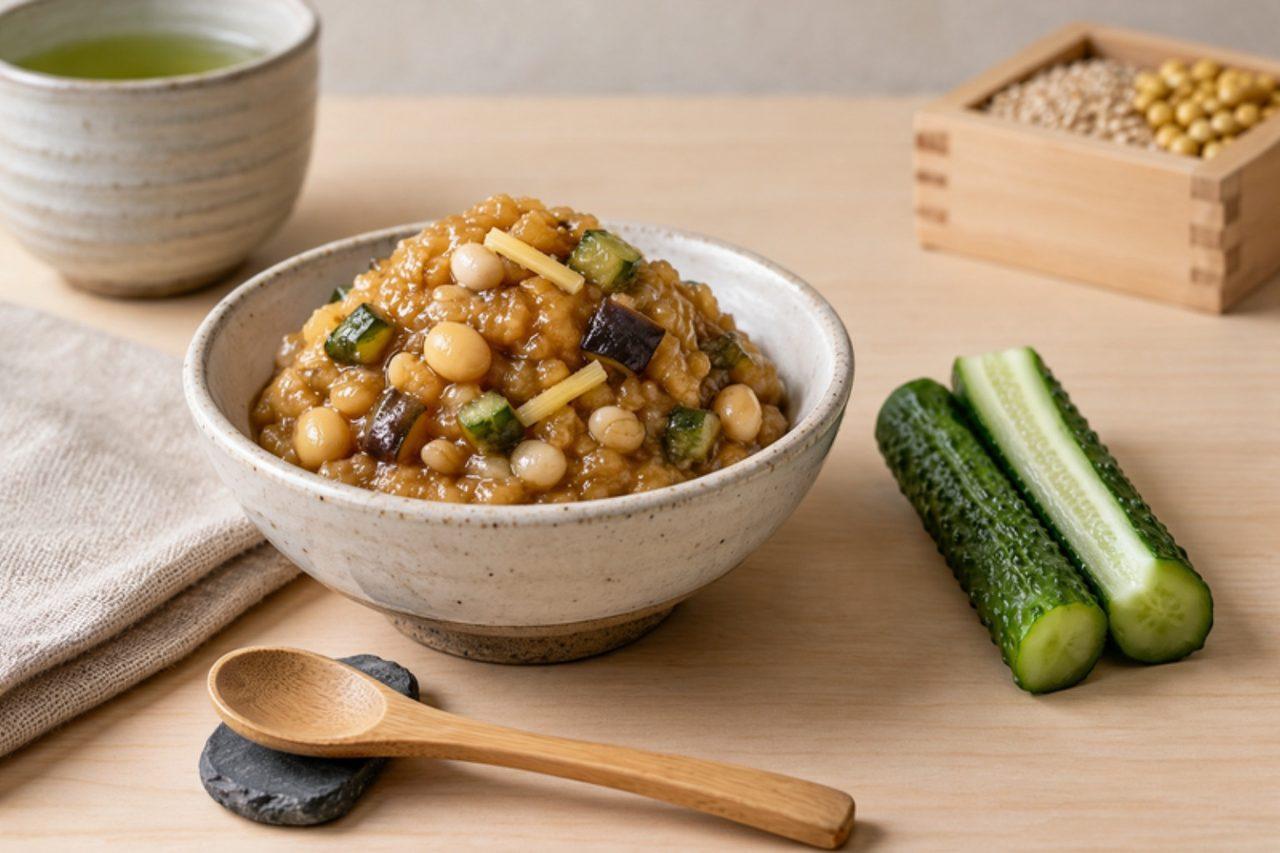
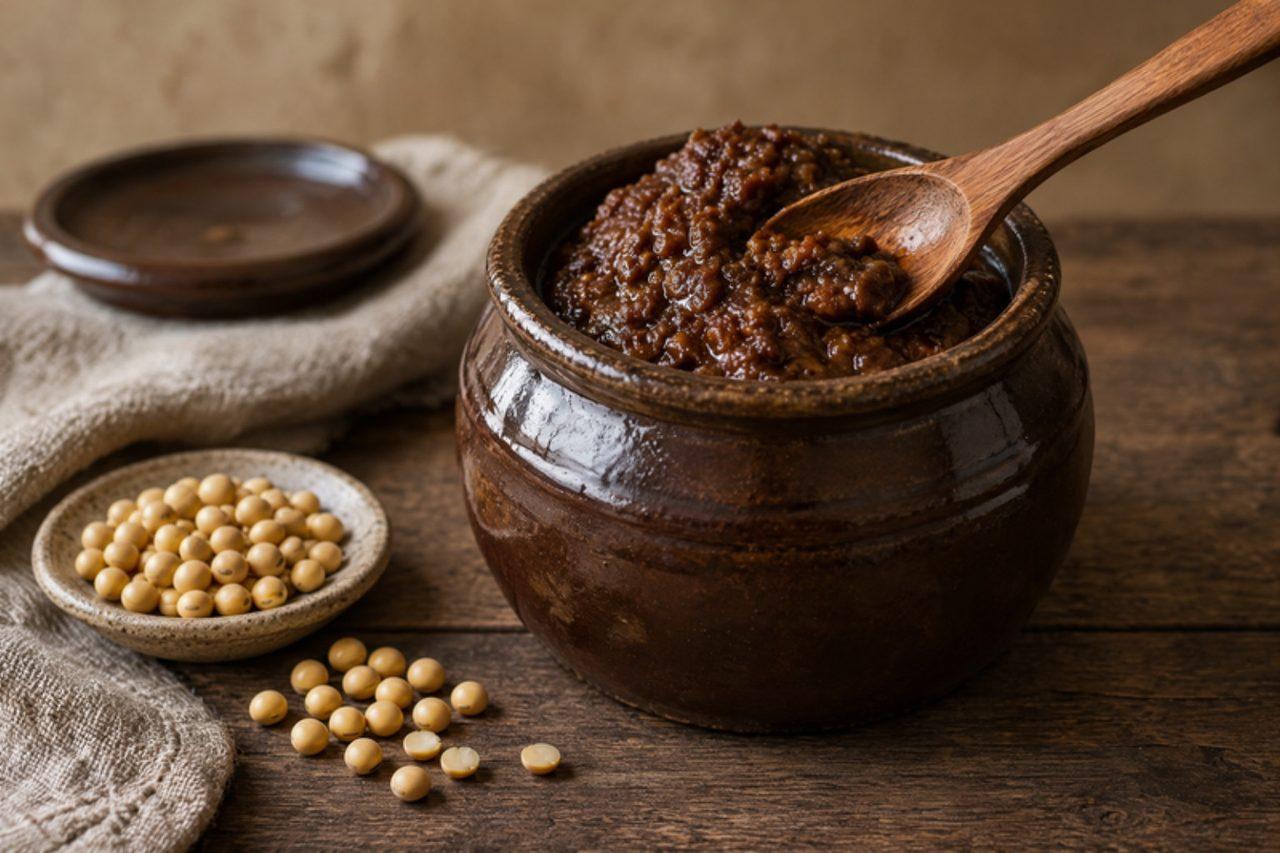
Kinzanji miso is not for soup. It is a chunky, sweet-savoury 'name-miso', a miso you eat straight, spooned onto hot rice, tucked into a cucumber stick or set beside rice porridge at breakfast. Legend says a monk brought the method from Jingshan Temple in China to Yuasa in Wakayama, where the run-off liquid became Japan's first soy sauce. Traditionally it is made in summer, when aubergines and uri melons are plentiful, and eaten through autumn and winter. You can see every ingredient: soft barley grains, nutty roasted soybean pieces, little cubes of aubergine and cucumber, threads of ginger, all bound in a glossy brown paste. This home version uses ready-made barley koji. The common mistake is adding the vegetables wet; salt them, then squeeze hard, or the extra water thins the salt and invites spoilage. It is ready when the barley grains are soft, the mix smells sweet and soy-like, and it tastes rich and rounded, after about four weeks; then it is sweetened and kept cold. Japanese melon (shirouri) is traditional; firm cucumber is the usual substitute. Chef's tip: a spoonful on a cold block of tofu with a little chopped spring onion is the best snack you can make in 30 seconds.
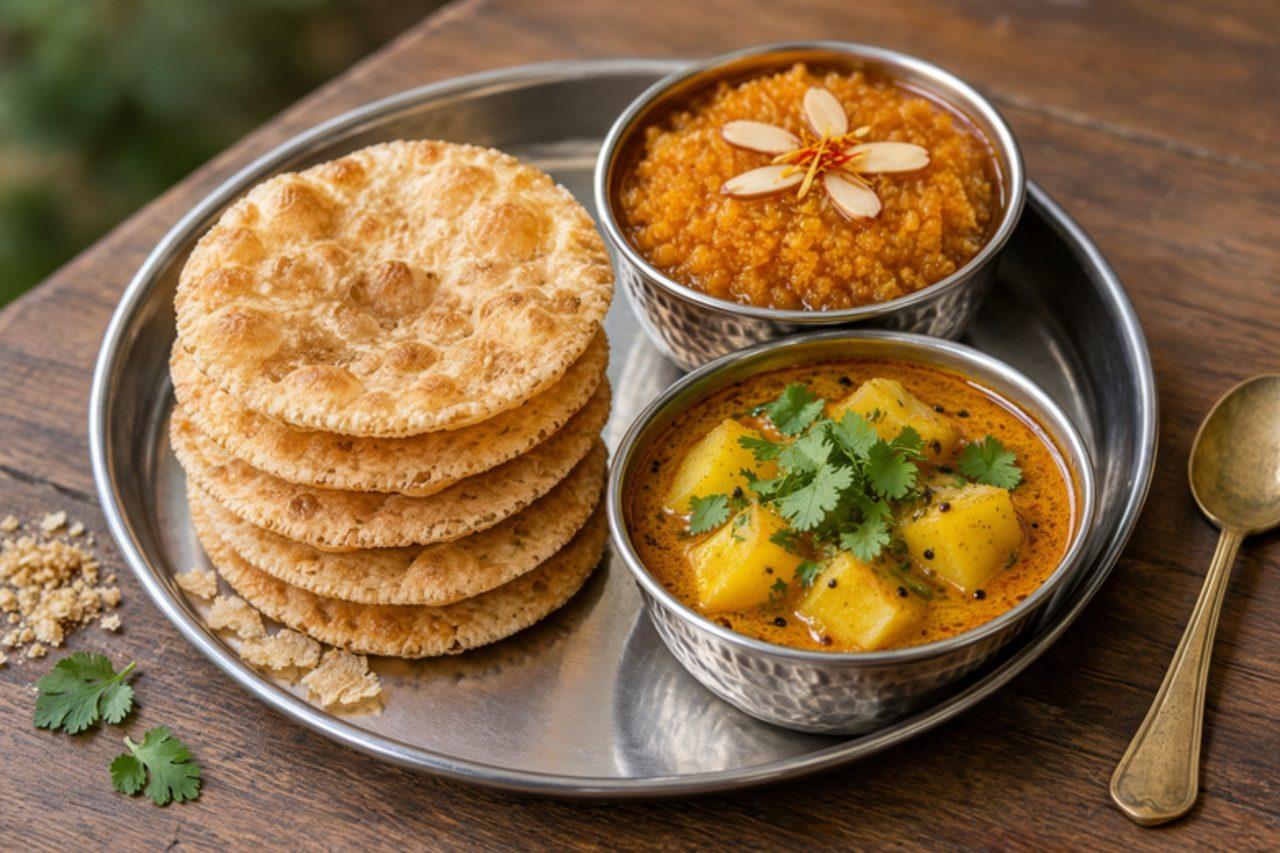
On cold winter mornings in Old Delhi, the halwais near Chawri Bazar and Sitaram Bazar set out trays of nagori: thumb-sized, rock-crisp puris made with semolina. You crack one open, spoon in warm, ghee-rich sooji halwa and eat it with a bite of spicy potato curry, the sweet and the savoury taking turns. It is a breakfast that keeps you going through a foggy December day. Chef's tip: roast the semolina for the halwa slowly until it smells of toasted nuts; under-roasted semolina makes a pasty, flat halwa.
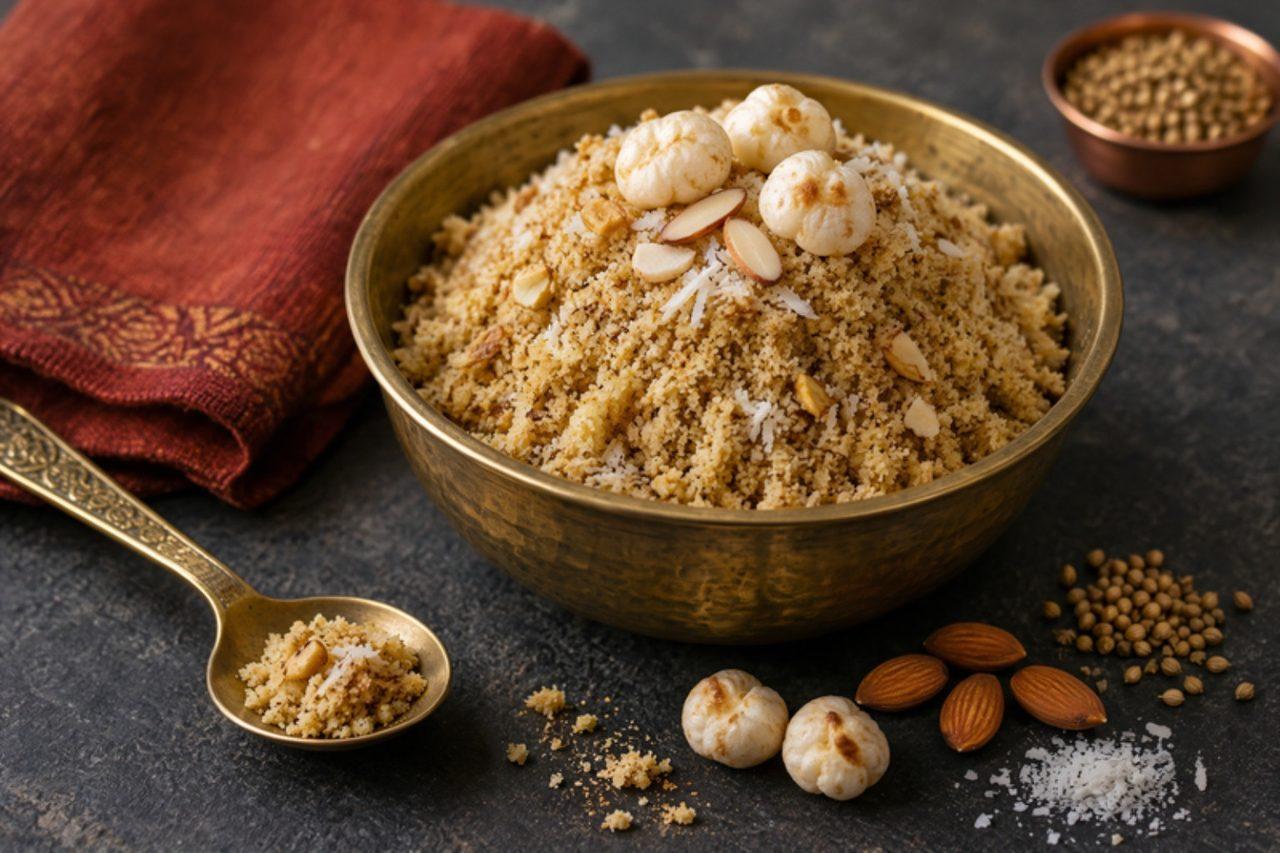
At midnight on Janmashtami, when Gujarati and Rajasthani families sing to baby Krishna, the prasad handed round is this fragrant panjiri of ground coriander seeds roasted in ghee and mixed with powdered sugar, coconut, makhana and dry fruit. Because it contains no grain, it is also eaten by those who keep the Janmashtami fast. It tastes warm, sweet and surprisingly floral. The common mistake is roasting the coriander powder on high heat; it burns in seconds and turns bitter. Chef's tip: grind the seeds yourself just before roasting, and stop when the kitchen smells like warm citrus, not toast.
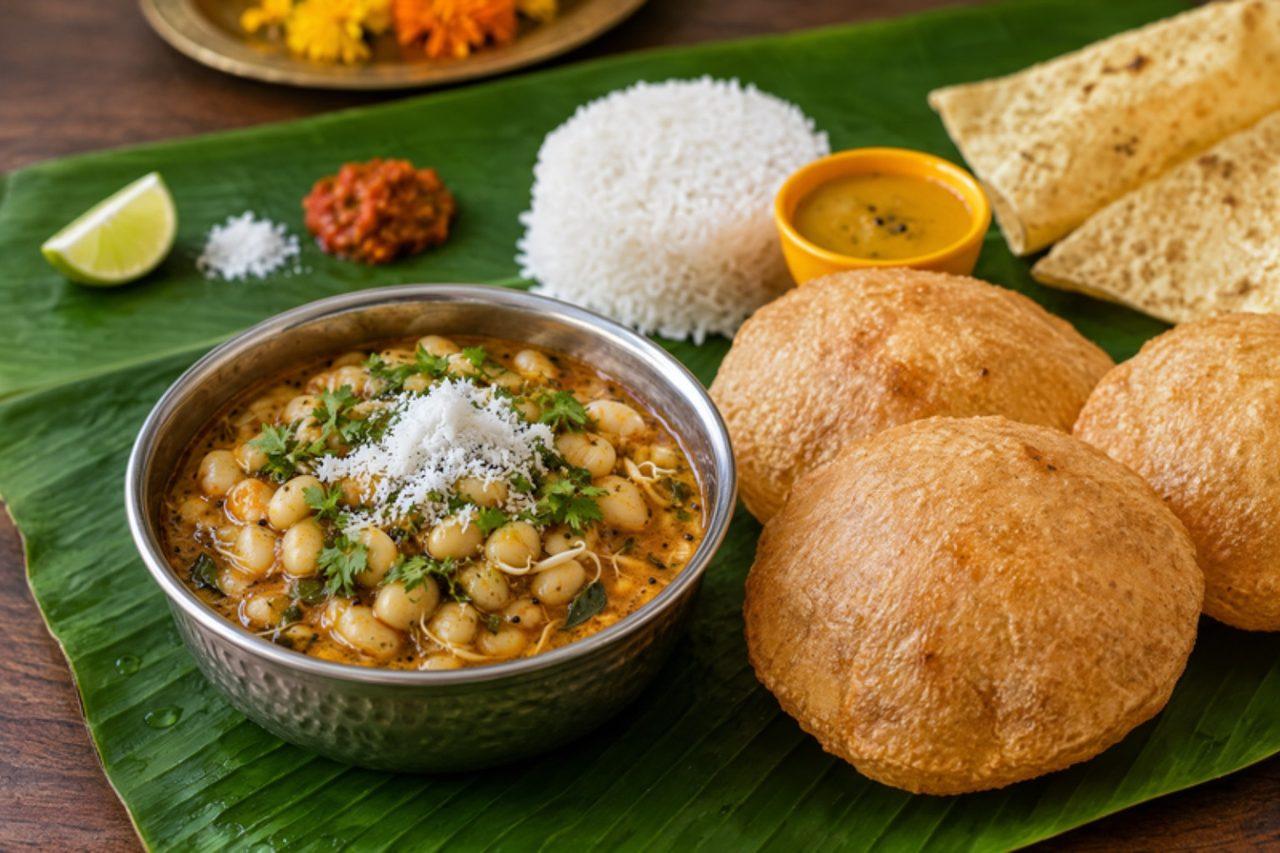
At a Kangra dham, the leaf-plate feast cooked by botis (Brahmin cooks) for weddings and village festivals, khatta comes towards the end, a dark, sweet-sour dish of chickpeas or pumpkin in a gravy soured with tamarind or dried mango and balanced with jaggery. It is served with rice and has no onion or garlic. The gravy is thin, glossy and almost black from the long-cooked tamarind. The common mistake is adding the tamarind to undercooked chickpeas; the acid stops them softening, so cook them fully first. Chef's tip: a teaspoon of rice flour or gram flour stirred into the gravy gives the dham-style gloss without making it heavy.
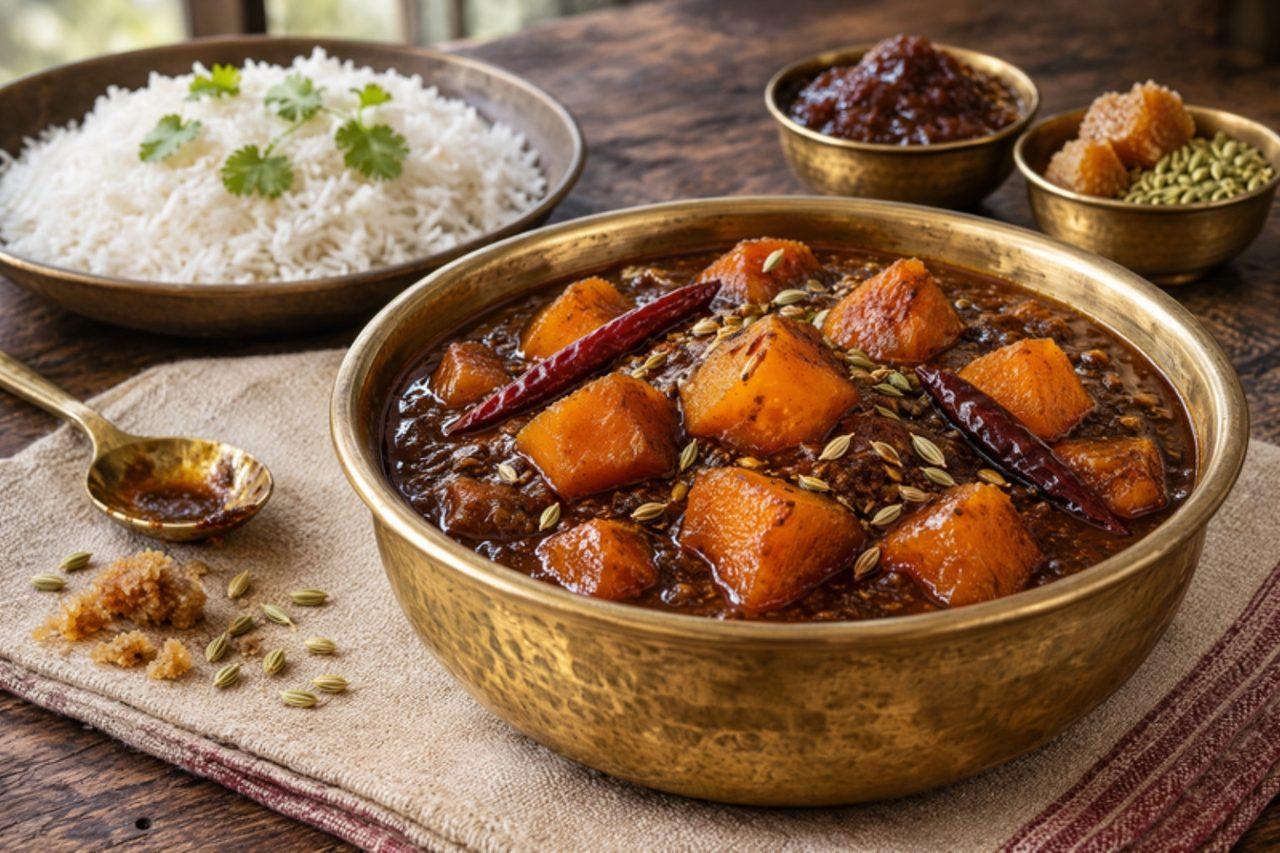
Ambal belongs to the Dogra dham of Jammu, the feast cooked by the hereditary siyan cooks for weddings and festivals and served on leaf plates in a fixed order. Yellow pumpkin is softened with fenugreek seeds and fennel, then simmered in a dark tamarind and jaggery sauce until it is sticky, sour and sweet at once, which is what the name, from 'amla' for sour, promises. It is eaten with rice alongside the dham's dals and madra. The common mistake is stirring hard once the pumpkin is soft, which turns it to mush; shake the pan instead. Chef's tip: let it rest an hour before serving, as the tamarind settles and the flavour deepens.
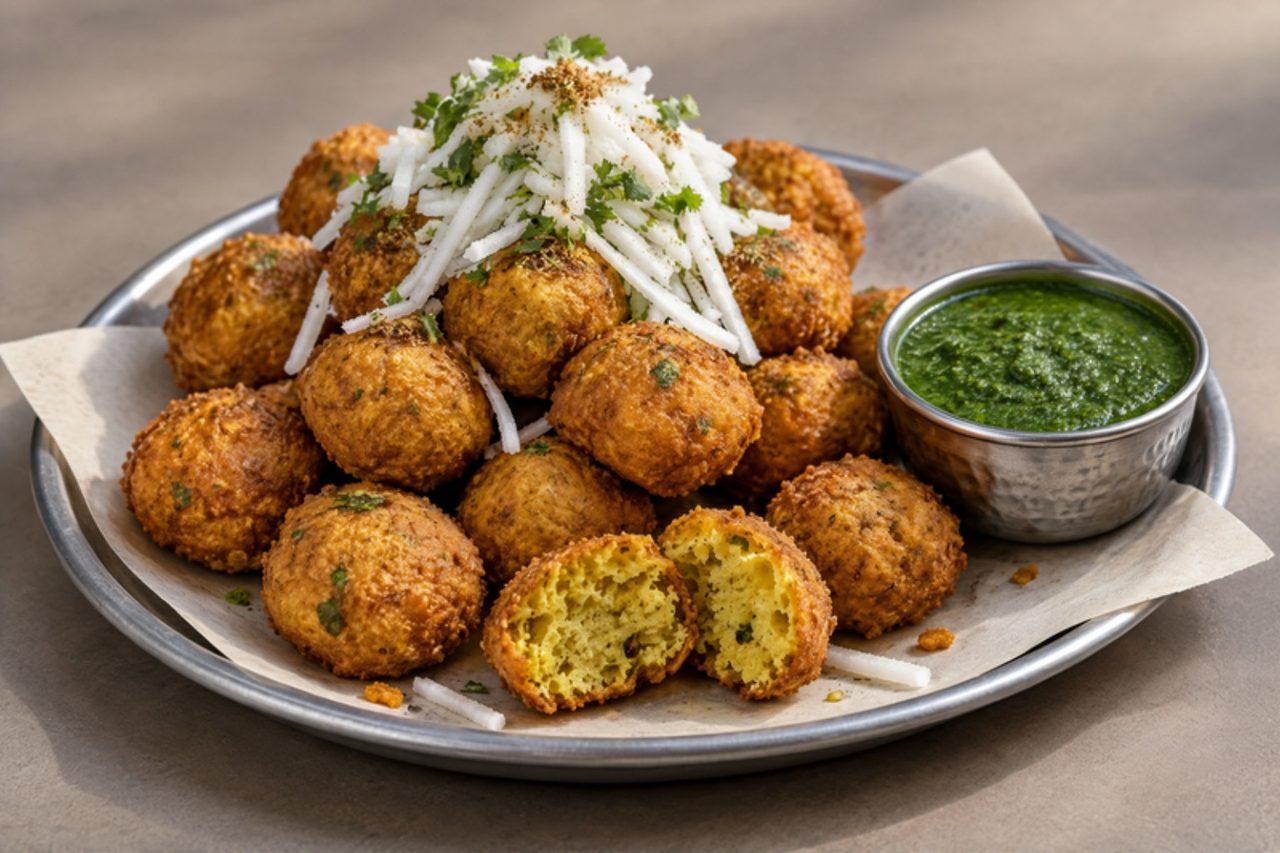
When the monsoon breaks over Delhi, the pakora stalls of Lajpat Nagar and the lanes off Chandni Chowk do their best trade, and moong dal pakode are the favourite: light, airy balls of soaked and coarsely ground yellow lentils, fried until crunchy and served in paper plates with grated white radish and green chutney. They are naturally gluten free and vegan. Chef's tip: beat the ground batter hard with your hand for a few minutes; the trapped air is what makes them fluffy inside.
Street sellers in Kampala pile these small, dense golden rounds into plastic tubs and sell them warm by the handful, and a whole lively neighbourhood of the city shares their name. Over-ripe sweet bananas are mashed into cassava flour, scented with cardamom and a pinch of chilli, then fried until crisp outside and soft and chewy within, a little like a doughnut that forgot to rise. Children eat them after school, adults dunk them in milky spiced tea at breakfast. The usual mistake is adding too much flour: the dough should be soft and just stop sticking to your hands, or the pancakes turn heavy and dry. Chef's tip: use bananas with black-speckled skins; the riper they are, the less sugar you need and the better they brown.
In central Kerala, around Thrissur and Kottayam, families watch the mango trees in January and February and pick the tiniest fruit, no bigger than a thumb joint, before the stone hardens. These kannimanga are salted whole in a tall ceramic bharani, left until shrivelled in their own brine, then mixed with freshly ground raw mustard, Kashmiri chilli and hing and left to mature for three or four weeks. This older, oil-free style keeps the mangoes crunchy and the brine thick, red and sinus-clearing from the raw mustard. The flavour is salty, sour and fiercely pungent; one mango and a spoon of brine is enough for a whole bowl of kanji (rice gruel) or curd rice. The common mistake is using water that has not been boiled and cooled, which brings in microbes and turns the brine slimy. It is ready when the mangoes are wrinkled but crisp and the brine tastes mellow rather than raw. Salt is high, about 20 g per 100 g of mango, and the fruit is very acidic; kept fully submerged in a dry jar it lasts a year in a cool place. Abroad, any tiny, hard green mango with a soft stone works. Chef's tip: keep a short stalk on each mango; it stops brine seeping in and softening the fruit.
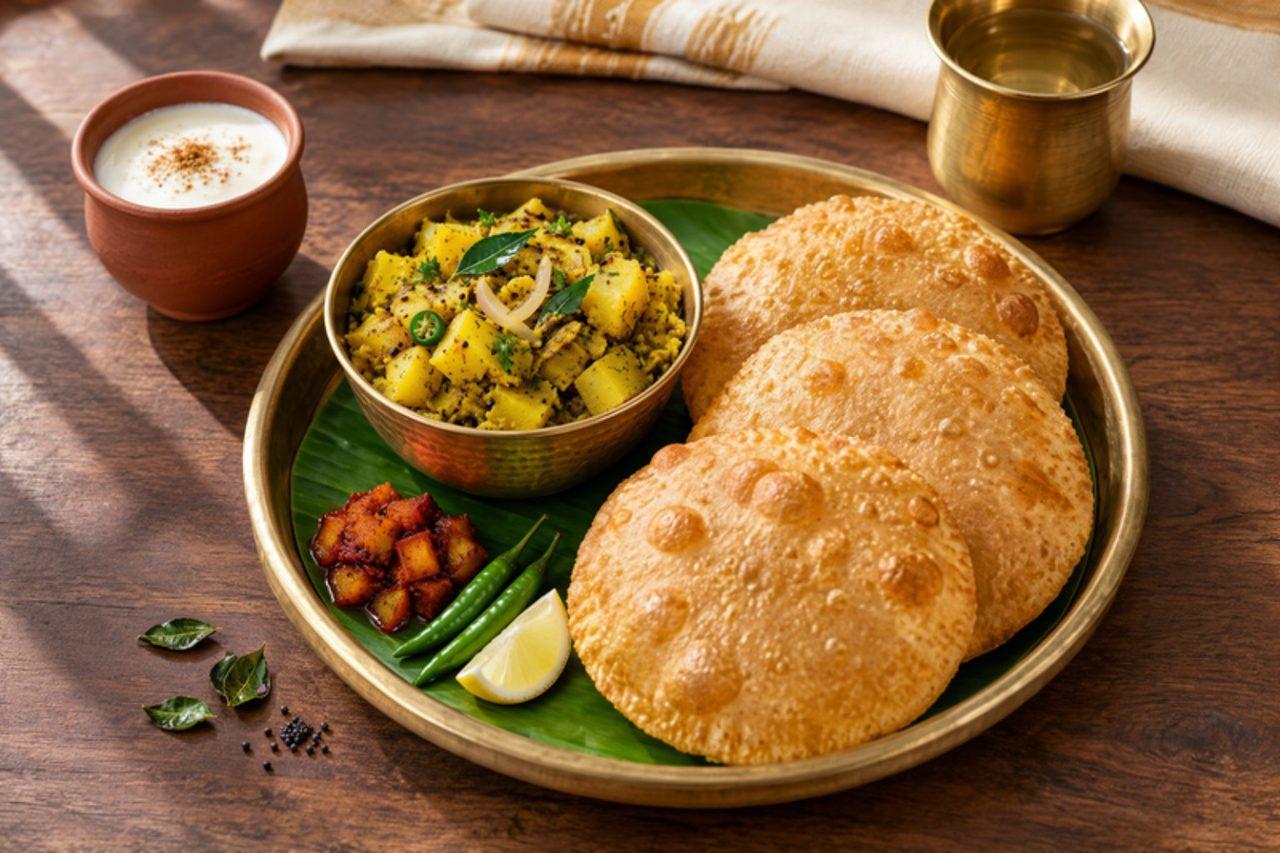
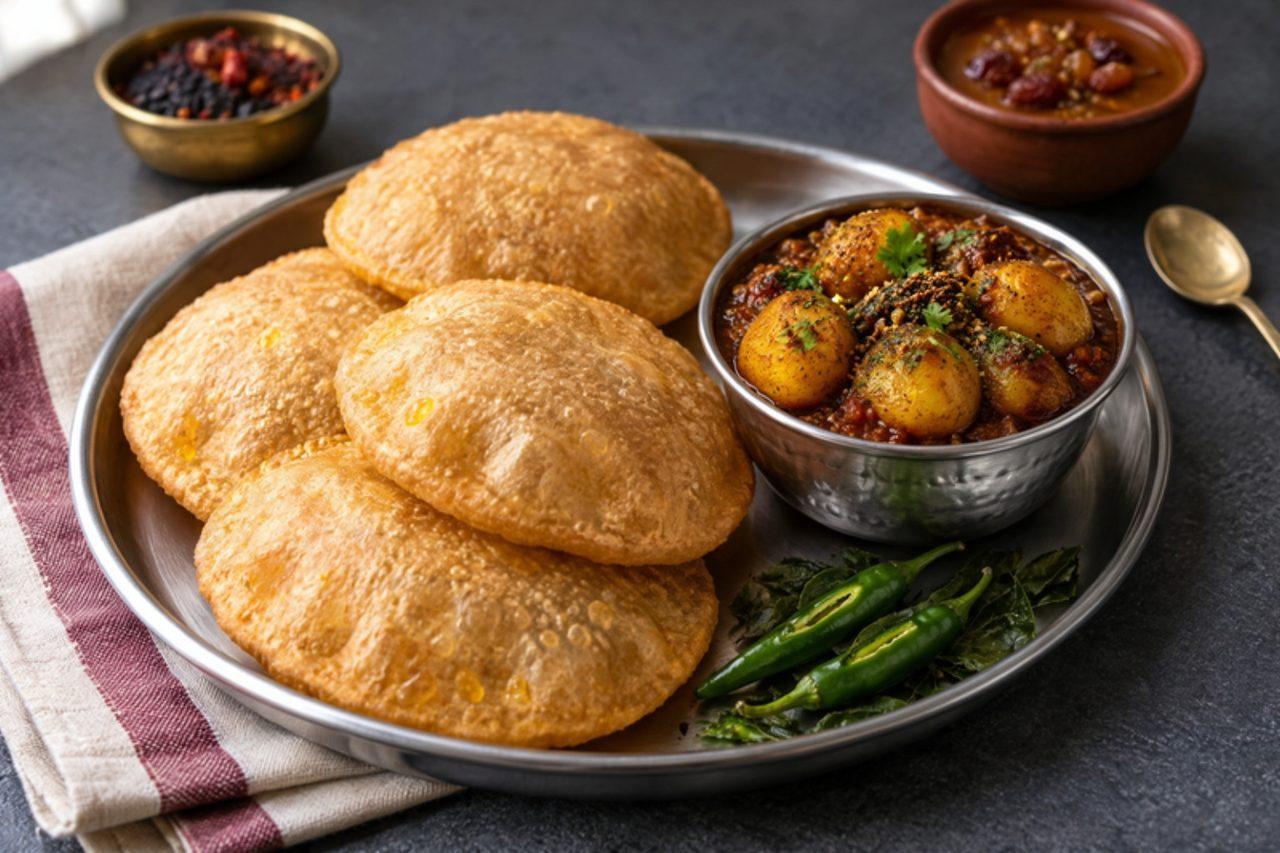
In Mumbai, Pune and across Gujarat, puri bhaji is what goes into the steel dabba on exam days and into the bag for a long train ride: small puffed puris and a dry, sunny-yellow potato bhaji spiked with mustard seeds, green chilli and curry leaves. Because the bhaji is dry, it never soaks the puris, and both taste good at room temperature by lunchtime. The common mistake is a soft dough, which drinks oil and gives flat, greasy puris; knead it stiff, like a firm chapati dough. Chef's tip: mash only a third of the potatoes and leave the rest in rough chunks, so the bhaji clings together in the box without turning to paste.
Kakinada kaja is the famous sweet of Kakinada in Andhra's East Godavari, a long, golden pastry made of layered dough that is fried and soaked in syrup until the hollow centre fills with sweetness and bursts when bitten. Telugu families buy it for weddings, Sankranti and housewarmings. The common mistake is syrup that is too thick: Kakinada kaja is soaked in a thin, just-sticky syrup so it seeps inside, while the outside stays crisp. Fry slowly so the layers open. Chef's tip: roll the dough sheet tightly into a log after spreading the ghee paste, and seal the ends, so each piece puffs into distinct layers.
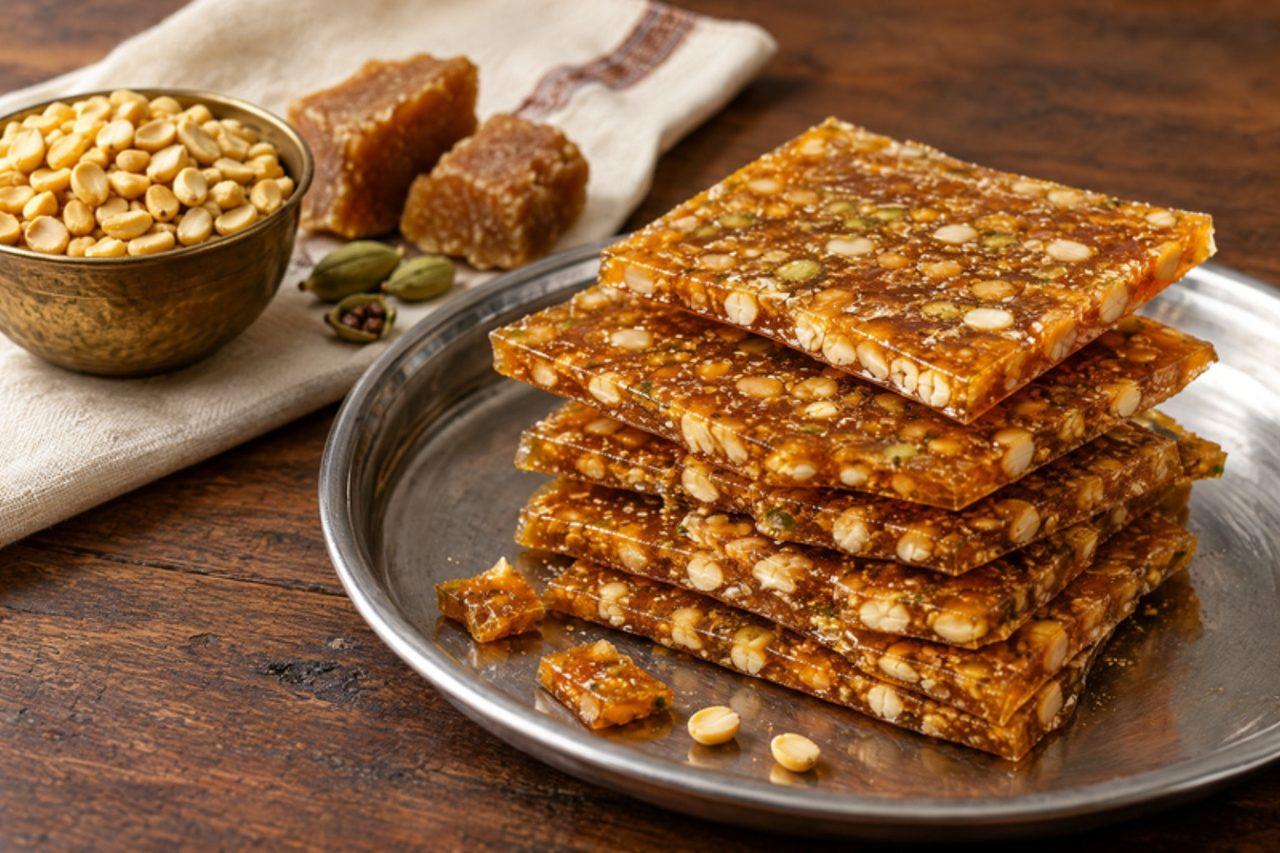
For Uttarayan, the January kite festival, every Gujarati kitchen turns out trays of chikki, and dalia (roasted split chana, the yellow dal sold for chutneys) is the one that gets forgotten until someone tastes it. It is lighter and crunchier than peanut chikki, with a toasty, slightly savoury edge from the dal. It is all about the jaggery syrup. The common mistake is pulling the jaggery off too early; underdone syrup gives sticky, chewy chikki that never snaps. Chef's tip: drop a little syrup into cold water: when it sets hard and cracks cleanly (hard-crack stage), tip in the dalia straight away.
Agra is famous for two sweets and one namkeen, and dalmoth is the namkeen: soaked masoor and chana dal fried until crunchy and tossed with chilli, black salt, dry mango and a little sugar, sold in big tins near the Taj and packed for every train journey. It is eaten with tea in the afternoon and handed round to guests at Diwali. The dal is fried dry, without any batter coating. The common mistake is frying the dal straight from soaking water; any moisture makes the oil spit dangerously and the dal chewy, so dry it on a cloth for at least an hour. Chef's tip: fry the masoor and chana separately, as they need different times to turn crisp.
In Konkan and Pune homes, dalimbi usal is a festival dish, cooked for Ganesh Chaturthi, weddings and thread ceremonies and served on the thali beside puran poli and rice. Dalimbi are dried field beans (val) that are soaked, sprouted and peeled; the work takes two days but turns them creamy and sweet. They are simmered gently with fresh coconut, goda masala, kokum and a little jaggery, without onion or garlic. Field beans must always be cooked until fully soft; never eat them raw or half-cooked. The usual mistake is boiling them hard, which bursts the soft peeled beans into mash; keep the simmer gentle. Chef's tip: soak the sprouted beans in warm water for 30 minutes before peeling, and the skins slip off with a pinch.
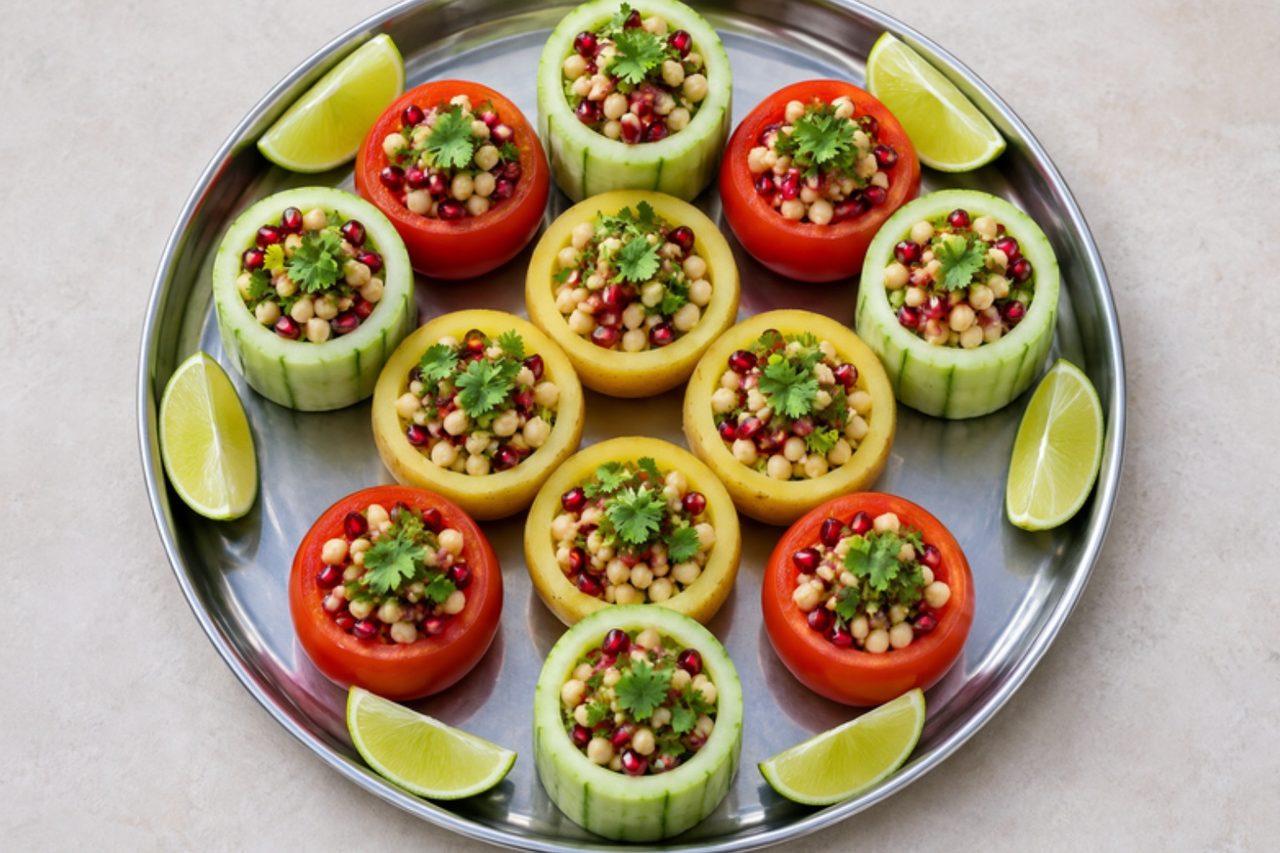
Kulle chaat comes from the lanes of Chandni Chowk around Chawri Bazar, where a couple of old stalls carve fruit and vegetables into little cups and fill them with chickpeas, pomegranate and lime. It is the cooling chaat of Delhi's scorching summer afternoons: no frying, no yoghurt, just juicy, crunchy cups dusted with chaat masala and black salt. Children love picking them up whole. Chef's tip: season the inside of each empty cup with lime and chaat masala before filling, so every bite is tangy right through.
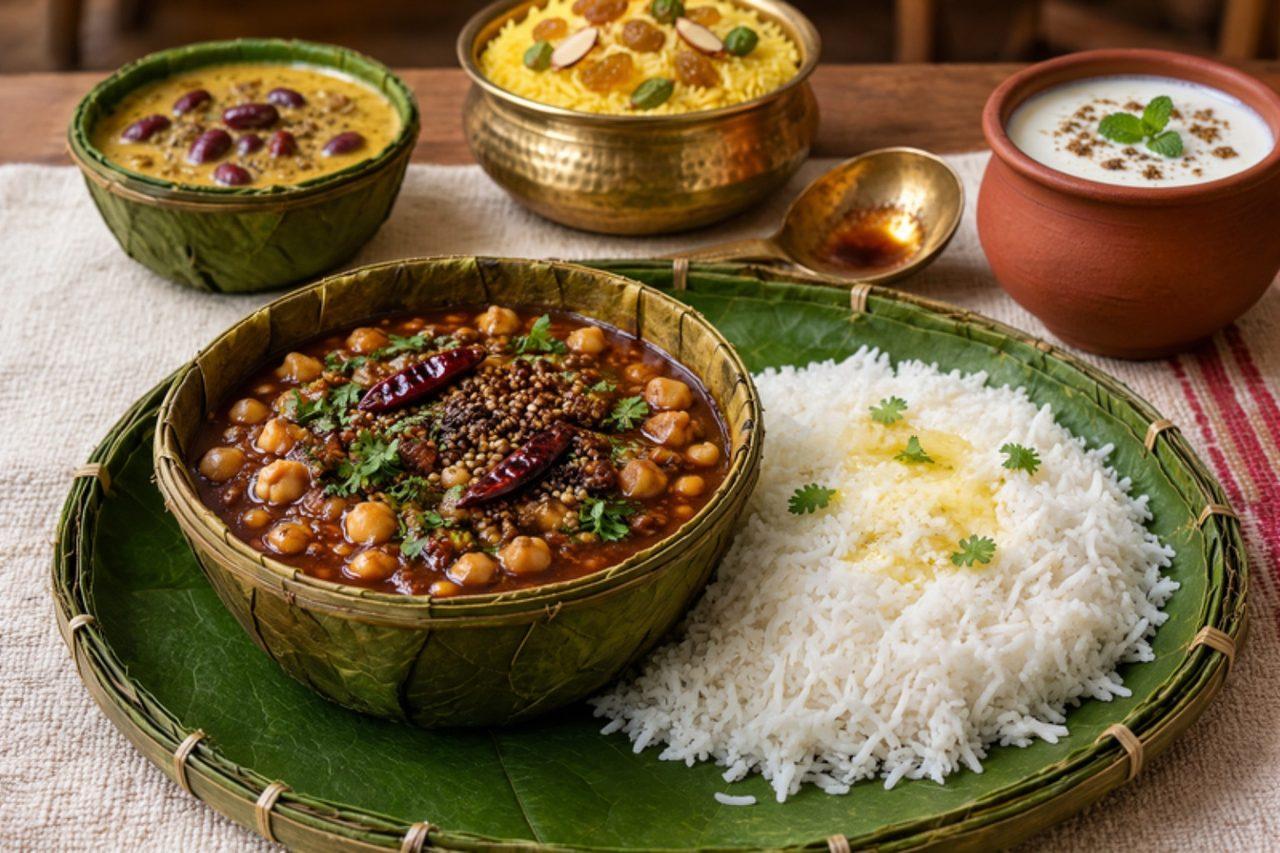
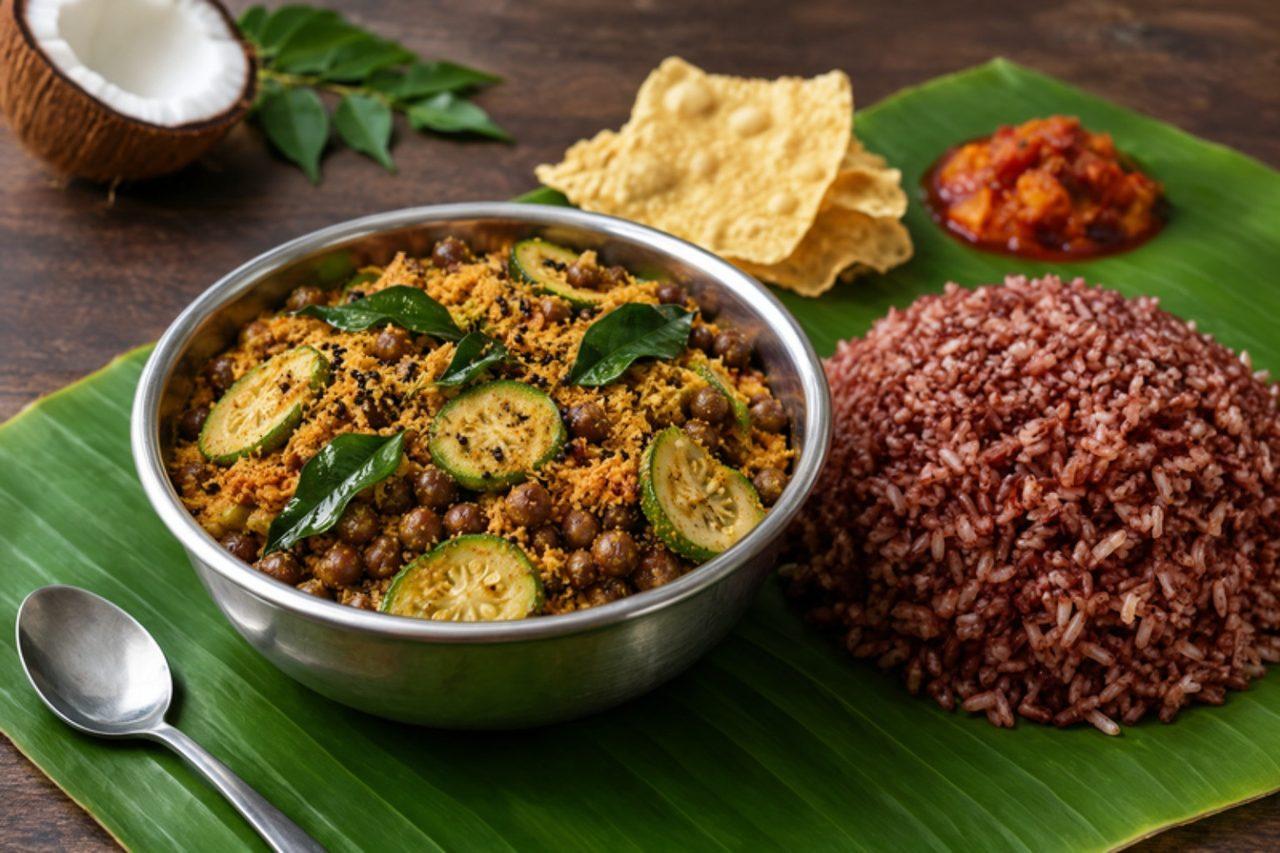
Kadle manoli is a Konkani dish from Mangaluru and Udupi, cooked for festive meals, Saturday temple days and family gatherings, where it sits beside rice, dalitoy and papad. Black chickpeas and quartered ivy gourd are cooked together, then tossed in a coarse, roasted masala of coconut, byadgi chillies and coriander, a little tamarind and a coconut-oil tempering. It is dry-ish, coating each piece rather than swimming in gravy. The usual mistake is cutting the ivy gourd into rounds; slice it lengthwise into quarters so it stays crunchy-tender. Slow-cooker: cook the soaked chana and gourd with 500 ml water on low for 7 hours, then stir in the masala and heat through. Chef's tip: grind the masala coarse, with very little water, so it clings to the chickpeas and stays fragrant.
When Kenyan marathon runners land back in Eldoret, relatives greet them with a gourd of mursik, the soured milk of Kalenjin homesteads across the Rift Valley highlands. Traditionally, milk sits for several days in a sotet, a long calabash whose inside has been scraped with a smouldering stick of senetwet (the tree often called the cromwell tree) so a lining of fine charcoal coats it; that charcoal gives mursik its smoky taste, grey flecks and long keeping. At home we skip raw milk and a wild ferment: pasteurised milk is soured with a live cultured buttermilk, and a jar smoked inside with untreated hardwood, or a pinch of food-grade activated charcoal, brings the flavour. Thick, sharp and smoky, it is drunk with ugali, sweet potatoes or after a long run, and the usual mistake is fermenting it somewhere too hot, where it splits into whey and tastes yeasty. Chef's tip: shake the jar hard before pouring, as herders shake the gourd, to make it smooth and drinkable.
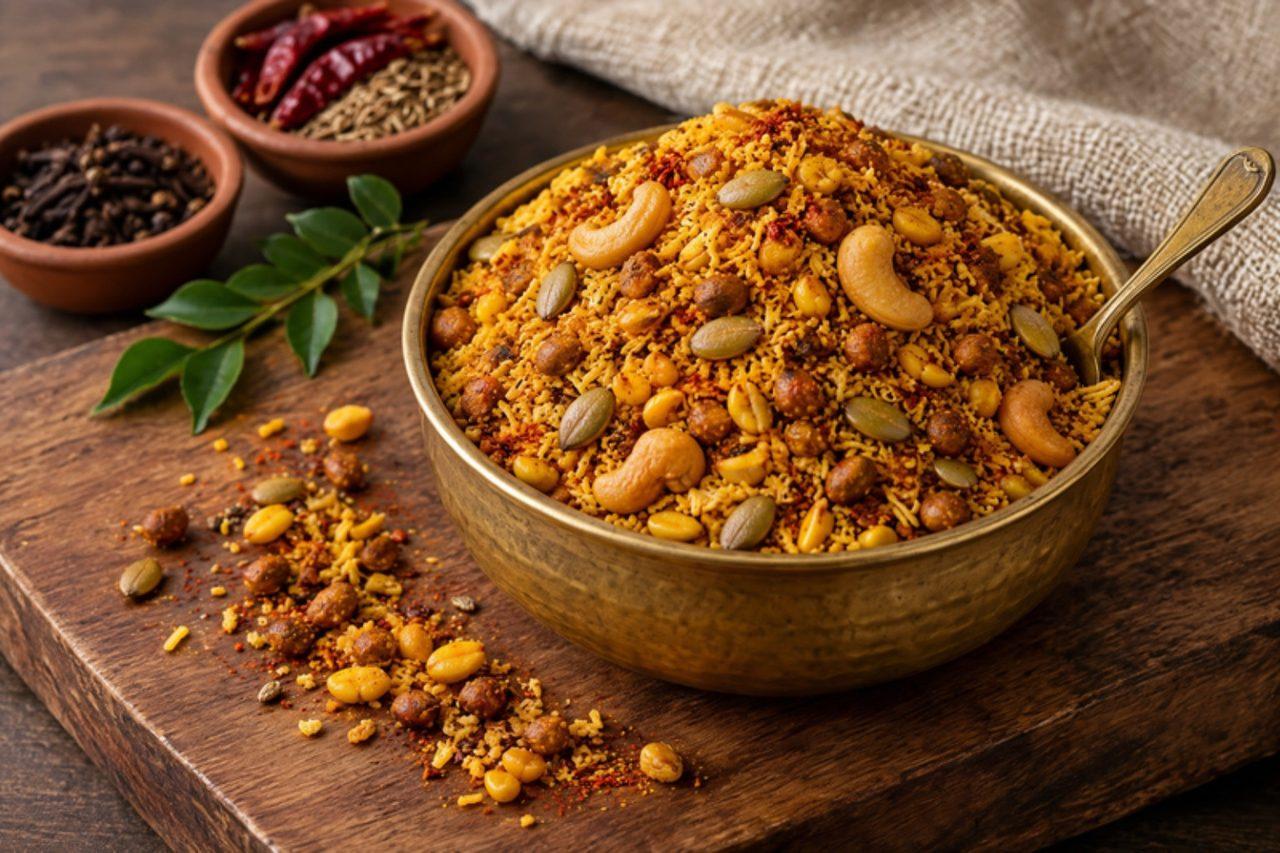
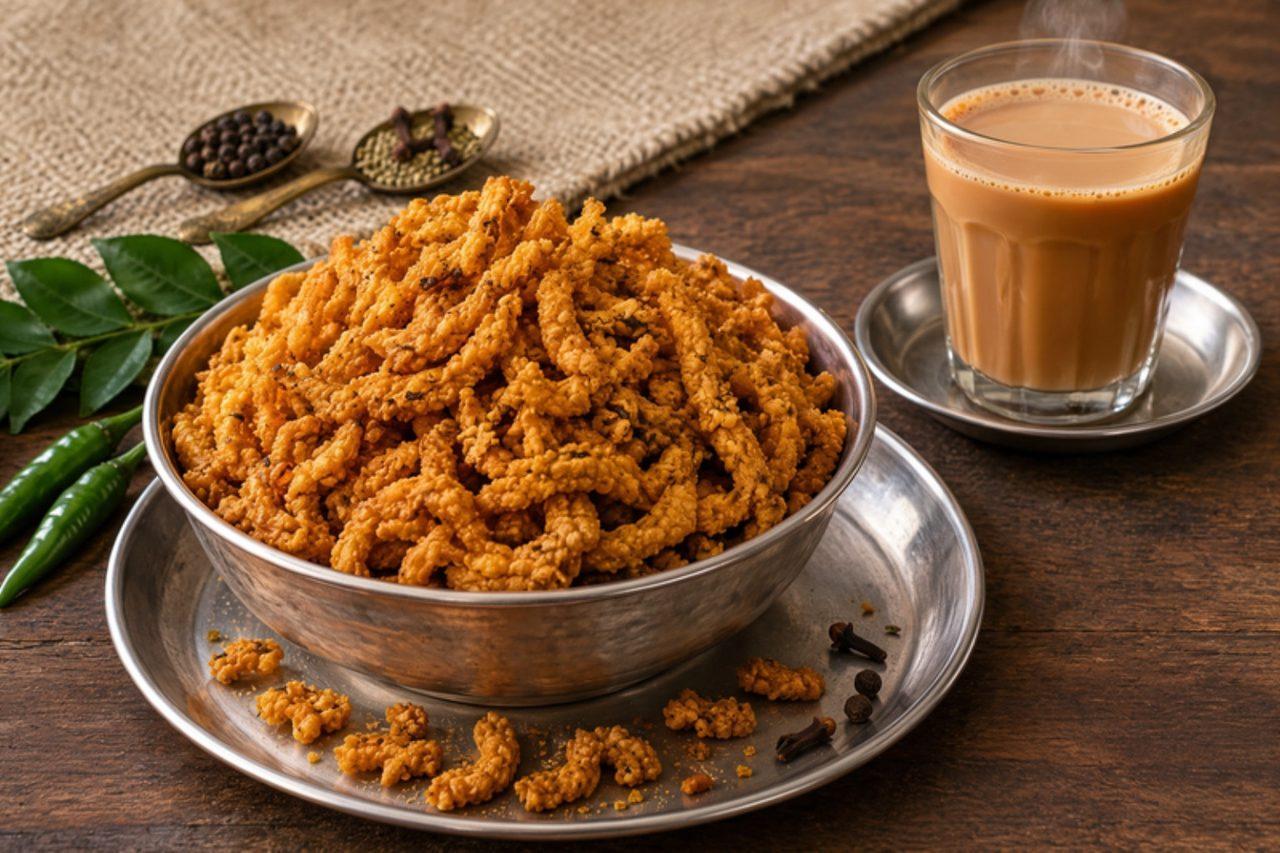
Ratlam in western Madhya Pradesh is so proud of its sev that it carries a GI tag, and every Malwa household keeps a tin for poha, usal and chai-time munching. What makes it different is the spice: ground clove, black pepper and ajwain give a warm heat that builds slowly, and the sev is pressed thick and fried until deep gold. The common mistake is frying in oil that is too hot, which browns the outside while the centre stays soft and soon goes chewy. Chef's tip: cool completely before you store it in an airtight tin; it keeps crisp for three weeks.
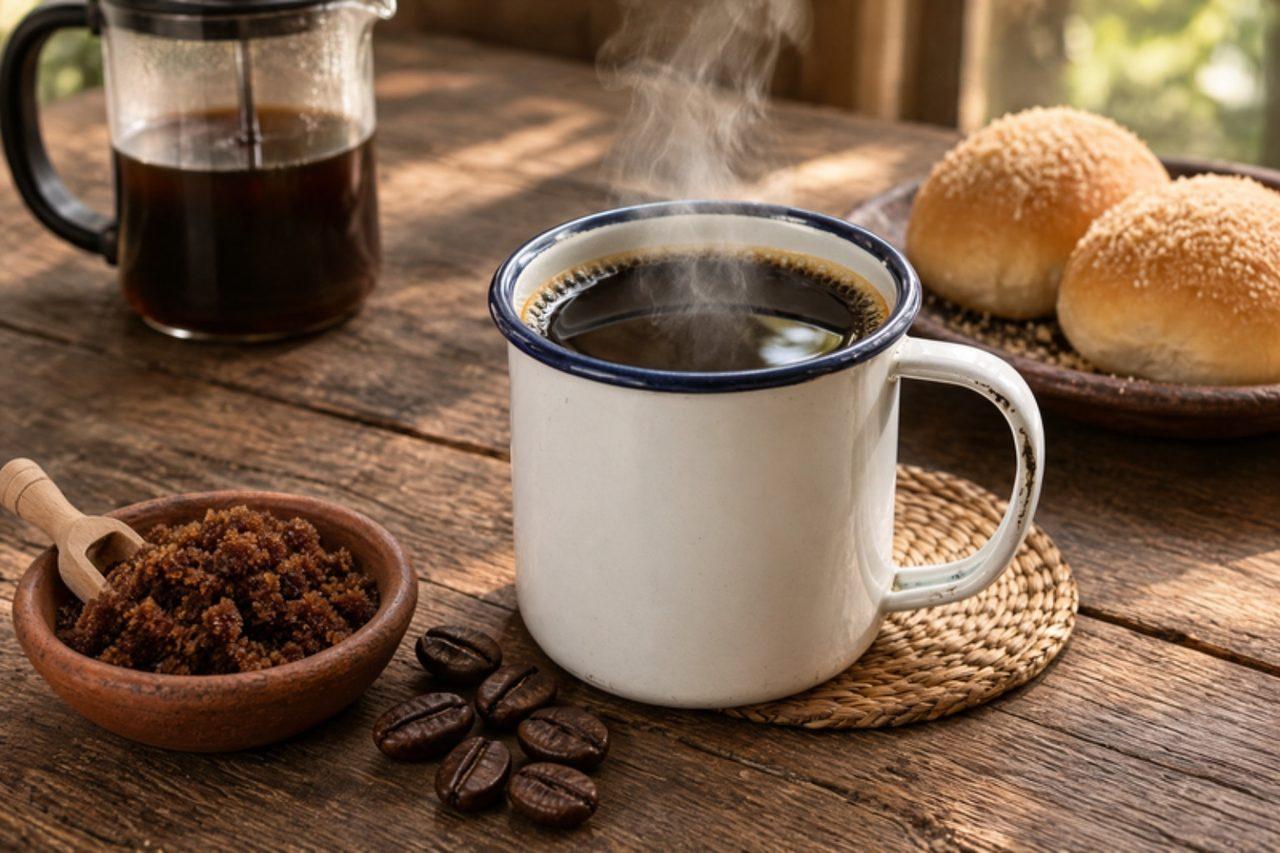
In Lipa and the hill towns of Batangas, mornings start with kapeng barako boiled in a dented aluminium kaldero and poured into enamel mugs, often next to pandesal, a slab of tapang Taal or a plate of suman. Barako is Liberica, a large-beaned coffee that grows on tall trees around Mount Malarayat, and the word itself means a strong, rough-mannered man. The cup is heavy and earthy with notes of jackfruit, dark chocolate and smoke, and it is sweetened with sticky muscovado from Negros or Antique, never with white sugar. It carries plenty of caffeine, so go easy if you are sensitive and keep it away from children. The usual mistake is keeping the pot at a rolling boil once the coffee is in: the grounds stew and the drink turns sour and harsh. Bring the water to the boil, then take it off the heat before adding the coffee. The brew is ready when the crust of grounds sinks after the splash of cold water and the liquid underneath is a clear, deep mahogany. Chef's tip: grind it coarse, like raw sugar, so it settles cleanly in the pot.
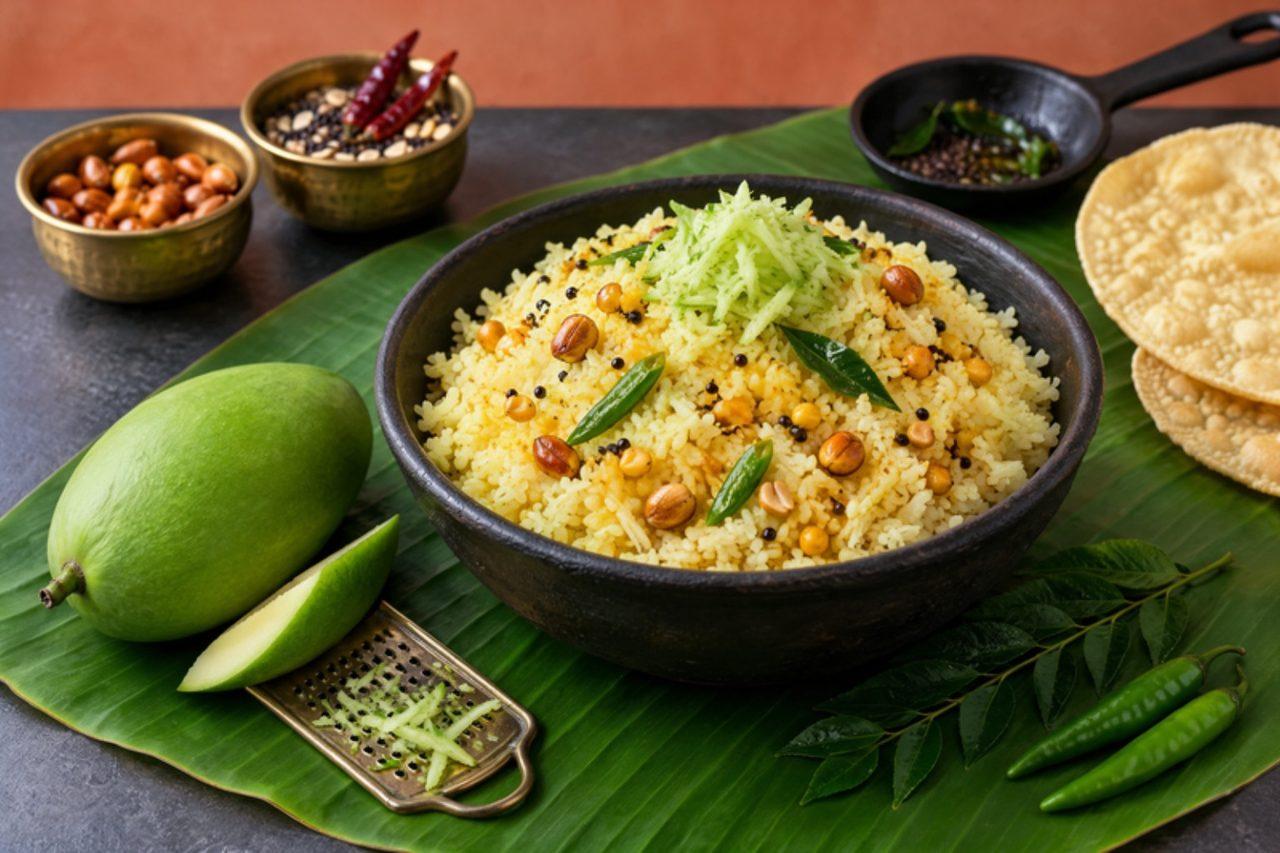
When hard green mangoes pile up at the markets of Tamil Nadu in April and May, school lunch boxes fill with mangai sadam, sour and fresh like lemon rice but with a fruitier bite. Grated raw mango is cooked only briefly in a mustard, chana dal and curry leaf tempering so it softens but keeps its tang. The mistake is overcooking the mango into mush, which makes the rice sticky; two or three minutes is enough. Chef's tip: taste the mango first. A very sour one needs a pinch of sugar, and a half-ripe one needs a squeeze of lemon at the end.
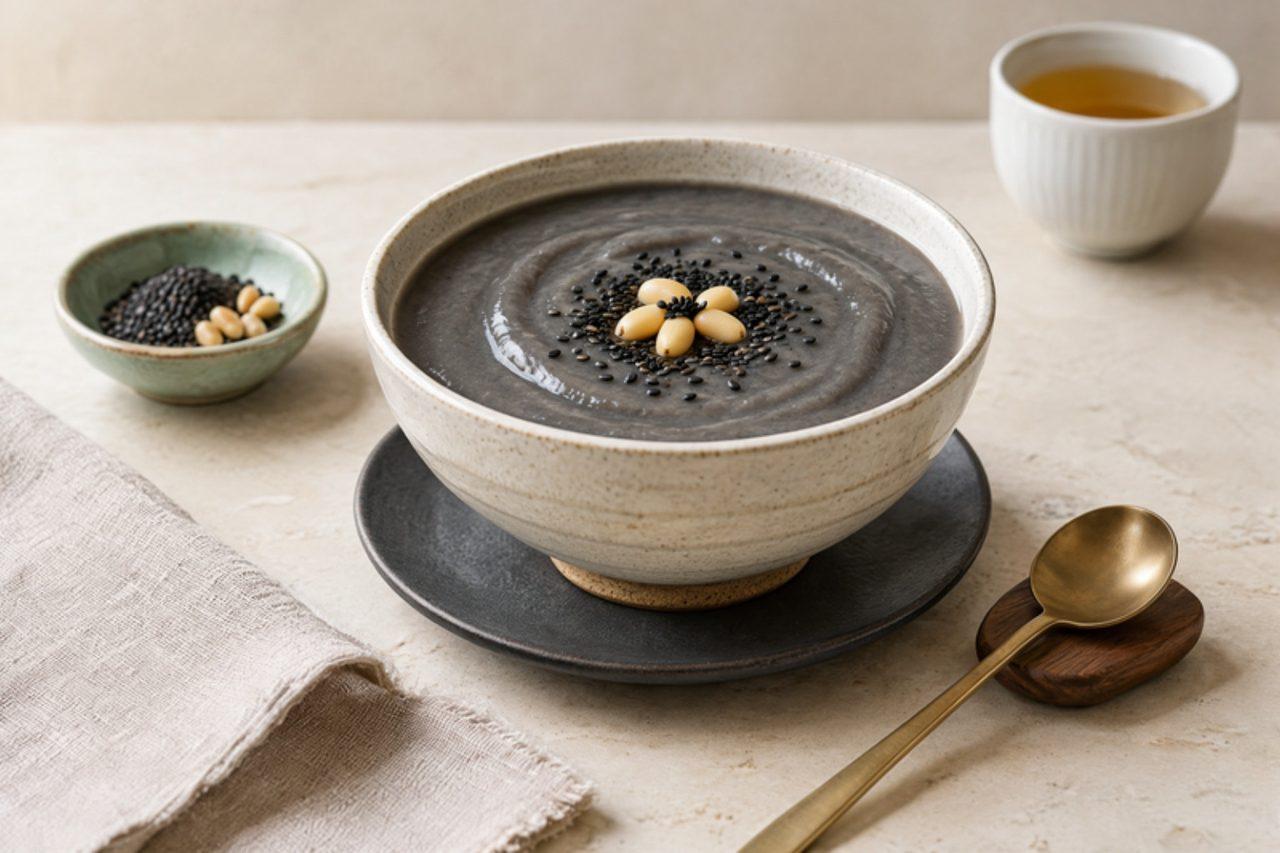
This charcoal-grey porridge of roasted black sesame and rice is one of Korea's gentlest breakfasts, often made for elders, for people getting over a cold, or simply on a slow weekend morning. It is nutty, lightly sweet and smooth as cream. The mistake is burning the sesame: the seeds are already black, so you cannot judge by colour; toast them only until they crackle and smell nutty, or the porridge turns bitter. Chef's tip: grind the toasted seeds with a little of the soaked rice and water rather than on their own, which turns them into a smooth paste instead of an oily clump.
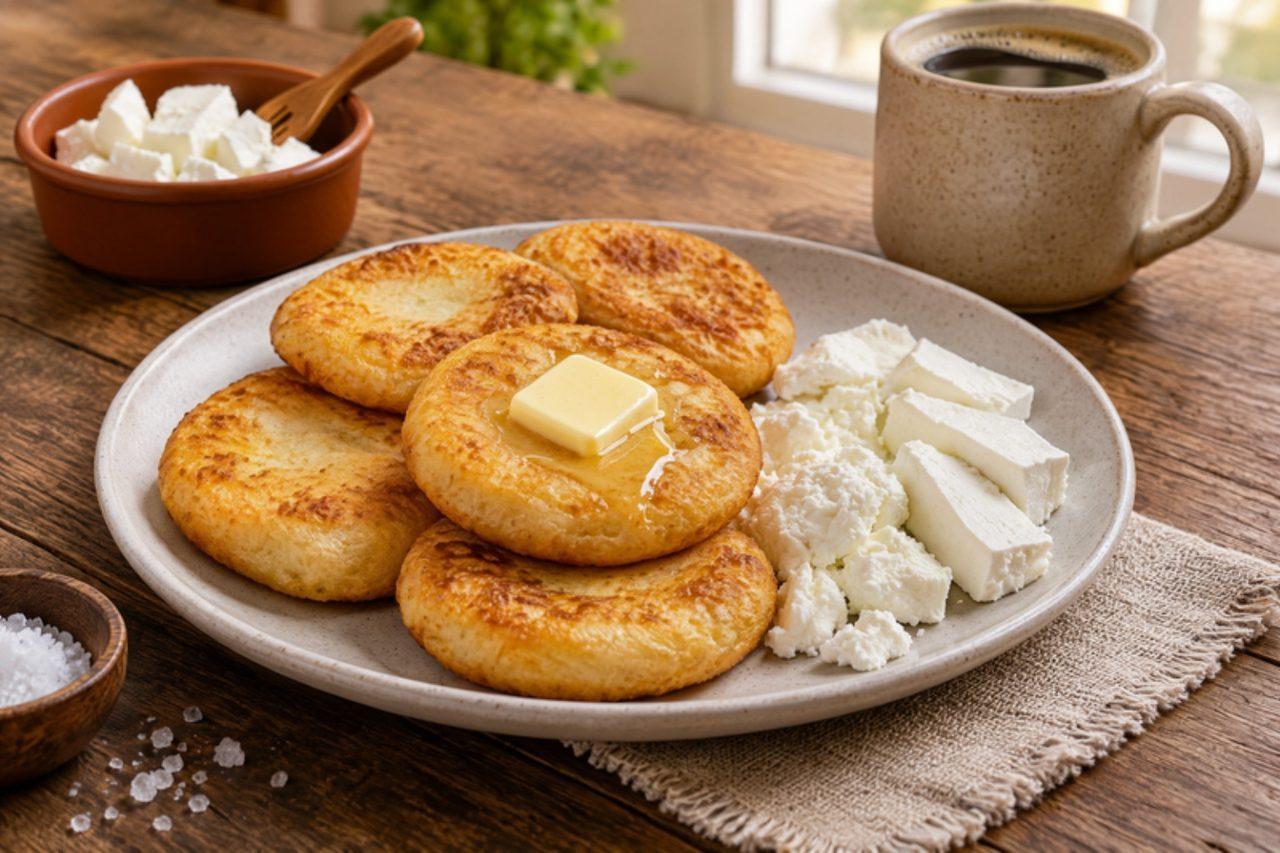
In Lara and the Andean states of Trujillo and Mérida, breakfast often comes with a basket of arepitas dulces: small, puffy fried arepas made with corn and wheat flour, sweetened with papelón (unrefined cane sugar) and scented with anise seed. They are crisp outside, soft and cakey inside, and are split and filled with salty white cheese or eaten with coffee. The common mistake is frying them in oil that is too hot, so they brown before the middle cooks; keep the oil at about 170 °C. If you fill them with cheese, note that some white cheese is made with animal rennet, so choose a vegetarian one. Chef's tip: dissolve the papelón in the warm water first, so the sugar is spread evenly and doesn't form dark burnt spots in the oil.
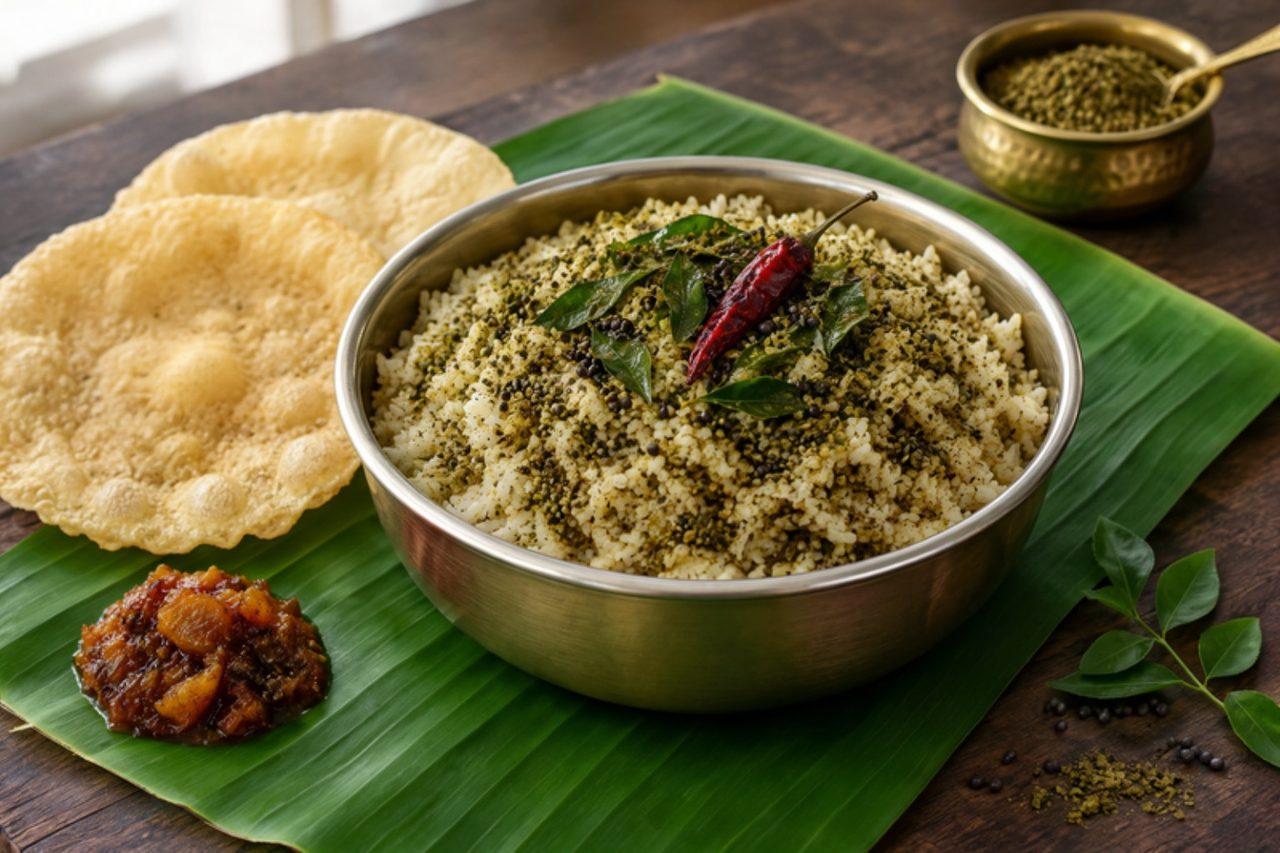
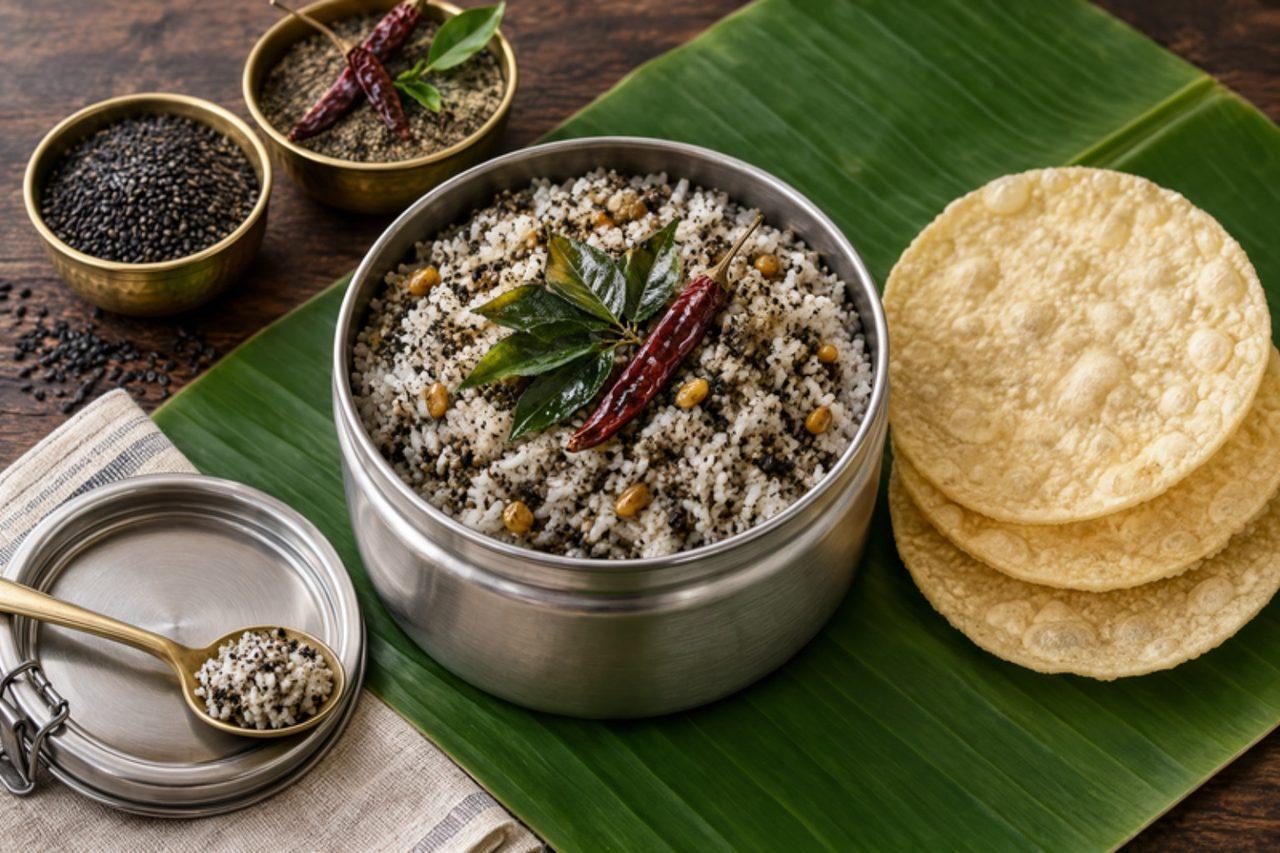
Around Madurai and Tiruchirappalli this dark, peppery rice comes out when there is a big handful of curry leaves and very little else in the kitchen, and it keeps so well that it goes into lunch boxes and onto long bus journeys. The leaves are roasted until crisp with chana and urad dal, black pepper, cumin and red chilli, then ground into a fragrant podi. The common mistake is roasting wet leaves: they steam instead of crisp, and the powder clumps. Dry them well on a towel first. Chef's tip: grind a double batch of the podi and store it airtight; it keeps for two weeks and makes lunch in five minutes.
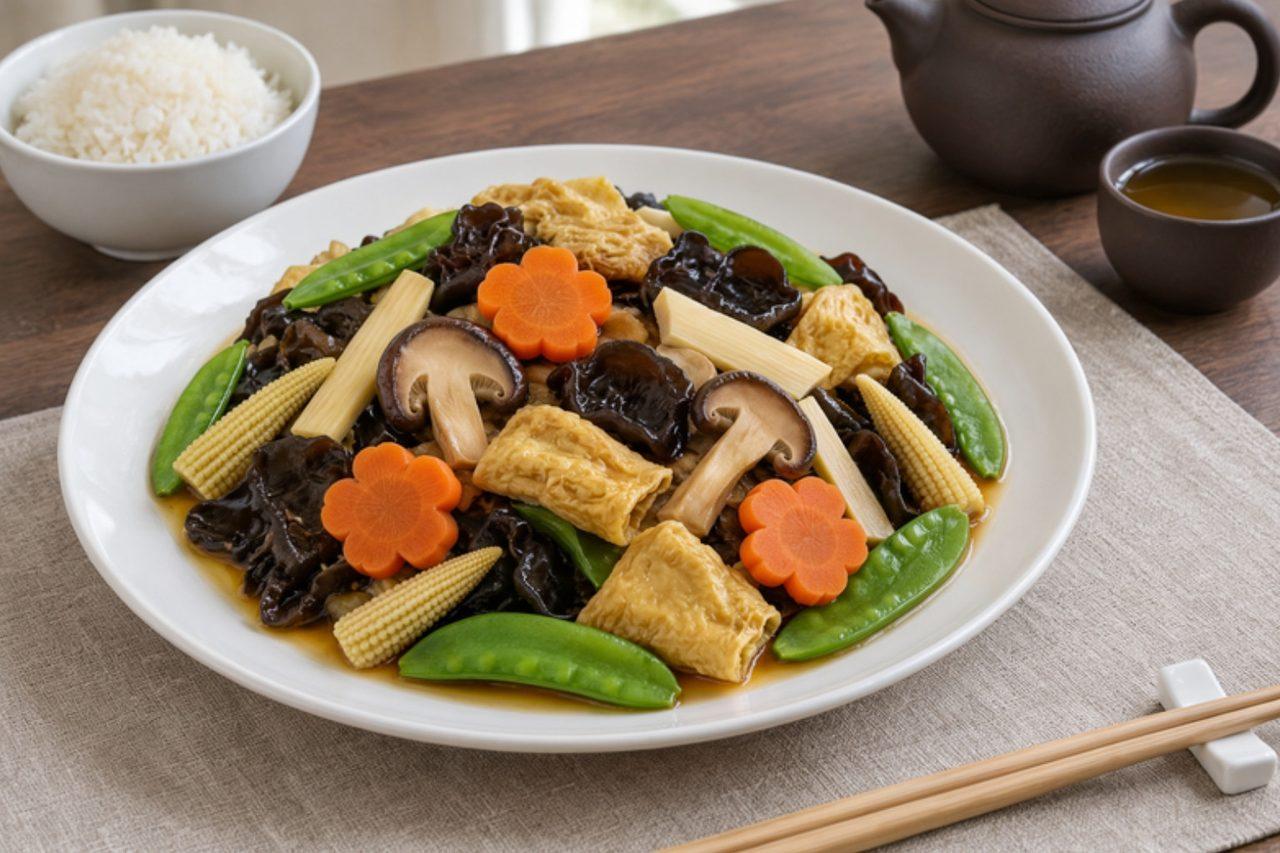
Su shi jin means "vegetarian assortment", and it comes from the Buddhist kitchens of eastern China; today it is a staple of office lunchbox shops in Shanghai and Hangzhou. Crunchy wood ear mushrooms, strips of tofu skin, chewy wheat gluten (kao fu or mian jin), carrot, snow peas and bamboo shoot are stir-fried quickly and glossed with a light soy and ginger sauce. The mistake is adding everything at once, so the firm vegetables are raw and the snow peas overcooked; cook in order of hardness. Chef's tip: soak dried wood ear in cold water rather than hot; it plumps up crunchier.
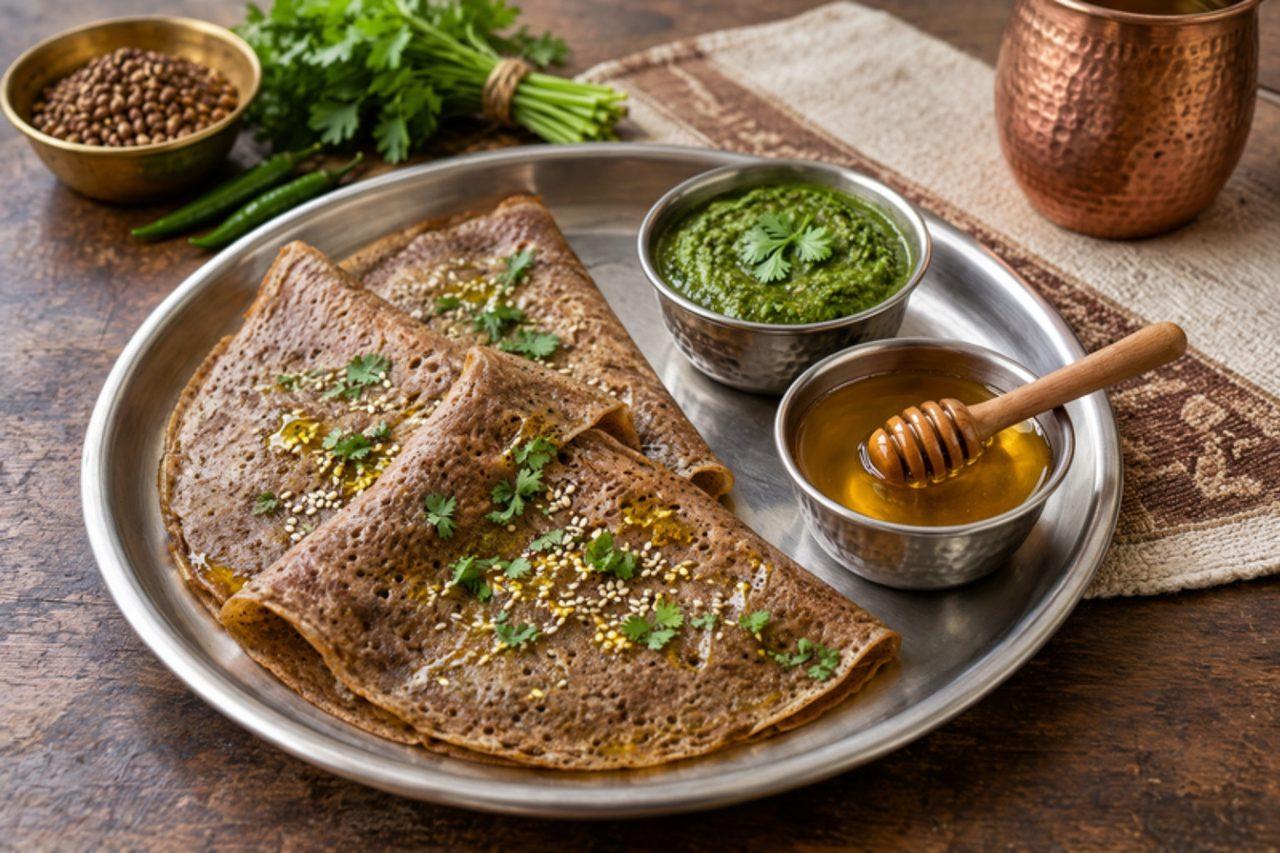
In the upper hills around Shimla and through Kinnaur, buckwheat (kuttu or ogla) grows where wheat struggles, and chilre are its everyday form: thin, lacy pancakes poured on a hot griddle for breakfast or a late-afternoon snack. They are eaten with a sharp mint-and-walnut chutney, or sweet with honey, and are naturally gluten free when made with pure buckwheat. The common mistake is making the batter too thick, so the chilre come out stodgy; it should pour like single cream. Chef's tip: let the batter rest 15 minutes so the buckwheat swells, and wipe the pan with an oiled cloth rather than pouring oil, for even, lacy pancakes.
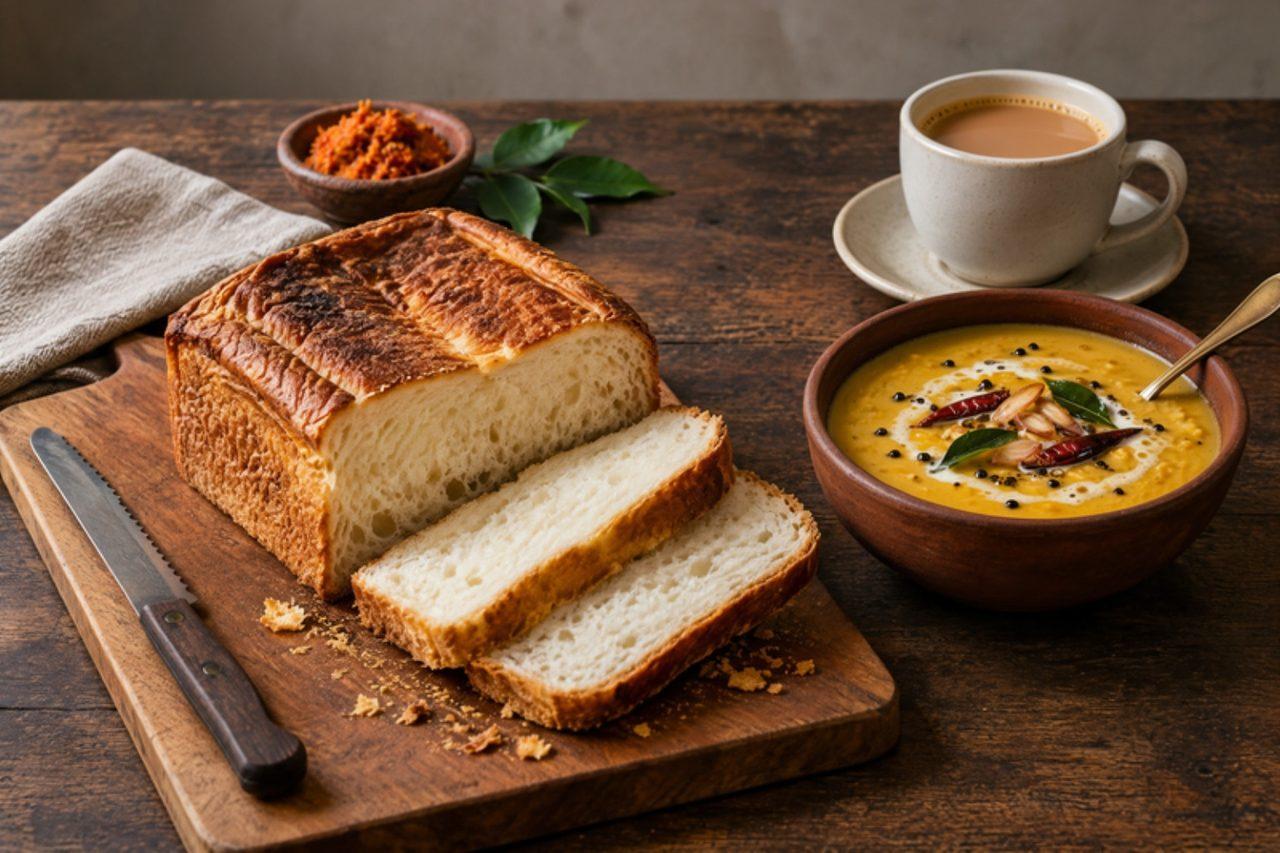
Every Sri Lankan neighbourhood bakery turns out roast paan before dawn: square loaves baked close together in a wood-fired oven until the tops are dark and crusty while the sides stay soft and pull apart. Bought warm, it is torn and eaten with dhal curry, pol sambol, or kiri hodi, the mild coconut milk gravy. The mistake is baking at too low a temperature, which gives a pale, sandwich-style loaf; it needs a really hot oven and a final blast to blister the top. Allow about 2½ hours with rising. Chef's tip: bake the dough as four balls snug in one square tin so they rise into each other; pulling the soft sides apart is half the pleasure.
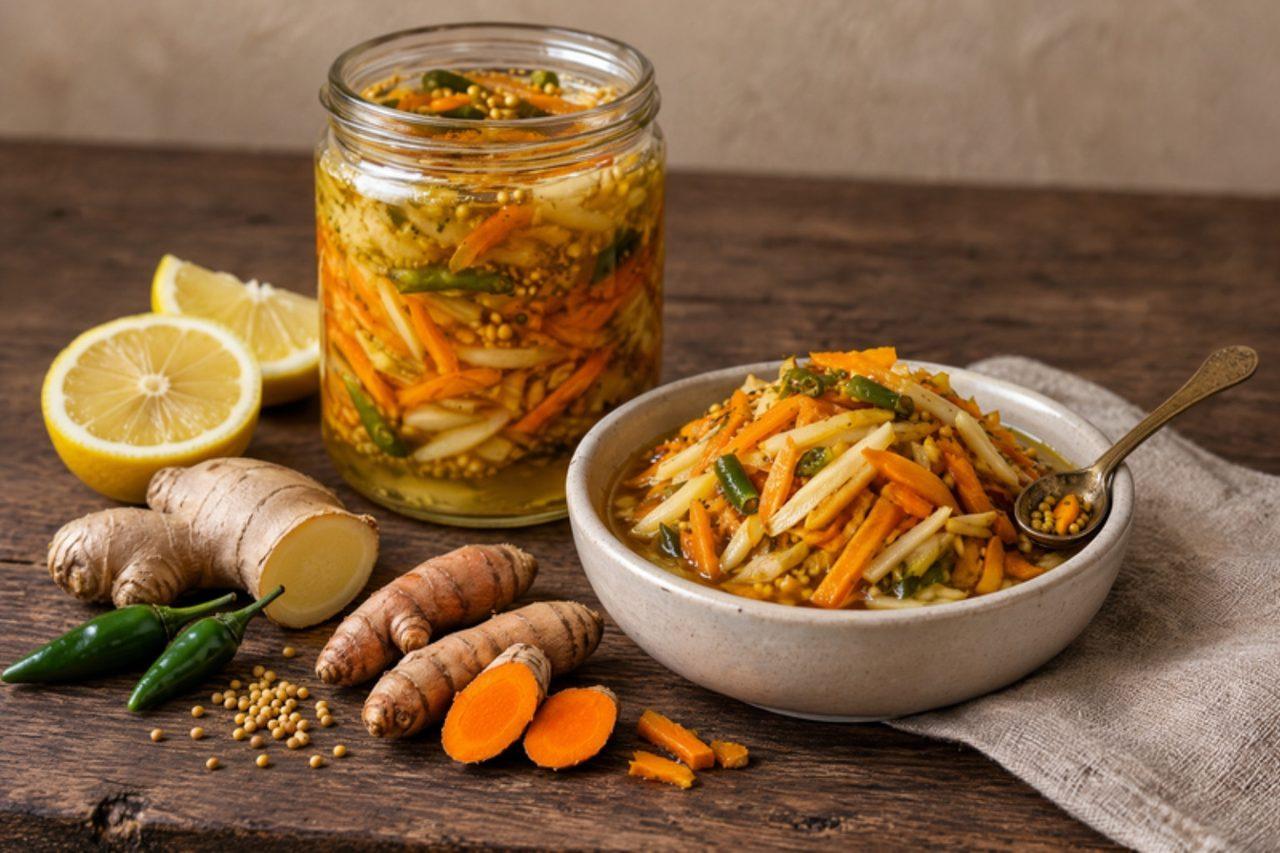
From December to February, fresh turmeric root turns up in heaps in the mandis of Jaipur, Jodhpur and Udaipur, bright orange inside and earthy-sweet. Rajasthani families eat it as a warming winter food, cooked in ghee as kachi haldi ki sabzi or, more simply, as this fresh pickle with ginger and green chilli. The slivers stay crisp and juicy; they taste peppery and slightly bitter, with sharp lemon and the nose-tingling bite of split mustard seed. It sits beside bajra roti, dal and a winter sabzi, and a few pieces with lunch is the whole point. The common mistake is cutting thick chunks: turmeric is fibrous, so slice it into matchsticks or thin coins so the lemon can soak in. It is ready to eat after 2 days, when the slivers have turned a shade softer and the juice has gone golden. Because it contains fresh ginger and chilli, keep it fully covered in the lemon juice and store it in the fridge, where it keeps for about 4 weeks. Wear gloves and use a steel or glass bowl, as turmeric stains wood, plastic and fingers for days. Chef's tip: pick plump, firm roots with smooth skin; wrinkled ones are dry and woody.
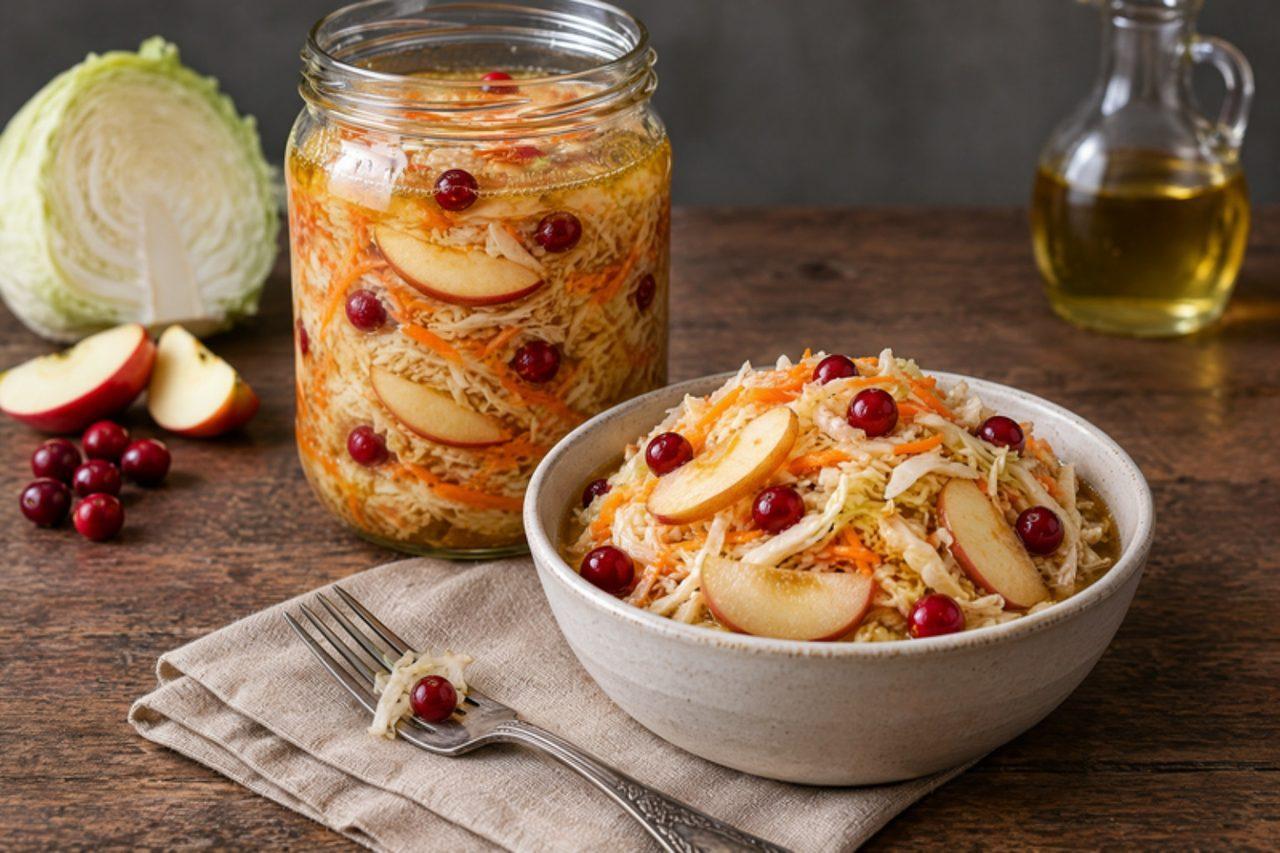
Kapusta provansal has nothing to do with Provence: the grand name is a Soviet-era flourish for a bright marinated cabbage salad that turns up on festive tables from Moscow to Novosibirsk, especially at New Year and through the autumn when the cabbage is crisp and sweet. Coarsely cut cabbage, grated carrot, apple wedges and red cranberries are packed into a jar under a hot marinade of water, sugar, vinegar, sunflower oil, bay and allspice. By the next day it is crunchy, juicy, sweet and sour, with tart pops of berry and a gentle spiced warmth, and it sits happily beside boiled potatoes, kotlety, salted herring or roast chicken. The commonest mistake is slicing the cabbage very finely, which goes limp under the hot marinade; cut it into rough 3 cm squares and crush it only lightly with the salt. It is ready when the cabbage has turned slightly translucent but still snaps and the carrot has coloured the brine pale orange. Chef's tip: add a few strips of red pepper and a crushed garlic clove to the jar for colour and depth.
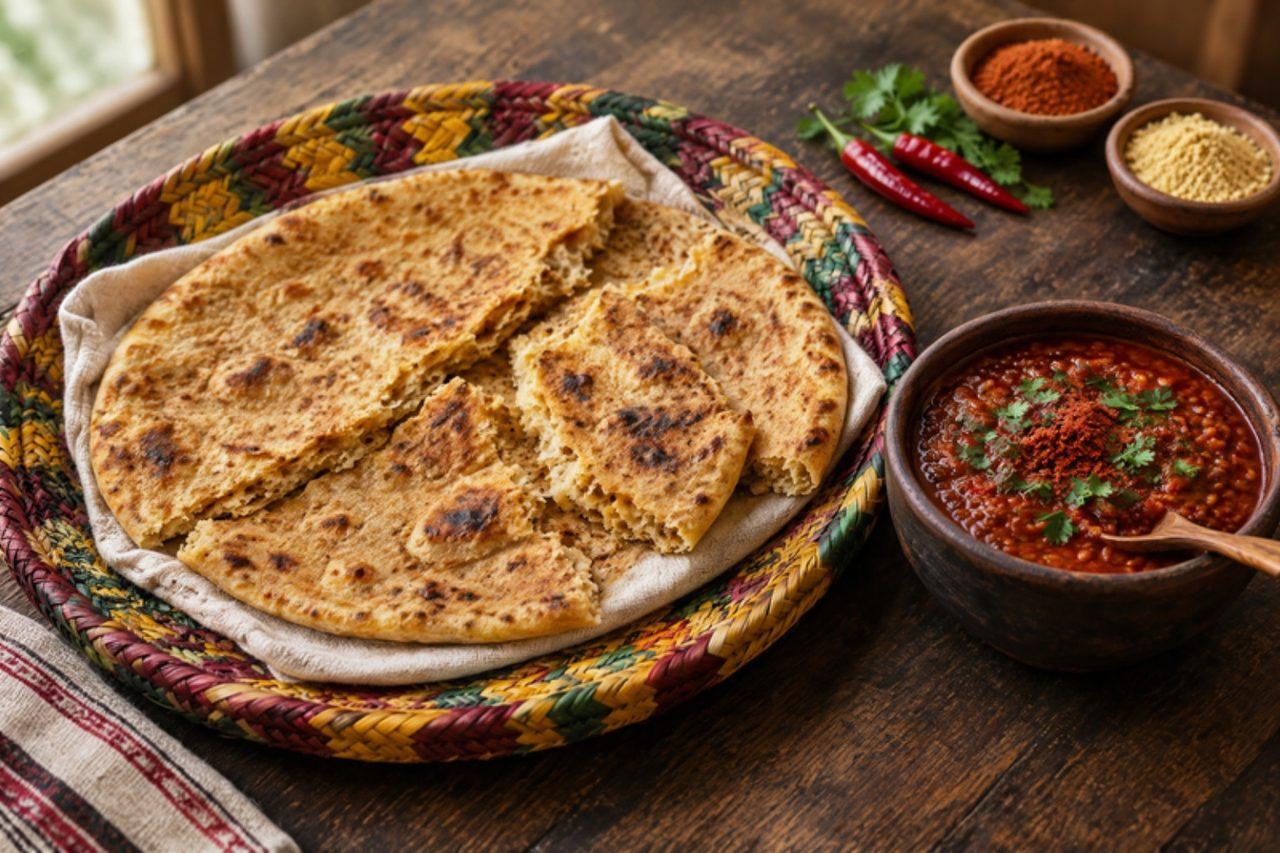
Kitcha (qita) is the everyday quick bread of the Ethiopian and Eritrean highlands, baked when there is no time to ferment injera, and eaten for breakfast with tea or coffee, or torn up as kitcha fitfit with spiced butter and berbere. The dough is just flour and water, spread thick on a hot mitad griddle and cooked on both sides until speckled and firm. Traditionally there is no salt in it at all: about 0.0 g salt per portion, so it sits well beside salty stews. The usual mistake is spreading it too thin, which gives a cracker; aim for 1 cm so the middle stays soft. Barley or teff flour can replace some of the wheat for a nuttier bread. Chef's tip: press a little hollow in the middle with your fingers before turning, and the bread cooks evenly without a raw centre.
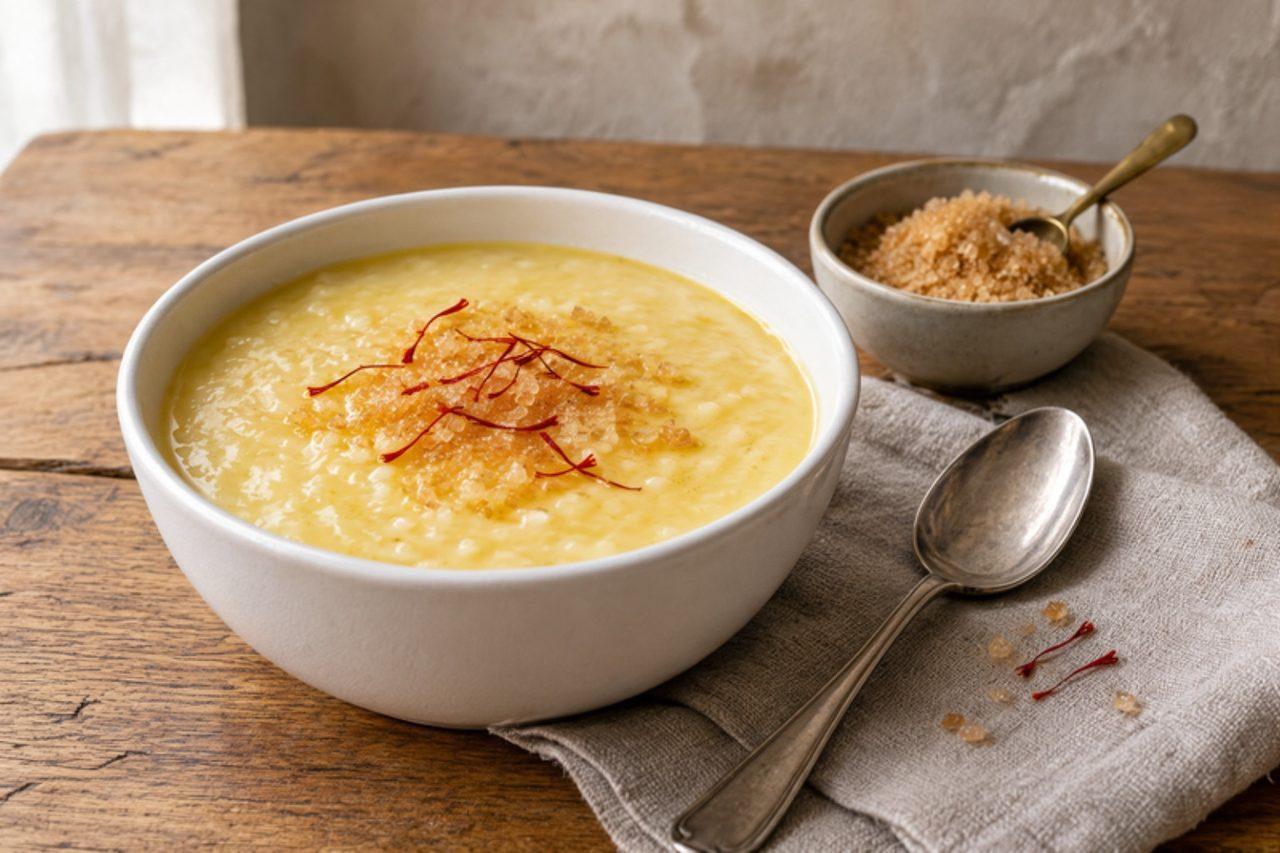
Flemish rijstpap, rice slowly cooked in milk until thick and creamy, is a breakfast, a pudding and a childhood memory, and in East and West Flanders it is coloured golden with saffron and eaten with a spoonful of brown sugar. Old Flemish sayings even promise that in heaven you eat rijstpap with golden spoons. The mistake is cooking it too fast: the milk catches on the bottom and the rice stays chalky, so keep it at the barest simmer and stir often. Chef's tip: use round pudding rice, not long-grain, because its starch is what makes the porridge thick and silky without any cream.
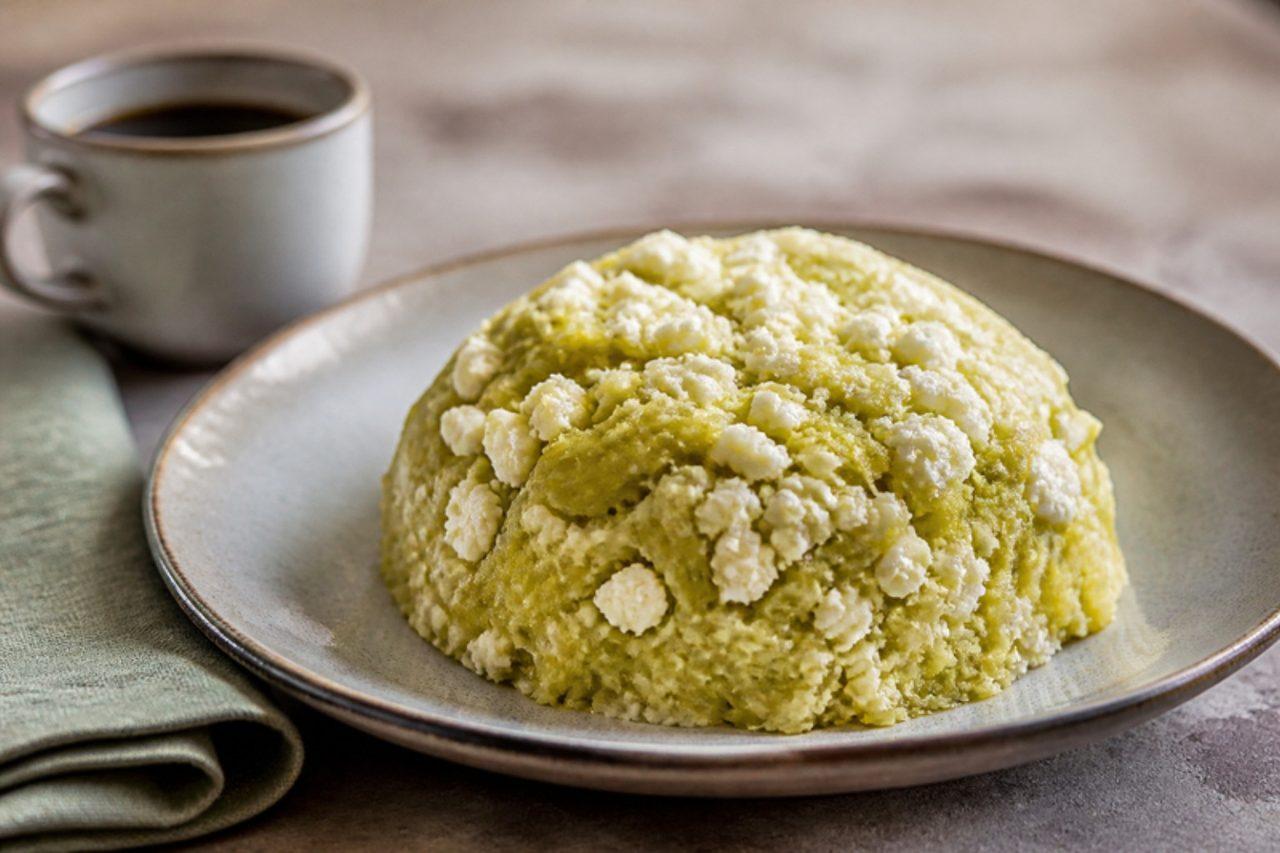
Breakfast in Santa Cruz and the Bolivian lowlands often means a mound of masaco with a cup of strong coffee: green plantain fried and then pounded with butter and grated cheese into a dense, savoury mash. Many cruceños mix in shredded dried beef; this vegetarian version uses only cheese, which is how plenty of families make it too. Bolivian lowland cheese is usually set with animal rennet, so use a vegetarian Cheddar-style cheese if that matters to you. The usual mistake is frying the plantain until crisp: it must stay soft inside or it won't mash. Chef's tip: pound the plantain while it is still very hot; once it cools it turns hard and rubbery.
Jolpai, the small, hard, sour Indian olive, appears in Bengal and Bangladesh markets from October to December, and no winter afternoon is complete without a jar of jolpai achar warming in the sun. It is no relation to the Mediterranean olive: it is tart and astringent, almost like a green plum. The olives are boiled, lightly crushed so the flesh splits from the stone, then cooked in mustard oil with panch phoron, dried chilli and plenty of jaggery. The pickle is sticky, sweet-sour and slightly tannic, with soft flesh to nibble off the stones. Eat it with khichuri on a cold evening, with dal-bhaat, or straight from the jar as a snack. The common mistake is under-boiling: the olives must be soft enough to press flat, or the syrup cannot get in and they stay bitter. It is done when the syrup is thick and shiny and clings to the olives. Very sweet and acidic, it keeps a month in a cool cupboard in winter and 3 months in the fridge. Abroad, look for frozen jolpai in Bangladeshi grocers; firm, sour green plums are the closest substitute. Chef's tip: keep a few olives whole and only scored; they give a nicer bite.
Jaulo is the soft rice and lentil porridge Nepali families in Kathmandu and the hills turn to for anyone small, tired or getting over a cold. After a baby's pasni, the rice-feeding ceremony held at five or six months, it soon becomes a regular lunch, and from about nine months it is mashed lumpy rather than smooth. This version keeps the ghee, cumin and turmeric for gentle flavour but leaves out the usual salt, garlic and ginger. It is warm, buttery and comforting. It contains milk (ghee) and is free of gluten, egg, nuts, soya and sesame. Chef's tip: fry the cumin only until it smells toasty and is a shade darker; burnt cumin turns the whole pot bitter.
Yellow croaker from Yeonggwang on Korea's west coast is so prized that dried gulbi are given as gifts at Chuseok, and a simply grilled or pan-roasted croaker is a classic of the family table and of ancestral memorial meals. The fish is salted, dried briefly and cooked whole until the skin crackles and the flesh comes away in sweet, moist flakes; you eat it with rice, kimchi and a few vegetable banchan. Suitable as part of a balanced diet: high in protein with no batter or flour. About 210 kcal and 1 g carbohydrate per portion. The usual mistake is turning the fish too early, so the skin tears and sticks; wait until it releases on its own. Small sea bream or red mullet work if you cannot find croaker. Chef's tip: pat the fish completely dry and leave it uncovered in the fridge for 30 minutes before cooking for the crispest skin.
In Tamil homes ellu sadam is cooked on Saturdays and temple days, and it is one of the variety rices that keeps best in a school lunch box, because the dry sesame powder soaks up the oil and does not spoil the way coconut rice can. The powder is roasted from black sesame, urad dal and dried red chillies, ground coarse and tossed through plain rice with a nutty gingelly oil tempering. The usual mistake is roasting the sesame too hard: it turns bitter within seconds, so take it off as soon as it starts to pop and smell toasty. Chef's tip: pound the powder rather than blitzing it to dust, so you keep a little crunch from the dal.
Joynagar, south of Kolkata, makes moa only in winter, when the fragrant kanakchur paddy is harvested and date-palm sap is boiled into fresh nolen gur. Puffed kanakchur khoi is bound with the liquid gur, khoya and ghee into soft balls topped with a raisin and a pinch of cardamom, and Bengalis queue for the first boxes each December. The common mistake is overcooking the gur, which sets the moa hard as stone; it should reach only the soft-thread stage so the balls stay tender and squash slightly when bitten. Chef's tip: if you cannot find kanakchur khoi, use the freshest, crispest puffed rice you can buy and warm it briefly in a dry pan.
Across Marwar, this simple halwa is the one cooked for temple prasad, for Satyanarayan katha and for women in the weeks after giving birth, when ghee and jaggery are thought to build strength. Wholewheat flour is roasted slowly in plenty of ghee until it turns a deep nutty brown, then cooked with hot water and sugar or jaggery until soft and glossy. The whole thing takes 30 minutes. The common mistake is rushing the roast on high heat, which leaves the flour raw-tasting inside and scorched outside. Chef's tip: roast on low heat until the colour is like milky tea and the ghee starts to separate and bubble around the flour.
When the first purple-skinned satsumaimo arrive in Japanese shops in October, families cook them right into the rice pot: the cubes turn soft and honeyed, and a sprinkle of black sesame and salt makes it taste like autumn. It is a favourite in children's bento boxes and needs nothing but a pickle on the side. The common mistake is skipping the soak for the sweet potato, so it bleeds starch and turns the rice grey and gummy. Chef's tip: leave the skin on; it holds each cube together and gives the rice its purple-and-gold look.
Along the roads of Zulia and down the Caribbean coast, sellers wrap conservas de coco in squares of paper: dense, chewy bars of grated coconut cooked in dark panela syrup with cinnamon and clove. Children buy them with their change after school. The mistake most people make is taking the pan off too early; the mixture never sets and stays sticky. Chef's tip: keep stirring until the mass pulls away in one lump and a spoon dragged across the base leaves a clean line.
Gujarati families make anjeer pak for Diwali boxes and for fast days, when it gives quick energy without any grain or refined sugar. Soaked dried figs are cooked down in ghee into a thick jammy paste, mixed with toasted almonds, cashews and pistachios, and rolled into logs that slice into pretty pink-and-green rounds. It keeps for two weeks in the fridge. The common mistake is under-cooking the fig paste, which leaves the logs soft and sticky so they never slice cleanly. Chef's tip: keep stirring until the paste rolls into a ball that no longer sticks to the pan or your greased palm.
Havana runs on small cups of coffee: a cafecito standing at a ventanita, a colada shared in tiny plastic cups at work, and in the afternoon or with breakfast, a cortadito, which is Cuban coffee cut (cortado) with roughly as much hot milk. The coffee is brewed in a stovetop cafetera, and the first dark drops are whipped hard with sugar into a pale, thick espumita that floats on top of the cup. The result is rich, very sweet and caramel-like, with a velvety milk body and a strong, bitter edge underneath. It is high in caffeine, so it is not one for children. The common mistake is adding sugar to the pot or stirring it in at the end; without the espumita you get a thin, flat drink. Beat the first concentrated coffee with the sugar until it turns light tan and holds soft folds, then pour in the rest. It is ready when a pale foam floats on the cup and the milk has been heated until steaming, with small bubbles around the edge but not boiling. Chef's tip: catch only the first 2–3 teaspoons of coffee for the foam; later coffee is too thin to whip.
Belgrami belongs to Udwantnagar in Bihar's Bhojpur district, where sweet makers have cooked it for generations and travellers buy boxes on the way through. Fresh chhena is cooked down with sugar until it firms into a dense, slightly chewy, pale cream block with a gentle caramel note, then cut into pieces. It keeps for days, which makes it a favourite gift at weddings and Chhath. The common mistake is stopping too early: it must cook until the mass pulls into one lump and no longer sticks to the pan, or the pieces stay soft and weep. Chef's tip: use chhena from full-fat cow's milk and hang it for an hour, so it is dry enough to cook down quickly.
Rajkot's sweet shops are famous across Gujarat for thabdi, a crumbly, toffee-brown penda that starts as plain milk and sugar and ends, two hours later, as something close to caramel fudge. The milk is boiled down in a wide iron kadai, a spoon of curd splits it slightly to give the trademark grainy texture, and the sugar browns slowly with it until the whole mass is the colour of milky tea. The usual mistake is rushing on high heat: the milk catches and tastes burnt rather than caramelised. Chef's tip: use a wide, heavy pan and a flat wooden spatula, and keep scraping the bottom and sides every minute once the milk is half reduced.
Chennai mothers turn a big bunch of coriander into this bright green rice when they want a lunch box that looks fresh and smells of the market. The leaves and stems are ground with green chilli, coconut, ginger and a little tamarind, then fried in oil until the raw grassy smell goes and the paste turns a deeper green. The mistake is adding the paste and the rice together: the paste stays raw and the rice goes dull and sour. Cook the paste first until it leaves the sides of the pan. Chef's tip: keep the coriander stems; they carry more flavour than the leaves and grind into a smoother paste.
In the Godavari districts of coastal Andhra, the same May afternoon that produces a jar of fiery avakaya usually produces a second jar of bellam avakaya for the children and anyone who likes it sweet. The mangoes are hacked into chunks with their skin and the hard shell of the stone still attached, then tossed with chilli, mustard powder, salt and plenty of grated jaggery. Over three or four days the jaggery melts into a dark, glossy syrup that clings to every piece. It tastes sweet first, then the mustard catches the nose and the chilli warms the back of the throat; the mango stays firm and sour. Eat it with pesarattu, dosa, chapati or curd rice. The salt is about 8% of the mango weight and the fruit is acidic, so it keeps all year under oil in a dry jar. Common mistake: cutting the mangoes wet or leaving sap and water on them; any moisture invites mould, so dry each piece with a cloth. It is ready when no jaggery grains remain and a film of oil rises to the top. Chef's tip: wipe off the milky sap at the stalk end before cutting; it stings the skin and tastes bitter.
The sweet shops of Bhuj and Mandvi in Kutch sell gulab pak in pale pink slabs that smell of summer roses, and it is a favourite to carry home after a trip to the Rann or a family wedding. Mawa is cooked down with sugar and gulkand, the sun-cured rose-petal preserve, so the fudge is soft and grainy with little chewy flecks of petal through it. The mistake to watch for is adding the gulkand too early: cooked for long, it darkens and turns the fudge brown and toffee-like. Chef's tip: a few drops of rose water stirred in right at the end lift the perfume without making it taste soapy.
In French Guiana couac is on the table at almost every meal, sprinkled over fish in sauce, stirred into stews or soaked in water with sugar as a snack, and it is still made in the carbets (open-sided sheds) of Amerindian and Maroon villages along the Maroni river. Traditionally it is made from bitter cassava, which is poisonous until its juice has been pressed out and the meal roasted for hours. This home version uses only sweet cassava (yuca), and still presses out and discards all the juice and toasts the meal until fully dry, because cassava must never be eaten raw. The usual mistake is a heat that is too high: the outside scorches while the inside is still damp. Chef's tip: stir almost constantly over a medium-low heat; the couac is done when it rattles in the pan, smells nutty and a grain snaps cleanly between your teeth.
Ju hua cha is chrysanthemum tea, a summer staple in Hangzhou, where the famous small white Hang bai ju flowers grow, and across Guangdong and Hong Kong, where it is poured at dim sum and sold chilled in street-side stalls. Dried flowers open in hot water into a pale golden, honey-scented infusion with a gentle bitterness. It is drunk plain here: no salt and no sugar, so about 0.0 g salt per cup. The usual mistake is using boiling water, which turns it harsh; let the kettle rest for a minute first. A few goji berries add colour and a little natural sweetness. Chef's tip: rinse the dried flowers quickly in warm water first to wash off dust and wake up their fragrance.
In Santiago, December means cola de mono: bottles of cold, coffee-coloured spiced milk that families make days ahead and open on Christmas Eve and New Year's Eve, poured beside slices of pan de pascua, the dense Chilean fruit cake. The traditional version is for adults only, spiked with grape aguardiente; pour small glasses and drink responsibly. It tastes like a sweet, cold café con leche with cinnamon, clove and orange, the aguardiente adding a warm finish, and the texture is smooth and light, never thick. Each glass has about as much caffeine as a small, weak coffee, so use decaf for anyone sensitive. The classic mistake is adding the aguardiente while the milk is still hot: much of the alcohol steams away and the milk can catch and curdle. Let the spiced milk cool completely first. It is ready when the colour is an even tan, the spices smell strong but the milk tastes clean, and it is fridge-cold. It keeps 3–4 days in the fridge in clean bottles; shake before pouring and throw it out if it smells sour. Chef's tip: make it two days ahead; the spices keep blooming and it tastes noticeably rounder.
Sobacha is roasted buckwheat tea, drunk all over Japan and especially in the soba country of Nagano and Hokkaido, where it is poured free in noodle shops and kept in jugs in the fridge through summer. Toasted buckwheat groats are steeped in hot water to make a golden, caffeine-free tea with a nutty, almost popcorn aroma, and the softened groats can be eaten too, stirred into rice or salads. Nothing is added: no salt, no sugar, so about 0.0 g salt per cup. The usual mistake is burning the groats when roasting your own; keep the heat at medium and keep the pan moving. Use Tartary buckwheat (dattan soba) for a deeper yellow tea. Anyone with a buckwheat allergy should avoid it, as reactions can be serious. Chef's tip: steep a second time with slightly hotter water; the second cup is often the sweetest.
Every morning in Port Louis, Mahébourg and Rose-Hill, the boulangerie or a man on a bicycle delivers bags of pain maison: small, round white rolls with a thin, crackly crust and soft middle, split and filled with butter and cheese, with chilli-spiked gâteaux piments, or with leftover curry. They're a simple lean dough baked very hot. The common mistake is under-baking because they look golden early; give them the full time so the crust stays crisp after cooling. Chef's tip: spray the oven walls with water as the rolls go in; the burst of steam makes the shiny, cracked crust.
Every year in the days before 2 November, the Día de los Difuntos, Quito's kitchens and bakeries fill with the smell of colada morada: a warm, spoon-thick drink of purple corn flour cooked with blackberries, blueberries, pineapple and a bundle of fragrant herbs and spices. It is deep violet, sweet-tart and full of chopped fruit, and it is always served with guaguas de pan, the bread babies, often shared with family at the cemetery. The most common mistake is stirring the corn flour straight into hot liquid, which makes lumps: whisk it into cold water first. Chef's tip: lemon verbena and lemongrass give the authentic perfume; if you can find naranjilla or a few orange leaves, add them to the spice pot too.
In Guatemalan homes, mosh is what a mother hands a child on a chilly highland morning in Quetzaltenango or Huehuetenango: rolled oats cooked long and thin with water, milk, cinnamon and sugar, so it's drunk from a mug rather than eaten with a spoon. The common mistake is making it too thick like porridge; it should pour easily, so keep adding hot milk or water as the oats swell. Chef's tip: whisk it hard for a minute at the end; it breaks up the oats and makes the drink smooth and frothy.
In Saurashtra a new mother is handed a tin of sooth pak within days of giving birth, and the rest of the family quietly helps themselves when winter colds arrive. It is a small, potent square: plenty of dry ginger roasted in ghee, softened by jaggery and wheat flour, with a little puffed gum and coconut for texture, so one piece warms you right through. The mistake to avoid is roasting the ginger powder on its own in very hot ghee, which scorches it in seconds and leaves the pak bitter. Chef's tip: grind dry ginger root yourself in a spice grinder just before cooking; the flavour is far brighter than old packet powder.
Order a citron pressé on a Paris terrace in July, or at a café in Nice after the beach, and the waiter brings a tall glass with an inch of freshly squeezed lemon juice, a carafe of iced water, a sugar bowl or a little jug of syrup and a long spoon. You build the drink yourself, as sharp or as sweet as you like, which is half the pleasure; French children learn to drink it with plenty of sugar, grown-ups often with almost none. It is bright, sour and cleansing, nothing like bottled lemonade, and best in the late afternoon heat. The common mistake is stirring granulated sugar straight into cold lemon water: it sinks and never dissolves, so the first sips are sour and the last a sludge. Dissolve the sugar in the juice first, or use a quick syrup. It is ready when the sugar has vanished, the drink tastes balanced to you and the glass is beaded with cold. Unwaxed lemons matter if you add a twist of peel. Chef's tip: pour the water over ice slowly and taste after half the carafe; most people find they need less water than they expect.
Walk down Galle Road through Wellawatte or Bambalapitiya in the evening and you hear the roti shops before you see them: one cook slapping balls of oiled dough into sheets so thin you can read through them, another clattering the kottu blades. That stretched sheet, folded into a square and cooked on the iron plate, is godamba roti, flaky and chewy, torn to scoop up dhal and chicken curry, or chopped up for kottu. Contains wheat. Chef's tip: rest the oiled dough balls for at least 2 hours; the gluten relaxes so the dough stretches thin without tearing.
Douzhi is the most famous acquired taste in Beijing: a hot, grey-green, sour drink made from the liquid left when mung beans are ground for starch, then fermented. Old Beijingers sip it at breakfast with crisp jiaoquan rings and shredded salted mustard pickles, and visitors either love it or never try it twice. At home you make a small batch by blending mung beans, settling out the starch and fermenting the cloudy water for a day. The mistake is letting it boil hard: it separates into watery and thick layers, so keep it at a gentle bubble. It must smell cleanly sour like yogurt; throw it away if it smells rotten, has mould, or turns pink or slimy. Chef's tip: stir it continuously as it heats and add a splash of the thinner liquid at the end, which keeps the classic smooth, slightly thick texture.
Order 'limau ais asam boi' at a kopitiam in Penang or a hawker centre in Kuala Lumpur at the hottest part of the afternoon and it arrives in a tall, sweating glass: freshly squeezed calamansi or small green limes, a little syrup, ice and one wrinkled, salted dried plum. The plum slowly leaches salt and fruity sourness into the drink, so every sip changes, starting bright and sweet and ending salty and tangy; you squash the plum with your straw halfway through for a stronger hit. It goes with char kway teow, nasi lemak or anything fried. The usual mistake is using bottled lime juice, which tastes flat and bitter against the plum. Squeeze fresh limes, and add the syrup gradually because asam boi is already salty-sweet. It is ready when the glass is frosted and the plum has started to plump up. Asam boi is sold in jars in Chinese and Southeast Asian groceries; Japanese umeboshi is saltier but works if you halve the amount. Chef's tip: make the lime-syrup base ahead and keep it cold, then pour over fresh ice only when you serve.
Before trains, buses and school trips, families in northern Vietnam press warm rice into firm, dense blocks and wrap them in banana leaf or paper with a twist of muối vừng, toasted sesame and peanut salt, for dipping. It is humble, filling and keeps its shape for a whole day's journey. Peanuts and sesame are both allergens. The common mistake is using cold or loose rice, which will not stick; it must be pressed hot. Chef's tip: mix a handful of sticky rice into ordinary jasmine rice before cooking, and the blocks hold together firmly without being gluey.
Before dawn at markets in Huancayo, Cusco and Lima, juice ladies ladle hot jugo de maca from big pots for workers on their way in: maca root, a turnip relative grown above 4,000 metres in the Junín highlands, simmered with milk, cinnamon and cloves and sweetened with honey or sugar. It tastes malty and toasty, a bit like butterscotch. The common mistake is stirring the powder straight into hot milk, which leaves gritty lumps; whisk it into a little cold milk first. Maca is not usually advised in pregnancy, so ask your doctor first if you are pregnant. Chef's tip: use gelatinised (cooked) maca powder if you can find it; it dissolves smoothly and is gentler on the stomach.
Akibiye is Sumi Naga comfort food from Nagaland: colocasia boiled until it melts into a thick, creamy stew, flavoured with chilli and axone, the fermented soybean that gives Naga cooking its deep savour. It is eaten with rice, especially in winter. For homemade axone, keep boiled soybeans wrapped in leaves at 30–40 °C for 3–5 days until sticky and pungent, then dry or use fresh; discard if black, green or pink mould appears or it smells rotten. The mistake is handling raw taro with bare hands, which itches; wear gloves or oil your hands. Chef's tip: bought axone, kinema or natto work well.
From the rainy season in June until the cicadas fall quiet in September, almost every Japanese household keeps a tall jug of mugicha in the fridge. It is poured for children coming in from summer club practice, for grandparents after an afternoon nap, and alongside cold sōmen at lunch, because it carries no caffeine and can be drunk all day. Whole barley grains roasted until deep brown give a cup that tastes of toast, a little of coffee and a little of popcorn, with a clean, dry finish and no sweetness at all. Supermarkets sell it in tea bags, but loose roasted grains simmered in a pan make a rounder, darker brew. The usual mistake is leaving the grains in the jug or letting the hot tea sit out on the counter for hours: it turns bitter and, being a grain infusion, it sours quickly in summer heat. Strain it, cool it fast in a sink of cold water, and drink it within two days. It is ready when the liquid is a clear amber-brown and smells like freshly toasted bread. Chef's tip: dry-toast the grains for two minutes before brewing to wake up a bag that has been open a while.
Dal bafla is Malwa's answer to Rajasthan's dal baati: the dough balls are first boiled until they float, then baked until crusty, so they turn out softer inside and lighter than baati. In Indore and Ujjain it is the meal for Sunday lunches, picnics and big family gatherings, broken open and drowned in ghee next to a bowl of tadka dal and garlic chutney. The common mistake is skipping the rest after boiling; wet baflas go straight into the oven and stay pale and leathery. Chef's tip: let the boiled baflas dry for 10 minutes and score a cross on top before baking, so they crack open and soak up the ghee.
When the mango trees of Oriente are heavy in Lent, families in Sucre and Anzoátegui cook the hard green fruit with sugar and spice into jalea de mango, a thick tart-sweet paste set in a dish and cut into squares. It's eaten during Holy Week, often on a piece of crisp cassava bread. The mistake to avoid is skipping the sieve, which leaves stringy fibres. Chef's tip: use a long wooden spoon and keep your arm covered: the thick paste spits as it bubbles.
In Odia homes, from Cuttack to Puri, chhena tarkari is the special curry for a Sunday lunch, a guest or a festival day when the household eats no onion or garlic. Fresh chhena, the soft cheese Odisha also turns into rasagola, is pressed, cut into cubes and fried golden, then simmered with potato in a thin gravy of tomato, ginger and roasted cumin. The cubes stay soft and soak up the sauce, and the dish is eaten with rice, puri or paratha. Chhena is made by curdling milk with lemon juice, so it contains no rennet. The usual mistake is boiling the gravy hard after the chhena goes in, which breaks the cubes into crumbs. Chef's tip: fry the chhena cubes until golden on two sides only, then rest them in warm water for five minutes; they swell and turn spongy, just like an Odia grandmother's.
Misutgaru began as travellers' food, a powder of roasted grains that kept for weeks and could be stirred into water on the road. Today it is the drink of Korean summer: mothers shake it with cold milk for breakfast before school, office workers buy it as misutgaru latte from cafés, and farmers drink it at midday in the fields of July. The powder is a mix of roasted barley, glutinous and brown rice, black and yellow soybeans, and sesame, and it tastes of toasted cereal and peanut, lightly sweet, with a thick, creamy body that fills you up like a light meal. The common mistake is tipping the powder into a full glass of milk and stirring: it floats, clumps into dry balls and never fully mixes. Shake it in a jar with a little liquid first, or blend it, then add the rest. It is ready when the drink is smooth, beige and frothy with no dry flecks, and slightly thickened after a minute's rest. Use water or soy milk for a dairy-free version, and note that the barley means it is not gluten free. Chef's tip: a pinch of salt makes the grain flavour taste rounder and less flat.
Ka'i ladrillo — 'monkey brick' in Guaraní — is the sweet sold by vendors on Asunción buses and at country fiestas: roasted peanuts bound in boiled cane molasses and set in brick-shaped blocks, crunchy and dark with a slightly smoky toffee taste. It contains peanuts, so keep it away from anyone with a peanut allergy. The common mistake is taking the syrup off too soon, so the bricks stay sticky and never set. Chef's tip: test the syrup by dropping a little into cold water; it is ready when it sets into a brittle thread that snaps.
Awan bangwi belongs to the Kokborok-speaking communities of Tripura, who make it for weddings, Garia Puja and New Year gatherings. Soaked sticky rice is mixed with ginger, cashews, raisins and a little ghee, folded into cones of leaf and steamed until glossy and chewy. The mistake to avoid is packing the cones too tightly: the rice swells and the leaves split. Banana leaf or turmeric leaf replaces the local leaf well. Chef's tip: soak the rice overnight; under-soaked grains stay chalky however long you steam them.
Podimas comes from Tamil Brahmin kitchens in Thanjavur and Chennai, where green plantain is boiled whole, grated into soft crumbs and tossed with a tempering of mustard, dal, ginger, green chilli and coconut, then sharpened with lemon. It is light and fluffy, and it sits happily next to sambar rice or rasam rice in a tiffin. The mistake is overboiling the plantain: it turns sticky and will not grate into crumbs. Pull it out as soon as a knife slides in with a little resistance. Chef's tip: grate it on the large holes of a box grater while still warm, then let it cool before tossing, so the shreds stay separate.
Sit down at any mamak stall in Kuala Lumpur, Penang or Johor Bahru, from breakfast roti canai to the after-football supper at 1 a.m., and someone at the table will order teh halia. It is teh tarik's spicier cousin: dust-fine black tea is boiled with plenty of crushed ginger, mixed with condensed and evaporated milk, then 'pulled' between two mugs from arm's length until a thick froth forms. The result is sweet, creamy and malty, with a ginger heat that catches your throat, most loved on wet monsoon evenings. The common mistake is adding ginger to tea at the end; it then tastes raw and thin. Boil the ginger in the water first for several minutes so the heat goes into the liquid. It is ready when the tea is the colour of milky caramel and a dense froth a few centimetres high sits on top. This contains caffeine, so it is not for children. Chef's tip: practise pulling with water over the sink first, then start low and raise the mug slowly as you pour.
Bellam paramannam is the naivedyam of Telangana and Andhra homes, cooked for Sankranti, Ugadi, Varalakshmi Vratam and almost any puja, a soft rice-and-moong pudding sweetened with jaggery and glossed with ghee. Its colour is a warm caramel and its taste deeper than a sugar kheer. The classic mistake is adding jaggery to milk that is still on a high boil, which can split it; take the pot off the heat, let it stop bubbling, then stir the jaggery in. Chef's tip: roast the moong dal in a spoon of ghee until it smells toasty before cooking; it gives the paramannam its homely flavour.
When the lerotse melons ripen on the lands around Serowe and Mahalapye after the summer rains, households stir their pale flesh into the evening pot of sorghum, and the porridge turns soft, smooth and quietly sweet. Lerotse is a hard-skinned field melon, closer to a mild marrow than a dessert melon, so it melts into the bogobe and gives it a light, fresh taste against the sour, nutty grain. It is eaten as a side with seswaa, beans or morogo, or on its own for supper with a sprinkle of sugar. Outside Botswana, look for lerotse at African grocers; otherwise a firm cooking melon or a winter melon gives a very close result. Chef's tip: the mistake people make is dumping the sorghum in at once, which gives lumps; rain it in slowly while you whisk.
Jangajji are Korea's long-keeping soy pickles, made with whatever the season gives: perilla leaves, garlic, chillies, radish. They go in a dosirak lunchbox because they never weep or spoil the rice, and a few slices wake up any meal. This version pickles crisp Korean radish with green chillies, with perilla leaves if you can find them. The common mistake is pouring cold brine over the vegetables, which leaves them limp and short-lived. Chef's tip: after three days, pour the brine off, boil it again and pour it back hot, and the pickles stay crunchy for a month.
Step up to any juguería in Lima's Mercado de Surquillo or a barrio market at breakfast time and order a surtido: the juicer drops papaya, banana, pineapple and freshly squeezed orange into a tall blender, sometimes a slice of cooked beetroot for colour or a splash of milk, and pours you a big glass with the rest left in the jug for your 'yapa', the free refill. It is thick but still pourable, sweet from ripe fruit with a sharp orange edge, the kind of drink that stands in for breakfast before a long day. The common mistake is adding lots of ice and water, which makes it thin and frothy rather than velvety. Use cold fruit and freshly squeezed orange juice as the liquid. It is ready when it coats the glass and no lumps of banana are left. This version is fruit only; stalls also make it with milk if you prefer. Drink it straight away: papaya and banana go brown and bitter within half an hour. Chef's tip: use very ripe papaya with orange flesh; under-ripe papaya tastes of nothing and gives a faintly bitter aftertaste.
Batata nu rasawalu shaak is the potato curry that arrives with hot puris at Gujarati wedding breakfasts, Sunday brunches and festival thalis, and it is one of the first curries children in Gujarat love. Soft potato chunks float in a thin, red, sweet-and-sour gravy with mustard seed, curry leaves and hing, lightly spicy and very comforting. Serve with puri, rotli or plain rice. The usual mistake is cutting the potatoes in uneven pieces, so some fall apart while others stay hard; cut them all the same size. Chef's tip: once the potatoes are cooked, mash a few against the side of the pan; the starch gives the rasa (gravy) body without any flour.
Jiaoquan are the thin, shatteringly crisp fried rings that old Beijingers dunk into a bowl of sour douzhi, or tuck inside a sesame shaobing for breakfast. Street cooks use alum to make them puff; this home version uses baking powder and soda, with a long rest so the dough becomes stretchy. The mistake is cutting the rest short: tight dough will not stretch thin and the rings come out chewy. The dough needs about 3 hours in total, most of it hands-off. Chef's tip: keep the oil steady at about 170 °C and turn the rings constantly with chopsticks; they should stay pale gold, not brown, and sound hollow when tapped.
Rugby on the television, a paper bag of biltong passed round the room: few snacks say South Africa so plainly. Thick strips of beef are cured with vinegar, toasted coriander, salt and pepper, then dried until the outside is dark and firm and the inside still a little moist, ready to be sliced thin with a sharp knife. Farmers once hung it in the cold winter wind; this home method first heats the cured strips to 71 °C in a hot oven to make them safe, then dries them low and slow in the oven or a biltong box. Even so, home-dried meat is not for pregnant women, young children or anyone with a weakened immune system. The classic mistake is cutting the strips across the grain, so they crumble when you slice them. Chef's tip: toast the coriander seeds until they smell like orange peel before crushing them; that warm, citrusy note is what makes biltong taste right.
Carpentras, at the foot of Mont Ventoux, has been France's linden capital for over a century. In late June the flowering lime trees are harvested by hand, the blossoms and their pale papery bracts dried in the shade, and in July the town's linden market sells them by the sack. In French homes a tisane de tilleul is what you drink after dinner, at the end of a long day or before bed, often with a slice of lemon or a little honey; Proust's famous madeleine was dipped in one. It tastes softly floral and sweet, a little like honey and fresh hay, with a smooth, almost silky feel. The common mistake is using fully boiling water and steeping for fifteen minutes: the tea turns dull brown and slightly astringent. Let the kettle settle to about 90 °C and steep for 5–7 minutes, covered. It is ready when the infusion is pale gold and smells of a summer garden. It is traditionally drunk to unwind; if you take regular medication, have a heart condition, or want to give it to young children, check with a doctor first. Chef's tip: keep the pot covered while it steeps so the scented oils stay in the tea instead of the kitchen.
In Loja and the valleys of Vilcabamba and Malacatos, horchata has nothing to do with rice: it is a pink herbal infusion of anything up to twenty garden plants, drunk hot at breakfast and after lunch, or cold from the fridge on warm afternoons. Markets sell the herbs in bundles: cedrón, hierbaluisa, toronjil, mint, chamomile, mallow, and the red-leaved escancel and ataco (red amaranth) that give the colour. It tastes lemony, floral and faintly silky, and turns from ruby to bright pink the moment lemon juice goes in. The common mistake is boiling all the herbs hard, which makes it bitter and grassy; only the tough flaxseed and lemongrass simmer, and the soft leaves steep off the heat. It is ready when the liquid is deep red-pink and smells of lemon and flowers. Abroad, Latin shops sell dried mixes; dried hibiscus gives the colour if you lack amaranth. It is traditionally drunk to settle the stomach; if you are pregnant or on medication, check with a doctor before drinking it daily. Chef's tip: add lemon at the table, glass by glass, to watch the colour change.
All along Sri Lanka's roads, from Galle Road in Colombo to the highways into Kandy and the beaches of the south coast, vendors stack bright orange king coconuts in pyramids under umbrellas. The thambili is a variety grown on the island for drinking: smaller than a green coconut and sweeter, with a faint saltiness that makes it more refreshing than any bottled drink. It is drunk any time of day in the heat, after a long bus ride, after a cricket match, and given to people recovering from a fever because it is gentle on the stomach. The water is clear, lightly sweet and nutty, and the soft jelly inside is eaten with a spoon made from a slice of the husk. The common mistake is hacking at the side of the nut; the blade glances off and the water spills. Trim the pointed top with downward strokes until a pale circle shows, then pierce it. It is ready to drink when a small hole opens straight into the water without husk fibres. Outside Sri Lanka, young green or Thai coconuts are the nearest substitute. Chef's tip: chill the coconuts for a few hours before opening; the water tastes sweeter cold, and use a heavy knife and a towel, keeping fingers well clear.
Iquique's Chinese community began baking chumbeque in the port's corner shops more than a century ago, and today it is the city's edible souvenir: crisp, honey-sweet pastry stacked in thin layers with a sharp lemon filling and a sticky guava one, cut into small bricks. People take it home from the Zofri market or nibble it with tea at once. At home, bake it as one slab and slice it when cold. Many people roll the dough too thick, which gives a cakey, dry bar instead of fine layers; aim for 3 mm. Chef's tip: chill the rolled sheets for 10 minutes before you stack them so they don't stretch out of shape.
When fresh peas pile up in the markets of Varanasi and eastern Uttar Pradesh in winter, breakfast becomes chura matar: thick flattened rice tossed in ghee with sweet green peas, ginger, green chilli and a pinch of sugar, finished with lemon and coriander. It is softer and richer than poha, and is often eaten on the ghats with a cup of chai. The mistake is soaking the chura in water; it turns mushy. Rinse it quickly in a sieve and let it rest, and it softens just enough. Chef's tip: crush half the peas lightly with the back of a spoon in the pan so they coat the rice and make each mouthful sweeter.
In Bengal the summer of kal-baishakhi storms is also the season of aam tel, mango oil. Slices of hard green mango are salted and sun-dried until leathery, then sunk in mustard oil with roasted panch phoron and chilli and left to steep for a couple of weeks. The mango turns chewy, salty and sour; the oil turns golden, sharp and fruity, and that oil is the real treasure. A spoonful goes into jhalmuri (spiced puffed rice) on every Kolkata street corner, over plain rice with a fried egg or mashed potato, or into a bowl of panta bhat in the heat. The common mistake is not drying the mango enough: if it still feels wet when pressed, it will grow mould under the oil. Dry it until the slices are shrunken, leathery and bend without releasing juice. The pickle is ready when the oil has turned golden and smells strongly of mango and spice. Because the mango is salt-cured and acidic and stays fully under the oil in a dry jar, with no garlic, it keeps up to a year in a cool cupboard; in hot, humid weather keep it in the fridge. Chef's tip: no strong sun? Dry the salted slices in the oven at 60–70 °C with the door propped open, for 5–6 hours.
In El Salvador horchata means horchata de morro, made with the seeds of the morro or jícaro tree, whose round gourds also become cups and bowls. It is poured from big glass jars at pupuserías every evening, sold in plastic bags with a straw outside schools, and drunk at home with Sunday lunch. Markets in San Salvador and Santa Ana sell a ready-ground mix, but toasting your own is easy: rice, morro seeds, sesame, pumpkin seeds and cacao, with cinnamon and allspice. The drink is light brown, cool and creamy, with a nutty, toasted taste, a hint of chocolate and warm spice; quite different from the white Mexican rice horchata. The common mistake is skipping the soak and blending the powder straight with water; it stays gritty and tastes thin. Let it soak at least 30 minutes, or overnight in the fridge. It is ready when it is smooth, beige-brown, coats the glass faintly and smells of toasted seeds and cinnamon. Outside Central America, look for semilla de morro or horchata mix in Latin shops; if you cannot find it, use extra pumpkin seeds and sesame. Chef's tip: toast each seed separately, because they brown at different speeds.
In Denmark the elder hedges flower from late May to the end of June, and picking the creamy umbels on a dry, sunny morning is one of the first rituals of summer. The flowers steep for a few days with sliced lemon, sugar syrup and citric acid, then are strained into bottles of hyldeblomstsaft, a non-alcoholic cordial that is diluted with cold still or sparkling water and poured at garden lunches, children's birthday parties and around the bonfire on Sankt Hans aften, 23 June. It tastes floral and honeyed, a little like muscat grapes, with a fresh lemony edge that keeps it from cloying. The mistake most people make is picking flowers that are already browning, damp or growing by a busy road; they give a musty, catty smell. Choose freshly opened heads that smell sweet, and shake out the insects instead of washing them, which rinses away the pollen and the flavour. The cordial is ready when it tastes clearly of elderflower and the lemon slices have softened. Chef's tip: snip the florets off with scissors right under the flowers, as green stalk makes it bitter.
Sunchang, a small county in North Jeolla, is so tied to gochujang that it holds a jang festival every October, but the paste itself is traditionally made in the cold weeks of late winter, when there are no flies and it can ferment slowly in glazed onggi jars on the sunny jangdokdae terrace. Glutinous rice flour is broken down by barley malt into a sweet, runny porridge, boiled down, then beaten with fine chilli powder, fermented soybean (meju) powder, rice syrup and salt. Young, it is bright, sweet and fiery; after two or three months it darkens to brick red and gains a round, savoury depth, thick enough to hold a ridge on the spoon. It goes into bibimbap, tteokbokki, ssamjang, stews and marinades all year. Common mistake: adding the chilli and salt while the porridge is still hot, which dulls the colour and can make the paste turn sour; wait until it is lukewarm. It is ready when it is glossy, deep red, and smells sweet and earthy with no sharp, boozy note. Chef's tip: hold the malt and rice at 55–60 °C on a rice cooker's keep-warm setting; any hotter and the malt enzymes stop working, so the porridge never thins.
Kashk began with Iran's nomadic herders, who churned their yoghurt for butter in goatskin bags, then cooked and dried the sour leftover into hard balls that lasted through winter. In Kerman, Fars and Khorasan it is still made that way, but in Tehran most people buy it liquid in jars. Making your own is worth one slow afternoon. It is the salty, sour, almost cheesy finish swirled over ash reshteh at Nowruz, folded into kashk-e bademjan with fried mint and walnuts, and stirred into kaleh joosh on cold nights. Liquid kashk is thick and creamy like soured cream but sharper and saltier; dried kashk is chalky-hard and grates like aged cheese. Common mistake: heating the churned yoghurt fast; it scorches and the curd turns rubbery. Keep the heat low and stir. The curd is ready when it separates into soft white clumps in a clear, yellow-green whey. Kashk is always cooked again before eating — even the jarred kind — so heat it when you use it. Chef's tip: a goat or sheep's milk yoghurt, or half and half with cow's, gives the most authentic, funky flavour.
For a few weeks in spring, after Nowruz, sellers come down from the Alborz foothills, the mountains of Khorasan and Kurdistan with bundles of rivas, the thick-stalked wild rhubarb. People peel and eat the stalks raw with salt, cook them into khoresh, and boil the rest into syrup to keep the taste of the season into summer. Sharbat-e rivas is pink, sharp and refreshing, like sour cherry and green apple together, softened by sugar and lifted by mint. The common mistake is boiling the rhubarb hard and pressing it through the sieve, which makes the syrup cloudy, brownish and stringy; simmer gently and let it drip on its own. Use only the stalks, never the leaves, which are poisonous. The syrup is ready when it is clear, rose-coloured and coats a spoon in a thin film; it keeps for two weeks in a clean bottle in the fridge, and should be thrown away if it fizzes, smells of alcohol or grows mould. Garden rhubarb is a good substitute for rivas; the reddest stalks give the prettiest colour. Chef's tip: a strip of lemon peel in the pot brightens the colour and stops the syrup tasting flat.
Pointed gourd (potol) floods the markets of Kolkata in summer, and aloo potoler dalna is how most Bengali homes cook it for a weekday lunch or a light Sunday meal. Half-peeled gourds and halved potatoes are fried until golden, then simmered in a loose gravy of ginger, cumin and tomato and finished with ghee and garam masala, so it tastes warm and gently sweet rather than hot. Serve it with rice or luchi. The usual mistake is peeling the gourds completely, which makes them fall apart; scrape off only the waxy skin in stripes. Chef's tip: prick each gourd once with a fork before frying so the gravy can soak into the seeds.
For two or three weeks at the end of March and into April, while there is still snow under the trees and before the buds open, the birches around Moscow, Tver, Vologda and across the north start to run. Families tap a few trees at the dacha and drink the sap straight from the jar: clear, cold, very faintly sweet, tasting of rainwater and fresh wood. Because it spoils within two or three days, villagers bottled the rest with sugar, raisins and lemon zest, letting it ferment slightly into a sparkling drink that kept into early summer; like any ferment it makes a trace of alcohol, well under 1% if drunk young. Only tap with the owner's permission, choose trees thicker than 20 cm, drill one small hole and plug it with a wooden peg afterwards so the tree heals. The common mistake is sealing the bottles tight at warm room temperature, which can make them burst; keep them cool and open the caps daily. The bottled sap is ready when the raisins float, a ring of fine bubbles forms on top and it tastes gently sparkling. Chef's tip: drink the first glass straight from the tree; it is never quite as good again.
Dutch grandmothers named this dish 'bare bottoms in the grass' for the pale white beans peeping out between the green ones, and it is a summer weekday supper all over the Netherlands, when runner and French beans are cheap. Green beans and cooked white beans are simmered together, then stirred with butter, a little stock and plenty of pepper, often with boiled potatoes on the side. Many families add bacon or a smoked sausage; this version keeps it vegetarian, so serve it with a fried egg or a vegetarian sausage if you want more. The usual mistake is boiling the green beans until grey: they should stay bright with a slight bite. Chef's tip: a splash of the bean-cooking liquid stirred in with the butter makes a glossy little sauce that clings to everything.
Sea buckthorn grows wild along the rivers of Altai and the Baikal shore, and by October its thorny branches are crowded with tiny orange berries. Siberians freeze them by the bucketful, and all winter a glass teapot of oblepikha tea glows on café tables from Irkutsk to Moscow, ordered after skiing or against the dark afternoons. The taste is sharp and tropical, somewhere between passion fruit, pineapple and lemon, with a faint oily richness from the berries, softened by honey and warmed by ginger. The common mistake is pouring boiling water straight onto the honey and berries: it dulls the fruit, makes the honey taste flat and can turn the tea bitter. Let the kettle settle for a couple of minutes first. It is ready when the tea is a cloudy sunset orange, smells of citrus and ginger and the berries have released their juice. Outside Russia, look for frozen sea buckthorn in Eastern European or Nordic shops, or use unsweetened sea buckthorn purée. Chef's tip: crush a big batch of berries with honey, keep it in a jar in the fridge for a week, and spoon it into mugs whenever you want a cup.
Red bean ice is a cha chaan teng drink and dessert in one: tall glasses of sweet stewed adzuki beans, sugar syrup and crushed ice, topped with a layer of evaporated milk, served all summer at the old-school cafés of Sham Shui Po and Mong Kok and at the dai pai dong on Stanley Street. You stir with a long spoon, sip the cold milky liquid through a straw and spoon up the soft beans. The beans can be cooked a day ahead. Contains milk. Chef's tip: add the sugar only once the beans are completely soft; sugar added early keeps the skins tough.
Helba is the other hot drink chalked on the board of every Egyptian coffee house, ordered in winter by students and old men playing dominoes alike. At home it is brewed when someone has a cold, after childbirth, or simply on chilly nights in the Delta, and is traditionally drunk to soothe the chest and the stomach. Fenugreek seeds are boiled until the water turns amber-yellow; the cup tastes nutty and toasty, like maple and celery, with a pleasant bitterness that sugar softens. Some people add a splash of milk at the end. Fenugreek is not advised during pregnancy, can lower blood sugar and may interact with blood thinners, so check with your doctor if you take medication; it can also make your sweat smell faintly of maple, which is harmless. The common mistake is boiling unrinsed seeds hard for a long time, which gives a slimy, very bitter tea. Rinse them, toast them briefly and boil only 8–10 minutes. It is ready when the liquid is clear golden-amber and smells of warm maple. Chef's tip: soak the seeds overnight first for a milder, rounder brew, and eat the softened seeds with a spoon as Egyptians do.
When winter daikon is fat, sweet and cheap in every Japanese market, home cooks from Hokkaido to Kyushu simmer it with strips of aburaage, the thin fried tofu pouches, as an everyday side for rice and grilled food. The radish turns soft and see-through and drinks up a light soy broth, while the tofu soaks up the rest like a sponge. This version uses a kelp and shiitake dashi instead of bonito, so the whole pot is vegan, and it tastes even better reheated the next day. The usual mistake is boiling it hard: the daikon edges crumble and the broth goes cloudy, so keep it at a lazy simmer under a drop lid. Chef's tip: pour boiling water over the aburaage before cutting it, which rinses off the stale frying oil and lets the broth soak in.
All over Taiwan, from Tainan's old markets to Taipei's night-market stalls, winter melon tea is sold in plastic cups packed with ice through the steaming summer. Despite the name there is no tea in it: chunks of winter melon are cooked down for hours with brown and white sugar until the melon disappears into a thick, dark, toffee-scented paste, which is set into blocks and later dissolved in hot water and chilled. The drink tastes of caramel and light molasses with a gentle, grassy melon note, and it is often mixed half and half with lemon juice or fresh milk. The common mistake is stopping too early, when the mixture is still runny: it will not set and it tastes boiled rather than caramelised. Keep stirring until a drop on a cold plate sets firm and the paste pulls away from the pan. Ready blocks keep 2 months in the fridge, or 6 months frozen; make the drink whenever you want it. If you cannot find winter melon (ash gourd, available frozen in Asian shops), there is no good substitute. Chef's tip: a final 10 minutes on low heat with constant stirring gives the deep, smoky colour that market versions have.
Swedes have drunk blåbärssoppa for generations, warm on a winter morning and cold from a cup after the Vasaloppet ski race, where skiers are handed it at every station. It is a thin, deep purple soup of bilberries or blueberries, sweetened and thickened just enough with potato starch to coat the tongue. The common mistake is boiling the soup after adding the starch: it turns stringy and then thins out again, so take it off the heat as soon as it thickens. Chef's tip: wild bilberries give a far deeper colour and flavour than cultivated blueberries, and frozen ones work perfectly.
On summer days in Bishkek and Osh, blue and yellow street barrels sell maksym by the glass, next to chalap and kymyz. It is a sour grain drink of Kyrgyz herders: barley (or millet or corn) is toasted, ground and cooked with fried wheat flour into a thin gruel, then left overnight with a little of yesterday's batch until it turns pleasantly sour and slightly sparkling. It is drunk cold with plov, samsa or simply to cool down in July heat. It tastes nutty, like toast and rye bread, with a yogurt-like tang and a gentle salty edge; the texture is thicker than kvass, about like thin buttermilk. Like all ferments it develops a trace of alcohol, well under 1% when drunk young. The classic mistake is adding the starter while the gruel is still hot, which kills it; wait until it feels just warm, about 30 °C. It is ready when small bubbles rise, it smells pleasantly sour and a foamy cap forms. Keep it in the fridge in a loosely capped jug for 3–4 days; it gets sourer and more alcoholic as it sits. Discard if you see coloured mould, slime or smell anything rotten. Contains gluten. Chef's tip: toast the barley until it smells like coffee for the deepest flavour.
Churma na ladva are the laddus that sit beside Ganesh at Chaturthi in Kathiawad and fill the sweet course at Gujarati weddings, big rough-edged balls with a sandy crumb and a coat of white poppy seeds. Coarse wholewheat dough is shaped into fist-pressed muthiya, fried slowly in ghee until crisp right through, ground to crumbs and bound with jaggery melted in ghee, nutmeg and cardamom. The mistake that ruins them is frying the muthiya too fast: the outside browns while the inside stays doughy and the crumbs turn gummy. Chef's tip: break one muthiya open before you take the batch out; it should be dry and biscuit-like right to the centre.
Every first Sunday of March, the 90-kilometre Vasaloppet ski race from Sälen to Mora is fuelled by blåbärssoppa: volunteers at the feeding stations hand thousands of skiers paper cups of the warm purple drink, and Swedes drink it from thermoses on winter hikes, after skating and on the ski slopes. It is made from wild bilberries, the small dark forest berries with purple flesh, cooked with sugar and thickened with potato starch so it is just thick enough to coat the cup. It is sweet, softly tart and tastes intensely of berries, with a silky, almost glossy body. The common mistake is stirring the starch straight into the hot pot: it forms jelly lumps at once. Always mix potato starch with cold water first, take the pot off the boil, then stir it in and bring back just to a bubble; long boiling thins it again. It is ready when it turns glossy and coats a spoon in a thin film. Bilberries are sold frozen in Nordic shops; cultivated blueberries work too, with a squeeze of lemon for sharpness. Chef's tip: it is just as good cold the next day, or served as a soup with whipped cream and almond biscuits.
Cattle-keeping families of Ankole in western Uganda serve this pale, fluffy sauce at weddings and introduction ceremonies, where making it well is a point of pride. Soft ghee is beaten by hand while cool salted water is added a spoonful at a time, until it turns from yellow to snowy white and as light as whipped cream, with a rich, buttery, salty taste. It goes over hot matoke, steamed sweet potatoes, katogo or kalo millet bread, and melts into them on the plate. It is vegetarian but not vegan, as it is made from cow's ghee. Chef's tip: everything must stay cool; if the ghee is warm or the water tepid it will never turn white, so chill the bowl and use water straight from the fridge.
In late May and early June, when elder bushes bloom white along every Romanian village lane and riverbank, grandmothers fill big glass jars with water, sugar, lemon slices and elderflower heads and set them on a sunny windowsill or balcony. Three or four days later the jar is fizzing gently and socată, the most beloved summer drink of rural Romania, is bottled and chilled for haymaking days, family lunches and long evenings in the courtyard. It is sweet and floral, like honeyed lemonade with the scent of muscat grapes, with a light natural sparkle. Like all young ferments it makes a trace of alcohol, well under 1% if drunk within a week. The common mistake is washing the flowers or picking them after rain: the pollen and wild yeast that start the fermentation are rinsed away and nothing happens. Pick dry, fully open heads on a sunny morning and just shake off insects. It is ready to strain when fine bubbles rise steadily and it smells floral and slightly tangy. Use only the flowers: elder stems, leaves and unripe berries are toxic. Chef's tip: a few raisins in the jar give the yeast a boost if your flowers are slow.
In Ahmedabad pols and Surat kitchens dal dhokli is the Sunday one-pot lunch: diamonds of spiced wheat dough cooked straight in tangy toor dal. This toddler version, for children from 12 months, keeps the soft pasta-like pieces small, leaves out the chilli, peanuts and cloves, and uses only a pinch of jaggery so the dal stays sweet-sour the way Gujarati families like it. It is cooked in oil, so it is dairy free and vegan. It contains wheat (gluten); there is no milk, egg, nuts or soya. Chef's tip: roll the dough thin, about 2 mm; thick dhokli stay chewy in the middle.
In Yoruba towns from Ibadan to Ogbomoso, iru is the smell of a good stew: a spoonful of the dark, fermented locust beans melted into efo riro, ofada ayamase, gbegiri and ewedu changes the whole pot. Making it is women's work passed down over generations, done in the dry season when the yellow pods of the African locust bean tree (igba) ripen. The seeds are boiled for hours, rubbed free of their black hulls, boiled again and wrapped warm in leaves for two or three days, when a sticky bacterial ferment covers them. Iru woro is left whole; iru pete is mashed. Expect a powerful ammonia-and-cheese smell, a soft, sticky texture and a deep savoury, almost meaty taste once cooked. Common mistake: fermenting too cool; below 30 °C the beans go sour and grey instead of developing the rich, sticky coat. Keep them in a warm oven with only the light on, or in a cooler box with a hot-water bottle. It is ready when the beans are dark brown, sticky and covered in fine white threads. Chef's tip: dried locust beans are sold at West African shops; fermented soybeans make a fair substitute.
Bánh da lợn is piled up in glistening slabs at the dessert stalls of Bến Thành Market and on the trays of Saigon's afternoon sweet sellers. Thin layers of tapioca and coconut batter are steamed one at a time, alternating fragrant pandan green with nutty mung bean yellow, so every slice shows neat stripes and has a soft, bouncy, slightly springy bite. People peel the layers off one by one, especially children. Chef's tip: let each layer set until it turns translucent before pouring the next, or the colours run into each other.
Two bars in 1950s San Juan claim to have created the piña colada, and Puerto Rico made it the island's official drink in 1978. It is the drink of hot afternoons on the beaches of Condado and Isla Verde, of hotel pools and of family parties where the blender runs all day. The rum version is for adults only, and because it tastes like a dessert it is easy to drink too fast, so keep to one or two and drink responsibly. A good piña colada is thick, frosty and smooth, coconut-sweet but kept fresh by the sharp acidity of pineapple, with the rum warming the finish. The common mistake is using coconut milk or unsweetened coconut cream instead of cream of coconut, the thick sweetened coconut syrup sold in tins and squeeze bottles: the drink comes out bland and splits into icy water and fat. If you only have coconut cream, blend in 2 tbsp sugar. It is ready when the drink is thick enough to hold a straw upright for a moment, has no crunchy ice and has turned a pale, creamy yellow. Chef's tip: freeze half of the pineapple juice into ice cubes the day before; you will need less ice and the colada stays thick to the last sip.
Bilahi is the Assamese word for tomato, and this glossy red chutney, sweet with jaggery and warmed with nigella and dried chilli, closes a festive Assamese meal, especially at weddings and on Bihu, as the sweet-sour last course before curd and sweets. Everyday cooks in Jorhat and Guwahati make a quick batch in winter when tomatoes are cheap. The mistake to avoid is adding the jaggery too early, which scorches before the tomatoes have broken down. Chef's tip: a few dates or raisins added with the jaggery give the chutney a deeper, jammy sweetness.
Binatog is an afternoon snack sold from bicycle carts that ring their way through the side streets of Manila, especially around Tondo and Sampaloc, the vendor scooping steaming white corn from a big tin can into small cups. The kernels are plump, chewy and nutty, piled with snowy grated coconut and finished with salt or sugar to taste, so everyone gets it the way they like. It is simple, filling and naturally vegan. Dried white hominy (pozole corn) has already been treated with lime, which gives the chewy, popped kernels; if you can only find canned hominy, rinse it and warm it for 10 minutes instead. Chef's tip: keep the kernels at a gentle simmer; a hard boil splits them before they become tender.
In Bihar, aloo bhujia is not the packaged snack but the everyday matchstick-potato fry that sits beside dal, bhaat and chokha on the lunch plate, cooked in mustard oil with panch phoron and a slit green chilli. Patna households make it most days of the week because it takes twenty minutes and pleases everyone. The common slip is crowding the pan and stirring too much, which turns the sticks to mash; give them room and toss gently. Chef's tip: soak the cut potatoes in cold water for 10 minutes and dry them well; washing off surface starch keeps the sticks separate and lightly crisp.
No Australian child's birthday party is complete without chocolate crackles, served in paper patty cases alongside fairy bread at backyard parties from Adelaide to Cairns. Puffed rice cereal is bound with melted solid coconut fat, icing sugar, cocoa and desiccated coconut, then set in the fridge. Kids can make them almost entirely on their own. A common mistake is using hot fat, which makes the mixture greasy; let it cool a few minutes. Chef's tip: use solid white hydrogenated coconut fat sold in blocks, not jarred coconut oil, which won't set firm at room temperature.
Cloudberries grow one berry to a stem on the bogs of Norrbotten, Lapland and northern Finland, and families guard their picking spots for generations. They ripen for barely two weeks in late July and August, turning from hard red to soft, honey-gold, and almost all of the harvest goes into hjortronsylt. It is a treasure kept for special days: warmed over vanilla ice cream, spooned onto Swedish waffles on Våffeldagen, served with warm leipäjuusto, Finland's squeaky baked cheese, and set out with cream on the Christmas table. The jam is loose and bright, tasting of apricot, sour apple and honey, with crunchy seeds. Unlike most jams it is cooked very briefly, so the delicate flavour survives. Common mistake: boiling it like strawberry jam; long cooking turns cloudberries brown and dull, so stop after a few minutes. It is ready when the sugar has dissolved and the berries look glossy and just collapsed. Chef's tip: frozen cloudberries from Nordic shops work perfectly; for a smoother jam, press half the berries through a sieve to remove seeds, as many Finnish cooks do.
Bir pletok was the Betawi answer, in old Batavia, to the beer and wine drunk by the Dutch: a red, warming spice drink with no alcohol at all, served at weddings, at Lebaran open houses and in the evenings at Jakarta's Setu Babakan cultural village. 'Pletok' is said to be the popping sound it made when shaken in a bamboo tube to raise a foam. Ginger, lemongrass, pandan, cloves, cinnamon and cardamom are simmered with chips of secang (sappanwood), which turns the liquid deep ruby. It tastes hot and peppery from the ginger, perfumed from the pandan, sweet and lightly woody, and is drunk warm or with ice. The common mistake is skimping on ginger or slicing it thin and boiling briefly; you need plenty, bruised, and a slow simmer to draw out the heat. It is ready when the liquid is a clear ruby red and the ginger burn catches at the back of your throat. Secang chips are in Indonesian shops; dried hibiscus flowers give a similar red, slightly sourer. Keeps 5 days in the fridge. Chef's tip: shake each serving hard in a closed jar before pouring to get the foamy head.
On Chiloé, chochoca is a feast-day sight: potato dough wrapped round a thick wooden pole and turned slowly in front of the fire until it browns, then sliced off, filled and rolled up. Islanders often fill it with pork crackling; this vegetarian version uses butter and sugar, or cheese. Without a fire pit, roll the dough into thin rounds and cook them on a hot griddle, which gives the same chewy, toasty bread. The usual mistake is a wet dough: squeeze the grated potato really dry or the sheets tear. Chef's tip: if you have a barbecue, wrap the dough round a foil-covered rolling pin or thick metal pipe and turn it over glowing coals for the true smoky crust.
On the Altiplano around Lake Titicaca, in June and July when the nights drop to -10 °C and the days are bright and dry, Aymara and Quechua families spread small, bitter potatoes on the grass to make chuño, a technique far older than the Inca. The potatoes freeze at night and thaw in the sun for several days, then are trodden barefoot to squeeze out the water and rub off the skins, and dried for a couple of weeks more. The result is light, wrinkled, grey-black chuño negro that keeps for years; soaked in running stream water instead, the same potatoes become white tunta. Rehydrated and boiled, chuño is firm, slightly chewy and spongy, with an earthy, faintly mineral, almost fermented taste; it goes into chairo soup, into chuño phuti, or beside grilled meat with spicy llajwa. Skipping the long soak is the big mistake: it stays bitter and gritty, so soak it for at least 12 hours, changing the water. Dried chuño is ready when it is rock hard, very light and rattles in a bag. Chef's tip: without Andean frosts, a freezer and a low oven make a fair version; the method is below.
In the Costa Rican countryside, from the Central Valley to Guanacaste, chorreadas are made when the corn is fresh and milky: kernels are blended into a thick batter with a little sugar and butter and "poured" (chorrear) onto a hot griddle, then eaten with a dollop of natilla, Costa Rica's soured cream, and a cup of coffee. They are soft, sweet and taste purely of corn. The common mistake is a thin batter that spreads and tears; it should drop thickly from a spoon, so add masa harina if your corn is very juicy. Chef's tip: leave a few kernels only half-blended so the pancakes have little pops of whole corn.
From January to March, when Lima's coast swelters, queues form at the cremolada counters of Barranco and along the Jirón de la Unión downtown for cups of this thick fruit ice. It sits between a granita and a sorbet: frozen fruit pulp scraped again and again until it is slushy and spoonable, with real bits of fruit through it. Passion fruit (maracuyá) gives a sharp, bright flavour; creamy lúcuma, with its maple and sweet potato taste, is the other favourite. Chef's tip: use a shallow metal tray; it freezes faster and evenly, so you get fine crystals rather than chunks.
Hojicha was born in Kyoto in the 1920s, when tea merchants started roasting the coarse late-season bancha leaves and stems over charcoal to sell what would not keep. Today the smell of tea roasting in a shop doorway is part of walking down Teramachi or past the Nishiki market. Roasting drives off much of the caffeine and all the grassy bitterness, so hojicha is the pot that comes out after an evening meal, with rice crackers, or for children and older relatives who avoid stronger tea. The cup is reddish brown, smells of caramel and roasted nuts, and tastes soft and slightly sweet with almost no astringency. Unlike sencha, it likes really hot water and a very short steep. The common mistake is treating it like black tea and leaving the leaves in for several minutes, which makes it flat and woody; 30 seconds is enough for the first pour, and the leaves give a good second pot. It is ready when the liquor is clear russet and the steam smells of toasted sugar. Chef's tip: if your packet has lost its perfume, warm the leaves in a dry pan for 30 seconds until they smoke very faintly before brewing.
Dragon's beard candy is one of the old street crafts of Hong Kong, still demonstrated by a few hawkers in Tsim Sha Tsui and at Kowloon City snack shops, where children watch a hard disc of sugar stretched and folded in starch until it becomes a skein of hair-fine threads. Each cocoon is wrapped around a crunchy filling of peanuts, sesame and coconut and must be eaten within minutes, before it melts in the humidity. It takes practice; your first batch may be thicker threads, and that is fine. Contains peanuts and sesame; not for children under five, who can choke on the filling. Chef's tip: toast the cornflour first, as raw starch tastes chalky and is not safe to eat uncooked.
Cuchuflí are the thin, crisp wafer tubes filled with manjar that vendors sell from baskets on Chilean beaches and outside football stadiums, and that children beg for at the Fiestas Patrias fondas. At home you can bake the wafers yourself and roll them round a wooden spoon handle. The usual mistake is waiting too long to roll them: the wafers set within seconds and crack. Bake only three at a time. Chef's tip: fill them with a piping bag just before serving, or the manjar softens the wafer; dip the ends in melted chocolate if you like.
Across the Ecuadorian highlands, from Ambato to Loja, families make a big pot of figs in dark panela syrup around Christmas and for Sunday lunch, then serve the glossy, near-black fruit with a cool slice of salty fresh cheese. The figs turn tender and jammy, the syrup tastes of cinnamon and cloves, and the cheese cuts the sweetness. Use firm, slightly underripe green figs: ripe ones collapse. The usual mistake is rushing the syrup on a high boil, which leaves it thin and the figs pale instead of deep and shiny. Traditional queso fresco is often set with animal rennet; choose a cheese labelled vegetarian if that matters to you. Chef's tip: make them a day ahead; the figs soak up the syrup overnight and taste even better.
In Kumaon every kitchen keeps a jar of hemp seeds, and this tangy chutney is ground fresh to go with rotis, aloo ke gutke and festive pakodas all through the year. It uses hulled, food-grade hemp seeds sold for cooking, which are not psychoactive at all; they simply taste like a cross between sesame and toasted pine nuts. The seeds are dry-roasted, ground with mint, chilli and the juice of the big hill lemon, and loosened with a little water. The usual mistake is roasting the seeds too dark, which turns the chutney bitter and grey. Chef's tip: grind in a mortar or with short pulses and stop while it still has some texture; a perfectly smooth paste loses the pleasant crunch.
At home time outside primary schools in Mexico City's Coyoacán and Narvarte, carts sell jicaletas, thick rounds of jícama pushed onto a stick like a giant lollipop and painted bright red with sweet-sour chamoy. They are crunchy, juicy and cold, with salty, sour and spicy layers on the outside, and make a light afternoon snack on a hot day. Chef's tip: cut the slices at least 1.5 cm thick, otherwise they snap off the stick at the first bite.
In Kolkata's sweetshops, Sunday breakfast often means hinger kochuri: soft, white-flour puris stuffed with a smear of urad dal paste perfumed strongly with hing, fried puffy and served with aloo dum or a sweet-sour pumpkin chhokka. They are smaller and softer than North Indian kachoris, closer to a stuffed luchi. The hing must be generous; it is the point of the dish. The common mistake is a wet filling, which steams the dough from inside and stops it puffing; cook the dal paste until it leaves the pan dry. Chef's tip: roll gently from the centre outwards so the thin filling layer stays even and the kochuri puffs all over.
In the old bakeries of La Candelaria and at the juice stands of the Paloquemao market in Bogotá, masato is poured from big jugs to go with warm almojábanas and pandebono at mid-morning or with the afternoon onces. It is cooked rice blended with spiced syrup and left to rest until it turns gently tangy, so it tastes like a cross between rice pudding and a cool, creamy lemonade. Any natural fermentation produces a trace of alcohol the longer it goes on; this version rests only overnight and is then chilled, and for a completely alcohol-free drink skip the rest and add lime juice for the tang. Chef's tip: keep the rest short and taste it; it should be lightly sour and sweet, never fizzy or boozy.
Bhaturu is the breakfast bread of the Kangra and Kullu valleys, made from wheat dough left to ferment overnight with a little old starter or curd until it is light and sour, then rolled out, sometimes stuffed with a spiced lentil filling, and baked on the griddle. It is eaten hot with ghee, a tangy chutney or the madra left from the night before, and is a fixture at village fairs. Ferment it somewhere warm (25–30 °C) for 8–10 hours; it should smell pleasantly sour and be bubbly. Discard the dough if it smells of nail varnish, turns pink, grey or fuzzy, or has a slimy feel. The common mistake is rolling it thin like a chapati, which loses the soft crumb; keep it as thick as your little finger. Chef's tip: cook it on a medium, not fierce, tawa so the centre bakes through before the outside burns.
Koova, the arrowroot that grows in Kerala's backyards, is dug, washed, grated and dried into a snow-white powder that many families in Thrissur and Kottayam still make themselves. Stirred with water over a low flame, it turns from chalky to clear and glossy in a few minutes, and this kurukku is a classic first spoonful at six months, often given in the hot months because it is thought to be cooling. It is very mild and smooth. No salt, sugar, jaggery or honey goes in for babies. It is free of the major allergens. Chef's tip: buy pure koova or arrowroot powder, not a cornflour blend, and stop cooking the moment the whole pan turns translucent.
Every 19 and 20 October, the lanes around Takarada Ebisu Shrine in Nihonbashi fill with stalls for the Bettara-ichi, Tokyo's old pickle fair, where vendors hold up whole daikon dripping with rice koji and passers-by try not to get 'bettari', sticky. The pickle has been an Edo favourite since the 1700s: daikon salted, then buried in amazake, the sweet porridge that koji makes from rice. It tastes mild, sweet and fresh, with a clean crunch and a faint fermented, sake-lees perfume, which makes it a favourite with children and a pause between salty dishes. Bettarazuke is low in salt and acid, so it lives in the fridge from start to finish. The common mistake is adding the daikon while the amazake is still warm: it cooks the surface and softens the crunch, so cool it fully. It is ready when the daikon is translucent at the edges, juicy, and the koji coating tastes sweet with a light tang. Chef's tip: make the amazake in a rice cooker on keep-warm with the lid ajar and a cloth over it, so it holds about 60 °C; a thermometer helps the first time.
In Java, the bubur kacang ijo seller pushes a cart through the neighbourhood from early morning, ladling warm mung bean porridge sweetened with palm sugar and topped with thick coconut milk. Many people eat it with a slice of white bread dunked in, and late-night stalls in Jakarta sell it alongside instant noodles. The common mistake is adding the sugar too early, which keeps the beans firm; cook them soft first. Chef's tip: cook the coconut milk separately with a pinch of salt and a pandan leaf and pour it on top, so the bowl has a sweet layer and a slightly salty, creamy one.
Hinkejvu is a light Sumi Naga everyday dish from Nagaland's Zunheboto district, where colocasia, cabbage, mustard leaves and beans are simmered together with only ginger, chilli and salt. It is eaten with plain rice and a smoky chutney, often after a heavier meat dish the day before. The common mistake is adding oil or spices, which hides the clean vegetable flavour; Naga home cooking relies on the produce. Chef's tip: cook the colocasia until it starts to break and thicken the broth slightly.
Chinese yam (shānyào, the long, hairy-skinned root sold in bundles in markets from Beijing to Guangzhou) is valued in Chinese homes as easy on the tummy, and steamed shānyào ní is one of the classic first purées offered at six months. Once steamed, the crisp, slippery flesh turns floury and pale, and pressed through a sieve it gives a smooth, slightly sweet, potato-like purée. Nothing else is added: no salt, sugar or honey for babies. It is free of the major allergens. Chef's tip: wear gloves or oil your hands before peeling; the raw sap makes skin itch, but cooking destroys it completely.
An appelflap is the snack Amsterdammers pick up at the bakery counter or the Albert Cuyp market on a grey afternoon: a triangle of flaky puff pastry, packed with soft cinnamon apple and plump raisins, its top crackling with sugar. You eat it from a paper bag on a bench by the canal, or with a coffee at about four o'clock, and the filling is always hotter than you expect. Chef's tip: cook the apple filling first and let it cool completely; warm filling melts the butter in the pastry and you lose the layers.
Beni shoga is the bright pink tangle you see on Osaka street food: piled beside yakisoba, scattered on okonomiyaki, folded into takoyaki batter and heaped on a bowl of gyudon at lunchtime. Kansai cooks make it in early summer, when umeboshi plums finish salting and leave behind red umezu, the salty, sour, shiso-coloured plum vinegar that both cures and dyes the ginger. The result is crunchy, sharp and salty, with a clean ginger heat and none of the sweetness of sushi gari. Young summer ginger gives the most tender threads; mature ginger works but is hotter and more fibrous, so cut it thinner. If you cannot find red umezu, use rice vinegar with salt and a slice of raw beetroot for colour (see the note). The common mistake is skipping the salting and drying: wet ginger dilutes the umezu and turns soft and dull. Squeeze it and let it dry so it drinks up the vinegar. It is ready when the threads are evenly rosy right through and taste salty-sour rather than raw. Chef's tip: save the pink vinegar left in the jar; a spoonful in potato salad or rice for onigiri is excellent.
Bhure chawal is about as simple as Haryanvi village cooking gets: steaming rice tossed with plenty of desi ghee and bura, the fine, fluffy sugar sold in Haryana, and sometimes a few chopped nuts. It is the treat grandmothers make after the evening milking, at a new daughter-in-law's first meal, or on cold nights when something sweet is needed fast. Use fragrant, well-cooked rice and good ghee, as there is nothing to hide behind. The common mistake is adding the sugar to lukewarm rice, so it stays gritty instead of melting into the ghee. Chef's tip: no bura? Blitz ordinary sugar to a powder and add a pinch of cardamom.
Arctic char, iqaluk in Inuktitut, is the fish of Nunavut, netted in the rivers around Cambridge Bay and Pangnirtung when it runs to the sea in summer and through the ice in spring. It tastes like a cross between salmon and trout, with rosy, delicate flesh. In Iqaluit homes it is eaten many ways; here it is simply pan-fried until the skin crackles, with lemon and a piece of warm bannock. A common mistake is moving the fillet too early; leave it until the skin releases on its own. Chef's tip: press the fillet flat with a spatula for the first 30 seconds so the skin doesn't curl.
Chileans call it 'happy cherimoya': ripe custard-apple pulp dropped into fresh orange juice and served ice-cold. It turns up as the summer dessert after a big lunch in the Central Valley and in the Aconcagua valley, where much of Chile's cherimoya grows. The fruit should be soft like a ripe avocado; a hard one tastes starchy. The most common mistake is preparing the fruit ahead without juice, so it turns brown and loses its perfume: drop each piece straight into the orange juice. Remove every black seed, as the seeds must not be eaten or crushed. Chef's tip: squeeze the oranges yourself and taste before you sweeten; good juice often needs no sugar at all.
In Kolkata the gondhoraj lime arrives with the monsoon heat, a knobbly green fruit whose peel smells of flowers and pine more than of sour citrus. Bengali households use it to lift dal and fish, but in the sticky months from Boishakh into Srabon it goes into ghol: dahi churned with cold water until frothy, sweetened lightly and scented with the zest, a squeeze of juice and a torn leaf. Cafés along Gariahat and old sweet shops serve it in clay bhaar cups after lunch, and it is just as good mid-afternoon with a plate of muri. It drinks thin, cool and silky, with a soft tang and a perfume that hits the nose before the first sip. The usual mistake is grating too deep or leaving the zest to sit for an hour: the white pith and the oils turn bitter. Take only the green outer layer, add it just before serving, and stop when the ghol smells floral rather than sharp. It is ready when the top is covered in fine foam and a spoon comes out lightly coated. Chef's tip: for the salted version, swap the sugar for black salt and a pinch of roasted cumin, as many Kolkata homes do on the hottest days.
Hiyashi tomato is the simplest thing on any Japanese izakaya menu in July and August: ripe tomatoes, chilled until icy, cut into wedges and served on a small plate, sometimes on crushed ice, to cool down a hot evening in Tokyo or Osaka. Many bars sprinkle salt; this home version leaves it out and offers a few drops of rice vinegar and toasted sesame oil instead, so the tomato's own sweetness and acidity do the work. About 0.0 g added salt; roughly 0.03 g per portion occurs naturally in the tomato. The usual mistake is using hard, pale supermarket tomatoes: this dish is only as good as the fruit, so buy deep red ones that smell of tomato at the stalk. Chef's tip: chill the plate as well as the tomatoes, so the wedges stay cold to the last bite.
Süütei tsai is the first thing offered to anyone who steps into a ger on the Mongolian steppe, from Arkhangai to the Gobi, and families drink it all day long from wide bowls. Green brick tea is boiled in water, then milk and a pinch of salt go in, and the tea is ladled high and poured back again and again to aerate it. Some households add a knob of butter or a spoon of toasted millet for a richer, more filling bowl. It is savoury, not sweet, which surprises first-time visitors. A common mistake is using black tea leaves, which go bitter; use green brick tea or a mild green tea. Chef's tip: the ladling is not just ritual, it gives the tea a smooth, rounded taste.
Doenjang starts in late autumn, after the soybean harvest, when Korean households used to boil beans in a cauldron, pound them into bricks and hang the meju from the rafters on straw ropes to grow a white, sweet-smelling bloom over the winter. In early spring, on a clear dry day, the bricks are dropped into salt brine in an onggi jar with dried chillies, jujubes and a red-hot piece of charcoal. Some six to eight weeks later the dark liquid is drawn off and boiled into soup soy sauce (guk-ganjang), and the softened bricks are mashed into doenjang, which ripens through the summer. It is chunkier, saltier and funkier than miso, with a nutty, almost smoky depth: the backbone of doenjang-jjigae, ssamjang and spinach namul. Common mistake: making the brick too thick or drying it in a warm, still room, so the centre rots before it dries; keep it about 6 cm thick and hang it where air moves. The paste is ready when it is mid-brown, smells of toasted nuts and soy, and tastes salty-sweet rather than sharp. Chef's tip: you can buy dried meju blocks from Korean grocers and start at the brining step.
When the big grey-skinned pumpkins come in at the end of summer, Xhosa grandmothers around Butterworth and Ngcobo stew them down and stir in maize meal to make isijingi, a bright orange porridge that children love and adults secretly do too. It is soft and spoonable, gently sweet from the pumpkin and a little sugar, with the faint corn flavour of the meal underneath. Serve it as a side to beans or a vegetable stew, or eat a bowlful on its own for supper on a cold evening. Watery pumpkin is the classic mistake, so cook the pumpkin until most of its liquid has evaporated before the meal goes in. Chef's tip: use a dense, deep orange pumpkin or butternut, not a watery jack-o'-lantern type, for the sweetest flavour.