Skip to content
WhatToEat.Today

Jain recipes: no onion, garlic or root vegetables

2,809

2809 Jain recipes with no onion, garlic, potato, carrot, fresh ginger or other root vegetables, and no mushrooms, eggs or honey. Hing, dry ginger and turmeric powder are fine. Each has photos, step-by-step instructions and cook times. The quickest, Apfelschorle, takes 2 minutes. Most take around 40 minutes.

Filter these by time, diet or cuisine · Make Jain your diet to see only these recipes everywhere on the site.

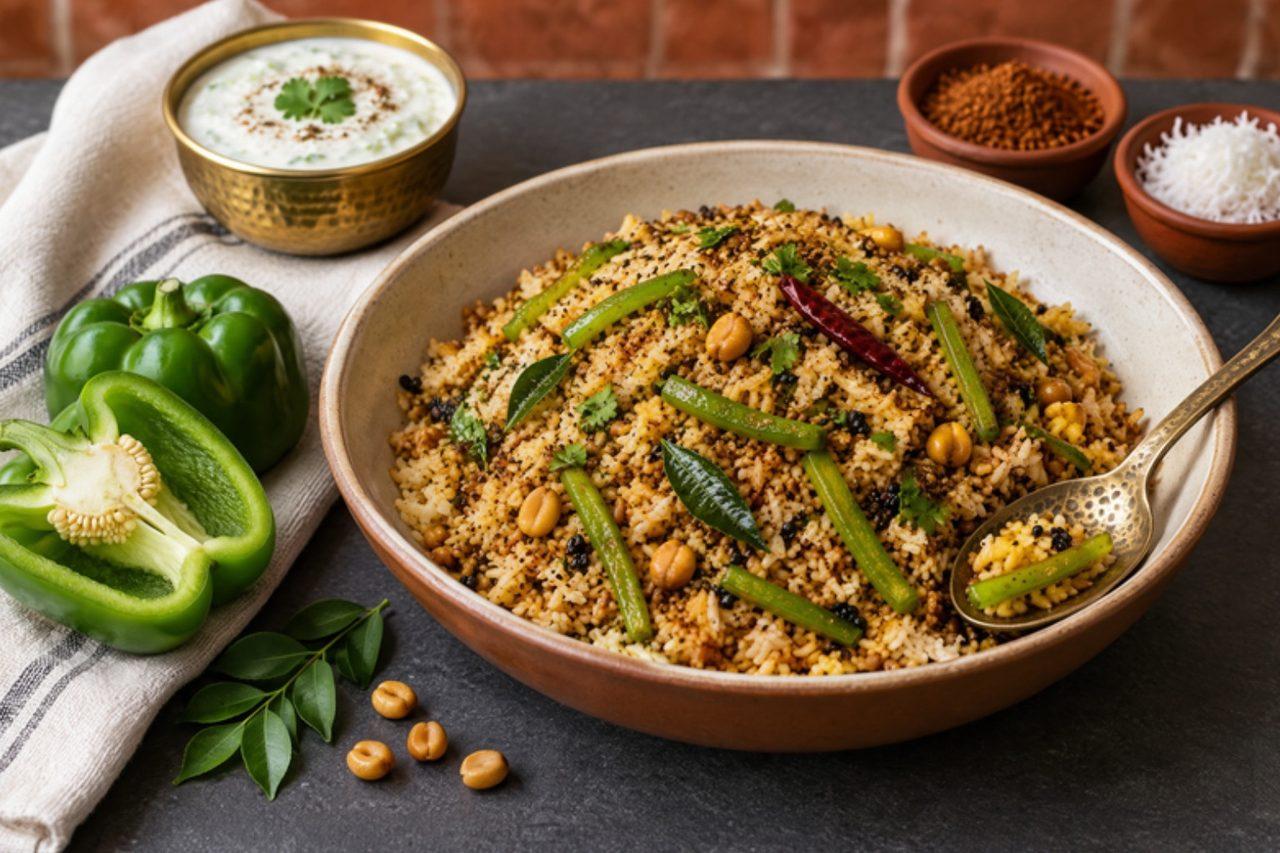
Capsicum rice (capsicum bath)

Every Bengaluru darshini has its own capsicum bath, and at home it is a favourite for office lunch boxes because the peppers stay crunchy until noon. Green peppers are sautéed just until glossy, then tossed with rice and a freshly roasted powder of coriander seeds, chana dal, dry coconut and red chillies. The mistake is cooking the peppers until soft; they release water and the rice turns soggy, so keep them bright and crisp. Chef's tip: add the powder to the hot oil off the heat for a few seconds before the rice goes in; it blooms the spices without burning the coconut.

by KrazyBadal 0 views

Morabba-ye albalooSour cherry preserve

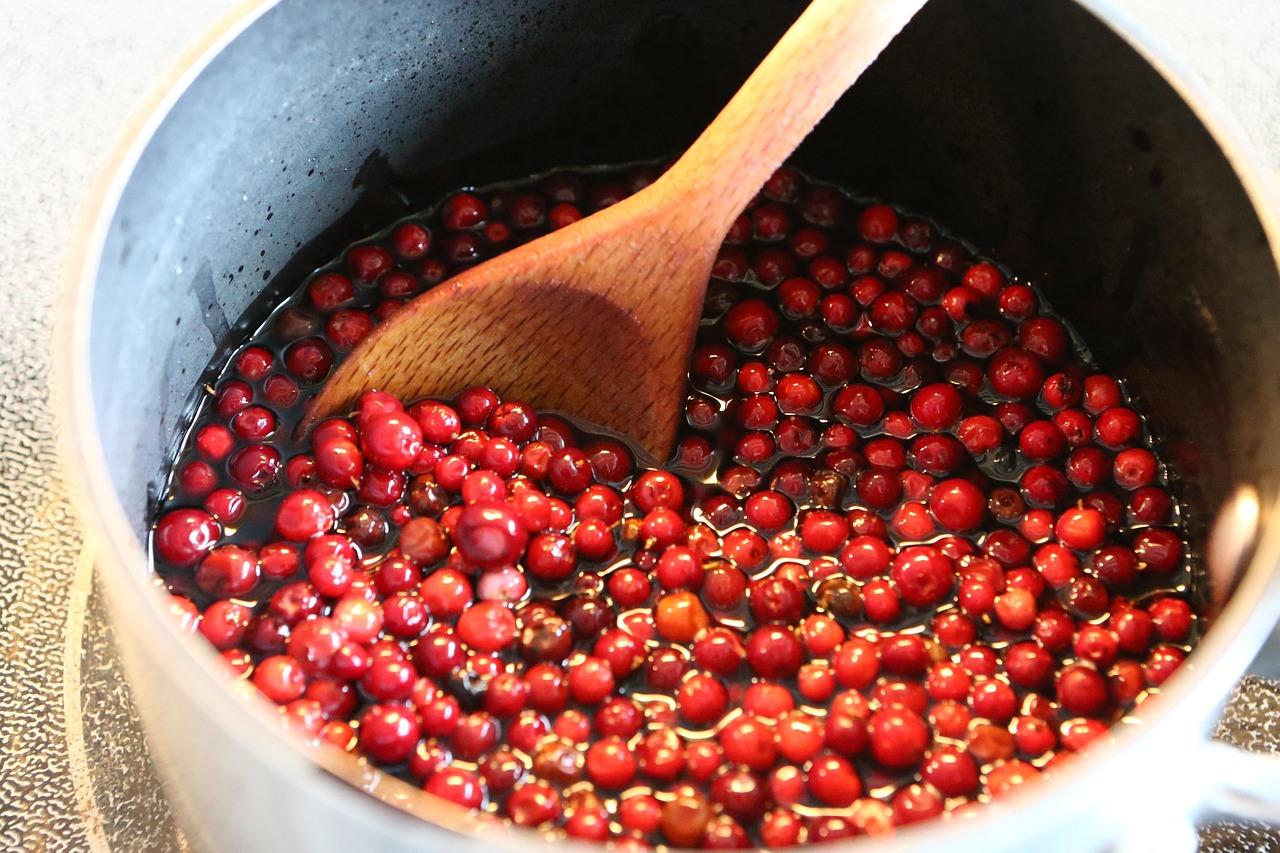
Sour cherry season in Iran is short, a few weeks in late June and July, and in towns from Mashhad to Tabriz it is the moment when every kitchen has a pot of morabba-ye albaloo on the stove. The jam is kept for the year's breakfasts: spooned onto warm barbari or lavash with butter and white cheese, stirred into tea for children, or kept aside for albaloo polo's syrup. Persian morabba is not a set jam: the cherries stay whole and plump in a loose, glossy, deep-red syrup that is very sour-sweet. They are left overnight in sugar so the juice comes out before cooking, which keeps the fruit intact. Common mistake: boiling hard for a long time to thicken it; the cherries shrivel and the syrup turns brown and toffee-like. Simmer gently and stop early, because it thickens as it cools. It is ready when a drop of syrup on a cold plate wrinkles slightly when pushed and the cherries look translucent. Chef's tip: frozen pitted morello cherries make an excellent morabba out of season; thaw them in the sugar and use their juice.

by KrazyBadal 0 views

Homemade kashkFermented yogurt whey

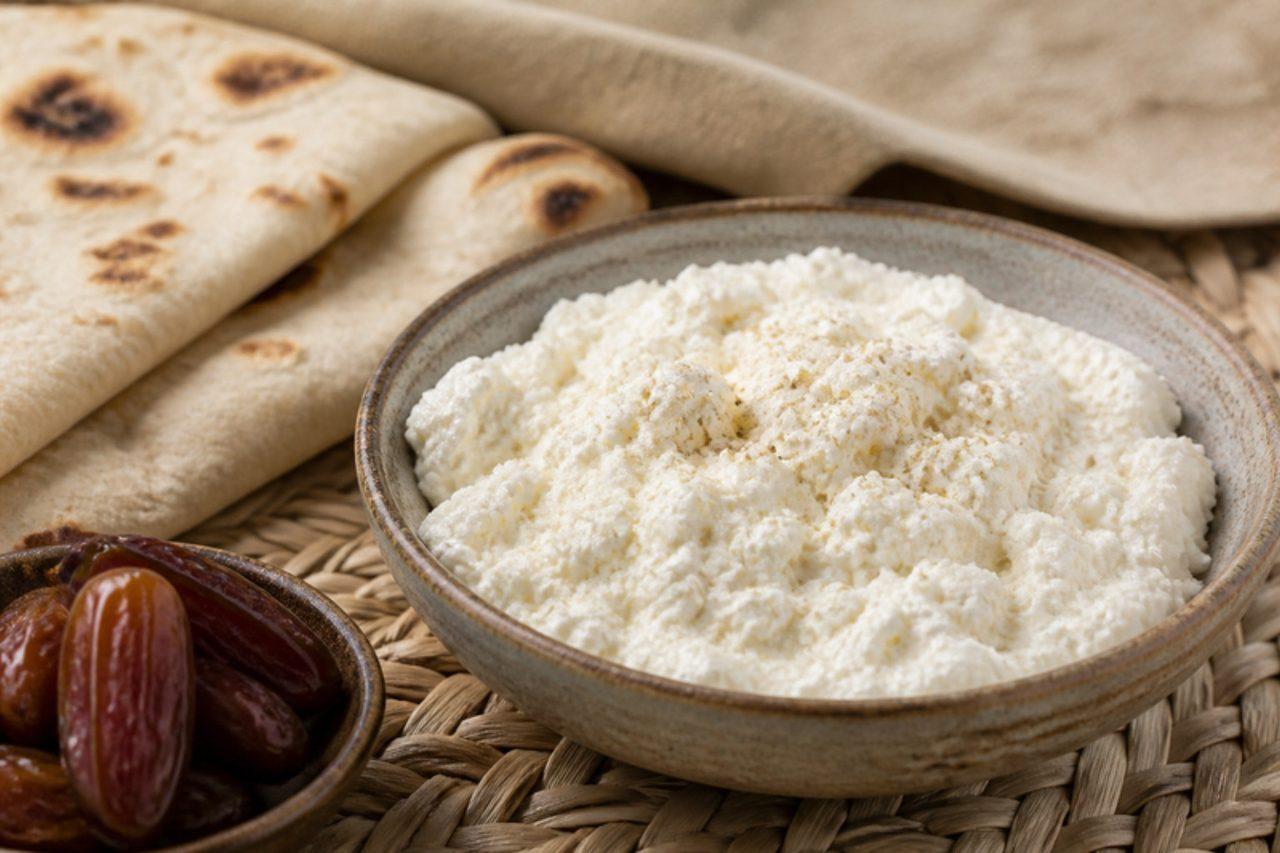
Kashk began with Iran's nomadic herders, who churned their yoghurt for butter in goatskin bags, then cooked and dried the sour leftover into hard balls that lasted through winter. In Kerman, Fars and Khorasan it is still made that way, but in Tehran most people buy it liquid in jars. Making your own is worth one slow afternoon. It is the salty, sour, almost cheesy finish swirled over ash reshteh at Nowruz, folded into kashk-e bademjan with fried mint and walnuts, and stirred into kaleh joosh on cold nights. Liquid kashk is thick and creamy like soured cream but sharper and saltier; dried kashk is chalky-hard and grates like aged cheese. Common mistake: heating the churned yoghurt fast; it scorches and the curd turns rubbery. Keep the heat low and stir. The curd is ready when it separates into soft white clumps in a clear, yellow-green whey. Kashk is always cooked again before eating — even the jarred kind — so heat it when you use it. Chef's tip: a goat or sheep's milk yoghurt, or half and half with cow's, gives the most authentic, funky flavour.

by KrazyBadal 0 views

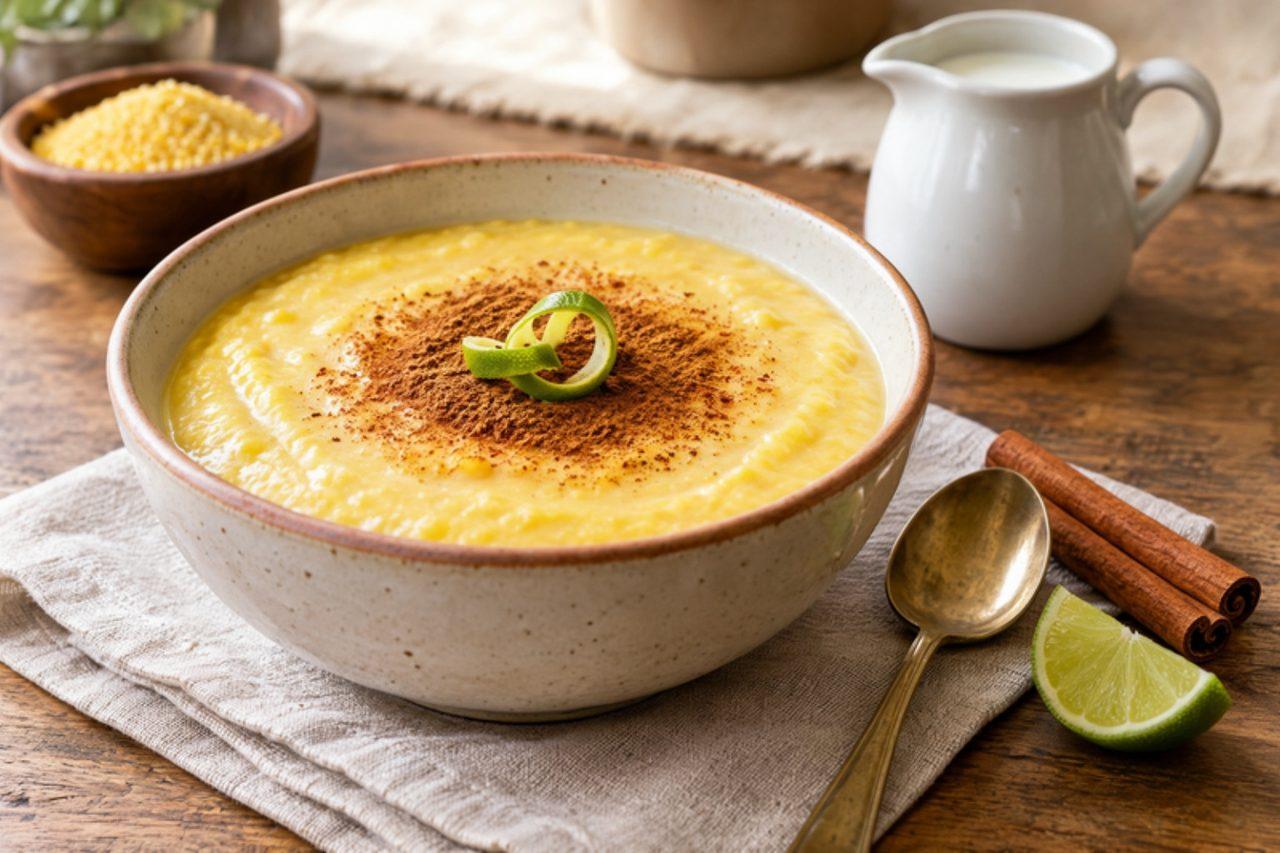
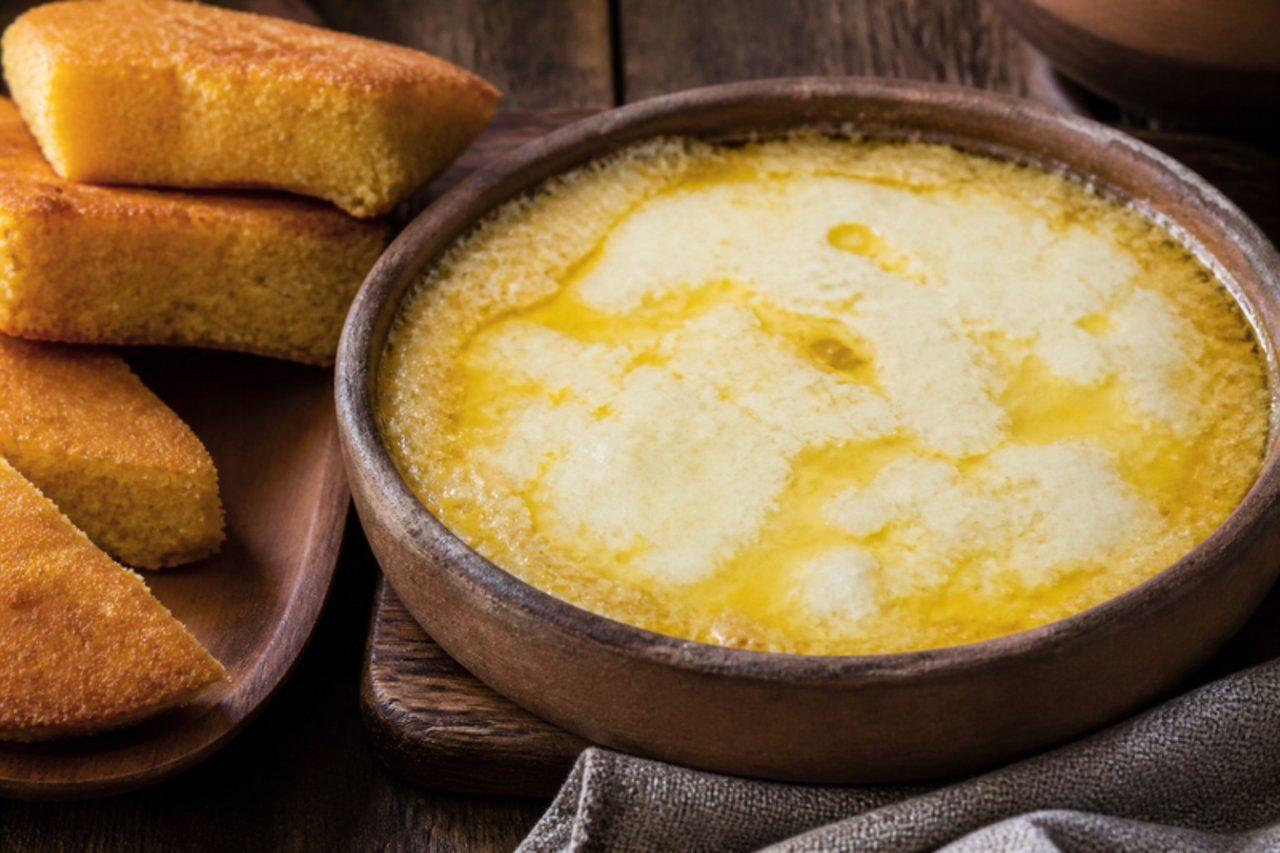
Harina de maíz dulceSweet cornmeal porridge

In Cuban homes "harina" means cornmeal, and harina dulce is the soft, sweet porridge that grandmothers in Havana and Santiago cooked for children before school, scented with cinnamon and a curl of lime peel the way rice pudding is. It should be smooth and spoonable, like a loose polenta. The usual mistake is pouring the cornmeal into boiling milk, which seizes into lumps at once: start it in cold liquid and whisk as it heats. Chef's tip: take the lime peel out once the porridge thickens, or its oils turn bitter as it sits.

by KrazyBadal 0 views

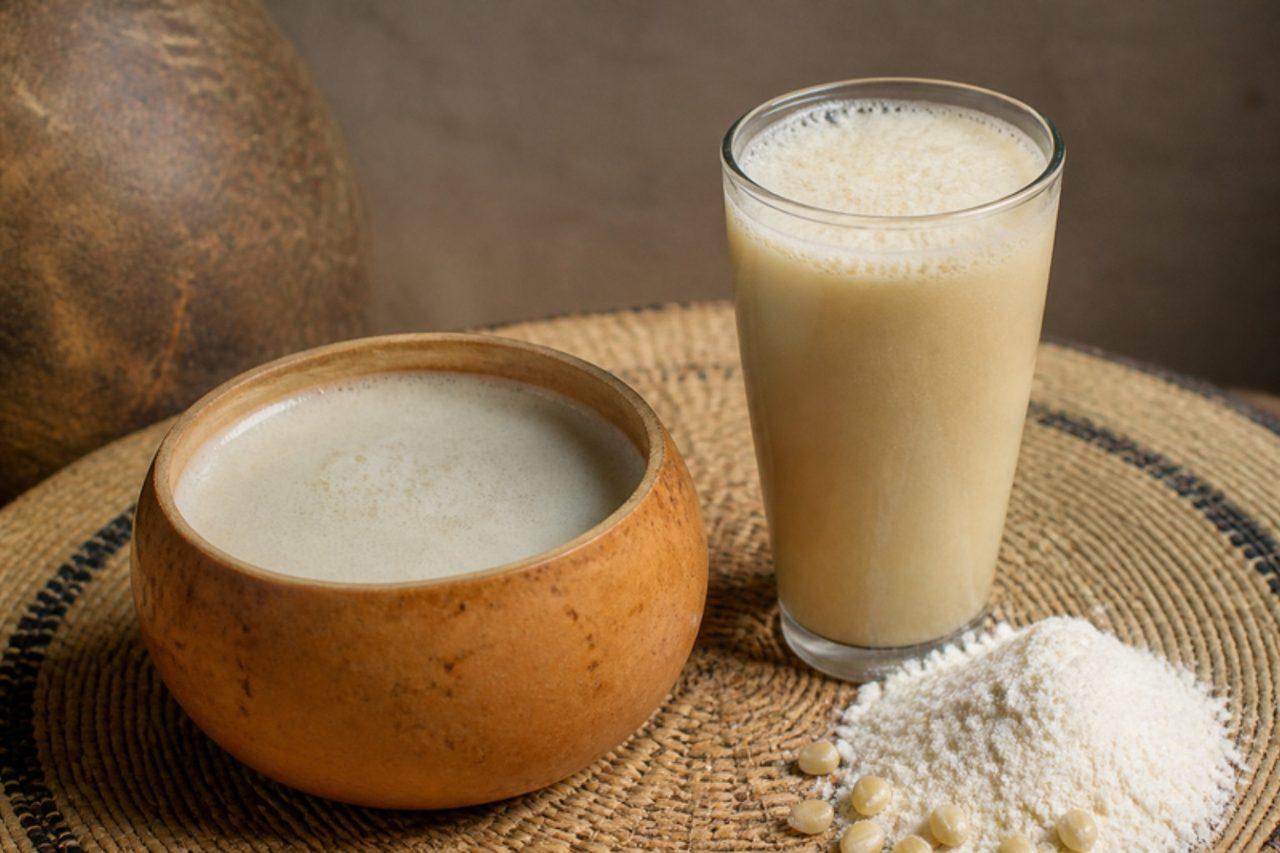
MunkoyoFermented maize drink

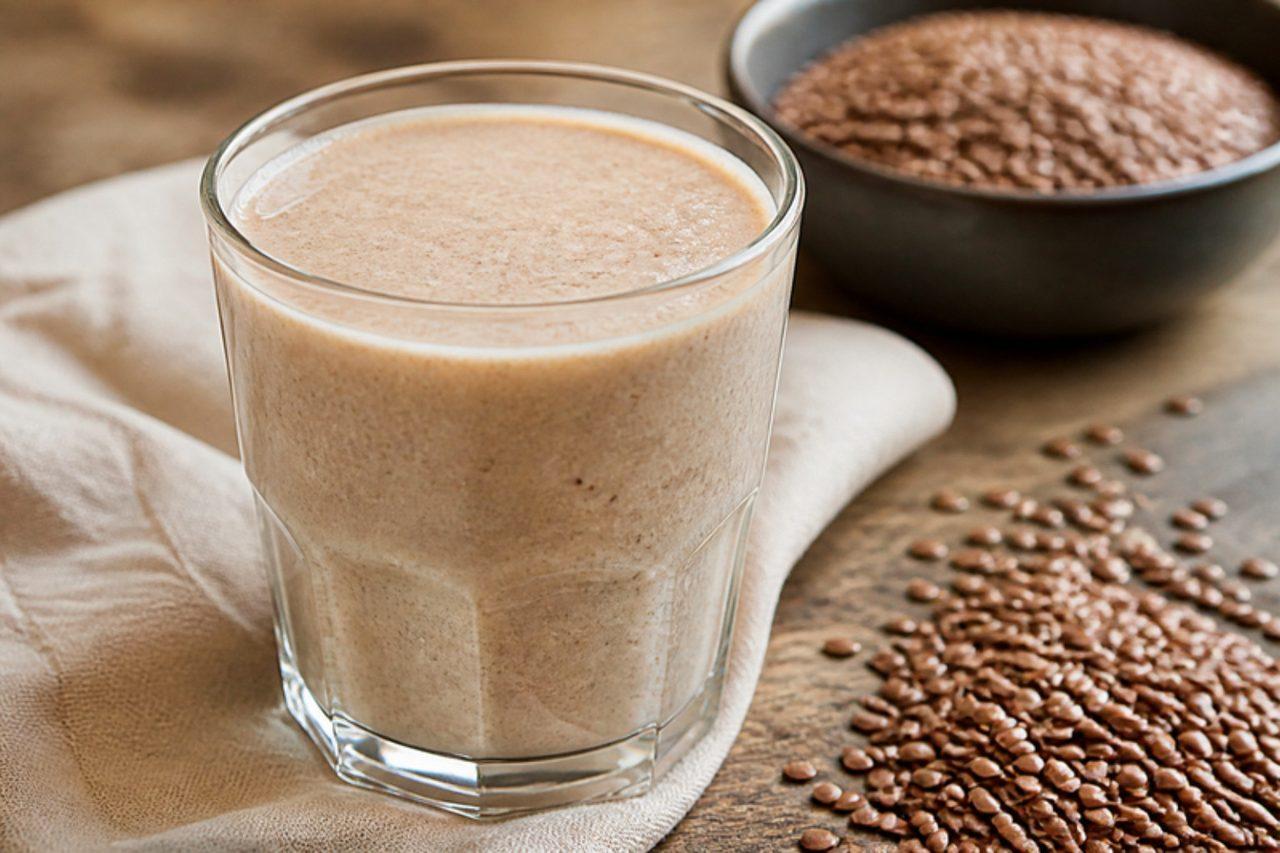
Munkoyo is the drink of Zambian village afternoons and long bus rides, sold in reused bottles at roadside stands from Kabwe to Mansa: a thin maize porridge sweetened and loosened by the pounded roots of the munkoyo shrub, then left to ferment lightly for about a day. It tastes gently sweet and sour, a little like a thin, cool maize yoghurt drink, and is drunk by everyone, children included, because it is not meant to be alcoholic. Munkoyo root is hard to find outside Zambia, so this recipe uses ground sorghum malt (sold as sorghum malt flour), which carries the same kind of starch-thinning enzymes; barley diastatic malt powder also works but makes it no longer gluten free. The big mistake is adding the root or malt to boiling-hot porridge, which kills the enzymes so it never thins. Chef's tip: drink it within two days and keep it chilled after fermenting, because if it ferments for longer it keeps souring and can start to develop traces of alcohol.

by KrazyBadal 0 views

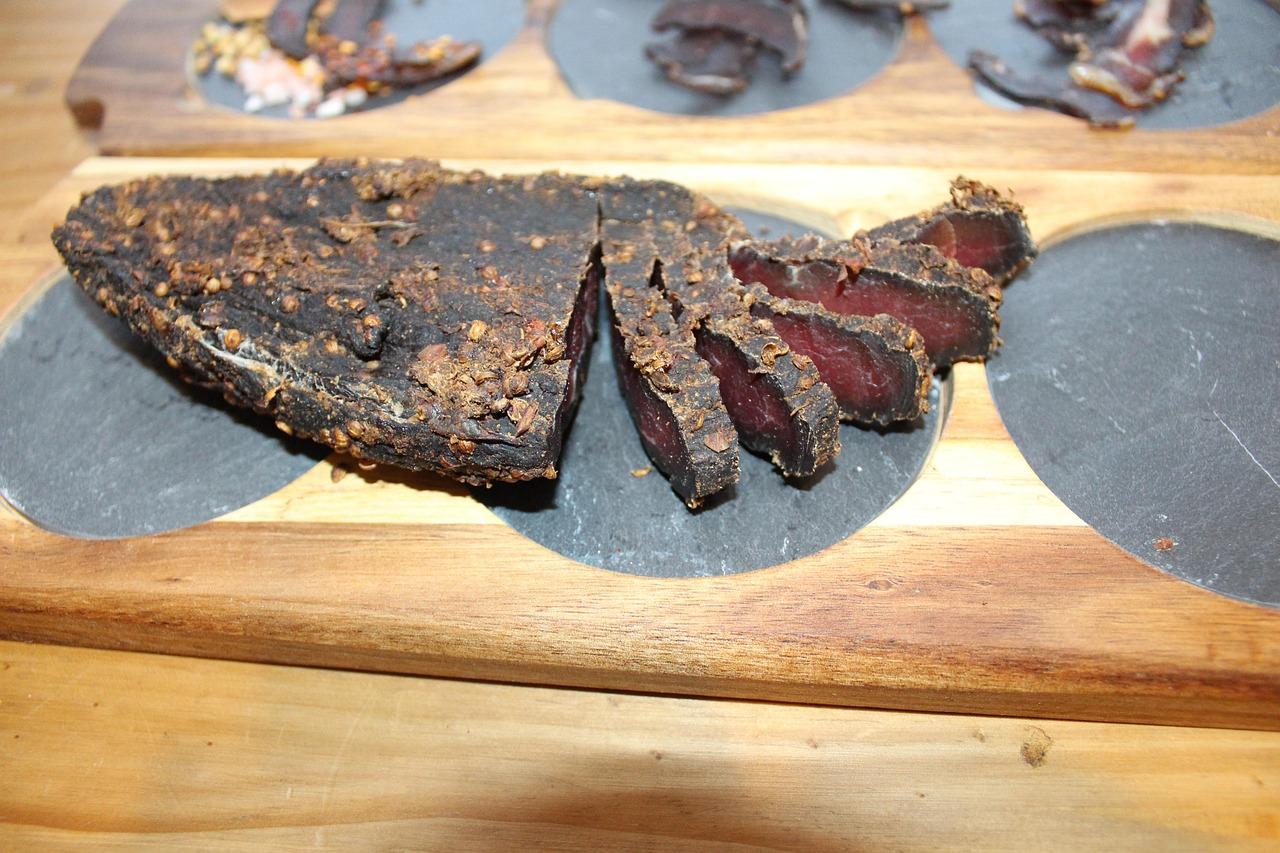
Biltong

Rugby on the television, a paper bag of biltong passed round the room: few snacks say South Africa so plainly. Thick strips of beef are cured with vinegar, toasted coriander, salt and pepper, then dried until the outside is dark and firm and the inside still a little moist, ready to be sliced thin with a sharp knife. Farmers once hung it in the cold winter wind; this home method first heats the cured strips to 71 °C in a hot oven to make them safe, then dries them low and slow in the oven or a biltong box. Even so, home-dried meat is not for pregnant women, young children or anyone with a weakened immune system. The classic mistake is cutting the strips across the grain, so they crumble when you slice them. Chef's tip: toast the coriander seeds until they smell like orange peel before crushing them; that warm, citrusy note is what makes biltong taste right.

by KrazyBadal 0 views

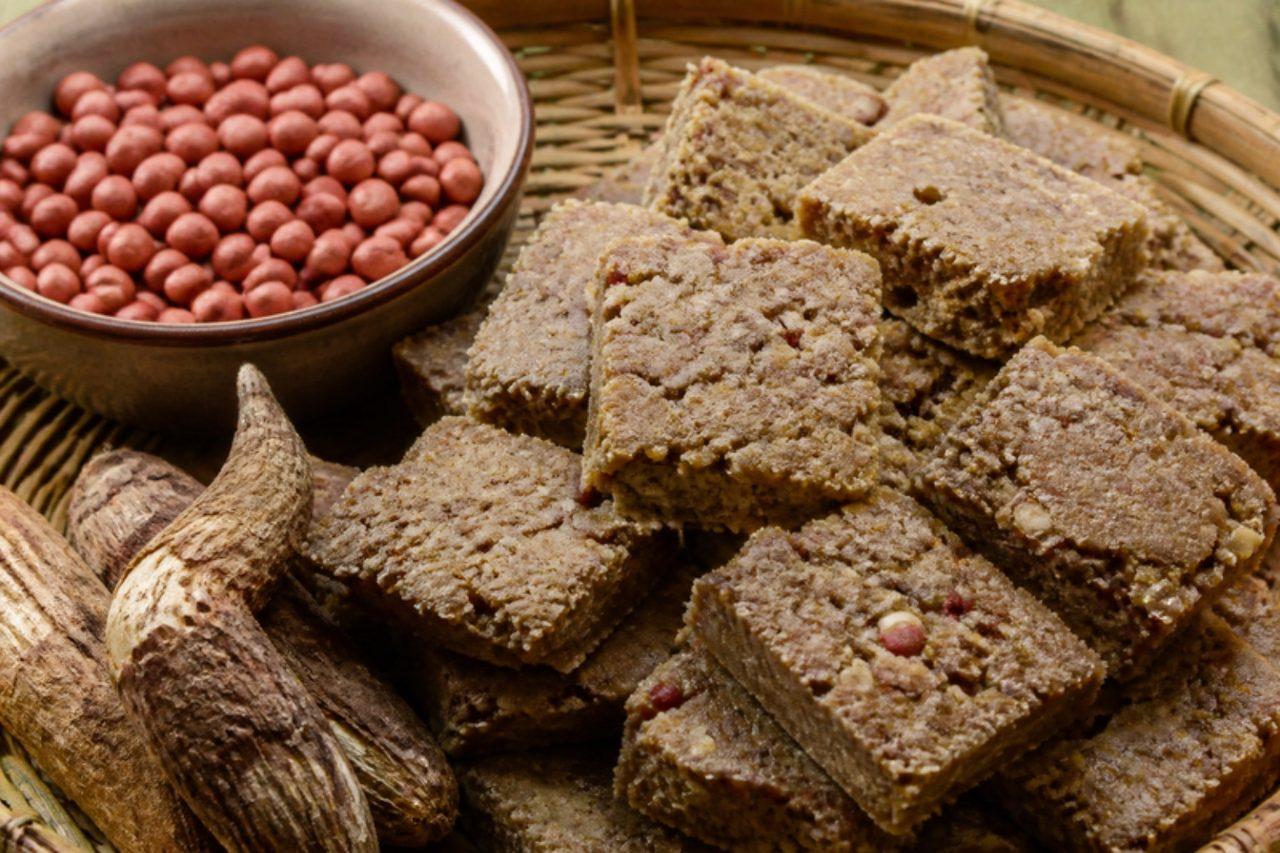
ChikandaOrchid tuber and peanut loaf

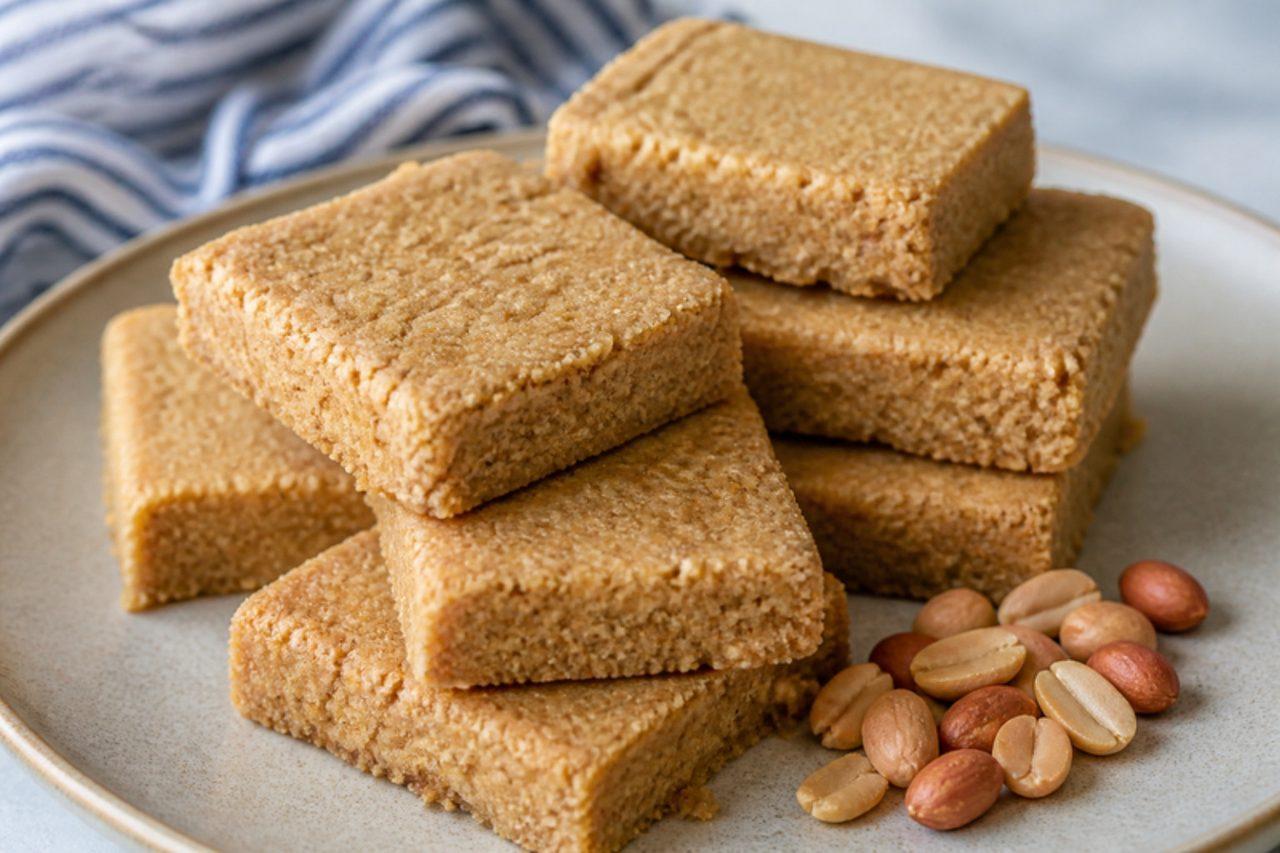
In Kasama and across the Bemba country of northern Zambia, chikanda is cooked for weddings, funerals and family gatherings, then sliced and sold on Lusaka street corners as 'African polony' because it looks like a pale sausage. It is made from the dried, pounded tubers of ground orchids mixed with groundnut flour, chilli and a little bicarbonate of soda, stirred over the fire until thick and then baked until firm. The texture is dense and springy, a little like a savoury jelly, with a nutty, earthy flavour and a gentle heat. Use bought dried chikanda powder from Zambian or Southern African grocers; wild orchids are badly over-harvested, so buy only from a trusted supplier. Too little stirring is the usual mistake, and it leaves raw lumps of powder through the loaf. Chef's tip: let the slices cool completely before frying or eating, as the loaf firms up a lot as it sets.

by KrazyBadal 0 views

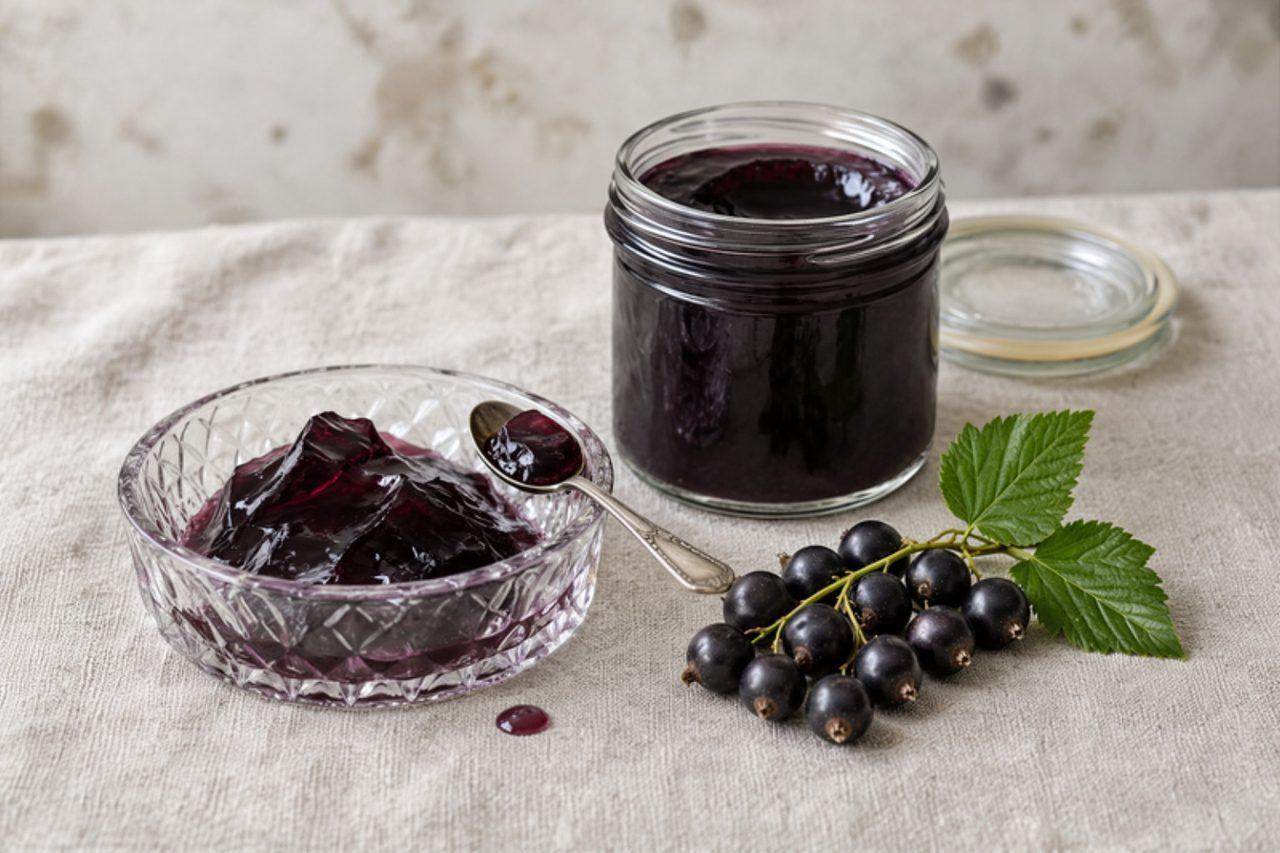
SvartvinbärsgeléBlackcurrant jelly

Almost every Swedish garden has a row of blackcurrant bushes, and in late July and early August the berries are stripped into buckets for saft and for this jelly. Svartvinbärsgelé sets glossy, clear and nearly black in the jar, with a sharp, musky, almost wine-like flavour that can stand up to strong meat: it goes beside roast elk, venison or a reindeer stew in autumn, onto the Christmas table with the ham, and onto toast with a slice of aged cheese at breakfast. Blackcurrants are so rich in pectin and acid that nothing else is needed but sugar. The classic mistake is squeezing the jelly bag to hurry the juice out; that pushes pulp through and the jelly turns cloudy, so let it drip in its own time. It has reached setting point when a drop on an ice-cold saucer wrinkles under your fingertip, or a thermometer reads 104–105 °C. Chef's tip: there is no need to pick off the stalks and dry flower ends, because everything is strained away; just rinse the bunches and drop them in.

by KrazyBadal 0 views

Batido de trigoPuffed wheat shake

Havana cafeterías and Miami ventanitas blend this for breakfast on the run: puffed wheat, cold milk, sugar and ice whizzed into a thick, frothy shake that tastes like a malted milk with toasted cereal. It is one of the most loved Cuban batidos, and quick to make at home. The common mistake is using sweetened, honey-coated cereal, which makes it cloying; plain puffed wheat lets the toasty grain flavour come through. Chef's tip: blend the puffed wheat with half the milk first until completely smooth, then add the ice, so you don't get soggy flecks of cereal.

by KrazyBadal 0 views

ChorreadasSweet corn pancakes

In the Costa Rican countryside, from the Central Valley to Guanacaste, chorreadas are made when the corn is fresh and milky: kernels are blended into a thick batter with a little sugar and butter and "poured" (chorrear) onto a hot griddle, then eaten with a dollop of natilla, Costa Rica's soured cream, and a cup of coffee. They are soft, sweet and taste purely of corn. The common mistake is a thin batter that spreads and tears; it should drop thickly from a spoon, so add masa harina if your corn is very juicy. Chef's tip: leave a few kernels only half-blended so the pancakes have little pops of whole corn.

by KrazyBadal 0 views

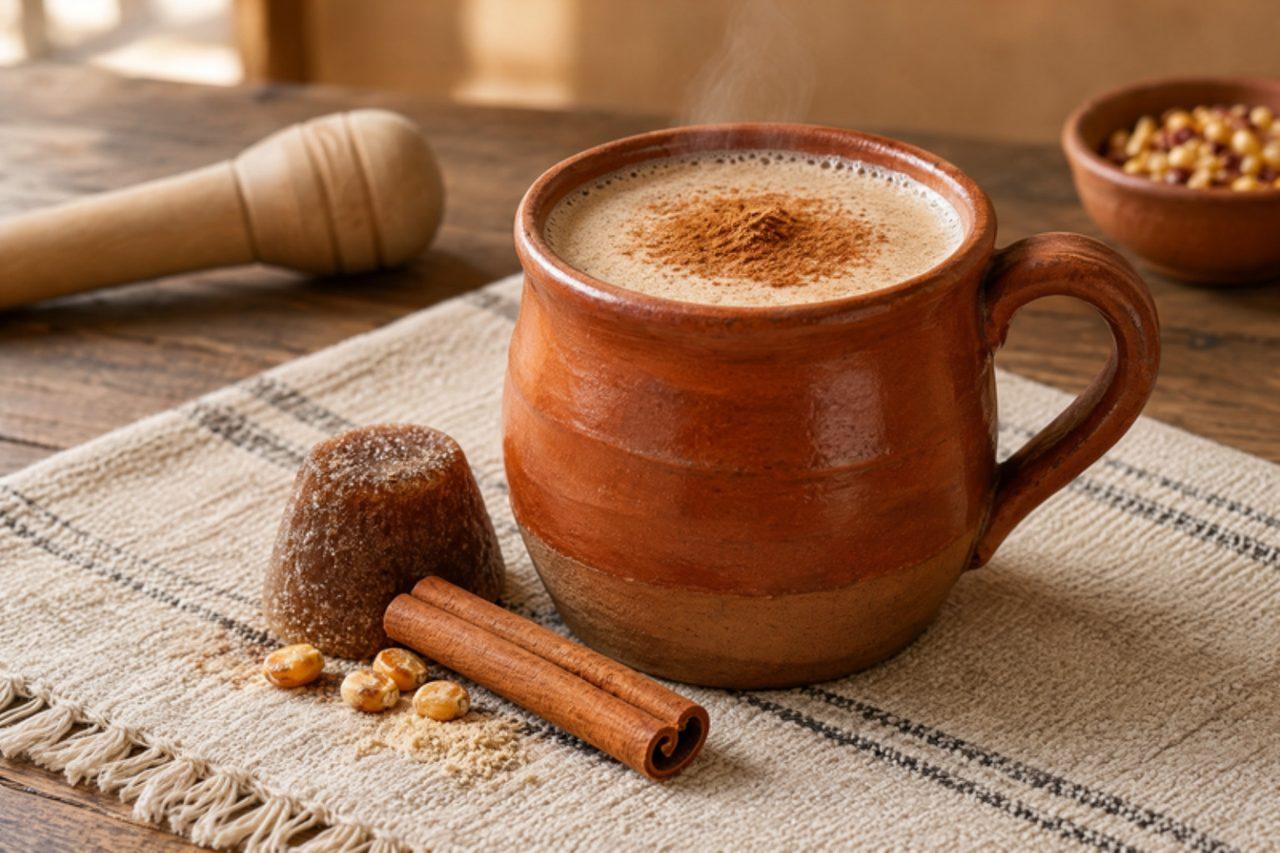
Jugo de macaWarm maca drink

Before dawn at markets in Huancayo, Cusco and Lima, juice ladies ladle hot jugo de maca from big pots for workers on their way in: maca root, a turnip relative grown above 4,000 metres in the Junín highlands, simmered with milk, cinnamon and cloves and sweetened with honey or sugar. It tastes malty and toasty, a bit like butterscotch. The common mistake is stirring the powder straight into hot milk, which leaves gritty lumps; whisk it into a little cold milk first. Maca is not usually advised in pregnancy, so ask your doctor first if you are pregnant. Chef's tip: use gelatinised (cooked) maca powder if you can find it; it dissolves smoothly and is gentler on the stomach.

by KrazyBadal 0 views

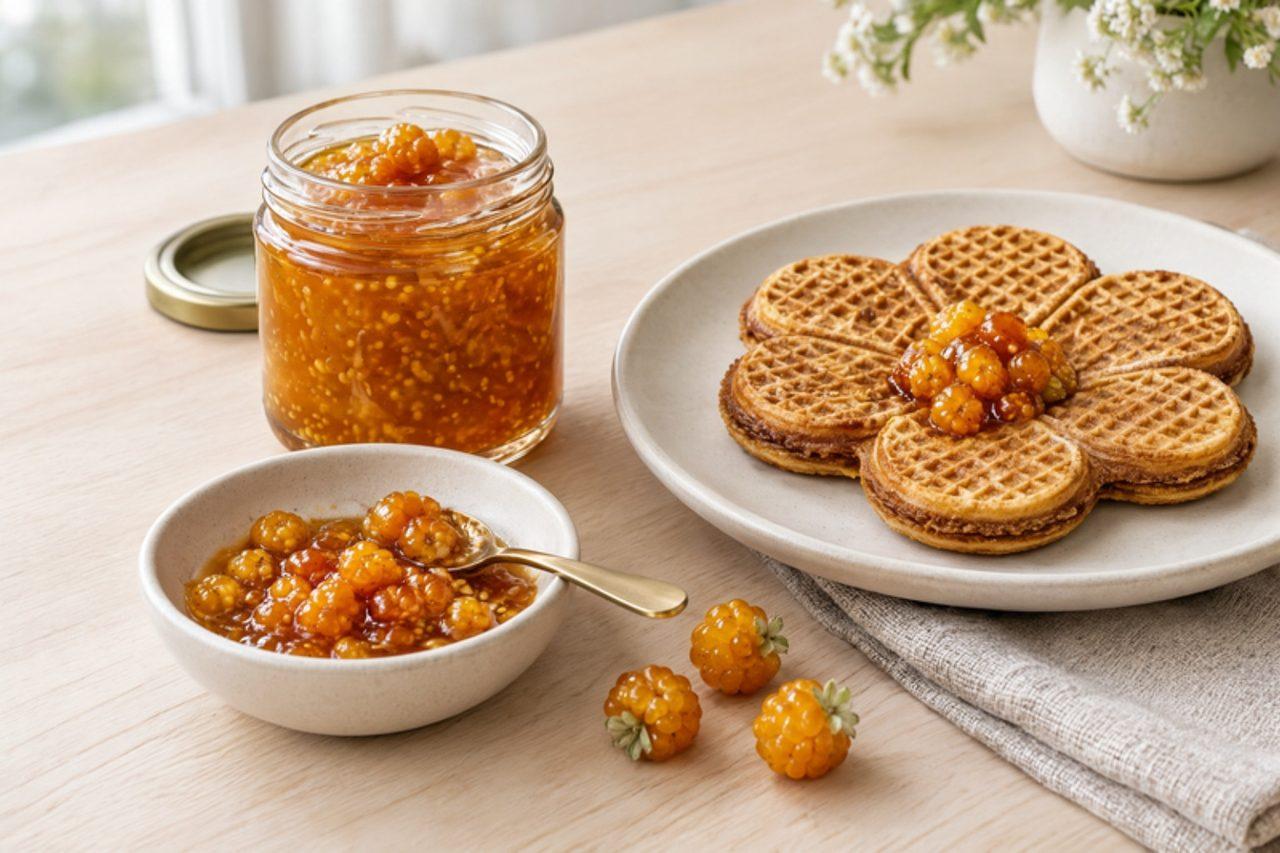
HjortronsyltCloudberry jam

Cloudberries grow one berry to a stem on the bogs of Norrbotten, Lapland and northern Finland, and families guard their picking spots for generations. They ripen for barely two weeks in late July and August, turning from hard red to soft, honey-gold, and almost all of the harvest goes into hjortronsylt. It is a treasure kept for special days: warmed over vanilla ice cream, spooned onto Swedish waffles on Våffeldagen, served with warm leipäjuusto, Finland's squeaky baked cheese, and set out with cream on the Christmas table. The jam is loose and bright, tasting of apricot, sour apple and honey, with crunchy seeds. Unlike most jams it is cooked very briefly, so the delicate flavour survives. Common mistake: boiling it like strawberry jam; long cooking turns cloudberries brown and dull, so stop after a few minutes. It is ready when the sugar has dissolved and the berries look glossy and just collapsed. Chef's tip: frozen cloudberries from Nordic shops work perfectly; for a smoother jam, press half the berries through a sieve to remove seeds, as many Finnish cooks do.

by KrazyBadal 0 views

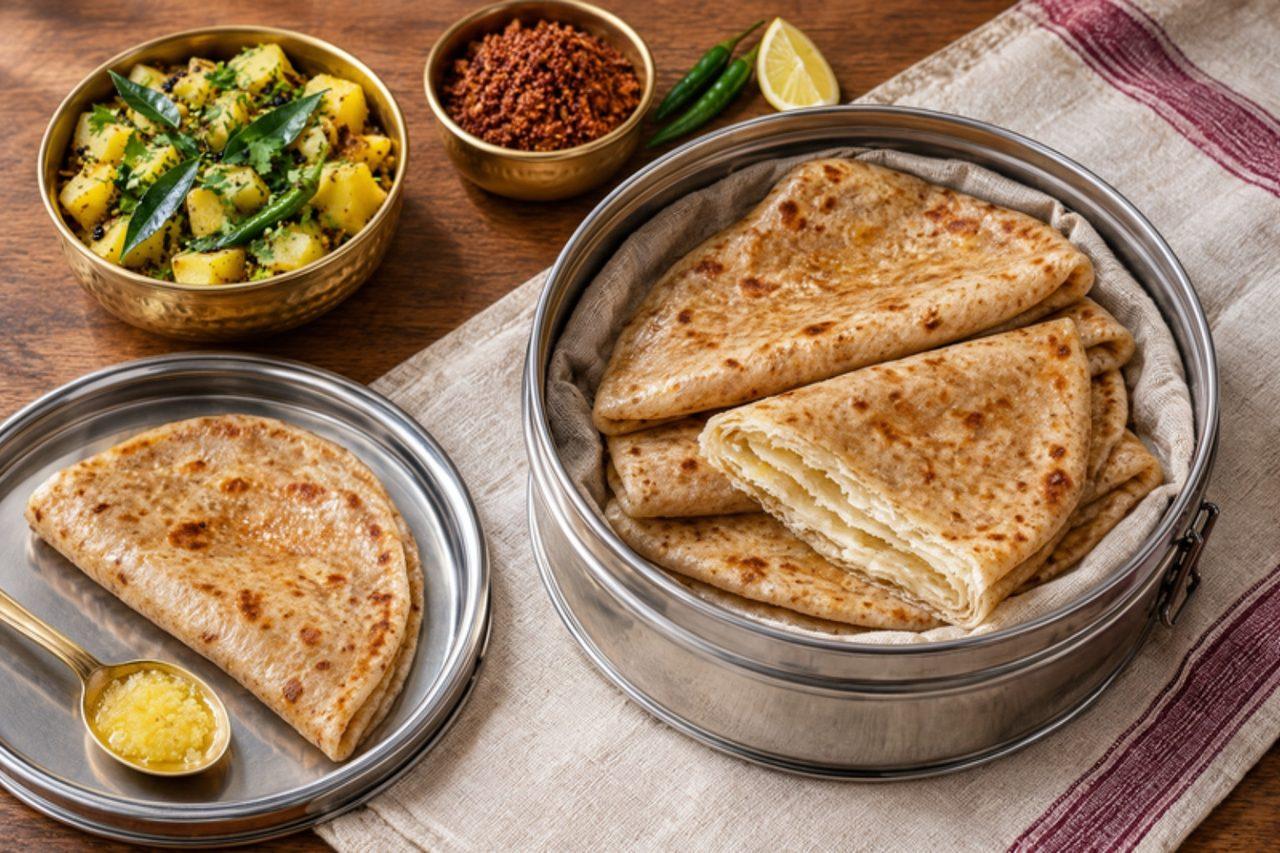
Ghadichi poliLayered chapati

In Maharashtrian homes the everyday poli is not a plain chapati but a ghadichi poli: the dough is oiled, folded into a triangle and rolled again, so it puffs into soft, separate layers that stay tender in a dabba until lunchtime. Mumbai's dabbawalas carry thousands of them every day alongside bhaji and dal. The common mistake is a stiff dough, which makes leathery polis; it should be softer than you think. Chef's tip: as soon as each poli comes off the tawa, clap it between your palms to break open the layers, then stack it in a cloth-lined box.

by KrazyBadal 0 views

HyldeblomstsaftElderflower cordial

In Denmark the elder hedges flower from late May to the end of June, and picking the creamy umbels on a dry, sunny morning is one of the first rituals of summer. The flowers steep for a few days with sliced lemon, sugar syrup and citric acid, then are strained into bottles of hyldeblomstsaft, a non-alcoholic cordial that is diluted with cold still or sparkling water and poured at garden lunches, children's birthday parties and around the bonfire on Sankt Hans aften, 23 June. It tastes floral and honeyed, a little like muscat grapes, with a fresh lemony edge that keeps it from cloying. The mistake most people make is picking flowers that are already browning, damp or growing by a busy road; they give a musty, catty smell. Choose freshly opened heads that smell sweet, and shake out the insects instead of washing them, which rinses away the pollen and the flavour. The cordial is ready when it tastes clearly of elderflower and the lemon slices have softened. Chef's tip: snip the florets off with scissors right under the flowers, as green stalk makes it bitter.

by KrazyBadal 0 views

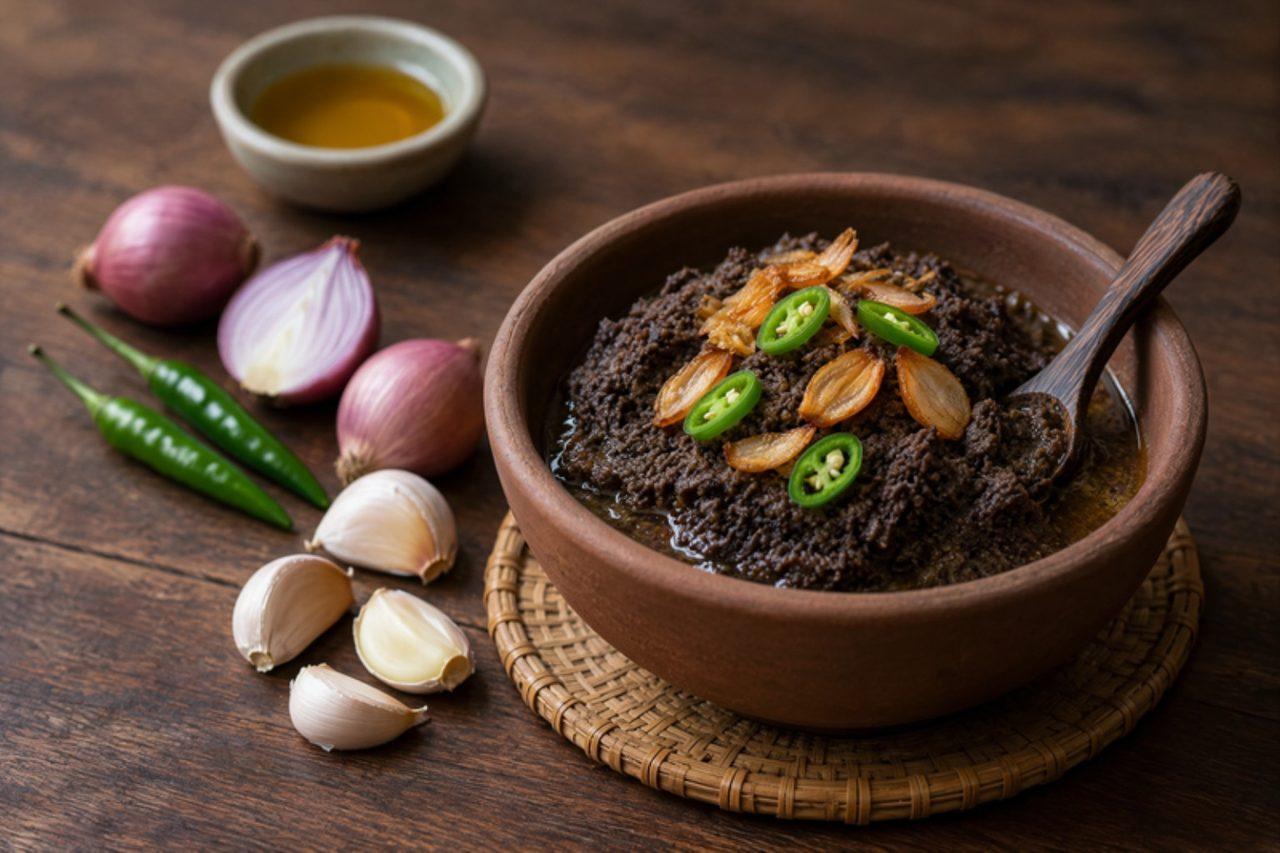
Pon ye gyiFermented bean sauce

Bagan, among its thousands of temples, is just as known in Myanmar for pon ye gyi, the thick, glossy black bean paste sold in clay pots at Nyaung-U market. Workshops there boil beans, ferment them under cloth, steep them in brine and boil the dark liquid down for hours. At home it is a seasoning rather than a dip: fried with garlic, onion and chilli as pon ye gyi kyaw, it becomes the savoury base for pork or chicken curries and for stir-fried greens, and is eaten with rice and raw vegetables through the hot dry season. The taste is deeply salty, savoury and slightly sweet-bitter, with a soft funk like miso and black bean sauce combined, and a texture like thick molasses. Common mistake: stopping the reduction too soon; a thin brown sauce will not keep and lacks depth, so cook it until it is black, glossy and falls from the spoon in ribbons. Bagan makers use different beans; this home method uses soybeans with a Bacillus-style ferment like thua nao. It is ready when a spoonful sets into a thick gloss on a cold plate. Chef's tip: stir more often near the end, when it can catch.

by KrazyBadal 0 views

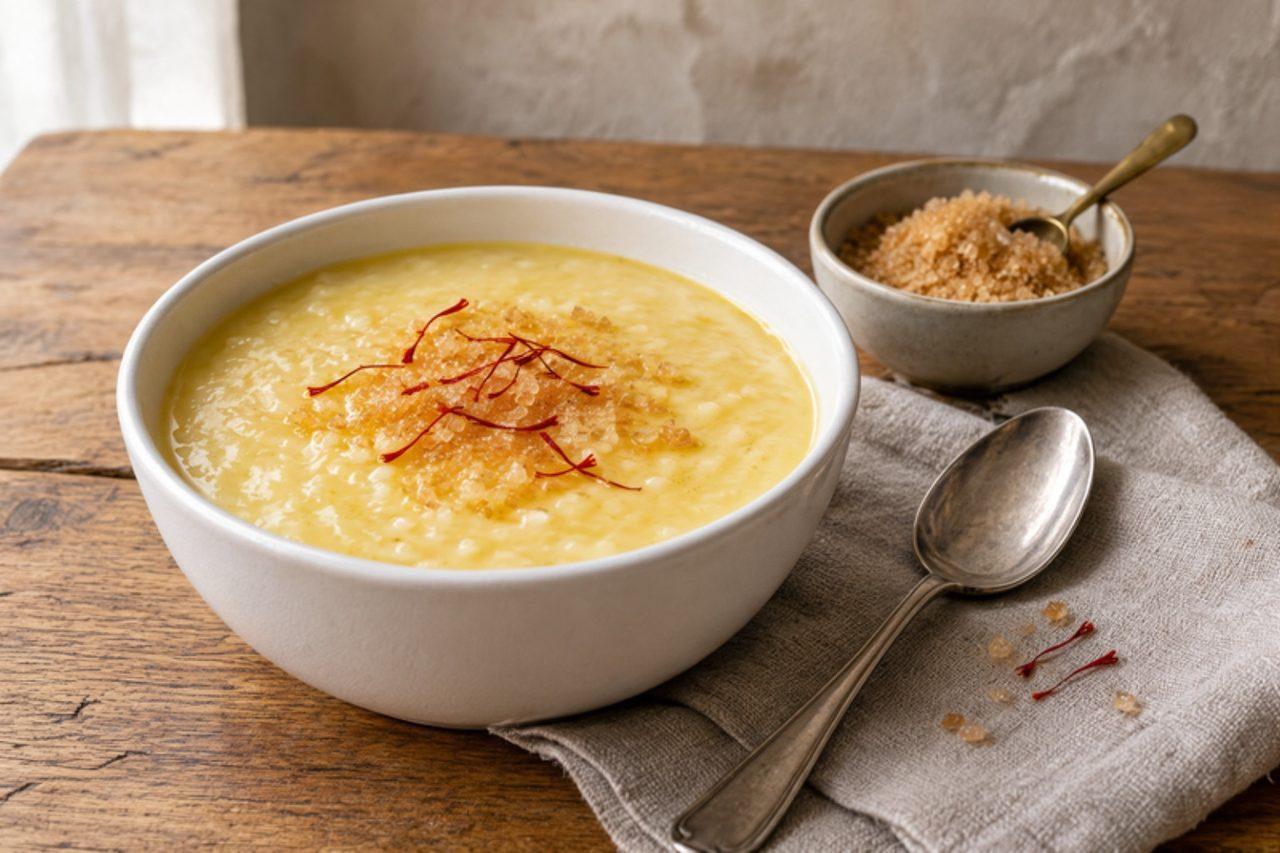
Saffron rijstpapSaffron rice porridge

Flemish rijstpap, rice slowly cooked in milk until thick and creamy, is a breakfast, a pudding and a childhood memory, and in East and West Flanders it is coloured golden with saffron and eaten with a spoonful of brown sugar. Old Flemish sayings even promise that in heaven you eat rijstpap with golden spoons. The mistake is cooking it too fast: the milk catches on the bottom and the rice stays chalky, so keep it at the barest simmer and stir often. Chef's tip: use round pudding rice, not long-grain, because its starch is what makes the porridge thick and silky without any cream.

by KrazyBadal 0 views

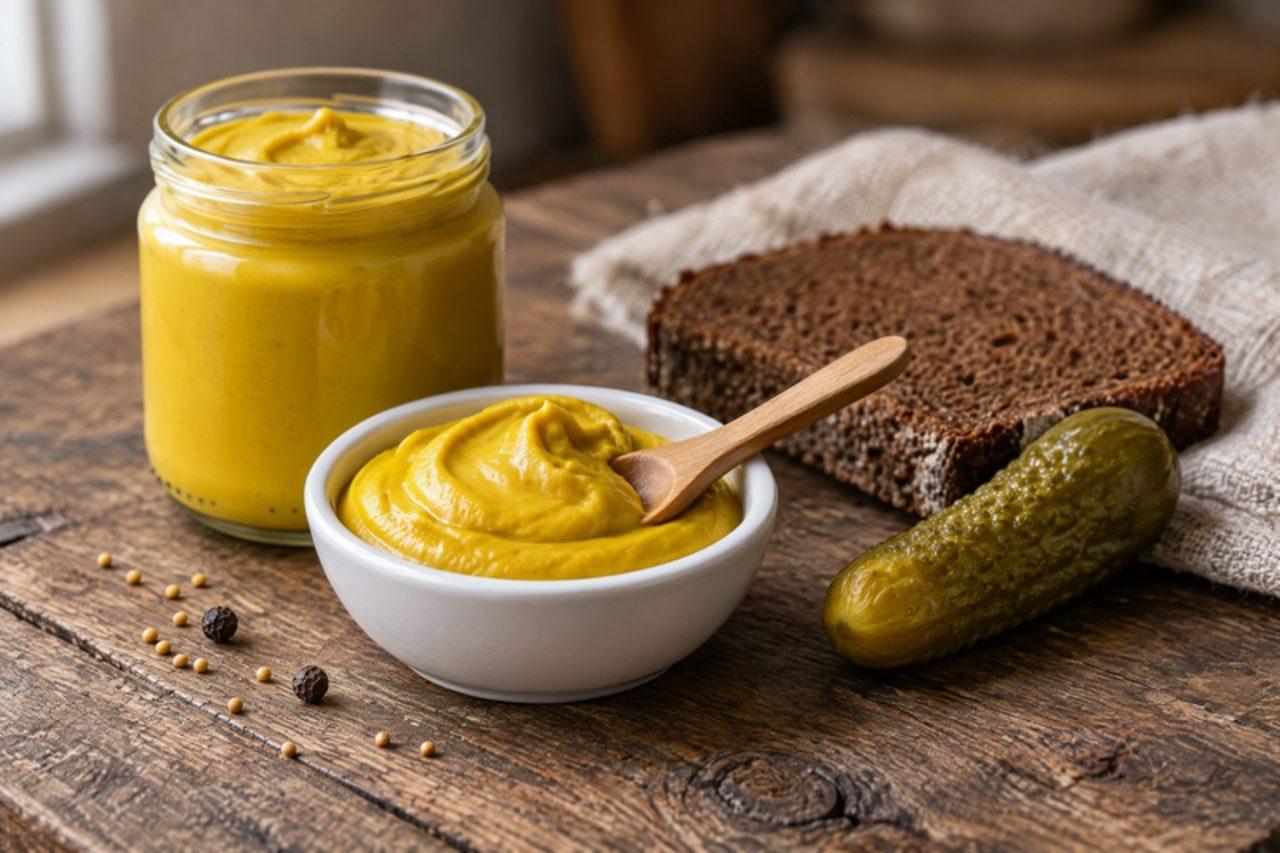
Domashnia hirchytsiaHomemade mustard

Ask a Ukrainian grandmother from Poltava or Kharkiv what to do with the brine left in the jar once the winter cucumbers are gone, and she will make hirchytsia. Dry mustard powder is mixed with that salty, garlicky, dill-scented brine, a little sugar, oil and vinegar, and after a night's rest it is fierce enough to make your eyes water. It is non-negotiable beside kholodets (meat jelly) at New Year, with salo and rye bread, with boiled sausages and with varenyky, and it is spread thin on bread for a quick snack. The texture is smooth and creamy, the flavour hot, salty and slightly sweet with a whiff of dill and garlic from the brine. Common mistake: using boiling brine; heat kills the enzyme that makes mustard hot, so the brine must be lukewarm or cool. It needs at least 12 hours in the jar for the bitterness to fade. It is ready when the colour has deepened to warm yellow and the first taste makes your nose tingle. Chef's tip: use brine from naturally fermented or vinegar cucumbers; if you have none, mix 150 ml water with 1 tsp salt and 1 tbsp vinegar.

by KrazyBadal 0 views

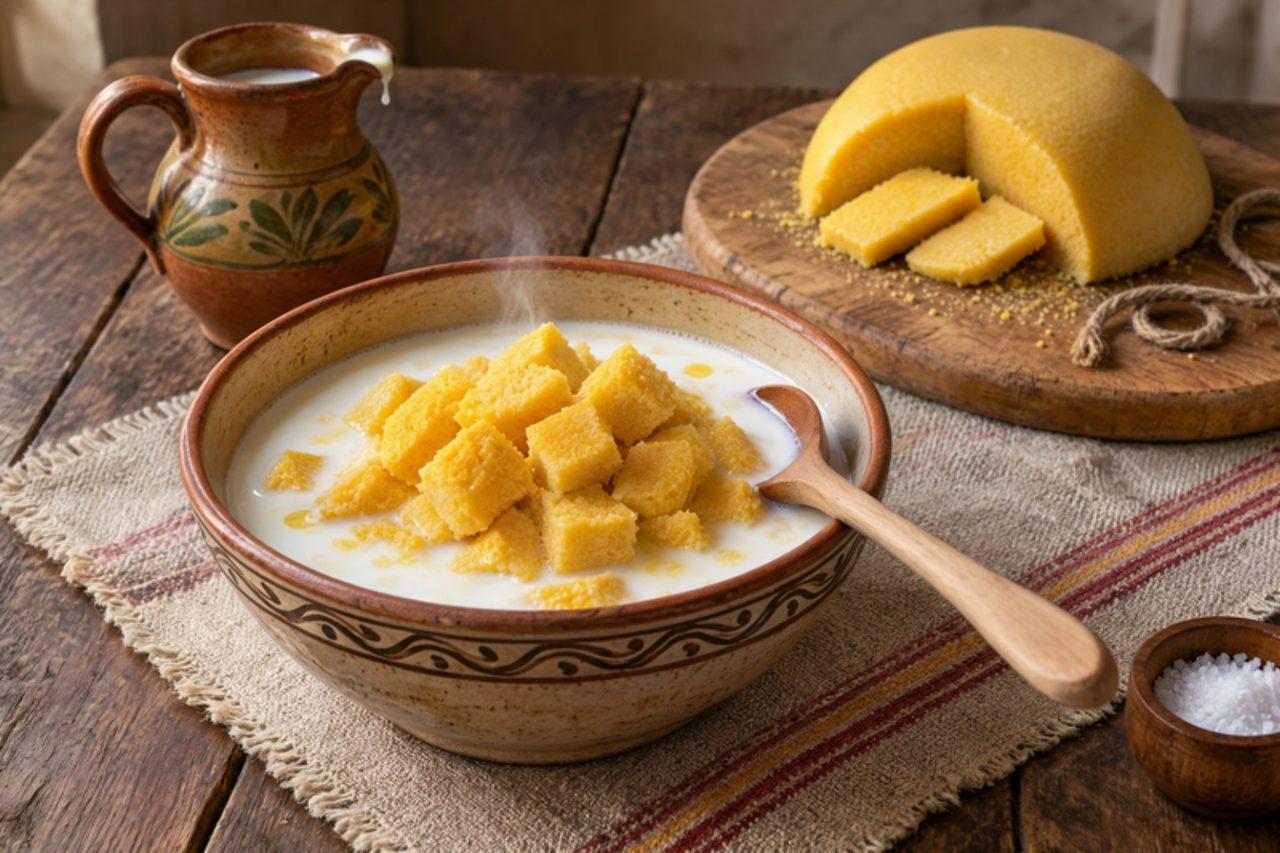
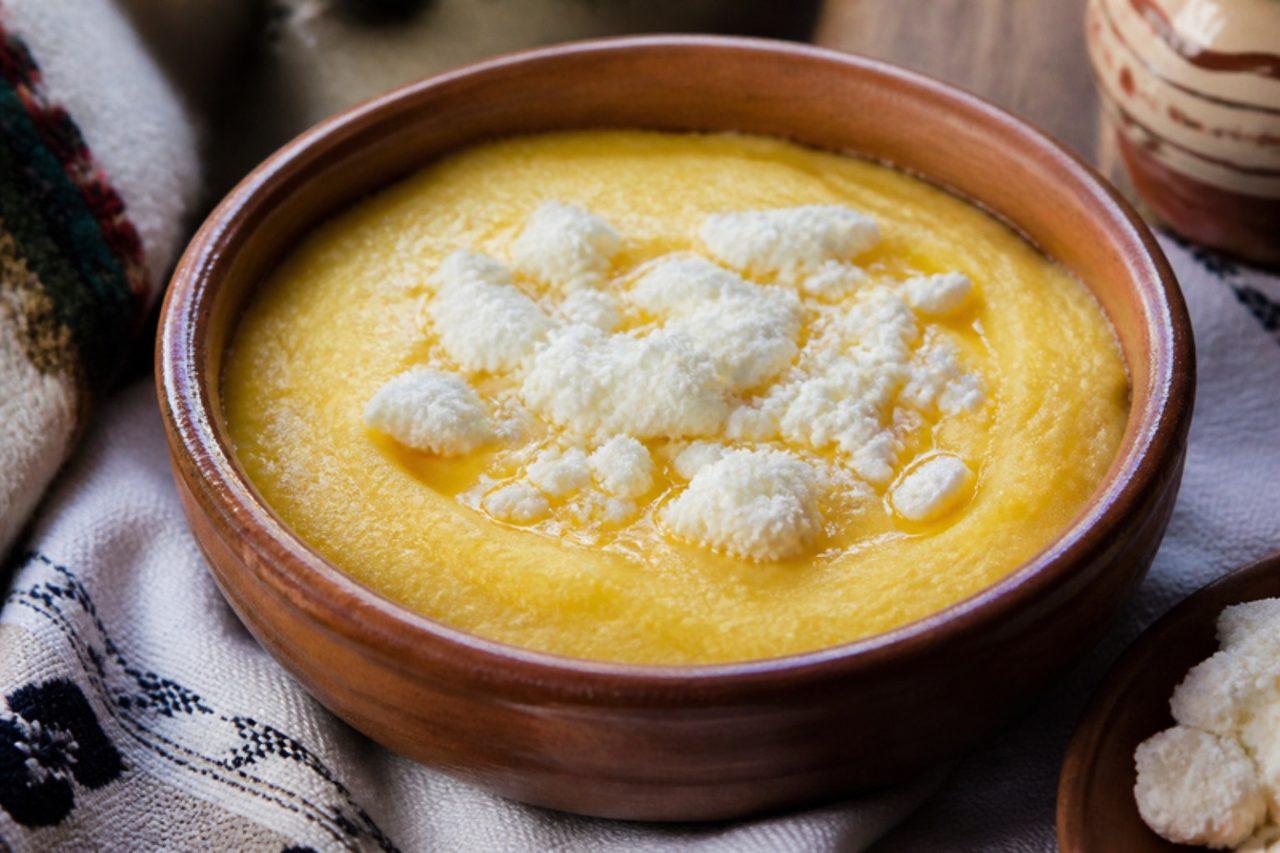
Mămăligă cu laptePolenta with milk

In the villages of Romanian Moldavia, mămăligă cu lapte is the simplest country breakfast or supper: a firm mămăligă (cornmeal mush) is turned out, cut into cubes and dropped into bowls of milk, warm in winter and cold from the cellar in summer. The soft, sweet corn soaks up the milk like a homely cereal. The mistake is making the mămăligă too soft; it has to be firm enough to cut with a thread or knife, or it melts away in the milk. Chef's tip: add the cornmeal in a thin rain while whisking, then switch to a wooden spoon once it thickens, and you will never get lumps.

by KrazyBadal 0 views

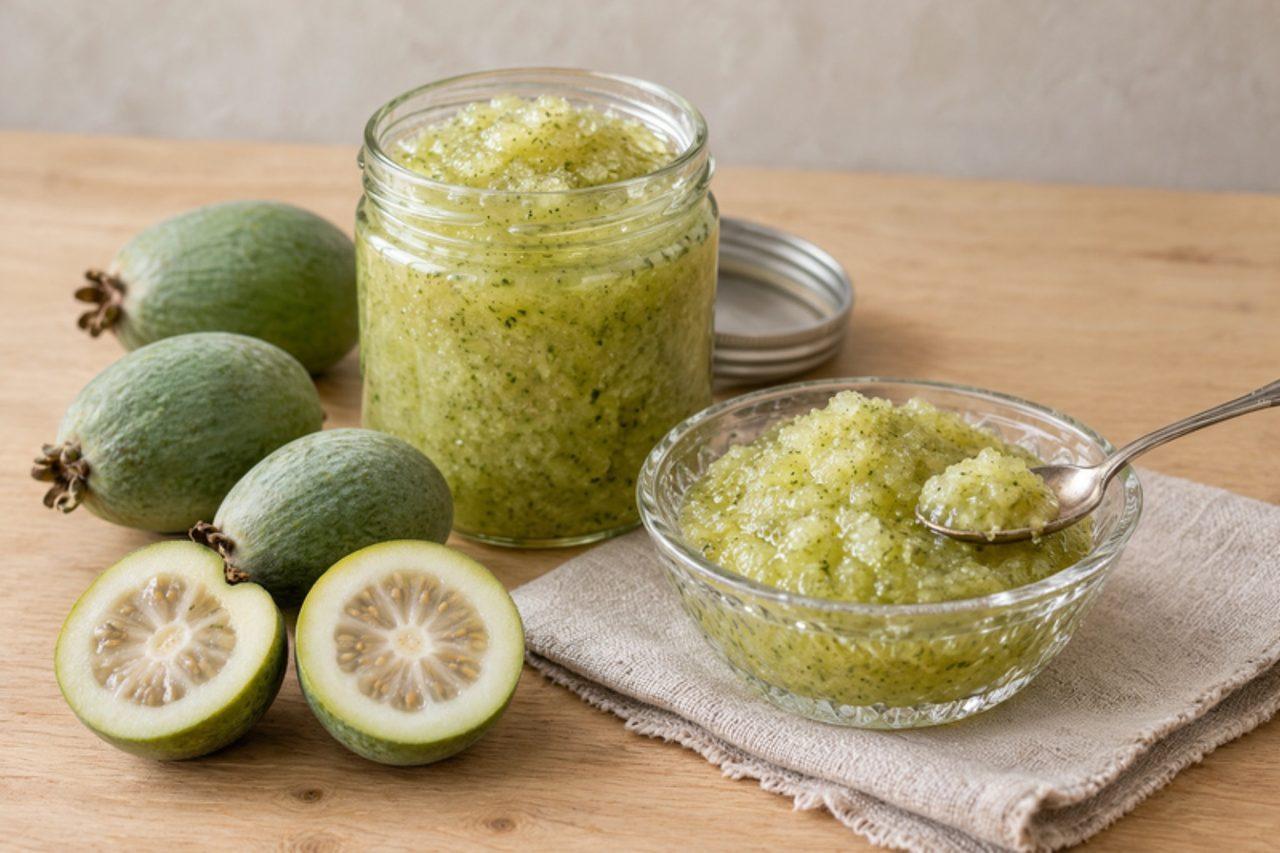
Feijoa jam

Feijoa bushes grow in almost every garden along Georgia's Black Sea coast, in Batumi, Kobuleti and the hills of Guria, and in late October and November the egg-shaped green fruit drop faster than anyone can eat them. The local answer is a raw jam: the whole fruit, skin and all, minced with sugar and kept cold, so it keeps the fresh, heady taste of pineapple, guava and mint. It is spooned into small glass dishes beside a cup of black tea, spread on bread for breakfast, stirred into yoghurt and eaten by the teaspoon through the winter cold season. The texture is a loose, pale-green pulp with a little grit from the seeds and skin; the flavour is sweet, tart and very aromatic. Common mistake: leaving the cut fruit to stand before mixing with sugar; it browns within minutes, so mince straight into the sugar and stir. The jam is ready when the sugar has fully dissolved and the colour is an even jade green. Because it is never cooked it must live in the fridge or freezer. Chef's tip: use fruit that gives slightly when pressed and smells strongly; hard feijoas taste of skin, overripe ones have brown jelly inside and turn the jam muddy.

by KrazyBadal 0 views

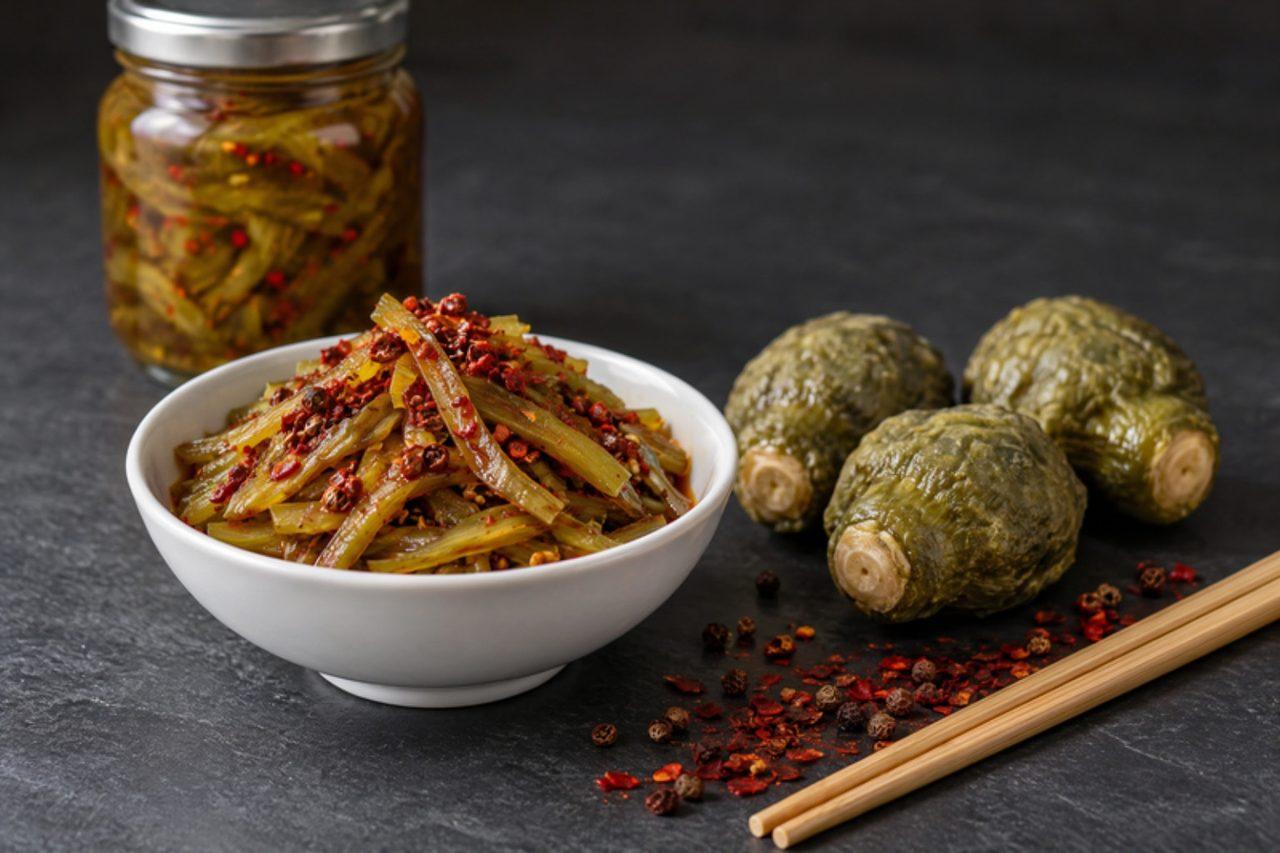
Zha caiPickled mustard stem

Every winter along the Yangtze at Fuling, below Chongqing, the knobbly stem tubers of a mustard plant are strung on bamboo racks to dry in the river wind, then salted, pressed and cured in great pottery jars. That is zha cai, literally pressed vegetable, and a little dish of its shreds sits beside a bowl of rice congee at breakfast across China, or gets tossed into pork noodle soup. The taste is salty, sour-savoury and gently numbing from Sichuan pepper, with a dense, squeaky crunch. Fresh zha cai tubers are rare abroad; kohlrabi has the same texture and works very well. Common mistake: not pressing out enough water between the two saltings, which leaves it limp and diluted. It is ready after about 2 weeks in the fridge, when the pieces have turned translucent at the edges and taste rounded rather than raw. Salt here is high, about 12% of the dried weight in total, so it keeps 3 months in the fridge with a clean dry spoon; discard if fuzzy mould, slime or a rotten smell appears. Chef's tip: soak slices for 10 minutes before cooking if you find them too salty; that is how Chongqing cooks do it.

by KrazyBadal 0 views

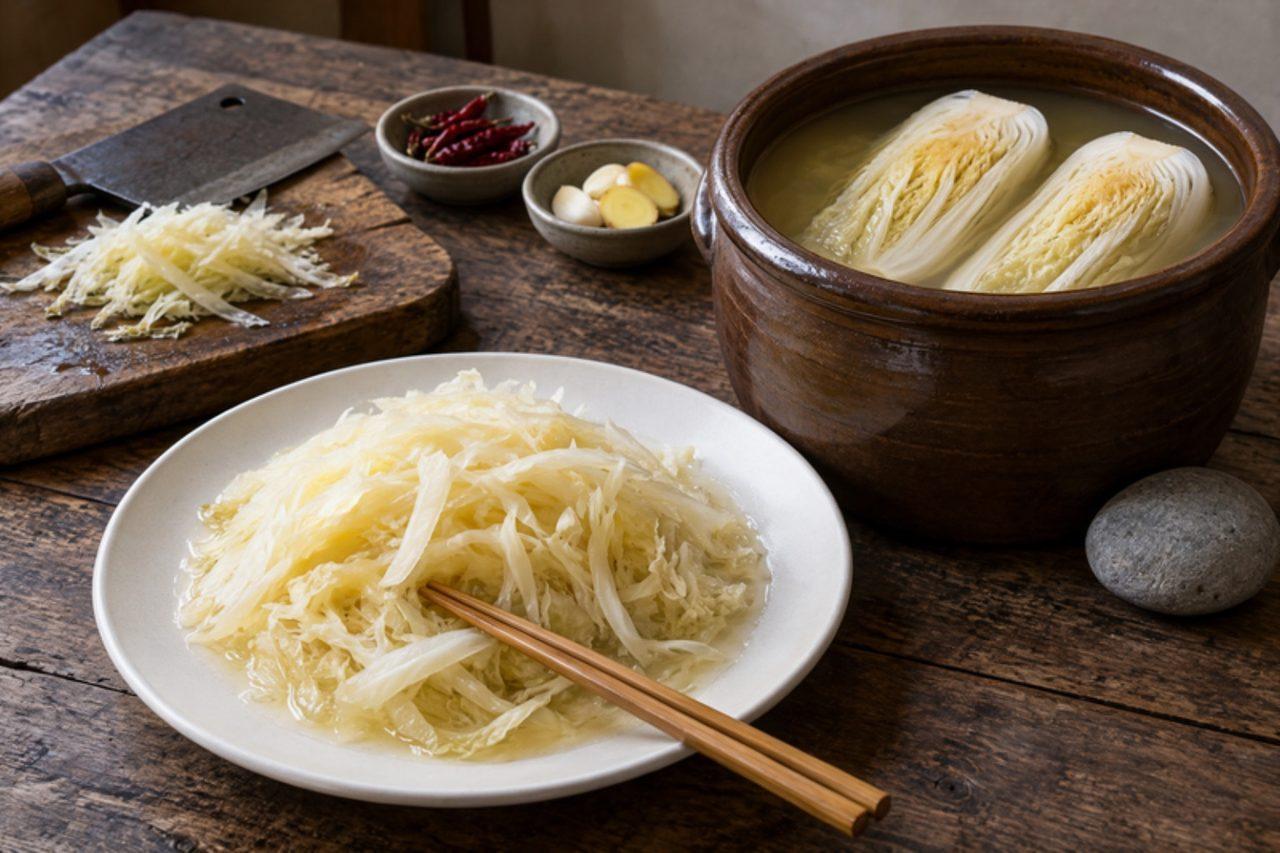
Dongbei suan caiFermented napa cabbage

In Harbin, Changchun and Shenyang, late October is when families buy napa cabbage by the cartload, scald it, and pack it head to tail into big glazed crocks on the balcony, weighed down with a smooth river stone. A month later, as winter sets in, it has become suan cai: pale, almost translucent leaves with a clean, lactic sourness and a soft crunch at the rib. It is shredded into suan cai bai rou (sour cabbage with pork belly), stuffed into dumplings for Spring Festival and simmered in hot pots through the long winter. Common mistake: fermenting somewhere warm; above about 20 °C the cabbage softens and can go slimy, so use the coolest spot you have. Normal signs are fine bubbles, a cloudy brine and a sharp sour smell; a flat white film (kahm yeast) can be skimmed off. Fuzzy coloured mould, pink or black patches, or a putrid smell mean discard the lot. Do not eat it before 3 weeks: it is ready when the leaves are uniformly pale yellow-green and taste fully sour. Then keep it in the brine in the fridge for 2 months. Chef's tip: rinse and squeeze the shreds before cooking to soften the sourness.

by KrazyBadal 0 views

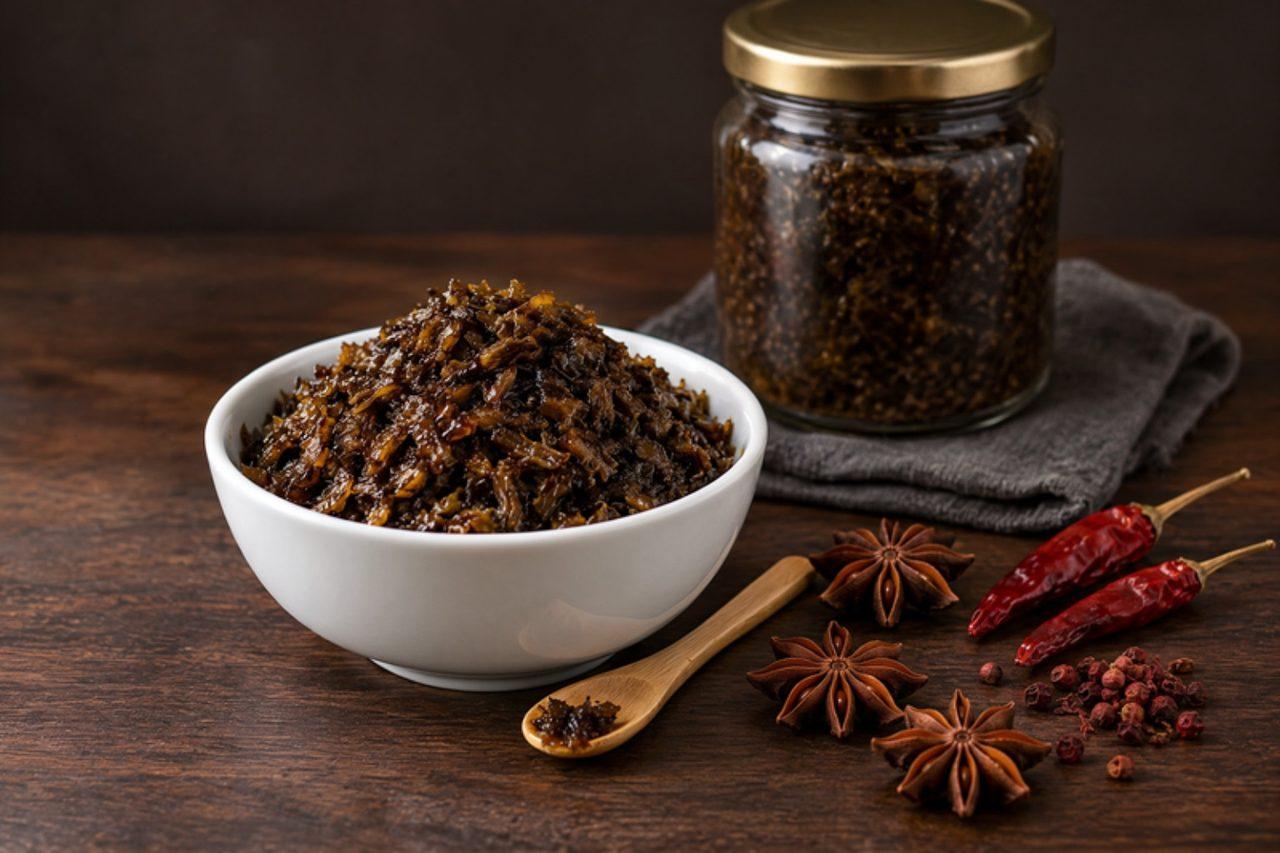
Yibin ya caiCured mustard stem

Yibin, where the Min river meets the Yangtze in southern Sichuan, has cured ya cai since the Qing dynasty, and its dark, sweet-salty shreds are what give dan dan mian, gan bian si ji dou (dry-fried green beans) and the steamed pork dish shao bai their deep savoury note. The stems of a leafy mustard are shredded, wind-dried, salted twice, then mixed with a syrup of brown sugar and spices and cured in sealed jars until almost black. The texture is chewy-tender, the taste malty, sweet, salty and warmly spiced with star anise and Sichuan pepper. Common mistake: adding the syrup while it is hot or while the shreds are still wet, which dilutes the cure and invites spoilage; both must be cold and the shreds well dried. It is ready when the shreds are uniformly dark brown and smell of molasses and anise, after 4–6 weeks in the fridge. This cure is high in salt and sugar, so it keeps 6 months refrigerated with a dry spoon; discard if mould, slime or a sour, rotten smell appears. Chef's tip: mustard greens with thick stalks (gai choy) are the best stand-in abroad; save the leaves for soup.

by KrazyBadal 0 views

PetullaFried dough fritters

In Albania and Kosovo, petulla are fried on weekend mornings and for family celebrations: a very soft, wet yeast dough is pulled into rough rounds with oiled hands and dropped into hot oil, where it puffs into golden, airy fritters. They are eaten hot with feta-style cheese, jam, honey or a dusting of sugar, alongside tea or coffee. The common mistake is adding flour until the dough is firm and easy to handle; it should be almost too wet to hold, which is what makes petulla light and hollow. Chef's tip: keep a bowl of oil beside the pan and dip your fingers in it before each fritter, so the sticky dough slides off your hand and stretches thin.

by KrazyBadal 0 views

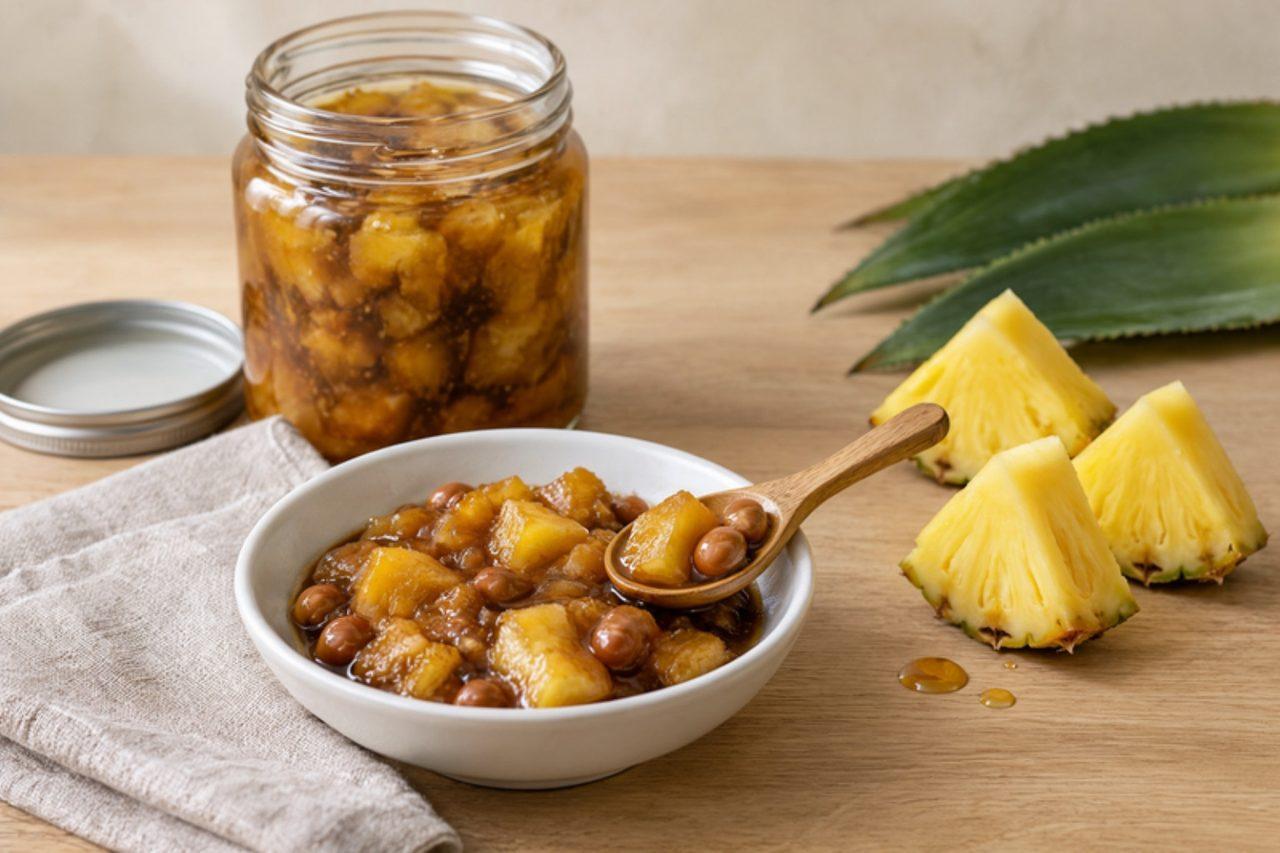
Pineapple soybean paste

Hakka households in Miaoli, Hsinchu and Pingtung are frugal and patient, and pineapple soybean paste (ong lai dau jiong) shows both. In early summer, when Taiwan's pineapples are plentiful, the fruit is cut into wedges and layered in jars with salted soybean koji and sugar, then left in a cool corner for months. The pineapple softens and goes golden-brown, the beans melt into a thick sauce, and the whole jar turns sweet, salty and tangy with a soft funk like miso. Spooned over steamed fish with ginger and scallion, stirred into braised bitter melon or tossed through stir-fried greens and wood ear, it is a back-pocket seasoning for everyday Hakka meals and bento. Common mistake: using very ripe, juicy pineapple; the fruit breaks into mush and the extra water dilutes the salt. Choose firm, just-ripe fruit and dry it after cutting. It is ready when the pineapple has turned amber and translucent and the beans are soft, after 1–3 months. Chef's tip: read the koji label — many brands are dusted with wheat flour, so it is not reliably gluten free.

by KrazyBadal 0 views

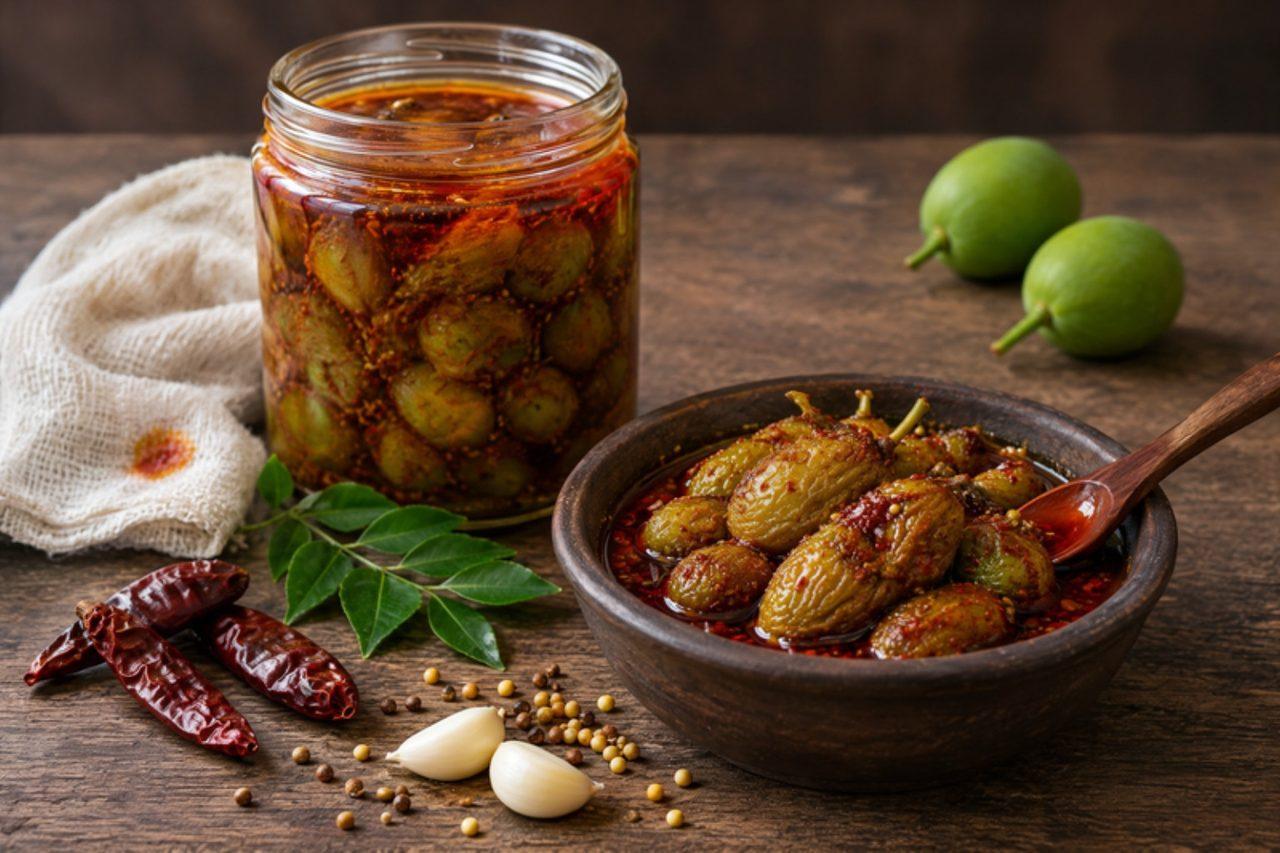
Kathal ka acharJackfruit pickle

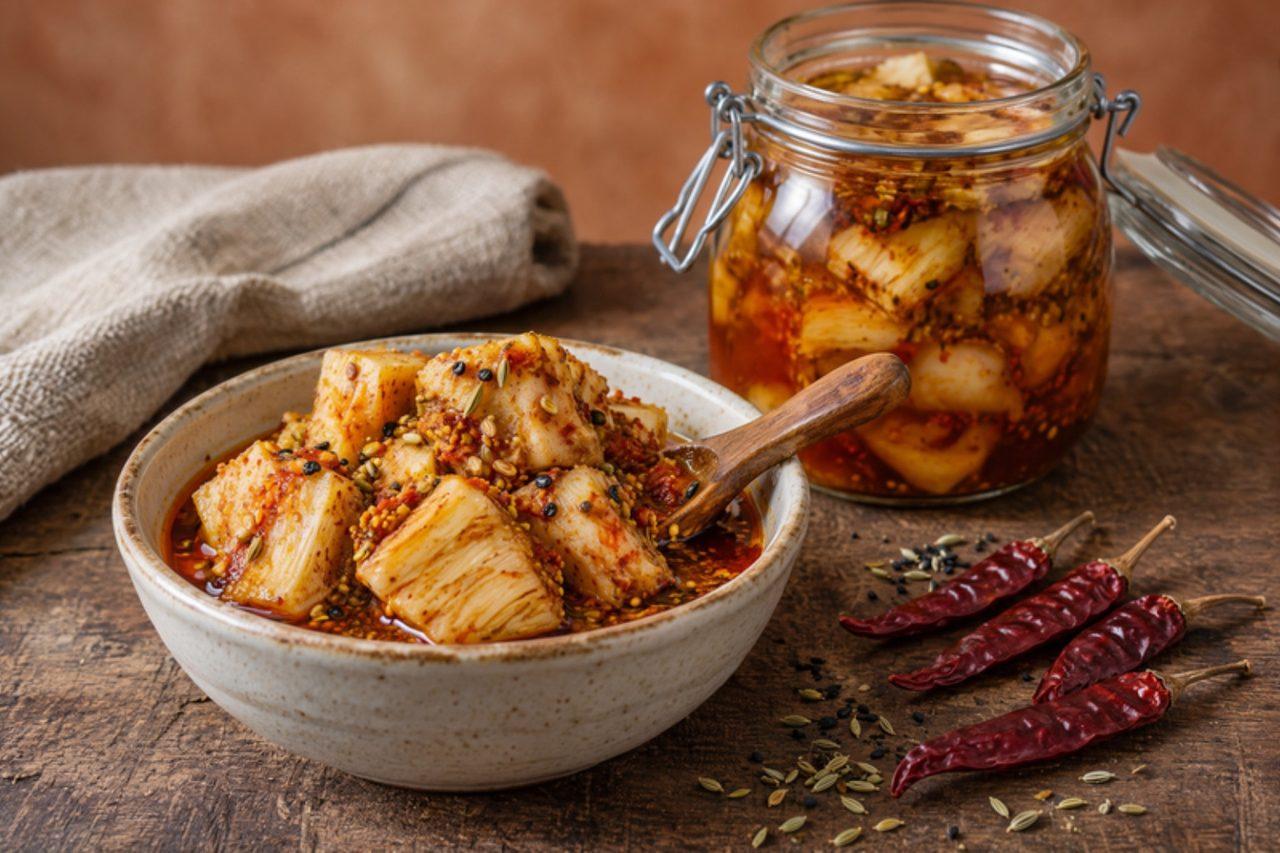
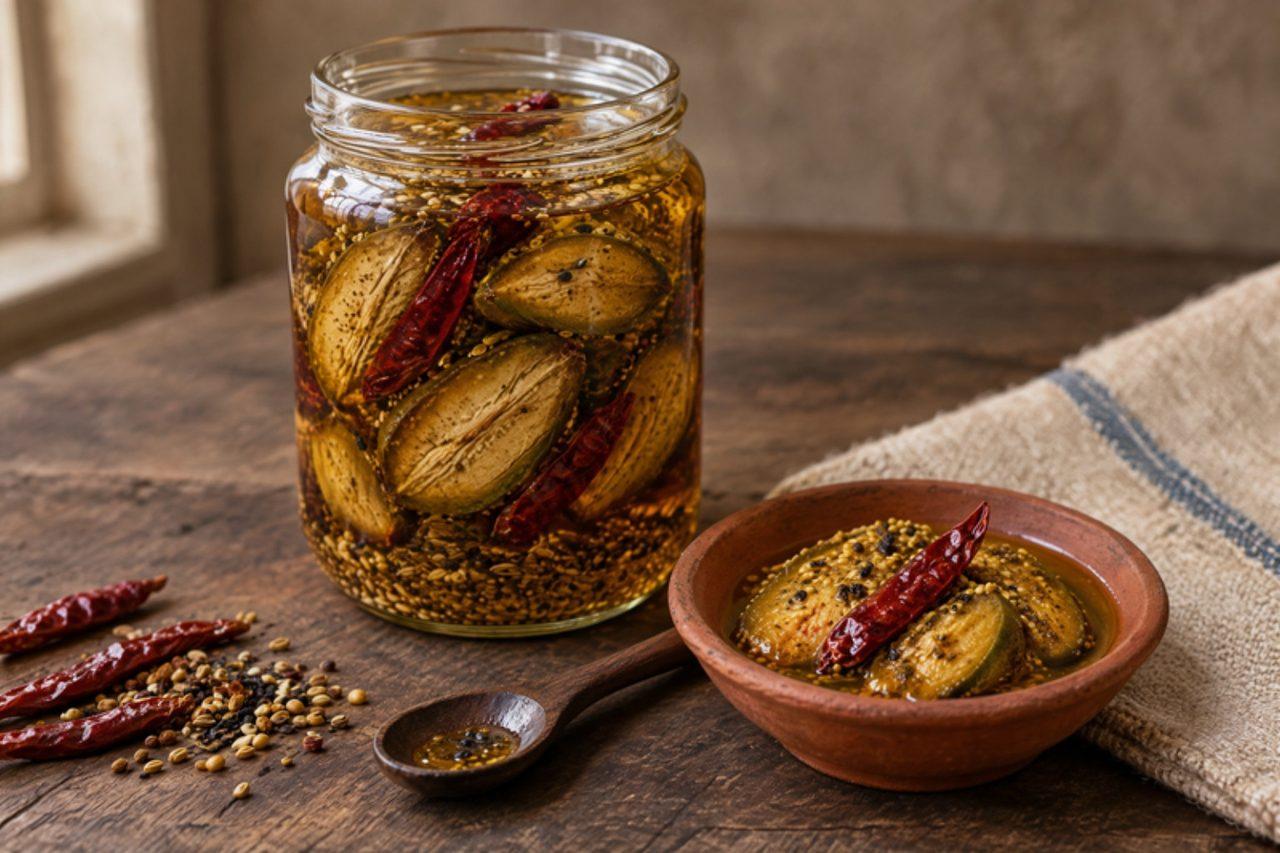
In Lucknow, Kanpur and across Punjab, the hard green jackfruit that arrives in spring and early summer is cooked like meat in kathal ki sabzi, and the rest goes into a jar of kathal ka achar. The chunks are boiled until just tender, dried, then coated in a fierce mix of mustard oil, fennel, nigella, fenugreek and red chilli, sharpened with vinegar and dry mango powder. The texture is the surprise: firm, fibrous and almost meaty, soaking up spice like a sponge. It goes with puri-aloo at a Sunday breakfast or alongside rajma-chawal. Boiled jackfruit is a low-acid vegetable, so this version is deliberately acidified and lives in the fridge. Common mistake: boiling the jackfruit soft; it then breaks into mush in the jar. Stop when a knife meets slight resistance at the core. It is ready after 3 days, when the chunks have turned tawny all the way through and taste sour, not bland. Keep in the fridge for up to 1 month, under oil, with a dry spoon; discard if mould, fizzing, sliminess or a sour-rotten smell appear. Chef's tip: rub your knife and hands with oil before cutting raw jackfruit, or the sticky sap glues everything.

by KrazyBadal 0 views

LyangchaFried milk sweets in syrup

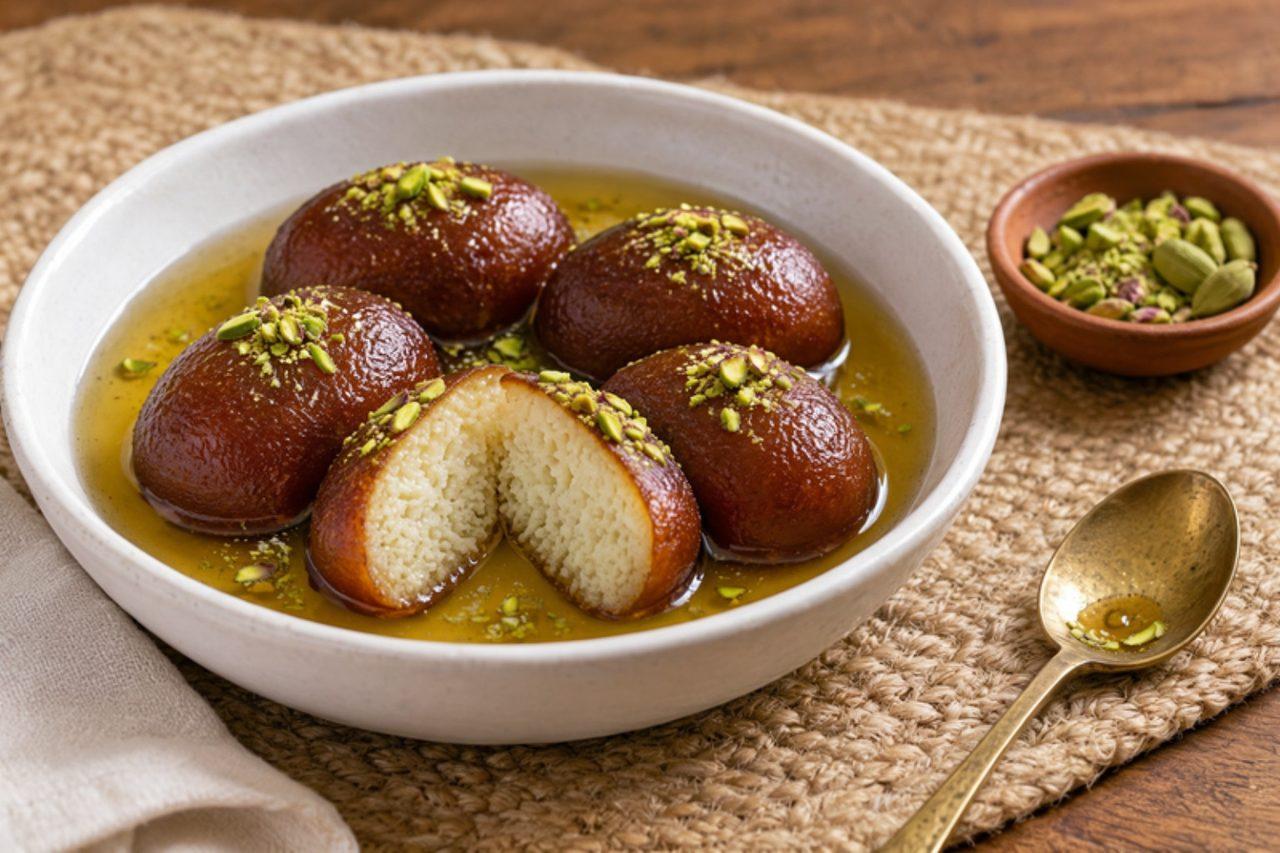
Travellers on the road from Kolkata to Bardhaman stop at Shaktigarh for one reason: lyangcha, cylindrical sweets of chhena and khoya fried almost black and soaked in light syrup, sold hot from roadside shops and carried home in clay pots. The outside is caramelised and slightly chewy, the inside soft, juicy and milky. They are a winter and wedding favourite across Bengal. The common mistake is frying on high heat to get the dark colour quickly; the outside burns while the centre stays raw and the sweet splits in the syrup. Low, patient heat gives an even mahogany shell. Chef's tip: a teaspoon of sugar kneaded into the dough helps it darken evenly.

by KrazyBadal 0 views

SaksakSago and banana dumplings

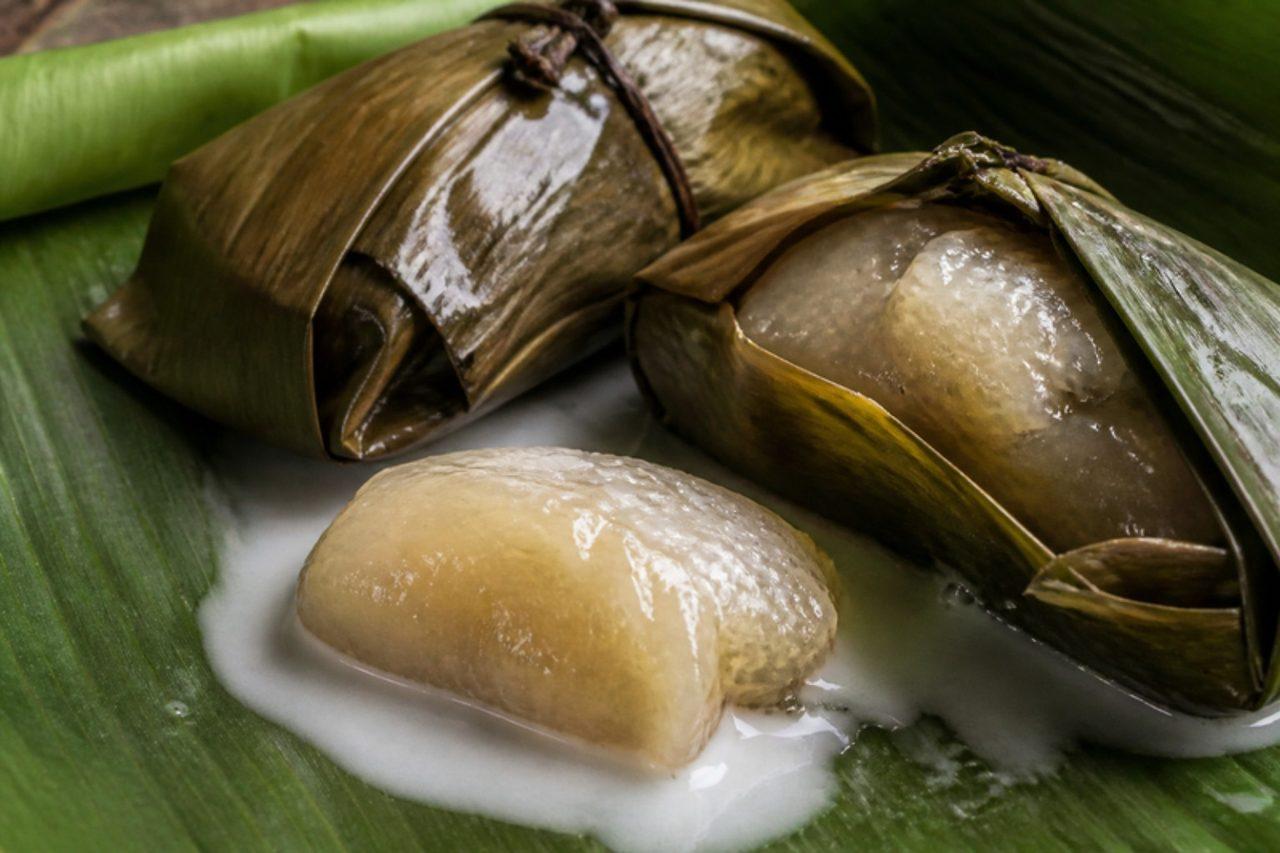
Saksak is a dish of the Sepik and coastal lowlands of Papua New Guinea, where sago palm starch is the staple food. Sago flour is mixed with mashed ripe banana, wrapped in leaves and boiled in coconut milk until it turns into soft, chewy, translucent dumplings. It is eaten as a snack or a sweet side with fish. Sago palm starch (sometimes sold as sago flour) is found in Asian shops. A common mistake is using too little banana or coconut, which makes it rubbery. Chef's tip: if you can't get banana leaves, form the mix into balls and drop them straight into the simmering coconut milk.

by KrazyBadal 0 views

Lingad ka acharFiddlehead fern pickle

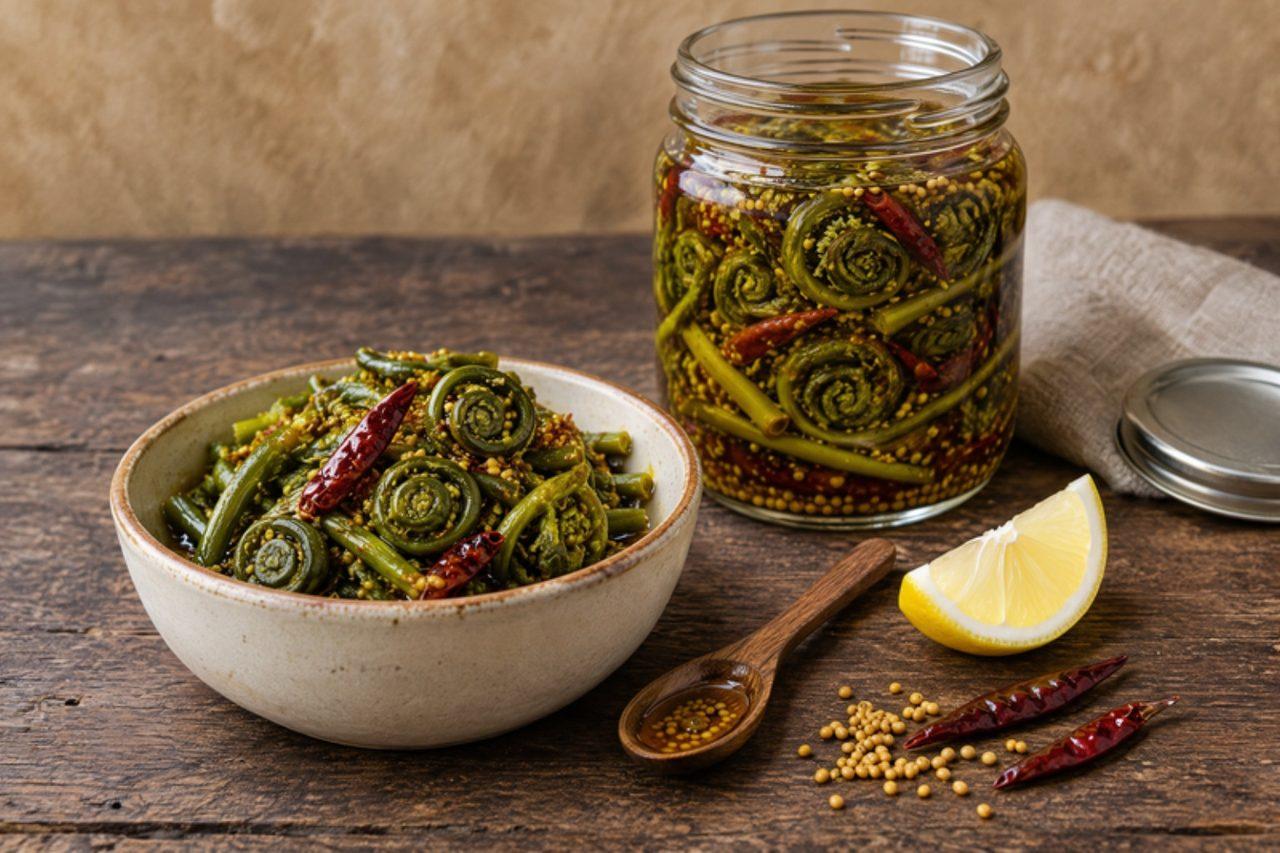
In Kullu, Mandi and Kangra, the monsoon brings lingad, the curled young shoots of the vegetable fern that grows along streams and terrace edges. Villagers pick them in the morning and sell them by the bundle; what is not stir-fried with potato goes into a small jar of pickle to stretch the short season. The shoots are blanched, dressed with mustard oil, crushed mustard seed, red chilli and lemon, and the result is green, crisp and faintly like asparagus with a nutty mustard heat. It is eaten with siddu, rice and madra, or simply with a hot roti. Outside the Himalaya, use ostrich fern fiddleheads, which appear in spring in North America and Europe. Fern shoots must always be cooked; raw or undercooked fiddleheads can upset the stomach badly. Common mistake: only flash-blanching them; boil for the full time. It is ready after a night in the fridge, when the coils have dulled to olive and taste tangy. Keep it in the fridge for up to 10 days; discard if you see mould, slime or smell anything off. Chef's tip: rub off the brown papery scales between your palms under running water before you weigh them.

by KrazyBadal 0 views

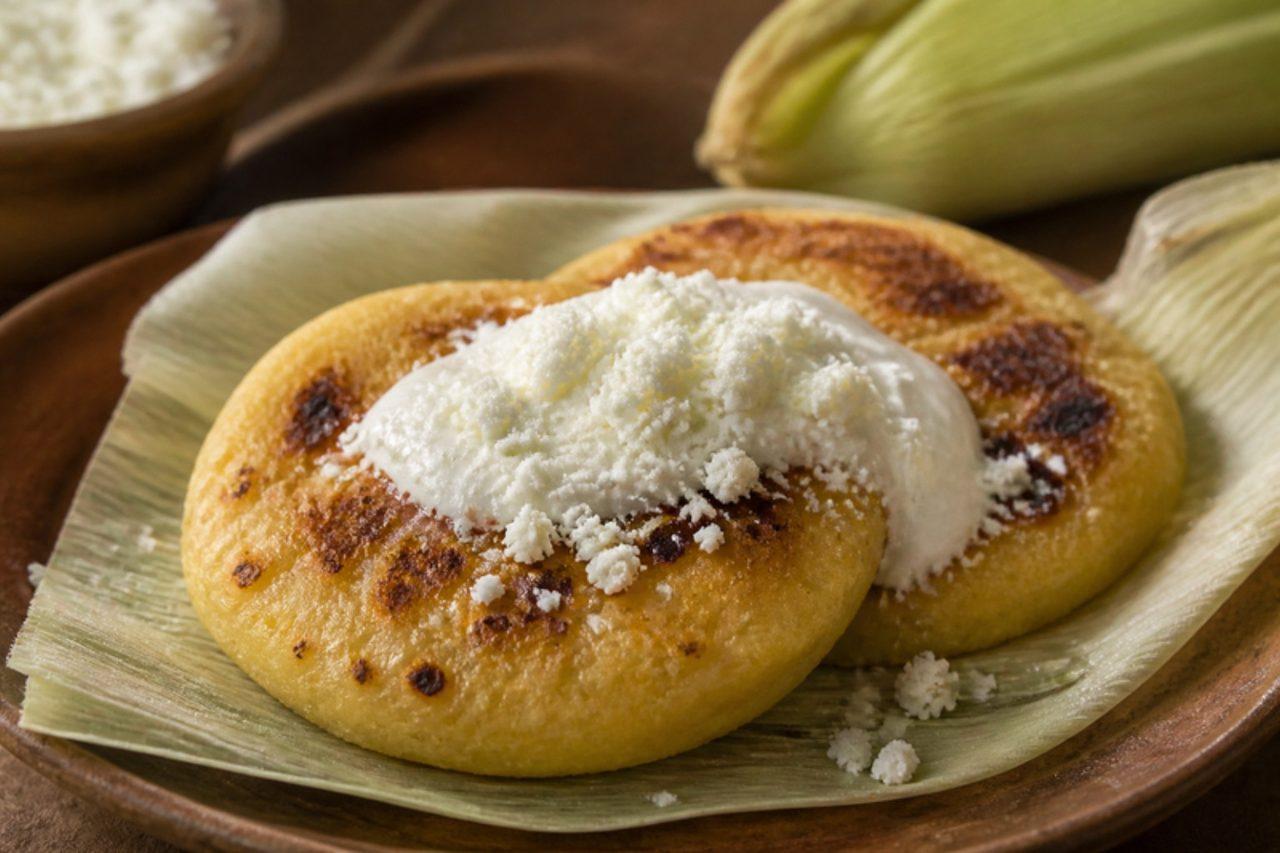
RiguasSweet corn cakes

When the elote harvest comes in around August, roadside stalls between San Salvador and Santa Ana sell riguas: thick little cakes of freshly ground sweet corn cooked on a griddle on corn husks or banana leaf, so the outside caramelises while the middle stays soft and custardy. They are eaten warm for breakfast or merienda with thick cream and crumbled fresh cheese. The most common mistake is using starchy, old corn; the batter must be milky and sweet or the cakes turn dense and dry. Traditional queso fresco is made with animal rennet, so pick a vegetarian fresh cheese if that matters to you. Chef's tip: cook them over a medium-low heat with a lid on for the first few minutes; the steam sets the inside before the husk scorches.

by KrazyBadal 0 views

GimjabanFried seasoned seaweed

Korean children grow up eating gimjaban scattered over rice or rolled into jumeokbap rice balls, and a little tub of it is the easiest way to make a plain dosirak exciting. It is laver seaweed toasted, crushed and stirred in a pan with sesame oil, a little sugar and plenty of sesame seeds until crisp and savoury-sweet. The common mistake is adding the soy sauce while the pan is very hot, which turns the flakes soggy and clumped. Chef's tip: mix the soy and sugar into the oil first, then toss in the crushed seaweed off the heat and return it to a gentle flame just to dry out.

by KrazyBadal 0 views

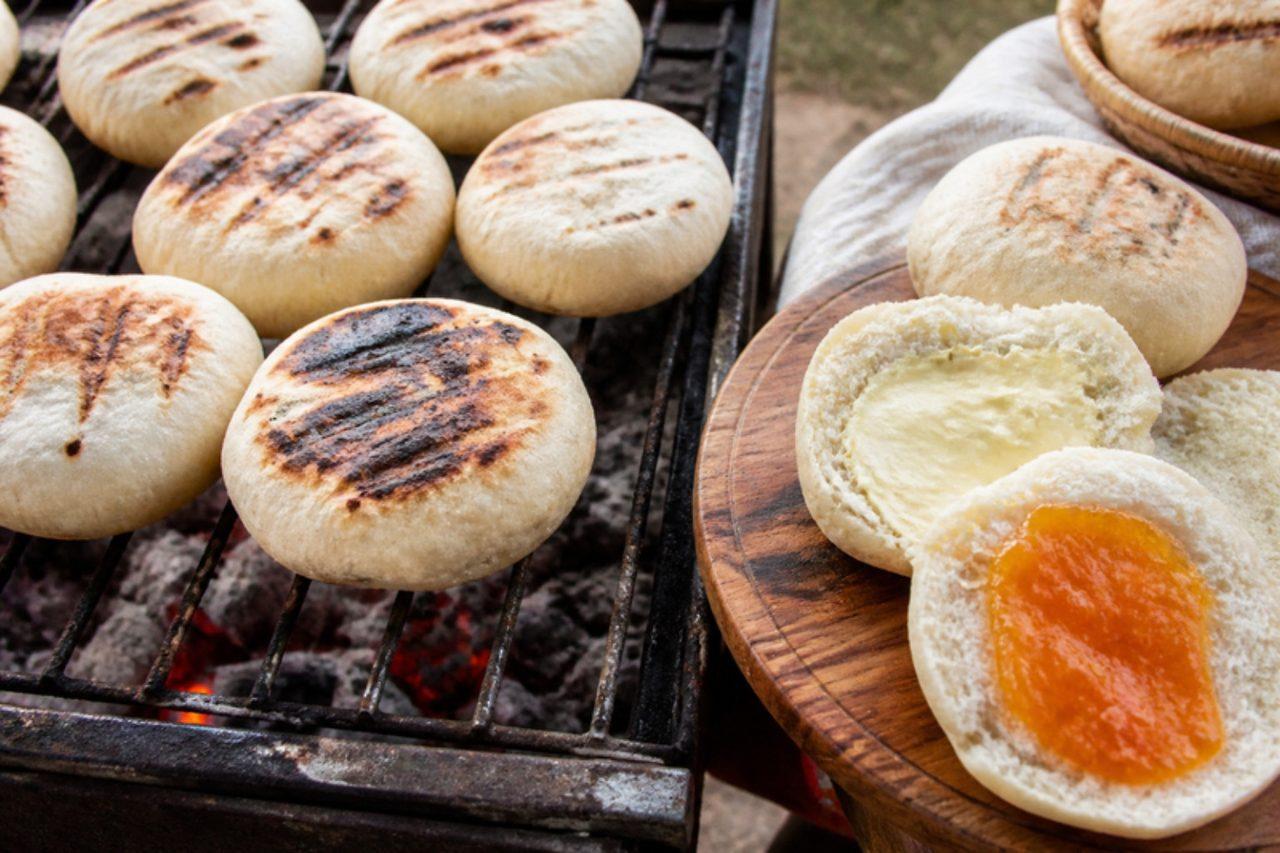
RoosterkoekGrilled bread rolls

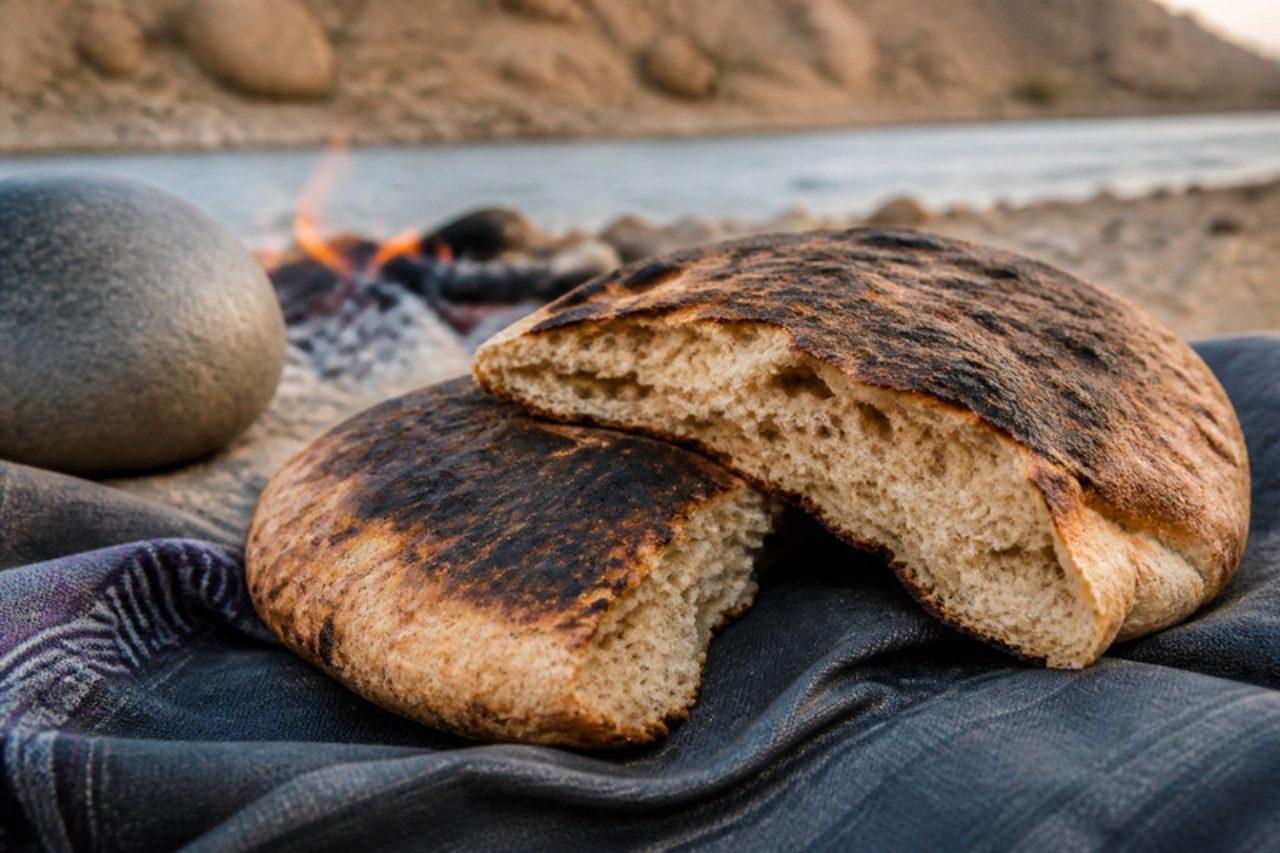
Nobody at a South African braai minds waiting for the meat when there is roosterkoek: rounds of simple white bread dough laid on the grid over gentle coals and turned until they puff up, crack open at the sides and blister with dark grill marks. Rooster means grid, and the bread tastes of the fire, smoky and crisp outside, steaming and chewy within. Tear them open hot and fill with butter and apricot jam, or with grated cheese and tomato, or use them to mop up chakalaka. Cooking them over the fierce heat used for steak is the usual error: the crust blackens long before the middle is cooked, so give them the cooler edges of the fire or wait until the coals have died back. A heavy ridged griddle pan or the oven work well when there is no fire. Chef's tip: dust the shaped balls with flour before they go on the grid, and they won't stick to the bars.

by KrazyBadal 0 views

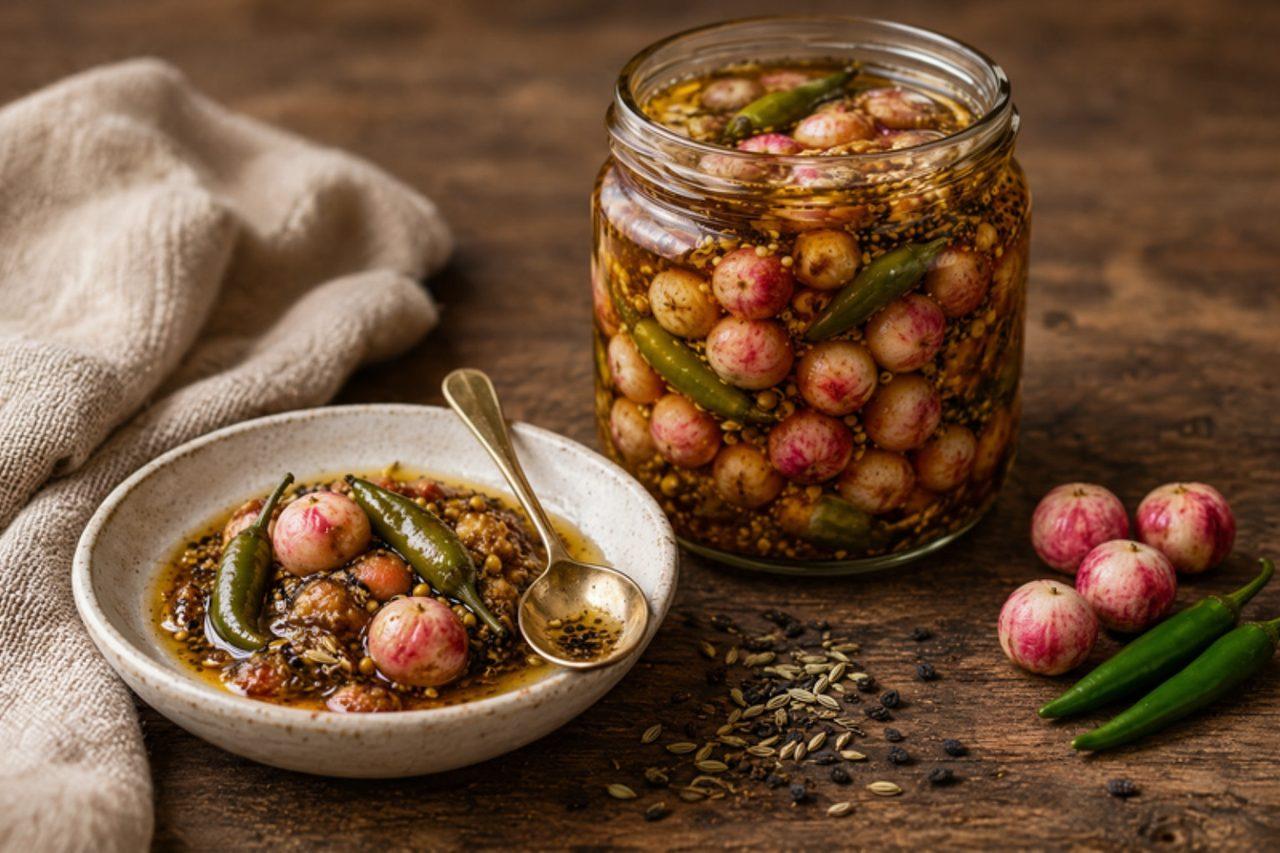
Karonde ka acharKaronda berry pickle

When the thorny karonda bushes along Punjab and Rajasthan field edges fruit in July and August, the small green berries with rosy cheeks end up in jars of karonde ka achar. The fruit is very sour and slightly bitter-milky when raw, so it suits a bold mustard-oil pickle: halved berries and slit green chillies are salted, dried for a day, then tossed with crushed fennel, nigella, fenugreek and mustard. After a week the berries turn soft and sour-tangy, the chillies mellow, and the oil smells of saunf. Eat it with paratha, moong dal khichdi or a plain bowl of curd rice. Karonda is hard to find abroad; firm fresh cranberries are the closest substitute in sourness and size. Common mistake: skipping the drying day; wet fruit thins the oil and invites mould. It is ready when the berries yield to the teeth and the spice coat has darkened. Because it holds fresh green chillies under oil, keep this jar in the fridge for up to 2 months, berries always under oil, dry spoon every time; discard if you see mould, fizzing or an off smell. Chef's tip: wear gloves when halving karonda, the white latex is sticky and stains fingers.

by KrazyBadal 0 views

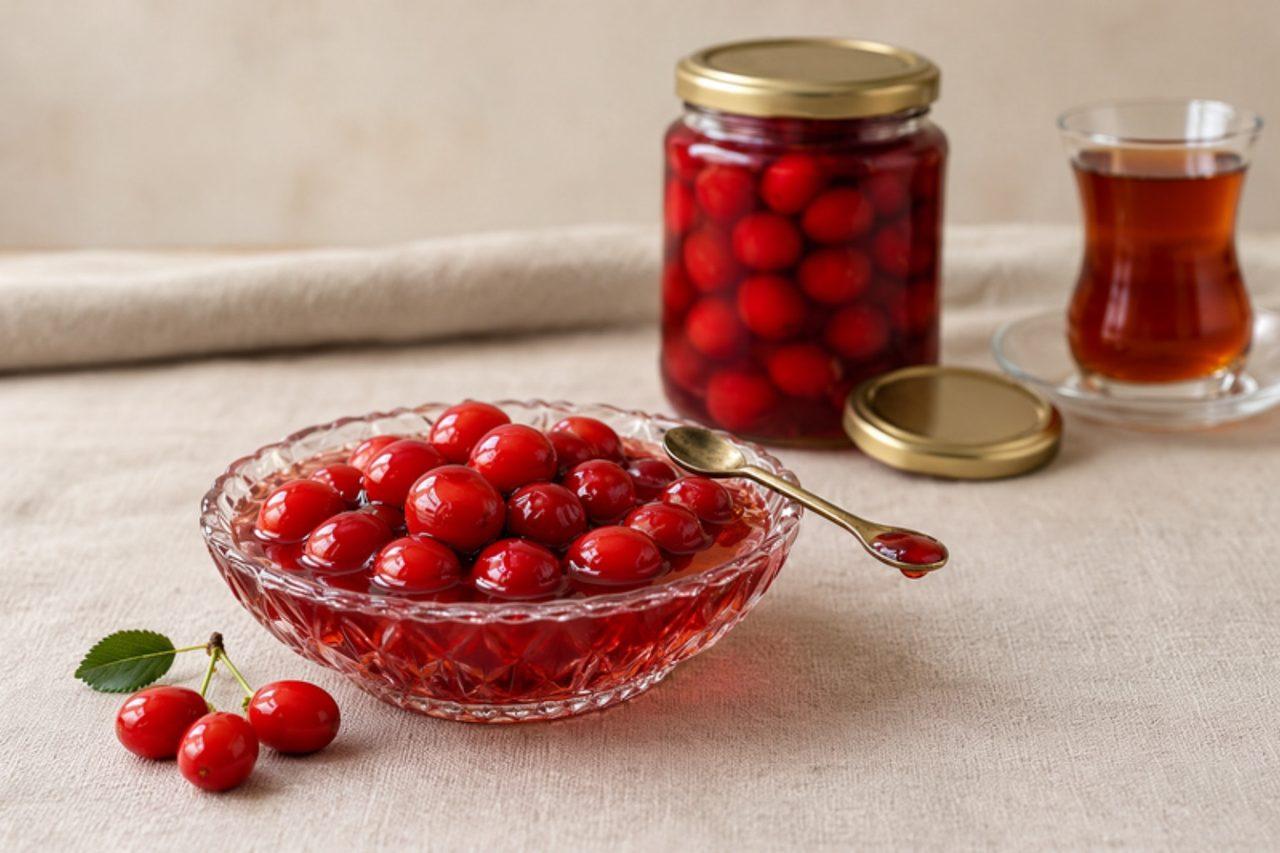
Zoğal mürəbbəsiCornelian cherry preserve

In Azerbaijan tea is never served alone, and in Quba and Shamakhi the jar of zoğal mürəbbəsi comes out with the armudu glasses as soon as a guest sits down. The cornelian cherry bushes on those mountain slopes ripen in late August and September, and the small, oblong, glossy-red fruit is far too sour to eat raw. Cooked whole in sugar syrup in the traditional way — three short boils with long rests in between — it becomes a jewel-like preserve: firm, tart-sweet cherries with a stone in each, floating in clear crimson syrup. It is eaten from tiny glass dishes with a spoon between sips of tea, especially in the long winter evenings and at Novruz tables. Common mistake: one long boil, which splits the skins and leaves dull, wrinkled fruit; the rest periods let the syrup soak in slowly so the cherries stay plump. It is ready when the syrup has thickened to the texture of runny honey and the cherries look glassy. Chef's tip: frozen cornelian cherries from Eastern European shops work well; failing those, firm sour cherries are the closest substitute.

by KrazyBadal 0 views

PinoleToasted corn drink

In the canyons of the Sierra Tarahumara in Chihuahua, Rarámuri runners set off at dawn carrying a pouch of pinole, corn kernels toasted on a clay comal and ground fine, to stir into cold water along the trail. Across northern Mexico it is still a breakfast drink, sweetened with piloncillo and cinnamon and stirred into water or warm milk. This version toasts coarse cornmeal at home for the same nutty, popcorn-like flavour. The common mistake is toasting over a high heat: the outside burns and turns bitter before the inside goes golden. Chef's tip: toast a big batch and keep it in a jar, so a morning cup is just two spoonfuls stirred into water.

by KrazyBadal 0 views

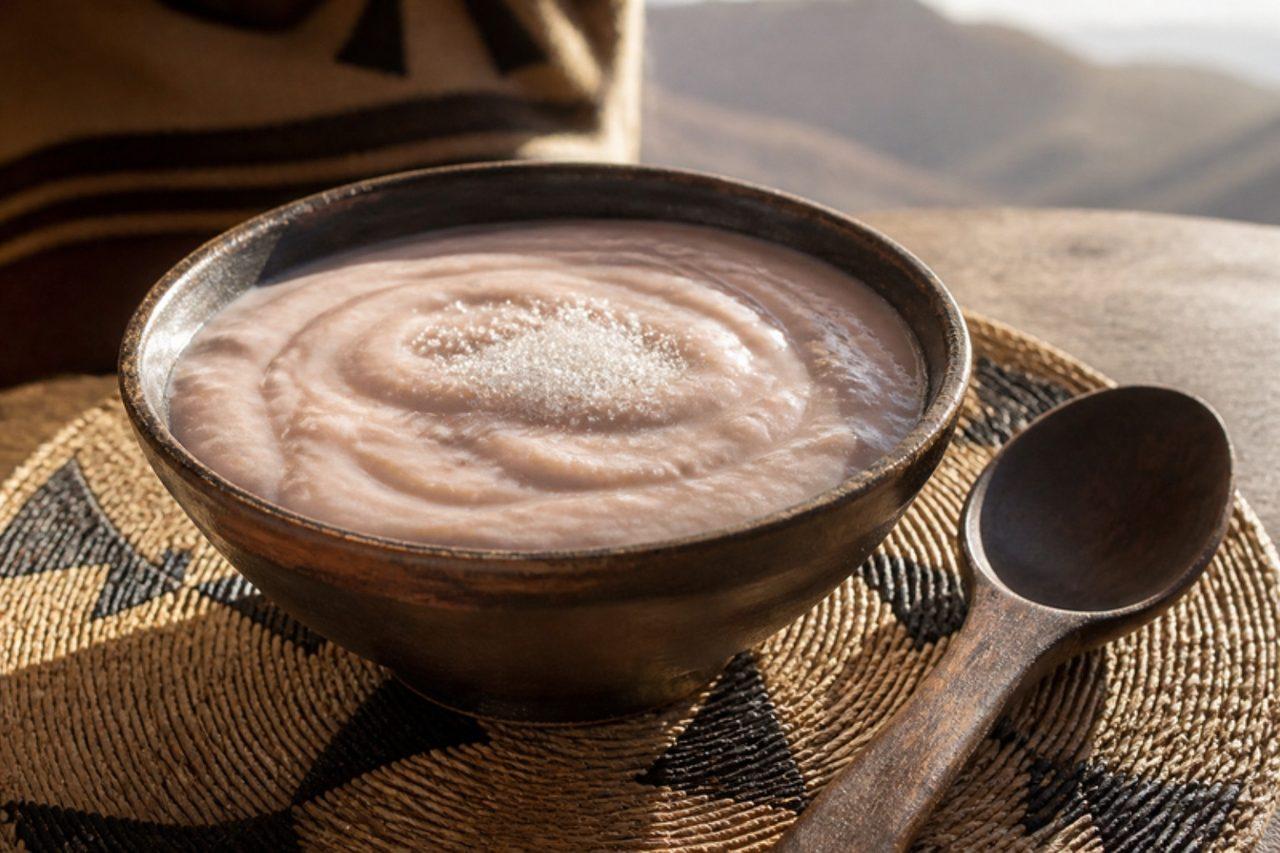
MotohoFermented sorghum porridge

Highland mornings in Lesotho can be bitterly cold, and a mug or bowl of warm motoho, thin enough to sip and pleasantly tangy, is how many Basotho families in Maseru and the mountain villages start the day. Sorghum meal is mixed with warm water and a spoonful of starter from the last batch, left overnight by the stove to sour, then cooked into a smooth, pourable porridge with a yoghurt-like tang and a nutty, toasty flavour. Some sweeten it with sugar; others drink it plain with bread. If you have no starter, make one two days ahead with sorghum and water, as below. Chef's tip: keep the ferment warm but not hot; a pot left right on the stove gets too sour and too thin, so a spot nearby is perfect.

by KrazyBadal 0 views

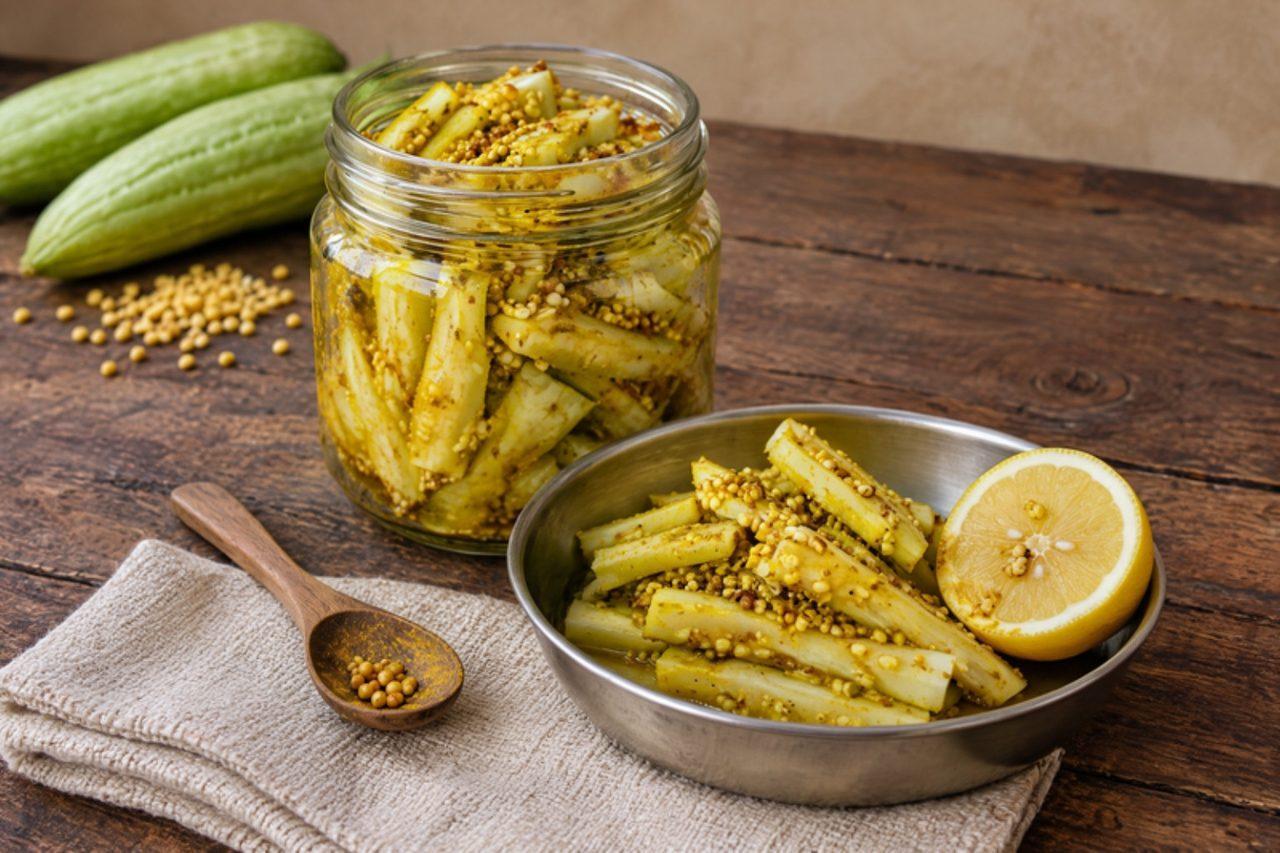
Tindora nu athanuIvy gourd pickle

In Gujarati homes from Surat to Rajkot, tindora nu athanu is the pickle you make on a Tuesday for the rest of the week, not the big summer jar. Thin sticks of tindora (ivy gourd) are tossed with rai na kuria (split mustard seed), salt, turmeric, a pinch of hing and lemon juice, then dressed with warm oil. By the next lunch the mustard has bloomed into a nose-tingling heat, the lemon has softened the raw edge and the sticks are still crunchy, a sharp counterpoint to dal-bhaat, khichdi or a plate of thepla. Choose firm, bright green tindora; once they turn red inside they go soft and seedy. Common mistake: pouring smoking-hot oil straight onto the kuria, which scorches it bitter; let the oil cool until just warm. It is ready when the sticks look slightly glossy and darker and a few drops of juice gather in the jar. Because it is fresh vegetable with little salt, it lives in the fridge and is best eaten within 7 days; throw it out if it smells rotten, turns slimy or grows any mould. Chef's tip: no kuria? Pound yellow mustard seeds coarsely in a mortar; you want cracked halves, not powder.

by KrazyBadal 0 views

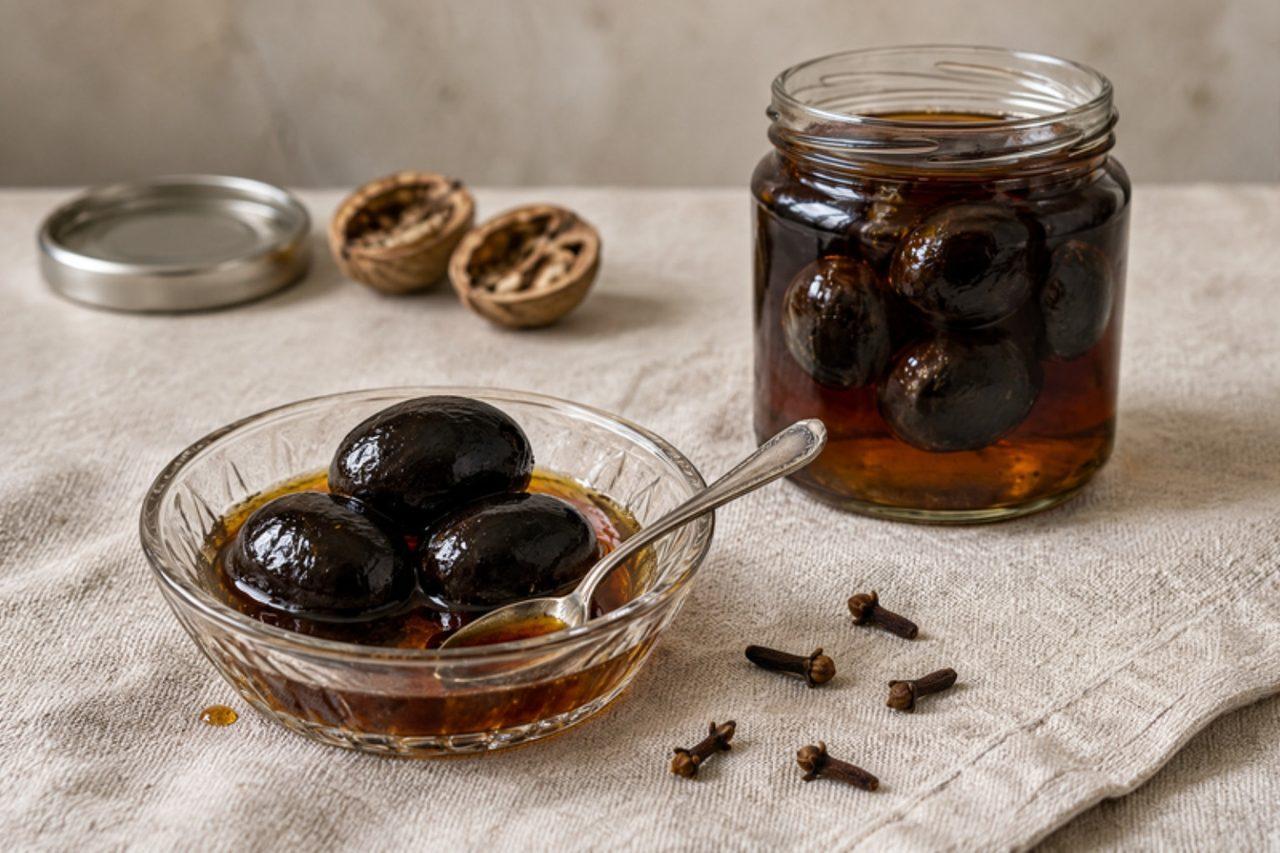
Dulceață de nuci verziCandied green walnuts

Around Sânziene in late June, families in Moldavia and Transylvania climb the walnut trees to gather nuts that are still green and soft, before the shell has begun to form. A week of patient work follows: peeling, pricking and soaking in water changed morning and evening until the harsh bitterness leaches out, then slow simmering in a syrup scented with cloves and lemon until the nuts turn glossy black. The finished dulceață is offered the old way, one walnut on a small glass saucer with a teaspoon and a glass of cold water for a visitor, or with coffee on a winter afternoon. Each nut is tender all the way through with a faint crunch at the heart, tasting of caramel, cloves and something resinous and bittersweet. The decisive mistake is picking too late: if a darning needle no longer slides easily through the centre, the shell is hardening and the nuts will stay woody whatever you do. The syrup is done when a drop holds its shape on a cold plate. Chef's tip: wear gloves for every stage, as green walnut juice stains skin brown-black for days.

by KrazyBadal 0 views

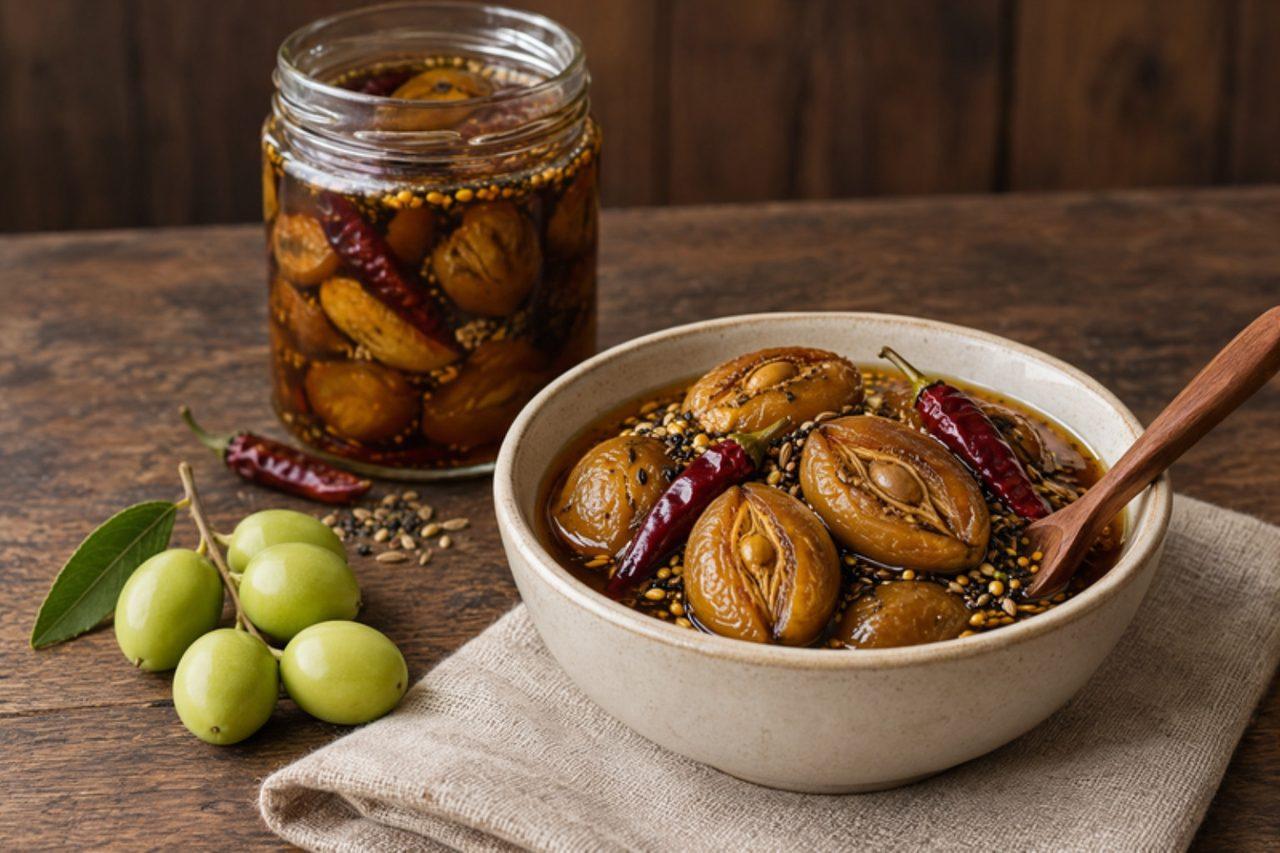
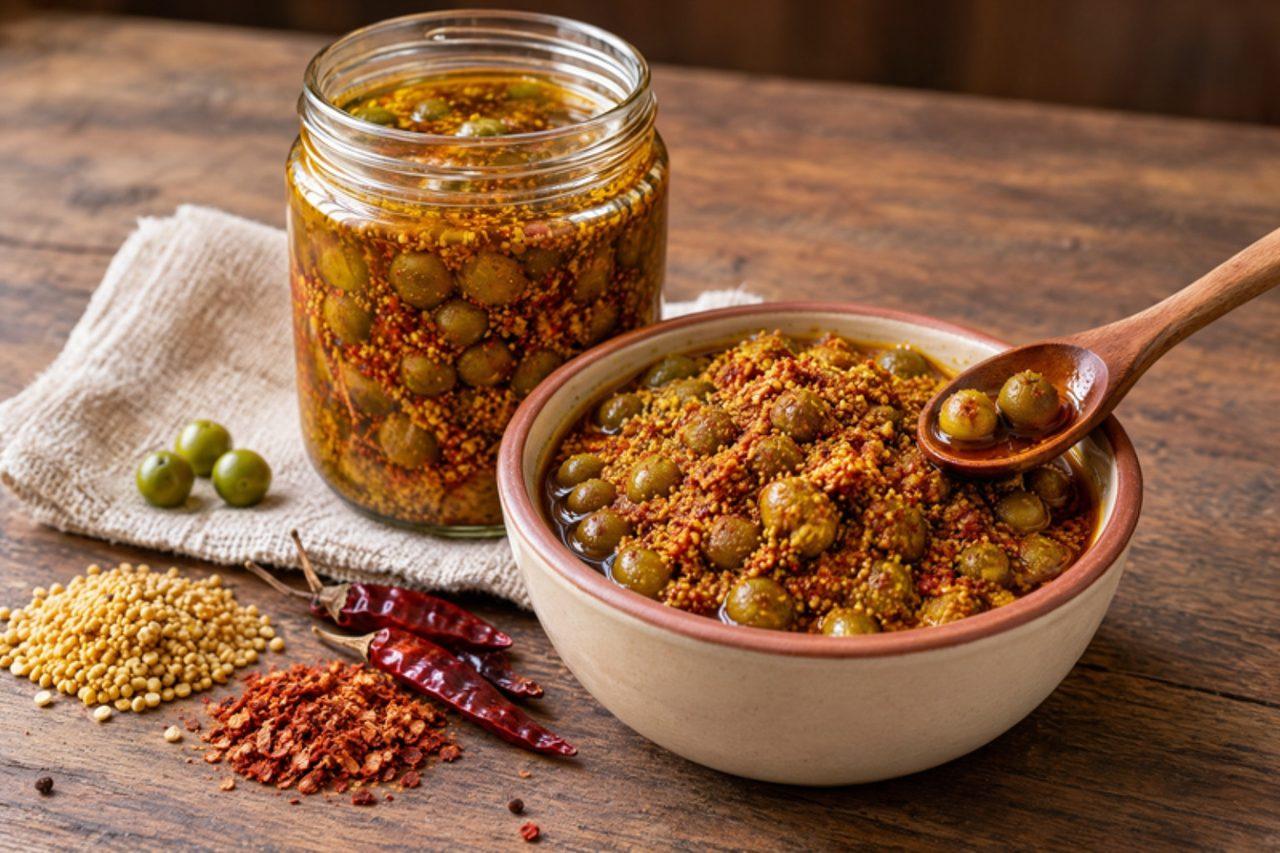
Jolpai acharIndian olive pickle

Jolpai, the small, hard, sour Indian olive, appears in Bengal and Bangladesh markets from October to December, and no winter afternoon is complete without a jar of jolpai achar warming in the sun. It is no relation to the Mediterranean olive: it is tart and astringent, almost like a green plum. The olives are boiled, lightly crushed so the flesh splits from the stone, then cooked in mustard oil with panch phoron, dried chilli and plenty of jaggery. The pickle is sticky, sweet-sour and slightly tannic, with soft flesh to nibble off the stones. Eat it with khichuri on a cold evening, with dal-bhaat, or straight from the jar as a snack. The common mistake is under-boiling: the olives must be soft enough to press flat, or the syrup cannot get in and they stay bitter. It is done when the syrup is thick and shiny and clings to the olives. Very sweet and acidic, it keeps a month in a cool cupboard in winter and 3 months in the fridge. Abroad, look for frozen jolpai in Bangladeshi grocers; firm, sour green plums are the closest substitute. Chef's tip: keep a few olives whole and only scored; they give a nicer bite.

by KrazyBadal 0 views

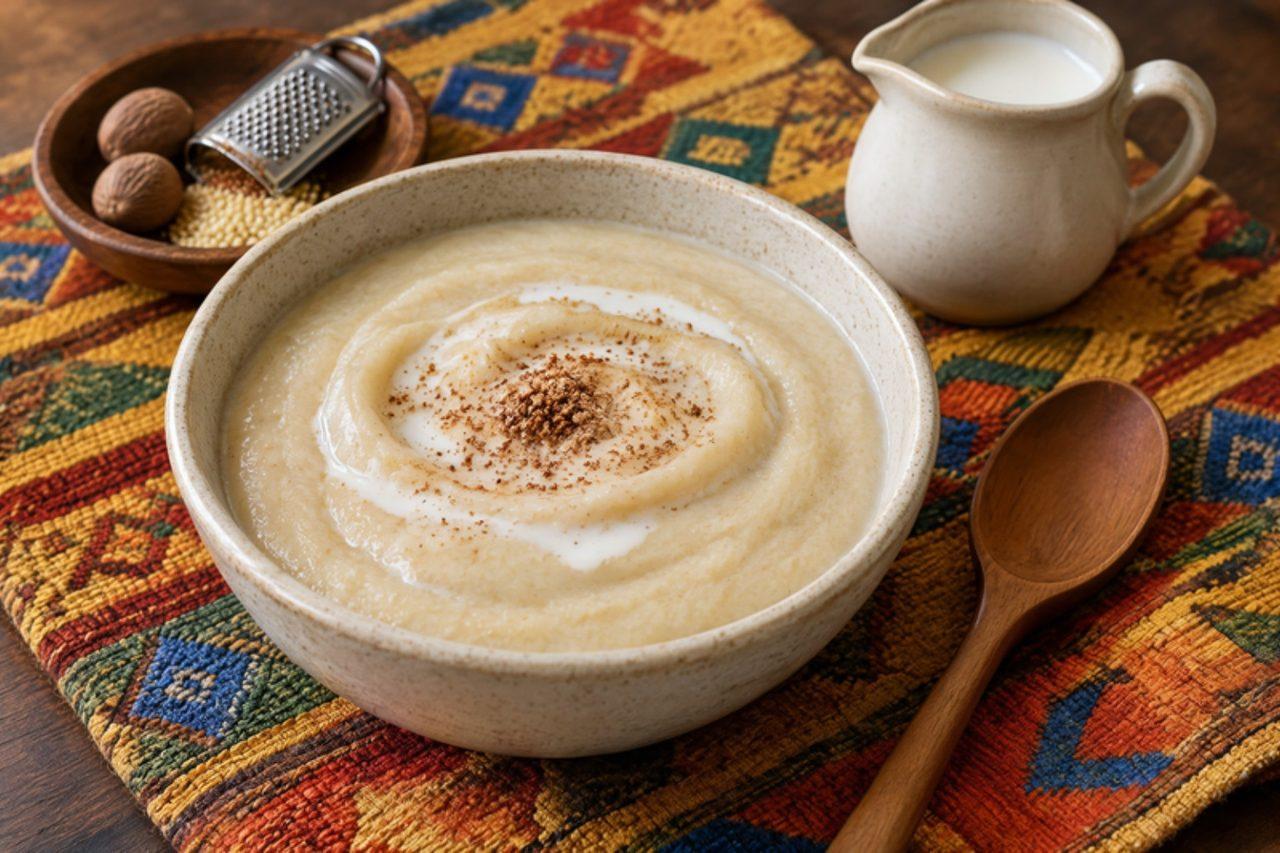
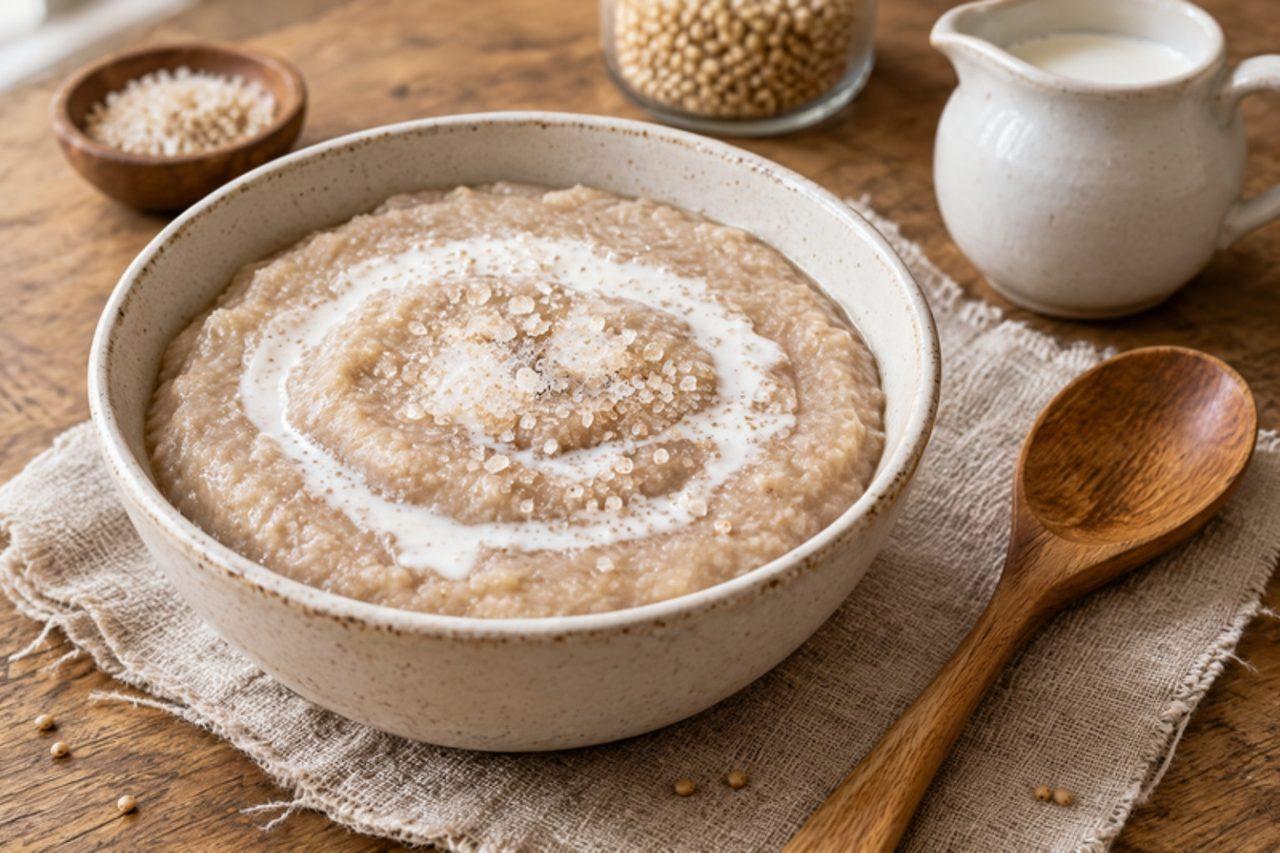
RouyMillet porridge

In Dakar, Saint-Louis and the Gambia, rouy is a morning porridge of fine millet flour cooked in water until silky, then sweetened and loosened with milk or lait caillé (soured milk) and a grating of nutmeg. During Ramadan it is a favourite at ndogou, the evening fast-breaking, because it is gentle and filling. The common mistake is under-cooking: millet needs a good 25–30 minutes or it tastes raw and slightly bitter. Choose millet flour from a mill that doesn't handle wheat if you need it strictly gluten free. Chef's tip: a spoon of orange-blossom water or vanilla stirred in at the very end makes it taste like a Dakar breakfast stall.

by KrazyBadal 0 views

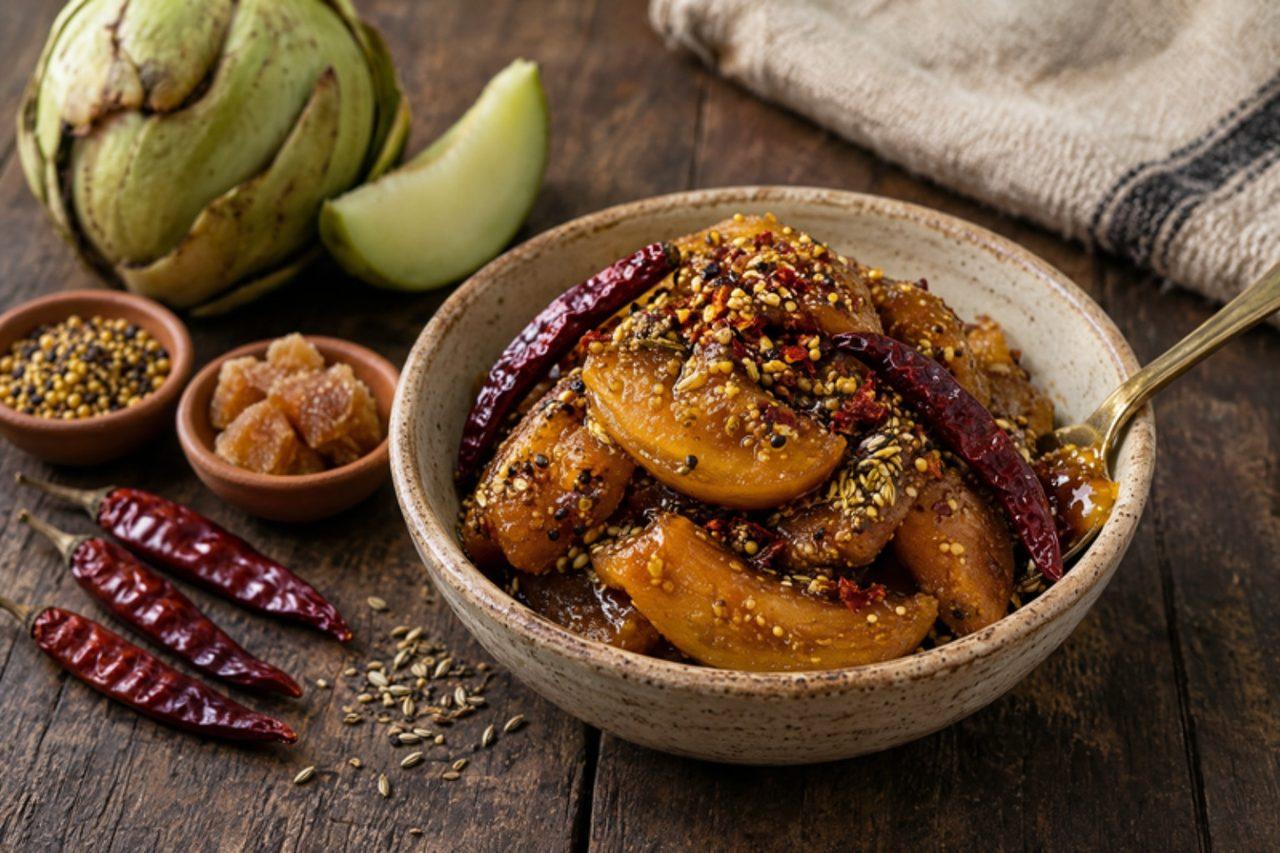
Chalta acharElephant apple pickle

Chalta, the elephant apple, is a big green fruit of tightly wrapped, fleshy petals, and in Bengal it arrives in the markets in autumn, around Durga Puja, staying through early winter. Raw it is so sour and fibrous that it is almost impossible to eat, but cooked with jaggery and mustard it becomes one of the best-loved sweet-sour pickles of the region. The petals soften into chewy, slightly crunchy pieces in a thick, amber syrup, sour and sweet with a sharp kick of ground mustard and chilli. Serve it with dal and rice at the end of a meal, or with khichuri on a rainy day. The common mistake is skipping the pounding: after boiling, the pieces need a few firm knocks with a pestle to break the fibres, or they stay tough and never absorb the syrup. It is ready when the syrup coats a spoon and the chalta pieces look glossy and translucent. Keep it in a clean jar in the fridge for up to a month. Outside India, frozen chalta is sold in Bangladeshi grocers; hard, sour cooking apples with a squeeze of lime are a passable stand-in. Chef's tip: a pinch of ground mustard added at the very end gives the classic nose-tingling bite.

by KrazyBadal 0 views

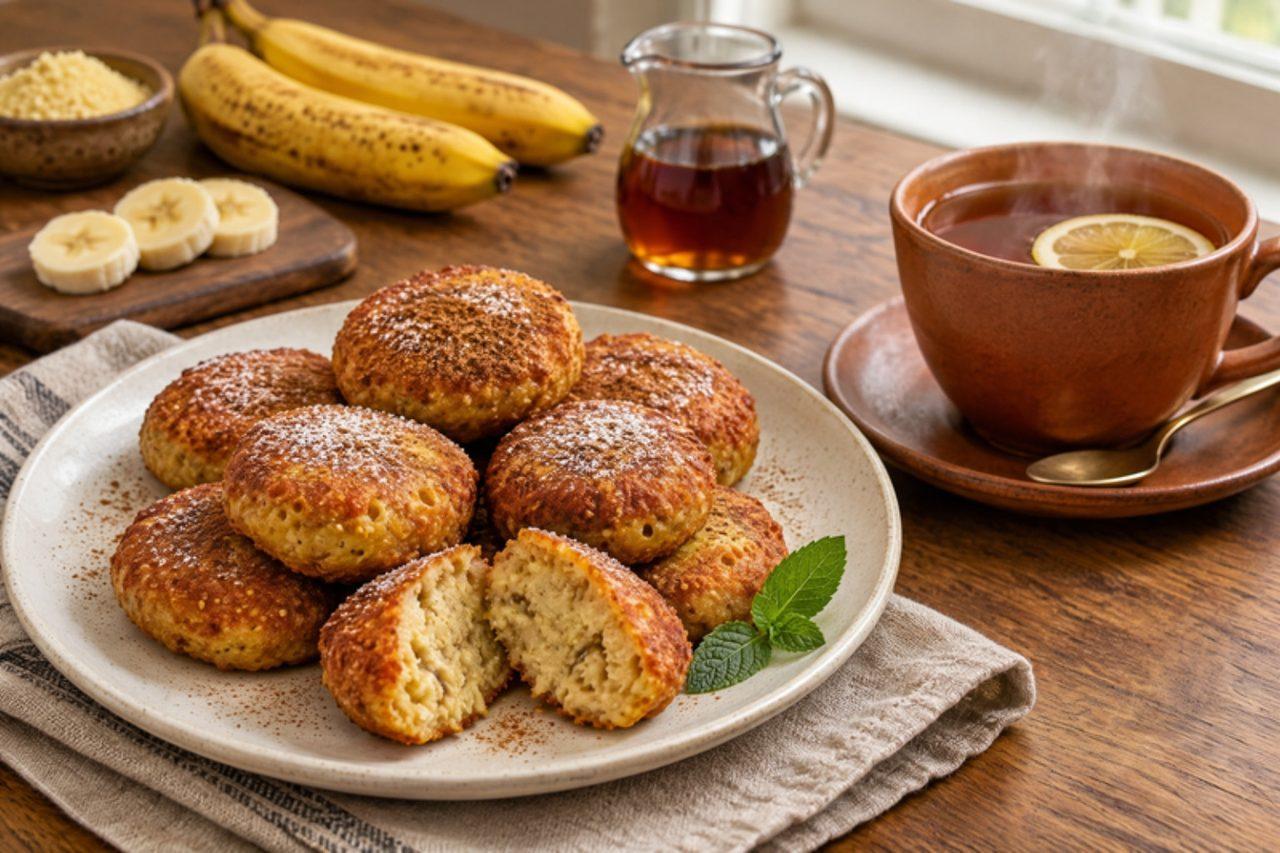
ZitumbuwaBanana and maize flour fritters

Along the roads of Lilongwe, Blantyre and the lakeshore, women fry zitumbuwa in big pots of oil early in the morning and sell them warm in paper twists: soft, sweet fritters of very ripe banana mashed with maize flour and a little sugar. They are crisp at the edges and custardy inside, perfect with sweet tea. The common mistake is using bananas that are only just yellow; you want them heavily speckled with brown for sweetness and a loose, droppable batter. Chef's tip: let the batter rest for 10 minutes so the maize flour swells, and the fritters hold their shape in the oil.

by KrazyBadal 0 views

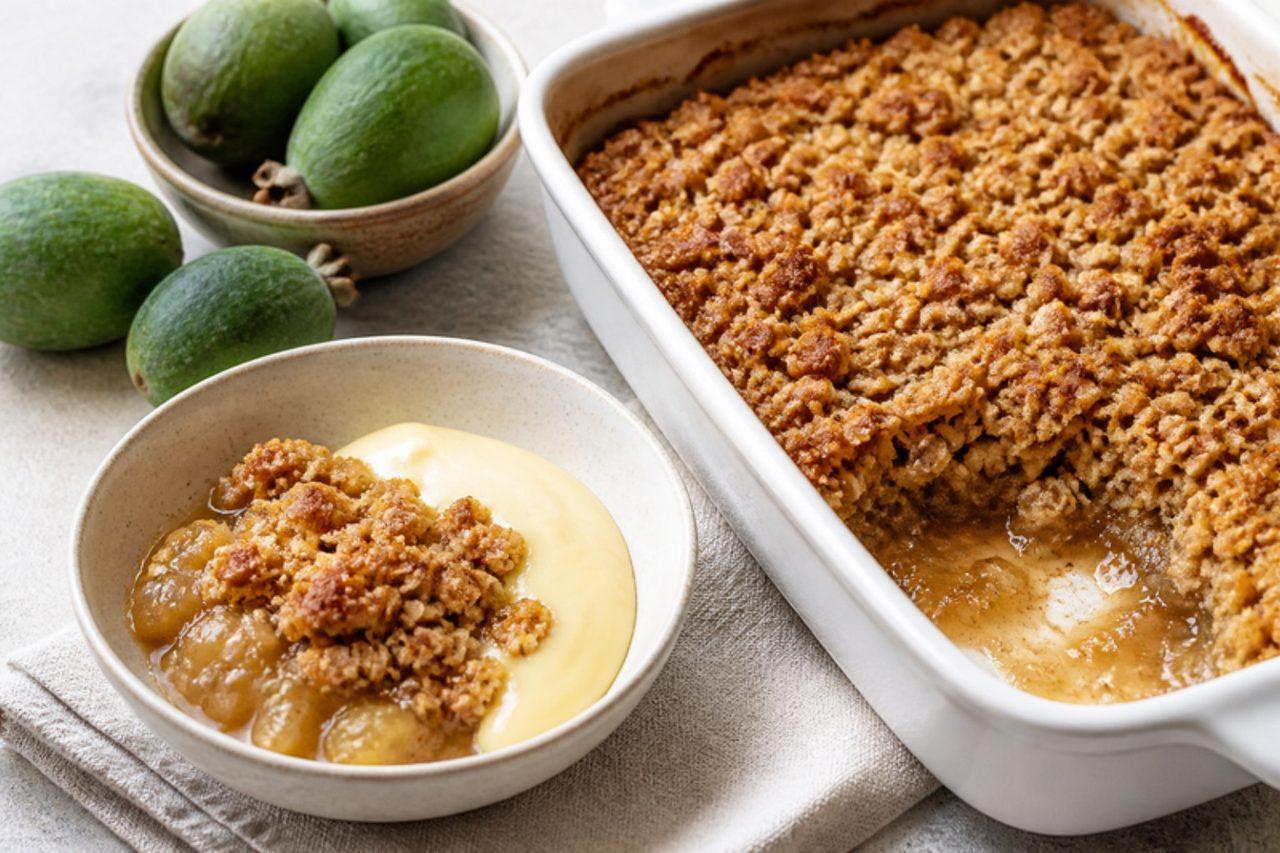
Feijoa crumble

Every autumn, from March to June, New Zealand back gardens drop more feijoas than anyone can eat, and bags of the green, perfumed fruit get passed over fences and left on office desks. Baking them into a crumble is the classic way to use them: their fragrant, pineapple-guava flavour softens under a buttery oat and brown-sugar topping. Serve with custard or vanilla ice cream. A common mistake is leaving the gritty skin on; scoop out the flesh. Chef's tip: add a couple of apples to stretch the feijoas and give the filling body.

by KrazyBadal 0 views

Kannimanga acharBaby mango pickle

In central Kerala, around Thrissur and Kottayam, families watch the mango trees in January and February and pick the tiniest fruit, no bigger than a thumb joint, before the stone hardens. These kannimanga are salted whole in a tall ceramic bharani, left until shrivelled in their own brine, then mixed with freshly ground raw mustard, Kashmiri chilli and hing and left to mature for three or four weeks. This older, oil-free style keeps the mangoes crunchy and the brine thick, red and sinus-clearing from the raw mustard. The flavour is salty, sour and fiercely pungent; one mango and a spoon of brine is enough for a whole bowl of kanji (rice gruel) or curd rice. The common mistake is using water that has not been boiled and cooled, which brings in microbes and turns the brine slimy. It is ready when the mangoes are wrinkled but crisp and the brine tastes mellow rather than raw. Salt is high, about 20 g per 100 g of mango, and the fruit is very acidic; kept fully submerged in a dry jar it lasts a year in a cool place. Abroad, any tiny, hard green mango with a soft stone works. Chef's tip: keep a short stalk on each mango; it stops brine seeping in and softening the fruit.

by KrazyBadal 0 views

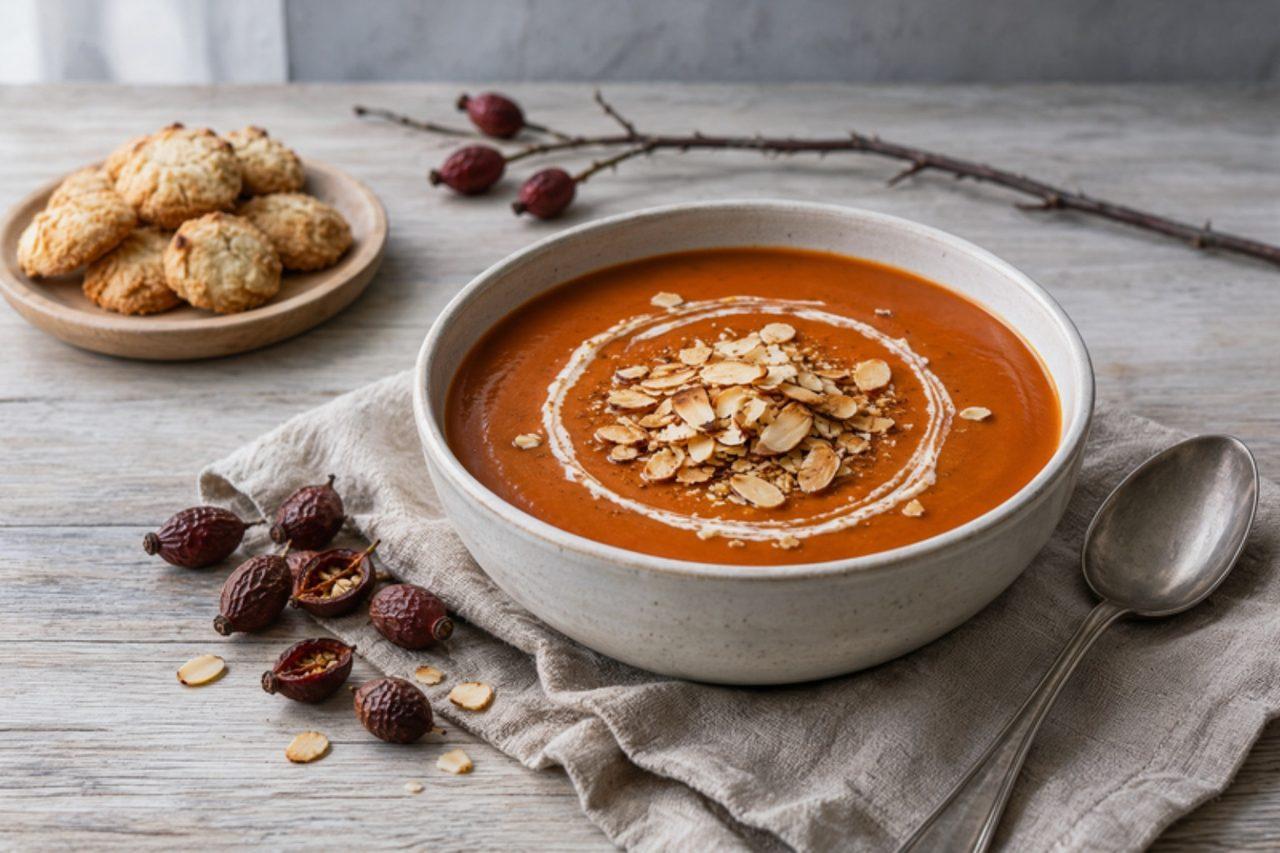
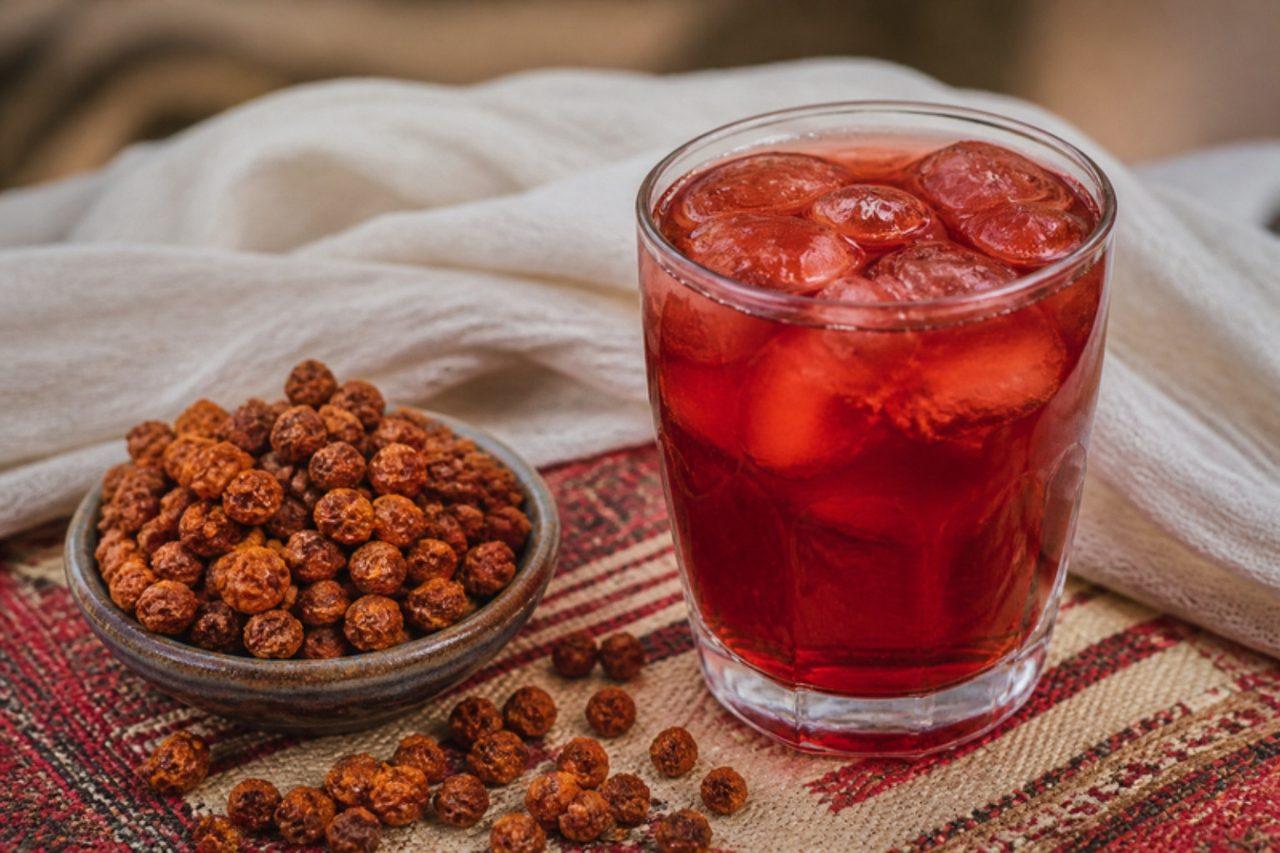
NyponsoppaRosehip soup

Nyponsoppa, rosehip soup, is one of Sweden's oldest breakfast and school-dinner soups, bright orange-red, gently sweet-sour and full of vitamin C. Families buy dried rosehip shells or powder, simmer them into a smooth soup and serve it warm in deep plates, traditionally with little almond biscuits or a spoon of cream on top. The mistake is not straining well enough: rosehips have tiny irritating hairs around the seeds, so use seedless dried shells and strain through a fine sieve. Chef's tip: finish with lemon juice off the heat, which brightens the colour and stops the soup tasting flat.

by KrazyBadal 0 views

MocochinchiDried peach and cinnamon drink

Walk through any Bolivian plaza on a warm afternoon and someone will be selling mocochinchi from a big glass jar: a cool, amber drink of sun-dried peaches simmered with cinnamon and cloves, served with a whole wrinkled peach at the bottom of the glass to eat at the end. It is the classic drink with lunch from Cochabamba to Tarija. People often skip the overnight soak, and then the peaches stay leathery and the drink tastes thin. Chef's tip: rub the soaked peaches between your hands under water to clean off dust and loosen the skins, which also releases more flavour.

by KrazyBadal 0 views

Martín FierroCheese with quince paste

Ask for dessert in a Montevideo bodegón or a country parador and you may be offered a Martín Fierro: a thick slice of fresh, mild cheese laid with an equal slice of dense quince or sweet-potato paste, named after the gaucho of the epic poem. It's salty against sweet, soft against firm, and takes two minutes to assemble. Uruguayan fresh cheese is usually made with animal rennet, so choose one with vegetarian rennet if that matters to you. The mistake is serving it fridge-cold, which dulls both flavours. Chef's tip: cut the cheese and paste to exactly the same thickness, about 1 cm, so every bite has both.

by KrazyBadal 0 views

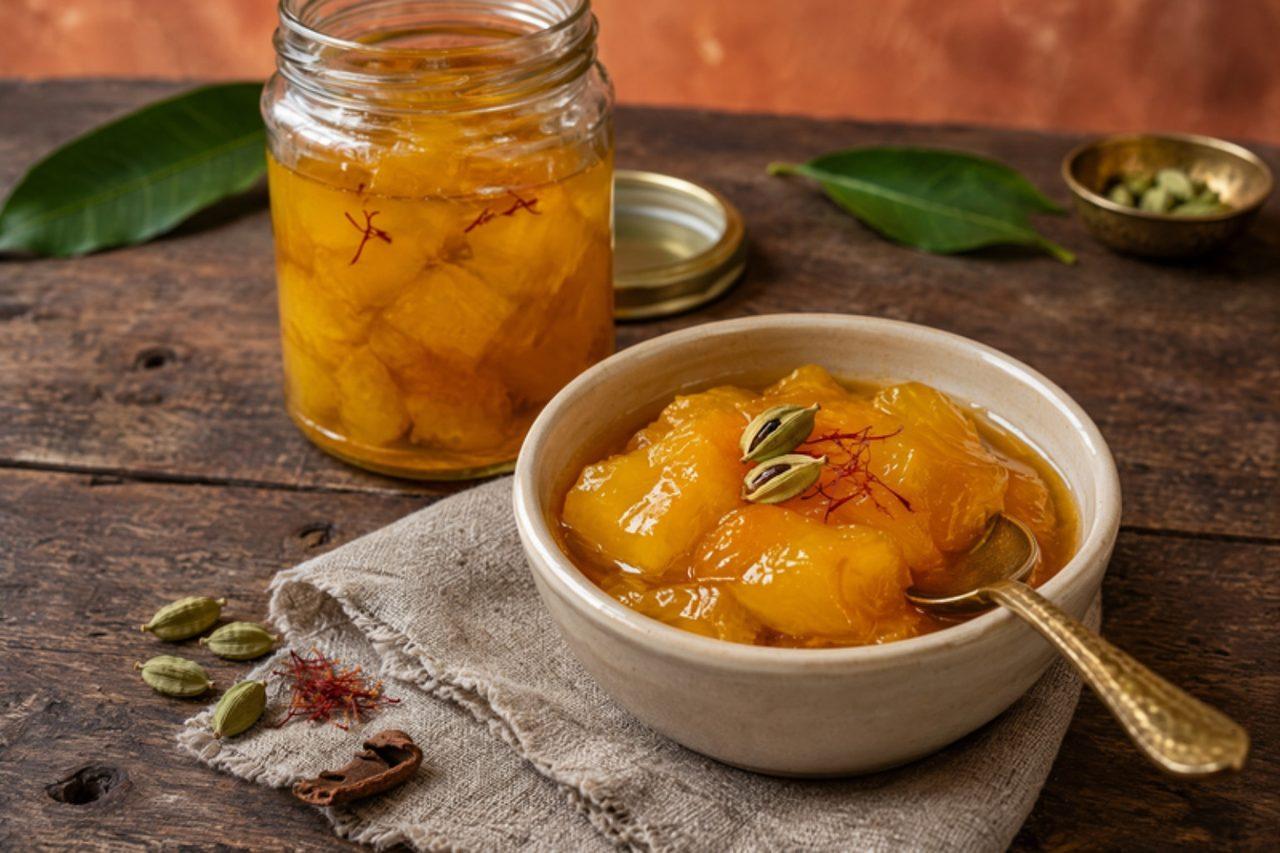
Keri no murabboSweet raw mango preserve

In Gujarat, when the summer stock of pickles goes up in May, murabbo is the gentle, sweet one that children are allowed to dip into freely. Pieces of firm raw mango (rajapuri or totapuri) are cooked slowly in sugar syrup until they turn translucent and glossy, then scented with saffron and cardamom. Unlike chhundo, which is grated and spiked with chilli, murabbo keeps the mango in distinct, tender-firm pieces in a clear, golden syrup; it tastes like candied fruit with a sour edge. Spread it on a warm thepla or rotli, serve it with khakhra at breakfast, or spoon a little beside a Gujarati thali. The common mistake is boiling the mango hard in the syrup, which breaks the pieces and clouds it; keep it at a gentle simmer. It is ready when the pieces look see-through at the edges and the syrup reaches one-string consistency (a cooled drop stretches into a single thread between finger and thumb). With this much sugar it keeps 6 months in a cool cupboard in a sterilised, dry jar, or longer in the fridge. Chef's tip: soak the cut mango in lightly salted water for 10 minutes first; it firms the pieces and stops browning.

by KrazyBadal 0 views

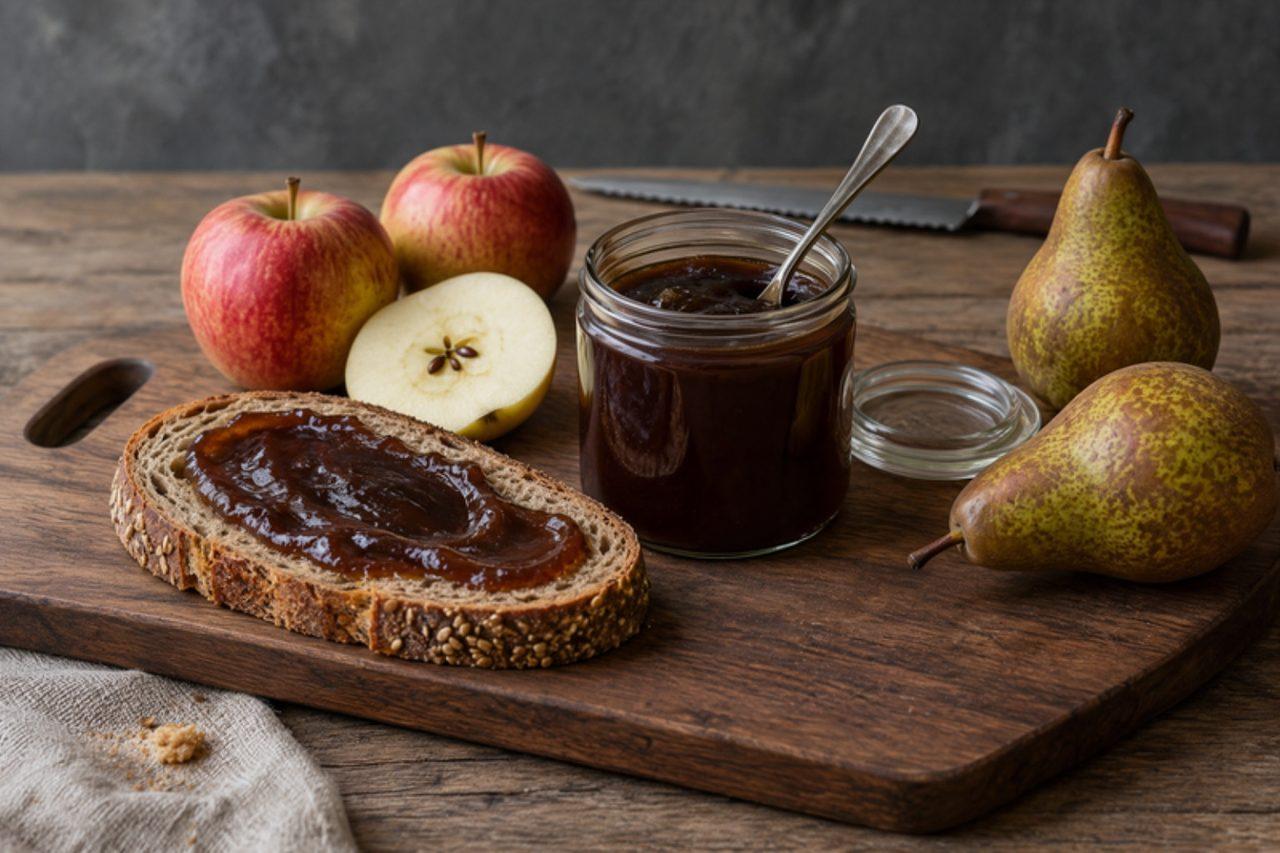
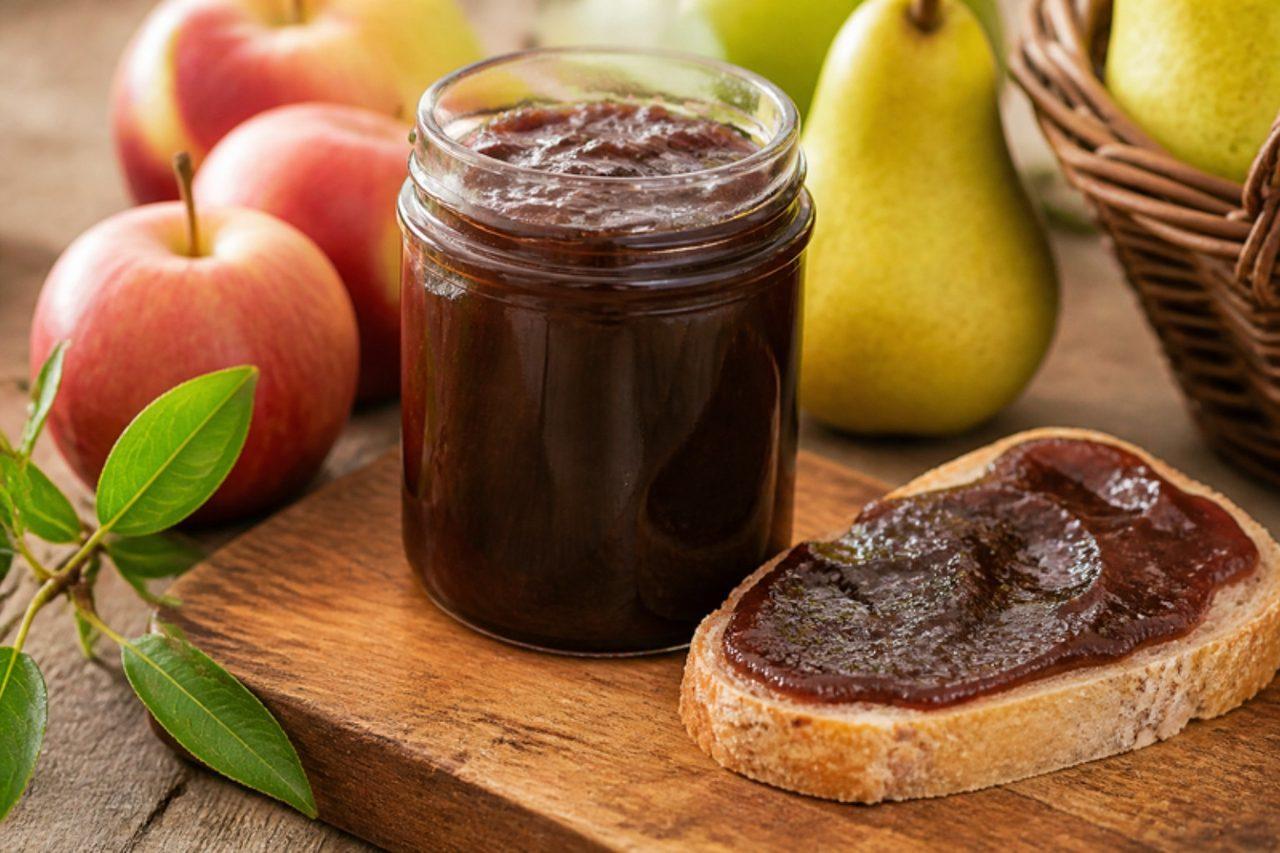
AppelstroopApple syrup

In Dutch and Belgian Limburg, appelstroop is spread on brown bread at breakfast, often under a slice of Gouda, and it goes into the Limburg sour stew zoervleis. It is nothing but apples (with a few pears) cooked to a pulp, pressed and boiled down for hours into a glossy, almost black syrup that tastes sweet, sharp and faintly of caramel. The common mistake is stopping too early: until it coats a cold plate and holds a line, it is apple juice, not stroop. Chef's tip: in the last half hour stir constantly and lower the heat, because the thick syrup catches and burns in seconds.

260 minDutchBasicsVeganGluten free
by KrazyBadal 0 views

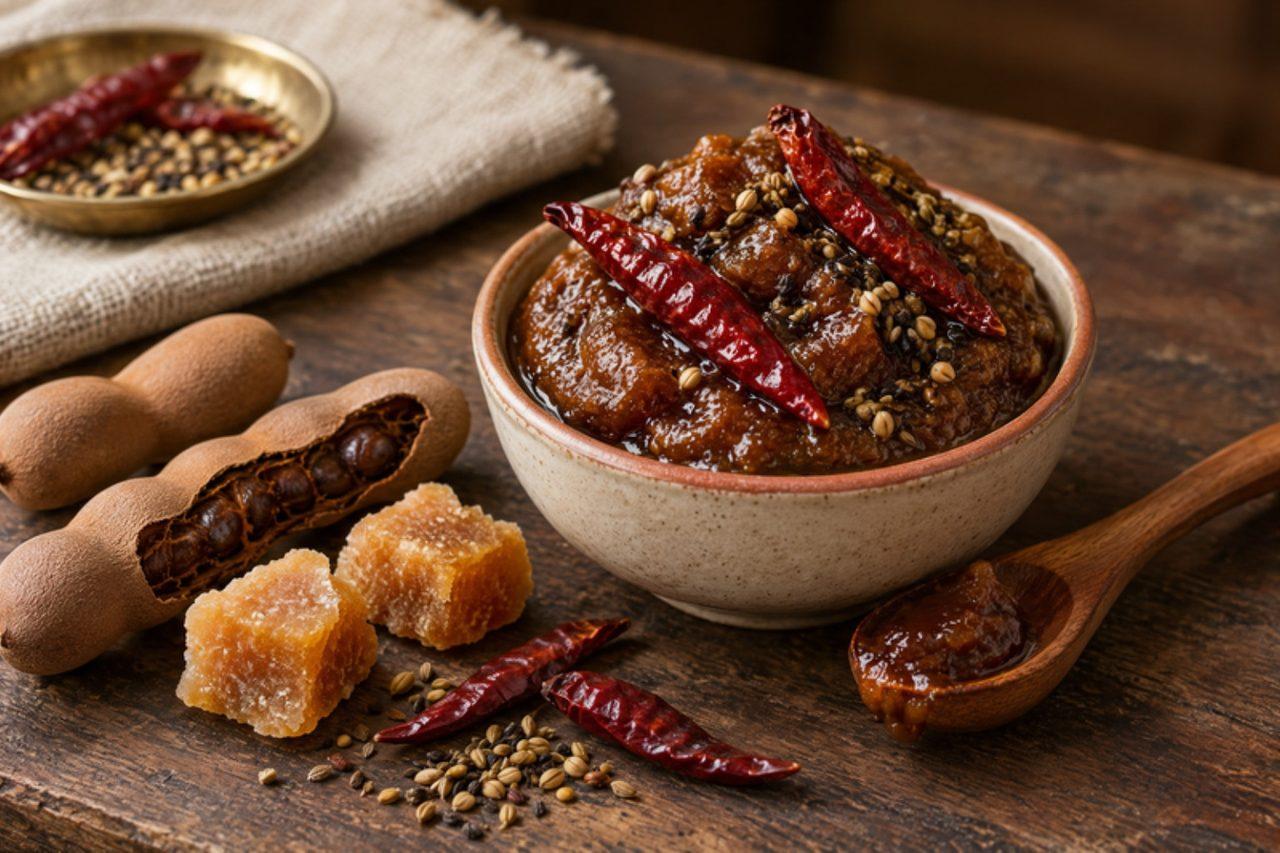
Tetul acharTamarind pickle

Ask anyone who grew up in Kolkata or a Bengal village about tetul achar and they will remember winter afternoons on the roof, sneaking spoonfuls from jars drying in the sun. Tamarind pulp is cooked down with jaggery, salt and a mustard-oil tempering of panch phoron and dried chilli until it turns sticky, dark and glossy. It tastes sweet and sour in one bite, with a little heat and the bittersweet crackle of fenugreek and nigella from the five-spice. Eat it as a teatime treat, with khichuri, or as the sweet-sour note at the end of a Bengali lunch. The common mistake is cooking it too hard: like toffee, tamarind and jaggery go from glossy to burnt quickly, so keep the heat low near the end and stir. It is ready when it falls from the spoon in a thick ribbon and leaves a trail across the pan; it firms up a lot as it cools. Being very sweet and acidic, it keeps 2 months in a dry jar in a cool cupboard and longer in the fridge. Chef's tip: in winter use khejur gur (date palm jaggery) for a smoky, caramel depth.

by KrazyBadal 0 views

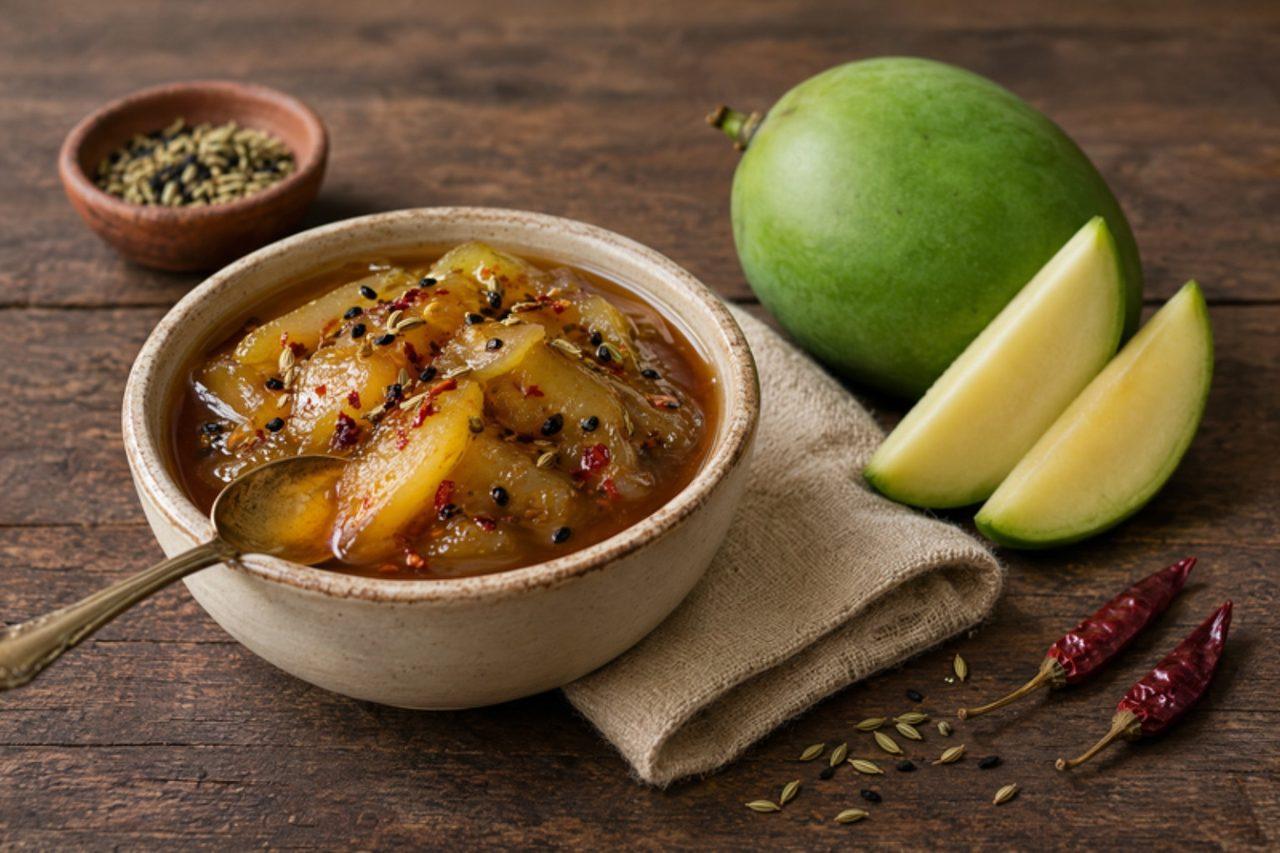
Aam ki launjiSweet and sour raw mango relish

In Rajasthan and across the Hindi belt, launji is the quick mango relish made the day the first raw mangoes come home in April, and it keeps appearing on the thali all through the scorching summer. Unlike the long-cured achaars, it is cooked in 20 minutes: mango pieces in mustard oil with saunf, kalonji, methi and cumin, then simmered with jaggery until glossy. The pieces stay soft but hold their shape in a thick, amber syrup that is sweet first, then sour, with a warm hum of chilli and a liquorice note from the fennel. Eat it with dal-baati, puri, paratha or plain khichdi; in the heat it is believed to cool the body. The common mistake is adding the jaggery too early, so it caramelises and turns bitter before the mango is tender; cook the mango first, then the jaggery. It is ready when the syrup coats the back of a spoon and the mango looks translucent at the edges. It thickens as it cools. Store in a clean jar in the fridge and eat within a week to 10 days. Chef's tip: leave a little peel on some pieces; it gives a pleasant chew and stops the mango from turning to mush.

by KrazyBadal 0 views

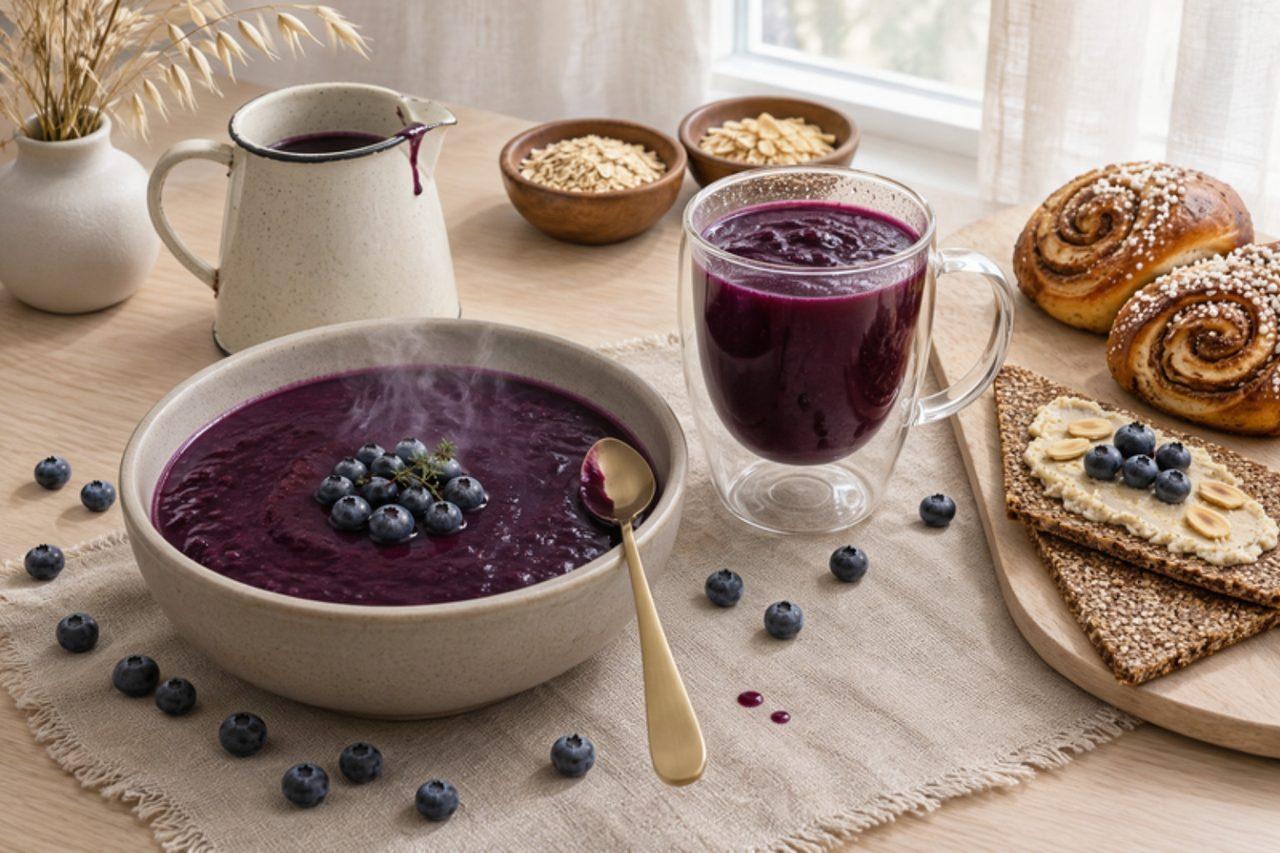
BlåbärssoppaBilberry soup

Swedes have drunk blåbärssoppa for generations, warm on a winter morning and cold from a cup after the Vasaloppet ski race, where skiers are handed it at every station. It is a thin, deep purple soup of bilberries or blueberries, sweetened and thickened just enough with potato starch to coat the tongue. The common mistake is boiling the soup after adding the starch: it turns stringy and then thins out again, so take it off the heat as soon as it thickens. Chef's tip: wild bilberries give a far deeper colour and flavour than cultivated blueberries, and frozen ones work perfectly.

by KrazyBadal 0 views

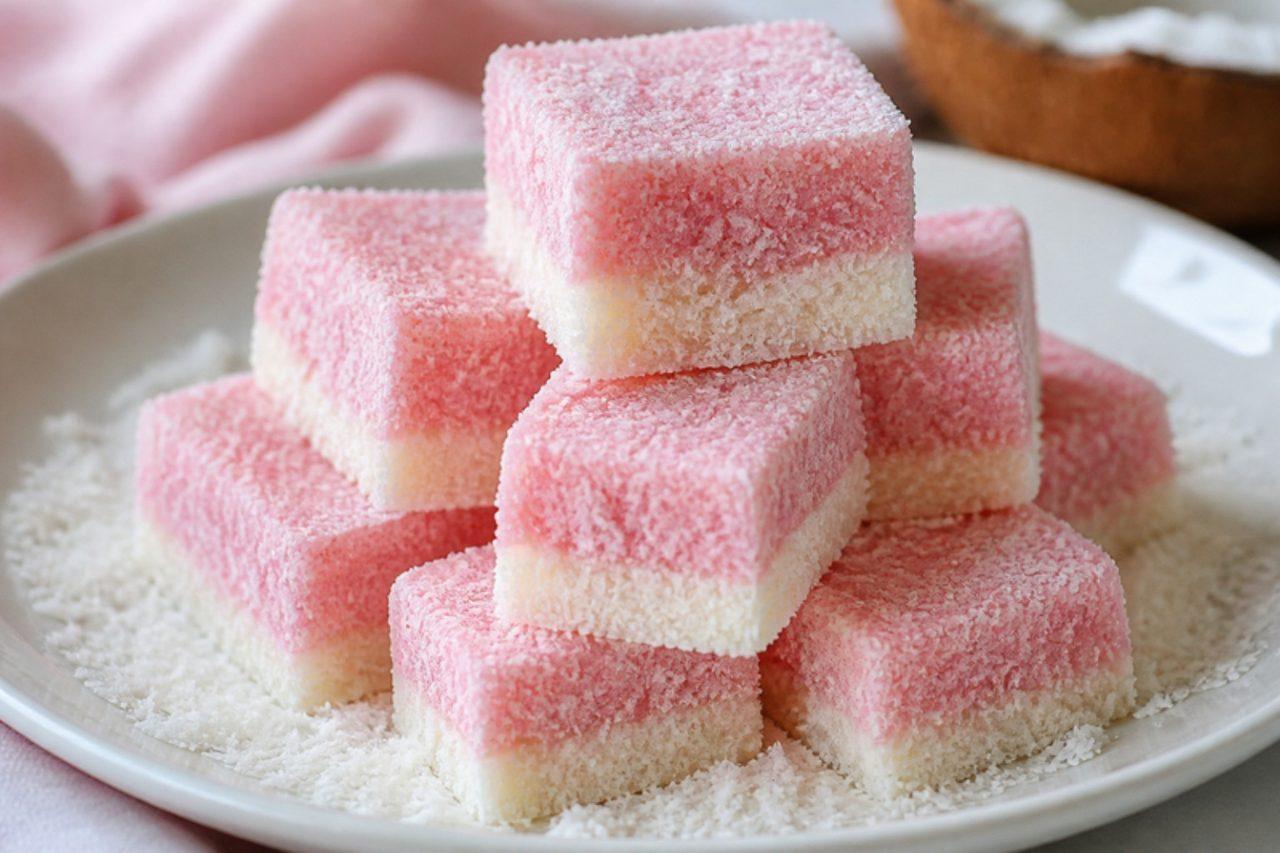
Coconut icePink and white coconut fudge

Coconut ice is the pink and white sweet that fills Australian school fete stalls, Christmas hampers and CWA cake tables, a no-cook fudge of desiccated coconut, condensed milk and icing sugar. It is soft, chewy and very sweet, so cut small squares. A common mistake is a mixture that's too wet to hold; add more coconut until it's firm enough to press. Chef's tip: press the white layer first, then the pink, and chill before cutting for sharp stripes.

by KrazyBadal 0 views

Aam telMango pickle in mustard oil

In Bengal the summer of kal-baishakhi storms is also the season of aam tel, mango oil. Slices of hard green mango are salted and sun-dried until leathery, then sunk in mustard oil with roasted panch phoron and chilli and left to steep for a couple of weeks. The mango turns chewy, salty and sour; the oil turns golden, sharp and fruity, and that oil is the real treasure. A spoonful goes into jhalmuri (spiced puffed rice) on every Kolkata street corner, over plain rice with a fried egg or mashed potato, or into a bowl of panta bhat in the heat. The common mistake is not drying the mango enough: if it still feels wet when pressed, it will grow mould under the oil. Dry it until the slices are shrunken, leathery and bend without releasing juice. The pickle is ready when the oil has turned golden and smells strongly of mango and spice. Because the mango is salt-cured and acidic and stays fully under the oil in a dry jar, with no garlic, it keeps up to a year in a cool cupboard; in hot, humid weather keep it in the fridge. Chef's tip: no strong sun? Dry the salted slices in the oven at 60–70 °C with the door propped open, for 5–6 hours.

by KrazyBadal 0 views

Maangai thokkuGrated raw mango pickle

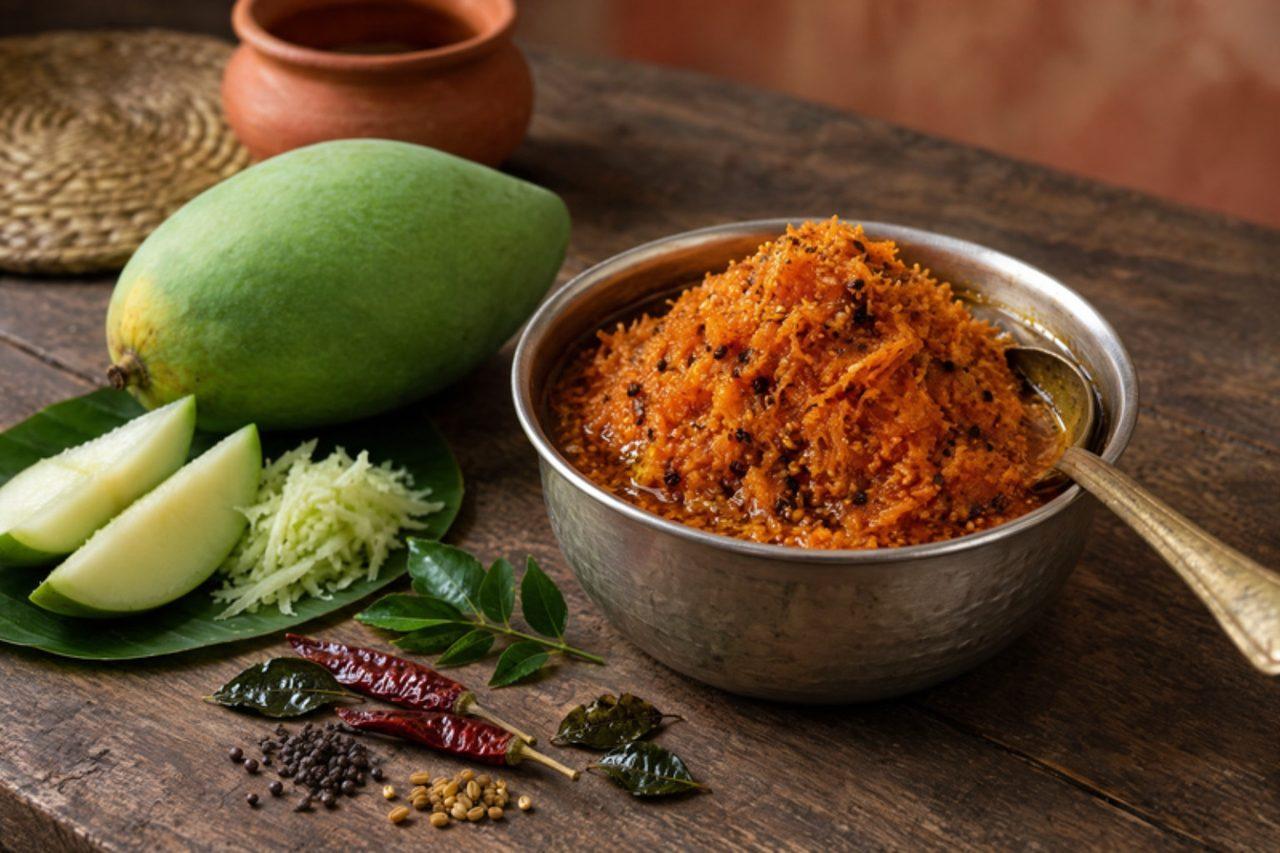
Thokku is the Tamil word for a pickle cooked down to a thick, spoonable mass, and maangai thokku is the one every Tamil Nadu home makes in April and May when the hard, sour Kili mooku (parrot-beak) mangoes are cheap. Grated mango is simmered in nallennai (gingelly oil) with chilli powder, salt and hing until it turns dark, glossy and jam-like, then finished with roasted fenugreek powder. It is sour first, then hot, with a nutty sesame taste and a little bitterness at the end. It is a classic partner for curd rice, a spoonful inside a dosa, or a travel companion with idli and lemon rice for train journeys. The usual mistake is grating the mango too fine or stirring it too little: a fine pulp sticks and burns. Use the large holes of the grater and keep stirring once it thickens. It is done when the mango has darkened, comes away from the pan in one mass and the oil oozes out around the edge. Kept in a dry jar under a film of oil it lasts about 2 weeks in a cool cupboard and 2 months in the fridge. Chef's tip: a teaspoon of jaggery at the end rounds off very sour mangoes without making the thokku sweet.

by KrazyBadal 0 views

Chana methi nu athanuChickpea and fenugreek pickle

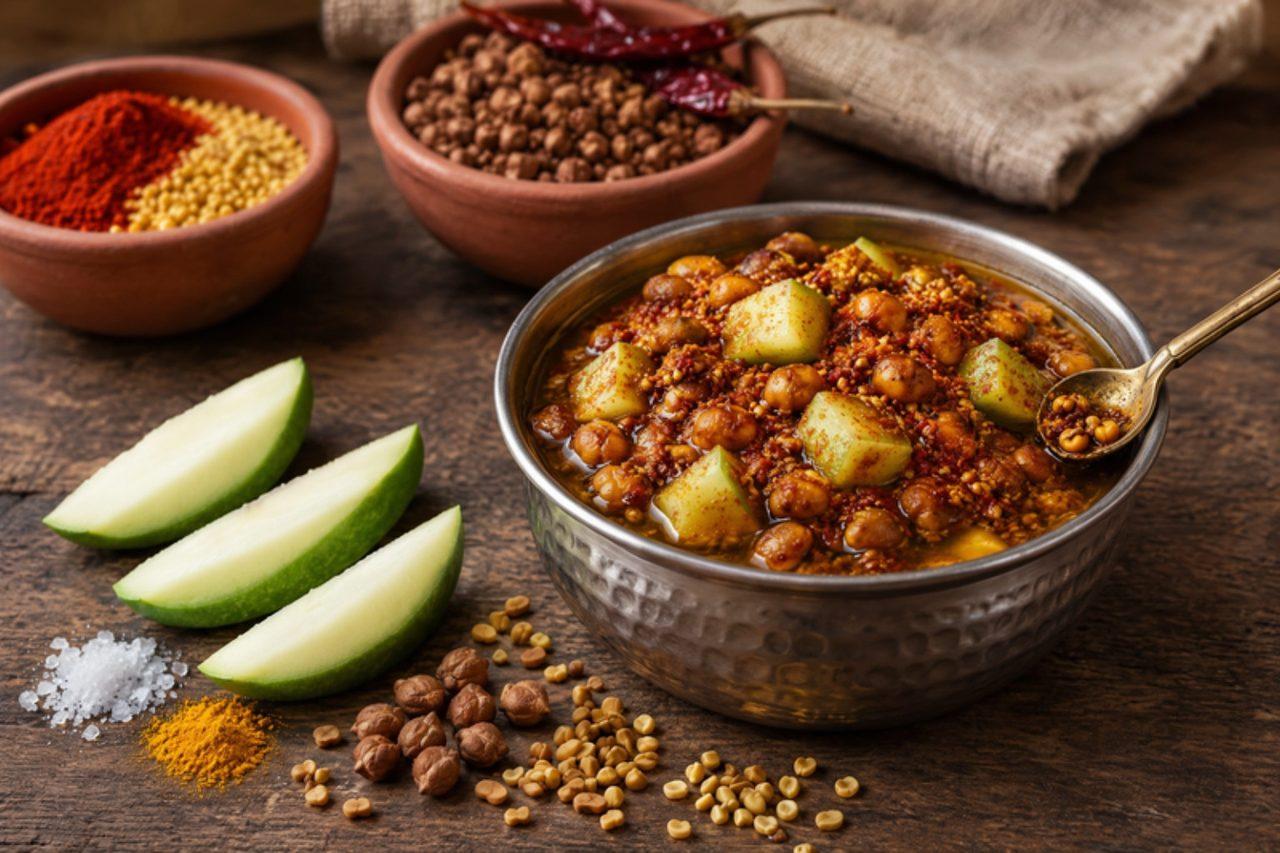
This is the thrifty, protein-rich pickle of Kathiawad and the Gujarati countryside, made in the May pickle season alongside methia keri. Brown chickpeas and fenugreek seeds are soaked until plump, then mixed with salted raw mango, split mustard, chilli and hing and sealed under oil. Over a few days the chana and methi drink up the sour mango juice and soften to a pleasant bite; the methi seeds lose most of their bitterness and turn nutty. The pickle is sour, hot and pungent, with plenty of crunch. A spoonful brightens khichdi-kadhi, bajra rotla or a plain dal-bhaat-shaak lunch. The common mistake is mixing in chickpeas that are still wet after soaking: dry them on a cloth for a few hours or the pickle will turn mouldy. It is ready in 4–5 days, when the chickpeas can be bitten through easily and taste sour all the way in. Because soaked pulses are low in acid, keep this one in the fridge once it is mixed, where it lasts up to 3 months, with the oil always covering the top. Chef's tip: use kala chana (small brown chickpeas); they stay firmer than large white ones.

by KrazyBadal 0 views

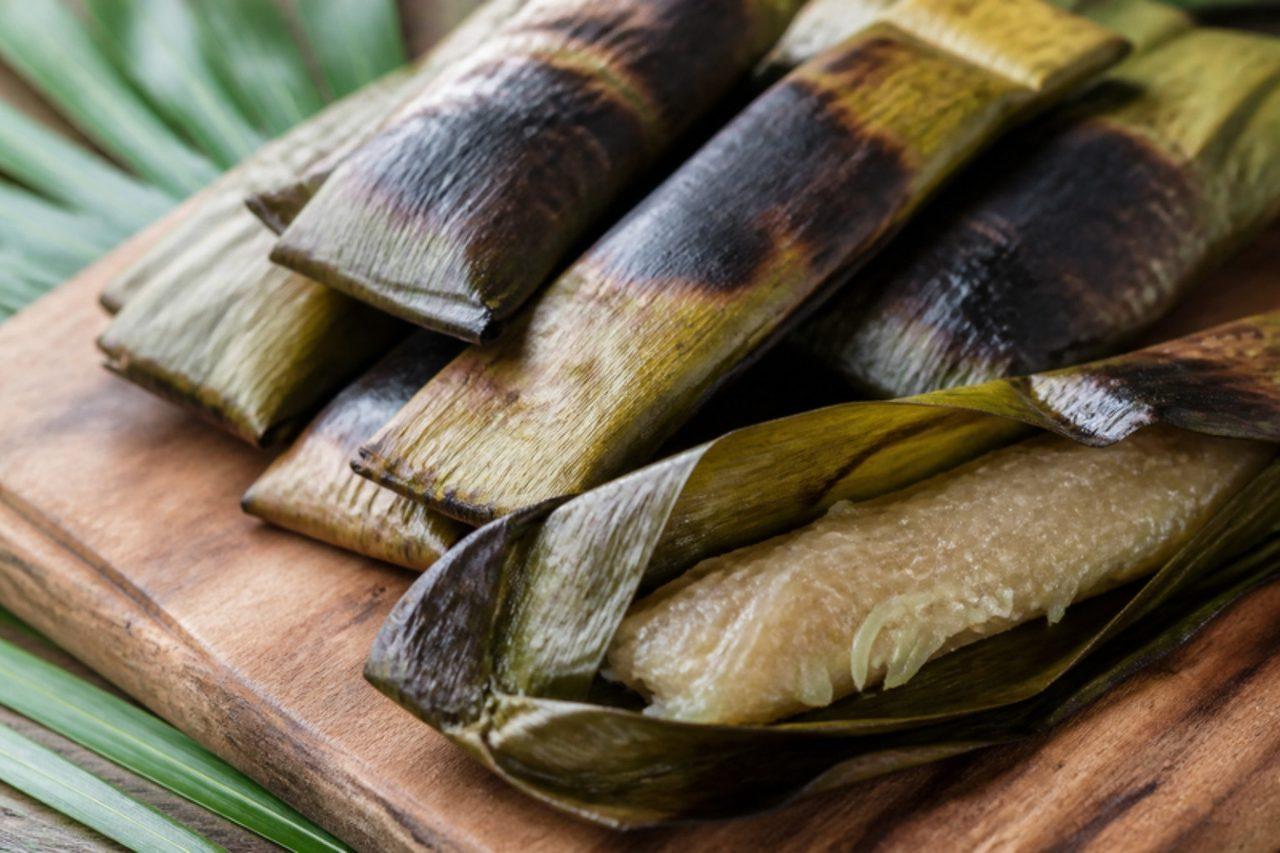
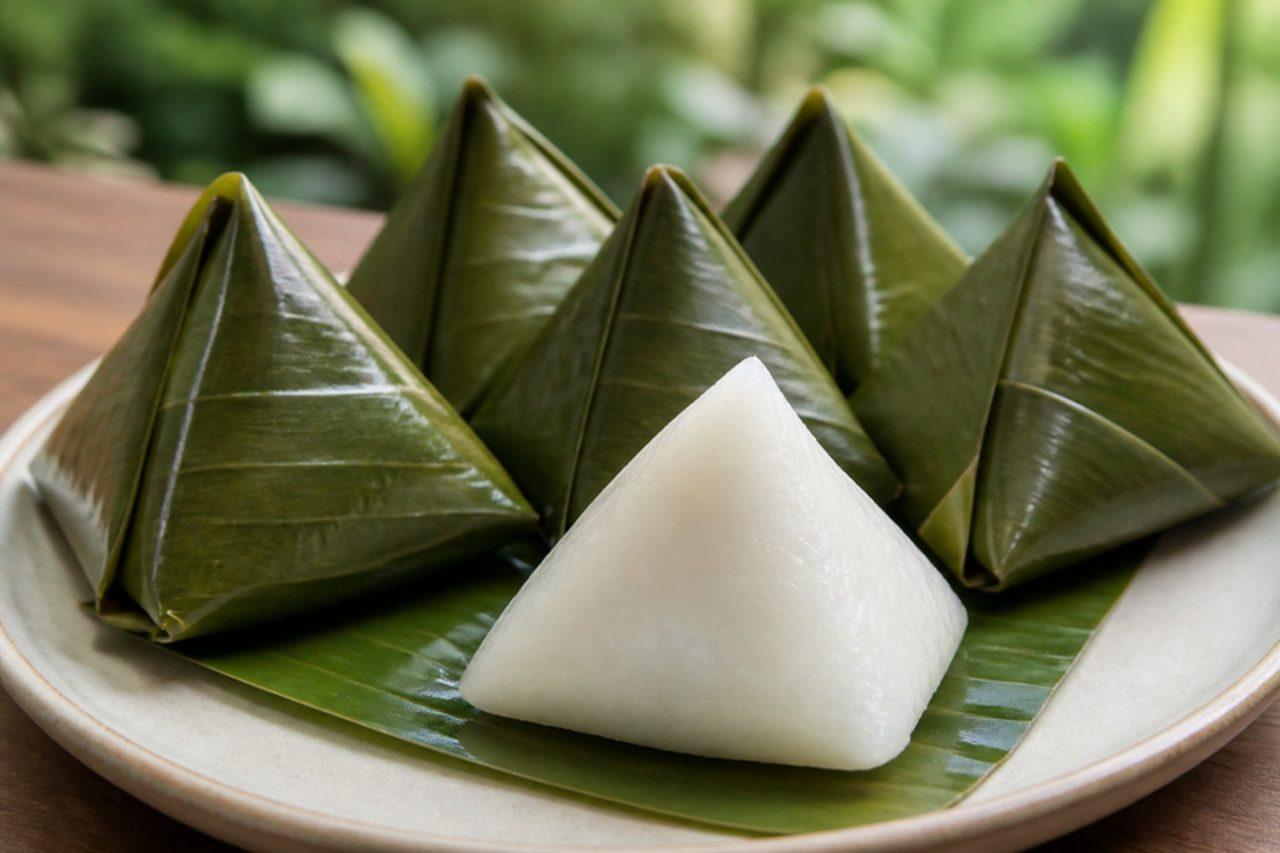
ApigigiGrilled coconut and tapioca parcels

Apigigi are an old Chamorro sweet from Guam and Saipan, made for fiestas and family gatherings: soft young coconut is grated and mixed with tapioca starch and sugar, wrapped in banana leaves and grilled over coals until chewy and lightly charred. They are sticky, mildly sweet and smoky. Grated frozen young coconut and tapioca starch from Asian shops make them easy at home. A common mistake is grilling over a fierce flame; the leaves burn before the centre sets. Chef's tip: steam them first for 15 minutes, then finish on the grill for flavour.

by KrazyBadal 0 views

Dousha bao (red bean buns)

All over China, from Beijing breakfast stalls to Shanghai school bags, dousha bao are the sweet buns people grab in the morning and tuck into a lunch box for later: fluffy white yeasted dough wrapped around smooth red bean paste and steamed until springy. They freeze beautifully, so families make a big batch on Sunday. The mistake is opening the steamer lid as soon as the timer goes; the sudden cold makes the buns wrinkle and collapse. Turn off the heat and wait five minutes before lifting the lid. Chef's tip: chill the bean paste and roll it into balls before wrapping; a firm filling is much easier to seal neatly.

by KrazyBadal 0 views

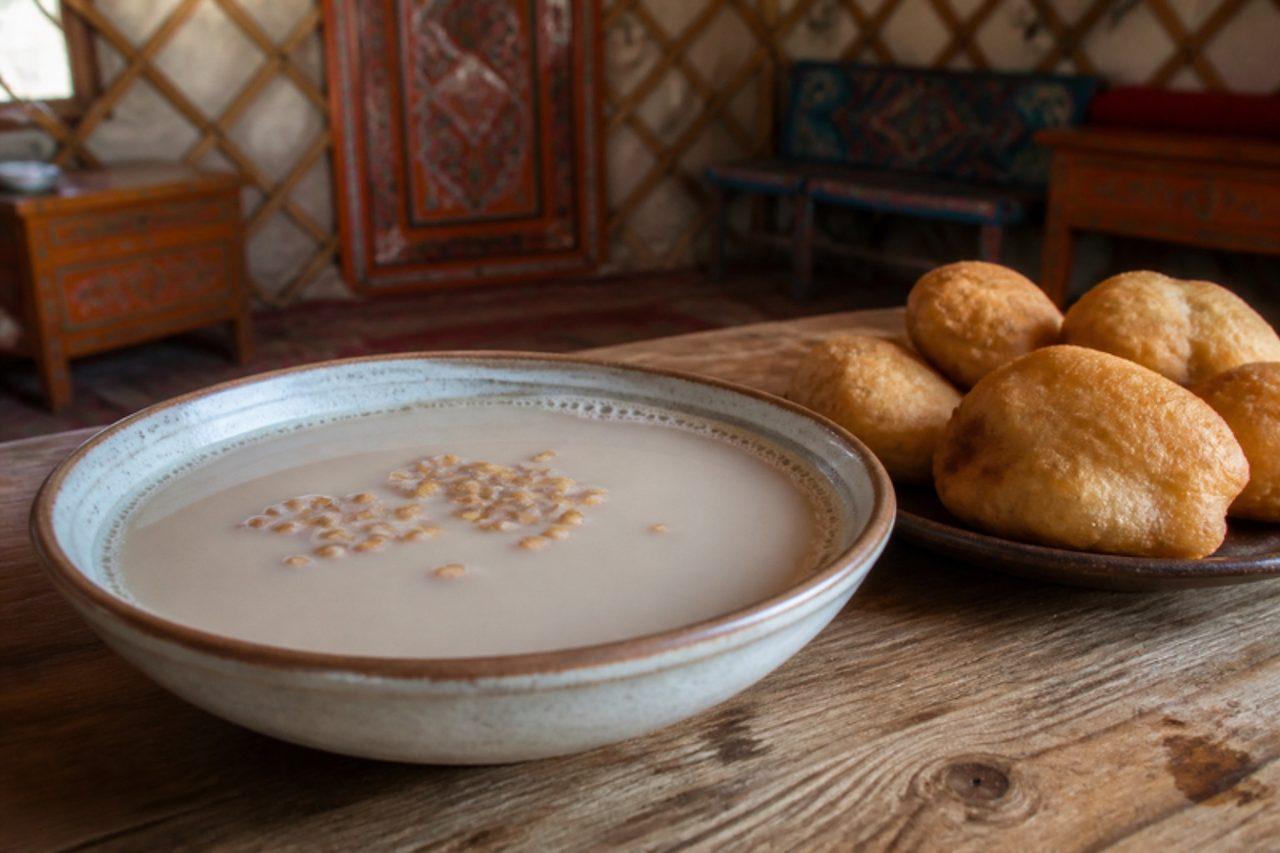
Mongolian salty milk tea

Süütei tsai is the first thing offered to anyone who steps into a ger on the Mongolian steppe, from Arkhangai to the Gobi, and families drink it all day long from wide bowls. Green brick tea is boiled in water, then milk and a pinch of salt go in, and the tea is ladled high and poured back again and again to aerate it. Some households add a knob of butter or a spoon of toasted millet for a richer, more filling bowl. It is savoury, not sweet, which surprises first-time visitors. A common mistake is using black tea leaves, which go bitter; use green brick tea or a mild green tea. Chef's tip: the ladling is not just ritual, it gives the tea a smooth, rounded taste.

by KrazyBadal 0 views

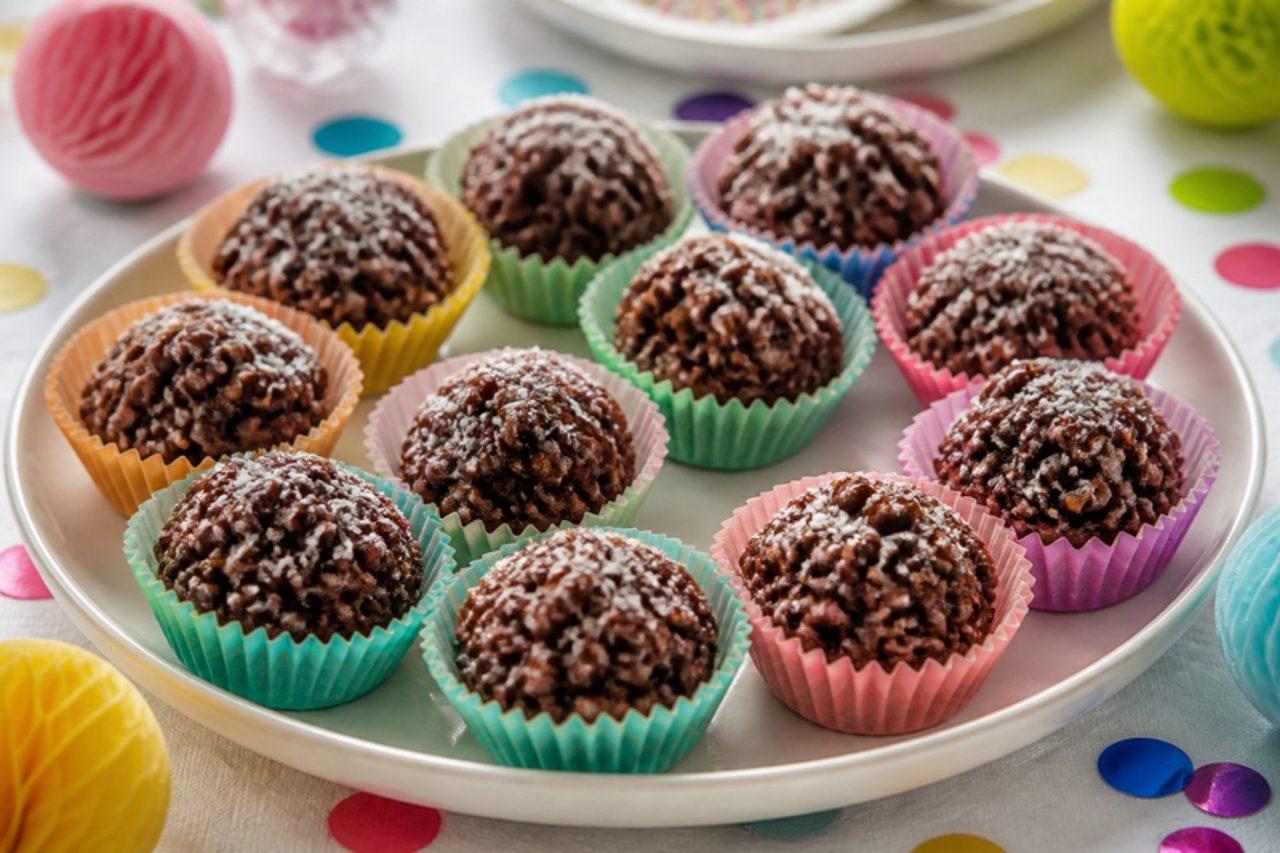
Chocolate cracklesChocolate puffed rice cakes

No Australian child's birthday party is complete without chocolate crackles, served in paper patty cases alongside fairy bread at backyard parties from Adelaide to Cairns. Puffed rice cereal is bound with melted solid coconut fat, icing sugar, cocoa and desiccated coconut, then set in the fridge. Kids can make them almost entirely on their own. A common mistake is using hot fat, which makes the mixture greasy; let it cool a few minutes. Chef's tip: use solid white hydrogenated coconut fat sold in blocks, not jarred coconut oil, which won't set firm at room temperature.

by KrazyBadal 0 views

Frozen Christmas pudding

In the heat of an Australian December, many families swap the steamed pudding for a frozen one, ice cream packed with fruit, nuts and chocolate and set in a pudding basin so it still looks the part on the Christmas table in Brisbane or Perth. It is made days ahead and turned out just before serving. A common mistake is letting the ice cream melt too much while mixing, which makes it icy when refrozen; soften it only until stirrable. Chef's tip: soak the fruit in orange juice the night before so it stays soft when frozen.

by KrazyBadal 0 views

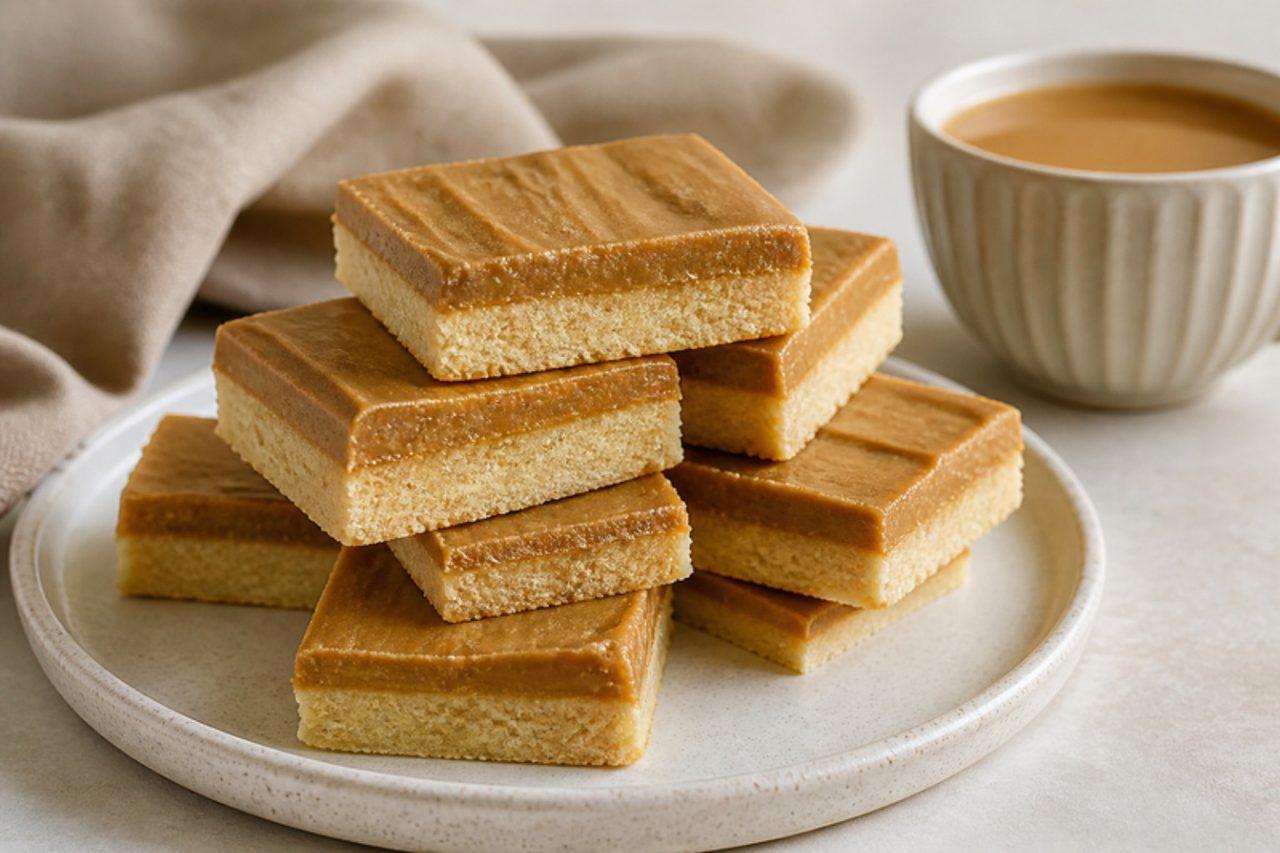
Ginger crunchGinger shortbread slice

Ginger crunch is in every New Zealand café cabinet and was in every school fair tin long before that, a recipe passed between generations in handwritten notebooks. A crisp, buttery ginger shortbread base is covered while still hot with a thick, fudgy icing of butter, golden syrup, icing sugar and plenty of ground ginger. Cut into bars, it keeps a week in a tin. A common mistake is letting the base cool before icing; hot base and hot icing set together properly. Chef's tip: use more ginger than you think; the icing should have a real bite.

by KrazyBadal 0 views

MotogoSoured sorghum porridge

In Botswana, motogo is the soft breakfast porridge made from mabele (sorghum meal), stirred in water until smooth and then soured with a splash of madila or maas, thick cultured milk, and sweetened with sugar. It has a gentle tang and a slightly earthy, nutty flavour, quite unlike oat porridge. The common mistake is adding the sour milk while it is still bubbling, which splits it; take the pot off the heat first. Chef's tip: for an even smoother motogo, soak the sorghum meal in the cold water for 20 minutes before cooking.

by KrazyBadal 0 views

Melting momentsLemon buttercream sandwich biscuits

Melting moments are the soft, crumbly biscuits found in Australian and New Zealand bakery jars and grandmother's tins, two rounds made with custard powder and icing sugar sandwiched with a lemon butter icing. The custard powder gives them their yellow colour and tender, short texture that melts in the mouth, hence the name. A common mistake is overbaking; they should be pale, not golden. Chef's tip: press each ball with a floured fork for the classic stripes.

by KrazyBadal 0 views

Kerda nu athanuDesert berry pickle

Ker is a leafless desert shrub that grows wild across Kutch and the Thar, and in April and May, before the monsoon, it is covered in small green berries that families pick by hand. Fresh ker are fiercely bitter, so they are soaked and boiled until the bitterness fades, then pickled with split mustard, split fenugreek, chilli and lemon juice and covered in oil. The berries are firm, pea-sized and slightly chewy, with a sour, earthy, caper-like flavour under the mustard heat. In Kutch the pickle goes with bajra rotlo and buttermilk, or is mixed into khichdi; across Rajasthan the same berries go into ker sangri. The common mistake is rushing the soaking: if the water is not changed several times the pickle stays harsh. Taste a berry: it should be pleasantly sour-bitter, like an olive, not acrid. It is ready to eat after 3–4 days, once the berries have absorbed the lemon. Boiled ker are low in acid, so the lemon matters and the pickle lives in the fridge, where it keeps up to 2 months. Abroad, use dried ker from Indian grocers (they swell back well), or, at a pinch, capers soaked to remove the salt. Chef's tip: add a few cubes of raw mango in season for extra sourness.

by KrazyBadal 0 views

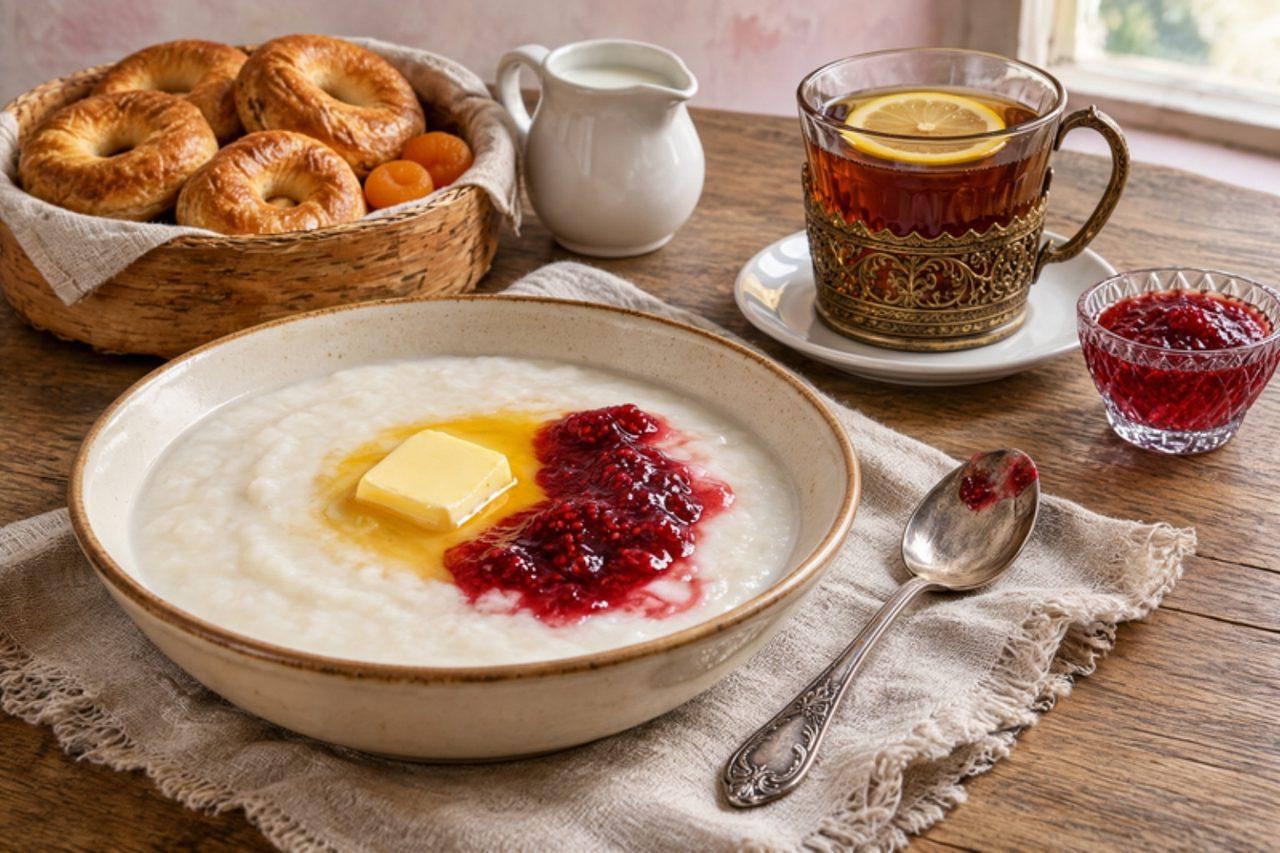
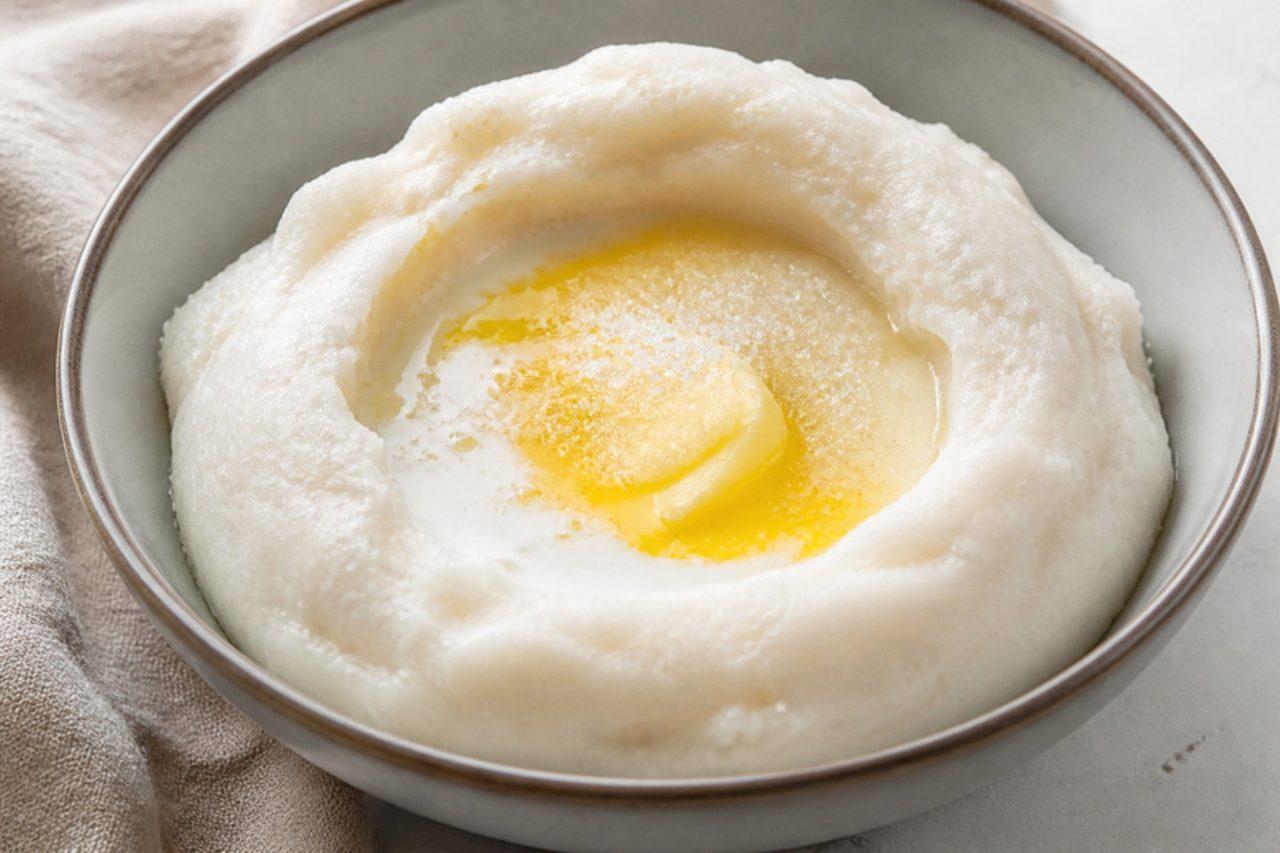
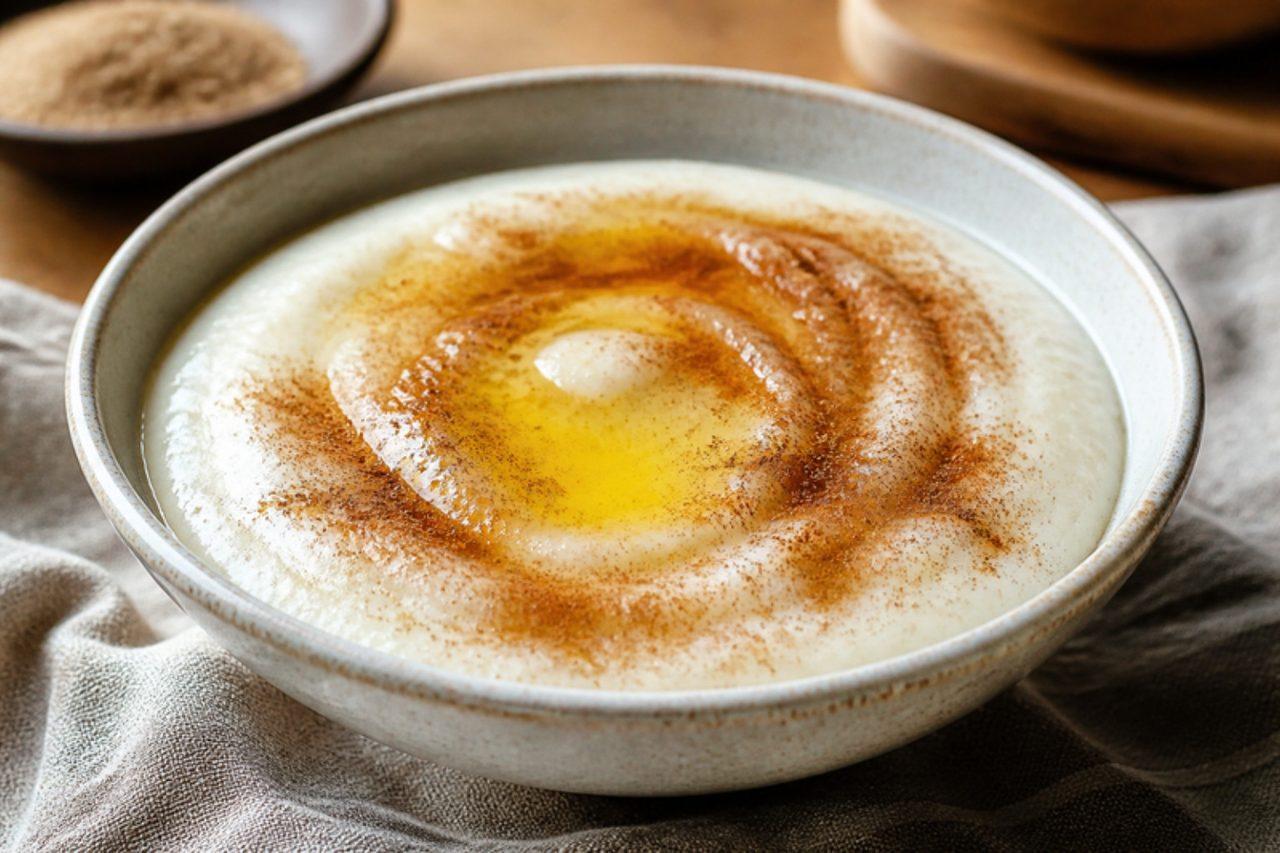
Mannaya kashaSemolina porridge

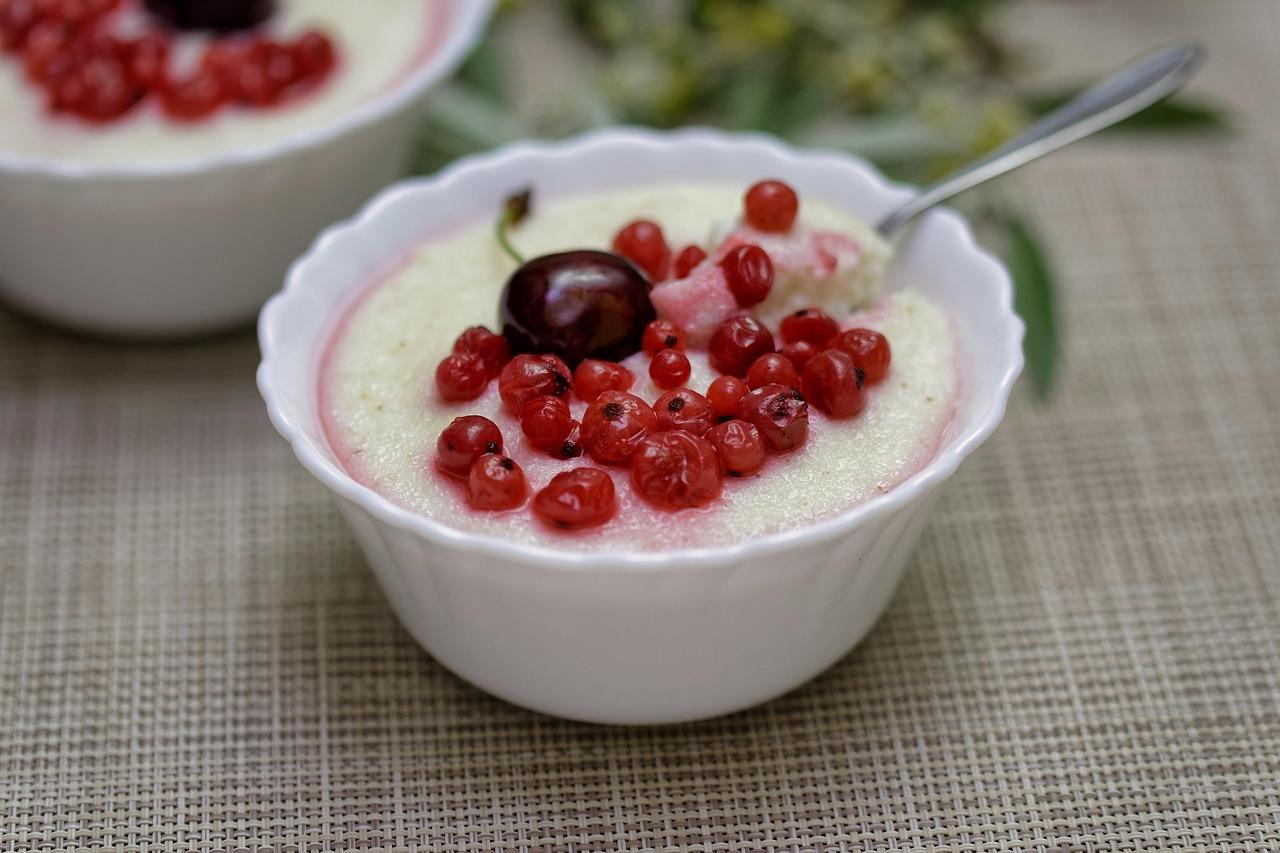
Mannaya kasha is the breakfast of every Russian childhood, served in kindergartens and at home: semolina simmered in milk into a smooth, soft porridge, with a melting knob of butter and a spoon of jam or berries in the middle. The famous mistake, joked about by generations of children, is lumps; they form when semolina is tipped in all at once, so rain it in slowly while stirring. Chef's tip: for a thick porridge use 3 tablespoons of semolina per 250 ml of milk, and for the runny kindergarten style use 2; it thickens a lot as it cools, so take it off the heat a little thinner than you want.

by KrazyBadal 0 views

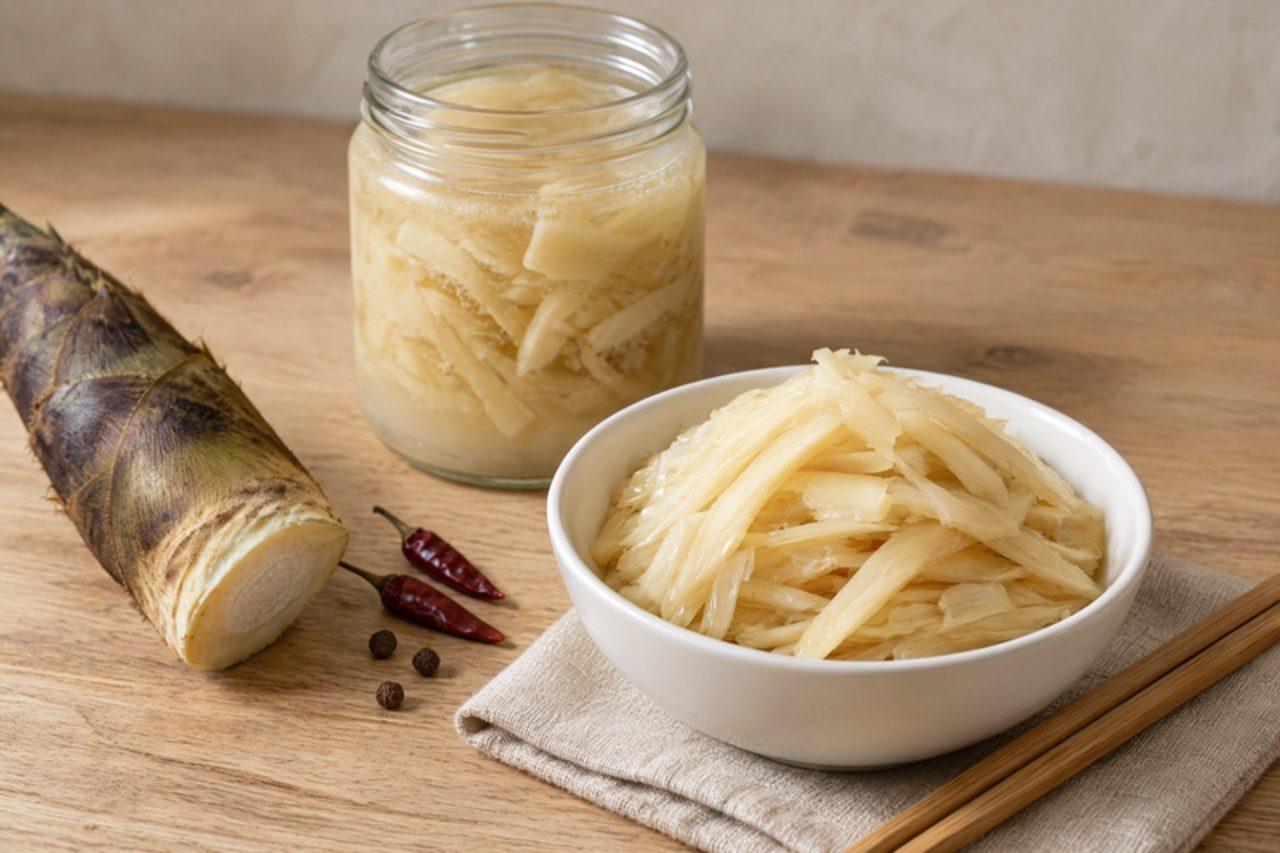
Suan sunFermented bamboo shoots

In Liuzhou in Guangxi, spring and early summer bring fresh bamboo shoots, and every household fills big jars with sliced shoots in water to sour. The smell of suan sun is legendary, sour, funky and a little like strong cheese, but cooked into a bowl of luosifen (river-snail rice noodle soup), stir-fried with pork and chilli, or simmered with duck, it turns into a deep, savoury tang that locals crave. The slices stay crisp. Fresh shoots contain natural compounds that release cyanide, so suan sun is always cooked before eating: boil it for at least 10 minutes in your dish, and never eat it raw from the jar. Canned or vacuum-packed cooked shoots will not sour on their own; use fresh shoots, or add a little brine from an earlier ferment. Common mistake: letting slices float above the brine, where they go soft and mouldy; keep everything submerged under a weight. Normal: cloudy brine, bubbles, a sharp sour, funky smell, and a flat white film you can skim. Bad: fuzzy coloured mould, pink or black slime, or a rotten-egg, putrid smell; discard. It is ready after 2–3 weeks, when it tastes clearly sour. Chef's tip: ferment it in a shed; the smell travels.

by KrazyBadal 0 views

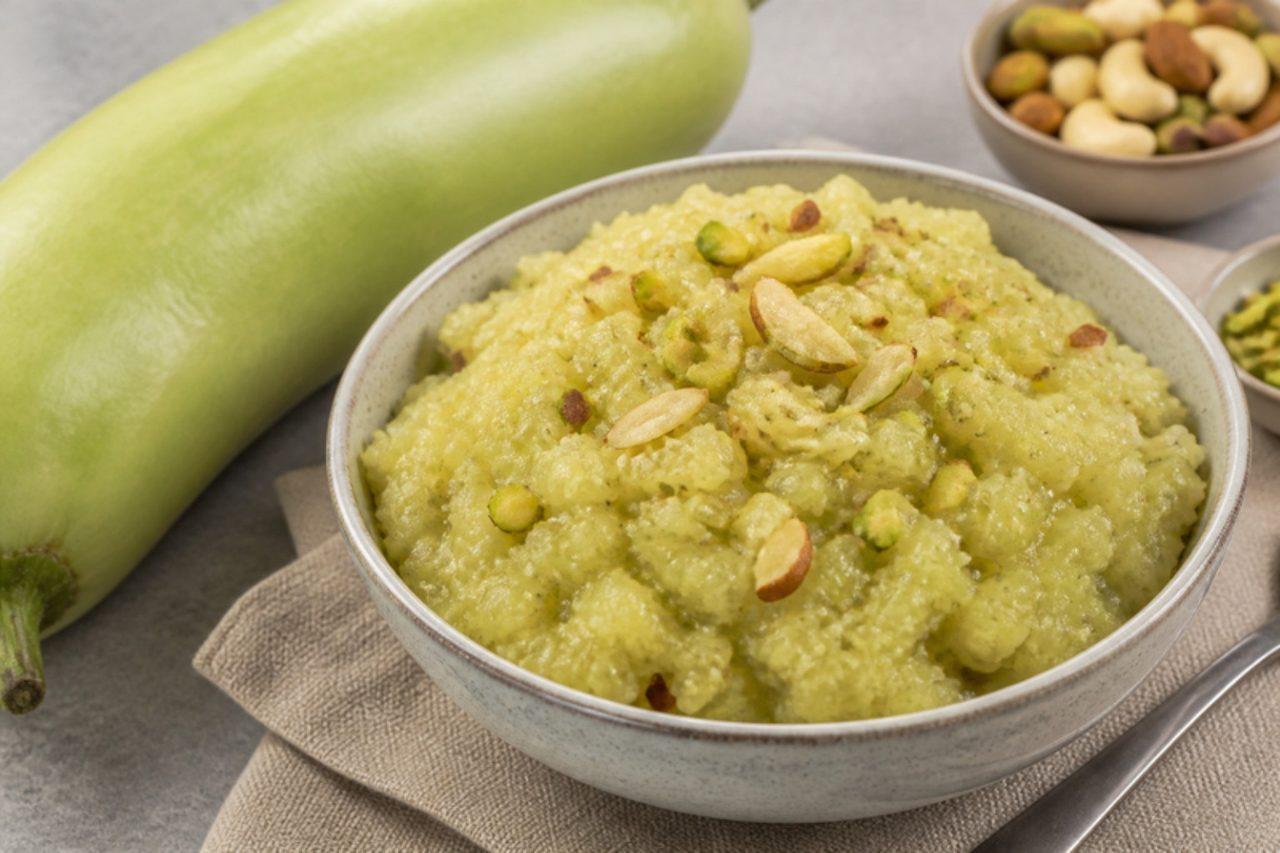
Lauki ka halwaBottle gourd halwa

Pale jade-green and soft, with tiny strands of gourd suspended in a creamy, cardamom-scented reduction, lauki ka halwa is what many Pakistani households make in summer, when the vines are heavy and bottle gourd is the cheapest thing in the sabzi mandi. It is lighter than carrot or dal halwa, gently sweet, and tastes of milk and ghee more than vegetable; families in Hyderabad, Karachi and Faisalabad serve it chilled on hot evenings or warm after a meal, and it is a favourite sweet for Ramadan iftar tables. The usual let-down is not squeezing out the gourd's water before cooking, which dilutes the milk and leaves the halwa thin and bland. Chef's tip: use a young, tender lauki with soft seeds, cook the grated gourd in ghee first until it softens, then add the milk, and stop when the halwa is moist and creamy, not dry, as it firms up as it cools.

by KrazyBadal 0 views

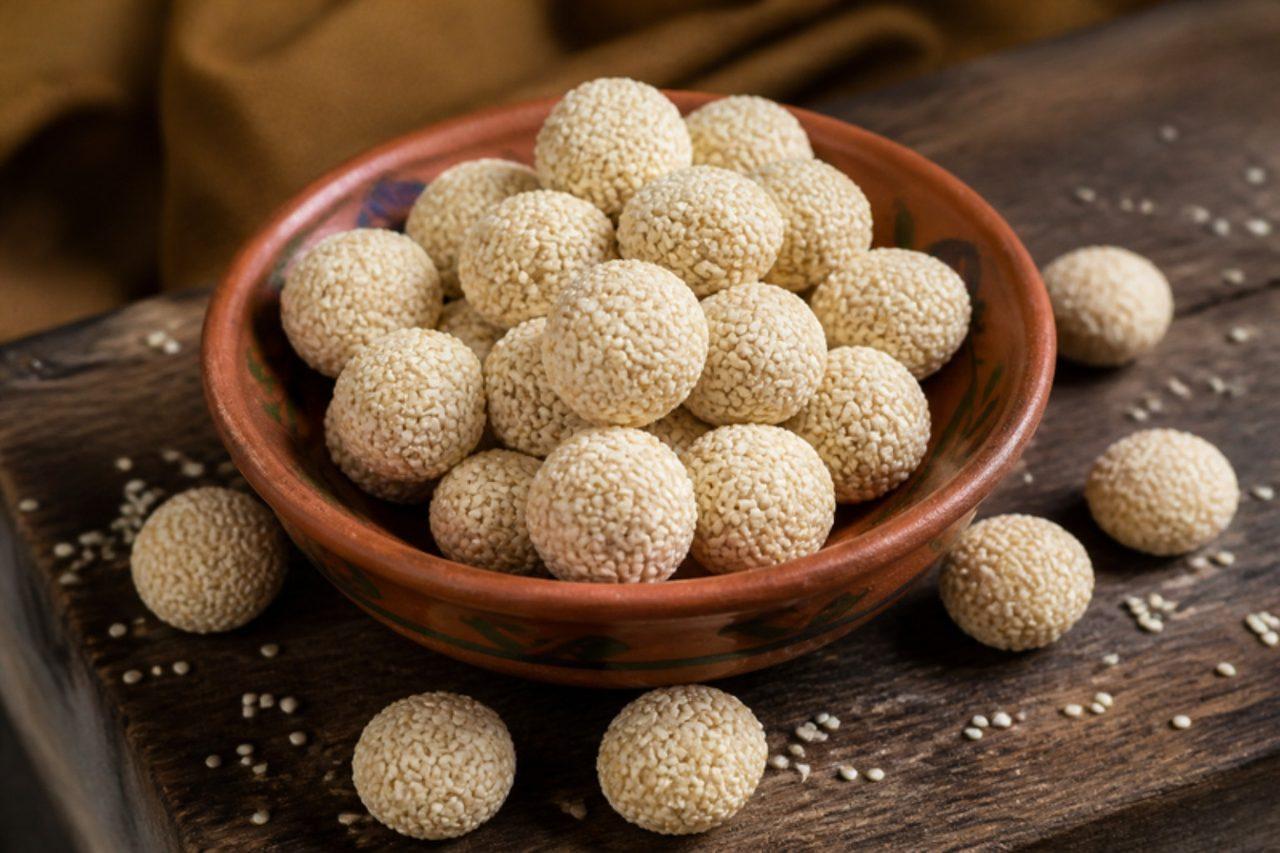
RewriSesame-coated sugar sweets

Children in Lahore grow up buying rewri by the paper cone from the old shops in Rang Mahal and from the carts at the Basant and Mela Chiraghan fairs, little white coins of hard candy crusted with toasted sesame that crack between the teeth and then melt slowly. The sugar is boiled to hard crack, pulled on a greased hook or with oiled hands until it turns opaque and white, flavoured with kewra, then cut into tiny pieces and rolled in sesame. It is a winter sweet, eaten with peanuts and gajak around the fire and handed out at shrines. The step that trips people up is pulling the sugar when it is either too hot to handle or already cooling into glass, so time it carefully and work fast. Chef's tip: wear clean, thick rubber gloves rubbed with ghee for pulling, and keep the candy near a warm oven door so it stays pliable while you cut. Take care: boiled sugar causes serious burns, so keep children away while it is hot.

by KrazyBadal 0 views

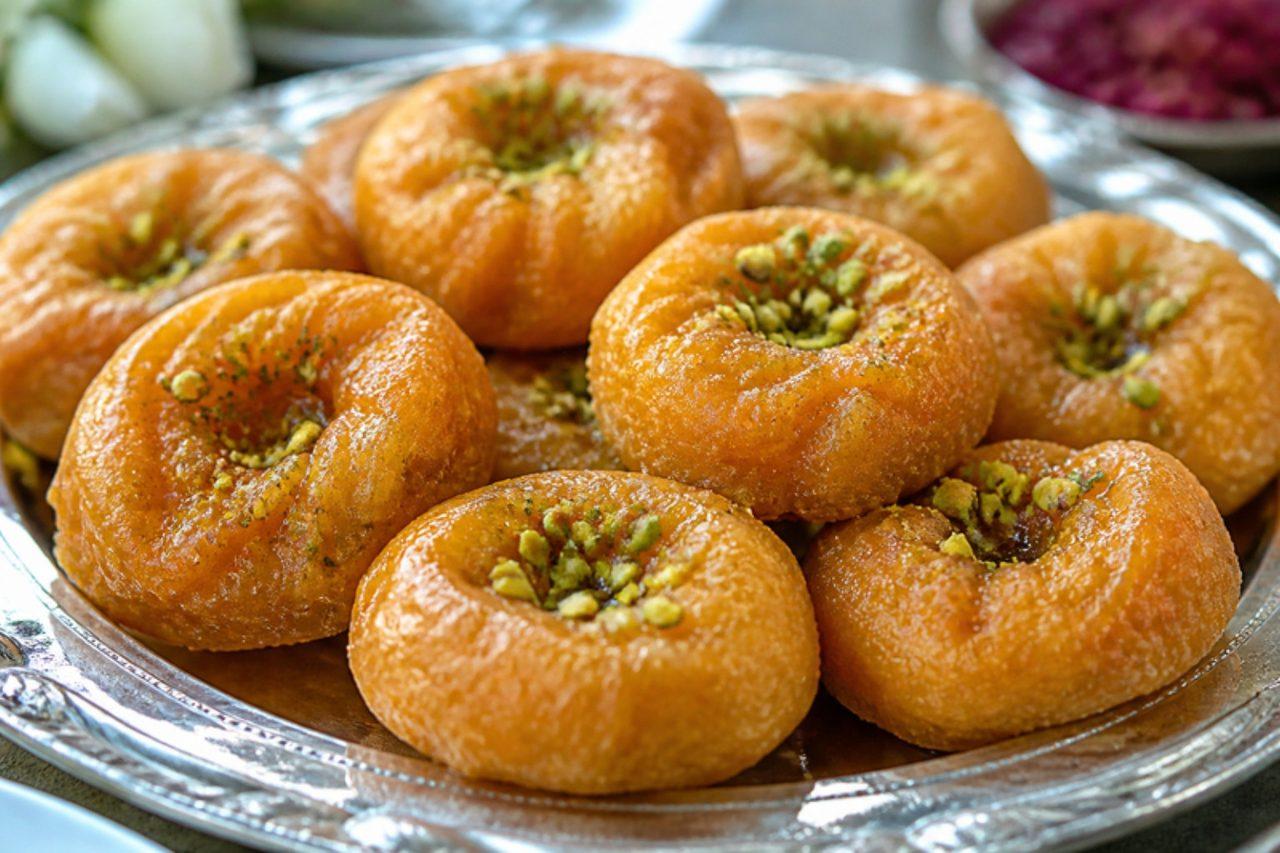
BalushahiFried pastry in cardamom syrup

Look in any mithai box carried to a Pakistani engagement or handed round when exam results come out, and balushahi will be there: a squat, doughnut-like round with a dimple in the centre, layered and flaky inside, glazed with a thin, crackly coat of syrup. It is made from a short dough of flour, ghee and yogurt that is barely kneaded, fried very slowly so it cooks through and turns crisp in tiny layers, then dipped in a thick cardamom syrup. Shops in Lahore's Walled City and in Rawalpindi's Raja Bazaar sell it by the kilo, and at home it is a sweet for Eid and winter tea. A common mistake is kneading the dough smooth like a chapati, which develops gluten and makes the balushahi hard instead of flaky. Chef's tip: fry them in ghee that is only just warm, so they float up slowly over several minutes; that slow start is what opens the layers.

by KrazyBadal 0 views

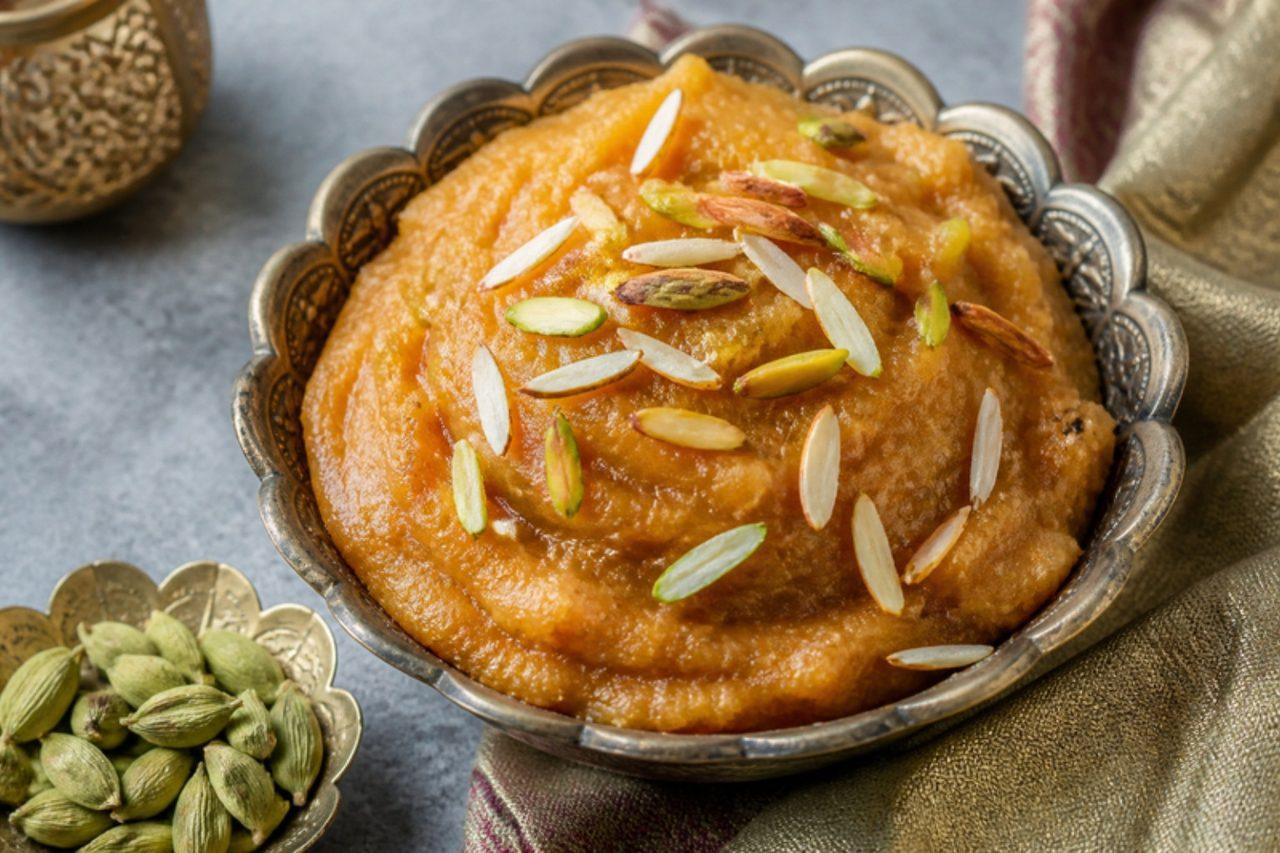
Chana daal halwaSplit chickpea halwa

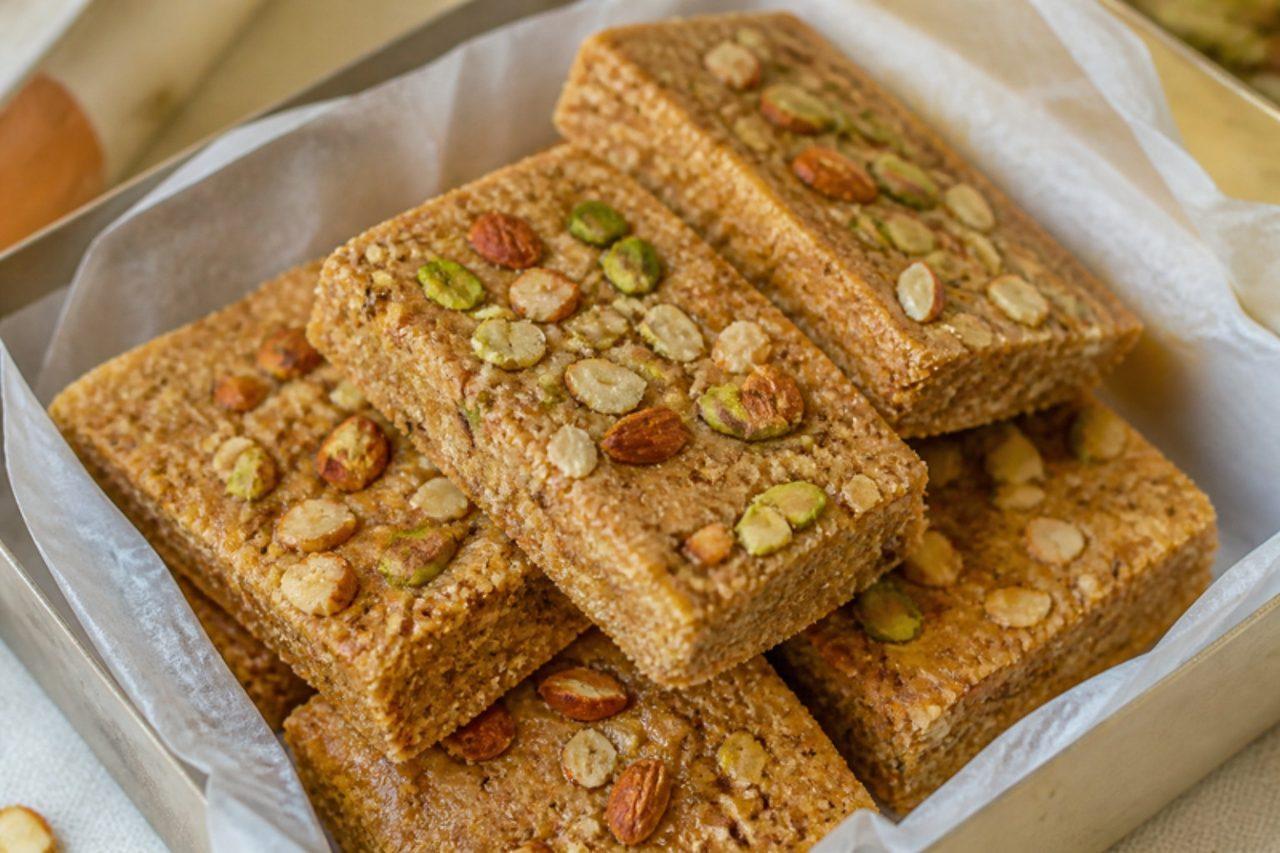
This is the halwa of family gatherings on cold winter evenings and of Shab-e-Barat, when households in Karachi, Lahore and Multan cook trays of sweets to share with neighbours, and among them all it is the one that rewards hard work most. Split chickpeas are soaked overnight, simmered soft in milk, ground to a paste and then fried in ghee for the best part of an hour, until the raw beany taste is replaced by a deep, toasty, almost caramel flavour and a soft, slightly grainy texture. Cardamom, a little khoya and plenty of almonds and pistachios finish it, and it is eaten warm, or pressed into a tray and cut. It keeps well, so many families make a large pot. The fault that most often spoils it is adding the sugar before the dal paste has been fried long enough, which leaves it pasty and heavy. Chef's tip: stir until the paste turns golden and smells like roasted nuts and the ghee begins to seep out again, and only then add the sugar.

by KrazyBadal 0 views

DhodhaMilk, wheat and ghee fudge

Every bus that stops in Khushab, on the road between Sargodha and the Salt Range, is met by boys carrying boxes of dhodha, the town's famous sweet and a standard gift for anyone visiting family in Punjab. It is lighter in colour and softer than habshi halwa, a moist, crumbly fudge of slowly reduced milk, a little wheat flour, ghee and sugar, packed with almonds, pistachios and walnuts and pressed into slabs about two fingers thick. The flavour is milky and nutty with a gentle caramel note, and it is sliced and eaten with tea, especially in the cold months. Where people slip up is under-reducing the milk, so the dhodha never firms and stays soft like a halwa. Chef's tip: keep stirring after you add the sugar until the mass leaves the sides of the pan cleanly and holds a ridge when you draw the spoon through it, then press it into the tin while still warm.

by KrazyBadal 0 views

Lachha parathaLayered flaky paratha

The word lachha means a coil or a hank of thread, and the best way to understand the bread is to watch a paratha-maker at a Peshawar or Lahore breakfast stall pleat a thin sheet of ghee-smeared dough like a paper fan, wind it into a snail and roll it out again. On the tawa the layers separate into rings of crisp, flaky dough that you can pull apart with your fingers, and a quick scrunch between the palms when it comes off the heat opens them up even more. It is the paratha for Sunday breakfasts with omelette or chana, for Eid lunches with qorma and for weddings beside tandoori dishes. What lets most home cooks down is a stingy hand with the ghee between the pleats, which welds the layers back together. Chef's tip: dust each greased sheet with a little dry flour before pleating; the flour and ghee together keep the layers apart as they cook.

by KrazyBadal 0 views

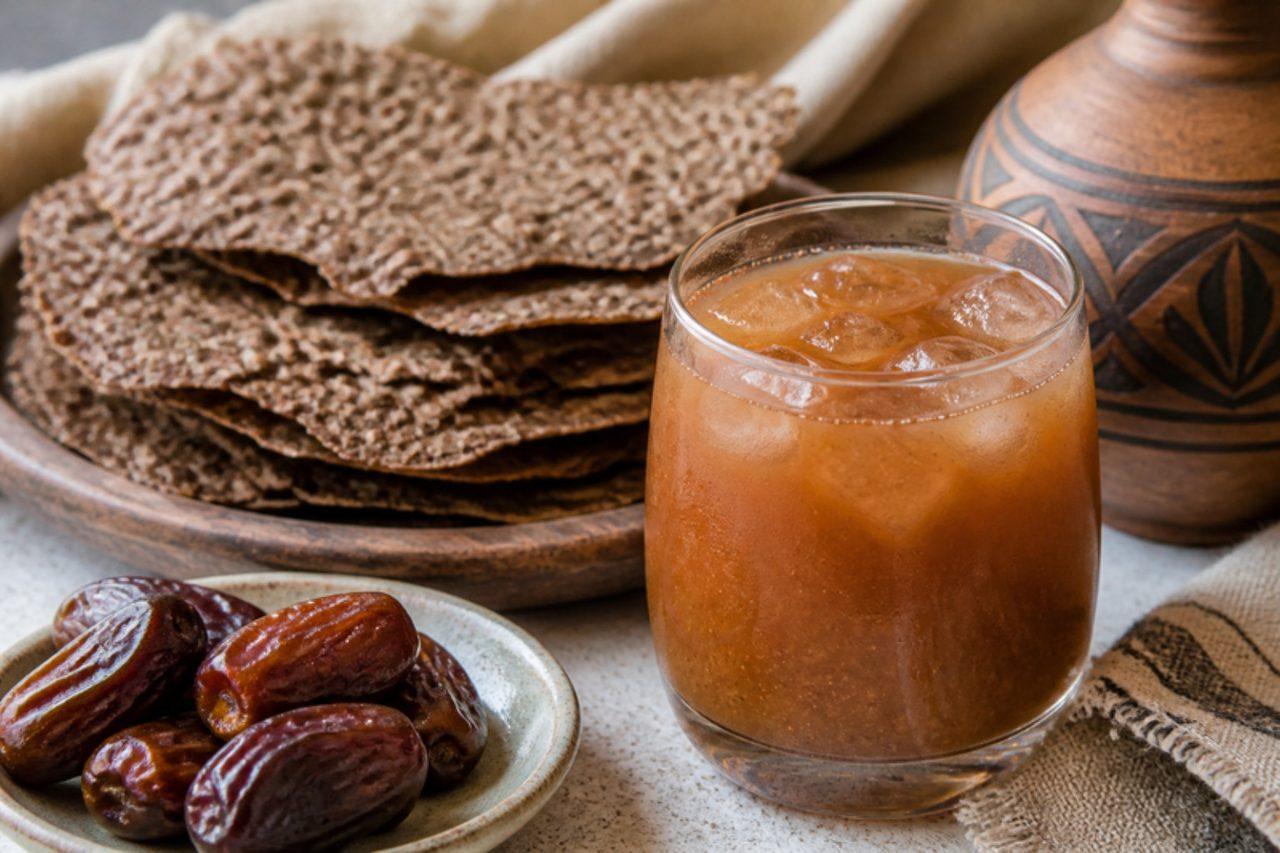
MasabeebWholemeal pancakes with date syrup

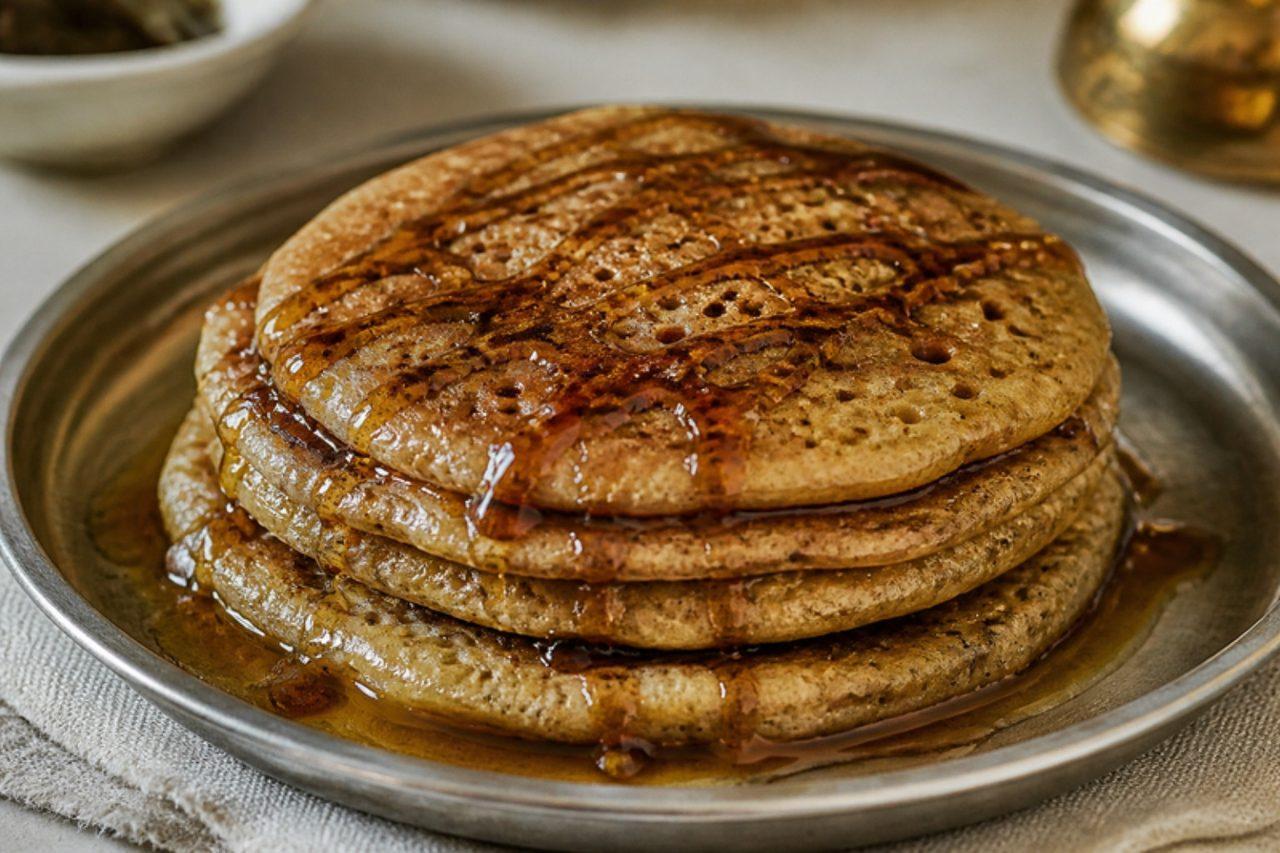
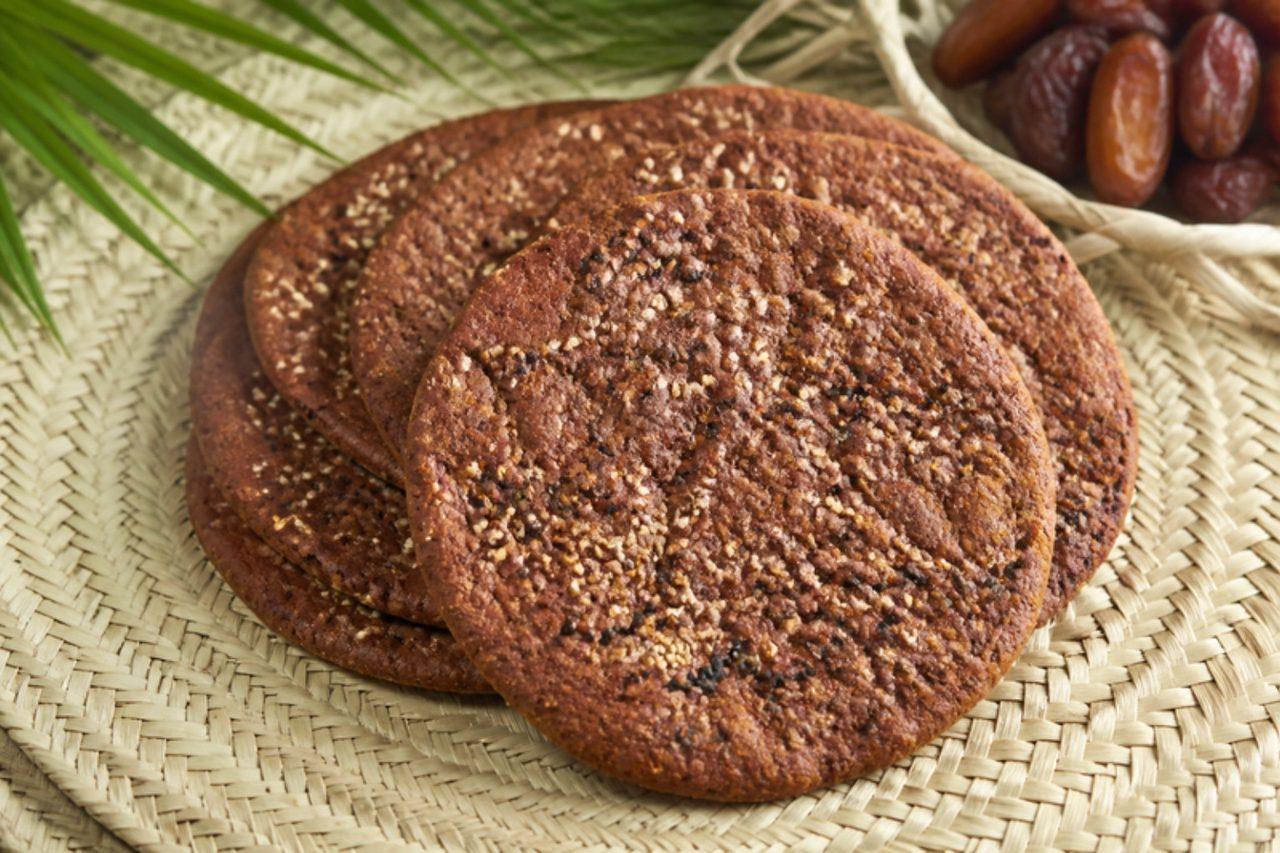
On winter mornings in Najdi villages around Riyadh, grandmothers ladle a yeasted wholemeal batter onto a hot iron plate and turn out masabeeb, thick, spongy pancakes full of holes. They are stacked on a tray, drowned in melted ghee and date syrup and torn apart by hand with cardamom coffee or tea. The flavour is nutty and only lightly sweet, and the crumb drinks up the topping like a sponge. A common mistake is flipping too soon: let the top set and go matt and full of open bubbles first, or the middle stays raw and gluey. Serve warm, straight from the pan. Chef's tip: keep the heat medium-low and cover the pan for the first minute so the thick centre steams through before the base darkens.

by KrazyBadal 0 views

Rose petal jam

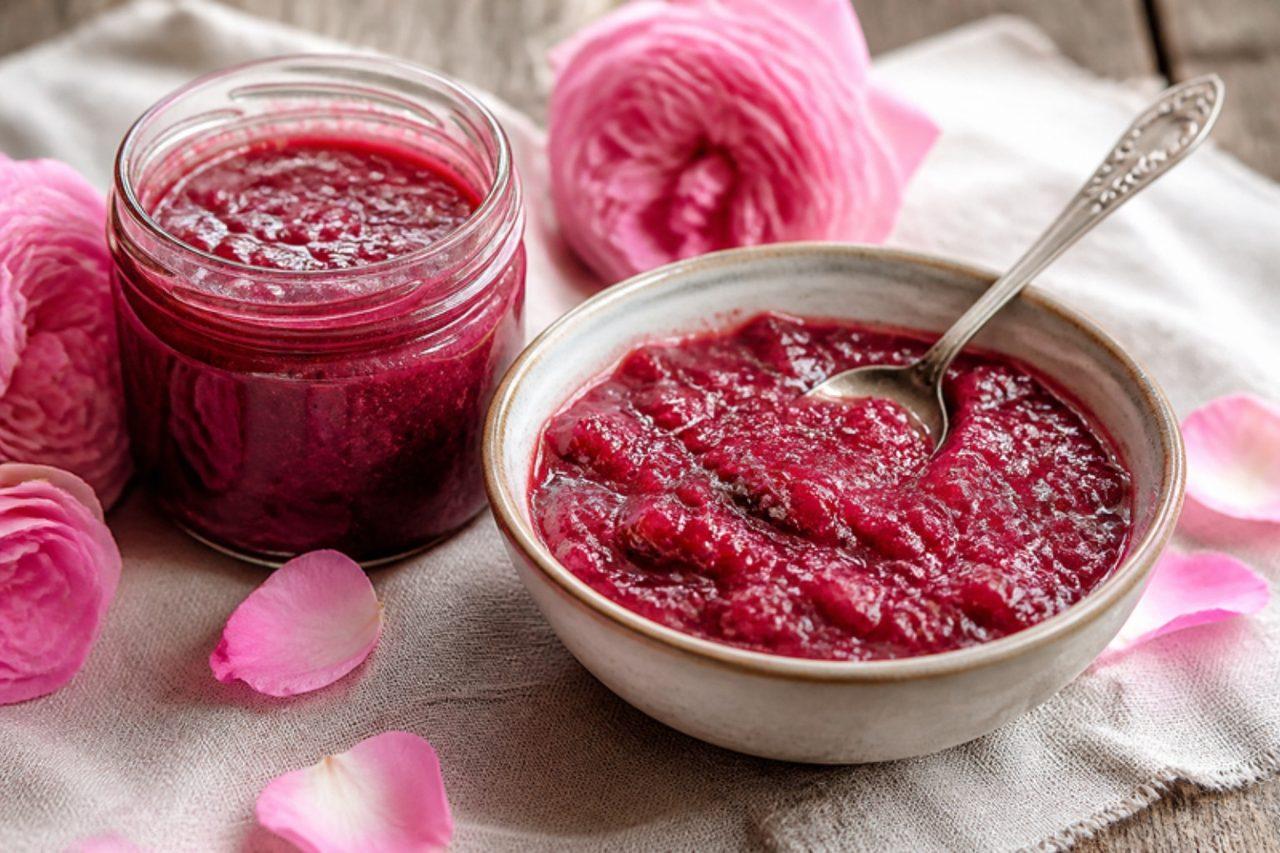
Ask a Polish baker what goes inside a proper pączek and the answer is rose jam, not strawberry. In June, families gather the scented pink petals of wild beach roses (Rosa rugosa) from hedges along the Baltic coast and in gardens, then pound them with sugar into a sticky, intensely perfumed paste that keeps for a year. The flavour is floral and sweet with a little sharpness from lemon, lovely in doughnuts, swirled into yoghurt or spread on cheesecake. Pick only from plants that have not been sprayed and away from roads. Where most people go wrong is leaving the bitter white base of the petals on; snip it off. Chef's tip: lemon juice turns dull petals bright magenta, so add it right at the start.

by KrazyBadal 0 views

Powidła śliwkowePlum butter

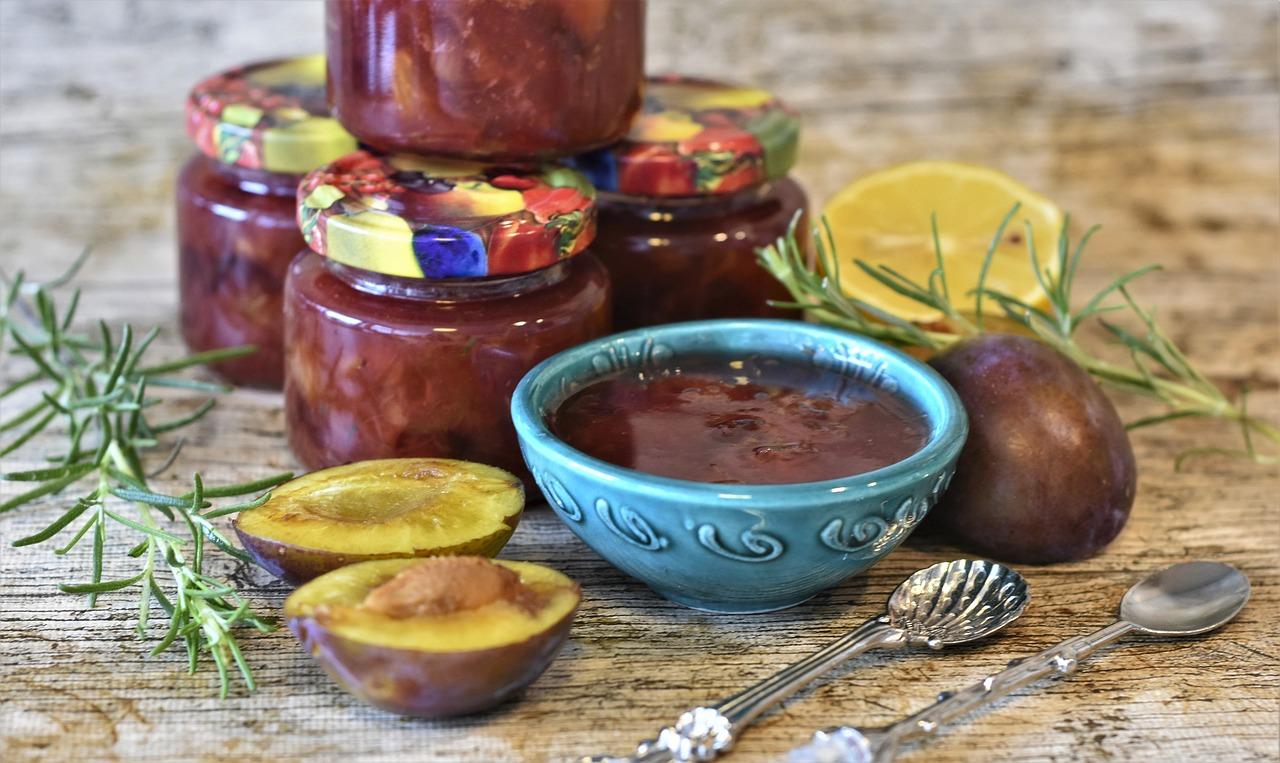
In the villages around Szydłów in the Świętokrzyskie hills, late-season Hungarian plums were once stirred in copper cauldrons over a fire for a day or more, until they became powidła, so thick a spoon stands up in it. The sugar in very ripe plums caramelises, turning the purée nearly black, glossy and intensely fruity with a slight bitterness. It fills pączki, drożdżówki and pierogi, and is spread on bread with butter. Traditional cooks spread the cooking over three days, letting the pot cool between sessions; an oven gets you there in an afternoon. The usual slip is cooking on the hob on high heat, which burns the bottom long before the plums thicken. Chef's tip: use the latest, ripest, wrinkly-skinned plums you can find; they need no sugar at all.

by KrazyBadal 0 views

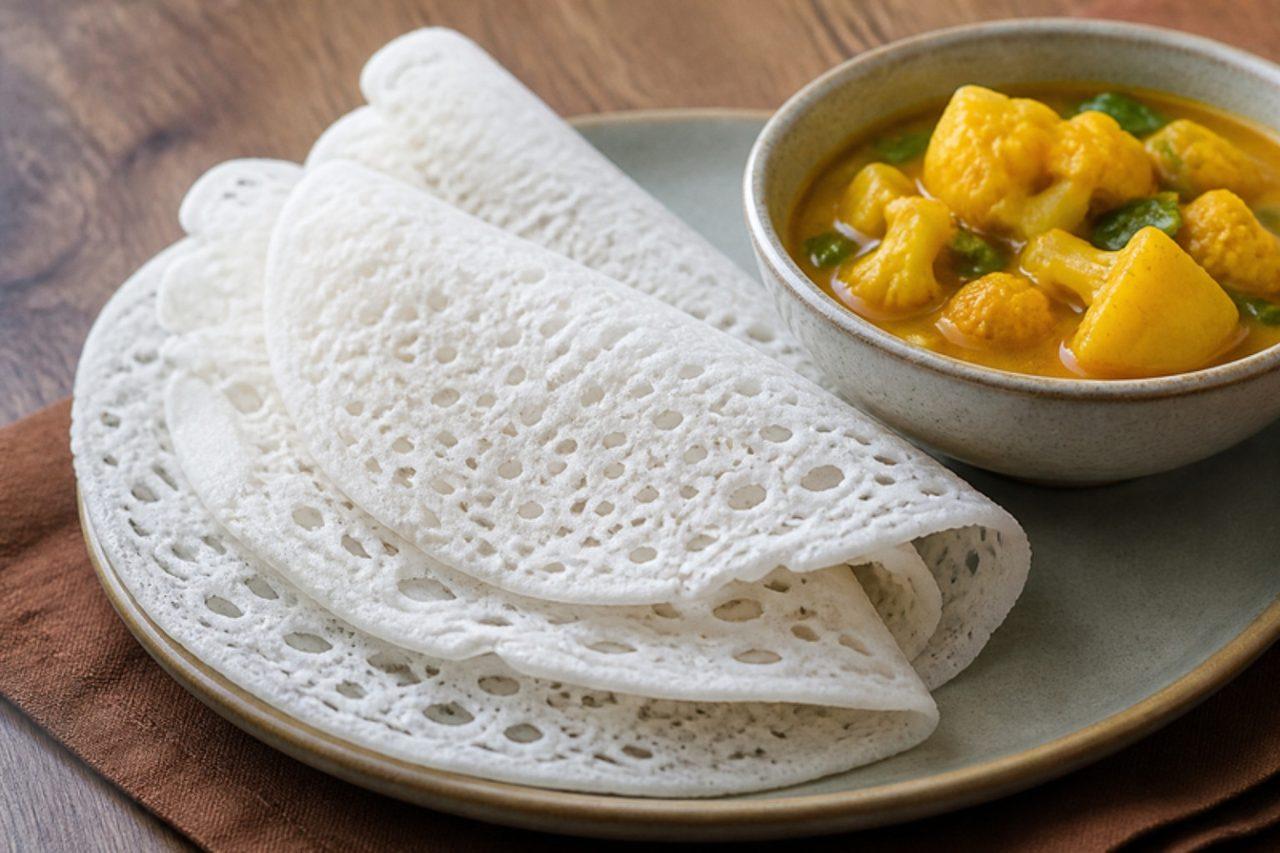
Chhit rutiLacy rice flour flatbread

Chhit means a splash or a sprinkle, and that is exactly how this Chittagong bread is made: the cook dips her fingers in a thin rice batter and flicks it across a hot pan in criss-cross lines until it forms a fragile net. It cooks in seconds, is folded into a soft lacy square and stacked under a cloth, and comes out at Eid breakfasts, winter weddings and mezban-season family meals. Chittagonian households usually eat it with a dark beef kala bhuna or duck curry, but it is just as good with a vegetable korma, chhola bhuna or a sweet dish of milk and jaggery. If the batter is too thick it falls in blobs rather than threads, so it should run off your fingers like single cream. Chef's tip: wipe the pan with an oiled cloth between each ruti so the lace lifts cleanly without tearing.

by KrazyBadal 0 views

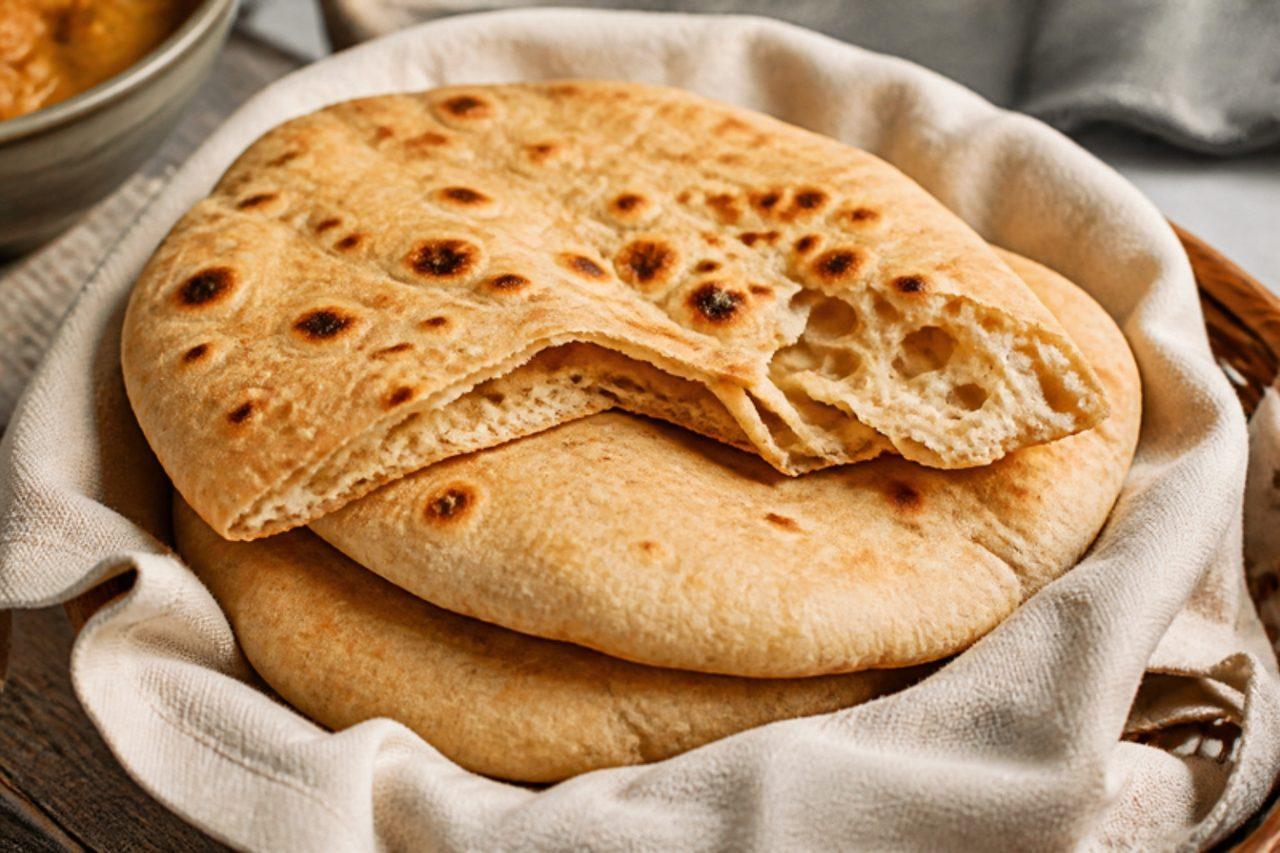
Khamiri rotiLeavened wholewheat flatbread

Long before packets of yeast reached Pakistani kitchens, households kept back a lump of yesterday's dough and worked it into the new batch, and khamiri roti is the bread that method makes: thicker and softer than a chapati, with an airy crumb and a gentle sourness. It is the standard bread of many neighbourhood tandoors from Multan to Peshawar, bought by the stack for lunch with chana, sabzi, dal or saag, and some families make it on a tawa during Ramadan because it stays soft until sehri. This version uses a little yeast and a long rise to get the same flavour without the starter. People often get it wrong by rolling it as thin as a chapati, which pushes out the gas and leaves a flat, leathery roti. Chef's tip: let the dough ferment for at least two and a half hours, or overnight in the fridge, and shape each roti by patting it out with your palms rather than with a rolling pin.

by KrazyBadal 0 views

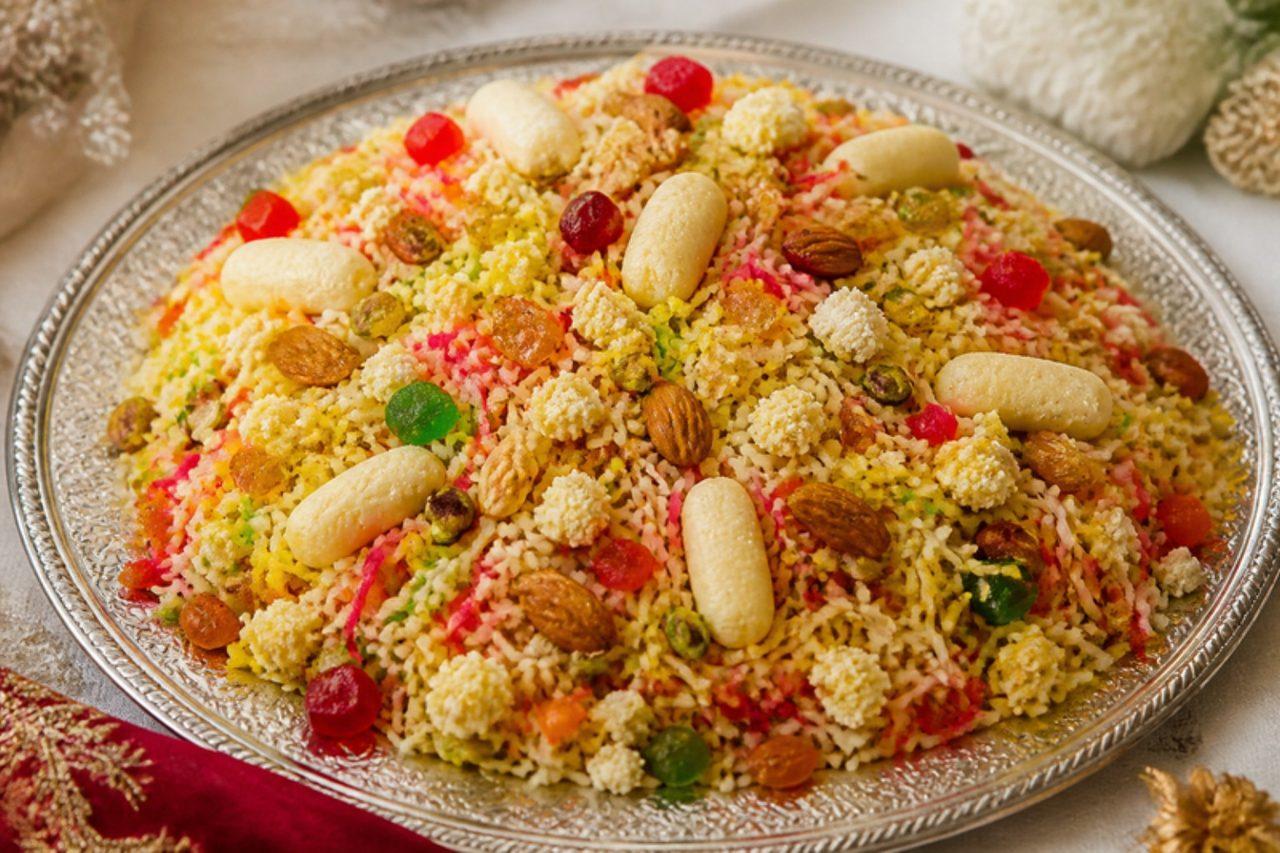
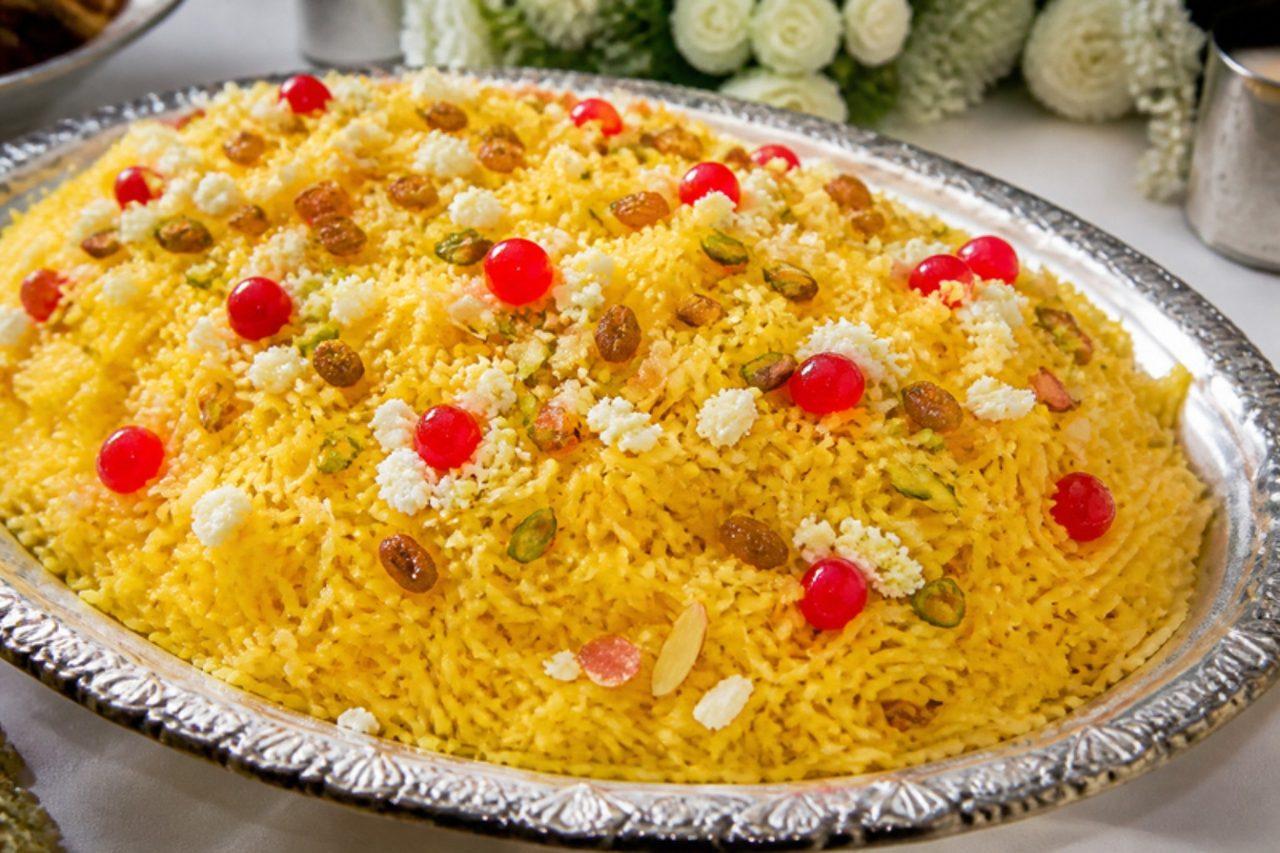
MutanjanSweet coloured rice with candied fruit

If zarda is the everyday celebration rice, mutanjan is its showy older sibling: the grains are dyed in three or four colours, layered with khoya, tutti frutti, nuts and small milk sweets, and steamed so that a spoonful looks like confetti. It is a Lucknowi and old Delhi tradition that came to Karachi with the families who migrated in 1947, and it still turns up at nikah dinners and on Shab-e-Barat in Karachi and Hyderabad, as well as in the old mithai shops of Lahore. The texture should be soft, sticky-sweet and rich with ghee, the flavour heady with cardamom and kewra. The thing that ruins it most often is stirring the coloured rice together, which blurs the colours into a muddy brown. Chef's tip: colour the rice in separate bowls, layer it in the pot without mixing, and only fold it once, very lightly, after the dum.

by KrazyBadal 0 views

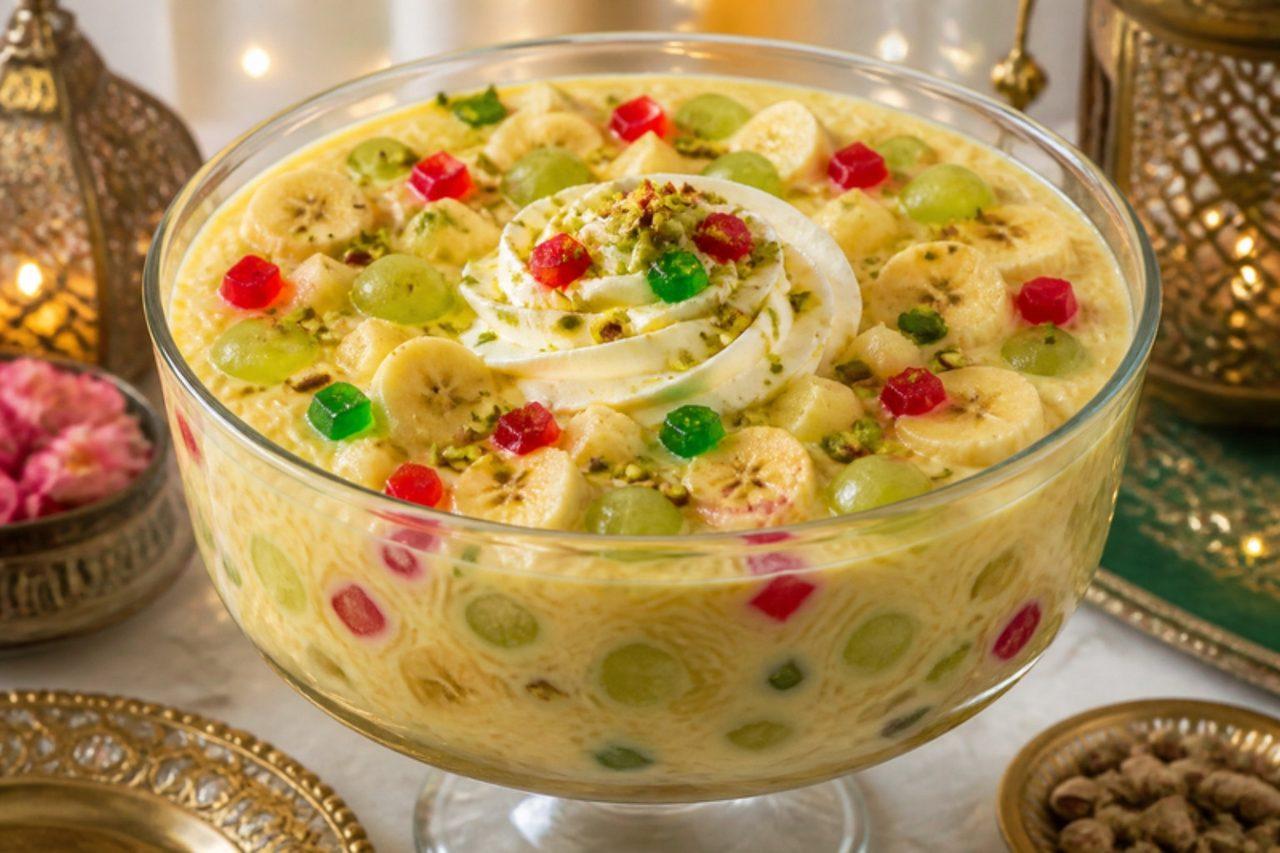
Lab-e-shireenFruit custard with vermicelli

The name means "sweet lips", and on Eid-ul-Fitr afternoons in Karachi and Lahore a glass bowl of it sits in nearly every fridge, waiting for guests who move from house to house. It is a cold, pourable vanilla custard folded through with toasted vermicelli, cubes of red and green jelly, banana, apple, grapes and tinned fruit, finished with cream and sometimes a scatter of nuts. Shop jelly is made with gelatine, so this version sets fruit juice with agar, which also holds up better at room temperature on a crowded table. A lot of cooks get the custard too thick, so once it chills it turns stiff and cannot coat the fruit. Chef's tip: make the jelly and the custard the night before, and stir in the fruit and cream only an hour or two before serving so the bananas stay pale and the vermicelli keeps a little bite.

by KrazyBadal 0 views

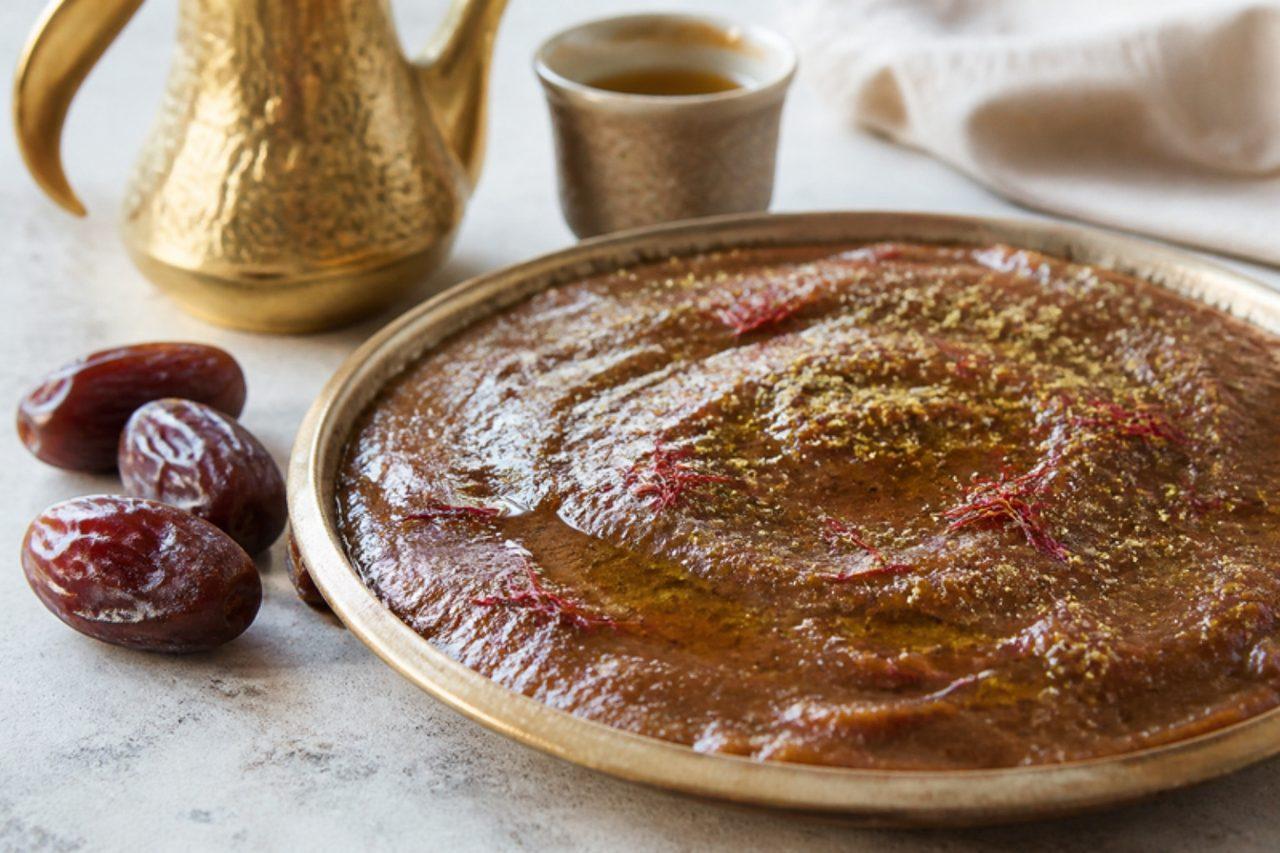
HininyDate and bread crumble

When the first cold nights reach Najd and Qassim, Saudi families make hininy, a warm sweet of soft dates melted into crumbled brown bread with plenty of ghee and cardamom. It is eaten from a shared plate in the evening or at breakfast with tiny cups of saffron-tinted Arabic coffee, and it is said to keep you warm on desert nights. The texture is soft and fudgy with a little crumb, the flavour like sticky toffee and toasted bread. The mistake to avoid is using hard, dry dates, which never melt; choose soft, moist ones or soak them first. Serve it warm, pressed into a mound. Chef's tip: toast the bread crumbs in a dry pan for two minutes before mixing; it gives a nutty depth that plain crumbs lack.

by KrazyBadal 0 views

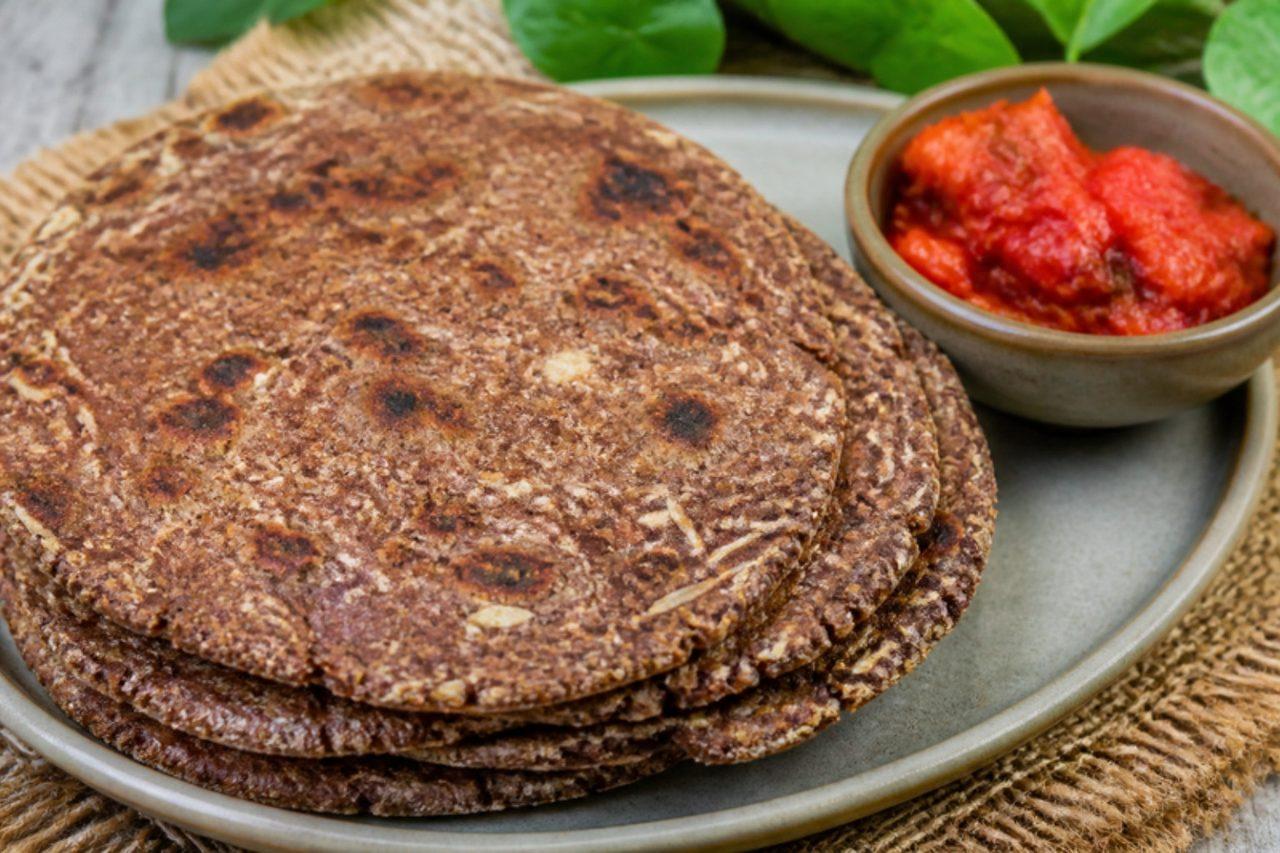
Kurakkan rotiFinger millet and coconut flatbread

Kurakkan, finger millet, was the grain of the dry chena plots and the hill villages long before white bread arrived, and these brown, nutty roti are still what many farming families around Badulla and Monaragala eat for breakfast or dinner. The flour is kneaded with plenty of fresh grated coconut and just enough water to hold, patted flat by hand and cooked on a dry clay pan until speckled and firm. They are dense and earthy, with a faint sweetness from the coconut, and taste best hot with a sharp spoonful of lunu miris or a mild dhal. Pressing the dough too thin is a classic error, because millet has no gluten and the roti crack and break; keep them about 5 mm thick. Chef's tip: shape them on a piece of oiled banana leaf or baking paper and flip them straight onto the pan, which saves them from tearing. Millet is naturally gluten free, but check the packet if you are cooking for coeliacs.

by KrazyBadal 0 views

Obwarzanek krakowskiBraided bread ring

Blue street carts on almost every corner of Kraków's Old Town sell these twisted rings from dawn, and locals grab one on the way to the tram the way others grab a coffee. Each ring is made from two thin ropes of firm yeast dough twisted together, dipped briefly in boiling water and baked, which gives a shiny, slightly chewy crust and a dense, close crumb, somewhere between a bagel and a pretzel. Eat them on the day, plain or split with butter or a vegan spread, or toss stale ones into soup. Where most people go wrong is making the dough too soft: it should feel stiff and smooth, or the twist blurs in the water. Chef's tip: boil the rings only until they float, 30 to 40 seconds, then top them while still wet so the seeds stick.

by KrazyBadal 0 views

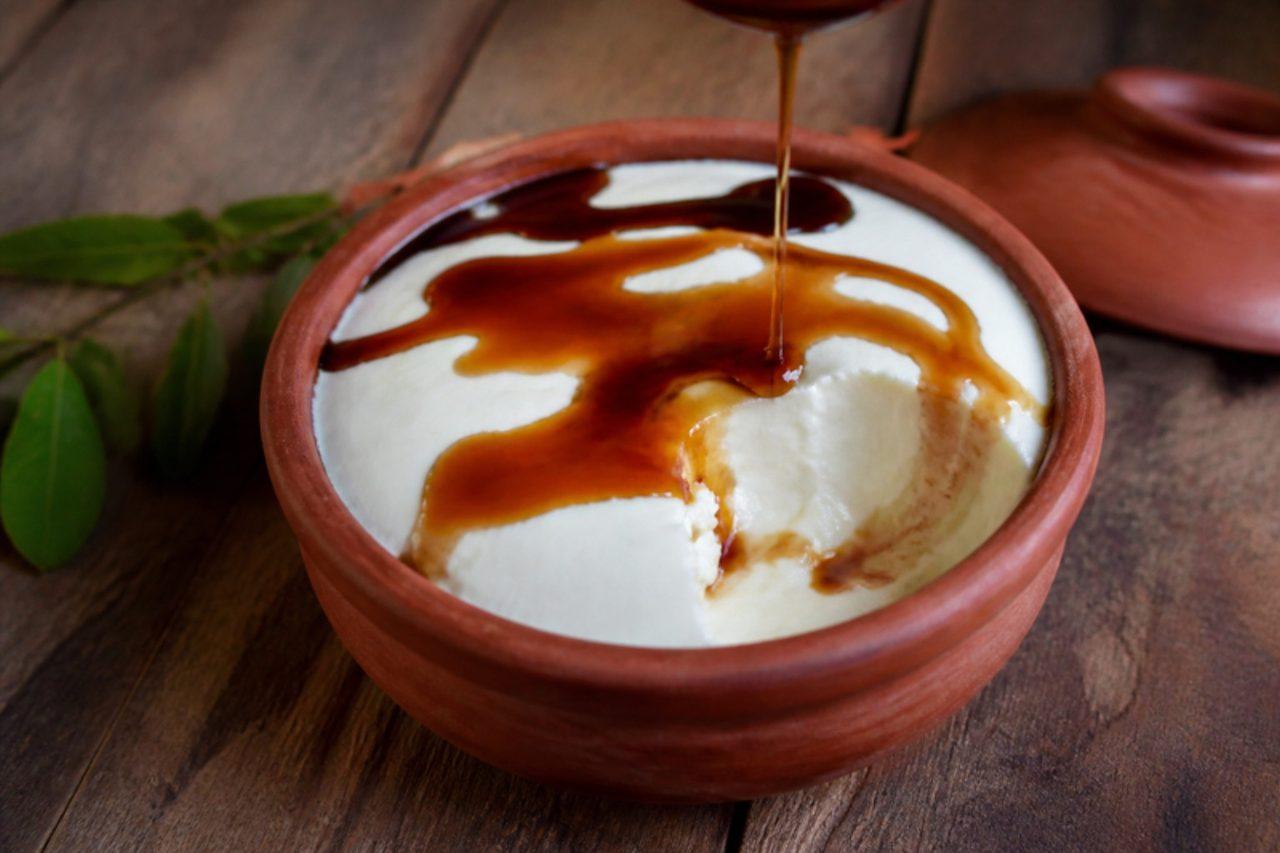
Curd and treacle

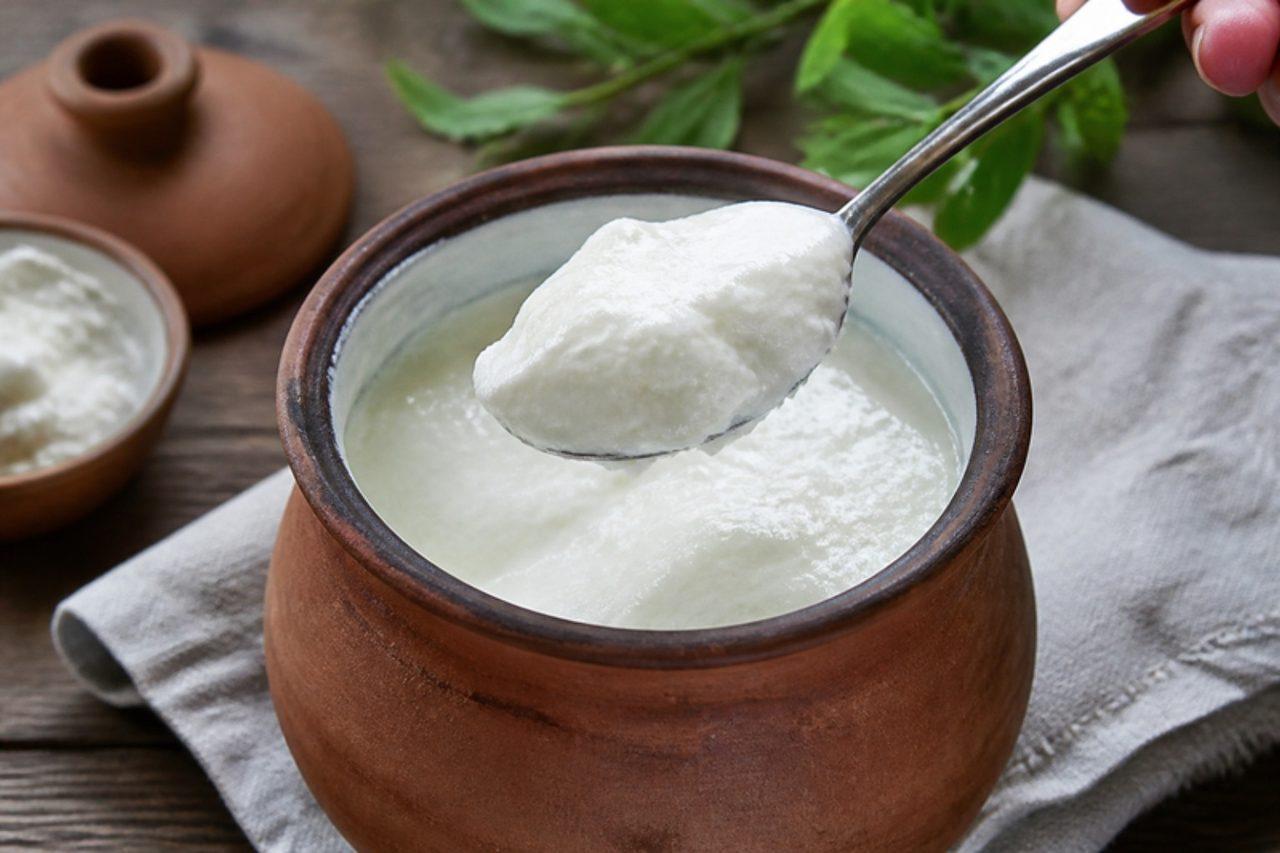
Driving the southern coast road past Tangalle towards Hambantota, you pass stall after stall stacked with round clay chatties of meekiri, the firm, slightly sour curd made from buffalo milk, with bottles of dark kithul treacle hanging beside them. Turned out into a bowl and flooded with treacle, it is the South's great dessert: cool, rich and tangy against the smoky, toffee-like sweetness of the palm syrup, eaten after lunch or as a snack in the heat of the day. Setting it at home is easy with pasteurised buffalo milk or creamy whole cow's milk, a spoon of live curd and a warm spot overnight. The mistake that ruins most first batches is adding the starter while the milk is still too hot, which kills the culture and leaves you with warm milk in the morning. Chef's tip: unglazed clay pots draw out a little whey, which is why traditional curd is so thick; soak them in water and dry them well before using.

by KrazyBadal 0 views

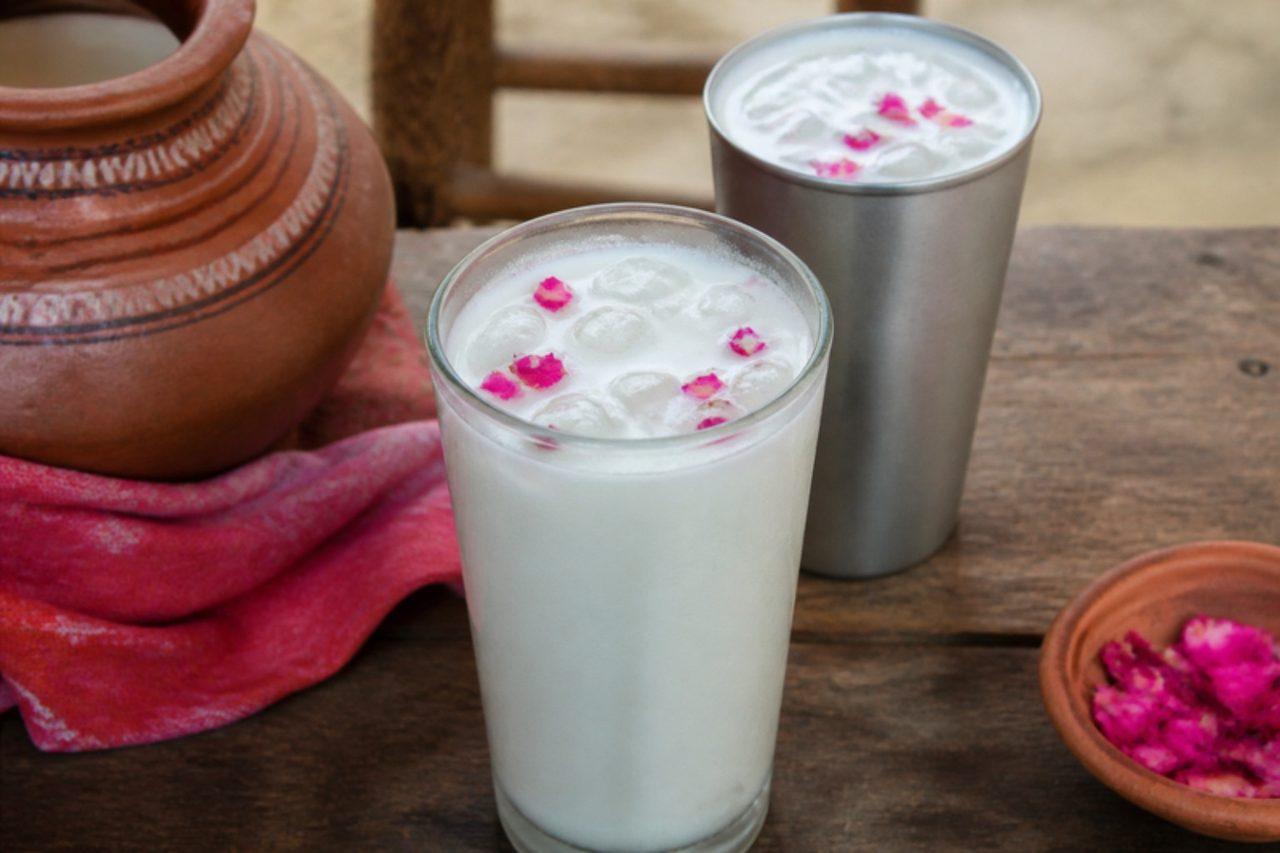
Kachi lassiMilk and water lassi

Harvest time in the Punjab is thirsty work: when the wheat is being cut in the April heat, a steel jug of kachi lassi is carried out to the workers: fresh milk thinned with cold water, stirred with sugar and poured over chunks of ice. Unlike yogurt lassi there is no tang, just a light, clean, milky sweetness that quenches thirst better than plain water, and in many villages it is the drink offered to any guest who arrives on a hot afternoon. Some people add a pinch of salt instead of sugar, or a few drops of rose water. The traditional kind uses raw milk straight from the buffalo; use pasteurised milk instead to be safe. The usual mistake is making it with too little water, which turns it heavy instead of refreshing. Chef's tip: whisk it hard or shake it in a jar so it turns frothy, which makes it feel even cooler.

by KrazyBadal 0 views

Doodh sodaMilk with lemon-lime soda

It sounds odd until you are standing in a crowd at a Lahore milk shop on a 45 °C June night, when a tall glass of doodh soda, foamy and sweet with a sharp citrus fizz, is the most refreshing thing in the city. The doodh-walas of Gawalmandi and Mozang chill milk in steel drums over ice, then pour it from a height into a glass with lemon-lime soda so that it froths like a milkshake, and people drink it straight after dinner or after a late plate of fried fish or chana. It tastes like a lighter, bubbly lassi, and children love it. What usually goes wrong is warm milk or flat soda, which makes it taste curdled rather than crisp. Chef's tip: chill both the milk and the soda until very cold, pour the milk first and add the soda in one go, then serve at once while the foam is high.

by KrazyBadal 0 views

PanjiriRoasted wheat flour with nuts

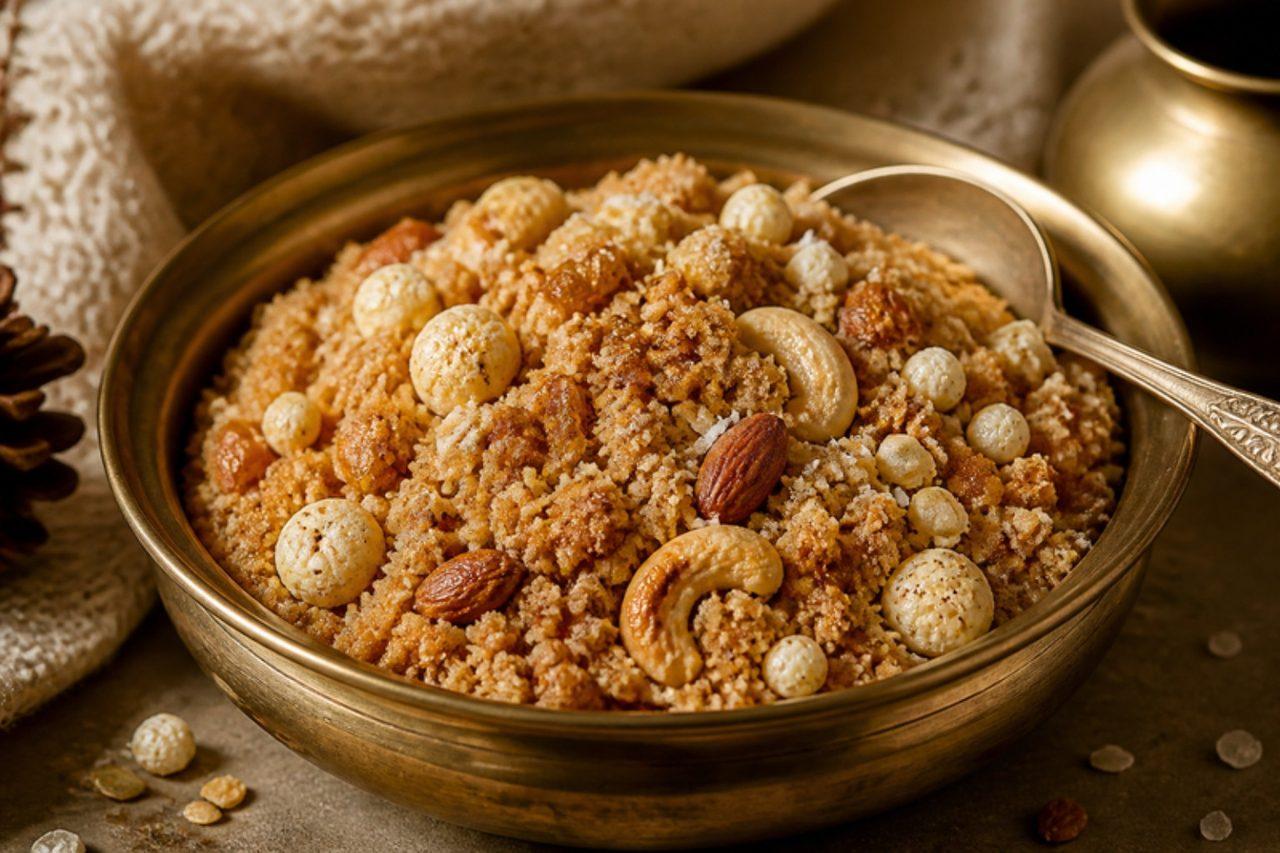
When a baby is born in a Punjabi home, one of the first things the grandmothers do is roast a huge karahi of panjiri, loose, golden crumbs of wholewheat flour fried in ghee and mixed with sugar, nuts, seeds, makhana and crunchy fried gond, meant to warm and strengthen the new mother through the forty days after birth. The same mixture is made in every household from Sialkot to Bahawalpur when the winter cold sets in, eaten by the spoonful with hot milk at night or sprinkled over a bowl of milk for breakfast. It tastes nutty, toasty and lightly sweet, with crunch in every mouthful. The usual way it goes wrong is roasting the flour too fast on a high flame, which browns the outside while the inside still tastes raw. Chef's tip: roast the flour slowly until it is the colour of pale biscuit and smells like baking cookies, and add the sugar only once the flour has cooled, so it stays crunchy rather than melting.

by KrazyBadal 0 views

GajakSesame jaggery brittle

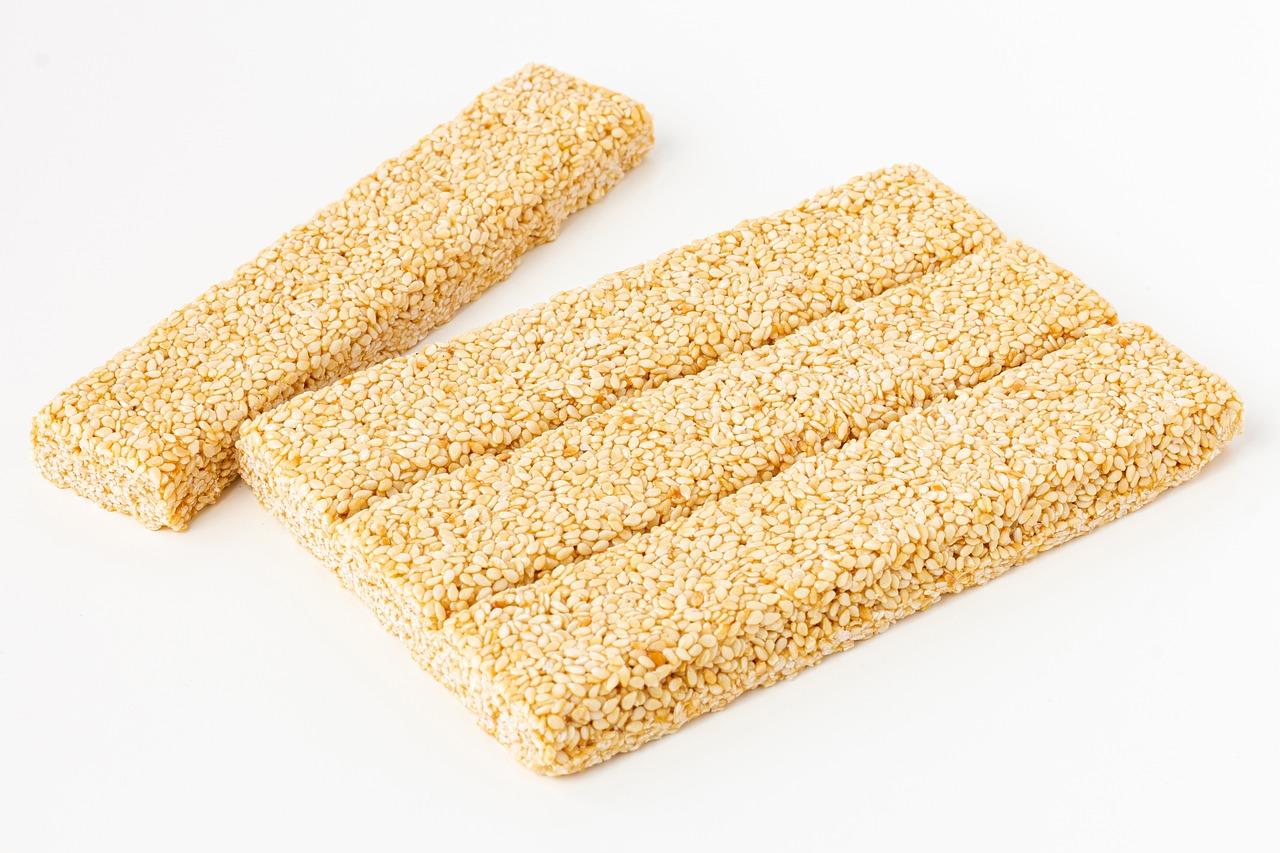
Winter in Punjab has a sound, and it is the snap of gajak: thin, glossy sheets of toasted sesame bound in jaggery, sold from piled trays outside the sweet shops of Multan, Gujranwala and Lahore from the first cold week of December. It is nutty, crunchy and toffee-sweet, with the earthy depth of gur, and families keep a tin of it beside the heater to nibble after dinner with green tea or to share with visitors. The commercial kind is hammered and pulled into flaky layers, but the home version poured thin and rolled flat is what most households make. The pitfall is pulling the jaggery off the heat too early, which gives a brittle that turns chewy and sticky after a day. Chef's tip: test the syrup by dropping a little into cold water; it must snap cleanly at once, and that hard-crack stage is reached quickly, so have the sesame warm and ready. Take care: the syrup is far hotter than boiling water.

by KrazyBadal 0 views

TameesGhee and sesame flatbread

In the old lanes of Jeddah and around Mecca, bakeries run by families of Afghan descent pull tamees from clay tandoors before dawn, and people queue for them still blistering hot to eat with ful, cheese or honey. The bread is wide and puffy, crisp on its sesame-studded face and chewy underneath, with deep finger dimples that hold pools of melted ghee. At home a very hot oven and a preheated baking stone or heavy tray stand in for the tandoor. The usual mistake is baking at a moderate heat: the bread then dries out before it can puff and stays pale and tough. Tear it at the table and serve with a pot of ful medames, white cheese and sweet tea. Chef's tip: press the dimples right down to the tray with three fingers; shallow marks disappear as the dough springs up.

by KrazyBadal 0 views

Habshi halwaSprouted wheat and milk halwa

Few sweets demand as much patience as habshi halwa, the near-black, glossy, chewy slab that the old halwais of Lahore's Anarkali and Ichhra stir for most of a day in wide brass karahis. Full-cream milk is reduced with sprouted wheat flour (samnak) until the sugars caramelise and the mixture darkens from cream to coffee to deep mahogany, then ghee is worked in until it leaks out shining at the edges. The taste is of toffee, malt and toasted nuts, rich enough that a small square with tea is plenty, and it is a winter gift sent to relatives and given at weddings. Sprouting wheat takes two or three days, so plan ahead, or use the flour sold as samnak in South Asian shops. The mistake that spoils most batches is turning up the heat to save time, which scorches the milk on the base and makes the halwa bitter instead of deeply caramelised. Chef's tip: caramelise a third of the sugar separately to a dark amber before adding it, which gives the colour without hours of extra stirring.

by KrazyBadal 0 views

MarzanThick flour pudding with butter

When snow cuts off the villages of Baltistan around Skardu and Khaplu, marzan is the dish that keeps people going: wholewheat flour stirred into boiling water until it becomes a thick, smooth, heavy pudding, shaped into a mound with a well in the centre filled with melted butter and apricot-kernel oil. It is eaten communally by hand, each person pulling a piece from the edge and dipping it in the fat, and it is made for new mothers, for guests after a cold journey and for winter mornings. Some families eat it plain and savoury, others sweeten it with a little sugar or serve it with dried apricots, which is how it is written here. Lumps are the usual complaint, so add the flour slowly. Chef's tip: whisk the flour into the water a spoonful at a time, then switch to a sturdy wooden spoon and beat hard as it thickens; and use only food-grade culinary apricot-kernel oil, or more butter.

by KrazyBadal 0 views

NadughiWhey cheese with mint

Nadughi is the soft cheese shepherds skim from hot whey after making sulguni, light and slightly sweet, like a fresh ricotta. In Imereti and Samegrelo it is beaten with chopped mint and either spooned into a bowl or rolled up in thin sheets of stretched sulguni, a pretty starter for the supra table in spring. At home you can make it from milk and a little lemon. A common mistake is boiling the milk hard after the acid goes in; the curd turns tough and grainy instead of soft. Chef's tip: drain it only briefly; it should stay creamy and spreadable. Sulguni is often made with animal rennet, so choose vegetarian sheets or serve the nadughi in a bowl.

by KrazyBadal 0 views

Mákos gubaPoppy seed and bread roll pudding

On 24 December, after the fish soup and before the presents, many Hungarian families bring a dish of mákos guba to the table, because poppy seed is said to bring plenty in the year ahead. Stale crescent rolls (kifli) are sliced, soaked in warm vanilla milk, layered with sugared ground poppy seed and baked until the top crisps, so the inside is soft and puddingy while the edges turn crunchy. It is simple, very cheap and loved by children; serve it warm, with vanilla custard poured over if you want it richer. Older recipes pour honey over it instead of sugar. A common mistake is drowning the bread, which turns it to porridge; it should be moist but still hold its shape. Chef's tip: grind the poppy seed fresh in a coffee grinder, as pre-ground poppy goes bitter quickly.
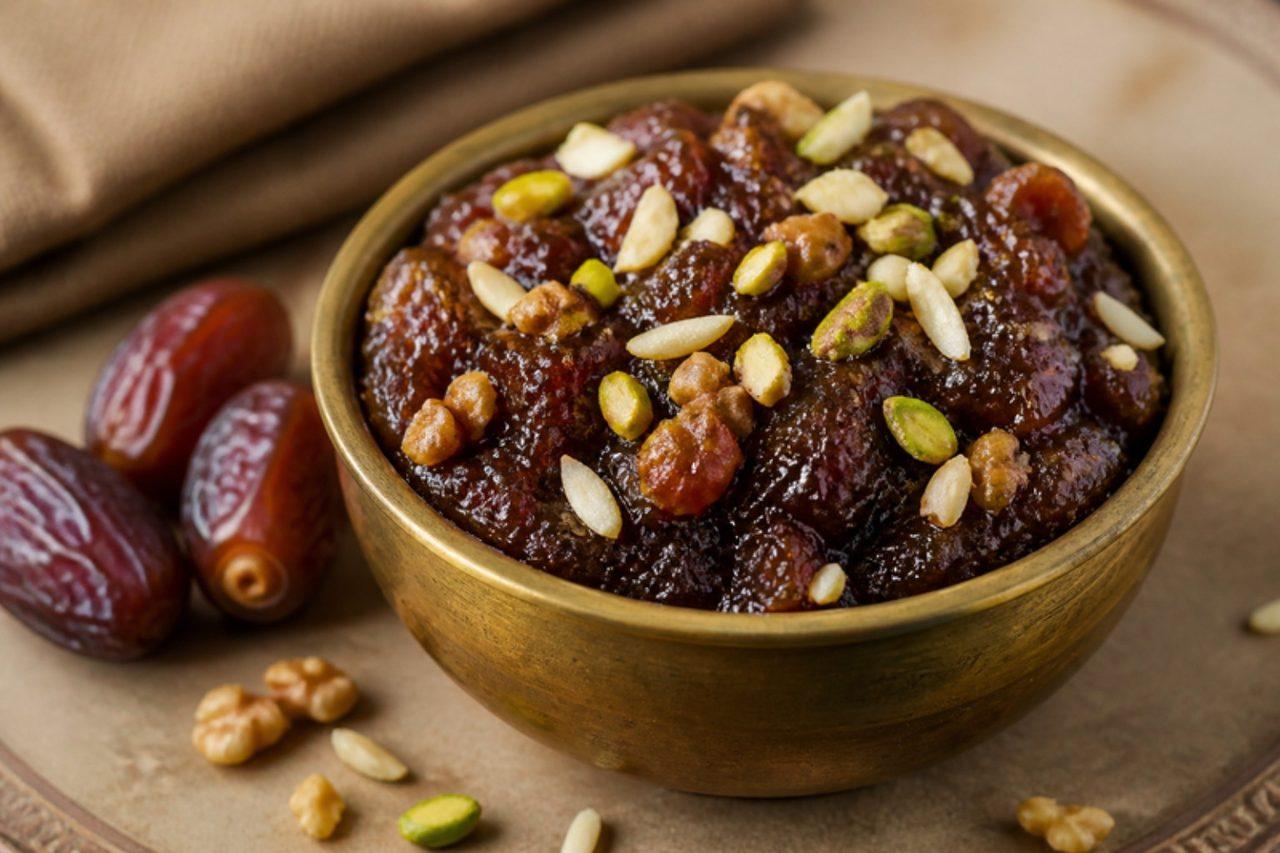
by KrazyBadal 0 views

GiyalingBuckwheat pancakes

Buckwheat, known locally as bro, grows in the cold upper villages of Hunza and Nagar where wheat struggles, and giyaling are the thin, lacy pancakes made from its flour for breakfast. The batter is no more than buckwheat flour, water and a little milk, poured thin onto a hot griddle so the pancakes cook in a minute or two, with crisp edges and an earthy, nutty flavour. They are stacked and eaten warm, smeared with butter and a few drops of apricot-kernel oil, sometimes with a drizzle of honey and always with tea, especially on cold mornings. A thick, gloopy batter is the frequent mistake, because it makes heavy, raw-tasting pancakes. Chef's tip: rest the batter for 15 minutes, then thin it to the consistency of single cream, and buy flour labelled gluten-free if that matters to you, as buckwheat is often milled alongside wheat.

by KrazyBadal 0 views

Guda cheese

Tush shepherds make guda in summer huts high above the Alazani valley, pressing sheep's-milk curd into bags sewn from sheepskin, where it ripens into a crumbly, pungent cheese that travels down to Telavi markets in autumn. You cannot copy the sheepskin at home, but you can make a firm, salty sheep's-milk cheese and ripen it in a cloth in the fridge for two to three weeks, which gives a similar sharp, grassy bite. Traditionally the milk is set with animal rennet; vegetarian (microbial) rennet works the same way. A common mistake is cutting the curd before it gives a clean break, which leaves a soft, wet cheese that sours instead of ripening. Chef's tip: grate aged guda over hot ghomi or khinkali; its strong flavour goes a long way.

by KrazyBadal 0 views

RahashTahini and sugar slab sweet

In the souks of Kuwait City and Manama, slabs of rahash appear on the sweet stalls as Ramadan approaches, cut into squares to nibble with tea after iftar or handed round at Eid. It is close to halva: tahini beaten with hot sugar syrup until it sets into a firm, crumbly, fudgy block that melts on the tongue, with a gentle cardamom perfume and pistachios on top. The trick is the syrup temperature. Undercooked syrup leaves a soft, oily paste that never sets; cook it to the soft-ball stage. Stir the tahini well in its jar first, as the oil separates. Chef's tip: stop stirring as soon as the mixture loses its gloss and starts to pull away from the bowl; keep going and it turns sandy.

by KrazyBadal 0 views

Diram fittiSprouted wheat bread with butter

High in the Hunza valley, diram is flour ground from wheat that has been soaked, sprouted and sun-dried, and it gives this thick, round bread a gentle natural sweetness and a faintly malty smell. Diram fitti is cooked slowly in a covered pan, then broken into rough pieces while still hot and drowned in melted butter and a little apricot-kernel oil, so it turns rich, soft and fragrant; in Karimabad and Altit it is made for guests, for festivals such as Ginani at harvest time and to feed someone through a hard winter. It is eaten with the hands, often with salty Hunza tea. Pale, raw centres are the common fault, so cook it slowly with the lid on. Chef's tip: sprouted wheat flour is sold in health-food shops; use only food-grade culinary apricot-kernel oil, or swap in walnut oil or more butter.

by KrazyBadal 0 views

KleijaDate-filled cardamom cookies

Kleija is the pride of Qassim, the farming heartland north of Riyadh, where an entire festival in Buraidah is devoted to these round, stamped cookies filled with date paste and fragrant with cardamom, saffron and a little fennel. They are packed for journeys, offered to guests with Arabic coffee and baked in big batches before Eid. The pastry is short and crumbly with a soft, chewy date centre. A common mistake is overworking the dough after adding ghee, which makes it tough; mix just until it holds. Store them in a tin for a week. Chef's tip: roll the date paste into small balls with damp hands first, so each cookie gets the same amount and seals neatly.

by KrazyBadal 0 views

Rosh kodomSyrup-soaked chhana balls in khoa

Named after the round, spiky flowers of the kadam tree that bloom in the monsoon, rosh kodom is a sweet within a sweet, made by the confectioners of Rajshahi and the northern districts for weddings and festivals. At its heart is a tiny rasgulla, soft and juicy from the syrup, which is drained and wrapped in a firm shell of sweetened khoa and then rolled in white poppy seeds, giving the knobbly look of the flower. Biting in, you get a dry, crumbly coat, a nutty crunch of poppy and a burst of syrup in the middle. Wrapping wet rasgullas is where it falls apart, so drain and pat the cores well or the khoa slides off. Chef's tip: the quick khoa here, made with milk powder, is easier than reducing litres of milk and gives a very similar fudgy shell.

by KrazyBadal 0 views

VaniliceVanilla jam shortbread cookies

No slava, the family saint's day feast in Serbia, goes by without a plate of vanilice, and every grandmother's tin holds a few hundred at Christmas. Two tiny fluted rounds of tender walnut shortbread are glued together with tart jam, usually apricot or rosehip, then rolled in vanilla sugar until snowy. They crumble at the first bite and turn soft and melting after a day or two in the tin. Many old recipes use lard; this one uses butter, so the biscuits are vegetarian. Where most people go wrong is baking them until golden: vanilice should stay pale, with only the faintest colour on the base, or they turn hard and lose their vanilla scent. Chef's tip: roll them in the sugar while they are still slightly warm from sandwiching, so the coating clings.

by KrazyBadal 0 views

Kancha gollaFresh cheese balls with cardamom

Natore, a quiet district town north of the Padma, is known throughout Bangladesh for one sweet, and a visit there is incomplete without a clay pot of kanchagolla to carry home. Kancha means raw, and the name is a joke at the sweet's expense: unlike rasgulla or chomchom, it is never boiled in syrup but simply kneaded fresh chhana with sugar, warmed in a pan for a few minutes and rolled into soft balls scented with cardamom. The texture is moist and faintly grainy, the taste milky and gently sweet, best eaten within a day or two. Cooking the mixture too long is what most home cooks get wrong; it turns dry and crumbly, more like sandesh. Chef's tip: make the chhana from full-fat milk and squeeze it only lightly, so plenty of moisture stays in for that melting Natore texture.

by KrazyBadal 0 views

Seven-layer tea

Visitors to the tea gardens of Srimangal, in Sylhet's Moulvibazar district, queue at small tea cabins to see a glass of tea striped in seven distinct bands, from creamy white at the bottom to pale green-gold at the top. The original recipe is a closely guarded secret of the tea-maker who made it famous, but the principle is simple physics: each layer carries a different amount of sugar, so the heaviest sits at the bottom and the lightest floats on top. This home version uses condensed milk, green tea, strong black tea, milk tea, lemon tea, spiced tea and plain tea, and it is drunk slowly, layer by layer, with a long spoon. Pouring too fast is what ruins it; each layer should trickle down the inside of the glass over the back of a spoon. Chef's tip: let all the brews cool to warm, about 50 °C, so temperature differences don't stir the layers.

by KrazyBadal 0 views

Gur wali rotiJaggery flatbread

In the cane-growing districts of Punjab, from Jhang to Mandi Bahauddin, the season when fresh gur comes out of the village kolhu is also the season for this roti, its dough kneaded with jaggery water instead of plain water so it turns a deep caramel brown on the tawa. It is crisp-edged and chewy in the middle with a toffee-like sweetness and the anise note of fennel, and mothers wrap it in a cloth for children to take to school or to the fields with a flask of tea. Some families add sesame, others a little ghee in the dough; both are good. The usual mistake is cooking it on a high flame, which burns the sugar in the jaggery black before the inside has cooked. Chef's tip: dissolve the gur in warm water and let it cool before kneading, otherwise the dough turns sticky and impossible to roll.

by KrazyBadal 0 views

Roghni naanSesame milk naan

"Roghan" is the oil or fat that gives this bread its name, and in the old tandoors around Lahore's Bhati Gate the naanbai stretch each round of milk-enriched dough, press grooves into it with their fingertips, slap on a wash of milk and oil and a fistful of sesame, and bake it in seconds against the clay wall. It comes out puffy at the rim, soft and slightly sweet in the middle, with a nutty, toasted top. Pakistanis buy it hot for Friday lunches and dinner parties to eat with karahi, nihari-style stews, haleem or a plain bowl of dal. A home oven turned to its highest setting with a heavy tray or stone inside does a fine job. Most failures come from a dough that is too stiff, which bakes into a dry, cracker-like disc instead of a pillow. Chef's tip: keep the dough tacky, oil your hands rather than flouring them when you shape it, and bake under the grill for the last minute to blister the sesame.

by KrazyBadal 0 views

SaqoSago pudding with saffron

Saqo is a sweet that Gulf grandmothers in Saudi Arabia, Kuwait and the Emirates make for Ramadan nights and family gatherings: tiny sago pearls cooked with saffron and cardamom until clear, glossy and suspended in a golden, wobbly syrup. It is eaten warm or cold from small bowls, often scattered with pistachios, and is gentle enough after a big iftar. The texture is soft and jelly-like with little pearls that pop. The typical mistake is under-cooking, which leaves white chalky centres in the pearls; cook until every pearl is fully see-through. Stir often, as sago sticks to the pan. Chef's tip: add the rose water off the heat at the very end, or its perfume cooks away.

by KrazyBadal 0 views

ZardaSweet saffron rice

Its name comes from the Persian word for yellow, and at a Pakistani shaadi the great degh of zarda arrives after the biryani and korma, glowing gold and fragrant with cardamom, cloves and kewra. The grains should be long, separate and glossy with ghee, sweet but not syrupy, studded with almonds, pistachios, plump raisins and often a few cubes of crumbled khoya or glacé cherries. Families also cook a smaller pot for Eid, for a new baby or to send round to neighbours on a happy day, and it is eaten warm or at room temperature on its own. The classic error is boiling the rice all the way before adding the sugar; the sugar then melts into syrup and the over-soft grains break into mush. Chef's tip: boil the rice only until it is two-thirds cooked with a firm centre, because it finishes cooking in the sugar's own moisture during the dum.

by KrazyBadal 0 views

Cheeni parathaSugar paratha

Every Punjabi grandmother has a version of this, usually made from the last ball of dough after the family's parathas are done: sugar sprinkled over ghee, folded inside and rolled out, then cooked until the sugar melts into sticky, caramelised seams. In villages around Sargodha and Faisalabad it is the treat a child gets dunked into a mug of sweet milky tea before school, and in winter it is sometimes made with jaggery instead. The outside should be crisp and blistered, the inside layered and chewy with pockets of melted sugar. The trap is too hot a tawa: the sugar bursts through and burns before the dough has cooked. Chef's tip: seal the edges well when you fold, keep the heat medium, and wipe the tawa between parathas so any escaped sugar does not scorch the next one.

by KrazyBadal 0 views

Gola gandaShaved ice with syrups

Nothing says summer evening at Clifton beach or Burns Road quite like the clatter of a gola ganda cart, where a block of ice is shaved on a hand plane, packed round a stick into a fist-sized ball and doused in rose-pink, mango-orange and purple kala khatta syrups. It melts fast in the Karachi heat, so children lick it from the bottom as it drips, and the fancier stalls serve it in a plate with condensed milk, desiccated coconut and a pinch of chaat-style salt on the sour syrup. At home a hand ice shaver or a powerful blender makes snow fine enough to press into balls. The most common disappointment is ice crushed too coarsely, which will not hold together and lets the syrup run straight through. Chef's tip: freeze the ice from boiled and cooled drinking water in a shallow tray, and put the glasses or plates in the freezer too, so the gola keeps its shape for longer.

by KrazyBadal 0 views

Tumuro teaWild thyme tea

Tumuro is the small-leaved wild thyme that grows on the rocky slopes above Hunza and Gilgit, and in late summer families pick and dry bundles of it to brew through the year. The tea is pale gold and intensely aromatic, more resinous and floral than garden thyme, and it is drunk after heavy meals, by anyone with a cold and simply as a warming cup on a mountain evening; cafés in Karimabad serve it to visitors. Boiling it hard for a long time is the misstep that turns it bitter and medicinal. Chef's tip: if you cannot find tumuro, which is sometimes sold in Pakistani grocers and online as Hunza thyme, use dried garden thyme with a few fresh sprigs, steep it gently, and sweeten with a little sugar only if you like.

by KrazyBadal 0 views

KalachPadlock-shaped wheat bread

Street sellers in nineteenth-century Moscow shouted for kalachi hot from the oven, and the town of Murom near Vladimir had its own famous version. The loaf is shaped like a padlock with a thin arched handle; carters and labourers held it by the handle with grimy hands, ate the plump body and, so the story goes, left the handle for the poor, which gave Russian the phrase 'to come to the handle' for hitting rock bottom. The dough is lean and vegan, just flour, water, yeast and salt, kneaded firm and chilled, so the crumb comes out white, chewy and close under a thin crisp shell. Eat it warm with soup, or tear it with tea and jam. A common mistake is a slack dough; it must feel firm, or the handle loses its shape. Chef's tip: pour hot water into a tin on the oven floor as the bread goes in; the steam gives the glossy, pale crust.

by KrazyBadal 0 views

Khajoor ka halwaDate halwa

The oasis towns of Turbat and Panjgur in Makran grow some of Pakistan's finest dates, the soft, honeyed Begum Jangi and Muzawati among them, and after the late-summer harvest households turn the surplus into this rich, fudgy halwa. Dates are softened in warm milk, mashed and cooked down slowly in ghee until the mixture is dark and glossy and comes away from the pan, then finished with almonds, walnuts and cardamom. It needs little or no added sugar, and it is served in small portions at Eid, to new mothers and to guests with green tea. Using dry, hard dates without soaking is where it goes wrong, leaving the halwa lumpy and leathery. Chef's tip: choose soft, moist dates and blend them only briefly after soaking, so a few small pieces remain for texture.

by KrazyBadal 0 views

Saudi champagneSparkling apple and mint punch

Despite the name, Saudi champagne is completely alcohol-free: a jug of chilled apple juice topped up with sparkling water and loaded with sliced apple, orange, lemon and fresh mint. It is the drink of weddings, Eid gatherings and summer afternoons in Jeddah and Riyadh, poured over plenty of ice into tall glasses. It is light, fizzy and fruity, a little like a cider-free punch, and children love it. The most common mistake is adding the sparkling water hours ahead, so the bubbles are gone by the time guests arrive; mix the fruit and juice early, and add the fizz at the last moment. Chef's tip: bruise the mint lightly between your palms before it goes in so it releases its scent without turning bitter.

by KrazyBadal 0 views

Balochi kaakSmoky wholewheat bread

Out in the hills of Balochistan, from Kalat to the passes above Quetta, kaak is shepherds' and travellers' bread: dough wrapped around a smooth river stone that has been heated in the fire, then propped among the embers until a thick, smoky crust forms and the stone cooks it from inside too. It is served torn into chunks alongside sajji, the slow-roasted lamb of Balochi feasts, or with yogurt and tea on the road. This version is for a home oven: the dough is shaped into a thick round and baked on a very hot tray or stone, then finished over a flame for that charred, campfire taste. Under-heating is the main pitfall, giving a pale, heavy loaf. Chef's tip: preheat the tray in the oven for a full 30 minutes. If you try the stone method outdoors, use only dense, dry stones never taken from water, as wet or porous stones can crack violently when heated.

by KrazyBadal 0 views

PetelRaspberry cordial

A jug of petel on the table means summer in Israel: generations of kids have grown up drinking the bright red raspberry cordial in kindergarten, at kibbutz pools and at Shabbat lunches. The bottled kind is mostly colouring and flavouring; this homemade version simmers real raspberries with sugar and lemon into a fruity, tangy syrup you dilute with cold still or sparkling water. It keeps in the fridge for two weeks, or freezes in ice-cube trays. The common mistake is pressing the fruit hard through the sieve, which makes the syrup cloudy and pippy. Chef's tip: dilute one part syrup to five or six parts water, then adjust; it is meant to be light, not sticky.

by KrazyBadal 0 views

ChamiFresh curd cheese

Chami was once made in Emirati desert and coastal homes from the laban left after churning butter, heated until it split into soft, tangy curds. It is still the cheese of a traditional UAE breakfast, spooned next to chebab, dates and a cup of sweet tea, and it tastes like a mild, slightly sour cottage cheese with a crumbly-creamy texture. Because the curds form from the natural acidity of the cultured milk and gentle heat, no rennet is used, so it suits vegetarians. Boiling it hard is the mistake to avoid: the curds turn rubbery and squeaky instead of soft. Chef's tip: stir in a pinch of turmeric or cardamom at the end, as some families do, for a golden colour and a faint perfume.

by KrazyBadal 0 views

KhameerDate and fennel bread

In homes across the United Arab Emirates, from Abu Dhabi to the old quarters of Sharjah, khameer is the bread that comes out on a weekend morning, still warm, next to a pot of karak or cardamom coffee. Mashed dates sweeten the dough just a little, while fennel and saffron give it a gentle, perfumed warmth, and the rounds are cooked on a dry pan so they stay pillow-soft with freckled brown faces. Split them and fill with soft white cheese, a drizzle of date syrup or honey, or a fried egg. The usual mistake is cooking them over a fierce heat: the outside darkens long before the thick middle is done, so keep the flame moderate and be patient. Chef's tip: press the risen rounds flat with your fingertips just before they go in the pan; the dimples stop them doming and help them cook evenly.

by KrazyBadal 0 views

BoranoMelted cheese in hot butter

In the hill villages behind Batumi, where cows graze the Adjarian mountains in summer, borano is what a shepherd's family makes when someone drops in: a pan of golden butter, a heap of young cheese melted into it until it turns stretchy and oily, and squares of hot mchadi cornbread to drag through it. It is rich, salty and meant to be shared straight from the pan at the table. A common mistake is using a very hard, dry cheese, which turns grainy and oily instead of stretching. Chef's tip: use clarified butter or ghee so the butter can get really hot without burning, and add the cheese in one layer so it melts evenly. Sulguni and imeruli are often made with animal rennet, so choose a vegetarian cheese.

by KrazyBadal 0 views

KajmakClotted milk cream

At the Zlatibor and Čačak markets, women sell kajmak from wide tubs, cut in soft ivory folds that taste of cooked milk, butter and a little salt. It is made by slowly heating rich milk, letting it settle in shallow pans and lifting off the thick skin that forms as it cools, then layering those skins with salt. This home version uses pasteurised milk and cream and stays in the fridge throughout; the long-aged, raw-milk kajmak of the villages is not something to copy at home. Spread it on warm lepinja or proja, or stir it into hot potatoes. A common mistake is letting the milk boil: the bubbles tear the skin and you end up with flecks instead of a thick sheet. Chef's tip: keep the skimmed milk left underneath for porridge, proja or pancakes; nothing goes to waste.

1440 minBalkanBasicsGluten free
by KrazyBadal 0 views

TikvenikPumpkin and walnut filo roll

On Bădni vecher, Christmas Eve, Bulgarian families set the table with an odd number of meatless dishes, and in the north of the country a coiled tikvenik is almost always among them. Sheets of filo are brushed with sunflower oil, filled with grated sweet pumpkin, walnuts, sugar and cinnamon, rolled into long snakes and coiled into a round tin, then baked until crisp and dusted with icing sugar. The pastry shatters, the filling is moist and spiced, and slices are passed around with the boiled wheat and stuffed peppers of the feast. Because it uses oil, not butter, it is naturally vegan; check that your filo has no butter or egg in it. The mistake most people make is skipping the squeeze: raw grated pumpkin weeps, so press out the juice or the pie goes soggy. Chef's tip: lightly sprinkle each filo sheet with water as well as oil, and the layers puff up flaky instead of dry.

by KrazyBadal 0 views

BalmoșCornmeal in sheep's milk and butter

Up at the summer sheepfolds of Maramureș and the Rodna mountains, the shepherds make balmoș in a cauldron over the fire: cornmeal cooked slowly in sheep's milk and sour cream with plenty of butter and fresh sheep's cheese, until it is rich, golden and glistening. It is far creamier than ordinary mămăligă, eaten hot from the pot with a wooden spoon, perhaps with a glass of buttermilk. Use pasteurised milk; if you cannot find sheep's milk, whole cow's milk works. Caș and brânză de burduf are usually made with animal rennet, so use a fresh cheese labelled vegetarian, such as a mild ricotta-style or vegetarian feta. A common mistake is stopping too soon: keep stirring until the butter starts to separate and shine on the surface, which is the shepherds' sign that it is done. Chef's tip: serve it with a few spring onions and a glass of buttermilk.

by KrazyBadal 0 views

GesztenyepüréChestnut purée with cream

No Budapest cukrászda menu in autumn is complete without a glass of gesztenyepüré: sweet chestnut purée pushed through a potato ricer so it falls in loose brown strands, crowned with a cloud of whipped cream and often a glacé cherry. It is soft, nutty and creamy rather than sugary, and it came to Hungary from Viennese kitchens in the days of the empire. Classic café versions add a splash of rum to the chestnuts; this one leaves it out and uses vanilla and a little cocoa, so it is alcohol-free. A common mistake is pressing the purée into the glass with a spoon, which turns it into a dense paste; let the strands fall loosely straight from the ricer. Chef's tip: chill the purée well before ricing, because cold purée holds its strands and the cream stays on top.

by KrazyBadal 0 views

ChvishtariCornmeal and cheese cakes

Chvishtari belongs to the high villages of Svaneti, around Mestia and Ushguli, where cornmeal and cheese are the winter larder: a stiff cornmeal dough is worked with lots of grated sulguni, shaped into flat cakes and fried or baked so the cheese bubbles out and crisps at the edges. Svan families eat them hot with tea or with a bowl of lobio. A common mistake is using too little cheese; it is the cheese that binds the cornmeal, and a lean dough falls apart in the pan. Chef's tip: wet your hands when shaping, so the dough doesn't stick and the cakes stay smooth. Sulguni is usually made with animal rennet; use a vegetarian cheese.

by KrazyBadal 0 views

Multani sohan halwaSprouted wheat and milk halwa

Packed in round tins and carried home from Multan's Hussain Agahi bazaar as a gift, sohan halwa is the sweet the City of Saints is known for across Pakistan, and families in Lahore and Karachi still wait for relatives to bring a box back after a visit. It is dark, dense and chewy, with a deep caramel flavour from milk and sugar cooked for hours, and its texture comes from samnak, a flour made from sprouted wheat, cooked in ghee until the fat seeps out around the edges. Almonds and pistachios are pressed into the top, and it is eaten in small squares with tea, especially in winter. Giving up too early is the classic error; pale, soft halwa has not been cooked long enough to caramelise and set. Chef's tip: stir constantly once the flour goes in and take your time; the mixture is ready when it turns a deep brown, leaves the pan in a single mass and the ghee pools freely. Take care, as the mixture is very hot and sticky.

by KrazyBadal 0 views

Khubz rakhalPaper-thin griddle bread

Khubz rakhal, sometimes called khubz Omani, is the huge, crackly-thin bread Omani women make in village kitchens from Nizwa to Sur by smearing a very wet dough across a hot domed griddle with the palm of the hand. It comes off in a lacy, papery sheet that is crisp at the edges and soft where it was thickest, and it is eaten for breakfast with honey, ghee or a sweet tea, or folded around Omani curries. At home a large non-stick pan and the back of a spoon do the job. Spreading the batter onto a pan that isn't hot enough is the usual mistake; it then soaks up the heat slowly and sticks. Chef's tip: wipe the pan with a damp cloth between breads to cool the surface for a second, which helps the next sheet spread thinly without tearing.

by KrazyBadal 0 views

KahiFlaky pastry with date syrup

Kahi is what Baghdadi families in Ramat Gan and Or Yehuda make on Shavuot and festival mornings: squares of dough folded with butter into many layers, baked until flaky, then doused with silan (date syrup) or sugar and eaten with tea or a little yogurt. Outside it shatters; inside the layers stay soft and buttery. The common mistake is letting the butter melt into the dough while folding, which leaves you with a flat, bready square. Chef's tip: chill the folded dough for 20 minutes between rolls if your kitchen is warm, and bake in a really hot oven so the layers puff.

by KrazyBadal 0 views

Tarragon lemonade

Tarkhuna is the emerald-green soda that every Tbilisi child knows, sold from street fountains since the early 1900s and still poured in tall glasses at cafés on Rustaveli Avenue. The bottled kind is coloured; the home version gets its green from blitzing fresh tarragon with lemon and syrup, giving an aniseedy, sweet-sour fizz. A common mistake is boiling the tarragon, which dulls the colour and turns the flavour stewed. Chef's tip: blitz the herb into cool syrup and strain it straight away; the drink stays vivid green for a day in the fridge.

by KrazyBadal 0 views

SulguniStretched cheese

Sulguni is the famous cheese of Samegrelo, made in Zugdidi homes by taking fresh, slightly soured curd, cutting it up and working it in hot water until it can be pulled into a glossy, layered, salty ball. It is eaten in thick slices, melted into elarji and khachapuri, and smoked over embers for a darker version. The curd has to be acidic enough to stretch, so you make the cheese one day and stretch it the next, or buy fresh Imeretian cheese and start from there. Traditionally animal rennet is used; vegetarian rennet works too. A common mistake is trying to stretch fresh, sweet curd; it melts into a puddle instead of pulling. Chef's tip: test a small piece in hot water first; if it stretches 30 cm without breaking, the curd is ready.

by KrazyBadal 0 views

ElarjiCornmeal and cheese porridge

Elarji is the pride of Zugdidi and the rest of Samegrelo, where cornmeal is the everyday staple; the porridge is cooked until thick, then beaten with so much grated sulguni that it pulls up in long, glossy strings as you serve it. It goes to the table hot, with a bowl of bazhe walnut sauce or spicy ajika, and Mingrelians judge a cook by how long the cheese stretches. A common mistake is adding the cheese while the porridge is still loose; it sinks and goes rubbery instead of weaving through. Chef's tip: use a strong wooden spoon and beat hard in one direction as the cheese melts, which is what builds the stretch. Most sulguni is made with animal rennet, so look for a vegetarian one or use low-moisture mozzarella.

by KrazyBadal 0 views

FlijaLayered batter pie

Flija is the dish of long summer afternoons in Kosovo, from the Rugova valley to the villages around Prizren, when friends gather and take turns tending the saç, a domed iron lid heaped with embers. Thin batter is painted onto a round tray in spokes, cooked under the heat, brushed with a mix of sour cream and yogurt, then painted again, until 15 or more layers have built up over a couple of hours. Cut into wedges, it is chewy, buttery and lightly scorched, served with honey, white cheese, pickled peppers or a bowl of yogurt. At home, a very hot oven grill stands in for the saç. The most frequent mistake is crowding the batter: each spoke must leave a finger-wide gap for the next layer to fill, or the pie becomes a thick, gummy pancake. Chef's tip: keep the batter as thin as single cream, and whisk in a spoonful of water whenever it thickens as it stands.

240 minBalkanBaking
by KrazyBadal 0 views

TejbegrízMilk semolina pudding

Ask Hungarians what they ate in the nursery or at the school canteen and tejbegríz comes up again and again: semolina cooked slowly in sweet milk until it is thick, smooth and comforting, then dusted with cocoa sugar or cinnamon sugar while it is still steaming. It is a supper for small children, a quick breakfast on a cold morning and the thing grown-ups make when they feel unwell. Some families add a spoon of jam or a knob of butter on top. Where most people go wrong is tipping the semolina in all at once, which makes lumps; rain it in slowly while you whisk. Chef's tip: take it off the heat when it is still slightly looser than you want, because it keeps thickening as it cools in the bowl.

by KrazyBadal 0 views

MatsoniGeorgian yogurt

In Kakheti, matsoni is set every evening in clay pots and eaten the next morning with honey, folded into soups, or stirred with water and herbs on a hot afternoon; it is thicker and sharper than most shop yogurt, with a skin of cream on top. To start, you need a spoonful of matsoni or any live plain yogurt, and after that each batch seeds the next. A common mistake is to add the starter while the milk is still hot; above about 45 °C the cultures die and the milk never sets. Chef's tip: wrap the pot in a blanket and leave it somewhere warm and still, like an oven with just the light on, so it sets evenly without separating.

by KrazyBadal 0 views

Loomi teaDried black lime tea

Dried limes, loomi, are everywhere in the Gulf kitchen, from Bahraini machboos to Kuwaiti stews, and on cold days or after a heavy meal they are also cracked open and steeped into shai loomi, a tart, smoky, amber tea. In Saudi Arabia, Kuwait and Bahrain it is drunk hot and sweet in small glasses, and it is many families' remedy for an upset stomach. The flavour is sour and a little bitter, like a cross between lemon tea and something faintly smoked. A common mistake is steeping the whole limes uncracked, which gives a weak, watery tea; break them open first. Strain well, as the seeds are very bitter if chewed. Chef's tip: use the darker limes for a deeper, earthier tea and the pale ones for a sharper, brighter cup.

by KrazyBadal 0 views

BorșFermented wheat bran sour liquid

Before lemons were common in Moldavian and Wallachian villages, every household kept a crock of borș, the cloudy, tangy liquid that turns a plain soup into a ciorbă. Wheat bran and a little cornmeal are steeped in hot water, seeded with a starter and left to ferment for 3–4 days in total, so although the hands-on work is short, plan a long weekend: the timings shown cover only the first two days of waiting. It is naturally vegan and a staple of the fasting (post) kitchen, where it sours nettle, bean and vegetable ciorbe. Where people go wrong is using a jar that is not properly clean, which lets the wrong microbes win and turns the borș slimy or mouldy. Chef's tip: keep a few spoonfuls of the drained bran, dried, as the starter (huște) for your next batch.

by KrazyBadal 0 views

Soor (Somali maize porridge with butter and milk)

Herding families in Somaliland and the countryside around Hargeisa have long relied on soor, a thick porridge of maize meal stirred until it holds its shape on a plate. It is shaped into a mound, a well is pressed into the centre and filled with melted butter or ghee, then warm milk and a little sugar are poured round the edge; on other days the well is filled with a meat sauce instead. You eat it with your right hand or a spoon, scooping porridge through the butter. The result is mild, sweet and very filling. Lumps are the usual complaint, and they come from tipping the meal in all at once; mix part of it with cold water first, then rain the rest in while stirring. The usual mistake is adding the maize meal too fast, so it goes lumpy; whisk constantly as you pour. Chef's tip: cover the pan and let the porridge steam for 5 minutes at the end to cook out any raw taste.

by KrazyBadal 0 views

Maple cream

Crème d'érable is sold in little jars in every Quebec market from Jean-Talon to the Beauce farm stands, and despite the name there is no cream in it: pure maple syrup is boiled to the soft-ball stage, cooled without stirring and then beaten until it turns pale and creamy. It is spread on toast, crêpes and warm bagels. Patience and a thermometer are the whole trick. The common mistake is stirring the syrup while it cools, which sets off large grainy crystals instead of a smooth cream. Chef's tip: use a light, golden syrup; dark syrups taste stronger but can stay runny.

by KrazyBadal 0 views

Kimis (Somali thick pan bread)

Thicker and plainer than sabaayad, kimis is the everyday bread of Hargeisa and the north, cooked in a heavy pan and cut into wedges to soak up maraq, the thin spiced meat or vegetable broths eaten at lunch. The dough is simple flour and water raised with a little baking powder, so it puffs into a soft, bready round about 2 cm thick with a lightly freckled crust. It is also good for breakfast with tea and a spoonful of sugar or honey. This version uses oil, so it is vegan. Cooking over too high a heat is the classic mistake: the outside scorches before the middle is done, so keep the flame medium-low and cover the pan. Chef's tip: knock the bread on its base when you think it is ready; it should sound hollow.

by KrazyBadal 0 views

Sabaayad (Somali flaky layered flatbread)

Hargeisa cooks are proud of their sabaayad, a soft, flaky flatbread made by brushing a thin sheet of dough with oil or ghee, rolling it into a coil and flattening it again so it cooks into dozens of buttery layers. It is eaten for breakfast with sugar and shaah, torn into pieces with muqmad or liver, and served at lunch with beef or chicken stews; at Eid and weddings it is made in big stacks. The texture should be tender and pliable with crisp spots, never dry. Rolling the dough straight after kneading is a common mistake: it springs back and tears, so give it at least 20 minutes to relax. Chef's tip: once each bread is cooked, scrunch it between your hands while hot to open up the layers.

by KrazyBadal 0 views

Abreh (Sudanese white sorghum flake drink)

Where hilu-mur is dark and spiced, abreh abyad, white abreh, is its pale, gentle partner: a batter of white sorghum flour is left to sour lightly, then baked into thin cream-coloured flakes that are soaked in cold, sweetened water and served at iftar across northern Sudan. The drink is cloudy, refreshing and faintly tangy, a good way to rehydrate after a long day of fasting; some families add a splash of lime or a little cardamom. The overnight souring takes 12–18 hours and is not counted in the totals; it is non-alcoholic, and the flakes are dried hard on the griddle. Spreading the batter too thickly is the classic mistake, so work fast and thin. Chef's tip: make a big batch in one session; the dry flakes keep for months in a tin, so a jug of abreh is only an hour away.

by KrazyBadal 0 views

Hilu-mur (Sudanese spiced sorghum Ramadan drink)

Weeks before Ramadan, households across Sudan fill with the smell of hilu-mur, literally 'sweet-bitter', as sorghum is sprouted, dried, ground and mixed with flour, dates and a heady spice blend, left to sour for a day, then spread paper-thin on a hot griddle into brittle reddish-brown flakes. Each evening during the month a handful is soaked in water, strained and sweetened, giving the dark, tangy, clove-and-ginger-scented drink that breaks the fast. The souring is short, like a sourdough, and the flakes are cooked dry; the drink is non-alcoholic and served to the whole family. The full process takes about 5 days: 3 days to sprout, 1 to dry and a night to sour, so only active and cooking time are in the totals. Many people buy ready-made flakes from Sudanese shops. Discard any grain that smells musty or shows mould while sprouting. The usual mistake is pouring the batter too thick on the griddle; the flakes should be paper-thin to dry crisp. Chef's tip: spread the batter as thinly as you can; thick flakes stay chewy and go mouldy in storage.

by KrazyBadal 0 views

Madeeda (Sudanese warm millet and milk drink)

Thick enough to sip slowly from a glass but thinner than porridge, madeeda is a warming drink from northern Sudan made by cooking flour, often pearl millet, in milk and sweetening it with sugar or dates. Families make it on cool winter mornings, for anyone feeling under the weather and for new mothers, and it is a gentle way to break the fast in Ramadan. This version uses millet flour with cardamom and a little cinnamon, so it is smooth, nutty and lightly spiced. Lumps are the usual problem: whisk the flour into cold milk before it goes onto the heat. A frequent slip is not stirring enough, so the millet catches and the milk scorches. Chef's tip: for a date version, blitz 6 soft pitted dates with the milk and halve the sugar.

by KrazyBadal 0 views

Aradeib (Sudanese tamarind drink)

Tamarind trees shade villages throughout Darfur and Kordofan, and their sticky brown pods become aradeib, one of the best-loved Sudanese cold drinks. The pulp is soaked, rubbed and strained, then sweetened to make a deep amber, puckeringly sour drink that cuts through rich food and is much loved at iftar through Ramadan. It is also drunk as a home remedy for upset stomachs and heat. Seedy block tamarind from any Asian or African shop works perfectly. Pouring boiling water straight onto the pulp and leaving it too long draws out a harsh, tannic edge, so use hot rather than boiling water and strain after an hour. Avoid squeezing the soaked tamarind through a cloth too hard; fibres get through and make the drink cloudy and gritty. Chef's tip: make a concentrate and keep it in the fridge for up to a week; dilute with cold water by the glass.

by KrazyBadal 0 views

Guddaim (Sudanese grewia berry drink)

Small, round guddaim berries, the fruit of a wild grewia shrub that grows across Kordofan and Darfur, are dried and sold by the cupful in Sudanese markets. Soaked in water and rubbed off their stones, they give a cloudy reddish-brown drink that tastes a little like dates and sour cherries, with a pleasantly sharp finish. It is drunk ice-cold in the heat of the day, at iftar and to welcome guests. Look for dried guddaim in Sudanese or East African shops. If you cannot find it, a mix of 150 g pitted dates and 50 g tamarind pulp soaked the same way gives a similar sweet-sour drink, though not the same. Rubbing too hard and breaking the stones is the usual mistake, as it clouds the drink with grit; rub gently. Chef's tip: soak the berries in cool water overnight in the fridge for the fullest flavour.

by KrazyBadal 0 views

Tabaldi (Sudanese baobab drink)

The great baobab trees of Kordofan and Darfur drop hard pods full of chalky, cream-coloured pulp, and Sudanese cooks soak it in water to make tabaldi, a thick, milky-looking drink with a sherbet-like tang. It is sold from big cool-boxes in Khartoum markets in summer, served at weddings, and appears on the iftar table during Ramadan. Fresh pulp pieces with seeds are sold in African and Middle Eastern shops; baobab powder is a good substitute and needs no straining. Leave the drink to soak for an hour in the fridge before straining (soaking time is not counted in the total). The usual mistake is blending the seeds, which makes the drink bitter; rub the pulp off by hand instead. Chef's tip: a few drops of rose water or a pinch of ground cardamom makes it feel festive.

by KrazyBadal 0 views

Moukhbaza (Kassala mashed banana)

Kassala, in the green orchard country of eastern Sudan near the Eritrean border, grows bananas in abundance, and its signature dish uses them very simply: very ripe bananas mashed with a little sugar and cooked briefly until thick and jammy. Moukhbaza is eaten as a snack or light breakfast, torn kisra or soft gurasa pancakes dragged through it, and children adore it. It tastes like warm banana bread without the oven. Under-ripe fruit is the usual mistake; you want bananas with heavily speckled, almost black skins, or the mash is starchy and bland. Chef's tip: a squeeze of lime at the end keeps the colour bright and balances the sweetness.

by KrazyBadal 0 views

Seared gored goredSeared beef cubes in spiced butter

Gored gored is a celebration dish in Addis Ababa, ordered at butcher-restaurants and served at weddings and holiday gatherings, where cubes of the best beef are dressed with melted niter kibbeh, awaze and mitmita and eaten with injera. Traditionally the meat is served raw. Raw beef is not for pregnant women, young children or anyone with a weakened immune system, so this version sears the cubes over a fierce heat until well browned on every side and cooked to at least 63 °C in the centre, then rests them; take them to 71 °C if you prefer them fully cooked. The result is tender and juicy, rich with spiced butter and fiery from the awaze. Chef's tip: dry the cubes thoroughly with kitchen paper and sear them in two batches; a crowded pan steams the meat grey instead of browning it.

by KrazyBadal 0 views

Spris (layered fruit juice)

Juice houses all over Addis Ababa, with their towers of fruit stacked in the window, are famous for spris: a tall glass of thick purées poured in stripes, usually green avocado, golden mango and orange papaya, with a wedge of lime on the rim. It is closer to a spoonable smoothie than a juice, and people often eat the layers one by one before stirring the rest together. It makes a filling breakfast or an afternoon pick-me-up, and children love the colours. Chef's tip: blend each fruit separately and keep every purée thick enough to hold a spoon; runny purées bleed into each other and the stripes vanish.

by KrazyBadal 0 views

Blueberry gruntBlueberries under steamed dumplings

Blueberry grunt is a Nova Scotia summer pudding, cooked on the stove top in August when the barrens around Oxford and Parrsboro turn blue with wild berries. Soft dumplings steam on top of the bubbling fruit under a closed lid; the name comes from the grunting noise the berries make as they simmer. It is ready in under an hour and wants vanilla ice cream or cold cream. A common mistake is a pan that is too small, so the dumplings crowd and stay doughy underneath. Chef's tip: the fruit must be bubbling before the dough goes in, or the dumplings soak instead of steaming.

by KrazyBadal 0 views

BulzPolenta balls with sheep's cheese

Shepherds in the Apuseni mountains and the sheepfolds above Sibiu made bulz from what they had in the hut: stiff mămăligă pressed in the hand around a lump of salty sheep's cheese, then pushed into the embers until the outside crisped and the cheese melted. At home it bakes in the oven and comes out with a golden shell and a molten, tangy middle, usually with a spoon of sour cream and sometimes a fried egg on top. Telemea, brânză de burduf and caș are often made with animal rennet, so for a vegetarian bulz use a feta-style or other salty white cheese labelled vegetarian. The usual slip is cooking the mămăligă too soft, so the balls slump and leak; it should be thick enough to hold a wooden spoon upright. Chef's tip: wet your hands with cold water before shaping so the hot cornmeal does not stick.

by KrazyBadal 0 views

KorbáčikyBraided fresh cheese strings

Korbáčiky (little whips) come from Orava in northern Slovakia, where cheesemakers pull hot, stretchy curd into long thin strings and plait them into braids. Sold at roadside stalls in the Tatra foothills, they are chewy, squeaky and salty, usually lightly smoked, and are pulled apart and eaten with fingers like a snack, often with a cold drink on a hike. At home you can make the curd yourself from pasteurised milk in under an hour. Traditional korbáčiky are set with animal rennet, so this recipe uses vegetarian (microbial) rennet; any shop-bought curd should say the same. Use pasteurised whole milk that is not UHT-treated, or the curd will not set. Where most people go wrong is stretching the curd when it is not hot enough: it tears instead of pulling into glossy ropes. Chef's tip: wear clean rubber gloves for stretching, so you can work with water hot enough to make the curd silky.

by KrazyBadal 0 views

Kmínová polévkaCaraway soup

Few soups are as cheap or as old as this one. Kmínová polévka was the Bohemian peasant's breakfast long before coffee arrived, and Czech mothers still make it for an upset stomach or a hangover. The roux is cooked until it smells of toasted hazelnuts, the caraway is fried in butter until it pops, and the hot soup is poured straight onto crunchy toasted bread so it softens at the edges. Where most people go wrong is taking the roux off the heat while it is still pale: you get a floury, raw-tasting soup instead of a nutty one. A beaten egg trickled in at the end makes it more filling. Chef's tip: crush half the caraway in a mortar first, so the flavour spreads through the broth while the whole seeds give little bursts.

25 minCzechSoups
by KrazyBadal 0 views

KoloRoasted barley and peanut snack

While the beans are roasted and the coffee is brewed three times over, a basket or small bowl of kolo goes round the room, and guests take a handful between cups. It is the simplest of snacks: whole barley grains roasted in a dry pan until they crack and smell like toast, mixed with roasted chickpeas and peanuts, sometimes with sunflower seeds or a little berbere. The barley is crunchy and nutty, the peanuts rich, the chickpeas mealy. Street sellers in Addis Ababa scoop it into paper cones, and families keep a jar for children's lunchboxes and long journeys. Note that barley contains gluten. Chef's tip: sprinkle a little salted water over the barley in the last minute of roasting; it evaporates instantly and leaves the salt clinging to every grain.

by KrazyBadal 0 views

ErgoSoured milk

Cattle-keeping families across rural Ethiopia leave fresh milk to thicken in smoked clay pots or gourds, and the result, ergo, is tangier and looser than yoghurt, somewhere between set buttermilk and a soft curd. It is spooned beside a spicy kitfo or wat to calm the heat, eaten for breakfast with bread, or drunk as it is on hot afternoons. The traditional way relies on raw milk souring by itself, which is not safe to copy at home; this version uses pasteurised whole milk with a spoon of live buttermilk or yoghurt as the starter, so the right bacteria do the work. Allow about 24 hours at room temperature for it to set. Chef's tip: keep it somewhere steady at 22–26 °C; too cool and it barely thickens, too warm and it separates into whey and lumps.

by KrazyBadal 0 views

Cambuulo (Somali adzuki beans with butter and sugar)

Small red adzuki beans, cooked slowly until they almost collapse, are the heart of cambuulo, a dish Mogadishu households make for a cheap, filling evening meal. Once the beans are soft they are glossed with butter, a spoonful of sugar and a pinch of salt, so the flavour lands somewhere between savoury and gently sweet. Many families stir the beans into plain rice or serve the two side by side, with a drizzle of sesame oil and a banana on the plate. The texture should be creamy, with some beans still whole. The usual mistake is pulling the pot off too early: firm beans never turn creamy, so keep simmering until one crushes easily against the side of the pan. Chef's tip: soak the beans overnight and change the water before cooking; they cook more evenly and are easier to digest.

by KrazyBadal 0 views

Bula (enset starch porridge with spiced butter and ayib)

Bula is the finest part of the enset plant, a white starch that settles out when the pulp is squeezed, and in Sidama and Gurage homes it is cooked into a smooth, wobbly porridge for honoured guests, new mothers and anyone feeling weak. Whisked into water and stirred until glossy and translucent, it is very mild and slightly elastic, then topped with melted niter kibbeh, crumbled ayib and a pinch of mitmita for warmth. It is eaten for breakfast or as a light supper, often with coffee. Dried bula is sold in Ethiopian shops; tapioca starch is the closest stand-in. Lumps are the common mistake, so always slake the starch in cold water first and whisk as it heats. Chef's tip: keep stirring right to the end; bula thickens suddenly and catches on the base of the pan in seconds.

by KrazyBadal 0 views

Kocho (Gurage enset flatbread)

Across the green Gurage and Sidama highlands, the enset or 'false banana' plant feeds whole families, and its scraped, fermented pulp becomes kocho, the dense flatbread that is the only proper partner for kitfo. Fermentation happens over weeks or months in leaf-lined pits, so outside Ethiopia you start with ready-fermented kocho, sold frozen or chilled in Ethiopian shops; there is no real substitute. The pulp is squeezed, chopped fine, patted into a round on enset or banana leaves and baked slowly on a griddle. The bread is chewy, slightly fibrous and pleasantly sour, with a faint fermented aroma, and it is torn and used to scoop kitfo, gomen kitfo and ayib, especially at Meskel. Too much moisture is the classic mistake, giving a gummy, raw-tasting middle; wring the pulp out well. Chef's tip: cook it low and slow under a lid, so the centre dries and sets before the leaves burn.

by KrazyBadal 0 views

Gomen kitfo (Gurage minced collards with spiced butter)

Meskel in the Gurage highlands is the year's great feast, and next to the beef kitfo on the table there is always gomen kitfo, the meat-free 'kitfo' of greens. Collards are boiled until tender, squeezed hard and chopped so finely they become almost a paste, then worked with warm niter kibbeh, mitmita and a little korerima. The result is dark green, silky and rich, with a sharp chilli kick and a deep, slightly bitter leafy flavour. It is eaten with kocho and a heap of fresh ayib, and is also made on its own on non-fasting days. The usual mistake is leaving water in the greens, which makes it soggy and dilutes the butter; wring them out in a clean cloth. Chef's tip: chop with a heavy knife, rocking it again and again, rather than blending; a blender turns it into a purée and loses the fine, almost-minced texture.

by KrazyBadal 0 views

Chuko (Tigrayan roasted barley and spiced butter snack)

Tigrayan mothers pack chuko for sons and daughters leaving home, for pilgrims walking to Aksum and for long bus journeys, because it keeps for weeks and a small piece goes a long way. Roasted barley flour is rubbed with warm niter kibbeh, berbere and a little sugar and salt, then pressed into a dense cake or shaped into fingers. The texture is crumbly and rich, like a savoury shortbread that melts in the mouth, with a slow chilli warmth and the toasty taste of the grain. It is eaten with coffee or black tea. The usual mistake is skimping on the butter, which leaves a dry mix that will not hold; squeeze a handful, and it should keep its shape. Chef's tip: warm the butter until just liquid, not hot, and work it in with your fingertips so every grain of flour is coated.

by KrazyBadal 0 views

Defo dabo (Ethiopian festive pot bread)

For Genna (Christmas), Fasika (Easter), weddings and christenings, cooks in Gondar and Gojjam bake defo dabo: a huge, tall round loaf whose dough is wrapped in enset or banana leaves and baked slowly in a heavy covered pot, traditionally with coals above and below. The leaves leave a faint green aroma and a pale, soft crust, and the crumb is fine and close, scented with black cumin, korerima and a little niter kibbeh. On feast days the loaf is blessed and cut before it is shared out. At home a cast-iron casserole in the oven does the job; allow about 2 hours of rising on top of the times given. Do not cut it hot: the crumb is still setting and turns gummy. Chef's tip: bake until the inside reads 94 °C on a probe thermometer; this dense loaf can look brown long before the centre is cooked.

by KrazyBadal 0 views

Telba (roasted flaxseed drink)

Flax grows across the highlands of Gojjam, and on Wednesdays, Fridays and through Lent its toasted seeds become telba, a creamy, nutty drink that fills you up when animal food is off the menu. The seeds are dry-roasted until they pop, ground fine, then whisked with water and strained, giving a pale brown drink with a faint toasted-sesame flavour and a slightly silky body. It is also taken as a gentle remedy for an upset stomach. Families often sweeten it with honey; sugar keeps it fully vegan. Don't roast the flaxseed too far: over-roasted seeds turn the drink bitter. Chef's tip: grind only what you need that day, because ground flax goes stale and bitter within days; whole roasted seeds keep for weeks in a jar.

by KrazyBadal 0 views

ShuraykSweet sesame ring bread

Shurayk is the bread that fills the bakery windows of Mecca and Medina in Ramadan and on Eid mornings: soft, golden rings, faintly sweet and fragrant with mahlab, crusted with sesame and nigella. Families break them open with white cheese, olives and a glass of milky tea after the dawn meal or on the first morning of Eid. The crumb is tender like a brioche but lighter, because it uses milk and a little ghee rather than lots of butter and eggs. A frequent mistake is letting the rings over-prove after shaping; the holes close up and the rings bake into puffy buns. Chef's tip: shape them with a generous hole about 4 cm wide, since it shrinks by half in the oven.

by KrazyBadal 0 views

KanyaPeanut and rice flour bars

Children in Freetown buy kanya from school-gate sellers and market trays, wrapped in paper, and Sierra Leoneans abroad pack it in suitcases to share. It is a pressed sweet of roasted groundnuts pounded with sugar and toasted rice flour, crumbly yet firm, a little like a rustic peanut fudge. Traditionally everything is pounded in a mortar; a food processor does the job in a minute. Store the bars in an airtight tin for up to a week. Chef's tip: stop blending the moment the crumbs clump when squeezed; a few seconds more and the peanuts release their oil and the mixture turns greasy.

by KrazyBadal 0 views

AkpanFermented corn drink

Street sellers in Cotonou and Porto-Novo keep akpan in cool boxes, ladled into cups or tied plastic bags as a mid-afternoon pick-me-up. The base is fermented maize starch cooked into a thick pap, then left to sour further until it tastes like a mild, slightly yeasty yoghurt; cold milk and sugar loosen it into a creamy drink you can sip or eat with a spoon. It is refreshing, tangy and filling, and many people treat it as a light meal on hot days. Budget a day for the second souring, though the hands-on time is under half an hour, and always use pasteurised milk and keep the finished drink in the fridge. Don't let the fermented base sit at room temperature for longer than stated; past that it sours too far. Chef's tip: sieve the slurry before cooking; any maize husk left in makes the drink gritty.

by KrazyBadal 0 views

Khubz ahmarRed date bread

In the palm groves of Al-Ahsa in Saudi Arabia's Eastern Province, bakers slap rounds of khubz ahmar onto the walls of tannour ovens, and its colour, a deep reddish brown, comes from date syrup kneaded straight into the dough. Locals eat it for breakfast and with tea, often spread with cream cheese or dipped in more syrup. Fenugreek and black seed give it a warm, almost maple-like perfume, and the crumb is dense and soft with a chewy crust. A common mistake is adding too much flour because the dough feels sticky; the syrup makes it tacky, and extra flour turns the bread heavy. Oil your hands instead. Chef's tip: bake on a very hot stone and pull the breads once the edges darken; the sugars burn quickly after that.

by KrazyBadal 0 views

Lac-Saint-Jean blueberry pie

Around Lac-Saint-Jean in Quebec the low wild blueberries ripen in August, and the region is so proud of them that locals are nicknamed bleuets. Every church supper and roadside casse-croûte there sells a deep tarte aux bleuets with a flaky top crust and a dark, jammy filling that holds when sliced. Wild berries are smaller and more intense than cultivated ones and frozen wild berries work well. Serve slightly warm with vanilla ice cream or a jug of cream. A common mistake is skimping on the cornflour, which leaves a soupy filling. Chef's tip: let the pie cool for at least three hours so the juices set; cut it hot and the filling runs all over the plate.

by KrazyBadal 0 views

KubanehOvernight pull-apart bread

Kubaneh goes into a low oven on Friday afternoon in Yemenite homes in Rosh HaAyin and Tel Aviv's Kerem HaTeimanim, and comes out on Shabbat morning as a burnished, buttery dome that pulls apart into soft coils. It is eaten with grated tomato, zhug and long-baked brown eggs. Because it bakes for hours at a very low heat, the crust turns mahogany and slightly sweet while the inside steams in its own butter. The mistake is using a pot without a tight lid: the bread dries out instead of steaming. Chef's tip: grease the pot generously and seal the lid with a strip of foil, then trust the process; opening the oven at night lets the steam out.

by KrazyBadal 0 views

Num komSticky rice dough parcels

Neat little green pyramids tied in pairs are a sign of celebration in Cambodia: num kom are folded by the tray for Khmer New Year in April, for weddings and for offerings at the pagoda. Inside the banana-leaf wrapper is a thin, soft, chewy skin of glutinous rice dough around a sticky filling of grated coconut cooked with palm sugar and toasted sesame. The leaf leaves a gentle tea-like scent, and the cakes keep well for a day at room temperature, which makes them good for sharing. A brittle leaf is what trips people up: straight from the packet it splits along the veins as you fold, and the dough leaks out. Chef's tip: pass each leaf piece briefly over a gas flame or dip it in hot water until it turns glossy and pliable before you start folding.

by KrazyBadal 0 views

PloyesBuckwheat griddle cakes

Ployes come from the Acadian villages of the Madawaska in north-west New Brunswick, on the border with Maine, where they are eaten at almost every meal in place of bread. The batter of light buckwheat flour, plain flour and baking powder is poured onto a very hot dry griddle and cooked on one side only, until the top is covered in tiny holes. Roll them with butter and molasses, or use them to mop up a stew. Chef's tip: let the batter rest 5 minutes so the bubbles start; without them you get flat pancakes instead of the lacy holes.

by KrazyBadal 0 views

Num akorSteamed palm sugar rice cakes

Tiny, springy and the colour of light caramel, num akor are sold from bamboo trays at Cambodian markets in the early morning and appear on the sweets table at weddings and pagoda ceremonies. A rice-flour batter sweetened with palm sugar is left to bubble with yeast, then steamed in small cups so it rises into a soft, airy dome with a faint fermented tang. A spoonful of salted grated coconut on top balances the sweetness. People tend to overfill the cups or lift the steamer lid early, and both give flat, dense cakes with a sunken top. Chef's tip: stir the risen batter just once before pouring, fill each cup only three-quarters, and wrap the steamer lid in a tea towel so drips can't pock the surface.

by KrazyBadal 0 views

Chek k'tisBanana and tapioca in coconut milk

Ask for something sweet at a Phnom Penh dessert cart on a rainy-season afternoon and you may be handed a warm cup of chek k'tis: chunks of small, tart-sweet bananas bobbing in coconut milk with clear, chewy tapioca pearls. The coconut milk is sweetened with palm sugar and seasoned with a good pinch of salt, which makes it taste rich rather than cloying, and a knot of pandan gives it a grassy vanilla scent. It is also cooked at home as an offering-day treat and eaten warm or at room temperature. The usual error is using very ripe, spotty bananas, which melt into grey sludge; firm, just-yellow fruit holds its shape and blushes pink as it cooks. Chef's tip: let the coconut milk only shiver, never boil hard, or it splits and turns oily.

by KrazyBadal 0 views

ToutonsFried bread dough with molasses

Toutons are the Sunday breakfast of Newfoundland outports, born when a piece of the week's bread dough was pinched off and fried in the pan while the loaves rose. In St John's diners today they still come with a jug of dark molasses or a spoon of butter. They are crisp and golden outside and soft as a bun inside. A common mistake is frying them too hot, which browns the outside before the middle cooks through. Chef's tip: flatten the pieces to about 1.5 cm so they cook evenly.

by KrazyBadal 0 views

Num kongPalm sugar rice doughnuts

Stacked on trays at morning markets across Cambodia and pressed into the hands of guests at Khmer New Year, num kong are rings of glutinous rice dough sweetened with palm sugar and fried until deep bronze. Bite through the crackly, caramel-glazed shell and the inside is soft and chewy, almost like mochi, with a smoky toffee flavour from the palm sugar and a coating of toasted sesame. They go with strong iced coffee or jasmine tea. Most failures come from oil that is too hot: the outside darkens in a minute while the inside stays raw and pasty, and trapped air can make a ring pop and spit. Chef's tip: knead the dough until it is completely smooth and crack-free, then fry at a steady 160 °C for a good 6–7 minutes; patience gives the shatter-crisp crust.

by KrazyBadal 0 views

Kampot pepper and lime dip

Every table in Kampot and along the crab-shack pier at Kep gets a saucer of tuk mrech, and diners mix their own: a heap of salt, a spoonful of freshly cracked local pepper and a squeeze of lime. It is sharp, salty and floral-hot, with none of the sweetness of most Khmer dips, and it is meant for dragging grilled corn, griddled tofu, fried eggs or a pepper crab through. Kampot pepper carries a protected geographical indication and tastes fruity and resinous rather than just hot; any good whole black peppercorns work, but pre-ground pepper does not. People often get it wrong by grinding the pepper to dust, which turns the dip muddy and bitter, or by mixing it hours ahead so the lime goes flat. Chef's tip: warm the peppercorns in a dry pan for a minute before cracking them, and squeeze the lime straight into the saucer at the table so it stays fresh and zingy.

by KrazyBadal 0 views

Kyauk kyawTwo-layer coconut jelly

Trays of kyauk kyaw are cut into diamonds for nearly every Burmese celebration, from birthday donation lunches to the water-splashing days of Thingyan in April, when a cold, firm jelly is exactly what the heat calls for. Agar sets far firmer than gelatine, and that clean, snappy bite is the whole point: a translucent sweet layer on the bottom and an opaque, lightly salted coconut cream layer on top, each tasting of fresh coconut and a hint of pandan. It is served chilled, on its own or alongside shwe yin aye and other festival sweets. If the bottom layer sets completely hard before you pour the top, the two layers slide apart when you cut them. Chef's tip: pour the coconut layer while the clear layer has just formed a skin that holds a fingertip but is still warm.

by KrazyBadal 0 views

Kauk nyin baungSteamed sticky rice with peas

At sunrise on Yangon street corners, women sit behind bamboo baskets of steaming sticky rice wrapped in cloth, spooning portions onto squares of banana leaf for people heading to work. The glutinous rice is soaked and steamed until each grain is glossy, chewy and slightly translucent, then topped with soft pe pyot peas, freshly grated coconut and a sprinkle of toasted sesame pounded with salt. It is a plain, satisfying breakfast, sweet from the coconut, salty and nutty from the sesame, and usually eaten with a cup of green tea; some vendors use purple sticky rice for a darker, nuttier bowl. Boiling the rice like ordinary rice is the mistake that ruins it, turning it to glue, so always steam it. Chef's tip: soak the rice overnight; a short soak leaves hard white centres in the grains.

by KrazyBadal 0 views

Mont kalamaSticky rice and jaggery fudge

Making mont kalama is a group effort: before weddings, shinbyu novice ceremonies and village pagoda festivals, Burmese families take turns stirring a giant wok of sticky rice flour, coconut milk and jaggery for hours until it turns into a dark, glossy mass. The result, sliced into thick bars and topped with toasted sesame, is chewy and elastic like a soft toffee, tasting of caramel, smoky palm sugar and coconut, much like Malay dodol. It keeps for days, which is why it is a favourite gift to carry home from celebrations. Stopping stirring or turning up the heat to save time is the classic error; it scorches on the bottom and the whole batch tastes bitter. Chef's tip: use a heavy non-stick wok and a sturdy flat wooden spatula, and switch hands often.

by KrazyBadal 0 views

Bein montJaggery coconut rice pancake

When the November nights cool down for the Tazaungdaing festival, food stalls outside pagodas in Yangon and Mandalay start cooking bein mont in small, lidded iron pans with embers piled on top, so the cake bakes from above and below at once. The batter is rice flour sweetened with dark jaggery, so it cooks into a thick, springy, brown pancake with a crisp base, studded on top with shreds of coconut and sliced peanuts; some vendors still scatter poppy seeds, the bein that may have given the snack its name. It is eaten warm in wedges with hot green tea. High heat is what usually goes wrong: the base scorches while the centre stays raw, so keep the flame low and the lid on. Chef's tip: a small cast-iron pan finished under the grill copies the charcoal top heat at home.

by KrazyBadal 0 views

Bubur pulut hitamBlack glutinous rice porridge

Deep purple-black and gently sweet, bubur pulut hitam is ladled warm from big pots at dessert stalls in Singapore's hawker centres, from Old Airport Road to Tekka, and Malay families cook it for breaking the fast during Ramadan or for a rainy-afternoon treat. Black glutinous rice is simmered slowly with pandan until the grains burst and thicken the liquid, then sweetened with gula melaka, so the porridge is creamy, nutty and a little chewy. A swirl of salted coconut cream goes on top just before serving, and the salt is what makes it taste complete. The usual mistake is skipping the soak; unsoaked black rice stays hard at the centre however long you cook it, so soak it for at least 4 hours or overnight before you start. Chef's tip: add the palm sugar only once the grains are fully soft, because sugar firms the rice and stops it breaking down.

by KrazyBadal 0 views

Kueh kosuiPalm sugar tapioca cakes

Little brown domes of kueh kosui sit beside the kueh lapis and ondeh-ondeh at Peranakan and Malay kueh shops in Joo Chiat and Bedok, bought by the plastic tray for breakfast or tea and taken to Hari Raya open houses. The cakes are firm, springy and slightly translucent, with a deep caramel flavour from gula melaka and a scent of pandan, and every piece is rolled in fresh grated coconut seasoned with salt so it tastes sweet and savoury at once. A few drops of alkaline water give the classic bounce. The usual mistake is cutting or unmoulding them while warm; they are soft and sticky until fully cool and only then set clean. Chef's tip: strain the batter and stir it right before each pour, as the starch sinks to the bottom in seconds and gives you a hard base with a watery top.

by KrazyBadal 0 views

Put chai koRed bean rice cakes

Handed out on a pair of bamboo skewers from the glass cabinets of old-style snack stalls in Sham Shui Po and Yau Ma Tei, put chai ko is a nostalgic after-school treat that Hong Kong grandparents still queue for. Each little cake is steamed in its own porcelain bowl, then popped out whole: smooth, slightly bouncy and chewy, either pale and sweet or golden with brown sugar, studded with soft red beans. It is eaten at room temperature while walking down the street, no plate or cutlery needed. The red beans sinking to the bottom is the most frequent letdown, which happens when they go into thin, raw batter. Chef's tip: half-cook the batter by stirring the boiling syrup into the rice flour slurry, so it thickens just enough to hold the beans in place.

by KrazyBadal 0 views

Kueh tutuSteamed rice flour cakes

Pushcart sellers at Tanjong Katong and the old kampungs once made kueh tutu to order, and a few stalls in Queenstown and at Chinatown Complex still do: loose, fragrant rice flour is packed into small flower-shaped wooden moulds around a spoon of sweet ground peanut or brown-sugar coconut, steamed for barely three minutes on a cloth, then tipped onto a square of pandan leaf. Bite in and the white crumb dissolves, light and powdery-soft, around the crunchy or sticky centre. They are an afternoon snack, sold by the half-dozen and eaten warm on the spot. The usual mistake is making the rice flour too wet; it should feel like damp sand that just holds when squeezed, or the cakes turn dense and gummy. Chef's tip: toast the rice flour in a dry pan first and cool it; the cakes smell nuttier and the crumb steams up lighter.

by KrazyBadal 0 views

Mango pudding

Wobbling out of fish-shaped moulds at the end of a Hong Kong dim sum lunch, mango pudding is just as popular in small cups from dessert chains, which sell it through the sticky summer months when Philippine and Thai mangoes flood the markets. It's smooth, creamy and full of fruit, with pieces of fresh mango through it and a drizzle of cold evaporated milk on top. Restaurants usually set it with gelatine; this version uses agar, which keeps it vegetarian and sets slightly firmer and cleaner. The problem with agar is impatience: it begins to set below about 40 °C, so cold purée added too slowly turns into lumpy strands. Chef's tip: warm the mango purée before you mix it in, then whisk briskly and pour into the moulds right away.

by KrazyBadal 0 views

Black sesame soup

Steaming bowls of inky ji ma wu are a staple of Hong Kong dessert shops on cool evenings, eaten after dinner or as a late-night snack on the way home. The soup is thick enough to coat a spoon, nutty and roasted with a faint bitterness that balances the rock sugar, and so smooth it feels like warm velvet. It's often paired half-and-half in one bowl with almond tea or walnut soup, or served with sweet glutinous rice balls. Over-toasting the sesame is the mistake to avoid; once the seeds scorch, the whole pot tastes acrid. Chef's tip: blend the toasted seeds with water for a full two minutes, until no grit is left between your fingers, before it goes into the pan.

by KrazyBadal 0 views

Burmese palataLayered flatbread

Indian-Burmese tea shops around Yangon's Sule Pagoda and Mandalay's 84th Street fry palata from early morning until late at night on wide, oiled griddles, the cook stretching each ball of dough until you can see through it before folding it into coils of layers. The bread comes out crisp and blistered outside, soft and chewy within, and it is eaten two ways: sprinkled with sugar as a sweet snack with milky tea, or torn and dipped into a curry or a bowl of split-pea dal. Rushing the rest is where it fails; dough that hasn't relaxed in oil for at least an hour tears when you stretch it, and the layers never form. Chef's tip: once the palata is cooked, scrunch it between your palms while still hot; it breaks the coils apart into flaky layers.

by KrazyBadal 0 views

SerraduraCream and biscuit crumb pudding

Portuguese for 'sawdust', serradura is the cool, creamy dessert you'll find in every Macanese restaurant and café from Taipa to the Senado Square backstreets, ordered to round off a long Macanese lunch. Alternating layers of sweetened whipped cream and powder-fine tea biscuit crumbs set softly in the fridge, so each spoonful is light, milky and caramel-sweet, with a gentle crumbly texture. It is usually served in small glasses, sometimes semi-frozen like an ice cream cake. Coarse crumbs are where it goes wrong; they stay crunchy and gritty instead of melting into the cream, so grind the biscuits as fine as sand. Chef's tip: whip the cream and condensed milk together only to firm peaks and stop there, or it turns grainy and buttery.

by KrazyBadal 0 views

Hakka mochiSticky rice with peanut powder

At Hakka weddings, temple festivals and housewarmings in Hsinchu and Miaoli, an aunt stands over a big bowl of warm, glossy rice dough and squeezes it out between thumb and forefinger, dropping each little ball straight into sweet ground peanuts for the guests. The dough is soft, stretchy and barely sweet; the peanut sugar coats it in a fragrant, slightly gritty layer. In Beipu old town it's sold the same way to visitors, with black sesame as a second coating. People often grind the peanuts too long and end up with peanut butter, which clumps instead of dusting. Chef's tip: oil your hands and the bowl lightly before pinching, and eat the mochi the same day, while it's still pillowy.

by KrazyBadal 0 views

Durian pengatDurian in coconut milk

When the durian season peaks in Singapore from June to August, Peranakan families in Katong and Joo Chiat turn leftover or slightly overripe fruit into pengat, a thick, golden custard-like dessert of durian flesh cooked down in coconut milk with gula melaka and pandan. It is rich, creamy and boldly fragrant, with a caramel edge from the palm sugar and a little salt to balance it, and it is eaten warm or chilled in small bowls, or spooned over plain steamed glutinous rice or slices of white bread. The usual mistake is boiling the coconut milk hard, which splits it into oily curds; keep it to a lazy simmer. Chef's tip: mash half the durian and keep half in soft chunks, so you get both a smooth base and creamy pieces to bite into.

by KrazyBadal 0 views

Curaçao pastechiCheese turnovers

In Curaçao and Aruba, a paper bag of hot pastechi from a snack truck is breakfast on the way to work or a mid-morning bite with coffee: crisp, blistered half-moons of pastry filled with melted aged Gouda, a legacy of the Dutch on the islands. Other versions hold spiced beef, chicken or tuna; this one is vegetarian. Traditional Gouda is made with animal rennet, so choose a Gouda or other firm cheese labelled vegetarian if that matters to you. The usual mistake is frying too cool, so the pastry soaks up oil instead of blistering. Chef's tip: chill the filled pastechi for 15 minutes before frying so the seams hold.

by KrazyBadal 0 views

Arepa dominicanaSweet cornmeal coconut cake

Not the stuffed corn patty of Venezuela: in the Dominican Republic arepa means a dense, sweet cornmeal cake that grandmothers once baked in a covered pot with hot coals on the lid. The cornmeal is first cooked with coconut milk, milk, butter, sugar and cinnamon into a thick porridge, then baked until it sets with a dark, caramelised crust and a soft, pudding-like centre. It is eaten at merienda with coffee or a glass of cold milk. The common mistake is not cooking the cornmeal long enough on the hob, which leaves the cake gritty. Chef's tip: let the arepa cool completely before slicing; warm, it is too soft to cut cleanly.

by KrazyBadal 0 views

GazozFruit syrup soda

Before bottled soft drinks, the kiosks along Rothschild Boulevard and in Florentin sold gazoz: a squirt of fruit syrup topped up with fizzy water from a tap. Tel Aviv cafés have revived it as a glass crammed with fresh and lightly fermented fruit, flowers and herbs, so it is pretty, tart and only gently sweet. Make it on hot afternoons, for children's birthdays or as an alcohol-free welcome drink. The mistake is pouring the soda too early, so it goes flat before you drink it. Chef's tip: macerate the fruit in syrup for at least 30 minutes, ideally overnight in the fridge, so it bleeds colour into the glass.

by KrazyBadal 0 views

Putu piringPalm sugar steamed rice cakes

Long lines form outside the putu piring stalls around Haig Road and Geylang Serai, especially in the evenings of Ramadan, for these soft white discs steamed one by one in shallow cone-shaped moulds. Each one hides a centre of gula melaka that melts into a dark, smoky syrup, and the cakes come off the steamer on a pandan leaf with a heap of fresh grated coconut, lightly salted, on top. The texture is crumbly and light, and the salt in the coconut keeps the palm sugar from cloying; eat them hot, with a cup of teh. The usual mistake is chopping the gula melaka too coarsely, so the big chunks never melt and stay grainy; shave or chop it fine. Chef's tip: steam the grated coconut with a pinch of salt and a pandan leaf for a few minutes first, so it stays fresh-tasting and keeps longer.

by KrazyBadal 0 views

Lukang ox tongue cakesSesame maltose flat pastries

Their name comes from the shape, long and flat like a tongue, not from any meat: in the old port town of Lukang, Changhua, these pastries are pressed on hot griddles along the lanes near Tianhou Temple and handed out warm in paper bags. Lukang's style is thicker and chewier than the cracker-crisp Yilan version, with a crisp, blistered shell and a sticky brown-sugar centre that pulls like soft toffee. Bakeries there use lard, so this vegetarian recipe uses vegetable shortening in the pastry and a little butter in the filling. A frequent mishap is rolling the filled dough with heavy hands, which bursts the skin and lets the syrup scorch in the pan. Chef's tip: cook them over a low heat and be patient; slow griddling lets the centre turn molten before the outside darkens.

by KrazyBadal 0 views

MajareteCoconut rice-flour pudding

Puerto Rican grandmothers cook majarete on the stove in one pan, pour it into a dish and leave it to set while the Sunday dinner is eaten; it shows up again at Christmas beside the tembleque. Rice flour, coconut milk and whole milk are stirred with cinnamon and a little orange zest until they thicken into a silky, spoonable pudding, dusted with more cinnamon. In the Dominican Republic the same name goes to a version made with fresh grated corn. The common mistake is walking away from the pan; rice flour lumps and catches in seconds, so whisk constantly. Chef's tip: whisk the rice flour into the cold milks before the pan goes on the heat, and it will be perfectly smooth.

by KrazyBadal 0 views

Cascos de guayaba con quesoGuava shells with white cheese

On Cuban tables from Havana to Pinar del Río, the most loved dessert is also one of the simplest: guava halves, scooped of their seeds and simmered in syrup until glossy and tender, served beside a slab of salty white cheese. The sweet, perfumed fruit and the sharp cheese balance each other perfectly. Cooks often overcook the shells until they fall apart; they should still hold their cup shape. Queso blanco and cream cheese are usually made with animal rennet or microbial enzymes depending on the maker, so check the label and choose a vegetarian one if needed. Chef's tip: simmer the scooped-out seeds and pulp in a little water, sieve them and add that purée to the syrup, which gives it a deep pink colour and real guava flavour.

by KrazyBadal 0 views

Trini fry bakePuffy fried breakfast bread

On Saturday and Sunday mornings across Port of Spain, a bowl of dough becomes a pile of golden, hollow-bellied bakes that get split open and stuffed with buljol, smoked herring, cheese or a fried egg. They are soft and slightly chewy inside with a thin, blistered crust, nothing like the dense coconut bake baked in the oven. The usual mistake is frying in oil that is not hot enough: the bakes soak up fat and stay flat instead of ballooning. A short rest for the dough helps them puff. Chef's tip: roll the rounds no thicker than 5 mm and spoon hot oil over the top as they fry, and almost every one will inflate like a pillow.

by KrazyBadal 0 views

RisgrynsgrötChristmas rice porridge

Risgrynsgröt is the creamy rice porridge Swedes eat on Christmas Eve, either at breakfast or after the julbord, with cinnamon, sugar and cold milk; one whole almond is hidden in the pot, and whoever finds it will marry in the coming year, or simply gets a prize. Leftovers become ris à la Malta with whipped cream and oranges. A common mistake is cooking it on a high heat, which scorches the milk. Chef's tip: start the rice in water to soften, then add the milk and let it cook very gently, with a cinnamon stick, until thick and creamy.

by KrazyBadal 0 views

RømmegrøtSour cream porridge

Rømmegrøt is the porridge of Norwegian celebrations: full-fat sour cream simmered and thickened with flour until the butterfat seeps out, then loosened with milk into a rich, silky pudding and served with cinnamon sugar, melted butter and a side of cured meats or flatbread. It is eaten at midsummer, weddings and on St Olav's day, and in the summer farms of the mountains; in Oslo it is bought in tubs for Saturday treats. A common mistake is using low-fat sour cream, which will not release its butter. Chef's tip: skim off the golden fat that rises and drizzle it back over the porridge in the bowl; that is the traditional 'smørøye' (butter eye).

by KrazyBadal 0 views

TunnbrödThin wheat and barley flatbread

Tunnbröd, 'thin bread', is the old flatbread of Norrland, northern Sweden, where barley grew better than wheat; families in Västerbotten and Jämtland baked it in big batches in wood ovens and kept it for months. It is made soft or crisp, rolled with a knobbled pin (kruskavel) that makes its dotted pattern, and the soft kind is wrapped around a hot dog with mashed potato in the famous tunnbrödsrulle. A common mistake is rolling it too thick, which makes it bready instead of flexible. Chef's tip: bake on a very hot stone for barely a minute or two and stack the breads under a cloth, so they steam soft.

by KrazyBadal 0 views

Torticas de MorónLime shortbread

The town of Morón in Ciego de Ávila gave its name to these crumbly little cookies, which Cuban bakeries sell in paper bags and grandmothers keep in a tin for visitors with coffee. They are pale, short and melt quickly, with a clear scent of lime zest. The common mistake is overworking the dough or baking until brown, which makes them hard rather than sandy, so pull them out while they are only just golden underneath. Chef's tip: chill the rolled dough for 20 minutes before cutting; the edges stay sharp and the cookies don't spread.

by KrazyBadal 0 views

GuarapoSugarcane juice

Guarapo stands, or guaraperas, pop up across Cuba wherever cane grows, crushing fresh stalks through a press and pouring the pale green juice straight over ice. It tastes grassy and gently sweet, never sugary, and it is drunk the moment it is pressed. You need a sugarcane press or juicer, or fresh peeled cane and a strong blender; bottled cane juice is a poor substitute. The common mistake is pressing the cane long before serving, because the juice darkens and starts to ferment within an hour. Chef's tip: chill the cane before pressing and add the lime as you press, which keeps the colour bright.

by KrazyBadal 0 views

Champola de guanábanaSoursop milk shake

On a sticky afternoon in Havana, a tall glass of champola is the classic cooler: soursop pulp blended with ice-cold milk and a little sugar into something between a shake and a fruit drink. Soursop (guanábana) tastes of pineapple, banana and lemon at once, with a creamy body all its own. The common mistake is blending the black seeds in, which makes the drink bitter, so remove every one or use frozen pulp. Chef's tip: add a squeeze of lime just before serving; it sharpens the fruit and stops the drink tasting flat.

by KrazyBadal 0 views

Trini peanut punchPeanut butter milk drink

Bottled or blended fresh at roadside juice stands, peanut punch is what Trinidadians reach for after a long cricket afternoon, a hard gym session or a Saturday market run. Peanut butter is whizzed with cold milk, a little condensed milk, vanilla and a scrape of nutmeg until it is as thick as a milkshake and properly filling. It contains no alcohol, despite the name. The common mistake is under-blending, which leaves gritty clumps of peanut butter at the bottom of the glass. It contains peanuts and milk, so check for allergies before serving. Chef's tip: blend the peanut butter with just a third of the milk first to make a smooth paste, then add the rest.

by KrazyBadal 0 views

Tobago benne ballsSesame molasses candies

Benne is the West African word for sesame that survived in Tobago, and benne balls are the little brown, crunchy candies sold in paper bags at Scarborough market and by vendors on the beach roads. Toasted seeds are stirred into molasses and sugar boiled to the hard stage, then rolled while warm into marble-sized balls. The common mistake is under-boiling the syrup, which gives soft, sticky balls that never set; test it in cold water. Work quickly and carefully, as the syrup is very hot. Chef's tip: toast the seeds only to pale gold; they keep darkening in the hot syrup and turn bitter if they start dark.

by KrazyBadal 0 views

Jamaican Irish moss drinkSea moss drink

Sold chilled in bottles by roadside vendors and in Kingston juice bars, Jamaican Irish moss is a thick, creamy drink made from dried sea moss boiled down until it releases its natural jelly. Blended with milk, nutmeg, cinnamon and vanilla, it tastes like a cool, spiced milkshake and is often drunk as a pick-me-up. The usual mistake is skipping the soak and rinse, which leaves a sandy, fishy taste. Chef's tip: the gel thickens a lot in the fridge, so blend it a little thinner than you want and chill it before judging.

by KrazyBadal 0 views

Jamaican fried dumplingsFried flour dumplings

A Jamaican Sunday breakfast plate nearly always has fried dumplings on it, golden rounds with a crisp shell and a soft, slightly chewy centre, served beside ackee and saltfish, callaloo, or simply split with butter and a cup of cocoa tea. Many families still call them johnny cakes. The dough is just flour, a little baking powder, salt and water, and the mistake people make is overworking it, which gives tough, heavy dumplings; knead only until smooth. Fry them over medium heat, not high, so the middle cooks before the outside browns. Chef's tip: press a thumb into the centre of each ball before frying, which helps it cook evenly and stops it puffing into a hollow ball.

by KrazyBadal 0 views

Jamaican plantain tartsSpiced plantain turnovers

Bakeries across Jamaica sell plantain tarts in the glass case beside gizzada and bulla, each a half-moon of short pastry with a sticky, spiced ripe plantain filling and a pink-red rim from a dab of food colouring in the crimped edge. They are eaten as an afternoon snack with a cold drink or a cup of cocoa tea. People often use plantains that are only half ripe, and the filling never turns jammy; you want skins that are mostly black. The red edge is traditional but optional. Chef's tip: cook the filling until it is thick enough to hold a trail when you drag a spoon through it, or it will leak in the oven.

by KrazyBadal 0 views

Jamaican roast breadfruit

Portland roadsides smell of smoke when breadfruit is in season, with whole fruit sitting straight in wood fires until their green skins turn black. Inside, the flesh steams to a soft, fragrant cream somewhere between potato and fresh bread, and it is eaten in thick slices with ackee and saltfish, callaloo or a knob of butter, or fried the next morning. People often pick a fruit that is either too ripe (it turns mushy and sweet) or too young (it stays hard and gluey); you want a heavy, firm one with a little sap beading on the skin. A gas hob or a hot oven works when there is no open fire. Chef's tip: cut a small cross in the stem end before roasting so steam can escape, and push a skewer into it to check doneness without opening the fruit.

by KrazyBadal 0 views

Pathein halawaSticky rice halawa

Pathein, the old river port of the Ayeyarwady delta, is famous for two things: painted parasols and this halawa, sold in boxes at roadside shops to travellers heading for the beaches at Chaung Tha and Ngwe Saung and carried home as gifts. Unlike dark mont kalama, it is pale amber and rich with dairy: glutinous rice flour is cooked slowly with milk, coconut milk and sugar, and butter and ghee are worked in until the mixture turns chewy, glossy and toffee-like, with poppy seeds pressed on top. It tastes buttery, caramel-sweet and faintly milky, and is cut into small pieces to eat with plain green tea. Adding all the butter at once is the usual slip; the fat floats out and the halawa turns greasy, so work it in a little at a time. Chef's tip: keep the heat low and patient; a light amber colour means a clean, milky flavour.

by KrazyBadal 0 views

LingonsyltLingonberry preserve

Lingonsylt is the bright red preserve on every Swedish table: with meatballs, Wallenbergare, potato pancakes and kroppkakor, and in Finland and Norway with reindeer and porridge. Swedish families pick the berries in September in the forests and either stir them raw with sugar (rårörda lingon) or cook them very briefly so they stay whole and sharp. A common mistake is boiling them long, which makes a dull, jelly-like jam. Chef's tip: cook for only 3–5 minutes, then cool fast; lingonberries are rich in natural preservatives and keep well.

by KrazyBadal 0 views

VispipuuroWhipped lingonberry semolina

Vispipuuro, 'whisked porridge', is a Finnish childhood favourite: semolina cooked in lingonberry juice and water with sugar, then cooled and whisked hard until it turns pale pink, light and fluffy like a mousse. It is eaten for breakfast, as a dessert at school, or as a snack, with cold milk poured around it. Cranberries or redcurrants work too. A common mistake is whisking it while still hot, which never lightens it. Chef's tip: cool the porridge in a sink of cold water, then whisk with an electric mixer for 10 minutes; it will double in volume. Serve with oat milk to keep it vegan.

by KrazyBadal 0 views

Almond tea

Despite the name, there's no tea in hang yan cha, and almonds play no part either: Hong Kong's version is ground from sweet apricot kernels, the 'southern almonds' sold loose in Chinese herbal shops. Old-style dessert shops in Yau Ma Tei and Sheung Wan ladle it hot from big pots after dinner, sometimes with a black sesame swirl, and grandmothers make it for coughs in the dry winter months. It is pale, creamy and smooth as single cream, with a perfumed, marzipan-like aroma and a gentle sweetness from rock sugar. A grainy texture comes from skipping the straining, so press the blended mixture through muslin. Chef's tip: stir constantly once it's on the heat; the rice starch catches on the bottom of the pan within seconds and gives the whole pot a scorched taste.

by KrazyBadal 0 views

Taiwanese peanut rice milkWarm rice and peanut drink

Beside the steel urns of soy milk at a Taiwanese breakfast shop stands a second urn of something beige, thicker and nuttier, and regulars know exactly what goes with it: a fat sticky-rice roll, fan tuan, eaten on the way to the MRT. Rice is toasted, blended with roasted peanuts and water, then simmered into a smooth, lightly sweet drink with a nutty, almost popcorn aroma, served hot in winter and chilled in summer. It's naturally dairy-free and very filling. Walking away from the pot is the usual mistake, because the starch settles and scorches in a minute, giving the whole batch a burnt taste. Chef's tip: toast the raw rice in a dry pan until it's golden; that step gives the drink its unmistakable breakfast-shop flavour.

by KrazyBadal 0 views

Pan cubanoCuban white loaf

Every Havana bakery turns out long, pale loaves of pan cubano before dawn, to be split for tostada cubana with butter and café con leche or pressed into sandwiches at lunch. The crumb is soft and airy, and the crust is so thin it shatters rather than chews, thanks to a little fat in the dough and plenty of steam in the oven. A common mistake is baking it like a crusty baguette until deep brown; it should come out only lightly golden. Bakers traditionally lay a damp palmetto leaf along the top to make the split; a single shallow slash does the same job. Chef's tip: use a small starter made the night before and the bread keeps its light texture for an extra day.

by KrazyBadal 0 views

Lao iced coffee

High on the Bolaven Plateau above Pakse, the coffee towns around Paksong grow most of Laos's beans, and roadside stalls there brew them dark and strong through a long cloth sock, all day long. Ordered cold, it arrives as a glass of ice with a thick layer of sweetened condensed milk at the bottom, the black coffee poured over and stirred to a caramel brown, often with a free cup of weak tea to sip afterwards. It is bitter-sweet, chocolatey and much richer than a café latte, made for hot afternoons on the plateau or a morning stop in Pakse. A French press or a fine sieve lined with a paper filter stands in for the cloth sock. Pouring hot coffee straight onto ice before adding the milk is where it goes flat: the condensed milk won't dissolve in cold coffee and sinks in a gluey lump. Chef's tip: stir the condensed milk into the hot coffee first, then pour over the ice.

10 minLaoDrinksGluten free
by KrazyBadal 0 views

Trinidad cocoa teaSpiced cocoa milk

In the cocoa-growing hills of Trinidad and Tobago, breakfast often starts with a mug of cocoa tea, made from home-rolled cocoa sticks or balls of ground roasted beans grated straight into the pot. Simmered with cinnamon, nutmeg and a bay leaf, then softened with milk and sugar, it tastes deeper and less sweet than shop hot chocolate, with a film of cocoa butter on top that everyone stirs back in. It is drunk with coconut bake, fry bake or hops bread. The mistake to avoid is a fast boil once the milk goes in, which scorches the bottom and makes it bitter. Chef's tip: whisk in a teaspoon of cornflour slaked in cold milk for the slightly thicker cocoa tea of Tobago grandmothers.

by KrazyBadal 0 views

Sirop de LiègeApple and pear spread

Sirop de Liège is the sticky, almost black fruit spread of the Pays de Herve and Liège, made each autumn by cooking apples, pears and dates for hours, pressing out the juice and boiling it down until it sets like soft liquorice. It is spread on bread with soft cheese, stirred into the sauce for boulets liégeois and served with cheese boards. A common mistake is stopping too soon; it should coat a spoon thickly and set firm when cooled. Chef's tip: cook it very slowly in a heavy pan in the last hour, stirring often, as it catches easily once thick.

by KrazyBadal 0 views

HangopHung buttermilk with fruit

Hangop means 'hang up', and that is the method: buttermilk poured into a cloth, hung up over a bowl overnight until it thickens into something like a tangy, creamy fresh cheese. It was a summer dessert on Dutch farms, eaten with rusk crumbs, brown sugar and fresh fruit, and is having a revival in Amsterdam restaurants. A common mistake is straining it at room temperature, which lets it turn too sour. Chef's tip: strain it in the fridge, and use a clean tea towel rather than cheesecloth; the finer weave keeps more of the creamy curd.

by KrazyBadal 0 views

Bündner BirnbrotPear and fig loaf

Birnbrot is the Christmas loaf of Graubünden, baked in Chur and the mountain villages in December: a dark, dense filling of dried pears, figs, raisins, walnuts, candied peel and warm spices is wrapped in a thin layer of plain bread dough and baked until the crust is golden. It keeps for weeks and is sliced thin with butter (or without, for a vegan loaf). Many families soak the fruit in pear brandy; this version uses pear juice. A common mistake is a thick bread wrapping, which dries out; the crust should be thin. Chef's tip: soak the dried fruit overnight so it is plump and the filling holds together.

120 minSwissBakingVegan
by KrazyBadal 0 views

Showing 216 of 2,809 recipes

Show more recipes

Page 67 of 118

More Jain ideas

Other diets